The Record We Didn’t Set

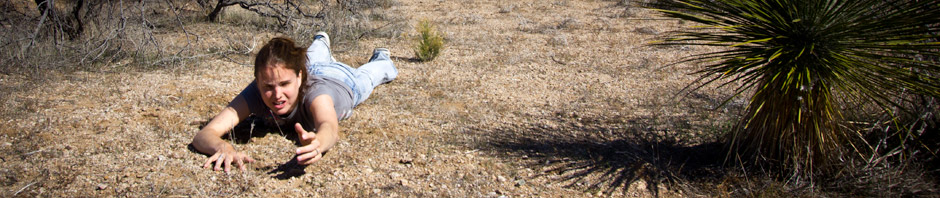
As a member of stronger.com I was invited to the Rose Bowl Stadium to be a part of 2,000 people planking for 60 seconds on Saturday morning.

I left Friday morning and stopped at Rail Side Cafe in San Dimas for lunch.

I check into my room on the fourth floor and change into my swimsuit.

I get to enjoy this hot bubbly massage bowl by myself and share the pool with kids squealing and splashing around.

The hotel’s evening reception snack before I set out on foot to find more food.

A mural in downtown Arcadia on my way to Monarch Donuts where I got to dip my own in the kitchen.

A walk through the park before dinner.

Up too early, apple from hotel, and wait 30 minutes as first in line to get blue shirt, drink tons of water, and get to the field.

A Q&A with Jillian Michaels before she helps count us in for the official plank.

Cassey Ho leading a body-burning workout after we find out we only had 1,200 out of 2,000 participants — notice the empty mats.

I grab an extra mat as we leave the field and then eat lunch (kale, egg, quinoa, etc.) with my planking friends before going to the Norton Simon Museum for some Van Gogh and air conditioning.

I walk around Old Pasadena and around their market before eating berries, hummus, and olive paste at the hotel.

I soak my sore muscles and put them in a queen bed with pillows and darkness.

I wake up for eggs, pancake, pineapple, and yogurt and go back to sleep. I get more eggs, another pancake, and a banana before I check out.

I see this beautiful peacock at the Arboretum and Botanical Gardens along with flowers, squirrels, a waterfall, and some beautiful trees.

I drive home with some classical music, NPR education, and phone time with Caleb.

“Life is about the journey, not the destination.” I will remain open to another opportunity to get into the Guinness Book of World Records.

Posted in Animals, Art, Books, Education, Events, fitness, Food, Media, People, Photography, Places, Travel, Water | Tagged , , , , , , | Leave a comment

Some Sights on St. George’s Island

I have a special skill of getting up and out the door, perhaps this is just a personality type and a part of the culture I was raised in. The guys are in no rush. If I lived here, I wouldn’t be either, but I’m on borrowed vacation time. I pack up my few outfits and dive gear I brought and enjoy coffee and blueberries for breakfast. I notice a sign in a school zone: Kill your speed, not me.

The goal is to get me to the airport this afternoon by way of sightseeing near it. We start at Spittal Pond Nature Reserve, which is jointly owned by the Bermuda National Trust, and the National Park, which is owned by the Bermuda Government. This is the island’s only non-tidal pond that gets spillover flooding from the ocean storms, which results in a variability of salinity, which limits the species that can survive in this environment. The species that can are abundant, and as a result, this habitat is rich in migratory waterfowl.

There are cows and chickens as we start our hike into secondary woodland, meaning the forest is mostly introduced trees, such as Fiddlewood, Allspice, and Surinam Cherry. Seen from the south shore, the Sargasso Sea is moving around the island in a clockwise direction with thick patches of sargassum weed that provide a habitat for small fish (that, when decomposing, can cause skin and respiratory issues for people). The water is so clear because of the lack of nutrients needed to supply plankton that would otherwise occupy the surface. In the spring, humpback whales can be seen breaching past the boiler reefs.

The Checkerboard Formation looks like a tile floor that nature has laid over 100,000 years with the help of wind, water, and sand. In the 18th century, whales were hauled up here (no catch and release). Today, shore crabs and parrot fish leave their scratch marks on the rocks. Further along the trail is a small cavern with an opening to the sea that can be entered from above called Jeffrey’s Cave. It’s here that an escaped slave hid for weeks while a friend brought him food until he was discovered. Slavery existed in Bermuda from the 1600s and was abolished in 1834 (some know how long that process can take).

Unfinished Church

This site is part of the African Diaspora Heritage Trail Bermuda and is designated under the UNESCO Slave Route Project to protect and educate others about the heritage and culture of these people. Perhaps I should’ve gone in to see Jeffrey’s view, as even if the high tide would’ve come in (not sure if that’s an issue at this spot), I had three men to rescue me. The Portuguese would rescue themselves in 1543 from a shipwreck, but not before carving their king’s initials in stone, along with the year. The site was known as Spanish Rock until 2009 when the name was changed to Portuguese Rock.

The coastal hillside is covered in buttonwood, Spanish bayonet, and prickly pear, and taller trees, including bay grape, Bermuda cedar, and Brazil pepper. These plants have evolved to withstand salty winds and poor soil while helping to hold the cliffs in place. We’ll stop at a store to rehydrate and wait to find something more substantial to consume. The Unfinished Church, gothic in design, had construction started in 1874 and was meant to replace St. Peter’s Church, which had been damaged by a hurricane. The governor was worried that demolishing the present church would lead to a spread of yellow fever from the former patrons buried there.

Due to funding problems, parish infighting, and another damaging storm, the church was left half-finished to fend for itself after 25 years, surviving a hurricane in 1926. Part of the church is closed due to structural issues, but that doesn’t stop people from using it as a backdrop for their weddings. The site can accommodate 200 guests (the church could seat 650). In 1992, the church was declared a protected historical monument and is part of the St. George’s World Heritage Site. Bermuda has the highest number of churches per capita in the world, which is easier to do in a smaller country.

We stop at Achilles Bay Park to watch the tourists stand about, snorkel around, play volleyball, and dig in the sand. We’ll drive to Alexandra Battery, a fort built in the 1860s, and Building Bay Beach with colorful sea glass and have the place to ourselves. Next to this is Gates Fort, named after a man who governed in Bermuda before becoming the governor of Jamestown, Virginia. This small fort was a private residence from 1870 to 1922 and was later returned to the government.

To finish today’s trek through history, we stop at St. Peter’s Church, established in 1612. It is the oldest Anglican church outside of the British Isles and the oldest Protestant church in continuous use in the New World. The church’s King James Bible was printed in 1640. The pulpit, unusual in having three decks, is made of Bermuda cedar. The upper deck was made in 1660, and the lower decks were added in 1815. The oldest artifact inside is the baptismal font of Purbeck stone from 1450. Queen Elizabeth honored the 400th year of the church with the title Their Majesties Chappell.

Around the side is the Black Cemetery, a burial ground for free Blacks, Native American and Carib-Indian slaves, and Black slaves. Most of the deaths were in the 1800s, including the smallest casket-shaped stone I’ve ever seen. Inside are beautiful wooden pews, and the walls are lined with memorial tablets. Nearby is the Lili Bermuda Perfumery. I’m usually one to shy away from these types of stalls in the mall as it’s a rare occasion I’m gifted a sweet scent to wear, but this place drew me in.

This little shop has perfume bottles on display (of course) along with books, tables set for afternoon tea, charts with fragrances listed alphabetically amongst painted art, an informational mobile, and gift sets. Done with sightseeing, it’s time to eat. We each get half of a beef stuffy and another pastry stuffed with corn beef hash. This will partially feed our appetite until we get to the Ice Cream Parlour, where I will try scoops of dark & stormy and coffee Oreo. I should’ve braved the Bermuda tomato jam, but I can’t be sure it’s not just frozen ketchup.

I check in for my flight and wait for the guys to get some sushi (so they can finish their brunch) before I go through security and customs. I’ll get stopped for an ounce of water in my bottle and walk with Malcolm to my gate. I talk with a couple, Nicole and her husband, on the flight to NYC (for my connection to San Diego). I’m sat between a quiet window seat and a flamboyant aisle seat on my second flight. I’ll wake up to the feeling of being dropped into my seat with ninety minutes to go.

Posted in Animals, Food, Forts, Friends, Hiking, History, Plants, Travel, Water | Tagged , , , , , | Leave a comment

Scootering Around the Island

I see Dean on his computer and wish he could take me on a morning dive, but I will wait for Dustin to make me scrambled eggs, and then we can try our luck with renting tanks from Fantasea Diving (on Ireland Island, Bermuda). When that plan is a bust (no wreck exploration), we will spend the morning diving between the surface and a depth of five feet.

I’ll spend the afternoon with Gus, Malcolm, and Dustin, consuming beers and watching a soccer match with France, who was in the lead. After meeting Dean and Dane at the house, Dustin and I will join them for dinner at Woody’s, a shack of a restaurant across the street from an ocean view. Dustin and I will go to Fort Scaur and then Daniel’s Head Beach Park for sunset.

Posted in Food, Friends, Travel, Water | Tagged , , , , | Leave a comment

Botanical Arboretum Lobsters

I’m up after six hours of sleep, and Dean has offered to take me with him to complete his errands. I agree, though I’d rather see under the sea or the other end of the island, I know this will get me out of the house. We pick up the scuba tanks, and while we wait for them to be filled, Dean buys me a Keurig coffee. I get one pump of flavoring, and he gets five, but I only drink half of mine. I was about to reserve an afternoon dive when the shop canceled due to passing weather.

Dean says he was willing to rearrange the work schedule had he known about Dustin’s plans, but he has me as a guest staring him in the face and still chooses to train the new girl, even though it doubles working hours. As we’re driving into town, one of the scuba tanks opens, and we stop to close it. Dean doesn’t have a job scheduled until this afternoon, so we have the morning to visit the Bermuda Botanical Gardens, open daily from sunrise to sunset.

The gardens were established in 1898 and consist of 36 acres that include a palm garden, a subtropical fruit garden, and a sensory garden for the blind. There are greenhouses, the Camden House (the official residence of the Bermuda Premier – a political position), and the Masterworks Museum of Bermuda Art. We park and walk past the Jack King Building (so named for his husbandry and exhibition of poultry in Bermuda) into the west side of the gardens.

We stroll through the Cacti and Succulent House and come across a pond with common water hyacinth and hardy water lilies that is teeming with baby frogs that are out stretching their adorable little legs. We walk through the empty rose garden and around the outside of the museum building before going to see more of what this archipelago of 21 square miles, consisting of 181 islands, has to offer. The third visit is the charm, as the tower at the Cathedral is open for tours when we arrive after morning services.

The tour is $3 per person. I’ll be busy counting stairs on the way up and come up two short of the claimed 155, which I’m sure is just my math skills at work. The guide tells us about the stones, the church, and the people. A little blackboard with pictures and notes shares the history of the street and shows how the view has changed. I enjoy the consistency of the white, pink, and blue found throughout the island as it reflects the stone, sand, and sky always in view.

The Arboretum, a national park, is also free and open from sunrise to sunset. It has 22 acres of meadows and woodlands that were owned by the British government until 1951 and now has twenty exercise stations along a path. There are plenty of Bermuda palmettos, Bermuda cedars, and Southern Hackberry trees with blooms of red, white, and pink nearby. We walk over bridges and under them, and I can start to smell myself from the heat and humidity. We turn around to talk with Dean’s massage therapist, and I notice a man picnicking with a resident hen.

Dean needs to stop at the grocery store to get some chips and pickles to go with the burgers he’s making for a late lunch. I’ll add peanut butter, jelly, and tomato to mine. One of the awesome features, at least in more recent times, of being an island between two large nations or more is being able to take part in their trade and offer a variety of foods to the locals, though the delivery charge doubles the cost of the goods. Lunch eaten, we pack up for an evening in the water and get to the job at 3 pm.

The rain fell hard for a while as the guys got started, and as soon as they finished, we were in the water at Lodge Point. I started the dive in a BCD built for a man over six feet tall and a partially used tank with 1250 psi of air. It’s always better, at least in the water, to have something be too big than too small and make you feel crushed underwater as the pressure increases at depth. Also of note, I surface at the end of the dive with 250 psi, something no recreational guide would ever recommend because, below that, the first stage regulator won’t have enough pressure to push air to you to breathe.

I felt fine pushing these limits with a divemaster who works all day at shallow depths on the bottom of boats and knows what the dive shops will accept as their minimum tank capacity for safely refilling with air (which can also be a concern of not going below 500 psi or 34 bar — another unit of atmospheric pressure). I get water in my nose as we descend into shit visibility. We go down to 22 feet, where I start to get cold, but also where the lobster family lives.

We overstay our welcome until the last second, causing us to surface swim back to the boat with an air tank nozzle on my head. My sixteen pounds of weight (it takes more iron in salty conditions and helps with sinking novices) had turned around, making the return exhausting. I’d still like to go back in and see the turtles and wrecks with the remaining daylight, but that would require air we don’t have. We get back to the harbor, and I help tie up the boat so I can get to the house for a shower.

Post cleanse, I’m greeted with a Natal plum to try, a fruit from a South African shrub that makes good hedges. This is just the appetizer to the ribs, beans, and slaw with apple that we’ll have for a late dinner. I finish the potato and codfish with sriracha, too. All this eating makes me think that I’ll go to sleep soon. It helps that Dustin turns down an invite to a beach party, even though I like hearing the island drawl, so that we can get some rest tomorrow as midnight has passed.

Posted in Animals, Art, Food, Friends, History, Plants, Travel, Water | Tagged , , , , , | Leave a comment

The Smell of Aloe, Rum, and Salt

I’m up at 5 am to pee, and Dean wakes me an hour and a half later, giving me eight minutes to drink coffee and eat lemon pie, minus the meringue I wash down the sink before we leave. The guys set up at the Royal Bermuda Yacht Club, and I will walk around the crews eating breakfast on my way to the Cathedral of the Most Holy Trinity in my second attempt to climb the tower. It is closed due to the 8 and 10 o’clock services.

Back at the club, I’ll have a sugary yogurt and another coffee, this one with milk, as a continuation of breakfast, as the guys should be done soon. I walk to Queen Elizabeth Par-La-Ville Sculpture Park, where, after admiring the plants, arts, and two-toned lizards, I will sit in the cool breeze and listen to the birds in the trees. When the guys finish, we walk to Bouchêe, a French bistro, for a sit down meal. I’m sure I ordered one of their Benedicts to tackle, but will still be leaving with some to-go.

We stop at the Gibb’s Hill Lighthouse while it’s open in the daytime, a more successful second visit. There’s a weathervane that was installed on top of the lighthouse in 1846, now closer to the ground when it was replaced in 1988 by a radar scanner to prevent ships from running aground on the nearby reefs. Already on the highest hill at 245 feet above sea level, the base provides a broader view of the harbor. In the 1600s, the warning system consisted of fire baskets that would be used for about two centuries before colorful signal flags, telescopes, and telegraphs took their place.

Lighthouses on the island had been proposed in 1795 but were delayed until a crew of 495 were grounded on the reefs in 1838. Passengers and their cargo were brought safely to shore, and though only one Bermudian ship had wrecked in the last decade, Britain saw a lighthouse as a good investment for international trade. Tolls would be charged to incoming ships to help pay for the upkeep of the lantern that was twenty feet high and weighed 5,500 pounds. The lighthouse was erected in London, brought to the island in pieces, and erected by the Royal Engineers and convict labor.

Construction was finished in October 1845, but the first light didn’t come until May 1, 1846. It took 18 pints of whale oil each night to keep the lantern burning. The beam could be seen from 26 miles away. In 1901, the oil ignited, and the heat shattered all the plate glass. The lighthouse was in operation again the next night, even though it didn’t shine as far or flash as regularly, so no major repairs were done until another wreck in 1903 that led to a new light arriving in 1904. Each day, the lighthouse keepers would wipe each prism lens clean of smoke until the lighthouse was fully automated in 1964.

After taking many pictures of the climb, the blue-white-green view, and the descent, we drive to Blue Water Divers with their morning boat out and their afternoon boat full. Dean will take us back to the house, and Dustin will take me on the scooter to Snorkel Park. I don’t enjoy this type of underwater viewing, partially from prior struggling experiences, but also now being dive-certified and able to go deeper. What I didn’t know was that this would be my first free-diving experience. I get into a breathing rhythm as I go rock to rock, seeing one octopus.

The good thing about holding my breath is that it doesn’t matter if there is water in my snorkel, and with sand beneath my feet instead of precious coral, I’m free to inhale deeply at the surface without worrying about buoyancy. We’ll do this for about an hour and a half and then celebrate by sharing a Shark Oil, a strong alcoholic green drink, and watching the rain approach. We’ll take a nap at the house until Dean wakes me up for a fish sandwich.

We go to West Whale Bay Park and explore the rock formations, shapes in the sand, and wild poinsettias before a short visit to Church Bay Park. The pink sand and blue water have me in the mood for a blueberry and peach soft serve from Yo Cherry Frozen Treats. We stop by a boat to talk with guys who play cornhole (who spent $8,000 on an 11-year-old’s birthday party). Dustin is an alumnus of LSU, which is where some of these guys went to school, too. One of the guys gives me a bottle of water, and we’re on our way to hang out with those who are more in our price range.

Dustin buys me a beer when we get to the base. We’ll stay over three hours before Dustin gets tired, and it’s time to go. I call Caleb when we get back to the house, and the neighbor comes outside because she can hear me over the sprinkling rain. I’m sure there would need to be a storm to help cover my voice that carries (not as much as my laugh). I’ll eat some fried chicken while enjoying the warm rain and brush my teeth before lying on the couch at 230 am.

Posted in Animals, Art, Food, Friends, History, Travel, Water | Tagged , , , , , , | Leave a comment