We get to see horses on our morning walk and Caleb video calls to show us the electrodes he’s worn since last night that will stay on his head until his last nap (mandatory 15-minute sessions of lying down in a dark room every two hours) this afternoon.
Caroline will take their car to work while we wait at the rental car office for an hour for a car to be available. The seats are moist enough to wet my pants with Clorox and Febreze and the driver’s seat adjustor has to be screwed back in properly before we drive away and get a tire pressure sensor warning and listen to the steering wheel make a weird toy-like sound.
Back to the house to load the car and Dad leaves notes all over the house for Caroline – something as simple as HUGS on the shower door to make her feel loved and let her know he’s thinking about her – at all times.
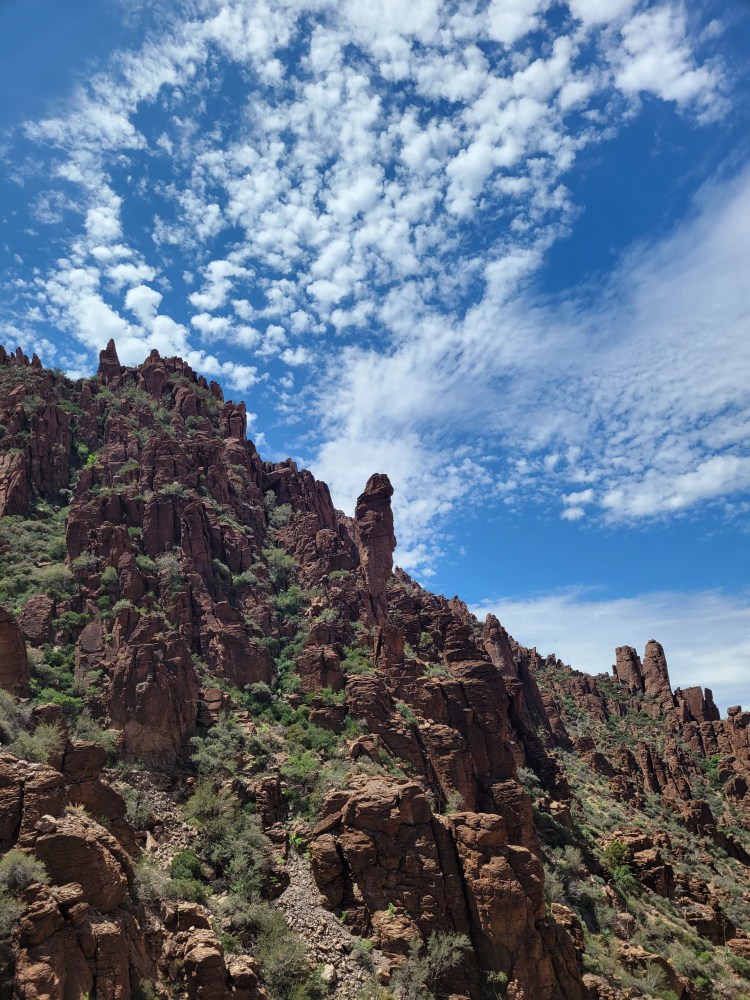
I will try my first chocolate almond milk shaken espresso from Starbucks and am not disappointed. Our first photo stop of the day will be along Superstition Freeway to capture the green bushes protruding in layers from reddish-brown rock surrounded by a menagerie of clouds, cactus, and charred remains from the recent wildfire in June.
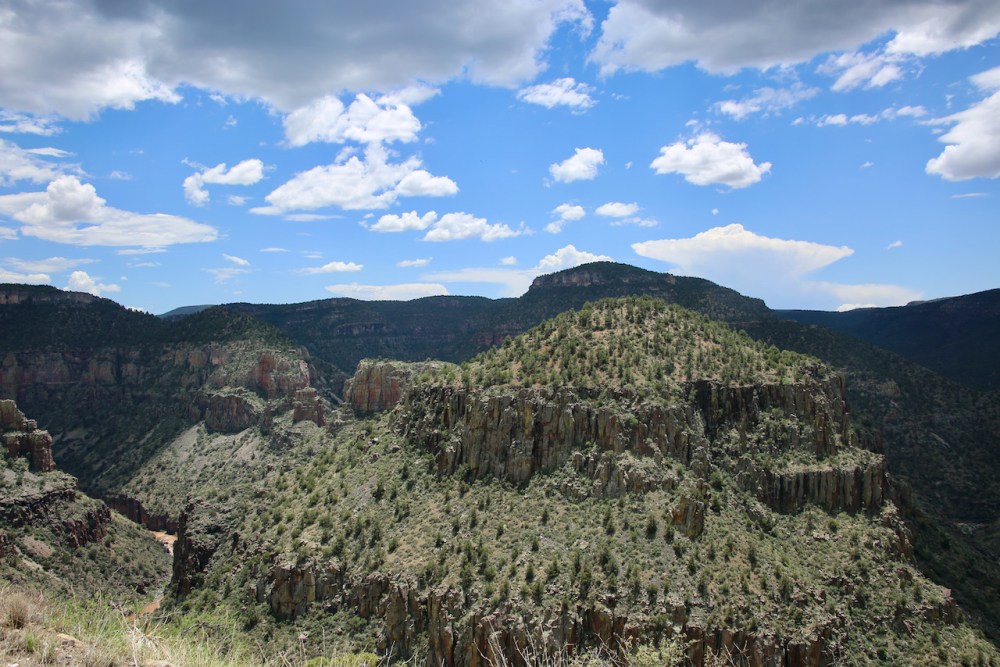
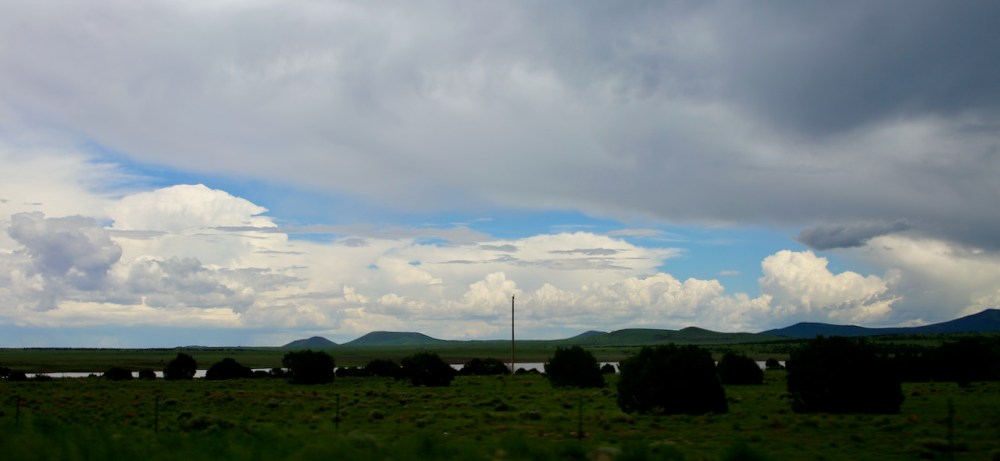
We stop in Globe an hour later but it’s not long before we’re back on the road admiring the blue submarines of clouds held safely within their white fluffy carrier clouds. We’ll continue on the 60 E to Quemado, NM through a day of contrasts – sunny, cloudy, and rainy weather; mountains, cactus, and forest landscapes; and parental, descriptive, and helpful topics of discussion or lecture.
Dad recalls our trip on this same road from ten years ago and though so much has happened in the interim it could almost be yesterday, but we weren’t snacking on dried mangoes and salted cashews then. We are ready for the treasures and memories the road has to share.
Crossing the border causes us to lose an hour of day but Dad already has planned out mileage that we will cover regardless of what distractions or detours we encounter. We drive the 36 N through Zuni Pueblo and see wet dogs roaming the shade, a kid’s Jeep car deep in the muddy water, and a ten-year-old either digging into a future oven or exploring the remains of an old one.
I notice the multiple signs asking that no pictures be taken during religious ceremonies while Dad looks at the dash for a speed limit reminder to find none and has to remember that the key fob doesn’t auto unlock the car so it has to come out of his pocket.
The 602 N will take us to Gallup for our second coffee and when the caffeine doesn’t seem to be kicking in fast enough for Dad, I suggest we listen to his playlist: Sleaford Mods, an English post-punk duo; Kollektiv Turmstrasse, a German minimal-techno duo; and Petite Meller, a French-Israeli pop-jazz singer.
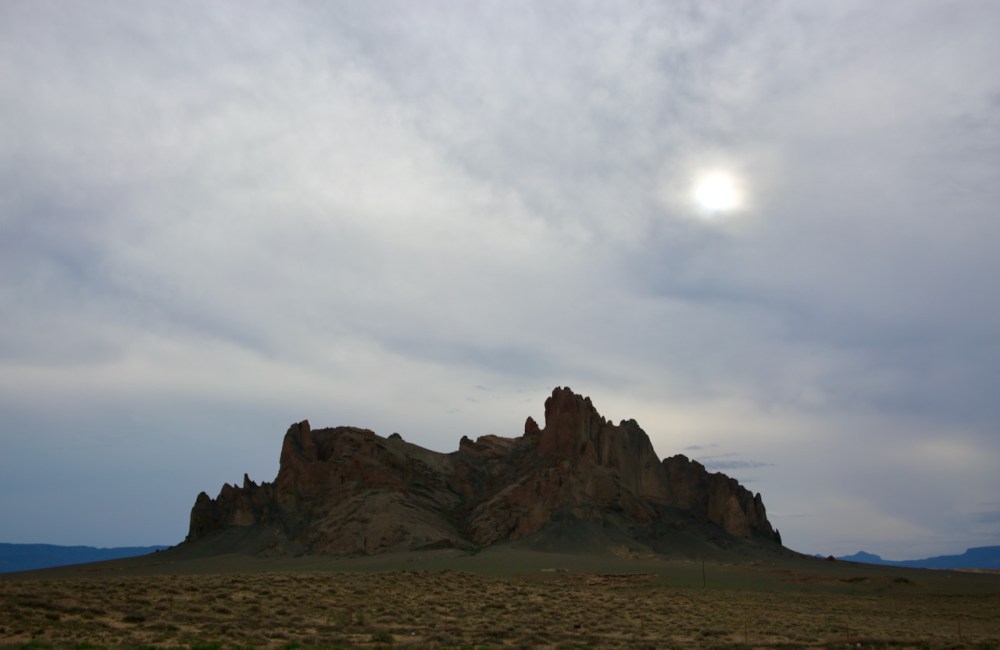
As we approach Shiprock on the 491, there are groups of houses without delineation between the properties, the roads are wide without markings, and there are some nice murals on crumbling buildings. This space feels open, honest, and neighborly.
We cross into Colorado for heavier rain and more lightning than earlier. We check-in to a hotel in Cortez before the storm arrives and chases the kids from the pool. The outside door opens to a short hallway containing four more doors inside. I’ll be impressed with the sheet sandwich (thin blanket between sheets) which is easier and faster to clean and assemble.
I’m up before twilight to join the desert-dwelling couple on their sunrise walk to include: picking up pennies; saying good morning to people, pups, and Lucy the donkey; and seeing a rabbit, two lizards, and a harem of cats.
Caroline reads about how brilliant octopuses are as Dad drives us to breakfast at First Watch where her and I order the same thing, the tri-athlete plate.
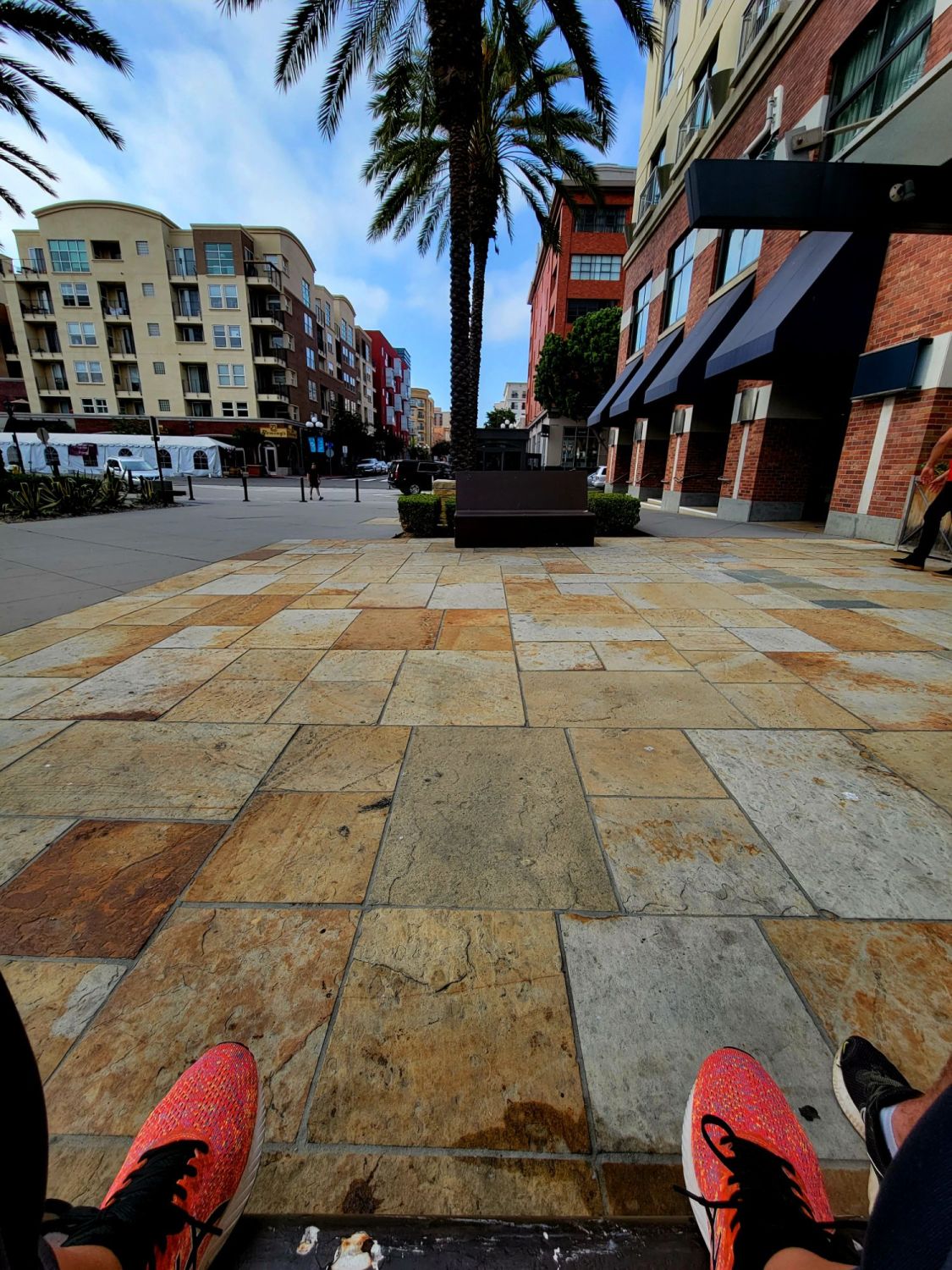
driving around Phoenix
We’ll drop Caroline to work before going to Dad’s appointment early so we can watch the ground squirrels play in the shade while the sweat drips down our backs.
While I’m waiting on Dad, I’ll hear a woman tell her friend about offering to have her brother’s baby because his husband can’t get pregnant. I was hesitant to have kids of my own but some women are just made for carrying children inside them; I’m not one of them.
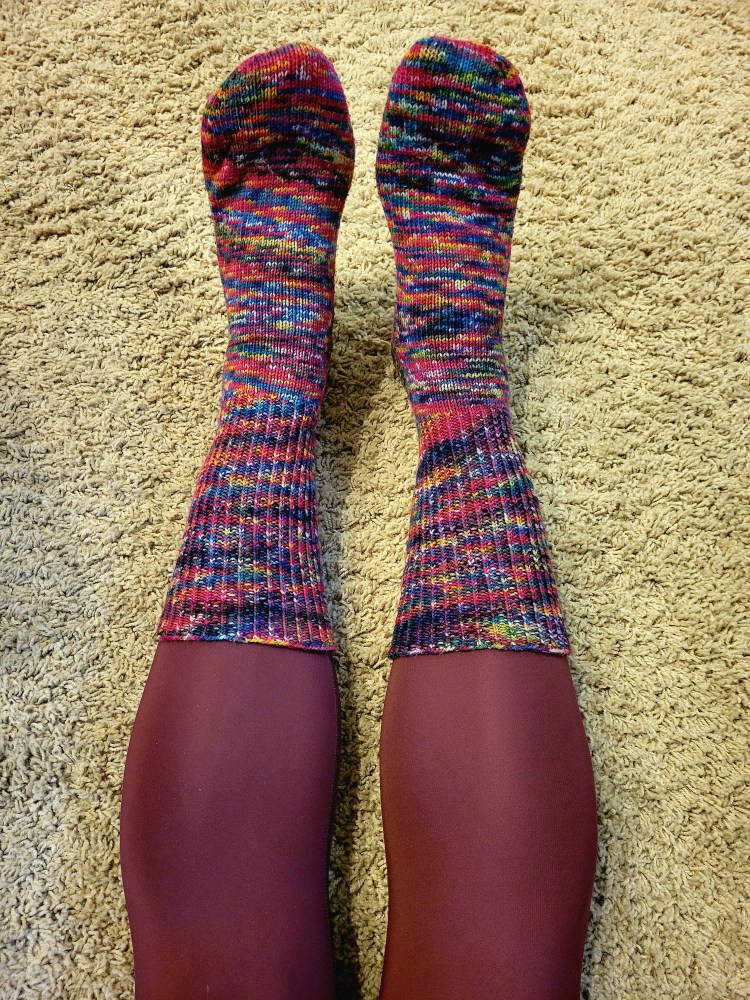
trying on Dad’s socks
Lunch at Oregano’s with Dad. I’ll get to try some giardiniera peppers, which Chicagoans love to put on their pizza versus the Italian style that uses pickled vegetables as a relish.
Back to the house for more talking, packing, reading, and prepping food for the road trip that starts tomorrow. We’ll pick up Caroline, prescriptions, and bread.
Dinner at Spinato’s before buying more snacks for the car that will save us time and money when we get hungry and there’s not a place in sight. Dad gets his camera bag ready and packs his wife-made socks before our evening walk.
Caleb had mentioned going up to Montana in August to see family and when my dad suggested I meet him for a road trip I decided that it was time to travel and I would visit Caleb’s sister and her family while he stayed in San Diego to work and finish a sleep study. It’s been six months since I traveled last but there’s only so much I can stow in a backpack and I always seem to bring more than I need.
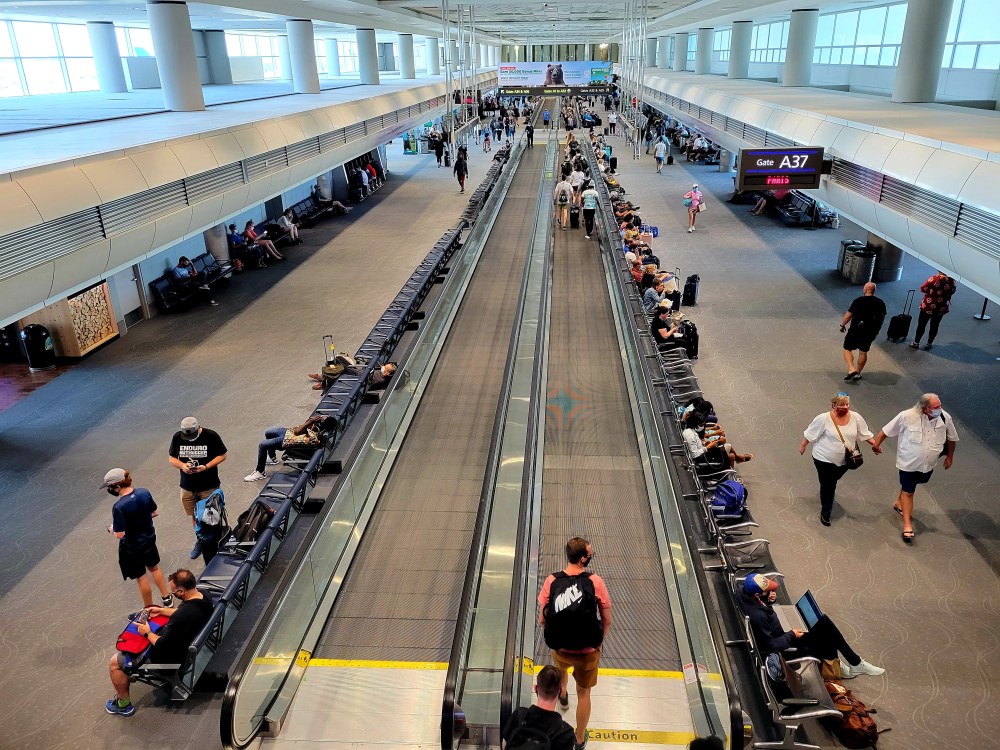
My first flight has me leaving the house at 4am so that I can spend six hours at the Denver airport looking at Native figurines and get hit in the head with a flying piece of ceramic souvenir, eating a piece of a plastic-tasting sandwich from the USO with the swimming at the Olympics on TV, and walking the length of the A-terminal before escaping the physical and audial damage of others with a spot by a window to read.
Landing in Missoula was like flying into San Francisco, both cities that I’ve driven through many times, but both disorienting to arrive in via airplane. I was told Jessi, my sister-in-law, would be there to pick me up at 6pm but I was unaware of where she was and got lucky that a stranger took pity on me (neither of us seeing a bus) and decided to drop me off while spending more time with the friend she was there to take home.
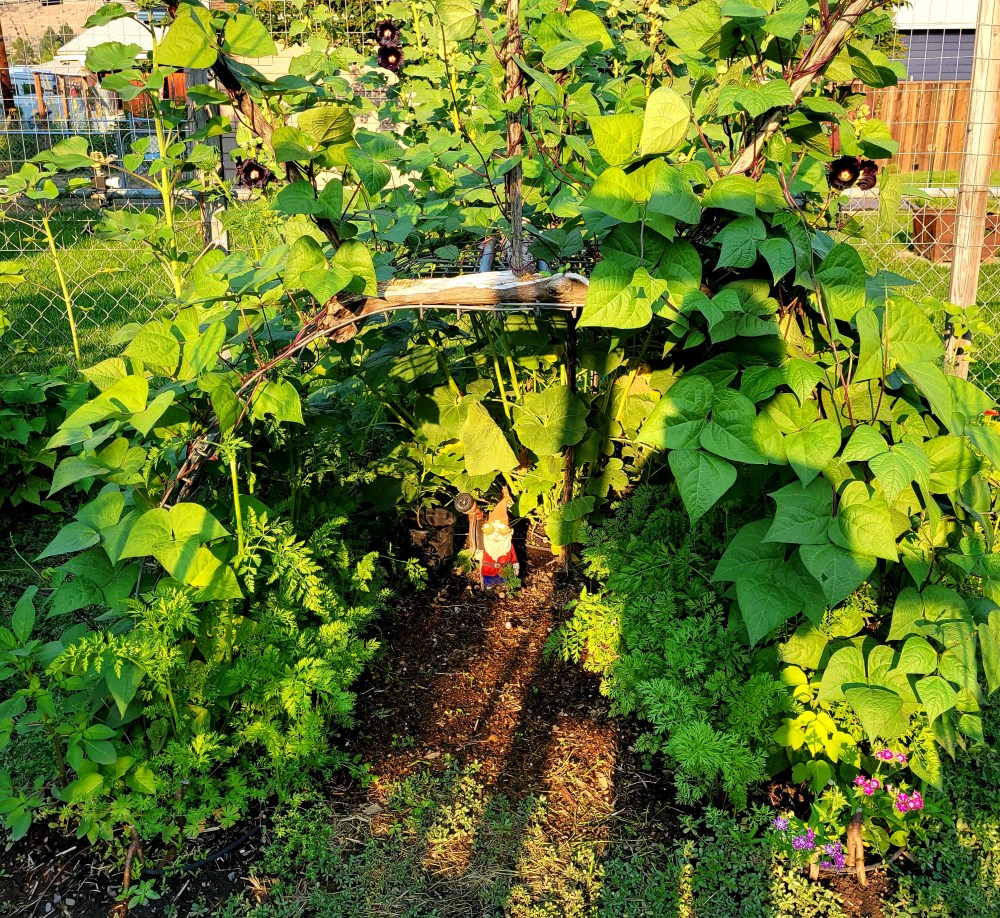
I gnome too much
The front gate is open, the dogs are loud, the chickens are friendly, the garden is bountiful, and the backyard relaxing. This is where Jessi and I will eat dinner from Bridge Pizza (where she ordered everything but pie) while the girls play and Jake unloads the car of bikes and snacks from their trip to the scenic rail to trail, Hiawatha, that starts only a hundred miles drive from the city to the border with Idaho.
Jessi gets the girls set up with their favorite cartoon, Adventure Time, so we can talk and play with kittens and show the dogs attention too. She has two of all the indoor creatures to include a pair of rats and gerbils. Bedtime is late and I’m ok with that as all I have to do is rollover on the couch, close my eyes, and keep my feet warm with Rufus, the deaf dog, for most of the night.
Monday – Biking in Caleb’s Motherland
Clark Fork River
Jake runs to the store for peanut butter and coffee (two very important food groups) and stirs me up a jar with a power tool. I grab a kid’s backpack to hold paperwork and leave before the pot is brewed in hopes of getting the car title and my new driver’s license taken care of today.
I’ll ride Jessi’s bike, that Jake de-mudded for me, along the Clark Fork River to the MVD 40 minutes early only to be turned away because they’re booked with appointments today. Down the street, AAA doesn’t bother looking at my paperwork before doing the same, so I ride to the courthouse, past flowers and deer, and wait two hours to leave with license plates in hand.
Pattee Canyon Road
I go back to the MVD and AAA for the same message, “Better luck tomorrow.” I’ll ride back to the house for another sandwich and talk with Caleb on speaker as I pedal to the post office to mail the plates to him. I spend the afternoon walking up and down streets in the neighborhood to give my butt a break from the bike seat and fill my lungs and eyes with smoke from forest fires burning in the distance.
Jessi gets home and orders dinner, sesame chicken and sushi, that will be home before we return from our evening hike to an overlook on the 3.5 mile Barmeyer Loop in the Mount Dean Stone Preserve. The TV gets turned off by 11pm so I don’t have to build another fort over the screen when I can’t find the remote or power button.
Barmeyer Trail
Tuesday – Walk In, Fly Out
I’m in luck this morning as Jessi lets me borrow her car and the MVD is taking walk-ins but you have to show up before the first appointment person and I’m third in that line. Ninety minutes, seven documents, an eye exam, and signature later I’ll have a new license being mailed to me in a couple weeks.
Jessi and I walk to Drum Coffee for caffeine and cookies for lunch. I refill my cup with coffee Jake made before going to work. I’ll get in an afternoon walk and get more sweaty before the mandatory Missoula meal at Staggering Ox, though mine will be had on the plane I’ll take to Denver with a shorter layover on my way to Phoenix.
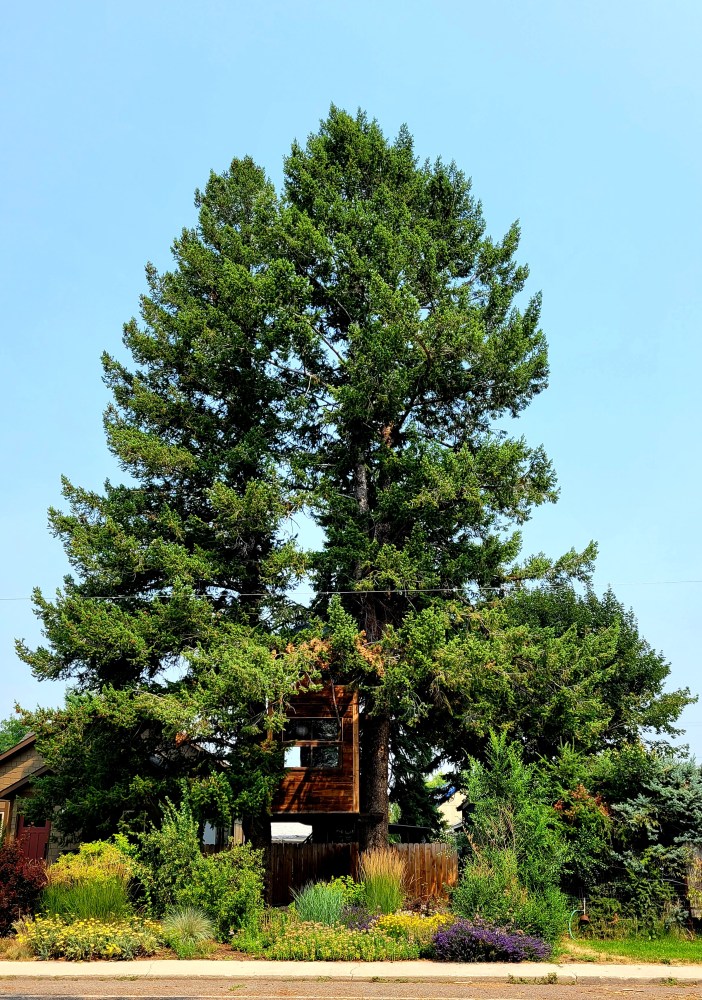
a treehouse in Missoula
I sat next to a mom, who left her kids at home, and is traveling to compete in a jiu-jitsu tournament. We talk about ourselves, the in-flight magazine, and work on a crossword puzzle. The plane lands at 10pm and I’m greeted with hugs and smiles that I’ve missed from dear old Dad and his lovely wife Caroline.
It will have been almost two years since I had seen family – mine or Caleb’s – so Ed’s free time from work will be more than welcome while he’s here for two weeks in April. Caleb and Ed will be on the same schedule (unlike when Ed works nights). Our first evening (Monday, the 19th) will start with an early dinner at Coronado Brewing – something close and full of carbs; then getting Ed some groceries for his room to get through his stay in an unusually hot room at NGIS (Navy Gateway Inn & Suites). The temperature doesn’t deter us from catching up till after 10pm.
TUESDAY, the 20th I’ll drop Caleb off at work in the morning so I can pick up Ed for a meal at Breakfast Republic, somewhere with close parking and not too many dollar signs on the menu, so we can talk about things not related to their time on active duty. There’s nothing wrong with it, and I enjoy listening to the men talk, but I don’t have much to add about my short enlistment and definitely not about being in charge of people – whether they be idiots or go on to do great things in and out of the military.
Caleb and I will grab some leftovers from the fridge to tote to the room so that we don’t impose on the roommates or have to worry about conversation topics in front of the kids. This leads us into talking about families, raising kids, freedoms, marriages, and whether we would make some of the same decisions again. I’m sure had I gotten pregnant, I would’ve had a love/hate relationship with my children – loving their absence and hating when they disagree with me, don’t like a place we’re at, or beat me to a hangry state.
THURSDAY, the 22nd Up to Ed’s room for breakfast, which for him must consist of a meat, so that means more for the guys. I’ll leave them to manage without me while I go to my periodontist, someone I haven’t seen in five years, so she felt the need to tell me that my mouth is falling apart and I should schedule expensive surgery ($6,000) and a deep cleaning (teeth roots included). Her next available appointment was at least a month out, which would give me time to call Dad, call a new dentist, and get a phone consultation set up with a university in Los Angeles.
This will give us something to talk about as we go to dinner at Salud! and stop for drinks and cookies on the way back to the room. This procedure is common, but usually presents with pain, bleeding, loose teeth, etc. We’ll leave early so I can buy another over-the-counter mouthguard to prevent me from grinding and clenching my molars to pieces until I can finally get a prescription one — not that there’s a waiting list, but they’re expensive, and I feel like the $30 vs $600 does the same job, just doesn’t last as long. Caleb will have a pot ready for me to boil the mouthpiece in when I return, but I’m able to microwave it in the case, so I do that instead.
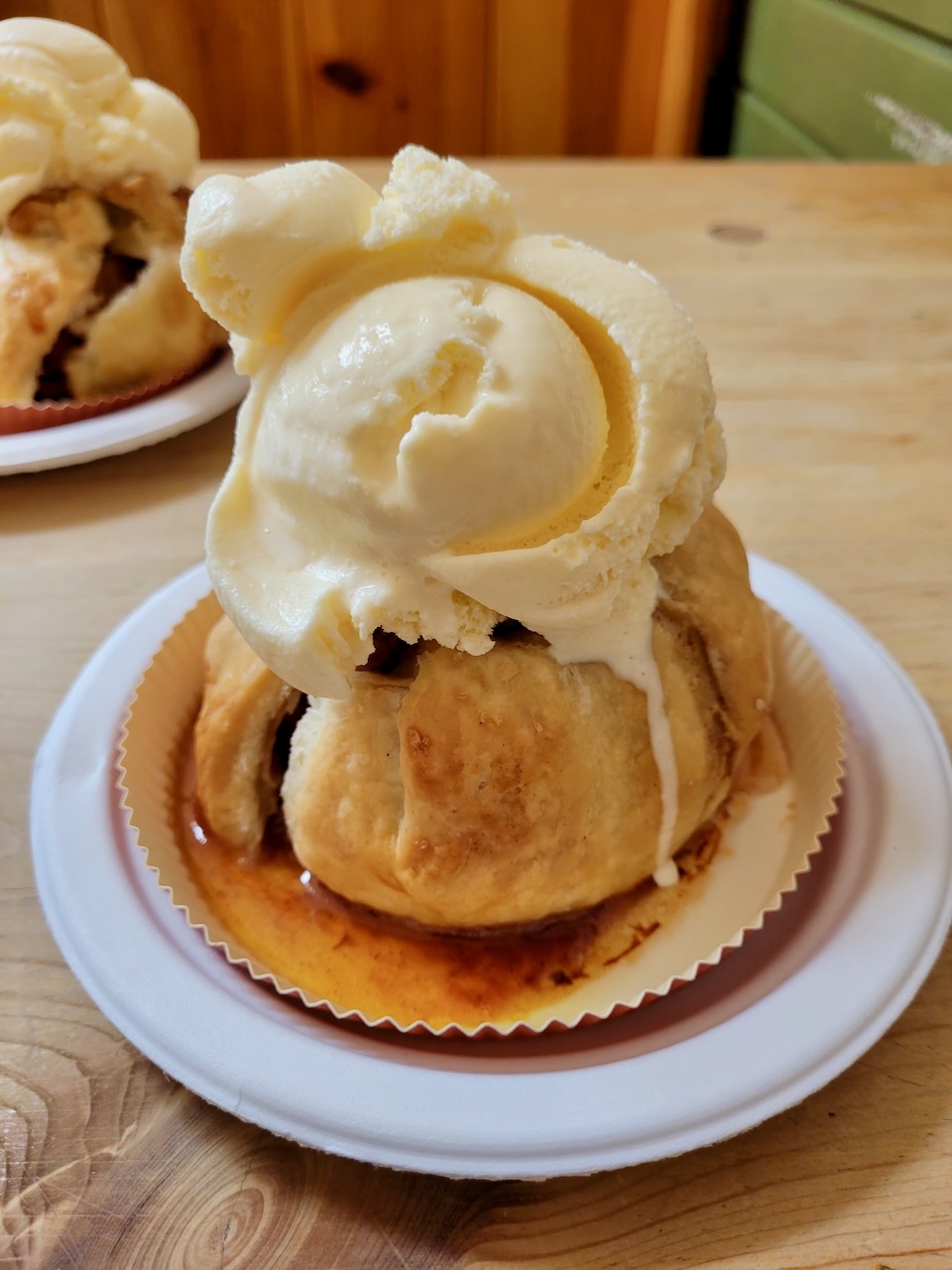
FRIDAY, the 23rd We’ll take our time and go for our morning walk, and then get something to eat before picking up Ed so that we can enjoy the beautiful drive to Julian for lunch. I saw goats, cows, horses, and squirrels. We usually go for pie, so of course we each order a slice, but pass by a window with apple dumplings (an apple baked in pie crust) in it and have to take those with us. We’ll stop by Desert View Tower on the way back since Caleb has never been to see the vista and feel the strong winds in his hair.
Plus, we all appreciate the smaller roads for the calmness and beauty they bring versus the hectic rush and traffic of California highways. We’ll stop by the house for a salad bowl so that Ed can make us dinner in the room while we go for a walk around the hotel, alternating between the three floors available instead of walking the perimeter of the gusty golf course. As we’re leaving for the night, Ed lets us know that he wants tomorrow to himself, so (on Saturday) I’ll bicycle and puzzle while Caleb works in the garage.
SUNDAY, the 25th I’ll eat doughnuts (that Ryan brought home) the next morning (after our walk) while Caleb helps take apart the kids’ Geo Dome Climber so that someone else can use it. We invite Ed to Border Field State Park, and though the usual entrance is closed to cars, we find a path that lets us spend the afternoon in the sun, surrounded by so many colorful flowers, with some big yurts at a new campground, but no beach access. The three of us will have a late lunch at Burger Lounge and then rest in the room until Caleb suggests he go back to work in the garage while I hang out with Fallon and Melissa.
*written five years later…
TUESDAY, the 27th and THURSDAY, the 29th We spent a few hours in Ed’s room and returned on Thursday for pizza.
FRIDAY, the 30th Pick Caleb up and then Ed, go to San Vicente Reservoir, then Lakeside Park, followed by lunch at Mary’s Donuts & Coffee. I’m able to eat a quarter of a super cinnamon twist and half an egg salad sandwich. We drive around Otay Lake before going to Ed’s room after picking up some snacks at the commissary. I was warm and tired in the room, so we moved outside, where I sat scrunched in an uncomfy wooden chair, and we dealt with bright headlights blinding us.
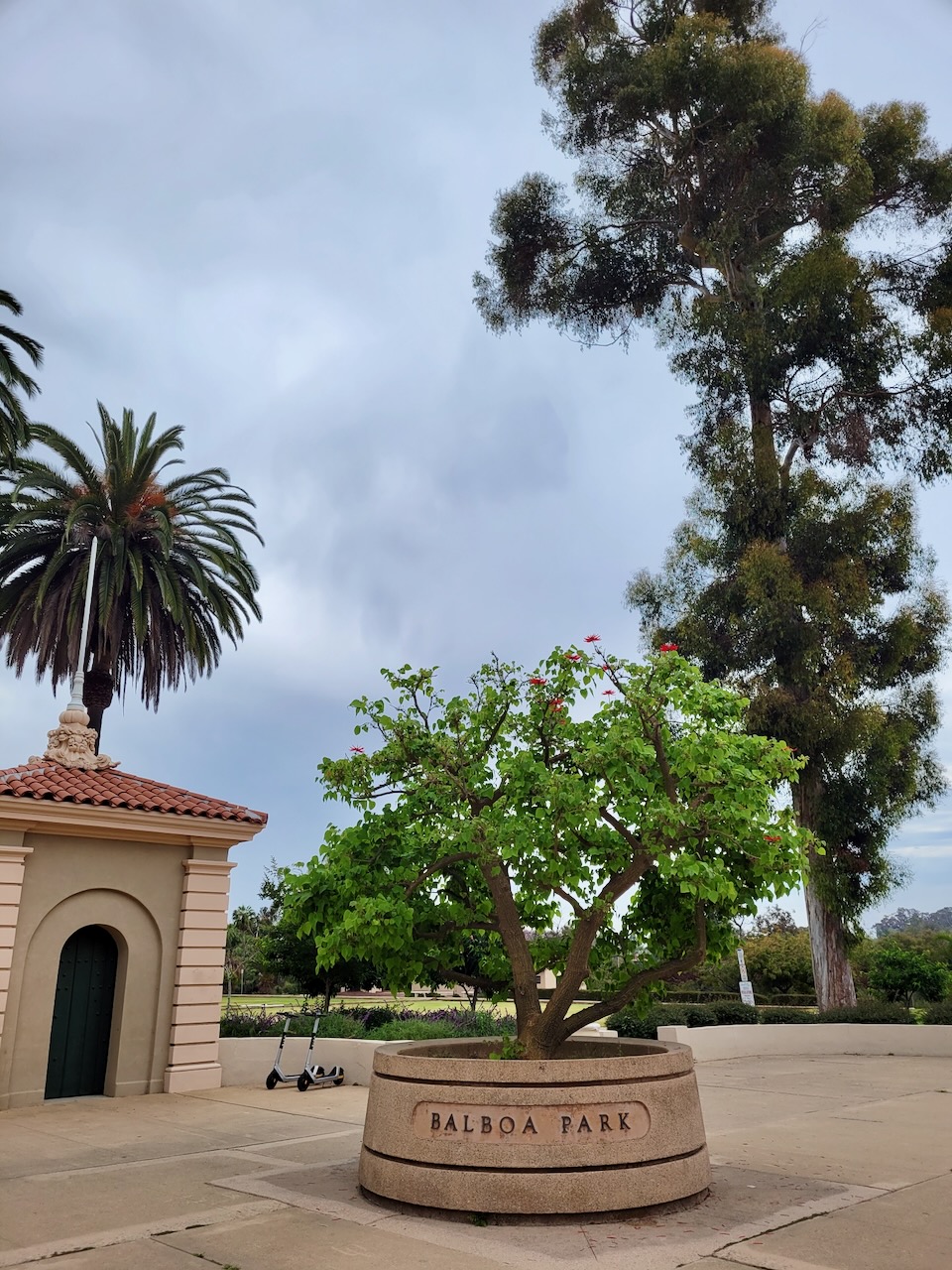
MAY 1st We head to Ed’s for our picnic lunch in Balboa Park. We walk around the fountain, by the newly named Museum of Us, and over the bridge. We go back to the room for a couple of hours before dinner at Spiro’s Greek restaurant. I have the lentil stew and hummus. Ed sends us home with the unused vegetables and condiments from our afternoon outing.
JUNE 15th Caleb and I park at J and 17th, walk to the Gaslamp Hilton, and escort Uncle Ed to dinner at Bub’s. We have a nice walk around the area before returning to the room.
WEDNESDAY, the 16th I drop Caleb off at work and have breakfast with Ed at Lucky’s Lunch Counter. I take half of my burrito to go, and pay for two hours of parking when enforcement starts at 10 am.
THURSDAY, the 17th I hung out with Ed earlier in the day and then dropped my phone off the back of the car and onto the road to get run over repeatedly before I wondered where it was and turned around. My replacement is the same phone that Caleb has.
FRIDAY, the 18th Caleb and I will go on an eight-mile hike and then join Ed for dinner at American Junkie.
SATURDAY, the 19th We get a late start (whatever that means) and drive to Julian for apple dumplings. We have a late night at the house playing Farkle, a fast-paced dice game.
SUNDAY, the 20th Another breakfast at Lucky’s, and we drop Ed off for a few hours. I pick him up again and sit with him while he does laundry. We pick up corn, potato salad, and steak for dinner at the house.
FRIDAY, the 25th We walk along North Island in the afternoon, waiting for Ed, and meet him at the airport terminal on base. I get sunburned while we hang out, and he says bye hours later, so we can go home and eat while he waits with the guys.
We were out here just six days ago but are just as excited to see what nature has available for us today. We would be trying to find camping if we had any of our gear as we have things in California, Montana, and somewhere in transit between Manama, Virginia Beach, and San Diego to include most of our dive gear as we’ve bought things to add to our kits and purchased part of the divemaster course that we look forward to pursuing. Anyway, without a larger car or place to sleep we settle for the six hours roundtrip for a taste of seclusion.
We get an earlier start this morning, even after we turned around 20 minutes from the house to get Caleb’s camera’s charger cord that ended up not working — the ocean takes its toll on all things whether it’s salt eating gear or turtles eating jellyfish. Caleb will look for the newest model of Nikon as his favorite little waterproof photo grabber is no longer made in that version or color. Less wind moving the car this time seems to make the windmill portion of our trip seem further from the house but also smaller in total land area.
Caleb decides that even though the map is in the car and we could add a second stamp to it that we should get the collector’s edition book so that we have another place to feed our need to express ourselves via sticker display. I used to acquire them randomly from parks that have them and brands that we agree with or a free stack from Dad to cover the scratches on my laptop but I’ve been influenced by the #vanlife and the stickers that the lifestyle has inspired. I do drive a Volkswagen now, so my dream of having a van of the same brand seems less far off even as Caleb dreams of his retirement truck.
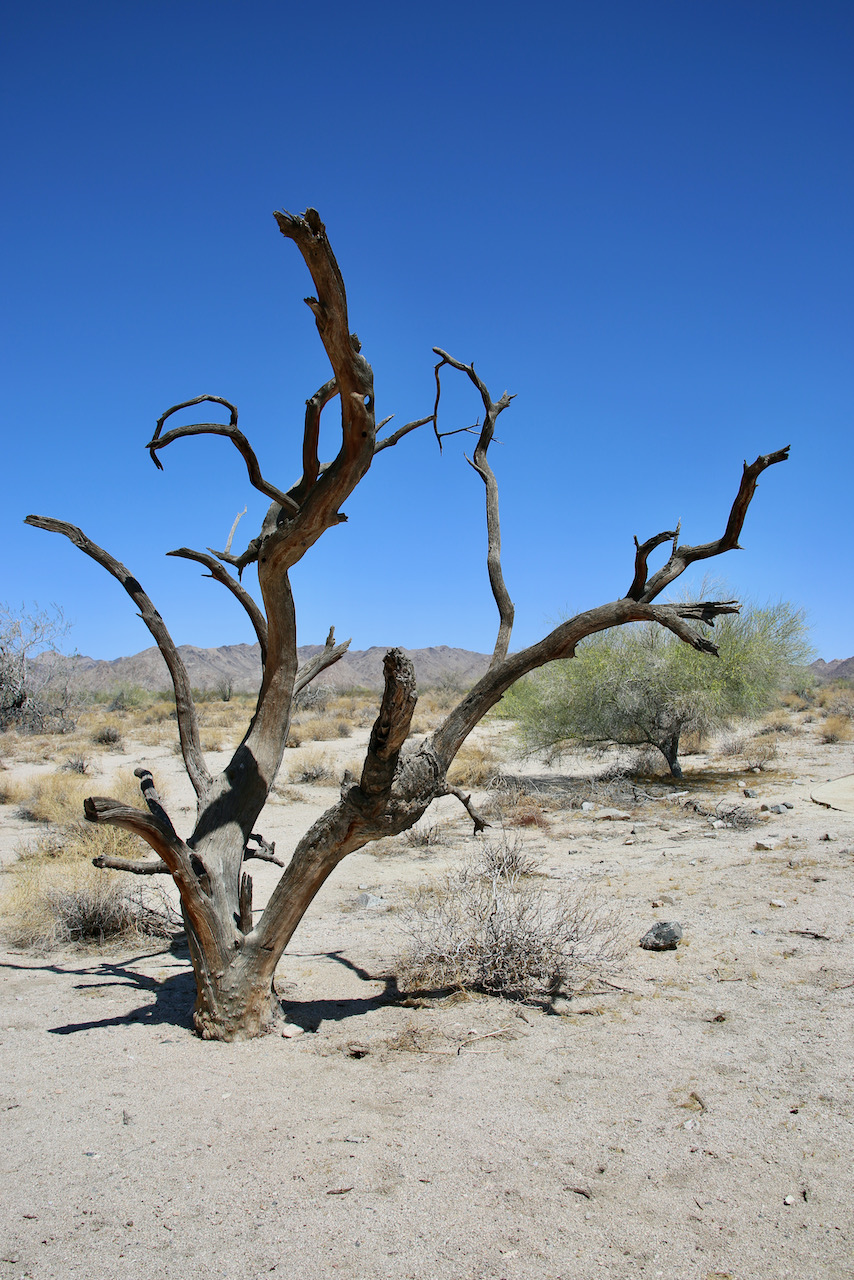
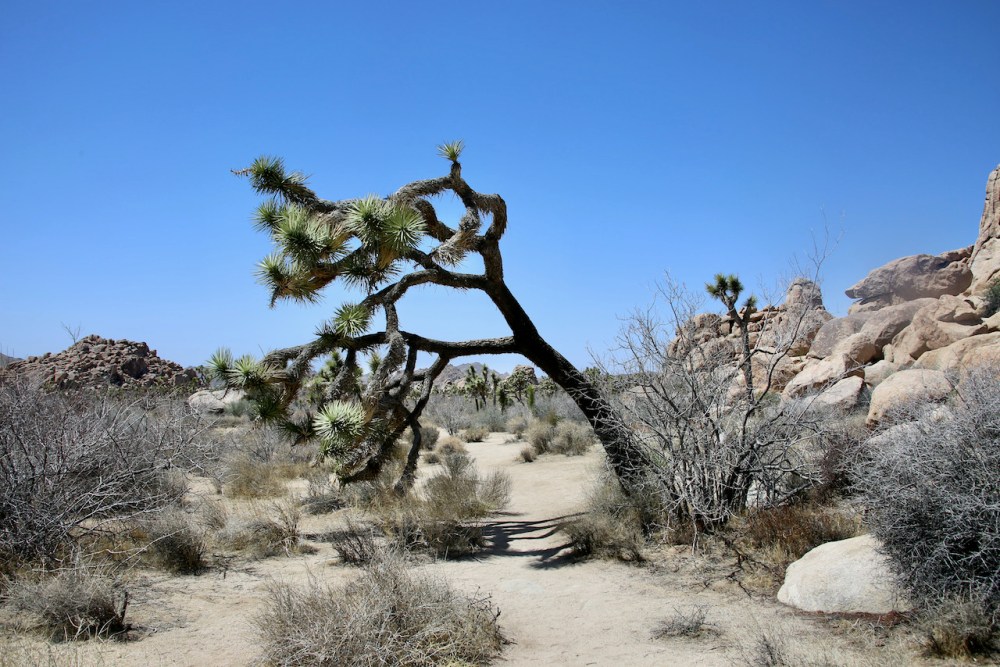
We stop more frequently since we have more time for me to photograph trees and for Caleb to read the educational signs along the road. We park behind a car with a child running around and the mom is curious as to if the information center is close or if they missed it. Caleb assures her it’s just a few more miles up the road. Back in the car, I wonder out loud trying to remember our first park experience and not knowing what to expect. I’d have to relate that to an international park when you have to read the pictures because you don’t know the language but most countries are accommodating of a translation of English.
Then I wonder if perhaps it’s a during-covid concern that they have — that the ranger station will be closed and they’ll be forced to guess their way through the park. I have no idea how it was for the last year and a half, but I heard some parks were trashed in the absence of employees to help hold people accountable because they think the planet is their dumpster. This station though has a desk outside, the counter inside, and a window available as well to keep people spread out — some in masks while in proximity and others not because they’re outside.
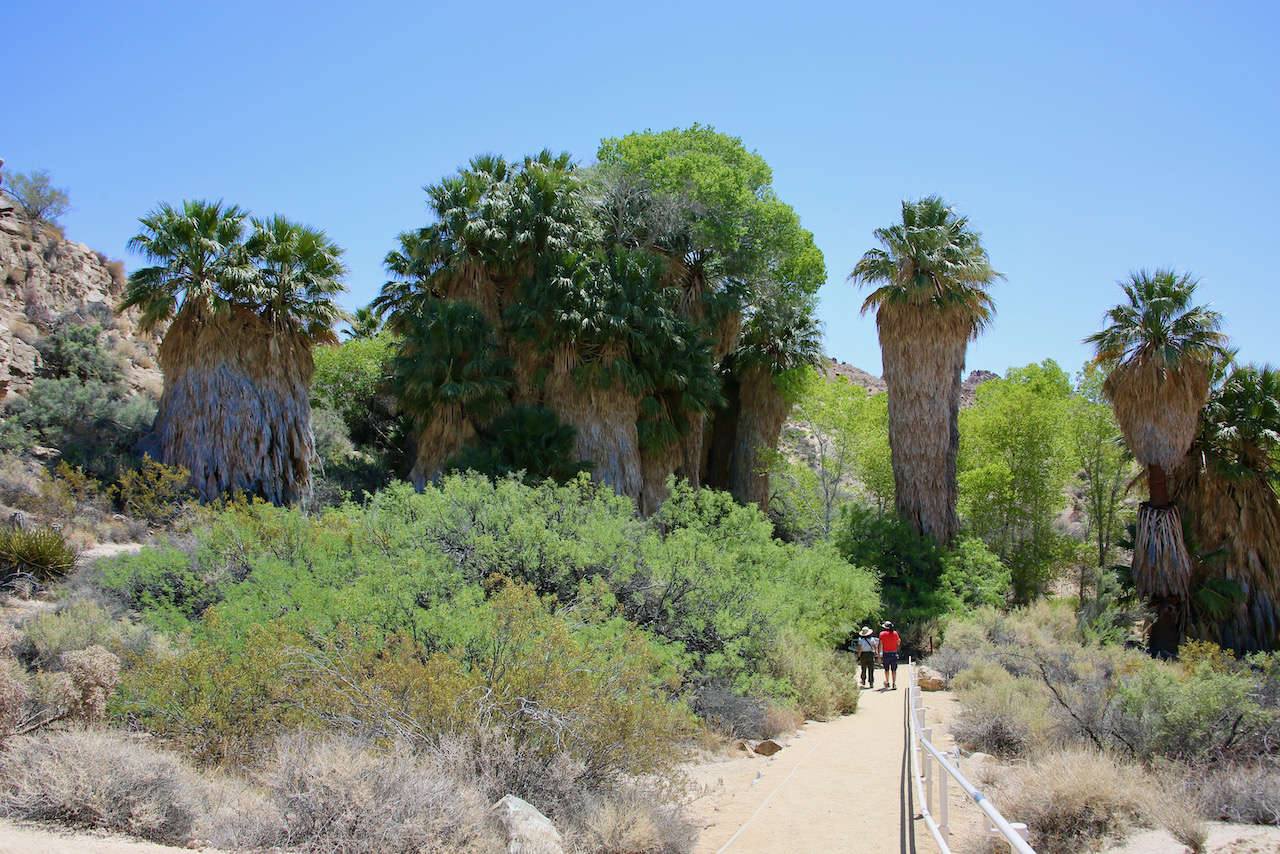
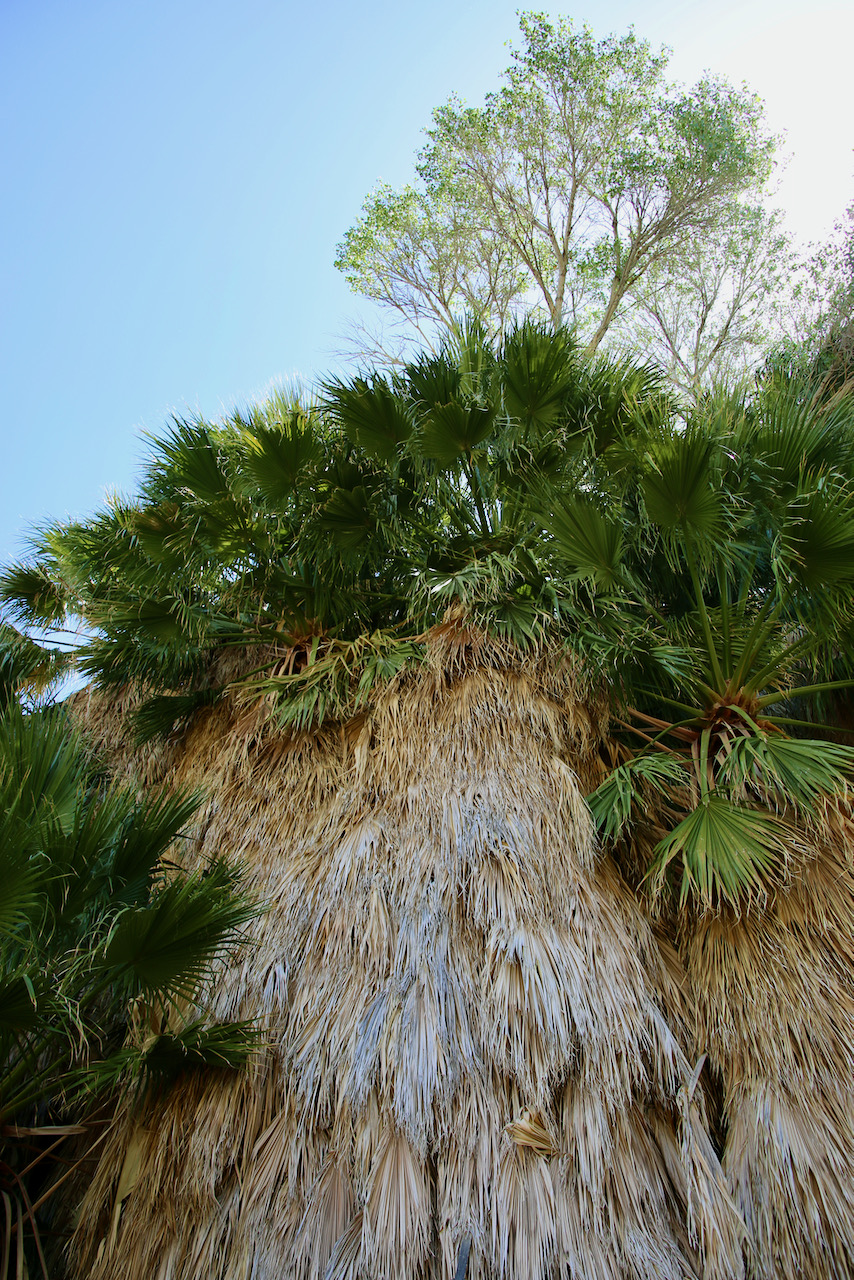
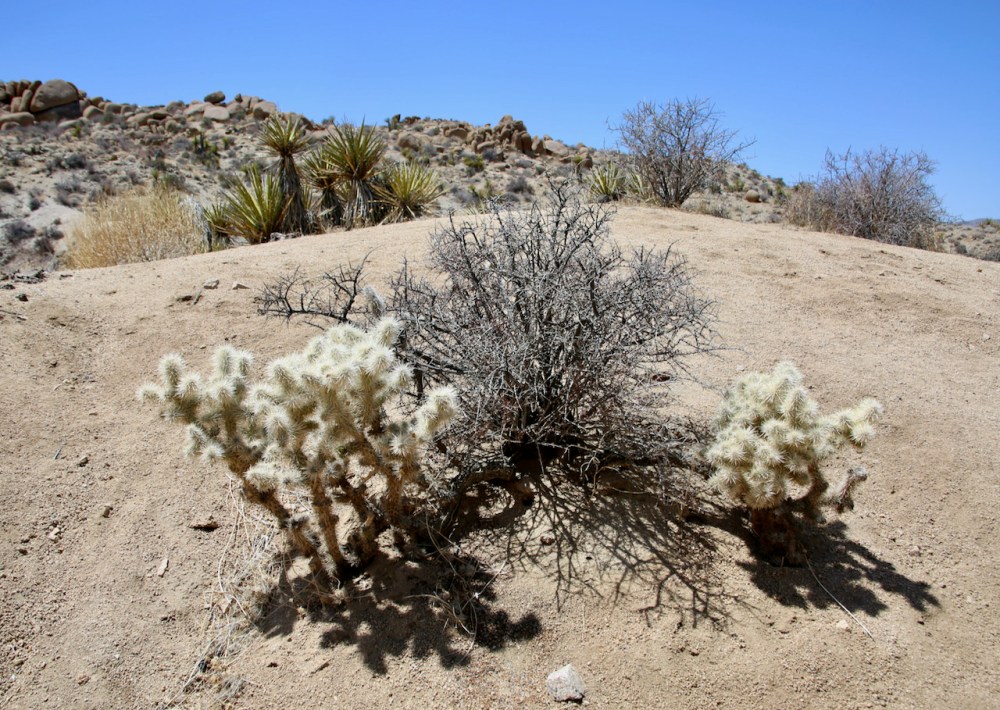
I enter the first stamp and we make our way behind the visitor’s center to hike the Cottonwood Springs Mastodon Peak Loop, just over two miles of trail. There’s an oasis tucked into the valley and I can imagine a small tribe hiding in here to escape the heat of the day, but there’s just tourists going off trail with their tripod and cell phones to experience the drop in temperature that the shade provides and to get pictures of the birds that I can clearly see from the trail. I wish my junior ranger badge came with the opportunity to ticket these people to recover the damage their ignorance causes.
I understand the detriment my vehicle makes on the environment and the light pollution at night but I would delete their illegal photos and educate them on their responsibility to protect and preserve this land for others to enjoy, just as they could be. Perhaps I’m being too uptight though and we should let people go about at their leisure carving their initials into anything — trees, paintings, and manatees. They can piss on it all, which I wouldn’t even let my dog do because I have respect for things whether they’re mine or not, especially when they don’t belong to me.
I’m starting to see the older person perspective of life. You grow up, mature, and for some reason expect others to do the same and when they don’t you begin to resent them a little more each time they make an infraction that you see as totally avoidable. But I also realize I’ve made mistakes in life and who am I to judge the seriousness of their offenses against my own. I know this goes across cultures and continents as I’ve met all types on my travels and realize the importance of education in so many ways that are lacking. I want to maintain an open mind and heart towards all creatures and let them express their true nature, regardless of whether that goes against my upbringing because the world doesn’t revolve around me.
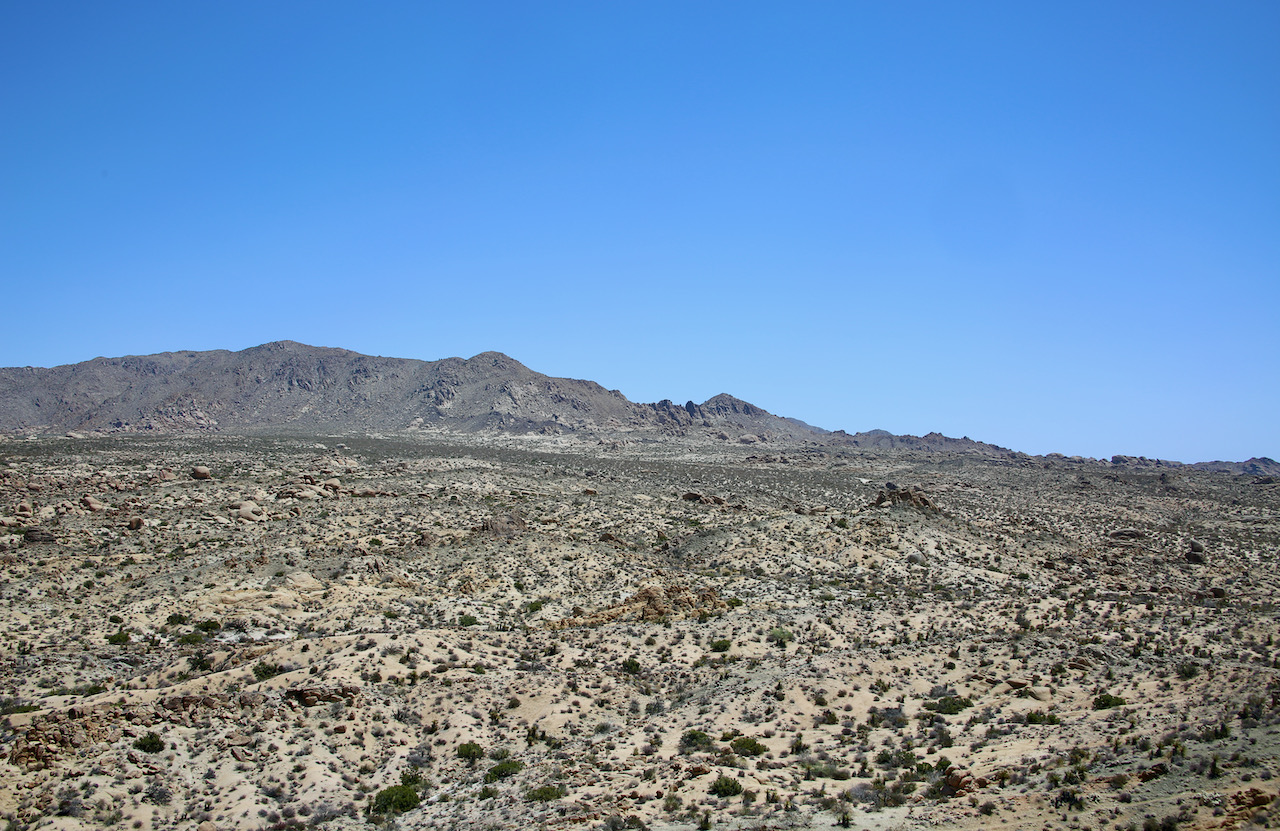
I appreciate the value the desert brings to the patient and curious eyes of those who seek to find its beauty. I’m grateful for the people who deem so much of the planet unworthy of their attention as it means there is more for me to see without crowds of selfie takers. My dad recently noticed that I don’t take many pictures of me in places (or that if I do I don’t post them) and I’m ok with that because I know what I look like and will watch myself age offline as I look back on these photos as the memories fade of the locations I was lucky enough to have seen.
There’s more color in the park this time but also more trash as I pick up a can and a straw that falls apart as I hand it to Caleb. We need to bring a trash bag with us everywhere we go. It’s one of the reasons we have a spare pocket when we dive — to clean up the laziness of others but at least in the desert the tortoise has to snort the straw in pieces instead of using it whole as nostril jewelry like its sea turtle cousin.
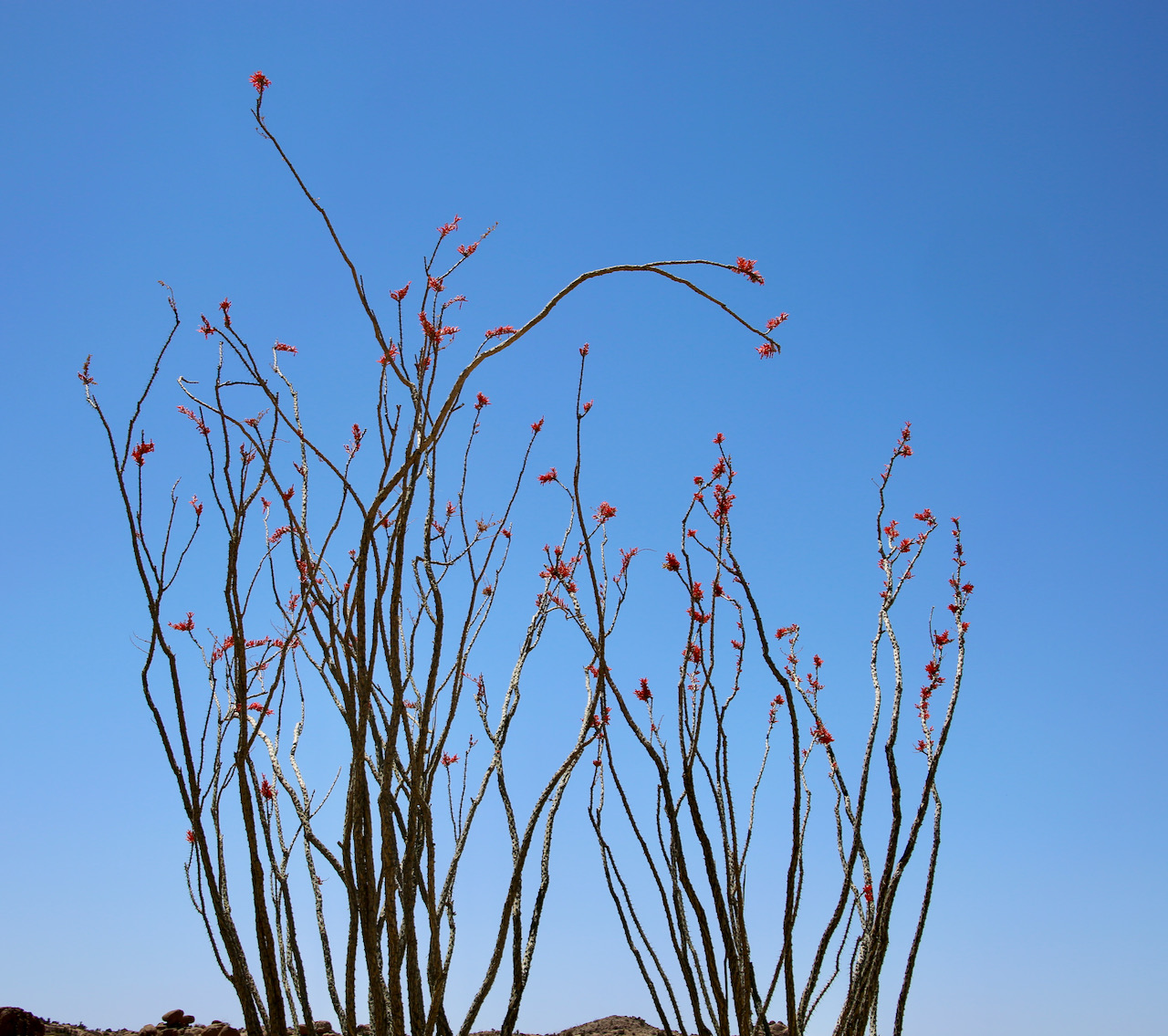
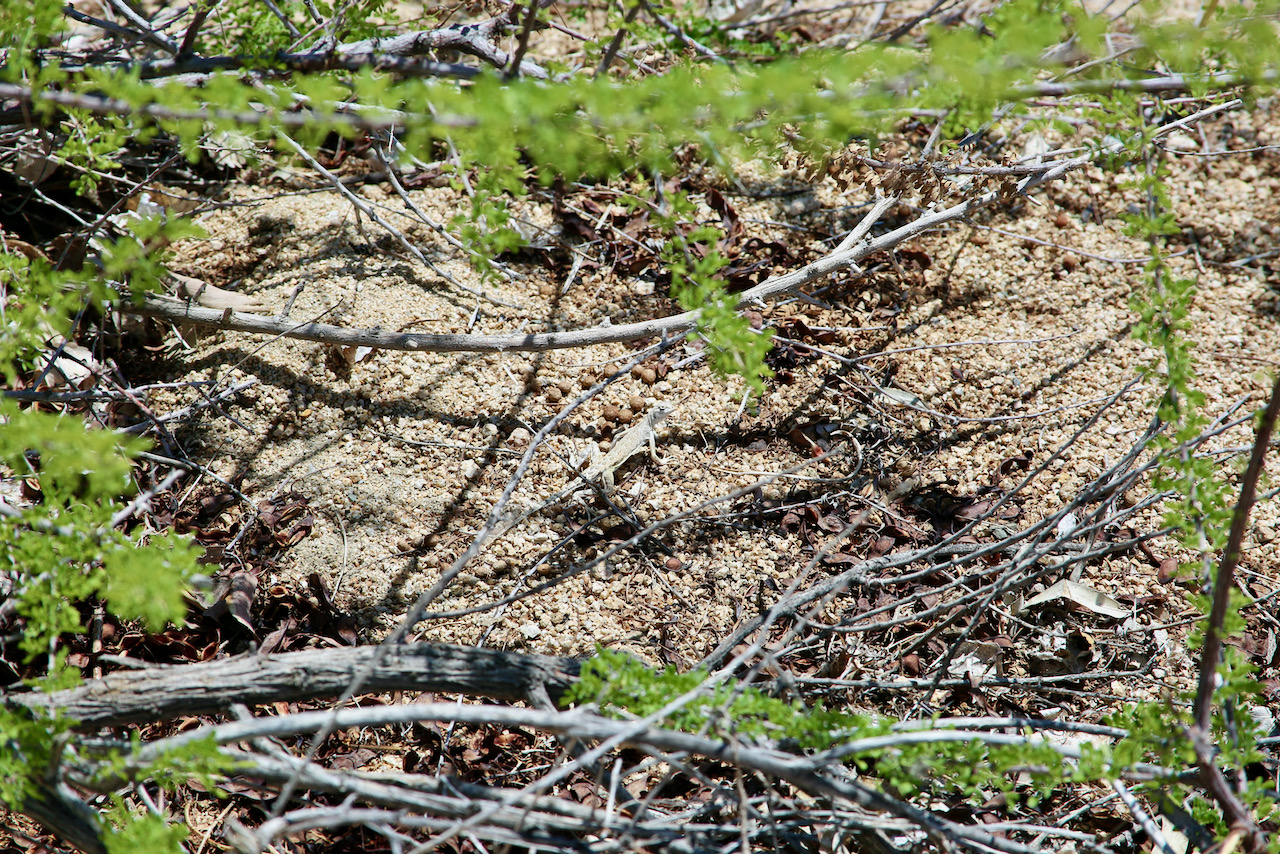
Each ecosystem is the most efficient artwork of its type — one that can be appreciated for the parts as well as the whole — the cacti and the mountain, the tree and the forest, the coral and the ocean — each doing their part to sustain themselves and working together to help each other create a masterpiece in their entirety. It’s for this reason that I squat down, lean sideways, and stand on my tippy toes to take in each angle of detail or to spy on something shy that’s trying to hide so I can take in the full essence of all the things my mind can’t remember about geologic history, animal science, and plant relationships.
I stare at a shadow and though I’ve seen a time-lapse of hours and a day, I imagine what it would be like to watch a thousand or ten thousand years go by in a 24-hour video. I could watch an overhead version of one park, then zoom out to a region (county, prefecture, borough), before taking the astronaut’s view of countries progressing through an era and watching their shapes shift. Nature is a magical place that allows the mind to follow these paths, sometimes into your daily routine where it’s hard for others to follow your thoughts as they meander through possibilities and connections yet unknown to them or fully to you.
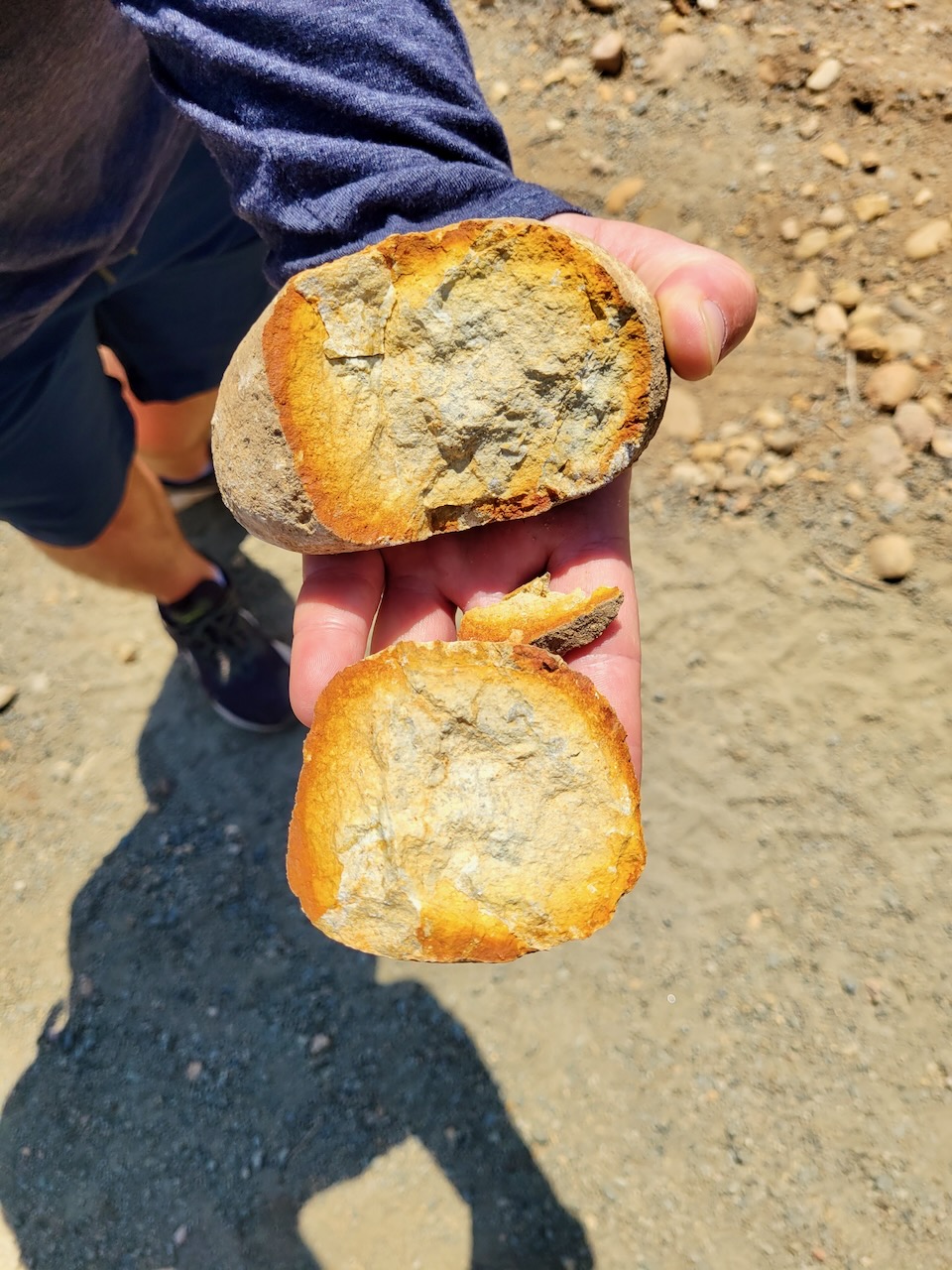
What do history, houses, and hounds have in common? They’ve all got untold stories that people can only guess at based on the evidence left behind — a cracked rock, some chipped paint, and a chewed on table allow our minds to fill in the gaps. What a luxury it is to see nature living its truth, even if it is through filtered ideals surviving on man-made edits in a limited environment that is structured more for human ease than it is to ensure its future existence. Meanwhile, I’m sure Caleb is on the lookout for bighorn sheep and avoiding the cacti cushions so conveniently placed along our path.
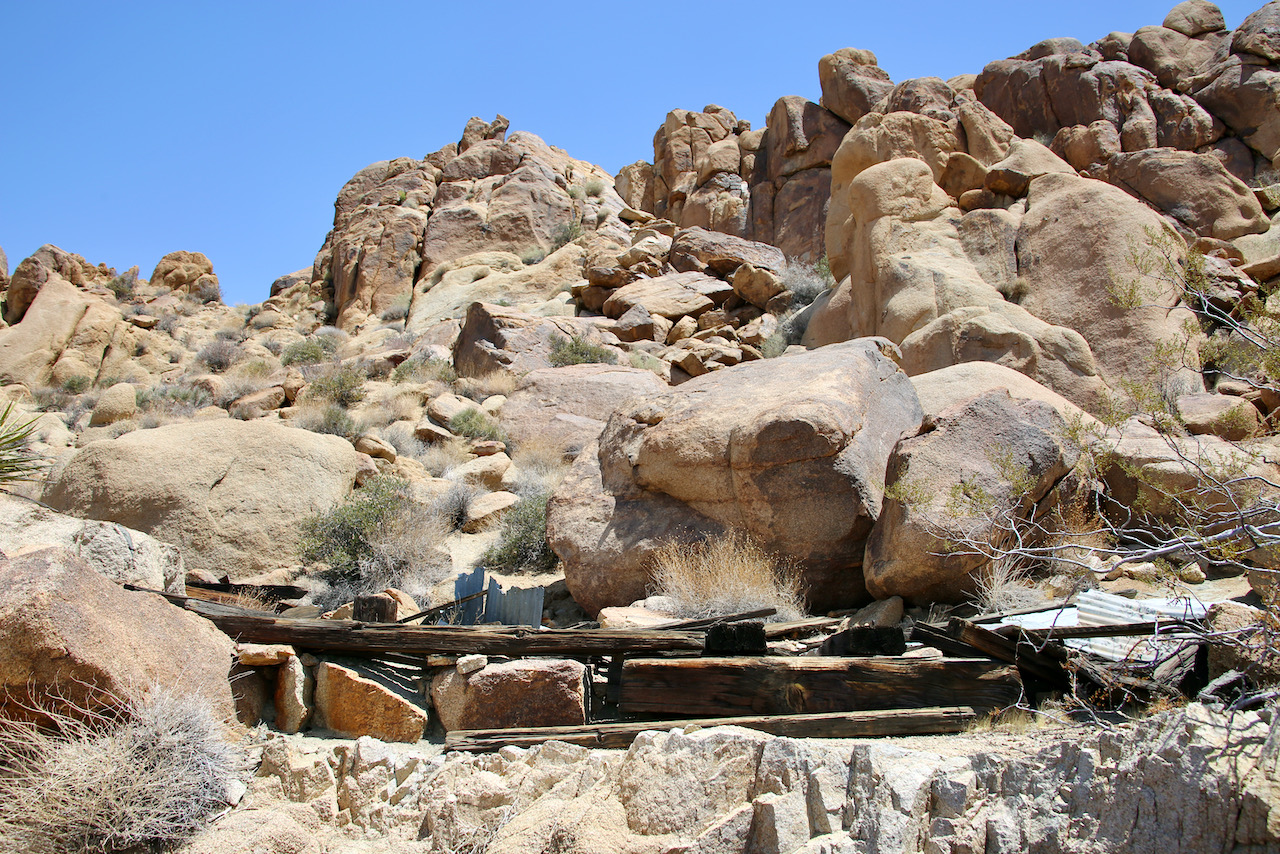
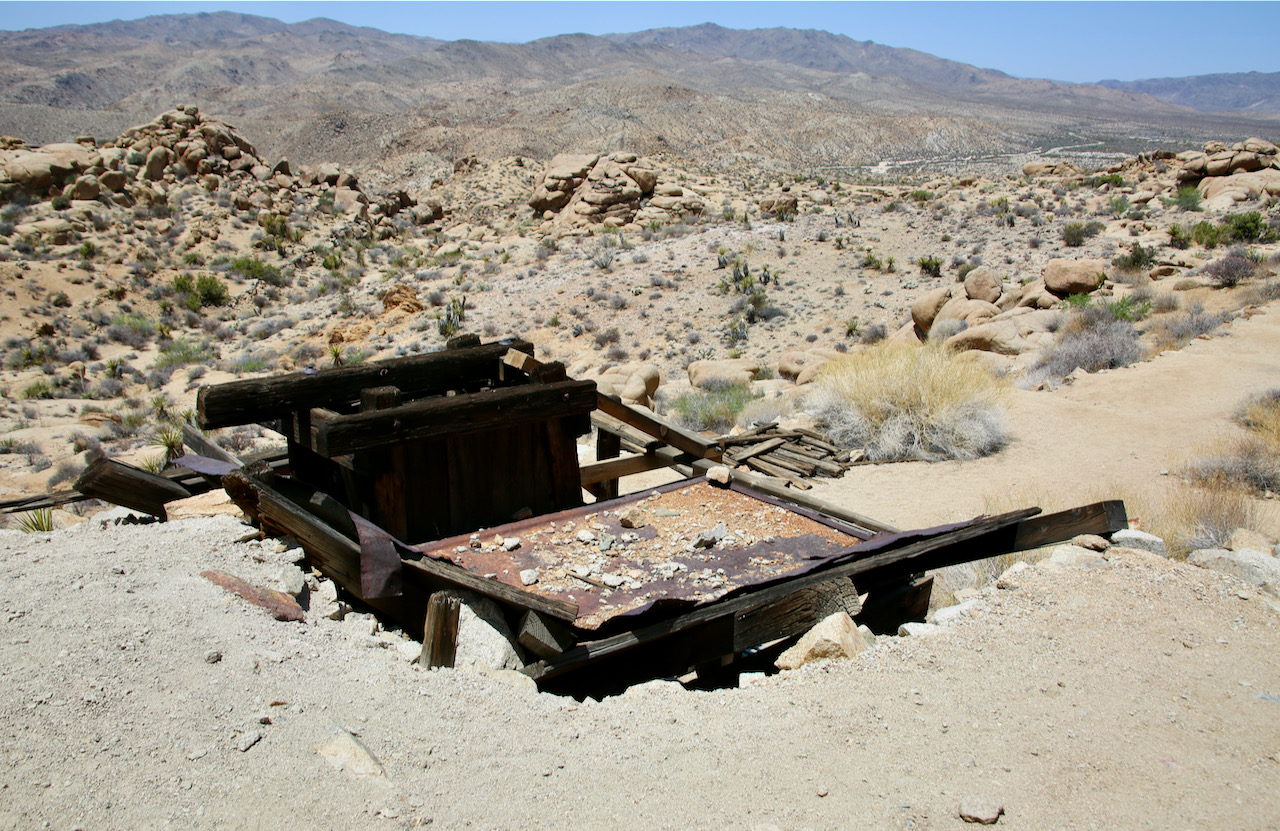
The peak is reached and more contemplation is had as we look out on the valley and then into the camera lens for proof we were here. On our descent, we pass Mastodon Mine, just one of the 300 or so in the park’s boundary, that the Hulsey family established in the 1930s and worked on and off for decades. The entrance is now barricaded from humans to protect the bats, but not closed enough to keep them safe from the trash thrown in. It saddens me that I can’t reach in there to remove it. I see the importance of parks putting more ethical plans in place but there’s not a convenient way to enforce them.
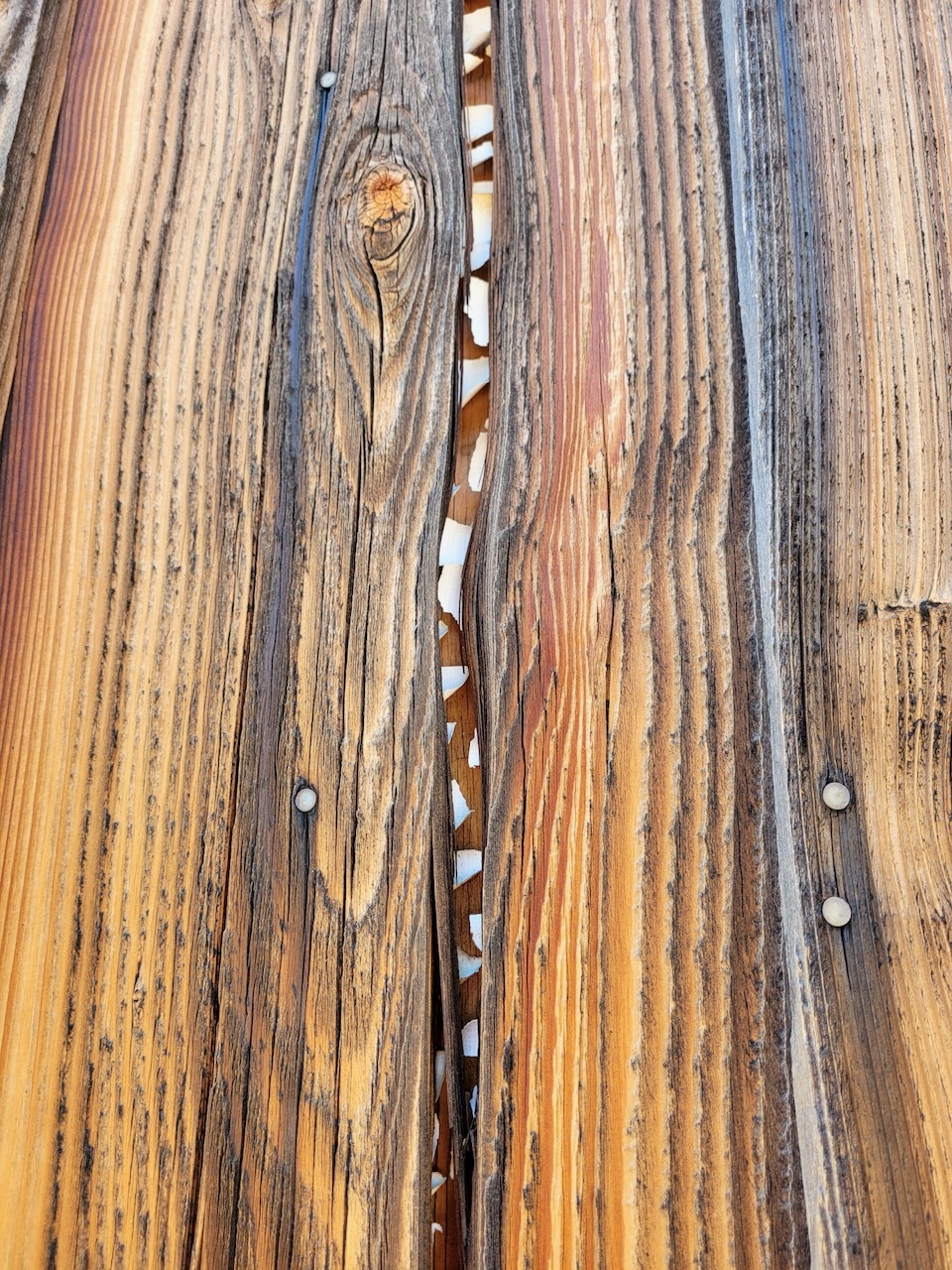
I look at the wood that’s been there almost a century, rough and weathered, and then notice the names carved into the new boards put in place to keep the original structure standing. I could live in a place like this — teepee, hut, cave, igloo, etc. and have a minimal impact on the environment but I (as a collective) have no time to make my own bread, fix my socks, fetch my water, and create electricity enough to keep the fridge running while I type on my computer about limiting some of life’s modern luxuries so that people could have time to explore more of their minds and less of their possessions.
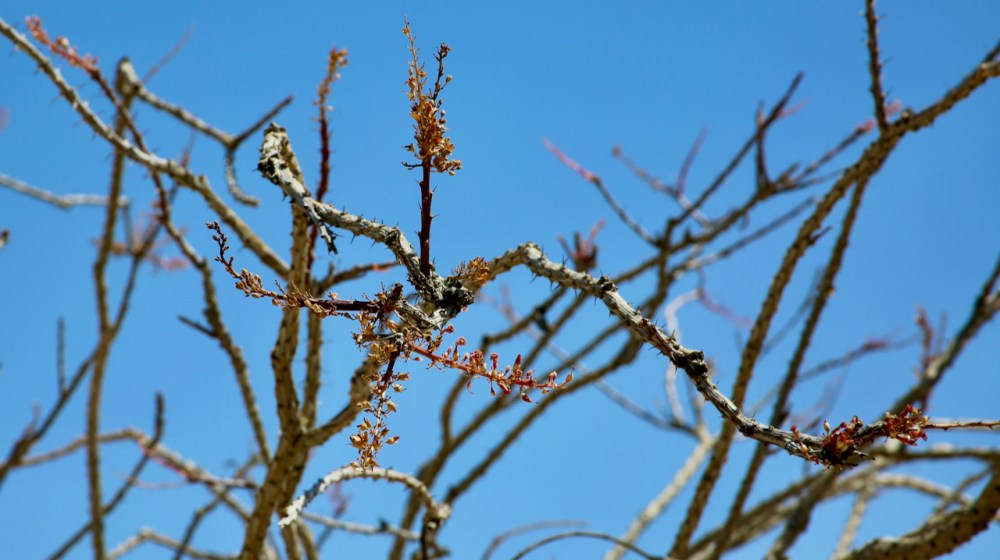
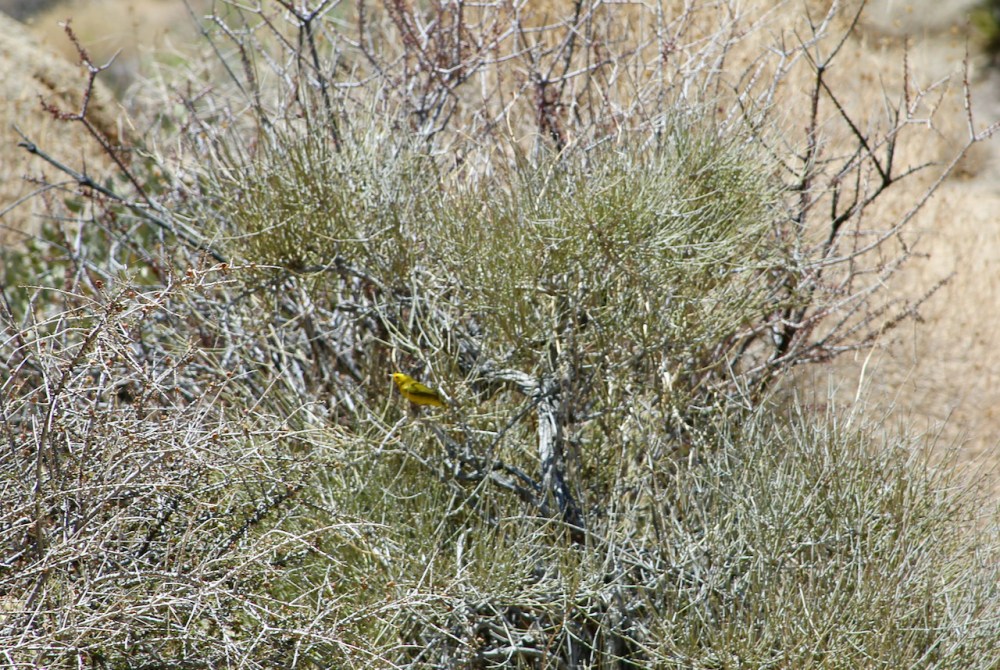
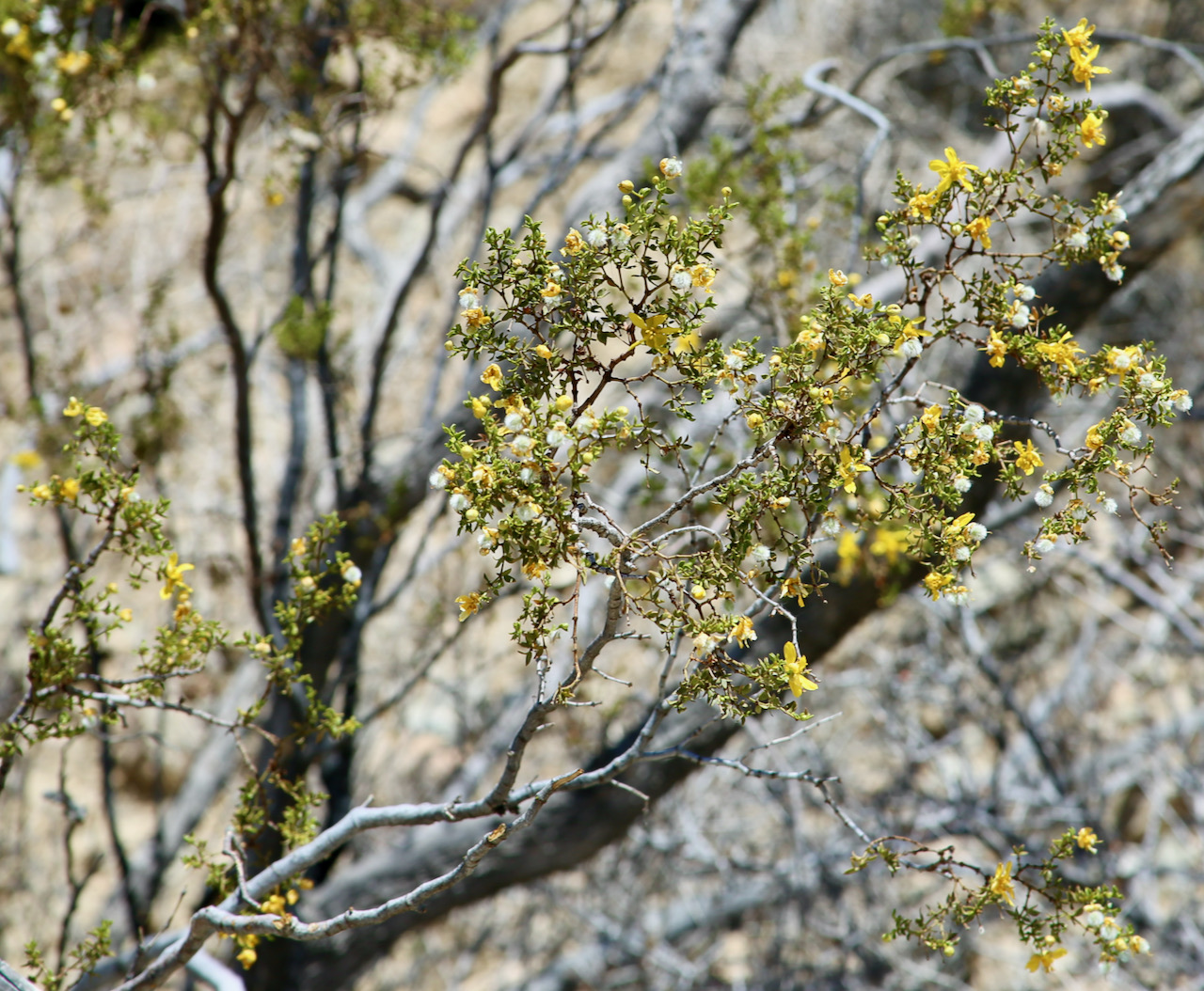
Luckily for Caleb, I keep a majority of these thoughts to myself (just while we’re exploring) and tell him my second post about Joshua Tree in May will be more about the park and less about my wandering mind, but it seems I got that wrong. Then we come across a Wilson’s warbler and our focus is on seeing the bird through his thorn bush (Lycium andersonii) camouflage as he flitters throughout its branches and I take advantage of the photoshoot moment. I love that Caleb has been with me long enough now to read an opportunity as its happening — such that when I want a picture he knows to move out of frame or grab the wheel.
We’re driving to our next hike and I see a couple with wood gathered in their arms and shoving it in their large SUV trunk like the trees are collectors’ items and not currently protected under the Endangered Species Act (which I didn’t know at the time). My junior ranger badge might not be on and I might not even have one for this park but that didn’t stop me from luckily being near a red ranger phone that I picked up immediately. It made me feel better that even if they put the wood back perhaps next time they will think twice before destroying something that isn’t theirs.
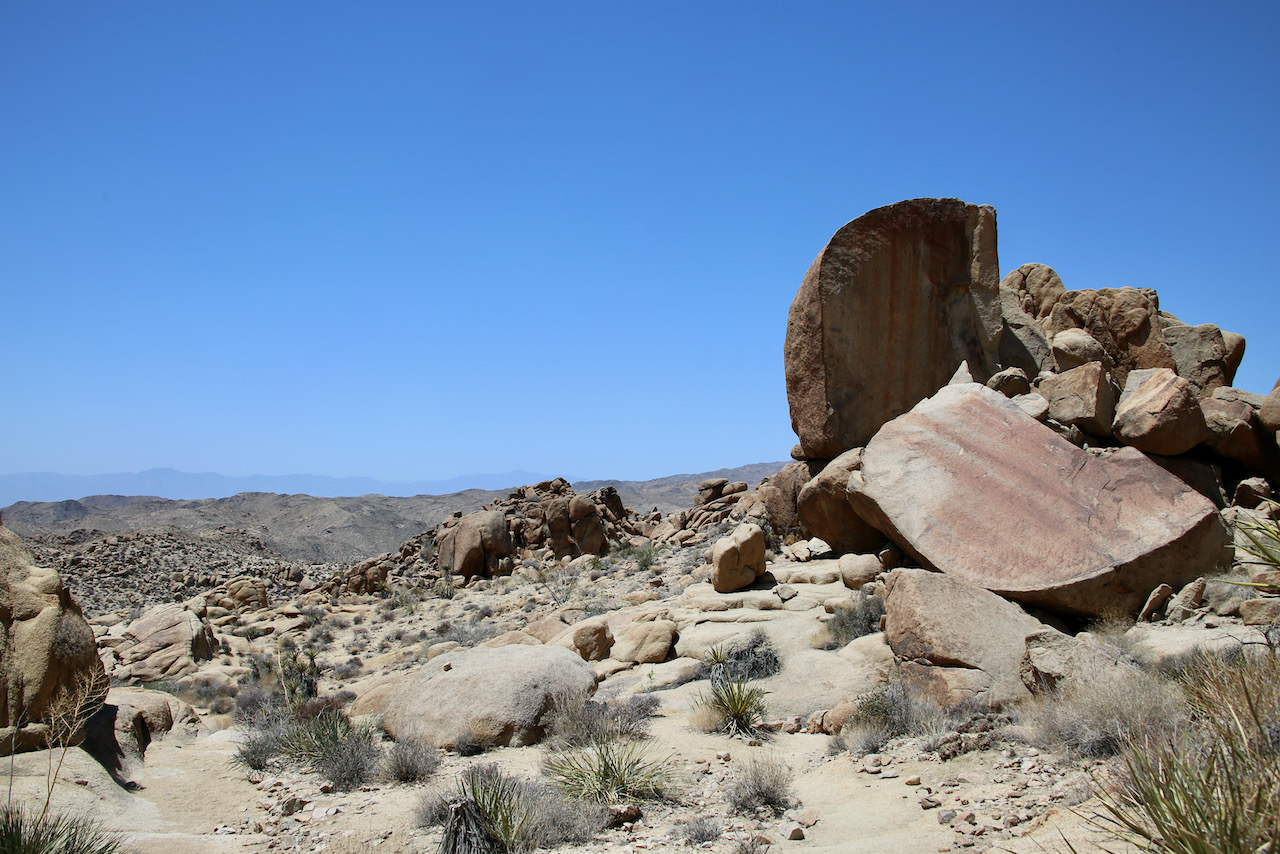
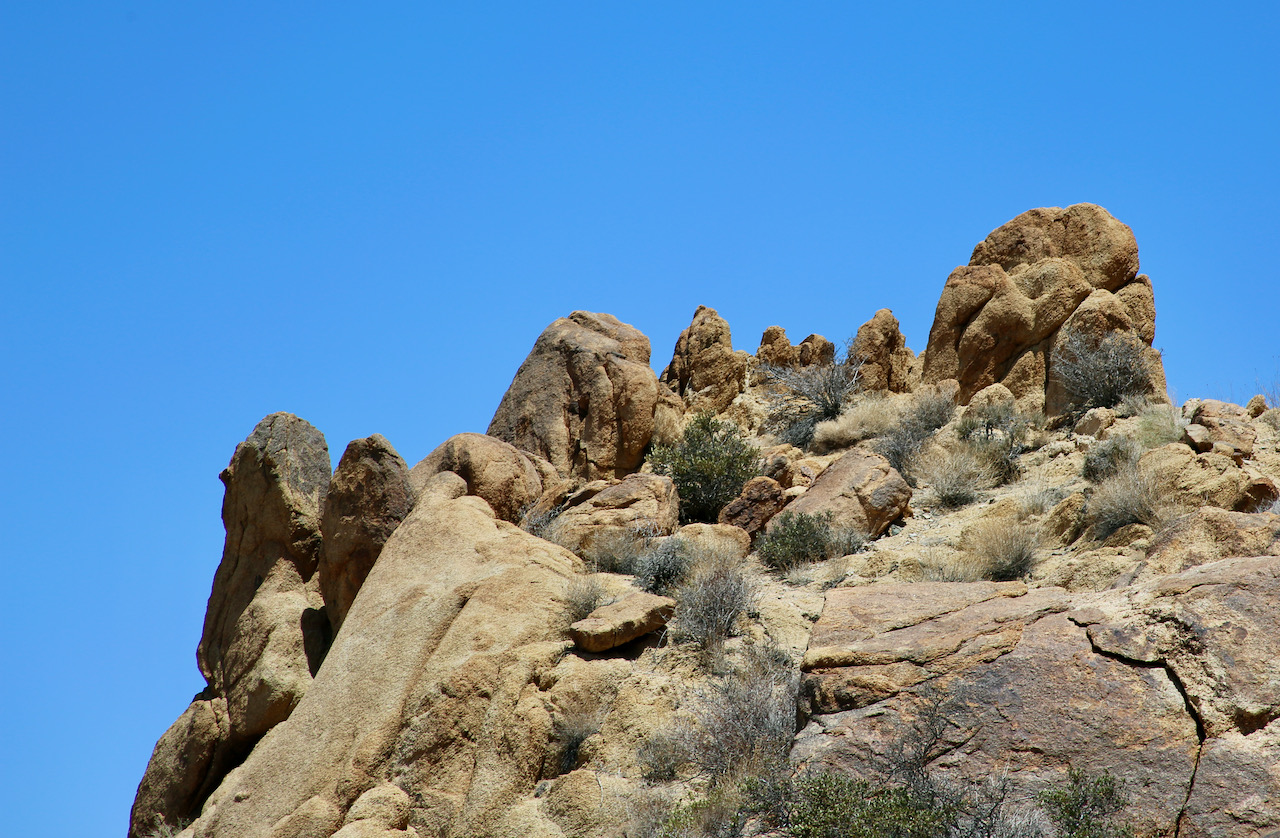
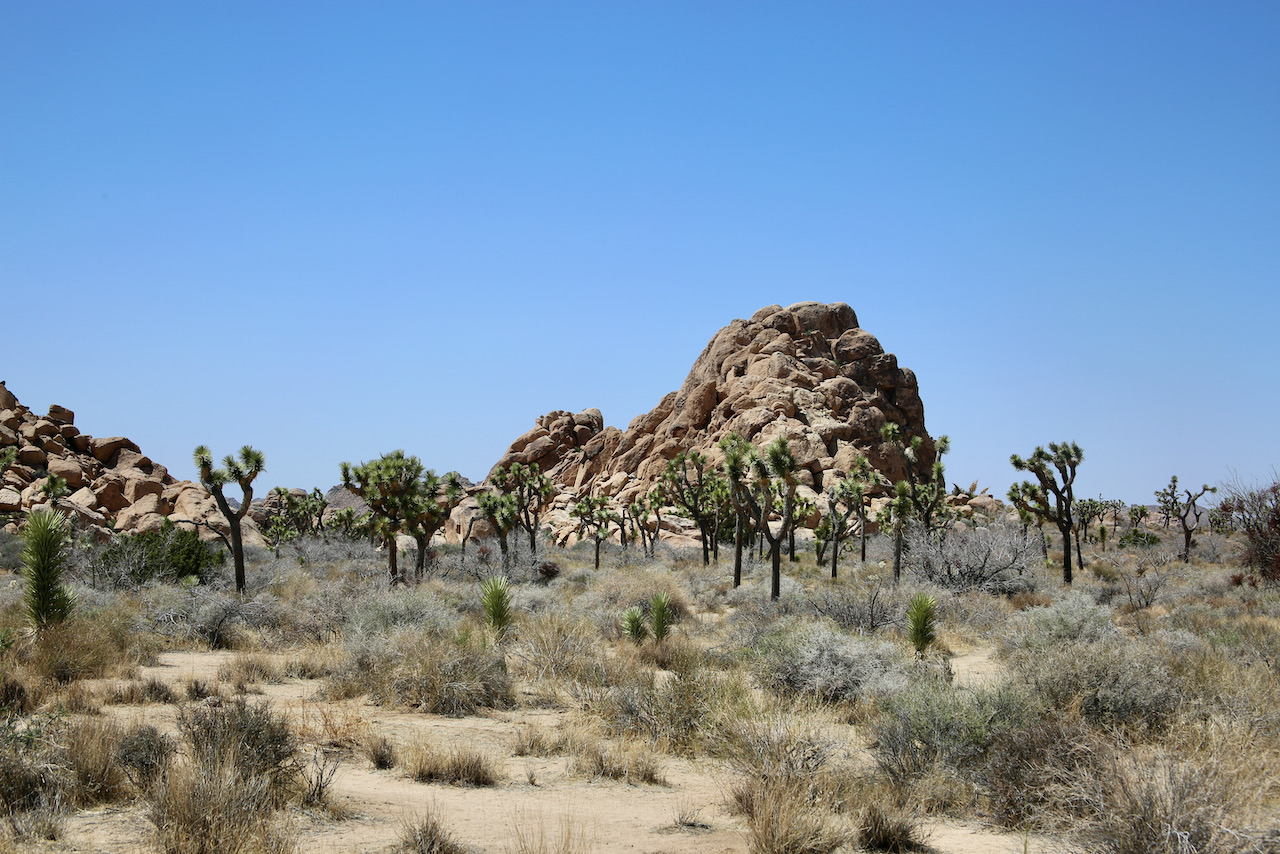
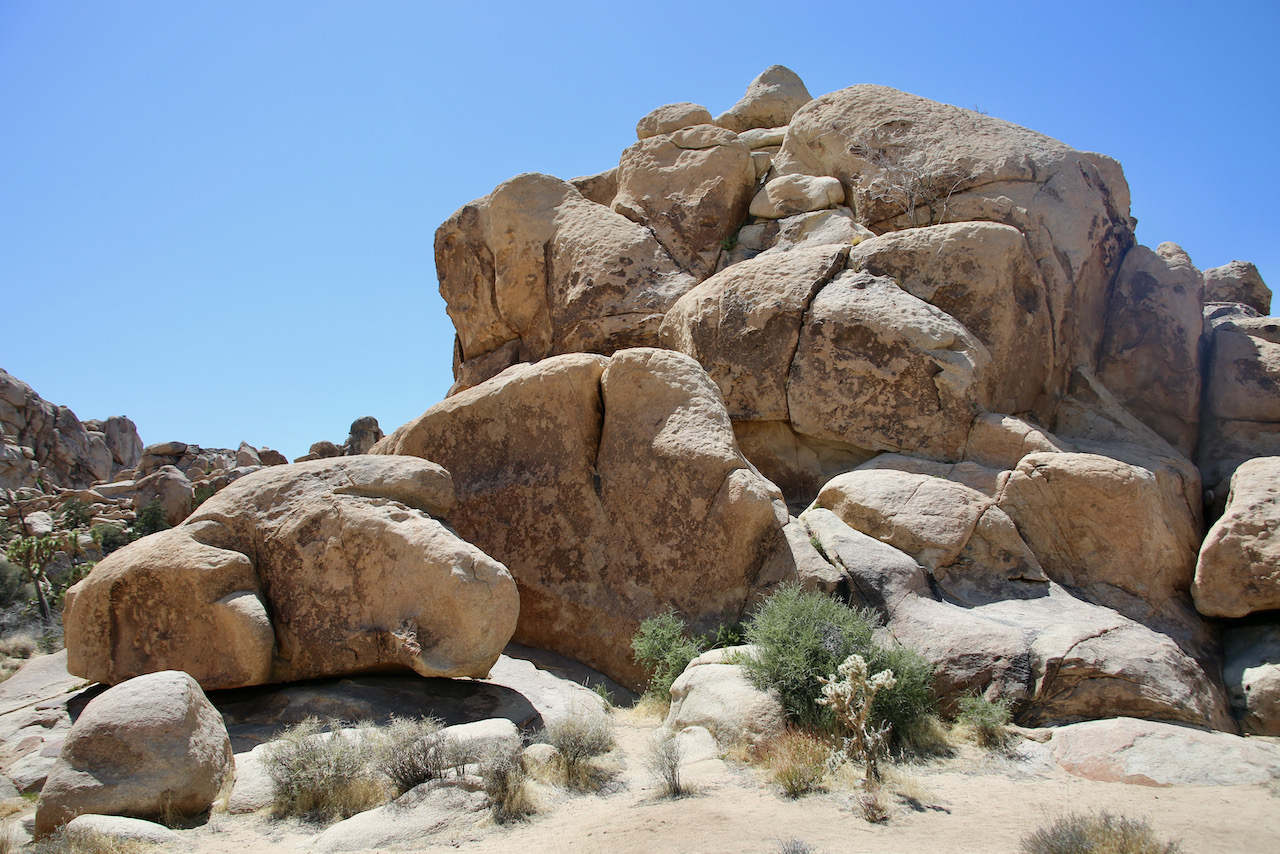
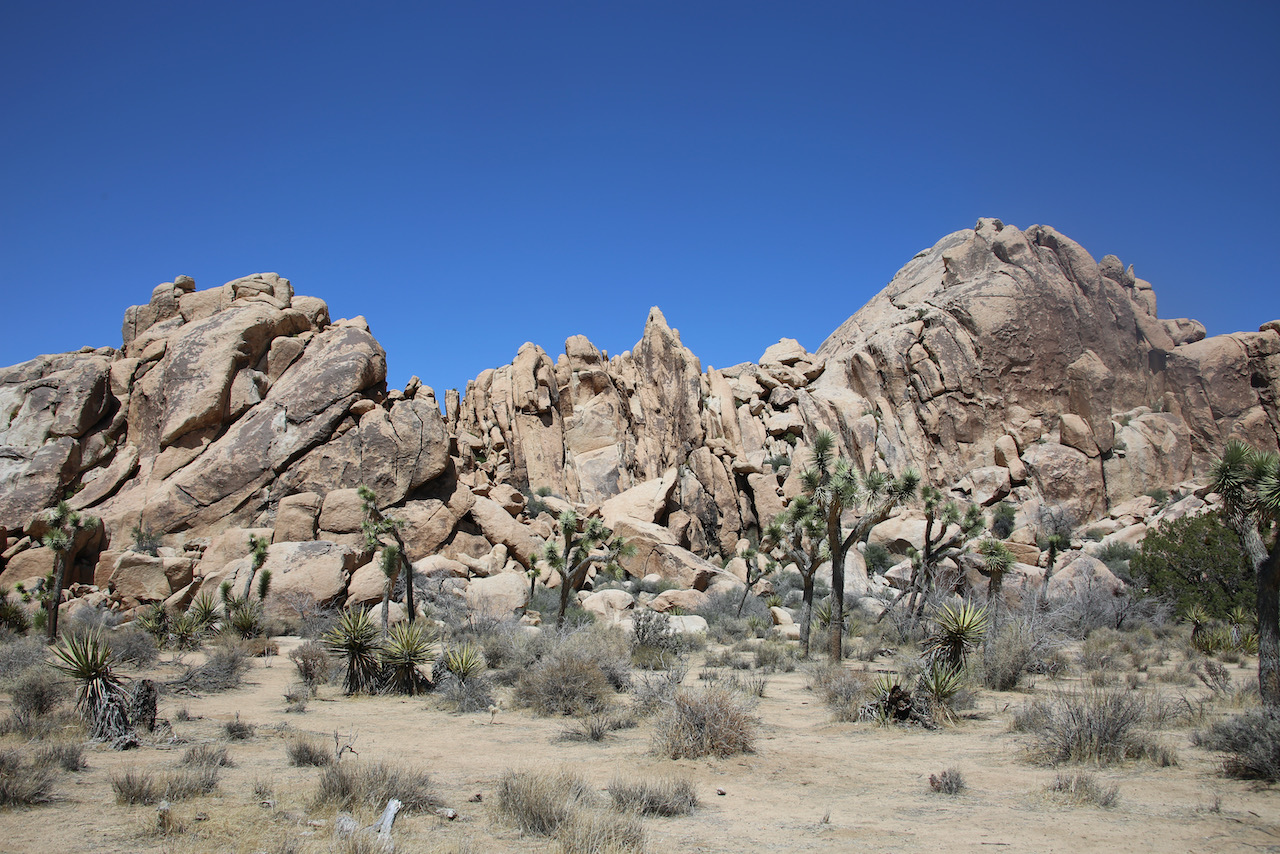
Caleb had chosen Hidden Valley as our second major stop of the day, but there was no available parking. Since our last trip the amount of visitors has more than doubled as there are cars parked along the road as well. I choose Hemingway instead, which is mostly for rock climbers but still able to be enjoyed by those of us without extra gear or needed experience. This is a nice finish to the day before we drive a bit out of the way to save 30 cents per gallon on fuel; the price of which continues to rise. That’s the cost of travel, which as an avid adventurer I’m ok with paying more for being frivolous in my explorations.