1. What is your resolution for tomorrow?
Go to a motorbike race with Justin’s family.
2. Who do you live with?
Currently at Dave’s house in South Africa with Brad, Justin, and Wendy while Caleb is at home in Bahrain.
3. On a scale of 1-10, how sad are you? Why?
I’m bummed about my travel partner and plans but I’m having a relaxing time for the most part, so a low of 2.
4. Outside, the weather is…
sunny and clear with plenty of clouds while we spent the afternoon at a flea market.
5. What are you obsessively listening to?
the South African accent
6. Are you seeking contentment or excitement?
To be content when exciting things aren’t happening
7. What are three things you need to buy?
bread, milk, and fruit. The house is empty since I’ve been gone but less dirty than the last time I came back.
charcoal soft-serve in chimney roll
8. Are you in love?
I love myself more than I realize and am more forgiving and patient than most people expect. I’ve lost a lot of love in my life but I’m always ready to return it.
9. How late did you sleep?
Until around 8:30a this morning. I made up for a week of lack of sleep in South Africa by going to bed at 9p on Friday and sleeping till 11:30a on Sat.
10. If this day was an animal, which animal would it be?
A unicorn cat, a bit lazy but able to grocery shop, blog, and take a nice shower.
11. How did you get to work today?
Caleb went into work late today and left me to sleep in; for not having jet lag I seem to need the extra rest.
12. What is your biggest obstacle right now?
time, as there’s only a limited amount of that.
13. What’s your favorite question to ask people?
How? How they’re doing or how their day went or how was it there?
14. Did you kiss someone today?
Yes, Caleb before and after he went to brunch with some of the guys from work. I napped while he was gone and he napped when he got back.
15. Write down the cure for a broken heart.
Accepting the challenge
16. What was the last performance or concert you went to?
Rocky Horror Picture Show with Justin, Wendy, and Dave in South Africa, the matinee.
17. If you could change something about today, what would it be?
I might not have drank so much coffee (the two ounces that I had) but then I wouldn’t have had the energy for the phone calls I made later.
18. What’s the most expensive thing you’re wearing now?
My wedding ring, then Samsung smartwatch, purple promise ring, and new flannel pajama set that Caleb ordered on Amazon.
19. Who is the craziest person in your life?
My dad would say I’m the craziest he knows and that, to me, used to be a compliment.
20. What word did you overuse today?
Food, I blogged about food and pantomime from December and got a cute comment from Uncle Chester about how I talk about food so much but still look like I need a cheeseburger intervention… as long as it’s veggie.
21. What is the current buzzword?
Right?! Funnier than it sounds and used more often than I noticed.
my pani puri spot, Show Shha
22. What was your prevailing emotion of the day?
Satisfied. I got sleep, ate food, bought more food, got some blogging done, and had a relaxing day. Meanwhile, Caleb feels ill.
23. What’s the most embarrassing purchase on a recent credit card statement?
I don’t get embarrassed easily, but others do, so I’ll keep my answer discreet.
24. Today you’ve got too much…
clothes I don’t wear, but I’m working on changing that.
25. What’s the last dream you remember?
I forgot my coat for a camping trip and passed up free snacks because I was in a hurry.
26. Name one item you can’t throw out.
I have a lot of those items, but Goodwill gets lucky sometimes.
27. Are you the original or the remix? Why?
The remix, not what I started out as, but the same as time and place change but I remain.
28. When was the last time you were sick?
I’m suffering from the worst headache in a long time and trying to recover from being sick for five days nows. Last time was the same time last month, but less horrendous before I left for South Africa.
29. Leap year? What did you do with the extra day?
I woke before 7am and was back in bed before 8:30 after an everything bagel to sleep until 2:30 after taking the cold pills Caleb brought home last night.
1. What is your mission?
I’ve written a list of 20 main objectives for the year and expanded on some of them, others will come throughout the year when I’m able to add to them.
2.Can people change?
Yes, they can make conscious decisions to change their habits and sometimes they are forced to deal with a situation that forces change.
3. What are you reading right now?
I’m halfway through Political Psychology, a third done with What Would Great Economists Do, and a fifth of the way through the Origin of Species on Kindle.
4. The best part of today?
Running a mile and getting an email from Caleb less than 24 hours of him being underway, especially not knowing if I’d be able to hear from him.
5. What was the last restaurant you went to?
Dome yesterday to get a croissant that I put in my plastic bag I carry in my purse for its foldability, otherwise, I’d use one of the canvas ones from the States.
6. Today was tough because…
It wasn’t. All I had to do was pack my bag for Georgia, pick up my lens from the shop, do dishes and take out the trash, and have dinner with friends.
7. You are lucky; how so or not so?
I got to keep my carry-on bag with me, got a free lunch, a cheaper room, and service enough to find it.
8. What song is stuck in your head?
Mostly Christmas jingles from today but the guys in the lobby were listening to YMCA.
9. Was today typical? Why or why not?
Not, I saw 3 religious buildings in Mtskheta and got to search for a place to sleep in Gori.
10. Write down something that inspired you today.
Driving through the snow-touched trees and seeing them covered in snow on the mountains.
11. Today you lost…
Maybe some time driving with Dima but gained views I wouldn’t have seen otherwise.
12. What’s your favorite accessory?
My camera to capture the awesome, my phone to guide me there, and my coat to keep me warm and dry.
13. Where do you want to travel next?
Sharm el-Sheikh for diving and Morocco for hiking and South Africa with Justin.
14. Are you a leader or a follower?
I followed today, behind the local drivers and the guys to their fancy hotel for free dinner and secondhand smoke.
15. On a scale of 1-10, how was your lunch today?
7, I tried a new tea that I’m saving half of for Caleb and a layered nut cake that I ate out of the bag.
16. Do you owe someone money? Does someone owe you?
Nope, just lessons learned in how to travel better next time.
17. What’s the oldest thing you’re wearing today?
My promise ring from 2007 before my wedding ring in 2008… and my favorite bird, the owl, necklace from our 11-year anniversary.
18. What was peaceful about today?
Making a moisturizing serum and some resin with rose petals, lavender bulbs, and dried lemon as lids/coasters and posting pictures of the candles Justin made yesterday, that I labeled.
19. List three foods you ate today.
Al Abraaj bread with hummus, tortellini, bowtie pasta, fried rice, and sugar cookies.
20. Are you holding a grudge? About?
No, humans will make their choices and it’s not on me to make them change but to make decisions that fit my goals.
21. What are you looking forward to?
The week I will be spending in east South Africa with Justin and Wendy whom I met Jan 3 and today, respectively.
22. Are you seeking security or adventure?
A bit of both as I plan my trip to South Africa, which is on the Top Ten list of crime countries, with Justin and Wendy.
23. Do you need a break? From what?
I actually need to get to blogging about Georgia before I go to South Africa, but I should have time to write about both before my trip to the States in April.
24. If you were going to start your own company, what would it be?
I’m actually becoming a hidden partner in Designed by Snow which creates candles, soaps, serums, and other relaxing bath-inspired products.
25. What makes “you” you?
My ability to seem to connect with people only to never really keep in touch with them.
26. Today you needed more…
I slept till 2pm after going to bed early because I’m dealing with being sick while I should be packing for my trip to South Africa in two days.
27. Which art movement best describes you today?
Realism, as the reality of my trip to South Africa settles in and I leave jewelry and electronics behind.
28. How do you describe home?
Wherever I happen to be sleeping at the moment, but more so where I can be myself.
29. What was the last TV show you watched?
“The Story of God with Morgan Freeman: Heaven and Hell” on the flight to South Africa.
30. What do you want to forget?
The little unhappy moments of this trip.
31. Who do you want to be?
Exactly who I am, regardless of how others treat me.
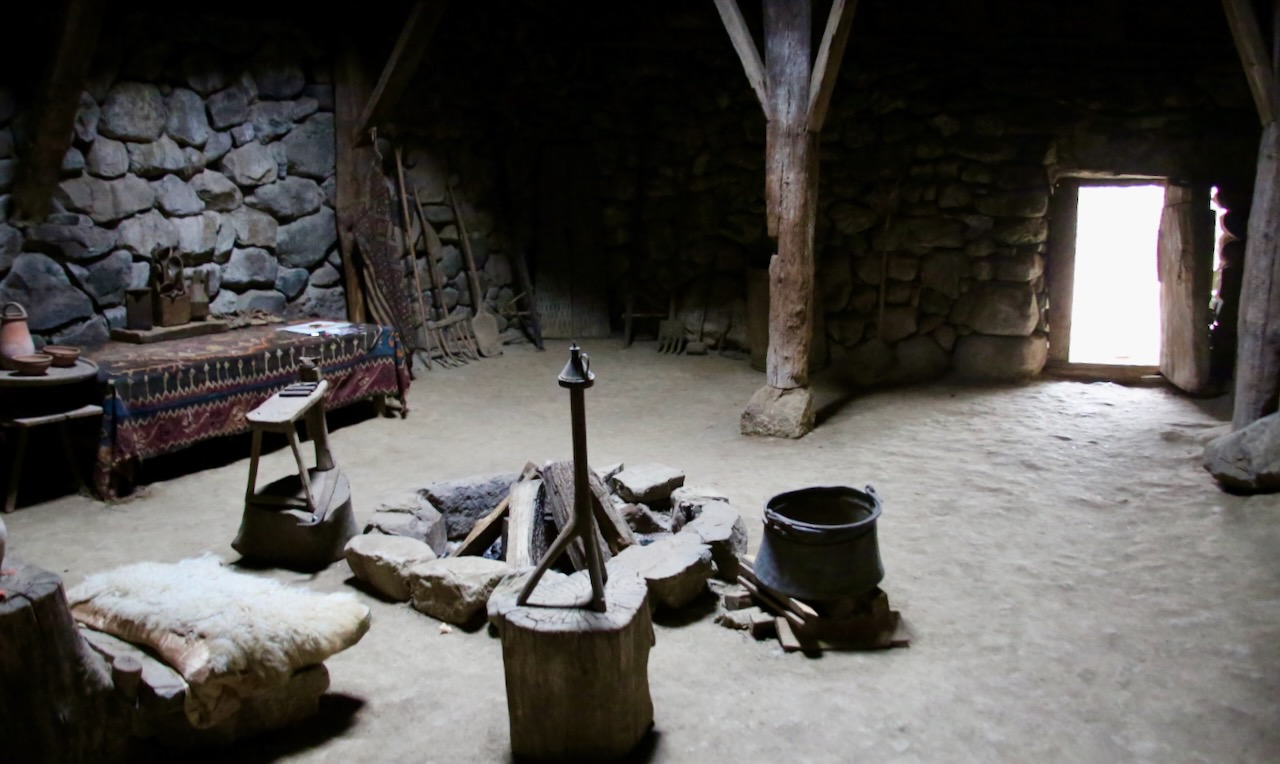
I pull up to the gate of The Ethnographers House (aka Tbilisi Open Air Museum of Ethnography) just as it opens at 10 a.m. The employees are getting keys to unlock the different buildings on the grounds. This museum was opened in 1976 as a mini model of Georgia (the country) to showcase the houses on mountain slopes, the ryegrass front yards of the west, and the darbazis (a partially underground dwelling with an elaborate roof structure) of the east.
Darbazi is also the name of a Toronto-based band, founded in 1995, that has studied traditional vocal music and polyphonic singing, including work songs, lullabies, elegiac table songs (of mourning), krimanchuli yodeling, and sacred chants. I pay the 5 lira entry fee and am given a tour by an (or the) artist of the park who talked about the Vagina Stonehenge, a phallic stone with a hermit to impregnate women, a widow who had sexual relations with her village in Africa, and a circle jerk in India to reach a God via a guru. I seem to have that effect on people to have these types of conversations.
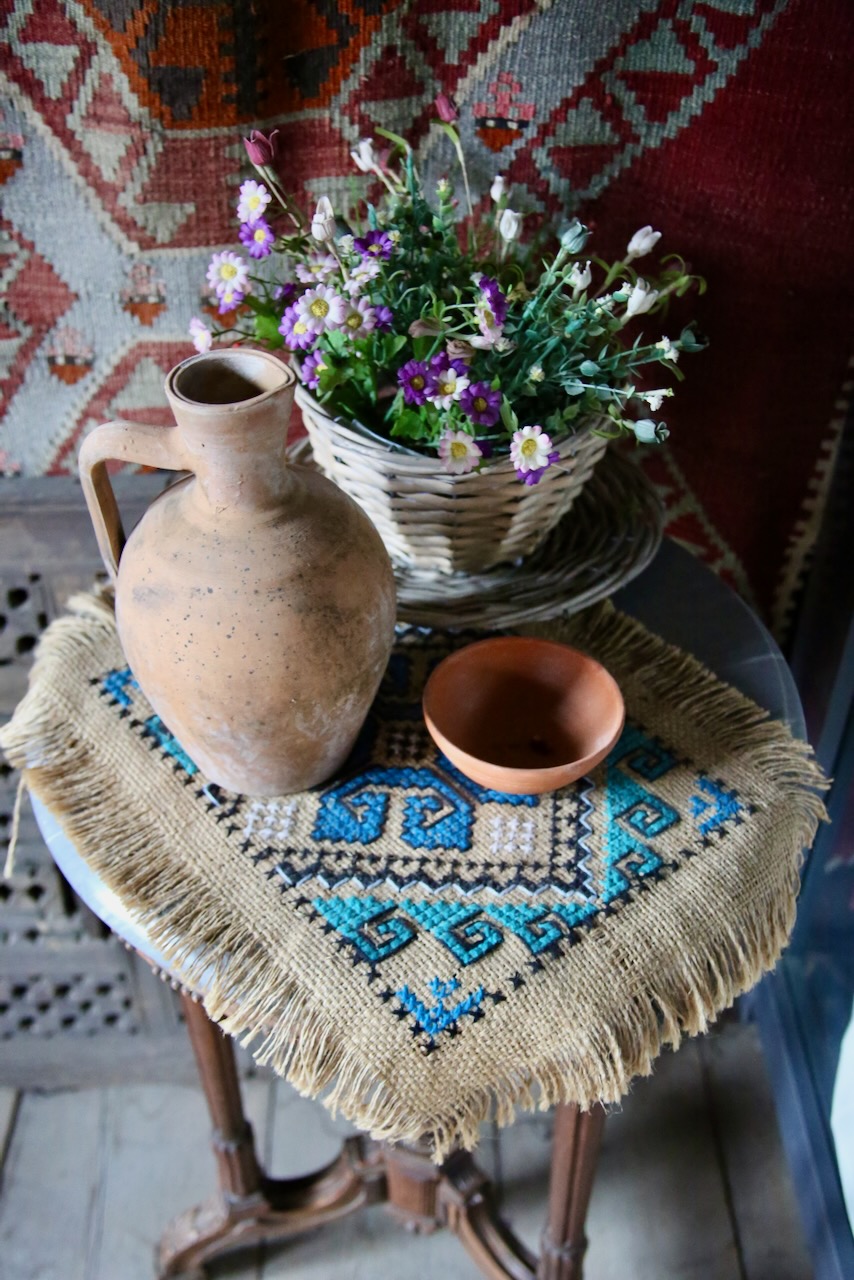
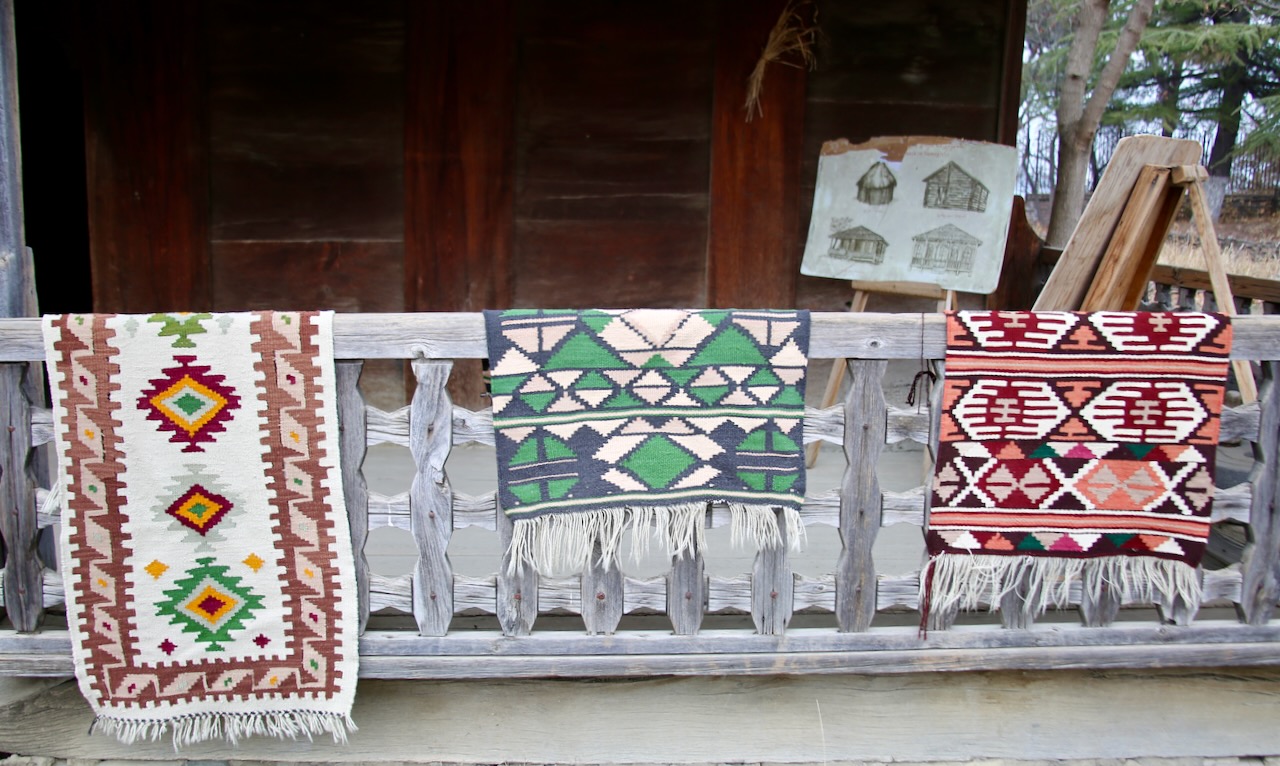
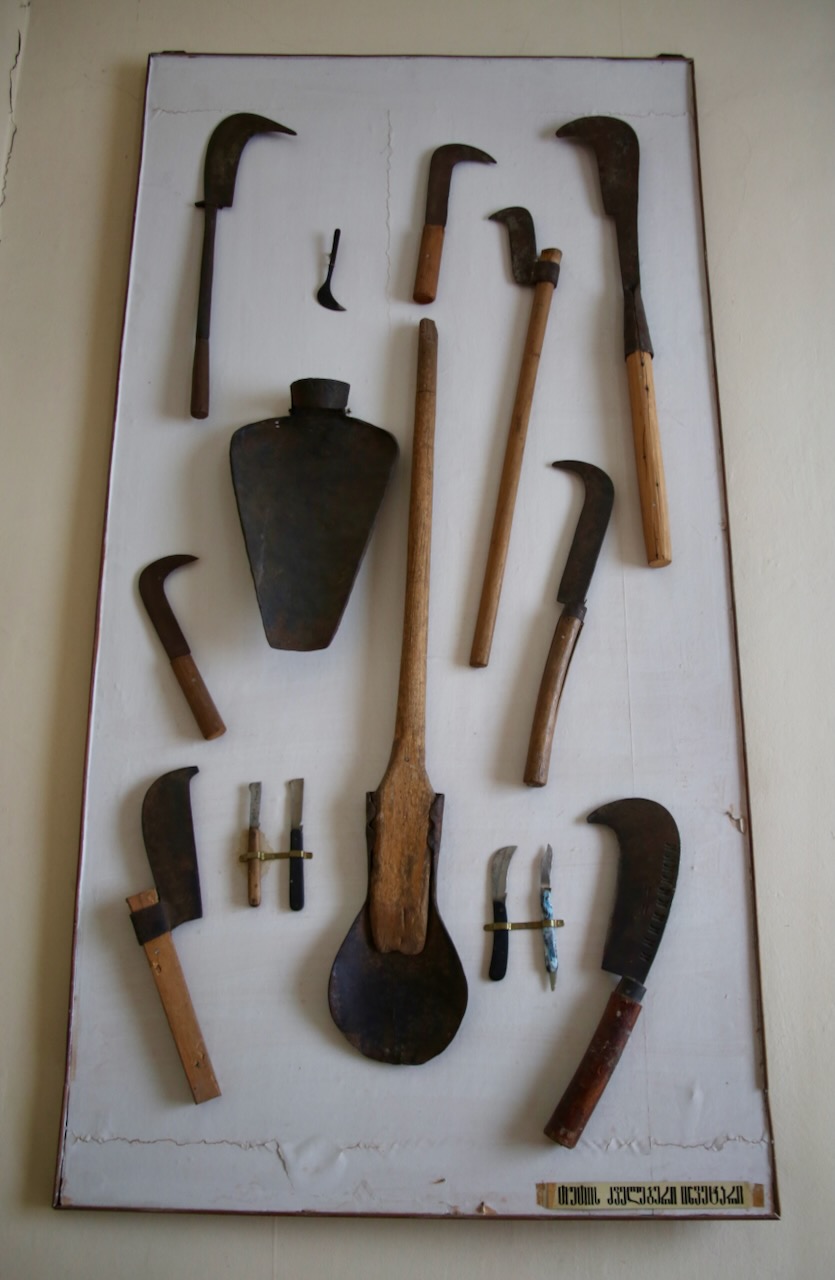
The Sajalabo house from Ontopho village has an exposed porch and attic displaying rugs and baskets. Inside are placed a variety of wine jugs along with a few instruments and tools. The Oda house from the same village has more porch beams and windows. There is a lit fireplace inside and more detailed tapestries on the walls. There are elegant wooden furnishings, a few mirrors of varying sizes, and vertical split doors. Another house has more stairs than a porch, a cup the size of a small table, a gun hanging over the wall-length bench, and a cauldron in the center of the room.
Art Palace
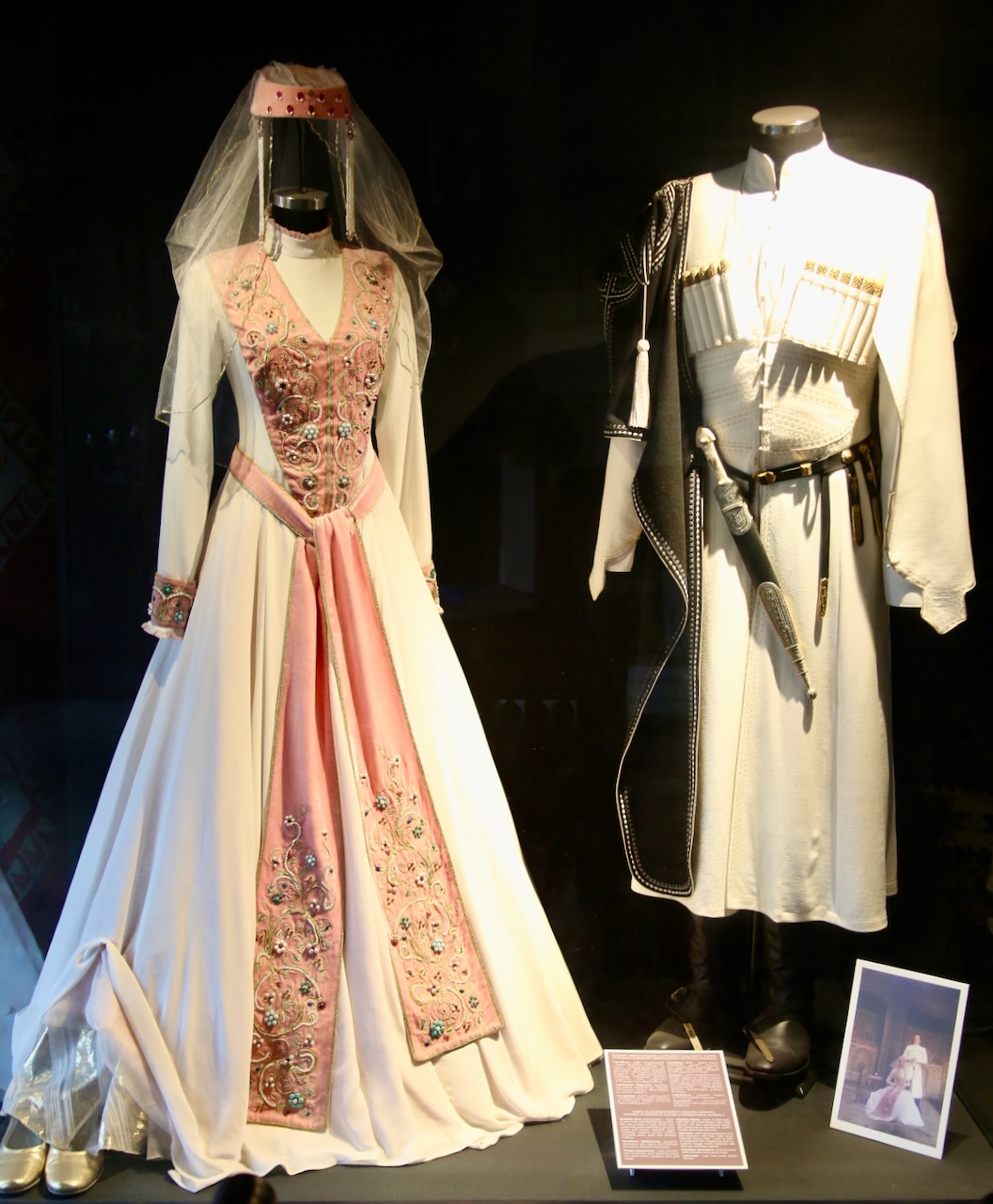
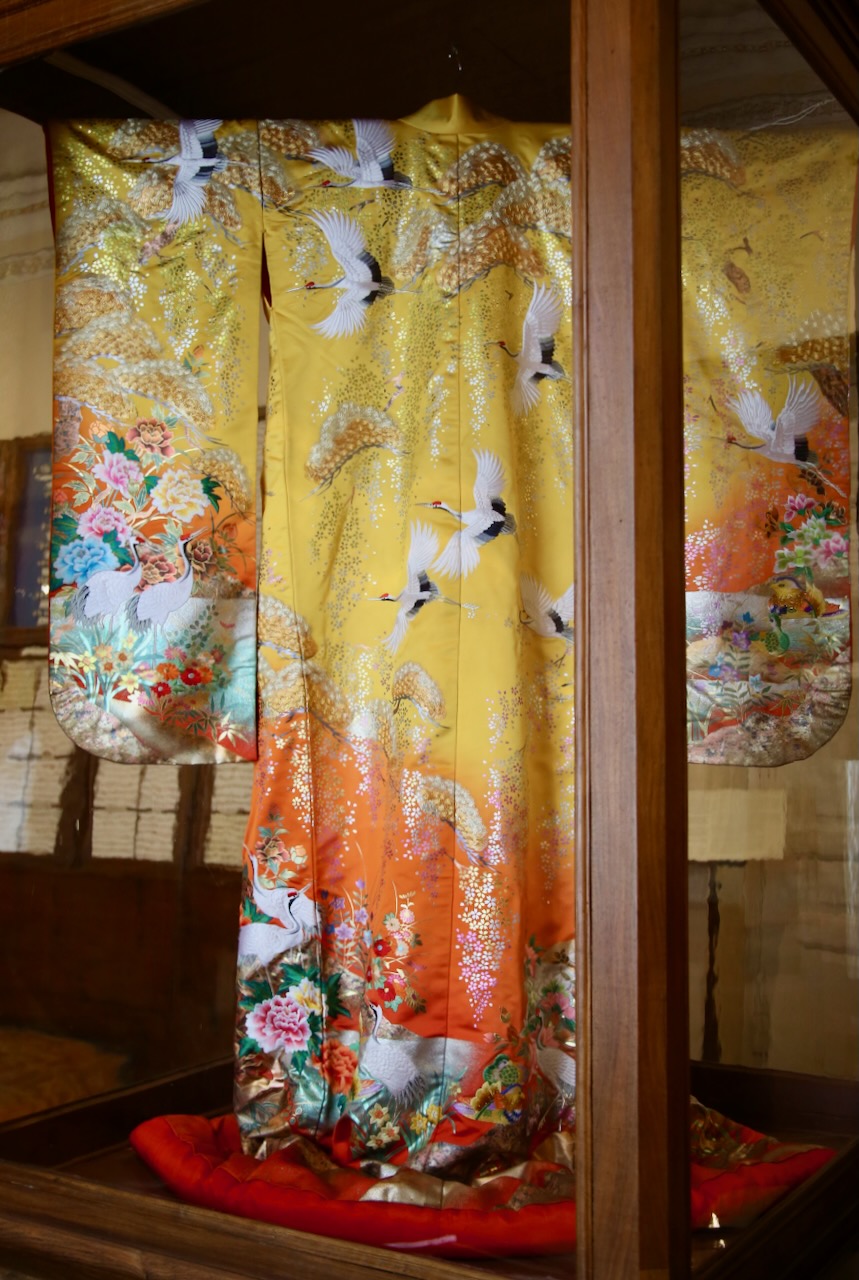
In a larger house, there is a sample of wedding clothes that would’ve been worn by nobility. That explains the silk and velvet with gold embroidery and precious jewels on the bride’s dress and the groom’s chokha (a woolen high-necked coat, this one white) with golden-headed silver bullets on his chest and a leather sheathed dagger at his waist. There is a house from the Tskhami village and the Teliani village, and what stands out is how well they were built for their location and residents’ occupation.
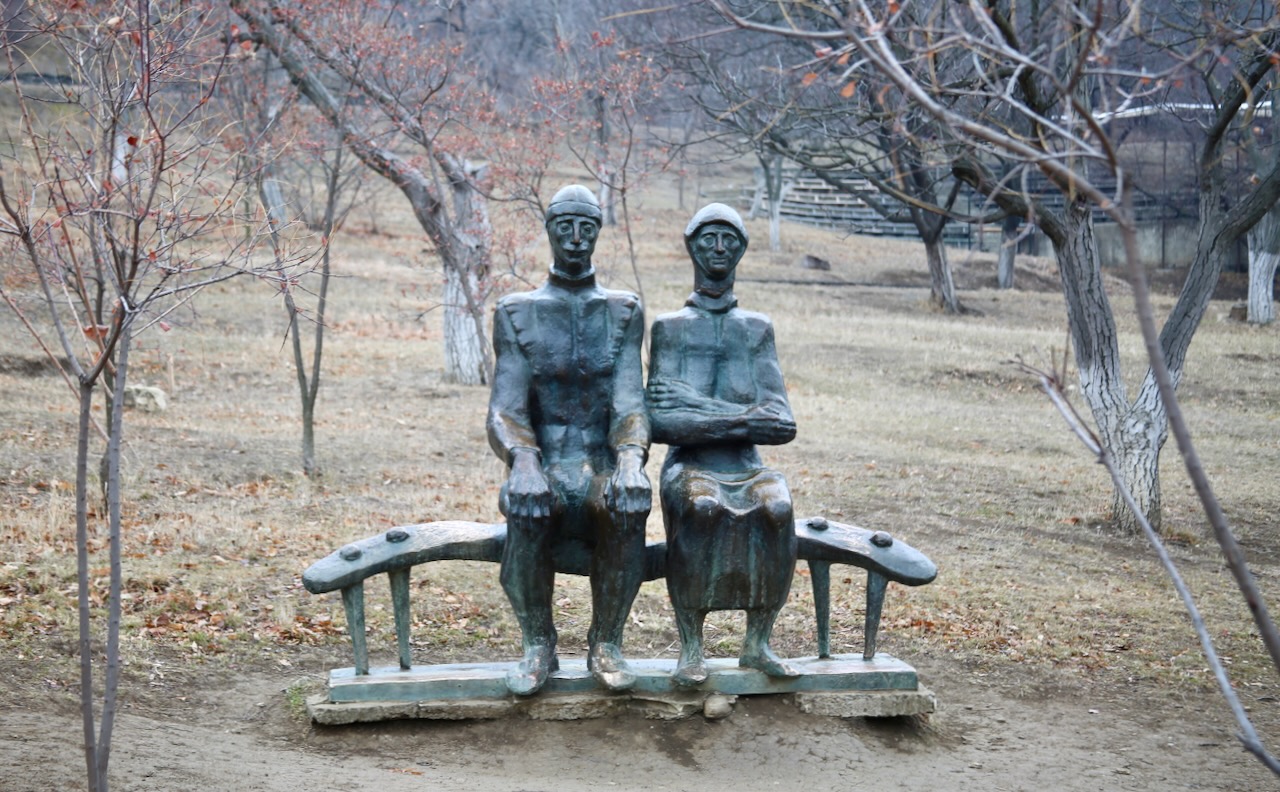
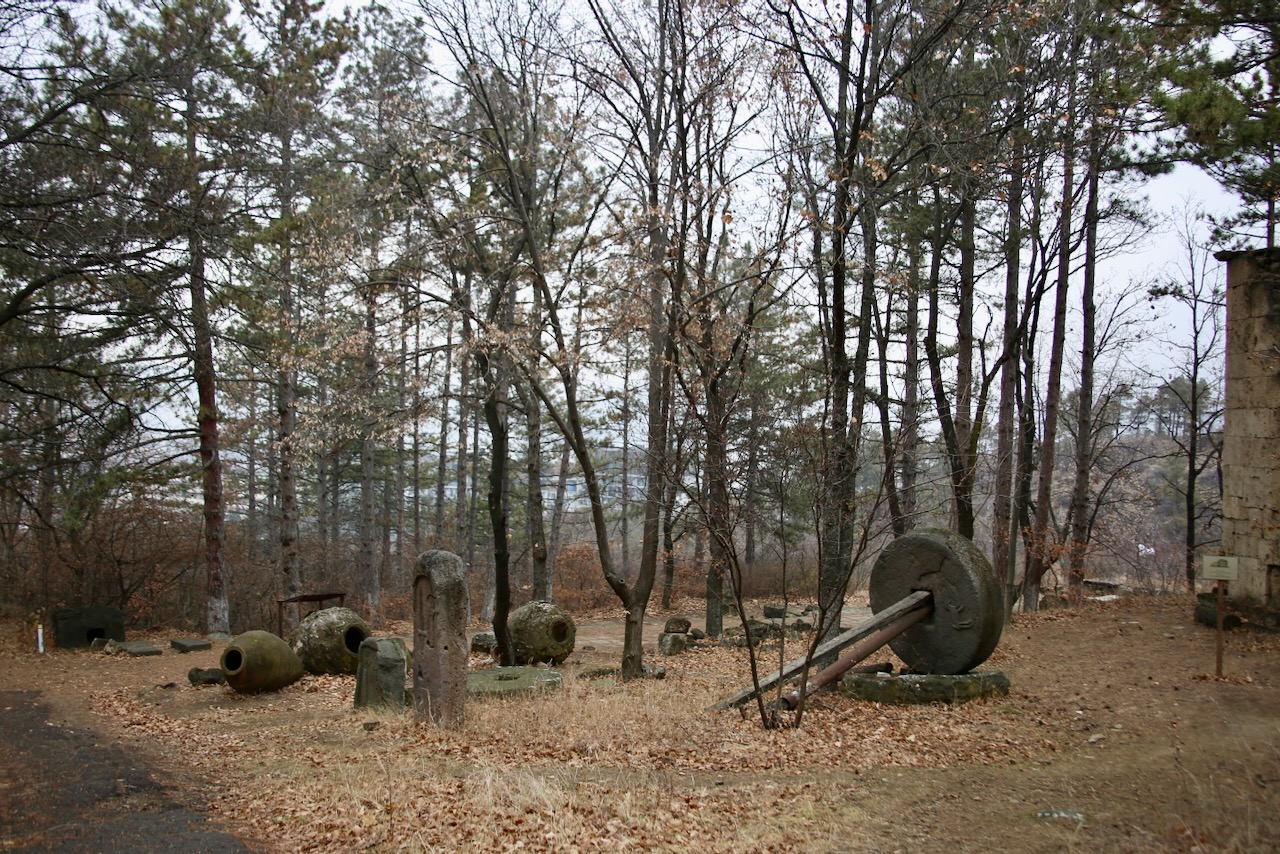
Into the trees seems to be a graveyard of wine jugs, some big enough to hold me, and a megalithic tomb (dolmen) that’s mainly found in Britain and France. Inside a large Darbazi, I’m shown a wax seal stamp and then taken back outside, past a picnic area and the resident goat, to the end of the tour. The guide’s kind eagerness can only be met in the States by a park ranger who is fresh in the field, at a newly established monument, or at a preserve with a small visitor count (best if it’s all three). I’m grateful to those who can find what they’re good at and share that joy with others.
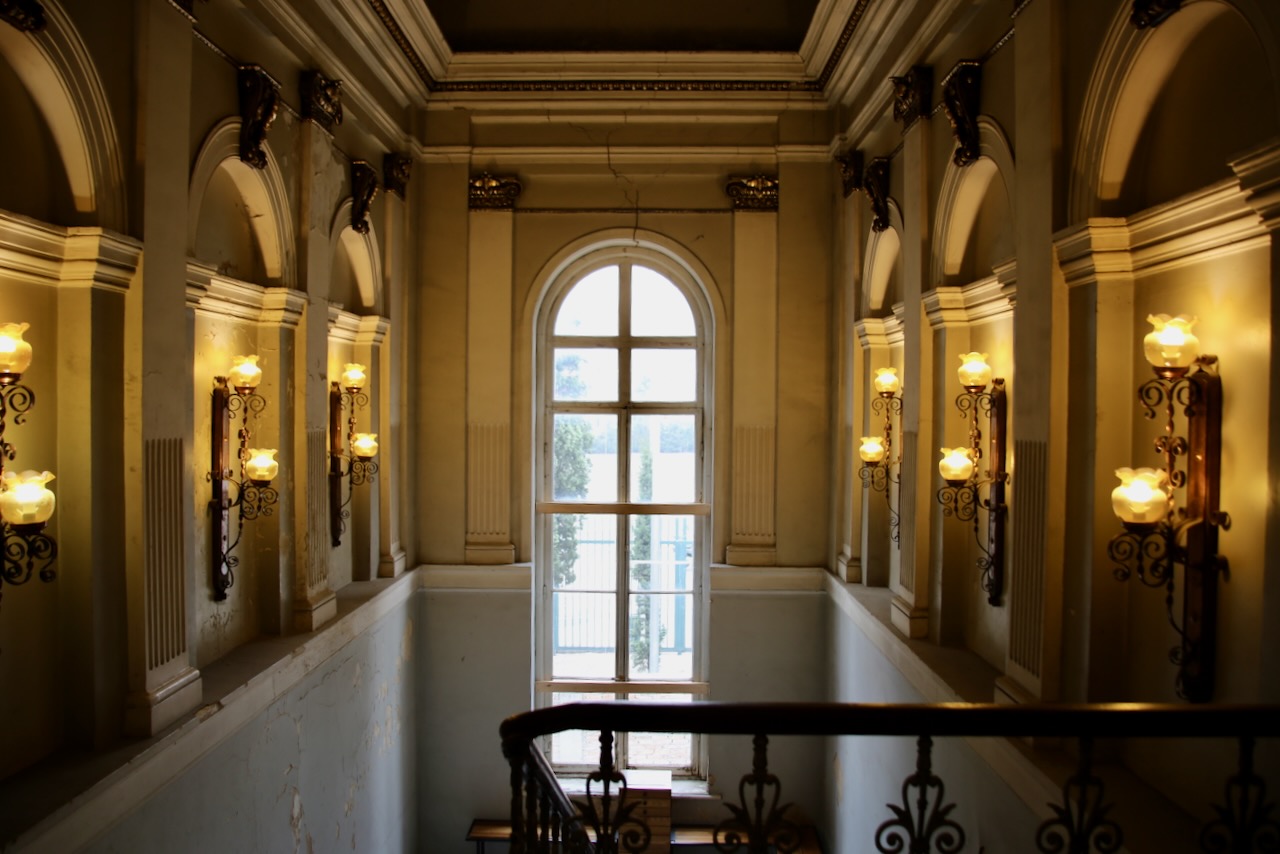
I backtrack my morning route, cross the Kura River, and park at the Museum of Theatre, Cinema and Music (aka Art Palace). Entry is 5 lira with no guide. The first thing I noticed is a plaque from the US Embassy Tbilisi for their funding in 2013-14, which helped restore eight historic rooms so they could be opened to the public for the first time. It states that the Palace of Arts is a symbol of the friendship between the American and Georgian people.
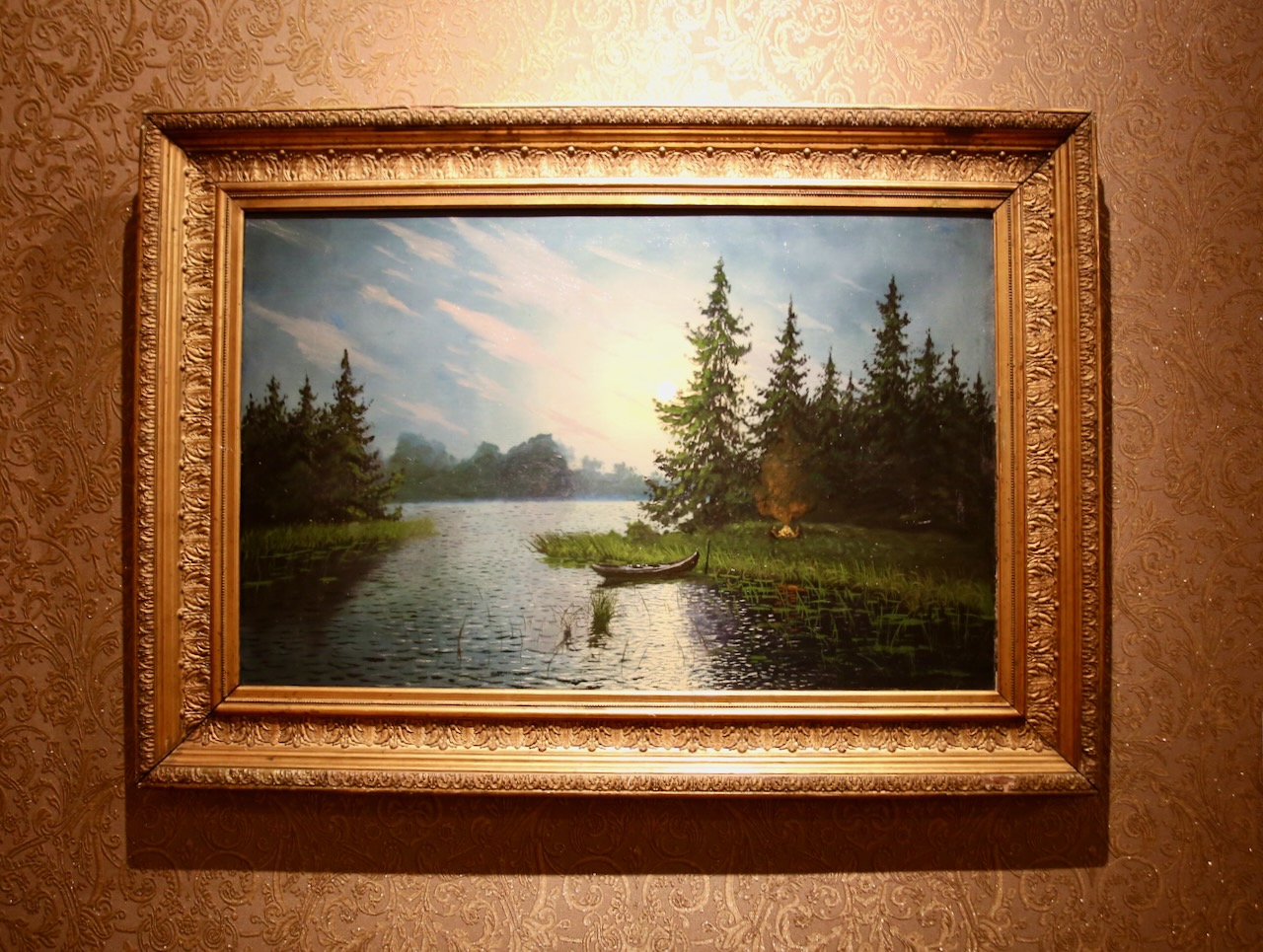
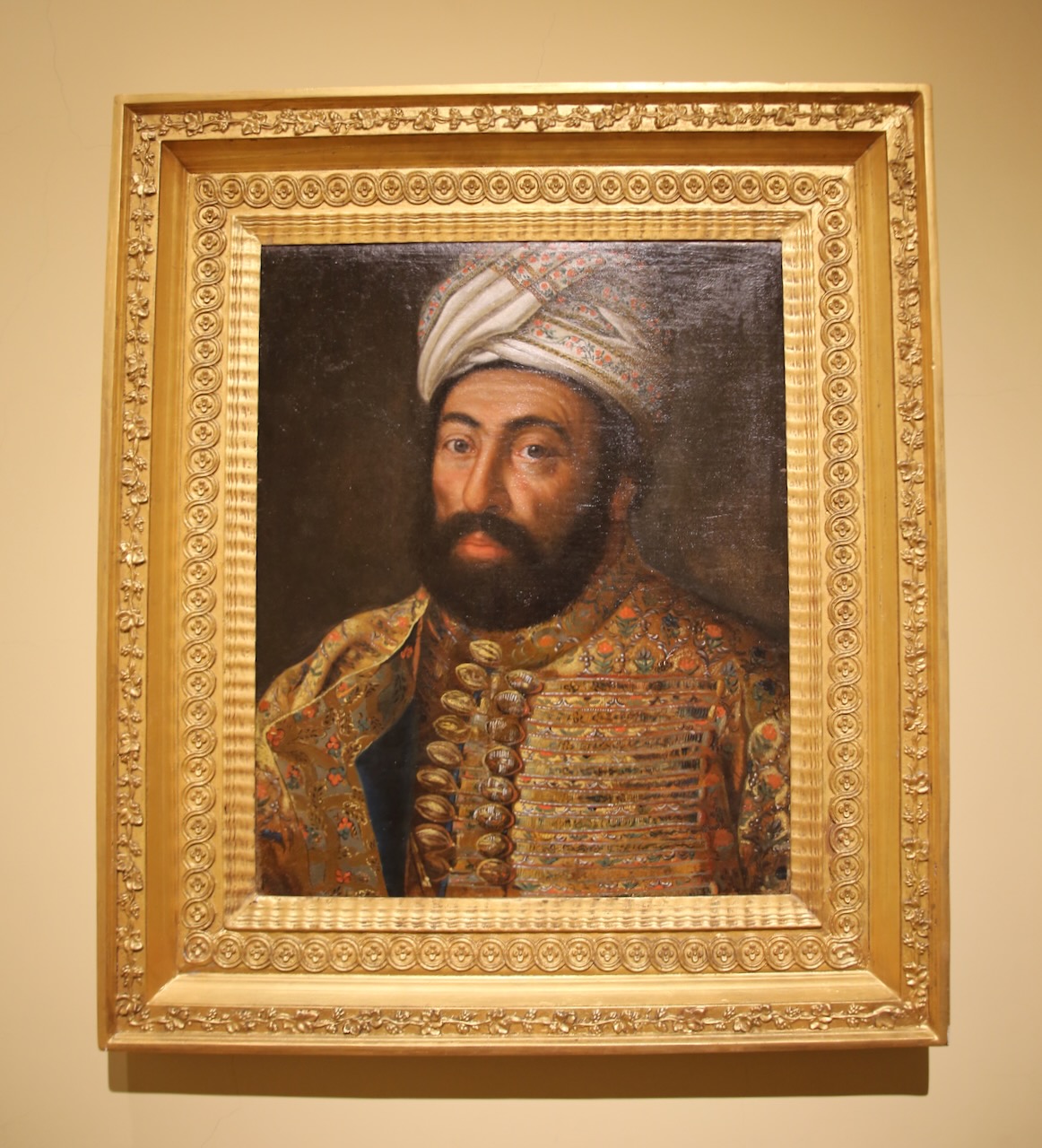
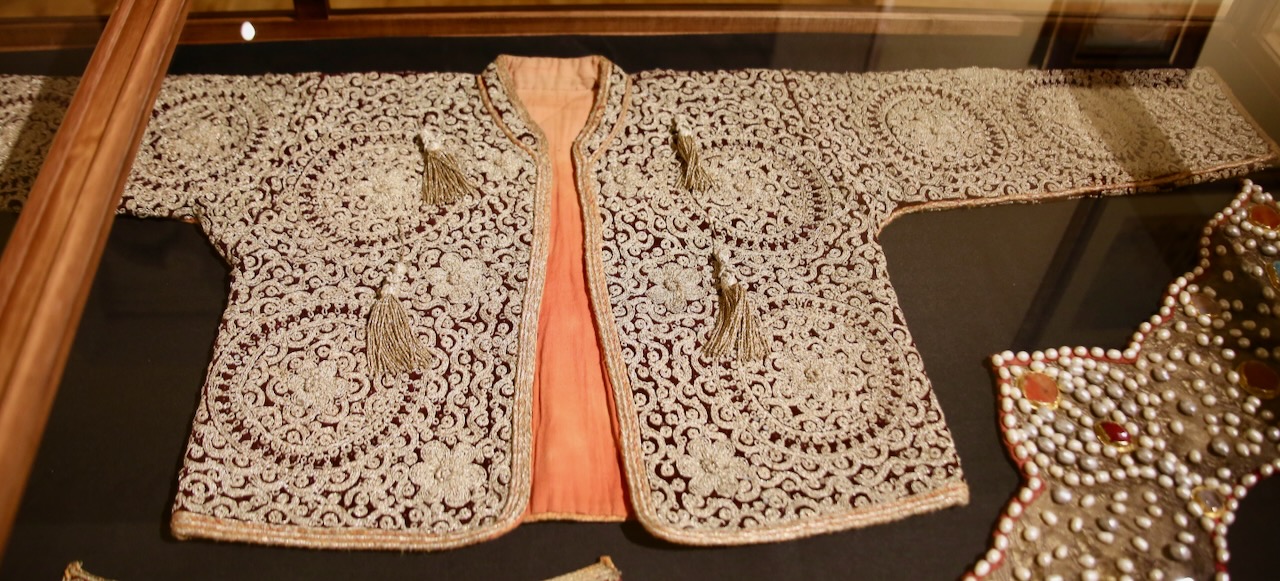
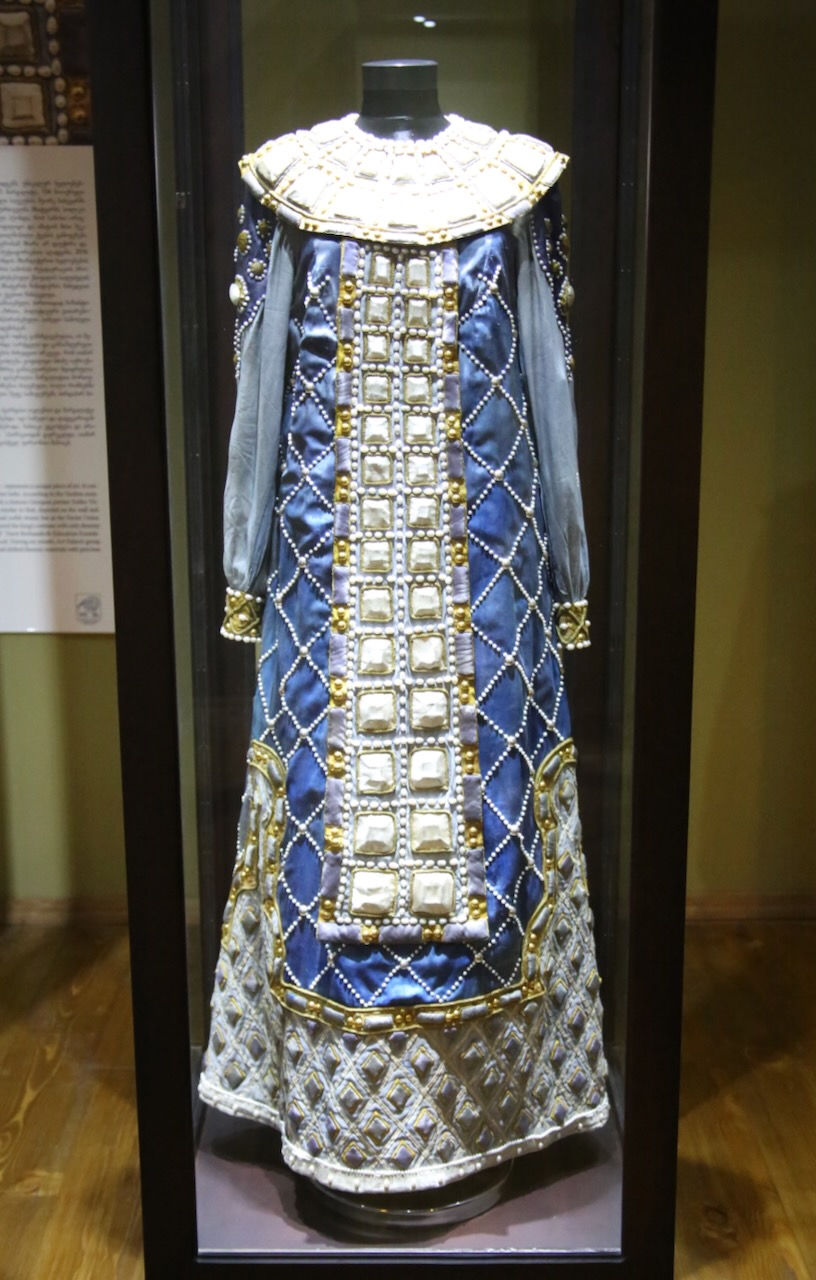
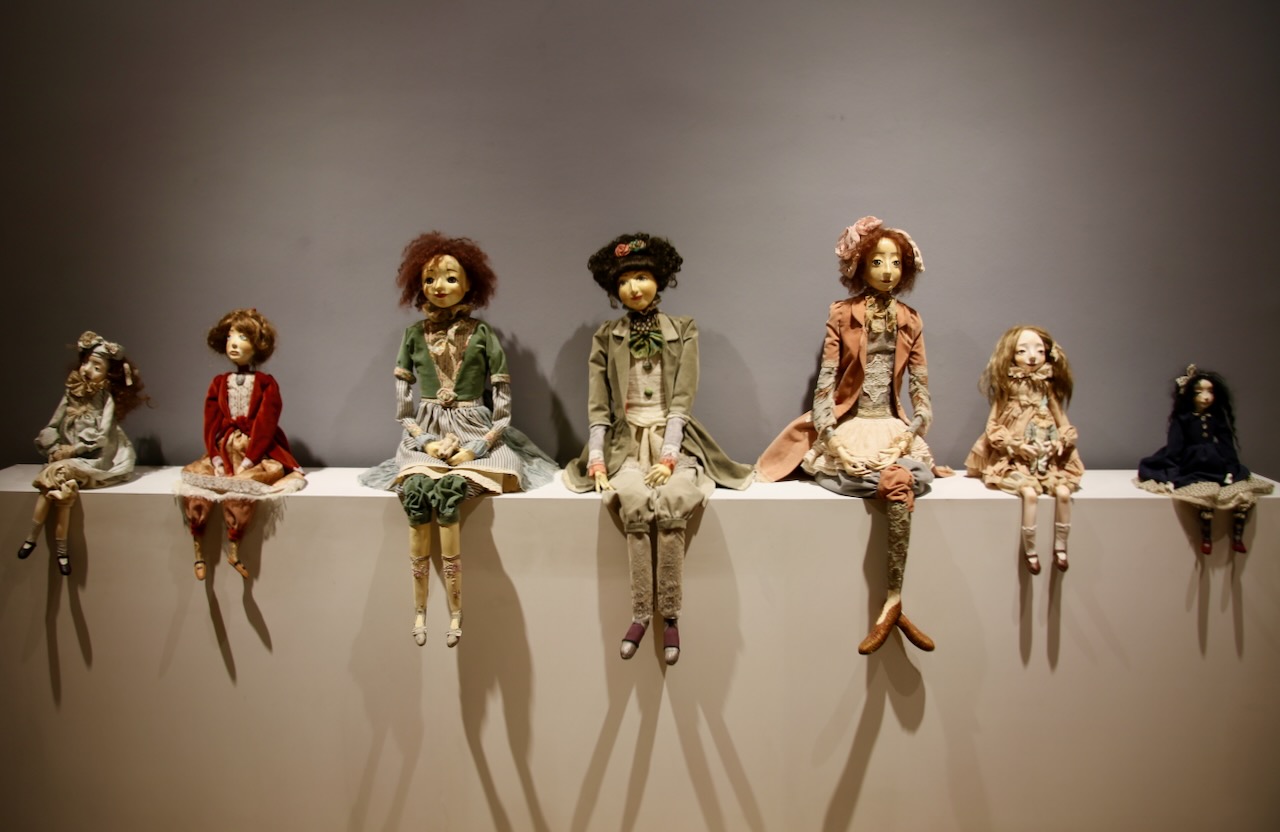
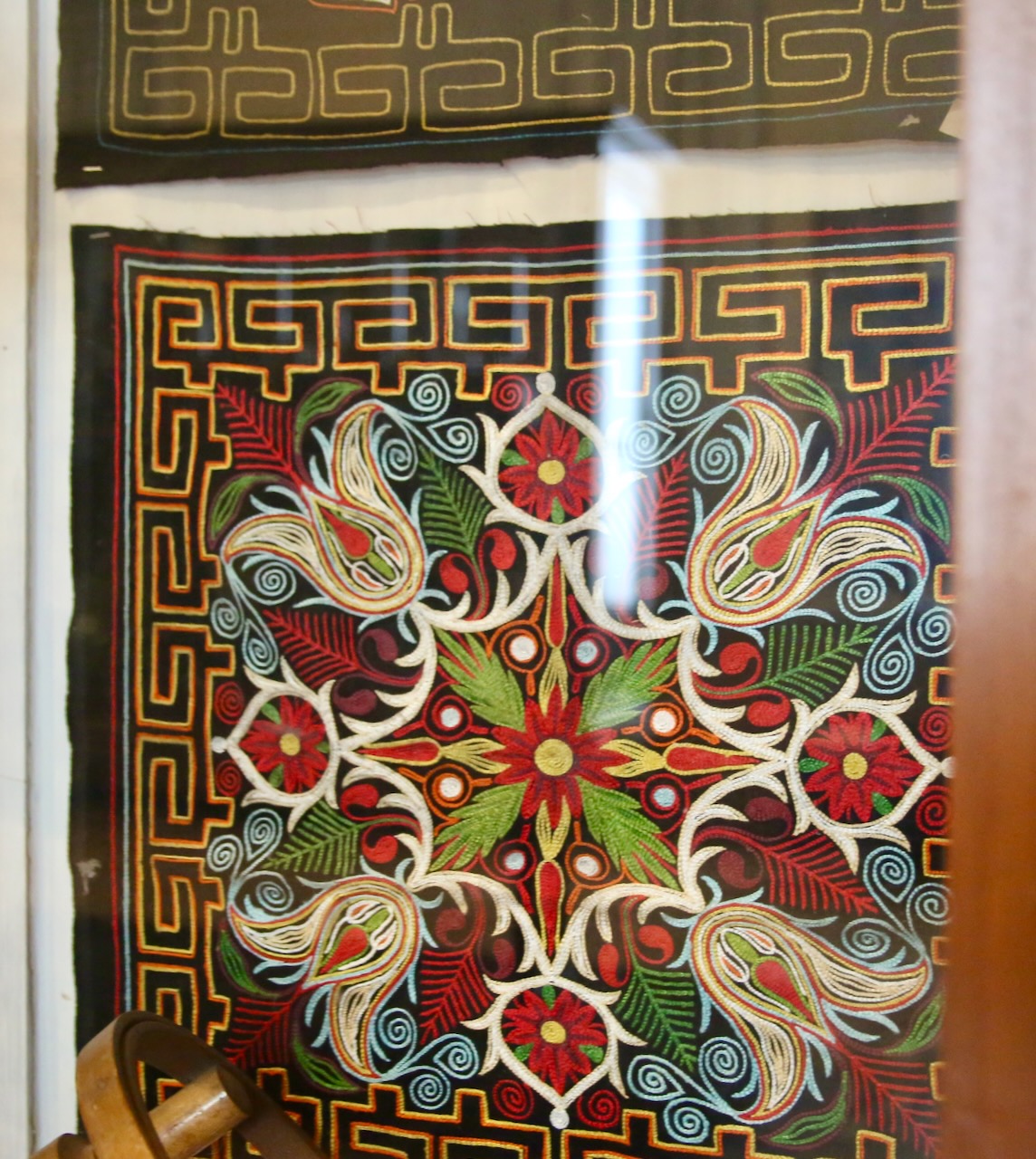
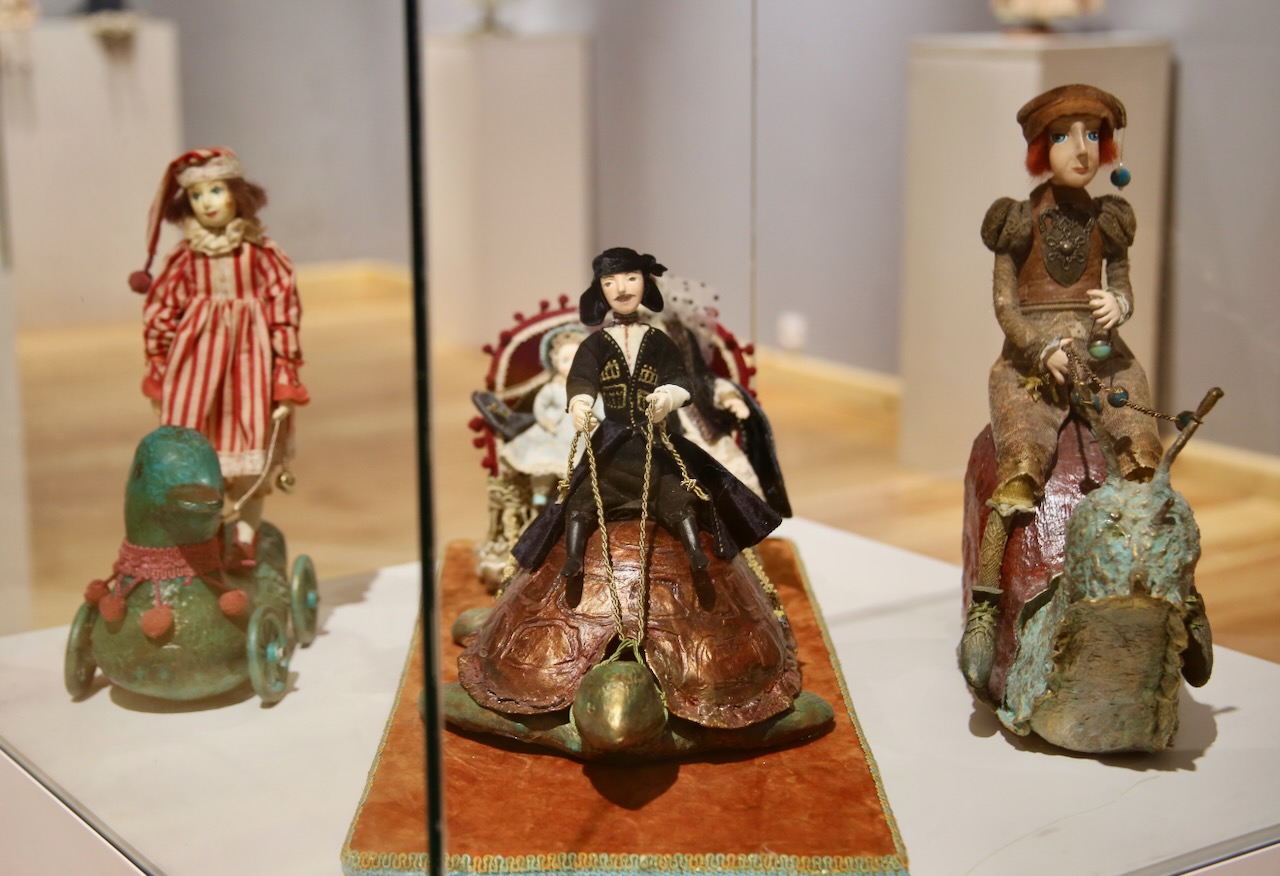
There are paintings (one by Paul von Franken 1818-1884) mostly of landscapes and portraits, movie costumes decorated with Ok’romkedi embroidery (braid of gold and silk threads on velvet and satin), and brooches, chalices, and other golden objects. The clothes are adorned with vine leaves and wheat, and the gold with people and jewels. There is a large doll collection from Keti Gogilashvili, and I wouldn’t mind having one or two of them keep an eye on me versus a mischievous elf or three dolls with blonde hair and blue eyes because we have the same name.
The Art Palace was built in 1895 by the best-known European architect in Tbilisi, Paul Stern. It was originally built for a Georgian woman by the order of a German man. In 1900, the building was expanded to the south, and later, the Soviets built a three-floor addition on the side with an arch connecting the historical with the new. The building was almost destroyed during the Bolshevik regime, and the organizations inside changed their room designs. The museum was founded by Arsenishvili in 1989, and it evolved into the current palace.
State Silk Museum
The museum administration was changed in 2009 and went through a much-needed restoration process to remove rubbish, repair the windows and doors, and reveal the walls buried in paint and paper. Historical details were discovered in the Greek, Golden, and Iris halls. There are pictures of sculptures collecting dust, furniture missing legs and shelves, and manuscripts open to rain damage, bright light, and poor ventilation. It seems the reconditioning could’ve happened sooner, but now these items are safely on display.
In a glass case is the first fully staged Georgian opera, “Kristine,” written by Revaz Gogniashvili, which was presented in June of 1918. Its debut was in the Tbilisi Opera House, which comes with a history starting in the 18th century when it was paid for by the Russians. In 1847, Count Vorontsov hoped to better integrate the two cultures by dominating the theater with Russian operas and ballet. The place was burned severely in 1874 and set ablaze again in 1973. Tolstoy once sat in the 800-seat theater, which has grown to hold 265 more patrons of the arts.
In another case is the first professional music score by Aloiz Mizandari, “Tiflis Polka” (1867). The percentage of people who can read music is about 25%, and those who can hear perfect pitch is about 0.01%. Those who can write their own lyrics (as it seems to take 5-11 writers in the 21st century to create a hit song) are dwindling. This man (along with the greats of times past) was able to create masterpieces involving multiple instruments, and I’ve only dabbled in the soprano recorder, upright piano, baritone tuba, and Bb clarinet up into high school.
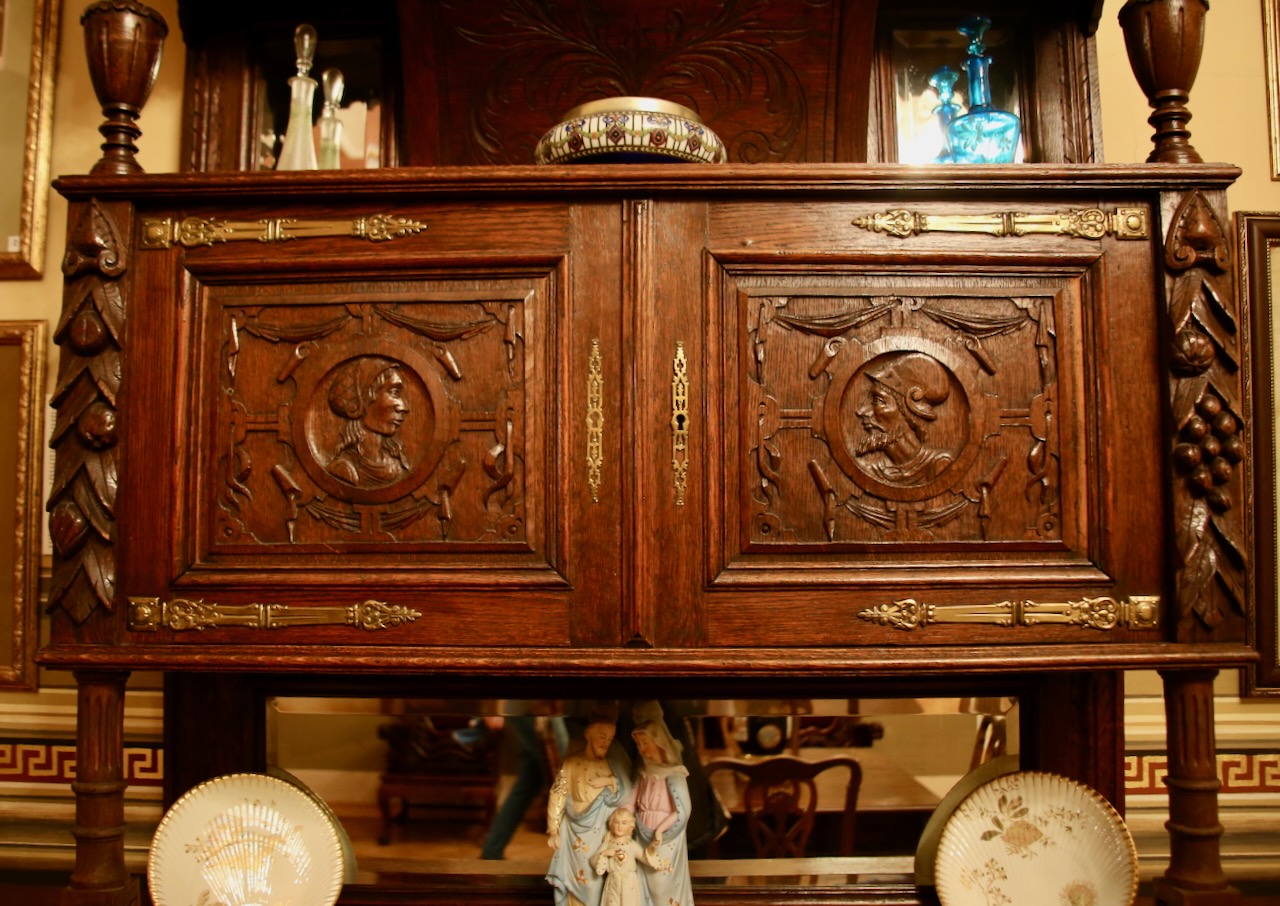
I finished this part of the museum by seeing more ornate furniture, an artist painting a mural, and a painting of Berikaoba. This improvised masquerade folk theater reflects the spirit of human freedom and is also considered a political satire and social protest. The men wear animal hides, feathers, ribbons, and bells and proceed door-to-door with the accompanying bagpipes to collect honey, wine, flour, and meat served by the hosts. The painting depicting this is from 1938, and this ancient festival (some 8,000 years old) continues today thanks to the persistence of a history teacher in a small village.
This Pagan tradition welcomes the spring with a connection to present prosperity and the blessings of their ancestors and was almost wiped out with the spread of Christianity. It has also been added to Georgia’s list of Intangible Cultural Heritage in 2013. A little more than a kilometer up the road is the State Silk Museum, which gives off a schoolhouse in the summer vibe or a graduate returning to their elementary building and feeling out of place. It’s oddly quiet in the hall on a Thursday when adults are at work, but in the States, there would be screaming kids on field trips to break the silence.
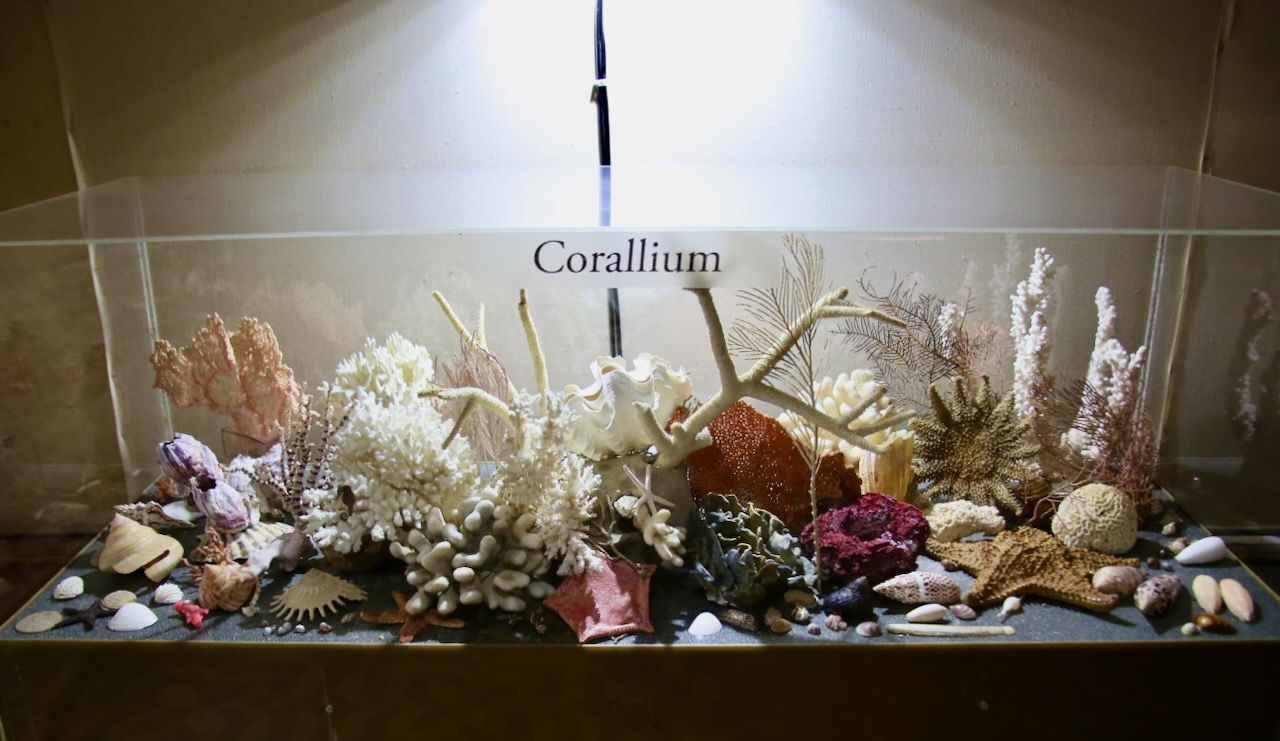
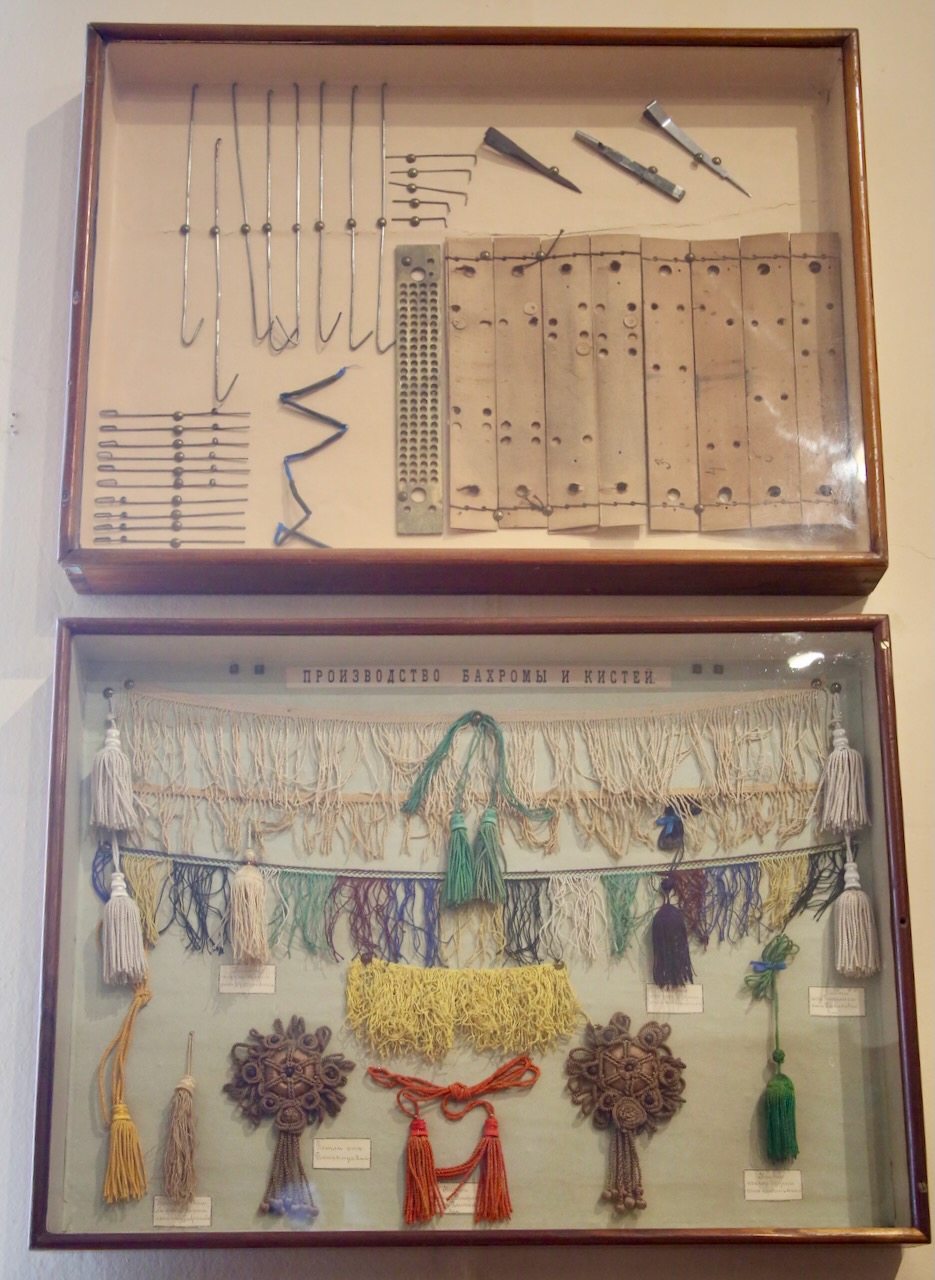
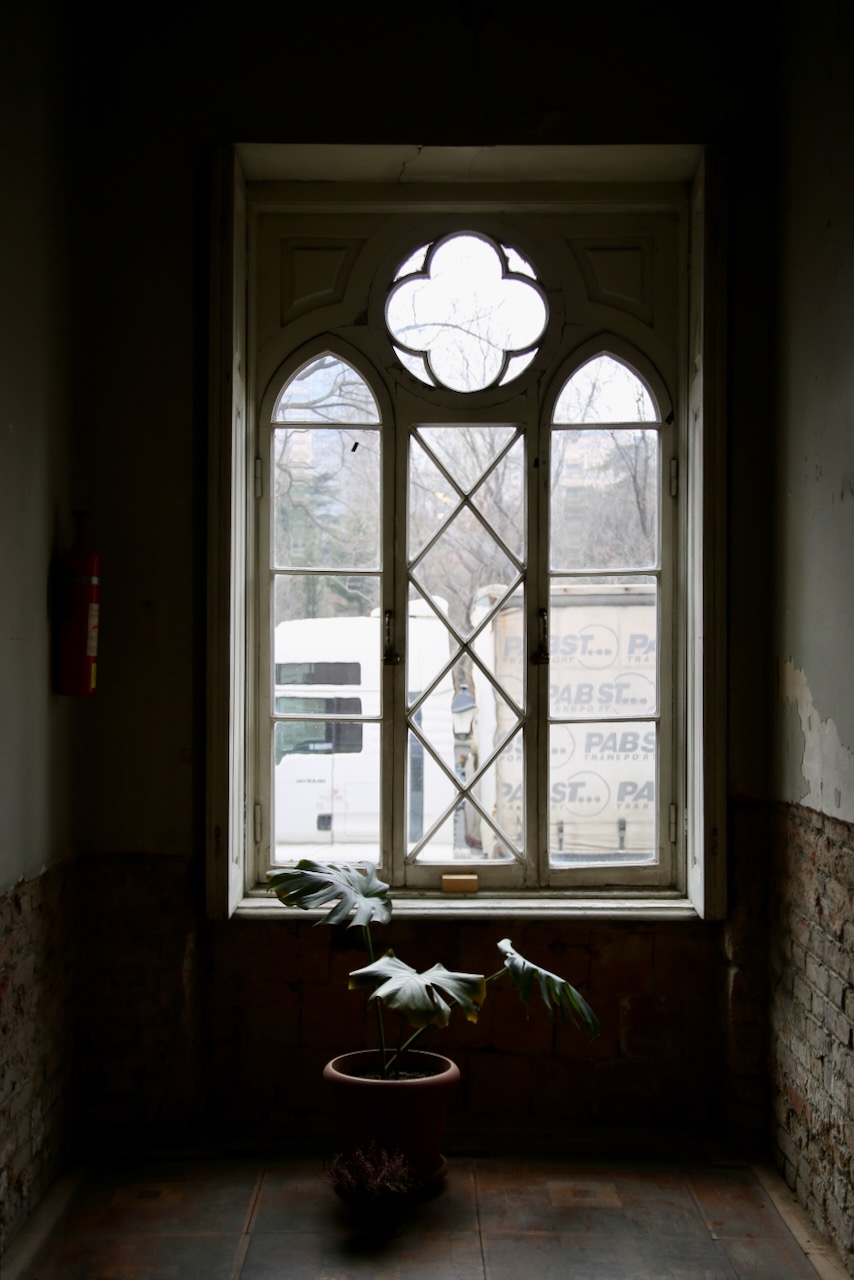
This silk museum is one of the world’s oldest, being established in 1887, and was part of the Caucasian Sericulture Station. There were 23 buildings (two survive) for scientific labs, silkworm houses, and educational areas. It is now part of the UNESCO Silk Roads Program and contains exhibits from 61 countries that cover mulberry trees, cocoons, dyes, textiles, silkworms, and photographs. The museum has its own library of natural sciences in seventeen languages and some works by station staff members from the 19th century. Downstairs is a room with a shell collection spanning from the California Gulf to the Philippines.
Upstairs has a more relic museum vibe with large wood and glass cases along the walls and standing in the middle of the rooms. There was definitely some experimentation going on as scientists hybridized wild and domesticated moths for better-quality silk and created new mulberry species to protect against tree diseases. The white mulberry (one of three worldwide species) is endemic to the region and the sole food of silkworms. For this reason, it’s believed that sericulture started in Georgia earlier than history shows (5th century).
Chronicle of Georgia
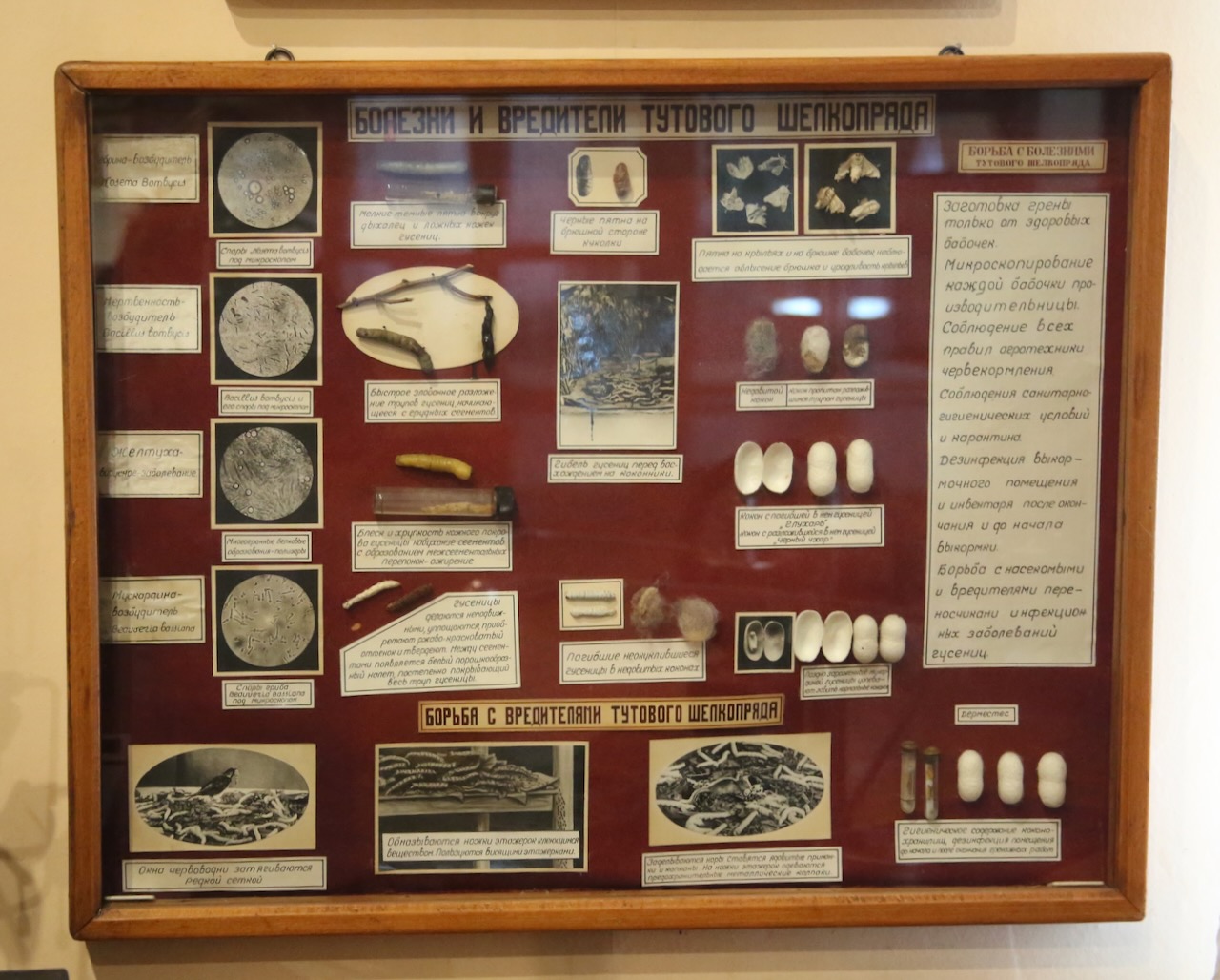
There are some dark vials labeled in Georgian and a container labeled ashes with the quote, “Ashes to ashes, funk to funky” – David Bowie written amongst them. That song was released in 1980, and the video definitely has VHS quality that would be expected from that period. I’m not sure if this was a translation issue or just a curator who likes pop music, just like I enjoy looking at equipment for studying silkworm biology and photographs without being able to read most of the exhibit information.
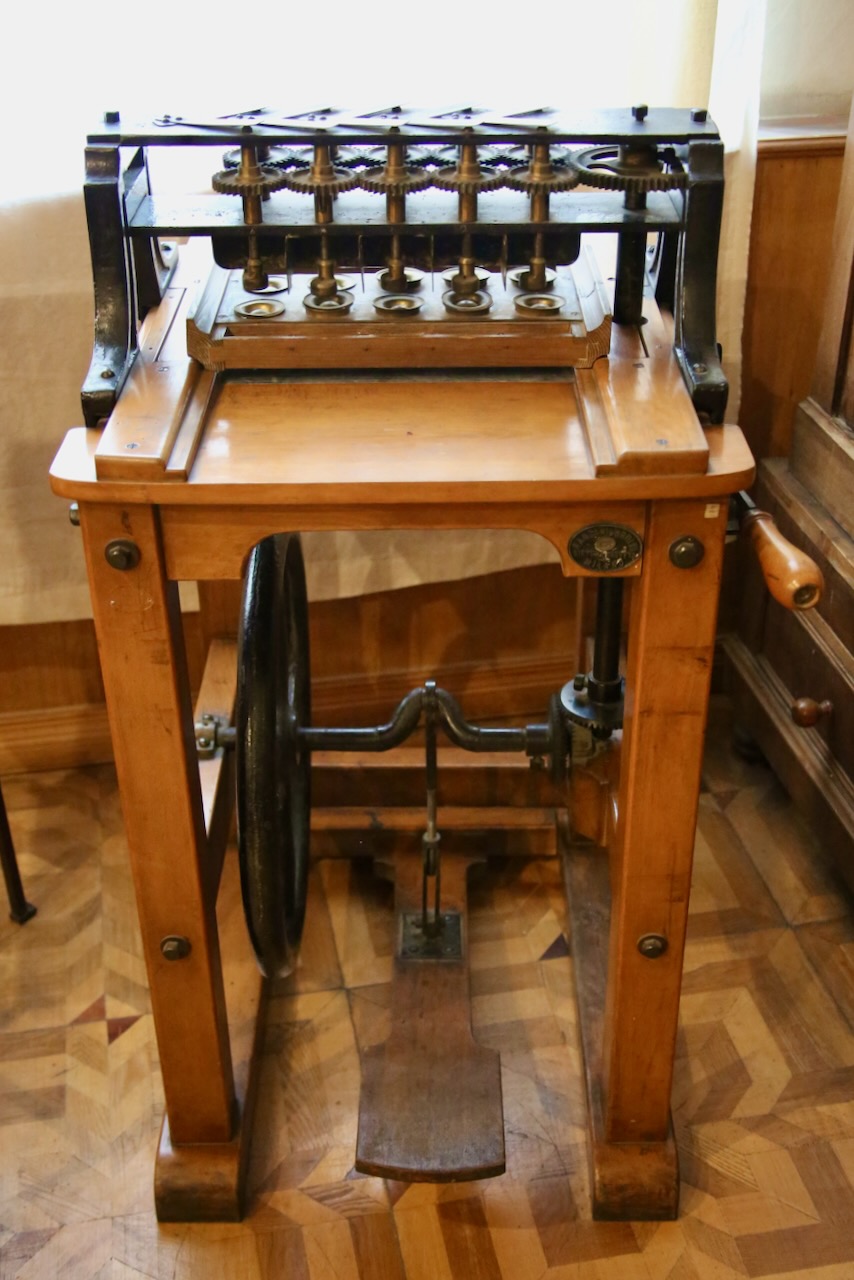
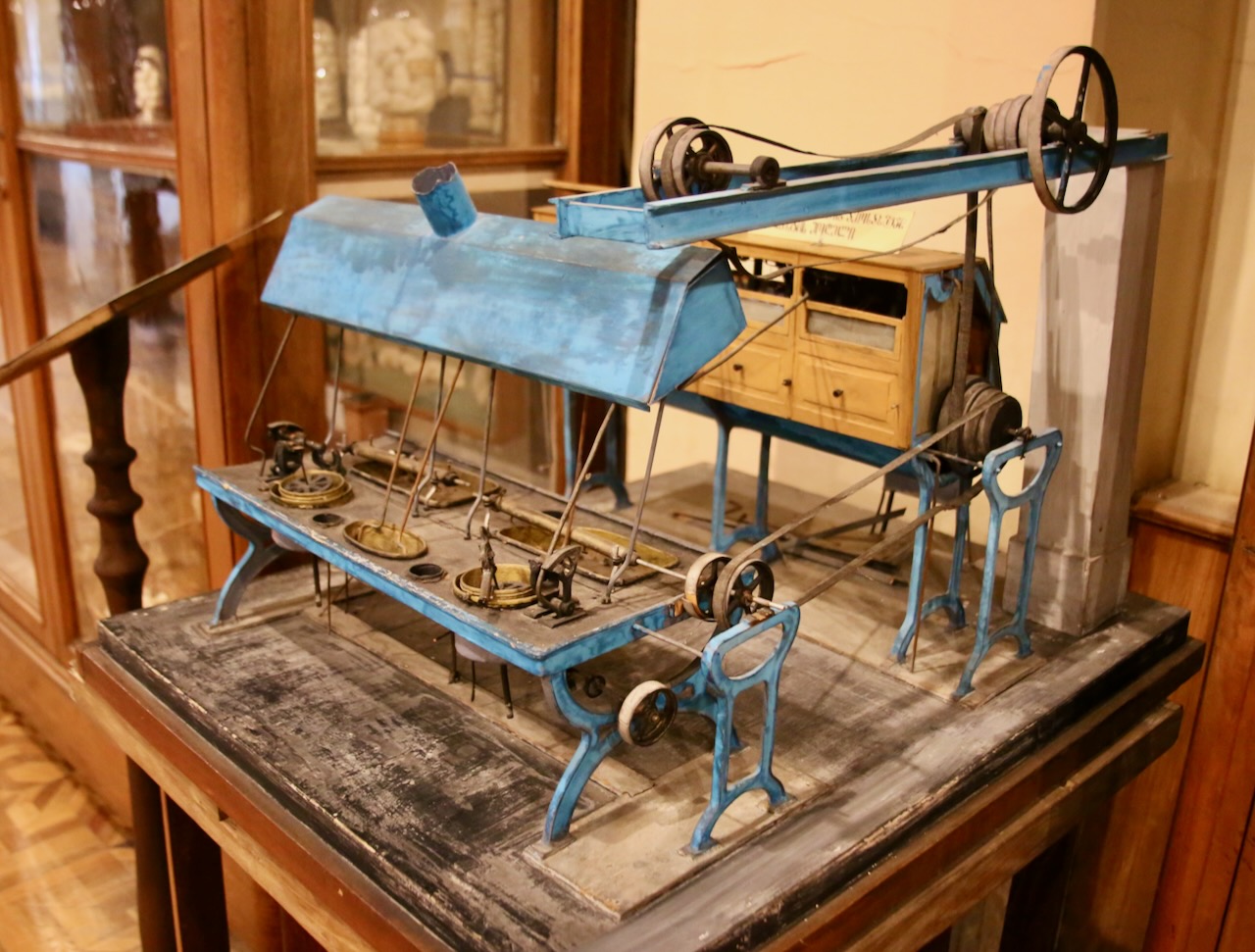
There are perforated containers for transporting silkworm eggs with inscriptions about trade and economic relations between countries on them. The lab would classify the healthy and diseased eggs and stamp the boxes “pebrine free” from a parasite that infects the next generation. There’s a thread-spinning machine model from the 1950s. The pupas would be suffocated in special ovens to maintain the surface of the cocoon, and then the silk unwinded from boiling soapy water to remove the natural glue before being spun with the thread of 8-10 cocoons for a length of 800-2,000 meters that would be ready for dyeing.
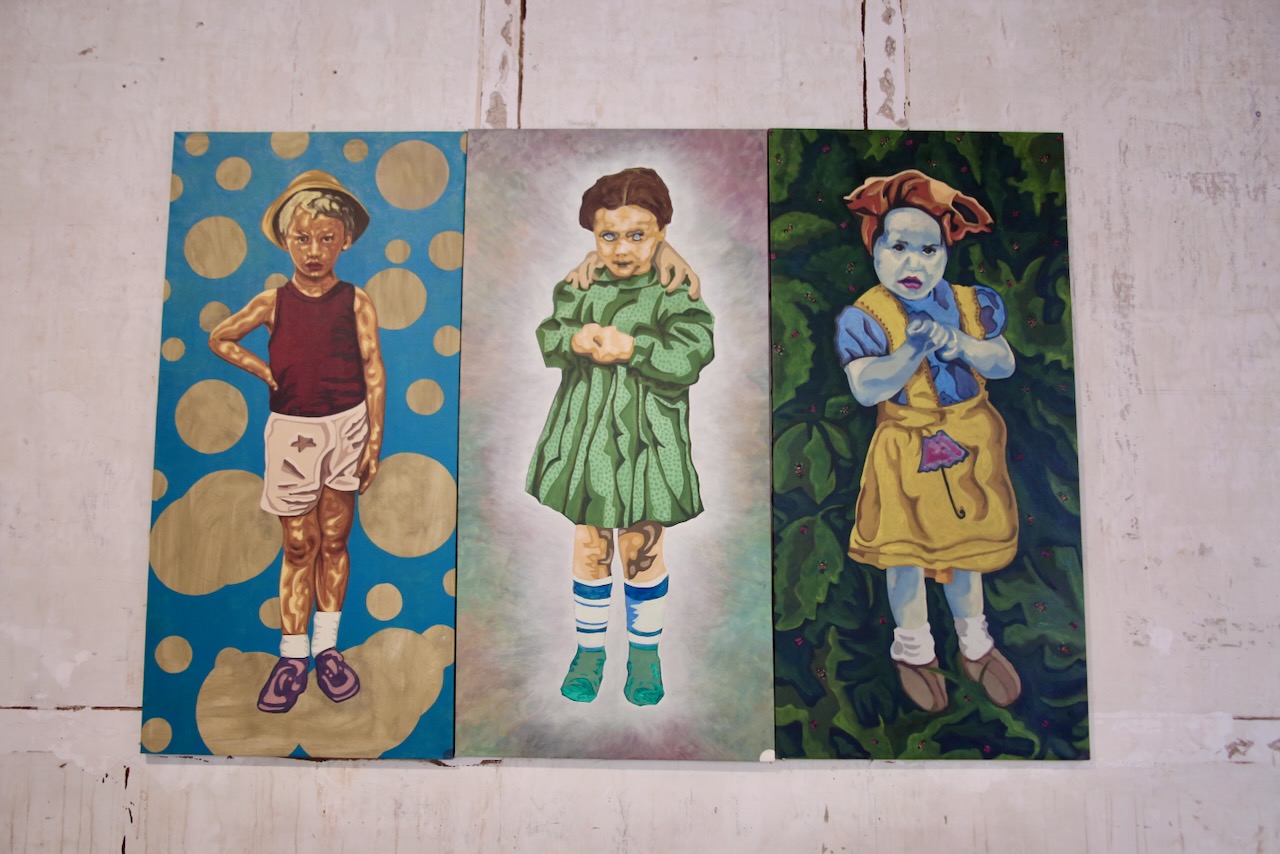
There is a collection of textiles and wallpapers woven on a jacquard loom, named after a weaver and merchant who invented it in 1801. He discovered automatic weaving with the help of pasteboard cards and led the way to programmable machines. The samples are satin, broché, glacé, damask, crêpe, moiré, popline, serge, sateen, faille, frieze, and foulard to name a few (most I’ve not heard of). Back downstairs, there is an exhibit by Levan Manjavidze called The Other Face, an allegory representing the edge of changes and expectations, reality and fantasy, as seen from the artist’s daily life.
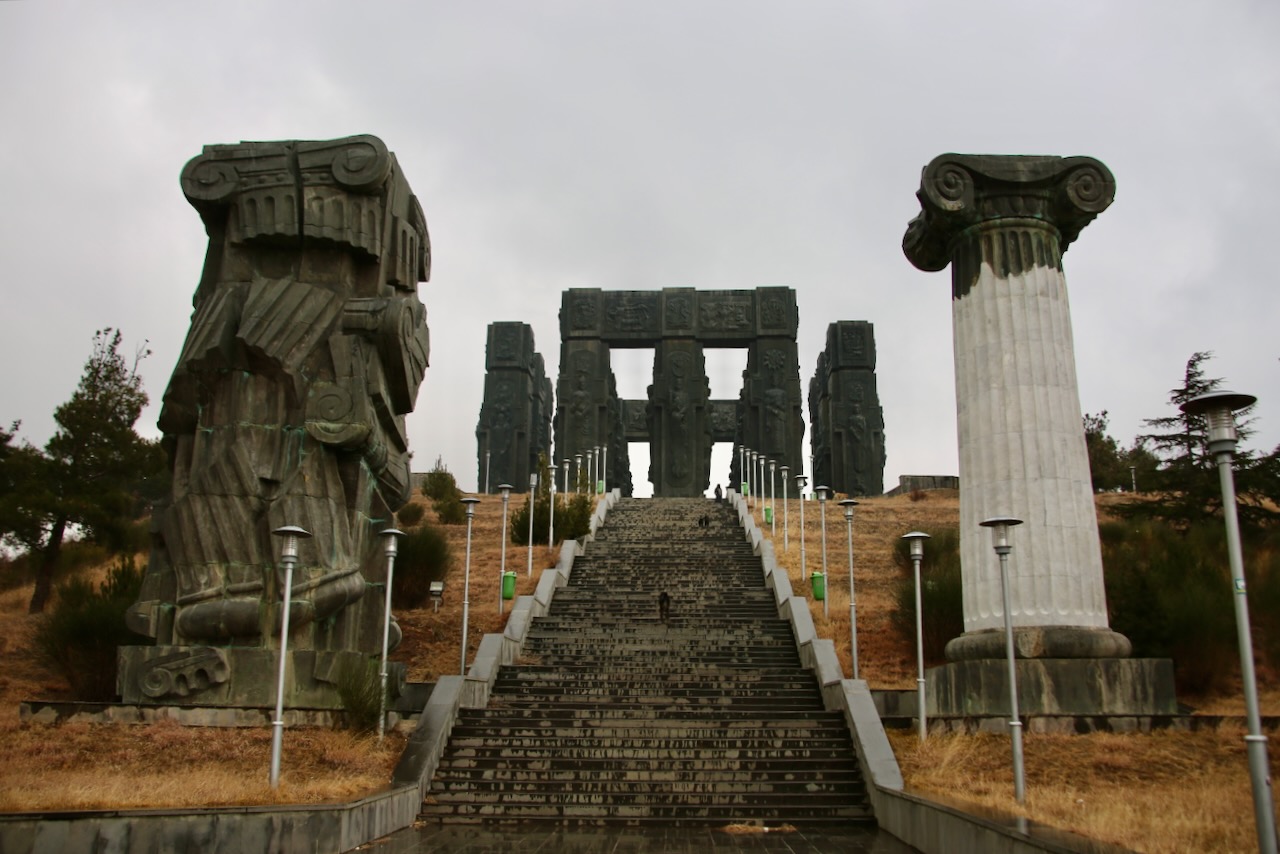
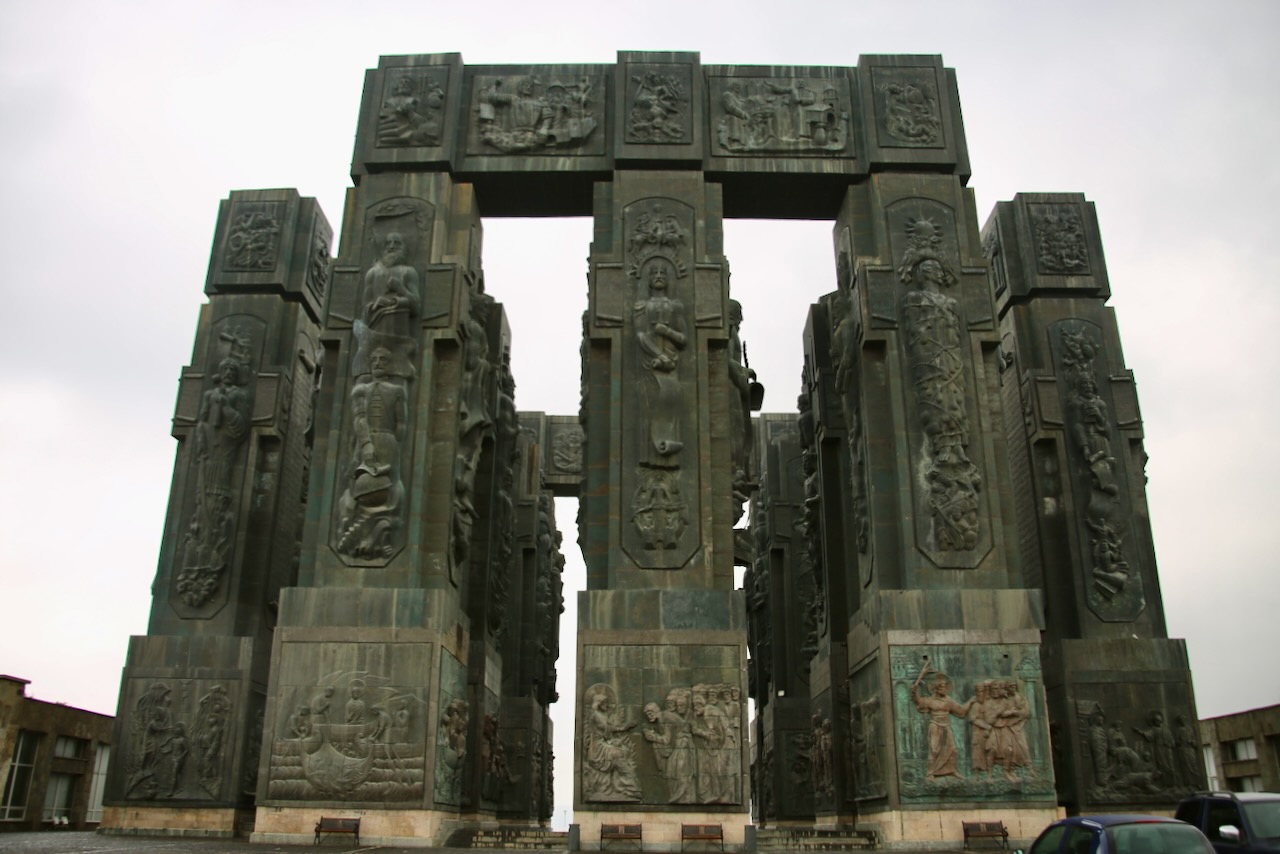
The artist stayed at the museum for ten days to engage visitors in the exhibit-planning process in December. I’m here near the end of the exhibition from January 10th – 18th. There are digital prints of his paintings for $450 and mixed media for $200 of children’s faces, family portraits, and lovers’ embraces. Back outside into the gray sky day, I’ll head north again to the Chronicle of Georgia (aka History Memorial, aka Stonehenge of Tbilisi). The monument was created in 1985 but never finished. The top two-thirds of the 30-meter-high pillars (16 total) depict kings, queens, and heroes, and the bottom third shows the life of Christ.
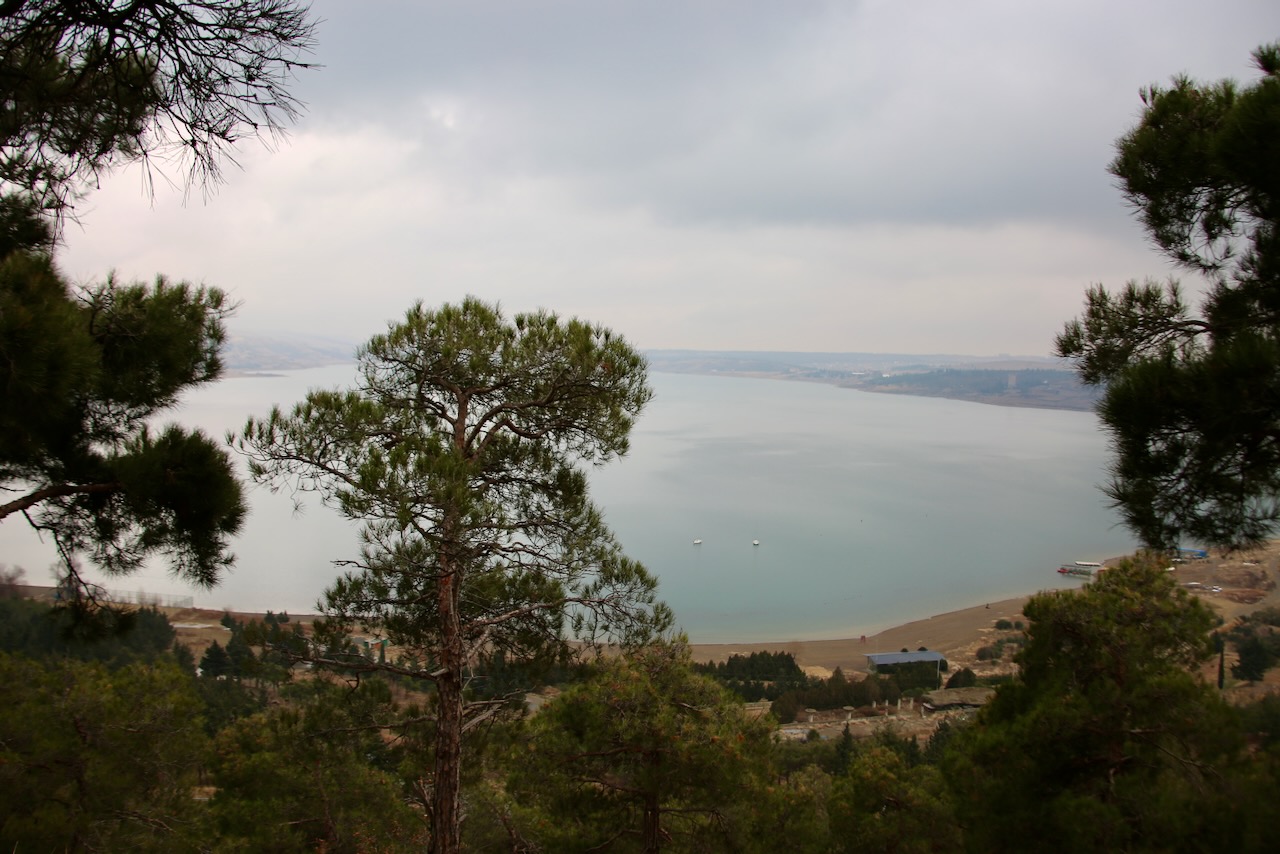
Tbilisi Reservoir
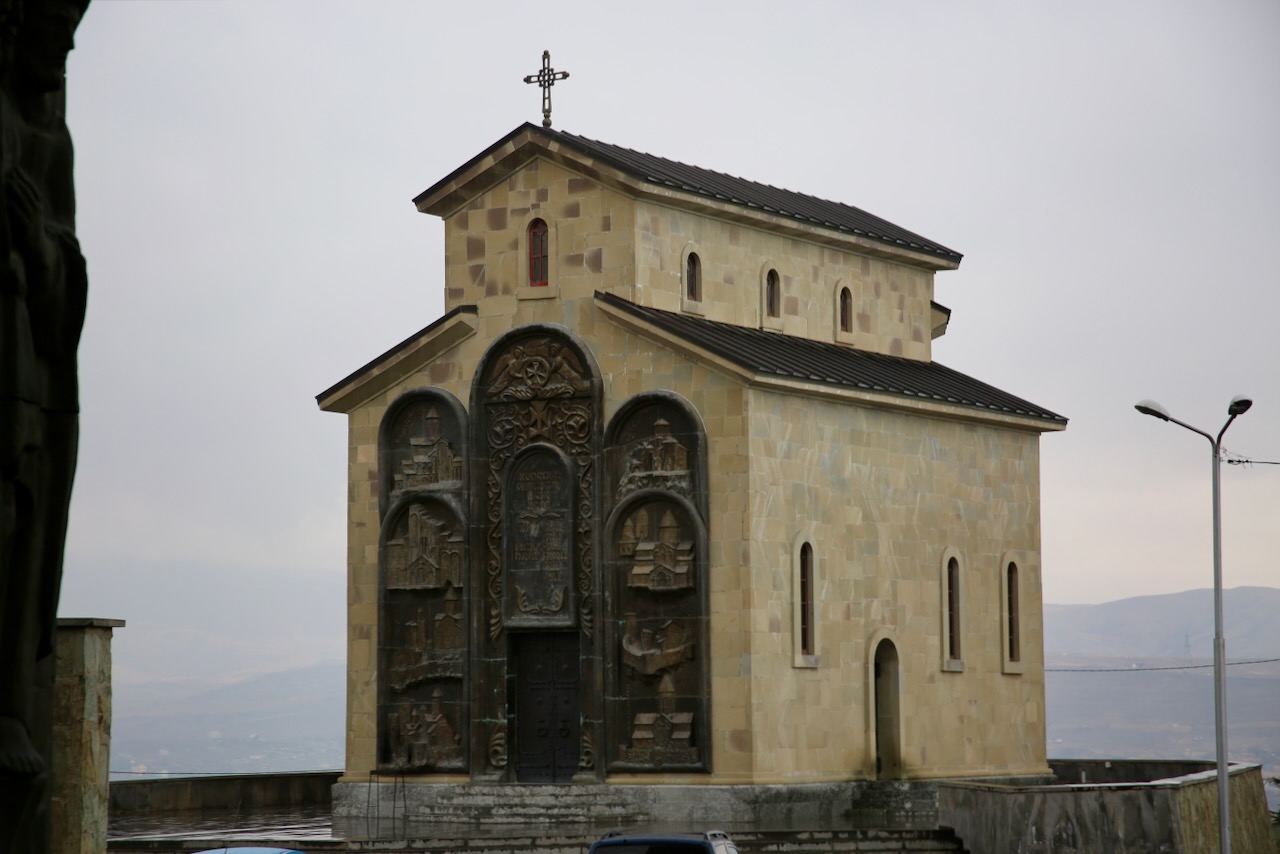
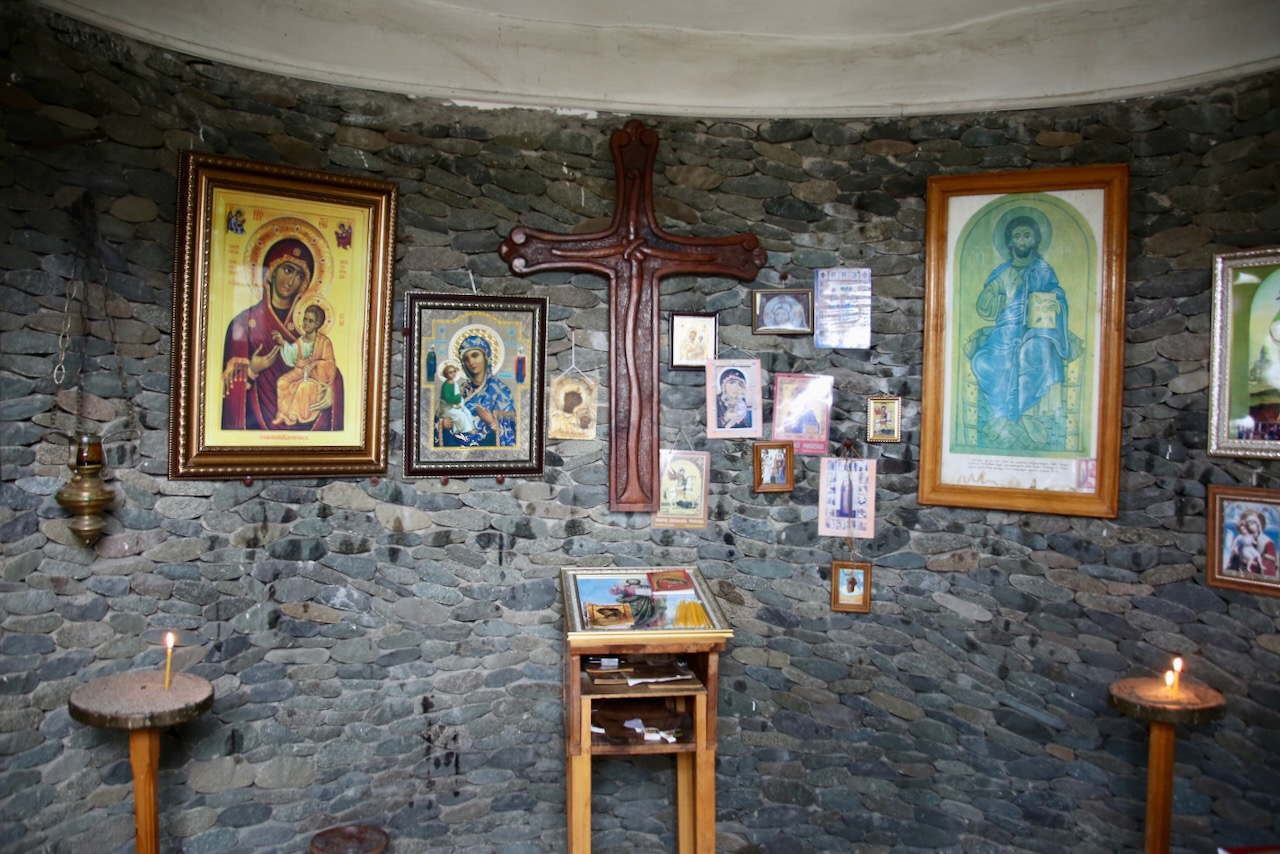
The memorial can be seen upon approach above the trees. I walk up the wet stairs to the glossy platform with a stone scroll plaque about a third of the way up. I’m greeted by a few dogs, all with yellow pins in their ears, that look just as soaked as their surroundings. They will race me to the top and easily win, as I’m not trying to slip and fall down at least one hundred slick stairs. I’m sure the view of the city below is more spectacular on a sunny day, but the pillars are always imposing. I walk around each one before visiting the medium-sized church onsite commemorating St. Nino.
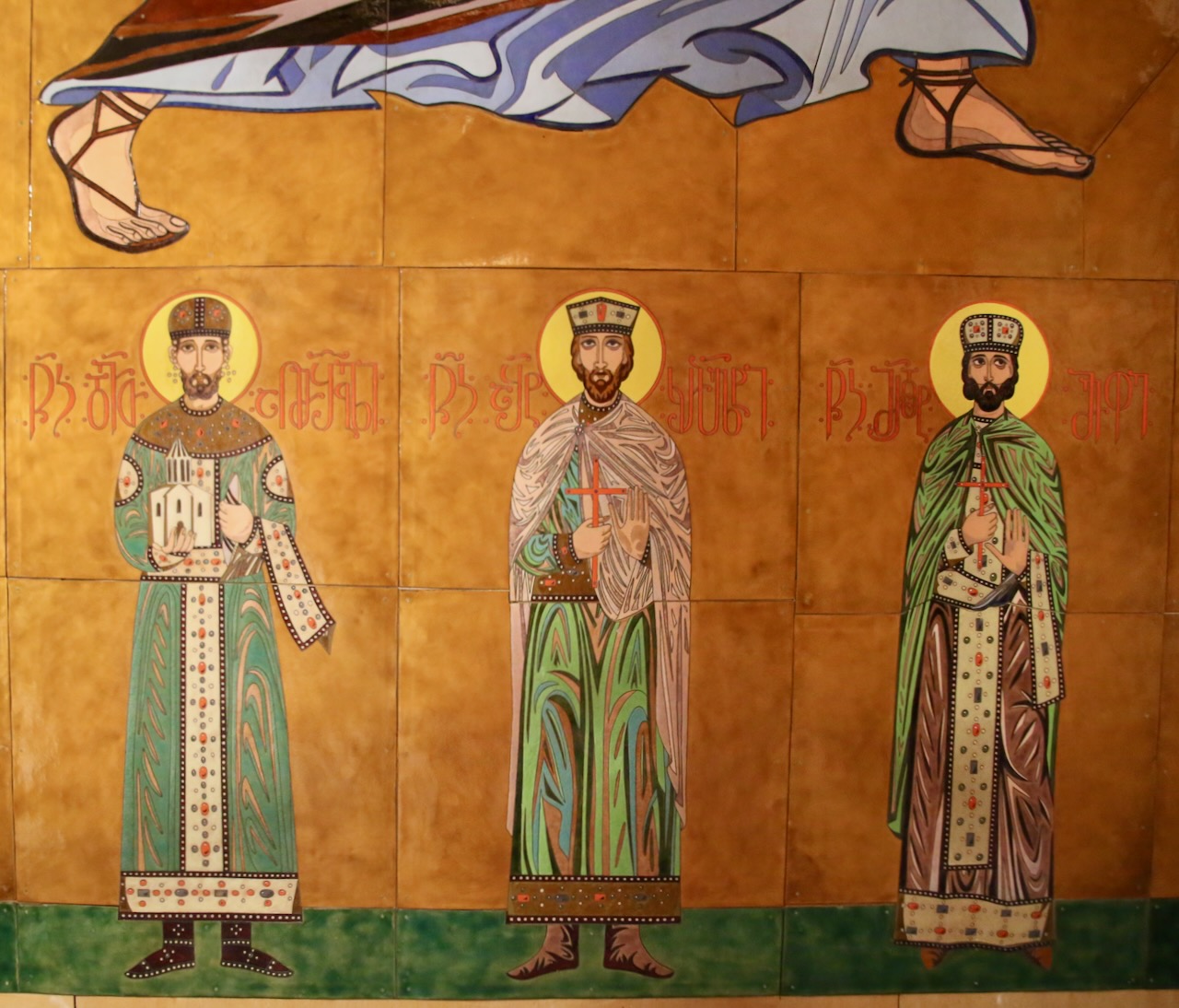
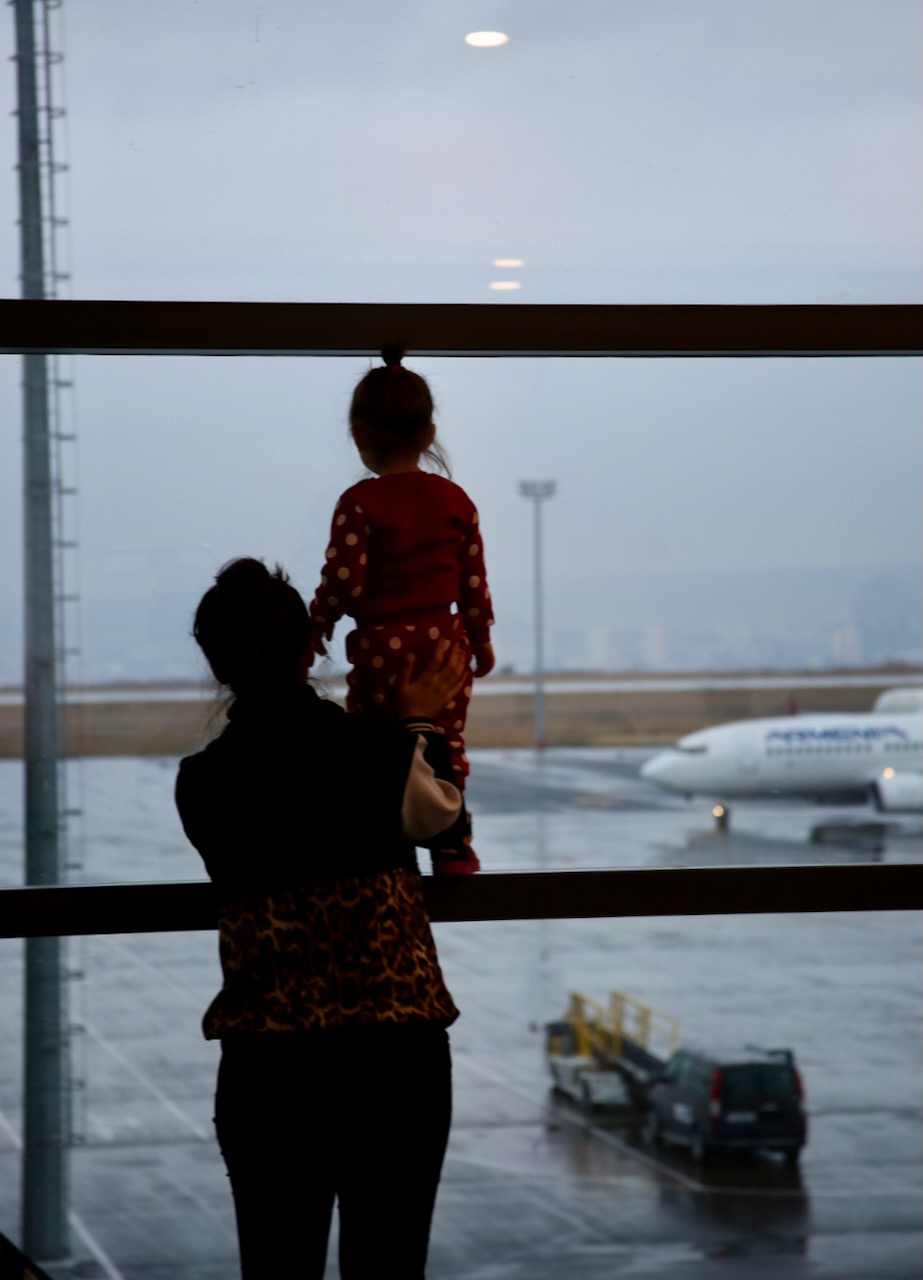
Inside is the juxtaposition of colorful art, white arches, and plain wood construction. From here, I’m going to return the rental car and exchange lari for dollars that I use to pay for a checked bag so I can get all my liquids home. We are boarding the flight to Istanbul forty minutes late, but I’m able to pass the time talking with two guys from Lebanon, Michel Attieh (@doc.macro) and his friend George. We land, and I walk two floors down to the gate to catch the bus, only to get another flight delay, this one double that of the last. On my flight to Bahrain, I’ll sit next to a cute couple. The husband translates our conversation to his wife, who is returning after having gone to Georgia in the summer.
I got seven hours of sleep, and after looking at my options (limited by snow closures), we (myself and the guys I met last night) decided that I would backtrack through the Valley (aka the East-West Highway). The E60 is the second-longest road in the International E-road network and runs for roughly 390 km through the country of Georgia, as a portion of the total length of 8,200 km through thirteen countries. Many road projects, some currently in progress, require bridges and tunnels to shorten travel time and increase access to villages.
I got my parking validated and then went to Hotel N16 for their 10-lari breakfast. I’ll drive north to Poti, passing cars and cows on the way, before turning east for the drive back to Tbilisi. The coastal drive has me looking out under a grey cloud cover to blue skies that are just out of reach, perhaps because they’re over the ocean to the west and the mountains to the east. I see a dog and can’t discern whether he is trying to mourn or fornicate with his friend on the street corner.
Outside the city of Senaki, I got pulled over for not signaling that I was following the road as it split into two directions. My thought was that I would signal if I were not staying on the main route, now I know. Of course, I had mixed emotions about getting a ticket in a foreign country, but the experience (for what it was) was pleasant. I took a piece of paper with only a website that I could read on it and exchanged it at a Bank of Georgia for a receipt with my name and birthday legible to me. I paid my 51 lari ($17) fine in cash.
I use their toilet, and upon coming out, a lady tries to give me a speech. I let her finish before replying with the word English. I stop for a snack after 2 pm, green tea with feijoa (a guava-pineapple-like fruit in taste) and a layered cake. There are a lot more dogs lying on the side of the highway, perhaps this is their passage route from this world to the next. A tunnel provides respite in the middle of the muddy highway. I stop again when I see the sunshine, hoping for added warmth on this 37°F day. The guys in charge of gas also have the key to the outhouse, as the lady inside would only tell me no.
I notice a lady getting dropped off via taxi on the side of the highway so she can presumably walk to her house in the woods or beyond the trees from my view. The road narrows to one lane temporarily, so the construction crews have room to build more highways. Coming up on a bend, each lane has its posted speed limit of 90 km/h on the outer curve and 70 on the inner one. Once I’m back in the administrative region of Tbilisi, I find a (not my) hand car wash to vacuum, power spray, soap, and rinse the slushy mud from my ride for under $5.
After half an hour, possibly at Greenwash, the power hose keeps shutting off in the middle of rinsing. If I lived here, I would find a better place to pass the time, but since I don’t, I watch the guys work for a bit and then look at a yellow bus packed with people to the extent that one guy is sitting on the handrail for the steps. Luckily, the Guest House Zemeli (where I first stayed in Georgia) isn’t far from here as I’m starting to get hungry.
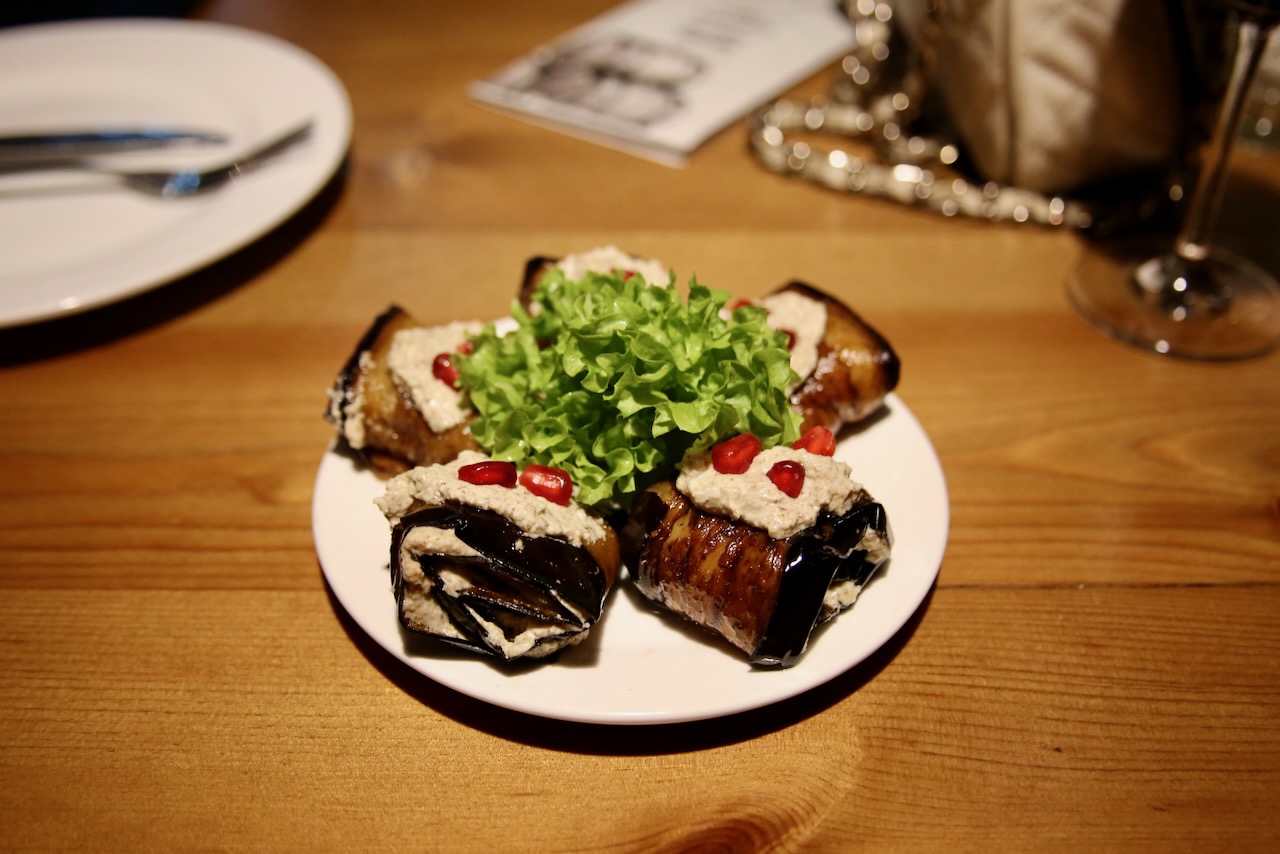
The man at the desk recognized me, and I got my room upgraded since he was able to find my prepaid reservation. I walk to Cellar on Rustaveli (as posted inside) past the Georgian National Museum on my left, but I have trouble finding it now on maps. Their last Facebook post was from 2015, so hopefully, it remains a hidden gem of a restaurant. I fill up on eggplant and walnuts, mushroom dumplings, and a glass of family wine. I eat less and less of the dumpling skin as the meal progresses.
The walk back to the room doesn’t take as long as I thought it would, so I’m still bursting at the gastral seams as I sit in the chair to remove my boots. I will debate between sleeping in the small and soft bed or the big and firm one. My room comes with a candle and matches, so I light it and wind down by placing it on the beds and table for a photo shoot. I will not be sharing those pictures as I’m not sure if I was going for shadows, mood, reflection, or safe sleeping darkness when I blew the fire out.










 TheJessicaness