
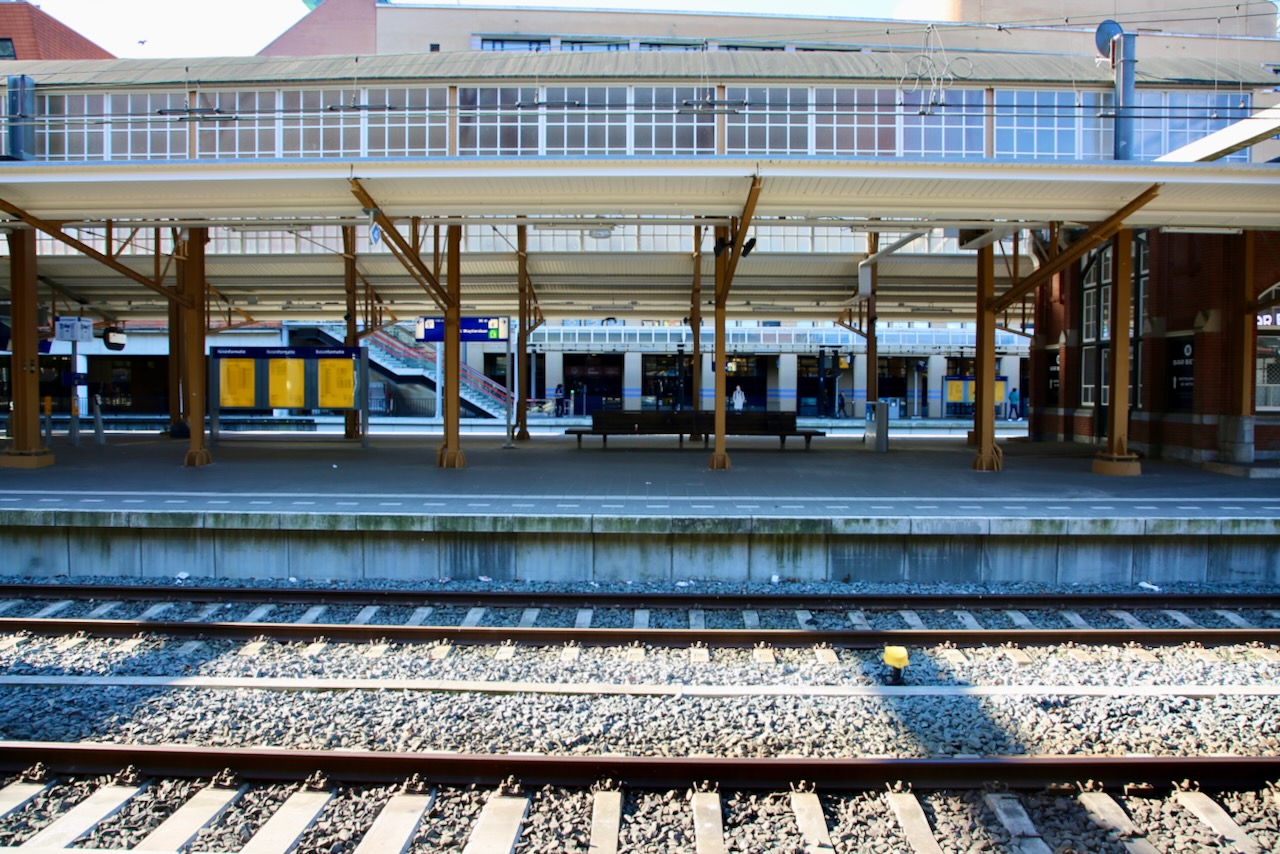
I wake up congested and add milk to my coffee so I can drink it faster while I eat a banana and some yogurt with blueberries. Caleb has our transportation route ready. We grab our bags, say our see-you-laters, and are out the door. I saw a bright red and yellow bird, which could possibly be an escaped golden pheasant, but the colors quickly disappeared before I could capture any proof. The bus to Amersfoort leaves every ten minutes (during the work week), and Caleb likes tapping us both in and out, so we aren’t charged a missed check-out fee.
A standard bus ride is $1.15 to board and $0.20 per kilometer thereafter. If you haven’t checked out by the ride’s end, you are automatically charged $4.40, the full fare. Forgetting on the train will cost $22. There is a refund option, but this is limited before the payment card may be temporarily blocked. Our ride costs $2.85. You can spot a central station by the number of bus stops and bicycle parking lanes out front. We have a look in the kiosk (checking for egg and cress sandwiches) and find egg & tomato, cheese, salmon & cream cheese, and chicken & egg.
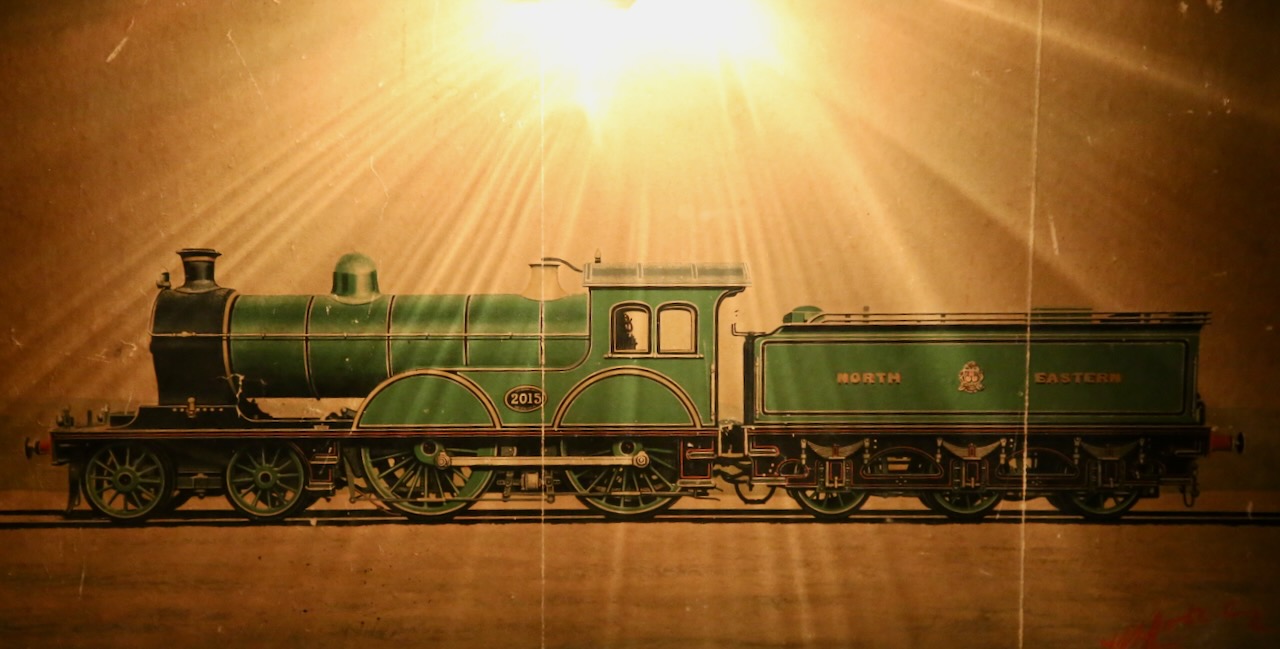
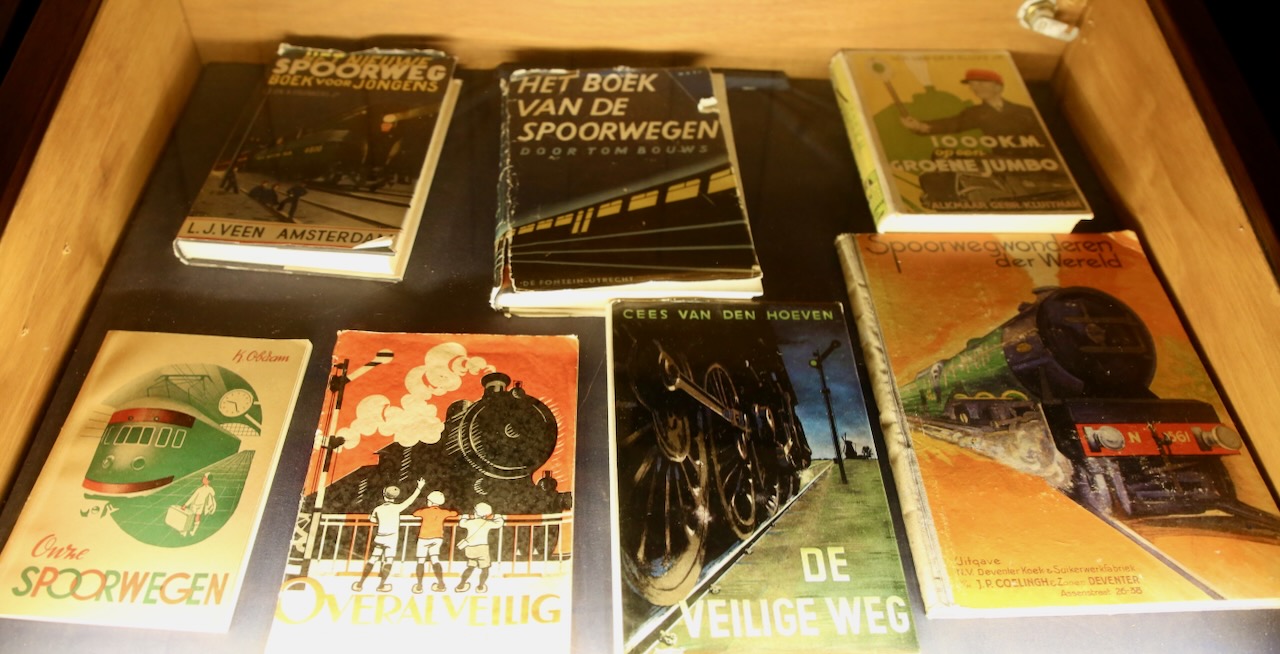
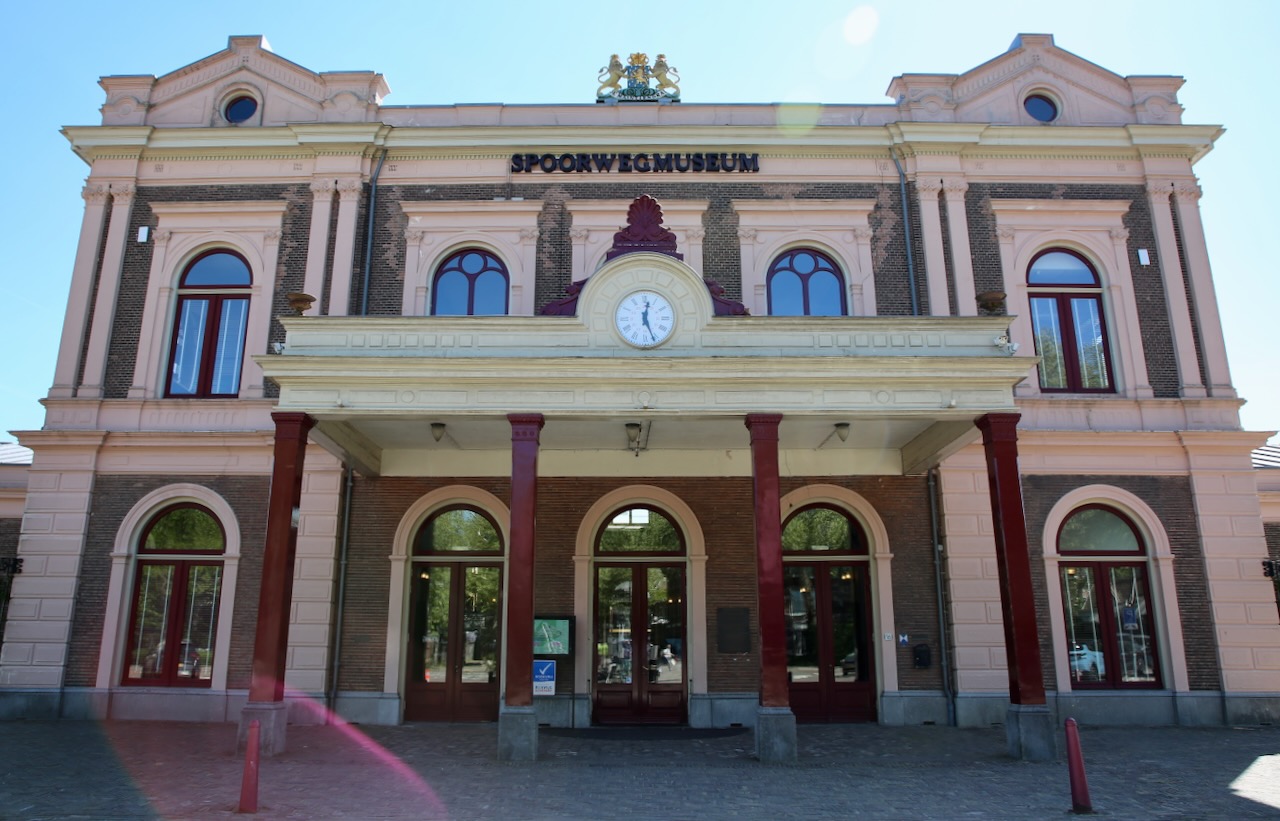
The train pulls up to the Amersfoort station, and we board for Utrecht. As we sit down, we know we are in seats that are too fancy for us (first class), so Caleb asks Gert via text, who responds with “look at the number over the door.” There are 1s and 2s, and then smaller car numbers. The next train will take us to the entrance of the Spoorweg (Railway) Museum, established in 1927. A man (either the conductor or security officer) comes by to check our tickets, either scanning the prepaid or charging (tapping out) the others. Our travel time is about 80 minutes this morning.
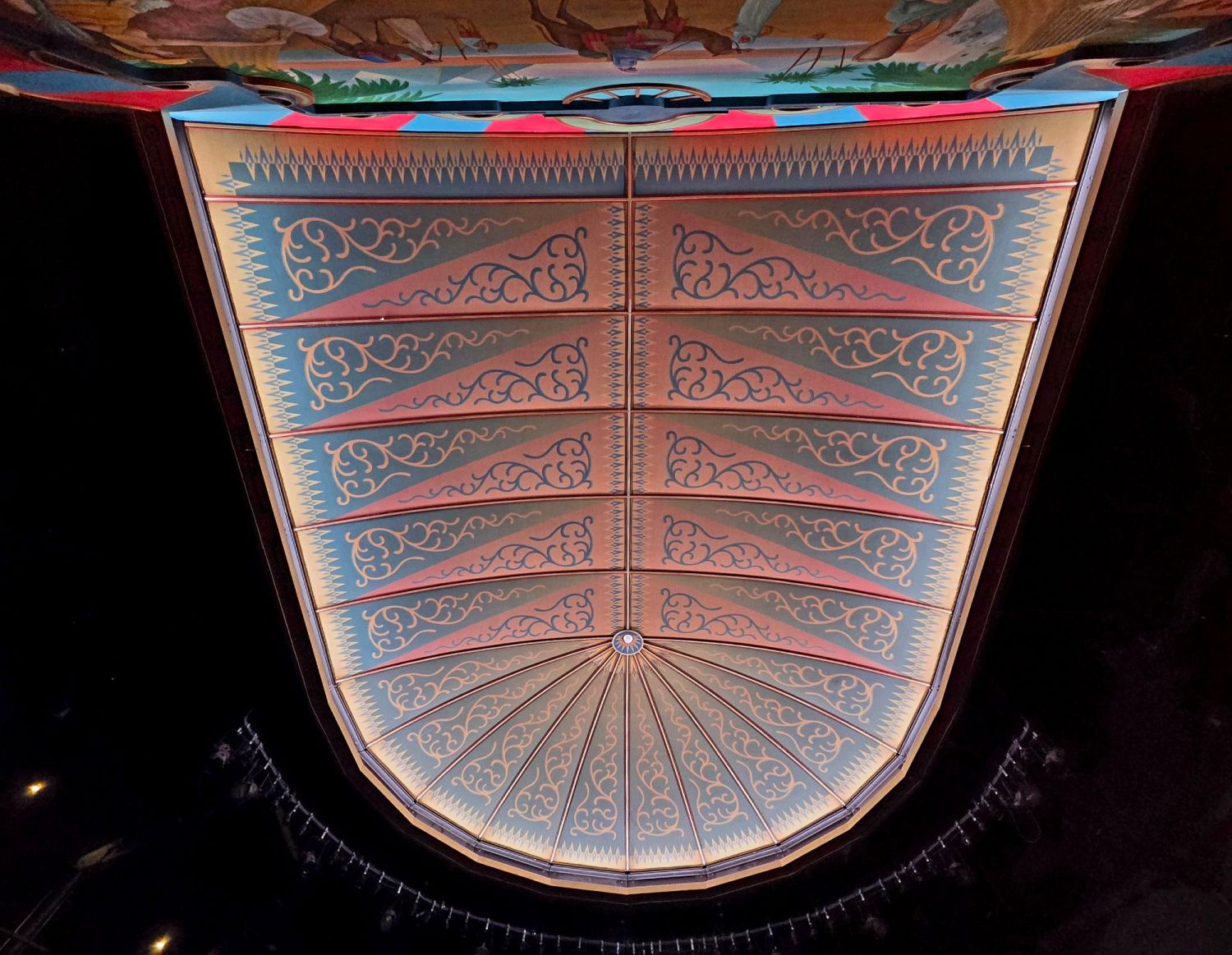
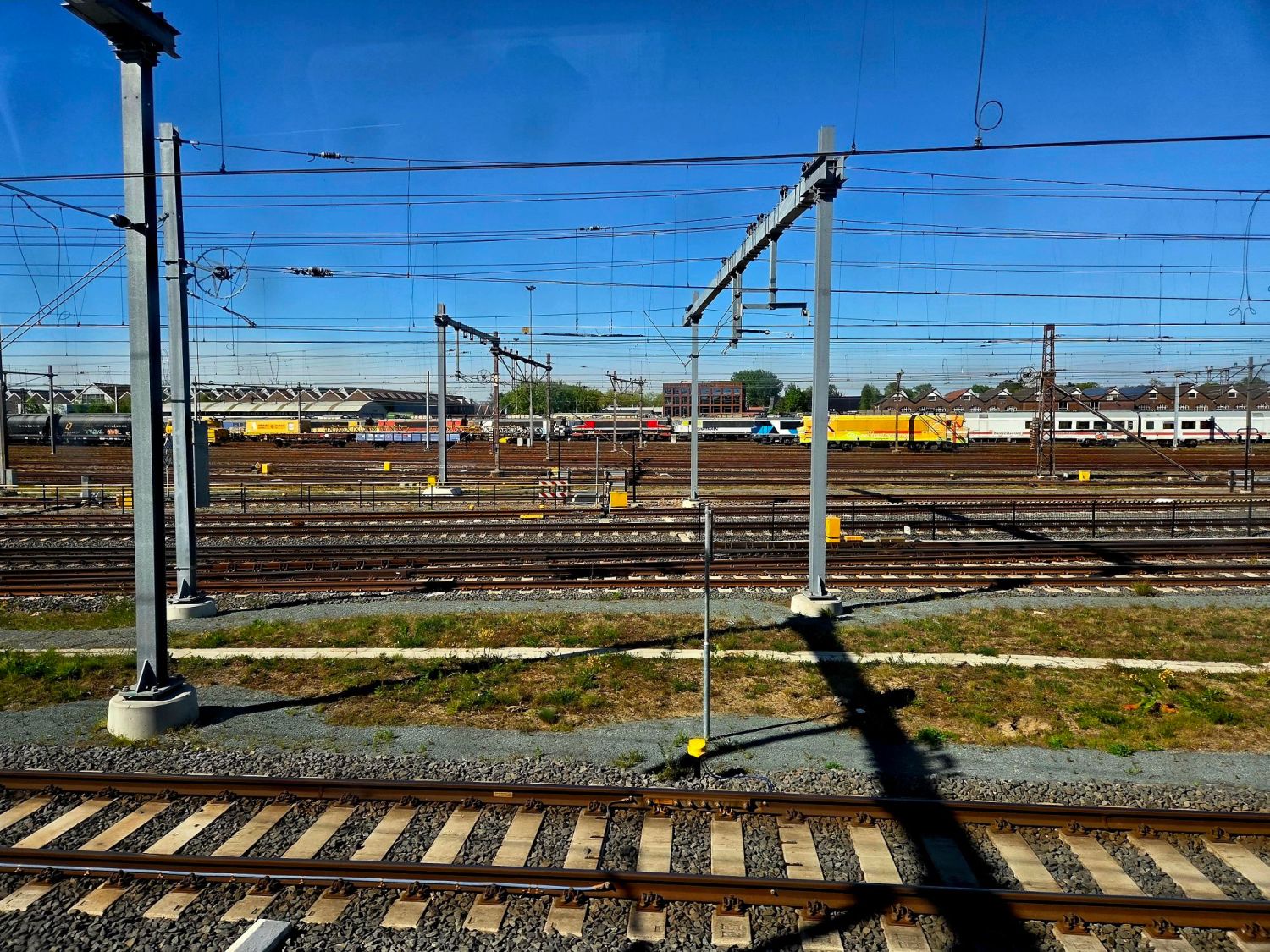
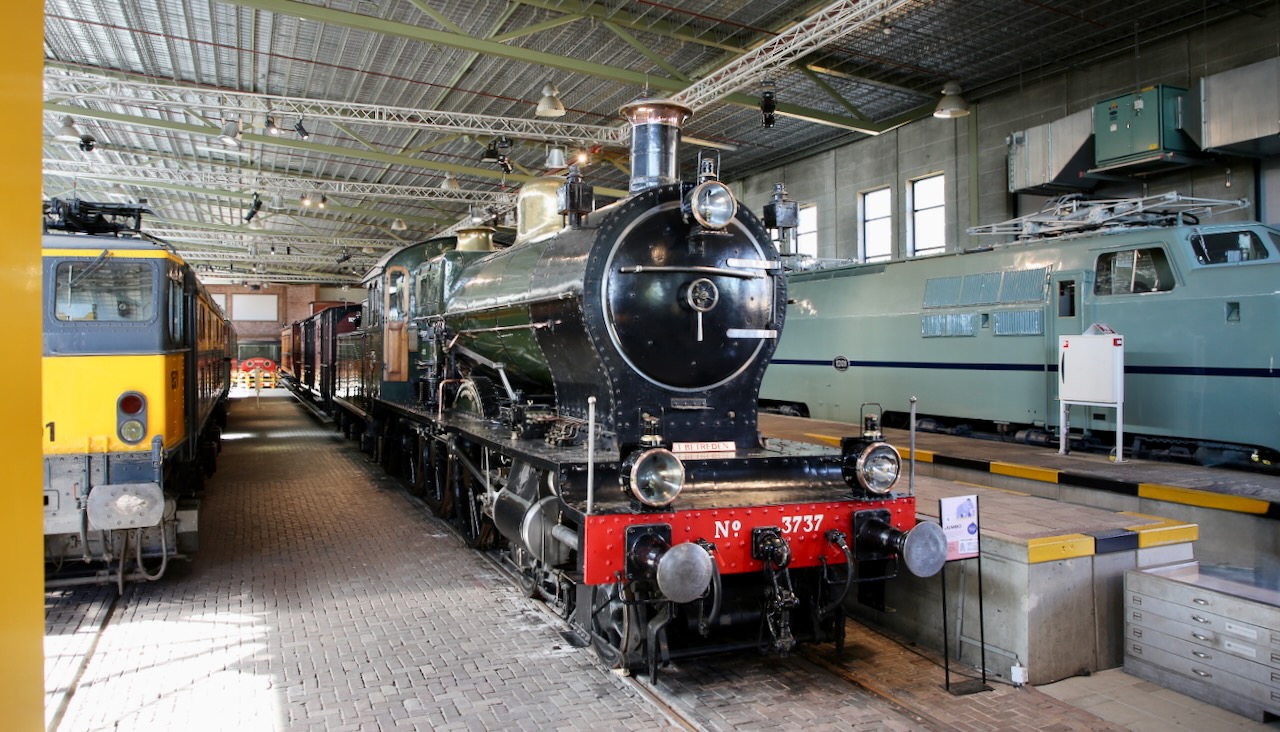
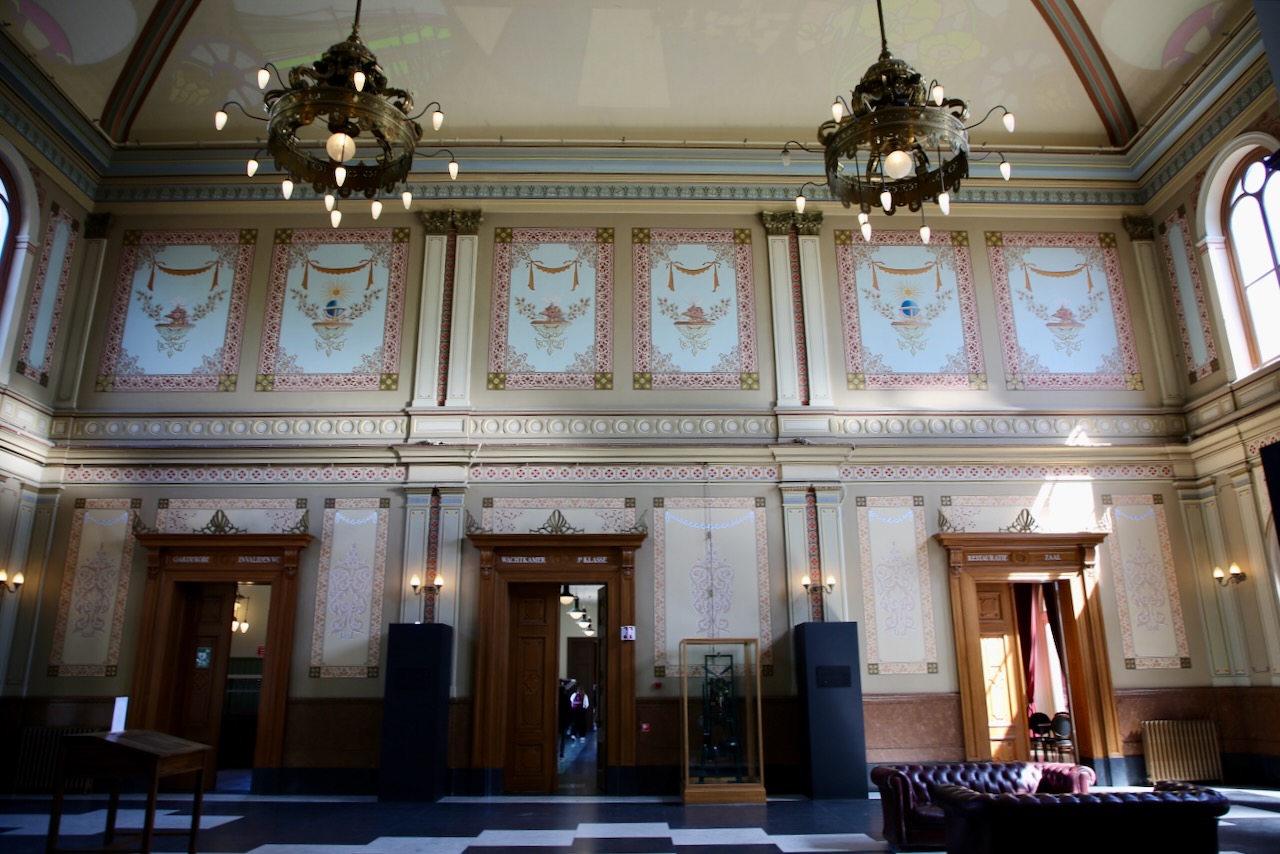
We get a staff member to help us put our bags in the free locker, even though not all guests are using them, as they don’t seem required here. Caleb ties himself to a track so that we have a photo to send to Gert. This museum is his dad’s favorite. We see the sign for Steel Monsters: no pregnant women or wheelchaired people, but the spider symbol is not crossed out. I’m still able to convince Caleb to join me on a ride that Gert said would be fine for individuals with injuries. The colossal locomotives got this nickname as they pulled wagons and carriages long distances with the help of many men and women. I can imagine the excitement and hesitancy for such new technology.
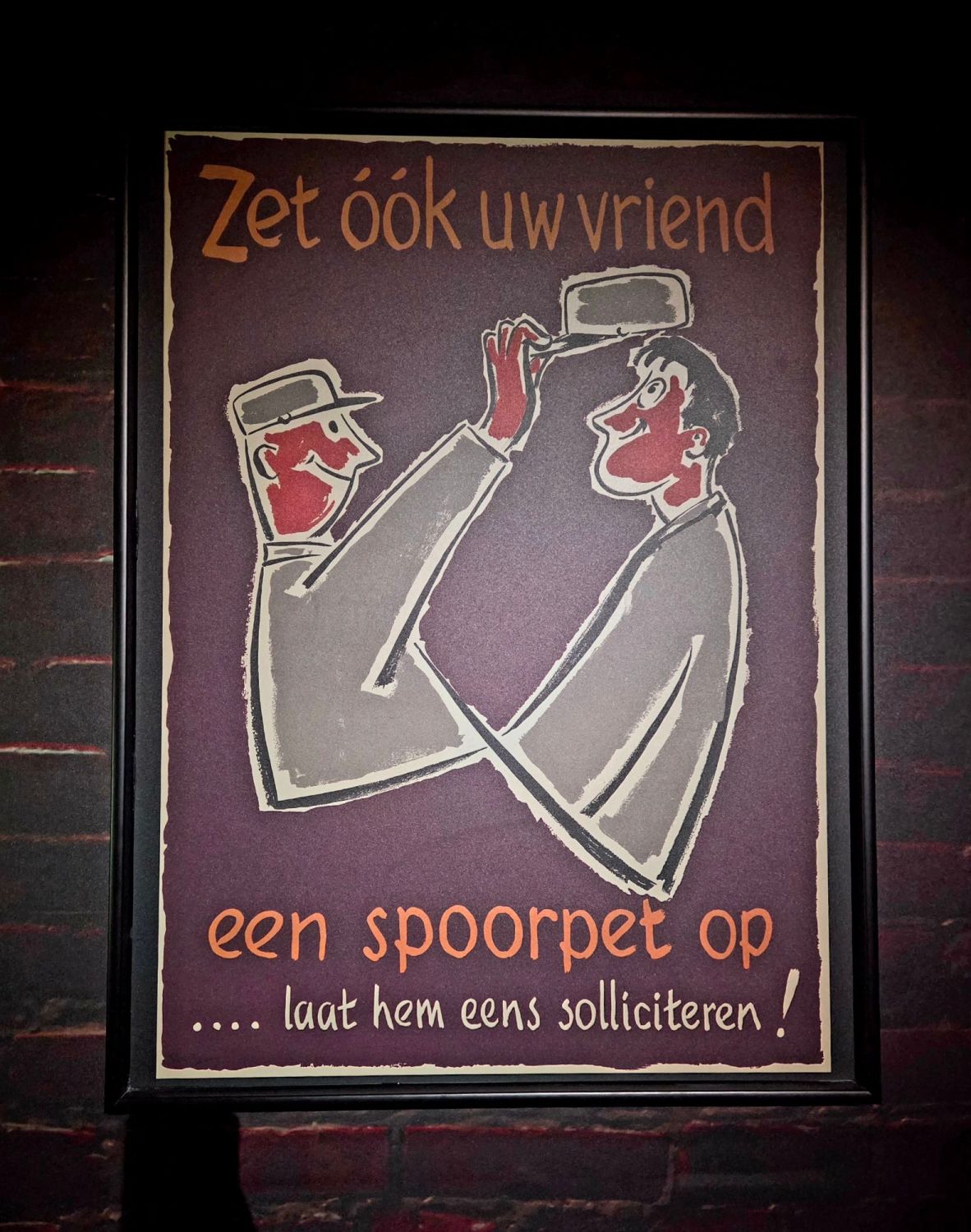
There are old signs and photos on the walls, train logs and stamps in one case, and employee hats and guest dishes in another. We stand on numbered spots and join a family when the door opens. I was going to offer for the kid to be in front of us, as is customary in the States, but they seemed satisfied, and the video started. After, they would get in the one-car ride while we waited, which seemed to take only seconds. Once we were seated, the mini-adventure began, which took way longer. We got to see the front, back, side, and bottom of a train; that was a first.
In 1920, the US had over two million workers in the railroad industry, as steam engines were labor-intensive. As of 2020, that number has dropped to 150,000 due to improvements in technology and industry consolidation. Compare this with the Netherlands, which employed 100,000 people between 1836 and 1920. Since then, they have maintained about 25,000 workers. I was going to mention how nice the sun coming through the curtains made the vanity area feel yesterday, but the circular washbasin, built for schools and factories, stands out more.
The last time I saw this multi-spigot design was in my high school showers in the locker room. This design was never officially banned, but began to be phased out in the 90s to be more ADA-compliant and shift towards hands-free plumbing. I’m glad to see one preserved, even if it means someone is rolling around with dirty hands. It also seems that floor-to-ceiling doors have an indicator by the handle if the stall is in use, vs the wide openings, enough for children to fit under, in the US, where you can look for feet or other body parts before yanking on the door. I understand why this would make people hesitant to share the room.
Another comparison comes with the Blue Angels. In the US, they are a Navy Flight Demonstration Squadron formed in 1946, the second-oldest formal aerobatic team in the world. In the Netherlands, the Blue Angels refers to the diesel-electric trains, produced in 1953 and 54, that are blue with a winged logo of their manufacturer Allan at the front. There is a sign welcoming us into the Model Train Warehouse, where we will meet the creators, designers, collectors, and beginners. The first model train was on the market in 1835; such was the enthusiasm for this revolutionary way of travel.
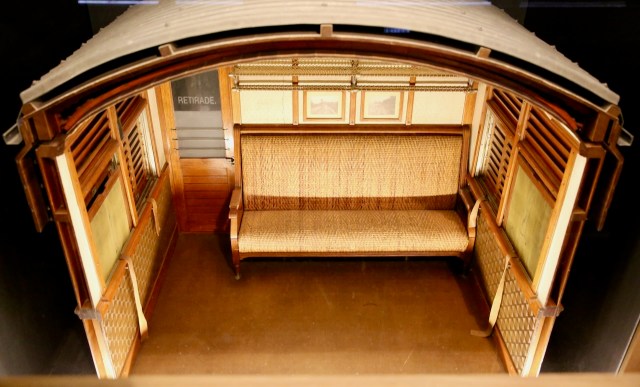
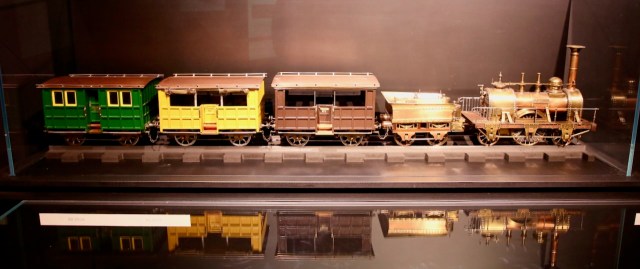
We’ve been to the San Diego Model Railroad Museum, covering 27,000 sq ft, since 1982, along with other train museums across the US. I’m so glad we have the exploratory nature to bypass the assumption that all museums are the same. If the Vulcan model, circa 1845, were the only model I saw here, it would make the visit worth it. The toy train is hand-painted tin with independently moving wheels. Due to its delicate nature, very few of these have been saved. There are the engine, 3rd, 2nd, and 1st class cars, with the cattle car and baggage car following.
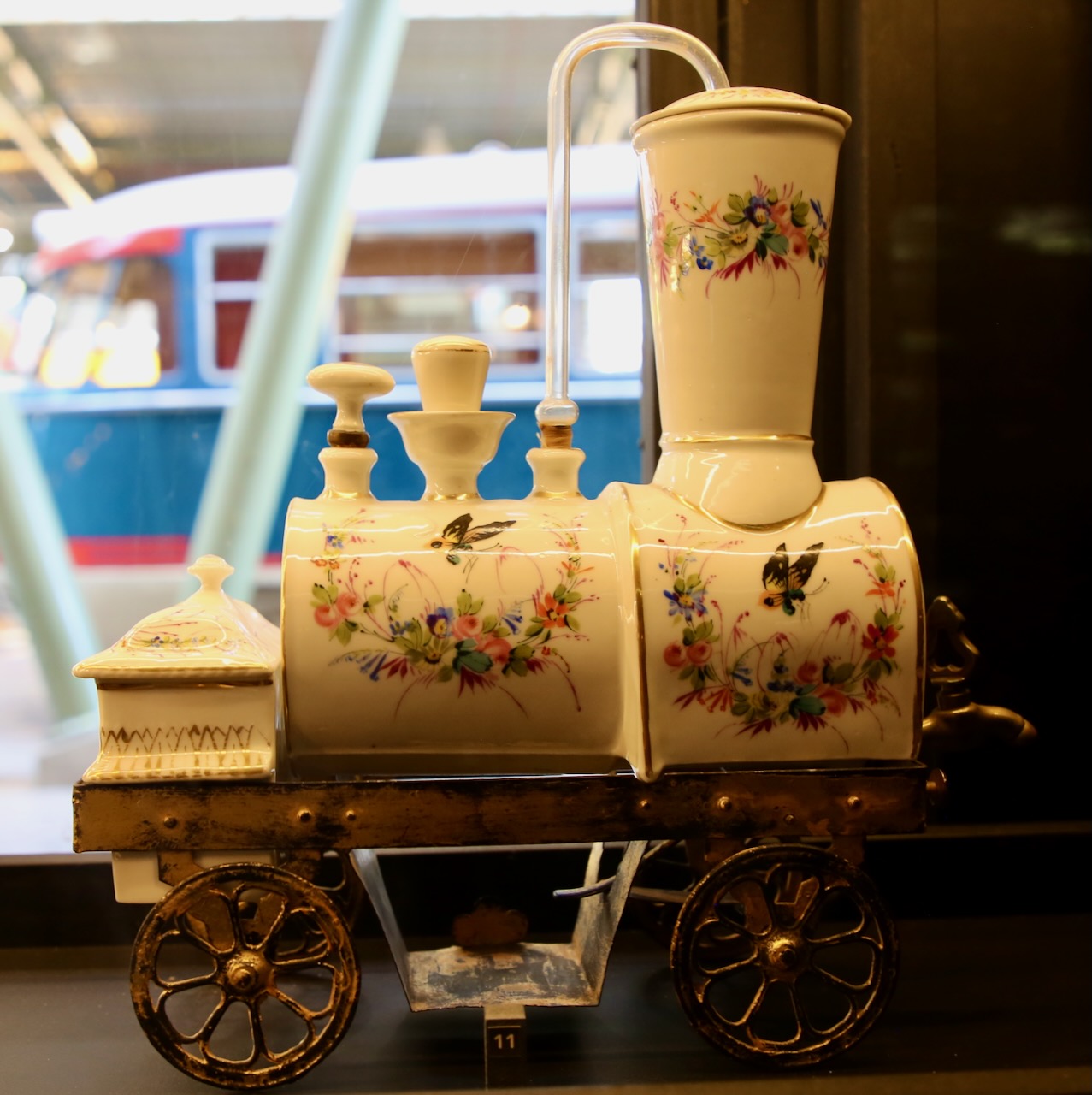
Just like architects design models for their investors, train manufacturers did the same for their customers. Even more impressive are the models that have been made into inkstands, teapots, and clocks. In 2012, artist Hugo Kaagman had a Stencil Station exhibit at the museum after transforming several models with his Delft blue-and-white-inspired designs. Since 1875, Germany has played a role in the toy train industry, starting with some 250 factories. They started with wood, then wind-up, followed by steam power. Around 1900, electric models were introduced, first with batteries, then connected to the mains.
Miniature tracks began to be sold with semaphore signals, stations, level crossings, and landscape elements. This toy was expensive until at least 1915, when tin was cheaper to produce, and again in 1949, when the first plastic train was manufactured by Palitoy in England. Plarail in Japan would launch the first plastic train and rail set in 1959, and LEGO, founded in Denmark in 1932, would create its first toy train in 1964 after transitioning from wooden toys to plastic in 1949. There’s a wooden train set that changed its abbreviated name, ADO, from Labor of the Impaired to Unique, Practical, Indestructible due to its derogatory connotations.
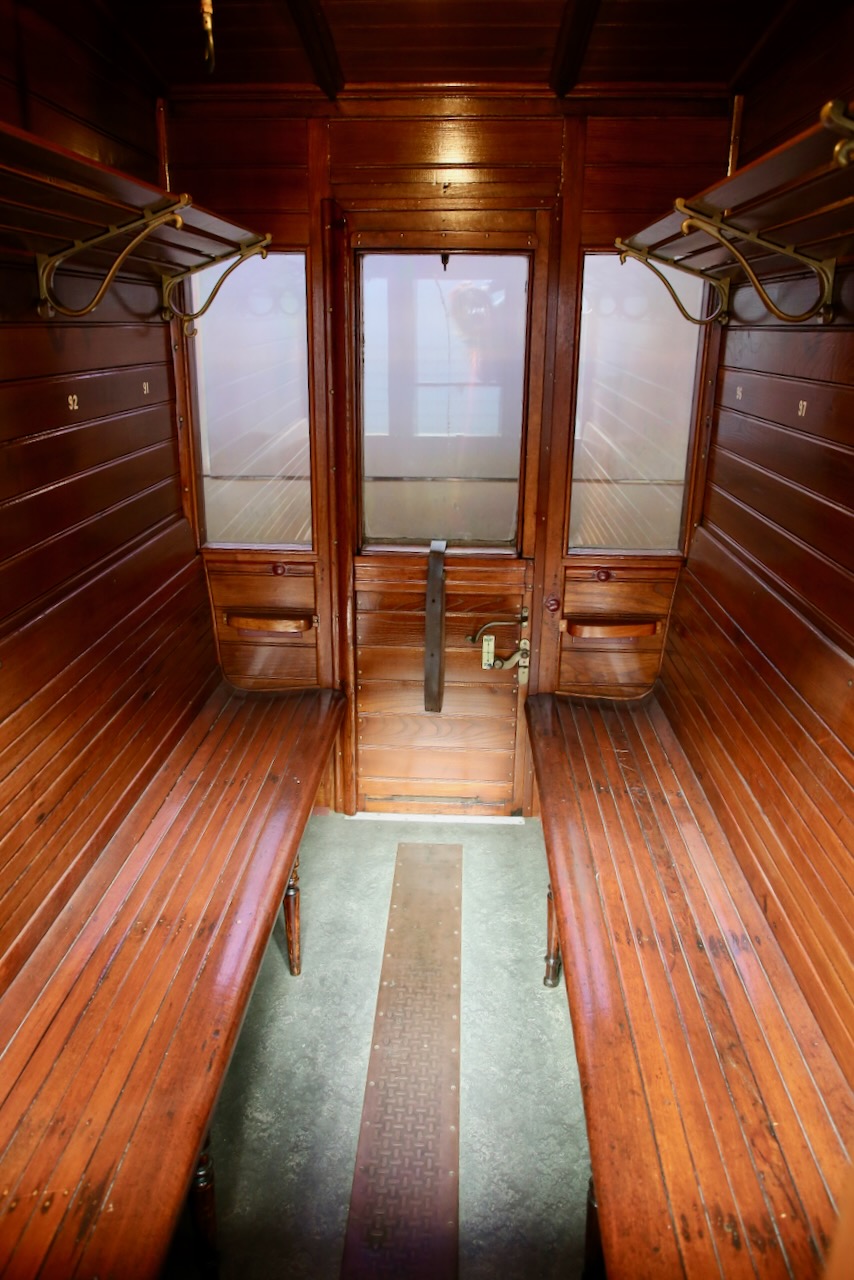
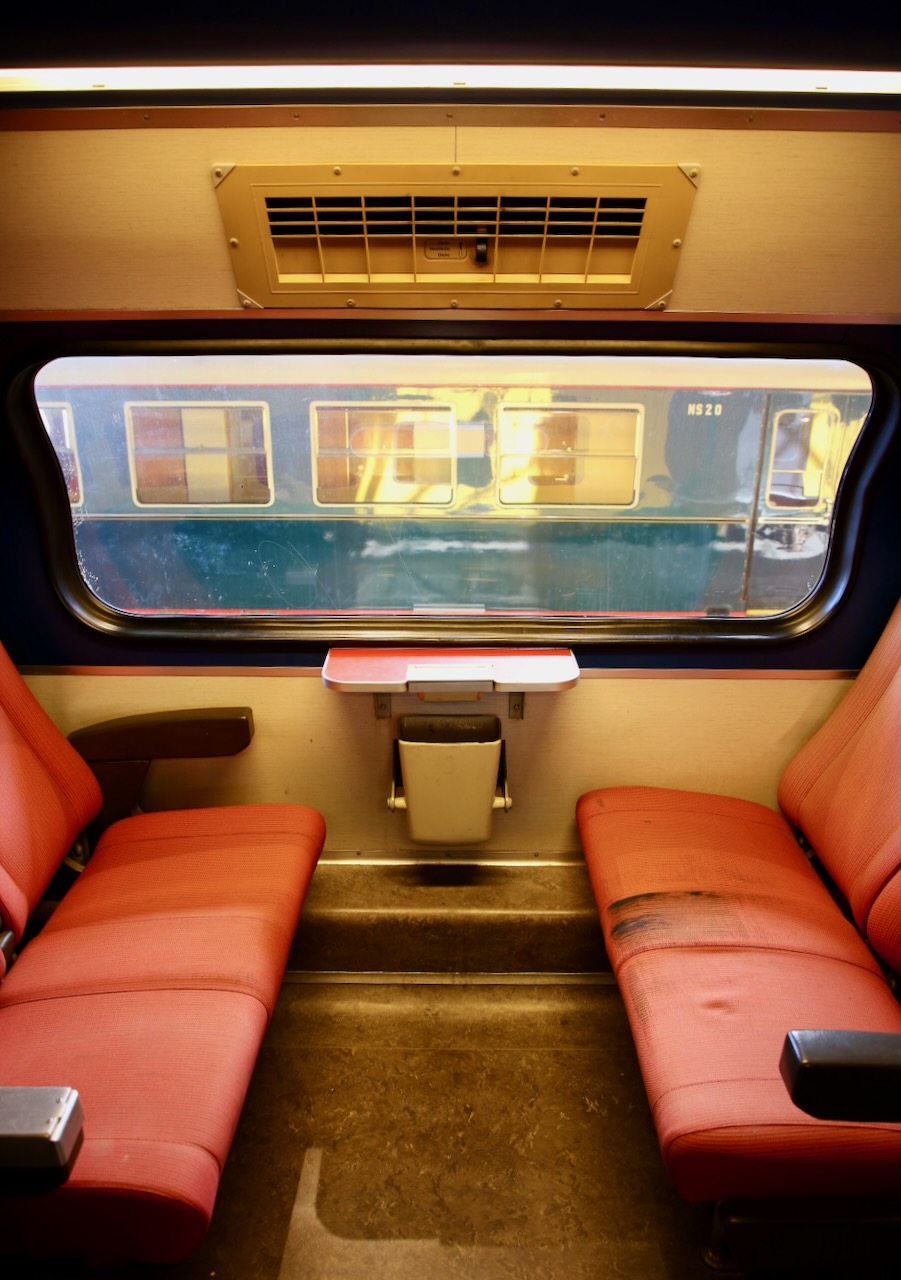
After the model trains, it’s time to climb aboard some retired locomotives. “Welcome on board. We are very pleased to take you in comfort and safety to your destination… as long as you have a ticket, don’t smoke, don’t talk loudly, pay 8.50€ for your non-folding bicycle outside peak travel times, don’t put your feet on the seat, keep the train clean, and stow your luggage.” The mail car was busy from 1856 until 1979, when sorting on the train was phased out, having up to nine men moving letters from duffel bags to cabinets with the help of skylights and fluorescent tubes.
The last mail-by-rail journey took place in 1997 when trucks became cheaper and more flexible for the postal network. All this train exploring has worked up my appetite. We grab a wooden tray and load it up with a chicken sandwich each, one on white bread and one on brown bread, a cheese danish, a large chocolate-dipped stroopwafel, a bitter lemon drink, and a sparkling ginger lemongrass NODA (not a soda) to take outside. With no leftovers, we find our way upstairs to the Techlab engineering room, where students of all ages can learn about electricity, traction, wheels, and the tracks.
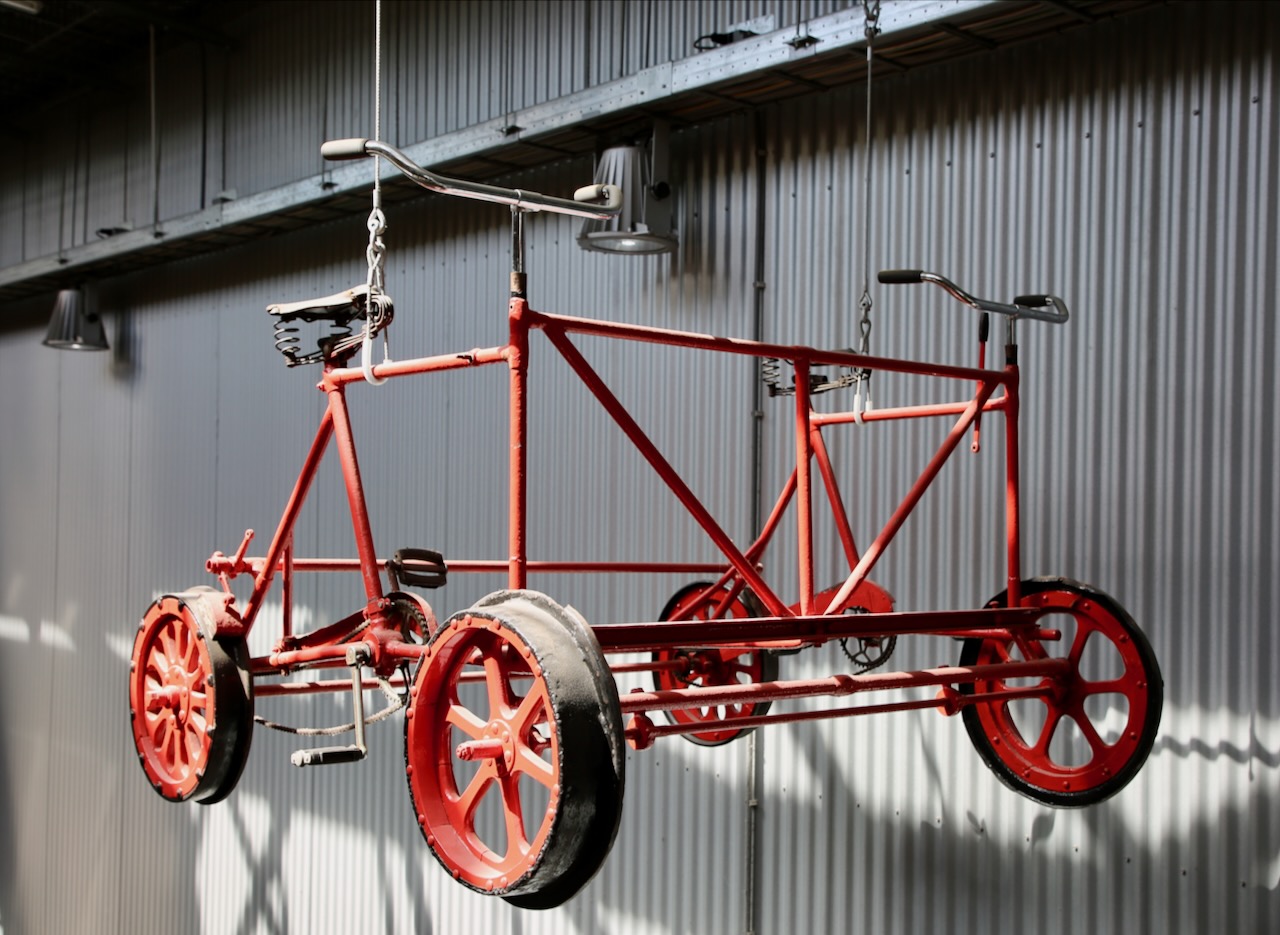
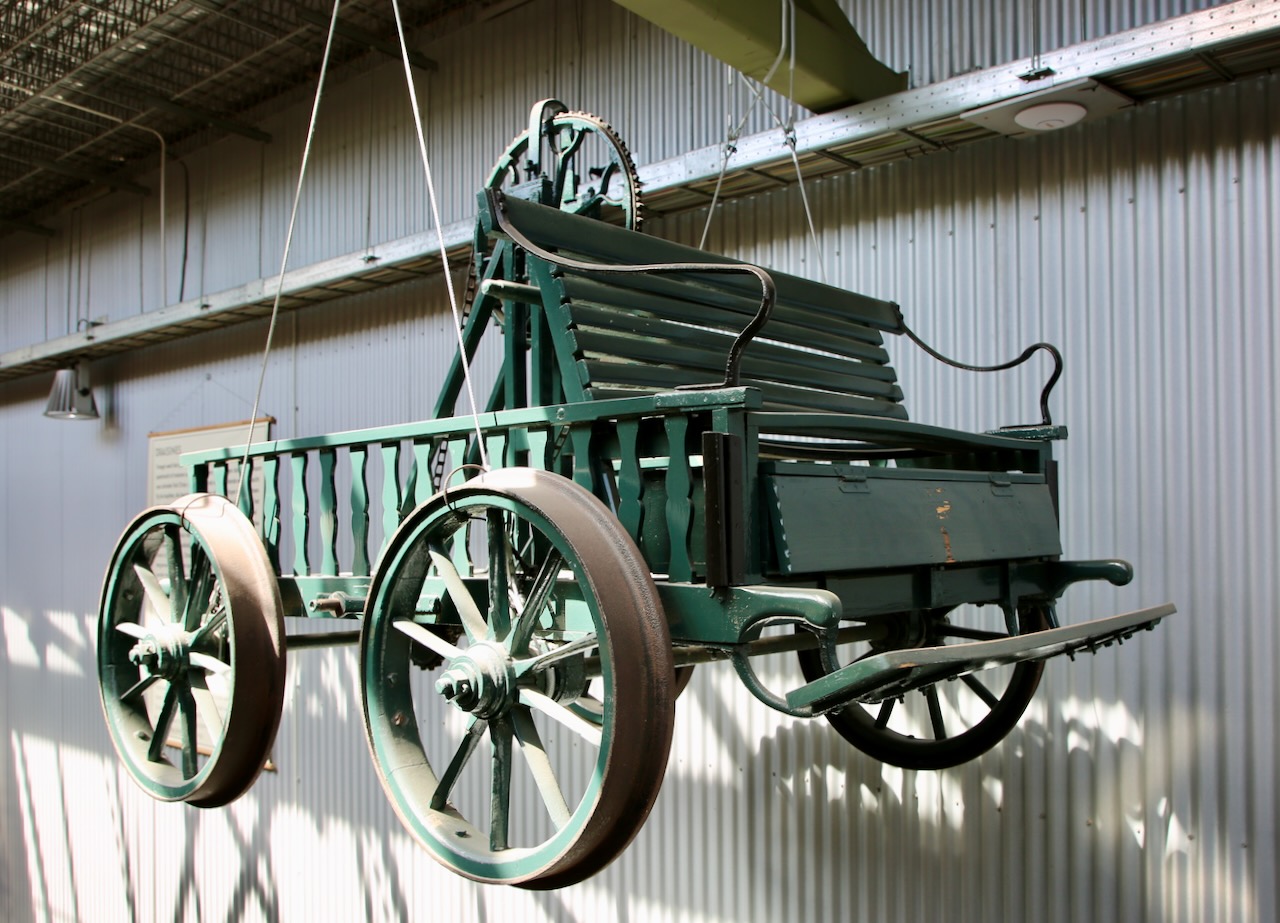
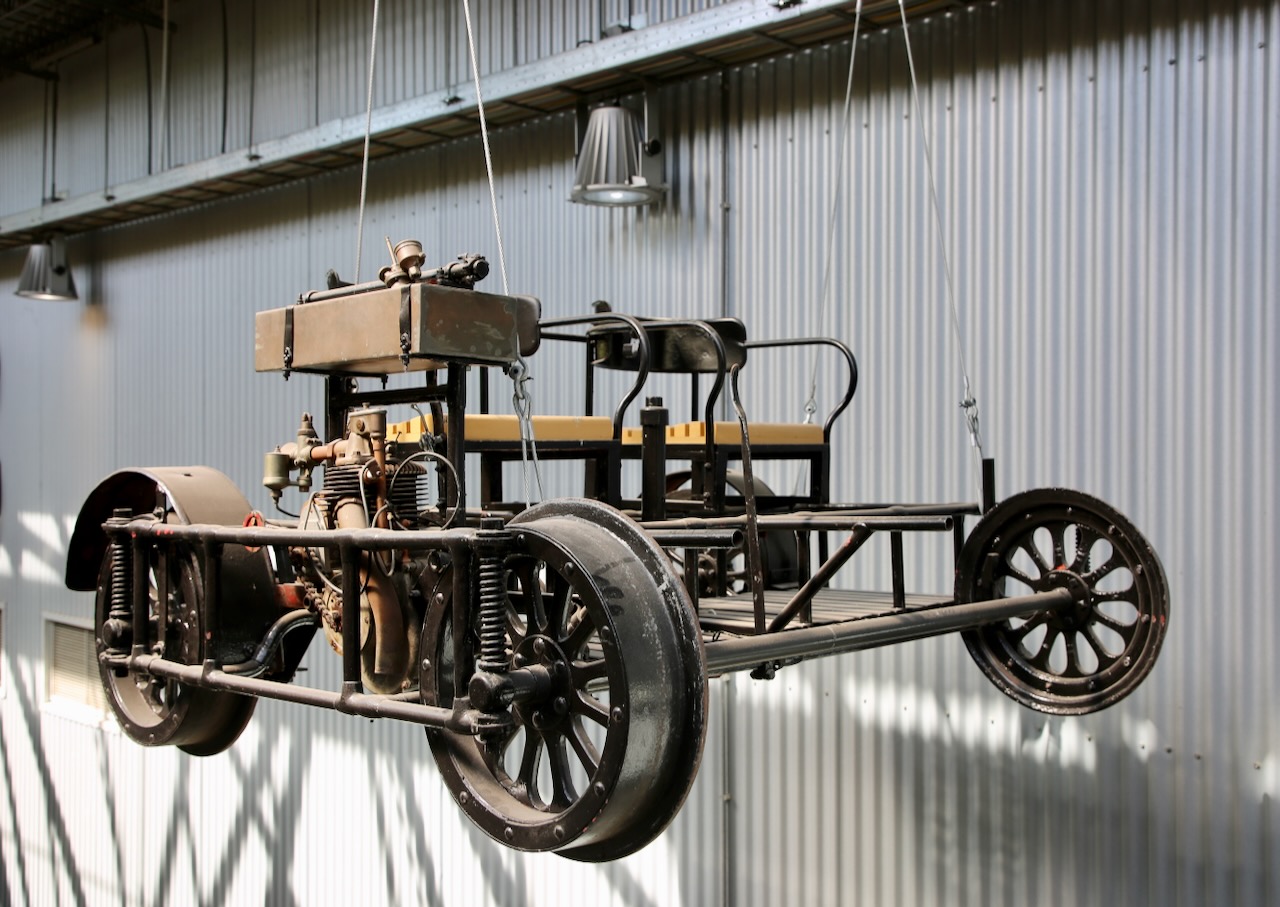
You can design your own train and then take a quiz to test your knowledge. Hanging from the ceiling are different model draisines, railroad vehicles named after their creator, Karl Drais. They were used for rail inspection and small repairs, and were light enough to be lifted off the rails when a train was coming. Now, special trains equipped with ultrasonic measuring devices and cameras have replaced them. The bike version seated two people, the handwheel version required two people to turn the wheel, with a seat in front for the inspectors. The motorized draisine had to be lifted and turned around to change direction.
Past that is a small exhibit exploring speed. In 1934, a train went 166 km/h in the US. In 2015, Japan had a train traveling 603 km/h, while a plane can fly at 900 km/h. In 2013, Elon Musk proposed the Hyperloop, a transit system that travels in a sealed tube to reduce resistance, which could theoretically travel at 1126 km/h (700 mph). This means that an 18-hour car ride or a 2.5-hour plane flight could be reduced to under two hours. One of the main barriers is cost, at $40 to $100 million per mile, to build tubes completely depressurized and earthquake-proof.
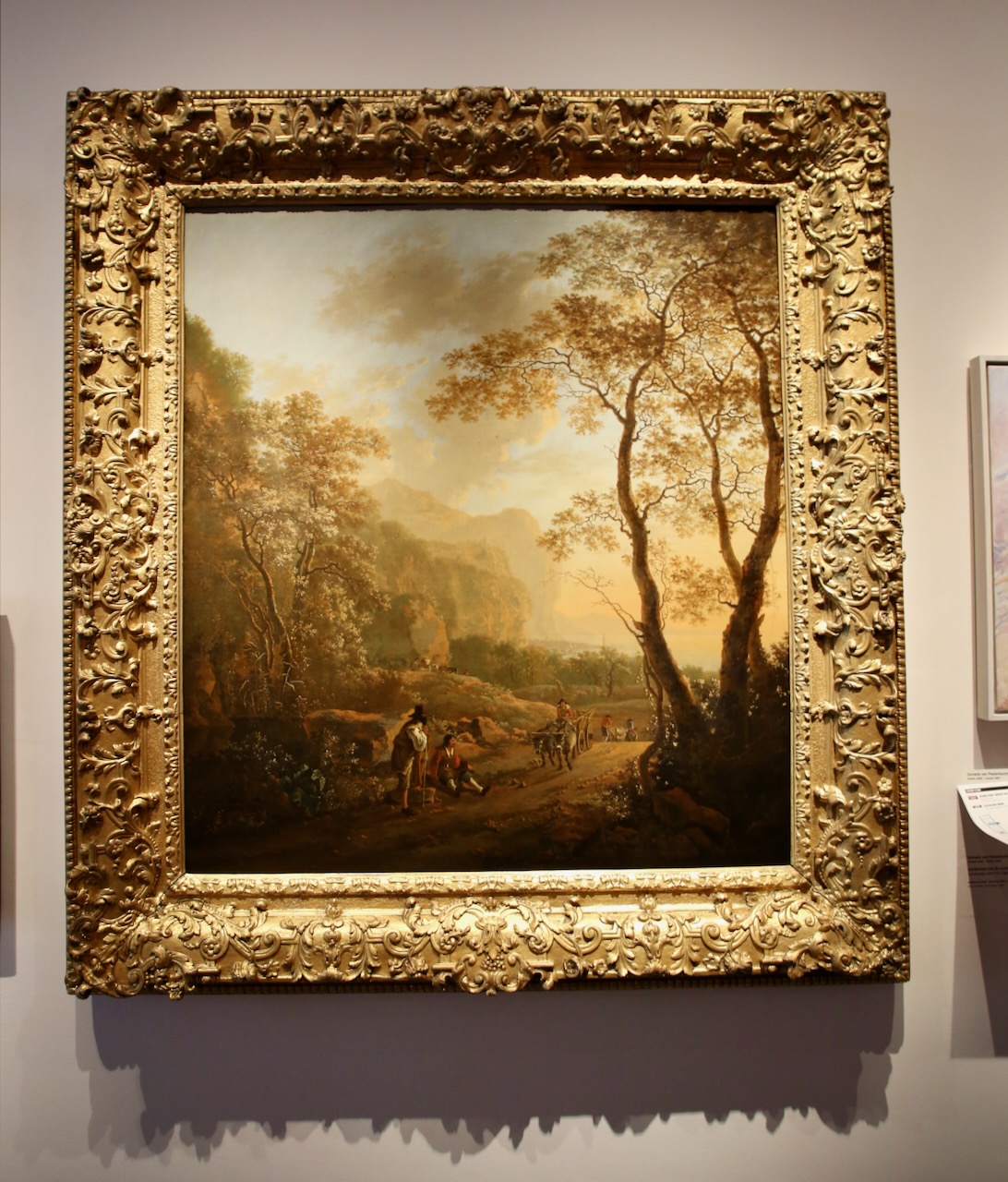
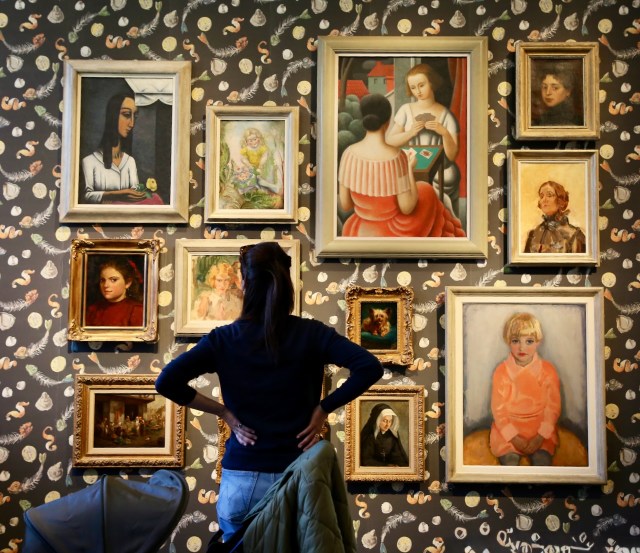
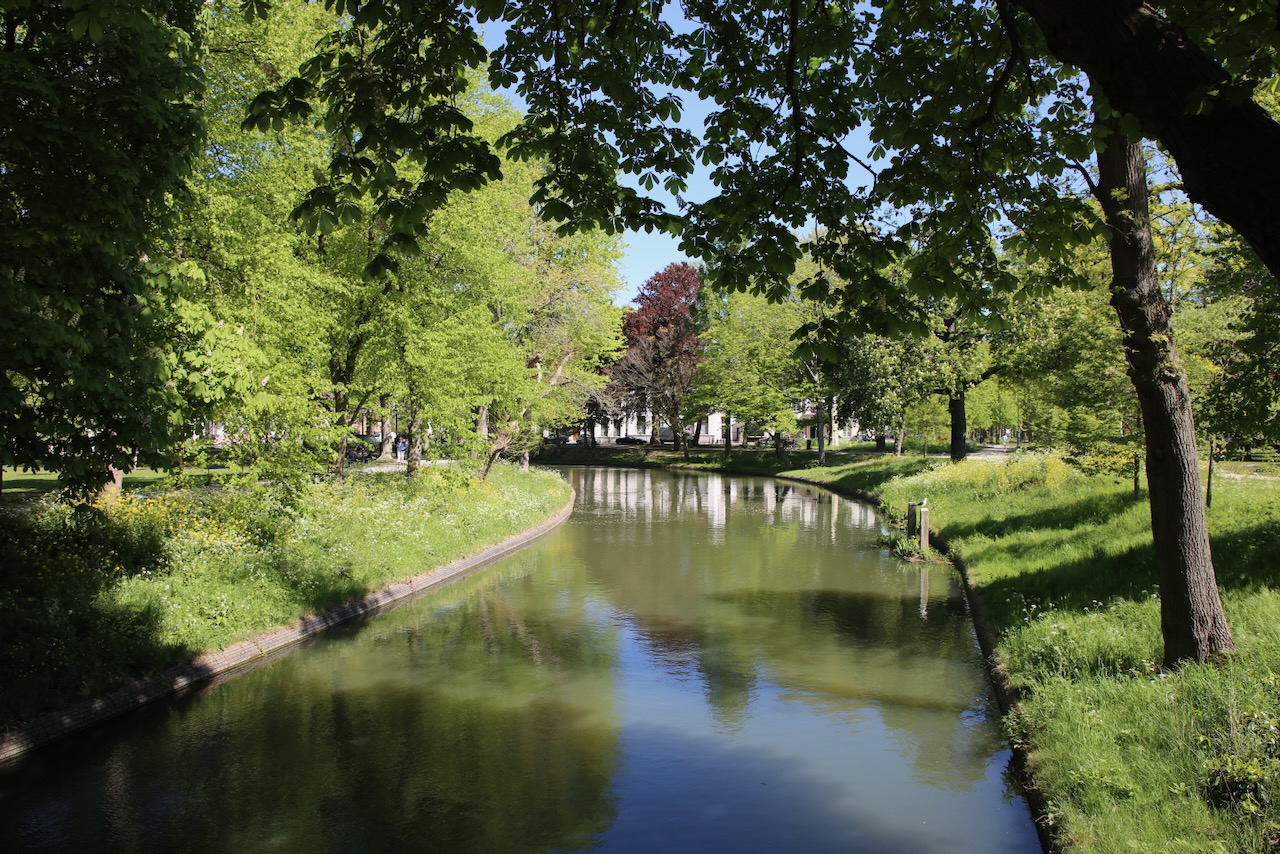
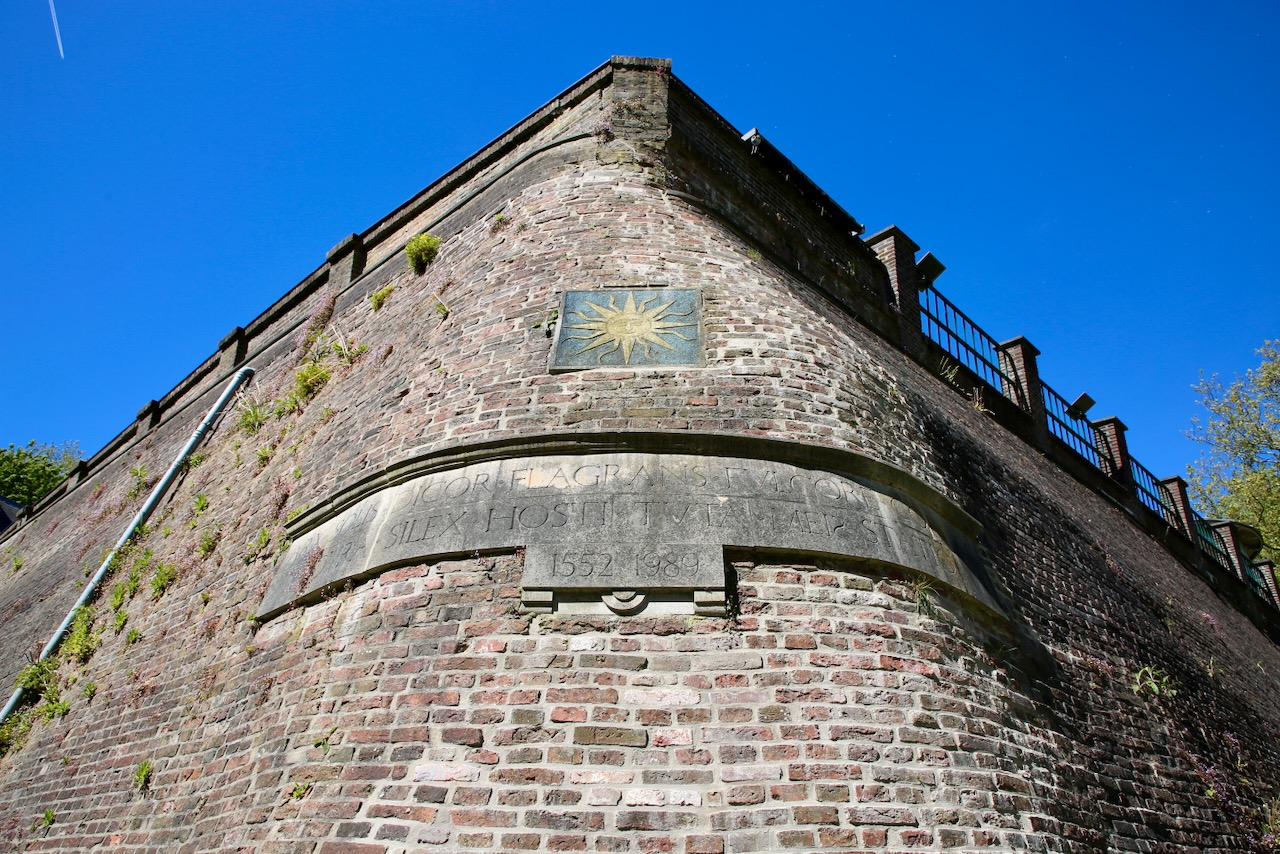
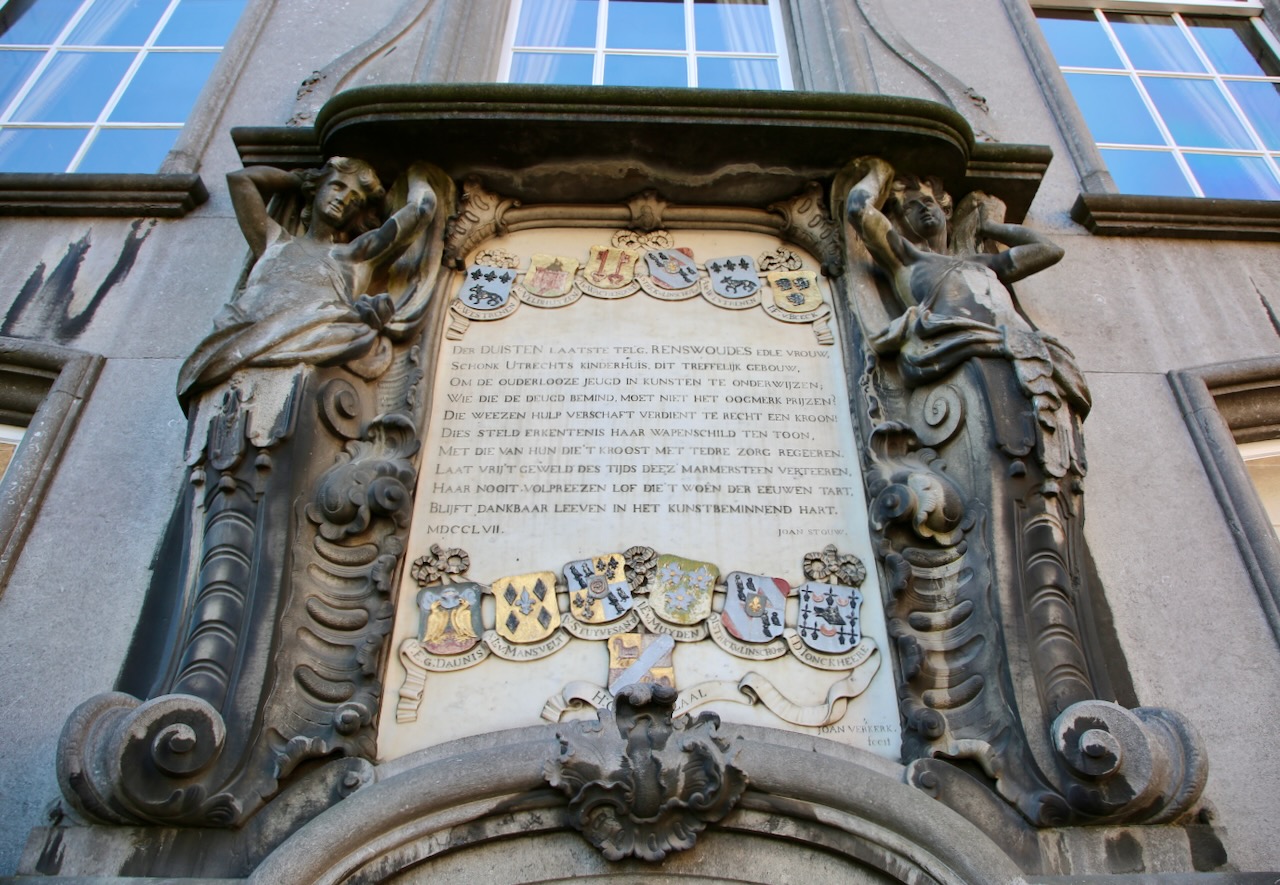
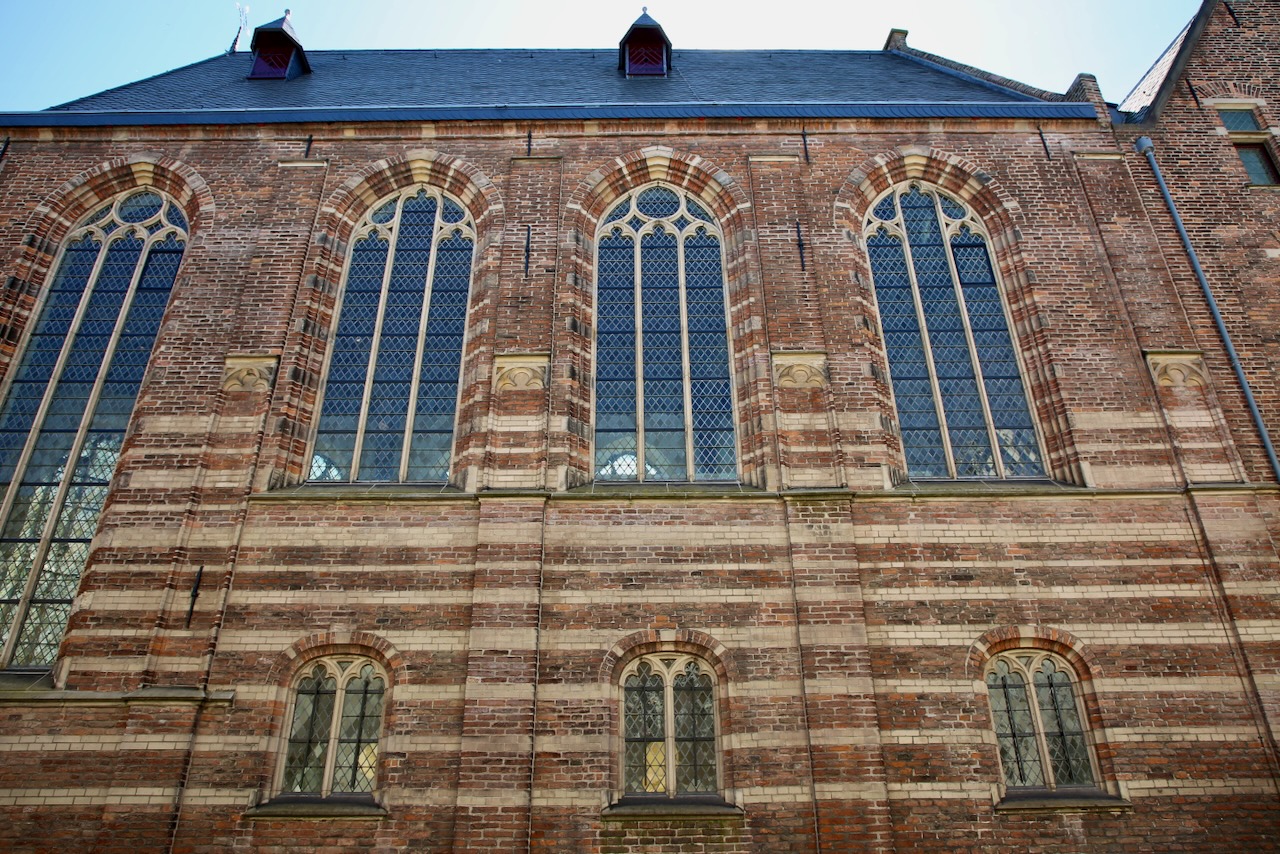
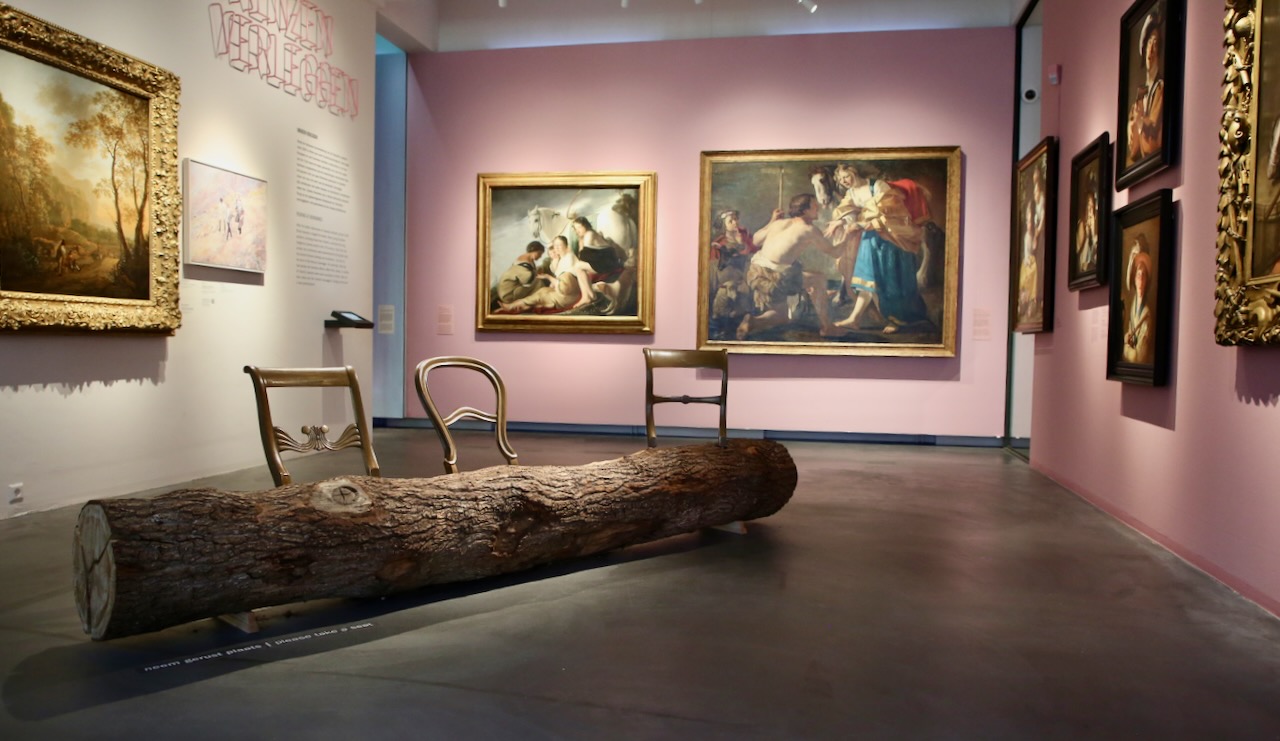
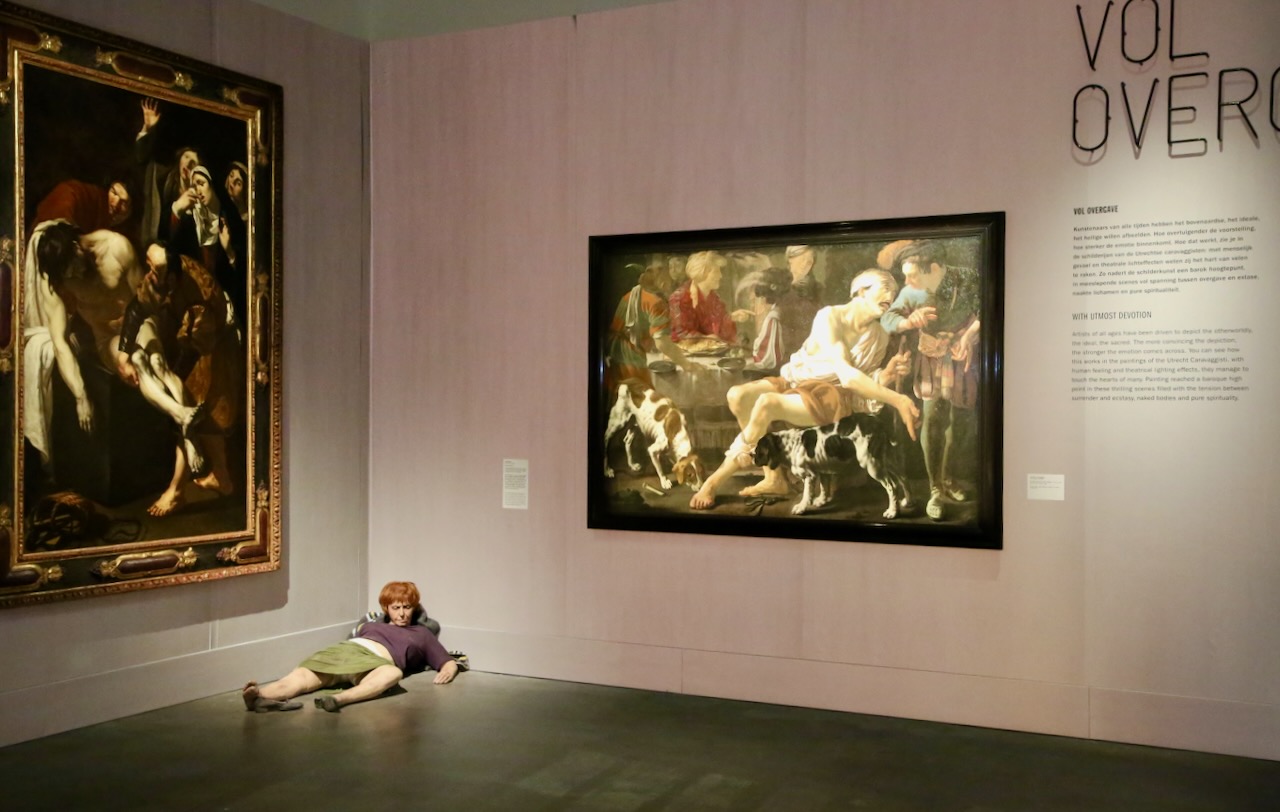
In the gift shop, I’m tempted to buy children’s dishes with clothed amphibians, a curious stork, and a rabbit in a rush. The way to the next museum follows the canal in Zocher Park. There is a bastion that can be visited as part of the Museum Sonnenborgh, but the 250-year-old trees come with the view. The Centraal Museum was founded in 1838 and displayed on the top floor of Utrecht Town Hall until 1891. The collection was moved to the Estate Hoogeland until 1921, when the renovation of the Agnieten Klooster was completed. This convent was founded in 1420, became an orphanage in 1674, a cavalry barracks in 1829, and possibly a factory before becoming a depository of local art.
Even their locker room has a few little cube display cases, as we look to keep our locker choice consistent. The first couple of times were either luck or Gert’s favorite number, but we have kept #33 so far. The first portrait to catch my eye is of a mid-17th-century Dutch Calvinist elite family that quietly screams wealth: black formalwear that was expensive and difficult to produce, lace collars and cuffs that were intricately handmade, and minimal jewelry (rich but respectable). The stiff bodices and doublets showed moral uprightness, and a pop of color on the children symbolized their youth. The bread on the table lets the viewer know they are blessed by God with domestic stability.
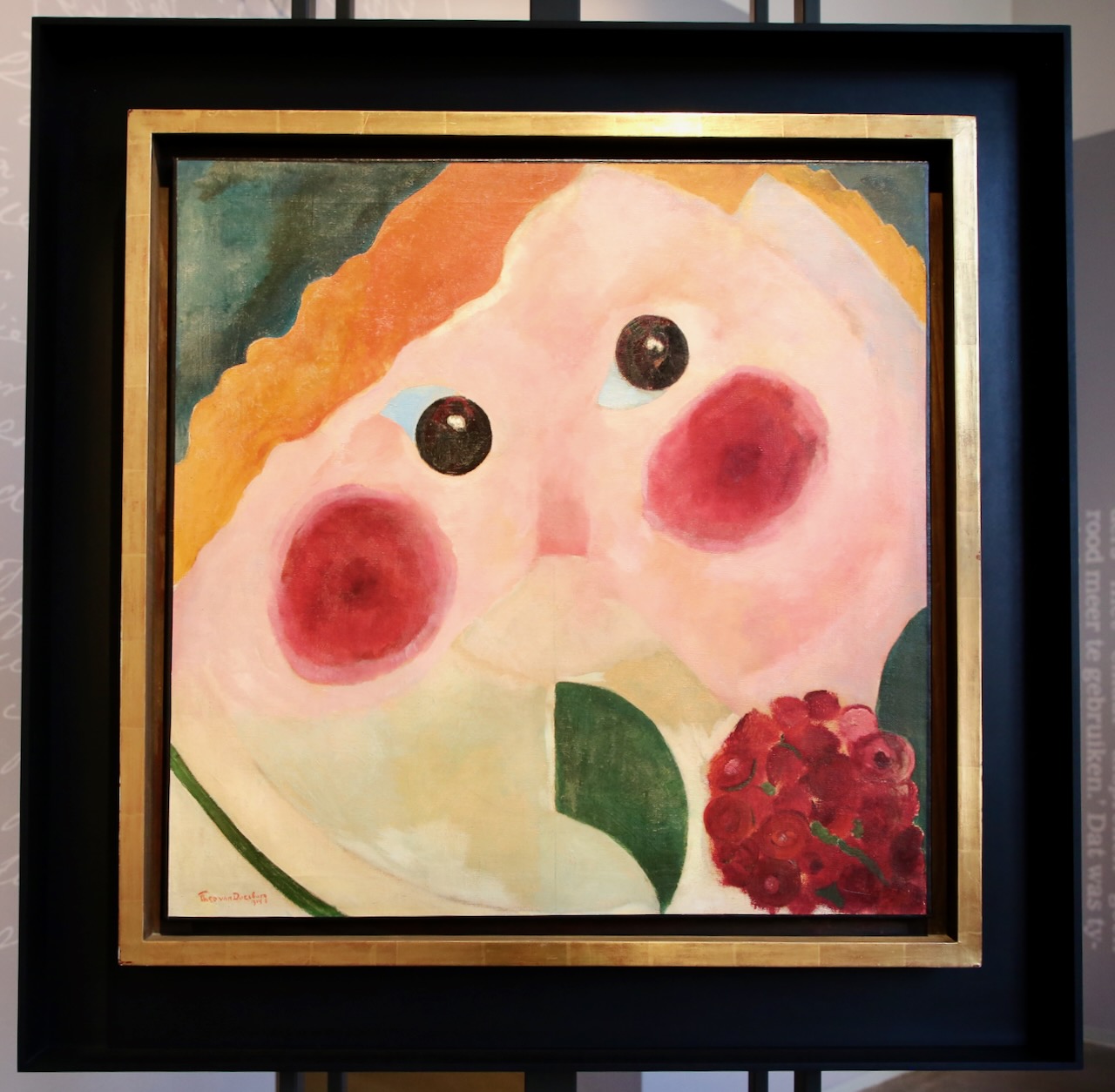
I once told my dad I was going to school so that I could understand art, and now I know why there are degrees in such a broad subject. I look at this family of nine and think about how long they each had to sit to get their message across. I notice the multiple books, an older son with an artist palette, and the chicken with its feet dangling off the plate, and don’t think about the status meaning of who is holding the reading material or where their hands are to show guardianship and authority. This is an example of where the saying, “A photo is worth a thousand words,” came from.
In another room, there is an eleven-room dollhouse that brings back memories — Mom’s Barbie house that she made with Grandma, My Little Pony house that brought Barbie and GI Joe together, and the repurposed items made for their comfort, and the joy in decorating these tiny spaces as we wished them to be, or others who represent a larger version of something that is. These miniatures led to the development of SimCity in 1989 and Minecraft in 2011, in which the builder is in charge of simulated food distribution, a land’s purpose (police, oil, education), and protecting residents so that your community continues to grow and unlock larger goals.
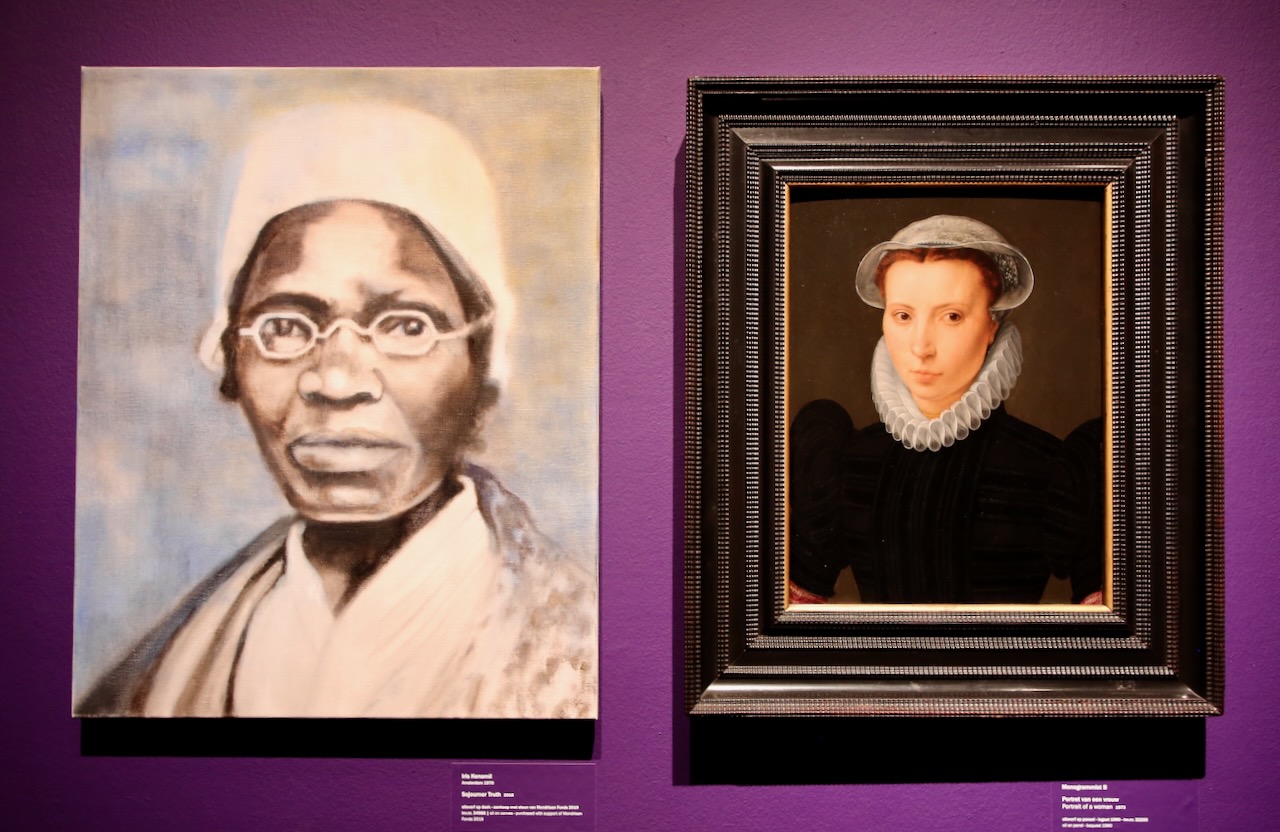
The museum now has over 70,000 pieces collected in under 200 years, but the permanent exhibit showcases less than 1% at any given time. The rotating exhibits double the total display, but how many of these items may never cause a traffic jam or be glanced over if not taken out of the antiquities depot. Not for this reason, but the Dutch are returning art unconditionally that was looted during the colonial period from Indonesia, Sri Lanka, and Nigeria. There is a restitution committee established in 2001 that is returning stolen art during the Nazi regime to the heirs of their Jewish owners. Art that has been smuggled at any point is being repatriated when found.
In 2005, the FBI created a Top Ten Art Crimes list in hopes of bringing the public’s attention to these stolen masterpieces. One that caught my eye was the 13 pieces stolen from the Gardner Museum in Boston in 1990, where the thieves took Degas sketches, Rembrandt works, and a Vermeer painting (just one of 36 in existence). Interpol created an app in 2021, ID-Art, to help users (curators, collectors, enthusiasts, and officers) access their database to reduce theft and safeguard heritage sites that are especially at risk when in a combat zone.
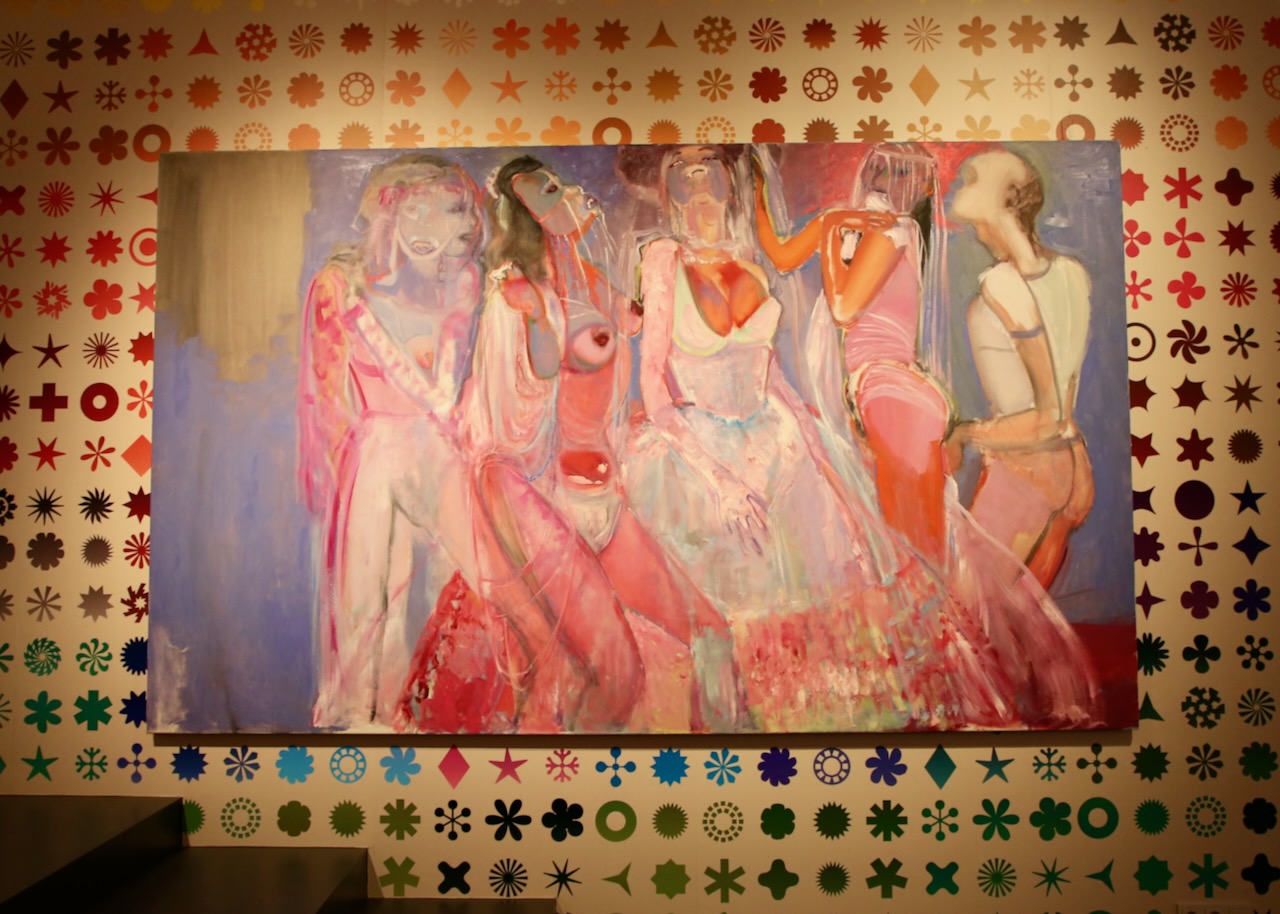
Another interesting piece, The Last Supper, 1994, by Jacoba Haas, who worked with Willem Wagenaar in the Surrealist Society, portrays the core members. The subtitle, ‘The Devoured Hour,’ refers to the clock with utensils that symbolize time consuming the hours; perhaps a reference to Wagenaar’s destroyed art by the Nazis decades ago. Luckily for the art world, he was seen to reconvene monthly meetings in an Amsterdam café in the 80s.
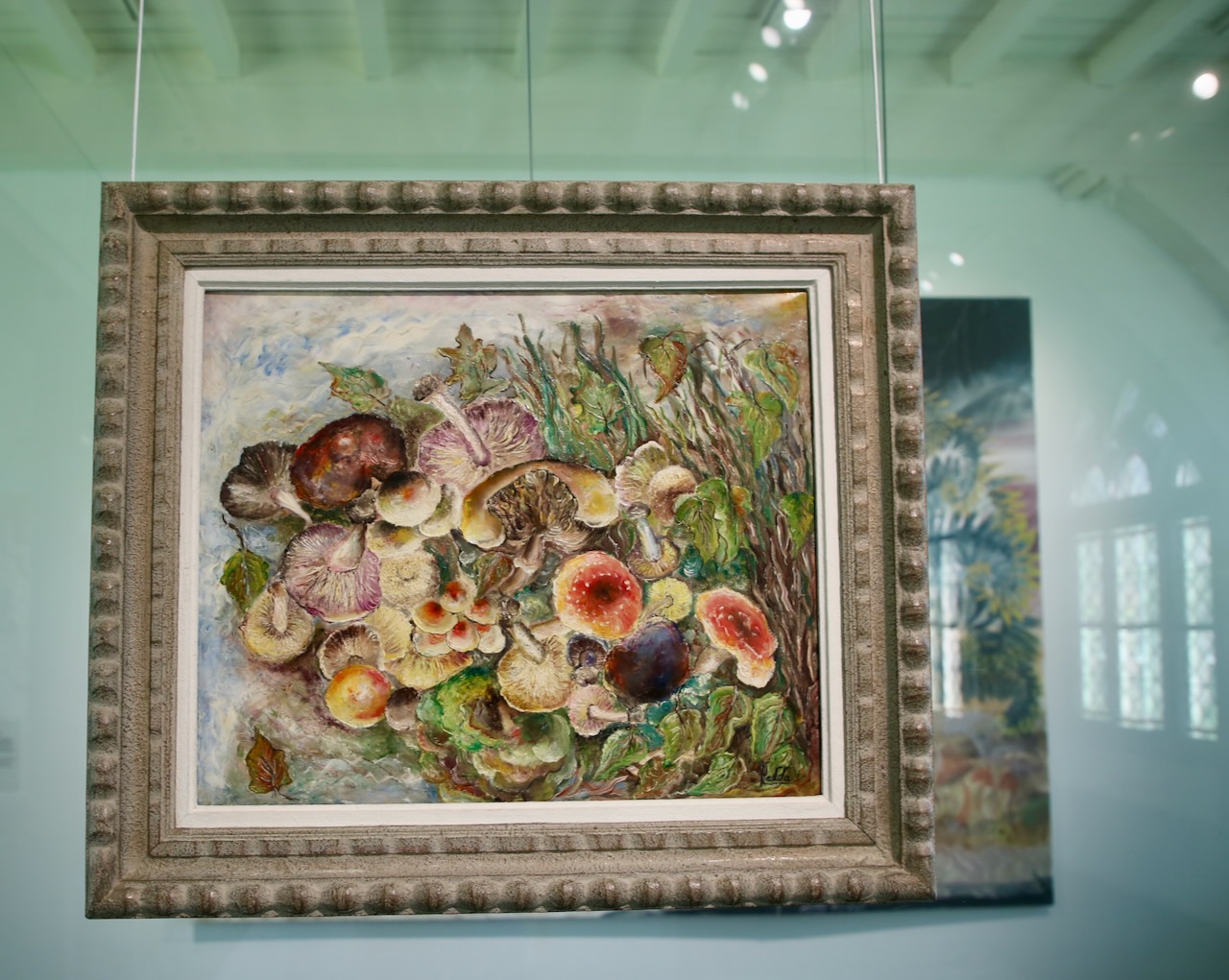
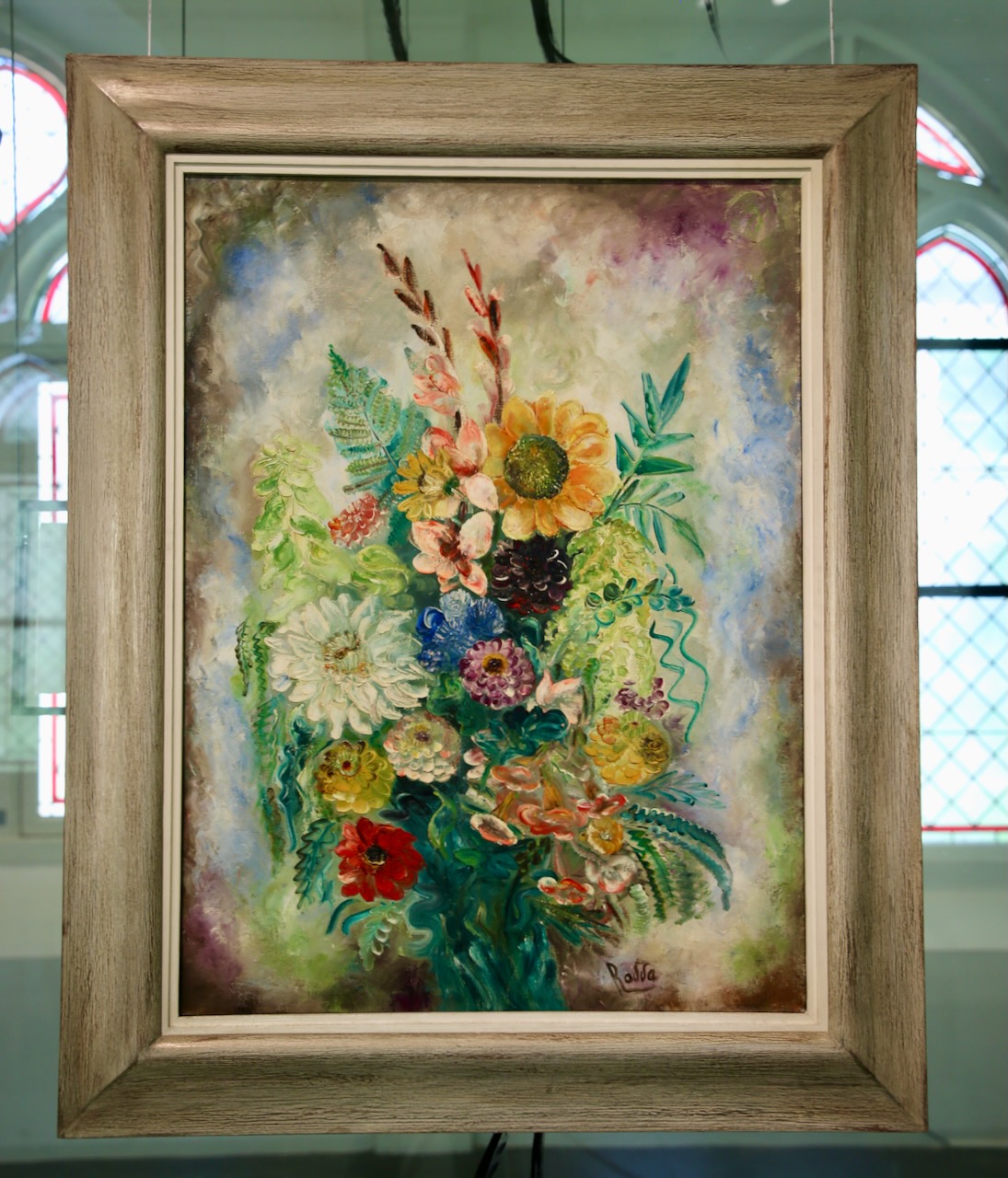
There is an exhibit displaying the work of Utrecht-based artist Sophie Steengracht and her French colleague, born exactly a hundred years before her, Lydia Radda (1891-1967). The older artist has a way with flowers and mushrooms that inspired the younger one to recreate the ideas in her own style. “Imitation is the sincerest form of flattery that mediocrity can pay to greatness.“ This sentiment is attributed to Charles Caleb Colton’s 1820 work, Lacon: Or, Many Things in Few Words; Addressed to Those Who Think. Having over 350,000 flowers and 14,000 mushroom species (well, a lot less would have been researched, identified, and published back then) to choose from is an inspiration in itself.
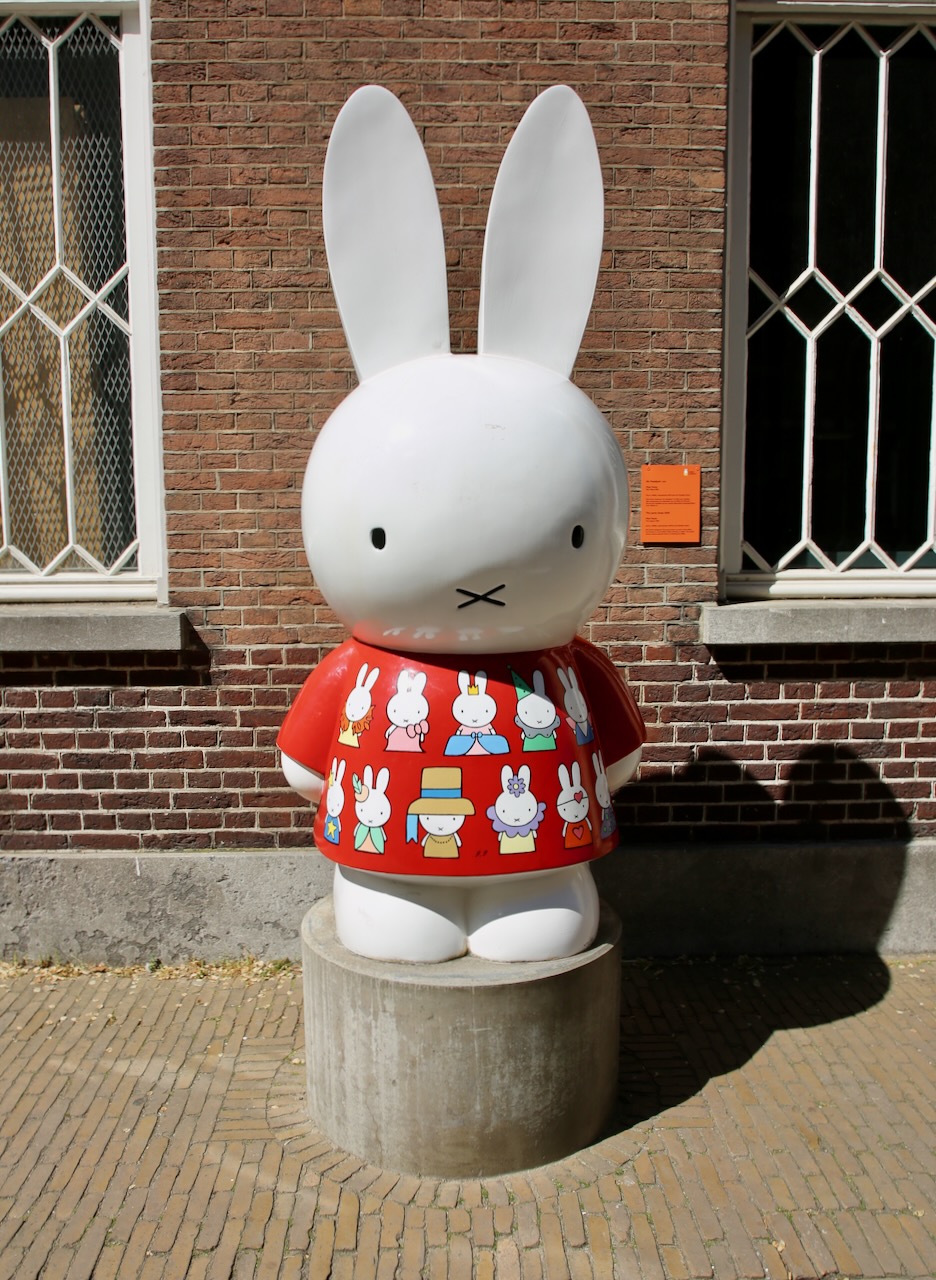
In the attic is Studio Dick Bruna, a reconstruction with originals of his workspace, which he created in 1981. He designed thousands of book covers for his great-grandfather’s publishing company. He became acquainted with the work of Matisse, Picasso, and Chagall while in Paris in the 40s. He made children’s books for 60 years, and Miffy became his most popular character, with the simplicity and clarity that he surrounded himself with. The world-famous bunny has stories translated into 50 languages and is sold in over 85 countries. Japan has a special affinity for the white rabbit with cute and simple aesthetics similar to Hello Kitty.
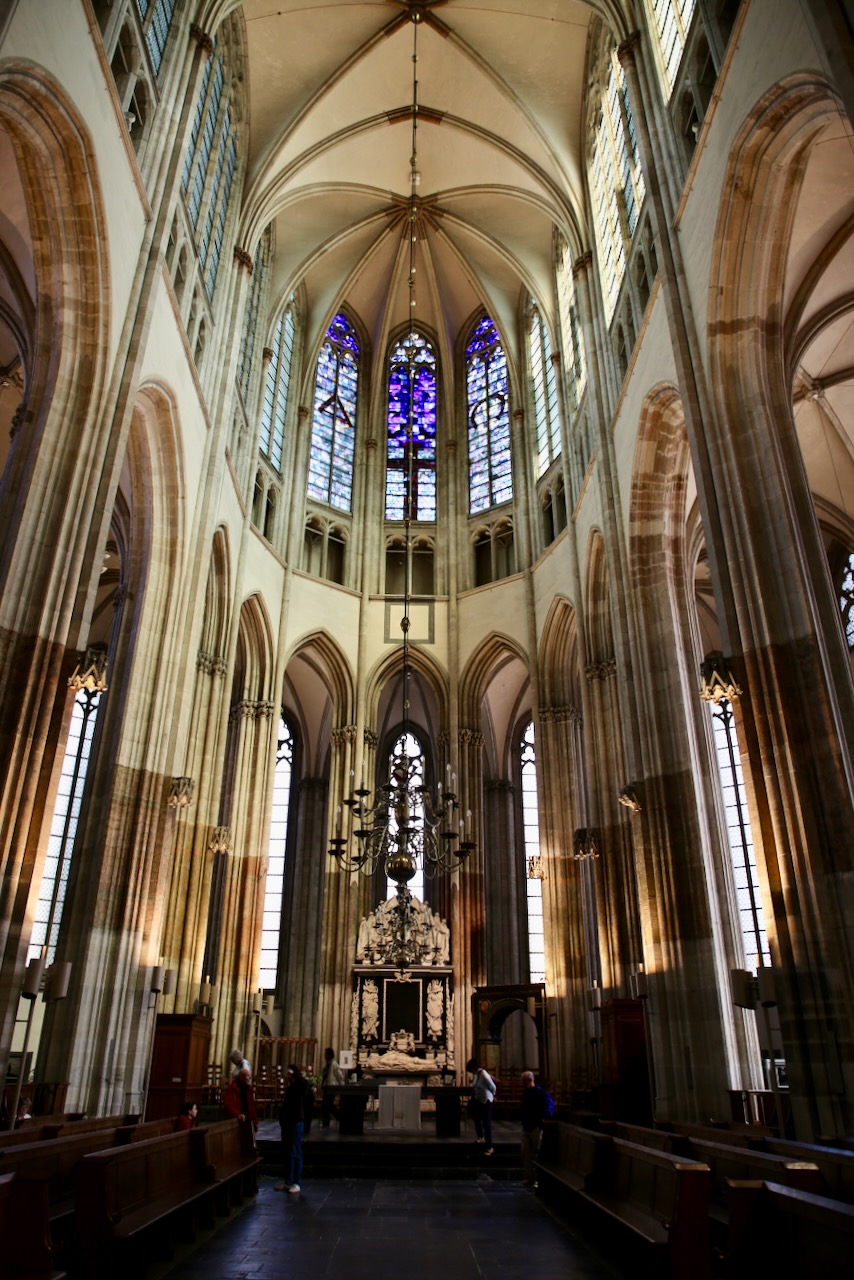
Outside the museum, we wander to the end of the street and take a seat in KEEK (Kunst En Eerlijke Koffie) at their cafe location. I suggested a coffee (which in Dutch means hot drink and snack), but I am glad I chose the apple chai and large scone because Caleb compared his dark beverage to something we drank from a nearly abandoned roadside gas station. I’m not sure why we didn’t stroll along Oudegracht and the water, but we walked north on Lange Nieuwstraat instead. This path leads us to the St. Catharina Cathedral, founded in 1468 as a Carmelite monastery with a Protestant perspective. It was returned to the Roman Catholic Church in 1815.
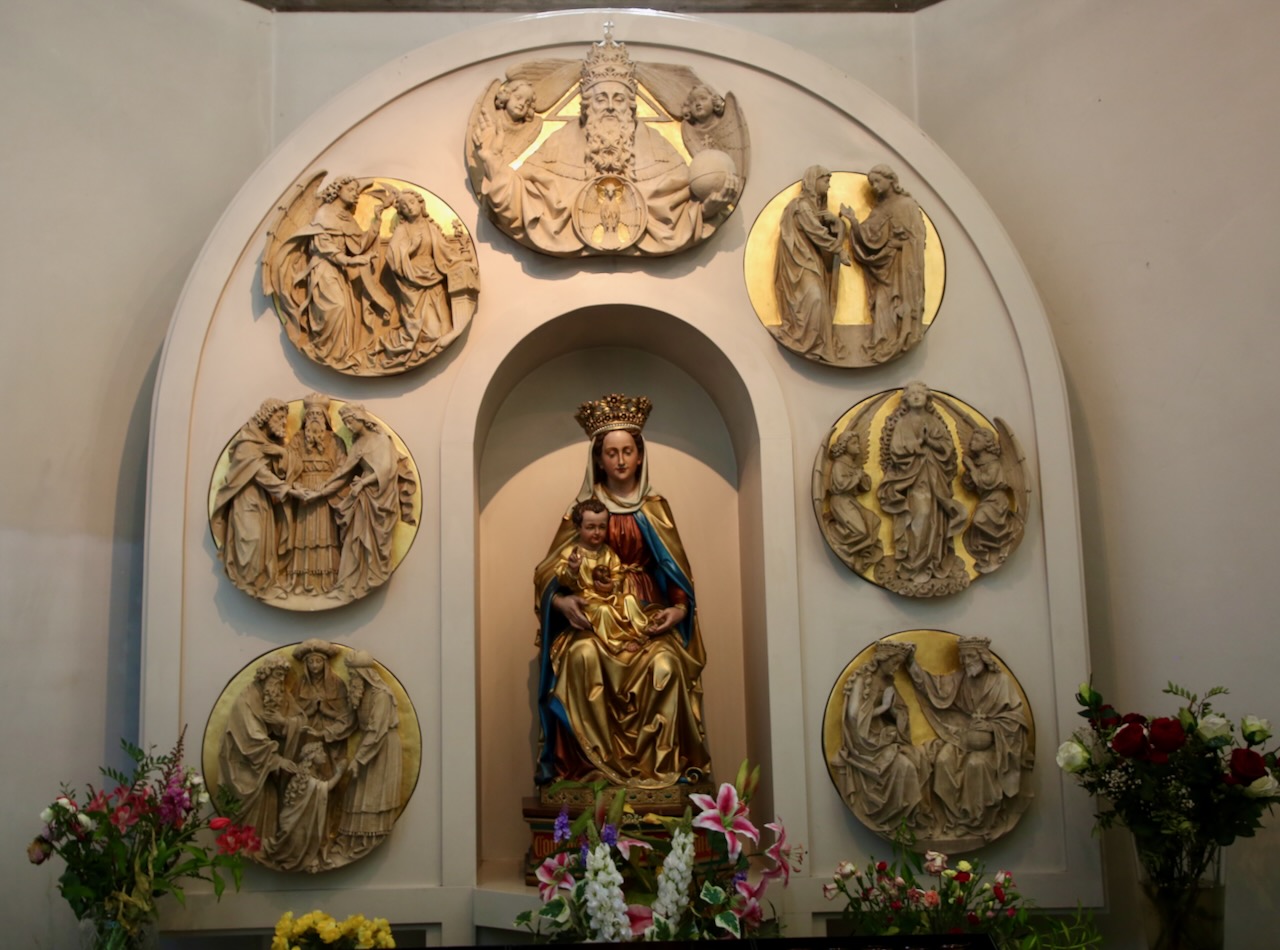
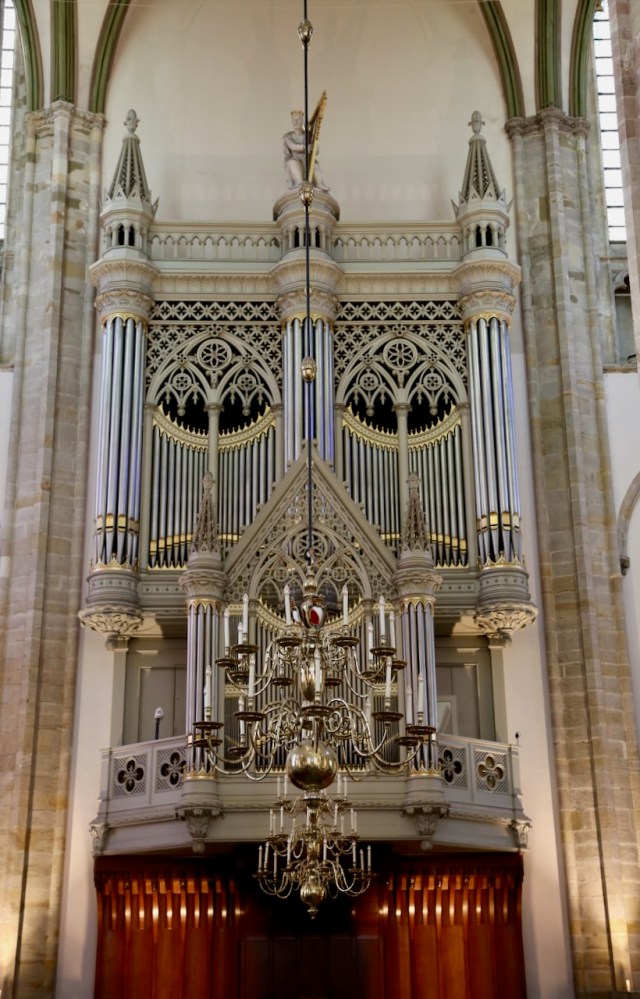
The church is powerful in its grand simplicity, but staring in from the doors leaves much to the imagination. We find our way back to Dom Square, standing in front of University Hall, the oldest and largest in Europe, which was founded in 1636. It looks like it was built in a corner, and it didn’t cross my mind to attempt going inside, as we planned on visiting Domkerk (St. Martin’s Cathedral), formerly the church of the Diocese until 1580. We had stopped by before, but to respect services in progress, entry is denied to keep out the obnoxious tourists.
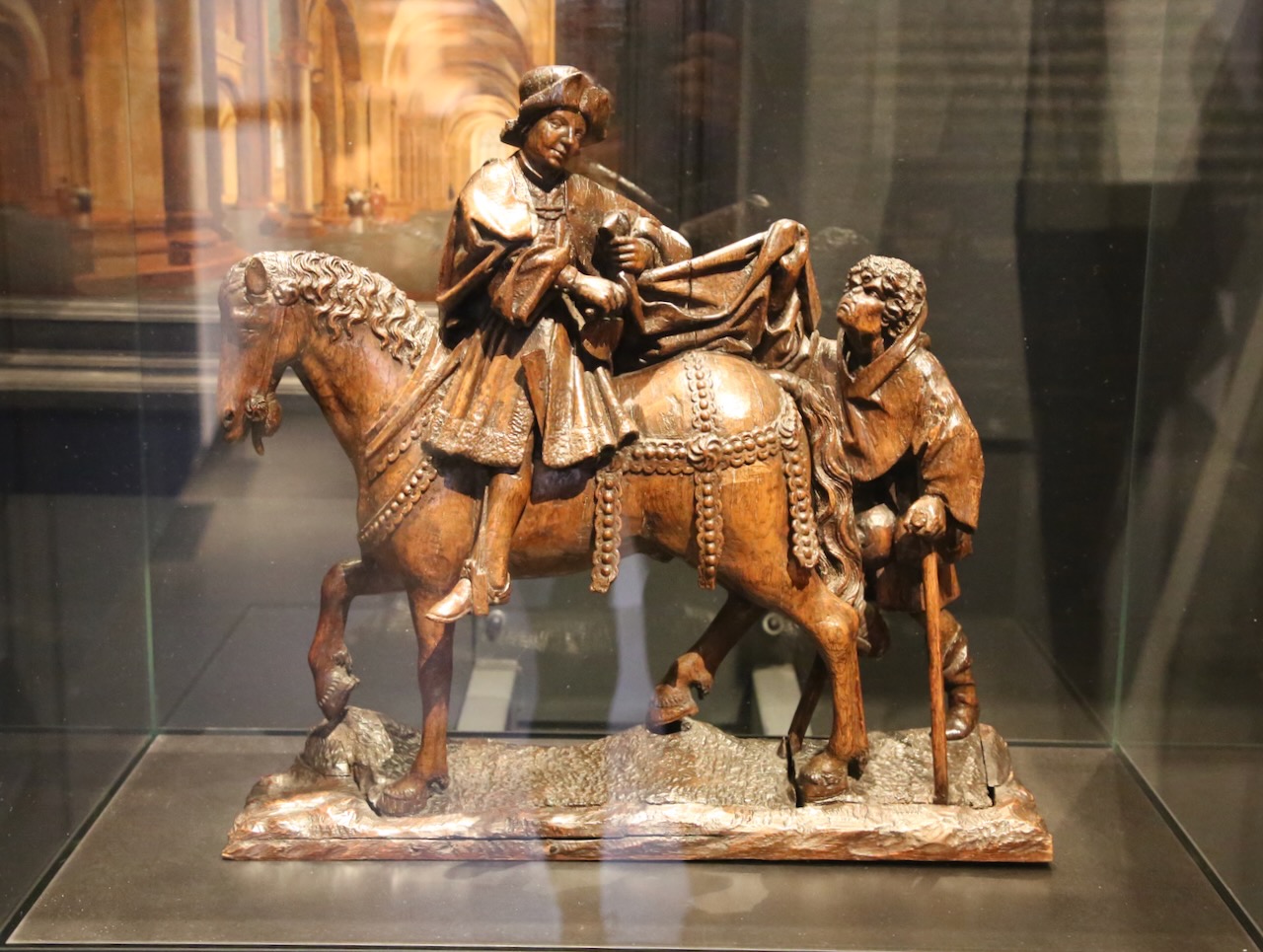
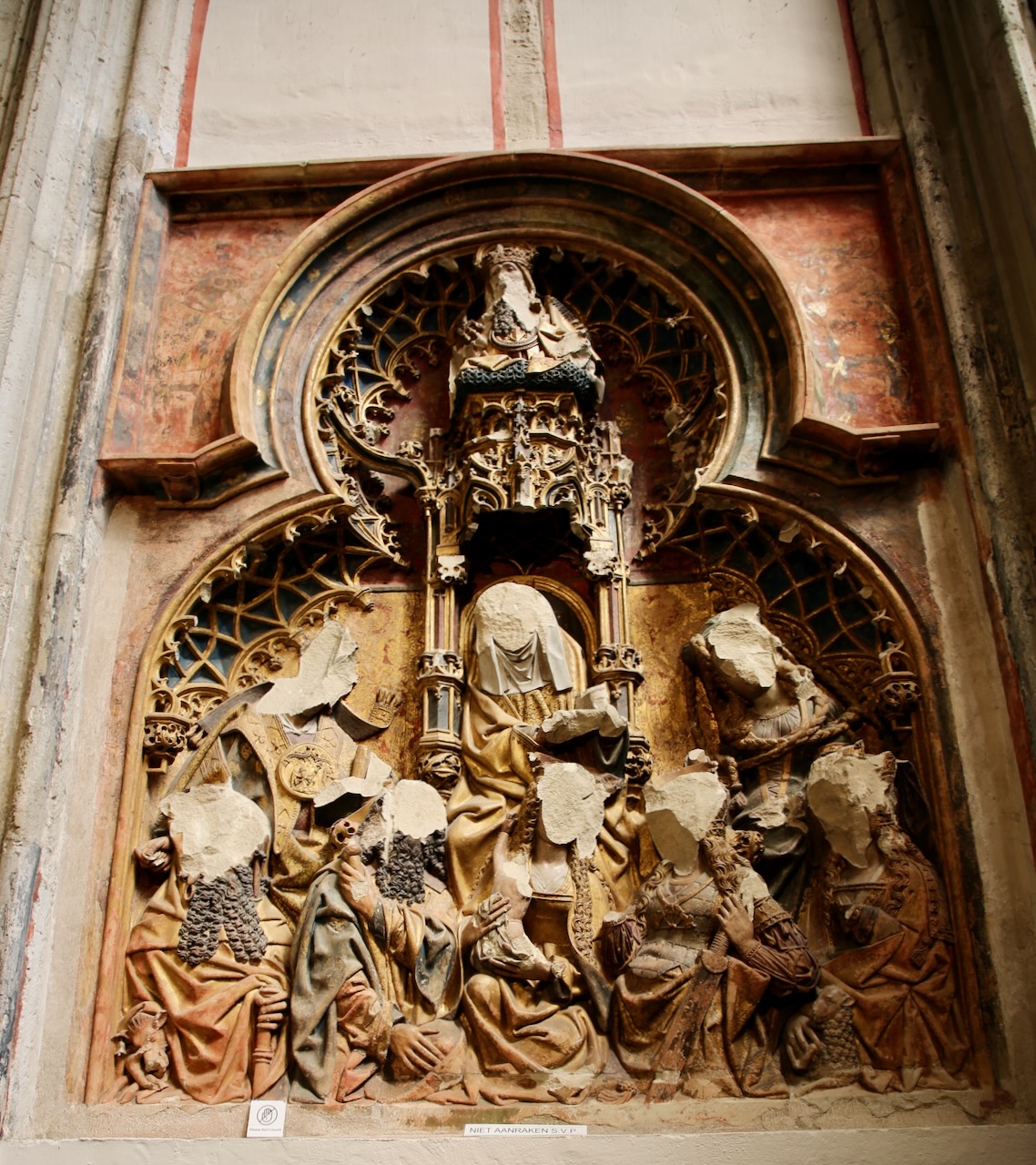
During the Protestant Reformation in 1566 and 1580, mobs attacked Catholic Churches and destroyed imagery they deemed idolatrous. Though the faces and heads of sculptures have been hacked at, to reject and humiliate them, I’m glad the church, which has been Protestant since, has left up this remembrance of history. It is striking and symbolic. We walk into a “coffee shop,” and the man disagrees with my camera and Caleb’s hat, so we leave. I wasn’t going to smoke anyway, but I might have had the atmosphere been more inviting and less anxiety-inducing (for them, not us).
We stumble upon the Vredenburg Market, open on Wednesday, Friday, and Saturday (the largest and busiest day with extended hours). There are stalls with cheese samples, fresh fish, shiny jewelry, warm stroopwafels, etc. I’m impressed with the patience of one of the cheese vendors as a woman asks about each herb in the Italian herb cheese (with a pause for translation) before asking where it’s made, which animal it came from, and more. I wanted to tell her to just buy the cheese or leave, but the man wants to sell cheese, and he knows this is the price to do so in a tourist area.
Being near the Hoog Catherijne Mall, Caleb wants to have another look. There’s an event going on downstairs, and I want to see people Risk It, but they all seem to just be getting their picture taken with a tall guy in a blue shirt. It turns out, it’s not a money game or dare challenge, but a promotional event for the fast-paced card game by Big Potato Games. Back outside, we find ourselves in Vrouwe Justitiaplein (Lady Justice Square), admiring the architecture and the Between Good and Evil, the Justice Column that looks like rolled out Play-Doh, using a giant’s hands.
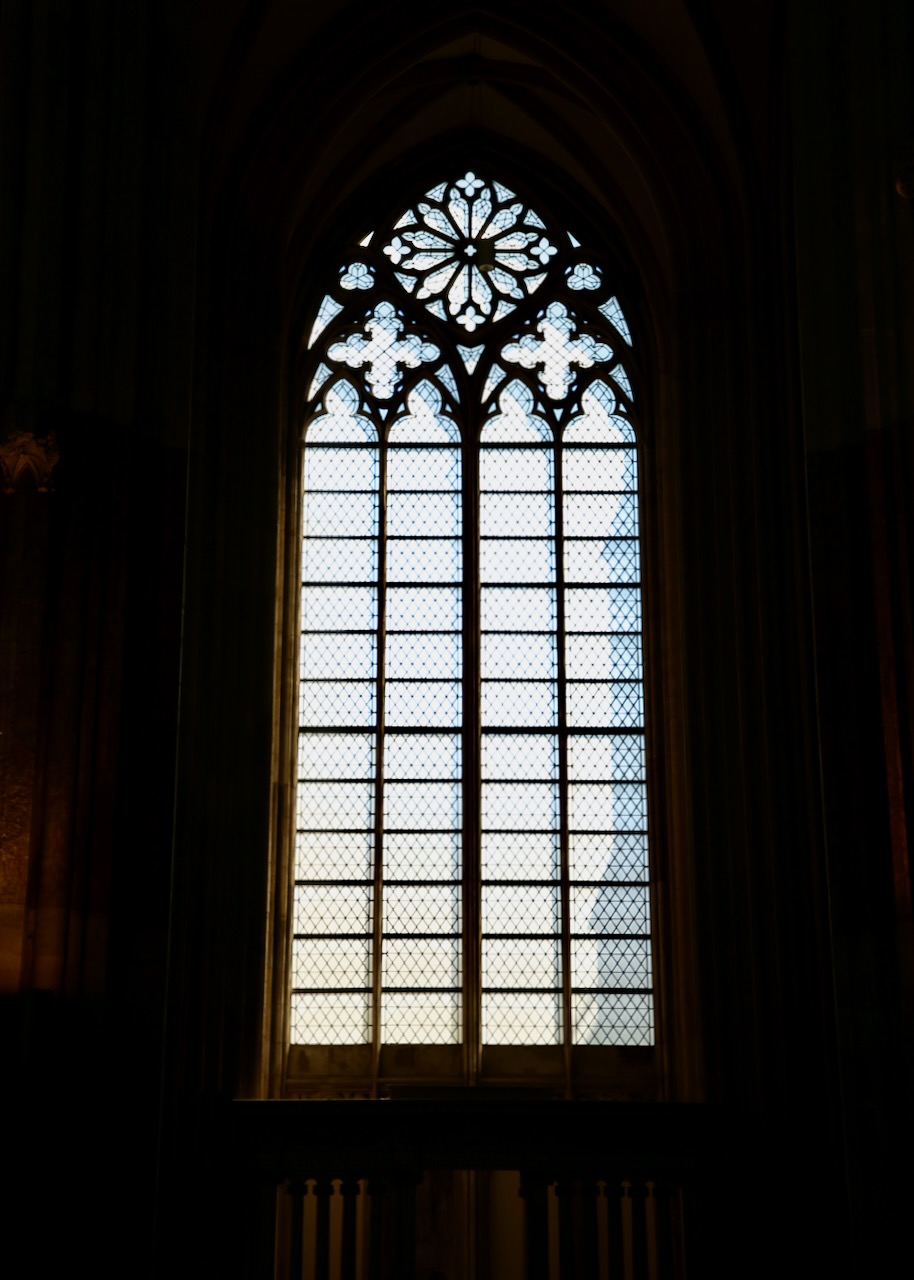
The column was created in 2000 by Nicolas Pope to resemble a leg and act as a pillar of the legal system. The square’s name is written in golden letters at the top, some eighty-eight feet away from where we’re standing. Nearby is the headquarters for ProRail, the largest brick building in the Netherlands, nicknamed The Inkpot. The UFO that sits atop is hard to miss at 12 meters wide, but what we didn’t know was that the flying saucer lights up and has a pop-up alien. I used to have a UFO watch that would pop open to show the time and make sounds, too. Zover was created by Marc Ruygrok for the “Panorama 2000” art exhibition.
The afternoon is coming to an end, and it’s time for us to take our rides back to the house. We sit on the upper level of the train to Amersfoort, riding through forest and field to get there, watching horses run. My phone gets an emergency alert, and I’m too startled by its loudness in a quiet environment that I silence it before reading its warning. Caleb thought it was weird, and then we heard someone else’s phone make the siren sound. We’ll find out later that it was letting us know to avoid the wildfire smoke and to close windows (as they are used for ventilation in place of a/c units in over 80% of homes).
Back at the house, we share a Gouden Carolus whisky-infused blond Belgian beer named after Holy Roman Emperor Charles V with Gert, while Anouska comes and goes. Gert picks up dinner bowls (salmon, radish, cucumber, cabbage, avocado, broccolini, and lotus root chips, etc., on rice). We will share a La Chouffe and learn another interesting thing about the Dutch. There is the Irish leprechaun and the German gnome (which is what Caleb and I see on the bottle). Here, these two tiny people with long white beards and pointy hats are culturally the same, the kabouter, which merges the traits of both. They are mischievous, love to help around the house, and live in a mushroom home.
Upstairs, I see our laundry folded on the bed. Anouska had said she would do it, but we put it off, and Gert took care of it today. It’s something I felt we should do, and perhaps that’s why some people ask for permission to use the bathroom or washing machine, while others might just ask where they are. I’m grateful to have laundry done at home, though I’m sure all laundromats come with more interesting stories. Anouska has brought in the local paper, and we read the front page with her. The children’s mayor, who serves along with the city’s mayor, acts in the interest of youth, kids aged 10 to 12. In support, she was at their soccer tournament, where a prize was given for ‘most sporting team’.
A 76-year-old man who had been missing since Wednesday was found by a police sonar boat, along with his orange tricycle, on Saturday. We saw the police helicopter in the air. Other times that choppers are deployed: mobile medical teams — the specialists are flown on site, and then the patients are transported by ambulance, and search-and-rescue — flies hundreds of missions to help people at sea. The last news on the front page is the possibility of shooting wolves sooner, as Bram was shot last autumn after several serious incidents. Provinces may use a paintball gun or rubber bullets, and citizens can scare them away with light and sound.
Chimay Pères Trappistes will be our dessert. This beer is made at an abbey, so all profits fund charitable causes and community development. Gert gave me many stickers (to add to my largest collection) and a couple of other gifts before Jessi (Caleb’s sister) video-called. She had hiked a short and very hot section of the PCT with Gert and me. She was just as excited as if she were meeting Anouska in person, and they were feeding her ice cream in an ice bath on that day back in June of 2025. It’s better to overwhelm others with loving enthusiasm than to lack the energy to learn when “less is more” applies.


I’d take a Wednesday in Utrecht over injustice any day.
LikeLike
I read the title as “Unrecht on Dinsdag” at first and was pleasantly surprised that you guys had a lovely day in Utrecht as supposed to experiencing injustice…
LikeLike