I’m up early this morning, so I read a bit of Walking Home before joining everyone for a varied breakfast downstairs. I get to try semolina porridge (griesmeel pap), which is a high-protein alternative to oat yogurt, which has more fiber. It is a Russian childhood favorite with recipes dating back to 3000 BCE in Egypt. I have mine with fresh blueberries. I also have some orange yogurt with a crepe. I like feeling at home (getting my own breakfast), but still trying new foods or having familiar options prepared differently. With the internet and international shipping, this is even easier to do at home.
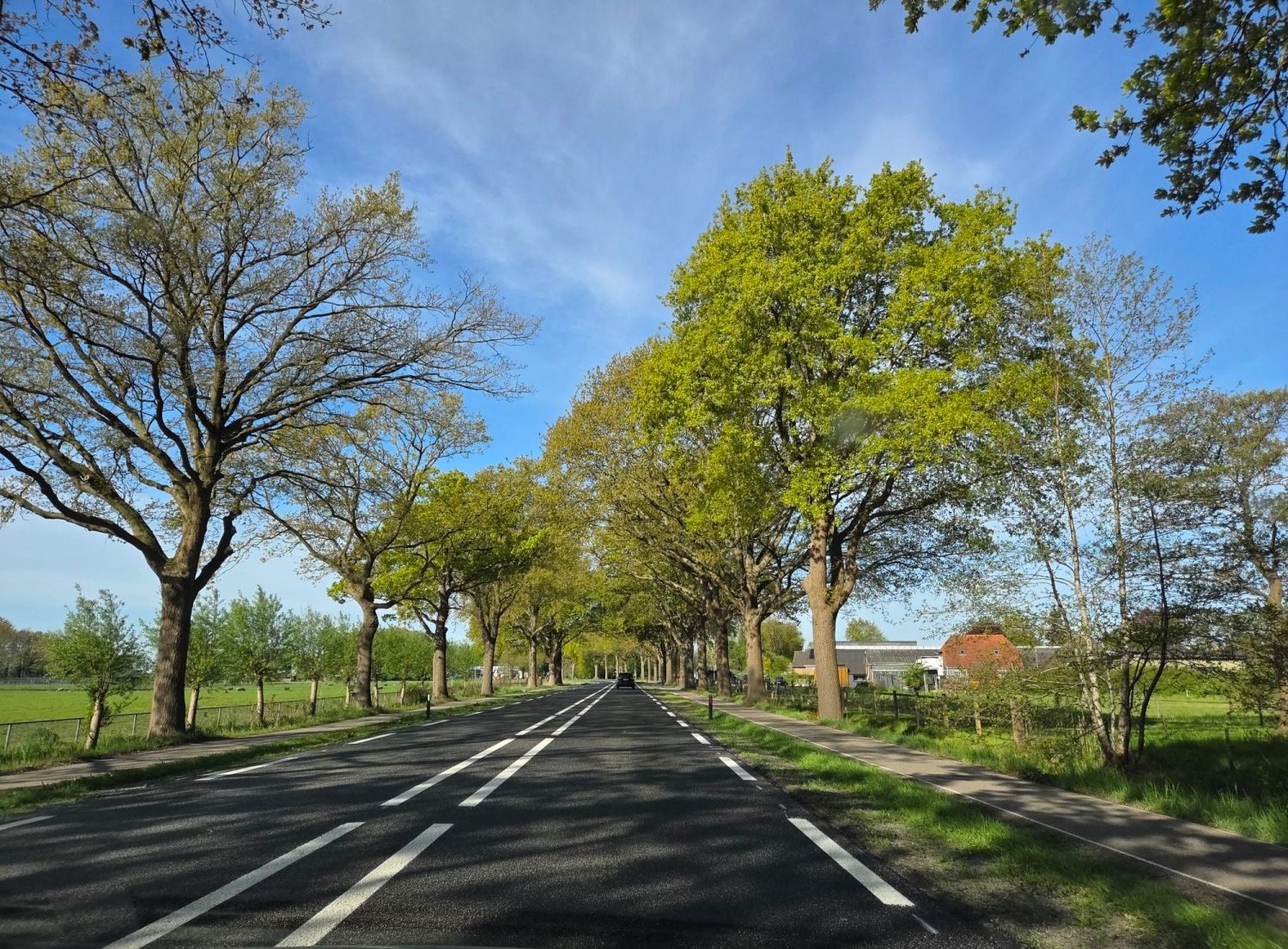
On the highway, I notice that the speed limit is faster at night (when there is less traffic) vs the States where we decrease the speed for the risk of animal encounters. The Netherlands has built over 600 green bridges and tunnels to bypass roads and railways to provide safe travel for deer, boars, badgers, foxes, and hedgehogs, etc. connecting their fragmented habitats. Meanwhile, there are approximately 1500 of these animal passes in 43 US states. The Netherlands has 390 times more wildlife-crossing habitat per acre than the US. We miss an exit that will delay us 24 minutes, but this just gives us more time amongst the fields of trees, tulips, and modern windmills.
Our destination allows us to drive through Nieuw Land National Park, established in 2018. It is the largest man-made nature reserve in the world. This was made possible by the world’s largest reclamation project. The white-tailed eagle is its icon, and the marshes are home to herds of Heck cattle and Konik horses. We won’t be detouring for the ungulates but cruising over 25km with water on both sides of the road, similar to stretches on the Overseas Highway in the Keys. We get to see our first navigable aqueduct that allows boats to travel over the traffic.
This is an incredible project, though I do applaud their animal safety bridges more; it’s so futuristic to see boats sailing by without holding up traffic via a drawbridge. This is especially true with the Veluwemeer Aqueduct, completed in 2002, which allows 28,000 cars to drive under the nine feet of water above them, unimpeded. There was a longer boat overpass built in Germany, allowing ships to cross the Elbe River and bypass the land obstacles. When compared with the SR-99 Seattle Tunnel, it cost $74 million more per km in construction to excavate rather than build.
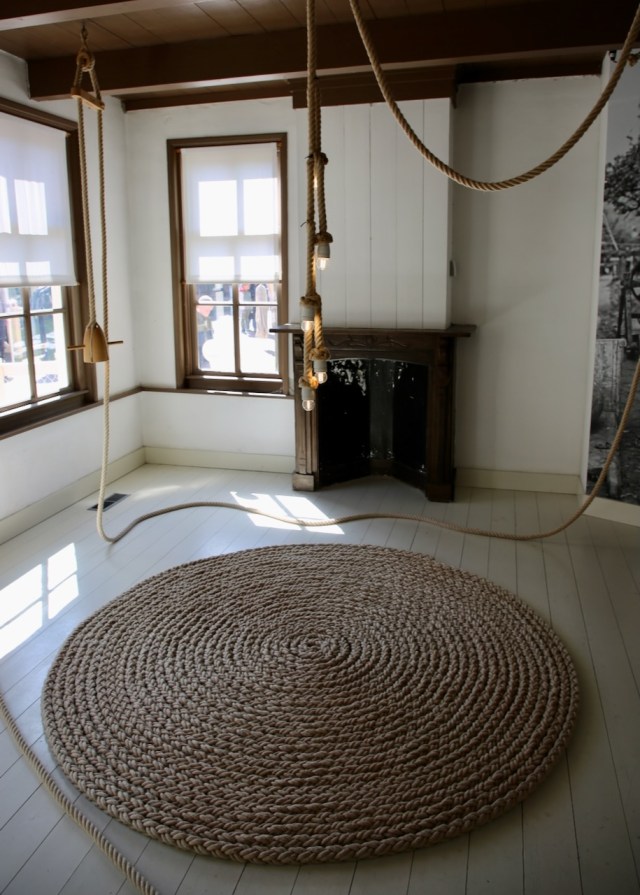
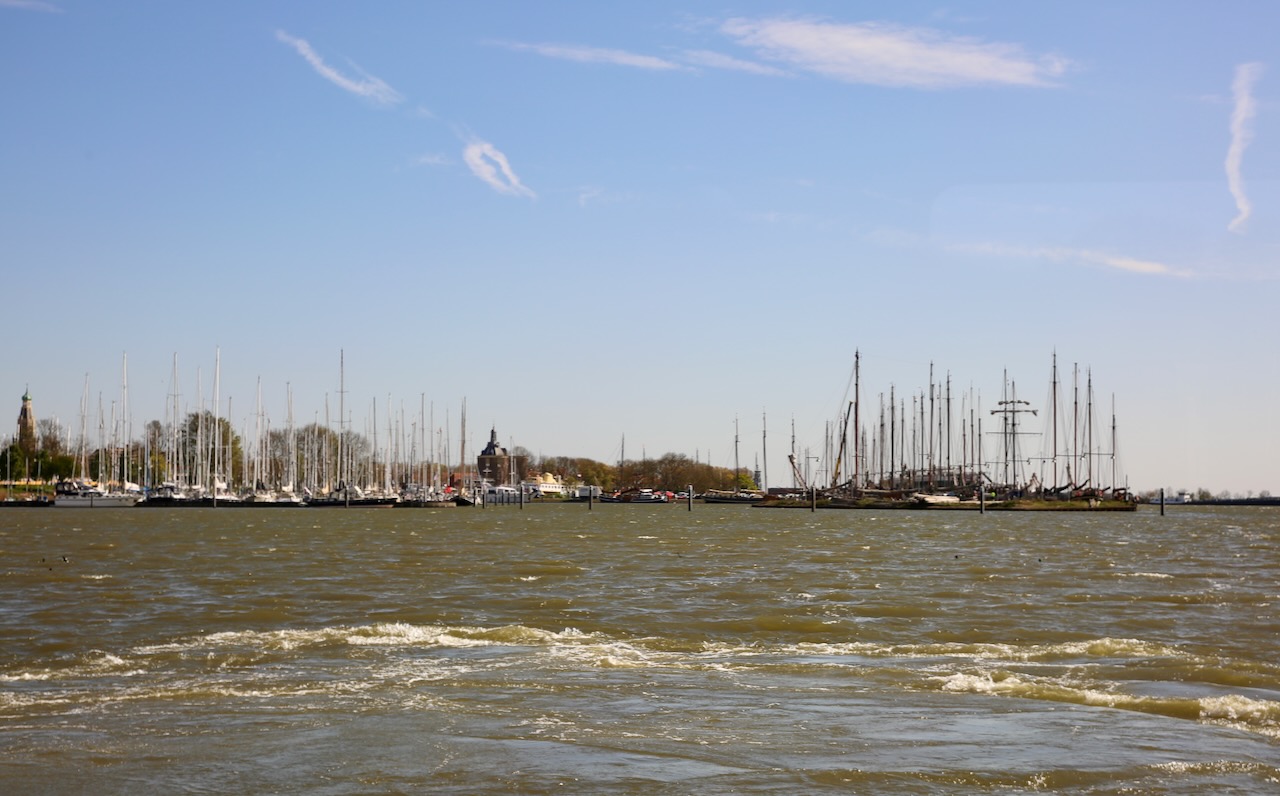
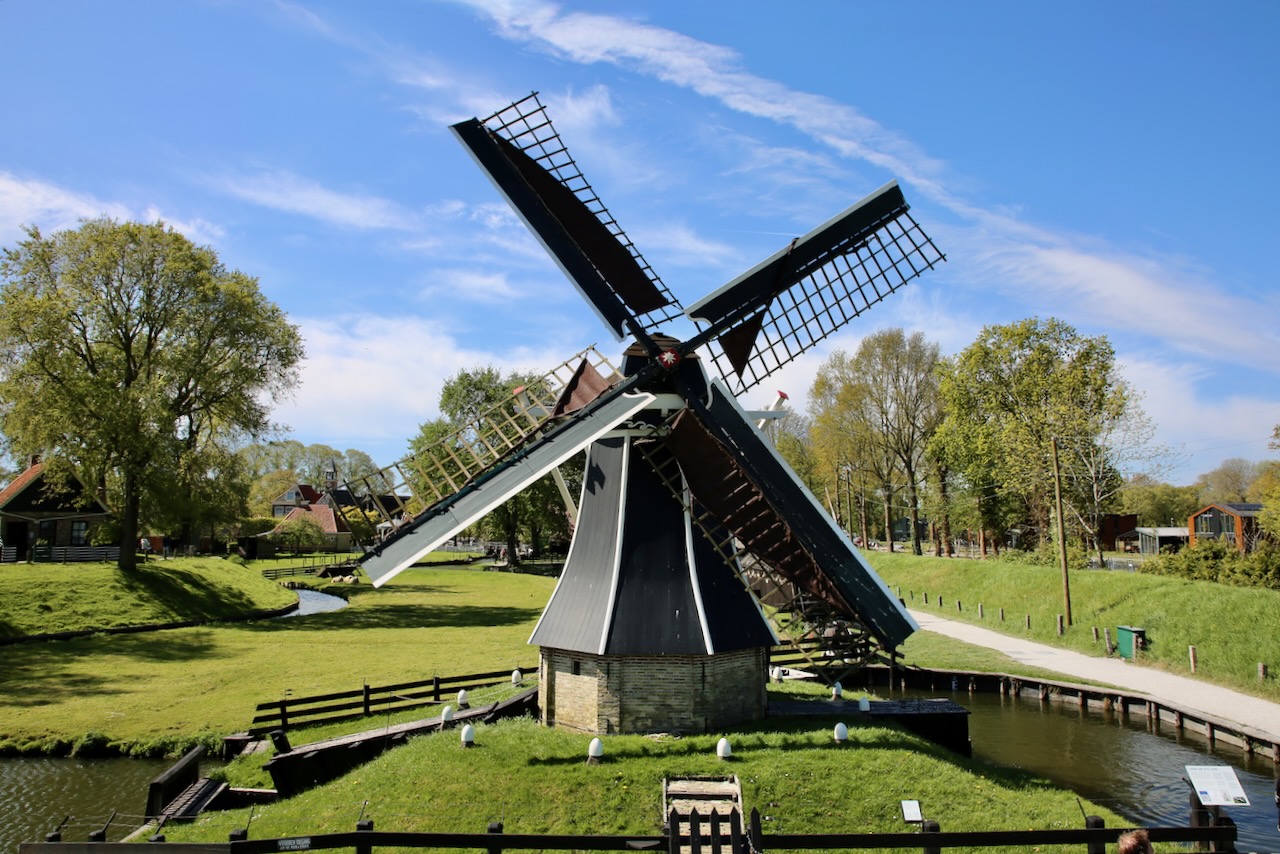
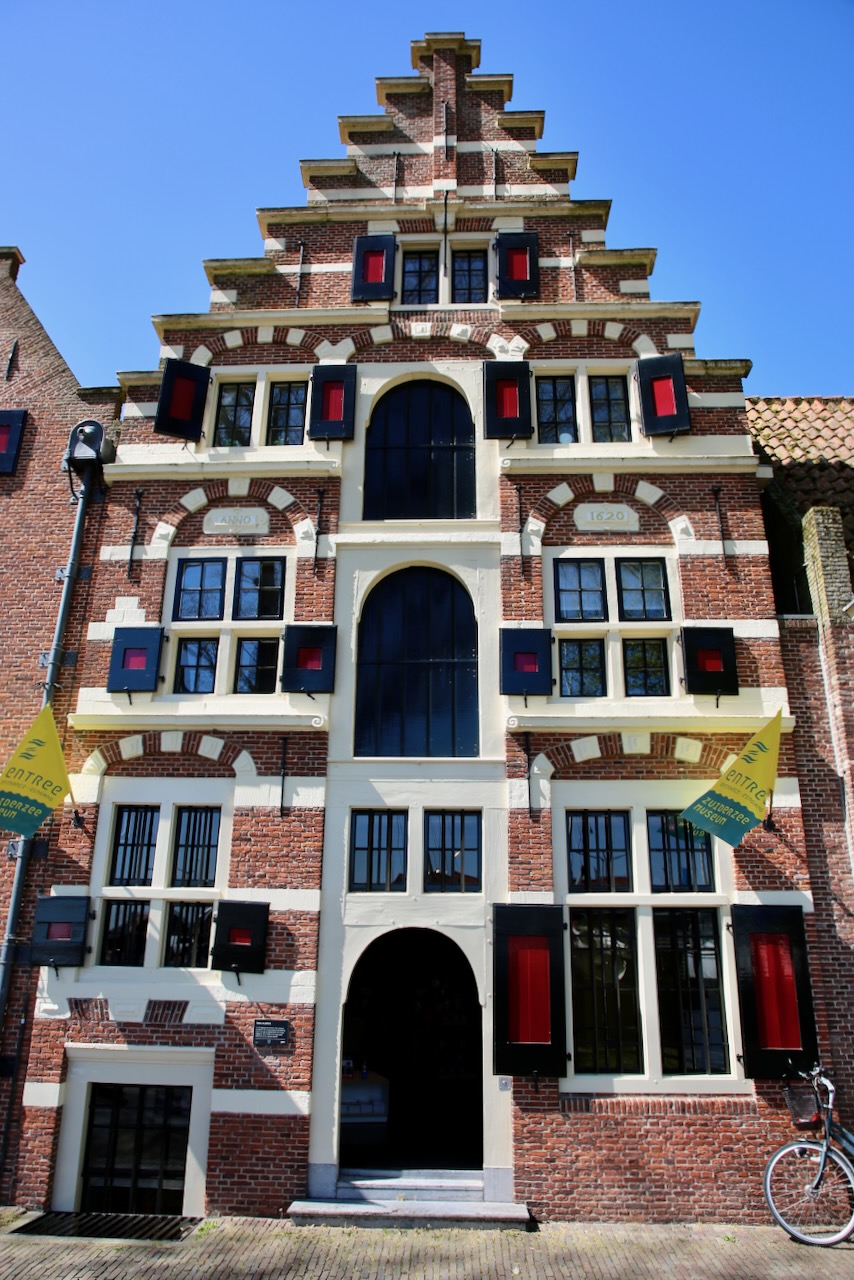
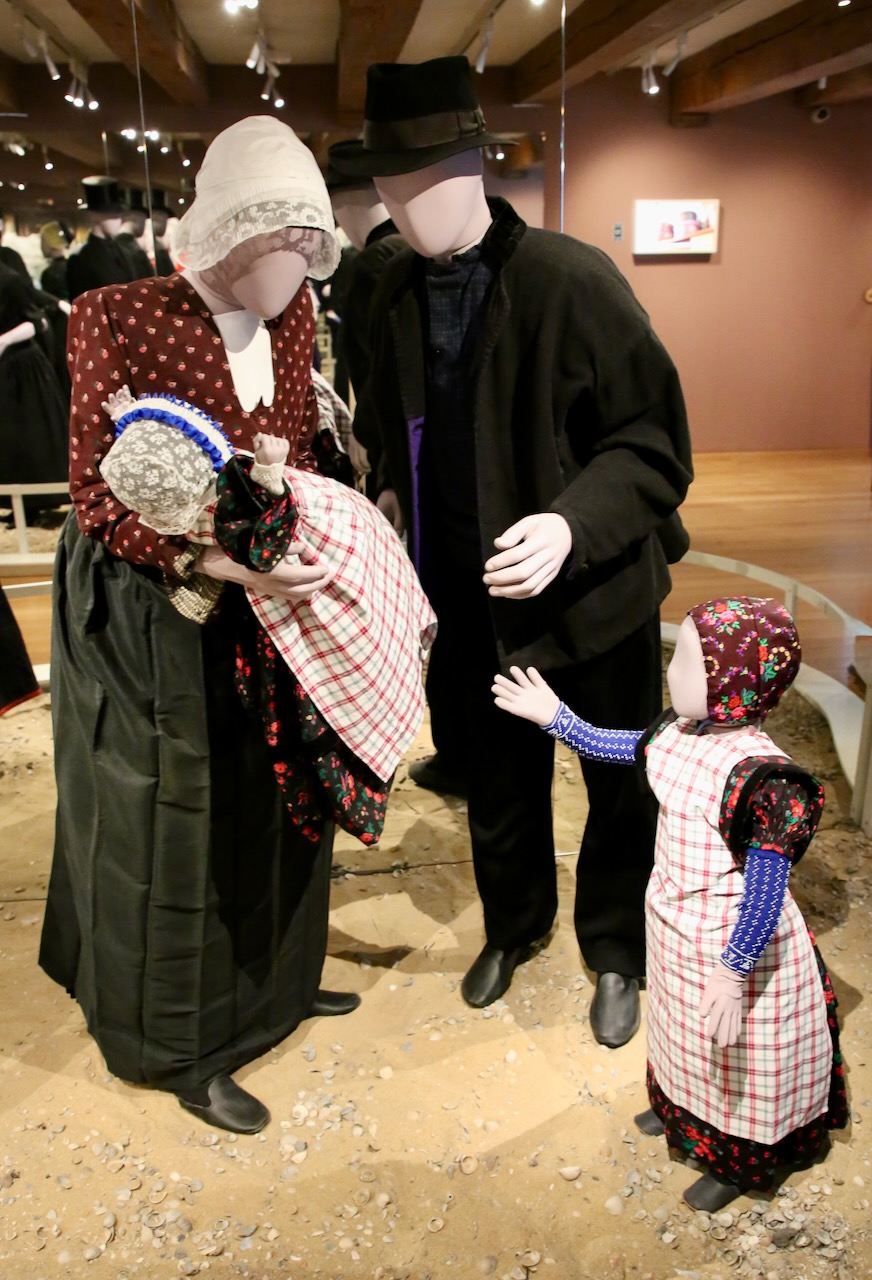
Gert parks in the Zuiderzee Museum lot, and with tickets in hand, we walk directly to the boat that’s waiting to depart for the open-air and indoor museum. It was founded in 1948 to preserve the communities’ lifestyles between 1880 and 1930, and includes over 140 historic buildings from the villages. Making our way across the water, we notice large sailboats with a wooden wing (leeboard) on each side that are used by flat-bottomed Dutch vessels to stay stable in shallow water and beach safely on mudflats at low tide. The name comes from the fact that only the leeward (downwind) board is lowered.
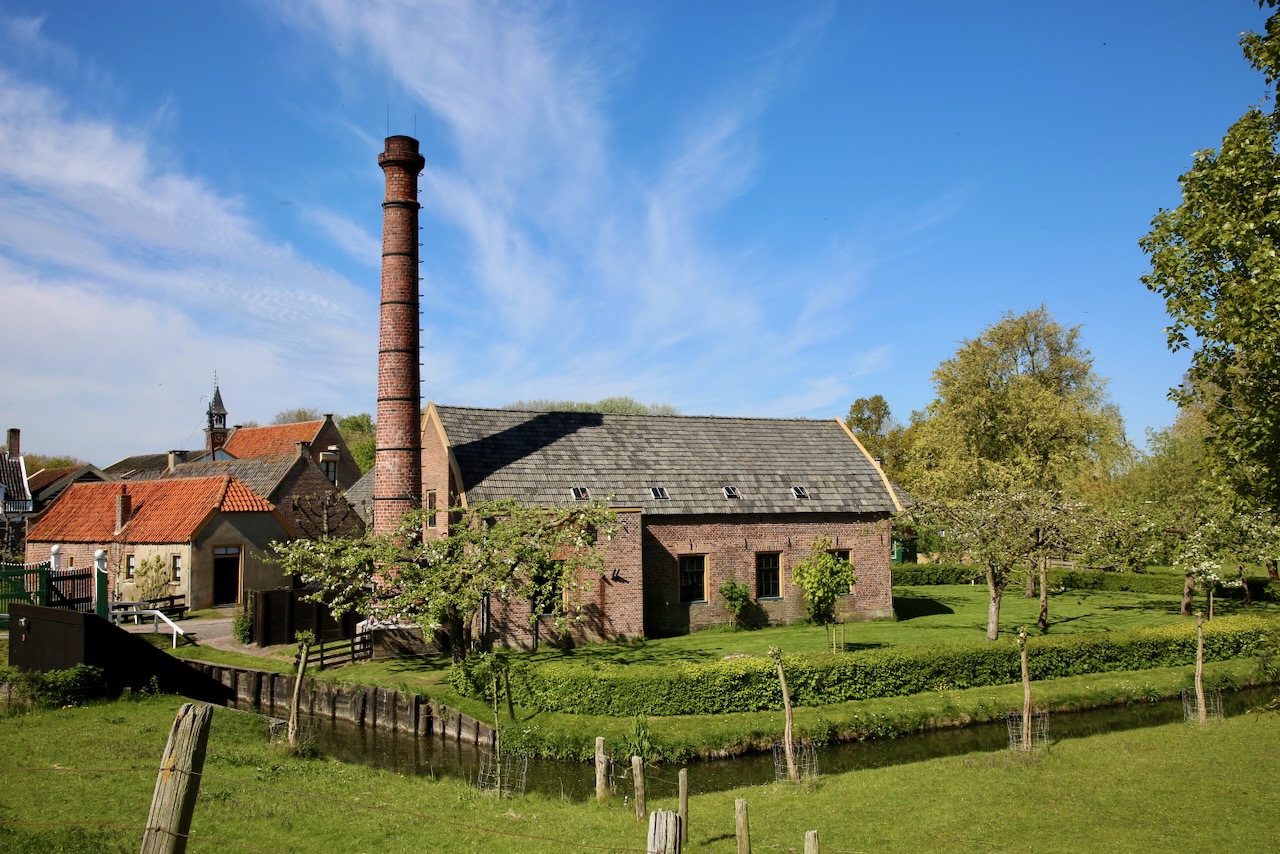
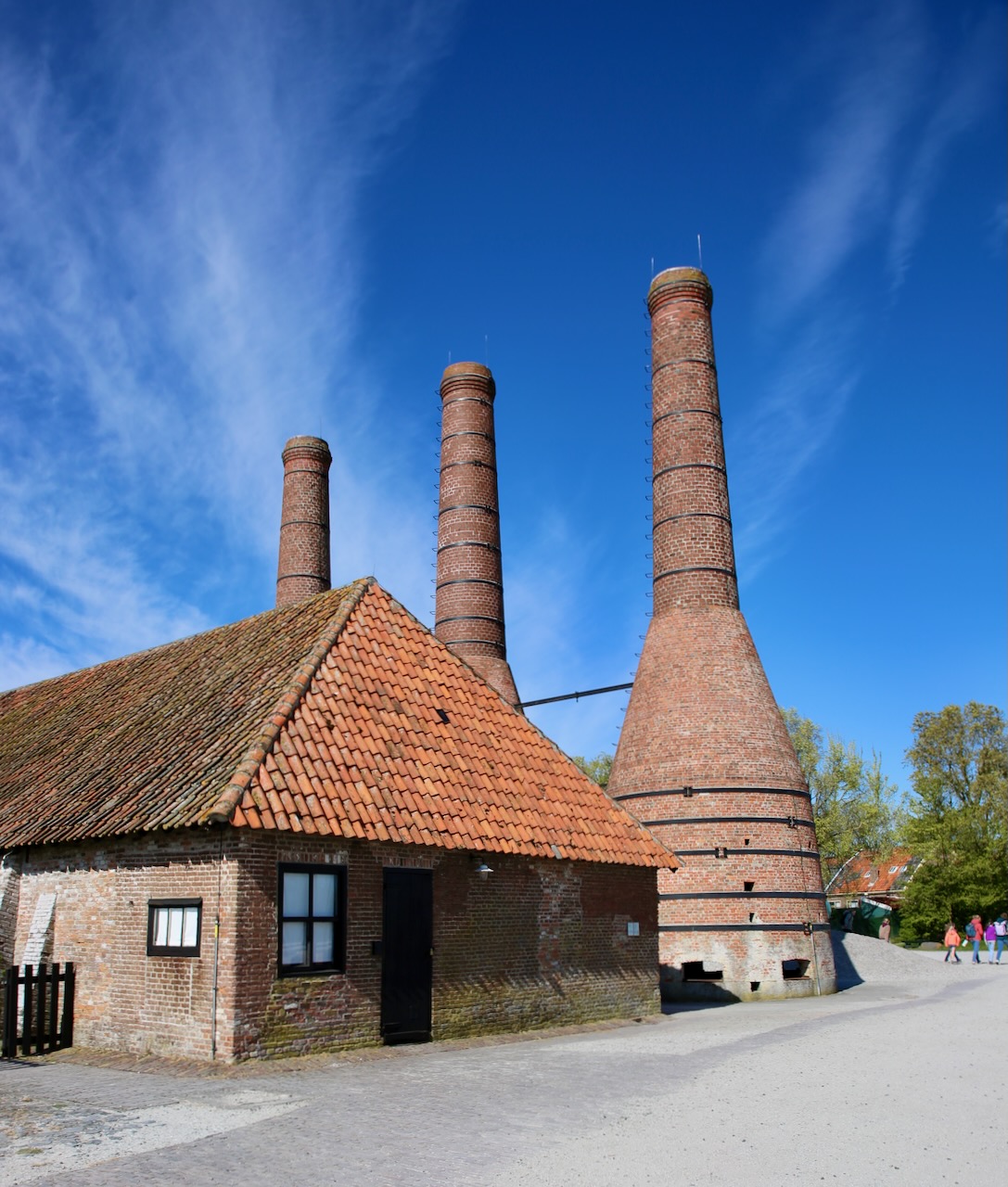
As soon as we depart, I’m drawn to the lime kilns that were closed in 1976. The indoor museum opened in 1950, but the open-air museum was in development until 1983. There was flooding in the region as far back as 1250, and I’m sure before that as well. The fishermen did what they could to keep their herring trade hub thriving, but eventually, the water damage became too much, and a civil engineer drew up plans in 1892 that would take until 1918 to begin. The last gap, calming the Zuiderzee, was filled in 1932 and took the occupations of the fishing industry (sailmaking, fish-smoking, and basket weaving) with it. The fishing ports turned into recreational marinas.
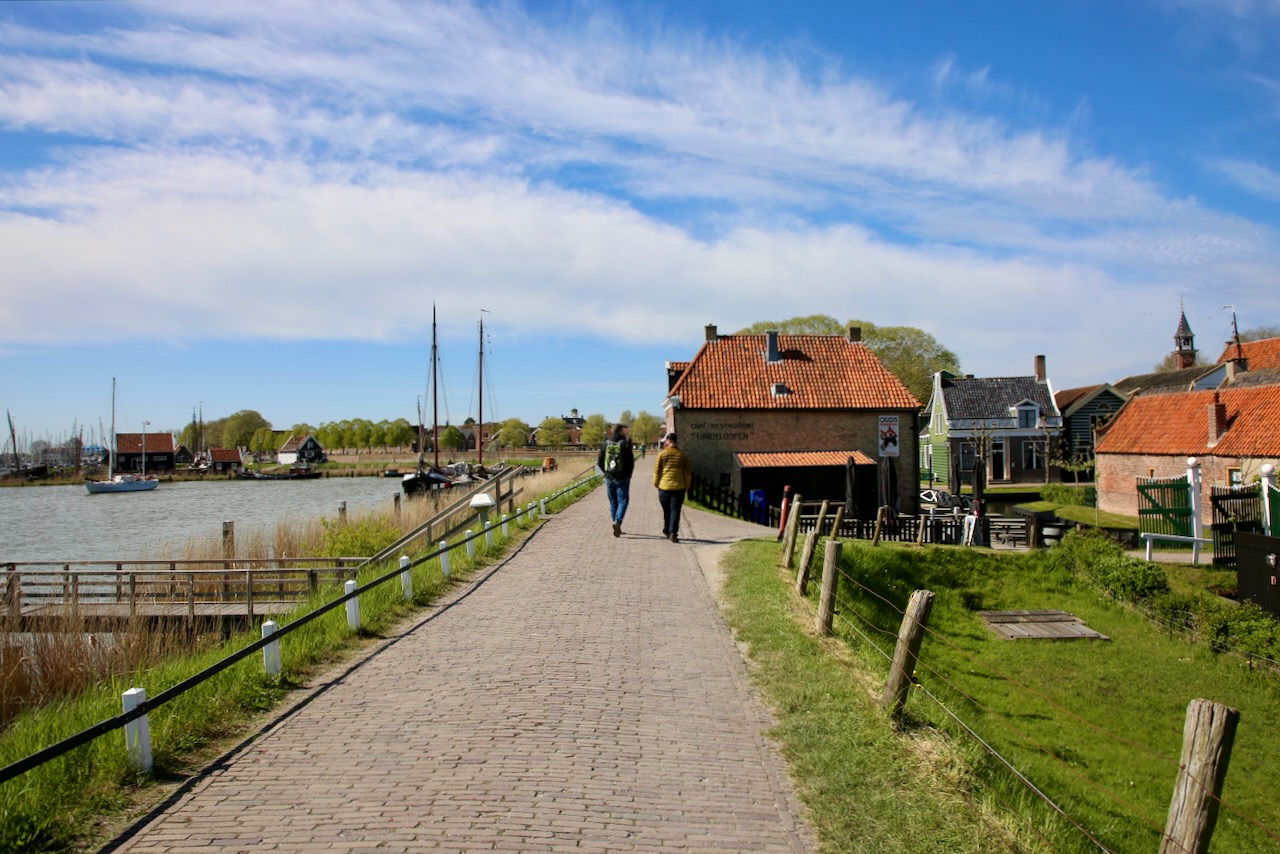
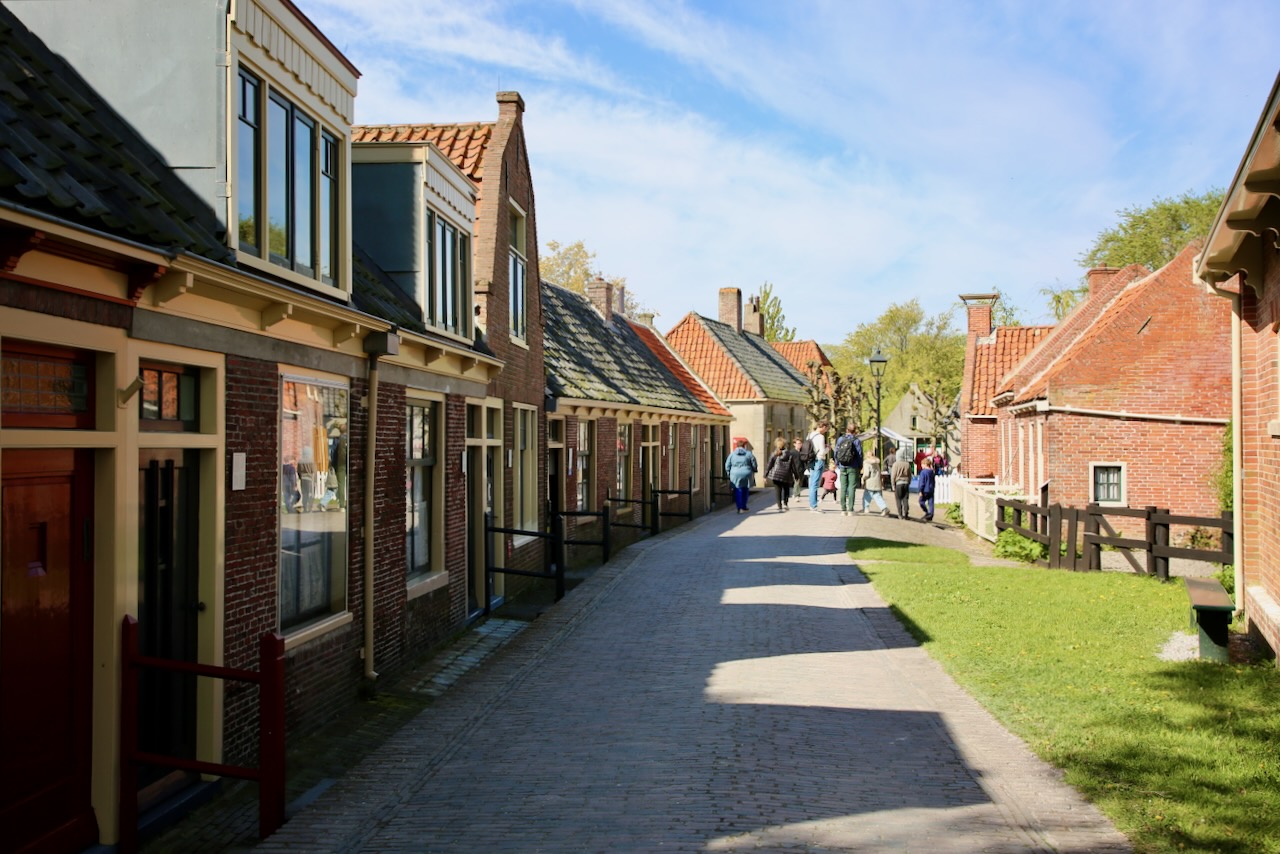
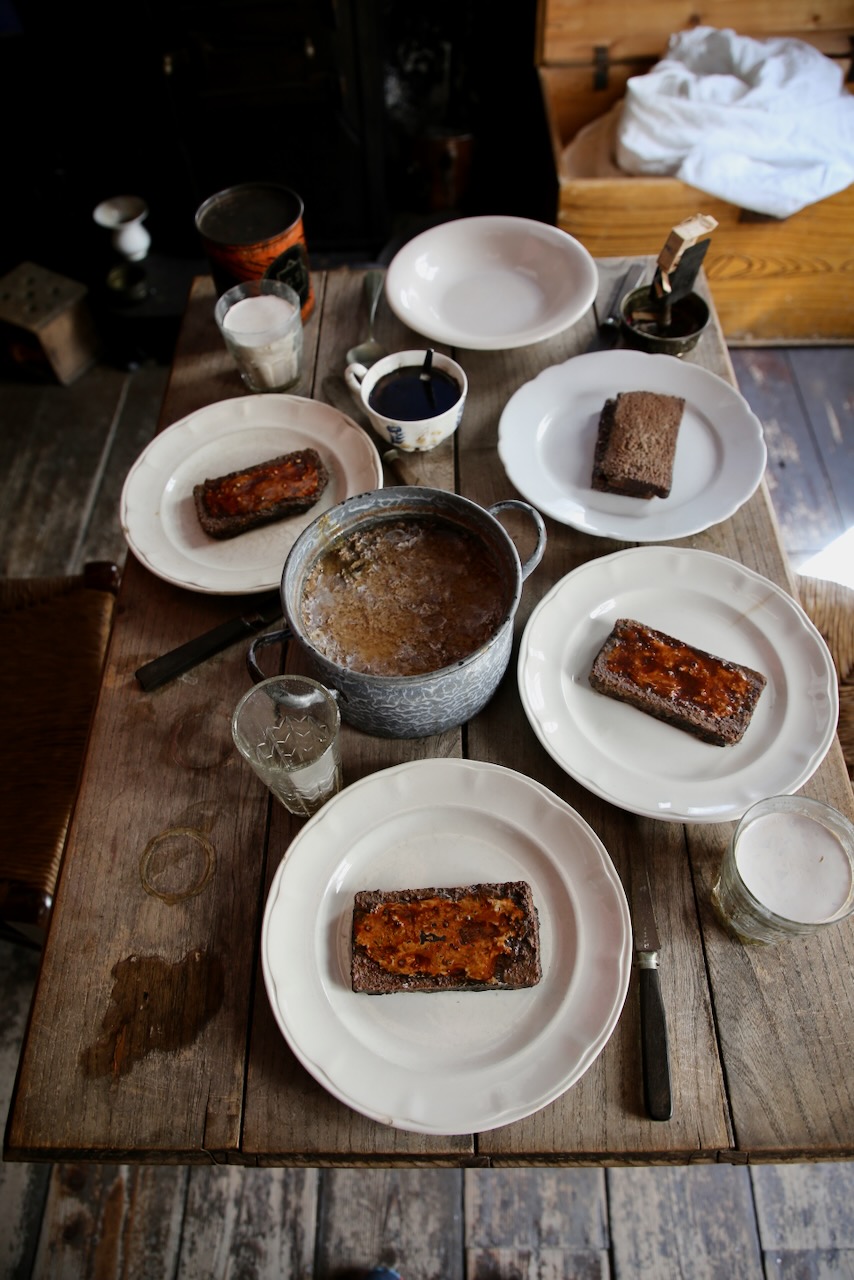
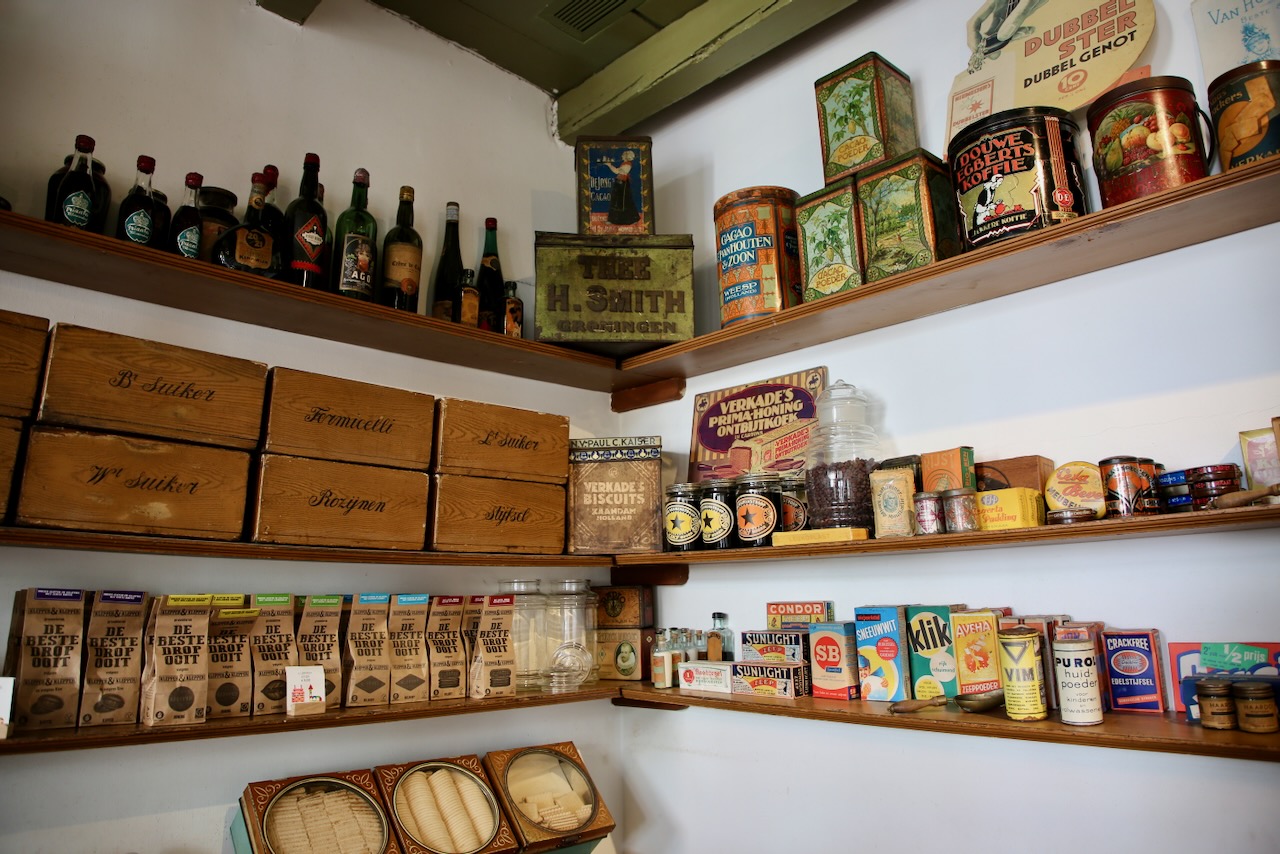
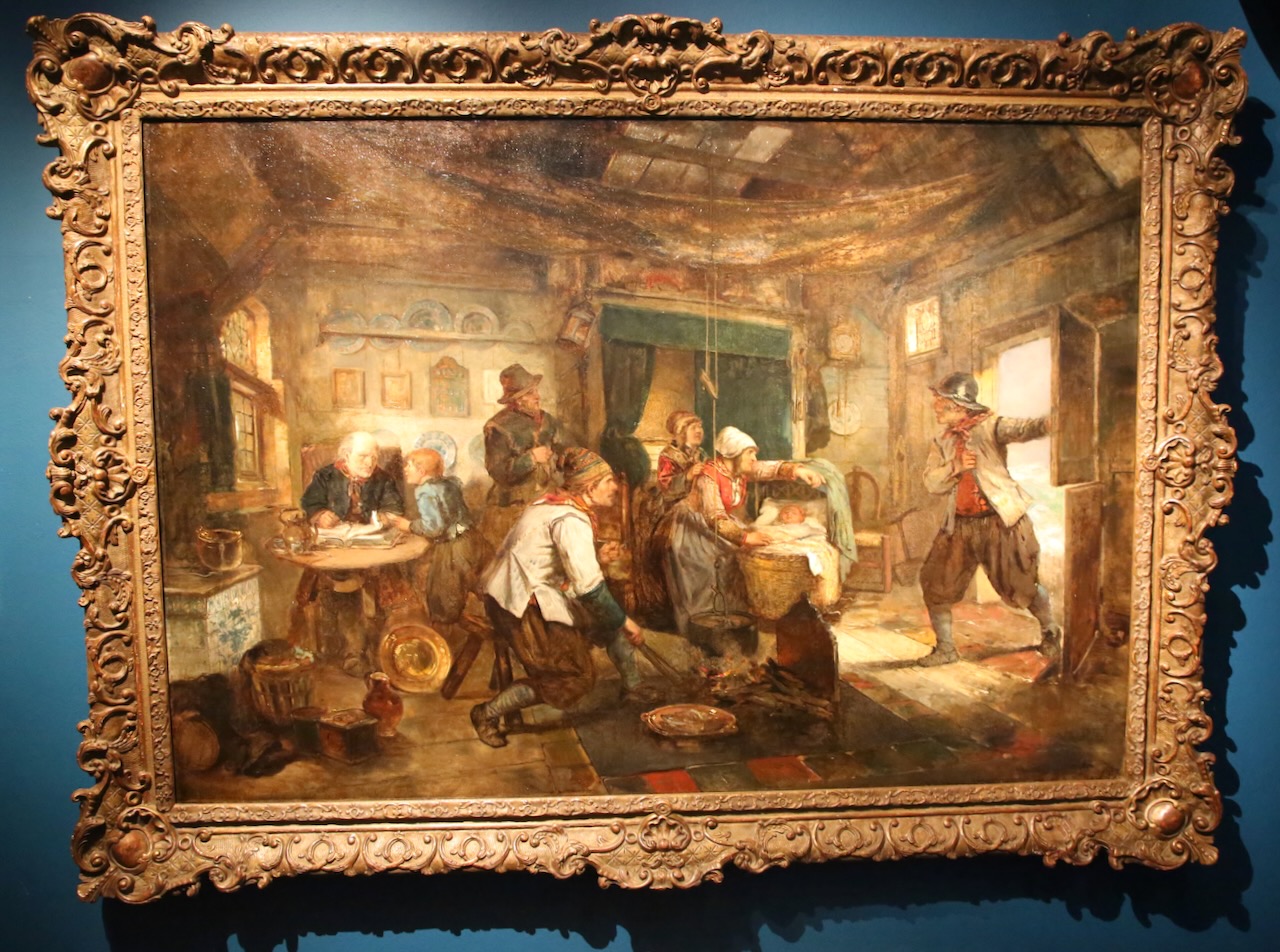
We make our way into the village, and I notice the step down to each door, leading into a community moat. The alley was raised many times to protect against high water, but this left the houses across the road outside the dike, thus unprotected. We walk into our first historic Dutch house, and the pot rattles on the stove, the blanket moves in the bed, and the food on the table looks like a sailor’s dinner, but I’m not sure if it’s supposed to be bread or meatloaf. Either way, it seems to get our appetites up, and we stop at the café for their two-coffee-and-two-apple-tarts special, along with a slice of stroopwafel cake for me.
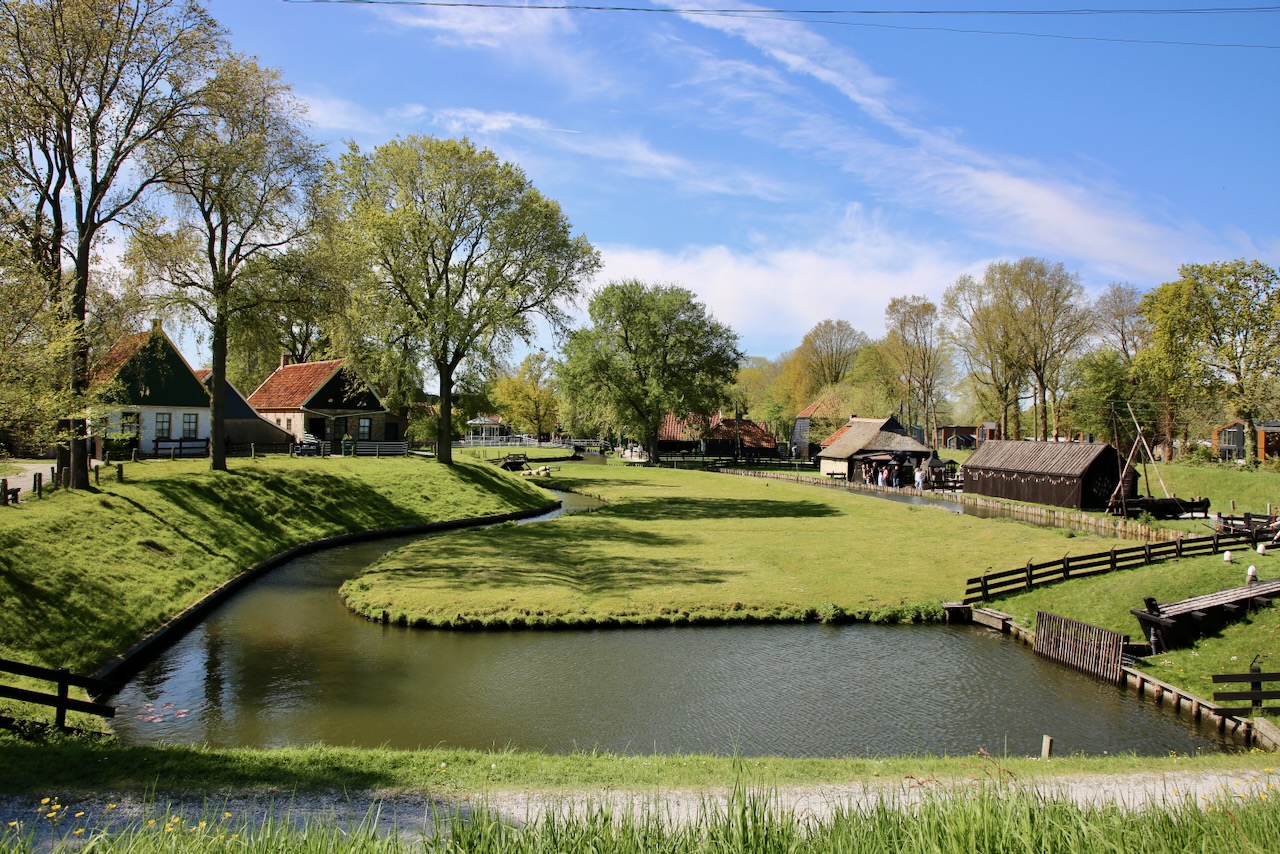
A note for later: there’s a recipe for key lime pie with stroopwafel crust. I sip my coffee while I look around at the blue and white tiles on the walls and out the window to the water. Gert buys us a second round of coffee, and then I explore the rest of the art on display. Back outside, we are greeted by a house sparrow, the top-sighted bird in the Netherlands, but it is listed as sensitive due to population decline since the 90s. The mountain cornflower has petals that offer a clove-like taste with a smell that attracts rabbits and slugs from a distance, and a bright purple bloom that appeals to the human eye.
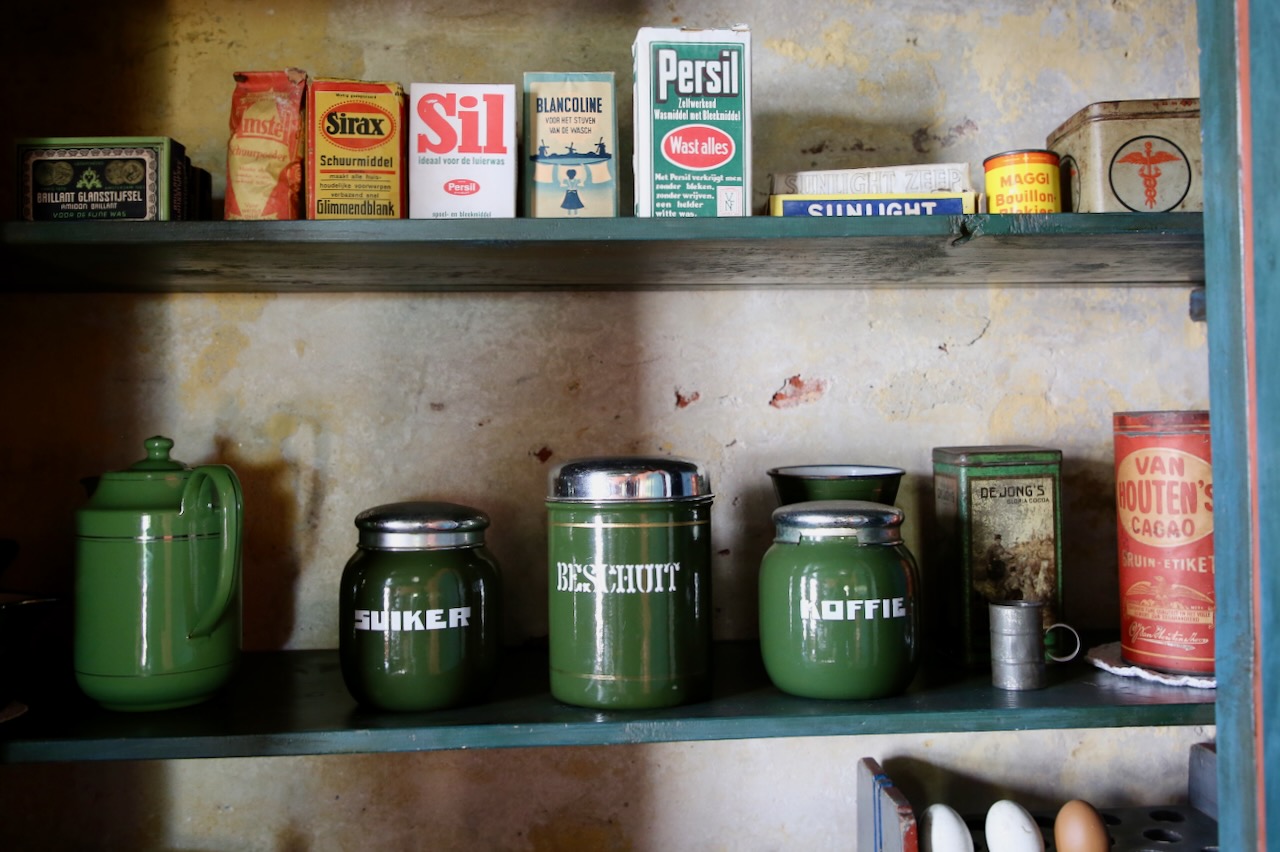
Having been in the country for a few days, I’ve noticed that every bathroom stall comes with a toilet brush, and this is by design. The toilet is built to reduce splash-back, allow for health inspection (a historical hygiene practice), and uses less water. Dutch culture also expects the bowl to be left clean for the next person. The kids are in the street learning hoop rolling, a game that’s been popular for thousands of years, starting in ancient Greece. There’s a table covered in shrimp, and the family could expect 7 US cents (15 Dutch cents) per kilo that they peeled.
Both the dollar and the guilder were on the gold standard then, as established by Great Britain in 1821 and then adopted by Germany and the US in 1873. WWI brought about the start of the end. The US ended domestic convertibility in 1933, and the guilder was devalued in 1936, making the Netherlands the last European country to redeem currency for gold. The US would end international convertibility in 1971, turning the dollar into a fiat currency. Today, those seven pennies are worth $2.43, and that peeled shrimp would retail for $20 per kilo.
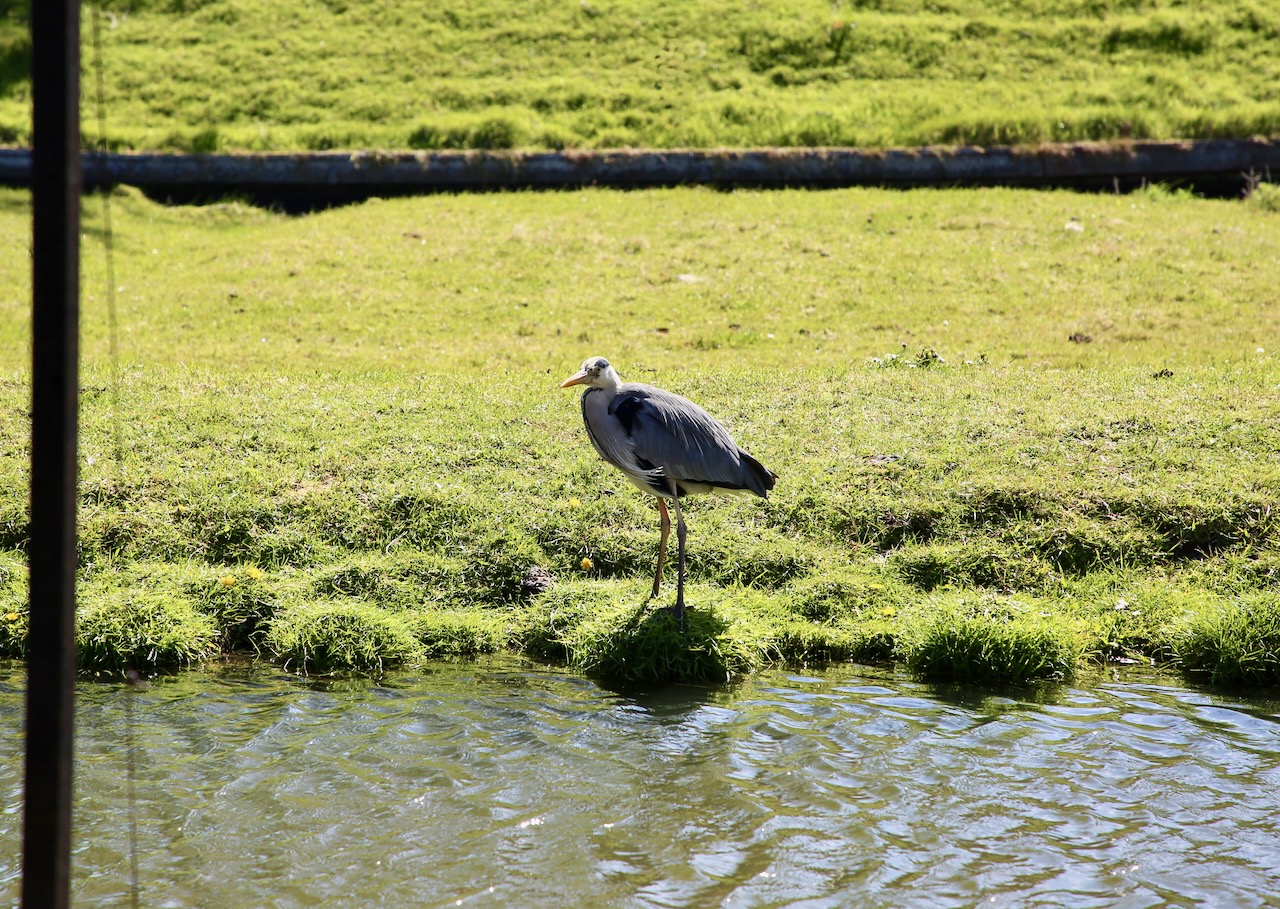
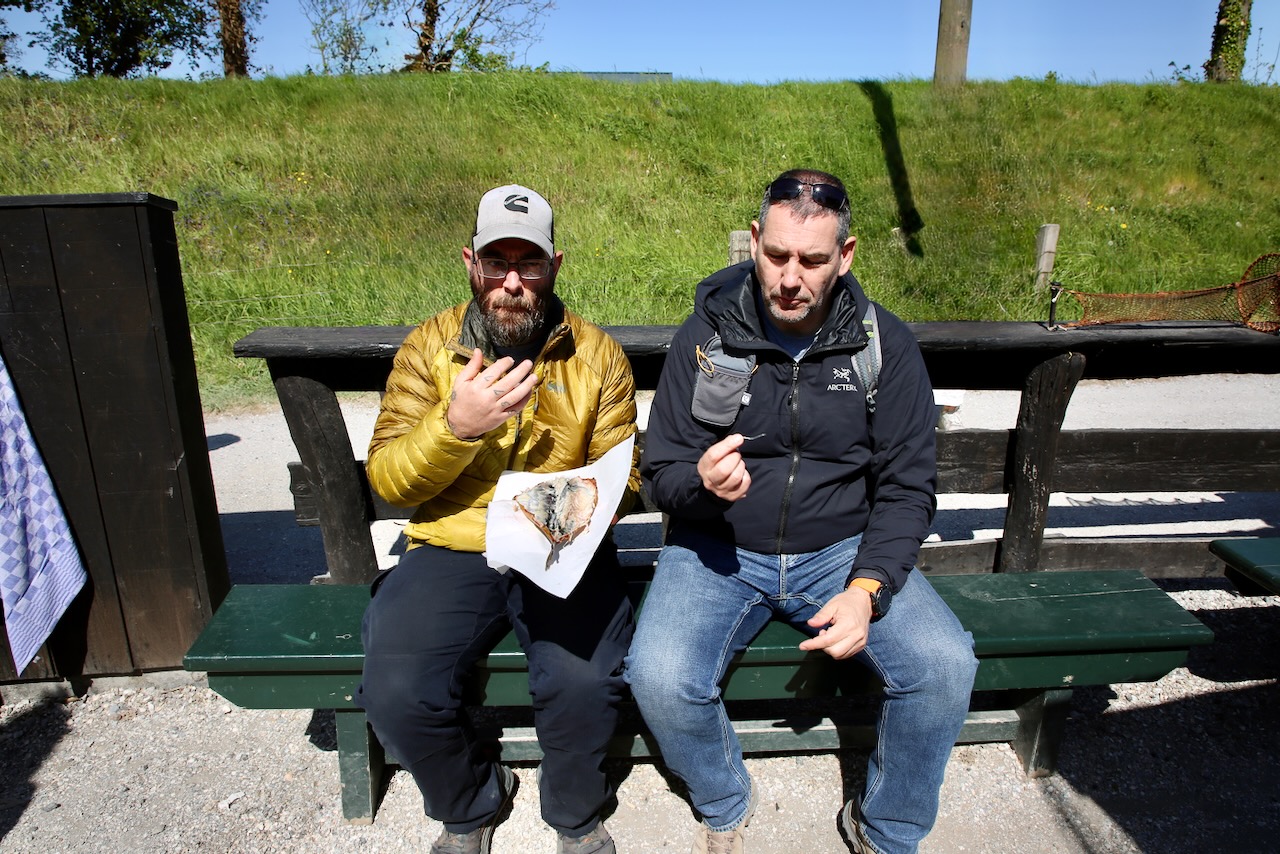
There’s a bench that invites us to sit and listen to a story, but it’s not one we will hear today, and I forgot to tell someone about the battery’s demise, or possibly the dead weight sensor. By the fish smokehouse is a grey heron mooching for bits of smoked herring, salmon, and mackerel off the unsuspecting guests. The bird is doing us a favor by keeping the seagulls at bay. The three of us share a mackerel, and I catch a tiny bone before it can attack my soft, throaty interior. There is a western jackdaw waiting for snack opportunities by the outdoor sink, but Caleb carefully disposed of the skin and bones left on the paper.
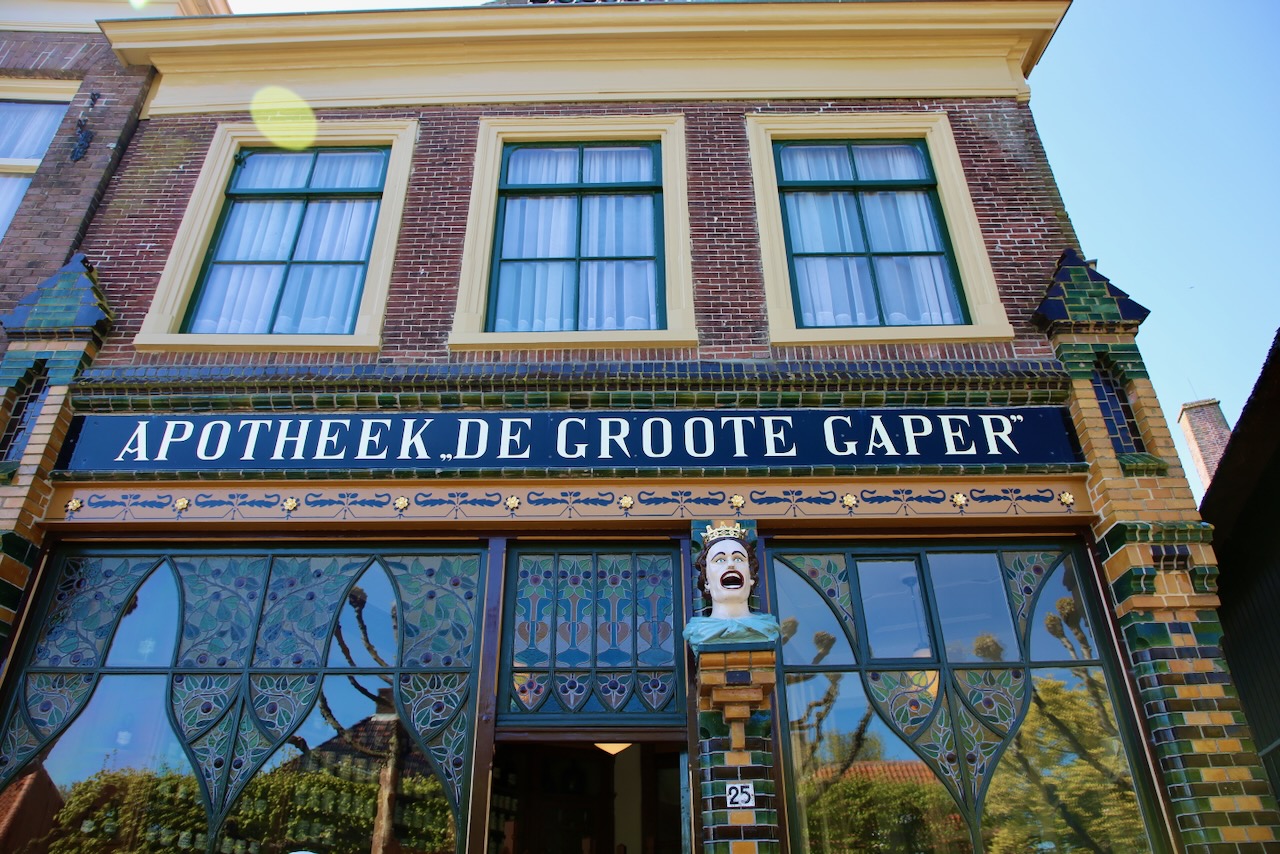
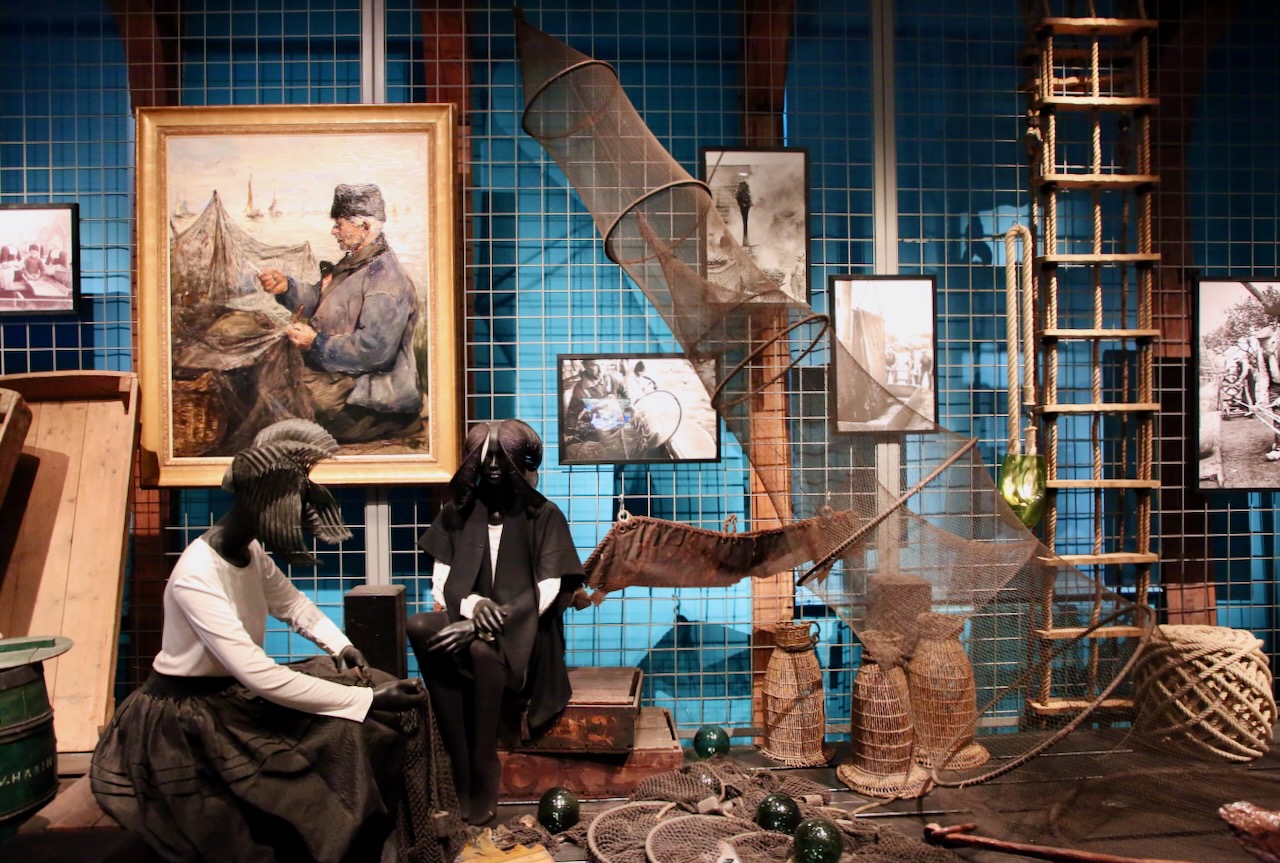
Inside the Great Gaper Pharmacy is a room full of heads that would be put on façades so that passersby knew what awaited them, like a striped barber pole that symbolized blood and bandages as their trade sign. Abraham Best started his chemist business in 1771 and sold his concoctions to doctors. His son became a pharmacist, and in 1827, they purchased the building next door to expand. In 1877, the apothecary, J.C. Kloppenburg, took over both shops and remained in business until 1978. The museum has the gaper on a long-term loan. These gapers began to disappear from the streets in the 1930s.
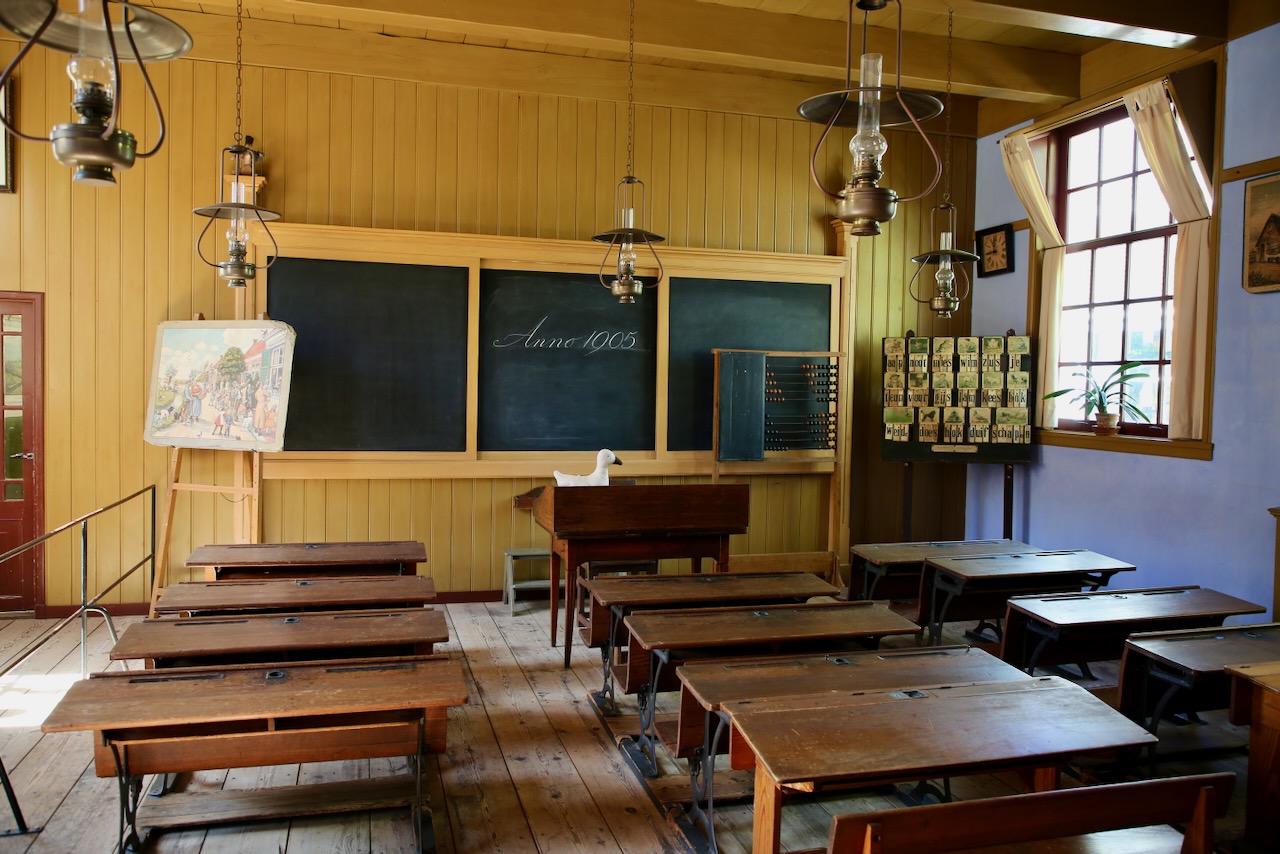
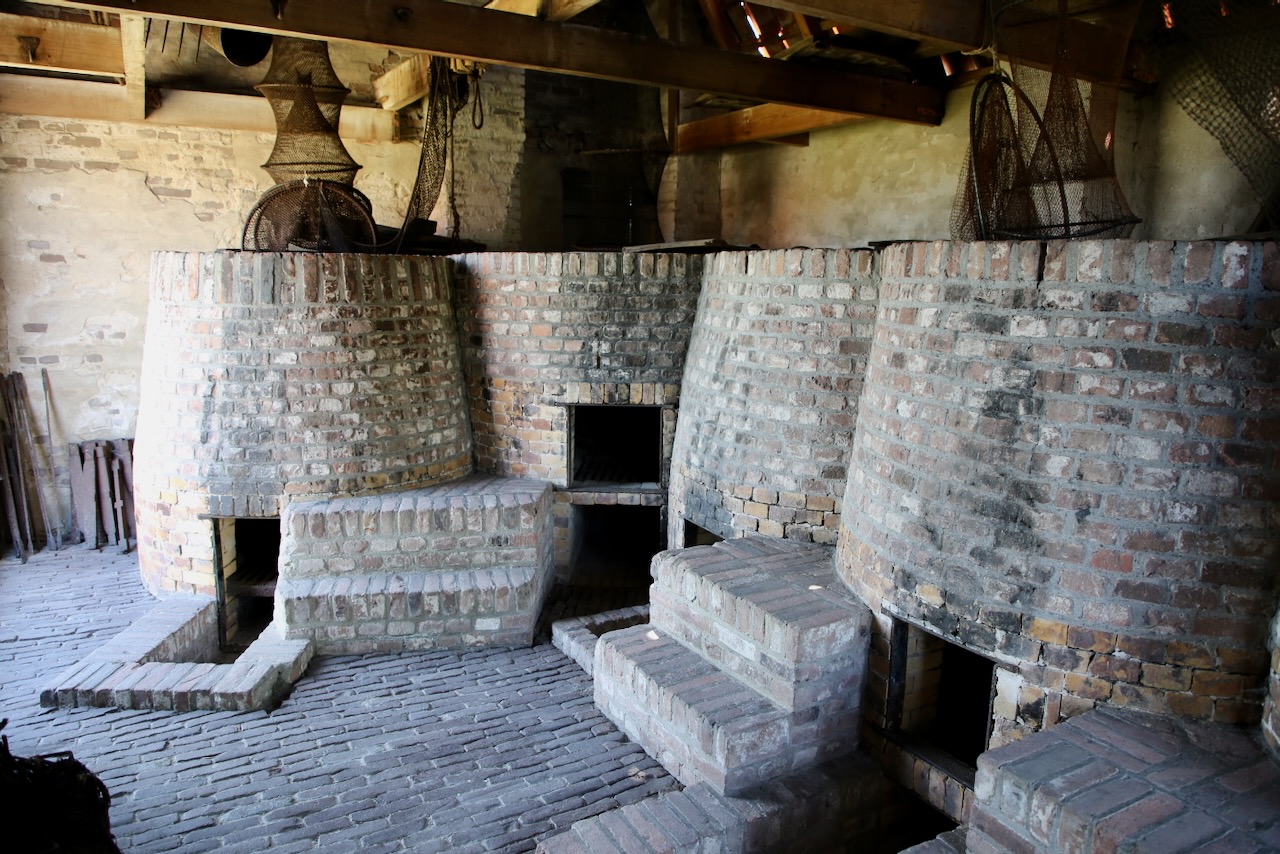
A neat thing about these shops is that you can walk through history and the present at the same time, at least in the bakery and sweet shop, where we try a krakeling (a puff pastry with cinnamon sugar). This usually pretzel-shaped sweet, which is over 500 years old, is associated with weddings and funerals to symbolize the circle of life. Onto the harbor, we can go below deck and see rows of hanging herring in the smokehouse with nine chimneys. There are five cauldrons, which are built together like biscuits in a pan, that were used to tan fishing nets to prevent decay from salt water.
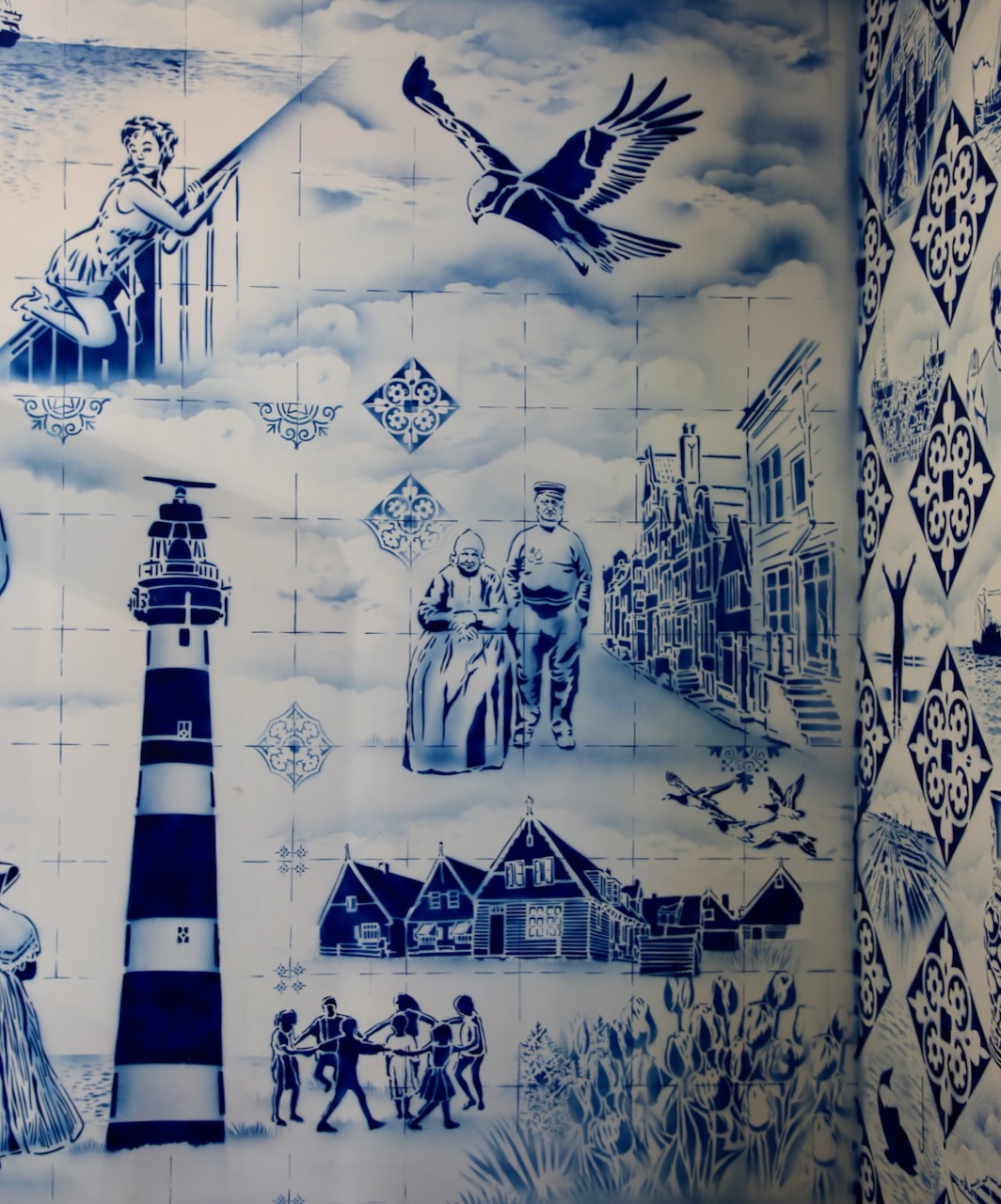
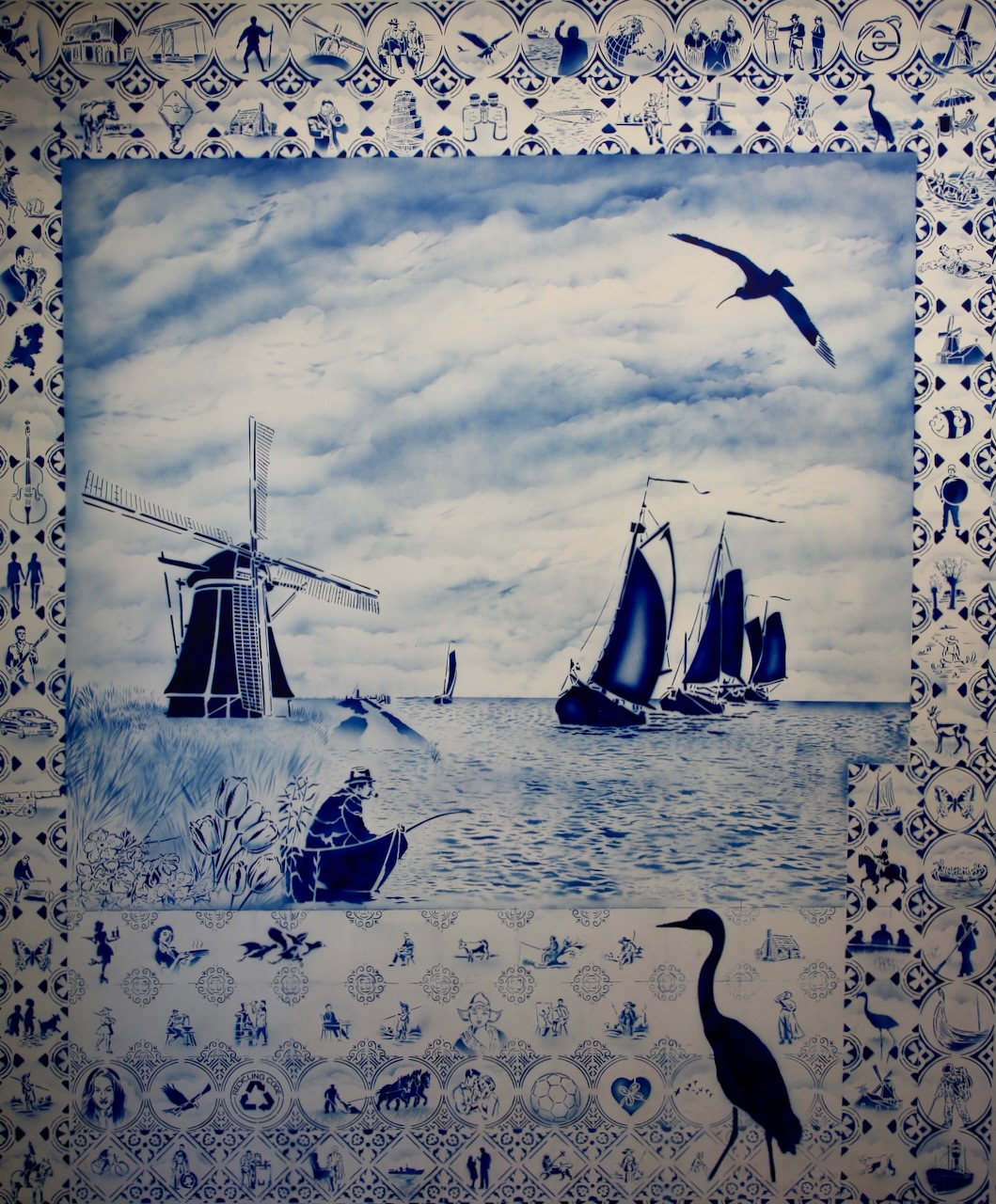
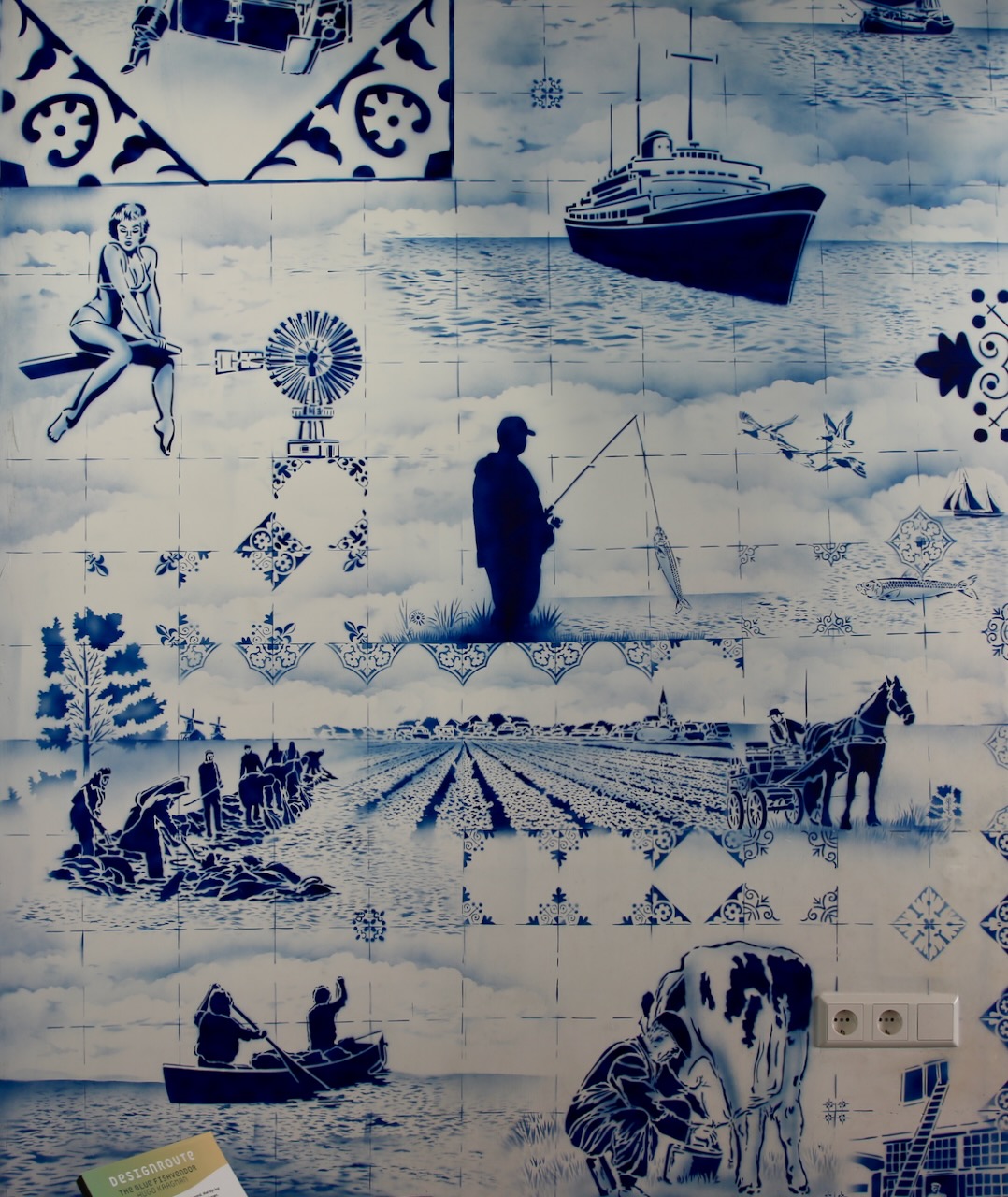
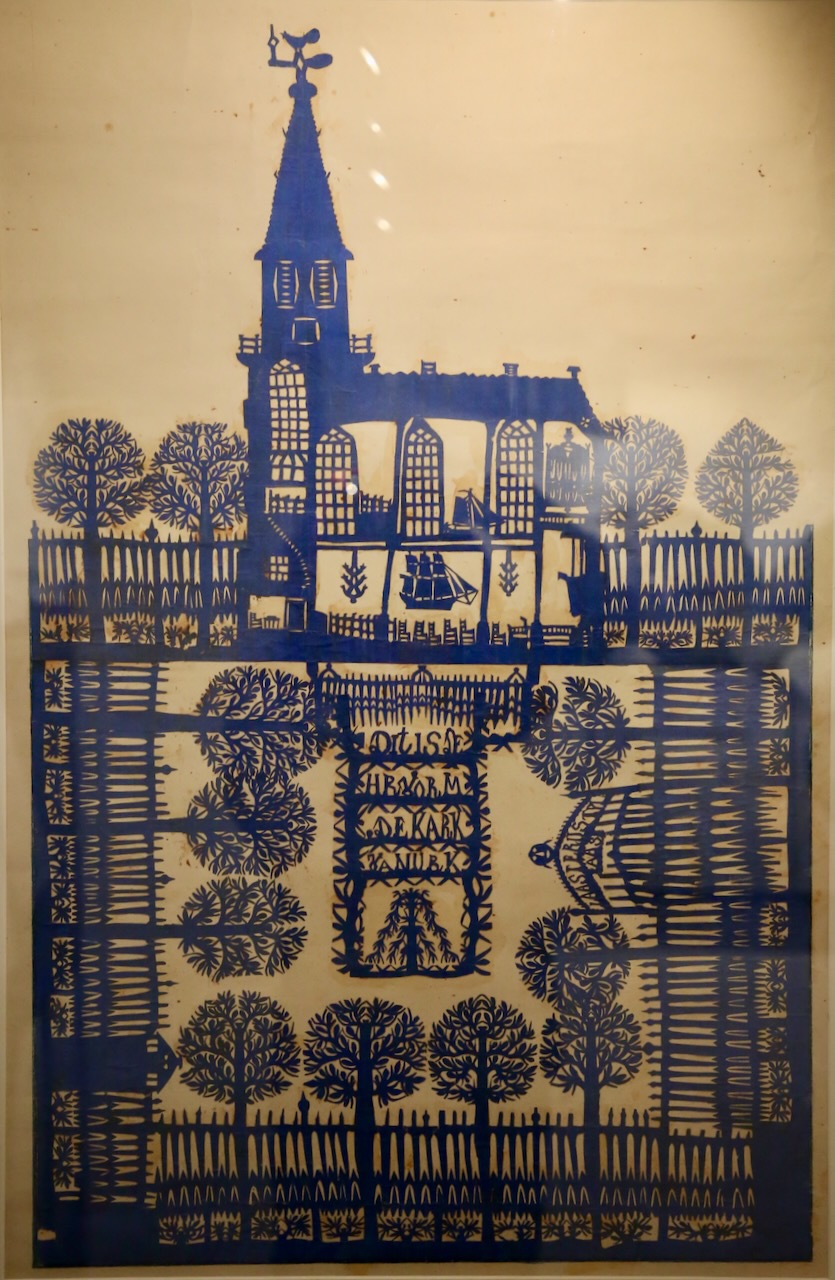
Harderwijk fisherman’s cottage stenciled by Hugo Kaagman
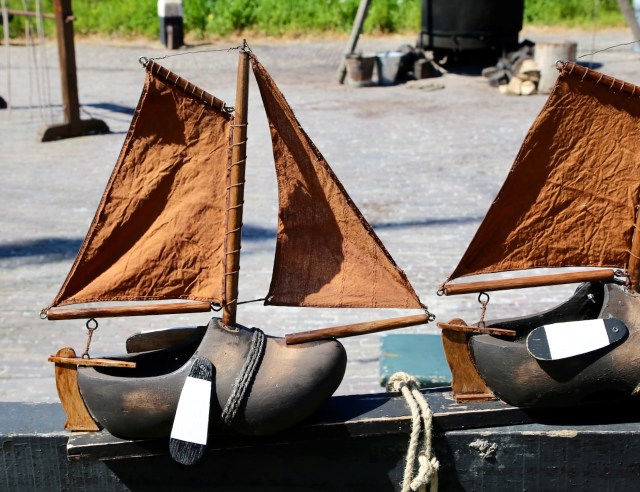
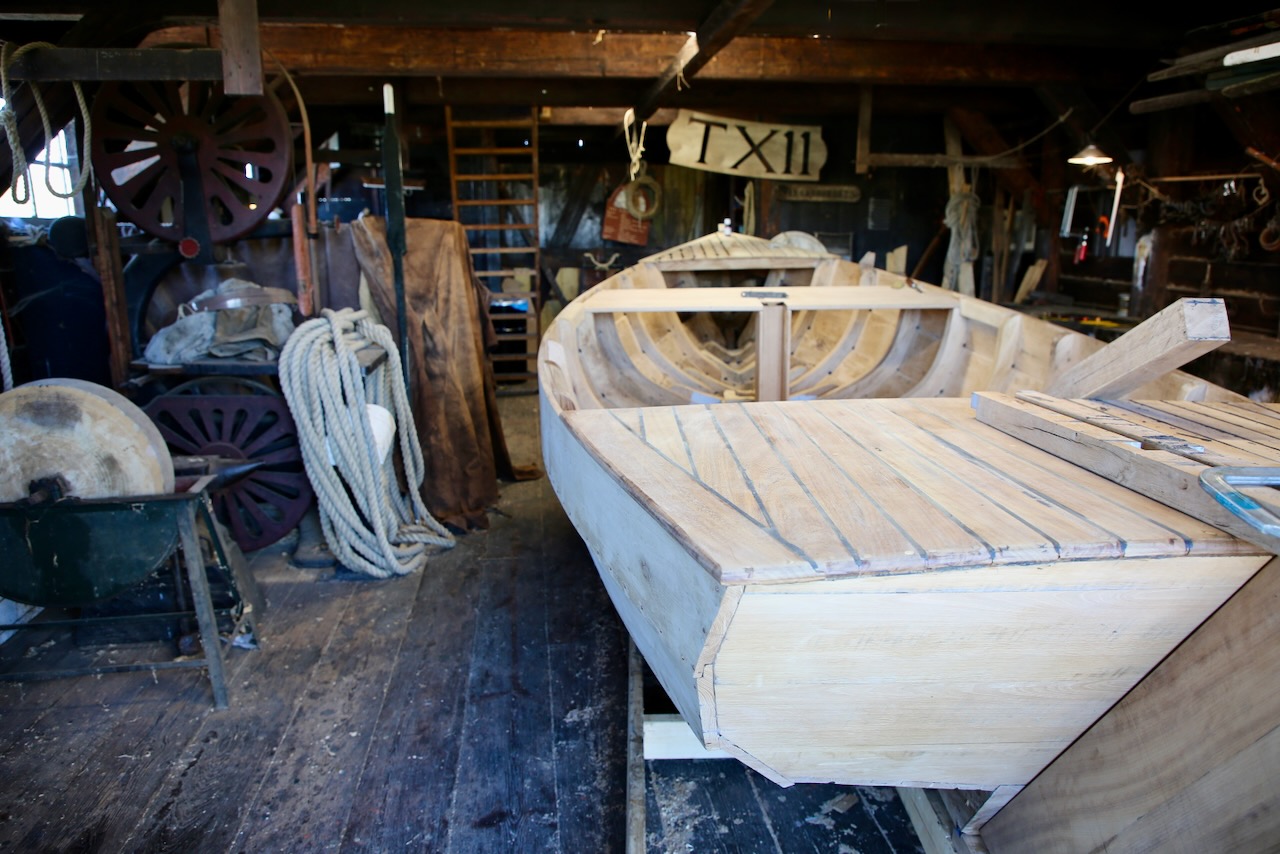
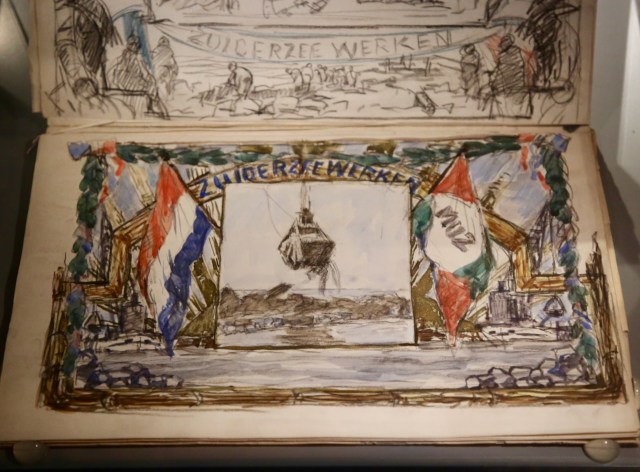
The tan was a preservative compound from the wood of the Asian acacia and required three hours of boiling, and then the nets could dry in the air. We walk to the Treasure House, the indoor component of the Zuiderzee Museum. There are pictures and paintings; the desk of Cornelis Lely, who died before the completion of the Great Barrier Dam; and a newspaper article about Grietje Bosker, the first woman to walk across the dam. There is a history of fishing and boats destroying houses in a flood. The guys get to build a sailboat model together before we walk through the IKEA portion of the exhibits.
There are elaborately designed dining chairs, wall clocks, cabinet doors, and folding tables. People slept upright in their sofa beds, believing this was better for their health. Gert will set off an alarm by pointing out a sign, one apparently behind a too-close warning barrier that we will hear again when a loud family full of kids comes through the exhibit. We continue on into town, and Gert is on the lookout for somewhere to eat. I see tables near the water, so we agree to sit at ‘t Ankertje (The Little Anchor) for our afternoon meal. I ordered a ginger lemonade and two kroketten.
Caleb and I get plastic muddlers with our drinks, so of course, I go about squashing the fresh ginger and mint in my glass. Gert has ordered a glass of milk, a lunchtime staple in the Netherlands. Milk is seen as a healthy source of height gain and maintenance, and a good way to support the dairy farms, which are a foundation of Dutch culture. The last two decades have seen a decrease in milk drinking as cheese eating takes its place. Human mothers spend 3-5 hours a day breastfeeding for 6-24 months, while dairy cows start out at 2.5 hours per day and wean from there in 8-12 months.
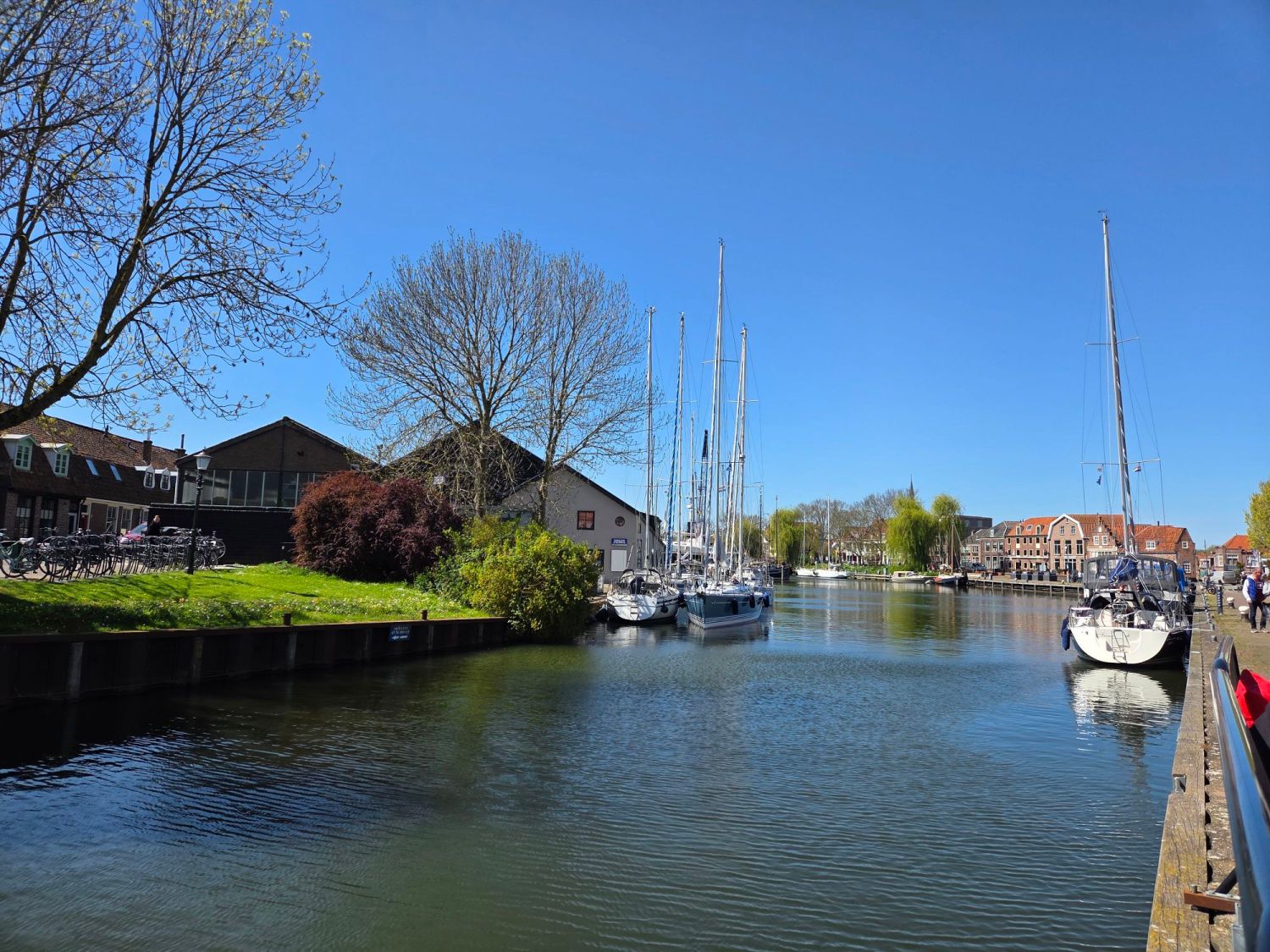
The dairy industry weans the calves at 6-8 weeks and then uses the mother for 2-3 years, which I don’t agree with. Anyway, this is not what I’m thinking about at lunch. I could jump the rail and be in the water. Our bread and toppings arrive, and Gert has ordered goat cheese, sundried tomato, and walnut on his, while I went with the familiar beef ragout. It’s great that each comes with two slices, and he is kind enough to trade one with me. I’m nearing fullness, but I finish my meal. We walk across the second (not officially) smallest drawbridge in the world, the first being the Somerset Bridge in Bermuda. It is only 22 inches wide and dates back to 1620.
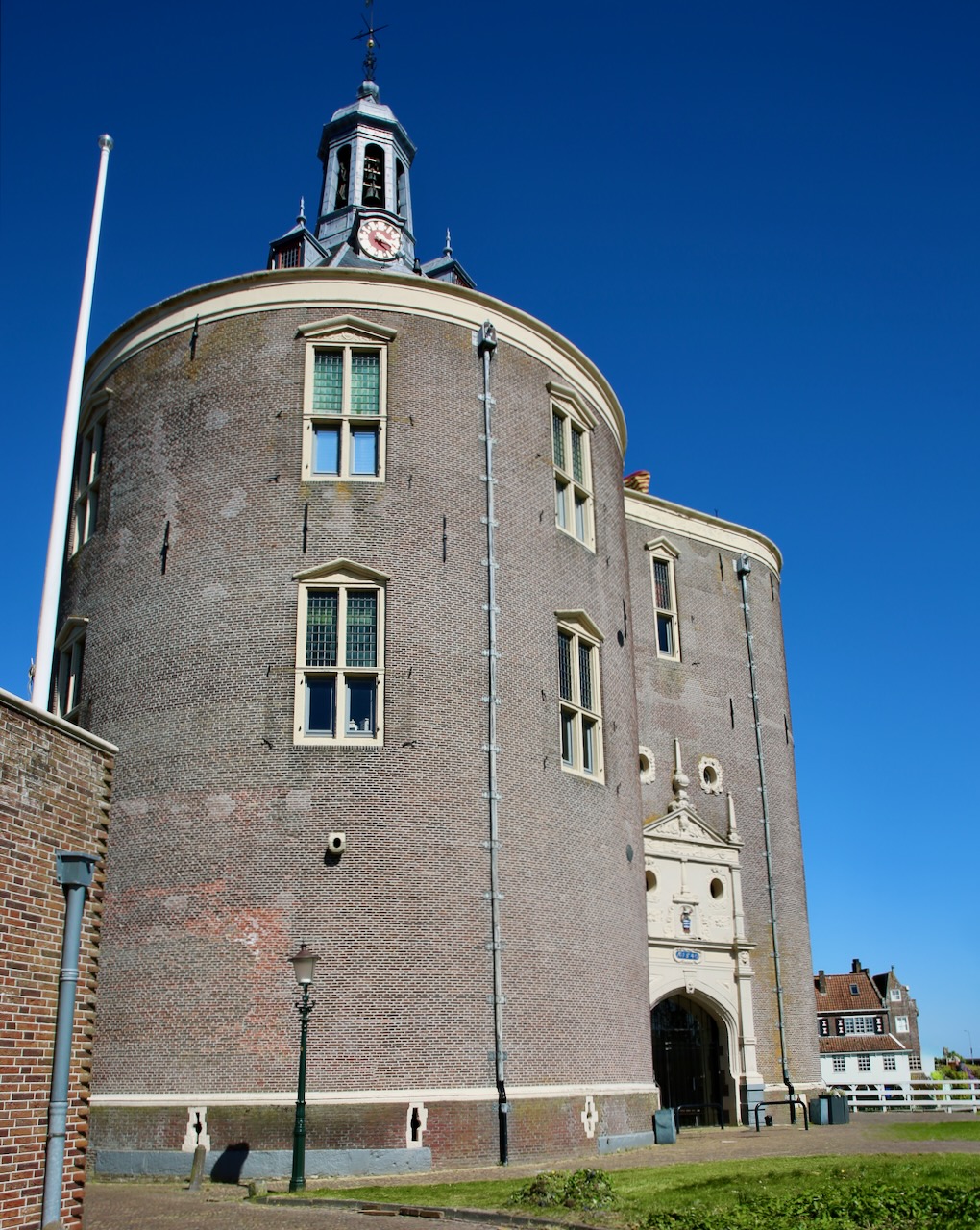
We crossed to get a closer look at the Drommedaris (South Gate) that was built around 1540. The tower was raised in height between 1649 and 1659 and was used as a guard barracks, prison, excise office, spinning mill, weaving mill, telegraph office, and, since 1958, as a cultural center. The carillon dates from 1677 and currently consists of 44 bells. It is closed today, which is why we didn’t eat at the café with a higher view. There’s a sign about the pioneers of Enkhuizen, and it states that from 1641 through 1859, there was a Dutch trading post in Nagasaki, the only link between the Western world and Japan.
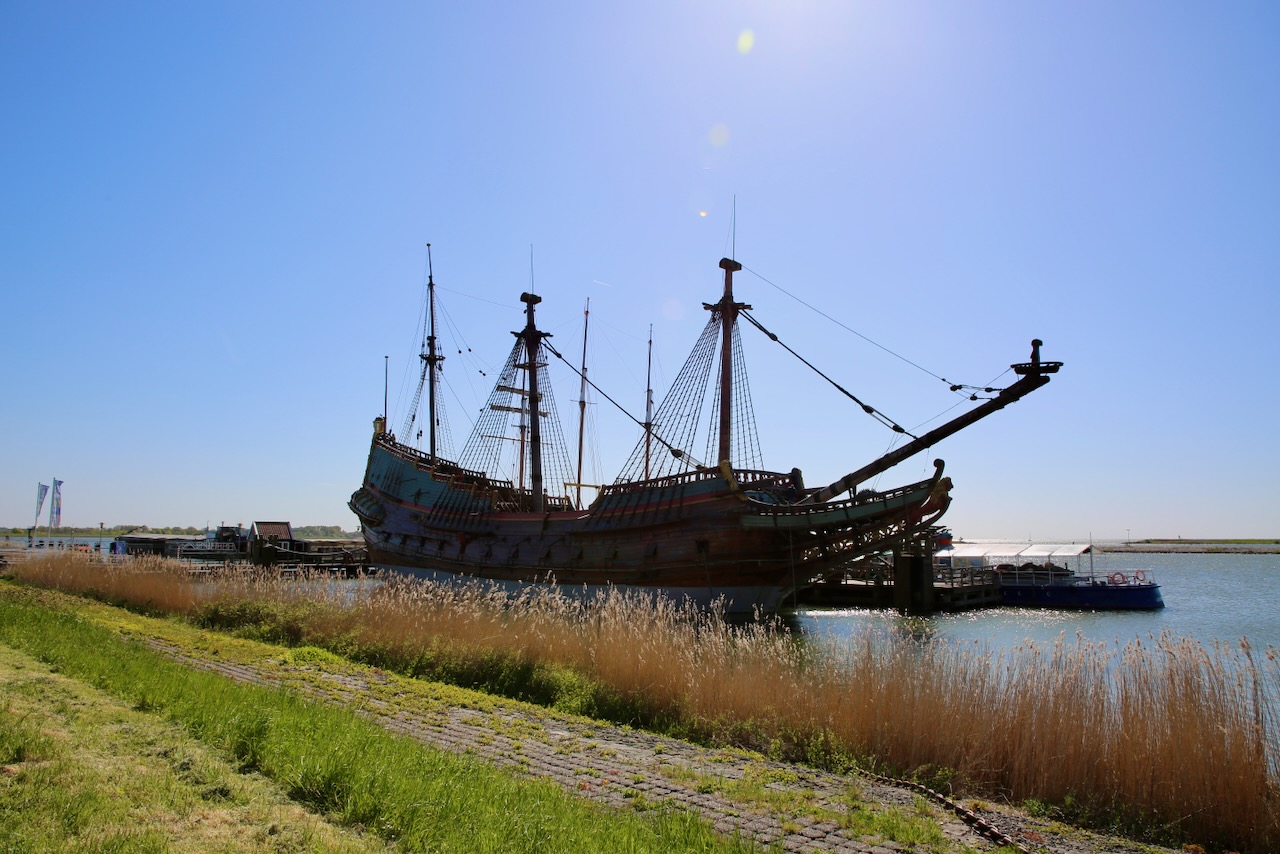
On the ride home, on the other side of the water, is Museum Batavialand, where a replica of the 17th-century vessel and the National Ship Archaeological Depot are located. Gert waited in the car while we explored from outside the gate, with no action inside, even if we wanted to go in. We pass fields of white, yellow, red, and pink tulips beneath the modern windmills we saw from afar earlier. I noticed trash bags by the highway bins, leaving the road cleaner for the next driver. I could get used to such a polite and direct culture.
We stop at the drankenspeciaalzaak (specialty liquor store) on the way home, and the owner, Auke, gives us samples of his limoncello and orange-passionfruit liquers he has made. The men chose some beers to try, and I chose a sour (the wait is worth the reveal). The first beer, split three ways and intentionally uneven in my glass, is Gert’s favorite, Desperados, a tequila-flavored lager created in France in 1995 and now owned, along with 300 other regional and international brands, by Heineken. Our first dinner is beef and green bell pepper enchiladas with red sauce and cheese.
We had eaten lunch later than I realized, so I wasn’t that hungry, but I put in the effort to finish. It’s a good thing I didn’t, as the guys were ready to try a pilsener by Hertog Jan, founded in 1915 and named after a duke. The second dinner is chicken nachos with yellow bell pepper. I think the third beer, after Zulu has helped with the dishes, is going to be dessert. It is another local brew, this one from Groningen, an imperial stout from Eggens at 11% ABV. I am mistaken, as the mini ice creams are revealed from the freezer, I take a hazelnut.
Caleb buys us train tickets and museum passes for tomorrow so that Gert and Anouska can prepare for their trip to Japan. They are so kind that they didn’t want to seem rude for making us explore on our own, but we reminded them that we are capable and that they are the best couple we have stayed with in the Netherlands and among the sequoias in California. We get to help or hinder with a crossword puzzle as Anouska reads out the clue, we guess, then they translate the answer back. It was fun, but not as exciting as going to sleep is for Anouska. I watch her unbridled joy as she’s off to bed.


