
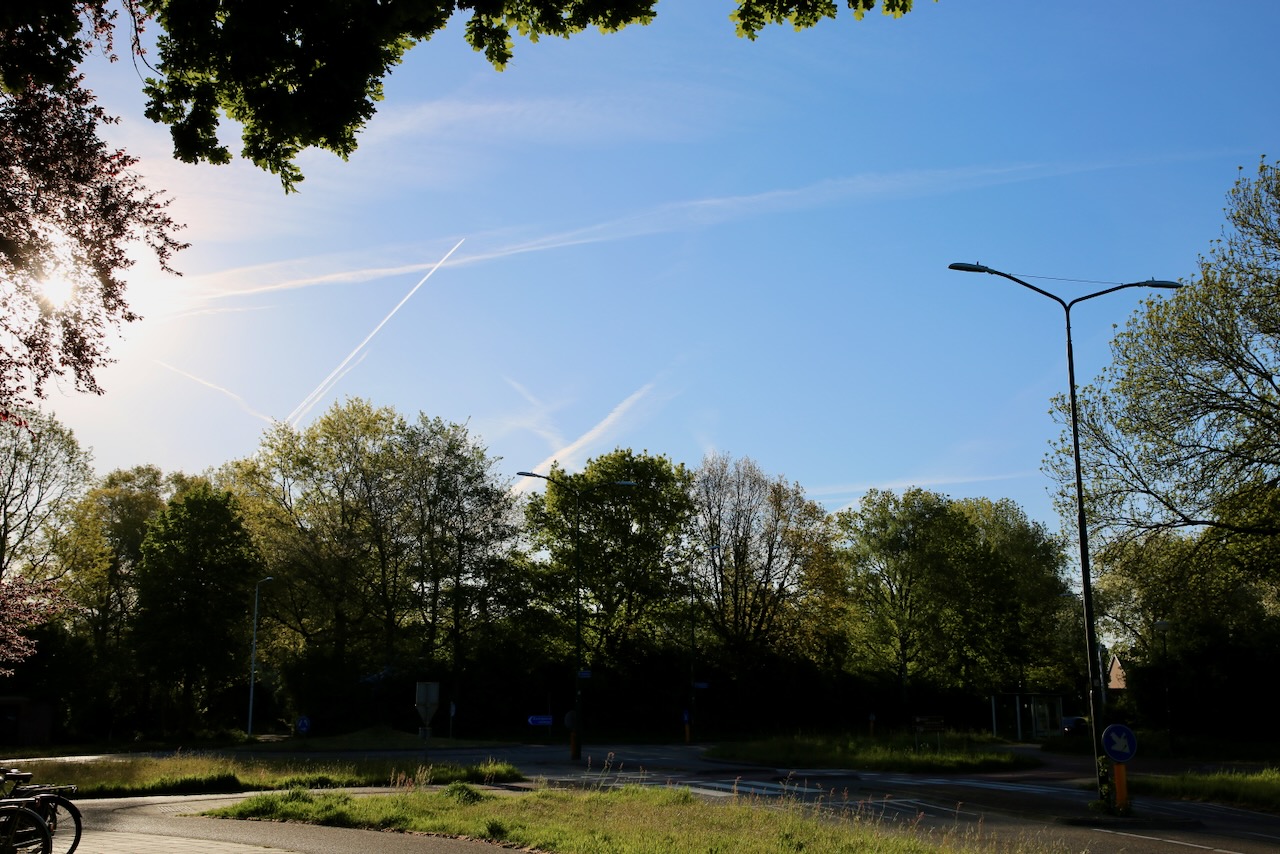
I have the same breakfast as yesterday, put my Kindle in my bag, and we (just Caleb and I) are out the door. Caleb runs back to the house and has to be let in to get his headphones for the train. I admire the view while he does so. I noticed the throw-as-you-go (or tilted bicycle) trash cans along the bike path where cyclists can toss bottles without dismounting while riding past on a bike and on the bus. The reason for their rarity in the States is that they present a potential collision hazard for bikes (unlike cars, debris, and plants in the lane) and would require costly municipal maintenance.
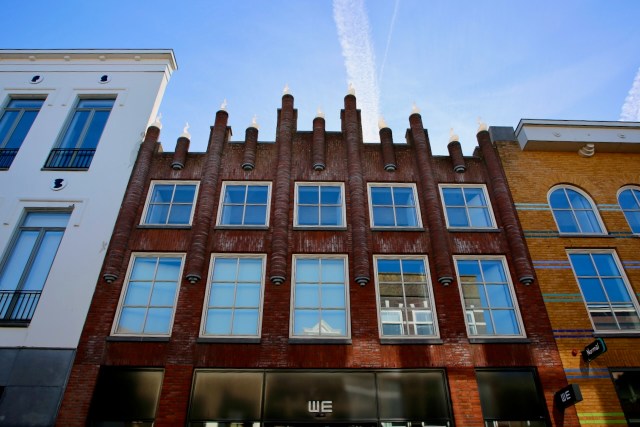
On the train to Gouda, we found seats apart, and I noticed the graffiti and green fields. At the station is a preserved ornamentation from at least 1869, as the identity of the architect is unclear. Submitting drawings with a building permit wasn’t mandatory until 1901. Outside the station is a structure, De Telepoort, created to connect the old city gates with the new city entrance, unveiled in 2023. The design was inspired by historical elements of the town hall, Visbanken, and St. Janskerk. Under the roof frame arches are five ceramic statues representing the old trades of the city: candlemaking, ropemaking, waffle baking, pottery, and a trading center.
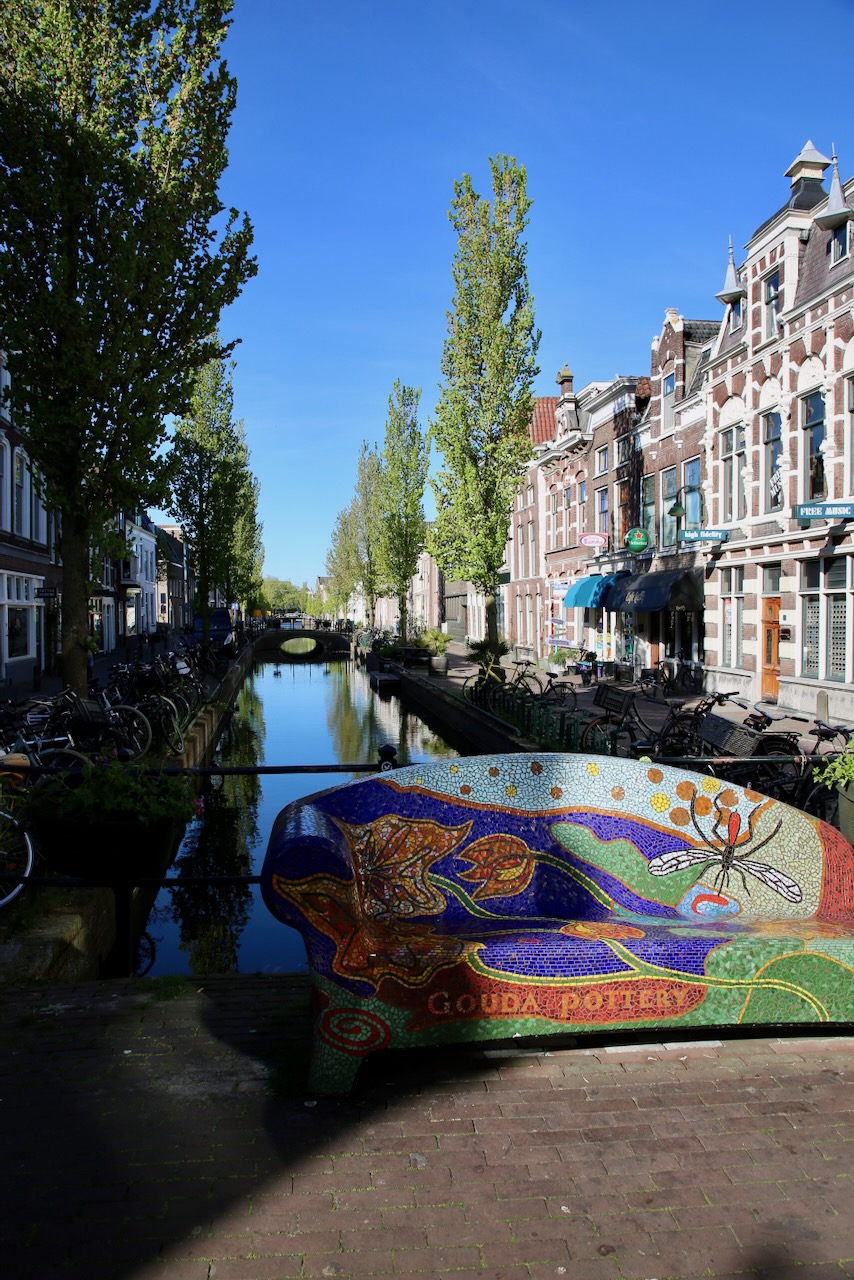
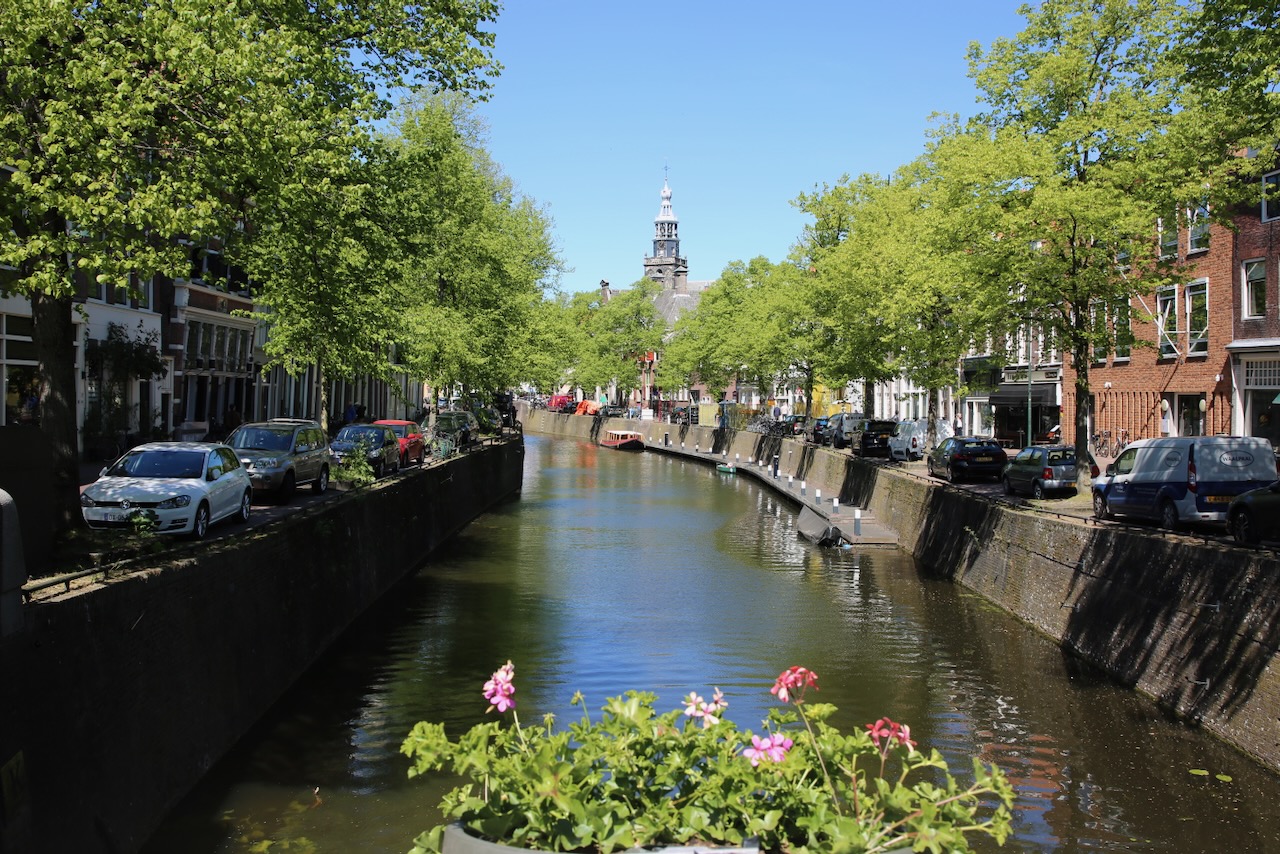
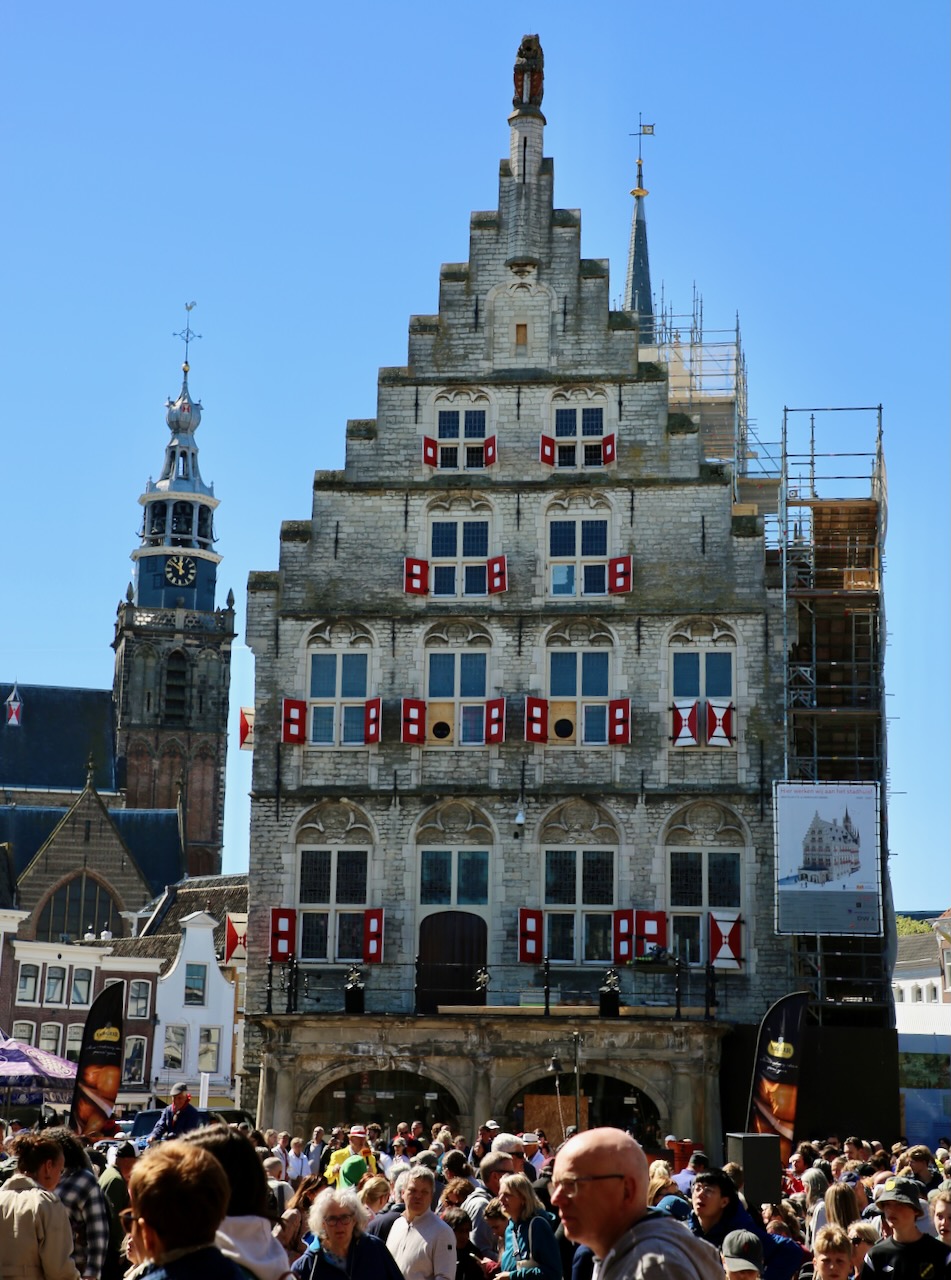
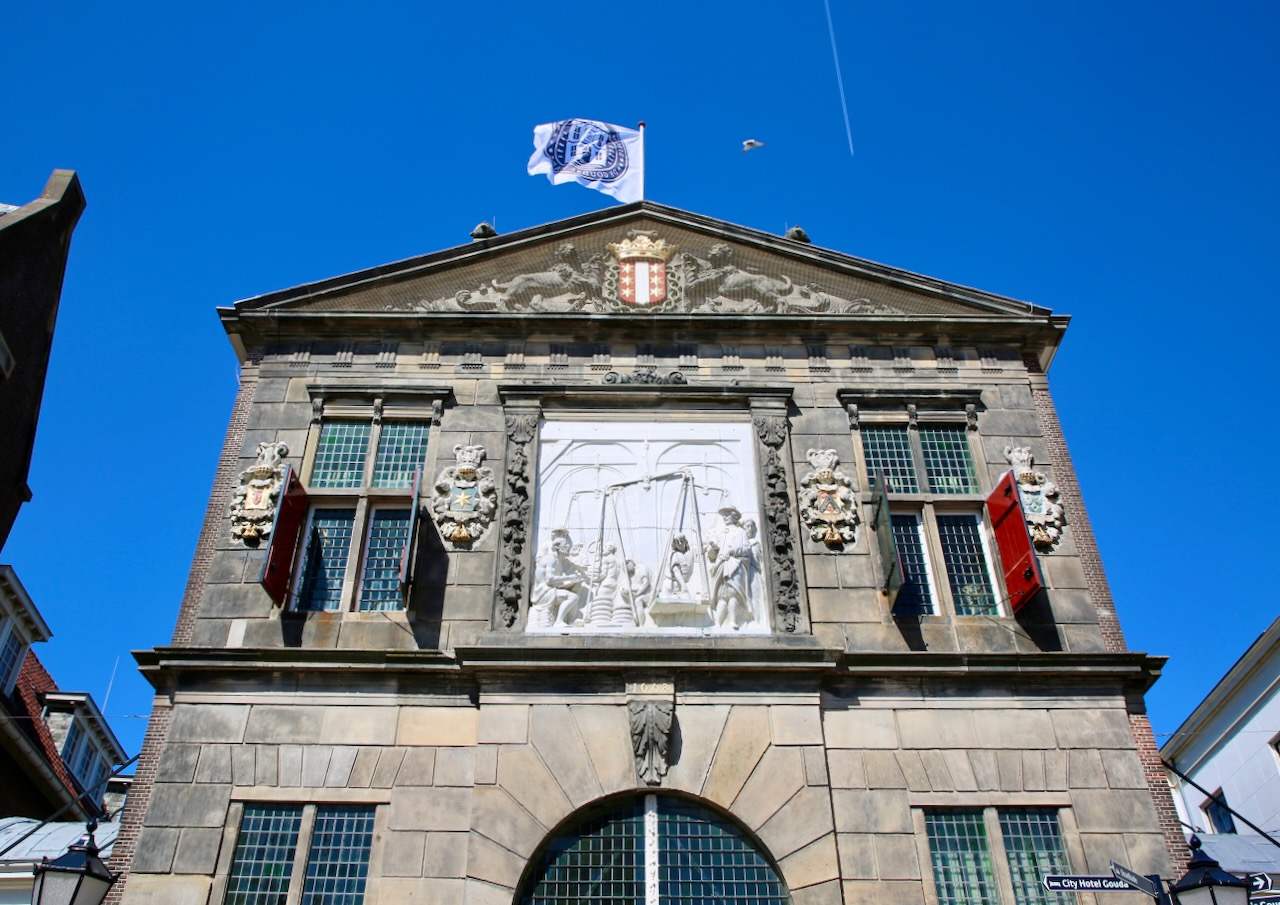
Across the street is De Kassboerin (The Cheese Girl), one of fifty painted concrete replicas to celebrate the 750th anniversary of Gouda receiving city rights. The plan was to visit the Saint-John Church when it opened at 9 am, but the streets have so many views to offer on the way that I was easily distracted. It didn’t help that once we got between the Old City Hall, built between 1448 and 1450 (currently under construction), and De Goudse Waag (The Gouda Weigh House), where the historic Cheese Market is held, Caleb didn’t want to leave all the cheese wheels.
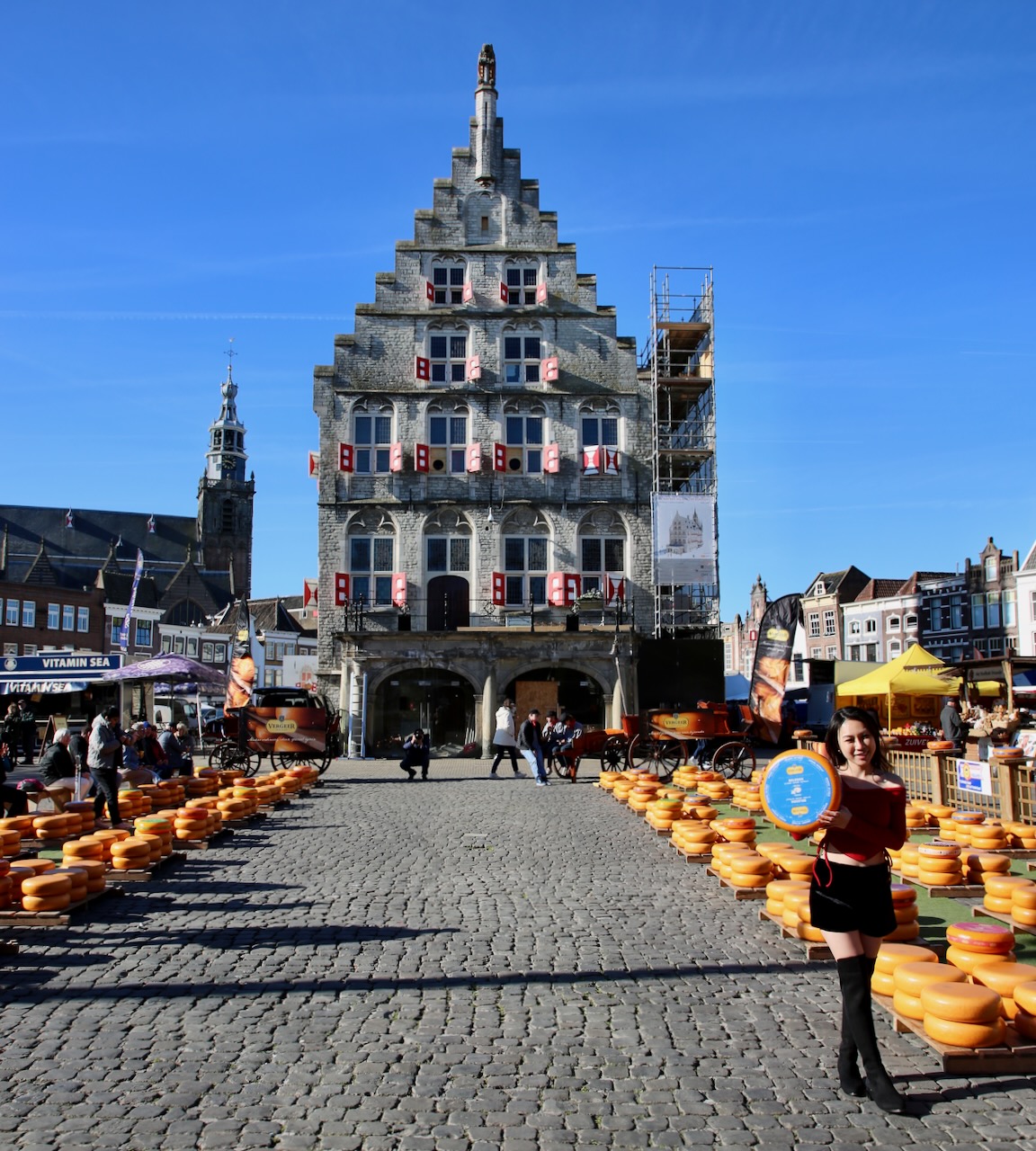
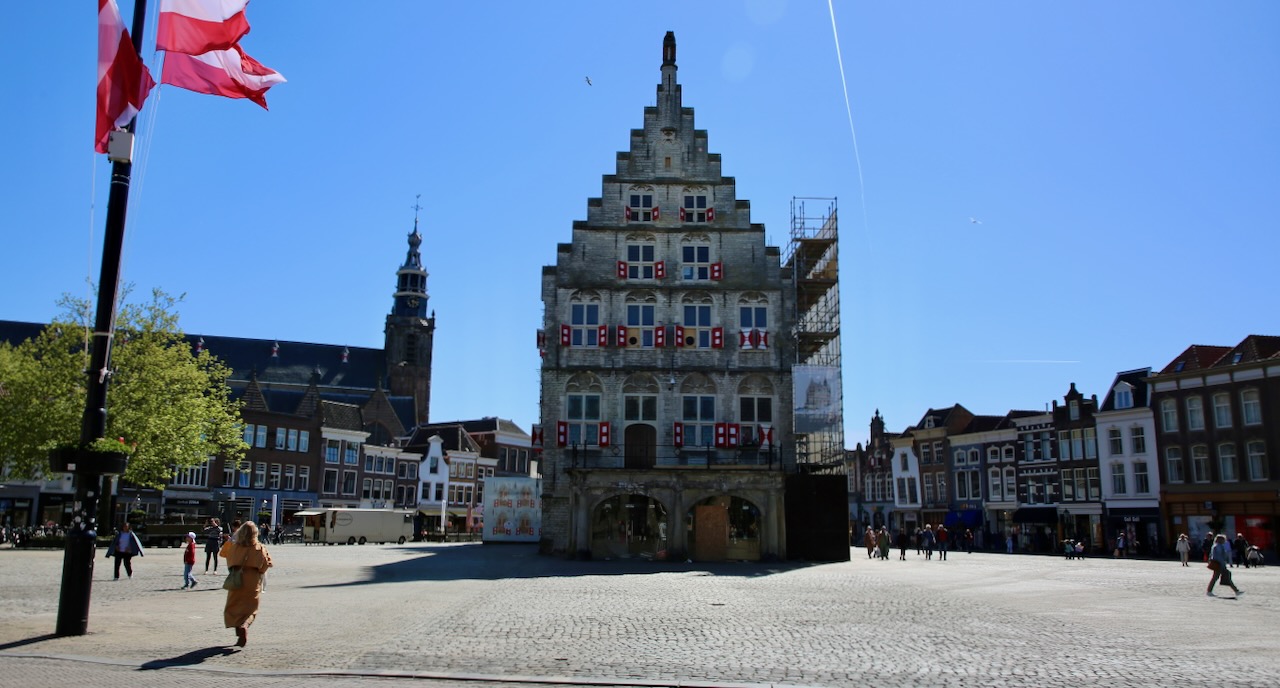
Tourists chose their seats and posed with the cheese and the horse-pulled wagon. We took advantage of the fresh food market in the same square. We got to try our first cheese waffle, and the chef made the process look easy, which, once learned, I’m sure it is. I was super excited to try something new, knowing full well that I would love it. I should have bought more, but they might not have survived the morning. Minutes later, I’m watching a woman flip mini pancakes (poffertjes) in a dimpled pan, so I should obviously try them too. Caleb orders them with syrup, not realizing that the powdered sugar is a traditional (perhaps mandatory) topping, so we get all the sweetness.
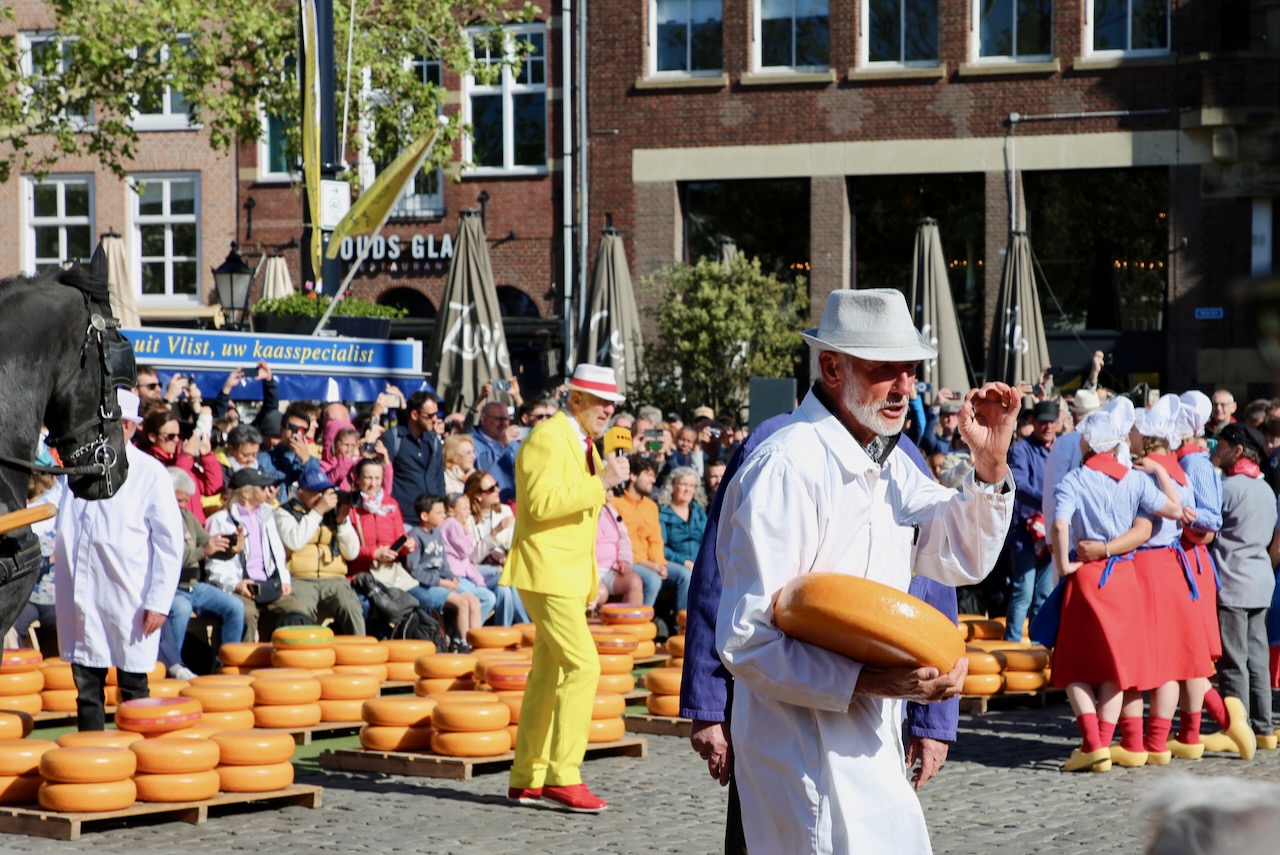
We are given two wooden two-pronged forks for sharing our dozen little treats. The crowd thickens, so we quickly find a spot to watch the man in the bright yellow suit. These classic bargaining rituals are centuries old, and this show continues to be put on every Thursday morning from April through August. The men and women show up in their traditional dress with yellow wooden shoes. I’m not sure if this happens every week, but there’s a special guest. She used to be a cheese woman and is now a race driver in the men’s division. I only know this because I happened to stand next to a Dutch woman translating for her friend.
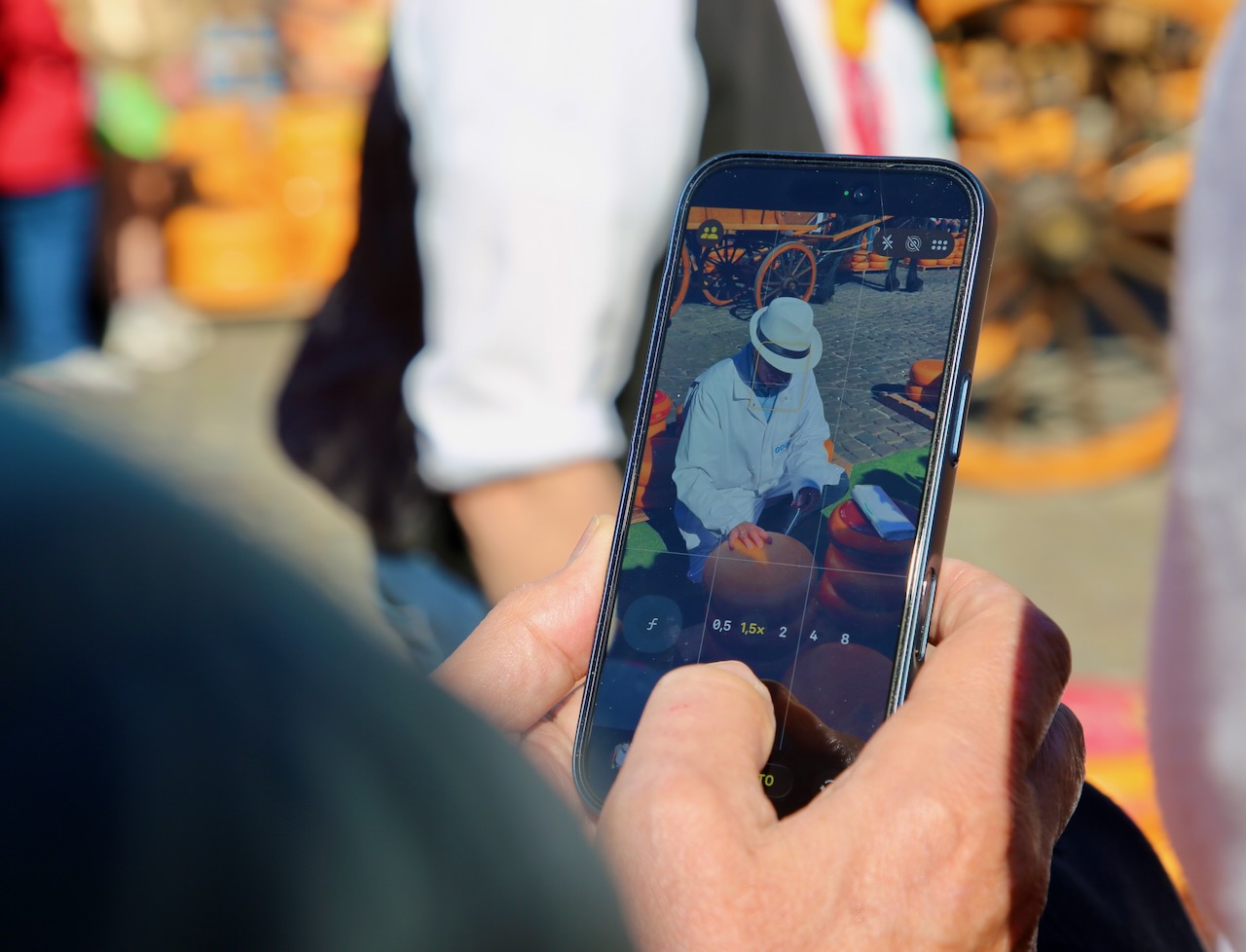
The farmers and cheese shop owners arrive, and the man in the suit starts his introduction, in Dutch, of course. What surprised the crowd was the English, German, and French that followed. I already had a guy with two cameras to my left trying to photograph and video everything, so when a woman squeezed in and stuck her arm between Caleb and me on the right, I pushed her camera button for her, and then her arm. I know about tight spaces, but I will not support someone else’s bodyweight, especially in a crowd where crushing is a possibility. I thought that might be it, but then two men approach the pallet of cheese in front of us.
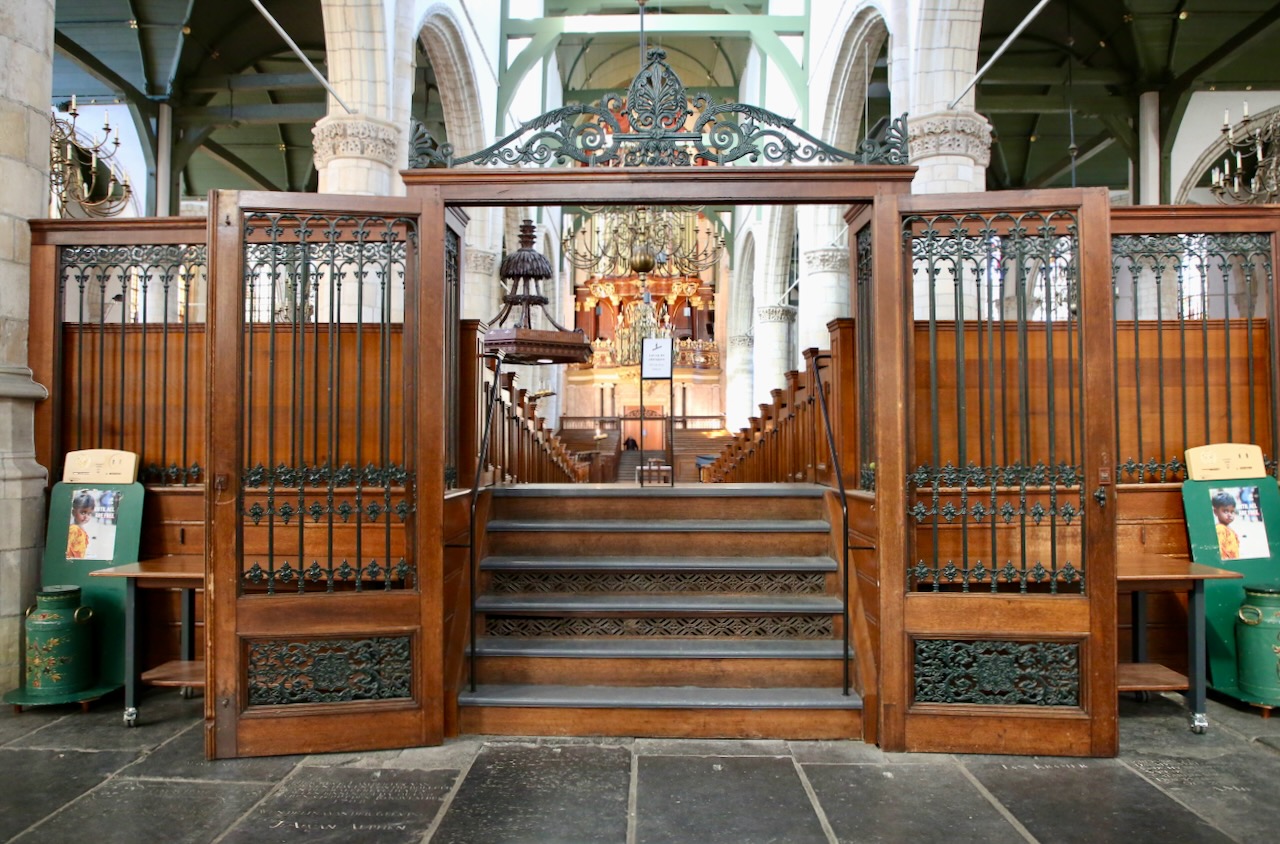
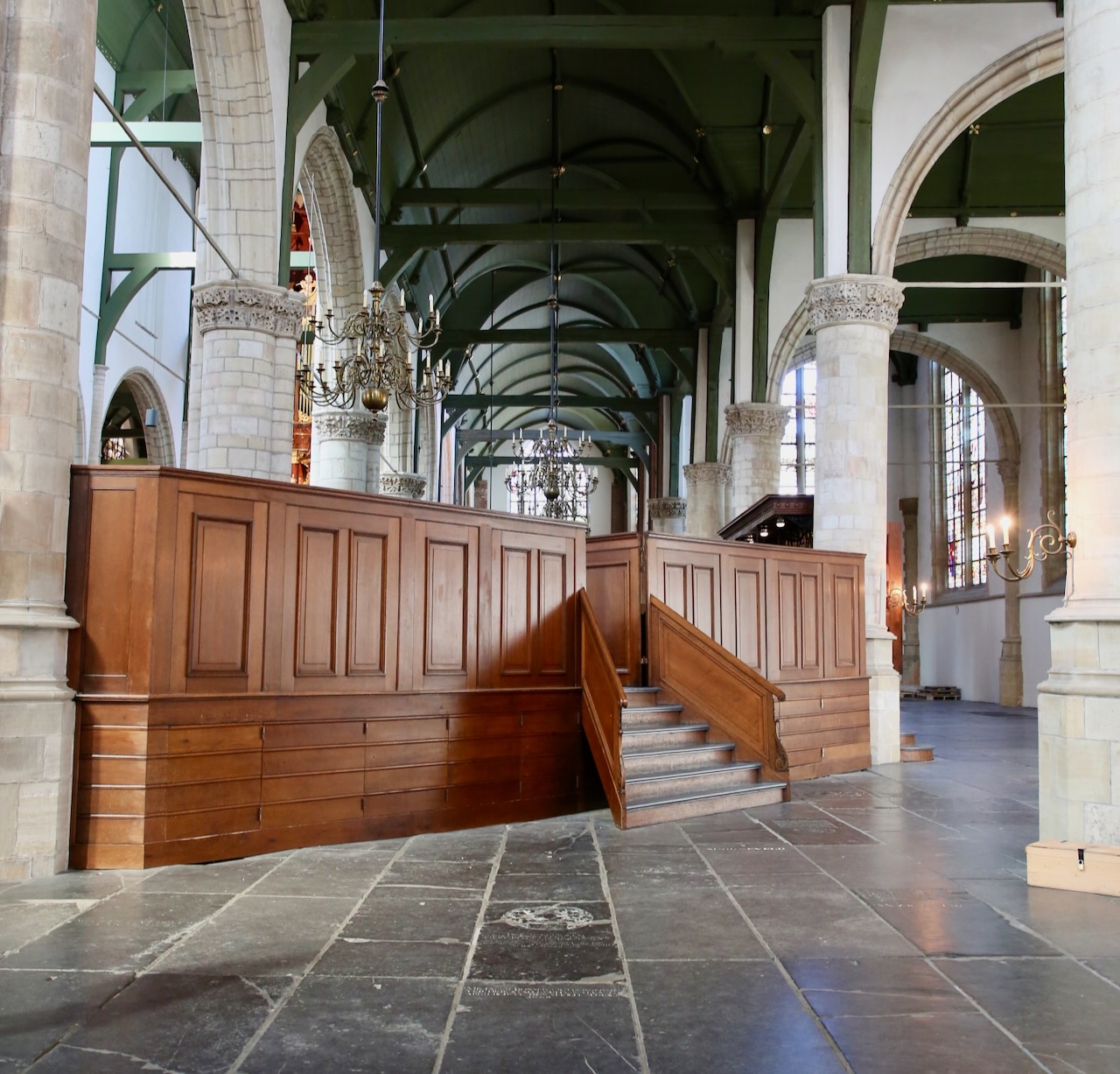
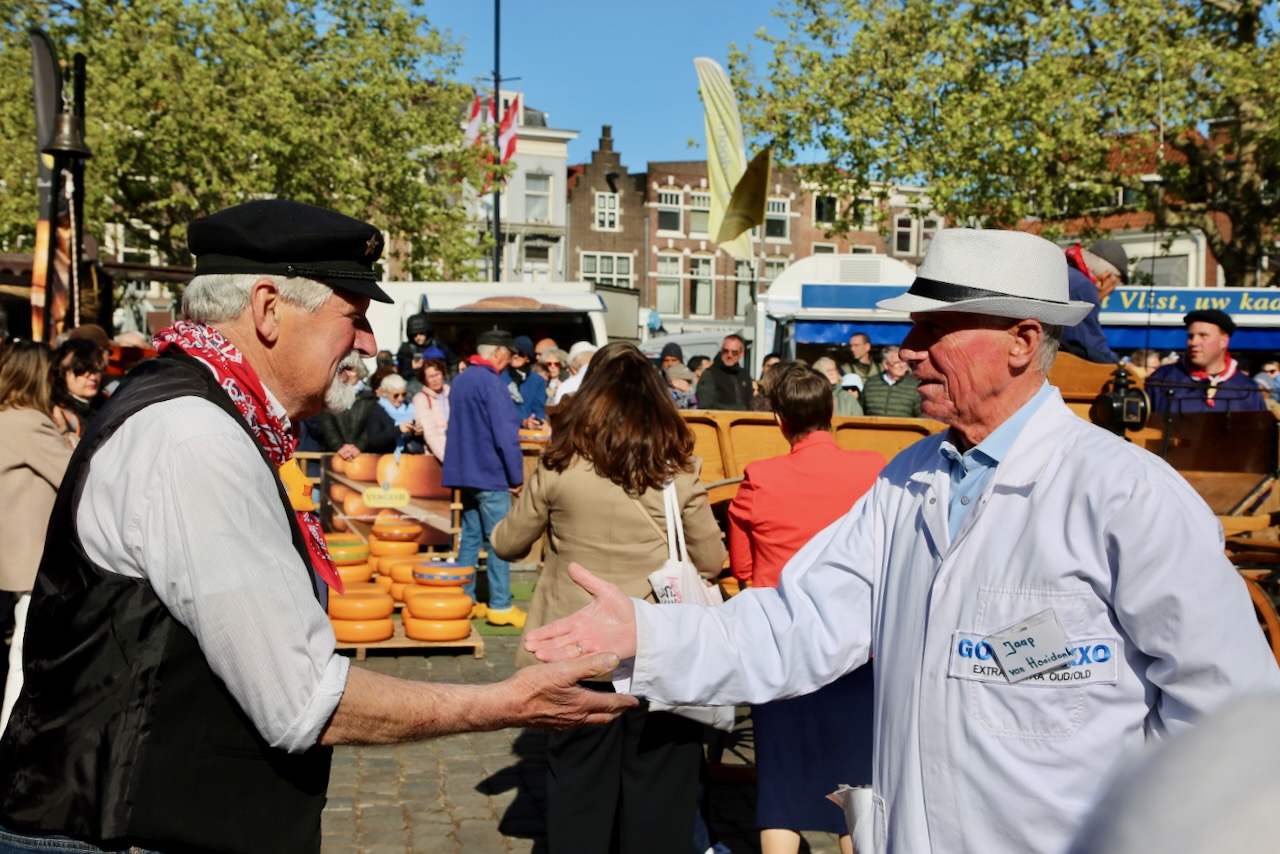
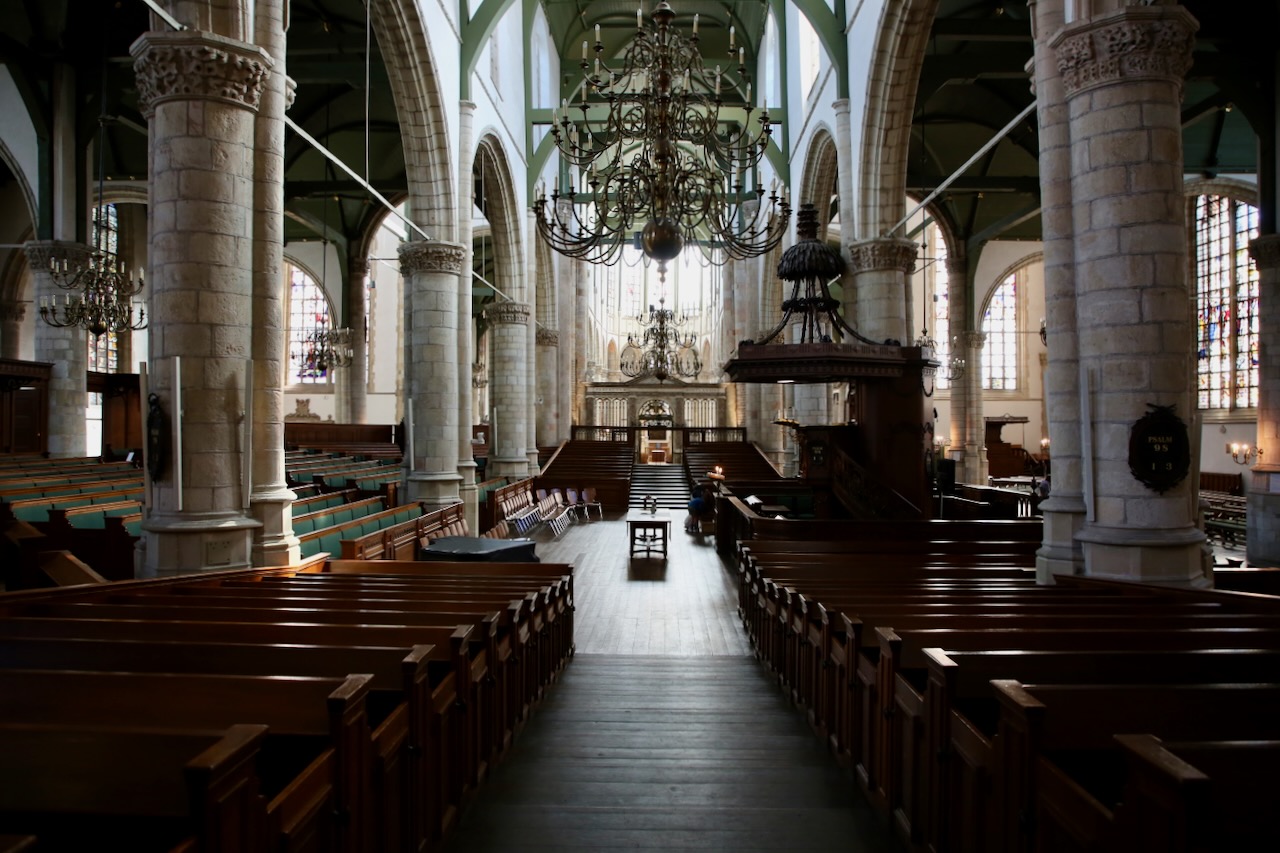
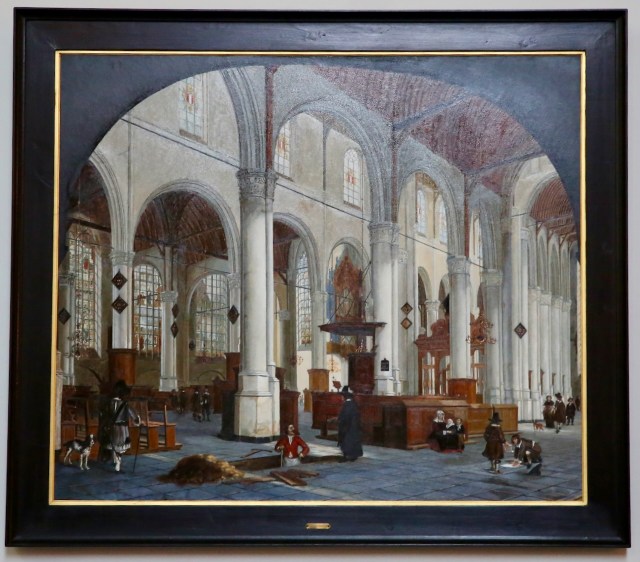
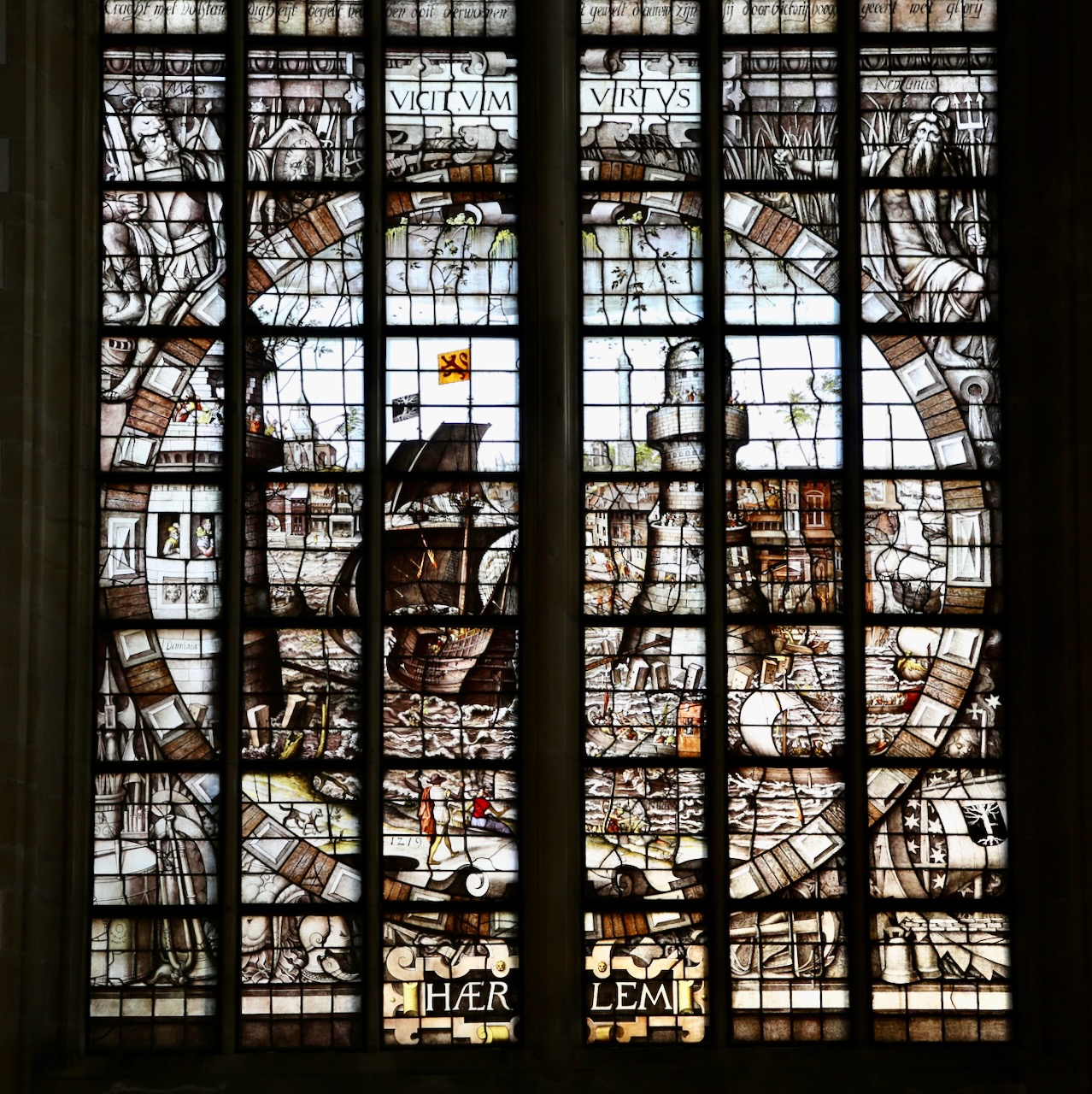
They reenact how the selling process would go with slapping the cheese to check firmness and ripeness, taking a core sample for smell, texture, and taste, (and giving some to the audience), then slapping hands during haggling until an agreement is reached and a firm handshake exchanged. I’m glad we stayed to see this. Now we can walk to Sint Janskerk, which was rebuilt after a catastrophic fire in 1552. The stained glass windows (all 72 now world-famous) show scenes from the New Testament in plain stories instead of the medieval interpretations that were harder to understand. This church is on the list of the top 100 Dutch monuments.
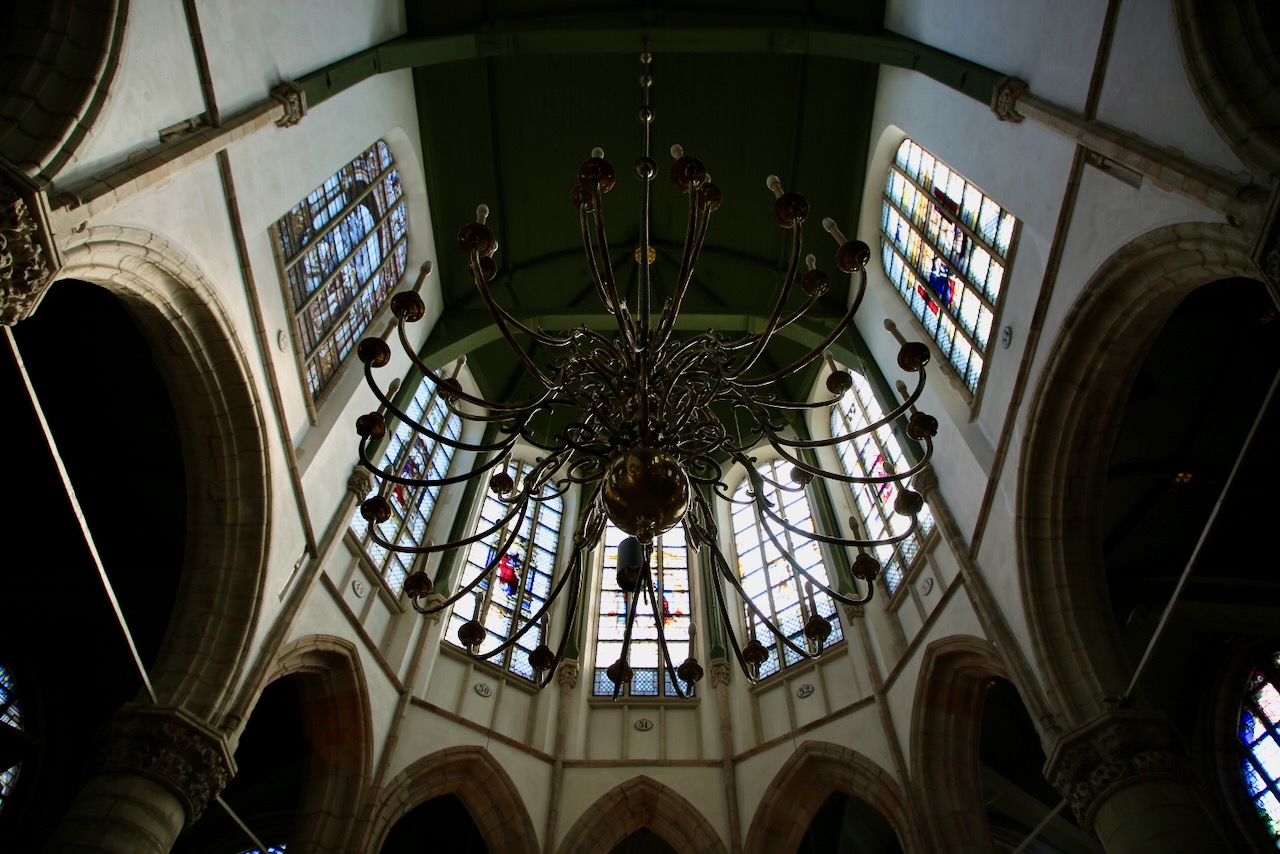
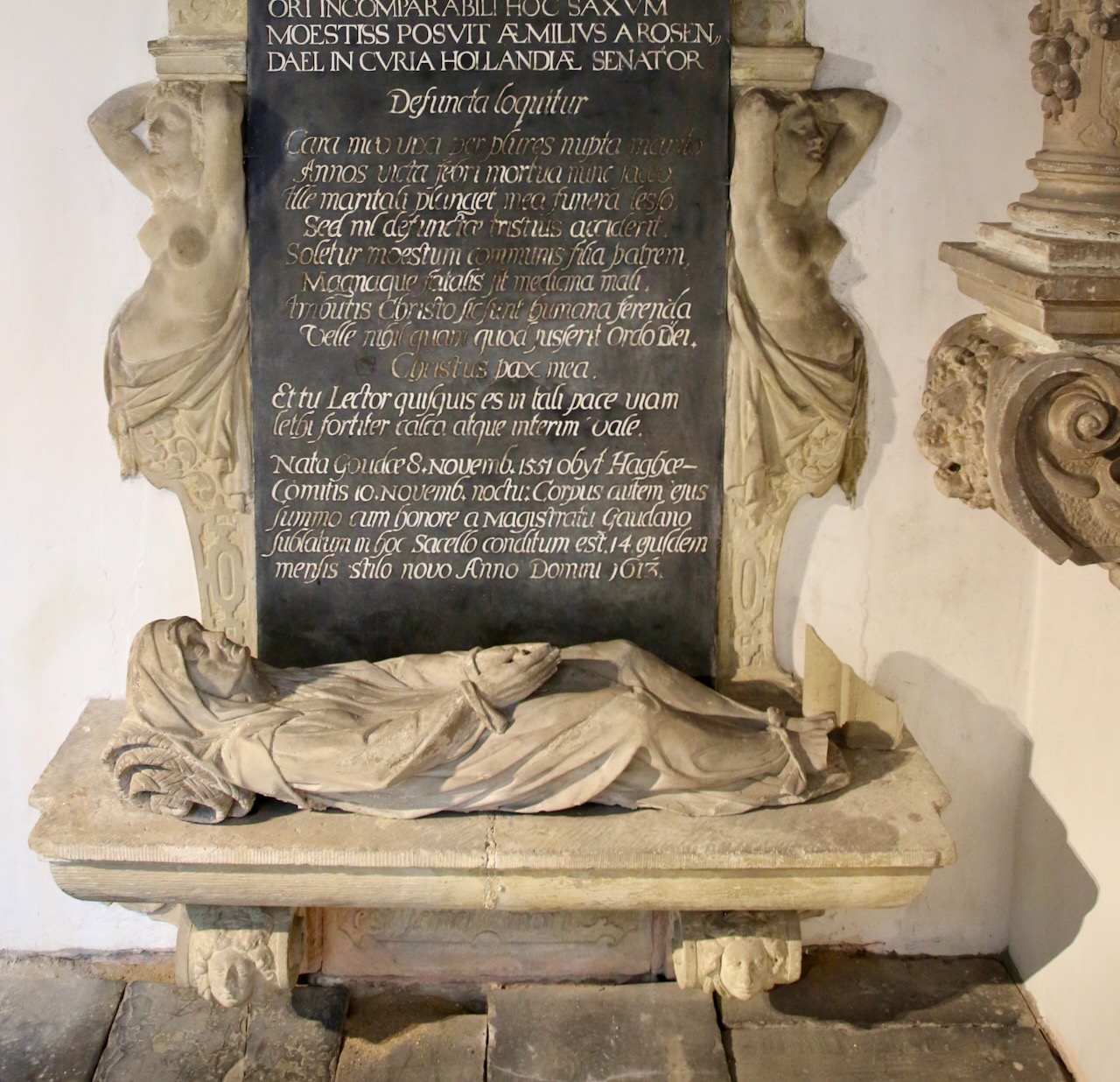
We paid $25 and were given a palm-sized guided-tour device that would tell us some historical and political significance of the windows. Much of the stained glass was donated by bishops, noblemen, and politicians for charity, prestige, or propaganda. Cities (Haarlem, Delft, Rotterdam, etc) donated windows for economic collaboration or city pride. In 2014, the choir pillars were sinking and needed a new foundation. During the excavation, thousands of loose bones were found of those buried over the centuries, the last being in 1832. Several dozen complete skeletons were well-preserved from prominent families, if their graves weren’t cleared, such as the seven members of the Van Rietveld family.
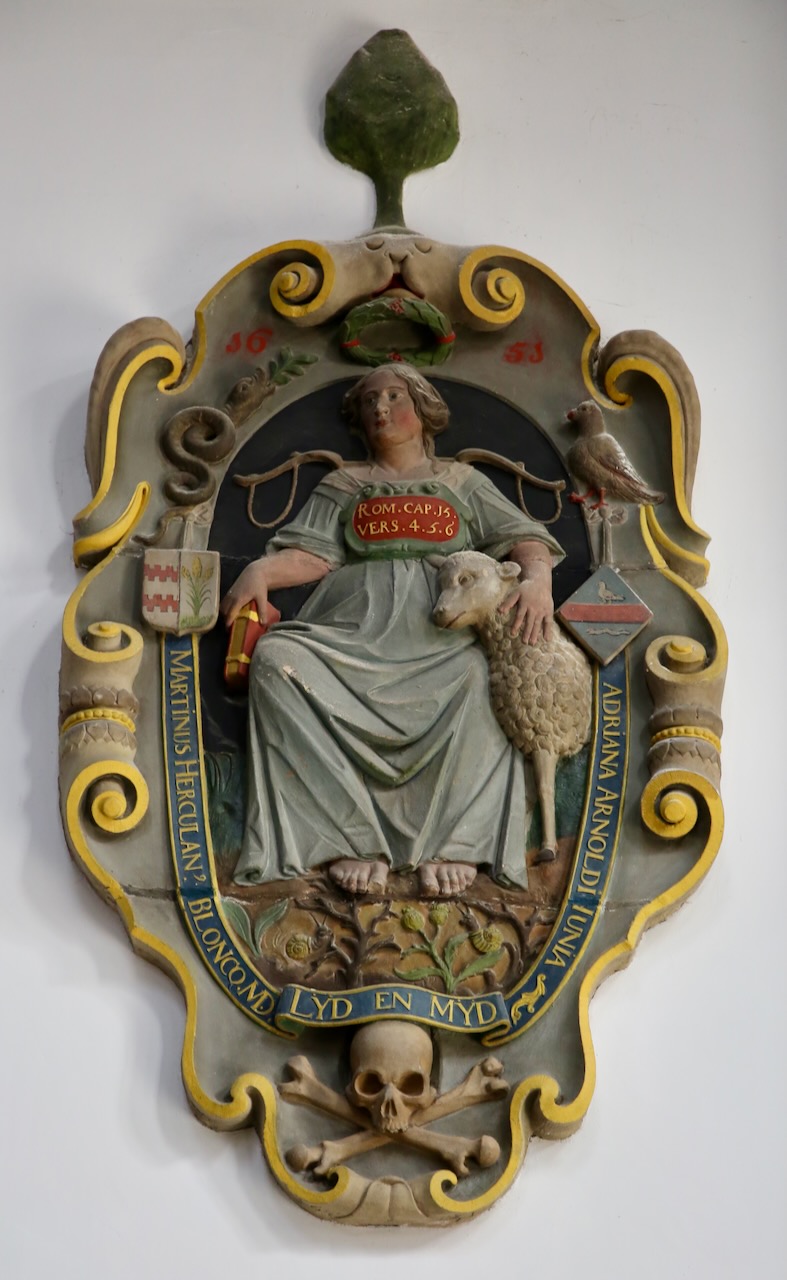
There’s so much to admire, so I appreciate that the audio tour is self-paced, as I don’t mind exploring from my own curiosity and then being brought back to look at something with a new perspective. Windows 7 (King’s Window) and 23 (Offering of Elijah) are the tallest, at about 65 ft, and were created in 1557 (gifted by King Philip II of Spain) and in 1562 (donated by Margaret of Parma, the Governor of the Netherlands). Window 15 depicts Jesus getting baptized, created in 1555, and was the first to be placed in the church after the devastating fire.
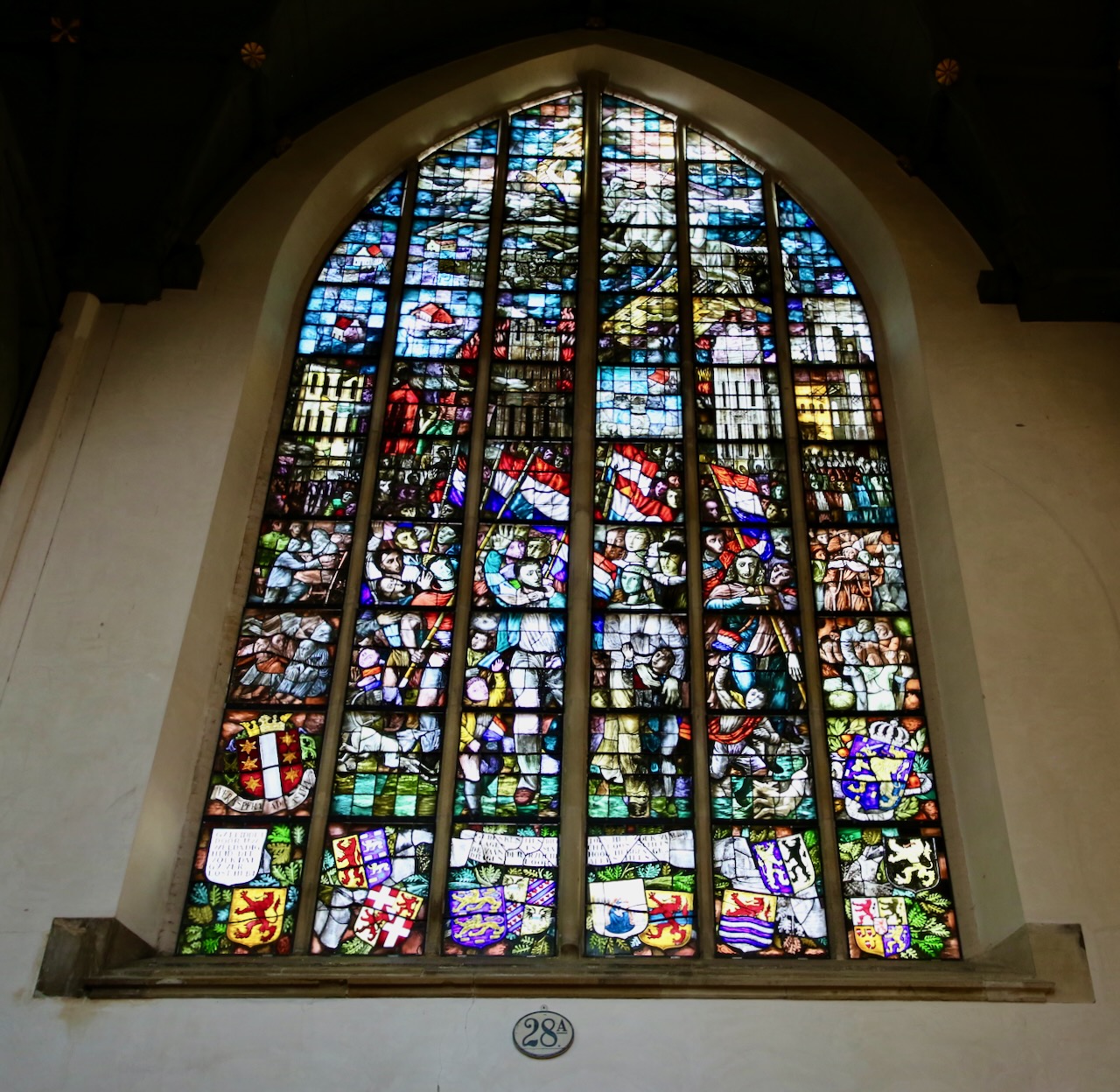
Anticipating the German invasion, all 72 windows were dismantled in 1939 and stored vertically to keep the glass from bowing in 201 boxes scattered to surrounding farmhouses. They were reinstalled in their original frames in 1947. A chapel was constructed in 1934 to properly display the Canons Regular of St. Augustine as seven windows instead of being combined into two large scenes, as they had been after being rescued from a monastery that was to be demolished. At some point, I find myself going up a staircase, since the door was open, into a small room with an even smaller view of rooftops. Once the tour concludes, I walk another circuit around pews and podiums to catch more details and angles.
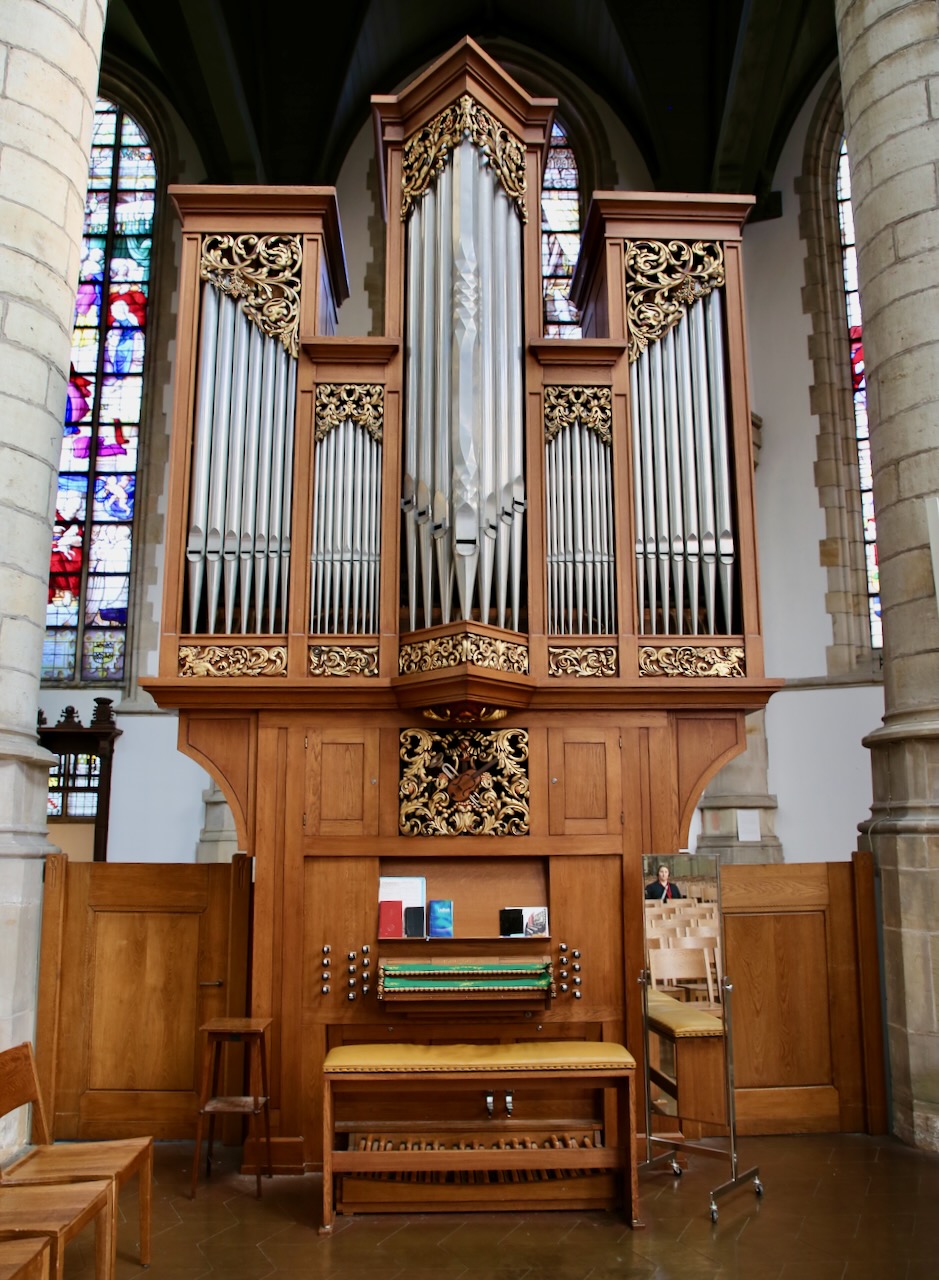
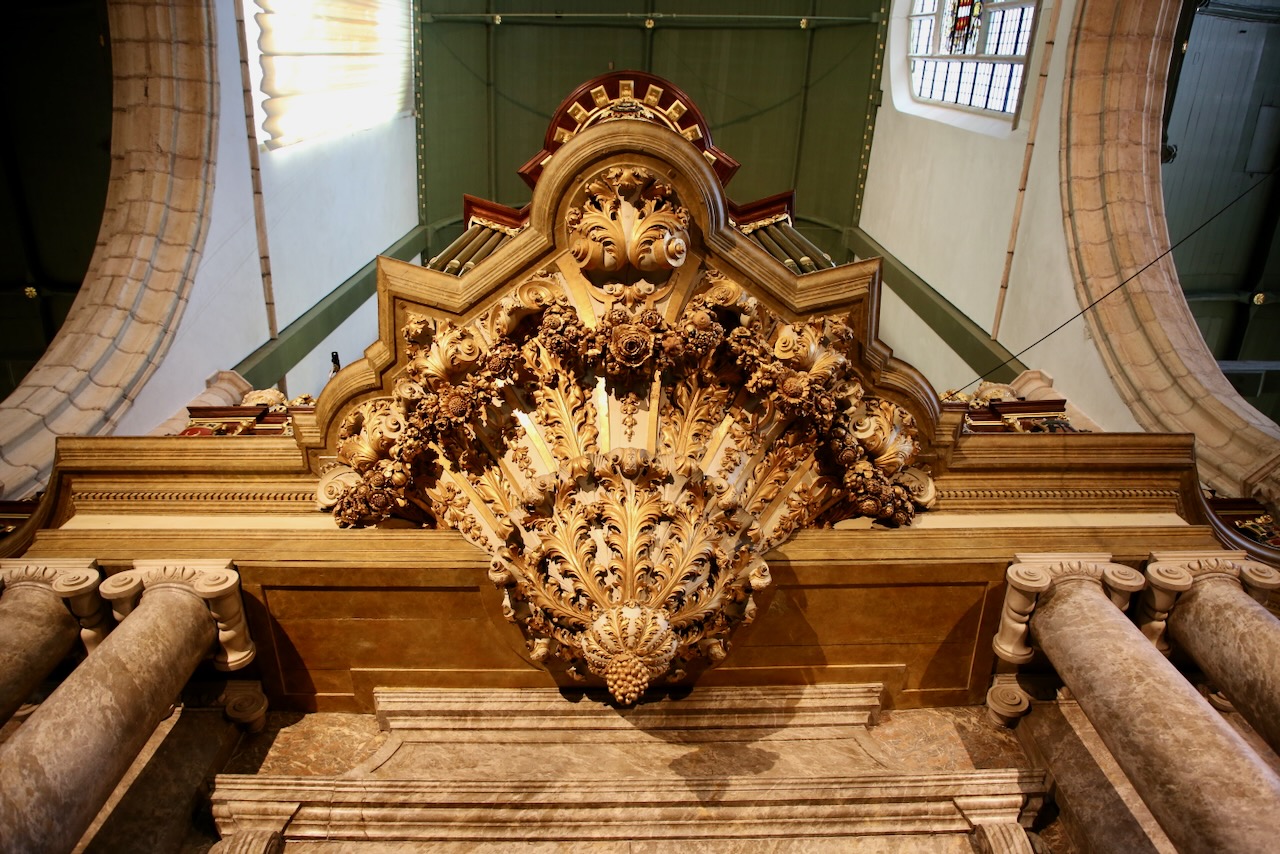
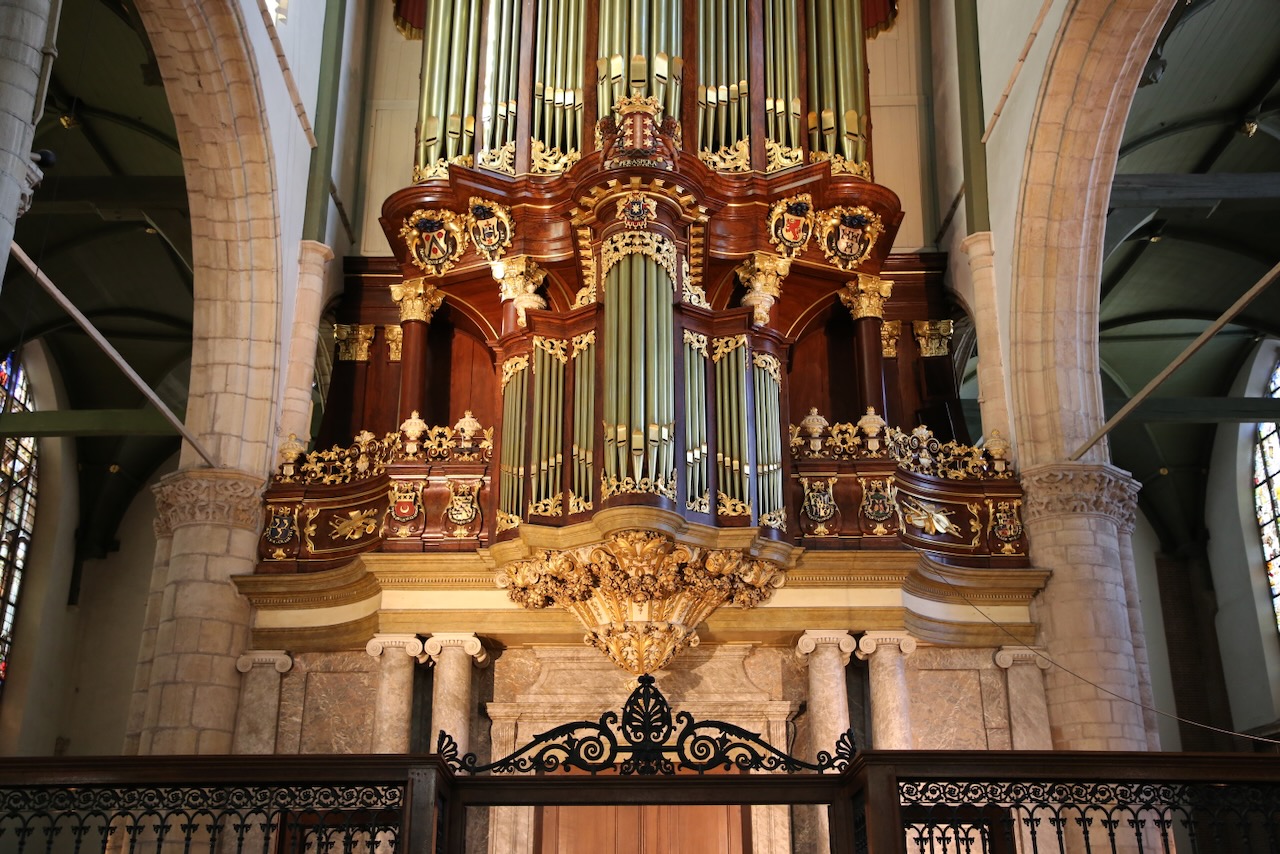
Though live music happens almost daily from April through the fall, this concert feels more spontaneous. A few of us sit and listen to the singer, accompanied by a piano. This is a great way to spend the morning, which is the intent of any church for its followers every week. The main organ, built by Moreau in 1736, cost almost $18,000 dollars (once they were invented). The design can be described as French Baroque with German influences. Over the centuries, Mitterreither, Lohman, and Witte added their special touches to this mighty instrument.
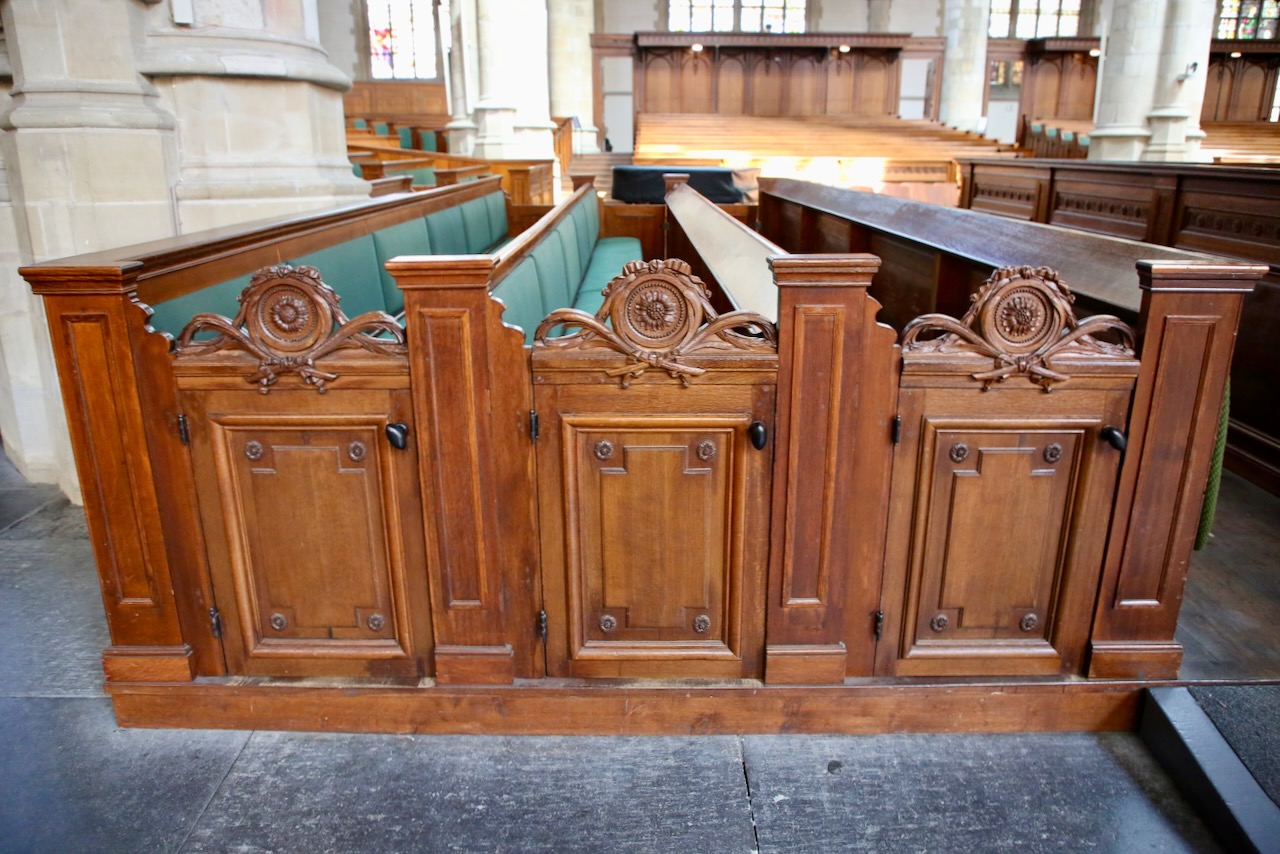
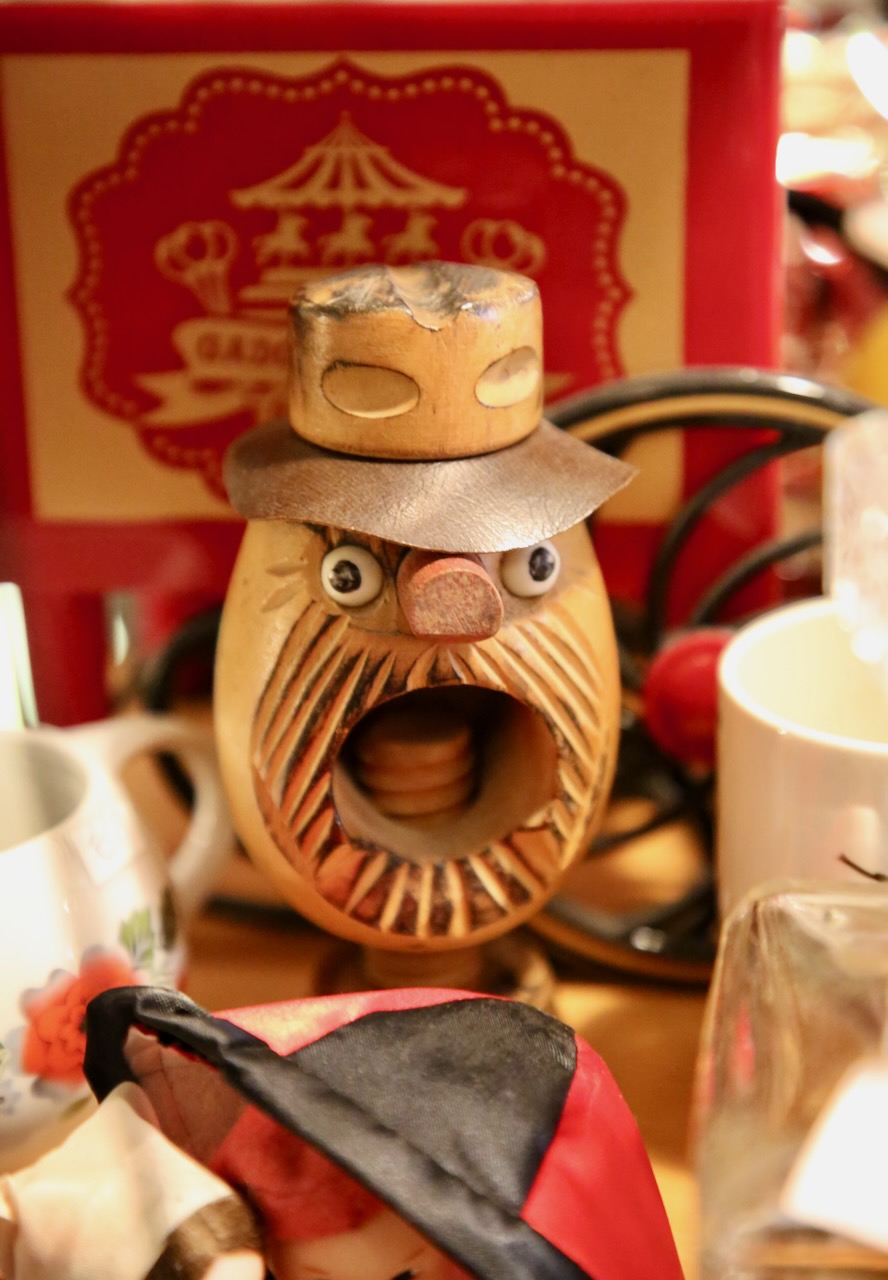
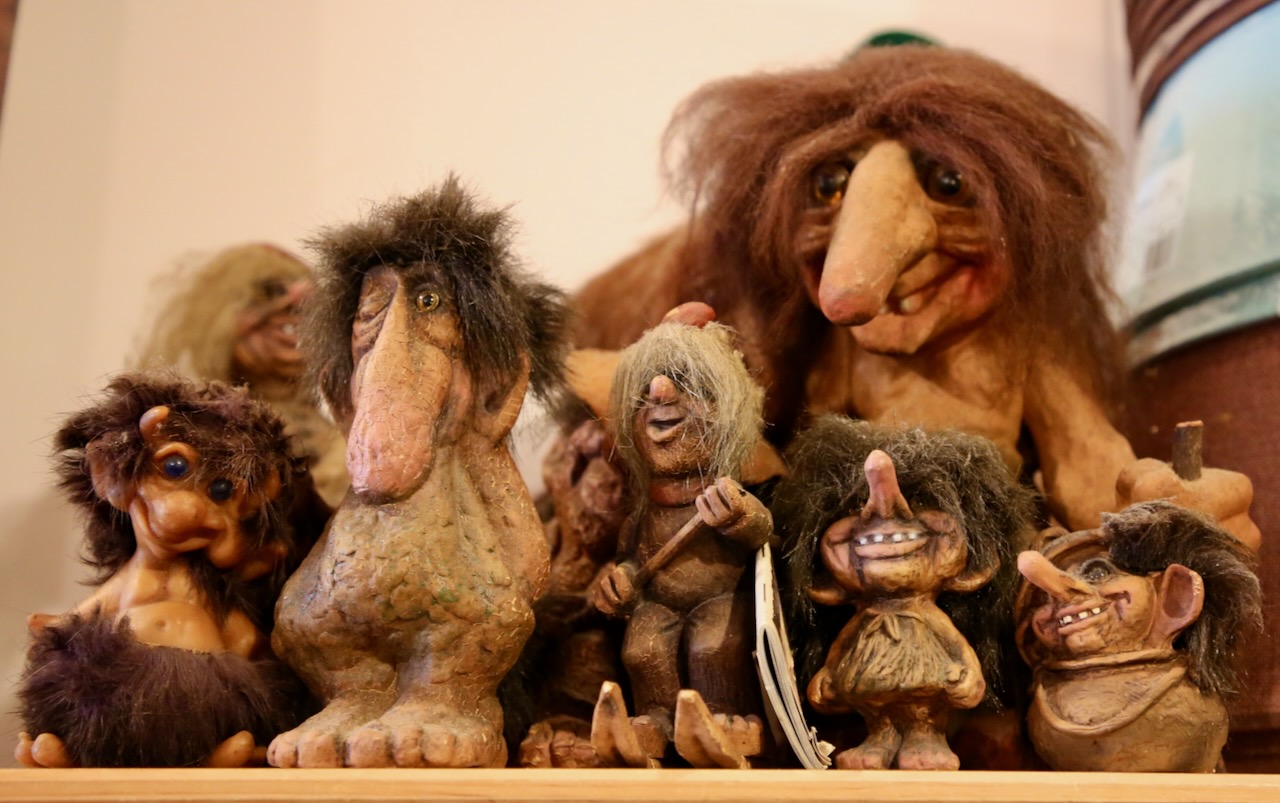
Time for an afternoon coffee at David’s Gelato Café, so I will have an affogato. We walk through a kitchen supply shop on our way to the Weigh House for their museum tour (which has been delayed). We struggled to find the Kamphuisen Siroopwafel Factory because of the street organ (pansfluiter) blocking the entrance. Inside, it is unclear when the next tour will be, so we agree to try again later with this attraction, too. One shop has orange espresso machines for 500€, another is full of yarn and wood crafts, and then Woppies Treasures, where, among the figurines and dishes, Caleb will find a Watership Down album (a traumatic bunny tale from 1978).
On our way to the next stop on our itinerary, we pass the Bananenpakhuis. Around 1600, the building had a floating cellar made. In 1928, the ground floor was converted into a banana warehouse, and the cellar was filled with rubble, which was restored in 2010. The Roode Leeuw (Red Lion) Windmill is one of the country’s oldest windmills that is still used to grind grain and sell the flour to bakeries. We were hoping to buy some as a website said they were open on Thursdays and Saturdays. A post mill was built here in 1619 and replaced with a tower mill in 1727, which was renovated in 1771. A century later, it burned down and was rebuilt.
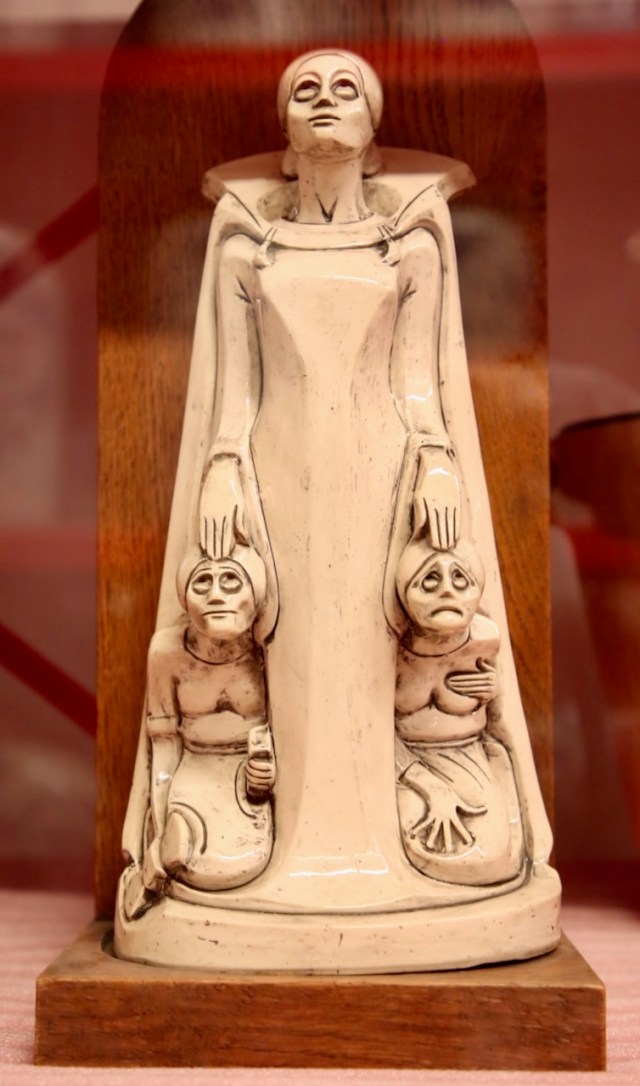
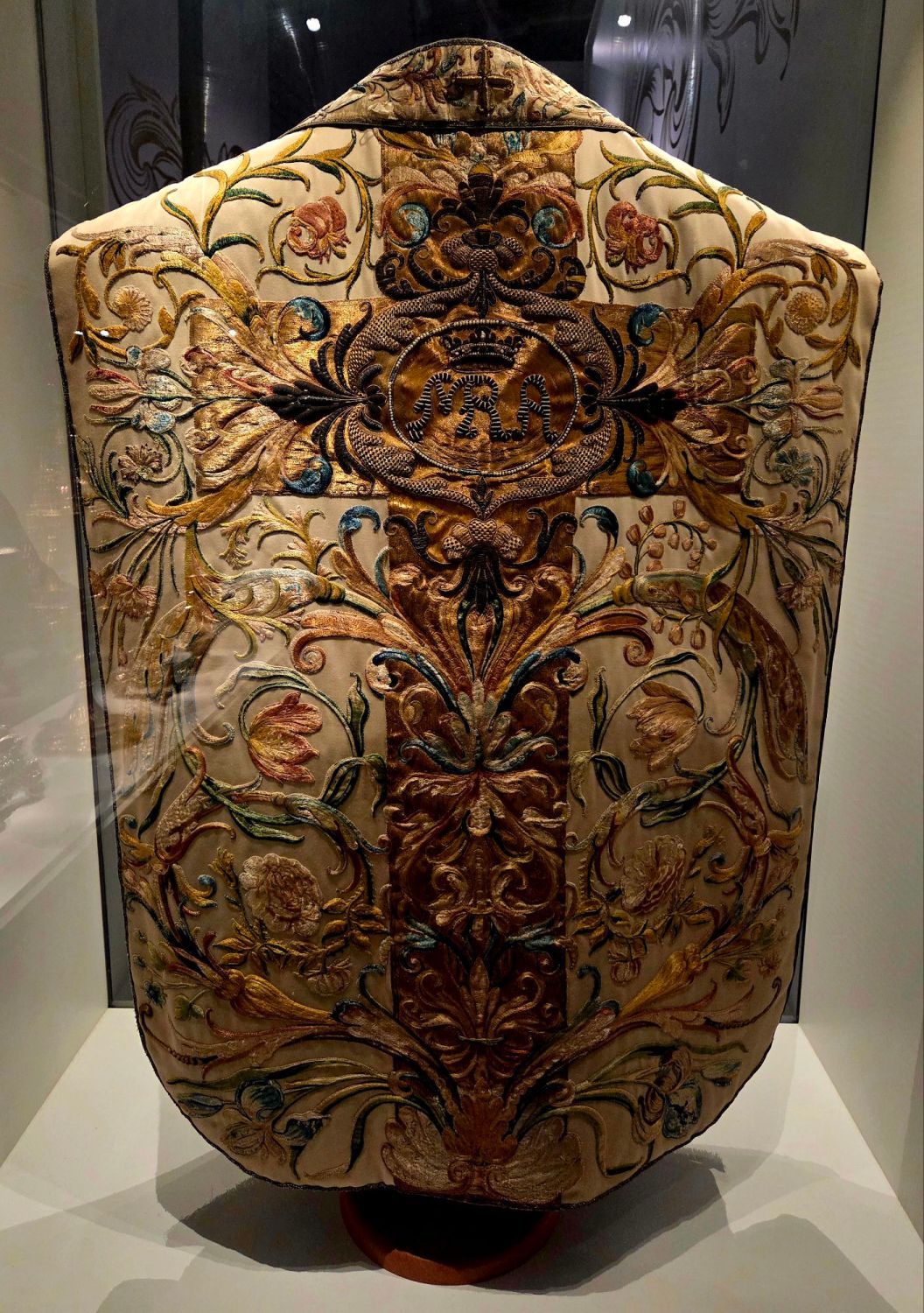
We paid $37 to get into Museum Gouda, and my pre-trip exchange rate was off by a few cents, so it’s a good thing I was prepared for that and not the $25 printed on the tickets. The first exhibit concerns the remnants of St John’s Church, where we spent the majority of our morning. Before the fire, each guild and brotherhood had its own altar, so there were over 50 that were turned to ashes. There is a voluminous cloak (called a cope) worn by the priest during worship. The aurifrisia (vertical decorative strips) are embroidered with gold thread and silk. There is a richly decorated garment (similar to a serape) that is worn by the priest during the Eucharist.
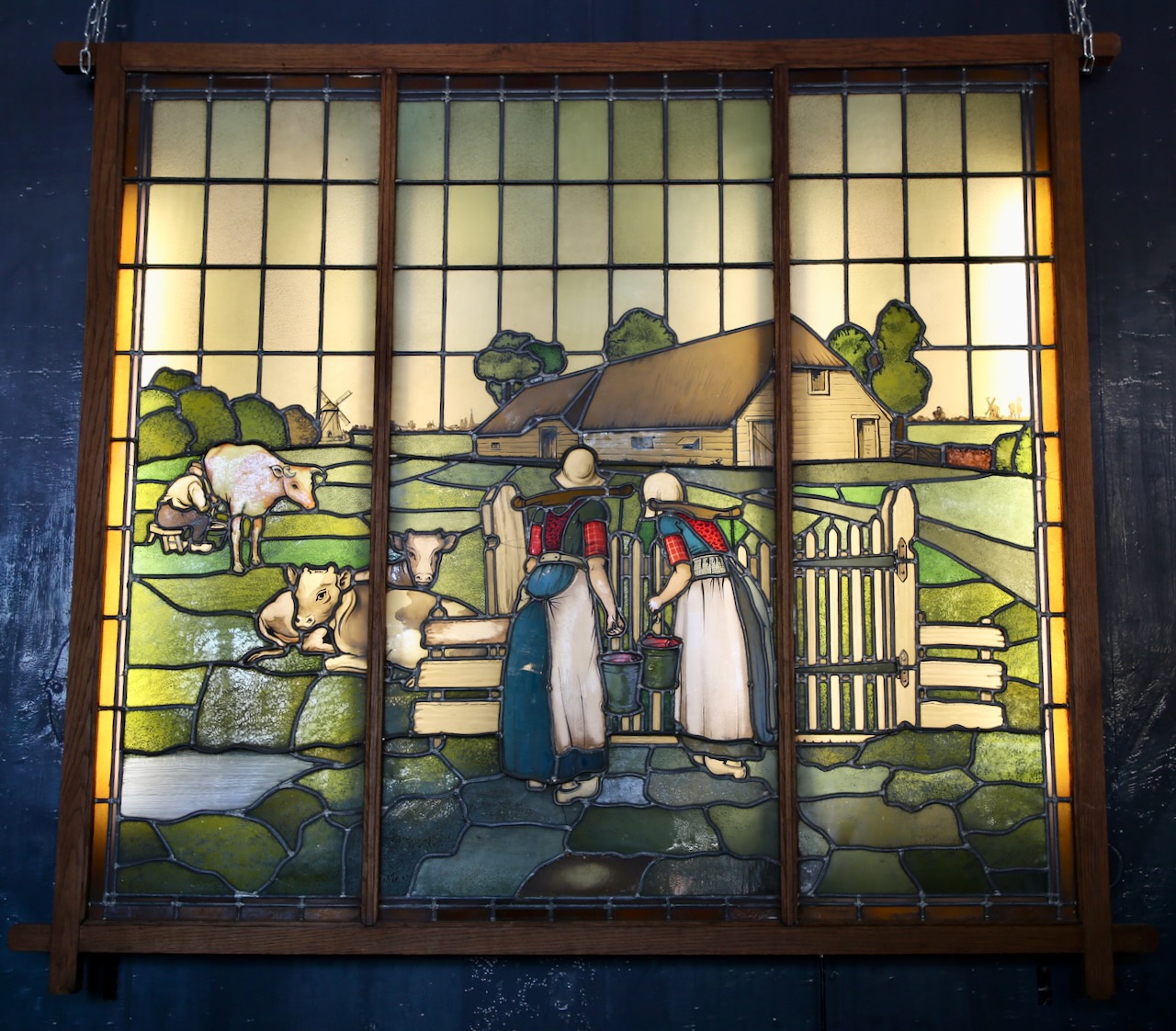
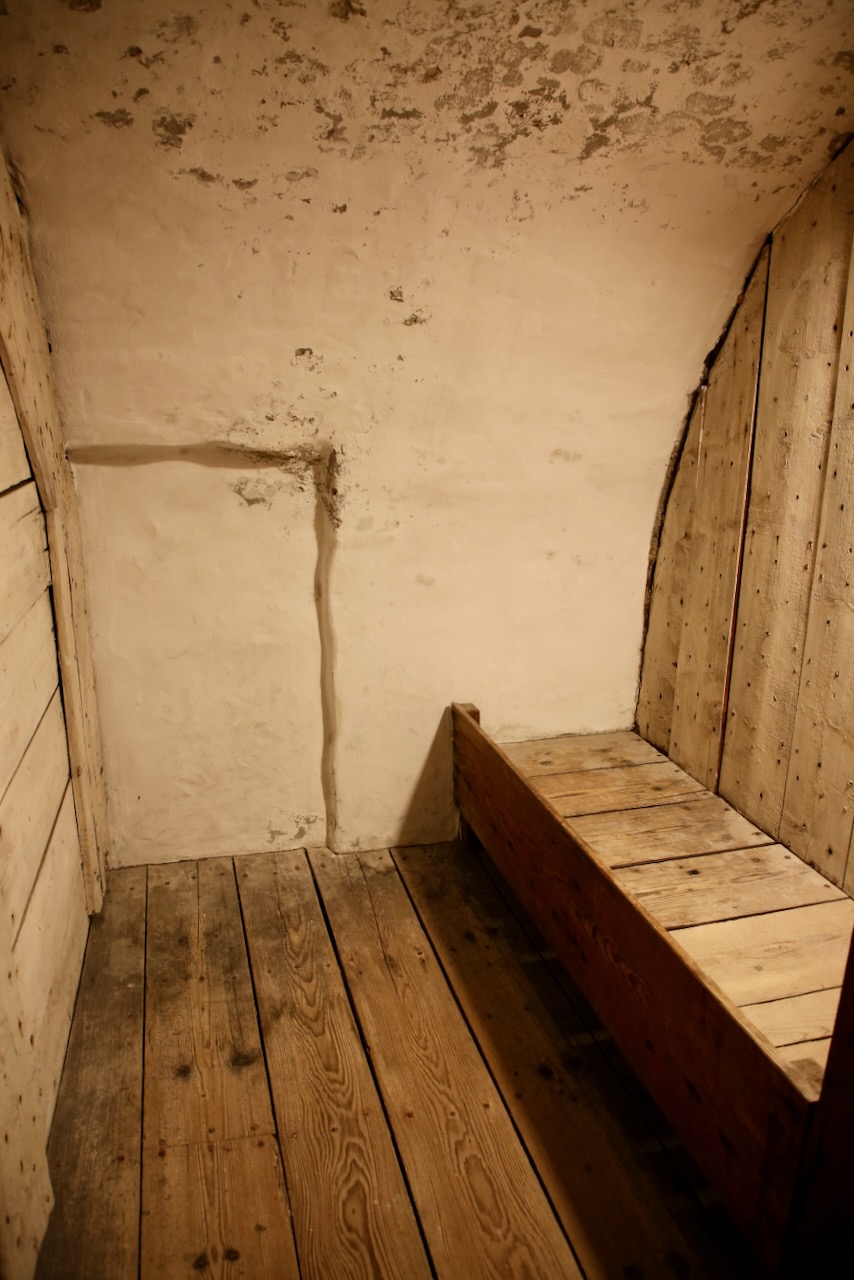
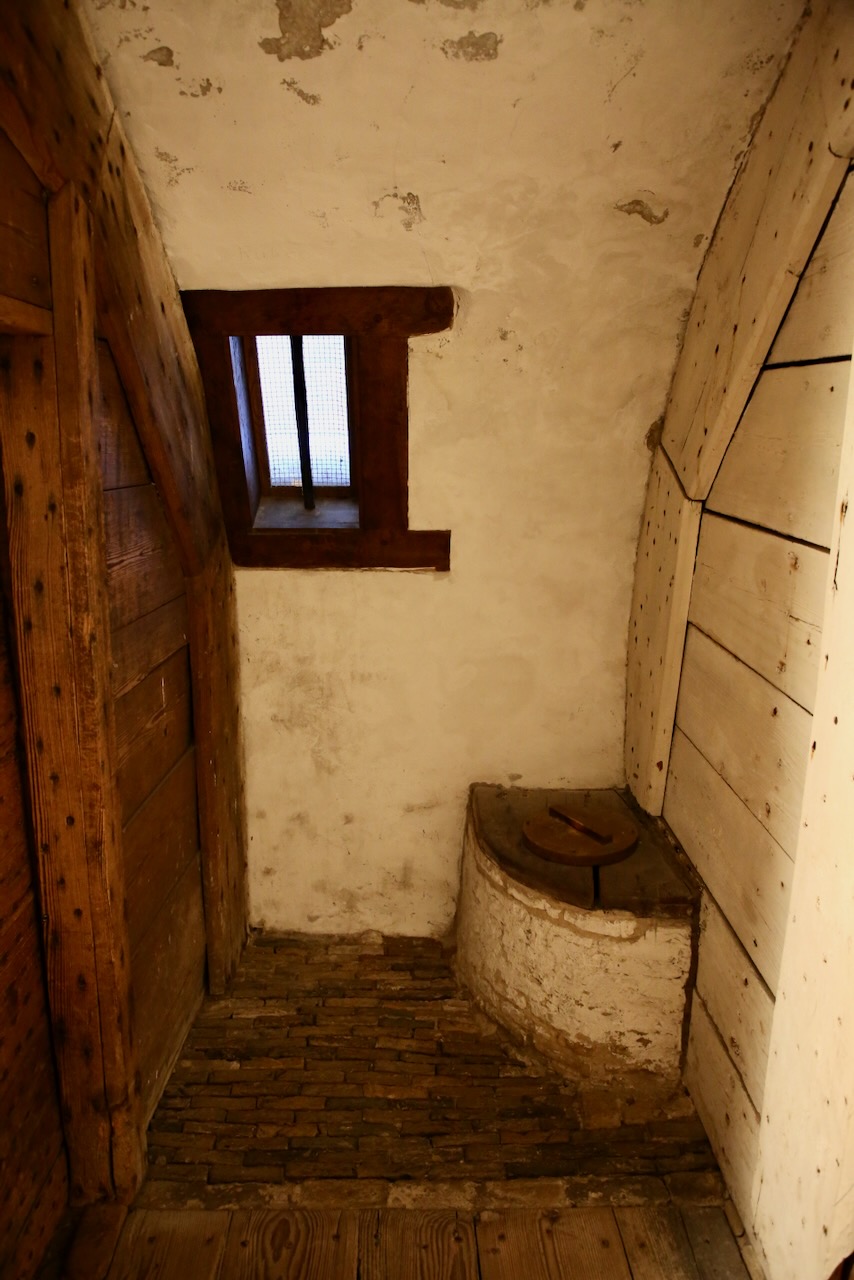
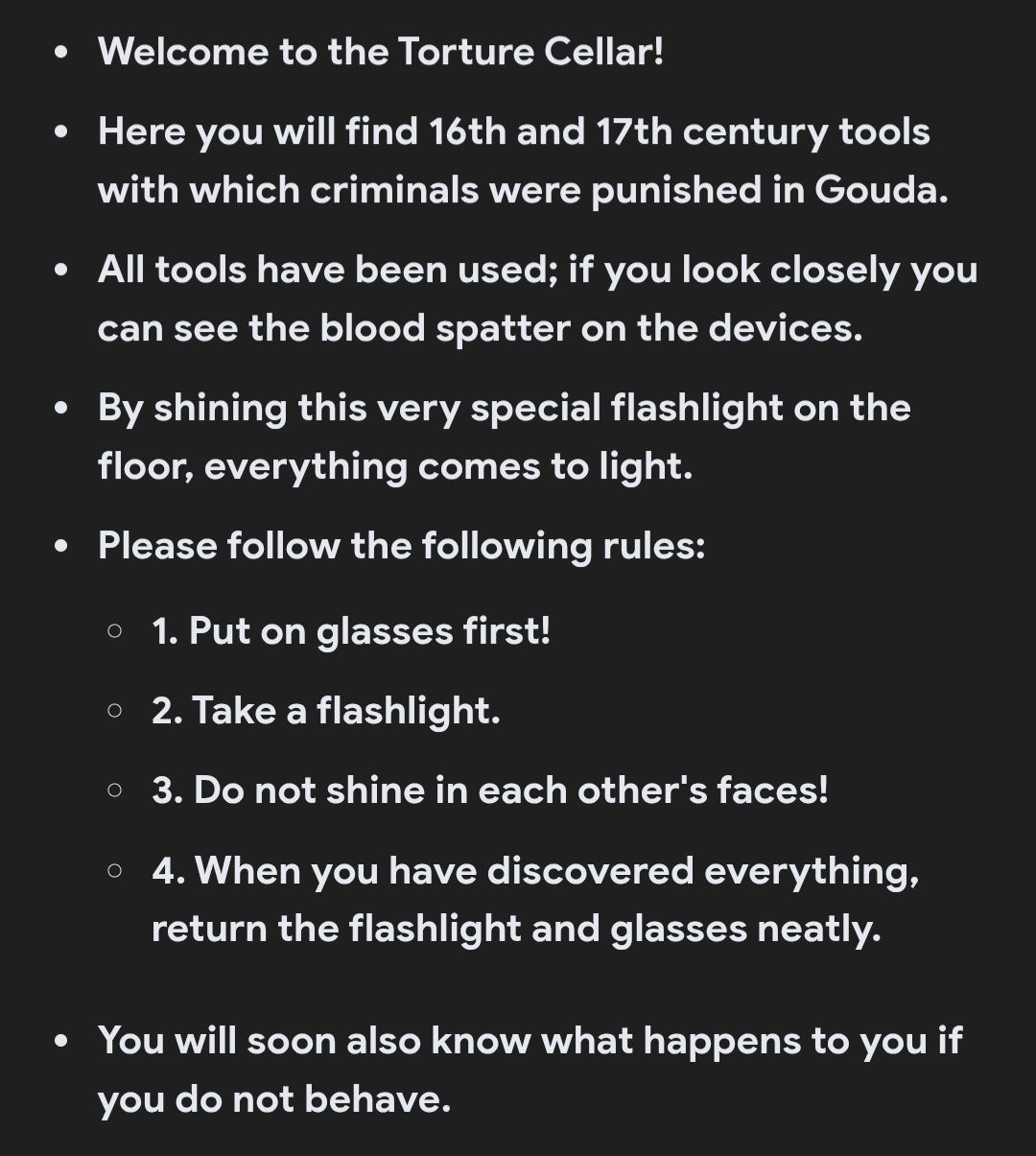
We visit the Mad Cell, where people were tortured via the whipping post, breaking wheel, and Spanish horse. Epileptics and patients with severe mental health issues were enclosed in a wooden bed to prevent injury to themselves and others. Psychiatric patients were locked in a cupboard with a small bed, toilet, and window, and food was passed through a hatch in the door. If they weren’t mad when they went in, I’m sure they were fully insane after these treatments and living conditions. Gouda had a small and vibrant Jewish community, of which 388 out of around 500 were killed during the war. They now attend synagogue services in Rotterdam or The Hague.
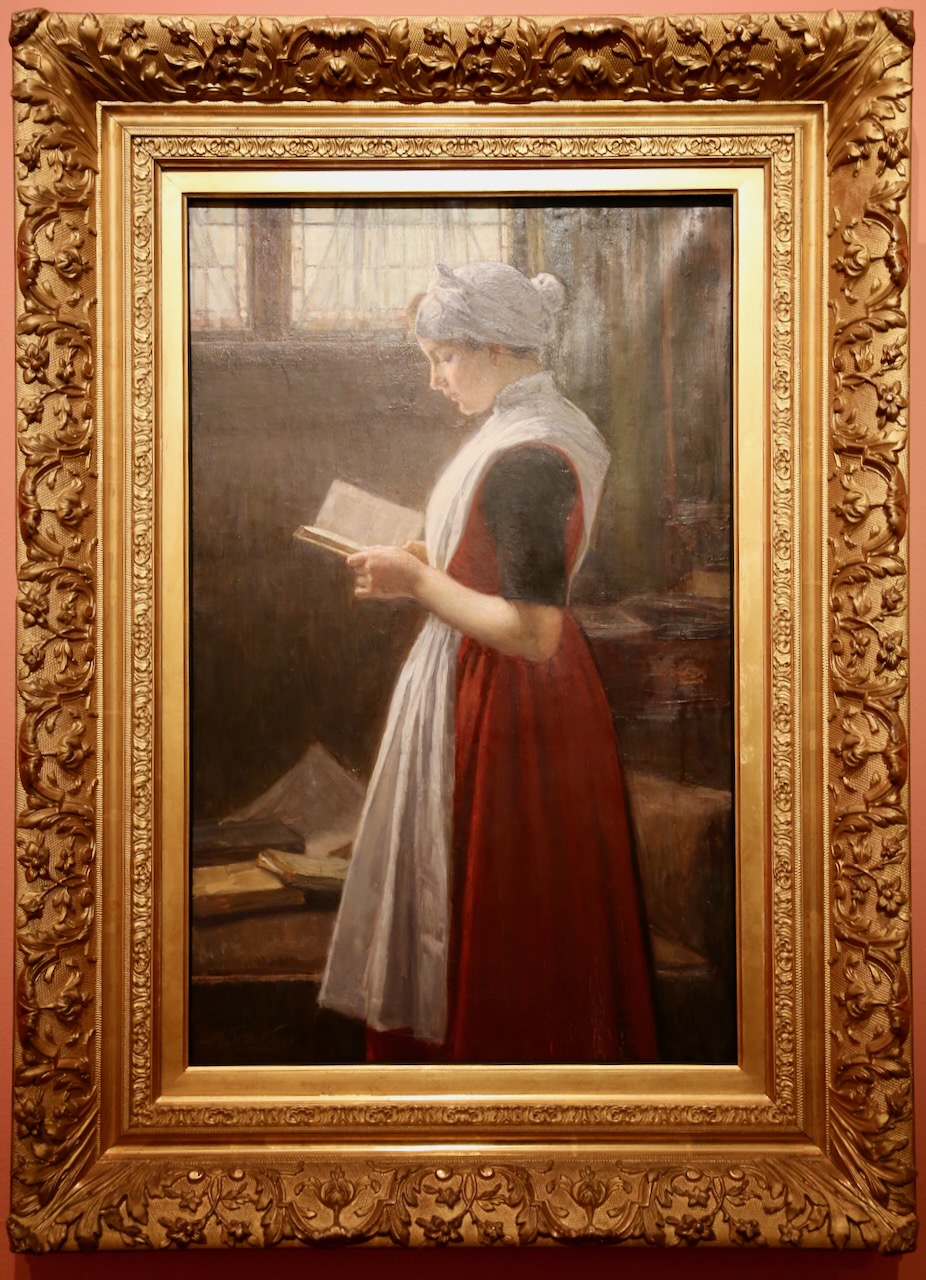
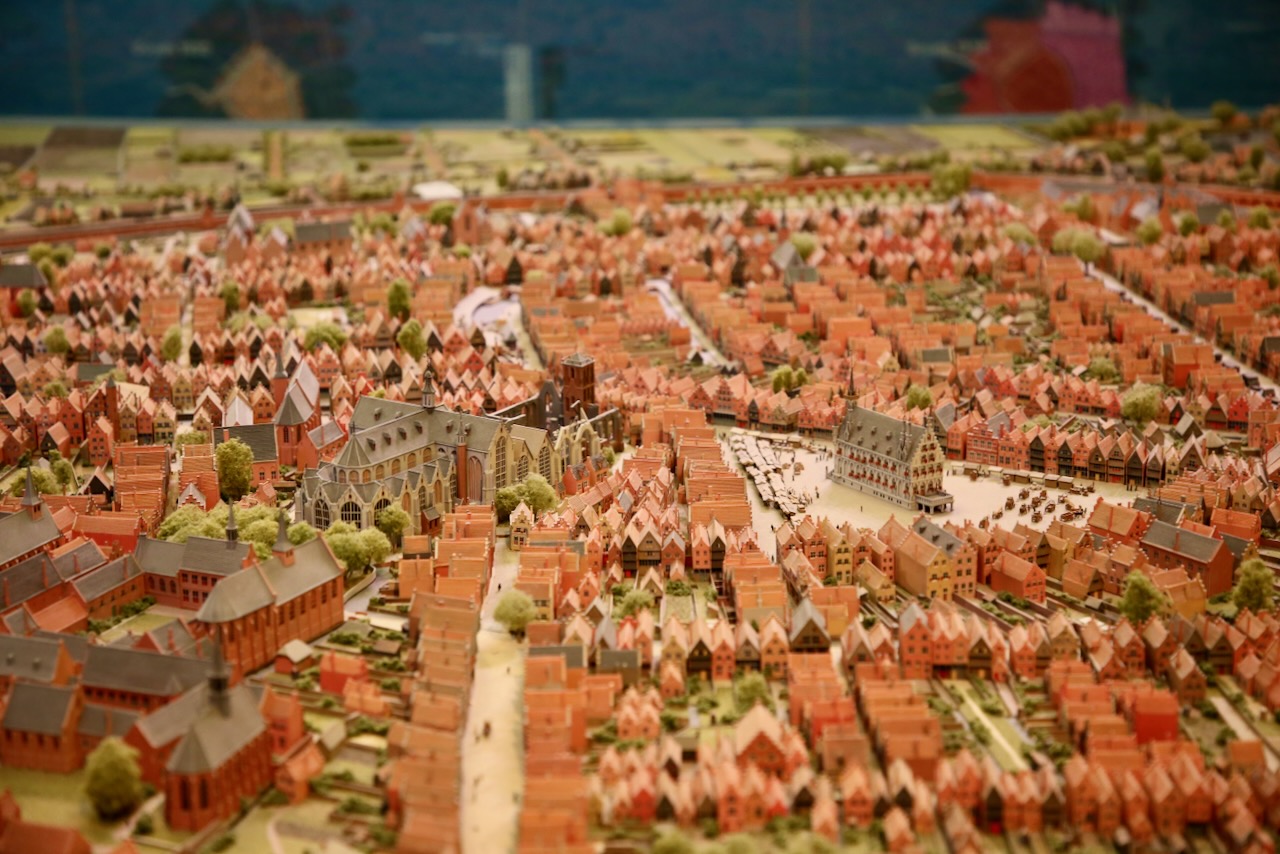
There’s a room dedicated to barbers and hairdressers, people who change our appearance and listen to our lives while they work. It’s a nice way to show appreciation for a job that doesn’t get mentioned, unless in film credits. There’s a room on faith in Gouda (civic guard, working orphan, or corrupted prophet). The best room is the one with the scale model of the city in 1562, the church being rebuilt. There are illustrated timelines on the walls showing the population changes due to immigration, plague epidemics, poverty, and the development of the clay pipe industry.
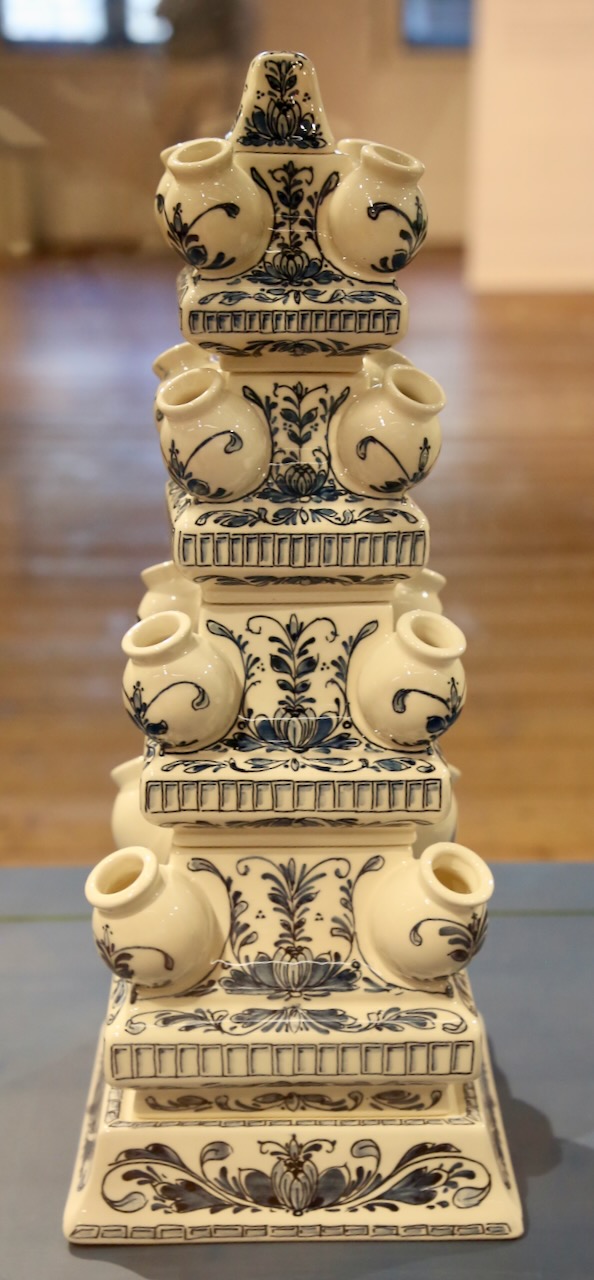
The Gouda Pipe Makers Guild was established in 1660. There is a pipe case made of ivory, silver, rubies, and mica. The pipe cleaners are topped with horses and cows, and the tobacco boxes with engraved images of dogs, windmills, and boats. There is a massive amount of pottery: ginger jars, painted vases, decorated tableware, tile tableaus, apothecary jars, Delft pitchers, and even chess pieces. A quarter of Gouda’s residents worked in pottery factories to export their goods around the world. The pottery was cast and fired in large quantities and then decorated by hand with bird motifs, floral designs, and inspired landscapes.
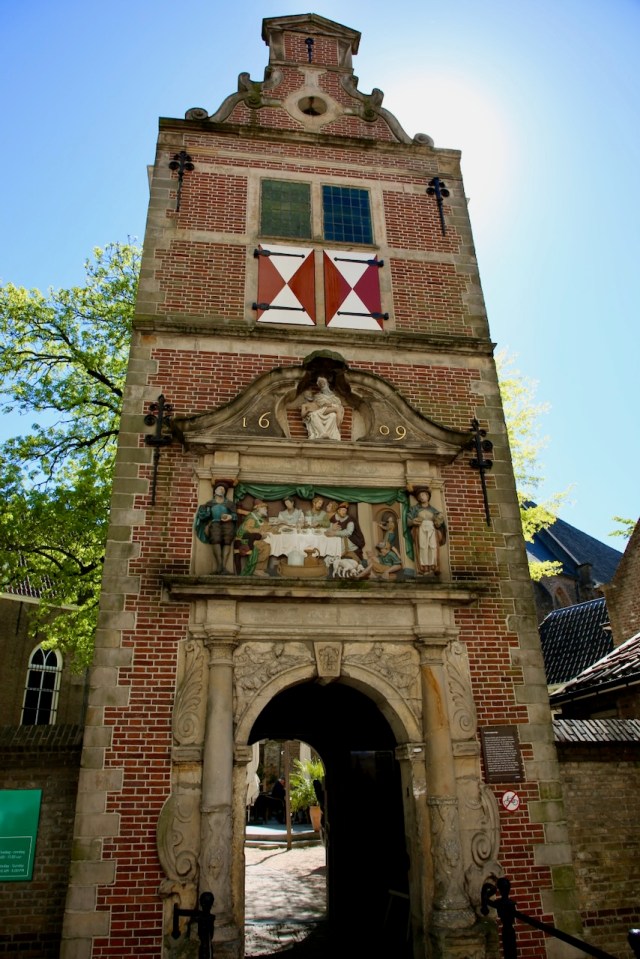
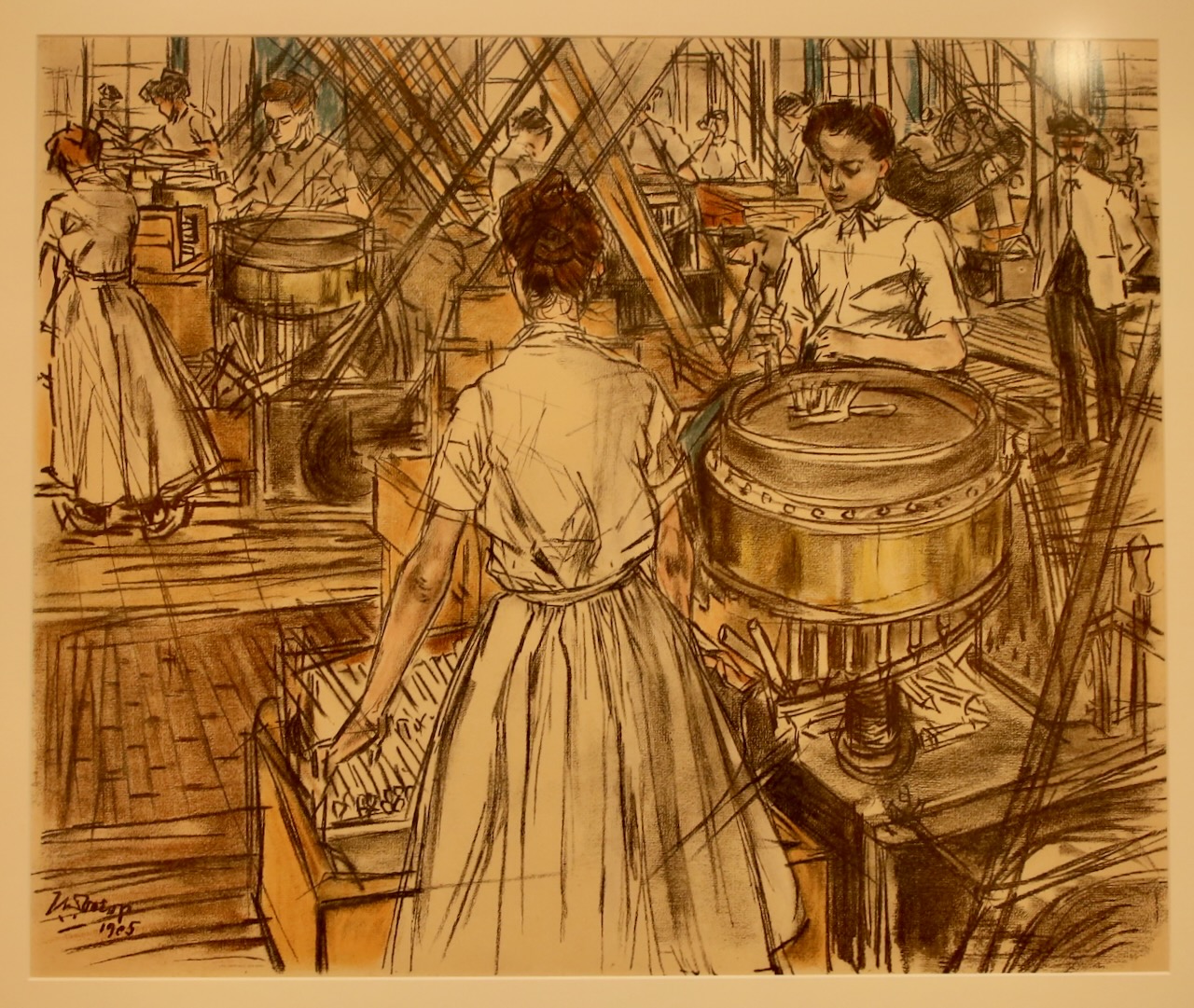
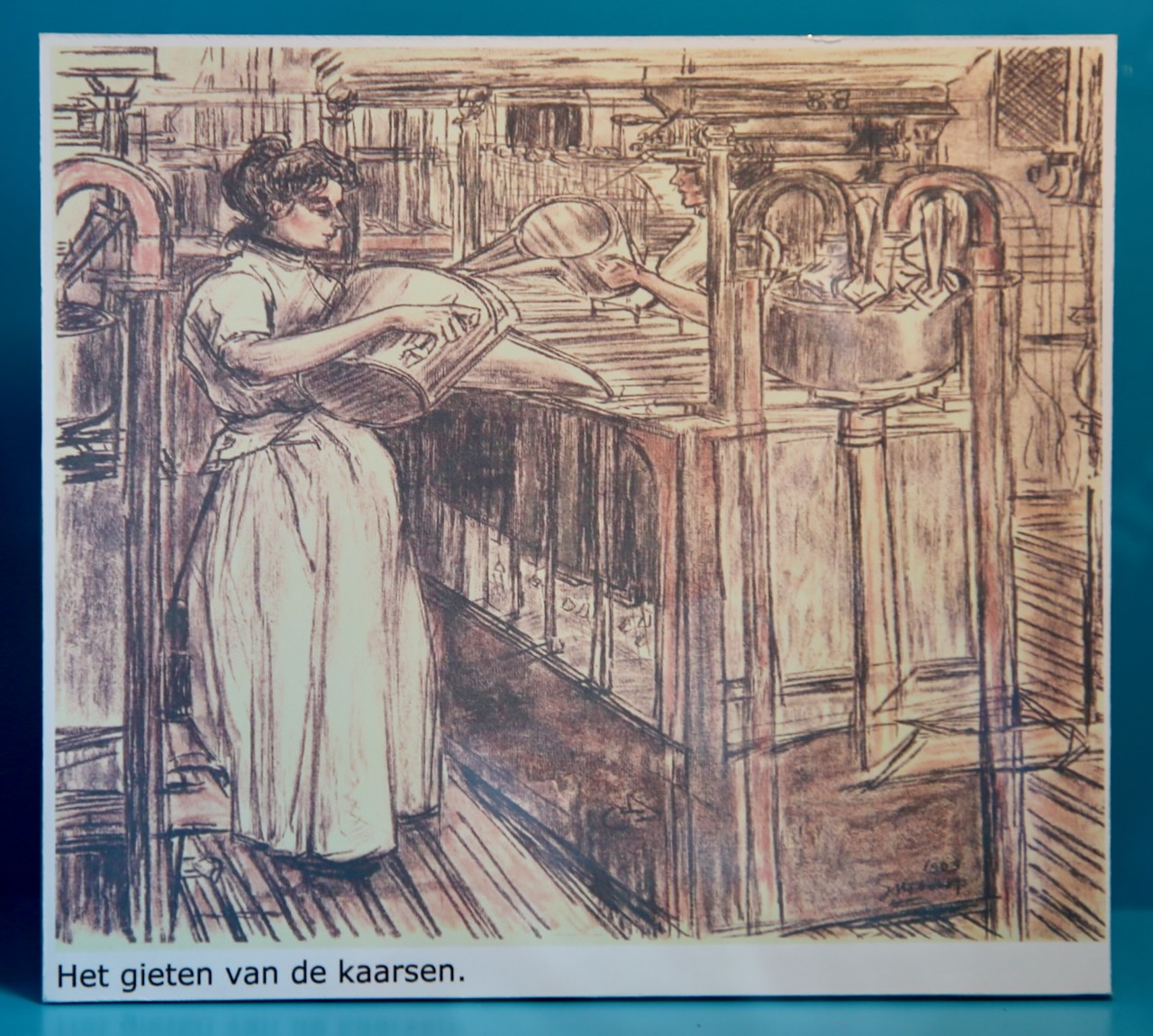
There are over 5,000 pieces that have been collected through purchases, donations, and factory estates when they closed. The feminine exhibit shows remnants of work from a midwife (1795), a needlework sampler (1768), a candle maker (1905), a children’s author (1850), and a painter (1989) who made a difference while under the control of men, a fascist regime, and being paid less. We wander into the museum’s courtyard, where there is a stone sculpture of the Gouda coat of arms (1739) that was part of the Rotterdam Gate before it was demolished, and the Lazarus Gate (1609), which formerly served as the entrance to a leper hospital.
There are ten signs, all of them about Erasmus (one of the most famous Dutchmen), and a majority of them by the church discussing a widow’s house, a medieval library, and his humanist works. We return to the Kamphuisen Siroopwafel Factory and are in luck this time. We are sold a tour ticket and wait with a few others for the door to open. We are given an audio wand and a hair net before the introductory video is shown (in Dutch only). Some of the ingredients that go into these delicious treats annually are: suiker (50,000 kg of caster sugar from caramelised sugar beets), ei (45,000 eggs), roomboter (more than 36,000 kg of butter containing vitamins A, D, and E), and zout (as 6 grams of salt per day is recommended to help regulate body fluid level and blood pressure).
Visitors can get on a hamster wheel connected to a giant mixer and help stir the dough. I thought Caleb just wanted a photo opportunity, but the kids behind us climbed up next when they saw how excited I was. I was first introduced to stroopwafels by an Egyptian friend in Bahrain and have maintained a relationship with both since. There’s a tasting station of different syrups, but I thought there were multiple pumps to accommodate the group of 15 to 20. The factory’s recipe from 1810 is the oldest in the Netherlands, and they use it to produce 10,000 siroopwafels per day. We watch as the dough gets stamped into a round waffle.
The only secret, other waffles are made and cut in half to insert the syrup. These waffles must be thinner because the syrup is pressed between them, with the waffle grid mark visible on both sides. We climb the stairs, and I don’t remember what was up there except for a slide entrance and two old woman who were waiting to go back down, so they called toward the rest of our group to delay their ascent. We can watch the waffles on the belt from up here and see the discards, which is probably what we were sampling in the front. No complaints here. Caleb goes down the slide first, and I don’t hear anything. I come flying out, laughing after landing on my butt.
If I worked here, I would want to slide on my breaks. I think everywhere should have an element of play. Each waffle is properly baked, measured, weighed, and scanned (in a special bakery lab kind of way) to ensure that only perfection is getting packaged and shipped around the world. The factory even installed a special trade mechanism: return an audioguide, receive a waffle. We’re in luck, too, that they have a stroopwafel liqueur that we wouldn’t mind trying, but don’t want to fly with. The café barista brings out samples of their cinnamon caramel blend that, because federal laws prohibit direct-to-consumer alcohol shipping overseas, can’t be mailed to the States.
The exit door leads to the space between buildings that are street-facing. Having had good luck here the second time, we approach the Weigh House for round two. The tour starts outside and then goes inside and upstairs, where we can continue to tap our audioguides around the room. Milk wool is a regenerated protein fiber made from casein. This fiber dates back to the 1930s, but taking one hundred pounds of milk to create three pounds of fiber for knitting something silky doesn’t seem eco-friendly. We sample some cheese and add some to our take-home collection.
It’s time to eat again, so I followed some online recommendations. We inquire at Lunchcafé Juuls, but they are only sitting diners in the sun, so we continue on to Brownies & downieS (because mongoloid is too offensive). We sit down, and they give us a few minutes to look over the menu of their closed kitchen. We walk into a place with a busy patio and are brought two 3€ bottles of water. I should’ve specified I wanted tap water, but these are already open. Swing Gouda keeps their menus in album covers and TVs in their toilet stalls. Caleb will return for the Watership Down album (for Jessi) while I listen to Super Trouper by ABBA (1980).
We stop by the Cheese Experience on our way to the train. It’s too late for a tour, but the gift shop is still open. I chose more historic education over the modern immersive option. Their website has a combination ticket to see cheese, waffles, and the church for 31.50€. I glance up every so often from my book while we’re on the train to glimpse the green, blue, yellow, and white in the passing scenery. There is a demonstration protesting the war in Gaza at the station that also frequently occurs at other stations, on campuses, in central squares, and around buildings in The Hague.
We get back to the house after they’ve eaten dinner, but that doesn’t stop Gert from opening a Tropical White from Rock City Brewing (a local microbrewery) while Anouska warms up a pita with cheese as our starter. She has accommodated Caleb’s anti-coconut taste buds by substituting the coconut milk (just for him) in her homemade curry. She sets a small serving of red bell pepper slices on the table that we are to finish before dessert (salted caramel ice cream for me). Gert is so excited to try the Crew Series: Thibo – Pandan Sour, especially with its neon-green color (reminiscent of a BFC Monster available between 2007 and 2008).
It is brewed by Dutch Bargain (an agreement made while drinking, where one of the involved parties takes an advantage over the other. Every time you get a hold of one of our beers, we lose one.) in Groede, located in the westernmost province of the Netherlands. Had I known his reaction would be so perfect, I would have filmed it to watch again (which is why Caleb avoided it at all). I was quickly given the rest of the can’s contents to consume alone while the guys opened a bottle of Het Verlangen Weizen from ‘t Mirakel. The Brewery’s name refers to a story about a Virgin Mary statue thrown into a canal in 1444 and recovered days later unmarred.
This beer is a modern twist on a traditional German style because of the addition of chamomile and possibly some other herbs. We have a more endearing laugh when we notice that Zulu has climbed into one of their suitcases. We say our goodbyes and our goodnights, as they will leave tomorrow, while we are gone. We are on cat duty until we leave, when other friends have been scheduled to tend to his needs. We unpack our day bags of papers and treats, and though it’s time for bed, Caleb will ask that I bring his book to bed. His stories of boats and hoes can wait until tomorrow’s travels.


