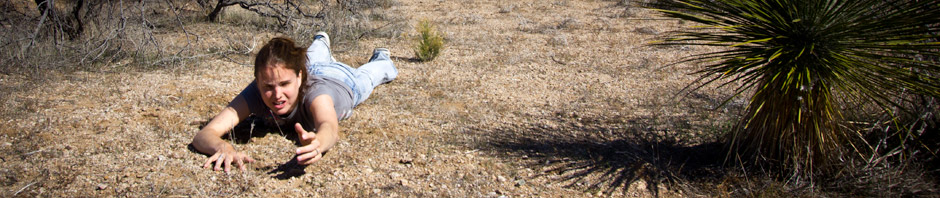
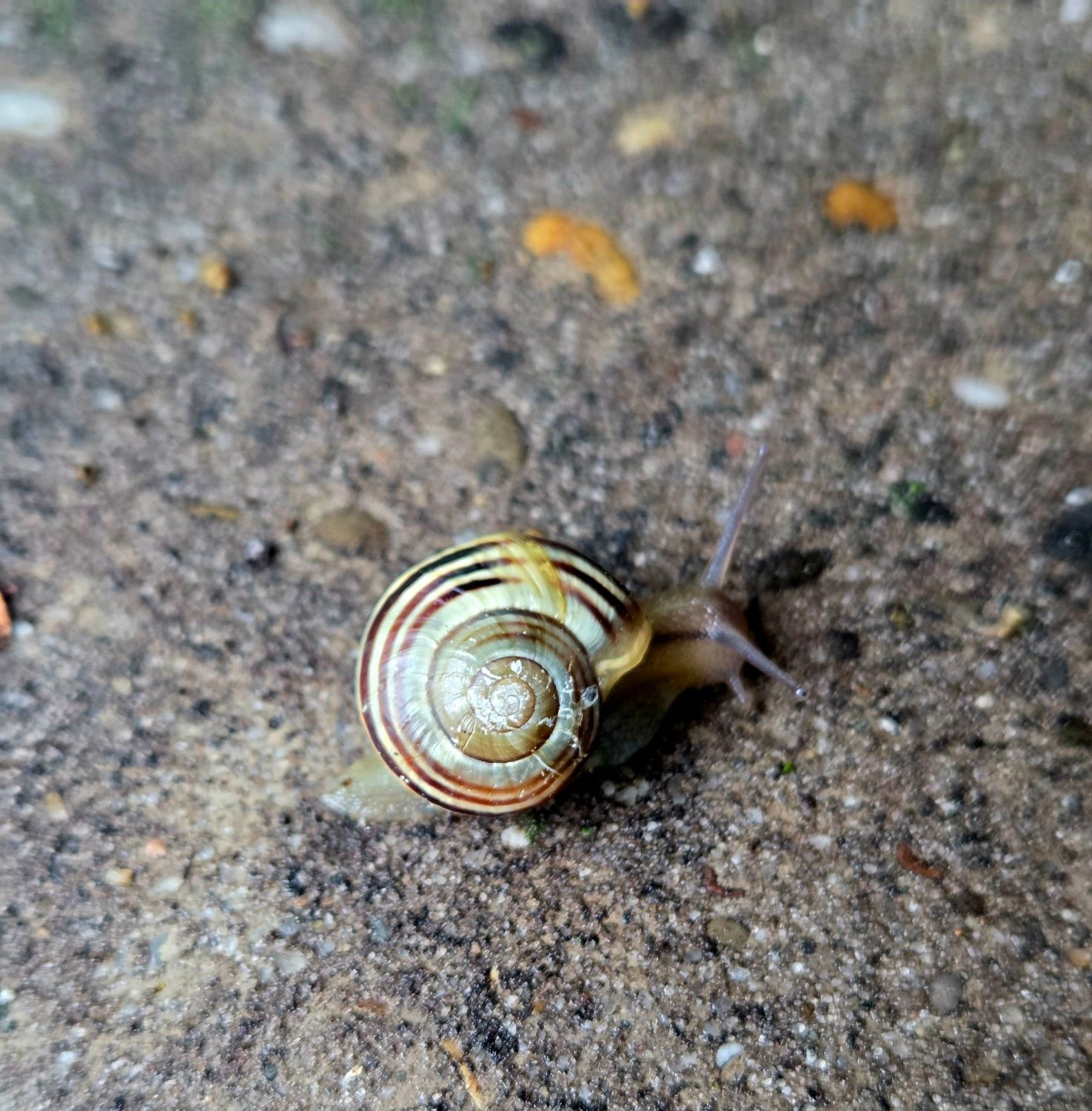
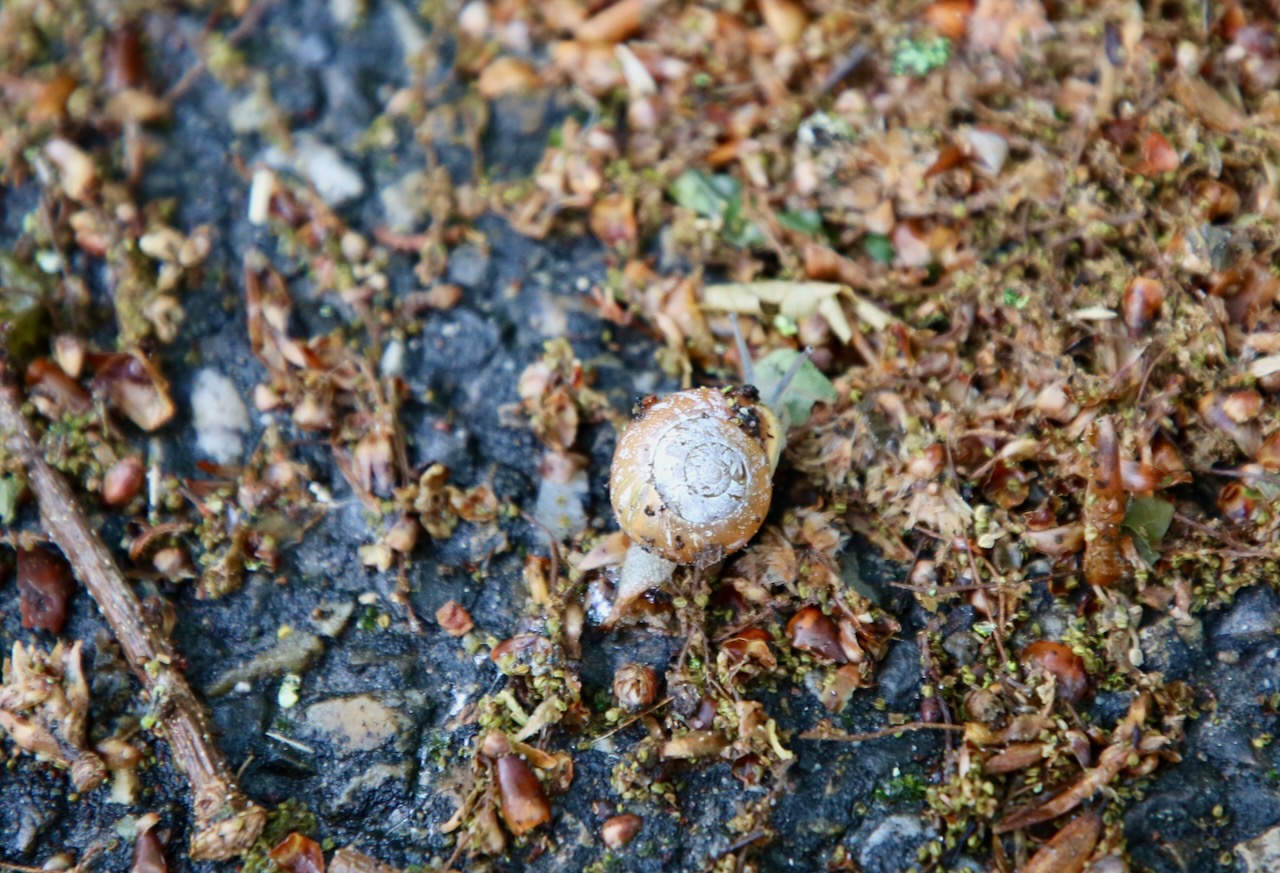
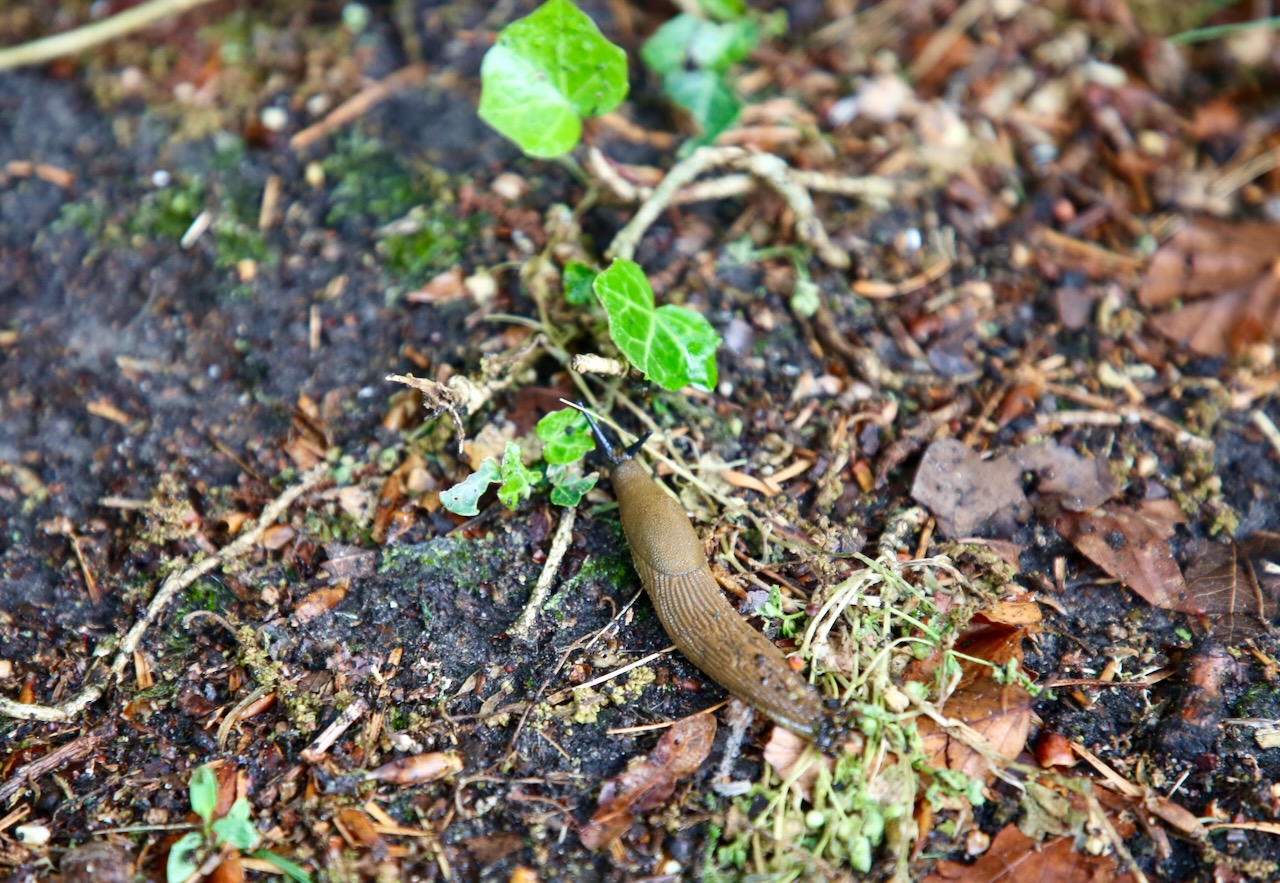
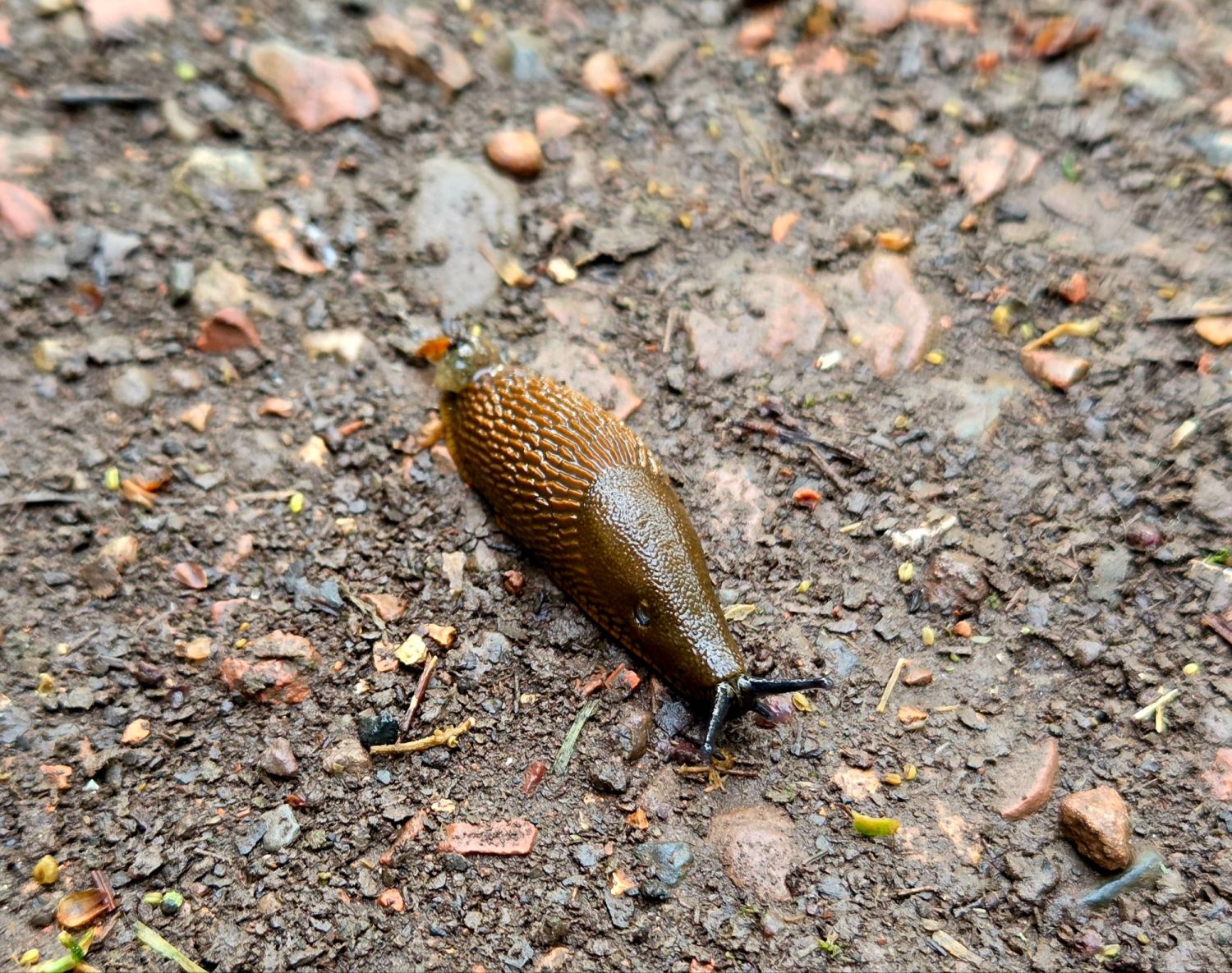
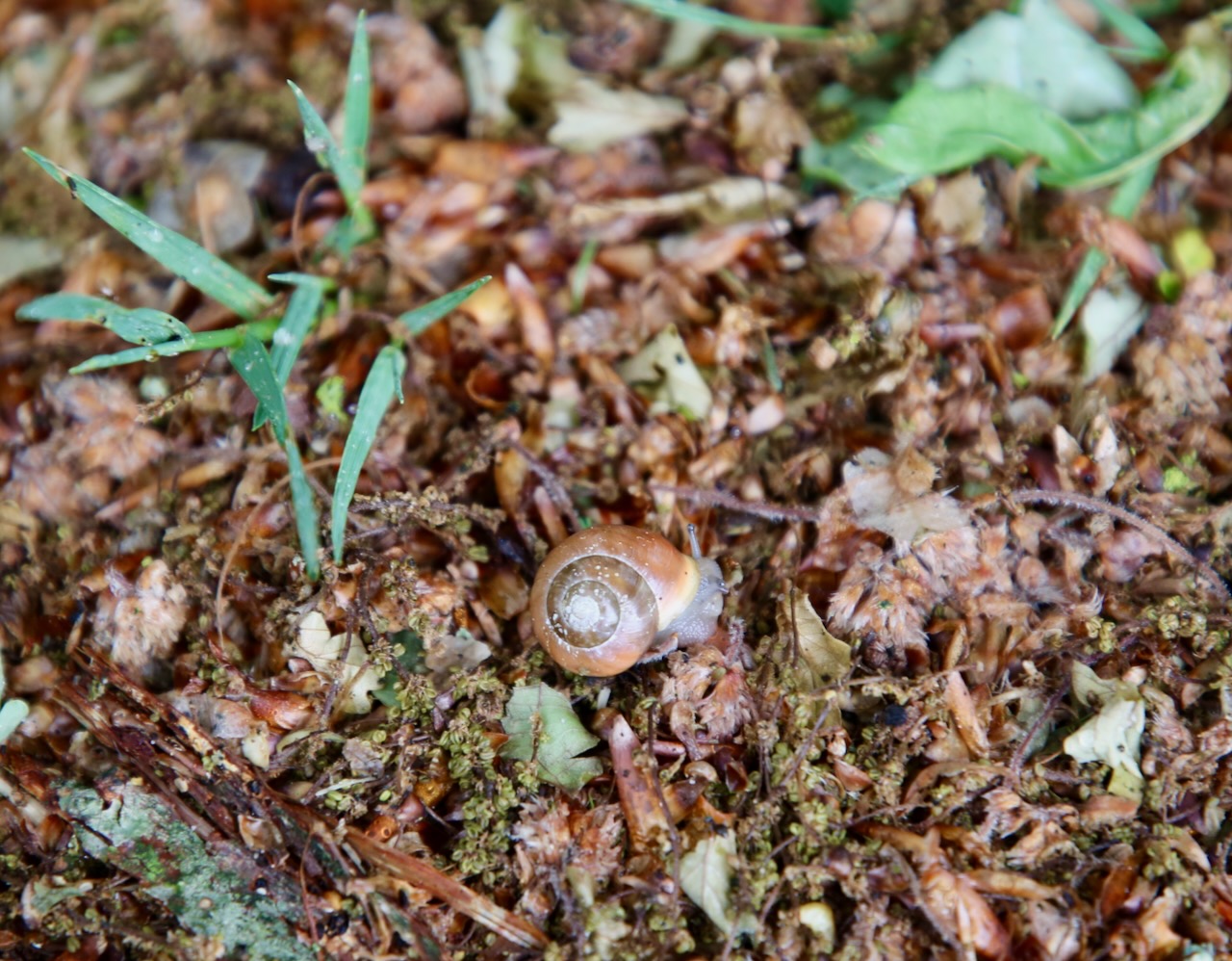
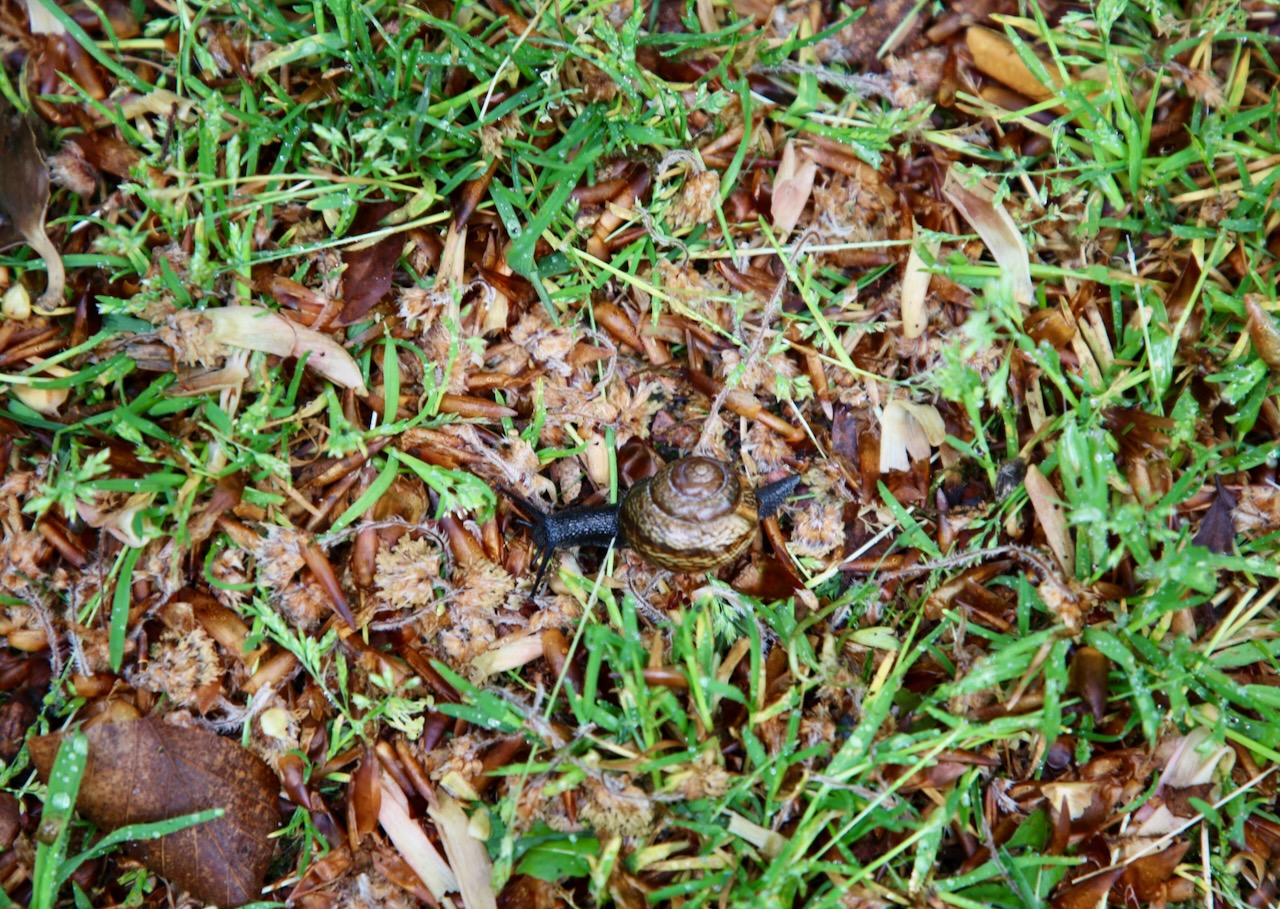
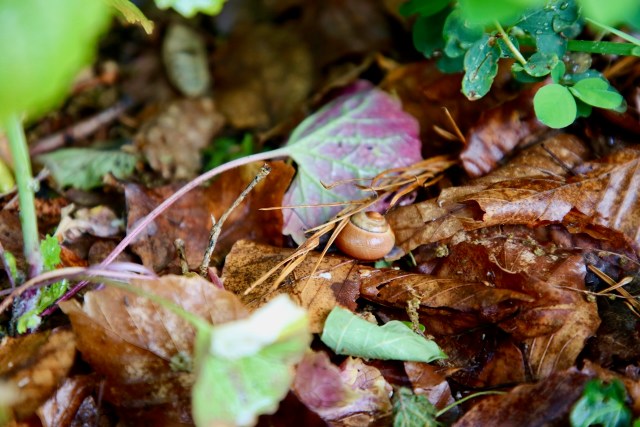
Caleb is up around 4 am after the rain and makes me a sweet coffee when I get up. We grabbed our raincoats and would’ve made the bus had I not seen a snail and needed to photograph it. I usually send the picture to Caroline, but when Caleb informed me that we now had a half hour to wait, I went looking for more. There were so many of them! I also found a Dryophilocoris flavoquadrimaculatus (a black-and-yellow insect), a red velvet mite (also known as a rain bug), and a common fruit fly.
The streets are empty, the bus is bare, and the train has plenty of seats. We move from one quiet compartment to escape a sniffling child, then they depart, and we can move back to give space to Karen, who is being extra loud with her eight-year-old son. I thought it might only be an American thing, but others moved on without saying anything either (and I’ve seen them speak up, so they were avoiding her). I see a pheasant and two bunnies on the way to Rotterdam station.
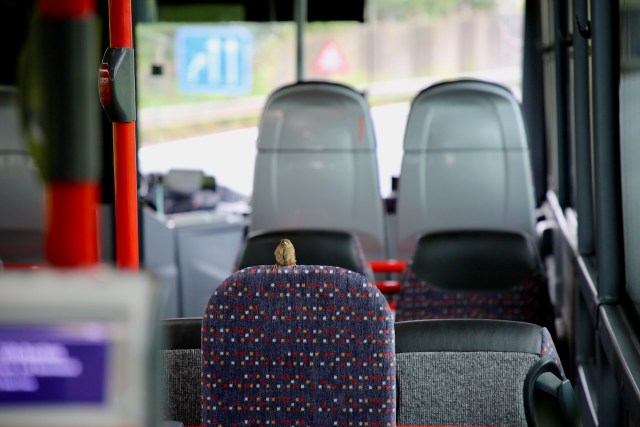
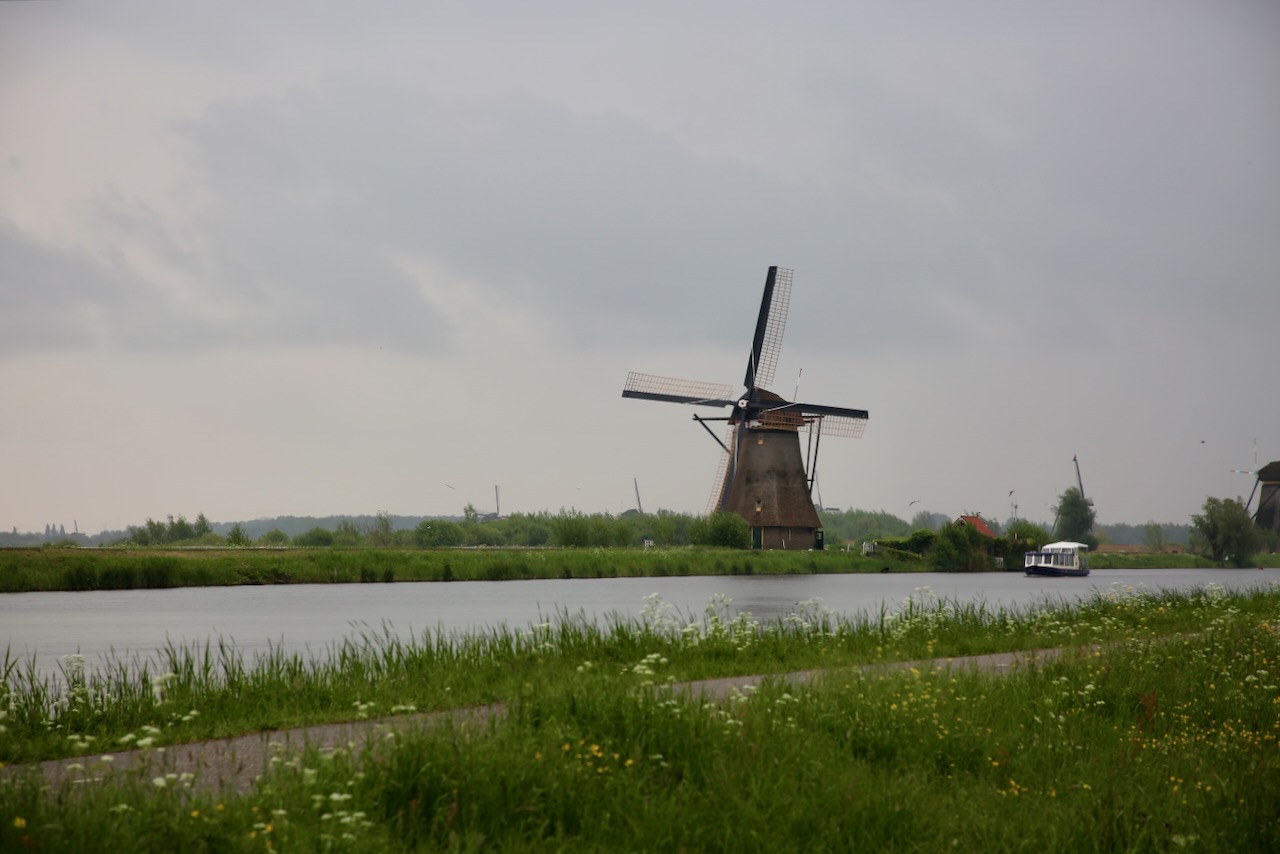
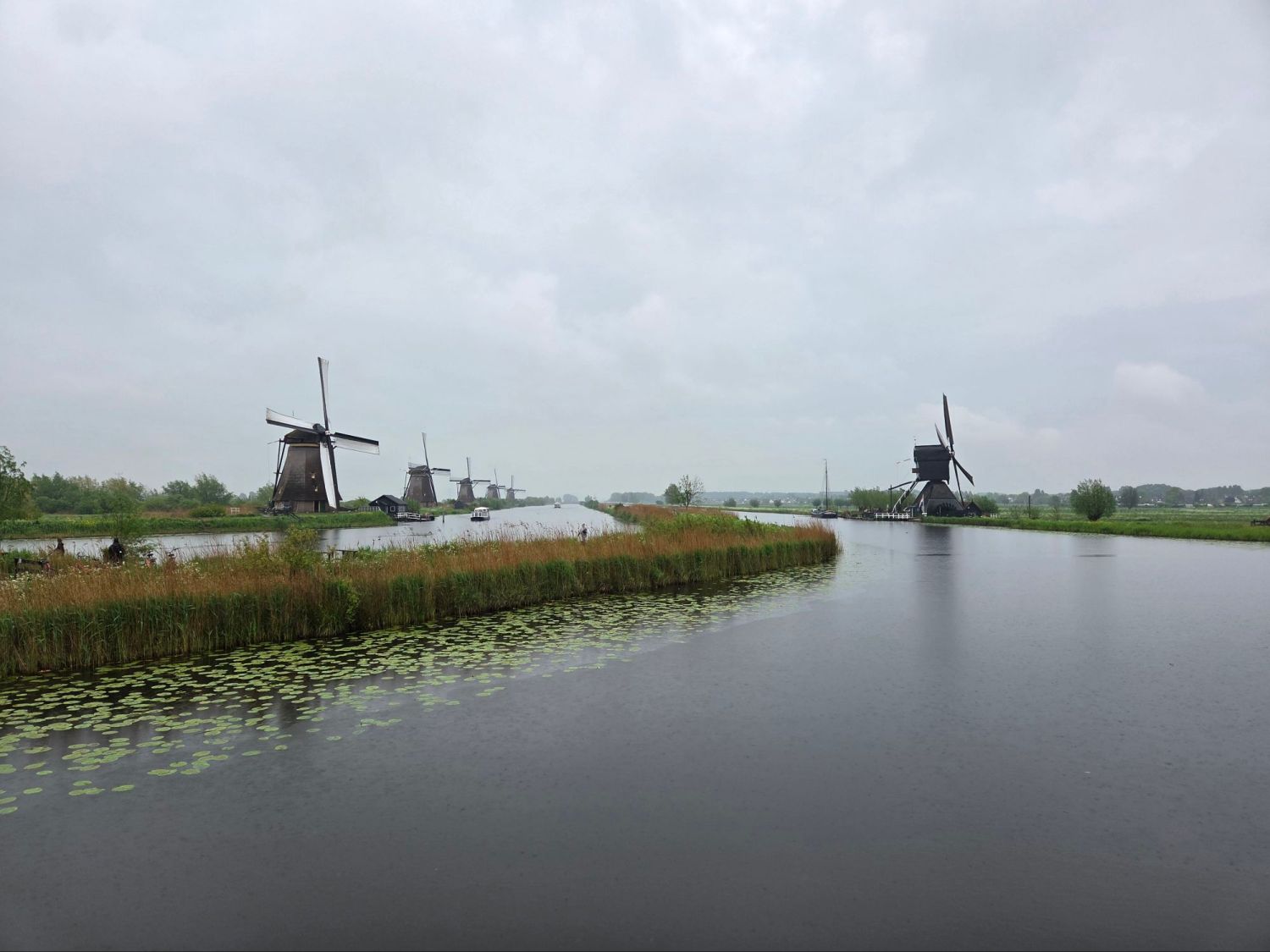
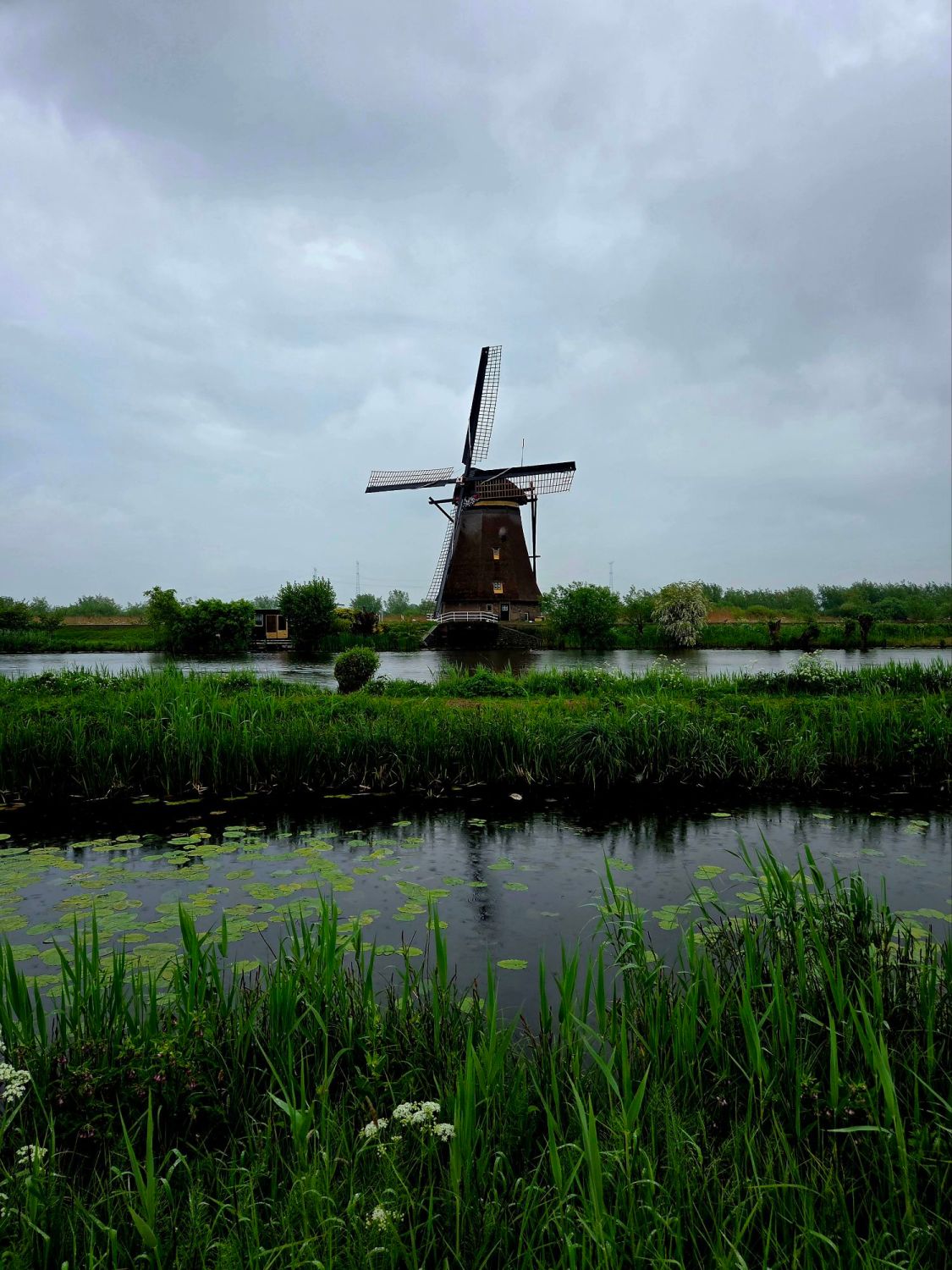
I munch on the honey mustard wheat pretzels and white blondie that were in my purse. Our final bus of the morning has a wren fledgling passenger. Caleb goes back and forth trying to capture it in his hat so he can let it out the door, his efforts consistently thwarted. The bus drops us at the cloudy and gray entrance to Kinderdijk, a UNESCO World Heritage Site, since 1997. It consists of 19 windmills that were originally built around 1740 as a water management system.
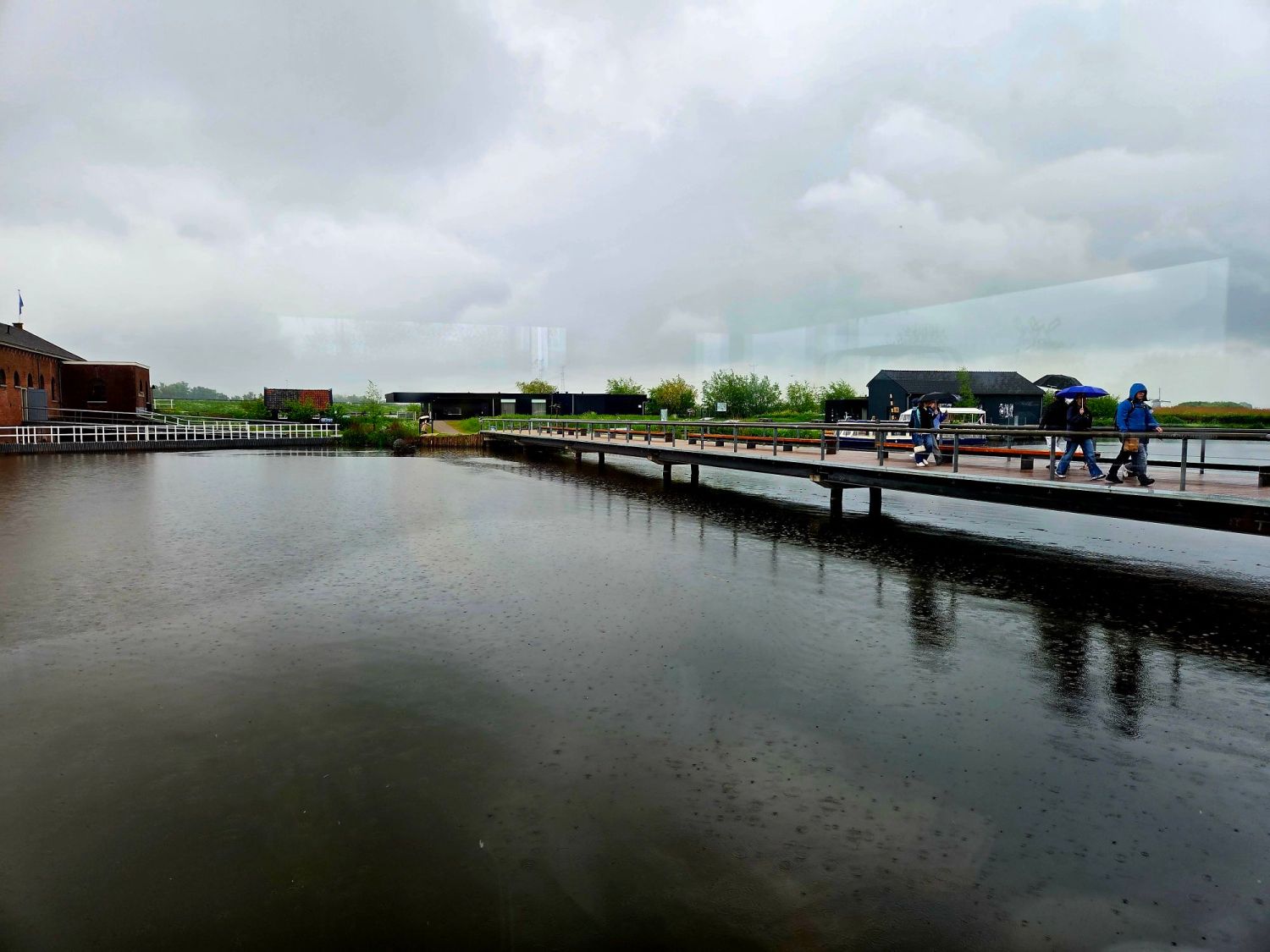
The exception is the Blokweer Museum Mill, built in 1630, with a strikingly different structure. Through the middle of the park is an active bicycle path. To allow riders to enjoy the scenery, but keep them out of the museums, the tickets are scanned at the museum windmills, for the canal boat tour, and the pumping station exhibits. It starts to rain, and we don’t let this stop us from exploring. Others came prepared with umbrellas and rain ponchos.
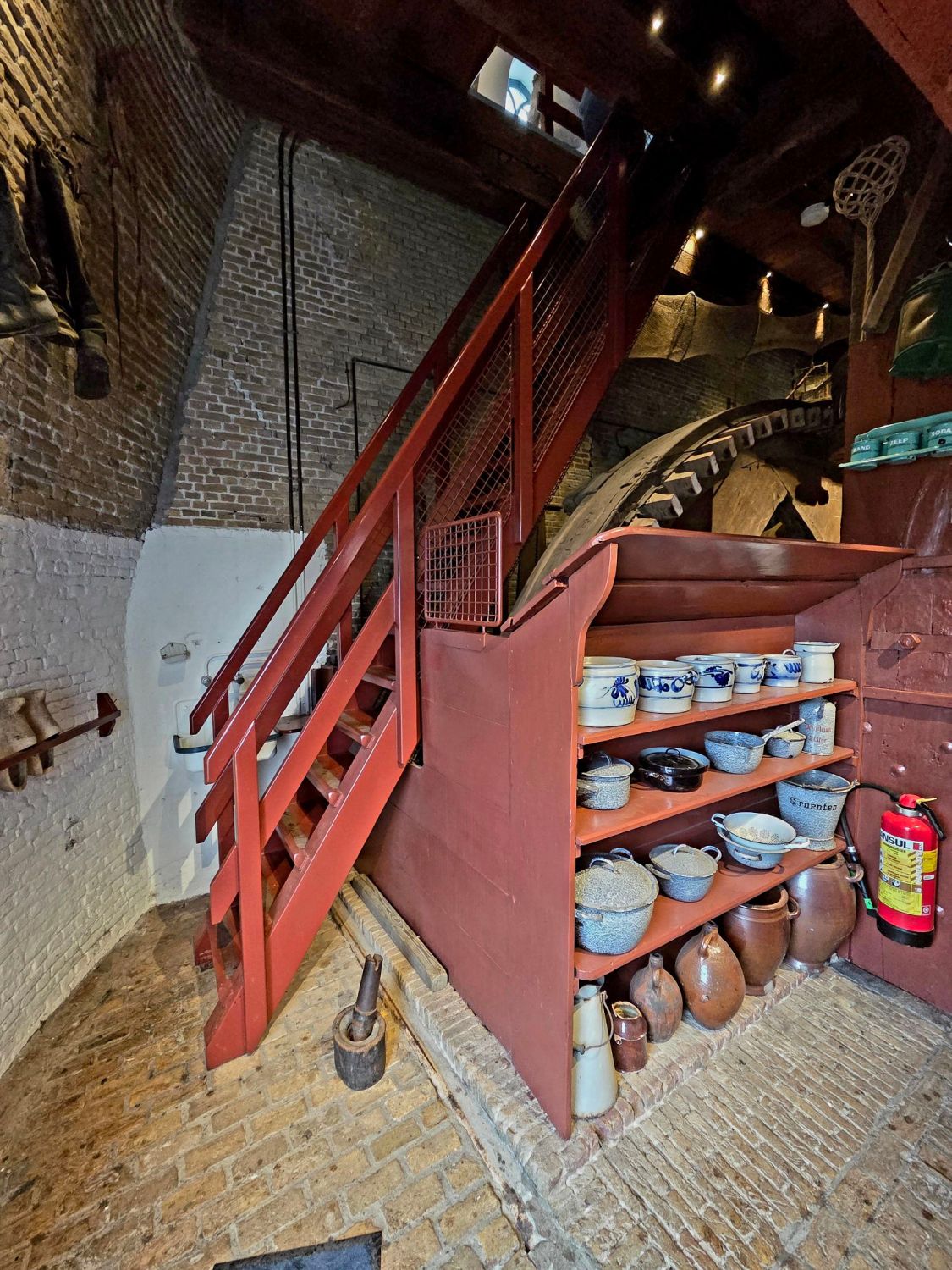
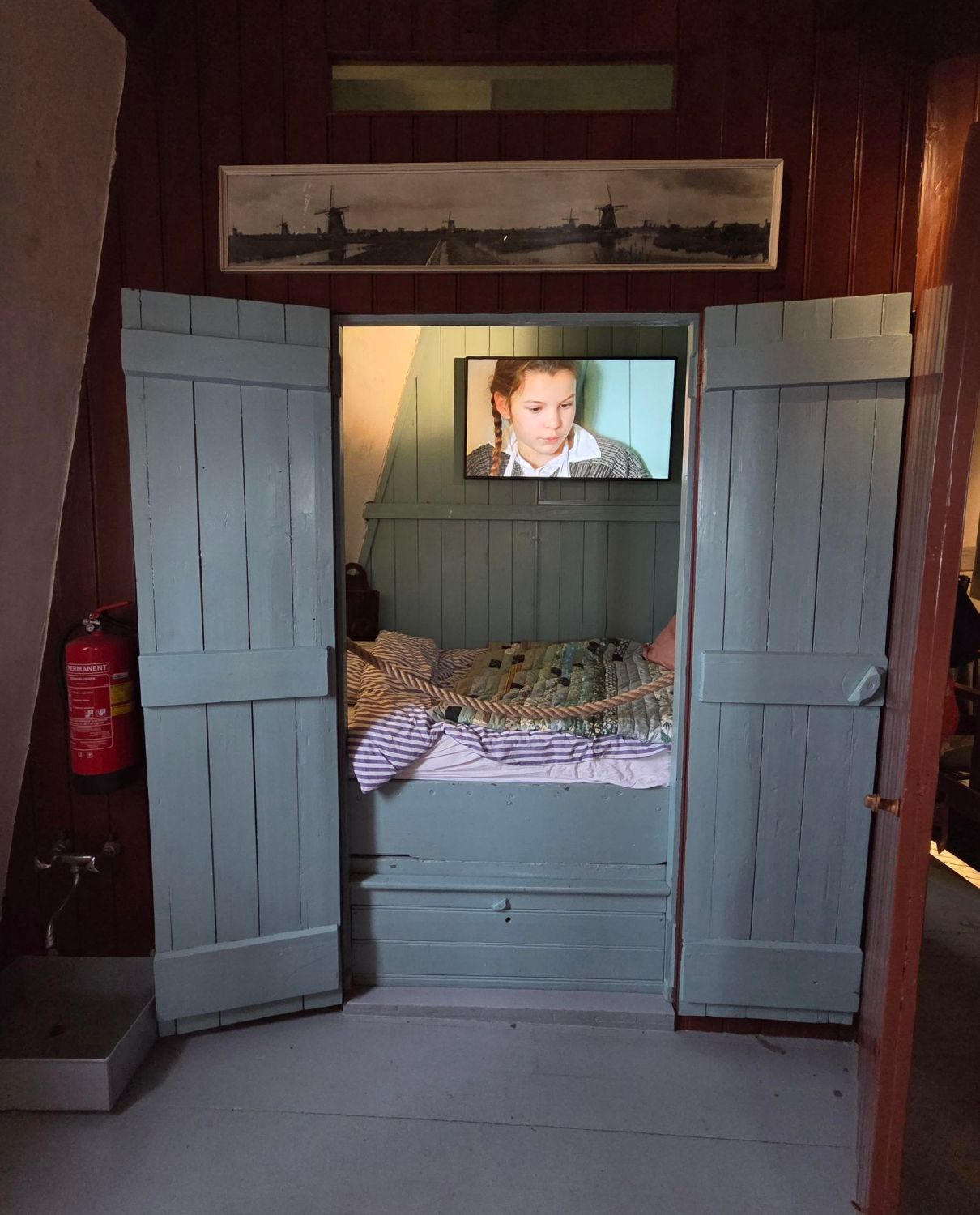
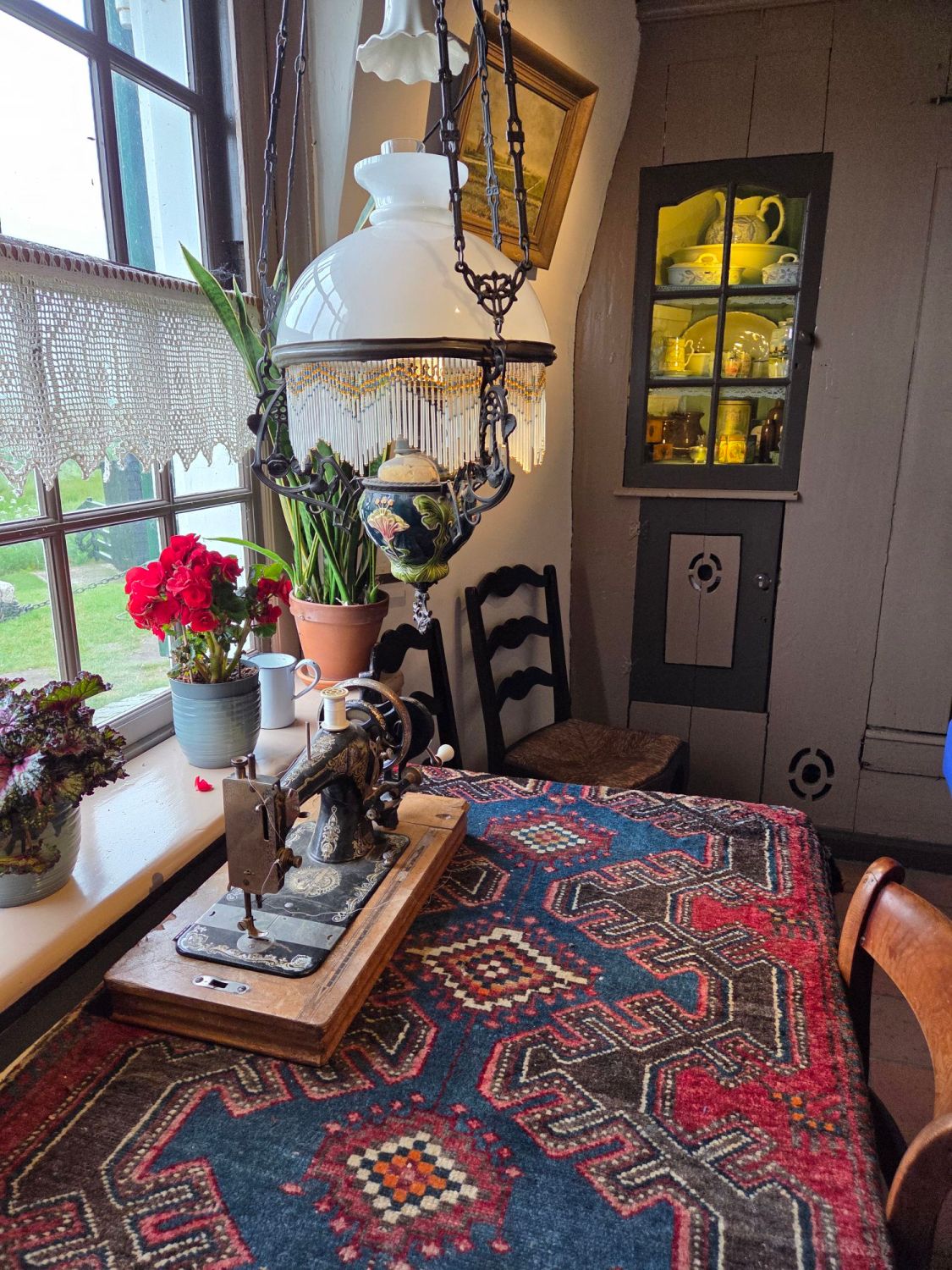
These windmills would be comfortable for Caleb and me, so I realize how spoiled for space we are when I learn that the goal was to have a dozen kids (for religious and labor purposes) to help with the farming, gardening, fishing, and mill maintenance. The attic was a storage space for animal hides, fish traps, and fruit. It was also where the smoke from the living room heater passed, turning things black on the way out until a chimney was installed in 1909.
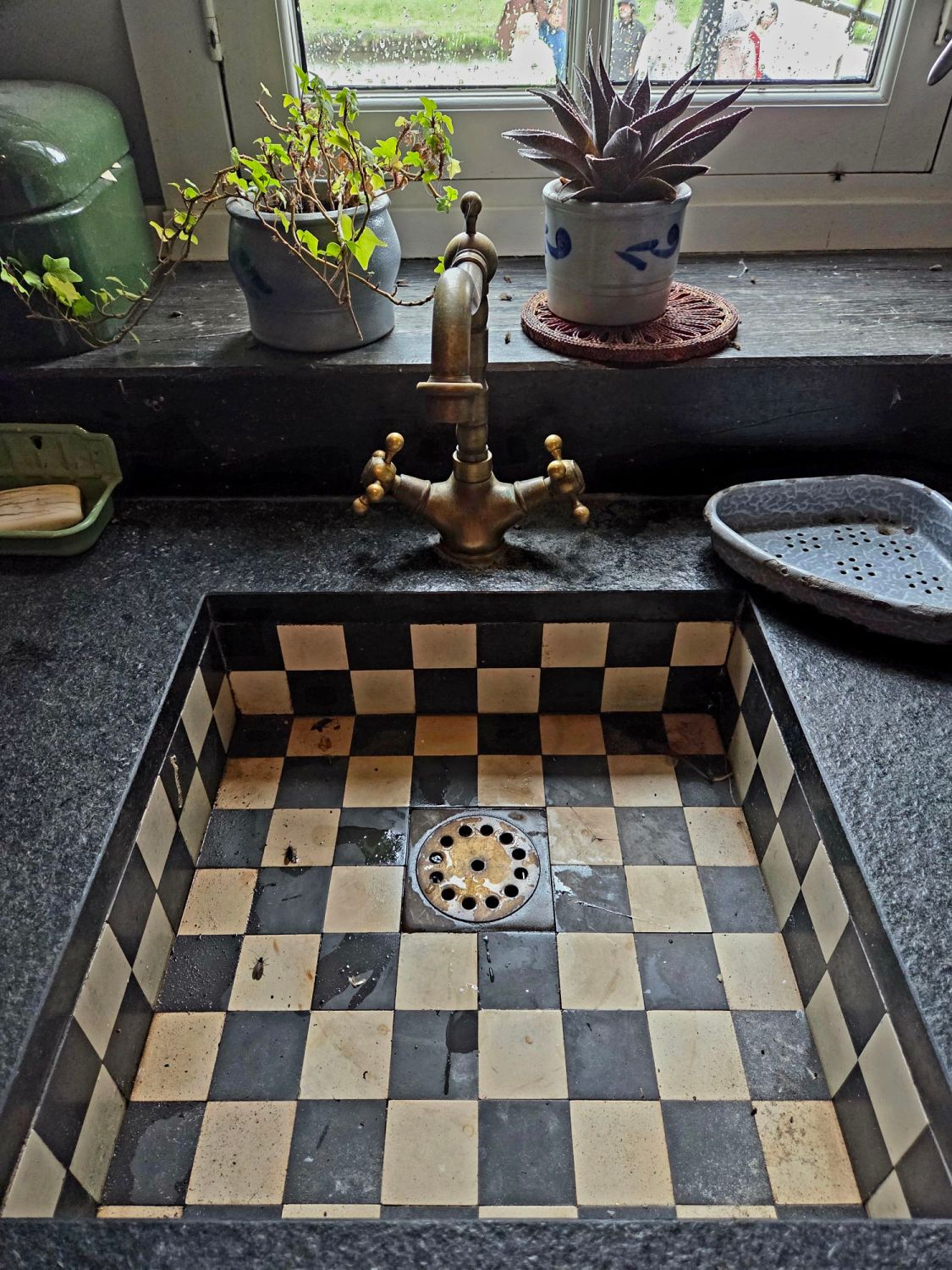
The family’s laundry, along with the linen, got washed at the boiler house with the use of a washbasin. In the winter, the family was washed there as well, but in the summer, they would be scrubbed on the doorstep. The women wore a shirt, a corset, about four petticoats, and a beautiful top layer. Only the first layer of white cotton was usually washed. They had a flannel undershirt and a knitted singlet that were only worn in winter.
The eight Nederwaard windmills were built in a staggered line to allow each of them to catch plenty of wind. The eight Overwaard windmills are in a straight line on a narrow embankment. They are built of wood and covered with thatch because they are on soil that is subject to sinking. The Nieuw-Lekkerland Polder has two windmills, one with a scoop wheel, and the other equipped in 1965 with an Archimedean screw that can pump farther than the other one.
If the rain was heavy and the wind weak, the mills did not provide enough power. This led to a steam-powered pumping station being built in 1868 to help pump seven times faster, but coal was expensive and burdensome, so it was converted to diesel in 1918. A new electric pumping station was built in 1972 on top of the old one. It was renovated in 2023, and two of the Archimedes screws are fully electric, with the third being a diesel backup and a preservation of the past.
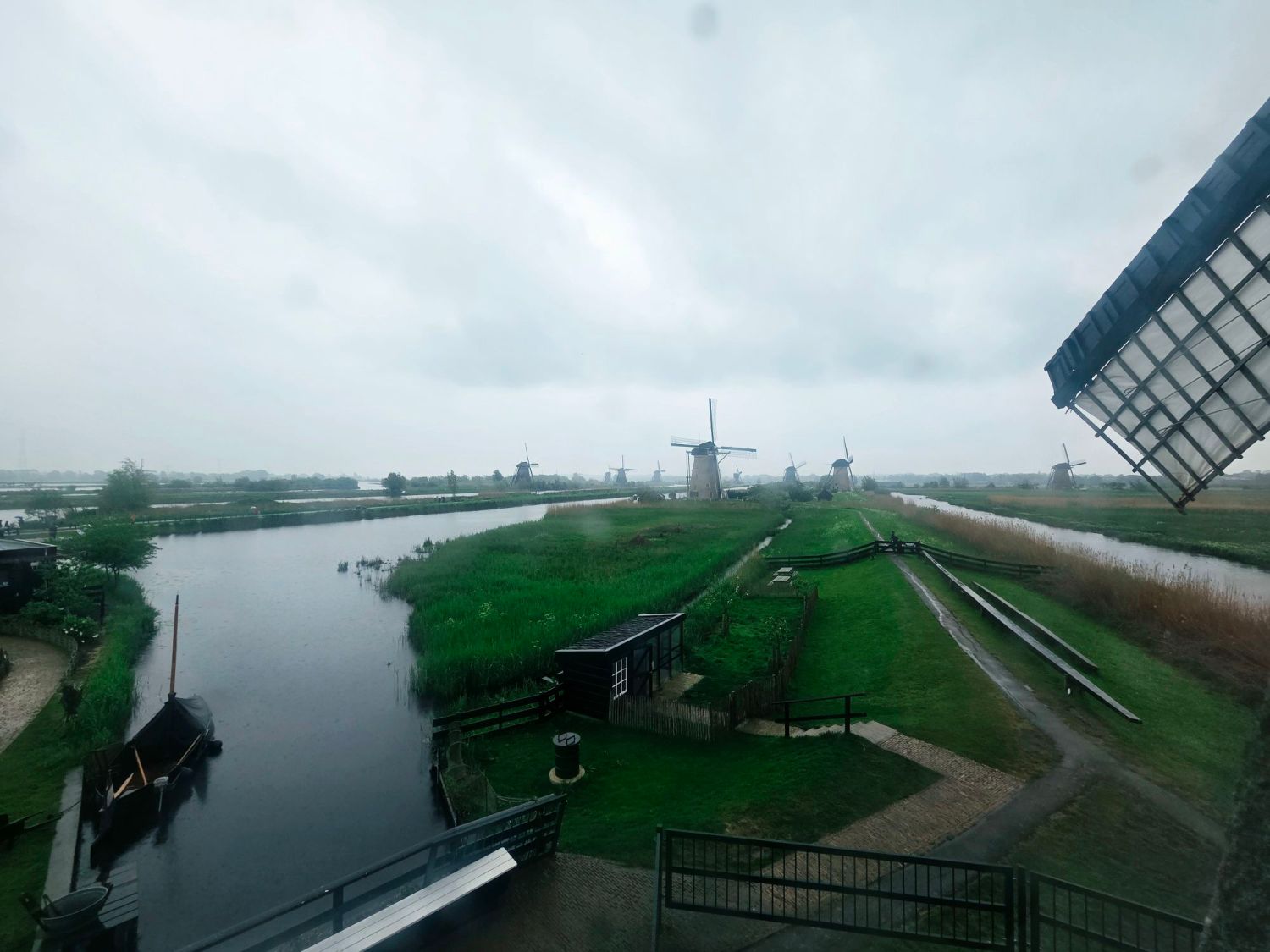
The windmills were decommissioned in 1953, but still have families living in them to preserve traditional crafts, complete maintenance, and keep their stories alive. Such as the one about the cat keeping the cradle in the river balanced by jumping back and forth so that baby Beatrice wouldn’t drown after the St. Elisabeth’s Flood in 1421. The cradle washed up near the dyke, and a name was born. In the old pumping station is an interactive area and a gift shop.
Buying lunch gets us a waterside view and a multi-pass for the toilet. I like to take a picture of our meals for profiling purposes. We get to watch a couple do a photoshoot with their croissant and coffee by the water before moving to a table in the middle of the café. It appears strange, but it’s nice to see this unexplained behavior in real life, especially as AI becomes more involved in what is seen online. It’s still raining when we see the bus honk at a car parked in its way, and the guy almost nervously reverses into it.
The bus driver takes a smoke break, and we get to go through the bushes on bus-only lanes. Caleb points out an electric semi truck. On the train, a guy gets on with a folding bike and blocks a seat. Another guy gets on with a regular bike and asks him to move, so he can fit his bike against the folding seats. He sits upstairs once his bike is secure, while the guy who had to move is now sitting across from me, possibly writing about this in his diary.
We get off at the bus stop for the shopping plaza, but when we inquire about sushi, we are informed that they are busy fulfilling another order, so it will be some time before they can get to us. We walk back empty-handed. I’d been thinking about all the name-brand coats people are wearing, and no, they aren’t cheaper here out of necessity, but actually more expensive due to higher taxes, fewer discount stores, and higher retail margins (and the temperature ranges from 34° to 73°, on average).
I have leftover bread with cheese while being asked repeatedly for attention by Zulu. Caleb suggests we go eat nearby. I think he’s suggesting the ice cream parlor diner, but he means the shared-dining tapas restaurant, Mazoki. The hostess seats us, and when the waitress and family next to us realize we speak English, they seem even kinder and more forthcoming with menu recommendations. The family is curious as to what brings us to such a local establishment, and we let them know: friends.
The sweet waitress lets us know the restaurant is closing at the end of the year. The chef, Marcel, is ready to move on to something else after over 30 years in the industry and surviving the chaos that was Covid. We shared the grilled zucchini and Mazoki mess (like Eton mess, but with ice cream, sorbet, waffles, and wafers, for three). I had the burrata and pumpkin while Caleb decided on the Zarzuela (a Catalan seafood-rich celebratory stew), also enough for three people.
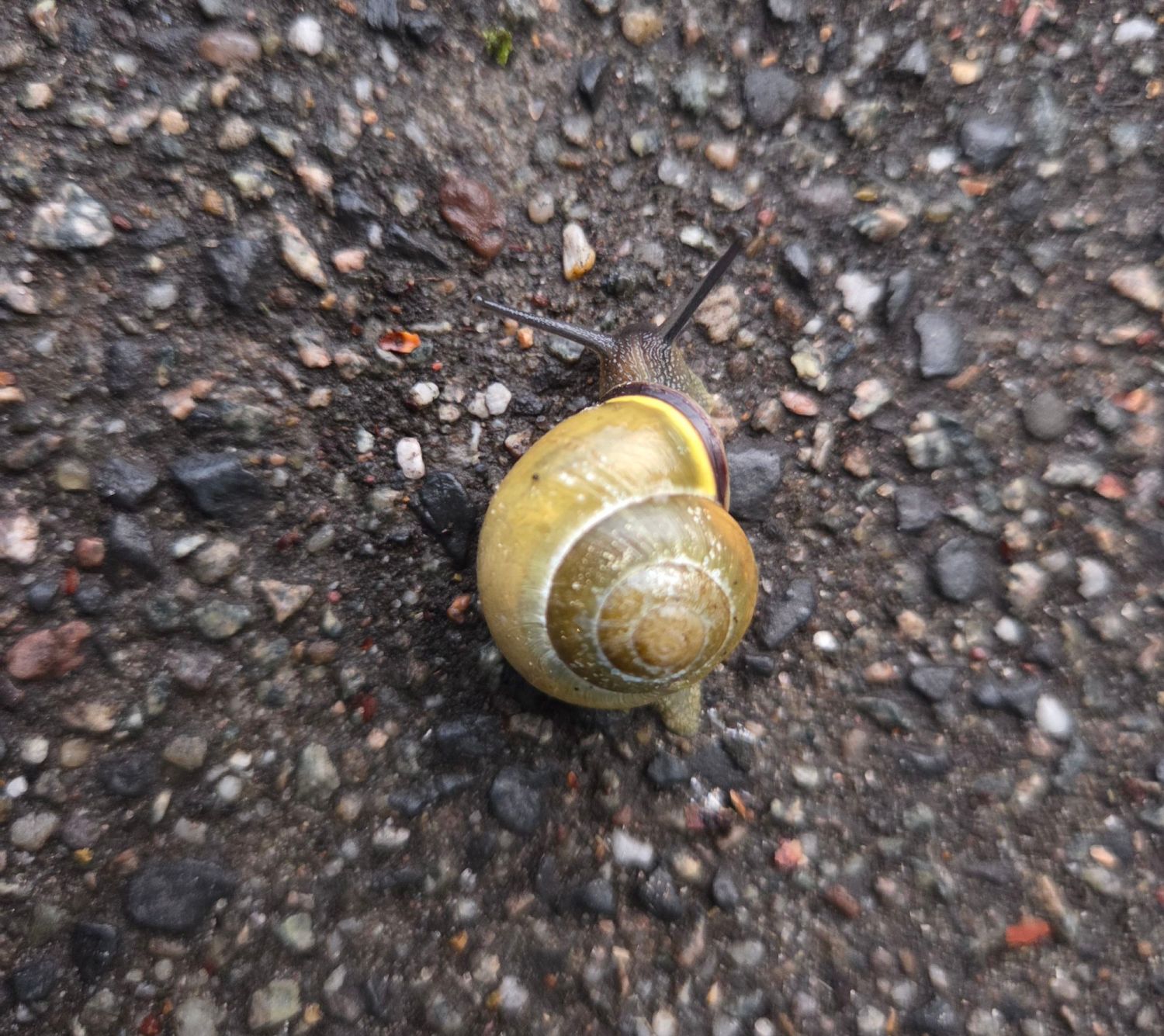
We agree it was a great commemorative dinner for our last night in the Netherlands. I will walk the neighborhood when we get back, as I’m stuffed. I see a guelder rose bush, known for its white flowers in spring and bright red berries in autumn. I pass a grove snail and an information board with workshops and monthly activities. I learned that the trash banks are pay-to-open for plastic, metal, and refuse, but not glass. Bag size options are 30 or 60L. Caleb is on the couch with Zulu when I return.


