We’re up early this morning, and I’m treated to a krentenbollen (raisin/currant bun) that dates back to the 1600s and is commonly eaten with butter, cheese, or sugar — the Dutch staples. I have a banana as well, not knowing the importance it holds in the Netherlands. Neder Banaan is growing the yellow fruit in fungus-free substrates of mineral wool and coconut fiber rather than soil (as they are threatened by Panama disease). Wageningen University produced the first Dutch-grown bananas in 2018. Rotterdam serves as the distributor of bananas to Europe, making the fruit economically significant.
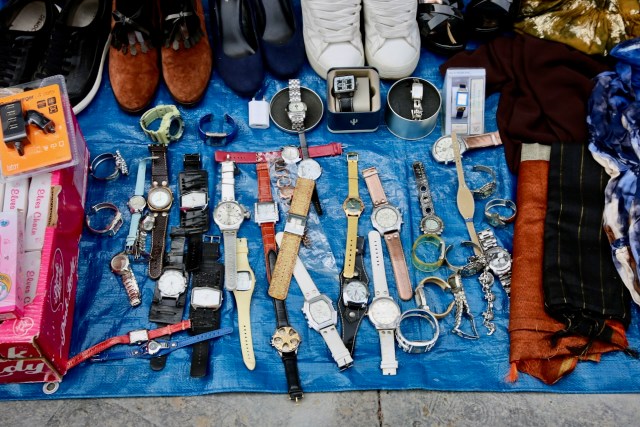
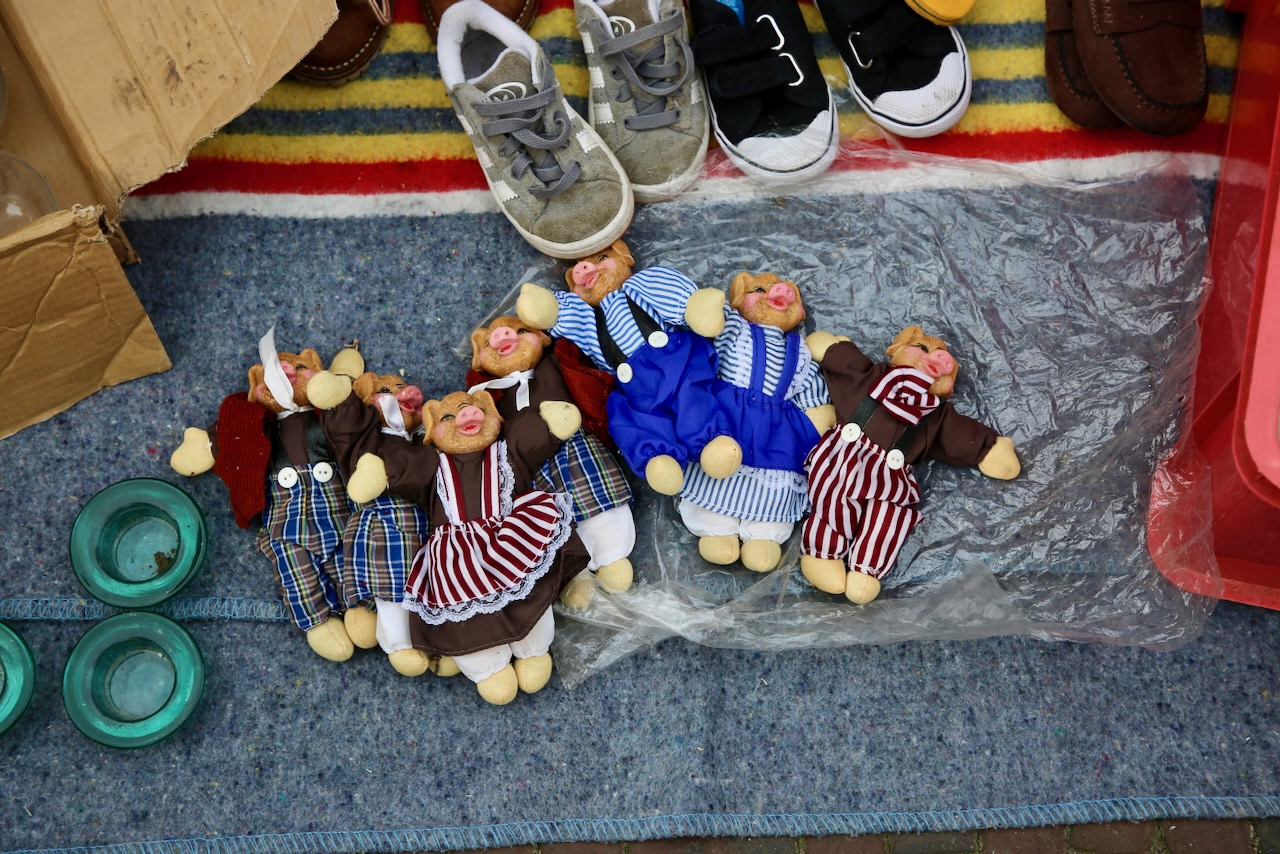
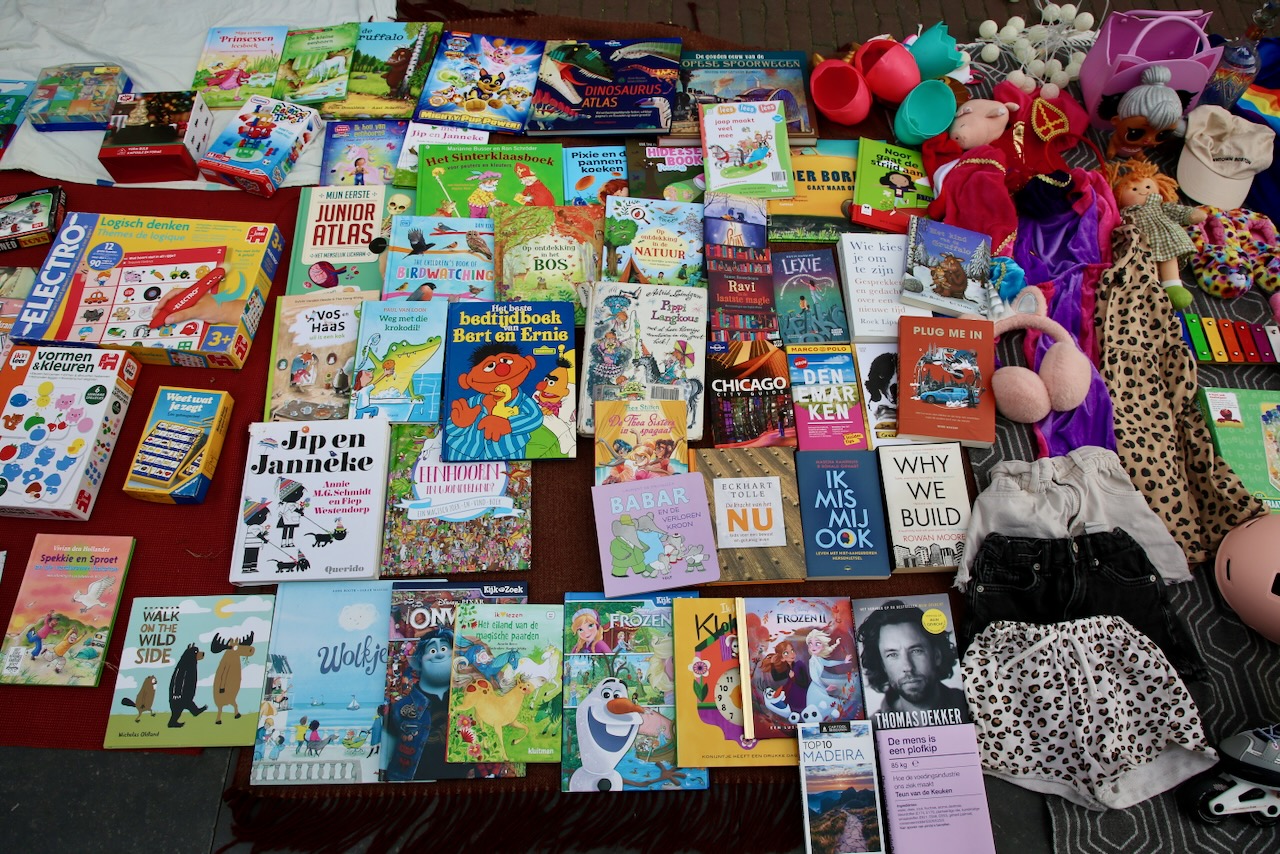
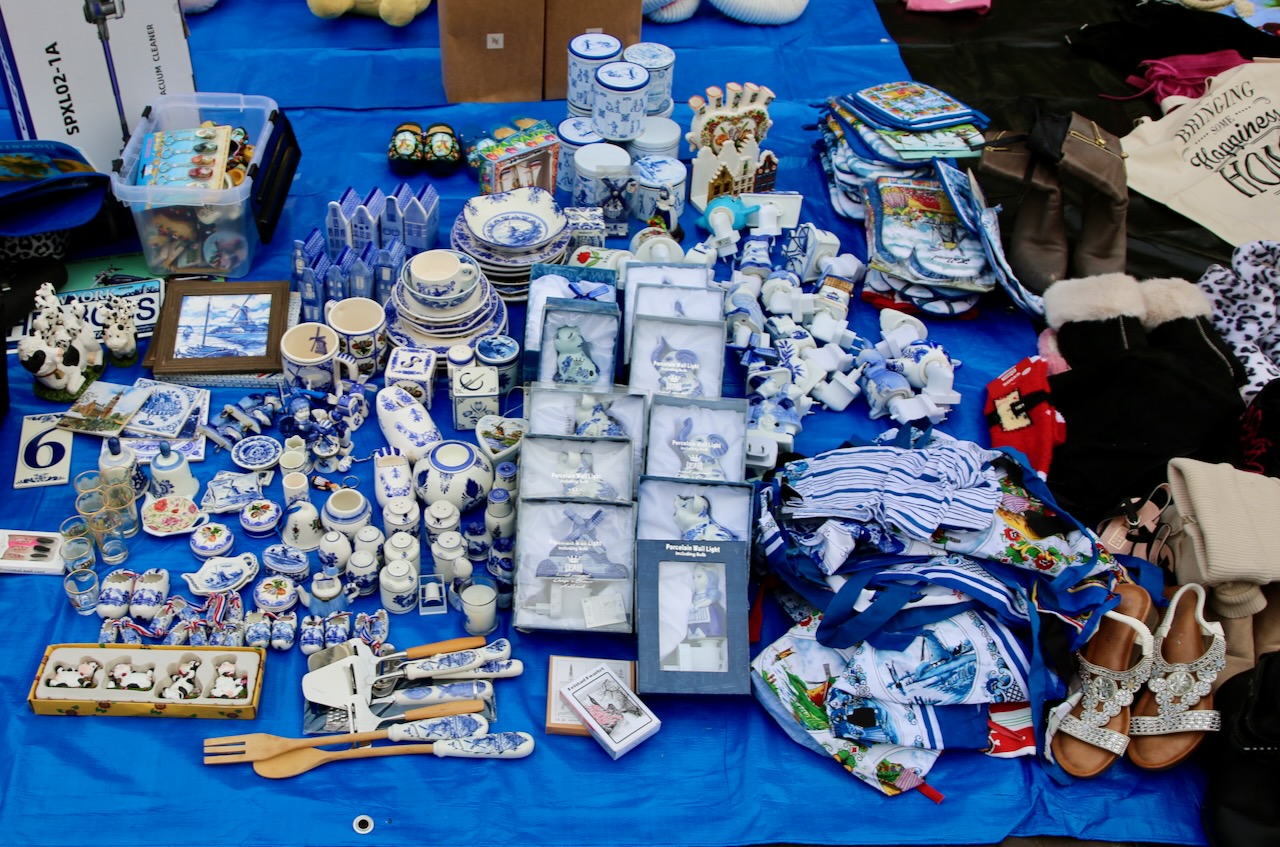
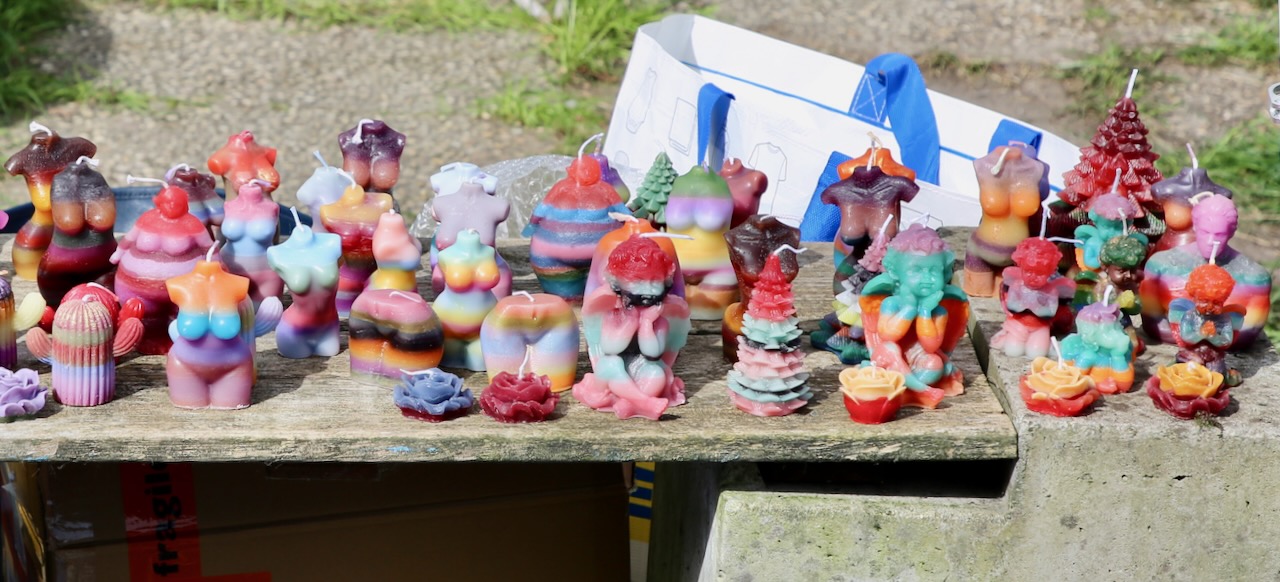
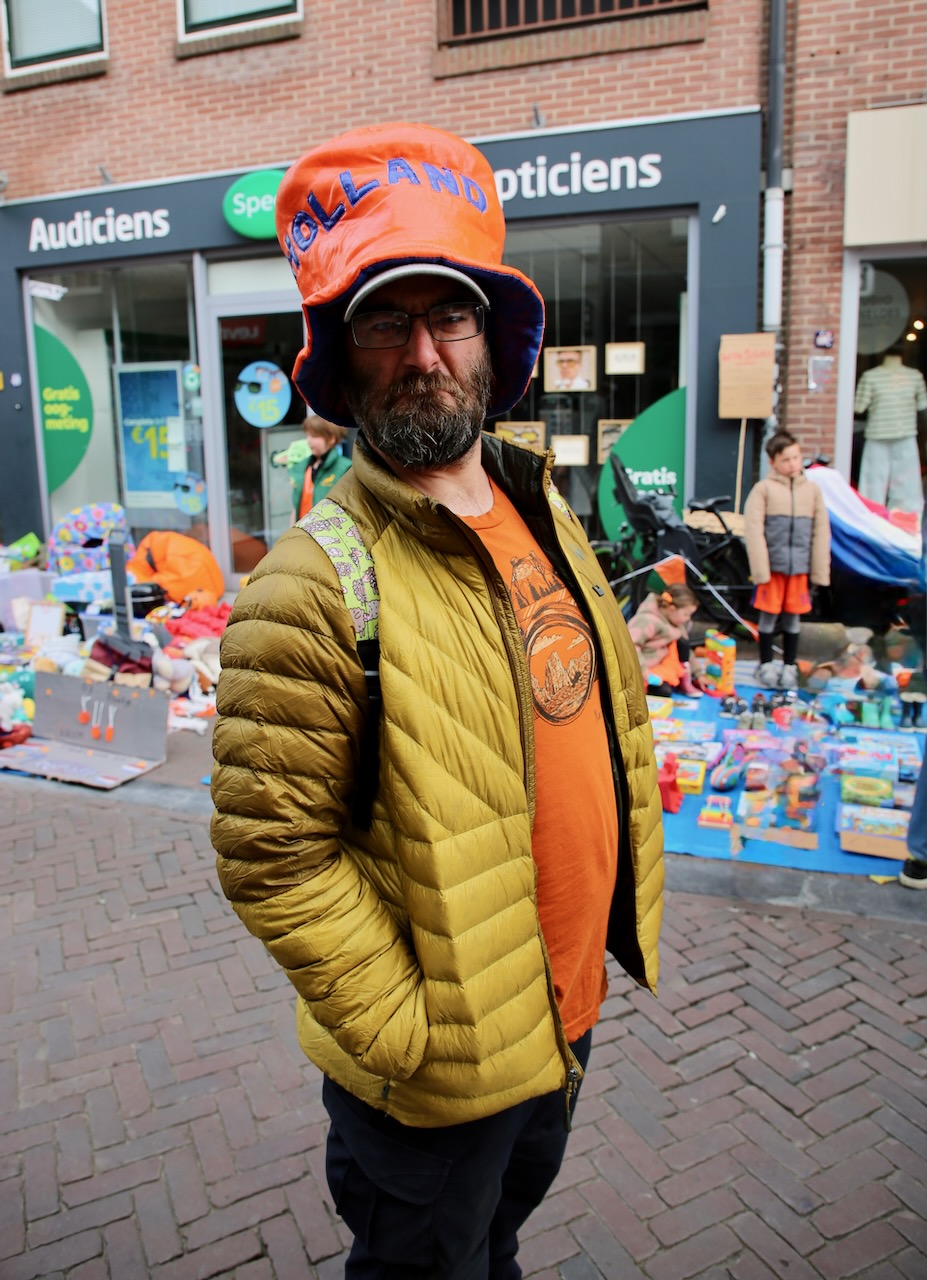
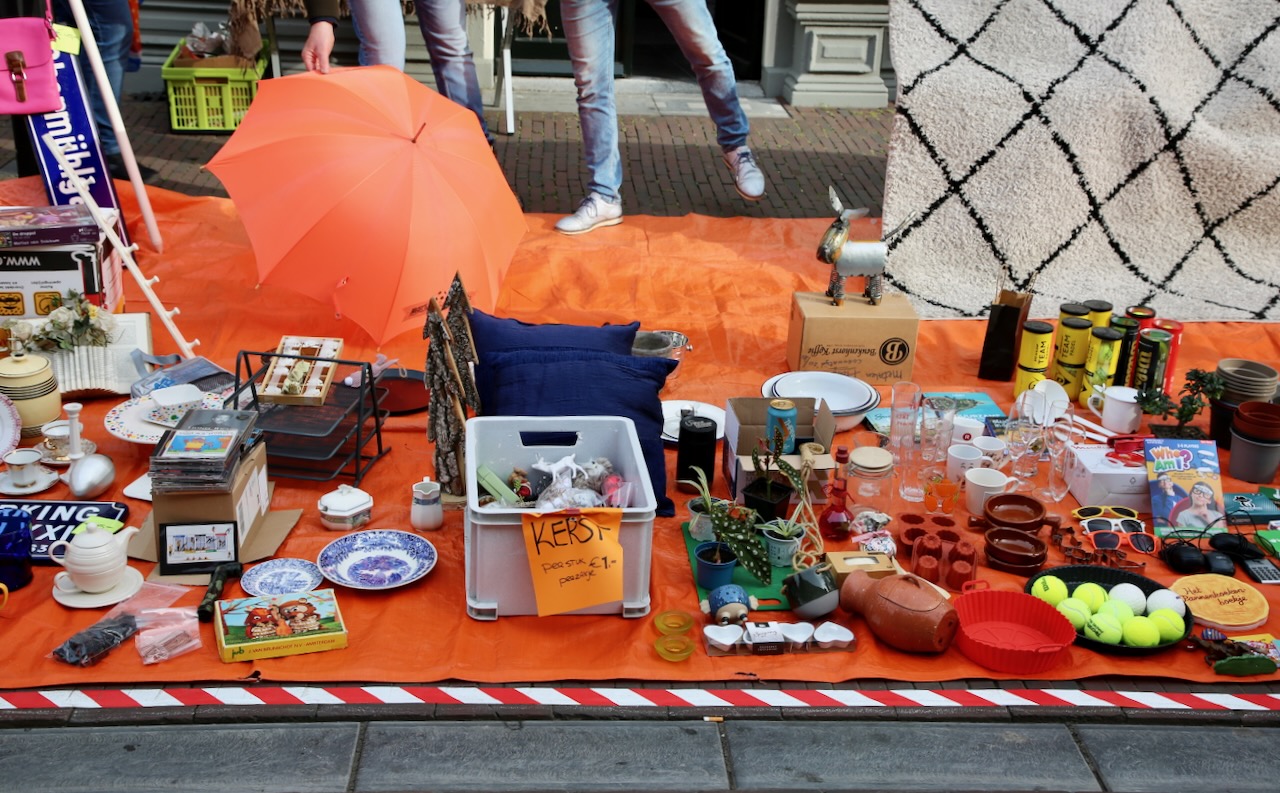
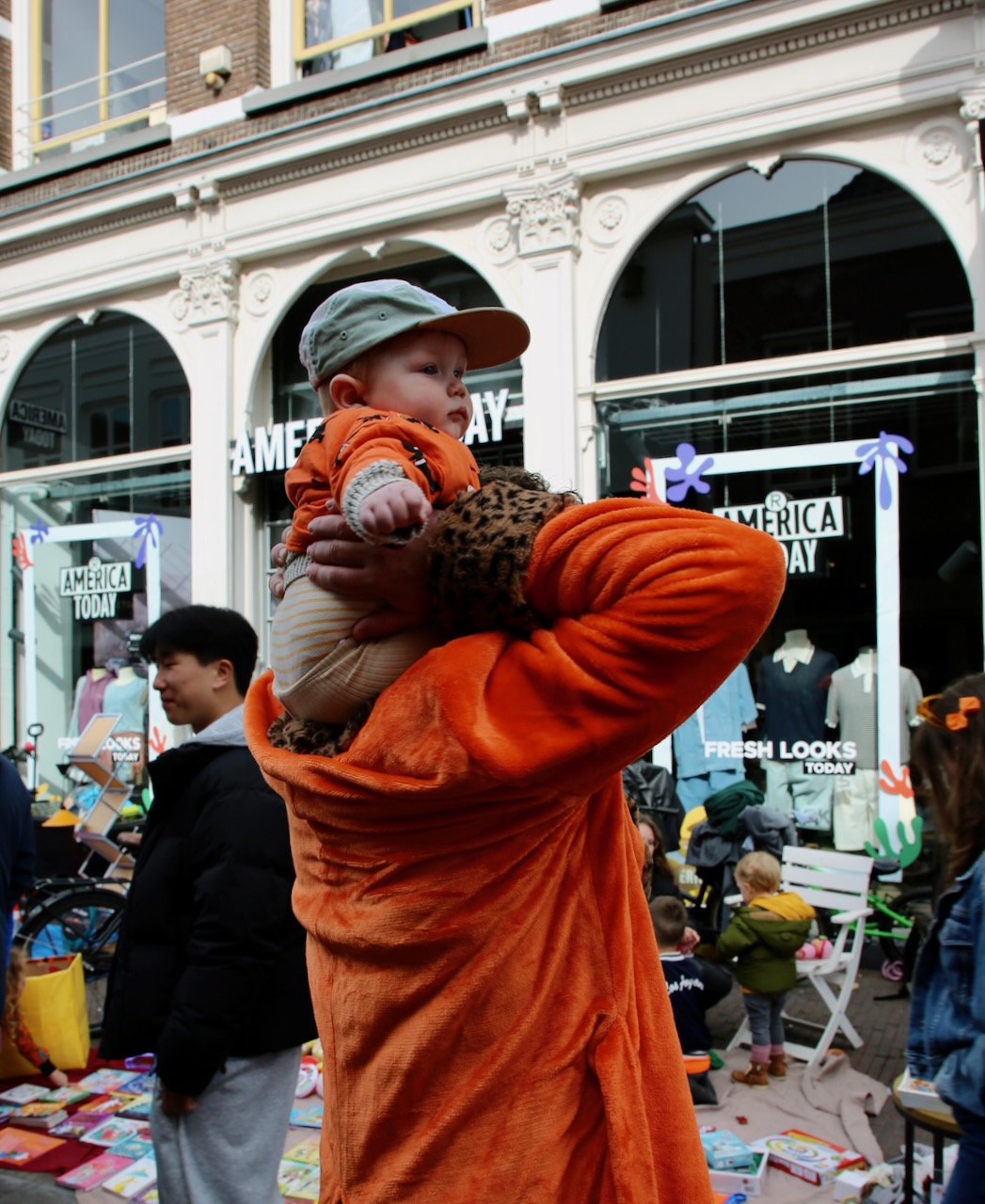
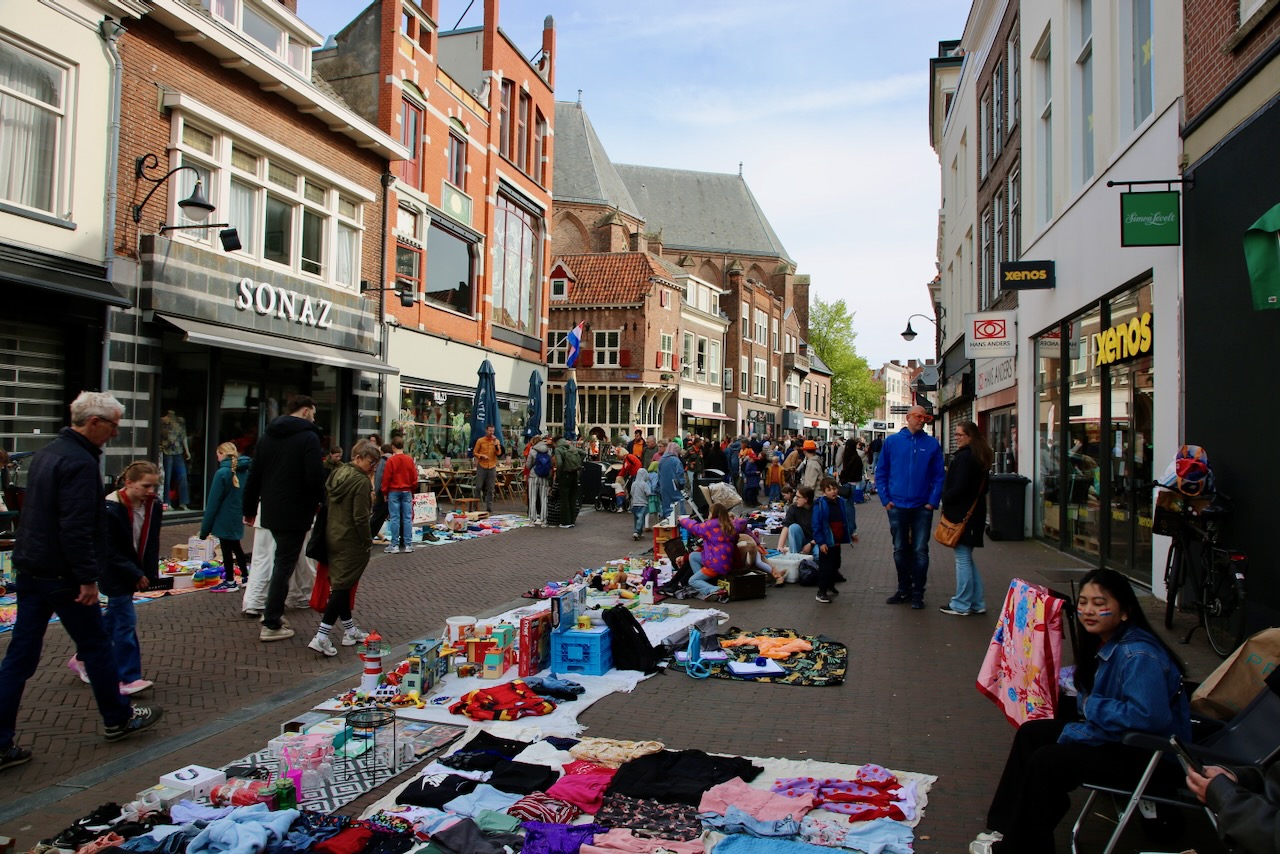
Our Dutch host gifts us some bimetallic euros since we haven’t been to the exchange yet (with tap-to-pay working everywhere), and the scan-and-pay option (for what the kids will be selling) requires a local bank account that we do not have. Anouska will catch up with us later, so the three of us will bike to Amersfoort, and Gert finds an orange hat along the way. Most of the shops are closed, but there is enough room to walk around the families selling stuffies, books, games, records, tins, cups, figurines, clothes, puzzles, ceramics, baked goods, etc.
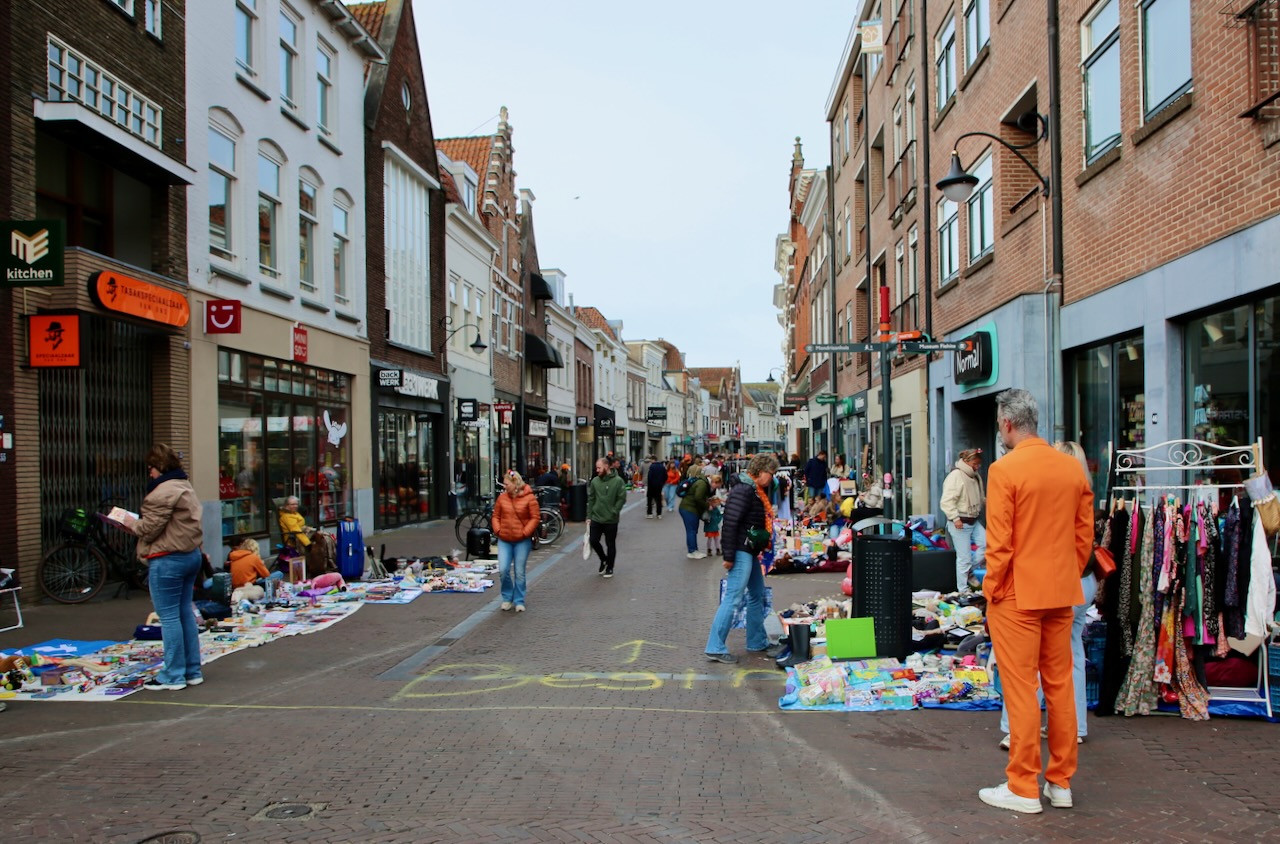
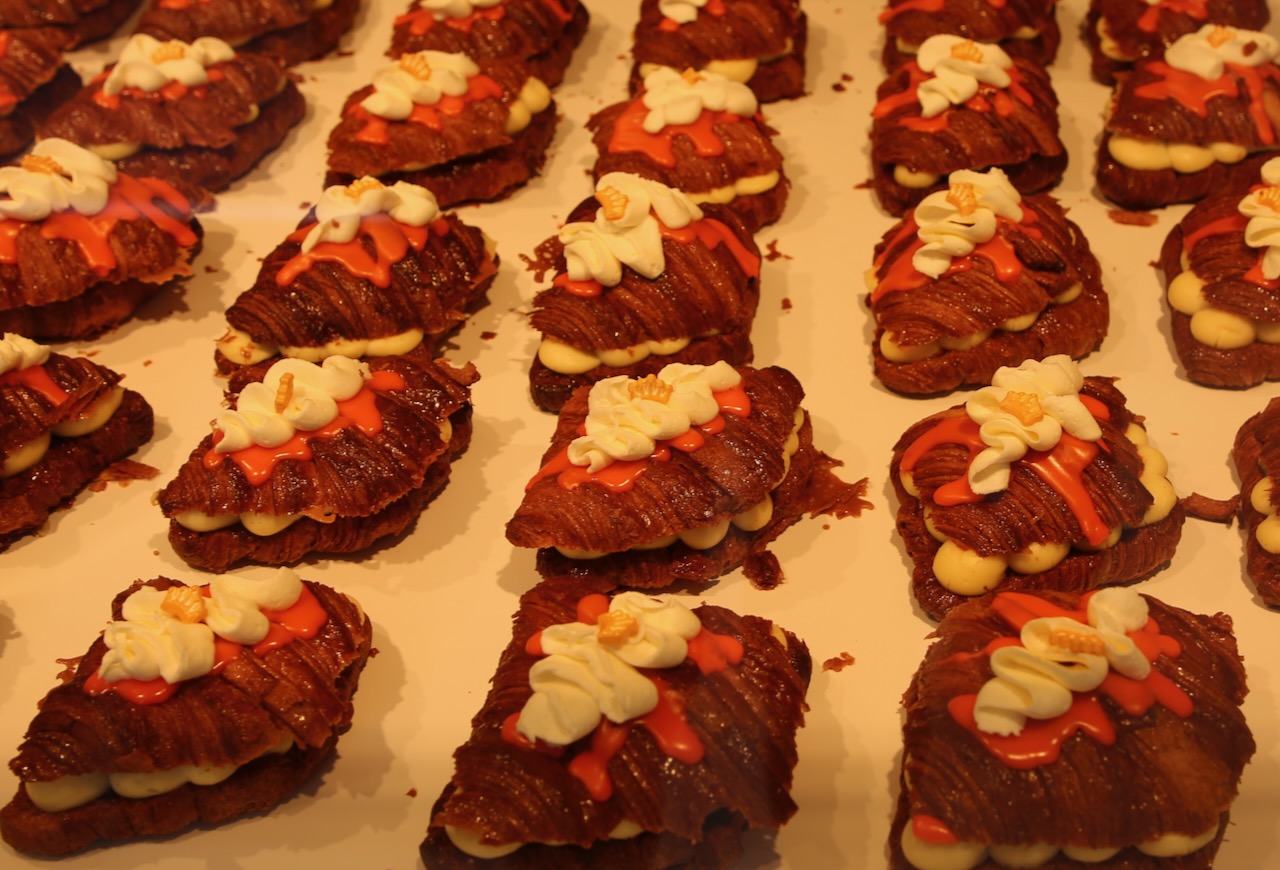
On offer are blueberry white chocolate cupcakes, heart cookies with googly eyes, sugar donuts, chocolate and vanilla pinwheel cookies, sesame bread rolls, a wedge-shaped treat with chocolate Cheerios on top, and a boy heating up packaged stroopwafles. I support a boy playing guitar, and Caleb buys an orange top hat. We walk by De Stier, a steel sculpture, installed to highlight the tension between city life and the environment. This bull, created by Thijs Trompert, was placed in a roundabout in 2011 to replace the wooden version that burned down.
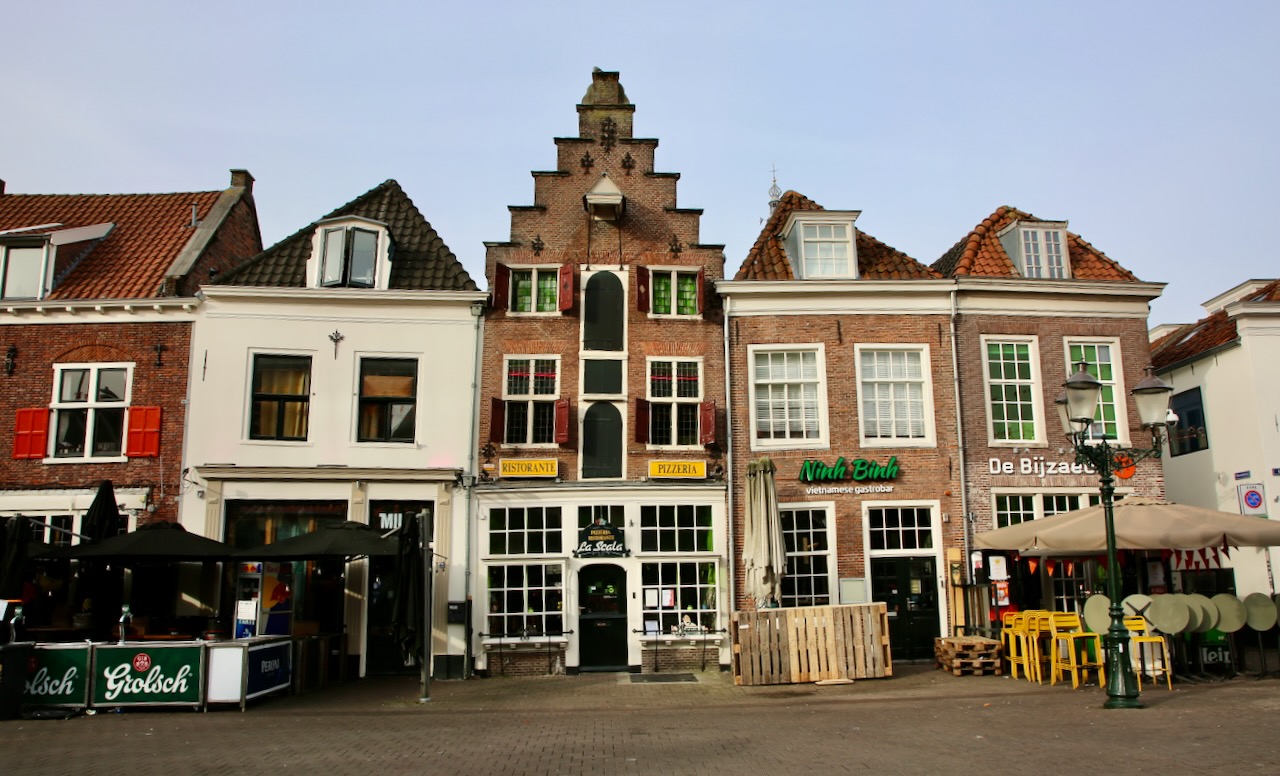
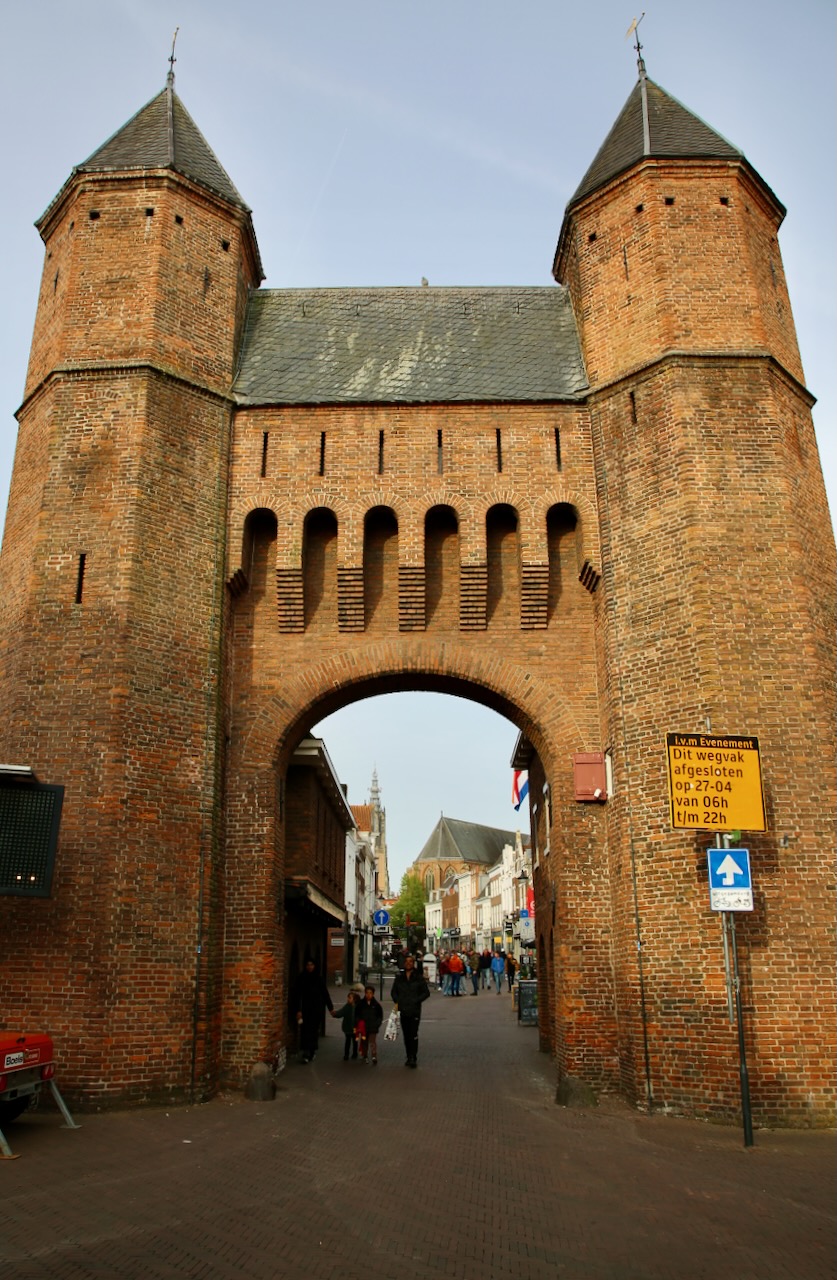
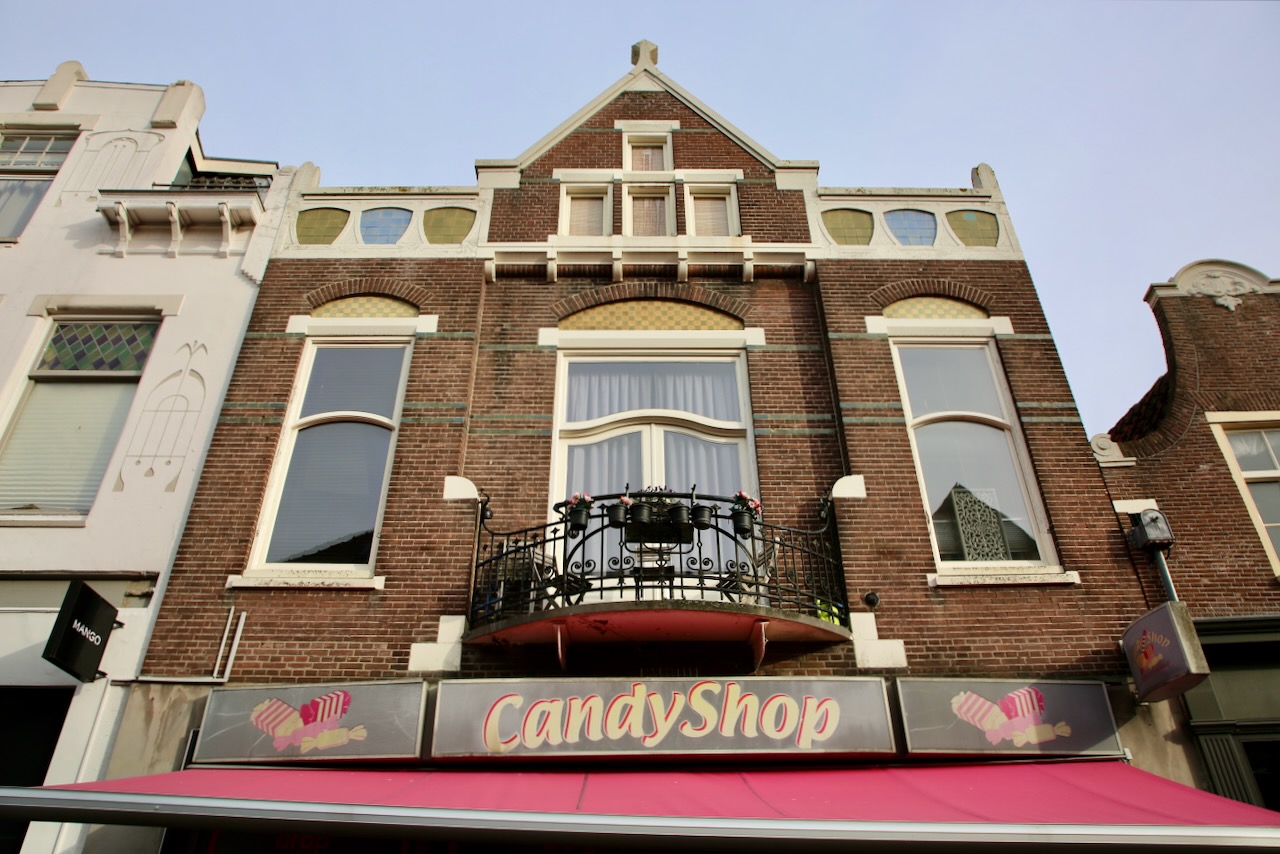
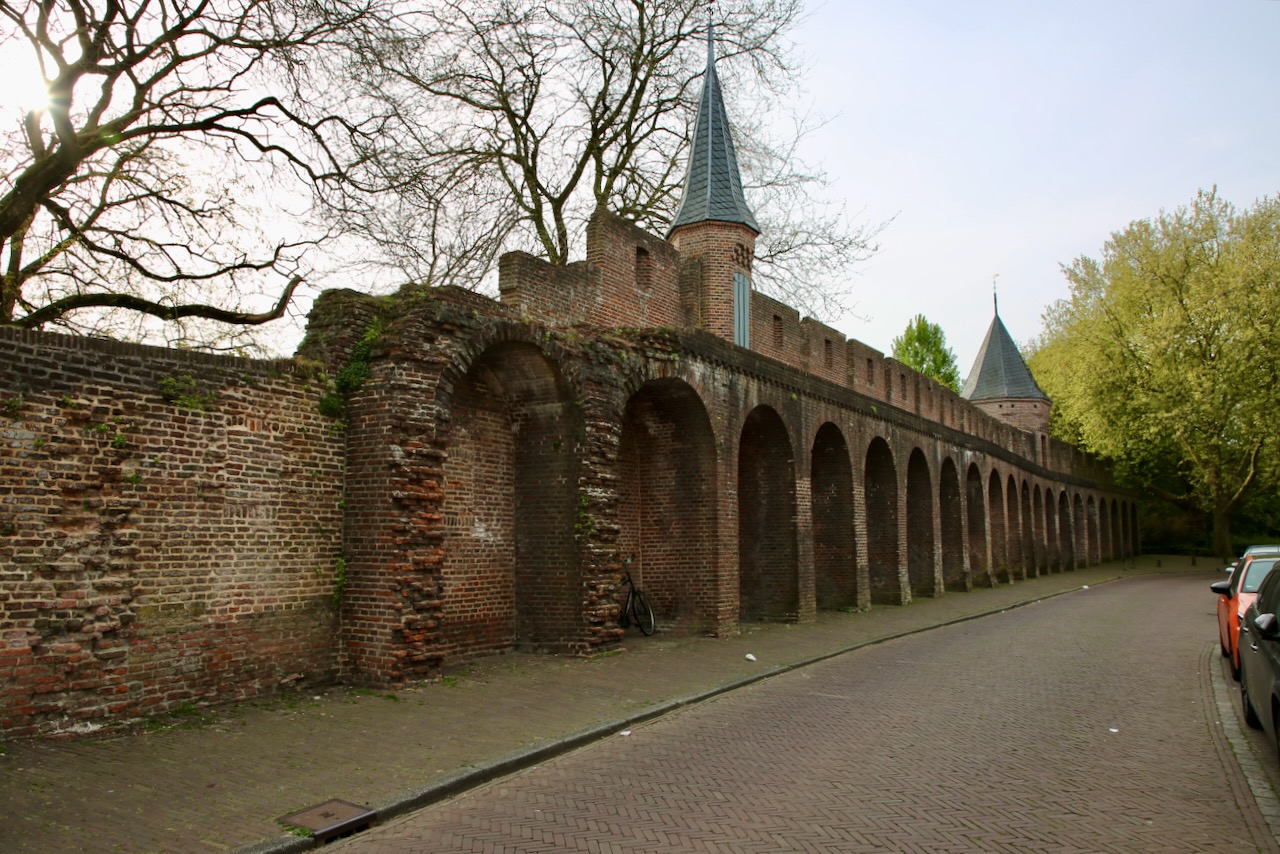
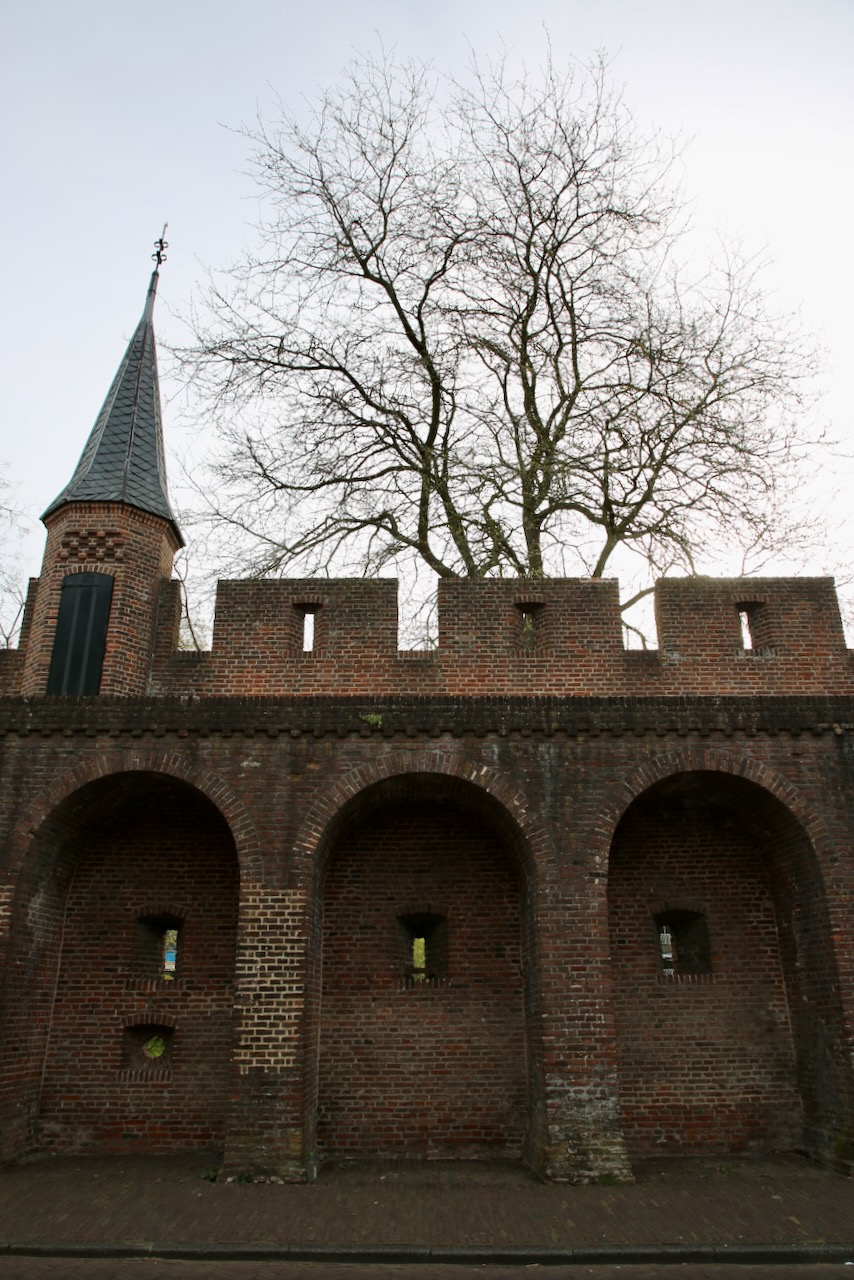
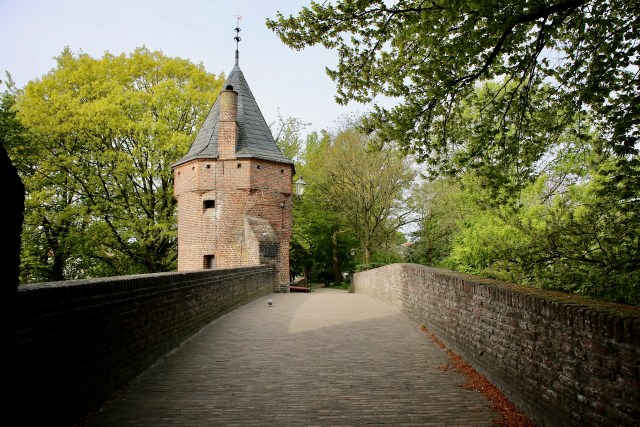
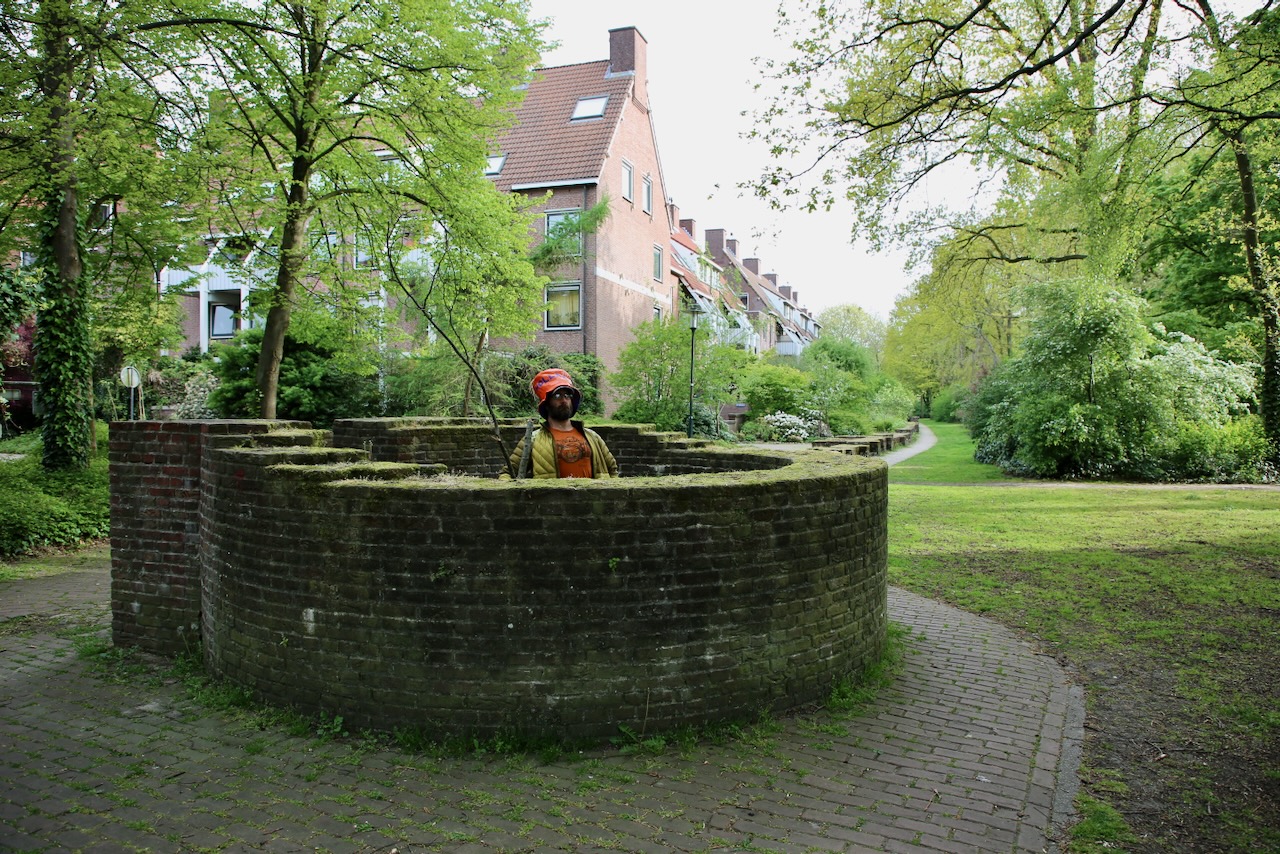
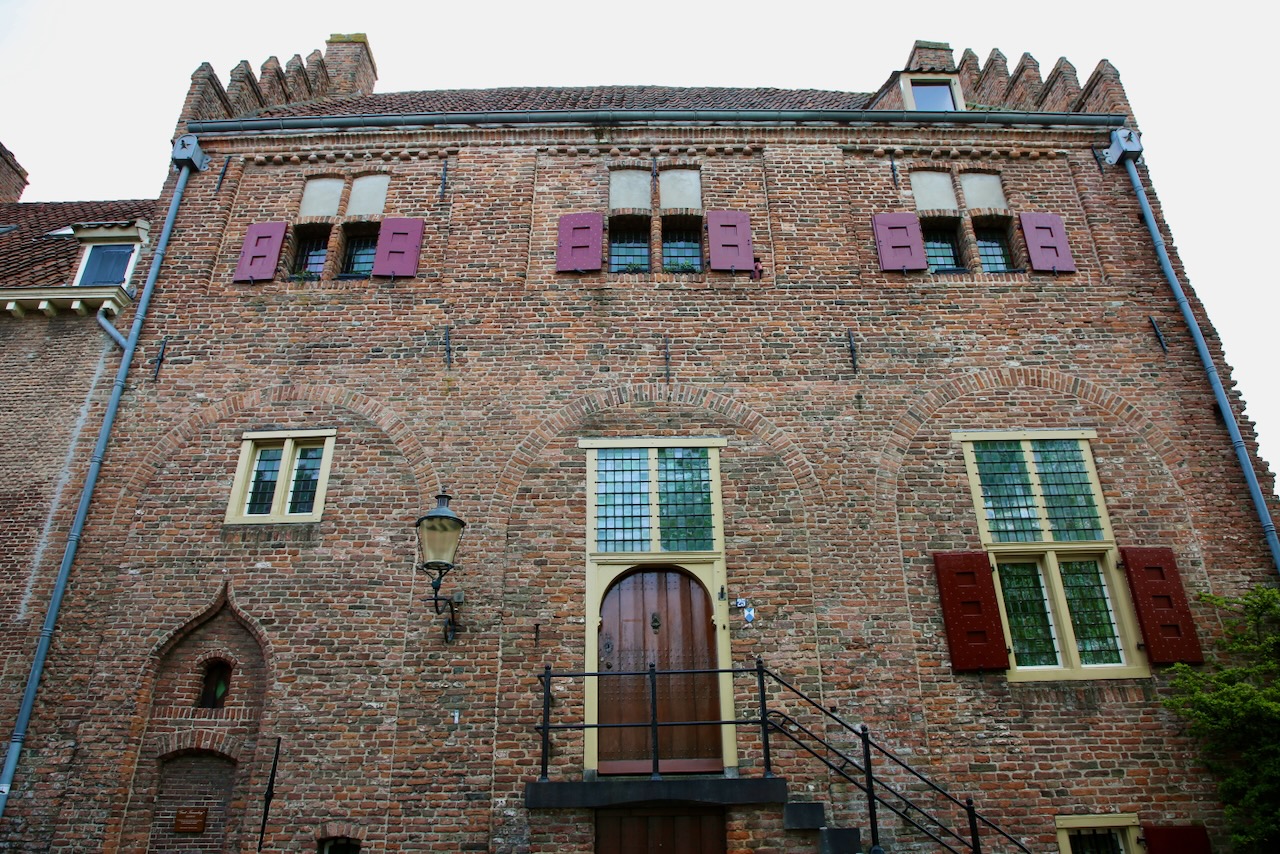
Continuing our walk through history, Gert will take us along the Muurhuizen (Wall Houses) that were built into the foundations of the first city wall around 1500, after a second, larger city wall made the inner fortifications obsolete. Hopping along in the grass is a Eurasian Blackbird (Turdus merula), the Latin meaning thrush, not poo. We see some bricked-up windows because of a reform introduced in 1812 that taxed homeowners according to the number of windows in their house. Similarly, in the 17th century, taxes were assessed based on the width of the house facade.
This explains the narrow and deep houses with false windows, as income taxes weren’t established until 1904. The United States would pass the 16th Amendment in 1913, which gave Congress the authority to tax income without apportionment (sharing proportionally rather than equally). The first tax was 1% on incomes over $3,000, with higher rates for the wealthy. There is a man brewing coffee and lowering cups in a basket out of his window to be sold below. With the temperature still in the high 50s, we will find a shop inside to enjoy our hot caffeinated drinks.
Caleb and I get stroopwafel and tiramisu coffees. The whipped cream, with waffle or sprinkles, comes in a small bowl so that it doesn’t melt, unless you want it to. I like that it allows each drinker to choose how much they want. Gert gets a regular coffee, and we sip, chat, and watch the young and old around us take a break on their holiday. The culture here is laidback, though efficient and innovative, unlike the hurried lifestyles of South Korea, Japan, and the United States. I appreciate not feeling rushed in line, at a restaurant, or even with public transportation.
Gert points out an antique wooden wagon wheel hub that can be repurposed into a candle holder. On another tarp is the largest collection of Donald Duck books and magazines that I’ve ever seen. His weekly publication has had a massive following since 1952. A majority of Dutch children and some foreigners use it for language learning, and the Dutch culture references make it a household staple for all ages. We are in search of stumbling stones, brass-plated concrete cubes embedded in the sidewalk that have been placed in front of the last known voluntary residences of Holocaust victims.
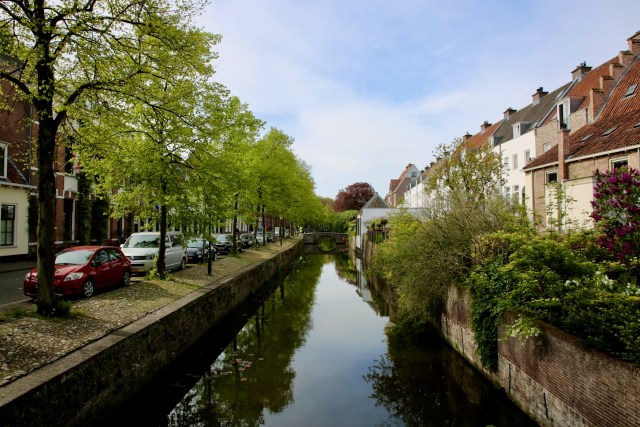
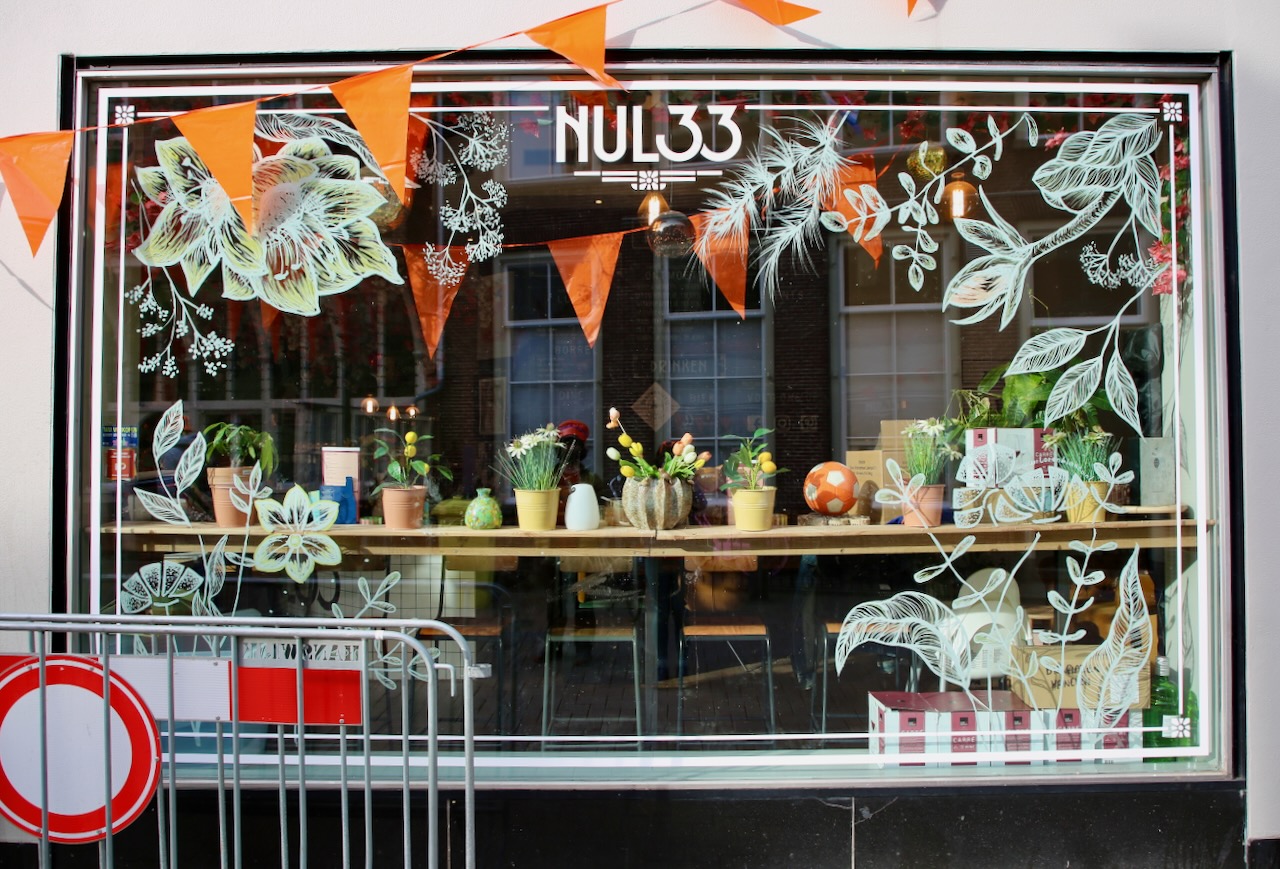
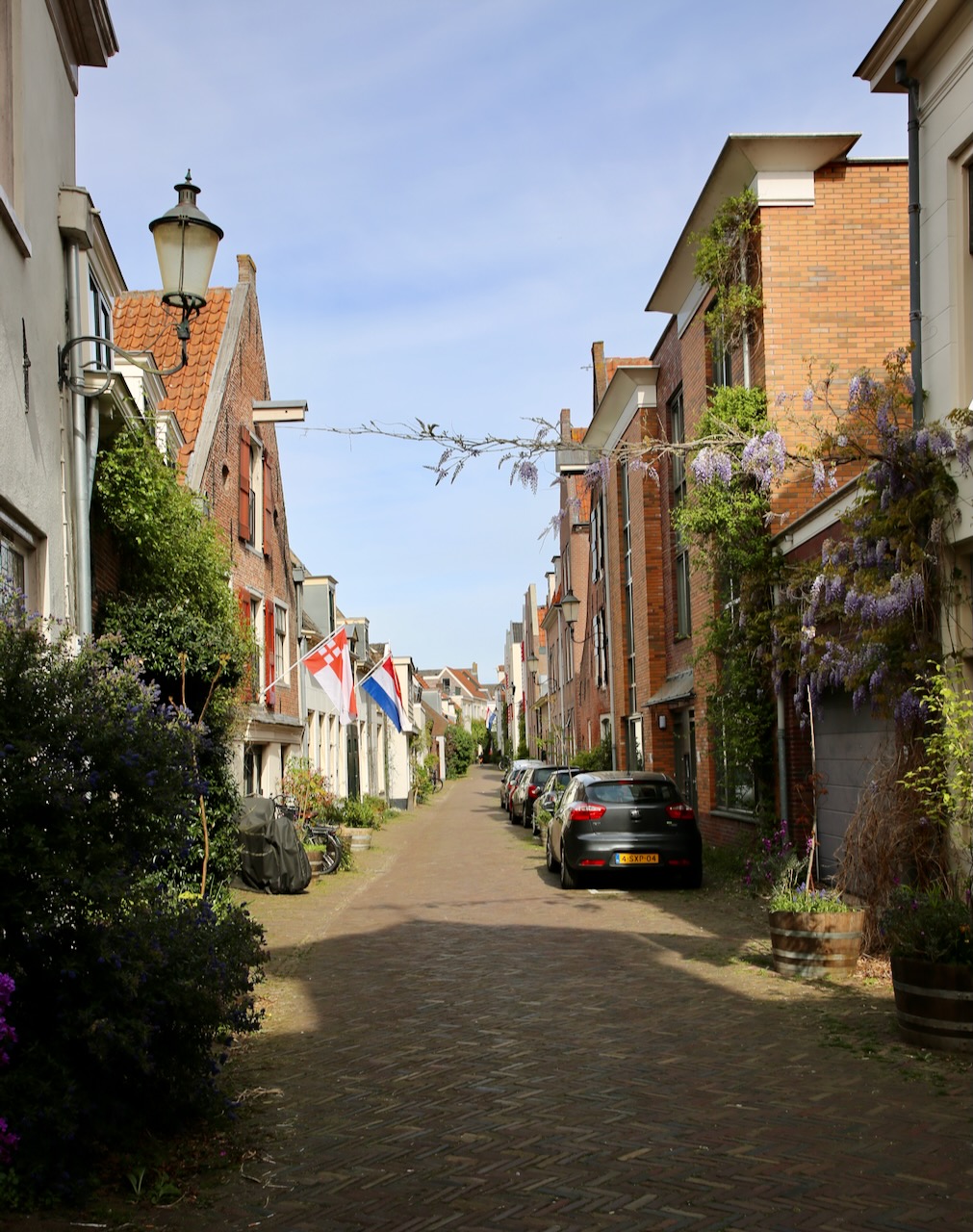
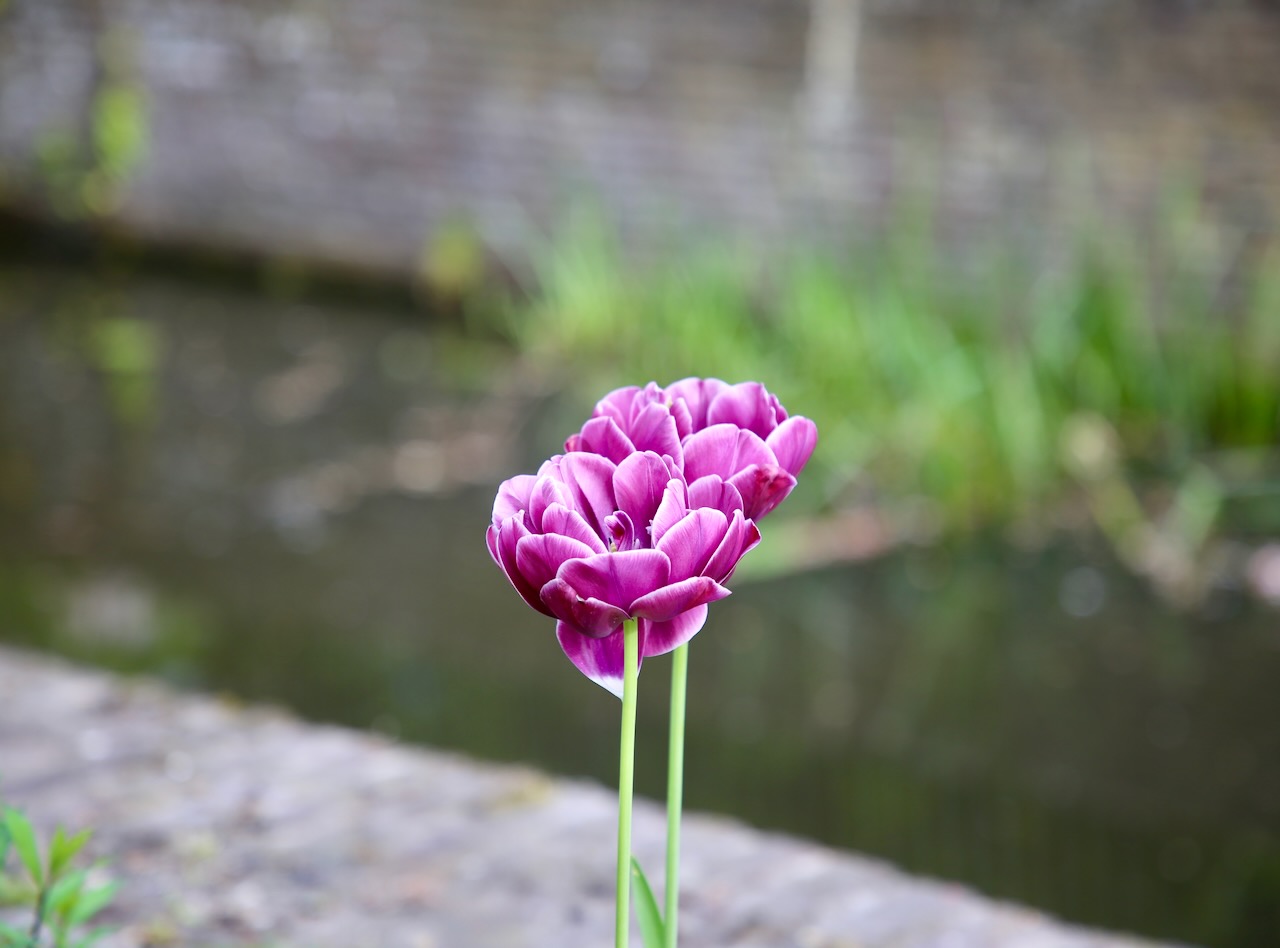
In America, we want to throw away our history, while parts of Europe ensure that the ways of our ancestors are frequently remembered and learned from constantly. The neighborhood also seems concerned with keeping the windows and doorways interesting for passersby. There are doormat designs built from the sidewalk bricks that add a touch of personality. There are paintings, flowers (candy stripe azaleas, possibly Champagne Bubbles orange poppies, and yellow tulips), and handicrafts displayed in the windows. We will ride our bikes to Leusden to meet up with Anouska and let someone else have prime bicycle parking.
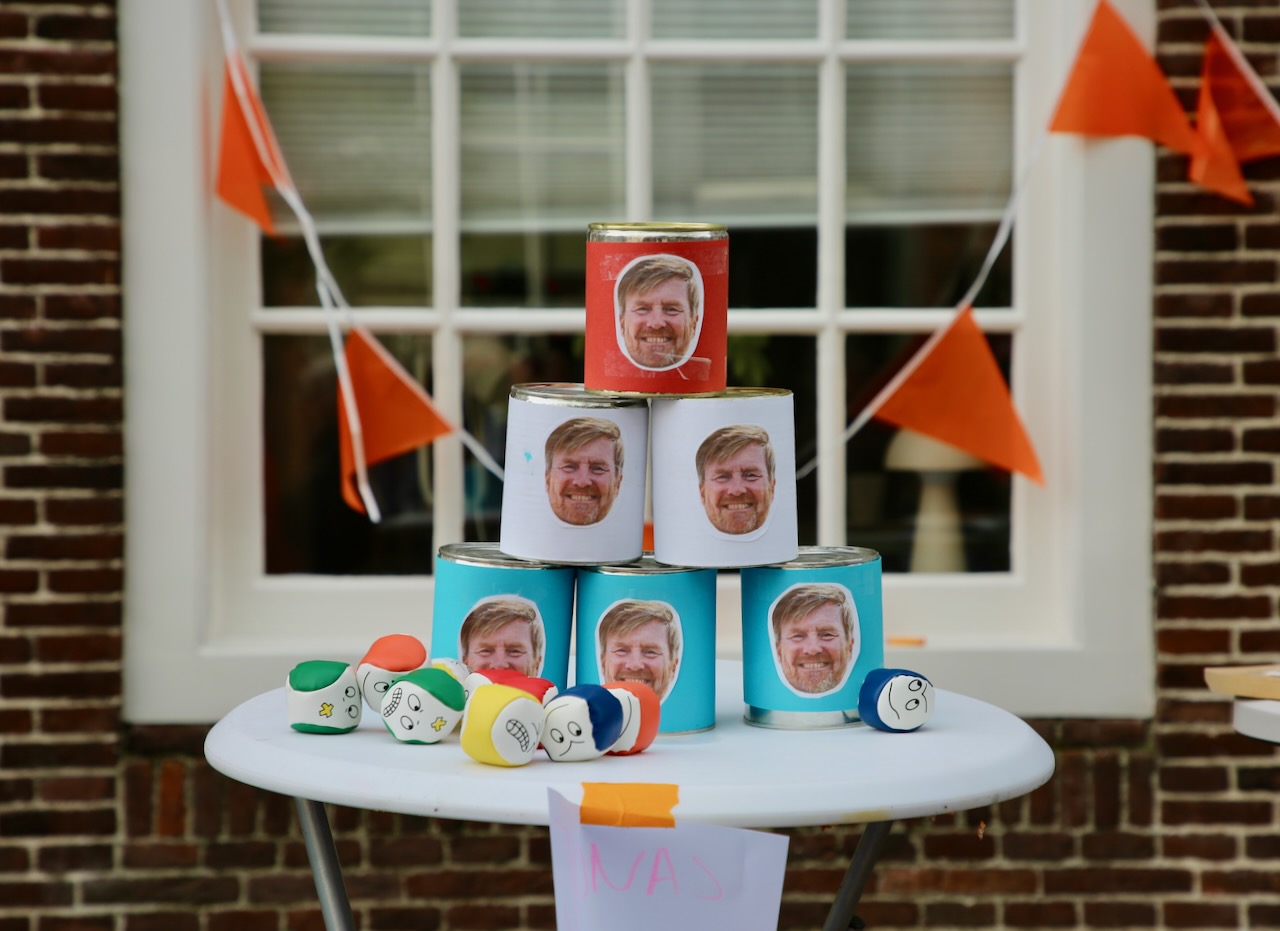
There are fort-building Legos, cotton candy stalls, Takkie (a little Dutch dog) on sweaters and dresses, boys and men wearing capes, a few people in wooden shoes, and neighbors drinking orange tea or beer from orange cans, and eating orange marble cake and orange cream puffs. Gert gives us the house key so that we can get in before they get home. He tried to pick up a King’s Day treat, but the shop was closed. I have a six-herb (hibiscus, lemongrass, blackberry leaves, rosehips, peppermint, and lemon verbena leaves) tea while we watch the Royal Family in Dokkum.
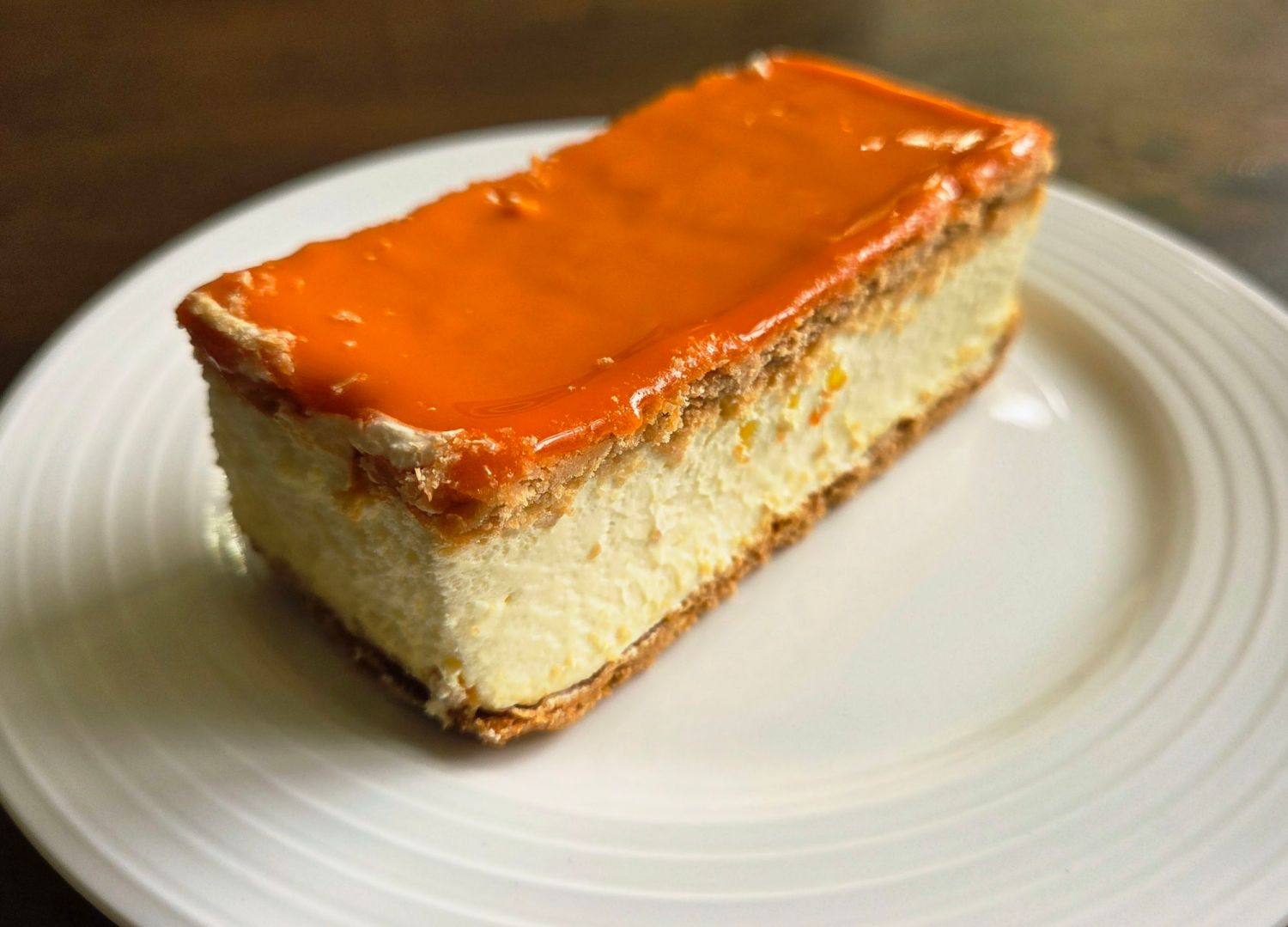
We get to snack on brown bread with aged Gouda or with butter and mix hagelslag (meaning a hailstorm of sprinkles). Of course, we have both. Gert explains that if you can see the butter, you don’t have enough chocolate sprinkles. A bit later, it is time for our official tasting of the oranje tompouce (puff pastry with custard), and just like their sandwiches, which can be eaten top and bottom separately, that is how Gert suggests we eat these. I will take back-and-forth bites accordingly to keep one hand clean. It is fun to be a part of this tradition.
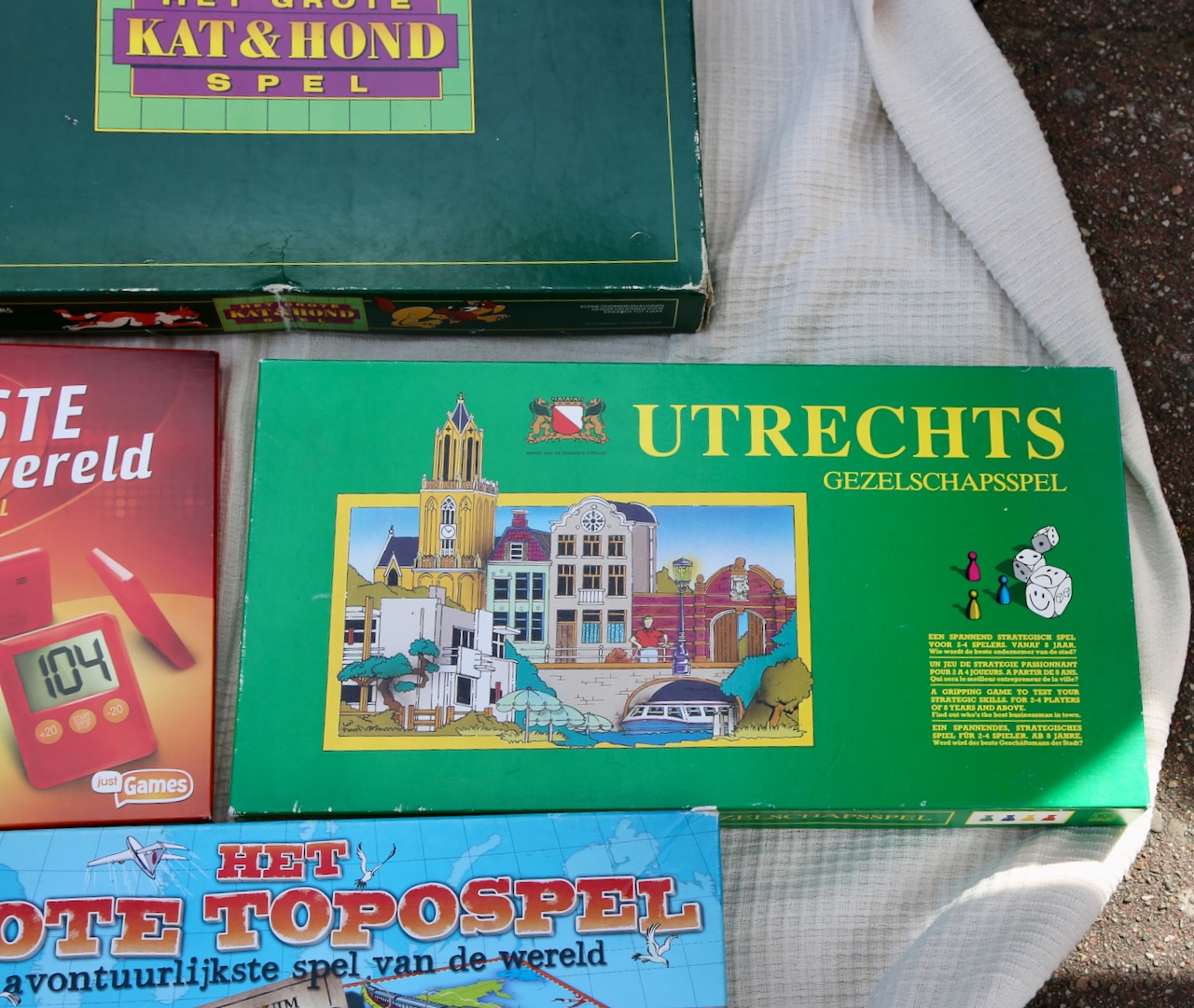
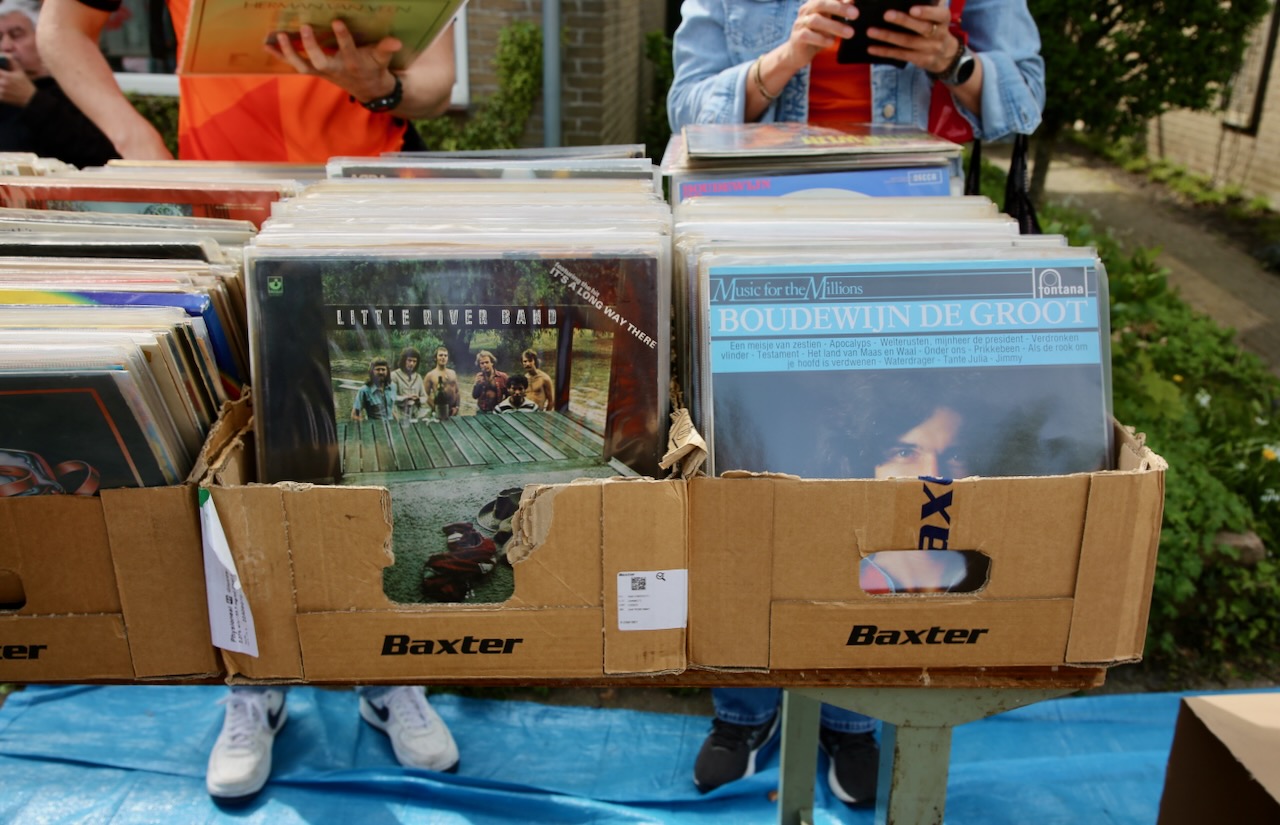
Gert will nap while Anouska cooks, so we busy ourselves with a walk through clouds of mating non-biting midges that thrive near wet areas. I’m grateful for not being stung, but also scared of swallowing a few pairs as we return the kind hellos from children and adults enjoying the outdoors, too. Apparently, my cough is getting ridiculous, and with their trip to Japan upcoming, I understand the concern to make sure I’m ok and that my cough doesn’t become more than a pest to me. I would feel terrible, which is why I eagerly went with Anouska via bicycle to one of the closest markets for a bottle of anise syrup (yuck) and some strawberry cough drops (yum).
She was riding ahead of me, as I’m used to riding behind Caleb, but here they ride next to each other, which I gladly did. It does make talking easier, and they are quick to move if oncoming cyclists need the space. I saw a couple where the man rode with his hand on the woman’s back, just as if they were walking through a park. Even the very young are taught to be aware of those around them, which is a great quality to have. Tonight’s dinner is a traditional Dutch comfort food that originated as a winter staple for farmers in the 1600s and continues to bring warmth and nutrition today.
Anouska’s stamppot consists of sausage, mashed potatoes, onions, and carrots. I’m used to mixing my taters (term can also mean homerun or a rare whiskey hoarder) with corn, but I will take seconds of this simple and hearty dish. Dessert will be a classic butter cookie with orange icing and sprinkles. I will have two of these also. I don’t remember the context, just the reaction of Gert and Anouska to the word ‘spouse’ and the fun they had calling each other this amusing word. I should strive to have each day be so celebratory and uncomplicated.