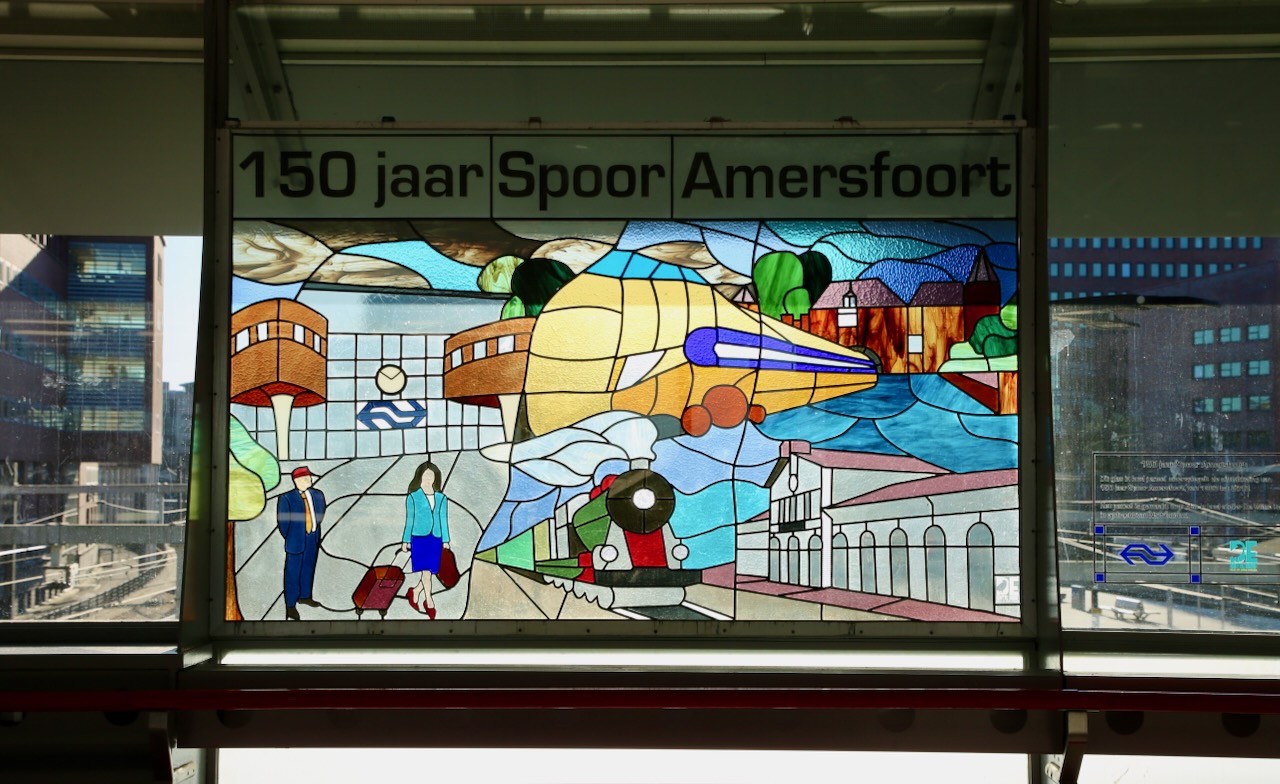
I sleep through the night and wake up early and refreshed. I’m glad to be feeling better. As I come downstairs, Anouska is just finishing a bike ride in preparation for all the sitting she’ll be doing on their flight to Japan. I drink a coffee, and we’re out the door after hugs. We pass a field of cows while sitting in the quiet train car (symbolized by a person with headphones, a book, and a laptop). This doesn’t seem to cover apple etiquette, as I imagine the bovines eating more delicately than the woman across from us.
I lead us southwest out of Den Haag Centraal instead of west towards our destinations, but this is fortuitous, and we end up at the Nieuwe Kerk. It is a Dutch Baroque church dating to the 1650s, but it ceased to be a church in 1969 and is now a concert hall, which explains why it is closed. The roof spans the 31.4 m by 15.7 m building without supporting pillars and supports the 53 m tower. Some people resting here: De Witt brothers (lynched politicians), Reinier Pauw (mayor who helped found the VOC), and Baruch Spinoza (philosopher who died from grinding optical lenses).
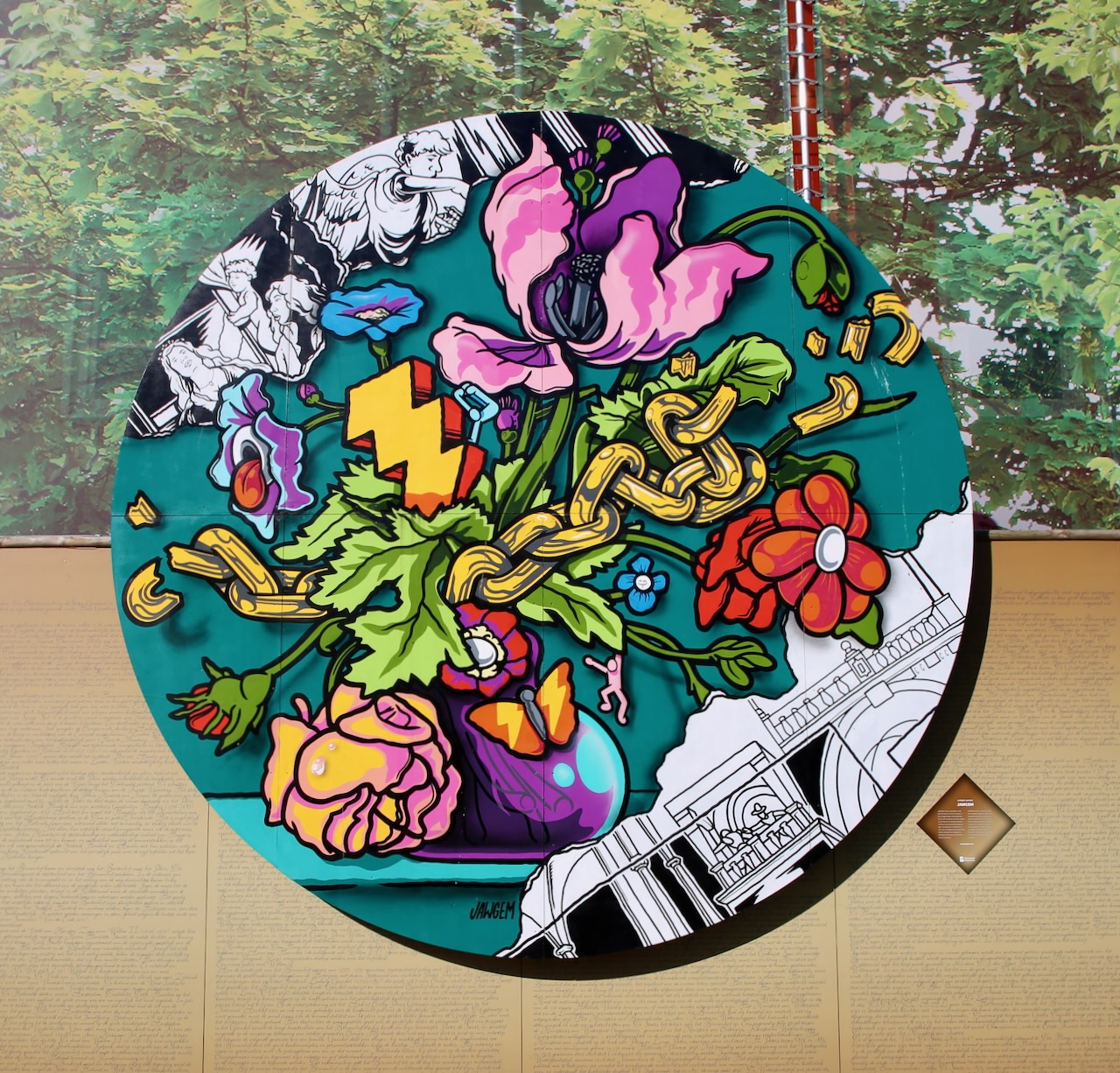
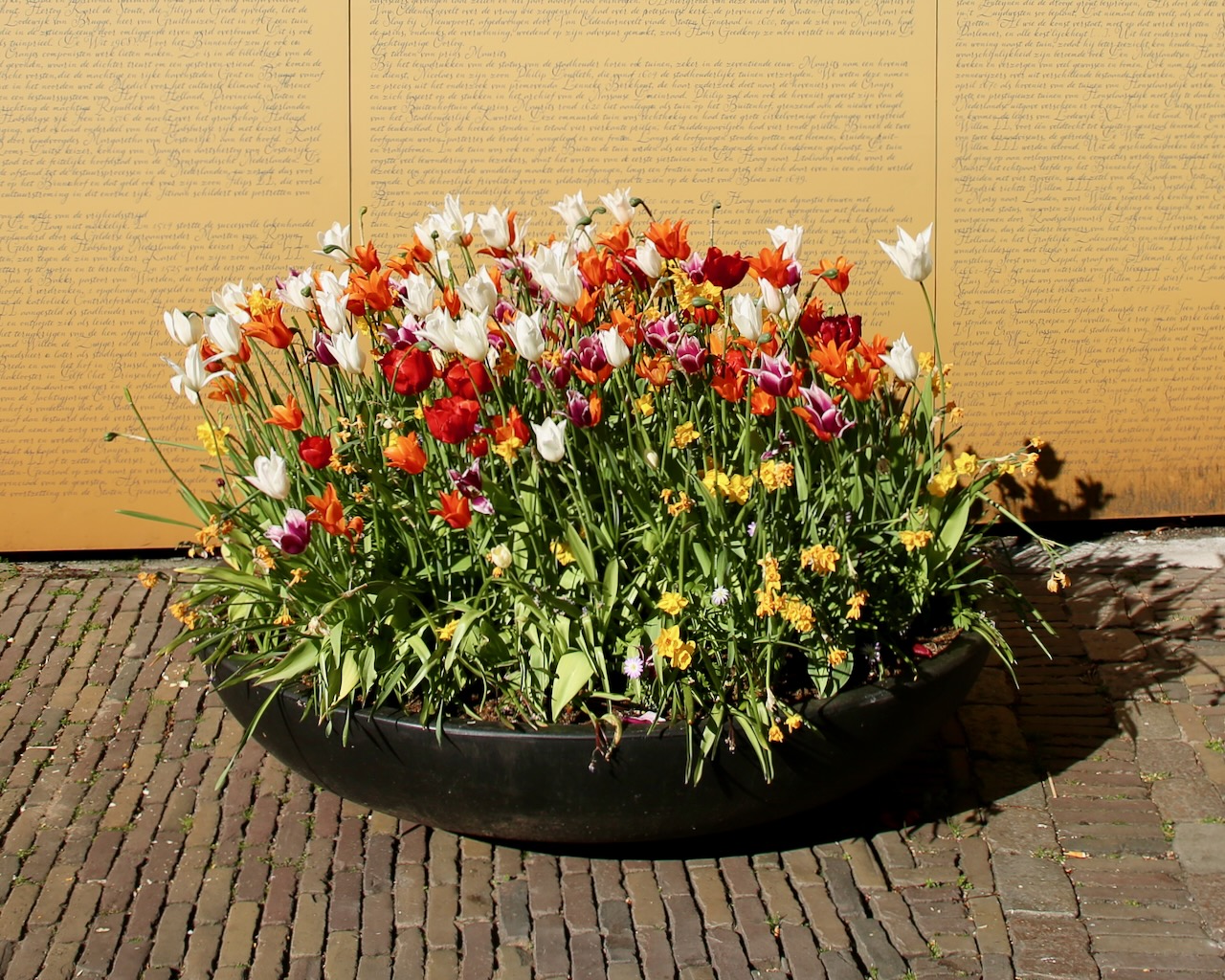
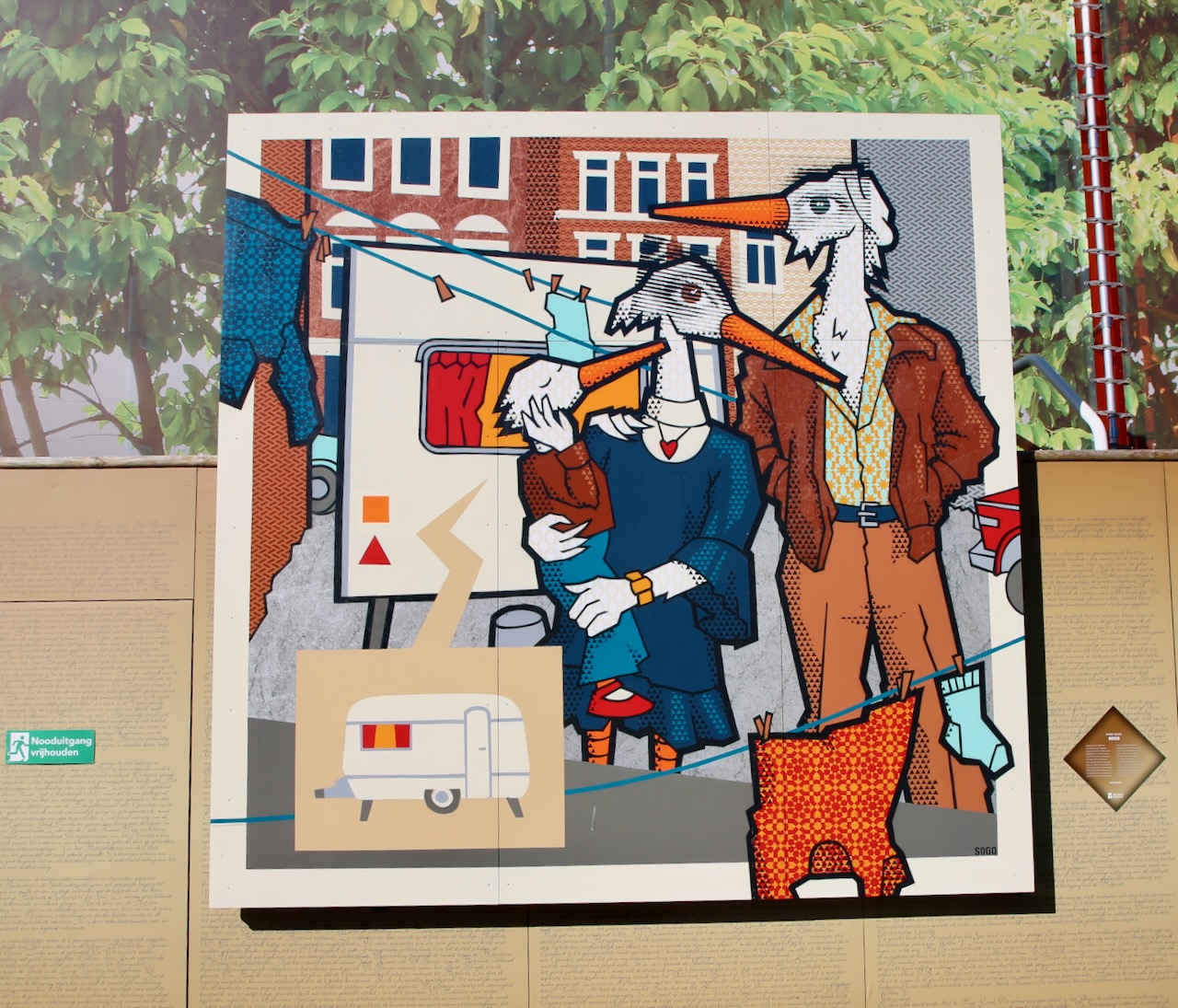
I had planned on the Binnenhof being under renovation. What I didn’t expect to find was some history and art on the containment walls. William II commissioned the palace in 1248 after being crowned king in Germany. In 1570, the Binnenhof became the center of government for the Republic of the Seven United Provinces of the Netherlands. It was even more surprising to find a viewing tower built just for curious passersby. I’m excited for this opportunity, and it’s free. There are 4,000 rooms, of which none are the same, and the Netherlands’ first tennis court was built here around 1500.
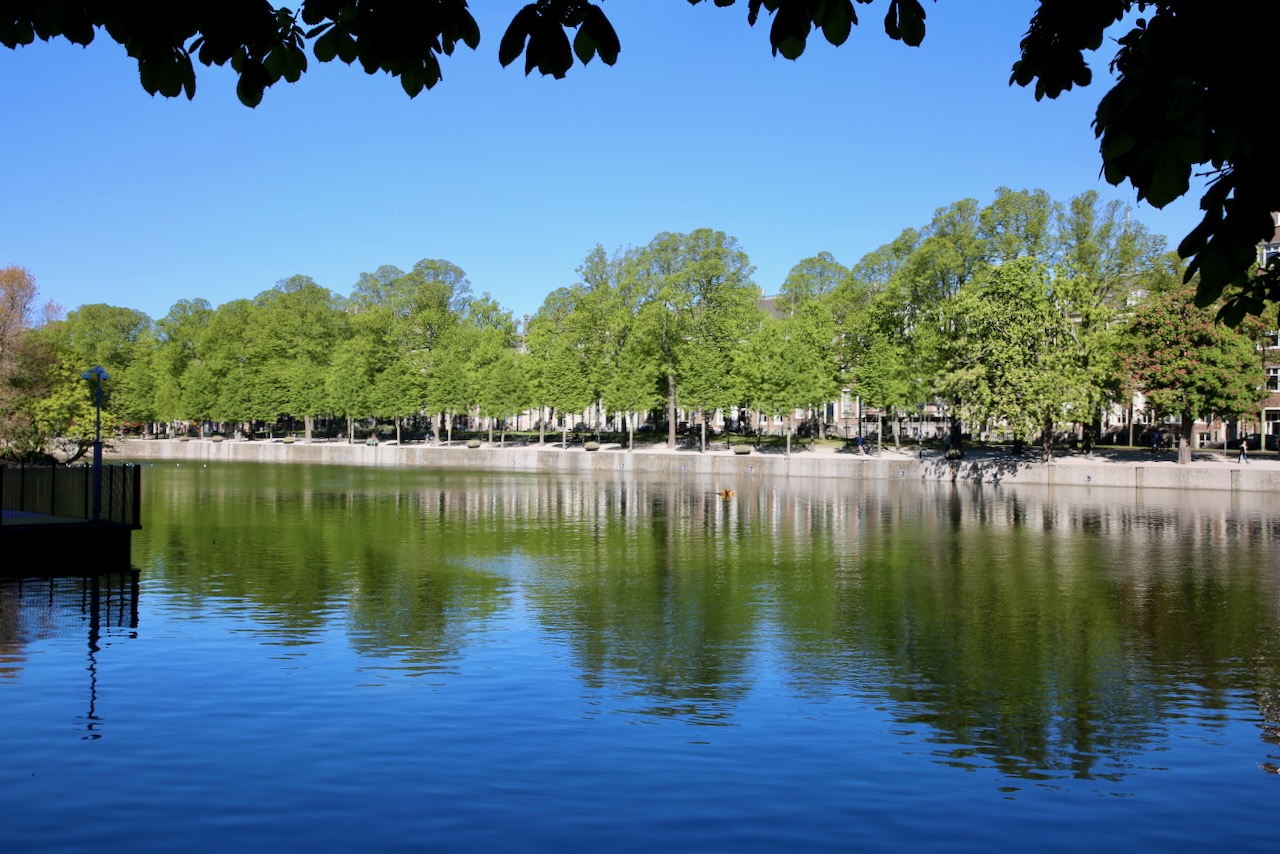
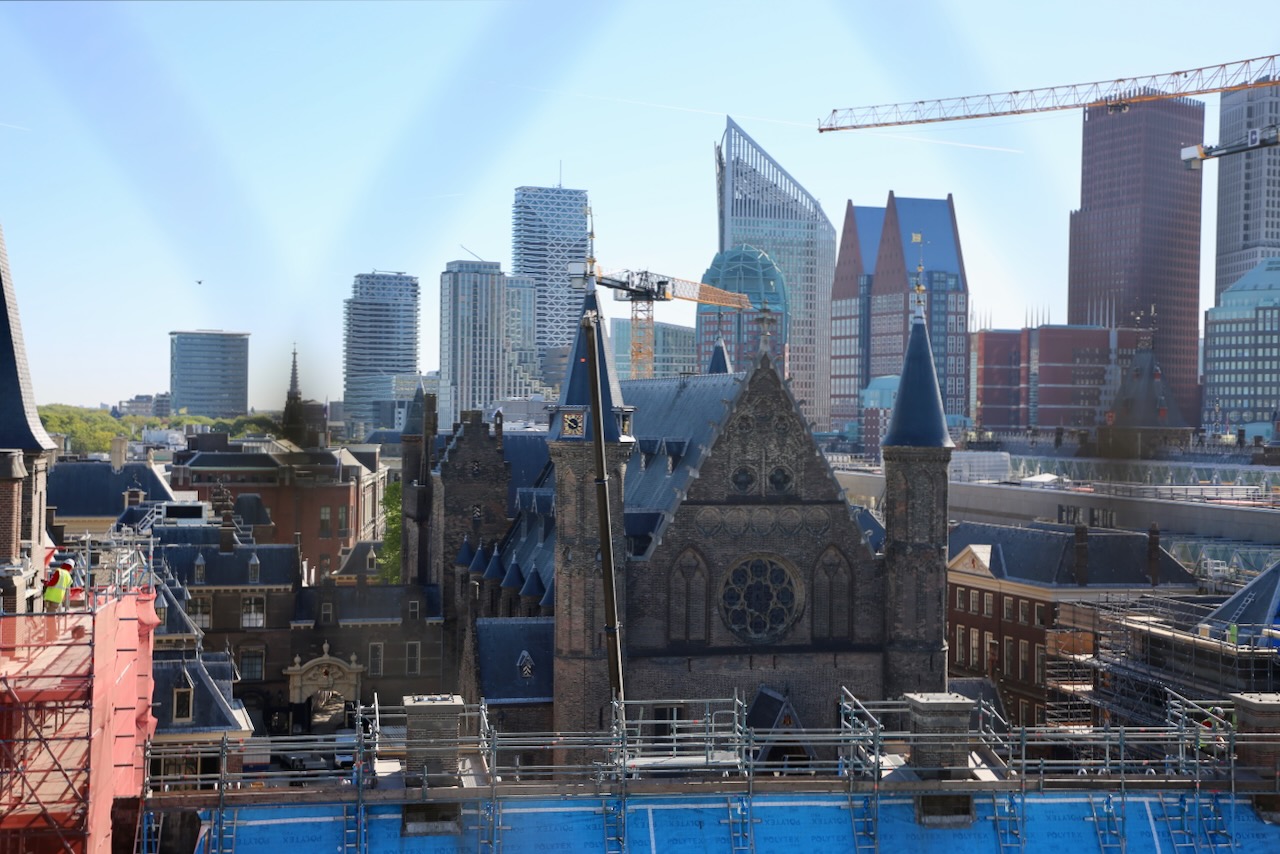
In the 60s and 70s, the Binnenhof served as a car park that was regularly full and became car-free in 1983. The canal that surrounded the palace was filled in 1862, and the renovation will restore part of the Hofgracht. Between 1880 and 1924, trams ran through the Binnenhof, first horse-drawn and then electric in 1906. After a 360° photoshoot, it’s time for coffee, as well as yellow velvet cake (without the light cocoa of red velvet) and a glass of house-made pink (bubbly) lemonade at Dudok (in the restaurant, not the adjoining patisserie).
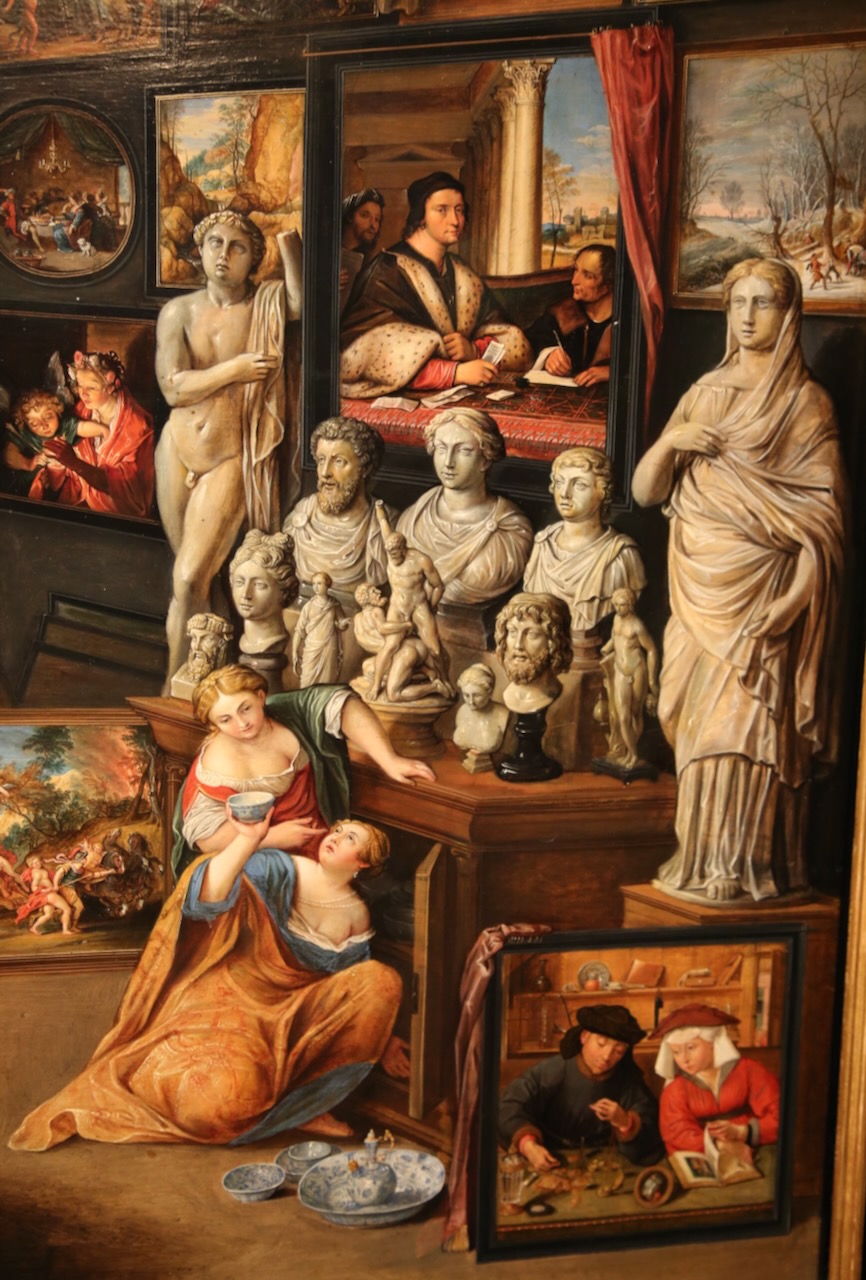
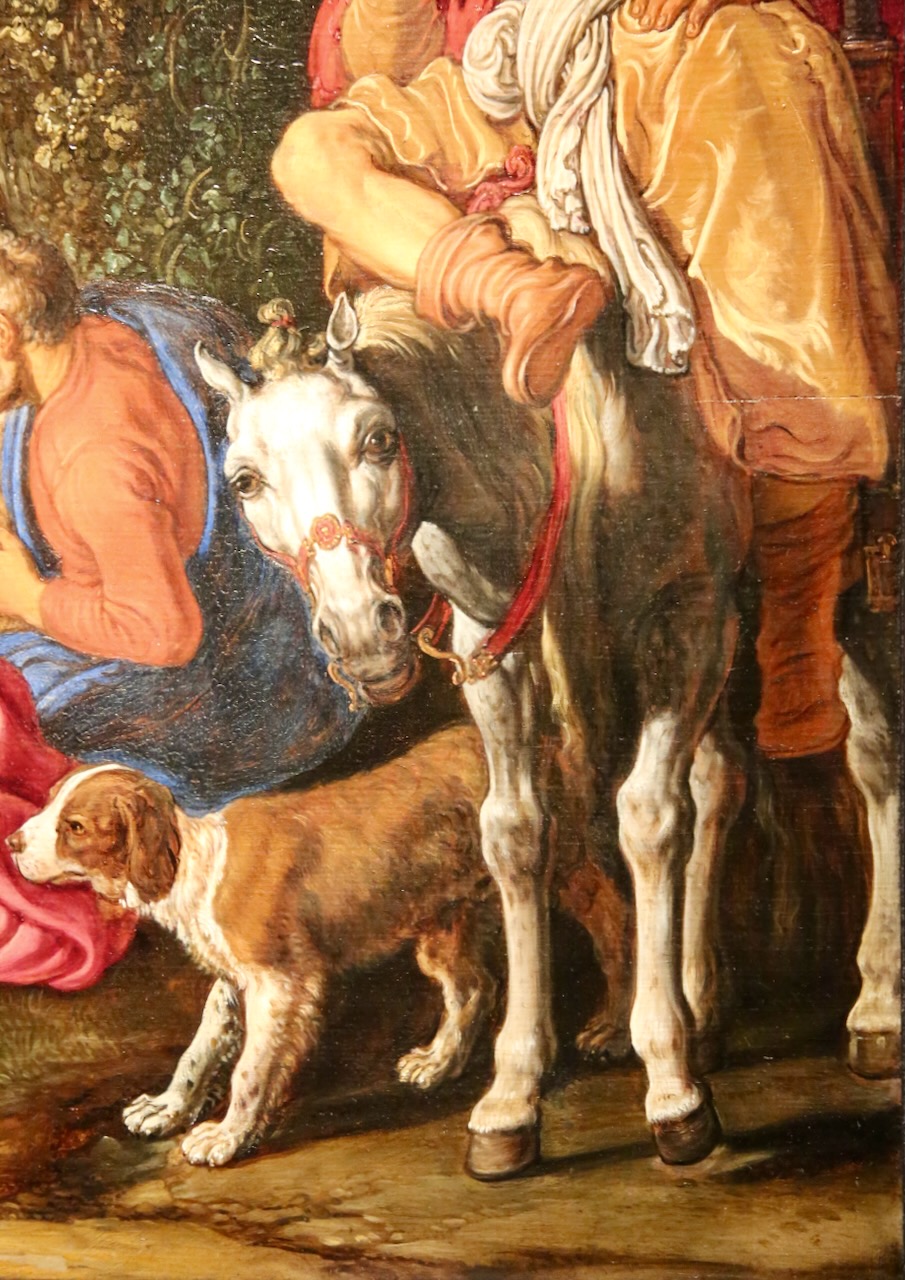
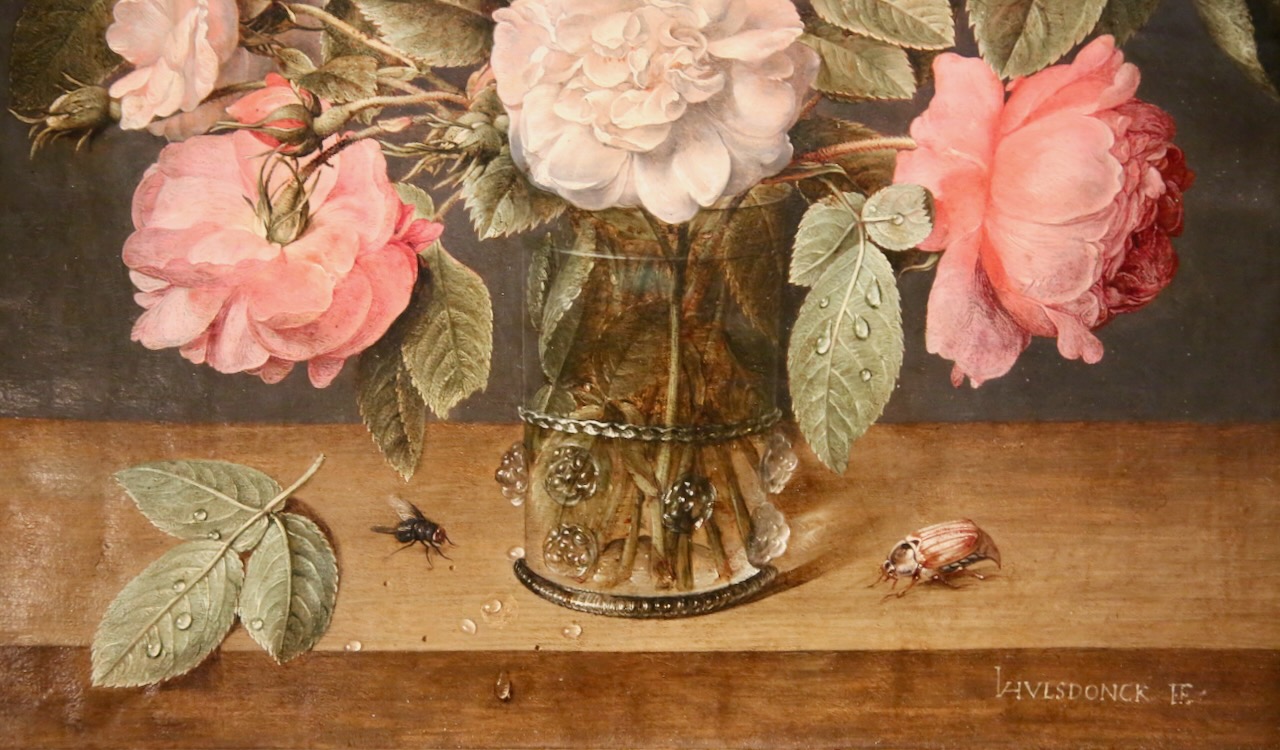
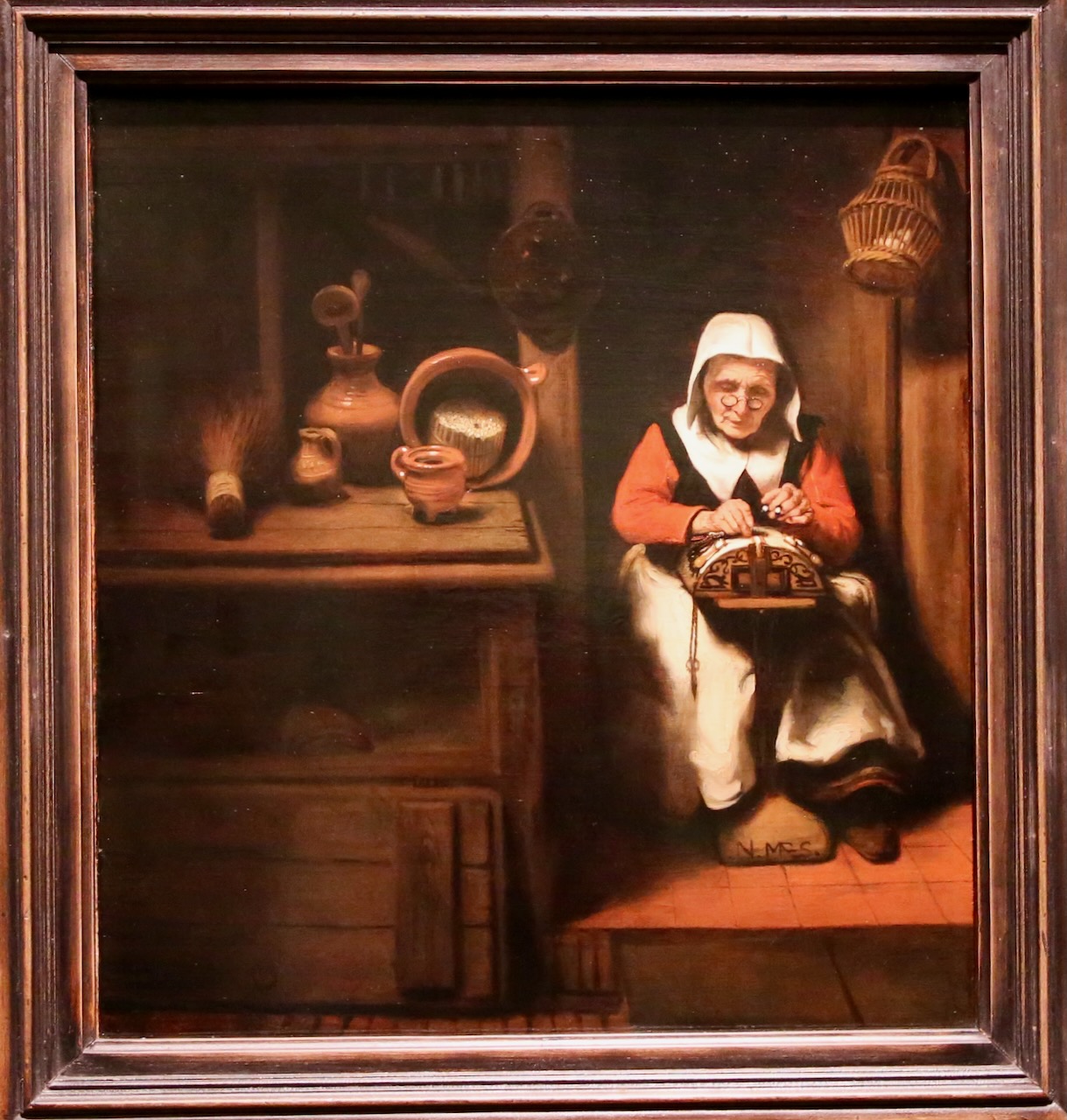
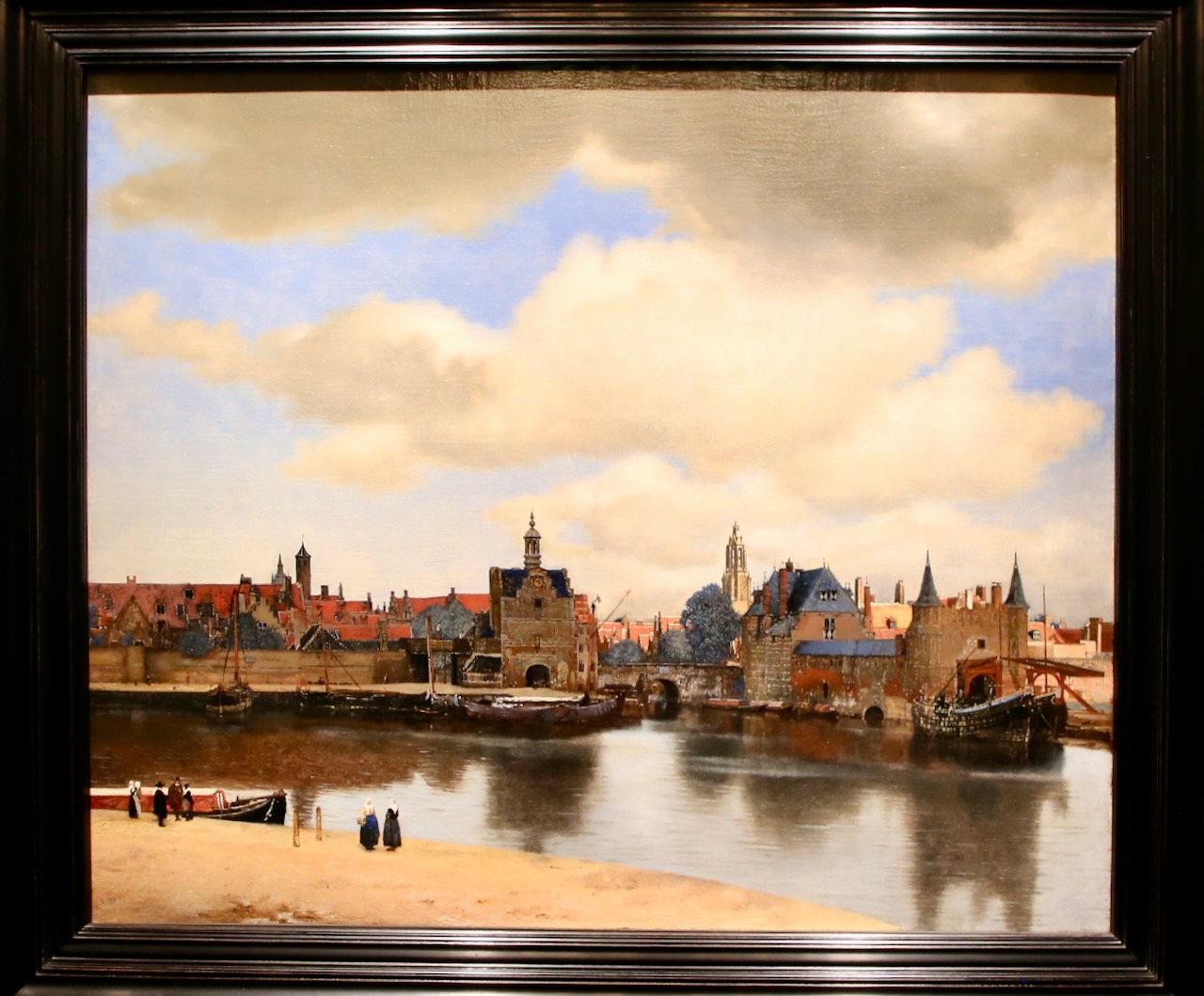
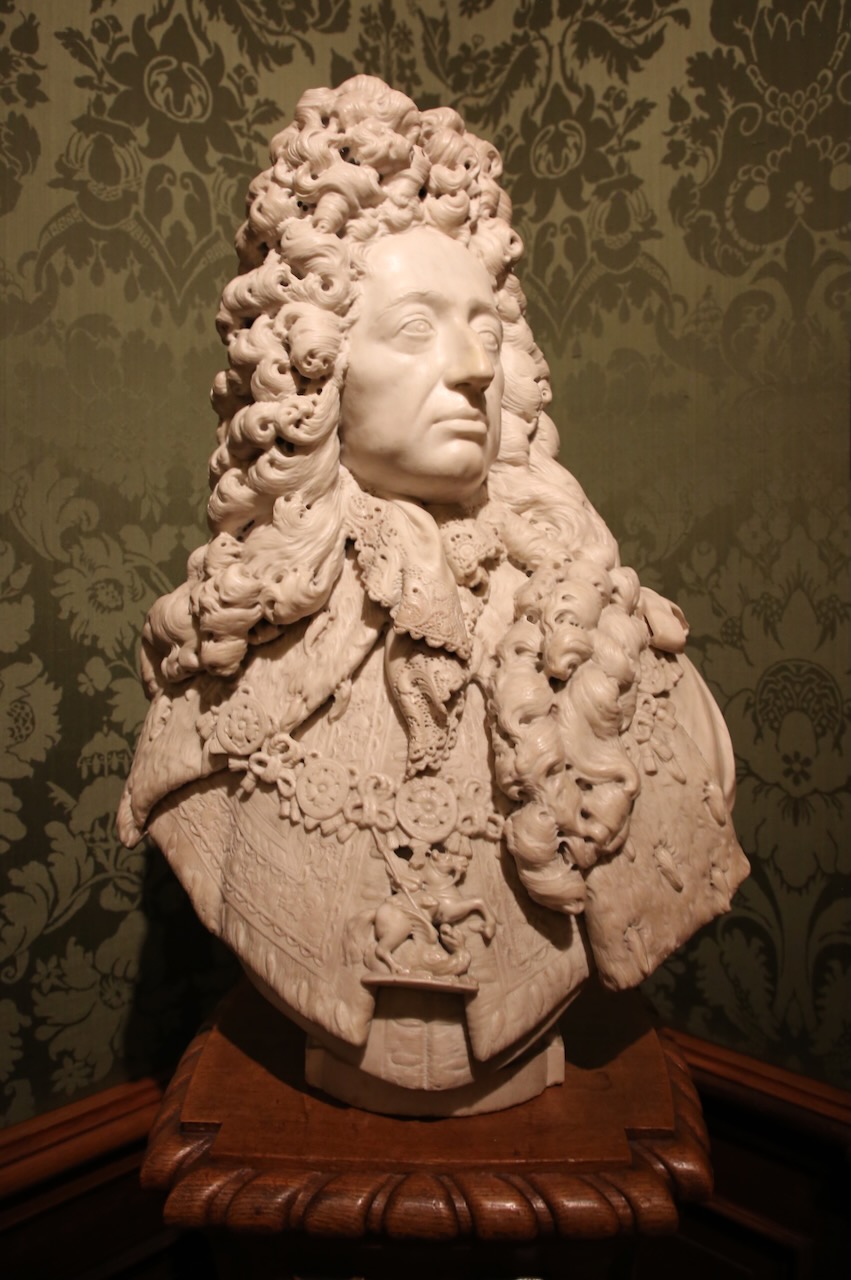
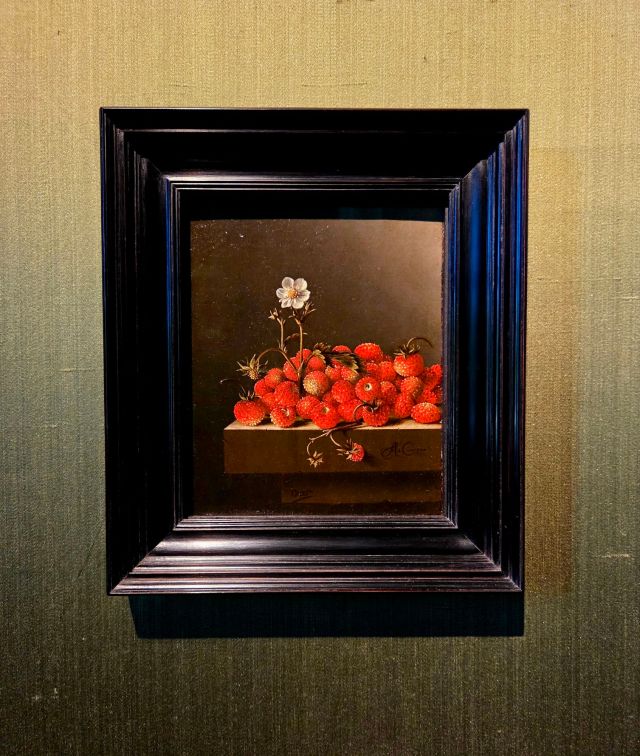
We time our visit to the Mauritshuis, a former city palace of Johan Maurits, built in 1641, just right. The tropical wood paneling and landscape murals were destroyed by fire in 1704. It was refurbished and a century later became a museum in 1822. It was renovated from 2012 to 2014 to add an underground foyer and more exhibition space. There are paintings of bouquets, foods, people, and critters. Some that stand out are the Miniature portrait of Peeter Stevens, 1790, Apelles Painting Campaspe, 1630, and Still Life with Cheeses, Almonds, and Pretzels, 1615.
Girl by a High Chair, 1640, features a three-year-old wearing gold jewelry with Brazilian sweet treats within reach. This girl lives in luxury, having her portrait painted, while the harsh reality of the sugar plantation workers remains invisible. While Albert Eckhout went to Brazil to paint turtles with teeth that they don’t have, he also did portraits of Indigenous Brazilians, Africans (at least 24,000 transported to Brazil), and mixed-heritage people as part of a colonial propaganda project. He was hired by Johan Maurits, who owned dozens of slaves and built his wealth and legacy on a slave-based system.
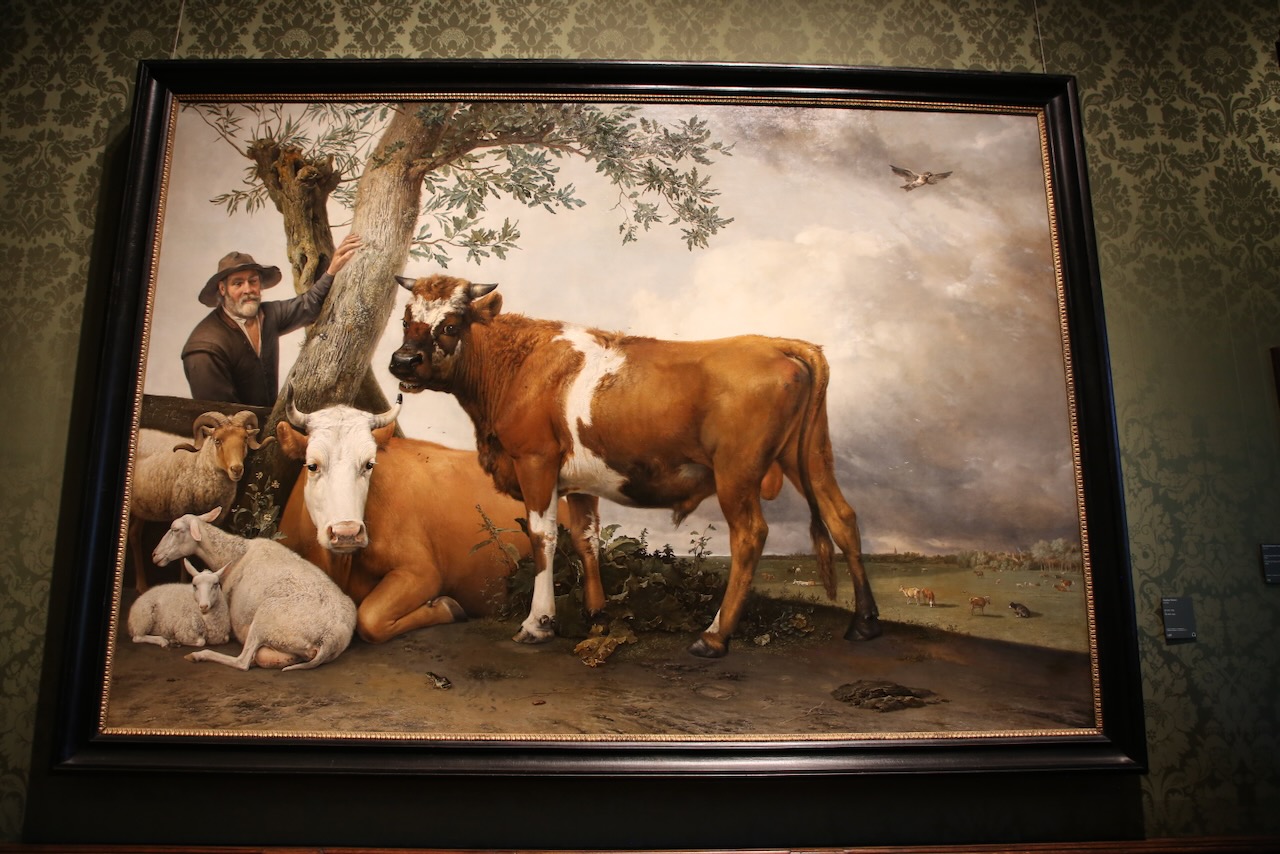
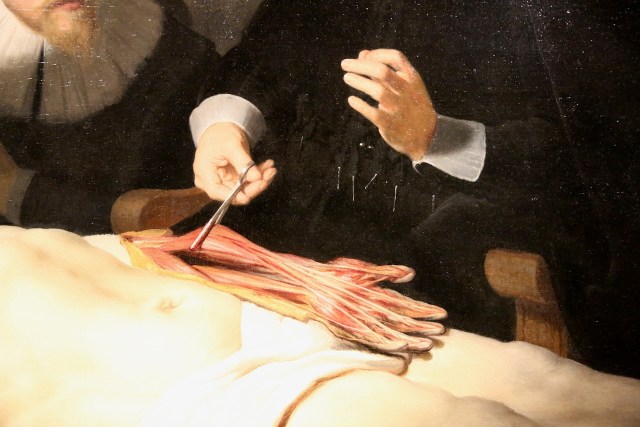
In a room is Rembrandt’s The Anatomy Lesson of Dr Nicolaes Tulp, 1632 (where one of the surgeons is attempting to look at the exposed forearm and hand on the table). On the next wall is a photograph of only a severed hand, similar to the one that Rembrandt never saw, but decided to add to the stump on the right arm. This contrast of barbaric amputation and scientific desire fascinates Stephan Vanfleteren, whose mom shares the surname of the criminal Kindt, the man on the table. In another room sits Paulus Potter’s masterpiece, The Young Bull, 1647.
The painting is life-size at over 7 ft by 11 ft. The realism, dedicated to an animal’s texture and detailed flies, makes the image almost photographic. This piece challenged tradition by treating the bull with the same importance usually reserved for human portraits and historical scenes. In the 19th century, it was considered as famous as Rembrandt’s The Night Watch, 1642. In 1715, the militia painting was cut to fit a smaller room; it was knifed in 1911 and 1975, and attacked with acid in 1990. Records show that the canvas has been treated 25 times, a measure of how important the painting is. I’d rather have the bull on my wall.
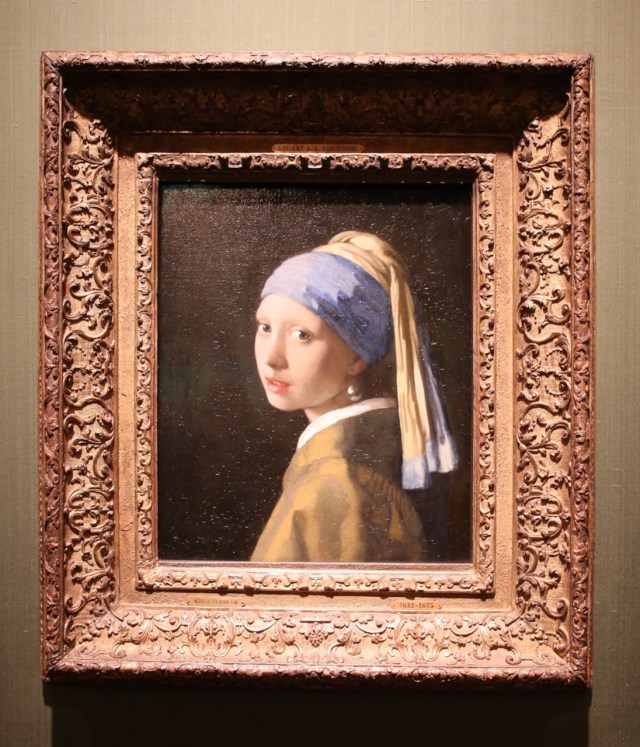
Most of the museum has a comfortable crowd, perhaps always another person admiring the same space as you, but when I got close to Vermeer’s Girl with a Pearl Earring, 1665, it was only for a moment. There seemed to be a school group, a foreign tour group, and others beginning to tighten their milling distance. These groups varied in height, so that I became enclosed on many levels and quickly left that room. Caleb hadn’t bothered jumping into the mosh pit, so he was glad to see me survive and follow him to the lobby, where the crowd is thick, like they are waiting for the doors to open outside a concert.
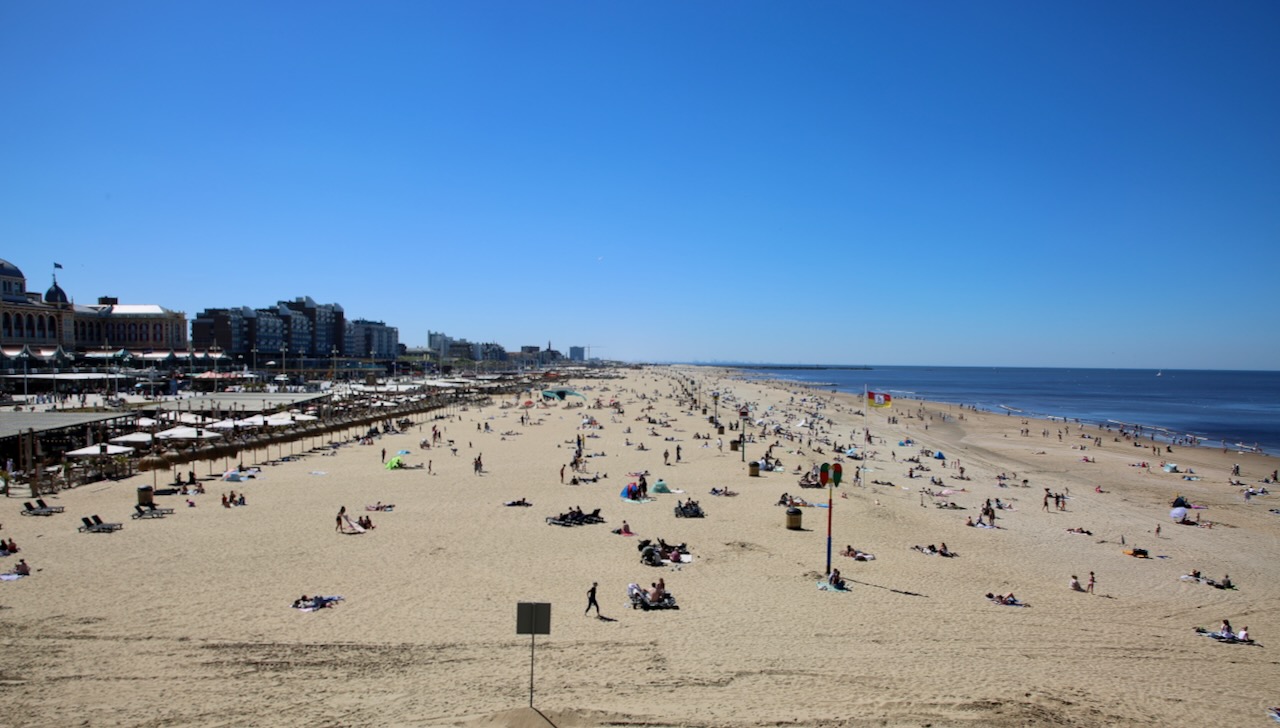
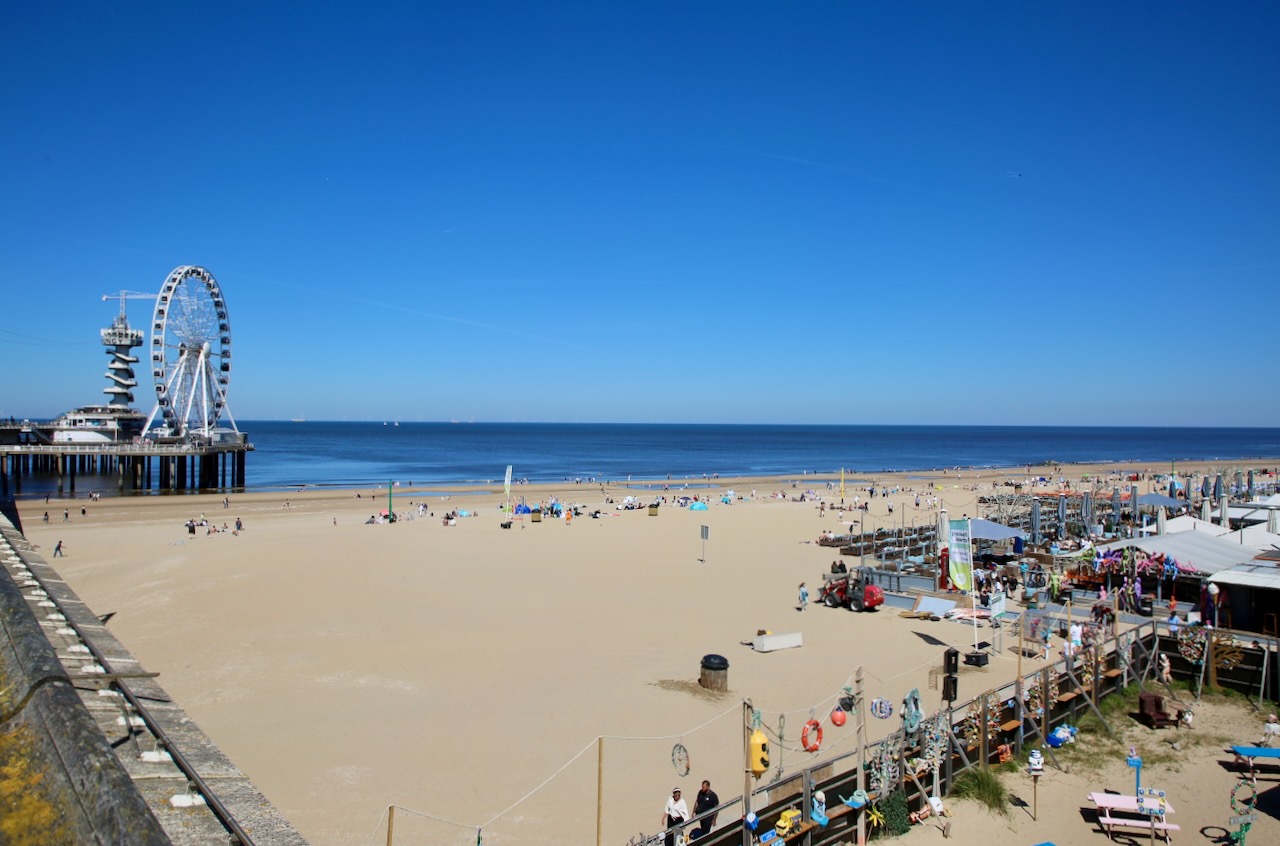
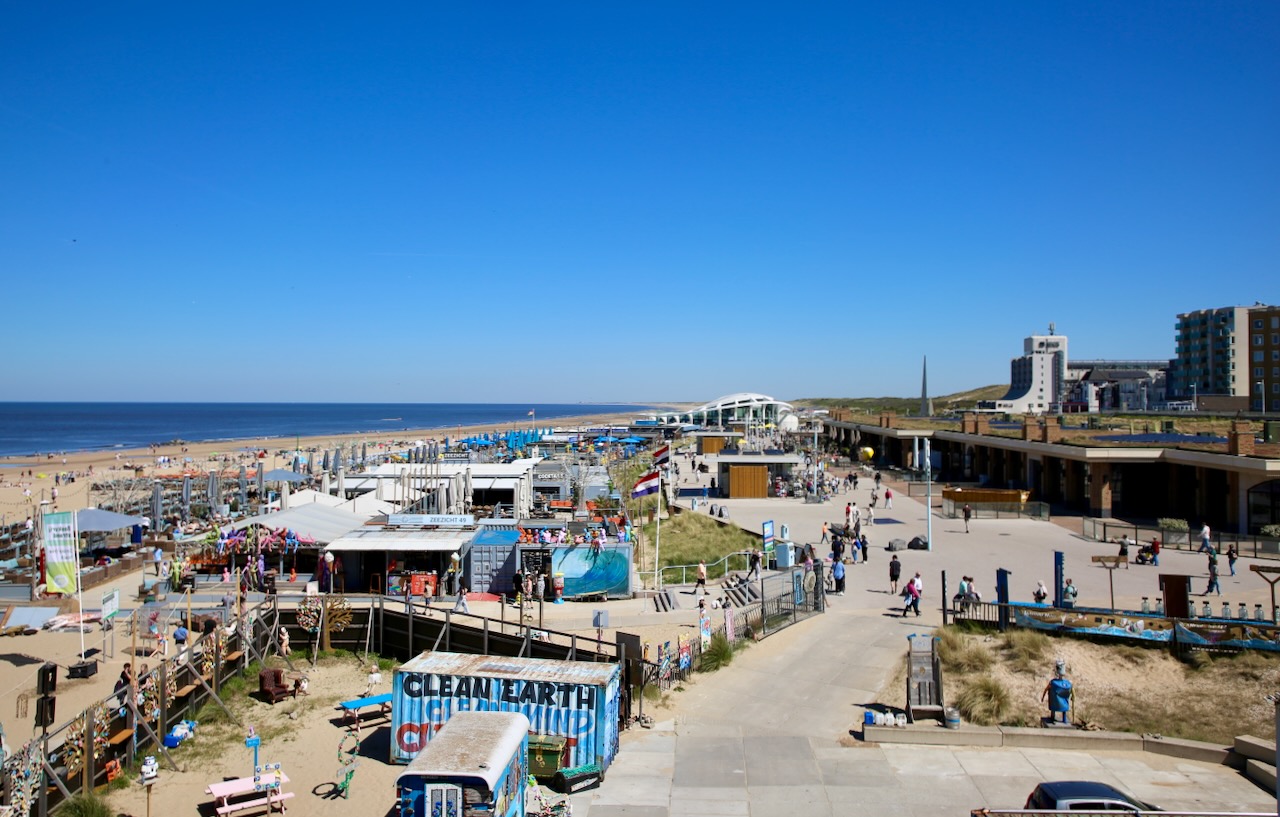
We catch the tram near Kneuterdijk Palace, which will take us to the beach (Scheveningen strand), the only stop announced in English. We didn’t bring swimsuits or sunning towels, so we walked to the pier to see the sights from there. On offer, a duo bungee jump for 220€ and a zipline each for 45€. One would be fun, but the other would leave Humpty unable to be put back together again, and we can’t have that. It’s considerate that the buildings keep their distance from the water (probably a safety thing too) and allow the people to spread out in the sand.
The end of the pier is surrounded by moon jellyfish, lurking in the brown water because the North Sea is shallow and constantly churning up sand, clay, and fish poop. What a view to inspire an appetite. Inside De Pier, I order a coffee and remind Caleb that we have to pay for water here (which is why he has some in his bag) to accompany the croquettes with fries, a croque monsieur with goat cheese (and ketchup packets on top instead of the grilled cheese being baked or broiled), and a pannenkoeken with Canadian bacon, cheese, and pineapple. It’s a good thing Caleb also has a collapsible dish with him, so we can pack our leftovers.
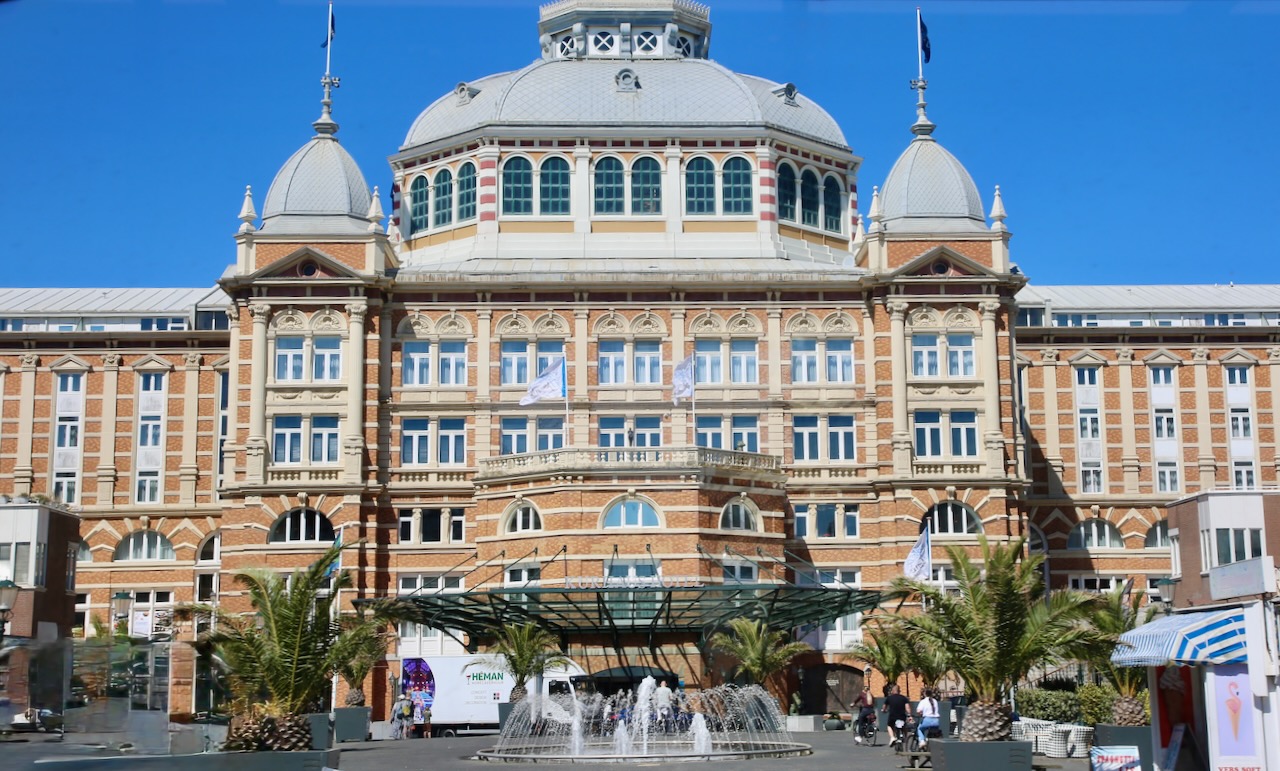
We take the tram to a stop near an entrance for the Haagse Bos (The Hague Forest). The first part is a half-shaded (under the tree canopies) picnic area, and to our right is a fallow deer sanctuary. We cross the street and enter the more forest-like section of the park. We pass cyclists, strollers, joggers, and sunbathers. There is a grey heron fishing, some goslings in the water under parental supervision, and a coot family enjoying their cool piece of paradise. The front entrance of the Royal Palace has a few armed guards (stay away), but the back has guards on the other side of a decorative gate (take a picture and move along), so that’s what we did.
We are at Haag Centraal longer than usual, as Caleb figures out which train we should take after a train issue near Gouda caused a delay. People are standing in the aisle during rush hour, but still reading paperbacks or working on their laptops. I was excited to see so many readers. About 30% of the Dutch population reads a book almost daily, while approximately 54% of Americans read at a 6th-grade equivalent or below. Another study finds that the Dutch are only 3% more likely to read at least one book per year than Americans. I’m currently on book 21 for this year, but I understand that’s because I don’t work and am not currently in school.
Caleb has enjoyed sampling beers, so we stop on the bus ride back to the house to pick a few up. I bring in the dishes (cleaned and returned from the neighbor), put the mail in a visible spot, and feed Zulu. We have leftovers for dinner, and Caleb remembers we should take the frozen dishes out in the morning to thaw so they’re easier to cook in the evening. Caleb has chosen two spring beers, one a tropical fruit IPA, Daisy Sunshine, and the other a fruity (with caramel tones) blonde, Nog Eendje (Just One More). Caleb goes up to bed while I stay with Zulu to read by daylight until the lamp is needed, too.


