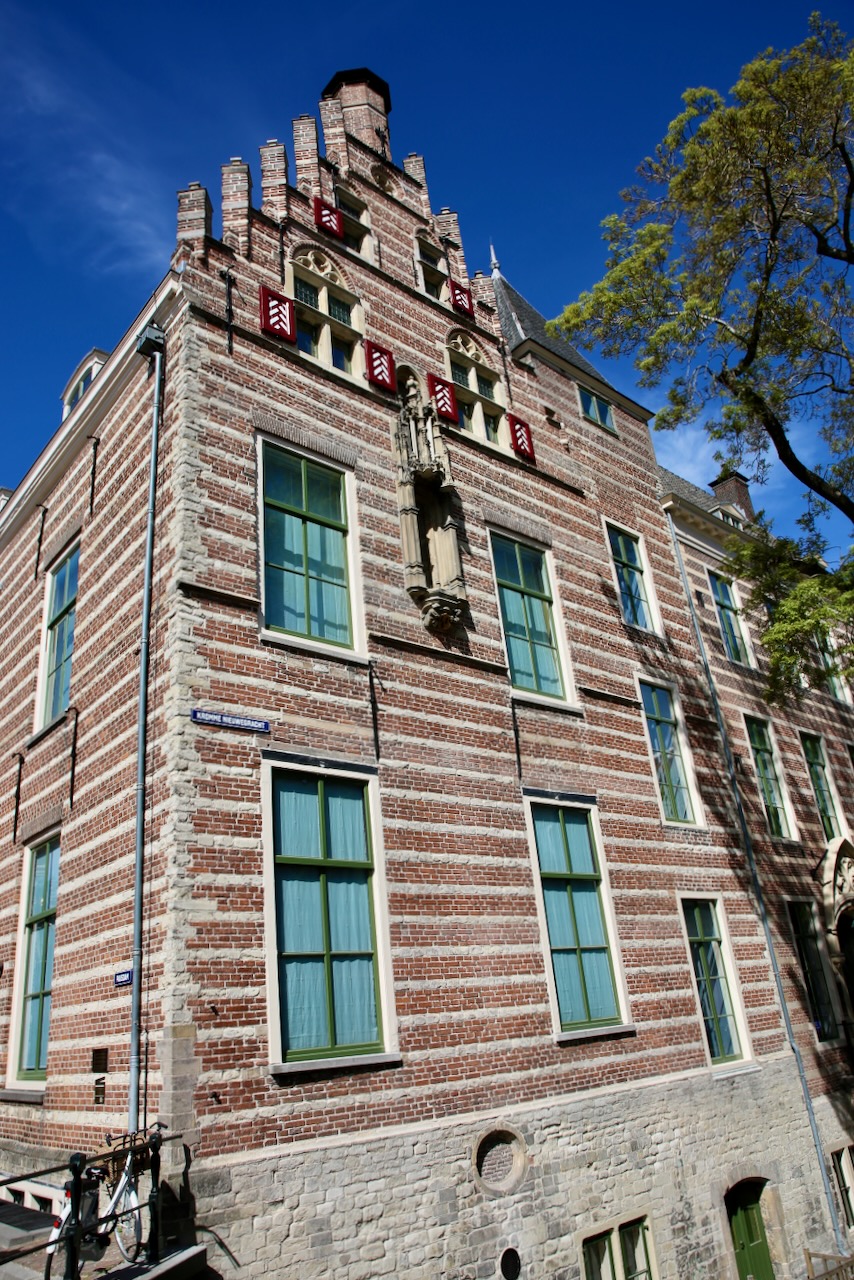
I woke in the middle of the night with a cough that Gert commented on, “Don’t smoke,” while we were downstairs, so I know I’m doing it more frequently. I’m still up over an hour later, so I take some of the meds I brought with me in case, and am able to go back to sleep. Caleb comes up to get me, and I’ll have a coffee and a banana before Anouska drives us to Utrecht. We passed through a brick house built in 1300, when the ground floor was cleared in 1975 to show off the pine beam ceiling above.
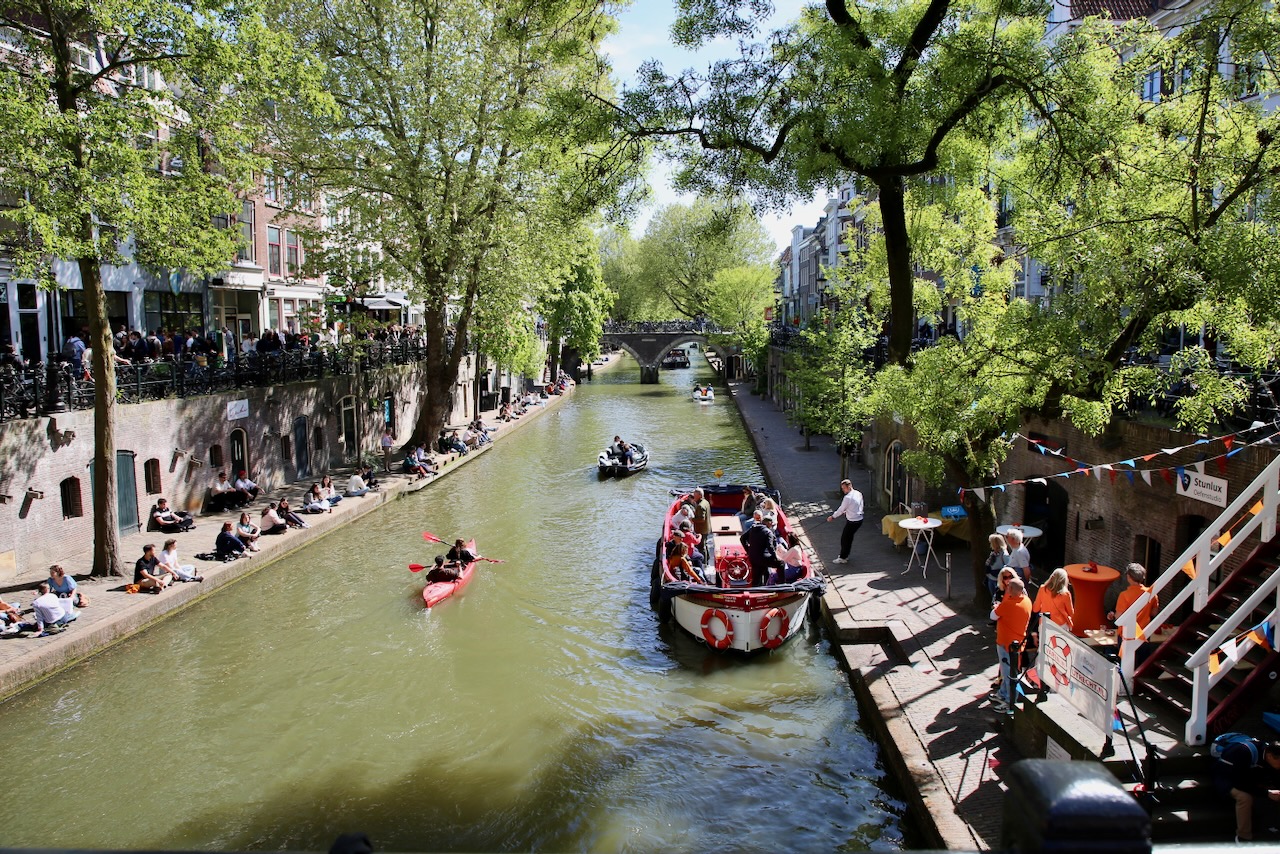
morning vs afternoon
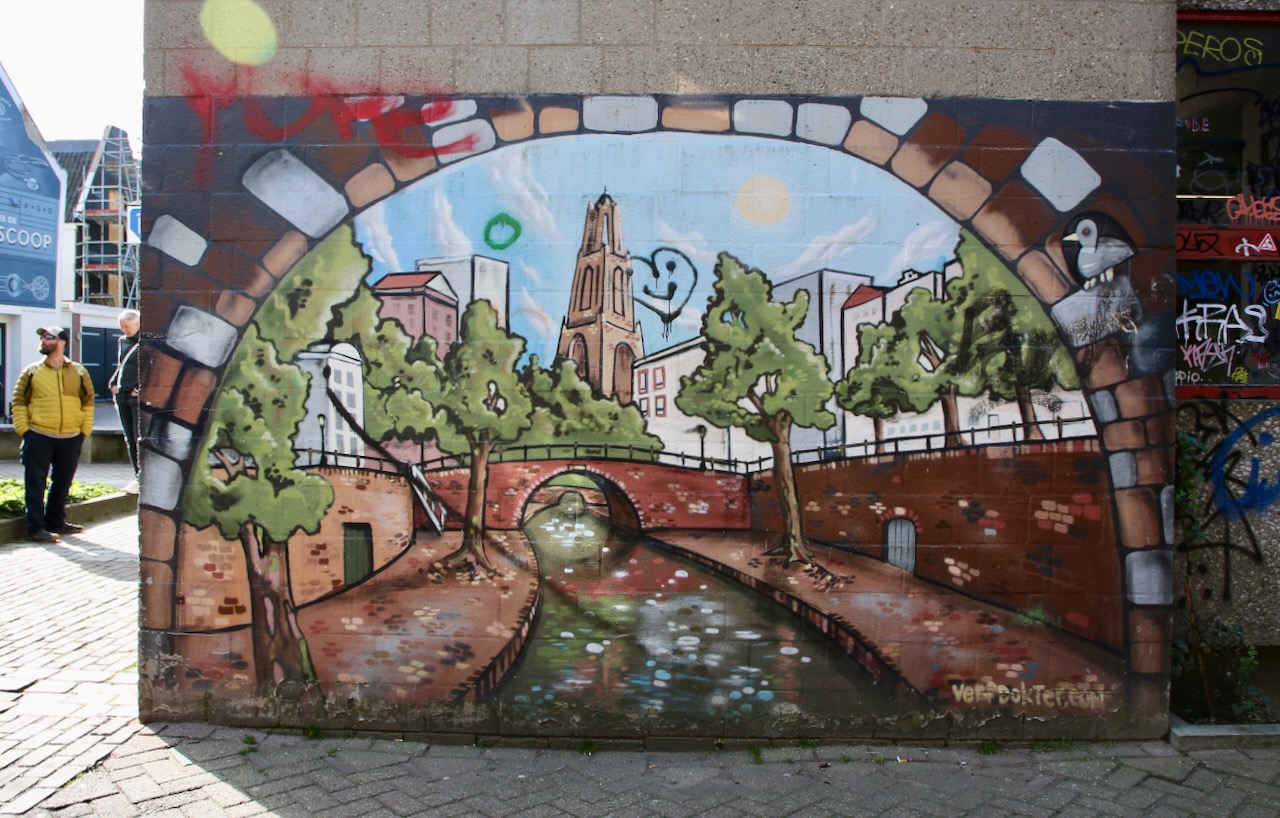
The country is already in preparation for the big day tomorrow, so we are not seeing the city in its usual condition. There are music stages, food trucks, and certain areas cordoned off for crowd control. There is a sign encouraging the reuse of cups by charging an extra euro per cup that isn’t refilled. Tours of the Dom Tower used to start from the little box office by the door, but increased tourism (and their baggage) has moved the ticket counter to a space around the corner that can accommodate a gift shop, some informational displays, and the wall of complimentary lockers.
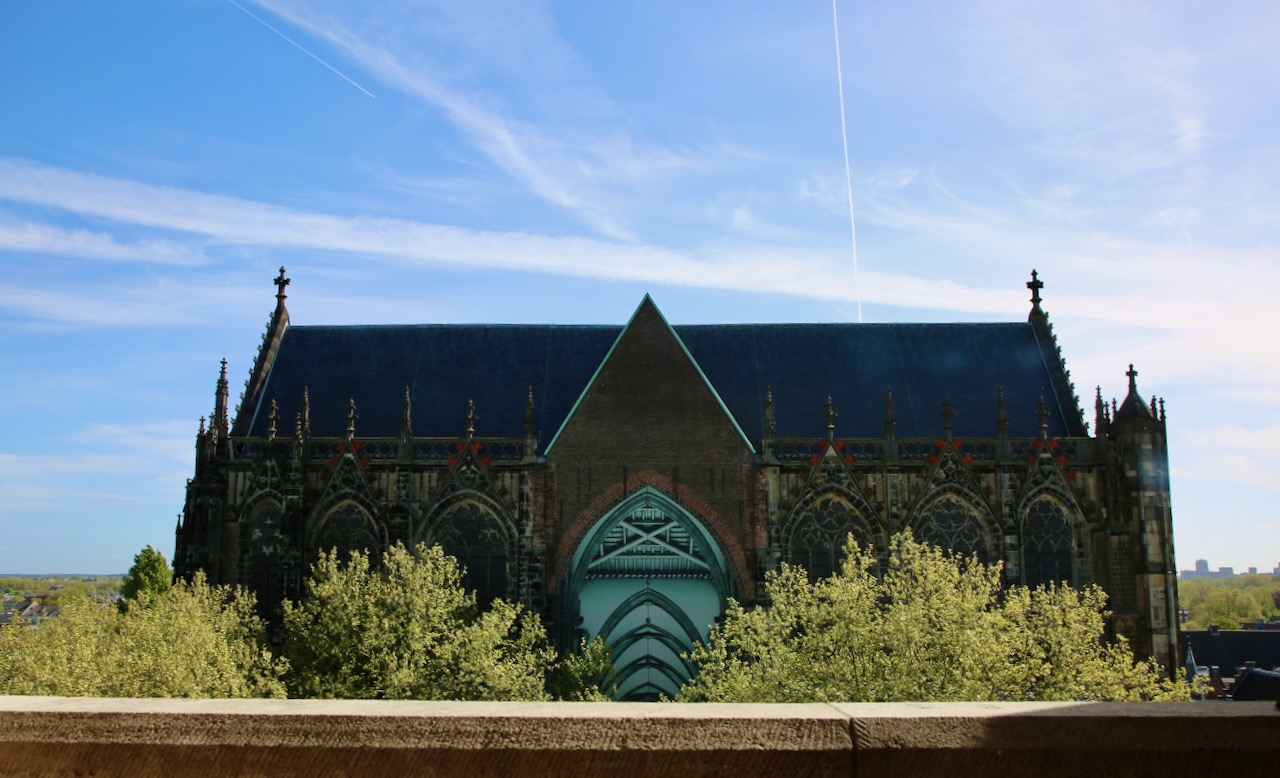
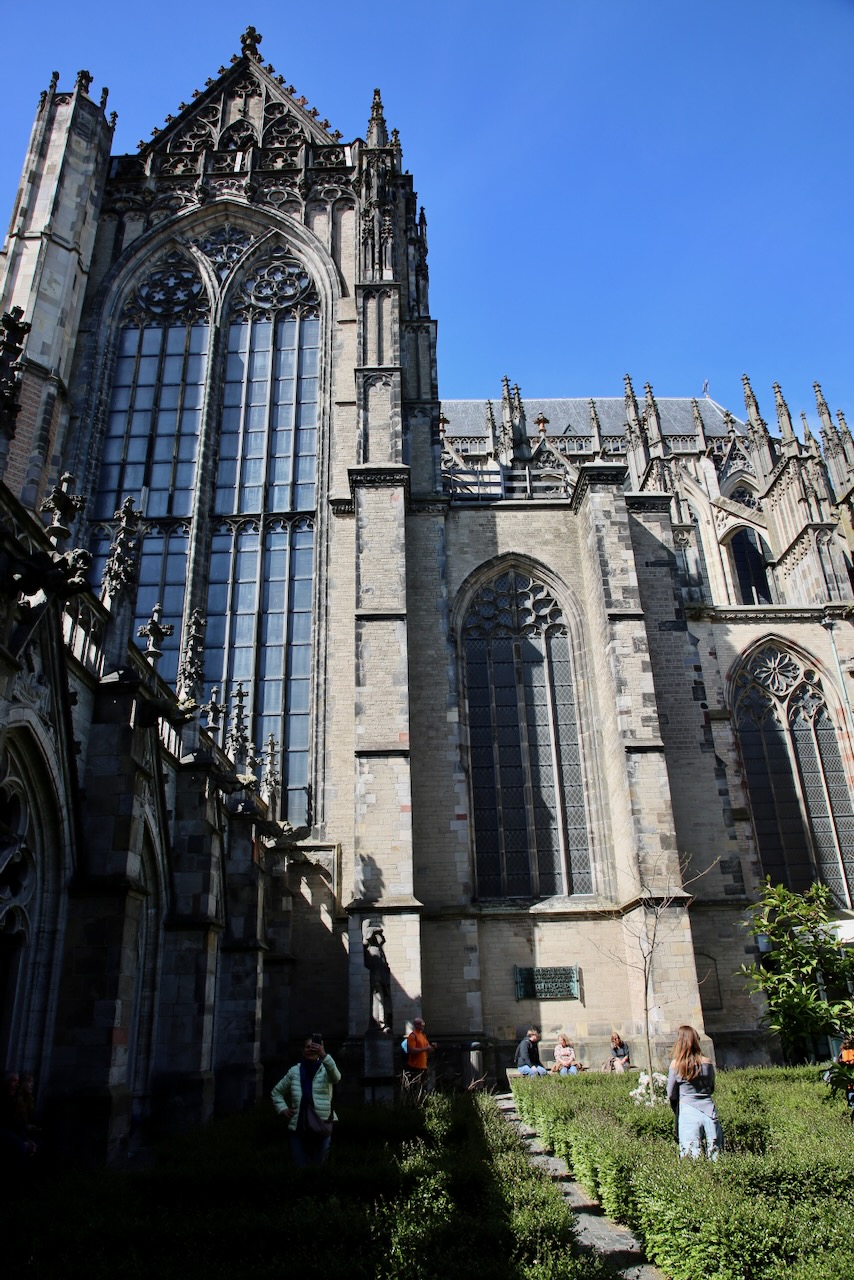
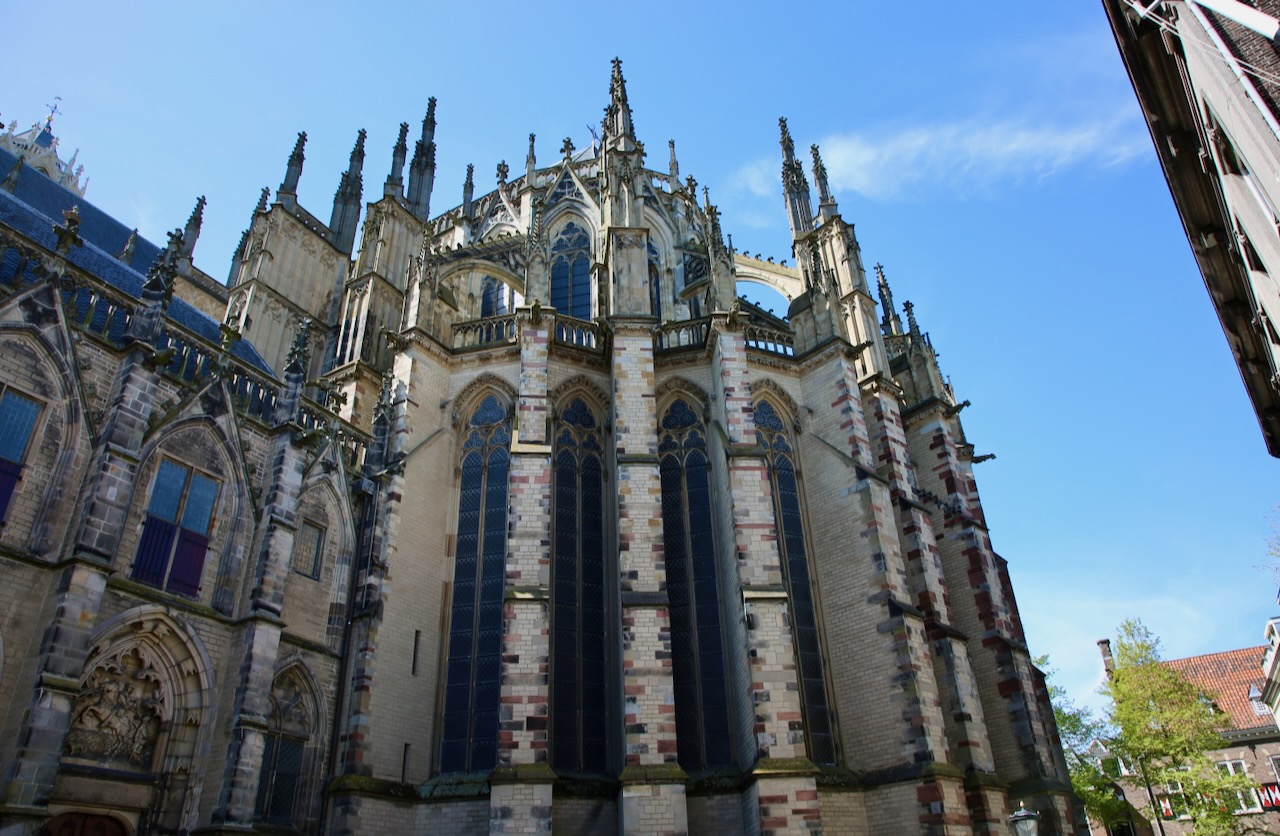
There is a fire alarm panel with lights for each level to alert whether manual or automatic notification is used, and if the sprinkler system has been activated. It also tells us the temperature is 10°C and the wind is 1m/s from the NW. Circa year 45, the Romans built a fortress. In 695, atop their ruins, Willibrord (first bishop of Utrecht) spread the word of Christianity. The city prospers, and in 1020, the Holy Roman Empire builds a cathedral. In 1254, stone from the cathedral was used to build the Gothic Dom Church. Then, in 1321, the highest church tower in the Netherlands was built as a testament to their power.
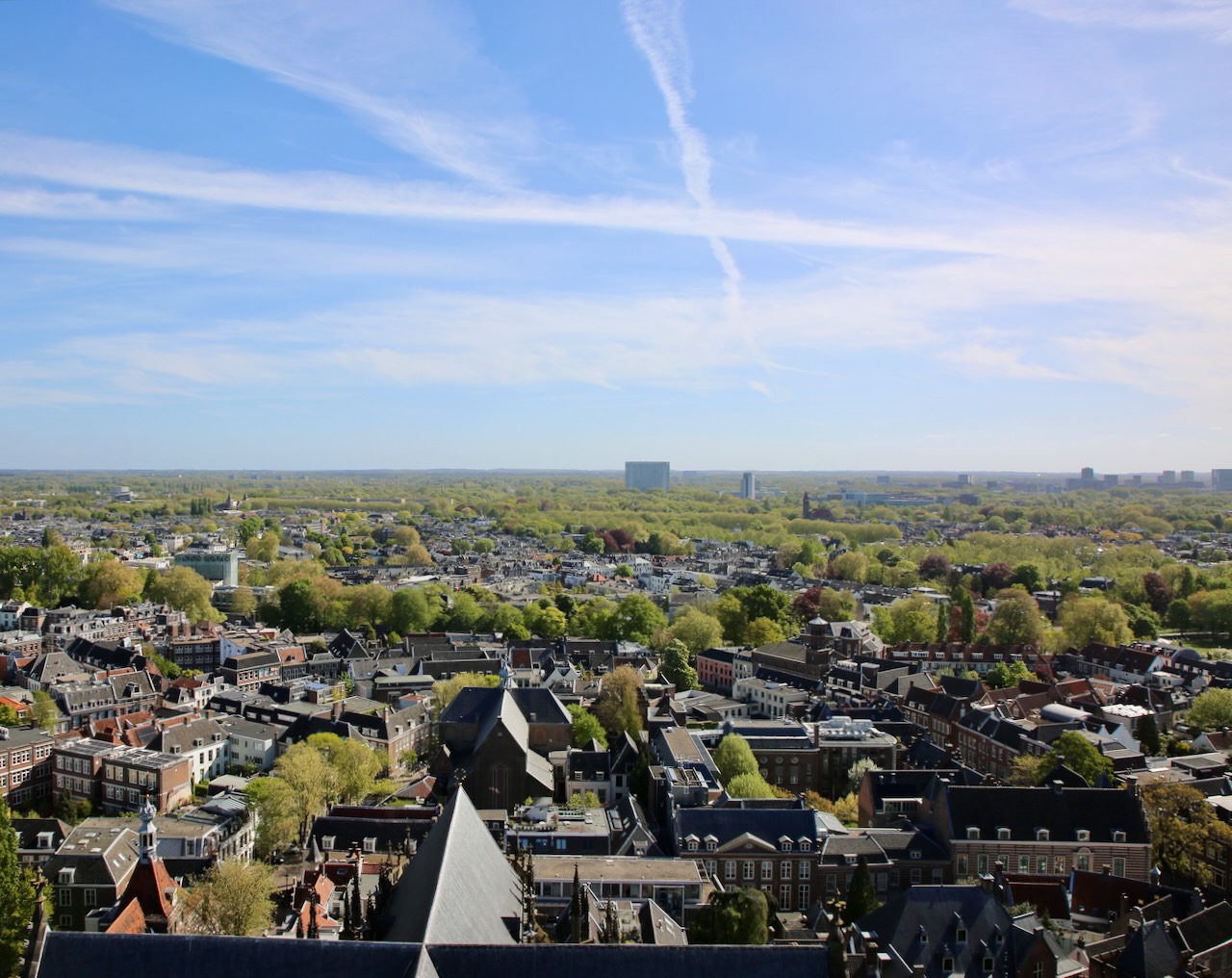
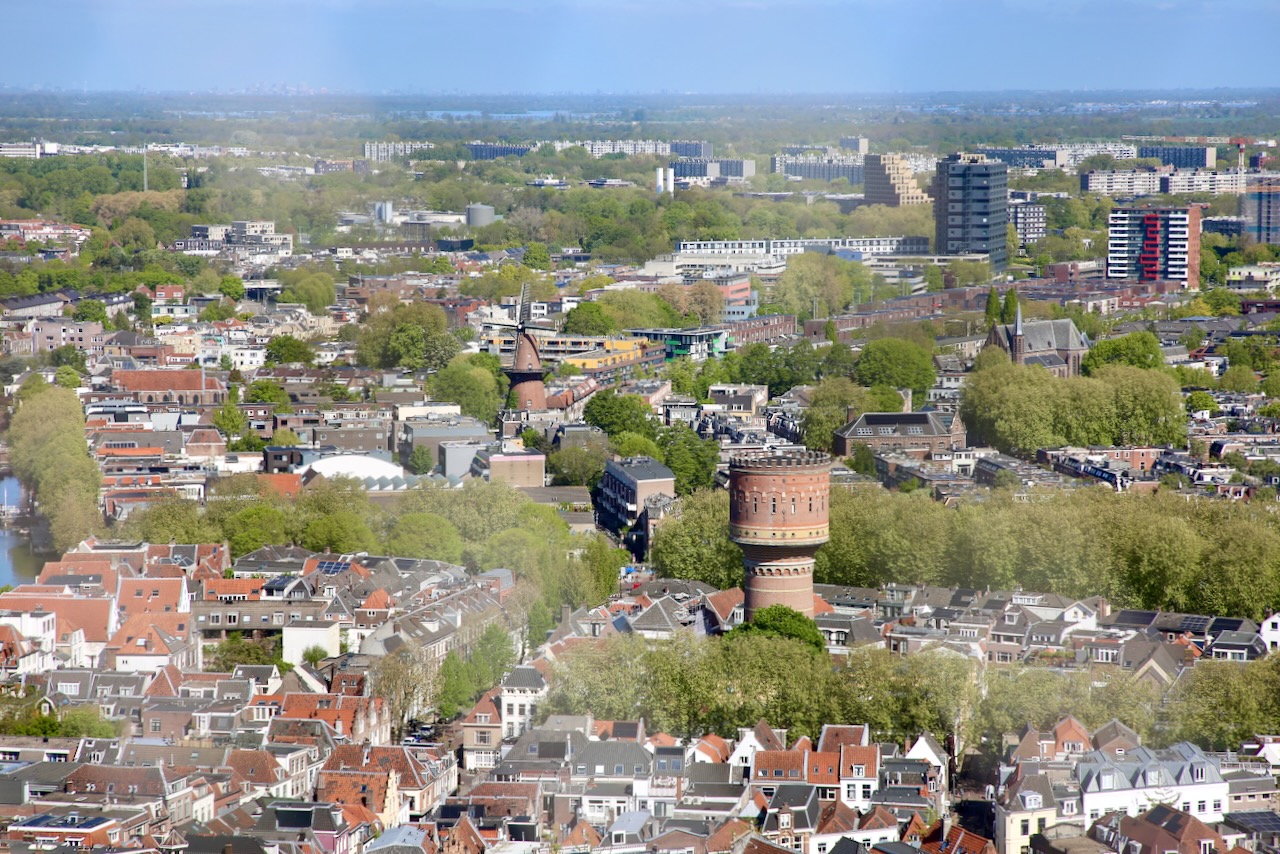
The Protestant Reformation began in 1580, and sculptures in the church were destroyed. The storm of 1674 took out the nave of the church, which permanently separated the cathedral from the tower. Dom Square was created in 1826 after the ruins of the nave were cleared. In 2021, the underground ruins, part of the Lower Germanic Limes, became a UNESCO site; a year before the 900th anniversary of Utrecht acquiring city rights. It’s difficult for me to grasp just how ancient this history is and how remarkable it is that I get to be a part of it (considering we will learn how quick the Dutch are to destroy things they no longer need).
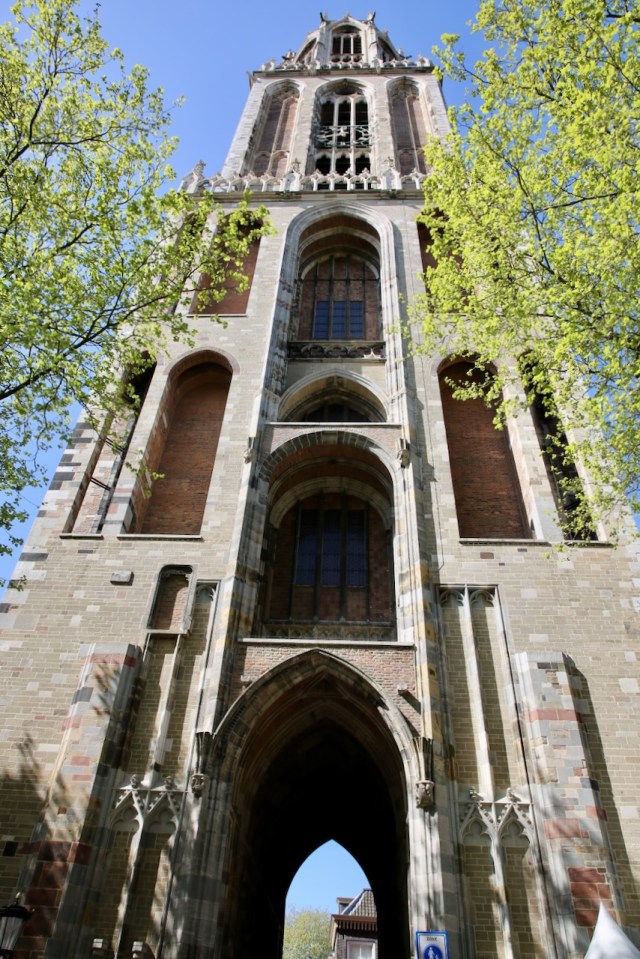
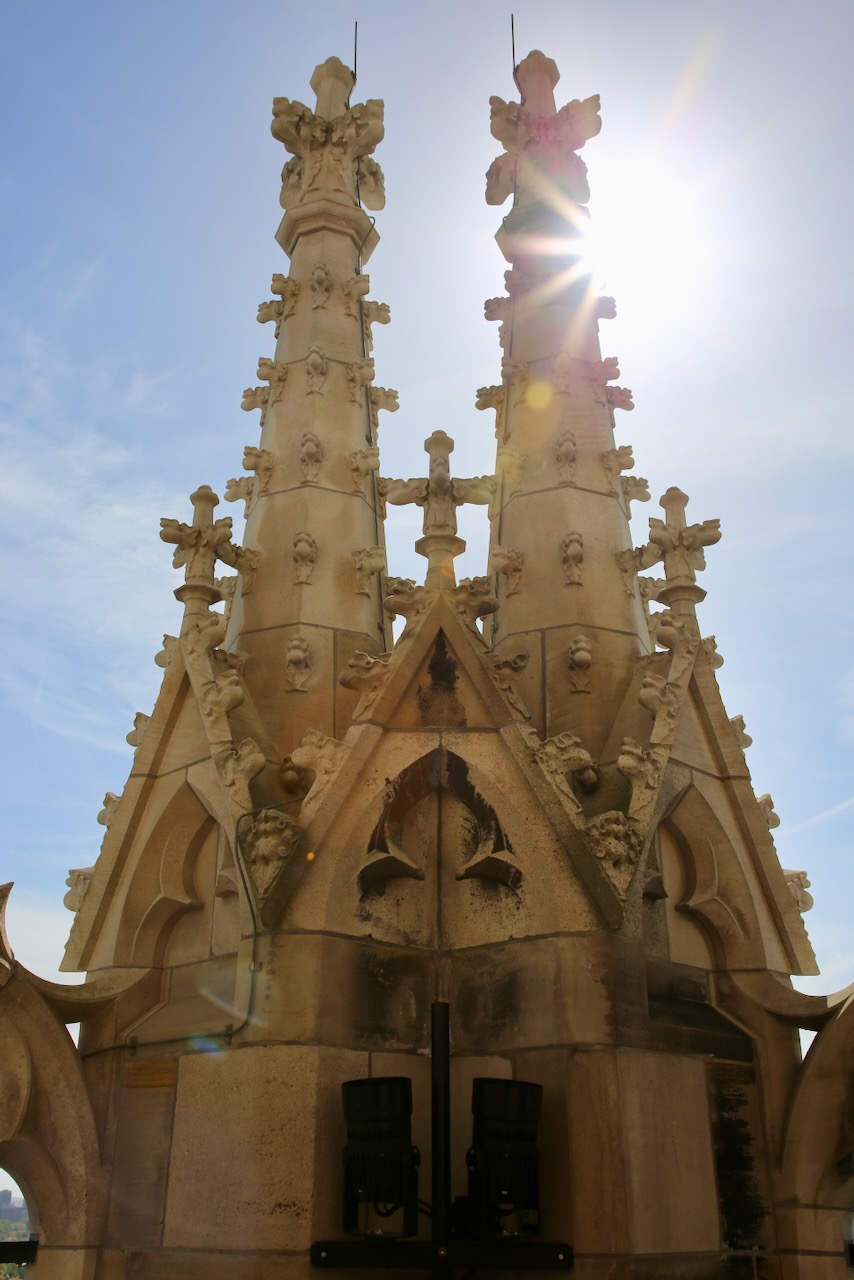
It’s not malicious, but out of a sense of preserving historical structures while preventing suburban sprawl with the addition of bike and bus lanes. Over half of their 13,000 sq km (5,000 sq mi) is used for agriculture (the country being half the size of South Carolina), which needs water, while keeping the rest of their land above it. Our tour guide, who is necessary to climb most of the 465 steps to the viewing platform at 312 ft, does this three times a day. One person didn’t join because she’s claustrophobic, and another woman is really feeling the ascent in her legs.
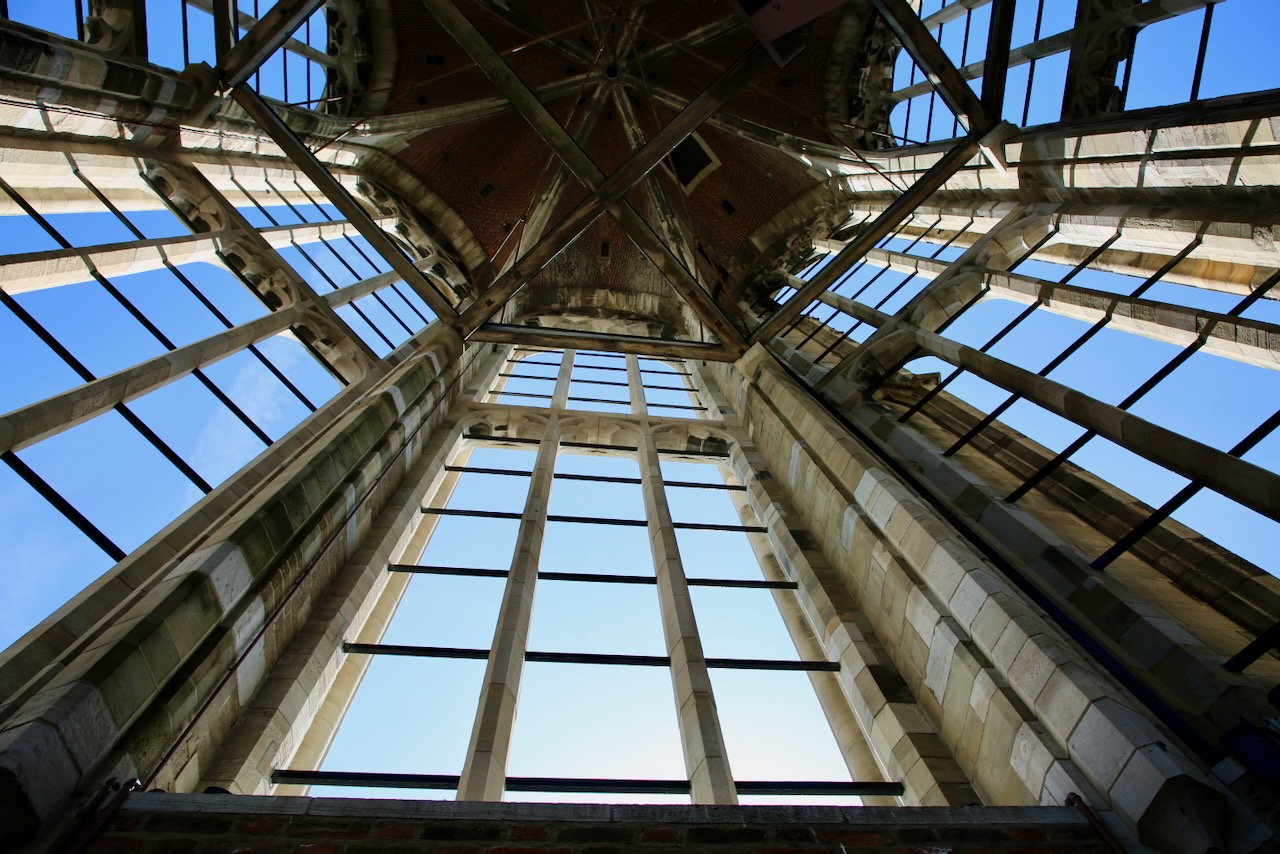
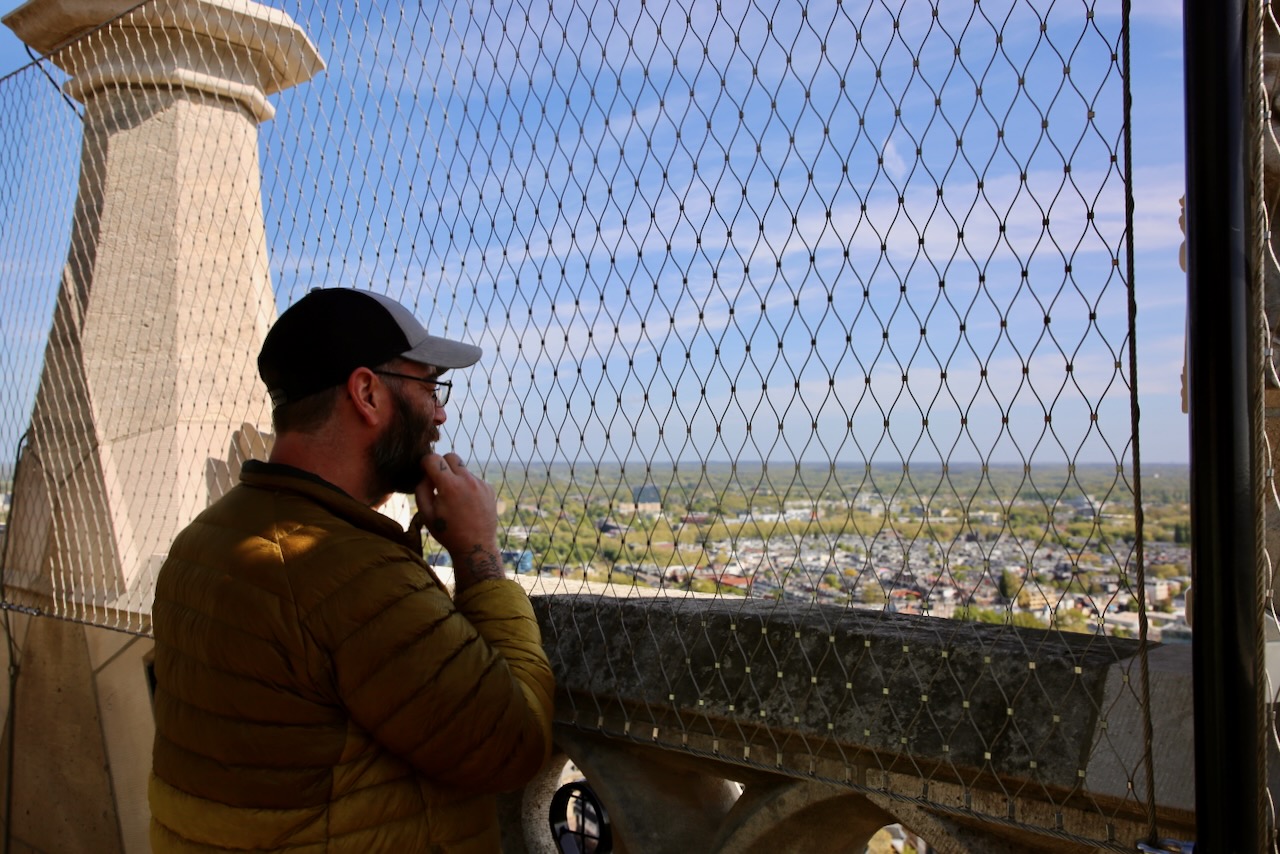
Luckily, we don’t have to take all the stairs at once, as there are rooms (chapel, belfry, carillon) to stop in along the way. Some guests are given a hammer for the chance to ring one of the heaviest bells in Europe. It takes 26 people to ring all 14 bells that weigh over a combined 32,000 kg. The original set was cast in 1505, but the Agnes Minor was made in 1982. These bells are separate from the set of 50 for the carillon that is played every Saturday and on special occasions. We are given at least 20 minutes at the top before it’s time for us to return. Going downstairs is always easier, but going too fast, you’ll hit a brick wall, a wooden door, or the kind person in front of you.
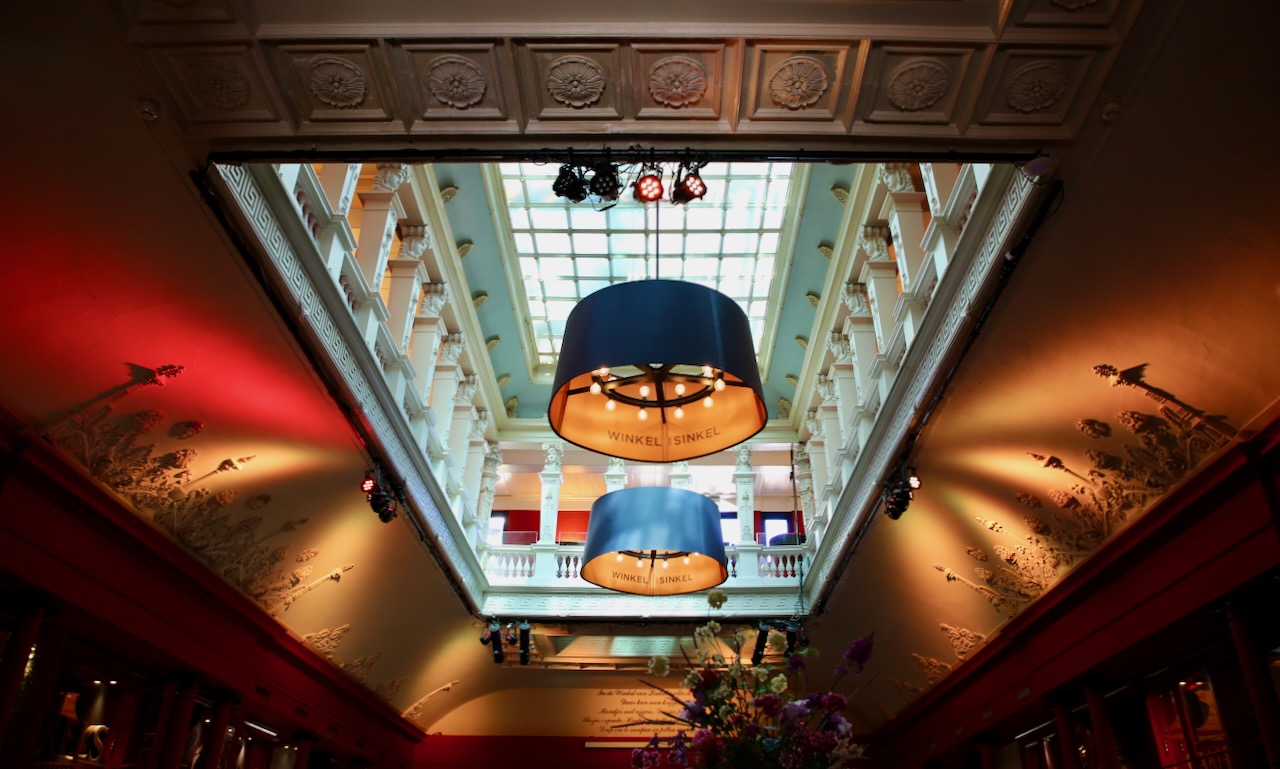
I suppose if you timed it right, you could hit all three. Our group makes it safely down and takes advantage of the coin-free toilets. I thought I might try one of the urinals set up outside for tomorrow, but as I’m not as tall as the Dutch, I might make a bit of a mess. We wander into Winkel van Sinkel, an iconic building, which was the first department store in the Netherlands in the 1830s. Once this era faded, the building was used as a bank office for decades, with other companies using the office space and hosting temporary art exhibits.
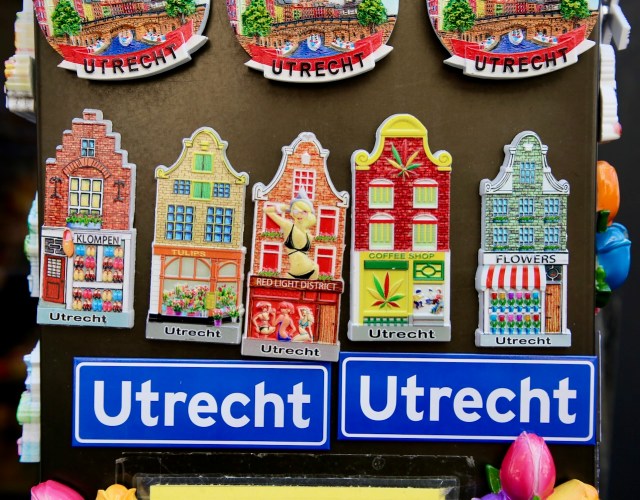
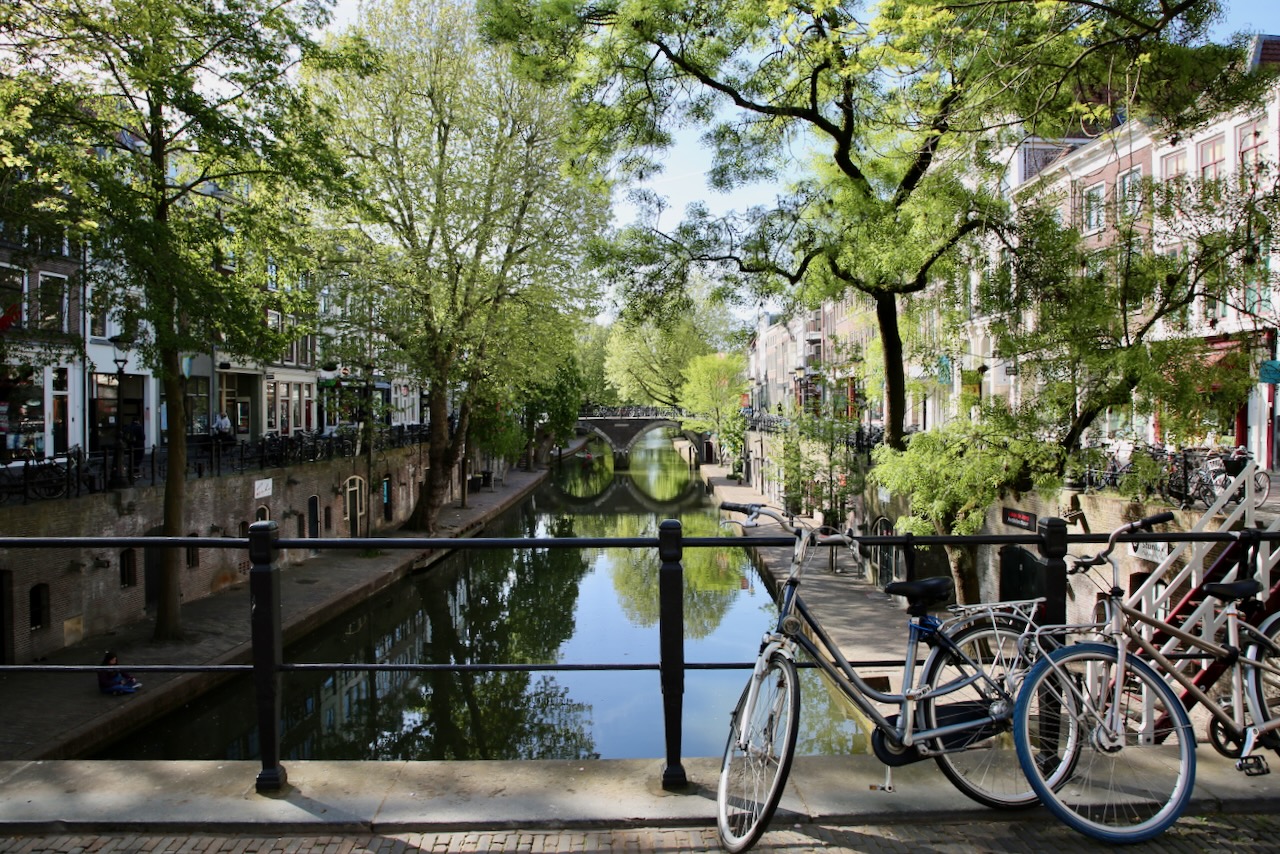
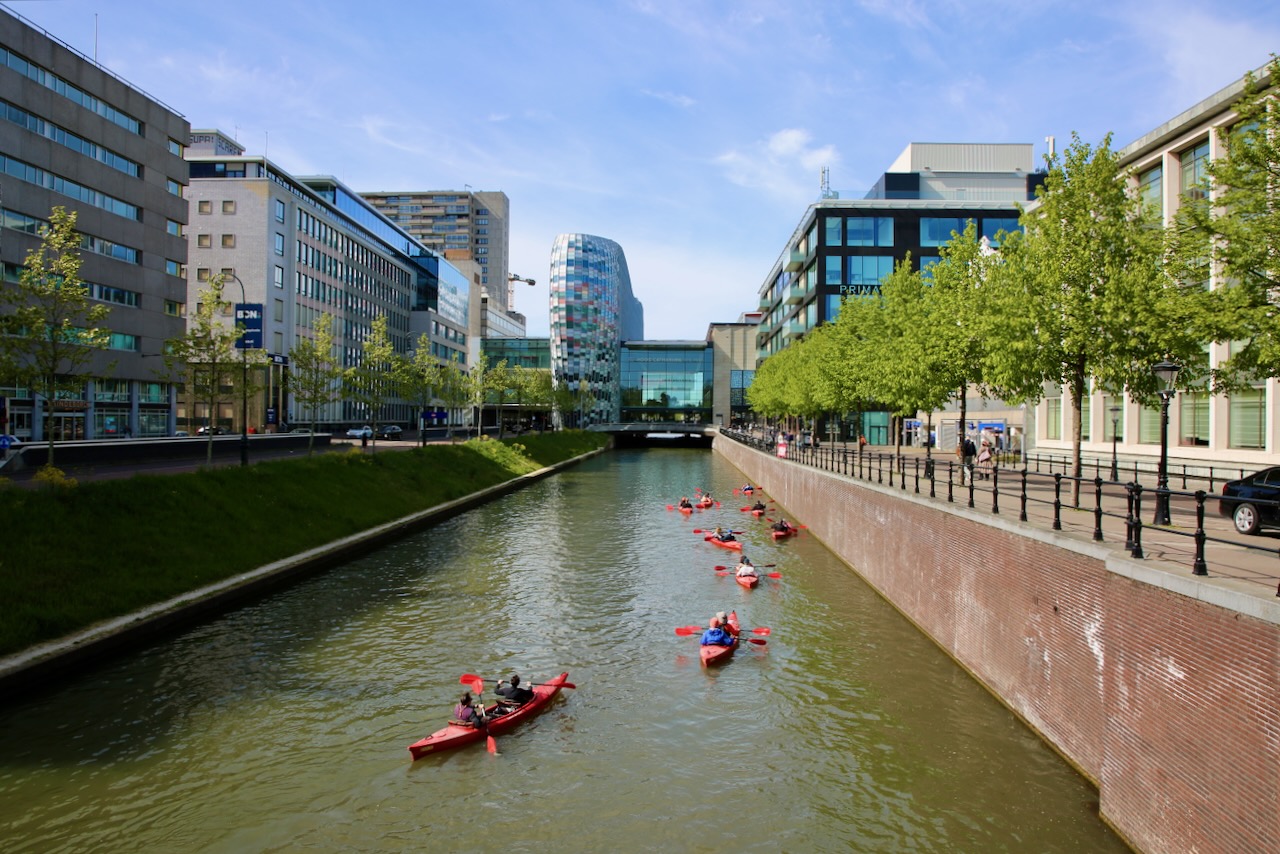
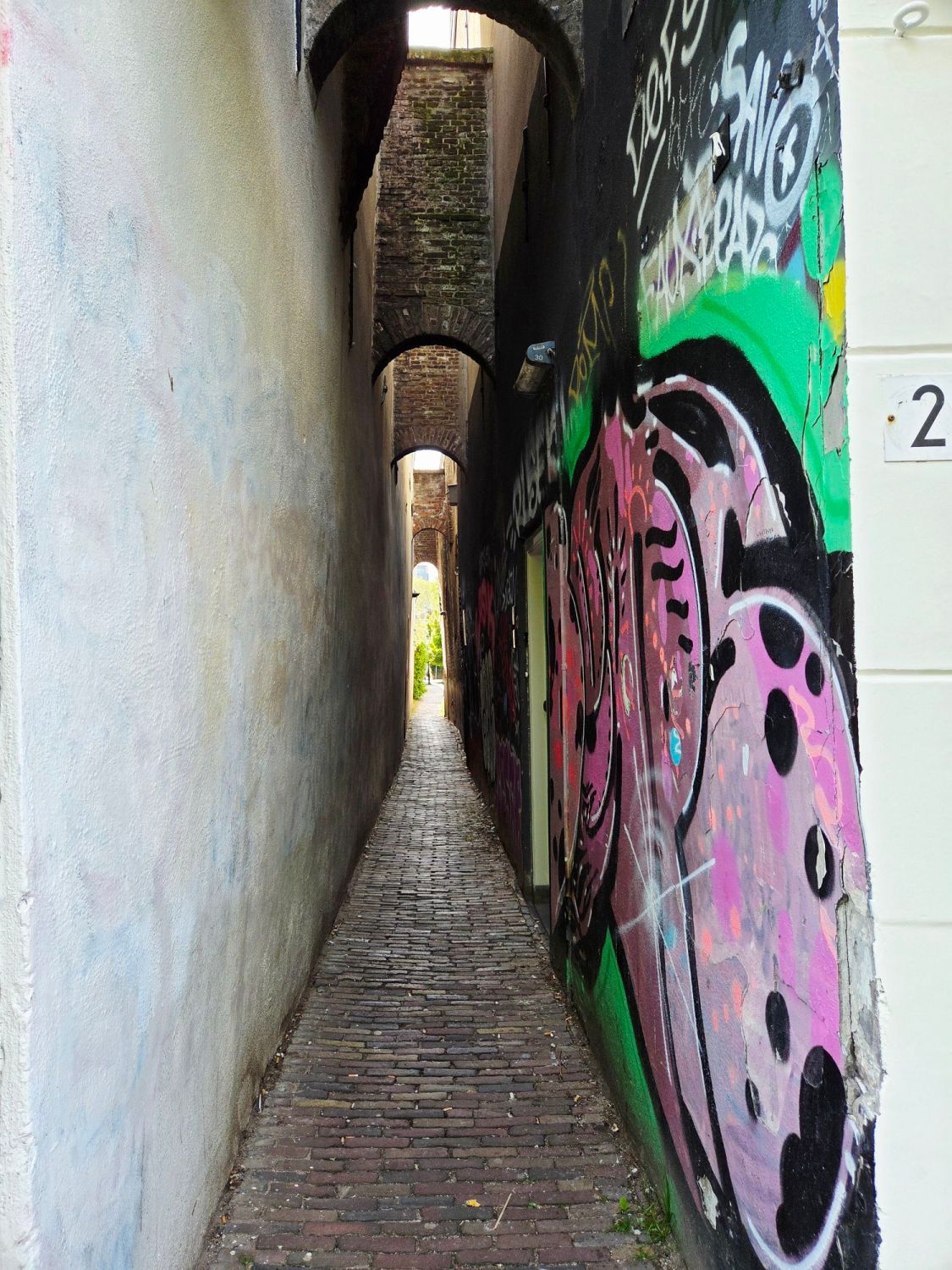
In the 80s, the building changed its function, turning into a Grand Café with a club and event venue. I ordered a cucumber lemonade and what appears to be fried chicken tenders with red cabbage and spicy aioli on a ciabatta roll. After lunch, Anouska will depart to tend to work while we walk towards the nearest dark alley, past all the people watching diners with benches and chairs facing the canal. Where the railing is not covered in bikes, it has become lined with tourists and locals alike, sightseeing and shopping on another beautiful day.
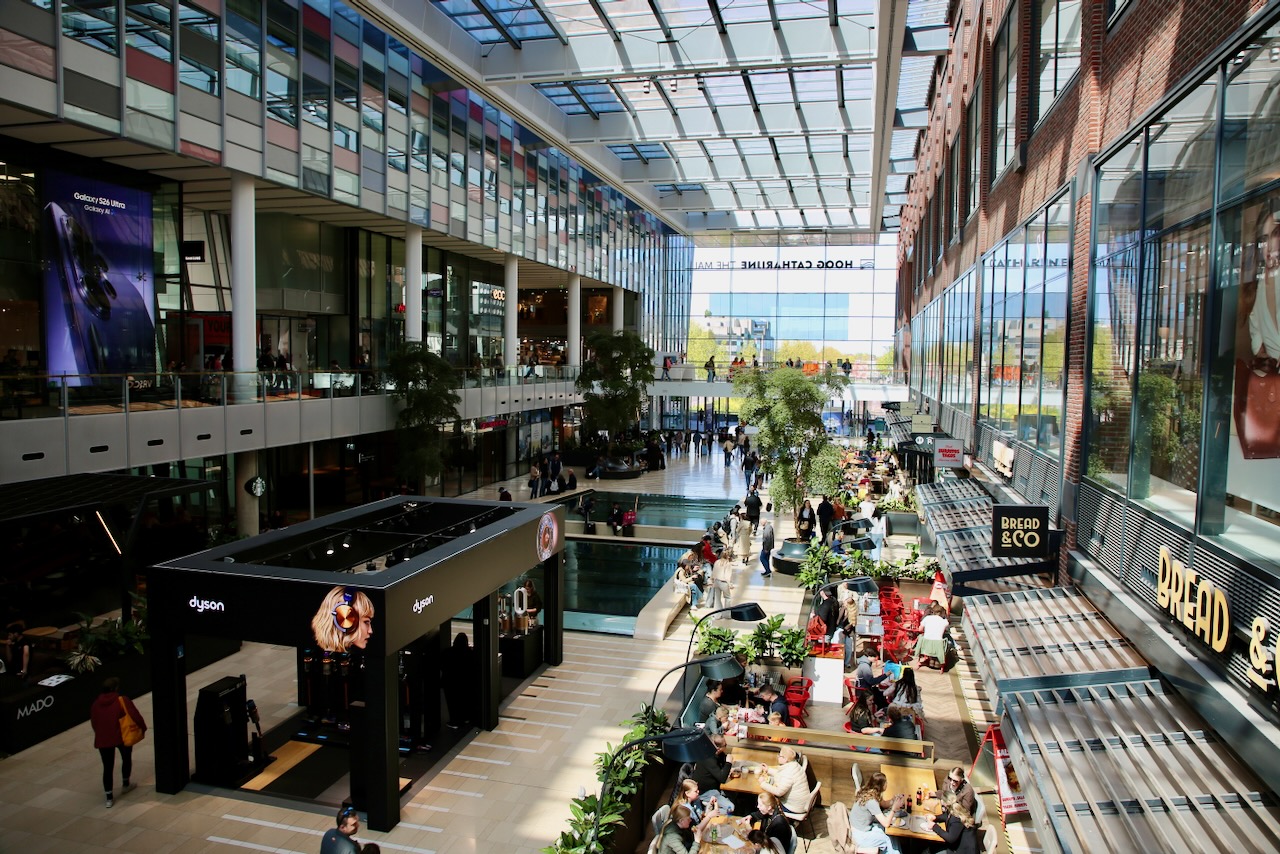
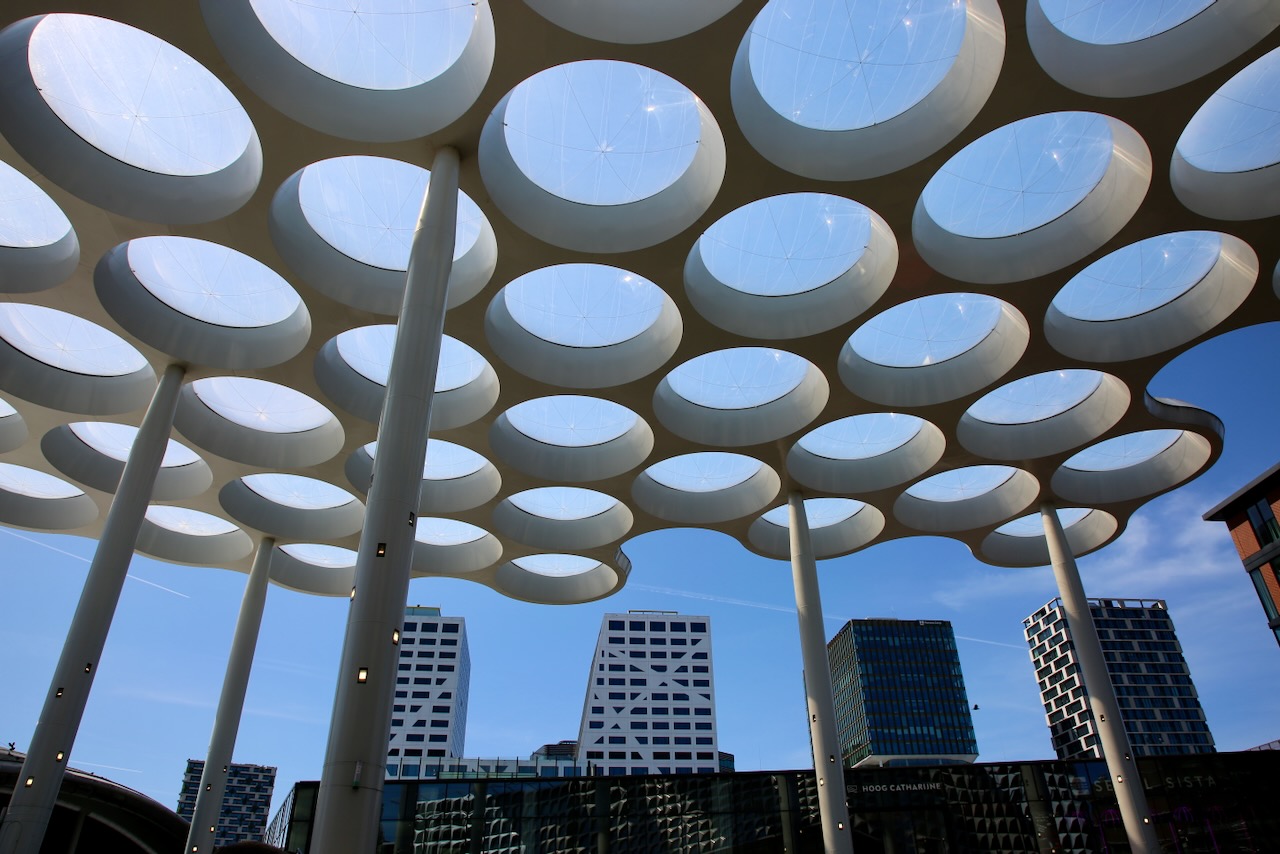
the mall
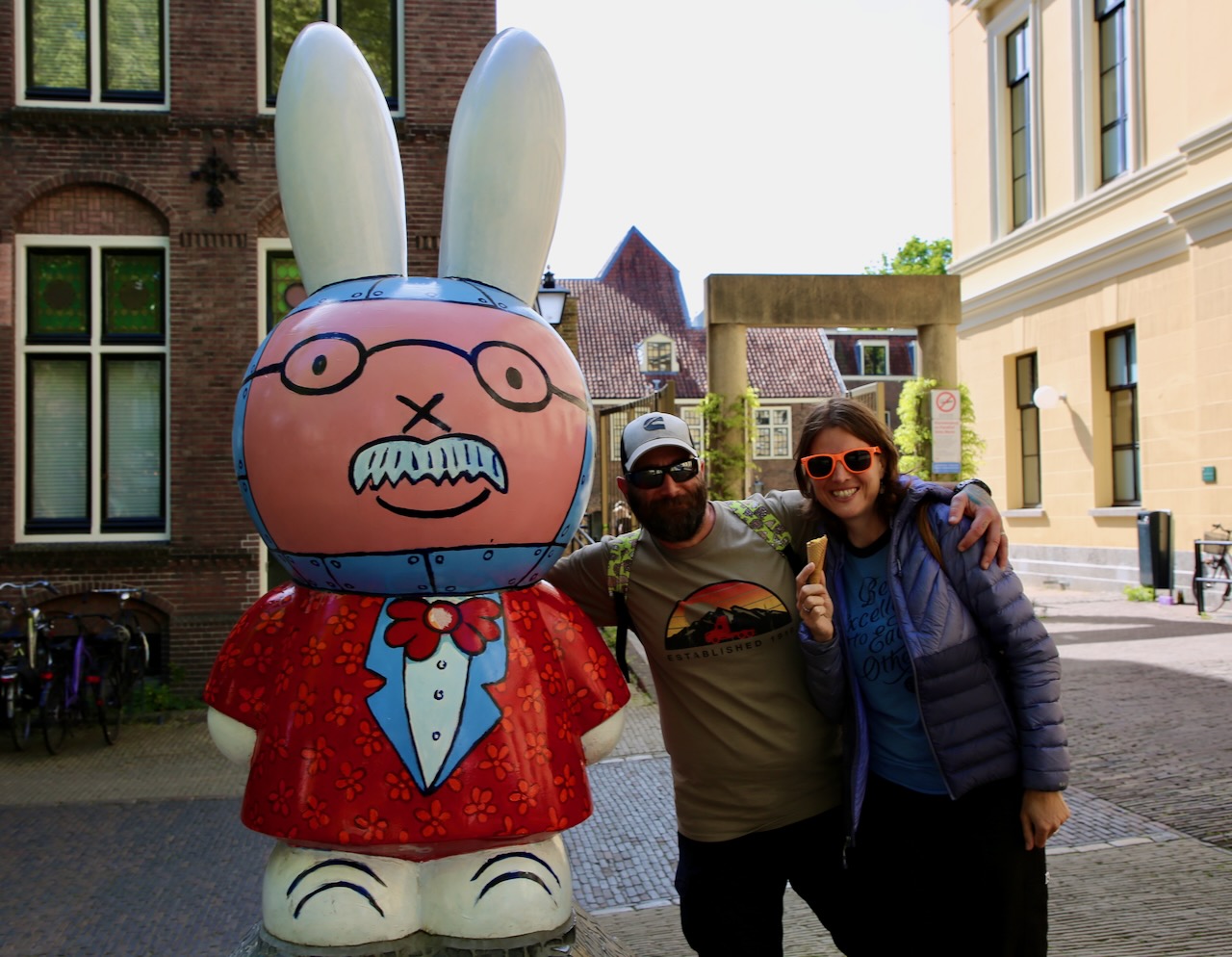
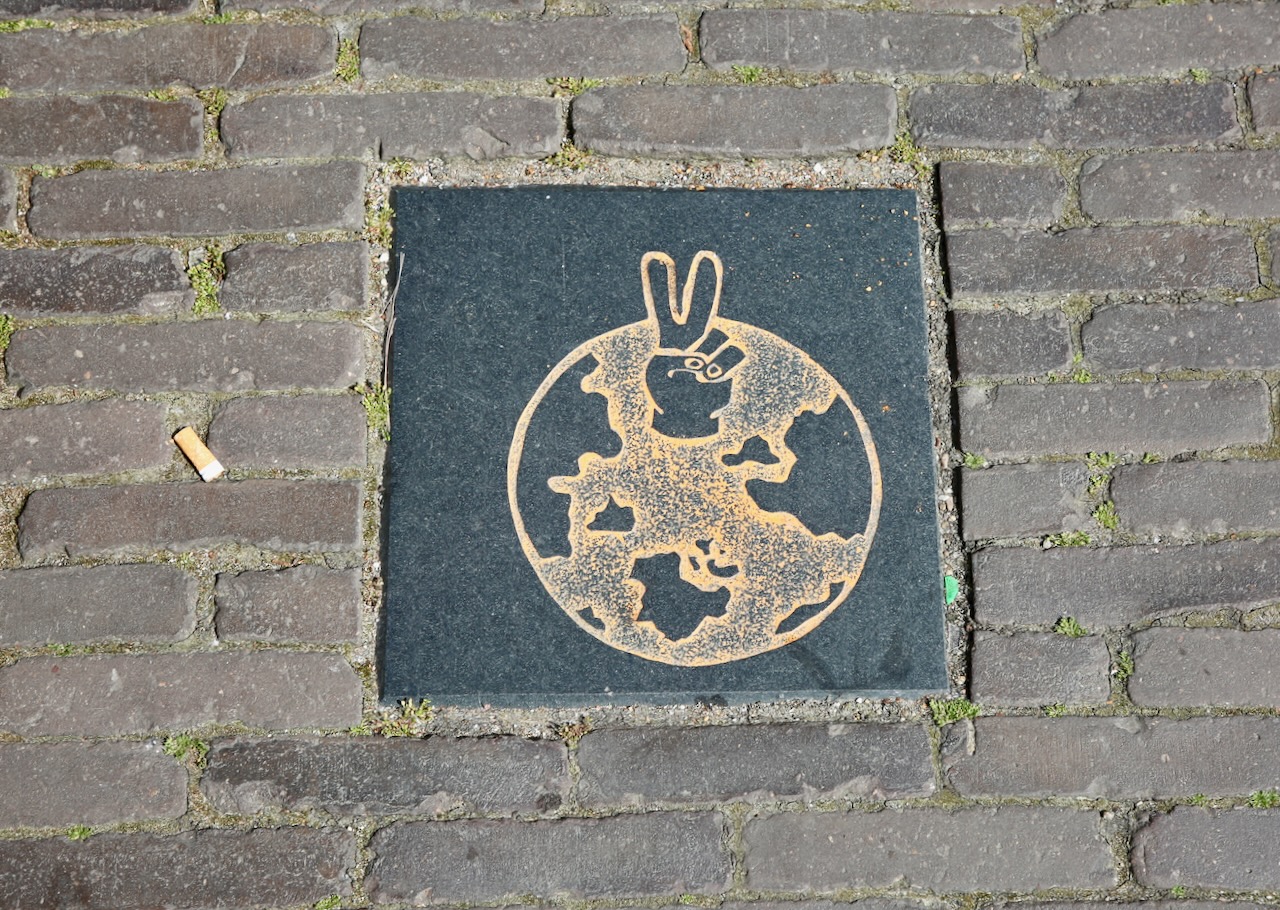
We walk further along the canal and notice an increase in orange: signs, bunting, and balloons. By happy accident, we notice the Miffy pedestrian traffic light that honors Dick Bruna, born in Utrecht and creator of the iconic rabbit in 1955. Gert leads us to the Hoog Catharijne, not for the fashion chains, but to see the world’s first shopping center, where visitors can watch boats pass underneath on the canal. I got to see one, while the guys were distracted, which was exciting, but the kid who got his hand wet because the viewing platform is also a shallow fountain was throwing a fit to his mom about his predicament, which she wasn’t concerned about.
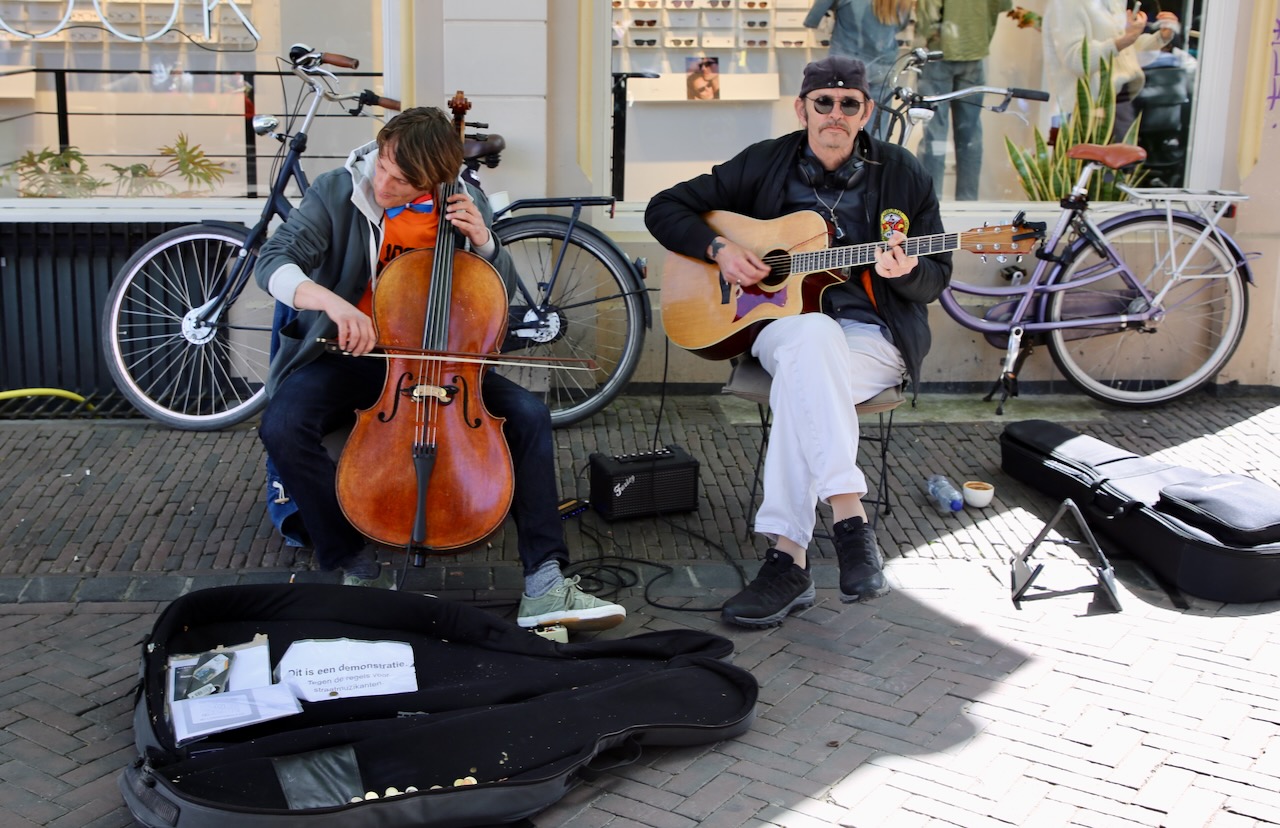
It’s funny that my dad gives me a hard time for loving peanut butter, but I’m not the only one, which is why so many companies now make variations on this healthy treat. I might not have looked twice at the Pindakaaswinkel (peanut butter shop) if it wasn’t for recognizing the word cheese (kaas) in the middle of the word and then seeing the translation. Of course, we went in. They have tastings, workshops, and little glass jars. The company was founded in 2016 and takes pride in the environmentally friendly plant that is one of the most sustainable crops in the world.
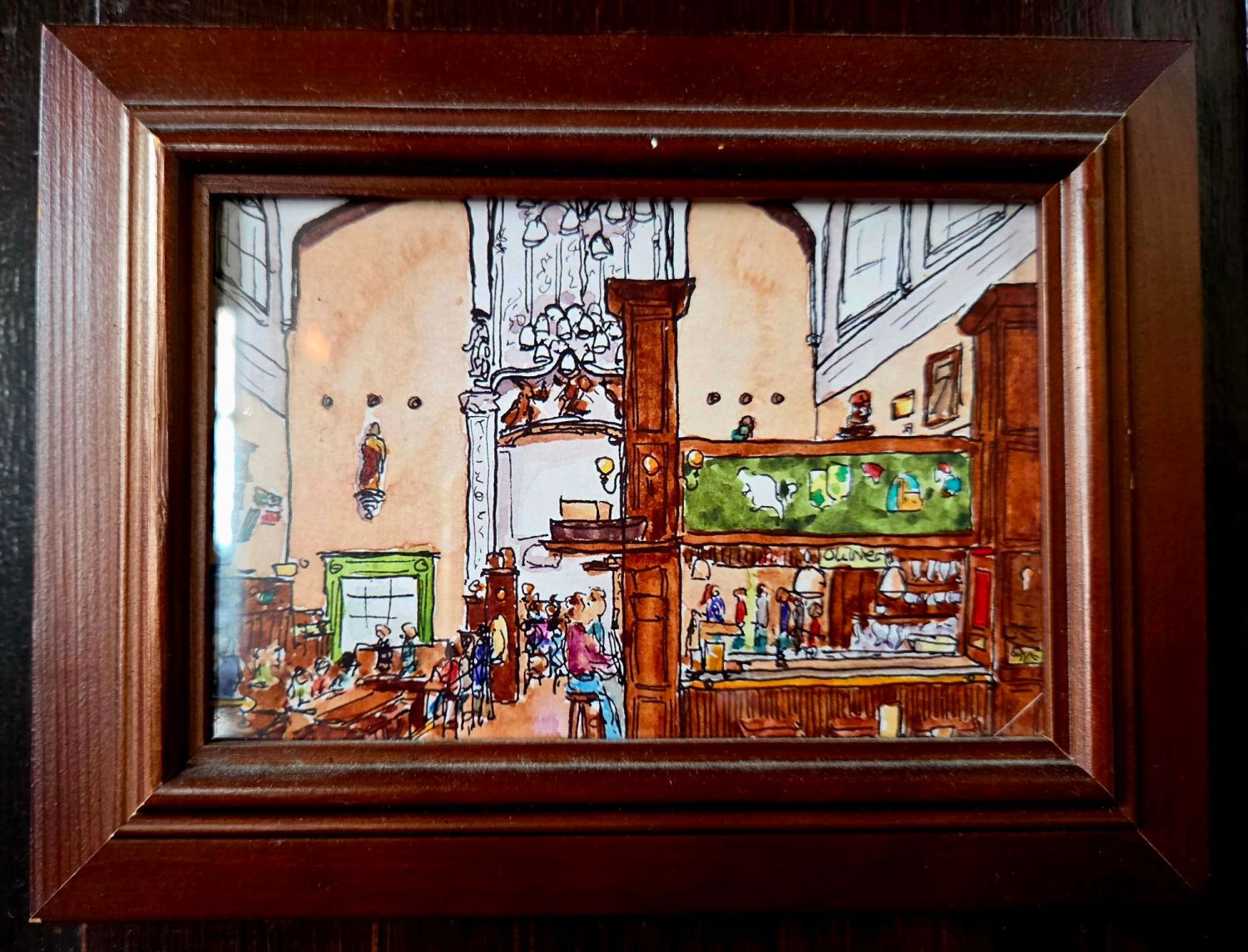
Next up, a drink at Belgisch Biercafé Olivier, where every beer comes with its own glass, inside a former hidden Catholic church. The Maria Minor dates back to 1860, and the organ is still prominently displayed, as the top half of the interior went unchanged. We try an Oedipus Mannenliefde, not because it’s the flagship Saison of a local brewery, but because it’s brewed with lemongrass, Szechuan pepper, and Sorachi Ace hops. It didn’t make my tongue feel funny, and I was more excited about the glass it came in with little confetti surrounding the company’s logo that looks like little hands.
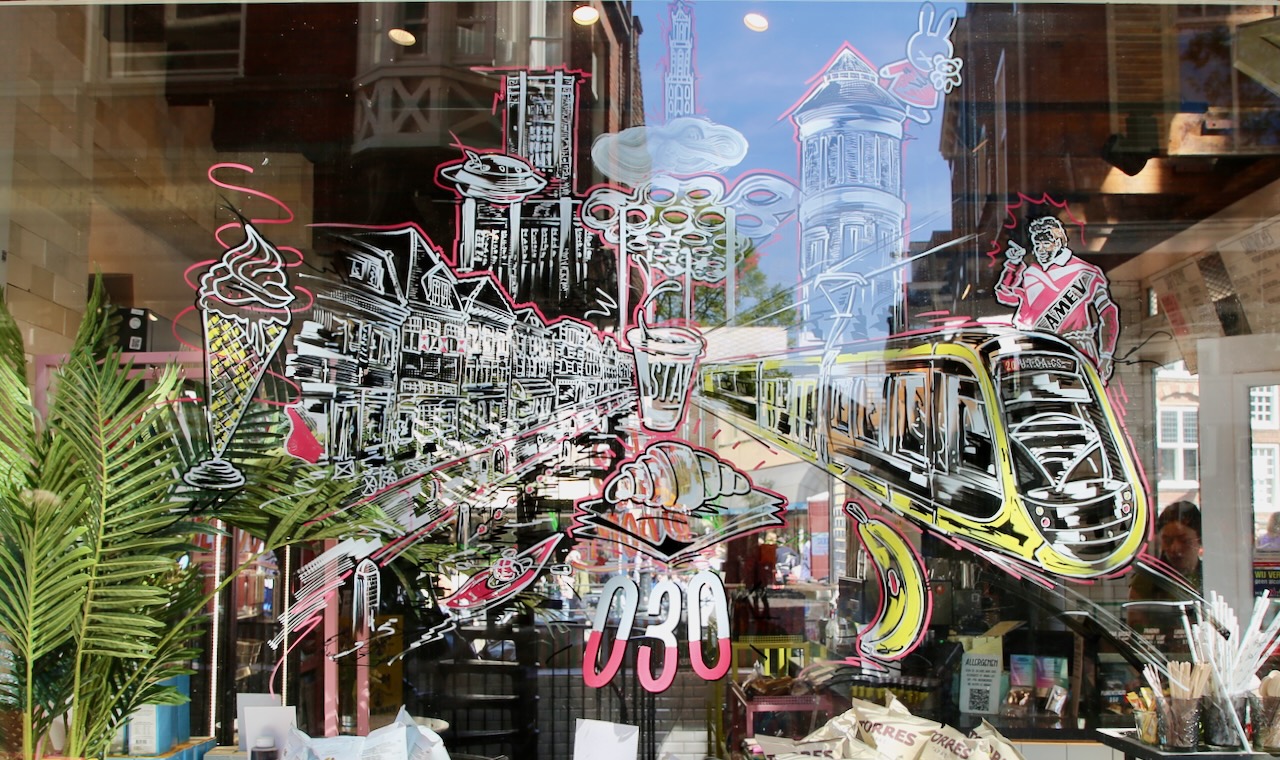
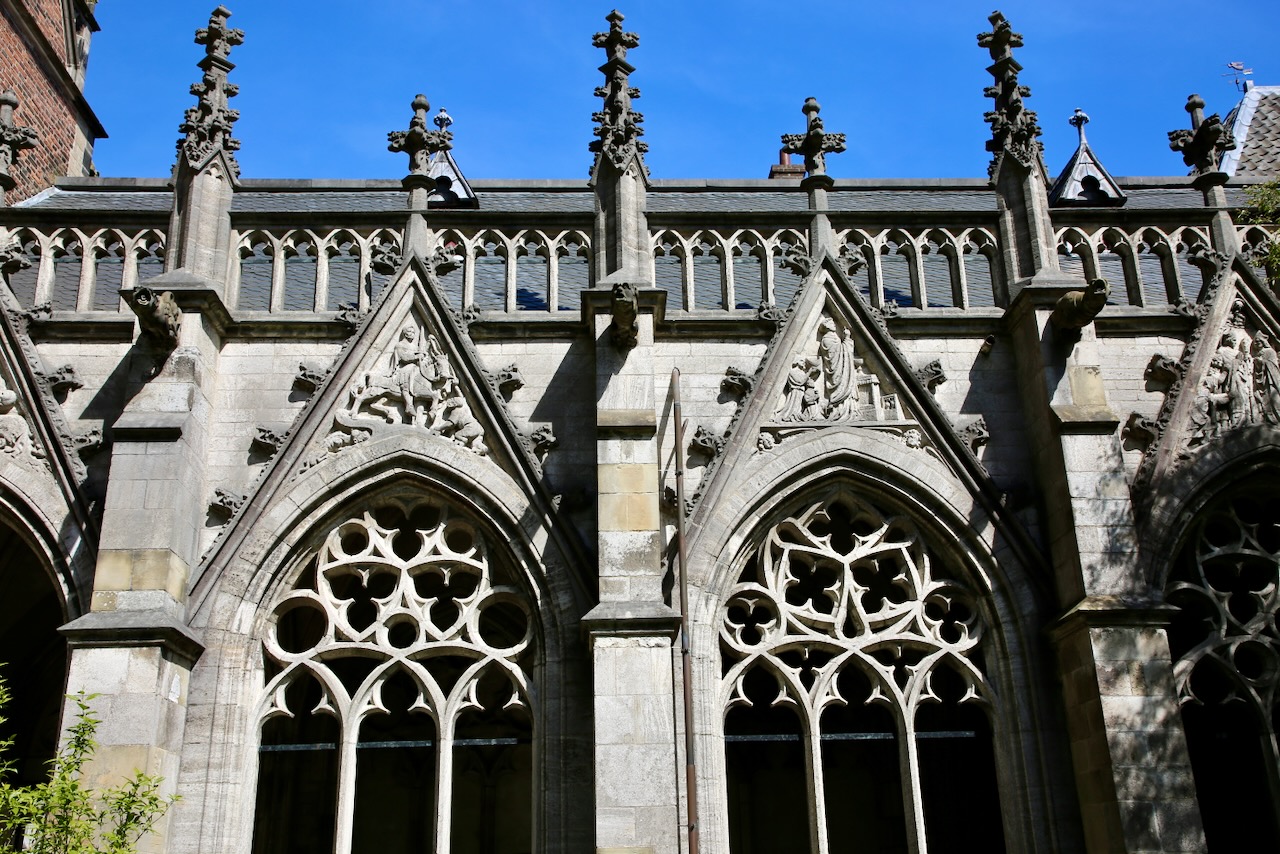
The nice thing about walking so much is that you can constantly eat little treats. I do appreciate the serving sizes here, time to enjoy without leftovers or waste (which seems to be a community concern). I don’t know if Caleb saw the ice cream or the chocolate first, but we left with a bar for later and a scoop each. I get the mango-passion fruit (a popular tropical treat with a few varieties). We return to Dom Square and find our way into the Pandhof monastery garden, built between 1390 and 1440. Here, we are told one story of the carved rope hidden in the intricate tracery of one of the cloister windows.
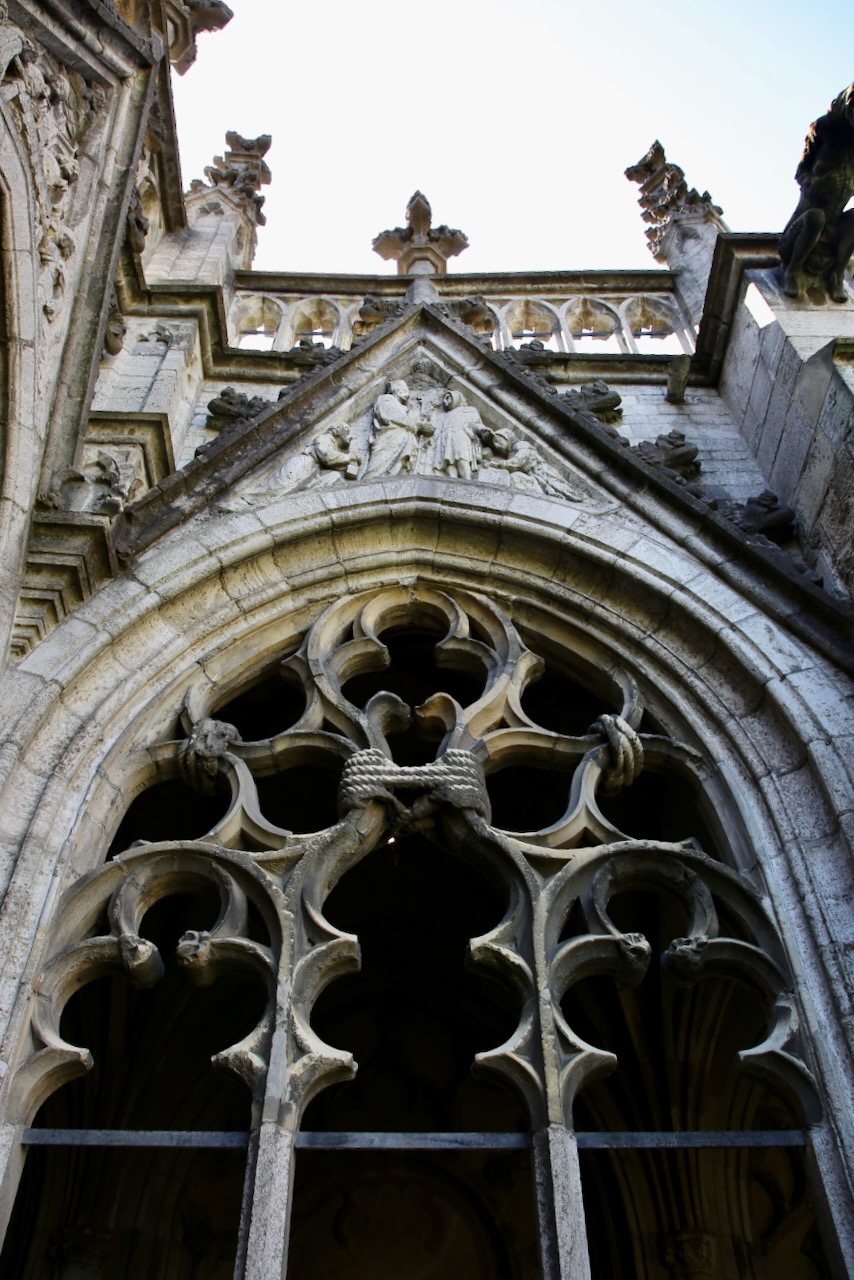
One of the apprentices broke part of the window structure and “tied” it back together. When the manager found out, the worker was quickly made permanently unemployable, and only then did the man in charge notice the delicate handiwork that was supposed to impress him. Perhaps it had, and that’s also why the man would never work again. I get a thumbs-up from a guy in orange sunglasses and an orange transparent visor, perhaps because my shades are the same color. We explore Flora’s Walled Garden, which has been the palace of the bishops, residence of the governor, French barracks, and a municipality storage area dating back to the 12th century.
In 1803, Hendrik van Lunteren established the plant nursery. In 1880, his grandson built greenhouses. The current garden was created in 2009 and is maintained by volunteers. In the cloister garden of Saint Marie, redesigned in 1973, are wild plants named in association: Maria Rose, Lady’s Mantle, and Milk Thistle. At Zocherpark, we learn that the 600-year-old fortifications were being demolished, and there were plans after WWII to fill in the canals. Only parts were filled up in 1970, but since 2020, the canal runs all around the city center again.
As we continue along the canal, we notice more orange shirts and cheeks streaked with the colors of the national flag (vermilion, white, and cobalt blue). The horizontal tricolor, the oldest in continual use, was officially adopted in 1937 and influenced Russia, via Peter the Great (late 1600s), and Dutch shipbuilding to adopt the same colors. France was led to adopt its vertical tricolor in 1794 as a symbol of a republic rather than a monarchy to represent their nation. Back to the car, Gert will drive us through a neighborhood to see where families are marking spots for selling their wares tomorrow.
Some squares have names in chalk, tarps with bricks, or caution tape over their claim. Caleb notices one family has a lot of spaces, until Gert lets him know that bezet means occupied. We had a good laugh. At the house, we are presented with snacks while we watch some of the women’s bike race happening in Liège-Bastogne-Liège, Belgium. This is the oldest (first run in 1892) of the five Monuments of cycling, the other four being the Milan-San Remo, Tour of Flanders, Paris-Roubaix, and Il Lombardia. The women’s race was established in 2017 and covers over 250 km in a day.
Tonight’s dinner starts with a carrot and sweet potato soup (which I thought was the main course). The fresh vegetables and broth cubes come packaged together. The leek, mushroom, and ham quiche had a delicious filling and a perfect crust, but what I couldn’t finish, I slid onto Caleb’s plate. Zulu, seeing that we are done eating, is ready to do so himself, but goes about asking for it too early and in the wrong way. It is entertaining how cute he is. (No cat was starved while we were there.) Anouska teaches us how to play Beverbende — a game where you want the lowest score but you can’t see all your cards.
The final scores were close. On the news, guys with guns near Trump, Lebanon is on fire, and a recap of King’s Day in Dokkum*. The royal family participated in ice skating (on a special rink), Frisian handball, canal pole vaulting, and going on stage with Nynke Laverman and Sytze Pruiksma, alongside Broken Brass and the Ragazze Quartet performing at the Sense Theater. We finish the evening with a cup of lemon ginger tea on the couch, and then Gert will show us a bit about the online game he plays to stay in touch with family (a more popular way of doing so than I realized).
*This will actually happen tomorrow.

 TheJessicaness
Not yet 🙂
LikeLike
Nett hier. Aber waren Sie schon mal in Baden-Württemberg?
^_^
LikeLike
Wait! I’M not ‘Anonymous’! (Your Ubiquitous Uncle Chester posted the above…)
LikeLike
You kids get around!
LikeLike