Lost in Moose Meadows

six in the morning

six in the morning

This isn’t our first time waking in a national park and I hope the experience won’t be our last. There was a lady in Seattle that wanted to live off sunshine and water, but she wasn’t in the right location for it – to die from starvation, so she quit after some weeks of trying to be a breatharian – when Seattle is full of smog. I think this lady had a death wish, but as for me – I want to move to Canada! I could easily get used to the variety of my morning routine while on the road versus doing dishes and laundry at the same house each time.

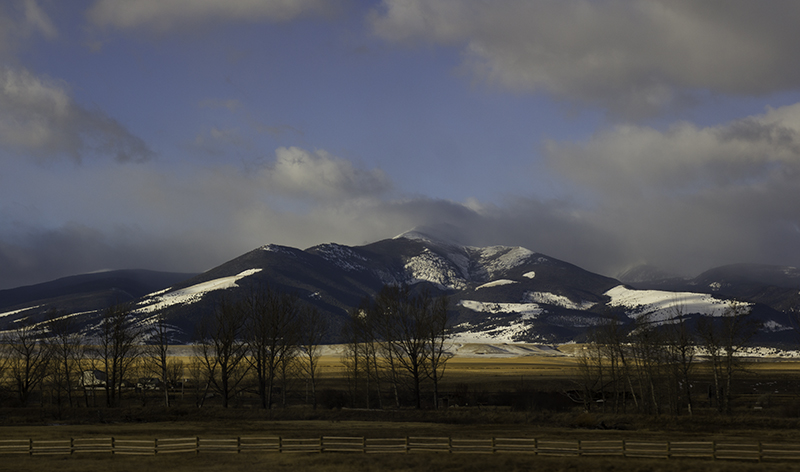
The sun and clouds have done so much by 6:00 am to inspire me with a spectacular view of colors and shapes over the mountains and trees. It seems like the blink of an eye and we are in Banff National Park on Bow Valley Parkway driving south in Alberta. Adjacent to the road we are on is Hwy 1 that has arch-shaped bridges built as animal overpasses with remote video cameras to keep an eye on which mammals are crossing and the ones setting up a colony, hoary marmot, in the area designed to be a natural extension of the park.

roadview

The crossings have reduced collisions between vehicle and wildlife by 80% and Transport Canada is working on netting for ducks and an electromat equivalent to the Texas Gate (Canadian name for cattle guard) to deter animals from walking on unfenced highway. We passed a lot of construction and now I know why. Canada cares about its drivers and the other creatures of the road and keeping them all safe. I hope more places with lots of roadkill will adopt these safety measures and keep what species we have left alive.

A safety precaution taken on the parkway is to close the road from 6:00 pm to 9:00 am between the months of March and June to allow animals to find food and raise their young – that’s dedication. I know there are wealthy people who wish it was easier to tell animals to go against their thousands of years of instincts and just relocate and stay put, but that only works for people when we stick them behind fences with guns pointed at them.

roadtree

Or perhaps one day we can have CanadaWorld and watch as bears attack like Shamu does when held against his will and away from family – enough to inspire a change in the ending of a Pixar film, Finding Dory, to not support animals in captivity after watching the film, Blackfish, about the harm brought to people and orcas with them being contained in tight spaces for human entertainment and profit. Though the truth may be saddening, it needs to be known to bring about change for whales in kiddy pools and moose in windshields.

Further down the parkway and onto another sad story. The road we are on was built by prisoners of Castle Mountain Internment Camp between 1915-17. When the winters were too harsh and supplies delayed by the demands of war they were moved to the town of Banff to build sidewalks and tennis courts. They were forced to work eight hours daily, but had to march to the labor site making it a thirteen-hour day. This was the largest facility in Canada housing over 600 people, though a total of 8,500 captives, mostly Ukrainian, were held between 1914-20 amongst 24 camps.

elkst

Camp life was hard and escape attempts frequent. Detainees were released to meet the growing shortage in the labor force and some were able to return to their old jobs. Parks Canada has finally built educational monuments to bring light to the significance of these events and to uncover the history buried in fear and guilt over the decades. Hitler is the most infamous ruler of labor camps. He’s not the only one to cause suffering, but he took it a step further with scientific experiments and gas chambers. As much as I wish these events could just be a nightmare among fairy tales I hope these memorials do their job to ensure this type of insanity never happens again.

Onto happier things. We stop at the trailhead for Castle Mountain and there are two other vehicles with people loading their overnight packs and putting on sunscreen. It’s about a four-hour round-trip hike to the viewing area which sits well below the peak that would take a good twelve hours to return from starting point. Or we can take a shortcut on an unmarked trail with an ice axe required in summer. We agree to find something easier.

photo by Caleb

photo by Caleb

At Castle Mountain Junction we pull over to get a better picture of the bull elk eating with the cabin customers as his audience. I near the crowd as Caleb walks towards the road trying to keep our distance, but it seems our 13 yards were only half the space we were supposed to allow between us and it should be 100 yards with bears and wolves. I could see the predicament of remaining in your car – not too close, but not too fast to escape them and risk hitting one in the process. The elk crosses the road safely and is soon entering the thick of the woods.

We enter the town of Banff before the museum or the visitor center opens. We learn that Banff is Canada’s first national park and the world’s third, established in 1885. And that Canada was the first to establish a park service to protect all the natural wonders while increasing the tourism industry’s wallet size. We window shop between the two businesses waiting for them to open at 9:00 am and realize we haven’t had breakfast yet. We stop at Tooloulou’s and Caleb orders the Classic Canadian – skillet potatoes with mushrooms, onions, peppers, and tomatoes, and 2 slices of toast with 2 pancakes.

street marker - by Caleb

street marker – by Caleb

A very carb heavy meal. I eat the pancakes and we get to drink water out of mason jars sitting at a red and white checkered cloth-covered wooden table with a brick wall beside us. The restaurant advertises its mix of Louisianan, Acadian, and Canadian influences, but there will be no crab, calamari, or crawfish on our plates – just flour and starch in our bellies and smiles on our faces.

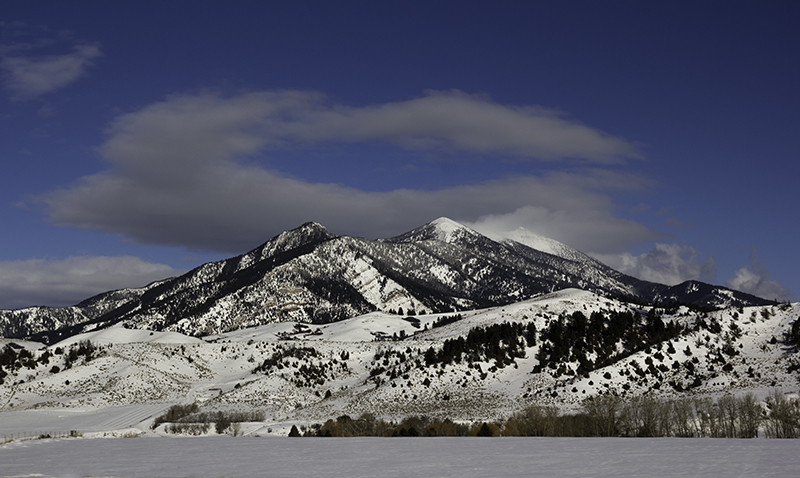
We step outside and I feel like we have entered Switzerland. The buildings have pointy wooden roofs and there is Tunnel Mountain staring down at us. Most seem so far away until you are on one of their paths, but this one has a trail that starts in town and it’s not the only one standing tall – we are surrounded by large masses of the Earth’s surface that have the power to touch clouds and amaze us in their power and beauty.

Banff Avenue

Banff Avenue

A trip inside the visitor center after waiting in the wrong line will get us quick service with an older woman who unknowingly gives me my third Canadian park stamp sideways. Caleb is amazed that this has even taken place as I have been the only one in the five years that we have collected stamps to enter them into the book. I smile and consider it part of the experience – just as I accept the format of my passport when they select a page and space at random.

I would love to fill my passport with countries from around the world, but they are becoming less common. Perhaps there is a Save the Ink foundation that I have yet to hear about. I do appreciate the woman stamping my book with the same space-saving savvy that I use to get the most usable area out of each page. I already had to upgrade to the larger book that can have pages added as the tiny one was starting to fill the additional spots in the back.

a t-shirt I agree with

a t-shirt I agree with

It was the large PEZ collection that drew us in, but the older candy that is harder to find these days that kept us looking at each shelf in Welch’s: The Banff Candy Store until we left with some honey-lemon hard candies, made in America, for Caleb who was upset that they weren’t made locally. Next time he says he will read the label better. I got chocolates, made in Canada, with ice wine and maple fillings.

Town time is over. We are ready to get back to nature as we make our way west to Cave and Basin National Historic Site – the park that started it all… for Canada in the fall of 1883 when three railway workers found the cave and petitioned the government to make money on it when the Prime Minister saw an opportunity to preserve the springs and retain ownership of the land for, ‘the public’s great sanitary advantage’. The pool wasn’t closed until 1976 and that only lasted nine years until it was permanently sealed in 1994.

inside the cave

inside the cave

Closed or not, we are excited to be here. We are surrounded by mountains and fresh air and in the grass we spot a Columbia ground squirrel – a mix between a pregnant red squirrel and an anorexic marmot. We see a lot of people walking up a ramp next to the entrance and seemingly into the park for free. Once we pay our $3.90 each we learn that they are excluded from the cave and museum inside, but that the upper view of the basin and the lower boardwalks are theirs to ogle at.

Through the first set of doors and this boy is drinking from a contraption that I’ve never laid eyes on before – behold the water fountain for your face and bottle! He gave me a weird look as I patiently waited and then snapped a photo of this genius idea and healthy alternative. There’s some introductory information before we head down the hallway to the cave – a hot tuber’s wet dream – if that is to lay in warm water and stare at the walls and ceiling for hours and ponder the ever-moving path of the liquid that envelops you.

view from above the pool that closed in 1994

view from above the pool that closed in 1994

But that’s no longer a reality. There is an artificial wall and a railing built so that visitors may see the pool from another angle, even while sitting in chairs provided, but there will be no swimming in these soothing waters. Inside the story hall are big screens and story boards and a photo booth at the end. We walk outside to see the once busy pool, full of 157,000 people in 1961, covered in bricks. It might seem a bit saddening, but that’s a lot of bodies swimming in water that can’t be sanitized, but they could’ve made it viewable.

At the basin and it looks like it might have been a waterfall at one point. I want to touch the blue-green-clear water to feel how hot it is, but I’ve been warned to stay out of the home of the Banff Springs Snail. I think everyone else that was staring intently at the pool was also looking for a larger snail, but this one is the size of a popcorn kernel and easily blends in with the different growth and rocks at the bottom. Then it’s up the stairs to get another perspective of the springs, but my attention strays to the mountainous surroundings and imagining all the people in their heritage swimsuits prior to 1985.

hot pools

hot pools

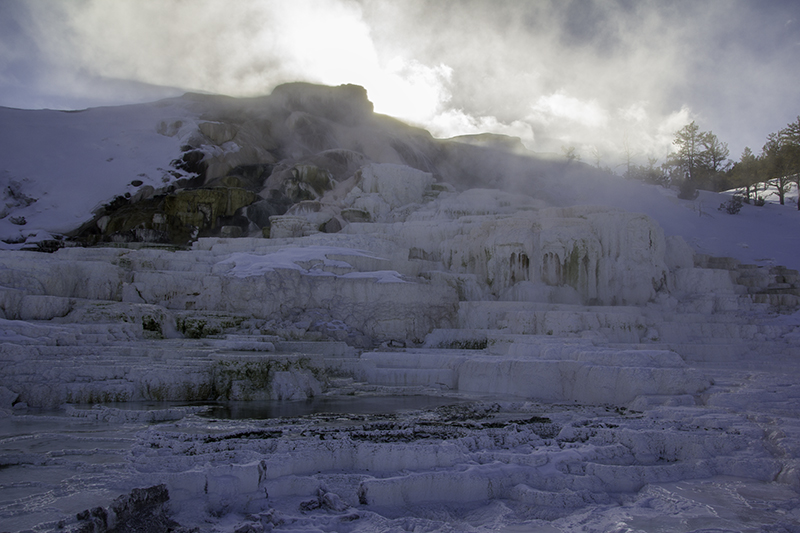
The lower boardwalks take us by pools that look like paintings. There’s a lot more to see here than initially meets the eye, like the grass-top roof on the visitor center that we notice as we walk back to the parking lot. We will backtrack some before heading south again and make a pit stop before that at Moose Meadows. We were obviously hoping to see its namesake, but there are supposed to be some ink pots in a valley northeast of where we parked. We might’ve stopped at Johnston Canyon, another way to get there, but cars already filled the shoulder so we joined the other lonely vehicle further up the road.

The map makes the trail look long enough to bring the dogs. The trail starts out nice enough and we are anxiously awaiting a moose sighting. Soon we are climbing over fallen trees. One or two wouldn’t have been an issue, but it was getting to be a hassle. I had to pick up Piggy for the bigger ones that she couldn’t jump over. Then we followed a sign that said, ‘Go that way’ when we should have done the opposite. We passed an elderly couple, that happened to be parked beside us.

Marble Canyon

Marble Canyon

Caleb wanted to be upset that they didn’t give us a heads up, but maybe they got lost too, though that doesn’t seem likely. We would end up coming down a hill from a group of cabins and walking on the trail that leads past the lower and upper falls and eventually to the ink pots with another 2-3 hours of our time one way. Defeated, we head back to the car via the road and there’s that couple putting their hiking sticks away and changing out of their sweaty boots. Lesson learned: it’s not always about the destination, but the fun you have overcoming the obstacles along the way.

I also learned that it’s important to stay calm, even when Caleb thought we were lost. He wanted to attempt to just walk to the road, but as messed up as the trail was I knew another route would be even more difficult and could leave us stranded doing circles in the woods for a day or two. Or perhaps not as we were still close enough to hear cars on the road and could’ve followed the sound, but we still would’ve gone off the trail and that’s no bueno when plant and animal life are at risk – unless it’s life or death.

trail to Paint Pots

trail to Paint Pots

We didn’t remember that when we got advised to take Hwy 93, the couple meant the portion in Alberta, Icefield Parkway, that winds through glaciers and has been known as one of the most scenic drives in the world, not the southern end, Banff-Windermere Hwy, that will take us through Kootenay National Park after taking us by the Continental Divide. We get out so that I can sit between two parks and two provinces. It’s here at 5,382 ft. above sea level that water makes its decision to flow to the Atlantic or Pacific Ocean. We watch as a mother and son run around enjoying the divide and border to the fullest.

We stopped at Marble Canyon to see a waterfall, but on the other side of a gate we see a sign that says the other entrance to the Paint Pots is closed and this is the only way to access them – so we go. The other way may be shorter, but we are glad we didn’t miss out on turquoise-blue melted glacier, emaciated green trees and their burnt brothers, brown butterflies with a splash of white, and purple flowers amongst new undergrowth.

field of paint

field of paint

Halfway down the trail and we see a sign for attacking trees – well, that’s what it looked like to us. It told us that fires made the trees unstable and that we should wait until it wasn’t slightly sprinkling (I was beginning to worry it would downpour and ruin my camera), avoid steep slopes (like the ones located near the rocks and rapids), don’t step on the roots (that happen to be all over a particular section), and to stop when one tree length away from all standing trees (that we happen to be in-between to read the sign). It also said to spread your group out and travel quickly to reduce exposure time, but I’m here to enjoy the scenery – not be scared of the many ways it could kill me.

Color, ink, paint – they all may seem the same when describing colorful earth that I have yet to see, so I really didn’t know what to expect. There is natural ochre here that was mixed with fish oil or animal fat and used by the First Nations people to paint their clothes, bodies, tipis, and rocks. We find a field of iron with patches of olives growing out of pools of gold. There are still some old tools that have been left in the grass next to the river of red pigment.

river of ochre

river of ochre

Two hours later and we return to the stairs that will take us to Marble Canyon – not named for the multiple types of marble rock that the river could’ve carved or for little glass balls, but for its resemblance to marble as gray and white dolomite. It’s a warm day and Caleb and I both want to go swimming. We could jump in, cool off, break a bone, and there are witnesses that may help or be too busy taking pictures of themselves in front of the falls.

Parts of the stone are smooth and others jagged, some are bright and others burnt. The grass is green, yellow, and brown in its varying stages of life. The water is pure blue, quick and inviting. As we get closer to the finale there are signs letting us know where the main attraction used to be and how it has continued to creep back over thousands of years. If that wasn’t cool enough we get to see a golden-mantled ground squirrel as it finishes lunch and then stands there with his paws pressed to his chest.  He hibernates during the winter, which can be quite long in Canada, in ‘shallow’ burrows up to 98 feet in length.

golden-mantled ground squirrel

golden-mantled ground squirrel

Another two hours have passed and we are at the circled number 4 on the map, the triangle is a camping spot. Kootenay River Valley Viewpoint is dedicated to James Sinclair, a man who guided people over the Rockies many times between 1841 and 1854. It’s also a stop to dump trash and walk dogs. I think it’s great that Canada put the investment into roadway garbage cans that seem to eliminate highway litter – or it’s their country pride.

Traveling in Canada is like having an invisible tour guide along to help. Everyone is so nice and all the information centers, in every town, are so easy to find though the parking may not always be – or so it is the case in Radium Hot Springs. We park above it near a park and walk down the stairs to a boardwalk that leads us to smiling faces and a sheet of paper with campgrounds listed on it with websites, addresses, phone numbers, prices, and amenities included – and all for free as Canada believes in the return when done or pass to someone else in need or recycle program.

We go with the second choice on the list – Dry Gulch Provincial Campground. It’s twice the distance from us as Redstreak, located in the park, but saving six dollars or more is worth the five kilometer drive. The ranger arrives promptly and Caleb has decided on a campfire tonight. I will cut up tomatoes to go with mac-n-cheese while he struggles to keep the flames high enough to cook marshmallows. Beaten by the lack of blaze and tired from a long day we decide to retire early and skip dessert.

Posted in Animals, Camping, Education, Food, Government, Hiking, History, Media, People, Photography, Places, Plants, Travel, Water | Tagged , , , , , | Leave a comment

Flows the Second Half

…to be concluded

icemtn

Our visit to Glacier National Park was short-lived and not because we wanted it to be. There were signs posted that a mother bear had been seen with cubs and people would be cited if not in groups of four or more while on trails – any and all trails, easy or hard. Each hike offers its own difficulties, animals, and views. It was going to be a tough decision, but one was made for us. This is when a child rental shop would come in handy or rich friends that can fly their jet plane to meet at whim as dogs don’t count – we tried.

The park has decided that four people look bigger, and scarier, than two. I thought it was so that a fast couple could bring a slow one and have a better chance of survival or bring dogs as bait like we do; others carry bear mace. But I am more than willing to give bears their space. I’m grateful to have rangers doing their jobs efficiently to keep wildlife wild and people safe – though I was still willing, at the moment, to risk my leg to see one in its natural environment.

British Columbia takes extra care to ensure a safe road for its drivers. If you don’t get eaten by a bear on a trail then beware the possible unexploded shells the province employees use to induce an avalanche when there is no traffic in the way. One might think they need a better quality assurance program, but Canada spends ten million a year to clean up leftover explosives, including those left from training sites stretching back over 40 years ago and their death toll has not exceeded that of France, Belgium, and Germany.

actushep

photo by Caleb

This province has gorgeous on repeat – mountain icefields, thick forests, blooming flowers, and the flowing green water of the Columbia River. We see a sign for range, lodge, and restaurant and turn in the driveway. We park at the end and are impressed with the landscape. We’re excited to see what food they offer. Inside, the lady behind the desk lets us know that this new business hasn’t gotten that far yet, but we are free to look around.

We quickly pass the wrapped hoofed leg ornament hanging in the wine cellar to enjoy the more lively view outside. There are rocks around a pond and chairs around a fire pit facing the mountains. There is a picnic table with individual seats on the ends – how cute. And my favorite is the cask-looking sauna set with trees at the rear and tall grasses and rocks on the sides. I would love to get in and try out its relaxing qualities, but I’m sure it’s for guest use only. I wonder if the space in the ceiling was intentional for ventilation as we walk back to the car.

Further east on Hwy 1 and we enter the town of Golden. We find a parking spot amongst the heavy traffic next to Legendz Diner. Pink walls covered in pictures of Elvis, pink booths with gray seats, silver tables and chairs with red seats, and black and white tile floors. We order a Traditional Ale made by Big Rock Brewery in Calgary while we decide to get a pizza with spinach and olives. We asked for it to-go when we realized we’d been in here over 30 minutes and we had dogs to tend to and places to see.

the tree that ate too many donuts

the tree that ate too many donuts

We stopped at the gas station nearby in hopes of getting some more of that beer to have with leftover pizza for dinner. We got chocolate and caffeine instead when we learned that we would have to buy alcohol from a brewery or store that specializes in beer or liquor and some that sell both separate from the restaurant, hotel, or casino they are located in. Neither of us consider ‘getting our drink on’ to be that important to use our valuable time searching for booze. We will wait for the next opportunity and we can also go without.

Canada is the second largest country in area, but due to their excellent winter conditions in the north it’s estimated that 75% of their 35 million residents live within 200 miles of the United States border. This means that cities, national parks, and highways are more concentrated in the south, but it remains one of the most sparsely populated countries and one of the most prosperous with 11% as many people as the States with over 300 million residents. This means that their park systems are close which makes it easy to visit more than one in a day, unless we would’ve found a group to hike with in Glacier.

It could take 2.5 hours to drive by Revelstoke and through Glacier and Yoho National Parks if it wasn’t for the change to Mountain Time in Yoho that extends south into Montana and east into Alberta. This park is known for its waterfalls, rambunctious river, Canadian Pacific Railway, and the discovery of Burgess Shale fossils in 1909 that offer a glimpse into history that happened over 500 million years ago when these almost two-mile high peaks were covered in water.

Wapta Falls

Wapta Falls

So we are on our way to this great park when we pass a caution sign for bighorn sheep and standing directly behind that sign is exactly that. It was so hard to believe that Caleb thought it was a fake (in case the silhouette on the sign didn’t give you an idea what to look out for the stuffed version would). Well, I knew it was real and I pulled over as much as I could so that he could get a picture of the sheep before it disappeared over the cliff side. We would see plenty more. We were driving with a sloped mountain going up on my left and that same mountain going down on the right.

Into the park and immediately we see a sign for Wapta Falls; we love waterfalls. The sign next to the trailhead tells us it’s an easy 2.4km walk to the other end of the trail. Some quick math in my head tells me that’s a mile and a half and through the woods should take us 30-45 minutes one way. It starts out easy enough with dirt and then becomes a root-filled path and there are a couple of close edges where erosion is becoming more obvious. I saw a family banging sticks together and was hoping to see a bear (from a very safe distance), but there would be no such sighting on this hike.

Near the falls is a chain-link fence that follows the slope down some for a better view. Or you can continue further down the trail like we did, possibly take a shortcut or just a steep path further down and come to another viewpoint. We noticed the umbrella and the bag before we noticed the man they belonged to. From where we were standing you have the option of continuing even further down and perhaps if brave, or dumb, enough going for a swim in a turbulent whirlpool. We chose instead to focus on the different types of barks on the trees we found along the way.

The Trailrider Monument at Field Information Center

The Trailrider Monument at Field Information Center

We prefer to get our information at the beginning of the park that way we know where to concentrate our efforts for the time we have allotted. The plus in Canada is that we find brochures and park stamps at booths located within the park and along the road or information centers that have space set aside for that purpose as well. We are lucky enough to make it into the visitor center exactly one minute before they closed – enough time to get a stamp to add to the growing collection and a brochure of the park.

Within those folded pages we find a place to camp for the night and see that we may have passed up an opportunity, but we have enough daylight to enjoy another. I slow down for the toddler playing soccer with a volleyball on the Monarch Campground road and find us an empty spot at site 17 that will cost us $17.60 for the night – and we don’t have change. We take this opportunity to drive up to Takakkaw Falls; I couldn’t resist the name.

An unplanned stop would be a view into the most difficult, and rewarding, engineering feat for the Canadian Pacific Railway in 1909. The company had tried the cheaper, steeper route, but that proved too dangerous. Now there are two spiral tunnels – one in Cathedral Mountain and one in Mount Ogden that help the train traverse its steep tracks. It’s the only one of its kind in Canada. The village of Field was made to support the railway with extra locomotives to help the passengers and freight reach their destination. Those extra engines are still in use today for the 25-30 trains that travel on these rail lines daily.

trail to Takakkaw Falls

trail to Takakkaw Falls

Had it not been for fear of avalanche, the railway would have had no problem building tracks around the mountain and in the wrong valleys. They had to have stronger steam engines built, two 2-8-0s, to help get the job done in 1884. The track location was chosen, not for the rugged Rocky Mountain terrain, but for its proximity to the States and closeness to the Pacific Ocean. Adding the spiral tunnels would cost 1.5 million dollars, but would be such a significant choice in Canadian history that Kicking Horse Pass was designated a National Historic Site in 1971.

Another first is seen as we make our way up the road to Takakkaw Falls. There is a sign for trucks over 7 meters or more on how to use the switchback. They are to drive forward to the first turn, reverse up to the second turn, and then continue north. The corners are quite blind and can even make me nervous being in a compact SUV, but if you can get past that the view and the feel of the mist are worth it.

We see a bunch of cars parked on the road across from a stream. We park in the lot and walk down to the river. There is a trail that leads to the falls from here, but I want to go see what inspired the other cars to park where they are. This place has us in such good spirits. We are all smiles as we skip and jump towards the momentous water that happens to be the second-highest falls in Canada that are fed by the Daly Glacier that feeds off the Waputik Icefield and into our minds and hearts.

nearing Takakkaw Falls

nearing Takakkaw Falls

A fall either needs a long drop or tons of water to create such a mist. This is a paradise moment, one of those perfect days, and something I never want to forget. We take pictures, as usual, and we both want to get closer – like inspect the water droplets and microscopic life forms closer, but we have a campsite to pay for and dogs in a car to tend to, so it’s back down the magic trail for us.

We pull into Kicking Horse Campground like we are staying the night and I don’t know if it was that we looked too cheap and dirty to stay there or if the place was full, but we got a weird look from the ranger. Perhaps she was wondering what could make two people so happy. She gave us our change and off we went. The coinage thing for $1 and $2 is great for buses and laundry, but can be a pain in an envelope along with cents when trying to shove it in a thin slot.

We sit on the picnic table provided as we watch two people set up different tents in a camp across from us. Caleb laughs at the guy as he struggles and is impressed with the girl’s skills. I’ve never gone camping with someone or a group of people and slept in a different tent. Then we watch the train go by with its brakes set to screech and attempt to count the 160 or so boxcars that roll through the tunnel with an extra engine car in the middle of the load. That’s a long train and the day has been too and both are sufficient.

photo by Caleb

photo by Caleb

We got the tent set up with the rainfly on. We let the air mattresses self-inflate before Caleb finished filling them. We blew up the camp pillows and unrolled the sleeping bags only to remember the hole that was put in mine by a burrowing dog trying to make their bed more comfy during the night. Fortunately for us, our $469 (bought on sale) bags are easily fixed with a cloth Band-Aid to keep the feathers from coming out – at least until we finish the trip. As for now, I’m going to sleep.

Posted in Animals, Camping, Food, Hiking, Photography, Places, Plants, Travel, Water | Tagged , , , , , | 1 Comment

In the Land of Frozen and Running Water

Revelstoke Dam

Revelstoke Dam

Another peanut butter and jelly breakfast to get us fed and on the road. We stop at the Revelstoke Dam so I can get some nature photos and give heed to the sign that warns me that I may drown should I venture over the concrete barrier, past the chain-link fence, and jump either into the reservoir or the river. It’s when I turn around to see my husband’s excited face over the view we could get from what appears to be aluminum and toothpicks sticking out the side of a mountain on two different height levels that I begin to worry.

Luckily, someone has beat us to that conclusion and has locked the tiny gate leading to the small ladder and posted another death sign. I’m beginning to like Canada’s bluntness – ‘do this and die. This isn’t America where we try to tame nature and the dangerous workplace. We let you learn from others’ examples so that we have more impressive pictures and place names to add to our signs.’ And what the police don’t catch you doing, perhaps the Citizens on Patrol will.

This is it. The moment we have waited for ever since we saw the first sign that told us gas was $138.99 for Regular. We had to remember that it actually meant $1.38 per liter and that we would be paying more for gas here, sometimes by 30% depending on the province and the exchange rate with Alberta averaging the lowest price. This means that filling our tank with our usual 13 gallons would equate to an increase of $18.

Caleb with Canadian 20s - Frontier Series

Caleb with Canadian 20s – Frontier Series

I wanted to say that we are used to having an information booth readily available as soon as we enter a national park in the States, but some offer paths and monuments that can be seen without payment. And it’s not for lack of signage. Perhaps we weren’t quite awake and thought the hiking paths on the map were roads and wanted to make sure we were on the correct side of the highway to get a more detailed park brochure.

To get to the summit of Mt. Revelstoke one can either drive the Meadows In The Sky Parkway up 16 miles or hike the Summit Trail that is 6.2 miles one-way. It’s not the highest peak in the region, but we are unaware of that. We aren’t even sure of the summit when we set off on the Nels Nelson trail. Short, steep, and a lot of switch-backing. What really gets our attention here is the history of this hike. We are able to get near the base of the judge’s tower and look down at the slope where Mr. Nelson broke many world records.

We parked the car directly in front of the information booth. I’m sure the parking lot was to our left, but we were soon joined by another couple that left just as quickly. It seemed there would be no issue of our car being left here. From where we stood we were left with three trail options: the Summit, Nels Nelson, and Soren Sorenson with two loop length options. I almost detour us, but Caleb is able to follow the trail markers – we want the hike only trail, not the hike/bike trail.

life on a rock on the Nels Nelson trail

life on a rock on the Nels Nelson trail

This hill was a worldwide winter attraction for spectators and athletes and used for competitions between 1915 and 1974 when the interest in ski jumping declined and the cost went up. Nels was from Norway originally and wasn’t allowed to participate in the Olympics in Switzerland in 1928 because the officials didn’t find it suitable for him to work his way there. I can’t speak for him, but I would be proud to have a place named after me and to be inscribed in multiple halls of fame for my accomplishments.

There are lots of green trees, yellow flowers, and medium-sized rocks (hard to tell if critters remodeled their homes or if dirt and rain were the only cause of the piles). The trail is just wide enough for one person to walk it at a time with that as it ruins less of the surrounding environment. It seems even Canada’s easy trails are built to backcountry standards – meaning no paving, no handrails, and a warning sign. We are able to walk in wet forest and dry field and look at a city resting in the valley under the clouds – all before the park gate opens.

We’ve arrived at our fair share of closed parks and met with disappointment in having to leave, but we’ve never had to wait in line to get in. The people in front of us don’t seem to be from here either as they consult their maps and technologically advanced devices, but unlike us this isn’t their first park and they are waved on. The daily fee is $7.80 each, but we plan on visiting multiple parks and want to get the best money-saving deal.

view from Nels Nelson trail - by Caleb

view from Nels Nelson trail – by Caleb

The ranger tells us about the Parks Canada Discovery Pass – only $67.70 each. Whoa, we are used to paying $80 for the both of us and this year we got a free military card. We get the map out and do the math. It will be cheaper to pay the entrance fee at each park instead or to buy two days here as each park price varies – just as it does in the States, but one park receipt won’t get you into another. So we buy a two-day pass and it’s good from 18 Aug at 8:00 am until 20 Aug at 4:00 pm giving us an extra ‘half’ day to enjoy the parks for $31.20 with the ability to upgrade to the Discovery Pass within the next thirty days.

As we had neared the gate we passed a sign telling us to ‘watch for amphibians on road’ with levels of low to high, also color coded. What a great sign, but the sun is up and the only frogs on the road are the ones that got smashed while crossing it under the cover of darkness while the street was still moist. It’s so neat to have to drive slowly out of a camping area in fear of putting a dent in the frog population. I’m happy to see them so fruitful and venture-minded.

For many years I’ve wanted to visit Australia if I had a day to live, or won the lottery, or could ride with the chickens on a cargo ship. I feel bad for not feeling that same earnest desire for Canada and other countries I have yet to visit. I’ve only seen the big city of Victoria and the most wonderful outdoor countryside that British Columbia has to offer, but to me, this is my Redwoods or Yellowstone. I now realize the significance of a national park. They aren’t just some great place that you can brag about your country having; they are the places anyone lucky enough in the world to know about it would have to be incapacitated not to go or want to very badly – and to secretly try to live there until caught.

lupine on the Firetower Trail

lupine on the Firetower Trail

I once read a blog post that questioned whether trees and mountains and clouds were really different or is it our mind that differentiates between Thailand mountains, and Russian clouds, and the trees of Africa. I know it’s the unique setting and natural occurrences and tourist presence that makes each rock and plant and bug special from the next, that make it worth traveling the world to learn about the history and culture that the bark and grain of certain trees made possible by cabins, canoes, and carts.

The trailheads on the road are marked by tiny signs. It helps that you should be driving slow so you don’t miss them. We take a few stops along the way to see the red wooden benches, the bright white rocks, and the purple dew-moistened flowers. We park the car in the shade and make our way to the Upper Summit Trail that will take us from Balsam Lake to Heather Lake through subalpine forest. We see some Indian Paintbrush, unripe blueberries, other red flowers, and some seeds in a pod.

Once we reach the parking lot at the top we hike up the Firetower Trail to the 6,360 foot summit where the lookout was built in 1927. It remained in operation until 1988 and still offers spectacular views of the valley, river, mountains, and clouds below from the viewing platform that surrounds the tower. We’d love to christen the place, but it seems an older couple has beat us to it. When we return to the bottom lot with cars unloading people we’re glad we didn’t pick such an obvious spot.

the Firetower

the Firetower

Outside the park boundary are boardwalks that explore the other ecosystems of Revelstoke National Park. Our first will be Skunk Cabbage. We figure why not bring the stinky dogs on a perhaps smelly trail – why, because Piggy is blind and it’s one thing for her to bounce from bush to bush on land, but it felt like she was walking the plank into a swamp bath. I kept her leash short and we were able to see a small rapid river, the brown plant life living in the clear water, the giant cabbage that appeared to be a bear’s nest, swampy grass that was flattened into a design, and a pointy nose frog with golden lips.

The next boardwalk is Giant Cedars. I like that the short plants can continue to grow and water to continue to flow as we walk over them. I’m happy to see that these wooden paths don’t have railings or no trespassing signs and I see no evidence of people detouring from the scenic route to find the path less traveled. Perhaps others that visit here are just as awestruck as me that Canada isn’t all maple leaves and accents. It has something else to offer that is worthy of respect and comparison when people are able to come back.

It seems that the same person wrote the history of the trees of the Muir Woods in California and the Giant Cedars in British Columbia as both compare time using the first voyage of Christopher Columbus in 1492. The difference is that his crossing was merely another annual ring for the midlife of a redwood, but the cedar was a simple seedling. Either forest has been around for over 500 years and has seen its fair share of history – if only trees could talk we could finally have the answer to, ‘If a tree falls in the woods and no one is around to hear it, does it still hurt your feelings when they choose to fall on you?’

Giant Cedars Boardwalk

Giant Cedars Boardwalk

We get to walk by such an accident. A tree fell on the boardwalk and instead of clearing it twice (the path was arched around another tree), they let nature do its thing and built another beside it. I feel great to be in a country that has such an appreciation and the power to command obedience. America makes wide paths, not just for the handicapped, but in an attempt to keep people on the part of the park that they destroyed for the visitors enjoyment. And yet visitors feel they have the right to piss on that ideal, where in Canada I didn’t notice one footprint out-of-place. But that could’ve been me blinded by the lust.

On the road again and we soon pass through a tunnel that reminds me of a scene from a video game called Need for Speed for the lattice-like structure on one side that lets light in. We had passed through a snow shed also known as an avalanche gallery built to keep traffic flowing in hard to clear areas with lots of snow fall or if in a natural ravine that directs avalanches. These are especially important for trains that pass through plenty of mountainous terrain that are threatened with high winds as well.

This brings us to Hemlock Grove where we encounter another couple that we saw at the Skunk Cabbage boardwalk and that unbeknownst to us we would need later in the day. They asked if we were touring too. I’m surprised we didn’t talk more with another pair our age. Usually our fellow travelers are members of the retired group, but we seemed equally in love with our companions and the moment we found ourselves in. I hope they were able to have as much fun as we did if not more in the next park.

Columbia River - by Caleb

Columbia River – by Caleb

to be continued

Posted in Animals, Camping, Education, Hiking, History, People, Photography, Places, Plants, Travel, Water | Tagged , , , , , | 1 Comment

Crossing into Canada

foreback

We wake up 141 miles from the Canadian border this morning – the day has arrived that we will be traveling into another country together. In the light we are able to see a closer bathroom than the one we got asked to stay out of last night, but a walk over there with clothes, towel, and shampoo proves disappointing because of the lack of showers inside. We spot the next one amongst the RV side of the park and can appreciate the extra-large stalls with room for two and the early morning walk to get here.

The cold water is free; it’s the hot water that requires tokens. I only use one, but it takes me as long to shower and get dressed as it does Caleb who opted for the six minutes. He tells me it’s a good thing we didn’t try to shower together in the busy men’s room, but why would I want to do that when the women’s was empty and hopefully cleaner. Back at the site we let our towels (small or medium camp quick-dry) get some air-drying done while we put the tent away and then lay them out to dry in the back.

On the way into town I realize that the campsite is closer than all the turns last night had us believe. We stop at a gas station so that I may carve a mango like an apple and wear it on my face and hands. I don’t know why I didn’t do this at the campsite that had a sink or go inside and ask to use theirs, but Caleb got me a wet wipe after taking pictures of me and after I considered myself non-sticky enough got us on the 20 north to Canada.

I’m getting excited as we pass beautiful mountains and lakes and begin to wonder if they will continue north or how abruptly they will end once we cross the border – silly imaginary lines. It seems the grass can’t be greener and the sky any bluer. I’m so excited to be traveling internationally with my husband and glad that the dogs’ paperwork is simple and that there should be no issues at the customs booth.

likeyours

We pass an osprey in its synthetic nest on what looks like an old telephone pole amongst the power lines. They like to hover before they land, and make large nests so poles, bridges, and trees with no tops are some of their favorite choices as long as they’re near water to access fish that they subsist on. And though not endangered they’re considered an indicator of environmental contaminates (ex. DDT) and are protected under the Migratory Bird Treaty Act.

Fifteen minutes from the border is a wait time sign with less than five minutes lit up on its LED screen. There are piles of what seem to be empty bee boxes, like shipping containers waiting on their boat or truck to deliver them to their next destination. We get to slow down and allow a large family or school group or gangster squad of quail to cross the road. There were over 16 of them and they were in a hurry unlike geese who are larger, more likely to be seen, and take their time waddling across the street.

The last time I was in Canada I was more excited about being on a ferry in a popular whale migration area on the way over. And I was the passenger while my dad did most of the talking. I’d seen the busy border we had to wait in line for to get back into the States, but this time I’m the driver, it’s a border on a road with little traffic, and there is no body of water to transport over, but we do drive by Osoyoos Lake before arriving at the gate.

We hand over our passports and the dogs’ rabies records. We’re asked what we do (and according to the agent I’m “living The Life of Riley”), where we’re going, and if the car is ours. Caleb would have you believe that I gabbed to my heart’s content, but the agent welcomed us to Osoyoos, British Columbia and we remembered to ask for the dogs’ paperwork back, but not for a stamp until we stood in front of the welcome sign to The Best Place on Earth.

one of our 'trying to get it right' photos

one of our ‘trying to get it right’ photos

I thought about walking back over there to get Caleb his first stamp, but we didn’t know what security protocols they had and considered it better to move forward and enjoy what the rest of the day had to bring instead of concentrating on what we missed – but what a story it could’ve been. The first things we see are wineries and orchards, crops and hills, clouds and trees, and signs in kilometers and others with lots of pictures on them – great for foreigners who can’t read the local language.

For every farm there are two farm stands. We can pick them and eat them. We want to save room for poutine – we know we will find some, but we don’t know when so we pull over to the stand that advertises samosas. They have fresh plums, apples, and peppers for sale along with shelves of jams, honey, oils, and pickled veggies. When traveling to another country it’s a good thing to check with your cell provider about roaming and your credit card company about transaction fees (and so they don’t think your card is stolen).

My phone stopped working the second we crossed the border (it’s prepaid), but Caleb’s had its moments along with data services. He paid for our snack in cash and since he has dealt with ‘monopoly’ money lately I let him handle it as it seems easier for me to spend since it’s not the cash I’m used to dealing with, hence the nickname. It’s in our change that we receive that I learn Canada handles their currency more efficiently.

If you Google the life of a dollar bill you will find that it lasts less than two years because it’s handled so much, but a coin can last up to 30 years and more of it is recycled at the end of its lifespan. It’s also easier to keep up with inflation in machines (laundry, public bus, soda machine) by using one coin instead of four. Canada took this into consideration and strictly uses the loonie ($1 coin introduced in 1987) and the toonie ($2 coin made in 1996). They made the switch not knowing if the people would accept it, but it’s saved the government millions and is now another point of Canadian pride.

thelake

More fruit trees, more tall mountains, more reflective lakes as we make our way north towards Vernon. We stop at Vaseux Wildlife Centre and look as naïve as two bubblegum thieves trying to rob a bank as we stare at this northern nature that our minds have tricked us into believing is so much more different from its southern counterpart, but there is one big distinction that we’ve been warned about – mosquitoes… and plenty of them flying like a murder of crows over a bowl of squirming bloody bugs towards our veins.

We hightail it back to the car where the DEET is located, rolling around under one of our seats. Caleb is ready to bathe in its glory, but I plead with him to wait as we don’t yet smell like campfire smoke and I’m hoping we will be in the safety of the city soon and afterwards can begin to add the smells of the outdoors to our hair, skin, and clothes. And though 24 degrees may sound like a good day in Alaska to us, here that means it’s 75 degrees Fahrenheit and the water is fine.

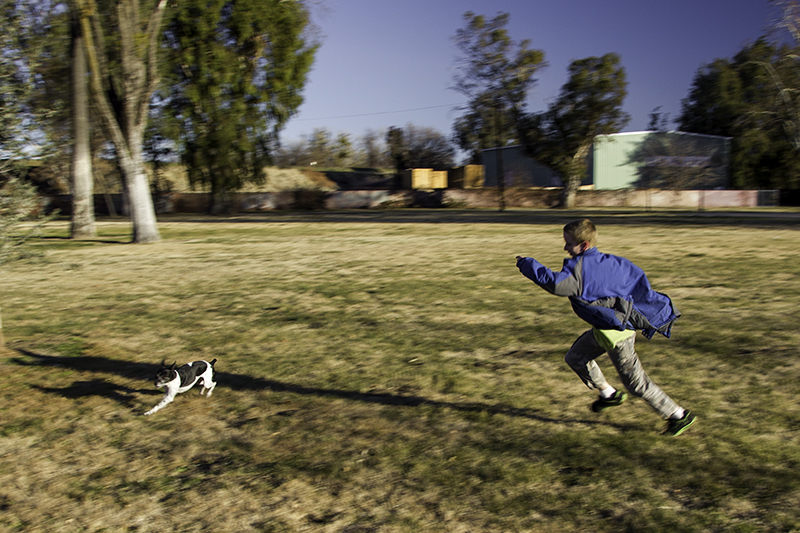
Thirty minutes later we will find ourselves at a secluded beach on the lake parked on the roadside. We can hear another dog further down the beach, but Sparky is too distracted with all the shiny rocks to care. Caleb tries to deter him from scratching at them by throwing sticks into the water. Finally he throws a rock and we have to carry Sparky back to the car to keep him from going into the middle of the lake to find the treasure. I touched the water, Piggy ignored it, Caleb got up to his knees, and Sparky was fully immersed.

We find ourselves in the community of Westbank at 1:00 pm and we are ready for poutine. We usually don’t eat at chain restaurants, but that’s because in the States we can eat at them in a majority of places anytime. So we agree that here, in another country, we can eat wherever we want because it’s all new and different to us. We pull into the parking lot of White Spot – a restaurant with no success in Washington, but twice the revenue at its three Hong Kong franchises versus any location in British Columbia.

swimming

As we are getting out of the car a man is putting his daughter into one. I figured it would save us time and possible embarrassment to ask him if this place serves poutine instead of going inside – and we might get a good recommendation. That guy was either a dipshit or an asshole. He said eh, and a ‘boot, and don’t ya know, so we know he was Canadian but he had no idea about the irresistible poutine bar that awaited us inside. Sadly I can’t say the same for the watery local brew they had on tap.

I’m glad we ignored that guy and decided to find out for ourselves. We smiled large as we saw the poutine on the menu and said yes to a spot at the bar. The waitress almost got me to say yes to a spot size (20 oz.) glass of Nat Bailey lager, but I was able to catch her and ask for a sleeve (14.5 oz.) and an order of original poutine. Now I realize that this fries dish is made with beef gravy, but I can’t let my vegetarian diet get in the way of experiencing another culture, though that may mean trying camel gravy next, I’m not ready for steak.

The cool thing about being in another country is that you can research the local time, language, dress code, and currency, but there is so much more to learn in the moment. Instead of Brianna, our waitress, making us come to her with the check she brings the portable card reader (retail price $800) to us. If that wasn’t enough, the customer then has the option to type in a tip amount or select a percentage to add to the total. And we also take the chance of running into a problem with the use of different ‘credit’ cards.

In the States, we still believe in the ol’ magnetic strip, but countries world wide are switching to chip & pin cards in an attempt to lower fraud. In Canada, the person accepting payment is more likely to ask for ID. It can be difficult to explain to a young waitress how another country would want to be so different from the majority making travel harder on those that can afford it by issuing them a card and telling them good luck as they are accepted everywhere – not anymore.

fruit

As we pass Butt Road the ten-year-old in me hastens me to take a picture while I giggle about the use of butt on a public road. Perhaps it’s a Canadian translation of the French word, cible. We pass more mountains and lakes – this province is an outdoor enthusiasts dream – and we are living it. We have a hard time finding Skamous on the map because it’s actually Sicamous – my I and C looked like a K to me.

Sicamous is the Houseboat Capital of Canada, but just a district municipality we are passing through today. Further on their Hwy 1 – a two lane road like the one found on the west coast in the States with crazy turns too, but with more drivers willing to pass in no-passing zones to keep traffic moving efficiently, we find Crazy Creek Waterfall. They want to charge some unbudgeted amount to walk on the suspension bridge, but a view of the falls from the road is free.

Had we known then what would soon await us, I’m sure we would’ve paid the $12 each or whatever amount to have us out of the car for hopefully an hour of the two we would be waiting in a traffic jam only nine miles, or 14.5 kilometers, from Revelstoke and another eleven miles to Martha Creek Provincial Park where we are hoping to sleep tonight. As the wait time went on we saw people walking past the car thinking they could get to the scene of what was holding us up. It rained for a bit, but was cleared up like the road at 7:00 pm.

we’re down on the right before the RV

We passed some of those walkers and figured their cars would be by to pick them up shortly. I kind of wished that Caleb and I had opted for some exercise too, but if there were any cars without drivers just parked in the street they posed a safety hazard for the rush of oncoming traffic. We had looked at the map to figure out a different route, but the detour would have taken us over five hours and included a ferry ride (with unknown schedule).

After 7:30 pm and we are driving through the campsite looking for a spot. We are on our way out when the camp host stops us in his truck and hands us a cancelled reservation slip. We really only need the form on our post with his sharpie’d number on it for verification. We sealed our envelope up nice with our mix of American and Canadian money and he tore it open to add it to his money belt. There is a small conversion rate in our favor between the two and only the ATM shows the difference of $2 for $100 taken out. Otherwise cash exchanges are seen at face value.

The sun may be behind the mountains, but the colors are in the clouds. We are set up between RVs and across from us is the rest of the birthday party from Banff that came out to celebrate someone’s 2,556 day on Earth, also known as their 7th trip around the sun. We take a lovely walk to the lake and enjoy a squirrel scurrying on the stones as we watch the clouds move. They really seem to be in a hurry in Canada and I think what a great time-lapse that would make, and even better if I could see the Northern Lights too.

marthamoon

Now that other campers are settling down with their pooches for the night we can walk our little demons (too bad we don’t have kids or that would be a great joke) before it gets too dark. We stop by the bathroom and there I notice a book exchange. It seems Oregon is not the only place jumping on the literate band wagon. I would love to partake, but have yet to finish a book we brought with us. And then I see the moon.

I was trying to take pictures of trees and trucks in the dark with a blind dog on a leash in my hand, but the moon and clouds are magical. I can better relate to the werewolf symbolism now – being in beautiful nature makes people want to shed the fakeness of society and be their real selves… or maybe it’s just me that prefers to run through the trees naked and howl at the moon. Actually that sounds dangerous, partially illegal, and a pastime reserved for people on drugs. And again, I can relate.

Back to camp to trade a leash for a tripod and Caleb goes to my bottomless bag, my purse, to find the connector piece for camera to legs so that I may stand in the road to take my picture. At this moment, other campers feel the need to pee, and walk, and drive, and use torches of artificial light to flash and blind those caught in its beam. It’s cool. I can wait. It’s not like it’s my first time being patient while others dawdle in front of me. We’re on vacation and in no rush. I get the shot and tell the moon to enjoy the rest of its evening as I return my attention to my husband and our warm beverages.

Posted in Animals, Birthday, Camping, Education, Food, Places, Travel, Water | Tagged , , , , , | Leave a comment

Checking Things Off My Lists

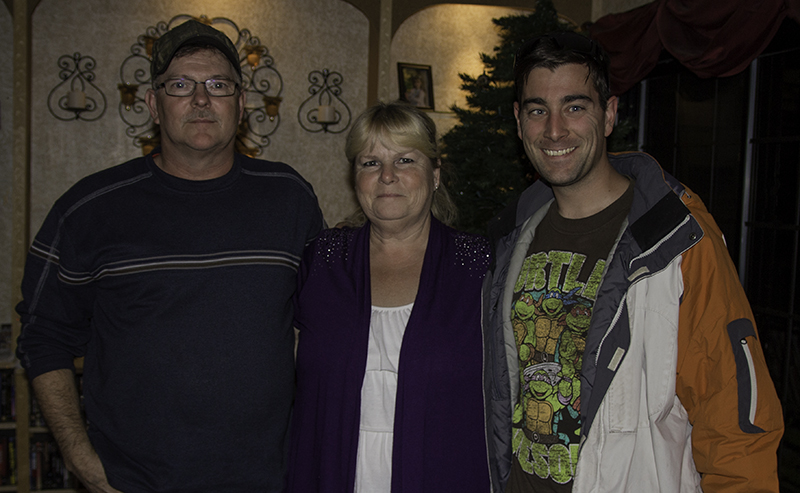
Aunt Jamie, Caleb, Grandma Kitty

Aunt Jamie, Caleb, Grandma Kitty

Today will be an accomplished day…just like every other day I choose to blog about. Tent, dogs, showers, car…blah, blah…morning routine. We don’t want to arrive too early to Grandma Kitty’s house (Caleb’s maternal grandma), so we take a dangerous trek into a diseased tree area where branches may drop and trees may fall. We knock on her door at 8:00 am and she has already eaten breakfast and we hear roommates moving around. I am so happy that Caleb gets to spend any amount of time with family since they are so distant and many without the means to travel like we do.

Caleb tells her about our trip so far, we take a look at her plants’ progress in the backyard, and then the photo books come out while we sit on the couch – the ones with pictures that you can’t have printed anymore. There are some of Terri giving birth to Jessi and of Grandma skinny dipping in the local watering hole. There are others of the kids at the zoo, at home, and at the lake – all of these taken over 20 years ago. Our visit is cut short because Grandma has an appointment and we get lucky that Aunt Jamie is picking her up.

twohorse

We thought we would have more time to visit with her and then begin to wonder whether Grandma will make it on time as Jamie is running late. To us it seems she does it on purpose to avoid meeting us but for a moment – and that’s all it is…enough to take a picture and they are getting in the car. Her excuse was that she got railroaded (meaning she got rushed into doing something). But this encounter is enough for me to check meeting her off the list.

We’ve spent over two hours in SeaTac and it’s time for us to go to the middle of Seattle where the Klondike Gold Rush National Historic Park (Seattle Unit) is located so that we may cross another park off the list. The more we see, the more that are created. It may be more difficult than we thought to see them all in a lifetime. We find shaded parking across the street and $15 will buy us three hours to explore.

Seattle became a busy port of stampeders in 1897 preparing for their passage via ship to the trail in the Yukon that would lead them to gold. Out of the estimated 100,000 people who left for the Klondike only 20% found gold, only 0.003%  of them made more than $15,000 in gold, and only 50 of those people were able to keep it to amount to something. The ones who made the most money at these events were the people selling gold pans and hot coffee at highly inflated prices.

All this at the expense of the local tribes having their land sold to the States by the Russians who might still be upset that they didn’t find the gold first. Or how things might have turned out had the Indians never helped the miners over Chilkoot Pass. Or how much more of Alaska would still be unexplored had it not been for the thrill of the wealth hunt. Greed plays a bad role in teaching cultures and families about the best ways to get along.

July 22, 1897

July 22, 1897

Caleb got a picture of a book from the 5th Annual International Sourdough Reunion held in Los Angeles in September of 1933. This group is interested in the pioneers of Alaska and preserving the history of the north and is holding their 85th reunion in Seattle this year. We were glad to find such close parking to the Park and within walking distance of the Market Theater which happens to be home to the famous Seattle Gum Wall.

The tradition started in 1993 and as we walk up to it (realizing we have no gum to add) it’s just as big and sticky and artful as I could’ve imagined. We hear lots of ‘ewws’, and ‘it’s so gross’, and ‘nasty’, etc. but I find the wall enticing – and like all good ideas mine came too late. I thought about pretending to lick the wall (or did I) to see how many more people I could disgust at this expression of boredom and creativity.

yelotip

I can now check off seeing one of the Top Five Germiest Attractions; though also on the list is placing your hand in the prints left by the famous in the Forecourt of Grauman’s Chinese Theater in Hollywood. Maybe I’m just not a germiphobe like the writers of the article or the people they interviewed. If only we had more time and hadn’t taken the dogs out of the car that was starting to shine in the sun we could have ridden the Great Wheel that stands 175 feet tall and opened on Pier 57 in June 2012 with tickets costing $13 per person except for the gondola with the glass floor.

There are tons of shops, a few musicians, a couple making out, a fountain, and a line of traffic on every street and we still manage to walk Piggy without anyone hitting her. Caleb stays outside with the dogs to watch the city worker play knee-high chess while his coworkers do their job (perhaps he’s just the supervisor) while I go inside to Grand Central Bakery and Café to order us a veggie sandwich on Peasant Levain bread.

It feels nice to have so many bread options at what appears to be a simple café, but in a city of bakeries each has to have something special to offer. We split that and the pickle spear sitting at a metal table in the shade with the dogs at our feet. I like being in a big city, but having that romantic feeling that it’s just us floating through all these new experiences. We make our way past the Fallen Firefighters Memorial dedicated in 1995 to four that lost their lives.

On the other side of the park is CenturyLink Field – home of the Seahawks (football) and the Sounders (soccer), and then it’s back to the car to drop the dogs off after realizing we have more time on our paid ticket. It’s different being in a city that requires its guests to pay to park, but I suppose it makes the residents feel safer knowing visitors must have lots of money to visit and are less likely to rob them…or that when someone does lose their job they have lots of wealthy homes and cars to choose from.

Our first stop is Cow Chips Cookies for a Mock Baby Ruth for me and a Nutty Cow for Caleb. While walking we get to see a weird sculpture, the entrance to something that was moved, a water fountain (almost as ancient as payphones), some colorful murals, and Waterfall Garden Park (also the birthplace of UPS). The falls are at least two stories tall running over large rocks with bushes and trees creating shade to sit in the chairs and on the concrete bench that runs the length of the relaxing corner in such a busy city. That will end this visit’s tour of Seattle and we will miss being in a part of the world that has so much to offer to the ears, eyes, stomach, feet, buttocks, and brain.

gumwall

We have a big map book that contains the U.S., Mexico, and Canada with little red squares of sites to see. I ask Caleb if there are any on our way to Wenatchee Campground where we will be spending the evening as we had a change of plans due to a phone conversation with Uncle Ed that gave us a heads up on the road closure in the Cascade Mountains due to forest fires and mud slides – and his reply is yes.

Unknowingly to my BEP list, #51 back home, I agree to visit Big Four Mountain Ice Caves. Even with some construction, which we will see plenty of on the trip, we make good time and are soon on one of the easiest trails because it’s mostly boardwalk. The railing is high enough to keep Piggy from falling over, but the sound of a bridge still makes her nervous. I could just carry her across, but she needs the exercise as much as we do being in the car for such long periods.

I know some people make short life lists – get married, have kids, live in a house with a picket fence, drive a fancy car, and watch the game on a big screen TV. Others want to climb the tallest mountain, dive the deepest ocean, or fall dangerously in a squirrel suit. Some people will accomplish all their goals and others will look back on a semi-failed life. Being able to say that I did something on my bucket list makes me proud. We should all follow our dreams – no matter how silly as long as the end goal is being smarter and happier and sharing that with others.

handpen

The path turns to gravel as we turn a corner and see the waterfall that carves the caves in the pit of ice covered in snow that remains in the shade each year never fully thawing before the next snowfall. Then come the signs that we may fall into the ice and die or that the snow may fall and kill us – not the safest attraction we’ve been too, but also not the most dangerous. There is another sign saying our decision can be the difference between life and death and that medical help will take an hour to get here.

We do go off the trail which is dangerous enough, but only close enough to get two pieces of ice – one for Sparky to ‘shave’ with his paws and one for Piggy to lick. The snow is in constant drip while in direct view of the sun. We leave as soon as an Asian dad and son begin to hike up on the snow and don’t feel so bad as we pass the wife and daughter further down the trail (afraid to get too close) and hope the wife’s a doctor.

I can appreciate this moment even more. I remember when my dad went to Alaska and I couldn’t wait to see a picture of him on a glacier, but then I saw the videos of what a tiny crack can do to such a massive amount of frozen water – it’s enough to redesign the area, even if only temporarily by killing whatever lays in its way. So lesson learned: pretty things that can be dangerous too should be admired from a distance, not tested once proven fatal.

boardwalk to Big Four Ice Caves

boardwalk to Big Four Ice Caves

On the way back I notice more flowers, more white-barked trees, and a northern green frog. Caleb notices a stick by the river that he can throw in the water for Sparky to catch. I never let Caleb throw it farther than he can jump in and save Sparky should a wave or current ever catch him off guard. The water is cold, but Sparky knows he has a lap with a blanket in the sun waiting on him when we get back to the car, and me another item to check off a list – my bucket list!

The caves were a bit of a detour and I’m starting to get hungry so we pull over into Doug’s RV parking lot in Sultan while Caleb makes me mac-n-cheese. Doug or some other creepy guy stood in the back door and watched us the whole time. I was waiting for him to walk over and ask us to leave and when he didn’t I should’ve thanked him, but I took the finished noodles from Caleb and started eating while I put the car in reverse.

ethel

sign in a shop in Leavenworth

There is such a difference, for me, between being a passenger or driver – perhaps it’s a control issue, but I can still appreciate where someone else has taken me. I remember the familiar road turns and mountain views as we near Leavenworth, WA – a city I was lucky enough to visit two months ago with Uncle Ed and Aunt Lorraine while taking this same route in the back of their jeep.

This time the street lights are on and the shops are closing, but we are still able to sample some hot sauce in the store on the end of the main street and I can show him the entrance to the restaurant where I had kasespaetzle. We walk along the road behind this one, but find more darkness, drunks on skateboards, and a wooden fountain. We stand near the car and stare up at a building lit with Christmas lights. It could be lit with flaming turds, but we’re together and that makes everything more romantic. We make use of a nearby trashcan for a few items before leaving.

Thirty minutes later and we are pulling up to a lit park ranger booth at Wenatchee Confluence State Park where the man inside is pleased to tell us that he has two overflow spots left – we’ll take one. We pay our $23 and he gives us directions – down the road, left by the fence, and park by the RV. So we go down the road, run over a six-inch-square log about four feet long, and park near a picnic table.

Sparky and Piggy

Sparky and Piggy

Caleb starts to set up the tent as I make my way to the little girls’ room across a large party with glow sticks, a projector, a theater-sized popcorn maker, a large dog, and plenty of beer. I notice that the showers need tokens, not coins, and make a note to tell Caleb. On the way back I pass another couple that is unsure where to camp, so I assure them any table will be fine, but really I don’t know and think it weird all these spots are available.

Upon returning to our site another car arrives and I realize I’ve parked us on two sites, but they park on the other side of the RV. Then the ranger approaches to let us know that the large group has paid for the site, bathroom included, and would appreciate no more guests using their facilities…oops. Caleb goes back to the booth to get enough tokens for us both to take six-minute showers in the morning. Now, it’s time for sleep.

Posted in Animals, Art, Camping, Education, Family, Food, History, People, Photography, Places, Plants, Things, Travel, Water | Tagged , , , , | 2 Comments