I was looking at the train and bus schedule, both wanting me to walk 15 minutes, to get to this morning’s starting point. I wasn’t feeling it yet, so I went back to bed for an hour so the idea would be more agreeable upon my second time waking.
I’ll choose the bus to change things up. It should be more scenic as it goes slower between frequent stops and has more pickup times. I walk into the kitchen to find evidence of last night’s ruckus — a fresh baked, a little burnt, and half-eaten 9″x11″ custard.
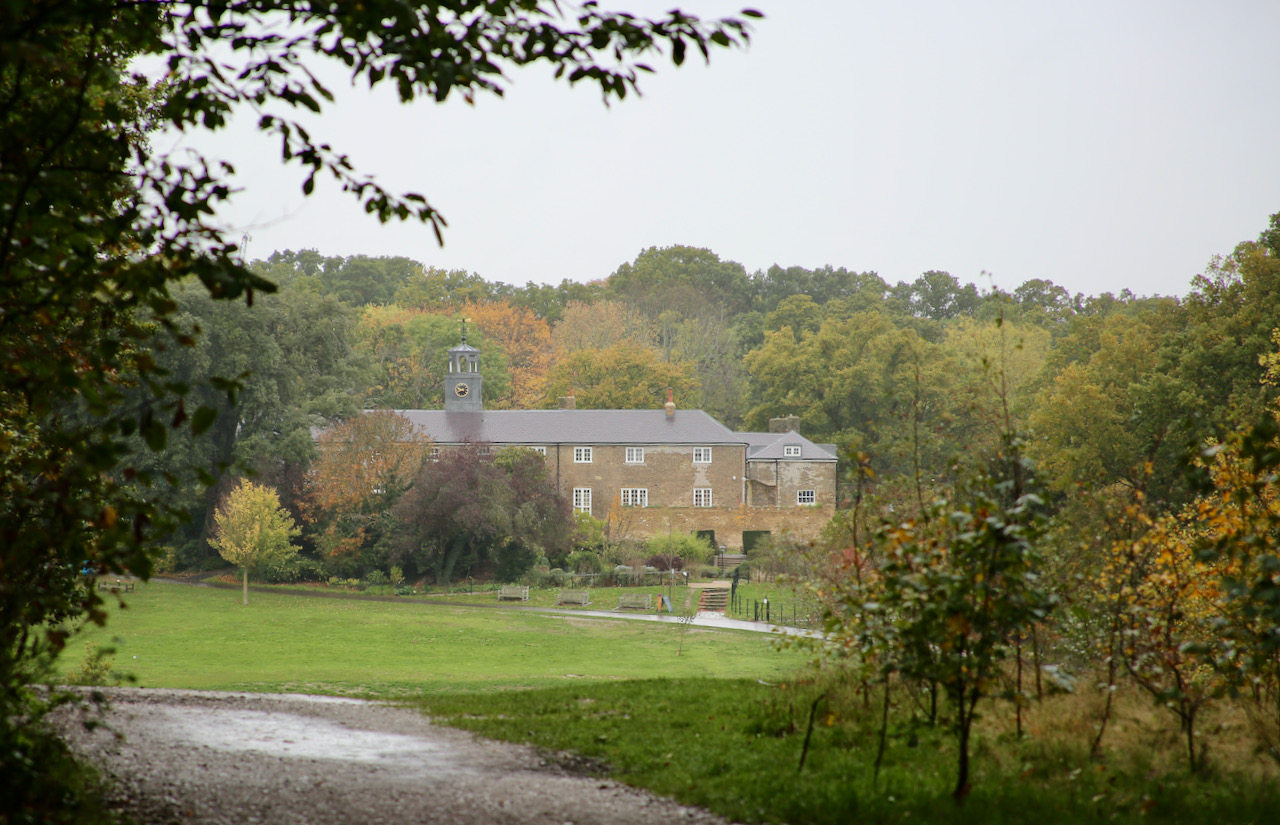
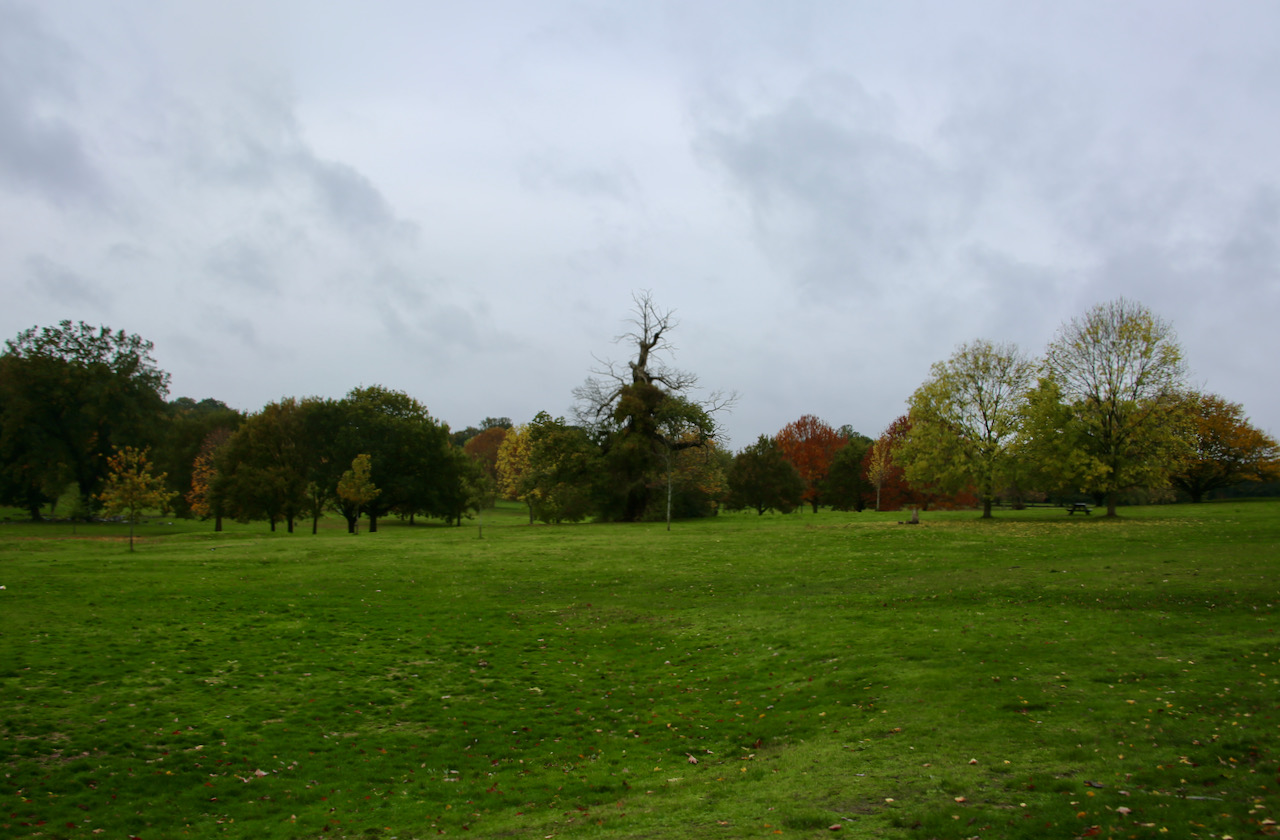
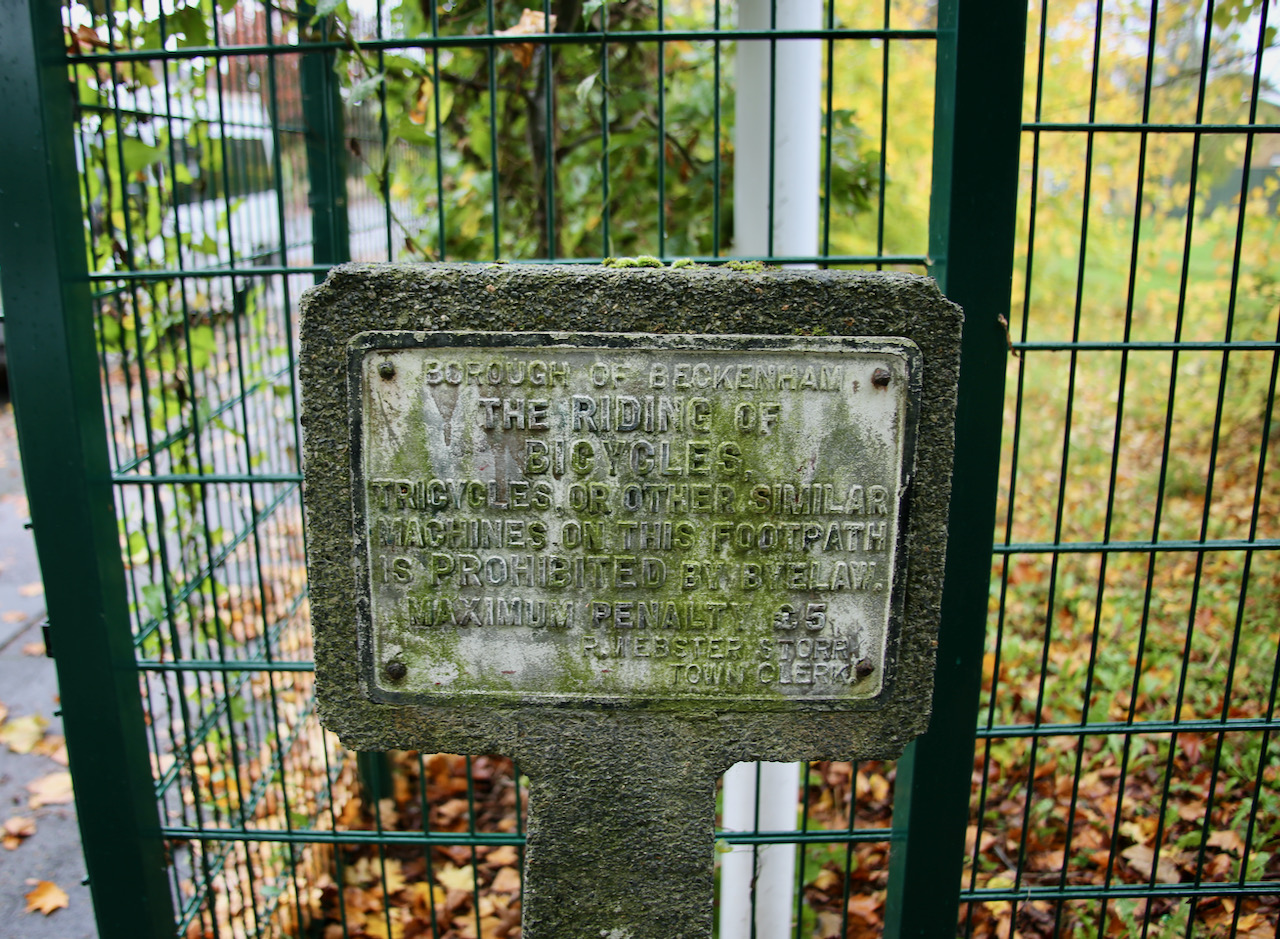
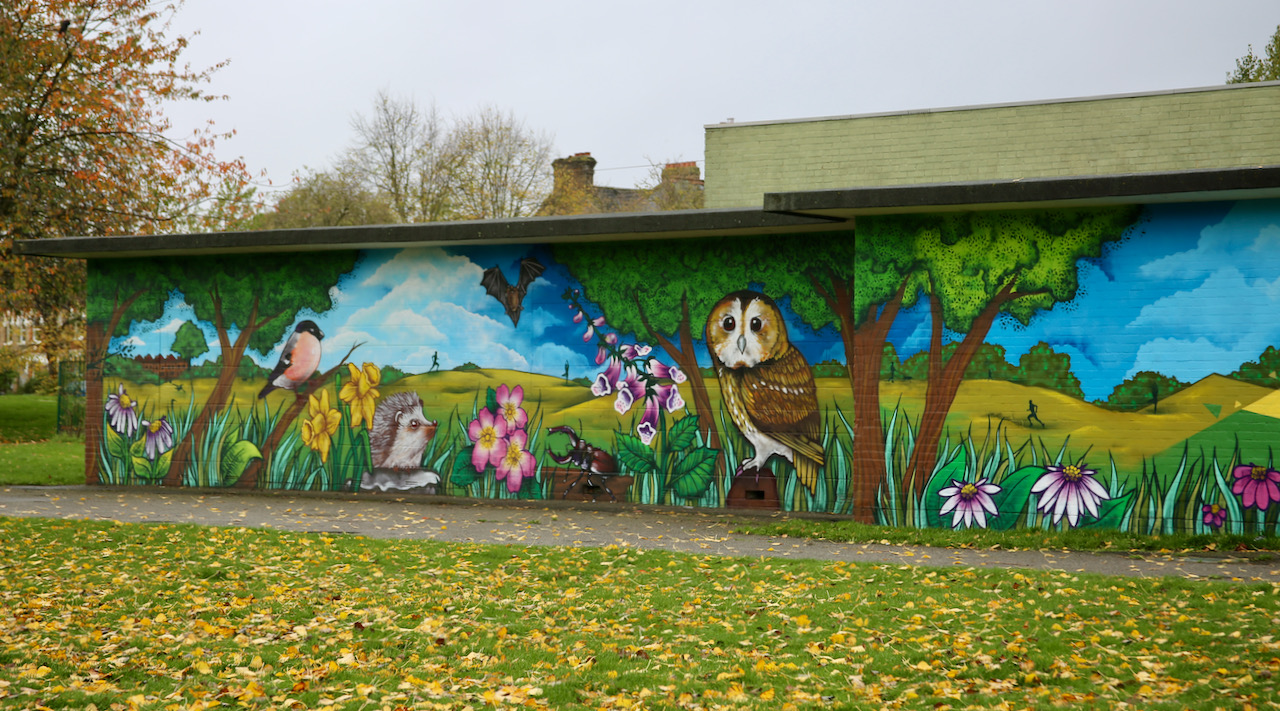
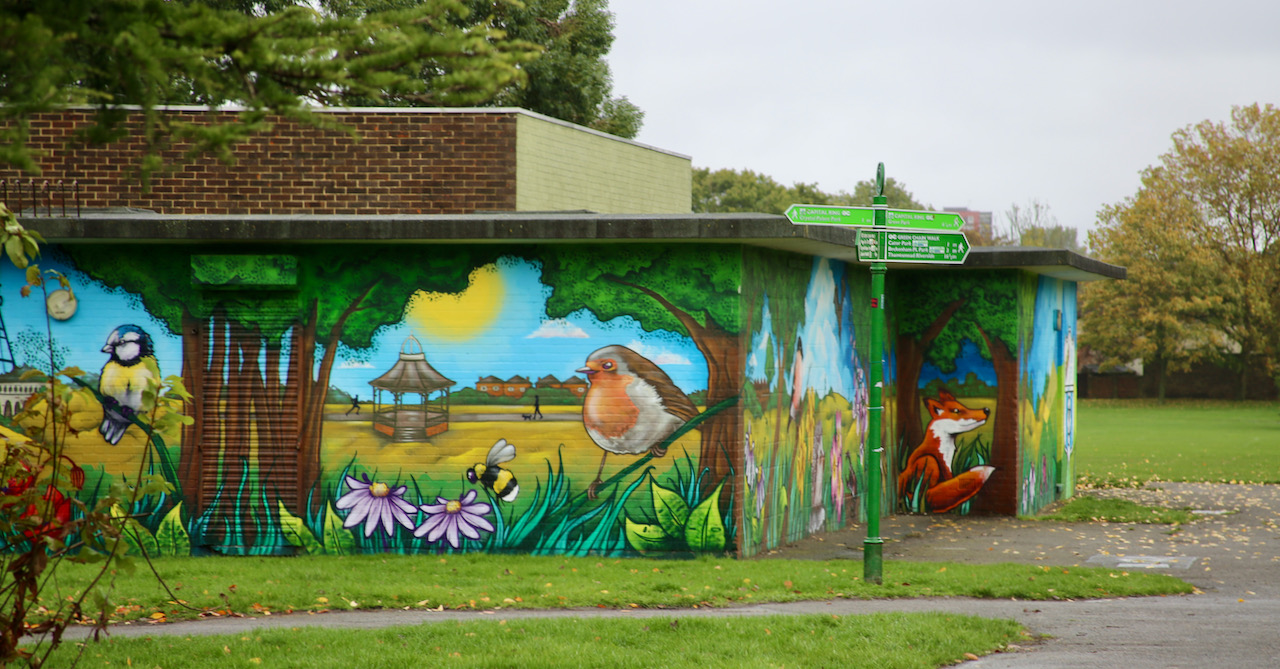
Beckenham Place Park is emptier when I arrive at 915am than when I was here yesterday around 430pm. This area used to be part of John Cator’s lake but is in the process of becoming a wet woodland, via periodic flooding, that will provide food for birds and bats in this ecosystem that is rare in London.
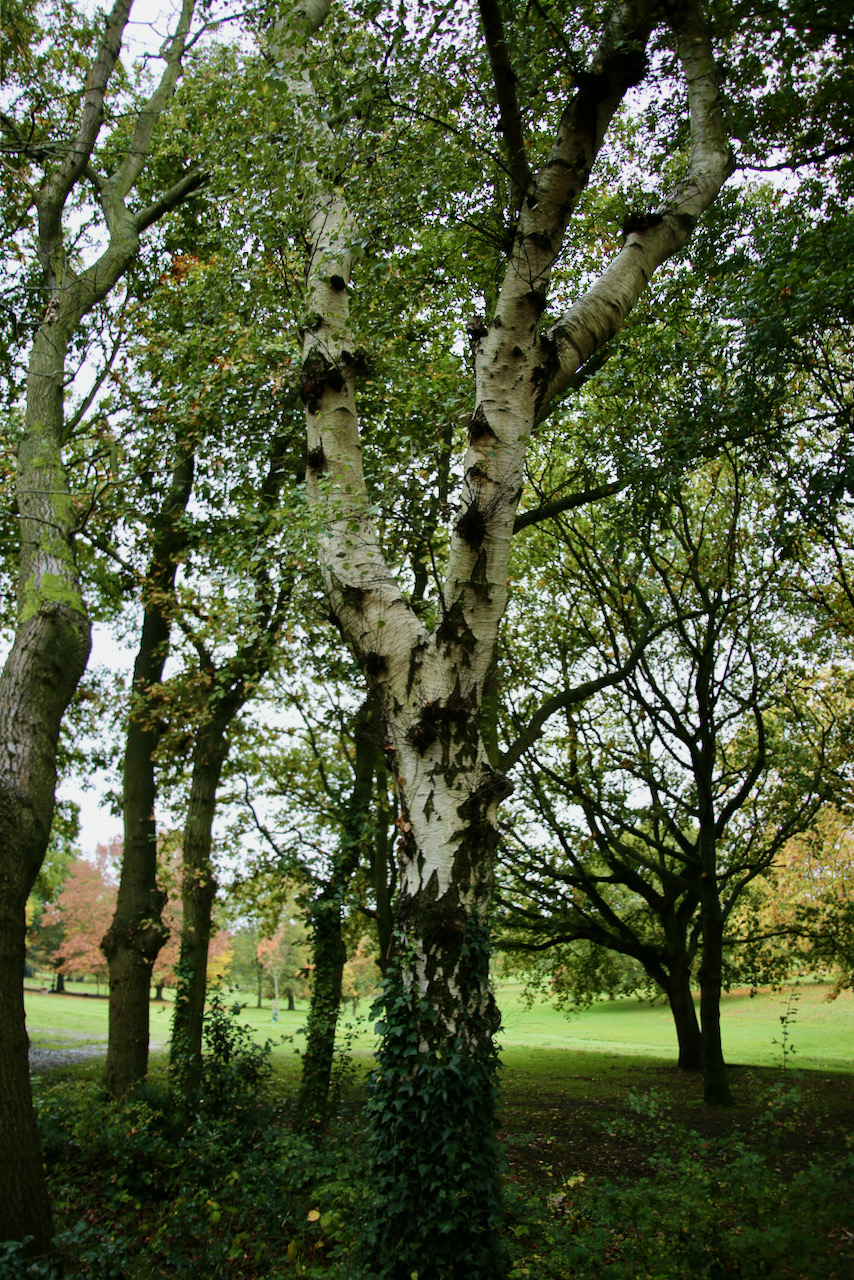
Another area that’s been around a while, the ancient woodland, is full of wood anemone, native bluebells, and wild garlic and will hopefully remain with plenty of dead standing trees that hold insects to feed the woodpeckers for hundreds of years to come.
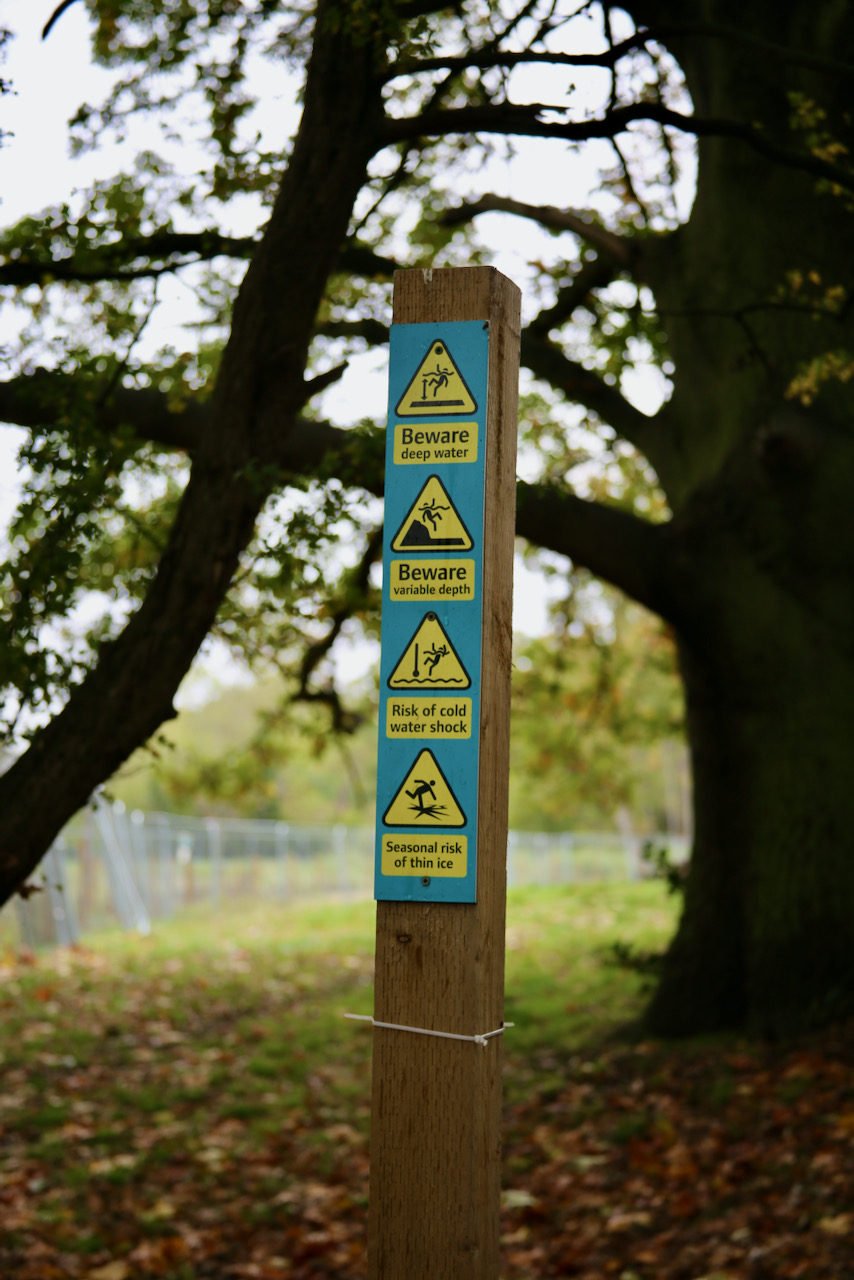
The lake was excavated in the fall of 2018 so that it could be deepened. This allows the water to be colder and increase its oxygen content, with the help of an aerator. The lake is filled via pumping from the water table, rainfall, and a well to maintain its ten Olympic swimming pools’ capacity.
I pass a mulberry tree that is over 200 years old, the last of its orchard, and a species that is relatively rare in Britain today. It was imported for silkworms but used to treat ringworm. I’ll stop at the Homestead Cafe for a beetroot latte and a slice of butternut lime cake — new flavor combos, yes please.
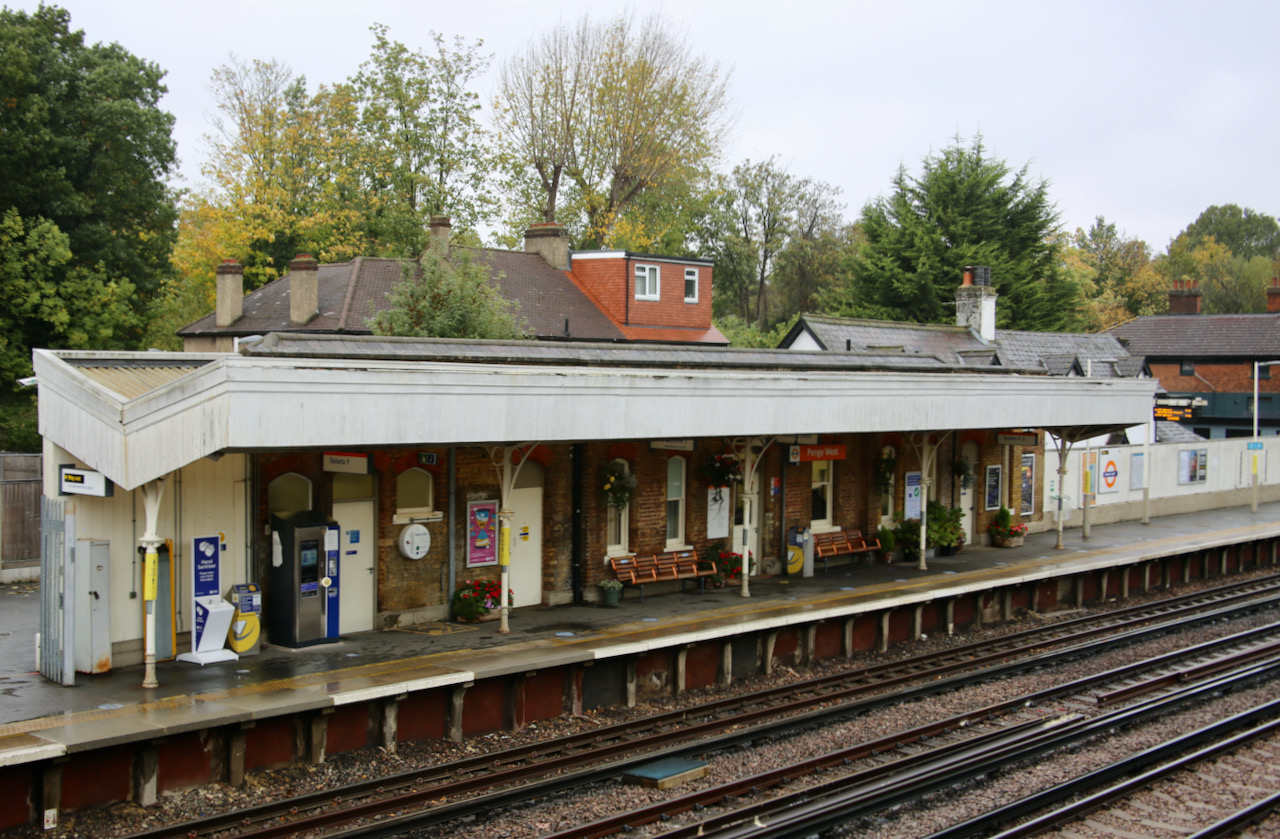
Cator Park is the last stop of the day; from here I still have at least an hours walk and my legs are tired from the fourteen-ish miles they trekked yesterday; also I’ve already seen Crystal Palace Park. I’ll take Penge West back to Norwood Junction and pick up some groceries.
I’ll have lunch in the room, talk with Caleb, and spend the evening writing two post drafts. Today might seem short, but I spent over three miles walking through a part of London I wouldn’t have otherwise explored, so that’s a win for me.
I decided last night to start this route and cover as much of its 78 miles around the city as I can while here. I’m so excited to have a smart goal, inside of staying outside in London, instead of just wandering around, which has been fun too. This gives me something to complete. I’ll start with Section 1.
I’m out the door with wet hair and two slices of pizza. I’m about to be disheartened that my 716 train is canceled but there’s a 648 instead. On the way, a man tells me that the carbs of my pizza make it a cake after I tell him it’s practically a salad. You don’t get these interactions without public transport.
Almost everyone at Tulse Hill had a backpack and though I’d like to carry more with me, besides what I can cram in my pockets and the ability to cover my camera with my coat, I would need a waterproof bag in order to not haul around a dripping tote with all my things soaking inside.
Waiting ten minutes for the next train would’ve saved me 20 minutes in stops. I realize this a half-hour in-transit and not yet being halfway through my morning commute. I appreciate that places are made accessible to a variety of people with different abilities without making them feel like less.
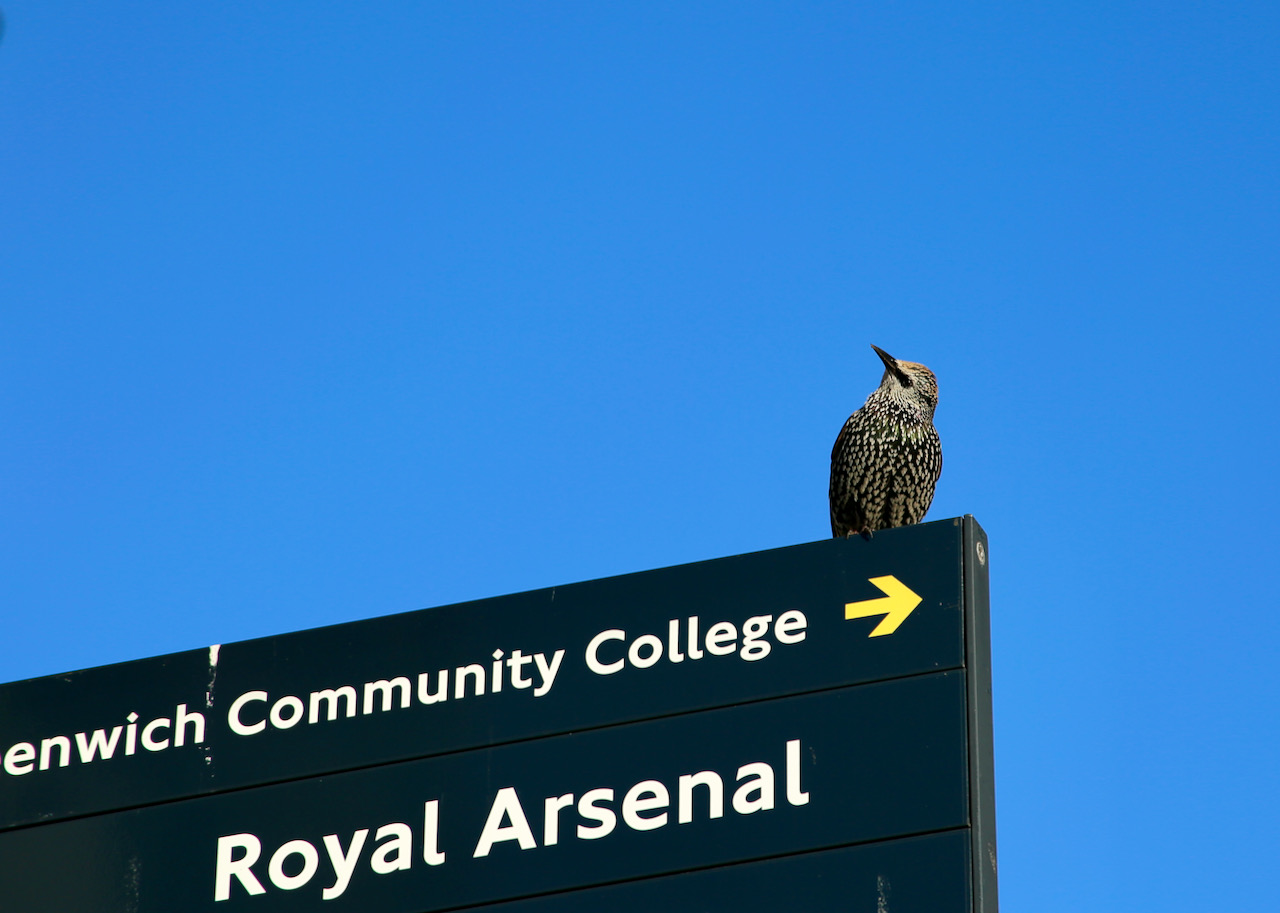
I just realized the times for the trains are departure and not arrival times as I wait for my second train before I can start my walk from Woolwich Arsenal station, a half mile from the southern tunnel gate. The market is setting up to sell shoes, bags, and clothes under the eye of a Common starling.
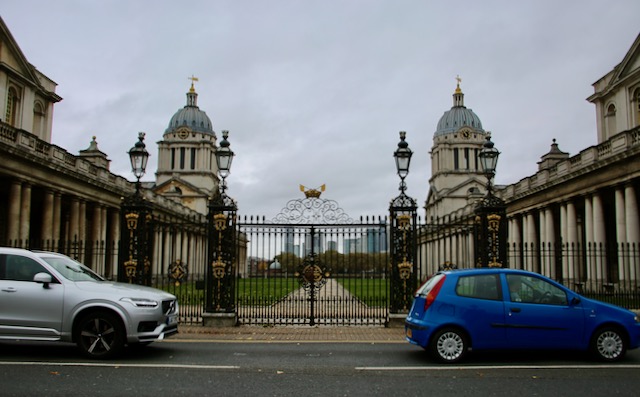
The Royal Arsenal employed 100,000 people at its peak, after 400 years of operation, during WWI, and eventually closed in 1994 after the factory ceased manufacturing in 1967. It was opened to the public in 2001 to tour the 23 buildings that had been restored.
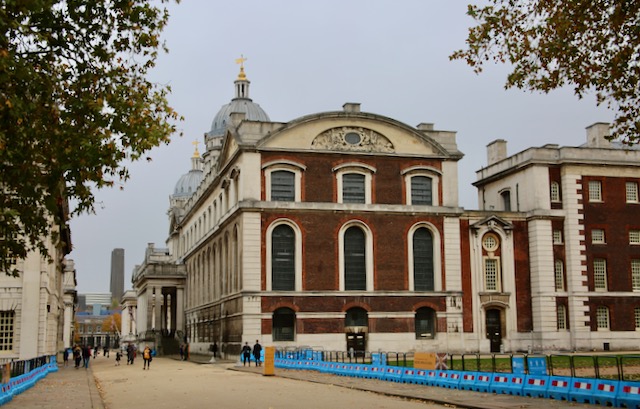
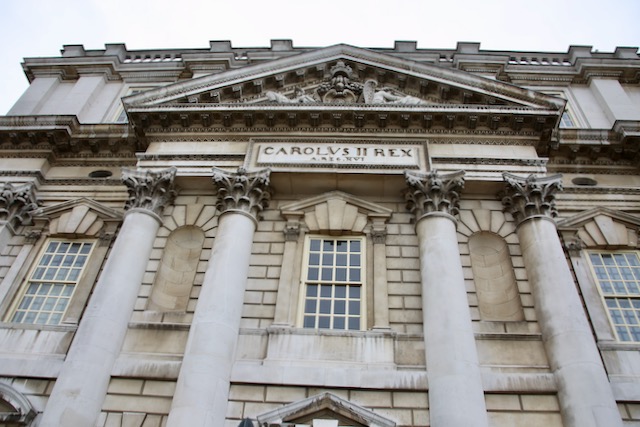
I enjoy the cool and quiet morning through what could be considered an Instagram museum, but I’m the only one here taking in the clocks, statues, skyline, steps, tiles, windows, signs, and plants as I approach the Thames Barrier with sacrificial anodes — an alloy that protects submerged metals from corrosion.
Maryon Park has closing hours that vary from 4pm in the winter until 9pm throughout summer. It’s here that the trail I’m on also happens to be part of the Green Chain Walk — a network of paths connecting parks and open spaces in southeast London.
The trees and grasses are beautiful in their varied sizes, shapes, and colors. The buildings I pass have the same artistic curiosity but in use of materials, history, and purpose. I’ll cross the Oxleas Woodlands and go up Shooters Hill, not for the struggle of the stagecoach from A Tale of Two Cities, but for the view.
It’s near the top of this hill that sits Severndroog Castle, built in 1784, where seven counties can be seen from the roof of this triangular castle in the woods. It was restored in 2014 for visitors but sadly I’ll visit while death roams the world with the constant threat of a slow passing, so it’s closed for now.
Lunch will be had at the Oxleas Cafe that overlooks the meadow. Back amongst the trees and I see an empty stick fort, a dog playing in the mud, and a small human skull on a fallen tree cut out of the way. Meanwhile, a man runs through the park to ensure a lady gets her phone back.
Crossing the A2 Rochester Way Relief Road, from Falconwood, starts Section 2. I almost get hit by a car in a mini roundabout because I thought it was turning. I have no luck getting into the Eltham Palace Gardens as a reserved ticket is needed to even cross the bridge. I get one photo and continue on.
I follow King John’s Walk from the palace, which historically attracted visitors for deer hunting and clean air. Today, it’s the horses, cloudy blue skies, and views of the city’s high-rises that bring tourists’ cameras and locals’ picnics onto the grass and paved footway.
Some parts of the path seem to be wedged between two fences, but even the backyards are British in their capacity to give the other space, completely take over, and be reigned in again so that the greenery leaves a place to move and think unencumbered by what’s on the other side — Section 3.
Grove Park became a nature reserve in 1984 and protects Slow worms, Stag beetles, and Common lizards. The railway that was opened in 1865 was the inspiration for Edith Nesbit to write the book The Railway Children from her home, Three Gables, on the hill.
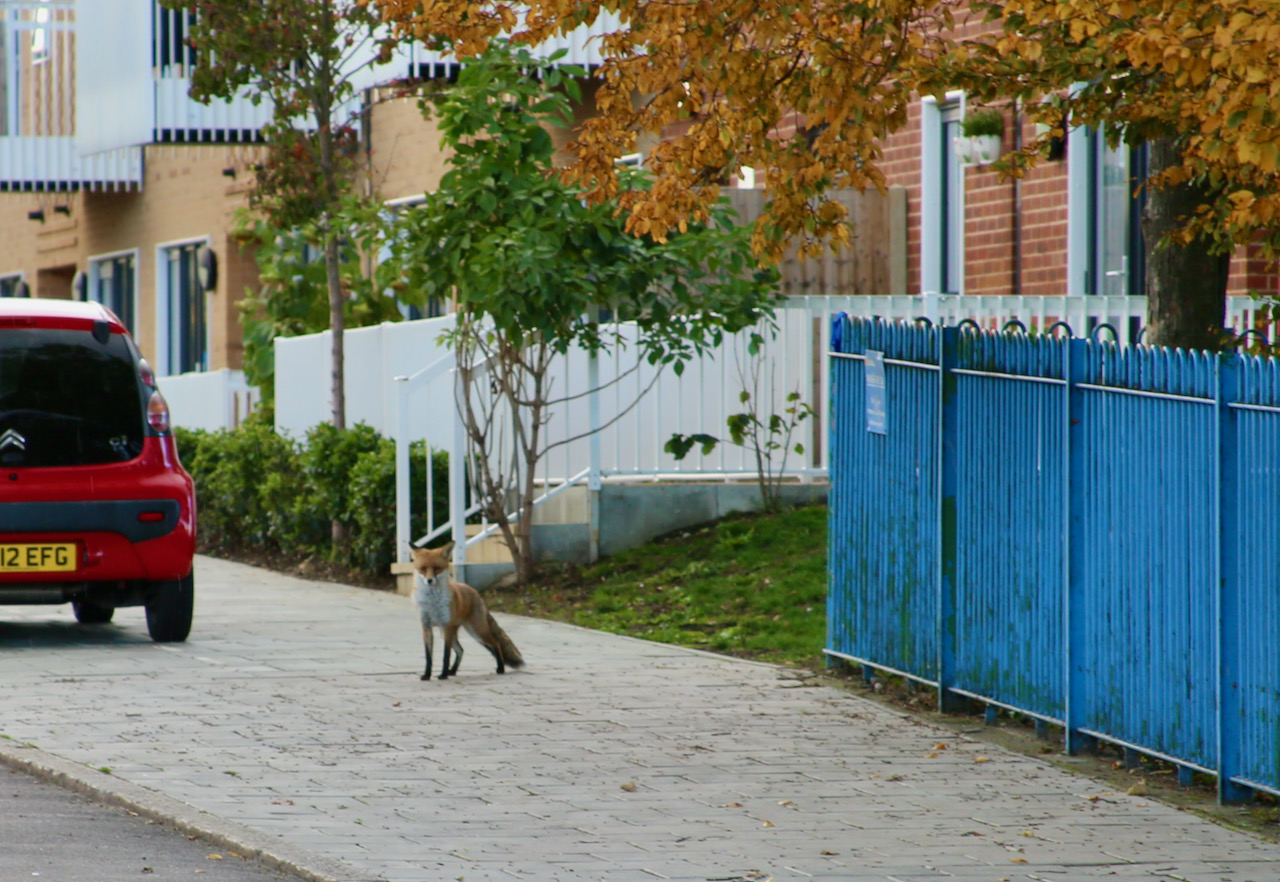
I see a fox on a sidewalk before taking a picture of a five-seated horse ride on a playground. There were three boys on their bikes that rode up to ask why I took the photo, but rode off again before I could explain. I’ll take some Cadbury fingers offered from two friends sharing the package of chocolate.
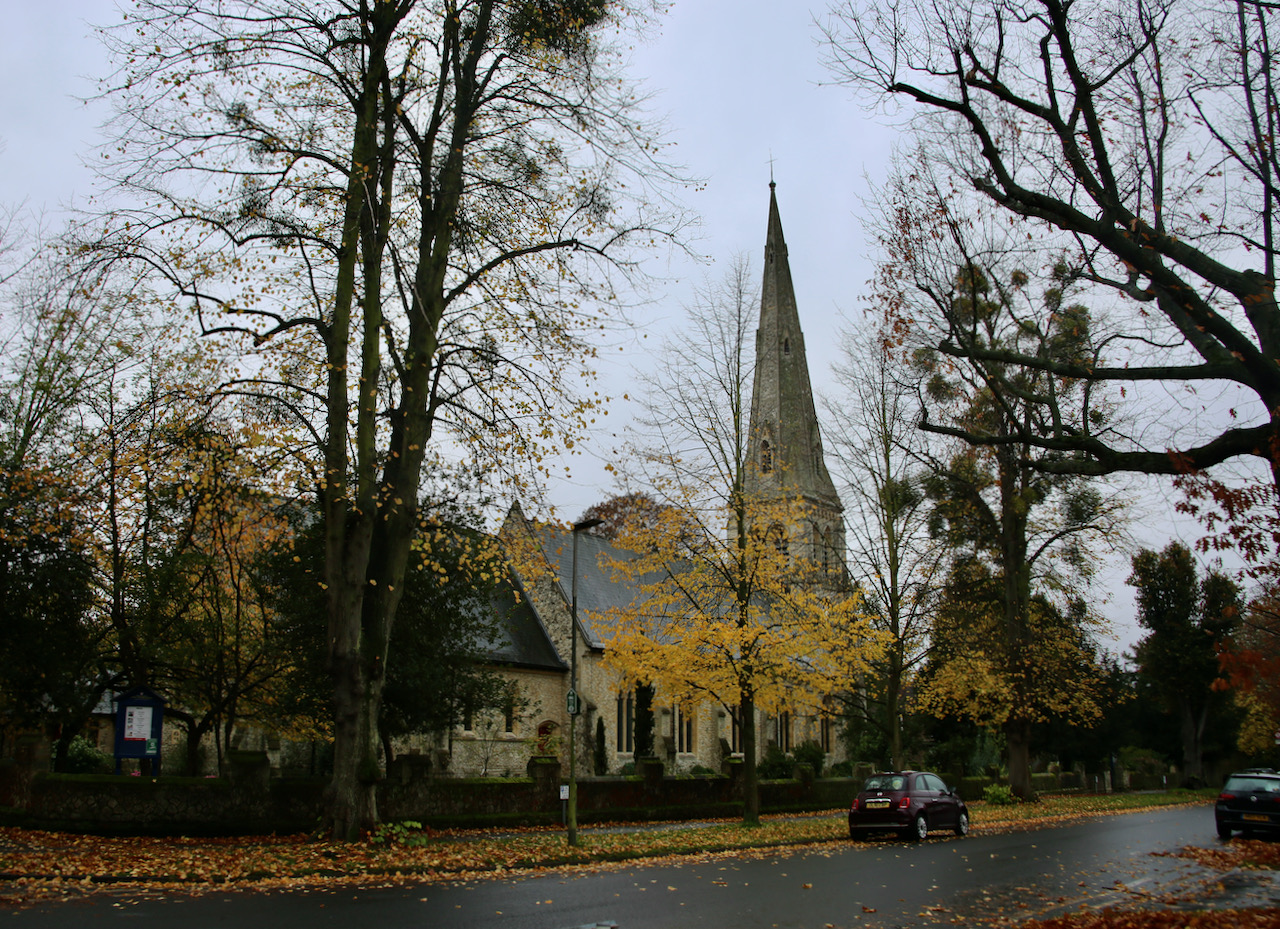
The Downham Woodland Walk is about a mile of the ancient Great North Wood that has been around since 1602. The trees here are mainly oak, ash, hornbeam (aka ironwood), and field maple. I’ll walk the northern edge of Beckenham Place Park to start the rail journey back for the night.
I meet three guys, proudly Ethiopian and speaking Amharic. One asks me to take his picture while holding a Corona. He’ll board the train to ask my why George Floyd got so much trouble from the police in America when he’s a black man in England with no trouble at all.
I’m not sure how to answer him, not knowing the struggles of the boroughs, so I let him continue on with his monologue, but the ideals as well as the English language (American vs British) split centuries ago in the American Revolutionary War.
What I didn’t think to mention was that even though Britain abolished slavery amongst their colonies in 1834 and the US followed in 1865, it wasn’t until the 1960s that both countries made racism illegal. I don’t know about their night, but mine will end falling asleep to the sound of guests in the other room.
I was slow getting out the door this morning as I waited on the rain to lighten — and because I was unaware of the time change that cost me an hour. I should invest in a bright yellow rain coat, colorful cowboy boot galoshes, and an umbrella for three so I can keep dry at any angle when the wind changes direction — or at least some waterproof pants to go with my coat so the rain doesn’t drip onto my absorbent leg coverings. Though the only two things I want to keep dry is my camera because it’s pricy and my feet so they don’t blister.
The rain actually stopped for a bit and the sun was so damn bright as it shined in the sky and reflected off the wet pavement. I hadn’t bothered to bring sunglasses again because they end up taking up valuable pocket space and don’t fit on my head with my hood on. The precursors to modern sunglasses were made out of smoky quartz by the Chinese, out of walrus ivory by the Inuit, and tinted lenses by a French chemist to correct for vision impairments and light sensitivity in the 1770s.
Sam Foster would find a market for his celluloid and cerium creations on the beaches of Atlantic City, New Jersey in the 1930s, which has roughly 56% of its days filled with sun while London just 11 degrees north averages 62 days a year. For such limited use, the UK has UV transmission categories so that some sunglasses can be worn inside or on a cloudy day, others while driving to help block reflections from the pavement and ones made to block out the sun on a snowy mountaintop. I love how much science and history is behind something I use daily and take for granted. I would appreciate though if the UK sold rain-x with their sunnies or glecks just as the Middle East should sell defog with their cooling glasses.
I didn’t get to “Soak Up the Sun” (Sheryl Crow) too much before my path brought shade and the weather gifted me more rain. I thought about taking the bus but that would defeat the purpose of walking and I knew there’d still be rain at the other end of the ride. My southeast journey would bring me through Ashburton Park, roughly 1km in diameter, where I will see my first female squirrel and first fartlek (Swedish for speed play) fitness trail to improve strength and endurance by varying between jogging and sprints.
I walk for at least a mile past houses before I turn onto a path leading through Coombe Wood or Addington Hills looking for an observation deck that will offer me a view above the trees of the city in the distance. The trail narrows and widens at seemingly random intersections and links with the London Loop for a while, but many photo opportunities will be missed as the rain decides to join me and the few other people I can hear through the trees on our daily outing. I’m not sure which direction to go so I wander a bit in each before I start the going-west portion of my walk.
This decision will have me entering Coombe Wood Gardens where I would love to picnic and brush up on some botany on the verdant grass amongst the rainbow of surrounding foliage but the falling water has toddlers finding the smallest puddles to make use of all their wet weather attire. There’s a busy cafe and an empty bench; a couple inside a booth and a path that leads to a dead end; short fenced territories and tall tree canopies complete the look of this garden haven.
I took the sidewalk between road and trees and am not sure how I figured out I was not going the way I intended. Perhaps it was the tram crossing and the path ending that turned me around to see the white ball of fire in its field of blue in the sky with no rainbow accompaniment… this time. I take the tram (that can reach a top speed of 50mph) to E. Croydon (the only place in London to have trams) from Lloyd Park. The bathrooms are either locked, require me to scan my Oyster card (which I suppose if you don’t travel doesn’t charge you), or to register on an app (as if I don’t have enough on my phone already).
The E. Croydon Station is the busiest in London outside Zone 1 where a majority of the tourist attractions are located and where different lines intersect to connect you to the rest of the country. Croydon is known for having the first international airport that was open from 1920-1959, giving it the oldest air traffic control tower, and coining the “Mayday” call in the 20s as most flights were to Paris and the word was close to their word m’aider, meaning, help me.
Lunch is had at Oatopia where I stand around the corner from their counter to block the wind while I eat a vegan burger patty of chickpea, pistachio, and mango. I use a ledge to hold my first turmeric latte with cinnamon. The last documented times I had this golden spice, a relative of ginger, was in the early months of 2018 — on cauliflower and in a probiotic drink. I write a lot about food on here, and sometimes it doesn’t seem to stand out, but being able to look back collectively on the moments surrounding what I was eating at that point in my life makes them more memorable.
I’ll enjoy a nice walk along the same streets where composer, Samuel Coleridge-Taylor lived from 1875-1912 and author, Sir Arthur Conan Doyle lived from 1891-1894. Croydon is where Dubstep was born in the 1990s and is known for having the movies 28 Days Later and The DaVinci Code filmed here, as well as an episode from Black Mirror: Bandersnatch. I pass by murals, couples, businesses, and birds on my way to the Croydon Minster, the most prominent Anglican Church of the more than 35 in the borough. I talk with the Father as he unlocks the gate to get his car inside before continuing my lop-sided loop around the Old Town area and seeing a snail, a flip-flop, a striped spider, a teapot, and laundry from balcony to sidewalk.
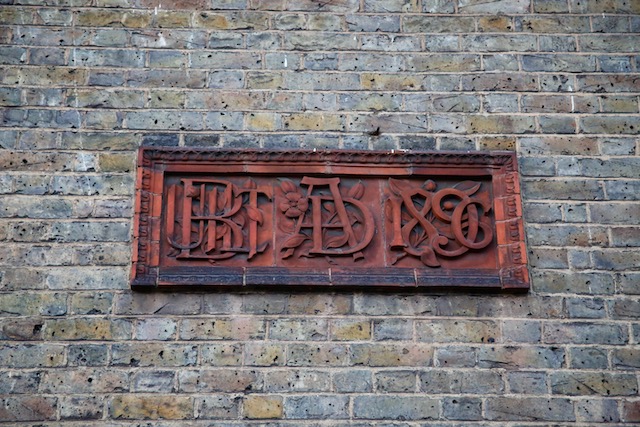
There’s a commemorative tablet (British for plaque) that lets passersby know that in the year MDCCCXCVI = 1896 the High Street was widened from 29 feet to its current 50. Bridges come with the year of their completion engraved in them but it’s rare to see roads celebrated in their growth as they’re usually remembered for what they were once made of, who or what they once carried, or for being the first of their kind. I appreciate the little celebration, the reminder of history, and the artsy touch the sign adds by being built into the wall.
Another smile gets me another coffee, this time by Radu the Romanian, a professional gardener, who has been living in London for 12 years. I’d have to earn my Americano by following him the quarter mile to Triple Two Coffee where we’d sip and chat a while. I walked with Radu to the tram station and watched him give a homeless woman his chicken dinner before we parted ways. I would take the rail back to Portland Rd to wash laundry (not knowing how long the machine might take) and it turns out I had to hang my clothes and let them take turns on the heater to dry.
I would use this time to talk with Caleb and do some writing, by hand, which feels so cathartic and brings me back to the days before technology became such a force in my life (and I don’t even use it as much as I used to). I grew up using ink, encyclopedias, and paper calendars and understand the eco-friendliness of using less of the Earth’s limited resources but know that the electricity, constant upgrade releases, server systems, and proper recycling come with their own issues that need to be addressed. I was nowhere near this thought process though while I let the pen express some of the electrical impulses firing from my neurons.
The bed, with its thin European-style spring mattress, felt super cozy under the surprisingly warm blanket that I hadn’t bothered to turn on the gas wall heater. Being up before the sun means that I get to see the sky in its multi-colored glory before it turns a shade of gray or white for the remainder of the day — typical England weather, where you’re lucky when you can differentiate the clouds as it adds depth to such an unfathomable distance… except for hot air balloons, planes, and space shuttles that give us context to measure the layers of atmosphere.
The sun rises lazily before 8am, when little shops on the way to the train aren’t open yet to sell me a morning beverage. I’m not sure of the logic used to create the trains’ schedules as last night I had planned to go to the corner of Greenwich Park, close to Queens Bath, with a train and bus ride that would total 40 minutes versus the 31 it will take me to get to Blackheath via two trains and then walking the difference, which is my main agenda of the trip, so I’m not complaining at all and am grateful for all the help available to maintain such an efficient system.
I wait for the train to arrive and appreciate having a moment to ensure I’m getting on the right train, as when there’s one about to leave the station and I seem to have a minute till the next one that I’m supposed to be on I get so anxious to climb aboard and wave adieu to my family as I’ve seen and read about many times, so I should remember that most of those people met with tragic ends, unless they’re a bunny in an animated story going to prove themselves in the big city to the Zootopia police chief. But unlike the movies and biographies of pre-1950s, when fares were pennies, I’ll top-up my card with 20 quid to avoid the $1,300 fine.
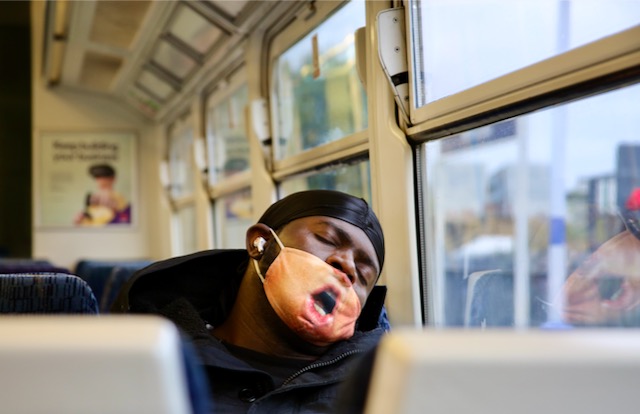
On today’s trains are three women in tights with their waterproof hiking bags, a man with his Brompton folding bike (which sells for $1,500 and is handmade in London with $300+ brands online), and a beggar. My first encounter was the other day with a white woman selling tissues, to everyone. Today, this black man walks through the cabin and only asks for change from people with the same skin color. I heard growing up that, “beggars can’t be choosers” but this world is full of options and ways of seeing and doing things that go beyond my limited childhood and cultural views.
I get that no one likes to be left out — games on the playground, voting in politics, using the same bathroom, getting room temp water like the other patrons, and having laws passed so people can’t sell each other across state lines (this one amended in 1986 for gender neutrality). This is like the broke asking the poor for money in the US — ask someone who might’ve shared a similar situation in hopes for more empathy than a person getting out of a car with monthly payments that would take you five months to make without eating or paying bills.
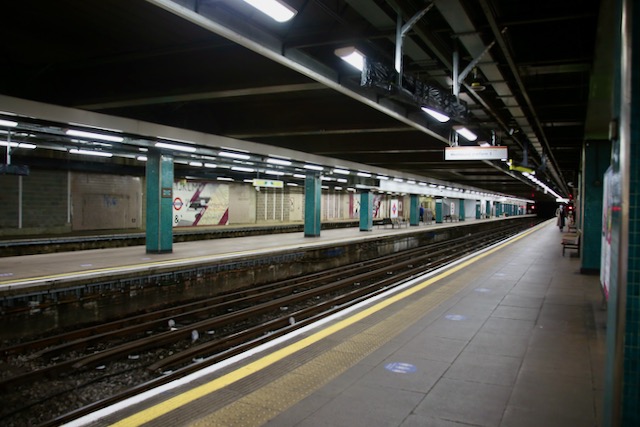
I get on the wrong train at London Bridge where there is an ad: Tired of being tired, try Floradix (like a floor of dicks… wouldn’t that wear out anyone?) Had I grown up in a country with such liberal use of language, I might’ve gotten into advertising. My five minutes that I didn’t wait turns into a ten-minute ride near Eltham Palace, which is on my list, but not on today’s agenda. I pride myself at being able to stand where the doors will open on the platform, which changes with train length. I had planned on coming to London for the buses and parks and am definitely getting my fill of trains and walking. Two hours on the trains will cost me 2.6 quid.
I had looked up food near the station so I’d know what my options were when I arrived hungry. I wandered down a random street to let the crowd disperse from Gail’s Bakery so that I may get an egg slider and sour cherry scone to escort me to their bathroom (a limited amenity in the public of covid). It’s then that I realize my camera’s clock is set three hours ahead, to Bahrain time, and that I better take note lest I think I was able to wait until the afternoon to eat breakfast.
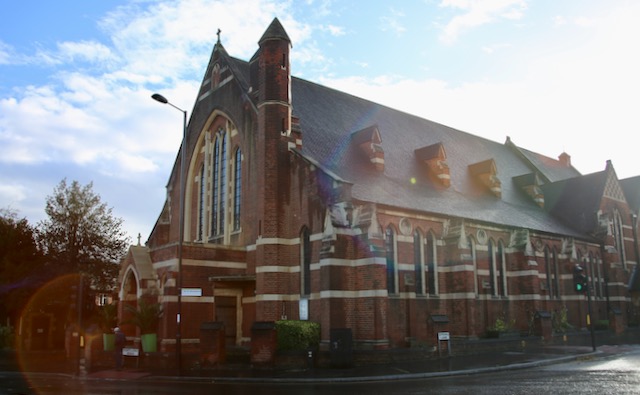
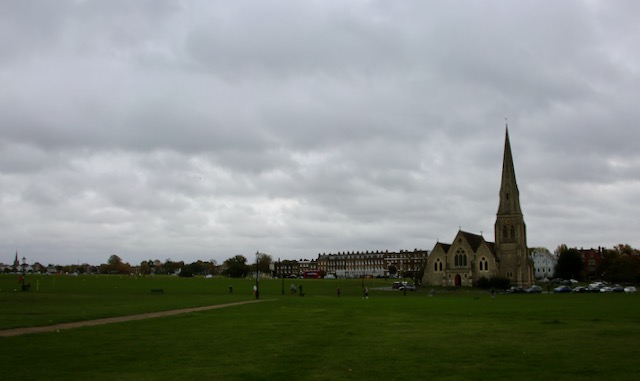
Blackheath Park is the open space south of Charlton Way that separates it from the famous Greenwich Park with the Royal Observatory and the Prime Meridian that divides the Earth’s eastern and western hemispheres. Blackheath Park was the private property of Humphrey, Duke of Gloucester in the 1400s, and son, brother, and uncle of kings: Henry IV, Henry V, and Henry VI respectively. Standing out, and looking upon the fields of soccer practice and sword play is the All Saints’ Church that was opened in the autumn of 1858. A small house was built nearby in 1883 for a Heath Keeper to help keep the order should there be any trouble.
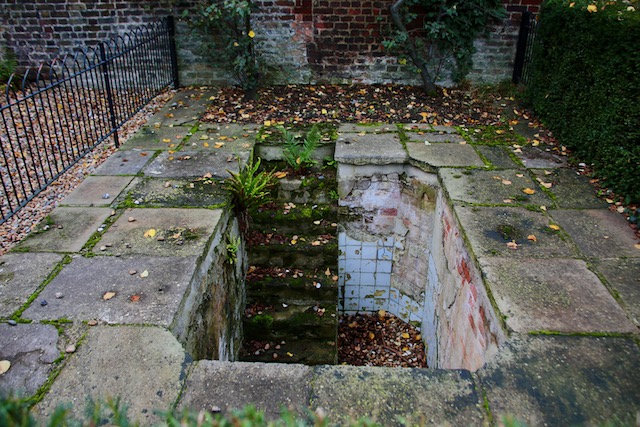
I enter the famous park via the Chesterfield Gate and make my way to un-crowned (barred by the king from coronation) Queen Caroline’s Bath to take a peek at the steps that led to good health and an entertainment space in the Georgian era (1714-1830, so named for the Hanoverian kings George I-IV who ruled Great Britain and Ireland until their union in 1801 under King George III, who ruled from 1760-1820). Caroline married George IV in 1795 and was barred from seeing her daughter from 10 to 21, when she died in childbirth. Caroline was the Princess of Wales until George was crowned and she was queen for less than two years before her death, never giving the king the divorce he so badly tried to initiate.
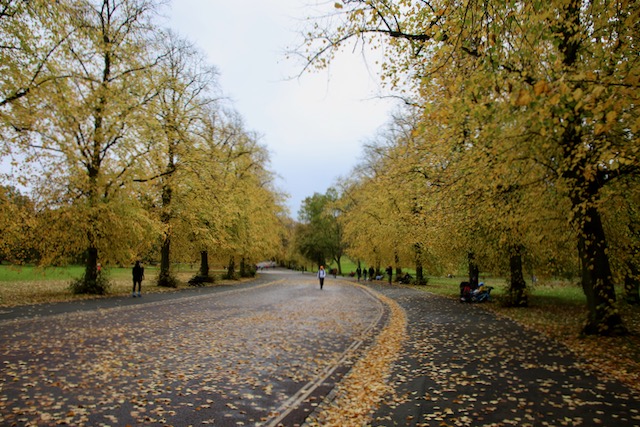
Up next is the tenderly maintained rose garden that asks guests to avoid balls, fires, and radios in the area, and to keep dogs away from the rose beds. Some of the bushes seem to be hibernating, but those that aren’t allow you to see their gentle reds, pinks, and yellows amongst a soft blue sky with billowy clouds changing shape as they move across the tree tops. There is tennis practice on the courts, dog walkers and runners on the path, a group stretching nearby and some beautiful buildings hidden in the trees that have started to drop their dry yellow leaves en masse.
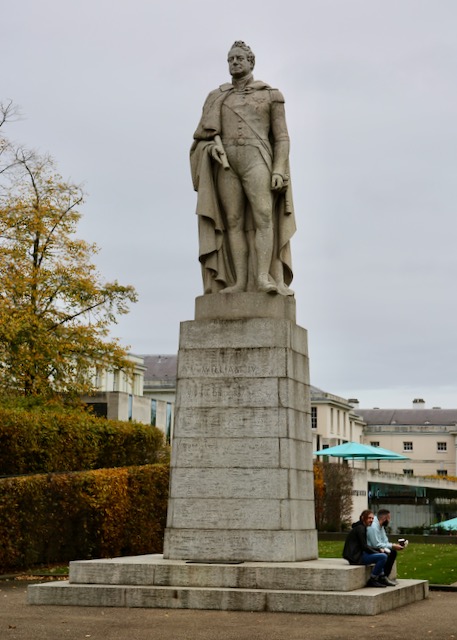
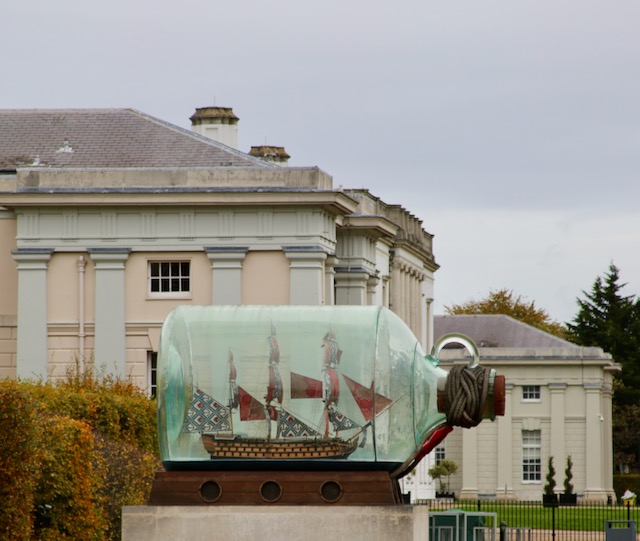
I pass a statue of William IV, the third son of George III, who would rule after his older brother George IV, from 1830 until his death in 1837. The view between the Maritime Museum and Greenwich Park is great (giant ship in a bottle), but I had planned on seeing it after a trip to the Fan Museum, temporarily closed to avoid getting flu all over their absorbent history, that was opened in 1991 to showcase hand fans from around the world. In their place, I get to compare styles of varying anchor types to their enormous ships that are shown to scale with the double-decker London bus on the description signs.
The admiralty-pattern anchor at it’s shortest measurement is more than three meters, weighs over 2,000 kg, and was made in about 1750 before improvements in iron strength for forging in 1800 and the steam hammer for welding around 1830. The original oak stock lasted until 1990 and was studded with nails to protect it from shipworm (a wood boring saltwater clam that can live without air for up to six weeks on its glycogen stores). The modern wood is protected by a request: Please do not climb on these anchors.
Next to this is another impressive piece of historical technology, an eleven-tonne steel cutterhead that is used to remove materials from seabeds for land reclamation and construction projects in the Far East. This model became obsolete in 1995 when the dredger switched to a left-hand rotation, though both revolve between 20-35 times per minute. The teeth in sand may last days, while digging in rocks may need to be renewed every half hour. This is why the teeth were made to be quick and easy to change. I’m not sure I’d agree with whatever destruction they caused, but we humans have a way of choosing naïveté when it comes to the consequences of our decisions.
To finish my visit to the mini outdoor display is recognition of the balance and fitness of sailors who had to climb aloft to fix rigging. Today, even people in wheelchairs can ‘climb’ via harnesses and winches. That’s why in the Anchor Challenge (a side-plank position) where you’re asked to line up to mirror the anchors on display, wheelchairs and buggies can use a helper to balance on two wheels, which I think is more of a challenge and a trust exercise. I appreciate the consideration for those that get around differently to not feel left out.
I will zig-zag my way to the Thames, passing in front of the Maritime Museum, then east on College Way, before walking west along the river towards the Cutty Sark. Caleb and I visited inside in 2015, so I’m more interested in the little Halloween market taking place between ship and gardens. I talk with Susan about her business, her family, and the city she calls home. She sells me a hot gingerbread drink and then I spend most of my time there talking with the two women at Pasta Boss about food, travel, and marriage, while holding my Mac-n-cheese scotch egg, until they get a customer.
Also in the market is a candy bin section, with candied eggs that remind me of candied cigarettes (neither of which taste like their inspiration). There’s Illegally Delicious with a table full of cheesecakes, gateaux (layered cakes), other cakes, tarts, and various sweets; The Sausage selling pork, beef, and seitan options; and Don Jamón serving seafood, chicken, and veggie paella. All the owners are so happy to be there and I’m not sure if this is their regular demeanor or what can be expected after months of shutdown and others going out of business. They’re grateful to be here and I’m glad they are too.
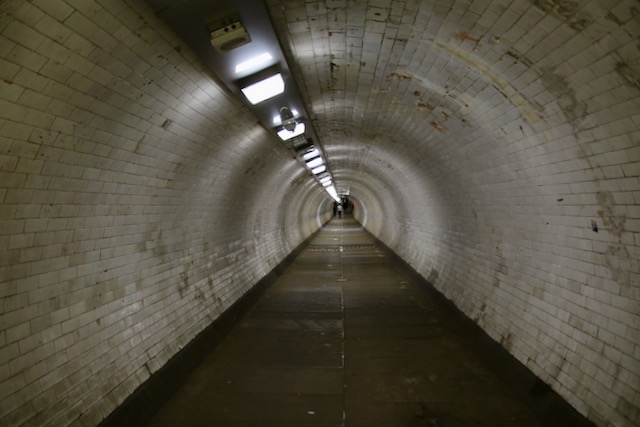
Through the Greenwich Foot Tunnel and easily distanced from the other ten people using this quarter-mile walkway under the river as only one of them is coming my direction. The tunnel narrows by a couple feet and the dirty white bricks are covered by a 1940 patch job from WWII to repair leaking from bomb damage on the first night of the Blitz. A few months later the fix was finished and the housing in the south was again connected to the industries and docks of the north; an essential part of the war effort that remains a popular mode of transportation today, so much so that it has been regularly shutdown during the pandemic to limit crowds.
I walk along Millwall Park, where the narrow strip of land forming the northern border was the former site of the Globe Rope Works from 1881 until 1971 when they moved to Sussex and became Marlow Ropes, still in operation today. A traveller machine was used to twist ropes of all strengths and sizes made from hemp and manilla fibers for hauling, packaging, binding, etc., until WWII when these products became scarce and they developed the nylon rope and the Hercules, two braided ropes combined.
In the 1880s and 90s, the Island boys were crazy for soccer and every club, pub, church, and factory had its own team. The Millwall “Football” Club would clear the cows from the field and steam roll the water-logged grass to create a decent playing pitch. Games were held here until 1910 when the team moved south to New Cross. I skip the Mudchute Park & Farm and get on the train instead to Shadwell station, not the least violent district in London — according to crime stats from 2018 that also claim Croydon is in the top five most dangerous boroughs (where I’m staying now) and that Kingston upon Thames (where I will be staying) to be the safest.
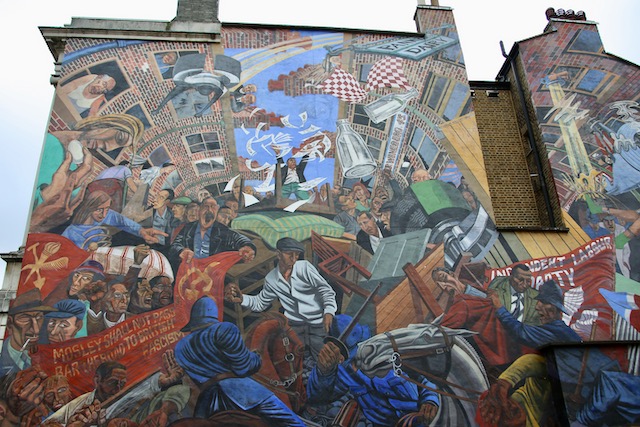
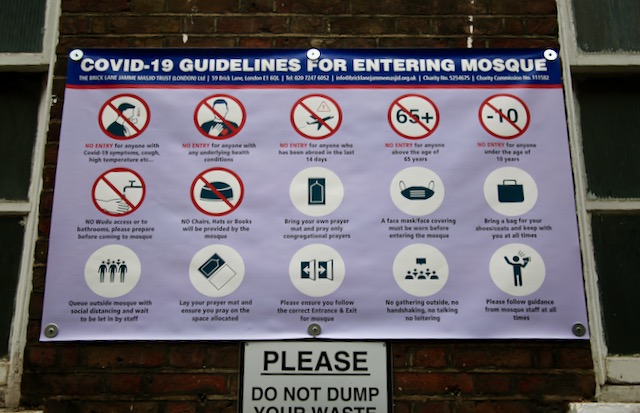
Some of these neighborhoods make me wonder which came first — the religious buildings and restaurants or the people bringing a piece of home with them to new lands. Here, in Shadwell, it’s the mosques, halal butchers, and women in burqas that give this community a very Muslim presence. A 17 x 18 meter mural detracts from that scene and depicts the Battle of Cable Street that took place in 1936 when 250,000 East Londoners took to the street so that the thousands of Mosley’s Blackshirts, the British Union of Fascists, “Shall Not Pass.” They didn’t, but The Public Order Act of 1936, banning the wearing of political uniforms in public, did.
The mural was started in 1976 by Dave who struggled through multiple acts of vandalism and left the project unfinished until three more artists came and finished it in 1983. Paul Butler, one of the three, was appointed for necessary repairs in 2011 so that the reminder of what communities of varied political parties, workers’ unions, and religious groups can do when they come together against those trying to divide them. If this is what it took for more peace in the world, I’d hire street painters and muralists to cover every manmade structure as a reminder that species get more done working together than they do tearing each other apart.
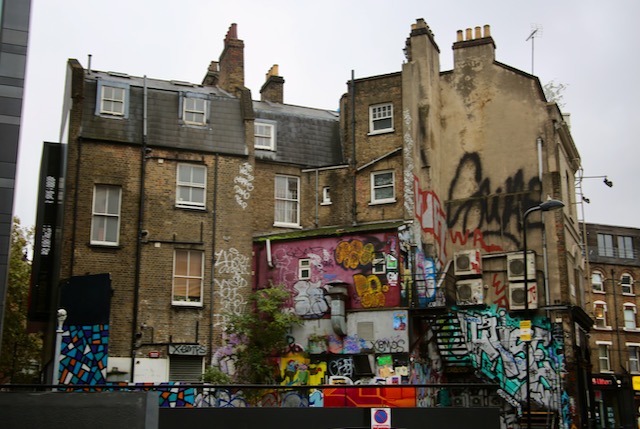
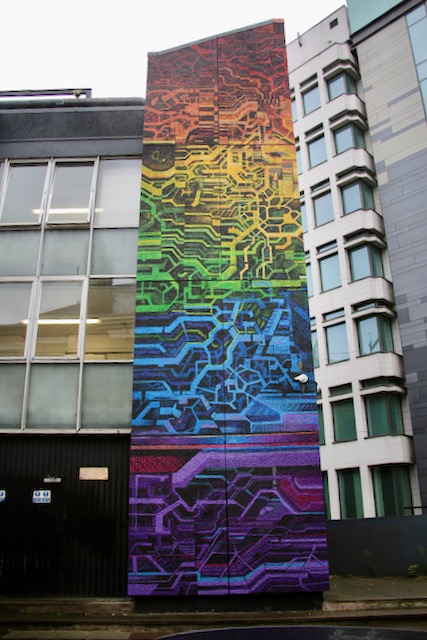
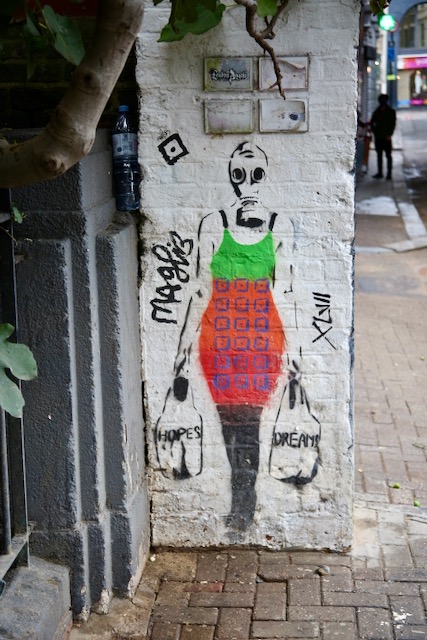
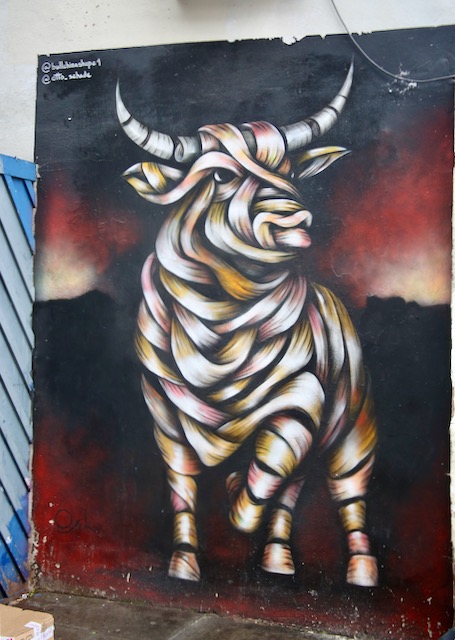
I found a Street Art Tour online and am attempting to follow it even though some of the art must be eluding me or the map is available to throw people off from the actual course the tour guide takes. Either way, I’m having fun and as I finish taking a picture of a building, I smile at another passing stranger and Michael, a 60ish year old Irish man, invites me inside the Pret A Manger for a coffee. He makes sure I’m situated at the table before going to the counter and getting nothing for himself because he’d just finished lunch. He writes down his address on a betting slip and offers his sister’s bed in Ireland for a night in exchange for a postcard.
I sip on the coffee while we talk and Michael is glad that I’m enjoying my vacation, even with its limits. He doesn’t realize it’s also because of people like him taking the time to make my trip more pleasant and memorable and that it stands out from just another gray day in the city because I’m not commuting or struggling to make ends meet. The kindness of strangers encourages my superfluous burdens to melt away when I am in the spoils of nature and newness.
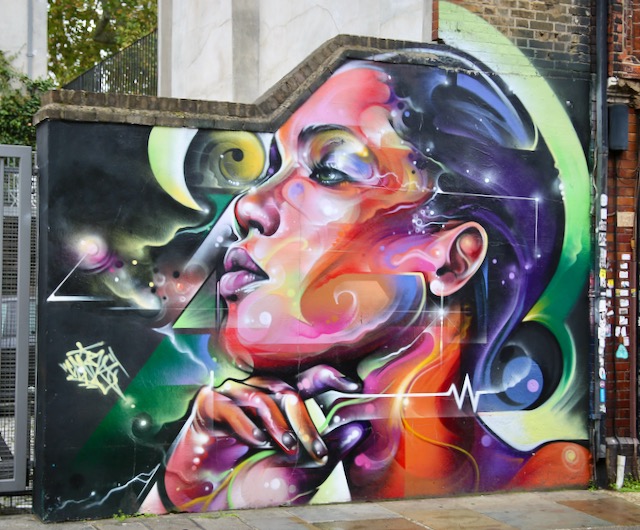
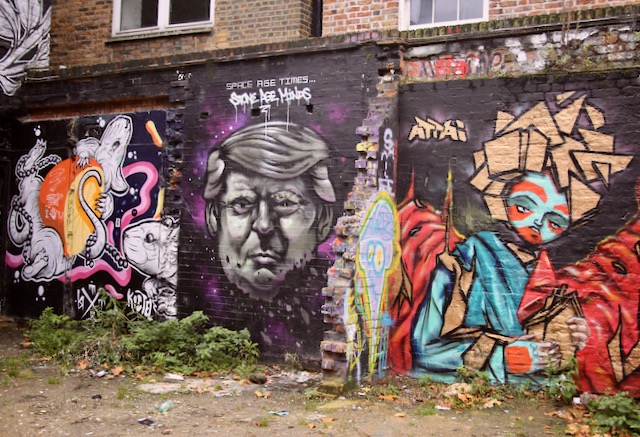
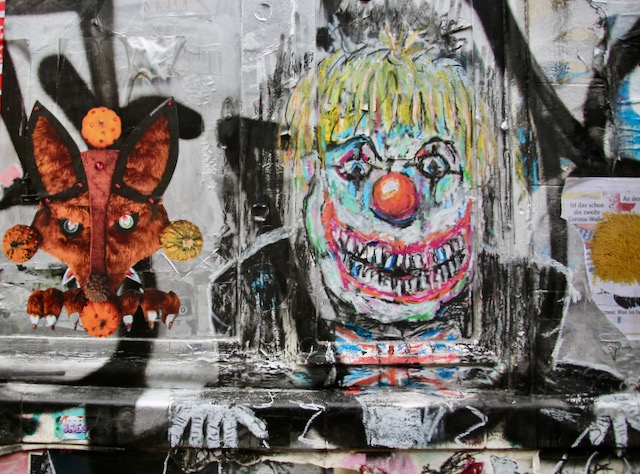
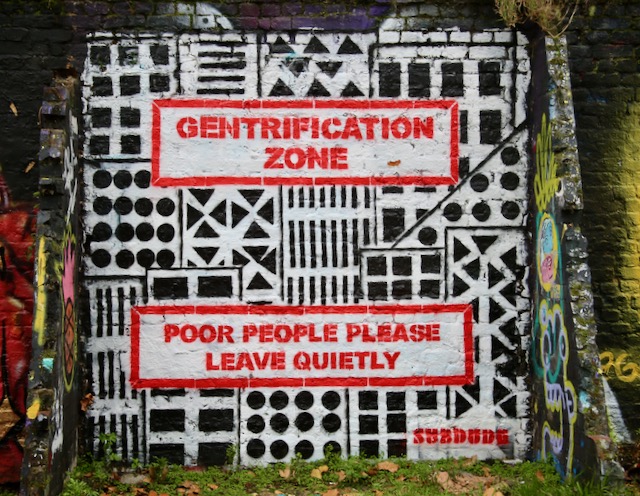
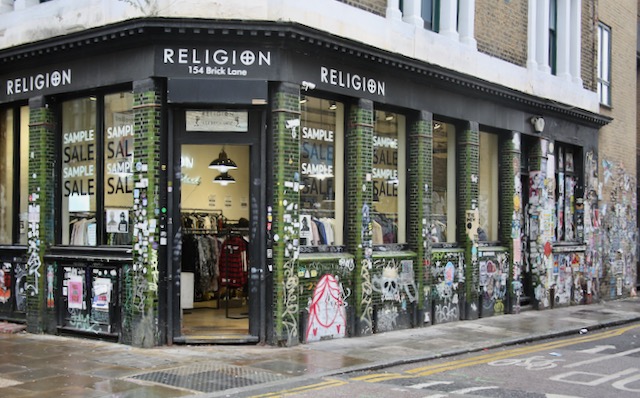
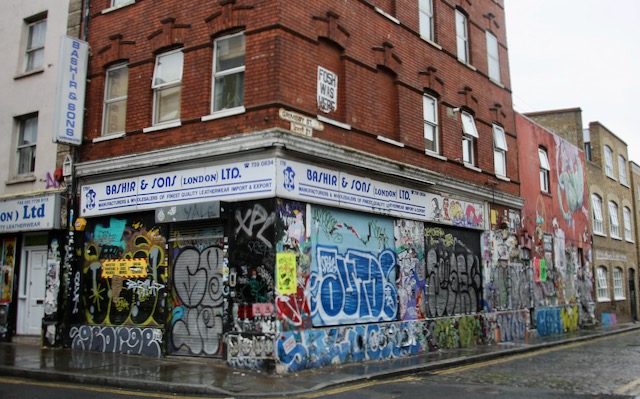
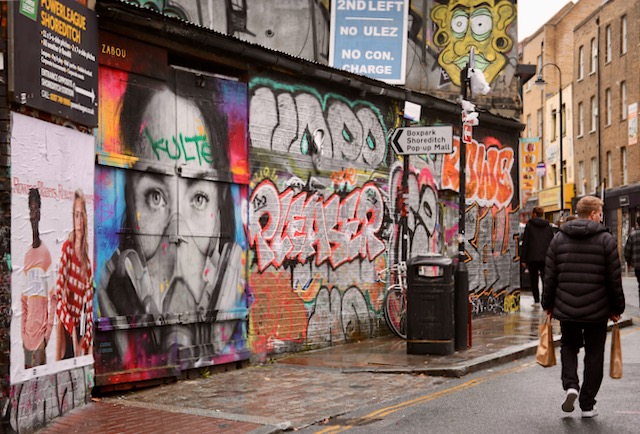
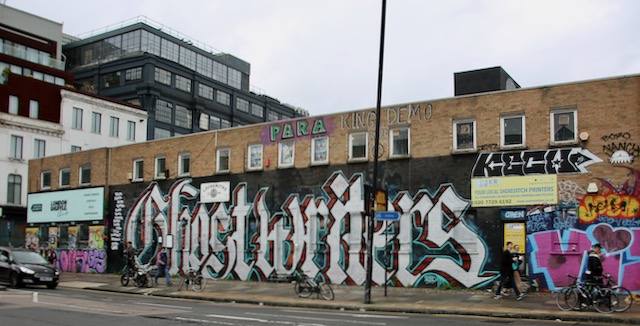
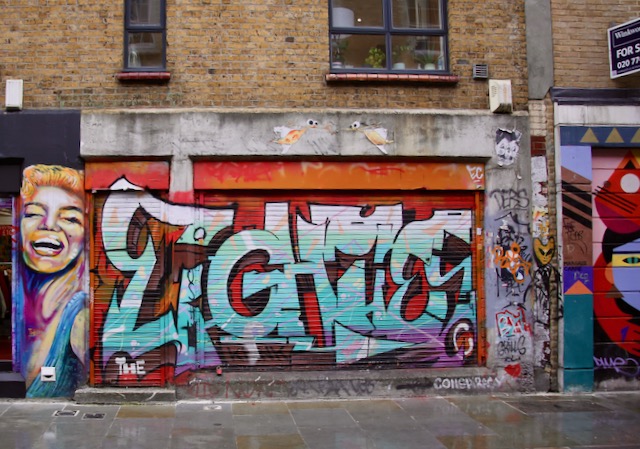
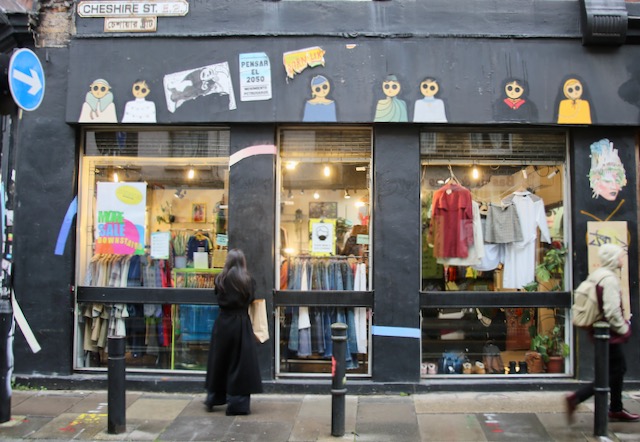
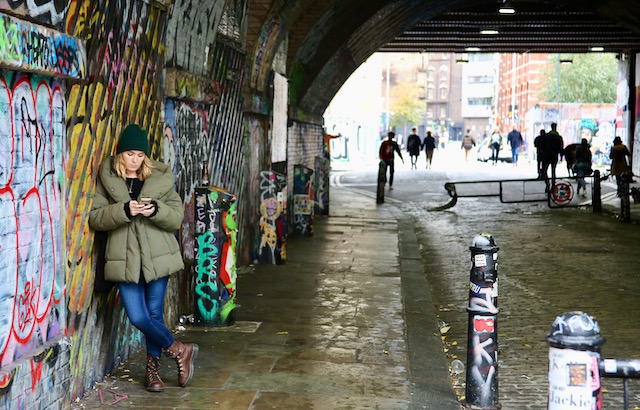
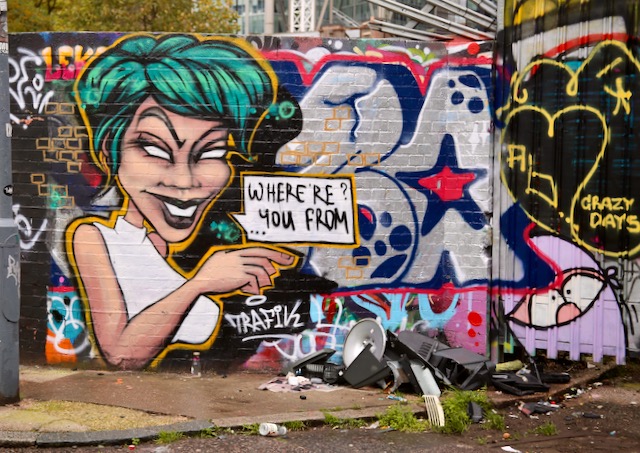
I continue to follow the art as it weaves back and forth across Brick Lane and come across a group of people fly posting. The lookout asks that I don’t capture their faces in my pictures as what they’re doing is illegal. The city has laws on where leaflets may be distributed and fees assessed by volume. The Clean Neighbourhoods and Environment Act of 2005 was introduced to reduce the litter this form of advertising creates and to hold those responsible accountable — whether they’re the ones pasting or the person or product being shown. It’s ridiculous how much tax money is spent annually to remove these guerrilla marketing tactics to present a clean and safe place, so some cities are working with legit fly posters to keep the dirty rogues away.
Perhaps if instead of just rental cars and SIM card stations at the airport there was a booth where you could download a traveler app that contains the top ten apps that are of most use to your destination — local maps, restaurant reviews, trail finders, recycling centers, public transportation, and reporting crimes etc. I suppose people prefer to post their witnessed atrocities to Facebook Live instead of via an app where you could send picture proof and other supporting details via text without worrying about phone minutes, reception, language barrier, or the offender overhearing you.
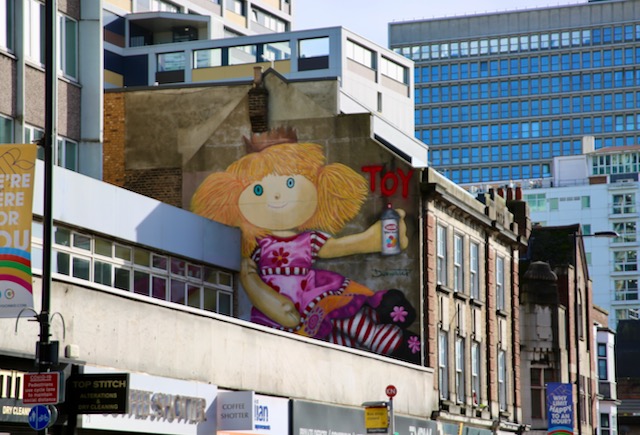
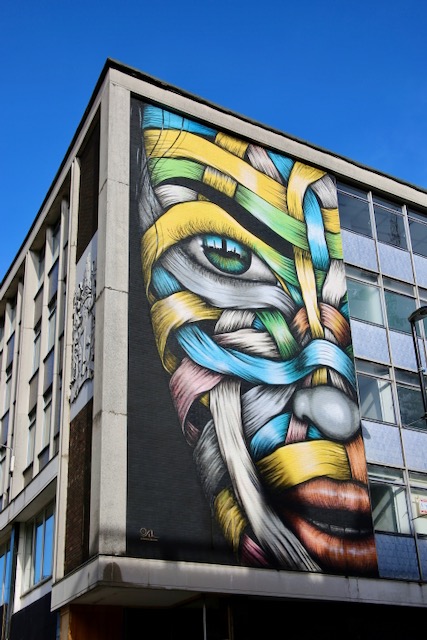
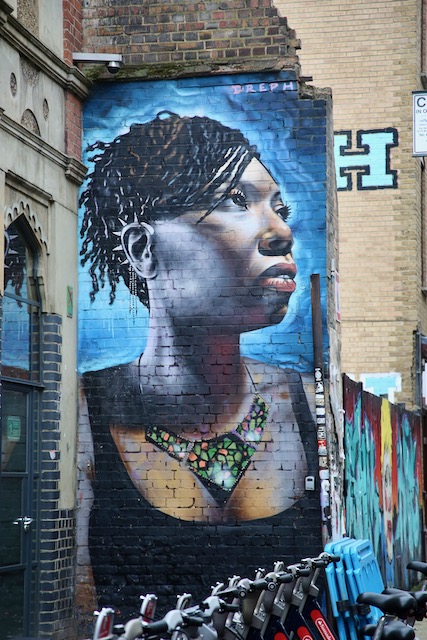
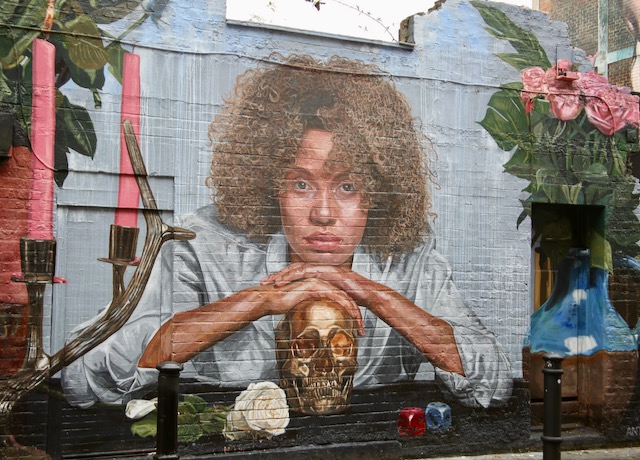
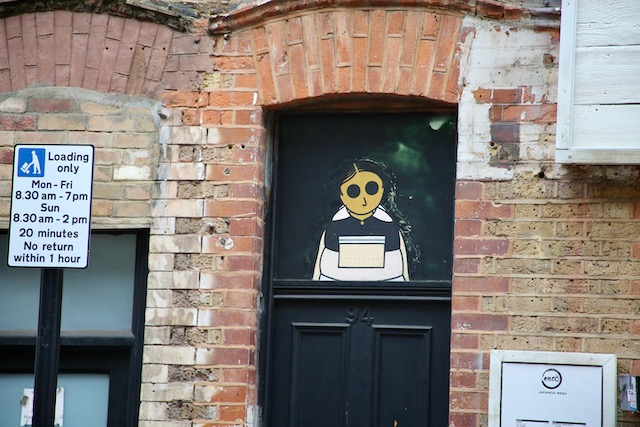
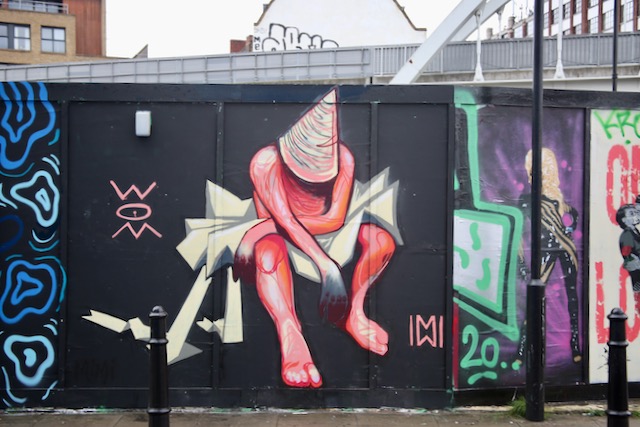
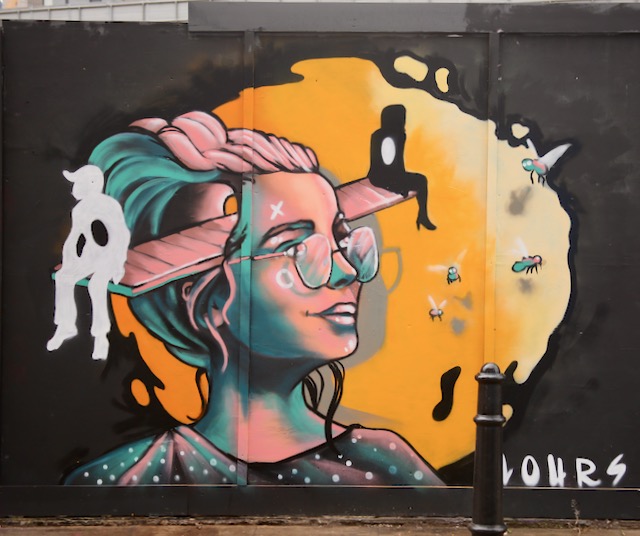
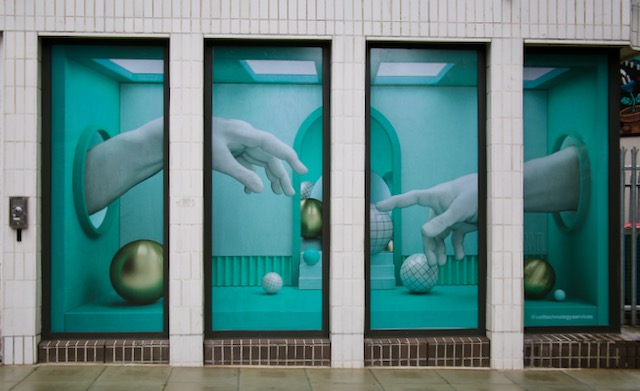
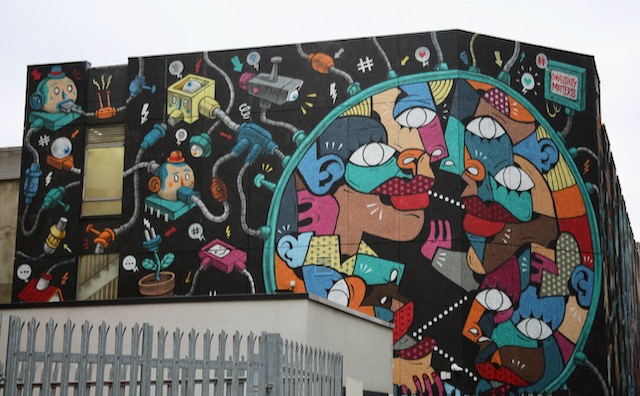
Since this isn’t a thing, I take a picture of Stacy, in the You Are Enough series (portraits of women friends bettering society) by Dreph, a London-based visual artist and continue my walk in the patter of rain. I approach another large portrait, this one on Hanbury St by Ant Carver, who uses oil and spray paint as his mediums for expression. This piece was just finished ten weeks ago as a tribute to a friend with the idea of living in harmony with grief. Another artist to sign his name legibly is SubDude, who speaks out about politics, cell phone culture, and equality via satirical slogans.
Adrian Boswell, the Broccoli Man, turned a 2017 vegetable shortage into an art idea that started out with the cruciferous plant becoming a collage on local walls. Soon, the member of the Brassica oleracea species was turning up red and gold and can now be found in a rainbow variety or imprisoned in a clear cage. You can find this artist in his studio, The Broccoli Factory, next to a painted scroll with the message, “In a room full of art I’d still stare at you.”
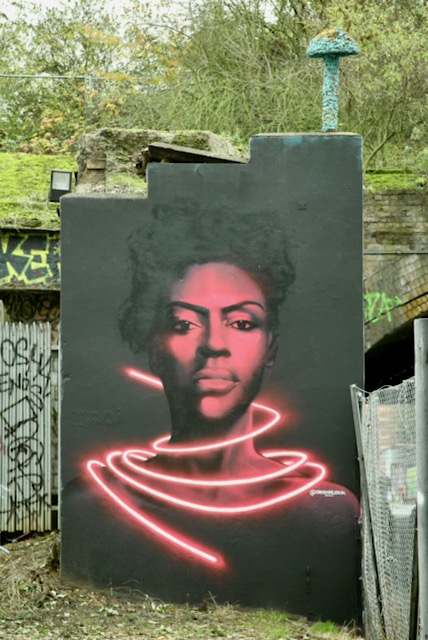
The cool thing about the color of the sky, besides the temperature it maintains, is the loss of time available to me as I wander with the only purpose of looking at my surroundings; following the art and not the street names and wanting to meet the people displayed so grandly, such as the musician Natasha Awuku, painted in David Speed’s neon style at Powerleague Shoreditch, just a month ago, where I watched a guy lacing up his cleats for a late afternoon practice with his team already on the field.
If my afternoon had been a homemade film (before editing software became a household item) than my ‘goldfish lost in a fishtank’ meandering would have foretold how my evening on the trains would go. Walking into Liverpool Street Station did feel like a holiday romance flick when the happy ending verges on the two main characters coming together before the credits to let the audience know how it ends. Well, my story wasn’t over yet. The transportation app suggested I walk to Moorgate Station for a more efficient trip or perhaps it felt I could use some more color against the grey wetness falling innocently enough for a half mile.
I missed the train because my phone told me mine was in five minutes (arriving or leaving) I’m still not sure. I need to read the platform signs instead since they give a more detailed answer as to when the next three trains are arriving and where they’re stopping at. I ride to London Bridge for something to eat and a direct ride home only to have my train canceled so that I can listen to a guy laugh hysterically and look like a gnome running in place while talking about a girl he knows somewhere and his roundtrip to Brighton.
I could’ve moved amongst the crowd while I waited but I wasn’t the only one watching this man tell his story so I figured I would take in this moment for what it was and let him feel heard, even if not fully understood. I get to East Croydon and meet a German woman who just finished a marathon, and though tired and hungry, is more willing to hoof it to Norwood Junction than I am. We decide to wait the 20 minutes together until the delayed train arrives.
I’m on the lookout for snacks and settle for a cheese onion sandwich (not as good as egg and cress) and get charged twice at Sainsbury’s because the receipt asks for a signature. Luckily, the cashier had canceled the first transaction before asking someone else to help ring me up. I climb in bed with pen and snacks in hand and rain skittering faintly at the window. After my notes are finished, I’ll read about transitions (not sure if referring to green energy in The Wisest One in the Room or something online) before listening to a podcast (keyword: brain) for half an hour.
As I lay down, there was pure silence for a moment and I didn’t want to move for fear of disrupting the peace, which was fleeting.
I had planned on an easy and short day, even though I had also planned on taking day trips with train rides up to two hours, each way, if I traveled in the dark to make the most of the light at my destination. Today worked out as a non-plan plan to see things on my list, wander around, and somehow head north towards the Thames, descending nearly 300 feet in elevation. I’d walk about 13 miles and travel just as far on the trains.
I stopped at The Guava Kitchen for a vegan no-eggs Benedict (should’ve tried the charcoal toast) and got my order to-go because I didn’t want to sit in what felt like a clinic and then feel guilty when I remove my mandatory-indoors mask, shoving food and flu into my face, when I wasn’t even hungry yet. Not far from their entrance is a wall with a Theatrical Transformation by Artmongers that encourages those passing by to have their picture taken in a painted Egyptian sarcophagus or blowing into Horniman’s horn. I’ll do neither without remote and tripod or bothering a stranger for a picture that I won’t like anyway — either the way they took it or the way I look in it.
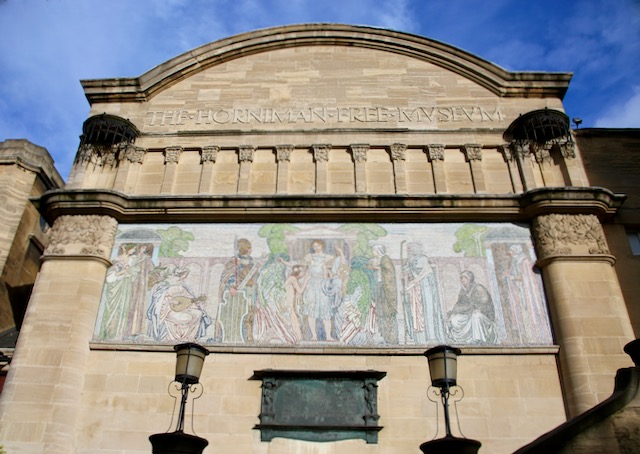
The Horniman Museum has been built and extended multiple times. The original home was opened to the public in 1891, replaced with the 1901 building with a Doulting Stone facade. The 1911 extension used the same stone and similar design features to compliment the first. The 1996 eco-building used wood from sustainably managed forests with no mention if the grass roof was fair trade. The last addition in 2002, with a new designer, was able to use the same stone quarry from Somerset — one with a history built into the Roman times.
I would normally go inside to see the treasures within, but the year of covid has also been the year of smelly sanitizer for hands, seats, surfaces, and such along with having thermometer guns pointed at my forehead and hands. I’ve been offered more gloves and plastic bags and containers than I can stand (pre-covid as well). Caleb and I have been using cloth bags for a decade now or trying to carry it all in our hands when we used to forget our bags in the car. This year has been terrible for the over production of plastic wrap to cover the plastic containers with the plastic cutlery and the disposable menus for fear of germs, but what about phones, toilets, and doors, etc.
Anyway, that is one of the many reasons I chose to remain outdoors for a majority of this trip and make the most of my time amongst nature before it is again off limits with the possibility of a fine if caught. Will this be the way for the wealthy to enjoy the serenity without the throngs of mediocre onlookers clogging the view if you only have to pay for close contact with rangers, guards, police, or other staff that still have a job in a decreasing workforce or will they soon too be limited to their four walls, bandwidth, bookshelves, and fenced yards.
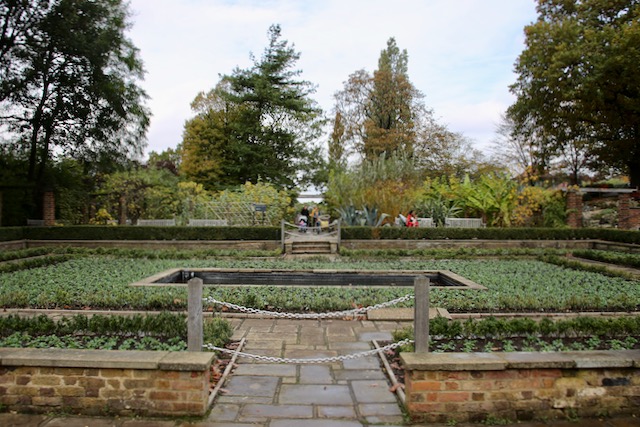
The gardens are a dizzying array of packed planting and simplicity, of spring growth and autumn death, with pops of color and animals sprinkled throughout. As the rain starts, I find a tiny overhead ledge to hide under while I unpack my paper bag and appreciate the thin, small wooden fork inside so that I may eat my yellow tofu on bread (as exciting as it sounds) and know that some things just can’t be substituted, like non-pork bacon, sugar-free chocolate syrup, and yolk-less eggs (unless baking).
I get to see my first Racka Sheep, with black appendages and a gray body, a variation bred by Hungarians for centuries that’s now exported to the UK, US, and France for wool, meat, and milk. His friends seem to be of the un-horned beige variety. On the other side of his fence is an animal of a different sort — a little girl exploring paths of all types as her slightly older brother tries to capture her and bring her back to dad. I’m grateful for both our paces, as we find ways to experience joy at contrasting speeds. I’ll watch a dog crap behind a tree, so the owner can pretend she didn’t see it, before I exit the park and follow the Green Chain Walk.
Part of Section 11, now to my south is the Sydenham Hill Wood that is a piece of the remaining Great North Wood, home to over 200 species of plants, rare fungi, and a bat roost. The railway was closed in 1954 following the Palace fire and villas were demolished so the woods could grow and become the Trust’s first nature reserve in 1982. The Walk is one of many footways the city has established to get people out amongst the greenery and history of the surrounding boroughs; this one covering 50 miles south of the river and east of downtown.
Neighborhoods here have more dog walking rules than just, “no dog fouling” such as how many one walker can have at a time and what percentage of them must be on a lead. There’s also a special designated mini-curb area that shows drivers where they’re allowed to park up on the sidewalk, still giving plenty of room for cars on the street and mums with prams, short for perambulator (a formal British version of ‘one who walks’).
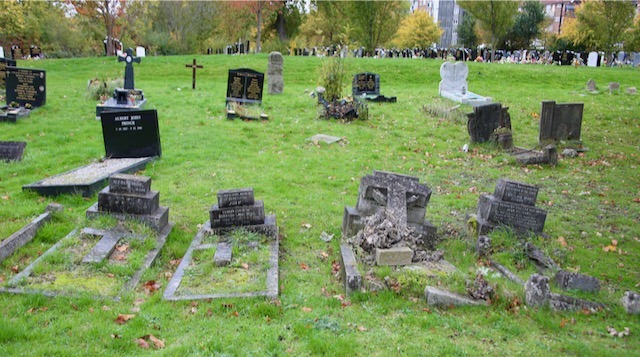
I walk through Camberwell Old Cemetery, as do mourners, joggers, elderly couples, and dog owners. I think it’s a great use of the space, though no matter how wealthy these people were when they passed some have since been forgotten in the passing of time but you wouldn’t know it. There’s a nice contrast of the old gray, moss-covered stones, some crumbling, next to the modern shiny black stones with gold engravings. The graves make me think of fish tanks with their layer of colored chippings that offer a more pleasing design with less maintenance.
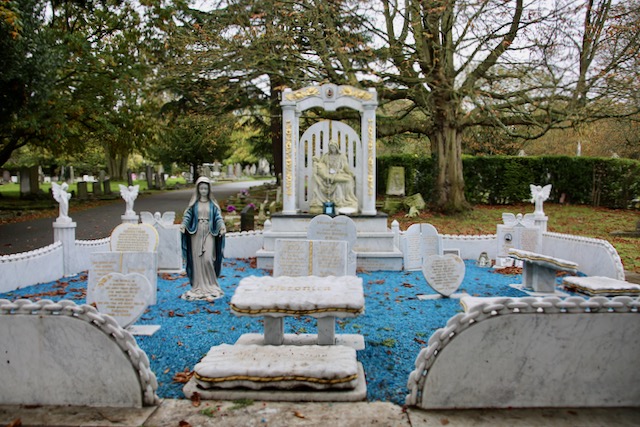
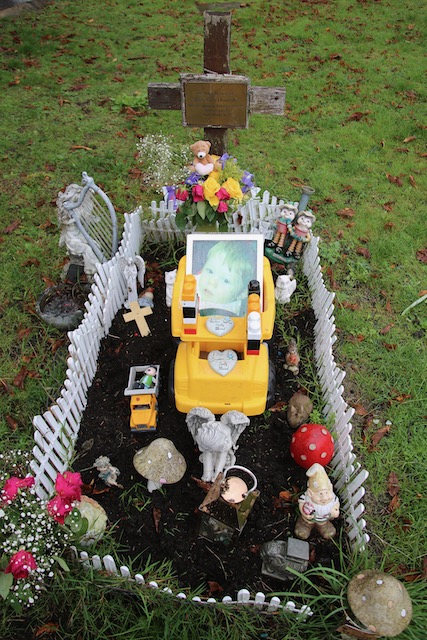
There are plenty of graves with fake flowers which help to add a touch of color to the crosses, hearts, and angels overlooking the remains of loved ones; if the headstone hasn’t fallen over. Something new, for me, was the fresh flowers placed in letter-shaped floral foam to spell out nicknames, relationship status, etc. as a longer lasting way to stand out, but no grave does this better than Veronica Josephine O’ Brien’s, who must’ve been an awesome person who passed in ’97 and is now remembered amongst her stones of white with gold engravings in a sea of blue chippings.
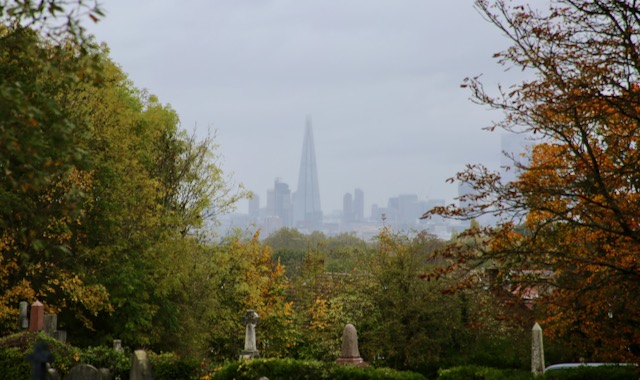
I find One Tree Hill, with way more trees, that has nothing to do with the nine-season drama series based on half-brothers in North Carolina. The Oak of Honor at the summit is the third to hold this title for rumors of Queen Elizabeth I, last of the Tudors, resting under the original in 1602, the second having been stricken down by lightning in 1888, and the current tree planted to commemorate the opening of the park to the public in 1905 after passing through royal ownership, having a history with the Napoleonic Wars and the East India Company, and almost being turned into a golf course which would’ve denied the public from the modern panoramic view of downtown as seen through the woods from 90 meters above sea level.
Also seen through the trees is St. Augustine’s Church which stands out on the park map but wasn’t designated a number like the Stag Beetle Stump and Owl Boxes that encourage wildlife to thrive in the overgrown park that was designated a Local Nature Reserve in 2007. The windows come with three stages of protection — fitted bars for carrier pigeons to work through, but with wire over them fit for a clew (a group of worms resembling a ball of yarn — don’t see the likeness), with medieval bars over that for impaling chickens and rabbits.
There’s a bit of rain that follows me to the Camberwell New Cemetery with a royal imposing entrance that keeps me walking through a neighborhood as the skies clear. I take a peek at a townhouse under construction before arriving at Nunhead Station where I will walk up to the platform twice, after exiting the station, in hopes that its lack of connections will have changed. If I’d have known sooner, I’d have gone to Nunhead Cemetery, one of the Magnificent Seven in London, originally known as All Saints’ Cemetery that was consecrated in 1840.
Without this knowledge, I decide to trek to Brockley Station with more direct route options. I cross the street and this man who had just come out of an off-license store asks if the film in my camera is too fancy for him. I tell him it’s not so he asks me to take his picture and I offer to open his cider after hearing him struggle with the tab. He thanks me and offers kind advice in return, “Before you cuss at someone think about the ways you could improve. Don’t think you’re better than them. It’ll help you keep your teeth.”
Approaching the entrance to what sounds like a mispronunciation of broccoli I notice a sign — humped zebra crossing. In British English, it means the crosswalk also contains a speed hump for cars. In American English, it means this is where zebras cross the road after sex. I love the similarities and disconnects in our languages and it helps highlight the disparities in the historic Sanskrit, Aramaic, Latin, etc. based ways to express ourselves in written and spoken manners that have continued to branch and merge as this large world continues to trade with some and destroy other ethnicities.
Heavy clouds linger above the train to London Bridge Station but it’s all white skies upon arrival and a screen that warns: Customer Information — Please be aware that mobile phone thieves operate in this area. This leaves me wondering how many banks have been robbed this year, especially with masks now being compulsory. The FBI keeps some interesting stats, such as type of bank, day and time, bank location (main office, rural, in-store), robbery location (counter, armored vehicle, safe), weapons involved, hostages taken/injured, and security devices used. Their daily average for 2018 was eight per day, down from the 10.5 per day in 2017.
I don’t know about you but that seems like a lot, and that’s not all. The ASU Center for Problem-Oriented Policing says that only two out of 100 robberies in the US are of banks, which means there were 392 other cases of theft in some form in 2018. In England, their lowest count since 2002 was 144 per day, so given that they appear more peaceful in many country indexes for crime and safety, their robbers must be more polite and less violent. I can understand the logic in that as I’m more willing to part with things and my time when people use manners.
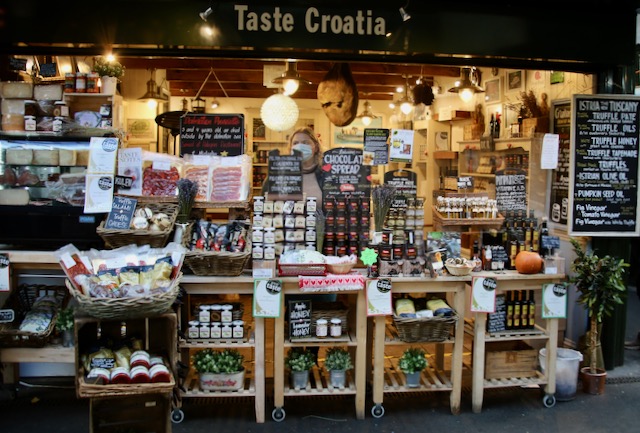
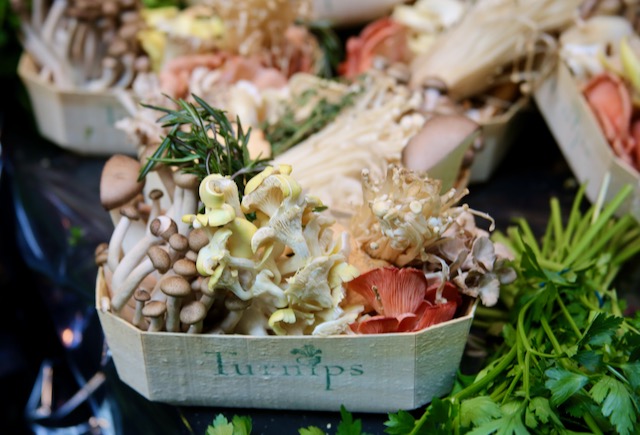
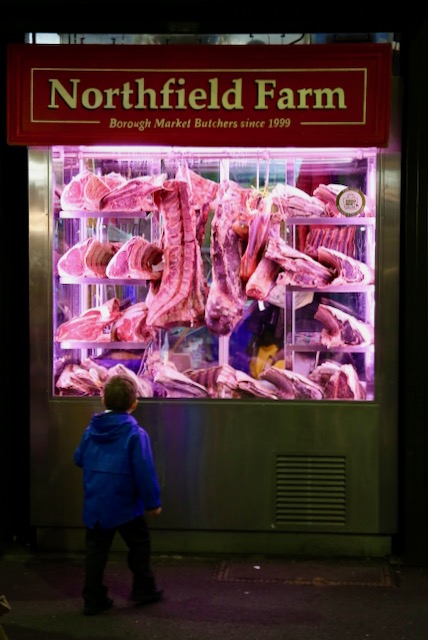
Into Borough Market to look for Scotchtails, a restaurant that serves a veggie version of the popular Scotch egg. I’ll give the not finding them up to multiple reasons: the market is twice the size I thought; the food truck, according to their last review written in February, is hard to find; and with covid their days and hours have been changing so they might not have been at the market that day. I’ll gladly settle for a mushroom pate sample from one stand and donuts: pumpkin spice cinnamon and sea-salted caramel honeycomb from Bread Ahead bakery and baking school.
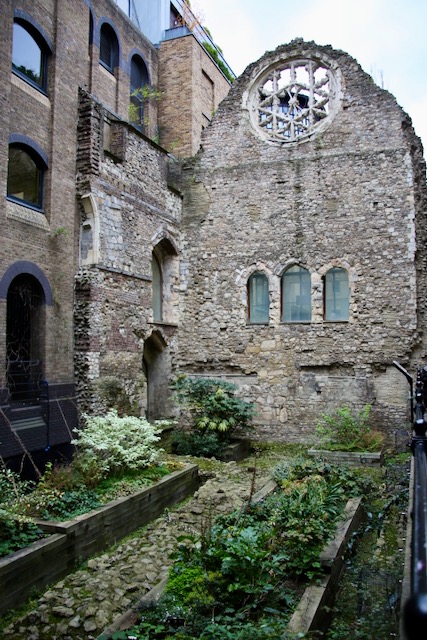
I’ll walk a short loop of the city to include a nice view from Southwark Bridge before coming upon the ruins of Winchester Palace with a door that led to the buttery (wine cellar), pantry, and kitchen. It was built in the 12th century with two courtyards, a prison, brewhouse, butchery, tennis court, bowling alley, and pleasure gardens. The palace was divided into tenements and warehouses in the 17th century and the ruins discovered 200 years later following a fire, but wouldn’t be revealed until the 1980s when the area was redeveloped.
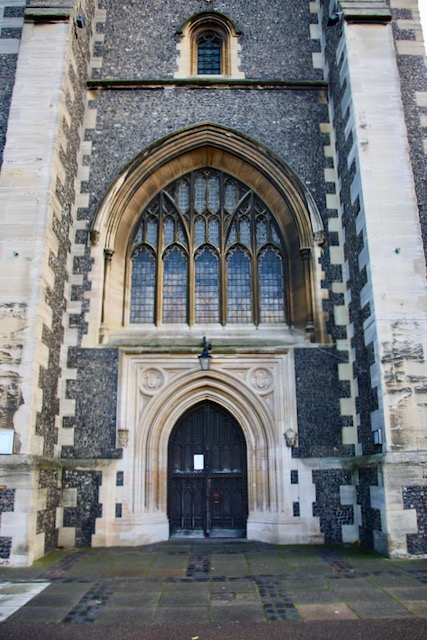
At some point on my smooshed circular route I had passed the Southwark Cathedral, a 900-year old landmark, that was a church until 1905 and retains some of its Gothic structure with a 19th century nave reconstruction. History is great, which is why I bring this up. It’s been almost five years now since I walked this same street with Caleb and we paused to take in this beauty, of which I seemed not to take one photo of on this day and the older ones have been retired to a hard drive that is currently in storage. I felt like he was with me in that moment and appreciate our time together and look forward to a million more seconds of the extraordinary amid the mundane.
I walk through the Borough Market again but am not feeling hungry enough to buy anything. The train ride back to my room was simple and quick. It bothers me that it took days for me to notice, but I scrape someone’s dried boogie off the wall that I could’ve leaned against while sitting in bed. I’ll also sweep to reduce the amount of dirt and hair that gets stuck to my feet so I don’t bring them to bed with me.







































 TheJessicaness