I enjoy talking with Caleb after waking from a nice dream. I walk about a half mile for breakfast and pass a guy, with two dogs, who seems to be giggling at all the happy people… for a few more days, at least before the city of London returns to lockdown. I’ll take the bus to South Ealing (a limited connections station) and a mile from my next stop. I get back on the bus, and I get off at the Ealing/Christchurch stop, as it’s only one away from the one I need, Ealing Broadway.
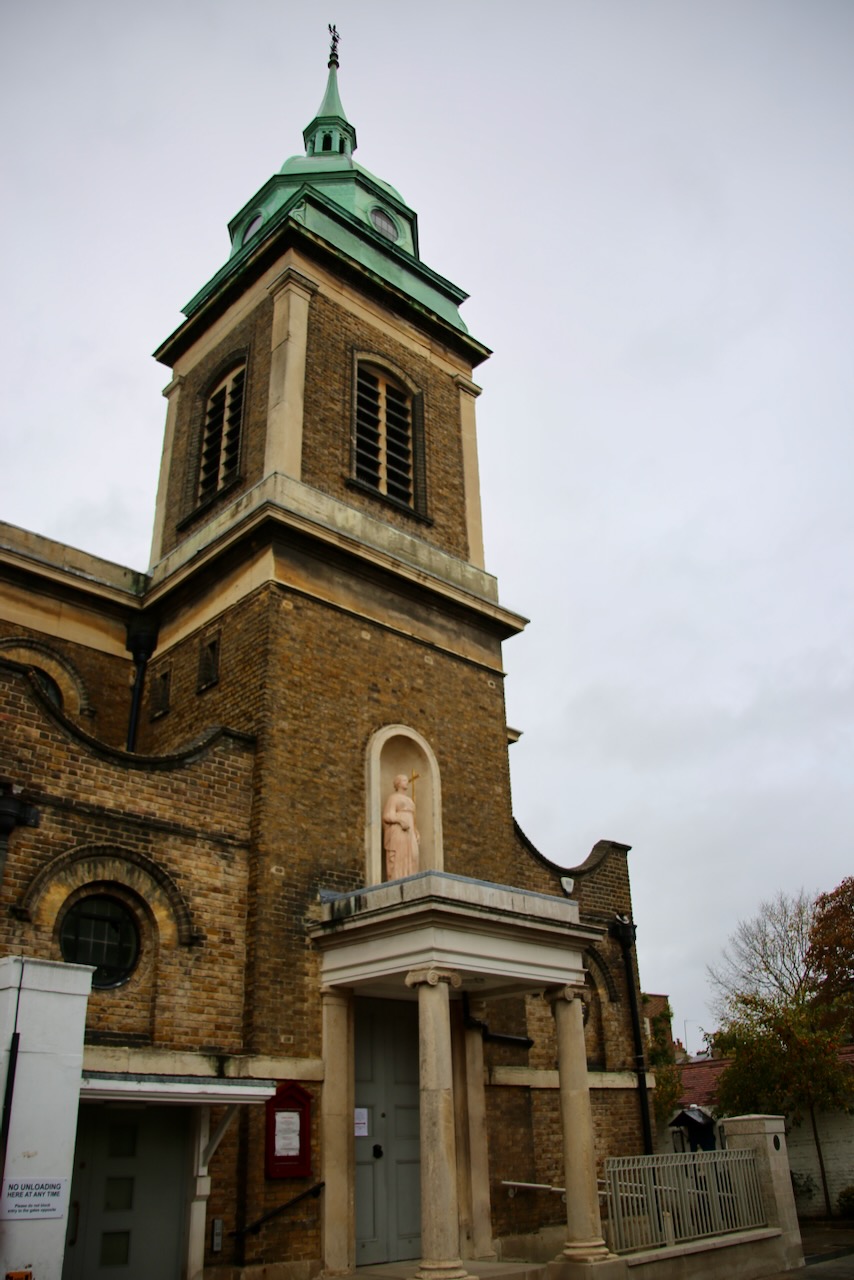
This puts me on the path of the Christ the Saviour Church. I go in quietly, as I usually do, but there’s a service in session, and I won’t interrupt it by trying to capture the pointed arches and painted angels. There’s a market across the street selling pasta and pies. I’m debating where I want to walk today as transit stations are closing, and more people are wearing masks as they queue up in packs to go shopping. I take the bus to Greenford, where I left the Capital Ring Walk yesterday.
I plan on starting Section 9, which will take me to South Kenton, over five miles away. After having walked 15 minutes in the wrong direction, I find myself back at the station on my way to meet Radu, the local Romanian, at Richmond Station. The distance covered on foot will be about the same, and I would have to spend just a few more minutes on public transit if I had walked another section or two today. The bus I’m on has a broken stopping alarm, and the driver seems to be trying to reset it by opening and closing the doors.
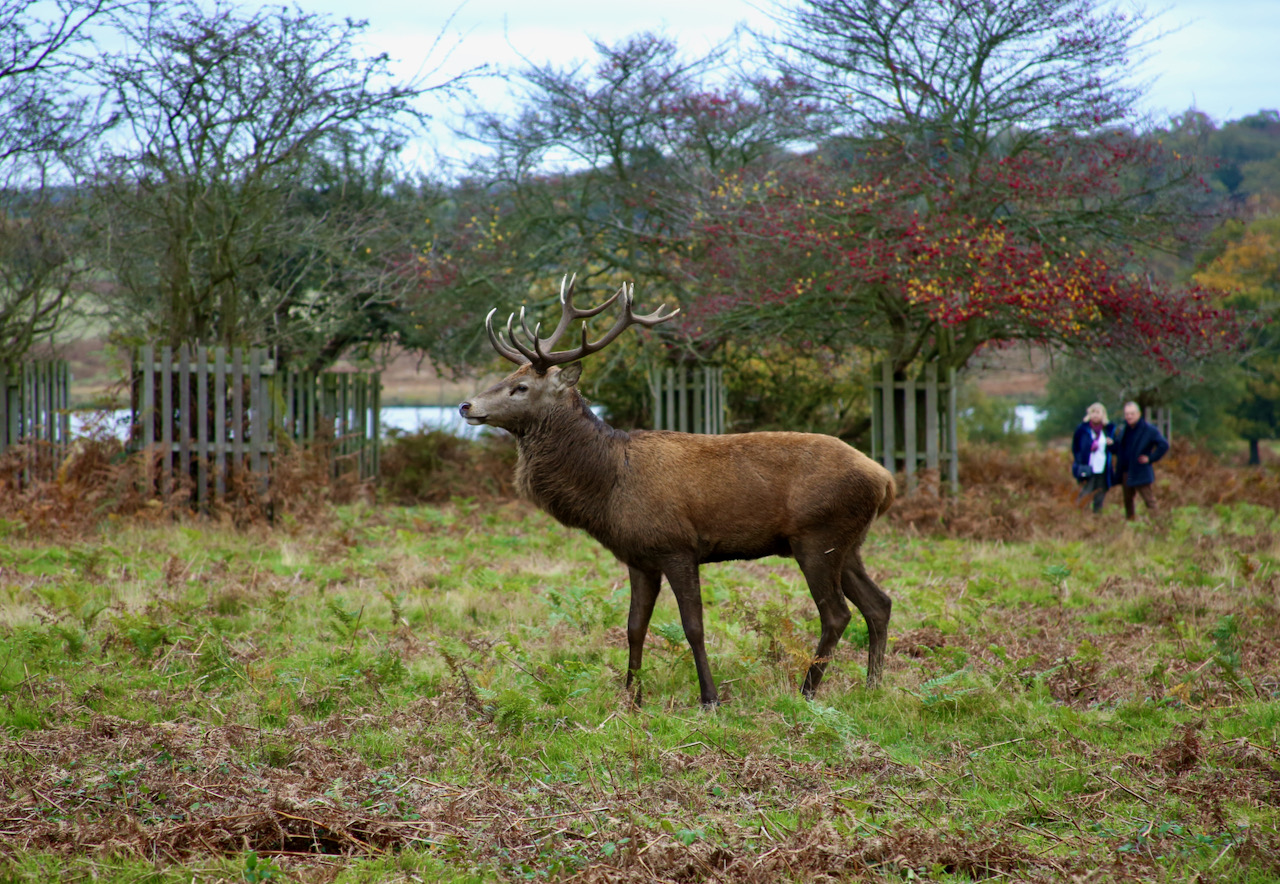
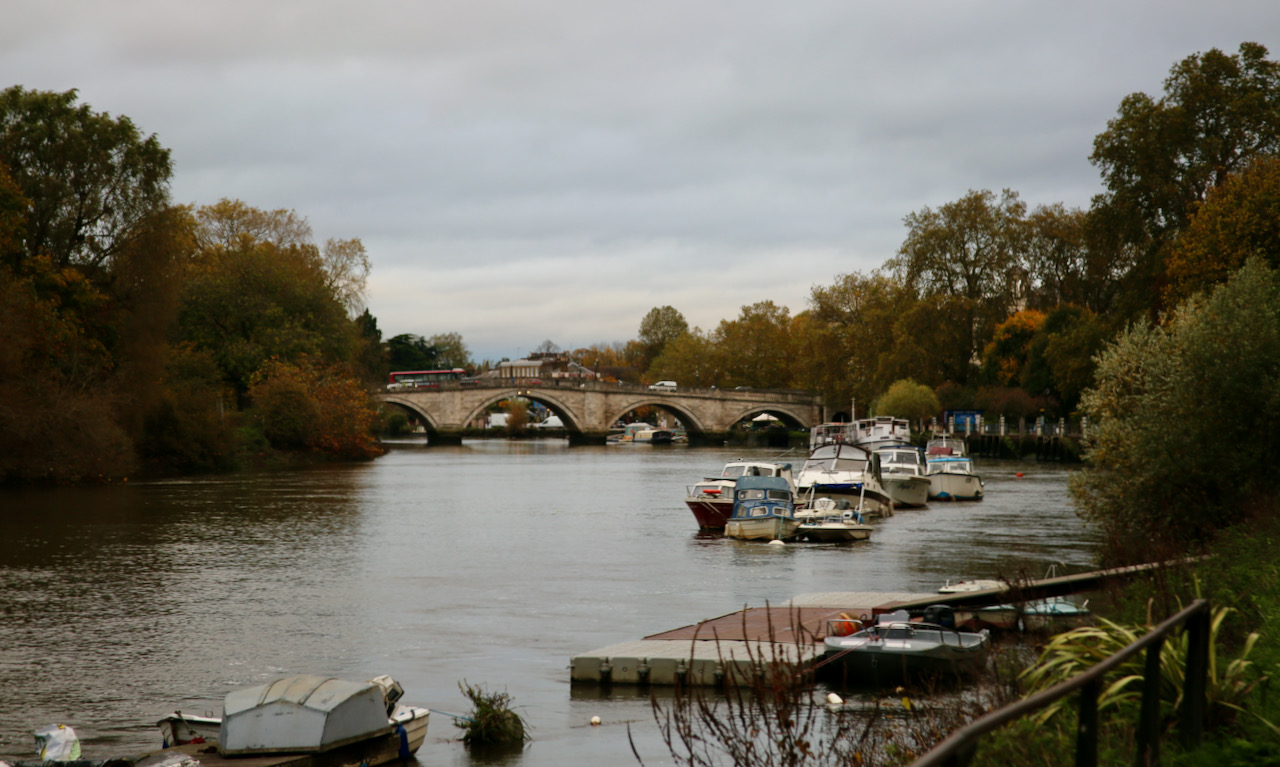
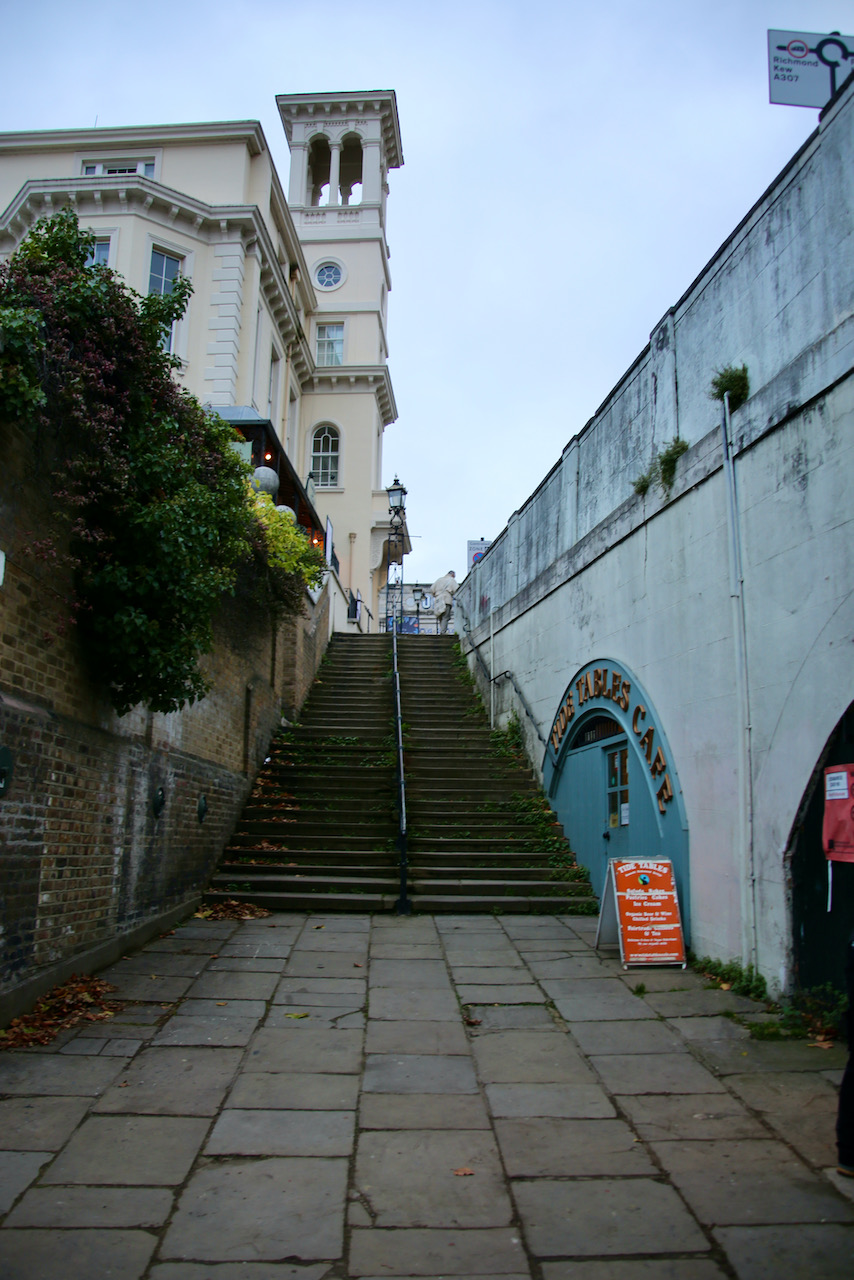
Once at Richmond Station, I got a turmeric flat white coffee and a lavender-sugar pretzel from Olaf at Knot, an artisan shop specializing in caffeine and twisted bread. We’ll stop at Tide Tables Cafe and walk along the River Thames to Terrace Gardens. From there, we walk on Queen’s Road through Richmond Park, over two miles, and see plenty of deer on the other side of the street. We’ll part ways at a bus stop so Radu can start his journey home, and I can be back by dark with an eight-minute walk.
Pret A Manger, meaning ready to eat in French, is a popular sandwich shop with over 300 locations in London. One of them happens to be close to the rail station and bus stop in Kingston, but it isn’t open on weekends. The shop next to it doesn’t open for hours, so I’ll take the bus to Richmond to start Section 7 of the Capital Ring Walk.
Once on the bus, this lady grunts and points her head at the “don’t sit here (in Covid’s seat)” sign. I tell her I see it and will move at the next stop as I try to maintain distance with limited availability. I’m glad I was able to move upstairs and enjoy the much better view from the giant windshield. I’ll try half a toastie, British for inside-out grilled cheese, and gift the pre-cut, untouched other half to an urban camper as I wash the dairy down with a honeycomb cold brew.
I find myself back in Richmond Green, with a field that was used for jousting and now only supports approved cricket matches. I’ll take Cholmondeley Walk along the Thames and watch the scullers row on the smallest boat on the water, costing in range from $1,500 to $15,000 for the shell, and propelling themselves forward at a maximum speed of 13mph with oars the length of the boat. Had I seen a sign for rentals, it’s something I could’ve tried, but I’m definitely over-dressed.
Old Deer Park’s history begins in the 14th to 16th centuries with the informal battle of The Charterhouse between being a monastery for the monks and a residence for the queens. The 17th and 18th centuries saw the land used for hunting, farming, gardens, and the building of an observatory. The 19th century developed cricket, rugby, and golf clubs and held the BBC’s first outside broadcast for the Horse Show, which ran for 30 years. The 20th century saw part of the park be absorbed into Kew Gardens and public tea rooms converted into private swimming baths. I wonder what the 21st century will do.
I’ll walk over the Duke of Northumberland’s River that was cut by the monks of Syon to power their flour mill and provide fresh water. On my right is the London Apprentice pub, still standing again from the Tudor period, having been rebuilt in the 18th century, and aptly named, where the tradition remains for new journeymen, upon receipt of their indentures, to celebrate with the master craftsmen on their achievements.
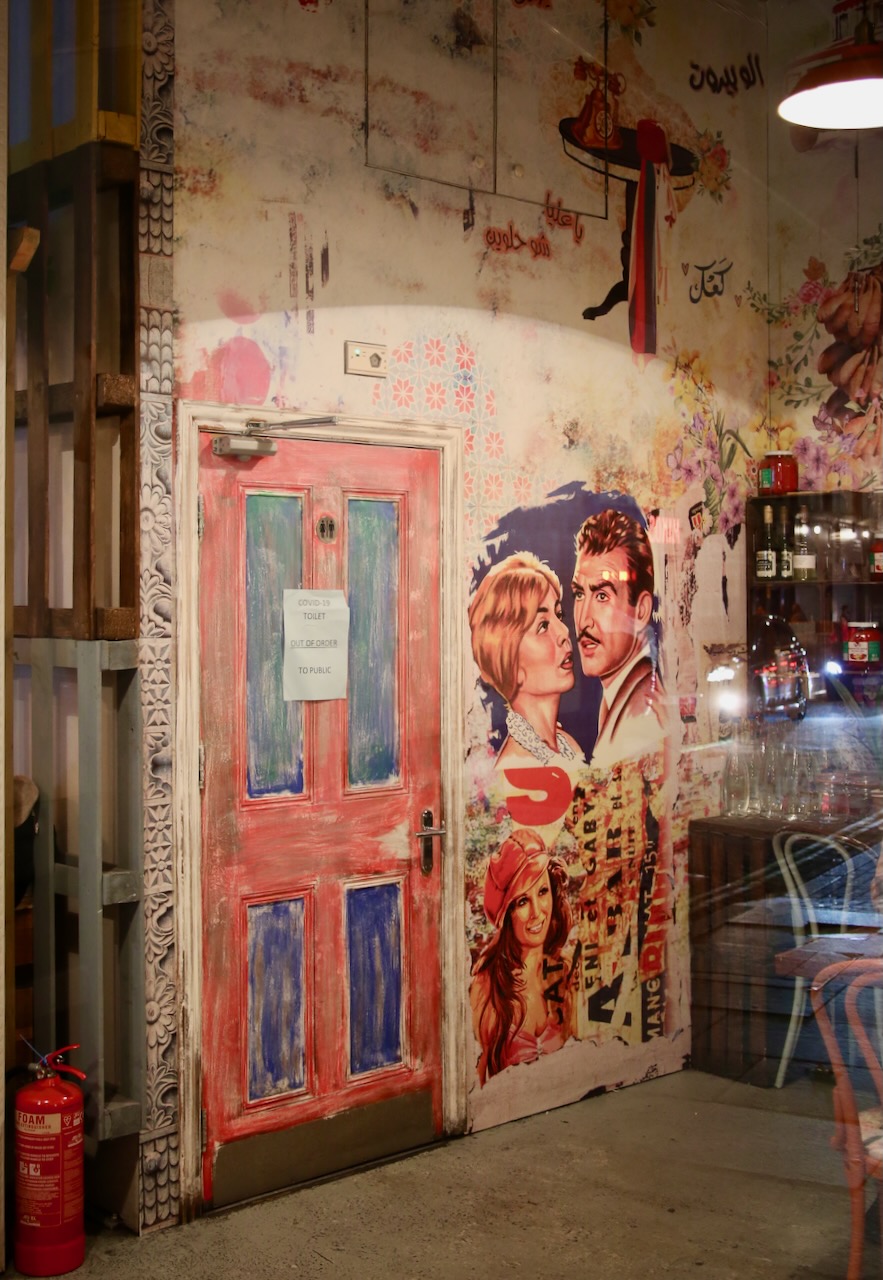
Syon Park, so named for an abbey in 1426, is now the 200-acre residence of the castle-esque Syon House, meaning followed by good luck, that has remained in the Percy family since 1604. There are some cows, beef on legs, in the field and great tits, passerine birds, in the trees. I’ll stop for eggs Florentine with lemon hollandaise and a ginger spinach smoothie from Birdie’s Kitchen. The tables are empty, their card system not working, and one of their toilets is out of action, but the food is good.
There’s a historical marker near Brentford Bridge letting those who pass know that in 1642, just part of the First English Civil War took place here. It was supposed to be a quick battle between the Royalists and Parliamentarians but ended up lasting four years, and of the quarter of the English men population that fought, about one in 25 of them would also die. I passed a car with three parking tickets, each one in its own plastic bag, and the last one was written yesterday.
Another sign labels this area as the ‘gauging locks’ where thousands of narrowboats and barges have passed through on a four-day route and were charged a toll according to how much cargo they were carrying (by weight). The clerk would use a rod to measure how high out of the water the boat was sitting to assess the fee. The rain starts to come down again as I walk along the River Brent. I pull my hood up and zip my jacket. I’m used to being wet at this point.
British Waterways partnered with GSK House in 2001 to protect the Grand Union Canal and reduce CO2 emissions. There is a waterfall on the river bank that is used to return water back to the canal after it’s used to cool the air conditioning system of a waterside business. The income this initiative generates is used to maintain the nation’s rivers and canals. This canal was completed in 1805 as the Grand Junction Canal and gained its current name in a 1929 merger with other waterways.
The canal was used heavily until trains came into popular use, and again in WWII to supply coal and weapons. Trade declined even more in the 1950s when new roads took more cargo. The canal froze in 1962 for three months, and its commercial use came to an end in the 70s. Many families were raised on boats and slept and ate in a space of 65 sq. ft. (about one-and-a-half king-size beds). Since child labor was needed, many kids didn’t attend school. Today, the canal is a place for birds, fish, people, boats, and bikes to rest, hunt, and move along.
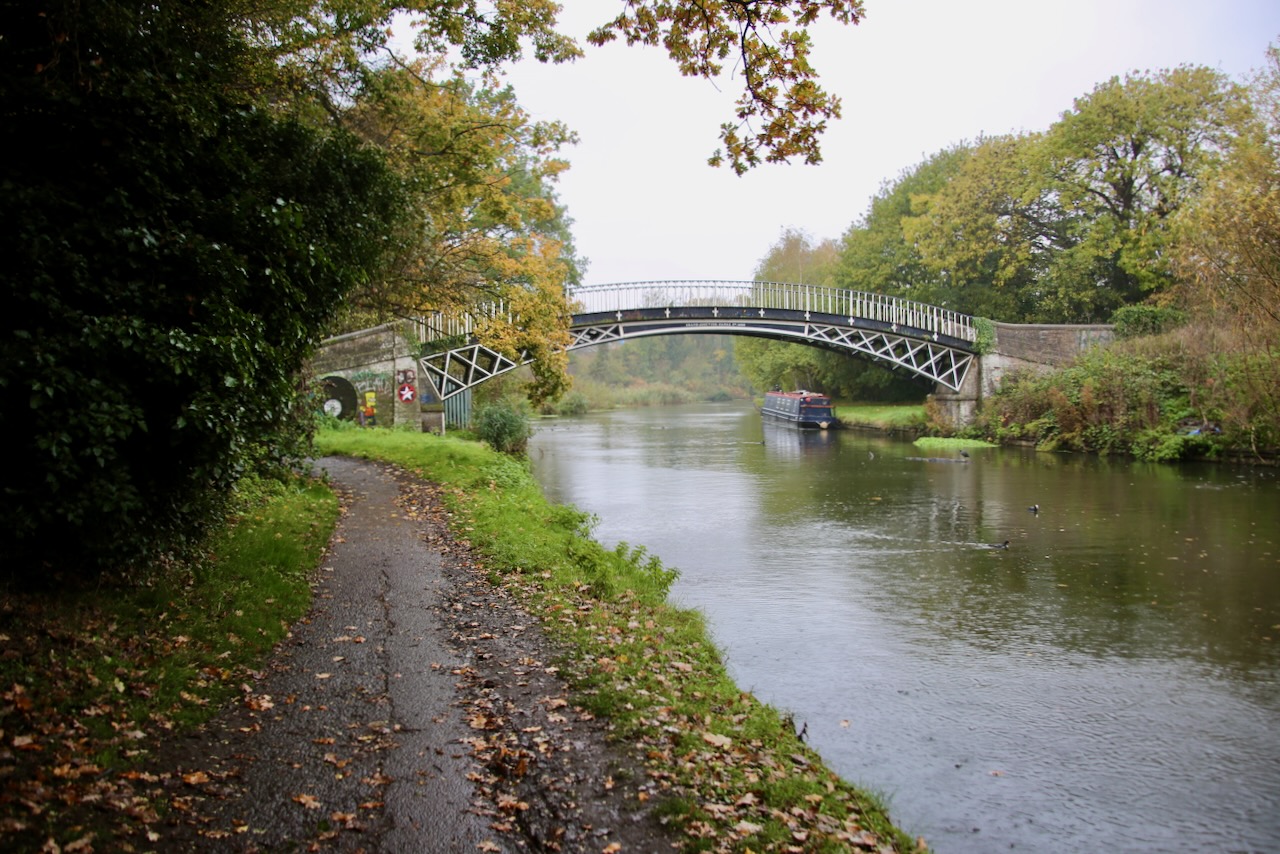
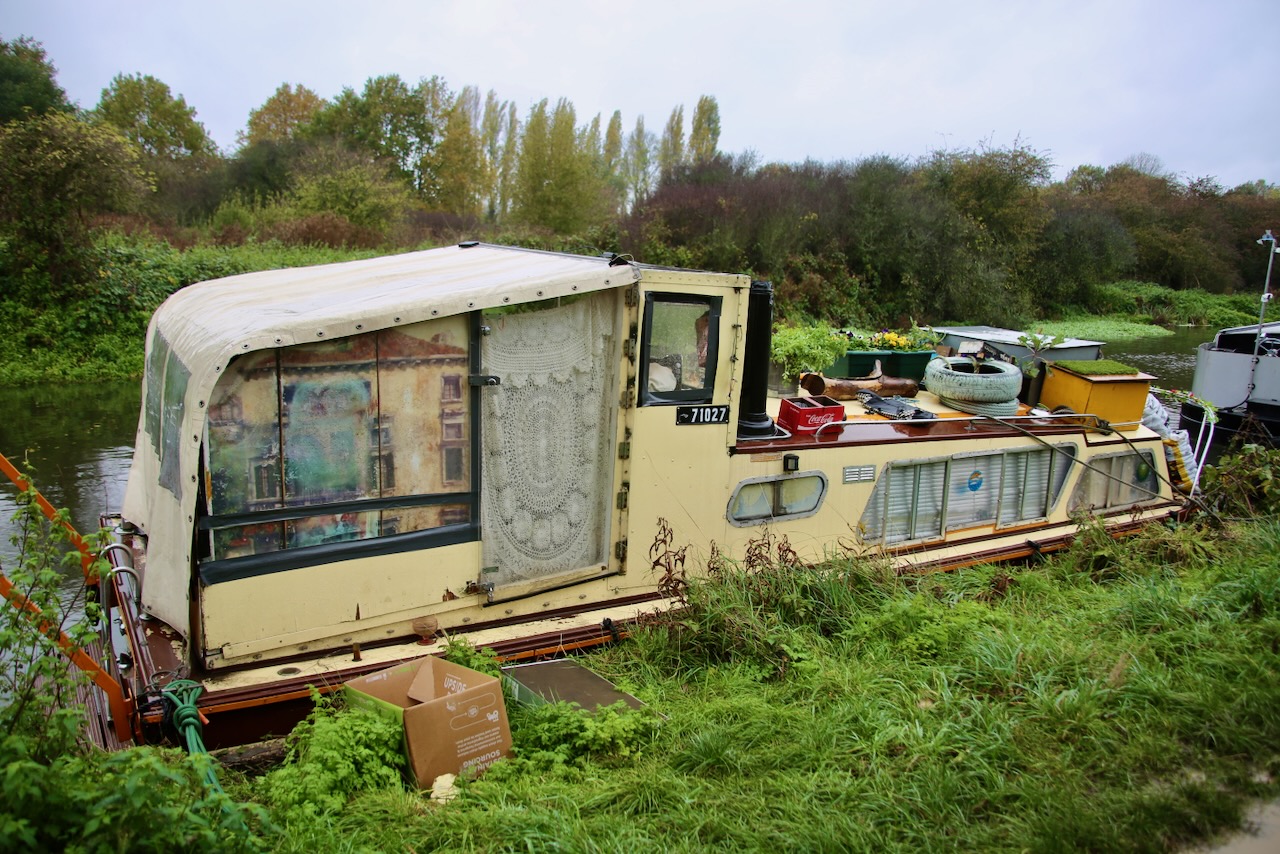
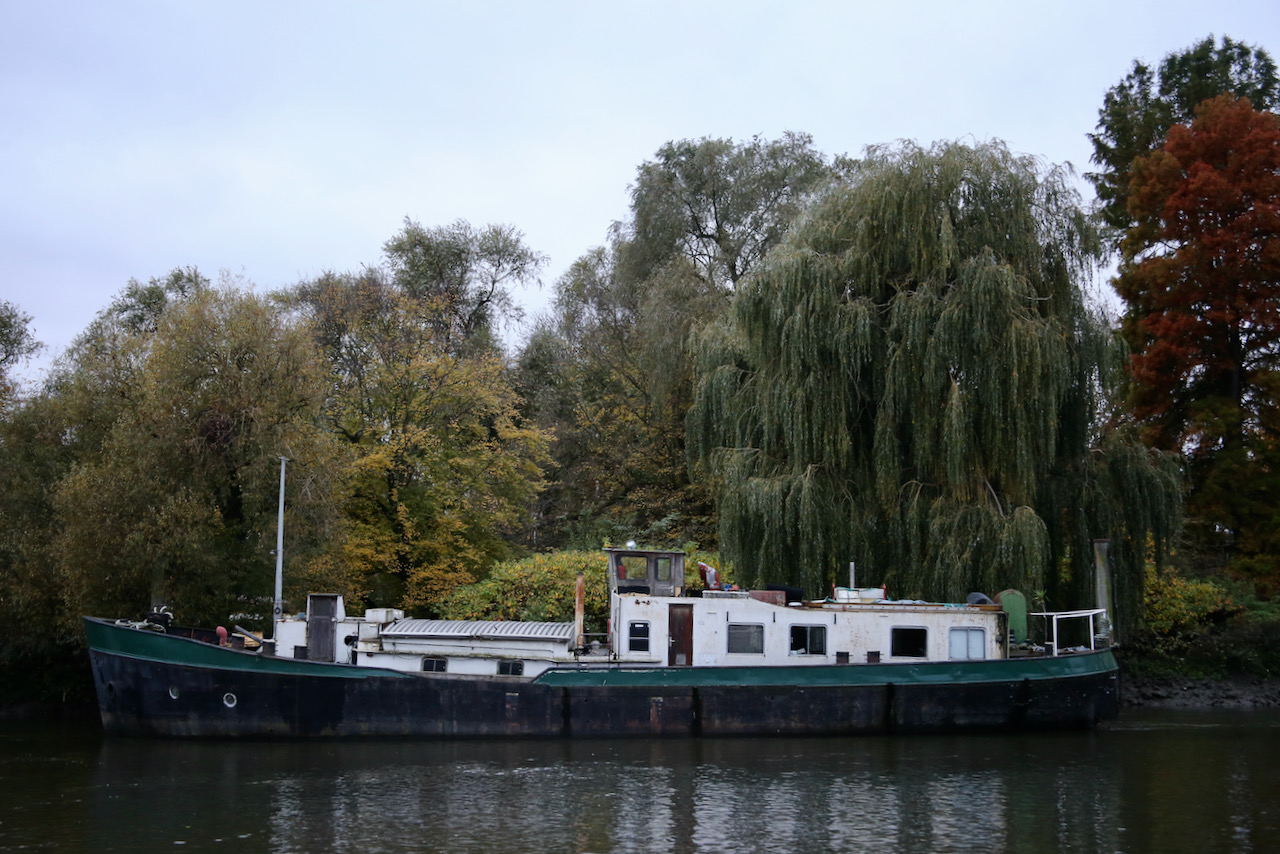
Gallows Bridge, built in 1820, possibly got its name from a man hanged in the nearby woods in the 17th century. I will use it to cross to the other side of the river and continue my walk along the Capital Ring. Though I am distracted by the unique houseboats, I must keep an eye on the pot-holed walkway as I make my way by Brent Meadow Orchard, which was planted in 2017. The trees are numbered, and there’s a chart noting when the fruit (apples, berries, pears, etc.) should be picked.
The rest of the meadow is overlooked by the Wharncliffe Viaduct, built in 1836. As rail travel increased, the viaduct was widened forty years later. Rumor has it that Queen Victoria would have her steam train stopped to admire the view. Now, pipistrelle bats hibernate through the winter in the hollow brick pillars. A mile and a half further, I’m picking blackberries to eat near Bittern’s Field. I finished Section 8, stopping in Greenford, a farming parish in the 19th century with one factory where William Perkin made a synthetic dye, mauveine, in 1857.
I grab some food from the bakery baskets and get on the bus. I’m hoping to be semi-dry when I get back to the house. I’ll shower and relax for an hour. I leave my soaking wet coat behind and wear a woolie and sweater in its place as I walk to the bus station on Cromwell Rd. since the Kingston Transit Station is closed this weekend. Some people are in costumes on their way out for the evening, while most are still in their black and grey, returning home from a day in the office.
I’ll meet Radu at the station and walk to Brixton Village, passing a wig shop, produce stand, and fabric booth. There are many stalls behind rolled-up metal doors selling boxes and bags full of goods that spill out towards the street, enticing the passerby to have a look inside. We grab a slice of pizza and continue walking. Brixton is the melting pot of South London with an African-Caribbean soul were music, arts, culture, and food mix.
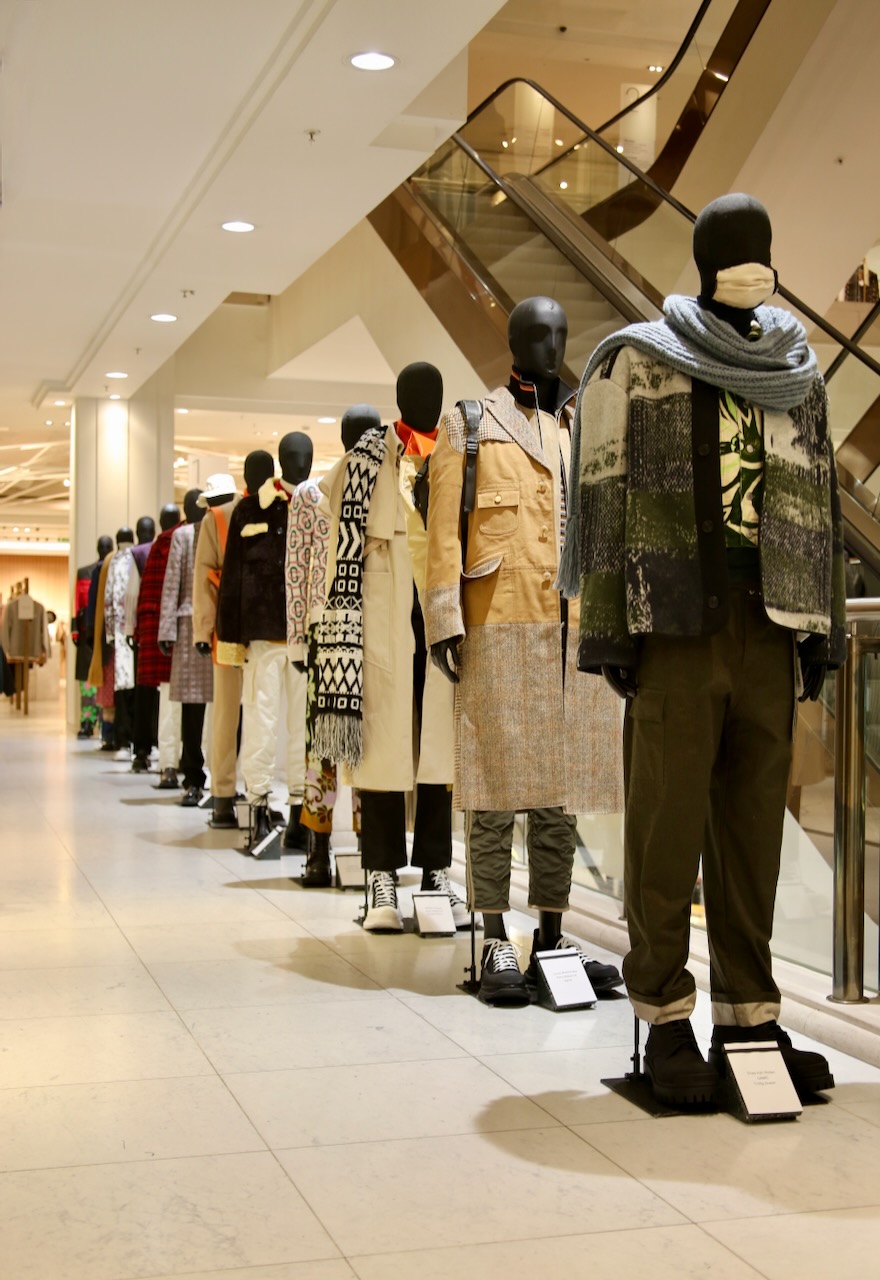
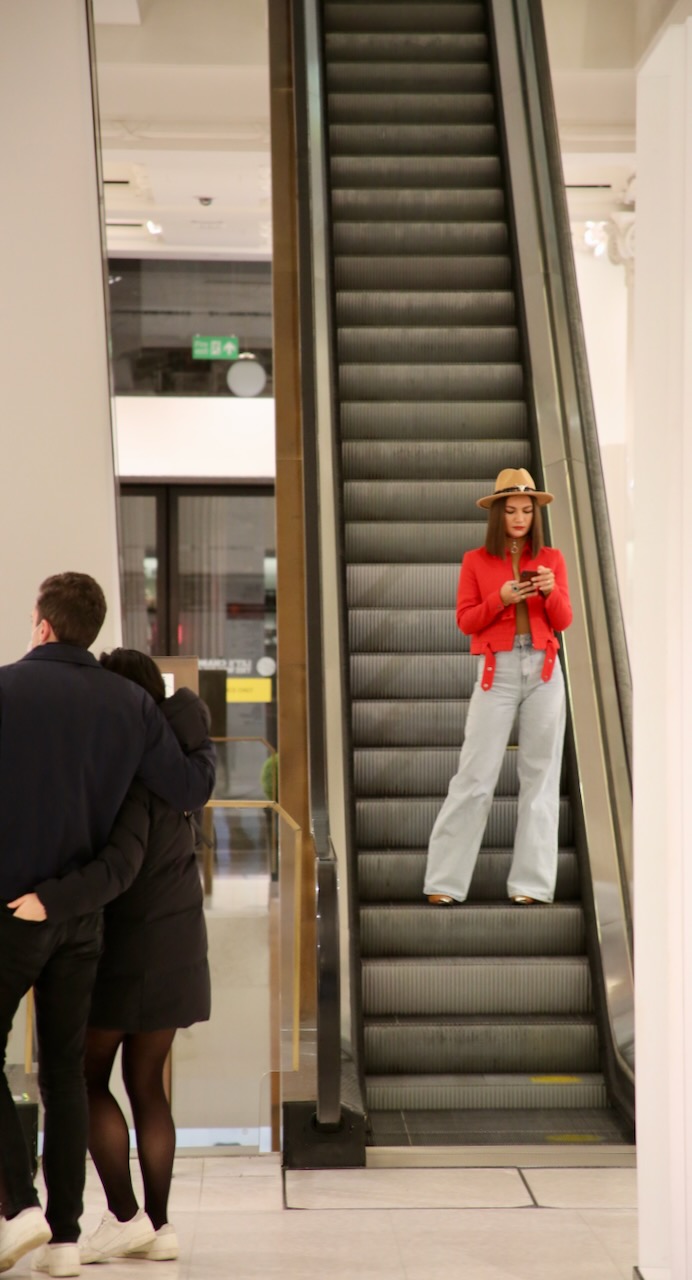
We’ll grab a sweet treat and a bubble tea as we make our way across the River Thames to a shop on Oxford St. Selfridges is a ridiculously expensive store, with the clothes I looked at costing at least $900, but it’s free to walk through and admire the design and layout, the floor piano, and the styles deemed fashionable. We buy more sweets from M&S to fuel our walk by Hyde Park and across SOHO. We’re back on the underground after 10pm and go our separate ways after Radu lets me know that England will be going on lockdown at midnight on Thursday, just hours after my plane is due to take off.
I step into the shower and wait for the cumulation of moisture in my hair from the drizzle falling ever so rythymically from the British underground through this overwhelmed shower head onto my cold body as I debate just how clean the outside demand I be. I get out and choose next to air dry because the towel appears to have been used to clean up after a hair massacre of sorts.
There’s an entitled girl on the train who makes me think of another braggart I got to overhear in Hawaii. They seem more proud of their daddy’s jobs and where it gets them than grateful for the places they get to go and the people they might be lucky to meet. This one makes sure I know that she has walked through Europe and that she’s impatient to get to London because only the giant landmarks will do.
Or perhaps she’s just quoting the works of a traveling poet and failing to get her mom’s attention. I’m ok sitting here and imagining a moment in my childhood when I get to meet her seemingly cool grandpa, with a less firm hand on discipline than my mother’s dad had for his grandchildren. It’s not the train that’s boring, it’s the people who are bored, and both provide entertainment to me.
The South Western Railway stops at Wimbledon, not Wimbledon Park, which the District Line could’ve connected me to but I decided to walk the two kilometers to the start of Section Six. This now famous park got its landscaped beginnings in 1765 to improve the view from the Earl’s mansion. The railway cut across the valley in 1889 and Wimbledon Corp. bought the space between the lake and the train in 1915 to preserve the land.
It wasn’t until 1926 that they would have the funds to build putting and bowling greens, and tennis courts. There’s now a heritage trail with 12 stops around the perimeter of the park highlighting the historic changes of the beautiful views, St Mary’s Church, the Artesian Well, and Lawn Tennis Museum. I’ll stay to the right of the lake and watch ages toddlers to teenagers learn to wield a racket.
I heard part of a conversation: grandma, “Stop walking like that.” The boy was dragging his feet. His response, “What you’re saying is, stop walking like yourself!” I’d have told him he can walk however he wants when he buys his own shoes. The Wimbledon Windmill, built in 1817, is the last hollow post mill in the country. Its body, filled with machinery, is mounted on a single post that’s able to be rotated.
Passing the Wimbledon Common, an area that dates back to the Stone Age, and now I’m told to look left for Golf in Play. England, as are other parts of the world, are still learning how to allow humans to live with nature, not dominate and destroy it. The Beverley Brook was too straight to provide fish a refuge, too wide causing build up of sediment, too dark to support plant growth, and didn’t have enough wood to provide habitat for invertebrates.
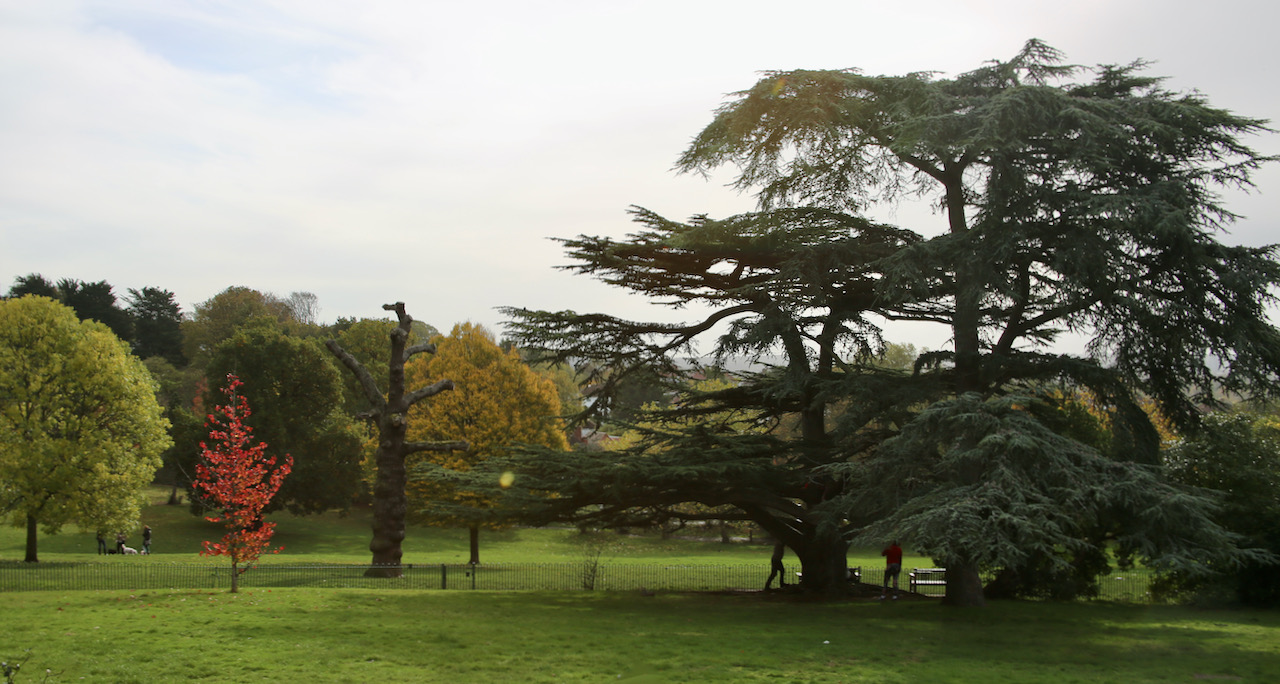
Richmond Park is London’s largest royal park, at 2,500 acres, and Europe’s largest urban park. It is a national nature reserve, but for 12 weeks out of the year, starting in November and February, the park is closed overnight so that firearms may be used to cull the deer population. I’m in luck that the only things falling and flying through the air as I walk is raindrops and a flock of birds. I’m glad I’m not alone in the mist, and though the locals may be past the point of touristic appreciation for the weather, they don’t let it slow them in any way.
I got to watch a buck herd his doe and I reassured a couple that was his only intent when they thought he was going to run them down. It’s been a while since I could watch so many deer going on about their lives and this was the first time that I was joined with such a crowd of people doing the same thing. I leave that field in search of Henry’s Mound, named for the VIII as he waited for the execution of one wife to marry another.
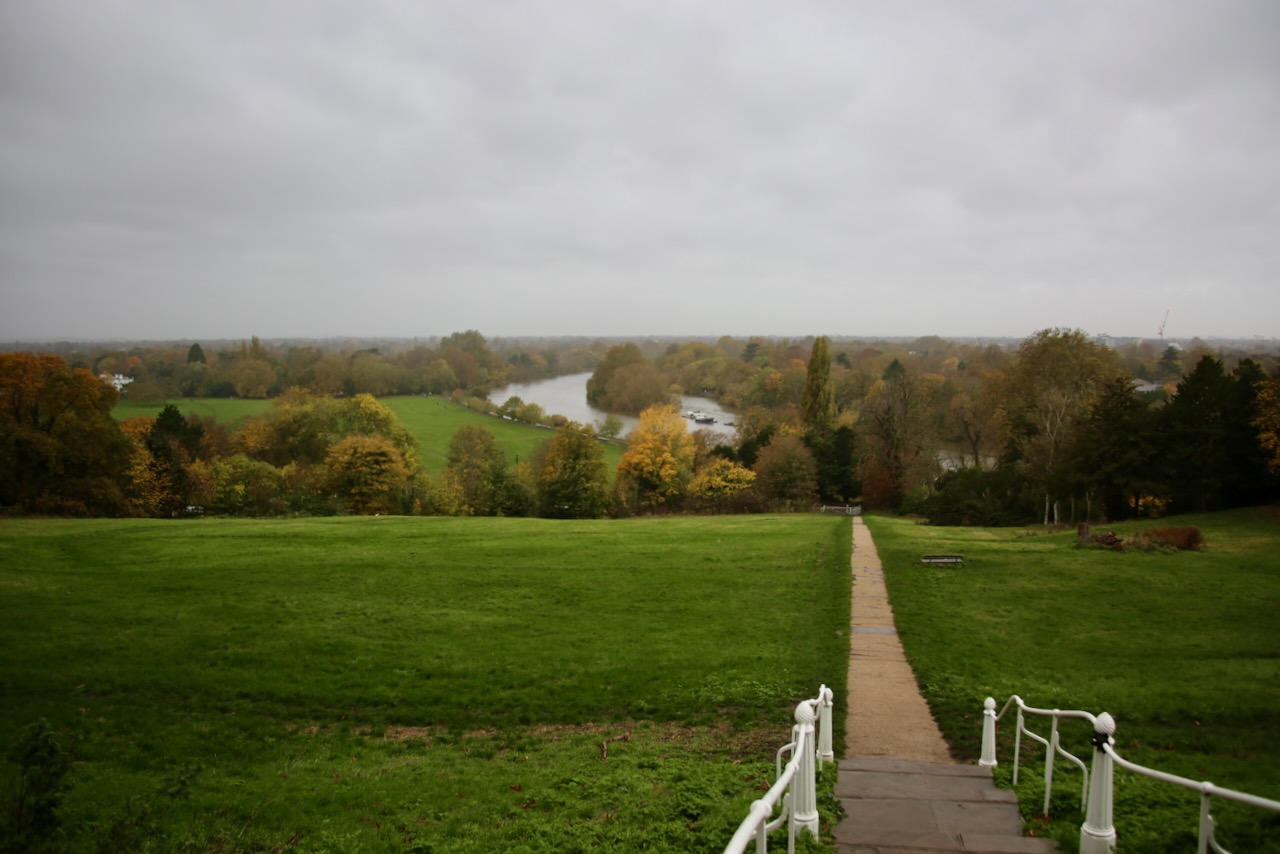
Regardless of the legend, there’s a protected view, via telescope, of St Paul’s Cathedral that is 12 miles away and restricts any tall buildings from being built in-between that would obscure it. There’s a cafe nearby and I see people eating scones, so of course I got in line, only to have this old guy holding his tray into my back and pushing me closer to the father and daughter in front of me. Then he had the gumption to stand next to me at the til and stress out the cashier who, “wants to live and see his family.”
The old guy is asked to kindly step back and give me space to, safely, make my purchase and walk outside to find a place to eat it. This treat is a combination of the love of food I get from my parents, one loving anything with carbs and the other having sweet teeth. I’m grateful in this moment, as I am for most when I’m turning out better than my childhood intended, while watching the jackdaws make a mess of the stacked dishes left behind.
I’m distracted while on the phone with Caleb, nothing new there, and though I seem to have taken a detour I’m able to arrive at the correct intersection to continue to Petersham Meadows. A special character of cows, based on their ability to deal with crowds, has been selected to do conservation grazing from April to October and must have left early this year.
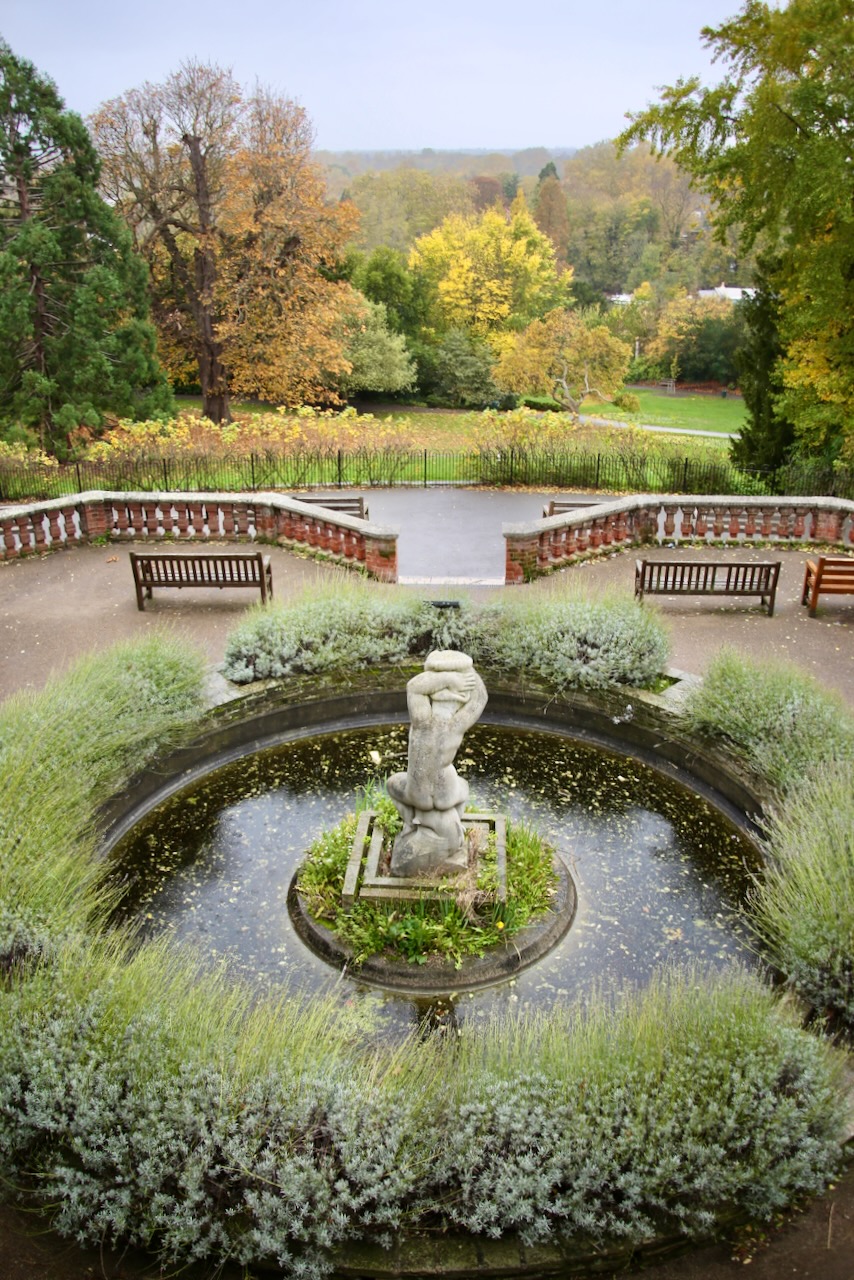
I got to walk under the road to reach Terrace Gardens. In the 1600s there were businesses and workers, the 1700s brought residential estates and gardens. The 1800s saw demolition and incorporation but the Richmond Vestry bought the land for public use in May 1887. In the 1900s another house was turned into a factory and the gardens extended. Between 2007-09, one million pound Sterling ($1.3M USD) was invested in paths, furniture, and replanting for conservation and biodiversity.
I’ll finish Section 6 and walk around Richmond Waterfront before meandering and finding myself at the Richmond Green. The sky is still bright grey, until it’s not. I’ll take the bus back as the sun is setting and save the energy from those four miles for tomorrow. I’ll stop for some hummus chips to go with my lentil soup. I return to my dingy room.
I’m up earlier than usual to pack, wash dishes, and clean the room before leaving. I want to get my bags to Kingston where I’ll be staying for my next week in London and leave myself with plenty of daylight to continue on the Capital Ring Walk.
The 12 miles would take an hour by car for a more direct route, but I’m on the train that will go north to Clapham Junction before going southwest to Kingston upon Thames, and will also take an hour, if everything goes as planned — it does.
I find the place in the rain and it’s dirty. I take pictures of the bedroom and bathroom that are downstairs and send them in a report to Airbnb. It takes them 2.5 hours to tell me that they’ve contacted the host to remedy the situation.
Meanwhile, I’m at the shopping plaza near Zach’s place wondering if I’ll have to worry about finding another place to stay tonight and the awkwardness of dealing with a host who offered such an embarrassment in the first place.
Zach decides to clean since his cleaner didn’t yesterday. This shouldn’t have been something for me to deal with, and when I return to the room I’ll be asked to update Airbnb and tell them that there has been an improvement, but I don’t think he should rent like this in the future.
This has dampened my day more than the morning full of rain. I felt that Zach might feel judged and ask me not to stay or that if I decided to leave I wouldn’t be reimbursed and would have to pay more for a last minute place, so I decided to judge his cleaning skills later, knowing I’ve been in dirtier hotels.
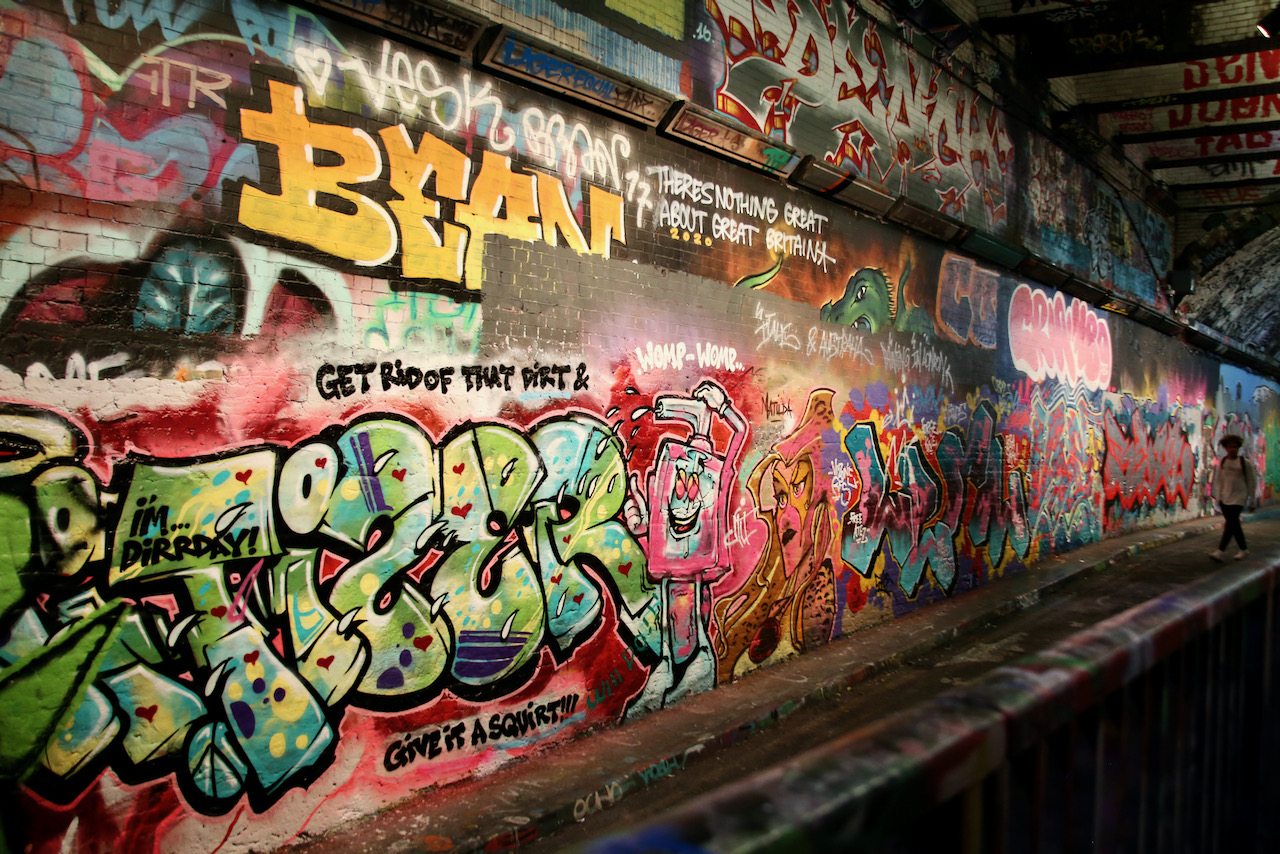
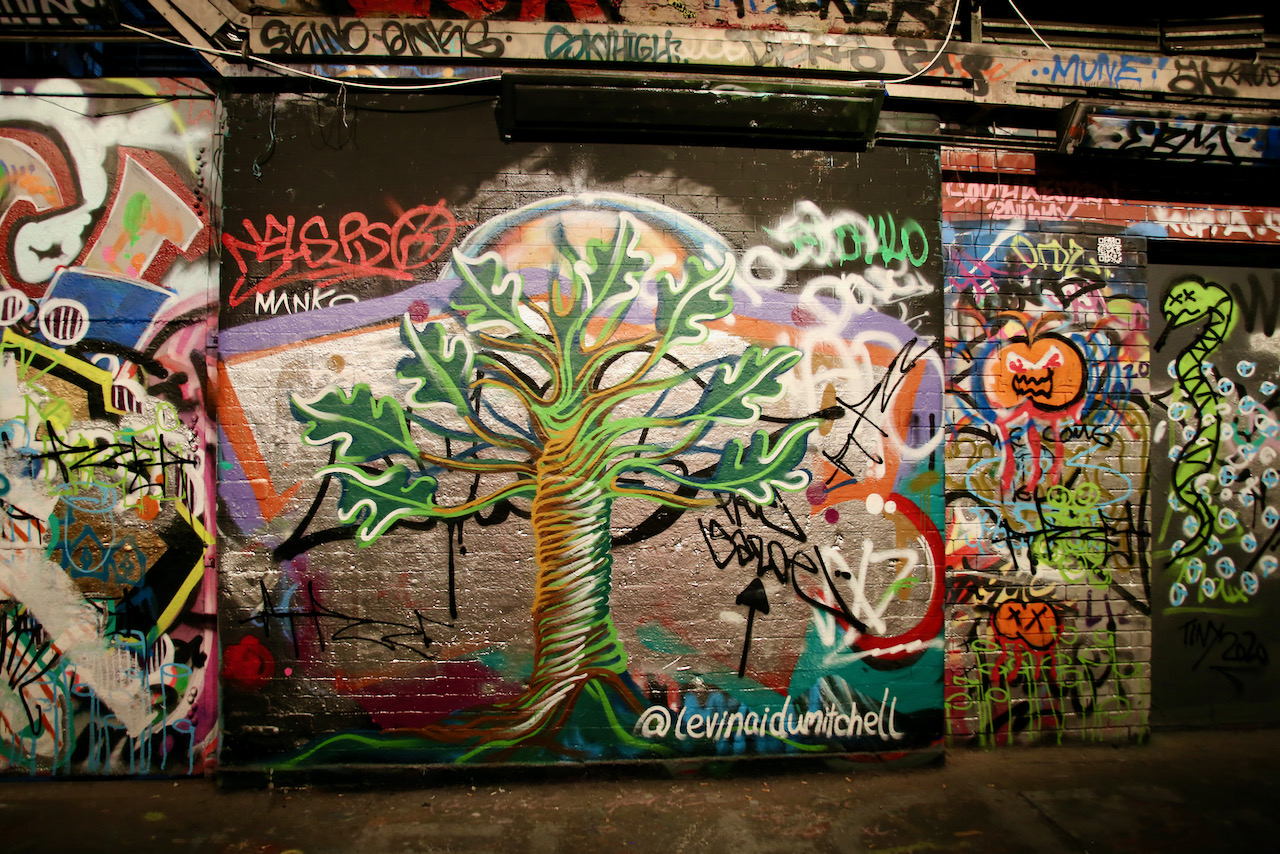
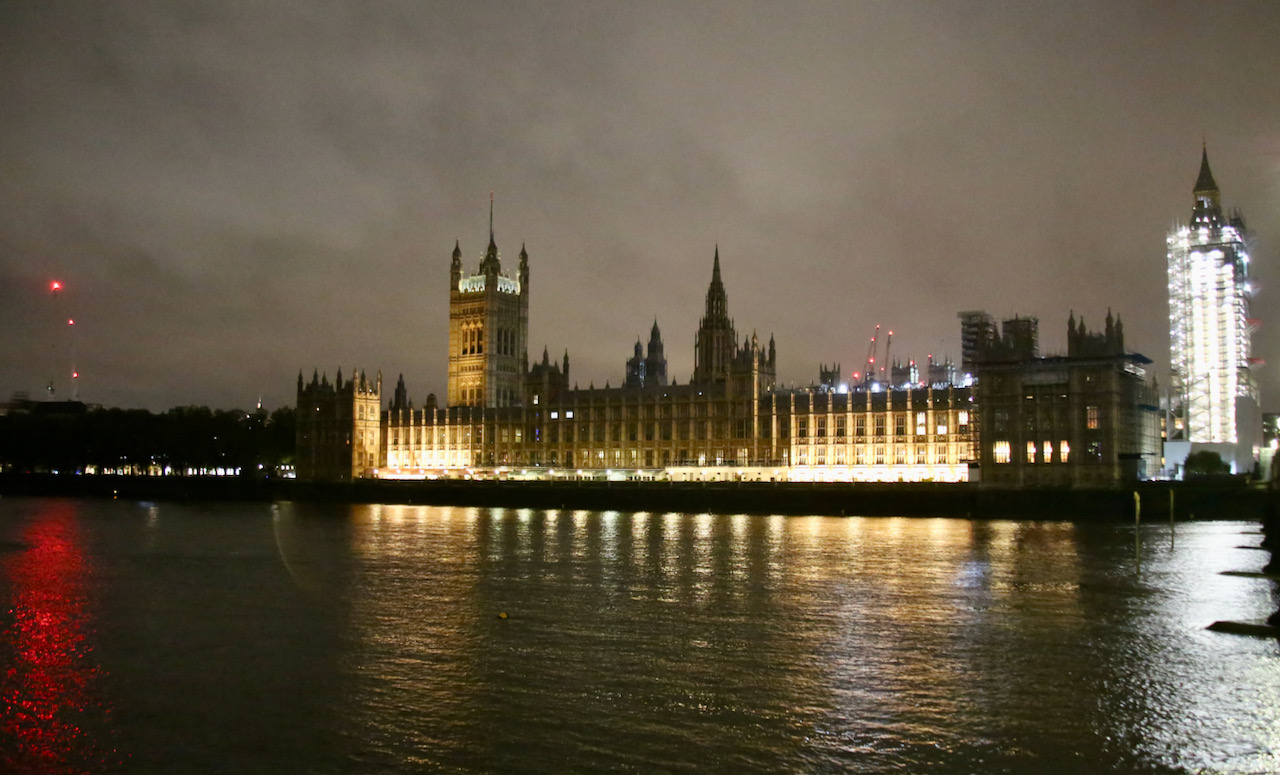
After an afternoon along the river and amongst shop windows, I’ll ride to Waterloo to meet Radu for dinner as I still wait for my room to be cleaned. He notices that I like to take pictures, so we walk through Lower Marsh to The Vaults, a tunnel full of graffiti, till we see the London Eye lit up pink.
We get a cup of mulled wine to keep our hands warm as we walk the length of Southbank before settling on dinner at Ned’s Noodle Box or Ned’s Noodle Bar on Belvedere Rd if you’re looking on Google. I’m sure the food was fine but the company was better.
We continue our walk along the river before wandering inland for a night of darts and snooker with some other people at The Windmill Pub until the 10pm curfew is enforced.
We walk back along the Thames and part ways at Waterloo station after Radu has ensured I’m safely on my direct train with a ten-minute walk in my near future. I’m hesitant to return, but I do need sleep.
I sleep in and still manage to wake up before my alarm, which had to have been reset while I was half asleep. I enjoy the short walk to the train station while listening to a man sing happy birthday to himself while on the phone. The weather is nice at the moment and I’m hoping it stays that way until the afternoon.
I’m going back to Arin Cafe for breakfast, since it’s close to my starting point, the owner is kind, and I have cash. The guy I overheard earlier walks in, so I pay for his birthday breakfast while he’s outside chatting with a friend.
I walk through a neighborhood and notice a building covered in rose-ringed parakeets, native to the Indian subcontinent but popular as a caged bird they’ve gone from pet to pest. The ones that escape form colonies in the city as they’ve adapted to living in the colder climate.
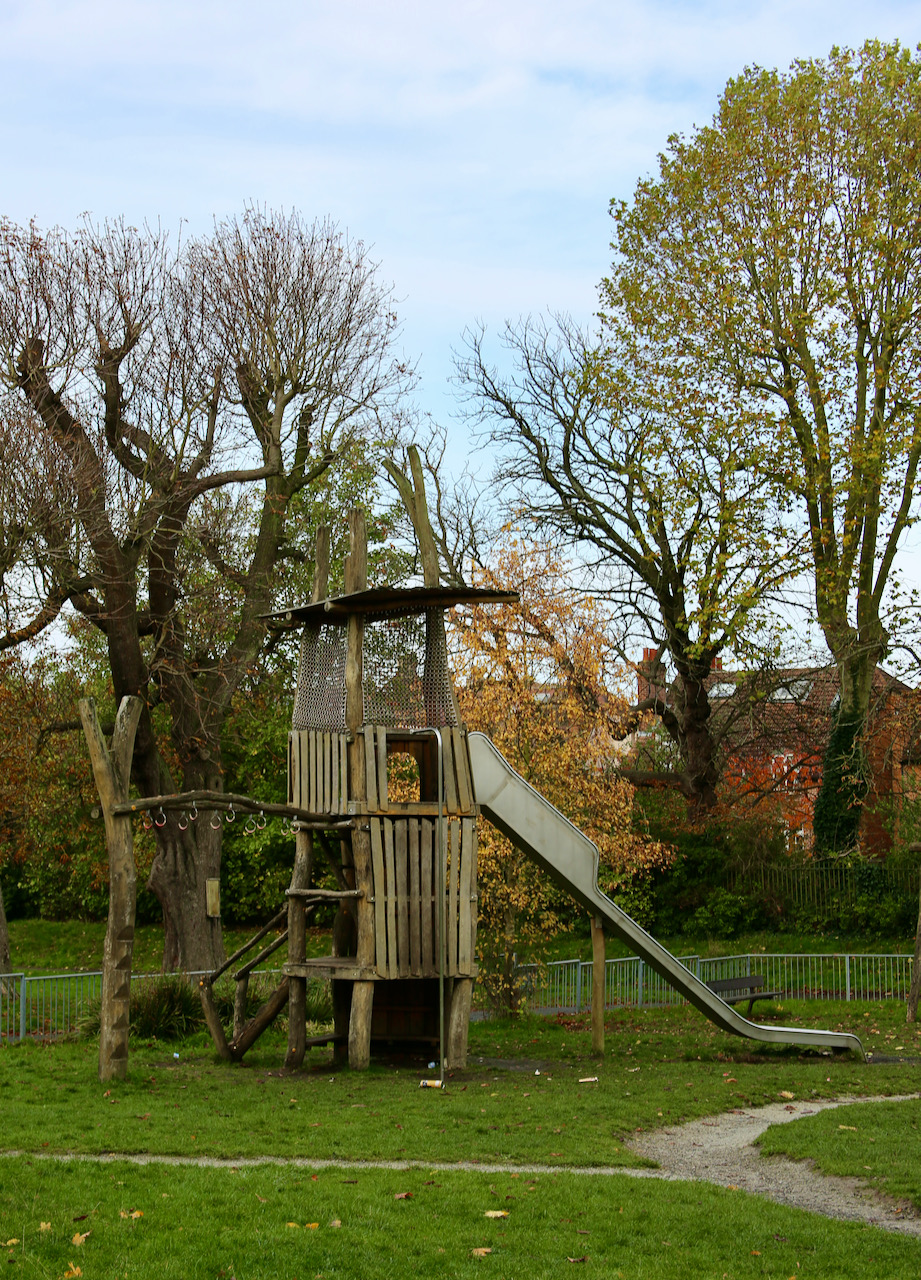
I pass by a playground that appears to have a mini-deforestation sample next to it, but the way the wood is stacked, notched, and spaced with springs, a bar, and handles lets me know that this is an imagination wonderland where moist wood reduces splinters.
Each section of the Capital Ring Walk comes with its own descriptive pdf and helpful pictures with map insets to help with navigation. I’m glad I downloaded them all as Section 4 requires reading to not get lost as the signs are usually within eyesight from the end of the path you’re on to the beginning of another direction.
In Biggin Wood, there is a swing (long rope tied to a two-inch thick stick) over a spot with more mud than leaves and some more parakeets. I went left at one point, turned around, and went left at the fork too. There’s not much here, which is nice, but I also wasn’t sure if I was going the right way until I was out of the park.
I keep moving past Norbury Park as a way to, “Use your park responsibly” and walk to Norwood Grove that was opened in 1926 by Edward VIII, Prince of Wales. I’ll stop by a bench to read a quote from Bob, aged 56. “It’s good to linger, stop for a chat; there should always be time for that.”
I’ll walk with a father and daughter as we enter Streatham Common and talk about how awesome it would be to live in the house on our left with a moat and to get a drawbridge installed. This space was recorded 934 years ago, in the Domesday Book, a manuscript record of the Great Survey of some 13,000 places, that was ordered by William the Conqueror.
During WWII, the lower common would be used for rental gardens and temporary housing. Today it helps to preserve acid grasslands — mossy vegetation that occurs on nutrient-poor and free-draining soils over sand and gravel. This habitat is especially important for the Thames Terrace Invertebrates.
The beewolf wasp preys on bees. The females dig tunnel nests and the males mark twigs in their territory with pheromones. The hornet robberfly looks like a cross between a mosquito and a grasshopper and will wait on poo to eat unsuspecting dung beetles. The Shrill carder bee is known for the loud and high-pitched buzz of the queen, one of the UK’s rarest bumblebees.
I’ll part ways with my conversation companions as they detour from my route on their way to the grocery store. I’ll visit Streatham Memorial Garden, the historic site of a manor turned house turned villa and eventually in 1922 turned into a war memorial with a bronze statue to commemorate the dead of two World Wars and an obelisk for those living or who did live in Streatham that have been affected by violence.
I’m walking down Conyers Rd and there are three guys “working.” The first guy says, “I thought you lived here the way you was looking.” I tell him I was just watching him work. The guy on scaffolding below him says, “I just have to stand here and look good for you.” The third guy, on the ground supervising, asks what I’m doing here since it rains every day and “appreciating the weather” was my response as it starts to sprinkle again.
I’ll watch a girl in her rainbow socks and tutu learning to ride a bike through Tooting Commons, stop at a market across from Du Cane Court and buy as much food as will fit in my pockets, and pass a girl with adjustable skates and remember having a pair myself.
I’m wandering through Wandsworth which happens to be the location of one of seven of Her Majesty’s Prisons in the capital and one of the largest in the UK. On a scale of A to D on how dangerous the criminals are inside, this one rates a B, with mostly drug and mental health issues residing in this overcrowded compound.
I never thought to read reviews for a prison and yet they exist. 1) Relaxing break all paid for. Staff could be friendlier though. 2) Foods not great, but the library has a good choice of books. 3) … that I had won a 6 month all inclusive deal at this wonderful facility. If it wasn’t for needing an appointment due to covid, I would’ve asked to see a random visitor at the window and tried my luck. Had I gotten in, they’d have taken my thumbprint and photo, given me a wristband and fluorescent mark, and rubbed me down after emptying my pockets.
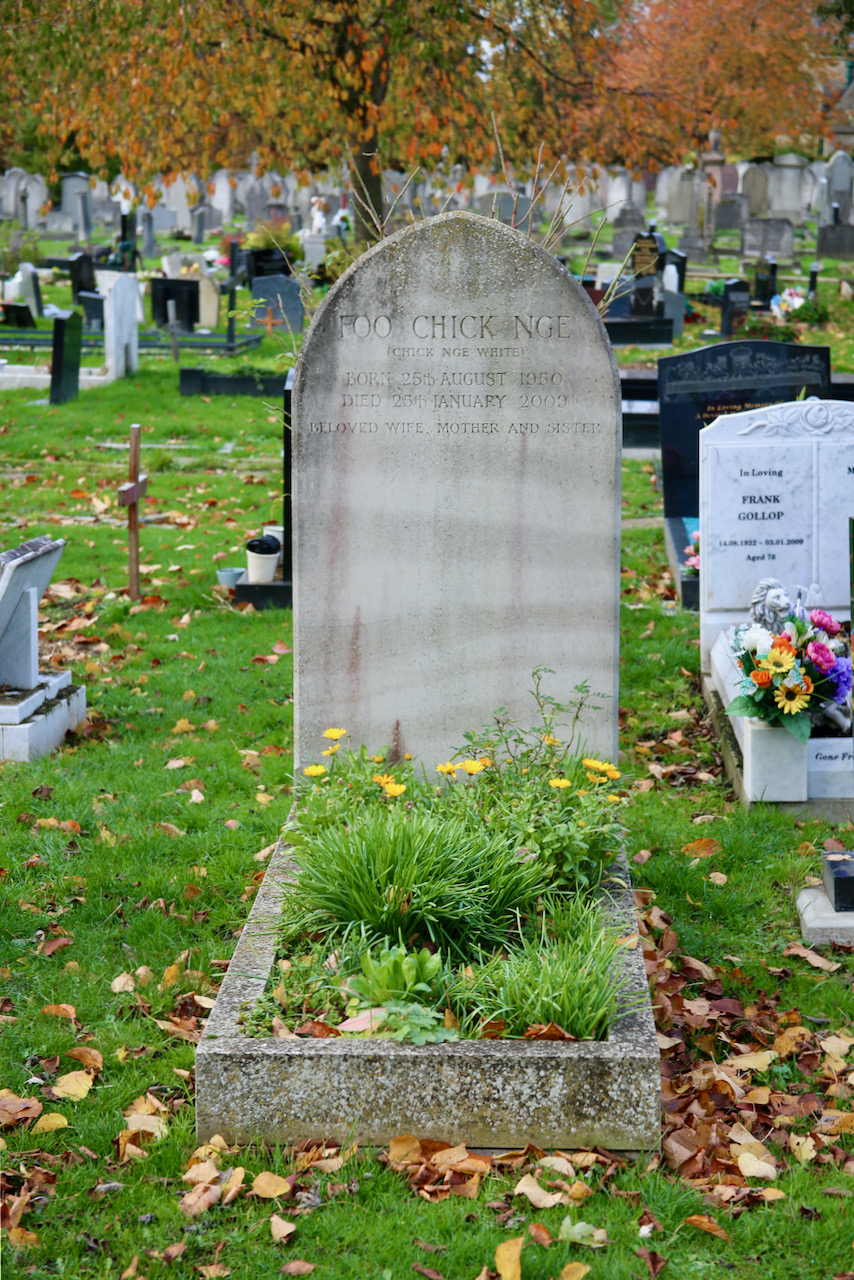
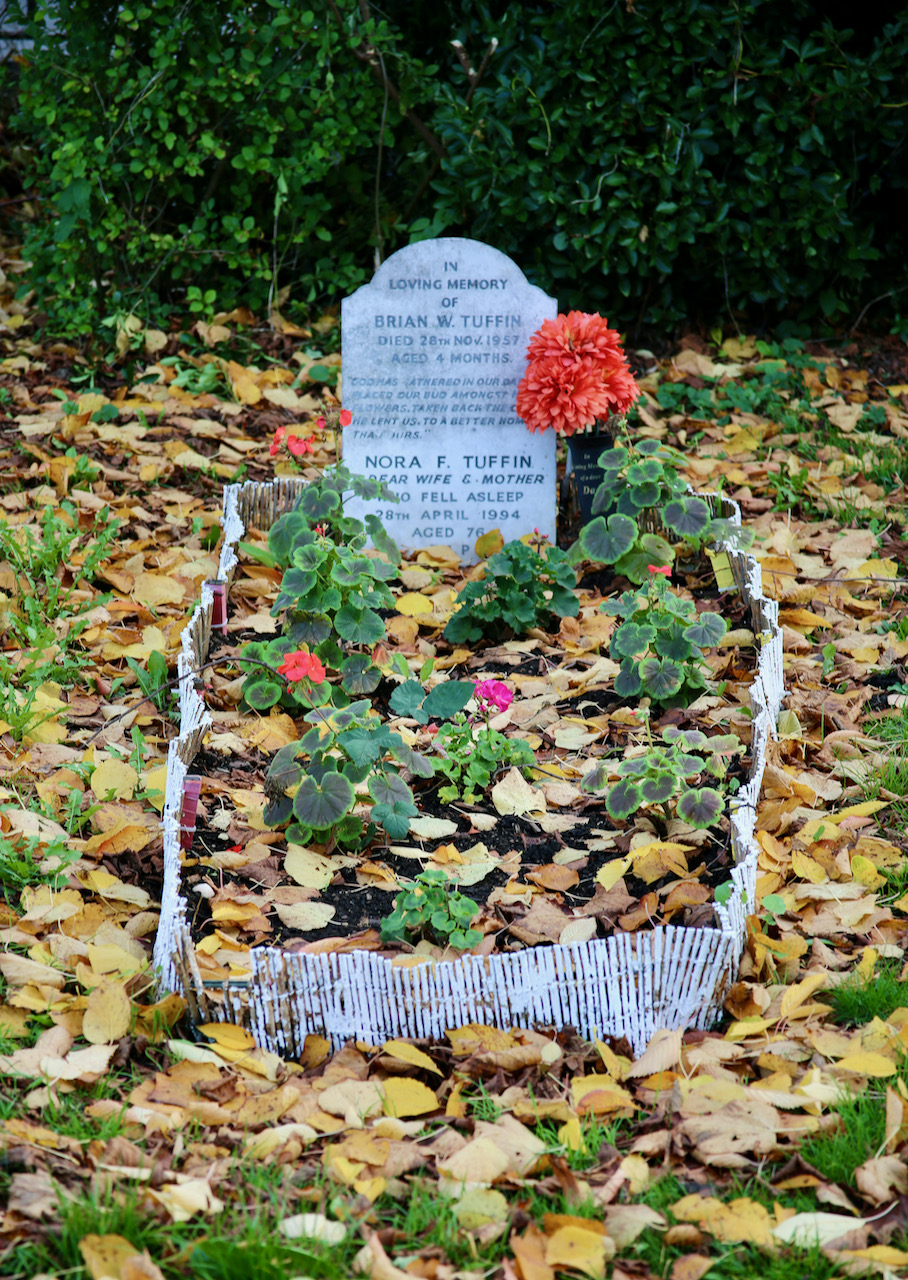
I take a detour through the Wandsworth Cemetery to admire all the art and history in one place with so much I don’t know about anyone here. This is close enough to death for me. I see two boys on their way to the playground and told them they need to know the password. One pipes up, “Mum, we need to know the password” and she responds, “Did you try pretty please?” He says please, I say that’s it, and one of the moms says she didn’t know there was one. I told her I was messing with them.
Today’s walk will end at the tennis gallery, a little shop with lots of books, some postcards, and a tennis ball teapot. Raindrops keep falling on my rides, but that doesn’t mean I won’t soon arrive, with bread in hand, back to the house. The bathroom is warmed up, seemingly just for me, so I take advantage before enjoying some blogging in the room on my last night here, in this flat, not London.










































 TheJessicaness