I wake up thinking I heard Caleb say my name, but it seems to have just been a dream, a helpful one. We had about six stops planned today that would have us arriving in Tarpon Springs around dinner time but chose to forgo them for an earlier arrival. With this decision, Caleb picks Highway 98 so that we can enjoy more scenery on the way. We’ll stop around Old Town for gas and get to our destination city around noon. We are given a tour of the house and then the girls will walk us into town to see the manatees in Spring Bayou that come in every year from December to February to enjoy the consistent 72-degree water.
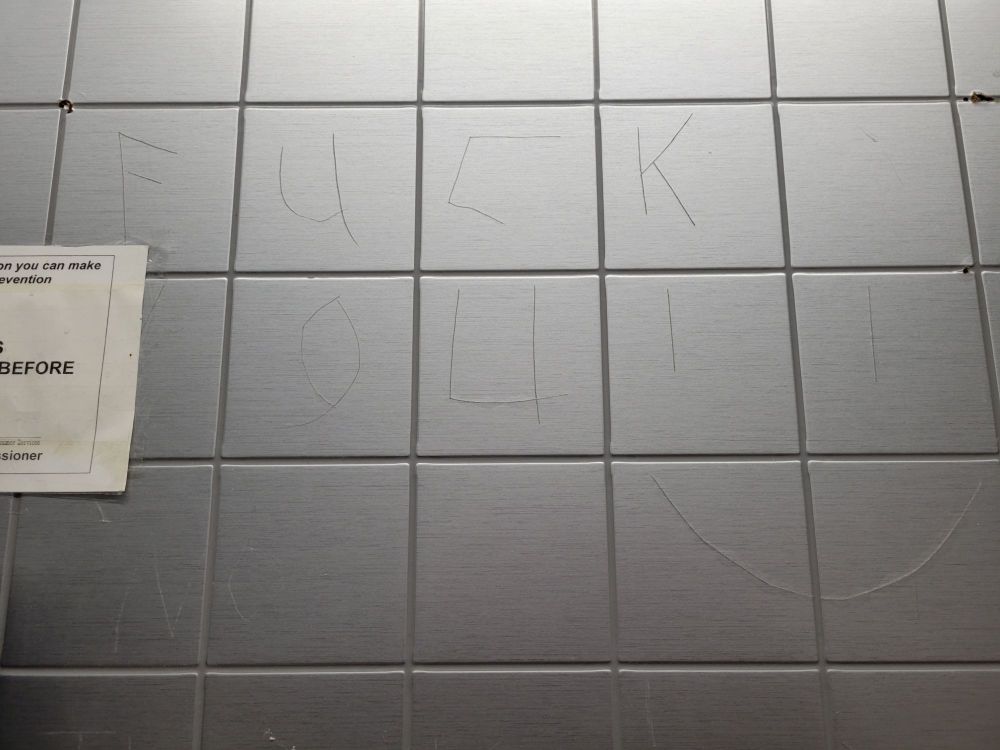
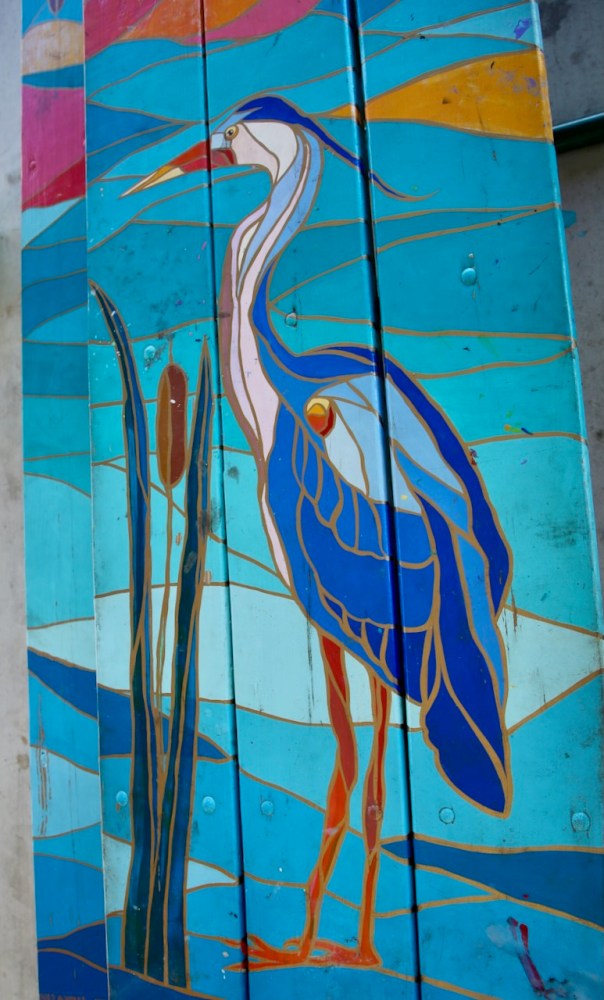
bathroom graffiti
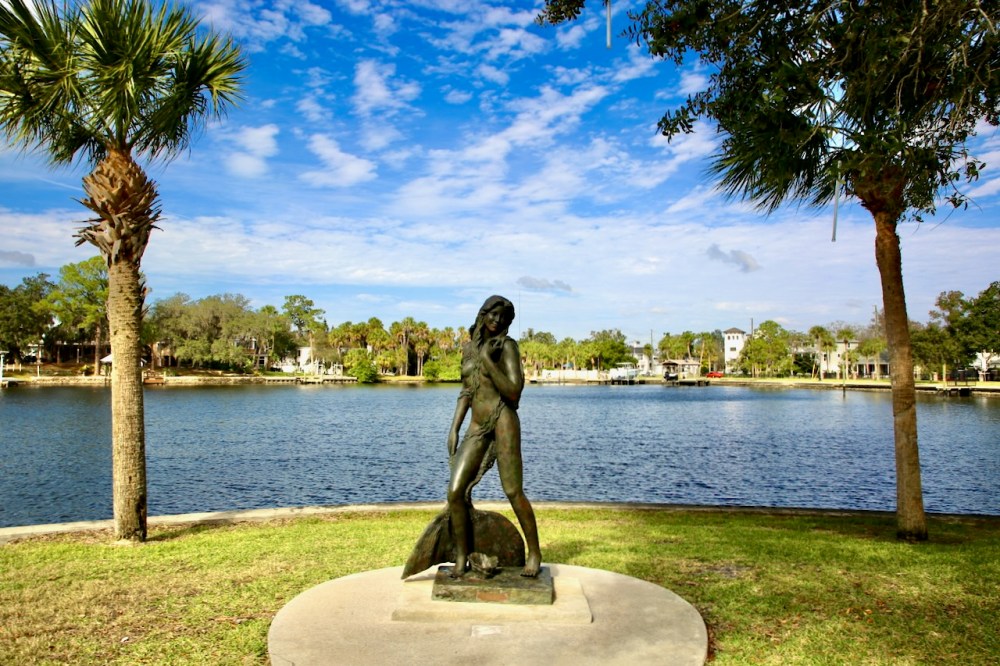
We see the manatee’s backs interrupting the slight ripples and wait for their snouts to break the surface. I’ll watch a squirrel, with a mouthful, climb to a high branch to eat its snack. We walk around Craig Park, so named in 1979 to honor two former mayors, after being named Coburn Park in 1935 after the man who sold the seven acres to the city. We find an Ama, Japanese for Woman of the Sea, mermaid statue. This one carries her tail with her while on land for her inevitable return to the ocean. Ama was created in 2014 by Amaryllis Bataille and is the 17th of a hundred similar statues around the world to raise awareness for protecting our seas.
Star Wars or Lana Del Rey
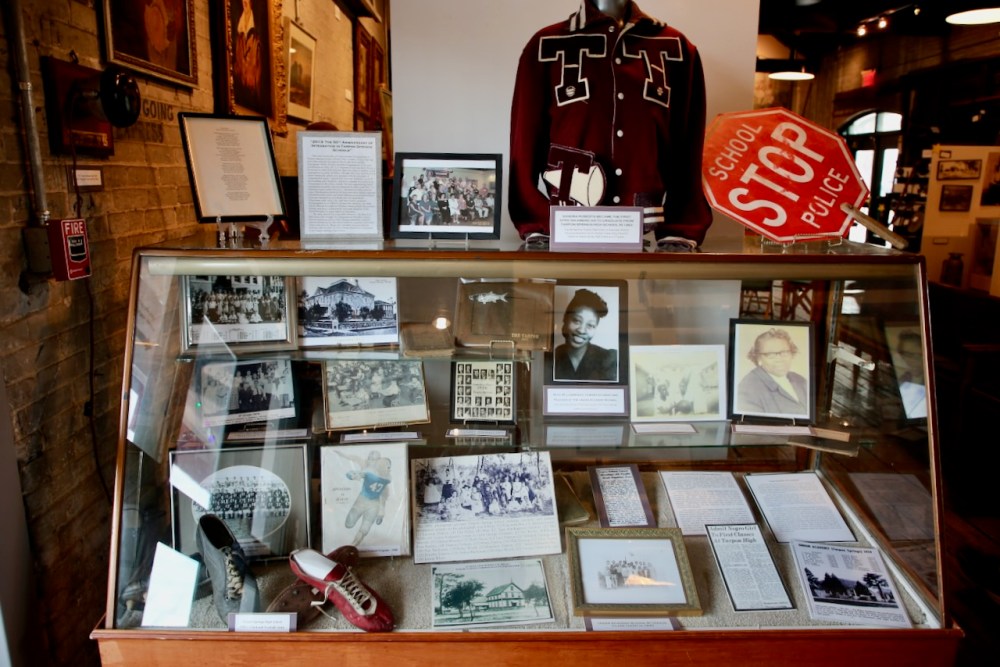
The statues are available for sale as a fundraiser with a third of the proceeds going to charity. She is the first on America’s East Coast by this artist. There is a website: mermaidsofearth.com that shares the location of statues by other artists; as if I needed another bucket list item, but I’ll take all the ideas I can get, knowing I will never see everything. Ama’s plaque information was gathered from the Heritage Museum, which we took the girls to while we waited for Fallon to join us after work. Inside, we learn about the Town Improvement Assc., a small group of women who helped keep the town clean, educated, lit, protected, and fed. It’s now actively involved in the General Federation of Women’s Clubs.
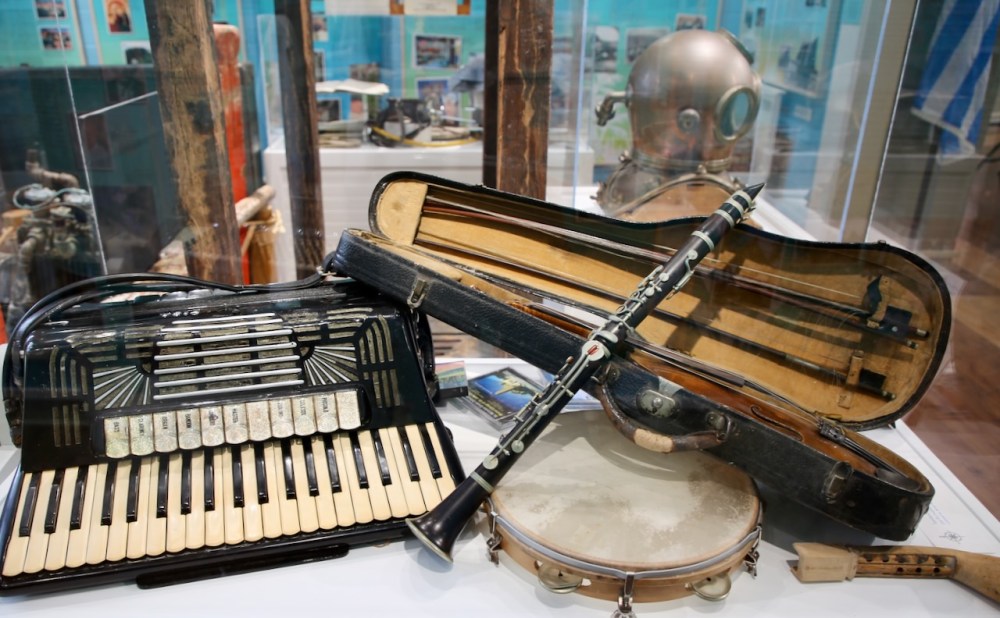
We also look at the Golden Crescent, named for the health benefits of the bayou and the rich Victorian homes built around it in the late 1800s. Many of these homes are still standing and can be lived in if their historicalness is maintained. There is one, The 1883 Safford House, that has been turned into a museum and is available for tours Wed – Fri from 11a to 3p. The other side of this half of the museum is dedicated to the Greeks; their culture and heritage still maintain a large influence in the community with the annual Epiphany drawing some 20,000 people to the largest Epiphany celebration outside of Greece.
Another tradition that’s over a hundred years old in this town is sponge fishing. The Greeks began to send crews to man the one hundred boats based in Tarpon Springs in the early 1900s and the diving suit eventually led to their domination in this industry. The other side of the museum has paintings by Christopher Still dedicated to the history of Florida – Native Americans, the Spaniards, underwater paintings, manatees, warm water springs, and railways. We skip the Safford House for today and return to the bayou to watch kayakers among the now more active manatees in the heat of the afternoon.
Ama Tarpon Springs
The five of us make our way to the historic district. Many of the buildings have found multiple purposes over a century – from grocery store to newspaper office to hobby shop to dress shop to a five & ten and hardware store. Another building was converted from a furniture and hardware store to a department store to a cafe to a meat market and restaurant. It’s good to see the structures so well built that they can withstand all the internal changes through the decades to accommodate fluctuations in ownership and interest in a particular commodity.
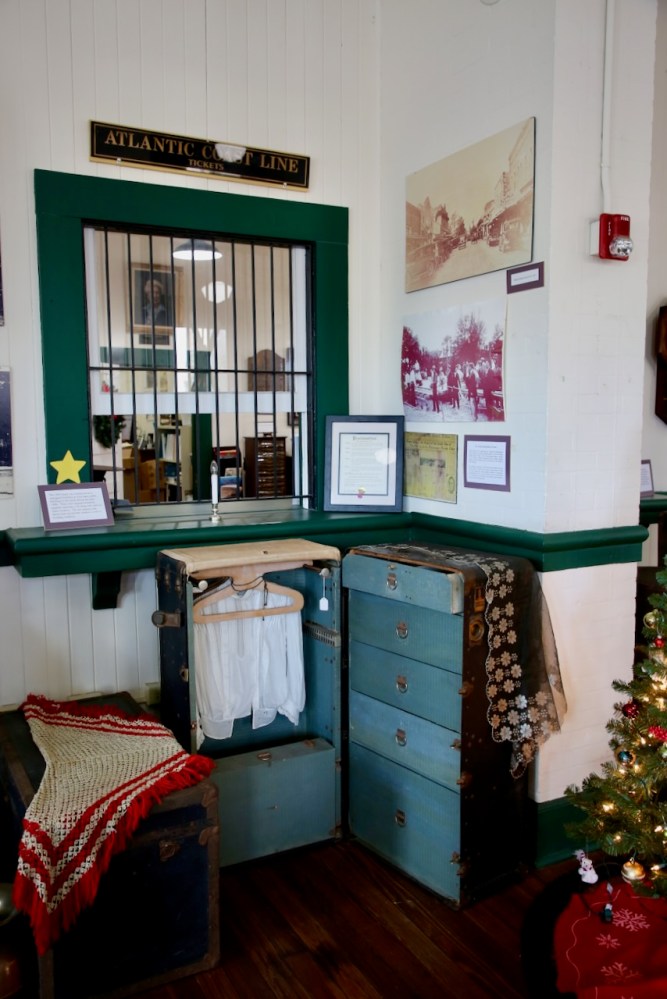
Lunch, sandwiches for all, is had at Urban Grounds. Next door is the Historical Train Depot Museum which we only have a few minutes in before they close at 3pm. This stone building was erected in 1909 to replace the wooden one that had burned down the year before. In the mid-1980s all rail traffic was discontinued so the historical society took over the use of the building. The city obtained ownership in 1992 and began restoration 12 years later. Now it houses the history of Tarpon Springs in exhibits and artifacts of travel, sponge diving, segregation, household goods, and medicine; to name a few.
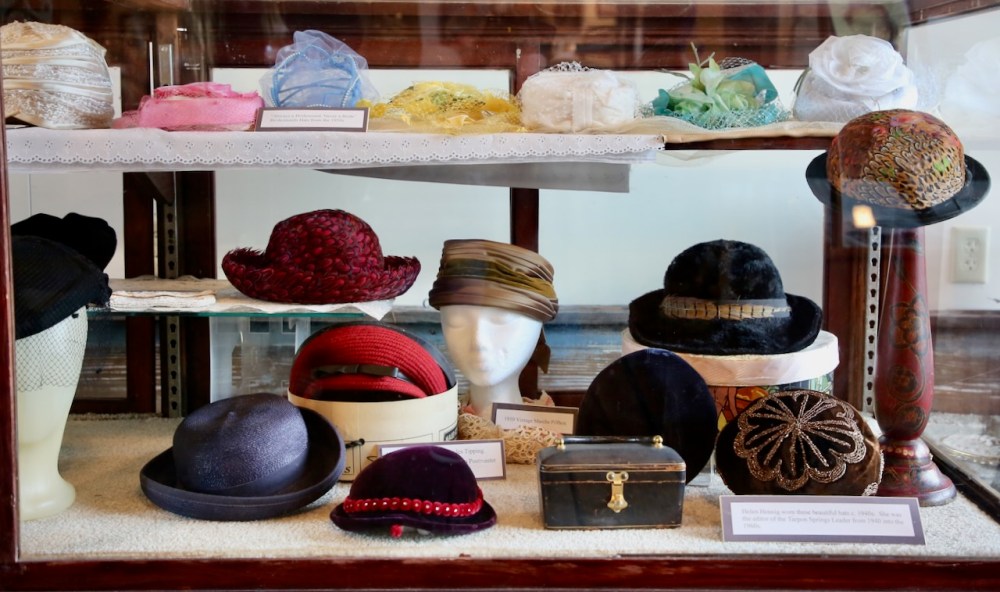
My favorite stop was wandering into Faklis’ Department Store & Shoe Repair and meeting the grandson, Vasile, of the owner, a master shoemaker who founded the business in 1912. During the Great Depression, Faklis turned to repairing shoes instead and eventually started selling suits and hats too. In 1994, Vasile opened an orthotic shop in the back to provide customers with a more complete service. As I talked with him today, he still wants to continue to update the store to keep it relevant by taking down some memorabilia, moving things around, and making the clinic more noticeable to passersby. I caught up with the others as they left me to enjoy my chat.
Train Depot
We pass by the manatees, splashing about, and the Craig House, built in 1910, which was the mayor’s house from 1927-1942. While Caleb and Fallon put their feet in the pool I will busy myself with a spiny orb weaver, sometimes called a crab spider for their shell-like abdomens. Then it’s off to one of the soccer fields for the girls to practice from 545 to 720pm. Dinner will be had afterward, at Jimmy’s Neighborhood Restaurant, on recommendation by Ryan who ate here frequently while he was taking care of the house.
Craig House
There’s a strong military appreciation and Greek family theme here. I enjoy banter with the waitress and recall that this is the southern hospitality that those unfamiliar might find odd, but that I find kind. In California, the server can be rude or nonexistent because their tip is the law and I don’t know how things are run in Florida now but this waitress can tease me and deliver excellent service in the same breath, and we are both in a better mood as a consequence. I go against her suggestion and get the baklava cheesecake because it’s something new for me to try. The phyllo should be perforated before serving.
I let everyone try a bite and learned that these two desserts are best served separately. Caleb will start laundry when we get back to the house and the girls sit down to work on their sticker puzzles. We’ll talk and then after the laundry is put away we’ll stay up late to watch an episode of School Spirits, a ghostly teen murder mystery. This 2023 show is rated for mature audiences (meaning legal adults above 18-21) but is recommended for 14+ because of characters in distress and occasional blood. Meanwhile, Thirteen, released in 2003 has the same age recommendation for an R-rated film showing all the negatives (sex, drugs, stealing, self-harm, etc.) of peer pressure in high school.
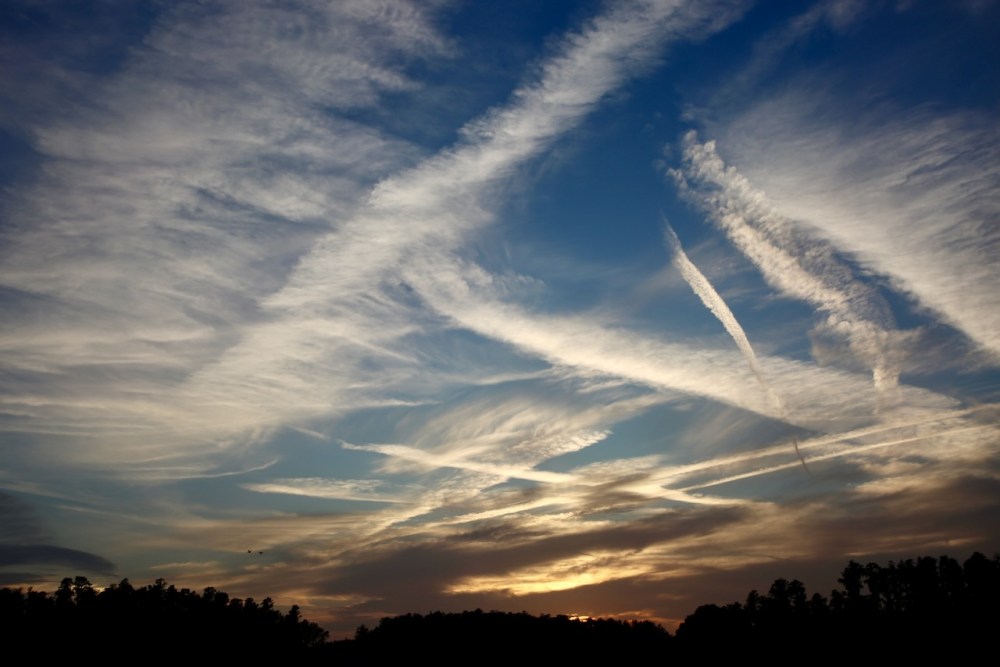
We climb out of the tent as the sky starts to lighten at Fairview-Riverside State Park. I will go find the unheated bathroom, with no shampoo or soap dispenser in the shower, while Caleb breaks down our site. I’ll defrost the windshield while I wait for him to return with dirty hair and body too. The clouds begin to streak across our view in the dawn twilight as the Earth’s shadow and the Belt of Venus fade below the horizon behind us as we continue our trip east.
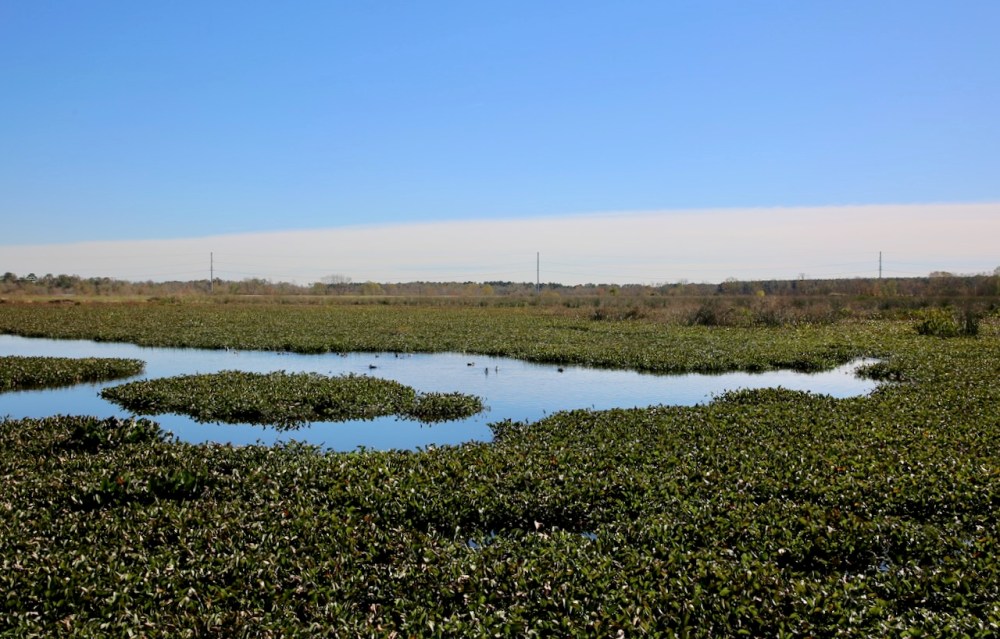
Big Branch Marsh NWR
We find ourselves at the Bayou Lacombe Centre, more of a cool office in the woods than an animal-watching spot, so we decide to cook before we go. Caleb asks me to feel if the breakfast water is warm and our ideas of heat are very different, so I end up burning our oatmeal on top of the rice we burnt last night. The taste definitely influences my appetite and this leaves more for Caleb this morning than I did yesterday. I forget just how tasty a warm meal on a cold morning can be. We follow the water and it leads us to the Big Branch Marsh NWR where we had planned to stop.
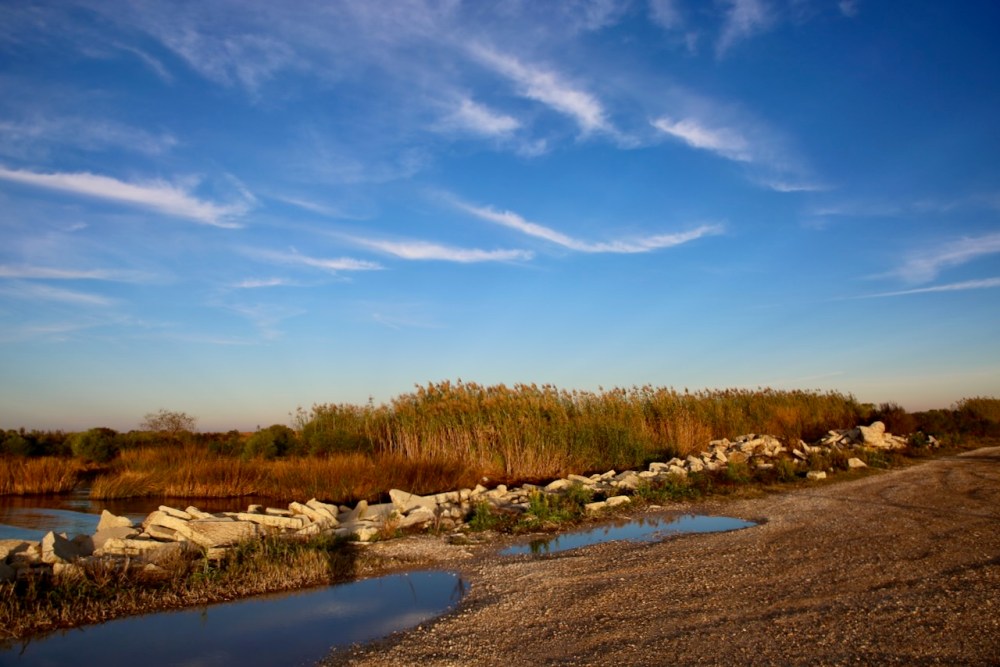
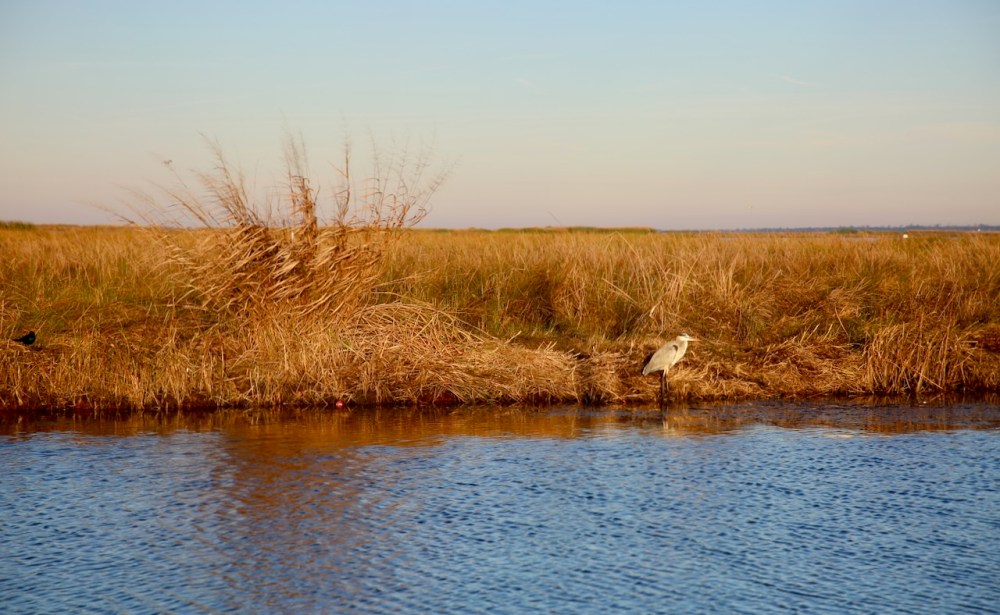
It’s a short dirt road that takes you to the ocean so we creep the car along and then get out to climb amongst the rocks and beach and walk around the puddles in the cul-de-sac. We watch a flock of birds eat fish parts that the fishermen have tossed after their haul is caught for the day while the larger birds still prefer to hunt solo. After this calm start to the day, we are on our way to Mississippi to not see the Lunar Lander Exhibit because it’s inside the Infinity Science Center which is closed Monday through Wednesday. If you walk to the far end of the welcome center area you can see part of some space equipment through the fence and trees.
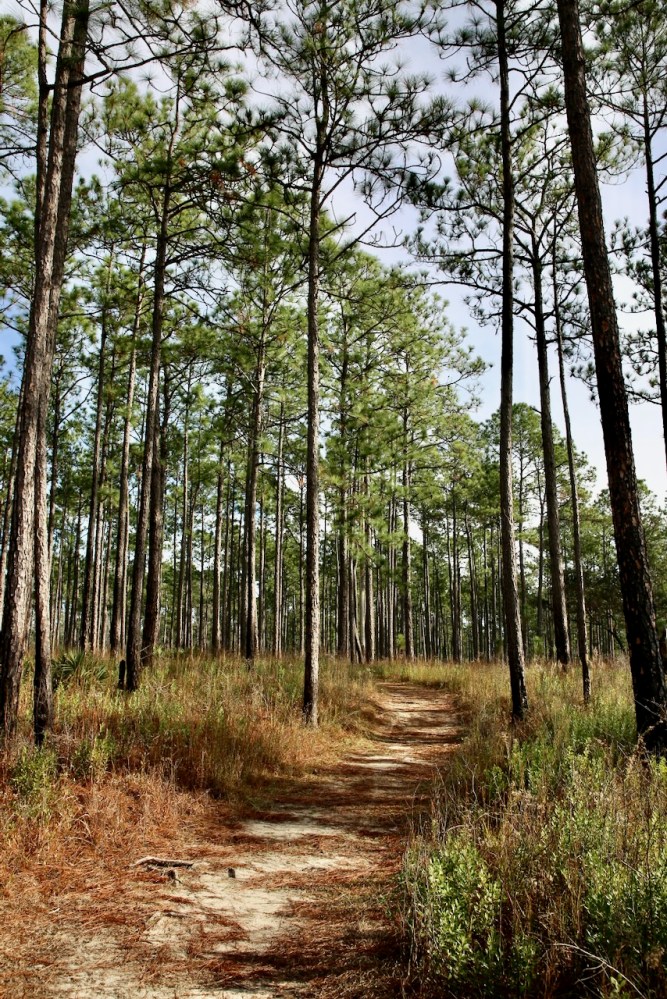
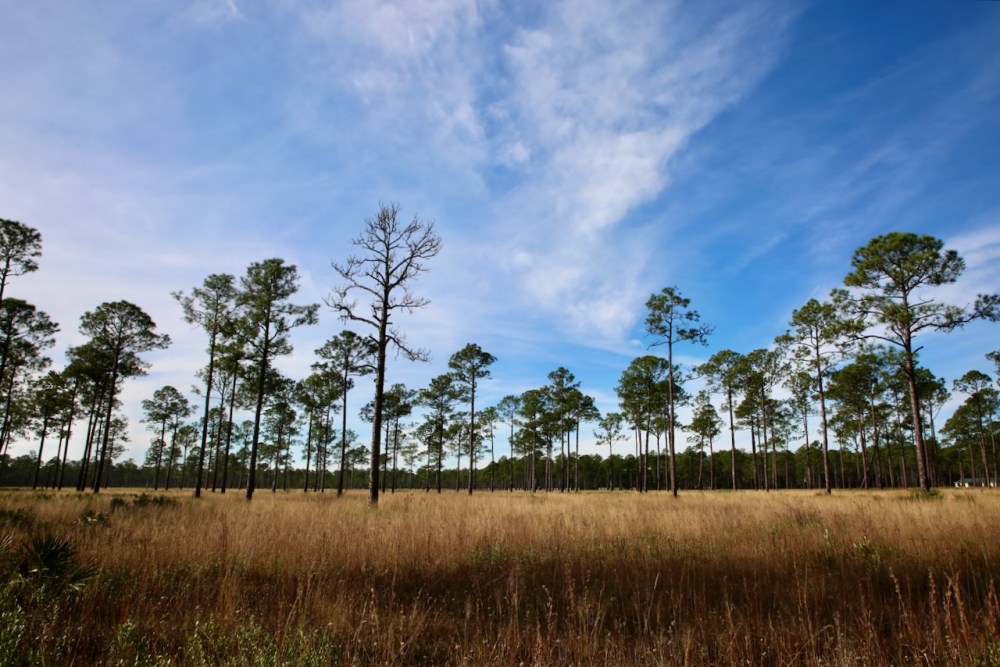
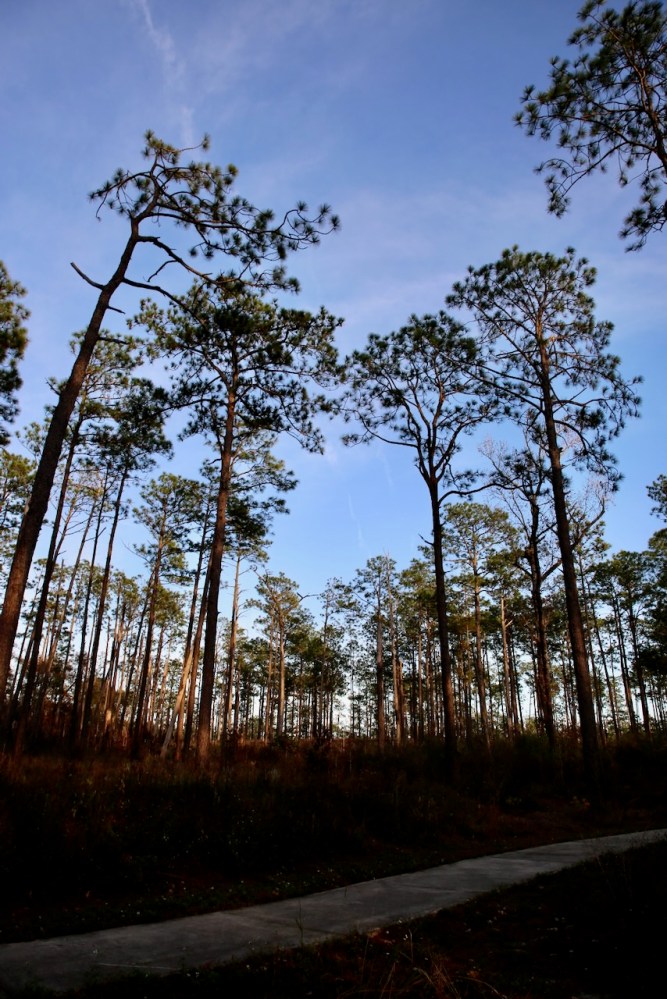
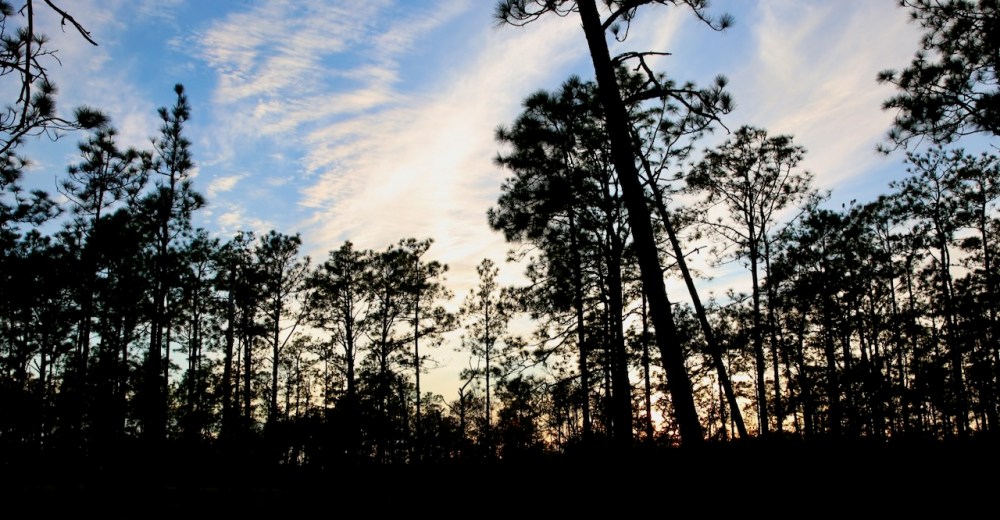
Also in the area is a sign about the Gainesville Volunteers, not a celebration of anything else in the state’s history (mostly storms and sadness) leading up to 2000 when the marker was placed but a memorial about the Civil War, which left tons of memories in this very southern state. We hope for better luck at the Mississippi Sandhill Crane NWR; one of the largest remaining tracts of wet pine savanna that used to stretch from Louisiana to Florida. Though we see no crane or water, the views from the trail are beautiful and there are signs about the fire resistance of some flora in the region.
The saw palmetto, with a majority of the plant underground, can survive the presence of fire and continue to provide fruits, flowers, and nesting for deer, honeybees, and reptiles. This plant also provided people with roofing and brooms and is still used for baskets and herbal supplements. The live oak, also known as the evergreen oak for not losing its leaves in autumn, is another fire-sturdy plant that can withstand intense heat and a few burns and continue to survive. This tree was used in shipbuilding to create the curved knee braces of the hull since the line of grain in such cuts of lumber proved exceptionally strong.
The Oak Grove Birding Trail at Grand Bay NWR is a maritime forest that is full of live oak and saw palmettos that are also tolerant of salt, sun, and wind conditions in this region. The trail is covered in a geogrid matting that’s supposed to stabilize the soil and prevent erosion but nature is getting the better of the plastic and creating an uneven terrain with little trip hazards. We finish the short loop and I, for whatever reason, drop my camera off in the car before we go inside the visitor center. There’s an educational corner, a pet diamondback terrapin, and their stamp was last used on Oct. 19. Also in the diamondback category are a gorilla, rattlesnake, goby fish, and lizard.
Mississippi Sandhill Crane NWR
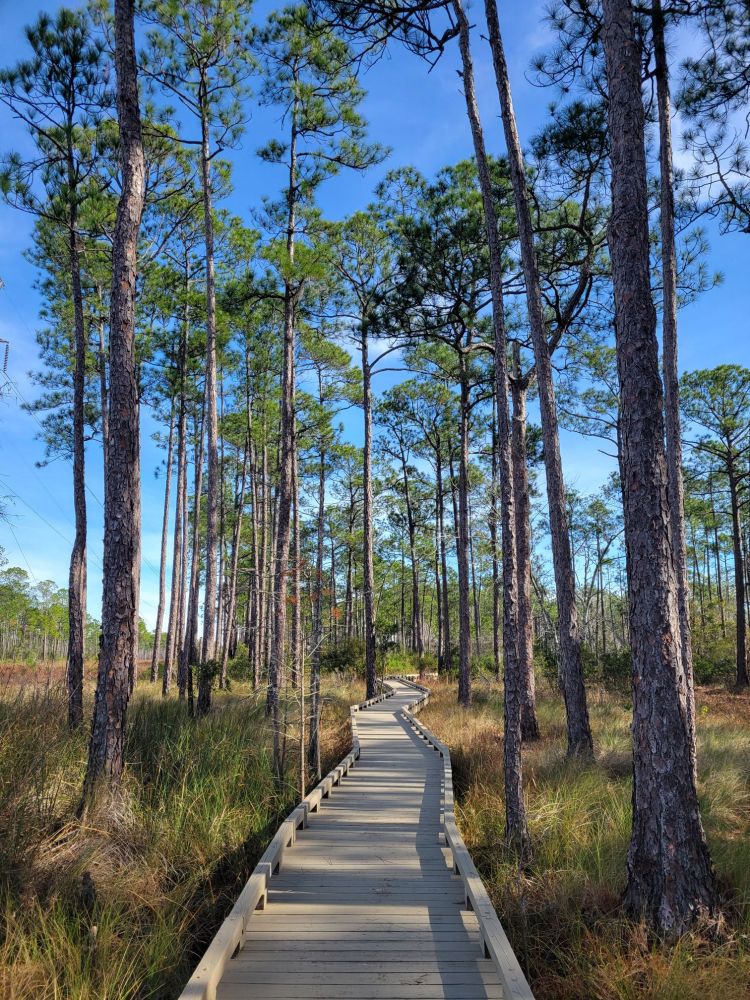
A guy comes out from the office and lets us know there’s a boardwalk trail out back. That’s what I thought I heard him say, but he must have mentioned the short raised walkway and the savanna loop that walks you towards the park entrance and back, near the road. With no traffic, this keeps human disturbance limited to a smaller area and gives us a quiet walk amongst tall grass and seemingly evenly dispersed trees of higher stature. We drive through Alabama without stopping, because the Mobile Carnival Museum, a history of Mardi Gras, is closed on Tuesday, Thursday, and Sunday. There are other reasons to detour but they didn’t make it onto the itinerary.
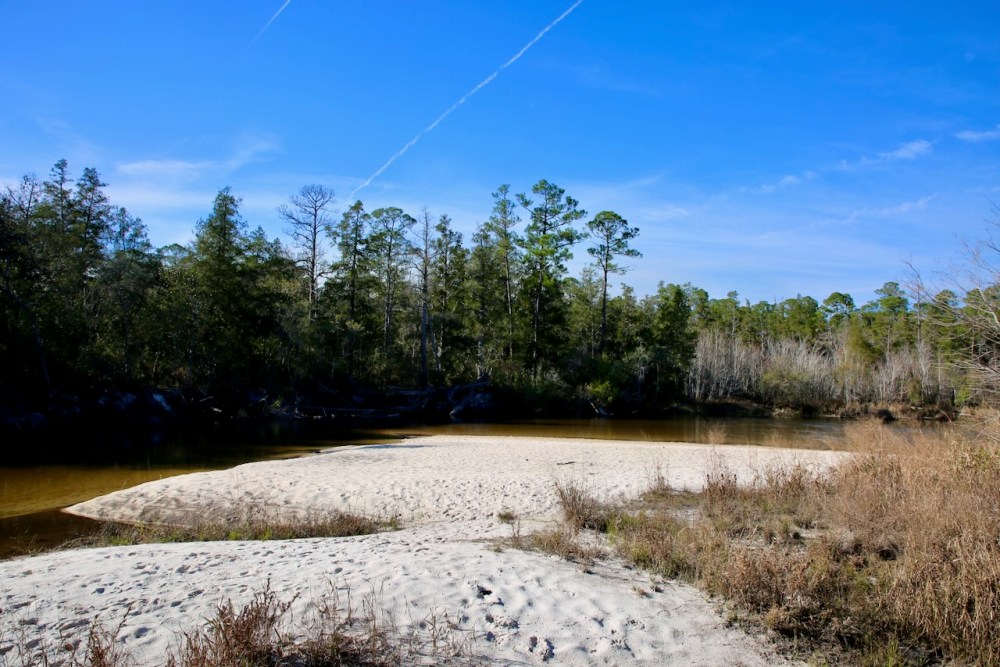
This route has us driving over Mobile Bay and Escambia Bay via long bridges, but if we had an amphibious car we could add these water crossings to our list of places to see instead of bypass. I’d try my luck at getting fish photos instead of car caricatures. I turn the wrong way in Harold, Florida, which means we get to explore Blackwater River State Park instead of Yellow River Wildlife Management Area; even though neither are on our list. We find the Chain of Lakes Trail with little detours to the white sandy beaches along the river which brings us warmth but sadly no alligators in the swamp.
I pull us into Ponce de Leon Springs State Park and just as quickly leave as soon as I see the woman notice us in the entrance booth. She and Caleb are both confused as this diversion has cost us ten minutes and the next stop is a half hour away. I’m hoping that Falling Waters State Park is more our mood today and the sunlight will only allow us to enjoy one, so I made a choice for both of us without knowing what either park had to offer. The modern development of this park started in 1963, but it has been the site of a grist mill in the 1860s, a distillery in the 1890s, and the first oil well (not commercially viable) in Florida from 1919 to 1921.
Chain of Lakes Trail
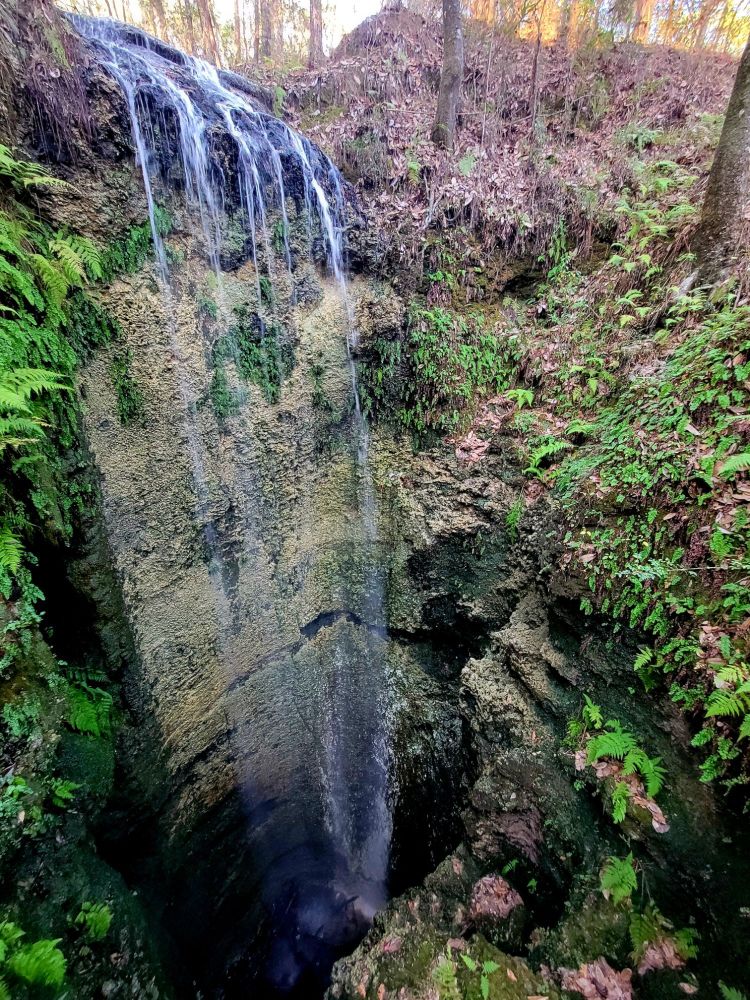
We’re here to see the 73-foot waterfall, the tallest in Florida and taller than the state’s average elevation. It’s not the only waterfall in the state, but most of the others are a single digit in their height. I have missed the forests of Florida and it feels good to be amongst its trees again. It’s a short walk to the falls and the only other guy in the park has his 360-degree camera in use because the park has places to perch yours so that you can help capture the changing environment. He is in a hurry to use the last bit of daylight as this seems like a daily ritual for him; parks are great for that type of inspiration.
Falling Waters State Park
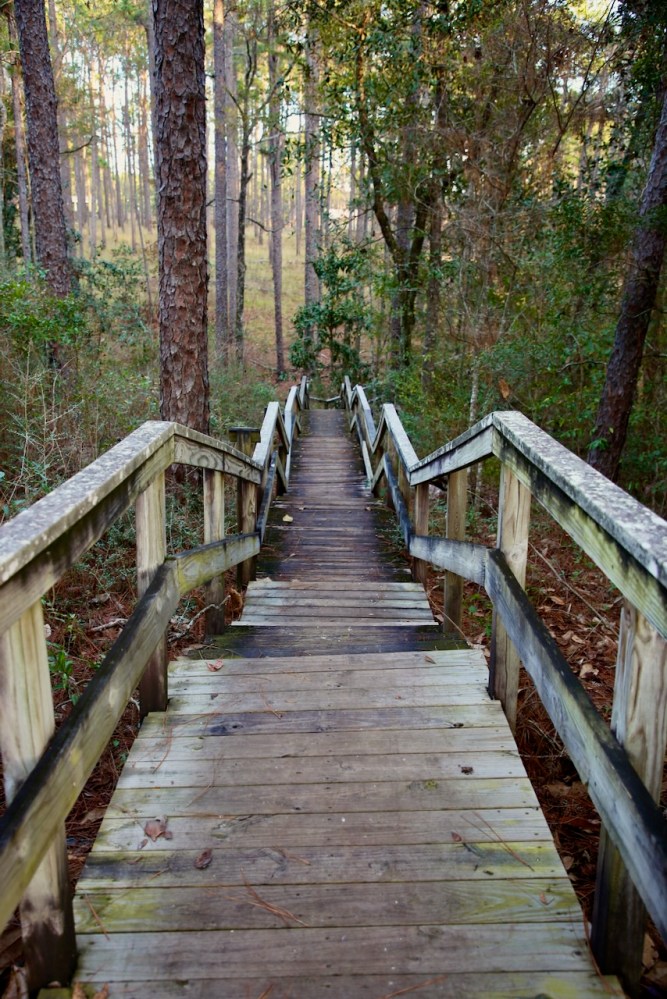
Not knowing how small the park is, we park closer to the lake and take that trail around that also leads to the falls. We are warned about the dangers of alligators and the state law to not approach, frighten, or feed them. We’re also taught about the tasty wiregrass seeds according to the palate of the gopher tortoise and quail who find it a favorite food item. Part of the boardwalk is closed and though my curiosity would sometimes get the better of me, the sun setting and lack of others around to offer help leave me not wanting to fall into a sinkhole with no reliable way out.
Dinner is a simple meal at San Marcos Mexican Grill in Marianna. We take the rest of my beans and the table’s chips to go. We cross into Eastern Time, where 58 of Florida’s 67 counties are in. Only one, Gulf County, is split in half, but in a north-south fashion. The county voted in 1982 to go all Central Time but 55% of residents said no. In 2018, Florida wanted to stay in Daylight Savings Time, which requires an act of Congress, so like the other 18 states that want this change permanently, they are still waiting on approval. In 1966 when the Uniform Time Act was passed, it gave states the right to exempt themselves, annually, so Hawaii and Arizona did.
We spend the night at Econo Lodge in Lloyd since its room price is still in the double-digits; just because the reviews are good and breakfast is included, we know what we’re getting ourselves into. I start out by calling the clerk her, who is hidden behind the counter at a low desk, and am quickly corrected by the customer in front of us and the clerk’s voice. I ask how many linens I should be counting since I’m asked to account for them and sign that I will do so in the first ten minutes of being in the room. This seemed to confuse the guy. There are small blood droplets under the pillow but the bedding is all here. I’ll fall asleep thinking about the costs of running a hotel.
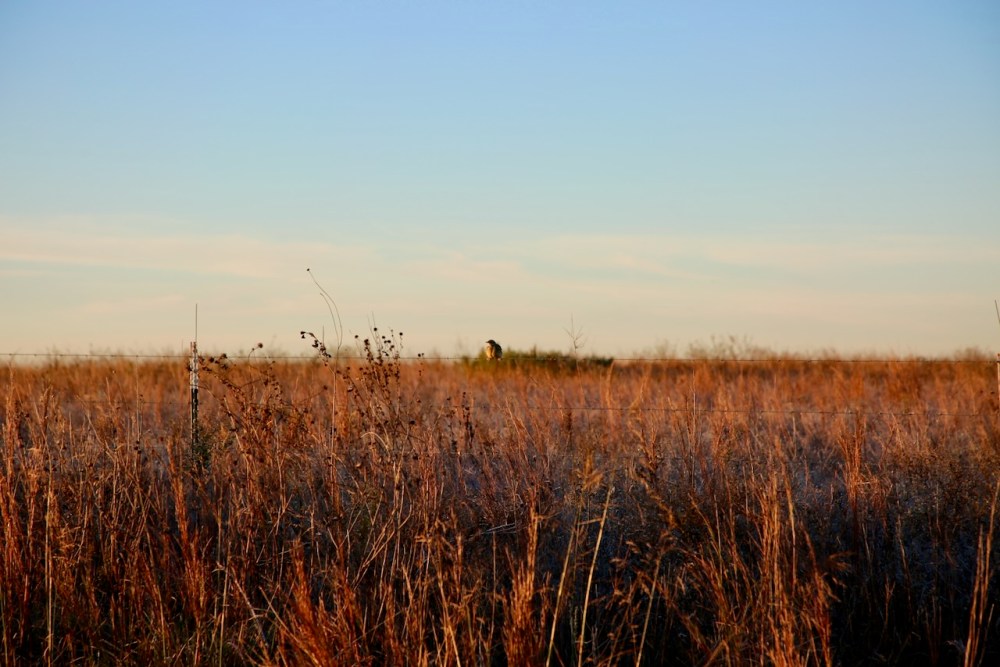
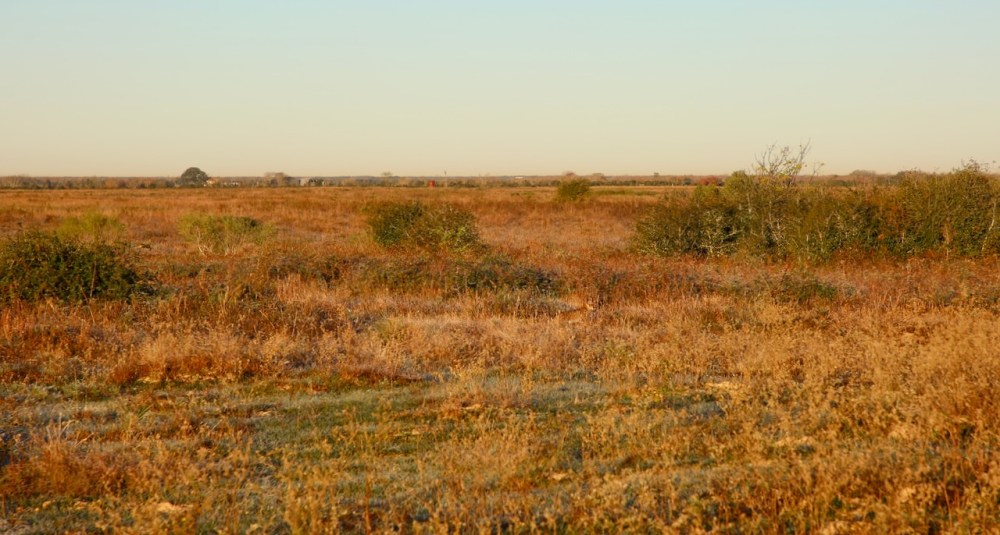
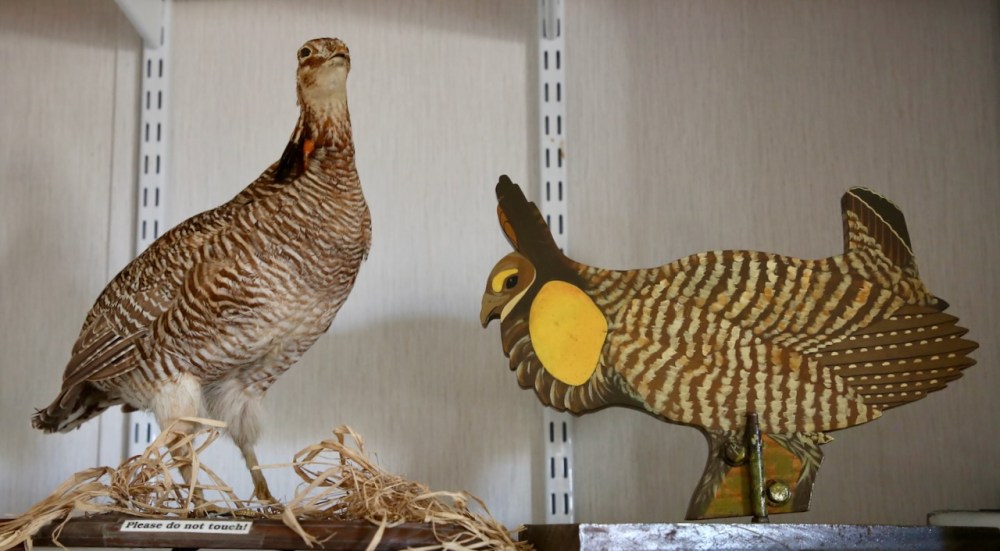
Caleb found us a perfect spot under the stars last night at Stephen F. Austin State Park. The trees surround our view and the bathroom is lit up in the distance. It is in the low 40s when we climb out of the tent in the dark because I’m excited to go look for some rare birds at the Attwater Prairie Chicken National Wildlife Refuge. Their average size is just over a foot in length and like other grouse, they tend to blend into their habitat unless they’re on the move in a clearing. They are most active in the morning and late afternoon and there are only 178 of them, as of 2021.
There used to be about a million of these chickens between Corpus Christi, Texas, and Bayou Teche, Louisiana but their environment is constantly being adapted for human travel and consumption needs. They used to roam over eight million acres and now have 10,000 left to call home. Even here, there’s a new visitor center being constructed and I can only hope that researchers and scientists weighed the pros and cons of education and preservation over secretly buying up land and maintaining the population in private. I’m grateful for the opportunity to be here.
portraittaxidermy and wood blocks
The moon is on its way out of the sky as the dark orange turns to pink. We sit in the car and watch some cows cross the road – confused that a car has the patience to wait on them. It’s these traffic delays that don’t bother me and I give the herd their ten minutes before leaving a straggler to cross behind us. There’s a footpath on the right, by a kiosk, before the auto tour route that goes over a bridge and leads to bird blinds overlooking Horseshoe Lake. We watch 18 whooping cranes take flight. They are, along with the sandhill crane, the only crane species native to North America – and the tallest bird species.
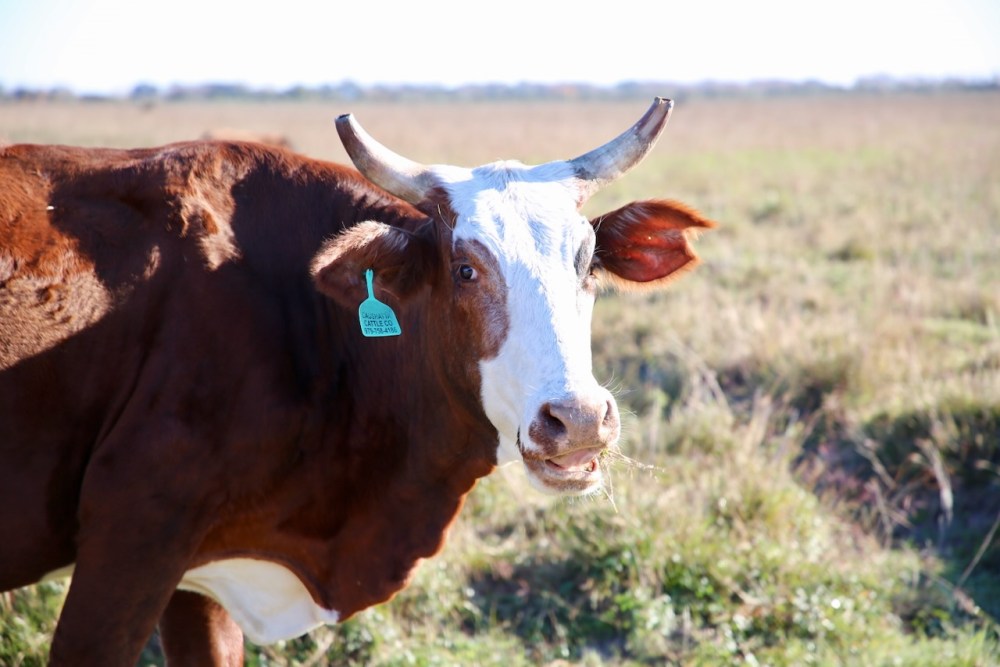
happy cow
The other, easy to identify, bird sighting is the killdeer – a large plover that prefers grasslands (laying eggs among the rocks as camouflage protection) over muddy riverbeds and is tolerant of human disturbance; hence why it was so comfortable in the road. I’ve heard of subliminal messaging in advertising but never in nature. My brain was registering activity in the prairie but I was only seeing glimpses of movement as the very discreet cougar made its way through the concealing field. I wish I could’ve parked faster, but even opening my door is against the rules in some parks as big cats move quickly when they’re hungry.
I maintained my distance while wanting the puma to pounce closer to my lens, though I was able to capture proof of this encounter; unlike the one on a hiking trip where I preferred the quick departure of the predator. Having been up for hours, I pull over so we can get breakfast started. We are not the only ones getting hungry as the mule deer begin to pop their heads and bodies up from their nightly nest and only one tries hiding behind the only tall green shrub in this portion of the park. The hoofed ruminants look smaller than other mule deer stags, but their antler points tell us they’re at least three years old, so roughly halfway to full antler potential.
We return to the kiosk footpath after the auto tour route and walk the Horseshoe Lake Trail where the deer are openly enjoying the warmth of the sun, as are we. Now that the frost is melting though it only makes our shoes, and toes, wetter. The open and empty visitor center has a collection of mounted birds so that visitors can get an idea of the stationary and migratory variety through this area. Outside the refuge, we passed Caushatta’s cows. The company has received $1.1 million in subsidies in the last ten years. The top 1% of farmers receive a quarter of all payments – as those who produce the most, receive the most – just like the small business stimulus checks to manage the fallout of COVID-19.
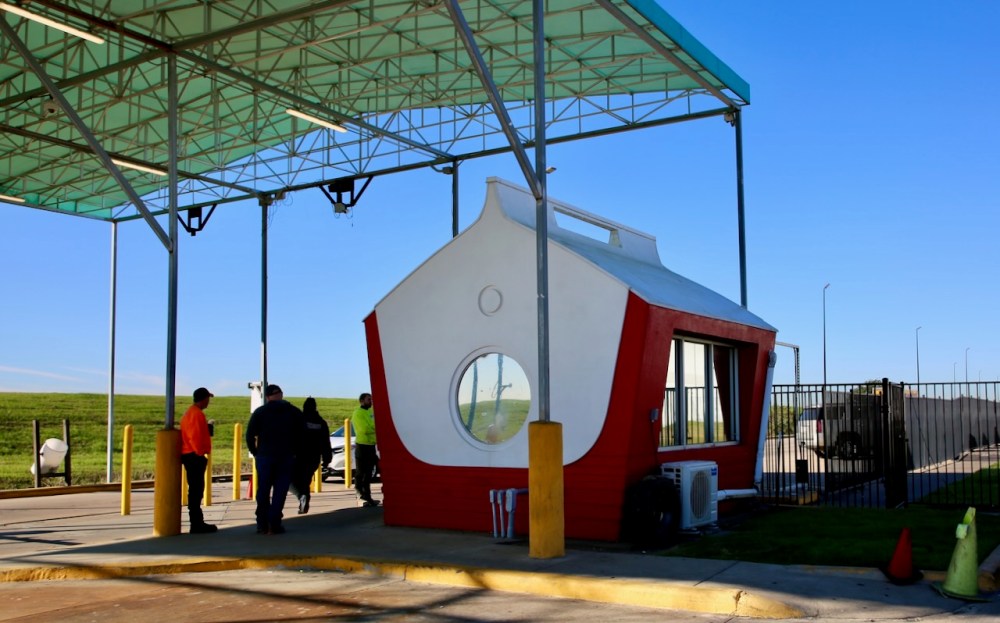
I thought I had found a roadside attraction, but instead of finding Factory Store attached to the location name, I put “near La Quinta in Brookshire” as our guide to the Giant Igloo Cooler. I didn’t know if we’d be able to go in or just peek in a window, but the guard let me know that I wasn’t getting past their frame that filled the doorway. I didn’t think they had secret bean recipes worth hiding bodies over. The giant cooler full of security devices and mechanisms is in front of the gated entrance, so we spent some time looking over their inventory in the gift shop-sized outlet with no tour or interest from the employee.
Houston traffic between people getting to work and eating lunch isn’t terrible. We arrived at Baytown Nature Center and the woman who should’ve charged us an entry fee blessed us without one because we seemed too chipper to be here. She knew we were from out of town and that we would never come back (unless we returned like we said we wouldn’t to the Everglades) once we found out what awaited us. We are excited to walk along the water and see so many birds and even more so when we see the sunning alligator, though too far away for a selfie or relocation – good thing we’re not tourons (tourists + morons).
We are distracted by the beauty, and covered from the wind, when my exposed hand starts to swell up like I shoved a cotton ball to replace my knuckles. We will spend the rest of our walk/jog slapping each other’s necks and backs and ignoring the toxic environment we now find ourselves in. We have to laugh that the woman in the kiosk is probably giggling too, but perhaps she coats herself in bug spray before attempting our fate. I don’t know if I’m becoming more allergic or if the mosquitoes are just packing more punch. Just an idea – set up blood donation sites at these parks so we can enjoy them in peace while the bugs drown themselves in tainted juice.
Caleb is still able to talk me into stopping to walk the trail at Butterfly Garden where we see some men fishing. There are not as many mosquitoes here. It has been so long since I have planned and Caleb navigated a road trip that we are using this one to get the kinks out. I thought a visit to Anahuac National Wildlife Refuge would be a great stop, but I, or the park’s website, should’ve clarified which part of the park we had planned to see, as there are a few. We arrive at the visitor center, cross the little bridge, and take the paved path behind the trees – a short detour.
Caleb sees the next southern stop as a 16-mile one-way detour but had I noticed the other stops along the FM 1985, going east, we could’ve completed the loop via Winnie back to I-10, instead of losing eleven miles by turning around. It doesn’t help that our next stop is closed on Mondays, so we’ll have to skip the Shangri La Botanical Gardens in Orange. Caleb is quick to find a replacement stop at Tyrrell Park in Beaumont. At the back of the park is a marsh boardwalk, about the length of a long boat dock, and at the end are two retired men comparing job benefits and lens sizes while they birdwatch since there is no gator action today.
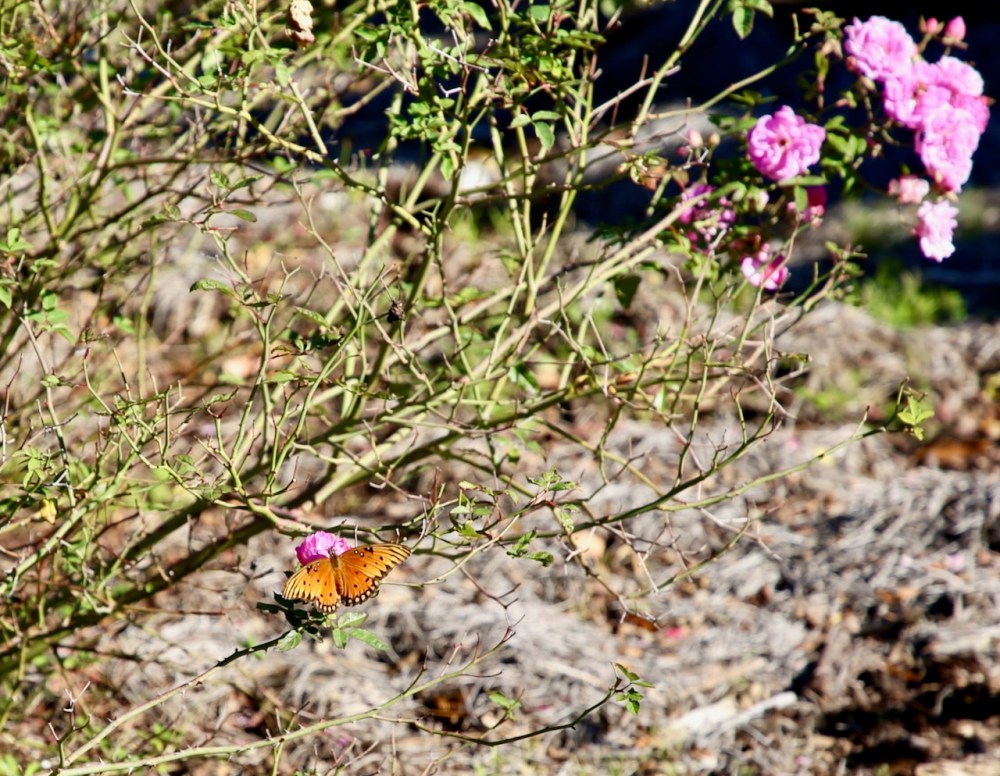
The birds are eating while we walk and stare at their heads and tails. There is something about animal butts that I find intriguing, unlike the human rear-end that’s not as endearing. I’m not alone in this endeavor as there are videos of cats, dogs, sheep, rabbits, etc., with googly eyes, getting scratches, and learning to put them in the air or bounce them like they just don’t care. In the greenhouse, there are plenty of verdant plants, a bit of flowers, and some hungry gnomes. There’s a small garden outside too with some pink flowers that attract the Gulf fritillary or passion butterfly.
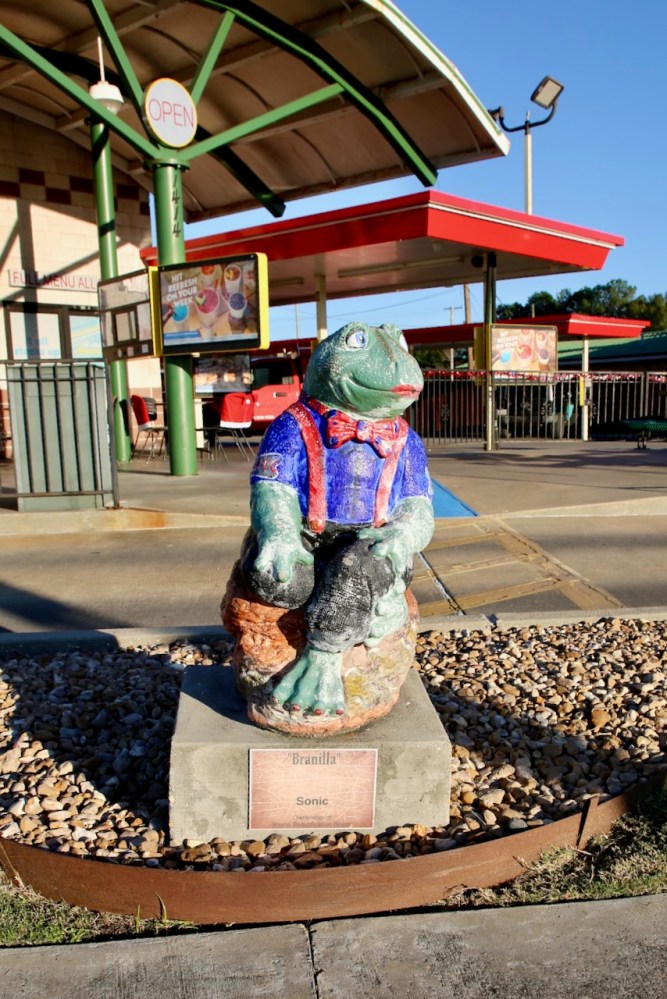
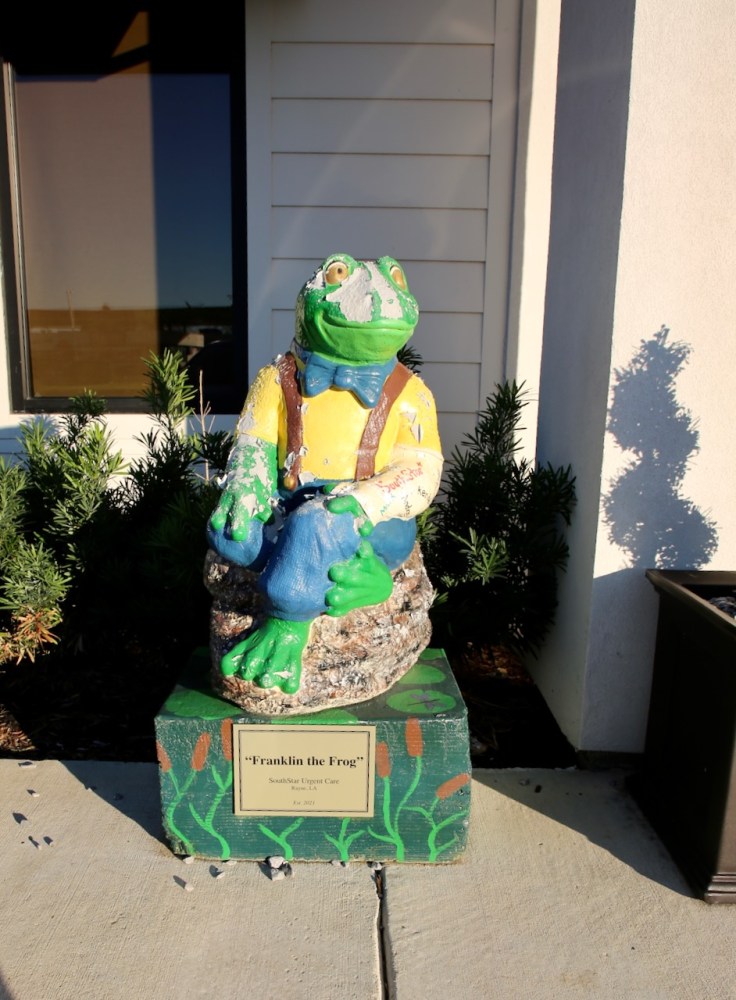
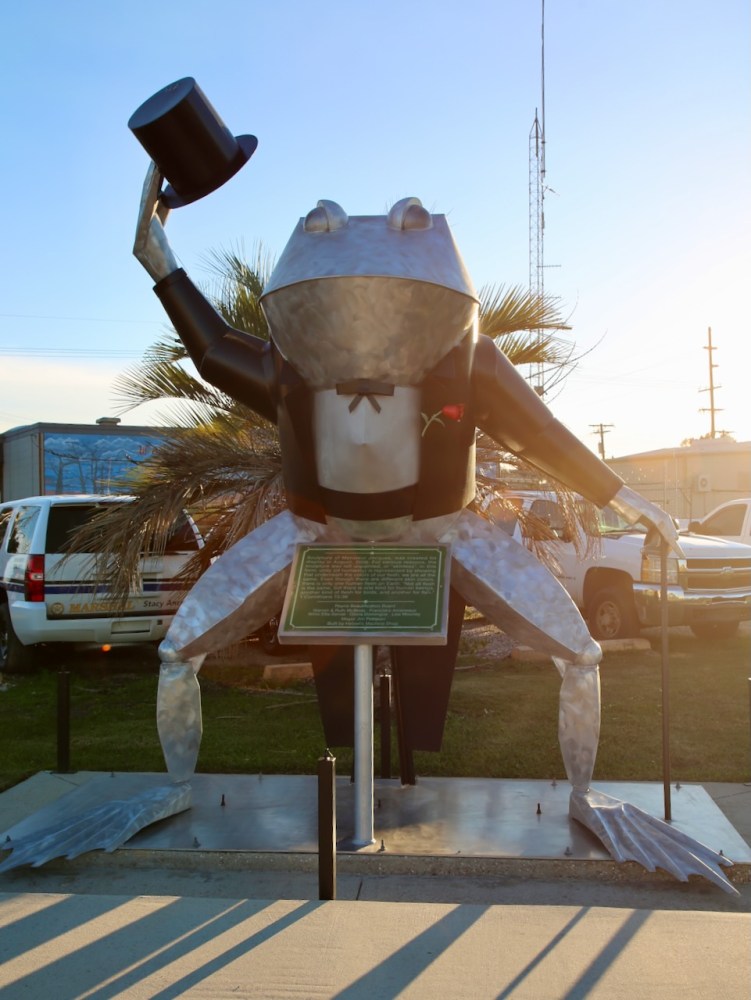
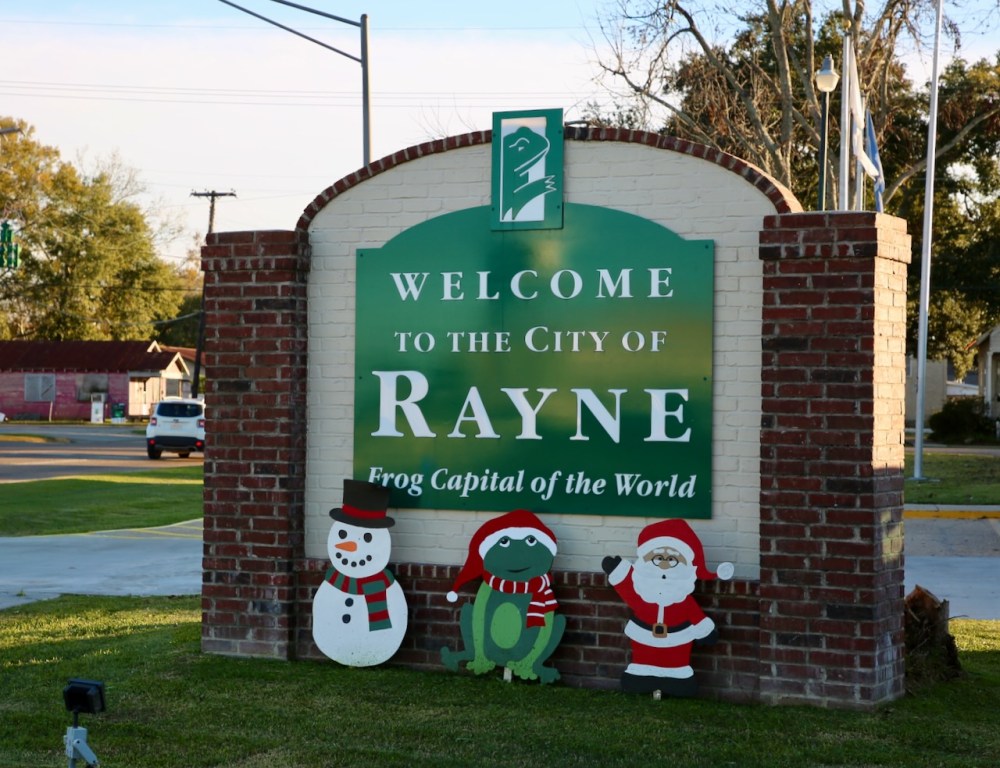
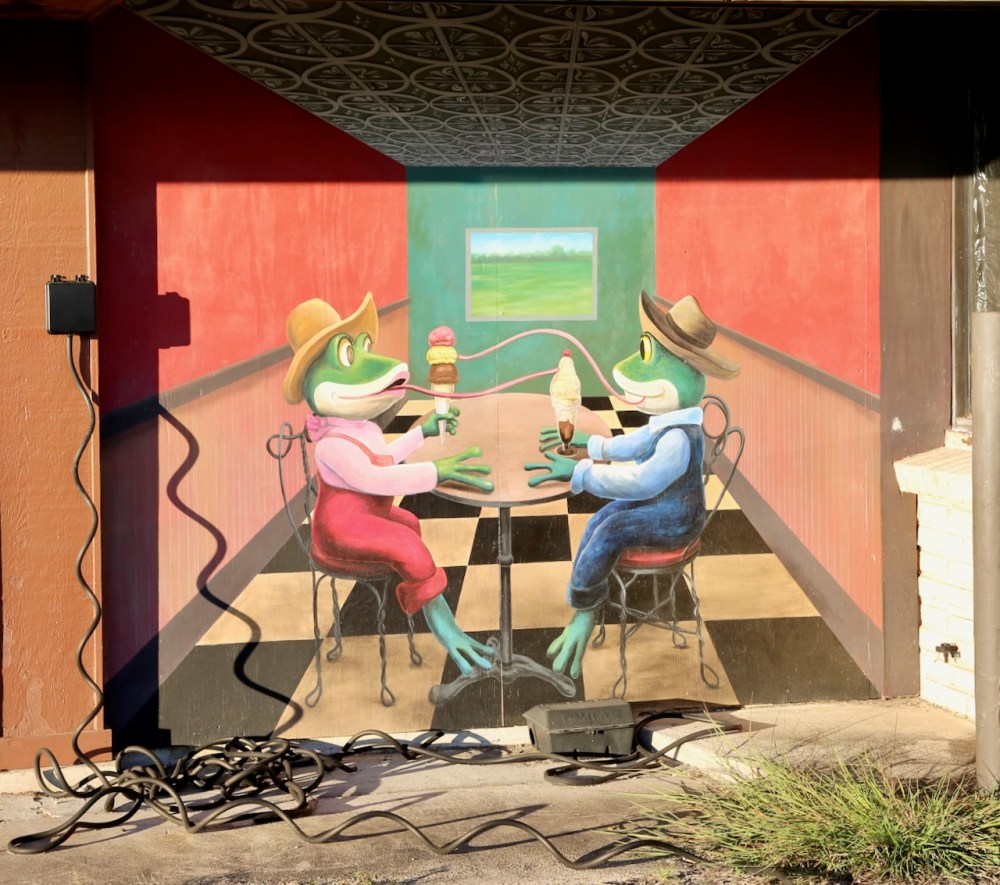
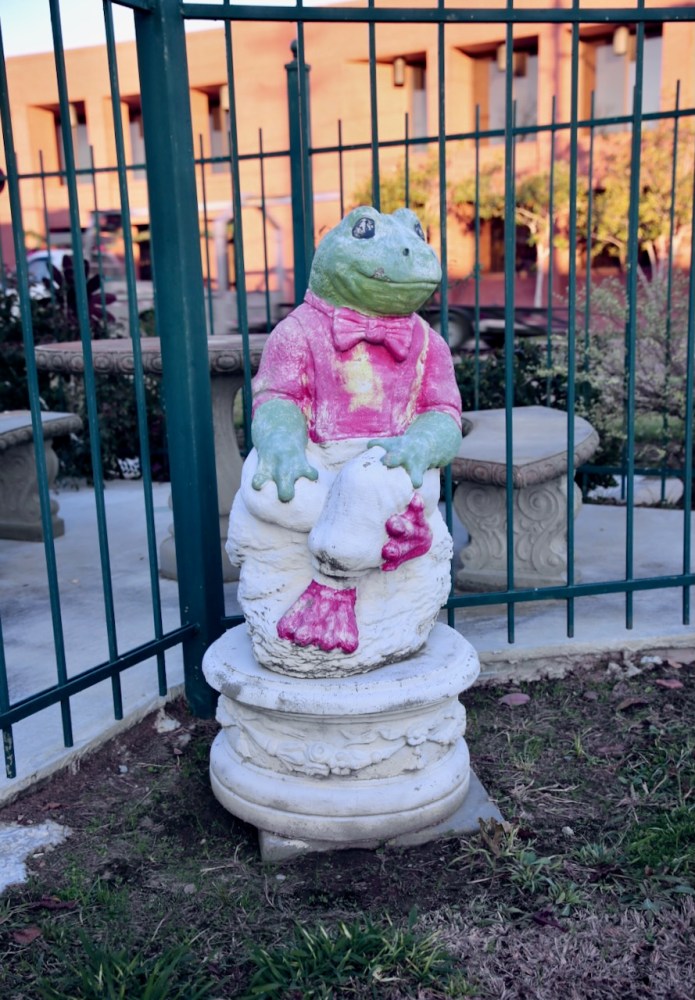
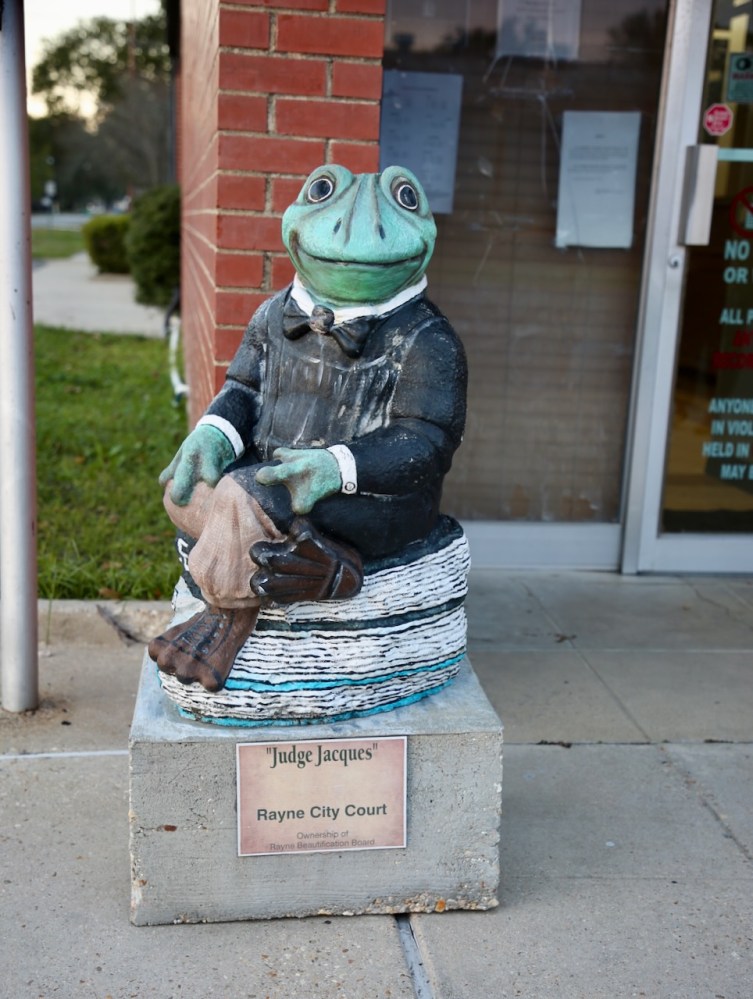
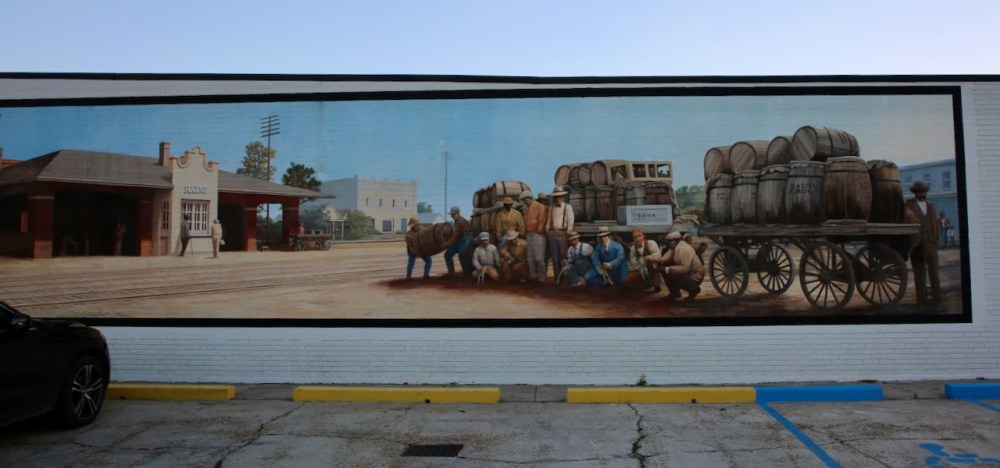
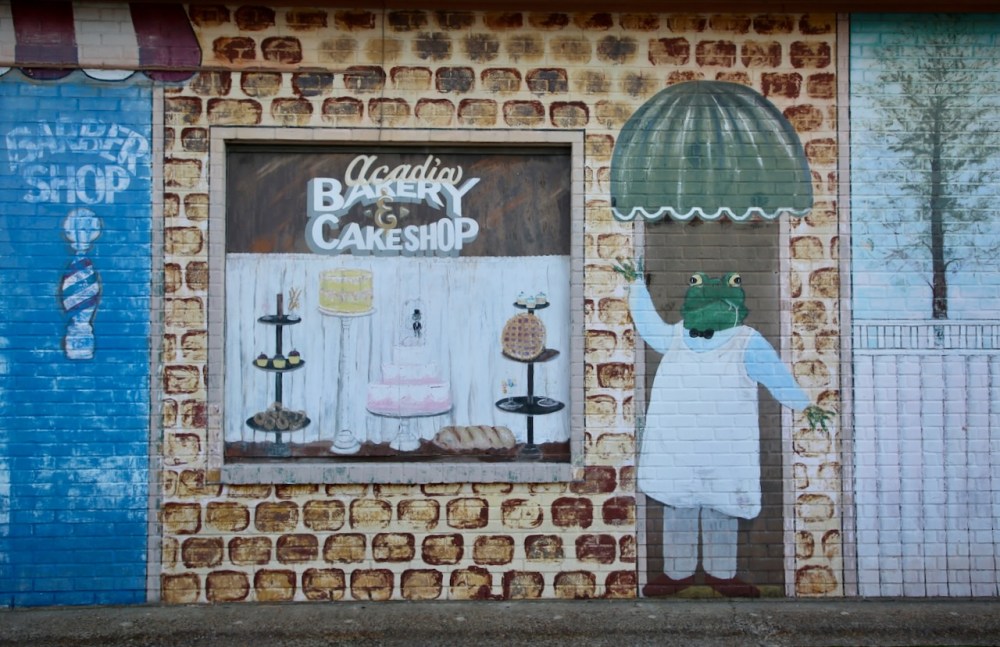
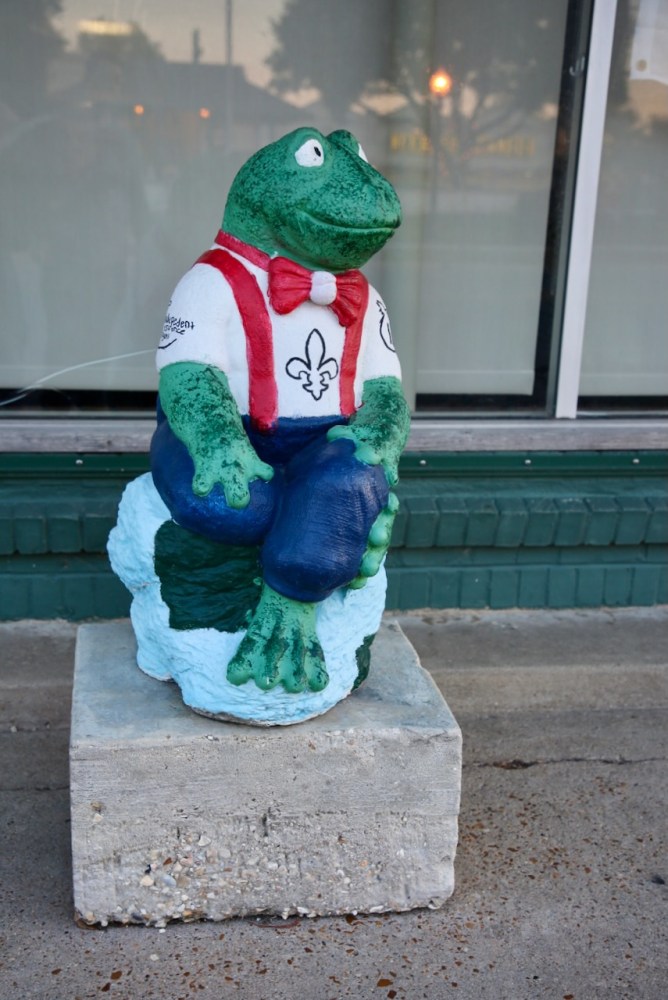
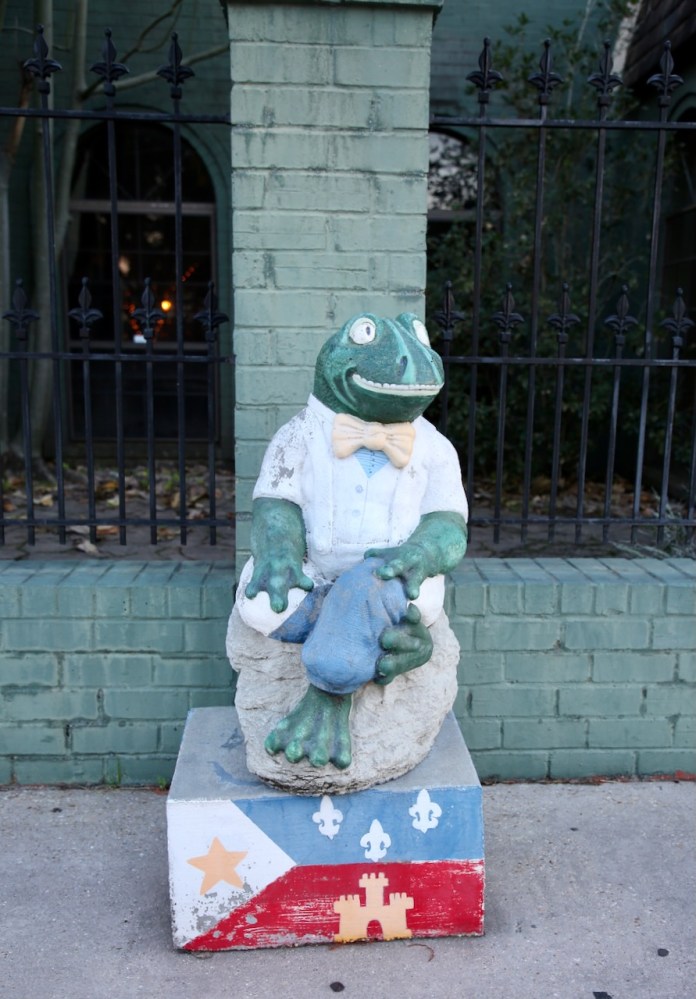
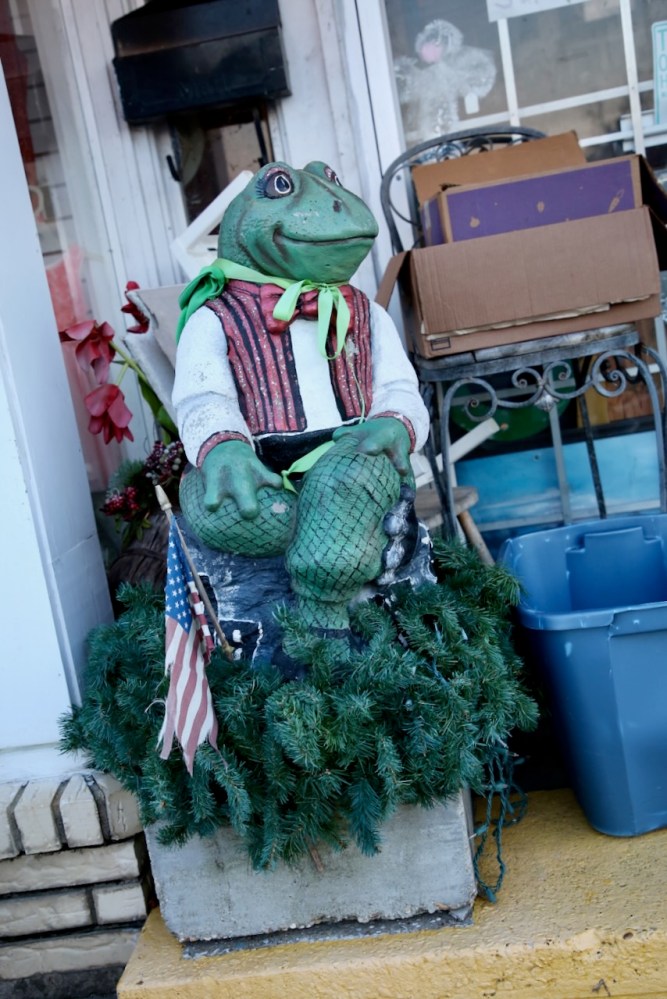
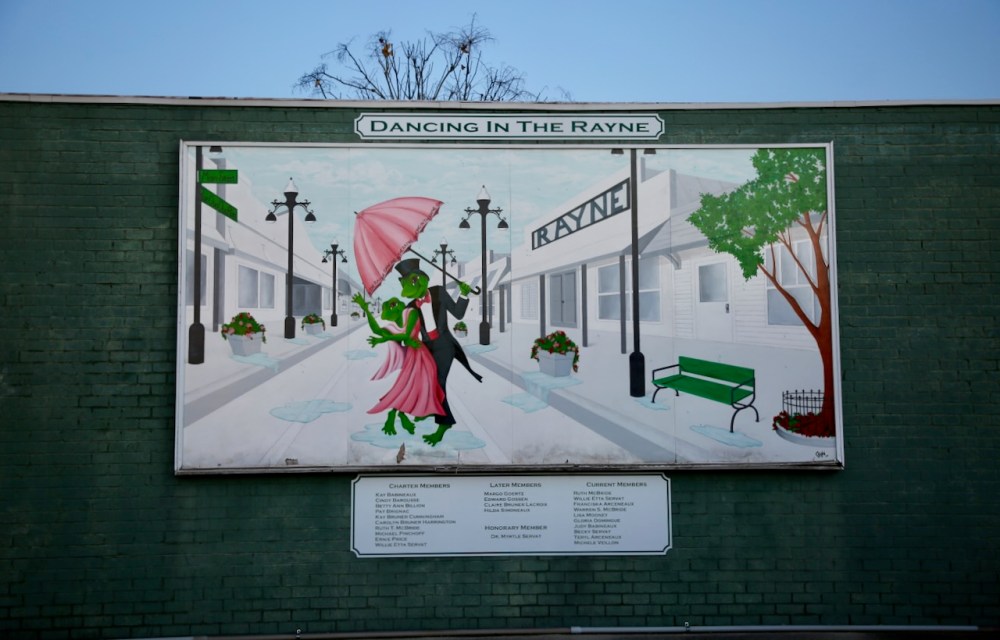
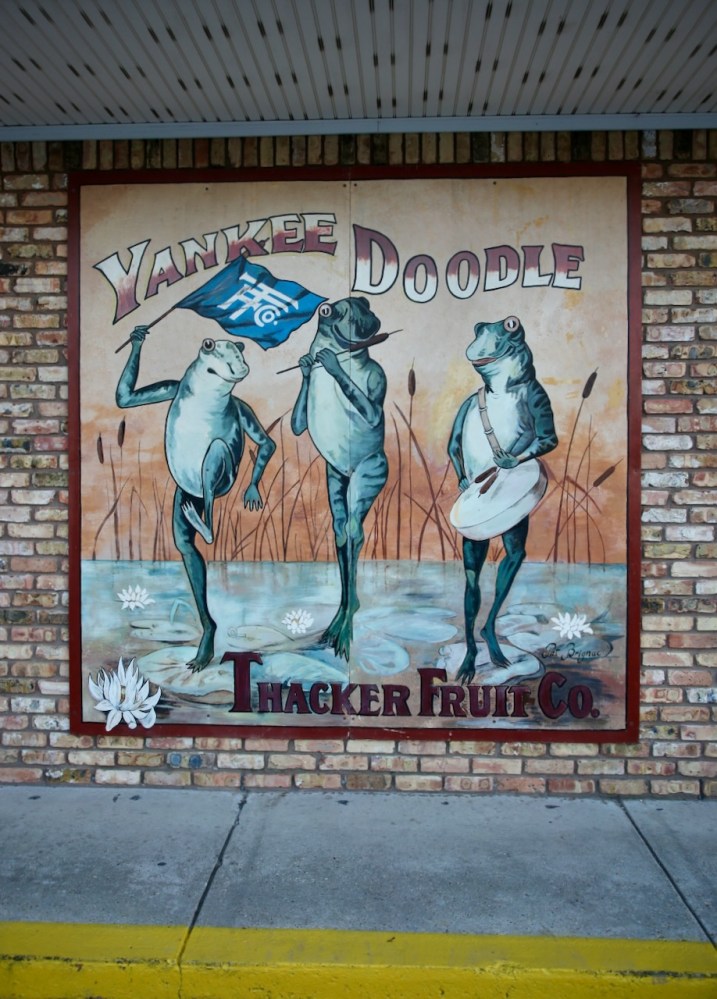
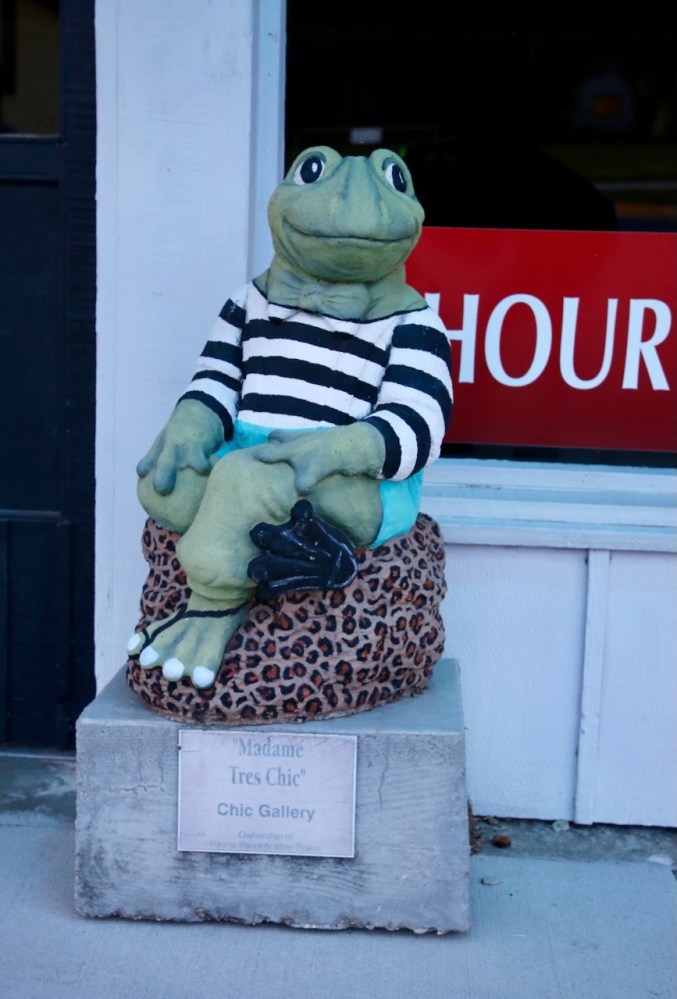
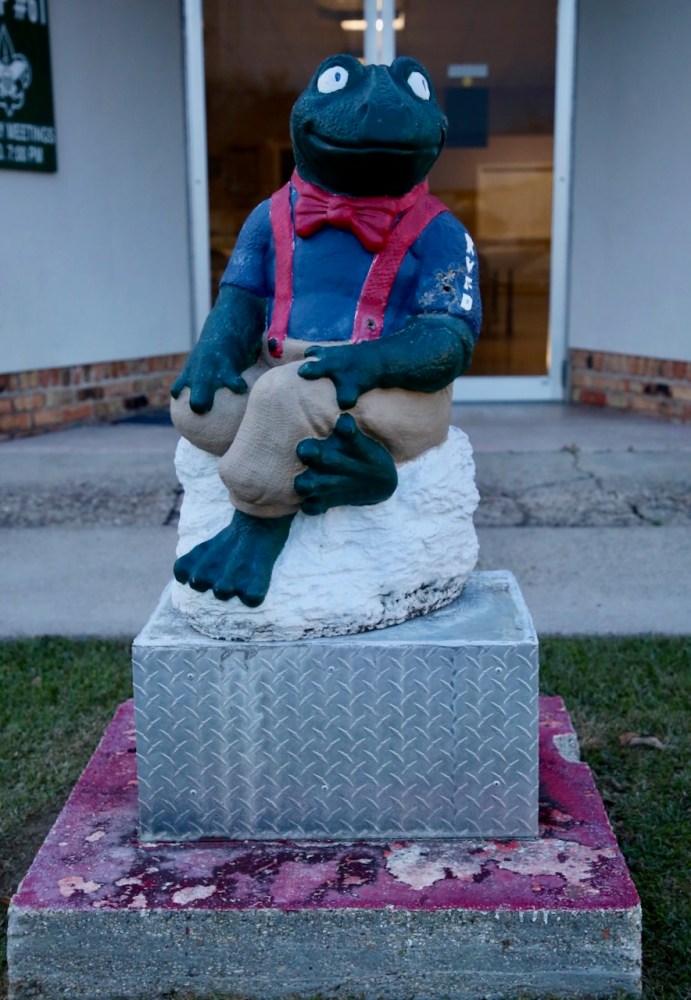
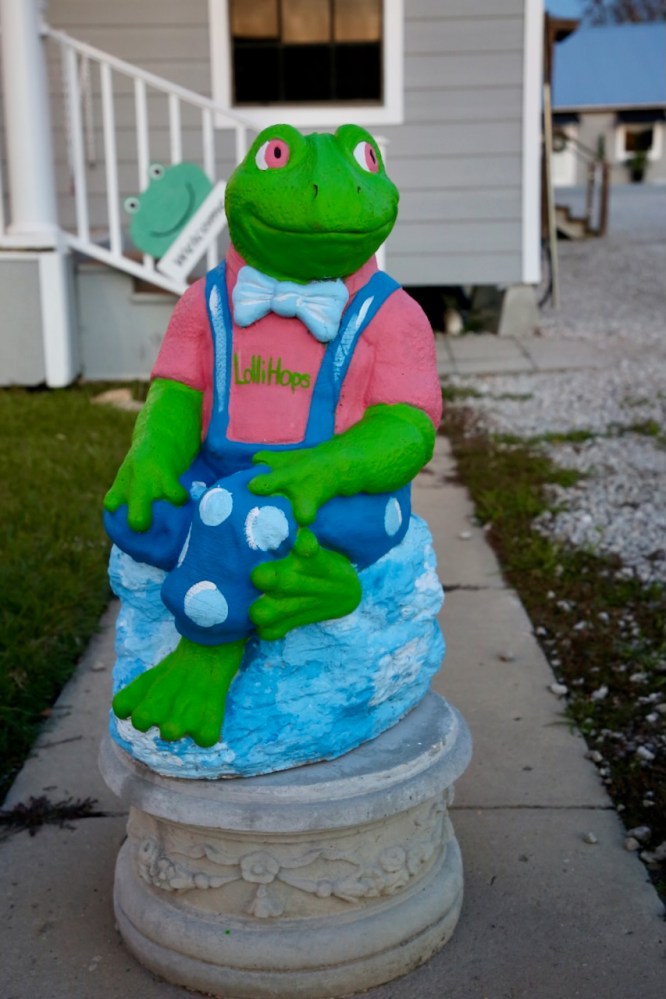
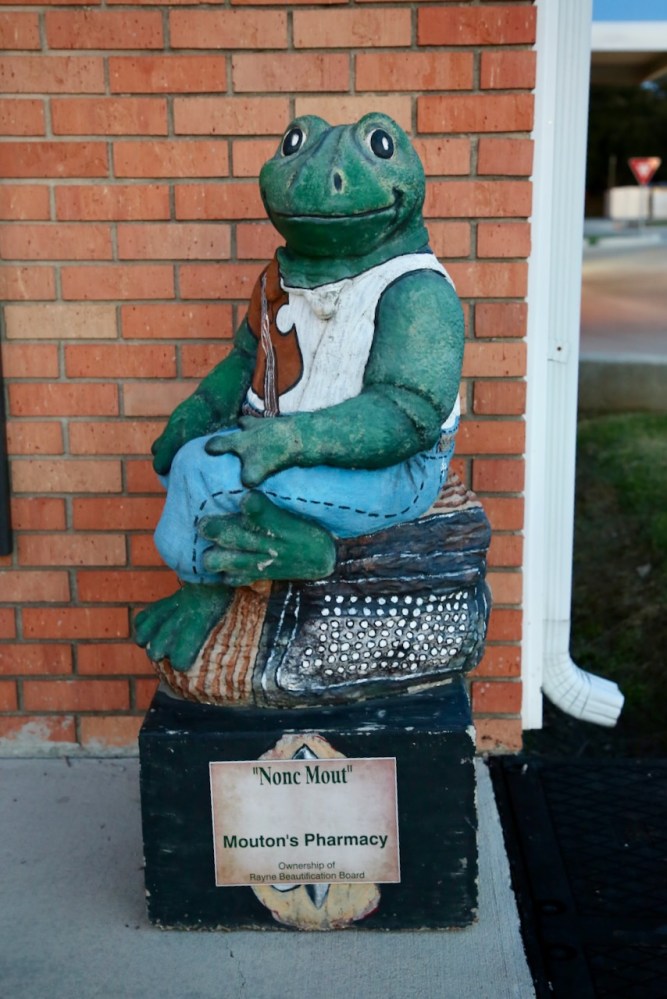
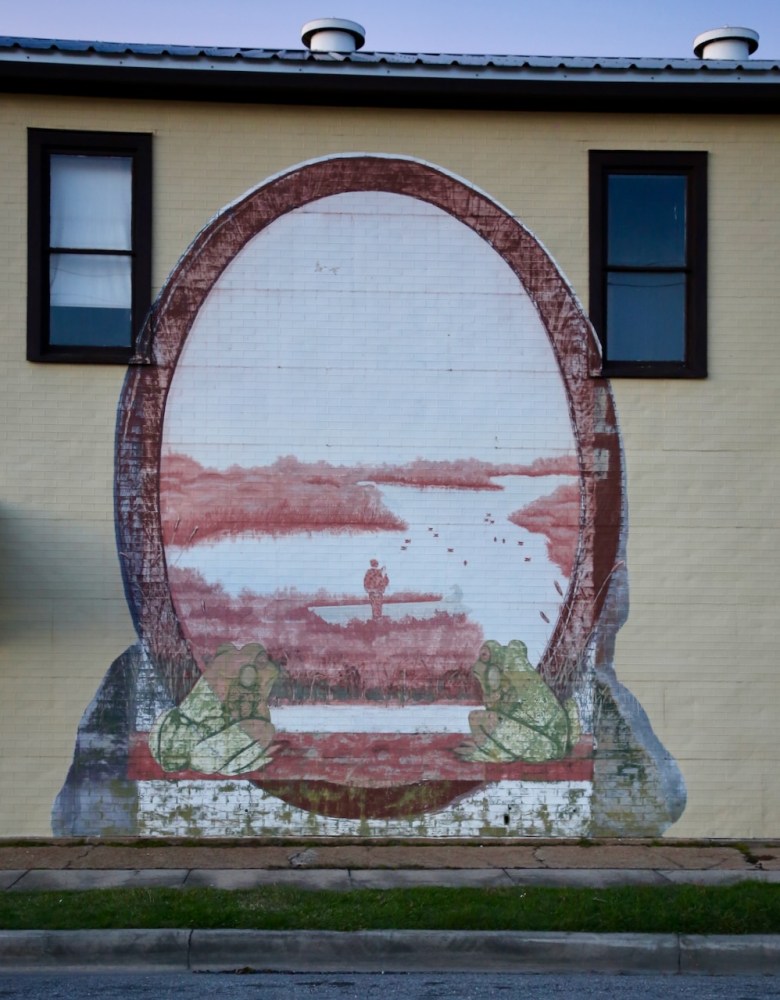
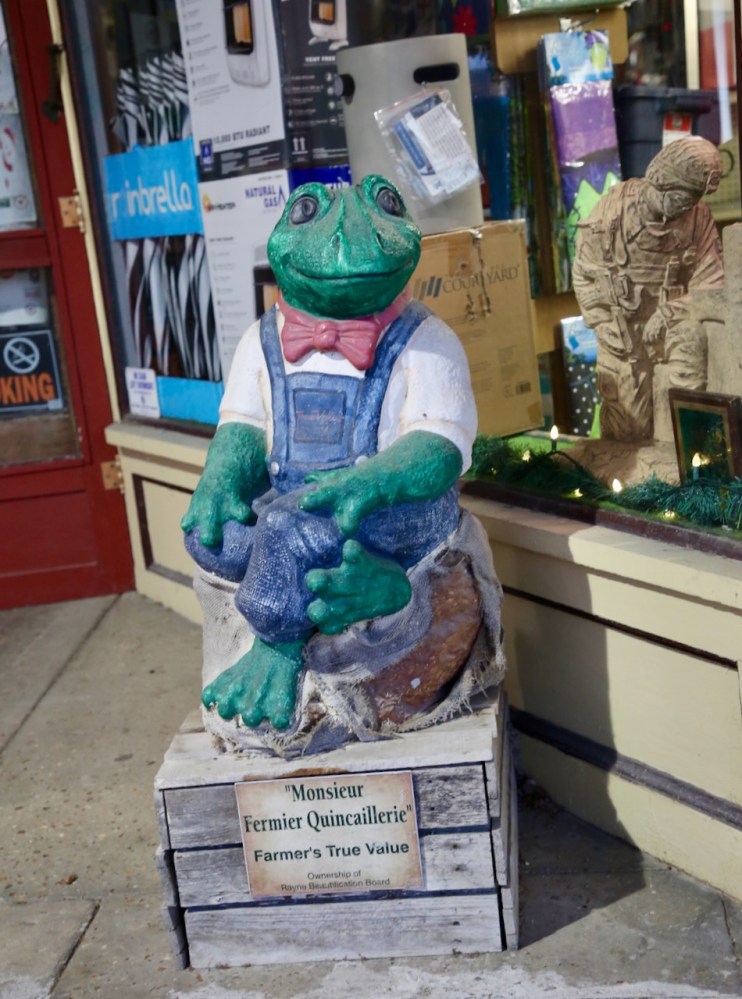
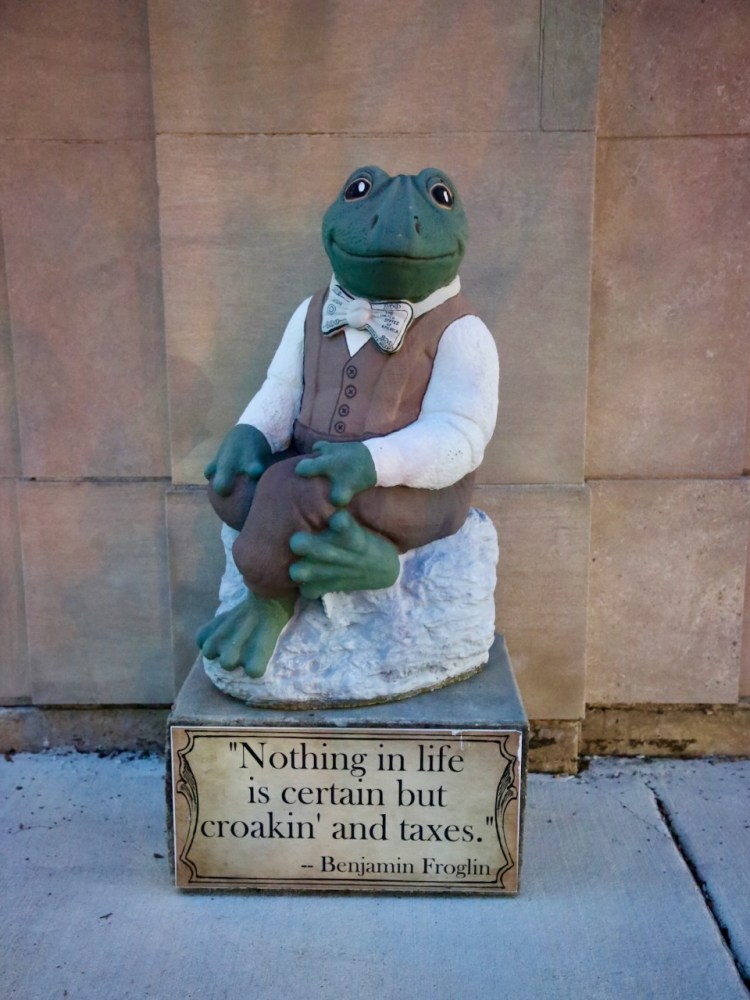
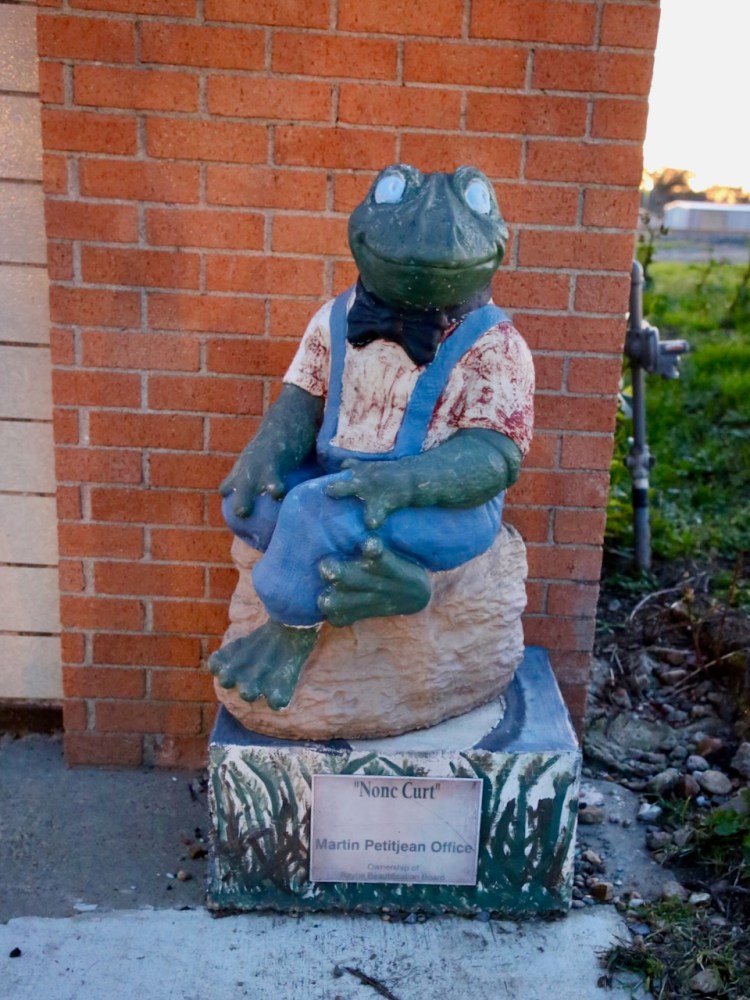
I thought there was a time change, but we’re still in Central Time when we cross into Louisiana. It just takes us two hours to get from south Beaumont to Rayne; the city nicknamed the “Frog Capital of the World.” The frogs aren’t shy either as we are met with a mural on the highway with the “Louisiana City of Murals” ahead. I’m sure the town is grateful for the name change from Pouppeville that came with the railroad, but I imagine how many frogs it took to support being the number one frog legs exporter of up to 10,000 pounds a week in the 1900s; which is what all the hop is about now.
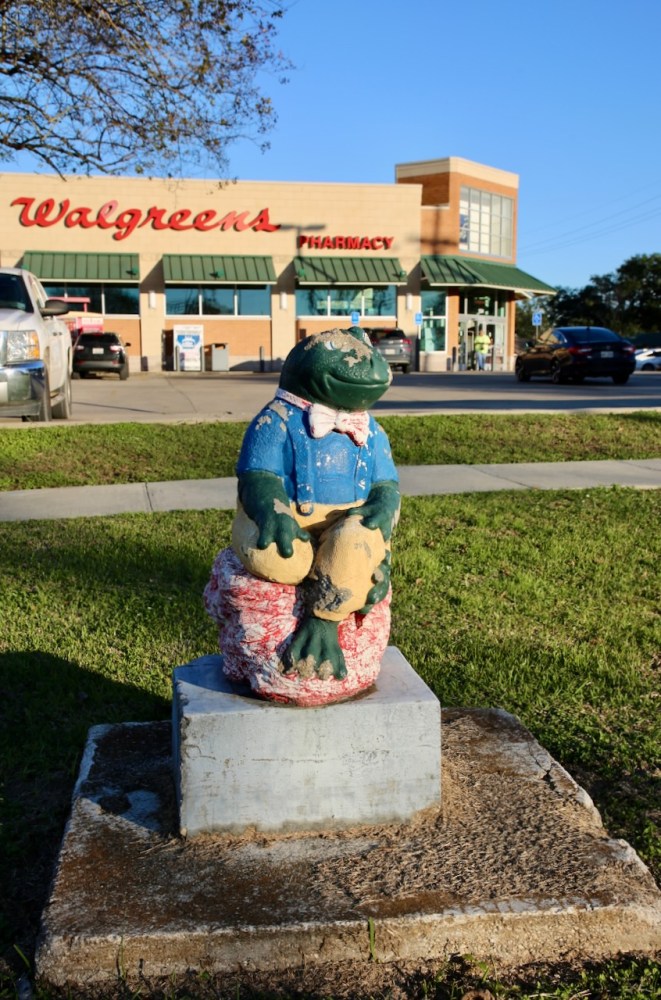
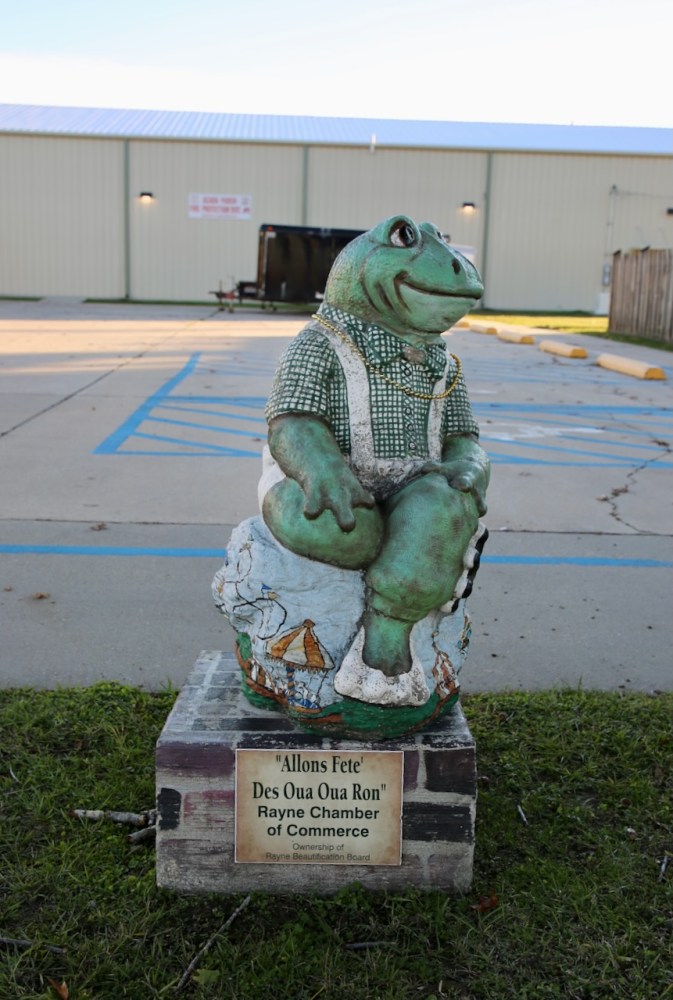
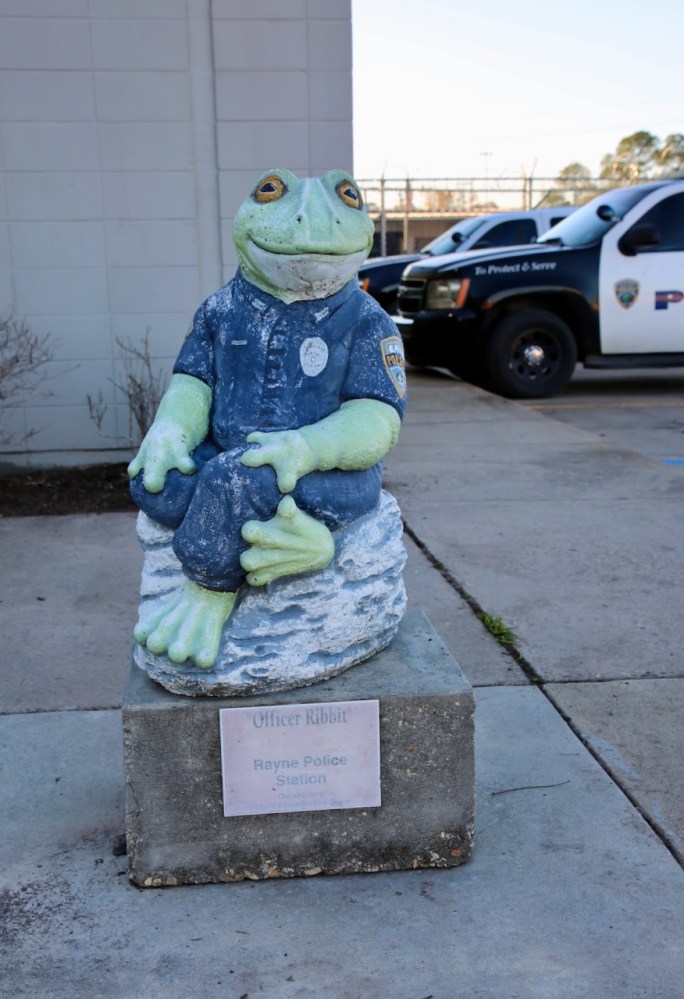
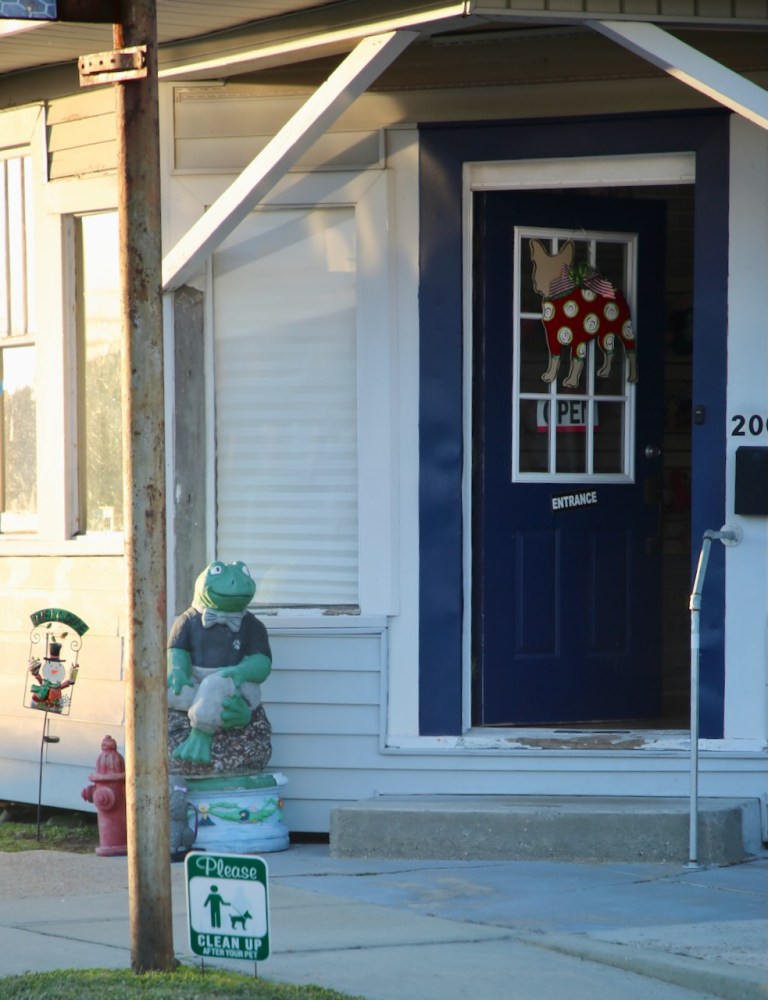
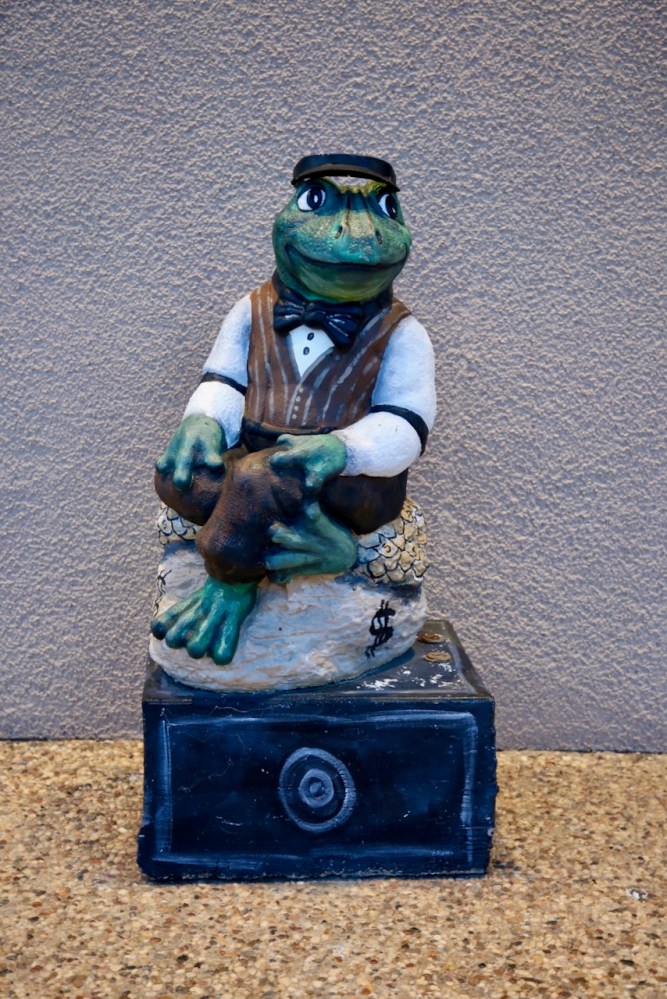
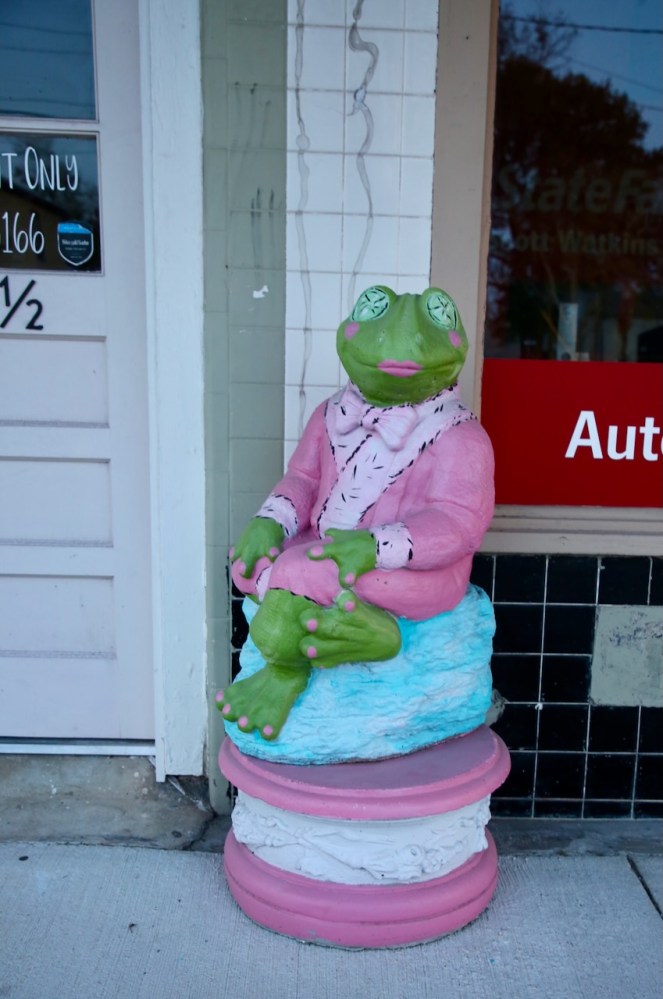
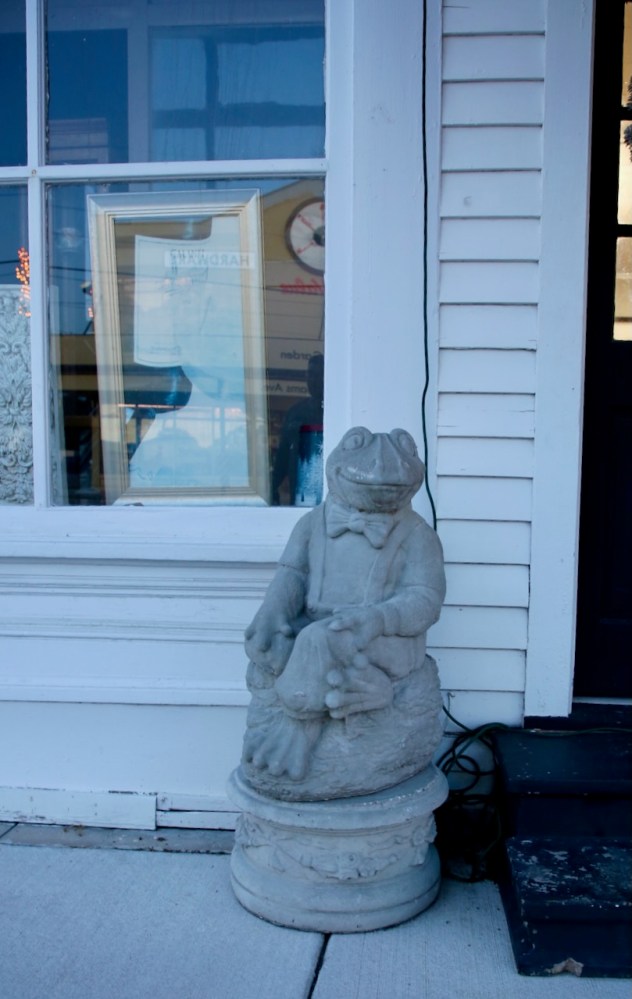
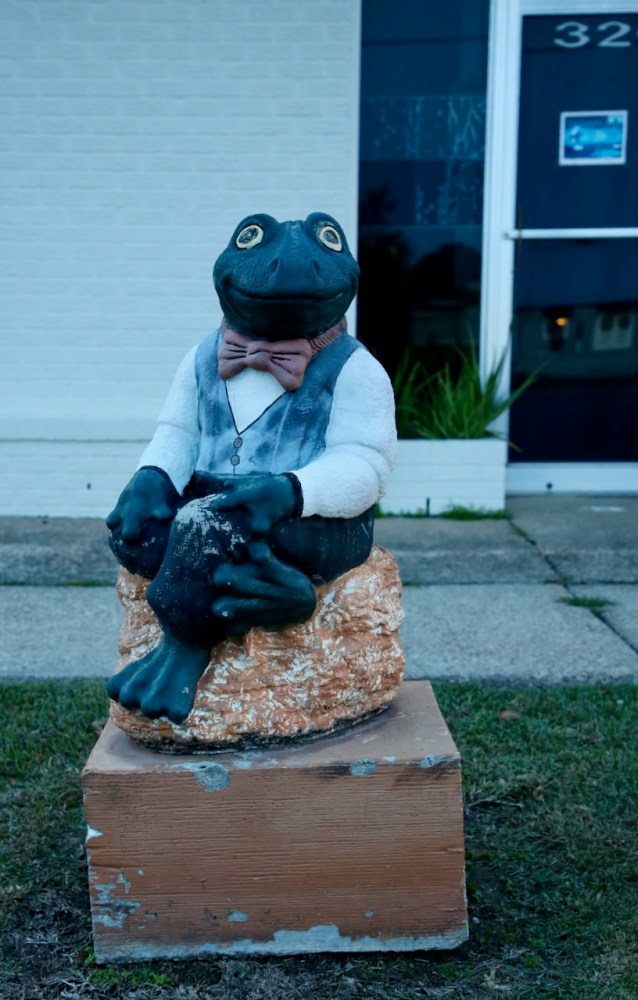
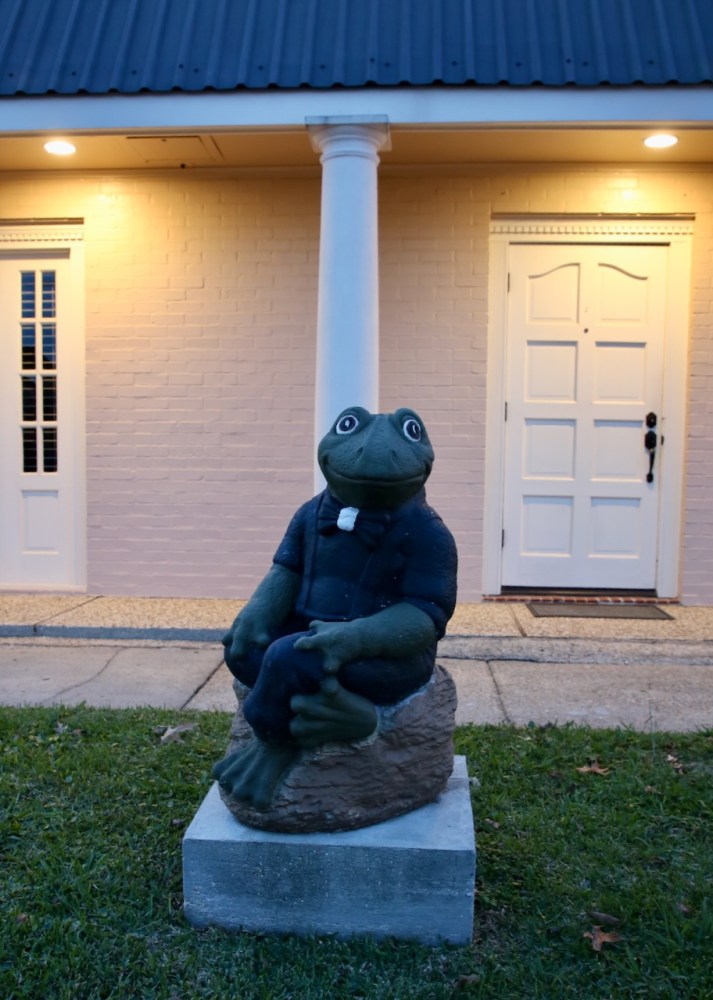
On our way to another mural, I noticed a frog statue that was also part of the plan by the Beautification Board and that set me on a mission to find more. The frogs are in varying stages of upkeep. It’s so whimsical to have something that ties the city together, but remains unique as each statue and mural matches the business’s theme that it represents. I see a frog dressed as a maître d’ and a historic property sign for a warehouse/restaurant and my curiosity and love of food have me looking inside. There are two women at the bar, who invite us in, and another mopping by the round tables of this event venue.
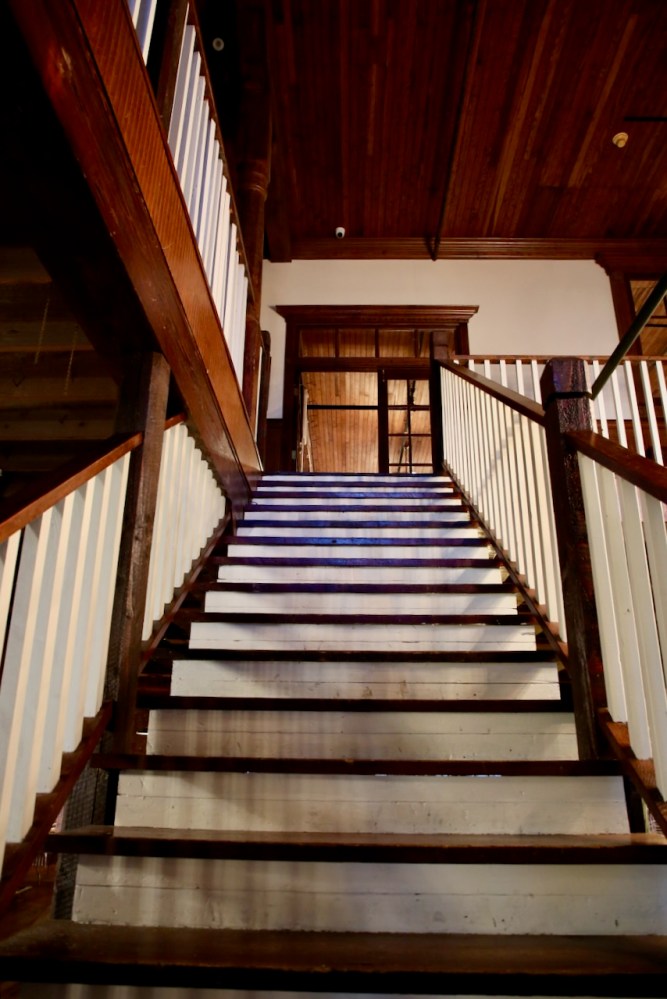
There are clean wooden floors, exposed bricks, and a mural downstairs so I have to ask if we can see upstairs too. We are permitted without question and I daydream about lounging on the couch and using the bathroom, of which I do neither. We are met at the top of the stairs; I heard them asking themselves what we were doing here – for the paper or just interested in old buildings. I gush about my love for the frogs, art, and history and am met with an offer that we check out the back patio below. We skip down the stairs, open the door freely, and peek at not much, but it’s too late.
I realize we are locked out while Caleb peeks through a fence to see if there is anything worthy of a photo. Too bad I didn’t take a selfie of us in our predicament, but I was trying to get the mopper’s attention without damaging the door; not knowing the fragility of the wood or the many panes of glass. After the women have their laugh at stranding the strangers, the woman from behind the bar comes to our rescue and we are quick to leave so that we may tell our story and perhaps be lucky to return one day for another tale at this historic warehouse.
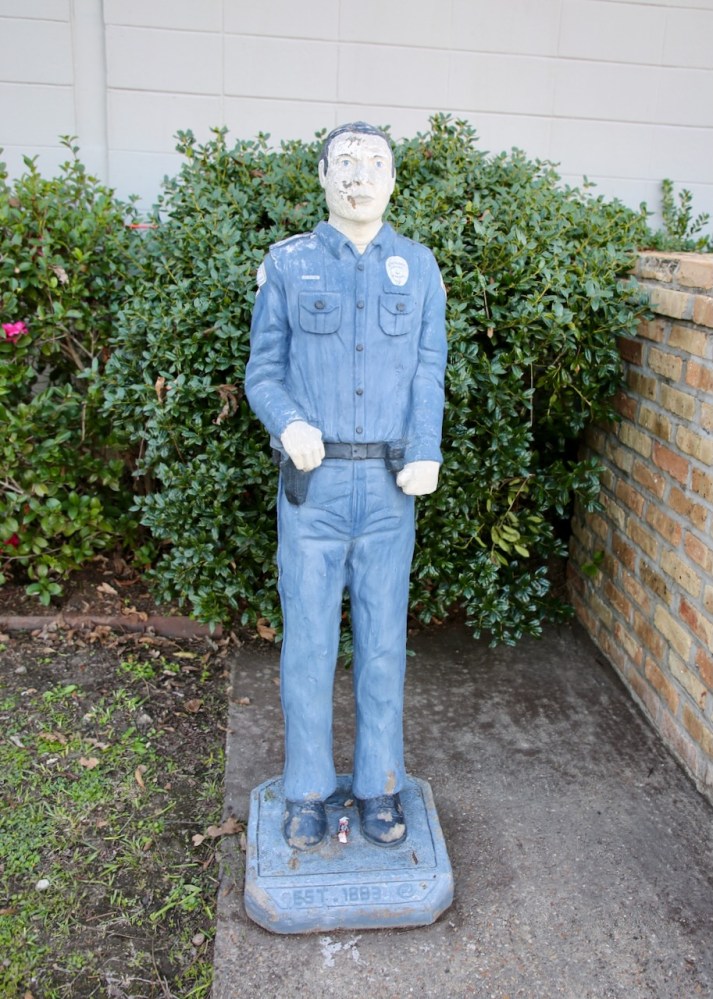
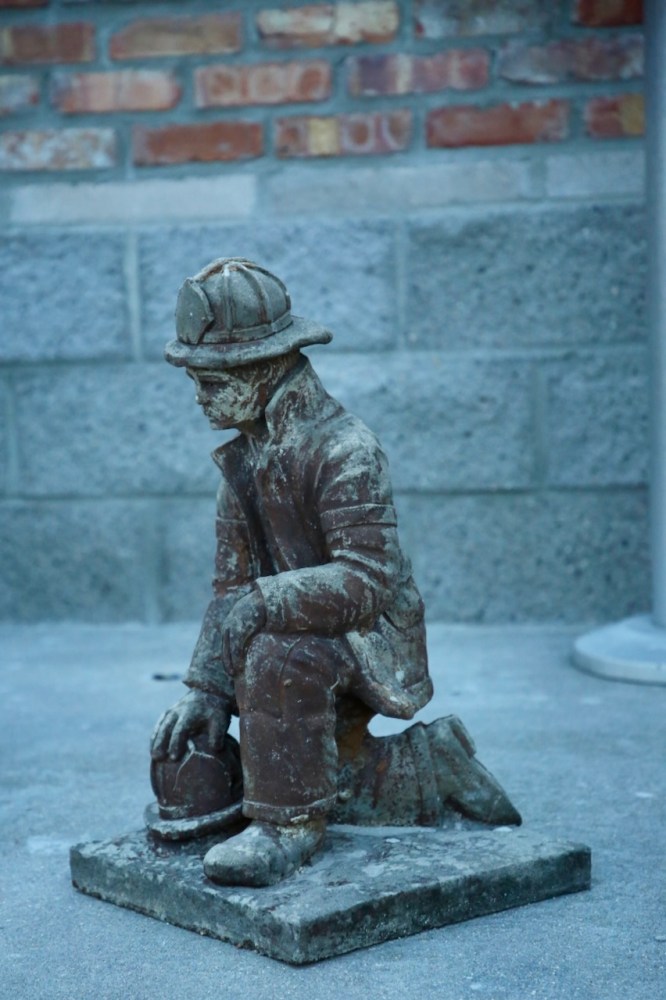
Small towns have such a great feel to them, especially when they’re a good distance from a big town so you can still see concerts, and museums, and visit stores for those few items that don’t find their way to your local shop. There’s a little stage where some families and companies have decorated short boards into trees because they know their neighbors and enjoy celebrating with them, regardless of the occasion; though I may be projecting too much. The only places to have other statues are the police and fire stations and the church to remember their fallen.
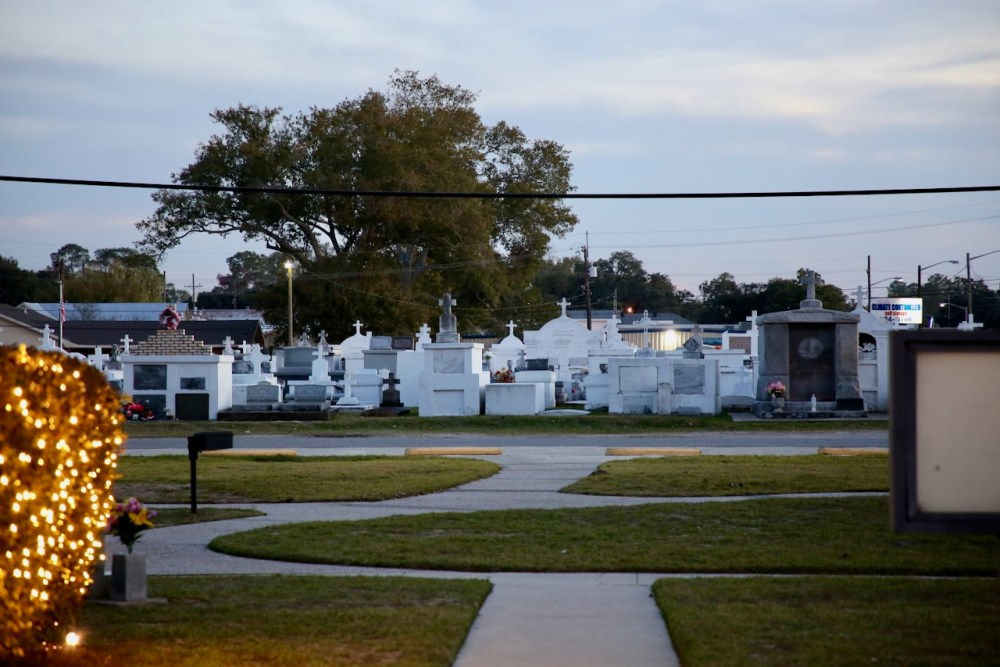
Beside the church is St. Joseph’s Cemetery, the only Christian one with graves facing north-south instead of the traditional east-west. It has been this way since the town was relocated in 1882 and has made it onto Atlas Obscura and into Ripley’s Believe it or Not! with the article posted in the lobby of the Chamber of Commerce. I didn’t notice the directional disaster, just the collection of headstones between us and the self-storage on the other side – pun intended. We explore until nature’s flash and the lack of one on my camera puts an end to our hopping about here.
Frogs use their eyeballs to swallow by letting them sink into their mouth and help push their prey down their throat. I use my eyes to eat, but only to connect with my food in a different manner. I thought I was being helpful to our health by buying different rice, instead of the usual noodles, to go with beans and mixed veggies for dinner, but our Sumo Jetboil lining is a bit more temperamental due to its ability to boil a liter of water in four minutes and 15 seconds. The new Flash Jetboil has this feature down to three minutes and 20 seconds, which would have obliterated our meal instead of just burning/attaching it to the interior lining bottom.
We stop for gas on the east side of Baton Rouge and I get an orange sherbet and butter pecan swirl soft serve while Caleb gets a phone cable so we can both charge our phones in the car – ah, the luxuries of technology. He got the wrong adapter end and had to dig the receipt out of the trash and wait in line to exchange it for the correct one. I finish talking with Fallon, the friend we’re driving to visit in Florida, while Caleb sets up camp at Fairview-Riverside State Park, about half an hour from the Mississippi border. It was one of three options I gave us, this one being 38 miles east of Tickfaw State Park.
If I hadn’t set an alarm, we’d have been woken up by the AMBER Alert in San Antonio of two kids under five years old. This “America’s Missing: Broadcast Emergency Response” program was named after Amber, a nine-year-old, who was abducted from Arlington in 1996. It would take two years before this program saved a child’s life, but there was less than one alert for every thousand kids the police and FBI had reports for in 2021. It would take until 2005 for all states to have operational programs and until 2013 for the alerts to be sent automatically instead of as in 2002 when people could sign up to receive notifications electronically.
I remember the milk carton photos of missing children. This program was started in late 1984 and a few months later some 700 out of 1600 independent dairies had agreed to print pictures on their cartons. This would introduce “stranger danger” to kids at breakfast, who back then were more likely to be taken by a noncustodial divorced parent than a stranger. We may have been 300 miles away, and sadly so many bodies are found too close to home but too many minutes or years too late, so perhaps we would see the getaway car and be able to point the police in the right direction; even if the sun’s not up yet and we’re still inside.
Caleb hands me our coffee cups while he packs the car. I make myself a strawberry Texas-shaped waffle with a blueberry yogurt and Caleb will join me for an original waffle with a peach yogurt as our syrups. We’re off to get gas in the dark. We try Sunoco first, but they want cash only. I’m more likely to even carry cash if I’m traveling to another country than remembering that some places here still use it, especially after the COVID-19 fiasco. Oh well, we’re able to fill up for $27 at Chevron, instead of the usual $50 in California, so you know where we aren’t staying or settling once Caleb retires from the Navy.
Sunrise isn’t for another half hour but we’ve got a two-hour drive to our first stop that opens at 9am so we watch the horizon go from dark orange to yellow to blue. When driving into the sun, it feels like it rises faster than it sets, but perhaps the mountains and other obstructions are just better placed in the morning than they are in the evening. This portion of Highway 10 seems to be a popular place for tires to explode and generally come off vehicles to bake between pavement and the Texas sun; which also helps to heat the inside of the car and causes Caleb to sweat since he still has his seat warmer on medium setting.
The Caverns of Sonora open at 9am, in the winter, so I suppose the first tour will start 15 minutes later because everyone should be there early and thinking they’re late. I was hoping our eight-minute delay wouldn’t make us wait for the second tour as my notes had this down for a two-hour event and I know we wouldn’t (I couldn’t) possibly be patient that long. A man greets us at the desk and while Caleb uses his military discount to get us two tickets for $32, I read the sign that says no bags, jackets, etc., so that you hit nothing as doing so is now a felony in Texas.
We later learn that the reason this crime was escalated in punishment was due to the right-wing being broken off Sonora’s trademark formation, The Butterfly, in 2006 and stolen. There is still a $20k reward towards the return of this piece. We’re told the tour will start at 930, maybe 10, and again that I leave my jacket. The sign says 70* but our tour guide, Lisa, tells me 80*, so I drop it in the car, though there is a sweater delivery service that will drop your coats off at the exit in the cave tunnel for your walk back. I’m glad I left it and even wish I’d put on shorts, as I got sweaty underground.
We look around the gift shop, I watch the guinea chickens (never put them with a guinea pig, but there’s also guinea-worm disease), and a couple and a family wander in pushing back our start time. I’m also stressing the group of children, but the price per person is too steep for them, so we will leave with Lisa and a couple – wife and a man in the Air Force carrying his 30lb three-year-old son, who will do surprisingly well – after our safety brief. We get some who fell in which hole history before entering the temperature-controlled door at 10am.
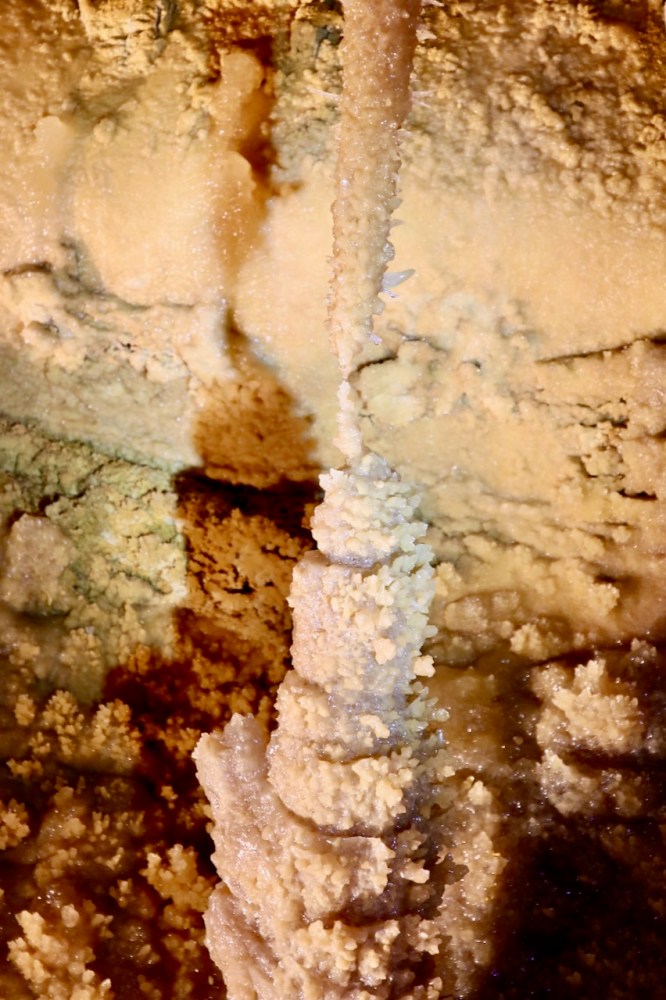
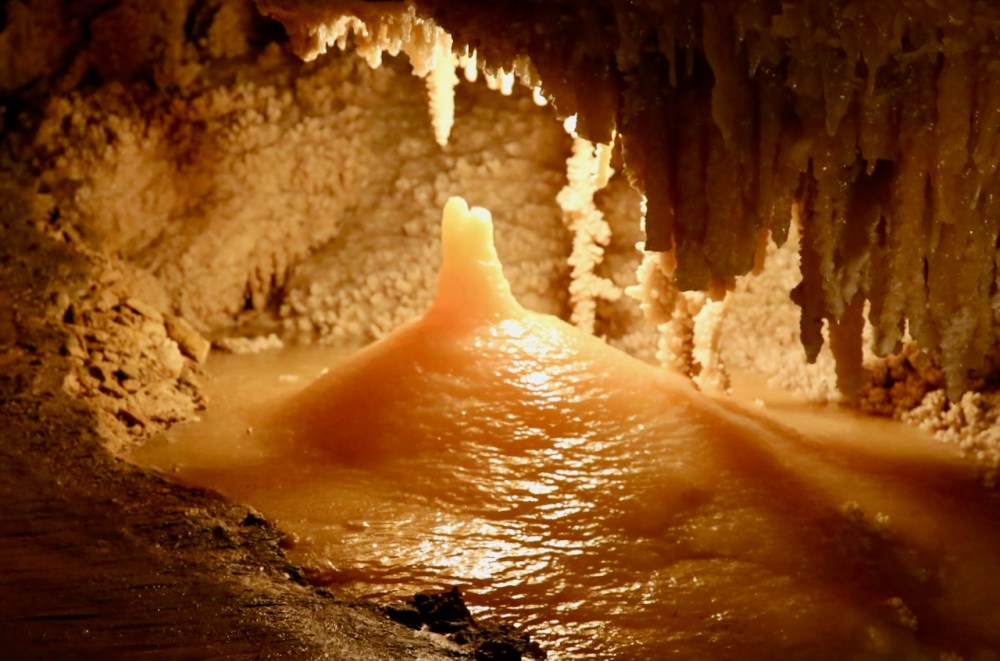
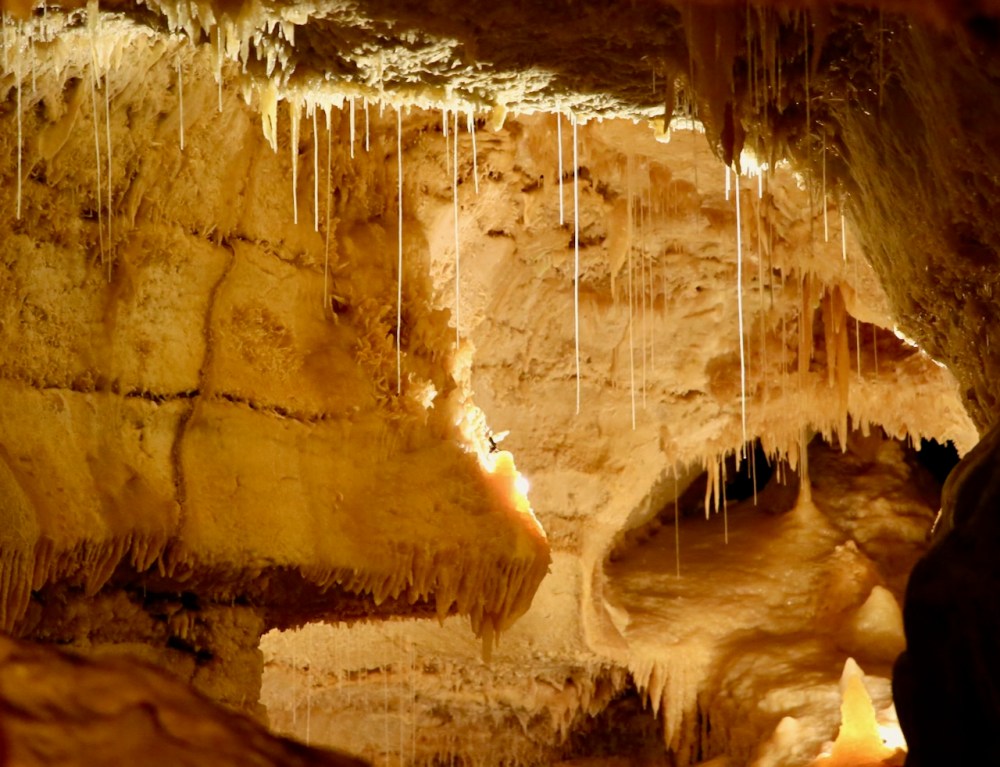
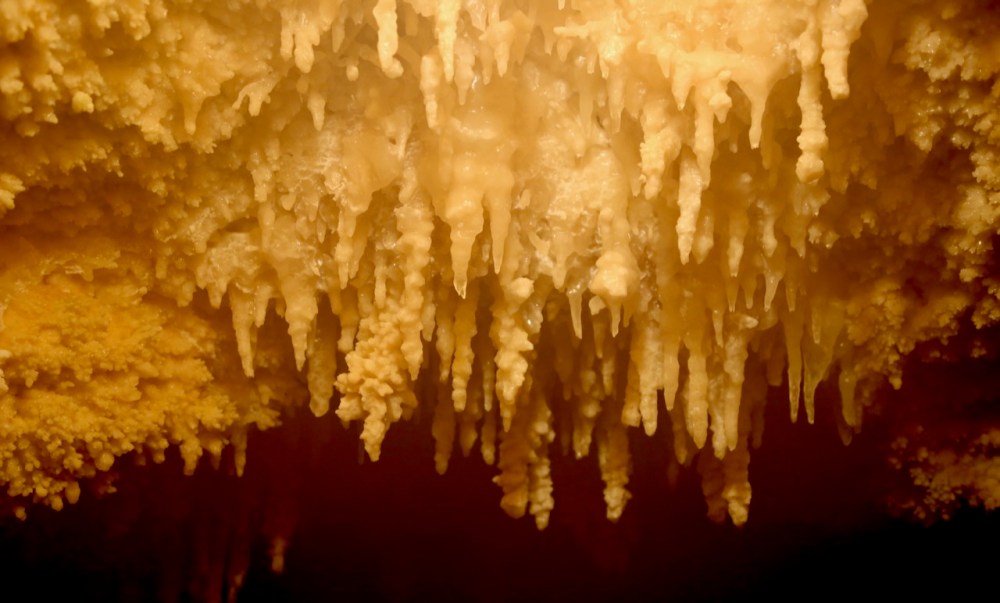
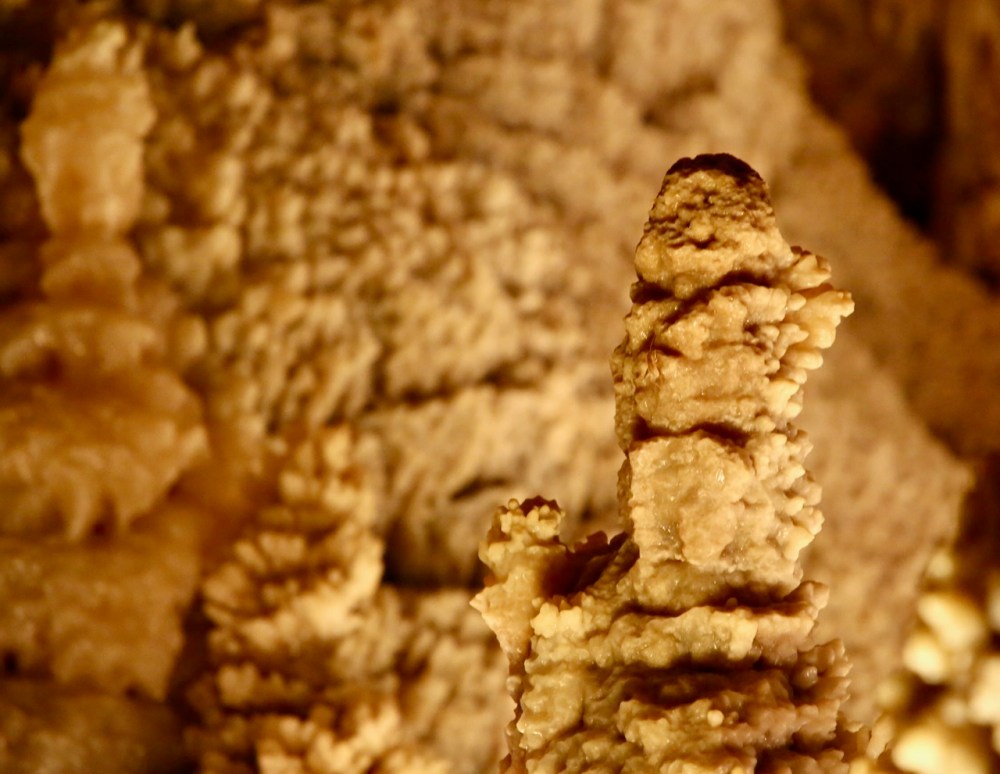
I’m directly behind the tour guide, as usual, but my camera lens hasn’t caught up to the 98% humidity, a change of about 90% from outside, as I snap my first hundred photos. Caves are such a snapshot of time and they’re able to capture so much of it while still supporting life and letting water do its thing; which is to continually carve and drip and collect through the layers of stone and tell another story each time you see it. Some caves are off-limits, and some parks are on a lottery basis, so this visit feels even more precious that I get to peek at its formations at least once.
There is so much to see here and I feel my usual cave tour rush, though the family isn’t asking to get by and our guide seems to have forgotten her time-telling device. I steal a few extra minutes to try and photograph this whole cave, but even Lisa wouldn’t be able to do that yet; and she walks these halls many times a day, if she is so lucky. Her daughter will soon start giving tours, now that she’s 18, and it will be her first job. I do suppose having a parent to study makes it easier to go into their field of work and in a sense I have – customer service and creativity; though one is way more rewarding than the other.
We are shown things hidden behind other features and told when to look up and other times back. Caves should start offering the reverse tour option so that, like an out-and-back trail, you can see one place from two perspectives. Though I would also offer the crawling tour, for a closer look at all things below knee level, and a guided tour of just staring at the ceiling to capture all things above. A cave is like a novel that you read by skipping pages; you still get the gist of the story but there’s so much more to learn in the details you miss.
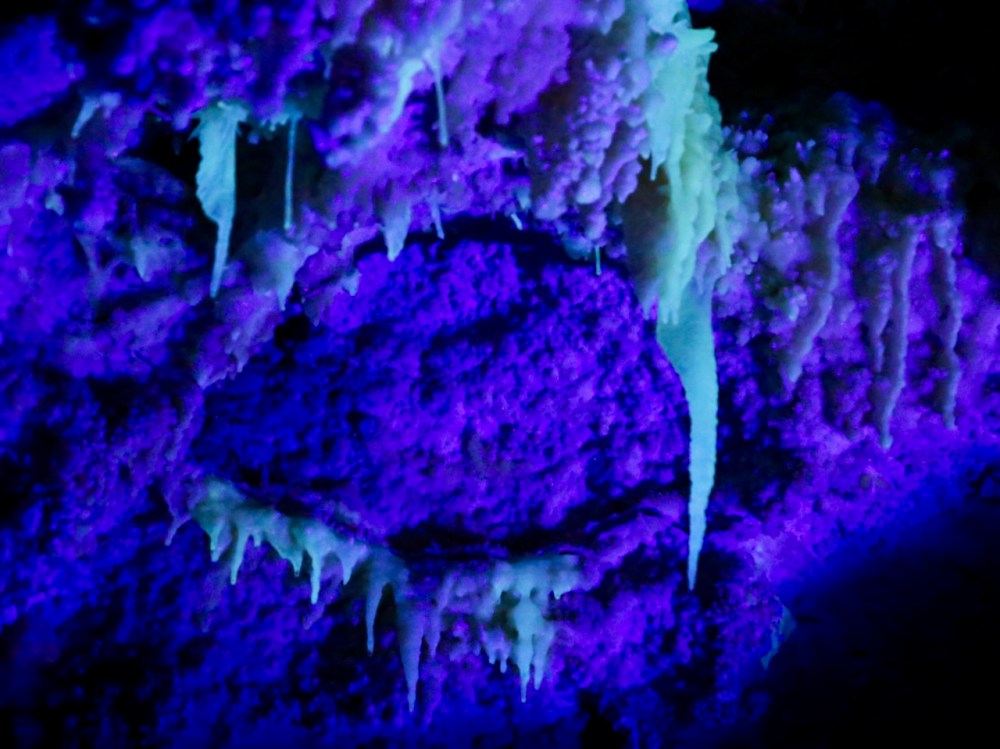
There are so many features, the pond (without pennies) being one of my favorite, but also the glow-in-the-dark calcite caused by deposits of manganese that change energy states based on photon absorption and cause the light we see. There’s a lot of science going on in here and the kid does great as we sit in the dark and pretend to stare at our hands in front of our faces or anything else because we can’t see anything. This is why I wouldn’t have been an early cave explorer – probably not for fear of destroying something I didn’t understand, but for breaking myself and getting caught in a tight space or both.
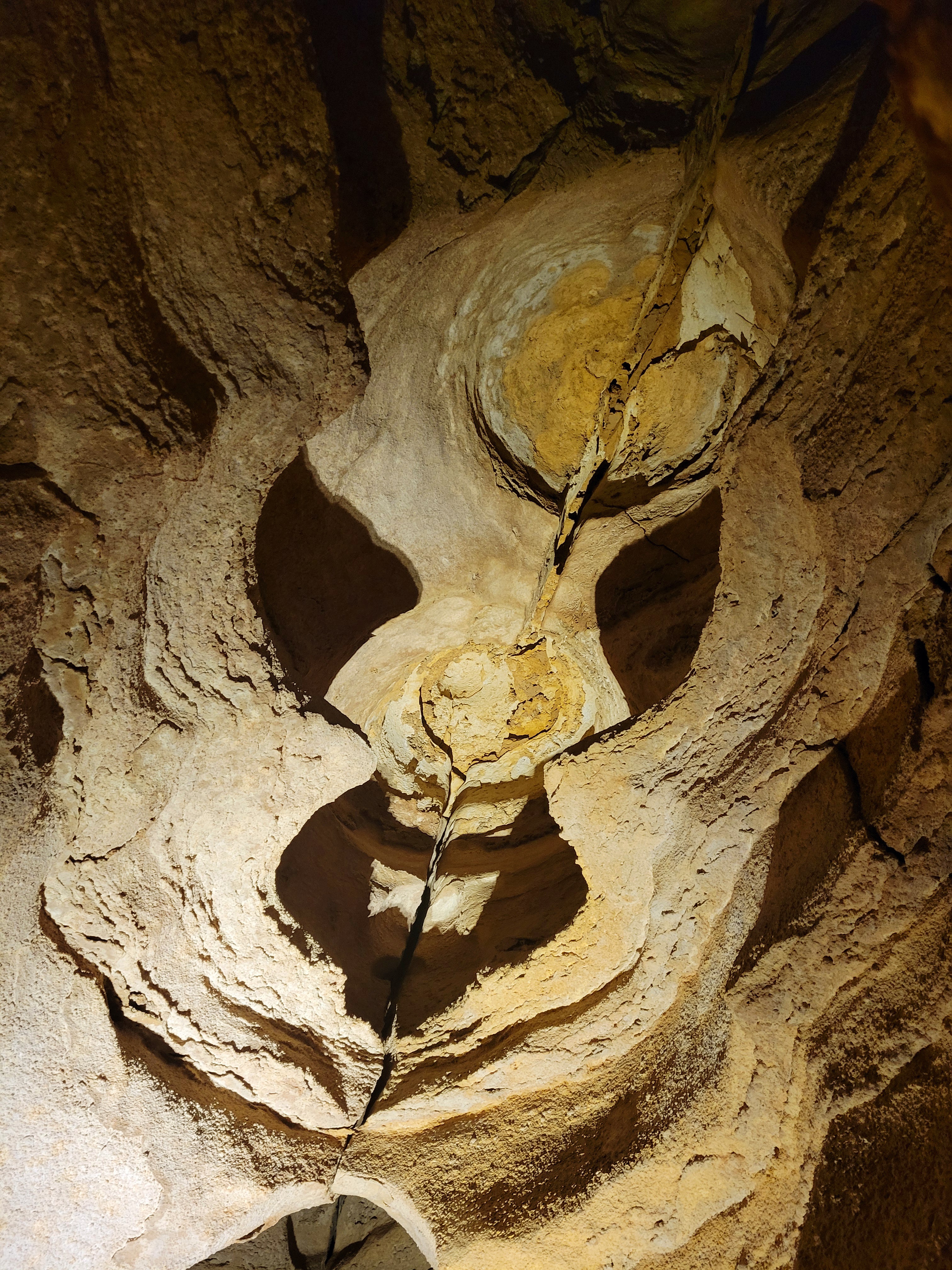
As Lisa points out shapes – a dinosaur (the kid’s interest peaks, but he’s let down), a bird (the kid shows interest but can’t see it from the two points of view), so by the time we got to the fish tail and bacon he was over it. The first moment reminded me of a scene in Short Circuit where Johnny 5 says, “No shit. Where see shit?” Though we were able to see some secret cave crickets, a species of camel crickets, that help the cave ecosystem by providing poo to spiders, eggs to beetles, and their bodies for nutrients. There’s even a carving of a cave cricket in France that’s over 12,000 years old, pet or pest, and still around.
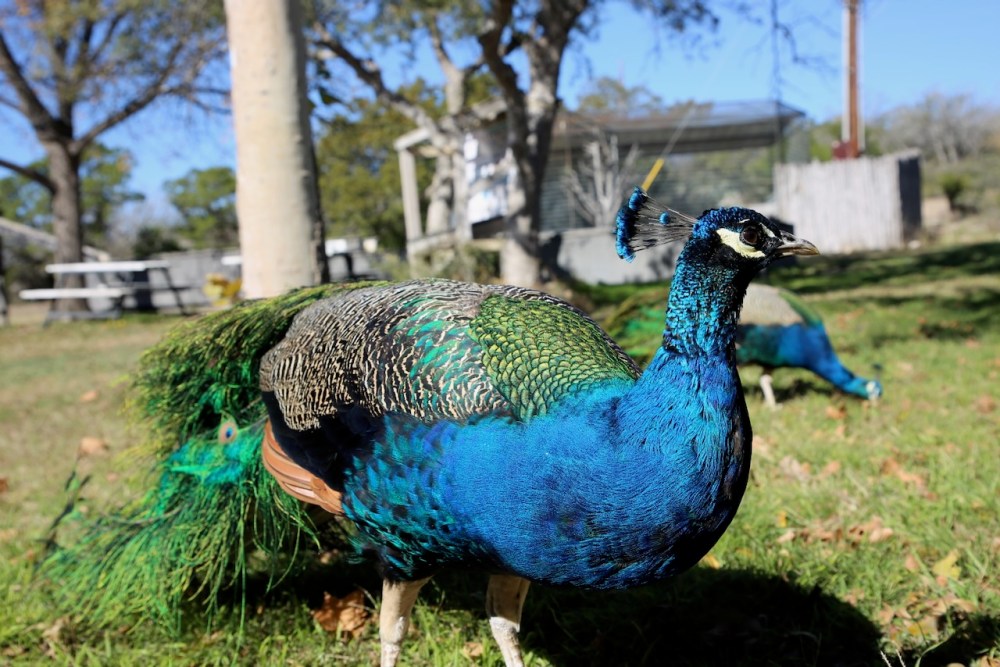
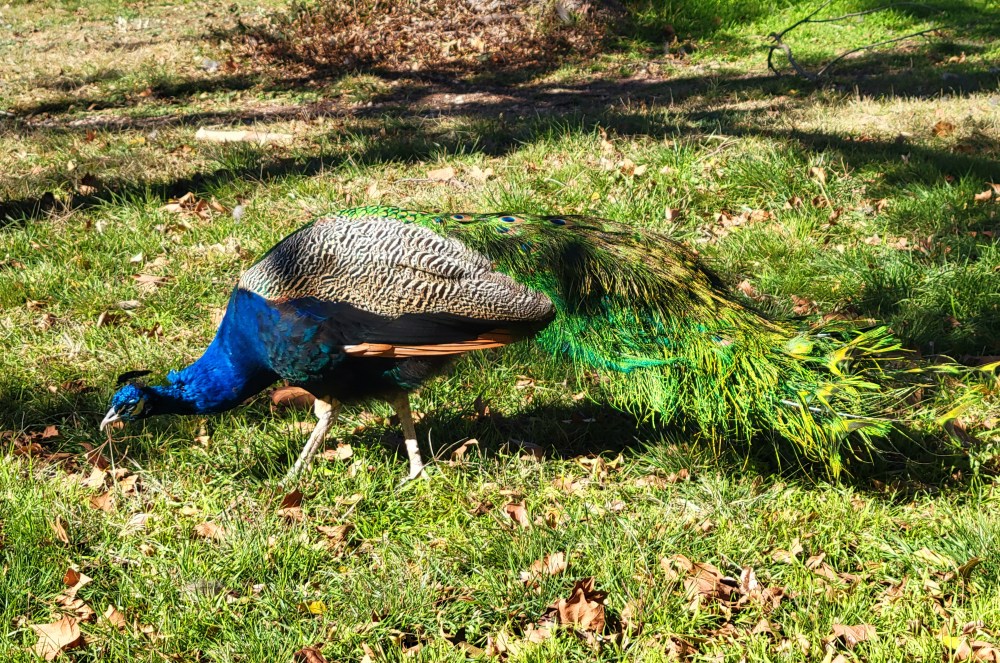
The kid starts to get hungry, so Lisa pulls out an adult-hand-sized soft butterfly necklace, so he has something to help fly out of the cave and the distraction works wonderfully. I can’t believe it’s already been 80 minutes but our time is up and the walk back, in the cool air, feels great. One of the employees dumps some chips on the ground for the local peacocks and Lisa brings out some pecans so that I can feed them by hand. Today is an example of a perfect day, and this was just a portion of it. I got to be among nature, learn more about it, interact with animals, and have a conversation with a stranger.
Hygieostatic Bat Roost
We have to bypass the Riverside Nature Center in Kerrville because they are closed on Sundays, but luckily there’s a historical landmark just 20 minutes up the road. The Hygieostatic Bat Roost, in Comfort, was built in 1918 in hopes of eradicating mosquitoes to reduce the spread of malaria. This roost is one of 16 constructed between 1907 and 1929 in the US and Italy. It’s on a gated property, so I took a picture through the fence. The next point of interest (that we don’t stop at) is the Bumdoodler’s in Boerne; a lunch company that has served deli sandwiches and homemade pies, since 1982.
Cibolo Nature Center
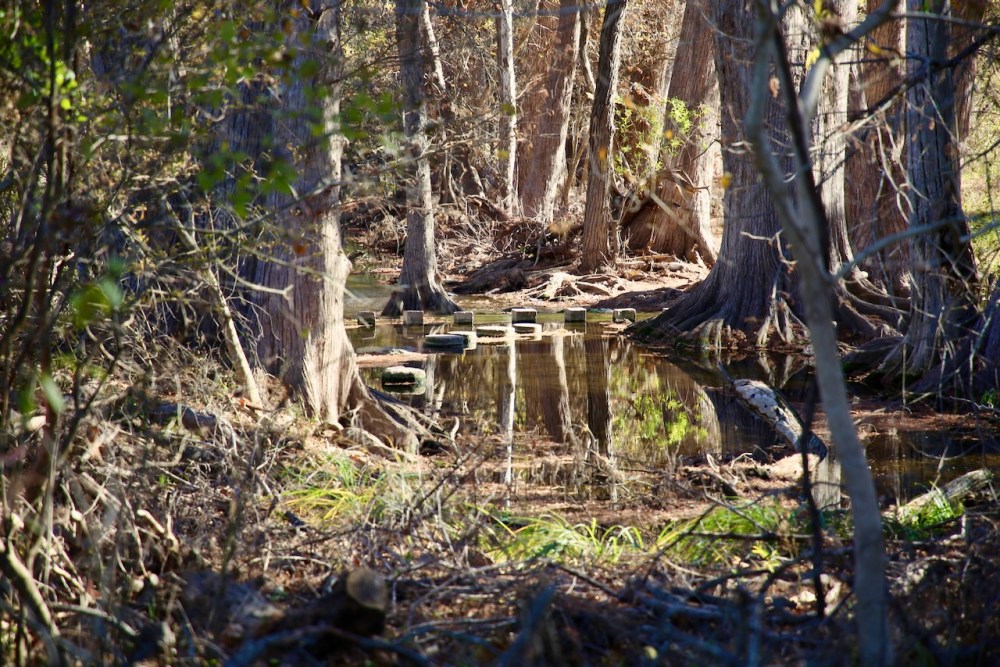
Just across town is the Cibolo Nature Center & Farm. There’s a large prairie, some woodlands, and a meadow across the river. The visitor center is closed. We take Cooper’s Crossing, little stone steps across the water, and explore the other side. We get passed by a runner with a dog (off-leash who waits to pass us) but the trail dead-ends and there’s a fence around the farm and no proof of them having been there. We think we’re on another trail because we see a couple sitting on a branch in a small clearing, but we get lost, almost get our shoes wet, and have to backtrack and hike our way back up to the trail.
This must be the day of missing people, though I didn’t realize that Texas averages 130.6 people per day and the national average is around 2,300, which means the second largest state only accounts for 5.7% of missing people reports. I bring this up because while we were hours from San Antonio I got a Silver Alert (old and disabled person missing) for Houston. This program was started in Oklahoma in 2006 to help find the at-risk elderly, especially those with dementia who wander off. All states now have some form of this program but it has failed on a federal level due to criticism of too many Alerts, colors, and cost; though it seems to have a high success rate.
Caleb has been craving Mellow Mushroom since we left San Diego and finds one, en route, in San Antonio. Whether we avoid the metropolitan area and stay on the 46, dip down on Loop 1604 to eat, or stay on the 10 through downtown, our travel times would be the same for the 56, 66, and 70 miles of each route. We have no issues getting to the restaurant because we arrive earlier than the senior citizens discount for dinner (not a thing here). After nibbling on our small pizzas (cheaper to do two flavors on a large) and sipping on a blueberry lemonade ale, I notice the American flag that seems to be made of Monopoly pieces on the wall. Upon inspection, all the little people are holding Thailand flags.
Now full, we get into traffic and I’m used to being able to set my cruise control and pick a slow lane in San Diego (which works most of the time) but it’s not an option here. I try speeding up to drive like the others, but then remember how this makes me feel so I slow down and continue to do so until I’m calm and the BS passes when the third lane arrives. We can’t make everyone happy and when others don’t use the left lane to pass only (a requirement to varying degrees in every state) it does no good being in their ass and then slamming on the brakes, even if it means doing under 65 in an 80 mph zone.
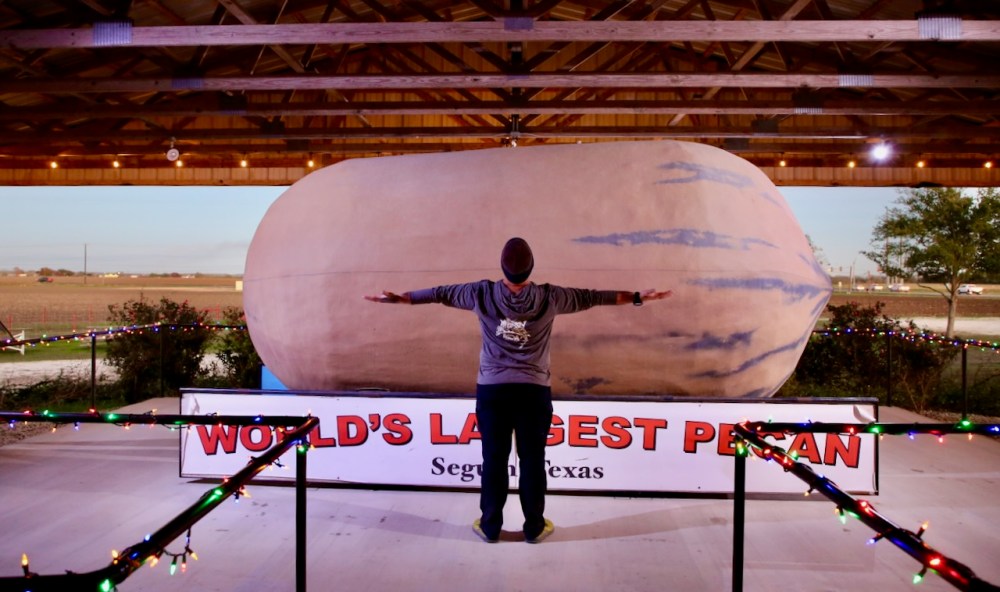
I found the World’s Largest Pecan on our route, and Caleb finds the story behind why there are two locations. A five-foot nut replica to honor the history and contribution of Cabeza de Vaca was built in Seguin in 1962 and placed in front of City Hall. Twenty years later, residents in Brunswick, MO felt like building a replica of their patented pecan, twice the size of the original and ten times the weight, to honor a local farming couple, the James’. In 2011, Seguin finally took back the title with their 16-foot version of the pecan housed at The Big Red Barn.
We are the only visitors at both. The first pecan is at an intersection and we park across the street. The second pecan is four miles up the road and we have a whole parking lot to ourselves. The nut is lit all night and even has holiday lights around the railing (not sure if they stay up year-round). This is one battle I don’t mind watching the outcomes of. I hope that people don’t find a reason to cancel nuts one day and tear them or other “largest” statues down. Instead, change the placard to educate people about the truth.
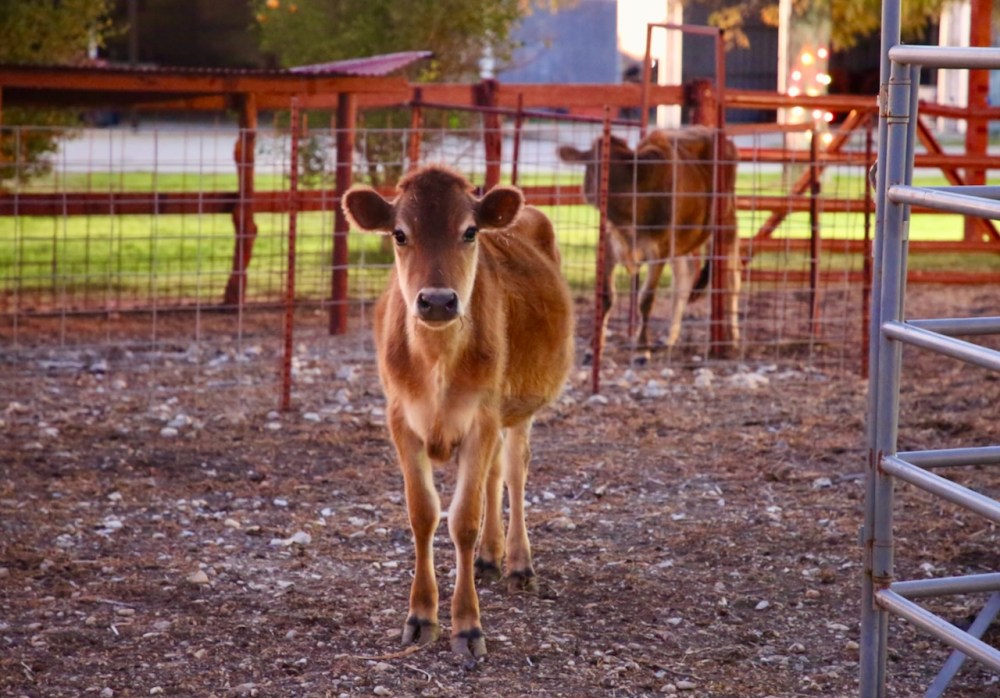
I’m not the only nosy one in this relationship. Caleb goes on to explore the rest of the outside of the closed museum and we find a church, farm, and garden. There’s maybe ten minutes of dim light left on the horizon as I snap a photo of a calf and we climb back into the car. We’ll get to Stephen F. Austin State Park for the night and I get cozy in my sleeping bag as soon as Caleb is done setting up the tent and blowing up our mattresses, since I was busy being warm in the car and taking notes, so we can remember some of today’s details.
We wake up in Deming, New Mexico and after a shower, putting the tent away properly (after last night’s hurry), and getting some free coffee and an apple cinnamon waffle are ready to face the 30°F day. Our first stop is Rockhound State Park, which has us going south towards the Little Florida Mountains. There’s a trail from the picnic area that climbs higher into the wind. This area of the park is better known for its abundance of minerals and wildflower displays – neither of which we are seeing in the cold shade.
Spring Canyon Rec Area
We’ll drive to the Spring Canyon Recreational Area, better known for its peaceful hiking and stunning scenery, in hopes of seeing an Ibex goat now that the temperature is 41°F. The park’s elevation ranges from 4,500-5,400 feet and we’ll experience some of this climb on what used to be a paved road. While we’re out here, Caleb thinks of a neat sticker: shoes with rocks, stickers, and a tiny bush in them as nature’s trail mix or whatever ingredients make up your favorite path. So if someone beats us to printing these, Caleb is owed a royalty.
No goats for us, but we do see some lovely Brahman cattle on our way to Mesilla Valley Bosque State Park. I had no idea that the Rio Grande ran through here and starts in Colorado. The river covers almost 2,000 miles, most of that between Texas and Mexico, as the 20th longest river in the world, and the 5th longest in North America. The river is critical for bird migration and the vast basin it feeds, but humans feel the need to pull enough water for irrigation that it allows the introduction of invasive plants along with pollution to destroy parts of the eco-systems the river flows through.
It’s quite windy, but once we go past the cute garden area and over the levee to start the trail to the left (the other being closed for construction) that loops by the river (dry with tire marks), the tall grass will be our windbreak. We are also met with trail barriers as many a thorny tumbleweed or the brush beside them cut Caleb’s hands as he clears us a thin path. We’ll learn from the nice employees, front desk lady and groundsman, in the visitor center, after our walk, about why the lake (dammed river) is dry. The reclaimed water that they’re allotted has not been released yet.
Mesilla Valley Bosque State Park
Caleb will carry on with their kind conversation as I have a look around their sufficient display and notice that on a map is Bosque del Apache National Wildlife Refuge, just two hours north of here, where I spent Christmas with Dad and Caroline two years ago. A bosque is the forest habitat that’s found along rivers and both of these areas are designated IBA (important bird areas) by Audubon, which established this program in New Mexico in 1999 and has identified 60 areas, large and small, to provide sanctuary to over 340 species in the “Crown Jewel” alone.
As we’re passing through one of the many neighborhoods of Las Cruces, on Locust St., there’s a sign posted: Yield to blind in X-walk. Cars should not hit any pedestrians, whether or not it’s their turn to cross, if they have the brakes and stopping length to do so. This is why I appreciate the crosswalk break in the middle of wide roads for those who take longer to shuffle, wheel, crutch or otherwise get themselves across. I doubt it’s the blind who are running across at night, wearing all dark clothes, where there are no street lights or pedestrian marked paths.
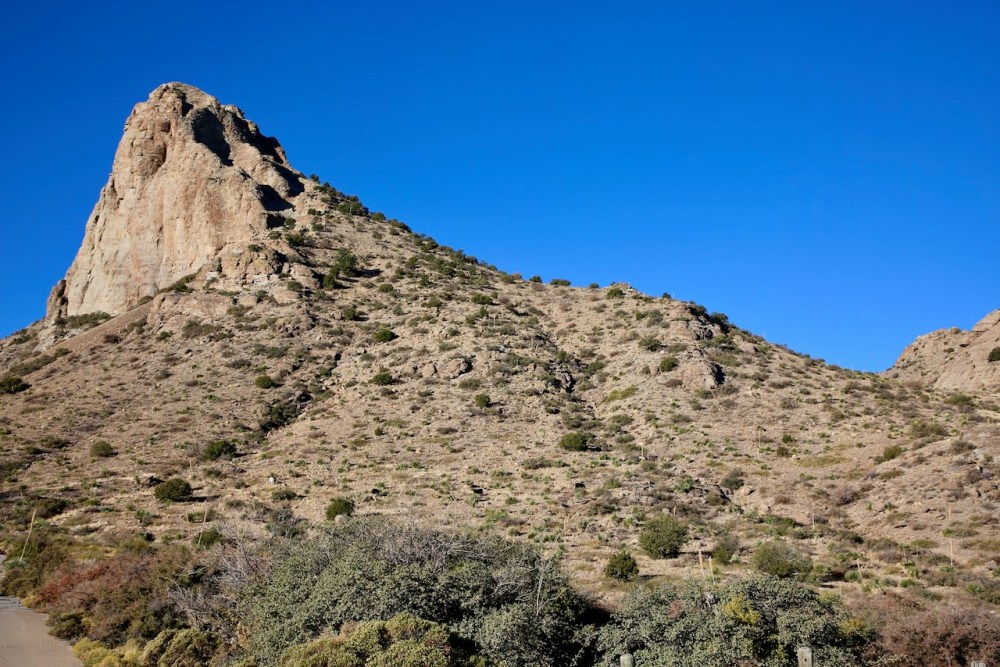
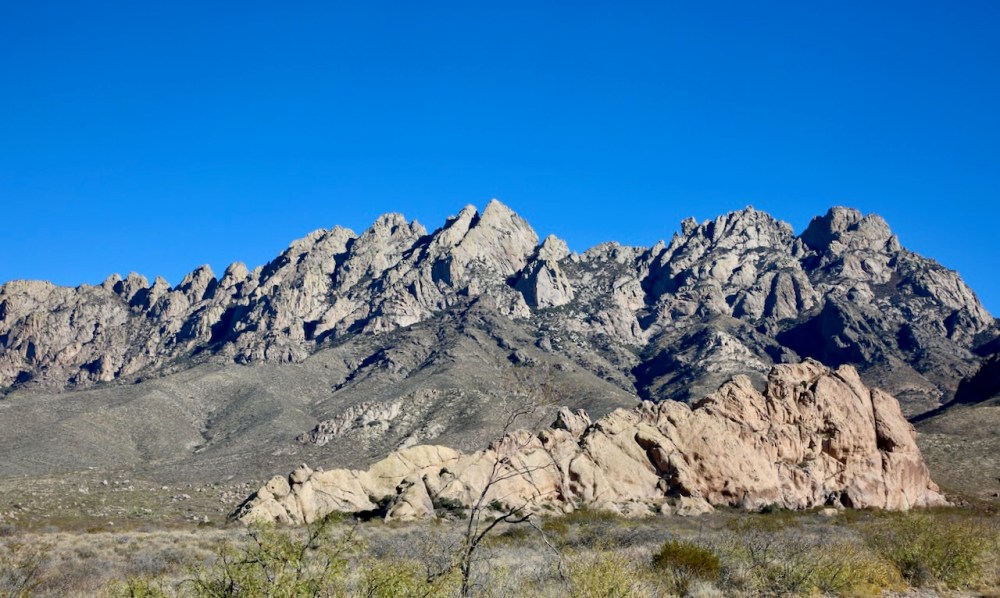
What I didn’t know about Dripping Springs Natural Area is that it’s part of the Organ Mountains-Desert Peaks National Monument. It was established in 2014 to cover over 496,000 acres of Chihuahuan Desert, ponderosa pined peaks, narrow canyons, flat plains, and a volcanic landscape that’s southwest of here, close to the border with Mexico. It is managed by BLM, not NPS, so I have another website to check for awesome places to see. I thought we just missed the Fillmore Falls, but now we have plenty to come back for and an America the Beautiful pass that gets us in for free while Caleb is active duty.
Organ Mountains
The free annual military pass program started on Armed Forces Day in 2012 and as of Veteran’s Day 2022 all military veterans can receive a free lifetime pass to over 2,000 federal recreation sites. This latest program, the VIP Act, came after the death of Alex Lofgren, a veteran and congressional aide, who said his healing journey included experiencing nature and helping veterans. After he passed in 2021 in Death Valley, this was a way for his girlfriend to honor him and all those he had worked with and continued to support after he was discharged.
People have died…
We have a look around the visitor center with a large poster about The Twelve Orders of Soil Taxonomy and what percentage of ice-free land surface they cover. I could nerd out on that too, but Caleb is looking at the maps of visitors: one of the US and another of the World. Two people came from Greenland, two from Madagascar, and one from Mongolia amongst a mess of others from Puerto Rico, Ghana, Israel, England; and Victoria, Australia. Once we’re done looking around, the ranger asks if we have dogs as that’s a determinant factor of which trails they can go on.
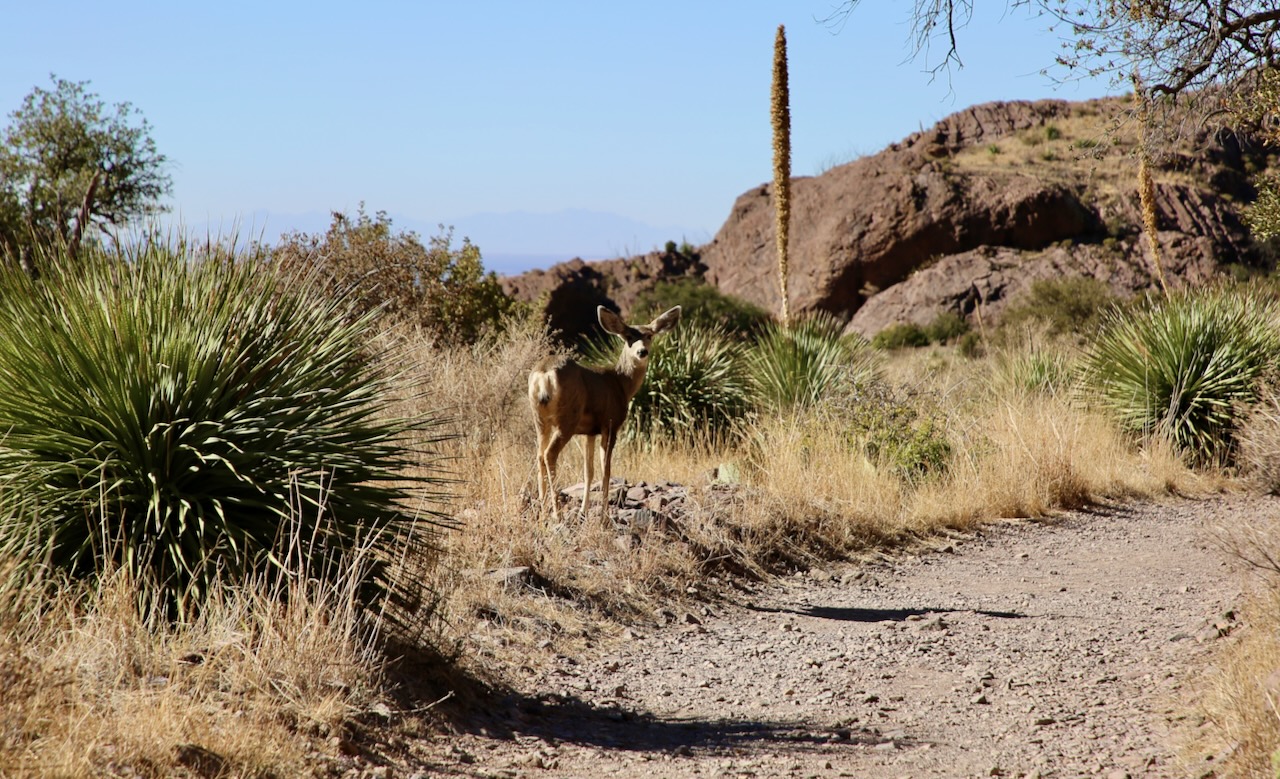
Out and left to get to Dripping Springs. We feel like we have the place to ourselves, and for the most part we will, minus the frat-boy men, a couple, and the woman who points out mule deer by standing frozen while she watched them eat and stare. It was a great time. We pass some outbuildings that used to be signs for wagons, and eventually automobiles, that they were close to camp and a wonderful meal. There will be no food, and is sadly no water in the filled-in reservoir that was built in 1892 to support the 32 guest room hotel.
outbuildings at Dripping Springs
Welcome to Texas, where a wall separates us, a highways joins us, and a sign warns us of unexpected pedestrians in-between. Across the river is a 197-foot tall, bright red X, made by sculptor Enrique Carbajal González in 2013, to honor the first Mexican president’s, Benito Juárez, for whom the city is named after, decision to spell Mexico with an X instead of a J in the 1800s. It’s also a reference to the merging of the indigenous Aztecs and the Spanish cultures in the country with a viewing window so that visitors can look into El Paso and over Ciudad Juárez.
Van Patten’s camp
The entrance to Chamizal National Memorial is beautiful and we drive past an outdoor stage. We look at the mural, painted in 1992 by Carlos Flores, with Marian Anderson, an unnamed white man, and a vague American Indian leader. The latter will last through the 2014 restoration while Neil Armstrong and Barack Obama will be painted over the others to convey the same message as the original – the US is culturally diverse and Americans share a history of astonishing feats, inspirational achievements, and enduring legacies. I’m not sure everyone would agree, but the artist isn’t bad at painting faces.
It is quiet when we walk in, and we will be the only noise inside, or out, during our visit. Ranger Saul lets us walk through the hall, learning about the exchange of statues – Abraham Lincoln in Mexico City and Benito Juárez in Washington, D.C. – in 1966 because “only a truly great people pause to pay tribute to the great of other lands.” – President LBJ. Also in the hallway are 245 “Centennial” and 239 “Find Your Park” pin displays, collected by David Kroese in 2015-2016 for the National Park Service’s 100th anniversary as a thank you to employees, volunteers, and other helpers.
Then Ranger Saul leads us to a room – part waiting room and part living room from the 50s to watch the video about the argument over the Rio Grande as a border as it had shifted in 1864 and both Americans and Mexicans had settled the land that would eventually be split. People had to move in 1964, and were paid by the government for their land, but not their homes, and given the option of which country to relocate to. The countries agreed on a $40 million concrete channel for that four mile portion of the river to reduce the need for another dispute anytime soon.
convenience
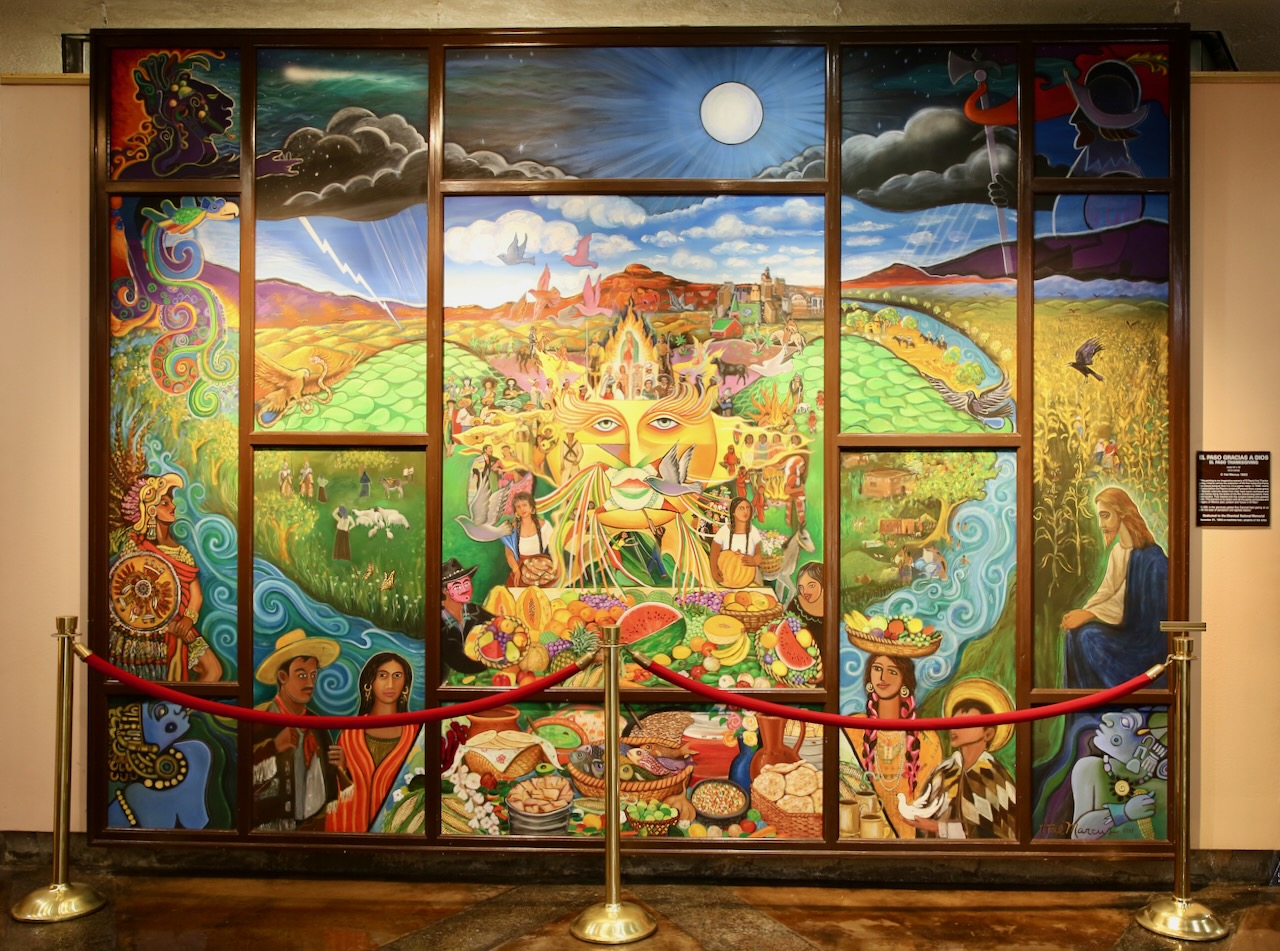
I let Ranger Saul know that we were last here in March 2012 and glad to have us back, tells us about the first Thanksgiving in 1598, when the Spanish colonists feasted with the Jumano Indians, and shows us the painting dedicated indefinitely to the park by Hal Marcus in 1993 that is displayed prominently in the lobby. I tried looking for pictures from the last visit, but that would require getting out my hard drives, so maybe in another post I can compare then vs now. We know that Mexico has states, but weren’t able to answer that six of them border the US. I know Africa has countries, but I can’t name all 54 of them.
entrance to Chamizal National Memorial
Ranger Saul says he piloted the 4th grade park program 15 years ago by taking field trips to White Sands and other parks. This would eventually lead President Obama to launching Every Kid In a Park for 12 years in 2015 so that every school-age child would have the opportunity to visit for free. Obama even went further in providing transportation grants to further remove barriers from underserved communities. As great as this idea was, only 120,000 passes were issued for the four million eligible children in the 2021-22 school year. The administration chose fourth graders as they seem to be at the age to start showing interest in the world around them.
pottery by the Tigua Indians
Ranger Saul left an impression on us, so Caleb grabbed his Kids’ Passport (for the parks), and asked him to sign it for sharing his time, knowledge, and love. We were then gifted our first Junior Ranger patches for our willingness to learn and share. We have been to almost 200 parks and monuments and Caleb only has 5% of those visits memorialized with a message. I’m not sure when he got the book, but a lack of interest and conversation on their part (can’t be mad at introverts) won’t keep us from enjoying the museums and outdoors that these places introduce us to.
El Paso Gracias a Dios
Another inspiration comes from a couple’s idea, once they visited Yosemite (it is on my Top 5 favorites, so far), to bring their sons along on a journey to visit all 59 National Parks (there are now 63) before the boys turned 18. They accomplished their goal, got matching tattoos to celebrate, and wrote a book, 59 Before 18, about the six years it took them in hopes of inspiring others to start with a park close to home. Another family finds their expressiveness in their front yard when a man promises to build his wife something beautiful.
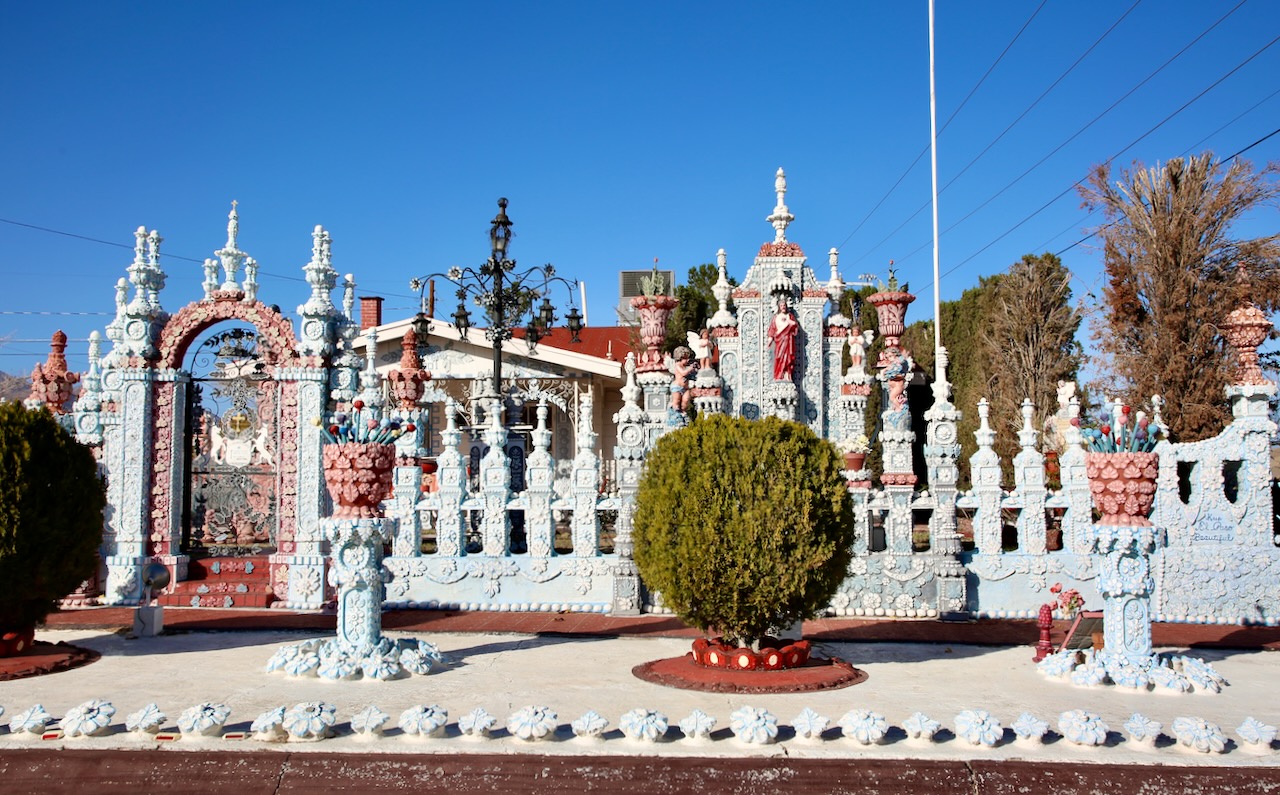
Casa de Azucar
We find the Casa de Azucar in Atlas Obscura as the chiseled cement that took Rufino 25 years to complete, starting in 1973, has turned into his masterpiece with themes of religion, hospitality, and nature. I had assumed it would be somewhere different, so I was caught off guard when we parked in front of a house, near the highway, and walked towards the white and light blue home with touches of pink and a maroon roof. I also didn’t expect to see the art expand onto the sidewalk, around the house, and through the garden. I’m surprised in myself now that I didn’t knock to see if the inside had a matching motif.
Texas has so many helpful signs. The next one tells us: Never leave a child or pet alone in a car., so here dogs are allowed to roam in the streets. Now if only we could post those same signs in national parks so that people would stop putting baby bison and elk in their cars. Still in El Paso, we visit the Rio Bosque Wetlands Park, acquired through the federal lands to parks program. The Tornillo Trailhead seems to still be in the planning phases to get to, but there’s a map at the start and a bench with a tree on it. This park is the dumping grounds for treated wastewater that migrating birds find attractive. The pipeline delivering this water is also attempting to return the oxbow to the river that was straightened in the 1930s.
screwbean mesquite
We stop in Van Horn and I wash the windshield and try on a neon yellow fur cap. I’ll show Caleb the photo later and he says we could’ve had another set of matching hats, these being hi-vis too. We stop to make dinner at the next rest stop so we can use the walls as a wind break that we didn’t have at the gas station. We’ve decided to drive to Fort Stockton tonight since we aren’t going to risk another night of lost sleep attempting to settle in a field without a wind barrier. I think there could be a new version of glamping – an app that helps you find rock piles and dirt mounds to hide behind for a good night’s rest.
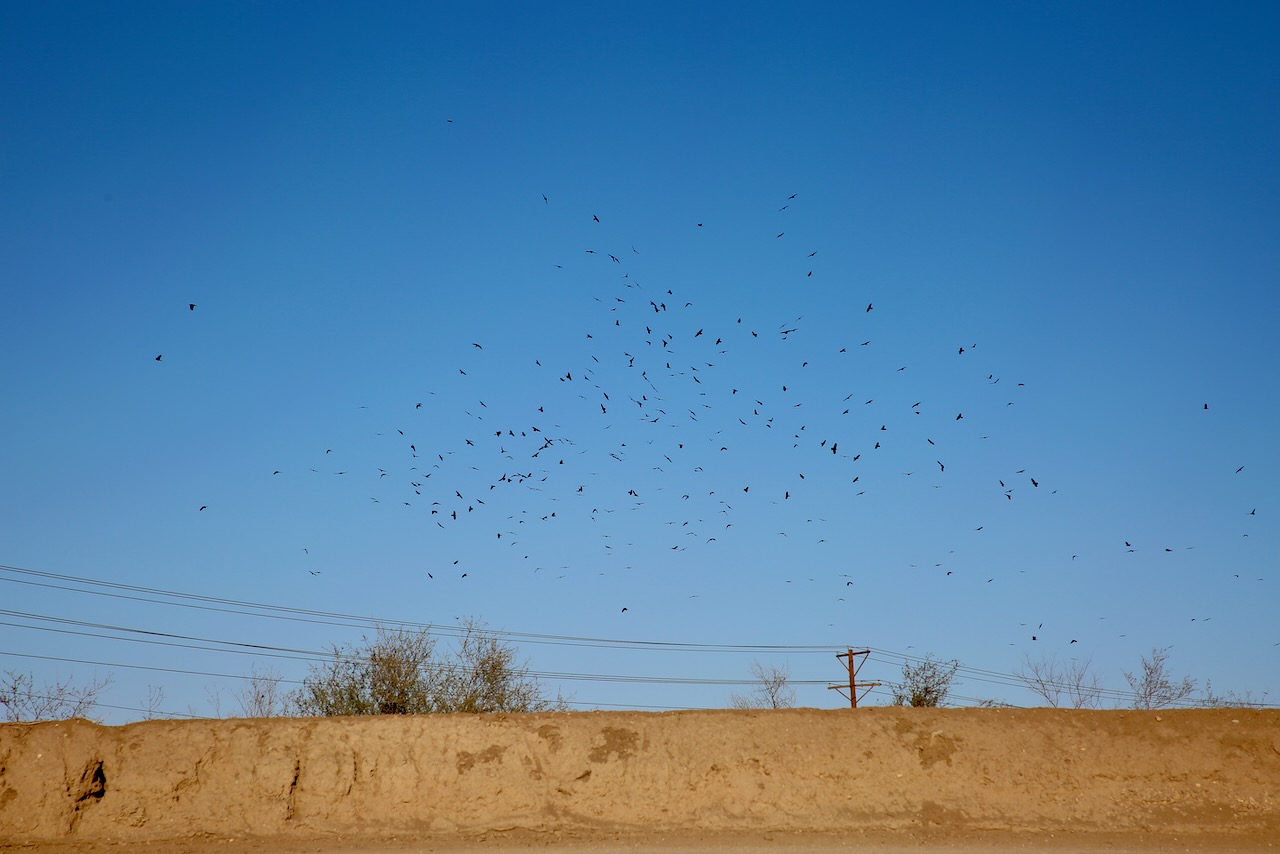
birds over Rio Bosque Wetlands Park
It’s too bad I didn’t keep track of tonight’s dinner as I thought it was too salty and was glad to have a banana so I didn’t have to eat as many noodles. Caleb has hotel points from staying at fancy places that the Navy pays for. I have motel points from being in a beta program that got a credit card that switched to a “cash” system, so the quality of my offers varies and can be judged poorly based on the bad taste of other visitors who find these places grand for the crimes they’re committing inside. We get to the Atrium Inn at 830, already having paid our $60, and are asked for a card to be kept on file for incidentals.
Atrium Inn
The pictures looked grand, and we’ve been fooled before, but there is a heated pool with a waterfall out our back door. We explore more of this cozy space to find a dirty, half-full cold hot-tub and that one of the two saunas was starting to heat. Back in the room, I’ve stayed at places half the price of this one with the shared microwave securely attached to the wall in the hallway, and yet those rooms still came with a bathroom door. Caleb gets the bathroom sink to stop squealing and we’ll use the kitchen sink to brush our teeth. By incidentals, the clerk meant theft as there’s no minibar, no towels worth stealing, and not sure of in-room entertainment since we didn’t turn the TV on.


























































 TheJessicaness