We climb out of the tent as the sky starts to lighten at Fairview-Riverside State Park. I will go find the unheated bathroom, with no shampoo or soap dispenser in the shower, while Caleb breaks down our site. I’ll defrost the windshield while I wait for him to return with dirty hair and body too. The clouds begin to streak across our view in the dawn twilight as the Earth’s shadow and the Belt of Venus fade below the horizon behind us as we continue our trip east.
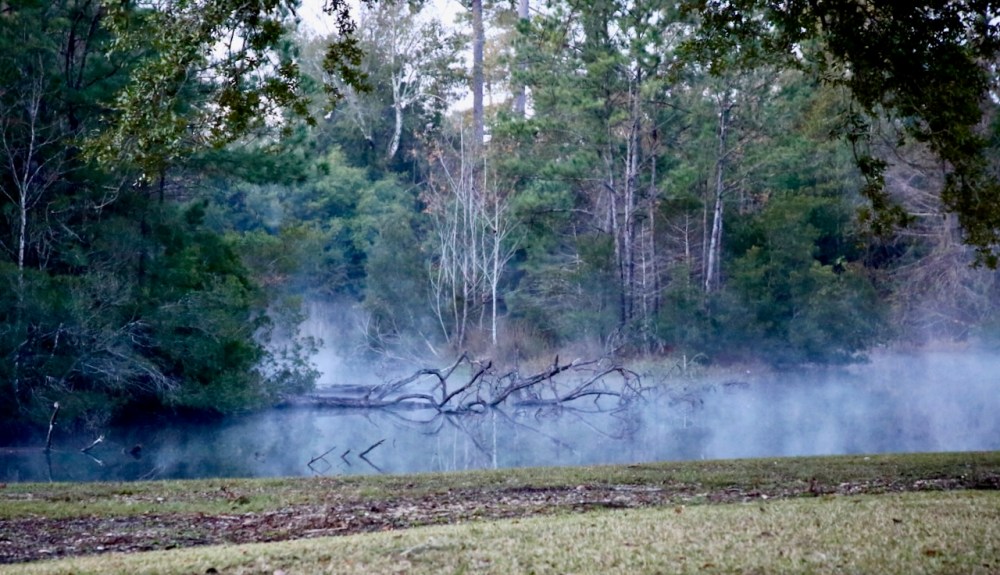
We find ourselves at the Bayou Lacombe Centre, more of a cool office in the woods than an animal-watching spot, so we decide to cook before we go. Caleb asks me to feel if the breakfast water is warm and our ideas of heat are very different, so I end up burning our oatmeal on top of the rice we burnt last night. The taste definitely influences my appetite and this leaves more for Caleb this morning than I did yesterday. I forget just how tasty a warm meal on a cold morning can be. We follow the water and it leads us to the Big Branch Marsh NWR where we had planned to stop.
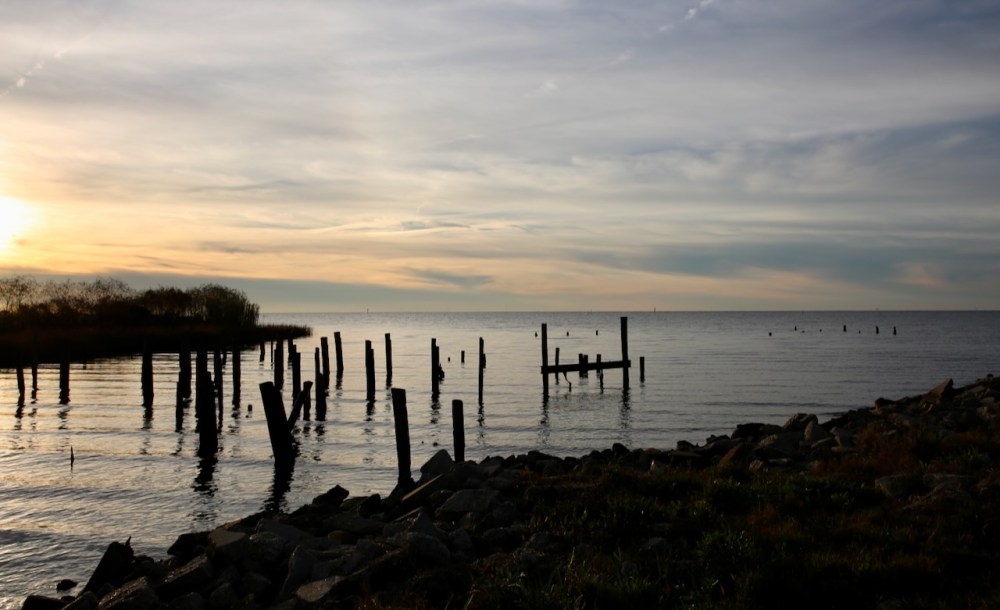
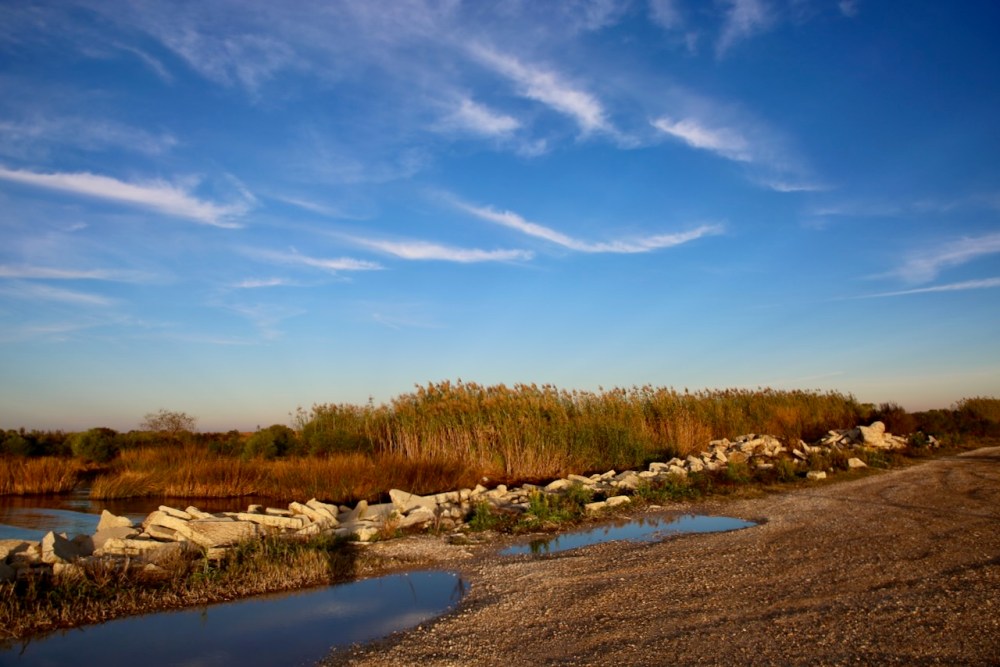
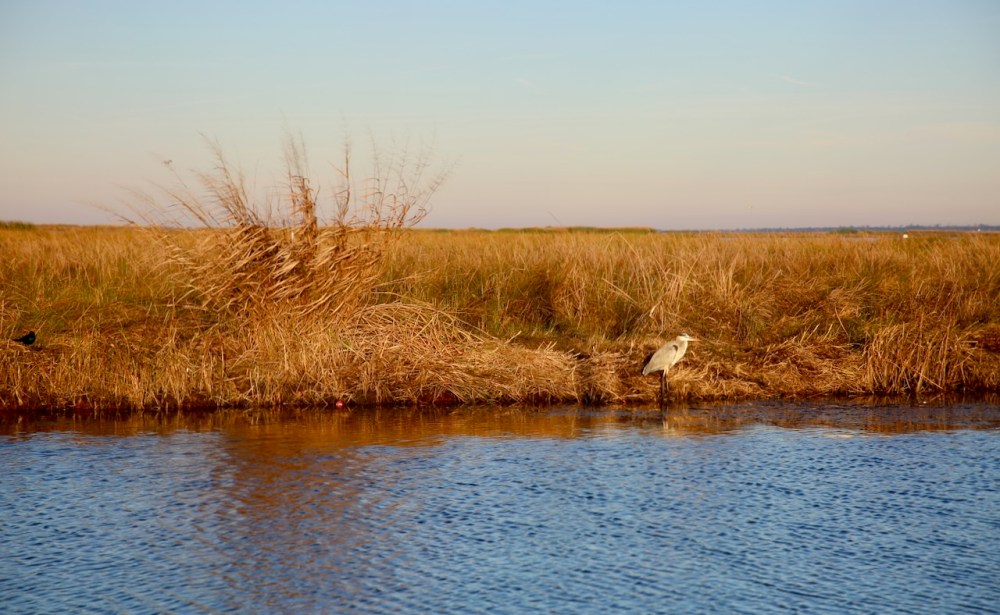
It’s a short dirt road that takes you to the ocean so we creep the car along and then get out to climb amongst the rocks and beach and walk around the puddles in the cul-de-sac. We watch a flock of birds eat fish parts that the fishermen have tossed after their haul is caught for the day while the larger birds still prefer to hunt solo. After this calm start to the day, we are on our way to Mississippi to not see the Lunar Lander Exhibit because it’s inside the Infinity Science Center which is closed Monday through Wednesday. If you walk to the far end of the welcome center area you can see part of some space equipment through the fence and trees.
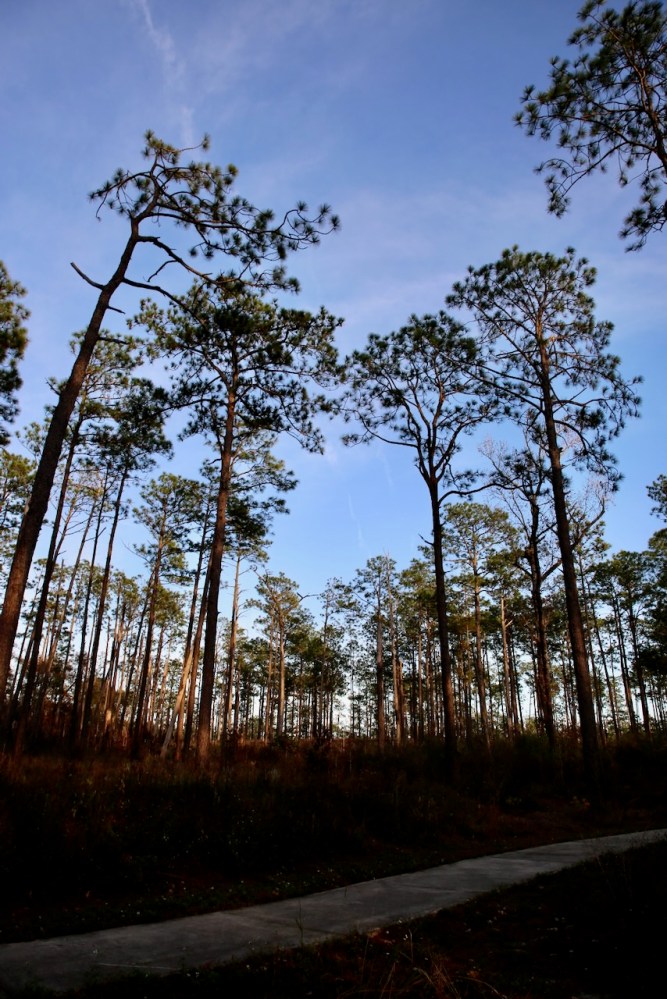
Also in the area is a sign about the Gainesville Volunteers, not a celebration of anything else in the state’s history (mostly storms and sadness) leading up to 2000 when the marker was placed but a memorial about the Civil War, which left tons of memories in this very southern state. We hope for better luck at the Mississippi Sandhill Crane NWR; one of the largest remaining tracts of wet pine savanna that used to stretch from Louisiana to Florida. Though we see no crane or water, the views from the trail are beautiful and there are signs about the fire resistance of some flora in the region.
The saw palmetto, with a majority of the plant underground, can survive the presence of fire and continue to provide fruits, flowers, and nesting for deer, honeybees, and reptiles. This plant also provided people with roofing and brooms and is still used for baskets and herbal supplements. The live oak, also known as the evergreen oak for not losing its leaves in autumn, is another fire-sturdy plant that can withstand intense heat and a few burns and continue to survive. This tree was used in shipbuilding to create the curved knee braces of the hull since the line of grain in such cuts of lumber proved exceptionally strong.
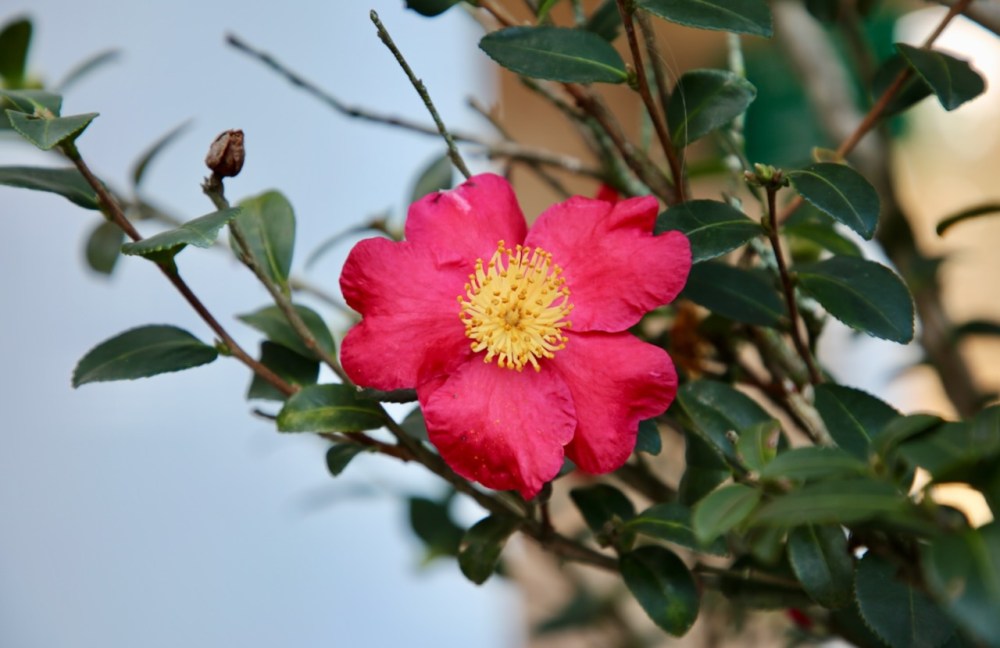
The Oak Grove Birding Trail at Grand Bay NWR is a maritime forest that is full of live oak and saw palmettos that are also tolerant of salt, sun, and wind conditions in this region. The trail is covered in a geogrid matting that’s supposed to stabilize the soil and prevent erosion but nature is getting the better of the plastic and creating an uneven terrain with little trip hazards. We finish the short loop and I, for whatever reason, drop my camera off in the car before we go inside the visitor center. There’s an educational corner, a pet diamondback terrapin, and their stamp was last used on Oct. 19. Also in the diamondback category are a gorilla, rattlesnake, goby fish, and lizard.
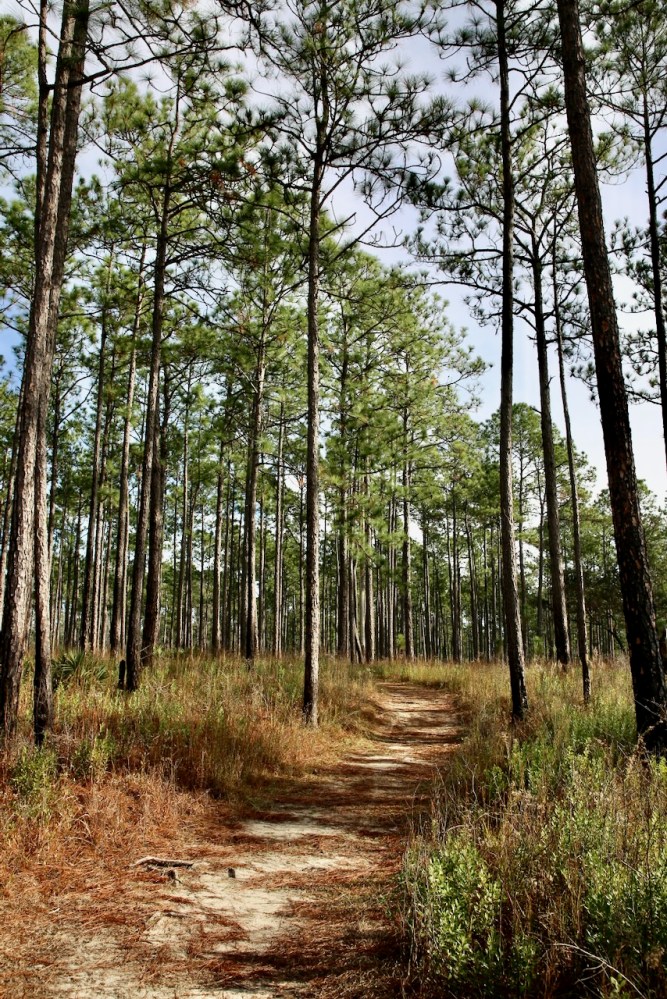
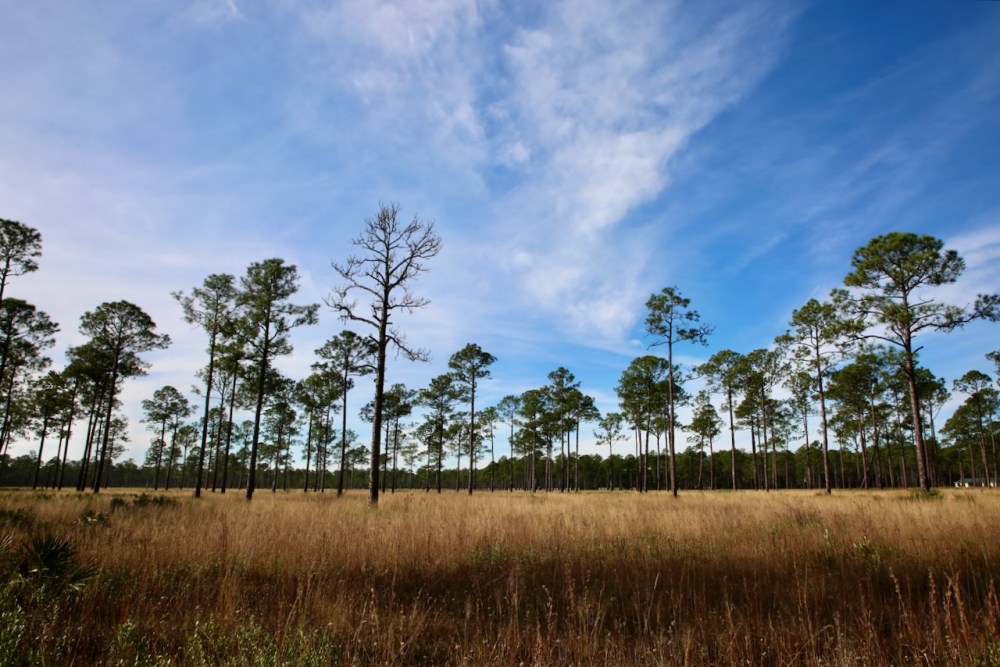
A guy comes out from the office and lets us know there’s a boardwalk trail out back. That’s what I thought I heard him say, but he must have mentioned the short raised walkway and the savanna loop that walks you towards the park entrance and back, near the road. With no traffic, this keeps human disturbance limited to a smaller area and gives us a quiet walk amongst tall grass and seemingly evenly dispersed trees of higher stature. We drive through Alabama without stopping, because the Mobile Carnival Museum, a history of Mardi Gras, is closed on Tuesday, Thursday, and Sunday. There are other reasons to detour but they didn’t make it onto the itinerary.
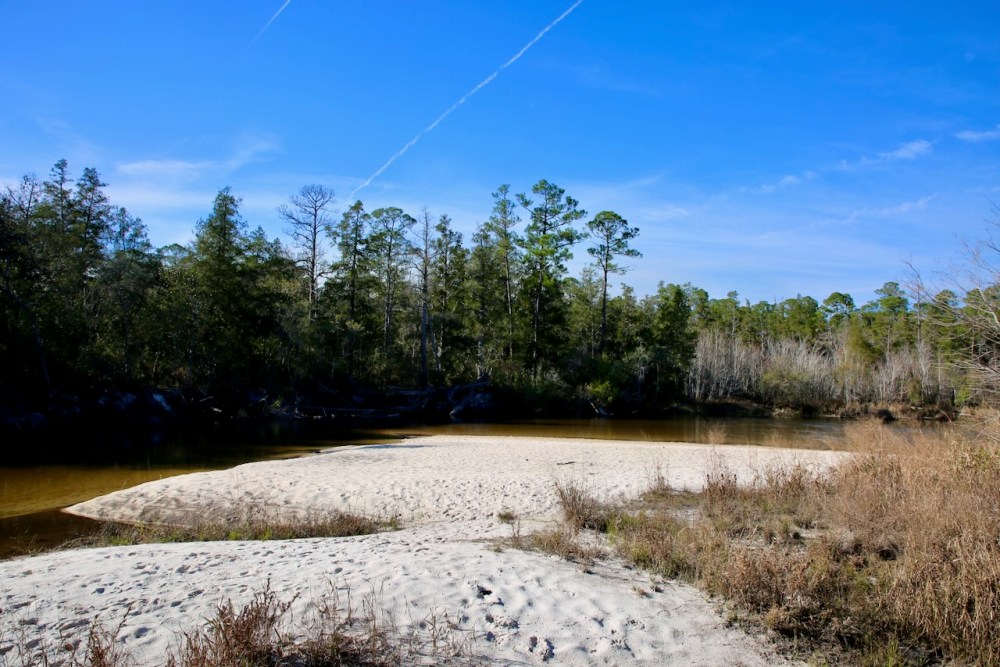
This route has us driving over Mobile Bay and Escambia Bay via long bridges, but if we had an amphibious car we could add these water crossings to our list of places to see instead of bypass. I’d try my luck at getting fish photos instead of car caricatures. I turn the wrong way in Harold, Florida, which means we get to explore Blackwater River State Park instead of Yellow River Wildlife Management Area; even though neither are on our list. We find the Chain of Lakes Trail with little detours to the white sandy beaches along the river which brings us warmth but sadly no alligators in the swamp.
I pull us into Ponce de Leon Springs State Park and just as quickly leave as soon as I see the woman notice us in the entrance booth. She and Caleb are both confused as this diversion has cost us ten minutes and the next stop is a half hour away. I’m hoping that Falling Waters State Park is more our mood today and the sunlight will only allow us to enjoy one, so I made a choice for both of us without knowing what either park had to offer. The modern development of this park started in 1963, but it has been the site of a grist mill in the 1860s, a distillery in the 1890s, and the first oil well (not commercially viable) in Florida from 1919 to 1921.
We’re here to see the 73-foot waterfall, the tallest in Florida and taller than the state’s average elevation. It’s not the only waterfall in the state, but most of the others are a single digit in their height. I have missed the forests of Florida and it feels good to be amongst its trees again. It’s a short walk to the falls and the only other guy in the park has his 360-degree camera in use because the park has places to perch yours so that you can help capture the changing environment. He is in a hurry to use the last bit of daylight as this seems like a daily ritual for him; parks are great for that type of inspiration.
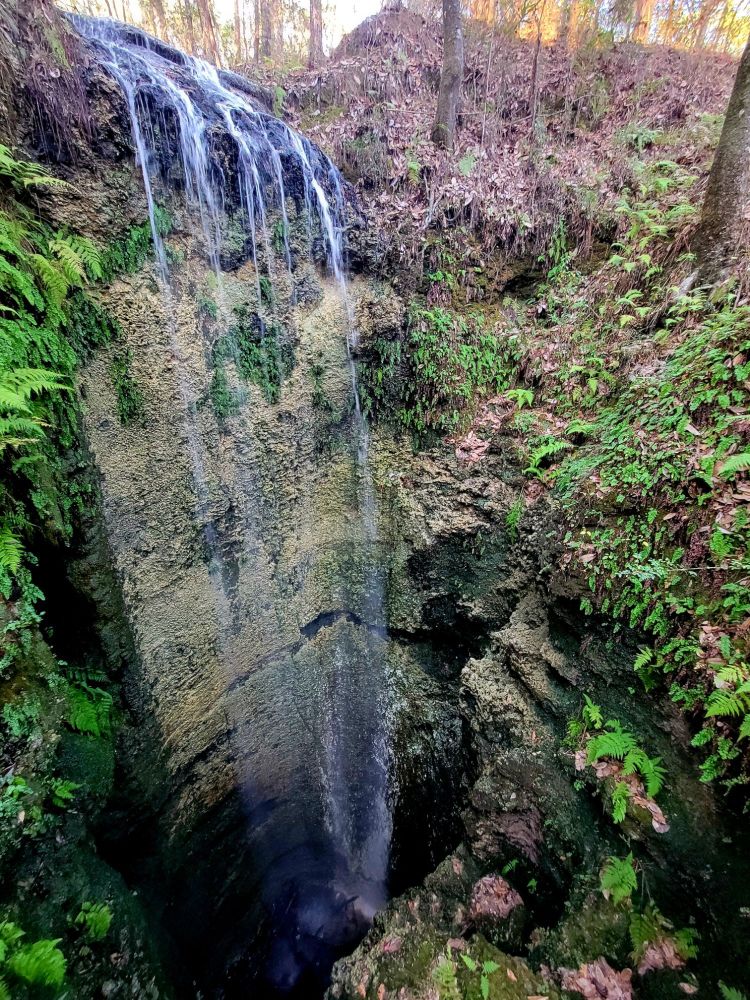
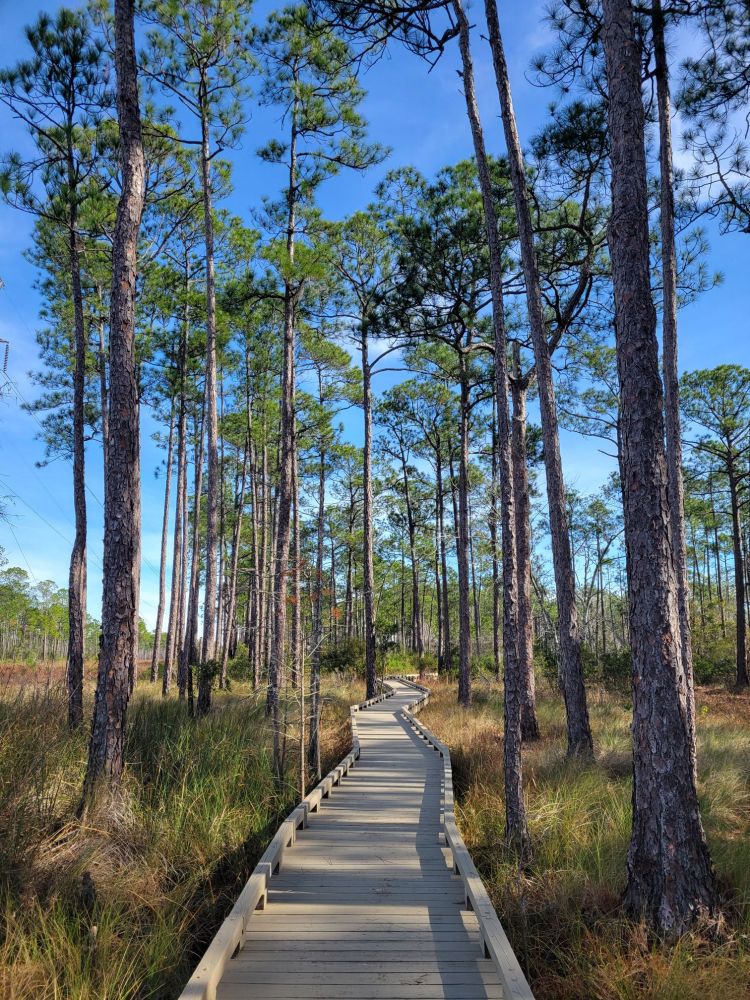
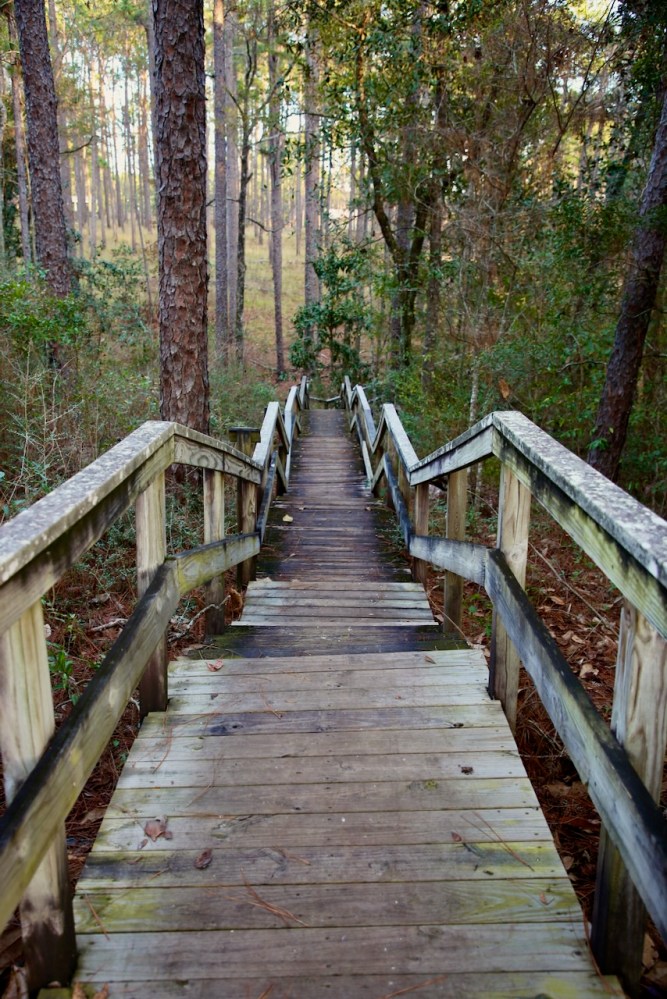
Not knowing how small the park is, we park closer to the lake and take that trail around that also leads to the falls. We are warned about the dangers of alligators and the state law to not approach, frighten, or feed them. We’re also taught about the tasty wiregrass seeds according to the palate of the gopher tortoise and quail who find it a favorite food item. Part of the boardwalk is closed and though my curiosity would sometimes get the better of me, the sun setting and lack of others around to offer help leave me not wanting to fall into a sinkhole with no reliable way out.
Dinner is a simple meal at San Marcos Mexican Grill in Marianna. We take the rest of my beans and the table’s chips to go. We cross into Eastern Time, where 58 of Florida’s 67 counties are in. Only one, Gulf County, is split in half, but in a north-south fashion. The county voted in 1982 to go all Central Time but 55% of residents said no. In 2018, Florida wanted to stay in Daylight Savings Time, which requires an act of Congress, so like the other 18 states that want this change permanently, they are still waiting on approval. In 1966 when the Uniform Time Act was passed, it gave states the right to exempt themselves, annually, so Hawaii and Arizona did.
We spend the night at Econo Lodge in Lloyd since its room price is still in the double-digits; just because the reviews are good and breakfast is included, we know what we’re getting ourselves into. I start out by calling the clerk her, who is hidden behind the counter at a low desk, and am quickly corrected by the customer in front of us and the clerk’s voice. I ask how many linens I should be counting since I’m asked to account for them and sign that I will do so in the first ten minutes of being in the room. This seemed to confuse the guy. There are small blood droplets under the pillow but the bedding is all here. I’ll fall asleep thinking about the costs of running a hotel.


