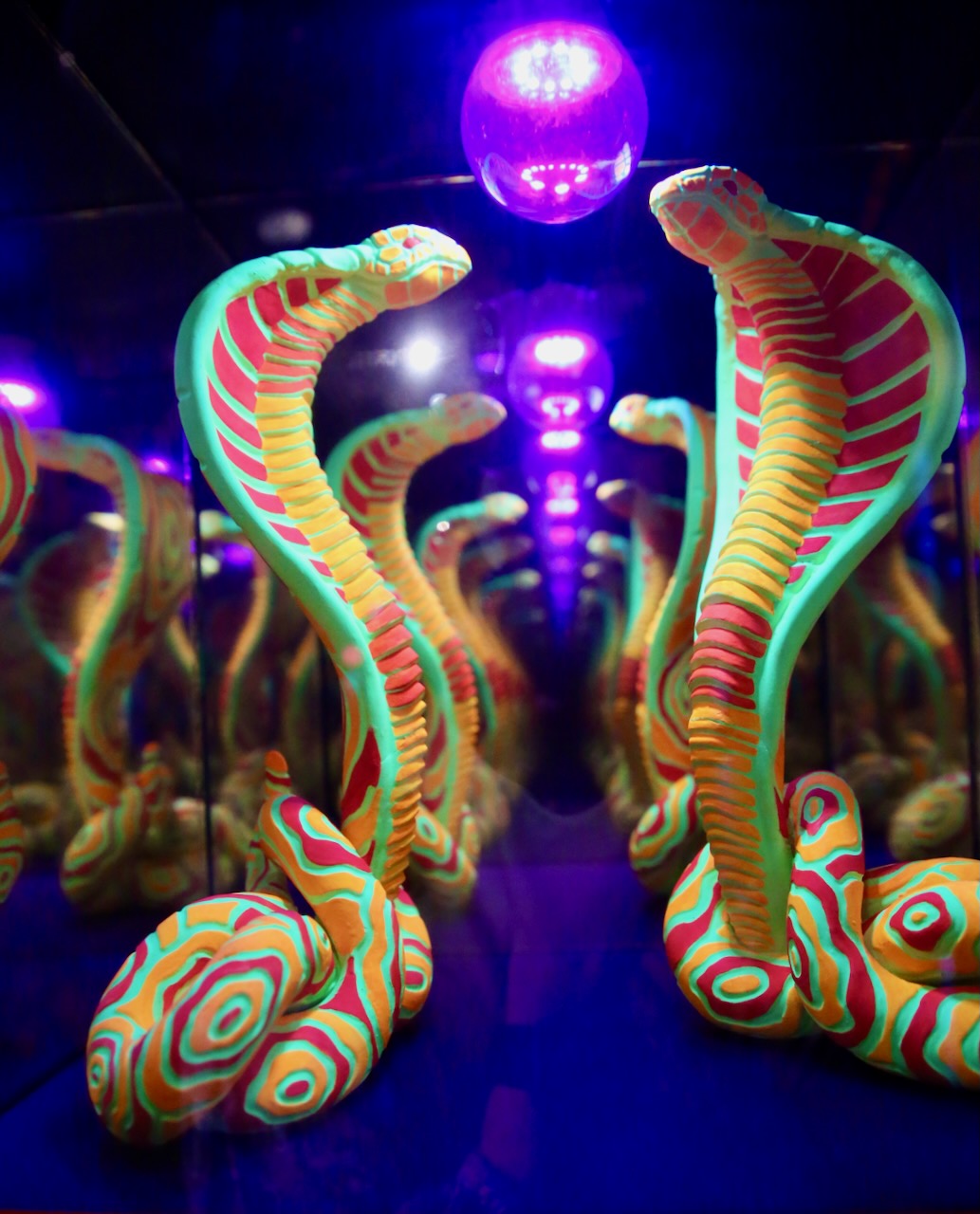
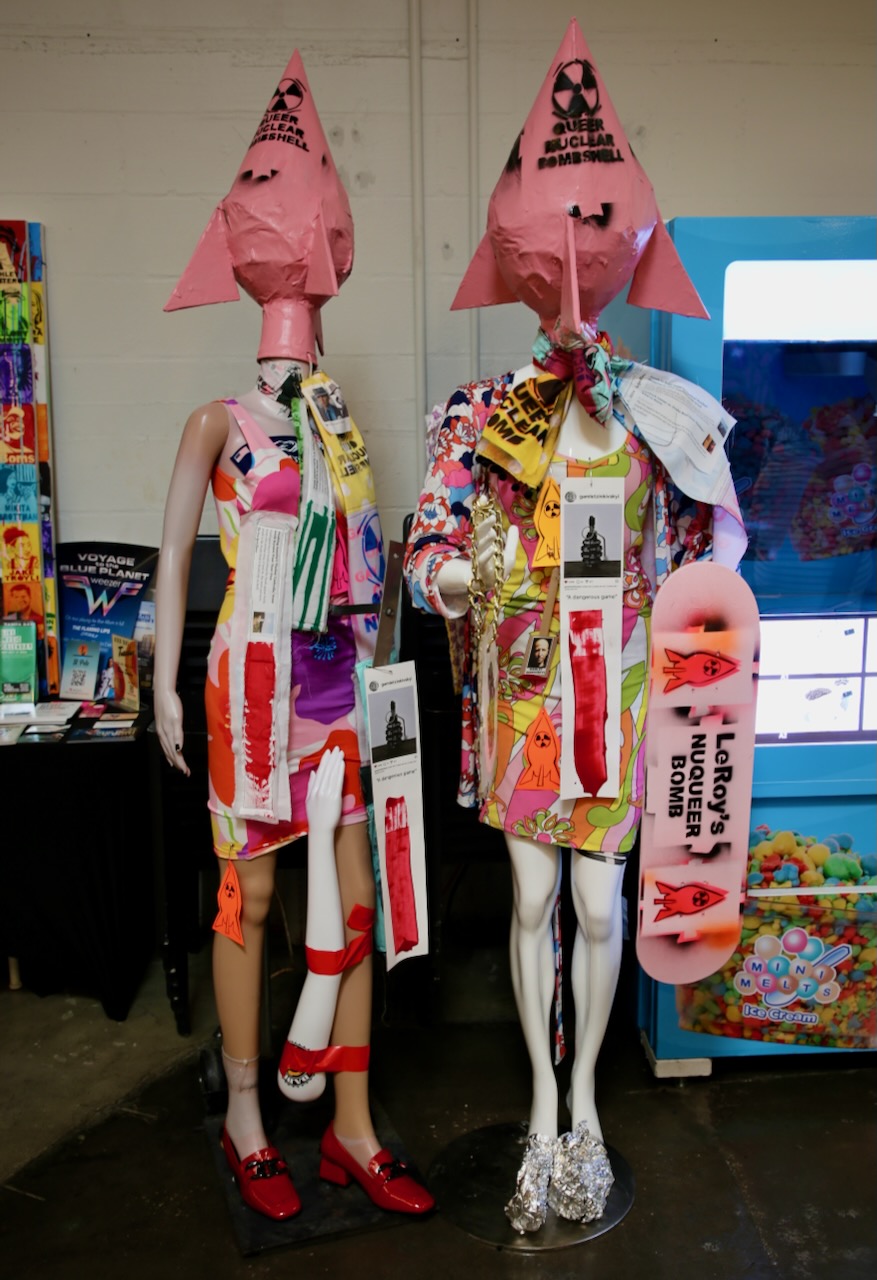
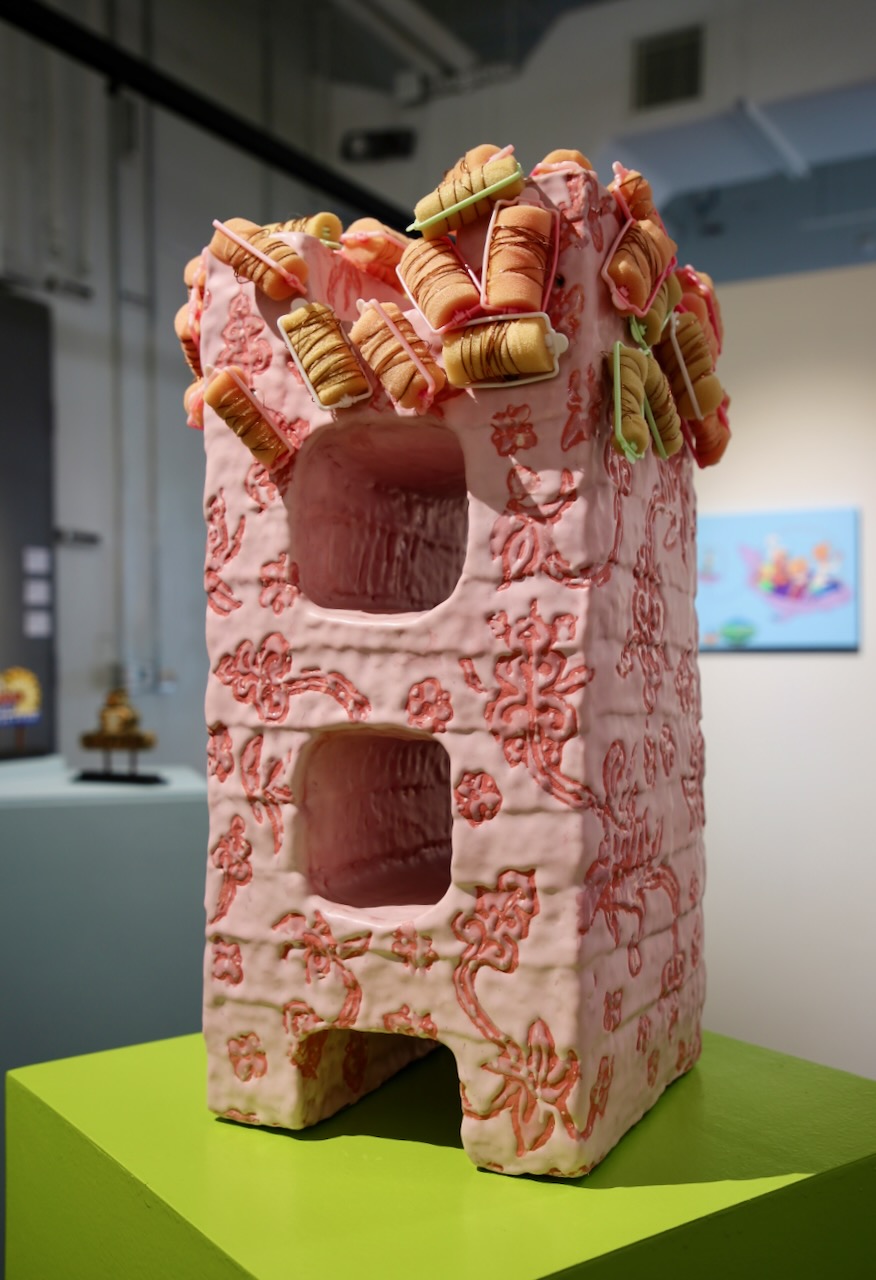
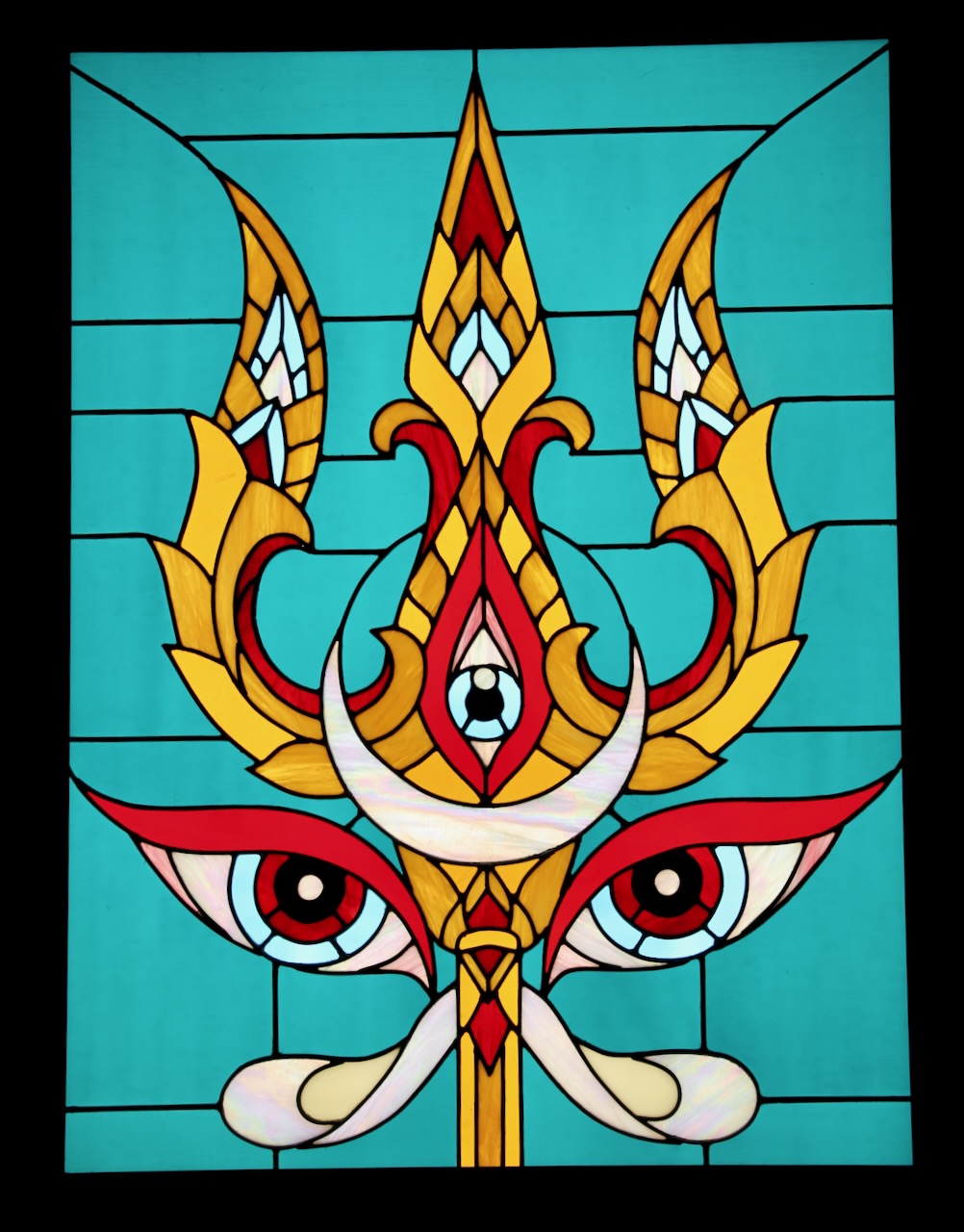
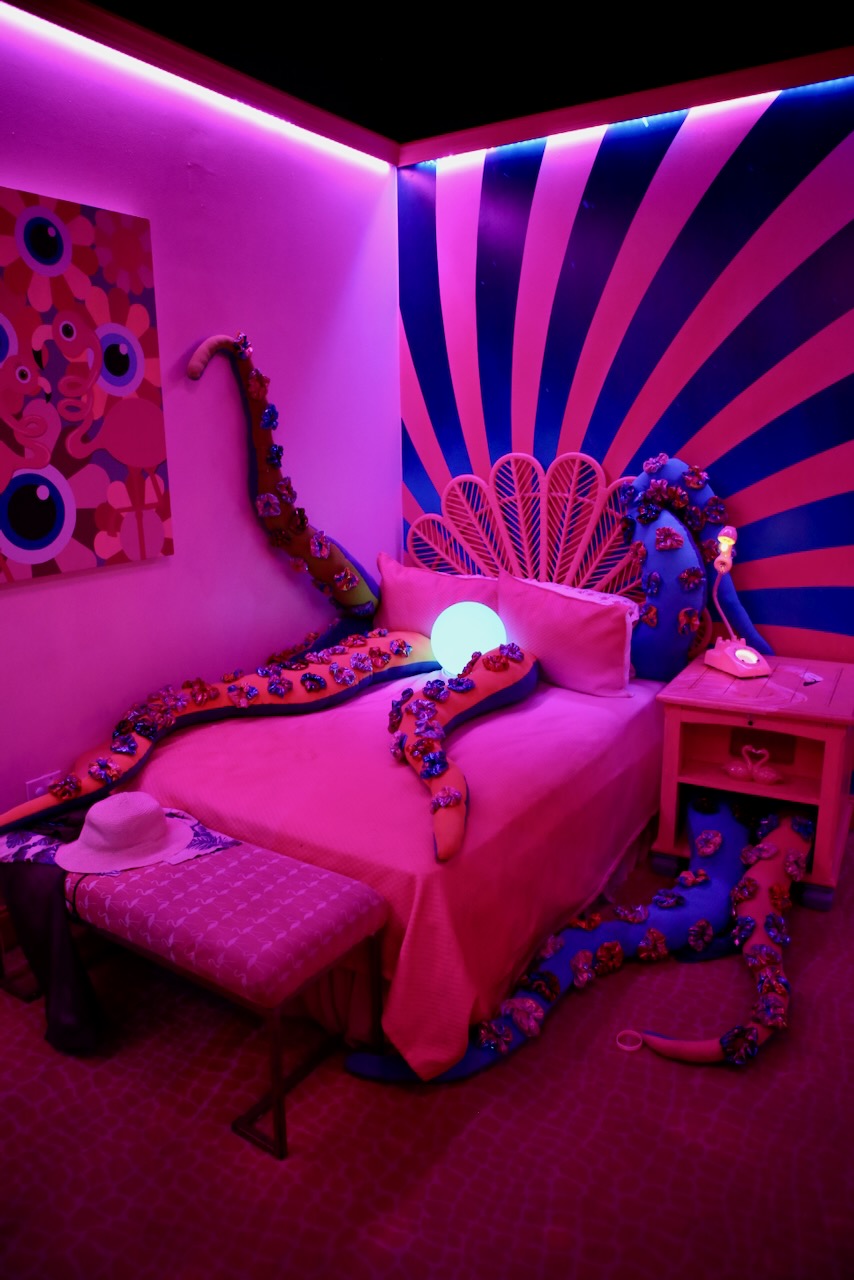
Thanks to I Love the Burg for sharing things to eat and places to visit in St. Petersburg. I came across a free entry day (otherwise $48 for us) for FloridaRAMA: Immersive Art Experience from 12 to 5 pm, with the help of a sponsor. They feature over 75 local and international artists celebrating Florida. We definitely didn’t spend five hours there, and initially I was glad we got in for free, but I understand that making and transporting art comes at a cost, even if I didn’t come prepared to take multiple selfies with each installation.
I’m not done taking pictures, though. We will drive the few miles to Boyd Hill Nature Preserve and pay the $3 each to walk along their six miles of trails through hardwood hammocks, freshwater swamps, and upland scrub. They have boardwalks and birds, and baby alligators near the water’s edge. We see a raccoon and a gopher tortoise along with a larger-than-life metallic armadillo. Being in nature is always a great way to spend the day and I’m glad that I feel more relaxed around trees than I do in a giant shrimp cocktail disco room.
Ireland’s economy boomed between 1995 and 2007, growing at over 9% each year. This drew the attention of a reporter, as Ireland had previously been one of Europe’s poorest countries. The title, Celtic Tiger, was referring to the Four Asian Tigers (Hong Kong, Singapore, South Korea, and Taiwan), but soon, the nickname caught on and is still used occasionally as the island’s economy is still doing well.
We left the house before 6 am, dropped off the rental car (which was faster and easier than picking it up), and grabbed the shuttle back to the airport. We had to wait twice for separate pairs of glass doors to be unlocked from the other side once the crew got the ok. While we waited, we met two other couples (one reminding me of Grumpy Old Men, but in love) who also drove (one from Michigan or Minnesota and the other couple from the Tri-state area).
Once seated, the couple behind us is from Tampa. The passengers are brought snacks, drinks, and a meal (all the food being white/tan in color) in quick succession so that many can sleep through the flight. I will use this time to try the Tayto (The Original Irish crisp) salt & vinegar chips and Keogh’s (Grown with love in Ireland) shamrock and sour cream chips, which are yummy!
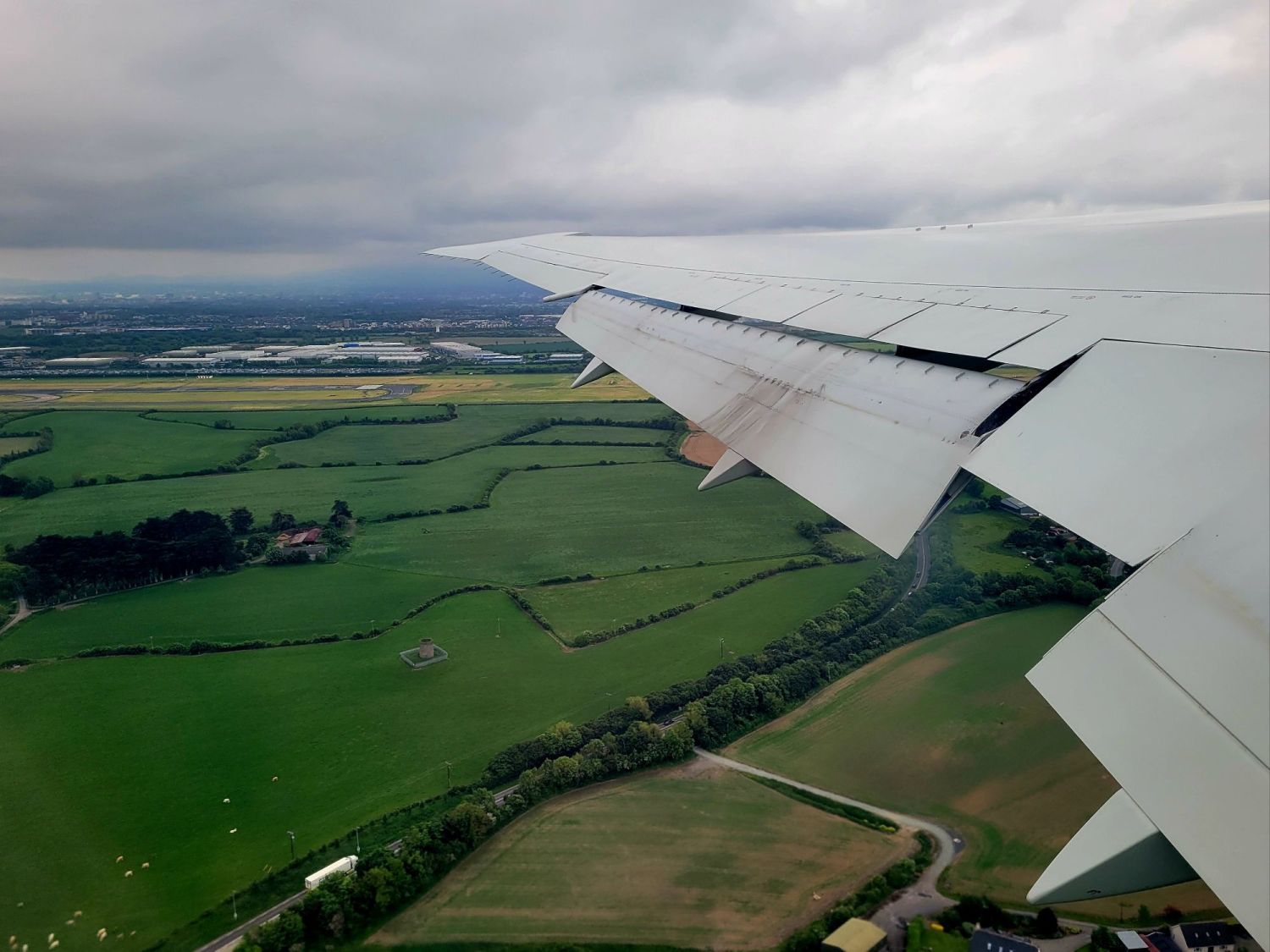
I was still up reading about Sue on the Appalachian Trail with two hours of flight time to go, so I went to the back to get another drink and snack. The crew brings around ‘sandwiches’ (pita pizza pocket) an hour later. We’re deplaning, and I get the opportunity to see a man with a metal ball for an eye. If I had more time, I perhaps would’ve asked him questions that others deemed inappropriate.
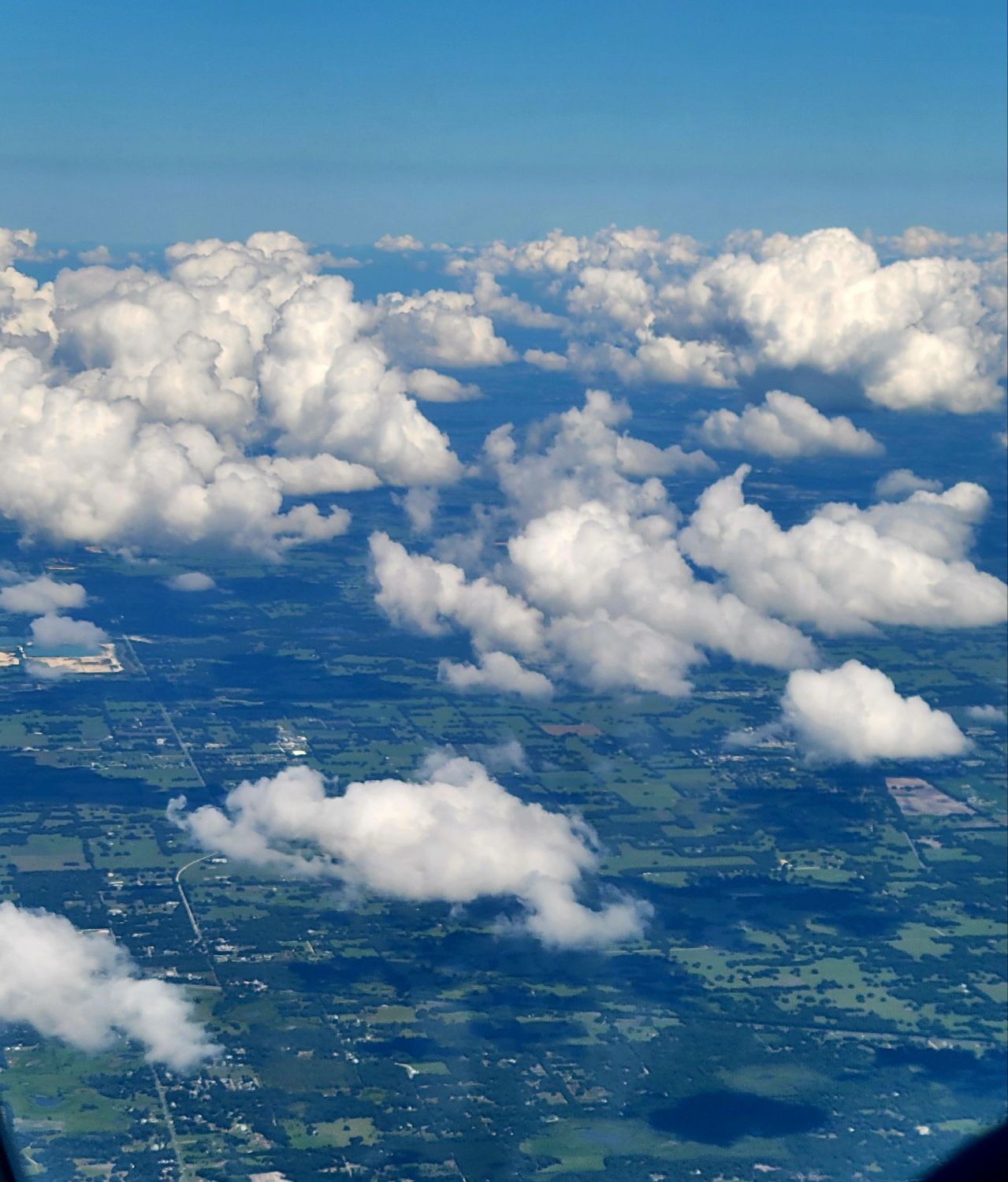
over the US
We land in New Jersey, and I eat a salad (mostly a post about food consumed over international waters rather than anything to do with Ireland), and on the next flight, I see a woman sneaking Cheez-Its under her sweater with her sunglasses on. If I get the chance to return to Ireland, I would want to see the northern half and then come back for a lighthouse tour.
I debated posting this, as there’s not much here, but I wanted to complete the ten nicknames for Ireland and mention the crisps, of which there are so many flavors available online. The flights were about half the cost of this trip, and we have a road trip planned for next month as we enjoy the last few months of Caleb being on active duty with a consistent paycheck every two weeks.
Growing up, I always wished to get away. I found someone I could staycation or escape with and who would help fund my long periods of unemployment. I have worked roughly eight years in the last 21 and some of that time was unpaid. Once Caleb retires, I still hope to get an annual cancellation in our passports, and I know that may require some earnings on my part.
This nickname, Inis Fáil, means the Island of Destiny. The Tuatha Dé Danann race brought this stone, Lia Fáil, to Ireland, and it’s been used as a coronation stone in the belief of its mythical powers and ability to make noise when a king sits upon it. Legend has it that this is one of the twelve zodiac crystals the Atlantean mages used to amplify the Earth’s energy. It is one of the four treasures (stone, sword, spear, and cauldron) that the Tuatha Dé Danann brought with them and the only one that remains standing on the Hill of Tara.
Dún Na Sí Amenity & Heritage Park
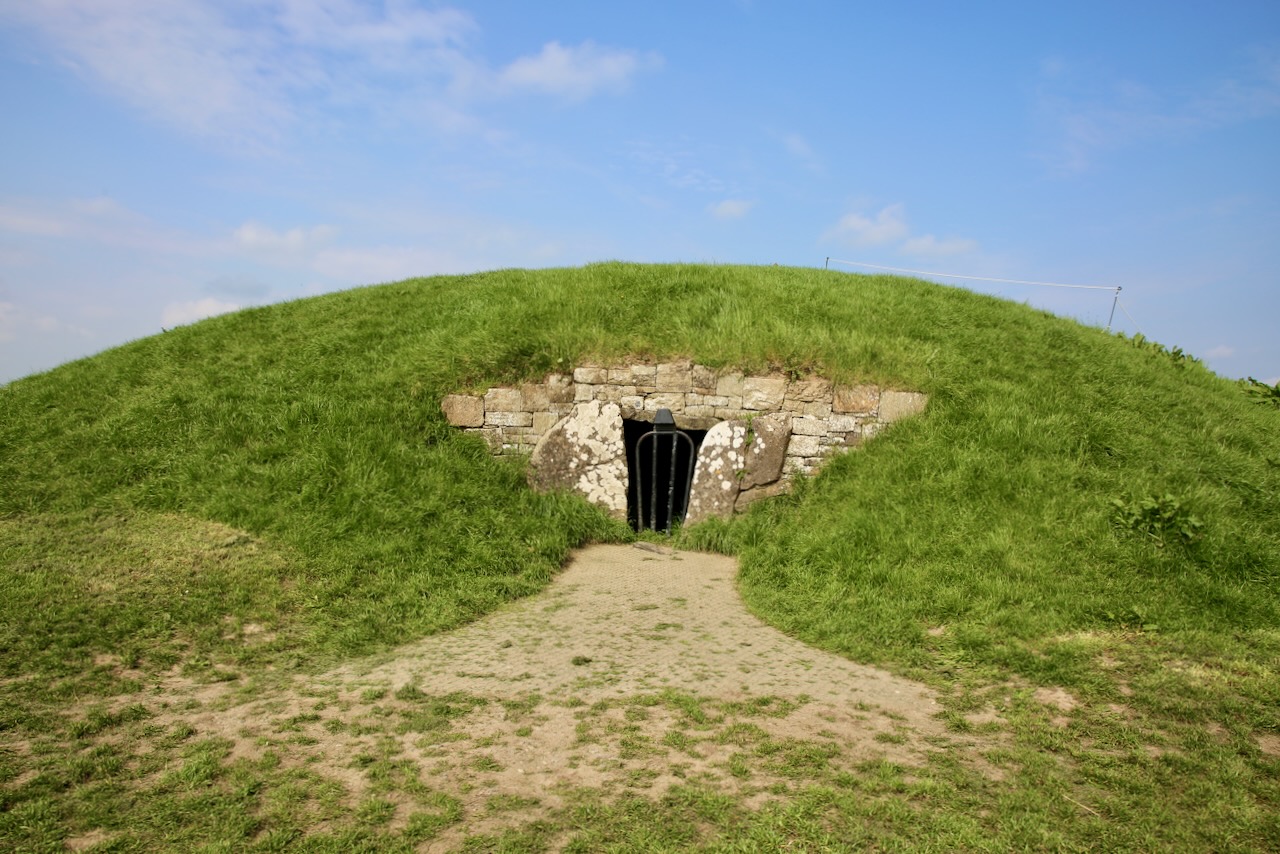
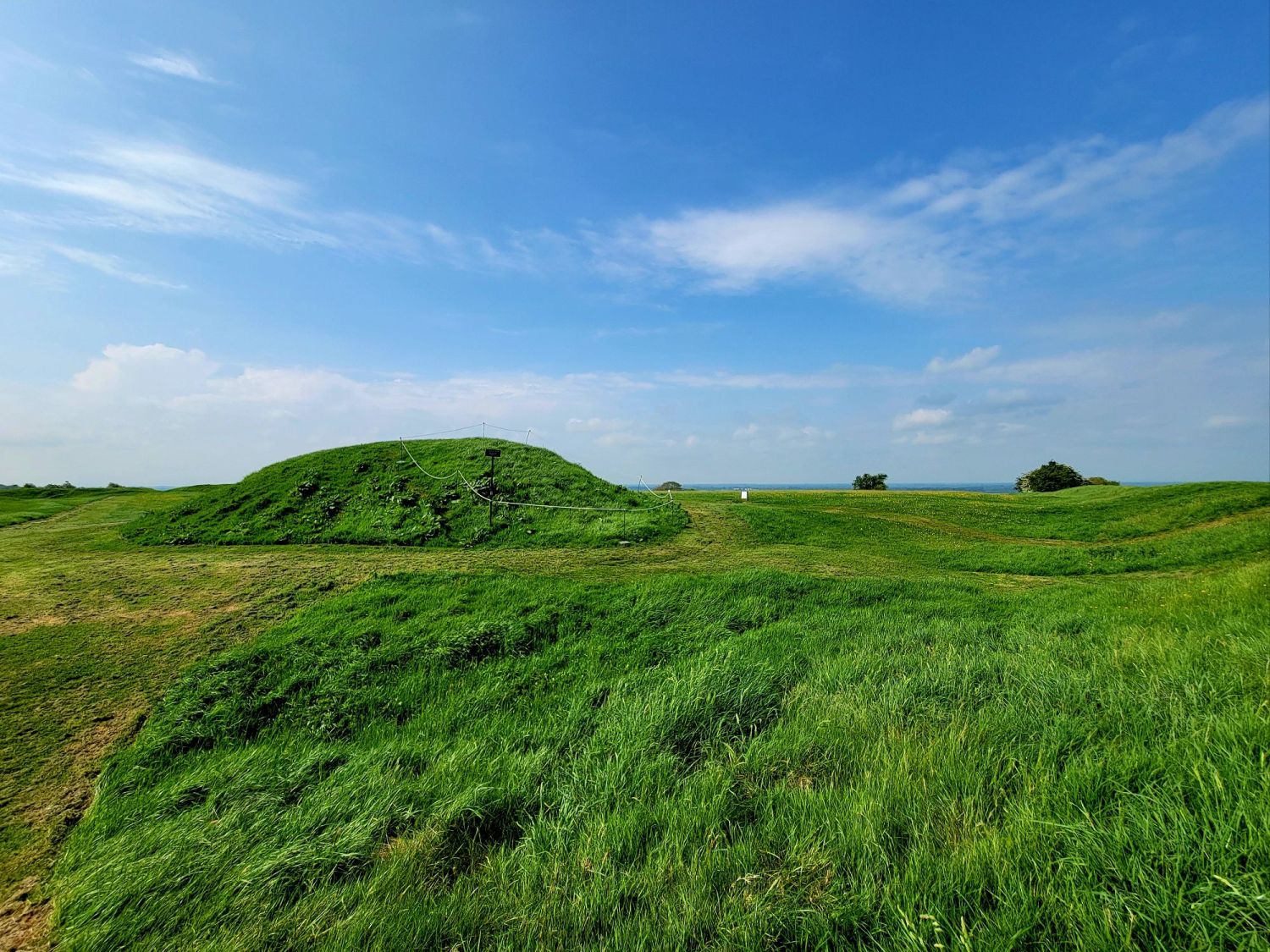
An Irish warrior and demigod, Cú Chulainn, tried to angrily split the stone. He died in 1 AD, and the last king the stone declared was Brian Boru in 1002, credited with ending the Viking invasions of Ireland. The stone has been silent since. All old Irish roads lead to this site where palaces once stood, and now only earthworks endure the patter of boots and hooves. The oldest visible monument, the Mound of the Hostages, built around 3000 BC, was used for 1,500 years to bury human remains. This site is an important connection point between two worlds that maintains its significance today.
Clonard, County Meath
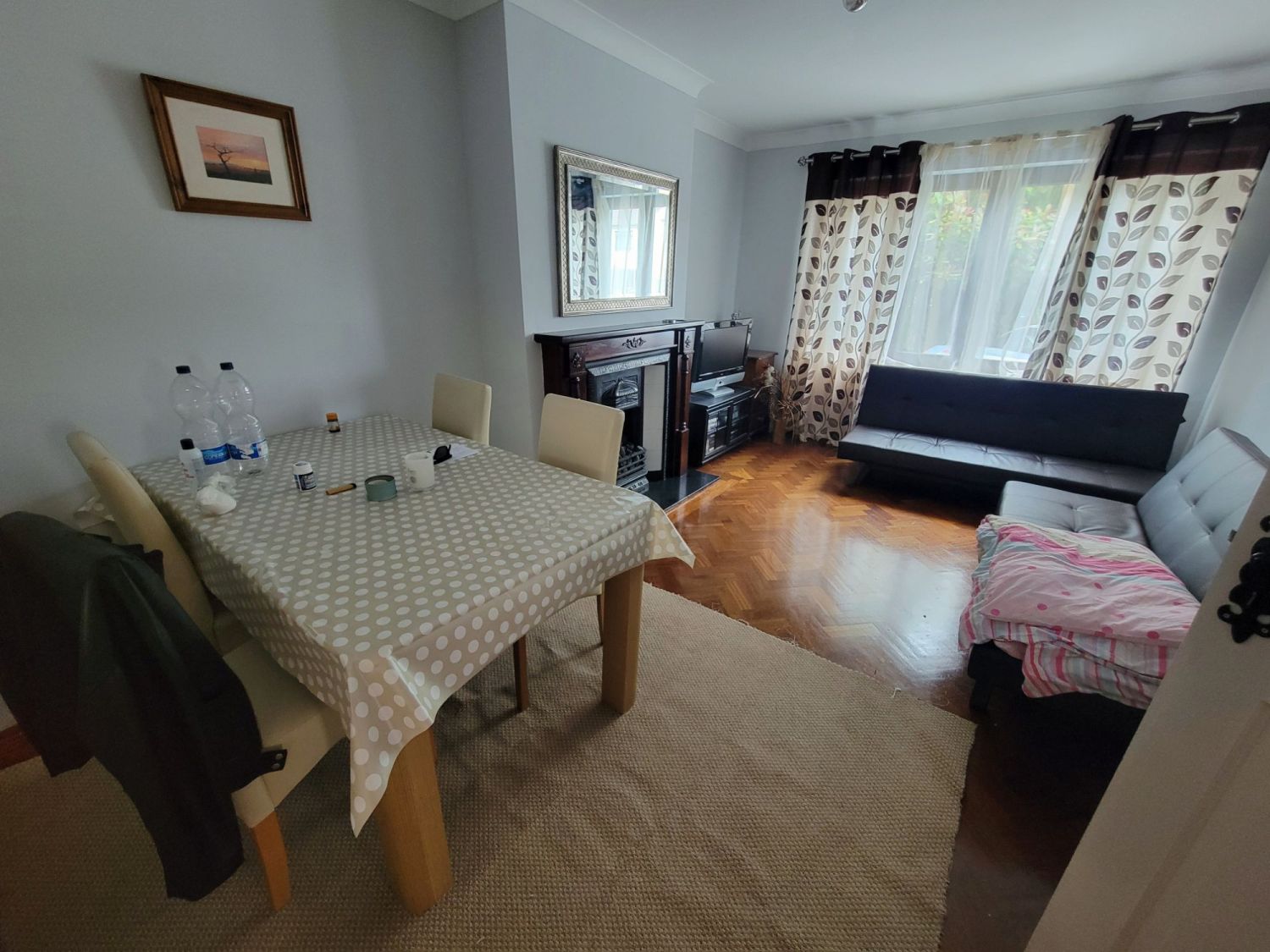
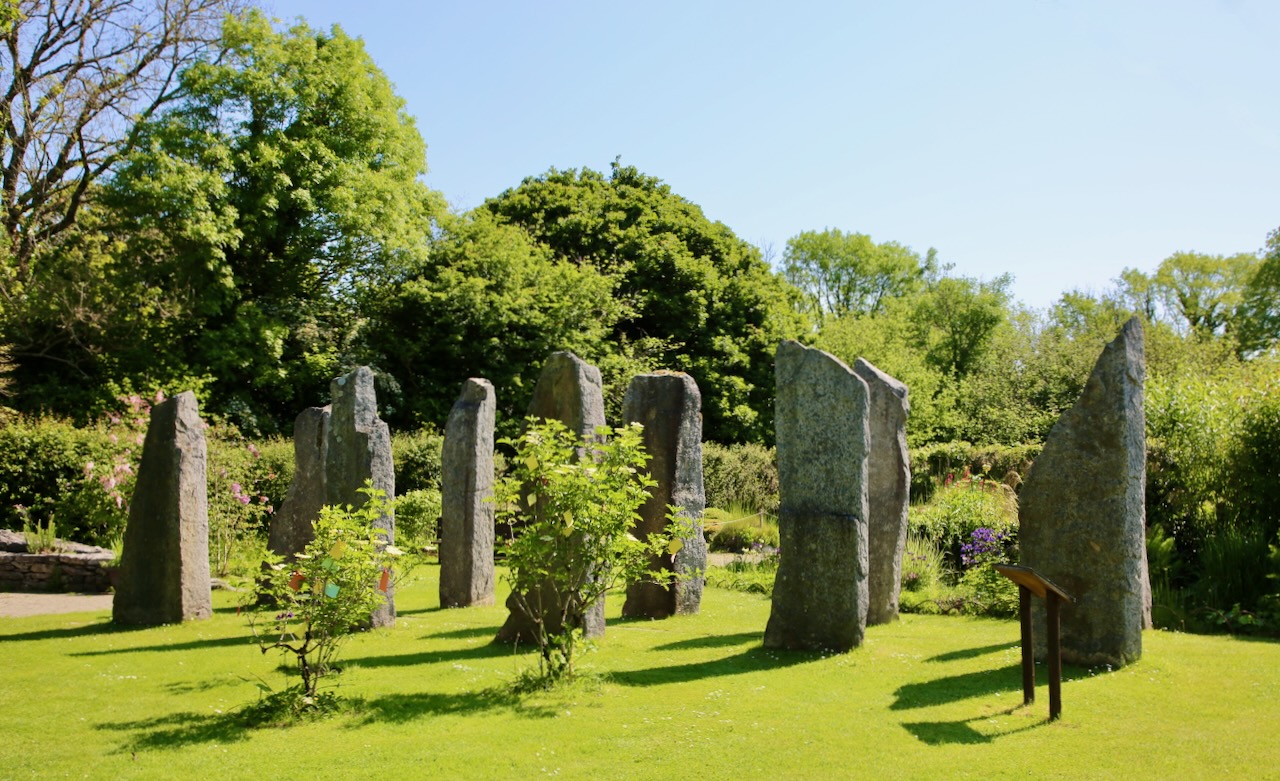
We leave Riverview House B&B an hour after sunrise while the sky is bright gray and the bushes a gallimaufry of color. There’s no one in the lounge with two tables, a dining set for four, hotel kitchen amenities with a toaster, and a fireplace next to the bookshelf, with authors Charlotte Bingham and Kingsley Amis among the collection. Our first stop is the success of a road sign that draws our attention to Dún Na Sí Amenity & Heritage Park, even though it’s closed. We park in front of the locked entrance and walk along the sculpture garden, peeking in at a man walking his dog.
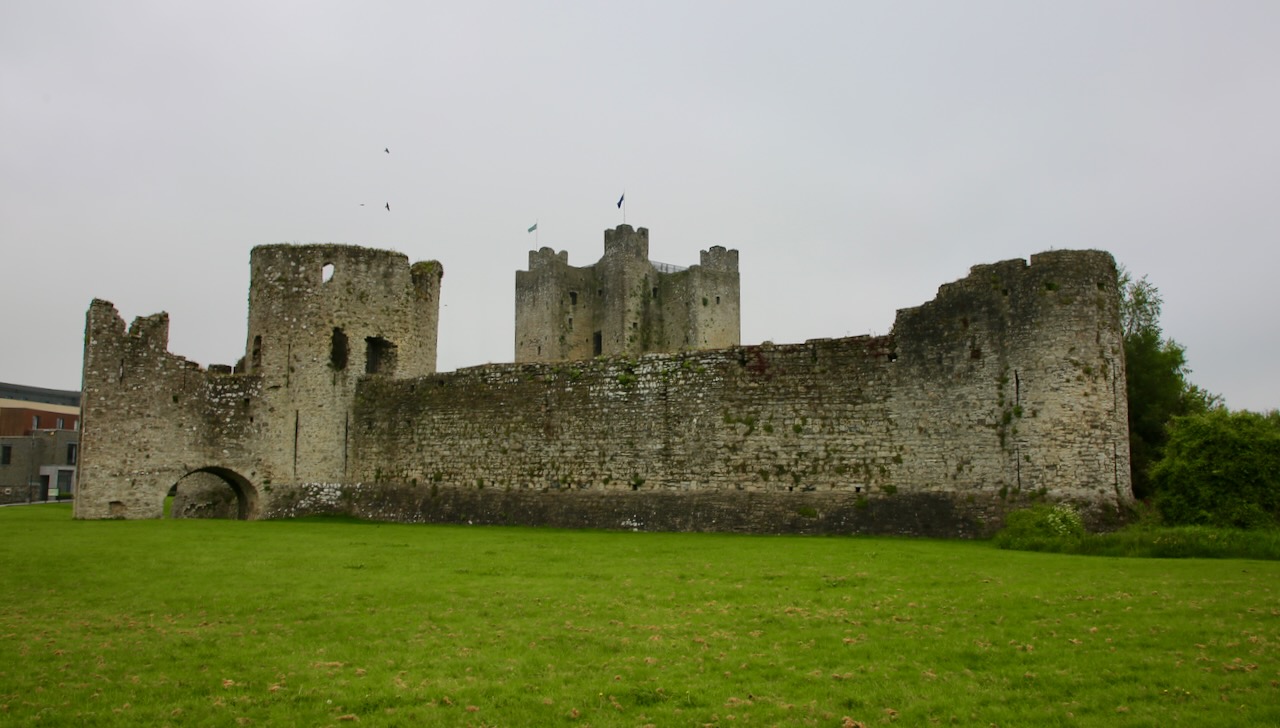
It’s at least an hour before we pass the mural of a scene from Gulliver’s Travels on the side of a building that used to have large serving windows. Instead of selling fresh cow’s milk, it appears to be more fitting as a sheep shelter. We’ll see more of Meghann Quinn’s art as we enter the town of Trim. We stopped at Coffee Works Trim for breakfast, which only opened a year ago, and in three days will be giving out 50 free coffees to celebrate. We pass a few uniformed kids on their way to school while we walk towards Trim Castle, the one used in the filming of Braveheart in 1994 that served as the Tower of London inside and the city of York outside.
Trim Castle
Mel Gibson was granted the Freedom of Trim in 2010, an honorary position since 1877, in recognition of his service to the town and part of a traditional system. In the 12th to 19th centuries, this gave honorees the right to participate in political and economic life as a full citizen. The year 2010 was also the beginning of the Braveheart 5k, organized by the Trim Athletic Club along the River Boyne. This race also takes place in Sarasota, FL (kilt encouraged), Radford, VA (for American Heart Assc.), Sherman, TX (as part of their Celtic fest), and in Franklin, NC (to honor the film Rob Roy also released in 1995).
Newtown Abbey
The castle, started by Hugh de Lacy in 1173, is the largest and best-preserved Anglo-Norman castle in Ireland, mostly unchanged since the 13th century. It’s closed as we walk by, so we continue to the River Gate (added so boats could avoid the weirs) and the Barbican Gate (an elaborate system to improve security) that guard the castle. Trim was originally a walled town, and only the Sheep Gate survives from the original five that were used as toll and tax stations as people went through. We pass by the Trim Donkey Family animal park, just a few asses spending their time in a corner meadow lot.
River Boyne, as seen from Ireland’s oldest bridge
We cross the River Boyne and follow it east to the Newtown Abbey, also known as the Cathedral of St. Peter and Paul. The church was established in 1206 by Simon Rochfort and suppressed in the Dissolution of the Monasteries in 1537 by King Henry VIII. Here, the tomb effigies of the Jealous Man and Woman lie, with a sword of state (God-given protection) between Lucas Dillon and his first wife. Over 400 years later, people are still being interred at this site by a field of Kerry Hill sheep that originated in Wales near Newtown. They are raised for meat, but I would collect them for my love of black and white animals.
Cathedral Church of St. Patrick, Trim
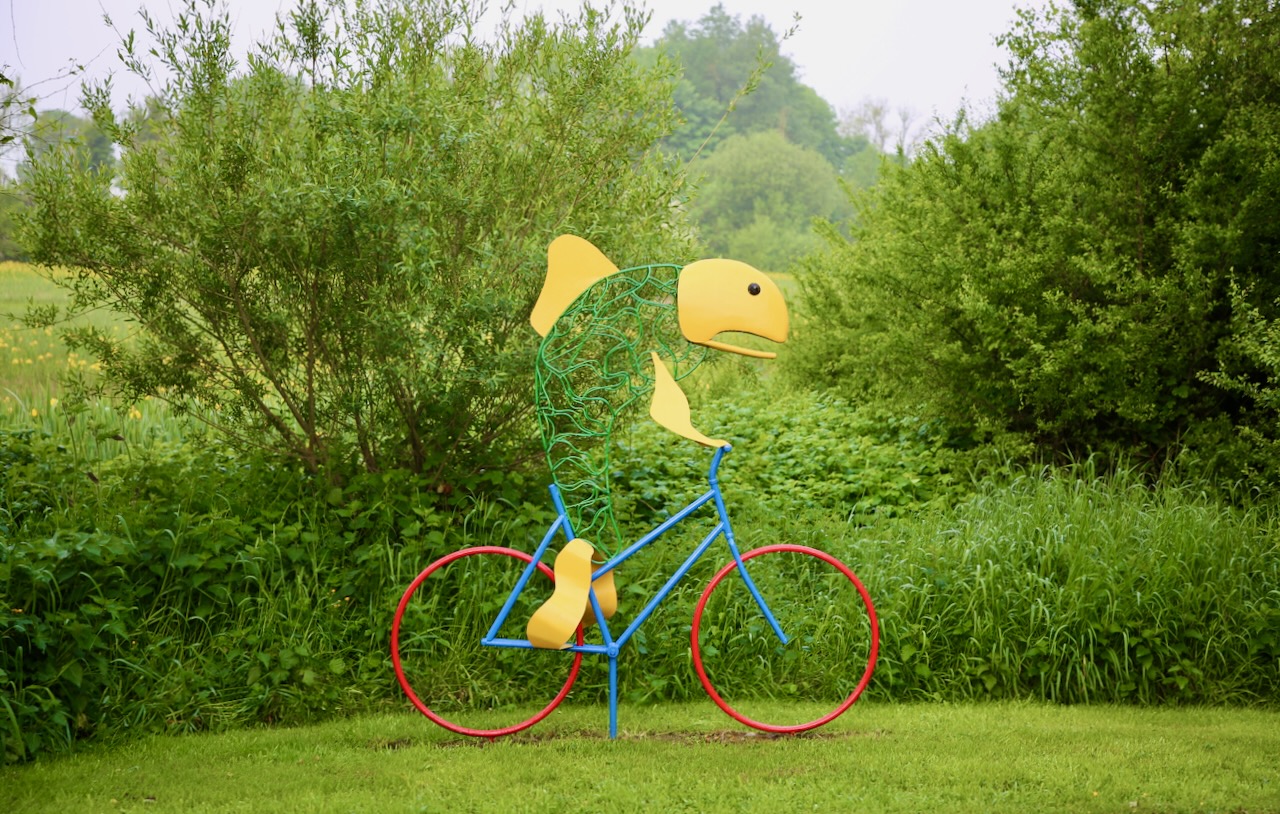
Back towards the water, we see a sculpture depicting the Salmon of Knowledge, a fish who ate hazelnuts falling into the Well of Wisdom. He was eaten by a boy who grew up to become the leader of the Fianna, a group of hunters and warriors in the Iron Age and early Middle Ages. This myth is similar to those found in Iceland, Scandinavia, Baltic countries, and across Central and Eastern Europe. The Germanic version replaces the salmon with a serpent, and this special creature is depicted in ruins all over the planet. The myth’s most modern rendition is in a song by Gilla Band released in 2019.
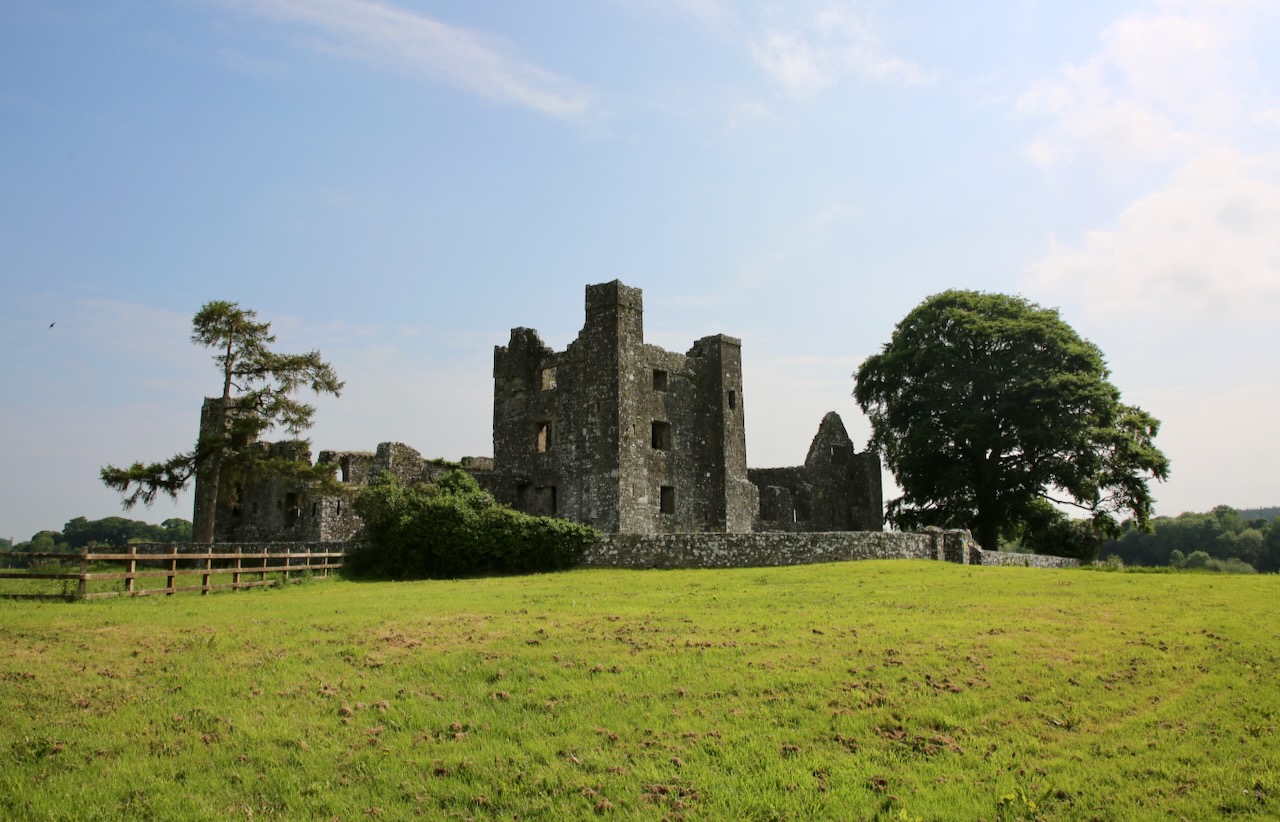
Bective Abbey
Another few feet west brings us to Ireland’s oldest bridge, unaltered and in use since 1393, over 630 years and counting. The average age of bridges in the US is 42, with a lifespan design of 50 years. It’s double that in the UK, though weather and vehicle weight can reduce that time. I’m more impressed with this bridge than I imagined I would be. Millions of people have ensured its success through the centuries, which is rare unless the structure happens to be a temple, mosque, church (the oldest being the Pantheon built in 125 AD), or Acoma Pueblo in New Mexico still inhabited since around 1100 AD.
Hill of Tara
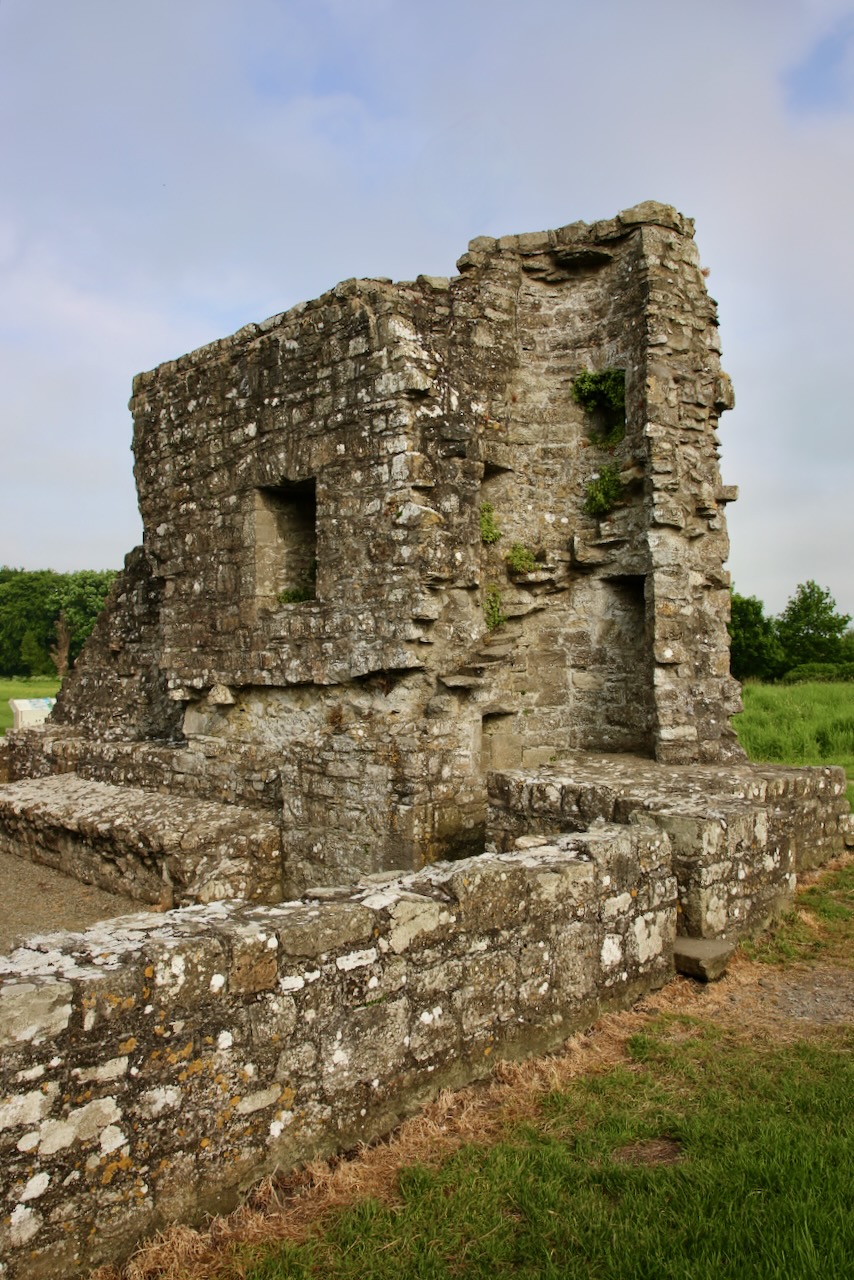
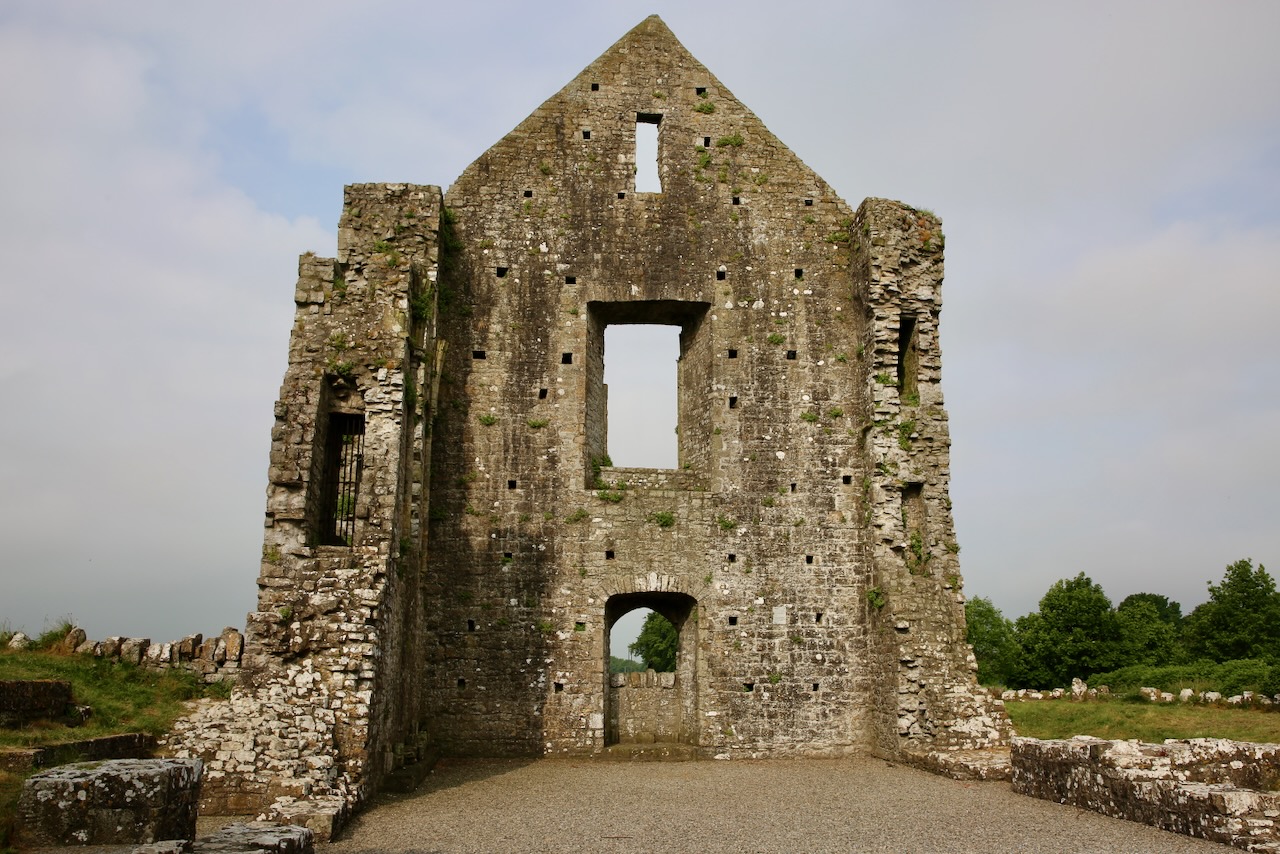
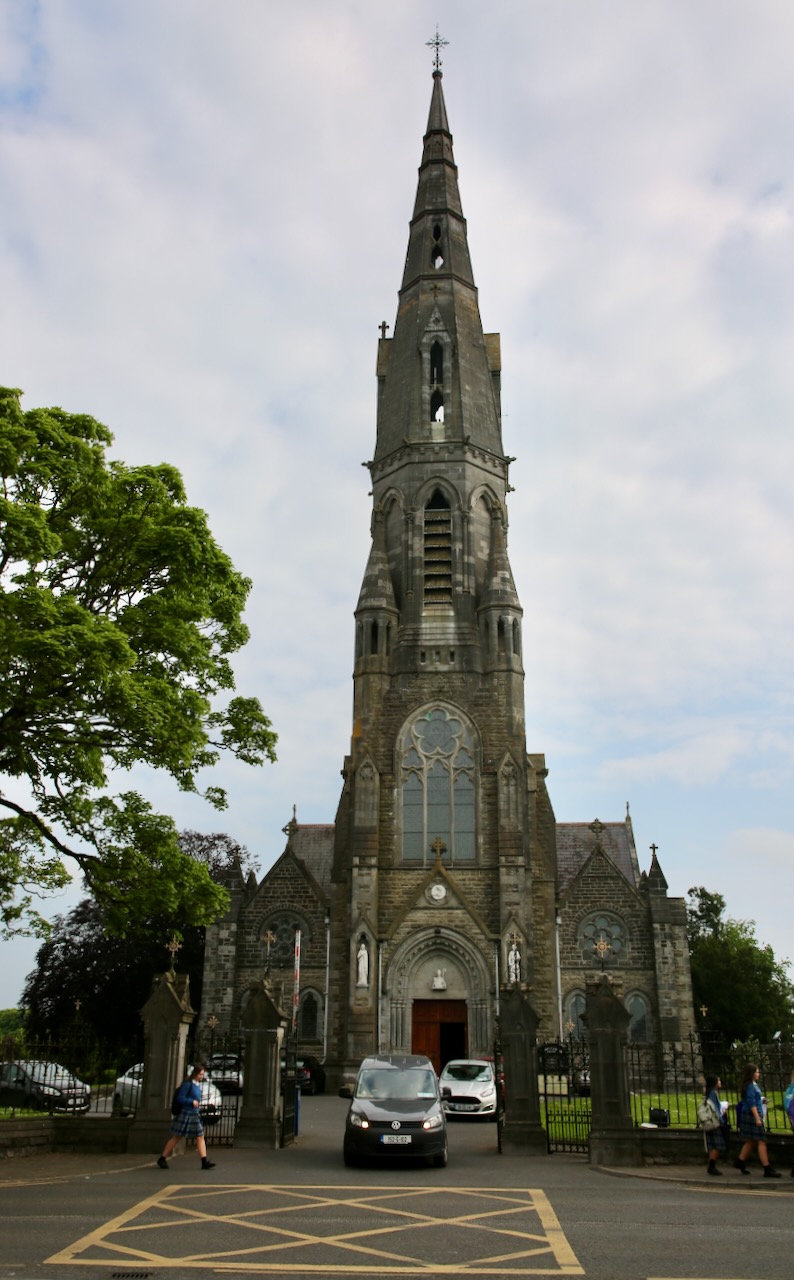
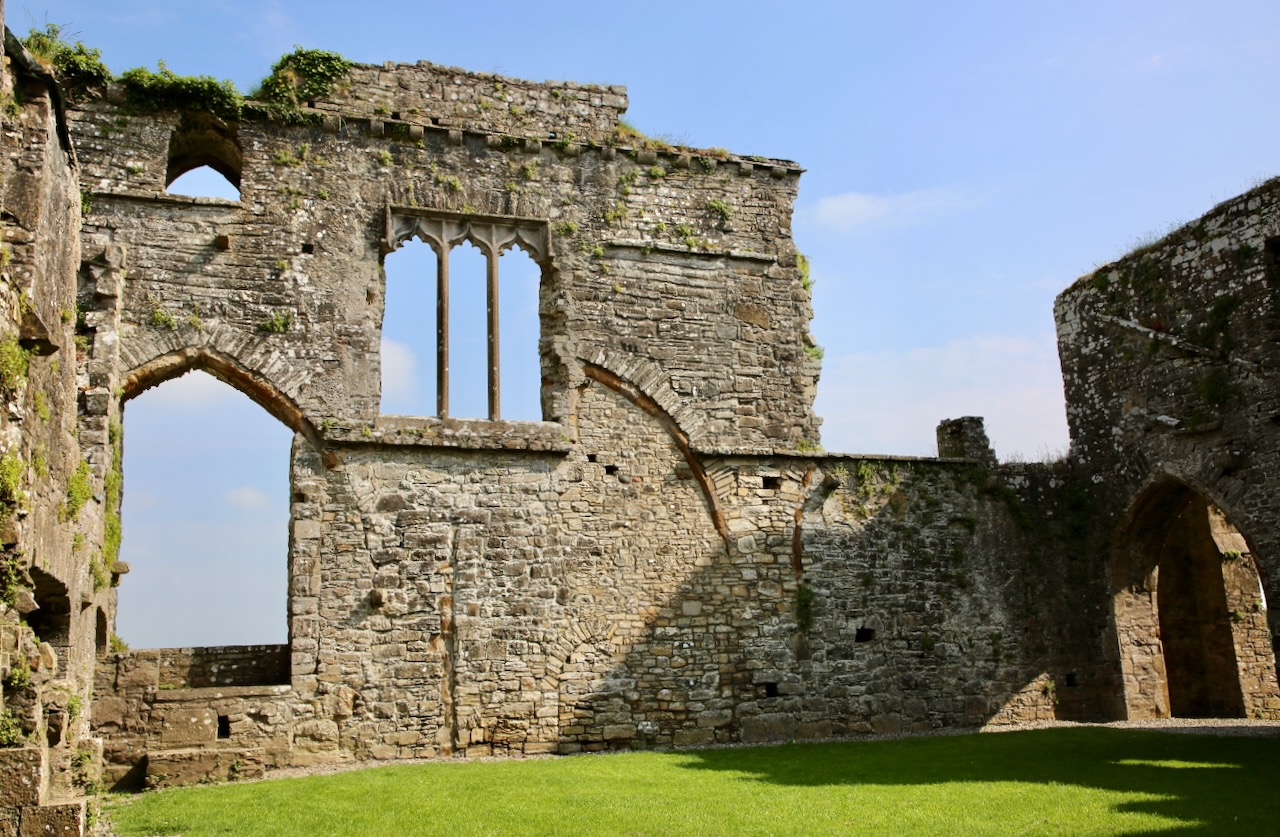
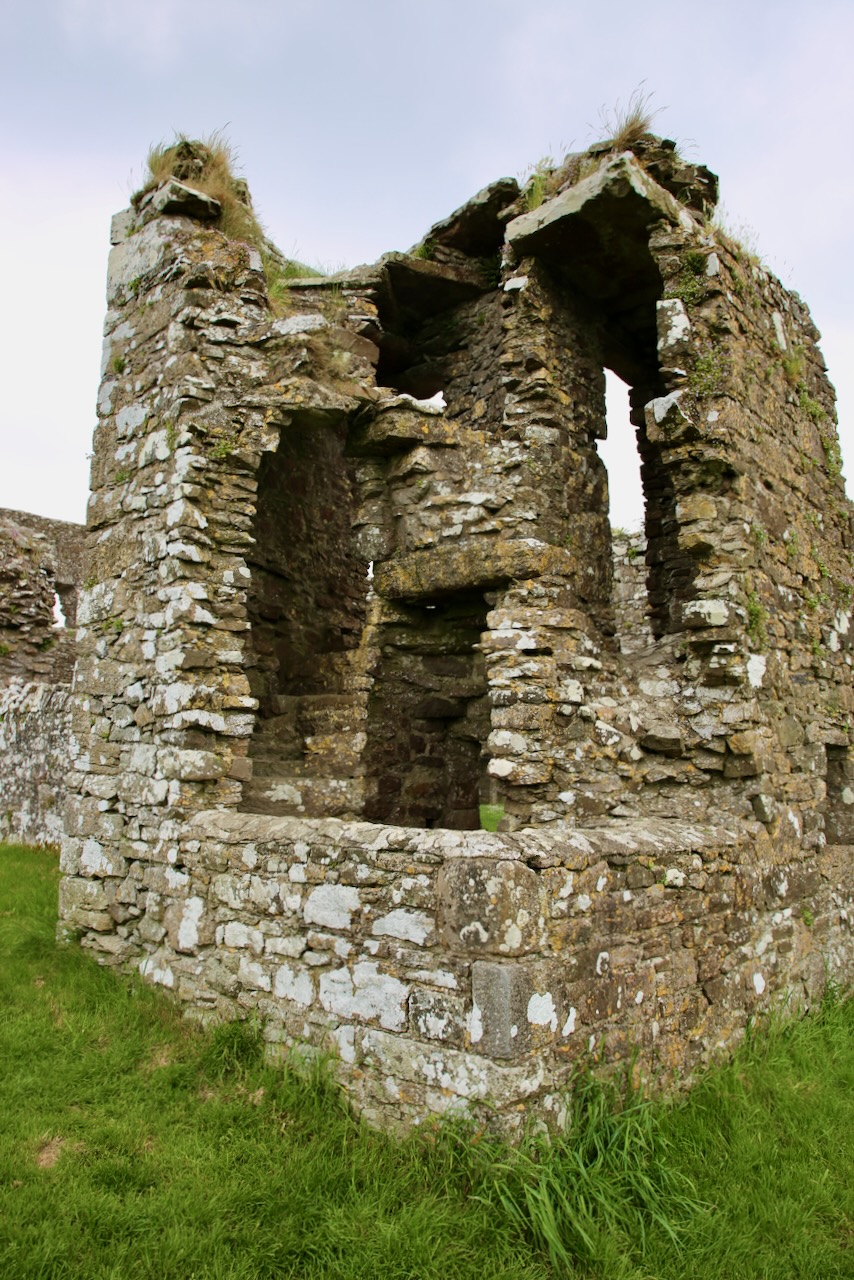
The Cathedral Church of St. Patrick, with its grand exterior and locked but gorgeous interior, will be our last stop in Trim. We visit Bective Abbey, the second Cistercian abbey of Ireland, which became an important monastic settlement after its founding in 1147. Most of what’s left today dates back to the 15th century and was sold to the state in 2012. The site includes a 13th-century church, a 15th-century cloister, and a 16th-century tower. Many historical places have either been added to or built upon (perhaps unknowingly or in a show of power) to maintain the enchantment of the location and preserve the traditions.
In 1386, men of Irish birth were barred from entry, and in 1536, this abbey was dissolved, too. It was converted into a mansion with fireplaces and large stone windows by Andrew Wyse after he purchased the church in 1552. I’m not sure of the Wyse to Wise relationship as my family tree is lacking apples before the birth of my third great-grandfather in 1839. Today, a few people choose to pose, some obnoxiously so, among the walls and windows of this ancient abbey. I wonder what brings the other visitors to this place other than to see beautiful ruins in a field, as there’s not a big car lot, but there’s a sauna and hot tub with a view less than a quarter mile up the road.
If only Caleb had been wearing a robe and carrying his Kindle, he would blend into the surroundings, and we could spend the afternoon reading and sipping imaginary tea. I love books and documentaries about traveling, real and imagined, and their ability to transport me. When getting the chance to explore, it’s watching the places I go come to life historically, in the present, and futuristically. It’s such an explosion that the experience can be overwhelming, not only of how small I am in the totality of things but just how little my existence is in all of time, ever.
Boyne Ramparts Heritage Walk
We make it to the Hill of Tara, an internationally important site, with a few rules — no camping, no fires, and dogs on leads please. The fire and tent poles could damage sensitive archaeological material. We find street parking behind a line of cars. At first sight, it’s just a field, a very green and lumpy one. Upon further investigation, the site begins to take shape. We peek inside the Mound of the Hostages and see the marker from the Battle of 1798, commemorated with a mass grave marker of the 400 rebels who died after having chosen this location for its symbolism of ancient sovereignty.
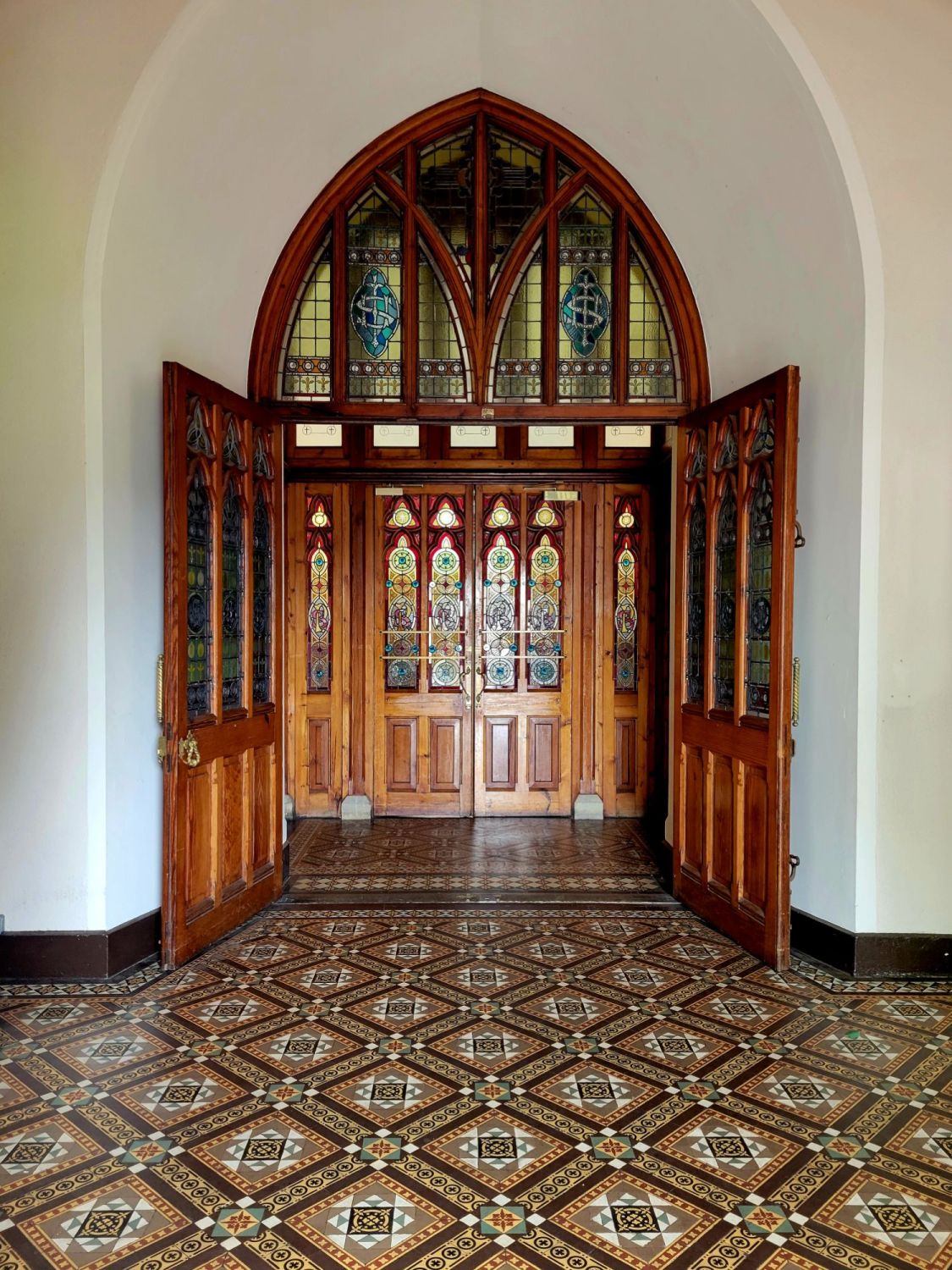
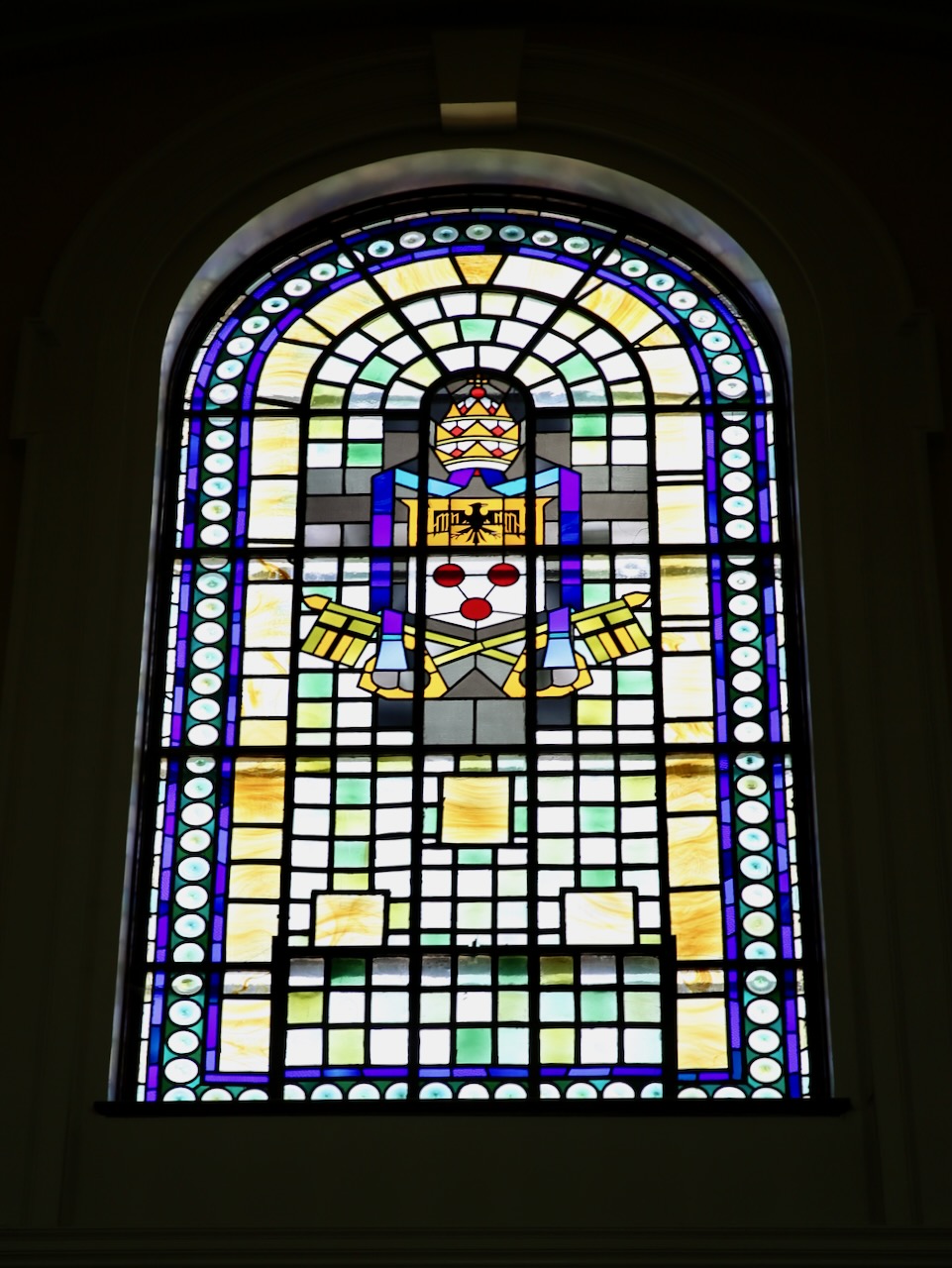
Between the church (visitor center) and the hill, on a fence, is a sign that warns of the damage being caused by bicycles, team training, climbing on the monuments, and walking in wet and mucky areas. The church is simple on the outside, and it’s the large stained glass window and other small details of stone, wood, and tapestry that catch my eye while exploring the sanctuary. This is just one of Ireland’s six royal sites associated with myths and the transformation of Ireland from paganism to Christianity. The shop next door has Celtic and goddess vibes, a cute children’s sweater that I didn’t fit in (so we got matching Aran styles in different colors that fit), and sampled some turtle juice (Caleb’s drink) in a planet-friendly bottle to go with his tuna and sweet corn sandwich.
Hill of Slane
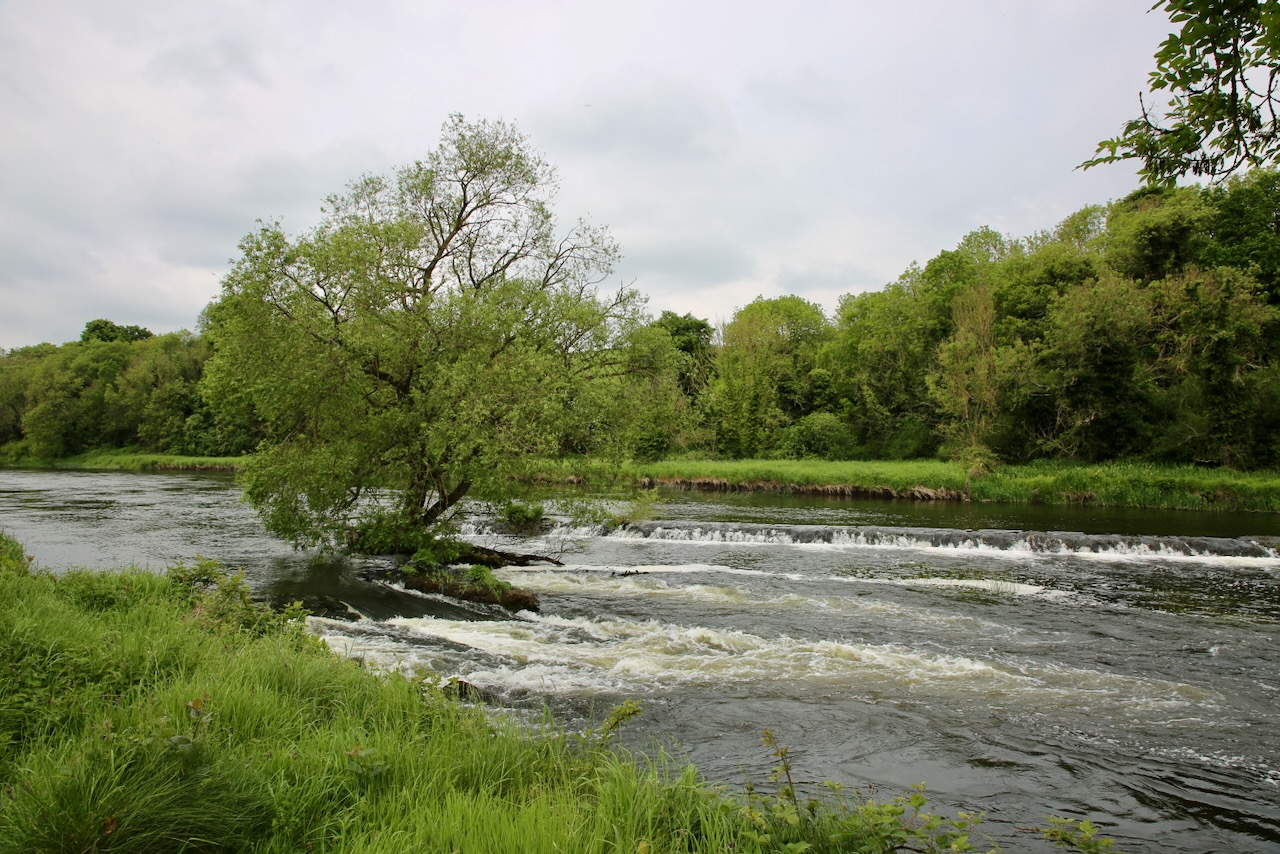
Ollie, the otter, welcomes us to Boyne Ramparts Heritage Walk. Sadly, we won’t see a live one as they have become rare in Ireland and extinct in much of Europe and are more likely to be spotted around dawn or dusk. This towpath, between a river and canal, runs from Stackallen Bridge to a place too far away to see today. We are promised heritage, beauty, and ruins and are met with cascades, birds, and stinging nettle (respectively, of course).
Besides having roommates with kids and having to look after them sometimes, this experience will be the closest we come to the perseverance required of some parents to keep going even though we’re physically exhausted. Each rest in the car to wipe our blistered noses and cover more countryside gives us just enough energy to even contemplate getting out at the next spot on the list. For us, this would be the Hill of Slane. It’s here, on Easter Saturday in the year 433, that St. Patrick lit a bonfire in protest of King Laoghaire’s pagan festival (bonfire ban) on the Hill of Tara.
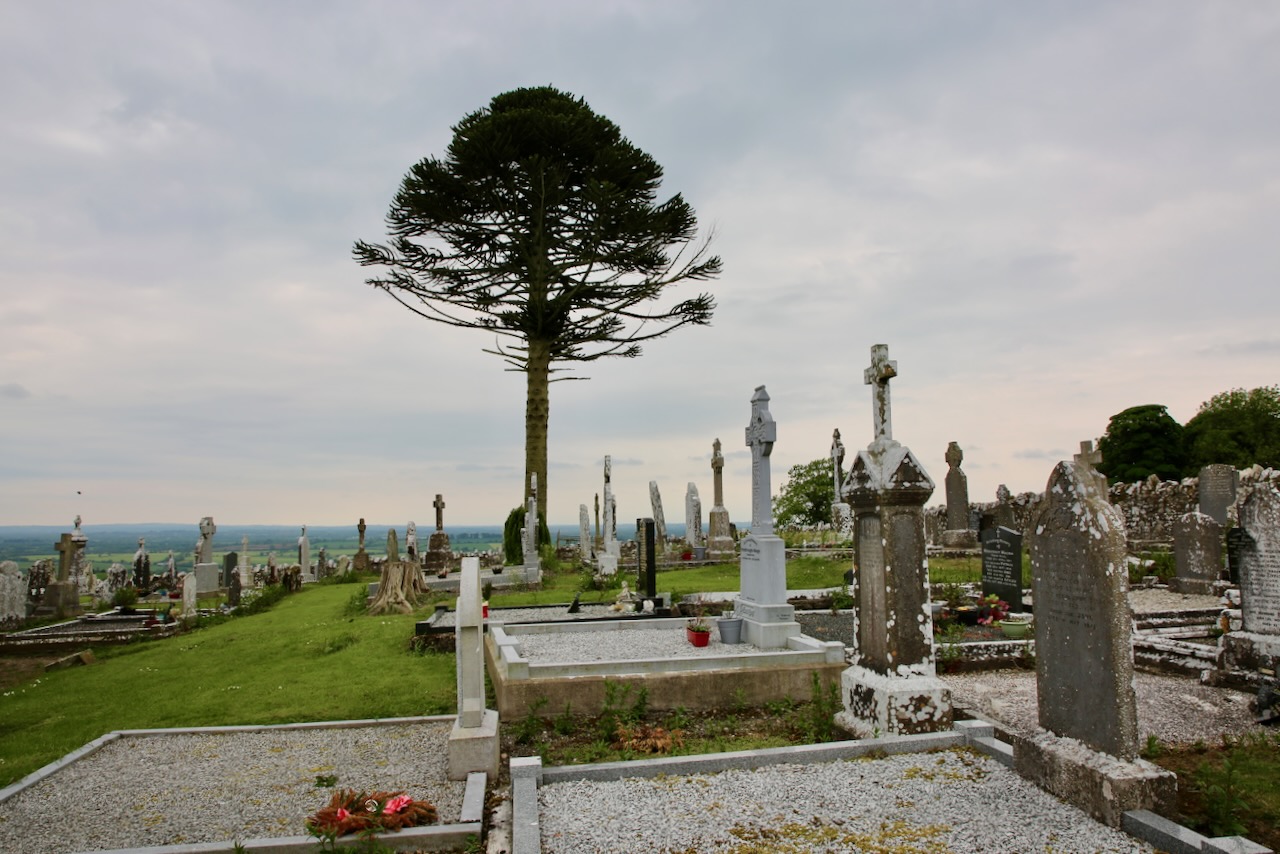
The king didn’t convert to Christianity but allowed St. Patrick to preach. Over eleven centuries later, King Henry VIII dissolved a monastery built just 30 years ago and granted the land to Sir Fleming for an annual rent of just one penny. We’re here to see the remnants of Slane Abbey. We park at the bottom of the hill and follow the wide-mowed path to the beautiful stone ruins that now provide a home for ivy-leaved toadflax, a purple-flowered trailing plant native to rocky habitats. We enjoy the weathered walls, worn windows, distant views, and cherished cemetery.
We zigzagged our way, mostly east, through County Meath and now begin our route south for our return to Dublin for our flight tomorrow morning. Balrath Woods, another chance to bask in Ireland’s emerald-ness, is the fifty remaining acres of a once larger estate of mixed broadleaf woodland that was mostly replanted in 1969. This park is part of the NeighbourWood Scheme to plant and develop areas for public access that can be used as outdoor classrooms to learn about different species of plants and animals, various habitats created in woodland, and the importance of proper management.
These woods are home to birds, butterflies, and bunnies, but my favorite feature here is the beguiling beech with an expressive root structure and bright green expansive canopy. Between the Balrath Woods and the Wonderful Barn sits Emerald Park, Ireland’s only theme park (around the Irish potato crisp brand Tayto) and zoo. The park was renamed when the partnership deal ended, but the mascot remains. The park has the island’s only wooden roller coaster, and though they have great rates, about $45 per person, we are not stopping until we get to the corkscrew-shaped grain store.
Balrath Woods
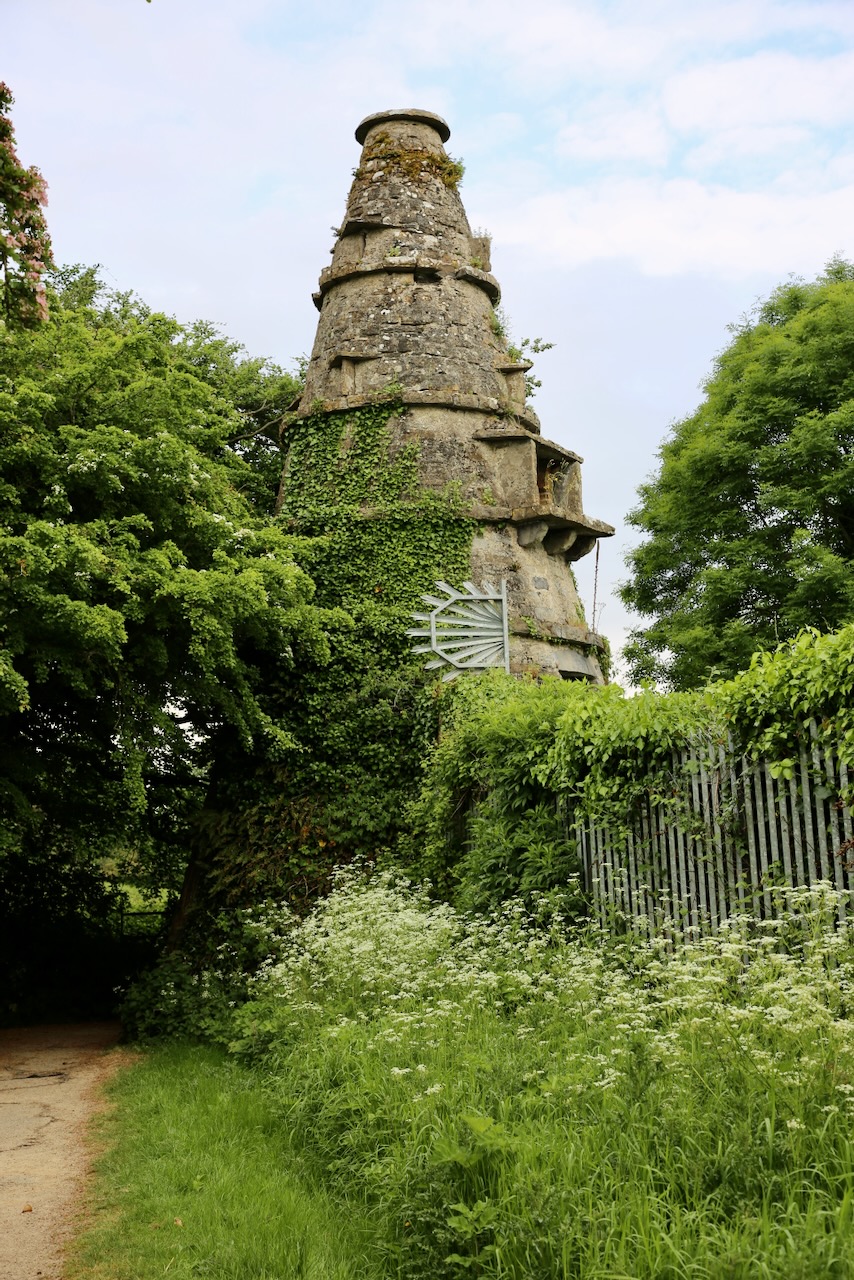
The Barn was built in 1743 with 94 steps of cut limestone to reach the top. Follies are towers or mock ruins built by the wealthy for decorative purposes and to employ the locals during times of famine. This Barn has been referred to as a folly in many books but actually serves a practical purpose while also being a more pleasing addition to the landscape. This 73-foot-high structure was built to avoid a repetition of the flour scarcity that led to hoarding, price gouging, and theft. It consists of five vaulted chambers inside walls over two feet thick and protected from rain by slates on the exterior.
Two dovecotes, for pigeons, were built so the birds could feed off the spilled grain and then become meat (squab) for winter, preferring the birds before they grew their flight wings. The Kildare County Council has been responsible for the site since 2005 and has mended the brick and stone masonry and made extensive roof repairs to the wings. The Barn was placed on the World Monuments List of 100 Most Endangered Monuments in 2006. I see more rabbits here than I have all day. We are nearing the close of our check-in window for Angel’s home on the outskirts of Dublin, with a mostly highway route to the airport.
The Wonderful Barn
I knock on the door upon arrival, and after a few minutes, I knock again. There are cars in the driveway, but no one is around. I call the number listed, and for a moment, the guy who answers seems confused until he realizes I’m a house guest for the night. I’m not sure if it was his daughter from next door who let us in, but she gave us a tour and a heads-up about the long-term renter staying upstairs. It was a good thing she wasn’t home yet, as the front door was tricky to close, and she was able to show us how to keep it that way.
We get back in the car for dinner and drive to The Halfway House. After looking at maps, asking the internet, and searching through photos, I still had no idea where we had dined. The picture time gap led me to believe that we had walked, but no such place fit the description: cozy bar seat with sunlight coming through the stained-glass skylight, making the wooden bar and floor shine (it could also be overhead lighting). There’s a wooden dog statue, a heavy curtain, and some bench seating. They serve club sandwiches and had a buffet around the corner that we weren’t interested in.
I asked Caleb, and he suggested a place outside of walking range, so I went to the credit card statements to confirm. The customer service agent wasn’t able to give me the restaurant’s name for Caleb’s protection, but he did let me know that even though our card number changed recently, I’m still able to pull up two years’ worth of statements (my first attempt only found the recent three months) and there I found our last dinner in Ireland — The Halfway House. I’m not sure why we went there instead of walking to Hartstown House (a double H logo instead of one), but it was nice to have salt and vinegar chips (fries).
I had asked the tenant about a recycling center, but she thought they were too far away. We found one within ten minutes of walking distance and got back €0.50 for our efforts after dinner. Back at the house, we started to wind down as the evening seemed to just be getting started in the backyard. Had I been a day younger and 98% less sick and exhausted, I might have invited myself to the hooley (noisy party) and learned another thing about the local culture. As it was, we read for a bit with the window open and went to sleep by their second or third beer.
This nickname for Ireland took almost one hundred years to brew. It started with Arthur Guinness who founded St. James’s Gate Brewery in 1759 and signed a 9,000-year lease for four acres. As his beer gained in consumption, the brewery became the largest in Ireland in 1838 and then the world in 1886. It has since been surpassed but remains the largest brewer of stout. Guinness is on many top ten lists along with beers from Mexico, the Netherlands, and China. Visitors are welcome to tour the site, now on fifty acres, and sip samples, have a stoutie (a selfie on their beer head), and learn the six-step pouring ritual.
Part of the advertising that helped Guinness grow was the support from doctors in the 1920s who would prescribe a pint to their patients after an operation or during pregnancy due to the benefits the believed-iron-rich beer would provide. This marketing was efficient for the next forty years. I have to laugh to think that people, myself included, trust doctors, scientists, and government agencies now to have their best interests in mind; not unless it comes with a better payday than the competition.
It seems as if the plan was to spend half of yesterday in Galway and then, time permitting, drive to Connemara National Park, a noted two hours away. Even though Caleb invited the anti-energy virus on our road trip we would’ve had to camp at or near the park last night after using the light of the Waxing Gibbous moon, at 92% illumination, to hike. If wanting to increase the level of adventure on a trip, one idea would be to drive on the island at night where the deer vs stag on the road comes into play.
Only one of those ‘animals’ have headlights and alcoholic fuel installed. Ireland’s allowed blood alcohol concentration (BAC) level is at 50 mg (80 mg being the familiar 0.08%). If detected by the peace police (Garda Síochána), they automatically suspend driving rights for three months and issue a fine. This should make me feel safer, but so does not driving on unknown and thin winding roads with cliff edges. I was going to refer to a trip I took to the country of Georgia in January 2020, but I have yet to finish writing about that part of my visit.
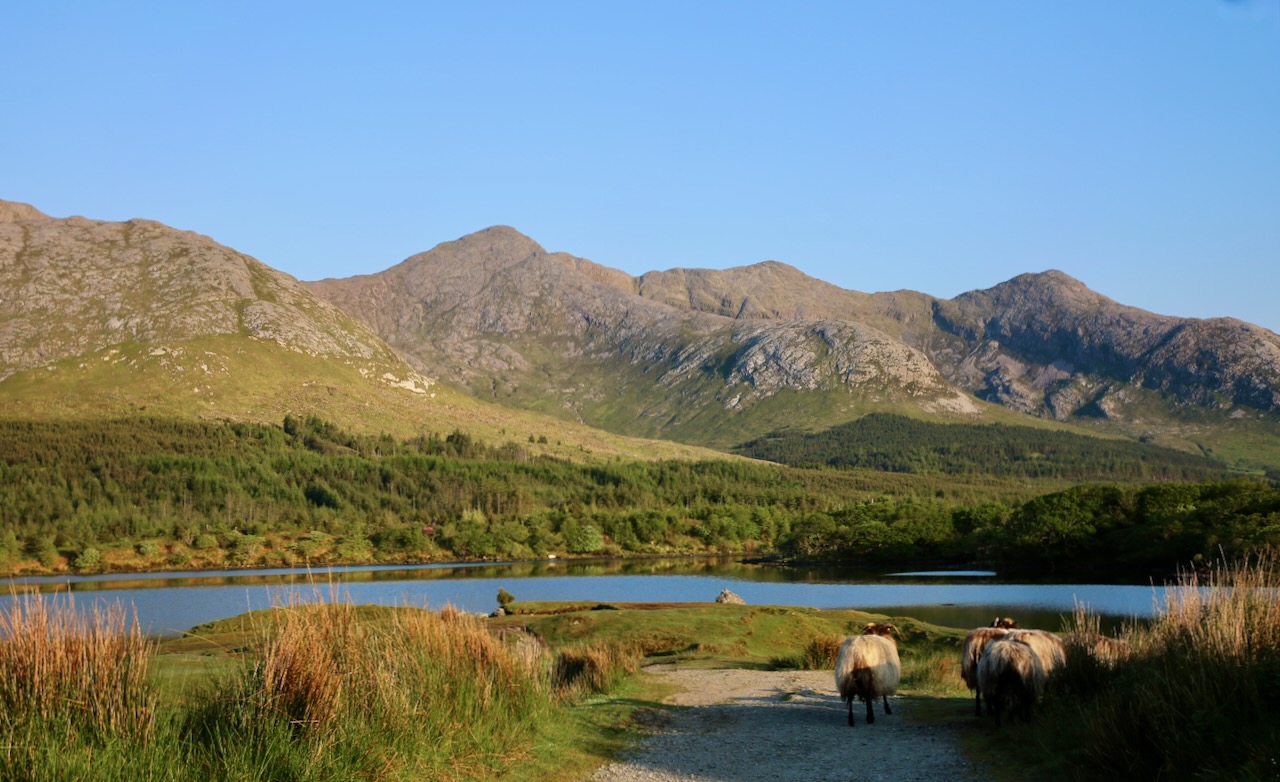
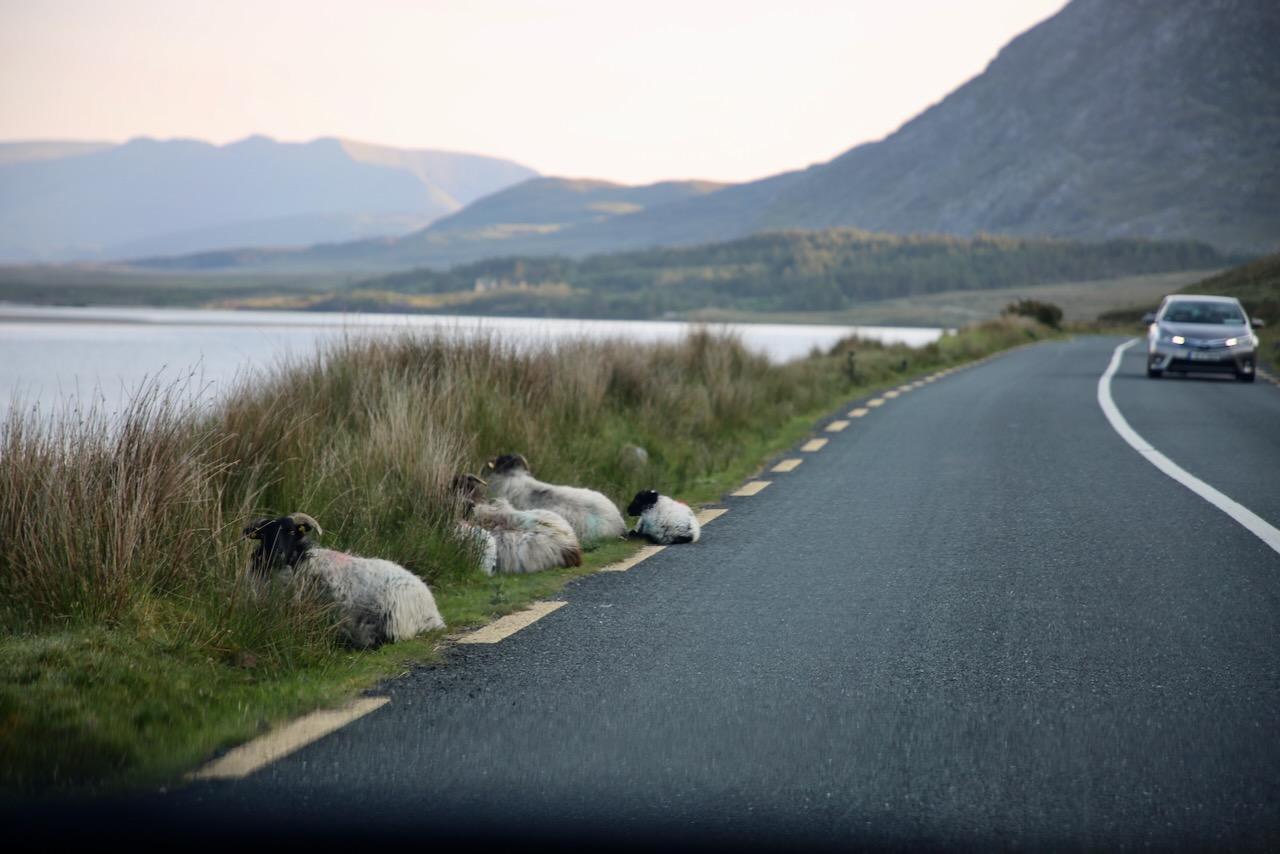
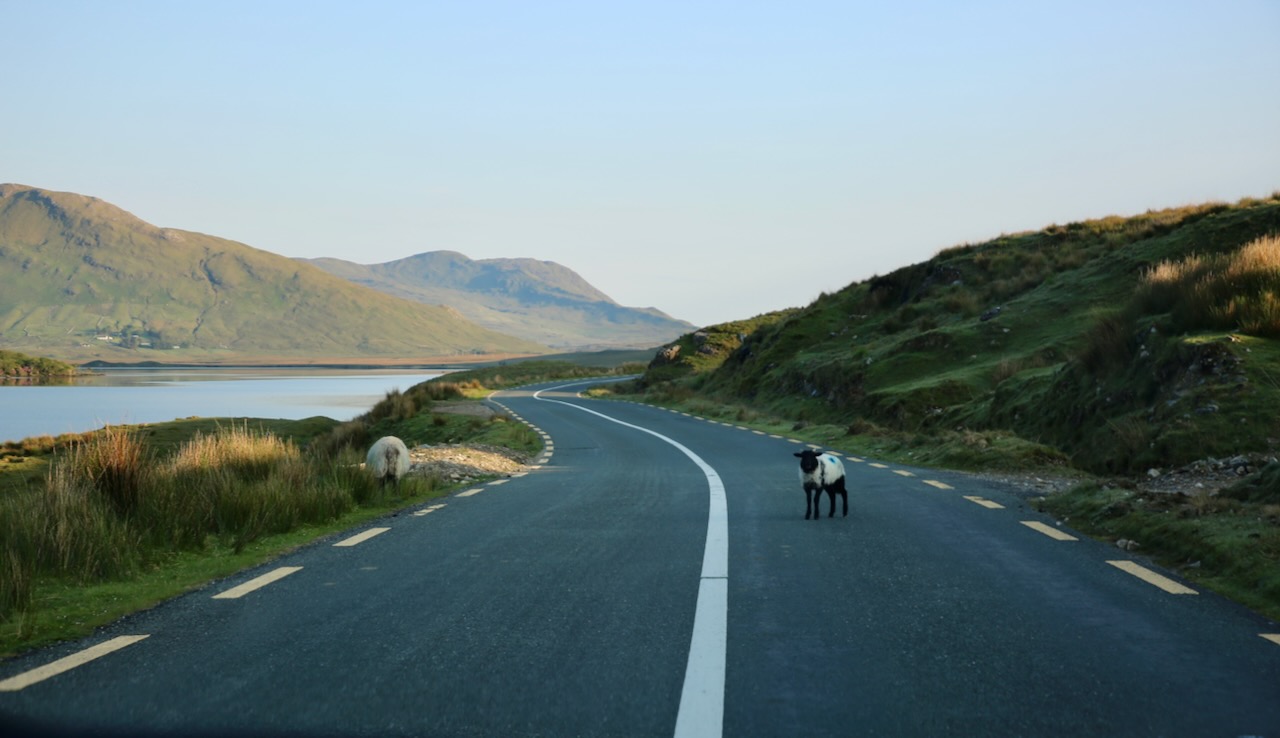
The sun and clouds begin the morning competing for my attention as I can’t yet determine which will dominate the sky. Reflections on the water and bright yellow flowers grab my eyes next. I’m almost unprepared for the beauty of the rolling mountains in the distance and the Blackface mountain sheep on the road’s shoulder. There’s not a safe spot to stop on the road and take pictures like I’m used to on many of America’s straight roads, and even then I appreciate having a passenger who can grab the wheel or keep an eye out.
I see one of a limited number of pull-outs and am going slow enough to use it. I’m stopping to take in the lake, Kylemore Lough, and see a snail on a rock. I’d like to believe he was awaiting my arrival. Surely he’s taking advantage of the shade provided before his momentary perch becomes a permanent pan to bake him into a bird’s escargot. We pass the Kylemore Abbey & Victorian Walled Garden where your $19 entrance ticket includes the Neo-Gothic Church, the Mausoleum, and the Woodland and Lakeshore walks.
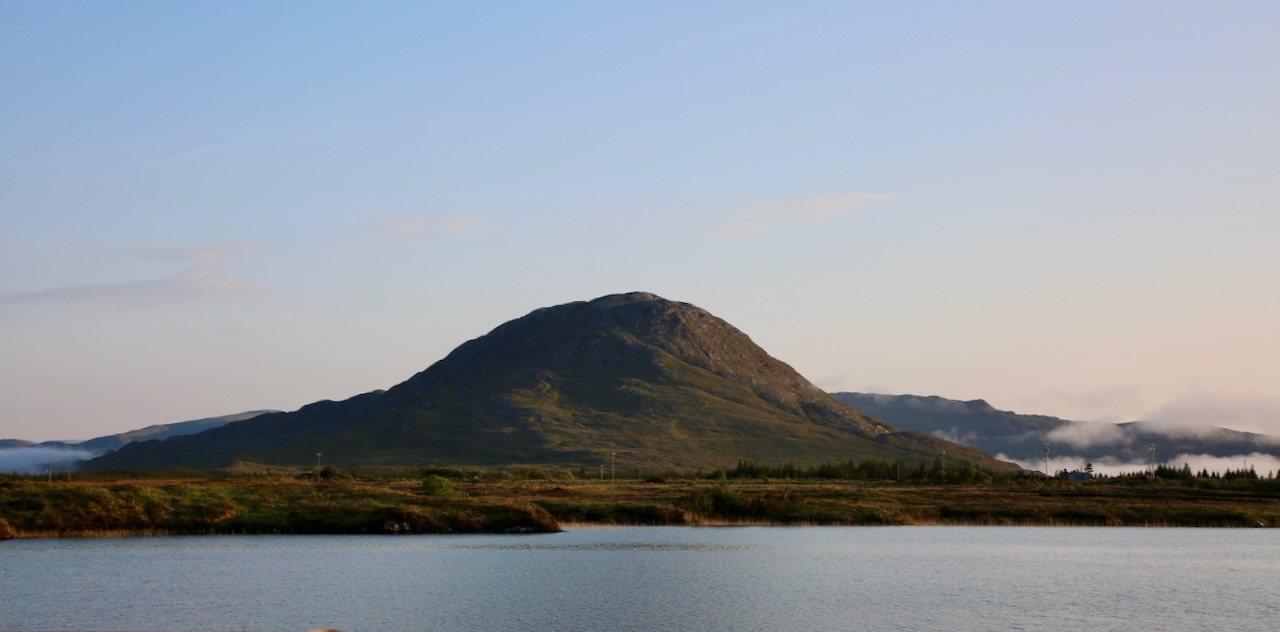
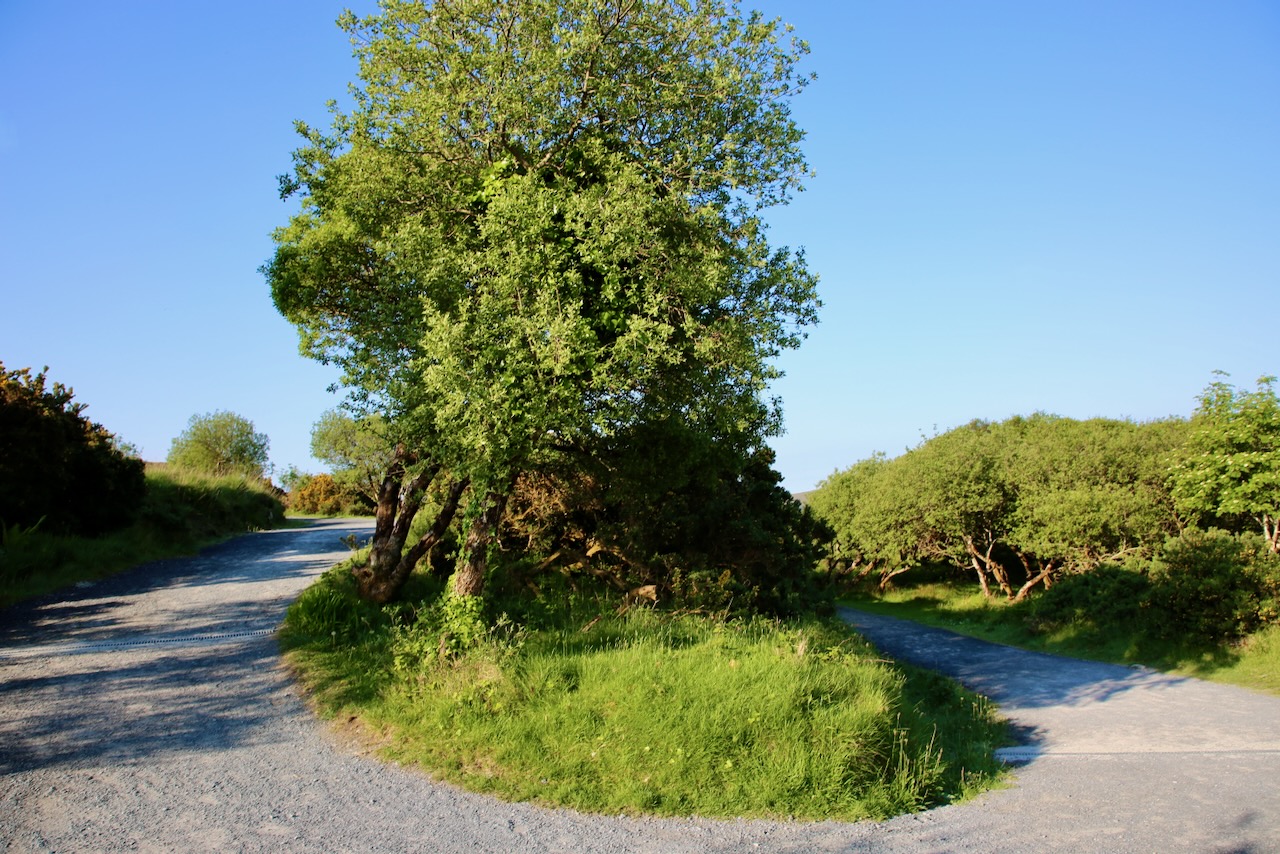
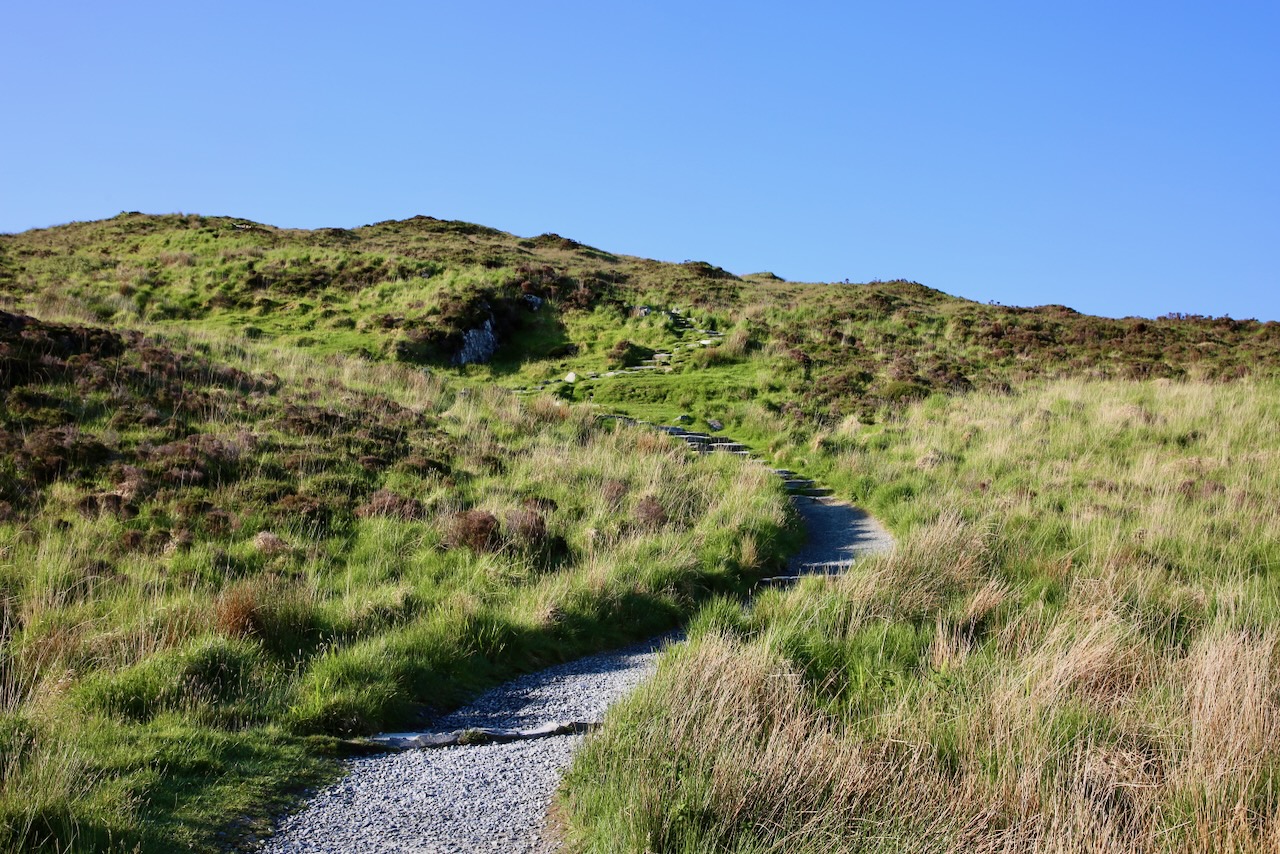
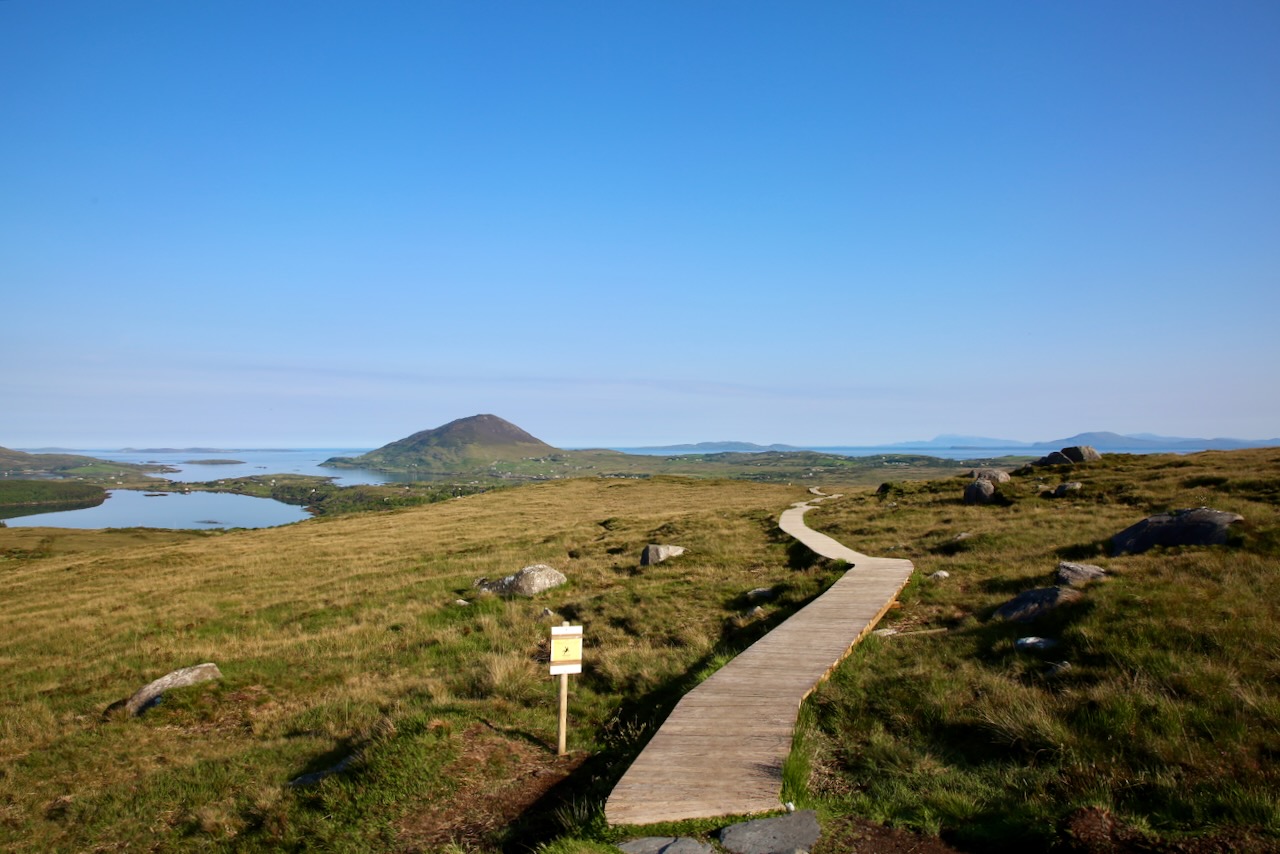
A few minutes up the road is the entrance to Connemara National Park. We find a spot in the shade in the empty lot, walk past all the closed buildings, and begin our ascent of Diamond Hill. The view is beautiful; the water looks like a boot of ocean stuck in the verdant mud that is Ireland. We pause for the horses in the field, the hawk on a bush, and the frog in the grass. We remove our shirts and yet the sweating continues. There’s a boardwalk and then a further climb to the top. This older woman passes us, dressed in long layers, and we decide to turn around before we become a trailside attraction.
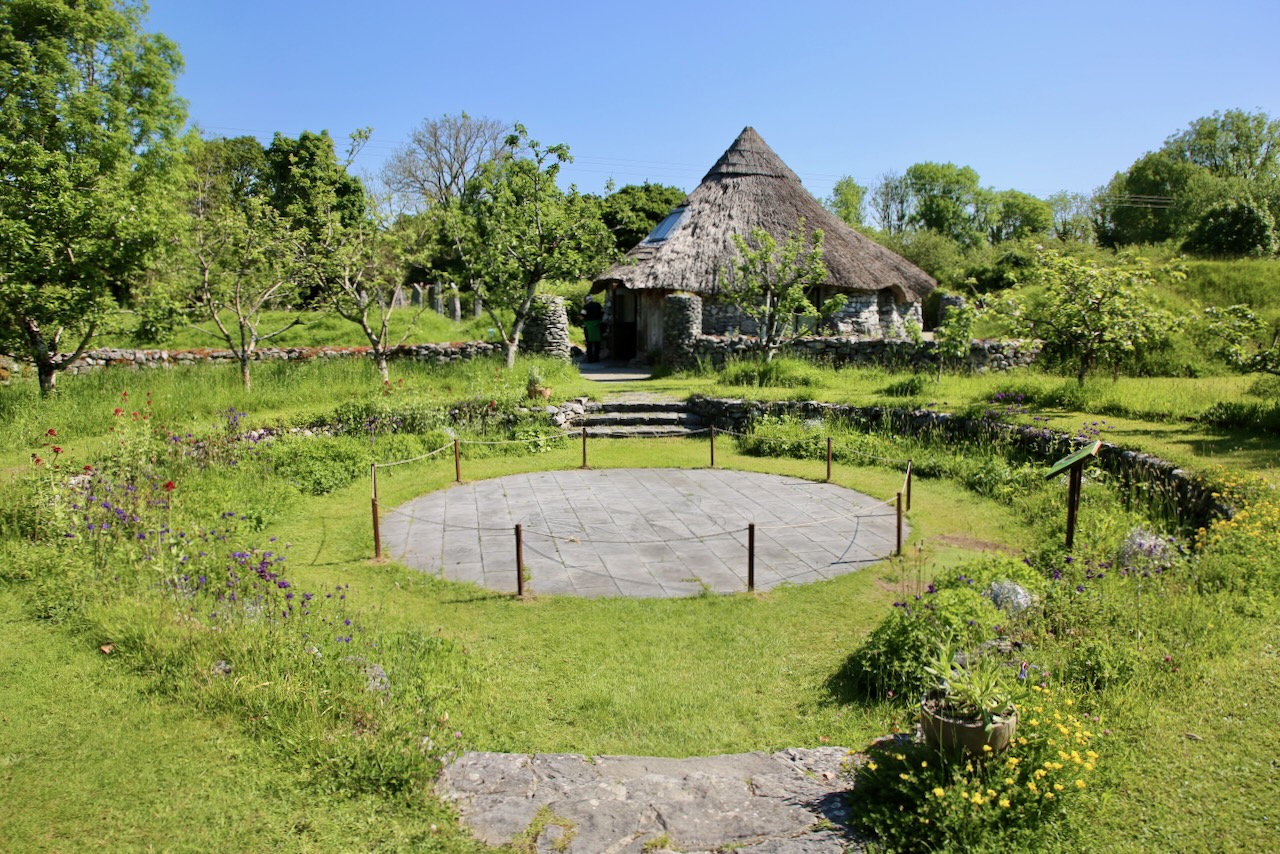
My level of exertion made me feel like I had walked twice as far. More people are arriving as we return to the parking lot. We backtrack towards Galway and turn off the N59 towards Brigit’s Garden, a space dedicated to the Irish goddess and saint. This park is more our pace, with less elevation change to contend with, and $21.80 gets us access to multiple gardens and acres of meadows and woodland. There are ponds, lots of round references – stones, mounds, structures, and a bicycle powered light. The shade offers respite, though once we’re on the far side of the sundial I have an urge for sustenance and a seat.
Brigit’s Garden
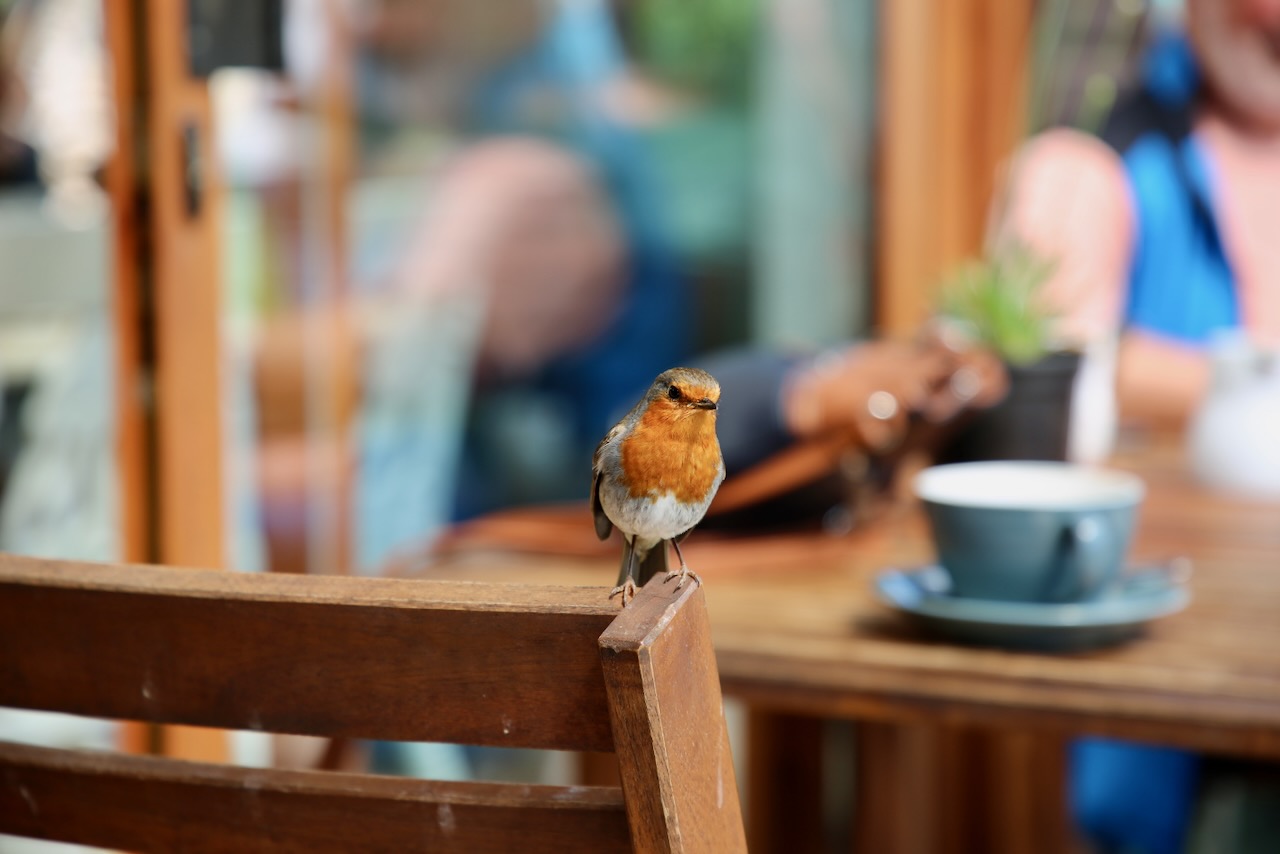
I order a chai latte and undecided on which dessert to have, we get three. A scone with raspberry jam is mandatory, the chocolate cake is surprisingly light on sugar and density, and the carrot cake completes our trio of amazing sweets. I would’ve been fine taking in the voice differences, wooden details, and starches dissolving on my tongue but a robin, or two, determined otherwise. I wasn’t the only diner with a camera as I sat and captured the bird posing on the furniture and the floor. I linger a moment longer but with the arrival of a group, it now seems time to go.
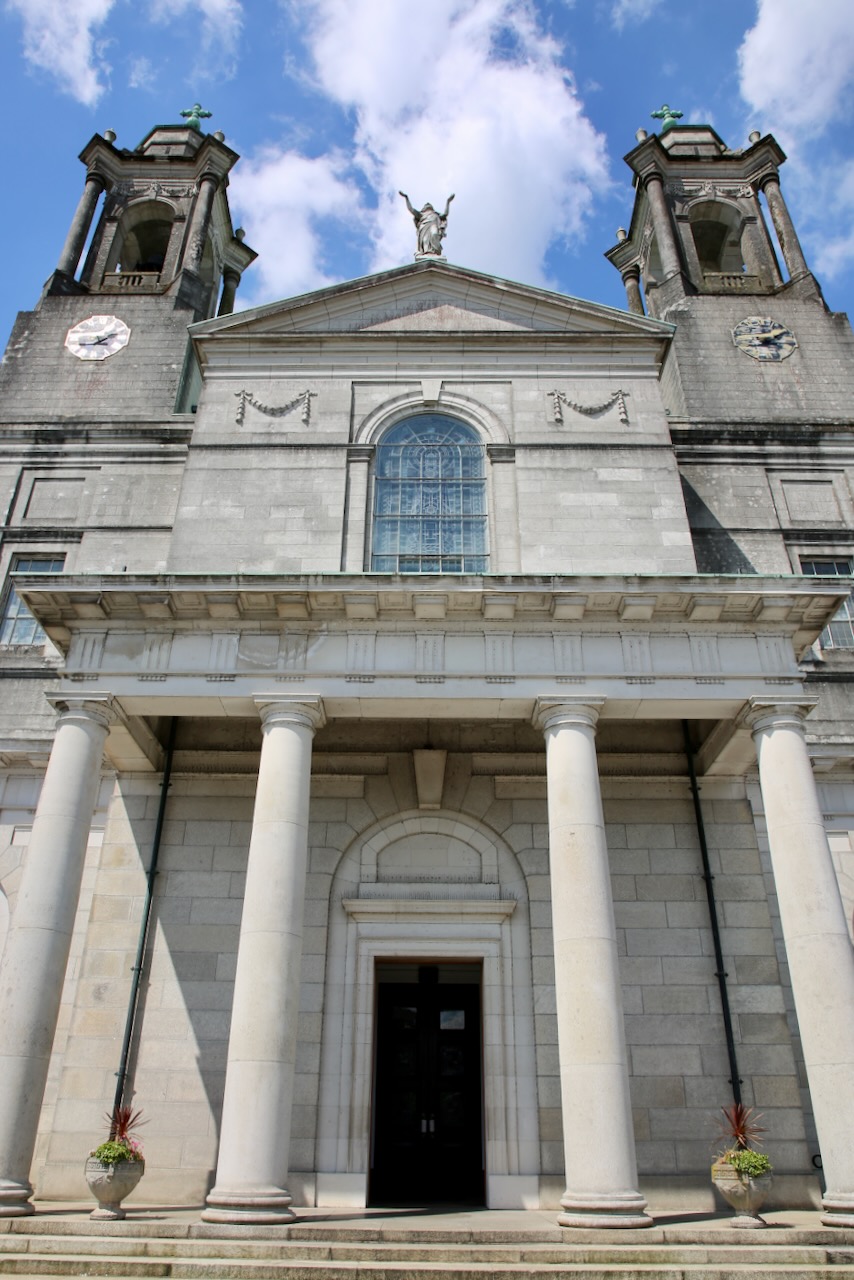
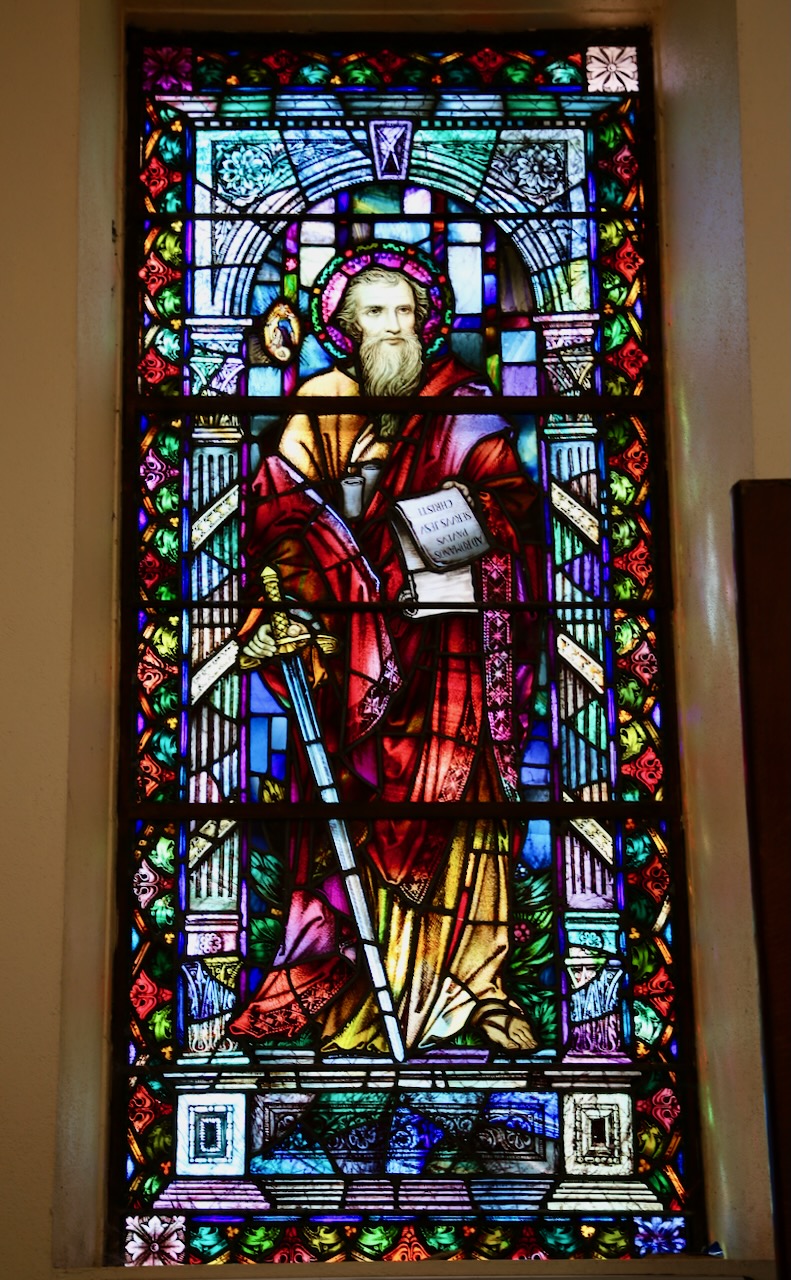
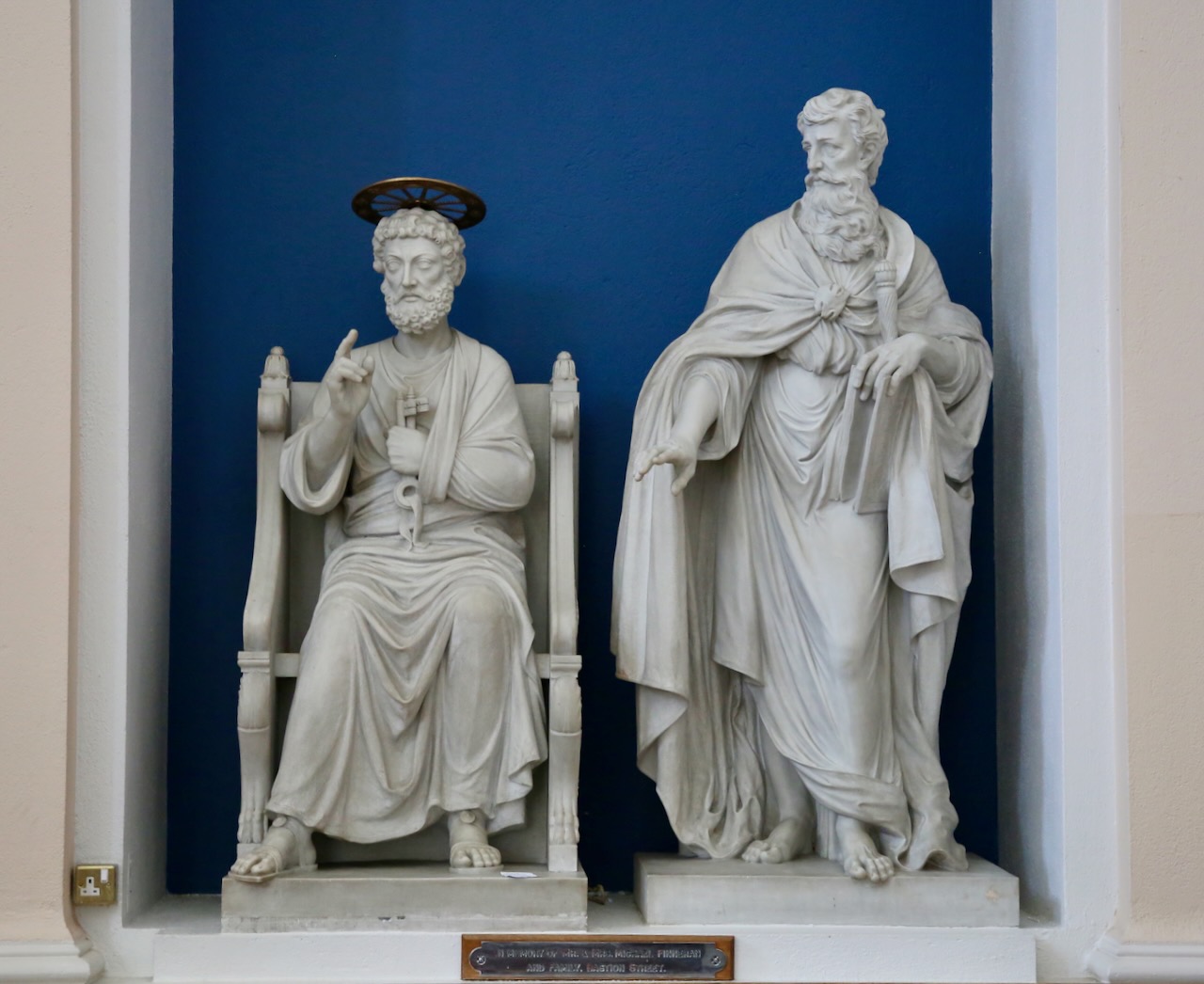
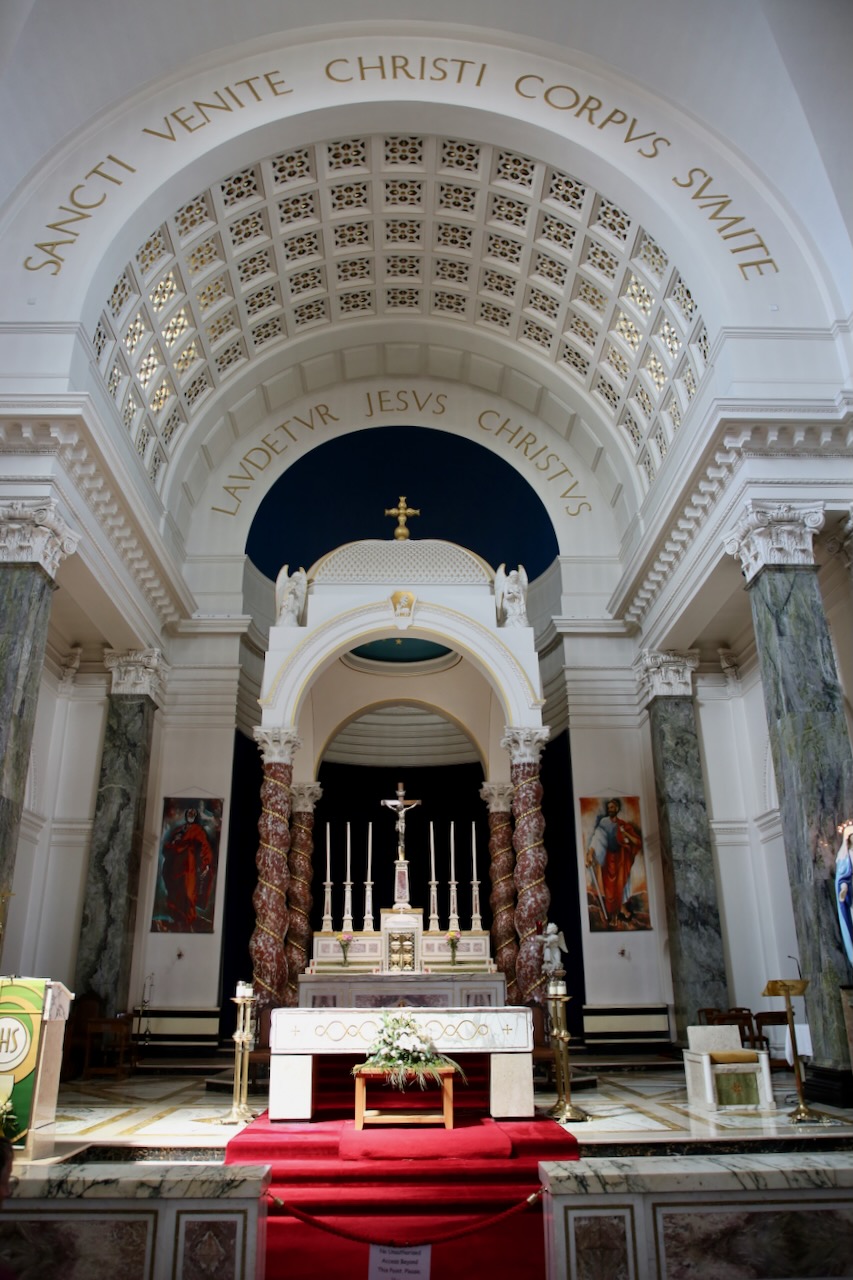
The town of Athlone, meaning the ‘ford of Luain’, named after the man who guided people across the River Shannon before bridges were built, is about two hours away. The castle is closed on Mondays, so we visit the Church of Saints Peter & Paul. The building design resembles a courthouse, this one absent of sinners today, besides the intricately stained glass. I appreciate the decorative distinctions between each house of worship so that no matter the budget or material availability, the locals would still have a place to congregate and celebrate.
The Guinness Book of Records started in Ireland, so every day is another opportunity to be recognized for a feat of strength, solitude, or seniority. Tony Hawks traveled 1650 km with a fridge, Enya has never performed a solo concert and still sold 75 million albums, and the Clarke family has the most siblings, five, to live past their 100th birthdays. Sean’s Bar was awarded, in 2004, the oldest pub in Ireland, and possibly the world, with a wall dating to 900 AD. A sign outside tells of a time when the bar was known as the Three Blackamoor Heads and ran by Mark Begg in 1736.
Church of Saints Peter & Paul
Not yet ready to go inside, we walk down to Shannon Banks Nature Trail Walk. Here we learn that stone walls are great habitats for moss (wall screw and silky wall feather), flowers (wall lettuce and ivy-leaved toadflax), and ferns (wall-rue, rusty-back, and maidenhair spleenwort); that sycamore trees can tolerate urban pollution and that some fish are coarse (pike and perch), meaning their scales are larger than game fish (trout and salmon) and they prefer warmer and stiller waters. There’s a tall stone wall, with no life allowed to live in its length of a city block and a half.
The Custume Barracks was renamed by a general in 1922 after the sergeant who served in the siege of 1691. There are many examples of Georgian and Victorian architecture inside but as this is still an active command we are not allowed access. Then to the pub, we must return, for a glass of stout and spirits, and an augmented reality museum experience by Heineken. The company is working to preserve the history that these landmarks (Sean’s, Toners, and Mother Macs) maintain by gaining museum (tax-exemption) status. This experience was launched in April and is a great example of using modern technology to perpetuate the past.
There’s a fireplace, many framed memorabilia on the walls, and the wattle and wicker wall (hazel sticks, horse hair, clay) discovered in 1970 by Sean Fitzsimons who bought the pub from Sean O’Brien. We get to watch a firefighter from New Jersey pin his patch into a display case. The employees have shirts that say ‘caint ceol agus craic’ (music, chat, and fun) in bold letters on the back. The shirt I leave with has all the action on the front. The place we’re staying at tonight requires us to backtrack a bit and check in early.
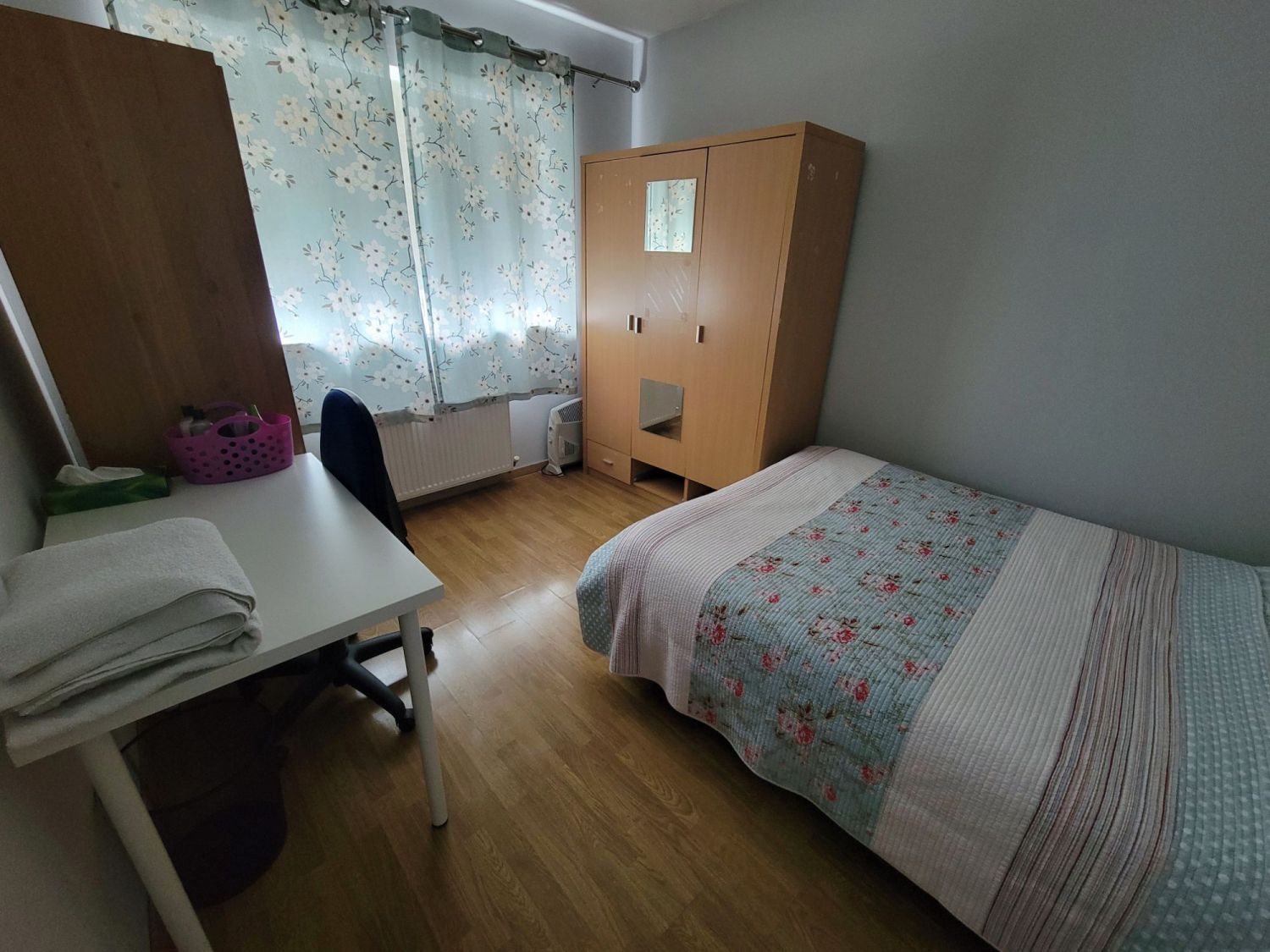
I pull into the Riverview House B&B driveway and the hostess stands directly behind the car (in the hit zone) and tells me to move over her body or through the hedge, as my options. Once she has me reparked in the front corner, with hopes I won’t be blocked in, she shows us inside. The lounge is locked and our room is upstairs. The cabinets are ziptied with a single bed against them and a double bed on the other side of a nightstand. The next room has more cabinets, a desk with tea service, and a sink. Both of these rooms are brightly lit with large windows. The dark room in the corner contains the toilet and shower.
With keys in hand, we can look for dinner, which happens to be across the River Shannon from Sean’s Bar. We walk into Gertie Browne’s, past a space with limited seating and two sets of stairs in front of us, to a small bar area. There’s more seating and the restaurant continues further back, but with service here, we take a seat. I order the lemon pepper sea bass with potatoes, bell peppers, and green beans. I’m halfway done scarfing down this delicacy when I hear an American accent behind me. It’s interesting how something so common at home can stand out abroad.
Samantha and Trent are on vacation away from their automotive industry jobs where they met, in different departments, and then had kids. I’m not sure if Las Vegas is where their story started, but it’s where they call home now. They finish their meals and invite us to a corner table to continue the conversation and cups of casked corn that I prefer as a cocktail, not neat, and not when I’ll be driving. I’ll sip on a cider while my meal digests and as we return to our room I can imagine the couple is partaking, again, of the other side of many vacations. Some people stay in their resorts while others cruise the nightlife, which I can do at home or within a set limit on occasion.
The Irish name Éire derives from Ériu, the name of a Gaelic goddess of sovereignty. The name debate started in 1921 after 26 counties of the 32 became the Irish Free State. Then in 1949, the southern counties were called the Republic of Ireland, separating them from Northern Ireland. In 1998, when the state dropped its claim to the remaining six counties, they simply became Ireland, but the partition remains and so for some, Éire is an outdated term but also one that refers to the whole of the island.
River Shannon
We leave Heron House with the bed semi-made, towels semi-wet, and the keys properly returned to the lockbox. Our first step is also semi-planned. I thought we’d walk part of Lough Derg Way Clonlara yesterday, but we stopped in O’Briensbridge this morning instead to walk along the river. The town was named after the timber bridge built in 1506 by Turlogh O’Brien, which was replaced in the 18th century with stone. That bridge had 14 arches and, in the 1830s and 40s, it was remodeled to include a towpath and quay and reduced the arch count to 12.
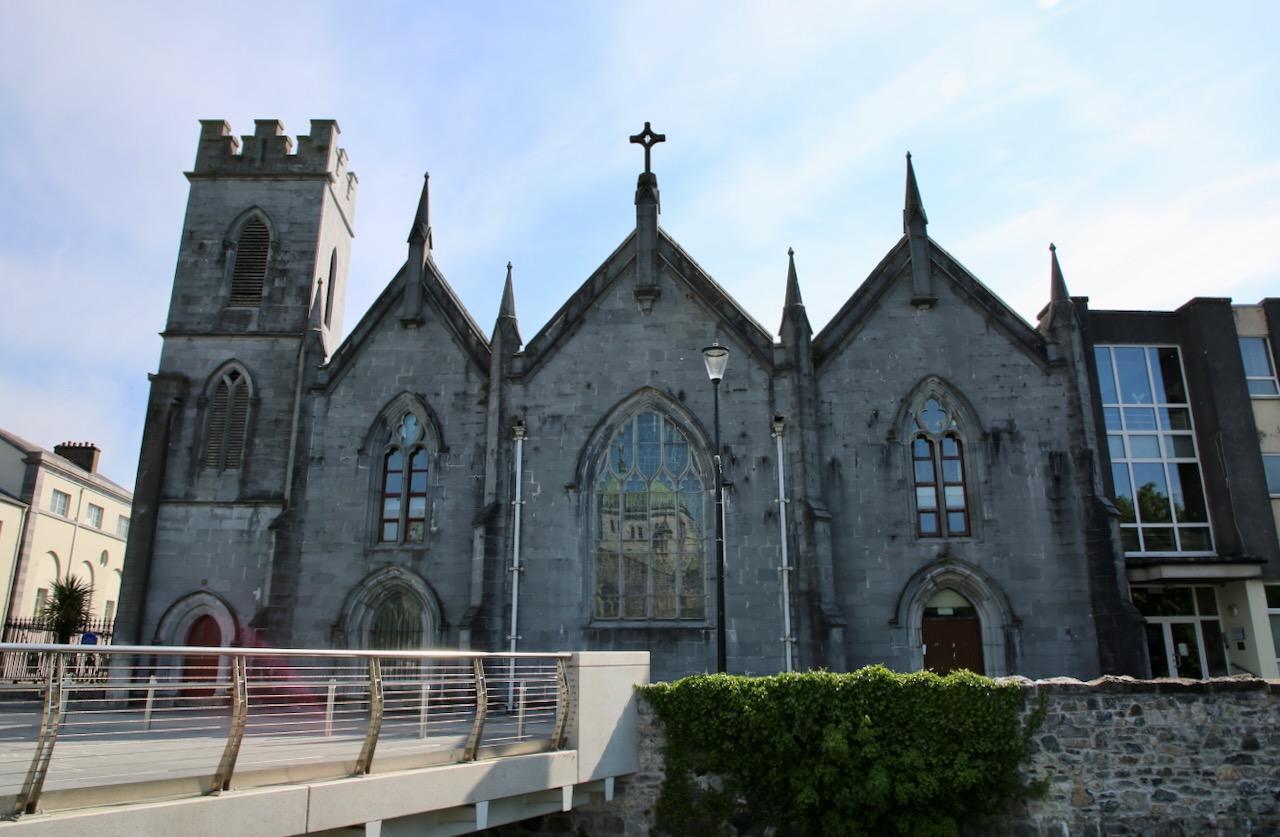
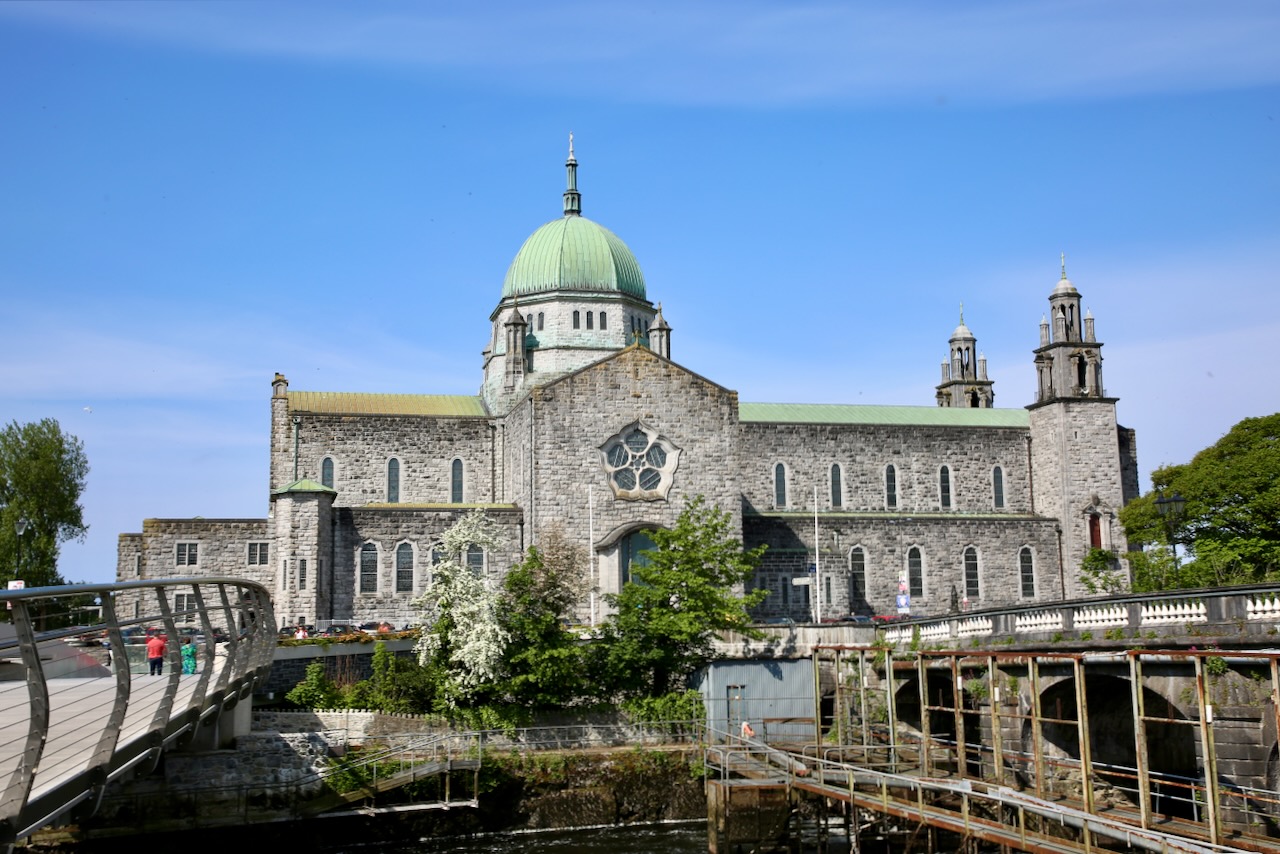
Diocese of G & K and Galway Cathedral
There’s a sign depicting many of the birds that can be found here. It lets us know that while the Limerick to Killaloe Navigation System, work which started in 1757, was in operation there were barges carrying potatoes, corn, slates, and turf. There’s a Heritage Garden with a restored Old Mill Wall in the rear, the only remains of a five-story corn mill that was built in the 1830s. This mill employed about one hundred men but the famine of the 40s led indirectly to its closure.
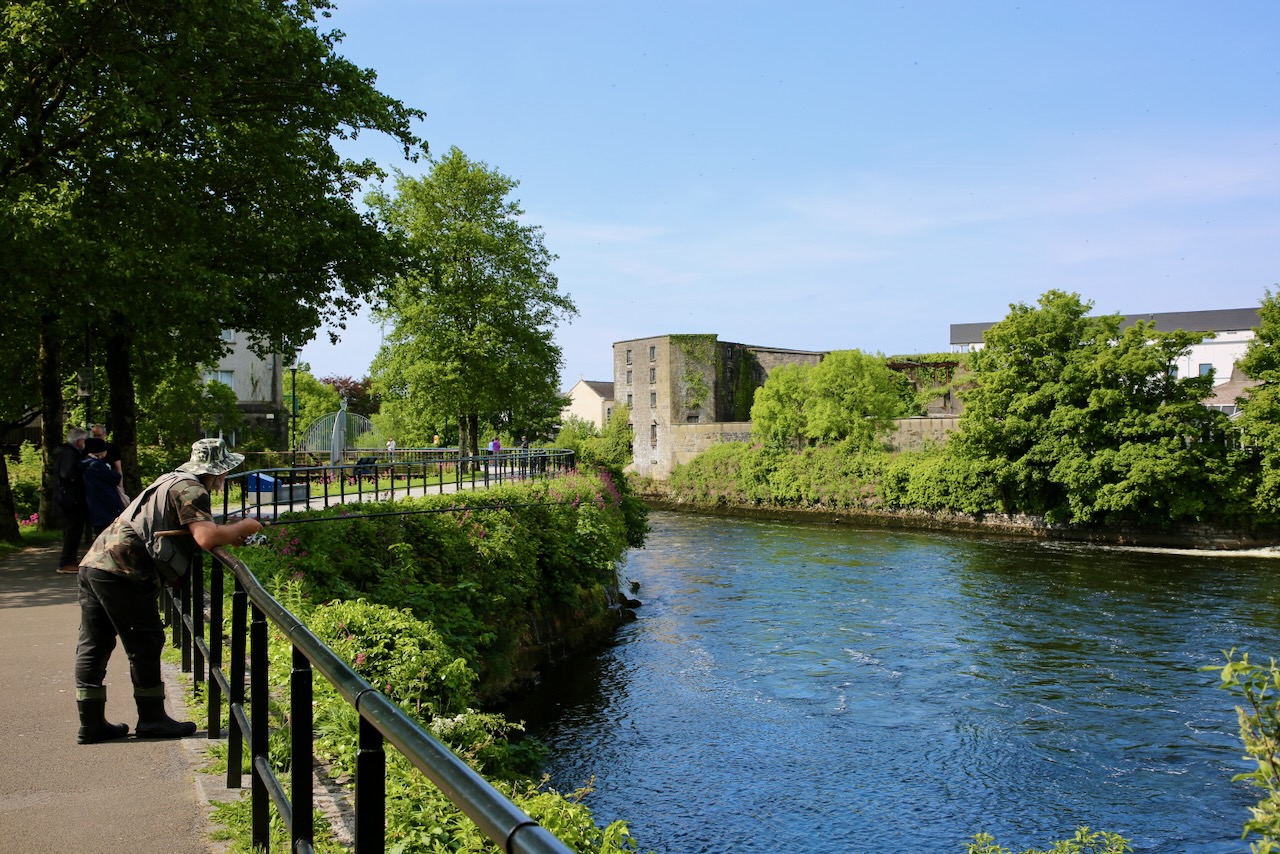
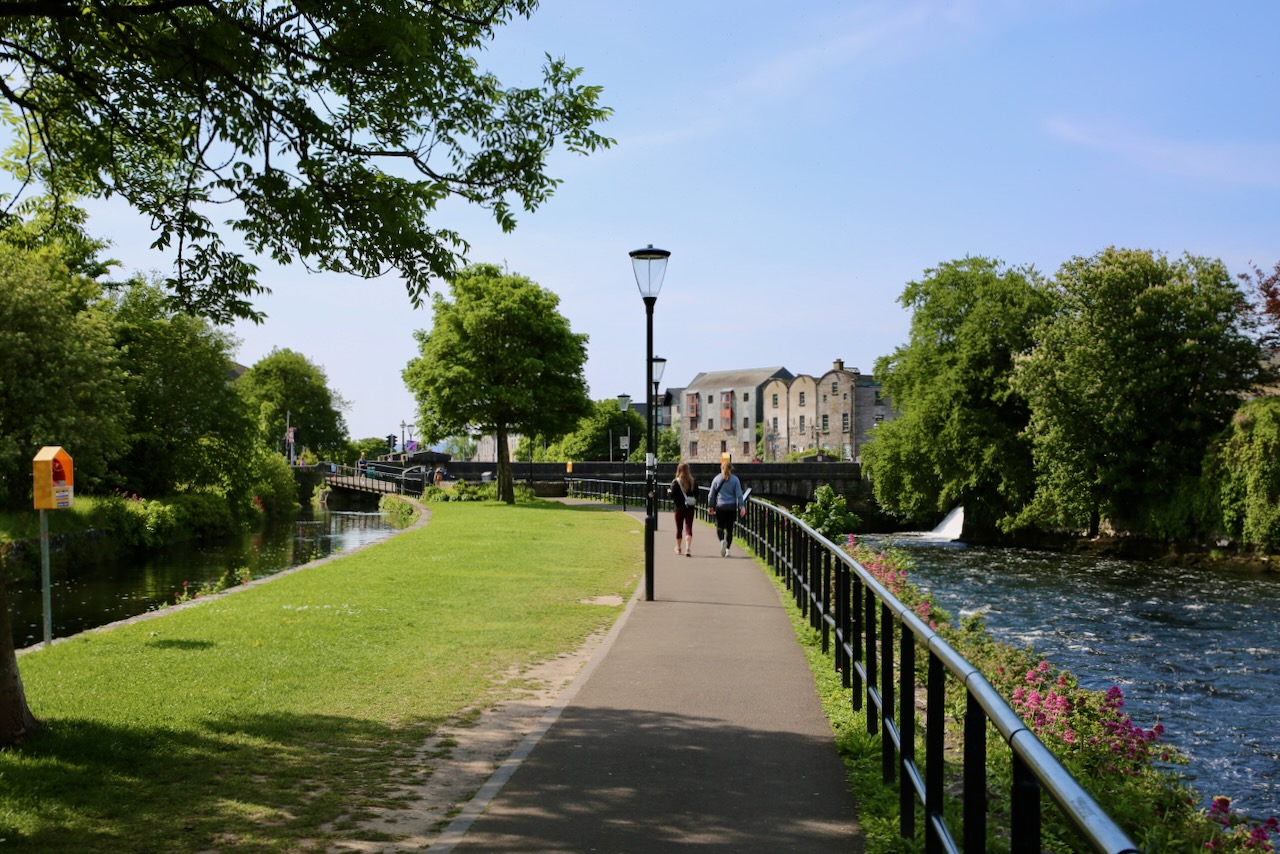
River Corrib
What surprised me was finding out that we were at Trailhead 24 of the 44 national waymarked trails in Ireland, the shortest being 6 miles and the longest being 625 miles in length. I was excited about the idea of all these connecting loop walks, like the LOOP (London Outer Orbital Path) which has 24 sections that span 150 miles, but Ireland stays true to form and leaves its landscape to be explored in scribbles (in design, not in a rush). The Ireland Walking Guide website and blog by Ellie at Tough Soles are great starting points for seeing what the island has to offer on foot.
Spanish Arch
Breakfast will be stopped for in Broadford at The Country Store. There’s something about being in another country and driving until you see a word or picture you recognize that symbolizes food that may not match the window posters but is still served with a smile. We would’ve stopped sooner but the first cup sign we passed wasn’t open yet. I find us a parking spot up the street and walk past a stone barn with two horses poking their heads out. The other buildings look in a state of weather-worn and facade-fixing. Inside, we find a mini-mart with fresh baked goods on display and a cafe with dining al fresco.
We take our cinnamon-topped coffees and our jam and custard doughnuts (the six-inch ones with no sugar coat) and whatever meat shoved in some bread that Caleb asked for, on the road. Regardless of the route we chose, we would spend at least 15 km of travel on the M18 (unless we did backroads only) so we decided to drive 65 km on it instead. This option skips opportunities that only these smaller lanes can provide, which in Ireland is plenty, but the highway will get us to Galway before a late lunch. I locate a spot to leave the car, about halfway between the docks and the cathedral.
the docks
We’ll walk towards the latter via the Riverside Soundwalk; a walk that focuses on listening to the environment and a term first used in the 70s in Vancouver. I hear the patter of feet, the chatter of passersby, and the spatter of water from River Corrib. The Friar’s river canal is calmer beside and offers a lounging atmosphere away from the fishing poles cast into the river hoping to pull up salmon on their way to Ireland’s second largest lake.
I see a Gaelic inscription, meaning bank of the river, next to O’Brien’s Bridge, this one named in honor of William Smith O’Brien. The original Old West Bridge was built in 1342 and taken down in 1852 after the Salmon Weir Bridge was finished in 1819. Strong walls were built on either side of the river and the new bridge was constructed and named in 1889. The Salmon Weir bridge that we cross today was opened in 2022. Instead of transferring prisoners from jail (which shut in 1902) to the courthouse, this path is now used for those attending church or those tourists curious to see the inside of the cathedral available to the public since 1965.
Galway Cathedral
We are one of those sightseers who want to look around the largest great stone cathedral built in Europe. I’m not one to interrupt a service unless pressing my camera to the window to get rid of glare and casting a shadow near the man leaning inside counts. We make a note to return and walk south. Back along the river, we learn about the traps, and weirs, that were in place from the 1800s until the late 1990s when they were closed for conservation reasons. This allows all salmon the opportunity to breed, not just those lucky enough to pass through the King or Queen’s six-meter gap.
The Persse Distillery provided whiskey and for many years water power. The Joyce family opened it in 1815 and the Persse family bought it in 1840 and ran it until 1911. This whiskey was served to King Edward VII and Queen Alexandra, who were married for 47 years (a record by any time standard) and in 2014 a 100-year-old bottle sold for £ 3,300. The longest marriage, as accepted by Guinness World Records is almost 89 years (minus 16 days), the oldest married couple were 110 and 105 years old, and the oldest couple to get married were 91 and 103.
One of the most famous members of the Persse family, known as Lady Gregory, went on to co-found a theatre that would become the world-famous Abbey Theatre in Dublin. A rebuilt grain mill has been turned into the Galway Suites, a two-bedroom condo that currently goes for $287/night with a three night minimum. I put this here as a reminder, for when I reread this in a decade, that travel hasn’t gotten cheaper but that I’m still able to find discount or camping options that keep us exploring longer. As we approach the military retirement transition, the idea of van camping becomes more appealing… or sleeping in a hammock after a day on my feet or under the sea.
The Fishery Watchtower Museum was on my list of places to visit in Galway but appears to be temporarily closed with no reopening information. The tower was built in 1853 as a three-story draft netting and river monitoring station until the 1970s. The Civic Trust repaired it in the early 2000s and now it rests until the museum returns or another use is found, such is the deal with buildings in the parts of Europe that I’ve been to.
We reach the Spanish Arch, originally known as Ceann an Bhalla, meaning ‘head of the wall’, completed in 1584. A pictorial map of the 1650s shows four arches of which the former and Blind Arch (because you can’t see through it) survive. The base of the wall was damaged in a 1755 tsunami from an earthquake in Lisbon. This arch remains a reminder of the history of this town as an important medieval seaport.
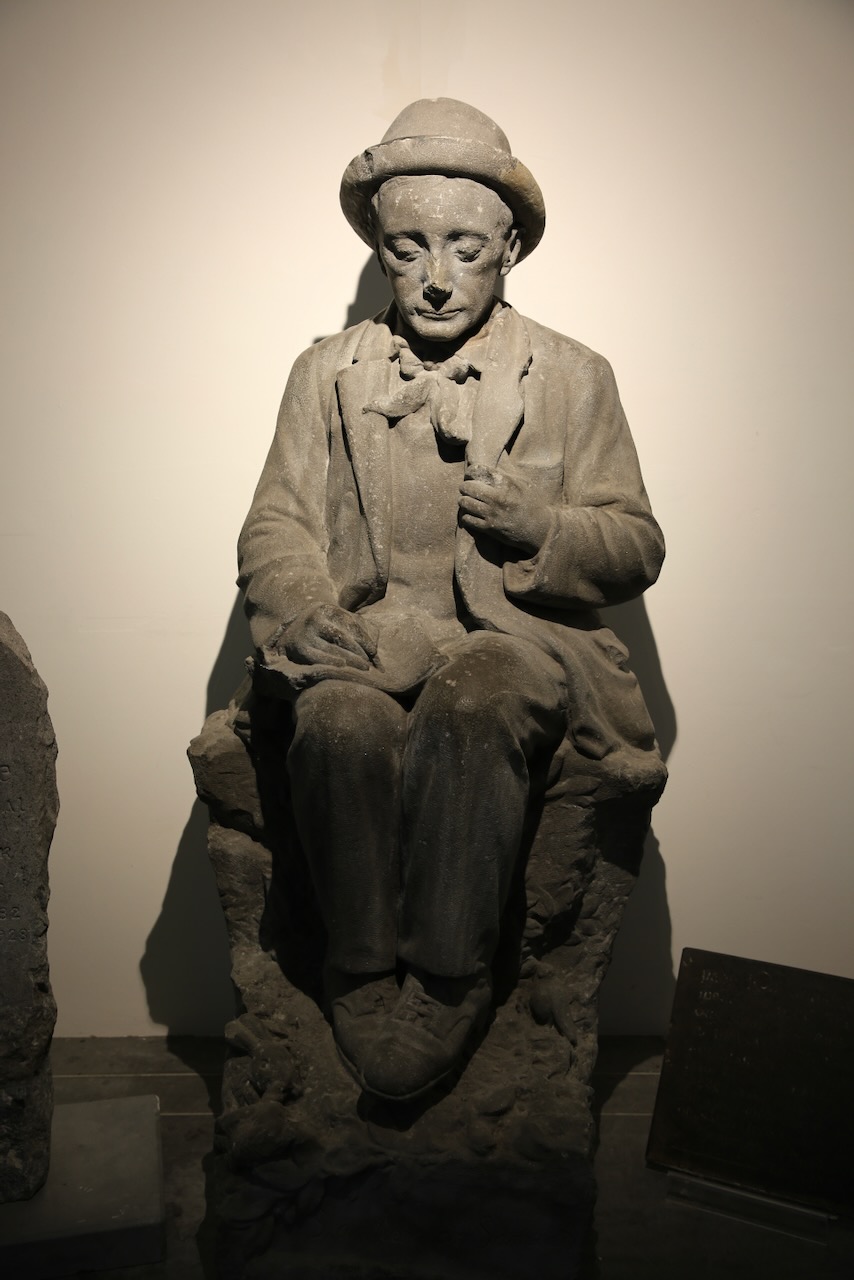
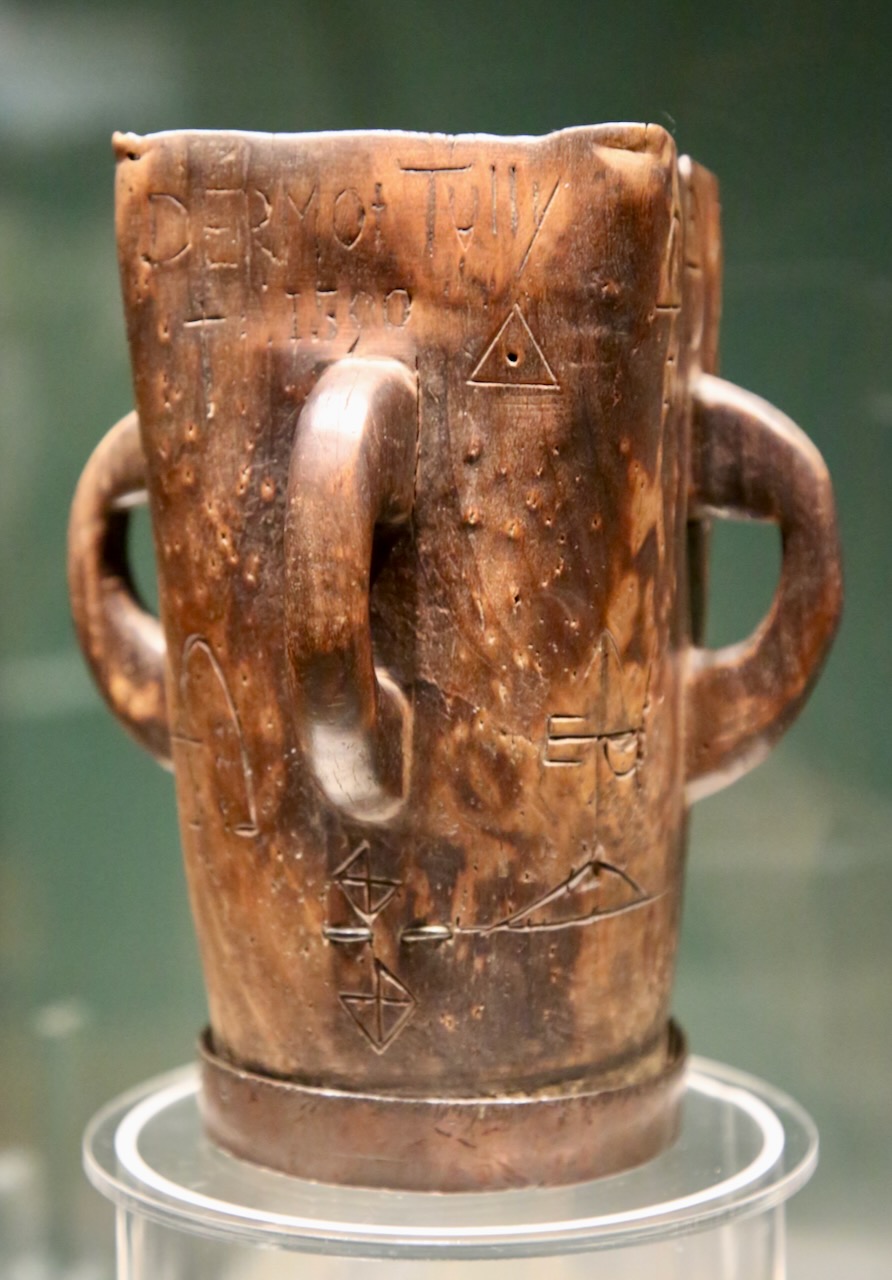
Pádraic Ó Conaire, 1935 and physician’s cup, 1590
From the Galway City Museum to the docks is named The Long Walk, which is anything but. It’s about 350 meters of houses, boats, and harbor views. We turn down Quay St. which becomes High St., Shop St., and William St., the names changing where the streets meet with Buttermilk Ln. and others as we make our way to Eyre Square. We passed a mural for the Baboró International Arts Festival for Children in Galway. There are pennants of orange, white, and green strung between the buildings with many Ireland flags on display too.
There are a variety of musical buskers — a violinist, multiple guitarists, a drummer, and an accordion player. A baby staring down a shop and a man with his bicycle is inflating balloons. There’s a sign to the Famine Walk with a 15-minute audio available at walk15.org. This one is a reenactment involving a six-year-old girl who wants to become a snail to escape her predicament. Near the north end of the square is the Browne Doorway which was part of a house built in 1627 and moved here in 1905 as witness to the great houses built when Galway was wealthy.
Always one to notice a donut shop, I see a pink one that catches my eye. The intersection of the two industries eludes me because I’m not the 16-24-year-old demographic of the fast-fashion retailer nor the 6-12-year-old that wants a sprinkly donut. I am however just the person to think that what the purple bits of frosting and unicorn horn symbolize should be on an adult cake. Kids are naive to these references (or they were when I was young and without the internet), so the sweet treat maintains its innocence for another day.
Located on Churchyard St. is the Historic Street Market that’s been around since 1484. I’m sure there were fewer windchimes, necklaces, and freshly caught fairies on offer then. We are in luck when we return to the cathedral, probably had hours posted, as the door is metaphorically open. Inside is a small mosaic memorial to JFK who visited Galway in 1963. It’s him in prayer and on the other side of Jesus rising on Easter is either Pope Paul, the first who visited in 1979, or Patrick Pollen who created the tiled face artwork.
I stare up at the organ and the stained glass windows, the stone arches and curved wooden ceilings, and the tiled floor and beautiful doors. I imagine the pews packed with posteriors as they rise to elevate their voices and fill the church with song. Standing on the bridge, we turn back to listen to the bells that seem to play “Amazing Grace” or an extended version of a Bible quote. With half the day’s walking done, I’m looking for a place to rest. We decided to visit the Galway City Museum with a motley band, consisting mostly of baritones, performing outside.
Blackrock Beach
I take respite on a bench across from a statue of Pádraic Ó Conaire; grateful for the momentary relief on my weary body, tired from fighting illness and the urge to sleep through a vacation, which is not an option. The limestone statue was revealed in Eyre Square in 1935 where it lived for 70 years before being moved inside for safety. A bronze replica replaced its spot in the square in 2017. Pádraic is the author of 26 books, 473 stories, 237 essays, and 6 plays. The other two exhibits on this side of the lobby concern the history of the Aran Islands and a bit on the Irish Traveller.
This peripatetic group, nomads who offer crafts or trade to settled peoples, also exist as Carnies, Romani people, and Gutter Punks in North America. There are over 200 groups of hunter-gatherers, who follow the seasons, and pastoralists, who move their herds, spread over six continents in less industrialized regions. All the descriptions are in Gaelic and English, which besides providing accessibility offers a chance at learning a new language or at least something new about it. Once done exploring downstairs, I slowly climb to the next floor, past the Galway Hooker, a boat built for fishing in the strong seas of Ireland’s west coast.
Upstairs, the exhibit shows how the land was used to grow timber, wool, meat, milk, and barley so the locals could have food and entertain themselves after working hours and church events. There’s a worldwide display about voting and when women were given a voice (1922 in Ireland) and which countries still don’t hold elections (China, Saudi Arabia, and Eritrea). Some countries still discriminate against voters based on sex, status, and skin color but there’s a saying about throwing stones for all that.
There’s a Royal typewriter (no older than 1906) using Cló Gaelach font keys, the same used in the first book printed in Ireland in 1571. These heavy (roughly 17 lbs) machines came into popular use in 1873, mostly made in America, so it was difficult to get Irish-lettered keys. Locals were hesitant to see the font phased out for Roman type. While other writers were worried about the effect a ‘book-writing piano-like contraption’ would have on the legibility and necessity of handwritten letters. For those, like me, born in the transition of the computer age, we were still writing letters to our grandparents, best friends, artistic cousins, inmates, and to my mom from bootcamp in 2004.
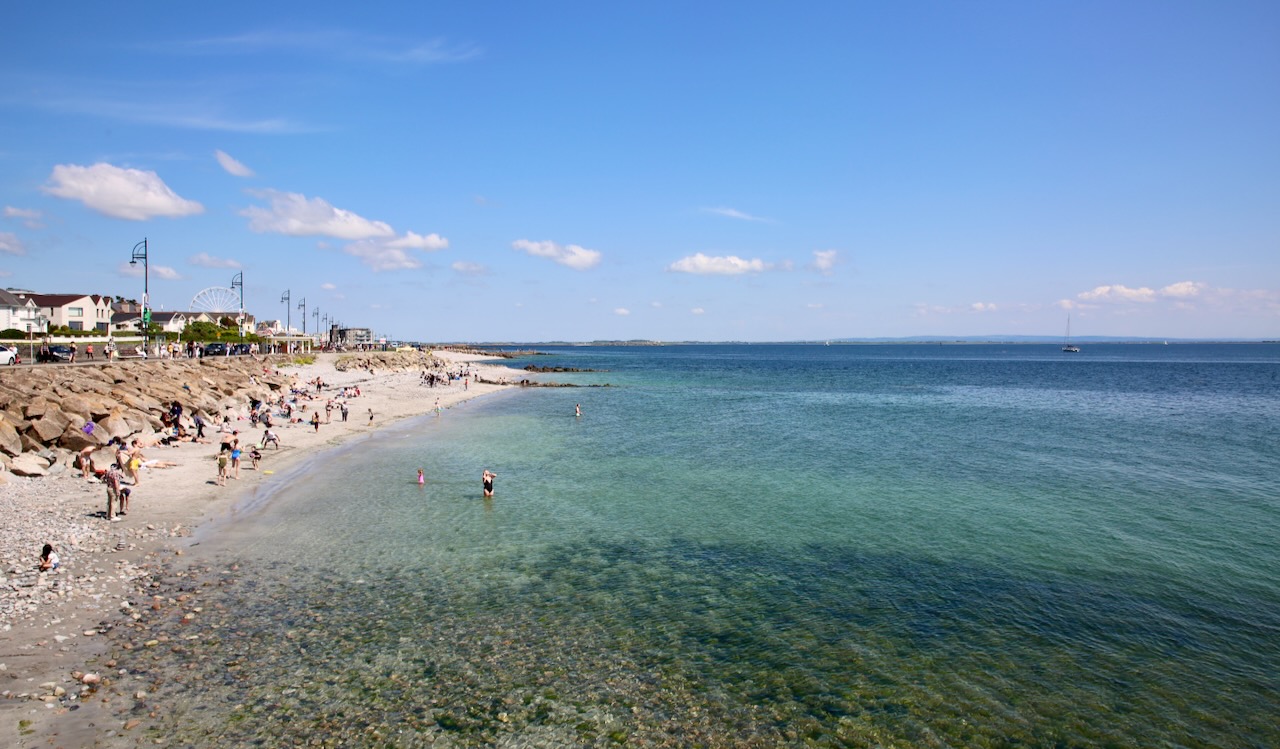
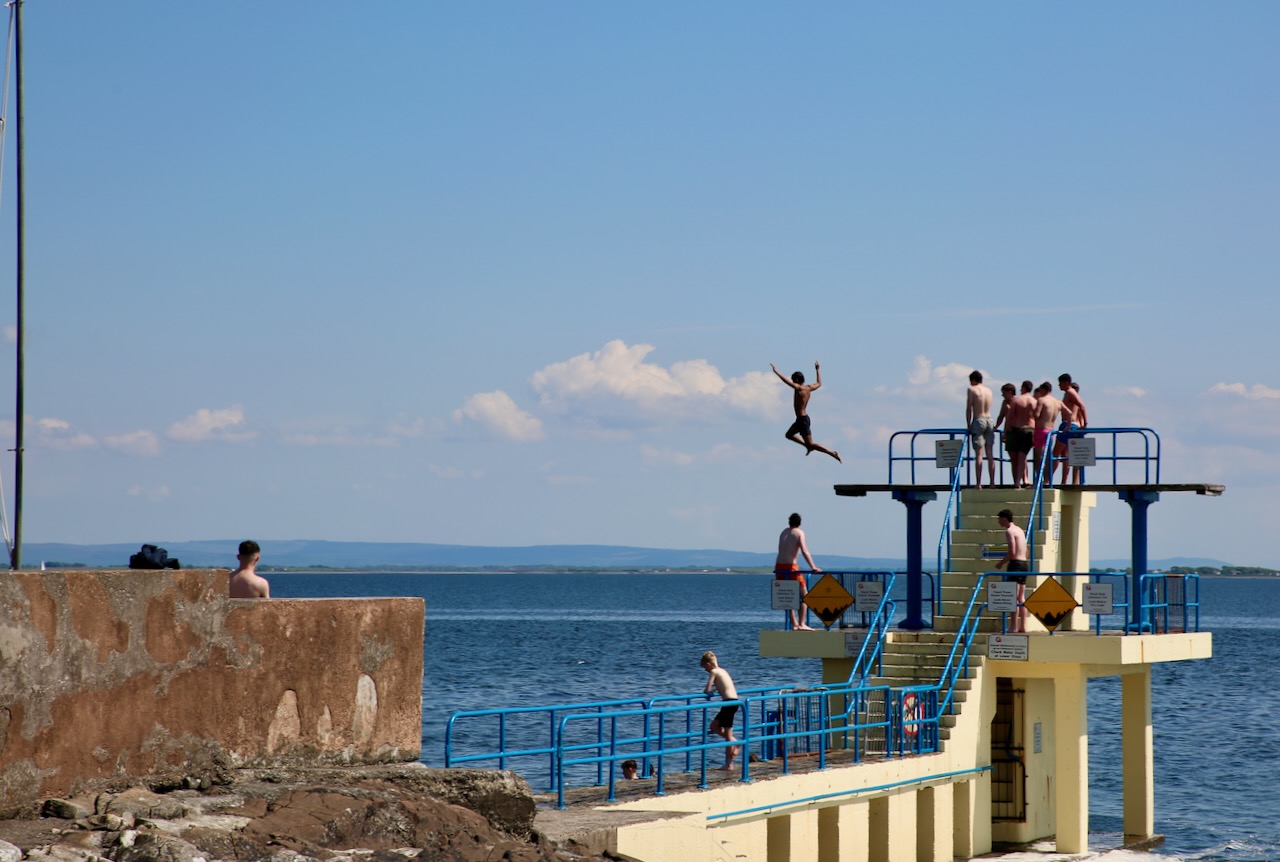
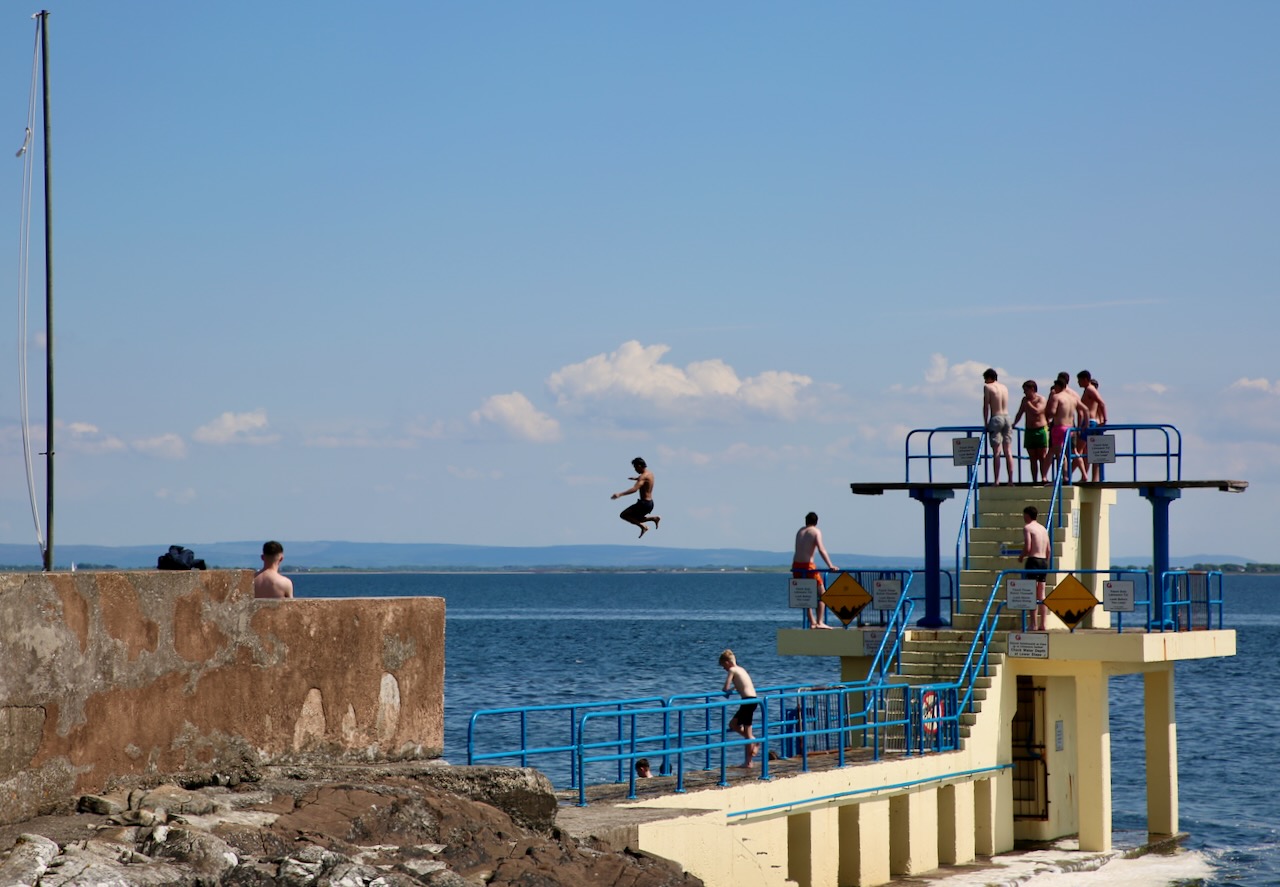
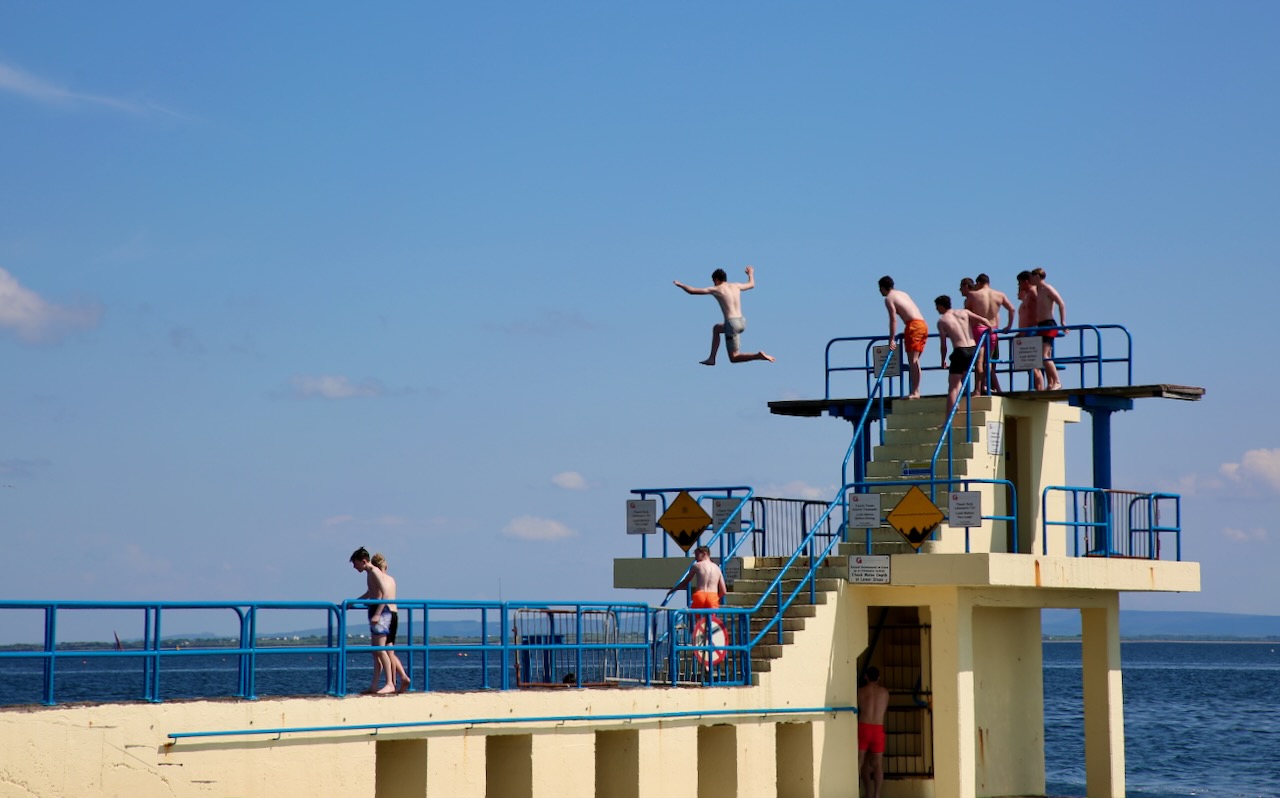
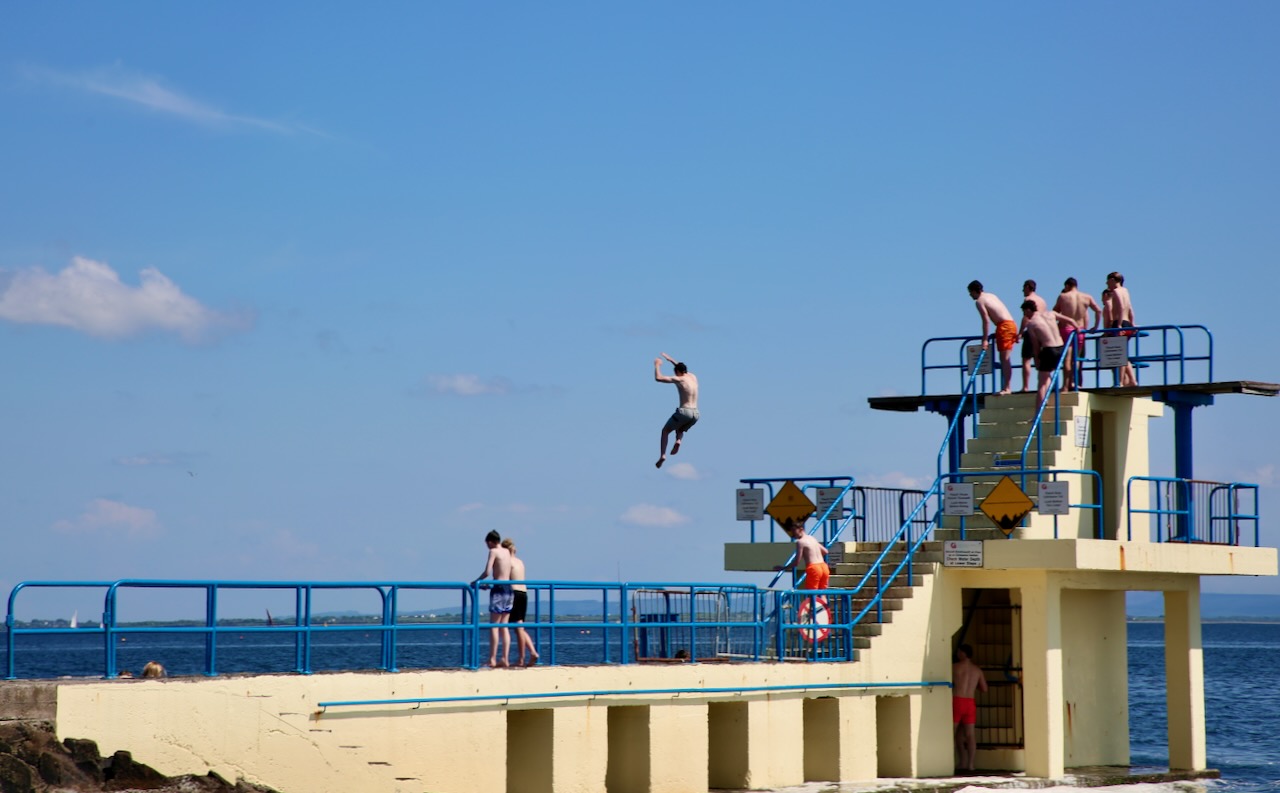
I could write another post about all that history, but let’s return to Ireland. After an educational time at the museum, this one earning the award for most sitting done by me, we were ready to get back outside and let the sun reawaken our energy reserves. Traffic between the beaches was at a standstill to the left of the roundabout so I took the only other direction, almost doubling back, and found parking up a road. We decided to trek towards Salthill Promenade and the Blackrock Diving Board was on my list of places to see. It’s a beautiful beach and what stands out are the stairs for those who like to read, eat, chat, and people-watch by the sand without getting any on them.
The diving seems reserved for a high school swim team which the city council would agree with. I notice little shells laid out by color or design on larger stones before walking along the Coastal Soundwalk on the paved path between rocks and grass – a consistent Irish theme. The walk to something is always met with excitement and the return trip can be just as exhilarating but also exhausting while we wonder just how far from the water we had to leave the car. Upon return, I notice the empty liquid replenishment bottles piling up and we stop at a Tesco to exchange them for €2.60 by recycling.
Parents will leave their kids, with multiple bags, to handle this task while the adult handles the shopping. It’s a great idea. A company, Revolution Laundry, also wanted in on the multitasking opportunity, so they now offer machines and soap for 18 kg of clothes to be washed and dried in 45 minutes for €14.50 or 8 kg for €9. There are more than 500 of them installed throughout Ireland next to supermarkets and petrol stations available 24/7 making clean clothes more accessible. I thought they might be focused on travelers but most laundry services are a drop-off and pick-up service with limited hours and these are great for large items and multi-membered families.
We drive northeast to the other side of town and use the lockbox to let ourselves in and upstairs. There is a shared bathroom, with plenty of hot water, toiletries, sunlight, and no evidence of another guest. There are books, games, and tea. Once we’ve performed our humors-releasing rituals, with our 8-12 pints intact, and feeling 50%, we are ready to go on the prowl for some pre-killed prey. The Trappers Inn & Jackson’s Restaurant is nearby and is serving food at this hour.
There’s a spot at the bar for us to cozy in and admire the glass, copper, and wood while watching customers who take their Guinness outside. I get a slab of salmon served atop rounded mounds of mashed potatoes and covered in an orange sauce. Caleb has smaller potatoes that are cut in half and seasoned and gives me one to try. Back in the room, I notice travel plans to Ireland from over two years ago — a screenshot that includes Wild Nephin National Park and goes counter-clockwise instead. I dream of going everywhere and seeing everything so that if I ever get the chance to go somewhere and see something, I’ll be sure to forget my itinerary at home and bring my list of suggestions.







































 TheJessicaness