Inis Fáil Is Our Fate

This nickname, Inis Fáil, means the Island of Destiny. The Tuatha Dé Danann race brought this stone, Lia Fáil, to Ireland, and it’s been used as a coronation stone in the belief of its mythical powers and ability to make noise when a king sits upon it. Legend has it that this is one of the twelve zodiac crystals the Atlantean mages used to amplify the Earth’s energy. It is one of the four treasures (stone, sword, spear, and cauldron) that the Tuatha Dé Danann brought with them and the only one that remains standing on the Hill of Tara.

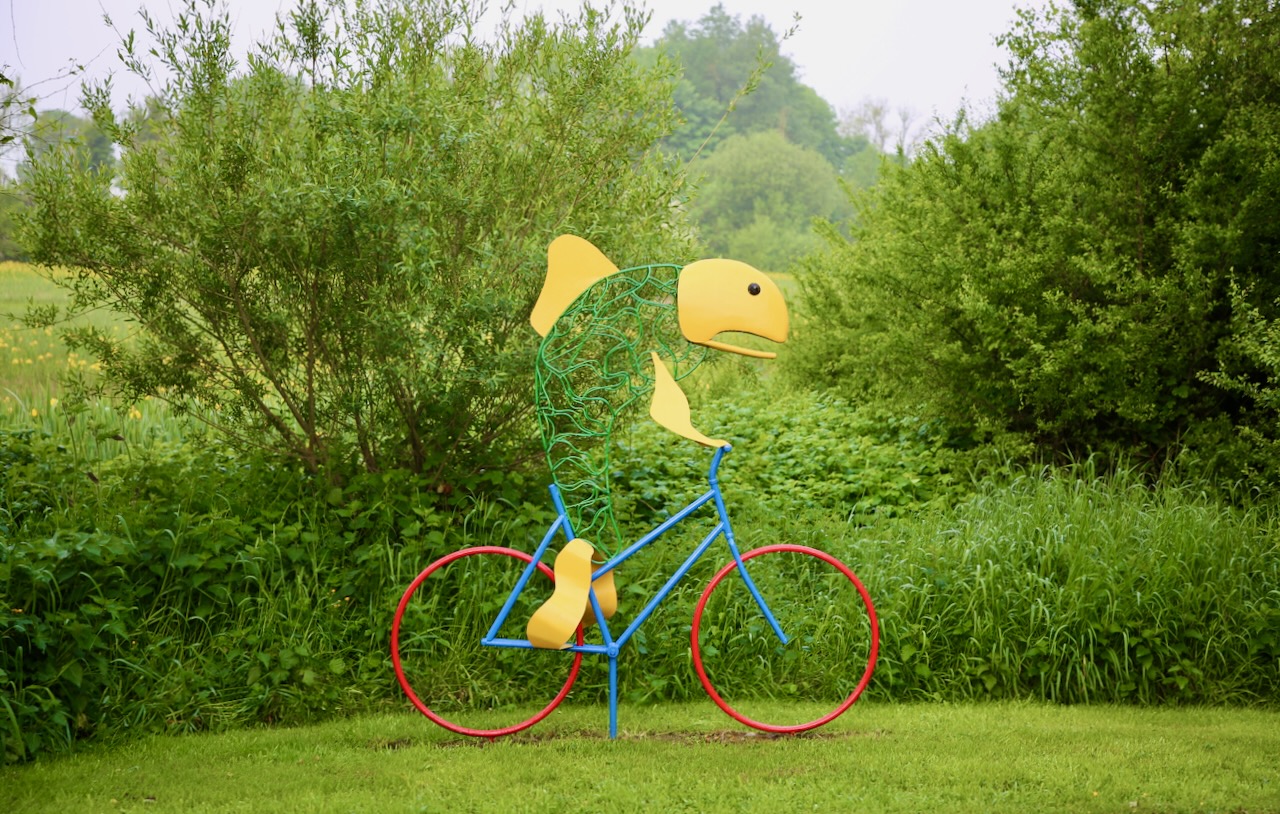
Dún Na Sí Amenity & Heritage Park

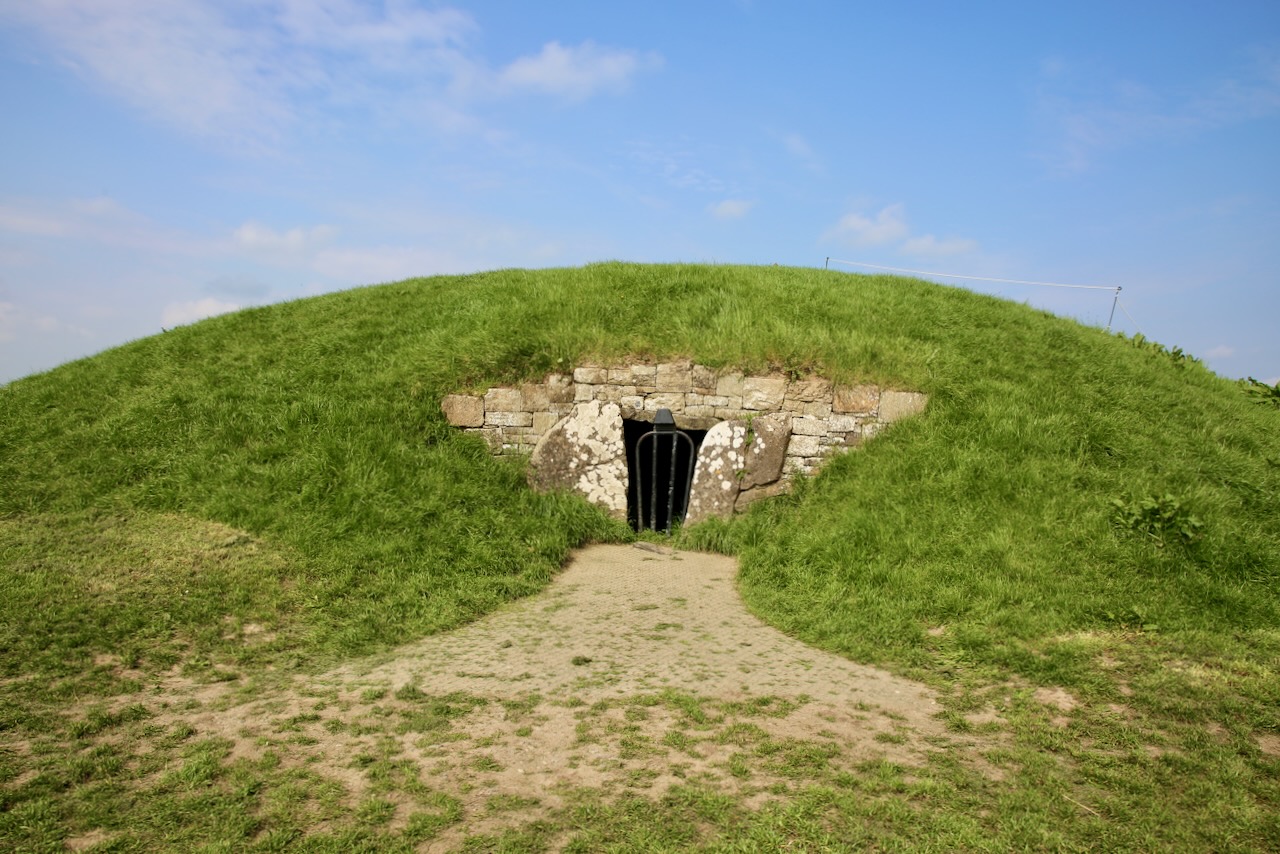
An Irish warrior and demigod, Cú Chulainn, tried to angrily split the stone. He died in 1 AD, and the last king the stone declared was Brian Boru in 1002, credited with ending the Viking invasions of Ireland. The stone has been silent since. All old Irish roads lead to this site where palaces once stood, and now only earthworks endure the patter of boots and hooves. The oldest visible monument, the Mound of the Hostages, built around 3000 BC, was used for 1,500 years to bury human remains. This site is an important connection point between two worlds that maintains its significance today.

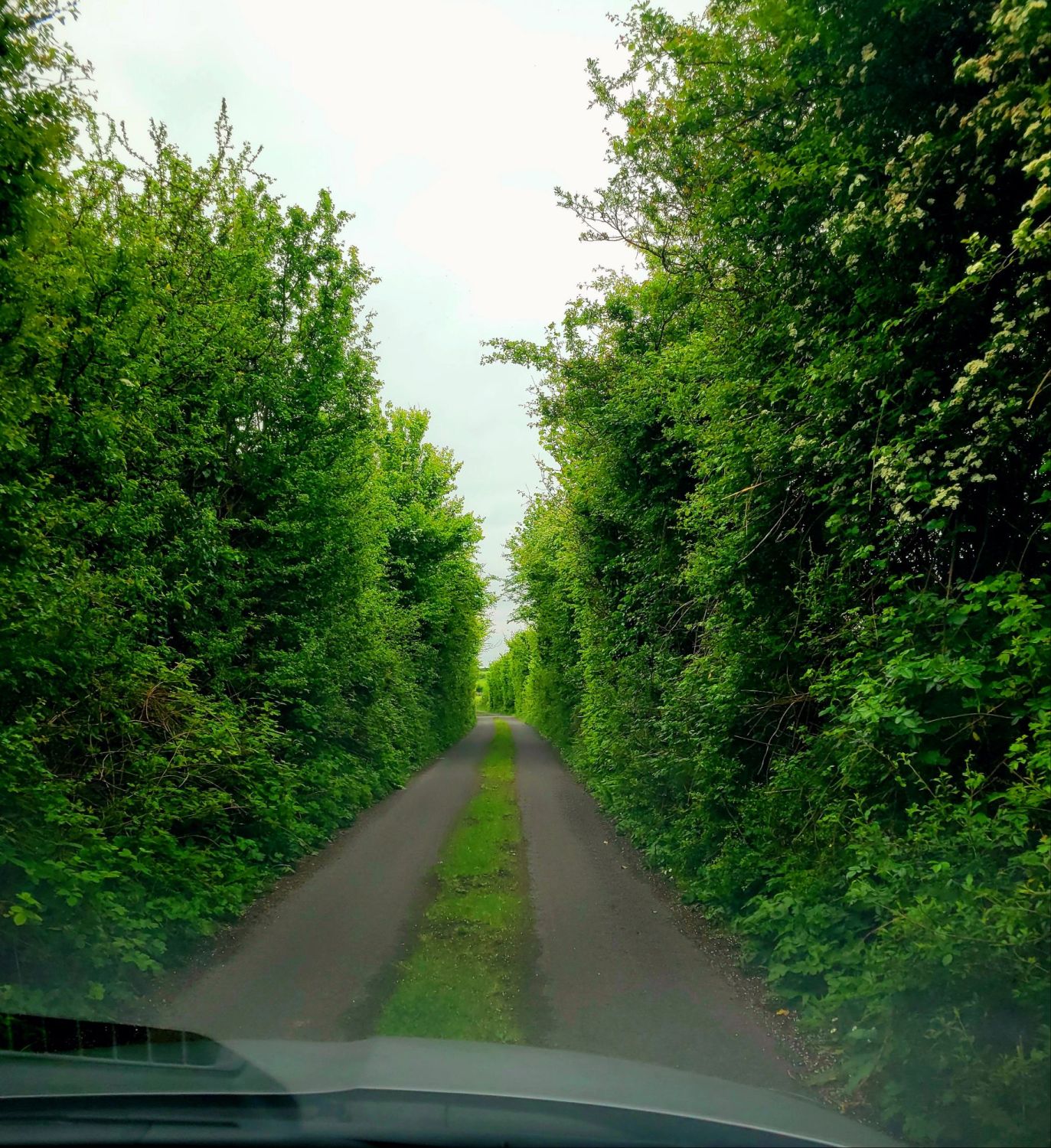
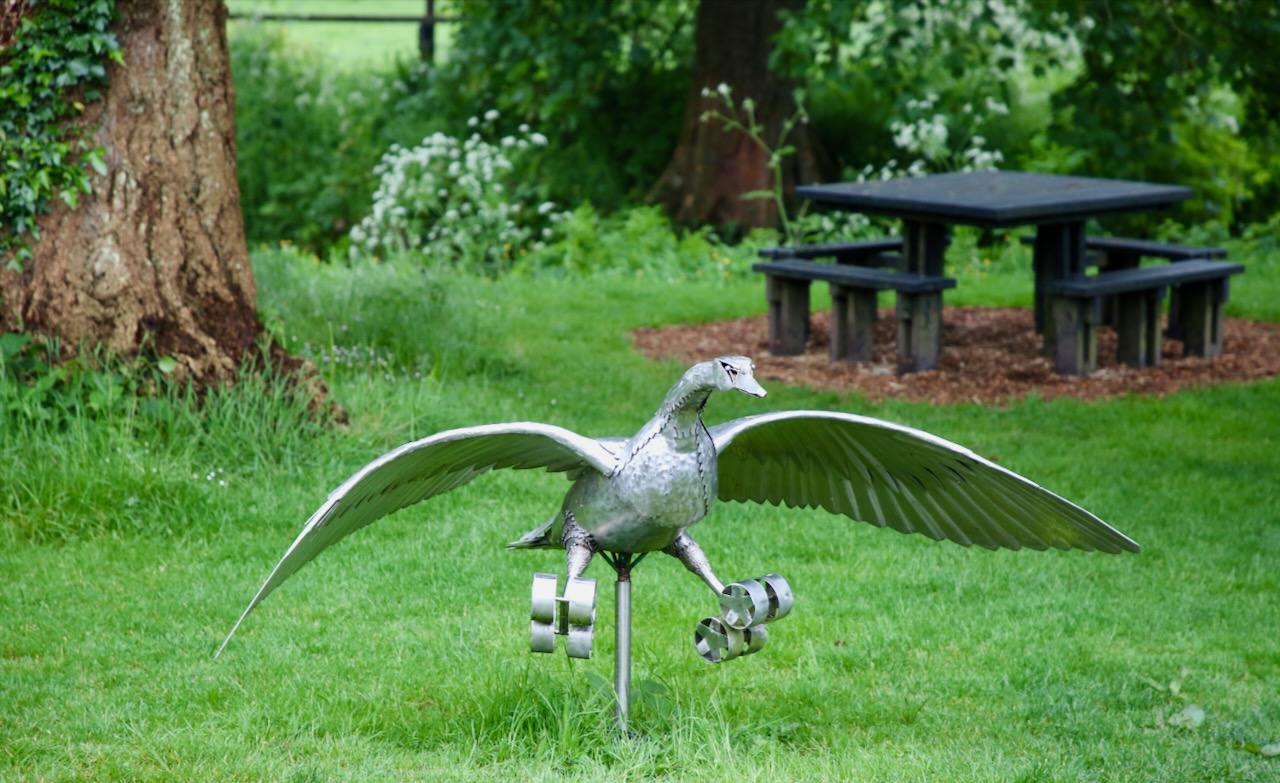
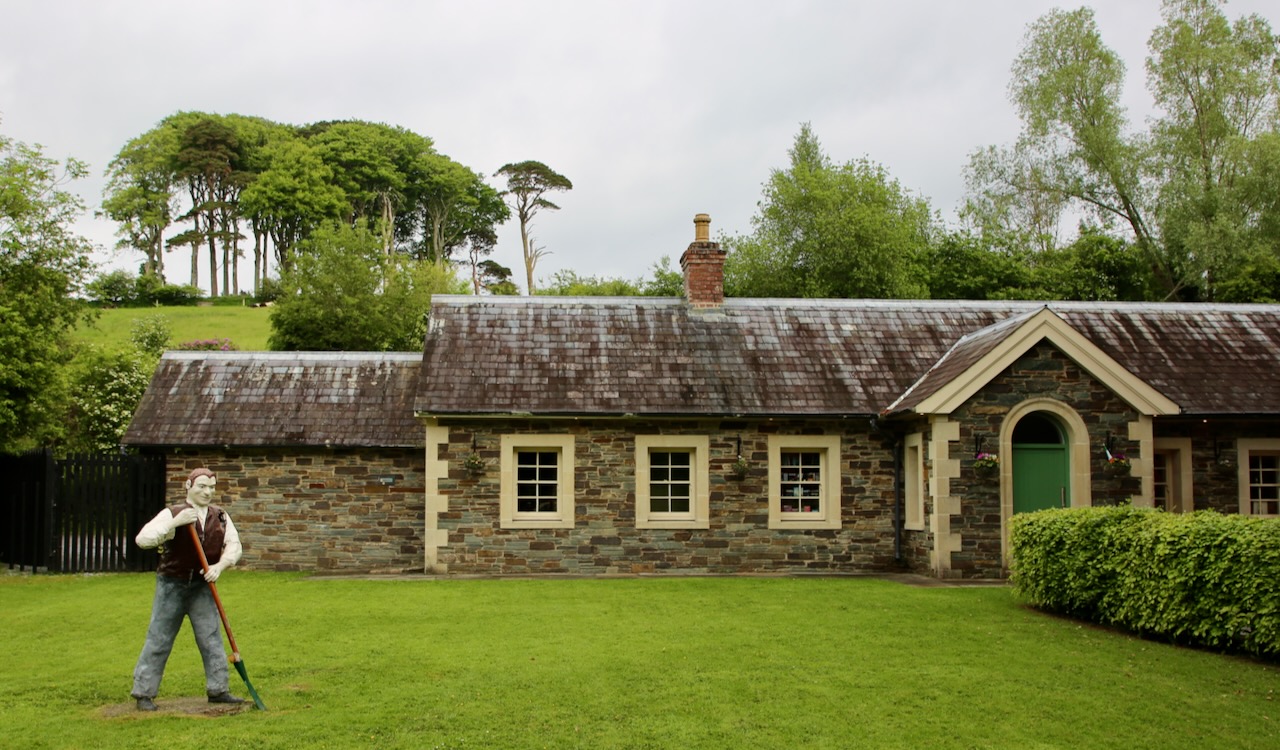
We leave Riverview House B&B an hour after sunrise while the sky is bright gray and the bushes a gallimaufry of color. There’s no one in the lounge with two tables, a dining set for four, hotel kitchen amenities with a toaster, and a fireplace next to the bookshelf, with authors Charlotte Bingham and Kingsley Amis among the collection. Our first stop is the success of a road sign that draws our attention to Dún Na Sí Amenity & Heritage Park, even though it’s closed. We park in front of the locked entrance and walk along the sculpture garden, peeking in at a man walking his dog.

It’s at least an hour before we pass the mural of a scene from Gulliver’s Travels on the side of a building that used to have large serving windows. Instead of selling fresh cow’s milk, it appears to be more fitting as a sheep shelter. We’ll see more of Meghann Quinn’s art as we enter the town of Trim. We stopped at Coffee Works Trim for breakfast, which only opened a year ago, and in three days will be giving out 50 free coffees to celebrate. We pass a few uniformed kids on their way to school while we walk towards Trim Castle, the one used in the filming of Braveheart in 1994 that served as the Tower of London inside and the city of York outside.
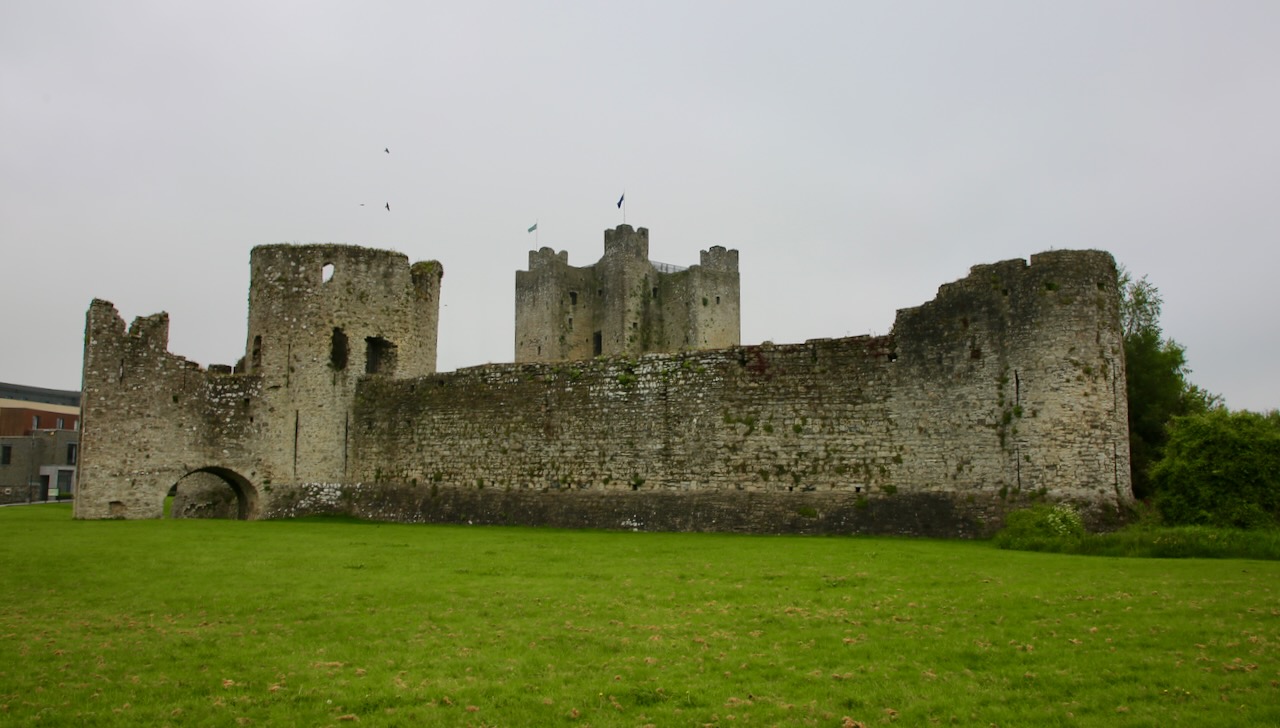
Mel Gibson was granted the Freedom of Trim in 2010, an honorary position since 1877, in recognition of his service to the town and part of a traditional system. In the 12th to 19th centuries, this gave honorees the right to participate in political and economic life as a full citizen. The year 2010 was also the beginning of the Braveheart 5k, organized by the Trim Athletic Club along the River Boyne. This race also takes place in Sarasota, FL (kilt encouraged), Radford, VA (for American Heart Assc.), Sherman, TX (as part of their Celtic fest), and in Franklin, NC (to honor the film Rob Roy also released in 1995).
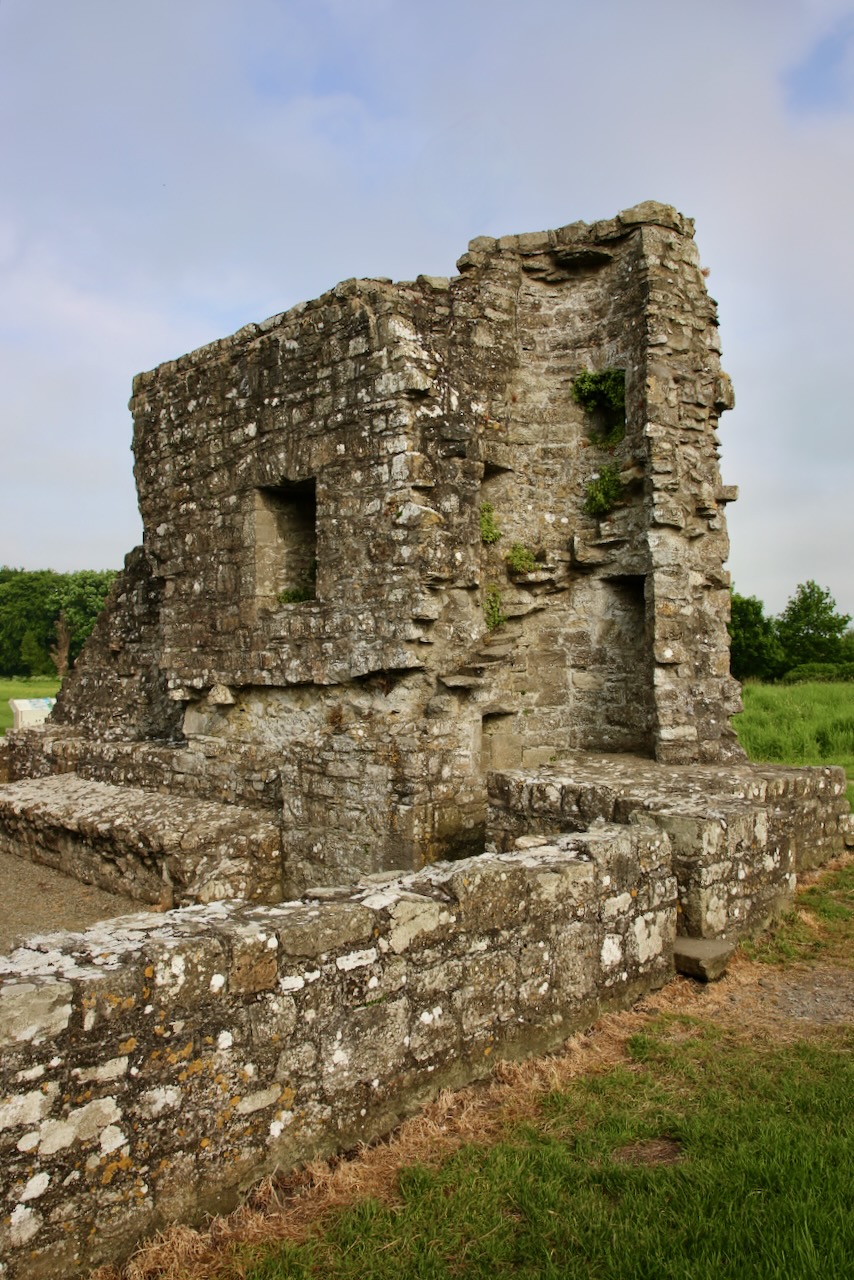
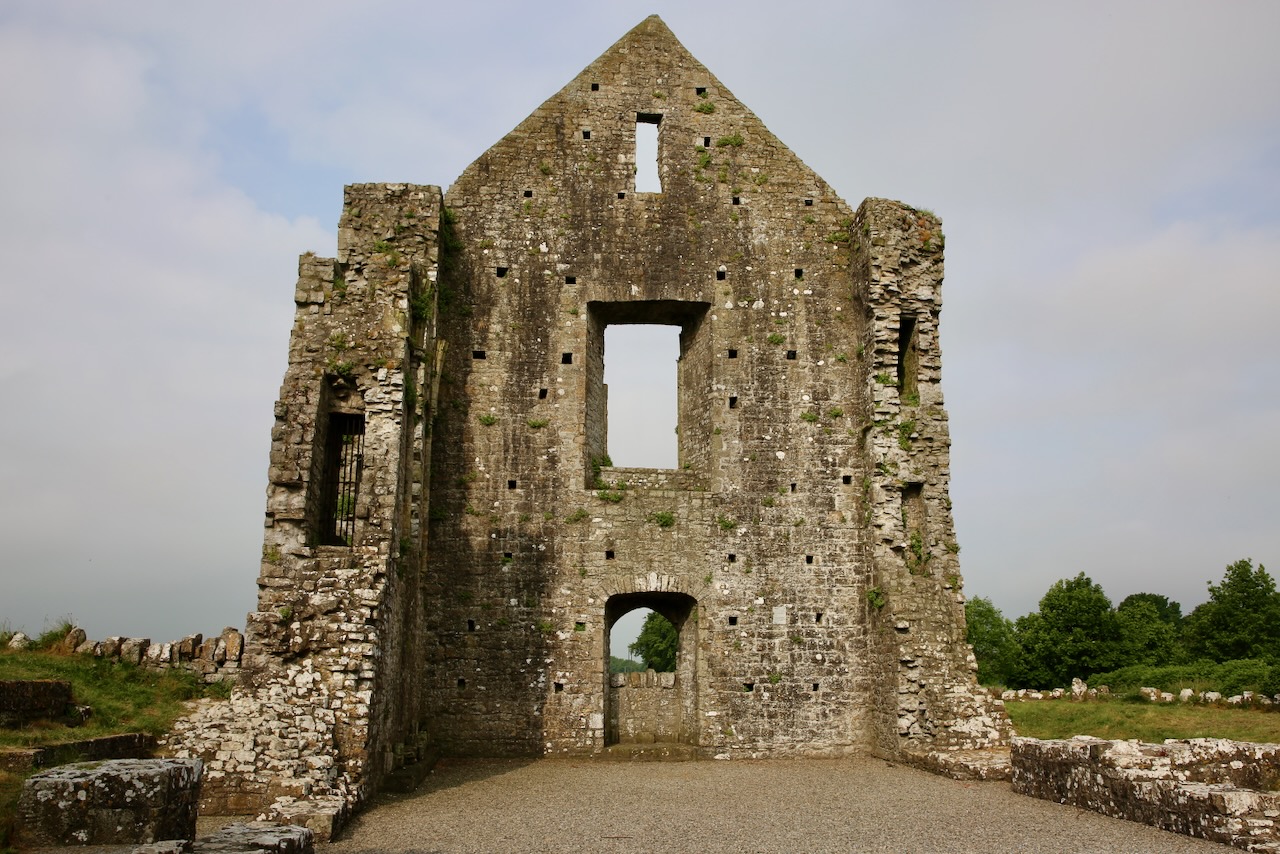
Newtown Abbey

The castle, started by Hugh de Lacy in 1173, is the largest and best-preserved Anglo-Norman castle in Ireland, mostly unchanged since the 13th century. It’s closed as we walk by, so we continue to the River Gate (added so boats could avoid the weirs) and the Barbican Gate (an elaborate system to improve security) that guard the castle. Trim was originally a walled town, and only the Sheep Gate survives from the original five that were used as toll and tax stations as people went through. We pass by the Trim Donkey Family animal park, just a few asses spending their time in a corner meadow lot.

River Boyne, as seen from Ireland’s oldest bridge

We cross the River Boyne and follow it east to the Newtown Abbey, also known as the Cathedral of St. Peter and Paul. The church was established in 1206 by Simon Rochfort and suppressed in the Dissolution of the Monasteries in 1537 by King Henry VIII. Here, the tomb effigies of the Jealous Man and Woman lie, with a sword of state (God-given protection) between Lucas Dillon and his first wife. Over 400 years later, people are still being interred at this site by a field of Kerry Hill sheep that originated in Wales near Newtown. They are raised for meat, but I would collect them for my love of black and white animals.
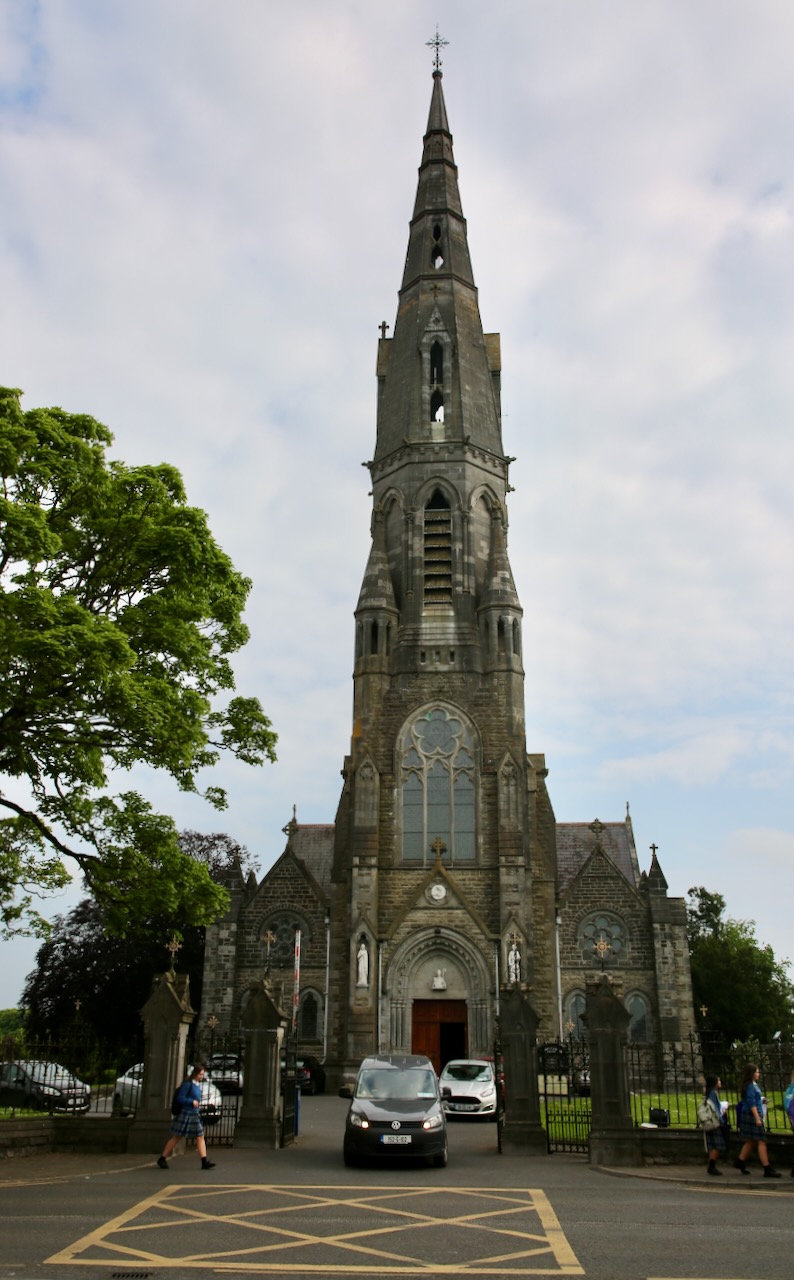
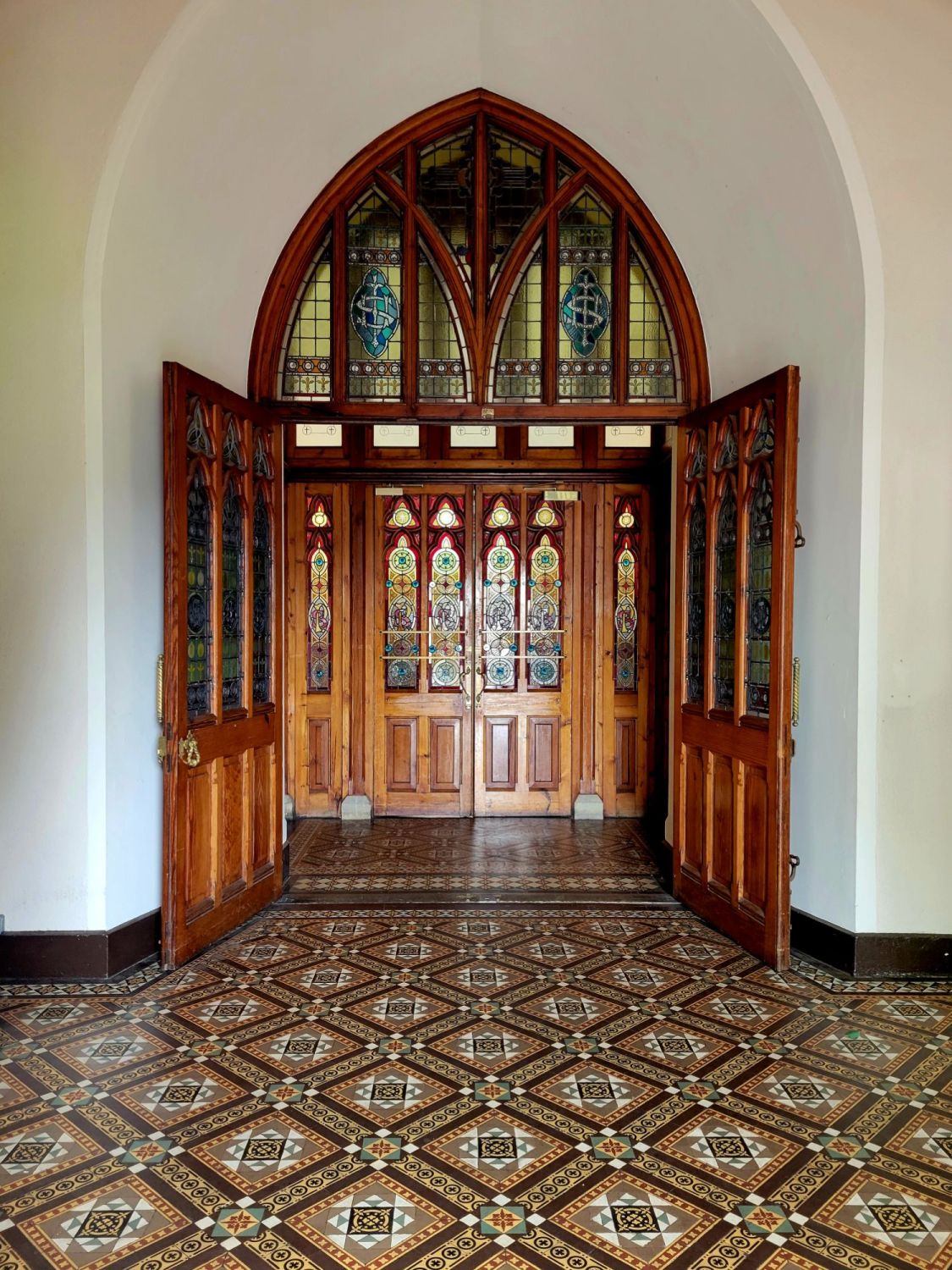
Cathedral Church of St. Patrick, Trim

Back towards the water, we see a sculpture depicting the Salmon of Knowledge, a fish who ate hazelnuts falling into the Well of Wisdom. He was eaten by a boy who grew up to become the leader of the Fianna, a group of hunters and warriors in the Iron Age and early Middle Ages. This myth is similar to those found in Iceland, Scandinavia, Baltic countries, and across Central and Eastern Europe. The Germanic version replaces the salmon with a serpent, and this special creature is depicted in ruins all over the planet. The myth’s most modern rendition is in a song by Gilla Band released in 2019.
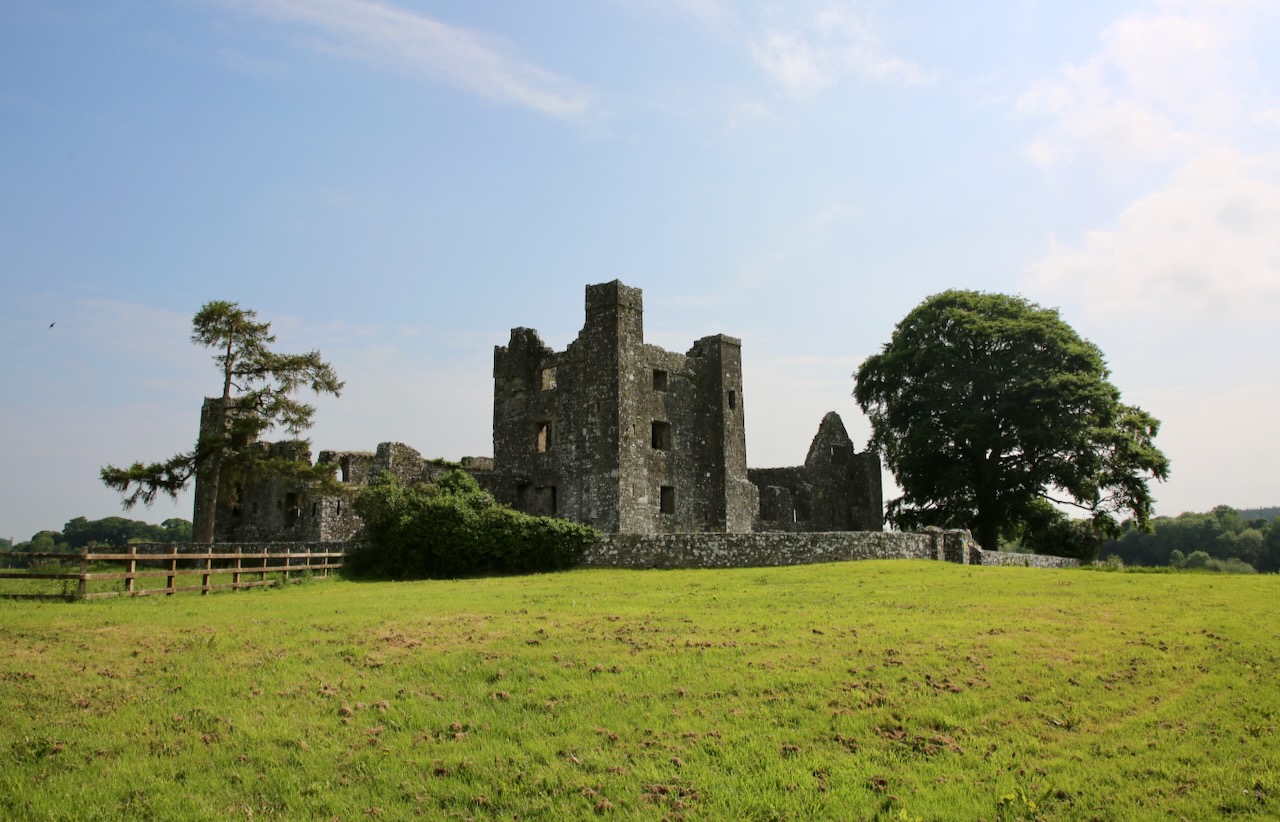
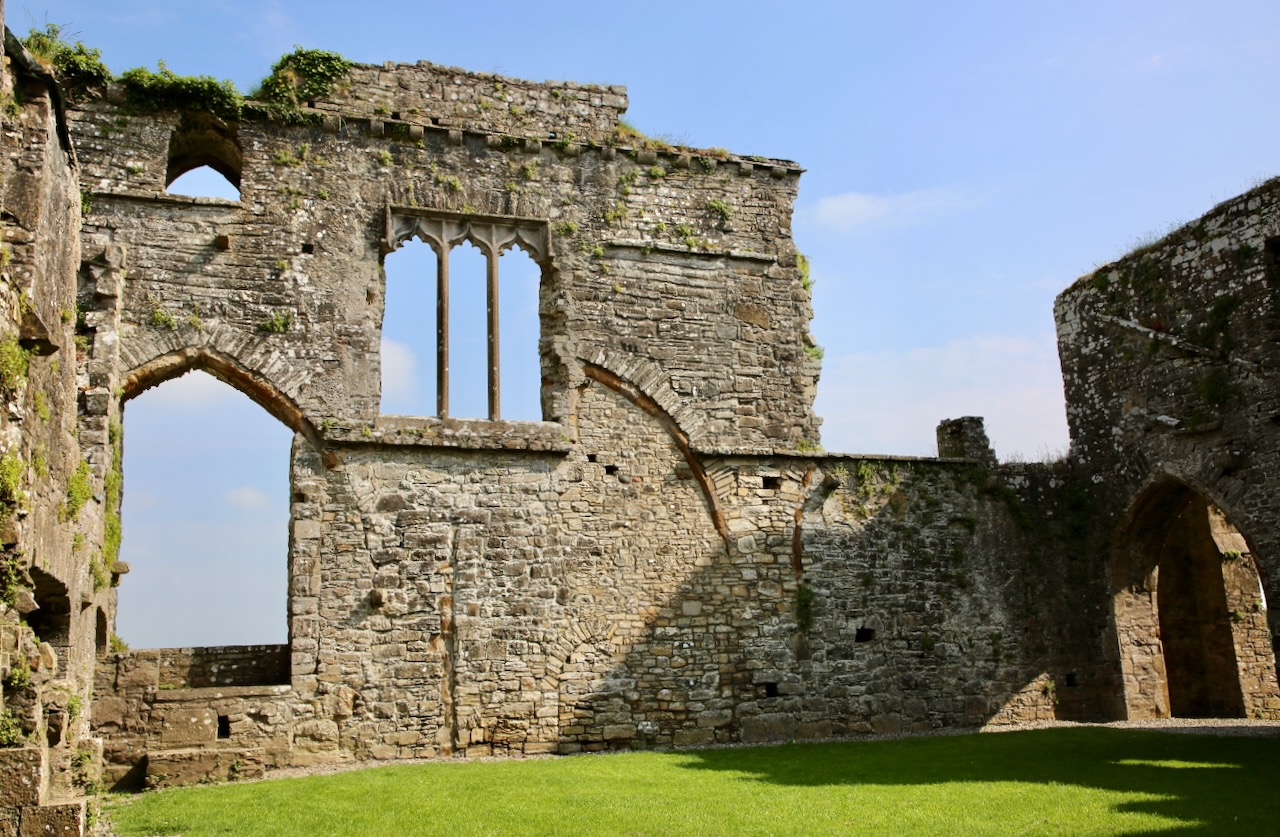
Bective Abbey

Another few feet west brings us to Ireland’s oldest bridge, unaltered and in use since 1393, over 630 years and counting. The average age of bridges in the US is 42, with a lifespan design of 50 years. It’s double that in the UK, though weather and vehicle weight can reduce that time. I’m more impressed with this bridge than I imagined I would be. Millions of people have ensured its success through the centuries, which is rare unless the structure happens to be a temple, mosque, church (the oldest being the Pantheon built in 125 AD), or Acoma Pueblo in New Mexico still inhabited since around 1100 AD.
Hill of Tara

The Cathedral Church of St. Patrick, with its grand exterior and locked but gorgeous interior, will be our last stop in Trim. We visit Bective Abbey, the second Cistercian abbey of Ireland, which became an important monastic settlement after its founding in 1147. Most of what’s left today dates back to the 15th century and was sold to the state in 2012. The site includes a 13th-century church, a 15th-century cloister, and a 16th-century tower. Many historical places have either been added to or built upon (perhaps unknowingly or in a show of power) to maintain the enchantment of the location and preserve the traditions.

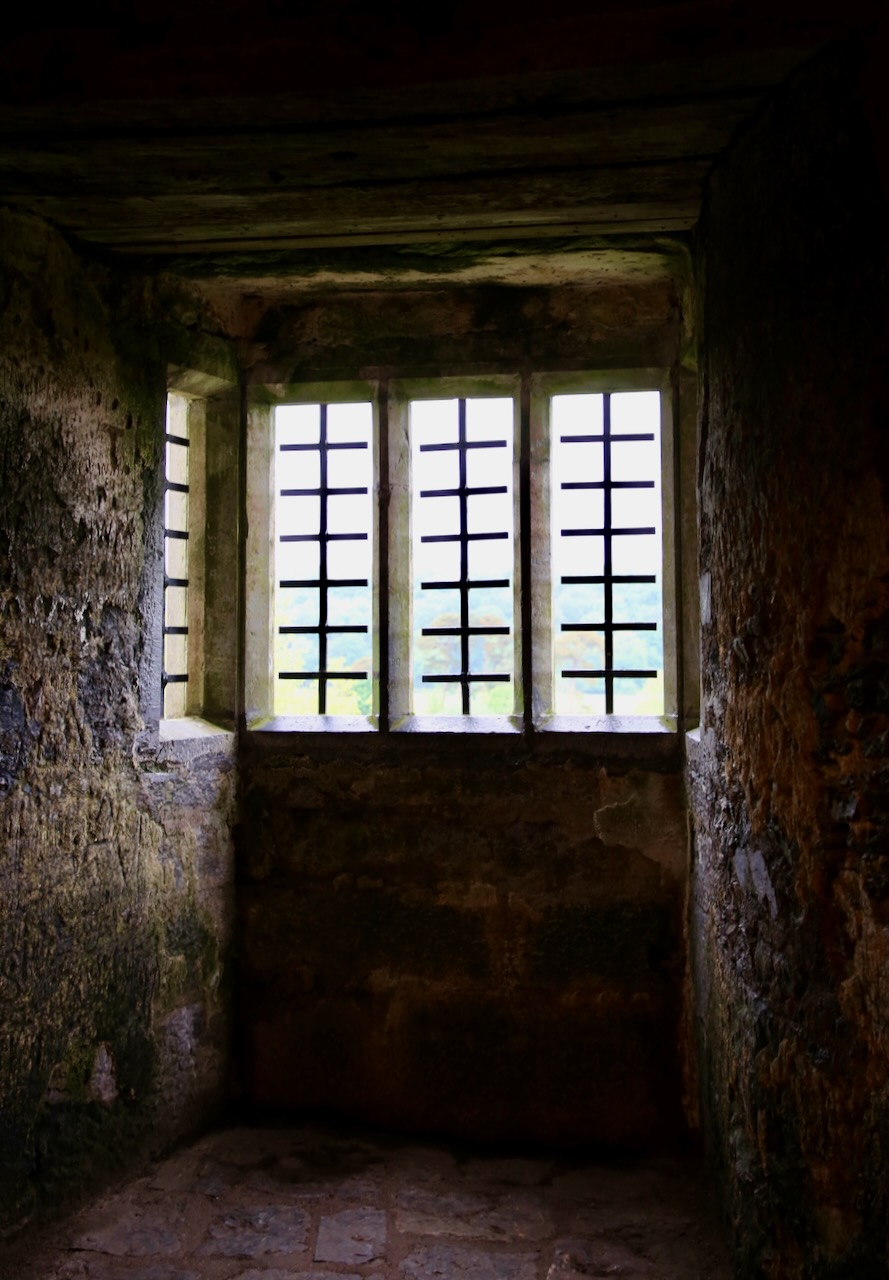
In 1386, men of Irish birth were barred from entry, and in 1536, this abbey was dissolved, too. It was converted into a mansion with fireplaces and large stone windows by Andrew Wyse after he purchased the church in 1552. I’m not sure of the Wyse to Wise relationship as my family tree is lacking apples before the birth of my third great-grandfather in 1839. Today, a few people choose to pose, some obnoxiously so, among the walls and windows of this ancient abbey. I wonder what brings the other visitors to this place other than to see beautiful ruins in a field, as there’s not a big car lot, but there’s a sauna and hot tub with a view less than a quarter mile up the road.

If only Caleb had been wearing a robe and carrying his Kindle, he would blend into the surroundings, and we could spend the afternoon reading and sipping imaginary tea. I love books and documentaries about traveling, real and imagined, and their ability to transport me. When getting the chance to explore, it’s watching the places I go come to life historically, in the present, and futuristically. It’s such an explosion that the experience can be overwhelming, not only of how small I am in the totality of things but just how little my existence is in all of time, ever.
Boyne Ramparts Heritage Walk

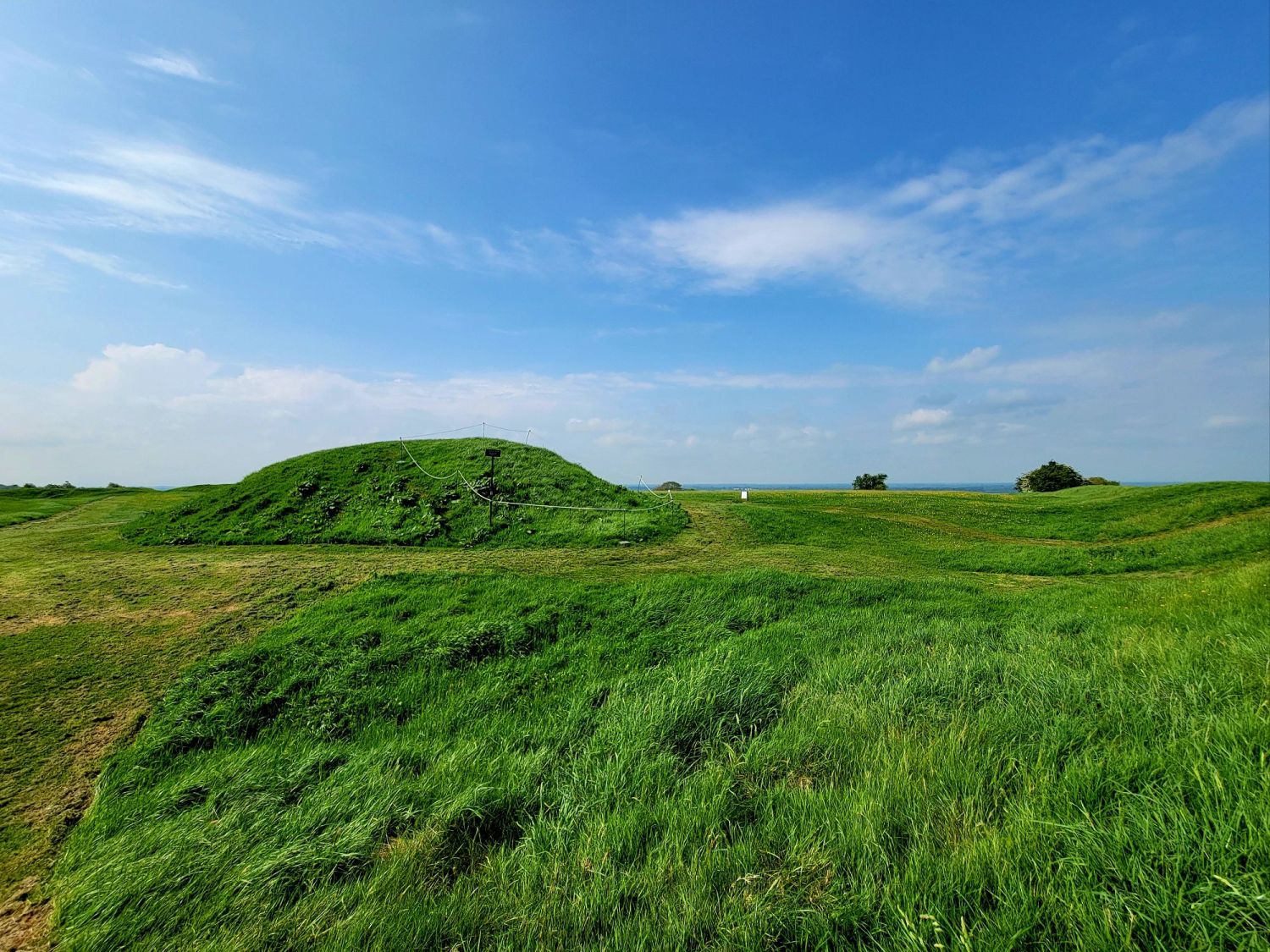
We make it to the Hill of Tara, an internationally important site, with a few rules — no camping, no fires, and dogs on leads please. The fire and tent poles could damage sensitive archaeological material. We find street parking behind a line of cars. At first sight, it’s just a field, a very green and lumpy one. Upon further investigation, the site begins to take shape. We peek inside the Mound of the Hostages and see the marker from the Battle of 1798, commemorated with a mass grave marker of the 400 rebels who died after having chosen this location for its symbolism of ancient sovereignty.

Between the church (visitor center) and the hill, on a fence, is a sign that warns of the damage being caused by bicycles, team training, climbing on the monuments, and walking in wet and mucky areas. The church is simple on the outside, and it’s the large stained glass window and other small details of stone, wood, and tapestry that catch my eye while exploring the sanctuary. This is just one of Ireland’s six royal sites associated with myths and the transformation of Ireland from paganism to Christianity. The shop next door has Celtic and goddess vibes, a cute children’s sweater that I didn’t fit in (so we got matching Aran styles in different colors that fit), and sampled some turtle juice (Caleb’s drink) in a planet-friendly bottle to go with his tuna and sweet corn sandwich.

Hill of Slane

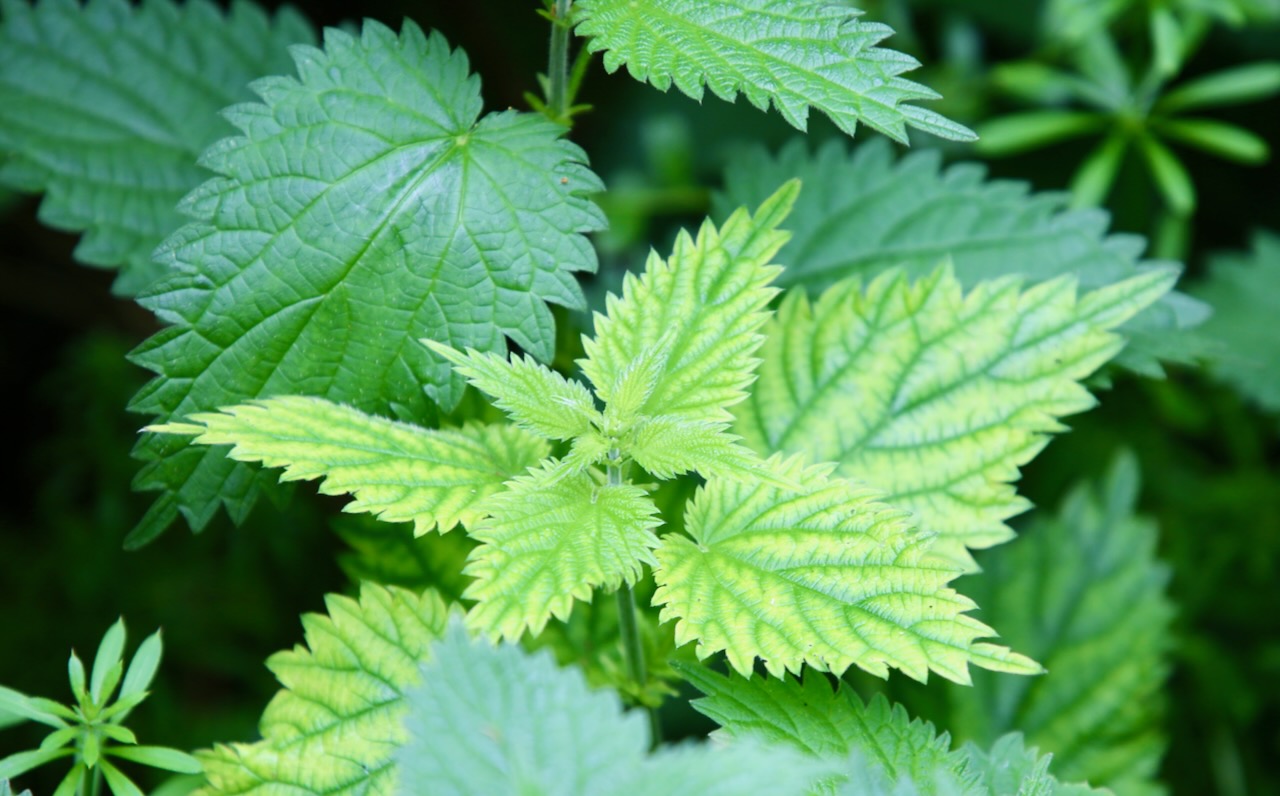
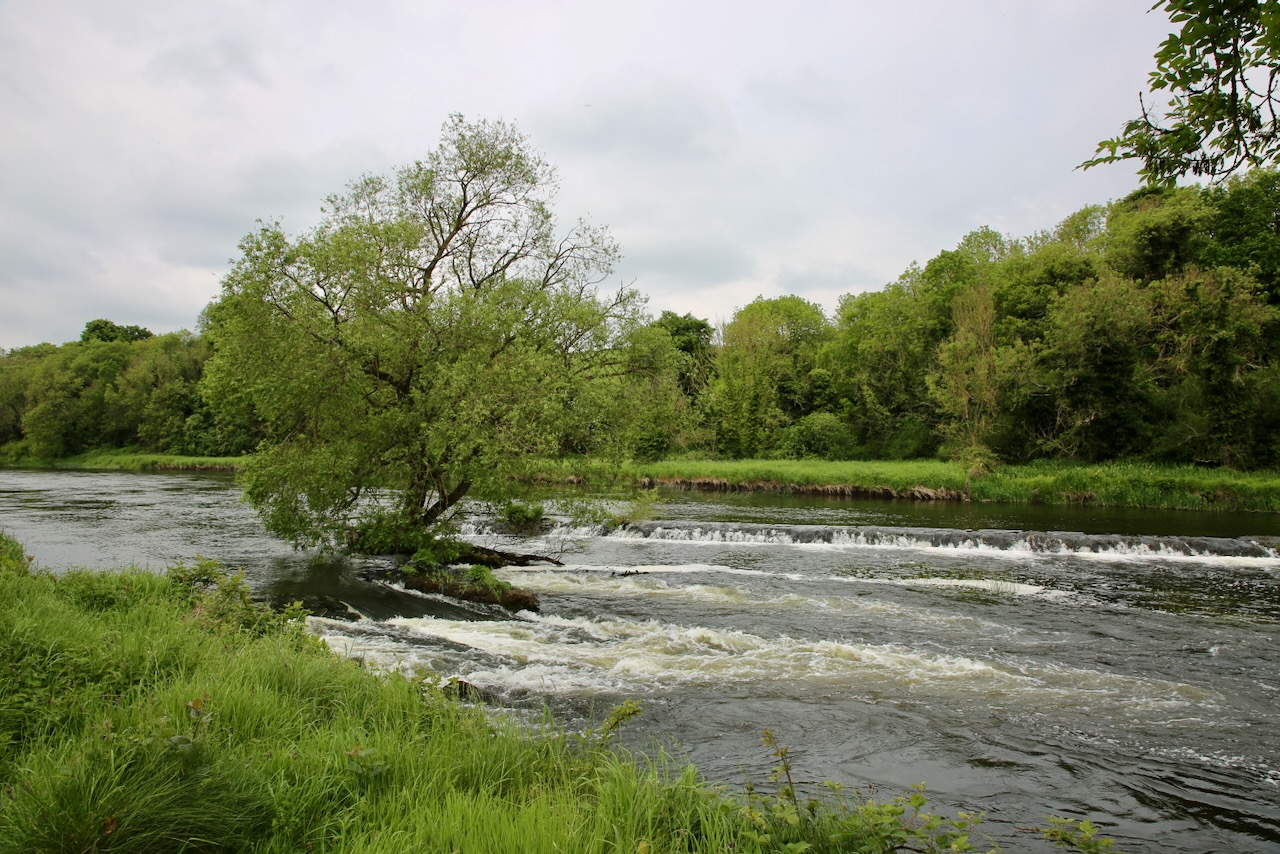
Ollie, the otter, welcomes us to Boyne Ramparts Heritage Walk. Sadly, we won’t see a live one as they have become rare in Ireland and extinct in much of Europe and are more likely to be spotted around dawn or dusk. This towpath, between a river and canal, runs from Stackallen Bridge to a place too far away to see today. We are promised heritage, beauty, and ruins and are met with cascades, birds, and stinging nettle (respectively, of course).
Besides having roommates with kids and having to look after them sometimes, this experience will be the closest we come to the perseverance required of some parents to keep going even though we’re physically exhausted. Each rest in the car to wipe our blistered noses and cover more countryside gives us just enough energy to even contemplate getting out at the next spot on the list. For us, this would be the Hill of Slane. It’s here, on Easter Saturday in the year 433, that St. Patrick lit a bonfire in protest of King Laoghaire’s pagan festival (bonfire ban) on the Hill of Tara.
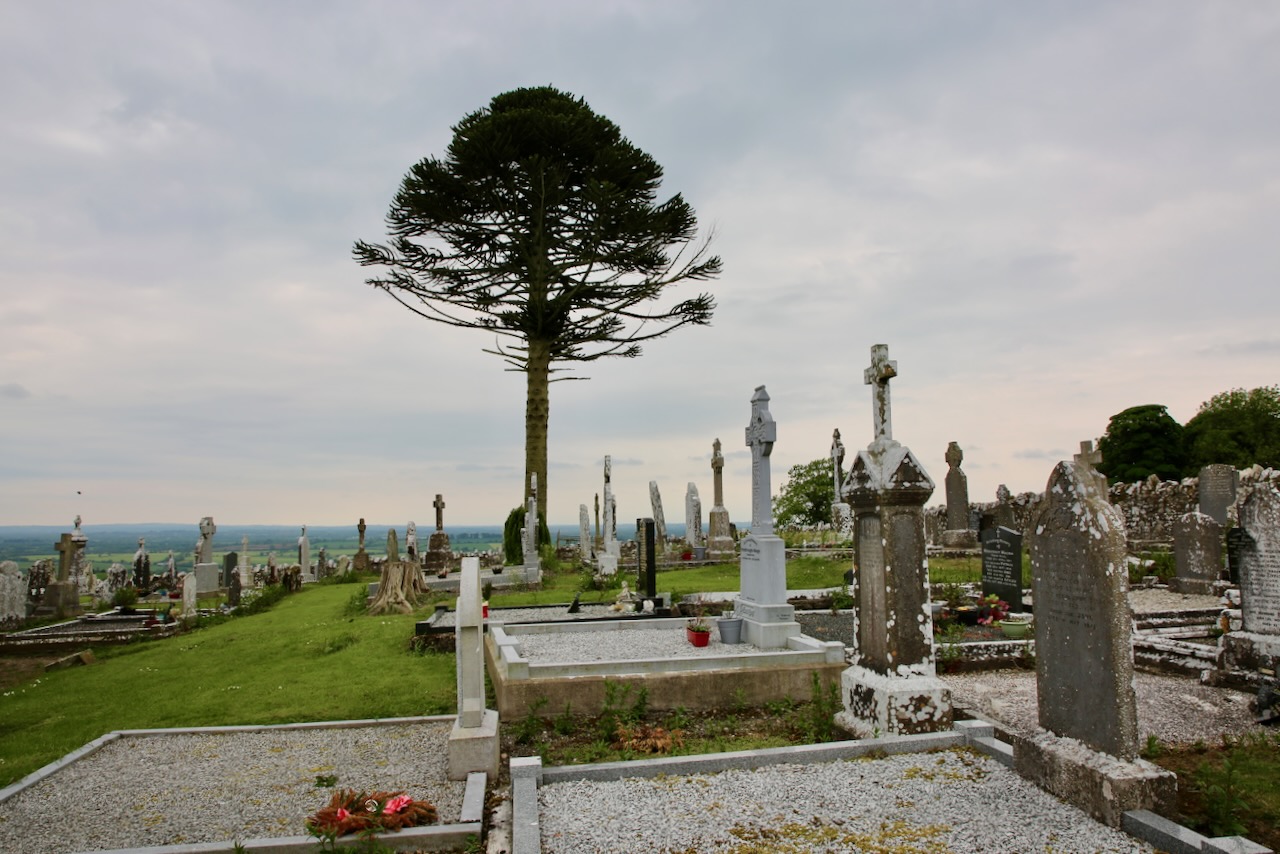
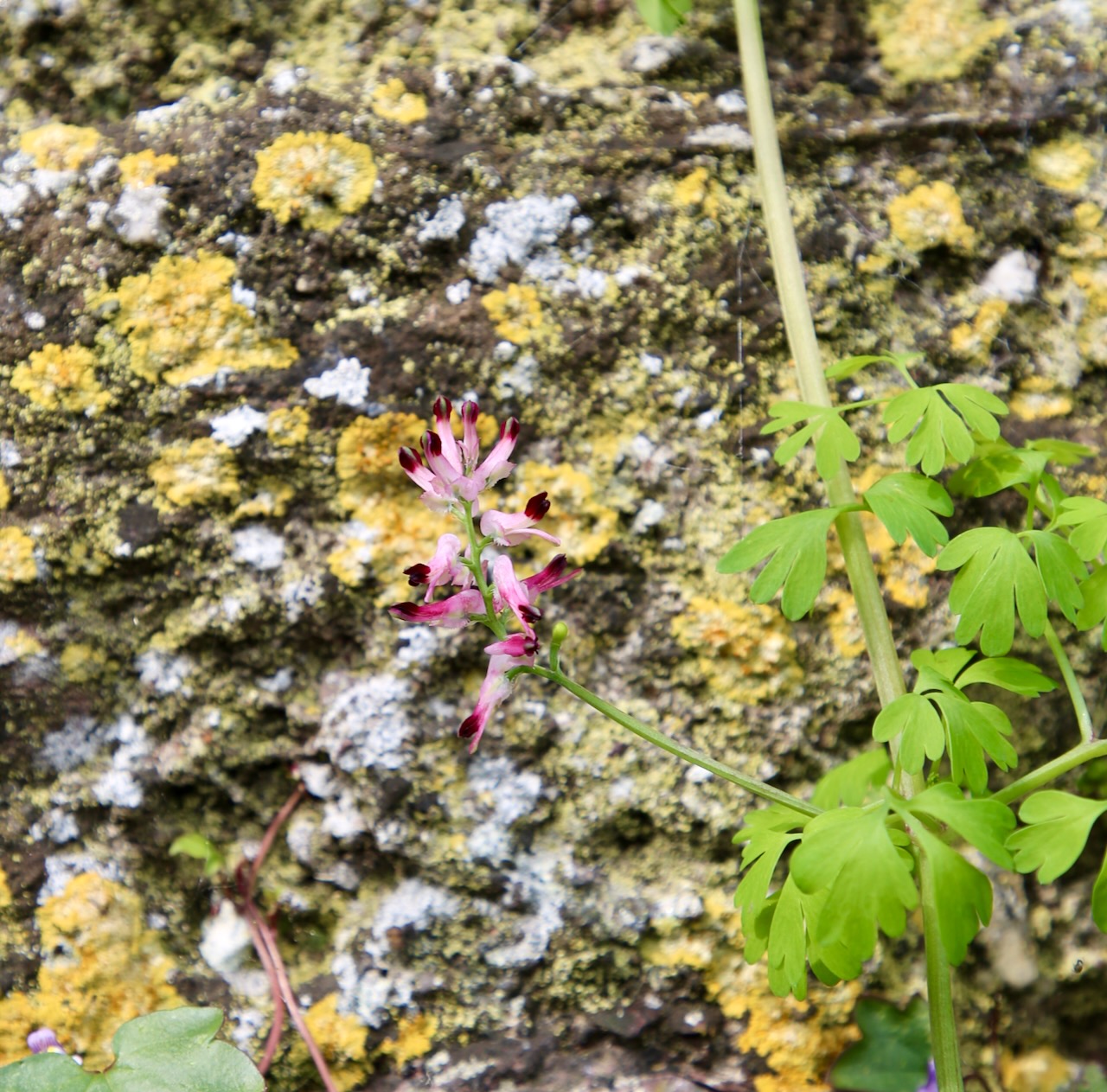
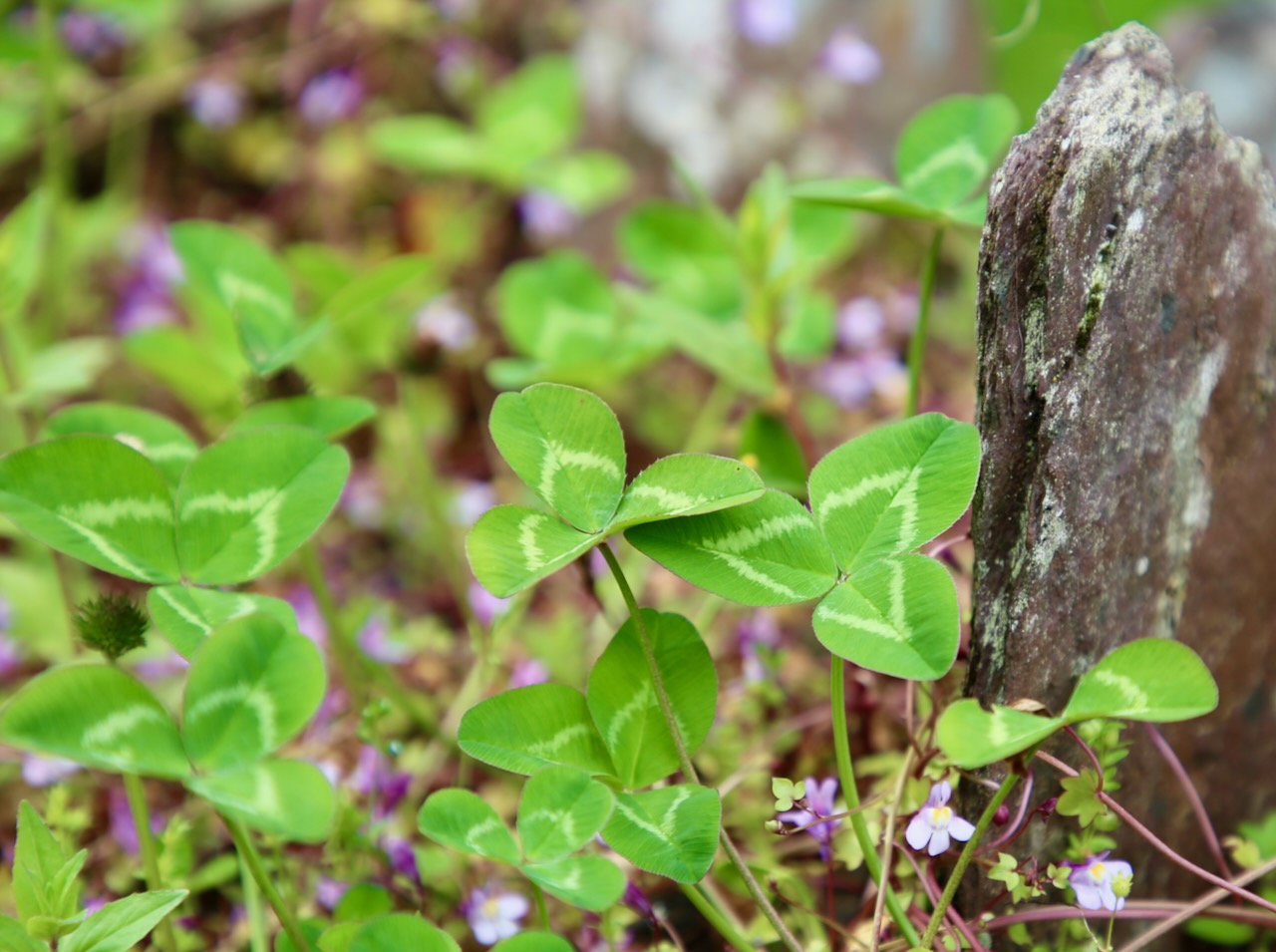
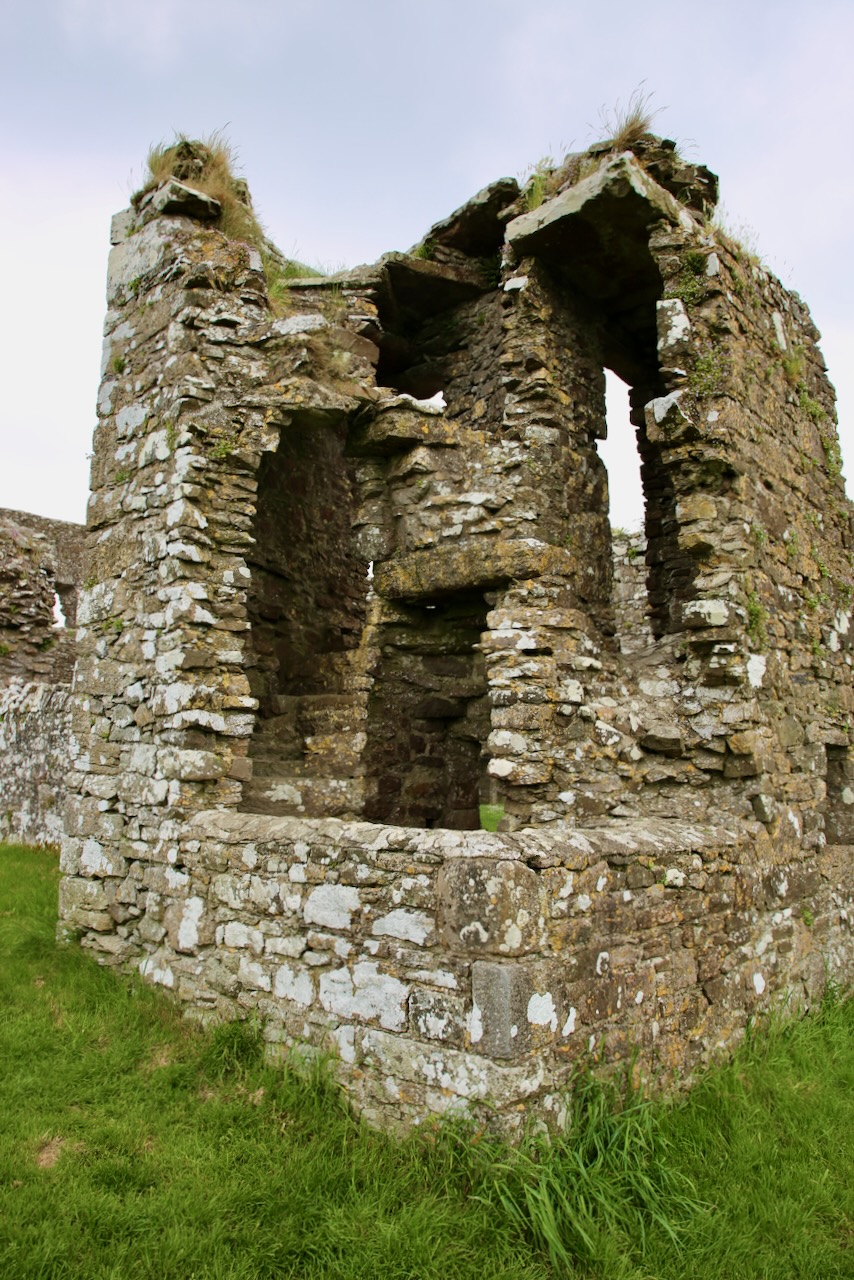
The king didn’t convert to Christianity but allowed St. Patrick to preach. Over eleven centuries later, King Henry VIII dissolved a monastery built just 30 years ago and granted the land to Sir Fleming for an annual rent of just one penny. We’re here to see the remnants of Slane Abbey. We park at the bottom of the hill and follow the wide-mowed path to the beautiful stone ruins that now provide a home for ivy-leaved toadflax, a purple-flowered trailing plant native to rocky habitats. We enjoy the weathered walls, worn windows, distant views, and cherished cemetery.
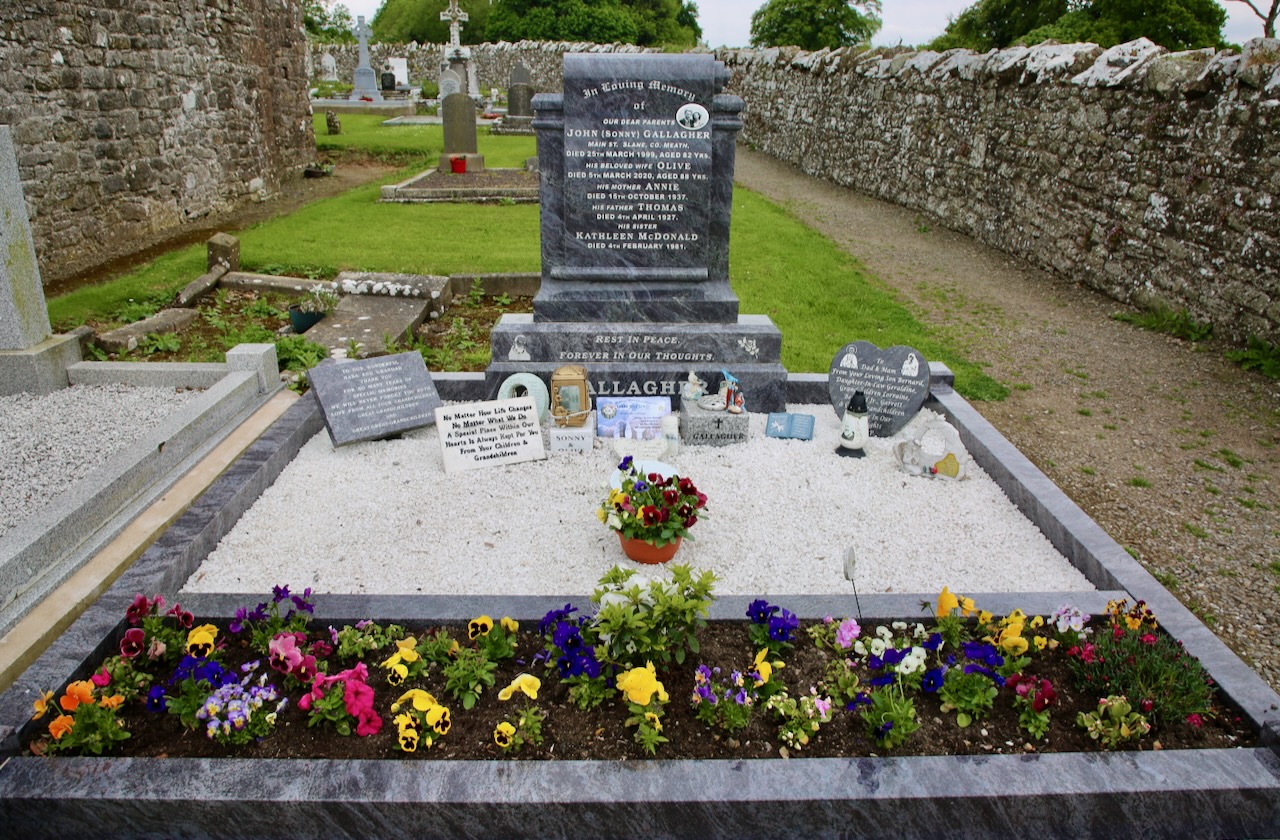
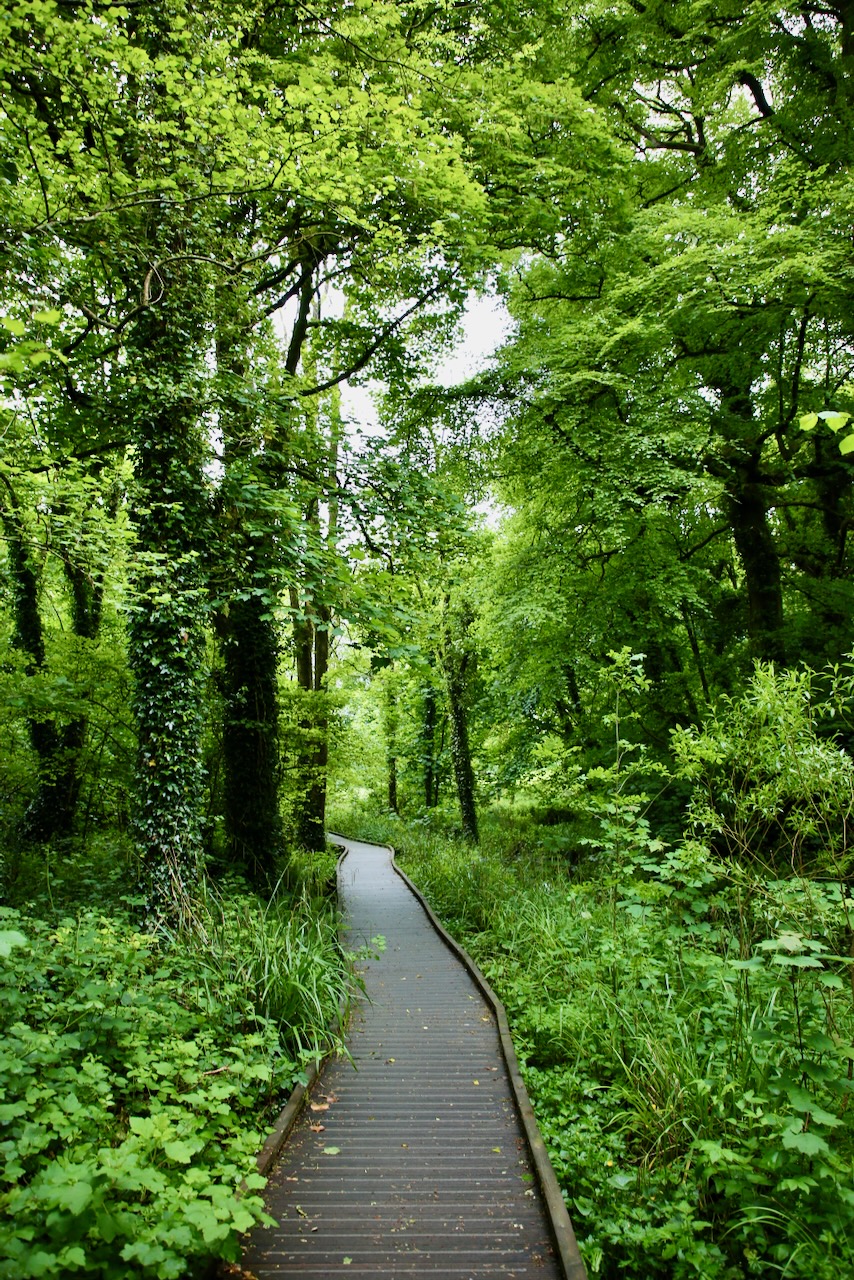
We zigzagged our way, mostly east, through County Meath and now begin our route south for our return to Dublin for our flight tomorrow morning. Balrath Woods, another chance to bask in Ireland’s emerald-ness, is the fifty remaining acres of a once larger estate of mixed broadleaf woodland that was mostly replanted in 1969. This park is part of the NeighbourWood Scheme to plant and develop areas for public access that can be used as outdoor classrooms to learn about different species of plants and animals, various habitats created in woodland, and the importance of proper management.

These woods are home to birds, butterflies, and bunnies, but my favorite feature here is the beguiling beech with an expressive root structure and bright green expansive canopy. Between the Balrath Woods and the Wonderful Barn sits Emerald Park, Ireland’s only theme park (around the Irish potato crisp brand Tayto) and zoo. The park was renamed when the partnership deal ended, but the mascot remains. The park has the island’s only wooden roller coaster, and though they have great rates, about $45 per person, we are not stopping until we get to the corkscrew-shaped grain store.

Balrath Woods

The Barn was built in 1743 with 94 steps of cut limestone to reach the top. Follies are towers or mock ruins built by the wealthy for decorative purposes and to employ the locals during times of famine. This Barn has been referred to as a folly in many books but actually serves a practical purpose while also being a more pleasing addition to the landscape. This 73-foot-high structure was built to avoid a repetition of the flour scarcity that led to hoarding, price gouging, and theft. It consists of five vaulted chambers inside walls over two feet thick and protected from rain by slates on the exterior.

Two dovecotes, for pigeons, were built so the birds could feed off the spilled grain and then become meat (squab) for winter, preferring the birds before they grew their flight wings. The Kildare County Council has been responsible for the site since 2005 and has mended the brick and stone masonry and made extensive roof repairs to the wings. The Barn was placed on the World Monuments List of 100 Most Endangered Monuments in 2006. I see more rabbits here than I have all day. We are nearing the close of our check-in window for Angel’s home on the outskirts of Dublin, with a mostly highway route to the airport.

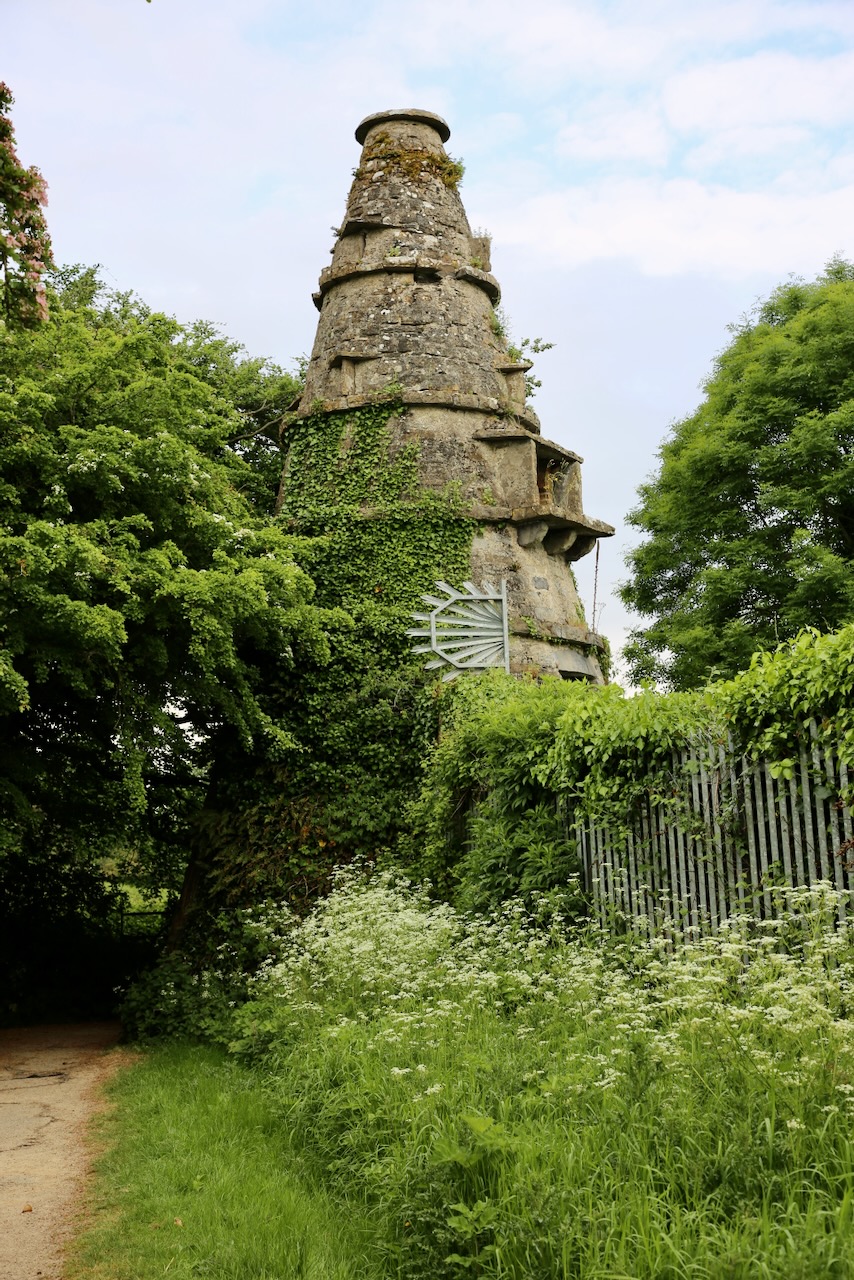
The Wonderful Barn

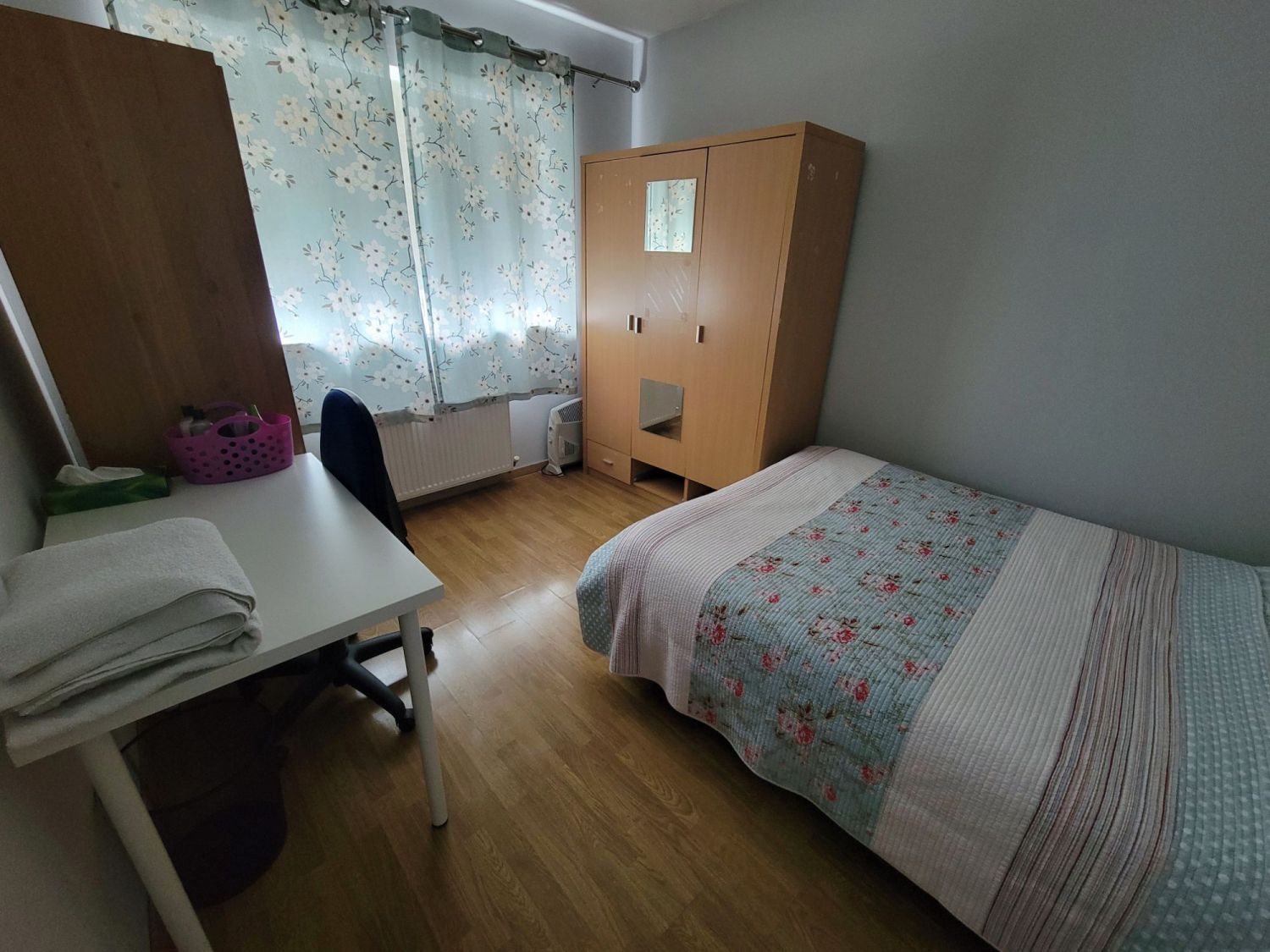
I knock on the door upon arrival, and after a few minutes, I knock again. There are cars in the driveway, but no one is around. I call the number listed, and for a moment, the guy who answers seems confused until he realizes I’m a house guest for the night. I’m not sure if it was his daughter from next door who let us in, but she gave us a tour and a heads-up about the long-term renter staying upstairs. It was a good thing she wasn’t home yet, as the front door was tricky to close, and she was able to show us how to keep it that way.

We get back in the car for dinner and drive to The Halfway House. After looking at maps, asking the internet, and searching through photos, I still had no idea where we had dined. The picture time gap led me to believe that we had walked, but no such place fit the description: cozy bar seat with sunlight coming through the stained-glass skylight, making the wooden bar and floor shine (it could also be overhead lighting). There’s a wooden dog statue, a heavy curtain, and some bench seating. They serve club sandwiches and had a buffet around the corner that we weren’t interested in.
I asked Caleb, and he suggested a place outside of walking range, so I went to the credit card statements to confirm. The customer service agent wasn’t able to give me the restaurant’s name for Caleb’s protection, but he did let me know that even though our card number changed recently, I’m still able to pull up two years’ worth of statements (my first attempt only found the recent three months) and there I found our last dinner in Ireland — The Halfway House. I’m not sure why we went there instead of walking to Hartstown House (a double H logo instead of one), but it was nice to have salt and vinegar chips (fries).
I had asked the tenant about a recycling center, but she thought they were too far away. We found one within ten minutes of walking distance and got back €0.50 for our efforts after dinner. Back at the house, we started to wind down as the evening seemed to just be getting started in the backyard. Had I been a day younger and 98% less sick and exhausted, I might have invited myself to the hooley (noisy party) and learned another thing about the local culture. As it was, we read for a bit with the window open and went to sleep by their second or third beer.

Posted in Animals, Art, Food, History, Media, Plants, Travel, Water | Tagged , , , , , , , , , , | Leave a comment

Home of Guinness

This nickname for Ireland took almost one hundred years to brew. It started with Arthur Guinness who founded St. James’s Gate Brewery in 1759 and signed a 9,000-year lease for four acres. As his beer gained in consumption, the brewery became the largest in Ireland in 1838 and then the world in 1886. It has since been surpassed but remains the largest brewer of stout. Guinness is on many top ten lists along with beers from Mexico, the Netherlands, and China. Visitors are welcome to tour the site, now on fifty acres, and sip samples, have a stoutie (a selfie on their beer head), and learn the six-step pouring ritual.

Part of the advertising that helped Guinness grow was the support from doctors in the 1920s who would prescribe a pint to their patients after an operation or during pregnancy due to the benefits the believed-iron-rich beer would provide. This marketing was efficient for the next forty years. I have to laugh to think that people, myself included, trust doctors, scientists, and government agencies now to have their best interests in mind; not unless it comes with a better payday than the competition.

It seems as if the plan was to spend half of yesterday in Galway and then, time permitting, drive to Connemara National Park, a noted two hours away. Even though Caleb invited the anti-energy virus on our road trip we would’ve had to camp at or near the park last night after using the light of the Waxing Gibbous moon, at 92% illumination, to hike. If wanting to increase the level of adventure on a trip, one idea would be to drive on the island at night where the deer vs stag on the road comes into play.

Only one of those ‘animals’ have headlights and alcoholic fuel installed. Ireland’s allowed blood alcohol concentration (BAC) level is at 50 mg (80 mg being the familiar 0.08%). If detected by the peace police (Garda Síochána), they automatically suspend driving rights for three months and issue a fine. This should make me feel safer, but so does not driving on unknown and thin winding roads with cliff edges. I was going to refer to a trip I took to the country of Georgia in January 2020, but I have yet to finish writing about that part of my visit.

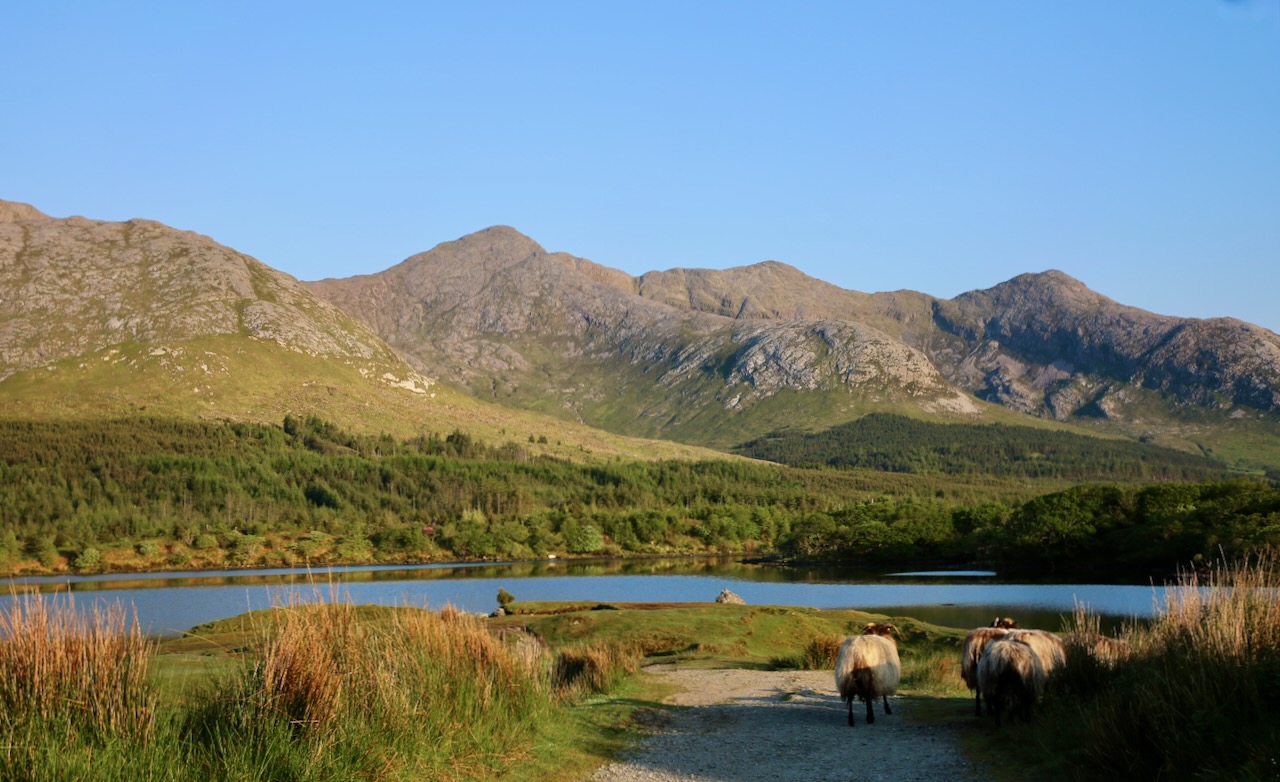
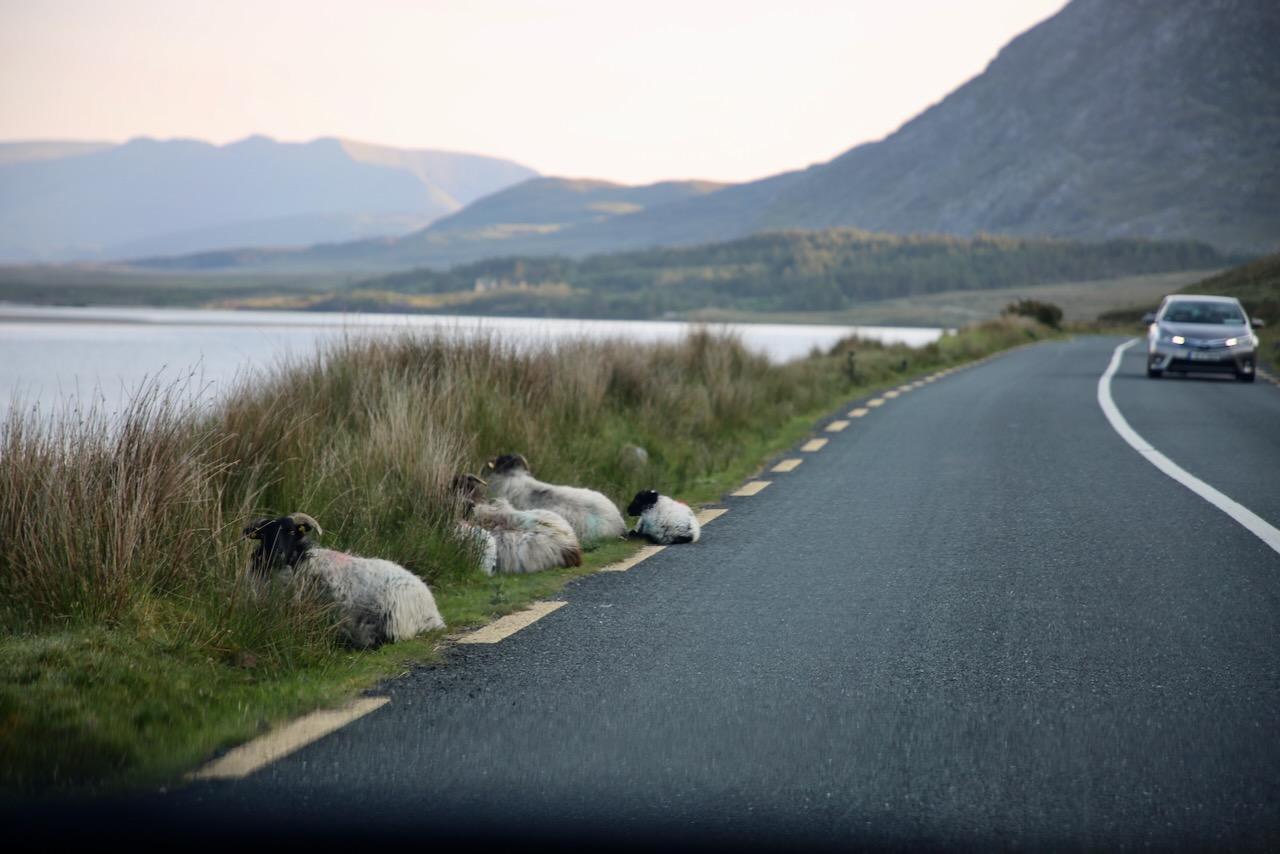
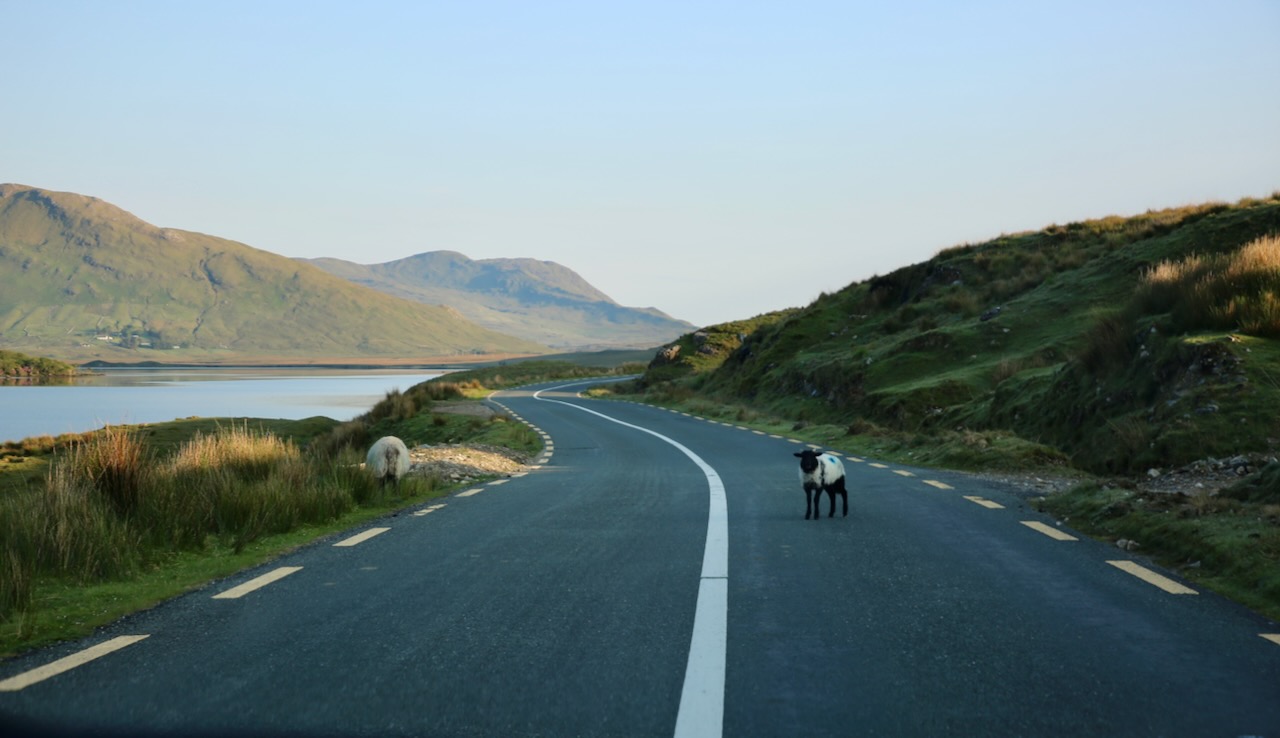
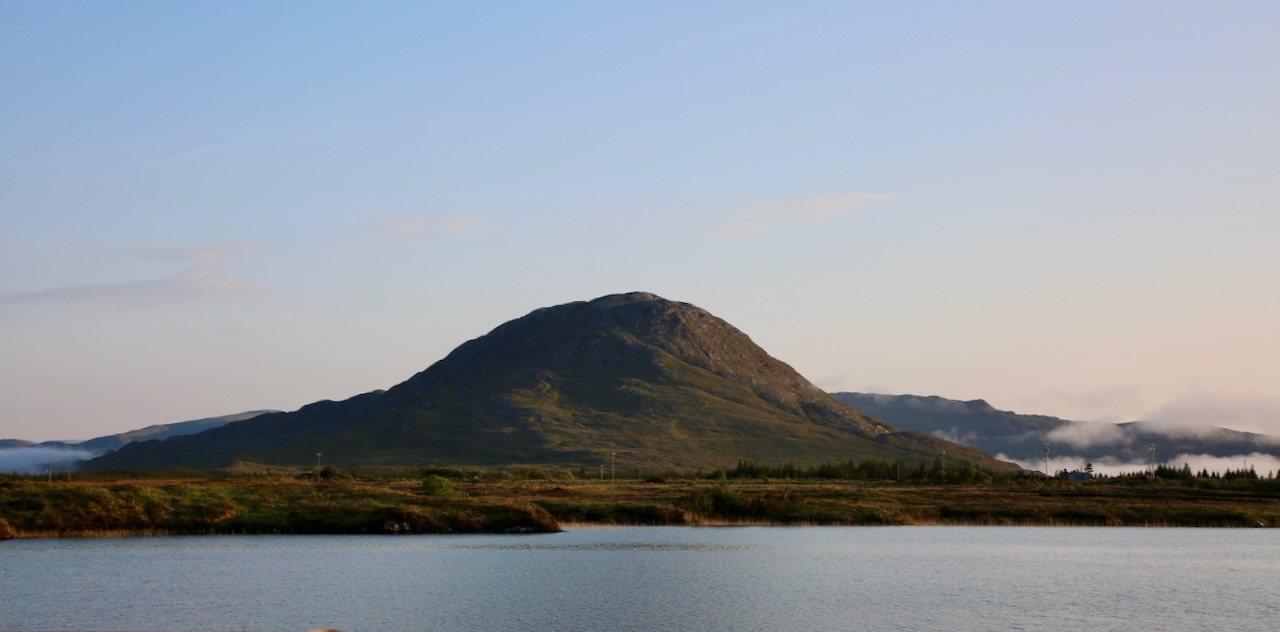
The sun and clouds begin the morning competing for my attention as I can’t yet determine which will dominate the sky. Reflections on the water and bright yellow flowers grab my eyes next. I’m almost unprepared for the beauty of the rolling mountains in the distance and the Blackface mountain sheep on the road’s shoulder. There’s not a safe spot to stop on the road and take pictures like I’m used to on many of America’s straight roads, and even then I appreciate having a passenger who can grab the wheel or keep an eye out.

I see one of a limited number of pull-outs and am going slow enough to use it. I’m stopping to take in the lake, Kylemore Lough, and see a snail on a rock. I’d like to believe he was awaiting my arrival. Surely he’s taking advantage of the shade provided before his momentary perch becomes a permanent pan to bake him into a bird’s escargot. We pass the Kylemore Abbey & Victorian Walled Garden where your $19 entrance ticket includes the Neo-Gothic Church, the Mausoleum, and the Woodland and Lakeshore walks.

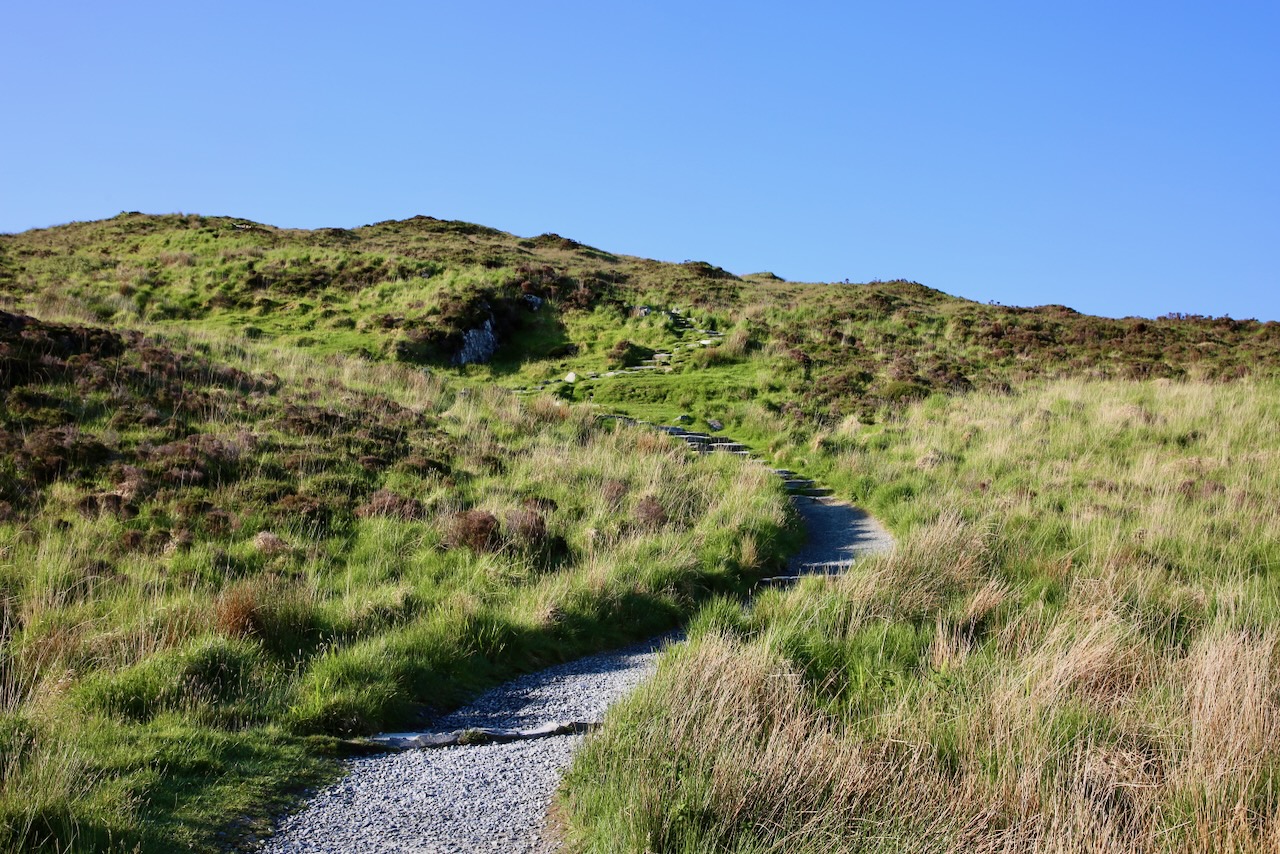
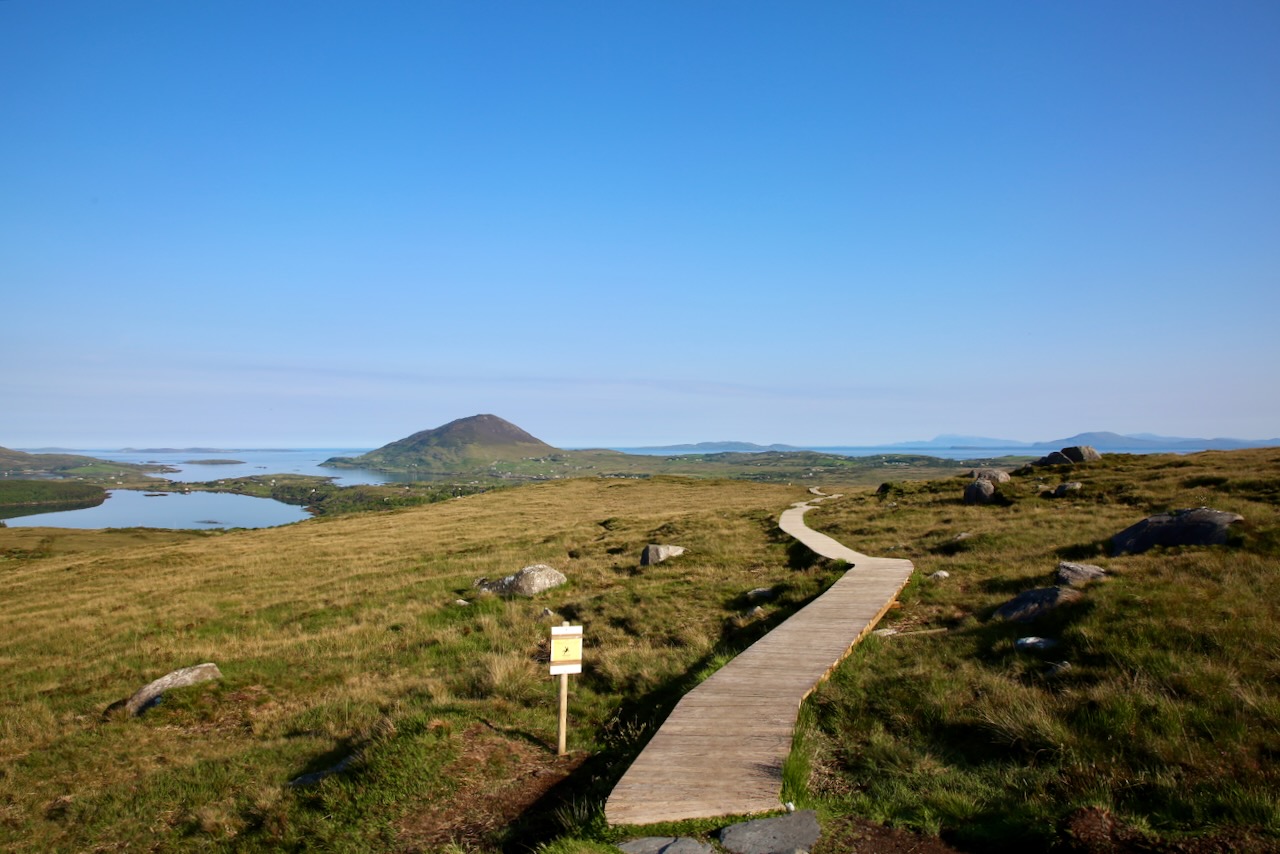
A few minutes up the road is the entrance to Connemara National Park. We find a spot in the shade in the empty lot, walk past all the closed buildings, and begin our ascent of Diamond Hill. The view is beautiful; the water looks like a boot of ocean stuck in the verdant mud that is Ireland. We pause for the horses in the field, the hawk on a bush, and the frog in the grass. We remove our shirts and yet the sweating continues. There’s a boardwalk and then a further climb to the top. This older woman passes us, dressed in long layers, and we decide to turn around before we become a trailside attraction.

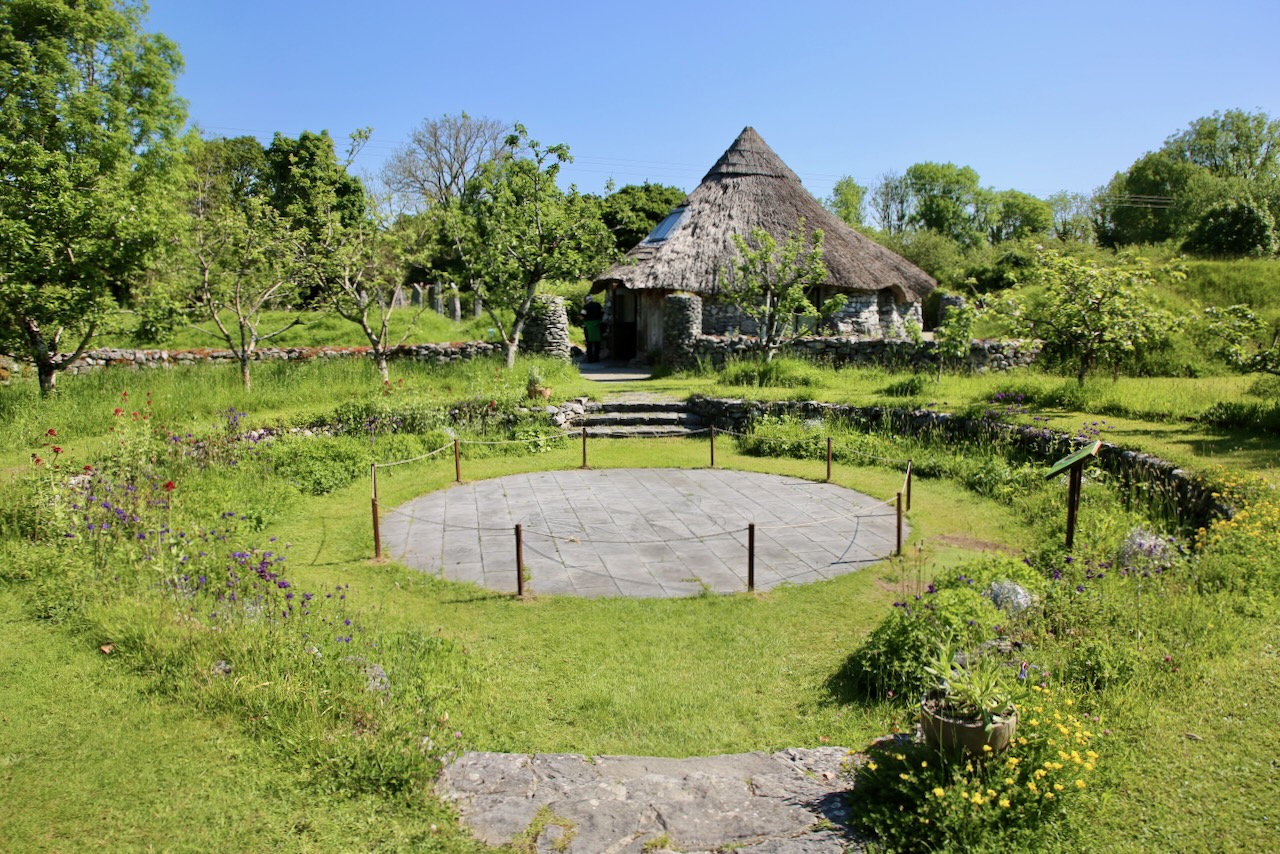
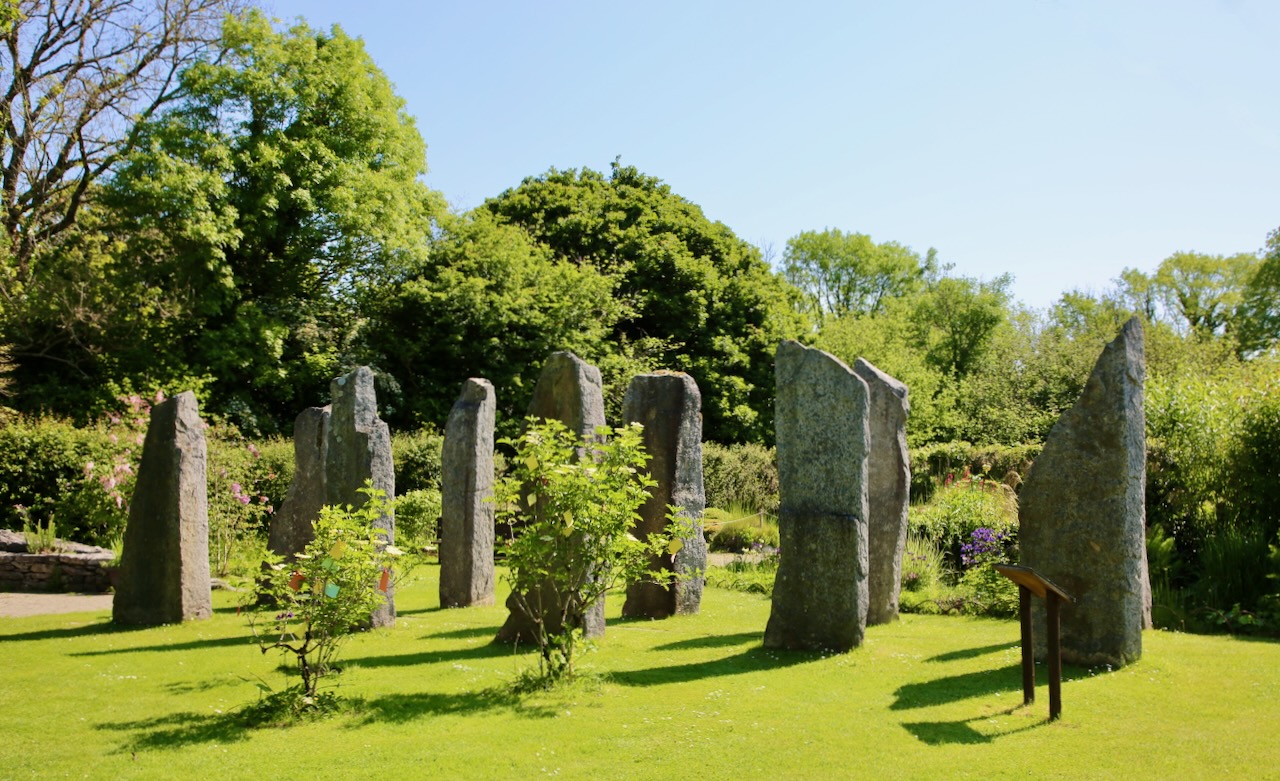
My level of exertion made me feel like I had walked twice as far. More people are arriving as we return to the parking lot. We backtrack towards Galway and turn off the N59 towards Brigit’s Garden, a space dedicated to the Irish goddess and saint. This park is more our pace, with less elevation change to contend with, and $21.80 gets us access to multiple gardens and acres of meadows and woodland. There are ponds, lots of round references – stones, mounds, structures, and a bicycle powered light. The shade offers respite, though once we’re on the far side of the sundial I have an urge for sustenance and a seat.
Brigit’s Garden

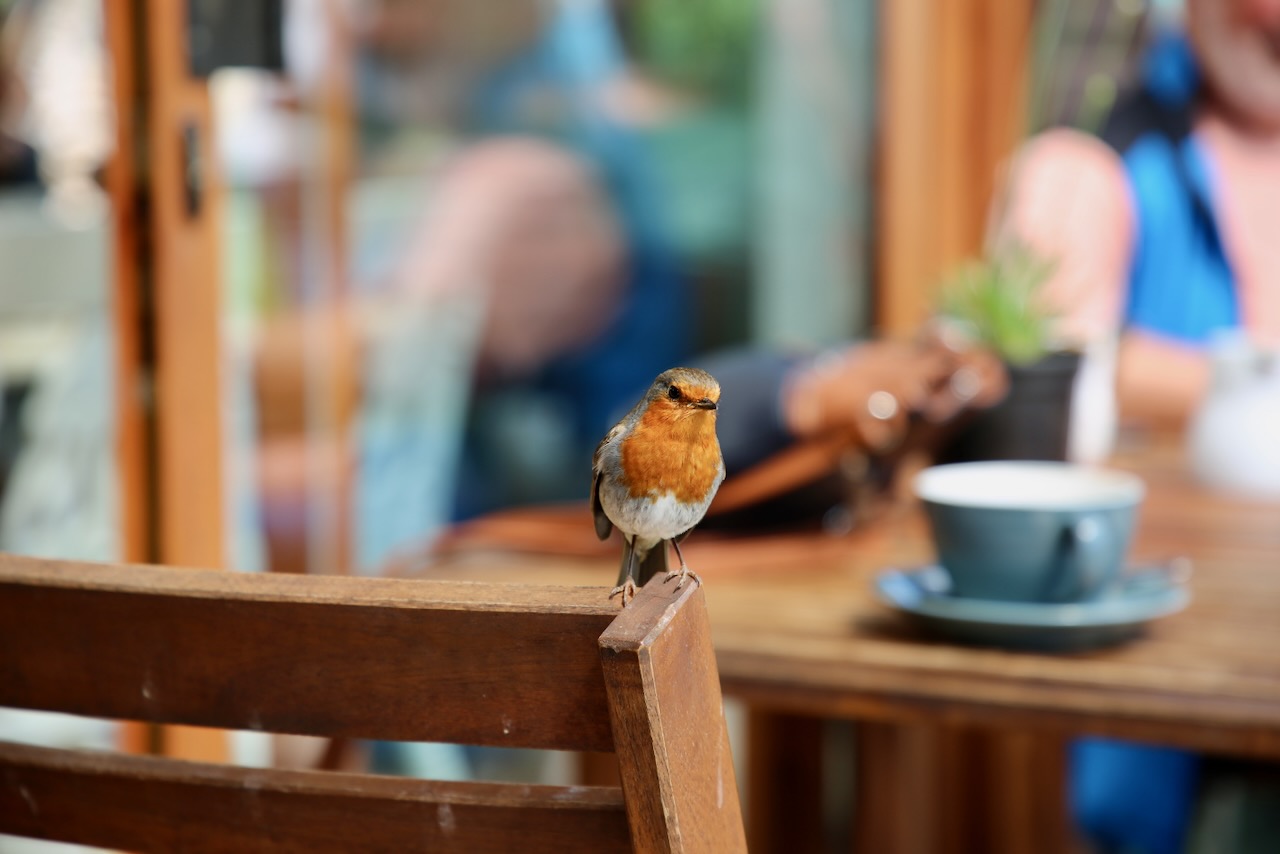
I order a chai latte and undecided on which dessert to have, we get three. A scone with raspberry jam is mandatory, the chocolate cake is surprisingly light on sugar and density, and the carrot cake completes our trio of amazing sweets. I would’ve been fine taking in the voice differences, wooden details, and starches dissolving on my tongue but a robin, or two, determined otherwise. I wasn’t the only diner with a camera as I sat and captured the bird posing on the furniture and the floor. I linger a moment longer but with the arrival of a group, it now seems time to go.

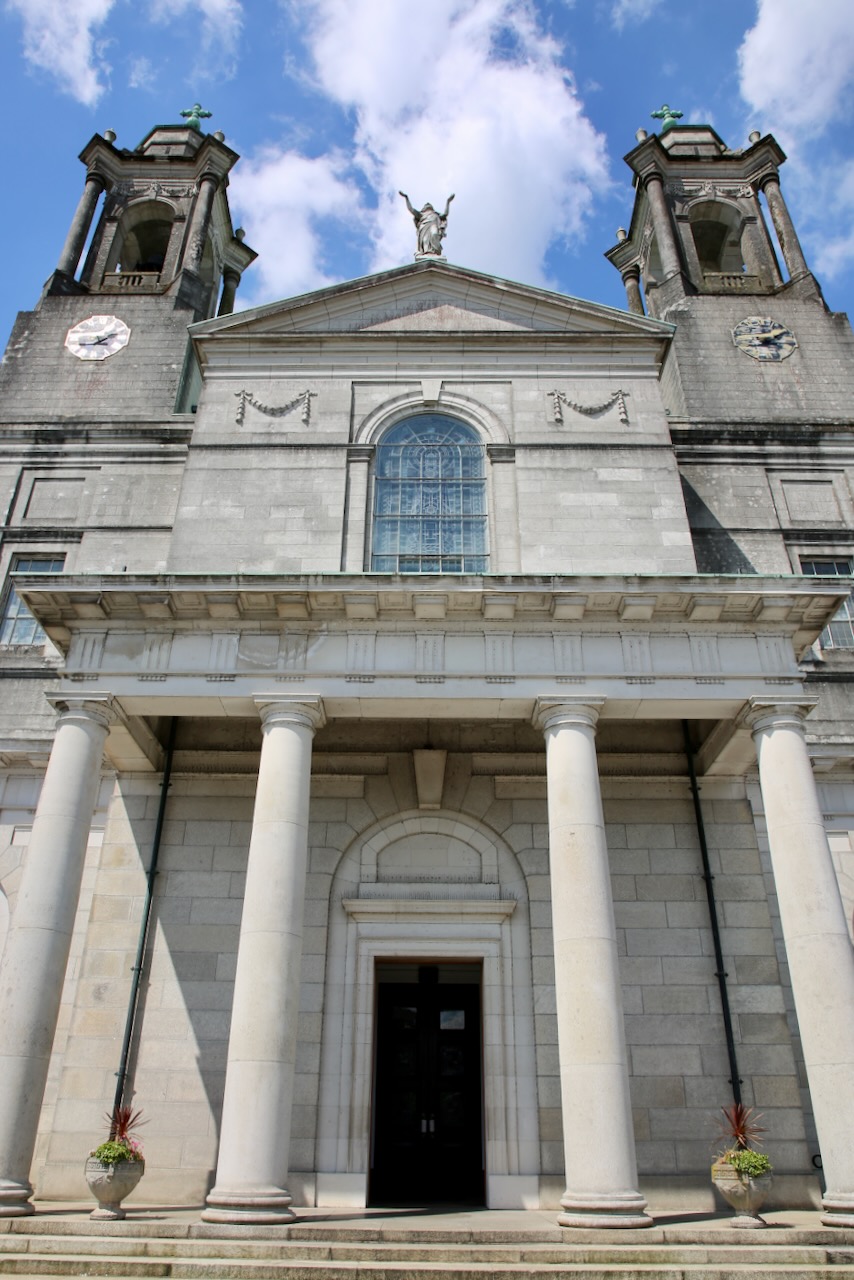
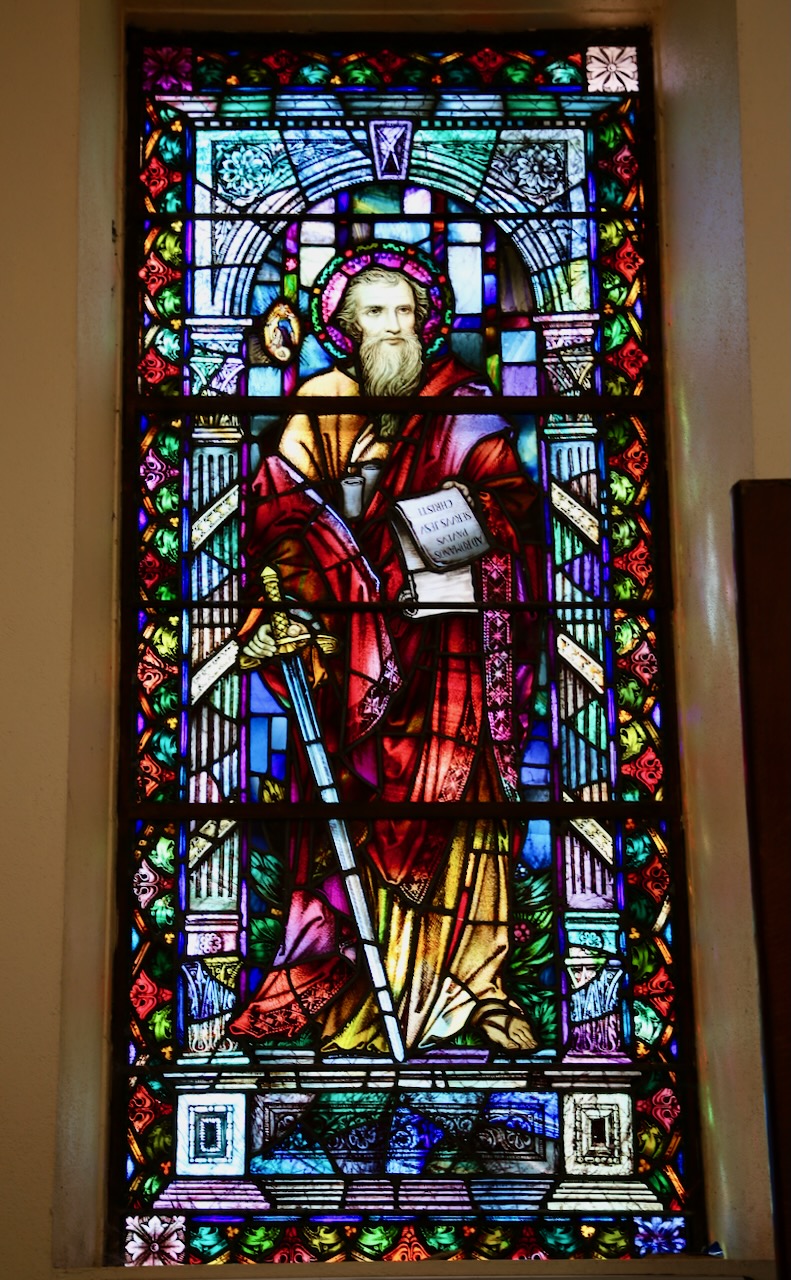
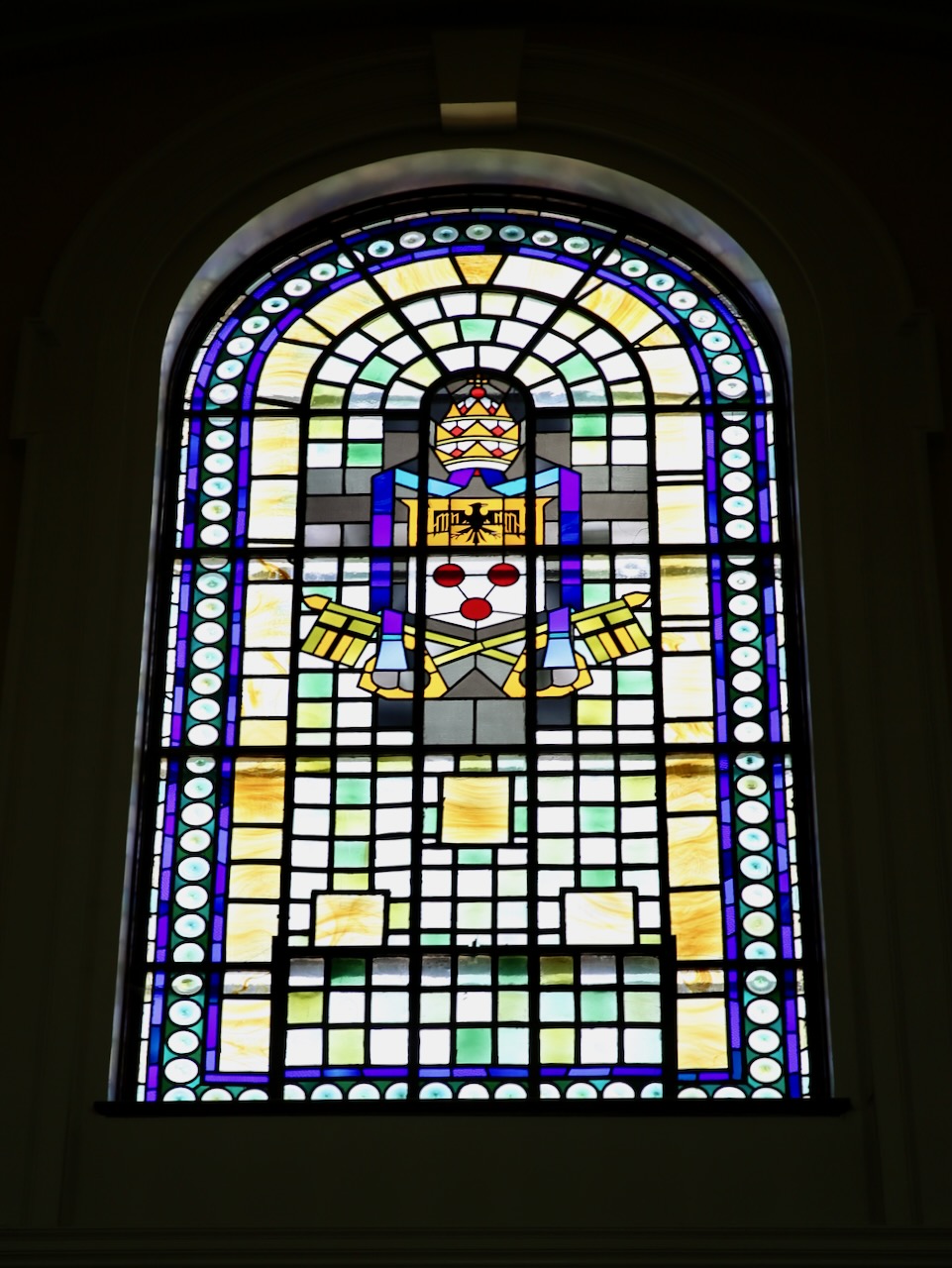
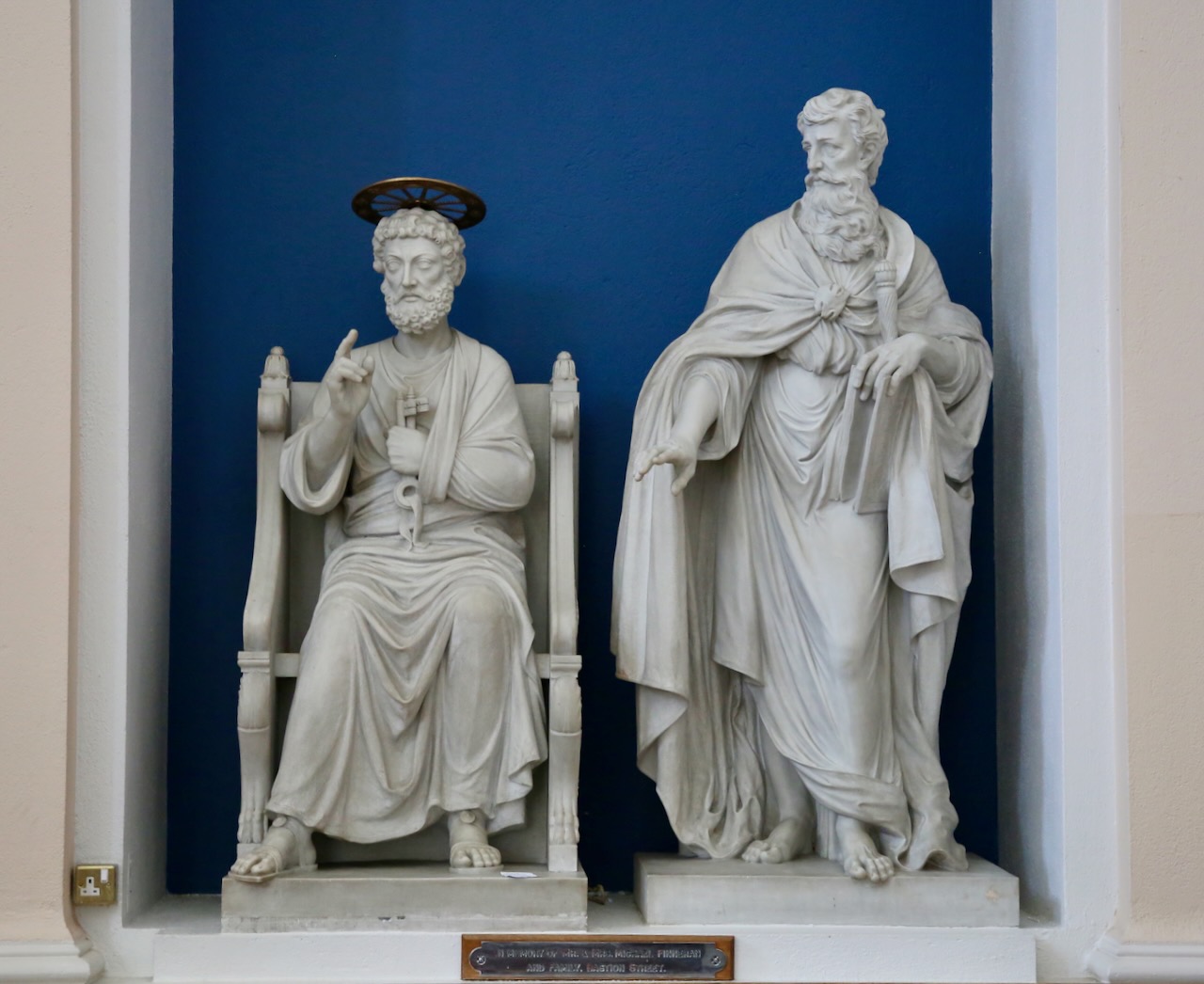
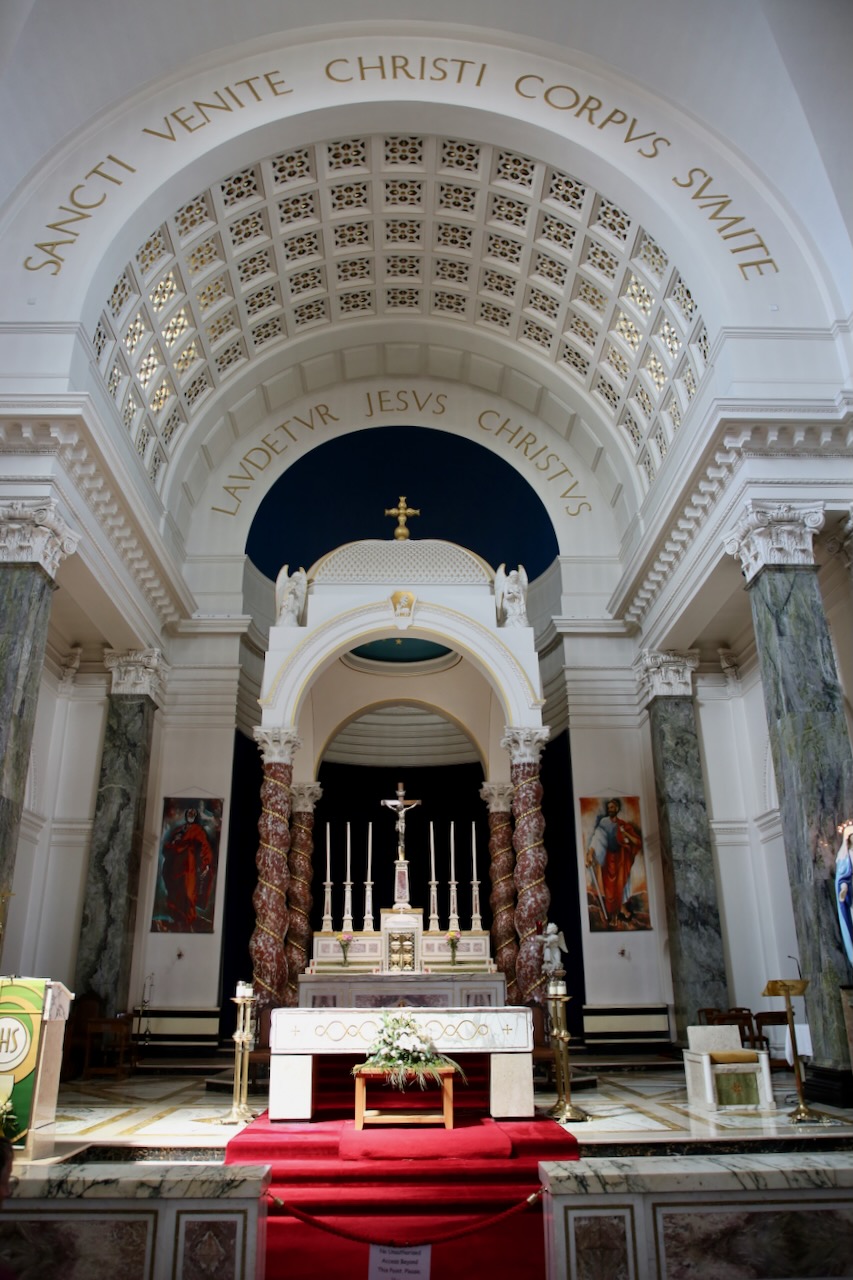
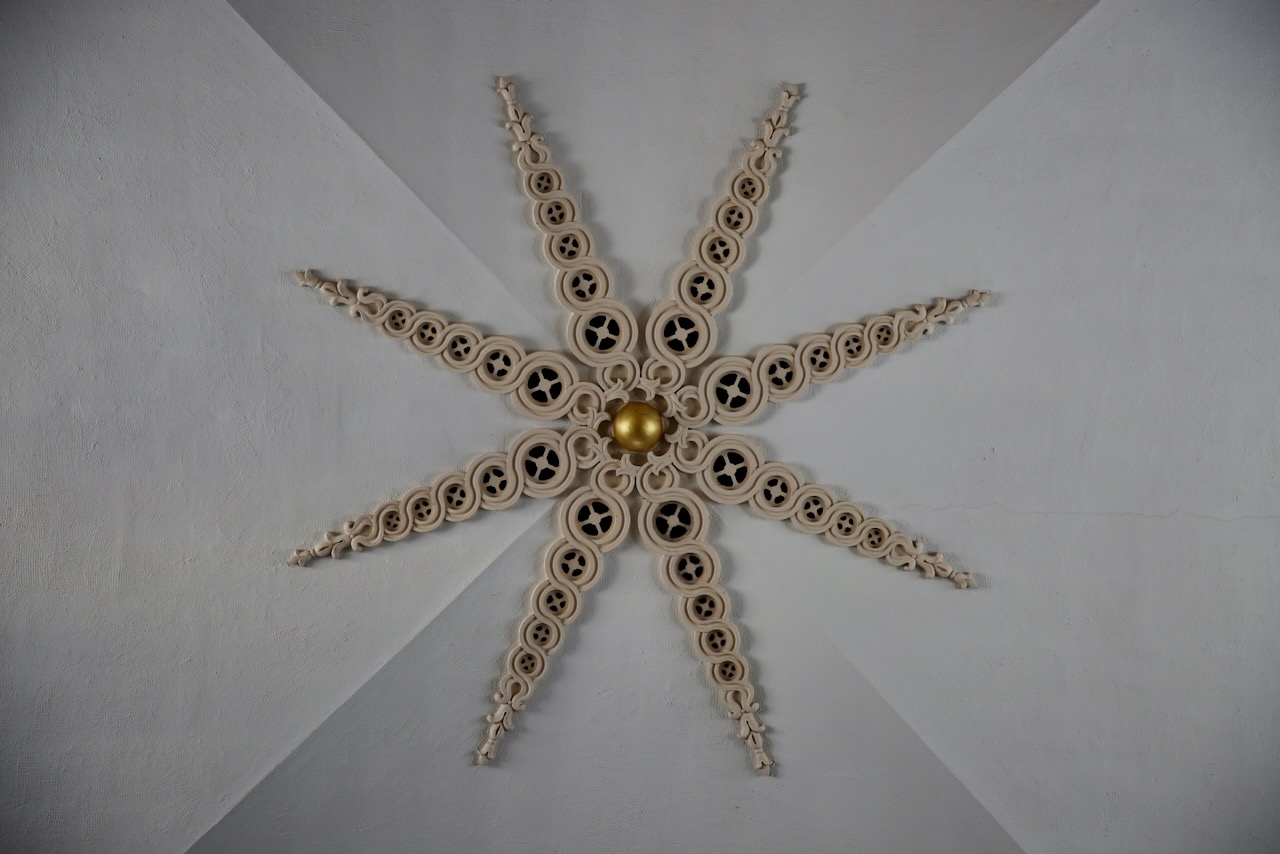
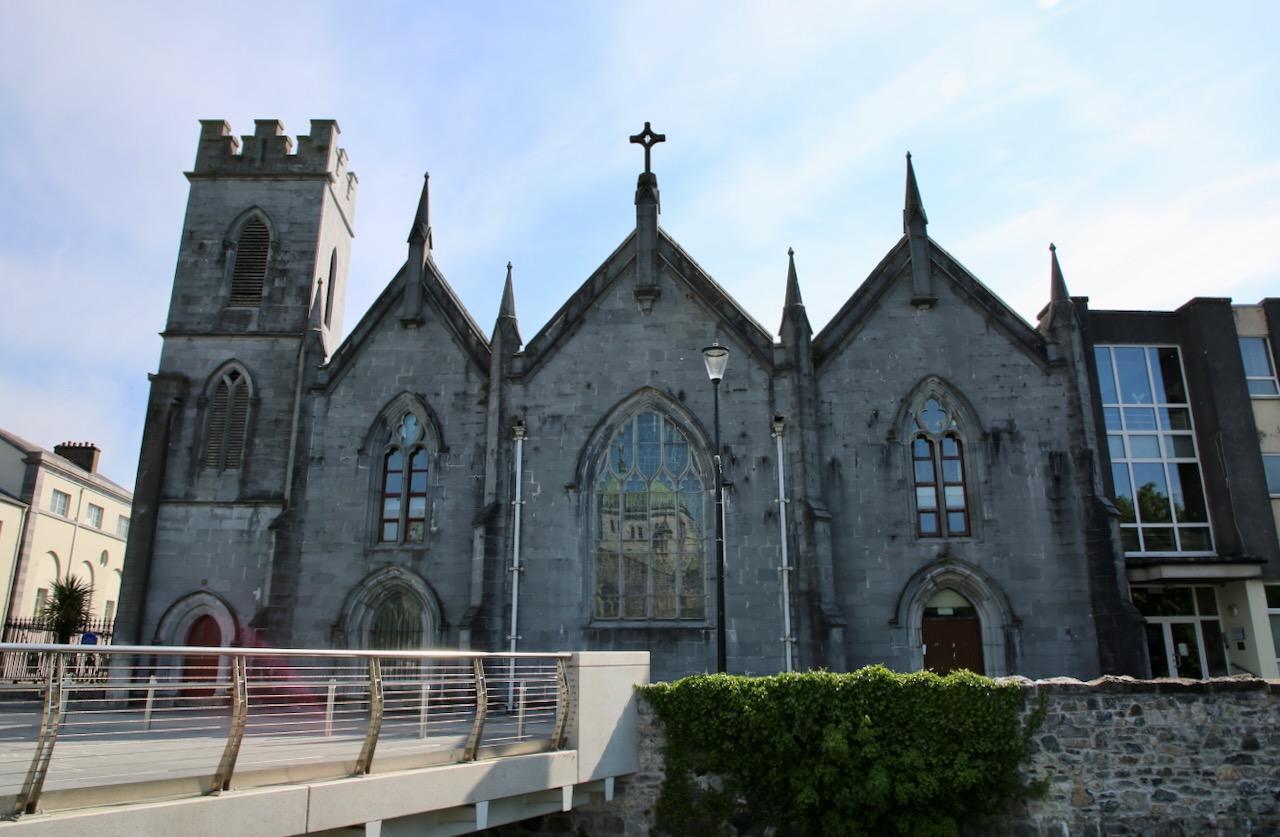
The town of Athlone, meaning the ‘ford of Luain’, named after the man who guided people across the River Shannon before bridges were built, is about two hours away. The castle is closed on Mondays, so we visit the Church of Saints Peter & Paul. The building design resembles a courthouse, this one absent of sinners today, besides the intricately stained glass. I appreciate the decorative distinctions between each house of worship so that no matter the budget or material availability, the locals would still have a place to congregate and celebrate.

The Guinness Book of Records started in Ireland, so every day is another opportunity to be recognized for a feat of strength, solitude, or seniority. Tony Hawks traveled 1650 km with a fridge, Enya has never performed a solo concert and still sold 75 million albums, and the Clarke family has the most siblings, five, to live past their 100th birthdays. Sean’s Bar was awarded, in 2004, the oldest pub in Ireland, and possibly the world, with a wall dating to 900 AD. A sign outside tells of a time when the bar was known as the Three Blackamoor Heads and ran by Mark Begg in 1736.

Church of Saints Peter & Paul

Not yet ready to go inside, we walk down to Shannon Banks Nature Trail Walk. Here we learn that stone walls are great habitats for moss (wall screw and silky wall feather), flowers (wall lettuce and ivy-leaved toadflax), and ferns (wall-rue, rusty-back, and maidenhair spleenwort); that sycamore trees can tolerate urban pollution and that some fish are coarse (pike and perch), meaning their scales are larger than game fish (trout and salmon) and they prefer warmer and stiller waters. There’s a tall stone wall, with no life allowed to live in its length of a city block and a half.

The Custume Barracks was renamed by a general in 1922 after the sergeant who served in the siege of 1691. There are many examples of Georgian and Victorian architecture inside but as this is still an active command we are not allowed access. Then to the pub, we must return, for a glass of stout and spirits, and an augmented reality museum experience by Heineken. The company is working to preserve the history that these landmarks (Sean’s, Toners, and Mother Macs) maintain by gaining museum (tax-exemption) status. This experience was launched in April and is a great example of using modern technology to perpetuate the past.

There’s a fireplace, many framed memorabilia on the walls, and the wattle and wicker wall (hazel sticks, horse hair, clay) discovered in 1970 by Sean Fitzsimons who bought the pub from Sean O’Brien. We get to watch a firefighter from New Jersey pin his patch into a display case. The employees have shirts that say ‘caint ceol agus craic’ (music, chat, and fun) in bold letters on the back. The shirt I leave with has all the action on the front. The place we’re staying at tonight requires us to backtrack a bit and check in early.

I pull into the Riverview House B&B driveway and the hostess stands directly behind the car (in the hit zone) and tells me to move over her body or through the hedge, as my options. Once she has me reparked in the front corner, with hopes I won’t be blocked in, she shows us inside. The lounge is locked and our room is upstairs. The cabinets are ziptied with a single bed against them and a double bed on the other side of a nightstand. The next room has more cabinets, a desk with tea service, and a sink. Both of these rooms are brightly lit with large windows. The dark room in the corner contains the toilet and shower.
With keys in hand, we can look for dinner, which happens to be across the River Shannon from Sean’s Bar. We walk into Gertie Browne’s, past a space with limited seating and two sets of stairs in front of us, to a small bar area. There’s more seating and the restaurant continues further back, but with service here, we take a seat. I order the lemon pepper sea bass with potatoes, bell peppers, and green beans. I’m halfway done scarfing down this delicacy when I hear an American accent behind me. It’s interesting how something so common at home can stand out abroad.
Samantha and Trent are on vacation away from their automotive industry jobs where they met, in different departments, and then had kids. I’m not sure if Las Vegas is where their story started, but it’s where they call home now. They finish their meals and invite us to a corner table to continue the conversation and cups of casked corn that I prefer as a cocktail, not neat, and not when I’ll be driving. I’ll sip on a cider while my meal digests and as we return to our room I can imagine the couple is partaking, again, of the other side of many vacations. Some people stay in their resorts while others cruise the nightlife, which I can do at home or within a set limit on occasion.

Posted in Animals, Art, Food, History, People, Travel, Water | Tagged , , , , , , | Leave a comment

The Island and Republic of Éire

The Irish name Éire derives from Ériu, the name of a Gaelic goddess of sovereignty. The name debate started in 1921 after 26 counties of the 32 became the Irish Free State. Then in 1949, the southern counties were called the Republic of Ireland, separating them from Northern Ireland. In 1998, when the state dropped its claim to the remaining six counties, they simply became Ireland, but the partition remains and so for some, Éire is an outdated term but also one that refers to the whole of the island.

River Shannon

We leave Heron House with the bed semi-made, towels semi-wet, and the keys properly returned to the lockbox. Our first step is also semi-planned. I thought we’d walk part of Lough Derg Way Clonlara yesterday, but we stopped in O’Briensbridge this morning instead to walk along the river. The town was named after the timber bridge built in 1506 by Turlogh O’Brien, which was replaced in the 18th century with stone. That bridge had 14 arches and, in the 1830s and 40s, it was remodeled to include a towpath and quay and reduced the arch count to 12.

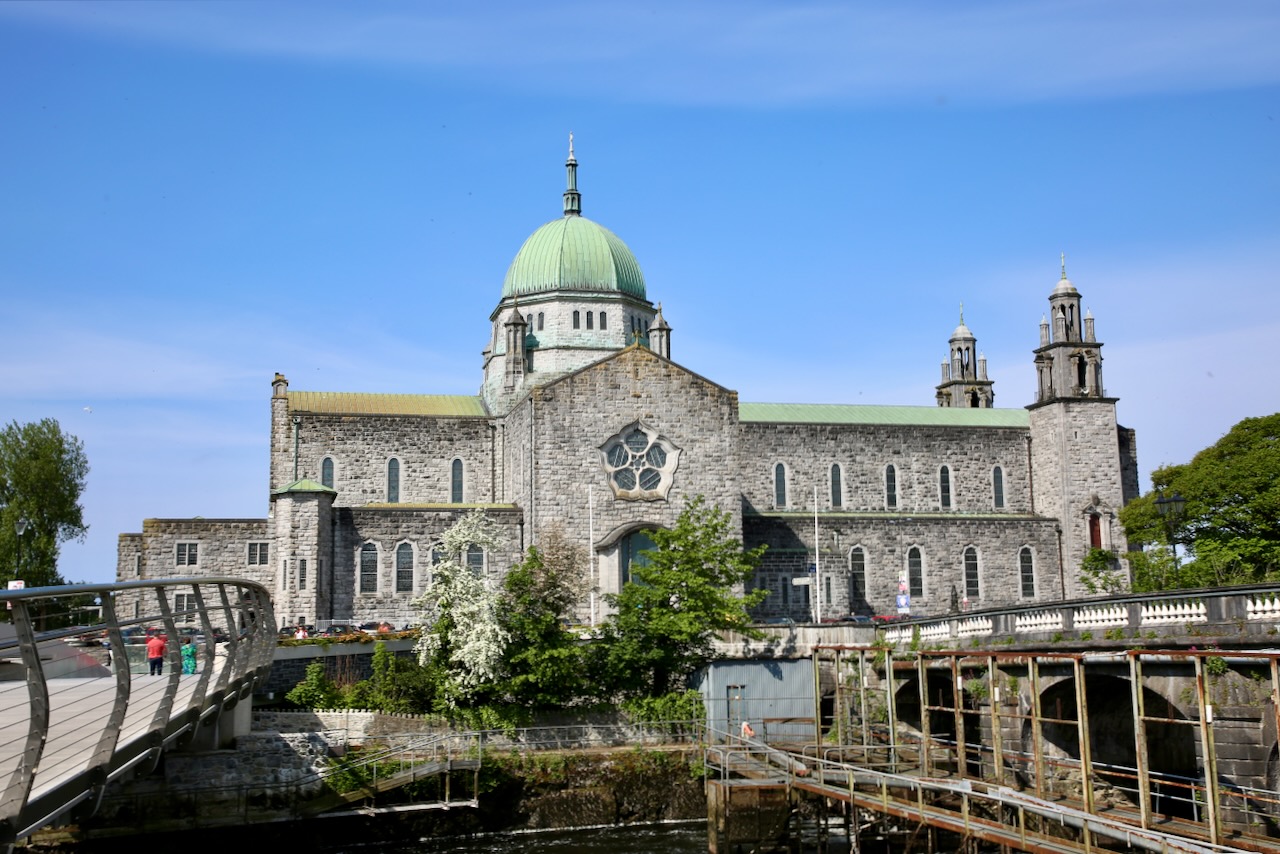
Diocese of G & K and Galway Cathedral

There’s a sign depicting many of the birds that can be found here. It lets us know that while the Limerick to Killaloe Navigation System, work which started in 1757, was in operation there were barges carrying potatoes, corn, slates, and turf. There’s a Heritage Garden with a restored Old Mill Wall in the rear, the only remains of a five-story corn mill that was built in the 1830s. This mill employed about one hundred men but the famine of the 40s led indirectly to its closure.

River Corrib

What surprised me was finding out that we were at Trailhead 24 of the 44 national waymarked trails in Ireland, the shortest being 6 miles and the longest being 625 miles in length. I was excited about the idea of all these connecting loop walks, like the LOOP (London Outer Orbital Path) which has 24 sections that span 150 miles, but Ireland stays true to form and leaves its landscape to be explored in scribbles (in design, not in a rush). The Ireland Walking Guide website and blog by Ellie at Tough Soles are great starting points for seeing what the island has to offer on foot.

Spanish Arch

Breakfast will be stopped for in Broadford at The Country Store. There’s something about being in another country and driving until you see a word or picture you recognize that symbolizes food that may not match the window posters but is still served with a smile. We would’ve stopped sooner but the first cup sign we passed wasn’t open yet. I find us a parking spot up the street and walk past a stone barn with two horses poking their heads out. The other buildings look in a state of weather-worn and facade-fixing. Inside, we find a mini-mart with fresh baked goods on display and a cafe with dining al fresco.

We take our cinnamon-topped coffees and our jam and custard doughnuts (the six-inch ones with no sugar coat) and whatever meat shoved in some bread that Caleb asked for, on the road. Regardless of the route we chose, we would spend at least 15 km of travel on the M18 (unless we did backroads only) so we decided to drive 65 km on it instead. This option skips opportunities that only these smaller lanes can provide, which in Ireland is plenty, but the highway will get us to Galway before a late lunch. I locate a spot to leave the car, about halfway between the docks and the cathedral.

the docks

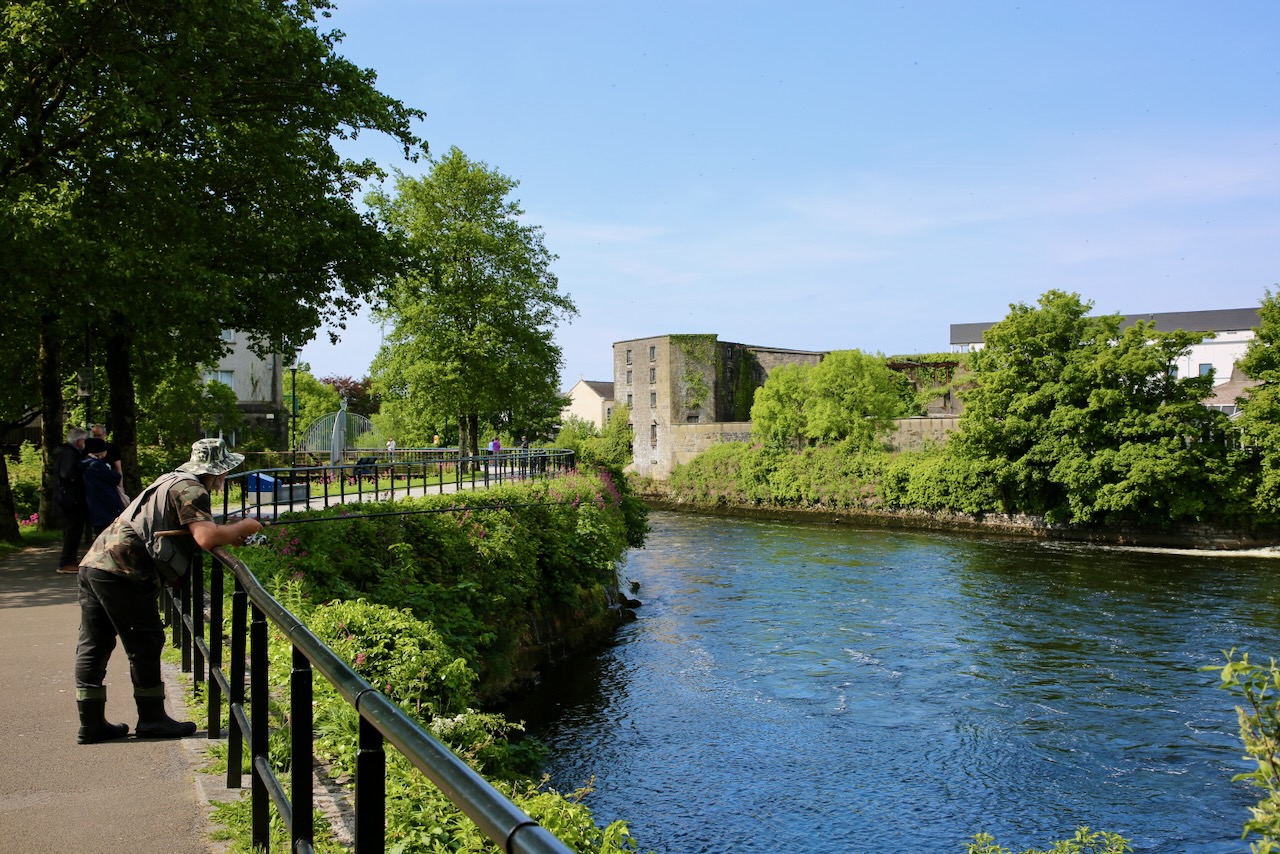
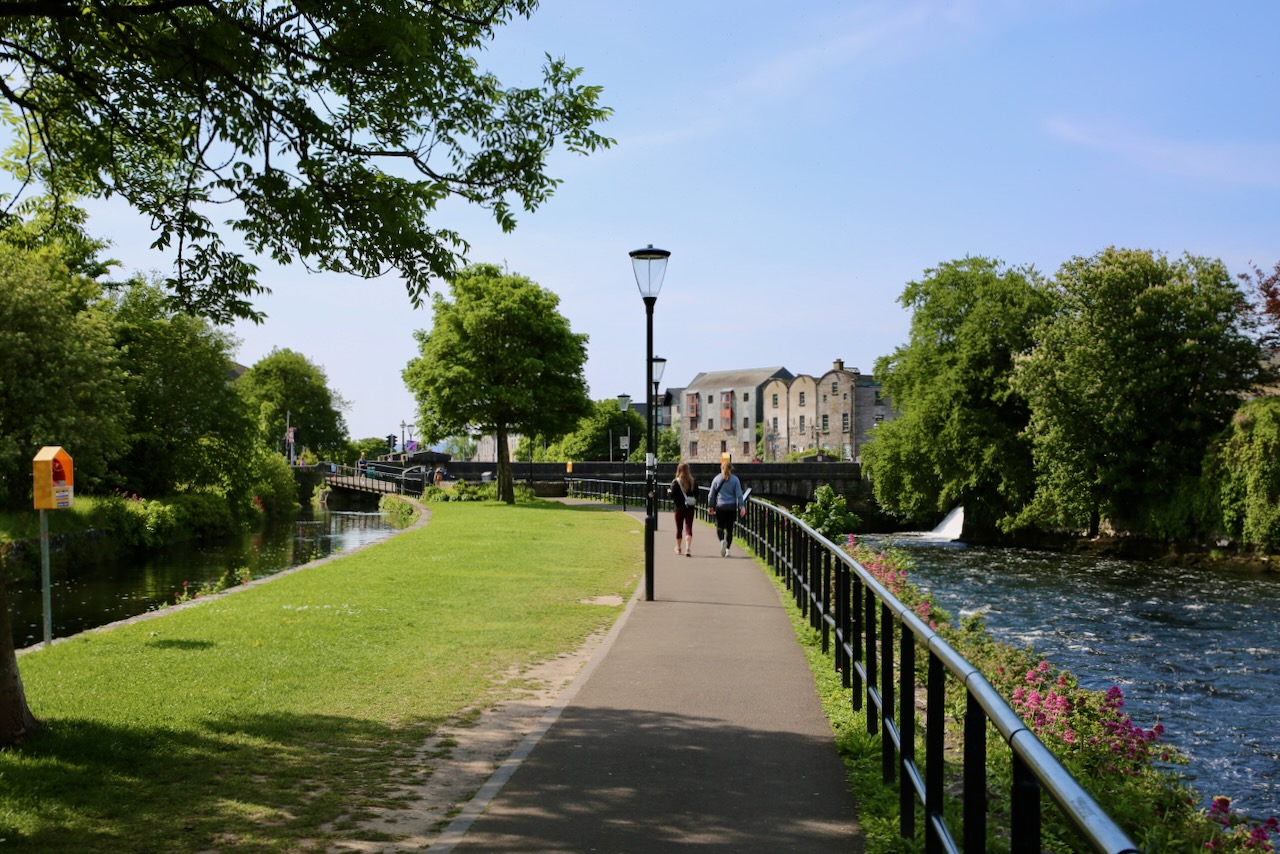
We’ll walk towards the latter via the Riverside Soundwalk; a walk that focuses on listening to the environment and a term first used in the 70s in Vancouver. I hear the patter of feet, the chatter of passersby, and the spatter of water from River Corrib. The Friar’s river canal is calmer beside and offers a lounging atmosphere away from the fishing poles cast into the river hoping to pull up salmon on their way to Ireland’s second largest lake.

I see a Gaelic inscription, meaning bank of the river, next to O’Brien’s Bridge, this one named in honor of William Smith O’Brien. The original Old West Bridge was built in 1342 and taken down in 1852 after the Salmon Weir Bridge was finished in 1819. Strong walls were built on either side of the river and the new bridge was constructed and named in 1889. The Salmon Weir bridge that we cross today was opened in 2022. Instead of transferring prisoners from jail (which shut in 1902) to the courthouse, this path is now used for those attending church or those tourists curious to see the inside of the cathedral available to the public since 1965.

Galway Cathedral

We are one of those sightseers who want to look around the largest great stone cathedral built in Europe. I’m not one to interrupt a service unless pressing my camera to the window to get rid of glare and casting a shadow near the man leaning inside counts. We make a note to return and walk south. Back along the river, we learn about the traps, and weirs, that were in place from the 1800s until the late 1990s when they were closed for conservation reasons. This allows all salmon the opportunity to breed, not just those lucky enough to pass through the King or Queen’s six-meter gap.

The Persse Distillery provided whiskey and for many years water power. The Joyce family opened it in 1815 and the Persse family bought it in 1840 and ran it until 1911. This whiskey was served to King Edward VII and Queen Alexandra, who were married for 47 years (a record by any time standard) and in 2014 a 100-year-old bottle sold for £ 3,300. The longest marriage, as accepted by Guinness World Records is almost 89 years (minus 16 days), the oldest married couple were 110 and 105 years old, and the oldest couple to get married were 91 and 103.

One of the most famous members of the Persse family, known as Lady Gregory, went on to co-found a theatre that would become the world-famous Abbey Theatre in Dublin. A rebuilt grain mill has been turned into the Galway Suites, a two-bedroom condo that currently goes for $287/night with a three night minimum. I put this here as a reminder, for when I reread this in a decade, that travel hasn’t gotten cheaper but that I’m still able to find discount or camping options that keep us exploring longer. As we approach the military retirement transition, the idea of van camping becomes more appealing… or sleeping in a hammock after a day on my feet or under the sea.

The Fishery Watchtower Museum was on my list of places to visit in Galway but appears to be temporarily closed with no reopening information. The tower was built in 1853 as a three-story draft netting and river monitoring station until the 1970s. The Civic Trust repaired it in the early 2000s and now it rests until the museum returns or another use is found, such is the deal with buildings in the parts of Europe that I’ve been to.

We reach the Spanish Arch, originally known as Ceann an Bhalla, meaning ‘head of the wall’, completed in 1584. A pictorial map of the 1650s shows four arches of which the former and Blind Arch (because you can’t see through it) survive. The base of the wall was damaged in a 1755 tsunami from an earthquake in Lisbon. This arch remains a reminder of the history of this town as an important medieval seaport.

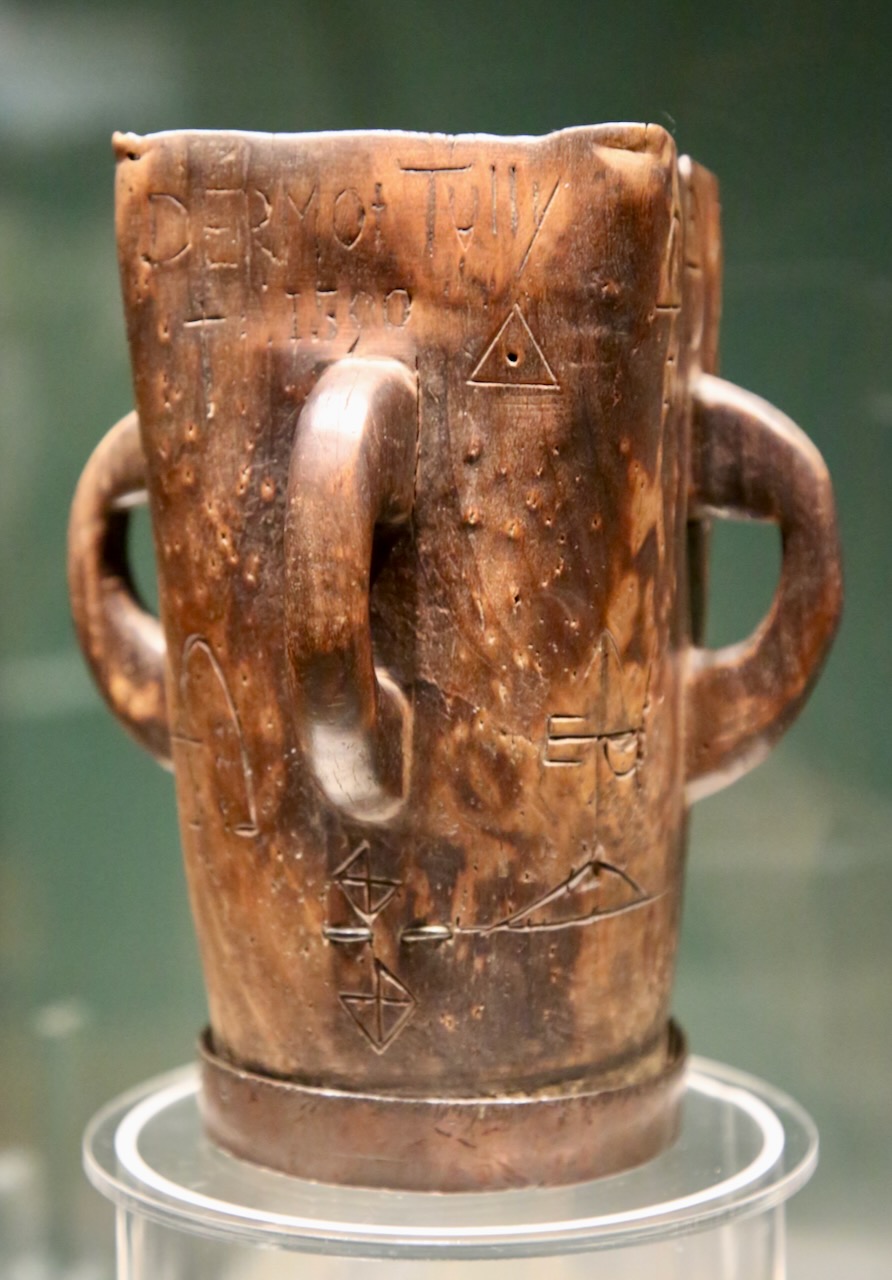
Pádraic Ó Conaire, 1935 and physician’s cup, 1590

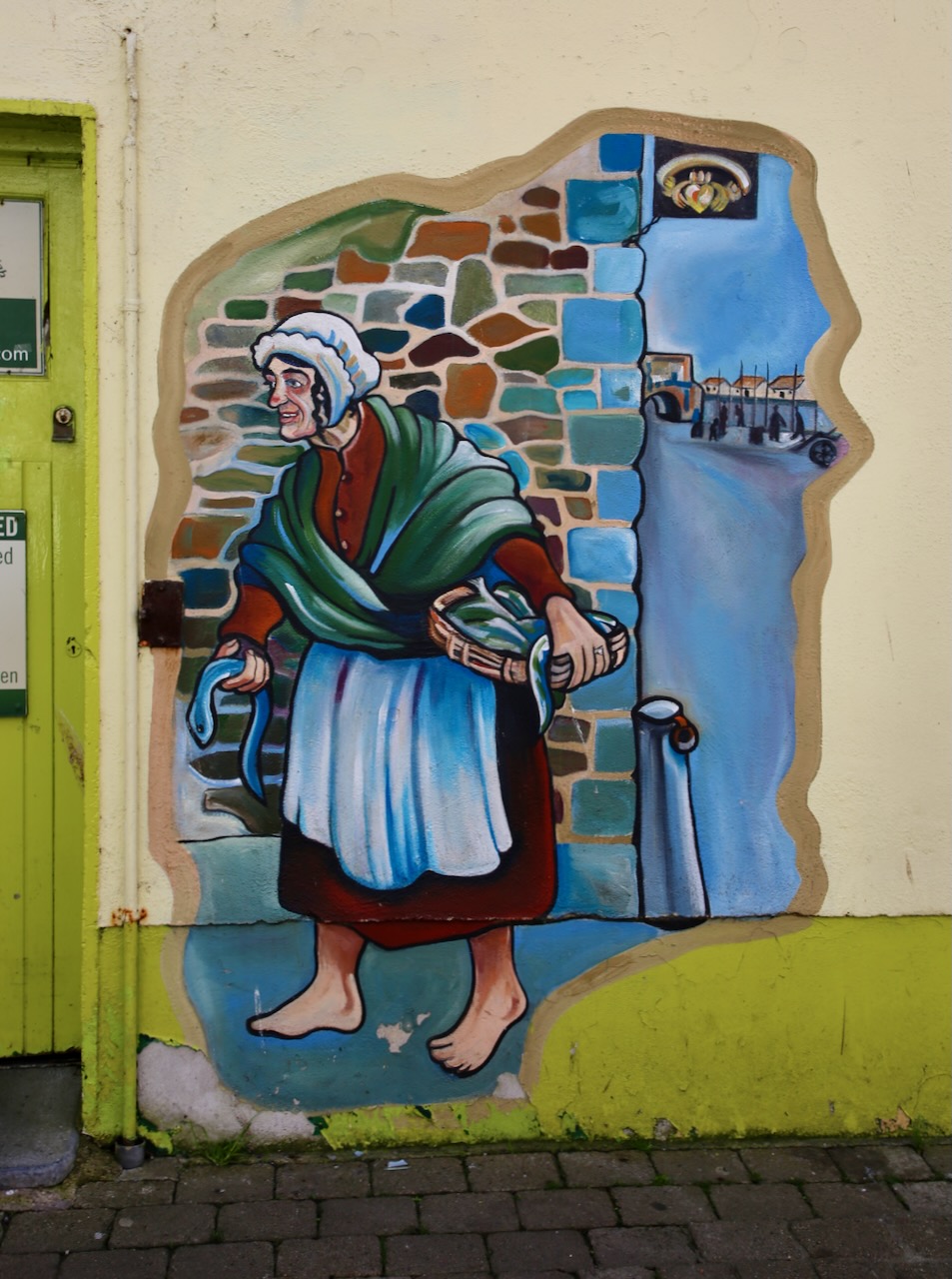
From the Galway City Museum to the docks is named The Long Walk, which is anything but. It’s about 350 meters of houses, boats, and harbor views. We turn down Quay St. which becomes High St., Shop St., and William St., the names changing where the streets meet with Buttermilk Ln. and others as we make our way to Eyre Square. We passed a mural for the Baboró International Arts Festival for Children in Galway. There are pennants of orange, white, and green strung between the buildings with many Ireland flags on display too.

There are a variety of musical buskers — a violinist, multiple guitarists, a drummer, and an accordion player. A baby staring down a shop and a man with his bicycle is inflating balloons. There’s a sign to the Famine Walk with a 15-minute audio available at walk15.org. This one is a reenactment involving a six-year-old girl who wants to become a snail to escape her predicament. Near the north end of the square is the Browne Doorway which was part of a house built in 1627 and moved here in 1905 as witness to the great houses built when Galway was wealthy.

Always one to notice a donut shop, I see a pink one that catches my eye. The intersection of the two industries eludes me because I’m not the 16-24-year-old demographic of the fast-fashion retailer nor the 6-12-year-old that wants a sprinkly donut. I am however just the person to think that what the purple bits of frosting and unicorn horn symbolize should be on an adult cake. Kids are naive to these references (or they were when I was young and without the internet), so the sweet treat maintains its innocence for another day.

Located on Churchyard St. is the Historic Street Market that’s been around since 1484. I’m sure there were fewer windchimes, necklaces, and freshly caught fairies on offer then. We are in luck when we return to the cathedral, probably had hours posted, as the door is metaphorically open. Inside is a small mosaic memorial to JFK who visited Galway in 1963. It’s him in prayer and on the other side of Jesus rising on Easter is either Pope Paul, the first who visited in 1979, or Patrick Pollen who created the tiled face artwork.

I stare up at the organ and the stained glass windows, the stone arches and curved wooden ceilings, and the tiled floor and beautiful doors. I imagine the pews packed with posteriors as they rise to elevate their voices and fill the church with song. Standing on the bridge, we turn back to listen to the bells that seem to play “Amazing Grace” or an extended version of a Bible quote. With half the day’s walking done, I’m looking for a place to rest. We decided to visit the Galway City Museum with a motley band, consisting mostly of baritones, performing outside.

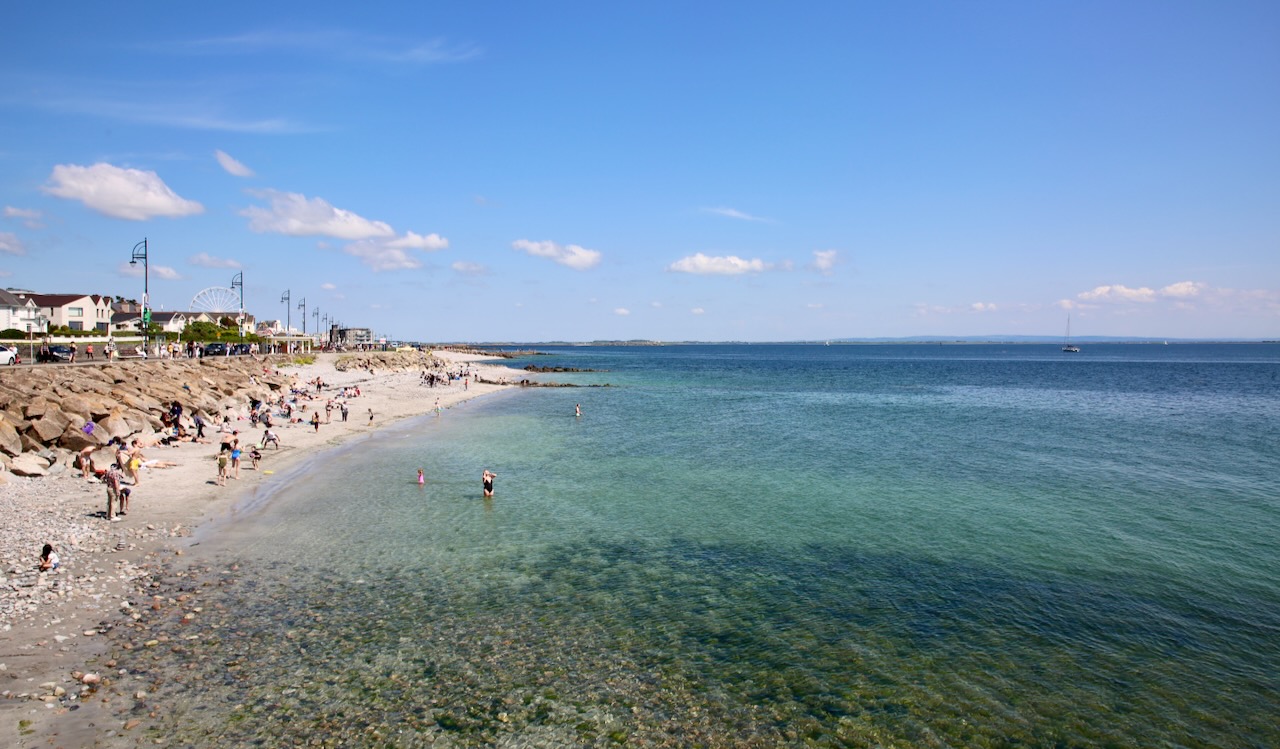
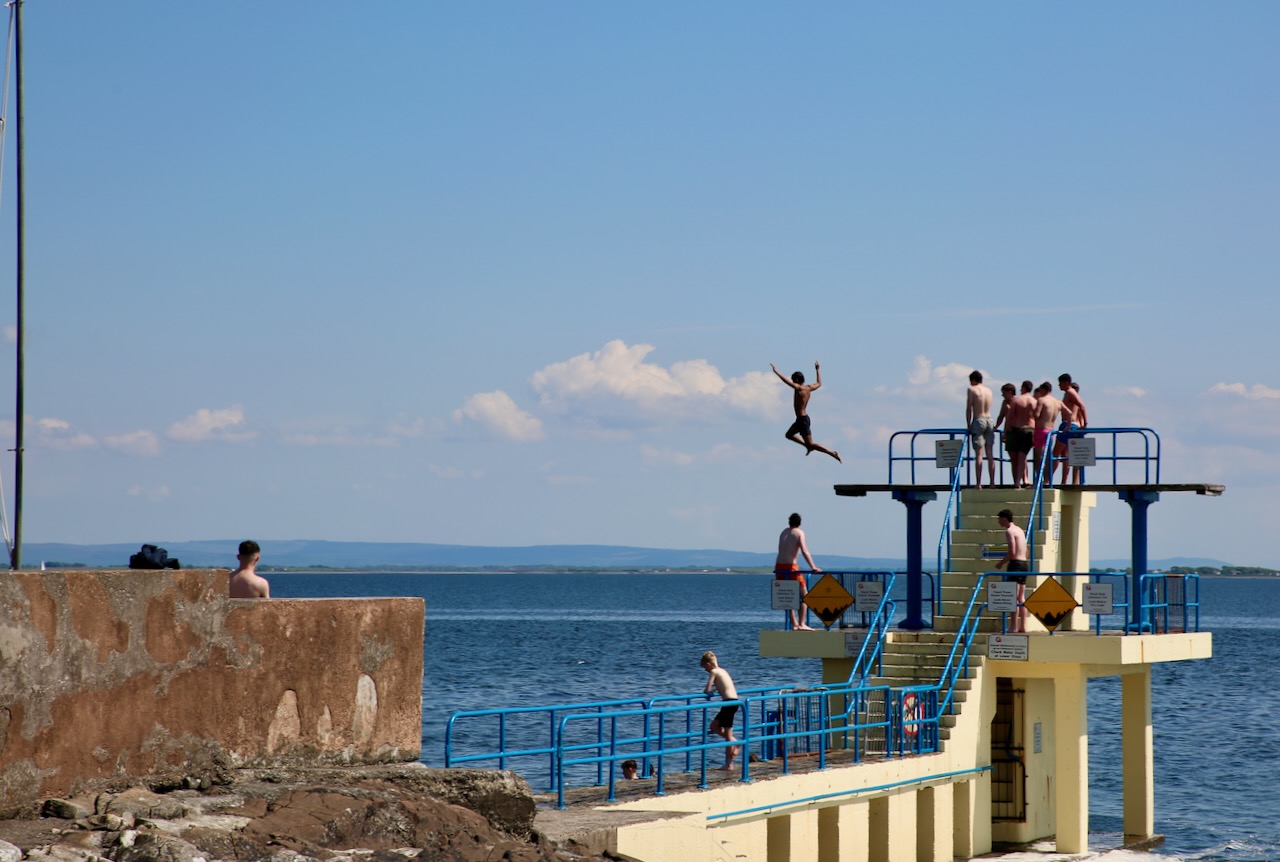
Blackrock Beach

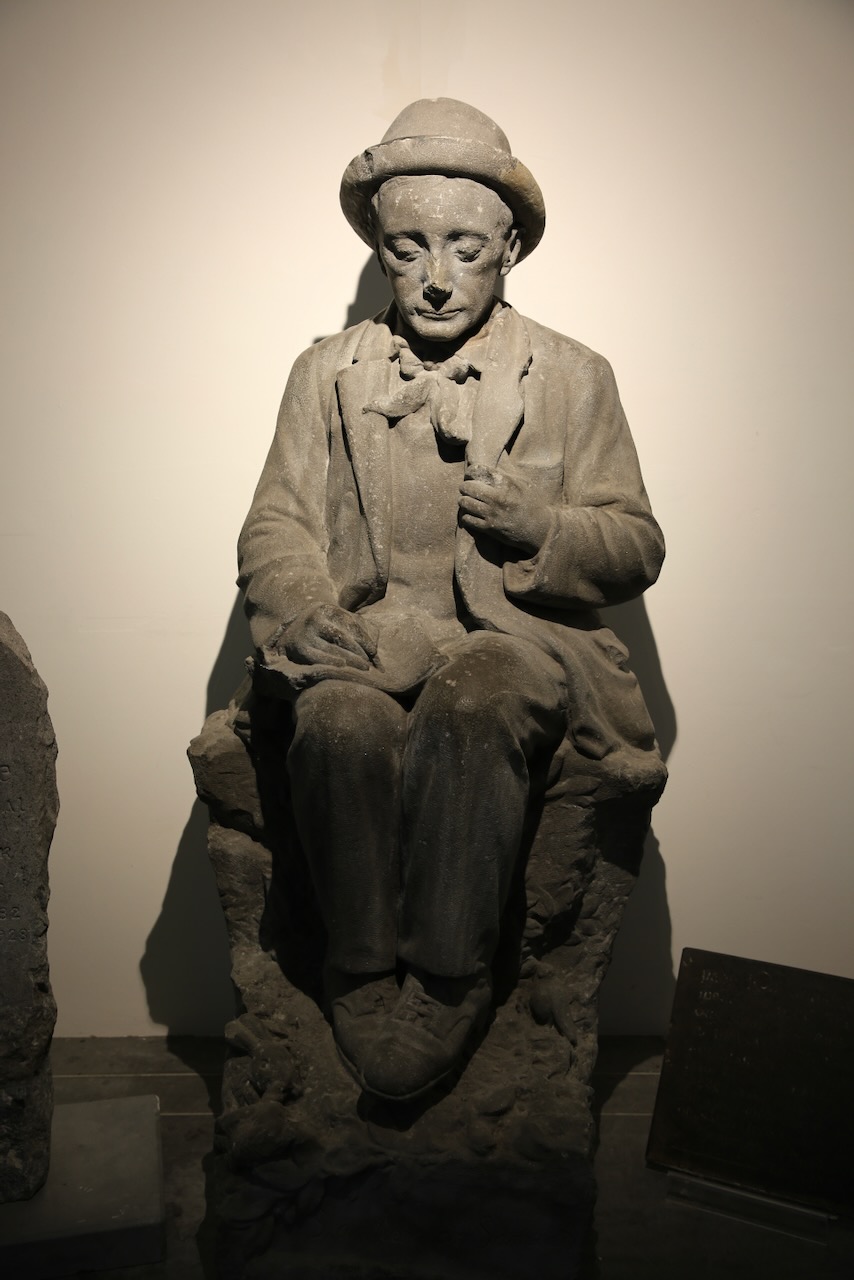
I take respite on a bench across from a statue of Pádraic Ó Conaire; grateful for the momentary relief on my weary body, tired from fighting illness and the urge to sleep through a vacation, which is not an option. The limestone statue was revealed in Eyre Square in 1935 where it lived for 70 years before being moved inside for safety. A bronze replica replaced its spot in the square in 2017. Pádraic is the author of 26 books, 473 stories, 237 essays, and 6 plays. The other two exhibits on this side of the lobby concern the history of the Aran Islands and a bit on the Irish Traveller.

This peripatetic group, nomads who offer crafts or trade to settled peoples, also exist as Carnies, Romani people, and Gutter Punks in North America. There are over 200 groups of hunter-gatherers, who follow the seasons, and pastoralists, who move their herds, spread over six continents in less industrialized regions. All the descriptions are in Gaelic and English, which besides providing accessibility offers a chance at learning a new language or at least something new about it. Once done exploring downstairs, I slowly climb to the next floor, past the Galway Hooker, a boat built for fishing in the strong seas of Ireland’s west coast.

Upstairs, the exhibit shows how the land was used to grow timber, wool, meat, milk, and barley so the locals could have food and entertain themselves after working hours and church events. There’s a worldwide display about voting and when women were given a voice (1922 in Ireland) and which countries still don’t hold elections (China, Saudi Arabia, and Eritrea). Some countries still discriminate against voters based on sex, status, and skin color but there’s a saying about throwing stones for all that.

There’s a Royal typewriter (no older than 1906) using Cló Gaelach font keys, the same used in the first book printed in Ireland in 1571. These heavy (roughly 17 lbs) machines came into popular use in 1873, mostly made in America, so it was difficult to get Irish-lettered keys. Locals were hesitant to see the font phased out for Roman type. While other writers were worried about the effect a ‘book-writing piano-like contraption’ would have on the legibility and necessity of handwritten letters. For those, like me, born in the transition of the computer age, we were still writing letters to our grandparents, best friends, artistic cousins, inmates, and to my mom from bootcamp in 2004.

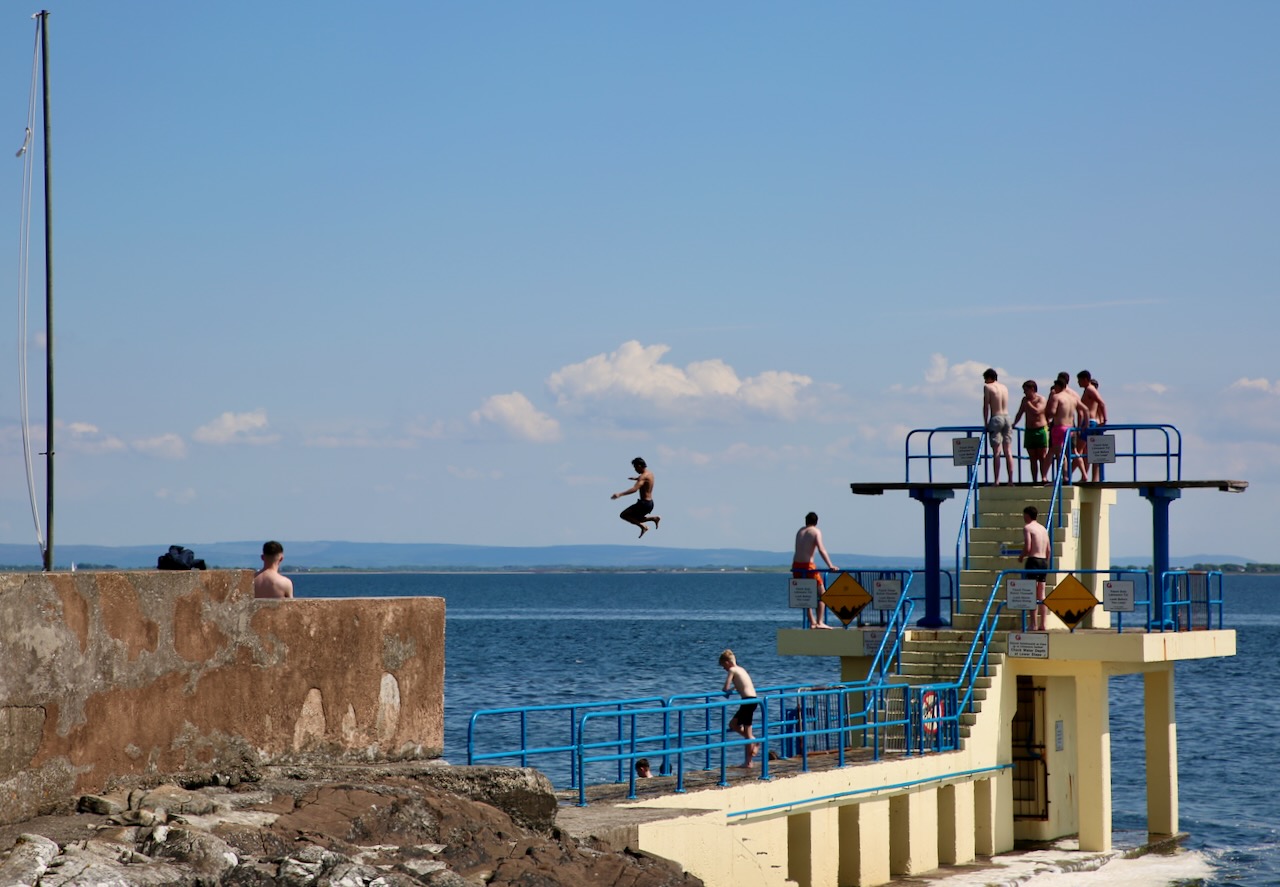
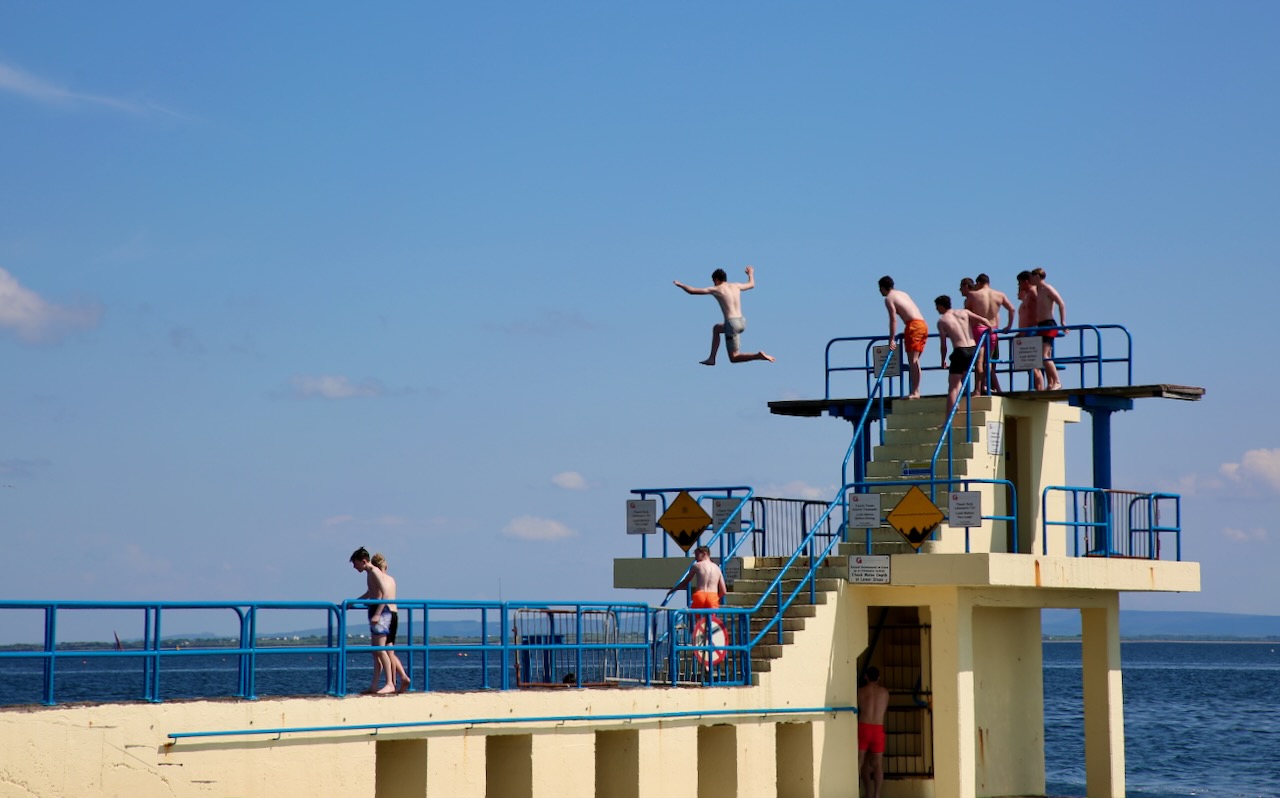
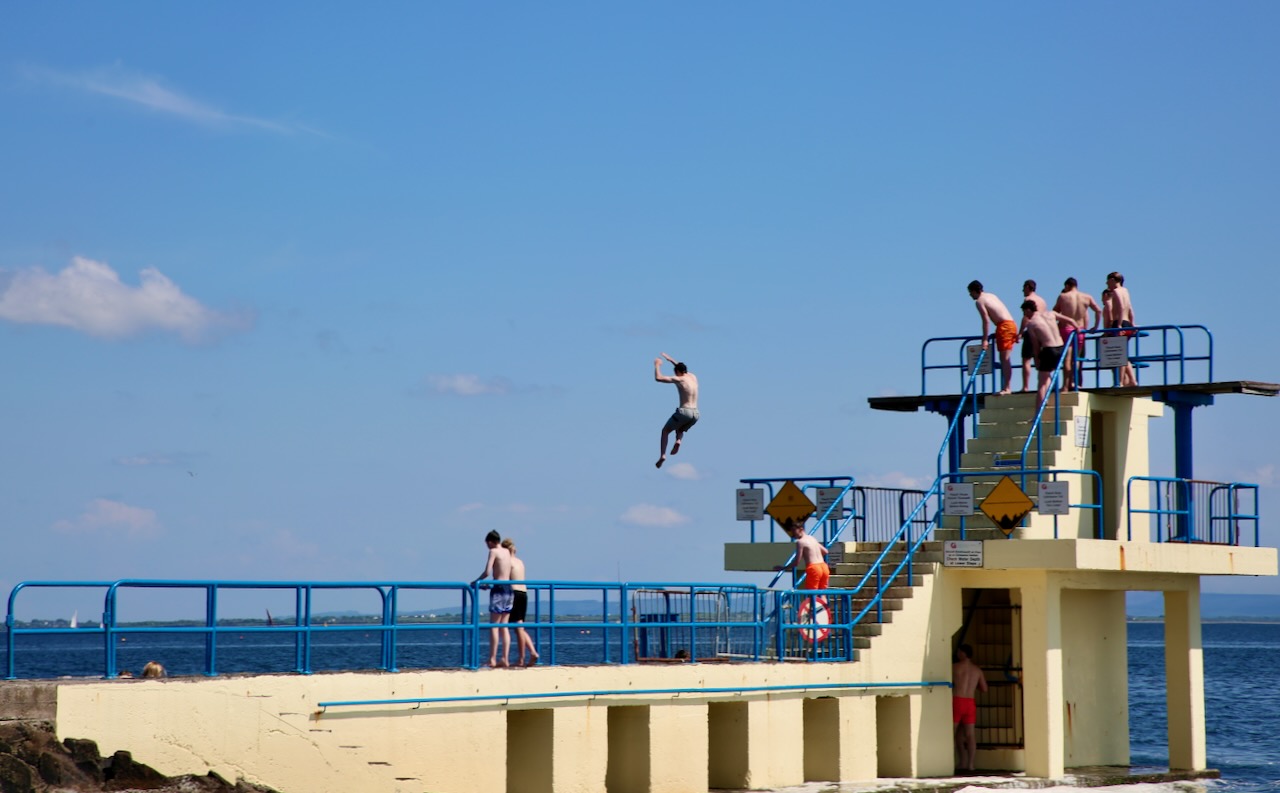
I could write another post about all that history, but let’s return to Ireland. After an educational time at the museum, this one earning the award for most sitting done by me, we were ready to get back outside and let the sun reawaken our energy reserves. Traffic between the beaches was at a standstill to the left of the roundabout so I took the only other direction, almost doubling back, and found parking up a road. We decided to trek towards Salthill Promenade and the Blackrock Diving Board was on my list of places to see. It’s a beautiful beach and what stands out are the stairs for those who like to read, eat, chat, and people-watch by the sand without getting any on them.

The diving seems reserved for a high school swim team which the city council would agree with. I notice little shells laid out by color or design on larger stones before walking along the Coastal Soundwalk on the paved path between rocks and grass – a consistent Irish theme. The walk to something is always met with excitement and the return trip can be just as exhilarating but also exhausting while we wonder just how far from the water we had to leave the car. Upon return, I notice the empty liquid replenishment bottles piling up and we stop at a Tesco to exchange them for €2.60 by recycling.

Parents will leave their kids, with multiple bags, to handle this task while the adult handles the shopping. It’s a great idea. A company, Revolution Laundry, also wanted in on the multitasking opportunity, so they now offer machines and soap for 18 kg of clothes to be washed and dried in 45 minutes for €14.50 or 8 kg for €9. There are more than 500 of them installed throughout Ireland next to supermarkets and petrol stations available 24/7 making clean clothes more accessible. I thought they might be focused on travelers but most laundry services are a drop-off and pick-up service with limited hours and these are great for large items and multi-membered families.

We drive northeast to the other side of town and use the lockbox to let ourselves in and upstairs. There is a shared bathroom, with plenty of hot water, toiletries, sunlight, and no evidence of another guest. There are books, games, and tea. Once we’ve performed our humors-releasing rituals, with our 8-12 pints intact, and feeling 50%, we are ready to go on the prowl for some pre-killed prey. The Trappers Inn & Jackson’s Restaurant is nearby and is serving food at this hour.

There’s a spot at the bar for us to cozy in and admire the glass, copper, and wood while watching customers who take their Guinness outside. I get a slab of salmon served atop rounded mounds of mashed potatoes and covered in an orange sauce. Caleb has smaller potatoes that are cut in half and seasoned and gives me one to try. Back in the room, I notice travel plans to Ireland from over two years ago — a screenshot that includes Wild Nephin National Park and goes counter-clockwise instead. I dream of going everywhere and seeing everything so that if I ever get the chance to go somewhere and see something, I’ll be sure to forget my itinerary at home and bring my list of suggestions.

Posted in Animals, Art, Food, History, Marriage, Music, People, Travel, Water | Tagged , , , , , , , , , | Leave a comment

In the Spring of Hibernia

Mountain View B&B

Hibernia is the Classical Latin (one of its three varieties) name for Ireland which means autumn. The name is said to have originated in the Greek’s description of Ireland as the ‘island of winter’ (Iouernia) and the Romans’s interpretation of the Latin word hibernus, meaning wintry. This history dates back to the double digits of AD. The name appeared on a farthing from 1744 and continues via a Scottish football club founded in 1875, four ships and one shore establishment from 1763 to 2010, and a chamber orchestra founded in 1981.

Ireland maintains its gusty personality ranking in the top countries for wind power to generate electricity, having supplied one-third of its energy in 2022. On December 6, 2023, wind helped the island reach 70% of its electricity demands for the day. Ireland is able to provide 37% of electricity via wind power, making it fourth on the list with Denmark in the lead at 57%, but if you look at power generated then the top three countries are China, the US, and Germany.

Shannon Ferry

Following the quote of Benjamin Franklin, “Early to bed, early to rise…” and getting at least eight hours of sleep makes for a couple who is “…healthy, wealthy, and wise” (at least formerly) and ready to seize the day. Listening to the advice of our night’s landlord, we leave hours before the promise of breakfast to catch the second ferry, Tarbert to Killimer, leaving on the half hour. A twenty-minute ride will cost us €23 ($25). The reason for the rush is so we can get to and enjoy part of the Cliffs of Moher before the tour buses arrive.

We looked at the map and the route suggested did have the least distance, only 125 km, so we skipped driving through Limerick and whatever we would’ve seen between as my itinerary had us stopping to walk along a canal, Lough Derg Way Clonlara, before heading north. On the other side of the Shannon Estuary, we are greeted with a few road signs and then quickly are into the lush countryside with a steep drop, a 20% decline, before coming out towards houses and coastline that we will follow to the Cliffs. Parking is across the street for cars but the coach buses have been afforded the large lot across from the visitor center.

Cliffs of Moher

These cliffs along with Burren National Park are a UNESCO Global Geopark; they are being preserved for their geological significance to protect the resources, educate the masses, and sustain development with the local communities. There are currently 213 such parks in 48 countries, the US is not one of them but has plans to add Appalachian (3 counties in West Virginia), Gold Belt (131-mile byway in Colorado), and Keweenaw (65-mile peninsula in Michigan) to the list. We pay our $26 (12 euro each) and proceed to their exhibits which seem placed in an underground space bunker. A screen tells us it’s 53° F with a wind speed of 8.5 mph and the barometric pressure is 1021 mb (millibars).

The barometric pressure is the weight of air surrounding us and a millibar is the force it takes to move an object weighing a gram, one centimeter, in one second. Perhaps this information will inspire the scientists and weather analysts of the future, but I’m more impressed with its effect on me. The visitor count was up to 100,000 in 1978 and 1.6 million in 2019 (150k more visitors at half the price of Blarney Castle). There’s some history about J.P. Holland, the designer of the world’s first successful submarine in May 1881 (he was born in Clare County in 1841). Today, it sits in a museum in New Jersey where Holland died in 1914.

Of course, the first thing I think about is the tide pod of a sub built by billionaires that lasted 105 minutes into its mission in 2023. Thankfully, the implosion took less than a second, too fast for them to see it coming. I’m all about advancing our species and others but some things shouldn’t be rushed and I know this isn’t the first group to let their curiosity and excitement get the better of them.. or all of them in a moment. Though I’m sure these guys span the gamut of exploration and destruction (spying and protection) that these machines were created for.

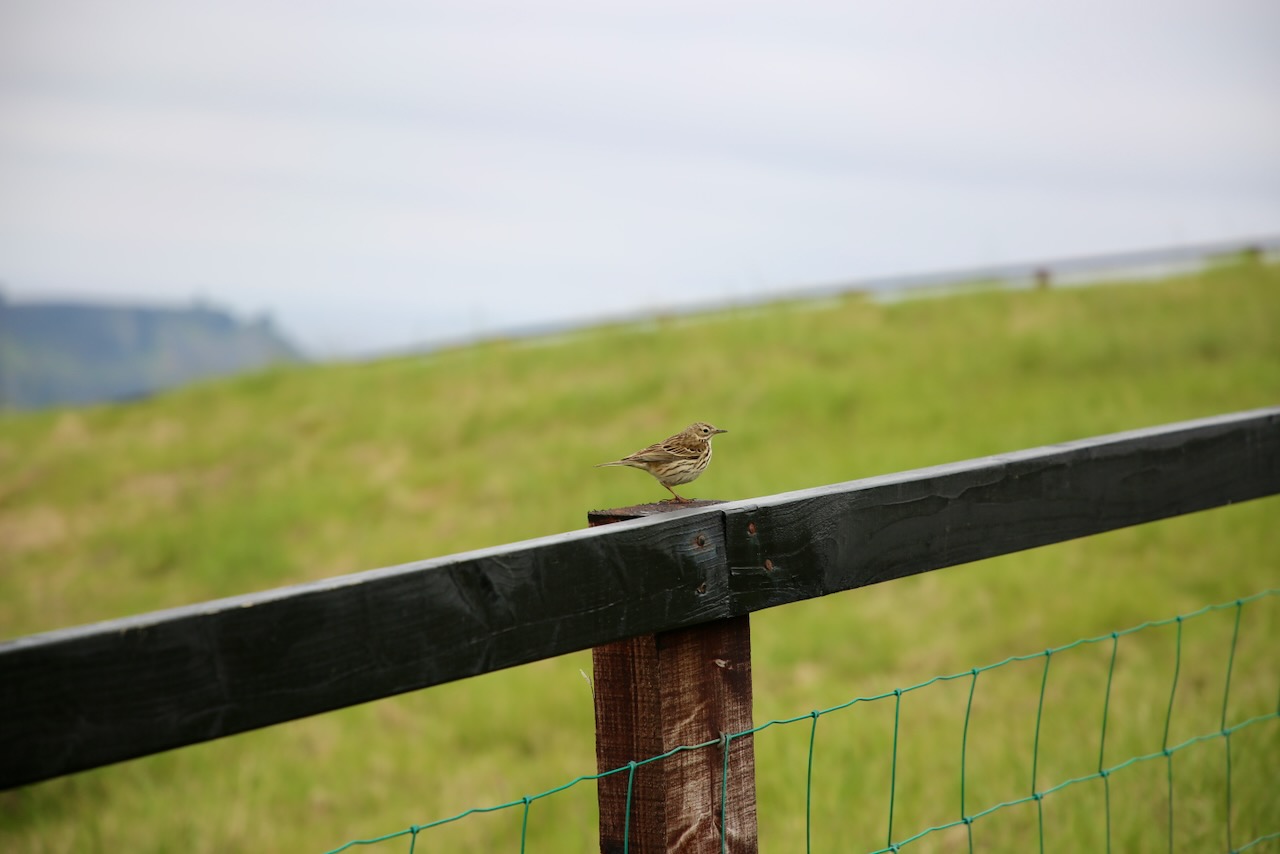
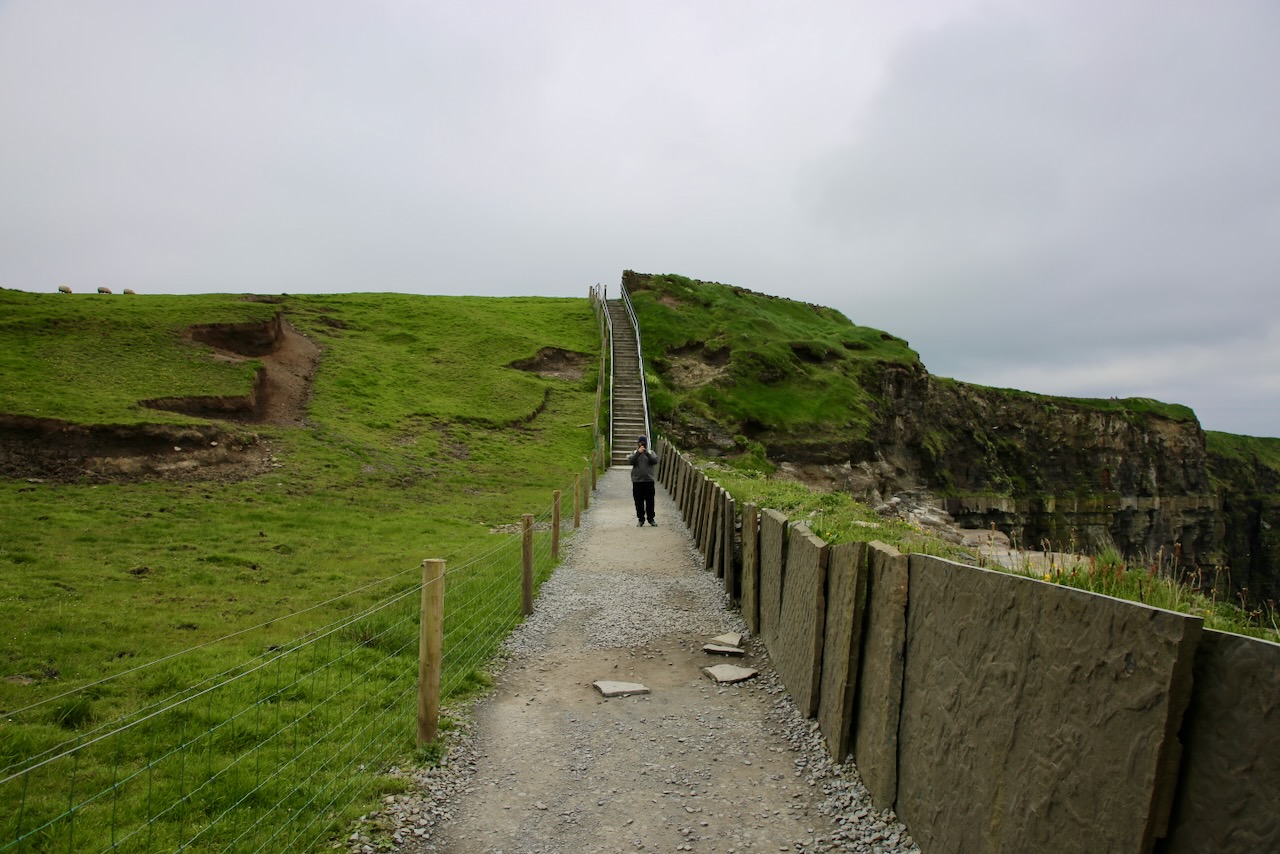
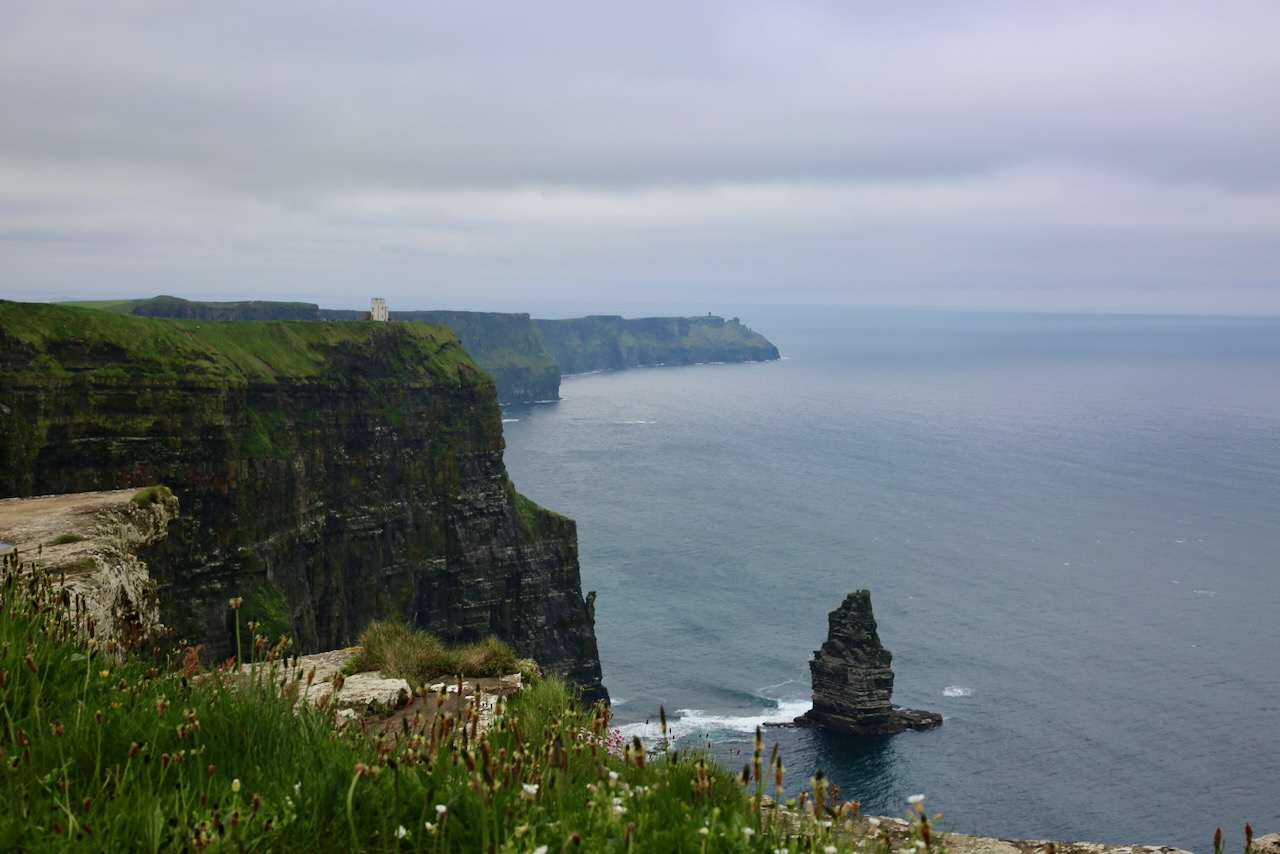
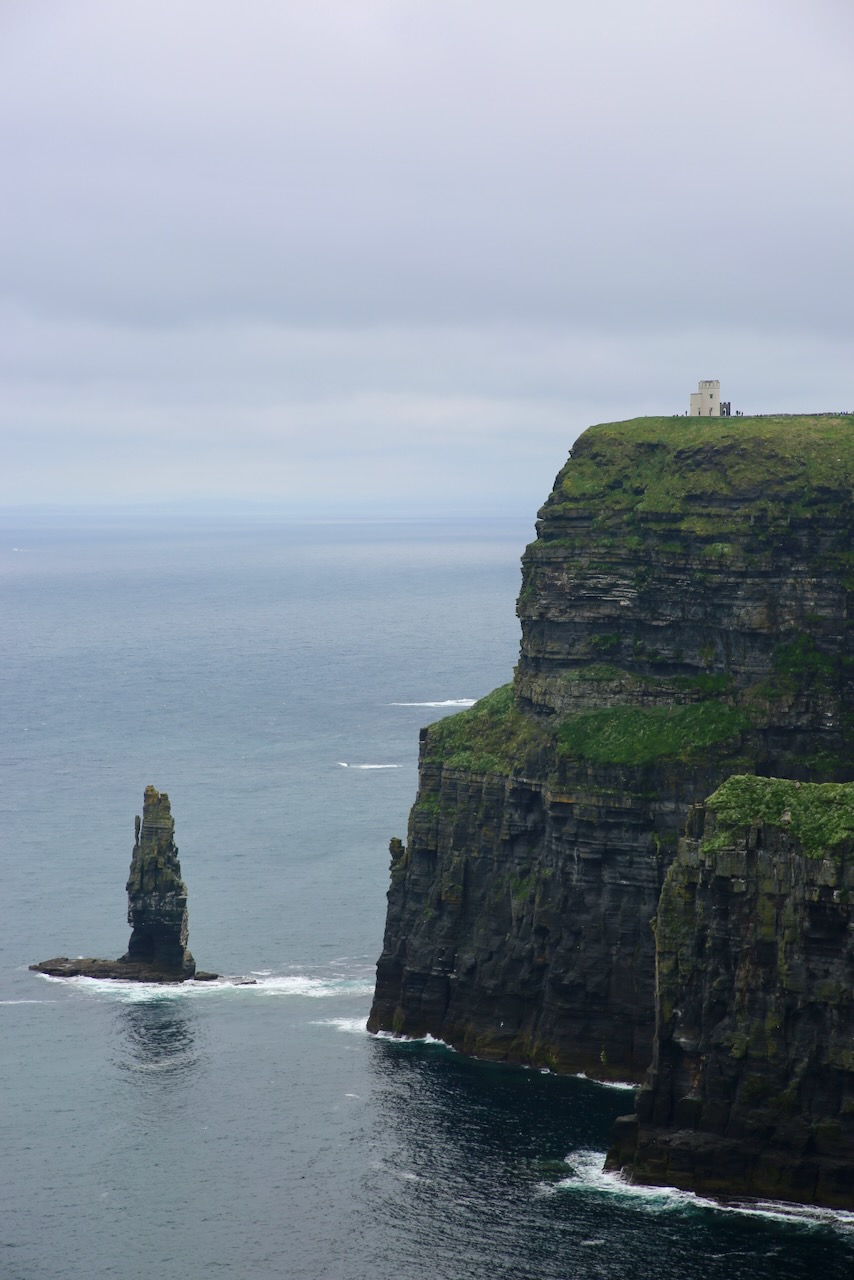
We make our way towards the windy edge while being watched by a meadow pipit, a small bird with a decreasing population. We walk to O’Brien’s Tower, built in 1835 as an observation point to see the Aran Islands and the Twelve Bens (mountain range) of Connemara across Galway Bay, on a clear day. No luck seeing much to the northwest and no tea on offer in the tower, so we take advantage of the momentary wind block before continuing. We notice buses starting to park and will count twenty by 11 am. This means an influx of some 680 to 1,120 visitors within a couple of hours.

O’Brien’s Tower

We pass by a Jacob sheep, which on average can weigh up to 160 pounds, but from our perspective, its fluffy wool makes it look the same size as the brown cows behind it. There are Suffolk sheep on the hill to the northeast with a variety of cows and colors seperated by a wire. From here, we see a spire of rock with waves on one side and a thousand birds on its multitude of shelves. History tells us these cliffs are over 300 million years in the making, something I’m sure scientists half a million years from now can appreciate the gradual or drastic changes that will continue on these rocks.

I have no way to grasp that timeline as I’m in my thirties, but parts of me still feel like young mid-twenties while I wonder what my body will look like when I’m fifty — mole placement, freckle coverage, gray hair pattern, new scars and their stories. Compared to the view, my life is just a blink of an eye. At least this makes me feel closer to trees and turtles with similar lifespans. Humans all have their ideal world, but given the chance, could any of us create something so perfect and balanced; as we are yet to be the ideal people.

Saker falcon

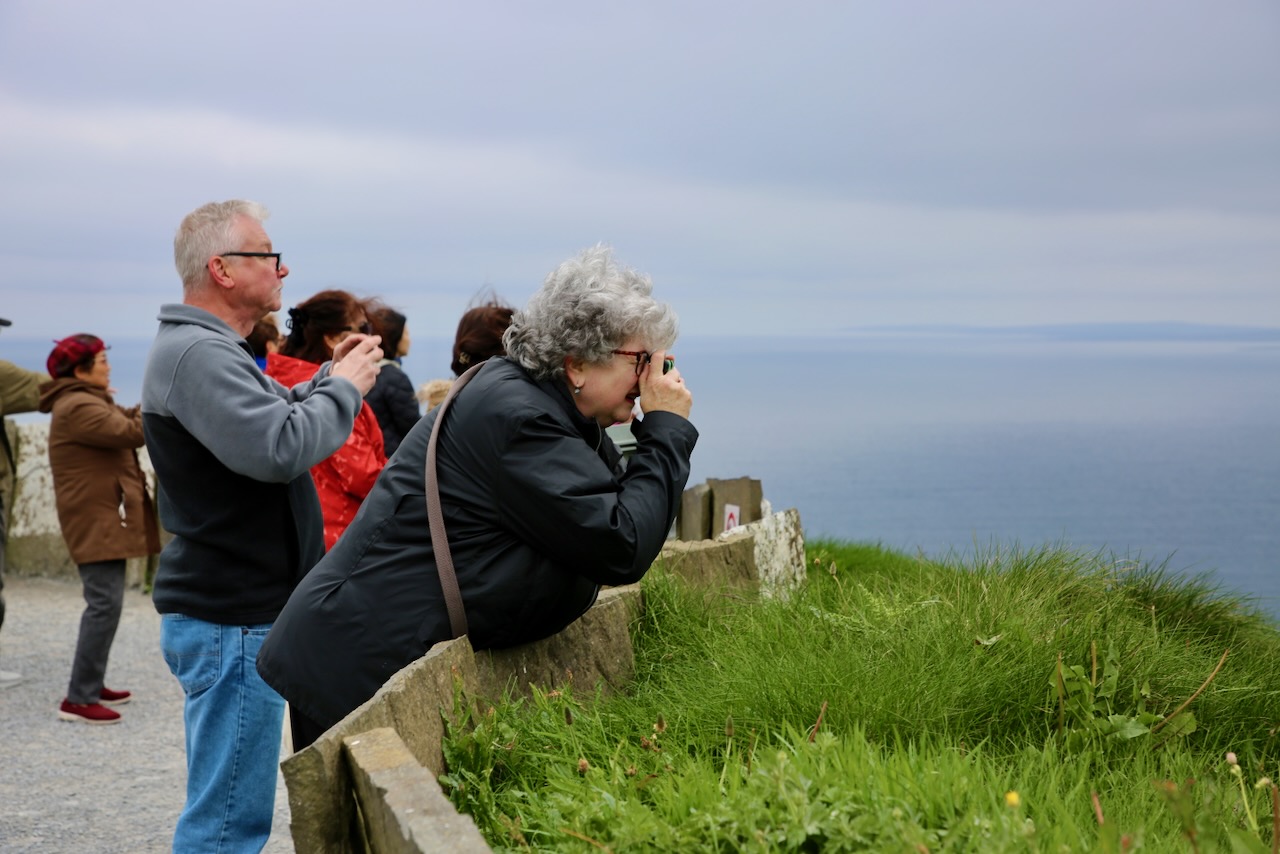
The path continues for some unknown distance as the park boundary is within the 14 km of cliffs, so we are on borrowed property between a protective stone wall and a farmer’s fence to keep his livestock from the fate of former tourists who fell to their death, many in their 20s, and one just two weeks ago, while taking pictures from a range of 390 to 702 feet up from the water. We make our way back towards the tower and pass a mom with a disposable camera in hand, gifted by her daughter who probably didn’t know that the familiar click and winding sound would gain nostalgic attention from a passerby.

I let the woman know she is lucky, and she agreed, to have a set limit of 24 to 27 pictures captured on film that would sum up her trip. What I didn’t say was that it would further feed the relationship with her loving and thoughtful daughter; a compliment that came so easily from my mom. Off towards the southwest of the cliffs, past the suicide helpline posters, is another view of the spire (that better shows its fragility) and the Aran Islands. There are small formations on Goat Island that could almost be mistaken for cairns but only a bird could survive that precipice of wet grass and loose stones.

Aillwee Cave

The path narrows as some people stop so we can pass them though I feel there is room for two on this guarded trail that has been pushed back from the edge. The old trail is still visible in parts and it’s more obvious how someone could be injured permanently. I could have stayed another hour to admire the cliffs, cows, and clearing horizon. The growing crowds decided that I should say hello to a little white wagtail, less than an ounce of mass this bird, when I returned to the car, as Caleb is very much over feeling like a needle in a haystack, just one bearded man in a horde of humans.

Some things I assume will be awesome, like seeing a cave in Ireland, so I figure no further research is necessary. The Aillwee (meaning yellow cliff) Burren Experience sounds like a tourist trap because it offers a guided cave tour, cheese and fudge tastings, a woodland walk, and a Birds of Prey center. The hawks that have been trained put on shows for those who don’t live near parks with these beautiful creatures and don’t have the time to wait and watch them hunt. Seeing them eat has been rare in my experience. I would’ve loved to pet the owls, but we had driven up to the cave first to be told a show had started down the hill and the next one wouldn’t be until an hour after our cave tour.

We find a seat while Trainee Jack teaches us about Harris’s hawk which can be found from the southwest US to central Argentina. This bird’s nickname is ‘wolves of the sky’ due to their hunting in family groups of four to six. These hawks have beautiful dark brown-reddish feathers and feed mainly on medium-sized mammals. We watch the bird fly from glove to rock to bleacher top and then I am one of the lucky few who gets to wear a glove while the hawk rests just a moment before taking flight again. I thought Caleb might’ve taken a picture, but the only one I did captures a couple — the one we saw at Guinness Lake three days ago and the same one we’ll see at a cafe later today (also not planned).

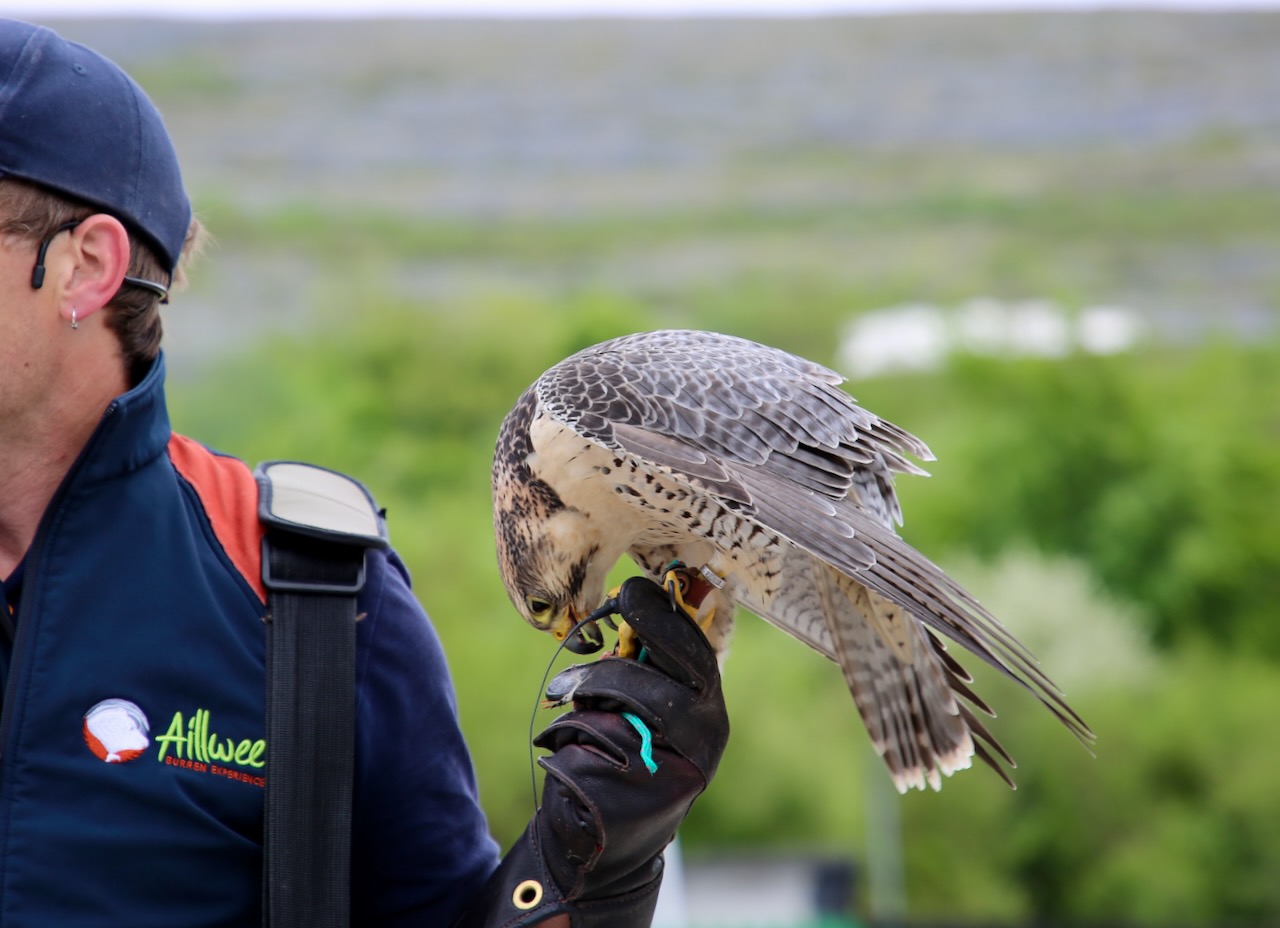
For the next show, we’re told to either keep our seats or leave now before the Saker falcon has its hood removed as it prefers moving prey such as running toddlers and hands shooting up to get a good photo. This two-pound bird with a pattern of brown, sand, and white can be found in Central Europe and east towards Manchuria, China. This falcon is endangered and feeds on smaller rodents and birds than the Harris’s hawk even though they weigh about the same, the former has a larger wingspan. We sit through Gary’s presentation while the falcon poses before performing some tricks. This will earn him a meaty treat that he tears apart while Gary talks.

Sticking around, we talk more (which I always love to do) with Gary and then see the other birds perched in their cages and a crow shows us some of his toys, which earns him treats. Across the parking lot, we witness some cheese wheels in their salt bath before returning up the hill. Aillwee Cave was discovered in 1940 and opened to the public 36 years later. We’re shown the cave map, scale 1:625, and the tour route that we’ll be doing that leaves the other half, parts of it underwater, to the professionals.

Dungaire Castle

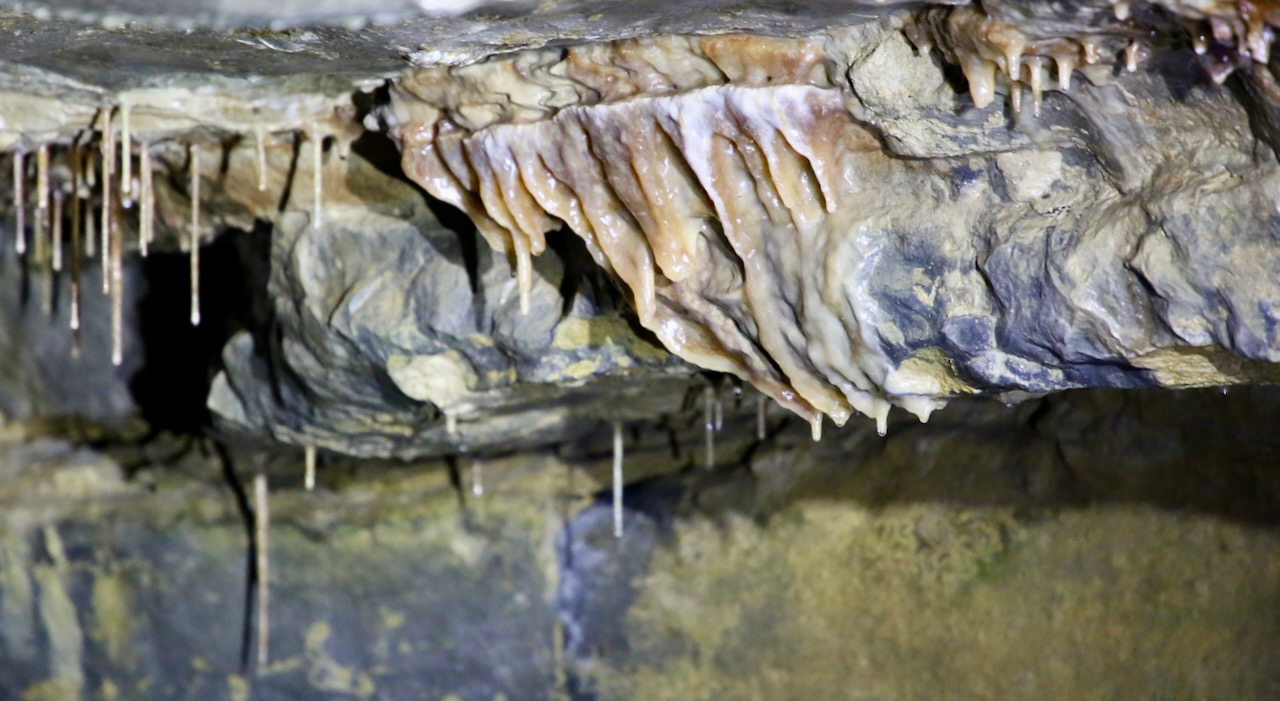
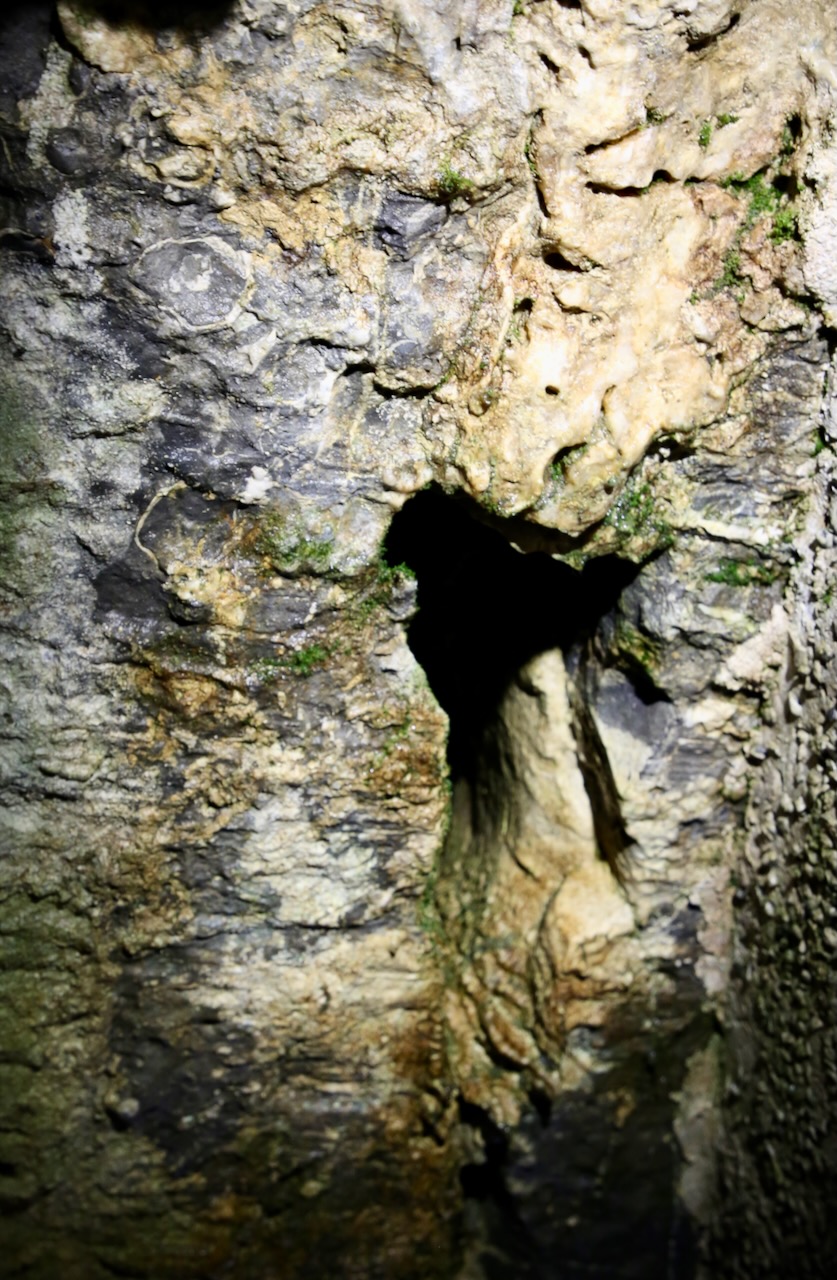
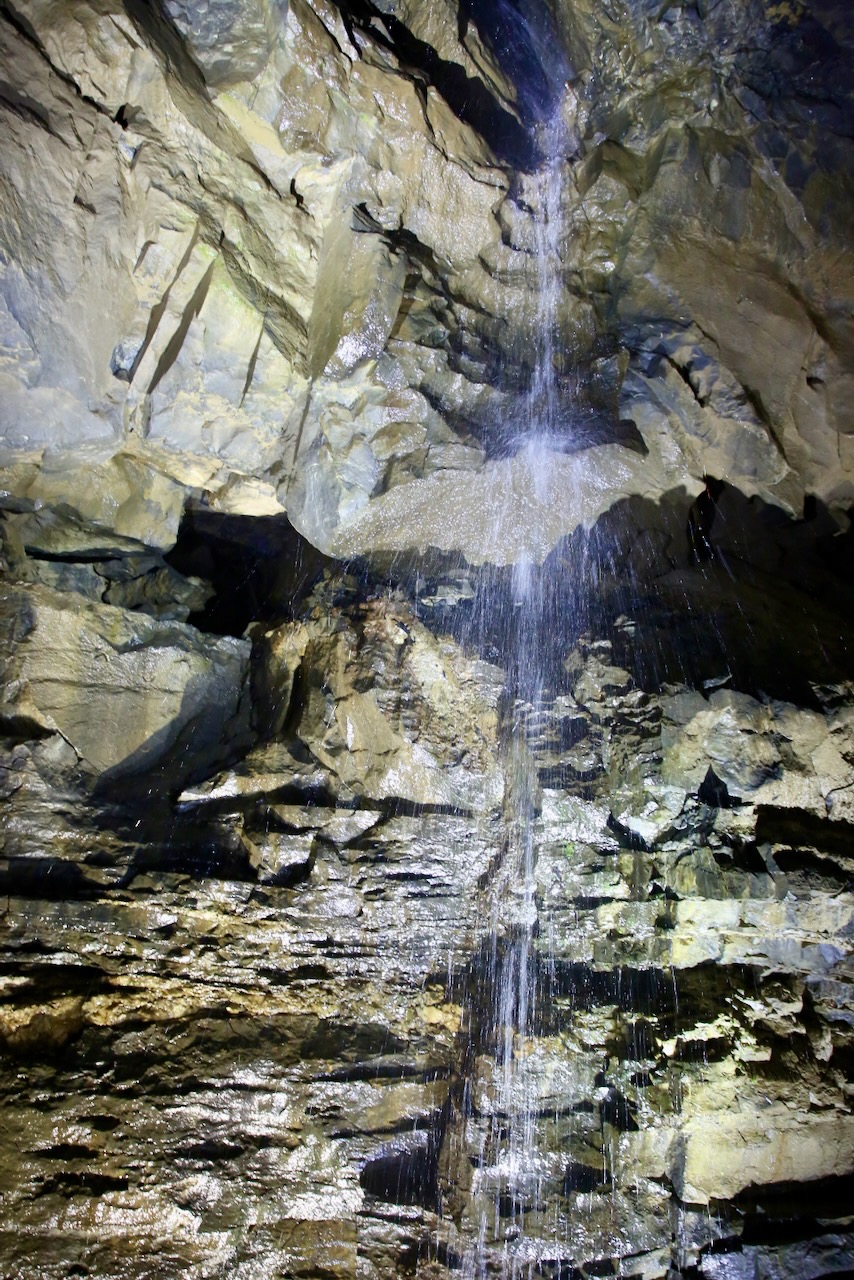
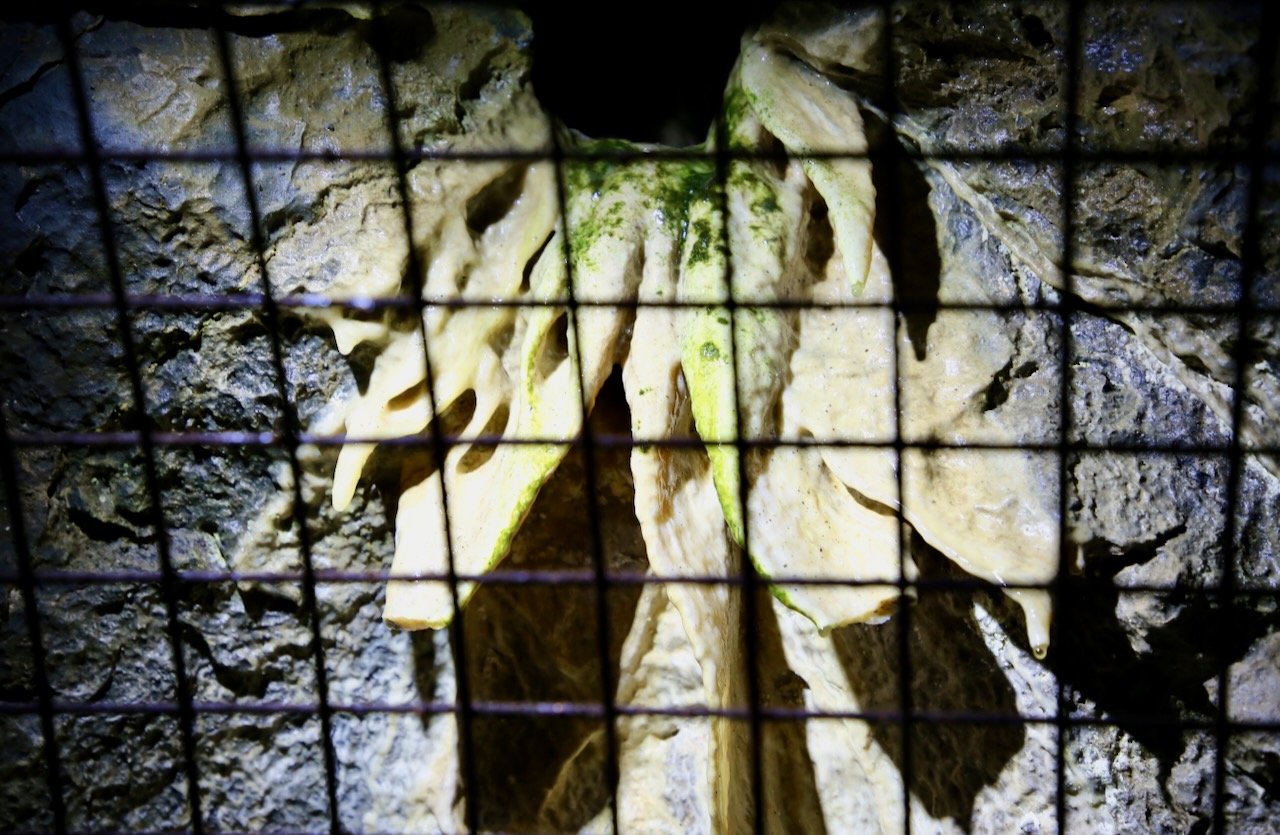
The entry tunnel looks like it was widened with a paved path and a handrail added, in sections. Some of the walls look like the wet portions of the Ballyvoyle Tunnel, keeping true to the overall moist level of Ireland. There are lots of dripping straws and green growth along with smaller formations and a waterfall. We get to walk by the spray, but I don’t reach out my hand as cave rules go: water can touch me, but I have to keep my oily hands to myself. I’ve been to one cave where they have a touching rock hoping that it keeps people from touching the rest.

Time in a cave is always fleeting and soon our 45 minutes is up. Some caves offer self-guided or private tours with advanced reservations and a certain group size. I will be asking about these options in the future. There are possibly 200 caves in Ireland but only six are open to the public (show caves) due to the difficulty of accessing the others or needing permission from the landowner and ensuring non-nuisance parking arrangments. Just up the road we see a cafe sign and pull over to investigate. We parked in the back and walked all around an otherwise closed-looking building to find the front door with a picnic table nearby, that I drove past in my hunger.

The cafe is called The Larder, meaning a large room for storing food, so we are in luck. We clink a mocha and matcha at the bar, between the counter and the tables, while we wait for the savory and sweet treats we ordered. Funny enough, when the barista asks a guy from the couple who sits next to us how much sugar he wants in his matcha, he claims that it’s like hot chocolate. Perhaps he also ordered the green eggs and ham, though most people know that shell color doesn’t affect the contents. I hope he’s not disappointed.

Burren National Park

I thought I recognized the hybrid Yaris outside with a similar plate to ours and then I saw the couple from the bird show earlier. They found this cafe with the help of The Irish Road Trip website which they are following more precisely. I only use outside sources for ideas and rarely for places to eat, but local foods to try. Not sure where their path goes next but with lunch consumed, I know we need to get moving. We can see Dungaire Castle, built in 1520, from the road, the same one we’ll walk in to view the castle perimeter, as the car park is 240 meters away and the gate to a romantic getaway locked.

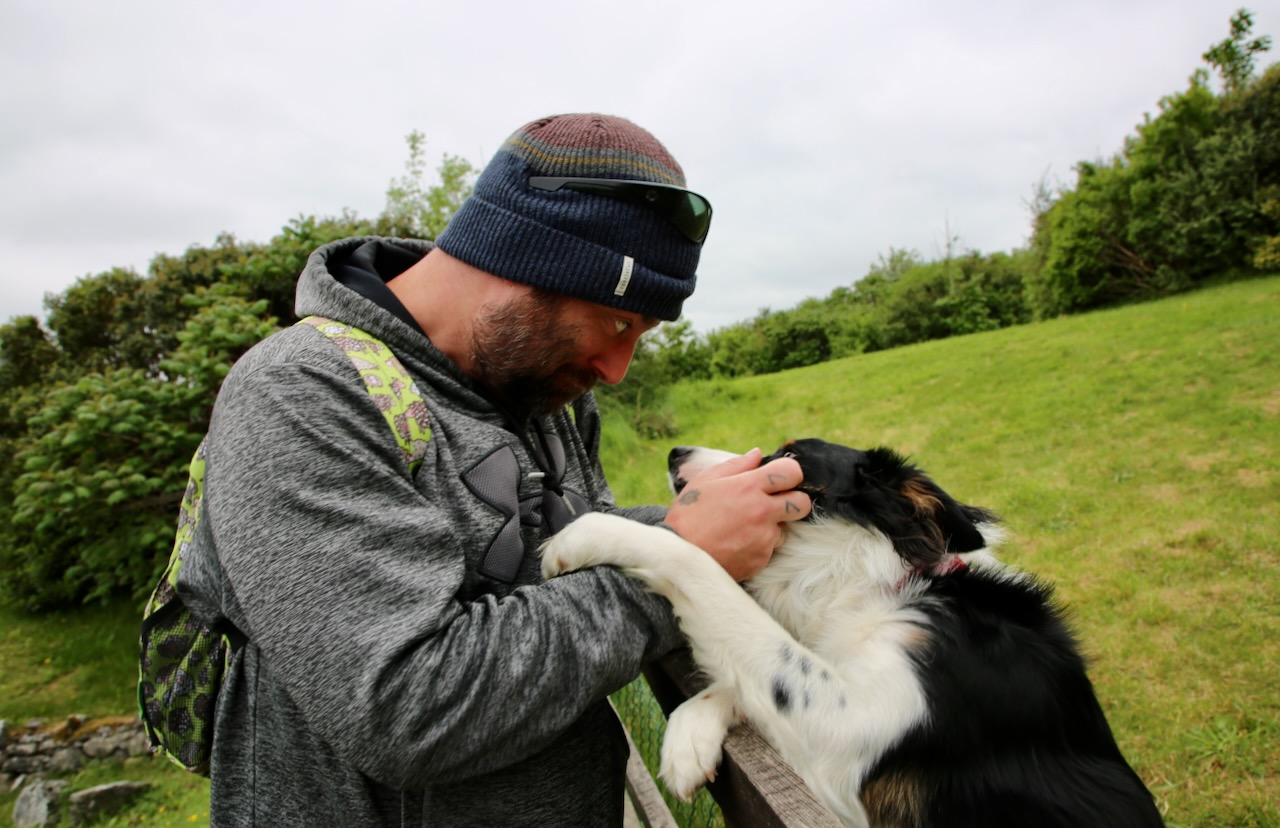
On the way back to the car, Caleb makes short-term friends with an English Shepherd before navigating us down a road that looks more like a private driveway lined with tall trees. Only when we reach the line of cars on the side of the road do we determine that we must have made it to Burren National Park. We find a spot to join them, even though my itinerary said ‘coastal drive’. Before travel, always do a test search of planned stops as some have only one location, but many have different trails, parks, buildings, etc. included and you could easily find yourself as lost, but just where we needed to be, as we were.

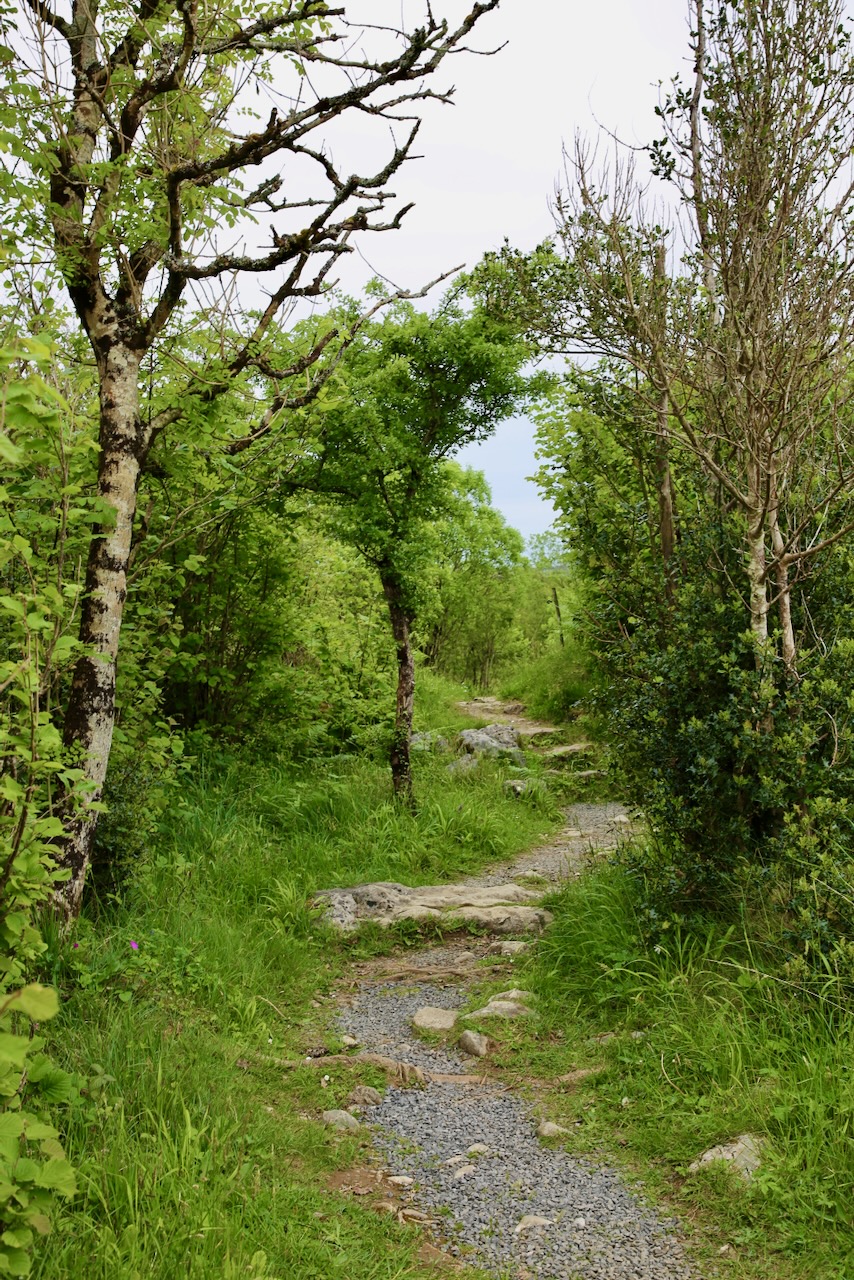
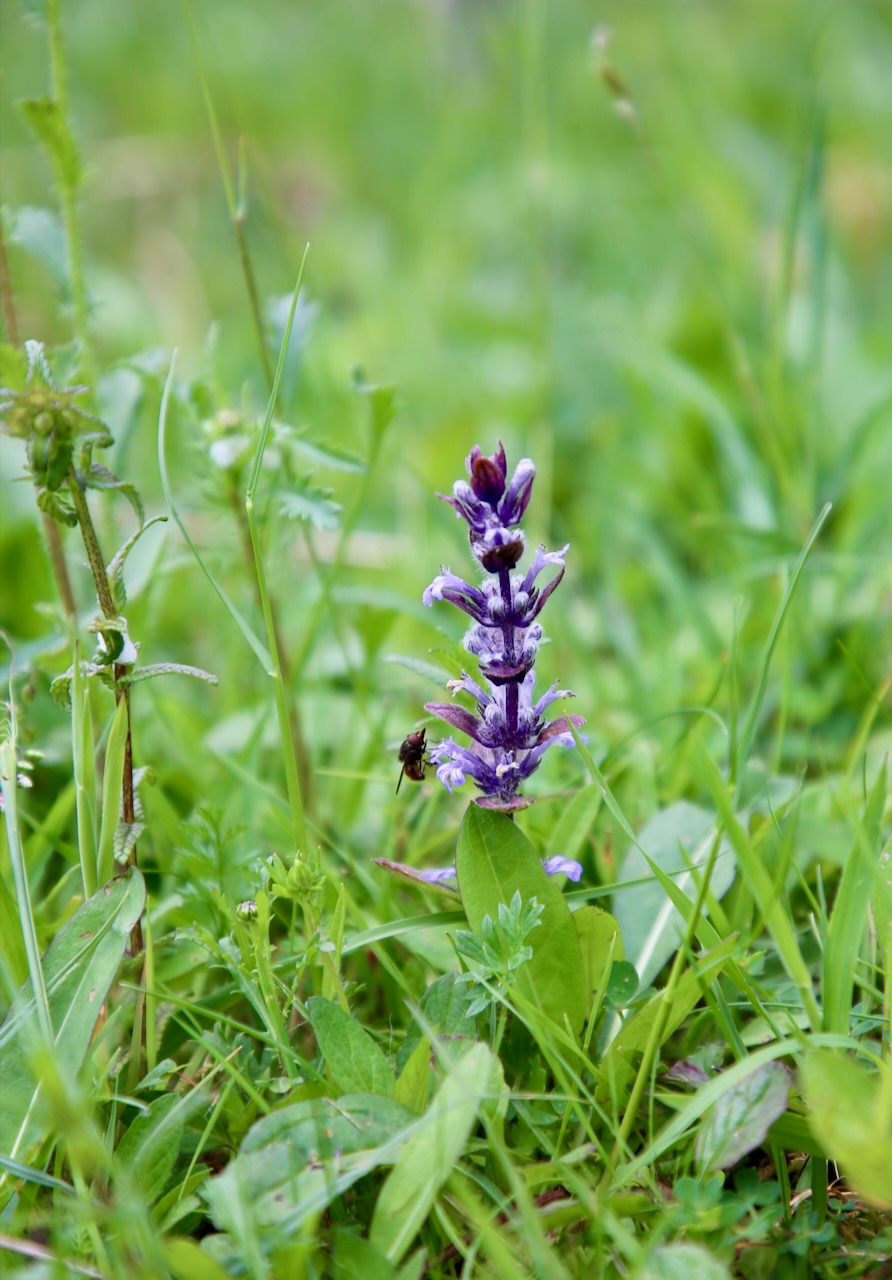
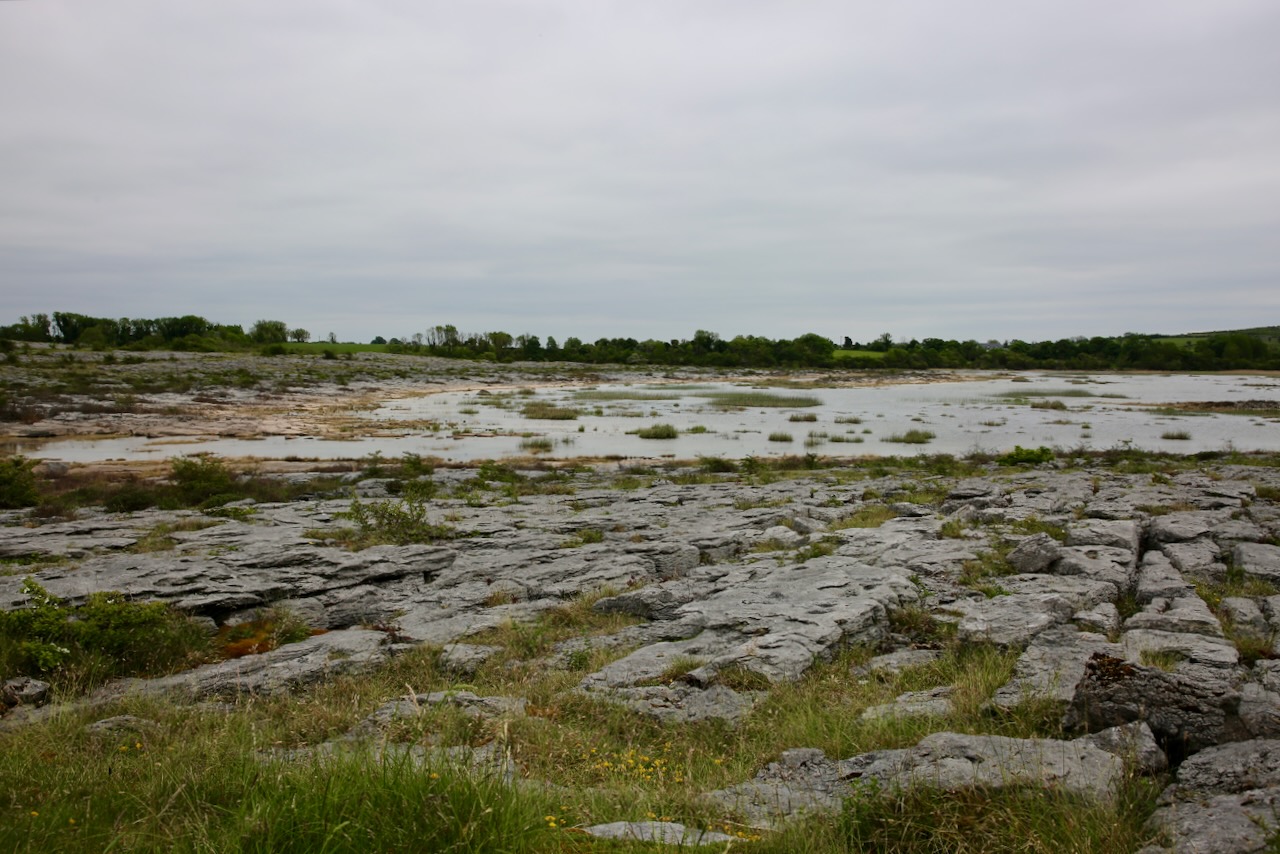
If you zoom in on Gortlecka Crossroads you can see the cars lined up. Thanks to the vague ‘you are here’ map and a certain shaped but unnamed lake I was able to find where we were amidst the trees, limestone, and calcareous grasslands. We pass through a rock wall with space enough for one person to pass through. Attached to a stone are five circle plaques, each in a different color, with boot prints and arrows on them. There’s a single wire fence strung along the trail through the trees, a railing down the stairs, and trail markers over the rocks. There are little flowers of purple being visited by a rhingia, a genus of hoverflies known for their long snout.

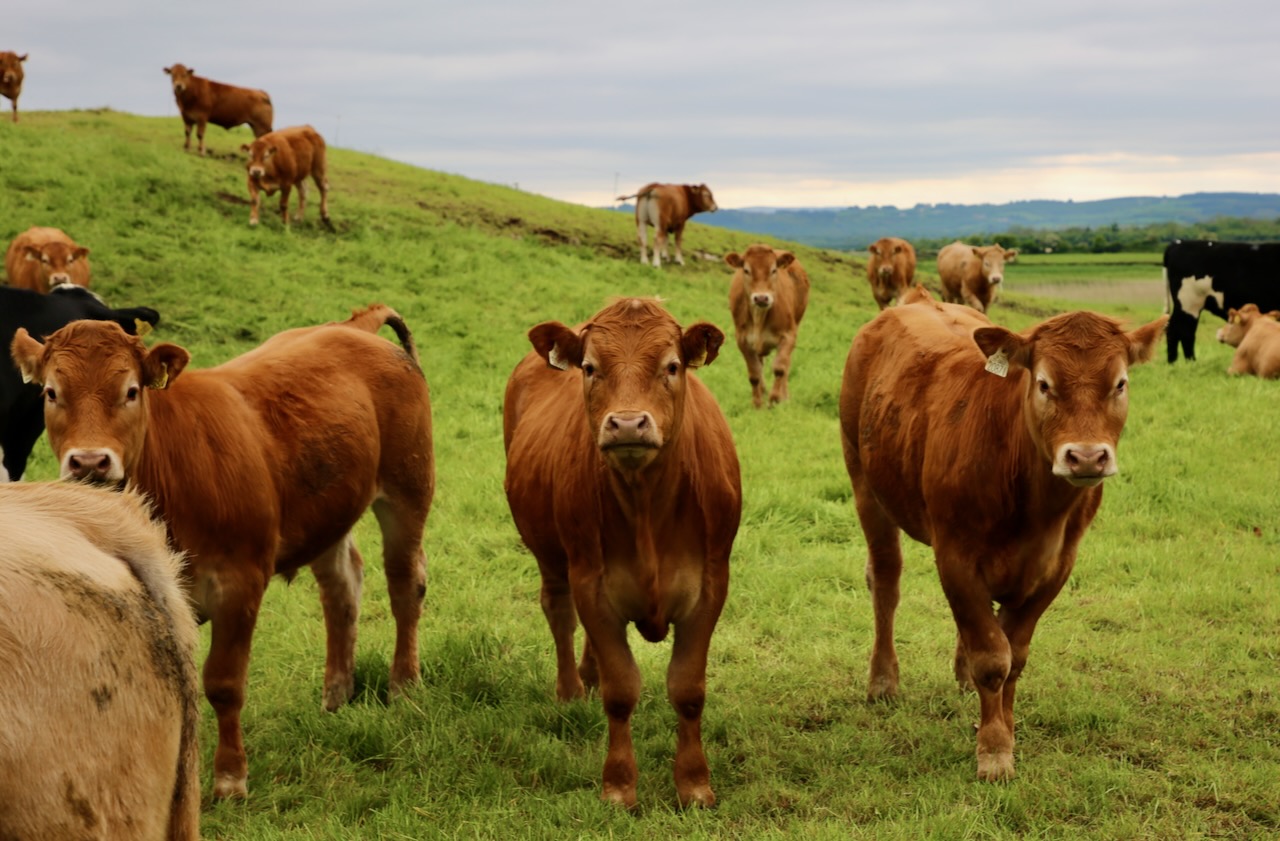
We finish our hike and drive past Ballyportry Castle which can be rented to a maximum of eight people for a minimum of three nights with dinner upon arrival for $2,200. Where we will be sleeping tonight would be about a sixth of that cost for the same stay. If we ever find three other couples that wouldn’t mind staying in a 15th-century Gaelic Tower House with 21st-century comforts, such as underfloor heating, we would split the bill. Just moments from the castle, we’re out of the car to say hello to a herd of cattle who seem to think we’re there to feed them.

Dromore Wood Nature Reserve

Next on our route, which looks like a Far Side Comic character to Caleb and a running dinosaur to me, is the Dromore Wood Nature Reserve for another free walk in nature. There’s a short trail to the de-roofed and fenced castle that is now a national monument. We make our way east to Birdhill where we will stay at Heron House, a carbon-neutral accommodation, meaning the room will be a consistent 68°F. We park out front and are greeted immediately by Sean, the host. Guest parking is in the back and we will move when we return from dinner. We are shown upstairs to our room and provided towels, soap, and chocolate.

Heron House

We drive back into Birdhill for dinner at Matt the Thresher Inn, established in 1984 and voted the best gastropub in 2023. Luckily, it’s just the two of us and I’m the opposite of peckish. They find a small table tucked by the stairs, though they’re not busy. I order a small bowl of brown soup with two slices of brown bread and Caleb gets a chicken Caesar salad. We get back to our room before sunset and Caleb will read while I update my notes before reading too.

Posted in Animals, Entertainment, Food, Hiking, History, Media, People, Places, Plants, Travel, Water | Tagged , , , , , , , , , | Leave a comment

Motherland of Myths and Milesians

The Milesians represent the Irish people as the final race to settle in Ireland; according to medieval Irish Christian history. They sailed from Hispania after traveling the world for hundreds of years and struggled for domination against the Tuatha Dé Danann, who represent the Irish pantheon of gods. The two groups agreed to divide Ireland with the Milesians taking this world and the Tuatha getting the Otherworld. There are archeological sites that relate to this story: the Newgrange Passage Tomb (one or more burial chambers covered in earth or stone) and the Hill of Tara as a portal between the two worlds.

We managed to get a few hours of sleep at Sheila’s Hostel just as I was drifting away from the mustiness of the room and into myths of my own. I wake with my hair greasy and my throat on fire. I wash my locks with a bar of Irish spring soap and we will walk to Cafe Gusto at Lapps Quay. The employees are still setting up as most of their customers are people on their way to work with no food orders so Caleb looks up another place while we wait on our coffees. We walk the few minutes to Caffè Nero on Oliver Plunkett St. named after an archbishop, from the 1600s, in the 1920s. He was canonized in 1975 and thus became the first new Irish saint in almost 700 years.

The street won the ‘Great Street Award’ in 2016, beating out the competition in Ireland and Britain, 300 years after it was laid out. This title was selected by the Academy of Urbanism for the street’s history, community, and trajectory. It’s the second street in the second city, of Ireland, (who keeps track of that?) with historic buildings; many in their third generation of business, 111 of them independent. Even now, while most of the city is still asleep, this street is busy with locals walking to work while two tourists unknowingly sit in front of The Oliver Plunkett Bar. The name is in Irish between ‘Food & Drink’ and ‘Live Music’. The bar has outside seating so we could eat since our coffees weren’t welcome in the cafe.

Carbs and caffeine ingested we make our way back over the River Lee to collect our rental car before its free parking spot expires. Our first stop of the morning will be Blarney Castle & Gardens. We were the first car to arrive at the closed gate until an Uber pulled in and the crowds started to arrive half an hour before opening. How there was street parking available so close is beyond me as there is no shuttle needed from the parking lot like at some theme parks in the States. We pay our $48 along with the other 4,000-ish people per day that come to kiss the stone and gain eloquence (persuasive speaking) making this site over six hundred thousand dollars per week.

Outside the ticket office is the Muskerry Tram Turntable that was used to bring tourists from Cork, a route of 18 miles. The line ran from 1887, with a packed capacity of over 2,000 passengers, at a price of 13 cents each, until the Irish Civil War when a bridge was destroyed in 1923. The railway was purchased and closed two years later. There are 60 acres to explore the Fern and Poison gardens; trails around the lake, by the river, and through the woodlands; and a Rock Close with sacred yew trees and druidic stones.

We make our way to the main attraction first. The dungeons are occupied by highly endangered tenants, the lesser horseshoe bats, who get their name from their fleshy noseleaf used for echolocation. There are roughly 14,000 of this species in west Ireland that are also only found on the west side of Wales and Britain. Their population has been increasing since the 90s thanks to their love of the dark disturbance-free dungeon as they’re more vulnerable during hibernation. We know tourists can be trouble, bringing bright lights and bad germs, and I unfortunately am carrying a demon that is burning through what precious energy reserves I have, so we carry on to the entrance where the wait time is an hour — if there’s a line.

The castle was built on an elevated outcrop of solid limestone rock in the 1400s by the MacCarthys, the Lords of Muskerry, some of whom would be buried in Kilcrea Friary. It remained the family stronghold for over 200 years before being sold to the governor of Cork in 1703. The Blarney Stone was believed to be half of the Stone of Scone, that was used in the coronation of Scottish monarchs for its special powers, as a gift to the king for his help in the battle of Bannockburn in 1314. Geologists determined in 2014 that the stone is of local origin, so it’s more likely that it saved the Lord from losing his land to Queen Elizabeth I by motivating him to talk his way out of the predicament.

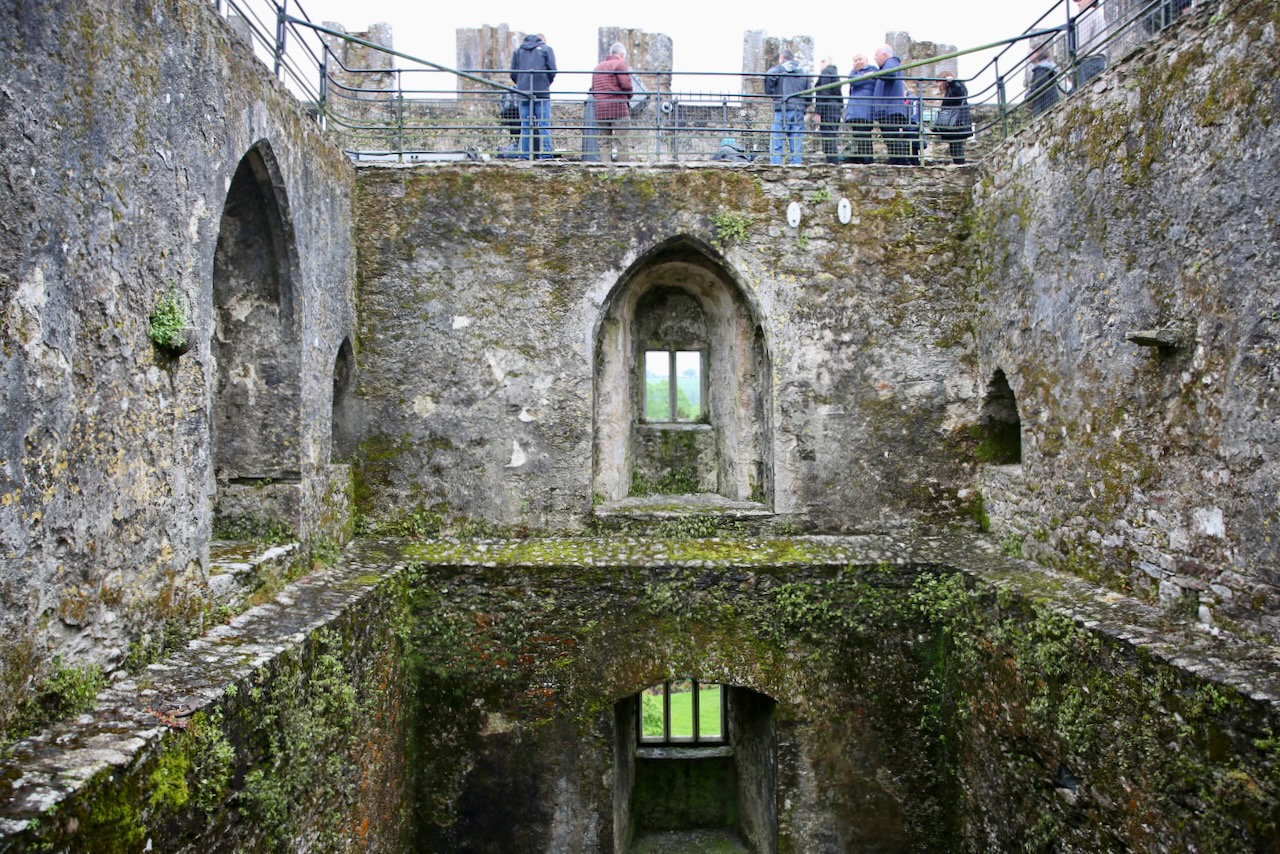
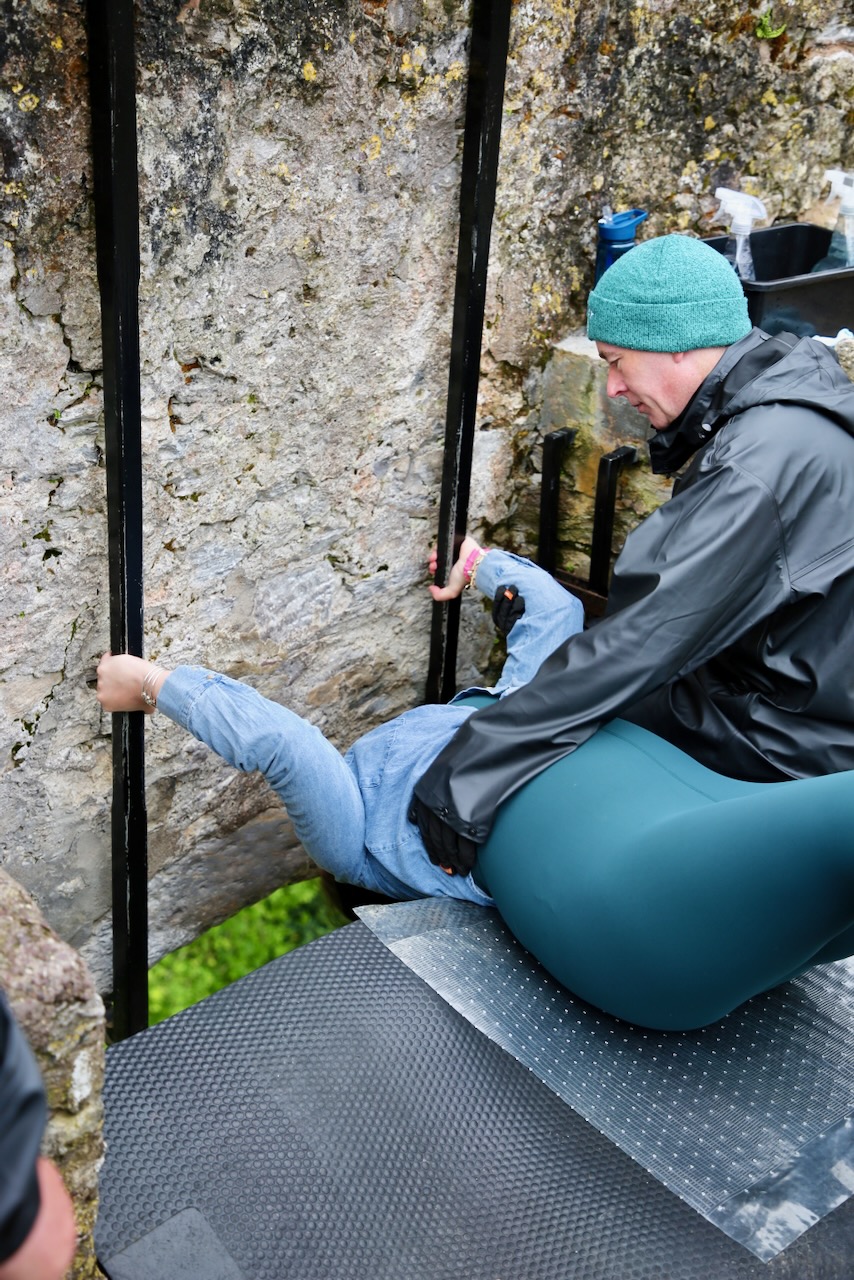
This tower house comes with an oubliette, French for forget, a 15-meter deep pit for unwelcome guests, and three three-seater garderobes (toilets) upstairs if you were invited in. The castle looks great for its age and the wear of guests 363 days of the year. There’s plenty of green throughout the castle and even more beyond the walls once we ascend the 125 narrow spiral steps. Iron rails were added near the stone in 2000 so that tourists would have something to hold onto for added safety, instead of dangling out of the top of a castle by their ankles, but there’s still a man with his hands on your hips instead while his friend takes your photo.

There are rumors that the stone used to be a toilet and that locals still use it to piss on at night. No, I didn’t lean backwards to gain the gift of gab as I’ve been told more often than not that I should learn the art of holding my tongue. I’d be more willing to kiss limestone and chapstick than disinfectant. We watched the process, demonstrated by the three people in front of us, and kindly passed by to admire the view below as ten people queued for their date with destiny and to join the list of kissers before them such as Winston Churchill, Mick Jagger, and Ronald Reagan. I’m not the only one who didn’t realize until we got there that it’s not just a rock in a lobby and that some find the stairs claustrophobic.

There’s a separate set of stairs to descend and to keep traffic moving more smoothly past the murder hole, another defense structure. The name reminds me of a horror comedy film, Murder Party (2007), about art on Halloween in Brooklyn. There has since been another movie of the same name released in 2022 which is a murder mystery, that we haven’t seen. There’s a cafe and gift shop and horse stables turned dining area before we wander to the Rock Close — an ancient druidic settlement with an altar, a hermit’s cell, a witch’s kitchen under ancient yew trees.

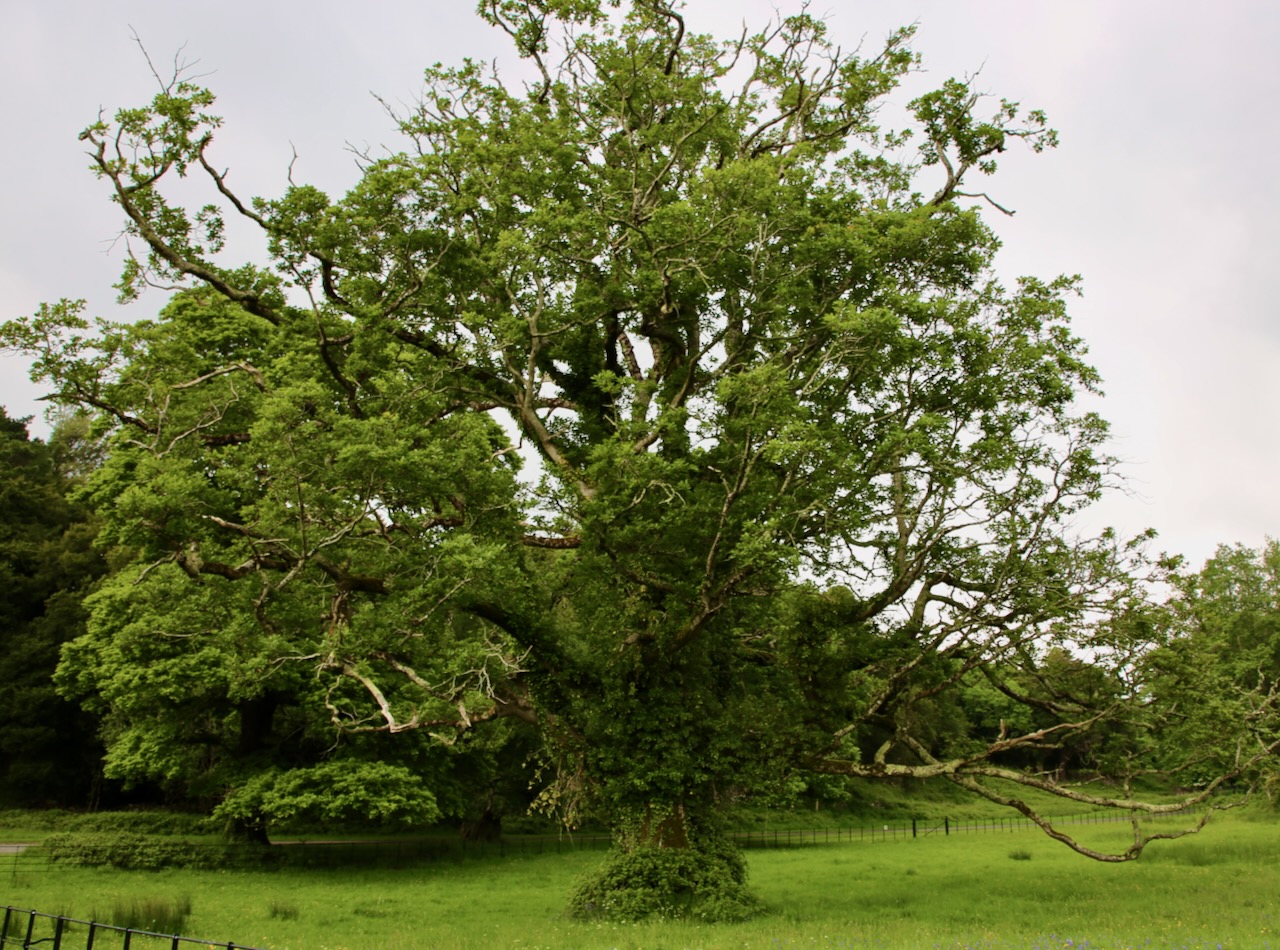
We come across a tree that stands out, as the tallest on the estate, at 145 feet. It’s indigenous to the western coast of the US, though the Sitka spruce is commonly grown in Ireland for musical instruments and boat building. The trees’ ancestors would have provided frames for aircraft built prior to WWII and may have a use in the skies again soon as some manufacturers in France prepare to release the kerosene hybrid and hydrogen hybrid models of two-seater touring aircraft made of wood and carbon fiber to combine a historic look with modern technology.

Carrigadrohid Castle

We are struggling for energy through the gripping illness and a lack of sleep. The crowds are growing and the sidewalk shrinking. We could cut across the lawn to see the Blarney House but would need a few more hours to cover the rest of the grounds along the river, around the lake, and across the woodlands. At least the cost makes more sense now knowing that we could’ve spent the day here, and more easily at the slow pace we’re going, but we’ll continue on in hopes of finding somewhere less populated to conserve what’s left of our stamina.

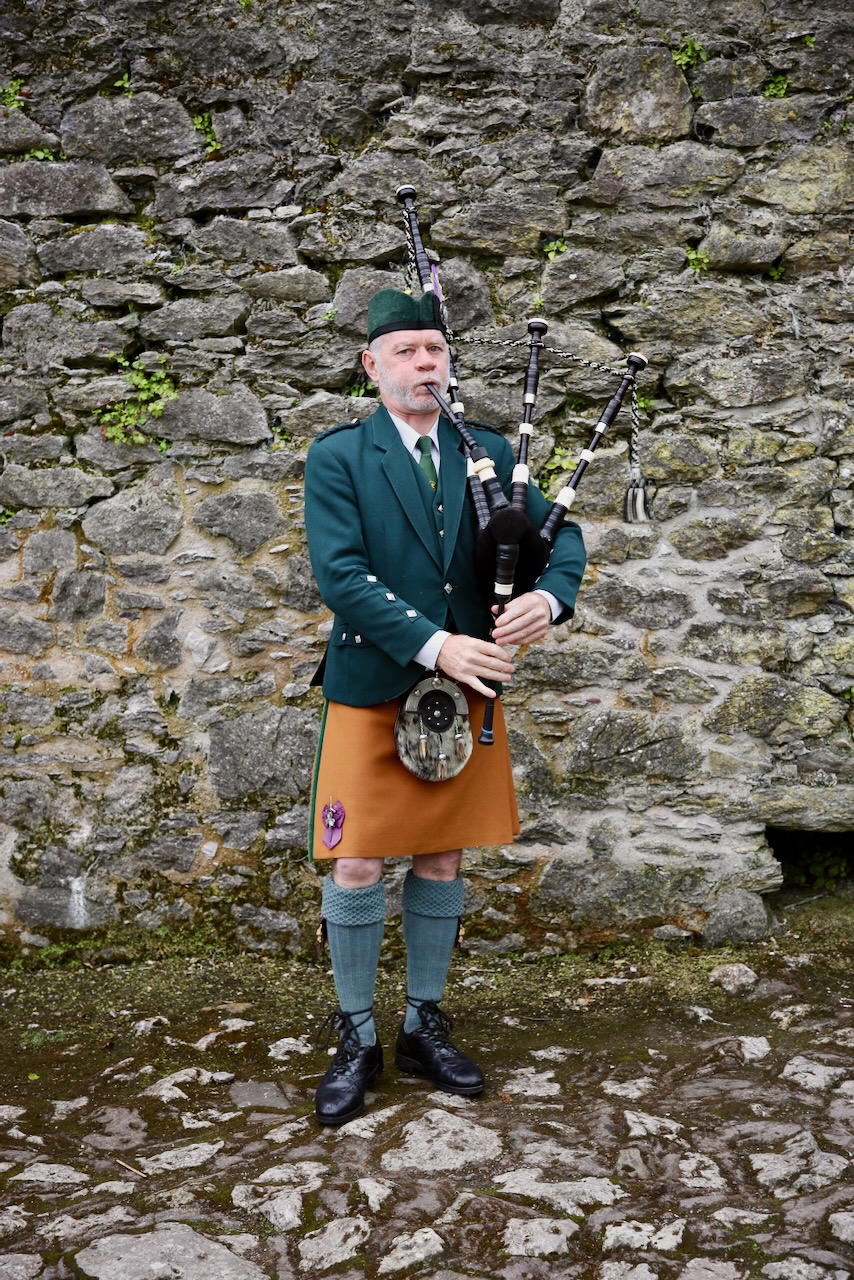
Luckily, we don’t have to leave the park without being serenaded by bagpipes (a square on Ireland’s scavenger hunt bingo card), complete with a request from a six-year-old for Twinkle Twinkle Little Star. Our next destination, Carrigadrohid (the rock of the bridge) Castle, used to control the movement of people and goods along the River Lee by being built on the water that it now stands in due to flooding of the valley for the Hydroelectric Scheme. I’ll park next to Dinan’s House because it doesn’t look lived in and I don’t want to block the road or bridge. The appearance is affirmed with a sign on the door letting us know the last resident died in 1968.

Killarney National Park

On foot to the bridge brings us by Apple Tower, used as a place for tea parties and music listening with a view. It’s believed this structure was once used as an apple store. I walk around the corner to see if there may be a way in but no entrance within sight. The tower and wall give off fairy tale and children’s literature vibes that inspire me to climb to the top, let down my imaginarily long hair, and kiss my prince. Back to the land of reality, I can kiss Caleb and we can walk to the other side of the bridge to catch the castle from each available angle, minus being in a boat.

There’s a radar speed sign that flashes ‘thank you’ when you’re doing the proper speed. I agree that I shouldn’t have to get encouragement to do the right thing, but it’s natural to feel better with positive reinforcement. We pass a bust of the Goddess Áine as we drive west on the bypass that was opened recently (2022 and ’23) with the addition of this sculpture facing the summer solstice and Bronze Age Girl, whose remains were found in the development process, facing the winter solstice. These were commissioned to Sarah Goyvaerts under the Per Cent for Art scheme which allocates a portion of the budget for major road projects for public art.

Ireland has more highways planned so they can reduce travel times for tourists and those driving to work and school. The government is working to improve safety and reduce congestion while locals are concerned that more roads will negatively impact the environment… and the feeling you can only get on a narrow winding road. The Corlea Trackway, or togher from 148 BC, was Ireland’s first roadway. It’s not certain whether the oak planks, between 3 and 4 meters wide, were used to cross the bogs or to ceremoniously enter them. They were first excavated in 1984 and parts of them were destroyed in 2013 by peat extraction. The roadway was only usable for a few years before it sunk under its weight.

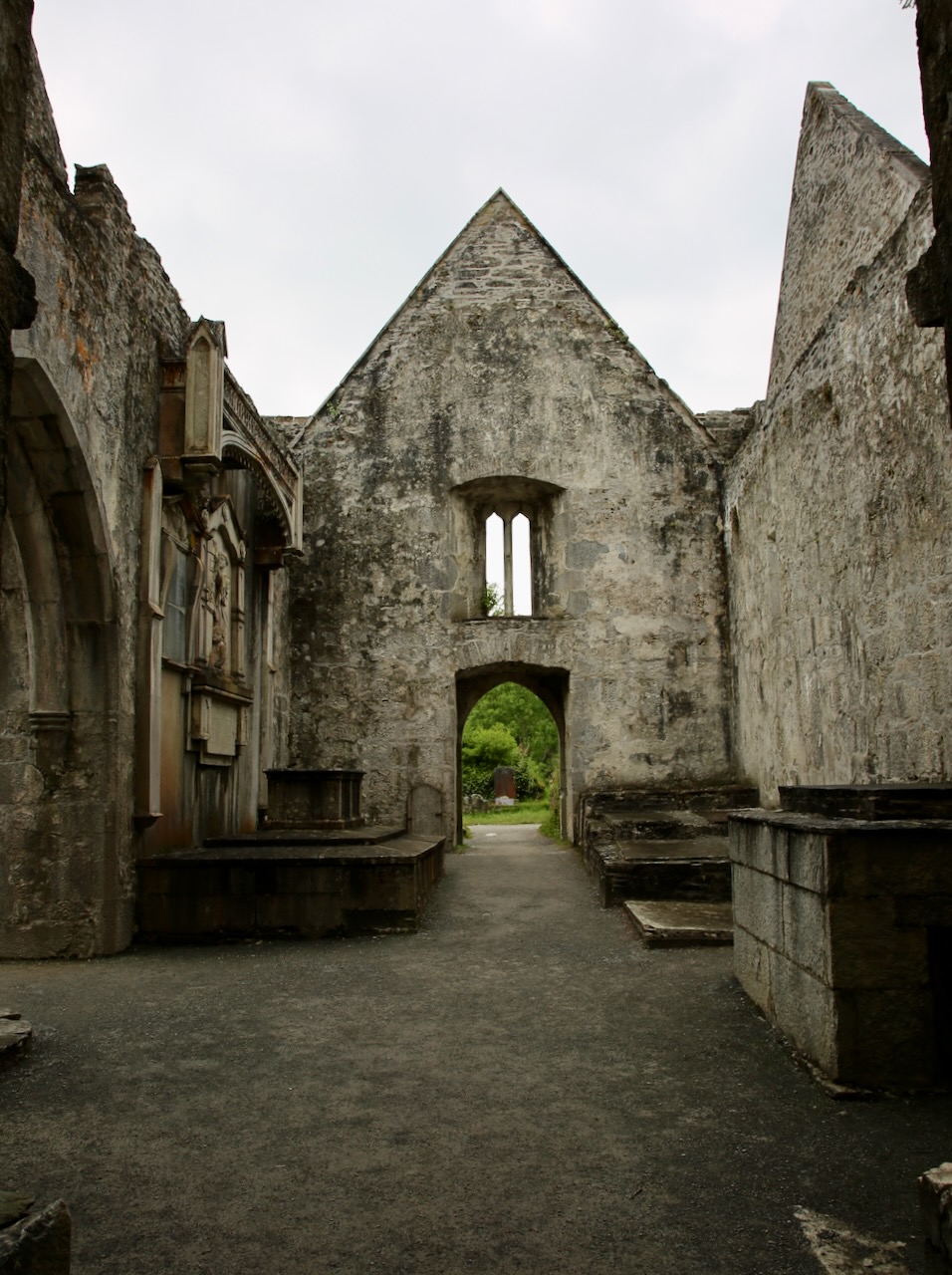
With the highway, we average between 33 and 48 mph and find parking in a large lot at Killarney National Park, which became Ireland’s first in 1932. The park is designated as a Biosphere Reserve by UNESCO. There are wide fields surrounded by low fences, and though there are many trees only a few of them have larger personalities, which is true for any grouping of flora and fauna. We follow a path to Muckross Abbey, one of the park’s many heritage sites, and walk around the perimeter first. Cemeteries are intriguing in various ways — their views, the grounds, and history, but none have inspired me to want to be buried there in a blanket of moist greenery for at least one hundred years waiting for the zombie uprising or the return of sparkly vampires.

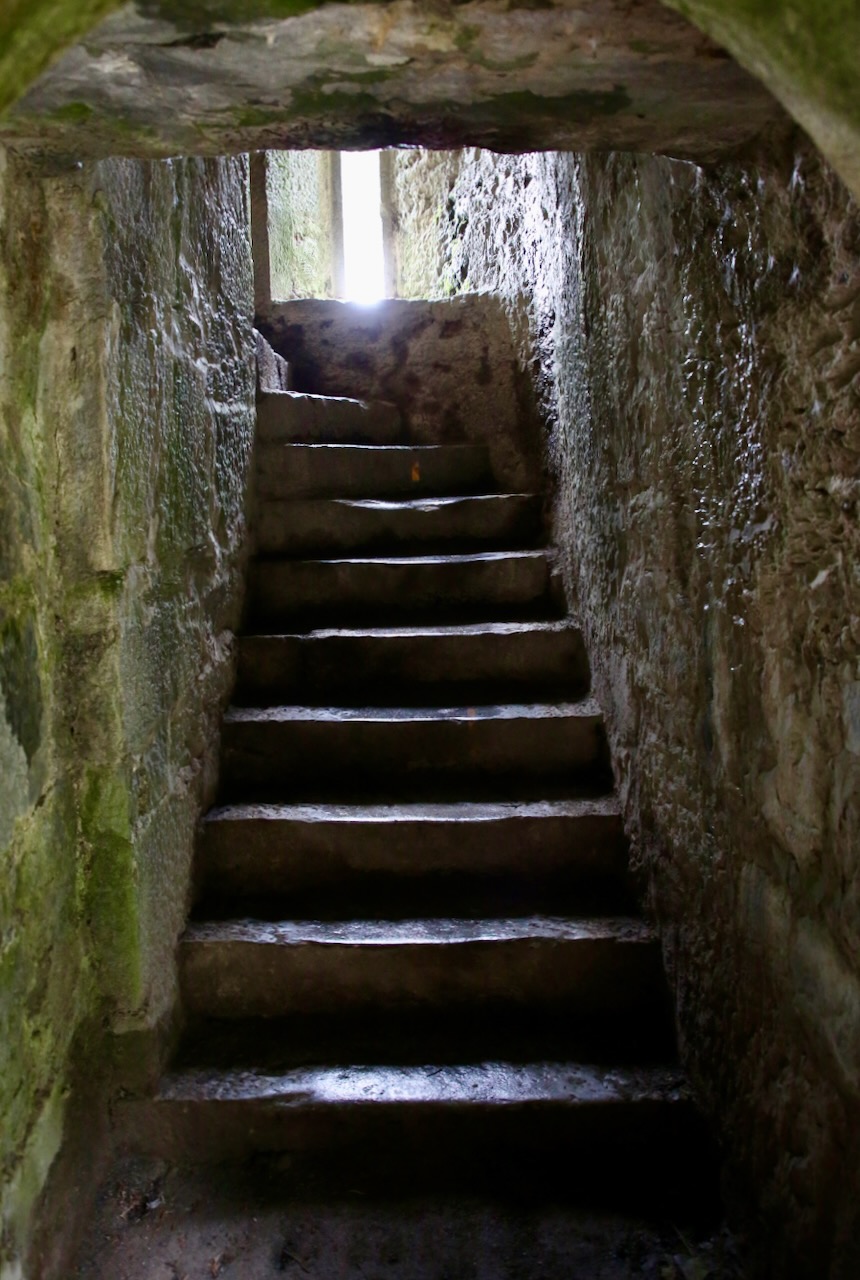
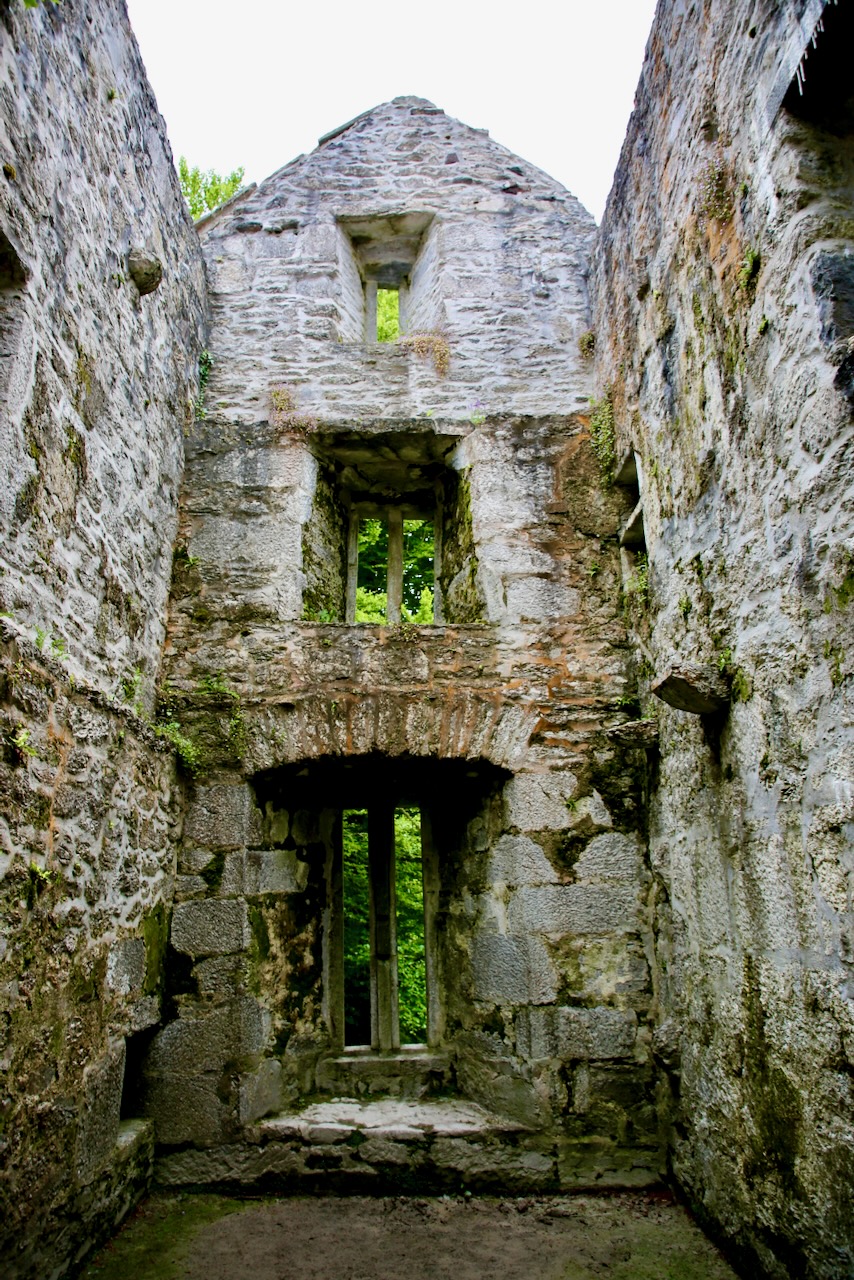
We already know Caleb would be a werewolf in that scenario and our pets of choice would be a dragon and a unicorn. We proceed down into the basement with mixed feelings. I can imagine running circles in the shade around the courtyard with my fictional family. This structure reminds me of old buildings in the States that have been turned into schools, shops, and museums with larger upper windows to let in more light. The yew tree in the cloister court looks like two arms together with the hands open and the fingers stretching towards the sun, its branches spreading out over the rooftop.

Muckross House

For a minute or ten, we have the place to ourselves, and for a moment I can imagine living here in the quiet solitude of the forest. We pass a jaunting (now meaning a short journey for pleasure but that used to mean to tire a horse out) car, with a Gypsy Cob horse in the harness, awaiting to return to the depot by Muckross House after chauffeuring their latest passenger around the park. The Irish Black cattle seem to have an easier time as they’re allowed to lounge about in the grass. We make our way back towards the car and there’s a shop for treats, trinkets, and tickets to the Traditional Farms.

Ross Castle

We’re having a look around when a lady comes in upset that there’s no place for her to sit on her phone… because the park doesn’t have much signal. Our ancestors were too busy dying of mishaps and mayhem to perhaps have the time to complain, but I’m sure if they did, it would be about their health, not about expecting the world to cater to their every need. At least that’s one reason I travel, is to see how other people live and what they can live without. Though I can easily recall a few times when I’ve been bratty too, an airport can keep my attitude in check so I don’t end up on the no-fly list.

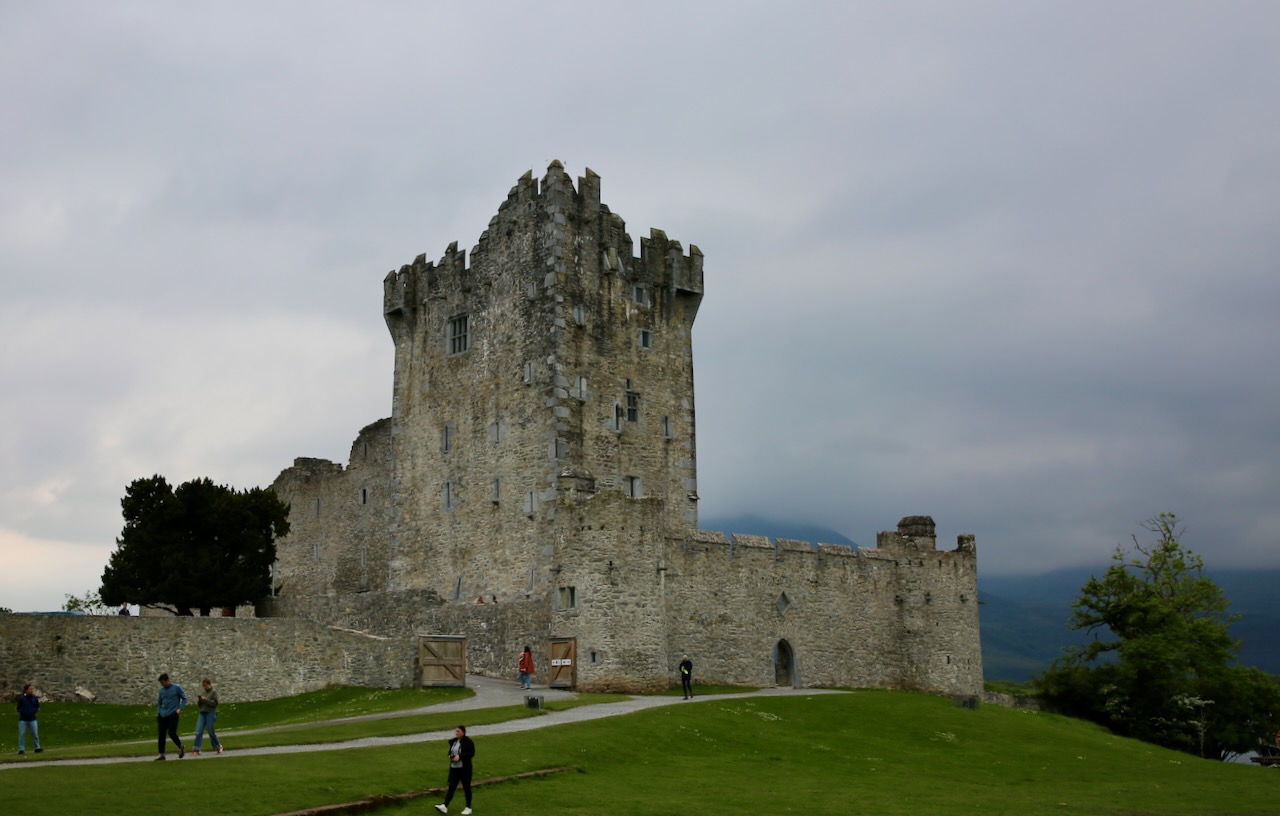
A few people are straggling about outside of Ross Castle along with two ducks and a goose (a familiar childhood game). Inside, we learn that this is just one of the 3,500 tower houses built in the 1400s and 1500s. The castle was restored using cow hair in the walls, wicker and sand in the vaulted ceilings, and timber shaped by an adze and held together with wooden pegs, and opened to the public in 1993. We check in to Mountain View B&B after I throw the stick around for their Breton spaniel and take a 40-minute nap after being shown to our room upstairs.

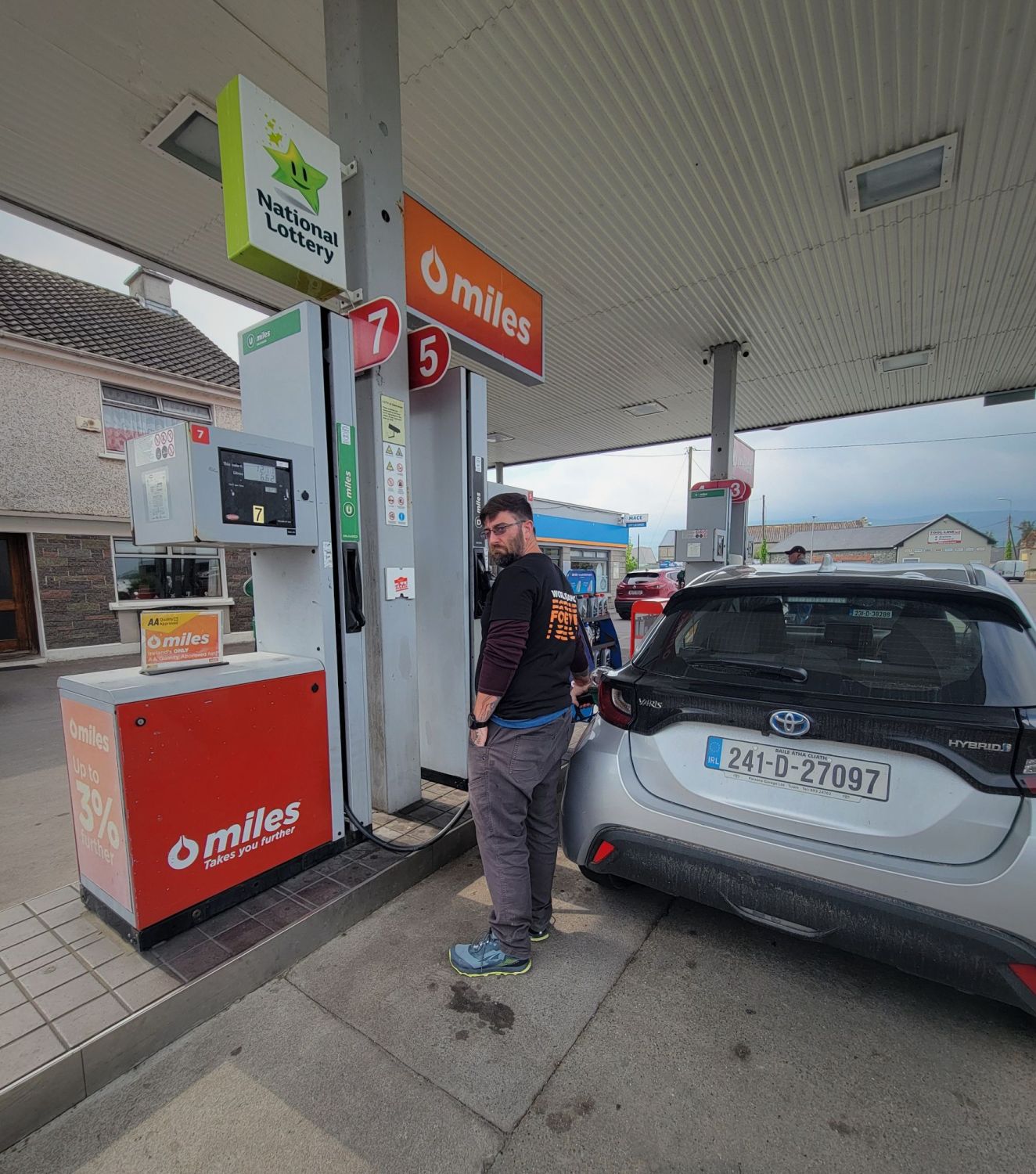
There are two beds, a walk-in closet, a tea station, a porthole window above the sink, and a folding shower door on the tub lit by a skylight. We are given towels but no soap so we drive into Castlemaine for shampoo and to get some gas, our first since leaving Dublin and we still have 190 km in the tank. The 25 L (6.6 gal) cost us 45.73 Euro ($49.85) which equates to $7.55/gal, almost double what we were paying in California. We are at the one-third mark in total trip mileage but I didn’t know that when I decided to get gas now instead of waiting to detour later.

Mountain View B&B

The Anvil Bar & Restaurant is on the way back to our room and though I’m ready for bed, Caleb orders me a cheesecake to go with his steak and beer while we listen to a group of men in the middle of a stag (bachelor) party. The groom-to-be is in a cheerleader’s uniform and his friends are singing, “Orla’s Mom”, the Irish version of Fountains of Wayne’s pop hit from 2003. The Irish name Orlaith means ‘golden’ or ‘princess’, perhaps a perfect reference to the blonde in the original music video. Our night would conclude at the end of a hot shower; their night was just beginning. I’m glad I got a peek into how the other half celebrates, at least at the cusp of evening in Ireland.

Posted in Animals, Art, Hiking, History, Media, Music, People, Plants, Travel, Water | Tagged , , , , , , , , | Leave a comment