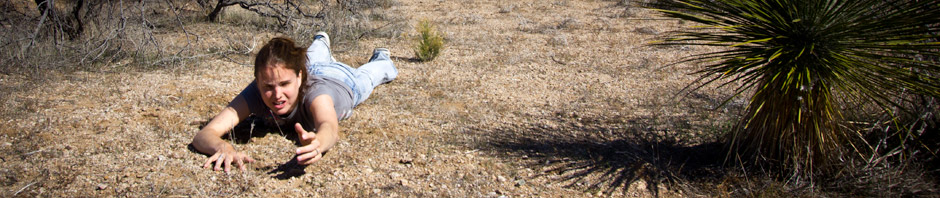

Caleb found us a perfect spot under the stars last night at Stephen F. Austin State Park. The trees surround our view and the bathroom is lit up in the distance. It is in the low 40s when we climb out of the tent in the dark because I’m excited to go look for some rare birds at the Attwater Prairie Chicken National Wildlife Refuge. Their average size is just over a foot in length and like other grouse, they tend to blend into their habitat unless they’re on the move in a clearing. They are most active in the morning and late afternoon and there are only 178 of them, as of 2021.
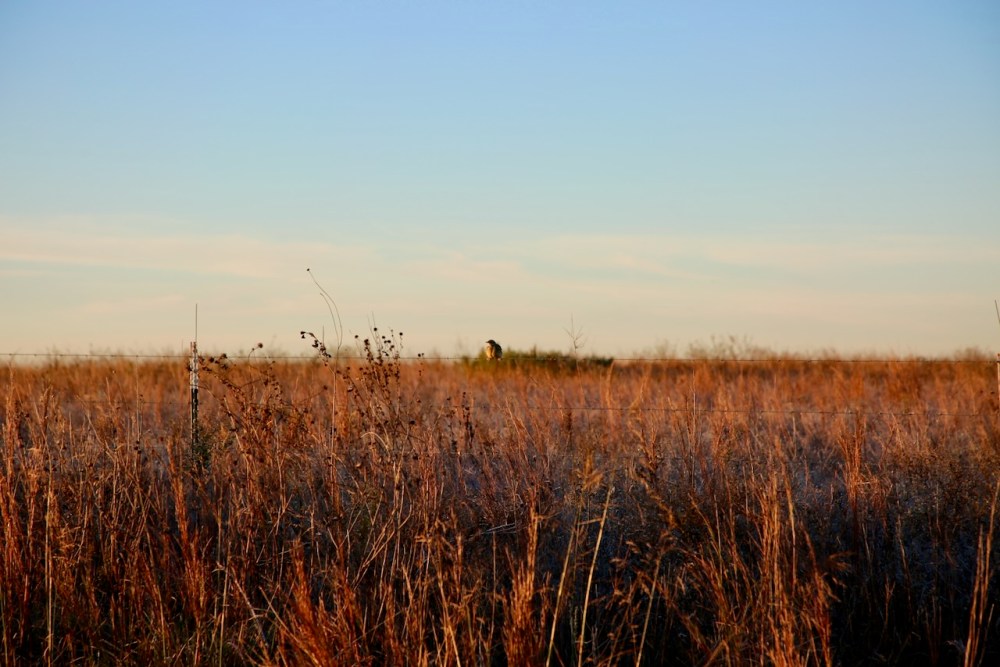


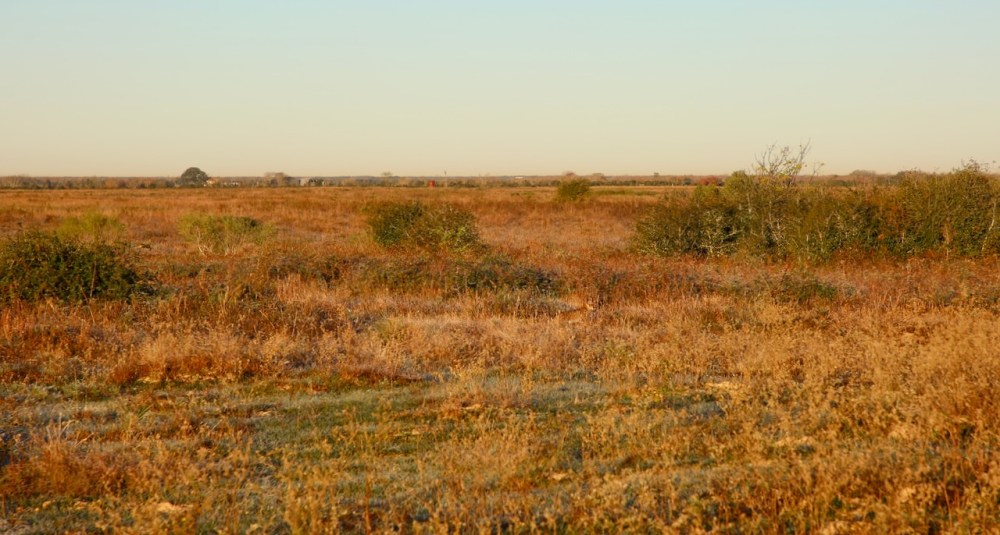
There used to be about a million of these chickens between Corpus Christi, Texas, and Bayou Teche, Louisiana but their environment is constantly being adapted for human travel and consumption needs. They used to roam over eight million acres and now have 10,000 left to call home. Even here, there’s a new visitor center being constructed and I can only hope that researchers and scientists weighed the pros and cons of education and preservation over secretly buying up land and maintaining the population in private. I’m grateful for the opportunity to be here.

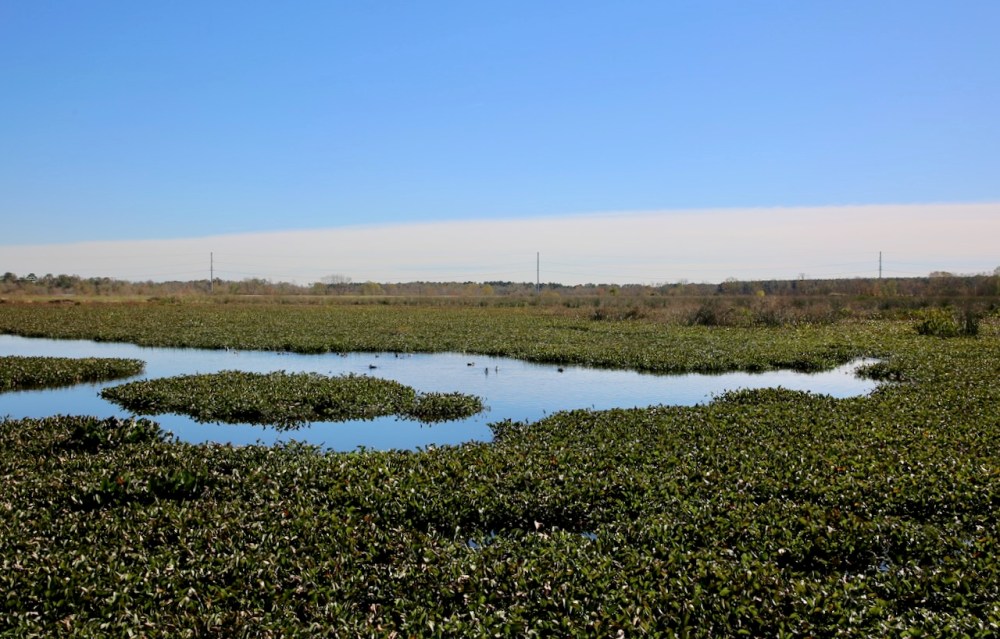
The moon is on its way out of the sky as the dark orange turns to pink. We sit in the car and watch some cows cross the road – confused that a car has the patience to wait on them. It’s these traffic delays that don’t bother me and I give the herd their ten minutes before leaving a straggler to cross behind us. There’s a footpath on the right, by a kiosk, before the auto tour route that goes over a bridge and leads to bird blinds overlooking Horseshoe Lake. We watch 18 whooping cranes take flight. They are, along with the sandhill crane, the only crane species native to North America – and the tallest bird species.
The other, easy to identify, bird sighting is the killdeer – a large plover that prefers grasslands (laying eggs among the rocks as camouflage protection) over muddy riverbeds and is tolerant of human disturbance; hence why it was so comfortable in the road. I’ve heard of subliminal messaging in advertising but never in nature. My brain was registering activity in the prairie but I was only seeing glimpses of movement as the very discreet cougar made its way through the concealing field. I wish I could’ve parked faster, but even opening my door is against the rules in some parks as big cats move quickly when they’re hungry.
I maintained my distance while wanting the puma to pounce closer to my lens, though I was able to capture proof of this encounter; unlike the one on a hiking trip where I preferred the quick departure of the predator. Having been up for hours, I pull over so we can get breakfast started. We are not the only ones getting hungry as the mule deer begin to pop their heads and bodies up from their nightly nest and only one tries hiding behind the only tall green shrub in this portion of the park. The hoofed ruminants look smaller than other mule deer stags, but their antler points tell us they’re at least three years old, so roughly halfway to full antler potential.


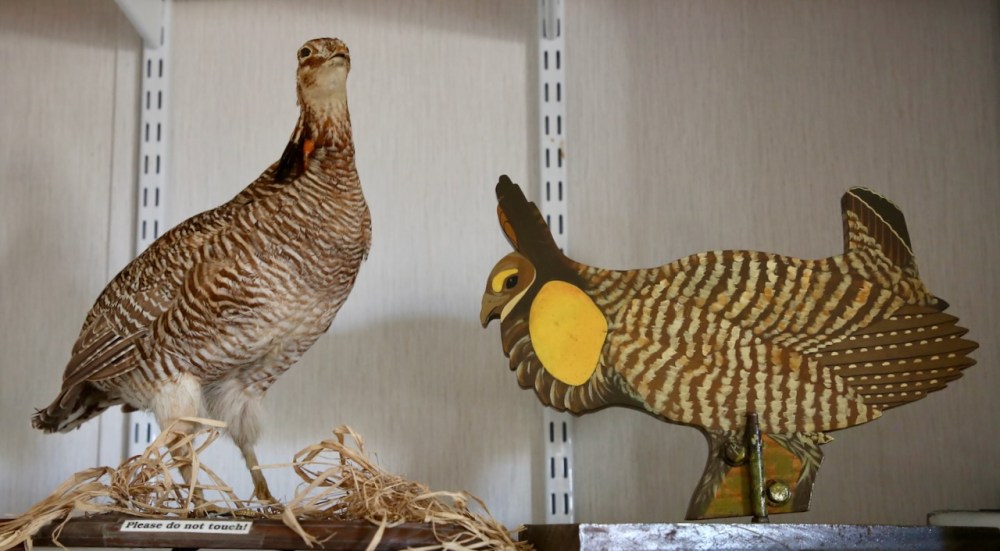
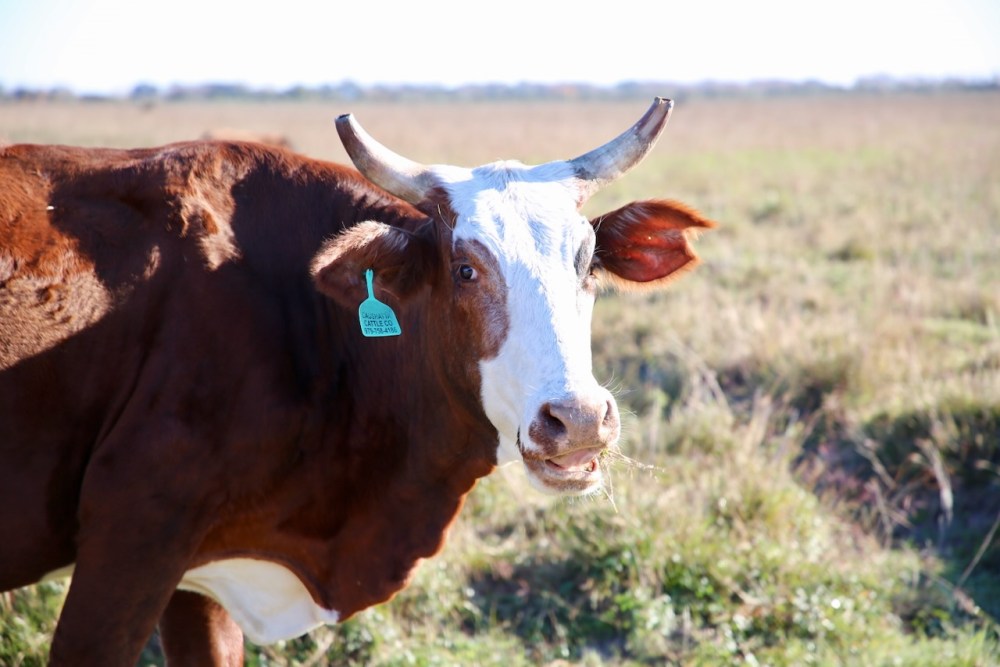
We return to the kiosk footpath after the auto tour route and walk the Horseshoe Lake Trail where the deer are openly enjoying the warmth of the sun, as are we. Now that the frost is melting though it only makes our shoes, and toes, wetter. The open and empty visitor center has a collection of mounted birds so that visitors can get an idea of the stationary and migratory variety through this area. Outside the refuge, we passed Caushatta’s cows. The company has received $1.1 million in subsidies in the last ten years. The top 1% of farmers receive a quarter of all payments – as those who produce the most, receive the most – just like the small business stimulus checks to manage the fallout of COVID-19.


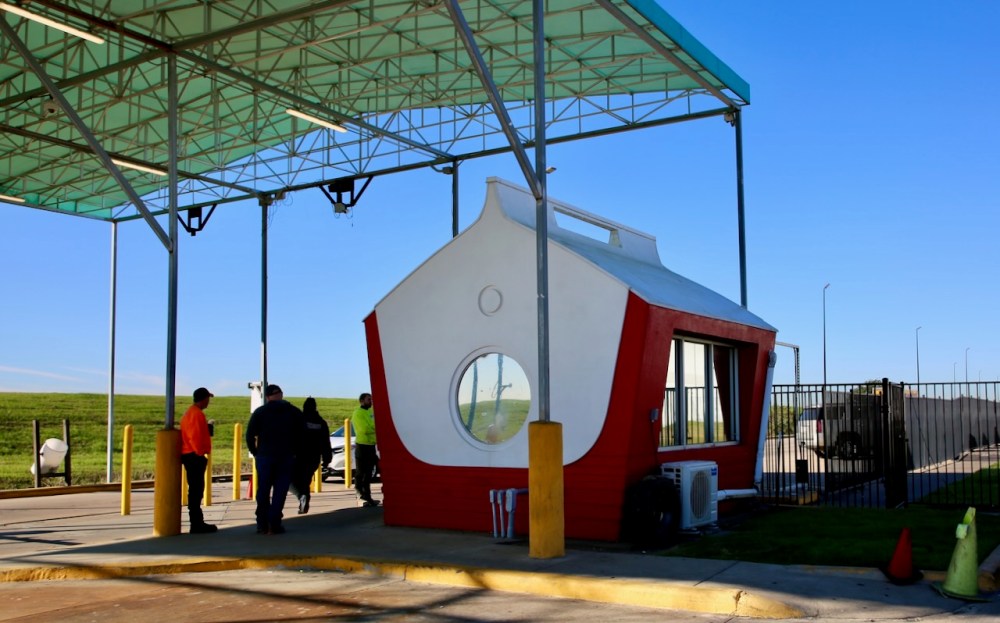
I thought I had found a roadside attraction, but instead of finding Factory Store attached to the location name, I put “near La Quinta in Brookshire” as our guide to the Giant Igloo Cooler. I didn’t know if we’d be able to go in or just peek in a window, but the guard let me know that I wasn’t getting past their frame that filled the doorway. I didn’t think they had secret bean recipes worth hiding bodies over. The giant cooler full of security devices and mechanisms is in front of the gated entrance, so we spent some time looking over their inventory in the gift shop-sized outlet with no tour or interest from the employee.
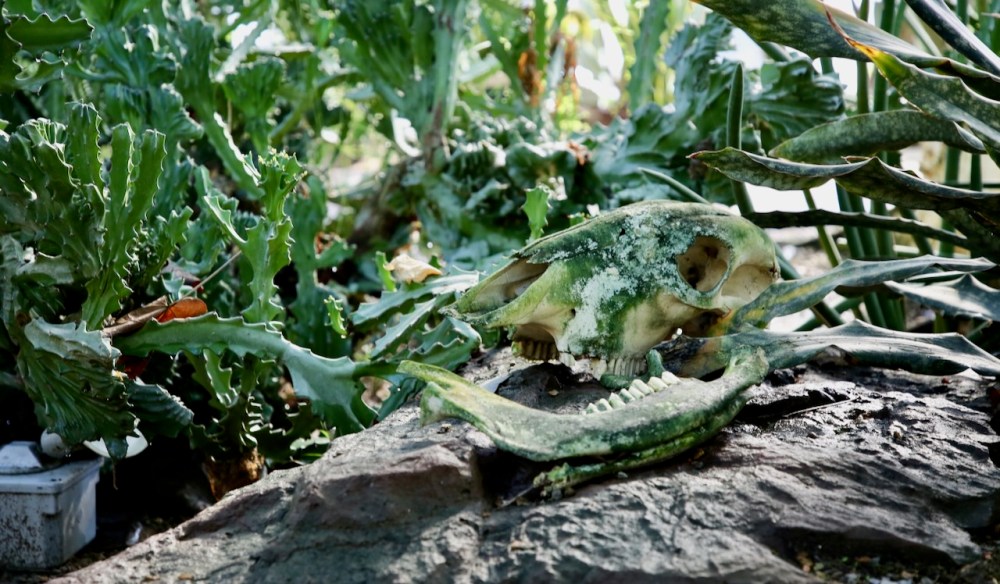
Houston traffic between people getting to work and eating lunch isn’t terrible. We arrived at Baytown Nature Center and the woman who should’ve charged us an entry fee blessed us without one because we seemed too chipper to be here. She knew we were from out of town and that we would never come back (unless we returned like we said we wouldn’t to the Everglades) once we found out what awaited us. We are excited to walk along the water and see so many birds and even more so when we see the sunning alligator, though too far away for a selfie or relocation – good thing we’re not tourons (tourists + morons).


We are distracted by the beauty, and covered from the wind, when my exposed hand starts to swell up like I shoved a cotton ball to replace my knuckles. We will spend the rest of our walk/jog slapping each other’s necks and backs and ignoring the toxic environment we now find ourselves in. We have to laugh that the woman in the kiosk is probably giggling too, but perhaps she coats herself in bug spray before attempting our fate. I don’t know if I’m becoming more allergic or if the mosquitoes are just packing more punch. Just an idea – set up blood donation sites at these parks so we can enjoy them in peace while the bugs drown themselves in tainted juice.


Caleb is still able to talk me into stopping to walk the trail at Butterfly Garden where we see some men fishing. There are not as many mosquitoes here. It has been so long since I have planned and Caleb navigated a road trip that we are using this one to get the kinks out. I thought a visit to Anahuac National Wildlife Refuge would be a great stop, but I, or the park’s website, should’ve clarified which part of the park we had planned to see, as there are a few. We arrive at the visitor center, cross the little bridge, and take the paved path behind the trees – a short detour.

Caleb sees the next southern stop as a 16-mile one-way detour but had I noticed the other stops along the FM 1985, going east, we could’ve completed the loop via Winnie back to I-10, instead of losing eleven miles by turning around. It doesn’t help that our next stop is closed on Mondays, so we’ll have to skip the Shangri La Botanical Gardens in Orange. Caleb is quick to find a replacement stop at Tyrrell Park in Beaumont. At the back of the park is a marsh boardwalk, about the length of a long boat dock, and at the end are two retired men comparing job benefits and lens sizes while they birdwatch since there is no gator action today.



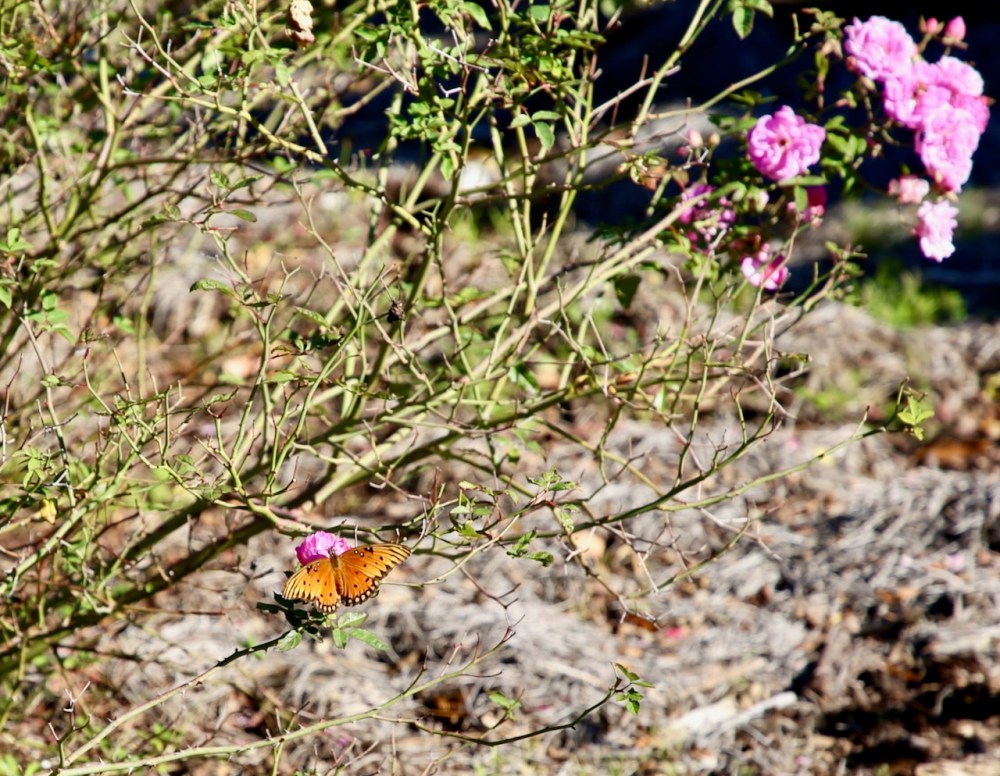
The birds are eating while we walk and stare at their heads and tails. There is something about animal butts that I find intriguing, unlike the human rear-end that’s not as endearing. I’m not alone in this endeavor as there are videos of cats, dogs, sheep, rabbits, etc., with googly eyes, getting scratches, and learning to put them in the air or bounce them like they just don’t care. In the greenhouse, there are plenty of verdant plants, a bit of flowers, and some hungry gnomes. There’s a small garden outside too with some pink flowers that attract the Gulf fritillary or passion butterfly.
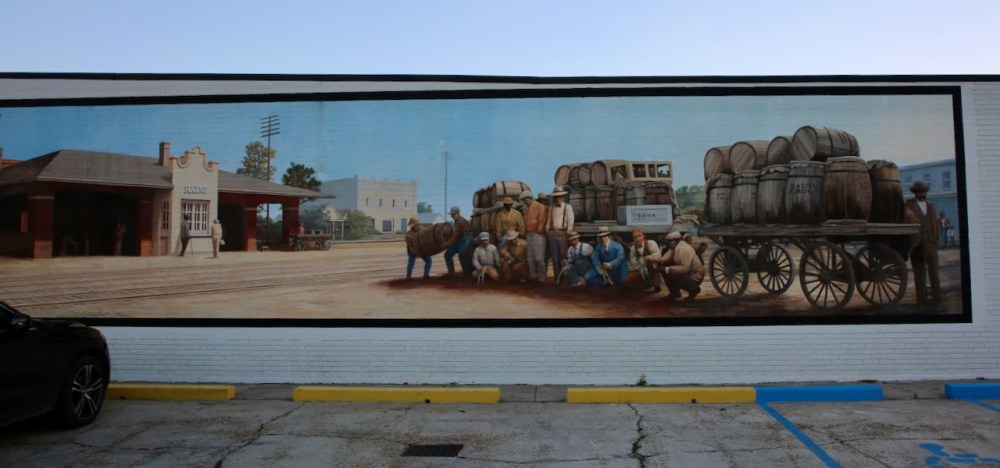
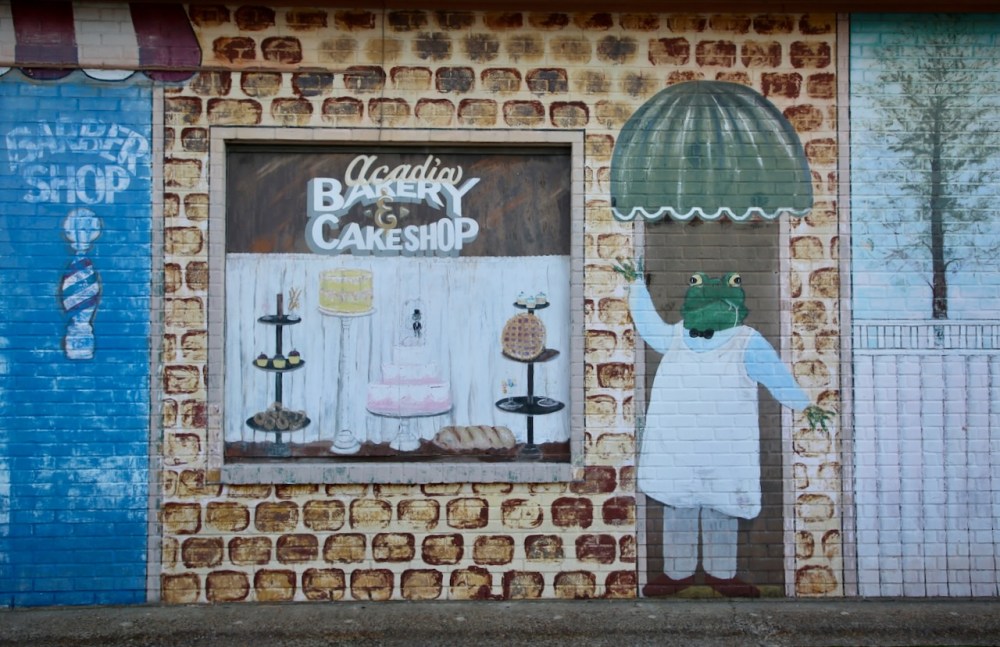

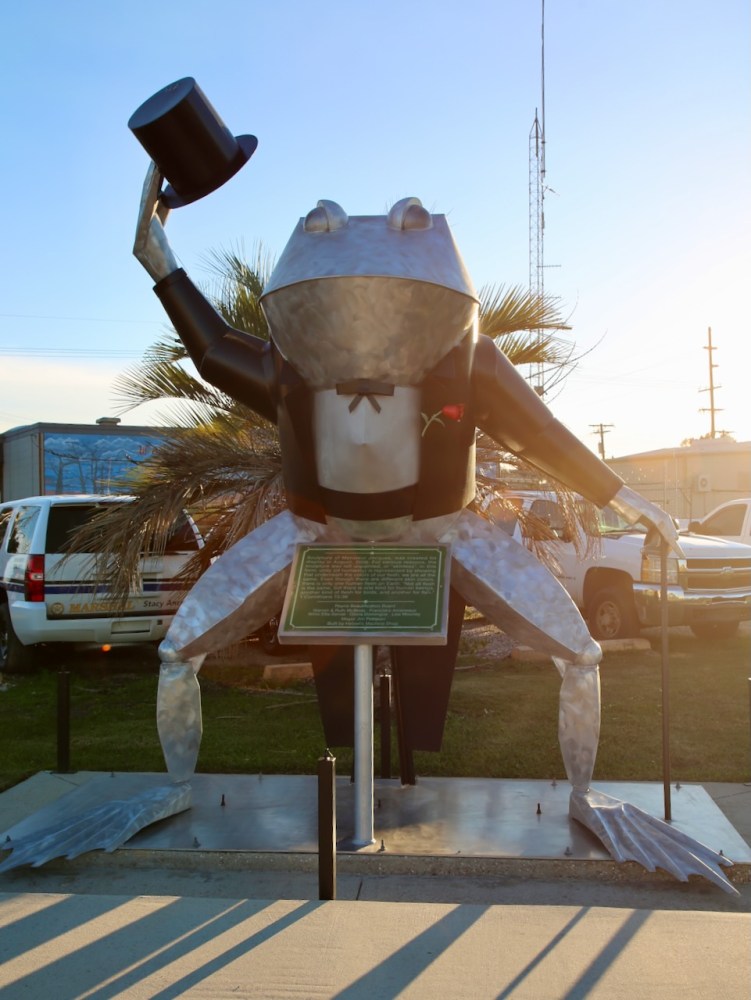
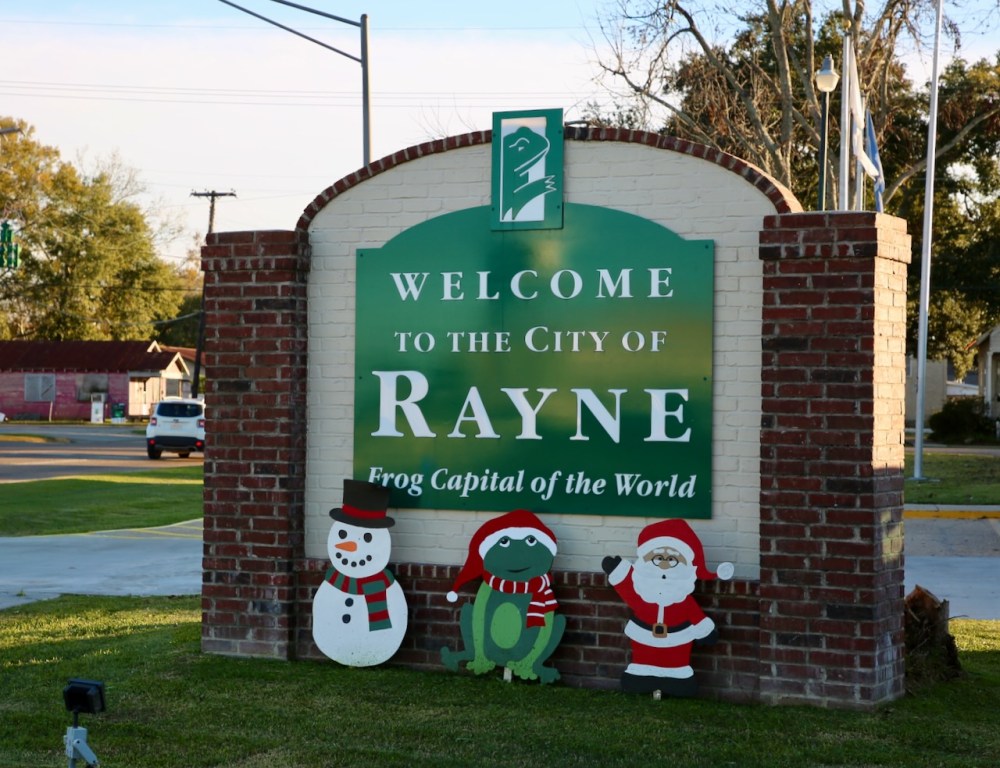
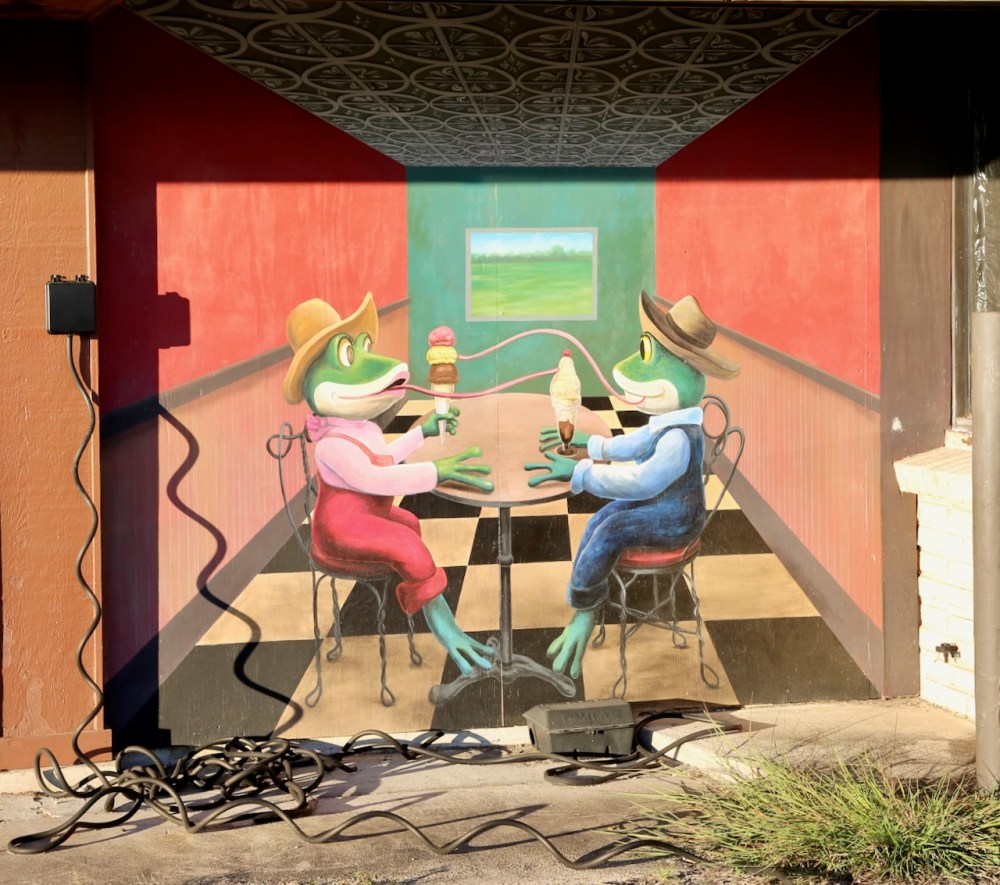
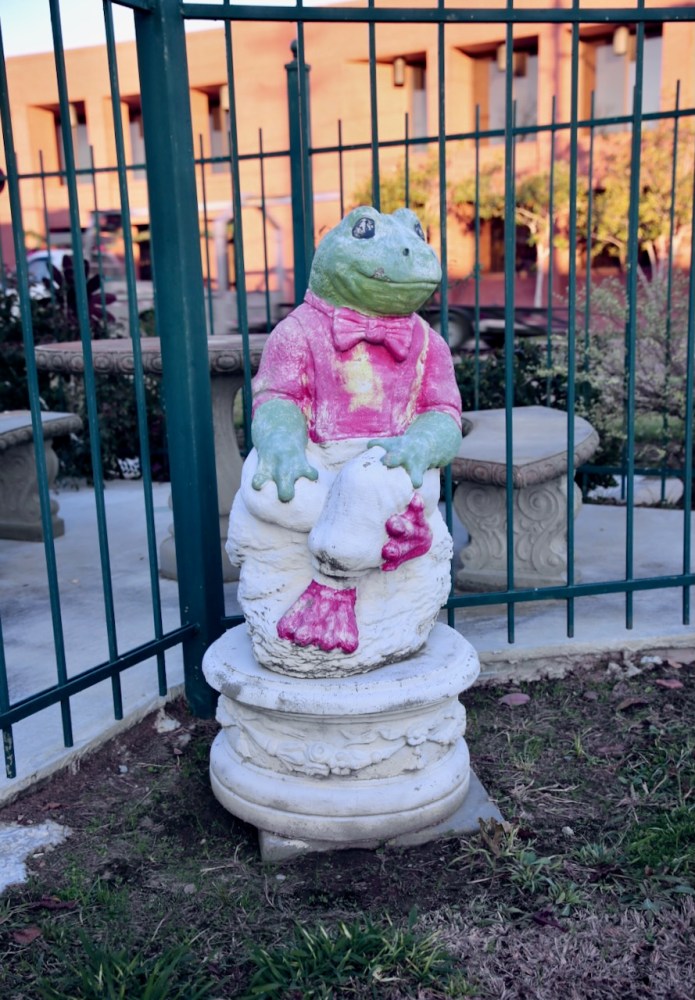
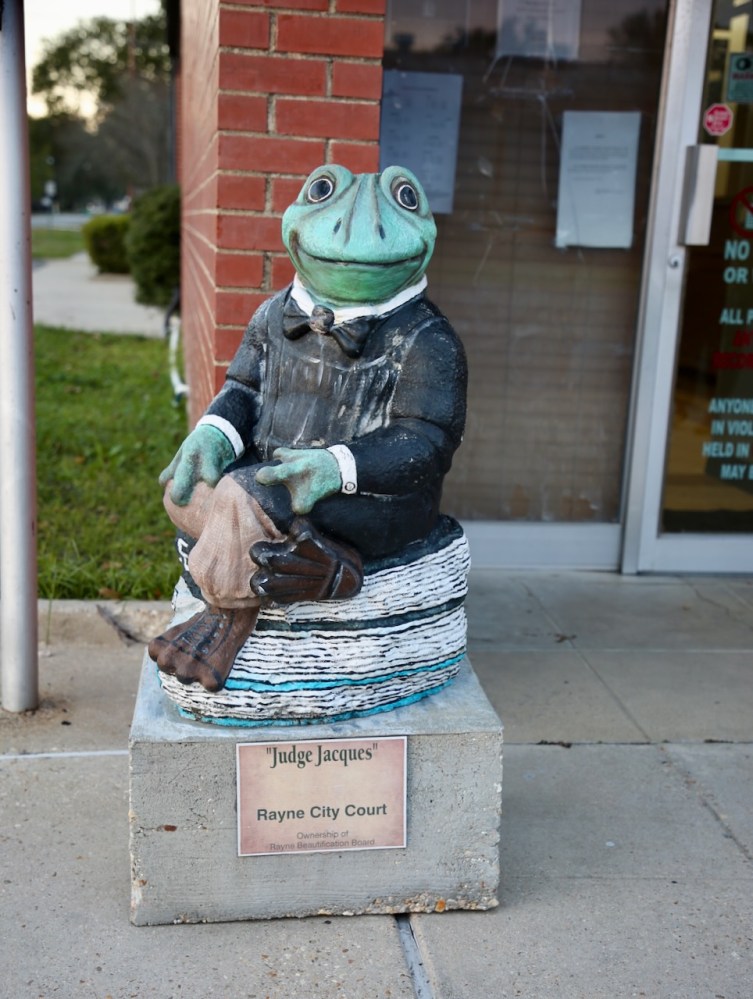
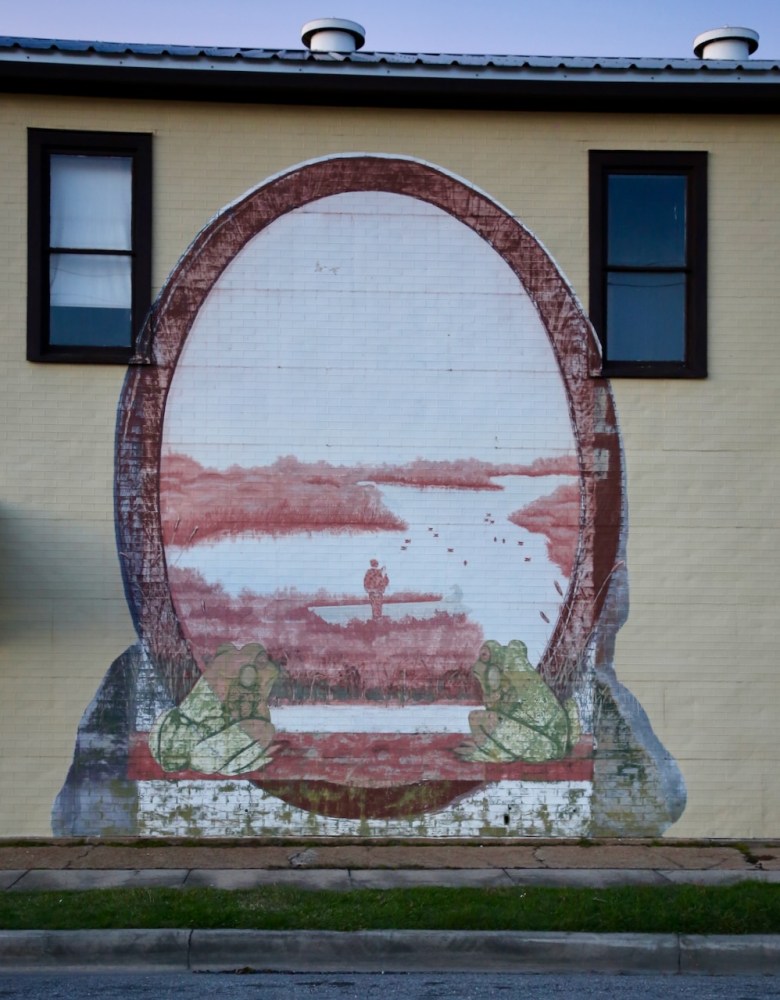
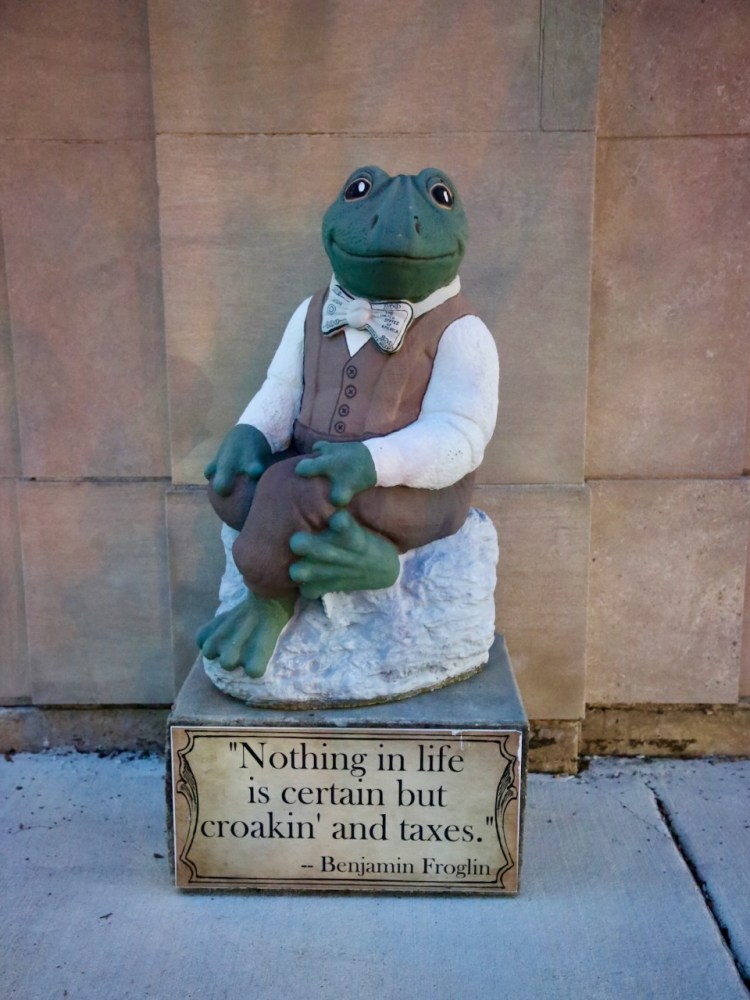
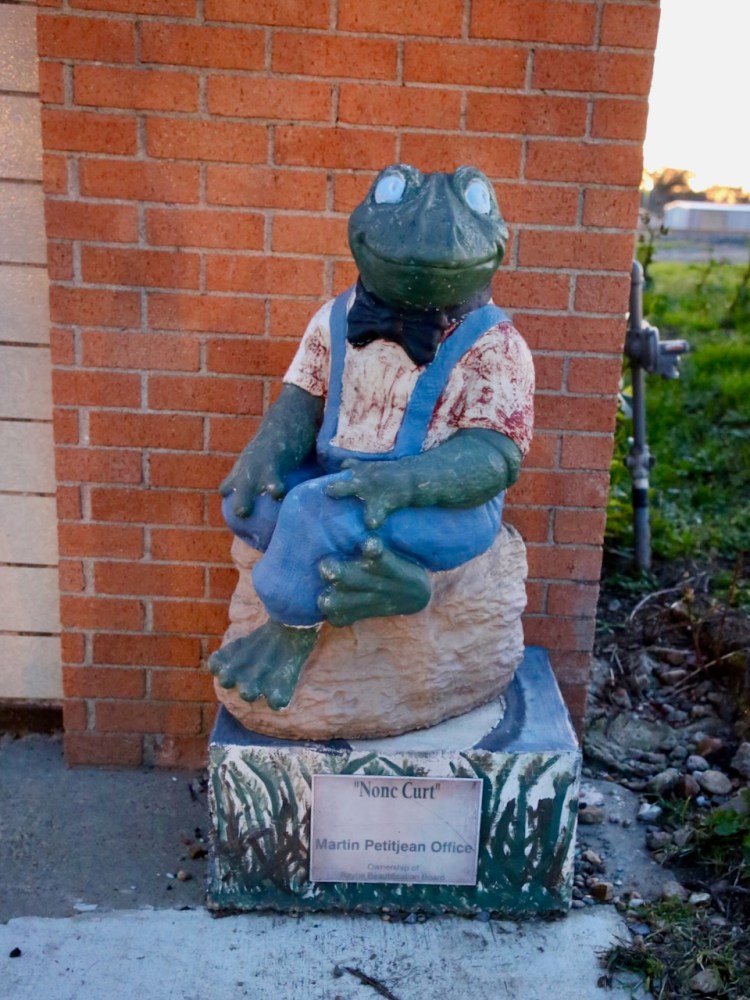
I thought there was a time change, but we’re still in Central Time when we cross into Louisiana. It just takes us two hours to get from south Beaumont to Rayne; the city nicknamed the “Frog Capital of the World.” The frogs aren’t shy either as we are met with a mural on the highway with the “Louisiana City of Murals” ahead. I’m sure the town is grateful for the name change from Pouppeville that came with the railroad, but I imagine how many frogs it took to support being the number one frog legs exporter of up to 10,000 pounds a week in the 1900s; which is what all the hop is about now.


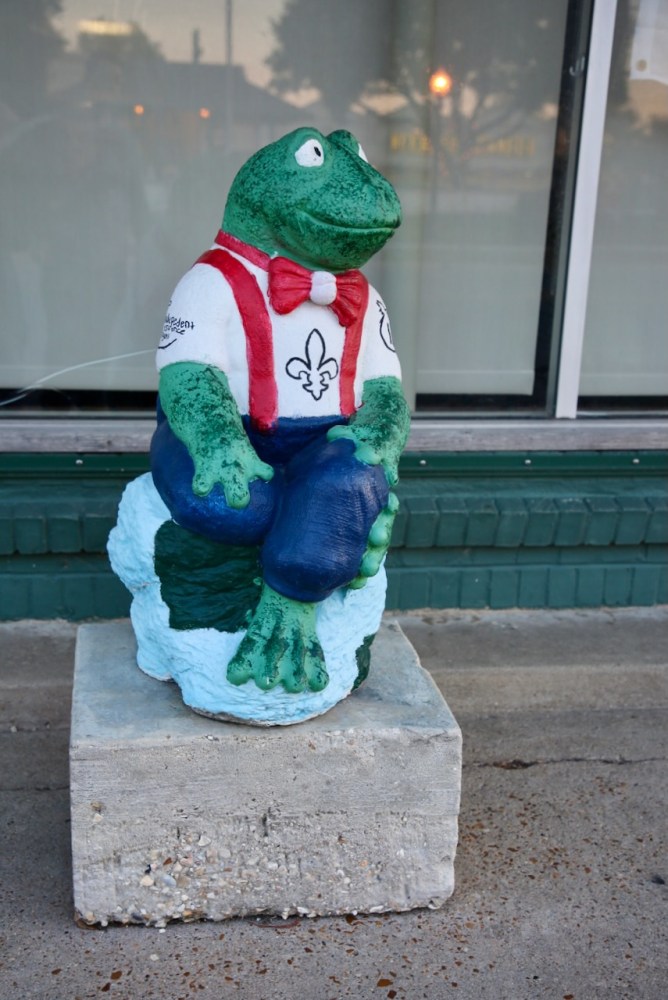
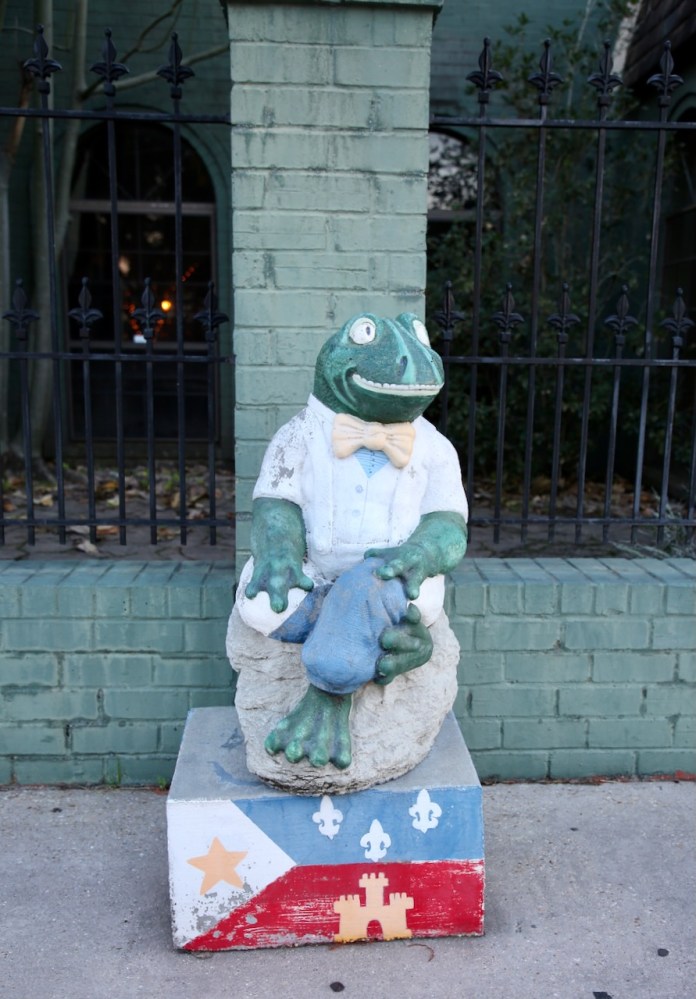

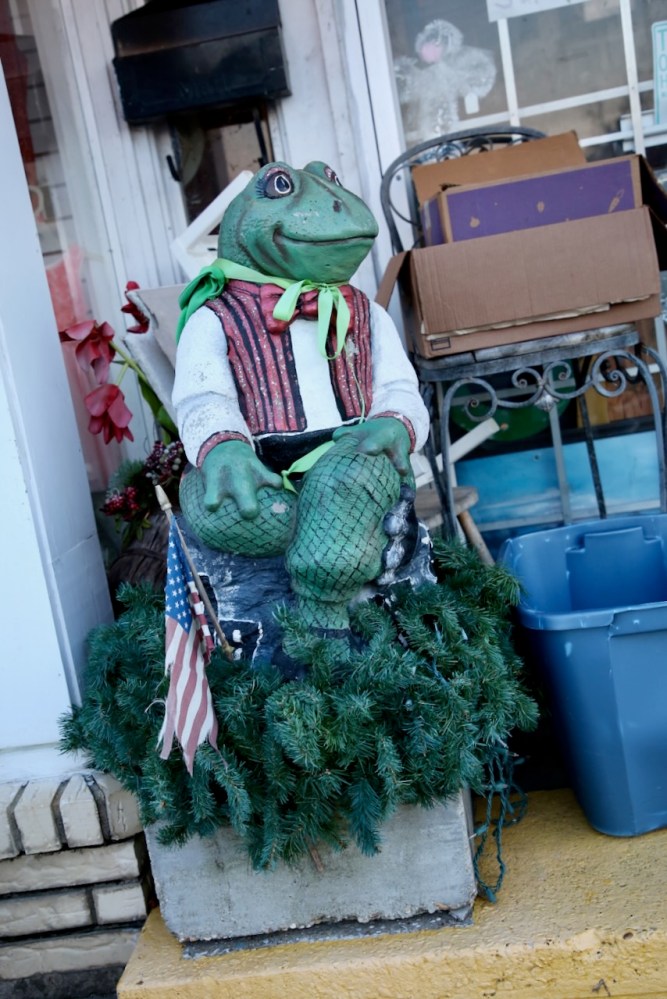
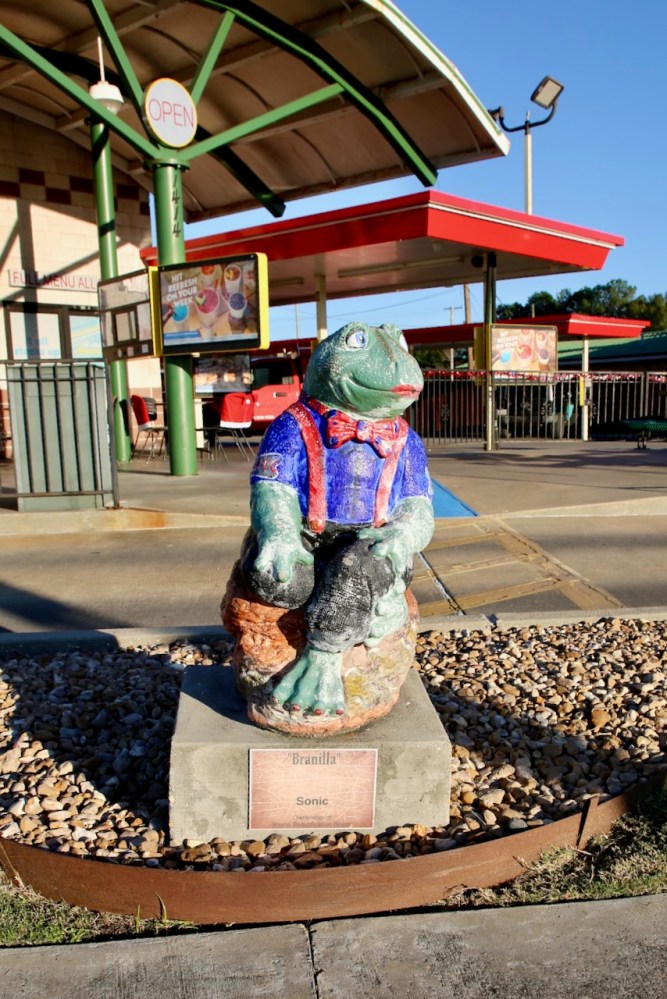
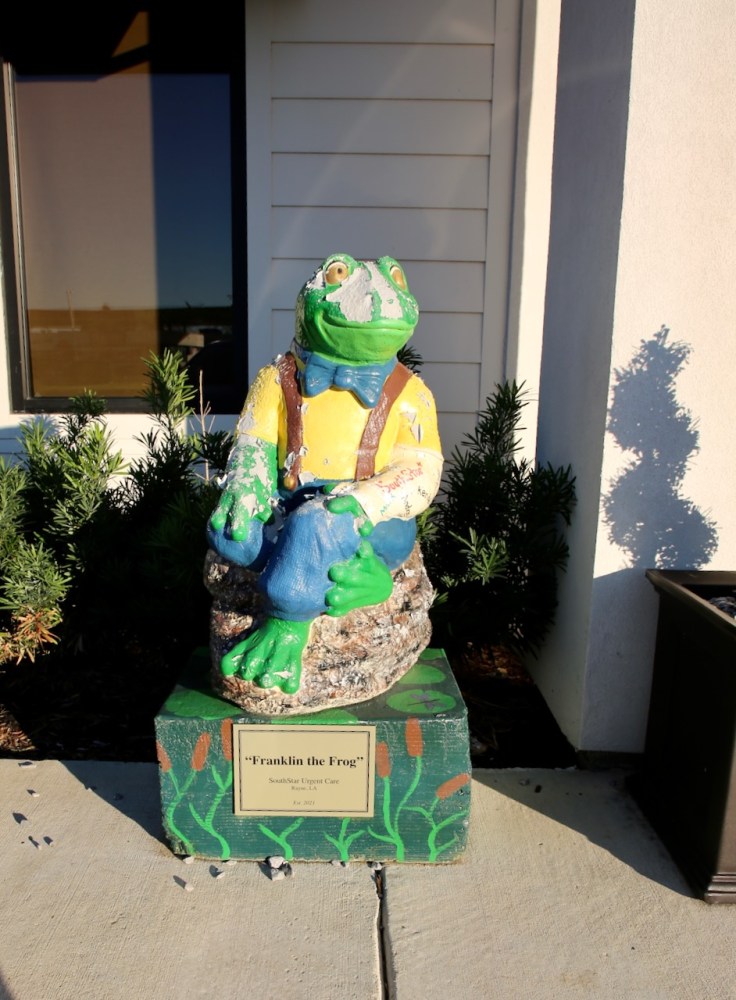
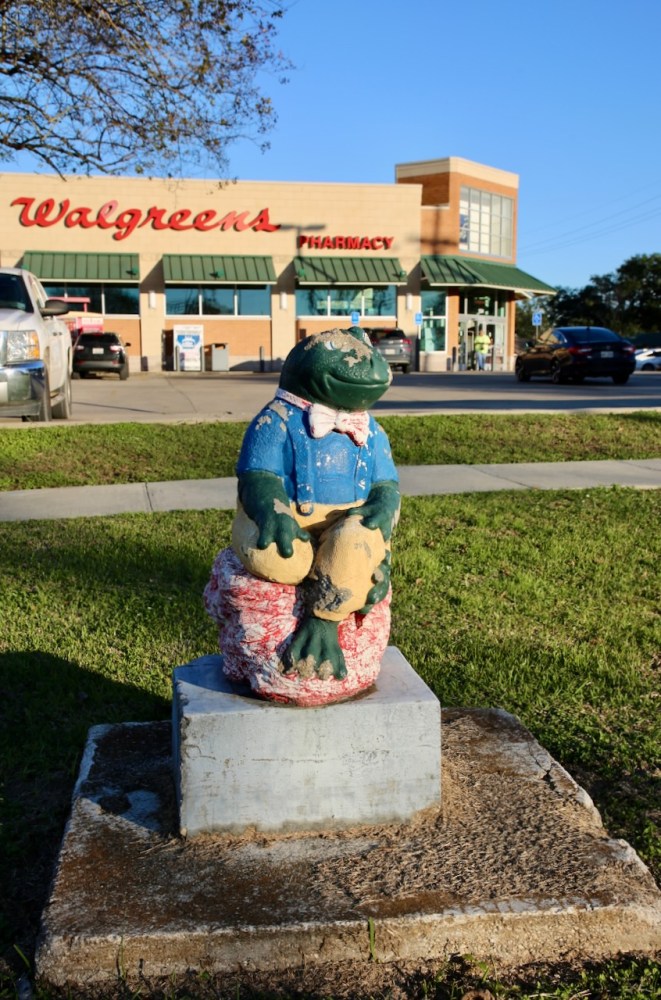
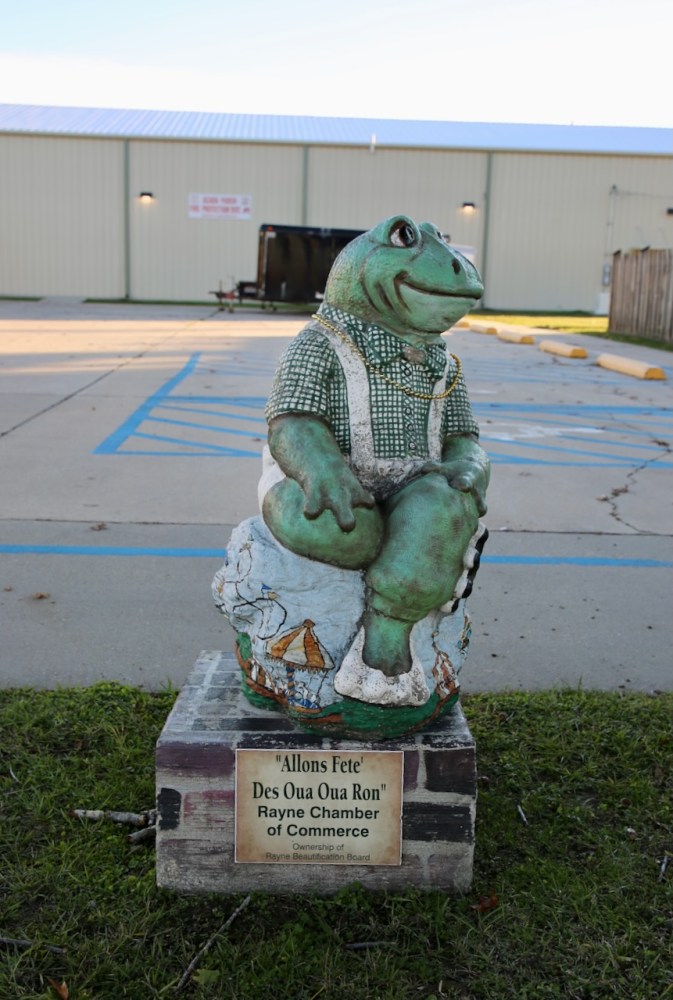
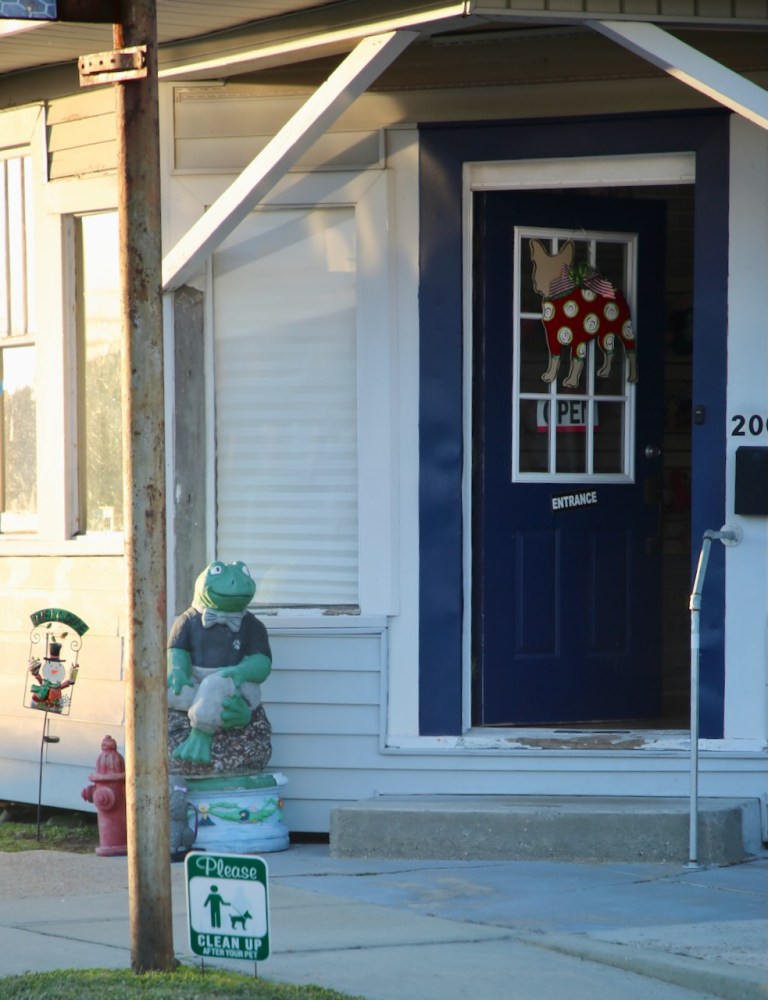
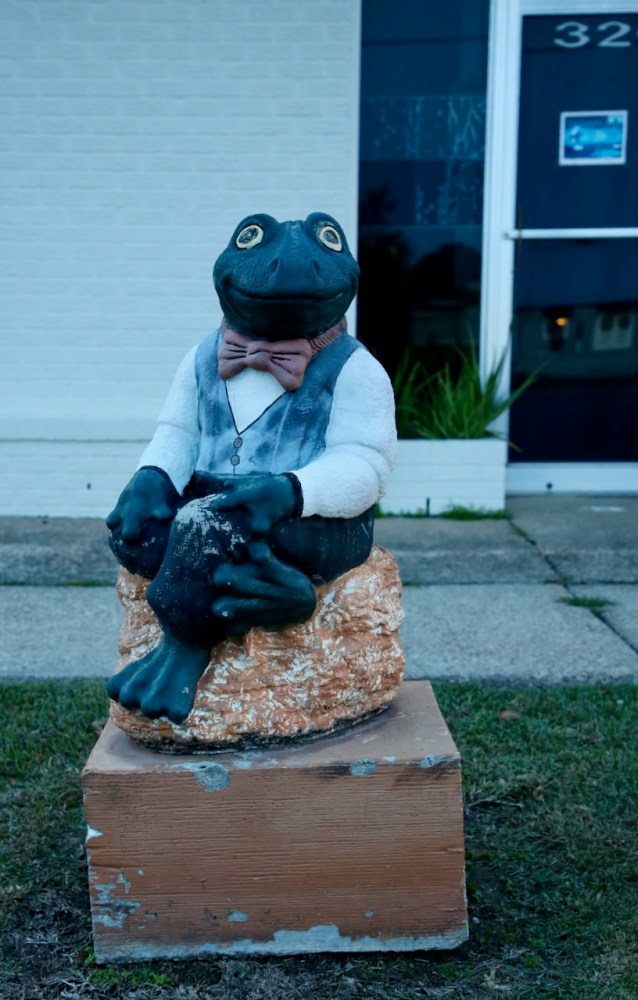
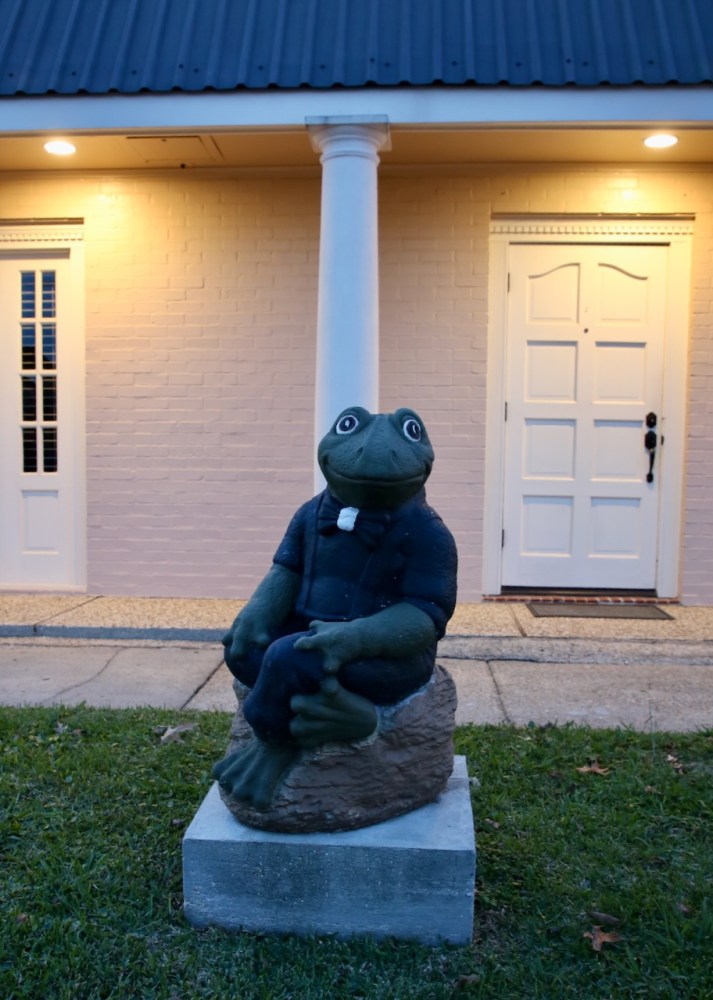
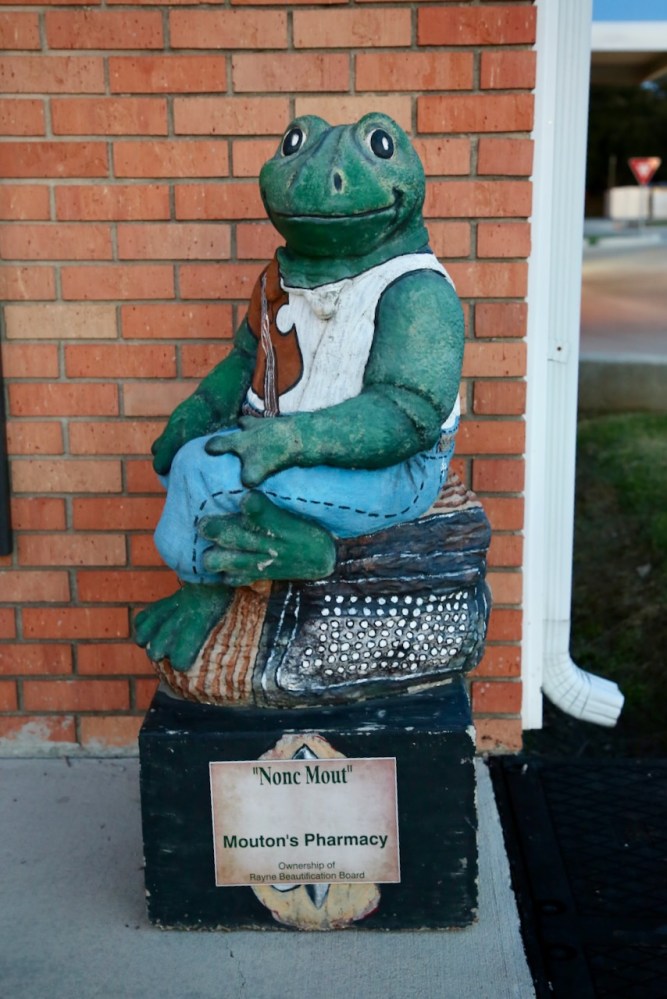
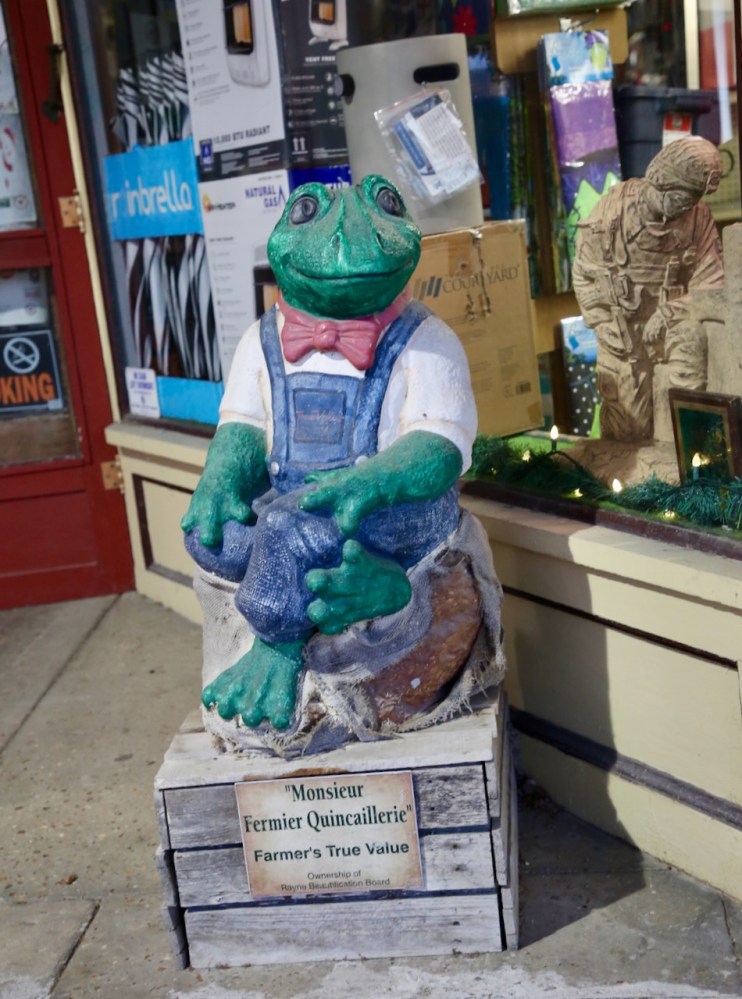
On our way to another mural, I noticed a frog statue that was also part of the plan by the Beautification Board and that set me on a mission to find more. The frogs are in varying stages of upkeep. It’s so whimsical to have something that ties the city together, but remains unique as each statue and mural matches the business’s theme that it represents. I see a frog dressed as a maître d’ and a historic property sign for a warehouse/restaurant and my curiosity and love of food have me looking inside. There are two women at the bar, who invite us in, and another mopping by the round tables of this event venue.

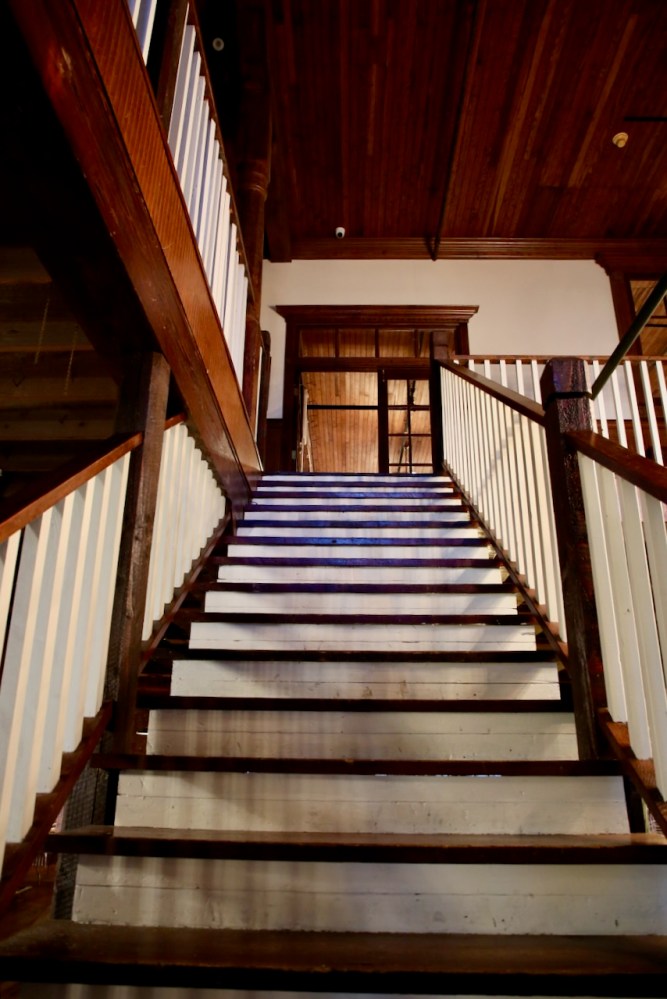

There are clean wooden floors, exposed bricks, and a mural downstairs so I have to ask if we can see upstairs too. We are permitted without question and I daydream about lounging on the couch and using the bathroom, of which I do neither. We are met at the top of the stairs; I heard them asking themselves what we were doing here – for the paper or just interested in old buildings. I gush about my love for the frogs, art, and history and am met with an offer that we check out the back patio below. We skip down the stairs, open the door freely, and peek at not much, but it’s too late.
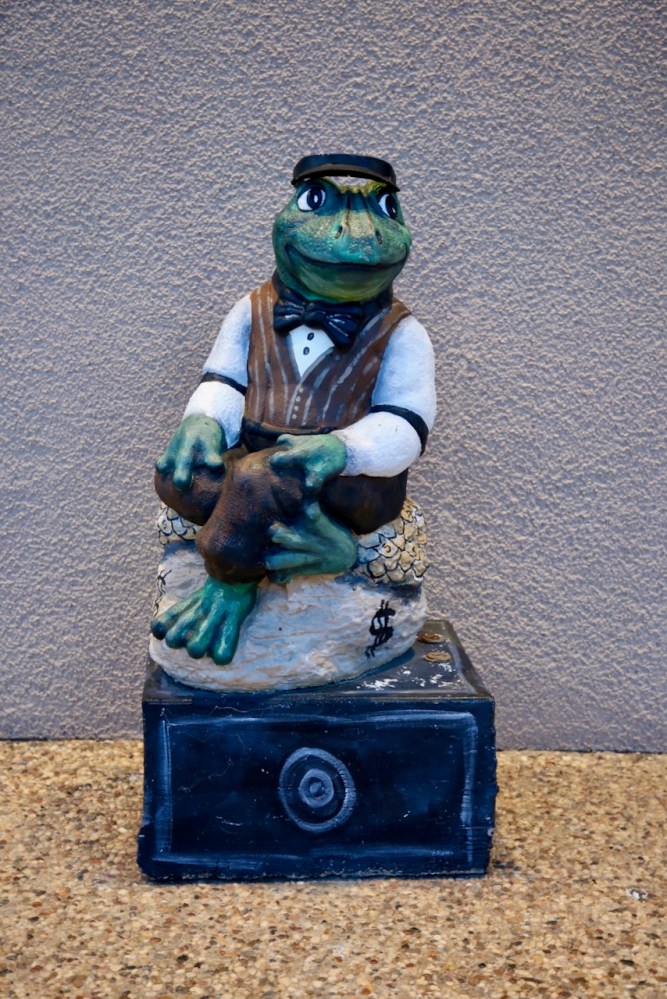


I realize we are locked out while Caleb peeks through a fence to see if there is anything worthy of a photo. Too bad I didn’t take a selfie of us in our predicament, but I was trying to get the mopper’s attention without damaging the door; not knowing the fragility of the wood or the many panes of glass. After the women have their laugh at stranding the strangers, the woman from behind the bar comes to our rescue and we are quick to leave so that we may tell our story and perhaps be lucky to return one day for another tale at this historic warehouse.

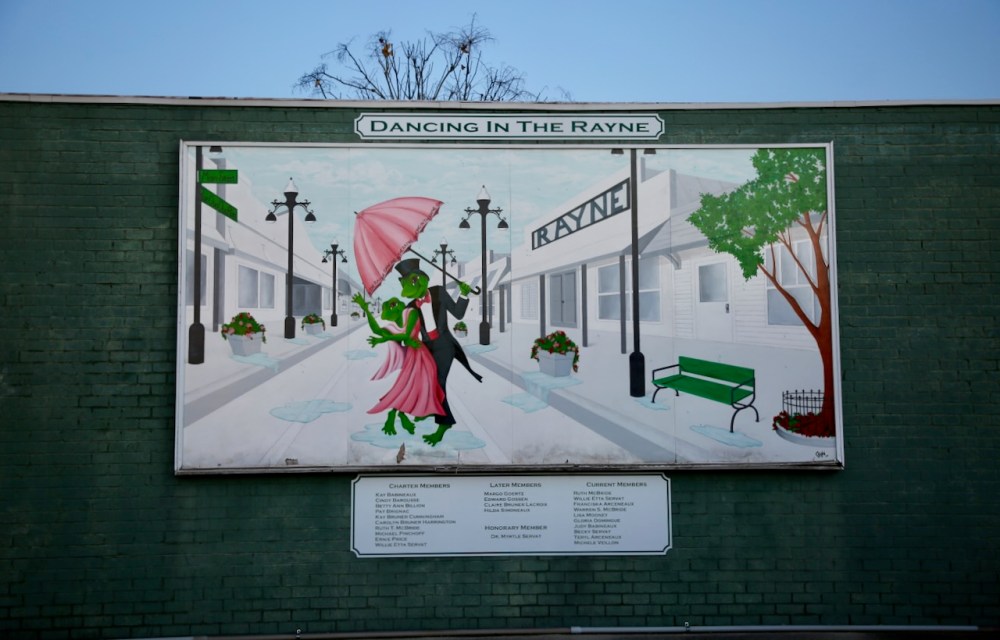
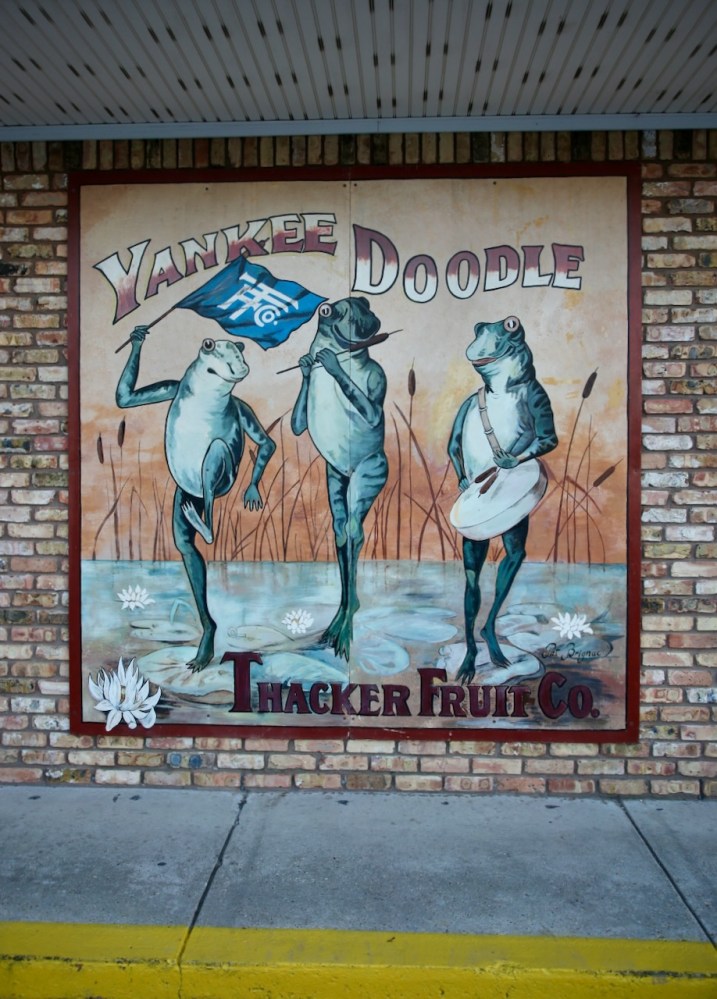
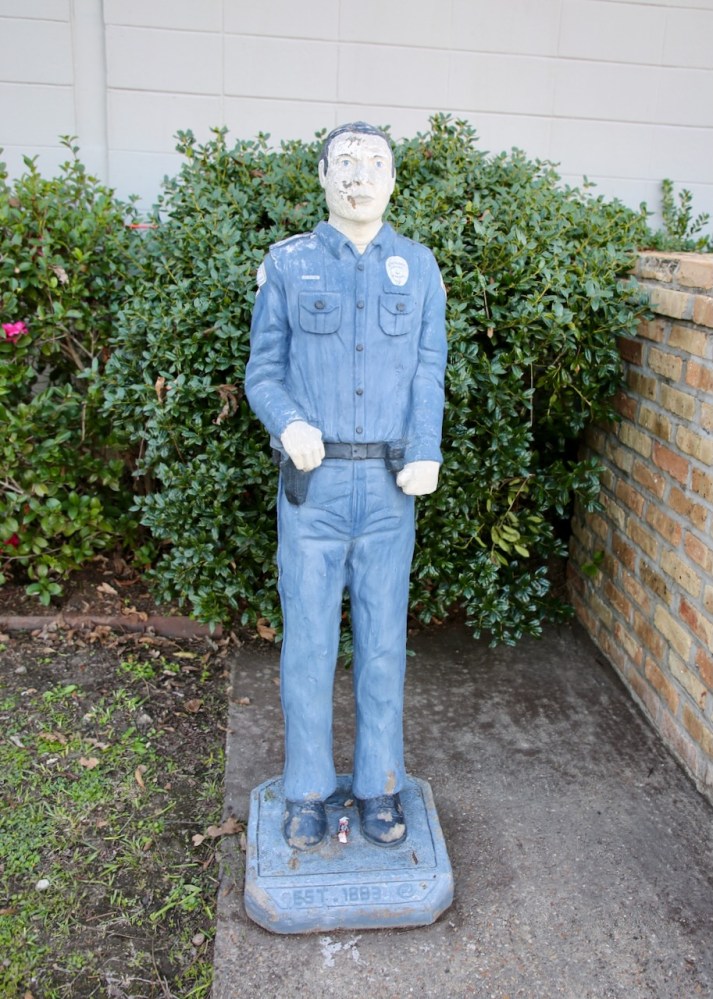
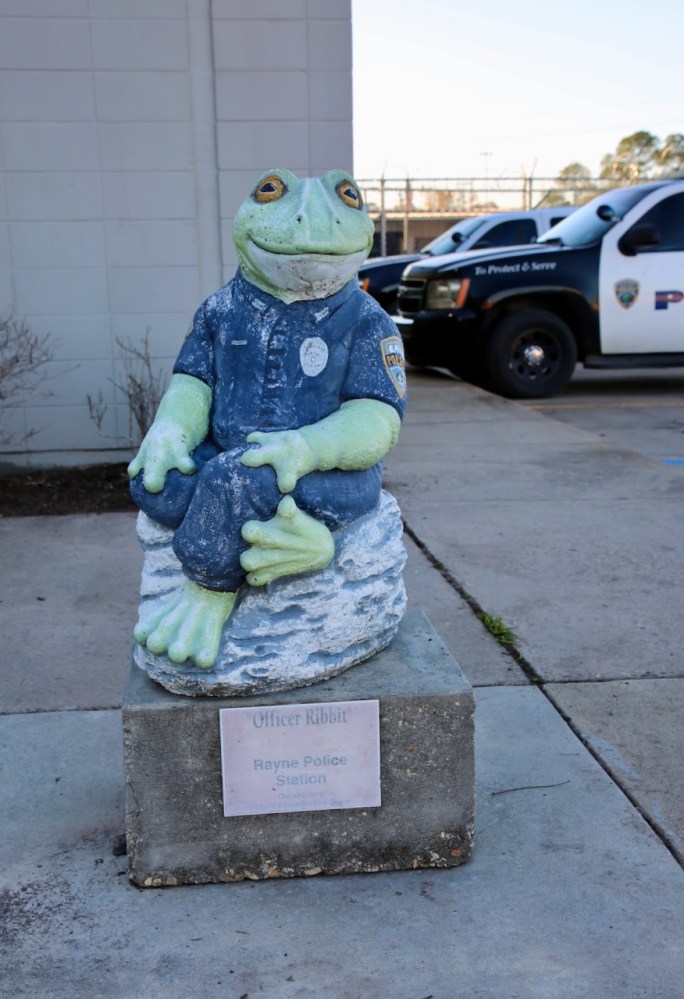
Small towns have such a great feel to them, especially when they’re a good distance from a big town so you can still see concerts, and museums, and visit stores for those few items that don’t find their way to your local shop. There’s a little stage where some families and companies have decorated short boards into trees because they know their neighbors and enjoy celebrating with them, regardless of the occasion; though I may be projecting too much. The only places to have other statues are the police and fire stations and the church to remember their fallen.
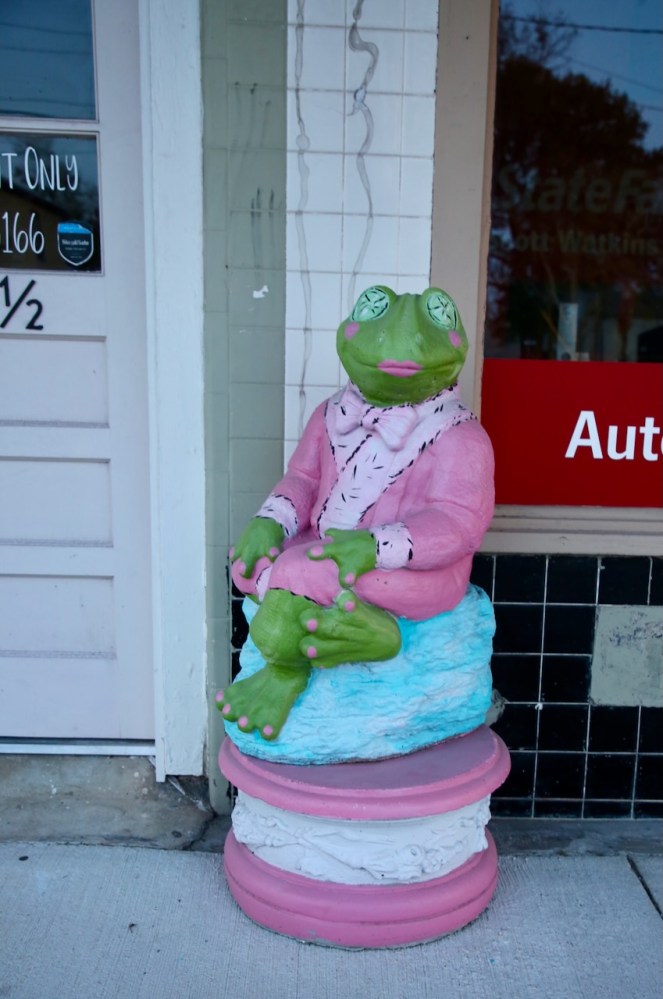
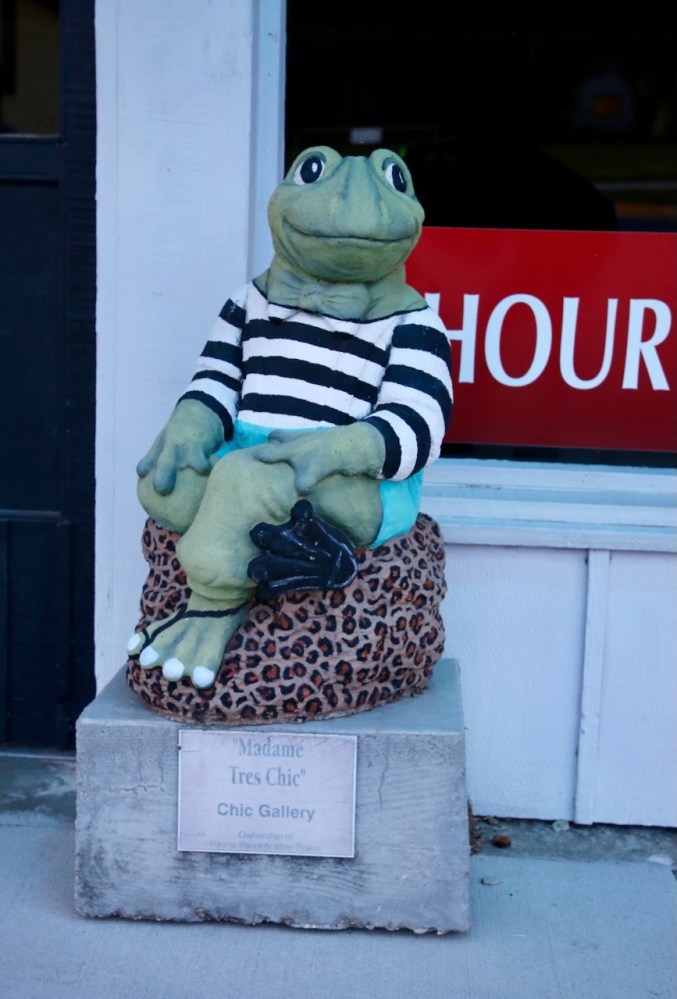
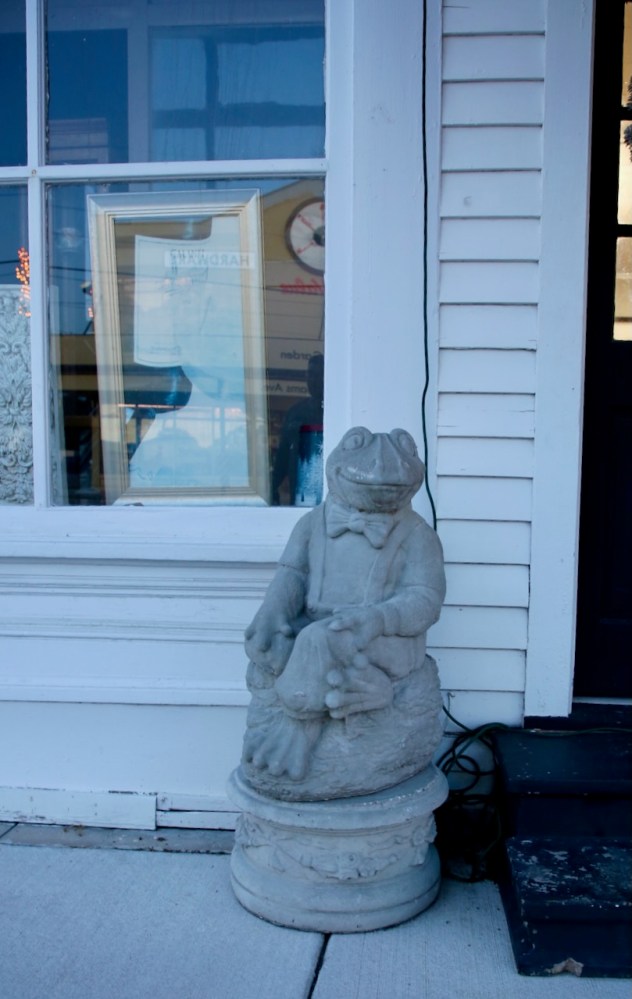
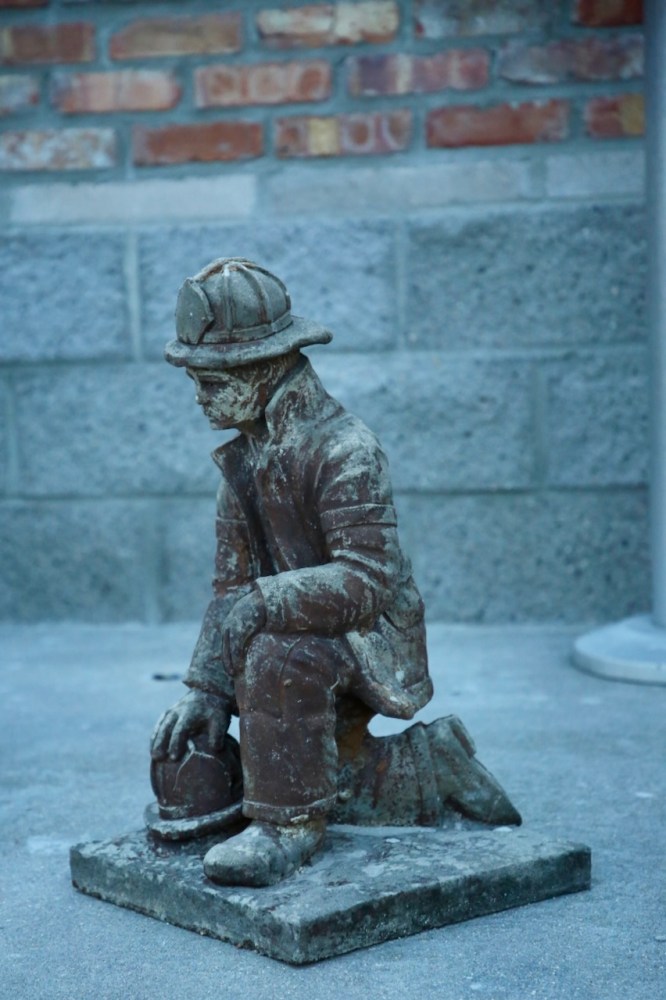
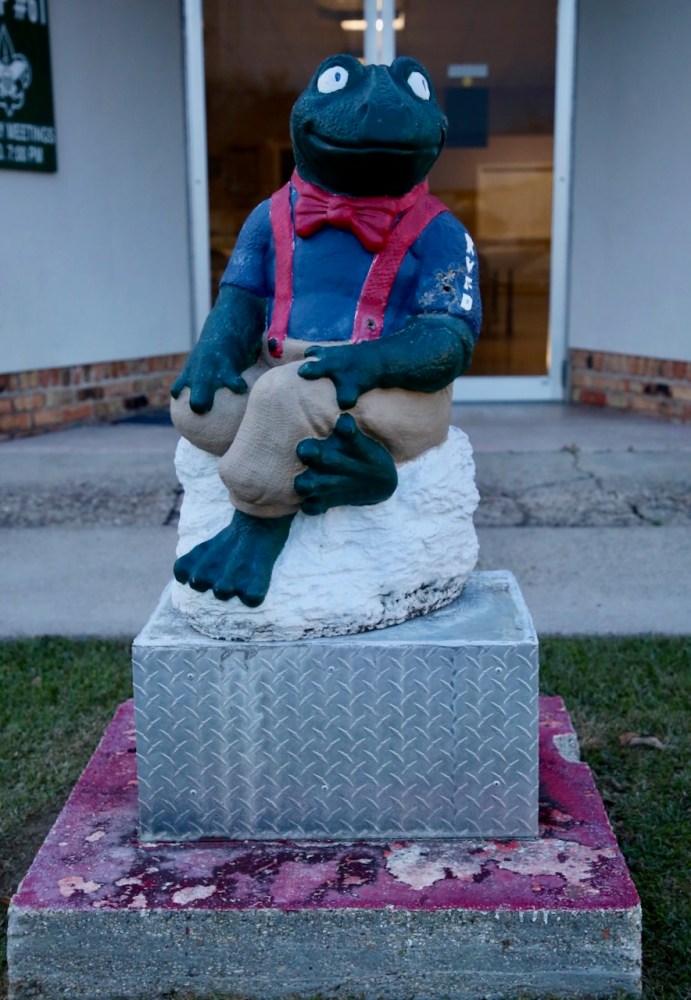
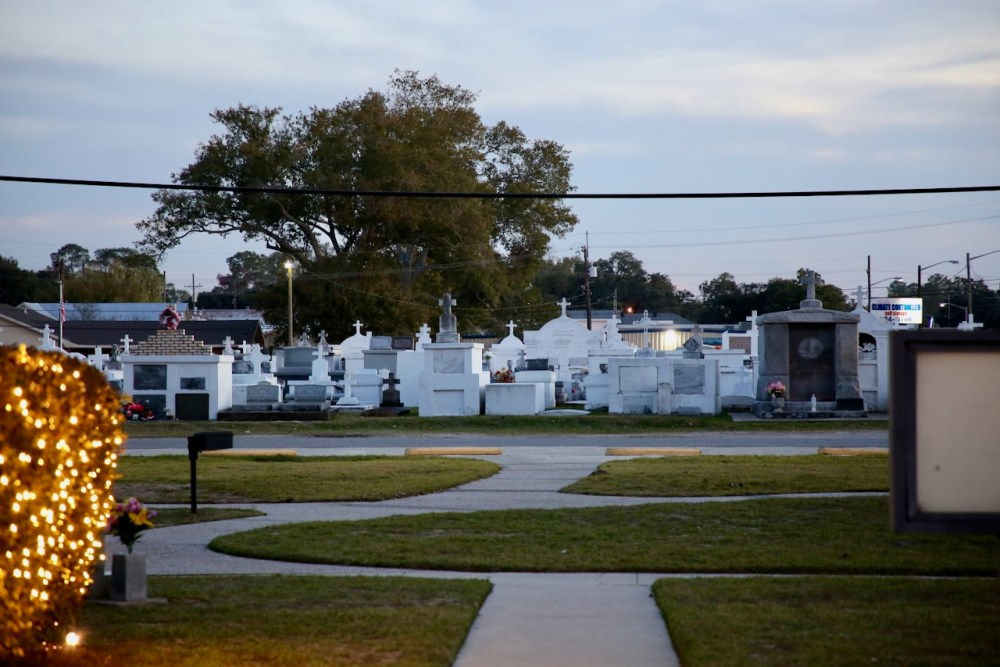
Beside the church is St. Joseph’s Cemetery, the only Christian one with graves facing north-south instead of the traditional east-west. It has been this way since the town was relocated in 1882 and has made it onto Atlas Obscura and into Ripley’s Believe it or Not! with the article posted in the lobby of the Chamber of Commerce. I didn’t notice the directional disaster, just the collection of headstones between us and the self-storage on the other side – pun intended. We explore until nature’s flash and the lack of one on my camera puts an end to our hopping about here.

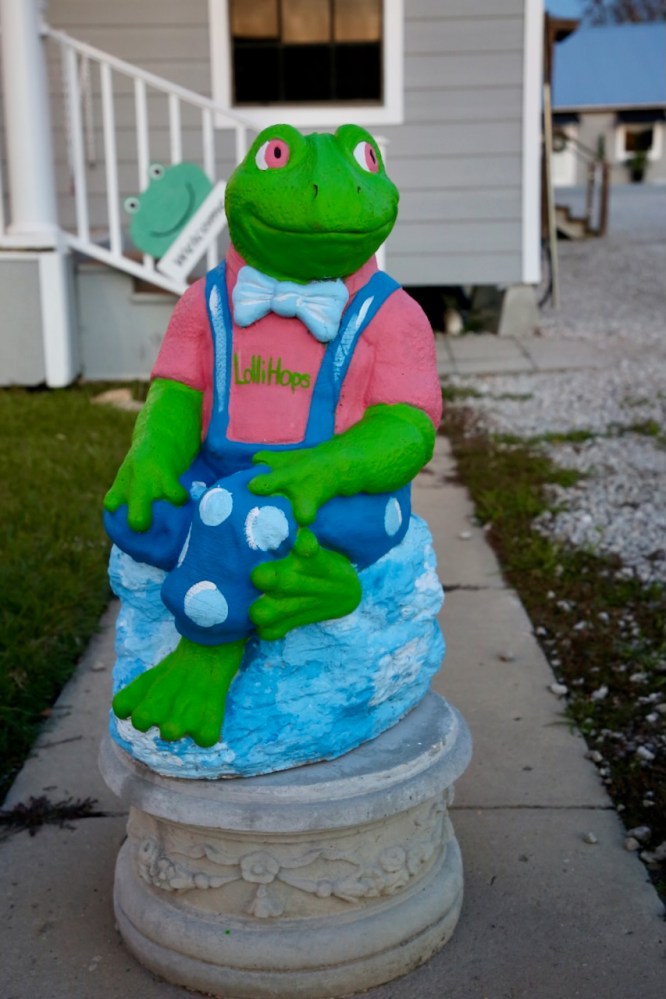

Frogs use their eyeballs to swallow by letting them sink into their mouth and help push their prey down their throat. I use my eyes to eat, but only to connect with my food in a different manner. I thought I was being helpful to our health by buying different rice, instead of the usual noodles, to go with beans and mixed veggies for dinner, but our Sumo Jetboil lining is a bit more temperamental due to its ability to boil a liter of water in four minutes and 15 seconds. The new Flash Jetboil has this feature down to three minutes and 20 seconds, which would have obliterated our meal instead of just burning/attaching it to the interior lining bottom.
We stop for gas on the east side of Baton Rouge and I get an orange sherbet and butter pecan swirl soft serve while Caleb gets a phone cable so we can both charge our phones in the car – ah, the luxuries of technology. He got the wrong adapter end and had to dig the receipt out of the trash and wait in line to exchange it for the correct one. I finish talking with Fallon, the friend we’re driving to visit in Florida, while Caleb sets up camp at Fairview-Riverside State Park, about half an hour from the Mississippi border. It was one of three options I gave us, this one being 38 miles east of Tickfaw State Park.

 TheJessicaness