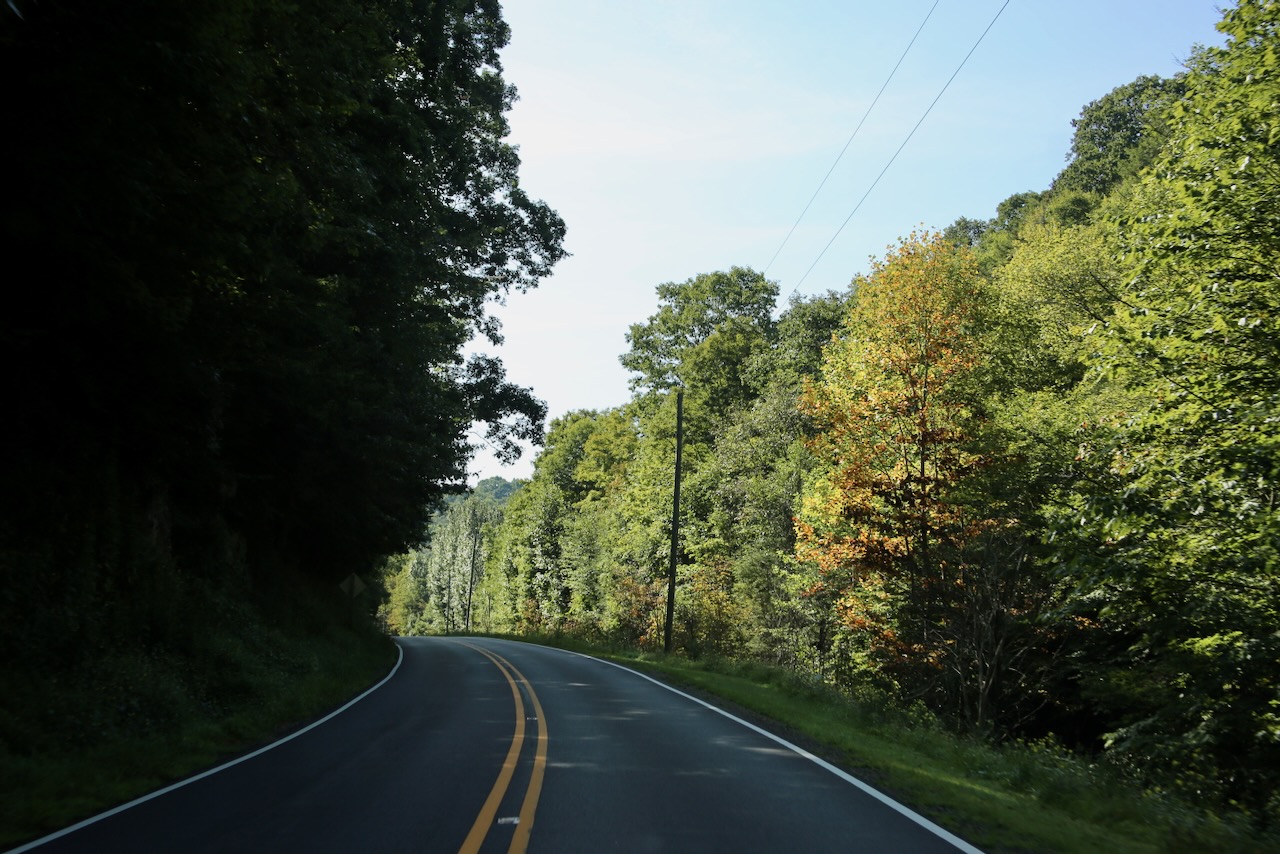
I started driving at 4:40 am after listening to the service attendant crack jokes and try to charge me for yawning, and the truckers talked about their rigs. Today is my last day on the road before meeting up with Caleb and his family, so I take a direct route to the Virginia border from Knoxville. Once in the state, I stick to the two-lane road for half the distance before getting on the 460, which will deliver me to Hampton Roads. This metropolitan region includes Virginia Beach, Norfolk, Chesapeake, and Newport News.
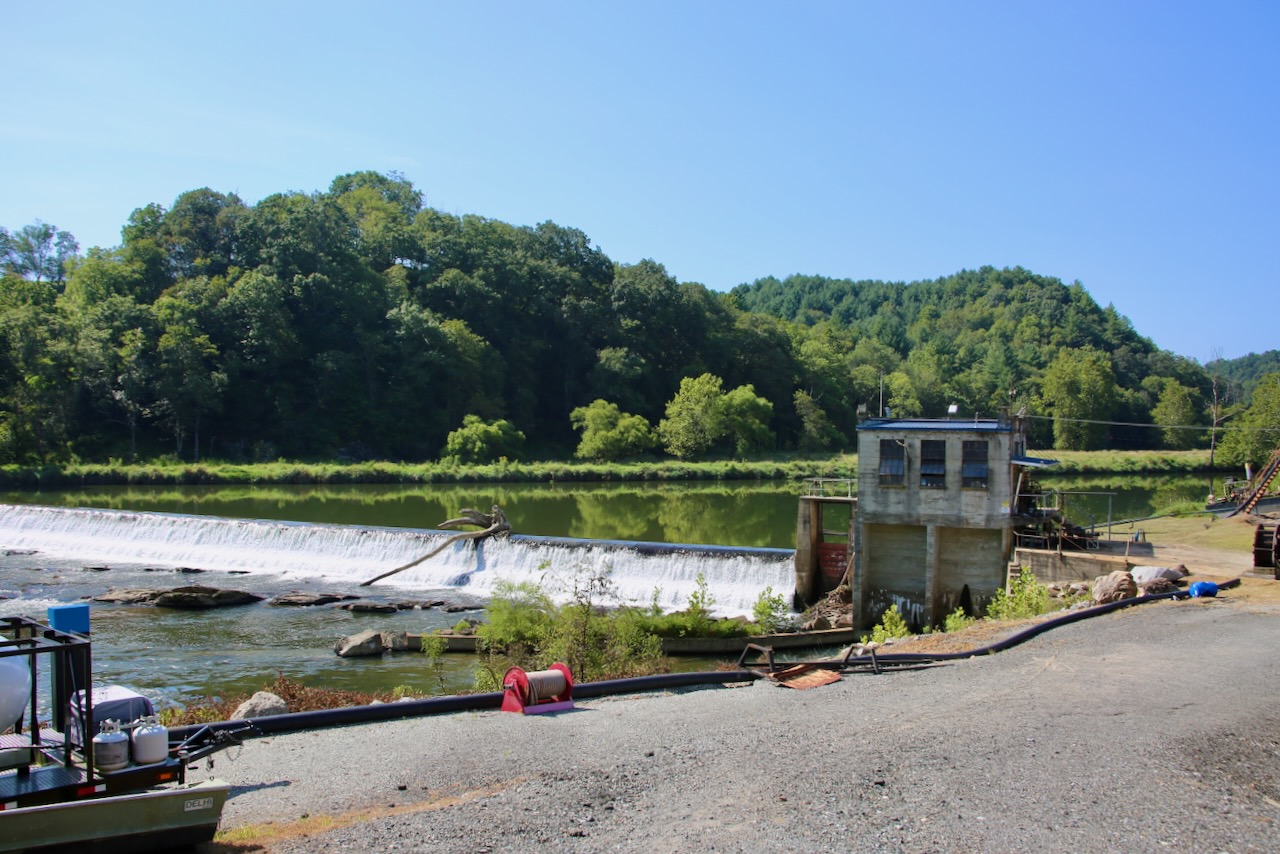
It’s still 68°F when I stop for a walk at Creekside Park and find myself on the Virginia Creeper Trail, the old Abingdon Branch of the Norfolk and Western line. Here, in Damascus, is one of the six remains of the water tanks that the steam trains required every 40-50 miles. There are only concrete pylons left as the tanks were dismantled after the diesel locomotives were introduced in 1958. Another notable path is the Appalachian Trail, which passes through Main Street, making it a great spot for Trail Days.
This event has been held every year since 1987, the weekend after Mother’s Day (in May), for thru-hikers, trail supporters, and enthusiasts. This town of less than 800 residents provides a place for some 20,000 vendors, hippies, and musicians to gather and celebrate the outdoors and the gear that makes surviving the wilderness more bearable. I feel like a local, being one of the few people along the creek or in town. I get to meet a guy and his three rats, though only two said hi, as rats do.
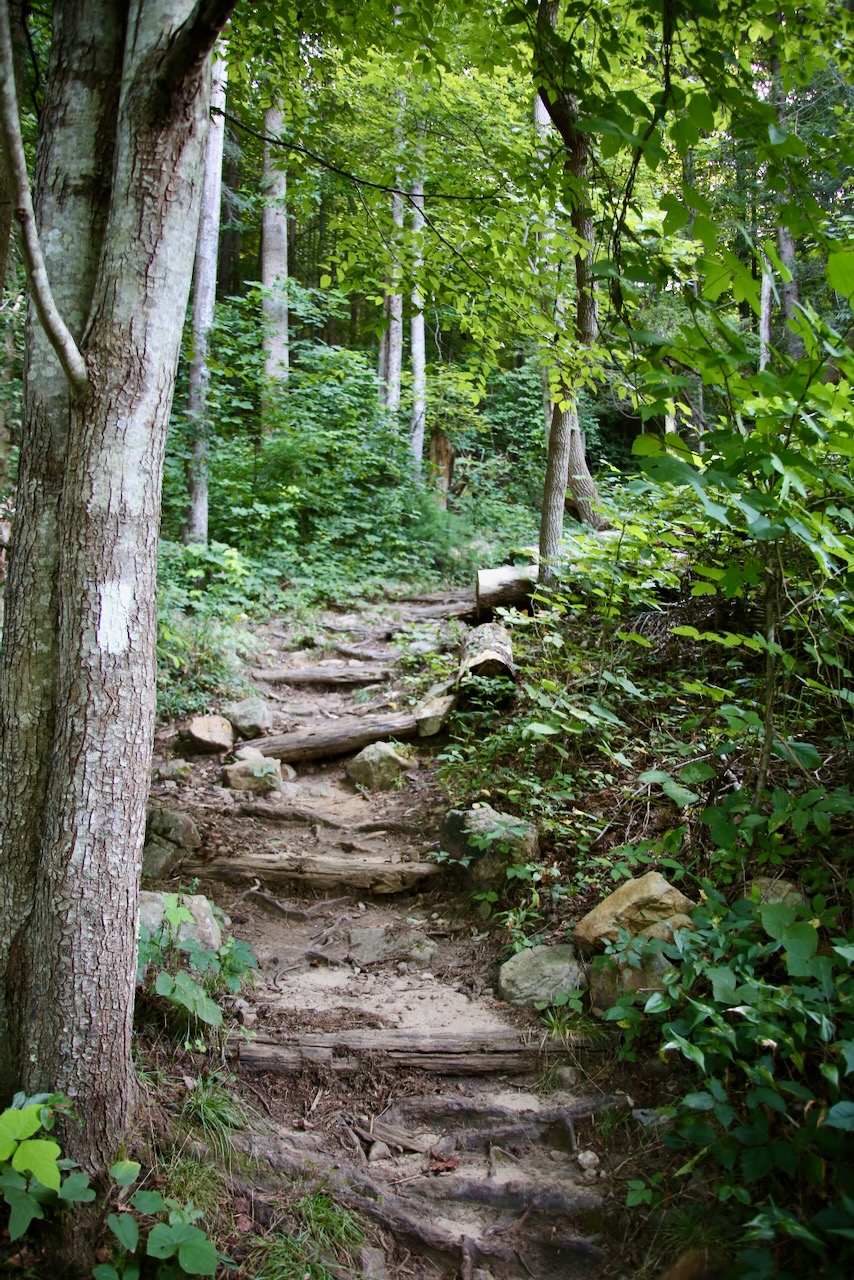
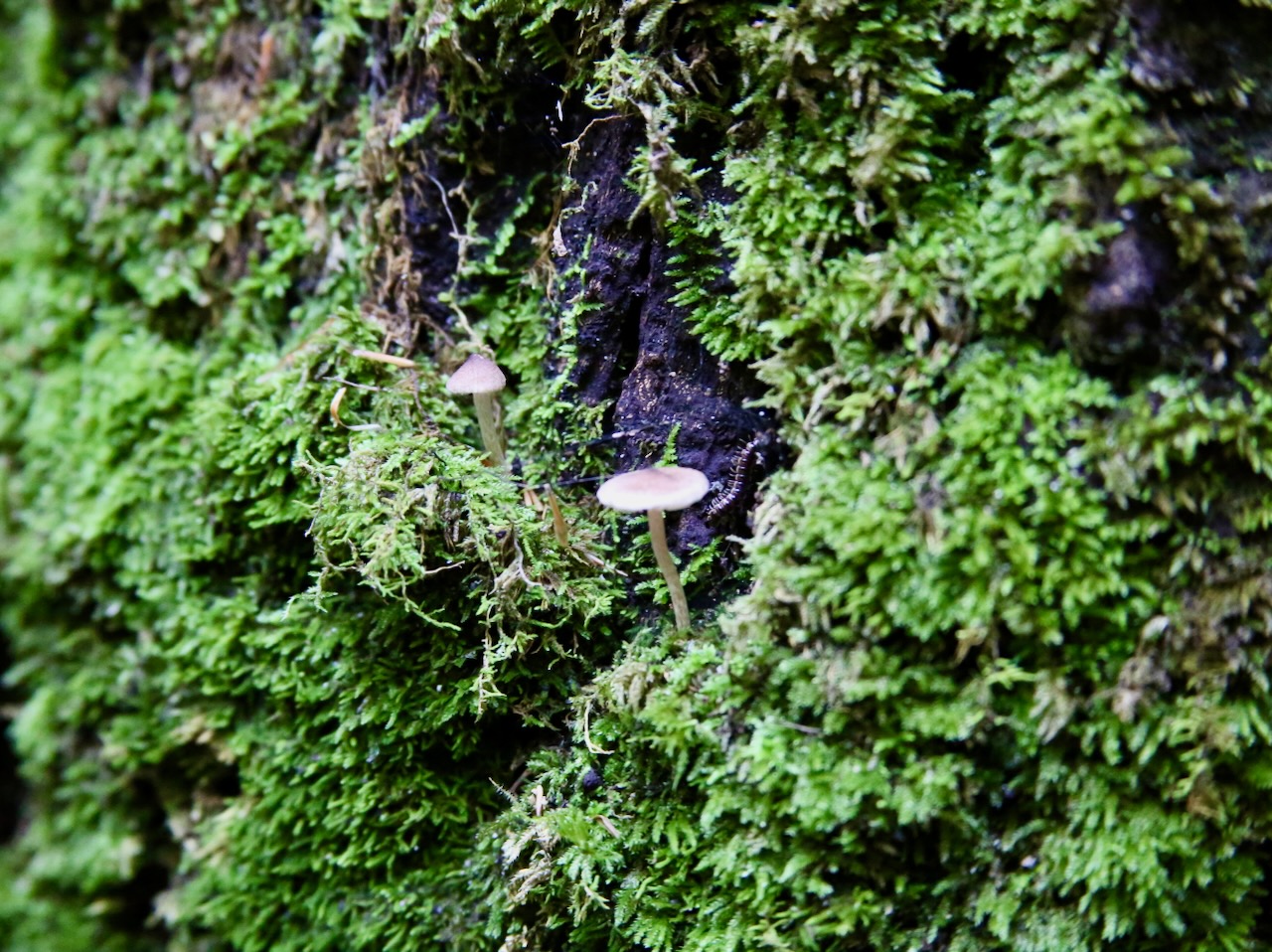
After this, I climb the 23 stairs and continue climbing over roots and logs towards Iron Mountain on the official AT. The southern terminus is Springer Mountain, GA, so I’m roughly at mile 471. Hiking in the forest is always a great adventure, especially with mushrooms with the names: amethyst deceiver, the sickener, and golden oyster. I see a millipede hiding in the moss, but it’s harder to identify. The Crooked Road is Virginia’s Heritage Music Trail, another for Trail Town USA.
It’s 330 miles of venues and festivals that keep the history of blind balladeer Horton Barker, Sparkplug of The Hill Billies, the Sweet Brothers, the Rugby Gully Jumpers, and the old-time banjoist Jont Blevins alive from when they played in the 1930s. They performed for many venues — the White House, on the streets, at fiddlers’ conventions, and local radio shows. There is an annual competition that supports a scholarship for learning traditional music — old-time mountain, country, and bluegrass.
I pass a groundhog (Marmota monax) which is a species of marmot also called a woodchuck; they are defined as a large, stout-bodied ground squirrel. I also see a Little Free Food Pantry, a community program started in 2016 by Jessica McClard in Arkansas. They have since spread to Canada, Italy, the Netherlands, Australia, and Thailand, with some including a cooler or fridge, a microwave, and others including toiletries, baby products, and pet foods.
Grassroots initiatives can meet the local needs with a speed and personability that big government isn’t structured to provide because they’re better at building highways and hospitals (just not always on time or where they’re needed). Enter, the Blue Ridge Parkway. I stopped at a few views along the way and watched a raccoon cross lanes of traffic and make his way towards a tall field of green before we both carried on. I wish I had hiked there, but that would have put me in Virginia Beach too late.
I stop for more caffeine, a mocha Bang and a coconut water with espresso, to power through three hours on the highway. I get to Kris’s house around dinner time, have salad and pretzel bread, and then the kids, nieces and nephews, have s’mores. We’ll get back to the hotel room that the Navy is paying for hours later as his sister’s family and dad go to a nearby hotel as well. Even though today was long, I’ll stay up longer than necessary.
I take another shower, having taken one last night, and being grateful for the opportunity. I toast the hotel’s English muffin and use my own peanut butter and jelly before continuing east. This morning has me crossing the Mississippi River, where an artist in 1954 had the idea of building the pyramids of Giza at two-thirds their size for their namesake in Egypt. The tenth-tallest pyramid in the world was built in 1991 as a 20,000-seat arena. In 2015, it became a megastore, complete with a hotel, restaurants, a bowling alley, an archery range, and an outdoor observation deck.
I saw the Bass Pro Shops sign, and that was the last I thought about it. Ducks Unlimited operates a museum on waterfowl hunting and wetlands conservation inside the store. This pyramid would’ve been worth the visit, but sometimes the better looking the building, the fewer people allowed in, especially in a room with a view. This is when the adage, “It never hurts to ask,” would have come in handy. Instead, I drove further north up the river to Meeman-Shelby Forest State Park. I avoided the red velvet ants, which sound petworthy, but are also called “cow killer” for their extremely painful sting.
The park is a welcome stop after two-plus hours in the car, but the attack of mosquitoes is always an inconvenience. It just matters what mood I’m in, how much I want to be stung, since I know I’m in their territory and yet refuse to wear deterrent spray. There are more hiding in the car from last night as I make my way back to Memphis. I got lucky at one intersection because of a faded sign from another direction, but I’m approaching a stop sign and get lucky enough to stop a girl in her truck with my lost-looking face, who asks which way I’m going.
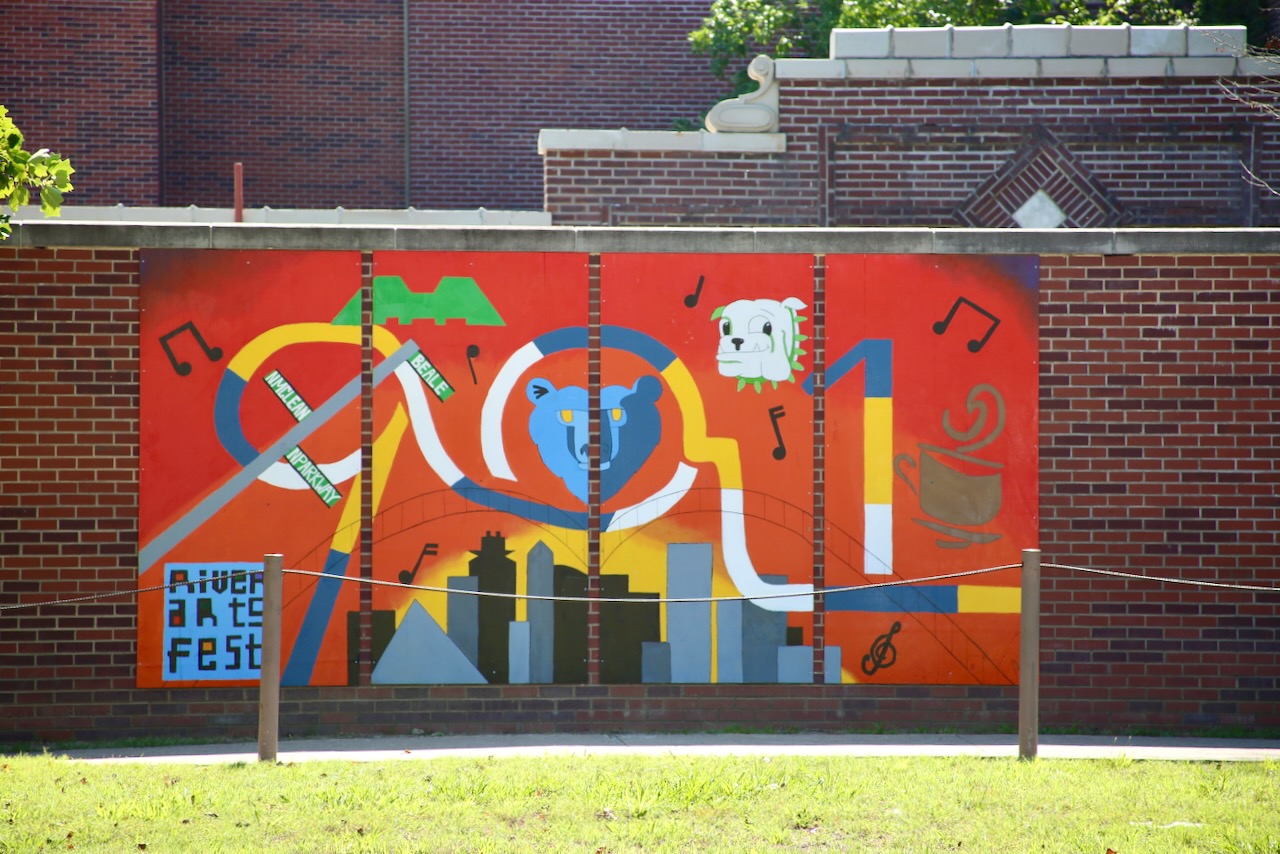
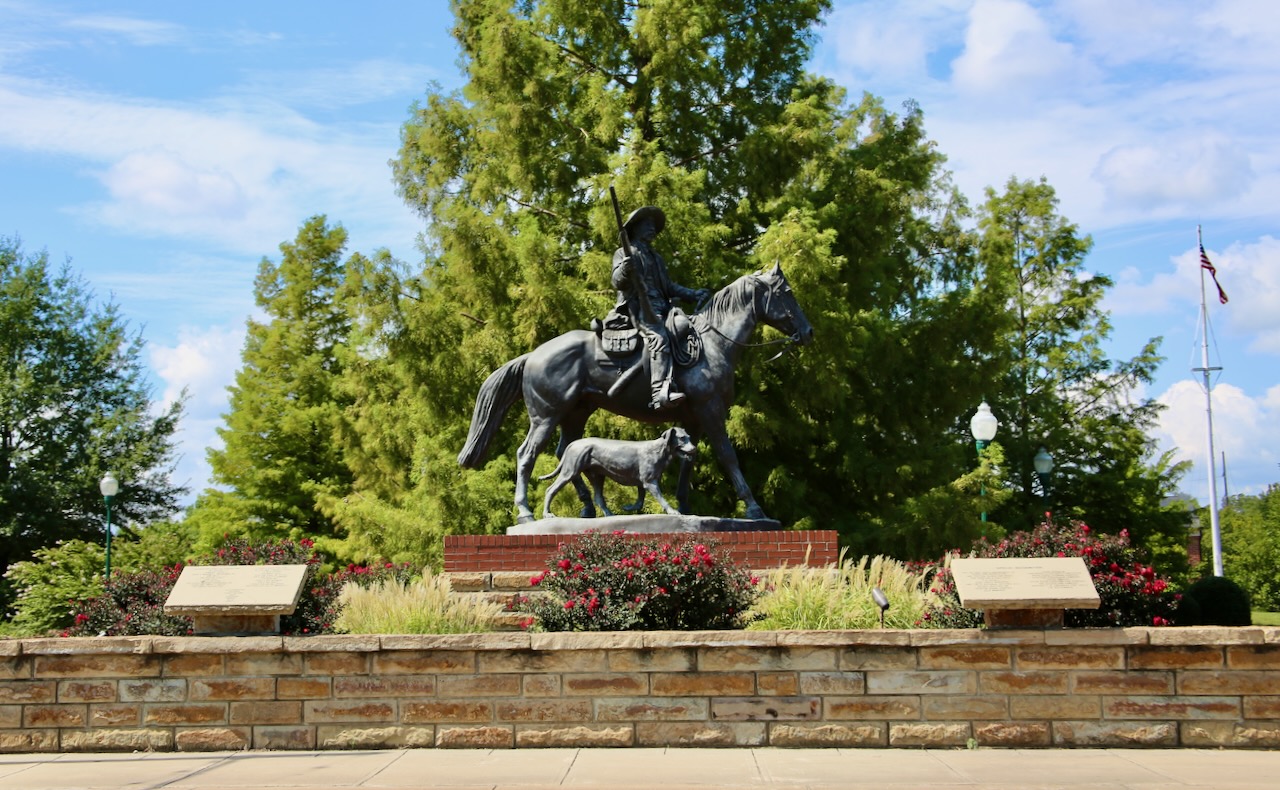
I respond, any direction that doesn’t have me living in this neighborhood. She smiled, told me a right at the stop sign, and then a left at the next one. Thank you. This led me past Overton Park, where an eight-foot-tall bronze monument of E.H. “Boss” Crump was erected to honor his significant role in Memphis politics. I continue on to the Memphis Brooks Museum of Art, where the current exhibit, Brooks Outside: Outings Project, takes painted characters and puts them on façades around the city. Casabianca has installed his paper murals in over 50 cities, with their museums as the inspiration.
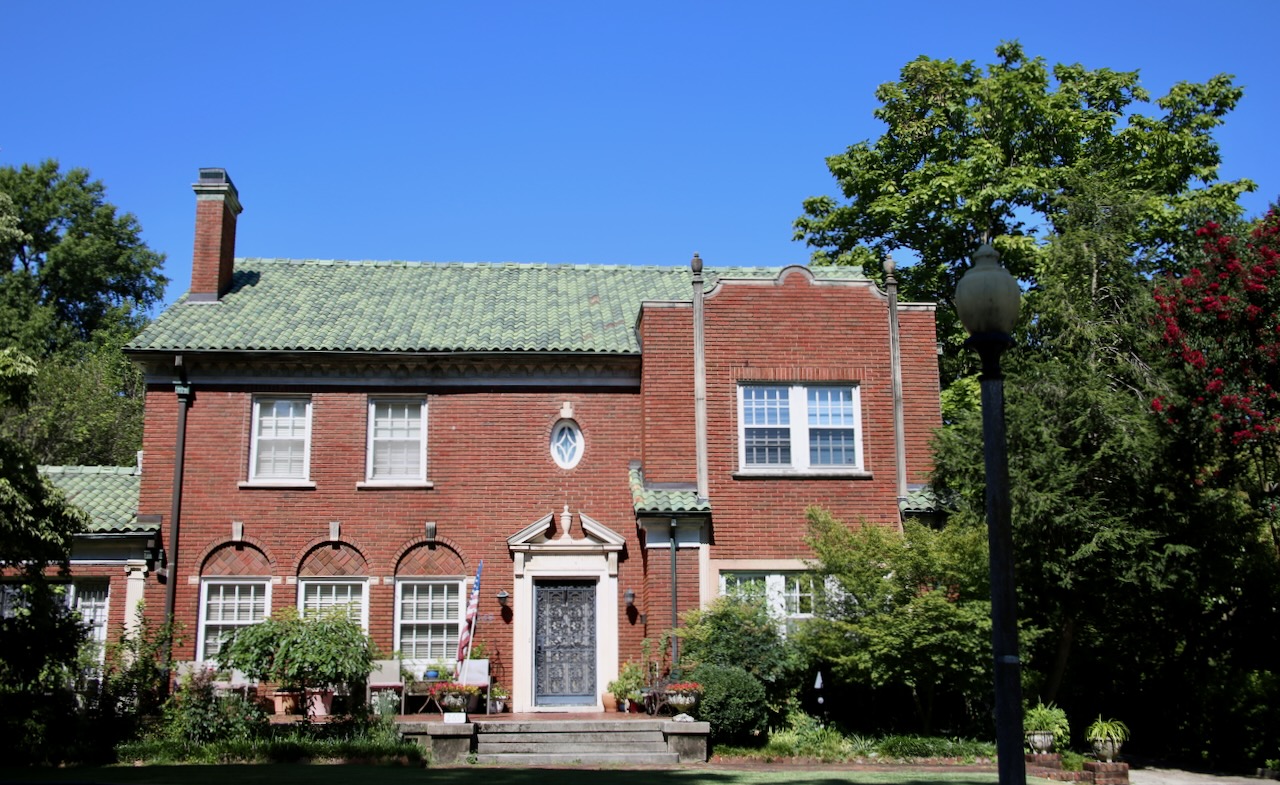
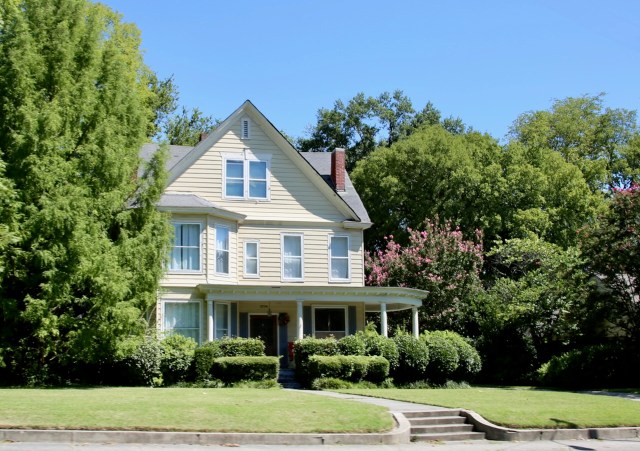
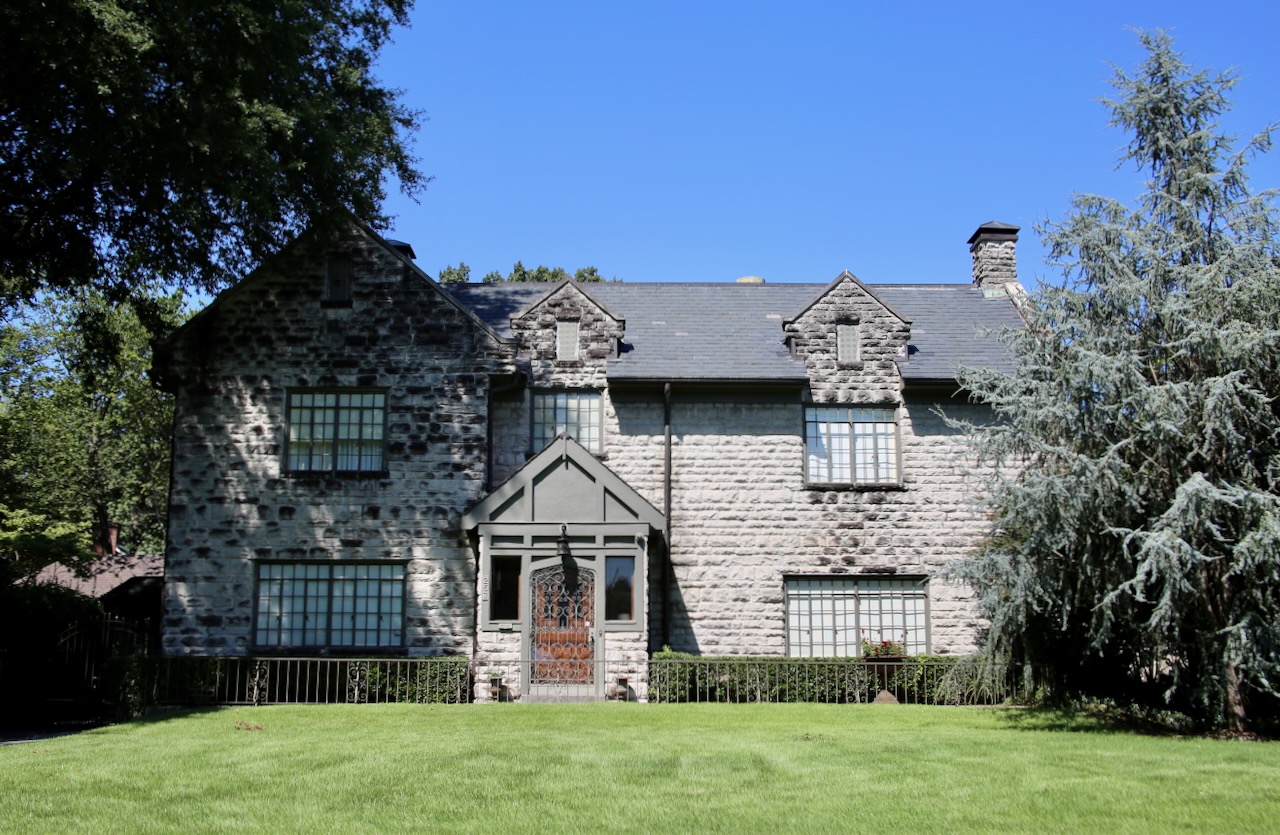
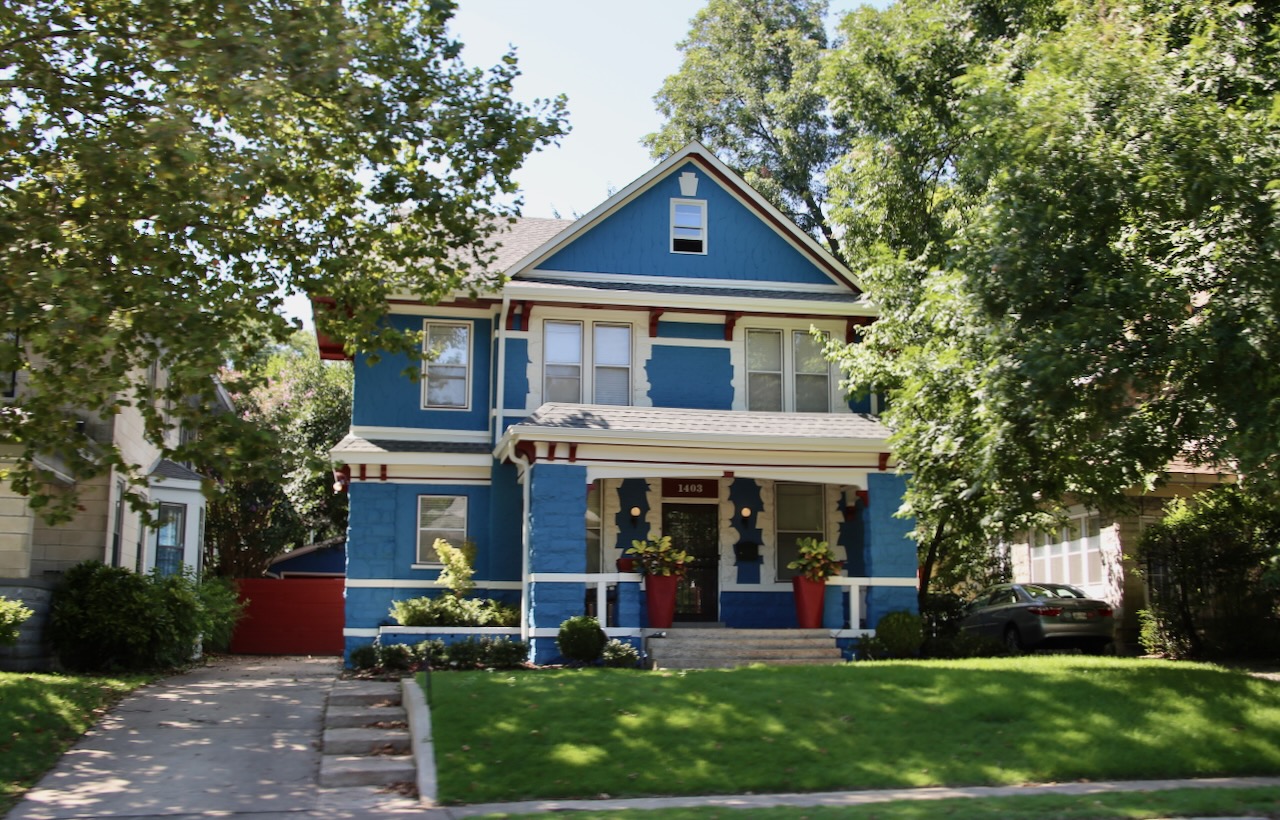
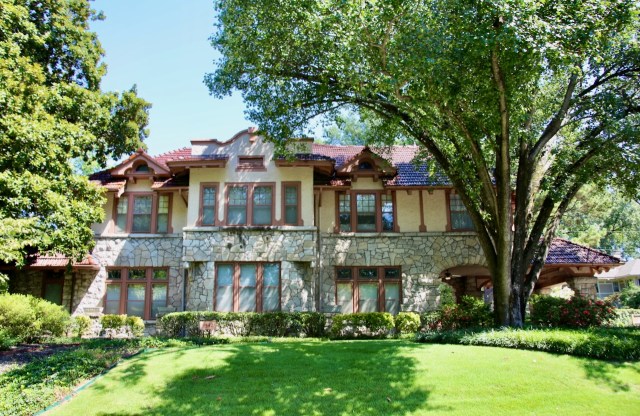
I could have looked for the twenty pieces in Memphis, but I chose a list of historic houses that the lady behind the counter was kind enough to print out. I drive by slowly, like I’m in a parade, waving to some folks as I take pictures of houses with a porch swing, lion statues, fireplaces, and golf course-like yards. They are at least two stories and built mostly in Tudor Revival, Queen Anne Victorian, and English Gothic styles, which explains their ornate designs. The Annesdale Park Subdivision was the first in the South to be planned upon metropolitan lines (for urban growth) in 1903.
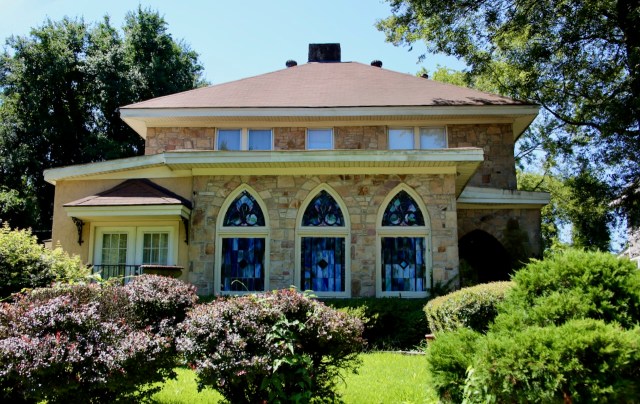
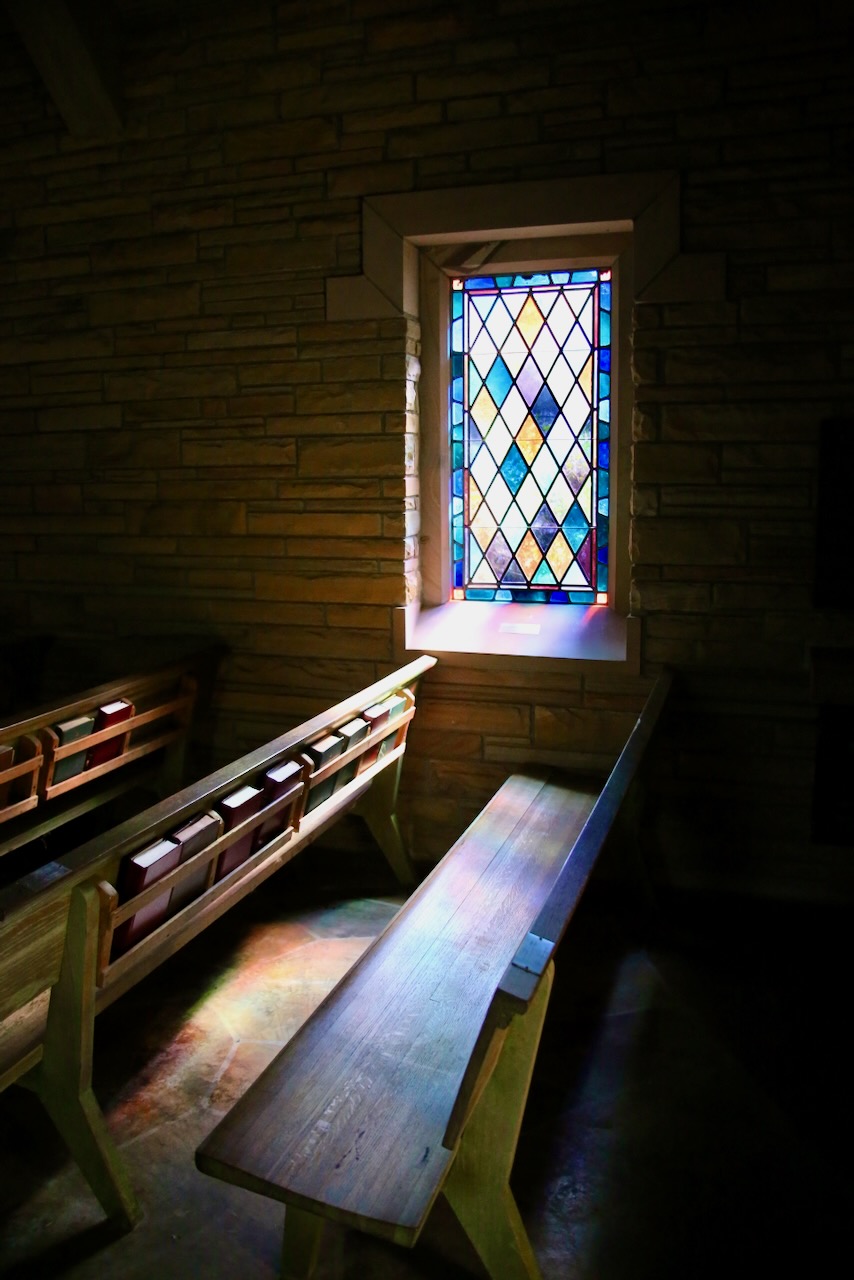
I let the idea of one day living in a house with stained-glass windows carry me through the morning. It helped that no neighbor’s dwelling looked like the other, unlike many an apartment or high-rise in dense city living. I’m glad I’ve not had to live near the chaos that is downtown in any of the states I’ve called home. In Bahrain, we lived near American Alley, where parades and parties were the norm on holidays, weddings, and home team wins. By the time I reached the Pink Palace Museum and Planetarium, a building that appears to be at least three (large, historical) houses combined, I was hungry.
Clarence Saunders, the founder of Piggly Wiggly, started construction in 1922. The building was incomplete when he went bankrupt in 1928, and developers gave it to the city. It became the Museum of Natural History in 1930. It was renamed in 1967. I detoured around a very slow train and found myself at The Four Way Soul Food, named after the four-way traffic intersection. The church bus was still unloading, and these three guys decided to eat elsewhere, but Stein’s didn’t look as good. Now, I’m wondering as I eat soul fast food if I made the right decision.
The green beans were fine, the cabbage and black-eyed peas delicious, but the okra wasn’t cooked right, and the cornbread came from the cheapest box. Oh well, that’s Memphis, and after my zig-zag route through the city, it’s time to refuel. The first station I stopped at wouldn’t let me pump with a card or cash, so I went across the street. I turned onto the 70 and stopped at a gas station for caffeine and childhood treats – Star Crunch and Nutty Buddy. There is a lady selling watermelon from her car. I told her I don’t have a way to open it, and she said I could drop it on the ground like her sample.
Cypress Grove Nature Park, outside Jackson, TN, is popular with the locals, each bringing their four kids, but it’s too close to the highway for maximum peacefulness. The boardwalk is nice, but part of it is closed off. I take in the calm that standing among trees brings and head off to Montgomery Bell State Park. Here, the local cross-country team, along with some parents, is taking advantage of the weather to get in a workout as one couple does some speed walking checking for stragglers. The shade and the breeze under the trees, the kind of beauty that makes you fall to your knees in love.
I step over roots and pass by their trees, remnants of giants standing taller than me. My skin so sweet and that warm blood inside attracts all the bugs to bite at my feet. Swollen they may get, I’m stubborn to put on shoes so I can feel the grass on my toes. The bugs may irritate me but that won’t keep me from appreciating the million little things that go right every day so that I may walk and breath, the sun rise and the trees grow. How lucky I am that I may share some joy with others. I feel inspired here amongst the fallen trees and the spiderweb glistening in the evening sun.
I drive to the outskirts of Knoxville with a full moon that would do just as well to light my way as the bright sun seemingly minutes ago, if not for headlights and road reflectors. This would be a good night to ride a bike on an open lane with no traffic. I passed through the time change and didn’t notice until I saw a bank sign while I was getting gas. I will decide in the morning whether I will drive through Kentucky or North Carolina to get to Virginia, or just approach directly.
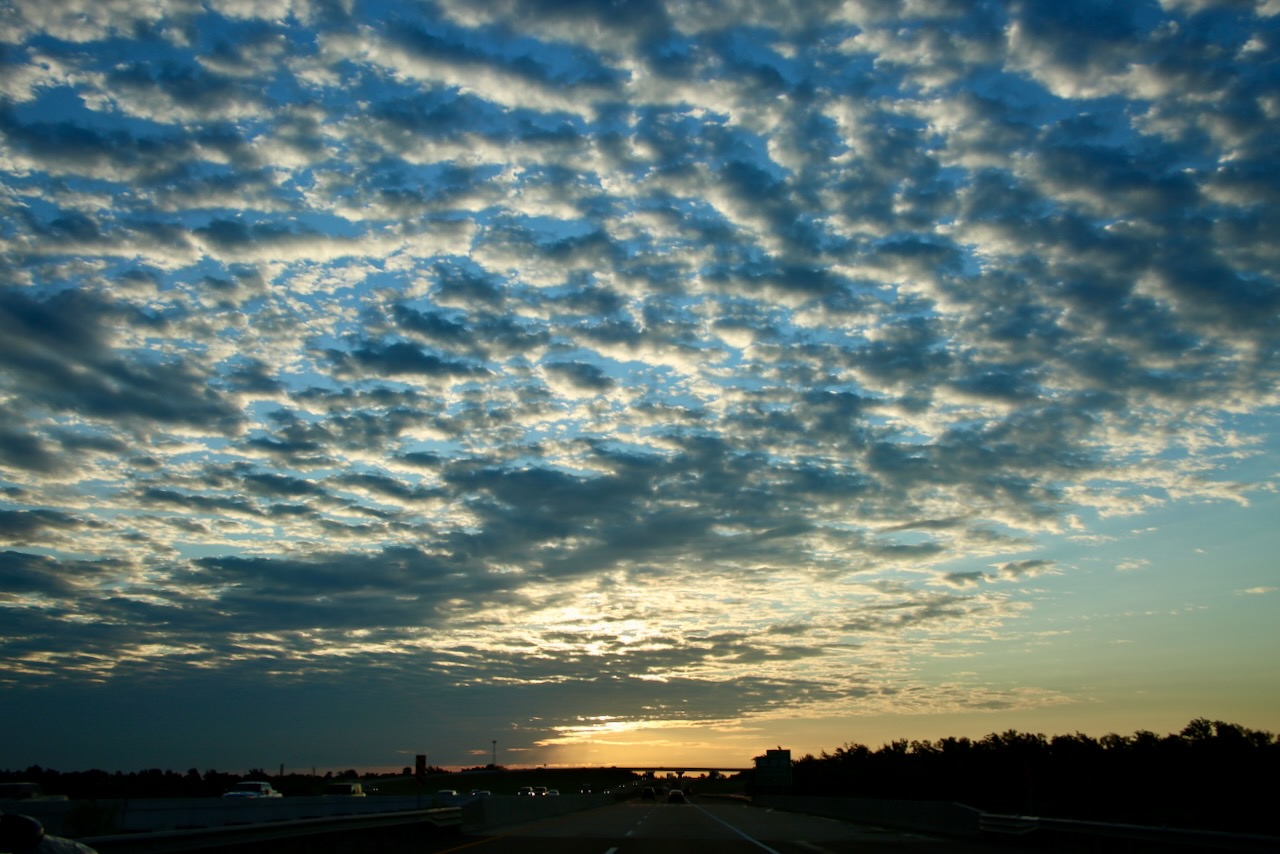
I changed into shorts last night, hoping that less sweat would help me sleep. I jumped out of bed at 2 am, must’ve been a heck of a dream, then crawled back in for another four hours. The first gas station was just lit up pumps, so I got on the highway. I didn’t want to miss the sunrise or deal with headlights, but I also needed gas and a clean windshield. I brushed my teeth and made a sandwich before looping back through Love’s because I’d missed the on-ramp. I wouldn’t mind being on a patio or patch of grass somewhere watching nature in its blinding glory go about its day as I slowly begin the adventure that today will bring.
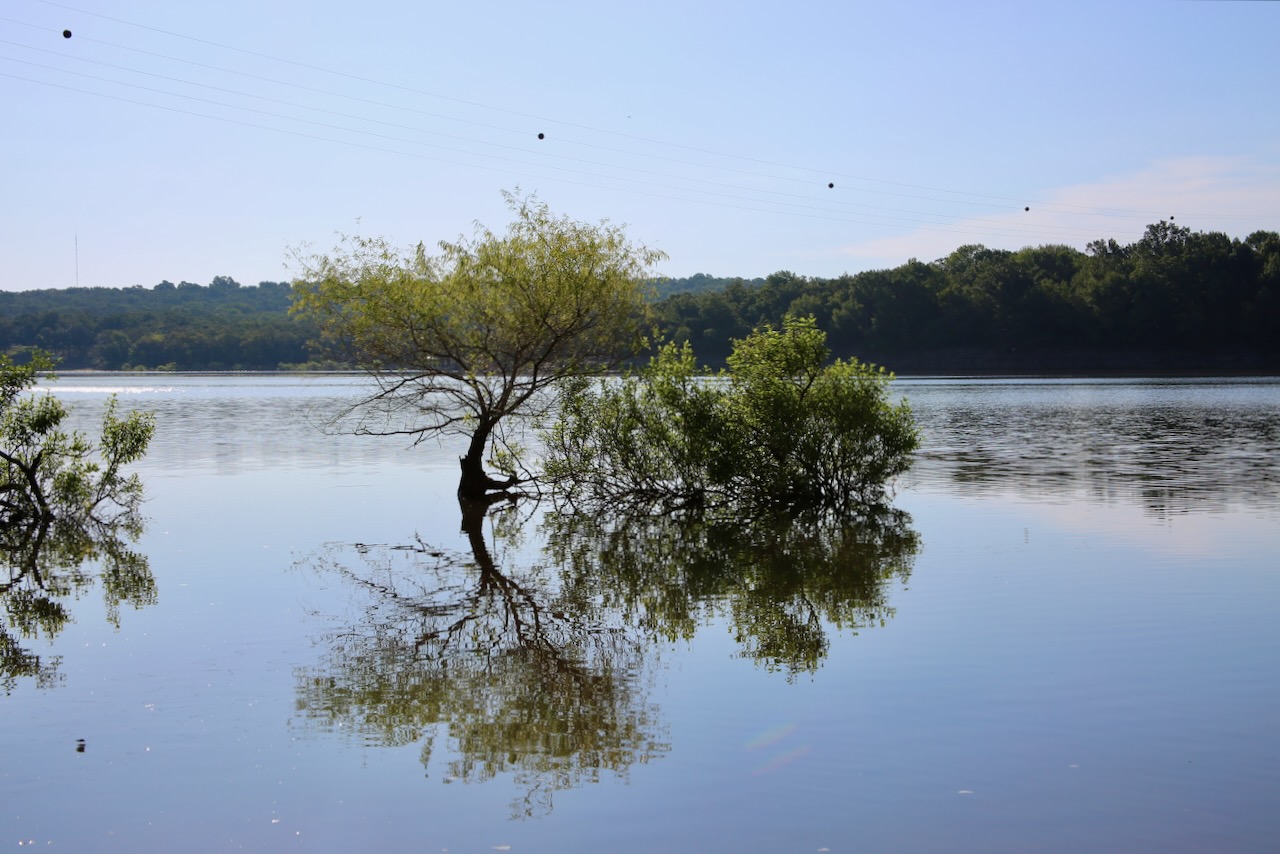
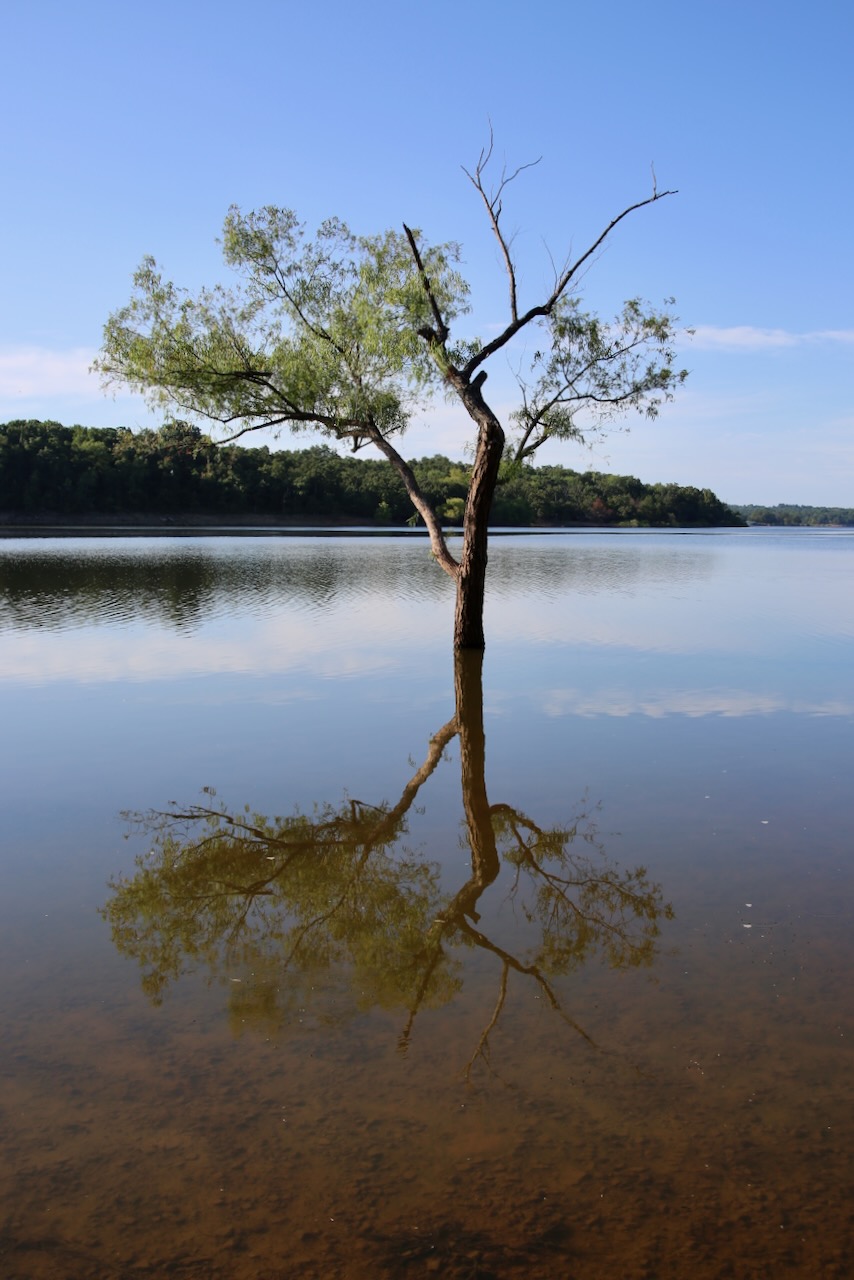
I drove over a hundred miles east and stopped at Lake Eufaula State Park, off the 150-S, and walked to the water’s edge. There, I see a raft of whirligig beetles, the “bumper cars of the beetle world,” just paused on the calm surface since their eyes allow them to see simultaneously above and below the water. If frightened, they will swim in rapid, tight circles or dive beneath the surface. Nearby is the short Crazy Snake Trail that I only accomplished part of before running out. I was walking amongst nature, while some flies were practicing for Nascar around my spider web-covered body, when I got bitten by one mosquito. That’s all it took for me to want to appreciate this environment from a distance.
The webs, once seen in the sun, look like little spider apartments all crammed together at different angles, letting no flying creatures, except the ones annoying me, get by. This trail was named in honor of Chitto Harjo, who organized resistance against the Dawes Act, which divided the Muscogee’s land into 160-acre allotments, leaving surplus land for white settlers. Each Muscogee community had communally owned crop land that any able-bodied member helped with, or they were fined or forced to leave the village. The chief once said he “did not mind so much playing the white man’s game if only the white man would not make all the rules, [that he changed constantly].“
I had already passed the campsite with a shower, so I stopped at the Flying J instead. I helped another box turtle out of the road so it wouldn’t end up like the only armadillo I’ve seen on this trip. The attendant was sweet and helpful, and now I’m clean. I was craving oatmeal or spinach, and wouldn’t luck have it that the truck stop offers maple oatmeal and biscuits with sausage gravy until 10 am. They were a few minutes late, switching to the lunch soups. This snack would keep me going until I reached the Bricktown Brewery in Fort Smith, AR. This is one of their 14 locations in five states, including Texas, Kansas, Oklahoma, and Missouri.
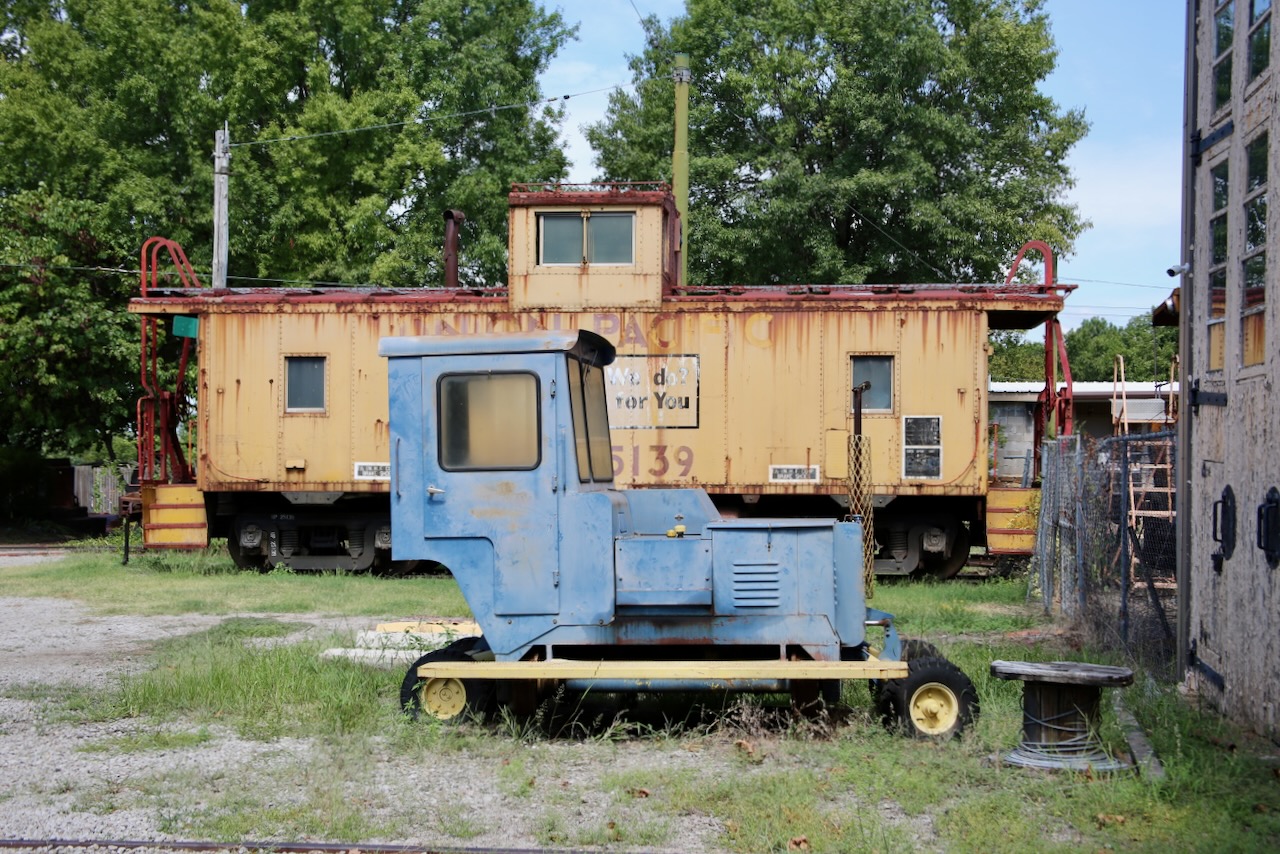
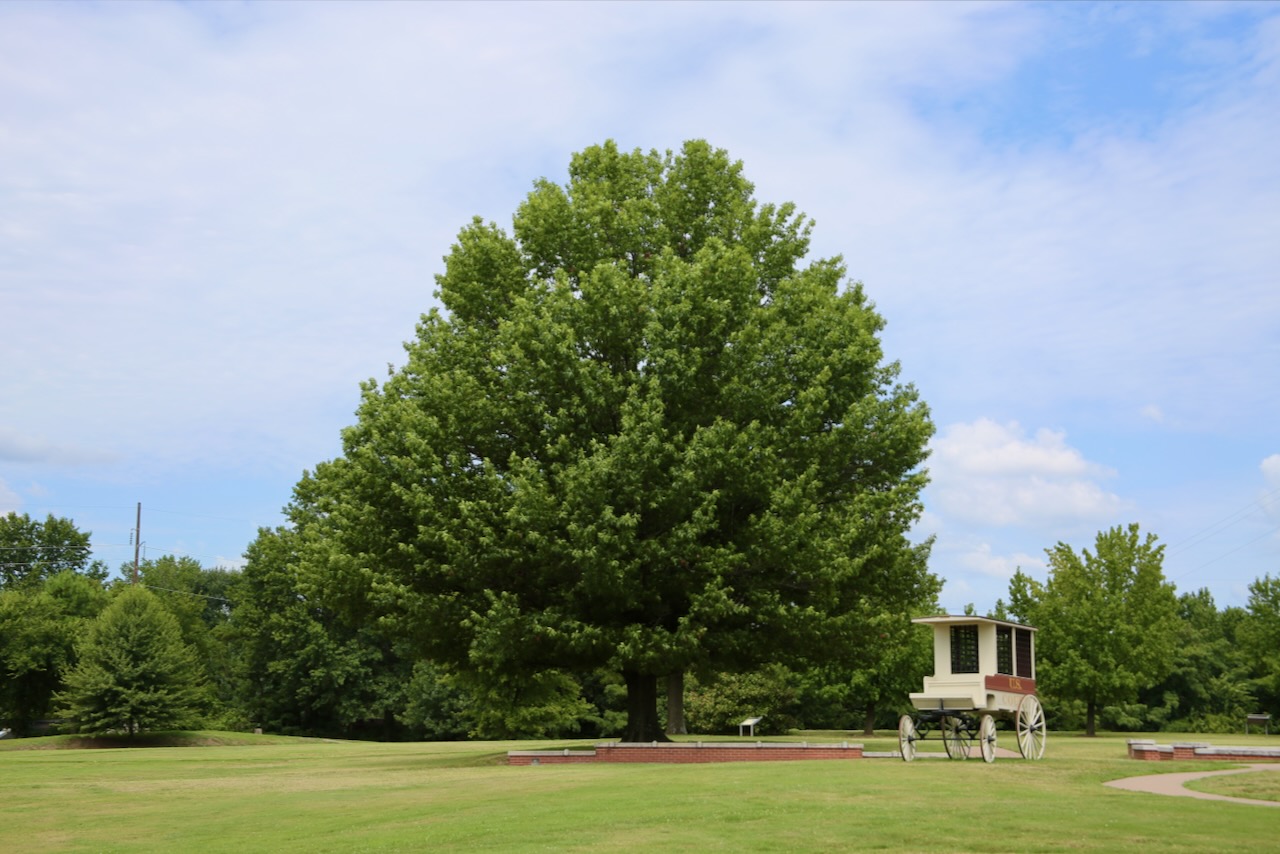
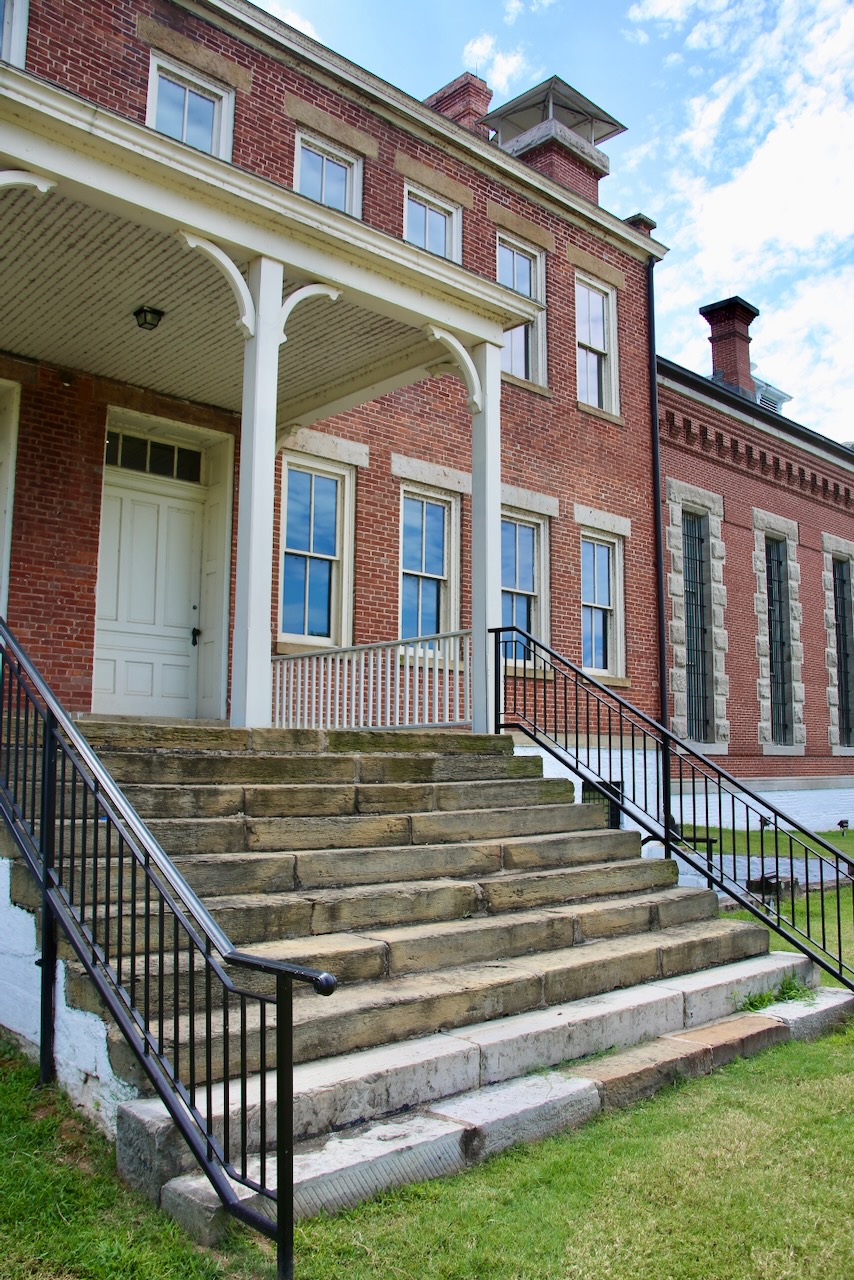
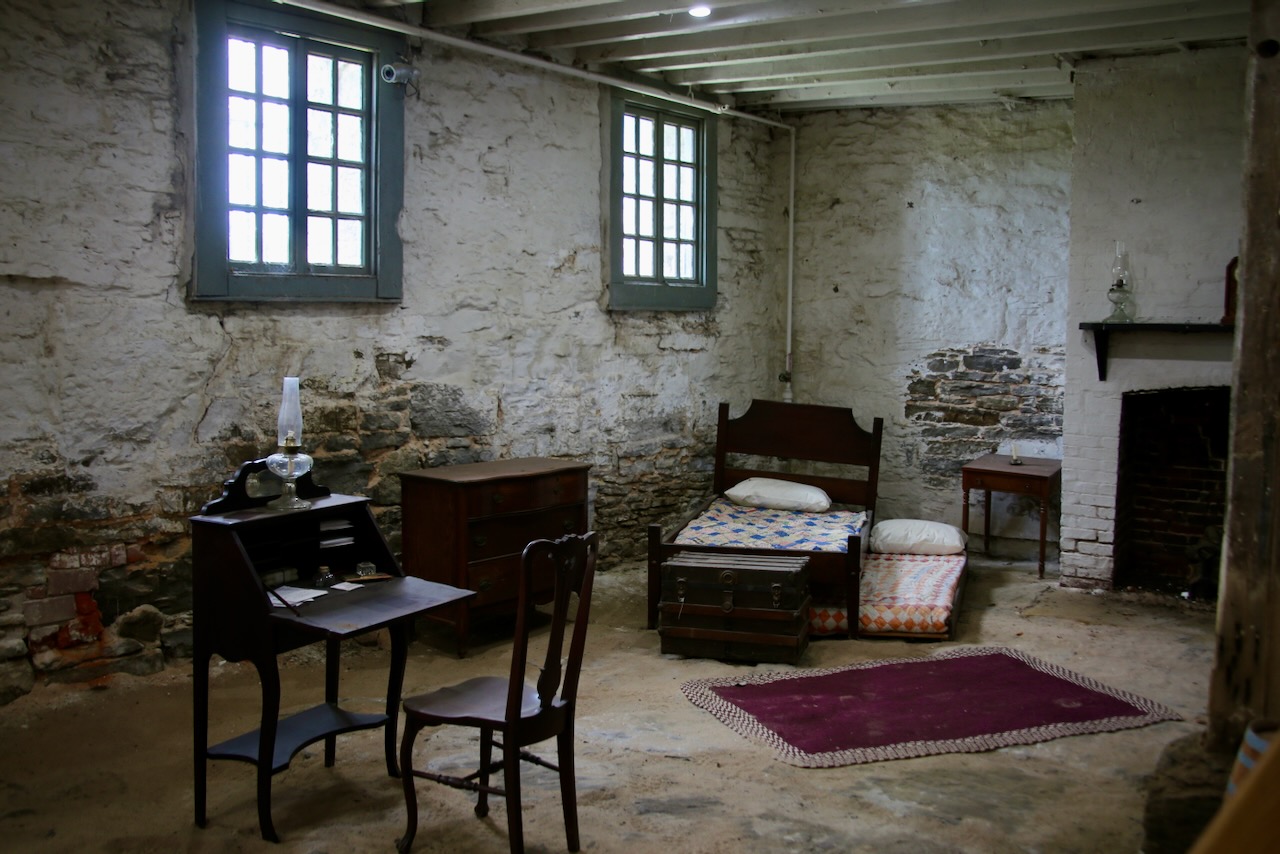
I visit the Fort Smith Trolley Museum, with a structure built over part of the original tracks. I’m allowed to walk onto a trolley and explore the tools, photos, and license plates also on display. There are a few more in the yard, but I’m soon on my way to the Fort Smith NHS. In the federal court building basement, groups of 30 to 50 accused and convicted men sat unbathed with their slop buckets. The guards filled the ceiling space with sawdust to keep the stench from wafting into the courtroom and offices above. The women were held in the former military guardhouse. This went on for 17 years until the 1880s, when Judge Parker detested the influence that men of poor character had on the innocent.
This fort was used in films: True Grit (1969 & 2010), the sequel Rooster Cogburn (1975), and Hang‘Em High (1968) starring John Wayne (got his first Academy Award), Katharine Hepburn in the sequel, and Clint Eastwood as the star, respectively. Miss Laura’s Social Club, 1896, was turned from a house of prostitution into the city’s visitor center. It was saved from fire in 1910 and from demolition in 1963. Another historical survivor, the Frisco Locomotive #4003, cost over $50,000 when it was built in 1919. It is one of eight surviving USRA steam locomotives, having been retired in 1952 with the move to diesel. It joined the Trolley Museum in 1999.
I ordered the sampler (fried pickles, battered green beans, mini pretzels, and boneless wings) and talked with Alex from Santa Fe, who lived in Hana, Hi, and Canada, about travel and kids these days. I also spoke with Floyd, who plays the judge at the park reenactments, who left after two beers, and had the sad misfortune of sticking around to listen to Luther, a retired local who is now a foul-mouthed alcoholic. As soon as he mentioned my genitalia, I went to the bathroom and called the bartender over, who let me know it was cool to sneak out the back as my tab and tip had been covered. She had taken his keys, ordered him nachos, and called the bartender who cut him off on Friday.
I was grateful to escape the situation without further interaction and drove straight through Little Rock and past the exit for the Camp Robinson State WMA, where I am going to camp. I turn onto the gravel road surrounded by swamp on both sides, which makes me wary of mosquitoes, and a striped horse fly lands on the car. I try the path to the right first, which takes me to a pond and over a three-mile-long bird trail, then go left and find designated camp areas along the river. This park passes under the highway, but I mostly hear the nighttime country bugs. I’m still waiting on the temperature to drop below 80°F so I can sleep, or nap, and carry on.
In the road is a shaggy mane mushroom which undergoes deliquescence (digesting itself into a black, inky liquid) within a few hours to days of maturing. Before that, it’s considered a choice edible mushroom, but I can see this one is past the eat-by date. I creep out of the park at 5mph to give the frogs time to hop across the road after I sighted my first mosquito. I had already heard two. Caleb suggests the Econo Lodge on the other side of town, so I book that, and Toni is quick to check me in. I’m greeted by two American green tree frogs on my door, along with a small grasshopper and a gray bug with long legs. Sleep will come easily after a shower.
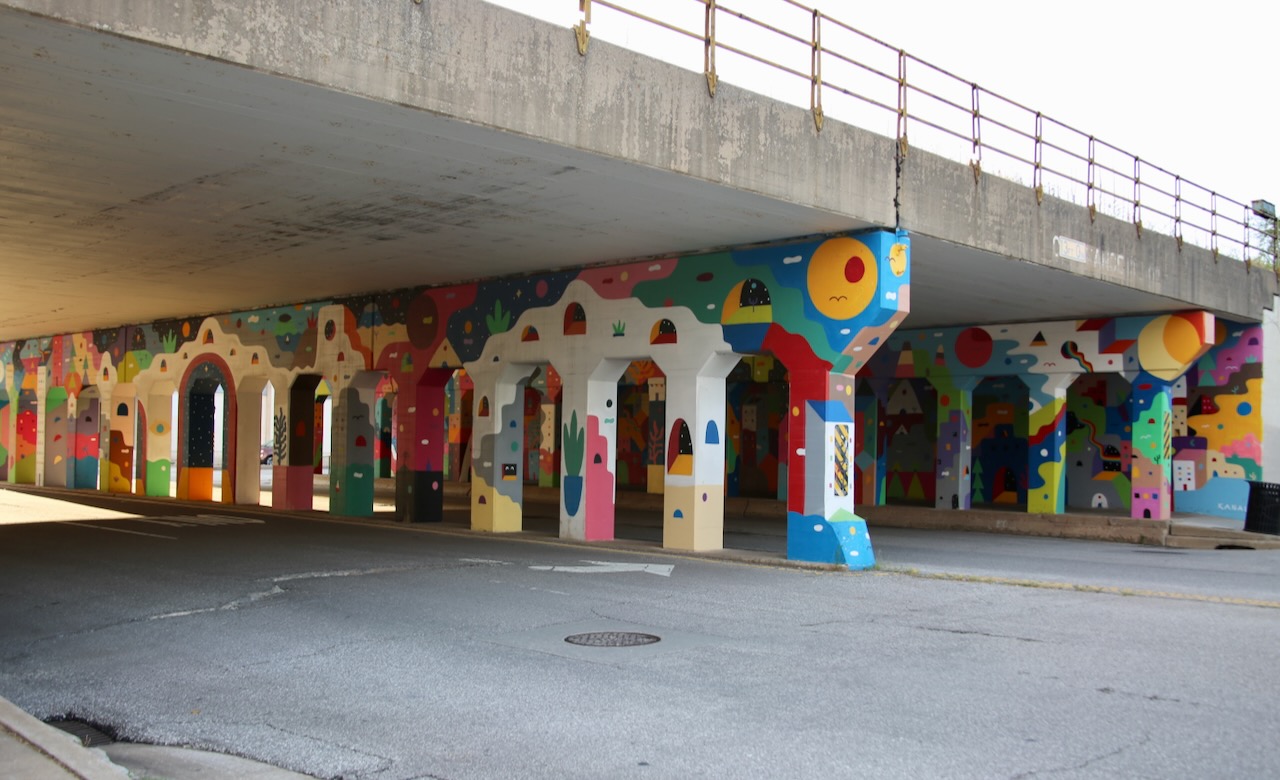
I’ll use the indoor facilities at one gas station and the bucket of soapy water for a clean windshield and headlights at another in Clovis. I’m greeted by some nice older country guys and walk by the murals of Lincoln-Jackson School under the guidance of streetlights. This school is named for the sixteenth president and for the teacher, Ida, who came from Texas in 1926, and went from teaching two African-American students to eventually 100 by the 1940s. She also taught Sunday School, opened her house for those in need, and helped launch the Federated Progressive Club.
This group was for black women who worked to improve their community through social reform, supporting libraries, and promoting conservation. The first building I see across the Texas line is a container shed of a tobacco discount shop. That’s better than what came next — a cruel, crammed cattle cage, which makes sense given I’m within a 50-mile radius of Hereford, TX — the “Beef Capital of the World” that produces over a billion pounds of meat. The city is also known as the “Town Without a Toothache” due to naturally high levels of fluoride in the water.
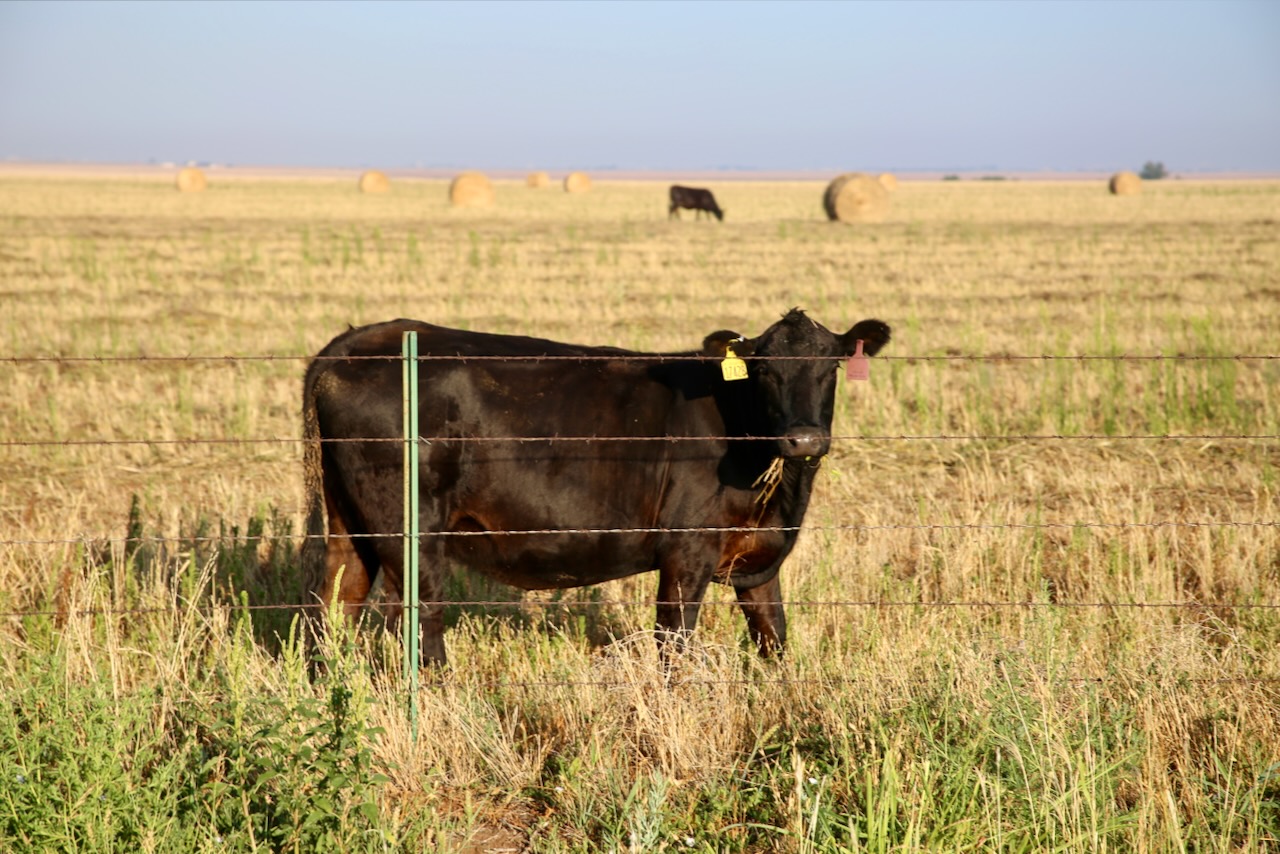
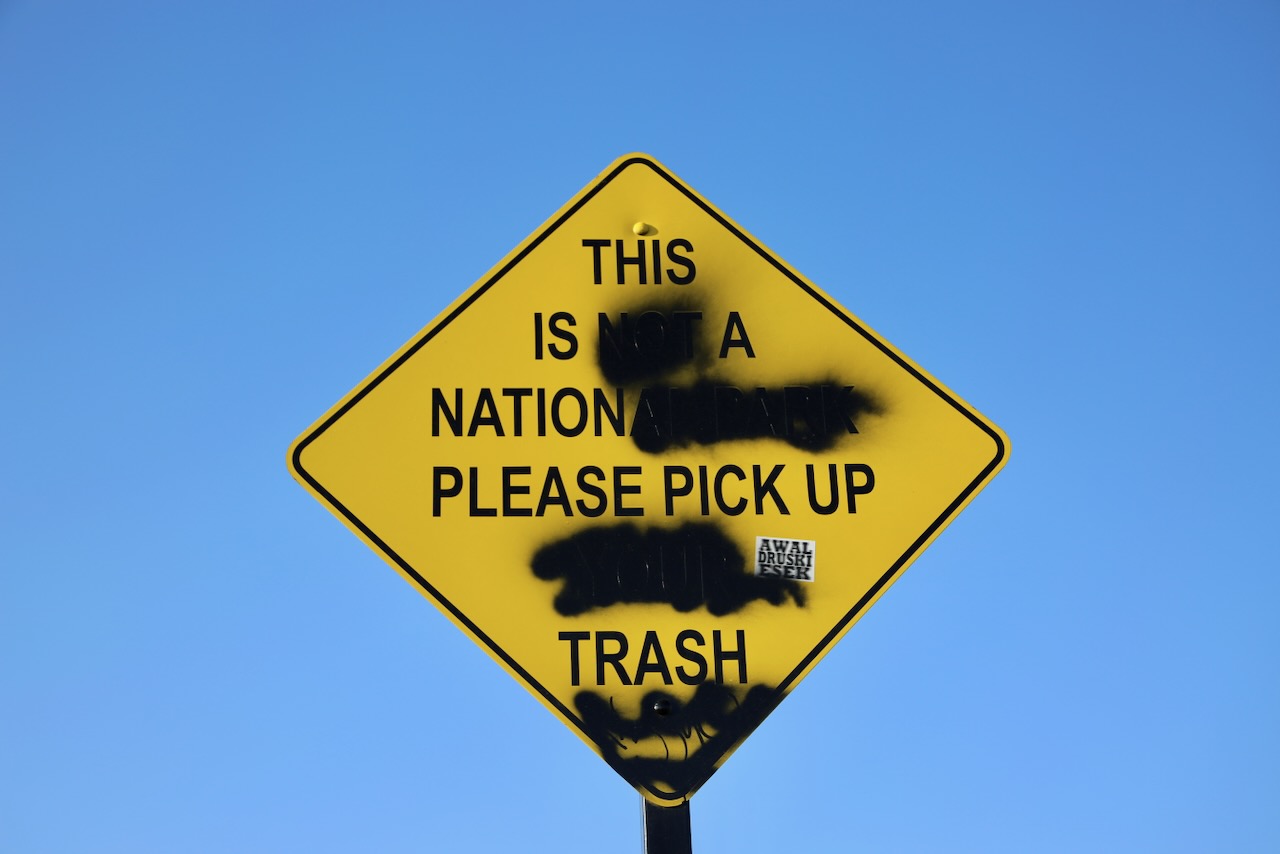
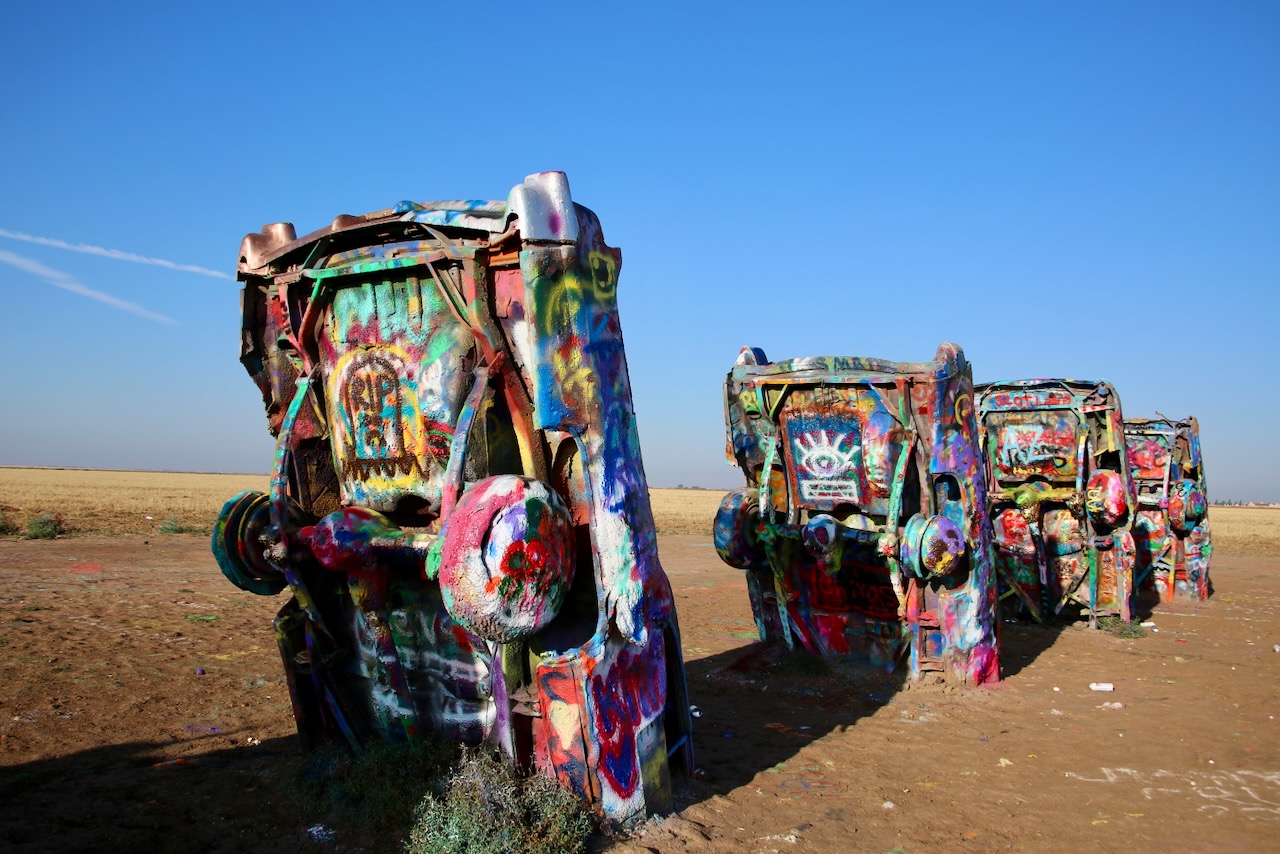
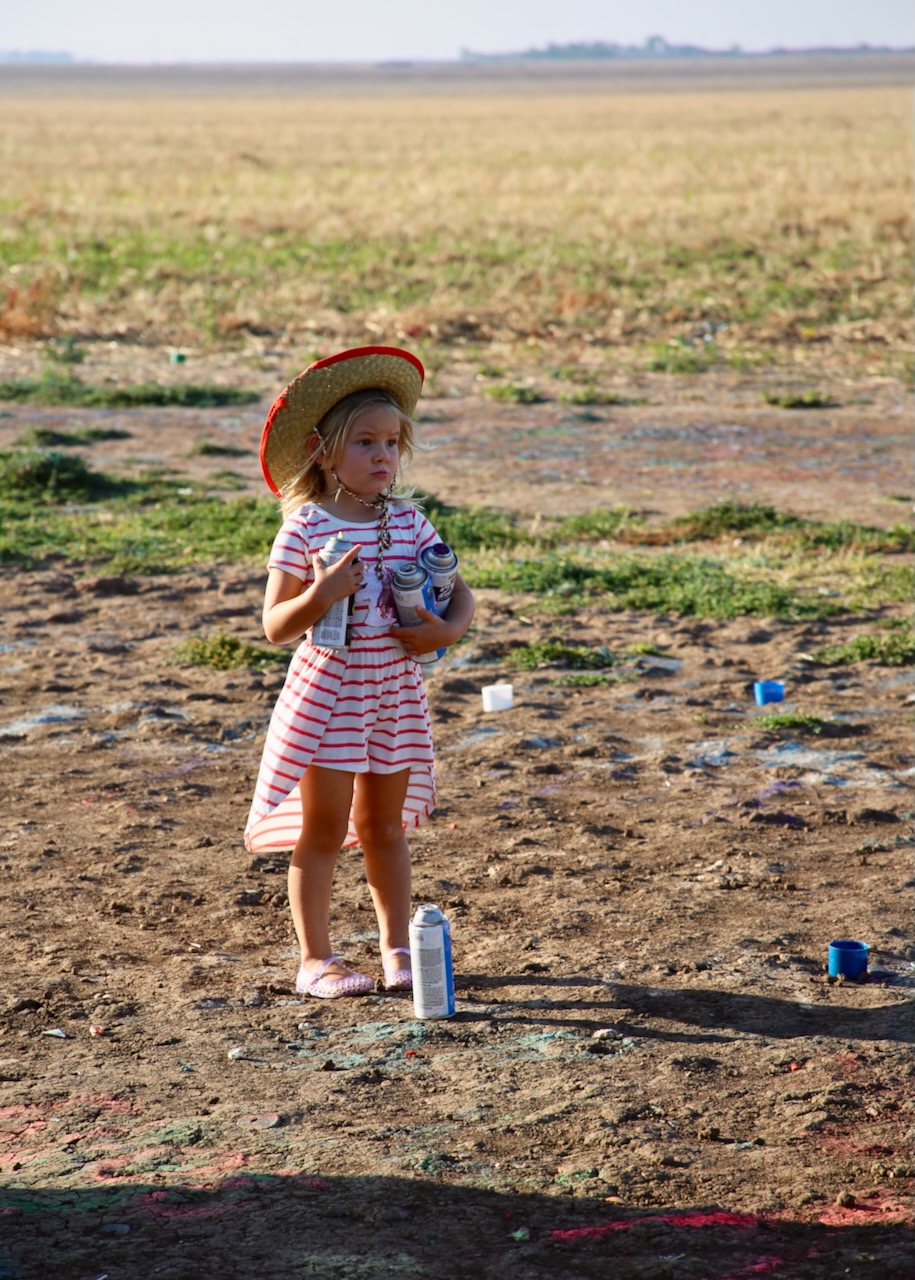
I passed a field of sorghum and another of cows on my way to Cadillac Ranch, a public art installation created in 1974 by the art collective Ant Farm. The ten Cadillacs from model years 1949-1963, each planted at the same angle as the Great Pyramid of Giza, were chosen to showcase the evolution of tailfins. I thought the kids were cuter than the cars, and I realized how much the adults like art, play, and self-expression, too. I wish there were more exhibits like this for those purposes. I walk through the tiny Amarillo Botanical Gardens for $5 and see a few golden pheasants.
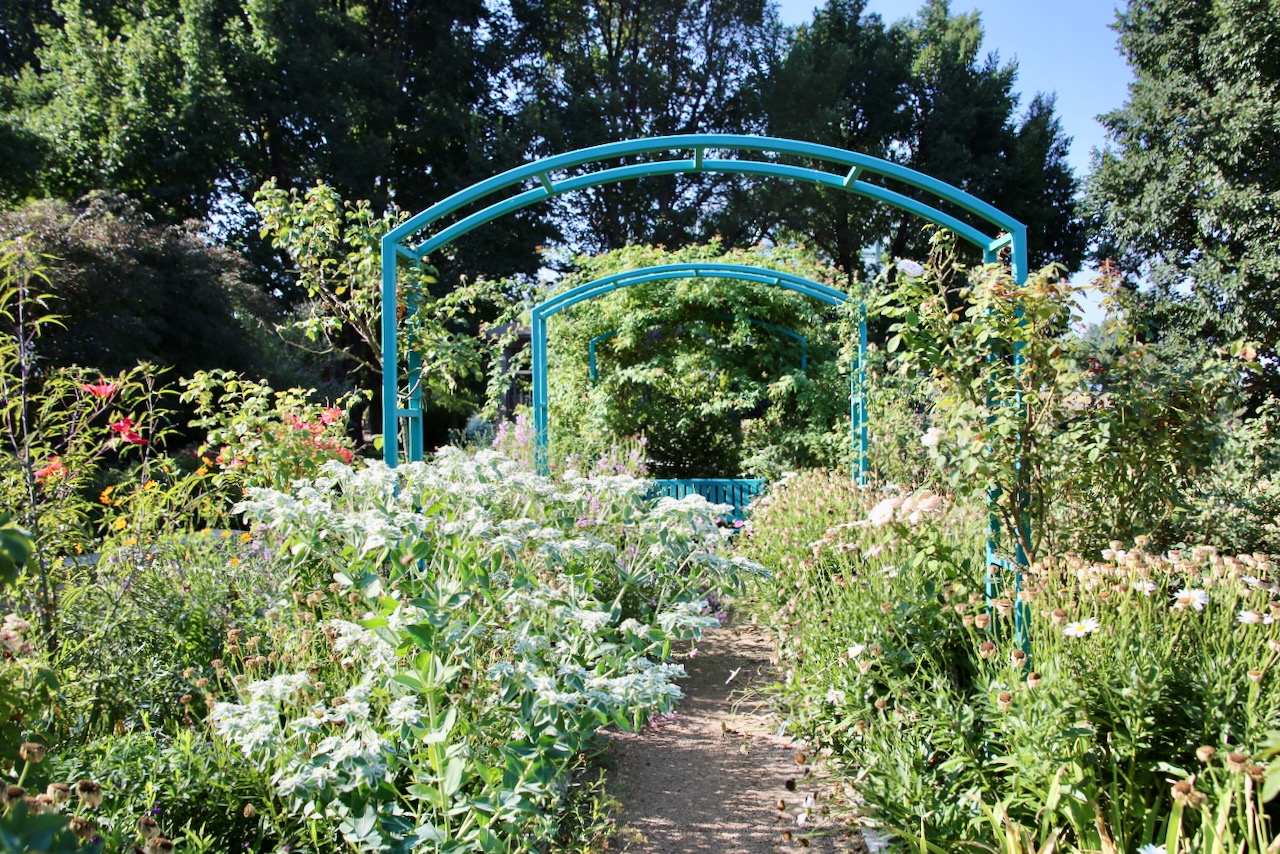
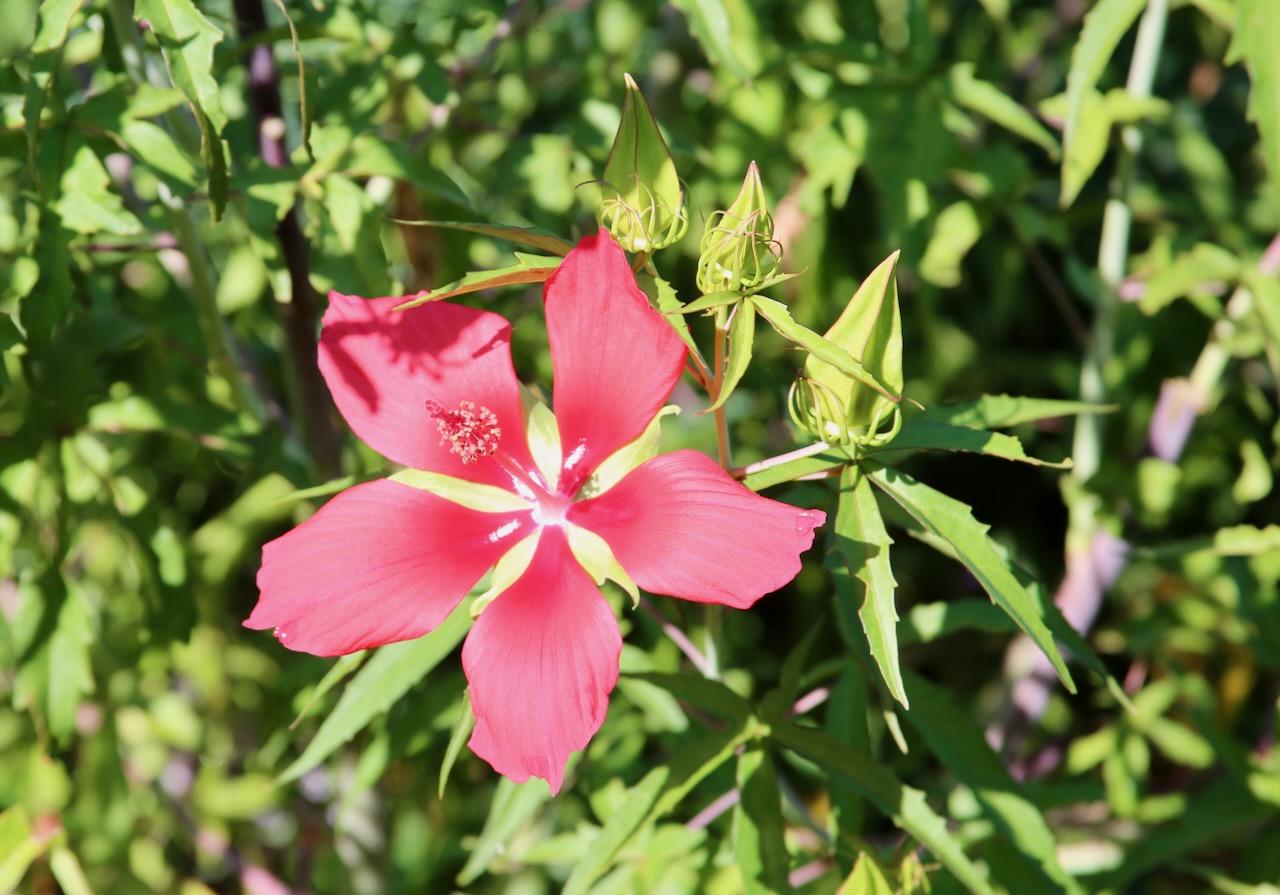
The males are a bright rainbow of feathers, minus purple, while the females are shades of brown, blending into their environment and their chicks. There are also differential grasshoppers, American bumblebees, ringed teal ducks, leafcutter bees, painted lady butterflies, familiar bluet damselflies, Mandarin ducks, koi fish, a pair of tuxedo kittens, an American robin, and too many mosquitoes. These gardens make full use of their 4.4 acres, and I’m impressed with the abundance of lively creatures and blooming flowers.
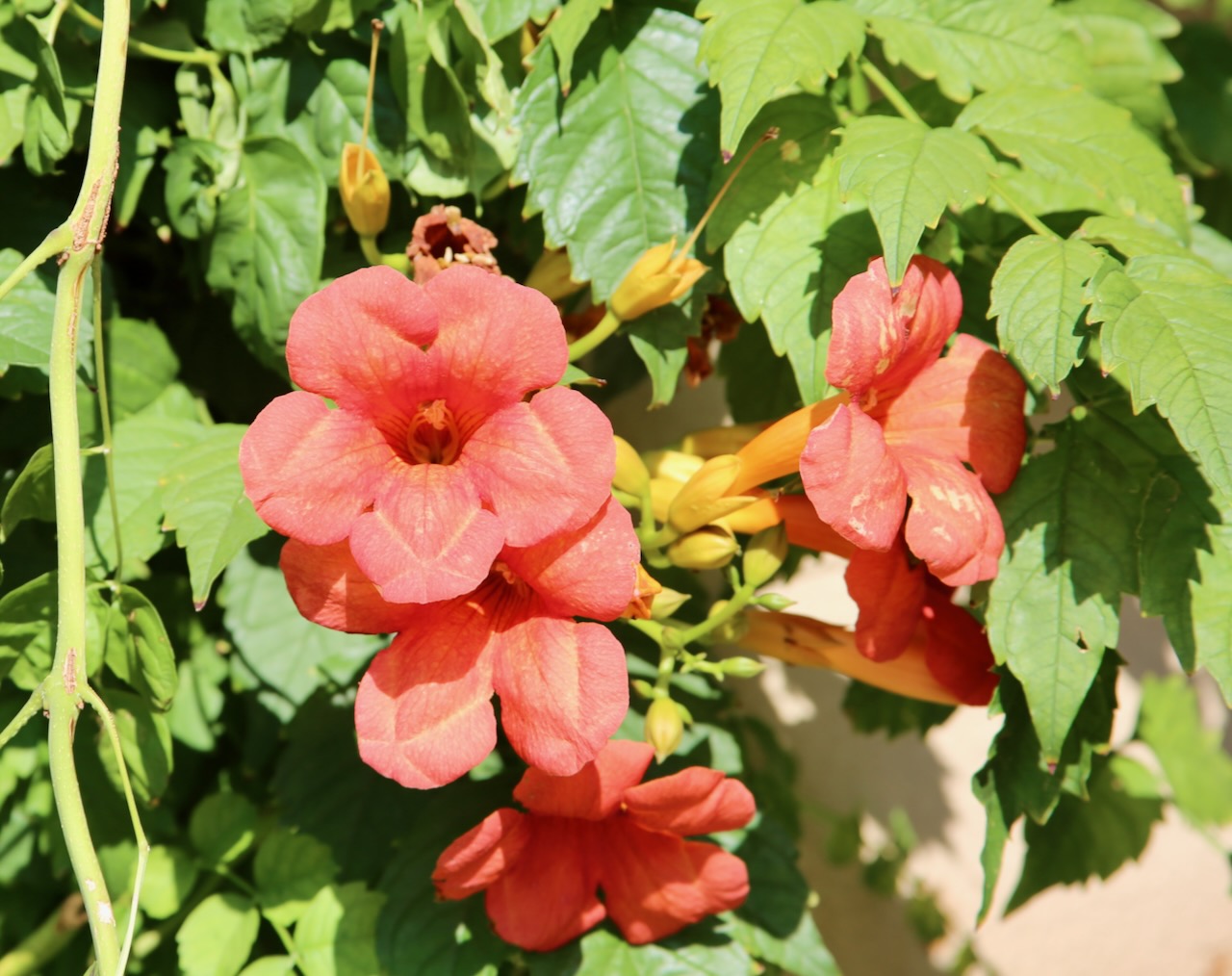
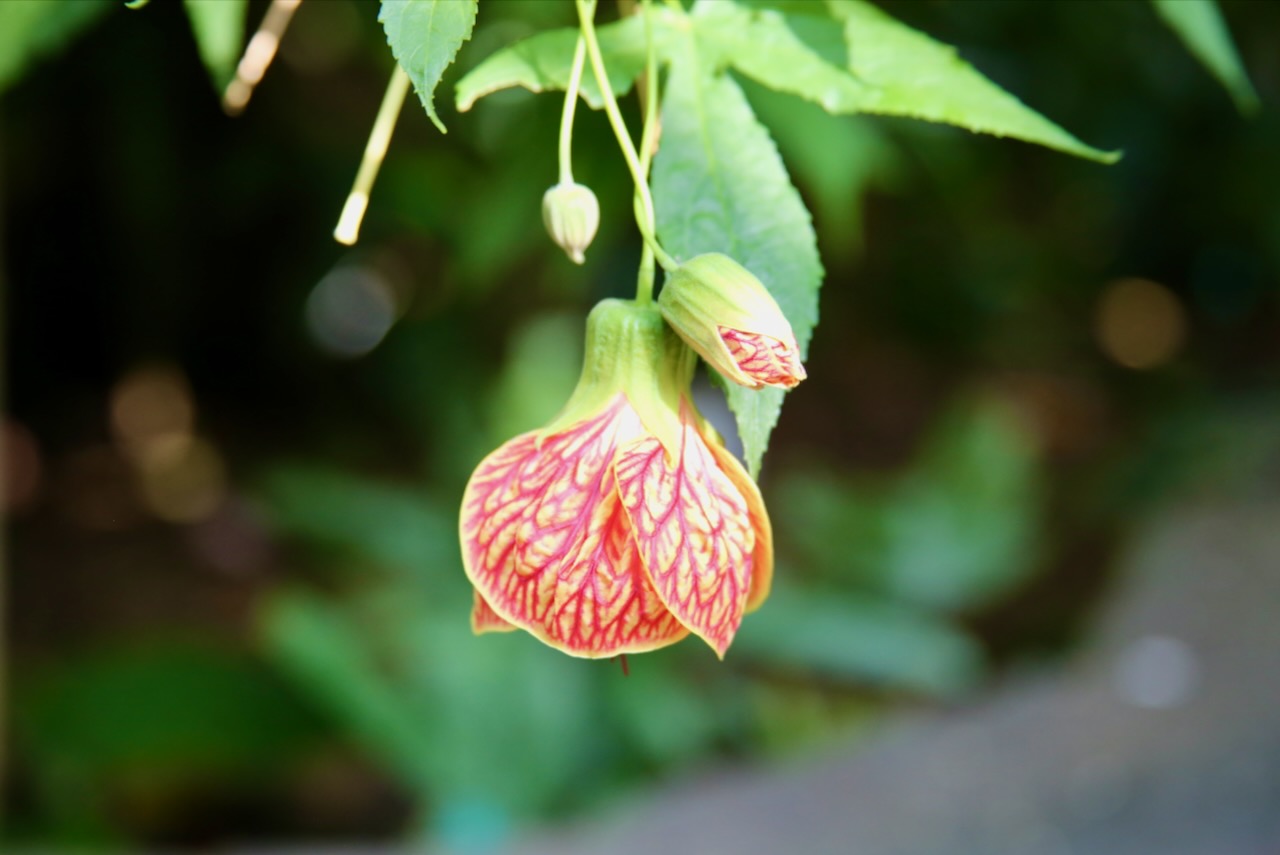
trumpet vine, Chinese lantern, Texas Star hibiscus
I pull over when I notice an ornate box turtle in the road. Once he’s convinced I’m here to photograph his journey and make sure he crosses safely, he continues to do so. I drove to the Alibates Flint Quarries National Monument to learn about 13,000 years of people’s history with rocks in the High Plains. I was disappointed to find out I had just missed the two-hour tour by microseconds, or even ten minutes, I could’ve caught up. Well, I wasn’t sticking around for the next one. Instead, I will continue north for hiking closer to Lake Meredith.
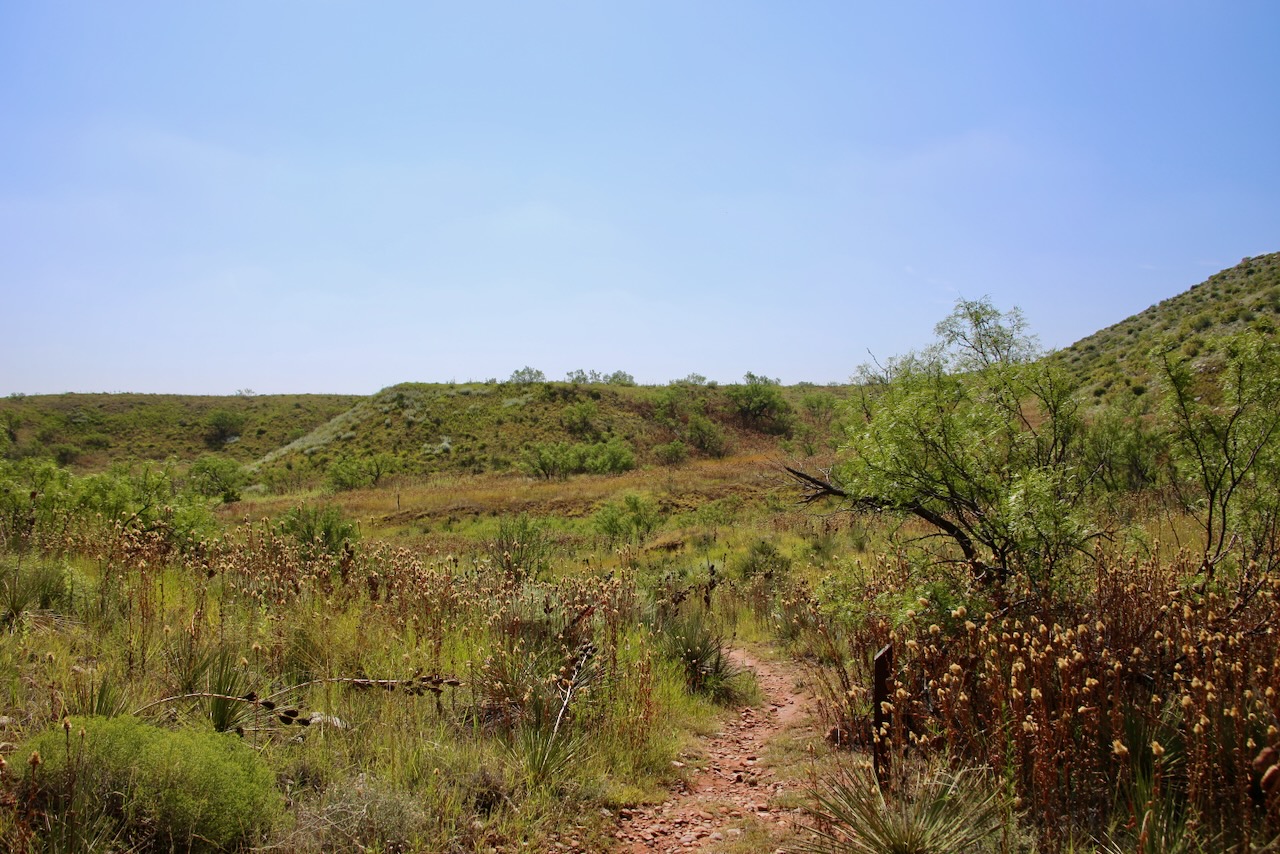
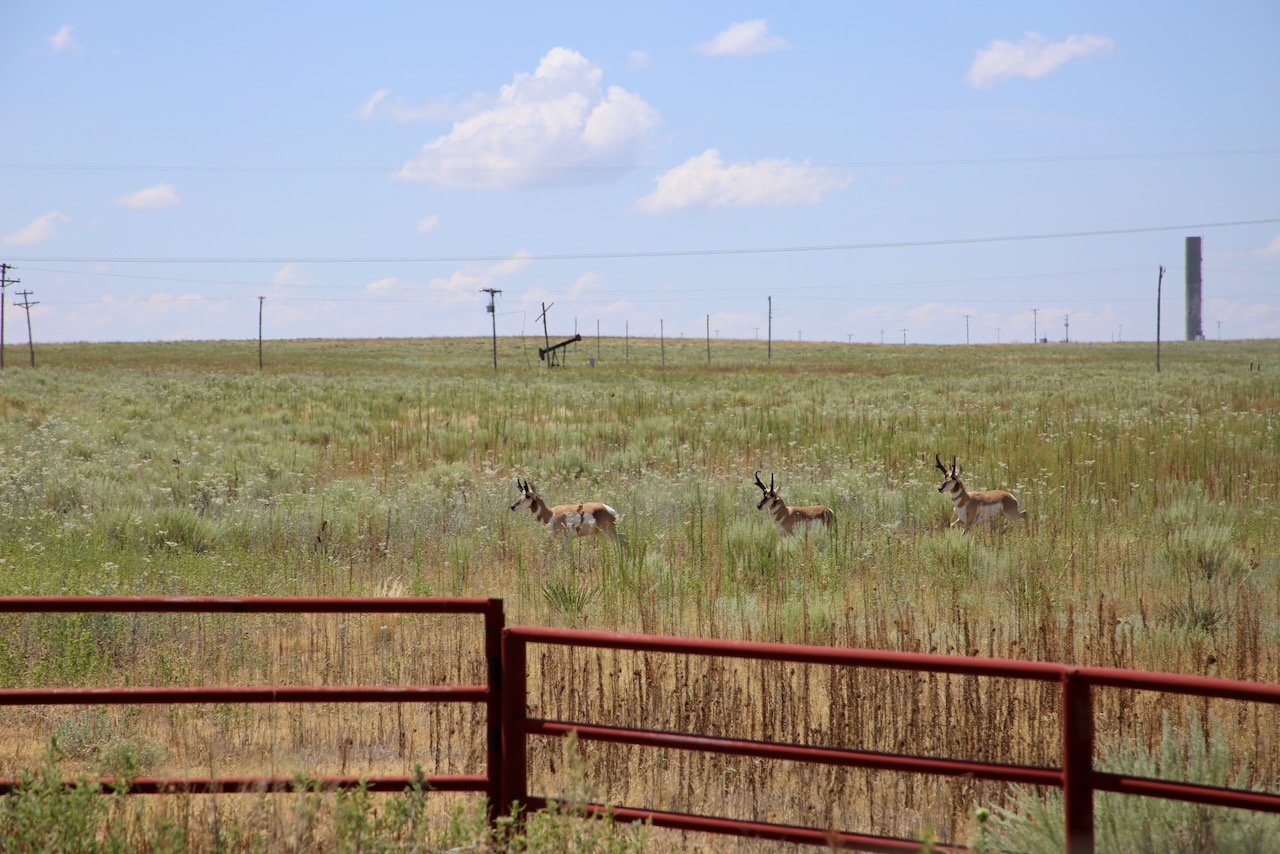
I encounter a swallow’s mud nest, a funnel web with a waiting spider, mating Plains lubber grasshoppers, a lone gray bird grasshopper, a bright yellow two-striped grasshopper, and a posse of wild turkeys looking nefarious, in a good way. There are plenty of wind turbines and power lines, but it’s the precious trio of speed goats, aka North American pronghorn, that make me stop again. I watch them prance through the tall grass. Their hybrid horn has a bony core covered in a keratin sheath that the forward-facing prong is a part of, and sheds every year (the only horns to do so).
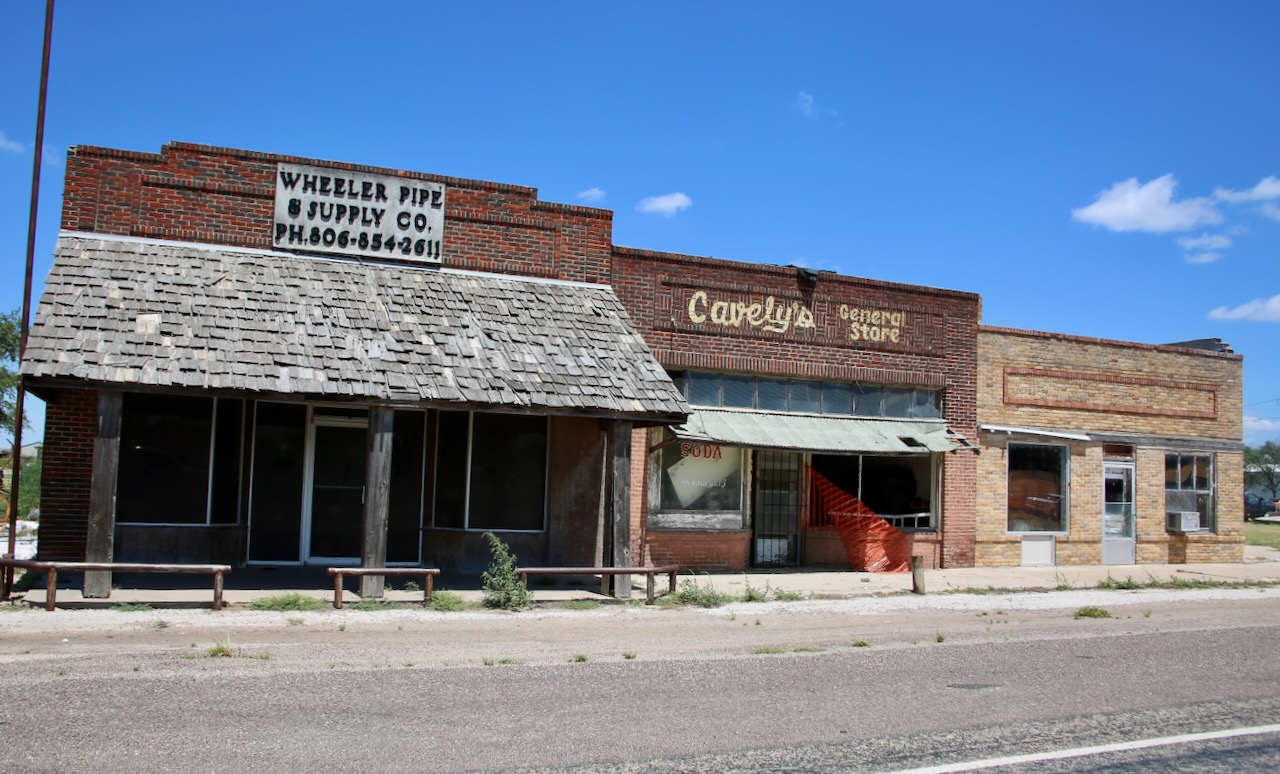
I see a sign for kolaches, either in Borger or Pampa, but it doesn’t matter because the place is closed. I ask across the street and get offered chicken on a stick, which makes me sad. There’s a commercial on the radio about gender nuetral bathrooms in schools concerning boycotting and hate speech. I prefer local stations that stick to fun music, but these hosts know their usual audience and will continue to update them on news that concerns their community. I drive through Mobeetie, the oldest town in the Texas Panhandle, originally a trading post in 1874.
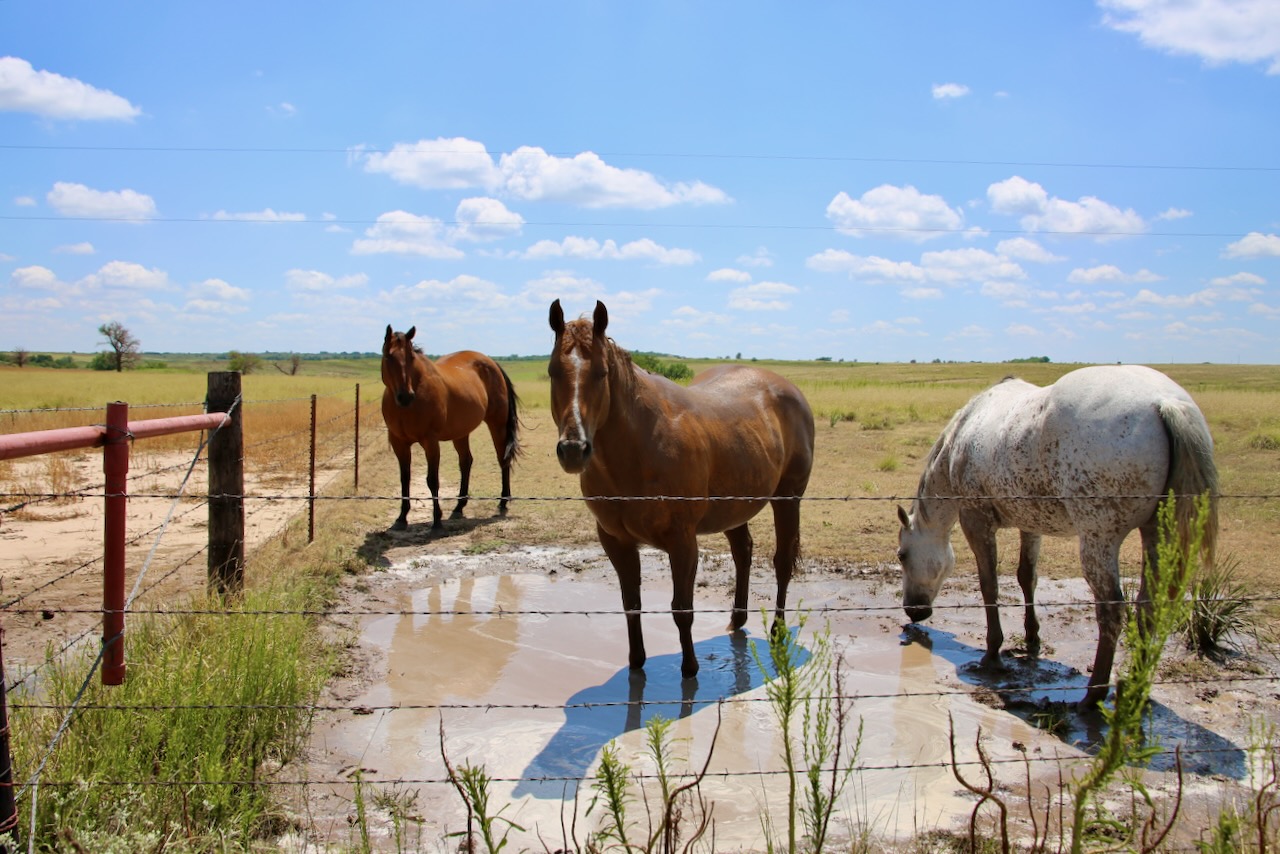
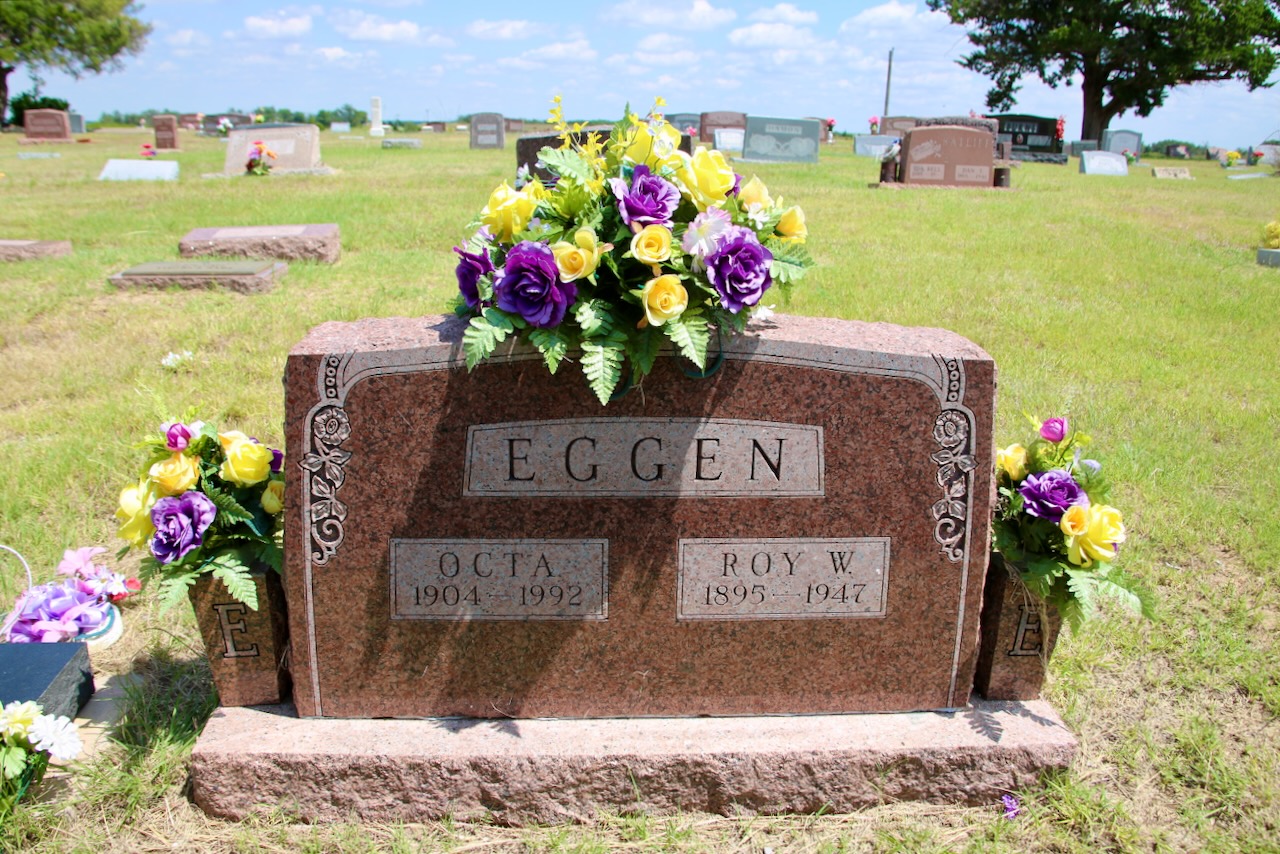
I hang out with three horses, making use of a muddy water puddle before crossing into Oklahoma. Once across the border, I stop at White Rose Cemetery, not the one near Bartlesville, but the smaller one near Reydon that doesn’t come up on the map. I don’t have family here that I know of, but any chance to stretch my legs on a lengthy roadtrip is always welcome. London treats these sanctuaries as an opportunity to access a quiet green space. The earliest birth I can find is from 1867. It’s not far from here to the Washita Battlefield National Historic Site and Black Kettle National Grassland.
I stop at the picnic area, bypassing the viewing platform that is getting a handicap upgrade, and then talk with a ranger inside about an Indian who killed a man on purchased reservation land, which could be a federal crime, but he tells me reservations were eliminated in the state, so he could just be charged for murder. Many reservations were disestablished between 1887 and 1907 through allotment and statehood, but several in the east were never done so legally. I get to learn about historic facts and history in the making.
Either way, the ranger says it’s up to the Supreme Court now, and the verdict could get people kicked off the land. Then he tells me about a New Zealander getting reparations for the 1921 Tulsa Race Massacre, and now her granddaughter can go to college. Within a day, more than 1,000 buildings (churches, schools, and businesses) were destroyed, hundreds of people were killed (who were attempting to flee), and thousands were homeless (forced into internment-style camps for weeks) because of an escalated encounter between a Black man and a white woman.
Local officials were quick to suppress coverage; police reports disappeared, insurance companies denied claims, and survivors were threatened into silence. For decades, this horrific loss was conveniently left out of textbooks. Only in the late 90s was a committee formed to investigate the tragedy, renew public awareness, and discuss restitution for survivors and their descendants. This grassland has seen the migration of buffalo cultures, the stampede of homesteaders (against agreements made between the government and the Native Americans), the retreat of Dust Bowl farmers, and the dramatic recovery of the land since being protected.
There are clay, ornament-sized horse figurines that represent the 650 Cheyenne horses that were slaughtered by the 7th Cavalry. Community members, park visitors, and students completed the project for the 150th anniversary. There are mixed emotions on the opinion board: I would’ve shot those soldiers, too.; Why did he tell his men to rape women?; I’m sad for both. Outside is a 0.4-mile loop, the Dust and Fire Trail, to experience an overlook, a dugout home, a windmill, a wildlife pond, and a fire plot.
It’s a good thing I’m not an insect, or the assassin fly I saw might’ve ambushed me mid-air and injected venom to paralyze me and liquefy my tissues for consumption. Also on the trail are red harvester ants, which store seeds in their large mounds decorated with pebbles, but also possess one of the world’s most painful insect stings. As I witness a crowd of them moving a seed 1000 times their individual size, I quickly leave them to it. The friendliest encounter is with a pair of red-shanked grasshoppers just casually crossing the trail.
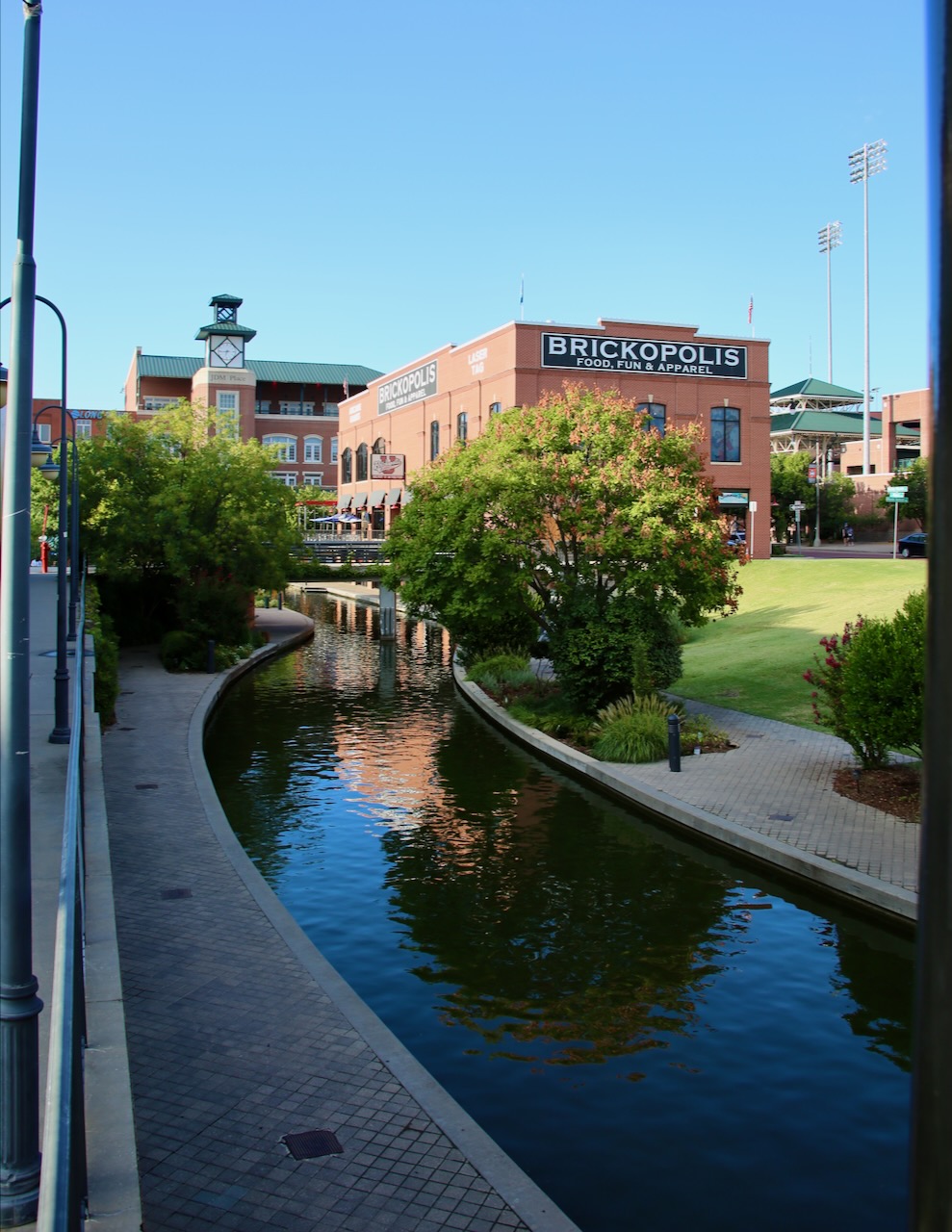
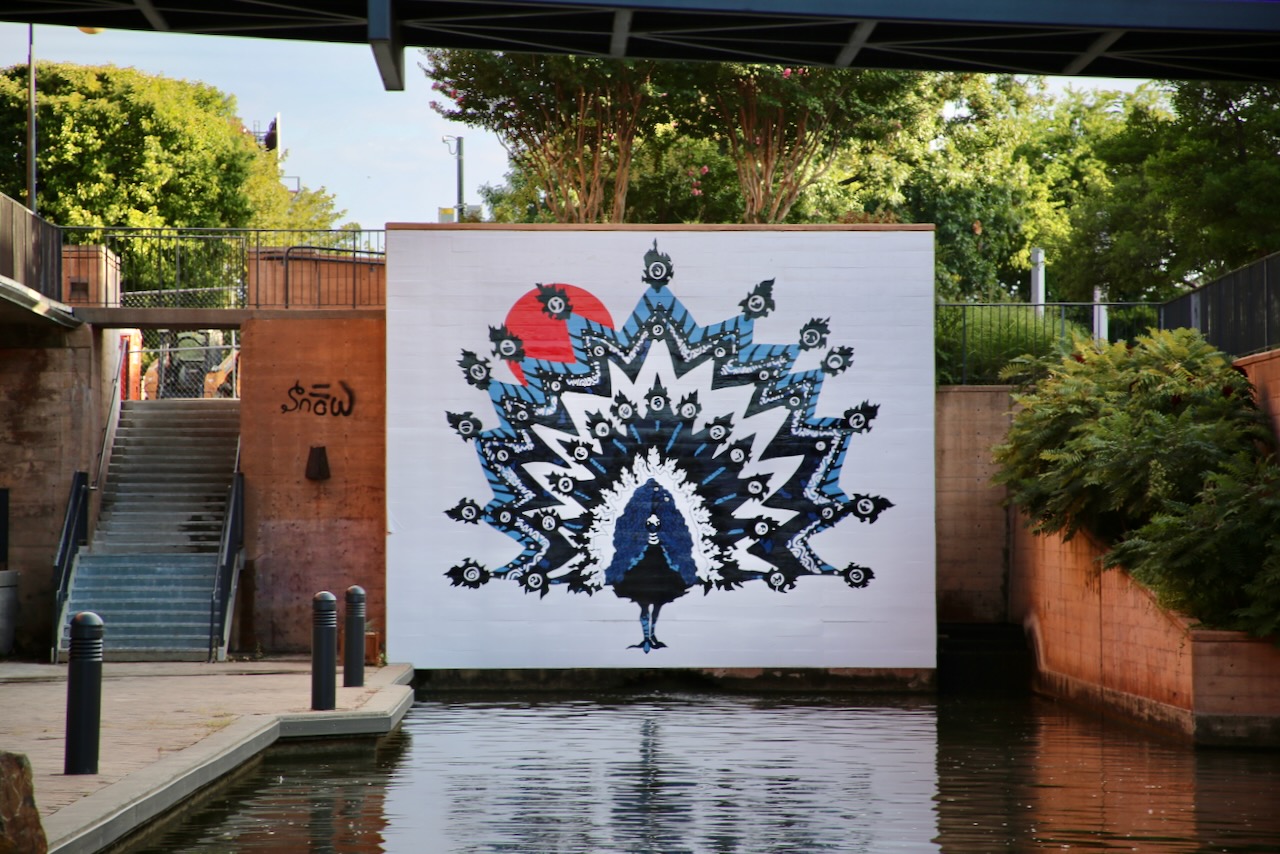
In an extremely rare sighting, I crossed paths with a pink grasshopper, not neon bright, but definitely more red than any visible green. This congenital condition of abnormal redness in an animal’s fur, plumage, or skin is called erythrism. This opportunity for an entomologist is about as common as a scuba diver spotting an albino sea turtle. I drive to Oklahoma City and walk around the Bricktown district. The state’s first craft brewery was packed, so I delayed dinner and walked along the canal, where I saw murals and signs of the city’s pride in letting settlers claim homestead on promised Indian territory.
I understand this comes from a long lineage of debaucherous ancestors and can only appreciate any improvement in a less demeaning direction. I’ve wondered further than I realize and am about to give up on finding Kitchen (not sure if Thai or Pizza) when I stumbled by a dog park on my return to the car and found Anchor Down — an F5 IPA and Impossible Burger for the win. After eating, I am escorted to my car by Hunter and her family coming back from the dog park. I listen to her describe a thing that lifts things. Well, that’s vague. I decide to stay the night here, in town, not with them.
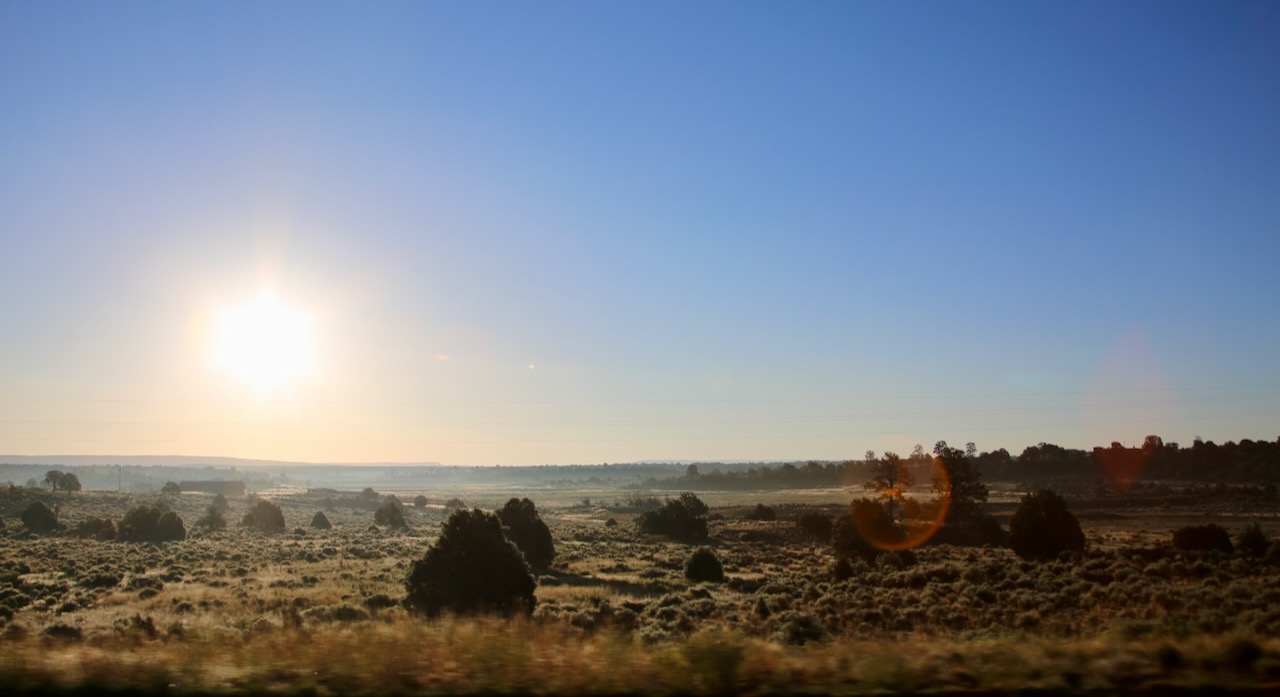
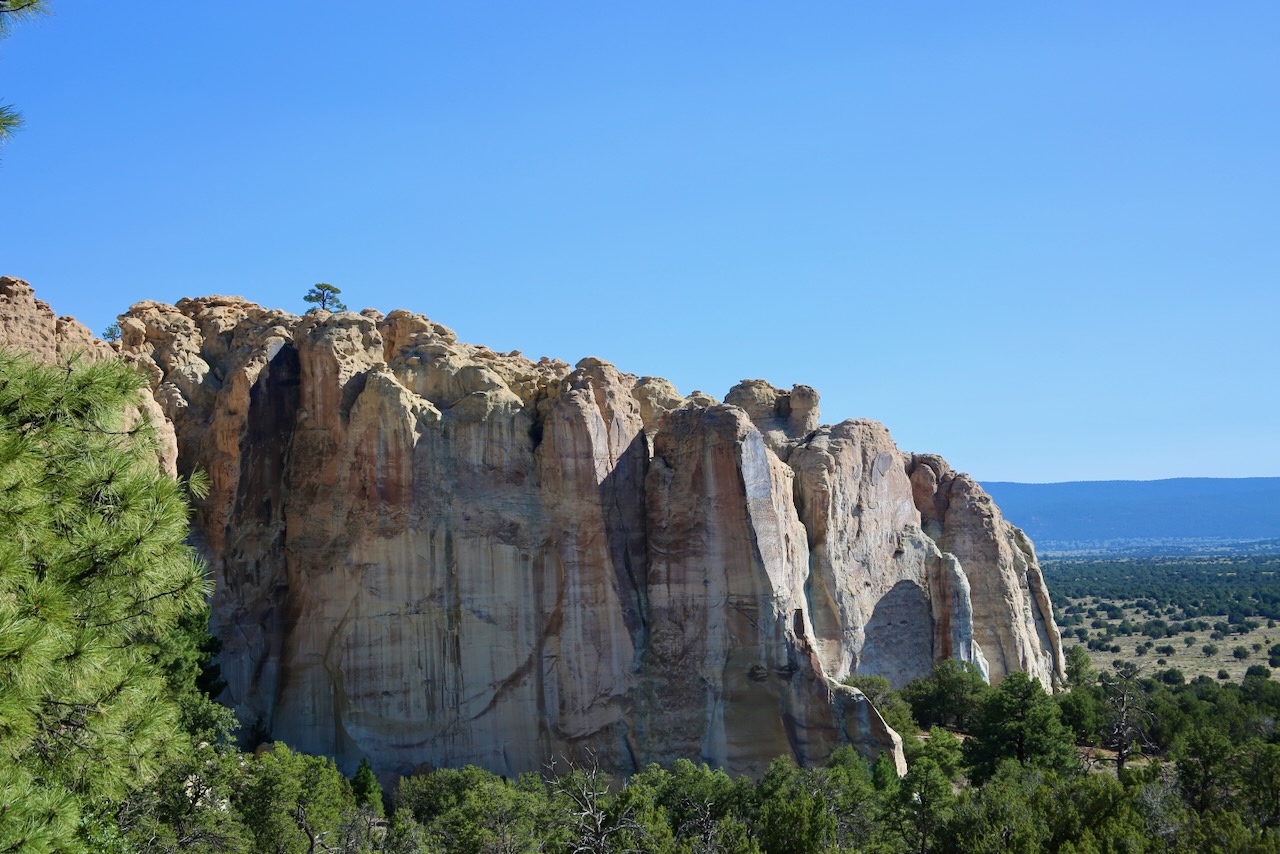
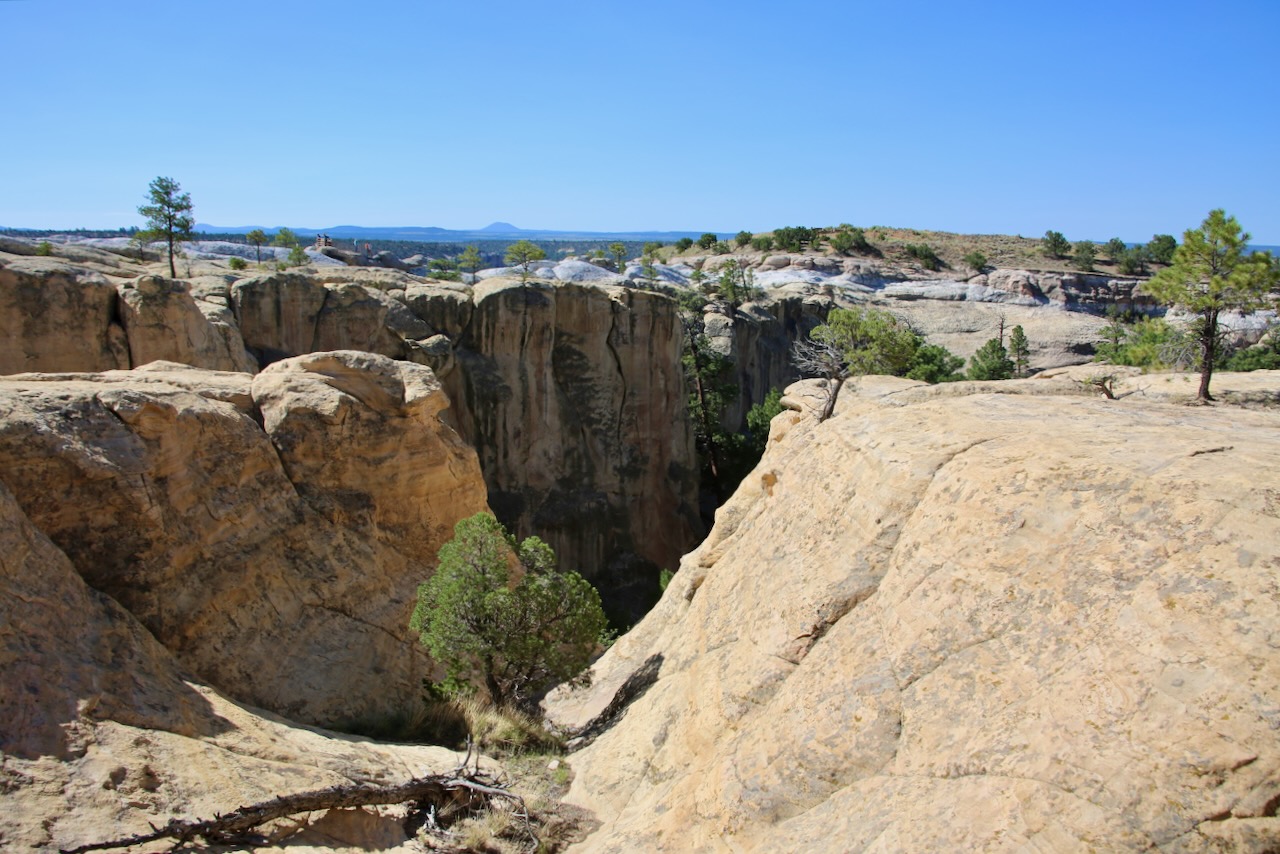
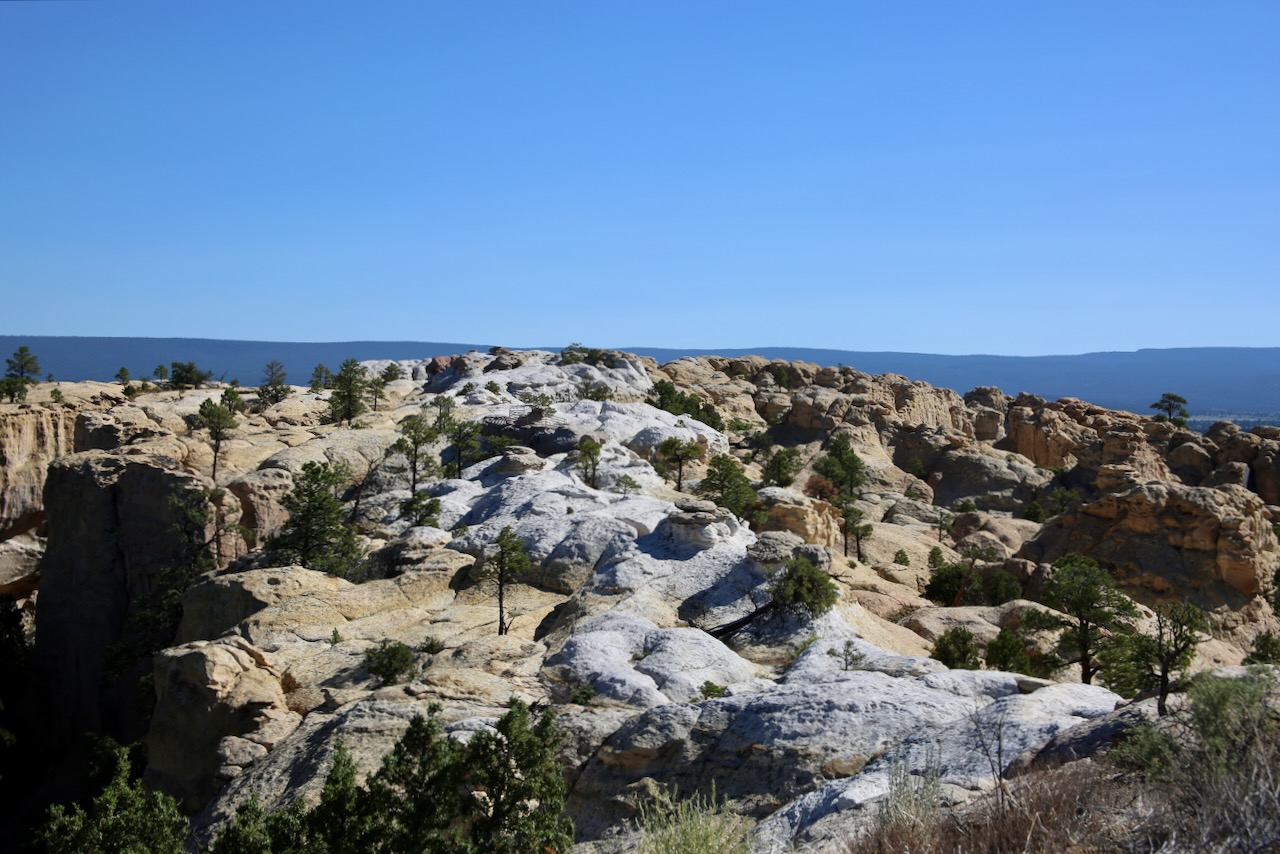
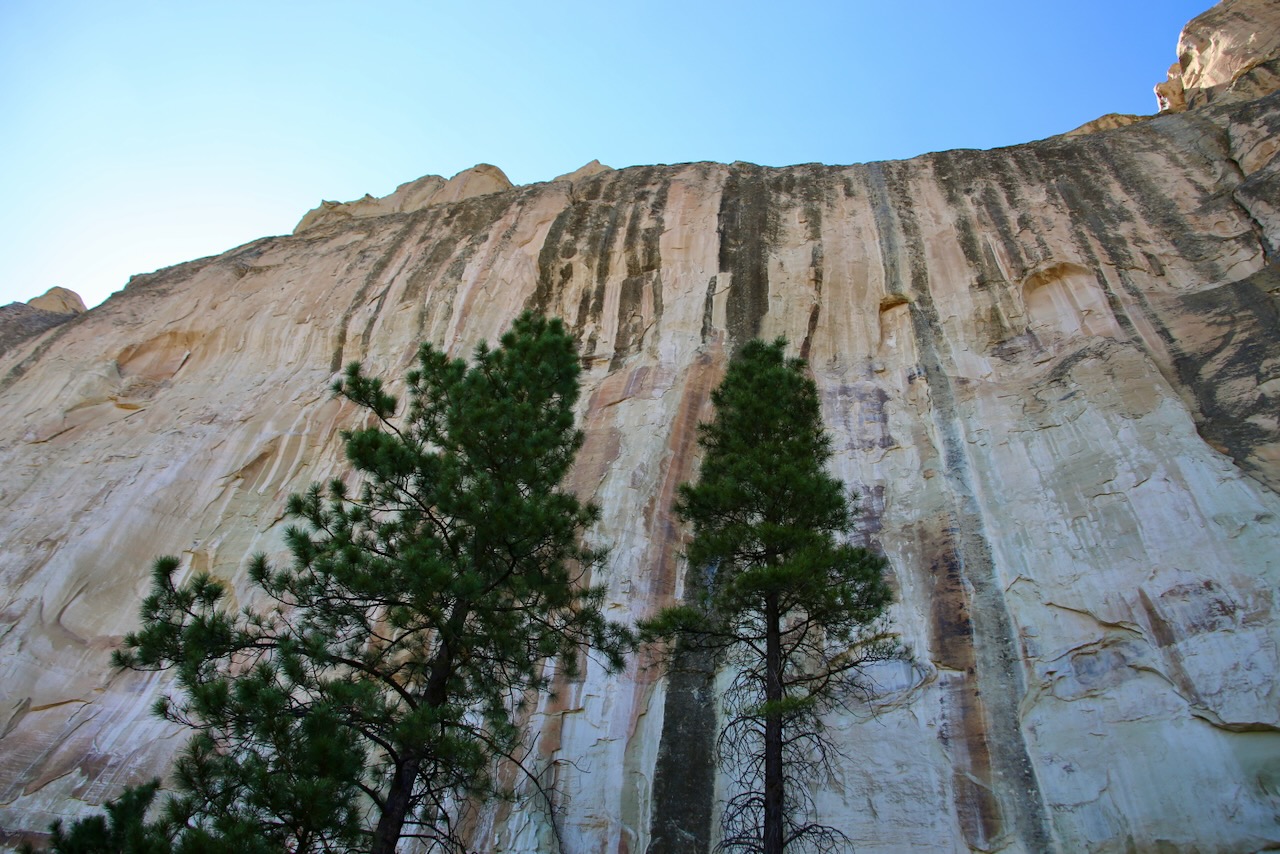
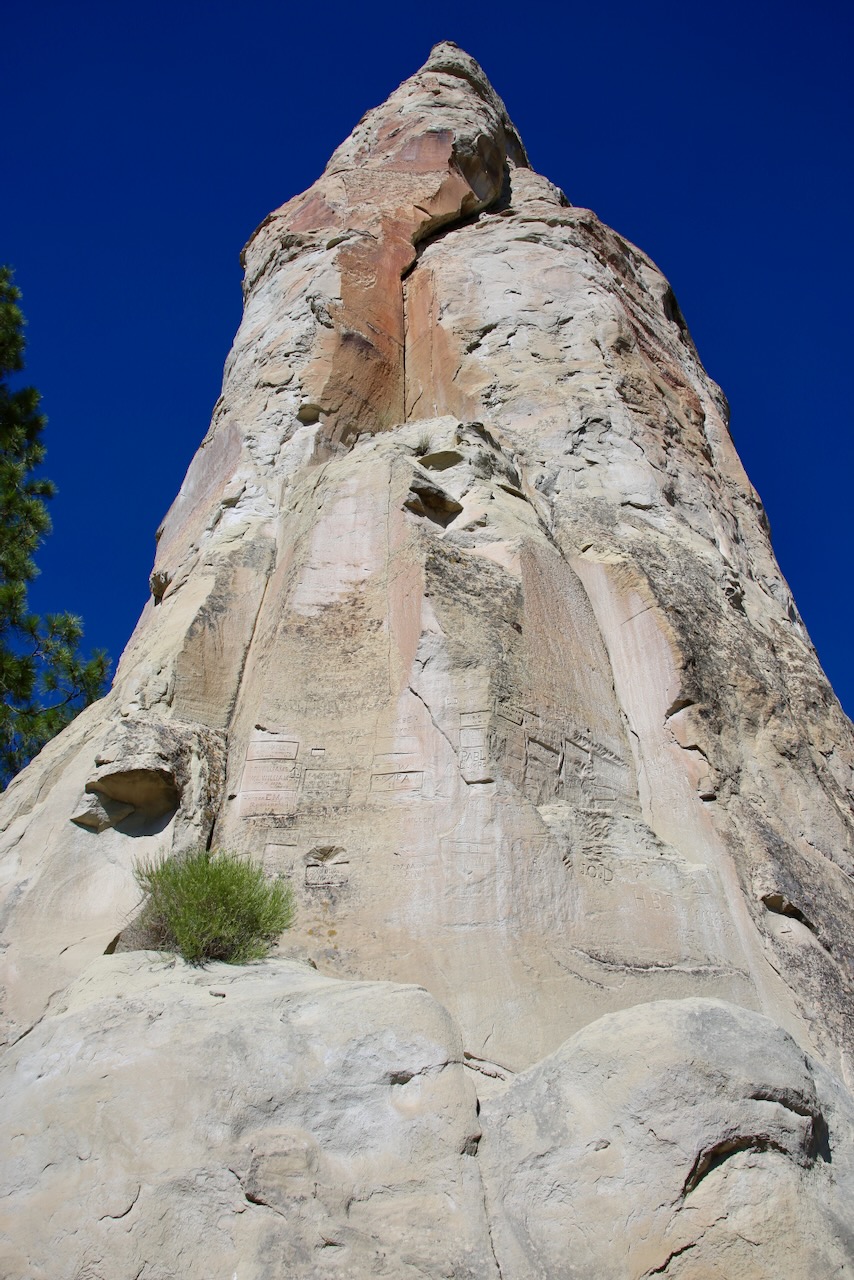
I wake up in Gallup and take my first shower at a truck stop. Thirteen dollars gets me two towels and a washcloth with foaming soap. My notes say I detoured to El Morro National Monument, but getting off the highway ensured I had a full morning of sightseeing, not just an hour of red sandstone mesas and sagebrush between Route 66 museums and murals. It also gifted me with a foggy drive between trees and sunflowers. Arriving in the park, I will take a nap in the campground to counterbalance the inadequate sleep I’ve had over the last few nights, as travel makes me restless with a constant desire.
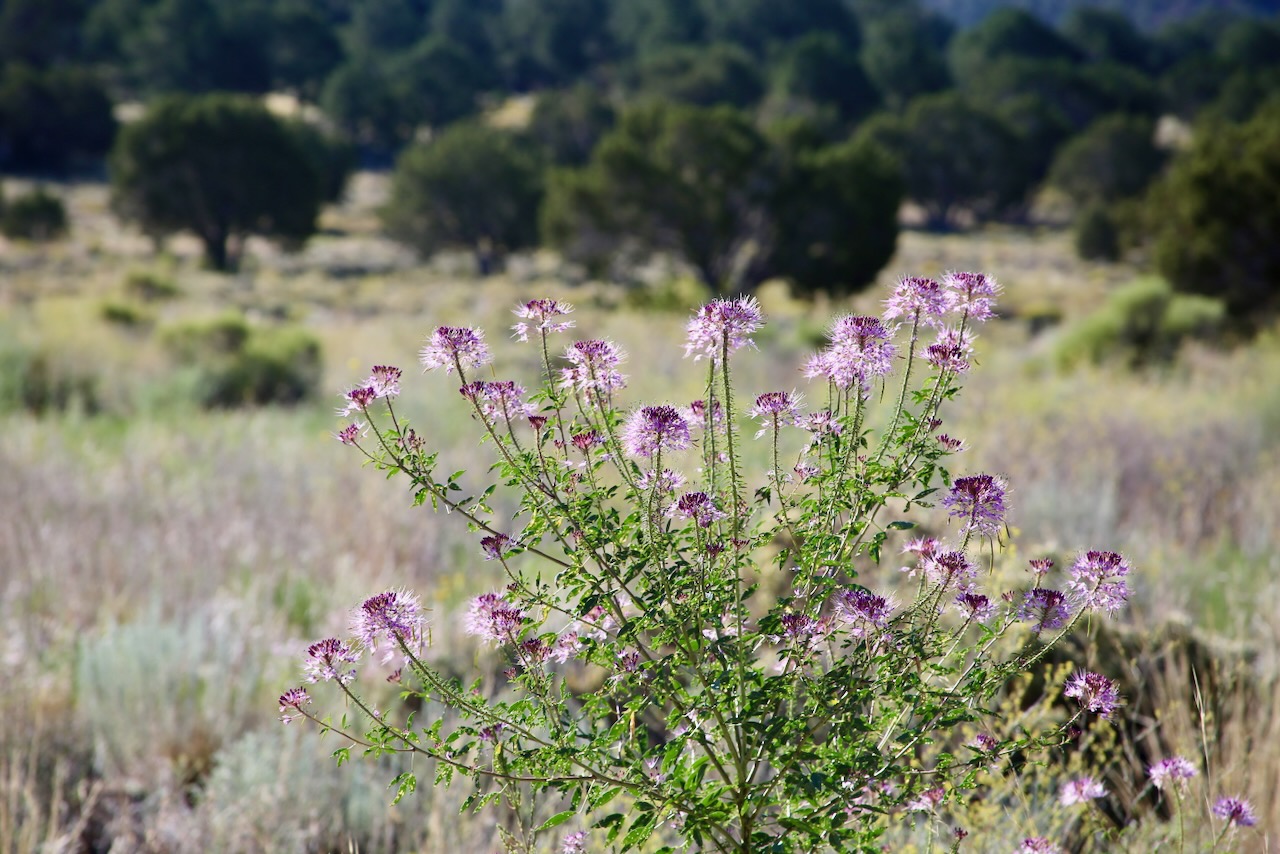
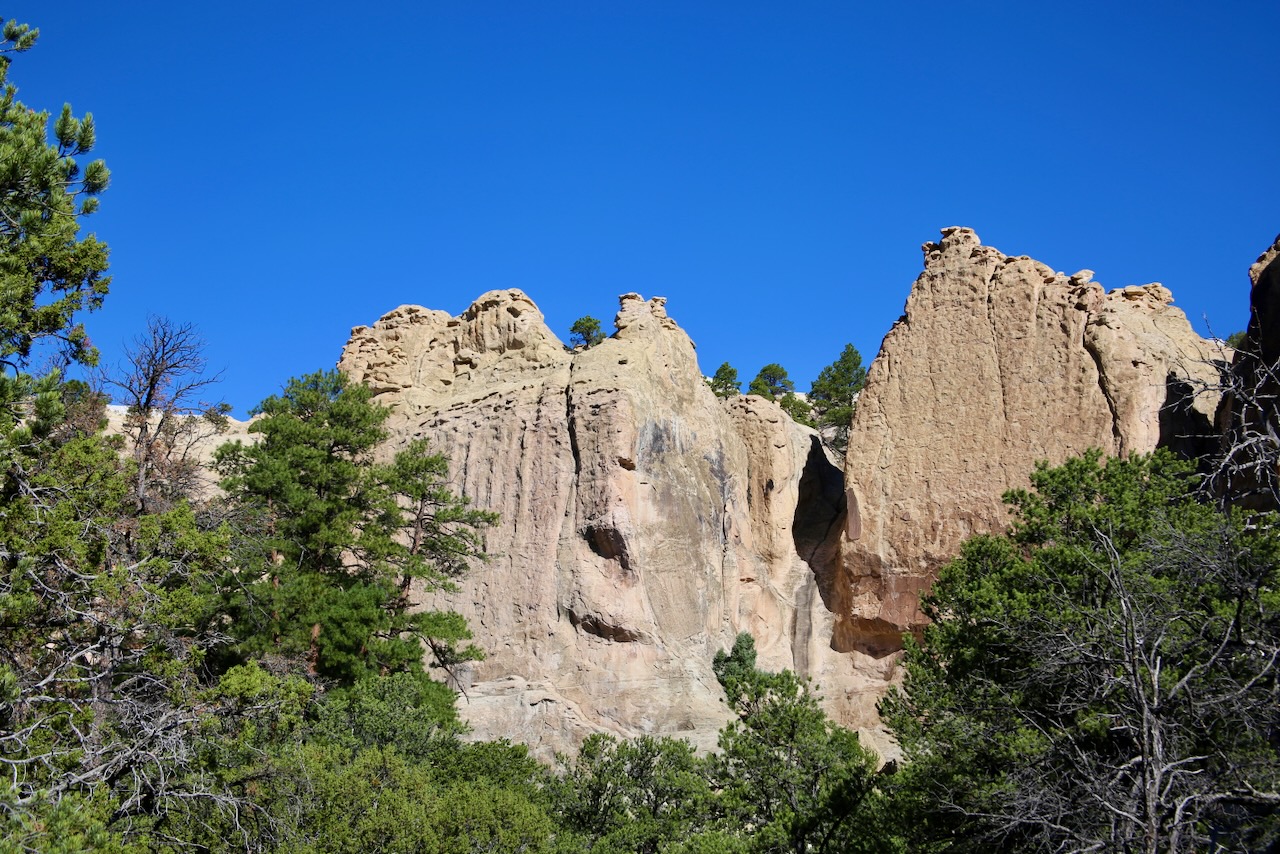
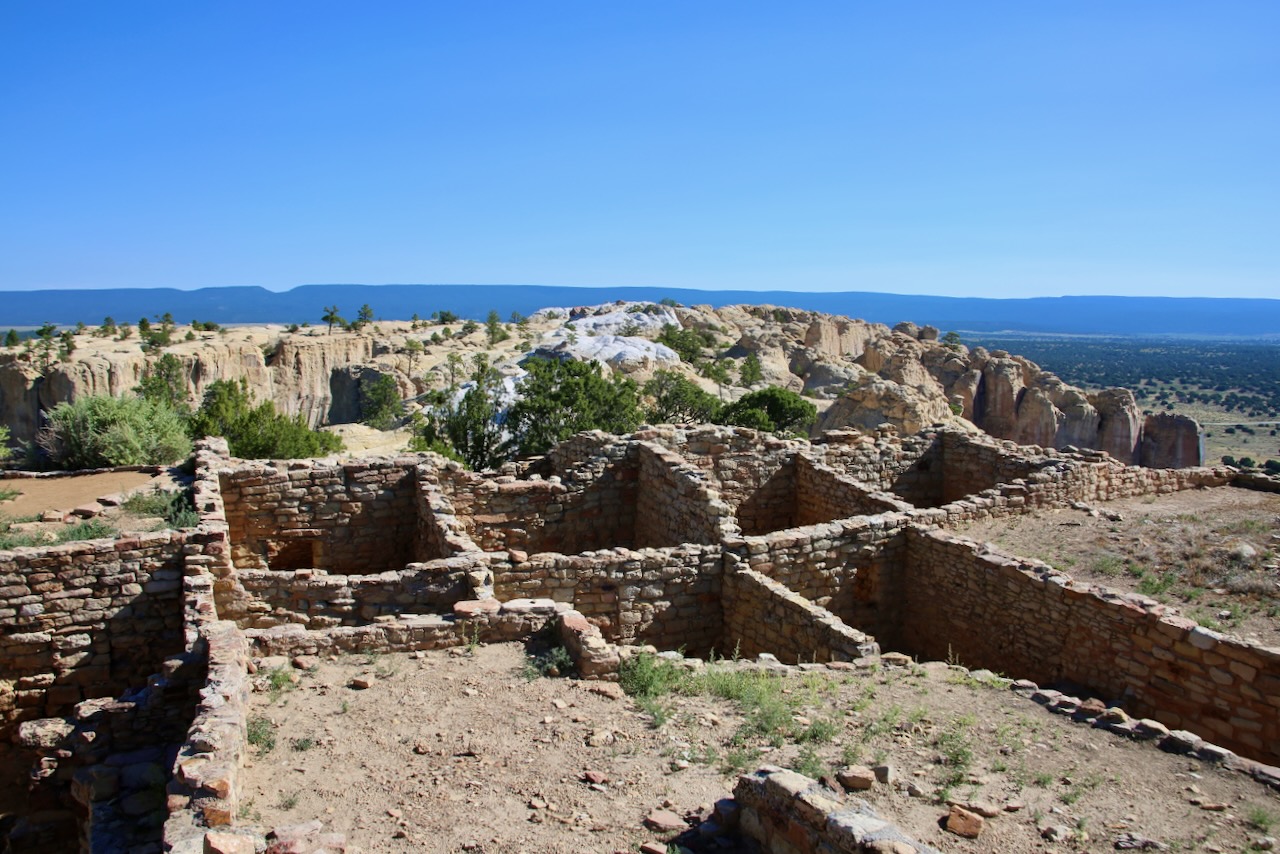
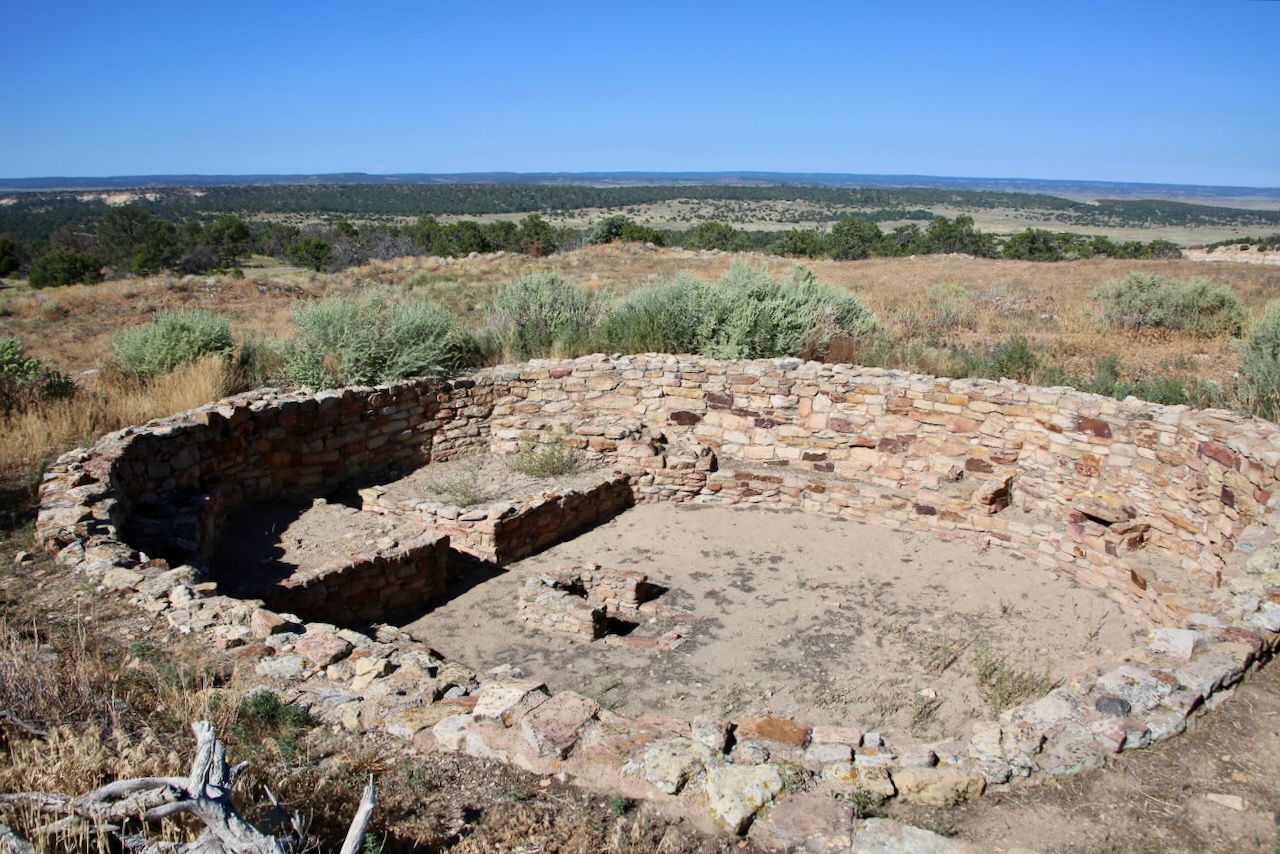
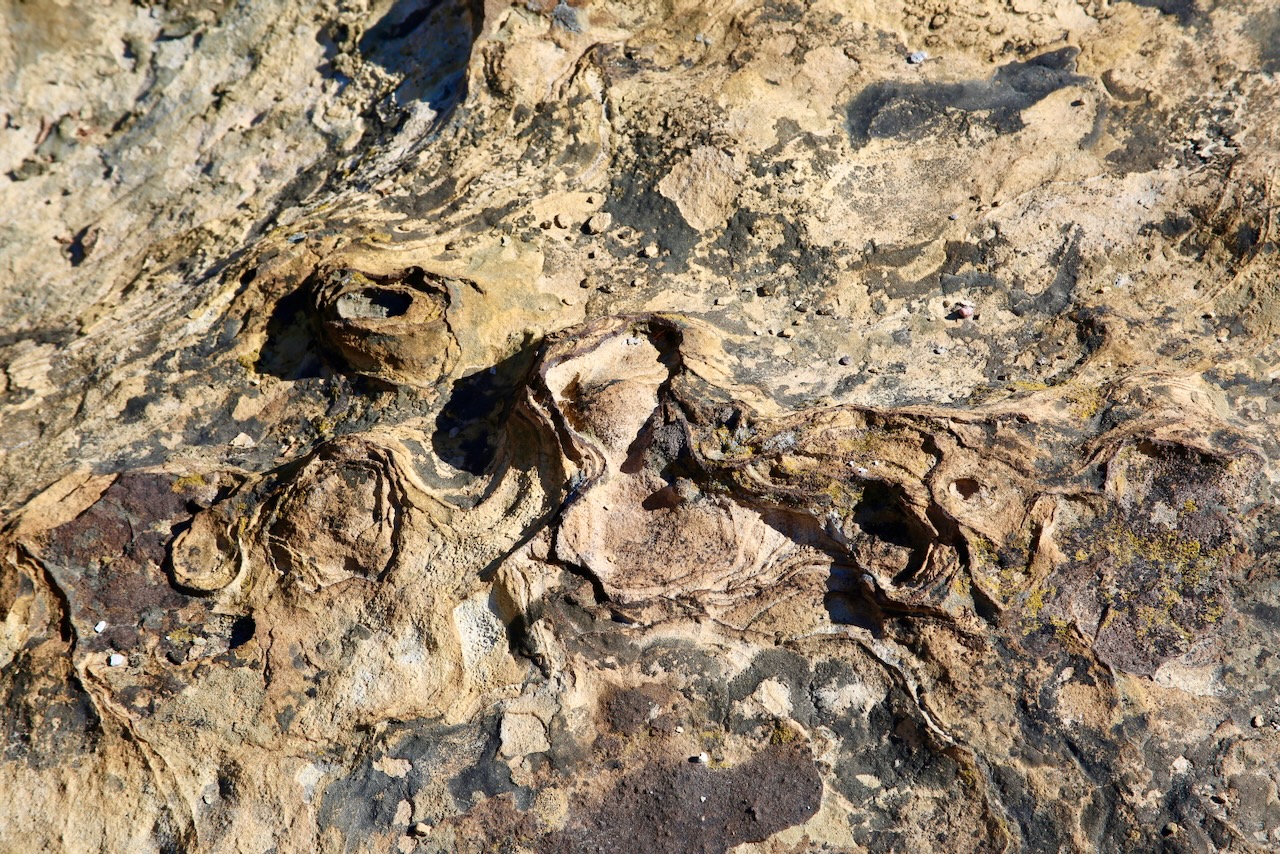
Refreshed, I go for a hike and listen to the cliff swallows as they whistle on their descent. There are Indian paintbrush (bright red-orange), Rocky Mountain bee plant (shades of purple), blue gilia (pale blue), and a blue-tailed skink (a vivid electric blue) that add color to my walk that is otherwise varying hues of rock and stone with a tinge of tree thrown in to complete the variegated scene. I hurried past the group of loud children so that I could see and hear the animals before they scared them away on the Headland Trail, which includes the Inscription Rock Trail, that climbs to the top of the sandstone bluff past the Atsinna Pueblo, an ancestral dwelling.
I only saw a subunit of ants as I admired the surface they navigated using their alternating tripod gait, but was grateful to do so in the sounds of nature, not obnoxious offspring, though I’d be thrilled to meet any untrained calf, cub, pup, or kit that doesn’t know any better yet. I see some spotted beebalm (aka dotted horsemint), Hooker’s evening primrose (named after a botanist), winterfat (used by the Navajo to relieve the expectorating (coughing up) of blood), common mullein (known for its fuzzy foliage), and some ragwort (from the possibly toxic family).
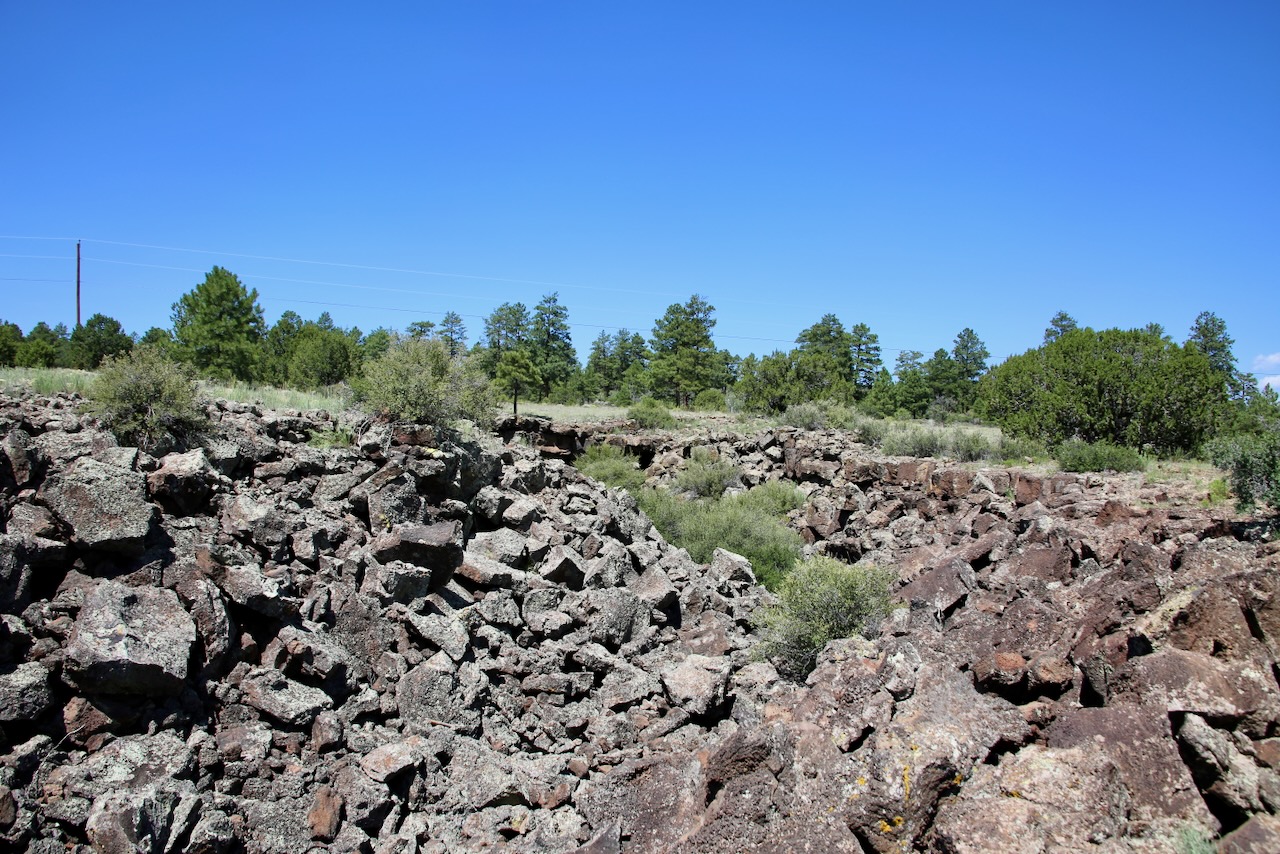
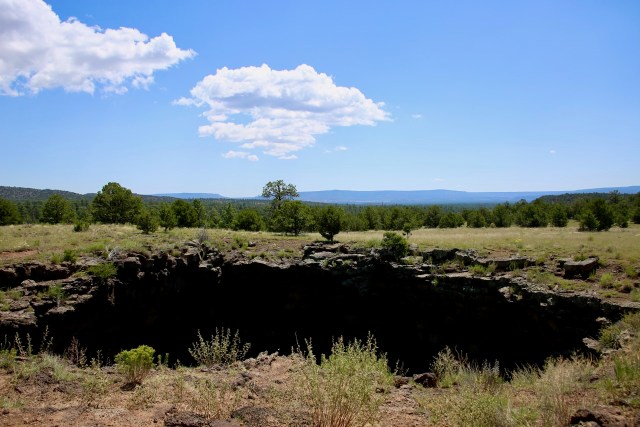
Ice Cave and Bandera Volcano are only a half mile off my route, so of course I stop by, but for some reason choose to leave and not pay the $12 (now $14) to walk “The Land of Fire and Ice” on the Continental Divide. The volcano is one of the best examples of an erupted cinder cone in the continental US, along with its 23-mile collapsed lava tube. The cave is 31°F year-round with 20-foot thick ice that has been accumulating for over 3400 years. If I find myself this way again, I will definitely explore these treasures on foot, while wearing good shoes.
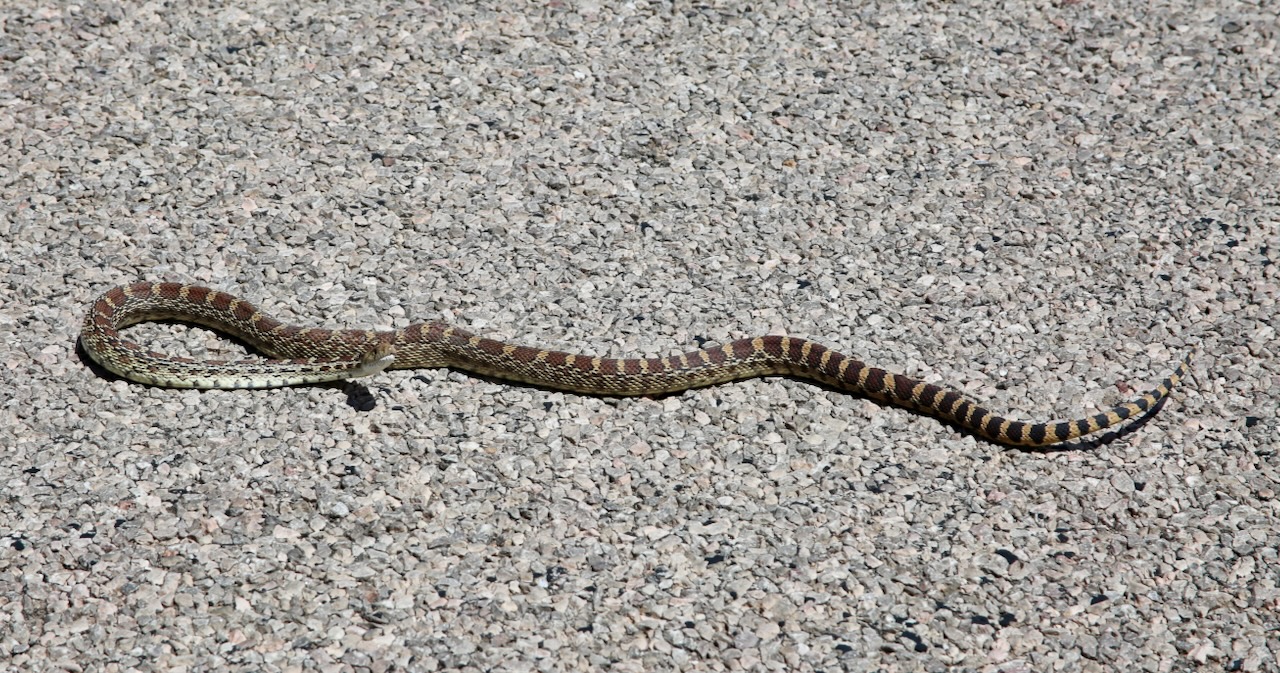
I might do just as well at El Malpais National Monument by seeing half a percent of the park’s acreage, over 114,000 acres, about 180 square miles. In the El Calderon Area, there are lizards, squirrels, and butterflies to watch sunbathe, feast, and flitter about. Just outside the park is a gopher snake, commonly confused for a rattlesnake because of its color pattern. I’m so glad to see it alive, especially in the middle of a lane where it can warm up. If I had a trekking pole or a hard floor mat, I could encourage it to the lighter paved gravel of the shoulder.
I buy bat stickers at the visitor center located on the far southside of Grants, a city of 9,000 people. I take Exit 114, near Casa Blanca, from Hwy 40 for frybread. I wait while three guys get their tacos made. They’re on their way home to Phoenix from a rock concert in Denver, so they can watch the band twice. I get a plain and a cinnamon. Dad calls to let me know he’s going to La Jolla for two weeks to housesit and that he could’ve met me in Flagstaff, roughly a two-hour drive for him. That would’ve been a nice visit, so I should at least extend an invite next time.
I’m not sure which “peak” I was referring to in a stretch of land covered in cinder cones, isolated mesas, broad ridges, and volcanic hills, but the access point is on private property, so I will be skipping that summit. I should be more detailed in my notes, as I find it random to talk about my grades in the middle of a trip, but it makes sense since I left before the professor gave me a C in chemistry. I thought I might be referring to passing a semi hauling explosive solids, which are Class 1, Compatibility Group C. I’ll stop in Santa Rosa for gas.
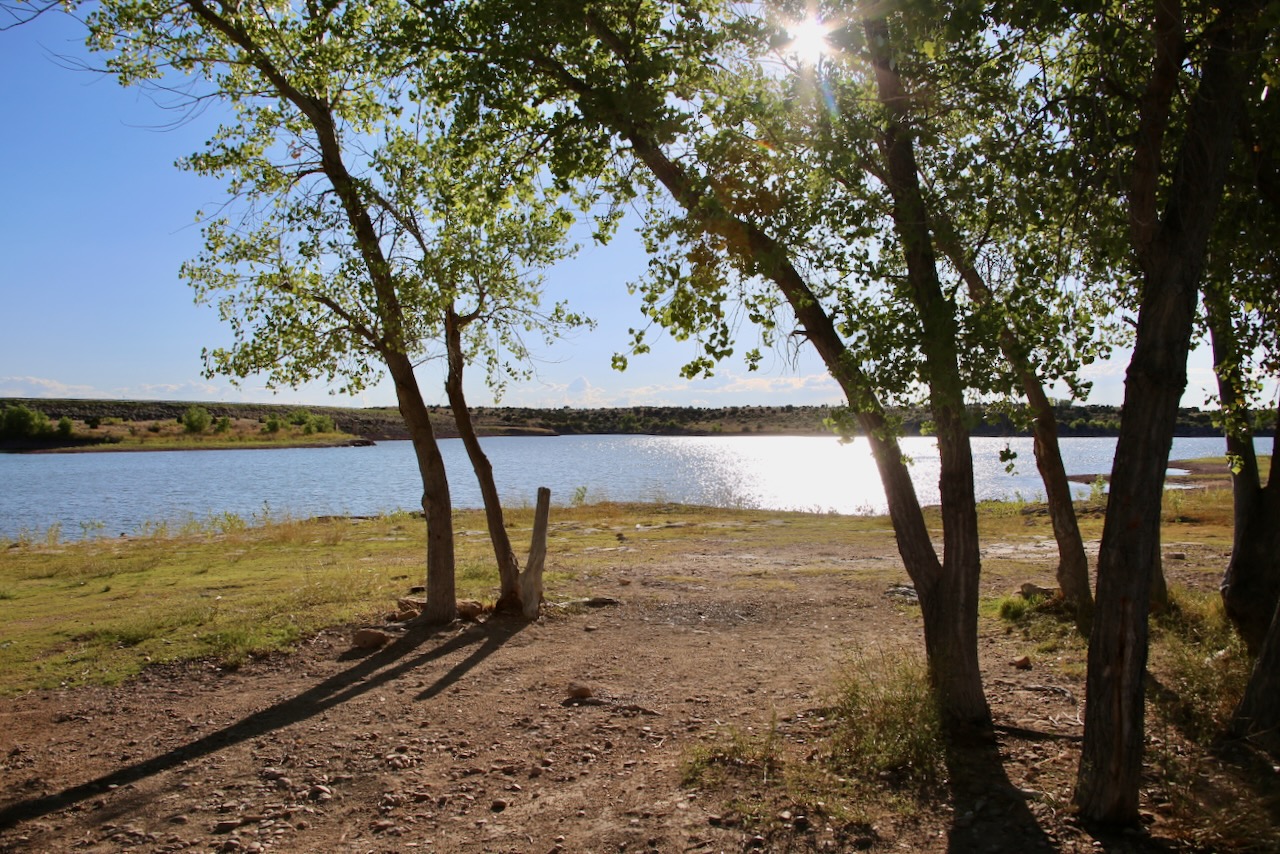
While at the pump, I talk with John about You, a show about an obsessive man; his dog, a fat chihuahua that reminds me of my childhood pug, Peanut; and his kid, who has lived in San Francisco and Brooklyn. Fog grass refers to a common velvet grass, not the fog on the ground, that appears to be held by microscopic blade hands, on the 203, a ten-mile-long state road, on the way to Lake Sumner. The sight of water is welcome after a day of looking at dry rocks. I enjoy the peace for a bit, but not the trash, so I drive on to find Billy the Kid’s grave in Old Fort Sumner Cemetery.
gopher snake
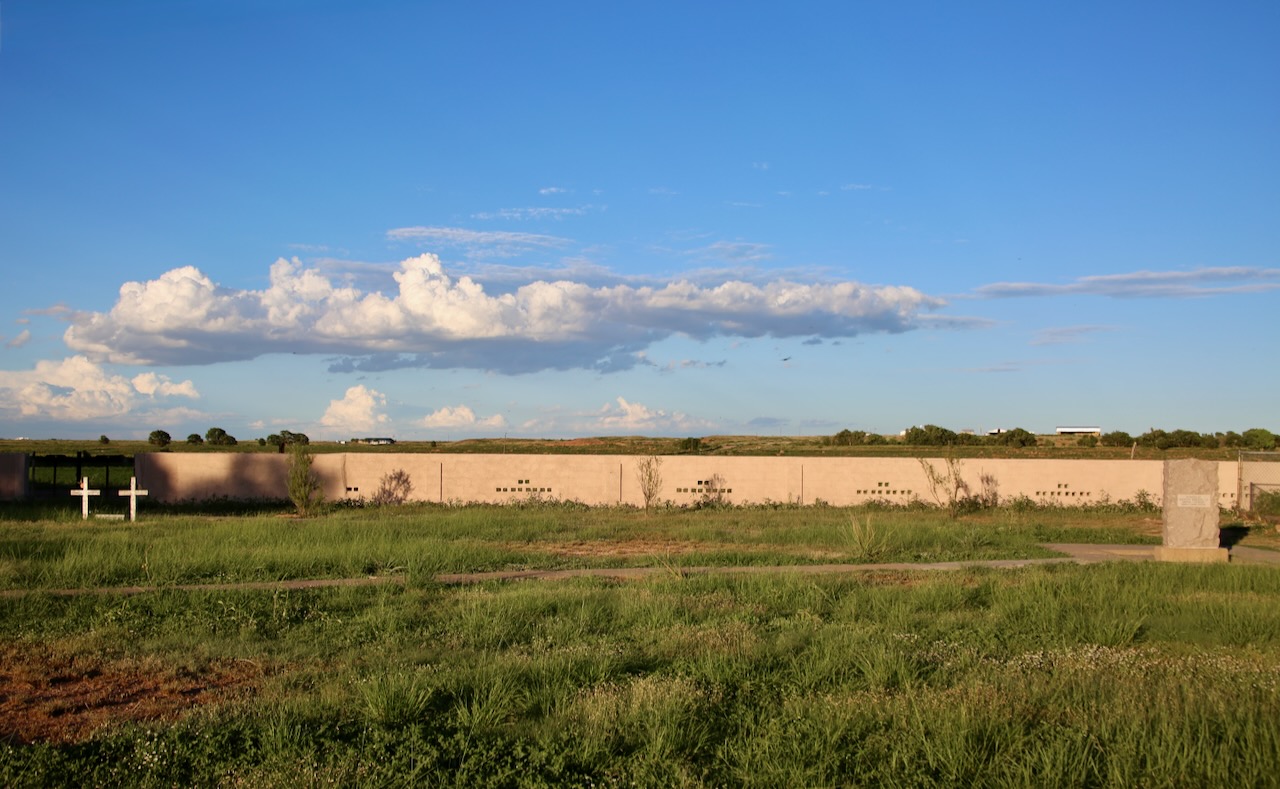
Billy’s tombstone was stolen in 1951 and recovered in Granbury, TX. It was stolen again in 1981 and was found in Huntington Beach, CA, four days later. Since its return, it has sat in iron shackles in a cage with his pals, Tom O’Folliard and Charlie Bowdre — talk about life behind bars. This site has a more terrible history. Between 1863 and 1866, the US Government forced 500 Mescalero Apaches and 10,000 Navajos onto the Bosque Redondo Indian Reservation. After harsh conditions led to rampant disease and hundreds of deaths, the Mescalero Apaches escaped in 1865.
Lake Sumner
The Navajos were released in 1868 after signing a treaty to return home to the Four Corners region. After this disastrous failure, Lucien Bonaparte Maxwell bought the old post in 1871 and transformed the area into a farm and ranch community of 200 people. He’s known for owning the largest single tract of land (over 1.7 million acres) by one individual in the US in 1864. He used the fur of beavers, otters, martens, coyotes, and bobcats, which dried out wetlands and reduced habitats for birds and fish, to fund the building of the Texas Pacific Railroad.
Old Fort Sumner Cemetery
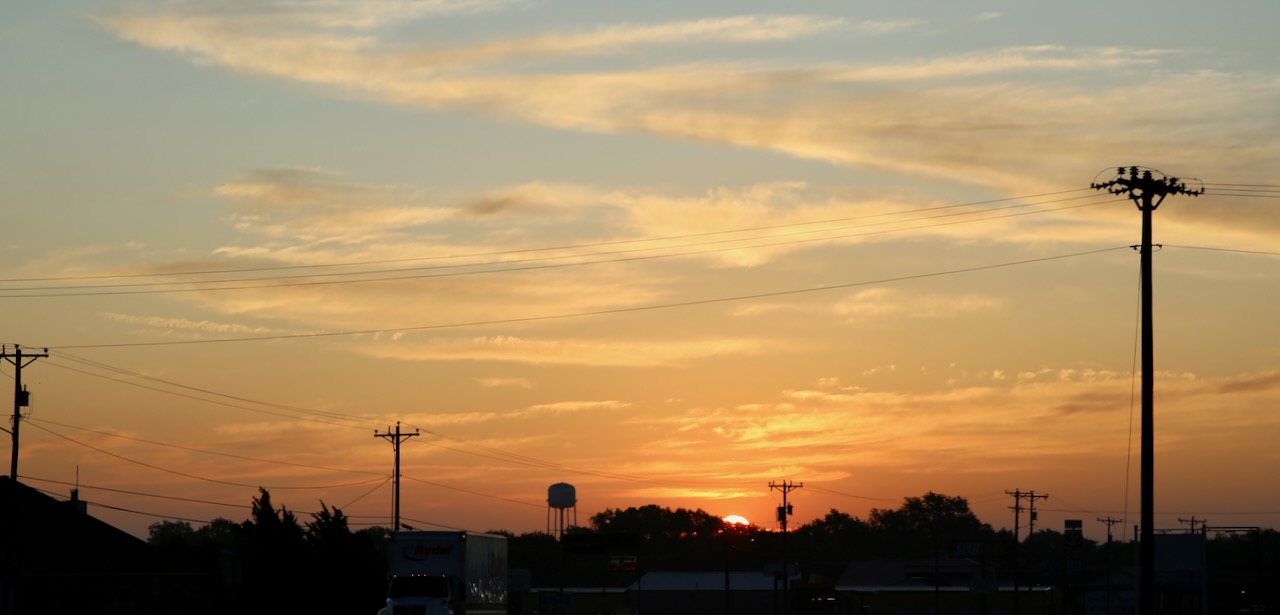
I’ll make it to Clovis, just ten miles from the Texas border, after waking up 23 miles into New Mexico. I covered over 420 miles, and as the light disappears beyond the horizon and the bright headlights of oncoming traffic cause me to slow down, I will look for a place to sleep. Tonight’s campsite, like last night’s, will be near an active railroad, which explains the need for a nap to compensate for the sleep interruptions. The difference is that Gallup might have a train every half hour, while Clovis can average every hour or more.



 TheJessicaness