All About the Birds and the Squirrels

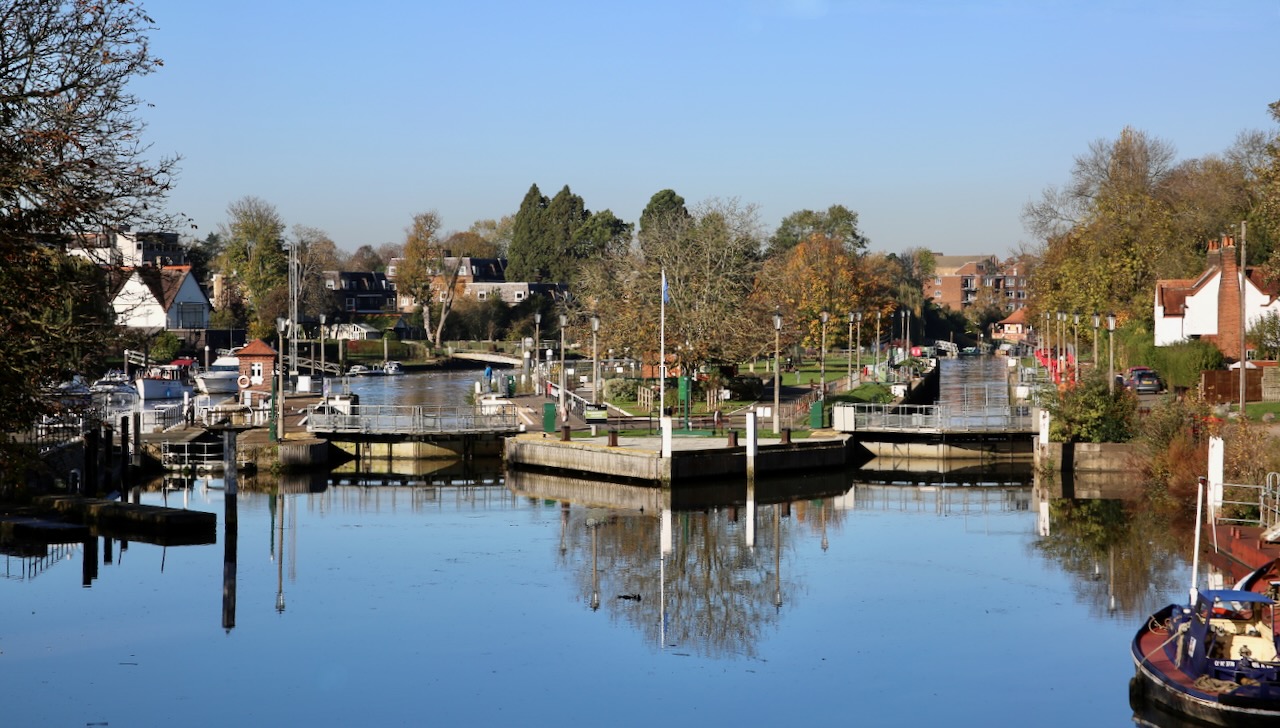
I take the morning bus from Kingston upon Thames to Teddington Lock and try a new juice drink (new to me, but I don’t remember what it was). The Shambles (meaning meat stall in Old English) restaurant was once Stapleton Butchers for almost 250 years. Some hooks and scales can still be found around the building, including chalkboards under the floorboards.
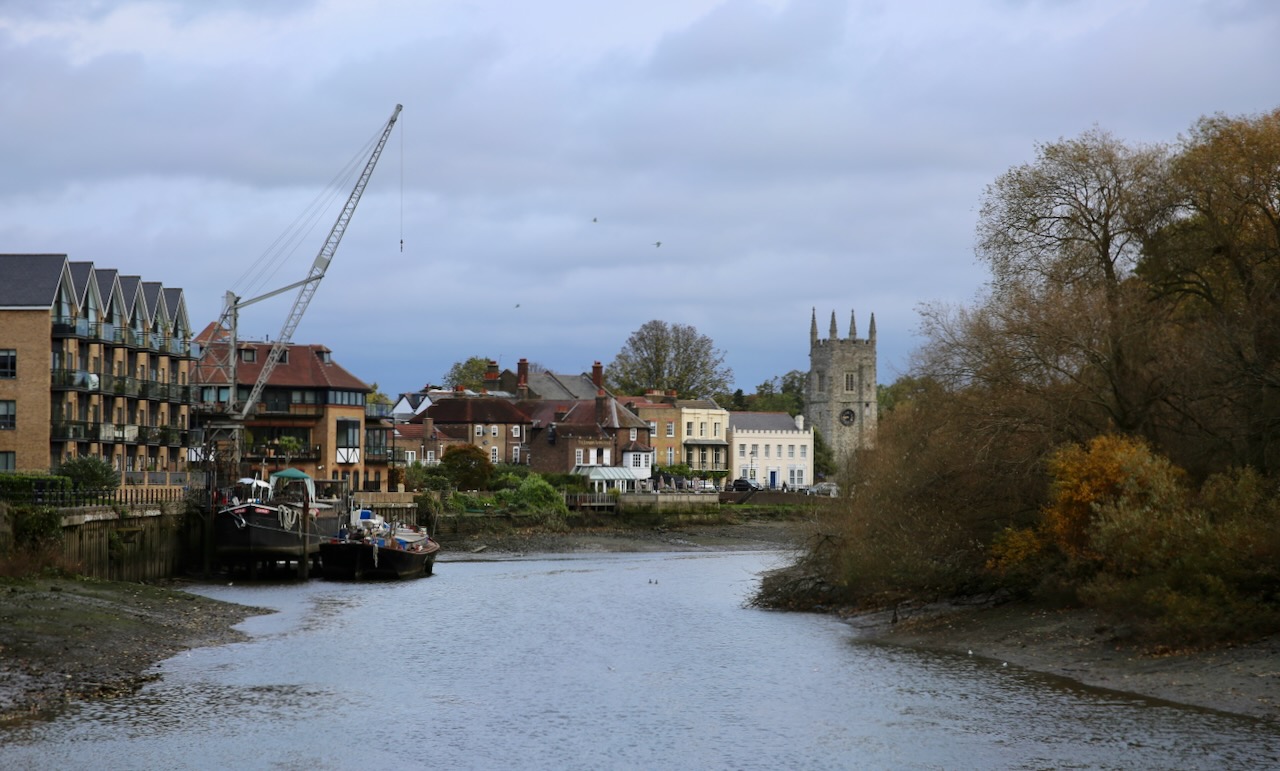
I walk along the River Thames back to Kingston. I pass a cyclist as his tube blows, sounding like a gunshot as it splits. It’s good that he has a spare because I haven’t seen a tire patch that big. I’m going back to the room, where guys are painting in the hall, so I can put on a second pair of socks. I grab some mini-donuts and a halloumi pesto waffle to eat in the company of a common starling.

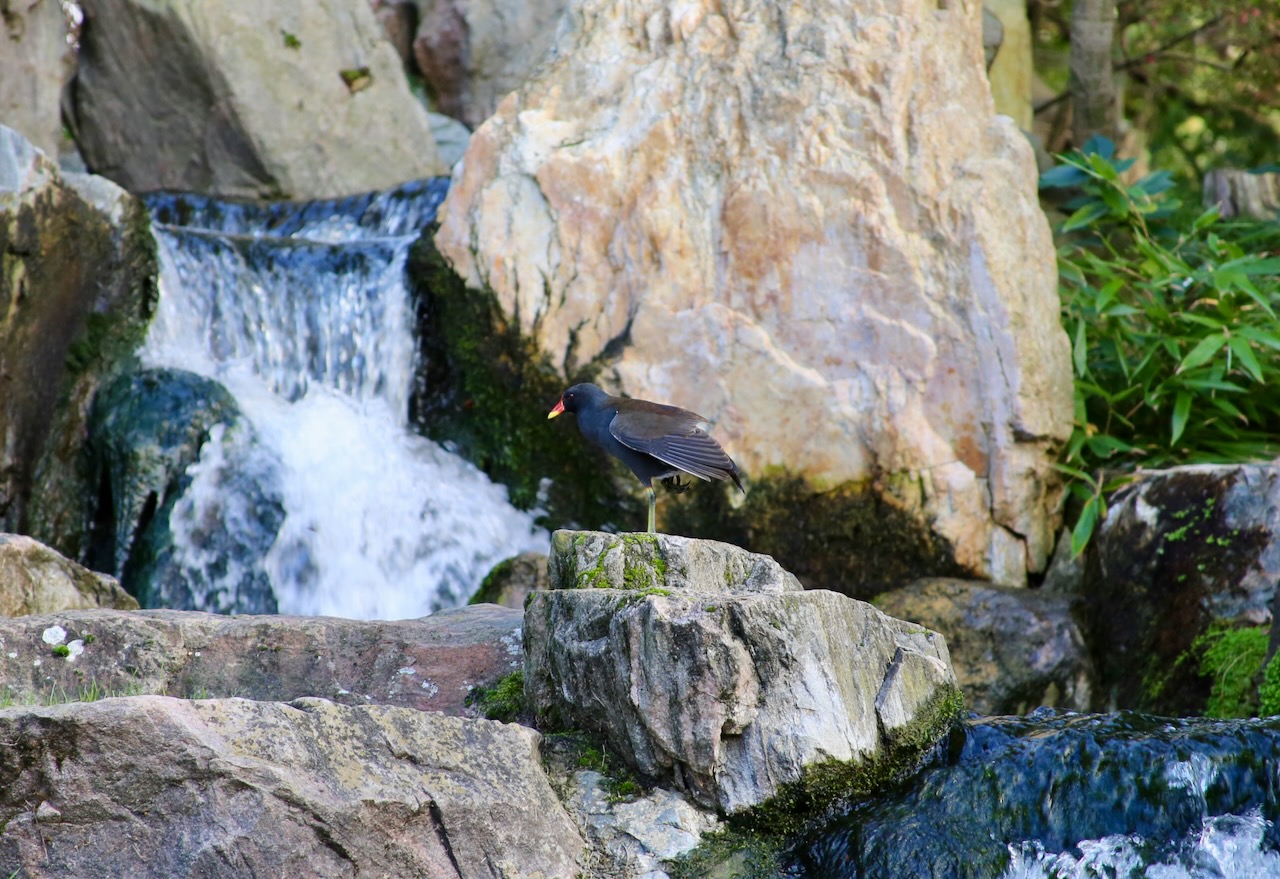
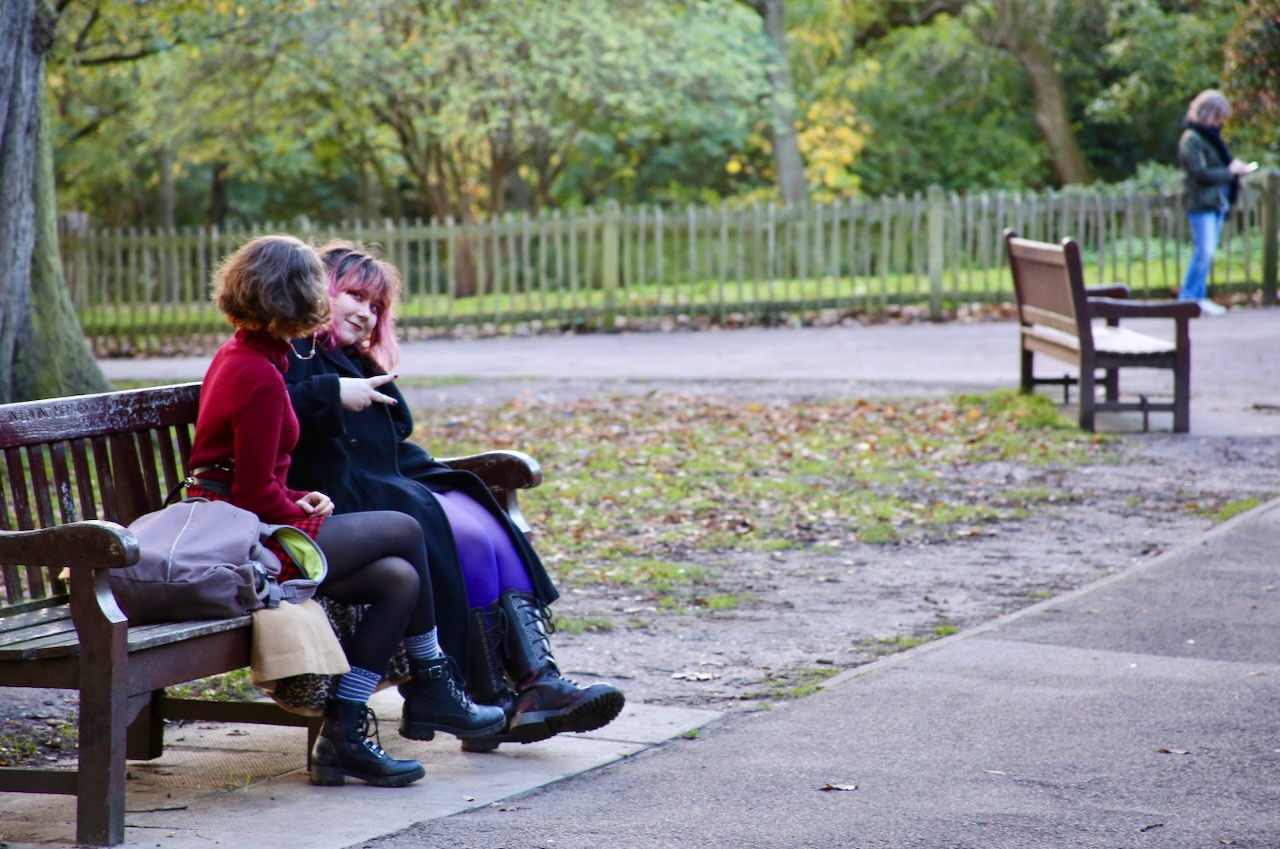
I take the train to Kensington (Olympia) station and walk to Holland Park. There are beautiful buildings, attractive art pieces, and a couple that cycled to the park – the woman doing yoga poses on a set of stairs while the man photographs her. This is a popular place for using Canons and Kodaks – black coats and blue masks, glasses on and smiles wide, rolled up pants sat by a waterfall, and traipsing through the trees for a spot on a rock.
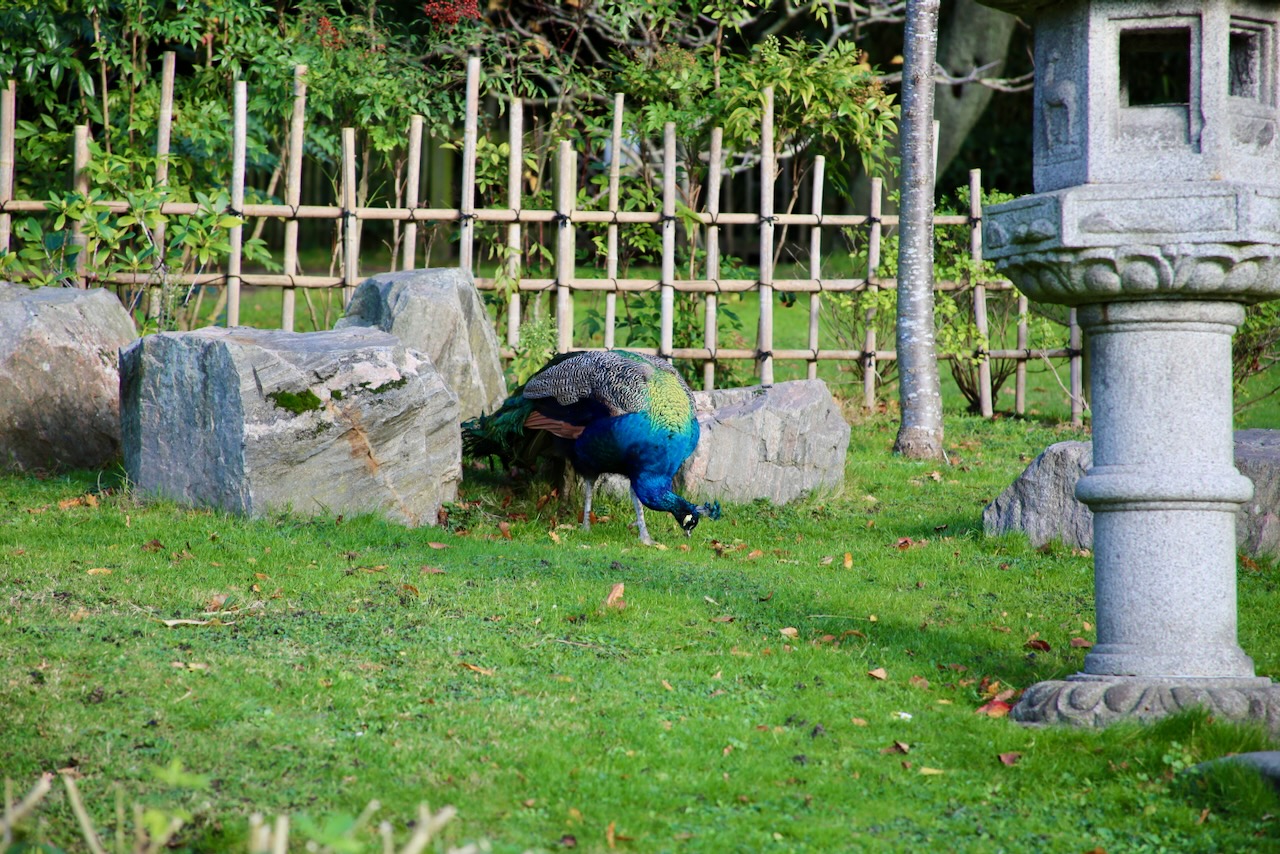
The Kyoto Garden incorporates many traditional types of Japanese gardens – dry rock, hill and pond, and strolling style, some being meant for meditation. The six fundamental elements of these are water, rocks, trees and flowers, bridges and fences, stone lanterns and water basins, and fish. These gardens are meant to instill peace and focus on the natural landscape.

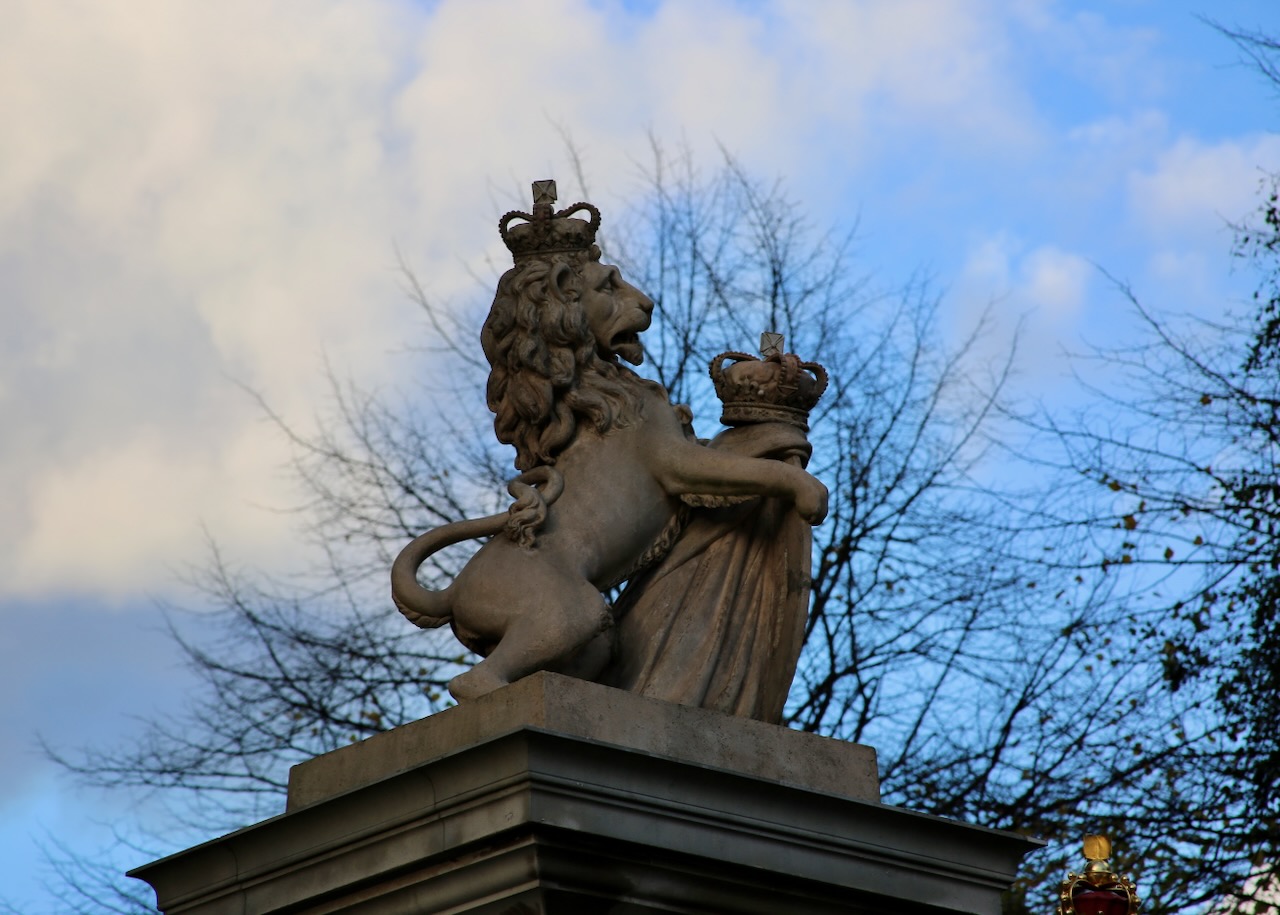
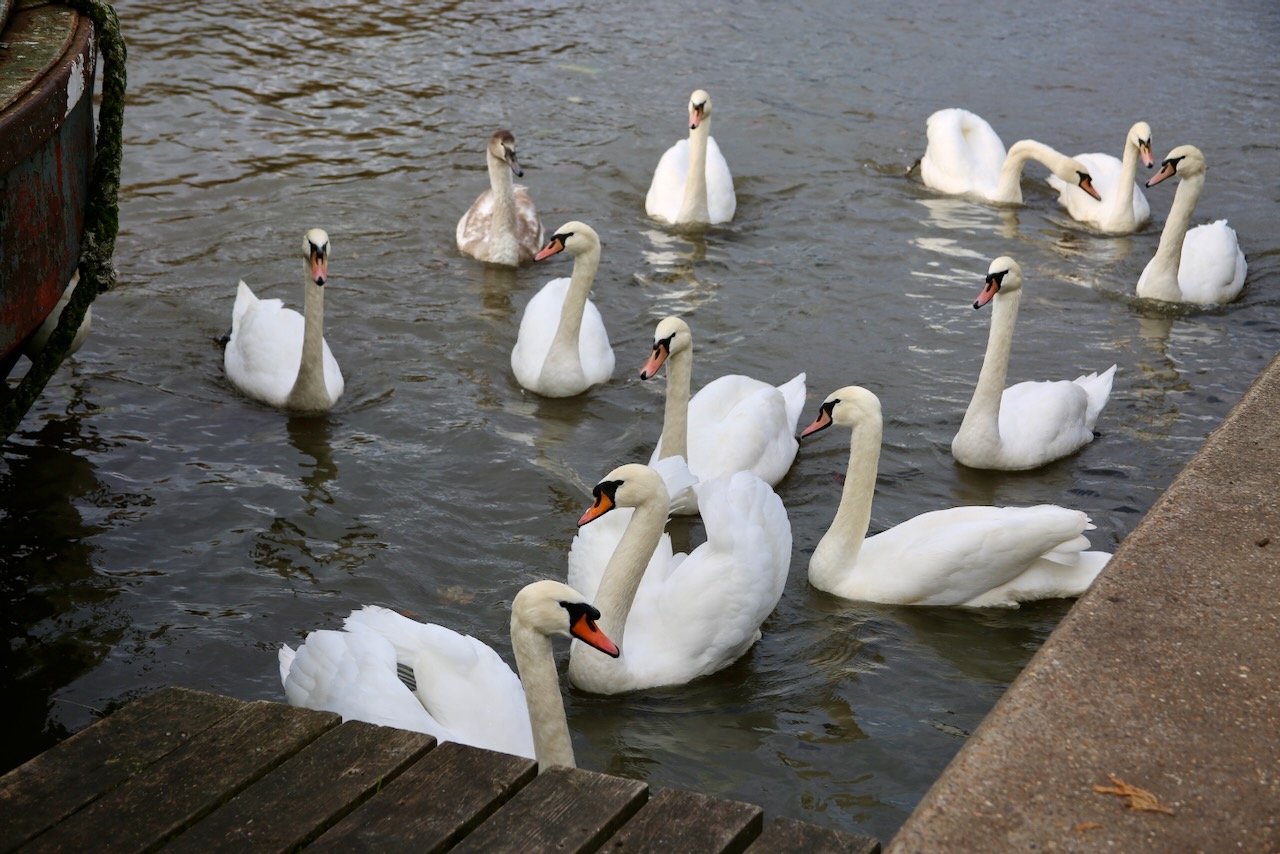
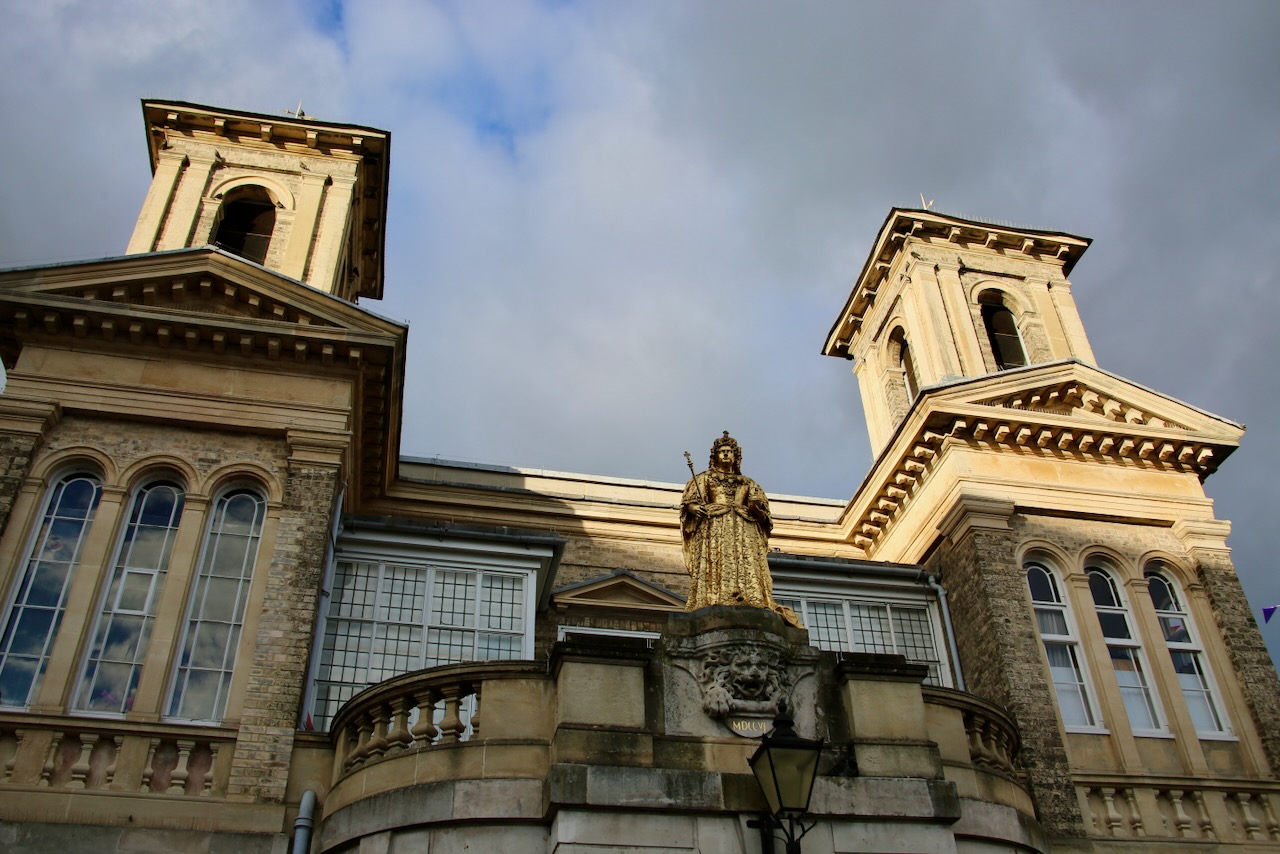
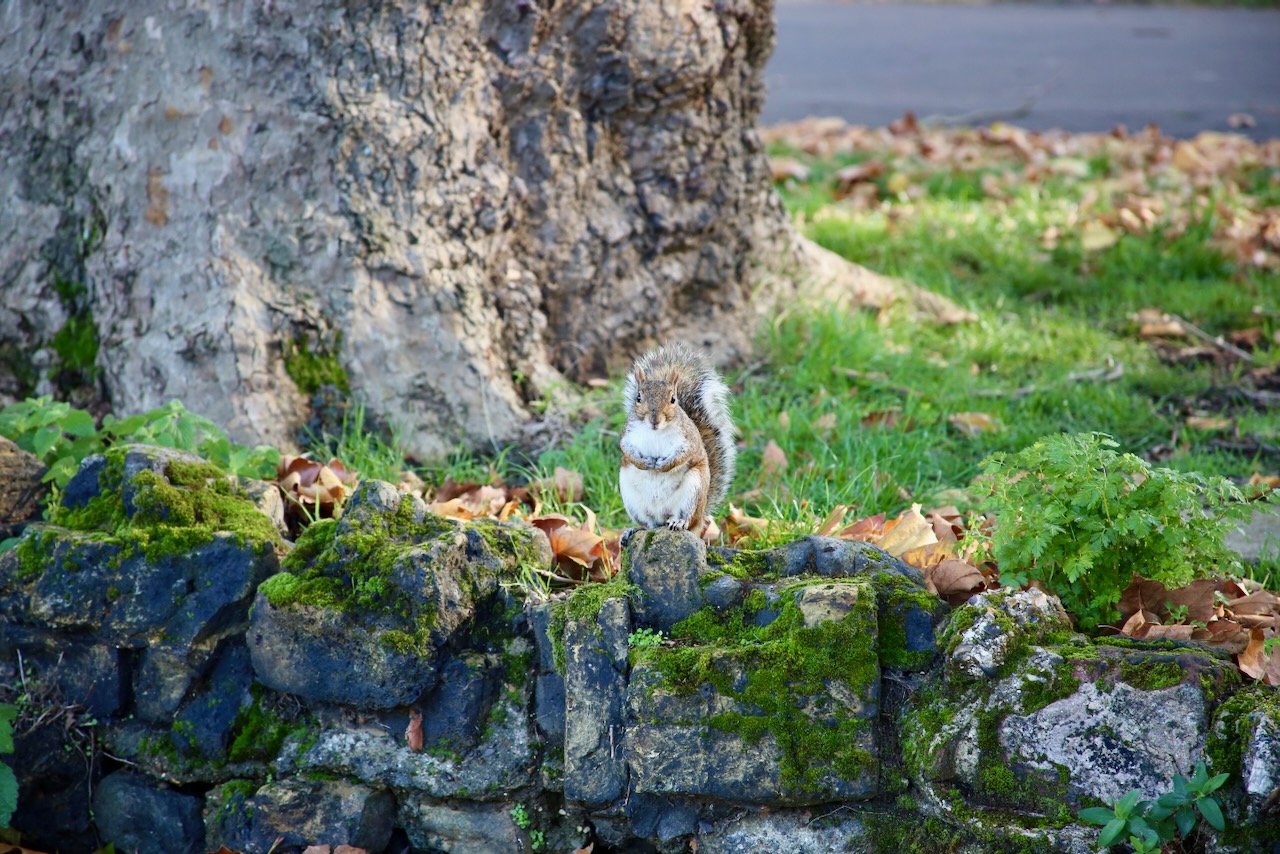
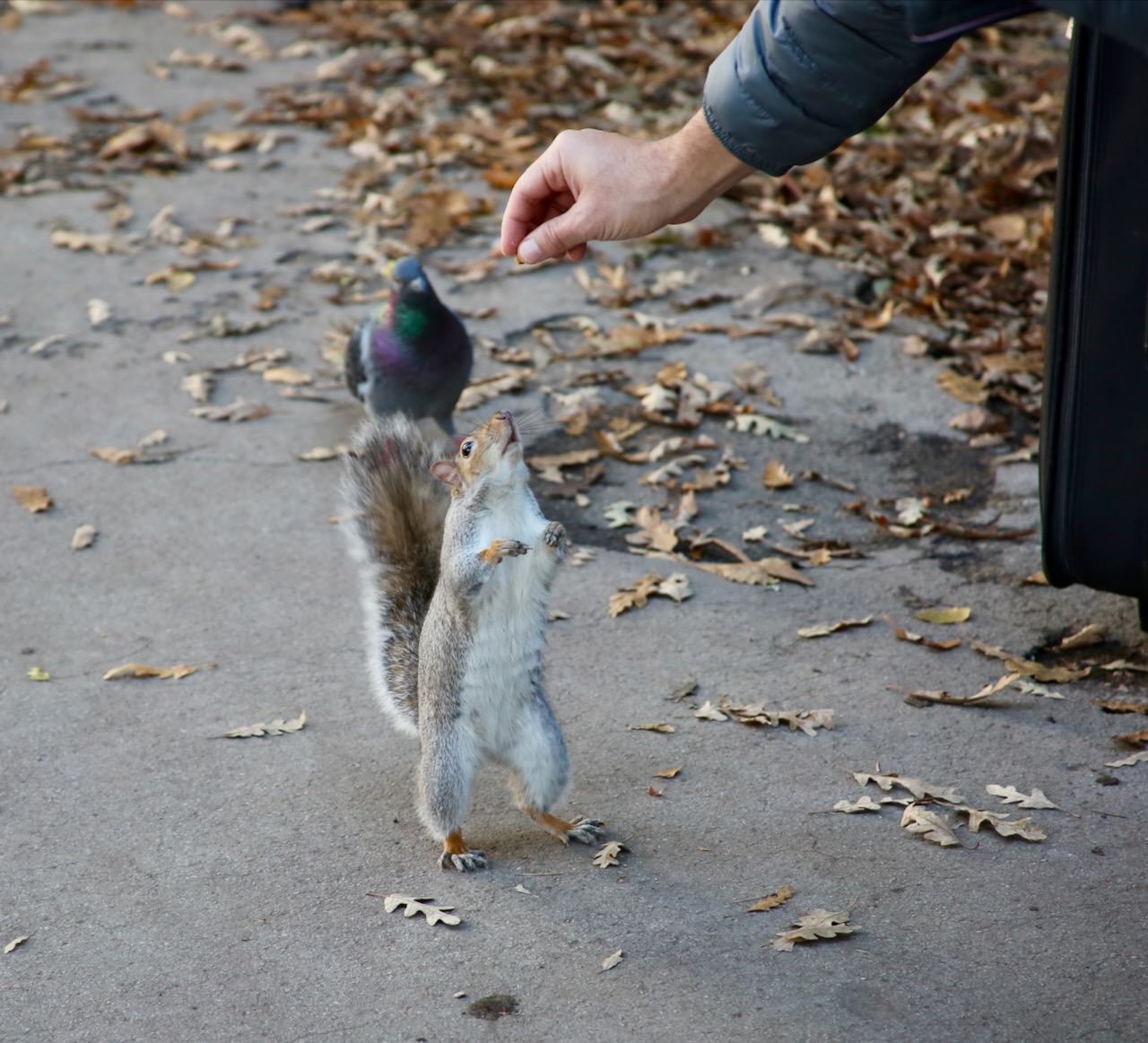
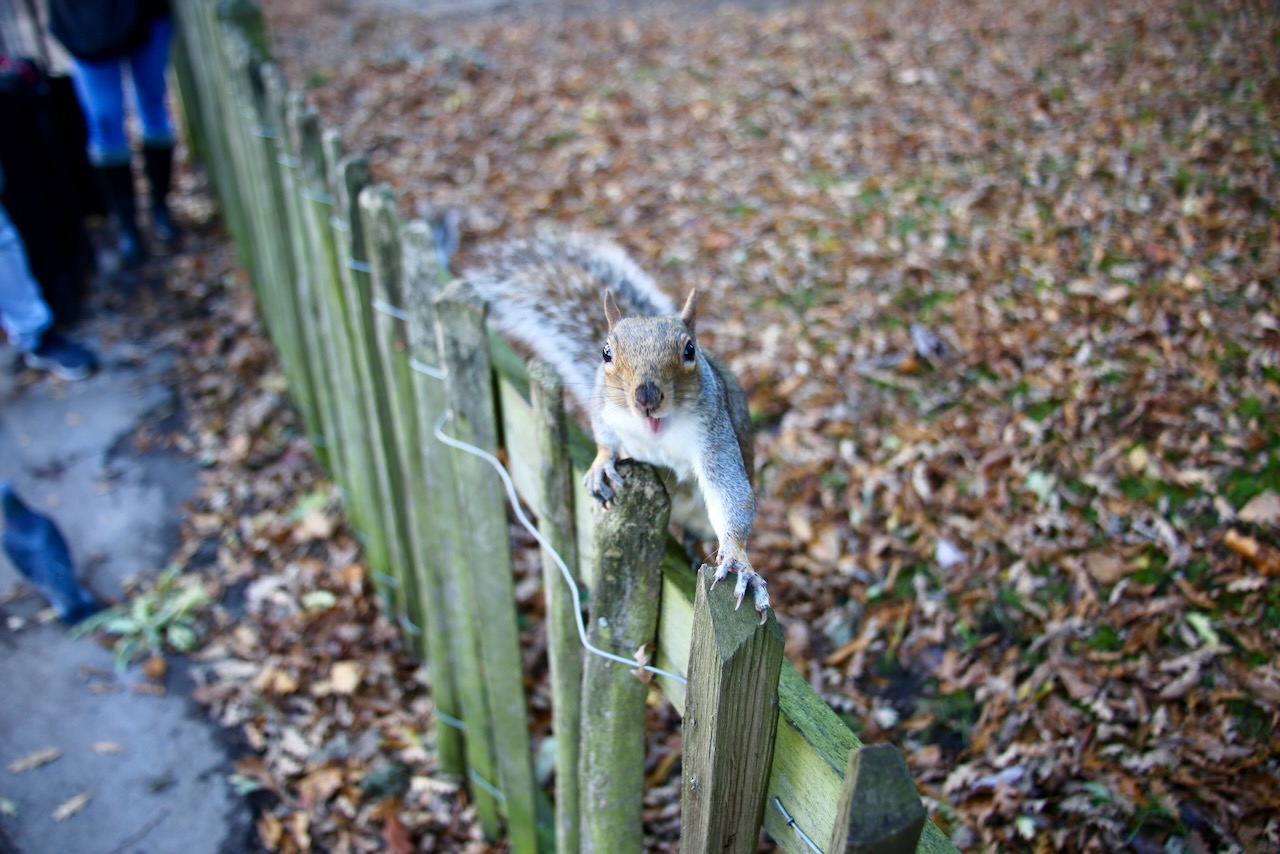
A man is feeding lemon and salt peanuts to a squirrel, and another has found an apple. I’ll take advantage of this opportunity to capture them being still before moving on to Kensington Palace. The south side has a statue of William III, and the east side has a statue of Queen Victoria. Radu will join me at the Round Pond, and we will watch the swans, geese, pigeons, and other birds go about their avian activities.
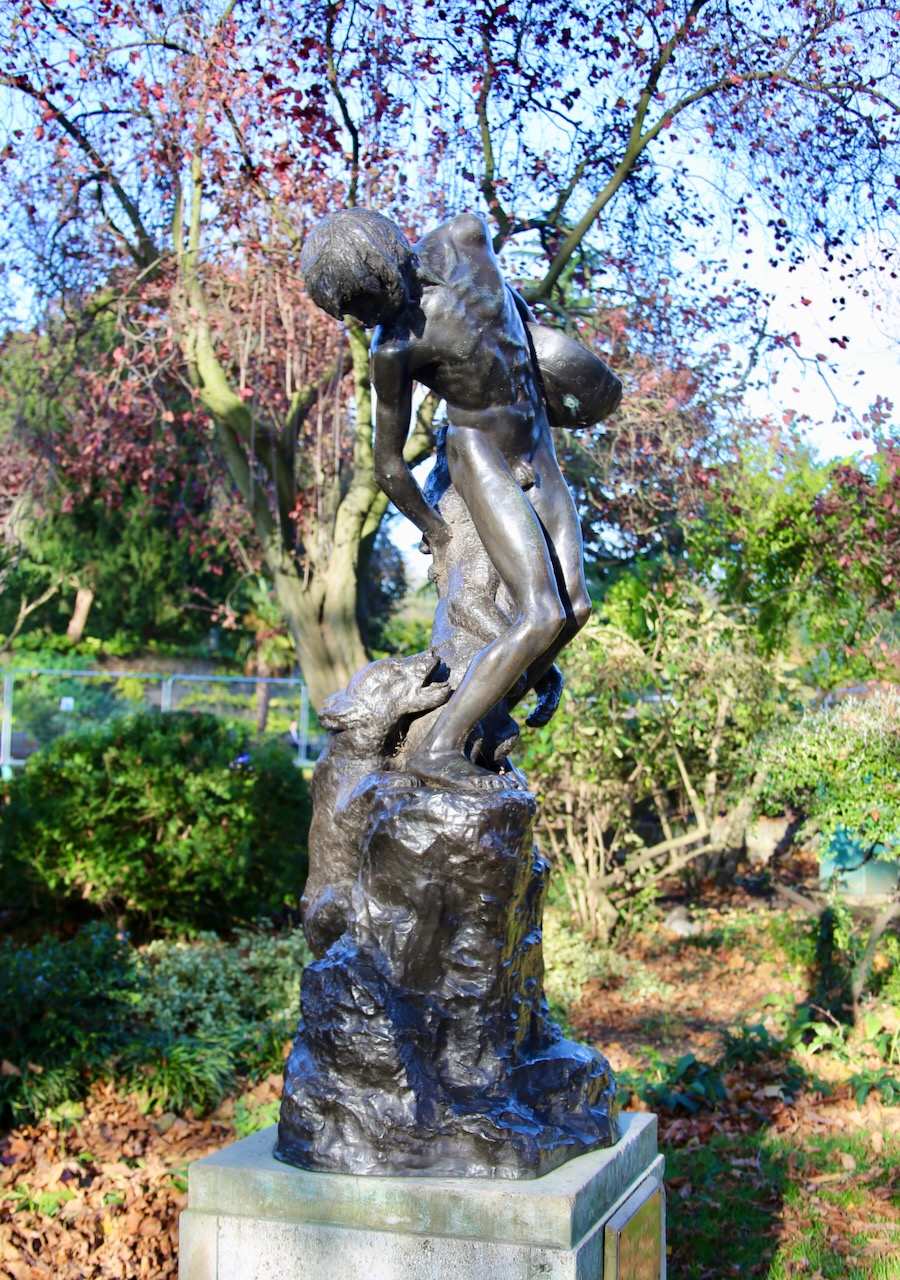
There is a bronze cast, ‘Physical Energy,’ that was placed in Kensington Gardens in 1907. The other two casts are in South Africa and Zimbabwe. The cast seems life-size to me, and the full-size model is on display in the Watts Gallery. G.F. Watts describes his masterpiece as the impulse to seek the still unachieved in the domain of material things. Riding a horse in only your shorts is one way to attain that.

The Albert Memorial is across the street from the Royal Albert Hall. The first was commissioned by Queen Victoria for her husband, who died in 1861. The second was opened in 1871 with a seating capacity of 5,272 as a concert hall. It underwent an eight-year renovation at the turn of the 21st century. A woman feeds the pigeons, parrots, and squirrels as we make our way towards Hyde Park.

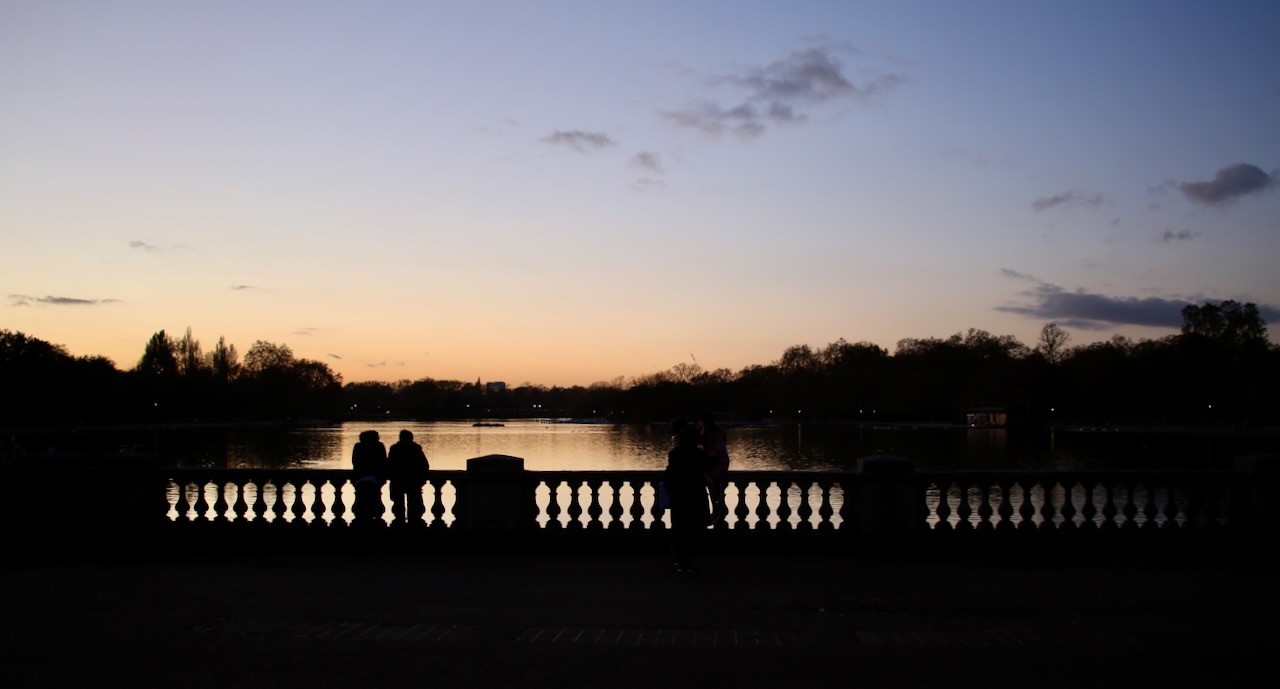
The sun is starting to set, which for me is a good time to leave the park, but also a great time to stay and watch the pipistrelle bats consume a staggering 3,000 insects in a night. I’m not sure where we had dinner, and though I wrote (in my notes) that we got lost, we left the park and went towards St. Christopher’s Place. We walked north to St. Marylebone Church Gardens, west to Cosway St., and then southwest to Lancaster Gate station.

This station was opened in 1900 as part of the Central London Railway. In 1911, the line offered a package delivery service, and the tunnels were used in 1942 as a wartime factory for aircraft parts. New trains were introduced in 1992 that can carry 892 passengers on more than 288 million journeys (as of 2017) on this line alone. We are both tired, me from walking all day and Radu from working.

We parted ways at Waterloo station, and I would have another half hour to an hour before I could get off my feet for the evening. I missed Caleb’s call, so I will have to go to bed tonight without hearing his voice again today. We had talked earlier while I was exploring one of the many parks that London has within its city limits. Every place is worth exploring, some more than others.
Posted in Animals, Art, Food, Friends, History, People, Photography, Plants, Travel, Water | Tagged , , , , , , , , , | Leave a comment

Court to Court: Falconry to Hampton Palace

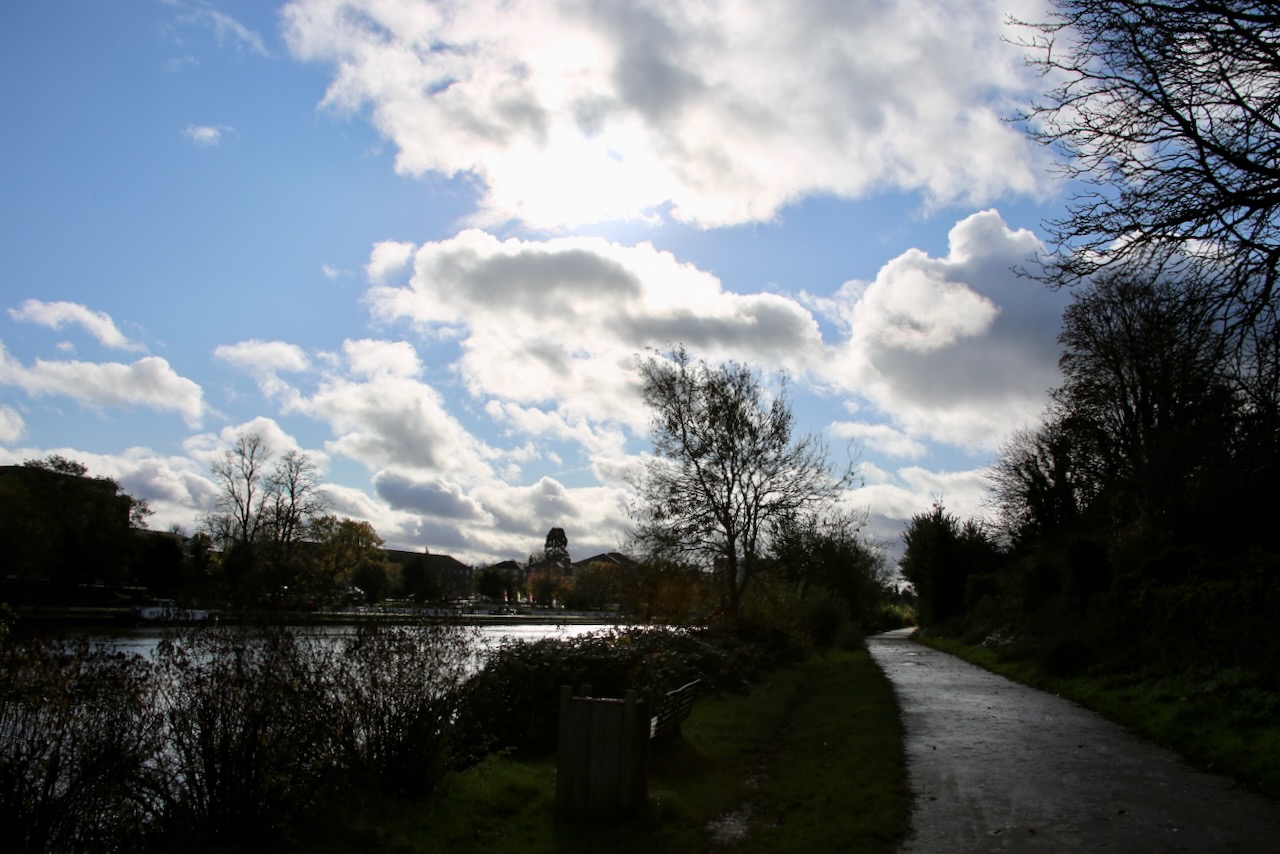
I wake up on the 59th US presidential election day to poll and riot news and an early morning rain. Part of me wants to go back to sleep now that my host’s guests are done making noise upstairs. Having been on transportation so long yesterday, I will opt to stay on foot today. I walk towards the River Thames and cross the Kingston Bridge.

There was an ancient wooden bridge about fifty yards downstream that fell into disrepair in 1219 and remained the only bridge between Kingston and London until 1729. The first stone for this current bridge was laid in 1825 and opened in 1828. The bridge was free of tolls in 1870, and in 1914 was widened on the upstream side. No opening ceremony took place with the outbreak of the Great War.

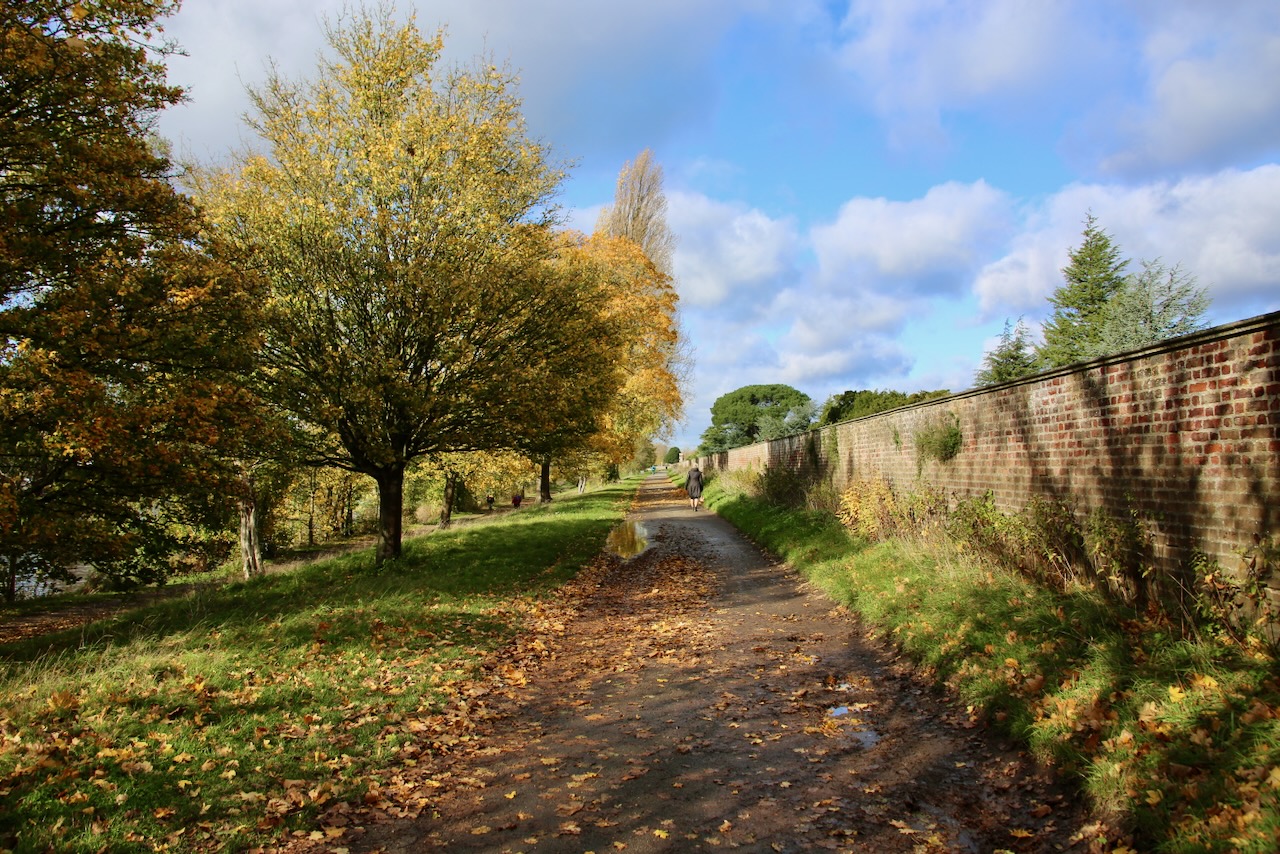
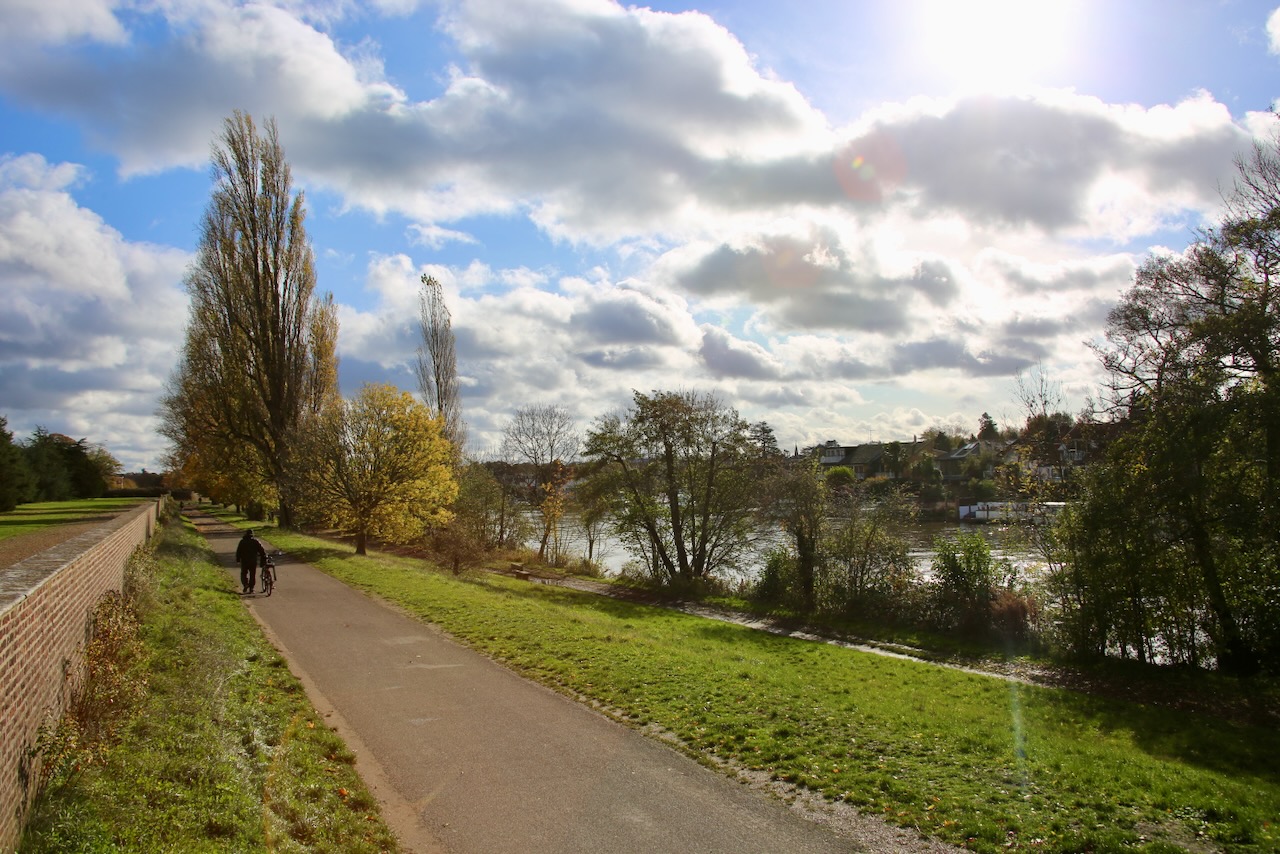
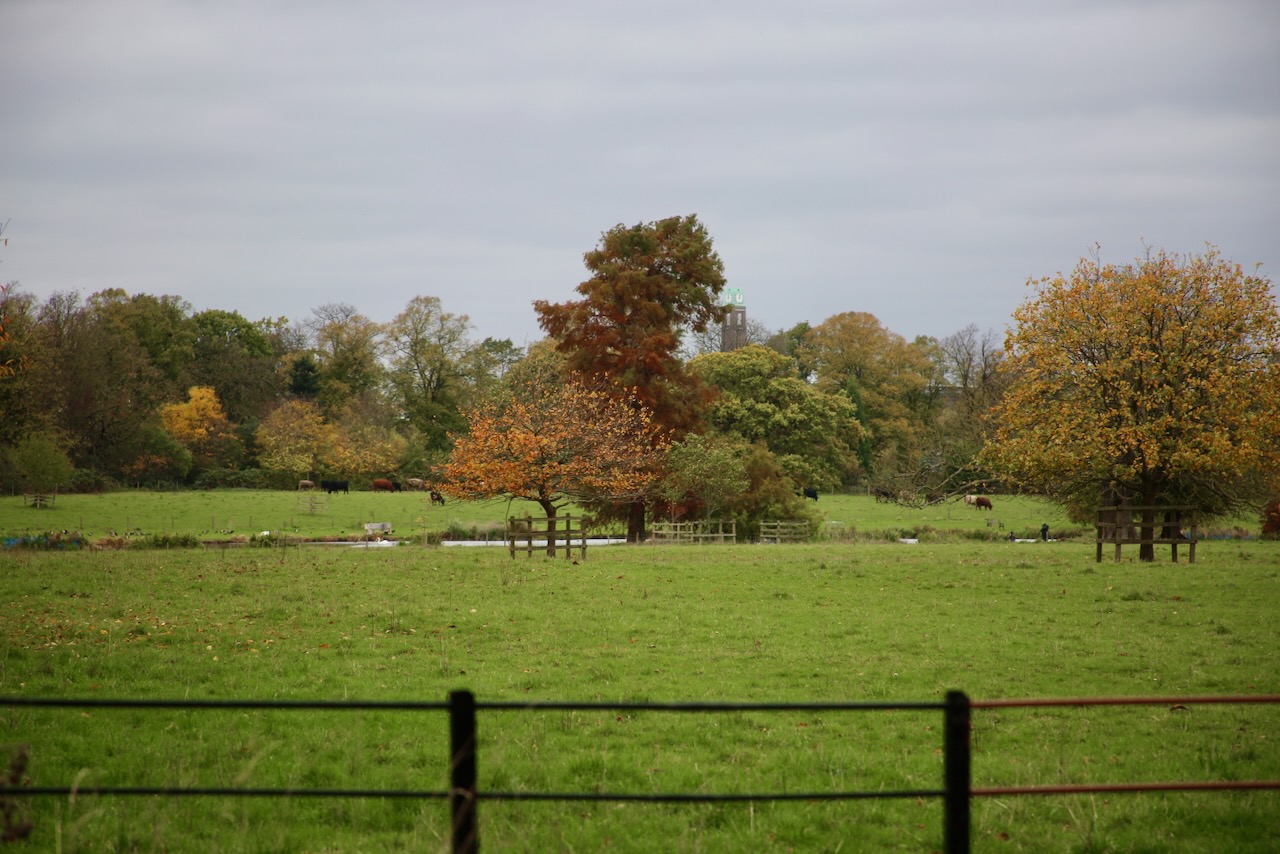
Along Home Park, there is a sign posted on the gate warning the public not to enter between Oct. 27 and Dec. 11 and between the hours of 9 pm and 8 am, not including weekends, while gunmen reduce the deer population by selective slaughter. It’s a lovely day out, and many walkers, some with dogs, and cyclists are enjoying the weather too.

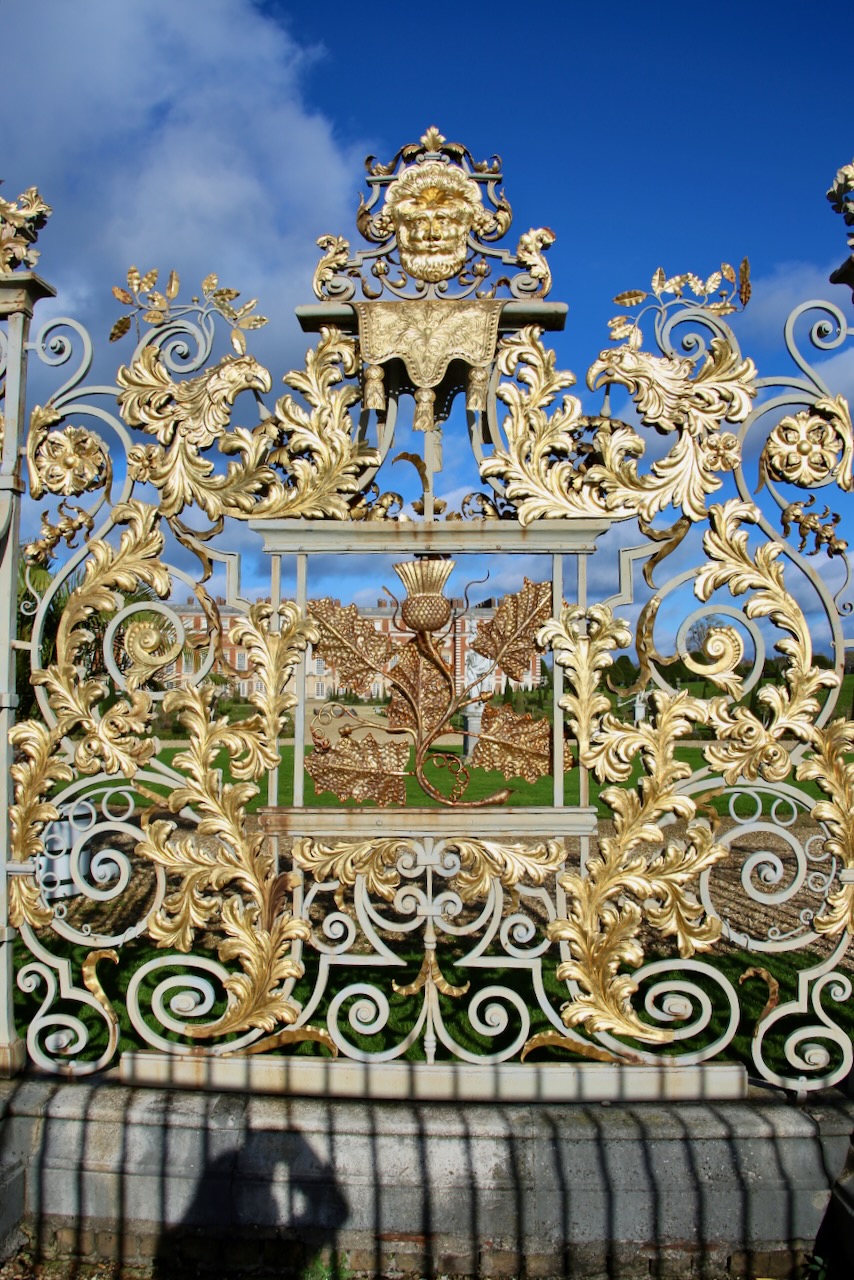
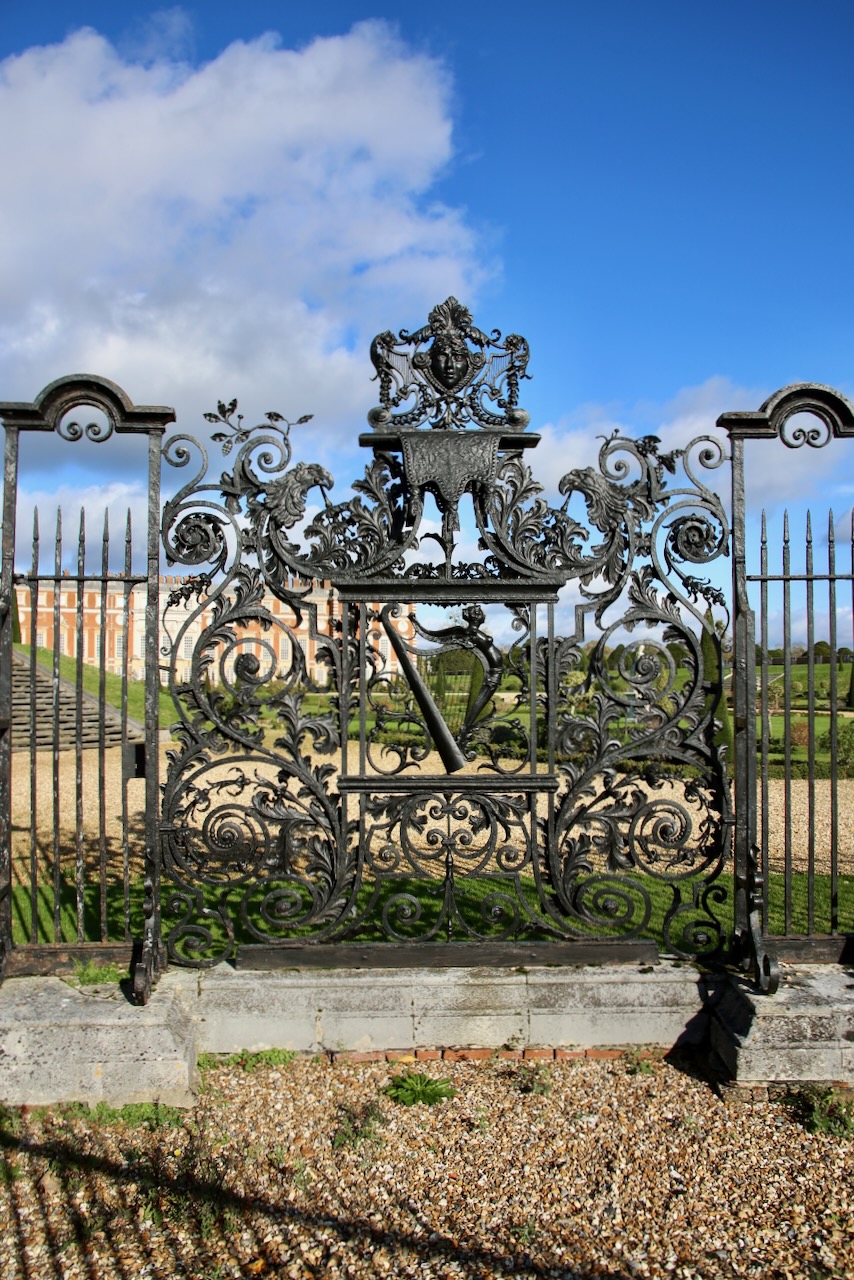
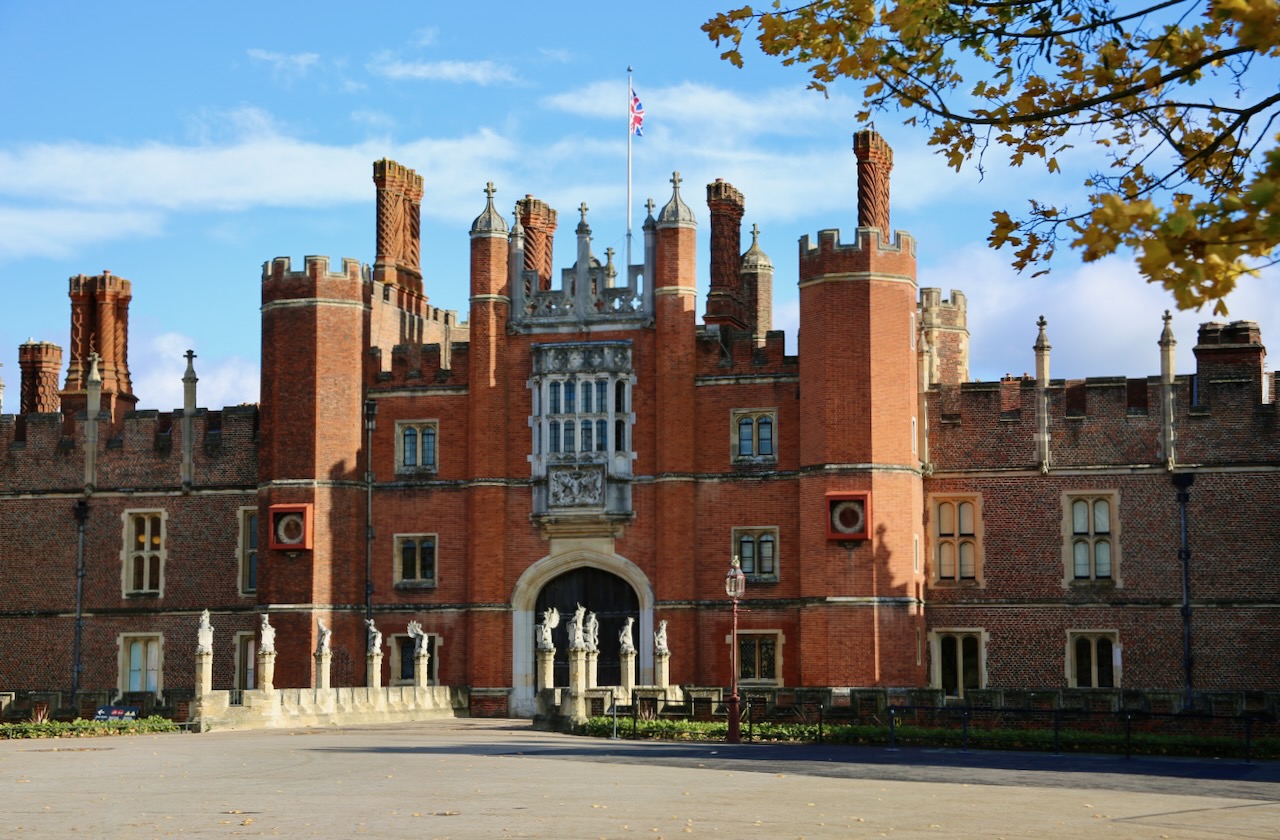
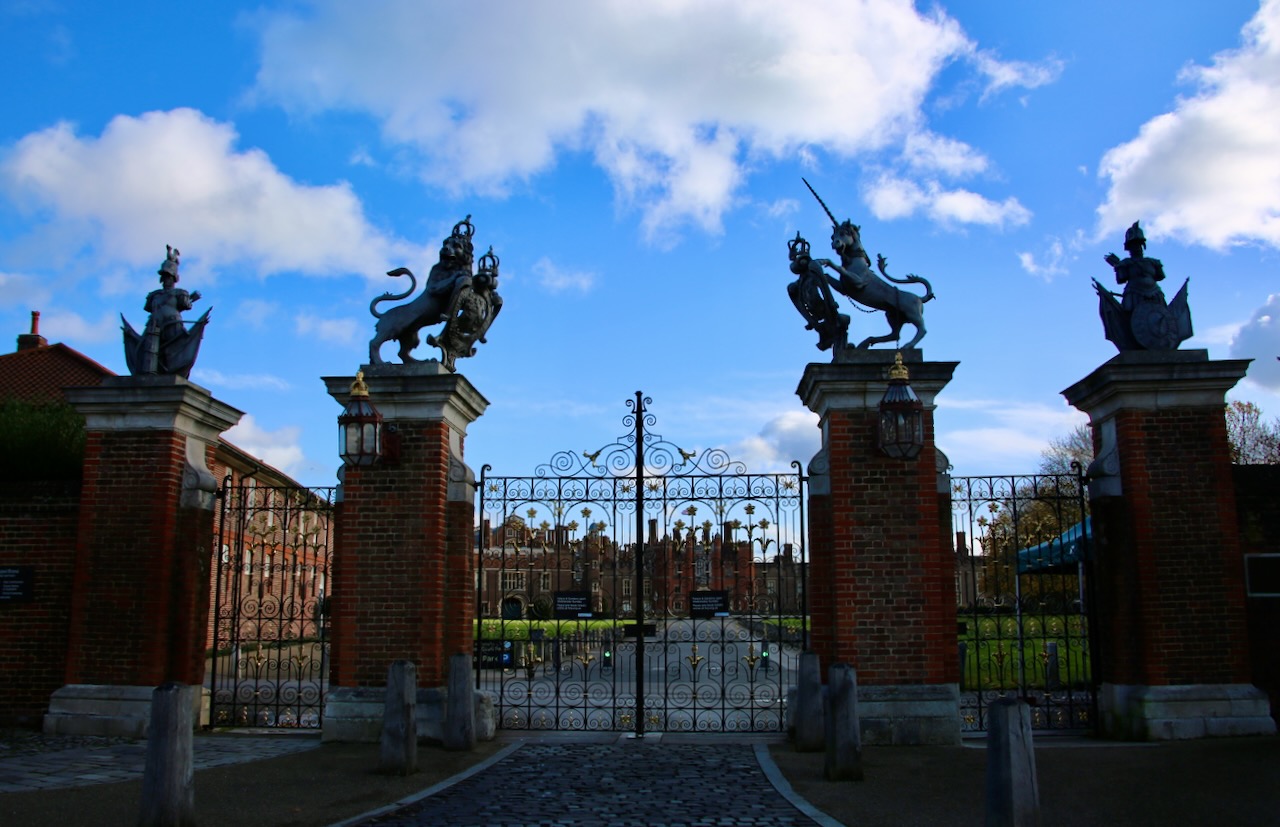
Hampton Court Palace is a wonder that I will only be seeing through the fence from a distance. Tours are now available again (post safety measures) of this royal home that was built in 1514. William III’s expansion left the palace in two contrasting architectural styles, domestic Tudor and Baroque, in 1694. George II was the last monarch to reside here in 1760.

Queen Victoria restored the palace in 1838 and opened it to the public for tours (ten million visits by 1881) and rent-free apartments. The last resident was admitted in 1980, with only three remaining in 2005 and none by 2017. In 1952, the palace was listed as a Grade 1 historic building and was damaged by a major fire in 1986. It is a popular filming venue and was used in the 2012 Summer Olympics.
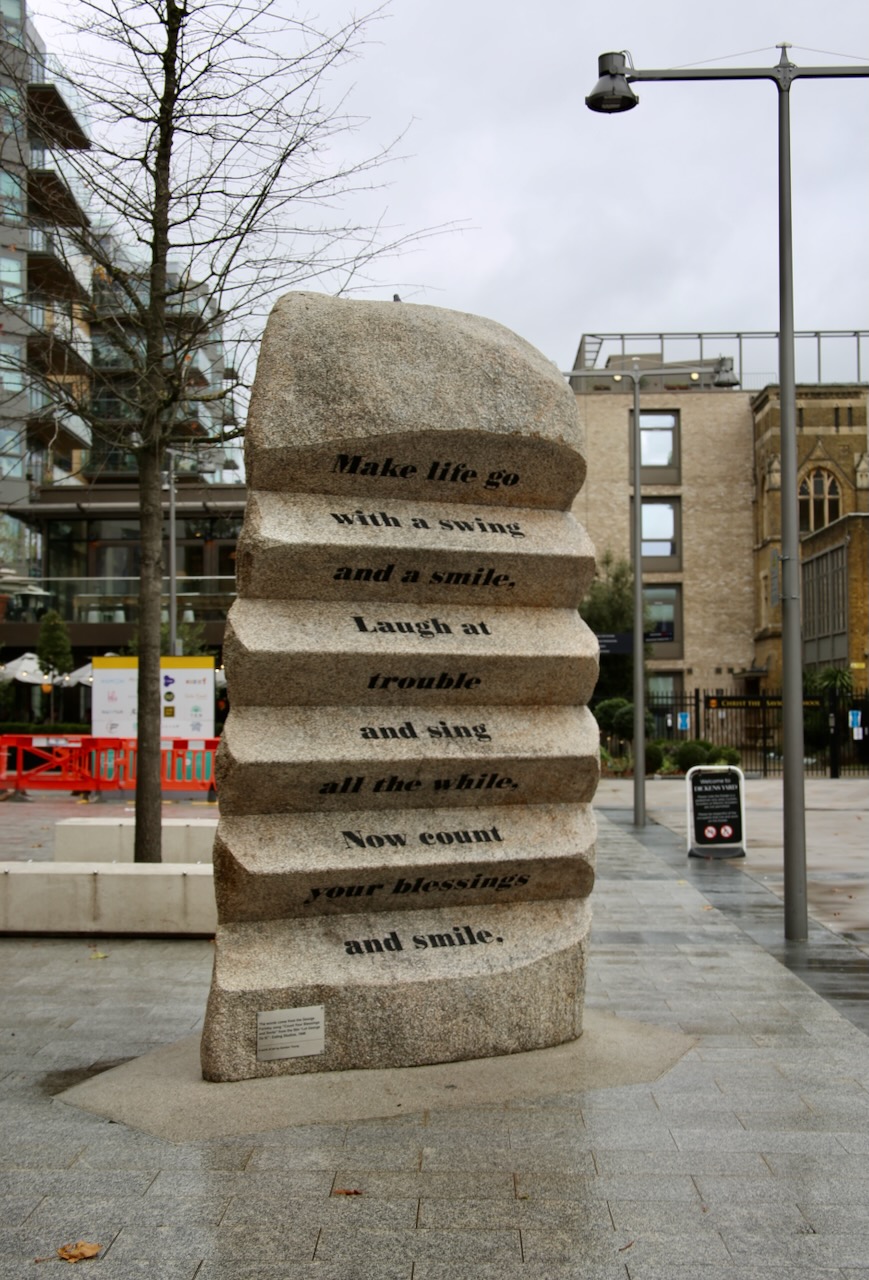
Also, on the grounds is the oldest hedge maze in the world (probably commissioned in 1690), the largest and oldest grapevine in the world (over 250 years old and one branch over 130 feet long), but the oldest real tennis (hard court surrounded by four walls) court belongs to the Falkland Palace in Scotland. There are ten royal courts in use in the US, mostly in New England and one in Chicago and South Carolina.

The tennis court was built in the early 1500s and remodeled in 1660. Sodium halide lighting was installed in 1975, and then a major restoration took place in 2015. The court has a club of over 450 members that was formed in 1818, three years after Major William Beresford was appointed the Master (to run the royal court daily) and held the position until his death in 1883.

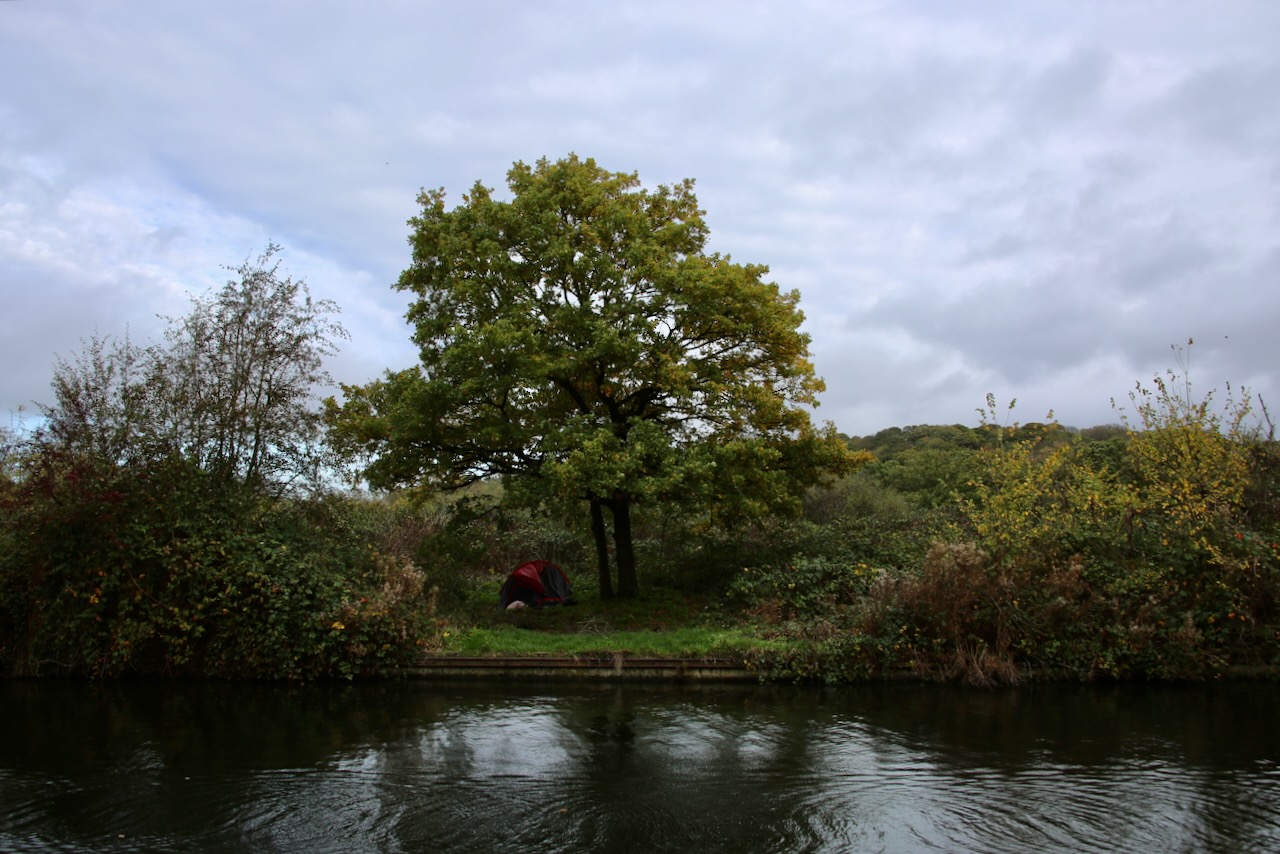
The Barge Walk is part of the estate and is cared for by 42 gardeners who look after the 60 acres of formal gardens and 750 acres of royal parklands, too. Fishermen (not fishers like the carnivorous animals native to the northern US and Canada) are allowed to stay a maximum of two nights to hone their skills after dark. The only action I’ve seen on the water today has been the geese up the river.

I cross the Hampton Court Bridge, and inside the women’s loo, they have pads, tampons, and Tic-Tacs for sale. At the High St. and St. Leonard’s Rd. Roundabout, a shop lady invites me to, “Come in, we don’t bite. Now you’re going to even if you didn’t want anything.” I agree as I put my mask on and have a look around as we talk about the lovely morning and then wish each other to enjoy the day.

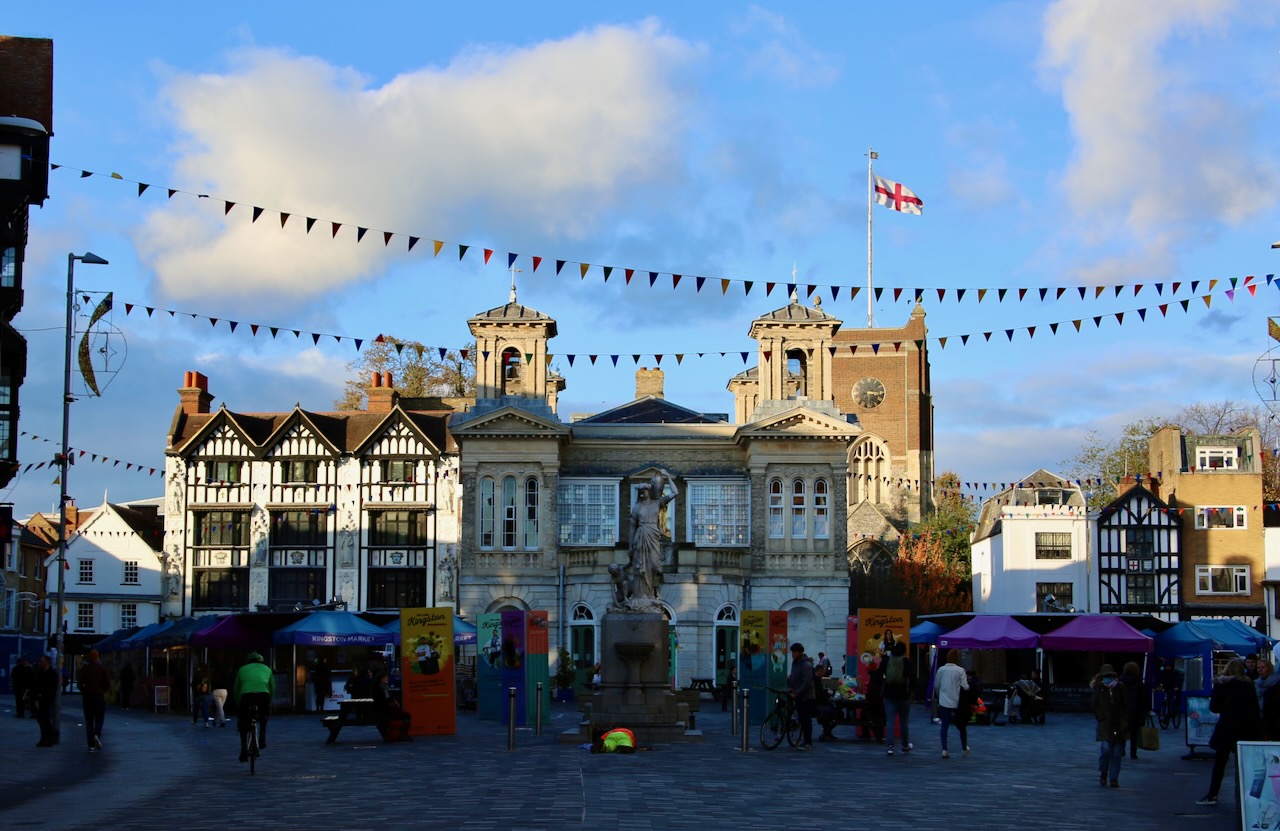
I find my way back to Kingston after a small, overpriced latte and a watery milkshake with no taste of butterscotch. There’s a large market on a street I have yet to walk, so I explored some and was going to order a ramen (cash only) and settle for a box of rice and beans, banana bread slice, croissant, and almond cake slice. I’ll save the last two for breakfast.

Posted in Animals, Food, History, People, Plants, Travel, Water | Tagged , , , , , , , , | Leave a comment

Capital Ring Walk: Greenford to Preston Road

This morning isn’t as calming to wake up to and a bit emotional, as Caleb has an appointment at the Bahrain Specialist Hospital after being seen at medical. I’m assuming he’ll be fine once they adjust his thyroid medication. The corpsman (enlisted member of the ship’s medical unit) was concerned and had Caleb sent out for another opinion. Having to wait to learn more, I can go about my day.

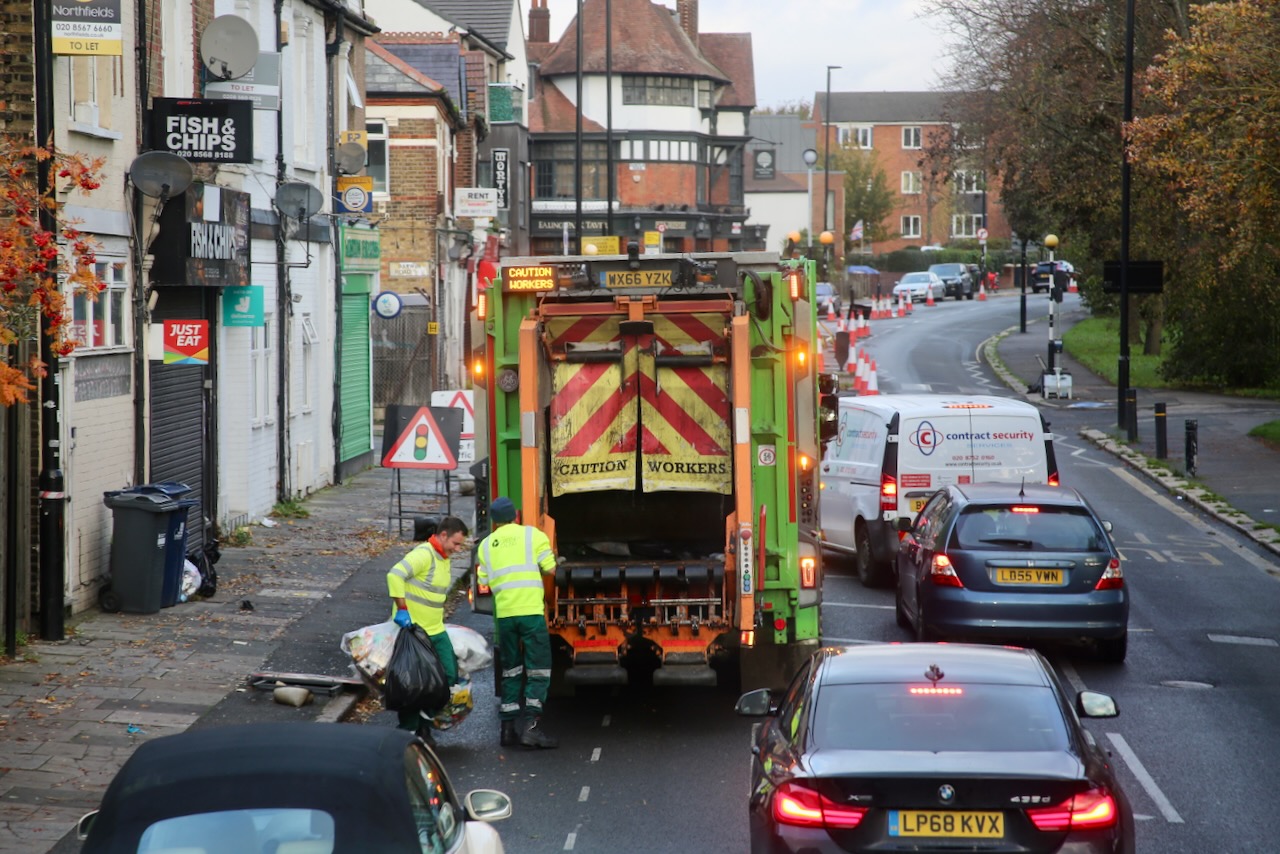
I’m outside at 7 am and feel better after saying hi to two people and a puppy. The cafe has no hot egg sandwiches left, so I settle for an egg mayo sandwich and jog across the street to catch the bus. I get dropped off at Bond St. after a twenty-minute traffic delay. This will allow me some walking before my next ride. Every day is an adventure, as my route is never the same.

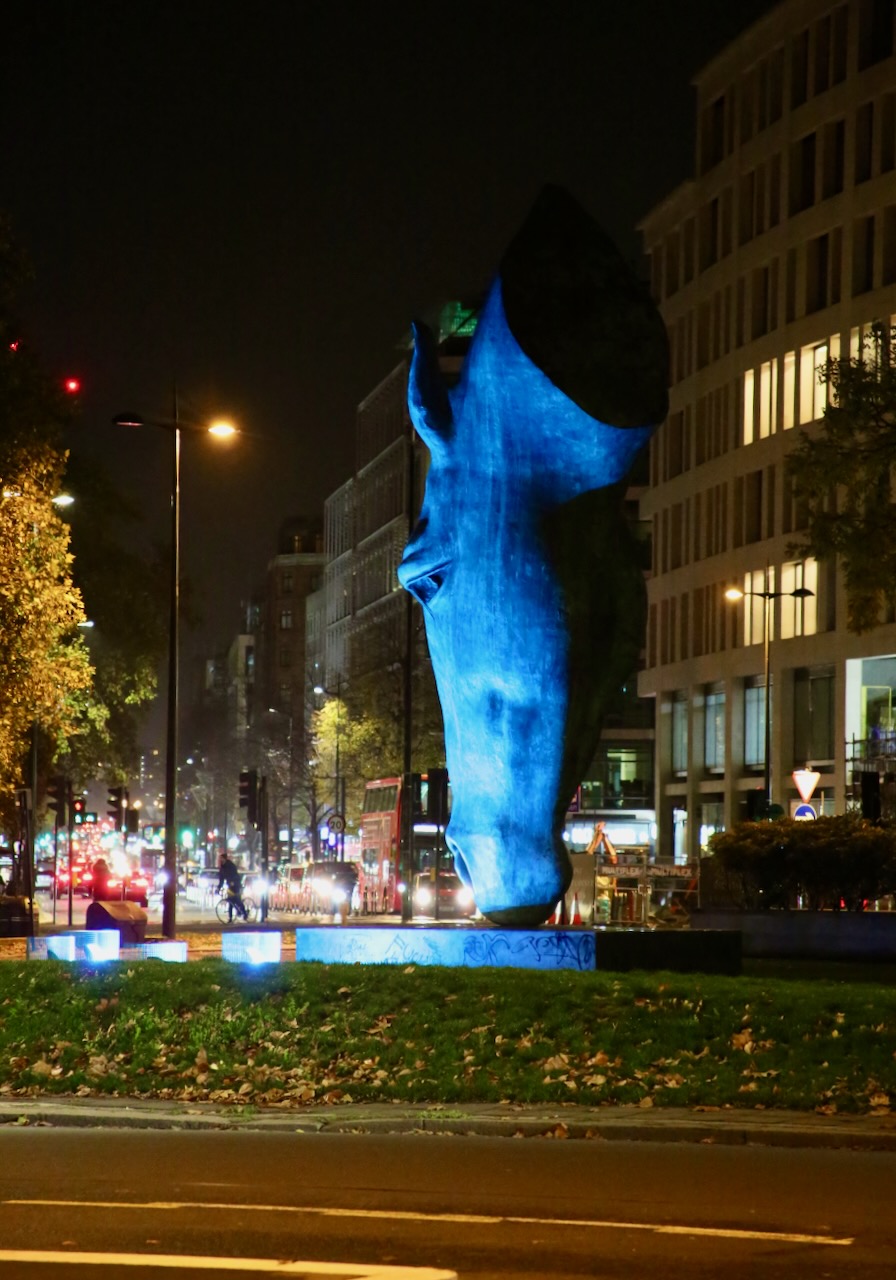
I pass by a horse sculpture that has been provided for visual enjoyment by the local community and not for climbing. The Queen unveiled this bronze worker in 1985, one of the many animal statues made by Judith Bluck throughout London. My starting commute only took two hours. It turns out I was going the right way yesterday and thought I went to the wrong Lidl (German grocery store), but the path runs along the shopping plaza, so I skipped part of Section 8.

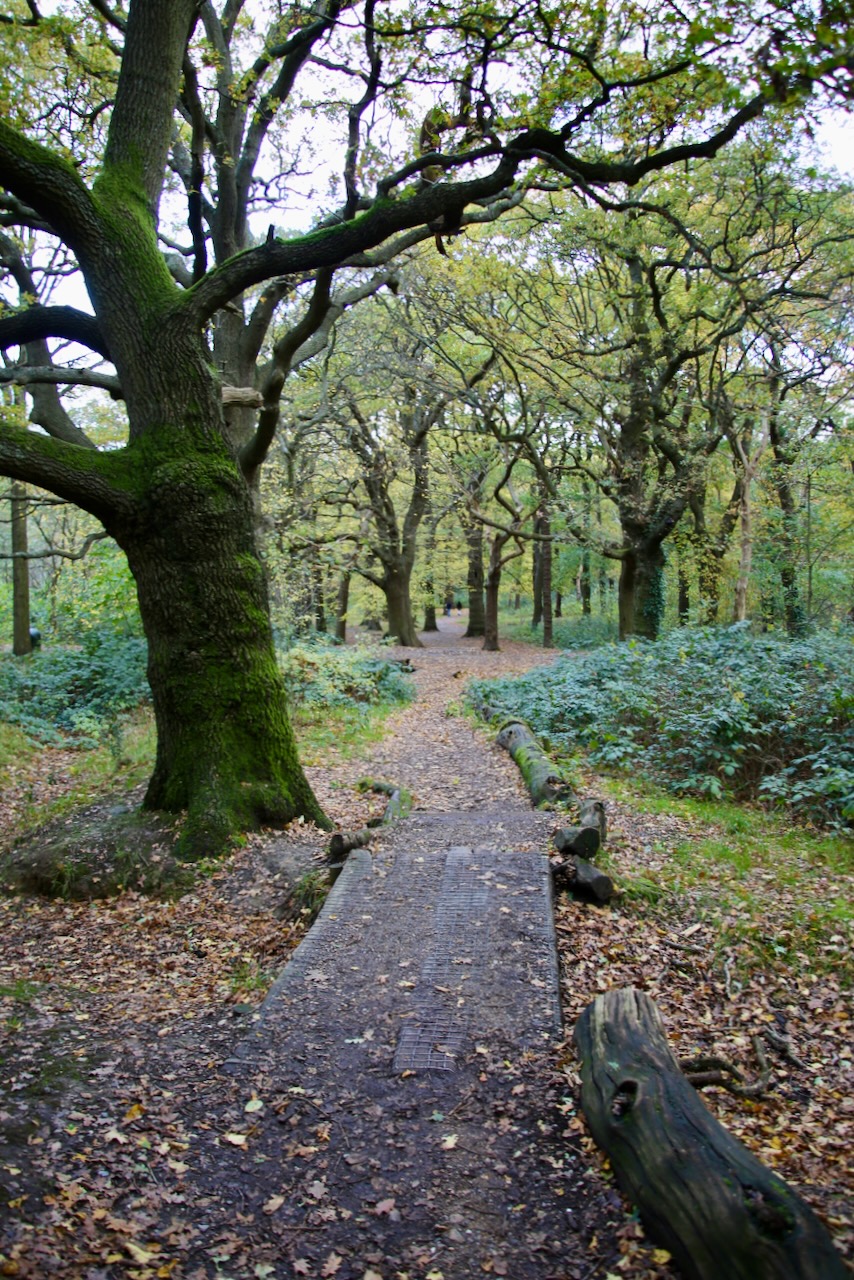
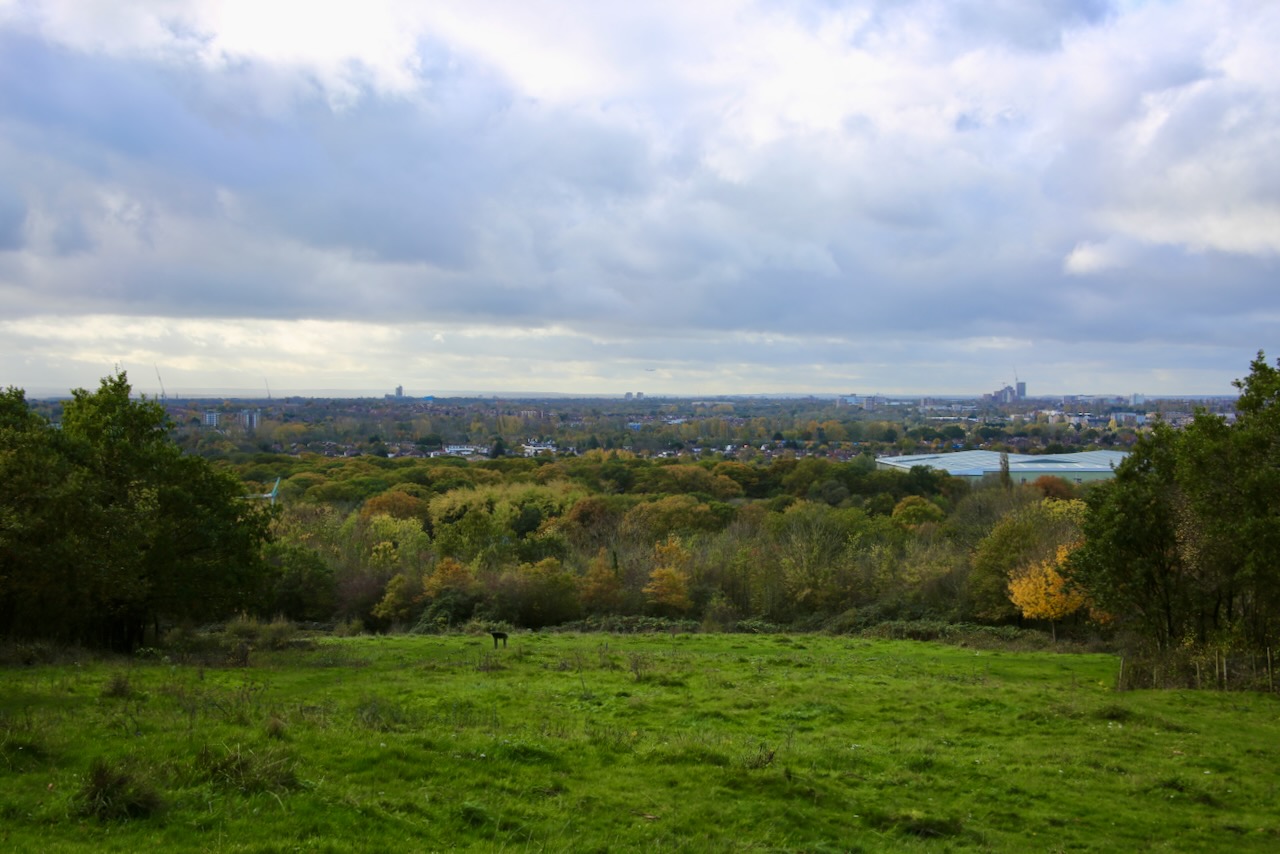
I enter Horsenden Hill, and the path will take me about halfway through the park, going east, then north, and back west a bit before exiting the park and going north again. This route will have me passing fields along the river and then walking through grazing meadows and woods intermittently. I enjoy the sound of the little black birds with white foreheads and beaks (Eurasian coot) that they clap together, going down the river.

Horsenden Hill has flint tools and arrowheads that date back 7,000 years ago, when Stone Age nomads were passing through. Iron Age people settled here 2,500 years ago and left behind large amounts of pottery. The Anglo-Saxons cleared the forests to create fields that, in the Middle Ages, would be growing wheat, rye, barley, and corn. In 1801, the canal enabled hay to be shipped to London, and manure returned to the hill. This encouraged new factories and faster trade with the Midlands. As I’m nearing the park exit, I’m graced with the iridescent blue of a yellow-billed magpie.

Near the Sudbury Hill underground station, an ambulance gave me disposable gloves so that I could move a shaking and bloody-nosed rat to the grass. I hope his life works out, but if not, he’s out of the way. I stop for a plate of dal, cauliflower, eggplant, spinach, and paneer on rice (instead of with paratha) for $5, the best deal in London. On West St. in Harrow is a fountain that replaced a well and that was donated in 1880 by Thomas Hudson, a local businessman.

Harrow has some beautiful buildings, and I will admire their church and university before taking The Ducker Footpath to Northwick Park. I stop at a shop for coconut water and some limited-edition candies near The Windermere. There’s a sticker nearby that says Film Only. (@harryfconway, if you’re interested in mostly old men with tattoos, not all of them are agreeable). I make it to Preston Road station before the blue sky turns gray and presents a double rainbow. It starts to sprinkle, and though I was hoping to meet Daniel, the local Jamaican, I’m glad for a dry ride back.

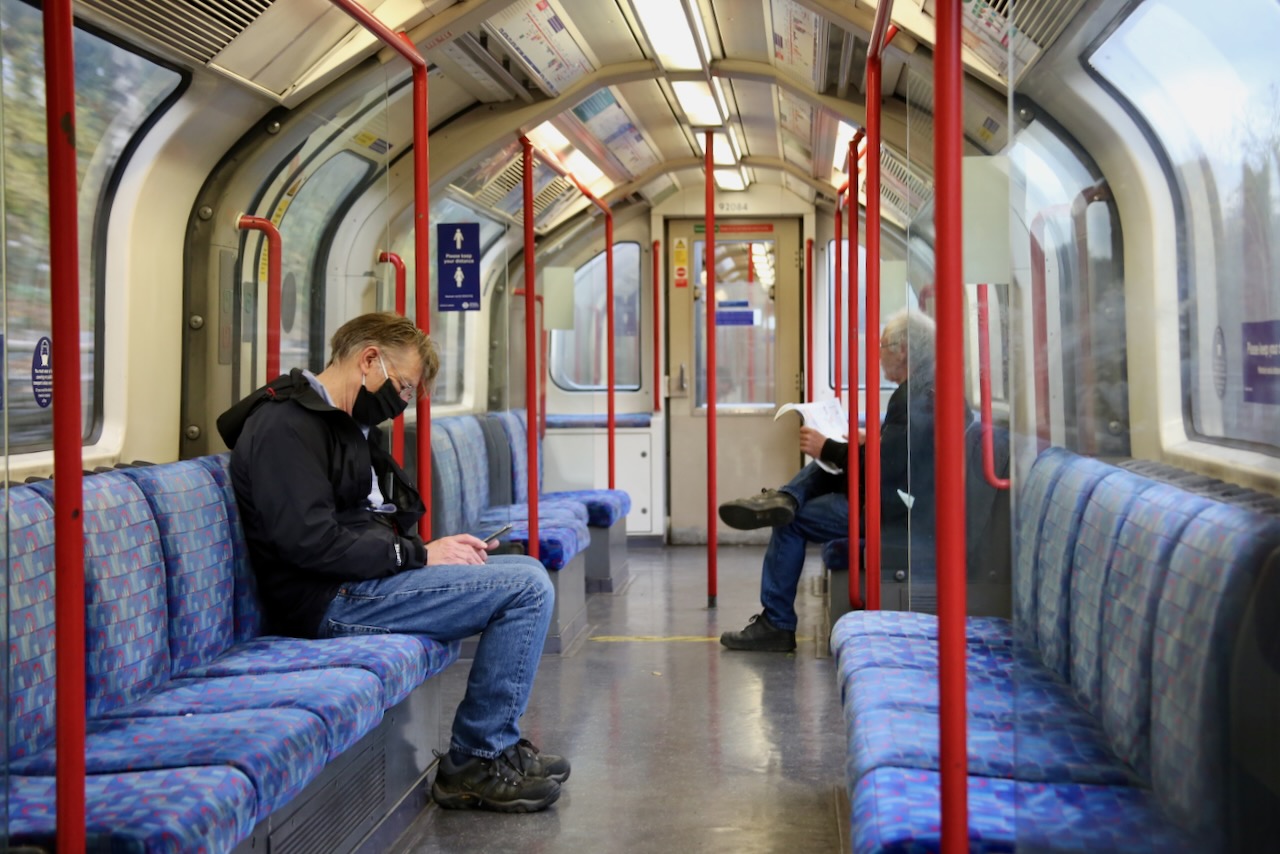
The trains are smooth but screechy, and not sure where I saw the book, but I wrote down the title, Dark Side of the Mind, to look into later. It’s written by a forensic psychologist in an attempt to understand the brutal actions of convicts. I made a connection in Brent, the Borough of Cultures, in 2020, a program that celebrates their unique character, people, and heritage. Waltham Forest won the first year, and the school and volunteer involvement with employment opportunities has increased the creative economy of London for locals and tourists.

The initiative has led to other programs being established to increase public space for free events and artist residencies and to revitalize the high streets (central retail thoroughfare) after dark. I’ll grab a pita stuffed with sweet potato falafel and halloumi for the walk home. Caleb’s appointment was supposed to be three hours ago, and he’ll call me after his medical adventure to tell me that the doctor thinks he had a micro-seizure.

Caleb hangs up with me after I mention Sparky, calls his chief engineer, and then calls me back. I don’t want to get into the research of this condition until we get a second opinion, and we would give Caleb the anti-seizure medication that we didn’t offer our dog. I still miss both of them so much. Dad and Caroline are worried that riots will soon start here as they have in other European countries faced with another lockdown. I will take each day as it comes.

Update: It will take Caleb getting stationed at Balboa Hospital in San Diego for six months before the doctors realize that he was just tired from being overly motivated (even though he didn’t make Master Chief). One doctor read his chart upside down or backward and ordered a sleep study with sleep and no sleep and couldn’t decide on the results. It was a messy time, and we hoped to go back overseas, but some things aren’t meant to be.

Posted in Animals, Art, Books, Food, History, Media, Medical, People, Plants, Travel, Water | Tagged , , , , , | Leave a comment

The Long Way to Richmond Park

I enjoy talking with Caleb after waking from a nice dream. I walk about a half mile for breakfast and pass a guy, with two dogs, who seems to be giggling at all the happy people… for a few more days, at least before the city of London returns to lockdown. I’ll take the bus to South Ealing (a limited connections station) and a mile from my next stop. I get back on the bus, and I get off at the Ealing/Christchurch stop, as it’s only one away from the one I need, Ealing Broadway.

This puts me on the path of the Christ the Saviour Church. I go in quietly, as I usually do, but there’s a service in session, and I won’t interrupt it by trying to capture the pointed arches and painted angels. There’s a market across the street selling pasta and pies. I’m debating where I want to walk today as transit stations are closing, and more people are wearing masks as they queue up in packs to go shopping. I take the bus to Greenford, where I left the Capital Ring Walk yesterday.

I plan on starting Section 9, which will take me to South Kenton, over five miles away. After having walked 15 minutes in the wrong direction, I find myself back at the station on my way to meet Radu, the local Romanian, at Richmond Station. The distance covered on foot will be about the same, and I would have to spend just a few more minutes on public transit if I had walked another section or two today. The bus I’m on has a broken stopping alarm, and the driver seems to be trying to reset it by opening and closing the doors.

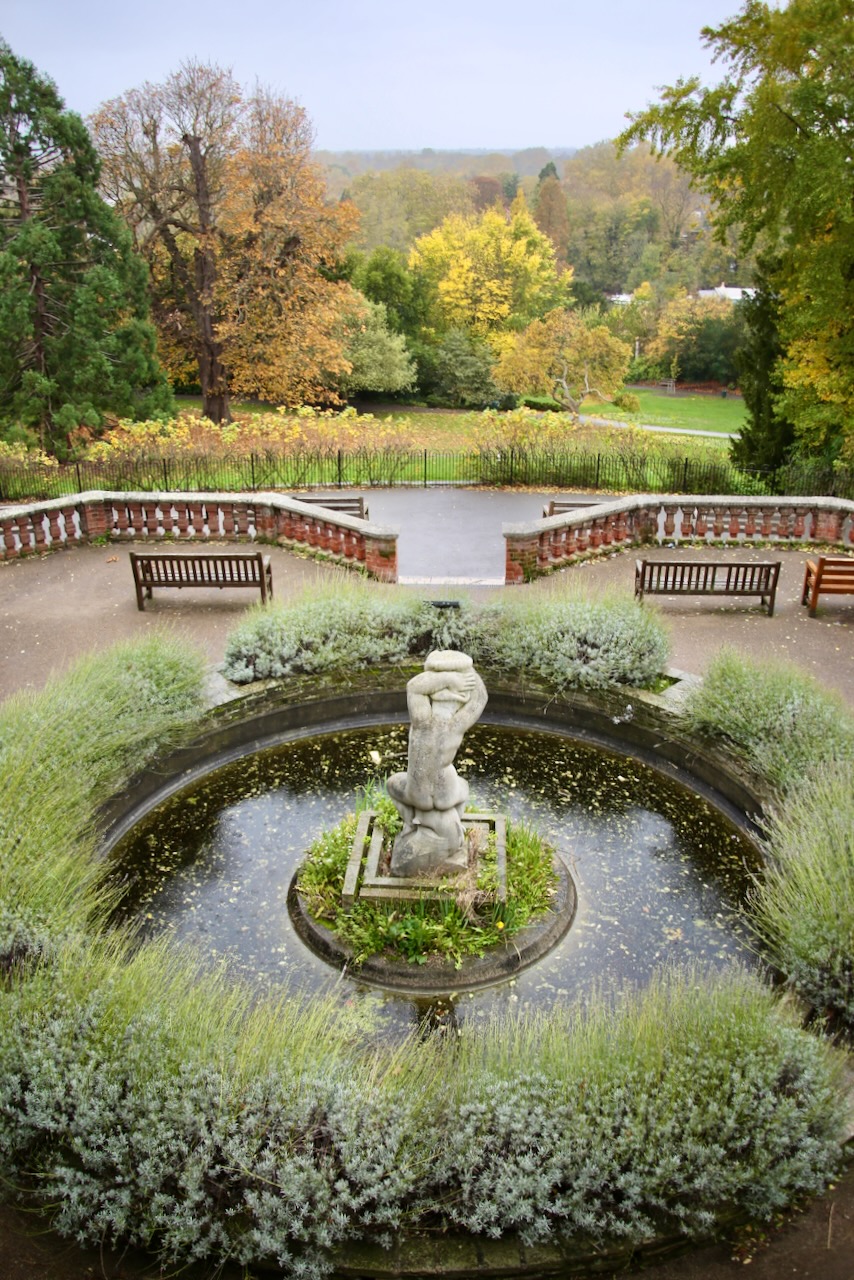
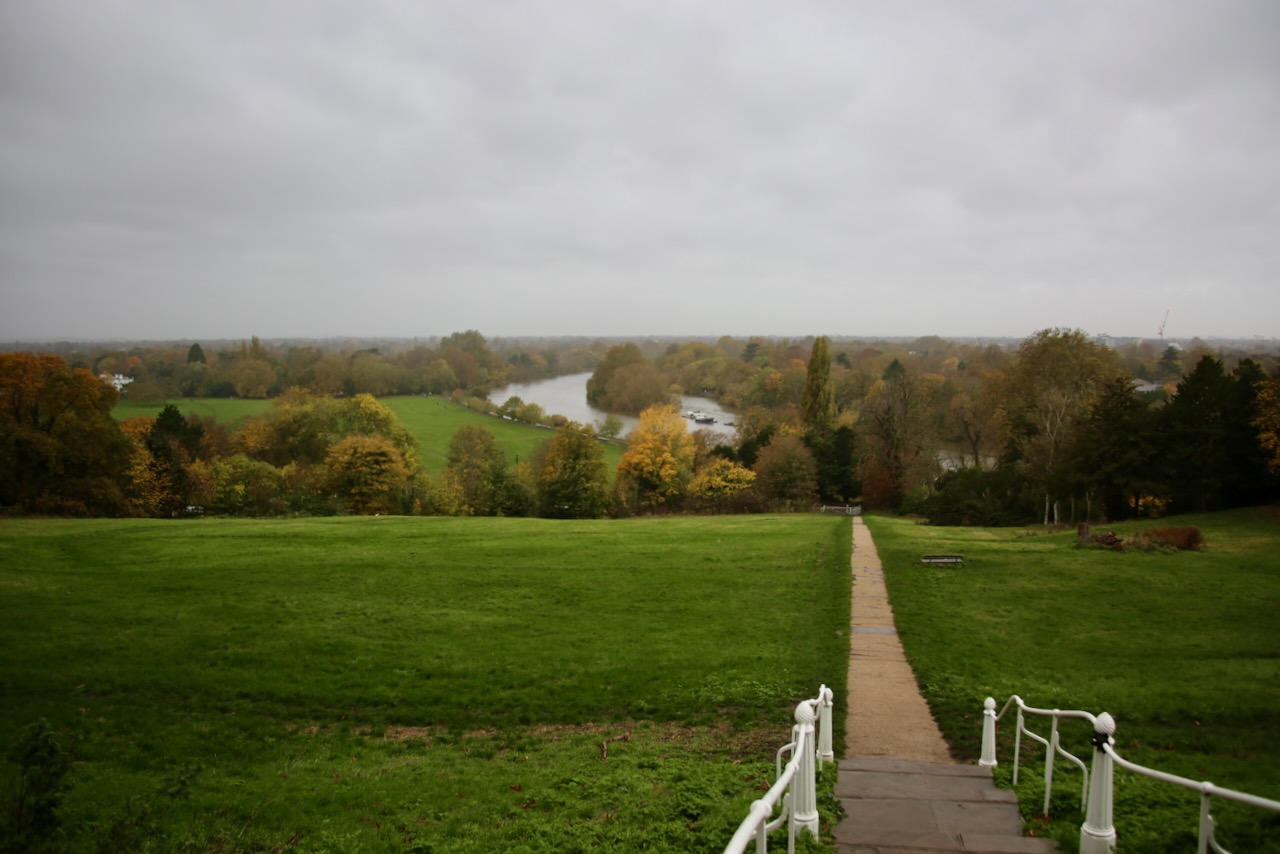
Once at Richmond Station, I got a turmeric flat white coffee and a lavender-sugar pretzel from Olaf at Knot, an artisan shop specializing in caffeine and twisted bread. We’ll stop at Tide Tables Cafe and walk along the River Thames to Terrace Gardens. From there, we walk on Queen’s Road through Richmond Park, over two miles, and see plenty of deer on the other side of the street. We’ll part ways at a bus stop so Radu can start his journey home, and I can be back by dark with an eight-minute walk.

Posted in Art, Food, Friends, People, Travel | Tagged , , , | Leave a comment

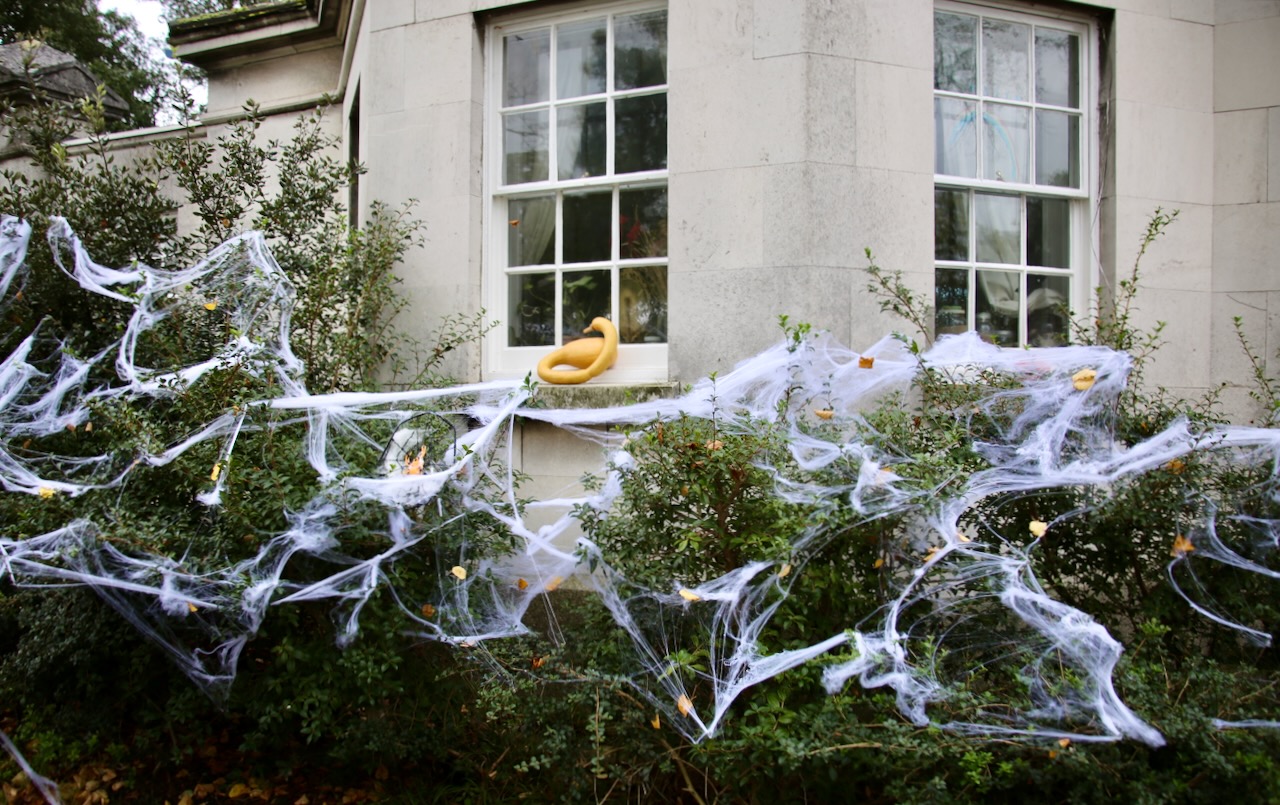
Halloween in London

Pret A Manger, meaning ready to eat in French, is a popular sandwich shop with over 300 locations in London. One of them happens to be close to the rail station and bus stop in Kingston, but it isn’t open on weekends. The shop next to it doesn’t open for hours, so I’ll take the bus to Richmond to start Section 7 of the Capital Ring Walk.

Once on the bus, this lady grunts and points her head at the “don’t sit here (in Covid’s seat)” sign. I tell her I see it and will move at the next stop as I try to maintain distance with limited availability. I’m glad I was able to move upstairs and enjoy the much better view from the giant windshield. I’ll try half a toastie, British for inside-out grilled cheese, and gift the pre-cut, untouched other half to an urban camper as I wash the dairy down with a honeycomb cold brew.

I find myself back in Richmond Green, with a field that was used for jousting and now only supports approved cricket matches. I’ll take Cholmondeley Walk along the Thames and watch the scullers row on the smallest boat on the water, costing in range from $1,500 to $15,000 for the shell, and propelling themselves forward at a maximum speed of 13mph with oars the length of the boat. Had I seen a sign for rentals, it’s something I could’ve tried, but I’m definitely over-dressed.

Old Deer Park’s history begins in the 14th to 16th centuries with the informal battle of The Charterhouse between being a monastery for the monks and a residence for the queens. The 17th and 18th centuries saw the land used for hunting, farming, gardens, and the building of an observatory. The 19th century developed cricket, rugby, and golf clubs and held the BBC’s first outside broadcast for the Horse Show, which ran for 30 years. The 20th century saw part of the park be absorbed into Kew Gardens and public tea rooms converted into private swimming baths. I wonder what the 21st century will do.

I’ll walk over the Duke of Northumberland’s River that was cut by the monks of Syon to power their flour mill and provide fresh water. On my right is the London Apprentice pub, still standing again from the Tudor period, having been rebuilt in the 18th century, and aptly named, where the tradition remains for new journeymen, upon receipt of their indentures, to celebrate with the master craftsmen on their achievements.

Syon Park, so named for an abbey in 1426, is now the 200-acre residence of the castle-esque Syon House, meaning followed by good luck, that has remained in the Percy family since 1604. There are some cows, beef on legs, in the field and great tits, passerine birds, in the trees. I’ll stop for eggs Florentine with lemon hollandaise and a ginger spinach smoothie from Birdie’s Kitchen. The tables are empty, their card system not working, and one of their toilets is out of action, but the food is good.

There’s a historical marker near Brentford Bridge letting those who pass know that in 1642, just part of the First English Civil War took place here. It was supposed to be a quick battle between the Royalists and Parliamentarians but ended up lasting four years, and of the quarter of the English men population that fought, about one in 25 of them would also die. I passed a car with three parking tickets, each one in its own plastic bag, and the last one was written yesterday.

Another sign labels this area as the ‘gauging locks’ where thousands of narrowboats and barges have passed through on a four-day route and were charged a toll according to how much cargo they were carrying (by weight). The clerk would use a rod to measure how high out of the water the boat was sitting to assess the fee. The rain starts to come down again as I walk along the River Brent. I pull my hood up and zip my jacket. I’m used to being wet at this point.

British Waterways partnered with GSK House in 2001 to protect the Grand Union Canal and reduce CO2 emissions. There is a waterfall on the river bank that is used to return water back to the canal after it’s used to cool the air conditioning system of a waterside business. The income this initiative generates is used to maintain the nation’s rivers and canals. This canal was completed in 1805 as the Grand Junction Canal and gained its current name in a 1929 merger with other waterways.

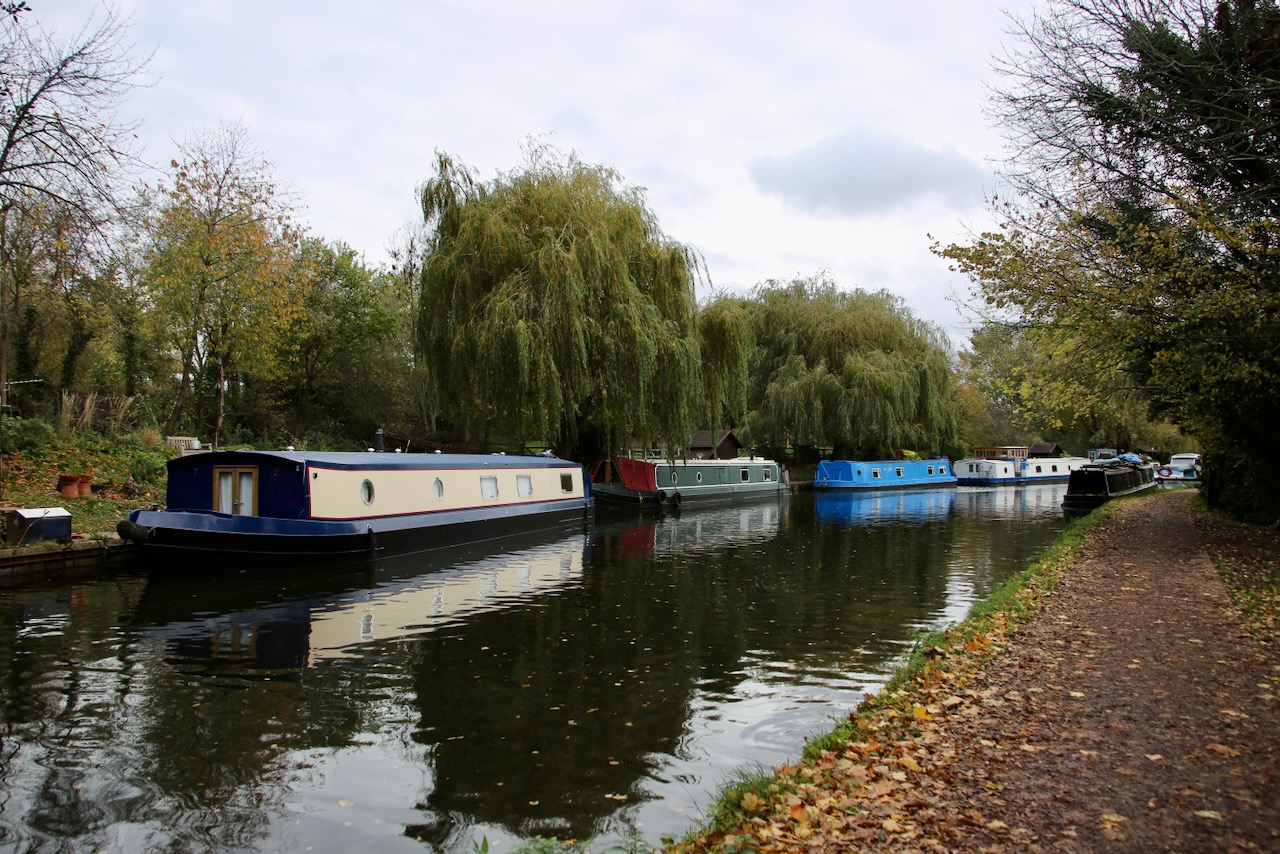
The canal was used heavily until trains came into popular use, and again in WWII to supply coal and weapons. Trade declined even more in the 1950s when new roads took more cargo. The canal froze in 1962 for three months, and its commercial use came to an end in the 70s. Many families were raised on boats and slept and ate in a space of 65 sq. ft. (about one-and-a-half king-size beds). Since child labor was needed, many kids didn’t attend school. Today, the canal is a place for birds, fish, people, boats, and bikes to rest, hunt, and move along.

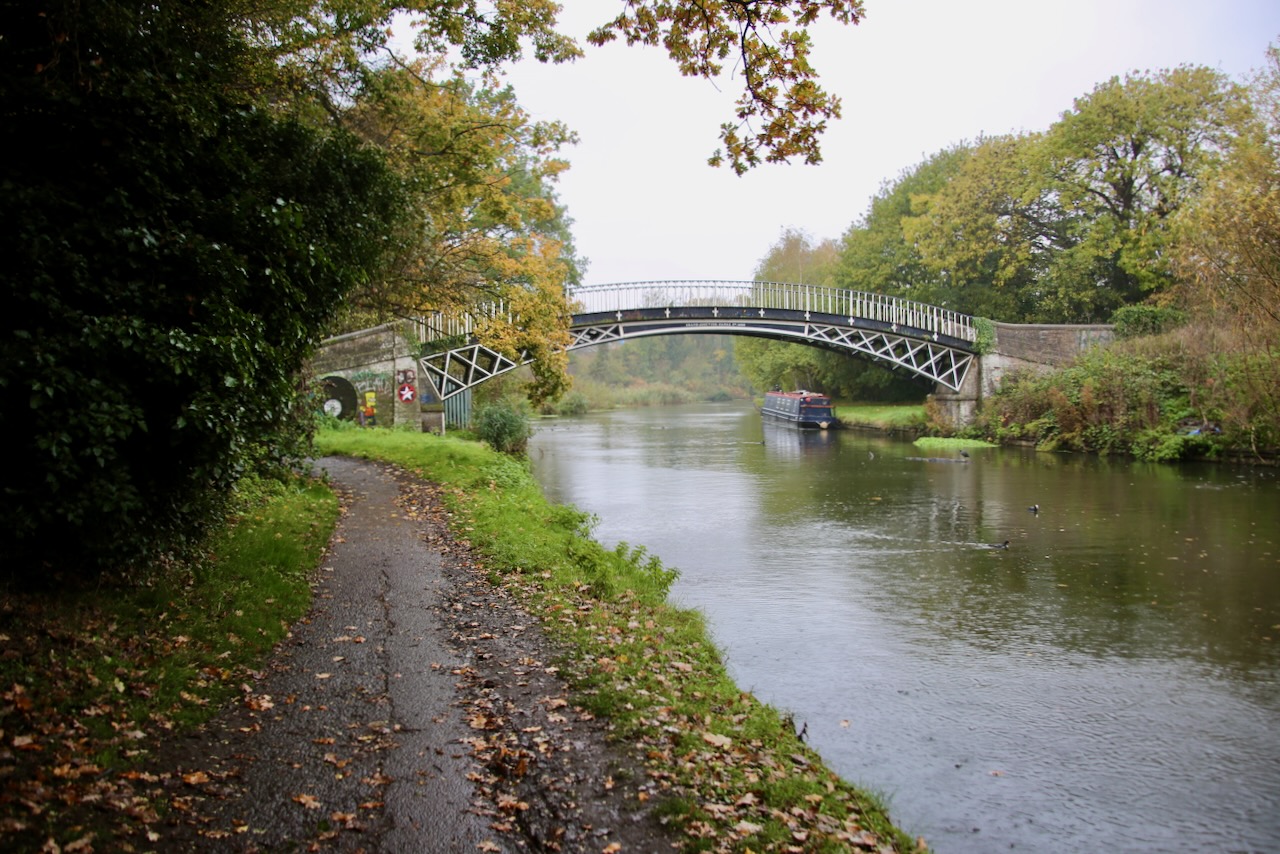
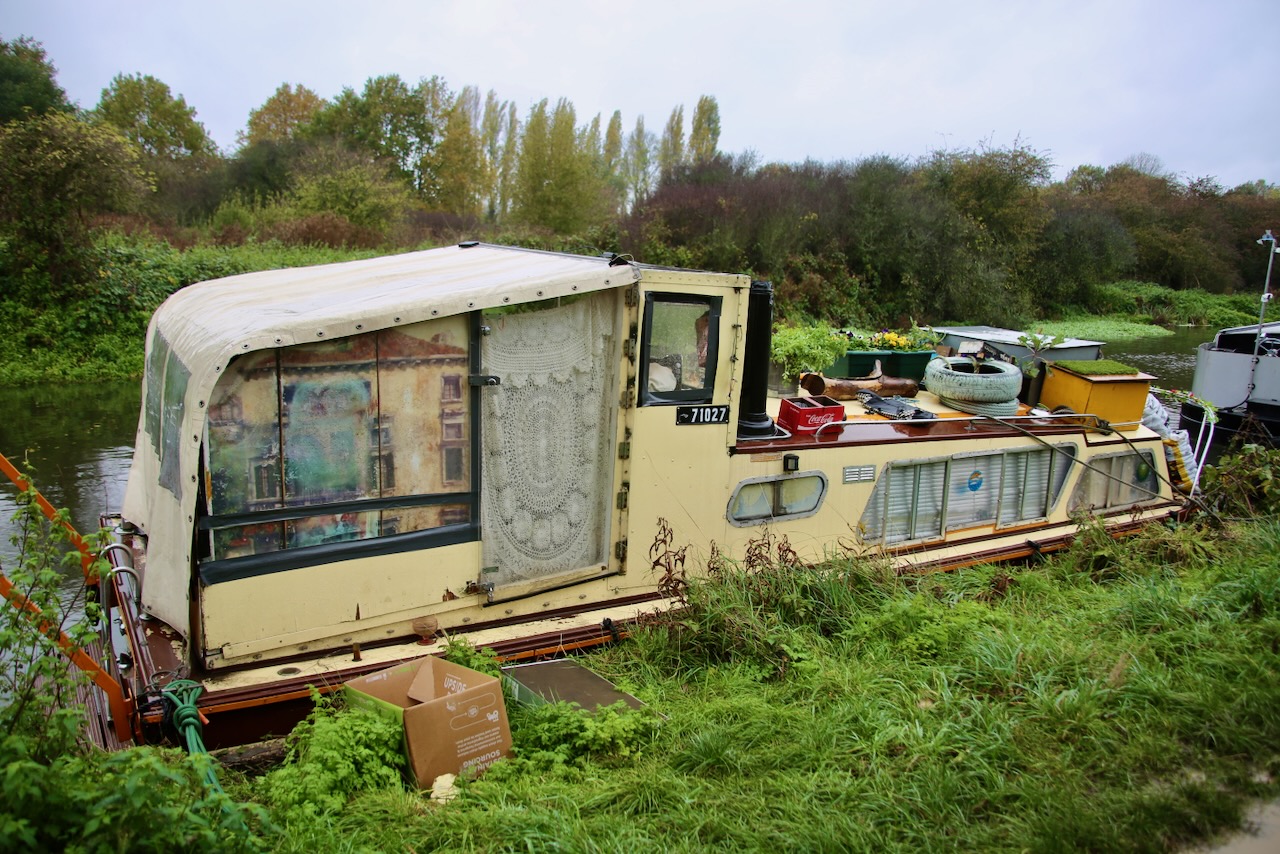
Gallows Bridge, built in 1820, possibly got its name from a man hanged in the nearby woods in the 17th century. I will use it to cross to the other side of the river and continue my walk along the Capital Ring. Though I am distracted by the unique houseboats, I must keep an eye on the pot-holed walkway as I make my way by Brent Meadow Orchard, which was planted in 2017. The trees are numbered, and there’s a chart noting when the fruit (apples, berries, pears, etc.) should be picked.

The rest of the meadow is overlooked by the Wharncliffe Viaduct, built in 1836. As rail travel increased, the viaduct was widened forty years later. Rumor has it that Queen Victoria would have her steam train stopped to admire the view. Now, pipistrelle bats hibernate through the winter in the hollow brick pillars. A mile and a half further, I’m picking blackberries to eat near Bittern’s Field. I finished Section 8, stopping in Greenford, a farming parish in the 19th century with one factory where William Perkin made a synthetic dye, mauveine, in 1857.

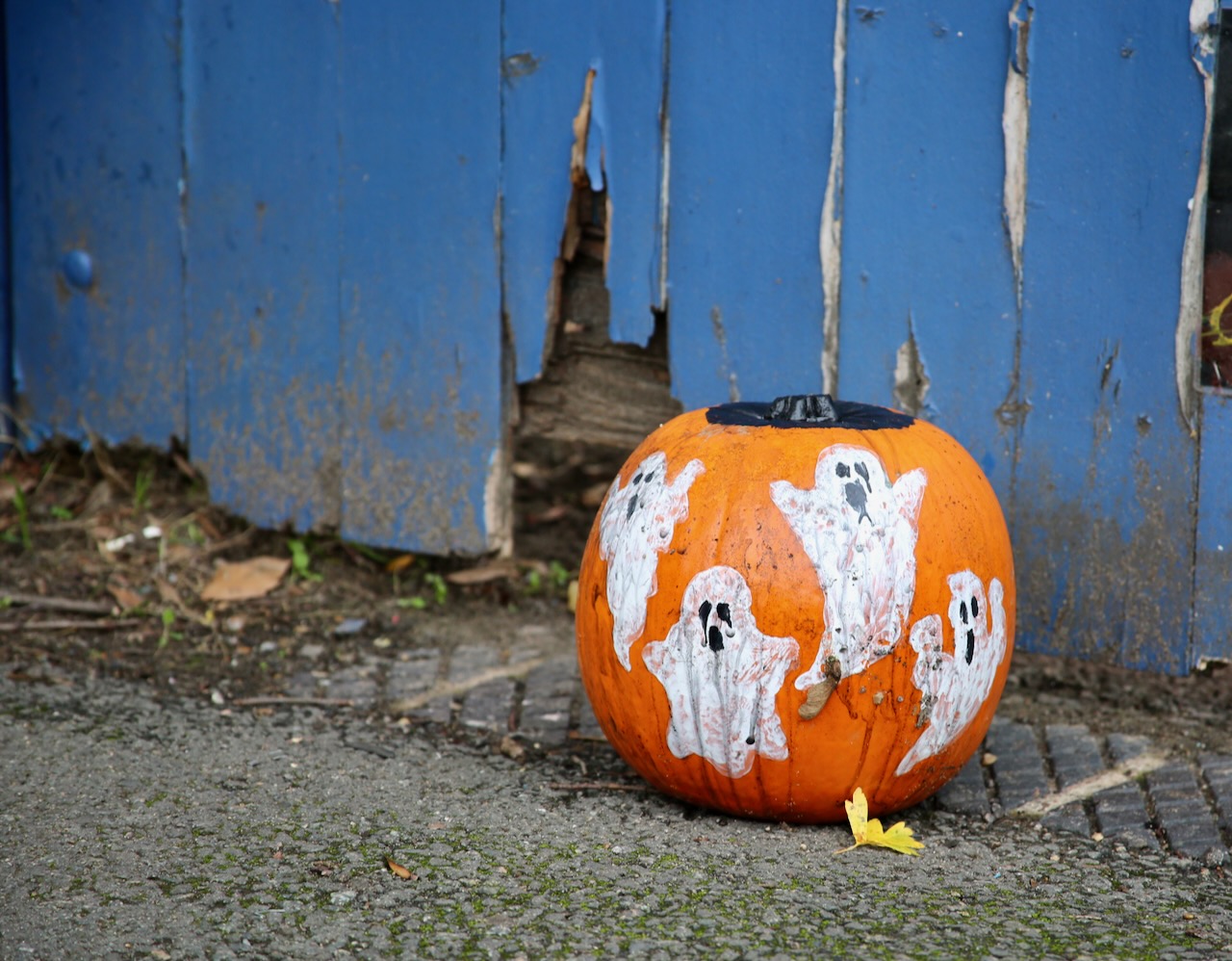
I grab some food from the bakery baskets and get on the bus. I’m hoping to be semi-dry when I get back to the house. I’ll shower and relax for an hour. I leave my soaking wet coat behind and wear a woolie and sweater in its place as I walk to the bus station on Cromwell Rd. since the Kingston Transit Station is closed this weekend. Some people are in costumes on their way out for the evening, while most are still in their black and grey, returning home from a day in the office.

I’ll meet Radu at the station and walk to Brixton Village, passing a wig shop, produce stand, and fabric booth. There are many stalls behind rolled-up metal doors selling boxes and bags full of goods that spill out towards the street, enticing the passerby to have a look inside. We grab a slice of pizza and continue walking. Brixton is the melting pot of South London with an African-Caribbean soul were music, arts, culture, and food mix.

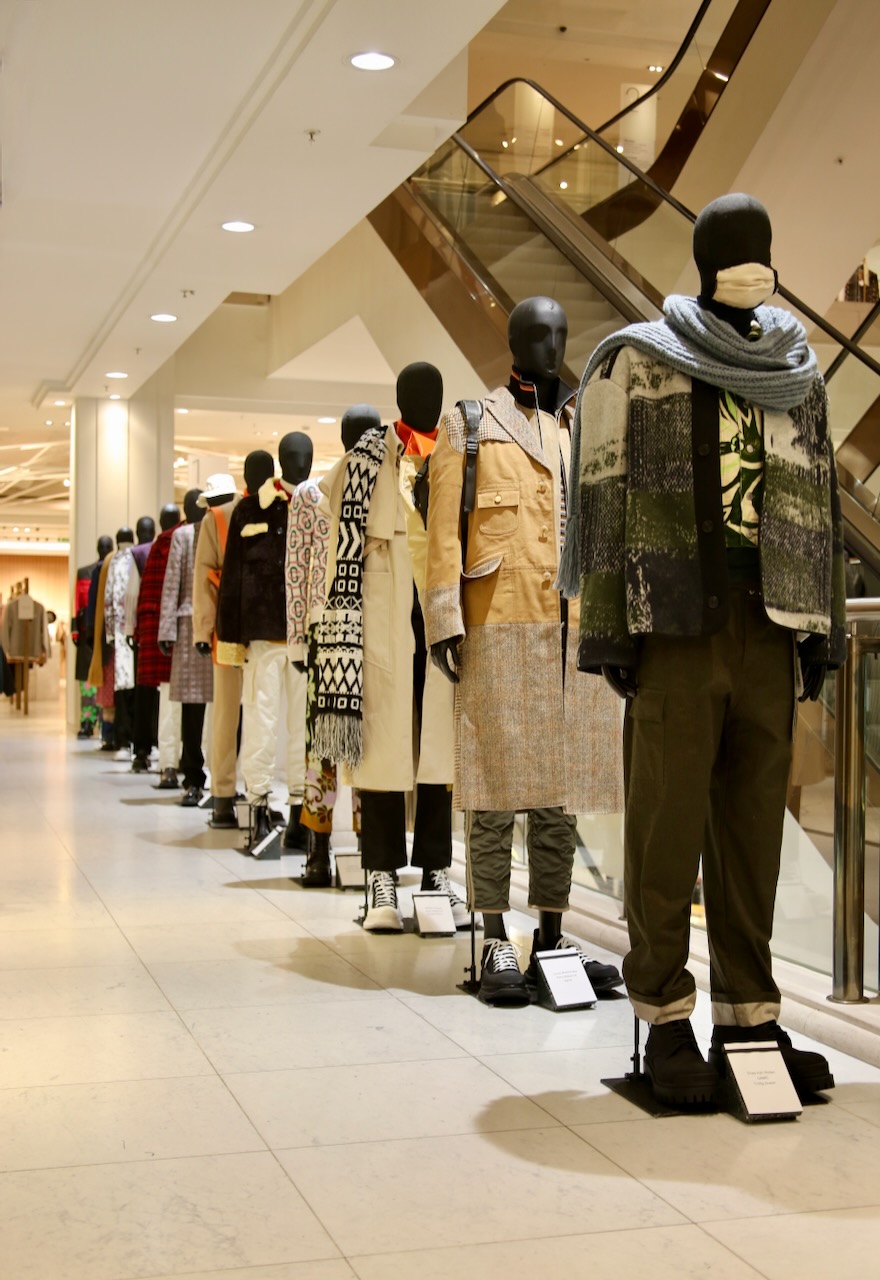
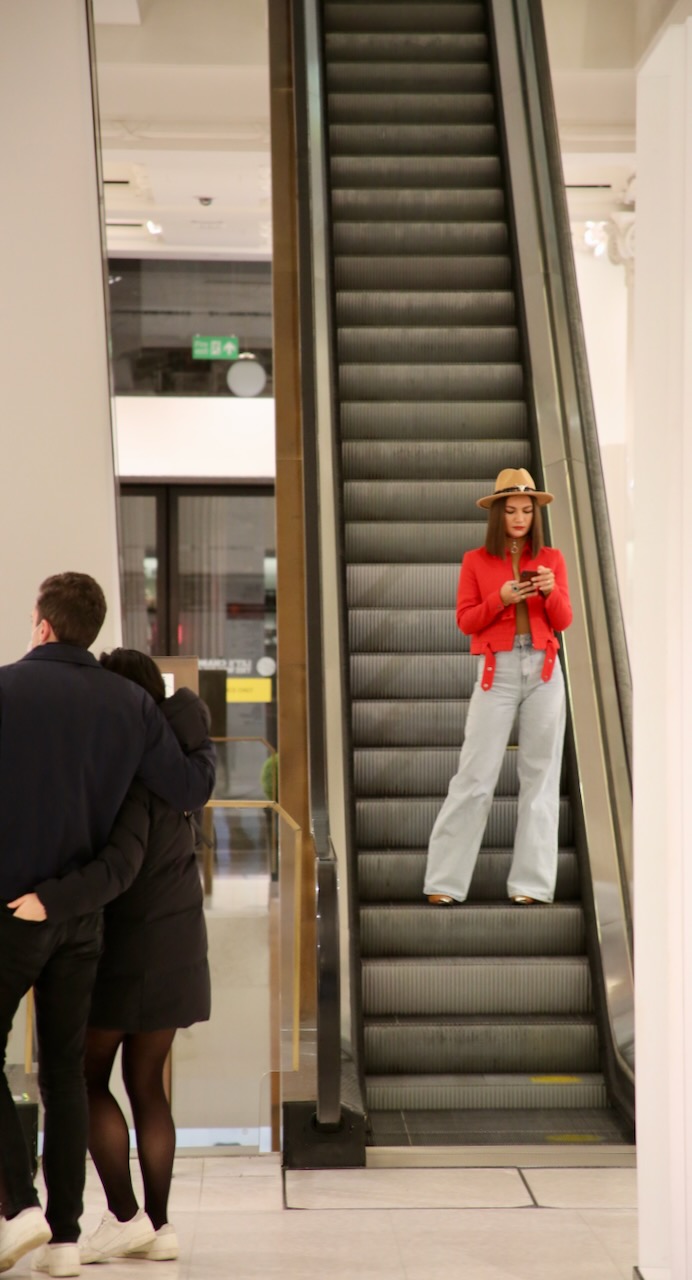
We’ll grab a sweet treat and a bubble tea as we make our way across the River Thames to a shop on Oxford St. Selfridges is a ridiculously expensive store, with the clothes I looked at costing at least $900, but it’s free to walk through and admire the design and layout, the floor piano, and the styles deemed fashionable. We buy more sweets from M&S to fuel our walk by Hyde Park and across SOHO. We’re back on the underground after 10pm and go our separate ways after Radu lets me know that England will be going on lockdown at midnight on Thursday, just hours after my plane is due to take off.


Posted in Animals, Art, Food, Friends, Holidays, People, Travel, Water | Tagged , , , , , , | Leave a comment