Caleb drops me off at the Guam Airport, and we agree to meet on the other side of customs after he returns the rental and makes sure all his employees are on their first flight home. We have an on-time departure and nap our way to Hawaii. I get pulled aside for a random check, and the agent is more interested in asking questions than looking through my bag. A guy switches seats with Caleb on our second flight, and luckily, Caleb is up to hear the guy trying to get us to buy him wine because the attendants charge the card on file with the seat number.
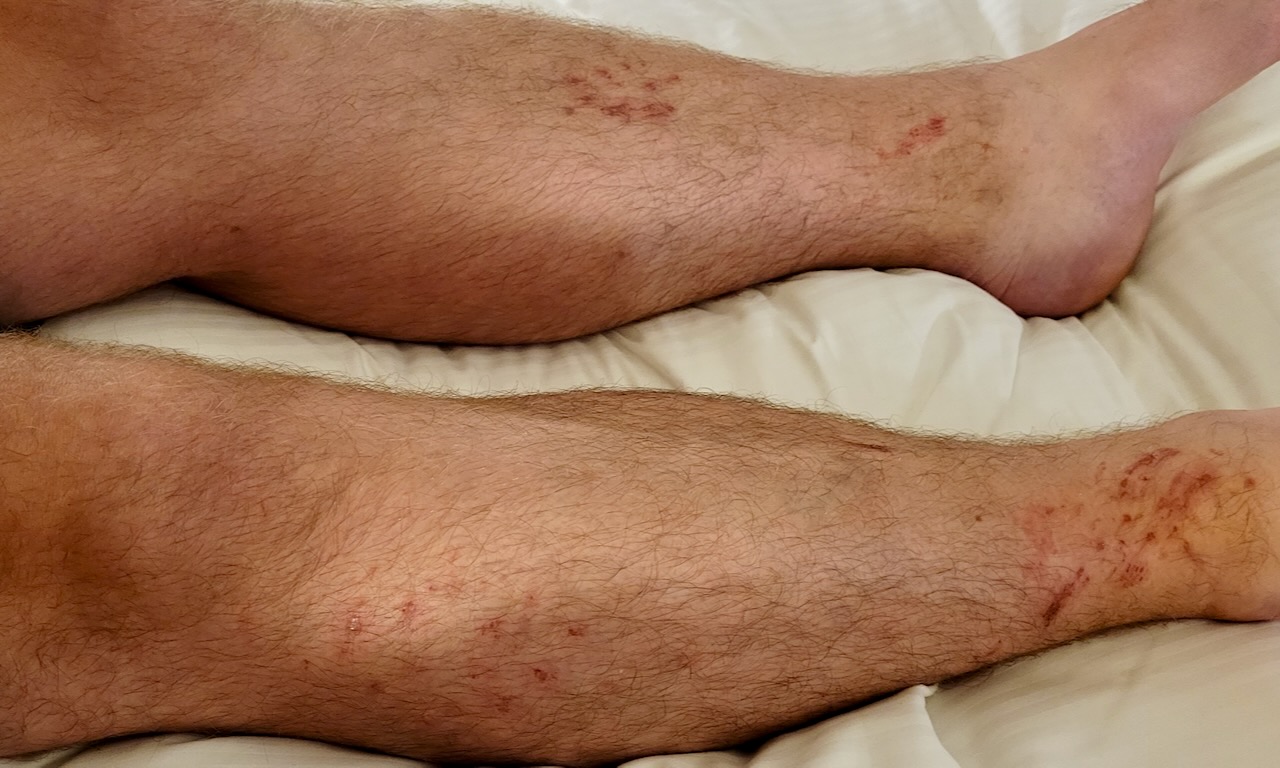
Caleb’s legs after diving
We get a proper breakfast in San Francisco, fly to San Diego, and get an Uber home. We walk to the beach and see a car event. We walk to Grocery Outlet for laundry soap and need more quarters because the laundromat is charging for drying again. We put away clothes, go look at an available apartment away from our current situation, and upon return, can relax with both families, full of kids, gone for a while. I make us dinner, sweep, and wash dishes — all the chores that make traveling more enjoyable.
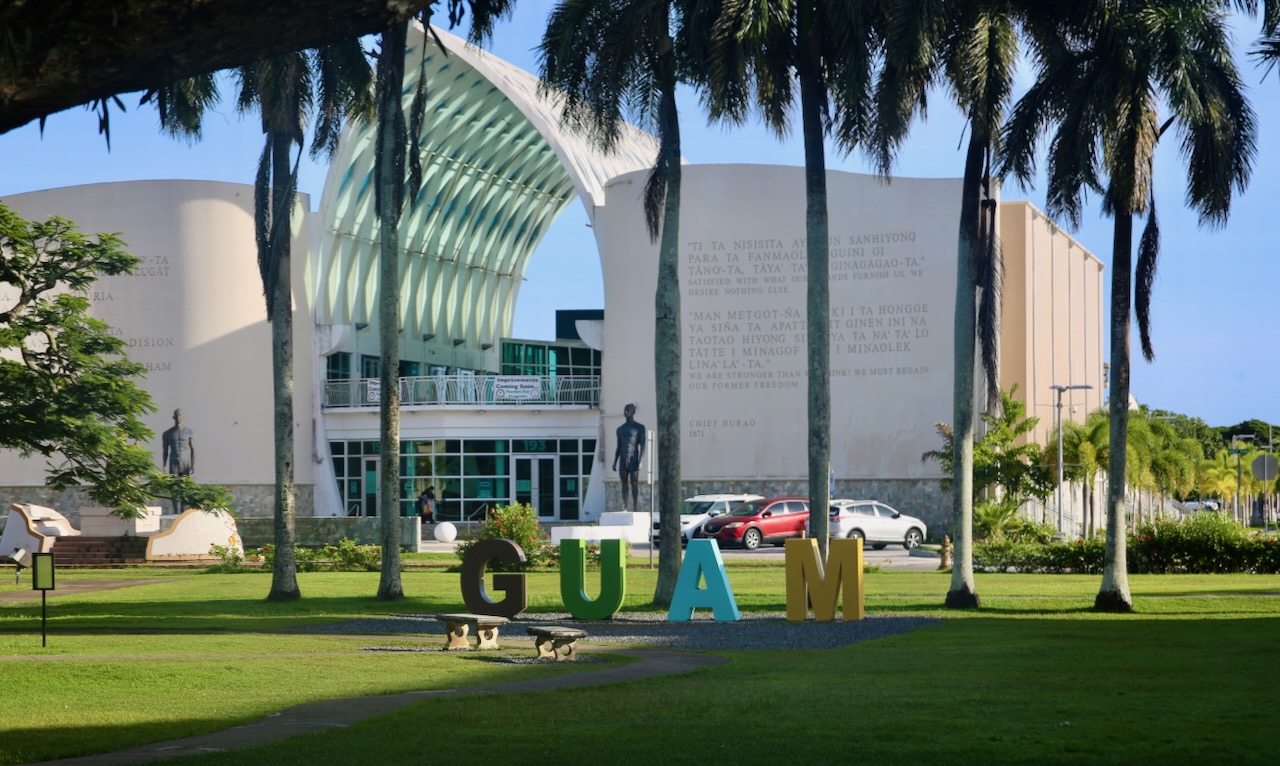
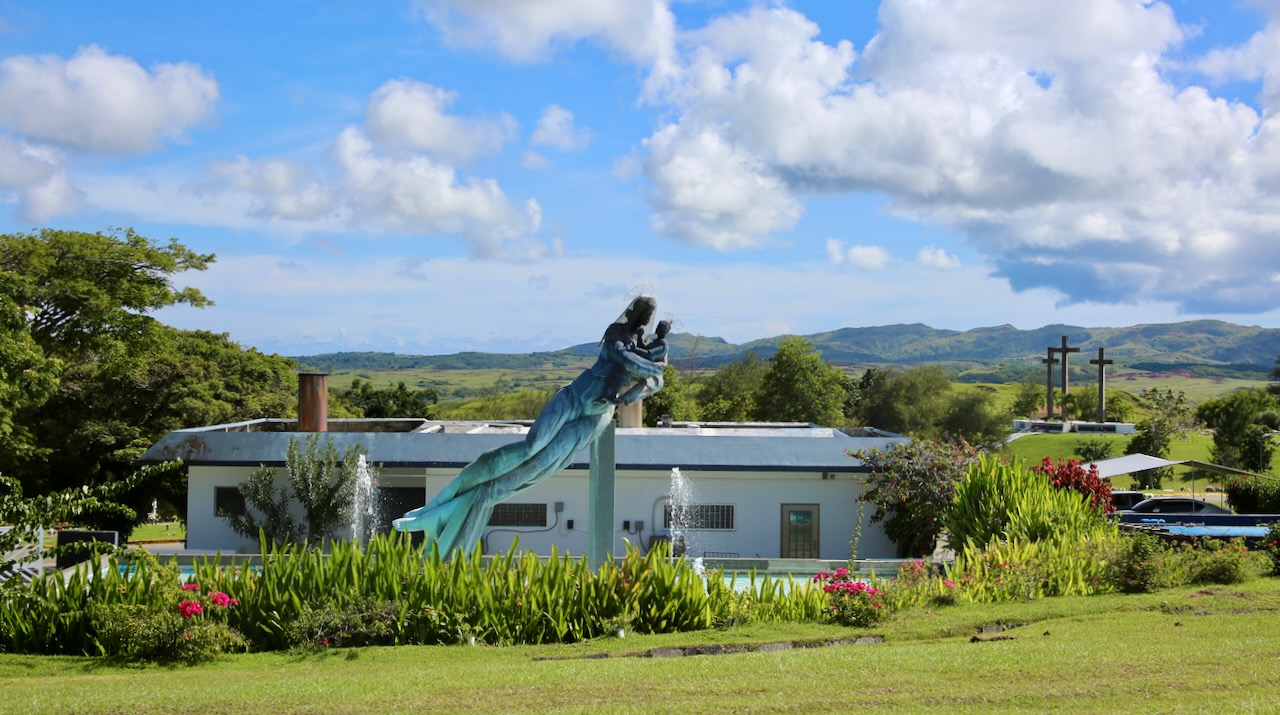
The morning sky is dark and cloudy. We debate whether to snorkel, because if we do, we will have to dry our suits on base, so that we don’t pack a mildewy possibility for the return stateside tomorrow. We’ll enjoy breakfast at Linda’s while it rains. Once that’s done, we drive to the Ricardo J. Bordallo Governor’s Complex and learn about the Lone Sailor, who represents a seasoned petty officer. The original has stood in DC since 1987, and this seven-foot guy was unveiled in 2018 by the efforts of the Vietnamese-American community. Guam was known as the “Ellis Island of the Pacific” for sheltering refugees en route to safety.
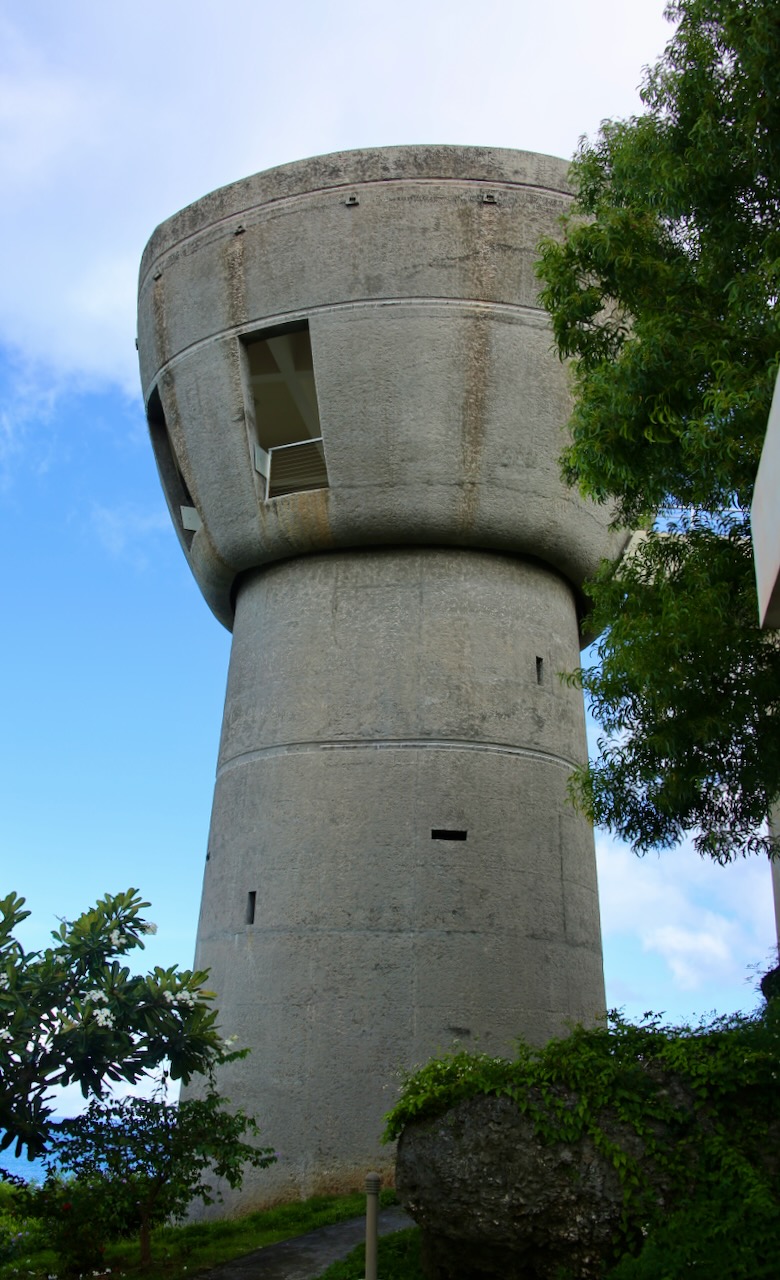
Even taller is the roughly 80-foot Latte (stone pillar with cup-shaped capstone) of Freedom, which serves as the “Statue of Liberty of the Pacific.” The governor, in commemoration of America’s 200th birthday, asked school children to donate money to build this large beacon, and they raised thousands. This is similar to the fundraising that took place in France for the building of Lady Liberty and in America in the 1880s for her pedestal. A restoration campaign for her 100th birthday brought in $225,000 for repairs. This is not just an early example of the power of crowdfunding, but a continuing show of support by ordinary citizens in what these monuments represent.
I’m sure on the top of my list of things to do in Guam was to hike to its tallest point, Mount Lam Lam, at 1,332 ft. The distance from the Mariana Trench to the top makes it the tallest mountain in the world. We underestimated how steep the climb would be in the few miles and hadn’t planned on going after rain, which makes it more slippery. The panoramic views from the height we reached were amazing, but we had yet to reach the bushwhacking and the pink ribbon portion of the trail before the heat, humidity, and use of a muddy rope made us turn around. We had to laugh that someone thought this was moderate, but perhaps when they were here, it was.
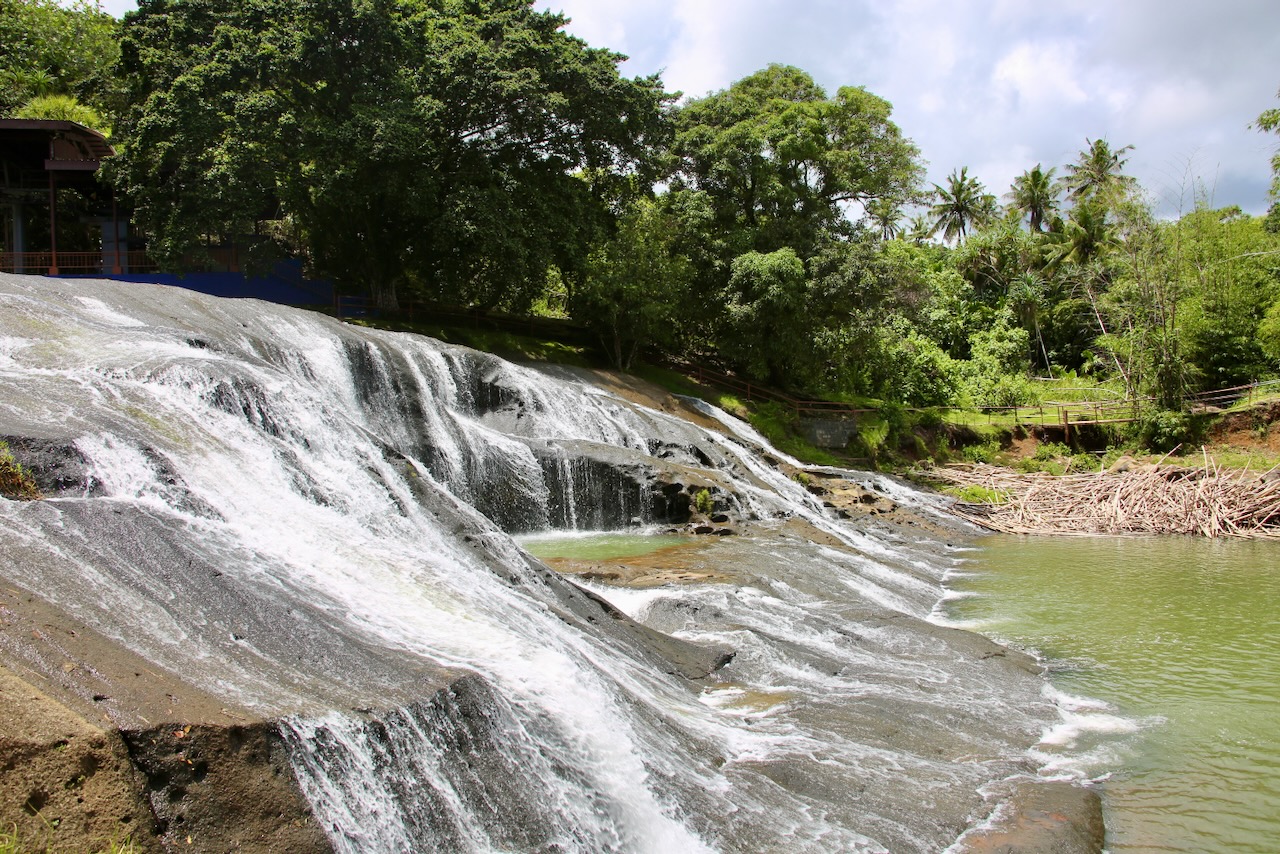
Caleb says his body is now 50% water after all that sweaty exertion, and he shall soon perish if we don’t find some rehydrating beverages. We’re in luck, as just across the street from the Inarajan Natural Pool (currently closed but still pretty) is the Inarajan Market. We try to hike at Talofofo Caves, but it’s muddier and more slippery than the mountain, so we turn back, again. We backtrack to visit Talofofo Falls Park and Yokoi Cave, where the Japanese soldier hid for 28 years until being found in 1972. The entrance feels like an abandoned theme park, the only one to offer an adults-only area, and to have multiple warnings about pigs, with no sightings.
We take the cable car to the first waterfall and then across the suspension bridge to the History Museum. It’s a short hike to the hole in the ground (believed to be a replica) where the soldier lived for nearly three decades. He returned home to gifts, a pension, his pre-war sweetheart, and media attention. He became an author and found modern Japan overwhelming, so he would return frequently with his wife to Guam and advocate for self-sufficiency and austere living. It’s no wonder I didn’t last in the military. I would have been walking the villages looking for food and friends.
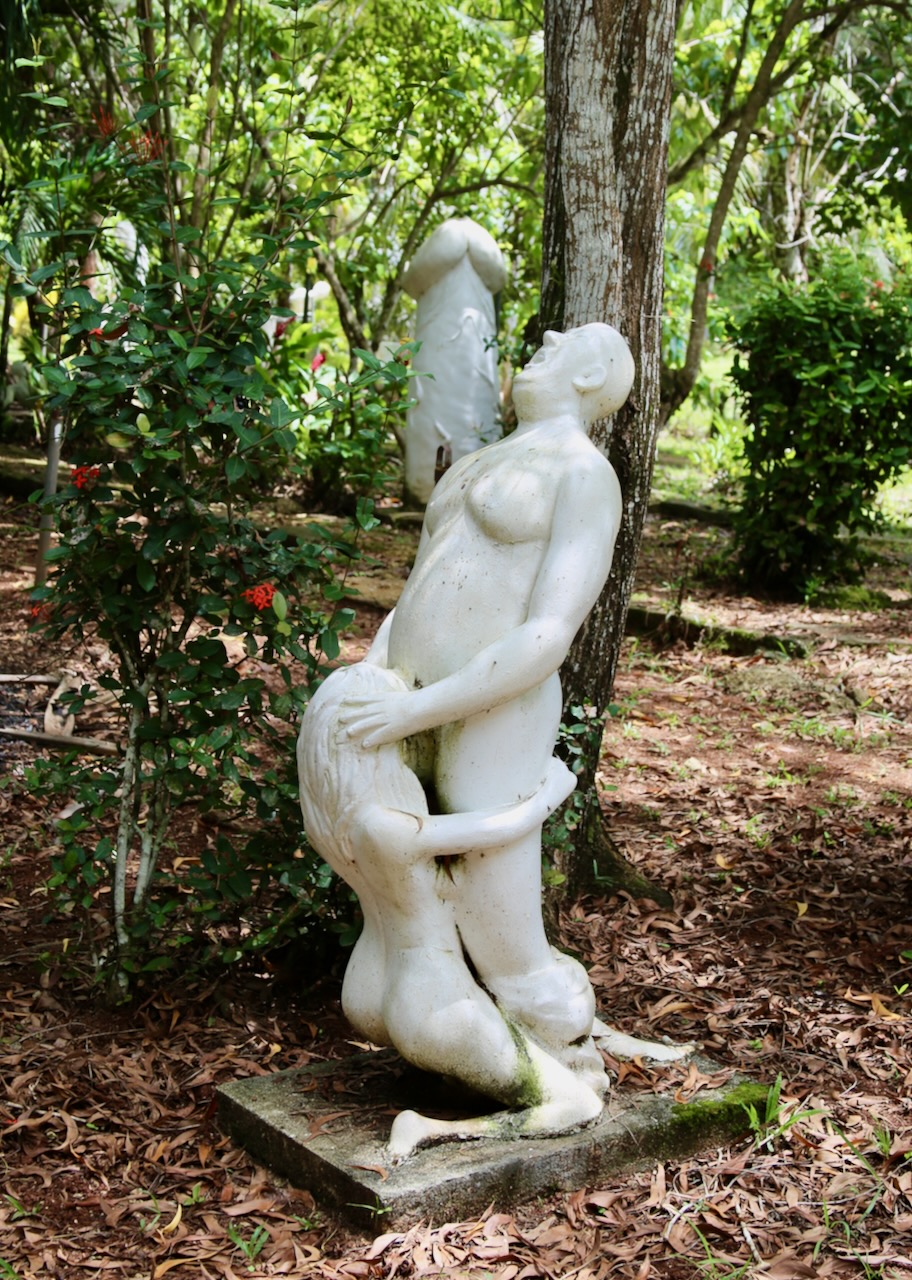
We see Falls #2 and then take the cable car back. We visit the Ghost House and have more fun with the blacklight than the old movie props, though perhaps some of those bones were real. It would be a great place to hide the evidence. Only those 19 years and older may enter Love Land, the garden of sexy statues. When I have a backyard again, I shall have one of these commissioned, by me, because I can’t afford an artist’s price. We stop at Fort Nuestra de la Soledad, where I visited three days ago, so we can take in the views together, along with a family in matching Frenchie shirts.
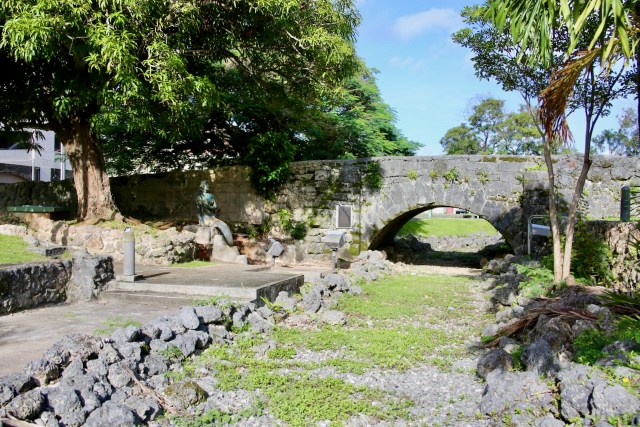
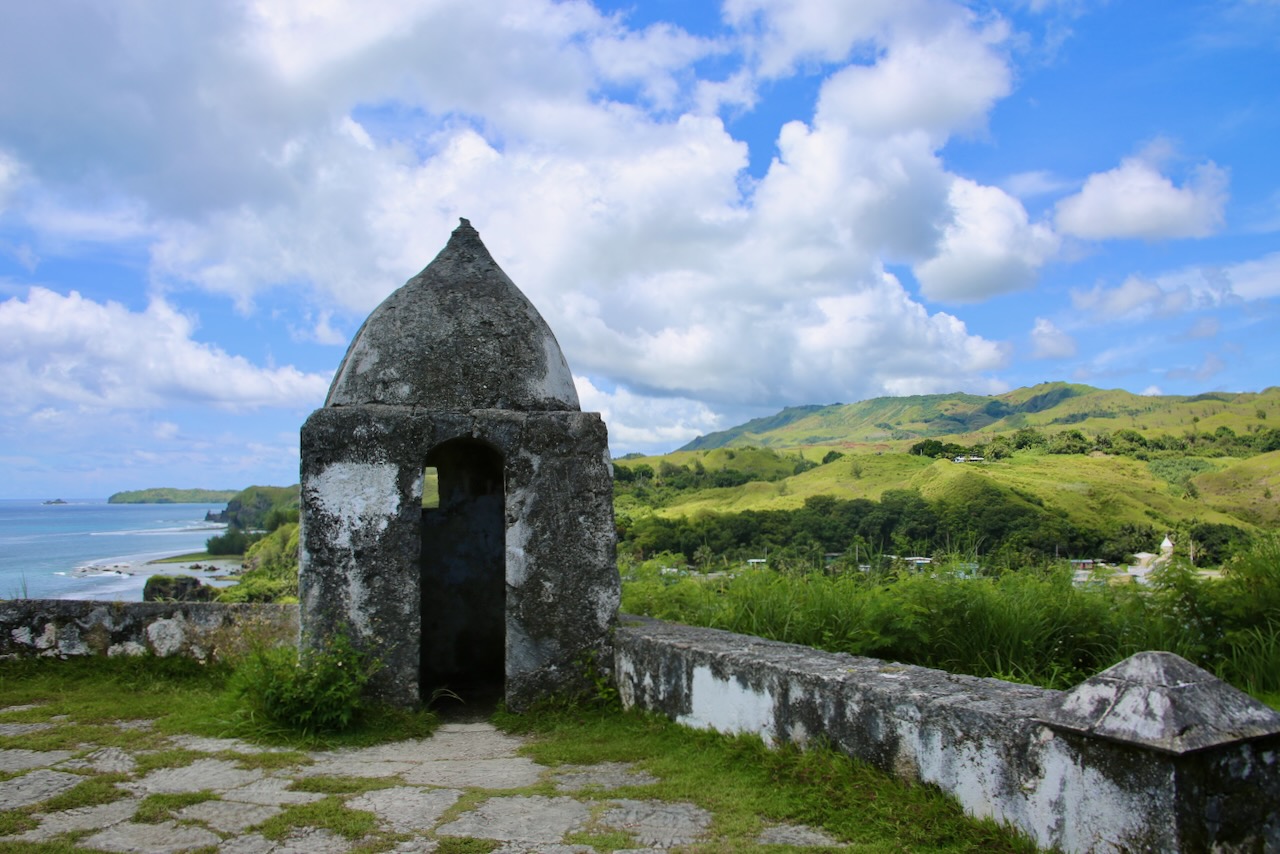
A short stop at the Umatac Bridge before the 30-minute drive to Fort Santa Agueda, another of the five remaining Spanish forts. The Americans used it as a signal station until it was turned into a naval government park in 1933. The Japanese used the strategic site during WWII. The area is now owned by the Guam Department of Parks and Recreation, allowing visitors to view the village of Hagåtña, the Philippine Sea, and the sheer northern cliff lines of Oka Point. Half a mile walk away is the Latte Stone Park, where eight historical lattes were relocated from Fena (where the largest reservoir is). They were set aside to make room for an ammunition depot.
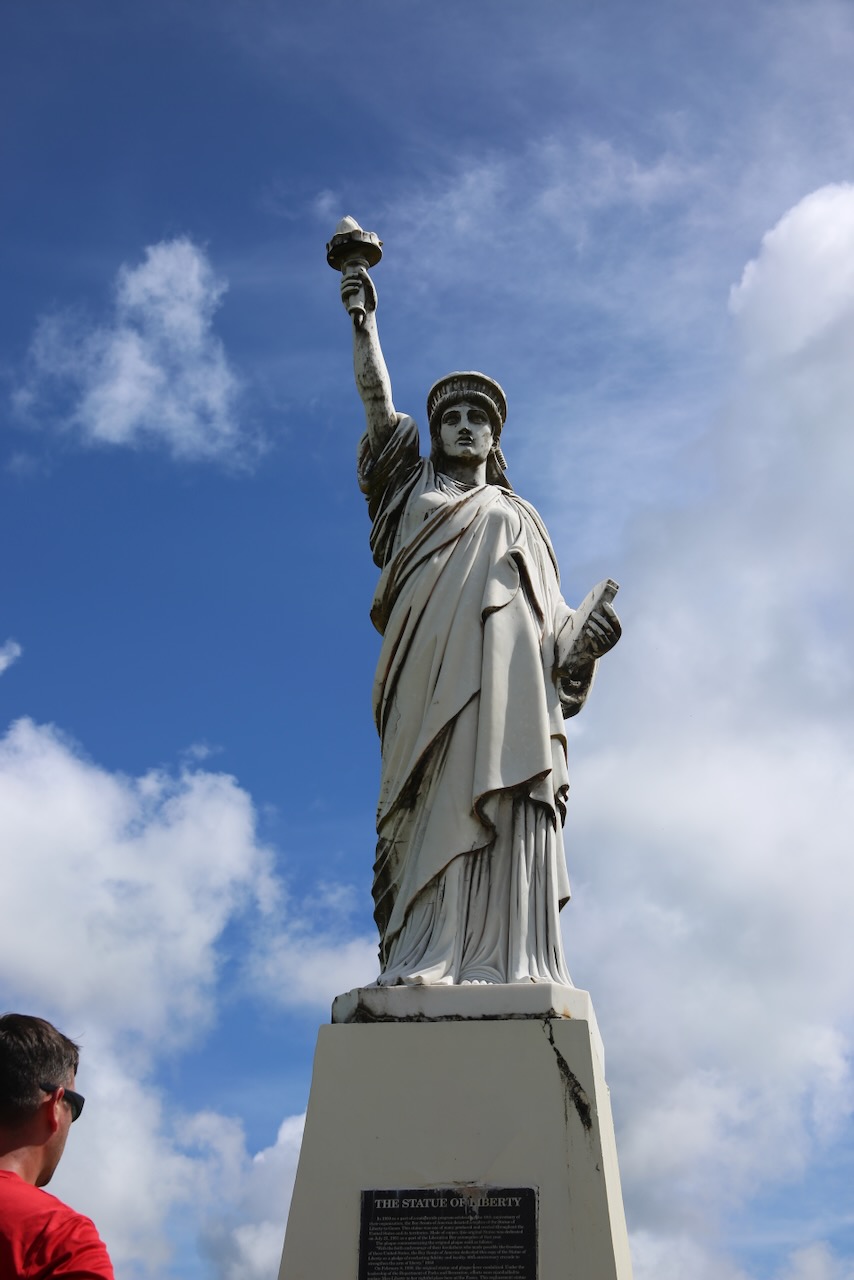
The park also contains two fallout shelters constructed by the Japanese, and inside one is a set of eight rules written on cardboard, a new religion in the making. We find the little Statue of Liberty, the original was a replica of copper about a quarter height of the one in NYC, donated in 1951 as part of the Boy Scouts’ 40th anniversary. It was replaced with marble after being vandalized in 1990, so she could return to the Paseo and continue looking out over Agana Bay. We stop at the gas station for drinks and have dinner on the balcony. I tried marlin the other night (the steak of fish) and forgot to try breadfruit (it’s sticky on the forest floor). We discuss months and politics as they come up in SPQR by Mary Beard.
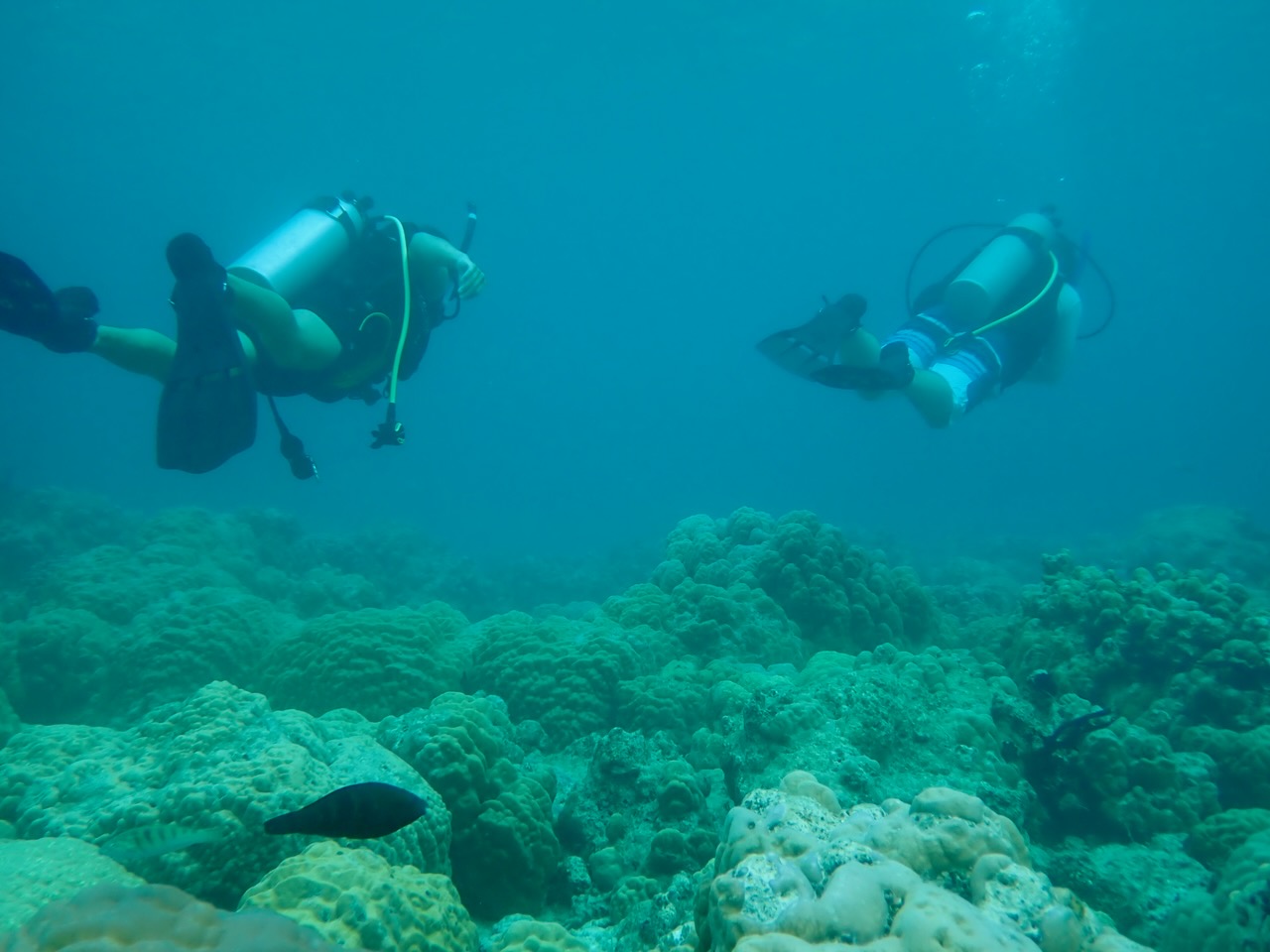
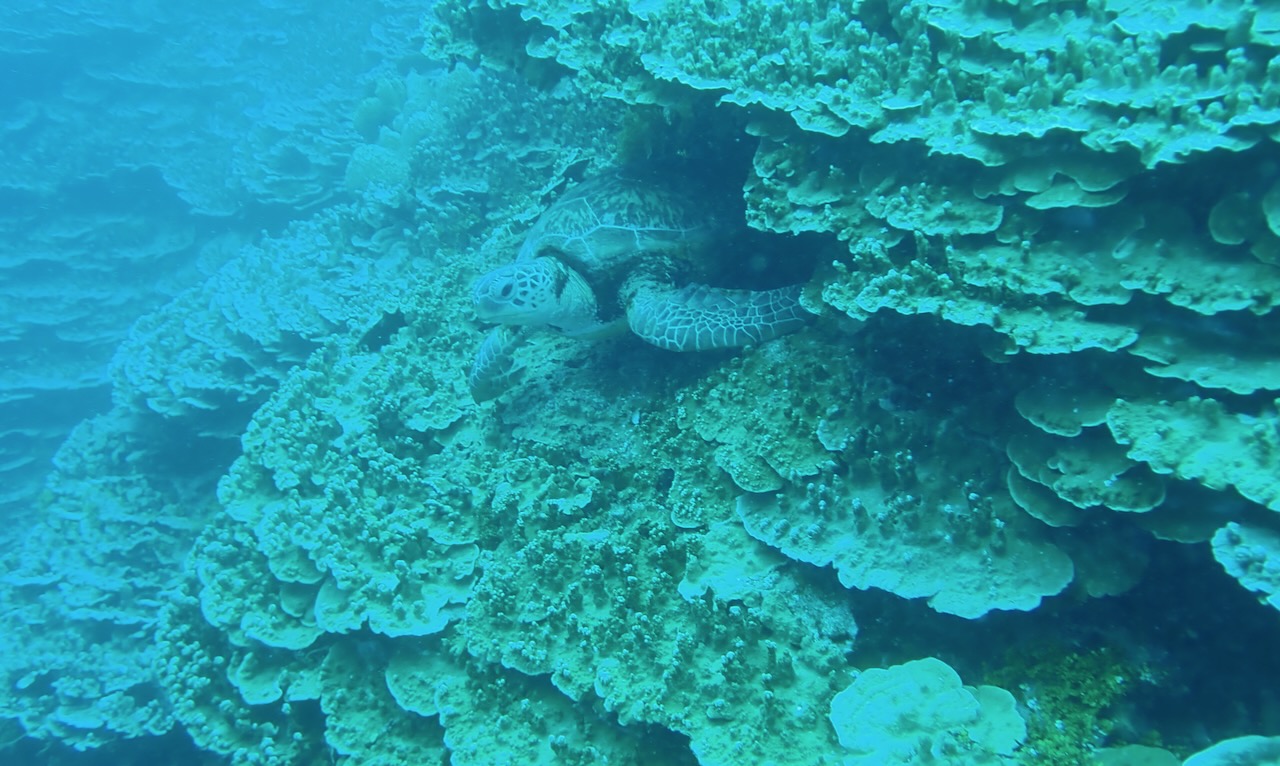
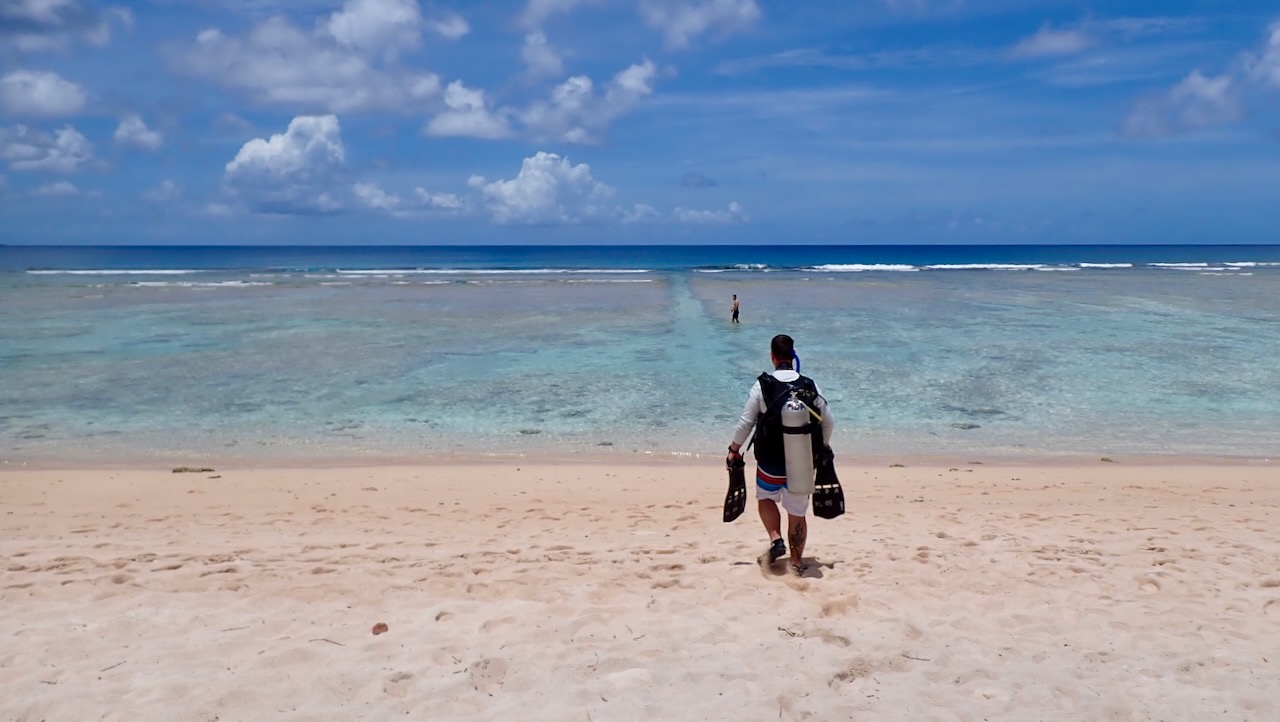
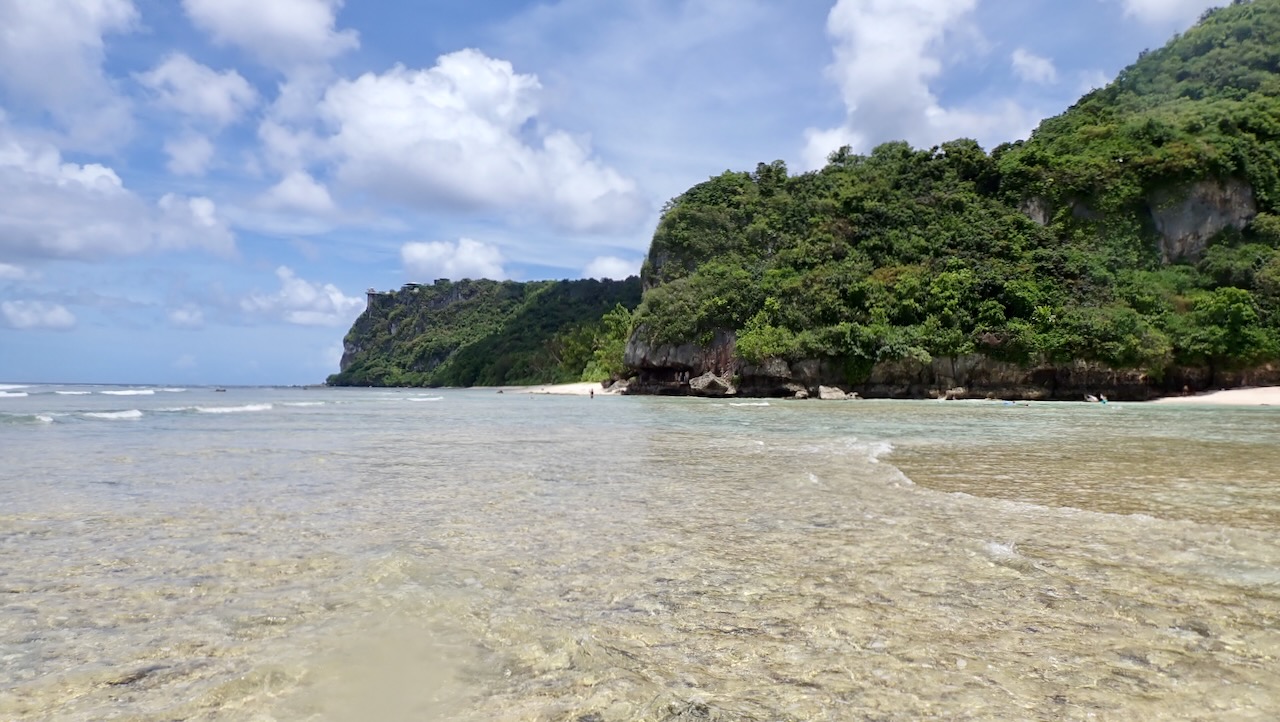
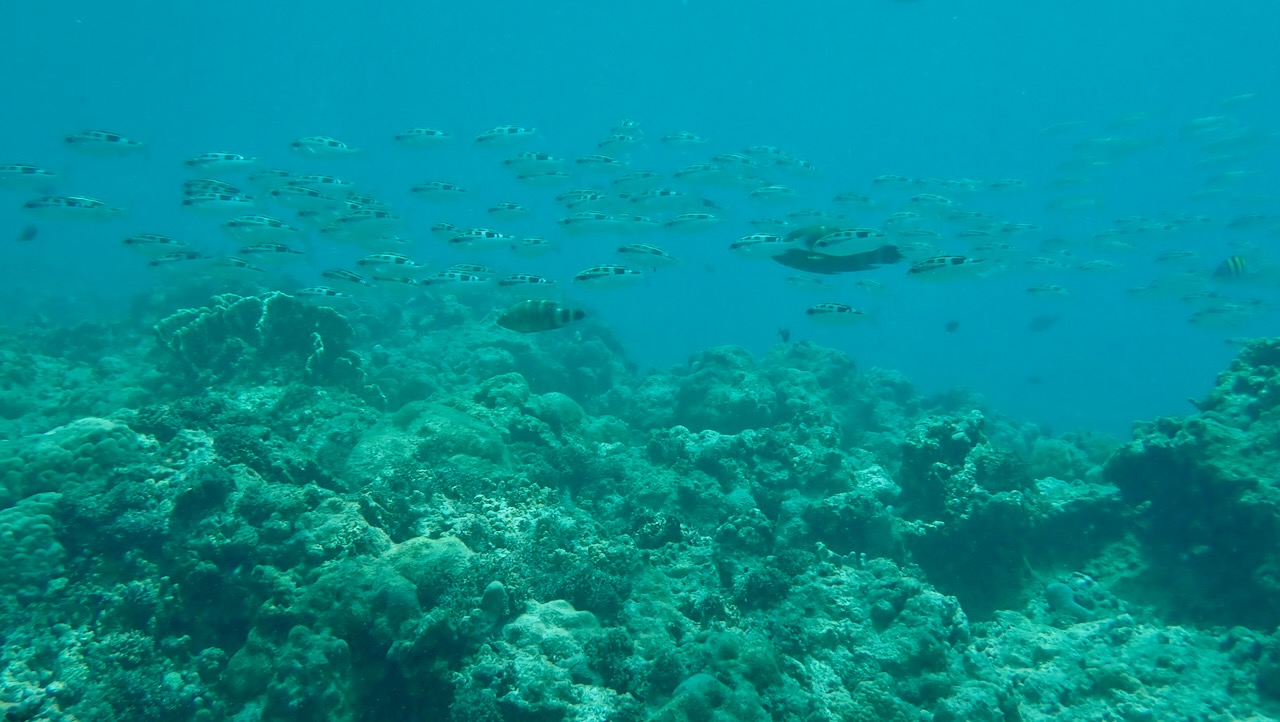
I’ll have some banana donuts (buñelos åga) from last night before we pick up Boraski (the only other diver in the group) and go to a proper breakfast at Manny’s. We dive at Gab Gab Beach, and it’s great to only be restricted by air consumption and not a mandatory time set by the company that owns the boat. We enter via ladder, swim over the short shelf, and then view the fish and deeper water safely. We are thrilled to see two sea turtles and get our tanks refilled to go to Gun Beach with much enthusiasm.
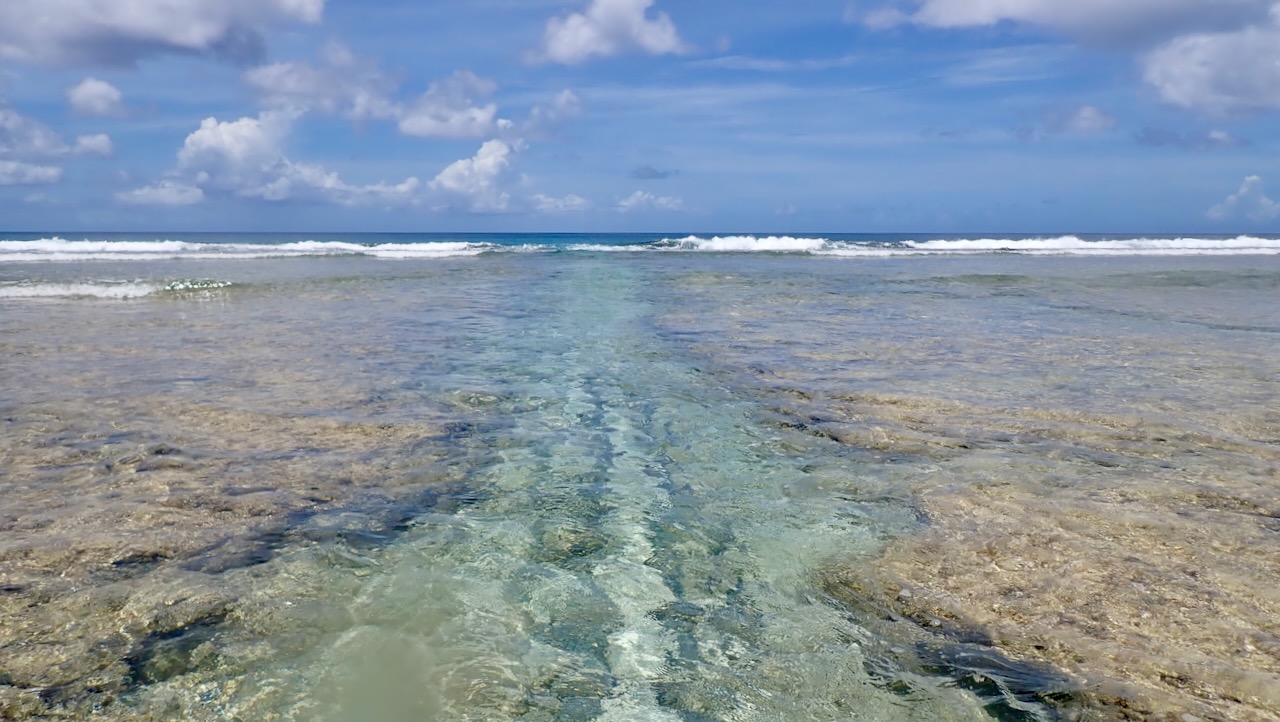
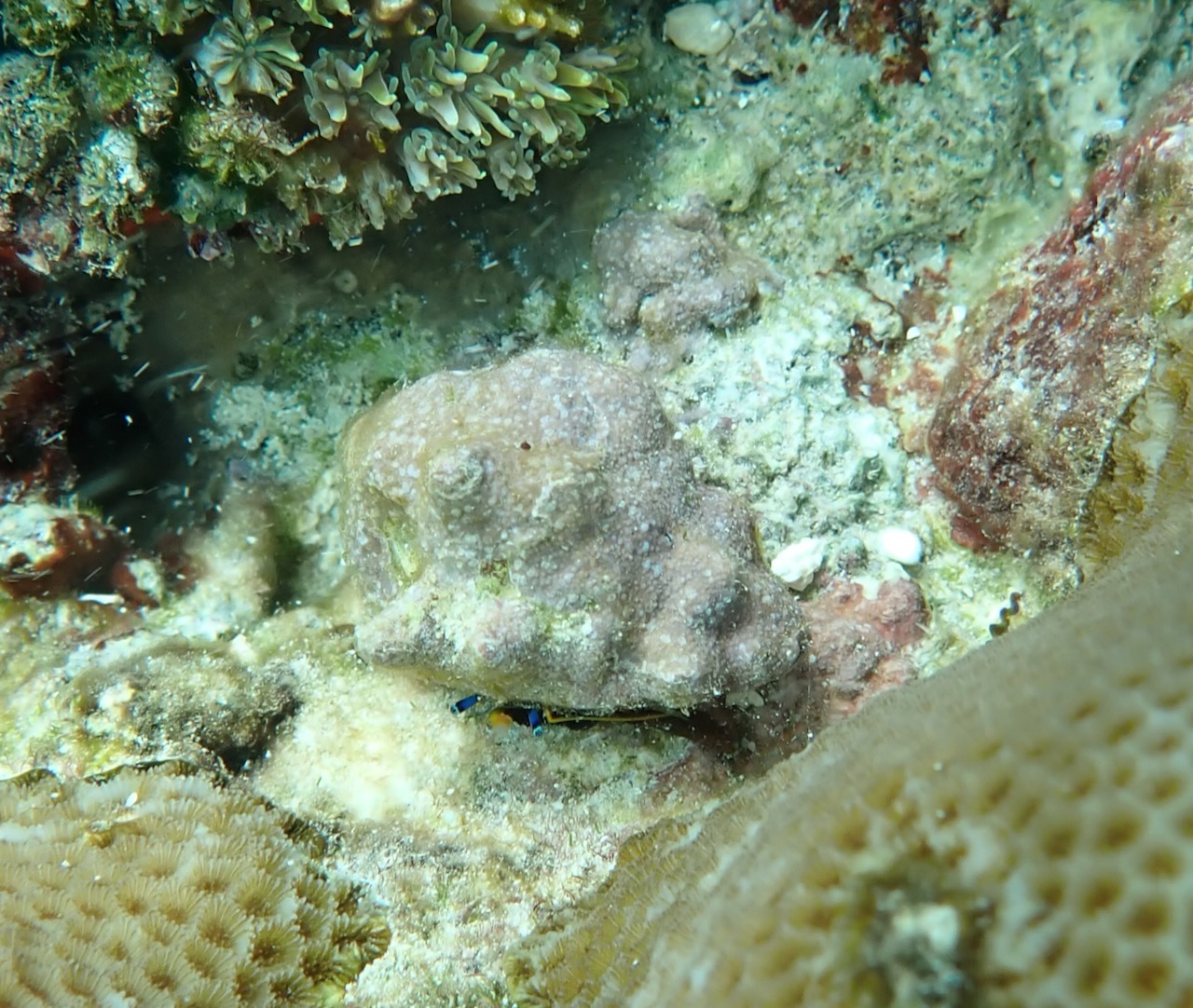
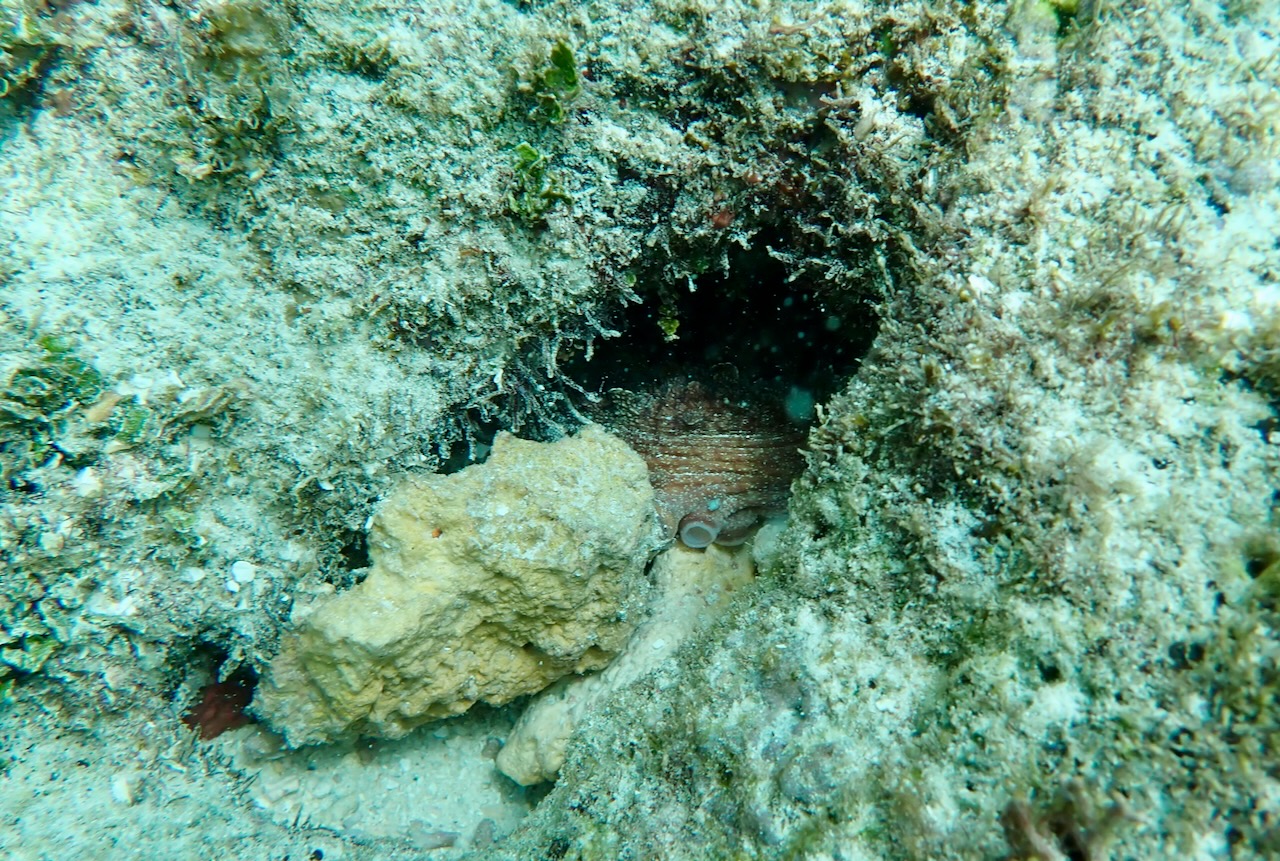
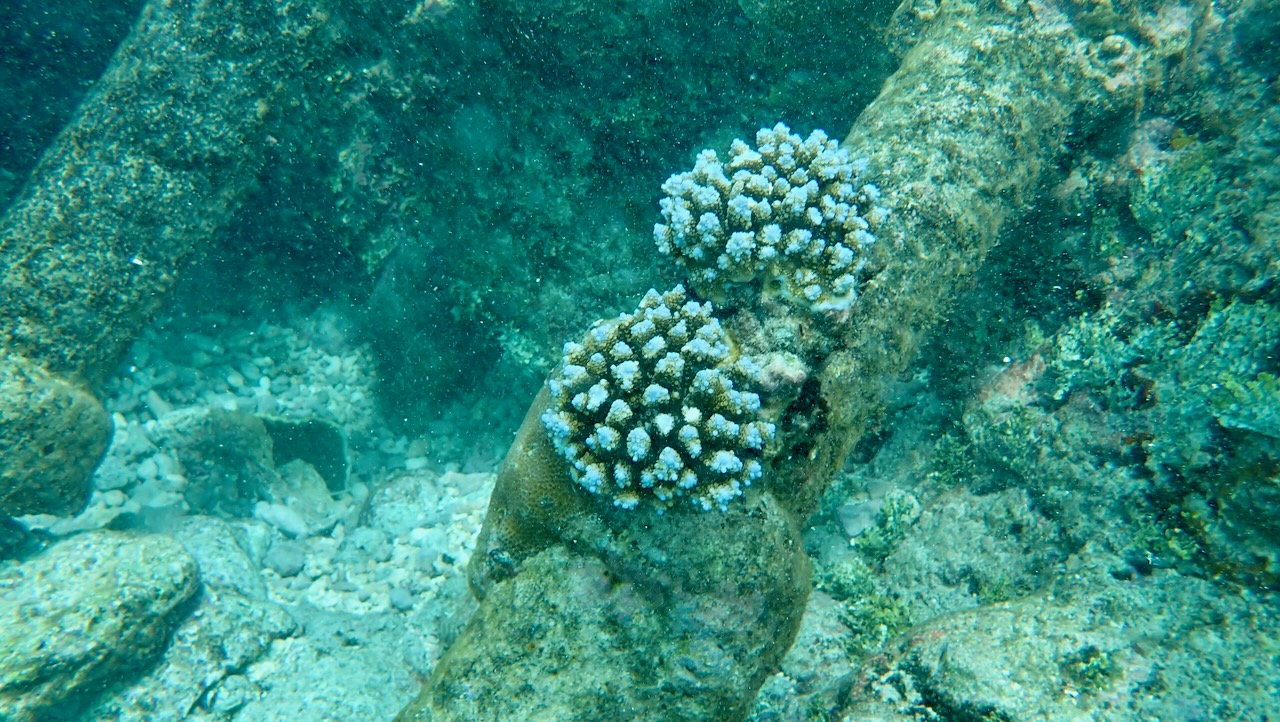
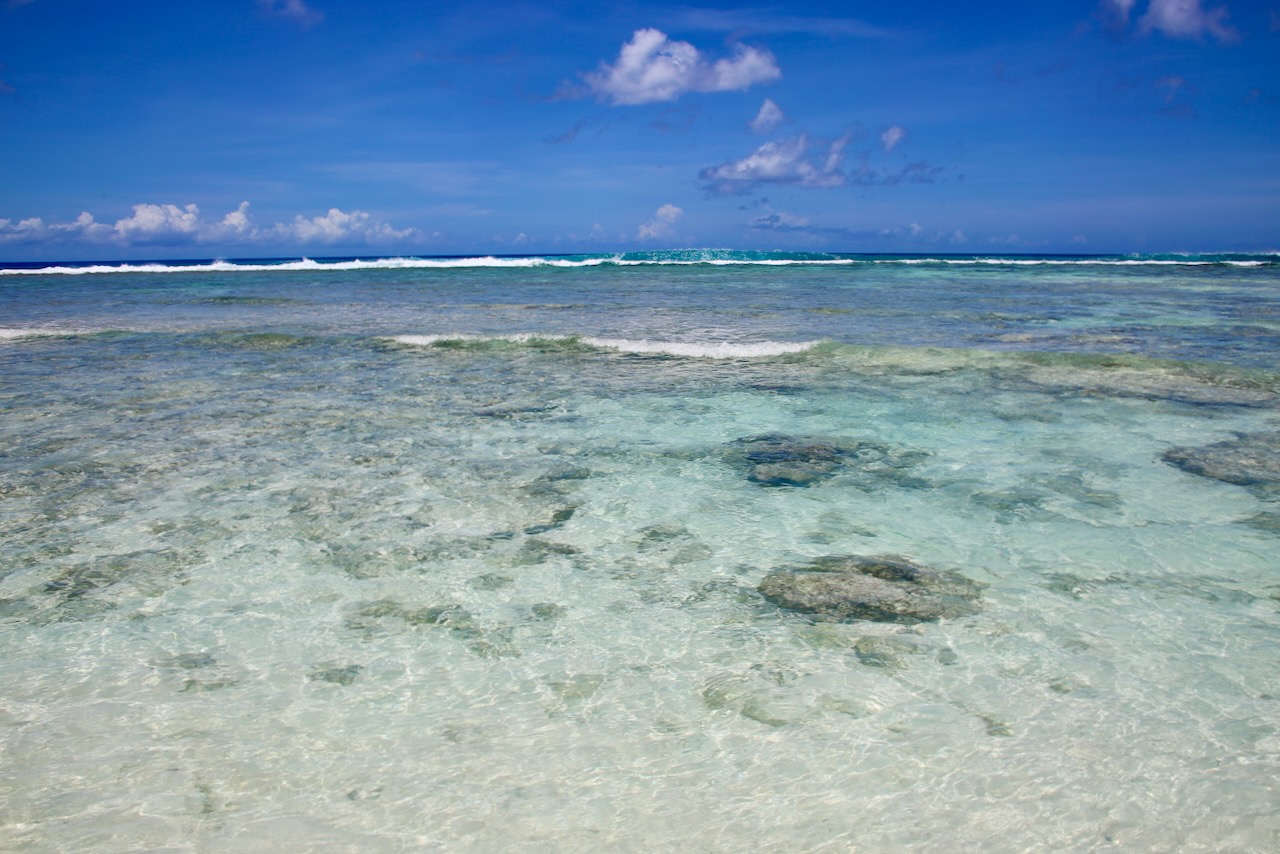
The dive shop told us to follow the pipes out over the shallow rock bed, which I thought was local code for something, but the four pipes are visible and will come in handy later when the sea gets rough. We walk out, see more turtles, and come back early because the tide is changing. I’ll get some fire coral on my left arm and leg, and while I’m holding on with my fingernails to one of the algae-covered pipes, I happen to see an octopus hiding in the safe confines behind a rock. I attempt a photo-op while the ocean keeps trying to toss me around and worsens visibility.
Gab Gab Beach
I knew I still had plenty of air, so I was going to attempt to ride out whatever this was (without knowing how long these tide changes last), especially at three feet below the surface. It’s a good thing I didn’t wait longer, as the guys had caught a wave heading towards the beach that sent their bodies and bubbles my way first and then left them bloody-legged on the rocks. As I stood to steady myself with the weight of my tank, I saw Caleb coming out to rescue his wife and go for round two if need be. He helps me to shore, and I’m still exhilarated.
Gun Beach
We stop at Fish Eye Underwater Observatory, where the water is calm and shallow, but the guys are beat, literally, so we get gas for the car ($1.28 cheaper on base) and return our rental gear. The shop charges us for not capping our regulators before rinsing them, as salt water can damage internal components and requires immediate servicing. We’re used to capping them and then rinsing gear when we get back to shore, so it was our mistake. Caleb gets a shirt with a hood, and Boraski sleeps on the way back to the hotel.
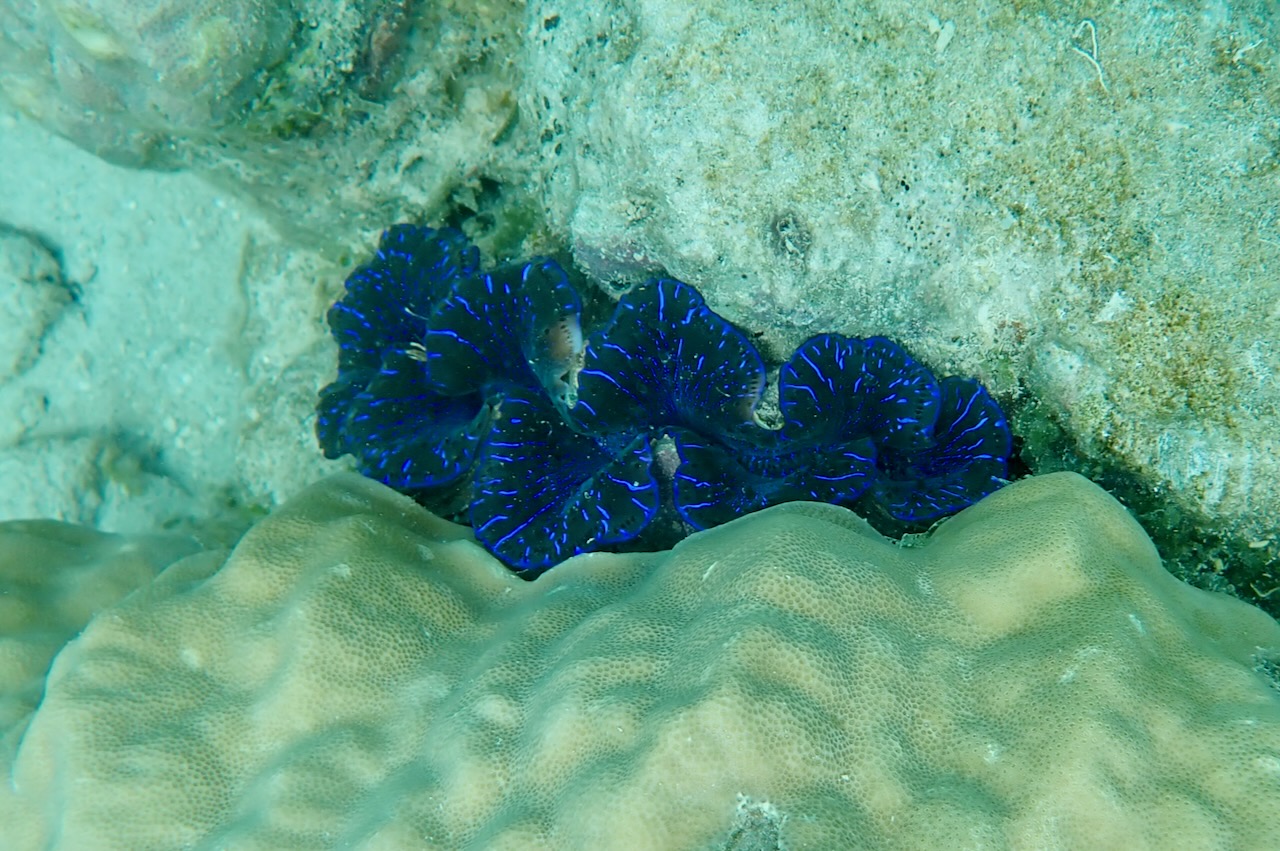
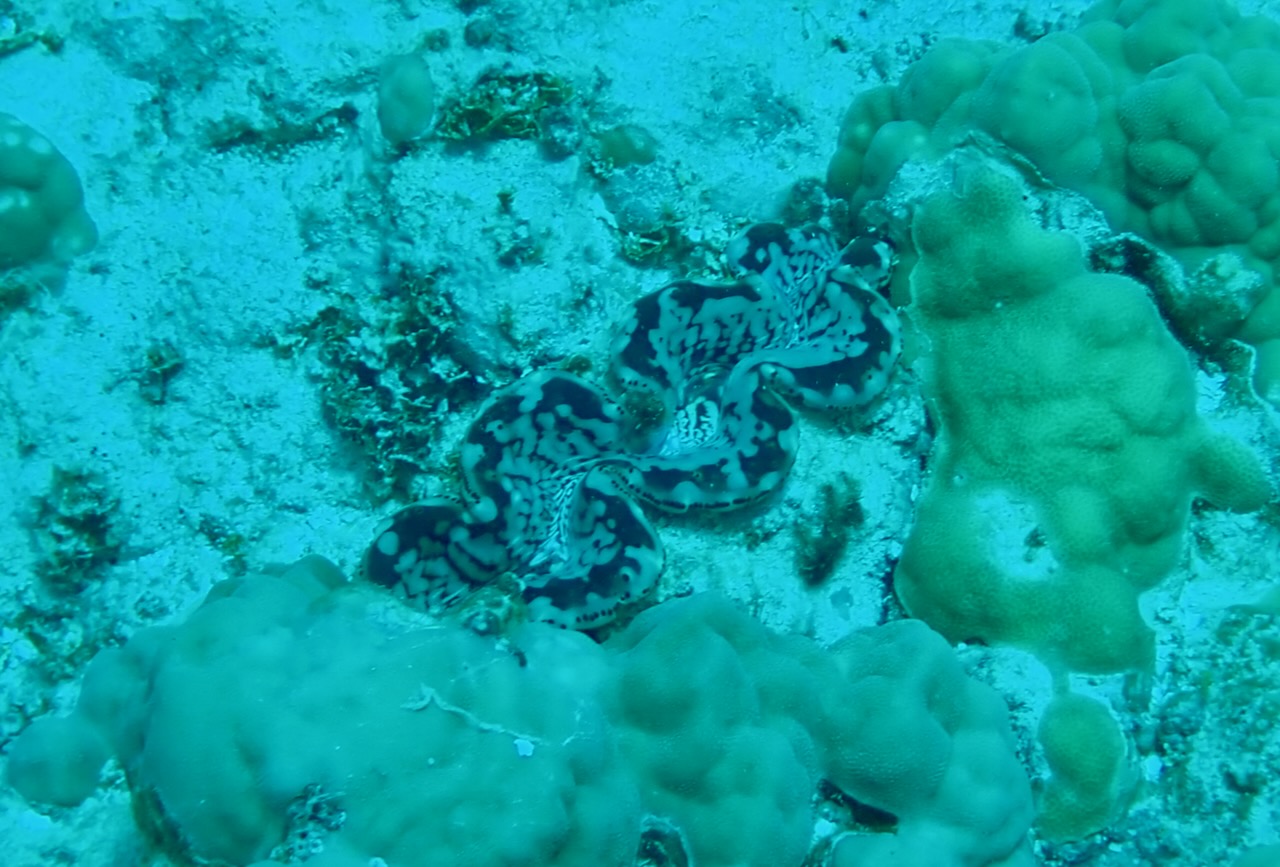
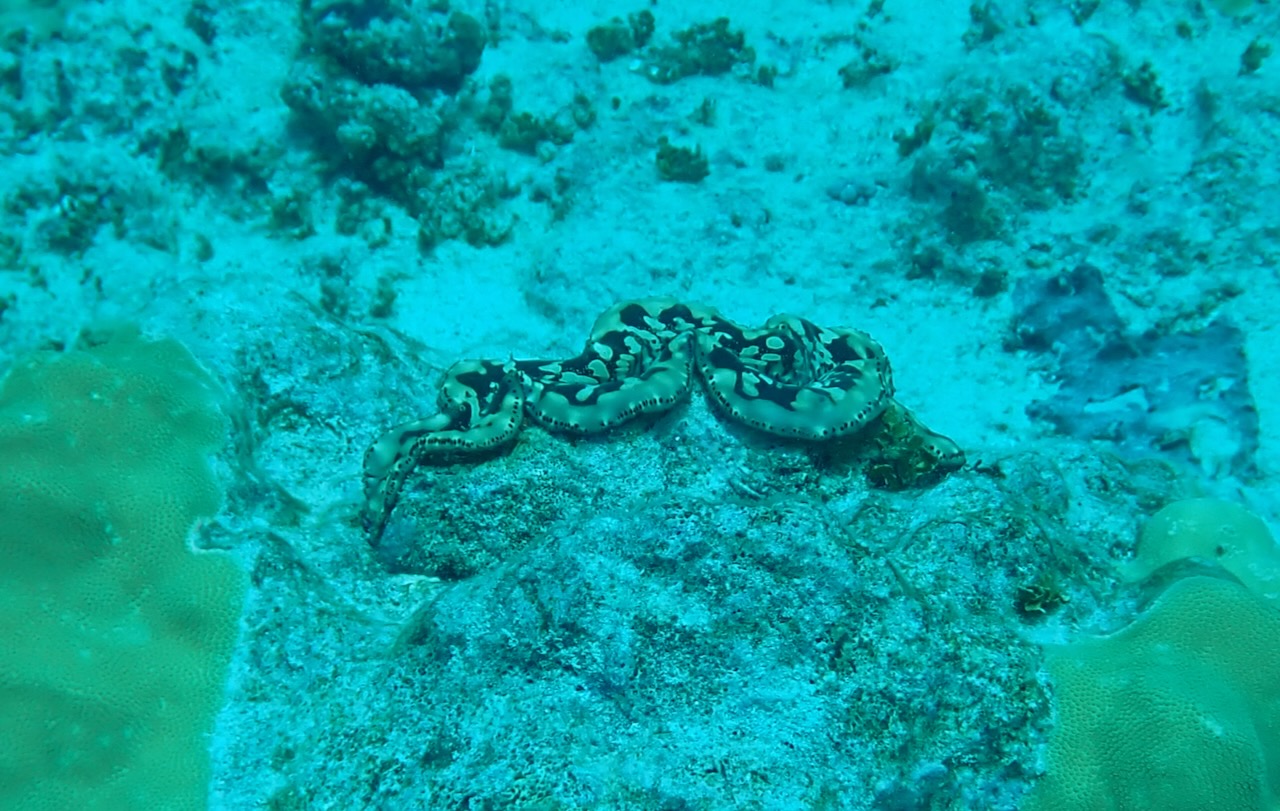
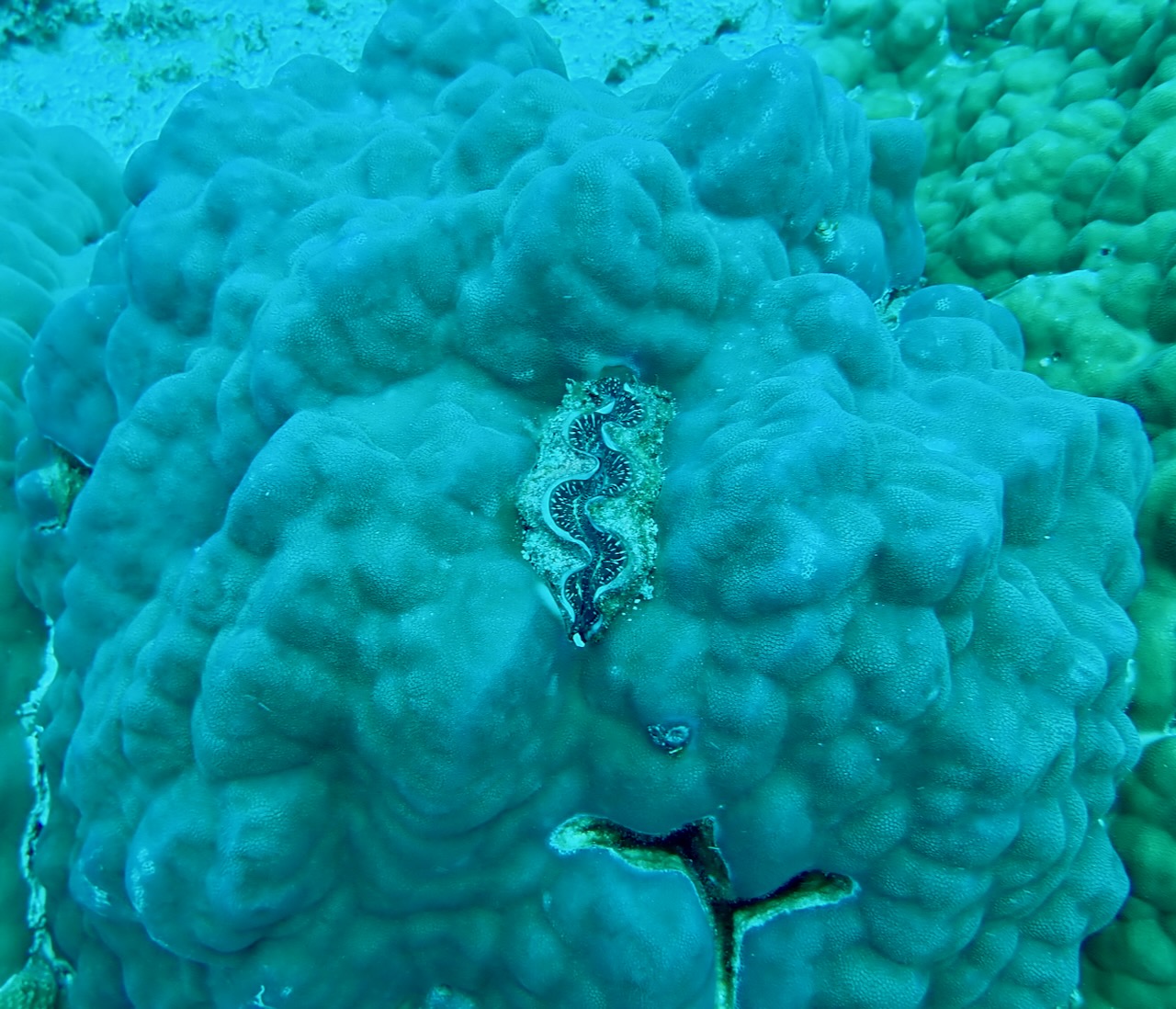
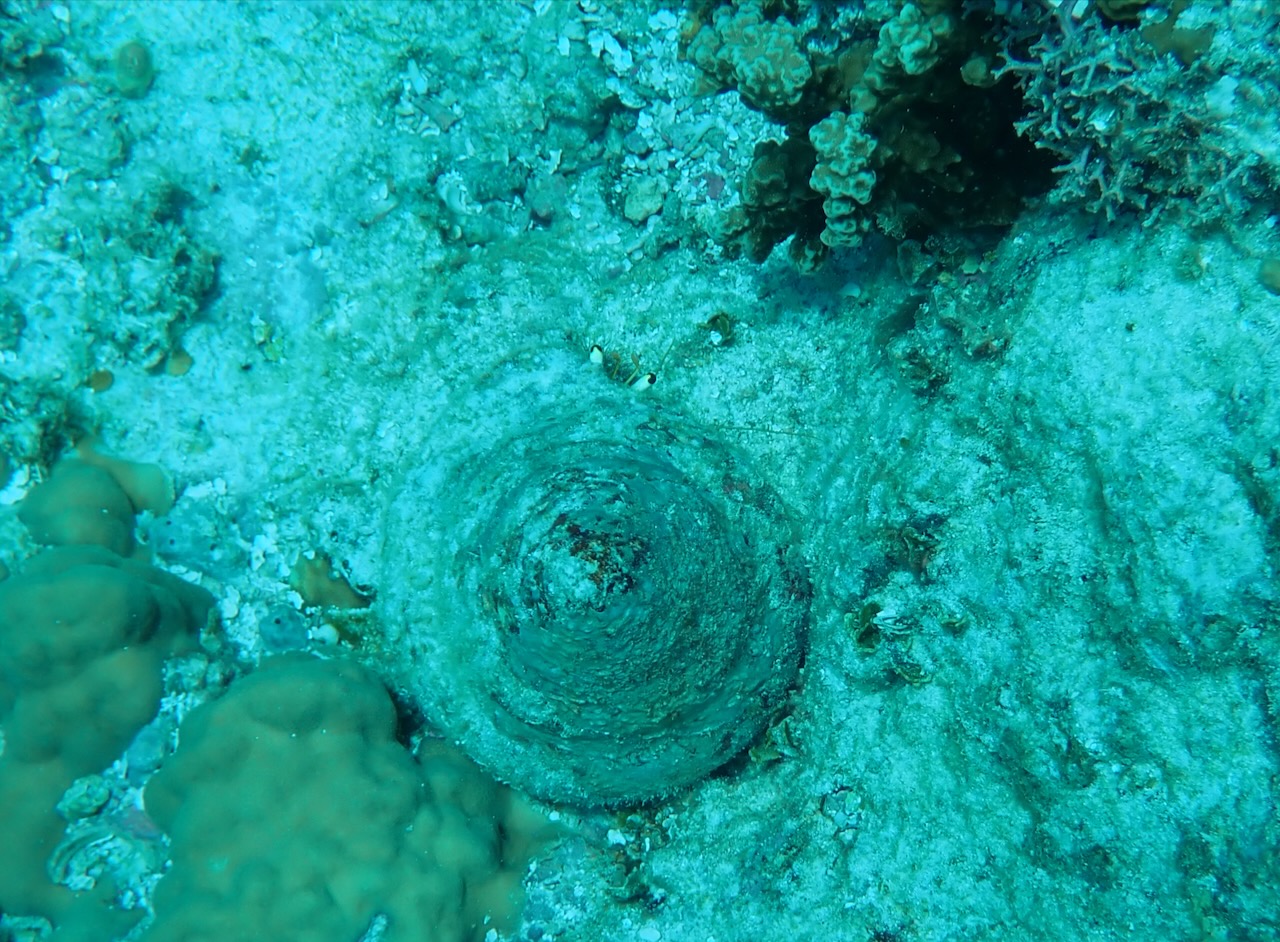
giant clam
We make an early dinner while oohing and aahing over our dive pictures. Two hours later, and I’m ready for bed. I tried reading, but the lamp wasn’t installed with that in mind (in bed or the chair), and there is no ceiling light. It seems that diving for hours had a tiring effect on me, too, as well as spending the day under the sun. Caleb finally gives in, and we’re in bed by 730 pm.
We woke up to an envelope that was shoved under the door because the hotel wanted to charge $75 for a bloody pillow case that I found on the bed we hadn’t used. I now know to ruffle the sheets for beds in our rooms to check for anything, and so that they can be cleaned. I can imagine how long that blood might’ve been there if everyone had chosen the bed by the window as we had. Caleb drops me off in downtown Hagåtña, and we agree to meet at the Agaña Spanish Bridge when he’s done with work, less than two hours later.
I visit the Plaza de España, the former palace of the Spanish governor from 1736 to 1898, which was then used by an American naval governor who added a baseball field before surrendering the island in 1941 to the Japanese. The plaza was damaged in 1944, and repairs were completed in 1980. It is still used today for social and civic functions. The Summer House had the custom of serving hot chocolate in the afternoon to guests of the Spanish governor, and that tradition was replaced with tea by the American governor’s wife.
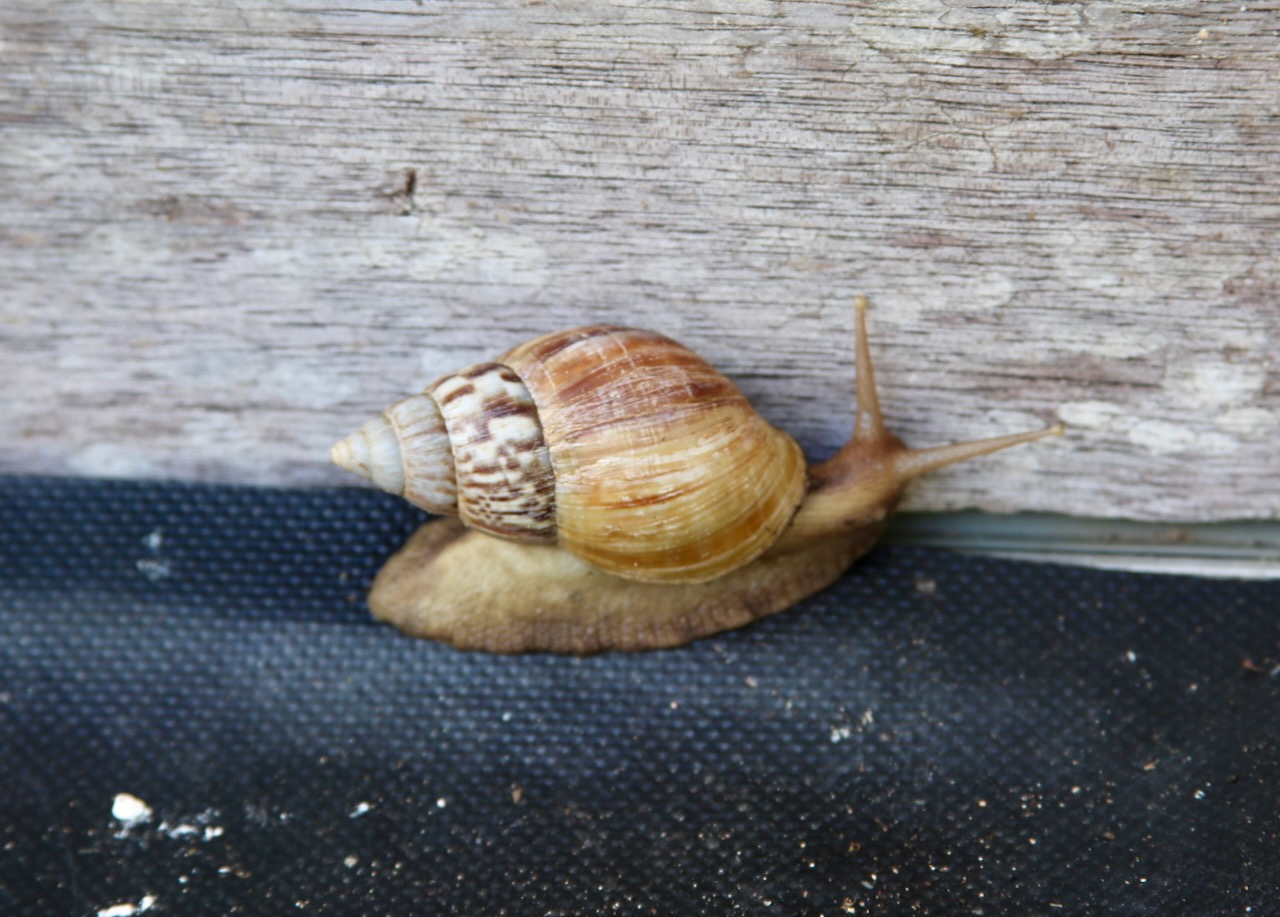
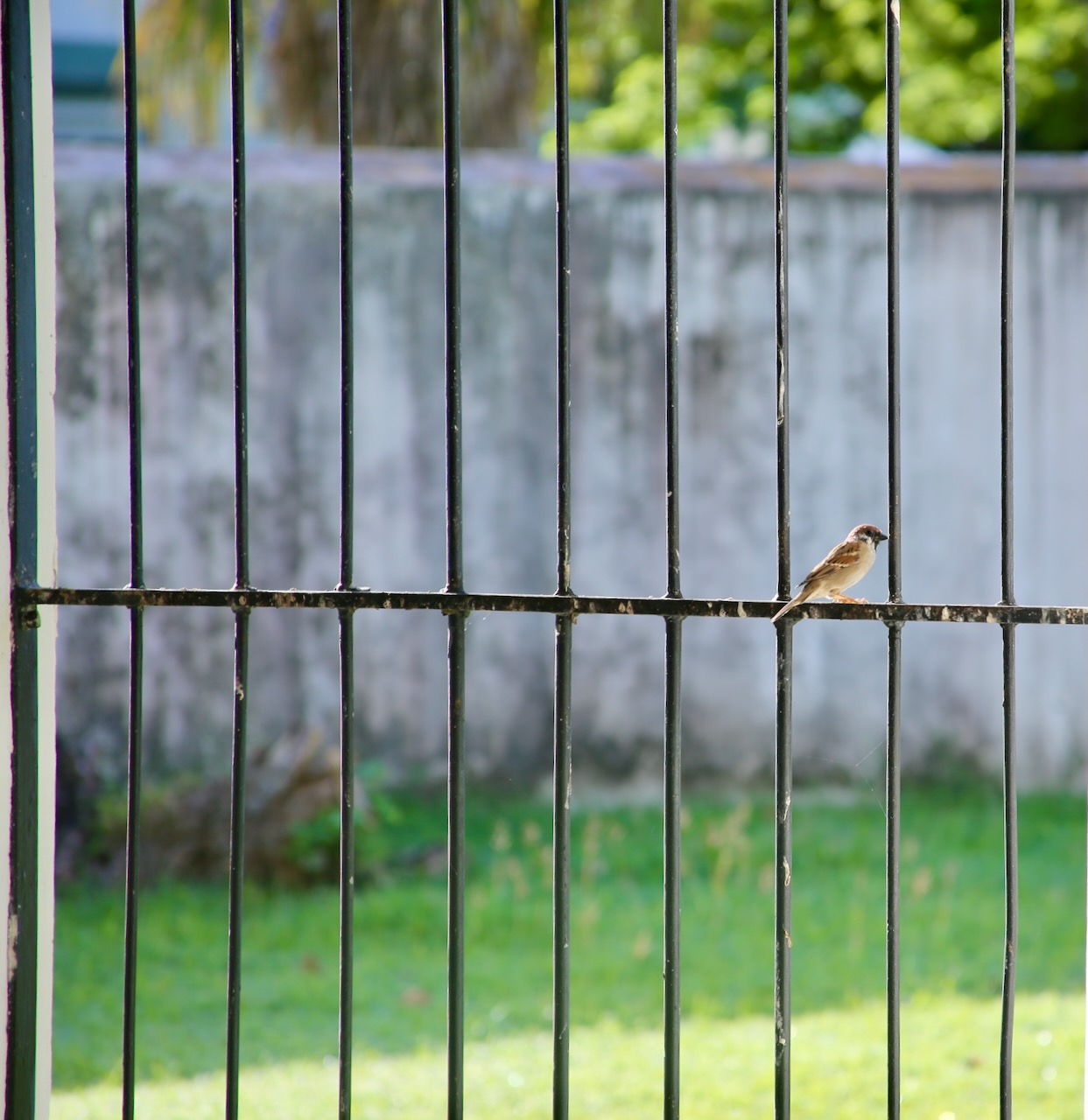
There is an Eurasian tree sparrow in the window, and in front of the Garden House door, seemingly knocking to be let in, might be an escaped Helix pomatia (sold on the island for culinary purposes) or a Giant African snail (one of the most invasive species globally). Either way, I send a photo to Caroline, like I always do. The Garden House was used to store Spanish tools and supplies, then used as an American schoolhouse, and the Guam Museum has used it since 1954 to display historical items of the plaza. My last animal encounter of the early morning is a Sicilian buttercup chicken, so called for the shape of their comb.
Sirena in the shade by the Agaña Spanish Bridge
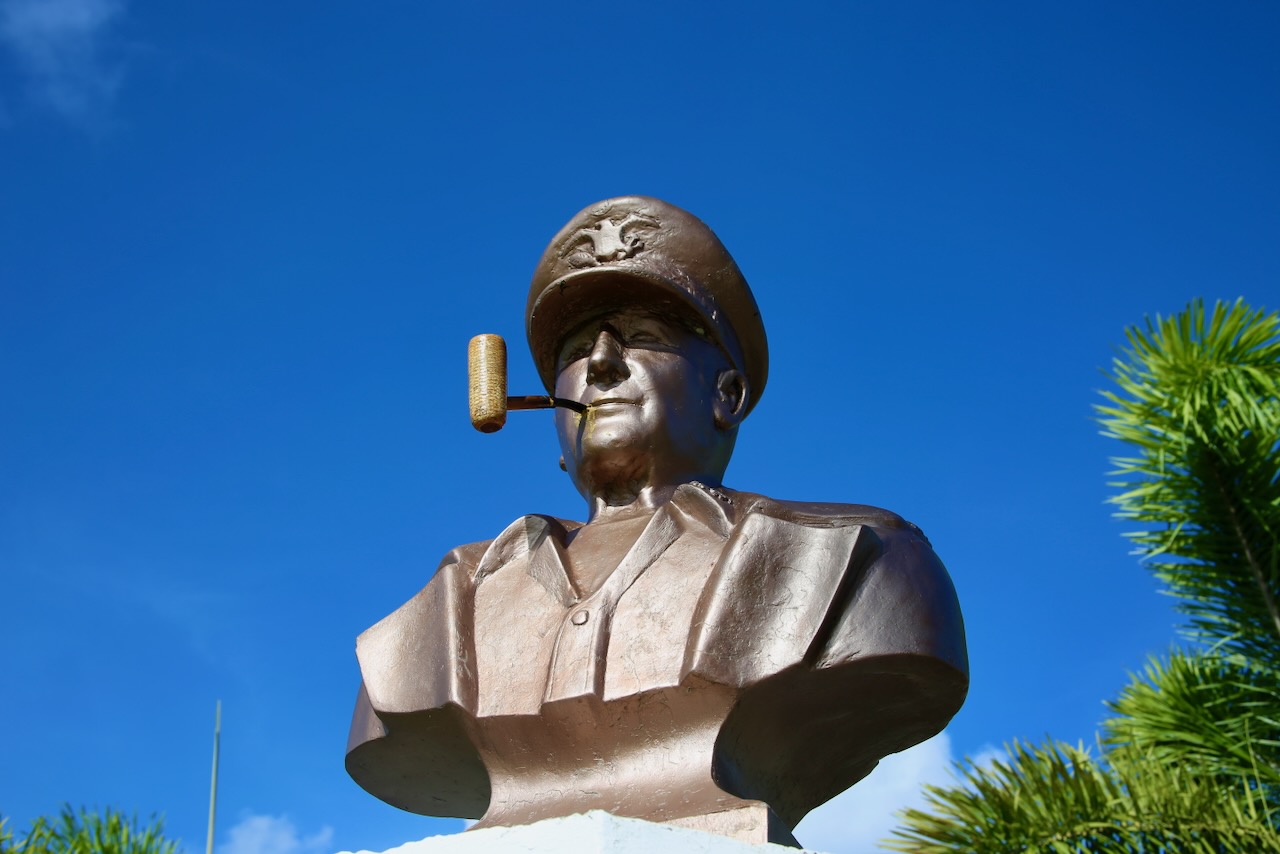
Commercial farming has made this once consistent egg layer a modern rare breed. They were brought to America in the mid-1800s and became so popular by 1912 that a club was formed. In 1918, the bird was admitted to the American Poultry Association’s Standard of Perfection. It’s a good thing that not all chickens have egos, or there might have been a historical fustercluck over this honor. Or there could be a plaque like the ones for Frank D. Perez (and portico) and General Douglas McArthur (and his bust). Or a full statue for Don Pedro Pangelinan Martinez (for having no enemies) and Sirena the mermaid (Guam’s maiden of the sea).
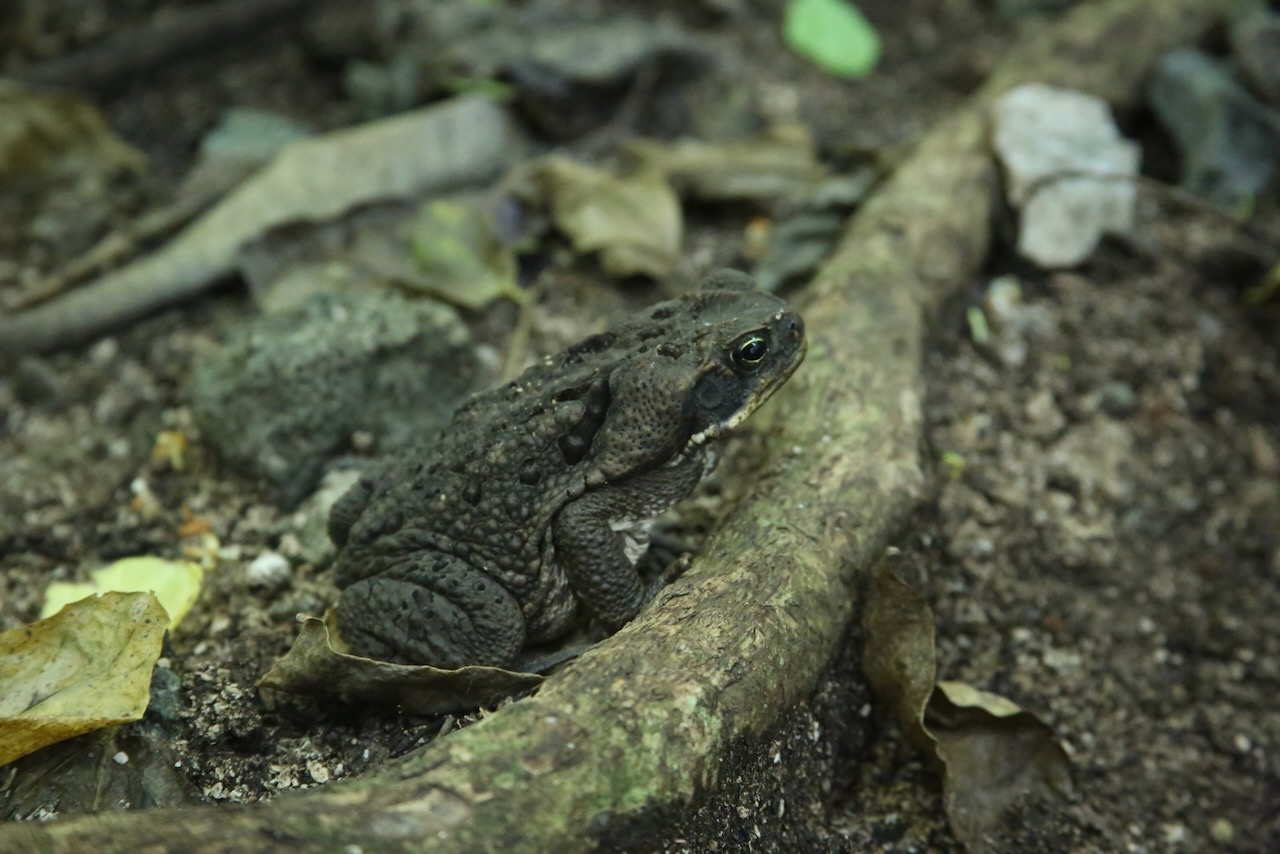
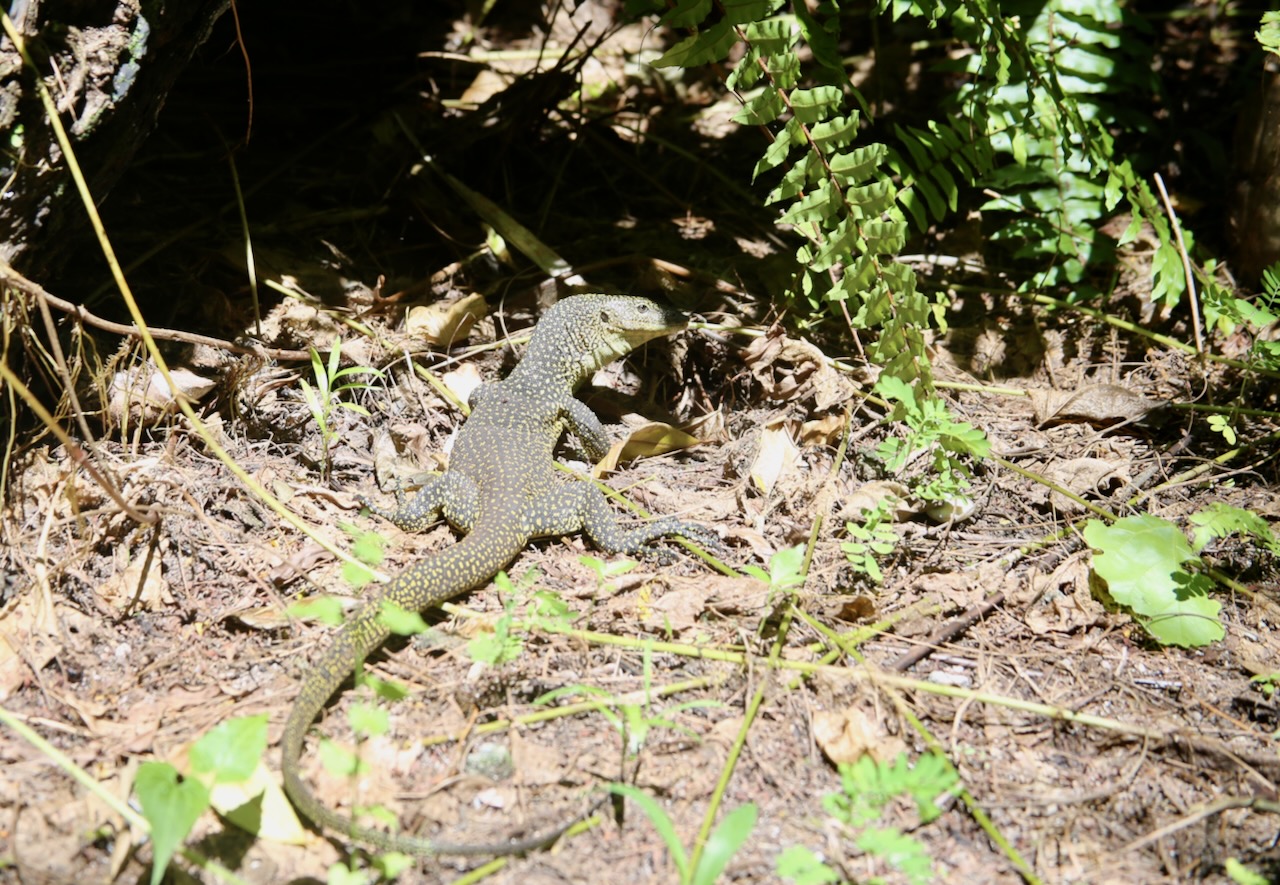
Caleb picks me up, and we drive out to the Guam National Wildlife Refuge, and stop in the empty visitor center to see the highlight reels of a world timeline to include the Sphinx, the Mayan, the Aztecs, and the Jesuits’ first mission. While imagining myself in the large scenes of the beach, forest, and marine habitats available in the park, we spoke with an intern who wants to become a ranger. We’ll walk the western half of the trails, including Latte Loop, and see Blue Moon butterflies, Mariana Monitor lizards, a Cane toad, and a bloated pig covered in flies. The mosquitoes follow us back along the beach.
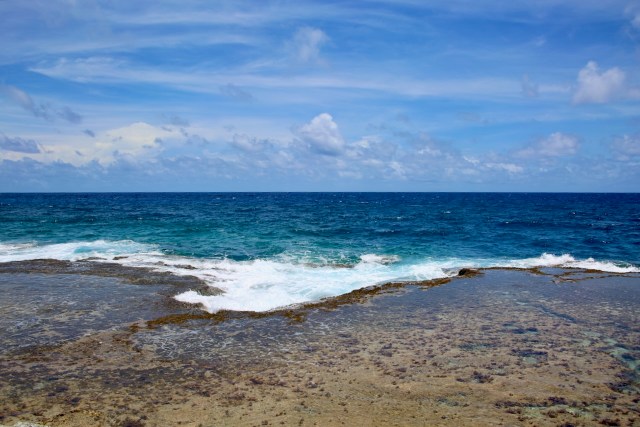
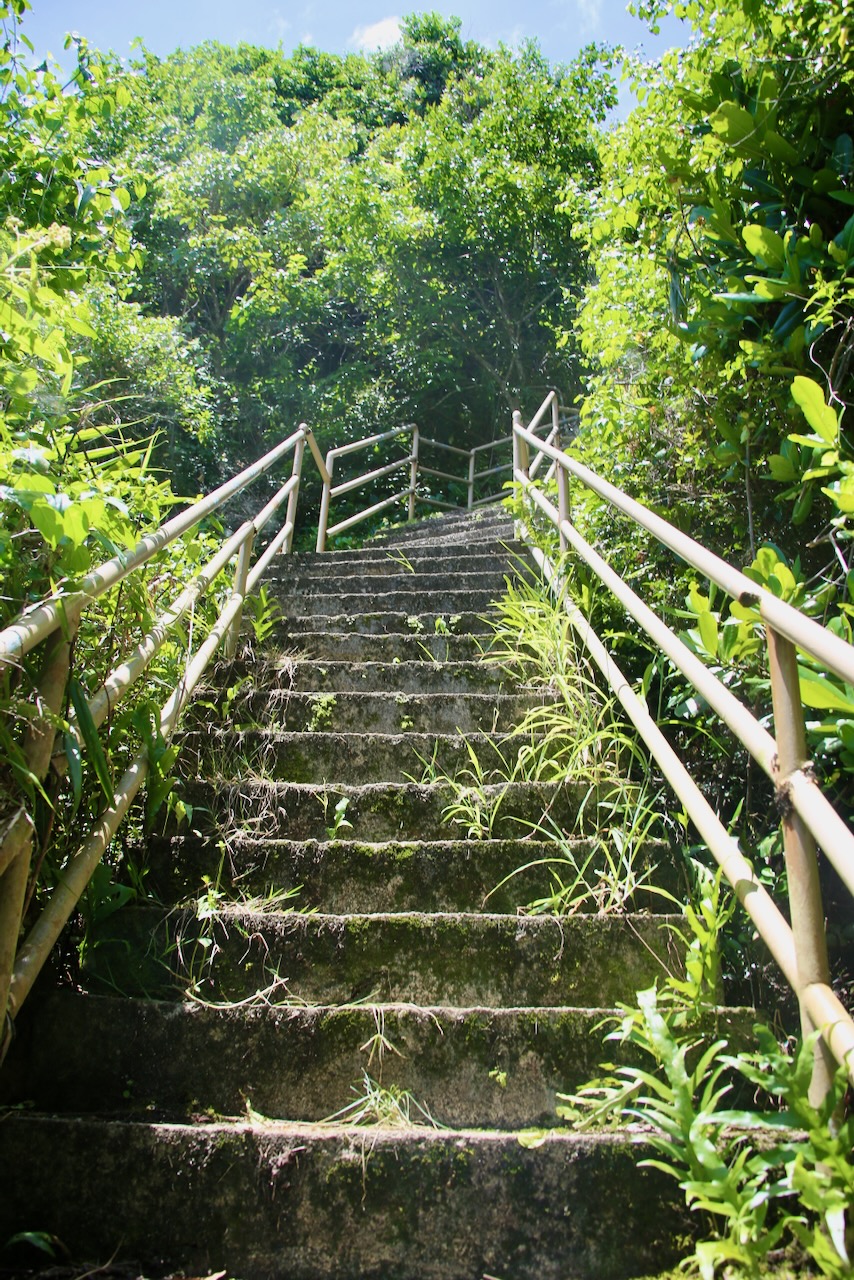
We make our way to the east side of the island, and I notice a sign for Fadi’an Point/One Thousand Steps. There are only about a quarter of that, but the elevation on the return makes it feel more strenuous, especially in flip-flops. There is a clear path and railing for the most part. The ocean becomes visible over the trees, then the plants and rocks, before the tidepool is revealed with the shades of blue beyond. We’re both soaked in sweat after the climb out.
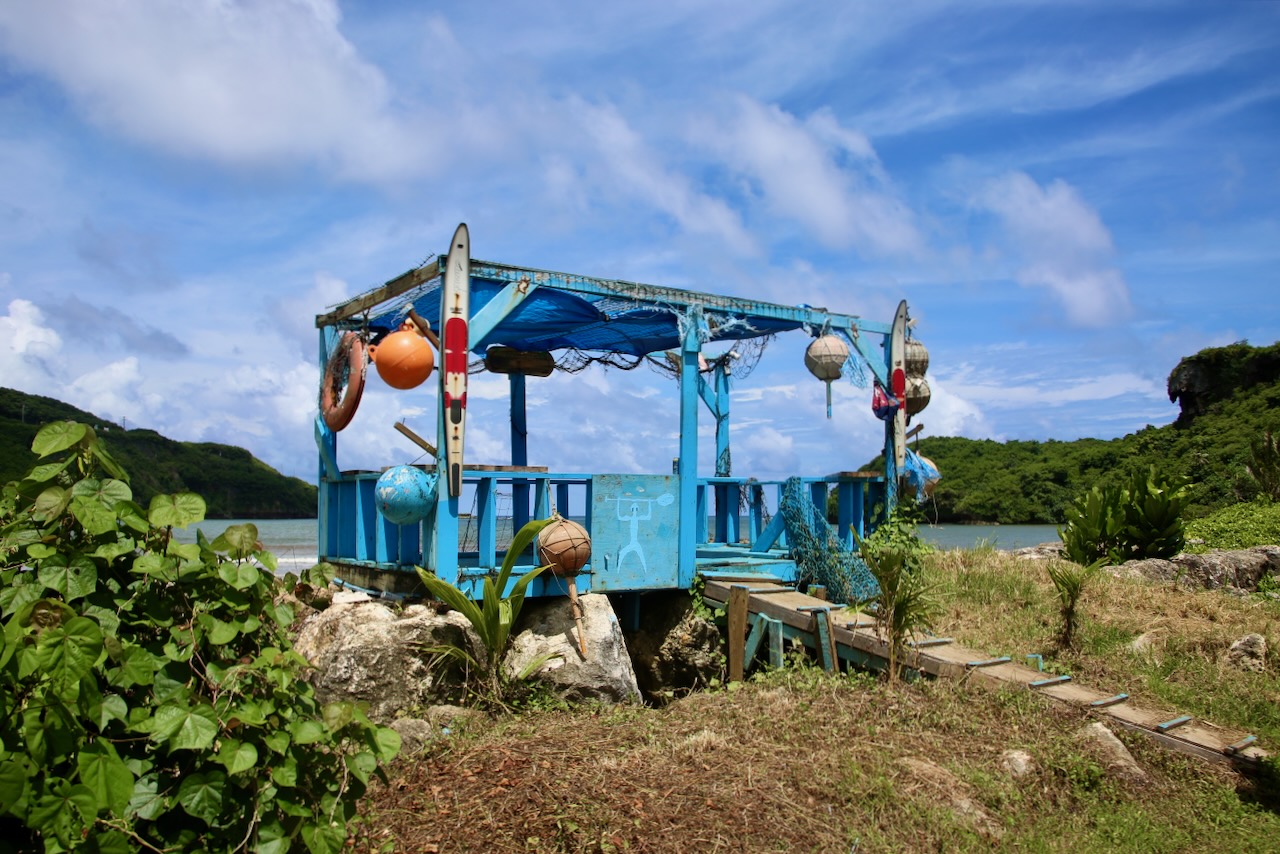
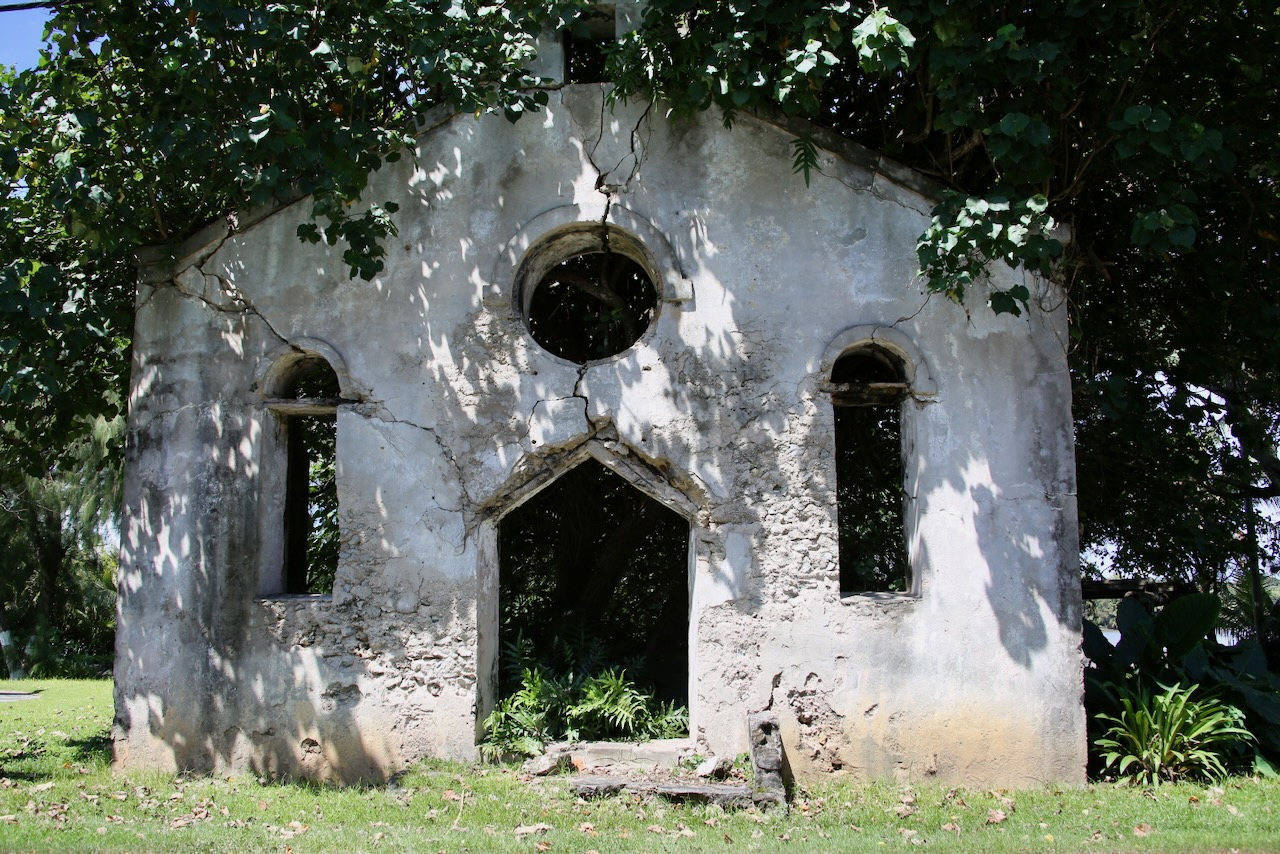
We visit Surf Side Beach when the bright blue lifeguard station grabs our attention, and we have the shiny dark sand and low rolling waves to ourselves. As we continue south, we see the front wall of the Inalåhan Baptist Church, the only part of the structure remaining from the 1920s, which was erected in a predominantly Catholic area. The Merizo Pier is empty on a workday, and a reenergizing late afternoon meal is had from Infusion Coffee and Tea — egg sandwich, 24k cupcake, and mochas (mine with activated charcoal).
I get pulled over for going 55mph in a 35 marked zone, which is the majority speed for the island. I tell the officer I passed a car, but that’s not an excuse. Caleb says his demeanor changed, and I got off with a warning. An officer steps into the busy street and waves people over, and a line of officers is available to issue tickets. The officer admitted we were keeping up with traffic and let us know they do this from time to time. I agree with their method and told him he won’t see me again, as that would be a pricy addition to our trip that we don’t need.
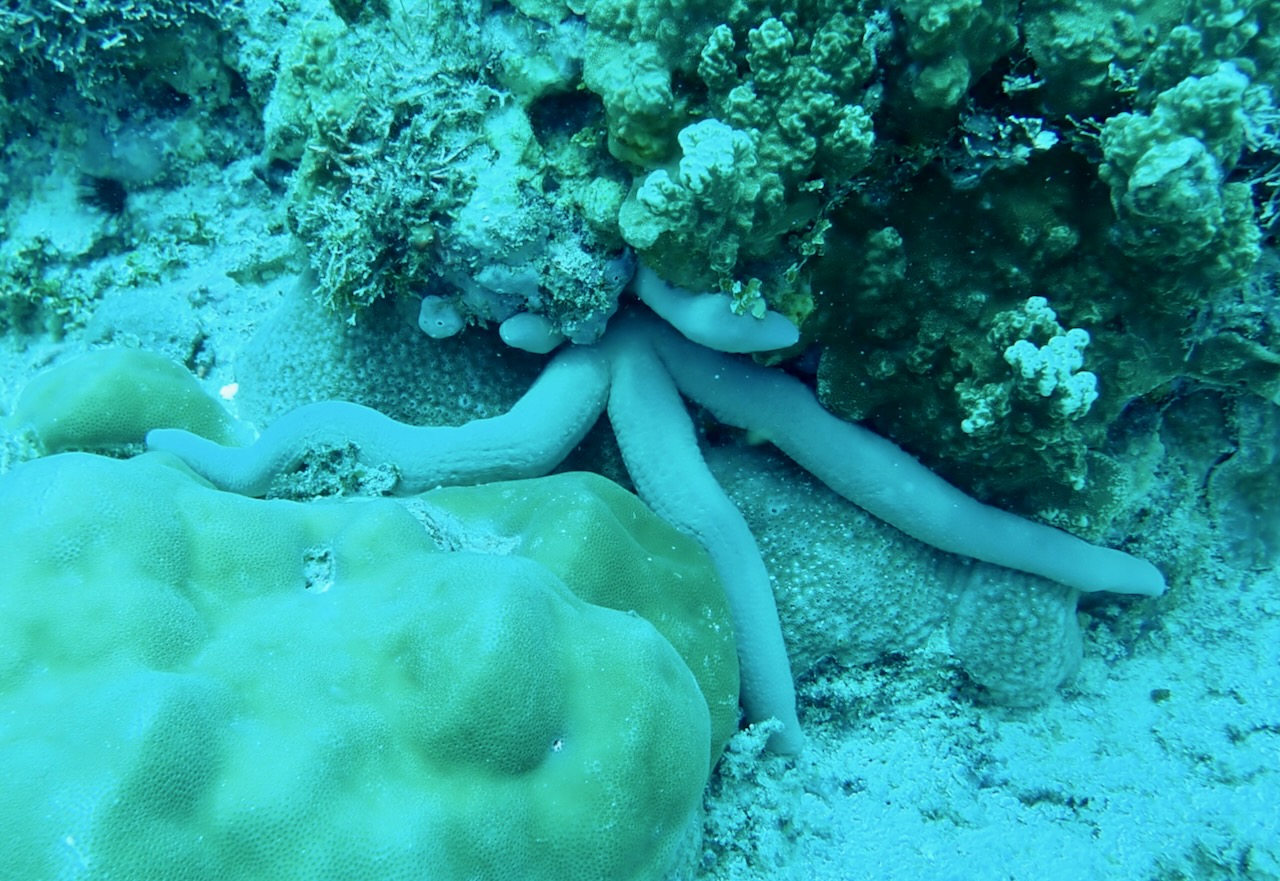
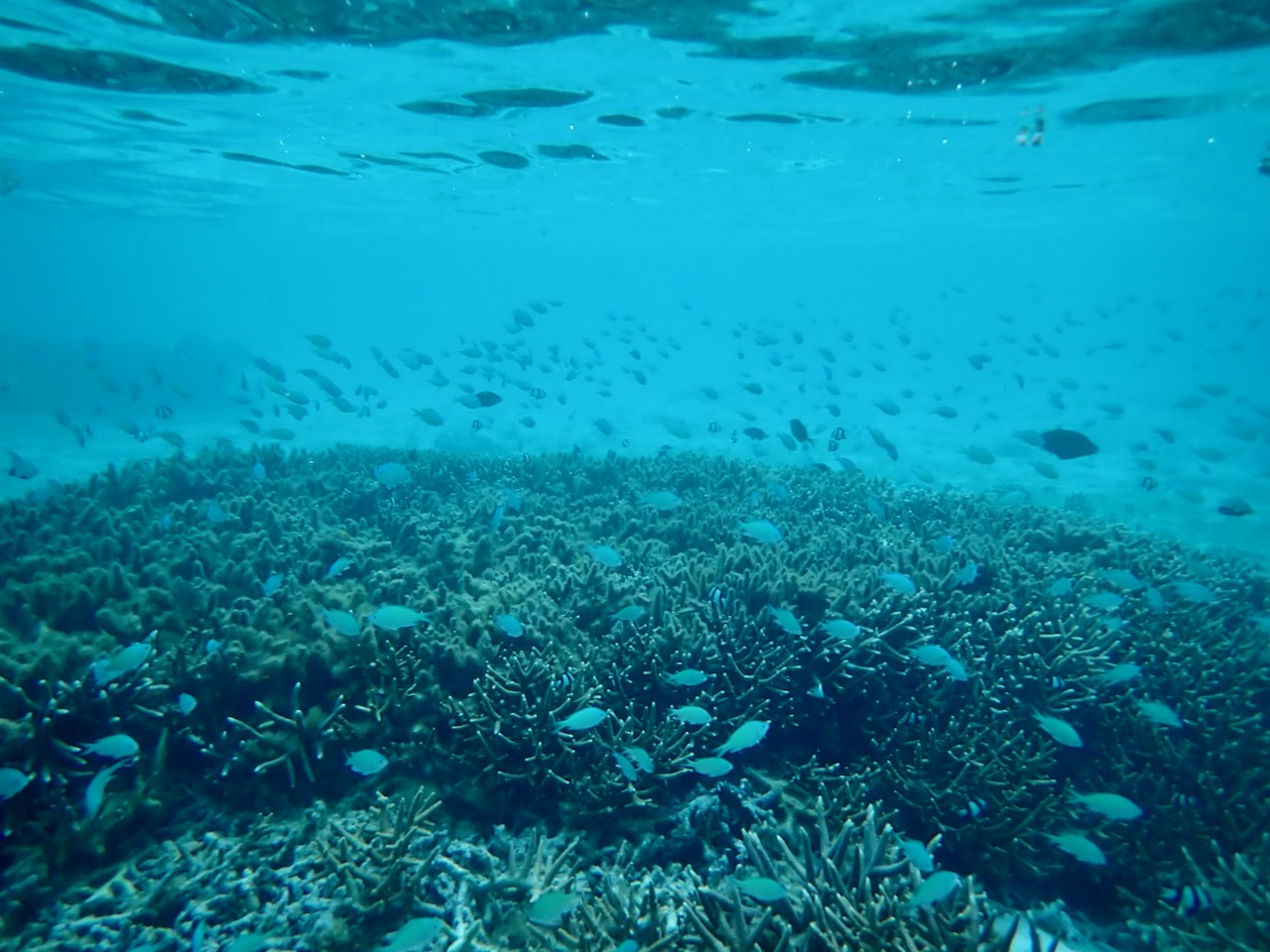
We get back to the hotel, pick up Boraski (one of Caleb’s ‘kids’), and make it to base to get rental dive gear put in the trunk for tomorrow. I met some of his other underlings playing dominoes, and then we went upstairs to get changed to go snorkeling until the sun touched the horizon. We see a Picasso triggerfish, a plastic spoon with googly eyes, a bunch of humbug damselfish, a blue sea star, a leopard sea cucumber, and many other faces and fins among the coral. I’m constantly defogging my mask. Our after-dark entertainment will come at the Wednesday Night Market in Hagåtña.
It’s different, and though I’m not sure if I’d look forward to going every week, I know I like an excuse to get out of the house (or hotel) and enjoy the journey too. It’s mostly BBQ food stalls, but we got to see a boy on a carabao, a kiddie race track, a rock climbing wall, jewelry, people dancing to country music, and an Indian dance group that took volunteers on stage while we ordered dry chicken, good rice, a wet salad, and sweet cheesecake from Jamaican Grill. While we sat on the wall waiting, the guy next to me tried to get me to join him up there. We take our food and move to a bench to eat.
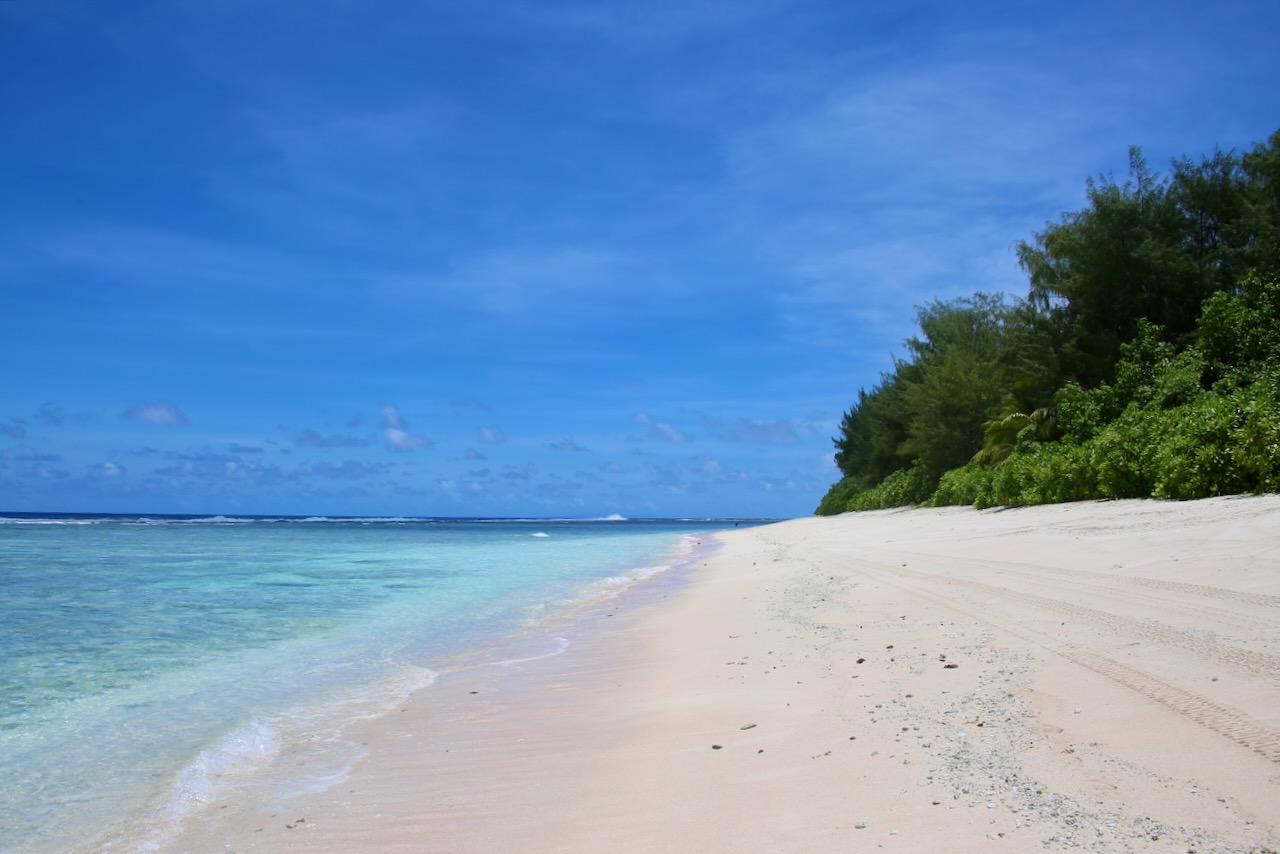
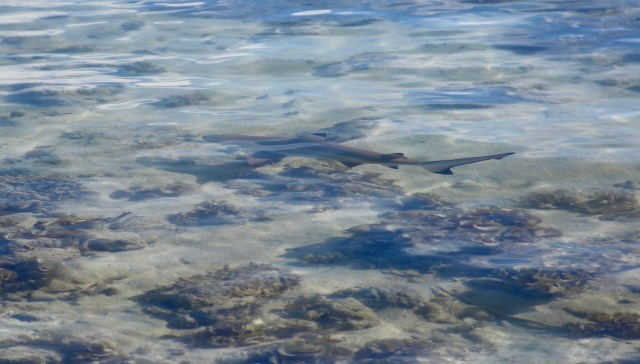
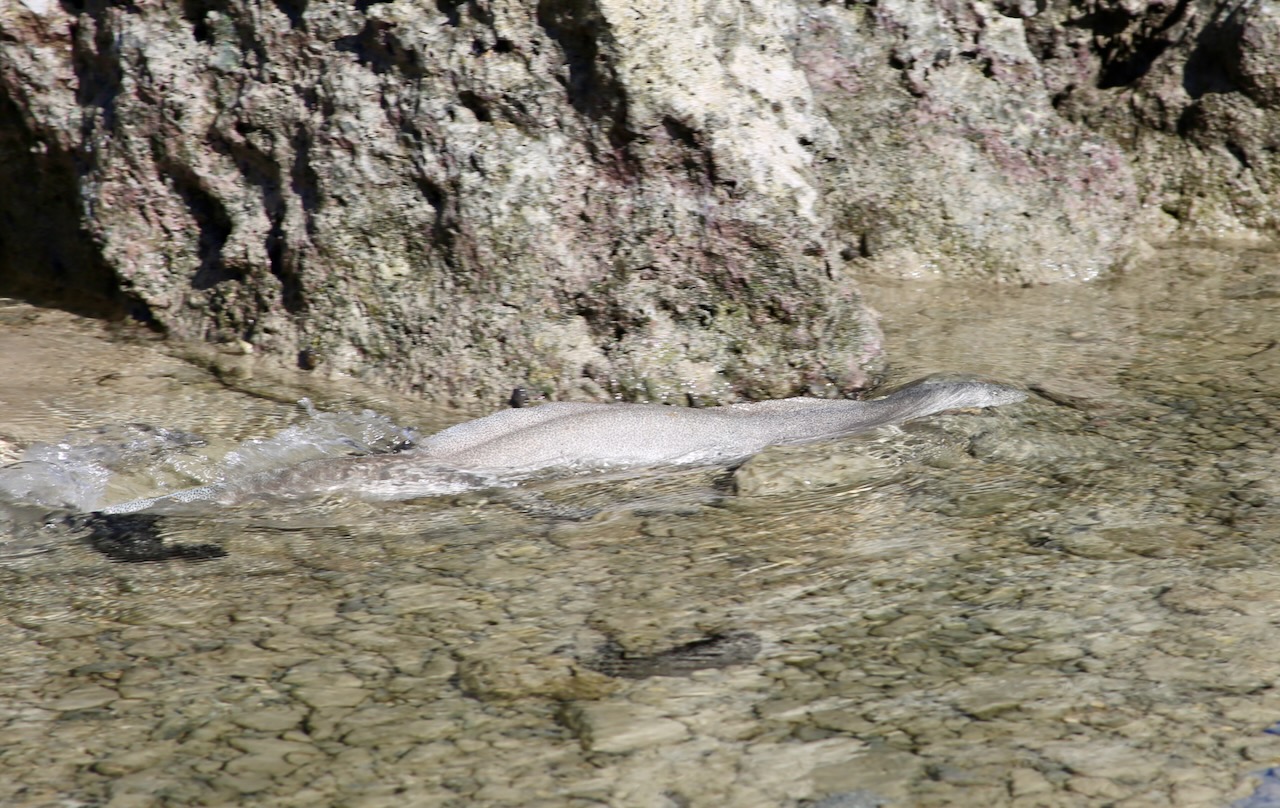
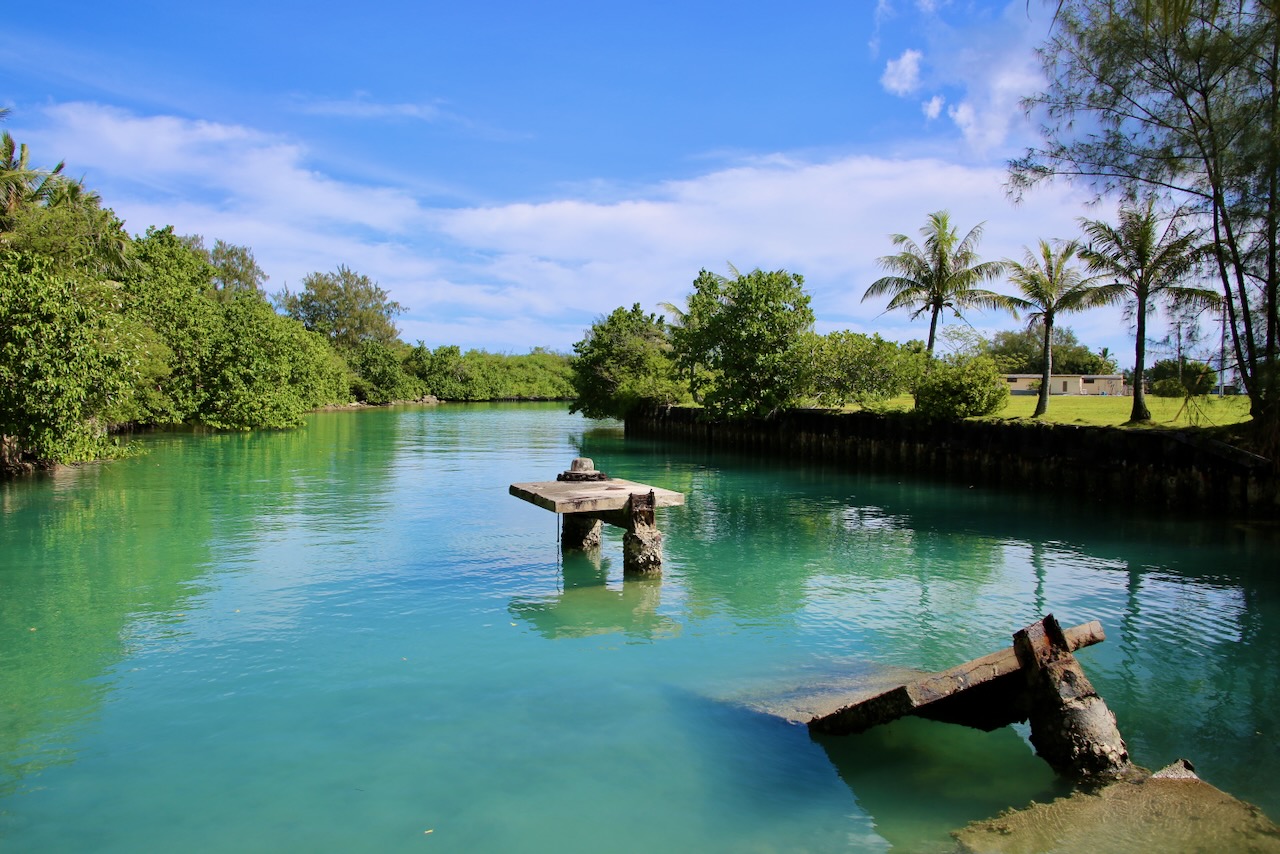
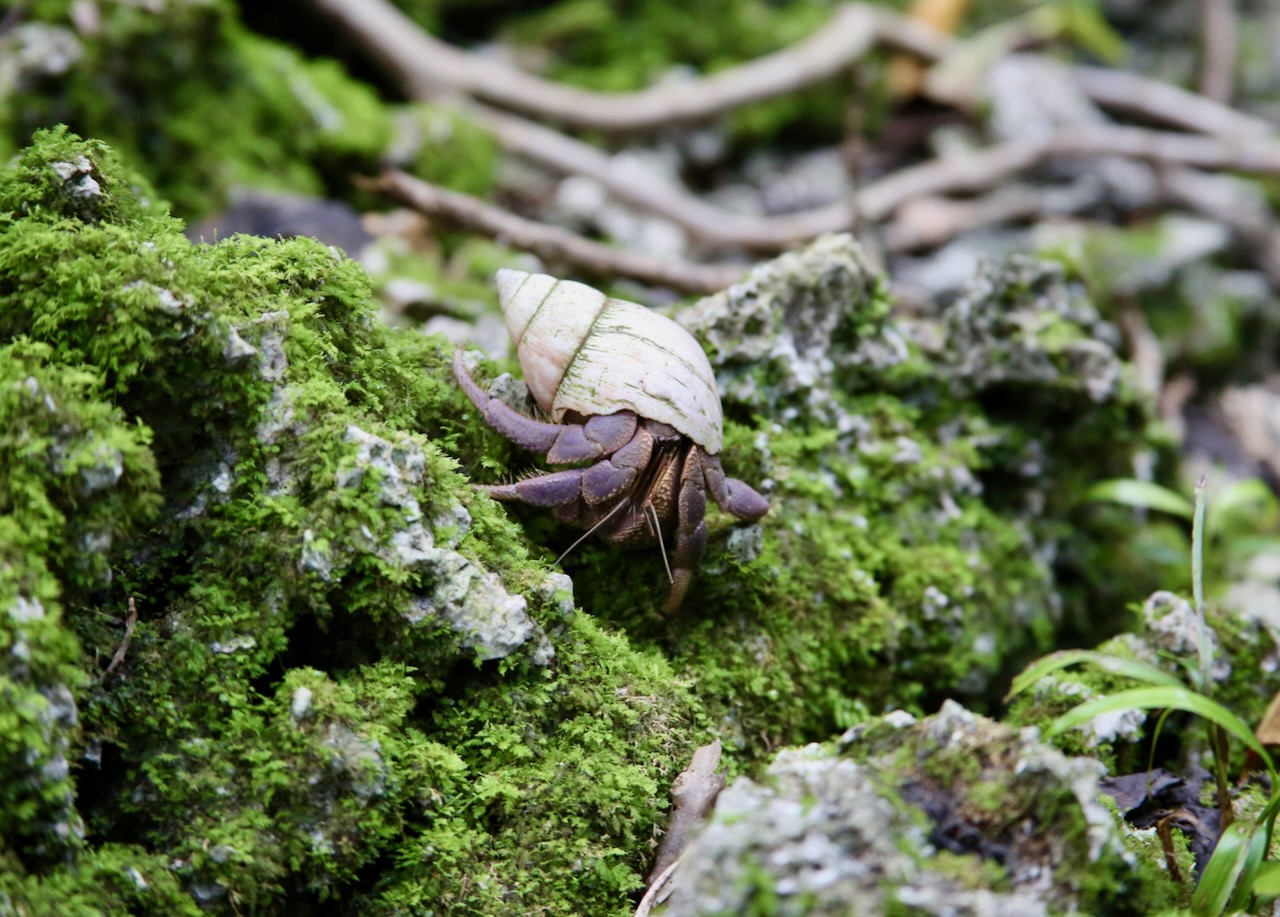
We stopped at Manny’s Bakeshop for some breakfast on the go. I start today’s sightseeing at Gab Gab Beach, which I have to myself. With my feet in the sand, I watch a baby blacktip reef shark, a spotted hermit crab, and a white ribbon eel explore the sandy depths and jagged rocks. There are also a few flathead grey mullet, a fish with a bad haircut name. I am also amazed at the layers of limestone, the colors of cumulus, and the reflection of rays. I understand why some cultures never stepped out of nature and into a board meeting; just because we can doesn’t mean we should.
Gab Gab Beach
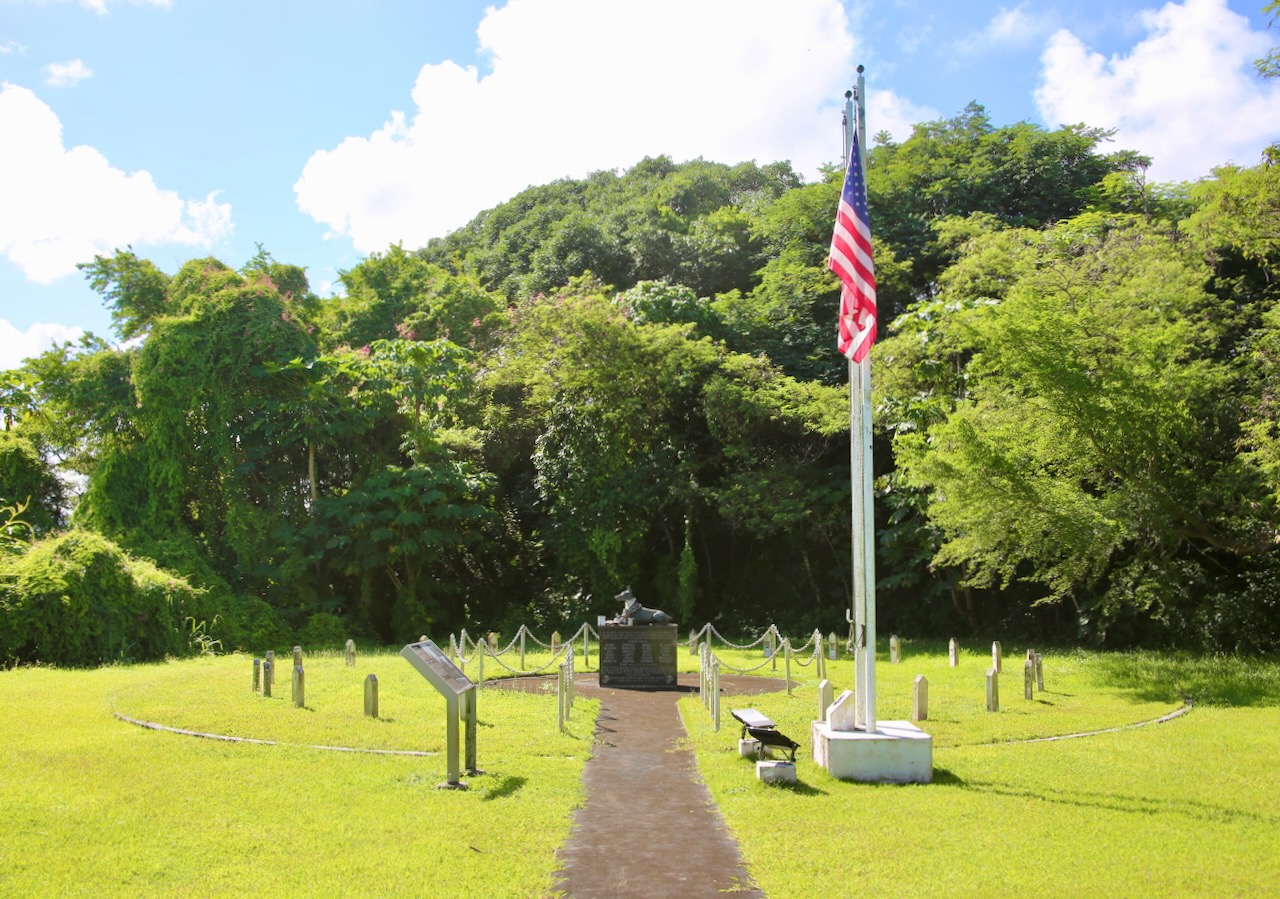
After soaking up some salt and sunshine, I was lucky enough to see a young Atlantic ghost crab, probably not due to its sandy camouflage, but its speed (over 2mph when running). Twenty-five dogs, mostly Doberman pinchers and German shepherds, helped the Marines sniff out mine fields, carry medical supplies, and warn of an approaching enemy. These duties cost these “Devil Dogs” their lives, but saved hundreds of Marines, so they are laid to rest with affection and respect in the War Dog Cemetery.
There is a simple, bright yellow sign with Historical Trail written in blue located on the roadside. The chainlink fence and concrete path are overgrown, so I park by the open gate and make my way into this secret garden. Somewhere on the Orote Peninsula is an old runway, parts of which are still used for military training, while I must have found an old parking lot. I see another sign, this one a bit weathered, telling me about a fuselage located 320 meters down the historic trail of sharp limestone, with the rest of the warning missing a few letters.
War Dog Cemetery
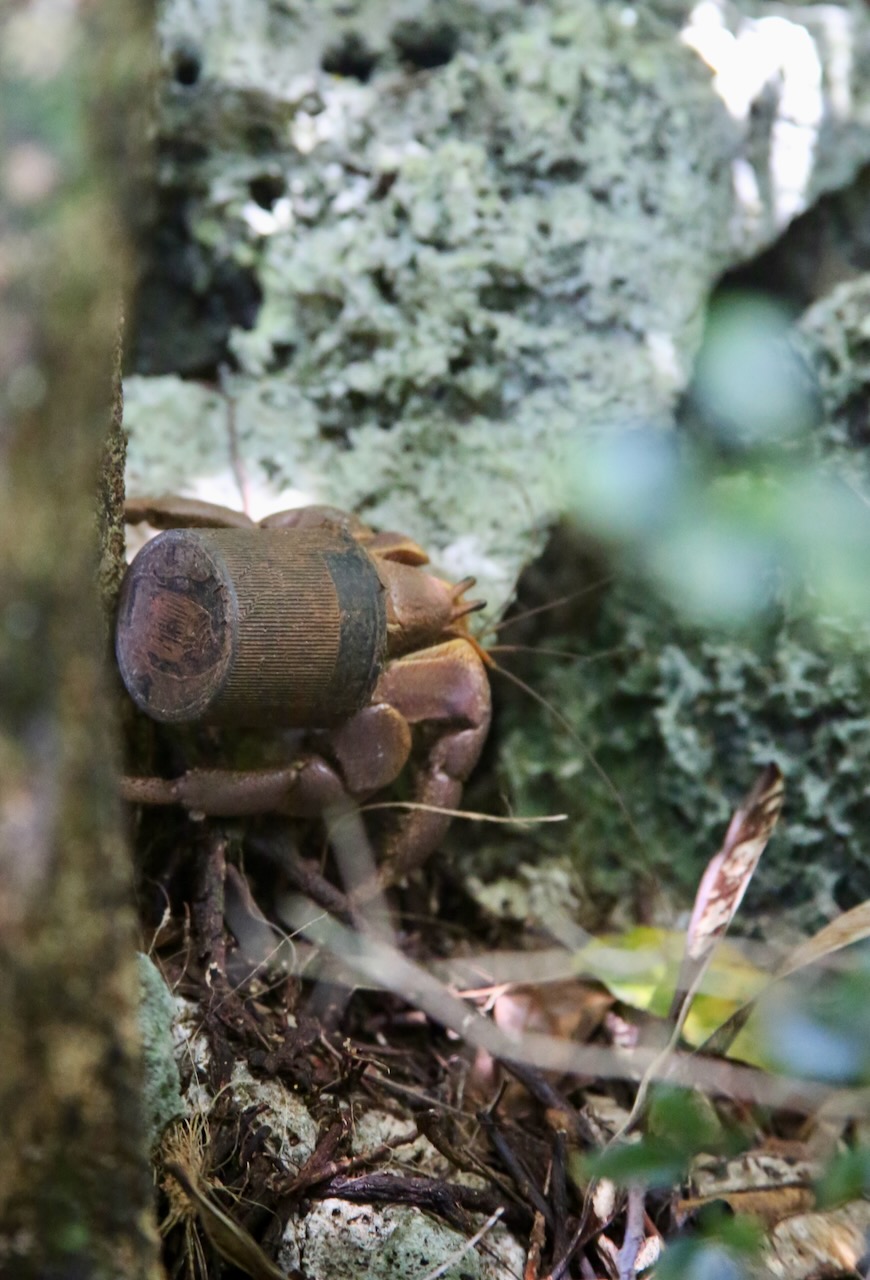
Always excited at a chance to explore, I set off into the jungle, the ground covered in the rough rock mentioned, in my flip flops. I am soon distracted by an Indonesian hermit crab and a female eggfly butterfly. This hike is going wonderfully, until twenty meters in, I’m ambushed by a swarm of mosquitoes that don’t stop stinging me until I reach the clearing. Perhaps I should’ve run the other way, but I had no idea what other diversions and traps awaited. I make my way back to the car, sad that I wasn’t more prepared to deal with the bothersome, so I could indulge in the beautiful.
I get to the security gate as a guy is dropping off Caleb, so we can get Thai food (likely from Lemon Grass Restaurant) for an early lunch, and then I return him to work at noon. I drive to the T. Stell Newman (the first superintendent for the park) Visitor Center. Outside is a two-man submarine that ran aground more than a week after the battle ended. The Japanese built more than 2,000 of these over ten years, and these subs are credited with sinking only one ship during WWII. At the end of the war, most other military equipment was to become artificial reefs.
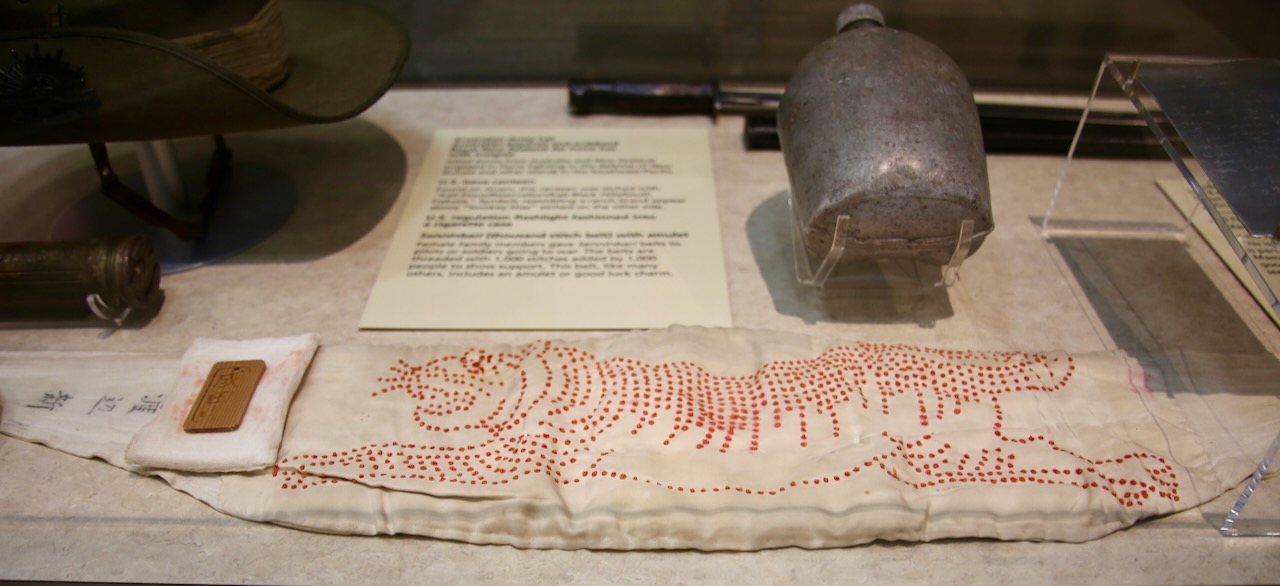
Senninbari (thousand stitch belt) with an amulet
America brought in the Navajos to develop a code based on their language that baffled the Japanese, and that would be used for decades after the war. America used second-generation Japanese-Americans (Nisei) to translate Japanese. It takes a lot of violence and usually behind-the-scenes peaceful operations to win a war or come to an agreement faster. I hope that in a thousand years, this island can find more focus on a thriving turtle population than on the history of humans trying to destroy each other. I leave the museum with two stamps in a cute envelope and make my way around the southern end of the island, this time past Umatac Bridge.
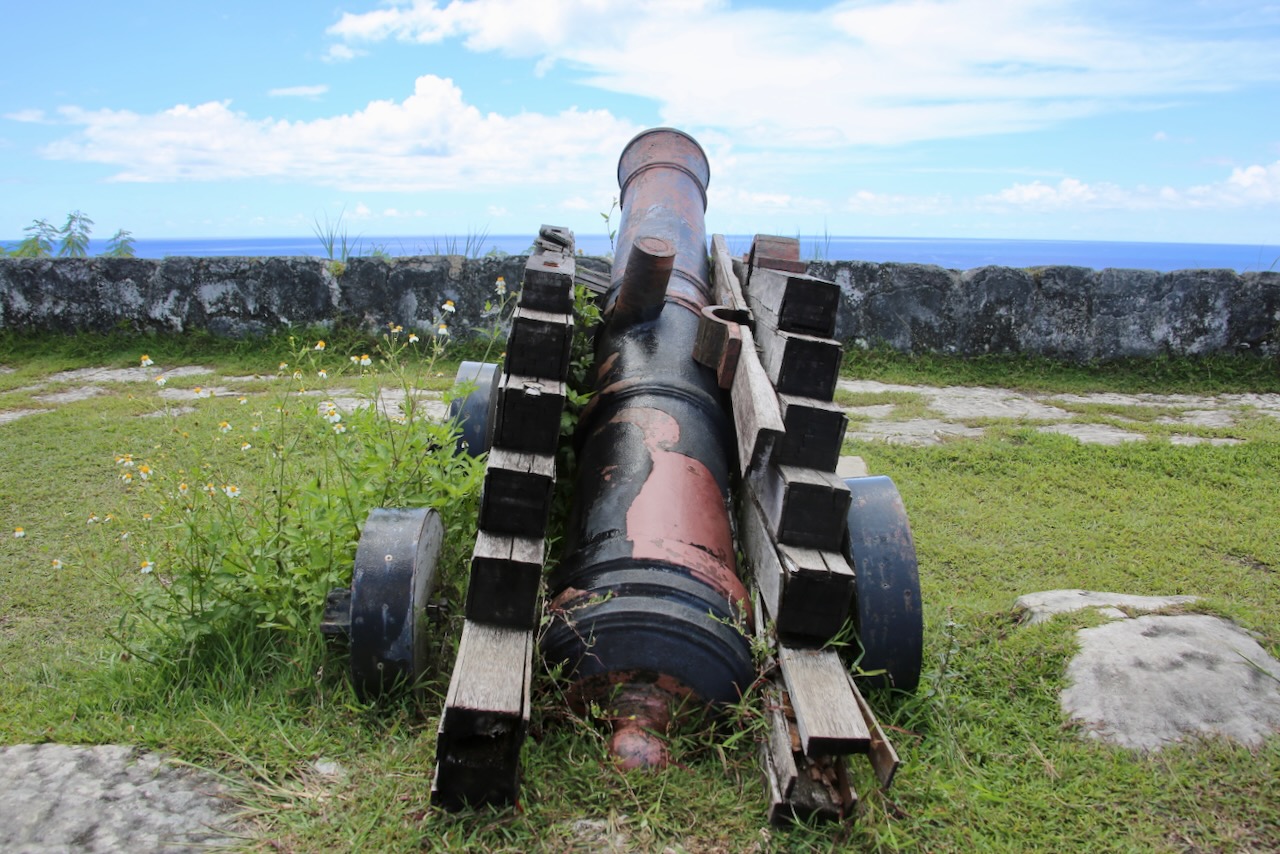
Fort Nuestra de la Soledad, 1810, the last of four fortifications built by the Spanish to protect their replenishment spot between Mexico and the Philippines from pirates, was left to weather and treasure hunters by 1815. After WWII, the remaining crumbles and cannons were turned into a park, which is what I get to see today, with vast views of the sea below. A few minutes away is the Merizo Pier Park, where a few signs talk about the boats (sakman and galaide’ proa), hooks (bones of fish and human), nets (lagua’ pula, and the central tenet of Chamorro culture (inafa’ maolek – to make good: repair relationships, maintain peace, and ensure the community thrives together).
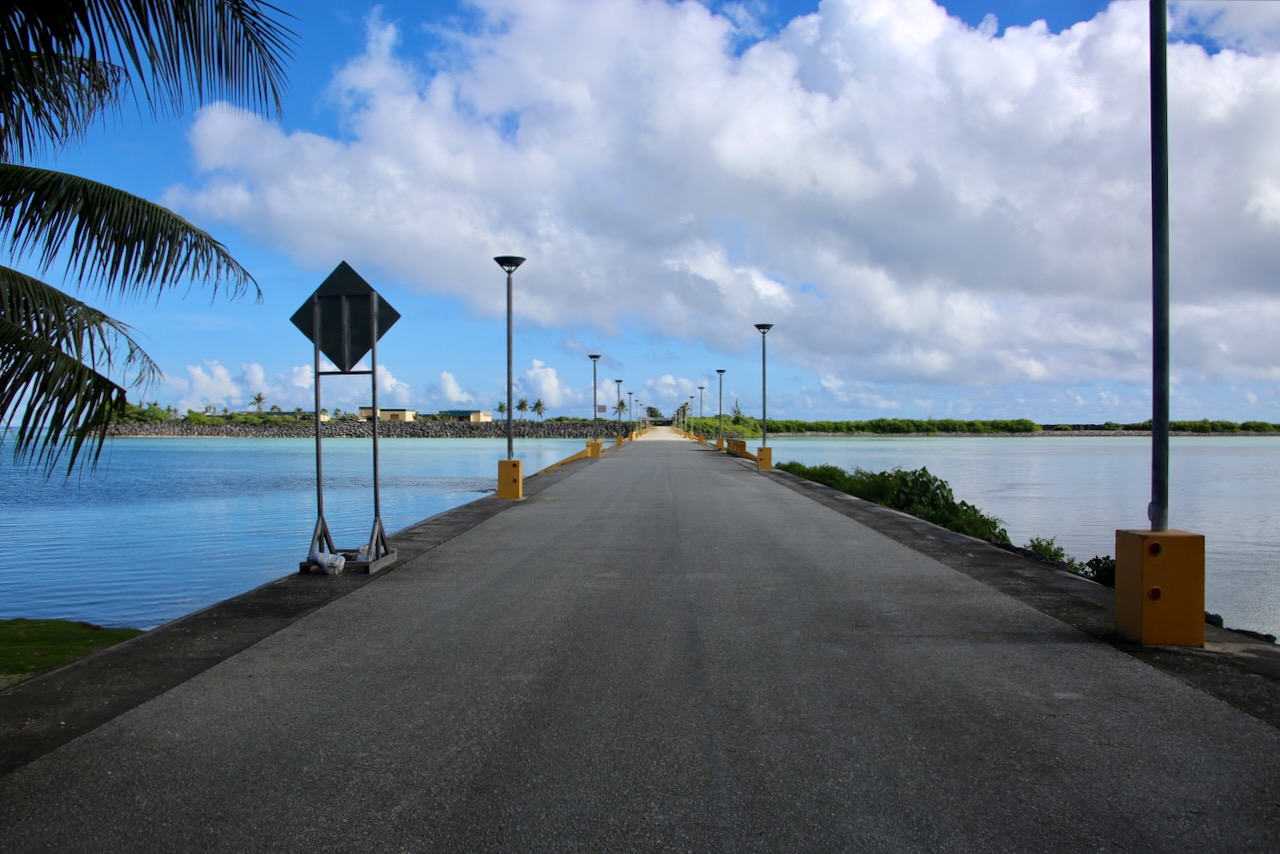
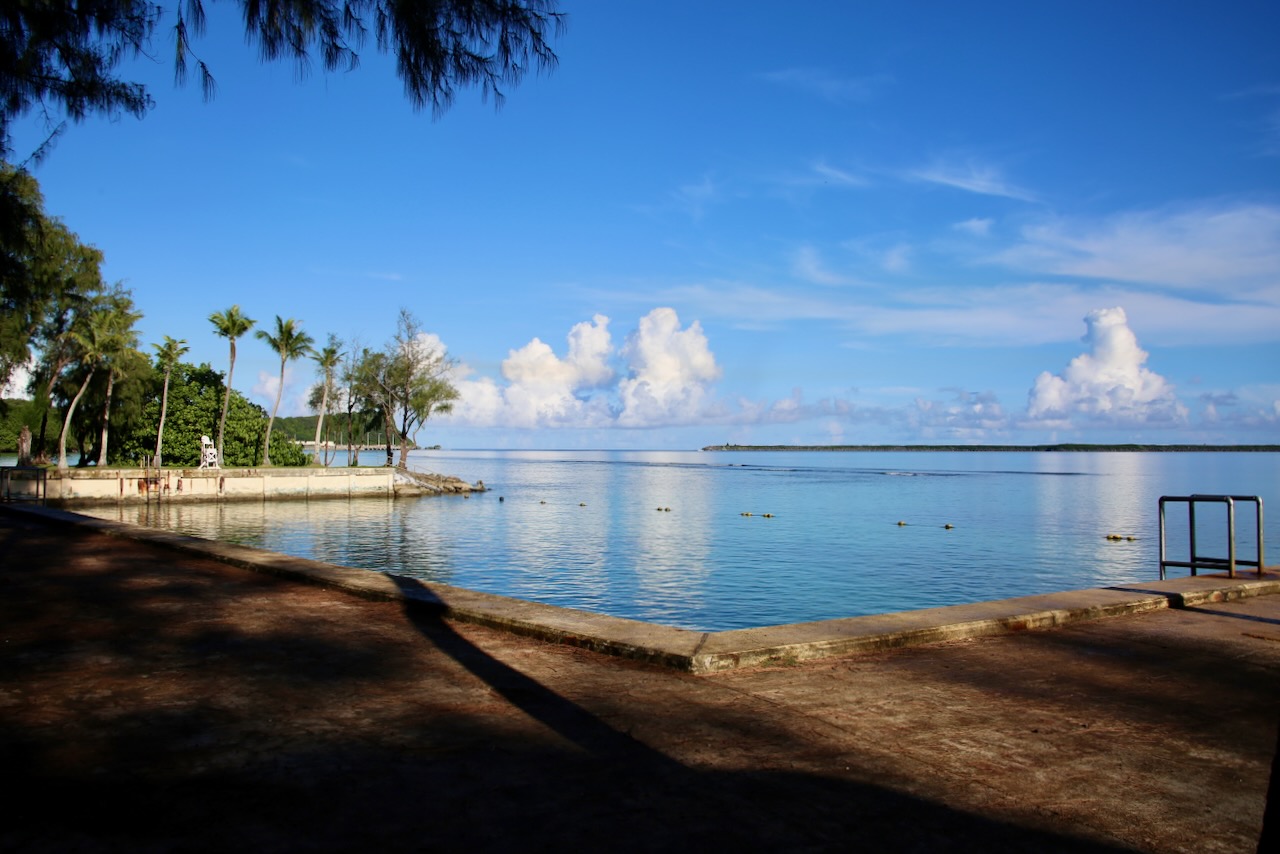
The large pier is used for swimming, and the skinnier piers have cleats, but only tourists with kids and cameras on them, no boats. The 24-foot tiered Merizo Bell Tower might not look like much, but its significance comes from the blend of Spanish colonial architecture (mamposteria) in 1910 and the local identity. The Chamorro used the bell as a call to worship, a notice for village meetings, and disaster warnings. The bell was listed in 1975 on the National Register of Historic Places.
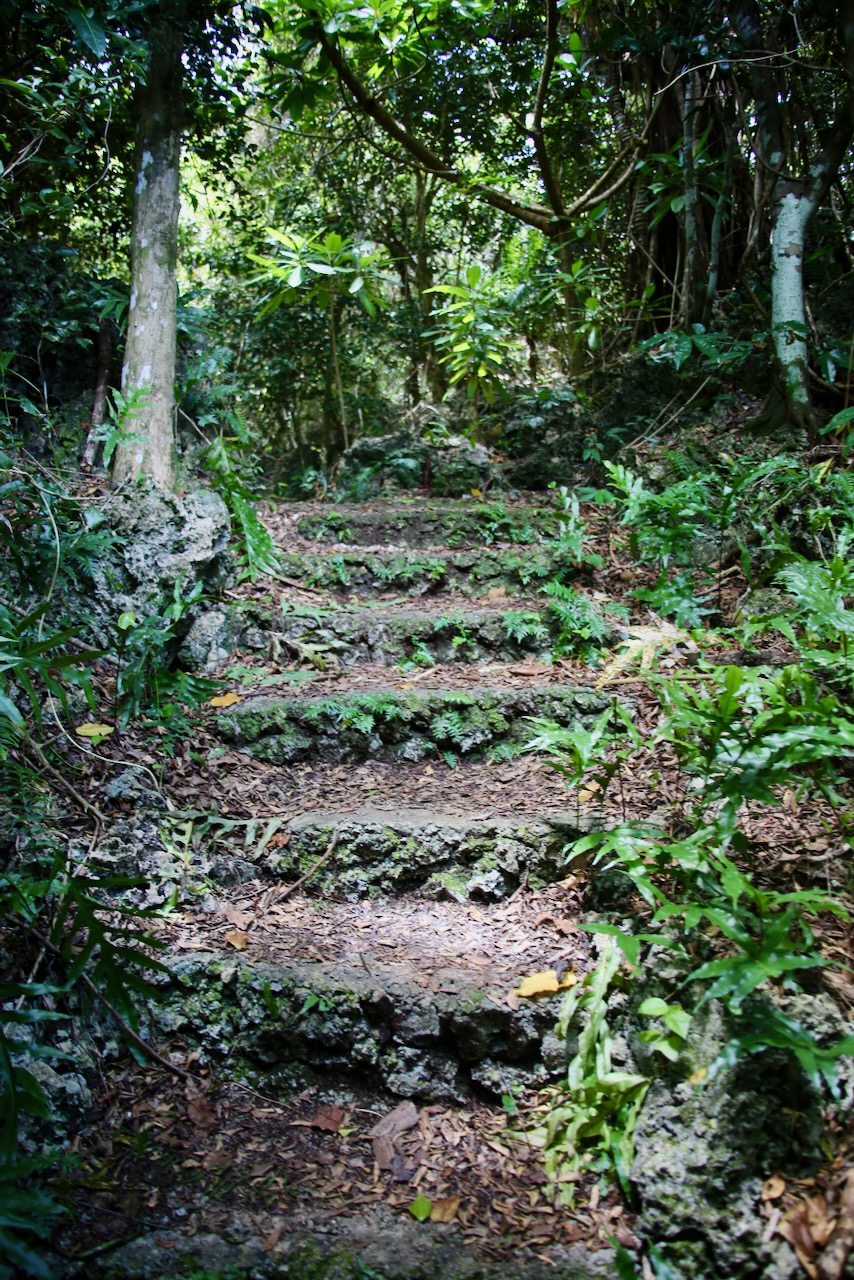
There is a trail behind the San Dimas Church with a metal railing that accompanies a majority of the climbing path. From the top, I can see Cocos Island, roughly a mile from the mainland and just as long, and only available for day trips. The ferry across is supposedly $40 for tourists, but the bird watching is greater than on the mainland. It’s cute to see small islands taking advantage of smaller islands as getaway destinations, and a place to charge visitors even more.
Family Beach
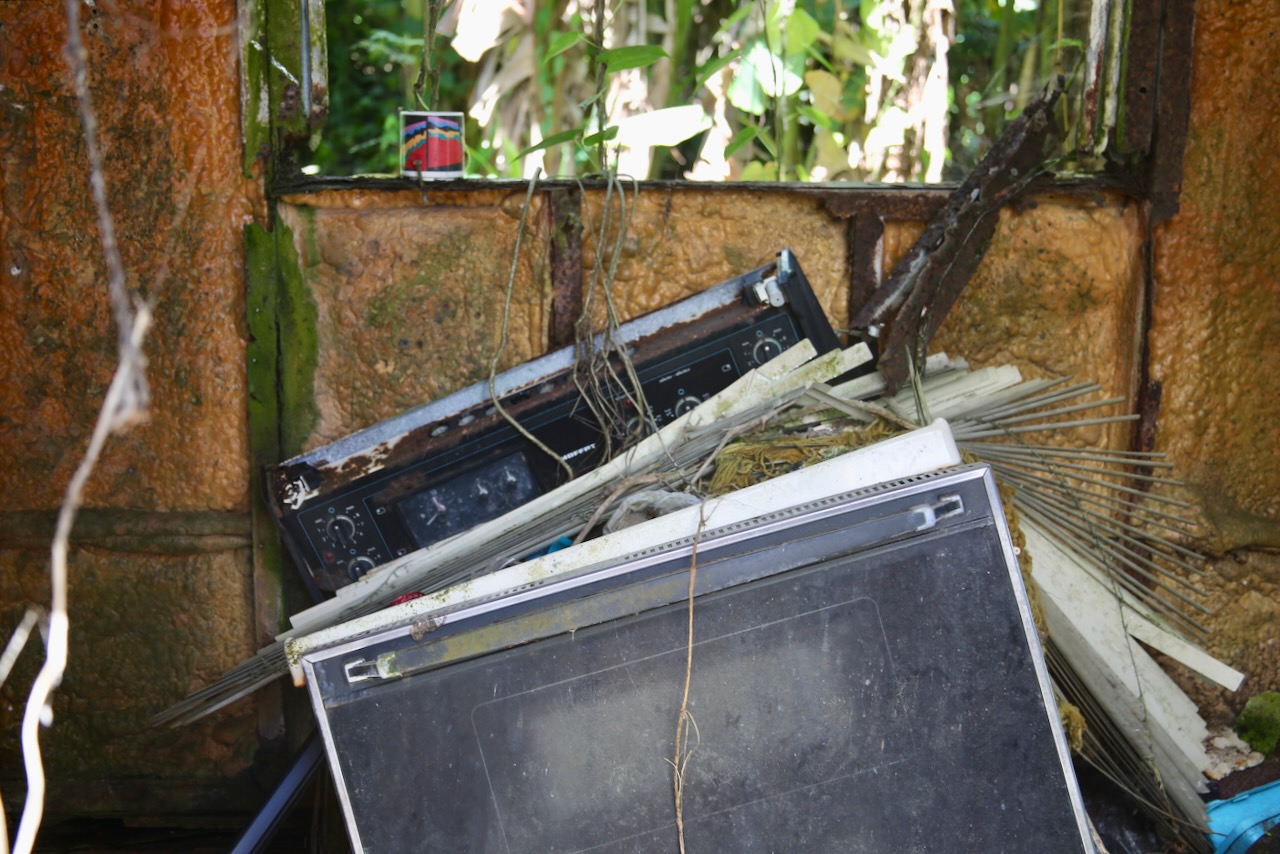
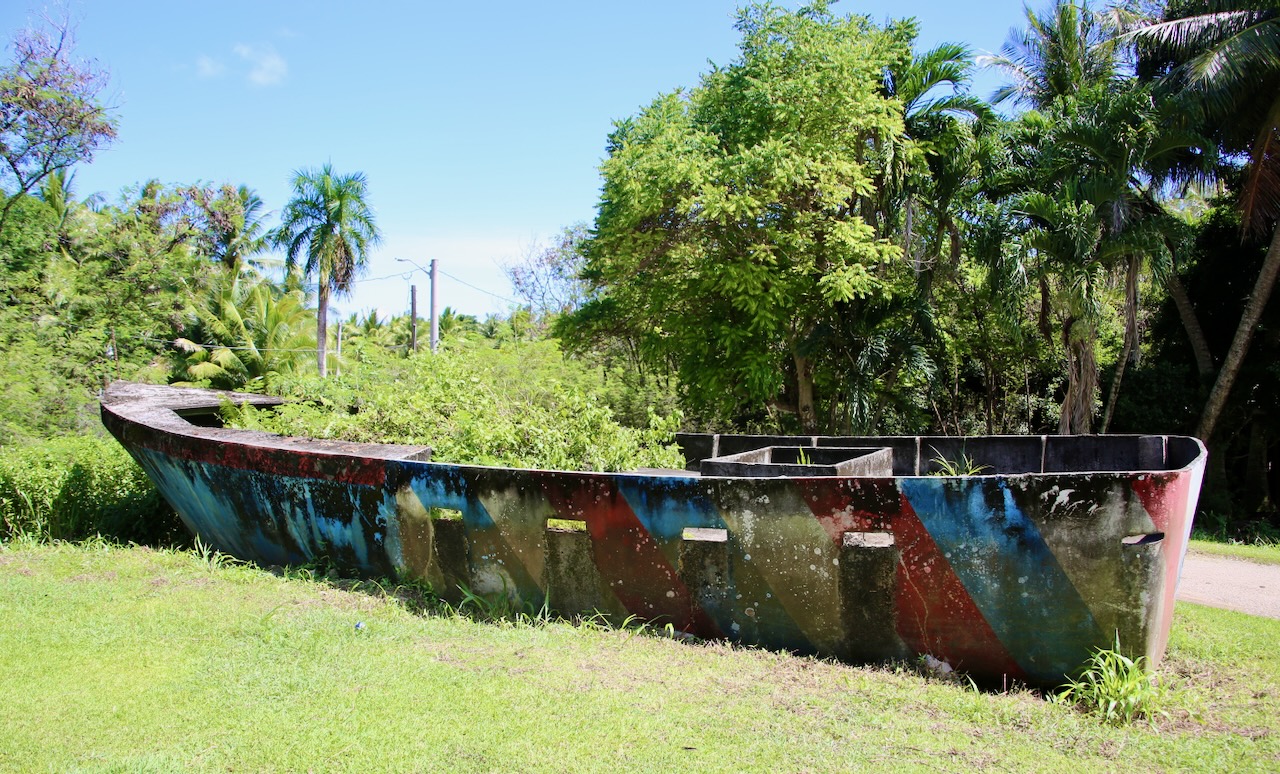
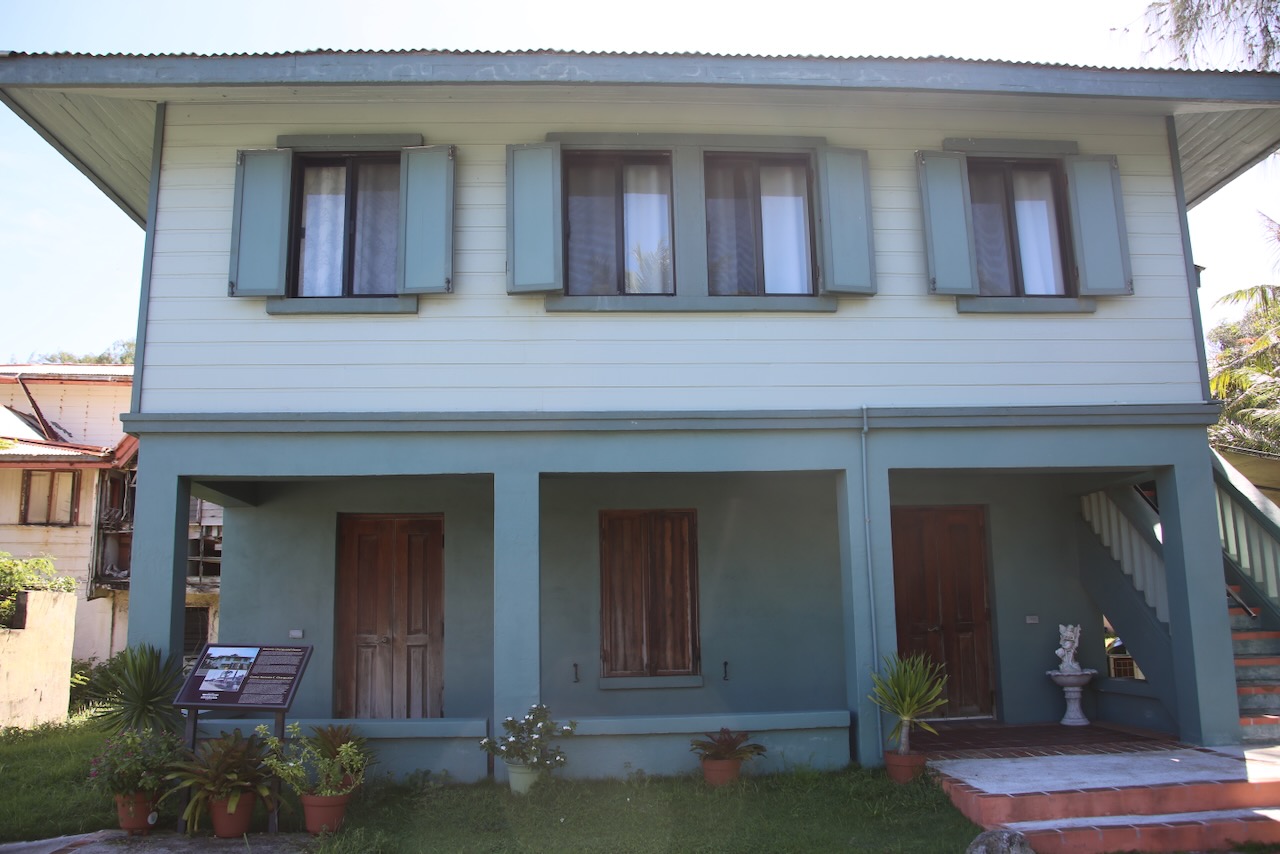
Instead of dealing with ferry schedules and fees, I’ll check out some abandoned cars along the road and then get in the water at a nearby beach. I have yet to meet an empty beach that I don’t love. The Antonia Chargualaf House was built in the 1940s of ifil (termite-resistant hardwood) posts, flooring, and framing. During the Japanese occupation, it was used to distribute rice to the village residents, and the couple that lived there raised their ten children. The house was destroyed in 2002 and rebuilt in 2018, with the help of the Guam Preservation Trust, to modern standards, ensuring its longevity.
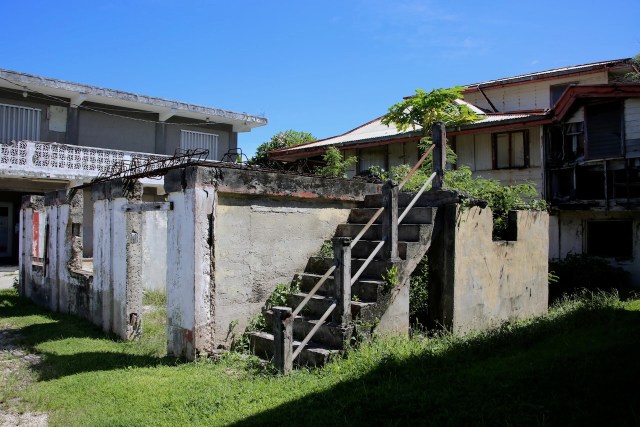
The house is seen as a symbol of CHamoru resilience and heritage that can be used to teach others about architecture, family life, and community. Meanwhile, the surrounding homes were left in a state of disrepair due to WWII, neglect, typhoons, and the widening of Highway 4, which runs directly through the historic district. It’s not until I turn onto the 4A to complete the southern loop that I get lost and end up in someone’s yard, with a car-attacking dog. I’m not sure if just overly friendly in an aggressive way or doing its part to ensure a strict no-visitor policy.
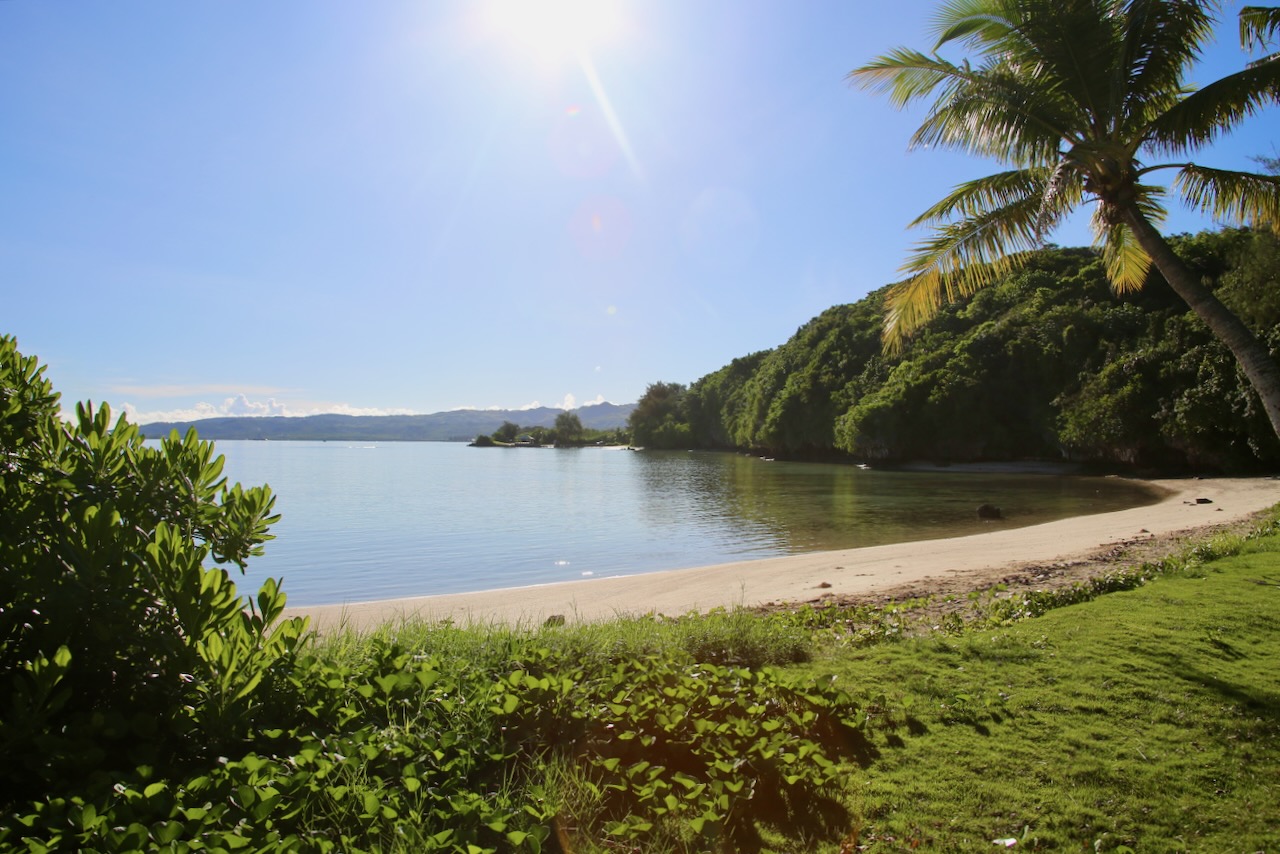
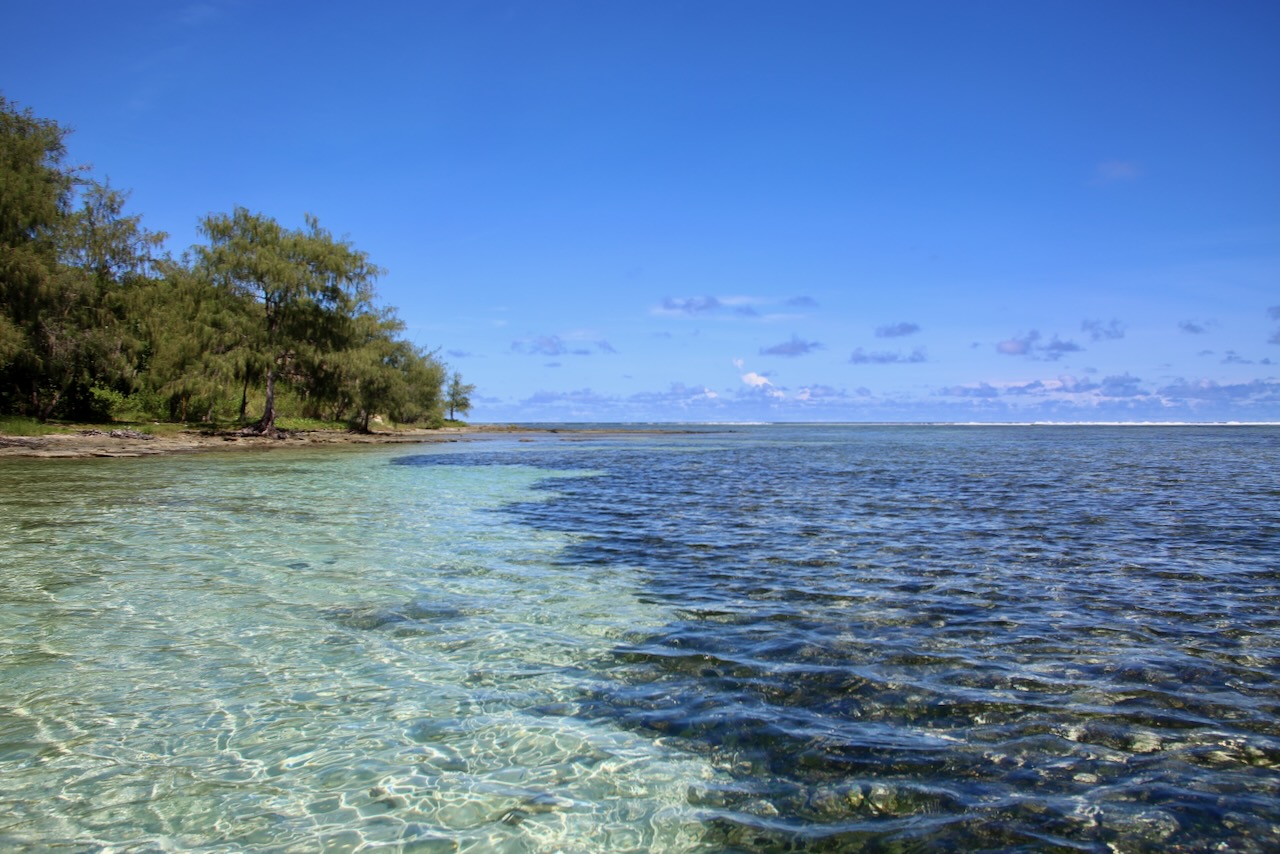
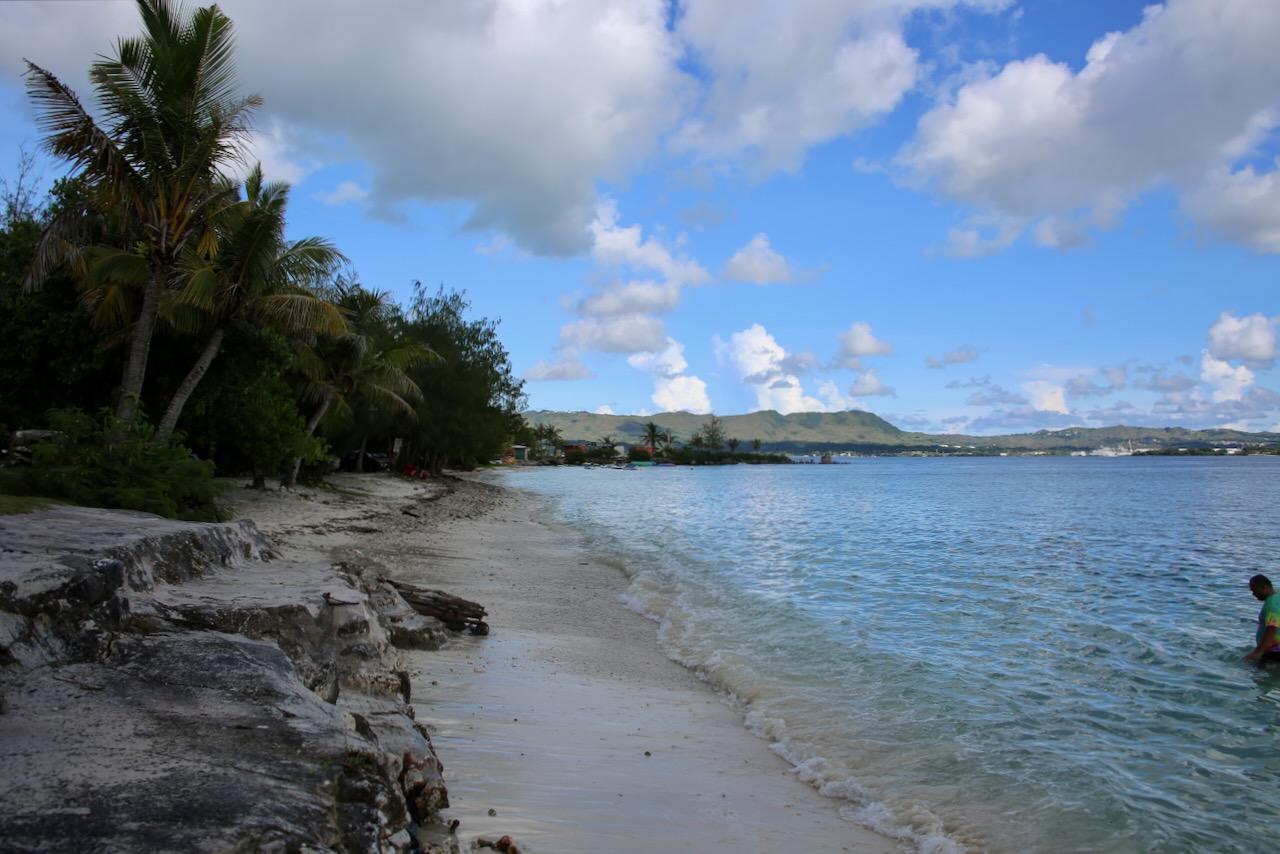
I’ll spend the rest of the late afternoon at Family Beach, which is better for a BBQ than it is for swimming, but apparently a great area for snorkeling and diving. The road is in rough condition, perhaps because the slender shore is sandwiched between restricted areas, either municipal or military. I meet some divers who tell me that Gun Beach is good for seeing turtles and watching octopus porn. I should’ve told them to wait there while I picked up Caleb, and then we could go diving together, but it takes us an hour to reach the room after he gets off work.
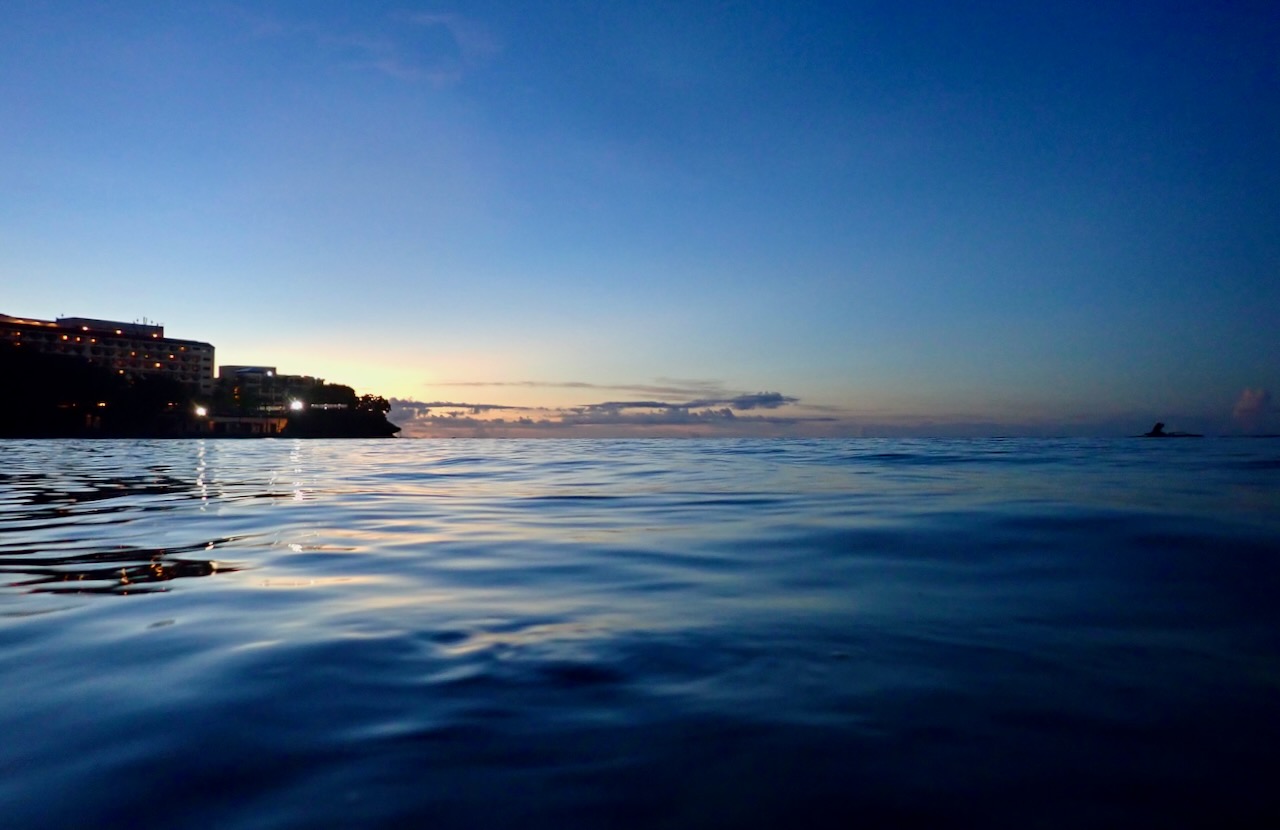
We walk to Ypao Beach to snorkel in the darkening waters of sunset and see more sea cucumbers, another Moorish idol, and a boxfish (one of my favorites). Now that Caleb has rinsed off the sweat in the ocean, he can rinse off the salt in the shower before dinner. Then we go searching for coconut crabs on the dimly lit beach, Caleb in shoes and me barefoot. I have no trouble adjusting to island life and am sufficiently tired when we return. We rinse our feet and go to bed.



















 TheJessicaness