We start our Saturday morning with a short stroll, just to get our muscles warmed up, since we’ll be walking around Balboa Park later. Caleb likes that I appreciate the same breakfast he makes every weekend with similar enthusiasm – eggs, potatoes, sausage, bell peppers, onions, and sometimes cheese. I remind him that I usually have a repetitive morning meal throughout the week, so this is a change. It’s when he makes biscuits or waffles that I feel especially spoiled.
Huichol culture
We stop at Goodwill to drop off a few things. Sometimes Caleb agrees that these items are worthy of someone else saving money and other times he wishes I had learned how to throw things away. I once donated moldy books to a library and they let me know they’d probably toss them. I want to give others the opportunity to burn them or make art, just like old clothes that can be turned into rags for puppies or engineers, I want things to live a life full of purpose before meeting their demise.
Yuko Nishimura
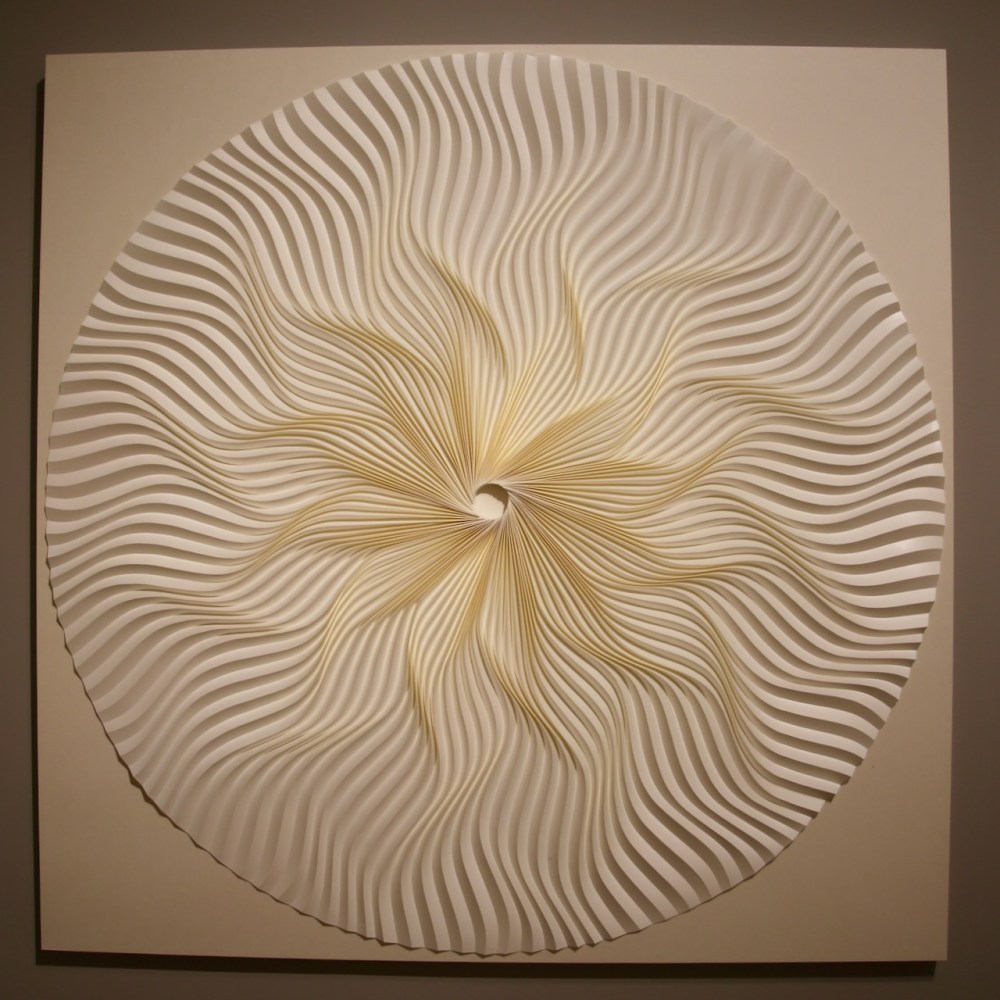
We’ll start at the Mingei International Museum to see their Washi Transformed: New Expressions in Japanese Paper exhibit that’s on display from today, October 14th, until January 7th. Downstairs are some Japanese and Mexican pieces of clay, beads, and wood that we look at on our way to get our passes scanned. We put the stickers, as proof of payment, on our shirts and go up the Grand Staircase with a nine-foot white and gold glass chandelier, by Dale Chihuly, which hangs between light and shadow.
A Palace for Wednesday
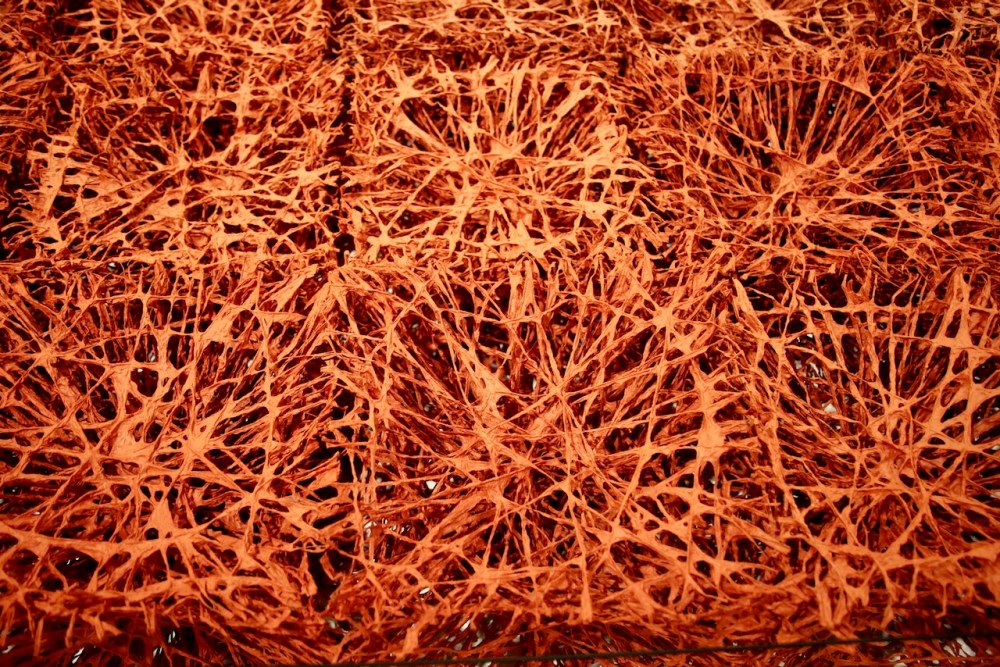
Through the large glass door is the Washi Transformed exhibit that showcases the thousand-plus years that the Japanese have been hand-making paper for use in painting, calligraphy, and origami, and showing how it can be used (fold, weave, twist, dye) to create sculptures and other two-dimensional works. The washi is made from the long fibers of a shrub and two trees that are transformed through screens and suspension, which honed through centuries has earned it a designation by UNESCO as an intangible cultural heritage.
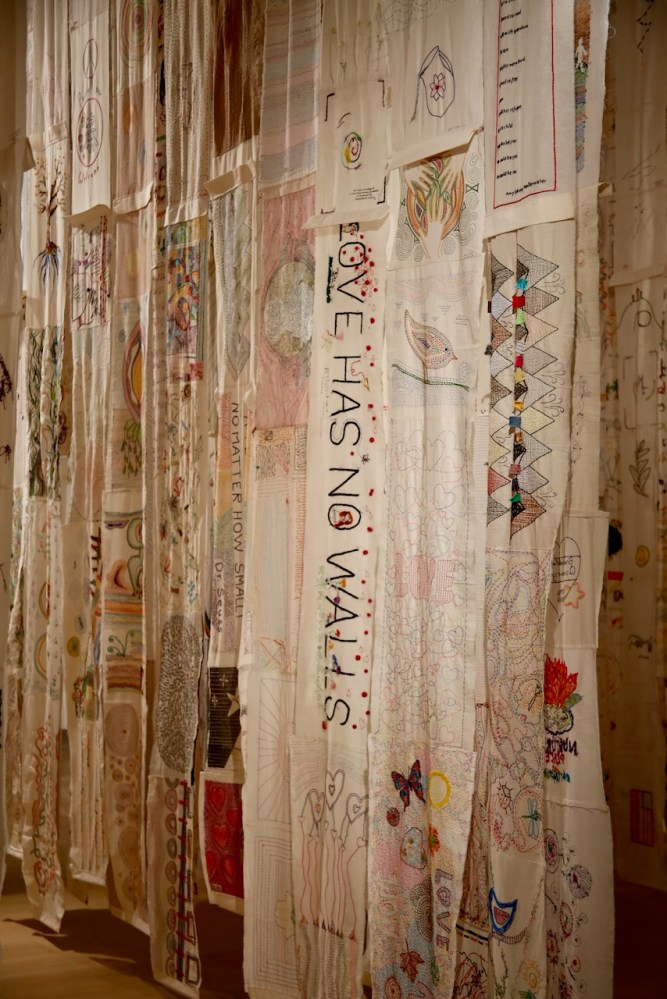
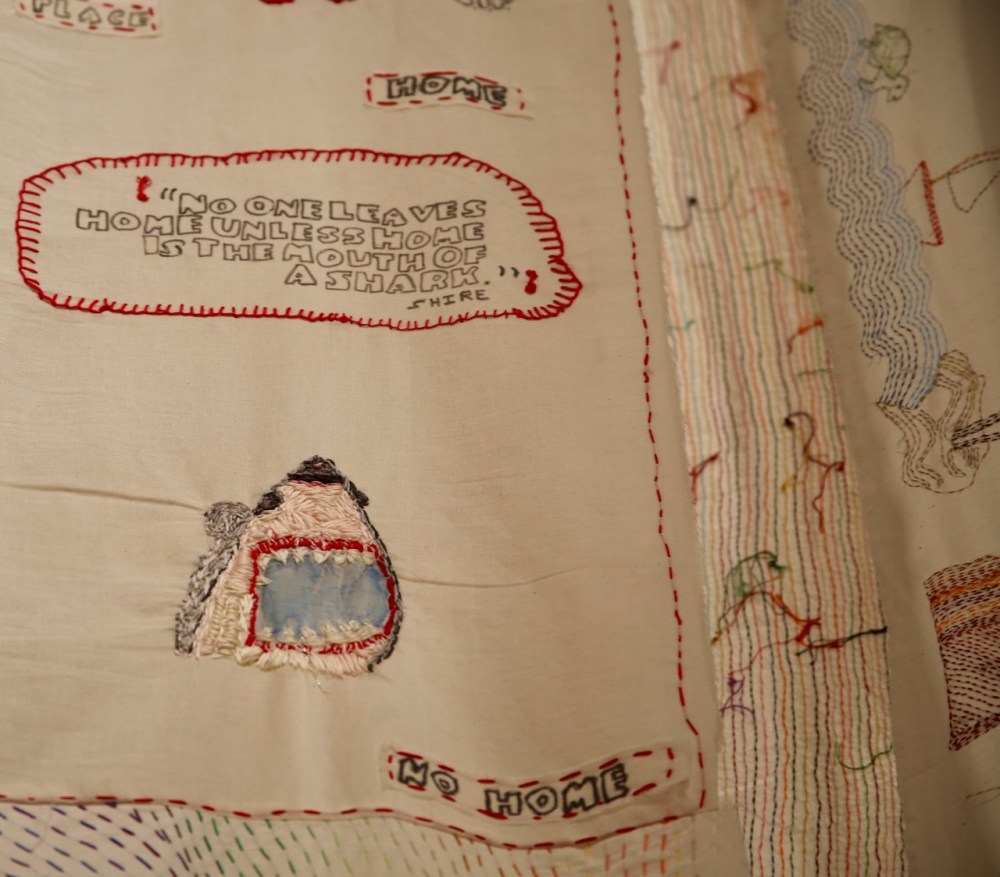
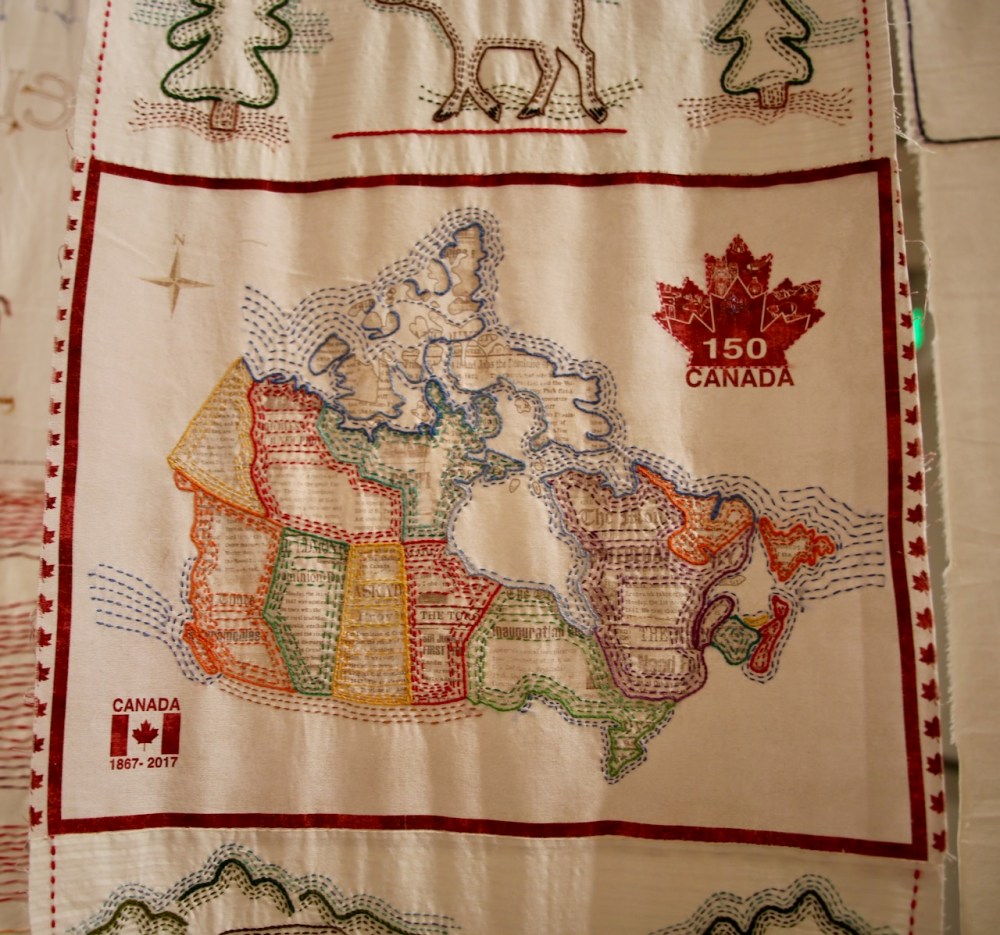
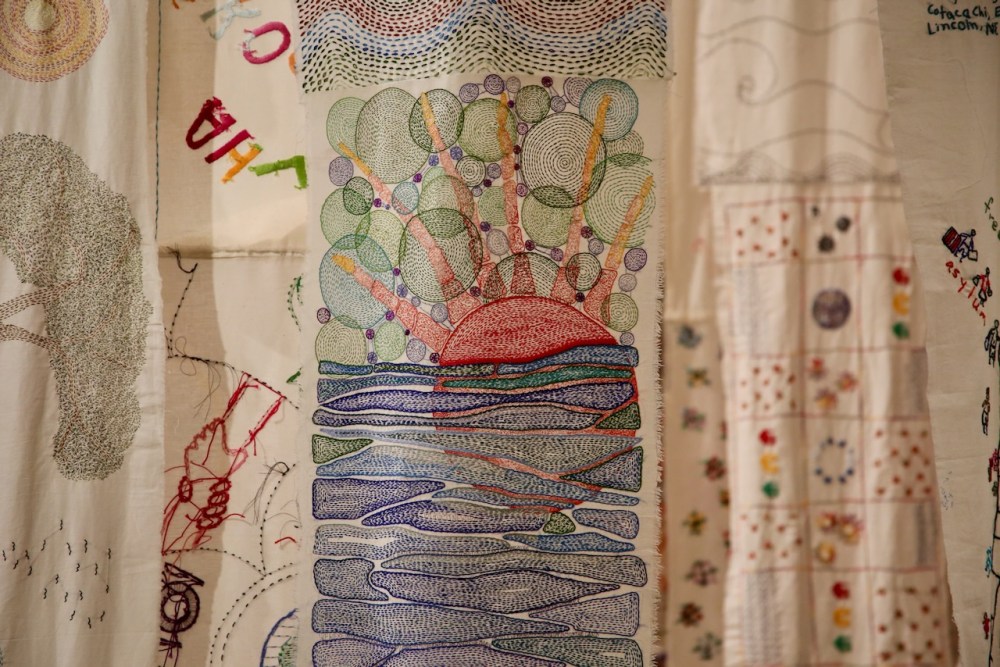
On the other side of the room hangs 25 Million Stitches: One Stitch, One Refugee where 2,300 volunteers from each US state and 37 countries submitted a hand-stitched panel, about the size of a pillowcase, to Jennifer Kim Sohn to make a large tangible aide to bring awareness to the millions of refugees on the planet. It’s easier to visualize the numbers when you can walk through the exhibit aisles, that are more than twice your height, and see the time and dedication people are willing to put forth for others; when they have the time, money, or energy to do so.
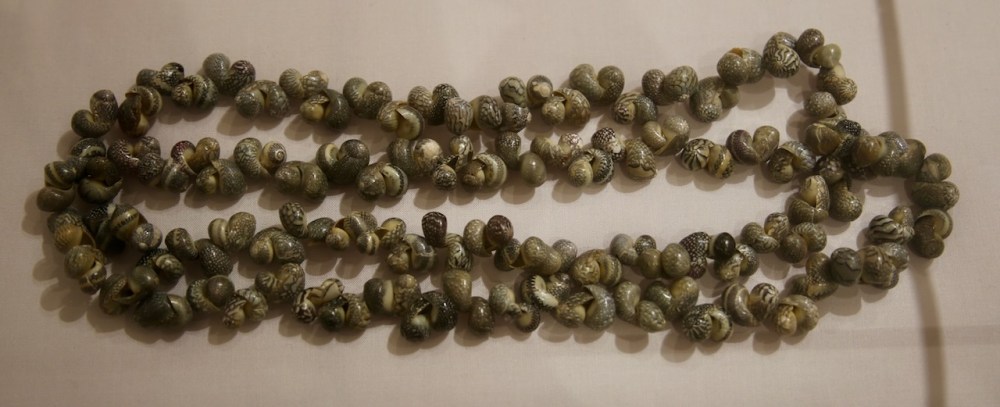
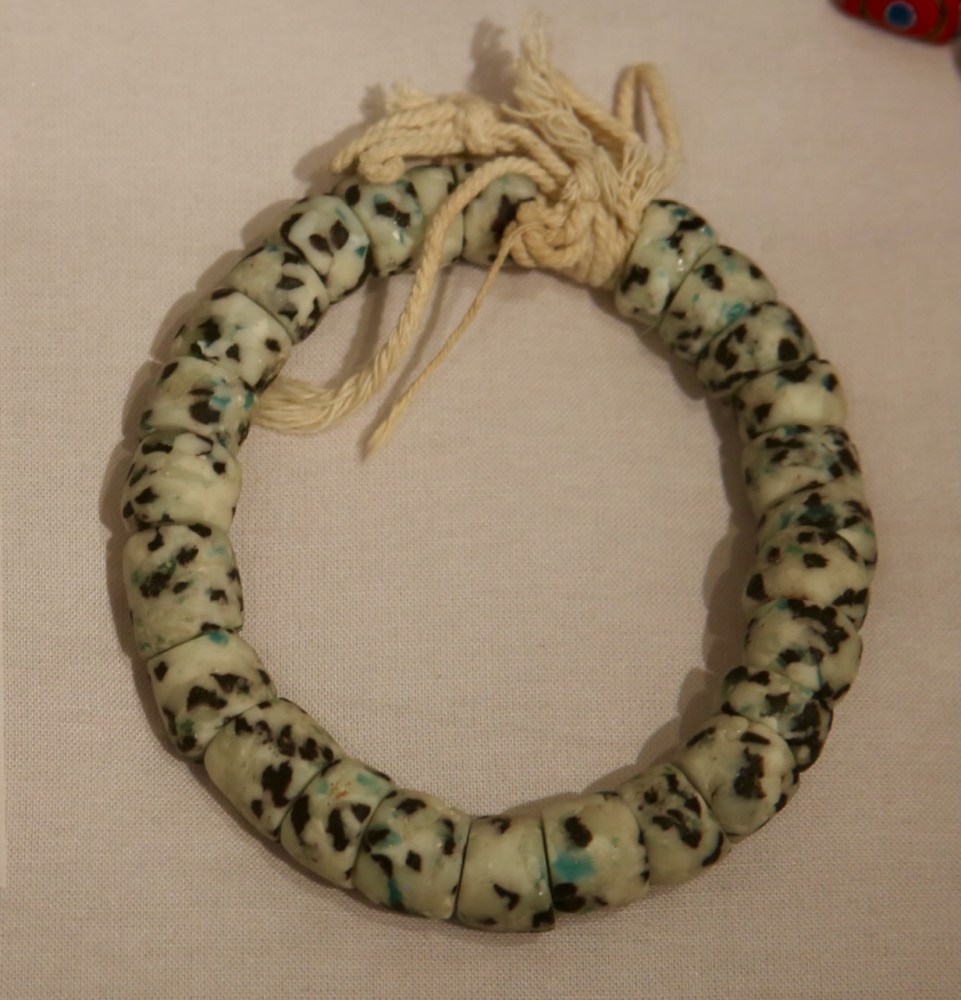
Nerite snail shellsGhana
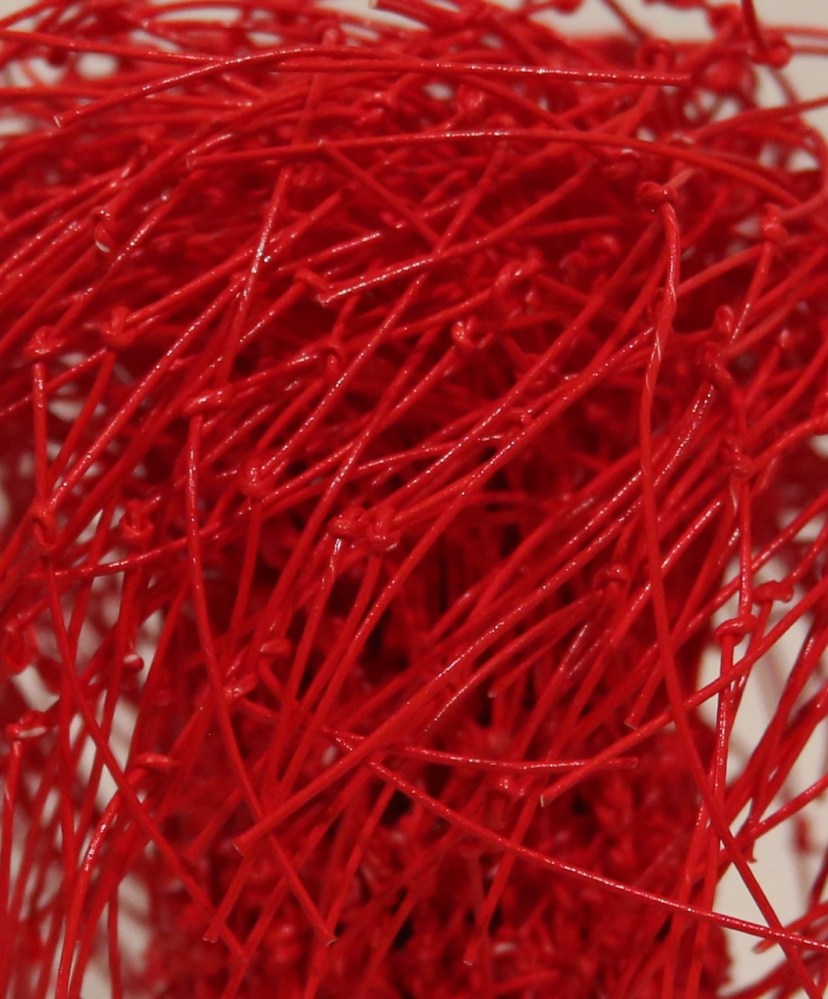
A World of Beads: Essential Elements explores the history of beads as their materials expanded from bones to glass, from simple jewelry to beaded outfits, and their roles as currency on trade routes. The Mingei was gifted some 6,000 to 11,000 beads from The Bead Museum in Glendale, AZ when it closed in 2011 due to lack of contributions. My favorite jewelry on display is made from snail shells and glass on monofilament and string from Brazil, Ghana, and Italy.
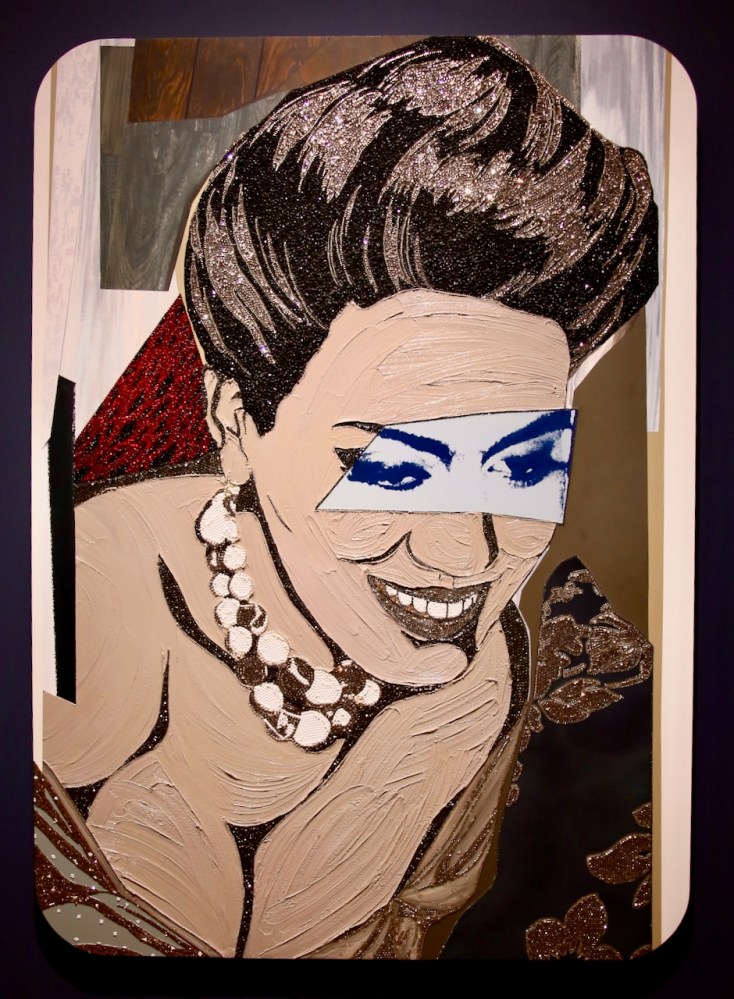
Mickalene ThomasRaphaelle PealeHina AoyamaCarlo Miranda
We browse some paintings at the SDMA — a self-portrait, a daughter, a muse, a still life, and some portraits by Carlos Miranda In Search of Sonder amongst those in his community and as an RN for ten years who believes we should live our lives with purpose and kindness. The reason for today’s short visit is that the Filipino Festival is happening downtown and I want to go for lunch so we can eat. We try the cherry lemonade and lumpia while we watch a dance on stage and don’t seem to be the only ones not staying long to buy hats and dresses.
Caleb makes us breakfast and eats half of mine. I change out of my it’s-cold-morning clothes and put on something more athletically appropriate so that I can put some miles on my green and dirty tires and Caleb can ride his purple-forked bike. We’ll walk our bikes within sight of the beach, then ride home.
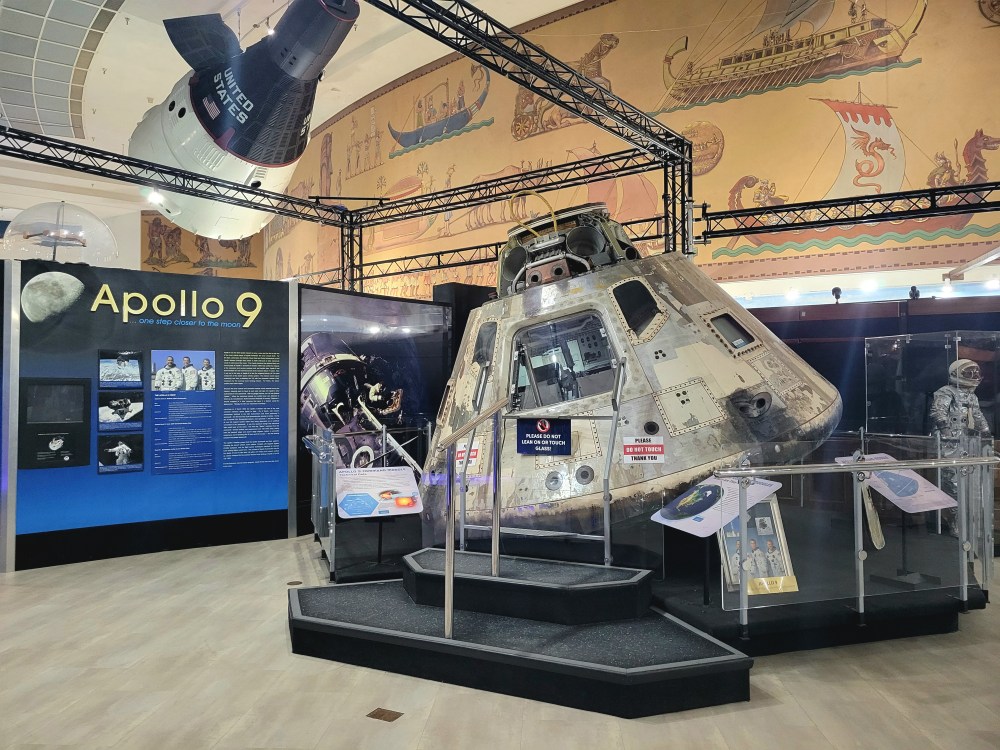
We’ll use our Balboa Park Pass to access the Air and Space Museum and realize I forgot my camera. It’s a good thing we can come back. We watch families in the bird flight simulator that would fail a migration and others who can’t earn their Mars passport.
I appreciate the interactive portion of the museum as it allows another aspect of learning and can be fun for all ages. Scientists and engineers who work to make life in space easier are also creating technologies with secondary purposes on Earth for flights, food, and fundamentals.
There are parts from old missions and models for take-offs that haven’t happened yet. There are necessities for sanity while floating around in a lack of gravity and other trinkets that were brought just to claim that they too had seen space from a different perspective.
I ask Ron, a volunteer museum docent, a quick question about the Hall of Fame and will read only a fraction of the biographies under the photos of men and women awarded for in-flight advances and help on the ground to make air travel more efficient, safe, and cost effective.
Ron interprets this as an invitation to talk, upon our exit of the hall, about a few of the ships and planes he saw in battle and exchanges stories with Caleb who has some experience of the military as well. I’m grateful for the gift of conversation that older generations still have and their willingness to share.
Then there’s the giftshop with t-shirts and cups, science kits and puzzles, snacks and magnets, and a book by Rachel Swaby to influence the next generation of women scientists, Headstrong: 52 Women Who Changed Science — and the World amongst other books on the shelf.
DORI BOBA
We stop at Himalaya House for dinner to-go and while we order our two naan bread flavors and paneer with veggies and rice, we watch a child climb a booth and put his feet on the window as his mom clears the table out of his way and dad ensures he doesn’t get kicked in the face.
We’ll go for a walk to escape this madness as tantrums are one thing and can be common, but disrespecting a business is even more acceptable these days as employees can be held liable if they hurt the customer’s feelings, which can be more costly in court.
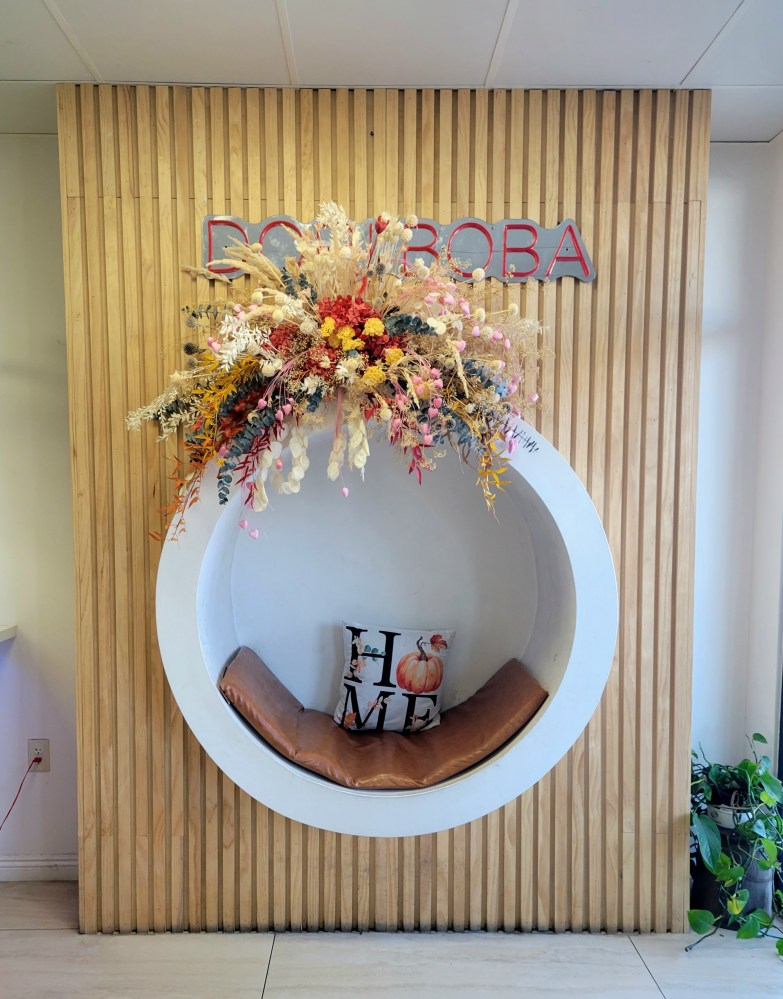
Next stop is Dori Boba for a roasted coconut matcha milk tea with boba for me and a tea without balls for Caleb. I decide I prefer mine without shaved coconut on top as that just means less space for my drink so the dried fruit can remain crispy.
We stop at Grocery Outlet on the way home for breads, pasta, and meats for the freezer so we’re ready for the week. We enjoy our dinner and then Caleb is on a three-way call with his siblings as they and their dad decide whether to amputate part of his left foot or let him die in a week from gas gangrene.
Robert chooses surgery, since the grandkids still appreciate his company and no kid wants to tell King Grumpy to kick the bucket, though they wouldn’t judge him either way as he has a list of ailments that he no longer wants to cope with and properly manage.
Jessi is with Robert in mountain time, he goes in for surgery at 8pm Pacific time, and Kris is in central time. We’ll wait up to find out that Robert lost his toes and that the doctor will wait a few days before finishing the stump. It will be weeks before he’s allowed to put pressure on his foot.
I used to be close to Caleb’s parents and talk with them often, but the same could be said for my parents. His dad pushed us away and though our last visit was decent (or I’m naive) I don’t have to worry about being called for nurse duty, since the ones being paid can’t handle his messy attitude.
I was going to title this post: Part-Time Perks, but that might confuse people into thinking I’d gotten yet another job this year. This is about the benefits of Caleb’s job; sometimes a one-time pass to a theme park or event, stores and restaurants that offer discounts, the travel savings and access to medical care, and being surprised with a one-year Balboa Park Explorer Pass that gets us into most everything but the Zoo and Comic-Con Museum.
Casa del Prado Theatre
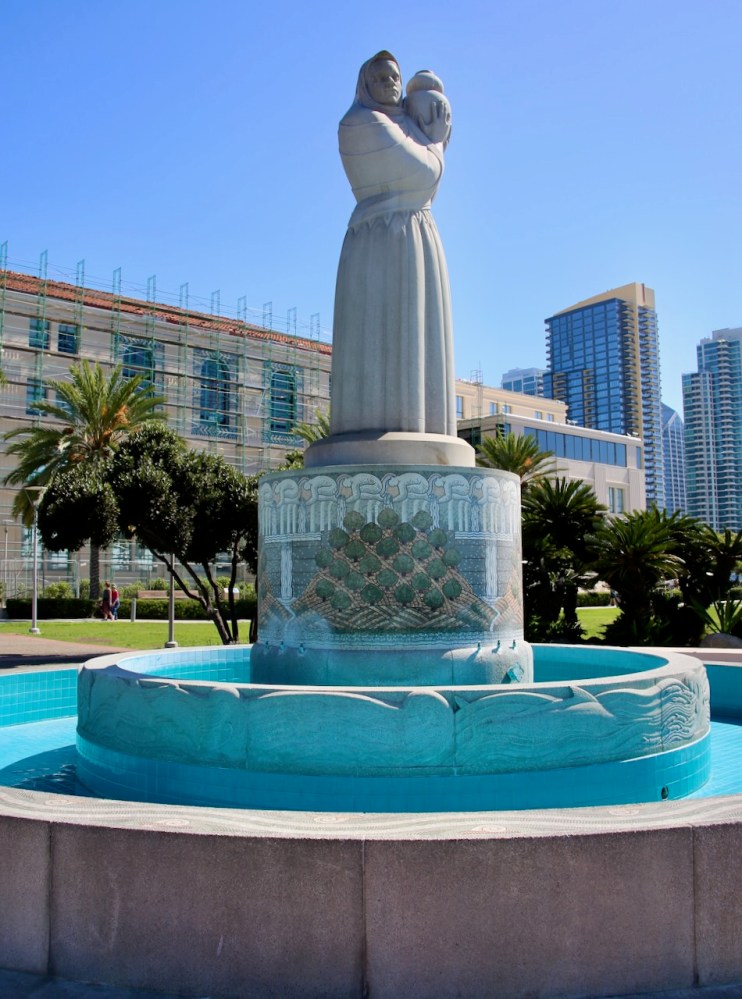
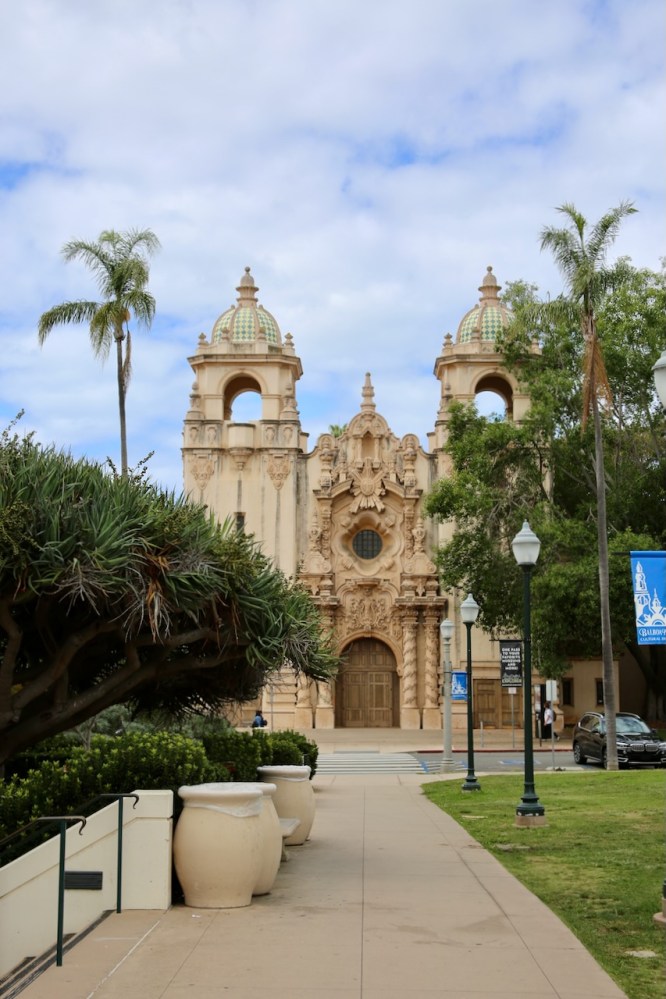
The museums don’t open until 10am so we went to the store first so Caleb could get yogurt-making ingredients and we could leave them to incubate for eight hours while we were gone. The parking available on Park Blvd. has changed as the city works to increase access for bicycles, but we get there early enough to quickly find an open spot near the Carousel. We arrived at the park without a plan, but seeing the Natural History Museum, we knew where we were going first.
member of the Living Lab
We save the $20 entrance fee each, and probably $4 more as some places don’t apply Caleb’s active-duty ID benefits to my civilian status and I’m ok with that. I’m no longer required to report to work without knowing how long my day will be — a few hours or many months as the Navy decides which country he should be in and for how long. As Caleb finally nears military retirement and has to work through medical screenings, applying and interning through skill bridge, and enjoying terminal leave, we can be relieved that our long separation periods are behind us.
bees are beautiful
Anywho, we don’t share this with the women behind the booth, we just appreciate the acknowledgement of the long hours Caleb has put in fixing engines and filing paperwork to maintain the twelve percent of federal spending on America’s defense budget. Caleb puts our stickers on so that staff knows we checked-in and directs us clockwise around four floors of exhibits since the basement is currently closed. Inside the Living Lab we get to meet a toddler who, when exposed to his first snake, put it in his mouth without hesitation. Today, he will have to settle for watching the ants through a pane of glass.
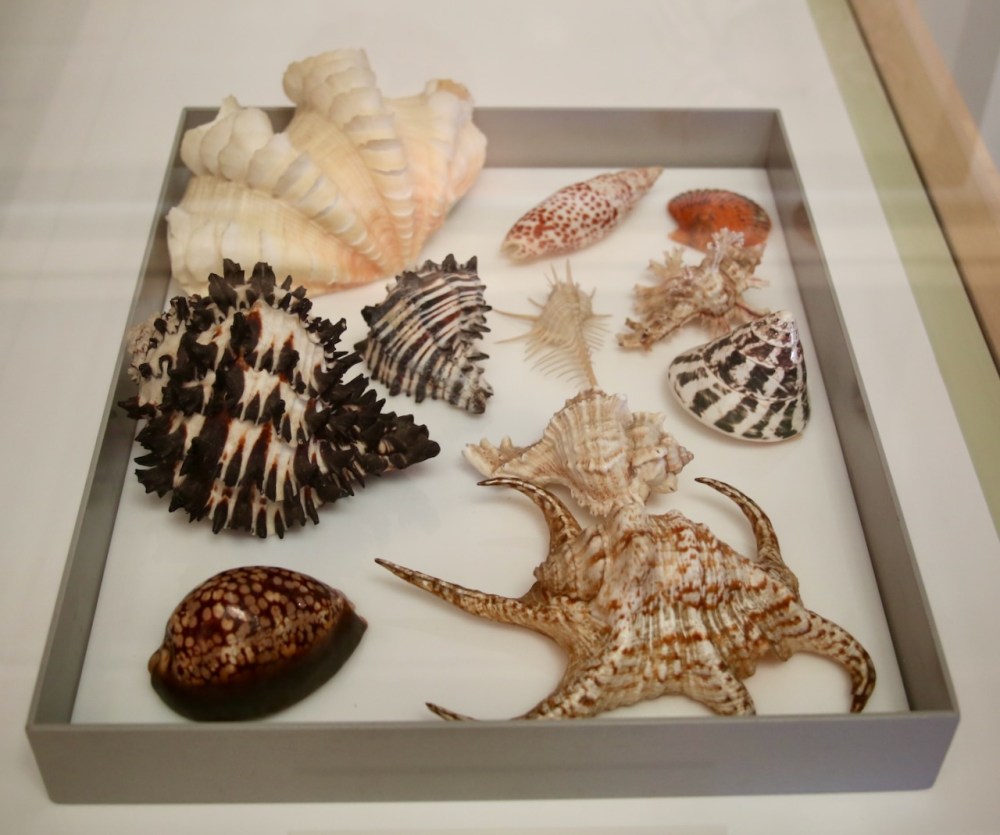
shells on display
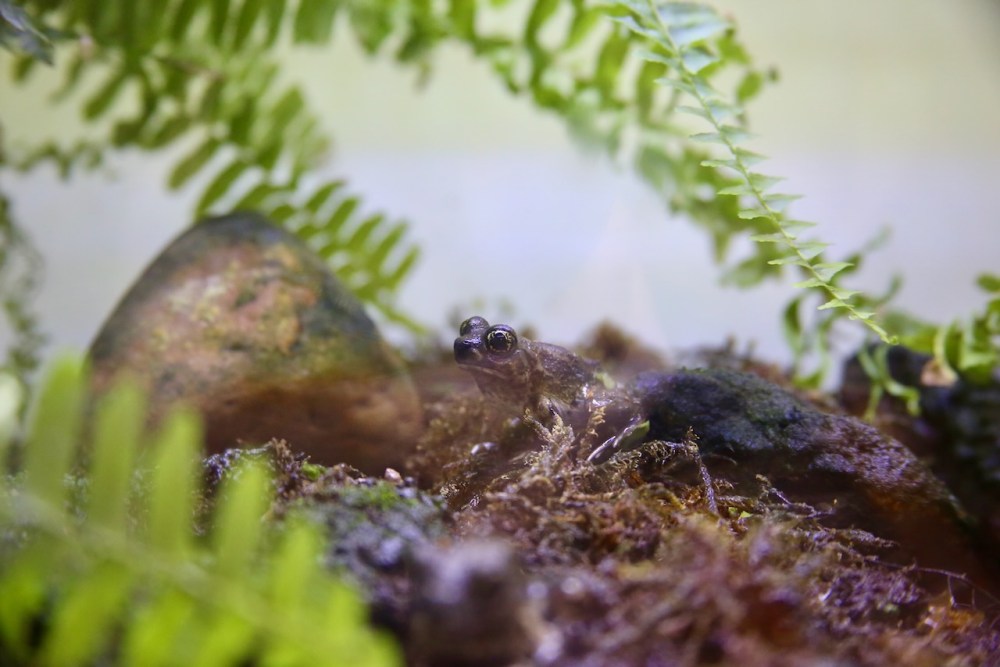
Caleb focuses on the exoskeleton of a tarantula, which I agree looks weird at first, but these spiders can spend a day “moving out” after popping their carapace off and then have to pull their seven-segmented legs out of the old sleeve. This process happens monthly at first and then once or twice yearly for older spiders. There’s a Pixie frog, not in San Diego County, but it creates a plastic-like skin that can keep it hydrated in a drought for up to two years. Learning about how amazing and adaptable animals are reminds me that humans are just a tiny fraction of the Earth, even if our impact is substantial.
Hidden Gems
In the citizen science exhibit, which is always-on-view means we’ve been here before too, but as anyone who loves visiting museums knows – there is only so much you can take in on one visit. It’s the recurring returns that show you a missed detail or an artifact you didn’t notice before. For me, that object will be the double elephant (26” x 40”) folio of J.J. Audubon with his life-sized North American bird illustrations. His art and history were such an inspiration to a tutee, among others, of his widow that his name would be used in the now popular Audubon Society decades after his passing to remember the man who created the standard on ornithology.
couple watching the koi
We turn our attention next to the Japanese Friendship Garden, saving the $26 entry fee, to find some serenity in the city. I see a neat origami swan dress (didn’t get a good photo of it) and find the waters outside calming. Others seem to be enjoying the quiet respite this park has to offer too, but I’ve made the mistake of remembering this place larger than it is, so our time is shorter than the couple getting wedding photos or the two old friends talking by a waterfall until they are interrupted by the jubilations and boredoms of youth – the kids who love outside and the others being forced to follow their mom on her day out.
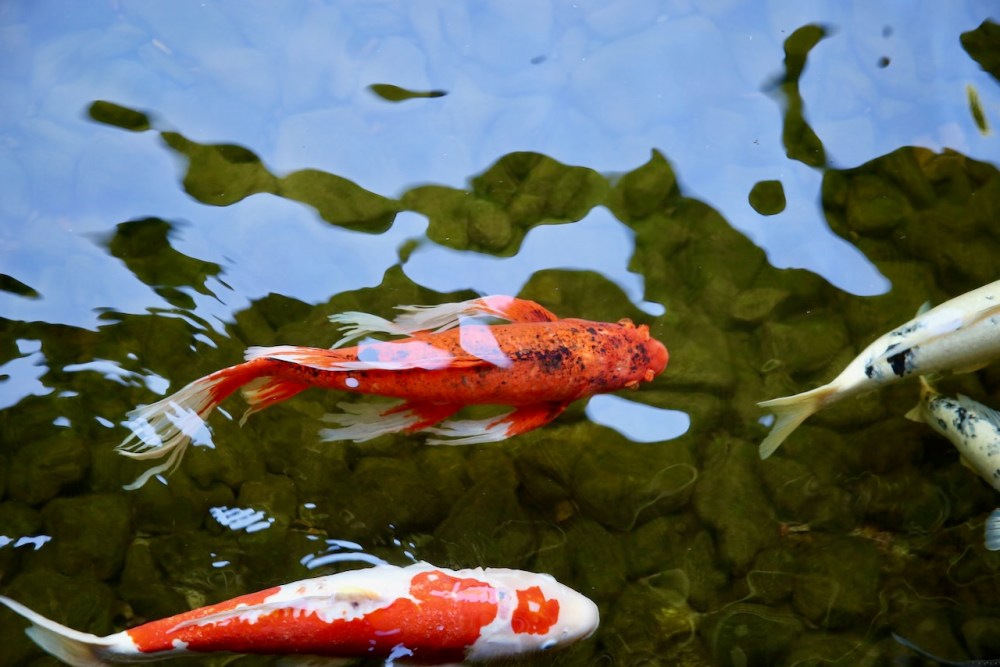
the koi
Instead of taking selfies by the koi pond I think about swimming with the fish and getting a closer look at the depths of their world. Now that I’m a scuba diver I look at the water differently; as a place to be respected of course, but also to explore endlessly and appreciate always. I don’t have any of the skills of the sea creatures and I’m also not adept at being an insect or a plant but I can gaze into their beauty and pause just a moment to take in how spectacular this world is and how lucky I am to have the capability to be in so many environments, especially with the help of science and technology.
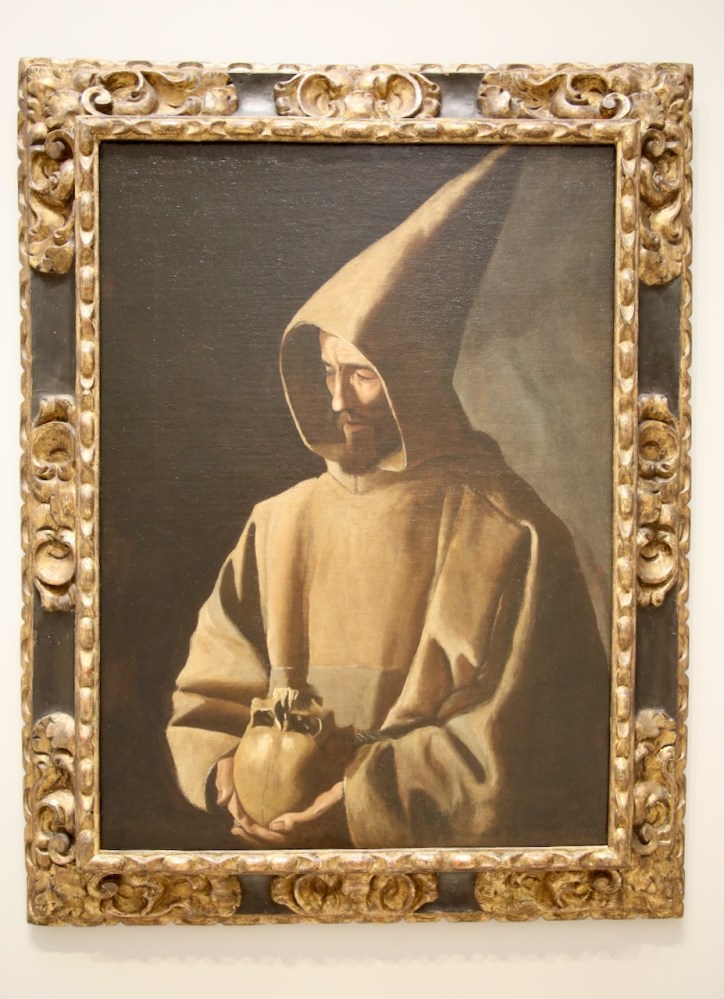
Saint Francis in Mediation (ca. 1635)
We zig-zag our way back to the entrance which only seems to make the garden shrink in the distance. We’ll finish our day in Balboa Park with a stop at the Timken Museum of Art which always has free admission. Two paintings will catch my attention – Saint Francis in Mediation (ca. 1635) by Francisco de Zurbarán and Equestrian Portrait of Prince Tommaso of Savoy-Carignan (2015) by Kehinde Wiley. The former is an Italian friar painted by a Spaniard in a religious style in the middle Baroque period; the latter is a modern American adaptation of Prince Tommaso Francesco of Savoy-Carignan (1634) by Flemish artist Anthony van Dyck of a war equestrian portrait.
Equestrian Portrait of Prince Tommaso of Savoy-Carignan (2015)
There are sci-fi films about time travel that are mostly concerned with disrupting the past, destroying the future, not denying the present but on a mission to survive the Renaissance or the 80s or our fears of what the next generations will come to bear on our society. Imagine if we could introduce the internet or even the phone to these two artists so that they could collaborate or be inspired by each other (and perhaps they were if they had the chance to travel). Then the thought of that makes me realize how many letters and other historical communications would be lost and the slow growth of other industries that might be destroyed (that give their own inspiration today) with only the intent to help spread their creativity and message.
With our viewing of others’ intellectual achievements passed through the afternoon it was time to return home to check on our yogurt cultures’ growth. With efficient thickness achieved we messily poured our pot of yogurt into eight small jars and three mini jars. As with any plain yogurt, it’s best not had alone. I add some date syrup to our test sample and it passes. Caleb has successfully made yogurt and can add that to his list of skills in the kitchen.
Up before the sun, pack the car with dive gear, have a light hotel breakfast, and drive to Port Hueneme for gas where a Tesla has parked itself roughly into a barricade. Home around 1:30pm and I’m due to start work for Sunrun tomorrow so I check my email to verify the online training that was discussed only to find that they want me in La Jolla this week and for future training. That I could’ve handled, but the mandatory weekends put a halt to that job as Caleb wants his nights and weekends with me.
I send a reply email and apologize for the misunderstanding. I’m grateful I don’t have to buy business casual attire last minute as I’m more of a black bottoms and uniform top, workout attire, or jeans and dresses type of employee. Caleb says I can stop looking for work as we thought it was a good idea, and some jobs can be fun and rewarding, but they’re too demanding on our schedule and not necessary for our survival… for now.
I logout of and unsubscribe from job search engines and job openings notifications. This somehow relieves some stress from Caleb too knowing that I will have more fun and interesting days instead of just talking about whichever customer was the most memorable that shift. We do laundry after dinner which means crosswords at the laundry mat and reading when we get home. This is one of my four-thousand plus Mondays with over nineteen-hundred behind me. I’m grateful to leave the workforce yet again and spend my start of the week every day.
We’re up earlier this morning and out the door before my alarm. We survived the cold on Friday so we have a better idea of what to expect today. We’re the first customers on the boat and set up next to a dive exit point which means less people to waddle over with our fins on. Same process – get all gear set up, have crew member give safety briefing that only half the boat can hear while we set out to sea, get breakfast sandwiches distributed.
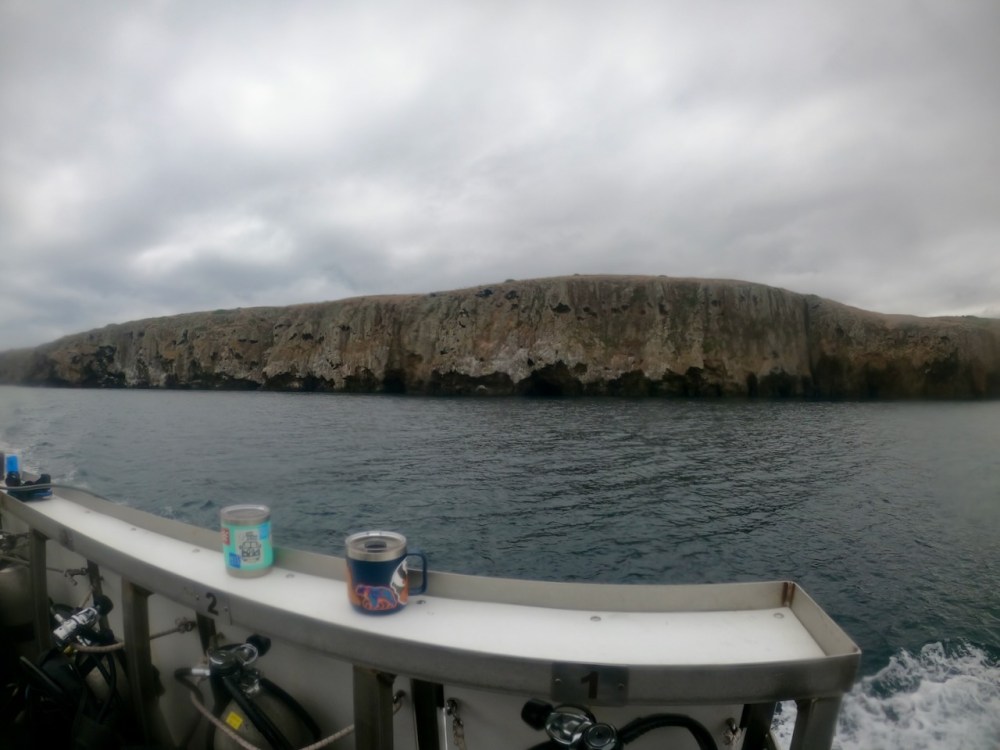
Our first dive will start later than the one on Friday, but we’re still promised three dives. We’re just not guaranteed certain locations as that depends on the captain’s opinion of the ocean’s mood. We start at Yellow Banks, which is on the southeast side of Santa Cruz Island. We’ll start out going northwest so we can return in the southeast direction. Underwater has been the only time I’ve used a compass and it helps to navigate without the resistance of the surface to return to the boat.
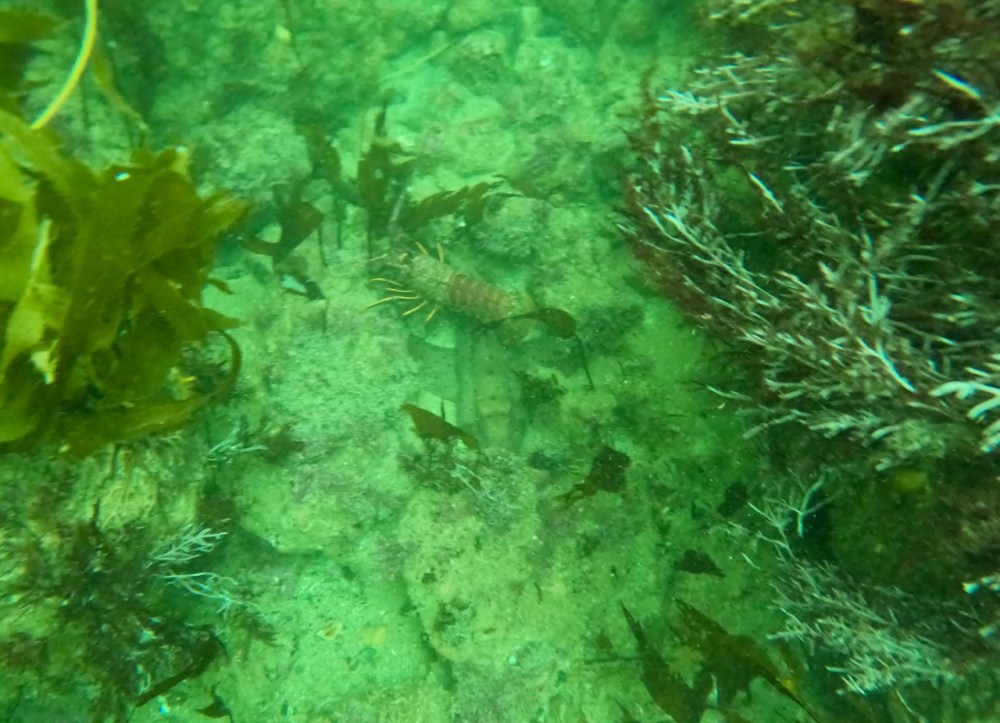
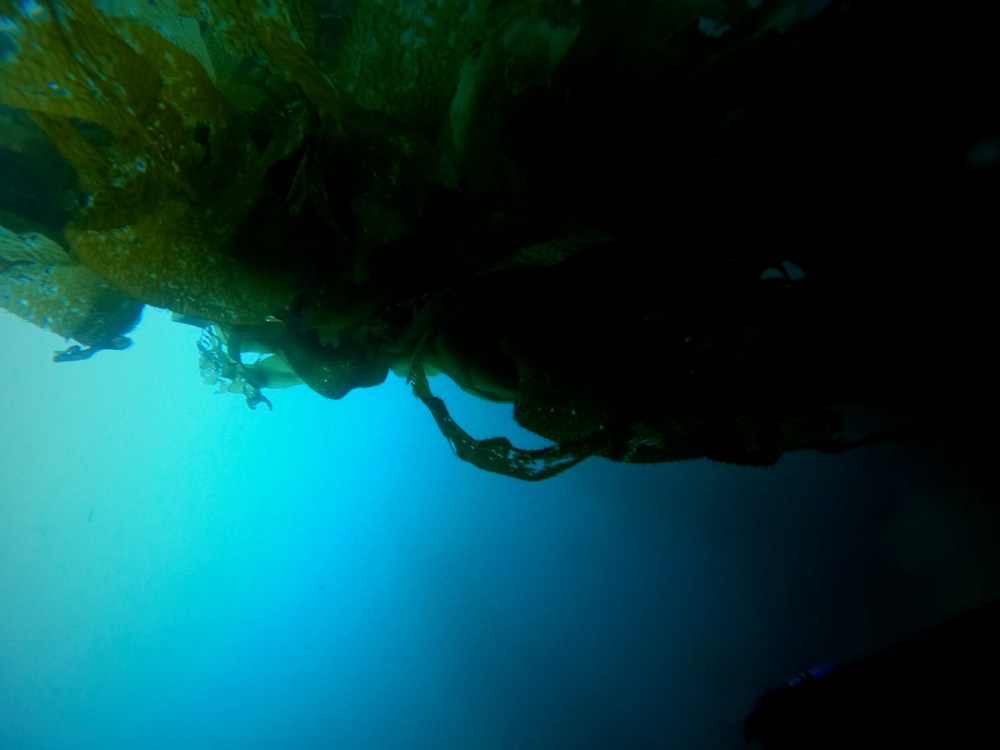
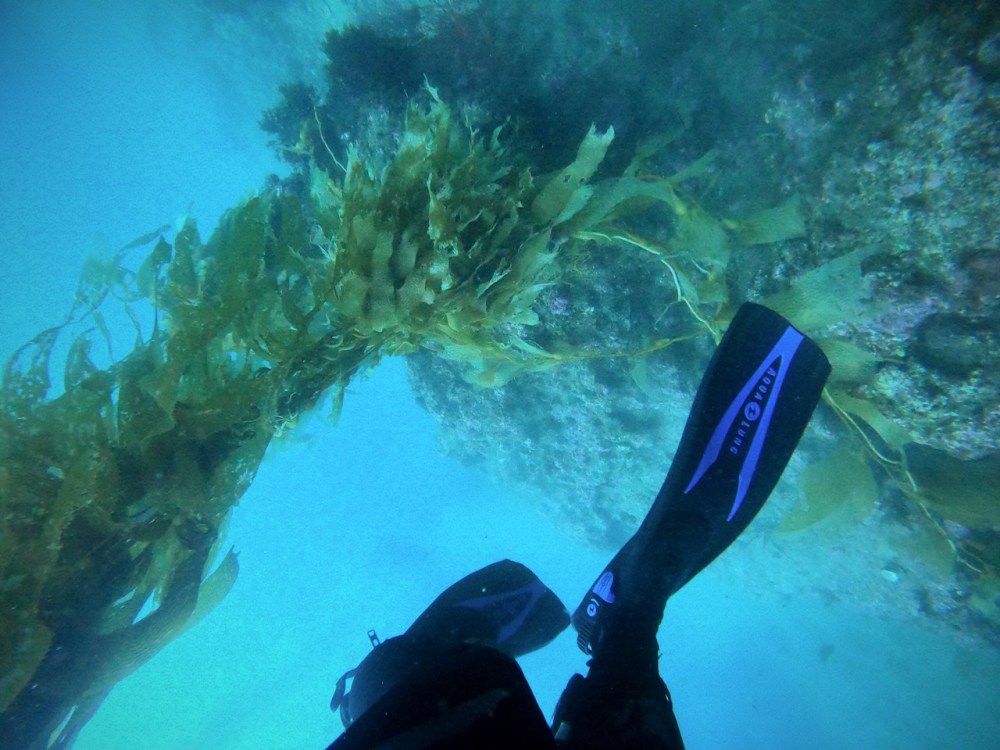
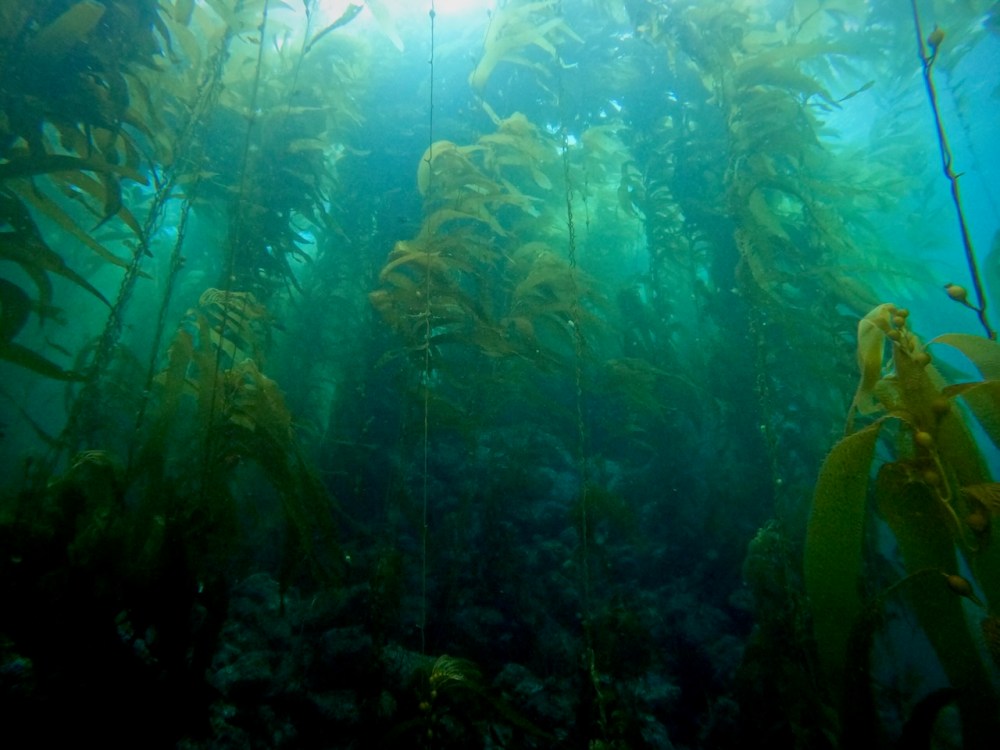
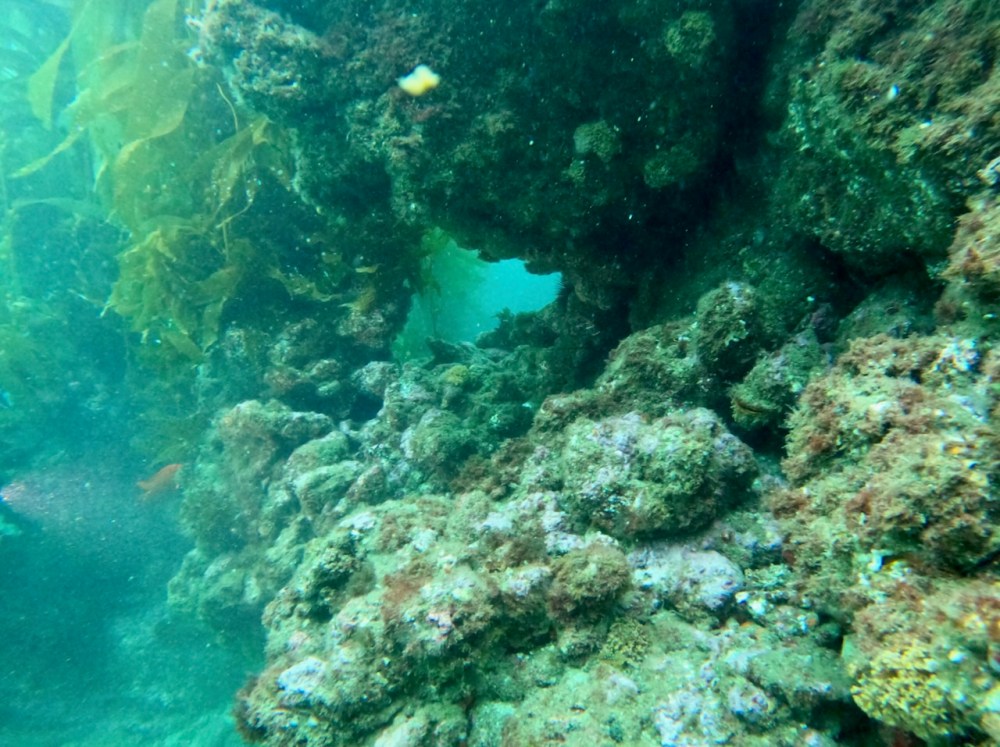
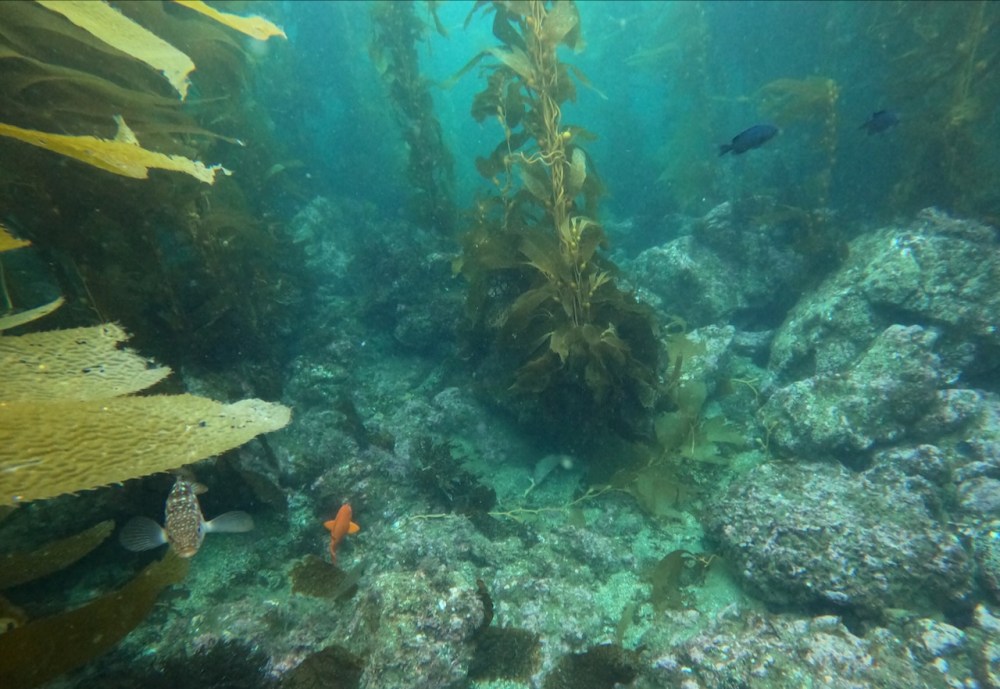
The surge is moving sand around which lowers the visibility of the dive, but makes the kelp seem more mysterious and magical. The lobster are easy to spot with their bright orange legs contrasting with the grey, purple, and green around them. As I struggle to make my way through this kelp alley, which would have felt like an eight-lane highway if the water were calmer, I notice a lobster taking advantage of his low center of gravity and extra appendages.
It was the spotted horn shark that caught my eye first and it was the lobster’s knowledge that the species he chose to crawl over prefers to eat crab and urchin, though snails, squids, and itself could easily be on the menu. Regardless of how people think our existence started, swimming or hiking amongst nature shows our ability to adapt so profoundly to the impacts of the environment and to make changes through generations to continue to exist – no matter how strong the current or dark the seas.
I surface with 750psi in my tank, but roughly one thousand on the other five (including the three on Friday). I want some kind of expectant pattern to emerge and I’ve learned that we can return with more air after longer dives in warmer water regardless of depth than when our bodies are trying to maintain our core temperature in colder water regardless of dive length. This means we need to dress more warmly, especially my feet, so we can extend our bottom times to the allotted hour.
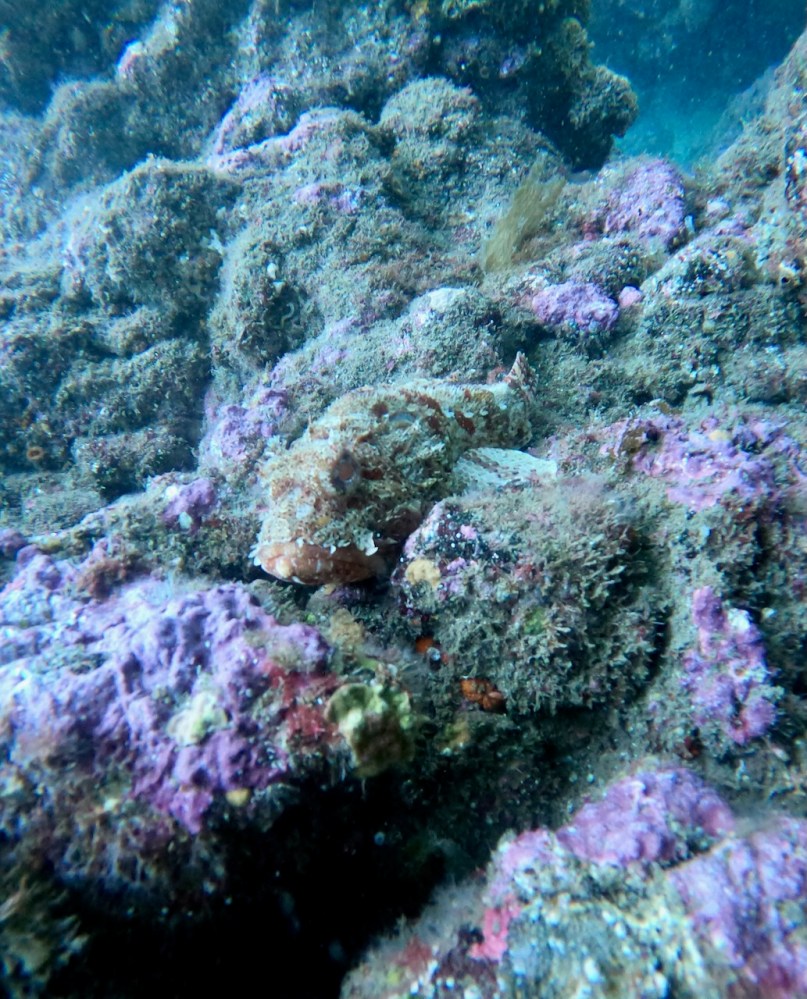
blurry nudibranchblack scorpionfish
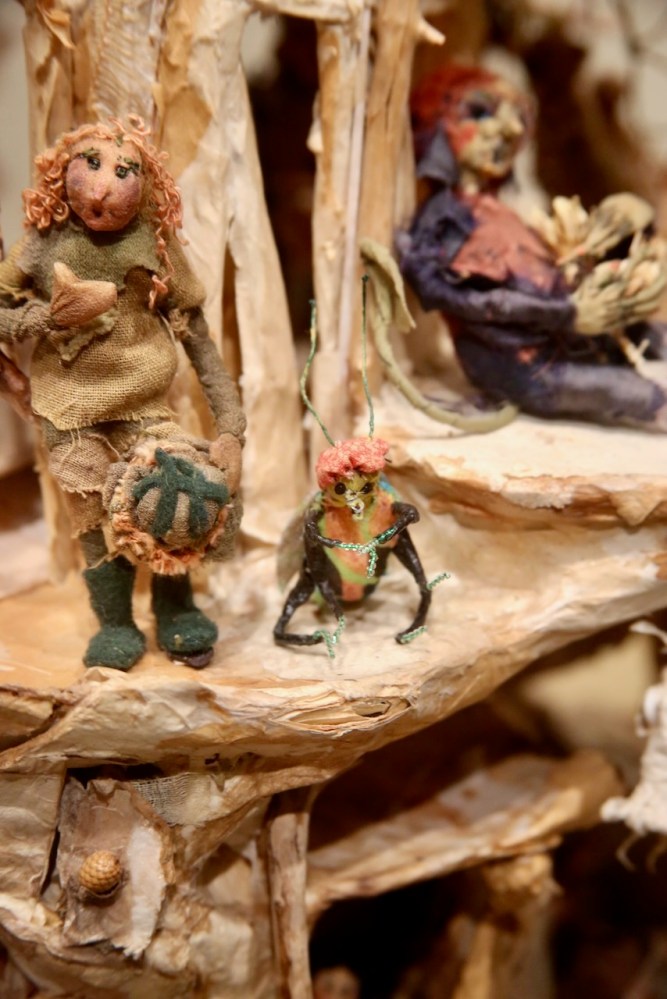
If our travels have taught us anything, it’s resilience – from camping in the snow, getting caught in the rain, recovering from a cold dive, eating papier-mâché on a subtropical island, and getting viciously attacked by mosquitoes. In these moments we’re forced to make a plan and as luck would have it, we’re also able to laugh about these situations later – these are the “good times” that others are looking for and we find them in the middle of a park, the side of the road, being unprepared because we forgot the wrong thing (there’s always something) and because I’d rather die via bloody animal bite than watching it happen to someone else.
I hope Caleb and I are able to withstand a few more thousand mosquito bites in our lifetime so we can continue to watch the smiles come to our faces that being in our element brings. We prefer to be at the mercy of nature every day, regardless of how amazing and inspiring, instead of submitting to the manmade cages of time and expectation that “civility” brings with it. A bonus of these most fun and natural activities is that they can be extravagant or enjoyed on a budget and both will make you feel happy and connected.
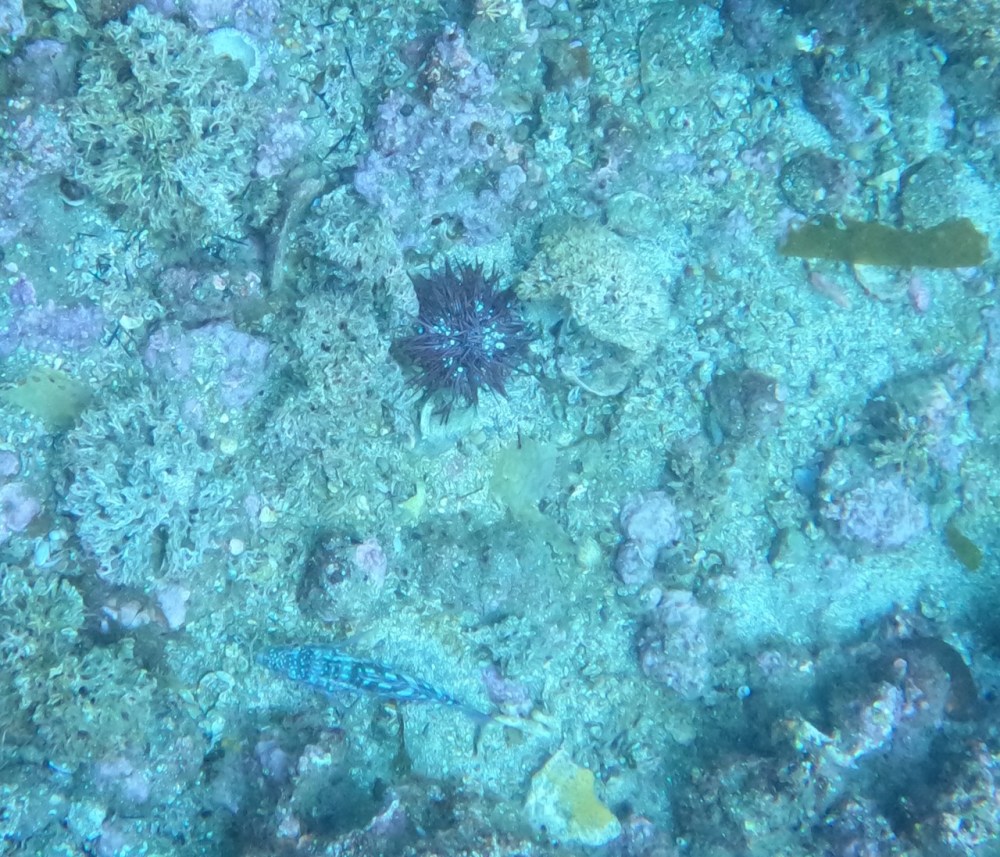
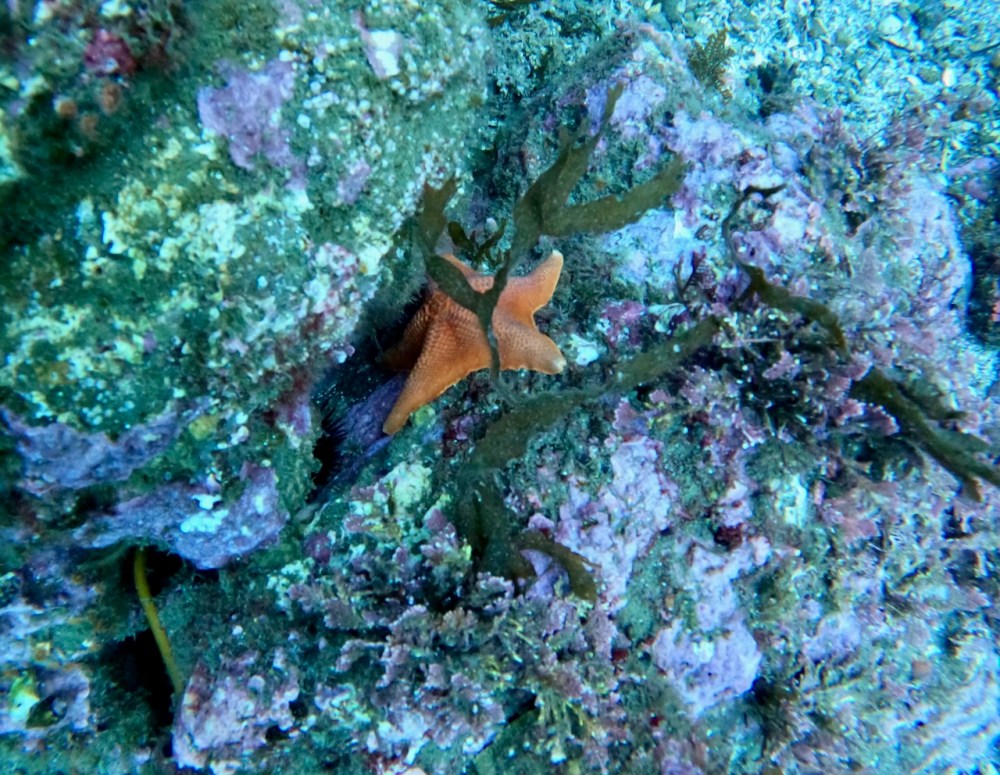
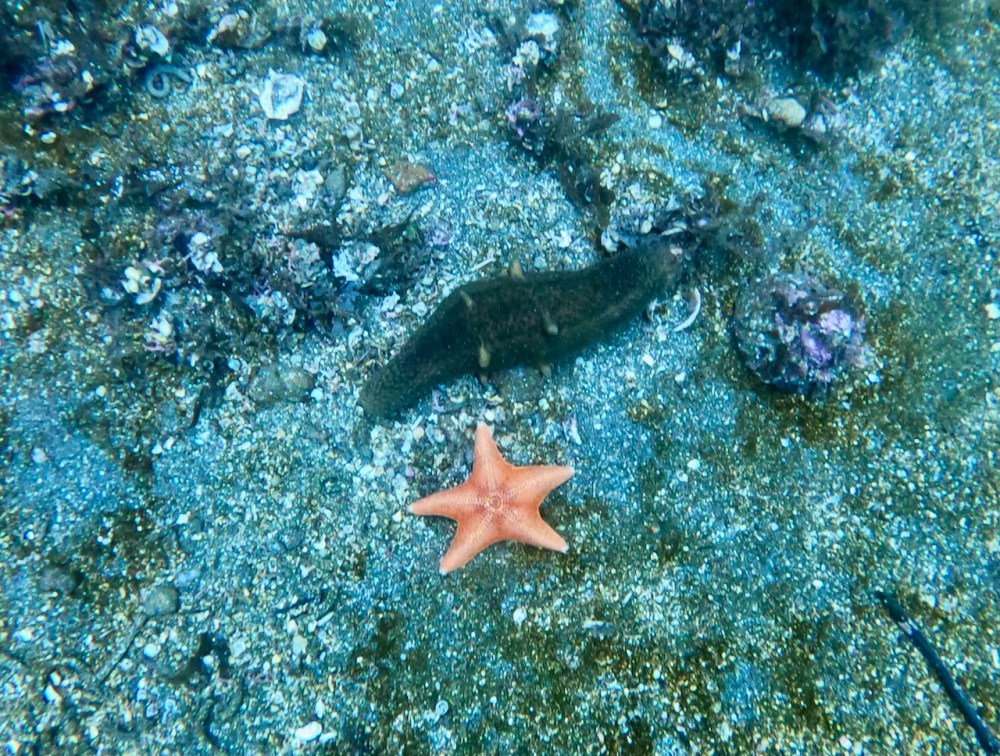
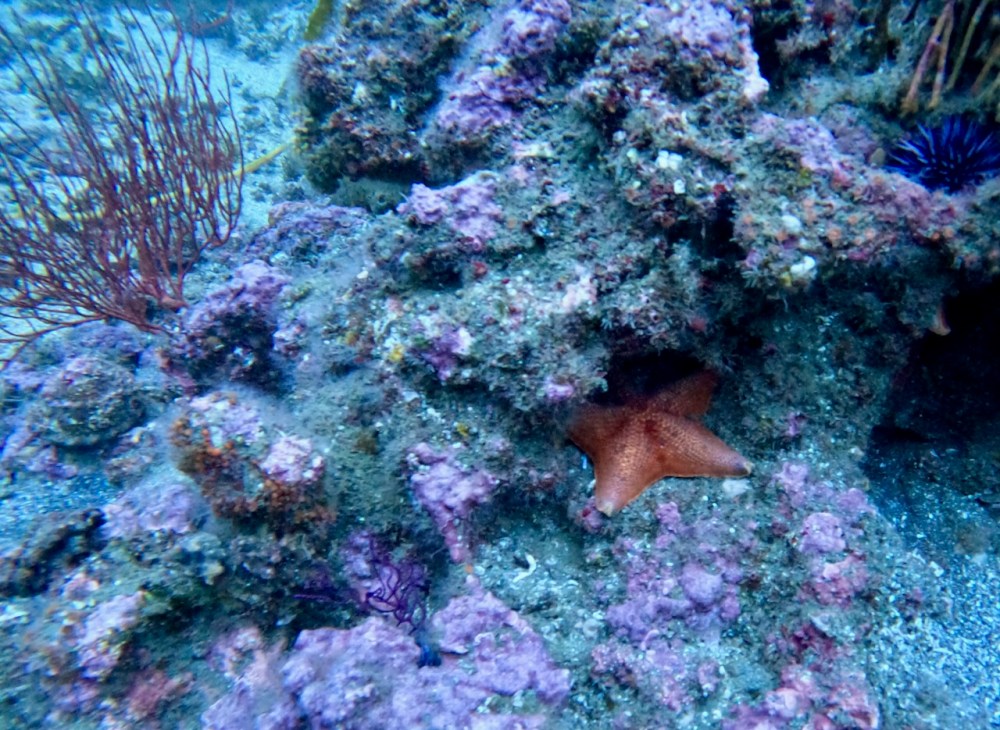
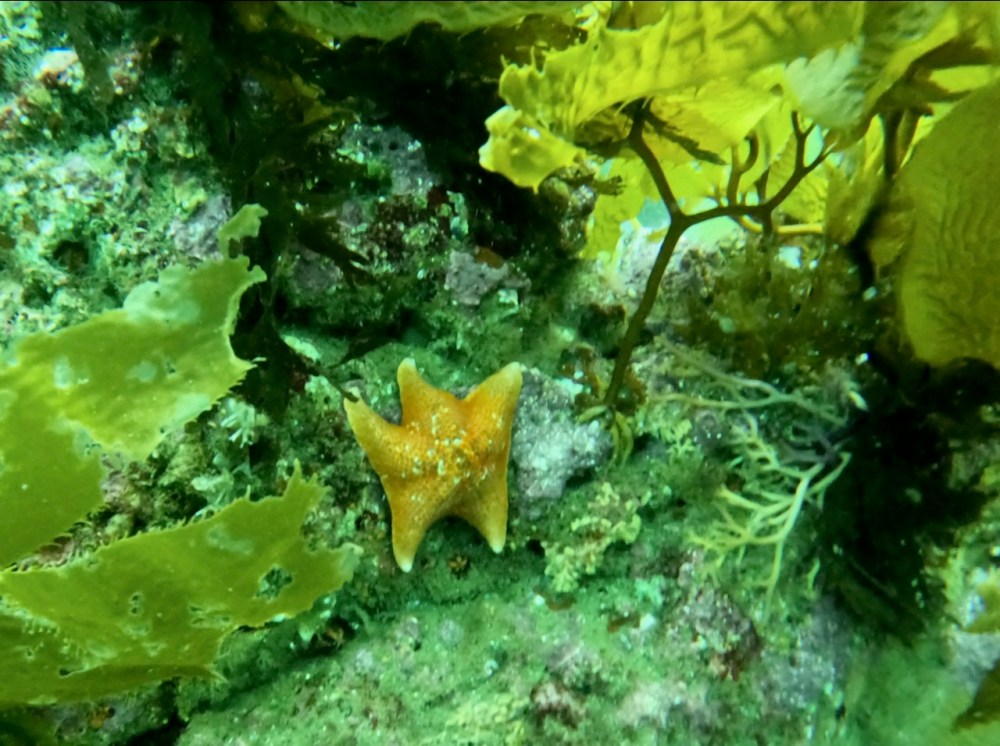
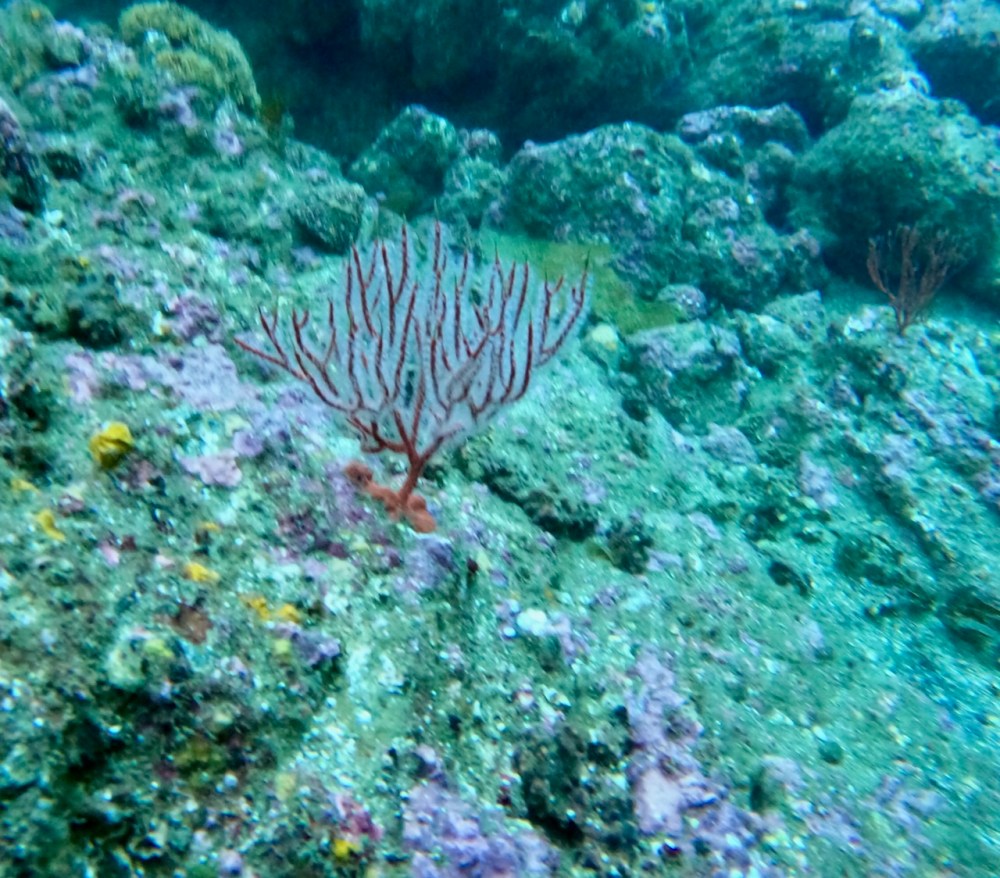
The second dive has a school of blacksmith damselfish, of which two-thirds seem to wear the cloak of invisibility or they’re out for fall break or were just eaten by larger fish, marine birds, or harbor seals. We also see Patiria miniata (bat star), a variety of nudibranch, camouflage and bright anemones, California sheephead and Oxyjulis californica (both in the wrasse family), sea cucumber, a grouper, possibly some living sand dollars, a couple of cowries and Trochus shells, and a beautiful black scorpionfish just to name a few.
Big Scorpion Anchorage has so much to offer that we choose to remain here and dive it again after lunch. I’ll have a quarter of chicken today, since I’m more flexitarian than whoever mixed up their menu choice, with beans and potato salad that are way better than the rice. I also get to have a hot cocoa with lunch as the dive master who approached me earlier, thinking I looked familiar, just happened to know where the boat keeps the packets when they need the counter space.
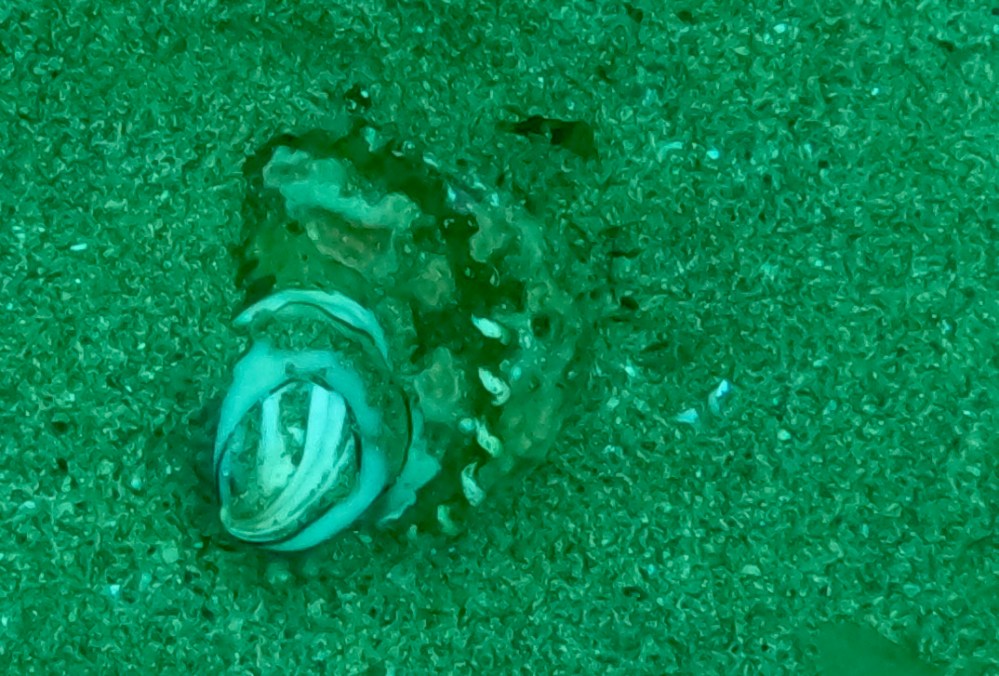
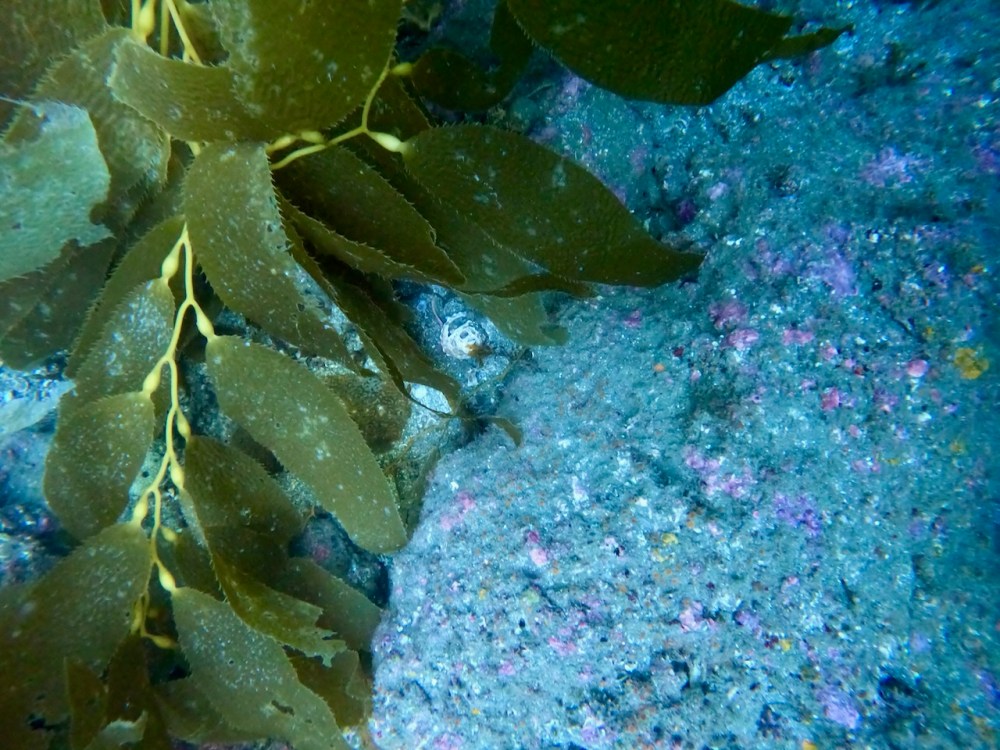
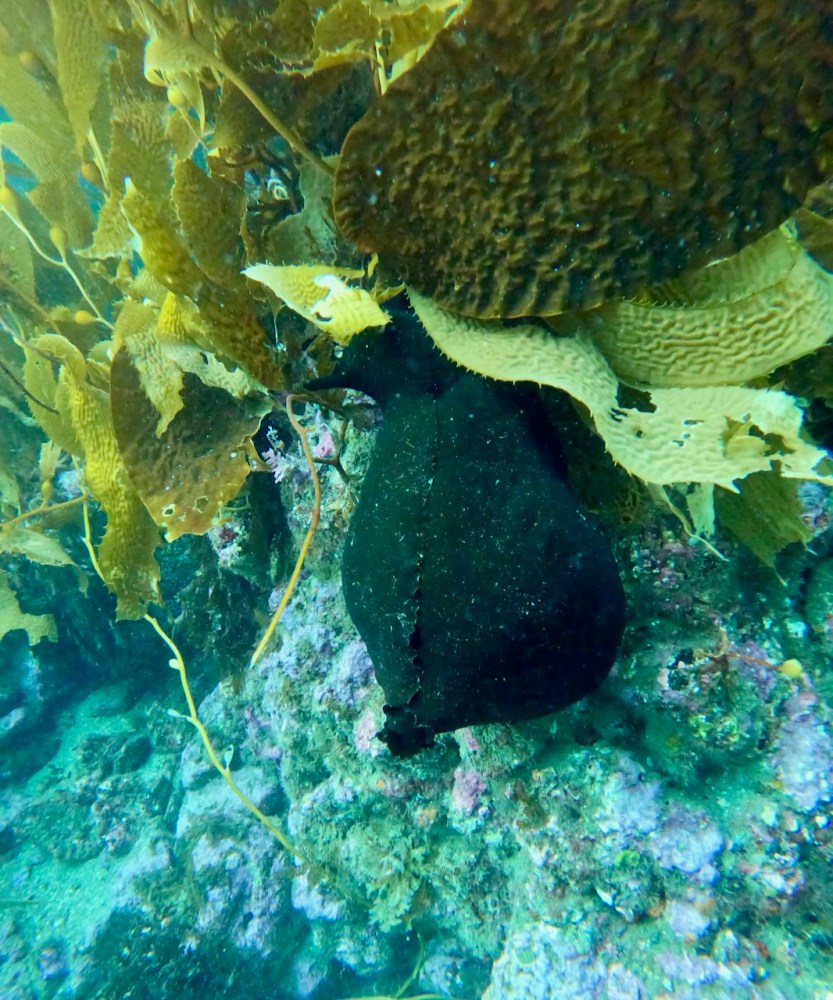
The third dive will introduce me to the second largest mollusk I have ever seen. The first was a cuttlefish in the class of cephalopod and this sea hare (so named because it’s closer to the size of a rabbit than a snail) is a gastropod, both between ten and thirty inches in length. The common garden snail reaches two to four inches when extended. I was surprised to watch the sea hare’s leaf-like body that looked like it was wrapped around an empty cantaloupe as it seemed to munch on the holdfast (that doesn’t absorb nutrients like roots) of some kelp.
I wanted to give the hare a squeeze, but attempting to pop an animal like a balloon has always been on my never-do list and is definitely not allowed if I am to maintain the Junior Ranger pledge to appreciate and respect plants and animals. I will follow the motto to Explore, Learn, and Protect. Trying to remember the Hierarchy of Biological Classification brings me back to 6th grade science as I don’t recall going over this in biology or chemistry in community college. Either way, it’s never too late to start learning, remembering, and reteaching yourself because no one will have all the same interests you do, and it’s most likely that you won’t find inspiration in school, but outside where life is.
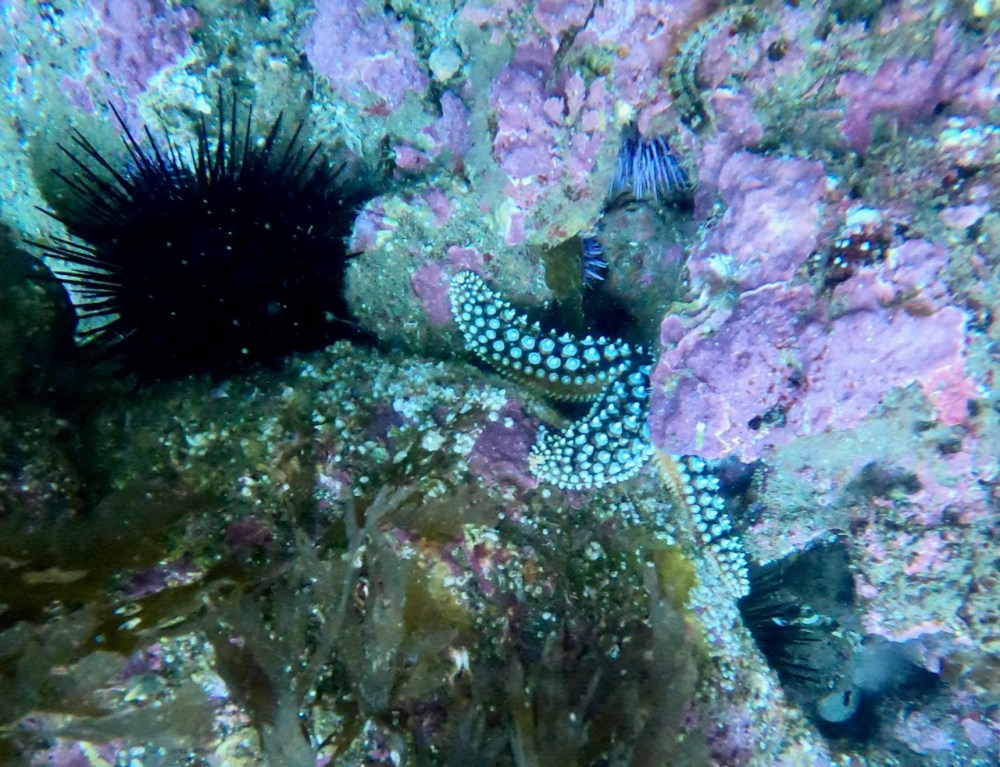
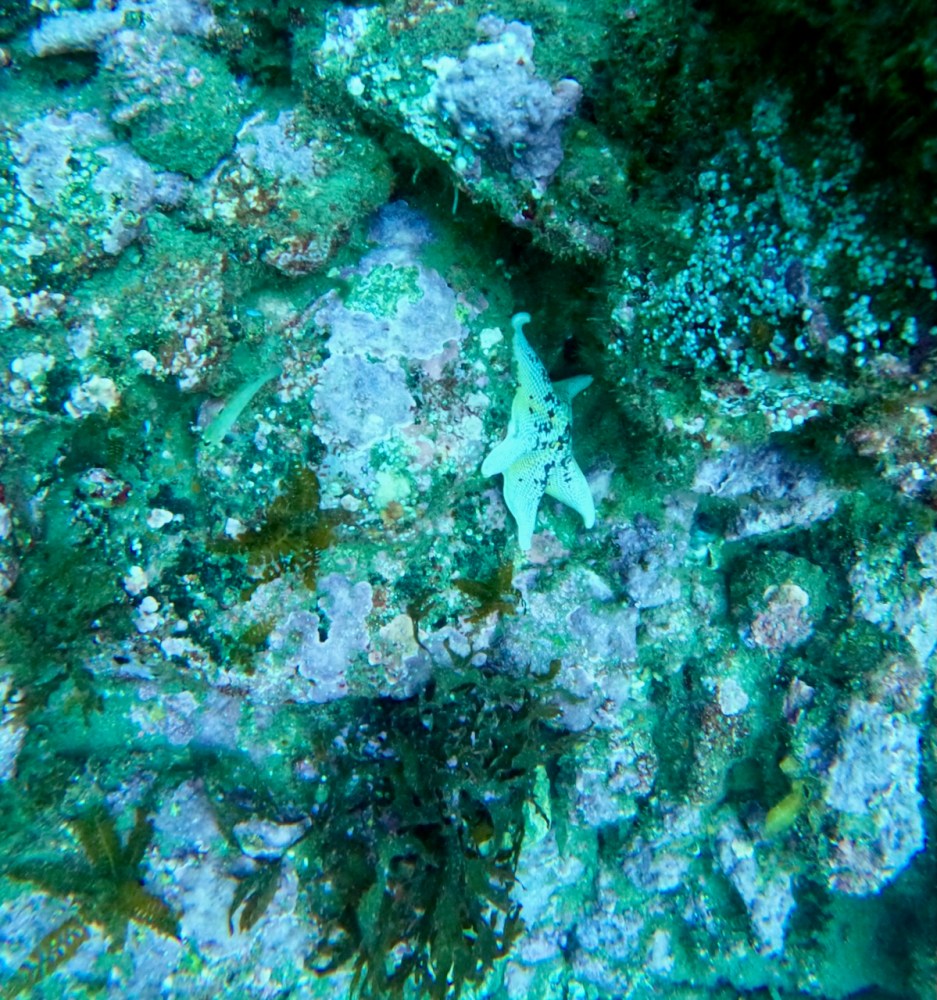
Poking out of the coral is a giant sea star, the original bedazzled decorator before rhinestones found their way onto jeans in the last year of the 20th century and they wear it very well. We see nudibranchs in shades of bubble gum, mac-n-cheese, and mini eggplant on fire. The route back to the boat is over and through the tangles of kelp so we don’t lose ourselves in the forest by attempting to remain untangled. Turning for a second and then getting back to the degree of travel you were going seems simple but the ocean can look like the Antarctic Polar or Saharan Desert where every which way is the same so it only appears you haven’t gotten lost yet.
California sheephead
I determine that I could do a liveaboard (sleep on a boat and dive as much as my computer/body will allow) at this site as there’s so much to see. I’m removing gear as soon as I get to my spot on the boat and as my wetsuit drops to the seat and the cool wind hits me I run to the hot tub and apparently almost run someone over to get in quickly. I will talk to and apologize to that guy, Nick, and he understands since I was so cold and his spot just happened to be next to the seat-step to get in.
We meet a lot of people on this trip – the bigger the boat the larger the crowd, but Nick stands out. He is the first diver I’ve met who chooses to dive without an expensive prosthetic on his left leg. He says it would probably slow him down and only break like the other home-crafted ones he now makes so he can participate in BMX and other sports too. He lost his leg to nerve cancer when he was two and got sponsored by a hospital until he reached 18 years old. I might not have noticed had he not hopped to get in line to jump in. Nick’s perseverance destroys excuses for lack of living to the higher range of your capabilities as our bodies are more amazing than we give them praise for.
sea hare
Caleb grabs the two dive bags with wheels and I’ll grab our weight bags (aka a small tool bag and repurposed insulated lunch bag) and we pass the guy who stood in the way of the crew and put his bags in front of ours because he was in such a hurry to get a cart to assist him in getting back to the parking lot. Had he asked nicely, I might’ve even helped carry his things, but being an ass isn’t the way to be, and is extremely rare in the dive community, unless you consist of a hole and two fleshy protuberances that actually serve a purpose.
We stop at Whole Foods for pita chips and cilantro lime hummus so that Caleb has something to snack on after we hang things up and ring them out so they are partially dry for tomorrow’s drive. At this point, we are grateful to be staying the extra night instead of dumping salty gear into the back and driving four hours home and then having to deal with the humid mess. I’ll also take this time to regret not braiding my hair while I condition it three times to reduce the matting that you’d only find on a stray dog or a homeless toddler.
The cold water has done its job of providing for the sea life and burning my energy stores to keep warm. The shower feels exhausting because I literally rinse and repeat three times. The reading is relaxing as I’m a visual learner who is stimulated by the research of others and also looking forward to sleep. I’m grateful to have the time and opportunities to incorporate books into my life – while sitting on a couch or in bed, walking around the neighborhood or on a treadmill, crouched over a campfire or inside a tent, or stretched out on a blanket or a lounge chair.



















 TheJessicaness