
The Milesians represent the Irish people as the final race to settle in Ireland; according to medieval Irish Christian history. They sailed from Hispania after traveling the world for hundreds of years and struggled for domination against the Tuatha Dé Danann, who represent the Irish pantheon of gods. The two groups agreed to divide Ireland with the Milesians taking this world and the Tuatha getting the Otherworld. There are archeological sites that relate to this story: the Newgrange Passage Tomb (one or more burial chambers covered in earth or stone) and the Hill of Tara as a portal between the two worlds.
We managed to get a few hours of sleep at Sheila’s Hostel just as I was drifting away from the mustiness of the room and into myths of my own. I wake with my hair greasy and my throat on fire. I wash my locks with a bar of Irish spring soap and we will walk to Cafe Gusto at Lapps Quay. The employees are still setting up as most of their customers are people on their way to work with no food orders so Caleb looks up another place while we wait on our coffees. We walk the few minutes to Caffè Nero on Oliver Plunkett St. named after an archbishop, from the 1600s, in the 1920s. He was canonized in 1975 and thus became the first new Irish saint in almost 700 years.


The street won the ‘Great Street Award’ in 2016, beating out the competition in Ireland and Britain, 300 years after it was laid out. This title was selected by the Academy of Urbanism for the street’s history, community, and trajectory. It’s the second street in the second city, of Ireland, (who keeps track of that?) with historic buildings; many in their third generation of business, 111 of them independent. Even now, while most of the city is still asleep, this street is busy with locals walking to work while two tourists unknowingly sit in front of The Oliver Plunkett Bar. The name is in Irish between ‘Food & Drink’ and ‘Live Music’. The bar has outside seating so we could eat since our coffees weren’t welcome in the cafe.

Carbs and caffeine ingested we make our way back over the River Lee to collect our rental car before its free parking spot expires. Our first stop of the morning will be Blarney Castle & Gardens. We were the first car to arrive at the closed gate until an Uber pulled in and the crowds started to arrive half an hour before opening. How there was street parking available so close is beyond me as there is no shuttle needed from the parking lot like at some theme parks in the States. We pay our $48 along with the other 4,000-ish people per day that come to kiss the stone and gain eloquence (persuasive speaking) making this site over six hundred thousand dollars per week.

Outside the ticket office is the Muskerry Tram Turntable that was used to bring tourists from Cork, a route of 18 miles. The line ran from 1887, with a packed capacity of over 2,000 passengers, at a price of 13 cents each, until the Irish Civil War when a bridge was destroyed in 1923. The railway was purchased and closed two years later. There are 60 acres to explore the Fern and Poison gardens; trails around the lake, by the river, and through the woodlands; and a Rock Close with sacred yew trees and druidic stones.
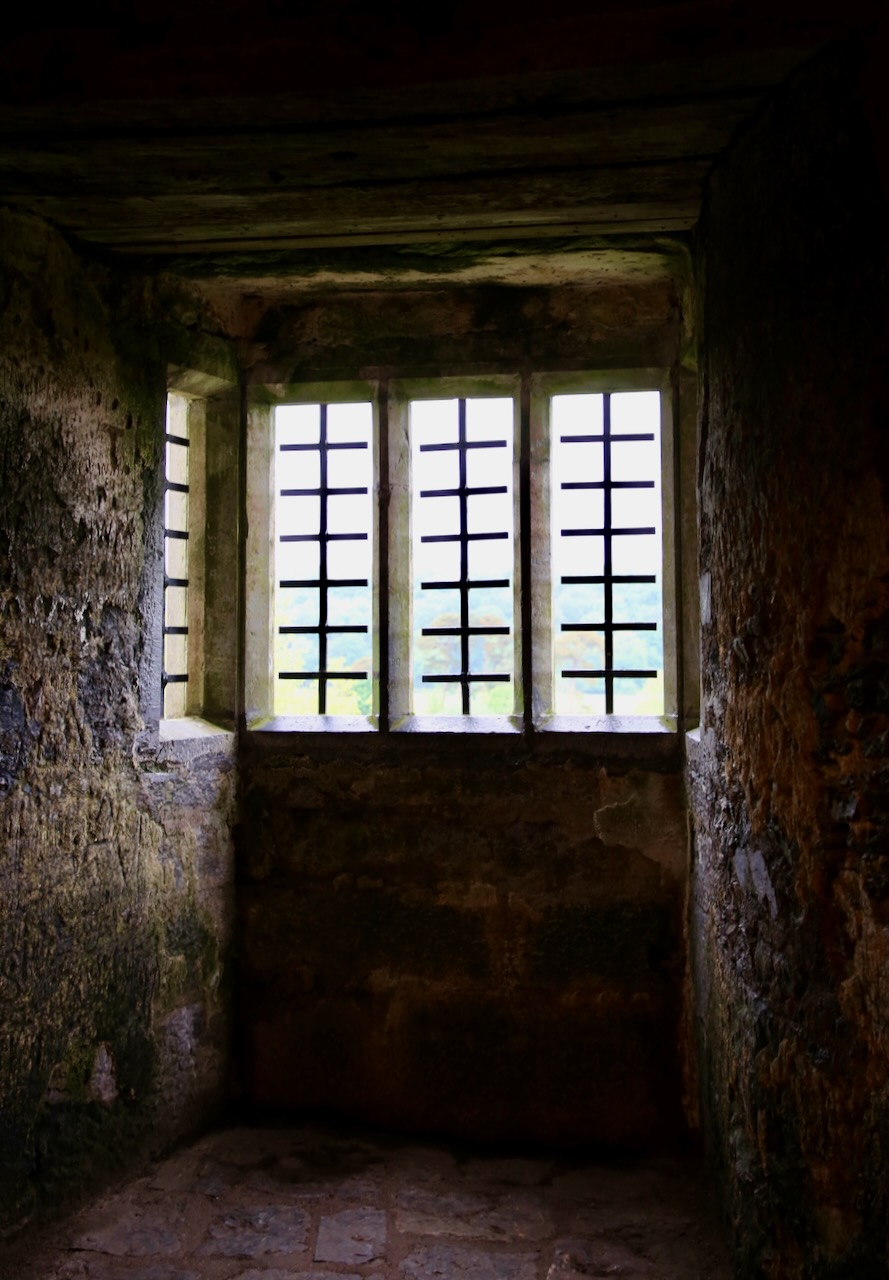

We make our way to the main attraction first. The dungeons are occupied by highly endangered tenants, the lesser horseshoe bats, who get their name from their fleshy noseleaf used for echolocation. There are roughly 14,000 of this species in west Ireland that are also only found on the west side of Wales and Britain. Their population has been increasing since the 90s thanks to their love of the dark disturbance-free dungeon as they’re more vulnerable during hibernation. We know tourists can be trouble, bringing bright lights and bad germs, and I unfortunately am carrying a demon that is burning through what precious energy reserves I have, so we carry on to the entrance where the wait time is an hour — if there’s a line.

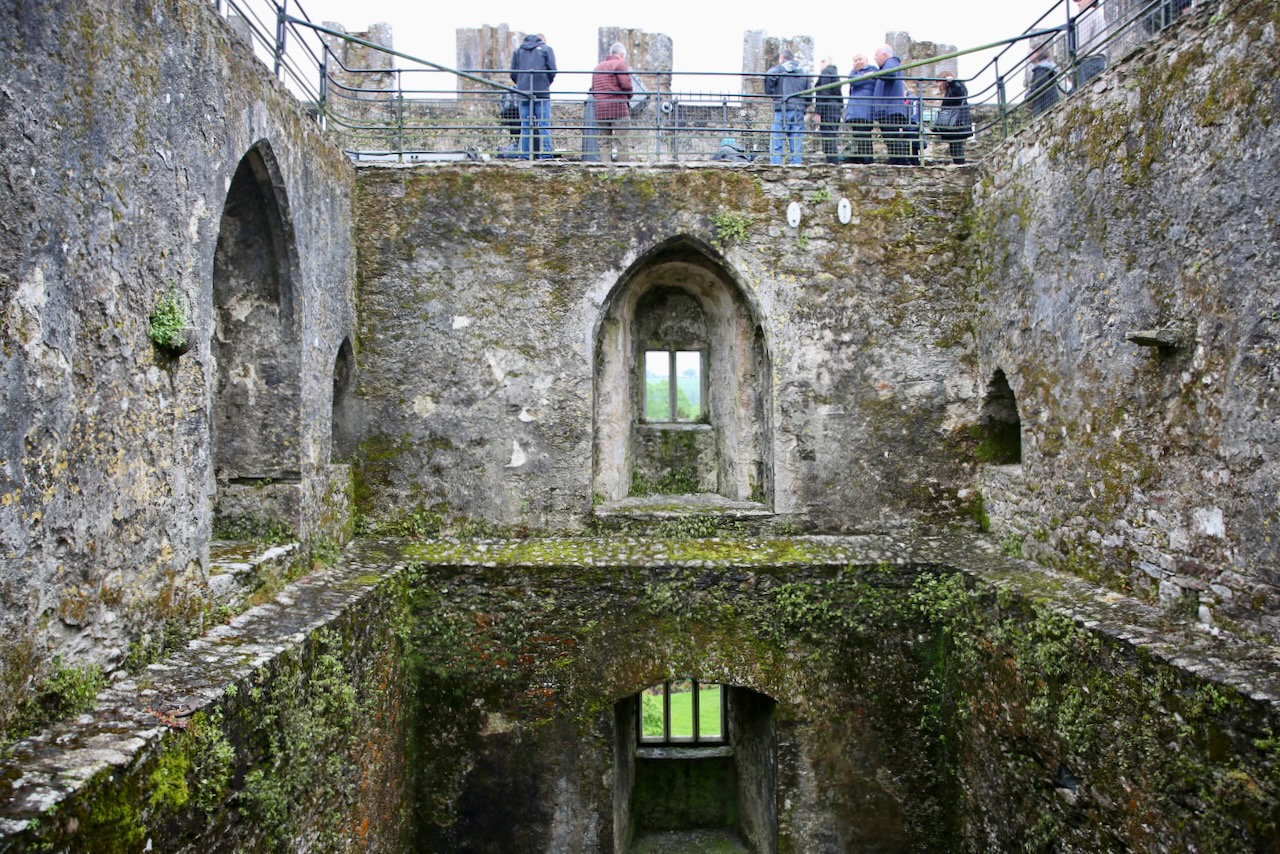
The castle was built on an elevated outcrop of solid limestone rock in the 1400s by the MacCarthys, the Lords of Muskerry, some of whom would be buried in Kilcrea Friary. It remained the family stronghold for over 200 years before being sold to the governor of Cork in 1703. The Blarney Stone was believed to be half of the Stone of Scone, that was used in the coronation of Scottish monarchs for its special powers, as a gift to the king for his help in the battle of Bannockburn in 1314. Geologists determined in 2014 that the stone is of local origin, so it’s more likely that it saved the Lord from losing his land to Queen Elizabeth I by motivating him to talk his way out of the predicament.


This tower house comes with an oubliette, French for forget, a 15-meter deep pit for unwelcome guests, and three three-seater garderobes (toilets) upstairs if you were invited in. The castle looks great for its age and the wear of guests 363 days of the year. There’s plenty of green throughout the castle and even more beyond the walls once we ascend the 125 narrow spiral steps. Iron rails were added near the stone in 2000 so that tourists would have something to hold onto for added safety, instead of dangling out of the top of a castle by their ankles, but there’s still a man with his hands on your hips instead while his friend takes your photo.
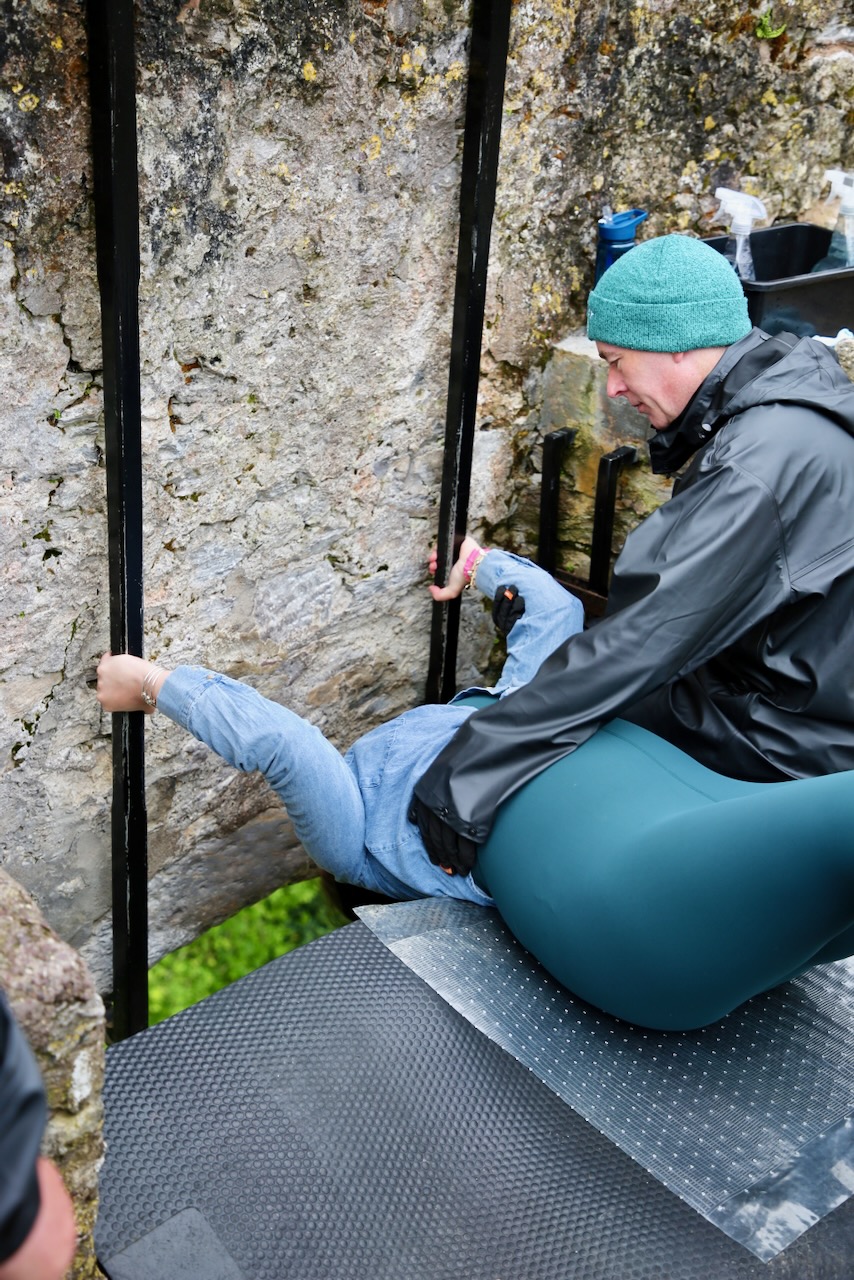
There are rumors that the stone used to be a toilet and that locals still use it to piss on at night. No, I didn’t lean backwards to gain the gift of gab as I’ve been told more often than not that I should learn the art of holding my tongue. I’d be more willing to kiss limestone and chapstick than disinfectant. We watched the process, demonstrated by the three people in front of us, and kindly passed by to admire the view below as ten people queued for their date with destiny and to join the list of kissers before them such as Winston Churchill, Mick Jagger, and Ronald Reagan. I’m not the only one who didn’t realize until we got there that it’s not just a rock in a lobby and that some find the stairs claustrophobic.

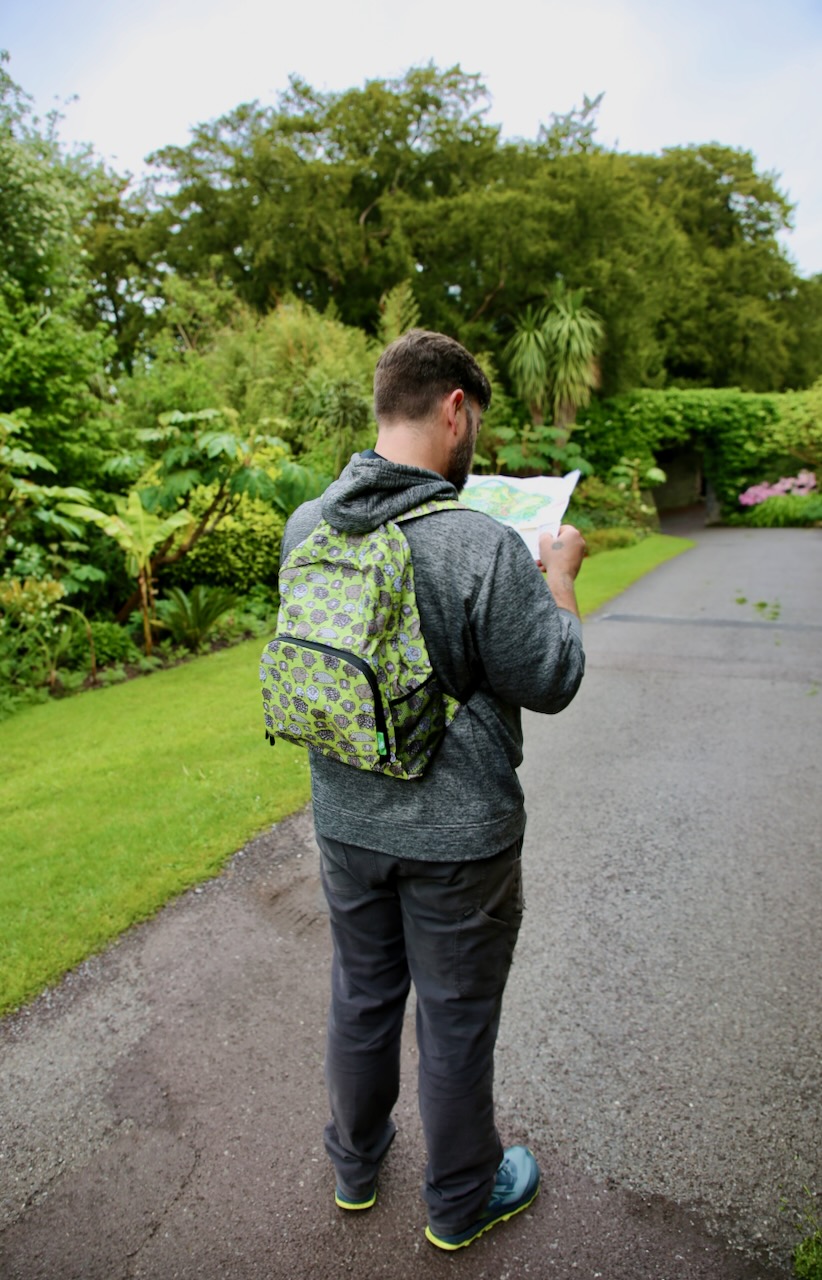
There’s a separate set of stairs to descend and to keep traffic moving more smoothly past the murder hole, another defense structure. The name reminds me of a horror comedy film, Murder Party (2007), about art on Halloween in Brooklyn. There has since been another movie of the same name released in 2022 which is a murder mystery, that we haven’t seen. There’s a cafe and gift shop and horse stables turned dining area before we wander to the Rock Close — an ancient druidic settlement with an altar, a hermit’s cell, a witch’s kitchen under ancient yew trees.
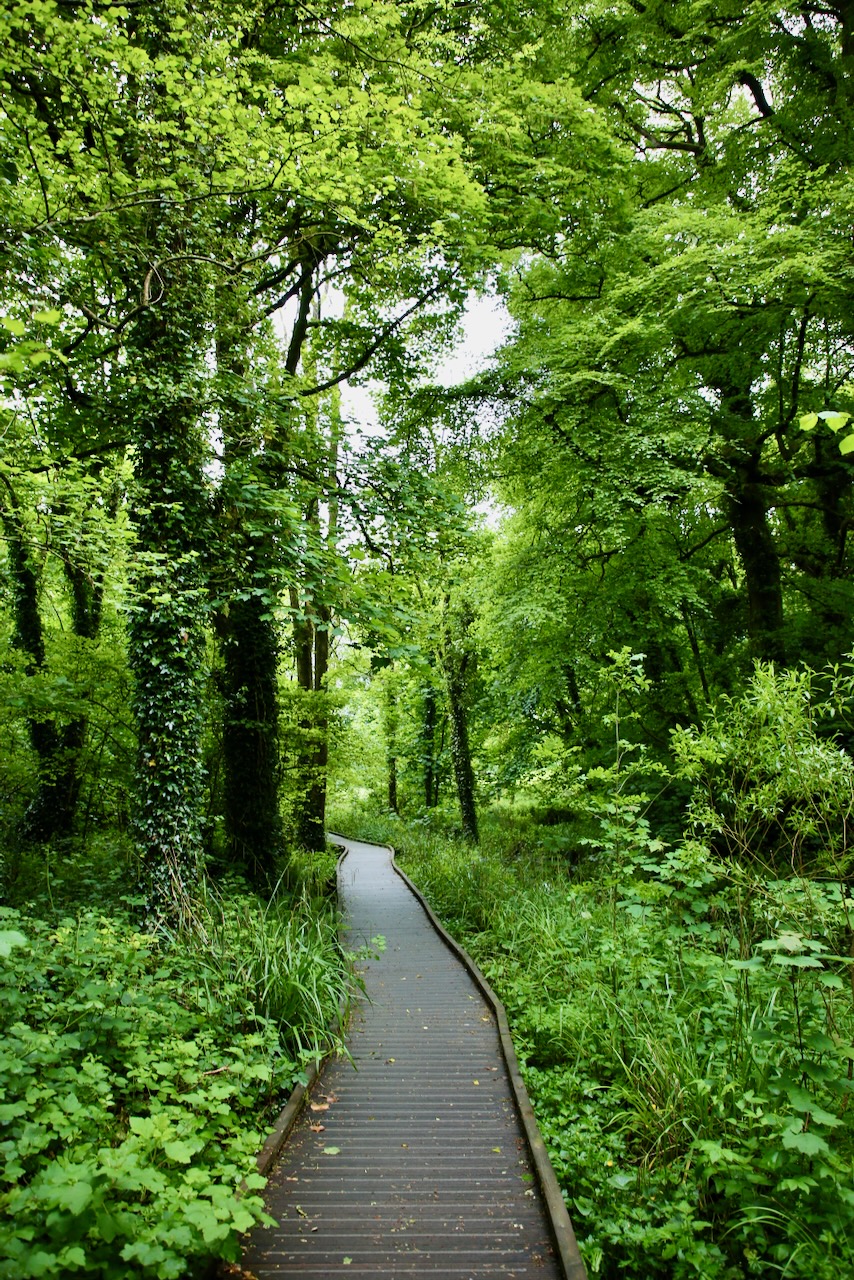
We come across a tree that stands out, as the tallest on the estate, at 145 feet. It’s indigenous to the western coast of the US, though the Sitka spruce is commonly grown in Ireland for musical instruments and boat building. The trees’ ancestors would have provided frames for aircraft built prior to WWII and may have a use in the skies again soon as some manufacturers in France prepare to release the kerosene hybrid and hydrogen hybrid models of two-seater touring aircraft made of wood and carbon fiber to combine a historic look with modern technology.


Carrigadrohid Castle
We are struggling for energy through the gripping illness and a lack of sleep. The crowds are growing and the sidewalk shrinking. We could cut across the lawn to see the Blarney House but would need a few more hours to cover the rest of the grounds along the river, around the lake, and across the woodlands. At least the cost makes more sense now knowing that we could’ve spent the day here, and more easily at the slow pace we’re going, but we’ll continue on in hopes of finding somewhere less populated to conserve what’s left of our stamina.
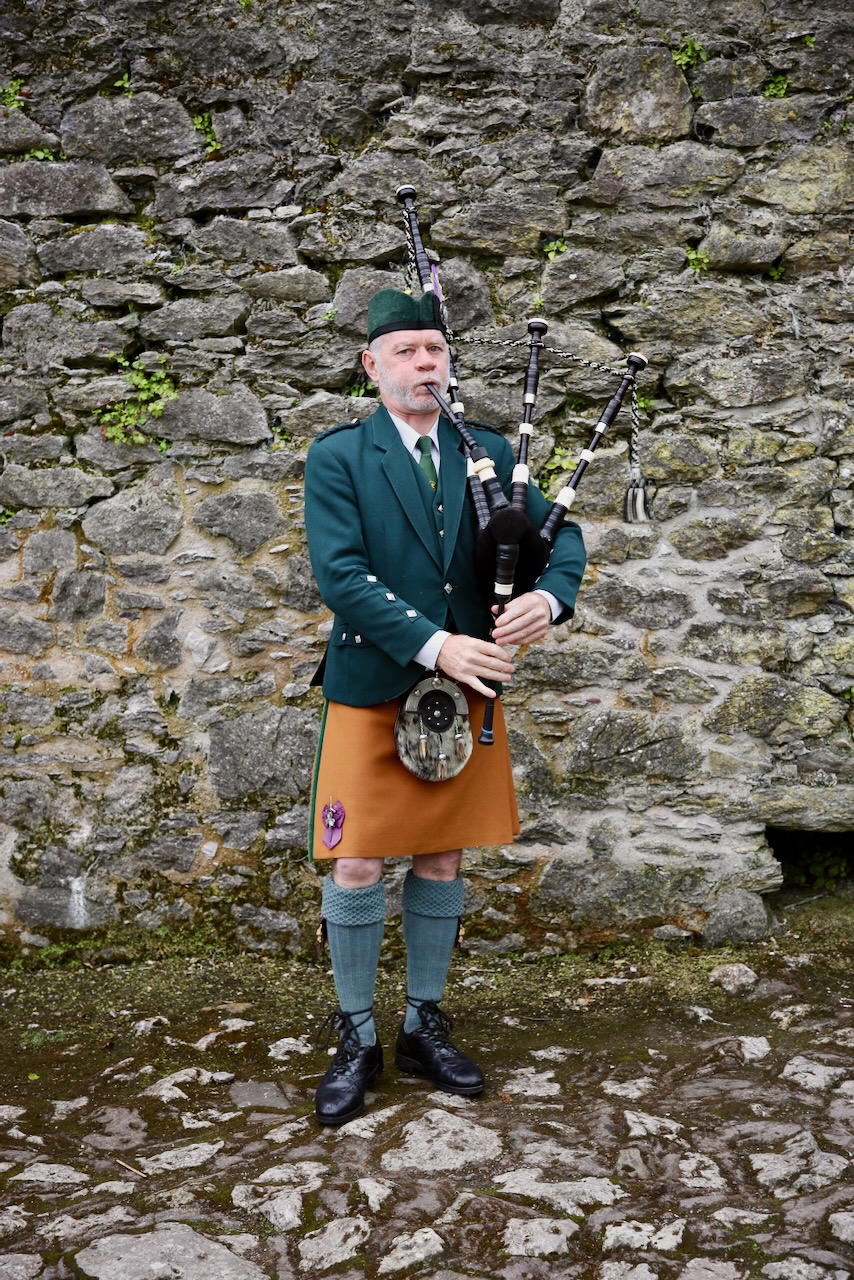
Luckily, we don’t have to leave the park without being serenaded by bagpipes (a square on Ireland’s scavenger hunt bingo card), complete with a request from a six-year-old for Twinkle Twinkle Little Star. Our next destination, Carrigadrohid (the rock of the bridge) Castle, used to control the movement of people and goods along the River Lee by being built on the water that it now stands in due to flooding of the valley for the Hydroelectric Scheme. I’ll park next to Dinan’s House because it doesn’t look lived in and I don’t want to block the road or bridge. The appearance is affirmed with a sign on the door letting us know the last resident died in 1968.
Killarney National Park
On foot to the bridge brings us by Apple Tower, used as a place for tea parties and music listening with a view. It’s believed this structure was once used as an apple store. I walk around the corner to see if there may be a way in but no entrance within sight. The tower and wall give off fairy tale and children’s literature vibes that inspire me to climb to the top, let down my imaginarily long hair, and kiss my prince. Back to the land of reality, I can kiss Caleb and we can walk to the other side of the bridge to catch the castle from each available angle, minus being in a boat.

There’s a radar speed sign that flashes ‘thank you’ when you’re doing the proper speed. I agree that I shouldn’t have to get encouragement to do the right thing, but it’s natural to feel better with positive reinforcement. We pass a bust of the Goddess Áine as we drive west on the bypass that was opened recently (2022 and ’23) with the addition of this sculpture facing the summer solstice and Bronze Age Girl, whose remains were found in the development process, facing the winter solstice. These were commissioned to Sarah Goyvaerts under the Per Cent for Art scheme which allocates a portion of the budget for major road projects for public art.
Ireland has more highways planned so they can reduce travel times for tourists and those driving to work and school. The government is working to improve safety and reduce congestion while locals are concerned that more roads will negatively impact the environment… and the feeling you can only get on a narrow winding road. The Corlea Trackway, or togher from 148 BC, was Ireland’s first roadway. It’s not certain whether the oak planks, between 3 and 4 meters wide, were used to cross the bogs or to ceremoniously enter them. They were first excavated in 1984 and parts of them were destroyed in 2013 by peat extraction. The roadway was only usable for a few years before it sunk under its weight.
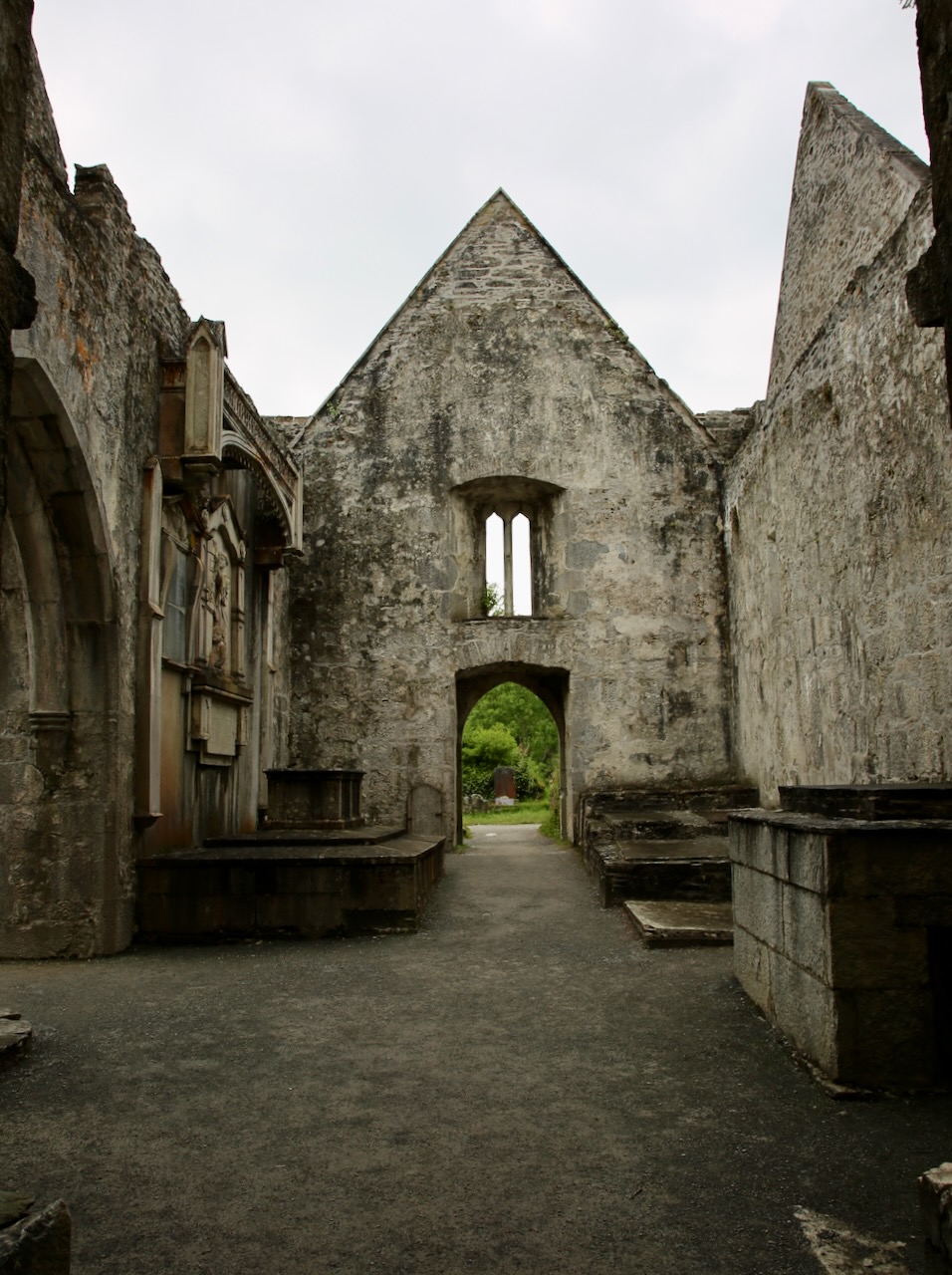
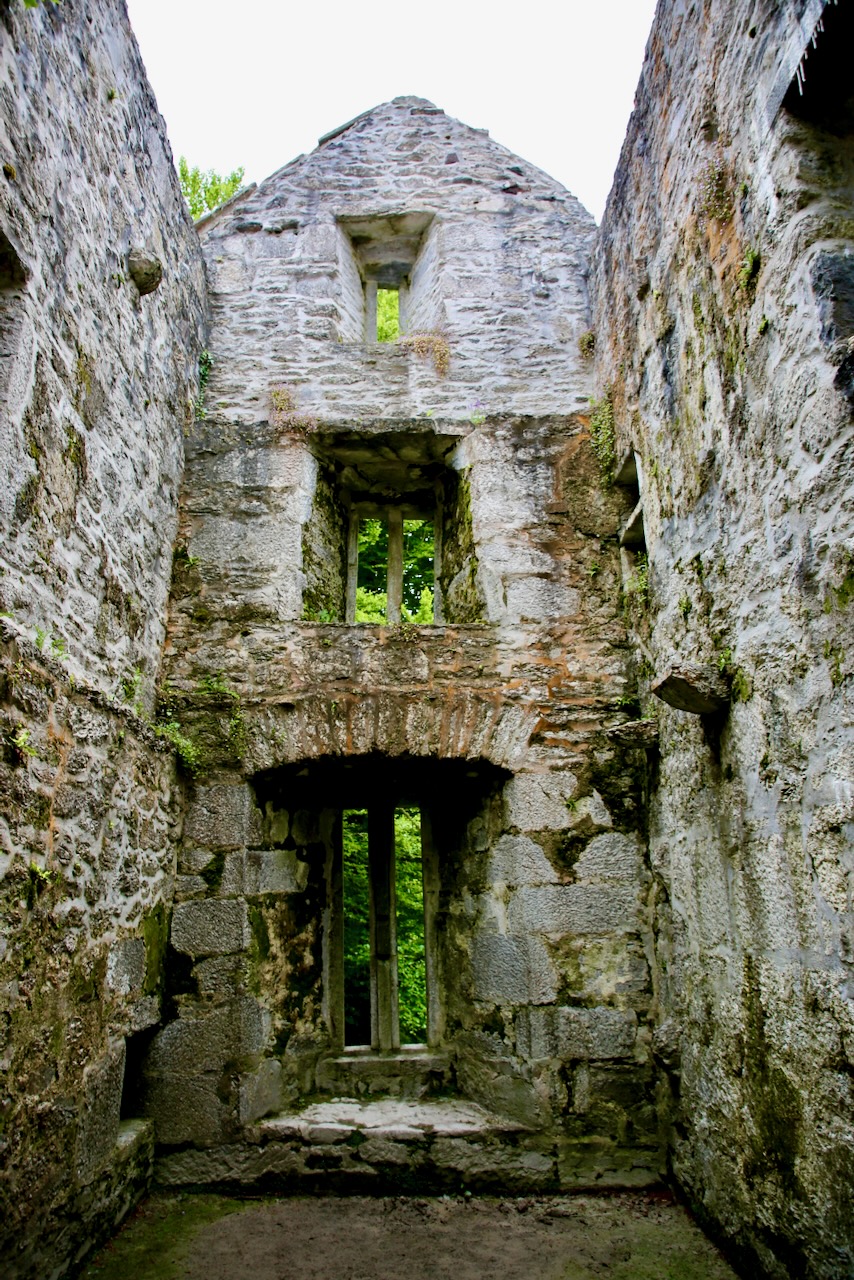
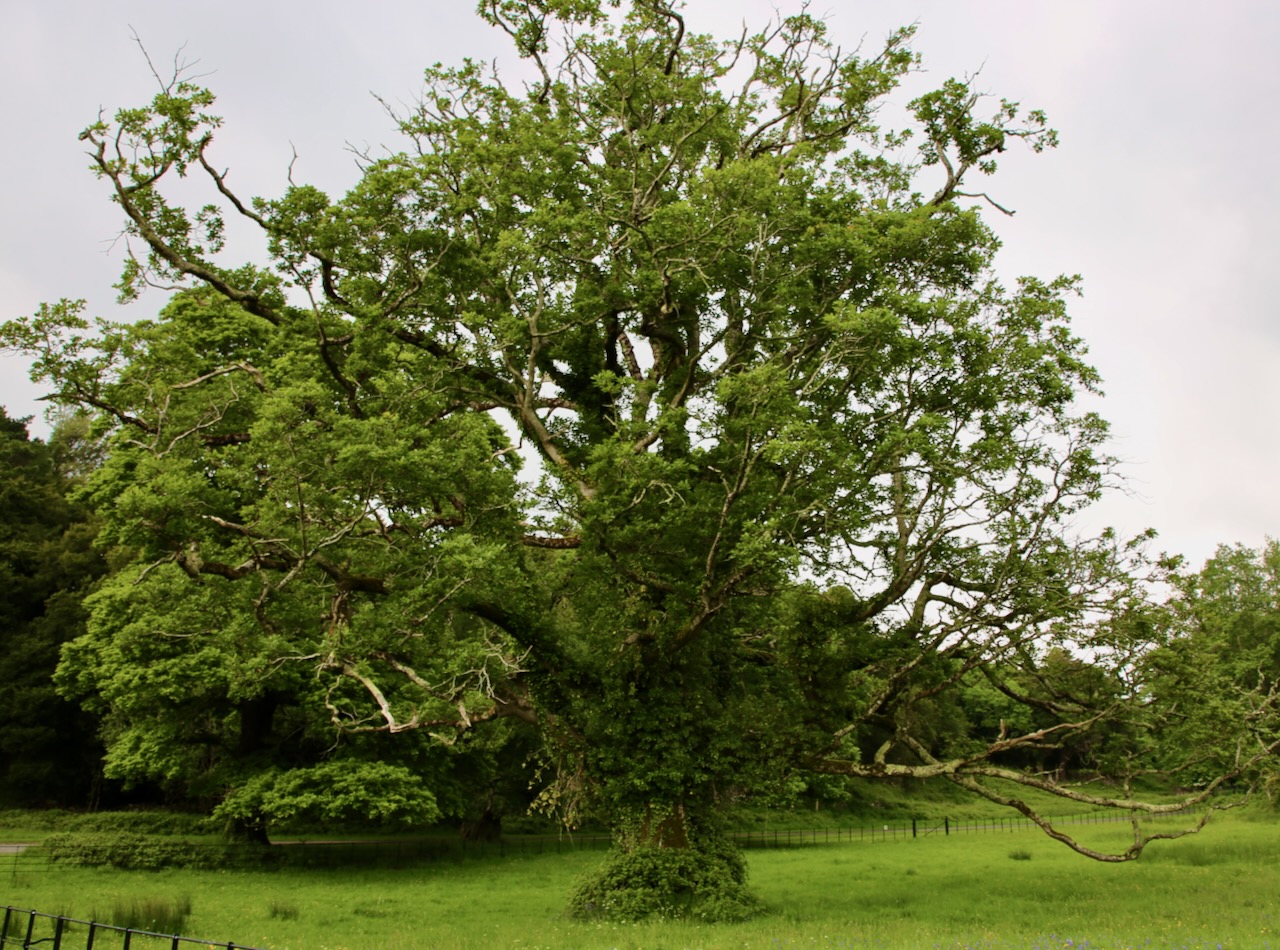
With the highway, we average between 33 and 48 mph and find parking in a large lot at Killarney National Park, which became Ireland’s first in 1932. The park is designated as a Biosphere Reserve by UNESCO. There are wide fields surrounded by low fences, and though there are many trees only a few of them have larger personalities, which is true for any grouping of flora and fauna. We follow a path to Muckross Abbey, one of the park’s many heritage sites, and walk around the perimeter first. Cemeteries are intriguing in various ways — their views, the grounds, and history, but none have inspired me to want to be buried there in a blanket of moist greenery for at least one hundred years waiting for the zombie uprising or the return of sparkly vampires.
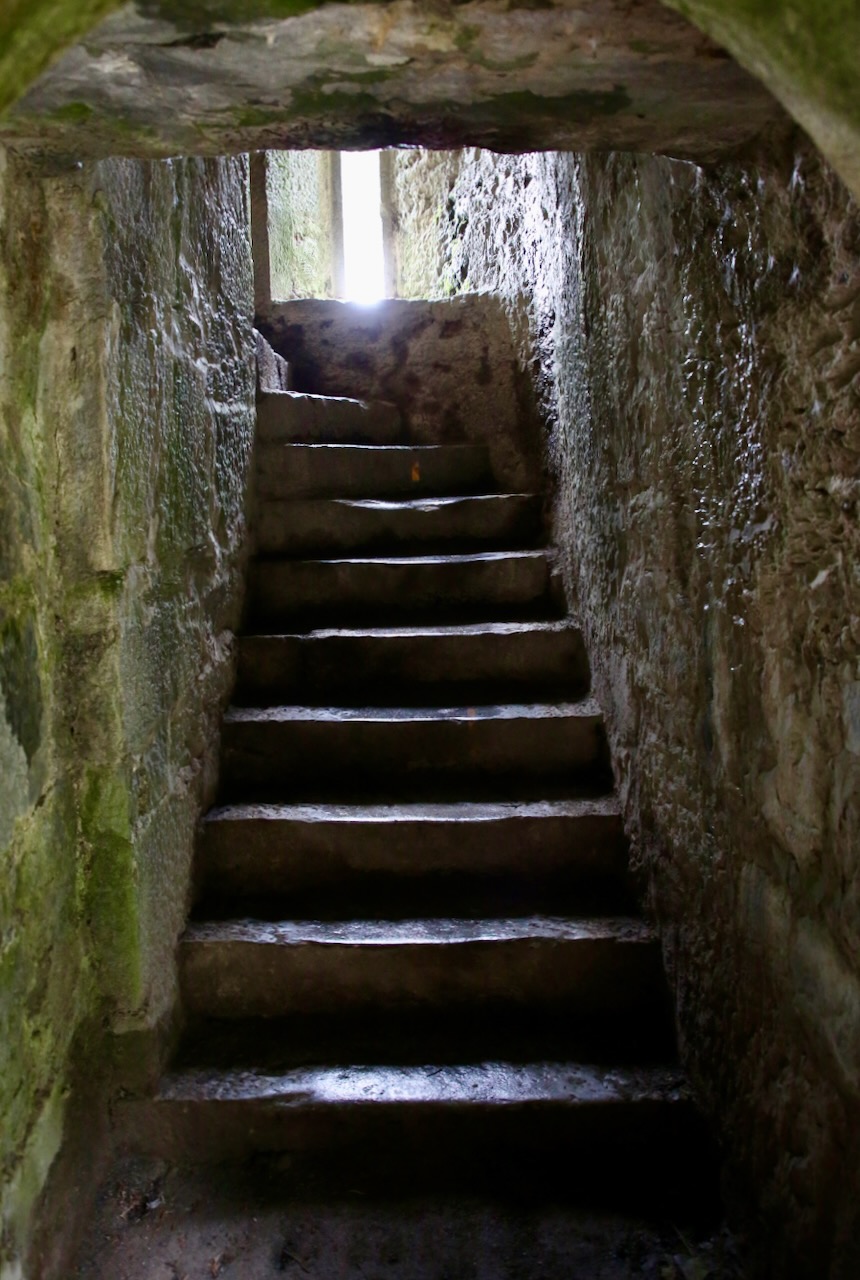
We already know Caleb would be a werewolf in that scenario and our pets of choice would be a dragon and a unicorn. We proceed down into the basement with mixed feelings. I can imagine running circles in the shade around the courtyard with my fictional family. This structure reminds me of old buildings in the States that have been turned into schools, shops, and museums with larger upper windows to let in more light. The yew tree in the cloister court looks like two arms together with the hands open and the fingers stretching towards the sun, its branches spreading out over the rooftop.

Muckross House
For a minute or ten, we have the place to ourselves, and for a moment I can imagine living here in the quiet solitude of the forest. We pass a jaunting (now meaning a short journey for pleasure but that used to mean to tire a horse out) car, with a Gypsy Cob horse in the harness, awaiting to return to the depot by Muckross House after chauffeuring their latest passenger around the park. The Irish Black cattle seem to have an easier time as they’re allowed to lounge about in the grass. We make our way back towards the car and there’s a shop for treats, trinkets, and tickets to the Traditional Farms.
Ross Castle
We’re having a look around when a lady comes in upset that there’s no place for her to sit on her phone… because the park doesn’t have much signal. Our ancestors were too busy dying of mishaps and mayhem to perhaps have the time to complain, but I’m sure if they did, it would be about their health, not about expecting the world to cater to their every need. At least that’s one reason I travel, is to see how other people live and what they can live without. Though I can easily recall a few times when I’ve been bratty too, an airport can keep my attitude in check so I don’t end up on the no-fly list.
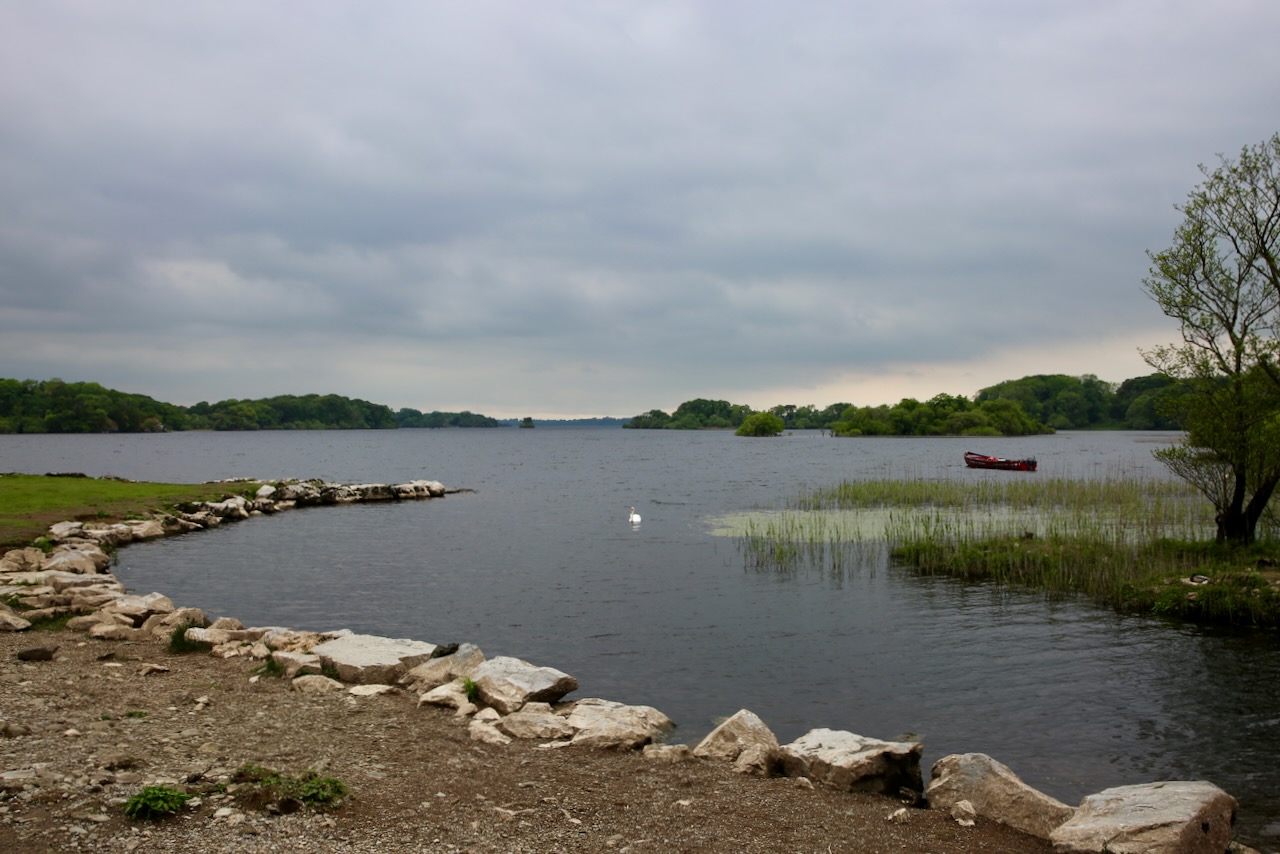
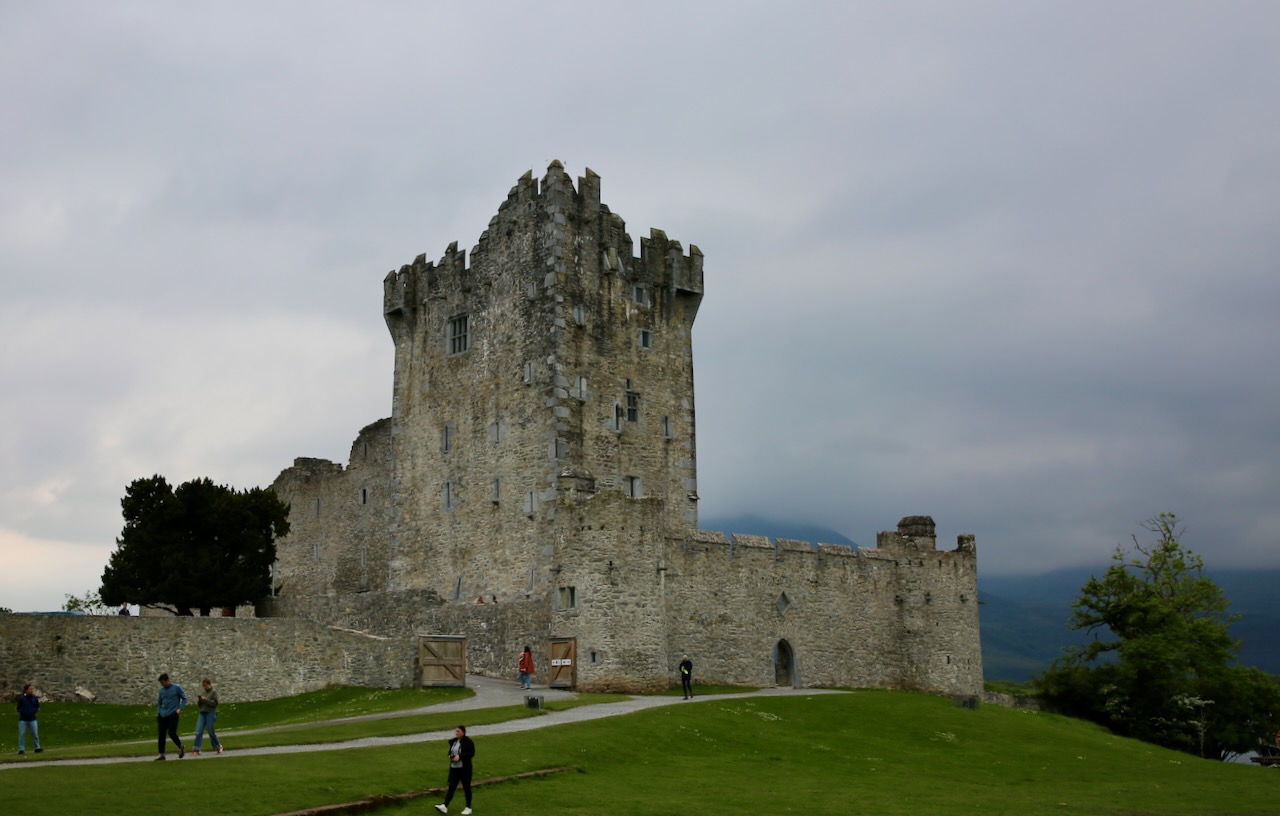
A few people are straggling about outside of Ross Castle along with two ducks and a goose (a familiar childhood game). Inside, we learn that this is just one of the 3,500 tower houses built in the 1400s and 1500s. The castle was restored using cow hair in the walls, wicker and sand in the vaulted ceilings, and timber shaped by an adze and held together with wooden pegs, and opened to the public in 1993. We check in to Mountain View B&B after I throw the stick around for their Breton spaniel and take a 40-minute nap after being shown to our room upstairs.
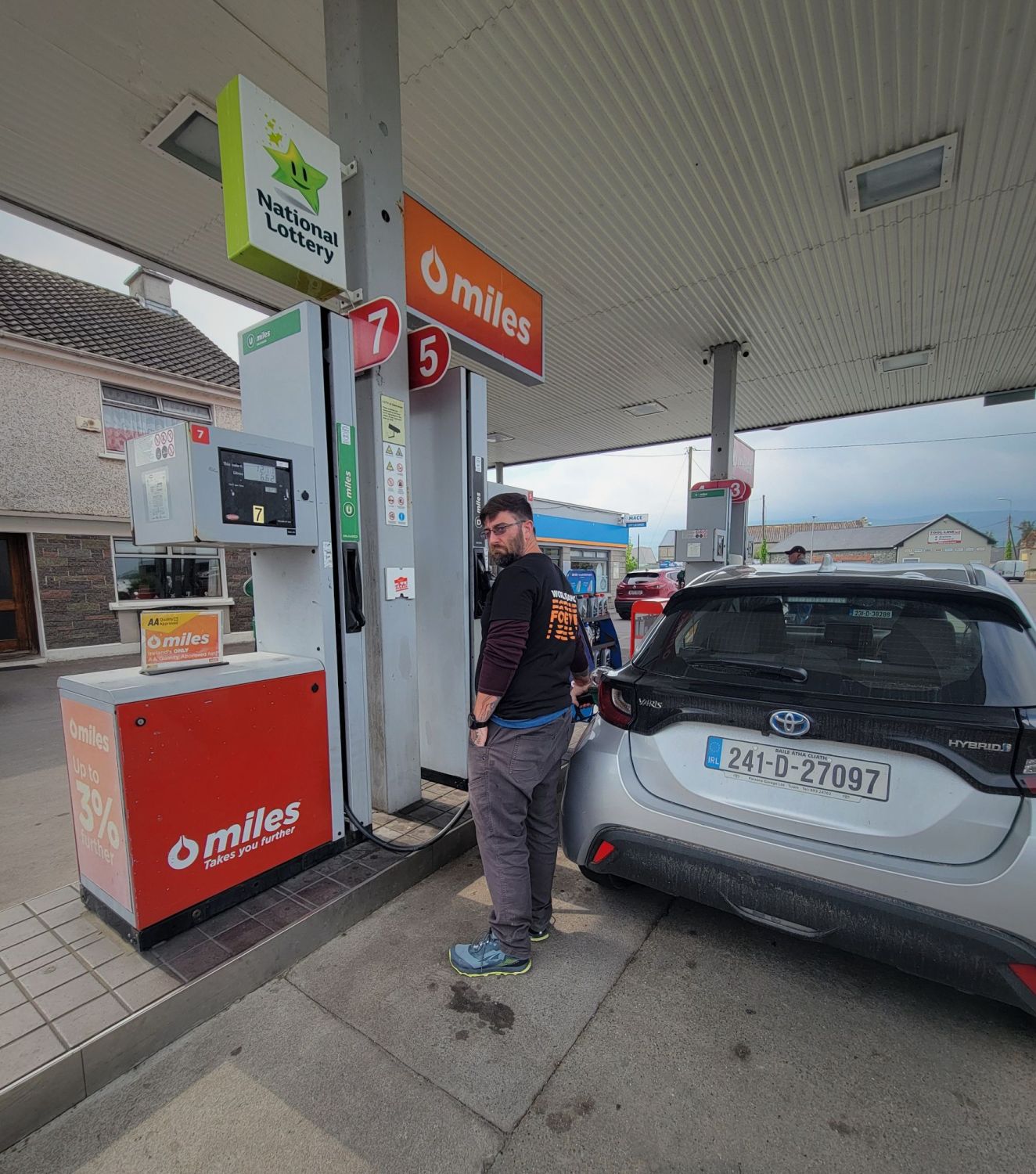
There are two beds, a walk-in closet, a tea station, a porthole window above the sink, and a folding shower door on the tub lit by a skylight. We are given towels but no soap so we drive into Castlemaine for shampoo and to get some gas, our first since leaving Dublin and we still have 190 km in the tank. The 25 L (6.6 gal) cost us 45.73 Euro ($49.85) which equates to $7.55/gal, almost double what we were paying in California. We are at the one-third mark in total trip mileage but I didn’t know that when I decided to get gas now instead of waiting to detour later.

Mountain View B&B
The Anvil Bar & Restaurant is on the way back to our room and though I’m ready for bed, Caleb orders me a cheesecake to go with his steak and beer while we listen to a group of men in the middle of a stag (bachelor) party. The groom-to-be is in a cheerleader’s uniform and his friends are singing, “Orla’s Mom”, the Irish version of Fountains of Wayne’s pop hit from 2003. The Irish name Orlaith means ‘golden’ or ‘princess’, perhaps a perfect reference to the blonde in the original music video. Our night would conclude at the end of a hot shower; their night was just beginning. I’m glad I got a peek into how the other half celebrates, at least at the cusp of evening in Ireland.

 TheJessicaness