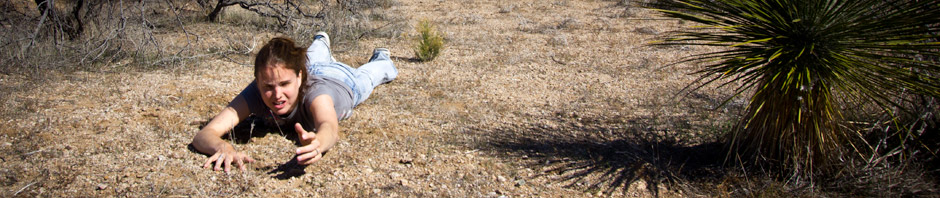


pictures taken hours apart
Breakfast is a balanced meal of an English muffin topped – with eggs and salsa verde and the other half with butter and strawberry jam – for me. We start the morning off in an El Paso valley driving through a beautiful fog until we crest 4,400 ft as we enter the Franklin Mountains State Park. I’ll have a look at some of the books in their collection: Texas State Parks: The First 100 Years, 1923-2023 and The Back-Country Kitchen while Caleb gets signed up for an annual pass to Texas state parks, a $70 fee that is now free to active duty military, veterans, and their same-vehicle guests.

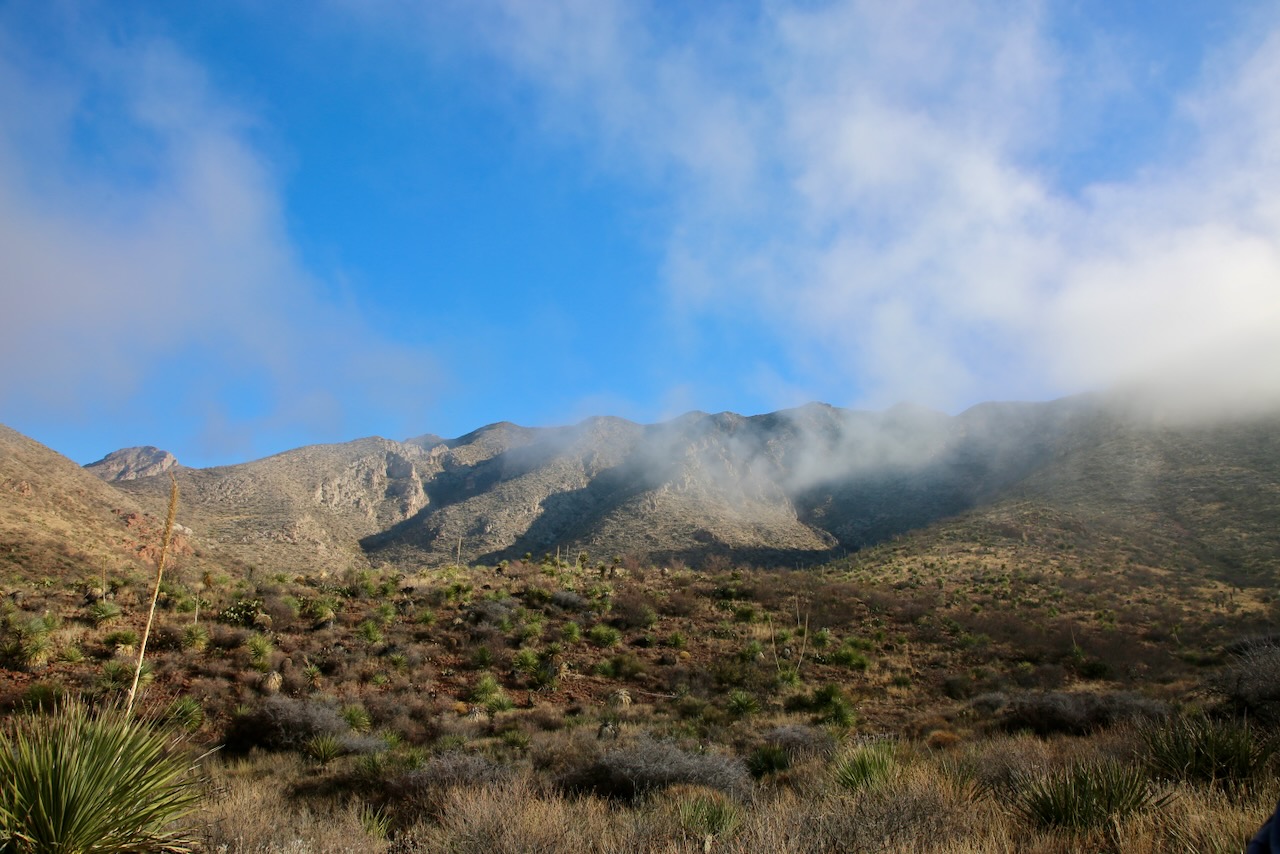
In 1896, a gold prospector found tin in the mountains, raised $350,000 to build a mine, and at the peak of production only produced less than $7,000 worth in two years and went out of business in 1915. These tin mines made the park on my to-visit list, but the challenging three-hour trail let me leave that part for next time. In its place, three shorter hikes that cover a third of the distance and only three-quarters of the elevation. We start with a jaunt up West Cottonwood Spring Trail but the 41 degrees in the shade and keep-your-eyes-on-it loose rocky surface soon has us changing our mind.
These mountains are the largest urban park in the US with over 24,000 acres lying within city limits until they reach the border with New Mexico. The Chugach State Park in Anchorage wins the world record, at almost 500,000 acres. The city on the park’s western border is what draws the tourists, in their droves by the millions, to Alaska as the top destination with access via airplane, cruise ship, bush plane, jet boat, ferry, motorcoach (aka bus), railroad, ATV, snowmobile, dog sled, and one road in for cars, RVs, and bikes with limited on/off ramps giving access to a fifth of the state.
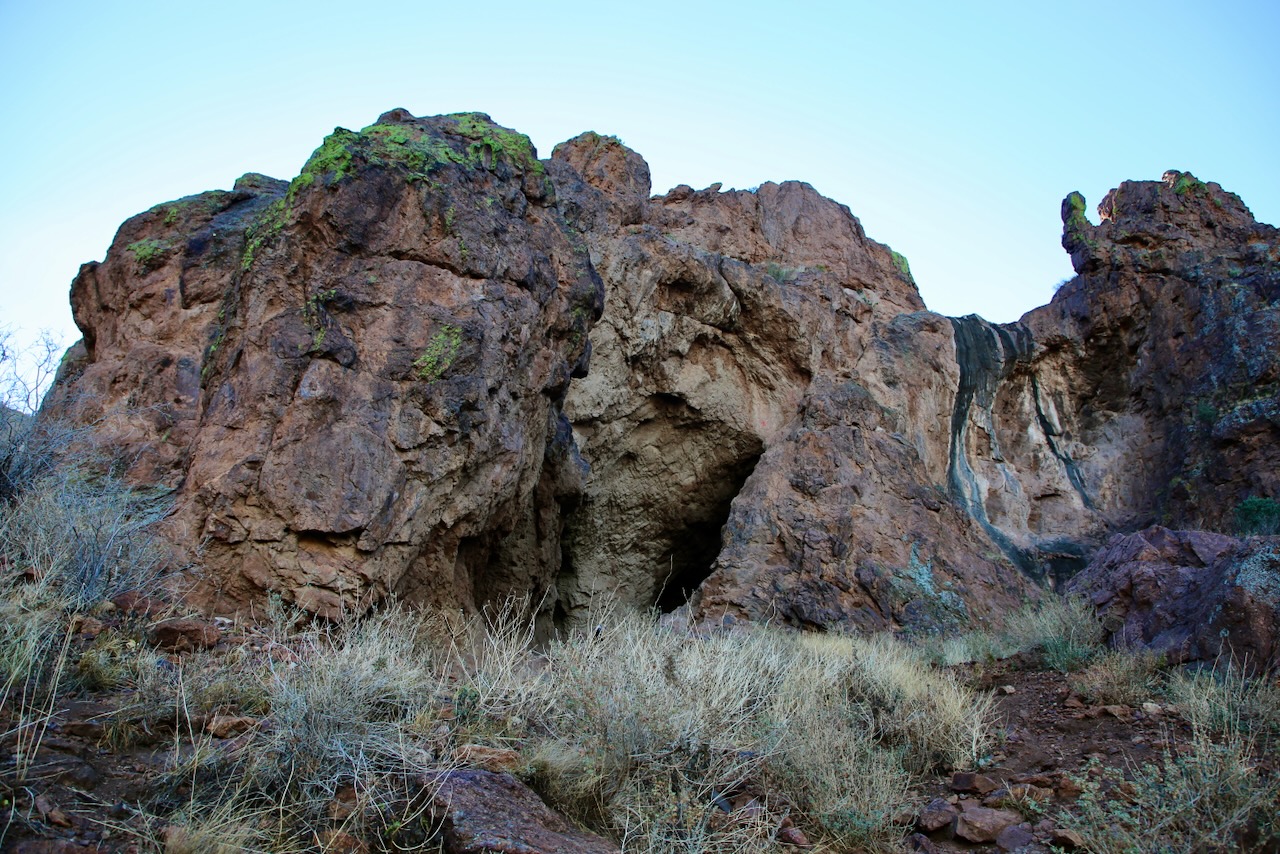
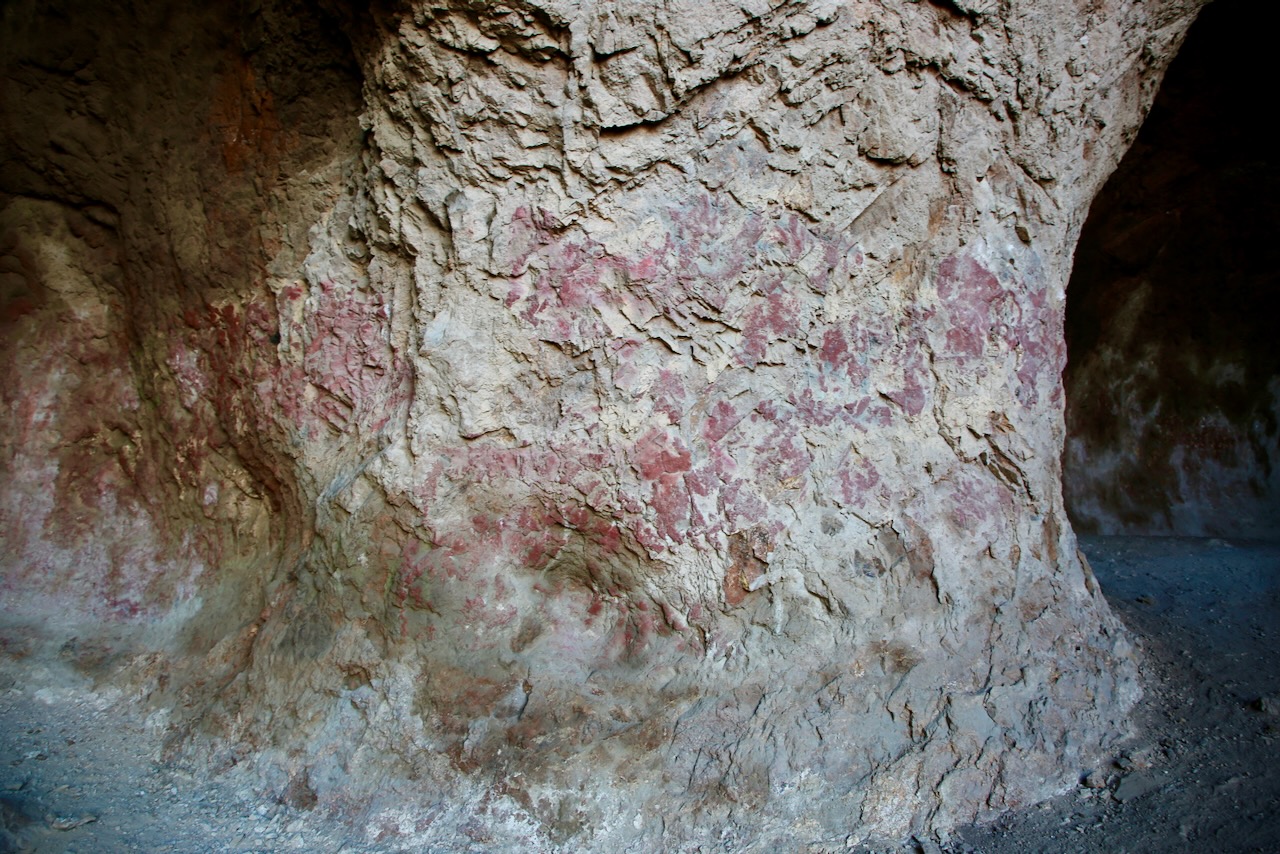
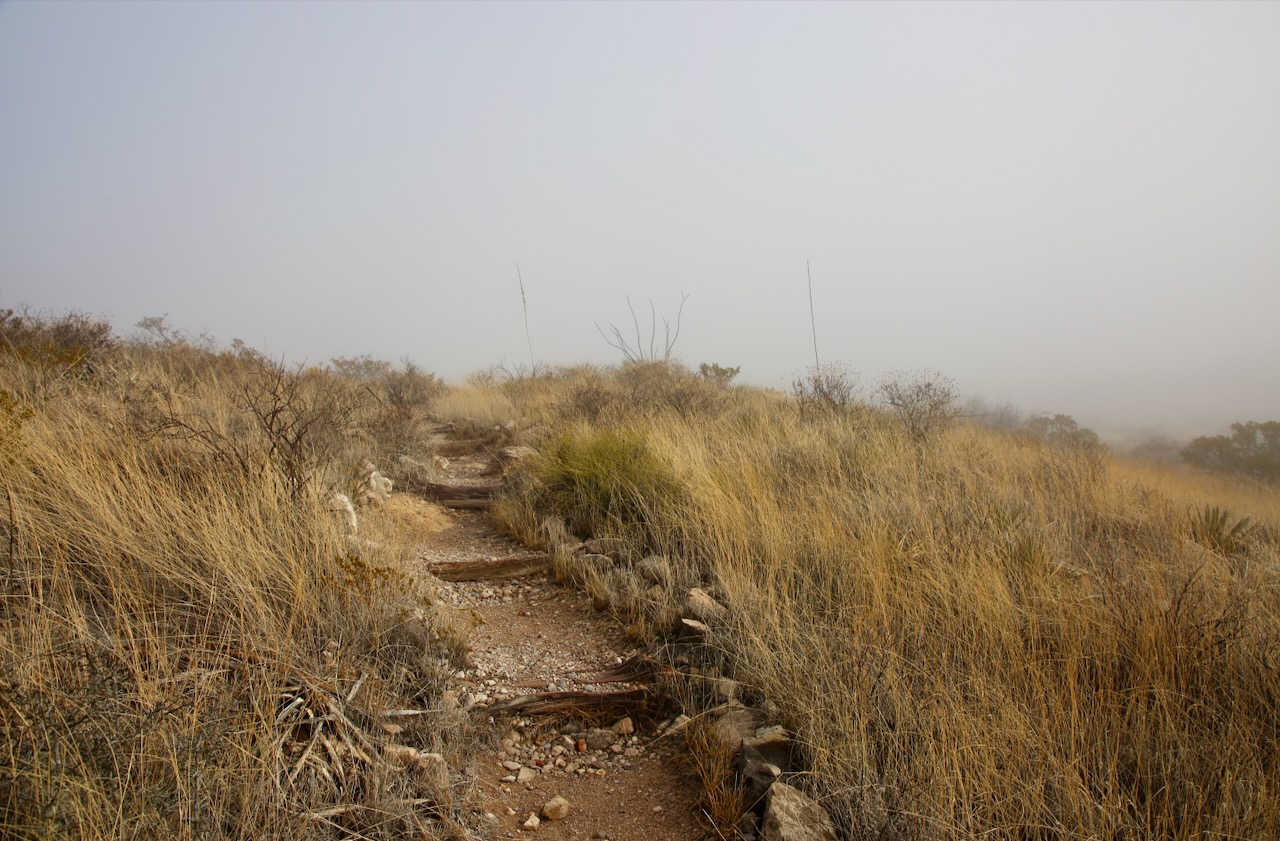
We opt for the sunnier Nature Walk Trail with a bird blind where we observe the empty feeders and watering hole before setting off on a path that allows us to look around. There are more purple cacti and yellow grasses to see before the fog reaches us at 4,800 ft. Our third hike of the morning will be the Aztec Caves Trail where we step our way over rocks and climb 544 ft towards a hole in the hill that provides relief from the sun and a view of the valley as the clouds seem to thicken and coat the mountain like a melty fondant icing.

I had a good laugh after the hike as I looked at the 30-hour recovery time that my watch deemed necessary for me to be ready for the next activity of the same intensity. This time frame can range from zero minutes up to four days. I have no way of knowing what my fitness levels were ten years ago because the technology wasn’t there, so I have no comparison, but I look forward to looking back a decade from now and seeing the difference between motivation and aging; also the difference between living at sea level and performing at elevation.
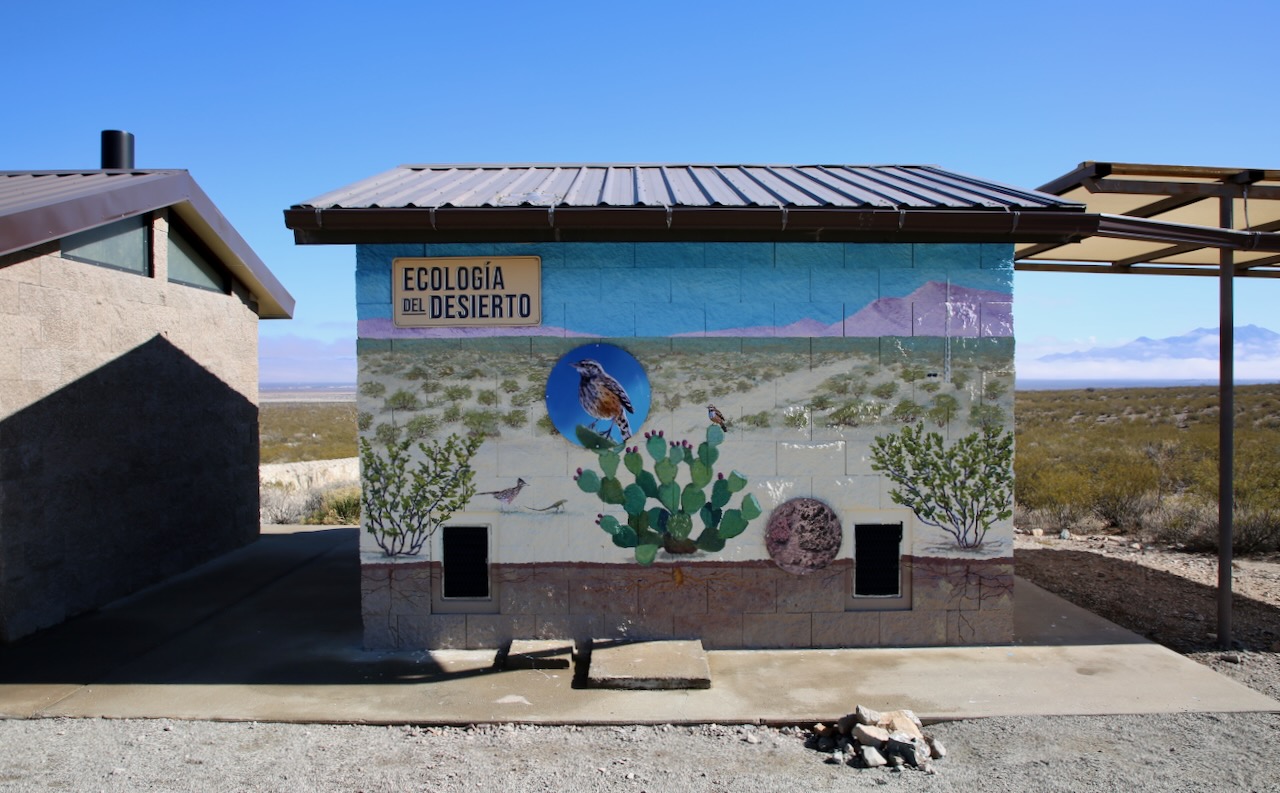
We watch a cyclist get a ticket for not stopping to buy a park pass and continue our descent into the gray goodness that is the gaseous form of water on the I-10 W. On our way to the Chihuahuan Desert Nature Park, where we can see the “pile of shark teeth” (aka Organ) mountains in the near distance still cuddling in their dissipating dress as if preparing for a more rocky revealing afternoon, I keep my eyes on the east as the scene transforms into what appears to be broken statues left in the sand slowly being windswept to become a kid’s castle on another desert slope.
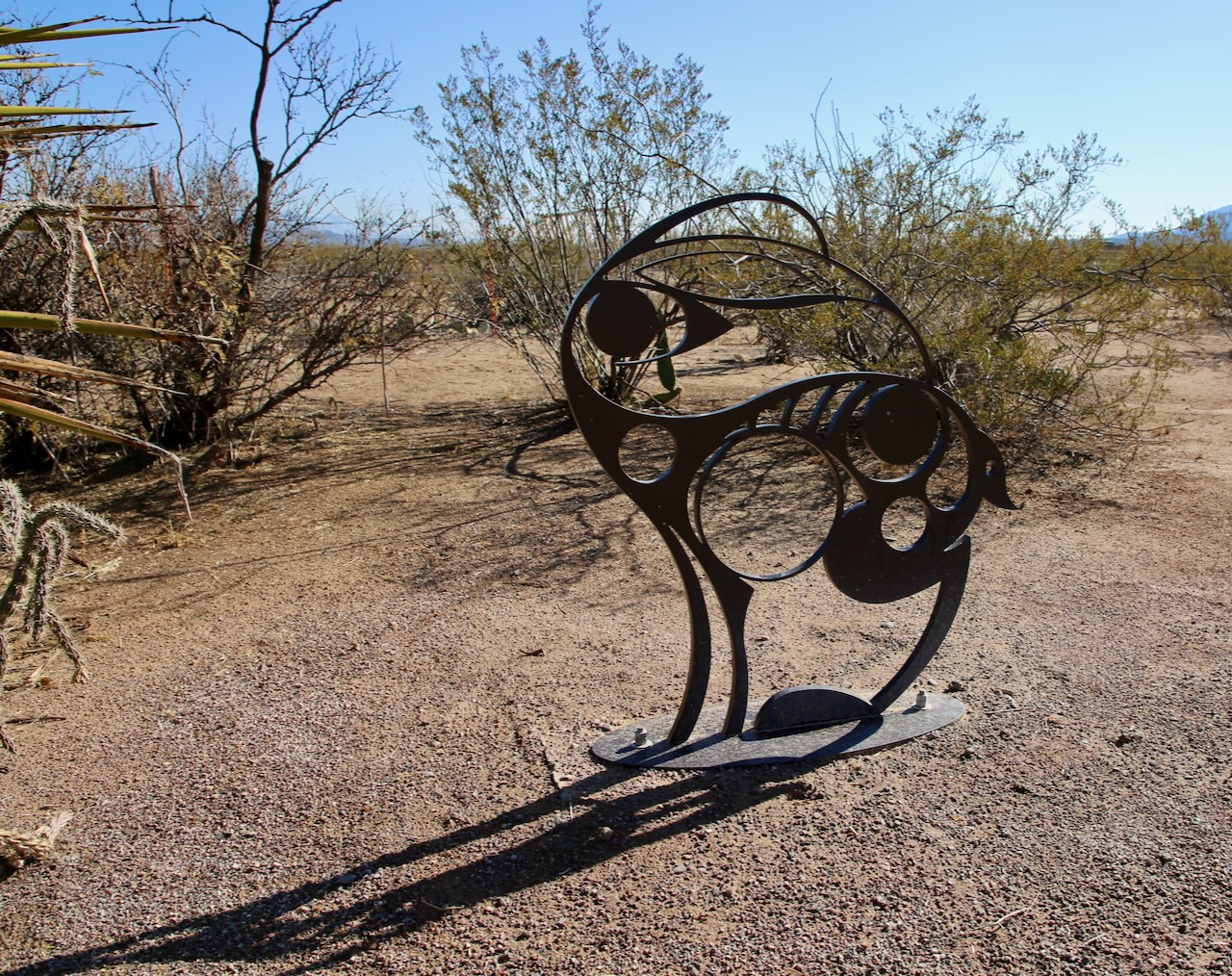
The Chihuahuan Desert is North America’s largest hot desert, the Great Basin is the continent’s largest cold desert, the Sonoran Desert doesn’t have cold winters, and the Mojave Desert is the smallest and hottest of the four major areas that receive less than 10 inches of annual precipitation. This park is here to increase scientific literacy about this changing landscape’s plants, animals, and vistas. We walk amongst the creosote bushes, the shrub that the state is in the process of removing to restore the soil condition and wildlife populations of the grasslands.
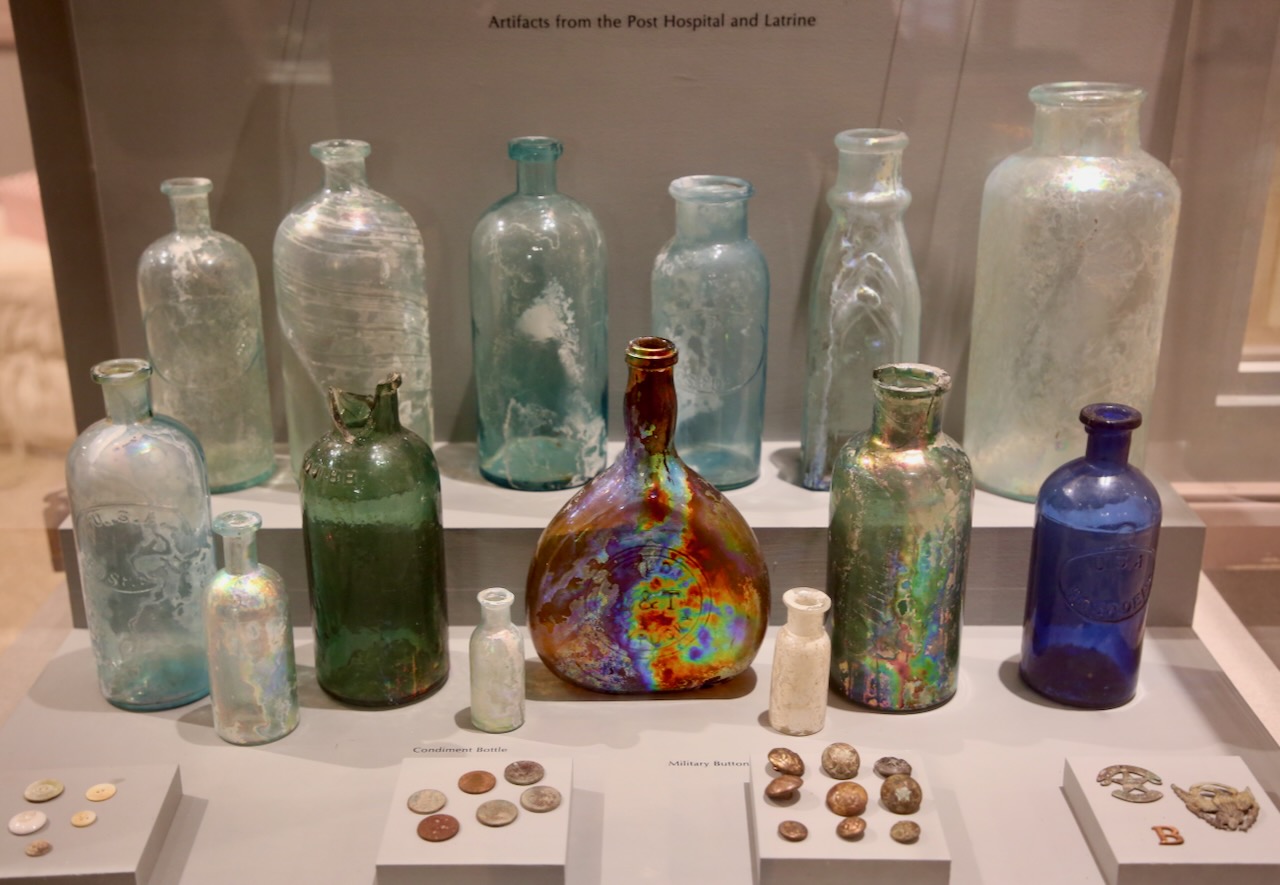

Fort Selden Historic Site, along the El Camino Real de Tierra Adentro National Historic Trail, isn’t far by car, but we could save nine miles by riding bicycles over portions where safety gear or hiking would be more appropriate. It would definitely be more scenic and an option to consider when we have more time to explore via such leisurely methods; because obviously, the nine miles saved would have to be covered again to return to the car. This trade route became a battleground between the Apache and the Spanish until 1848 when New Mexico became a US territory.

Fort Selden was built in 1865 and about 1800 soldiers were stationed there to protect travelers and settlers from Apache raids and desperadoes. The fort was abandoned in 1891 as the needs of the military moved northwest and was acquired by Harry Bailey in 1926. His son would donate the land to the state and after ten years of political paperwork, the fort became a state monument in 1974. The exhibit explores life on the edge of danger for the men and women who lived here over 150 years ago. We are offered an array of umbrella colors to choose from to shade us from the desert sun, but we choose to embrace the heat on this cool day.


I love that parks are changing their signs to appeal to different personality types and include humor. I hope their efforts work to “Respect the Rattlesnakes’ right to privacy. Please stay on the trail.” and to get visitors to stop harassing other species whether they look cold, upset, hungry, sick, or otherwise. There’s a covered wagon, a millstone with mesquite beans, and remnants of the prison with a courtroom on top (the only two-story building at the fort). We enjoy the rest of our walk, passing the adobe brick-making station and a table-sized game similar to Candyland, but instead of traveling from field to castle, the player moves from Mexico City to two pueblos, Yungue and Ohke, one on each side of the Rio Grande.

Heading back south towards Highway 10 to continue west is a sign for the Shalam Colony, where a group of Faithists from 1884 – 1901 took in orphaned children and planned to turn them into spiritual leaders far from the corruption of cities. We take a detour to the Prehistoric Trackways National Monument only to be turned away because the area is closed for rock blasting. Had I looked it up, we could have gone to the New Mexico Museum of Natural History and Science or the Las Cruces Museum of Nature and Science and seen their trackways displays.

Located in Apodaca Park sits Dineh (human beings in Navajo and Apache) the 20-foot-tall pine sculpture that honors all the Native Americans of New Mexico. This is the 57th statue by Peter Wolf Toth, on the Trail of the Whispering Giants, dedicated in 1986 and still in excellent condition; something that can’t be said for some that were destroyed by rot, termites, and wind. Others have been moved indoors or onto private property to help preserve them or have been restored by the artist. Three miles away is the World’s Largest Chile Pepper attached to the Big Chile Inn.

We wander inside to see pictures of the Grande Chile construction process and little information placards about different chiles and their origins. The sun’s rays are passing through the mountains, reminiscent of the state flag as we enter Arizona. The red and yellow rays represent the 13 colonies and a setting sun behind a copper star recognizes the state as the largest producer of the metal in the US. The red and yellow also represent the Spanish flags flown by Coronado in 1540. The bottom half blue matches that of the blue in the US flag and this state flag was adopted in 1917. I mention this description to remind myself that every state has a history; one that extends beyond our social construct of their borders.
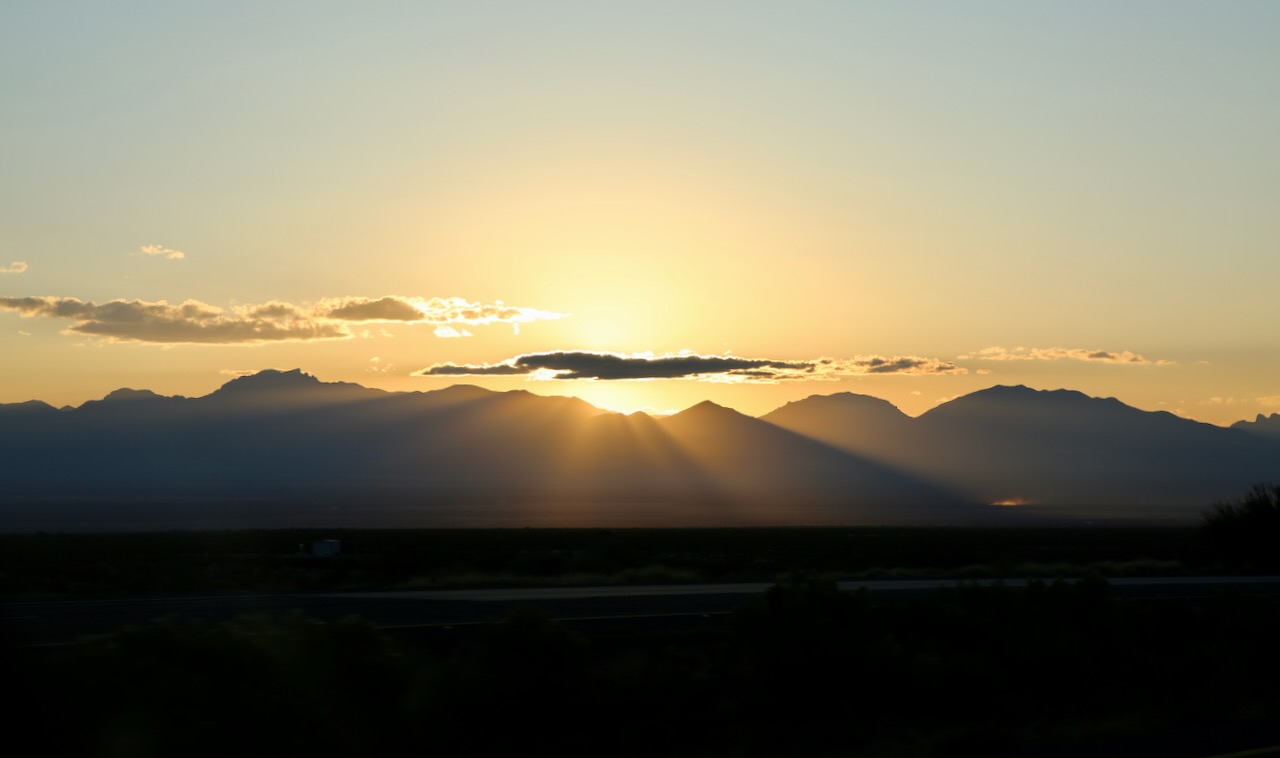
Dinner tonight will be at Charro Steak & Del Rey, thanks to a suggestion, with a heads-up on the price from Dad, when asked where to eat in Tucson after 630pm. Caleb doesn’t need any encouragement to eat a nice cut of beef and it’s en route to our room for the night and Dad’s place tomorrow. We start the meal with their tableside guacamole (serves 2-4) and then I’ll order the Serious Brussels (serves 2-3), the tequila’d trout (both with leftovers), and the champagne fried strawberries (of which thankfully Caleb ate one of the four). To pair with my meal, a sample of the El Charro 100th Cerveza by Dragoon (a delicious amber-red) and a glass of the Charro Margarita de la Casa.
Caleb ate breakfast and dinner too, but unlike me, he prefers to let his eyeballs, tastebuds, and gastric acids keep the memories of where to eat because the meal is included and where to return because the balance of flavors dancing on his palette doesn’t need a plated picture and a wordy blog description to have happened. For me, I’m keeping track of memories differently, trying to notice the subtleties of aging and how it affects my taste in cuisine, musicians, handicrafts, physical hobbies, etc., so that I can go back and reminisce; even if it’s just about the menagerie of nut butters I’ve had the chance to try.

 TheJessicaness