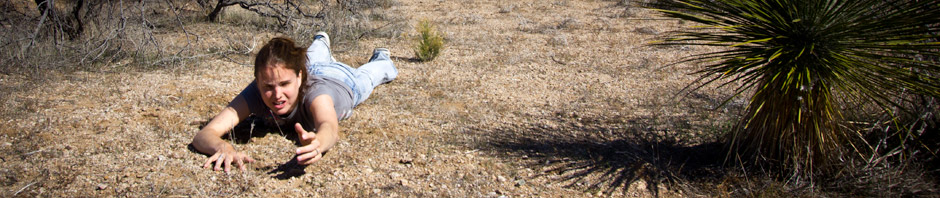

If I hadn’t set an alarm, we’d have been woken up by the AMBER Alert in San Antonio of two kids under five years old. This “America’s Missing: Broadcast Emergency Response” program was named after Amber, a nine-year-old, who was abducted from Arlington in 1996. It would take two years before this program saved a child’s life, but there was less than one alert for every thousand kids the police and FBI had reports for in 2021. It would take until 2005 for all states to have operational programs and until 2013 for the alerts to be sent automatically instead of as in 2002 when people could sign up to receive notifications electronically.
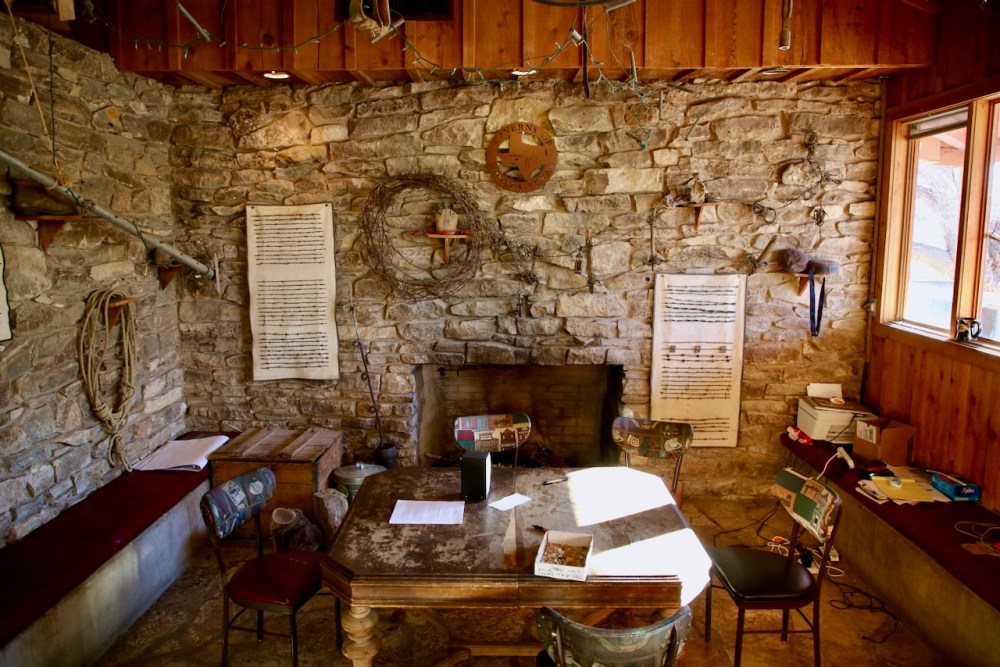

I remember the milk carton photos of missing children. This program was started in late 1984 and a few months later some 700 out of 1600 independent dairies had agreed to print pictures on their cartons. This would introduce “stranger danger” to kids at breakfast, who back then were more likely to be taken by a noncustodial divorced parent than a stranger. We may have been 300 miles away, and sadly so many bodies are found too close to home but too many minutes or years too late, so perhaps we would see the getaway car and be able to point the police in the right direction; even if the sun’s not up yet and we’re still inside.
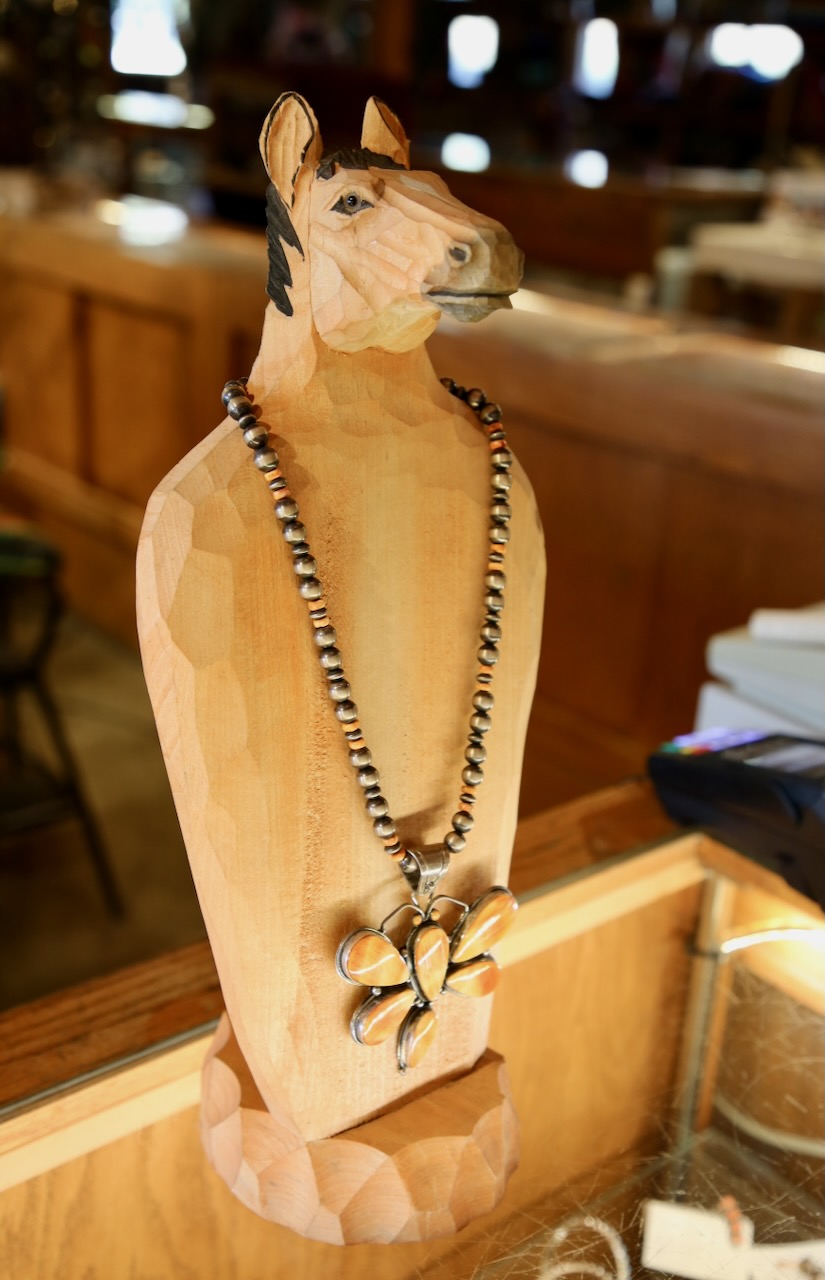
Caleb hands me our coffee cups while he packs the car. I make myself a strawberry Texas-shaped waffle with a blueberry yogurt and Caleb will join me for an original waffle with a peach yogurt as our syrups. We’re off to get gas in the dark. We try Sunoco first, but they want cash only. I’m more likely to even carry cash if I’m traveling to another country than remembering that some places here still use it, especially after the COVID-19 fiasco. Oh well, we’re able to fill up for $27 at Chevron, instead of the usual $50 in California, so you know where we aren’t staying or settling once Caleb retires from the Navy.


Sunrise isn’t for another half hour but we’ve got a two-hour drive to our first stop that opens at 9am so we watch the horizon go from dark orange to yellow to blue. When driving into the sun, it feels like it rises faster than it sets, but perhaps the mountains and other obstructions are just better placed in the morning than they are in the evening. This portion of Highway 10 seems to be a popular place for tires to explode and generally come off vehicles to bake between pavement and the Texas sun; which also helps to heat the inside of the car and causes Caleb to sweat since he still has his seat warmer on medium setting.

The Caverns of Sonora open at 9am, in the winter, so I suppose the first tour will start 15 minutes later because everyone should be there early and thinking they’re late. I was hoping our eight-minute delay wouldn’t make us wait for the second tour as my notes had this down for a two-hour event and I know we wouldn’t (I couldn’t) possibly be patient that long. A man greets us at the desk and while Caleb uses his military discount to get us two tickets for $32, I read the sign that says no bags, jackets, etc., so that you hit nothing as doing so is now a felony in Texas.

We later learn that the reason this crime was escalated in punishment was due to the right-wing being broken off Sonora’s trademark formation, The Butterfly, in 2006 and stolen. There is still a $20k reward towards the return of this piece. We’re told the tour will start at 930, maybe 10, and again that I leave my jacket. The sign says 70* but our tour guide, Lisa, tells me 80*, so I drop it in the car, though there is a sweater delivery service that will drop your coats off at the exit in the cave tunnel for your walk back. I’m glad I left it and even wish I’d put on shorts, as I got sweaty underground.


We look around the gift shop, I watch the guinea chickens (never put them with a guinea pig, but there’s also guinea-worm disease), and a couple and a family wander in pushing back our start time. I’m also stressing the group of children, but the price per person is too steep for them, so we will leave with Lisa and a couple – wife and a man in the Air Force carrying his 30lb three-year-old son, who will do surprisingly well – after our safety brief. We get some who fell in which hole history before entering the temperature-controlled door at 10am.

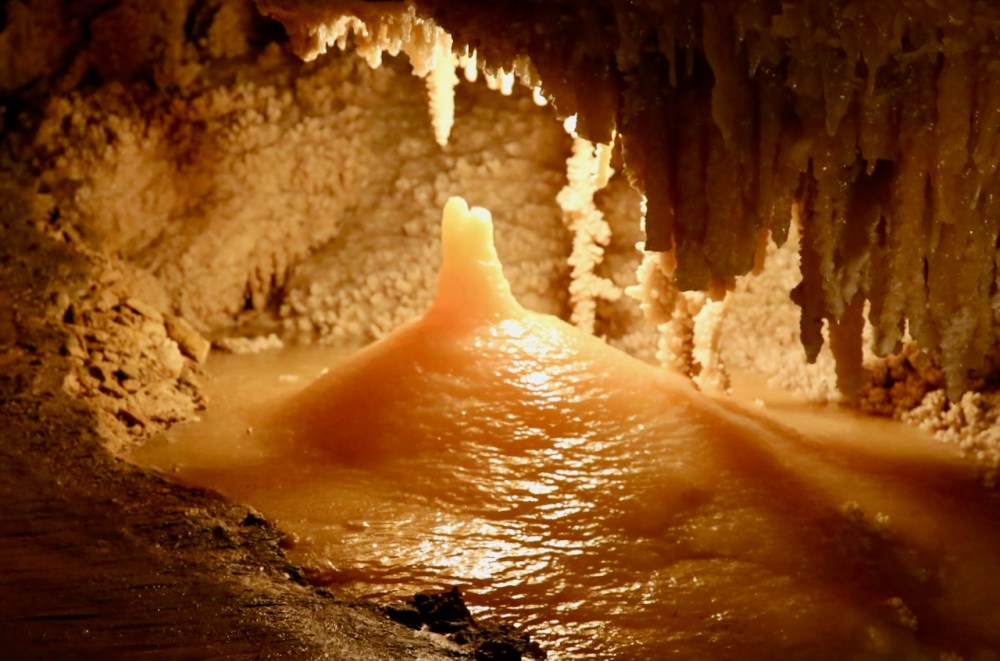
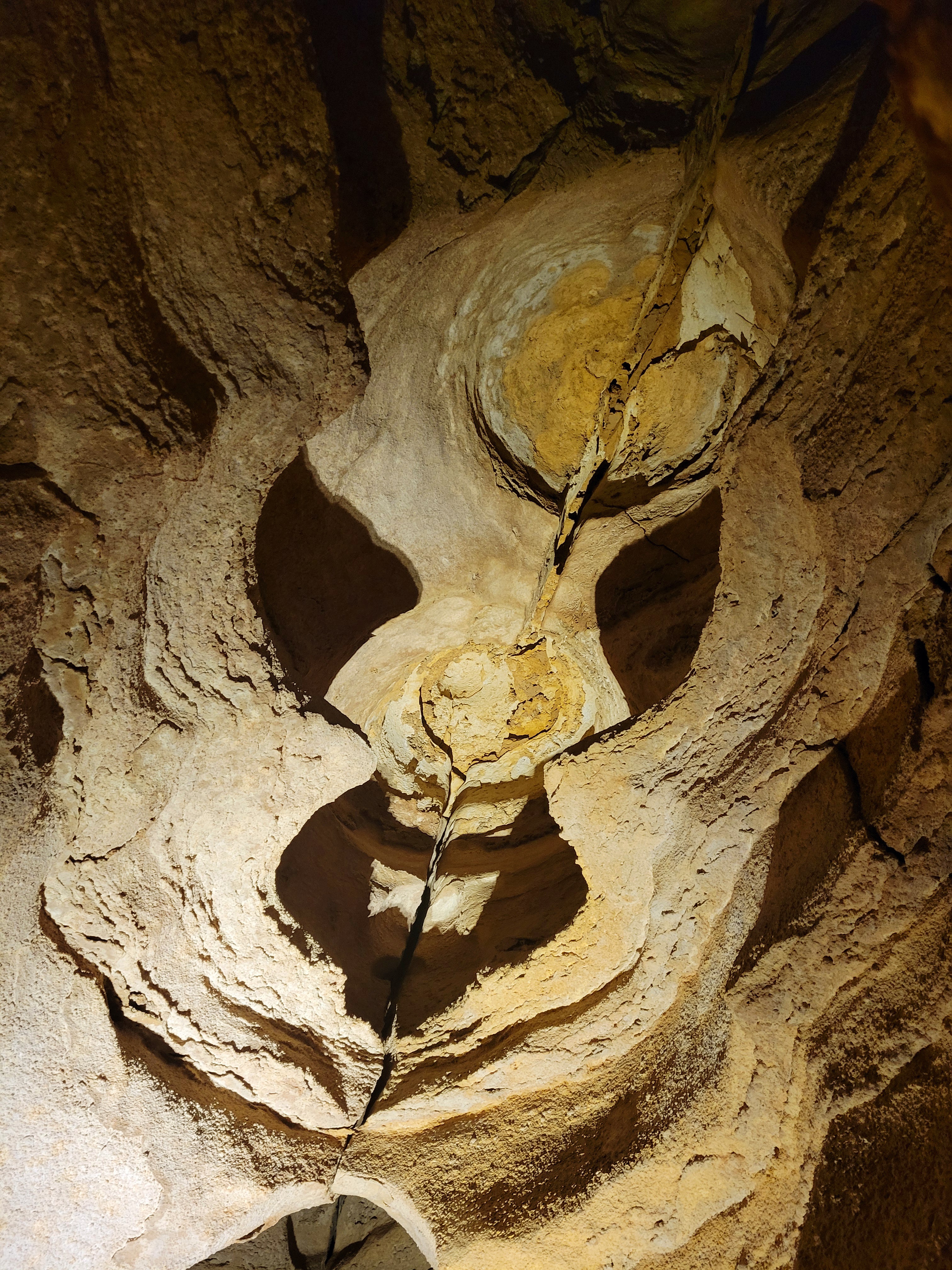
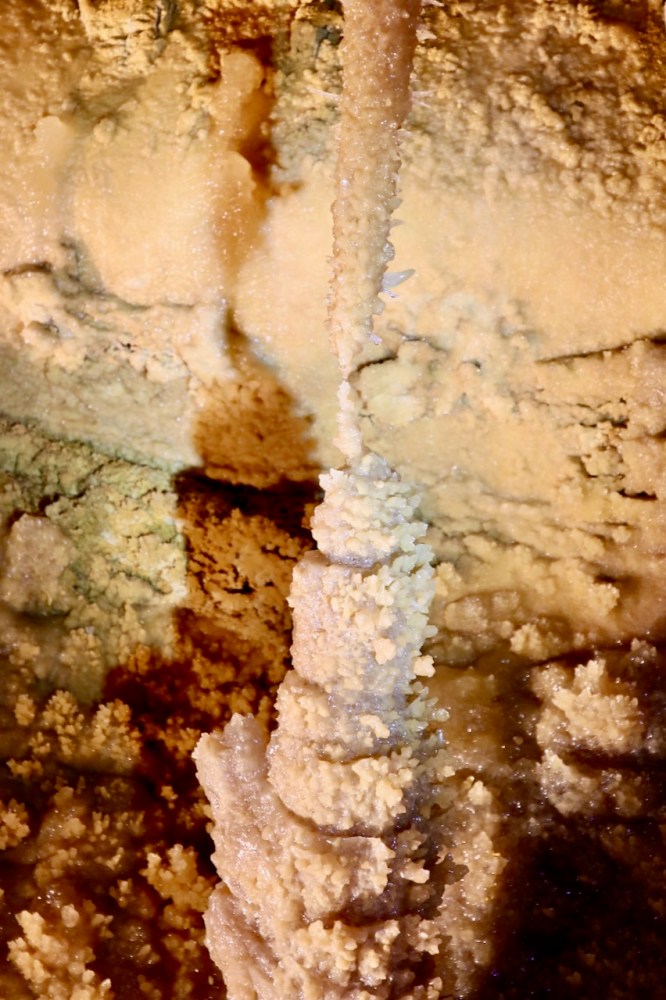
I’m directly behind the tour guide, as usual, but my camera lens hasn’t caught up to the 98% humidity, a change of about 90% from outside, as I snap my first hundred photos. Caves are such a snapshot of time and they’re able to capture so much of it while still supporting life and letting water do its thing; which is to continually carve and drip and collect through the layers of stone and tell another story each time you see it. Some caves are off-limits, and some parks are on a lottery basis, so this visit feels even more precious that I get to peek at its formations at least once.

There is so much to see here and I feel my usual cave tour rush, though the family isn’t asking to get by and our guide seems to have forgotten her time-telling device. I steal a few extra minutes to try and photograph this whole cave, but even Lisa wouldn’t be able to do that yet; and she walks these halls many times a day, if she is so lucky. Her daughter will soon start giving tours, now that she’s 18, and it will be her first job. I do suppose having a parent to study makes it easier to go into their field of work and in a sense I have – customer service and creativity; though one is way more rewarding than the other.
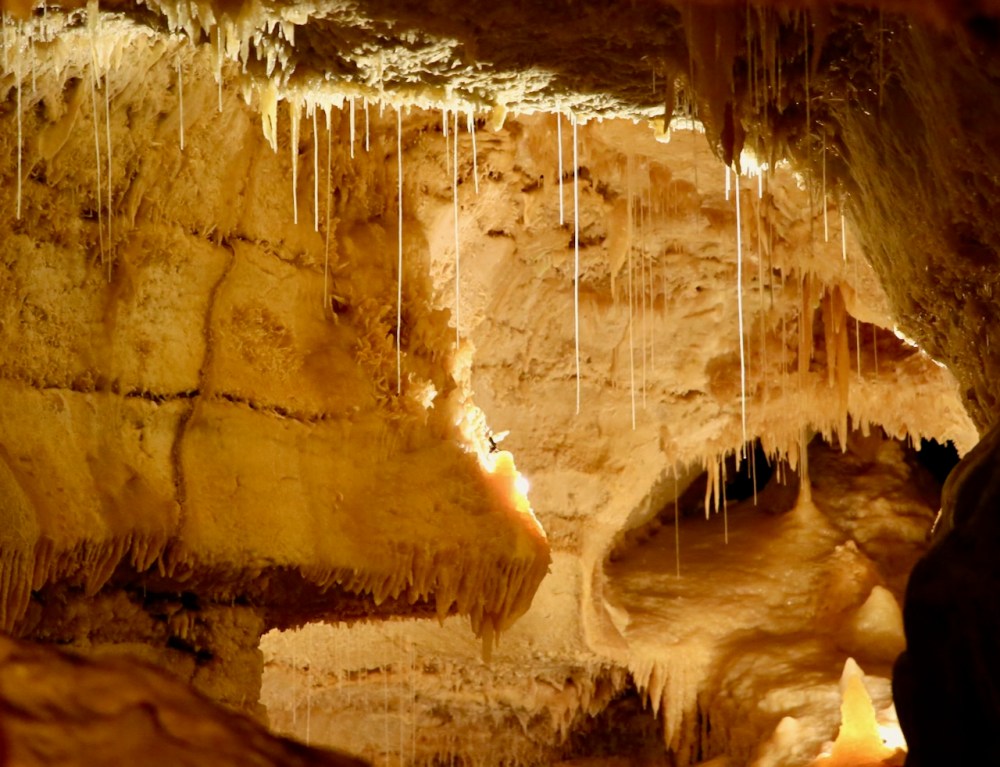

We are shown things hidden behind other features and told when to look up and other times back. Caves should start offering the reverse tour option so that, like an out-and-back trail, you can see one place from two perspectives. Though I would also offer the crawling tour, for a closer look at all things below knee level, and a guided tour of just staring at the ceiling to capture all things above. A cave is like a novel that you read by skipping pages; you still get the gist of the story but there’s so much more to learn in the details you miss.
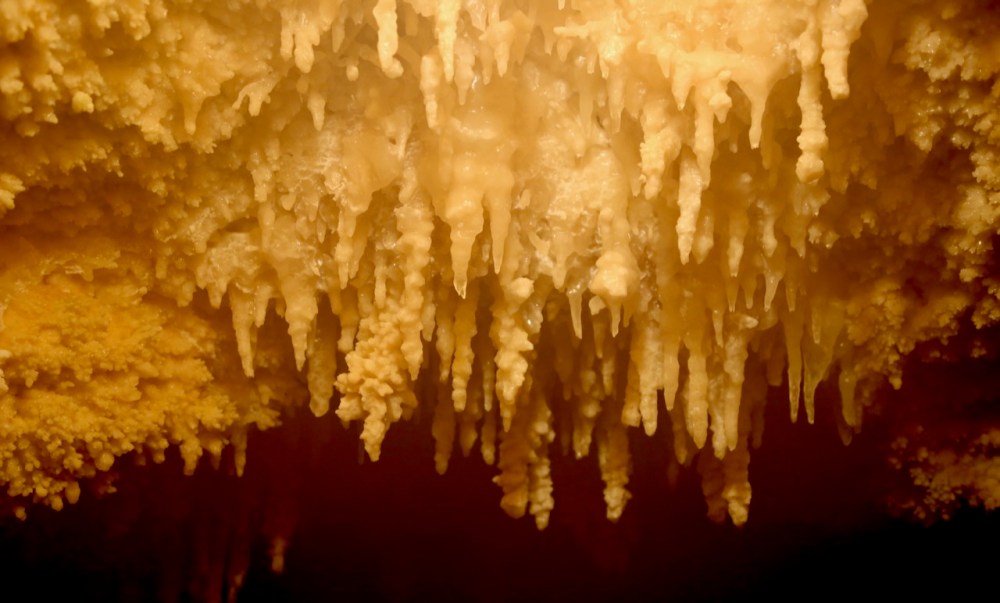
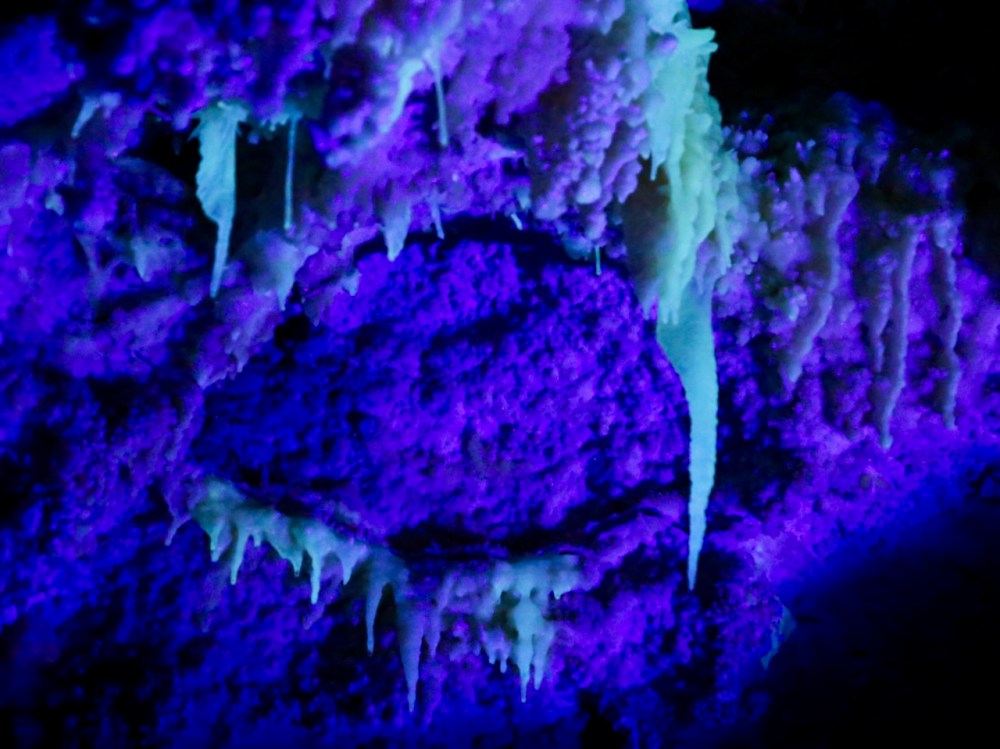
There are so many features, the pond (without pennies) being one of my favorite, but also the glow-in-the-dark calcite caused by deposits of manganese that change energy states based on photon absorption and cause the light we see. There’s a lot of science going on in here and the kid does great as we sit in the dark and pretend to stare at our hands in front of our faces or anything else because we can’t see anything. This is why I wouldn’t have been an early cave explorer – probably not for fear of destroying something I didn’t understand, but for breaking myself and getting caught in a tight space or both.

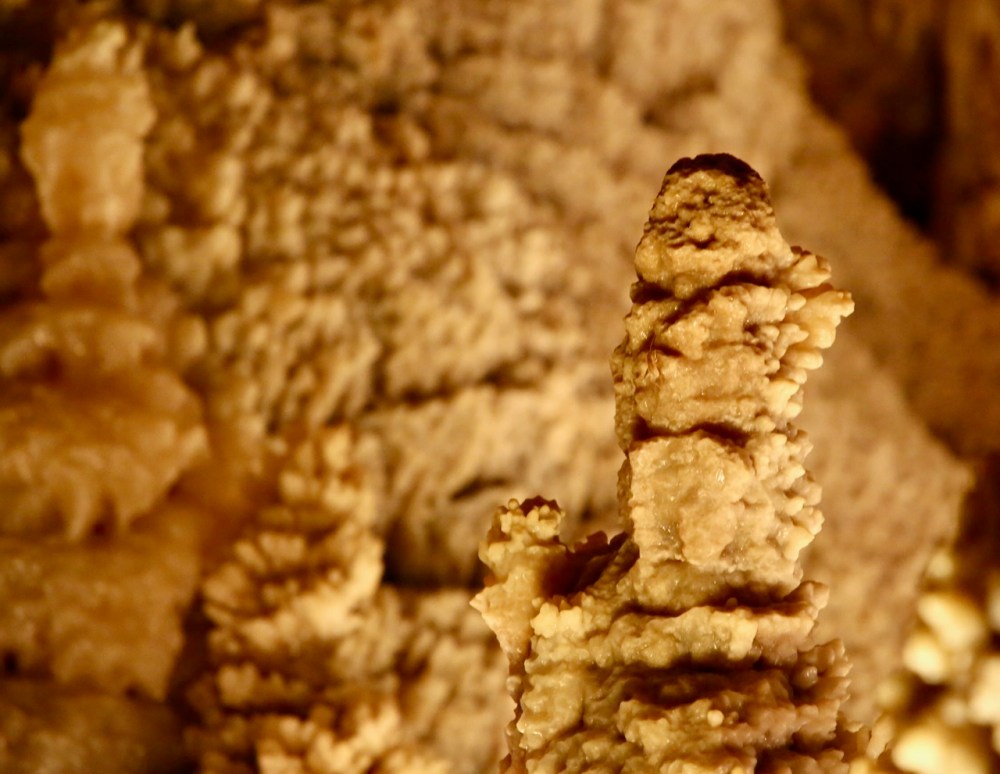
As Lisa points out shapes – a dinosaur (the kid’s interest peaks, but he’s let down), a bird (the kid shows interest but can’t see it from the two points of view), so by the time we got to the fish tail and bacon he was over it. The first moment reminded me of a scene in Short Circuit where Johnny 5 says, “No shit. Where see shit?” Though we were able to see some secret cave crickets, a species of camel crickets, that help the cave ecosystem by providing poo to spiders, eggs to beetles, and their bodies for nutrients. There’s even a carving of a cave cricket in France that’s over 12,000 years old, pet or pest, and still around.
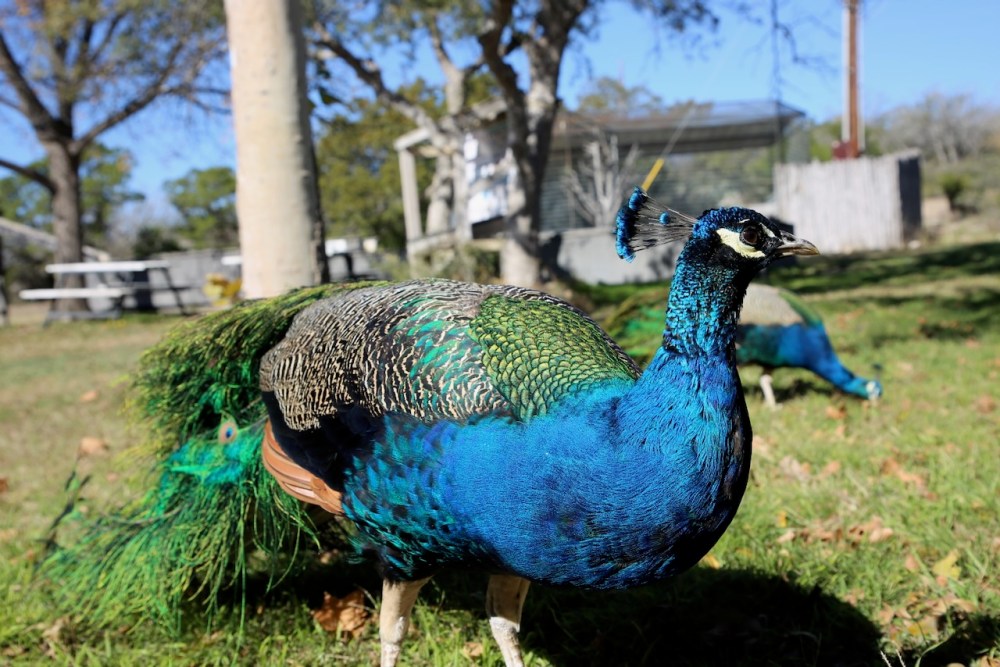
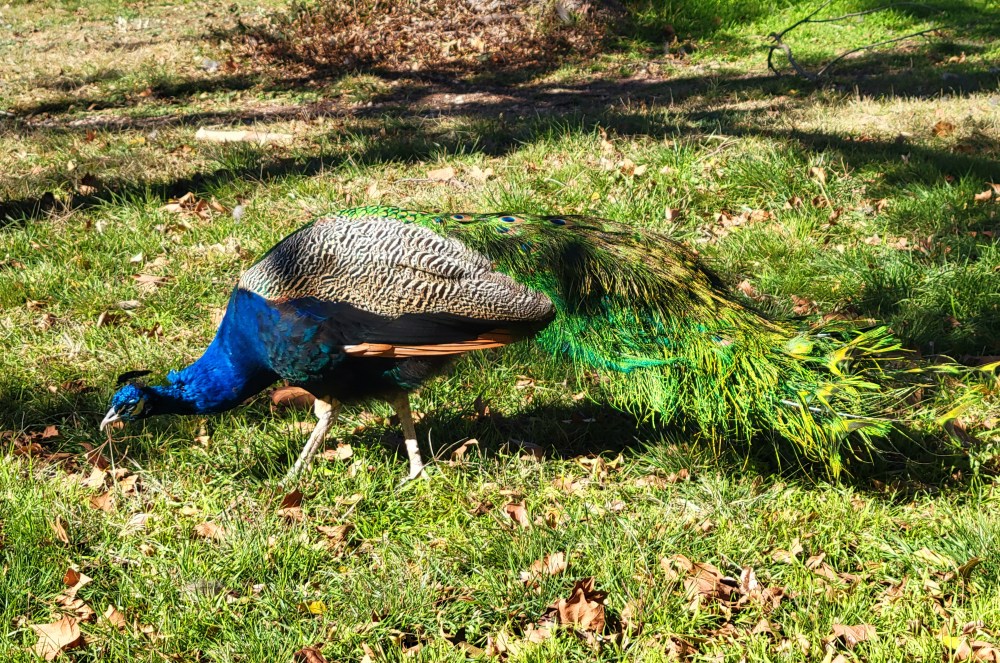
The kid starts to get hungry, so Lisa pulls out an adult-hand-sized soft butterfly necklace, so he has something to help fly out of the cave and the distraction works wonderfully. I can’t believe it’s already been 80 minutes but our time is up and the walk back, in the cool air, feels great. One of the employees dumps some chips on the ground for the local peacocks and Lisa brings out some pecans so that I can feed them by hand. Today is an example of a perfect day, and this was just a portion of it. I got to be among nature, learn more about it, interact with animals, and have a conversation with a stranger.

We have to bypass the Riverside Nature Center in Kerrville because they are closed on Sundays, but luckily there’s a historical landmark just 20 minutes up the road. The Hygieostatic Bat Roost, in Comfort, was built in 1918 in hopes of eradicating mosquitoes to reduce the spread of malaria. This roost is one of 16 constructed between 1907 and 1929 in the US and Italy. It’s on a gated property, so I took a picture through the fence. The next point of interest (that we don’t stop at) is the Bumdoodler’s in Boerne; a lunch company that has served deli sandwiches and homemade pies, since 1982.

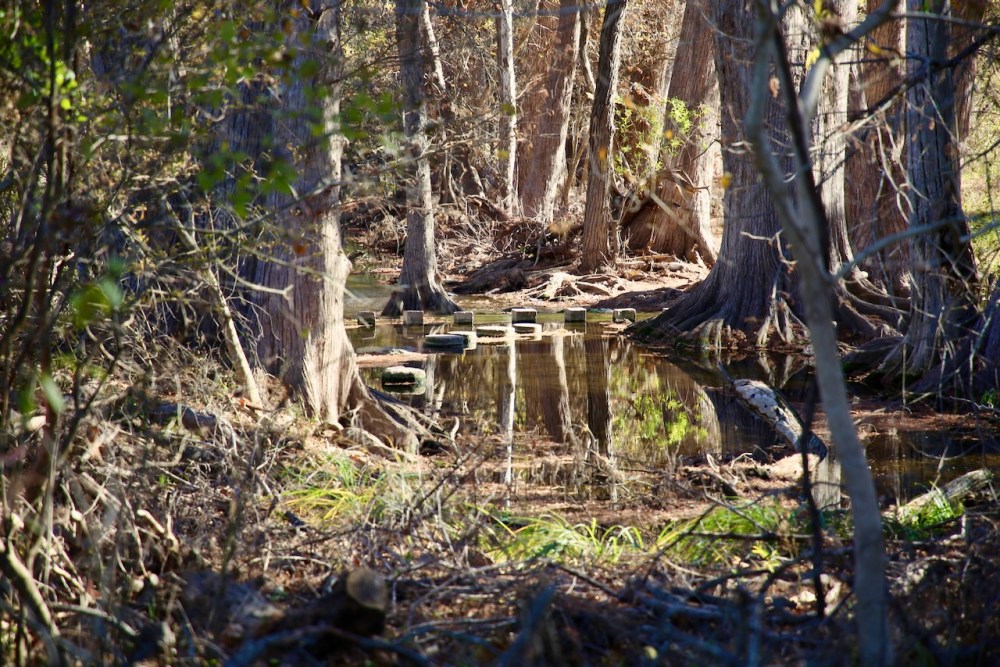
Just across town is the Cibolo Nature Center & Farm. There’s a large prairie, some woodlands, and a meadow across the river. The visitor center is closed. We take Cooper’s Crossing, little stone steps across the water, and explore the other side. We get passed by a runner with a dog (off-leash who waits to pass us) but the trail dead-ends and there’s a fence around the farm and no proof of them having been there. We think we’re on another trail because we see a couple sitting on a branch in a small clearing, but we get lost, almost get our shoes wet, and have to backtrack and hike our way back up to the trail.
This must be the day of missing people, though I didn’t realize that Texas averages 130.6 people per day and the national average is around 2,300, which means the second largest state only accounts for 5.7% of missing people reports. I bring this up because while we were hours from San Antonio I got a Silver Alert (old and disabled person missing) for Houston. This program was started in Oklahoma in 2006 to help find the at-risk elderly, especially those with dementia who wander off. All states now have some form of this program but it has failed on a federal level due to criticism of too many Alerts, colors, and cost; though it seems to have a high success rate.

Caleb has been craving Mellow Mushroom since we left San Diego and finds one, en route, in San Antonio. Whether we avoid the metropolitan area and stay on the 46, dip down on Loop 1604 to eat, or stay on the 10 through downtown, our travel times would be the same for the 56, 66, and 70 miles of each route. We have no issues getting to the restaurant because we arrive earlier than the senior citizens discount for dinner (not a thing here). After nibbling on our small pizzas (cheaper to do two flavors on a large) and sipping on a blueberry lemonade ale, I notice the American flag that seems to be made of Monopoly pieces on the wall. Upon inspection, all the little people are holding Thailand flags.
Now full, we get into traffic and I’m used to being able to set my cruise control and pick a slow lane in San Diego (which works most of the time) but it’s not an option here. I try speeding up to drive like the others, but then remember how this makes me feel so I slow down and continue to do so until I’m calm and the BS passes when the third lane arrives. We can’t make everyone happy and when others don’t use the left lane to pass only (a requirement to varying degrees in every state) it does no good being in their ass and then slamming on the brakes, even if it means doing under 65 in an 80 mph zone.

I found the World’s Largest Pecan on our route, and Caleb finds the story behind why there are two locations. A five-foot nut replica to honor the history and contribution of Cabeza de Vaca was built in Seguin in 1962 and placed in front of City Hall. Twenty years later, residents in Brunswick, MO felt like building a replica of their patented pecan, twice the size of the original and ten times the weight, to honor a local farming couple, the James’. In 2011, Seguin finally took back the title with their 16-foot version of the pecan housed at The Big Red Barn.
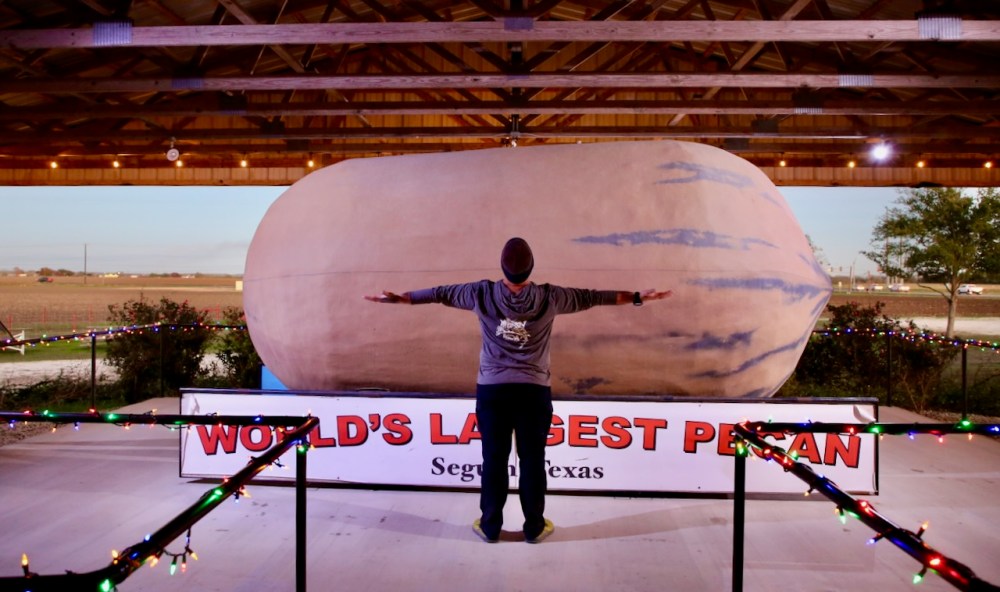
We are the only visitors at both. The first pecan is at an intersection and we park across the street. The second pecan is four miles up the road and we have a whole parking lot to ourselves. The nut is lit all night and even has holiday lights around the railing (not sure if they stay up year-round). This is one battle I don’t mind watching the outcomes of. I hope that people don’t find a reason to cancel nuts one day and tear them or other “largest” statues down. Instead, change the placard to educate people about the truth.
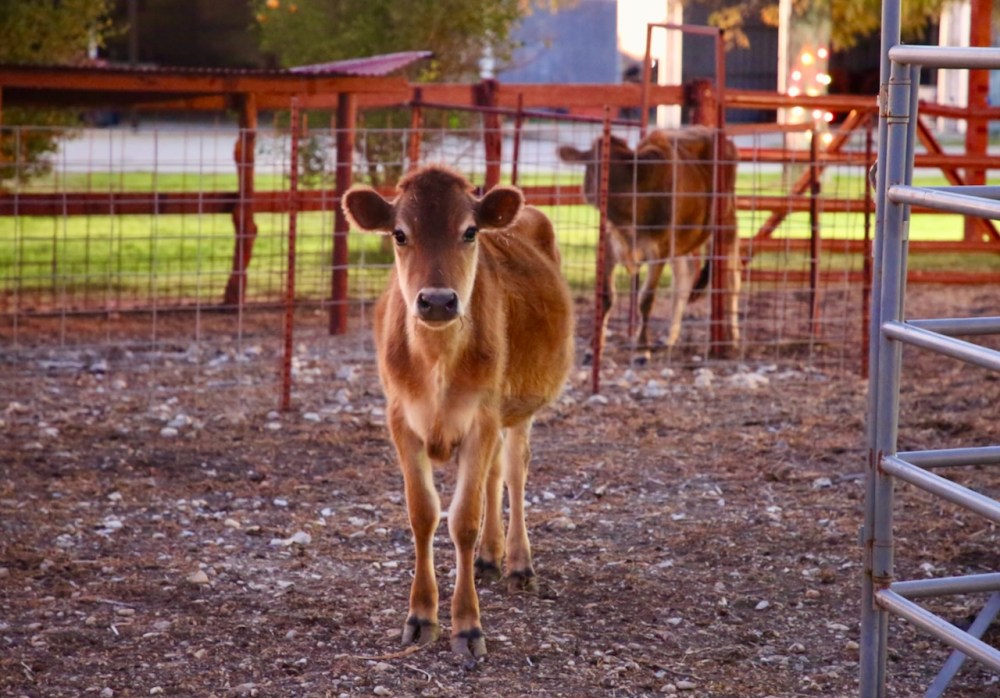
I’m not the only nosy one in this relationship. Caleb goes on to explore the rest of the outside of the closed museum and we find a church, farm, and garden. There’s maybe ten minutes of dim light left on the horizon as I snap a photo of a calf and we climb back into the car. We’ll get to Stephen F. Austin State Park for the night and I get cozy in my sleeping bag as soon as Caleb is done setting up the tent and blowing up our mattresses, since I was busy being warm in the car and taking notes, so we can remember some of today’s details.

 TheJessicaness