I skipped the gym yesterday so I could finish setting up an outline of plans for our four-day weekend and clean the house in preparation for our absence; because it’s a bummer to come home to a mess when you’ve got dishes and laundry from travel that need your attention and a place that collects dust and cobwebs whether you’re there or not to witness their accumulation.
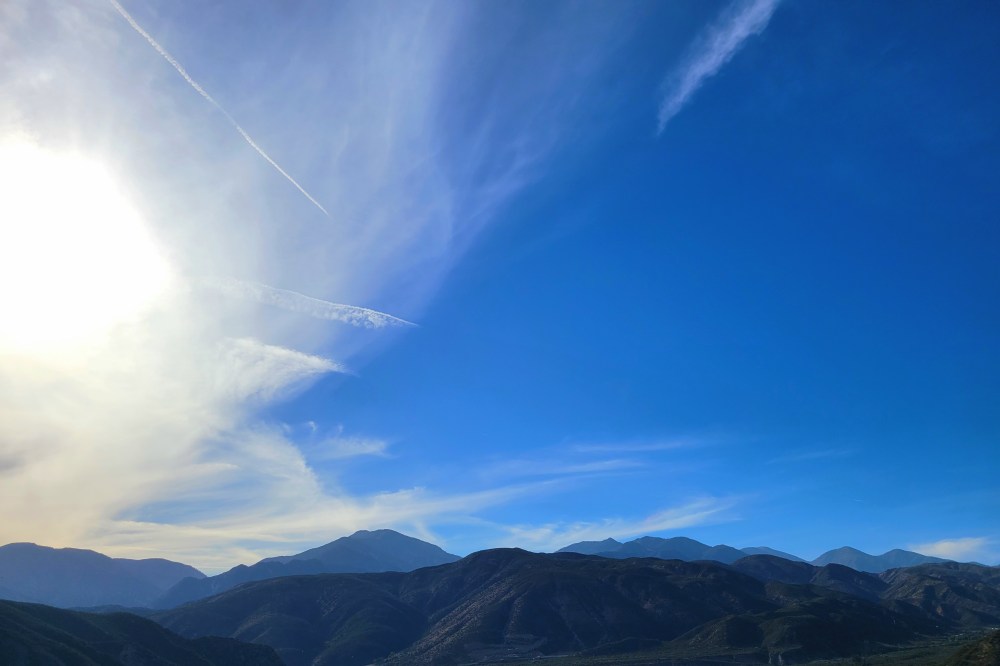
We left late for us, not because either of us was sleeping, but because we waited till morning to get everything in the car. We’ll stop near Escondido for bagels and donuts before driving to Santa Rosa Plateau Ecological Preserve for a short 1.2-mile loop hike on the Granite Loop Trail. We’ll see a white-crowned sparrow, a ground squirrel, and a Stephenomeria (meaning crown divided) flower also known as wirelettuce in shades of purple and white.
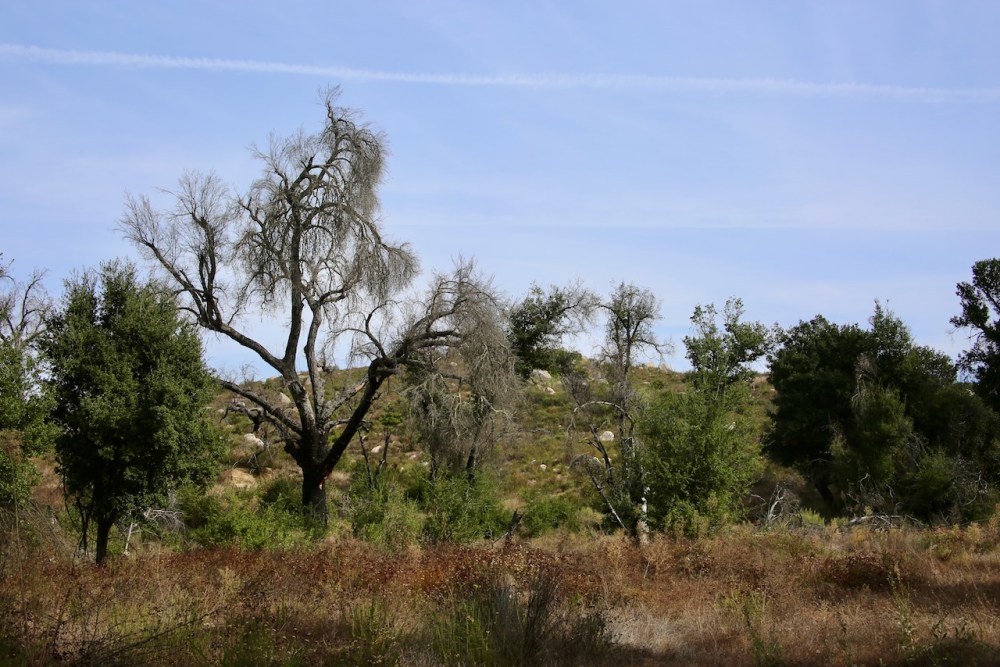
I’m grateful for what we’re getting to see but also reminded of why we don’t come this way more often. The traffic that condenses around the metropolis that is Los Angeles slows our route so that we can either choose to hike more trails here or continue on to reach our destination by nightfall. I always put more on my itinerary than I can hope to accomplish so that I’m never without an idea of what to do or where to go to happen upon something I might not have otherwise noticed.
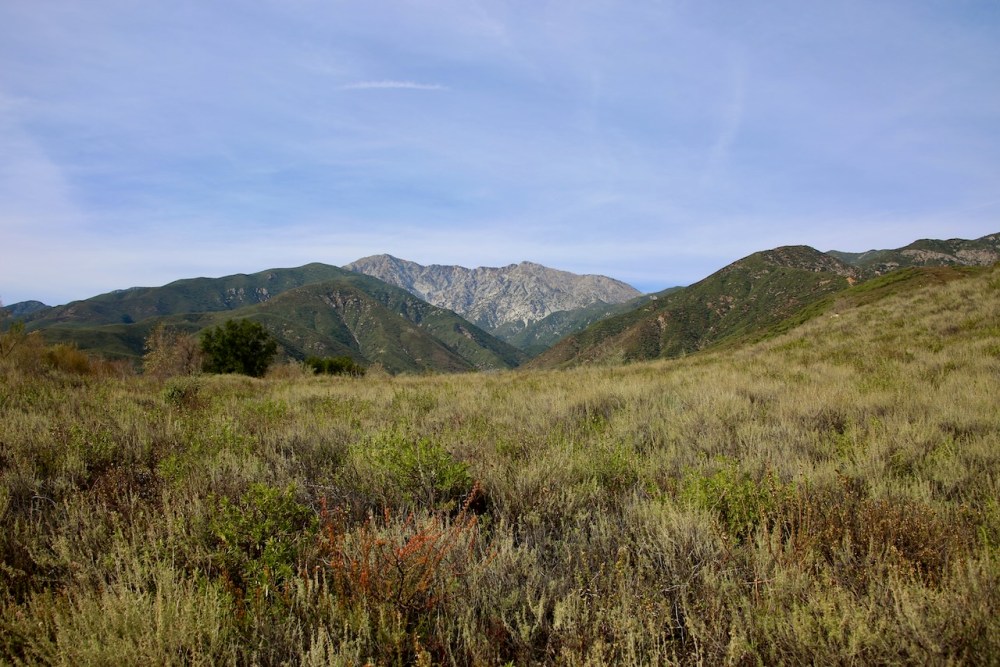
We’ll have to come back for the Moreno and Machado adobes, cowboy bunkhouses built in 1846, the oldest standing structures in Riverside County. The next stop on our list is the North Etiwanda Preserve. I thought we would do the 3.2-mile out-and-back to the falls. We ended up going further after taking two detours to the left – the first to avoid further elevation gain after a 600-foot climb and the second to see the Early Settlers Ruin built in 1771 by Spanish missionaries. This was the first home in the nation to be lit by hydroelectric power.
The Preserve was established in 1998 to keep the 762 acres of habitat of the Coastal California Gnatcatcher which makes its home in the Riversidian Alluvial Fan Sage Scrub intact. There has since been added 414 acres. Back in 1882, the first wooden flumes were laid over 2 and 3/4 miles. When these decayed or washed away in a flood, they were replaced with clay pipes that would eventually be replaced with buried concrete pipes to protect from damage and evaporation. These pipes would be controlled by a ditch master who would regulate the water supply to local ranchers.
Remnants of this system are found along the trail and in Day Canyon. We’re here to take in the verdant views of the hills and the surrounding mountains before we head for Owl Canyon Campground where we will sleep among the stones and stars. We stop in Barstow and unprompted a woman pulls away from the gas pump with the hose still in her tank; a first for me to see live. We’ll get fuel for $4.08/gallon and then look for a toilet. There’s not one here, they’re out of order at Rite Aid, but 7-Eleven comes through for us.
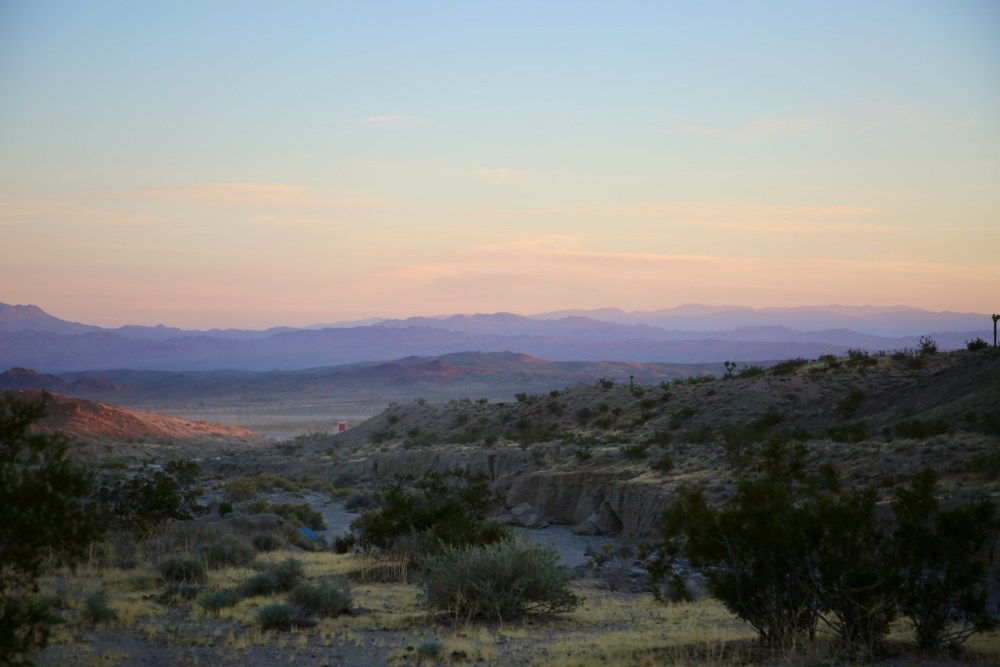
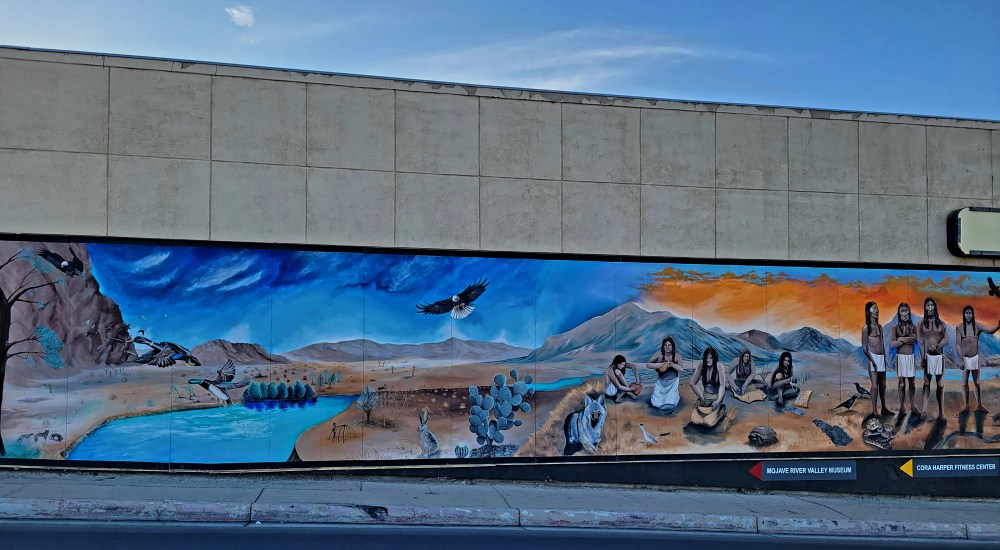
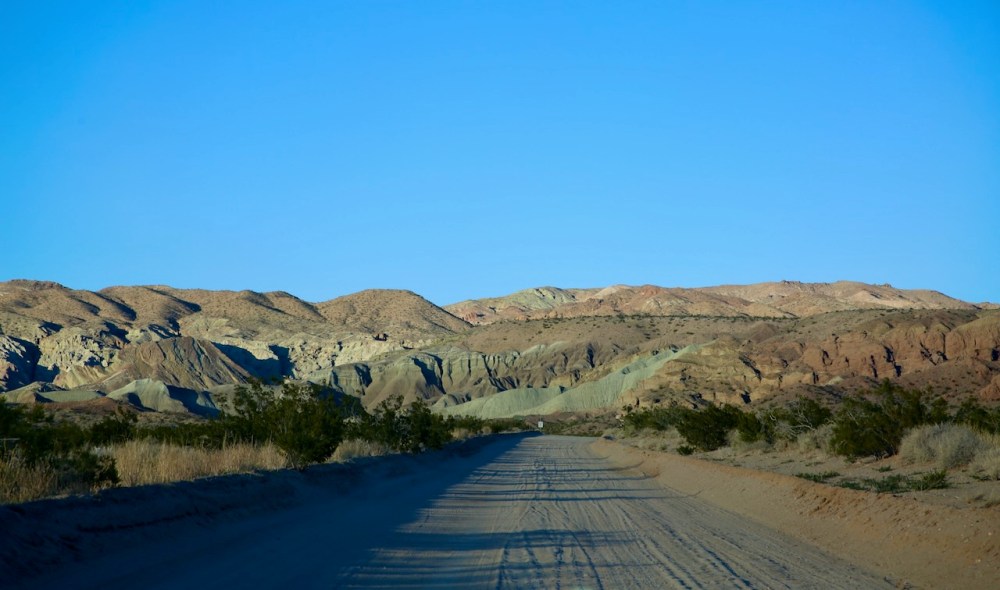
We don’t know what to expect at the camp and don’t want to wait the 25 minutes with part of our drive on a dirt road to get there to find out. This area provides a six million-year history of the Earth’s crust in the Mojave Geologic Block and we’re lucky enough to get in some trail time before dark as the valley was already covered in shade. Our neighbor for the night is from Montana and is down for his six-month camping trip so he can sit outside in cool air without his feet buried in snow. Caleb builds us a fire to read by and then makes dinner. When the fire refuses to keep burning, and keeping us warm, we move into the tent.

 TheJessicaness