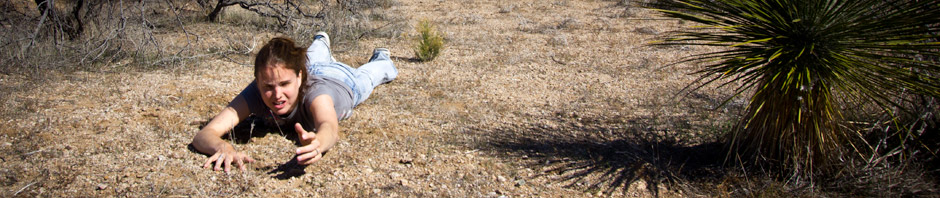


If only I had known, I could’ve made an effort to celebrate. I learned about New Year on the 7th (Christmas market for me) but didn’t know about the Old New Year that would be sending fireworks into the Batumi sky (of the country of Georgia) around midnight with bells that I missed recording on the 14th. Perhaps I should add holidays to my pre-travel list. I heard a cannon sound while trying to fall asleep, and that shook me.

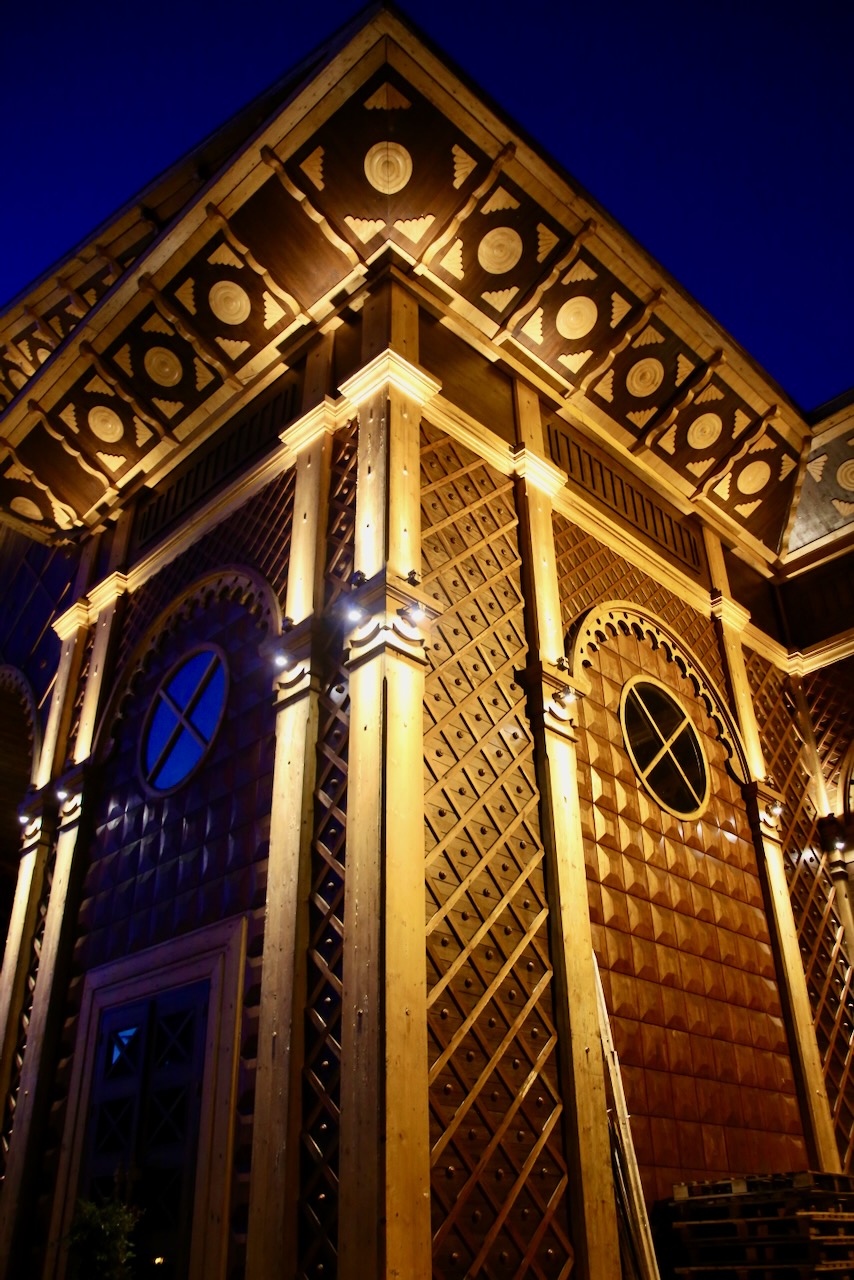
I leave Hotel N 16 under the cover of darkness but with the glow of yellow street lights to guide me to the lit-up Batumi Piazza. I always enjoy exploring a city before the day starts, just me, the facade lights, and the guy I thought had turned around to follow me. It’s a good thing I feel safe here and continue walking to see murals, shop windows, and a dog posing on the sidewalk. I heard a knock on the guard shack (not sure which one), but I went to the door, and it was one guy waking his friend.
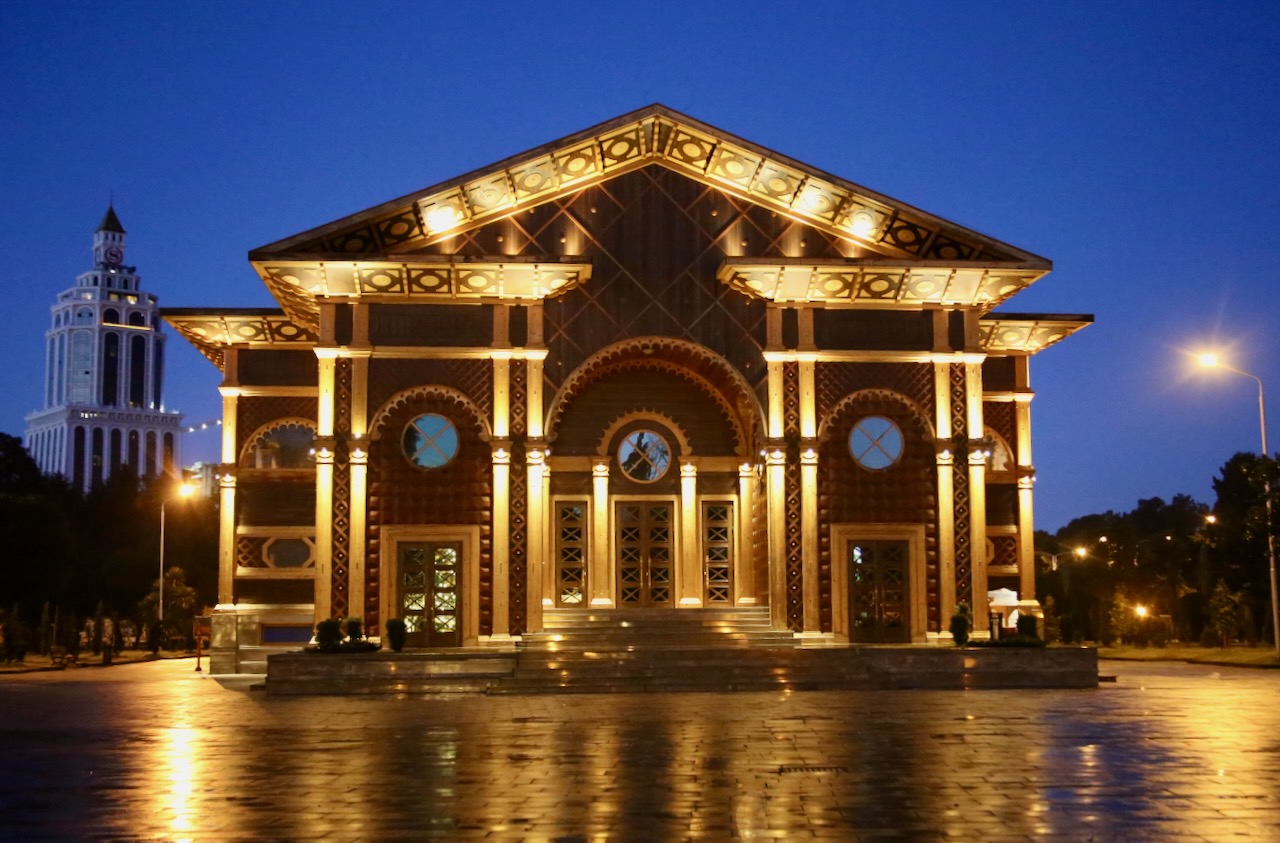
The sky starts to lighten by the time I reach the Summer Theater after passing a large first-aid kit display. It explains that 4 out of 5 people can’t save a life, so 1,000 volunteers went 60 km away to be trained in Adjara (a place, not a technique), and with the 30 first-aid boxes along Batumi Boulevard, they will offer qualified assistance. I pass three cans, seemingly welded together, for tossing polyethylene, paper, and glass.

I walk through the Japanese Garden and up to the Octopus (aka Café Fantasy), which was completed in 1975. During the Soviet Era (until 1991), it used to offer coffee and ice cream but has been abandoned since 2000, and the mosaic surfaces were starting to deteriorate. The cafe was renovated in 2017-19 and granted monument status in 2020 by the Cultural Heritage Preservation Agency. I pull out my phone, to capture a photo that will only be lost later, and this guy lets me know that he speaks six languages to my one. Perhaps we would’ve talked longer, but I was now on my return trip to the hotel for breakfast.


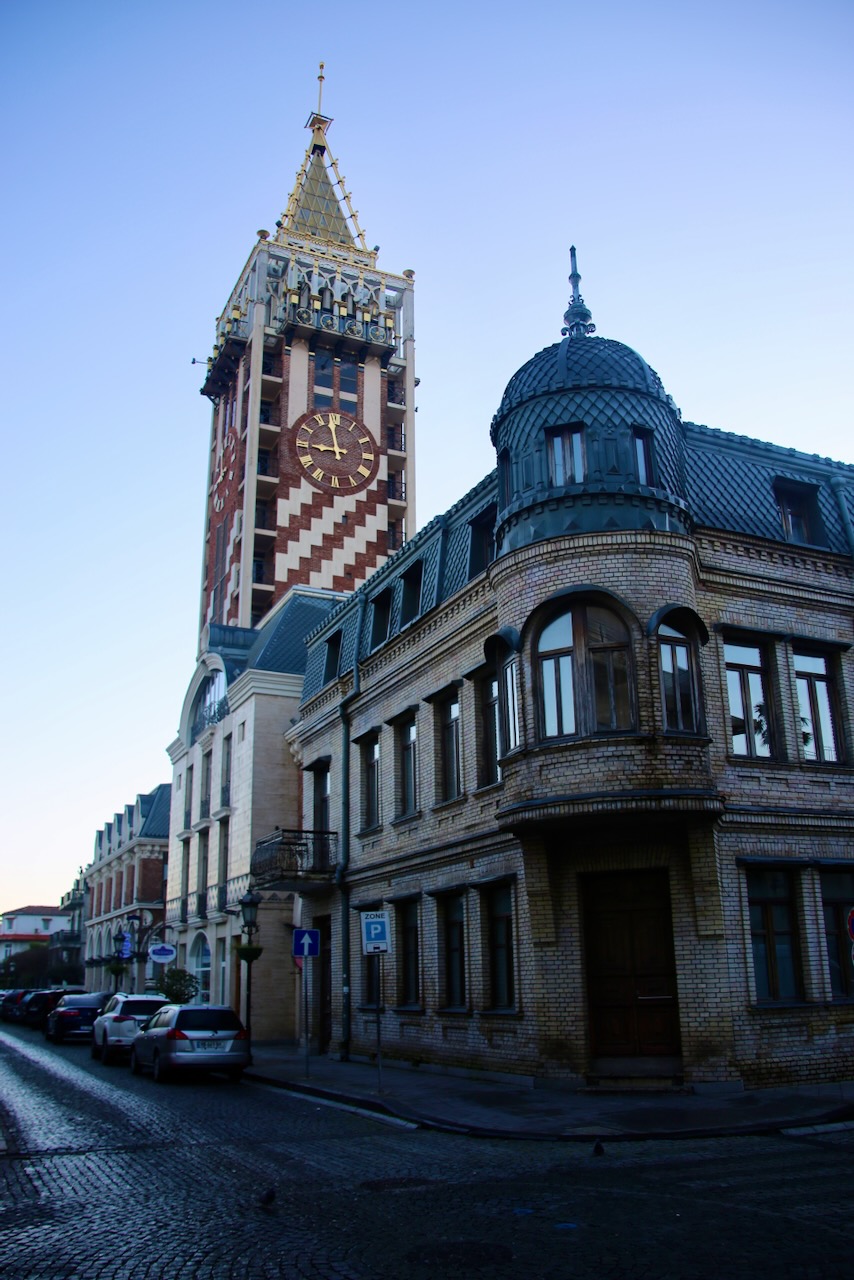
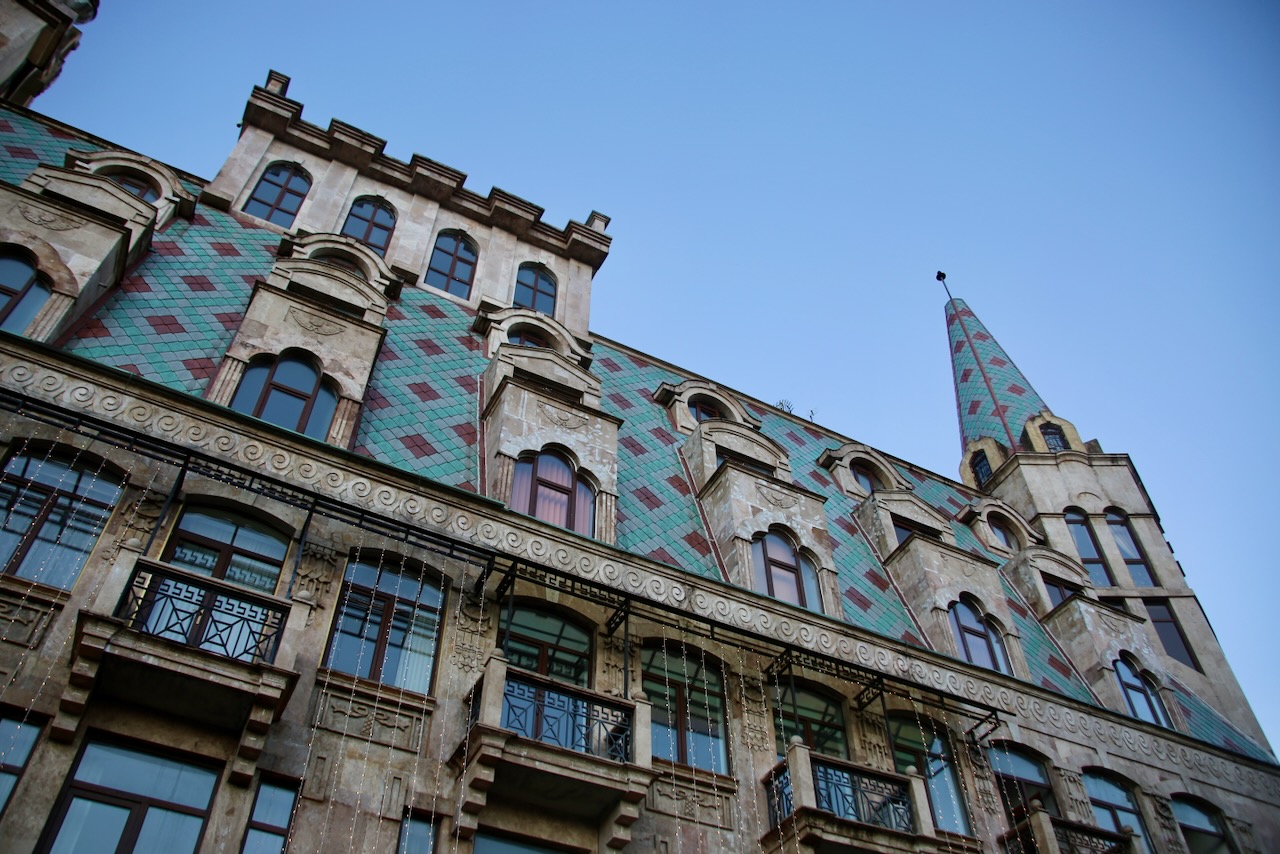
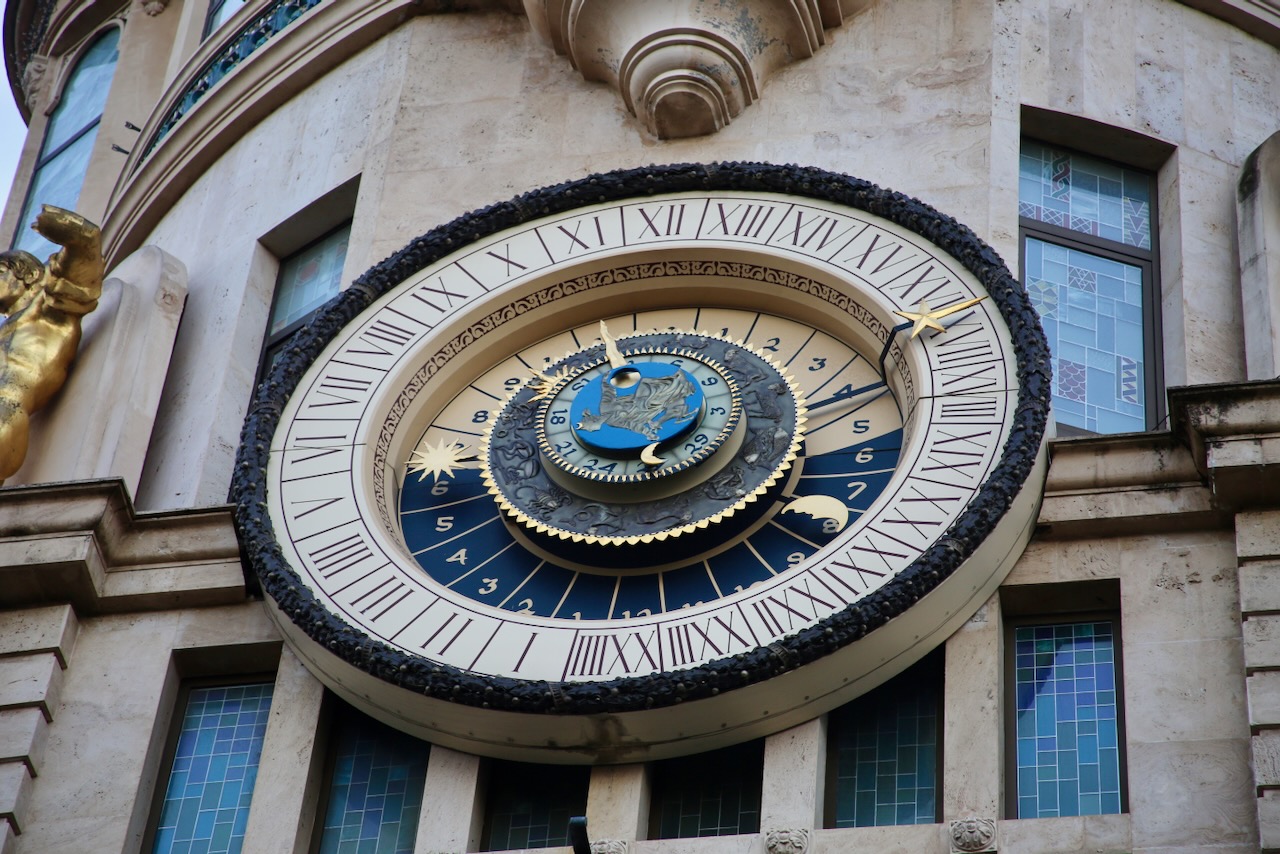
The architecture is very pleasing to look at. There are many words to describe eye-catching. I pass a telephone box, a gift from the Admiral Hotel to the city with the support of the British Embassy. I should’ve attempted to use it, having used payphones in my childhood, but I wasn’t sure who I could call. There is a large astronomical clock and a sign below it with descriptions of moon phases and solar time in Georgian, English, Russian, and Turkish.

I fill up on two (small) plates at the buffet and check out of room 2. I drive to the Ethnographic Museum “Borjgalo” (a Georgian symbol of the Sun and eternity) and wait seven minutes past opening time (not a complaint) to pay my ten lira entry fee, with a tour of the open-air exhibits. Most of the posted rules are similar to anywhere with things that you shouldn’t touch or destroy, but one stands out: During the guided tour, the tone of voice must not disturb other visitors. It’s a good thing I get the tour to myself, though I think my picture habit is more disruptive to a group pace than my usual inquisitive nature.
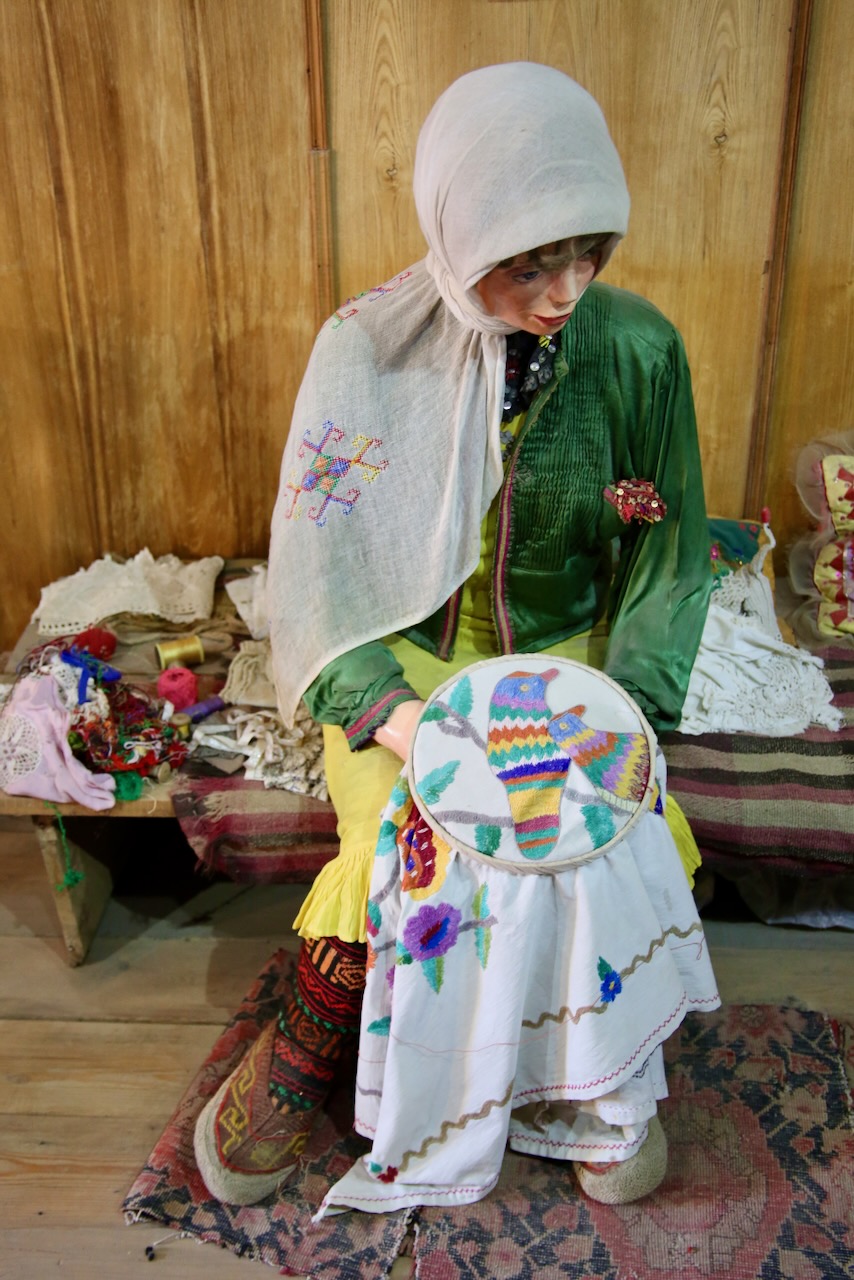


I’m shown some exquisite church models under a protective pavilion and the Borjgalo on some coins. Girls were taught to embroider or perform other needlework starting at six years old to make dowry. Rich families learned Georgian under Ottoman rule, and men listened to music as there were songs for each job. Girls received dolls with rockers, while boys got sleds, bird traps, and trucks. Hunting now requires an expensive license.


A middle-class man is shown cutting tobacco while a child helps their grandmother cook. The baby’s crib comes with a hole in the bottom for a pipe-and-jar potty system while they’re strapped in so the mom can work (making sour cream, butter, rope cheese, and cottage cheese) with less distraction. There are saddles for men and women and round wood atop the bottom floor posts to keep rats out of grain storage on the top floor.


There are bee-keeping huts to keep the honey away from bears. There is a popular candy (churchkhela) made from concentrated grape juice, 25 walnuts on a string, and flour that will be dipped twice and dried before being ready to eat. There is petrified wood in the Anjara region, a tiki-torch-looking fruit grabber and a coned fruit carrier that won’t get stuck in the tree, and horseshoes for cattle. Georgians use old grape skins to make chacha, a brandy that can contain 85% alcohol.
There are more models, these ones showing the different housing options: a large one that holds three generations with stones on the bottom by the river, a wooden working house, and a dwelling one with animals on the bottom floor and toilets on the side, for the release into 3-4 meters of snow below. I realize I’m trying to write down everything the tour guide says. Otherwise, I wouldn’t feel the need to mention the holy spoon (perforated ladle) for boiled dumplings.
We finish the tour by looking at wool socks with leather strapped to the bottom to make a shoe, a single piece of wood that resembles metal, and an old wooden door lock with a key. Then I get to meet the man behind 38 years of work, from when the owner was 20 in 1986, of making a hundred years of Georgian history by hand, chisel, and paintbrush. On weekends, guests are invited to try the traditional methods of smithy, pottery, woodcarving, embroidering, and carpet and sock weaving.

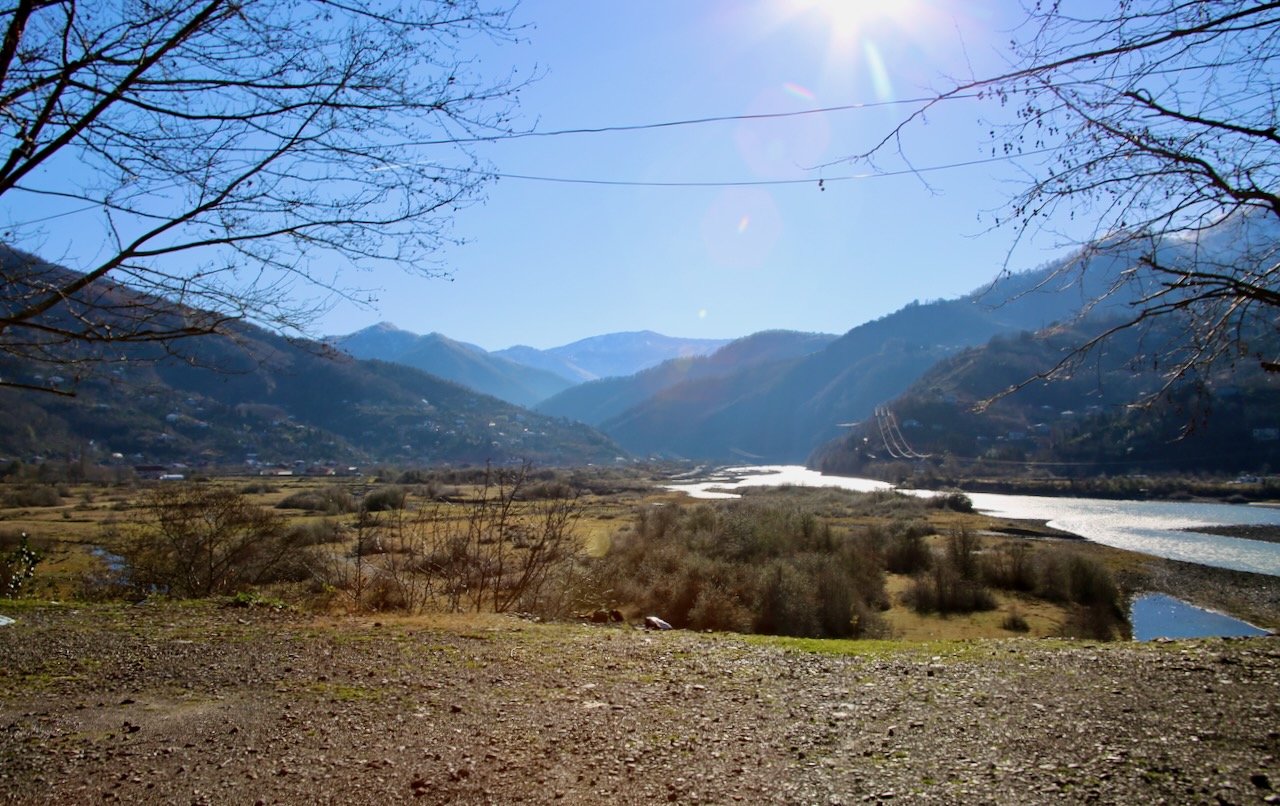
I will get some more diesel at half a tank before taking on a day of driving zigzag roads (my favorite in any country) in the mountains with even better views. The station attendant must scan their badge and enter a code for the diesel to pump. I get 75.40 L. There are so many roadside waterfalls, and some are worth the half-hour drive detour. I stop to see the Small Makhuntseti Waterfall, and there are stairs to the top where you can look down on the snow-covered road. There is candy for sale at the bottom. One of the shops has a waterfall on its inside wall, and a wine shop has waterfall steps.
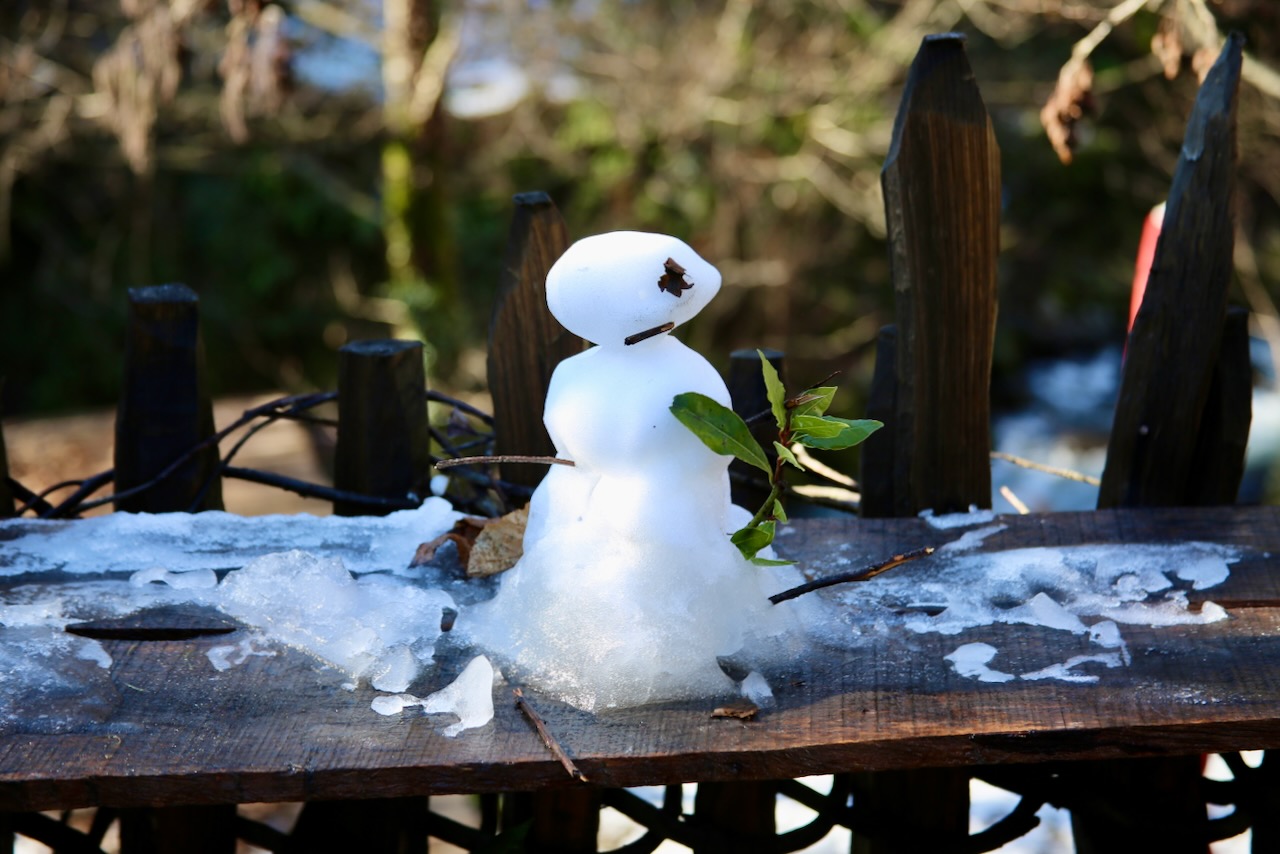
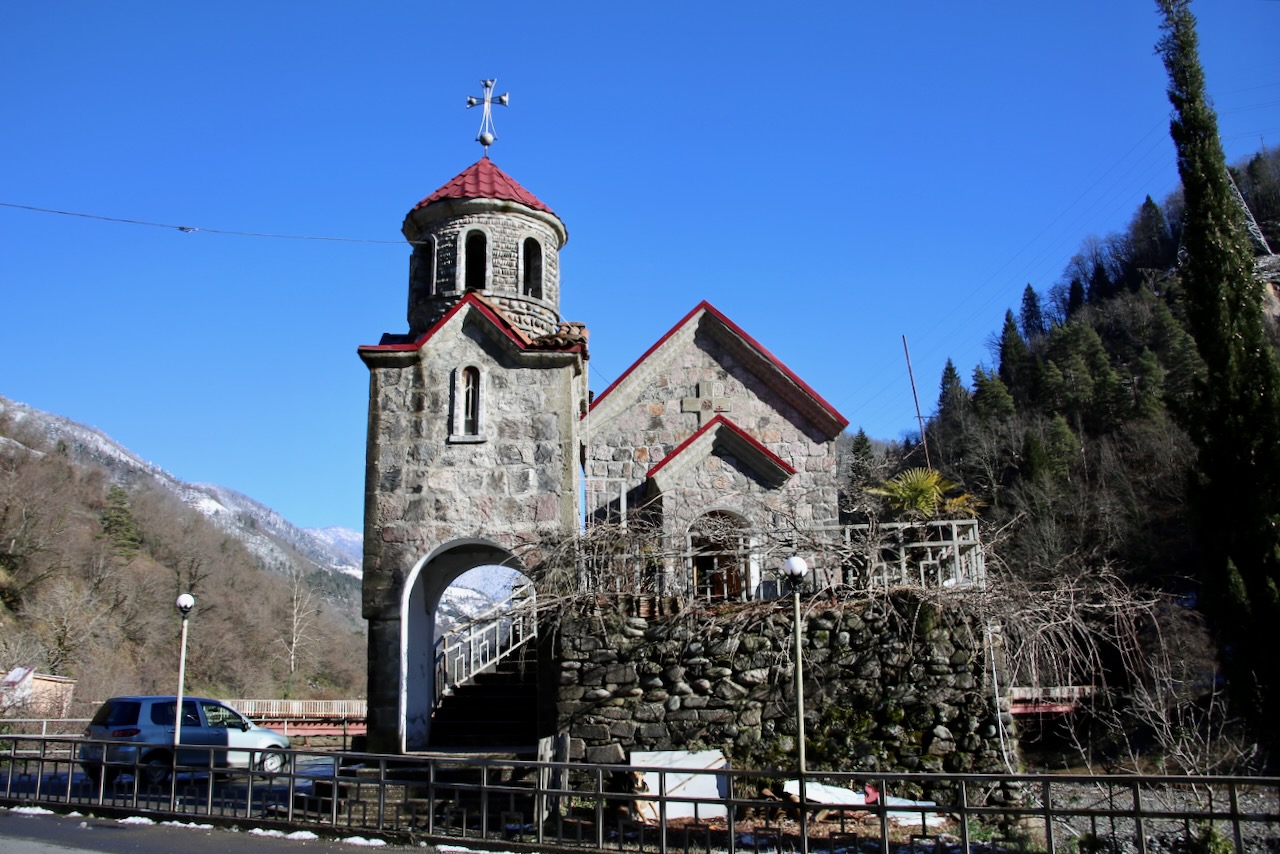
Back on the road, the one with guardrails and only a few stopping places, I admire the snow, the river, and the mountains. I marvel at the size of the potholes that could be dioramas full of brown water with shards of ice imitating melting glaciers. There are picnic tables with wind blocks that seem to keep the snow at a distance too. I approach the Church of St. George, with a car parked and a dog sitting outside, and though it seems small in size with no pews inside, there is an amazing view outside through the sun-soaked windows.
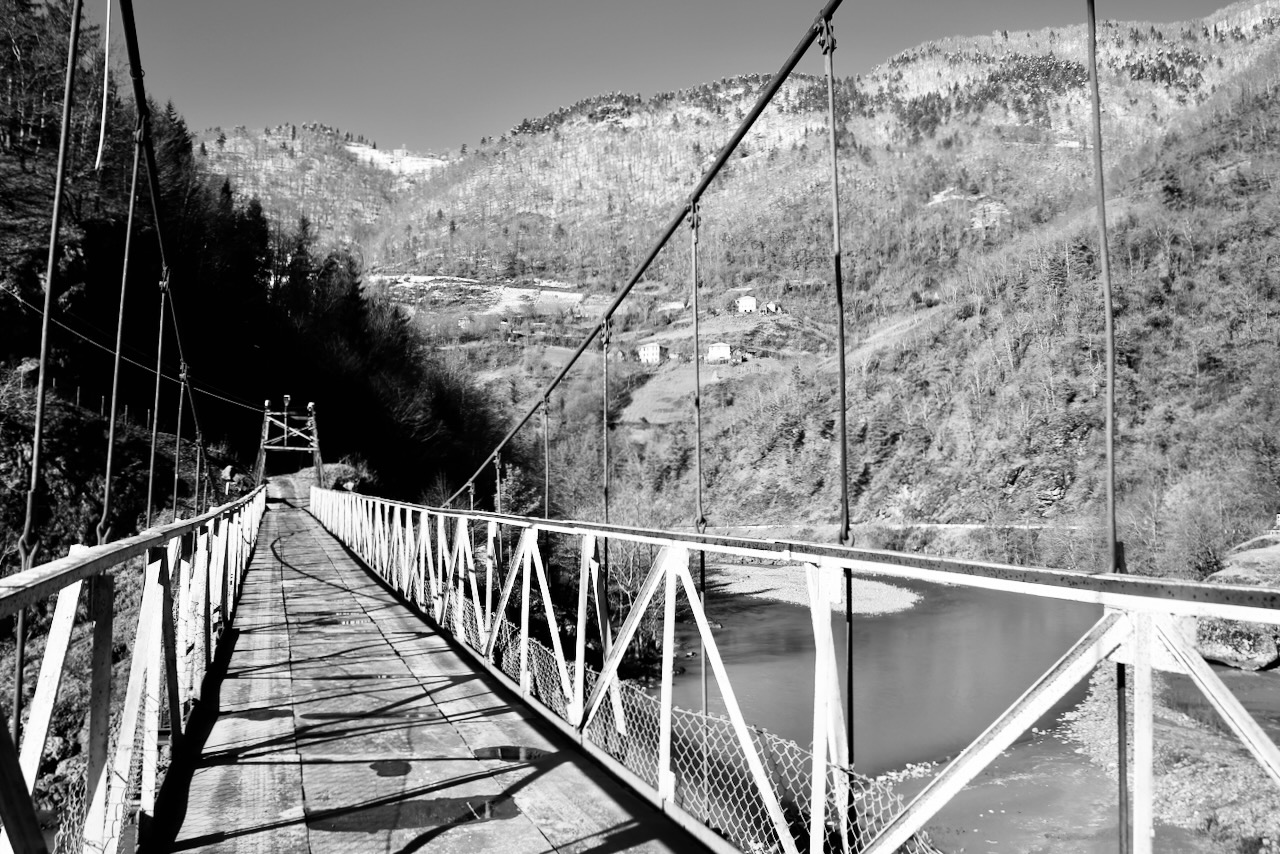
With the lack of traffic, I’m able to take a picture of myself standing on a one-lane bridge before driving across and then stopping again to set foot on the Dandalo bridge, which is curved and slippery, covered in melting snow and smooth rocks. It is a feat of medieval engineering, being dated between the 9th and 10th centuries. It spans about 20 meters (65.5 ft) over the river and is roughly 3.5 meters in width. There are several bridges of similar design still in use today.
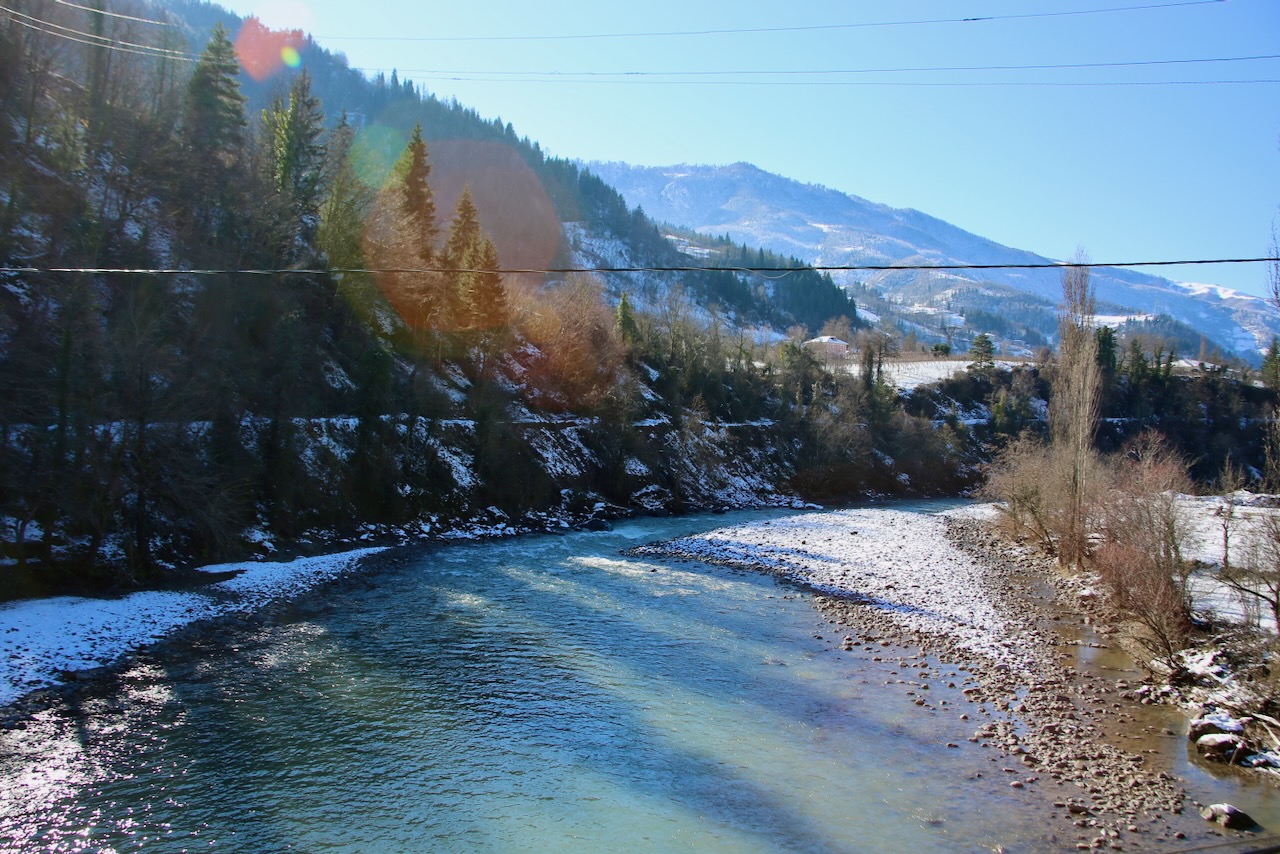
Back at the Dandalo Waterfall, there is a picnic area where the adults are drinking vodka while a boy practices throwing snowballs. The men are busy standing in the street like their cows. I follow the other footsteps in the middle of the bridge and get some pictures of the Acharistskali River. There is virgin snow on the next bridge, so I’m able to continue. Just watching the snow evaporate is so relaxing. The roads are a mix of dry, wet, ice, snow, and slush, whether they’re paved or not.

The snow makes the small roads into a single lane that has been cleared, and I have to reverse to let a truck pass in a turn on a hill. I reverse again later while cars wait on my crap skills (which are improving as I learn to go backward into snow banks), so further down the road, I will challenge the next vehicle, and they were out of the way in a hurry (they’ve done this a season or two). I see some guys parked in the snow making a BBQ.
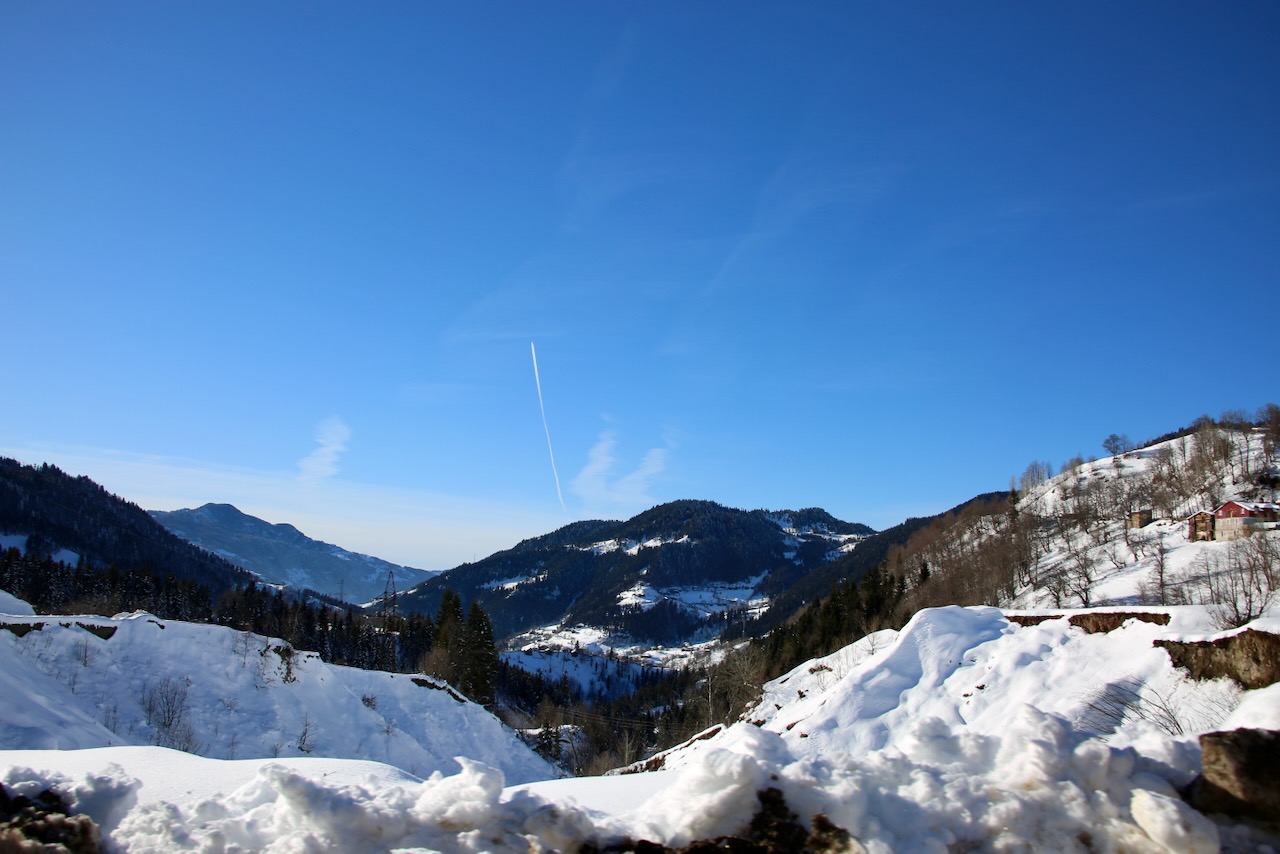
I approach the Goderdzi Ski Resort and am taken aback by the crowd as this is the most cars and people I’ve seen since leaving Tbilisi. I was unaware at this point of what awaited me, even though there was a sign posted about 150 km back that said the pass was closed. I thought that if I just kept moving, I wouldn’t end up stuck in the snow like the other cars that started to surround me. A group of guys offered to help get me turned around, the same group that I unknowingly took a picture of half an hour ago pushing their van out of the snow.
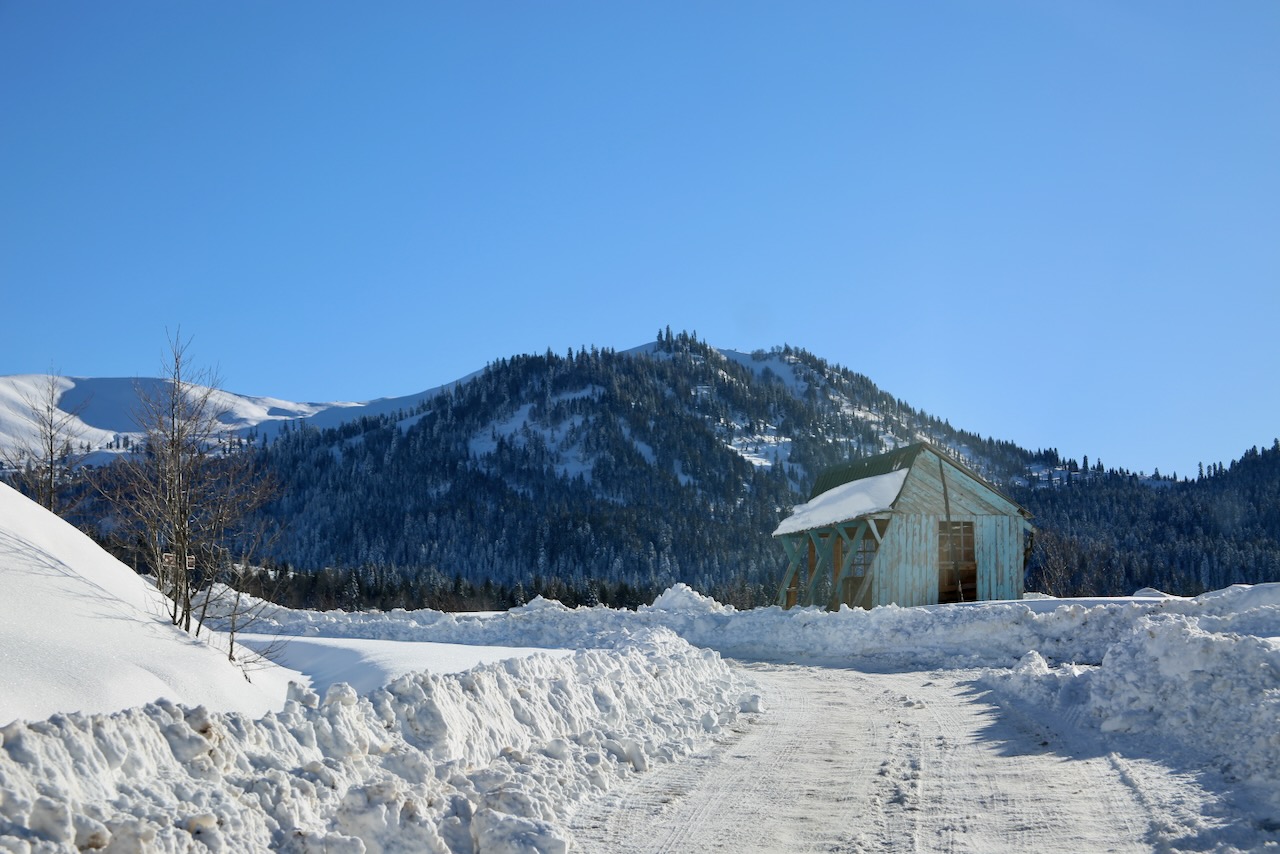
I decided to hang out with them for a bit, figuring I might get the go-ahead if I waited for the colder darkness to ease my travel issue. Oday introduces himself and orders some chacha (of which I will bring the Fanta bottle full of home for Caleb) and the smallest glintwine with an orange slice for 5 lari. He shares half his king-size Snickers, and we people-watch until dark. Oday offered to drive my car back to Batumi, where the guys were staying, but one of his friends volunteered instead. I was just glad it wasn’t me dealing with other stuck cars along the route and ice on the short part that is paved.

It takes us over three hours to get back, which equates to a fox an hour, though I’m sure they were closer together than that. When the other car stopped on the road for a pee and a cigarette, my driver ditched his wet socks and this smoke-free rental and gave someone else the wheel. We pass a bridge where a boy is throwing snowballs, the same bridge I drove by seven hours ago. I’m glad I didn’t abide by the closed sign, or I would’ve missed out on part of what this road has to offer.

The driver, with more of a language barrier, points out anything with light near it so that I can get a blurry picture of it. He’s sweet, but he’s slammed on the brakes twice now, which isn’t. I will learn that a blinker means you want to pass someone and then flash your lights while doing so. The driving gets crazy in town as the lead car wants to pass everyone. We arrive at the Euphoria Hotel around 10 pm, and I end up in a room for $50 for the night vs. the half-price accommodations just 5 km away that I enjoyed the night before.
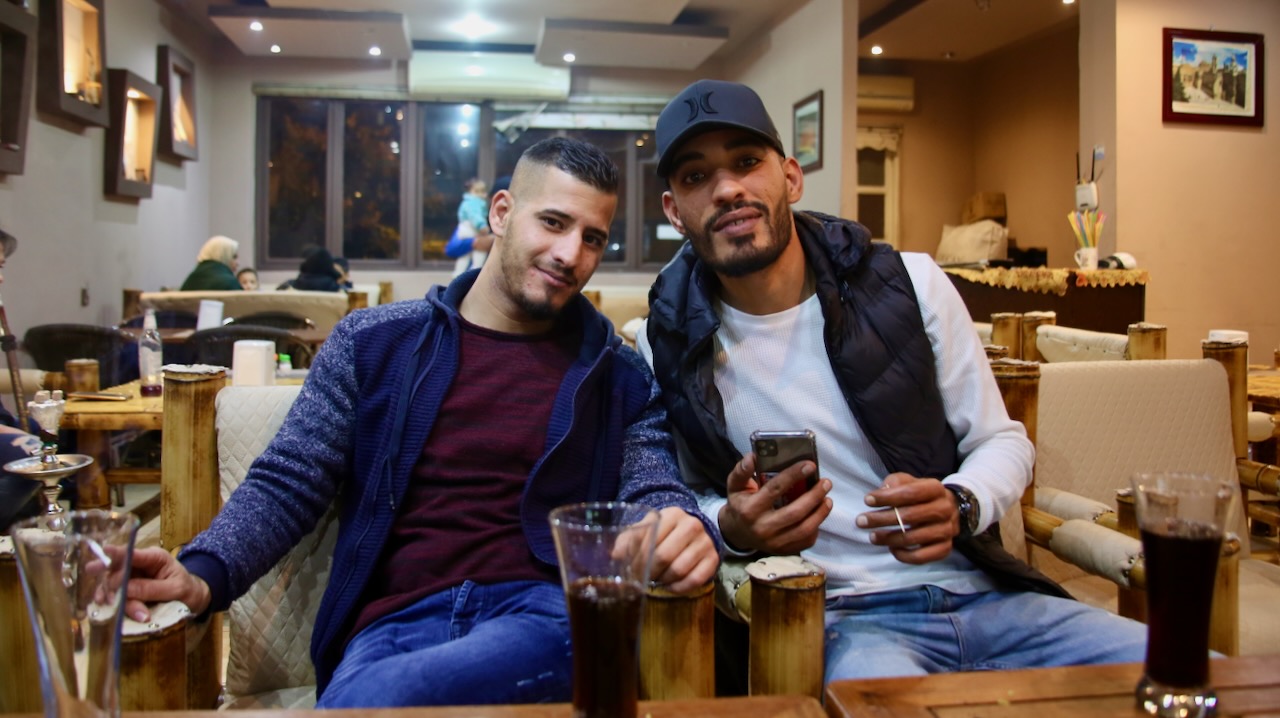
I blame it on the language barrier with the hotel clerk, a misunderstanding of which currency we were discussing, and the fact that the guys had plans to stay up all night and enjoy the other hotel features. We go to dinner at Castello, and I notice a lot of crosses lit up on road corners, too. It’s a good thing I’m not a strict vegetarian. The salad and rice are brought to the table before the main course, a whole lamb, stuffed with rice, without its head. All the guys are so happy to be sharing this meal with me, but even more so to be putting their fingers in this slaughtered animal while the steam escapes from its ribs.

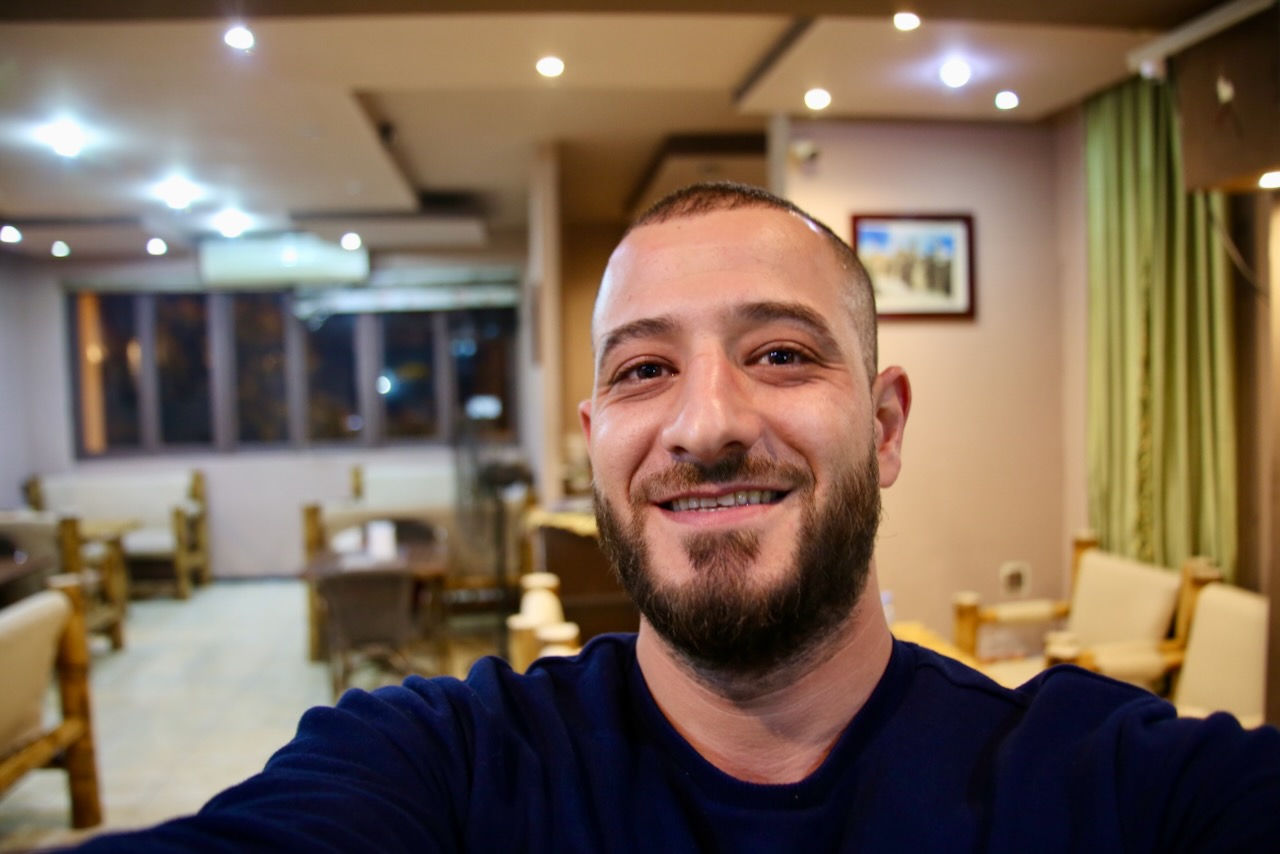
They make sure that I’ve had plenty to eat and pour me some tea while they smoke at the end of the meal. We get back to our rooms just before 1 am. The guys are preparing to shower and go drinking before making a party in their room with girls dancing in dresses. The guys have fancy outside shoes and going-out shoes. I brought hiking boots. I get a call to my room, write down his number, and unplug the landline phone.

 TheJessicaness