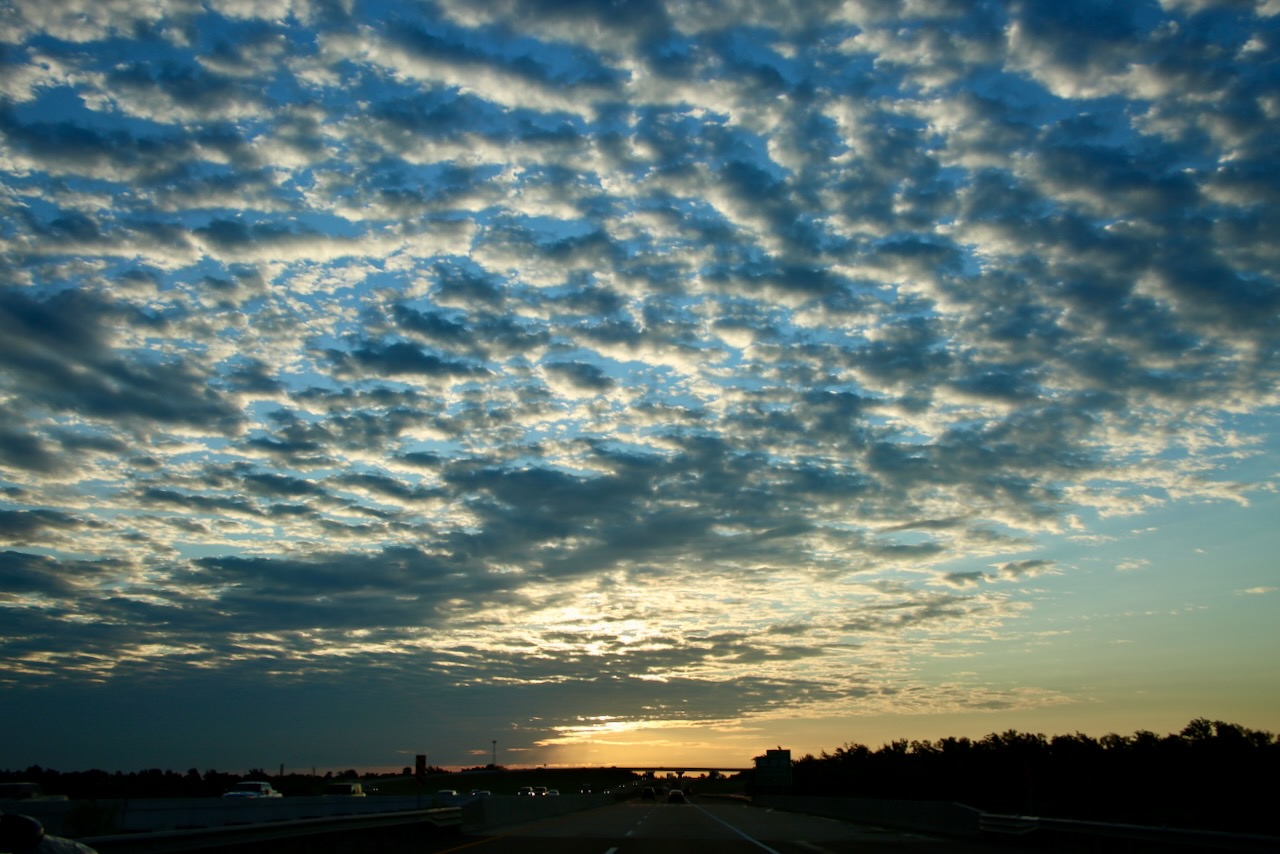
I changed into shorts last night, hoping that less sweat would help me sleep. I jumped out of bed at 2 am, must’ve been a heck of a dream, then crawled back in for another four hours. The first gas station was just lit up pumps, so I got on the highway. I didn’t want to miss the sunrise or deal with headlights, but I also needed gas and a clean windshield. I brushed my teeth and made a sandwich before looping back through Love’s because I’d missed the on-ramp. I wouldn’t mind being on a patio or patch of grass somewhere watching nature in its blinding glory go about its day as I slowly begin the adventure that today will bring.
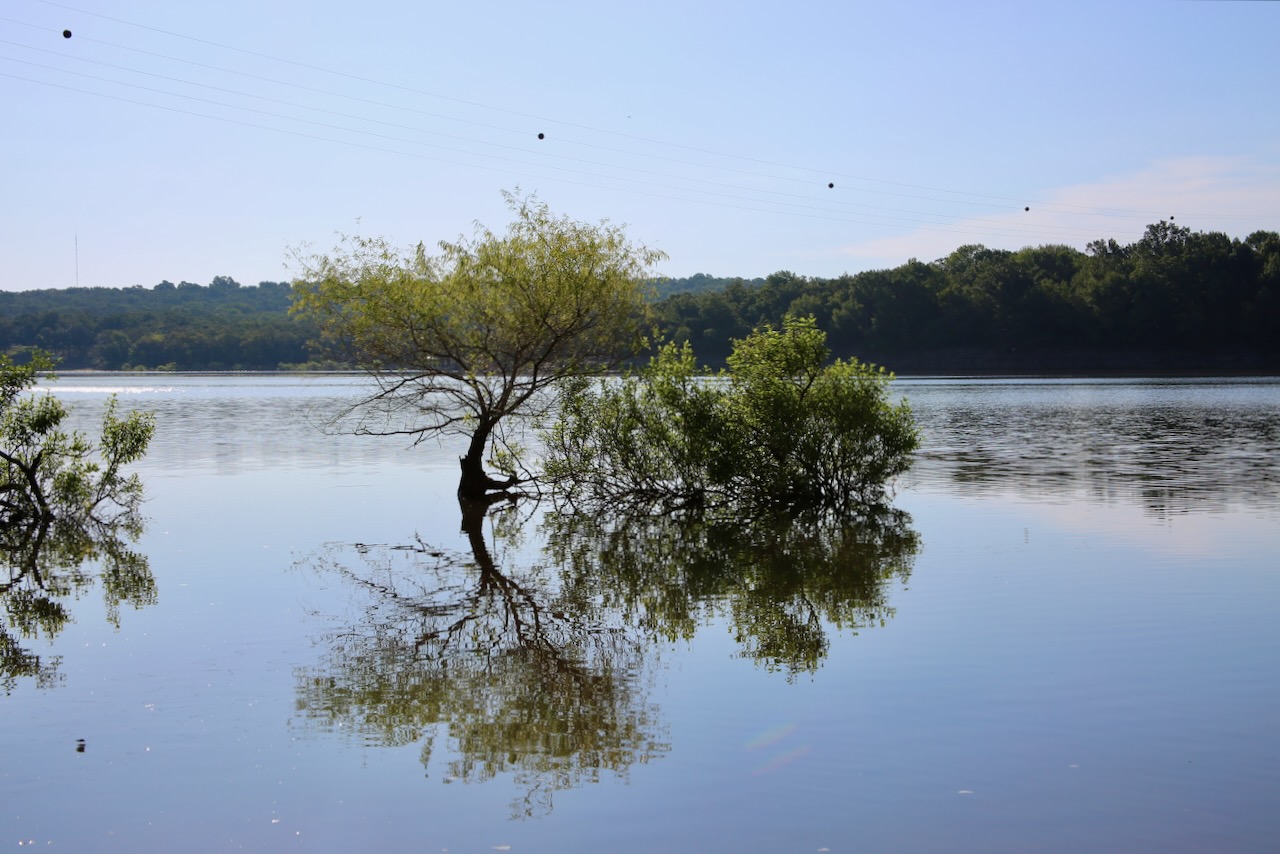
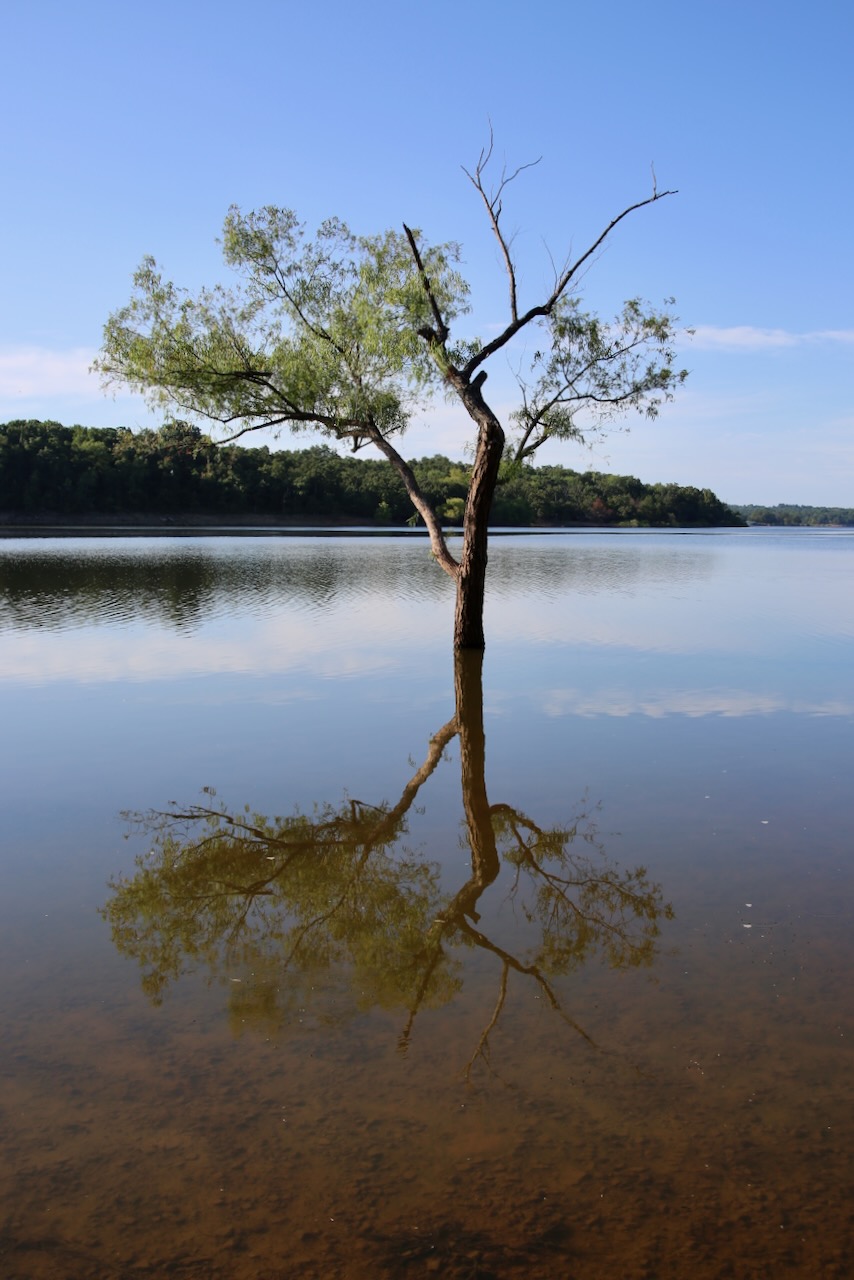
I drove over a hundred miles east and stopped at Lake Eufaula State Park, off the 150-S, and walked to the water’s edge. There, I see a raft of whirligig beetles, the “bumper cars of the beetle world,” just paused on the calm surface since their eyes allow them to see simultaneously above and below the water. If frightened, they will swim in rapid, tight circles or dive beneath the surface. Nearby is the short Crazy Snake Trail that I only accomplished part of before running out. I was walking amongst nature, while some flies were practicing for Nascar around my spider web-covered body, when I got bitten by one mosquito. That’s all it took for me to want to appreciate this environment from a distance.
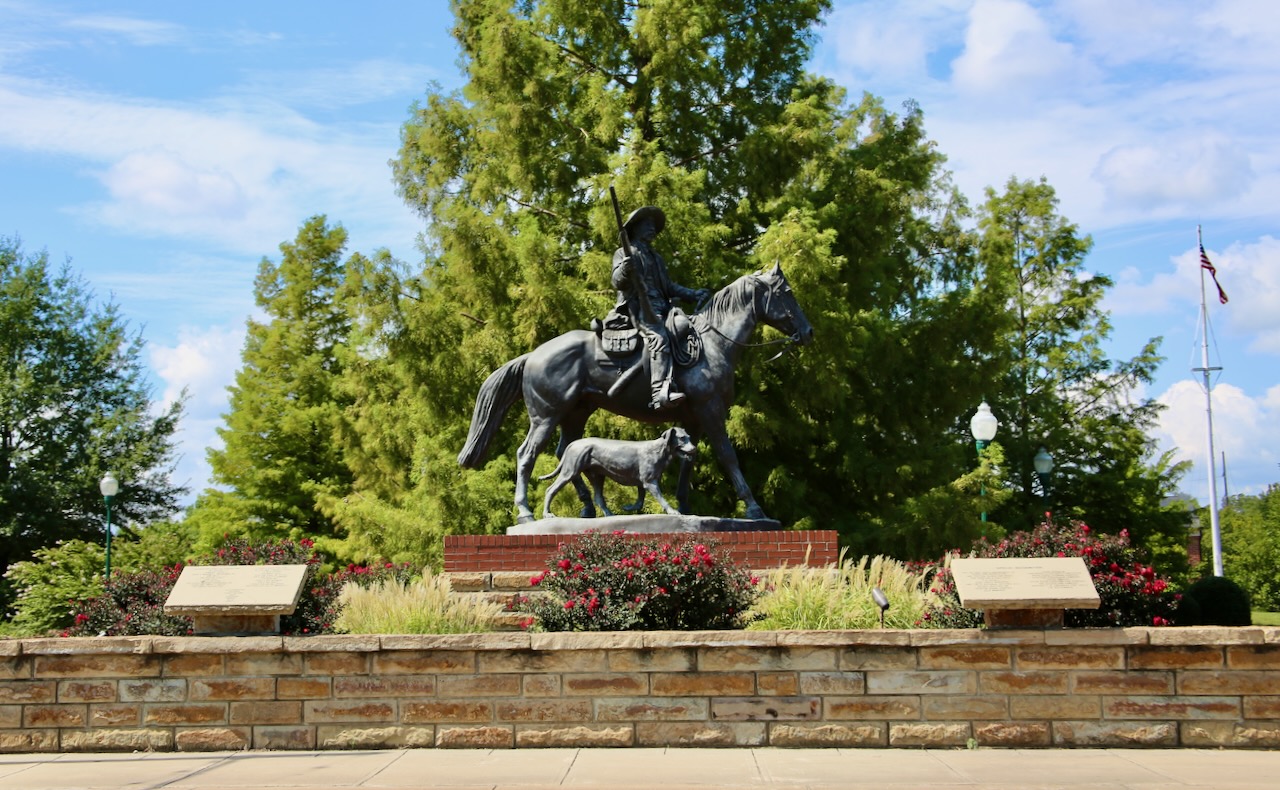
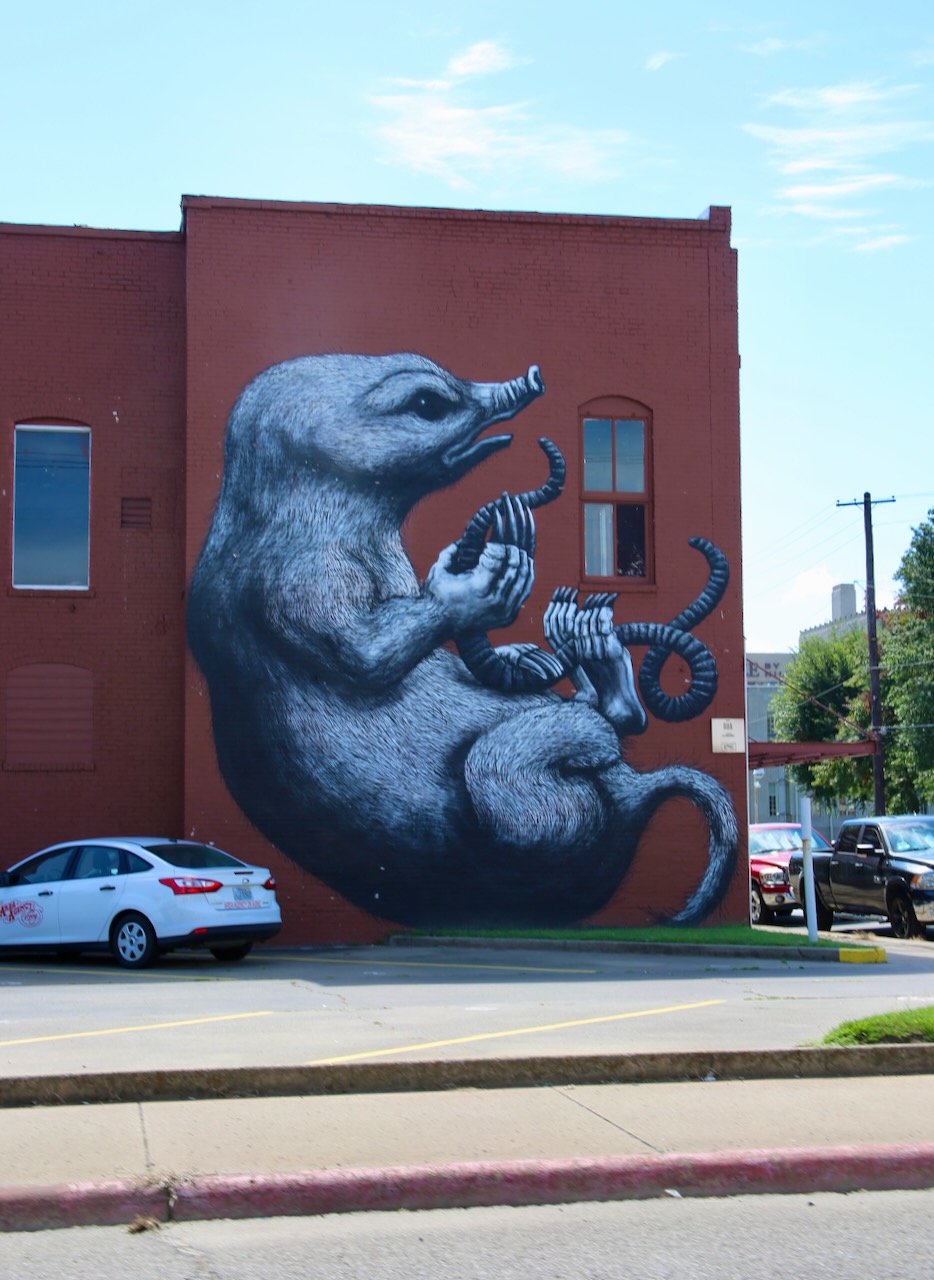
The webs, once seen in the sun, look like little spider apartments all crammed together at different angles, letting no flying creatures, except the ones annoying me, get by. This trail was named in honor of Chitto Harjo, who organized resistance against the Dawes Act, which divided the Muscogee’s land into 160-acre allotments, leaving surplus land for white settlers. Each Muscogee community had communally owned crop land that any able-bodied member helped with, or they were fined or forced to leave the village. The chief once said he “did not mind so much playing the white man’s game if only the white man would not make all the rules, [that he changed constantly].“
I had already passed the campsite with a shower, so I stopped at the Flying J instead. I helped another box turtle out of the road so it wouldn’t end up like the only armadillo I’ve seen on this trip. The attendant was sweet and helpful, and now I’m clean. I was craving oatmeal or spinach, and wouldn’t luck have it that the truck stop offers maple oatmeal and biscuits with sausage gravy until 10 am. They were a few minutes late, switching to the lunch soups. This snack would keep me going until I reached the Bricktown Brewery in Fort Smith, AR. This is one of their 14 locations in five states, including Texas, Kansas, Oklahoma, and Missouri.
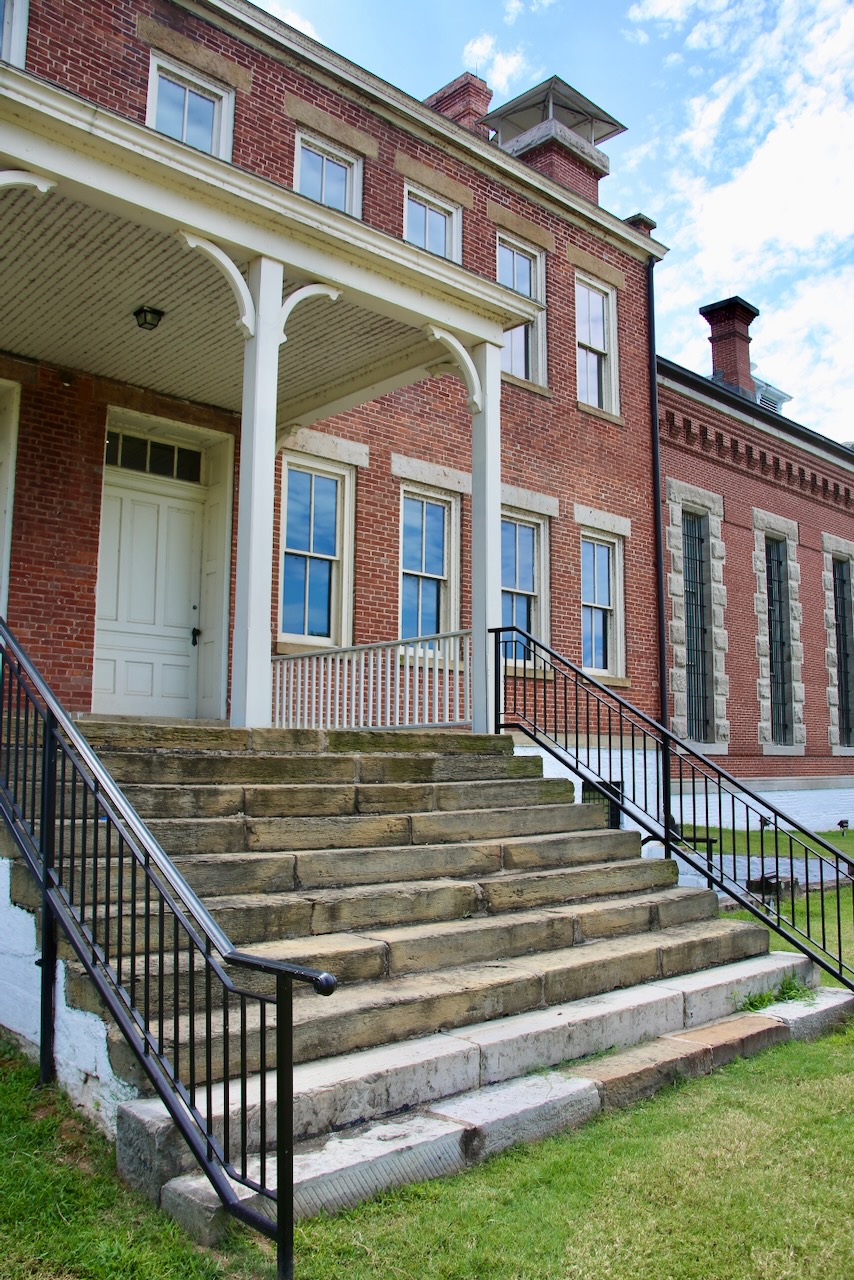
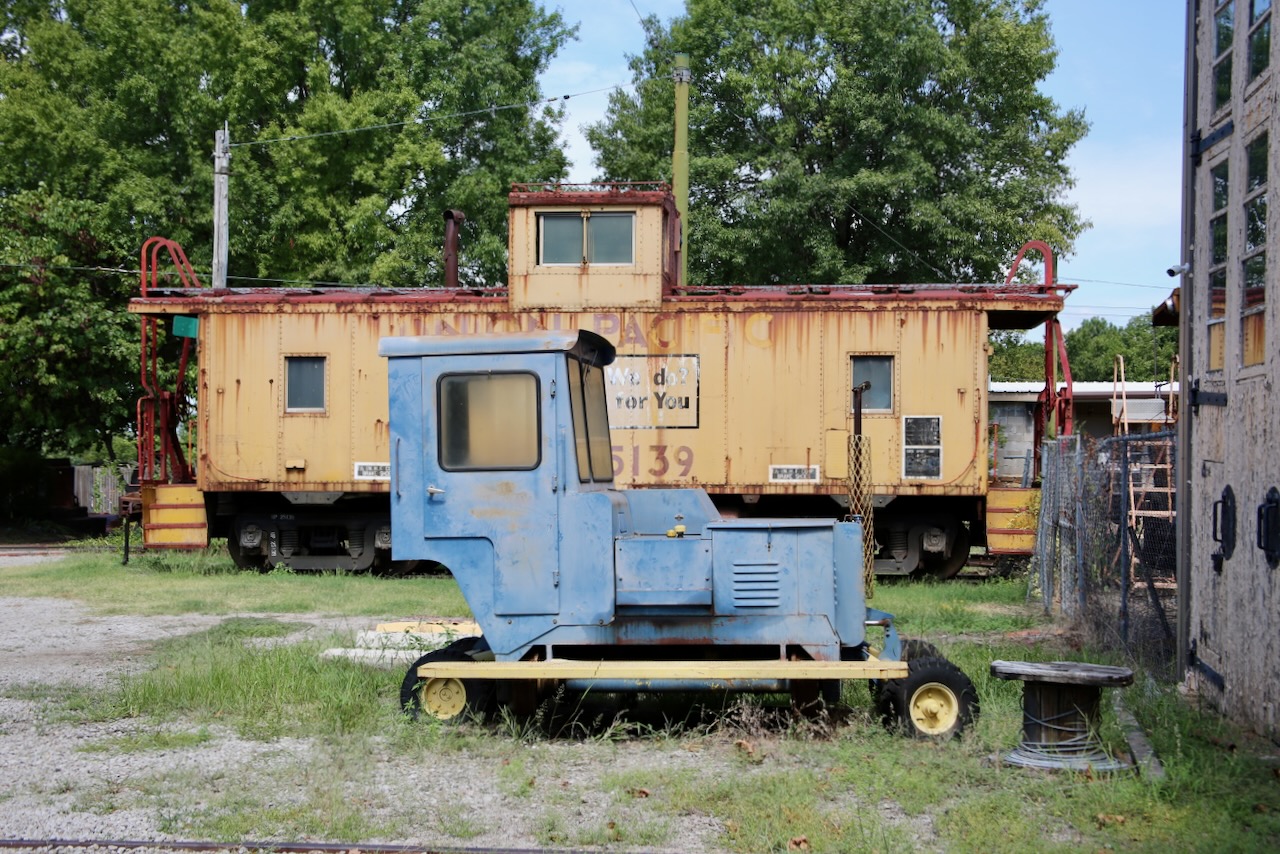
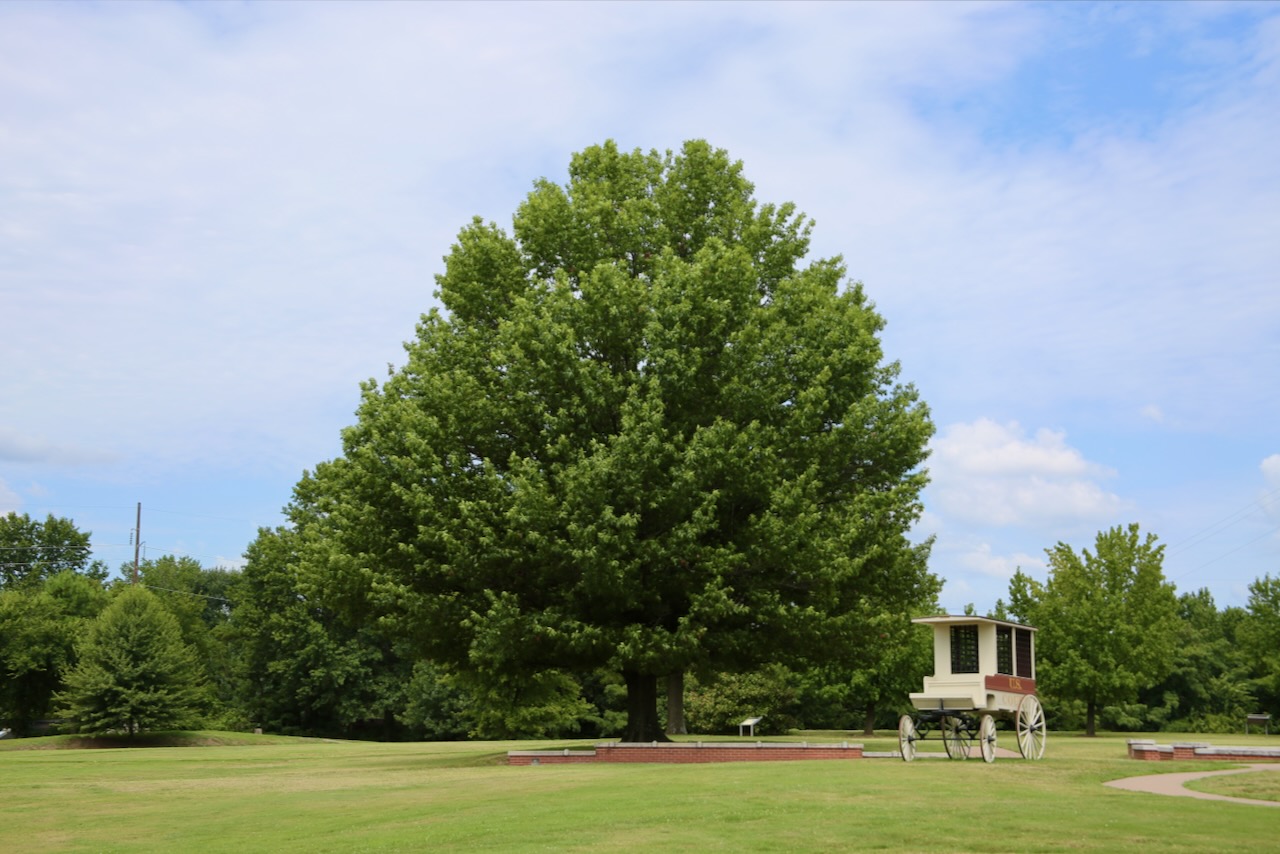
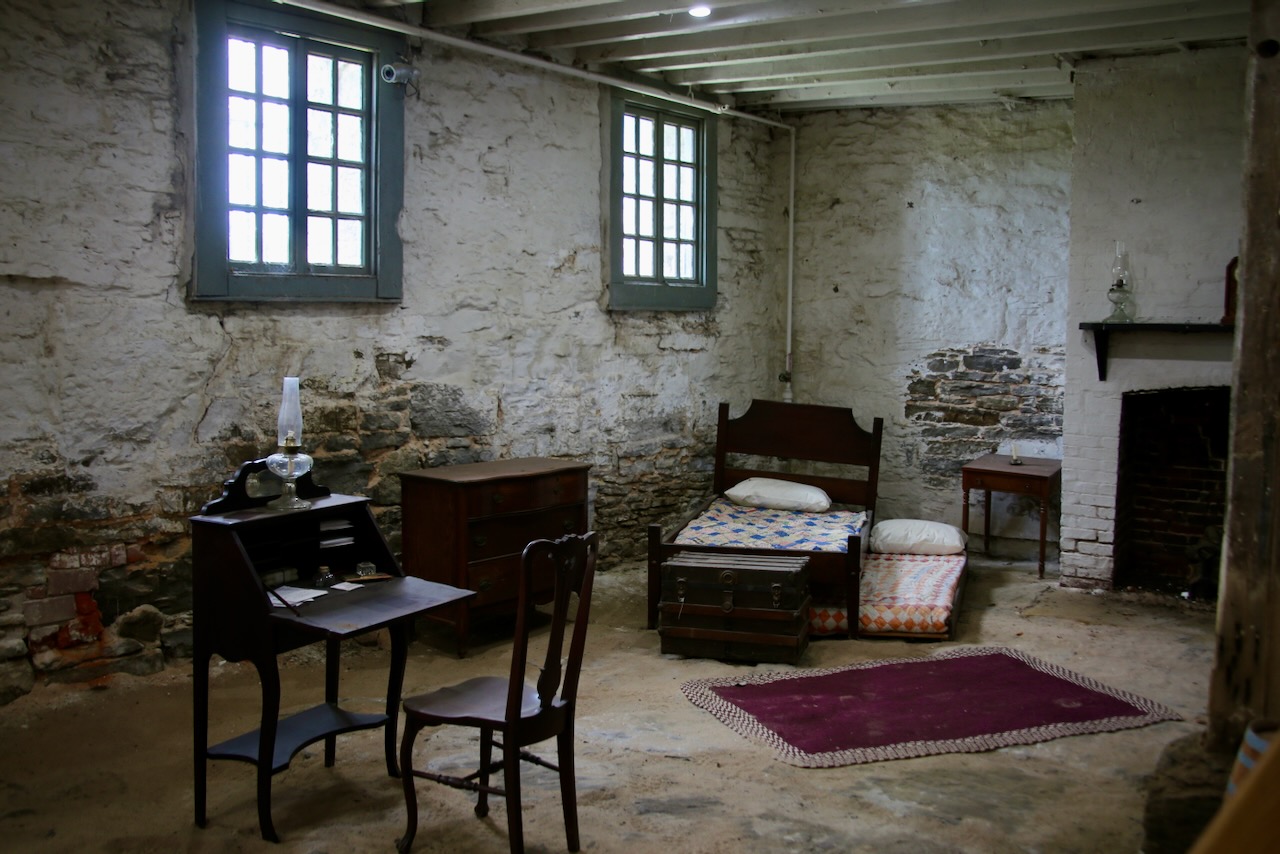
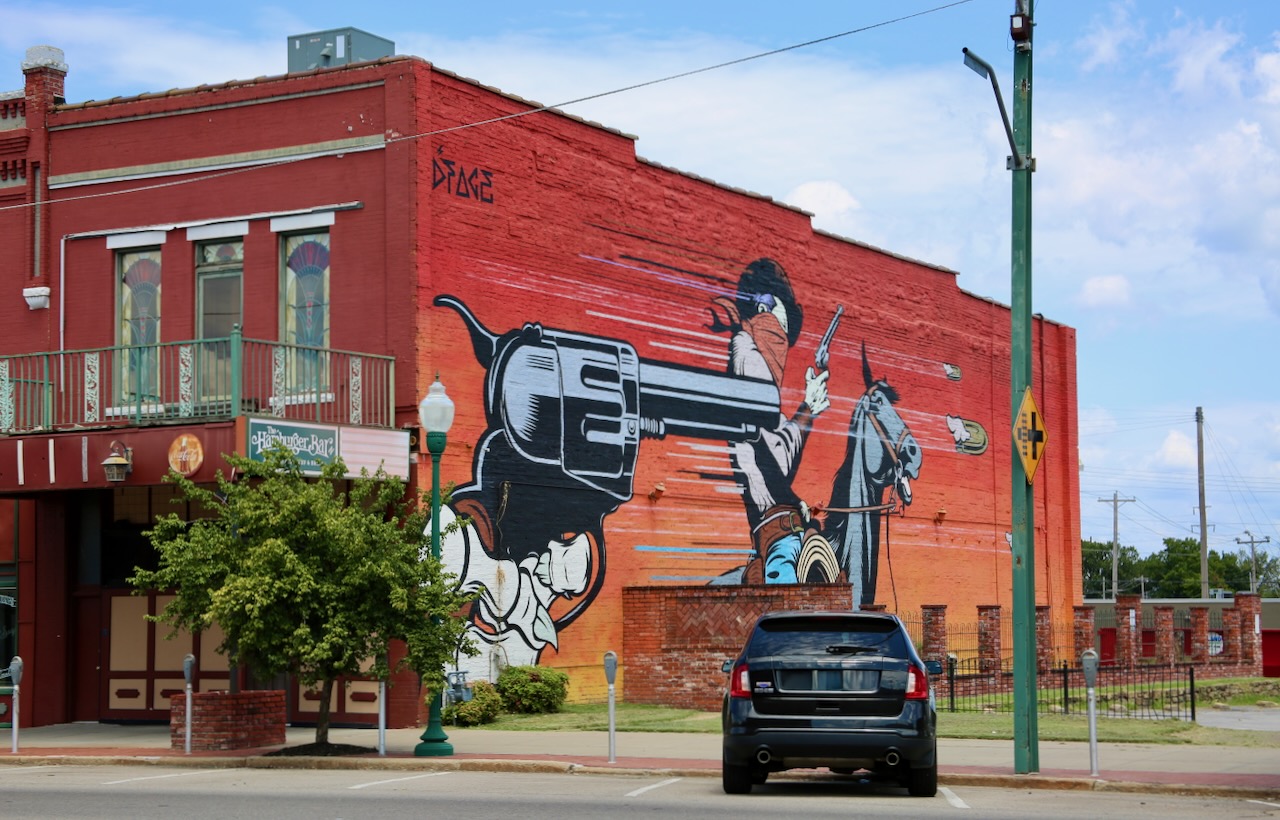
I visit the Fort Smith Trolley Museum, with a structure built over part of the original tracks. I’m allowed to walk onto a trolley and explore the tools, photos, and license plates also on display. There are a few more in the yard, but I’m soon on my way to the Fort Smith NHS. In the federal court building basement, groups of 30 to 50 accused and convicted men sat unbathed with their slop buckets. The guards filled the ceiling space with sawdust to keep the stench from wafting into the courtroom and offices above. The women were held in the former military guardhouse. This went on for 17 years until the 1880s, when Judge Parker detested the influence that men of poor character had on the innocent.
This fort was used in films: True Grit (1969 & 2010), the sequel Rooster Cogburn (1975), and Hang ‘Em High (1968) starring John Wayne (got his first Academy Award), Katharine Hepburn in the sequel, and Clint Eastwood as the star, respectively. Miss Laura’s Social Club, 1896, was turned from a house of prostitution into the city’s visitor center. It was saved from fire in 1910 and from demolition in 1963. Another historical survivor, the Frisco Locomotive #4003, cost over $50,000 when it was built in 1919. It is one of eight surviving USRA steam locomotives, having been retired in 1952 with the move to diesel. It joined the Trolley Museum in 1999.
I ordered the sampler (fried pickles, battered green beans, mini pretzels, and boneless wings) and talked with Alex from Santa Fe, who lived in Hana, Hi, and Canada, about travel and kids these days. I also spoke with Floyd, who plays the judge at the park reenactments, who left after two beers, and had the sad misfortune of sticking around to listen to Luther, a retired local who is now a foul-mouthed alcoholic. As soon as he mentioned my genitalia, I went to the bathroom and called the bartender over, who let me know it was cool to sneak out the back as my tab and tip had been covered. She had taken his keys, ordered him nachos, and called the bartender who cut him off on Friday.
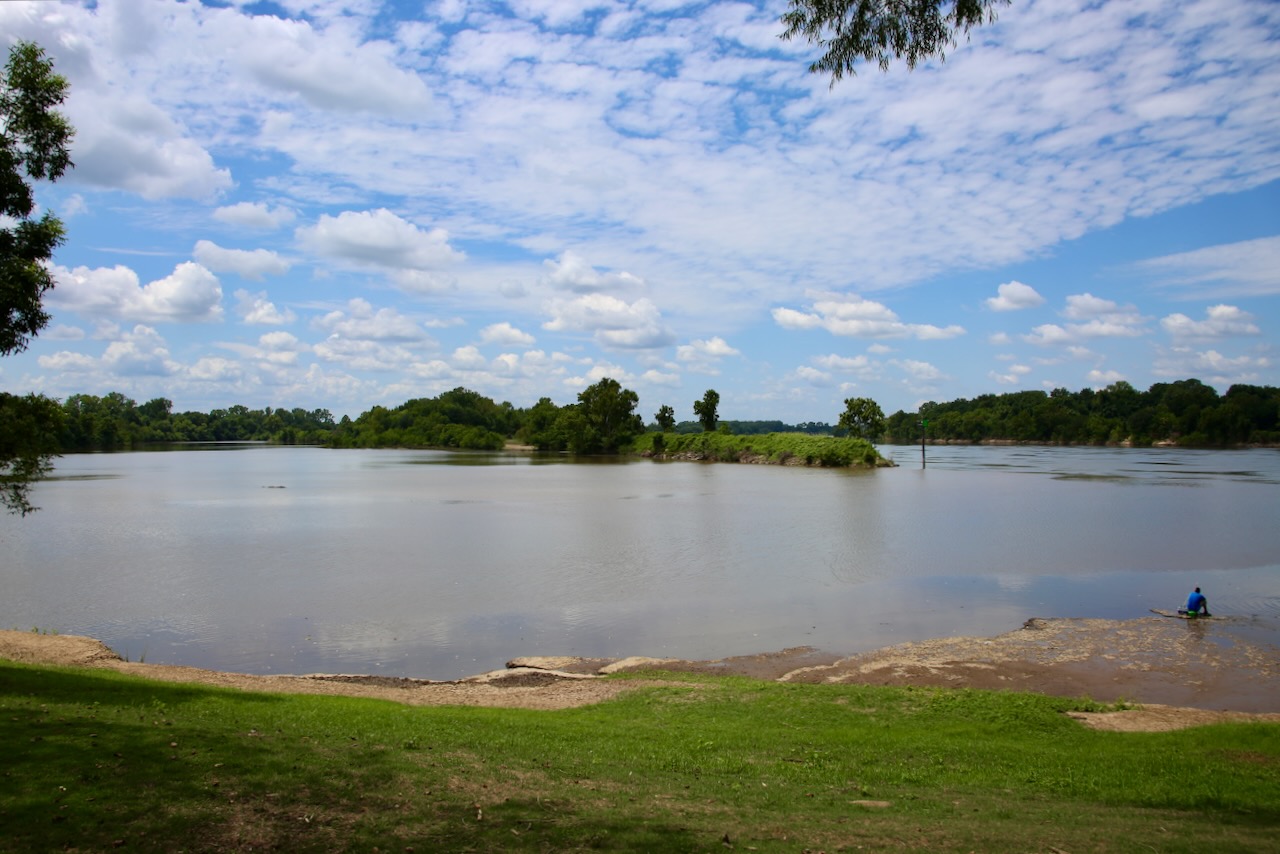
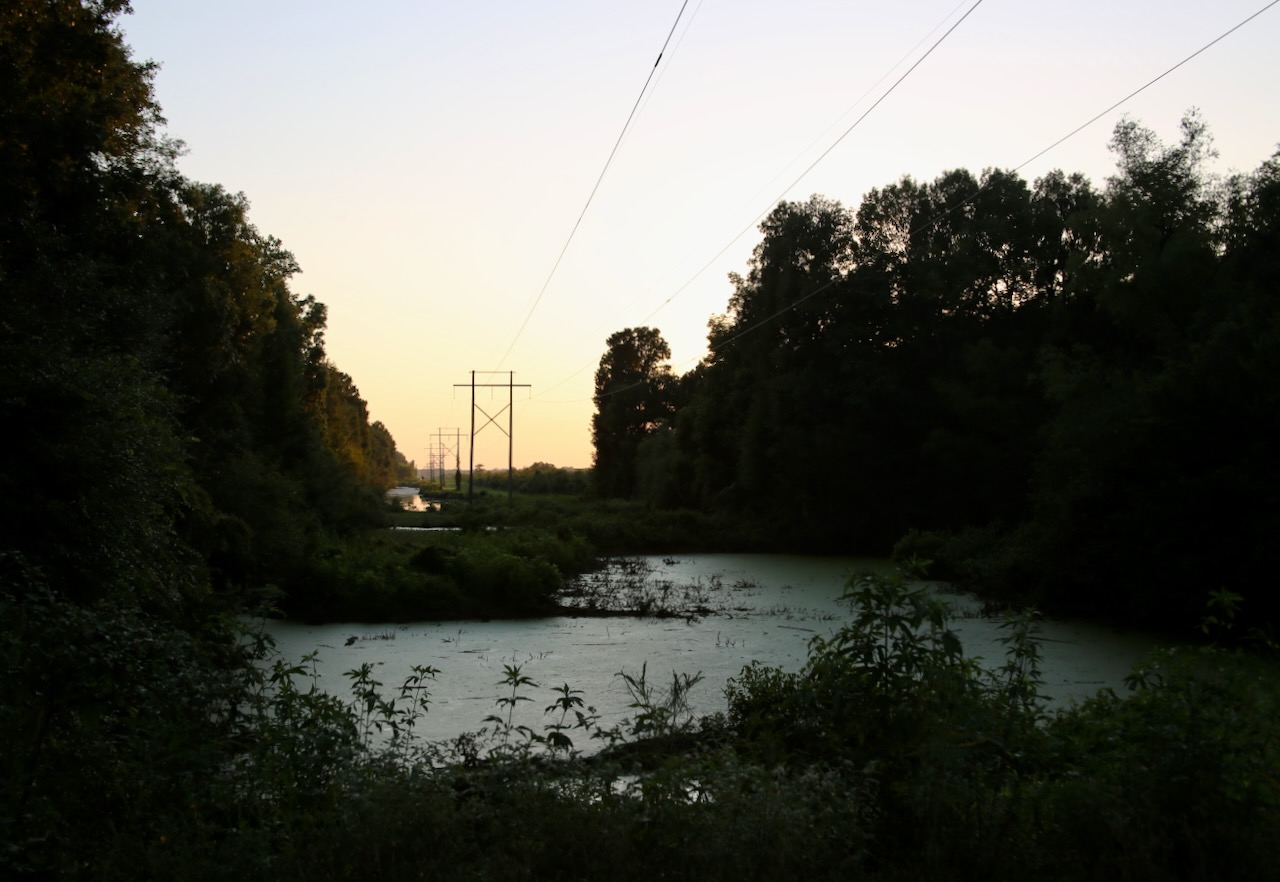
I was grateful to escape the situation without further interaction and drove straight through Little Rock and past the exit for the Camp Robinson State WMA, where I am going to camp. I turn onto the gravel road surrounded by swamp on both sides, which makes me wary of mosquitoes, and a striped horse fly lands on the car. I try the path to the right first, which takes me to a pond and over a three-mile-long bird trail, then go left and find designated camp areas along the river. This park passes under the highway, but I mostly hear the nighttime country bugs. I’m still waiting on the temperature to drop below 80°F so I can sleep, or nap, and carry on.
In the road is a shaggy mane mushroom which undergoes deliquescence (digesting itself into a black, inky liquid) within a few hours to days of maturing. Before that, it’s considered a choice edible mushroom, but I can see this one is past the eat-by date. I creep out of the park at 5mph to give the frogs time to hop across the road after I sighted my first mosquito. I had already heard two. Caleb suggests the Econo Lodge on the other side of town, so I book that, and Toni is quick to check me in. I’m greeted by two American green tree frogs on my door, along with a small grasshopper and a gray bug with long legs. Sleep will come easily after a shower.

 TheJessicaness