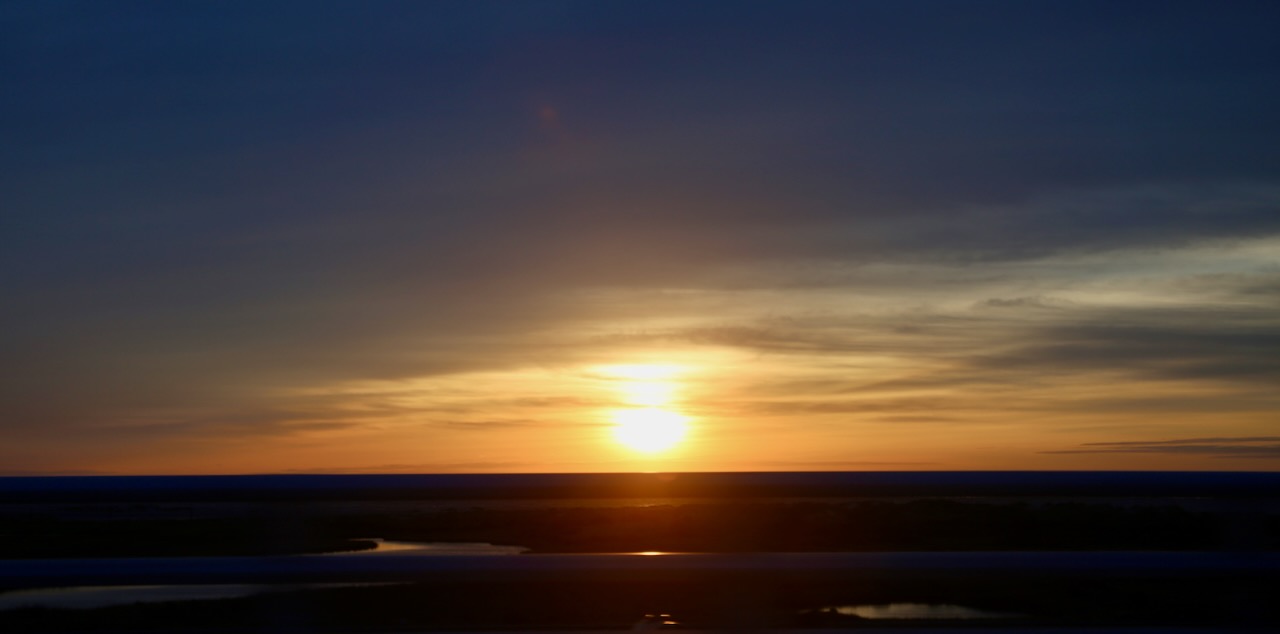
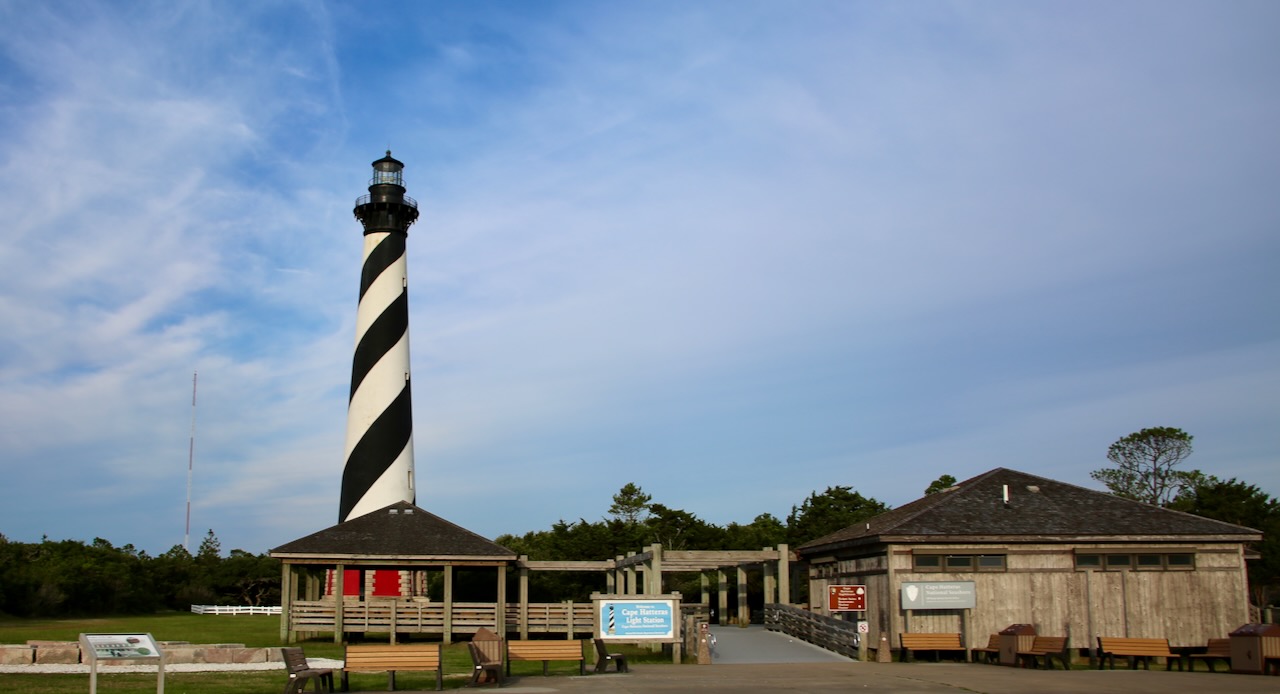
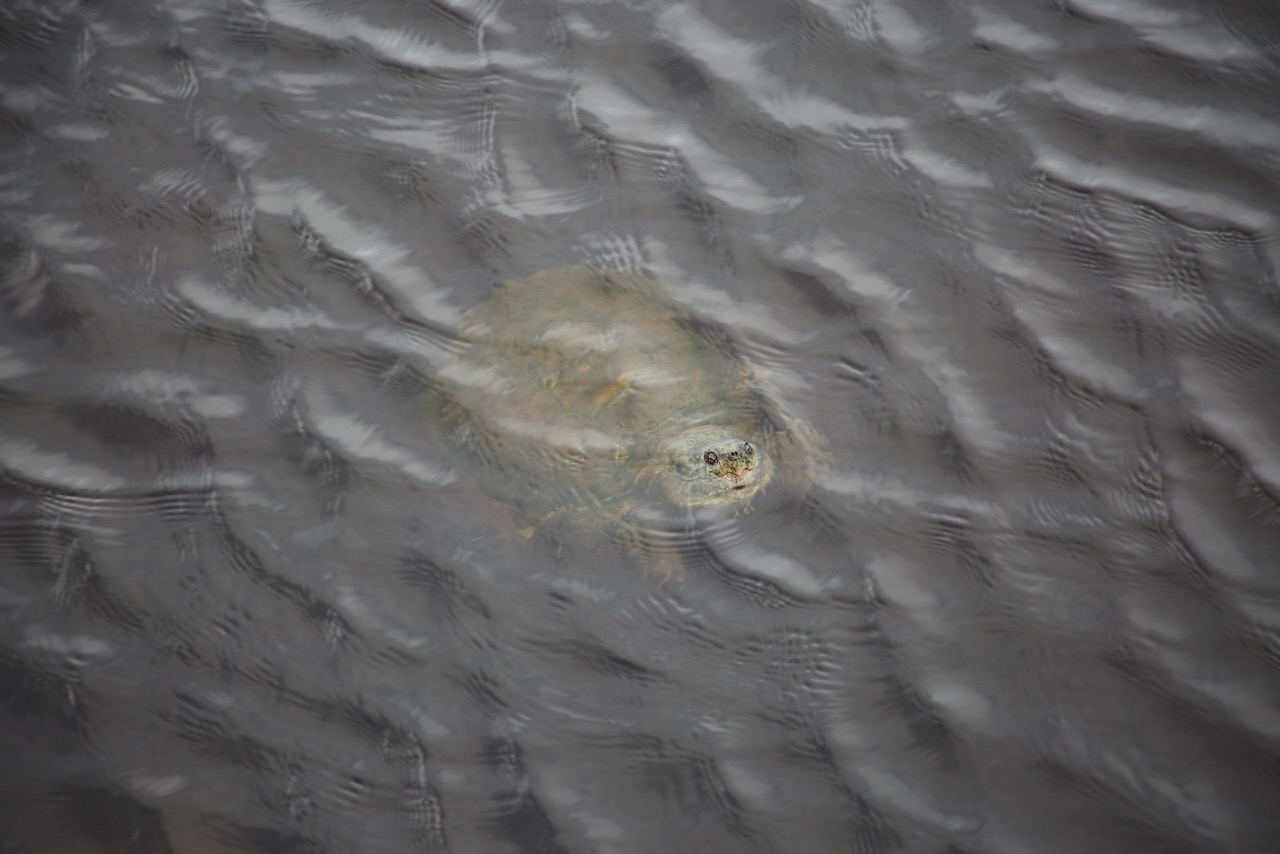
Quite a few people seemed to have the same idea as us — camp at Cape Hatteras National Seashore and pack up while the sky is shades of purple. We drive to the lighthouse and explore some of the nearby trails, where we encounter a male red-winged blackbird, a young white-tailed buck, a stinkpot turtle (known for their musky defense), and a couple of common snapping turtles. There’s a plaque near the beach for the Pea Island Lifesavers, an all-Black crew led by the first Black commanding officer in the service.
Keeper Richard Etheridge was appointed in 1880 after an all-white crew was dismissed for negligence. Their most famous rescue was in 1896 after a hurricane caused the schooner E.S. Newman to run aground. The surfmen spent hours through violent surf saving everyone aboard. This crew maintained their single staff color until 1947, when the stations closed, after establishing a new standard of discipline for lifesaving operations. The Coast Guard commissioned the USCGC Richard Etheridge in 2012, in his honor.
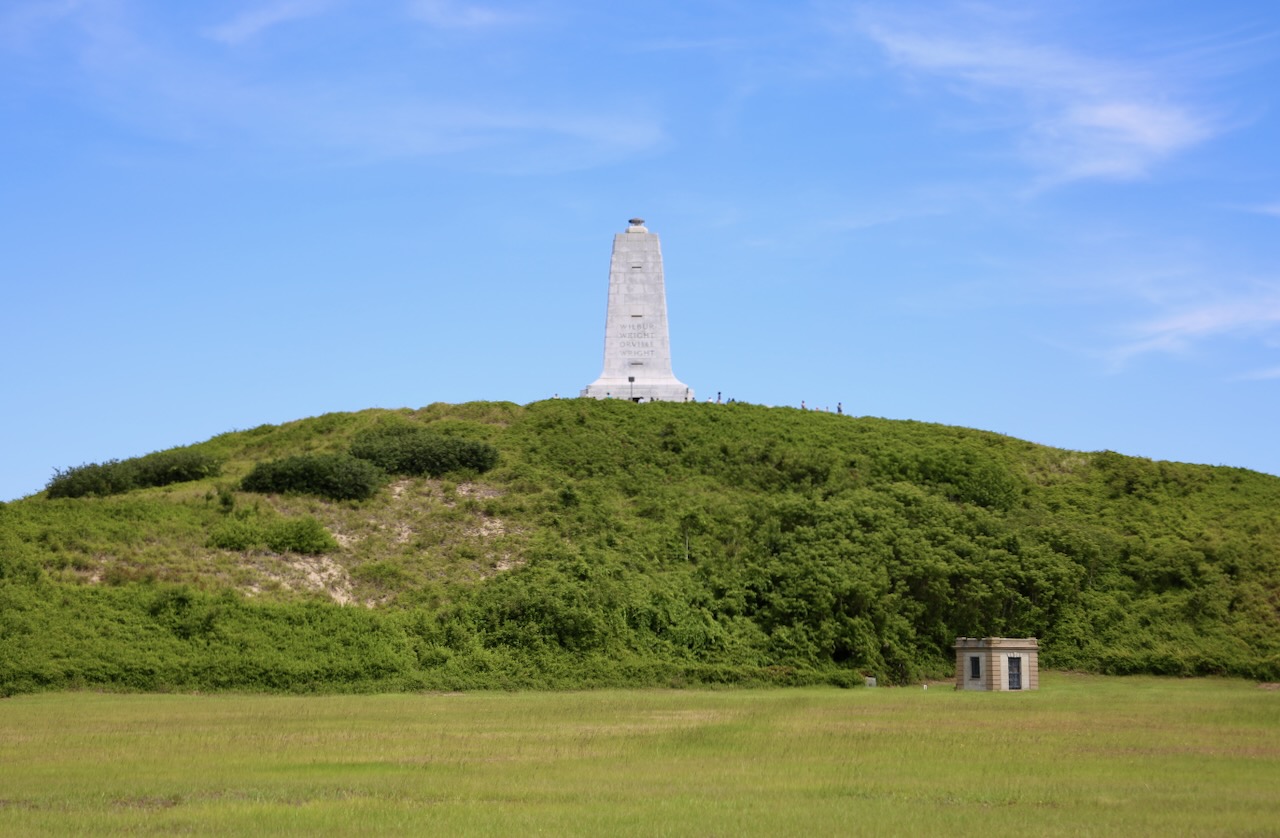
About nine miles north is the Wright Brothers National Memorial, while their museum is in Dayton, Ohio. The brothers followed a flight learning process — Da Vinci’s ornithopter, Lilienthal’s glider, and the Wrights’ box kite — so they could understand how to gain lift to support the weight of a pilot. This led to the Wright Flyer in 1903, which would take four short flights and prove that aviation was more than fantasy. It would be another six years before Louis flew the Blériot XI over the English Channel, completing the first heavier-than-air crossing.
These two self-taught mechanics showed future engineers and garage tinkerers that progress comes from iteration, not formal schooling or born-with genius. Their progress also inspired designers, pilots, explorers, scientists, autodidacts, sci-fi writers, artists, and children. There are markers for the first four flights, the first just 12 seconds long, and a taller monument as a testament to the brothers’ help in making the dream of flying a reality. Just as I’m wondering out loud how awesome it would be sit or fly in the original plane, we see some six-seater planes and a helicopter for flight options in modern aircraft.
The rates were between $200 and $400 per person for a 30-minute tour of the Outer Banks to a four-hour glider replica experience. This would be more authentic and strenuous if the passenger had the option to drag the 117-pound plane up the dune, as the brothers had done for each flight. Not yet done with the North Carolina island life, we drive to Fort Raleigh National Historic Site to learn about The Lost Colony that disappeared from such a beautiful landscape in 1587. Their possible plights have been theorized as death by Native Americans, the Spanish, a disease, a hurricane, or starvation, or they simply relocated.
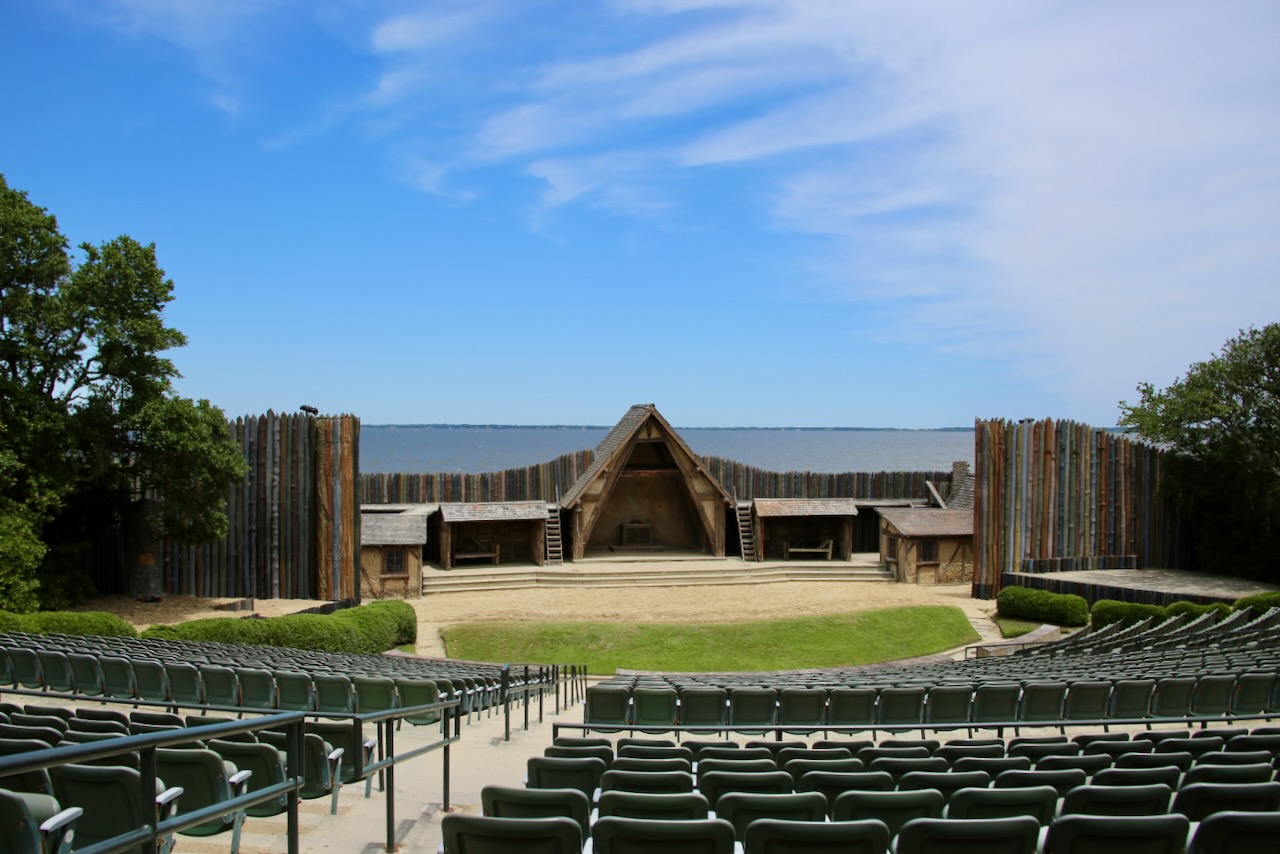
The outdoor drama, The Lost Colony, by Paul Green, opened in 1937 around the 350th anniversary of Virginia Dare’s birth (the first child of English parents born in America). In 1964, Joe Layton reimagined choreographed dances and bells, had actors and buildings aflame, and replaced the organ with a keyboard to play re-scored music. The post-Layton years, after the mid-80s, have brought microphones to the actors and singers, redesigned scenery and props, and a wardrobe upgrade after a fire destroyed the costume shop.

Between the actual colony and the drama existed another short-term haven of freedom for African Americans under the protection of the Union Army. Up to 3,500 residents called this place home, but after the end of the war, the colony was dissolved in 1867, and the land returned to its former owners. Those who stayed had been born and raised on the island, and their descendants are still here today. It is also from this location that the first wireless voice transmission was sent in 1902 by Reginald Fessenden.
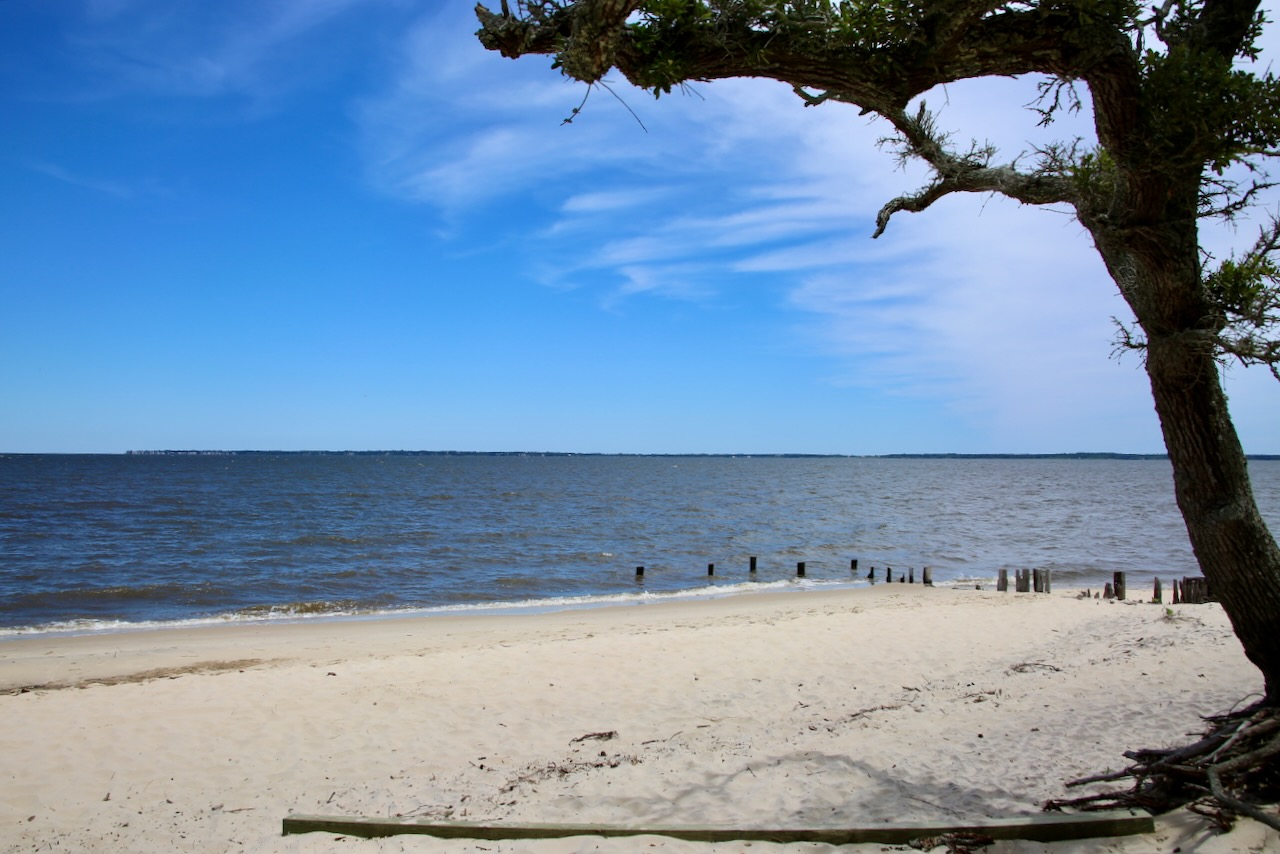
We visit the theater, the beach, the cedar forest, and the Elizabethan Garden, planted in memory of the first English colony in America. We drive back through Kill Devil Hills and then for two hours into Virginia Beach, where we will spend a varying number of days with Caleb’s brother Kris and his wife Vicki, their sons Tristan, 5, and Jordan, 3, and their husky, Nicki. I will return to San Diego to finish my degree while Caleb stays here for a few months in a military school to prepare him to return to Bahrain, this time as a Senior Chief.

 TheJessicaness