I see Dean on his computer and wish he could take me on a morning dive, but I will wait for Dustin to make me scrambled eggs, and then we can try our luck with renting tanks from Fantasea Diving (on Ireland Island, Bermuda). When that plan is a bust (no wreck exploration), we will spend the morning diving between the surface and a depth of five feet.
I’ll spend the afternoon with Gus, Malcolm, and Dustin, consuming beers and watching a soccer match with France, who was in the lead. After meeting Dean and Dane at the house, Dustin and I will join them for dinner at Woody’s, a shack of a restaurant across the street from an ocean view. Dustin and I will go to Fort Scaur and then Daniel’s Head Beach Park for sunset.
I’m up after six hours of sleep, and Dean has offered to take me with him to complete his errands. I agree, though I’d rather see under the sea or the other end of the island, I know this will get me out of the house. We pick up the scuba tanks, and while we wait for them to be filled, Dean buys me a Keurig coffee. I get one pump of flavoring, and he gets five, but I only drink half of mine. I was about to reserve an afternoon dive when the shop canceled due to passing weather.
Dean says he was willing to rearrange the work schedule had he known about Dustin’s plans, but he has me as a guest staring him in the face and still chooses to train the new girl, even though it doubles working hours. As we’re driving into town, one of the scuba tanks opens, and we stop to close it. Dean doesn’t have a job scheduled until this afternoon, so we have the morning to visit the Bermuda Botanical Gardens, open daily from sunrise to sunset.
The gardens were established in 1898 and consist of 36 acres that include a palm garden, a subtropical fruit garden, and a sensory garden for the blind. There are greenhouses, the Camden House (the official residence of the Bermuda Premier – a political position), and the Masterworks Museum of Bermuda Art. We park and walk past the Jack King Building (so named for his husbandry and exhibition of poultry in Bermuda) into the west side of the gardens.
We stroll through the Cacti and Succulent House and come across a pond with common water hyacinth and hardy water lilies that is teeming with baby frogs that are out stretching their adorable little legs. We walk through the empty rose garden and around the outside of the museum building before going to see more of what this archipelago of 21 square miles, consisting of 181 islands, has to offer. The third visit is the charm, as the tower at the Cathedral is open for tours when we arrive after morning services.
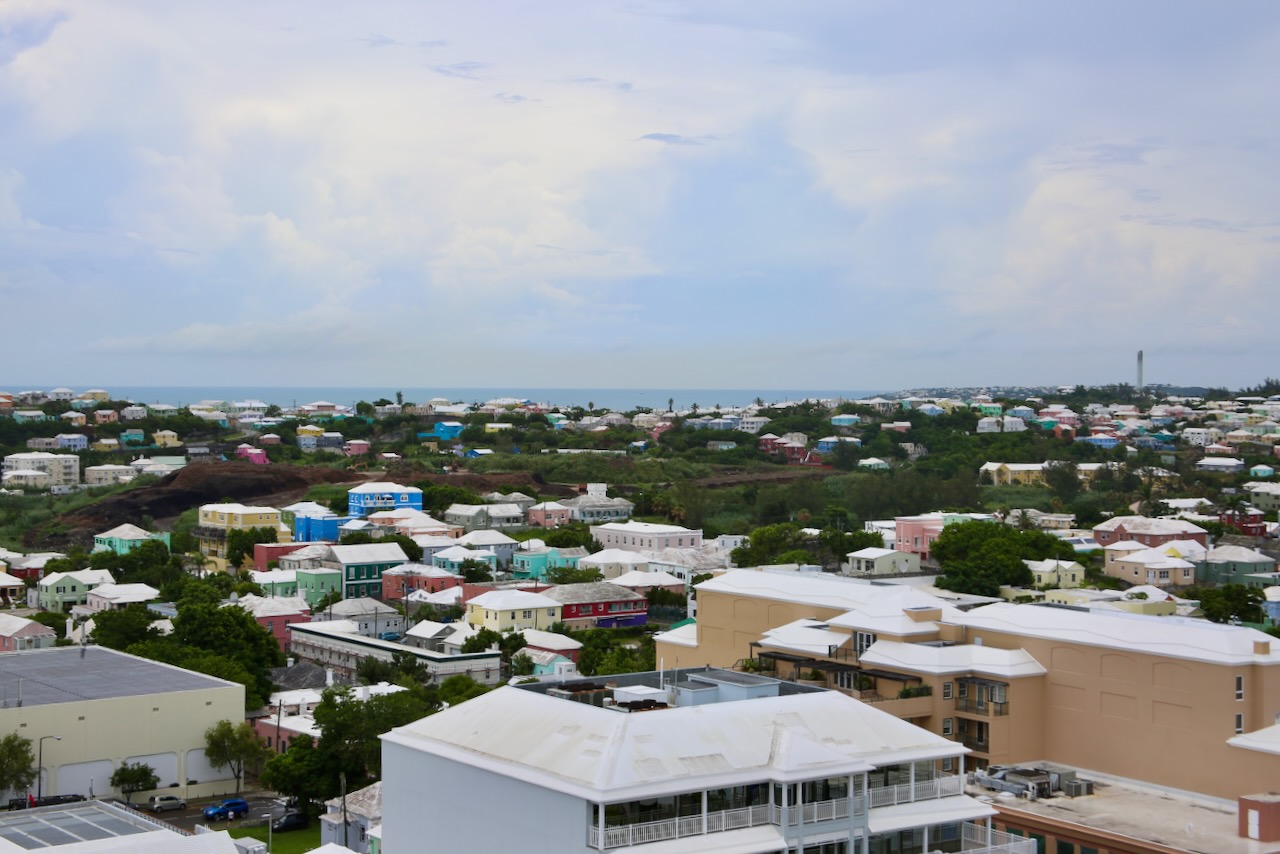
The tour is $3 per person. I’ll be busy counting stairs on the way up and come up two short of the claimed 155, which I’m sure is just my math skills at work. The guide tells us about the stones, the church, and the people. A little blackboard with pictures and notes shares the history of the street and shows how the view has changed. I enjoy the consistency of the white, pink, and blue found throughout the island as it reflects the stone, sand, and sky always in view.
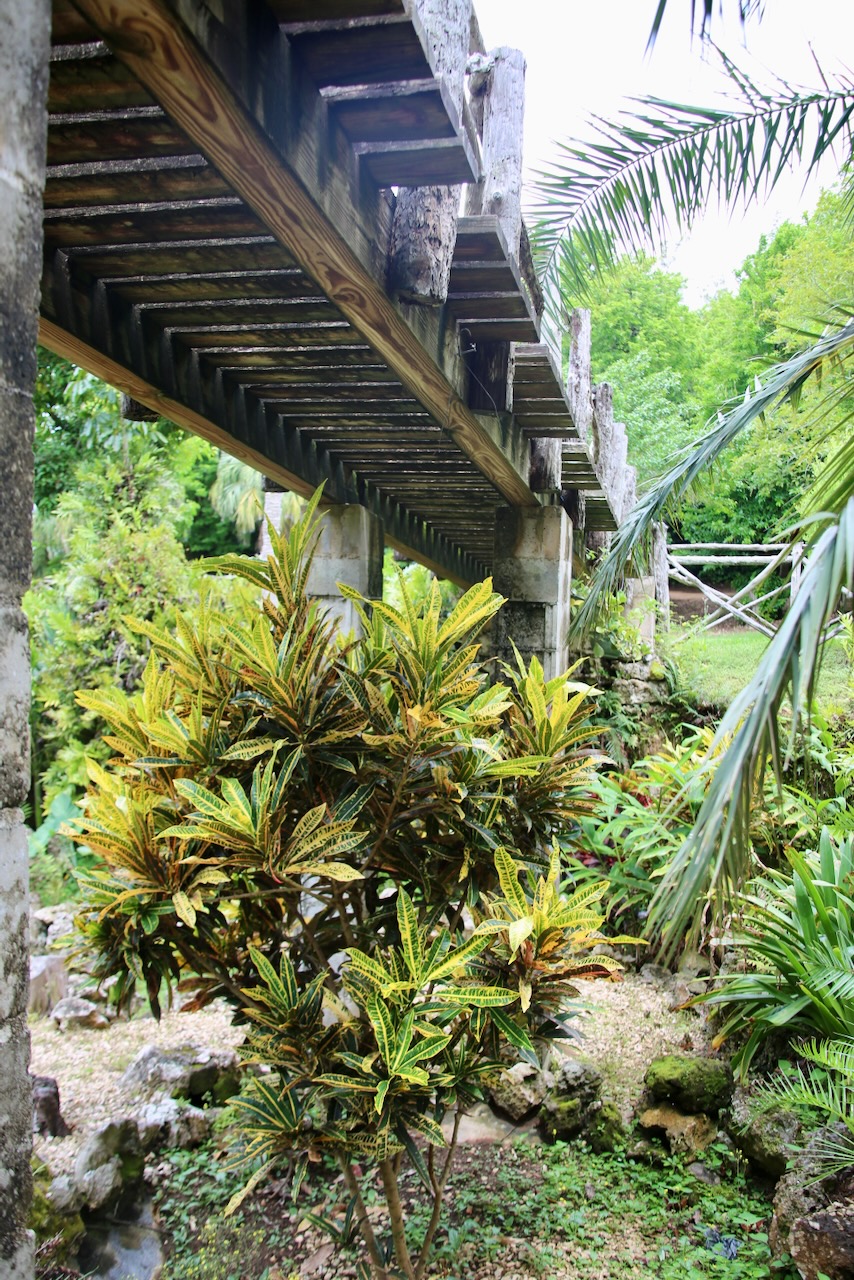
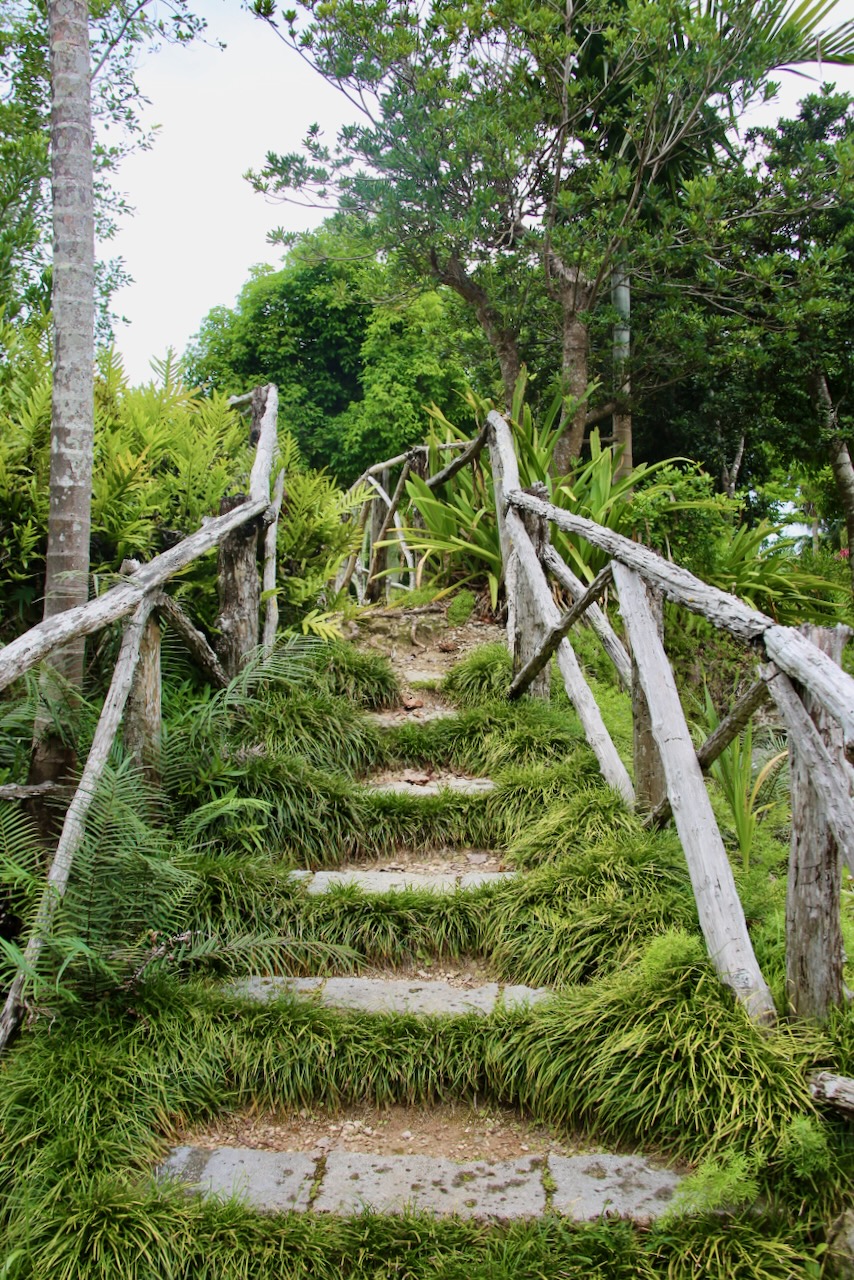
The Arboretum, a national park, is also free and open from sunrise to sunset. It has 22 acres of meadows and woodlands that were owned by the British government until 1951 and now has twenty exercise stations along a path. There are plenty of Bermuda palmettos, Bermuda cedars, and Southern Hackberry trees with blooms of red, white, and pink nearby. We walk over bridges and under them, and I can start to smell myself from the heat and humidity. We turn around to talk with Dean’s massage therapist, and I notice a man picnicking with a resident hen.
Dean needs to stop at the grocery store to get some chips and pickles to go with the burgers he’s making for a late lunch. I’ll add peanut butter, jelly, and tomato to mine. One of the awesome features, at least in more recent times, of being an island between two large nations or more is being able to take part in their trade and offer a variety of foods to the locals, though the delivery charge doubles the cost of the goods. Lunch eaten, we pack up for an evening in the water and get to the job at 3 pm.
The rain fell hard for a while as the guys got started, and as soon as they finished, we were in the water at Lodge Point. I started the dive in a BCD built for a man over six feet tall and a partially used tank with 1250 psi of air. It’s always better, at least in the water, to have something be too big than too small and make you feel crushed underwater as the pressure increases at depth. Also of note, I surface at the end of the dive with 250 psi, something no recreational guide would ever recommend because, below that, the first stage regulator won’t have enough pressure to push air to you to breathe.
I felt fine pushing these limits with a divemaster who works all day at shallow depths on the bottom of boats and knows what the dive shops will accept as their minimum tank capacity for safely refilling with air (which can also be a concern of not going below 500 psi or 34 bar — another unit of atmospheric pressure). I get water in my nose as we descend into shit visibility. We go down to 22 feet, where I start to get cold, but also where the lobster family lives.
We overstay our welcome until the last second, causing us to surface swim back to the boat with an air tank nozzle on my head. My sixteen pounds of weight (it takes more iron in salty conditions and helps with sinking novices) had turned around, making the return exhausting. I’d still like to go back in and see the turtles and wrecks with the remaining daylight, but that would require air we don’t have. We get back to the harbor, and I help tie up the boat so I can get to the house for a shower.
Post cleanse, I’m greeted with a Natal plum to try, a fruit from a South African shrub that makes good hedges. This is just the appetizer to the ribs, beans, and slaw with apple that we’ll have for a late dinner. I finish the potato and codfish with sriracha, too. All this eating makes me think that I’ll go to sleep soon. It helps that Dustin turns down an invite to a beach party, even though I like hearing the island drawl, so that we can get some rest tomorrow as midnight has passed.
I’m up at 5 am to pee, and Dean wakes me an hour and a half later, giving me eight minutes to drink coffee and eat lemon pie, minus the meringue I wash down the sink before we leave. The guys set up at the Royal Bermuda Yacht Club, and I will walk around the crews eating breakfast on my way to the Cathedral of the Most Holy Trinity in my second attempt to climb the tower. It is closed due to the 8 and 10 o’clock services.
Back at the club, I’ll have a sugary yogurt and another coffee, this one with milk, as a continuation of breakfast, as the guys should be done soon. I walk to Queen Elizabeth Par-La-Ville Sculpture Park, where, after admiring the plants, arts, and two-toned lizards, I will sit in the cool breeze and listen to the birds in the trees. When the guys finish, we walk to Bouchêe, a French bistro, for a sit down meal. I’m sure I ordered one of their Benedicts to tackle, but will still be leaving with some to-go.
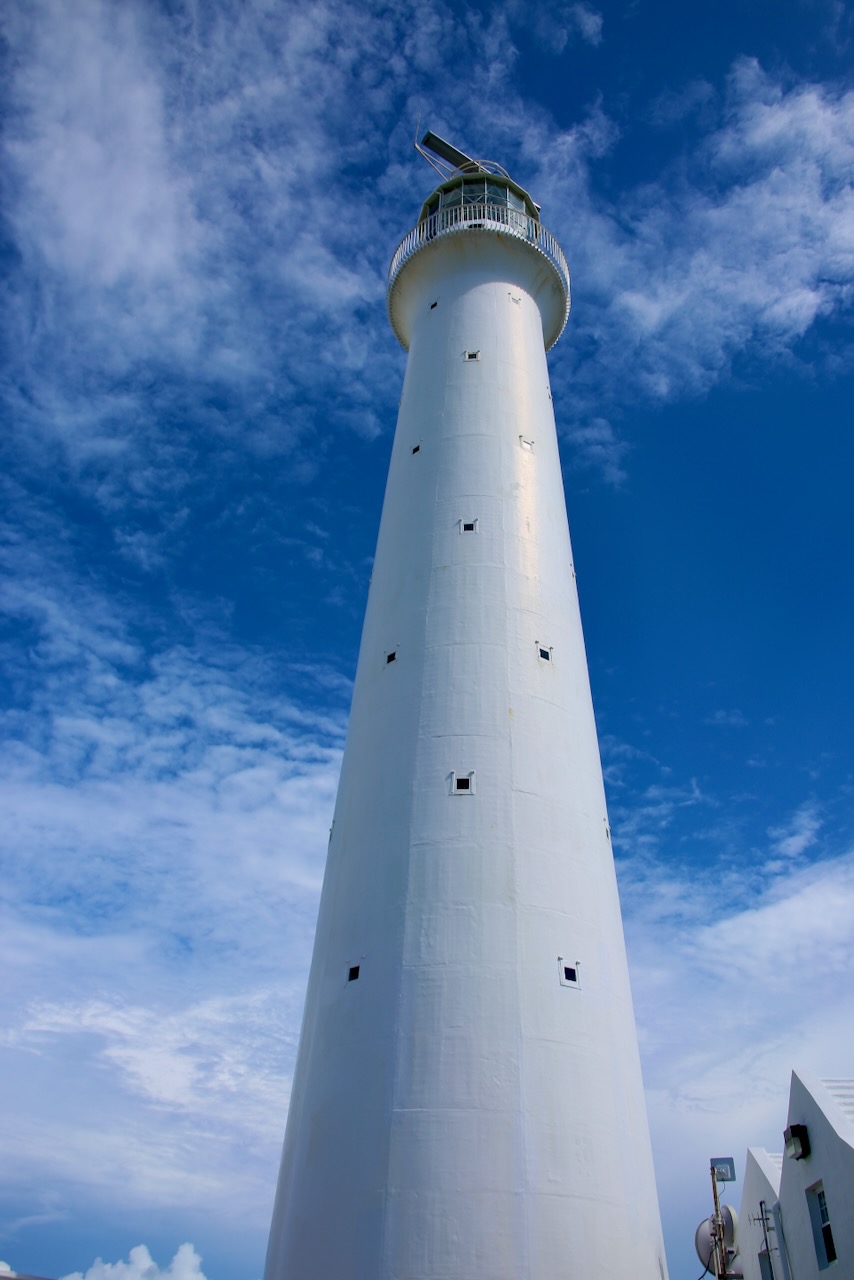
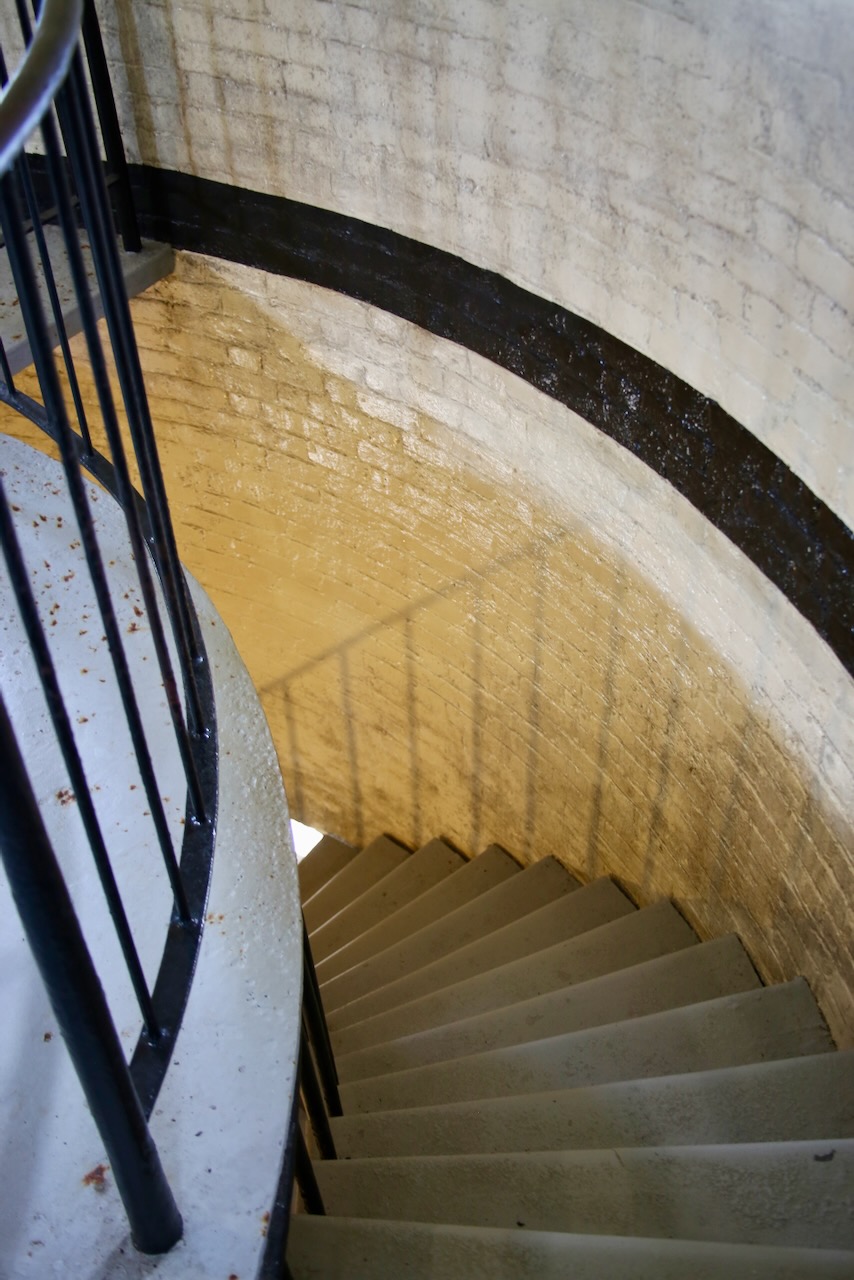
We stop at the Gibb’s Hill Lighthouse while it’s open in the daytime, a more successful second visit. There’s a weathervane that was installed on top of the lighthouse in 1846, now closer to the ground when it was replaced in 1988 by a radar scanner to prevent ships from running aground on the nearby reefs. Already on the highest hill at 245 feet above sea level, the base provides a broader view of the harbor. In the 1600s, the warning system consisted of fire baskets that would be used for about two centuries before colorful signal flags, telescopes, and telegraphs took their place.
Lighthouses on the island had been proposed in 1795 but were delayed until a crew of 495 were grounded on the reefs in 1838. Passengers and their cargo were brought safely to shore, and though only one Bermudian ship had wrecked in the last decade, Britain saw a lighthouse as a good investment for international trade. Tolls would be charged to incoming ships to help pay for the upkeep of the lantern that was twenty feet high and weighed 5,500 pounds. The lighthouse was erected in London, brought to the island in pieces, and erected by the Royal Engineers and convict labor.
Construction was finished in October 1845, but the first light didn’t come until May 1, 1846. It took 18 pints of whale oil each night to keep the lantern burning. The beam could be seen from 26 miles away. In 1901, the oil ignited, and the heat shattered all the plate glass. The lighthouse was in operation again the next night, even though it didn’t shine as far or flash as regularly, so no major repairs were done until another wreck in 1903 that led to a new light arriving in 1904. Each day, the lighthouse keepers would wipe each prism lens clean of smoke until the lighthouse was fully automated in 1964.
After taking many pictures of the climb, the blue-white-green view, and the descent, we drive to Blue Water Divers with their morning boat out and their afternoon boat full. Dean will take us back to the house, and Dustin will take me on the scooter to Snorkel Park. I don’t enjoy this type of underwater viewing, partially from prior struggling experiences, but also now being dive-certified and able to go deeper. What I didn’t know was that this would be my first free-diving experience. I get into a breathing rhythm as I go rock to rock, seeing one octopus.
The good thing about holding my breath is that it doesn’t matter if there is water in my snorkel, and with sand beneath my feet instead of precious coral, I’m free to inhale deeply at the surface without worrying about buoyancy. We’ll do this for about an hour and a half and then celebrate by sharing a Shark Oil, a strong alcoholic green drink, and watching the rain approach. We’ll take a nap at the house until Dean wakes me up for a fish sandwich.
We go to West Whale Bay Park and explore the rock formations, shapes in the sand, and wild poinsettias before a short visit to Church Bay Park. The pink sand and blue water have me in the mood for a blueberry and peach soft serve from Yo Cherry Frozen Treats. We stop by a boat to talk with guys who play cornhole (who spent $8,000 on an 11-year-old’s birthday party). Dustin is an alumnus of LSU, which is where some of these guys went to school, too. One of the guys gives me a bottle of water, and we’re on our way to hang out with those who are more in our price range.
Dustin buys me a beer when we get to the base. We’ll stay over three hours before Dustin gets tired, and it’s time to go. I call Caleb when we get back to the house, and the neighbor comes outside because she can hear me over the sprinkling rain. I’m sure there would need to be a storm to help cover my voice that carries (not as much as my laugh). I’ll eat some fried chicken while enjoying the warm rain and brush my teeth before lying on the couch at 230 am.
I let Caleb know I made it back to the couch in my friend’s house where I was staying in Bermuda, and he called to confirm that at 3:45 am (four hours ahead of San Diego). I wake up at 8:15 am to an argument over an email between Dean and Dustin. I’ll rinse off and put on more aloe before debating wearing swimsuit bottoms under my shorts. I feel too hungover, but also just super tired at the moment, and maybe I just need to poo and eat something before I get in the water.
An hour later, we’re at their harbor, me toting my sunburn and the guys with their dive bags. We are going to Hamilton so they can work while I sleep on the boat or find shade in town. Dustin woke me after the excursion through Great Sound to let me know that I could either take pictures of race boats or just sleep on the boat, which I had just done for probably half an hour, so a day of exploring was next. I sit up until the guys are suited and in the water before stumbling my way off the pier.
We are moored at the Royal Bermuda Yacht Club, so I feel free to explore inside. There is a trophy from the third Duchess of Edinburgh, who became the Queen of the United Kingdom for 70 years, to the club for their racing in 1948. There’s a cabinet full of silver trophies and inscribed plates, along with boat pictures and parts on the walls. The club was established in 1844 and added “Royal” to their name two years later. It’s the third oldest ‘Royal’ club outside the British Isles.
I wrote (in my notes) that I found a street and crossed it, but I zigzag my way to a shop selling cookies, balsamic, and uncooked noodles before sitting down to breakfast at 11 am in a courtyard. The Italian restaurant Angelo’s Bistro is possibly reopening as of 2021, but while it was open for my visit in 2018, they served a great variety of eggs Benedict for $18 and plenty of complimentary water.
Feeling full and refreshed, I walk towards the Cathedral of the Most Holy Trinity. On the way is a plaque commemorating the 50 Years Strong of the Bermuda Regiment, who combined their segregated units in 1965. They went from a history of supporting World Wars to hurricane response and ceremonial services and expanded their training after 2001 to work with the armed forces of the UK, US, Canada, and CARICOM (Caribbean Community and Common Market) countries.
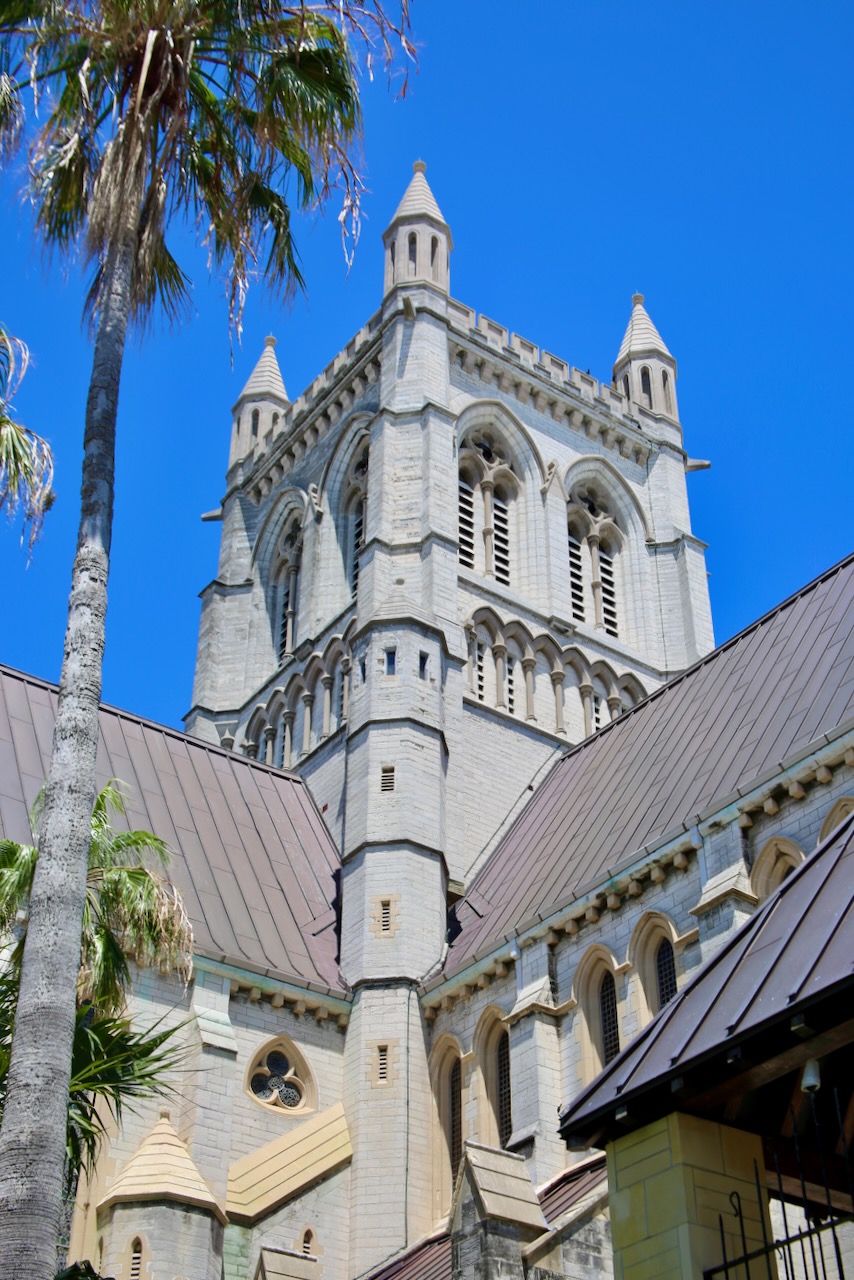
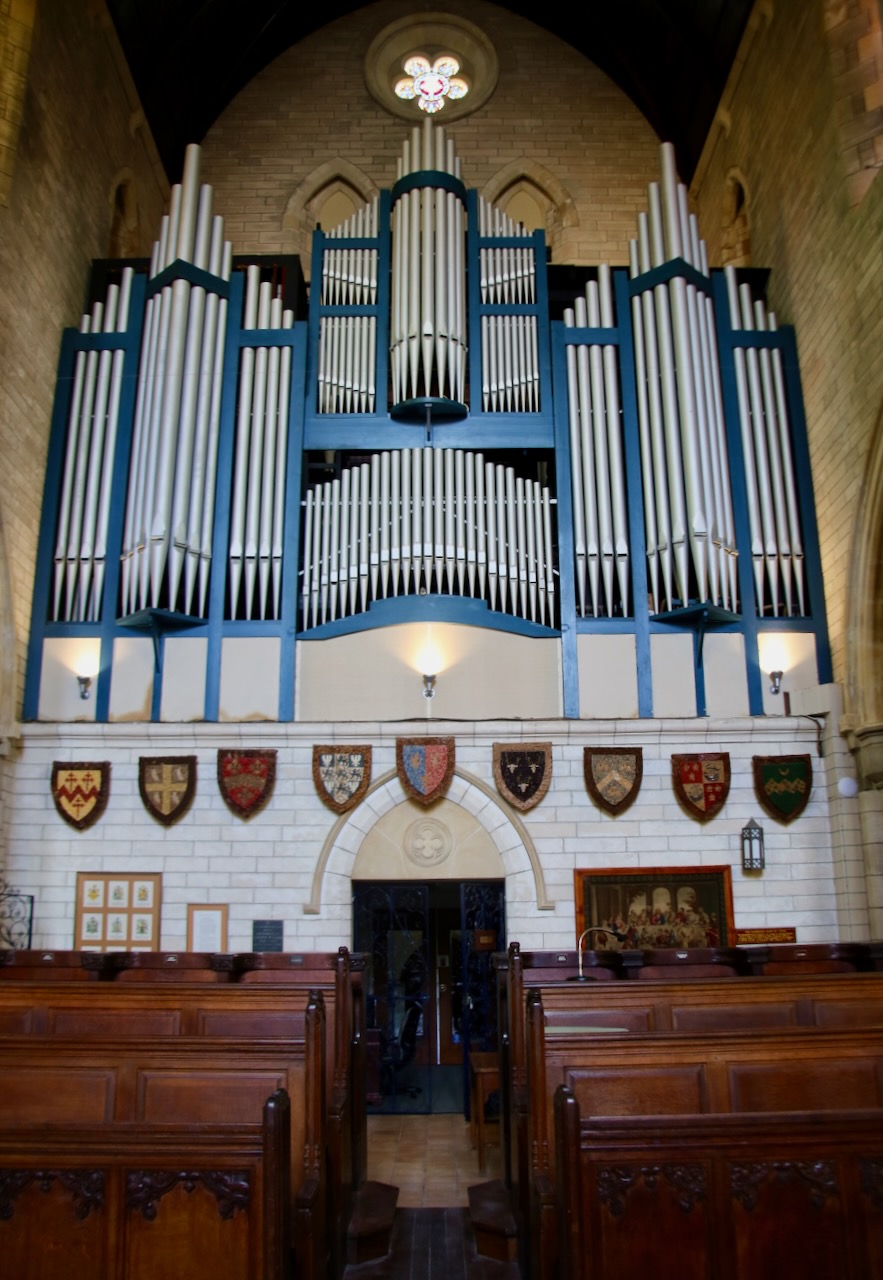
The original church was completed in 1869, and the Gothic-style Anglican Cathedral was finished in 1905 from Bermuda limestone and French Caen stone. There are usually tower tours available for $3 that will take visitors up 155 stairs to the top, but that’s not an option today as the tower is closed. An 1868 Walker organ is on a permanent loan as a monument to its Anglican heritage and comprises four stops, three ranks, and 150 pipes.
My next stop is Hamilton City Hall to have a look at their free art gallery that centers on island life: statues in swimsuits, military portraits, and a scaled-down Bermuda painting. There’s a house near the Bermuda National Library where the first Bermuda postage stamp was issued in 1848 by William Perot that is closed. I walk into the library to see the few bookshelves, wall of movies, and magazine rack before returning to the boat while the guys are on a break.
I see boats from Canada, Germany, Bermuda, and Monaco amongst the 17 teams with 150 sailors from 14 countries. They will race from here to Hamburg, some 3500 nautical miles, as the final race for the Atlantic Anniversary Regatta. I’ll hang out for a while and then be on my way to Fort Hamilton, open daily from 930 am to 5 pm. There’s a warning sign at the entrance about the lack of fencing around walls or edges, so children should be supervised, and visitors do so at their own risk.
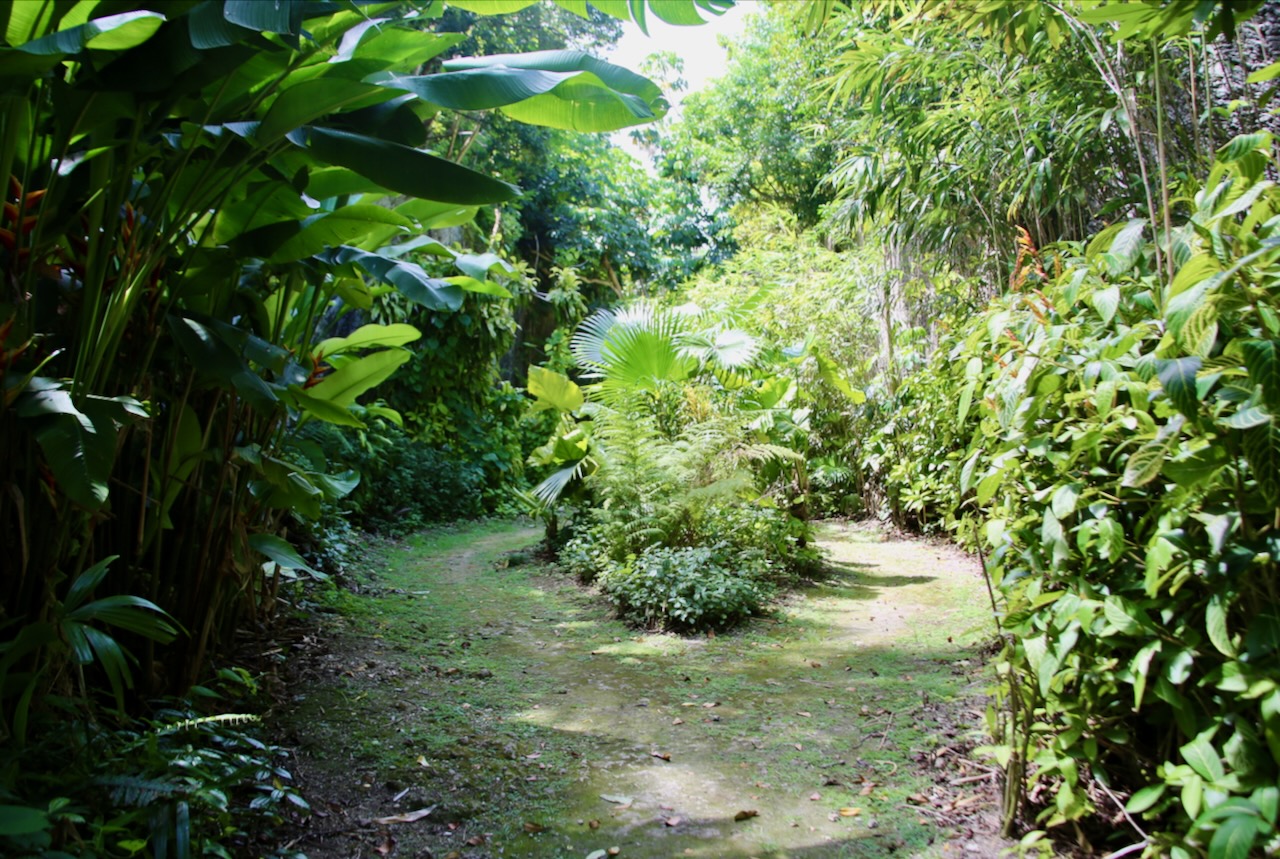
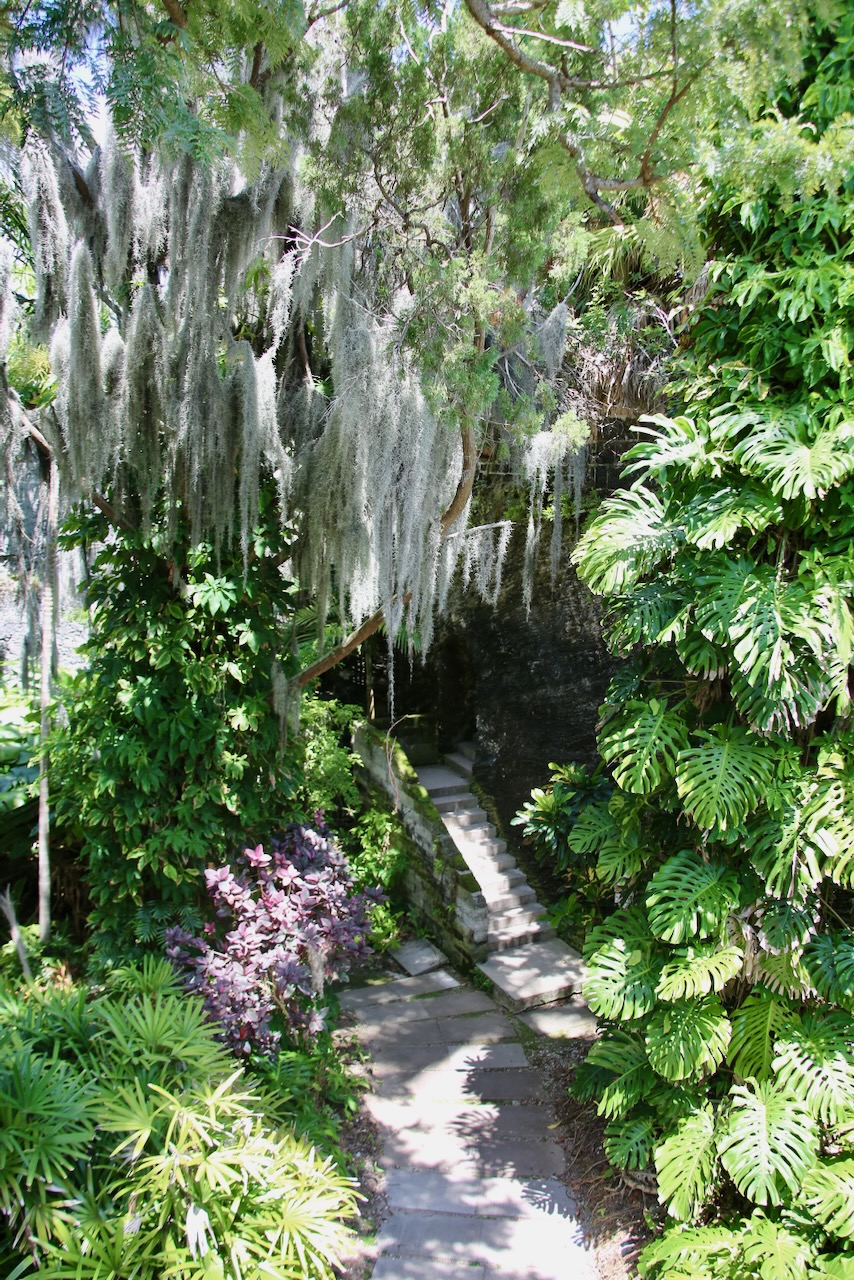
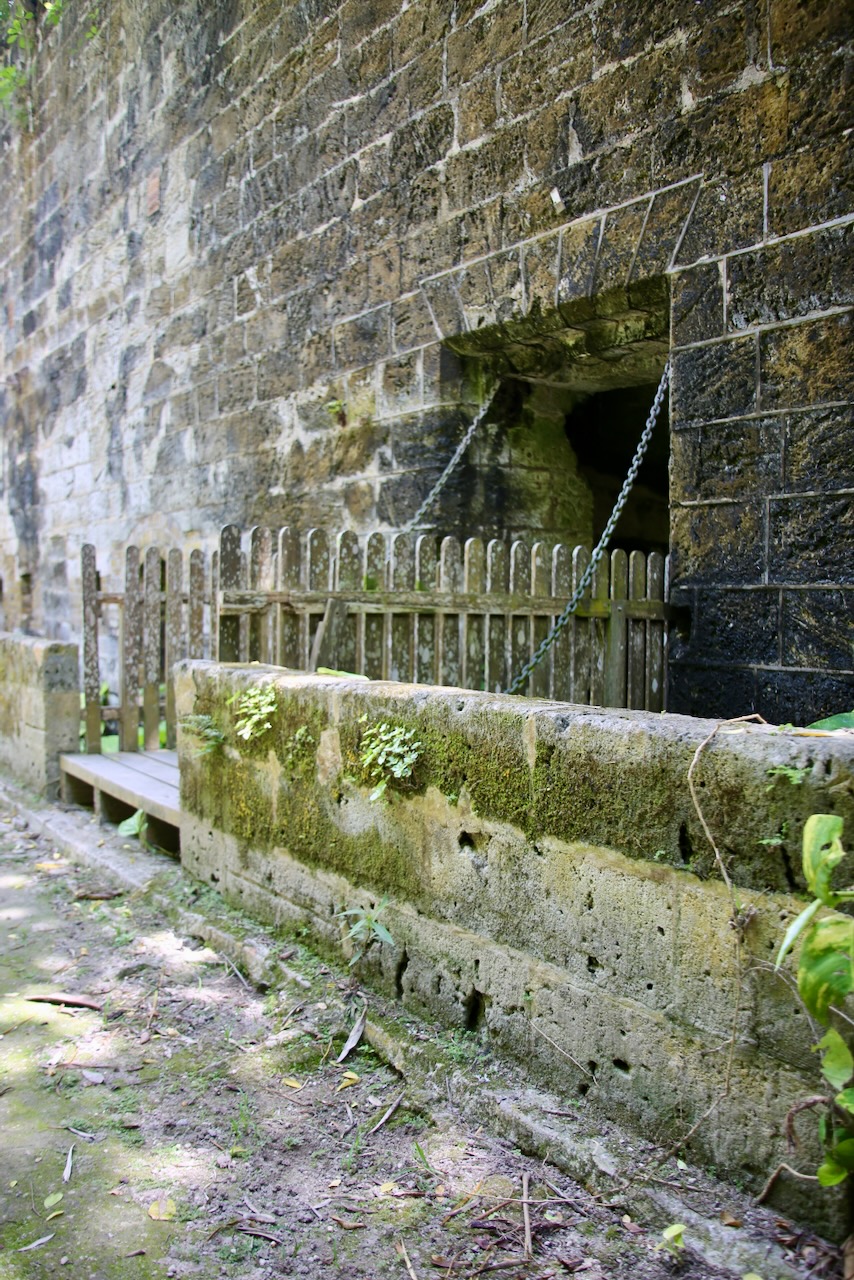
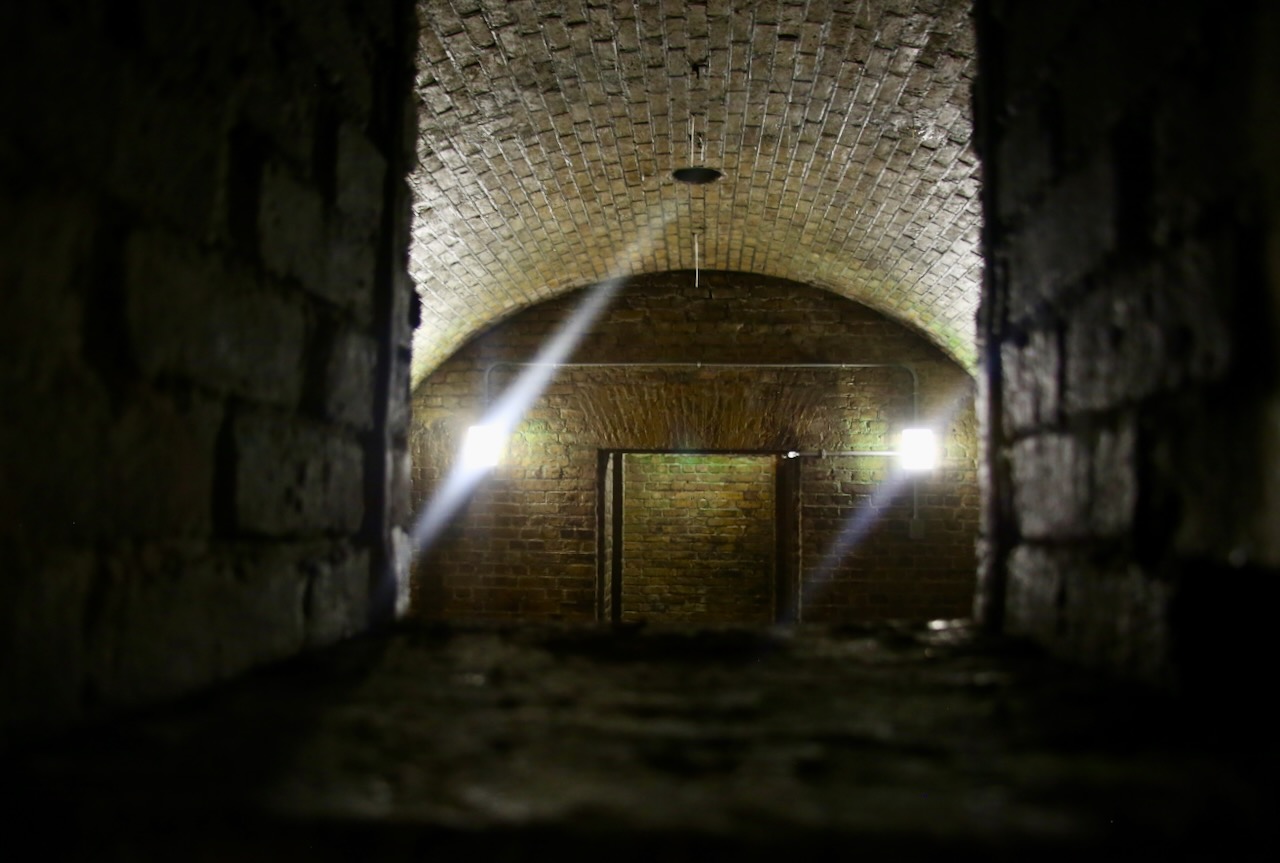
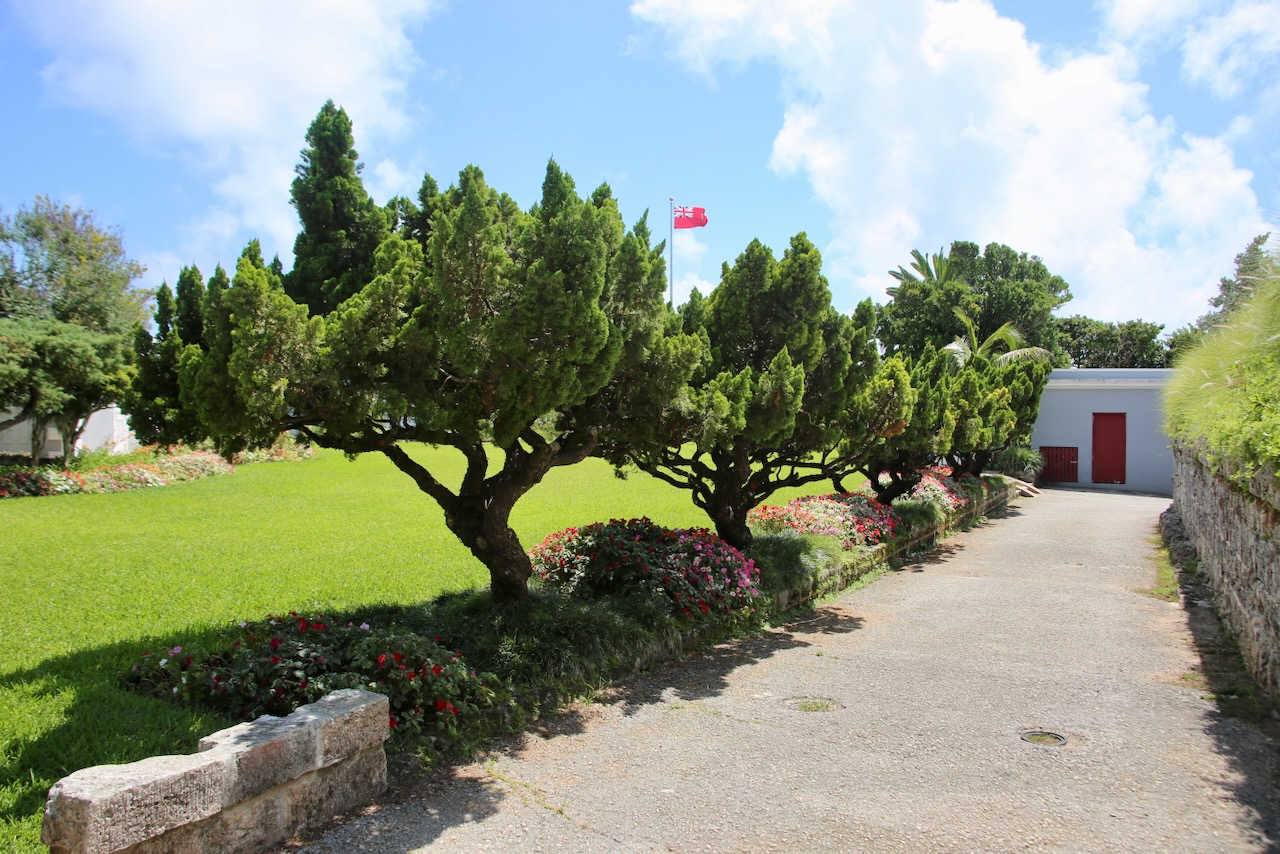
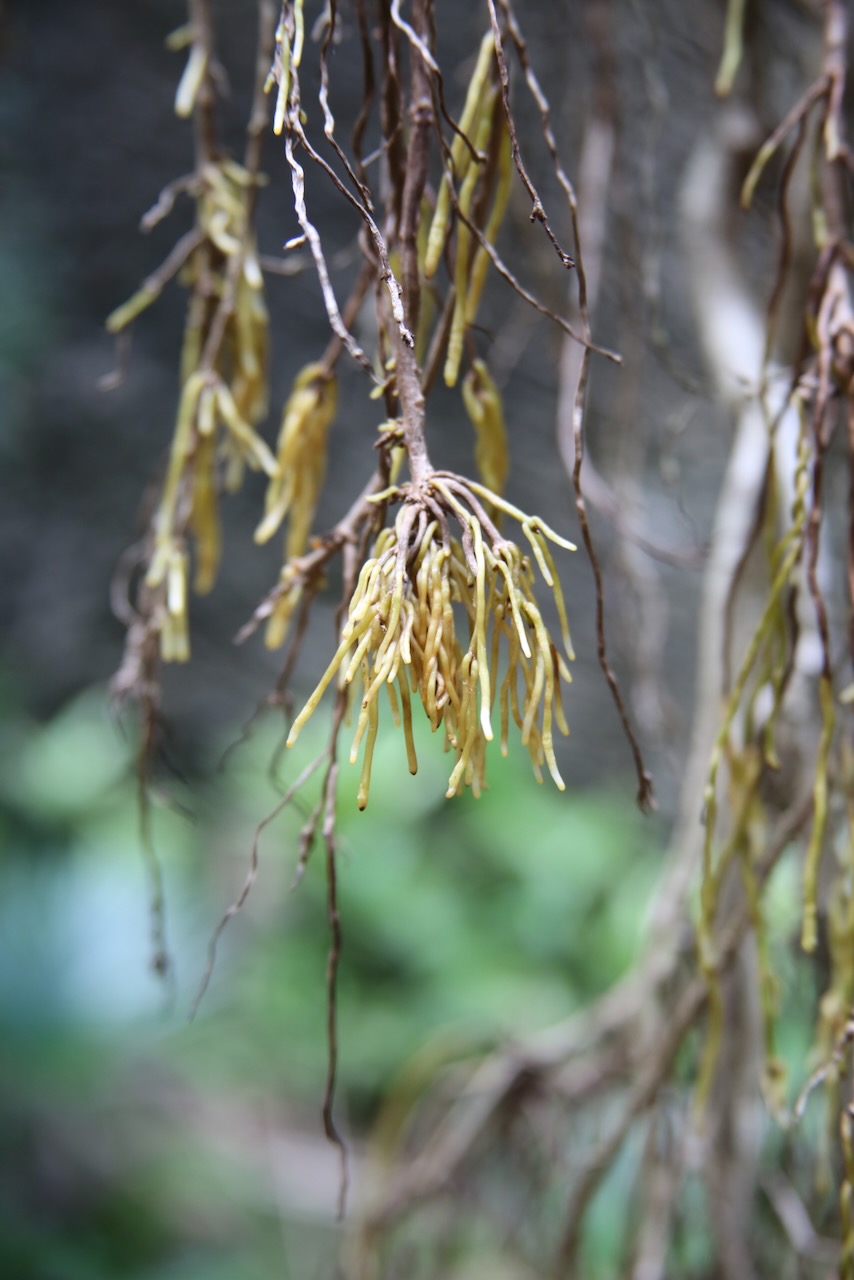
In the moat is greenery, shade, and wind, so I’m in no hurry to leave this garden that was started in the 1960s. I appreciate the sounds of the birds around me and notice a hen with her chicks nestled in some brown leaves. I explore the wet-bricked tunnels with roots reaching over the rocks for any moisture they can find. Back in the sun, there are bright flowers, manicured lawns, and the oldest self-governing overseas territory’s flag waving proudly over the fort.
The fort was built by the British in the 1860s and used as the headquarters for the Bermuda Volunteer Rifle Corps from the 1890s until the 1930s. The fort has never seen battle and has been a place of peaceful contemplation for almost sixty years. I get the feeling that I’m no longer the only one here, and even if I wasn’t, there’s something relaxing about feeling alone (in a good, creative, and calm way) when the world is full of cramped spaces and noise pollution.
I stop in at The Supermart to see their high-priced foods, have a look around The Black Purl yarn shop, and get two scoops of ice cream from Meltdown. The guys are starting work on another boat when I check in, so I will go to the bar on-site to watch a Russia vs. Croyden soccer match. I wasn’t tracking the score or betting on the game, so I’m not sure how much I saw, but I was glad to walk to dinner at Robin Hood … a Fine Pub & Restaurant for calamari and pizza.
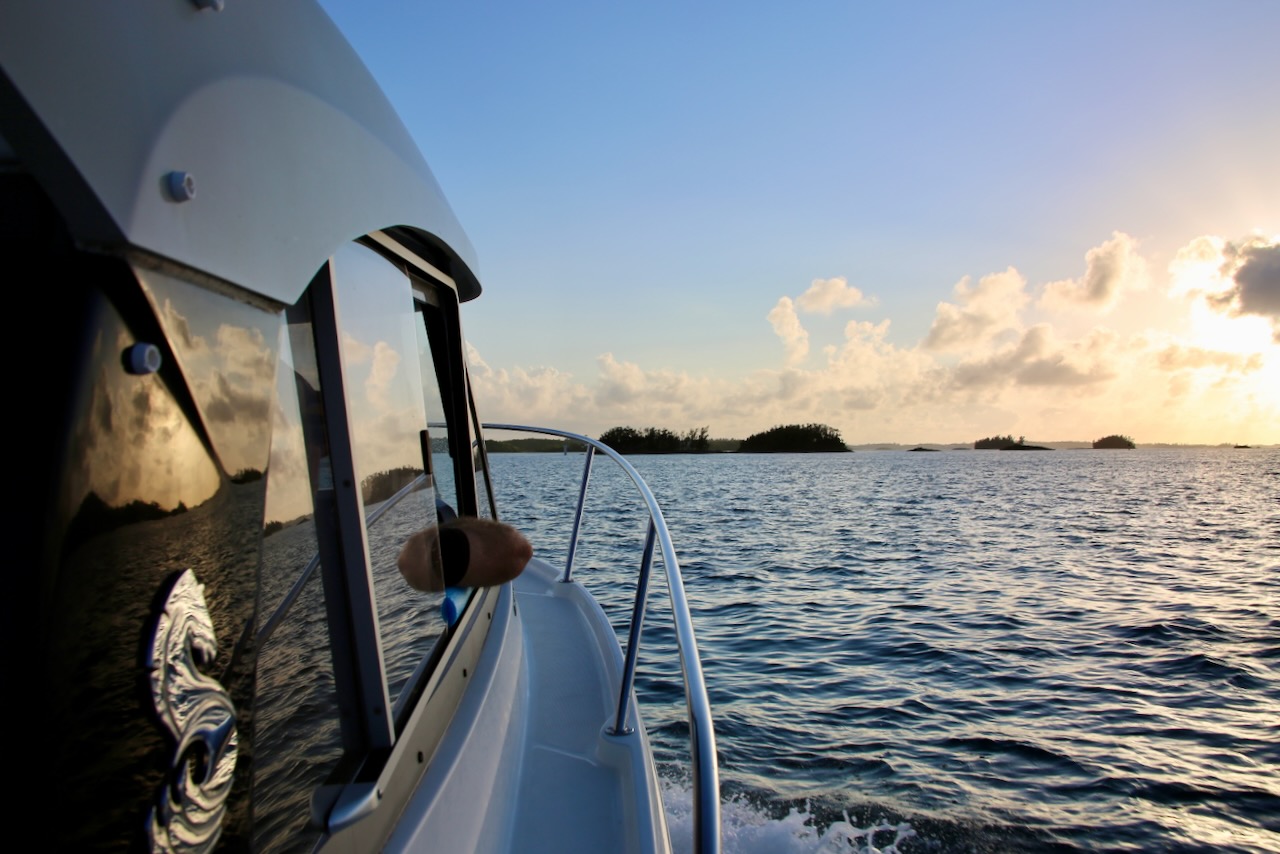
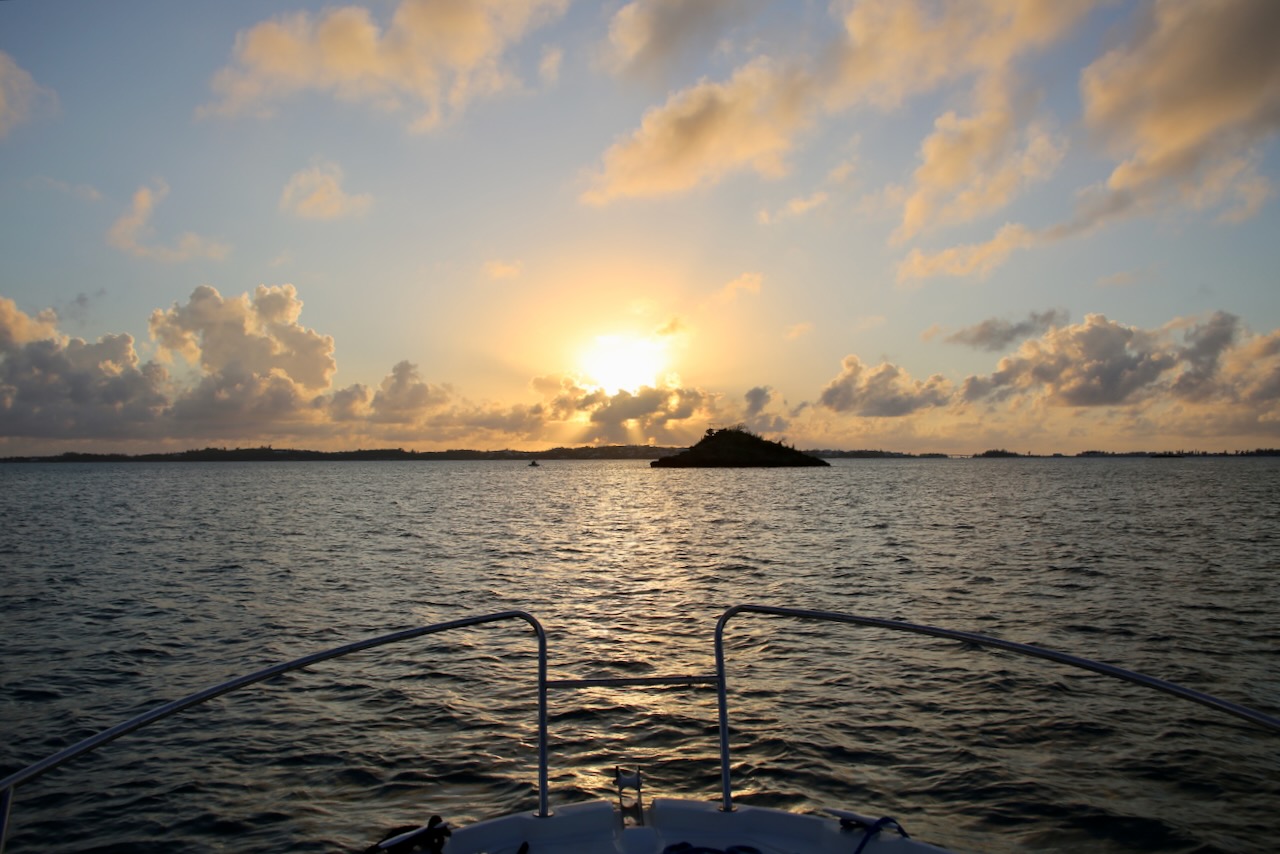
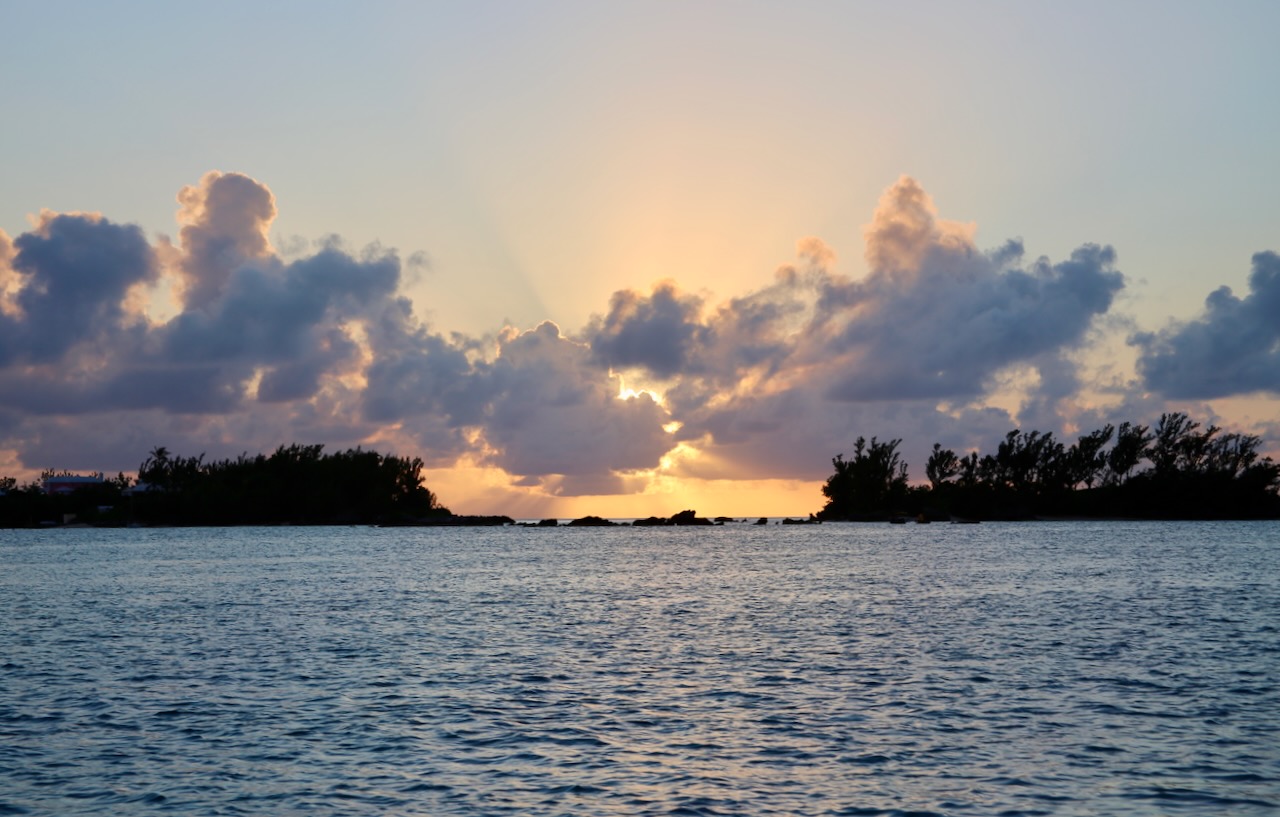
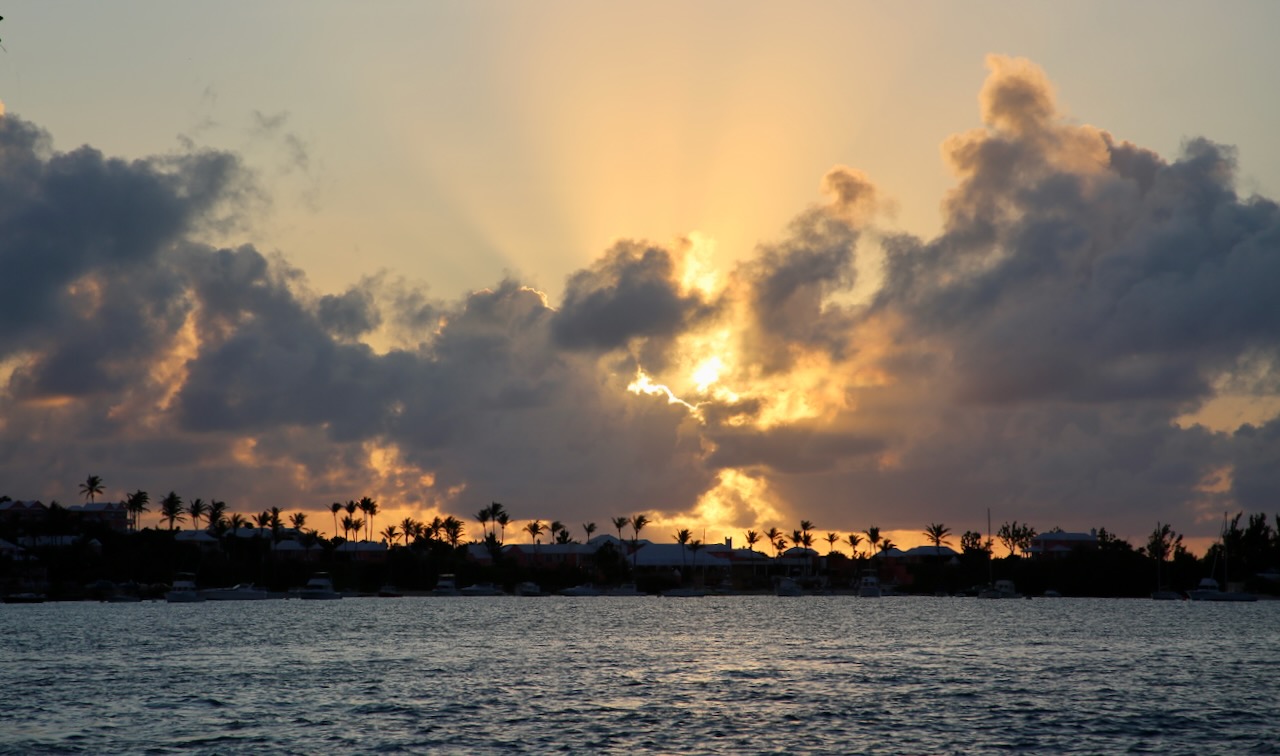
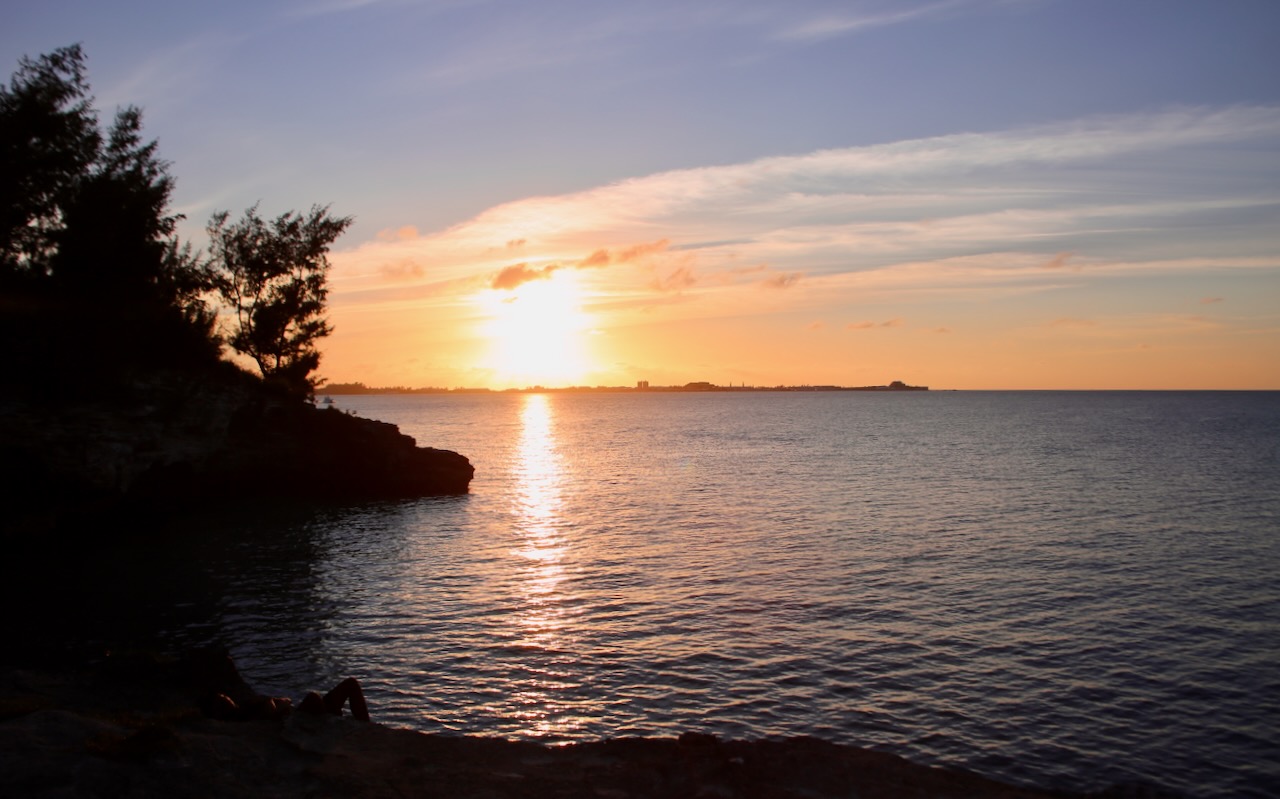
We get back on the boat after a long afternoon and have a lemon pie awaiting us (not sure from who or where) and an amazing sunset, too. The boat gets stopped by police for speeding and having no registration number, and Dean clears that up. The seas become restless as the sun disappears, and we return to the marina as the darkening clouds start to cover a blue sky that refuses to lose brightness on a faster schedule. I covered downtown Hamilton on foot and will have no trouble closing my eyes as soon as I touch the couch for the evening.
I wake up multiple times for water (2 am and drinking another bottle at 730 am) and go back to sleep until almost 10 am. Dustin offers to show me around the island while Dean and Dane go do work stuff after dropping us off at Fort Scaur, which was built between 1868 and the 1880s. Its main purpose was to protect the British Dockyard so that the British Navy could maintain some control over the trade waterways. The United States had gained independence and more land and was kicking the British out of the Gulf of Mexico.
Fort Scaur
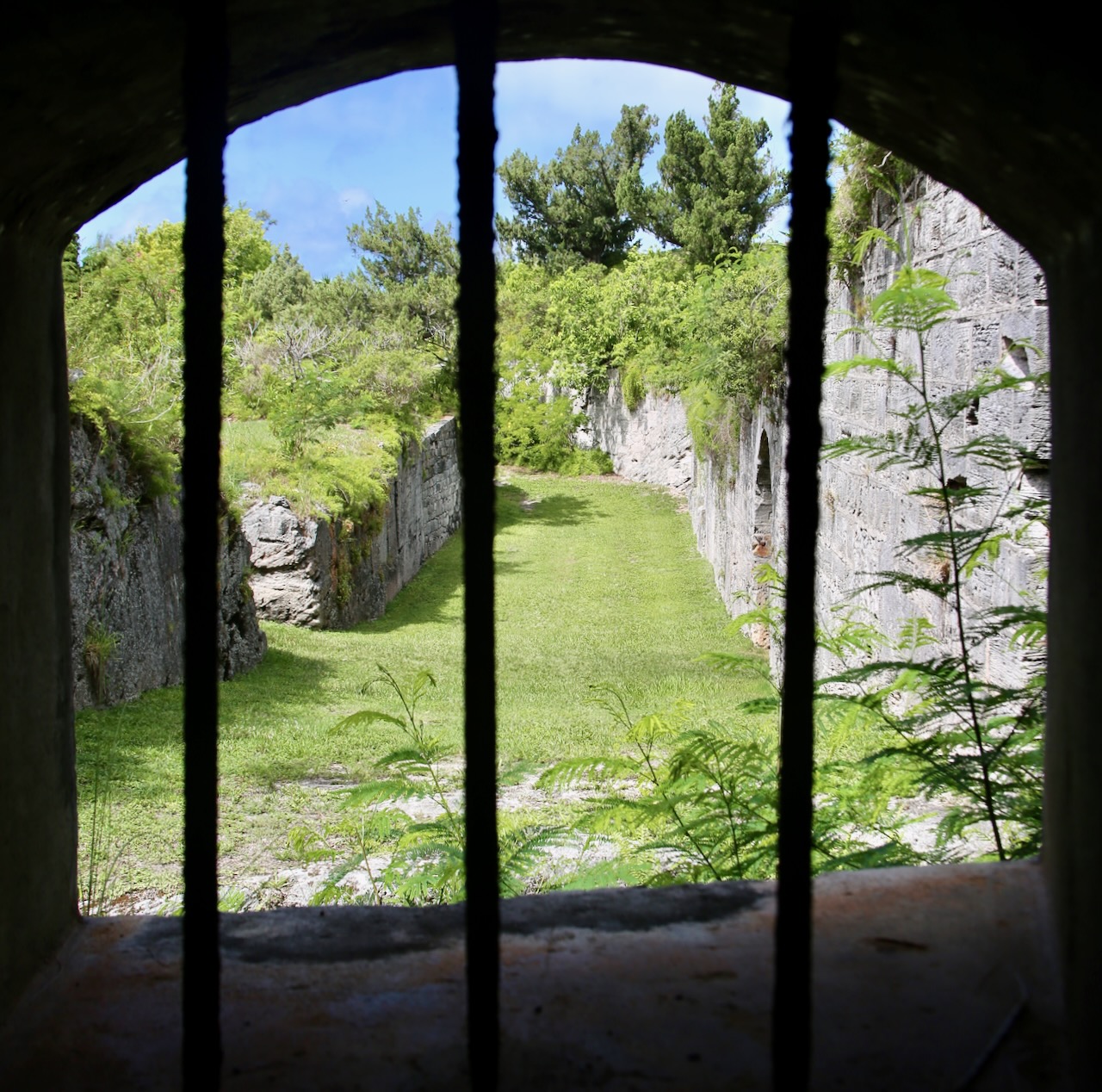
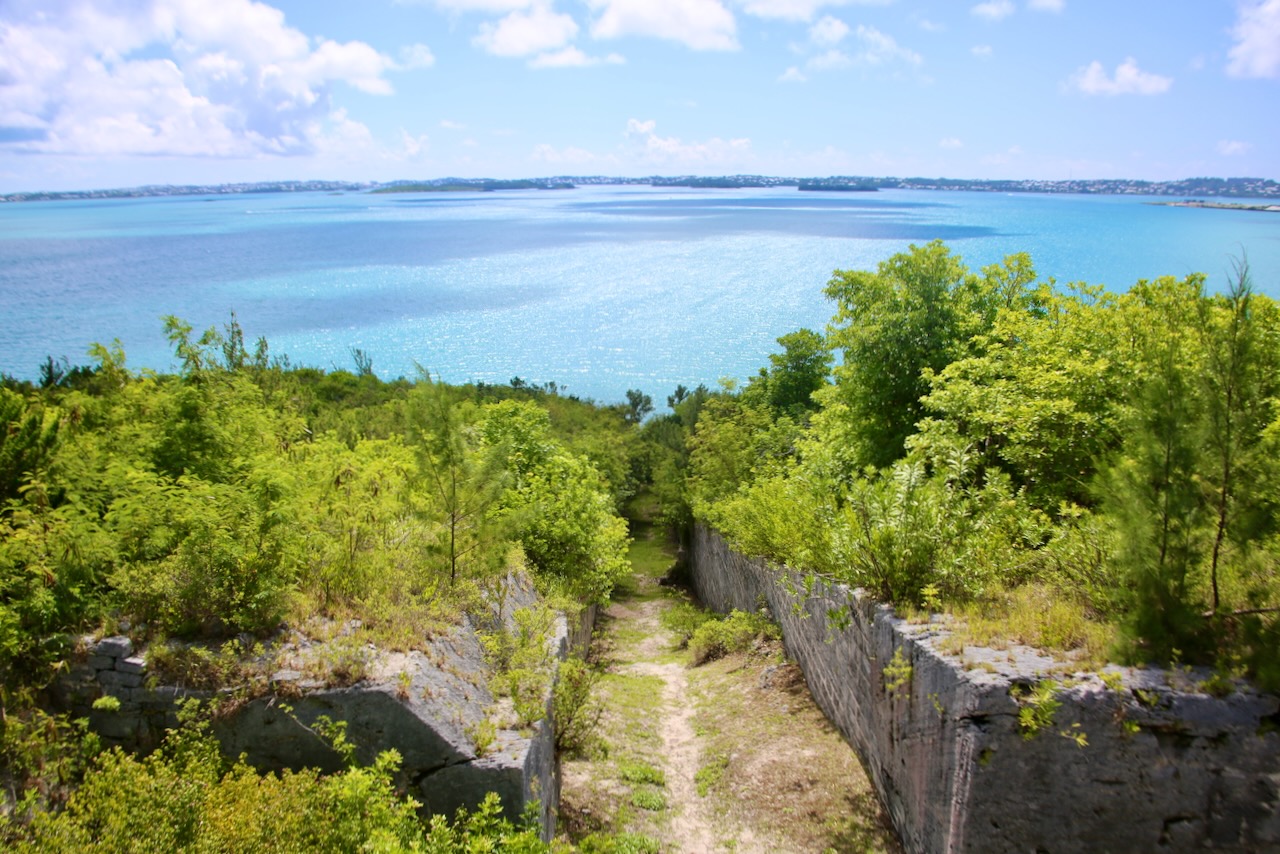
The fort was designed to be nearly invisible from land or sea, and the Prussian style influenced the polygonal shape that helps make up a majority of the 22-acre park today. The land attacks were expected to come from the southern shore, and so caponiers, French for “chicken coop,” allowed soldiers to better defend the ditches against small arms but not heavy artillery. Caponiers seem to have gotten their start with the Victorian forts of Malta, ruled eventually by the French and then the British — which would explain the spread of this new defense structure.
Heydon Chapel
The unique item at this fort is the Montcrieff disappearing gun mount holding the original 64-pounder barrel that was remounted in 2009 — and is the only working model in the world. The benefit of this weapon was its ability to hide via counterweight from the enemy while being reloaded to fire against ships — until the opponent learned to fly around WWI. The US would camouflage their guns until they could be replaced by concrete casemates during WWII.
Horseshoe Bay
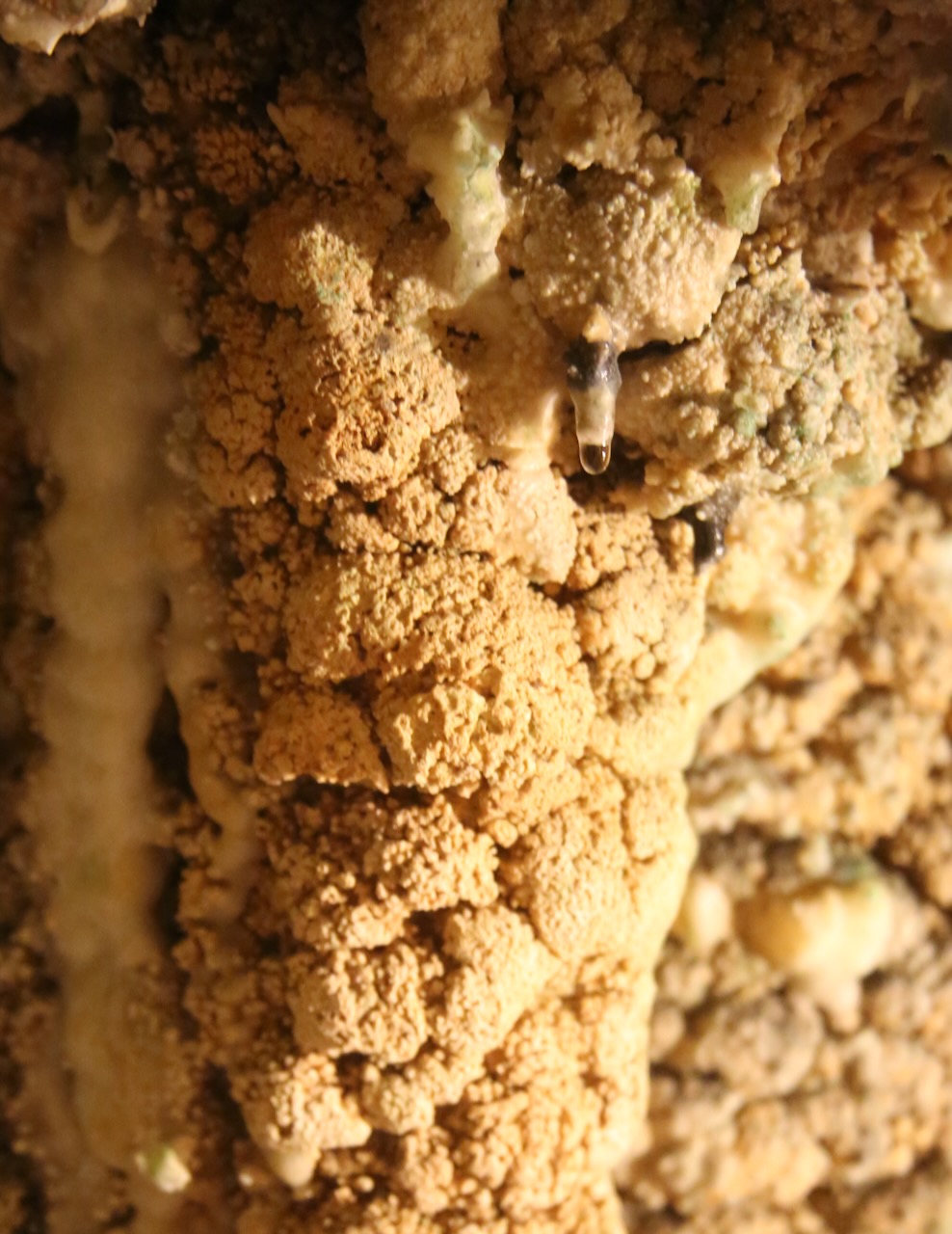
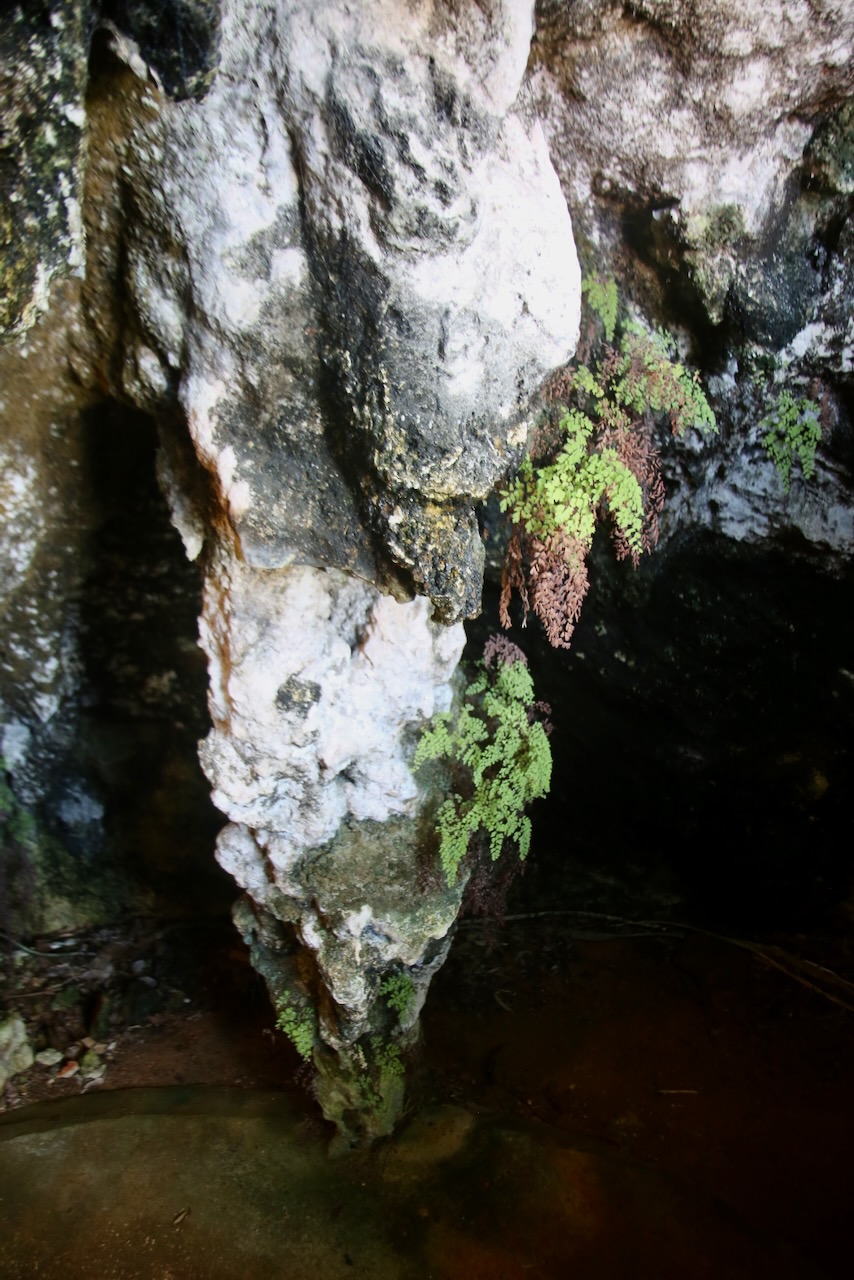
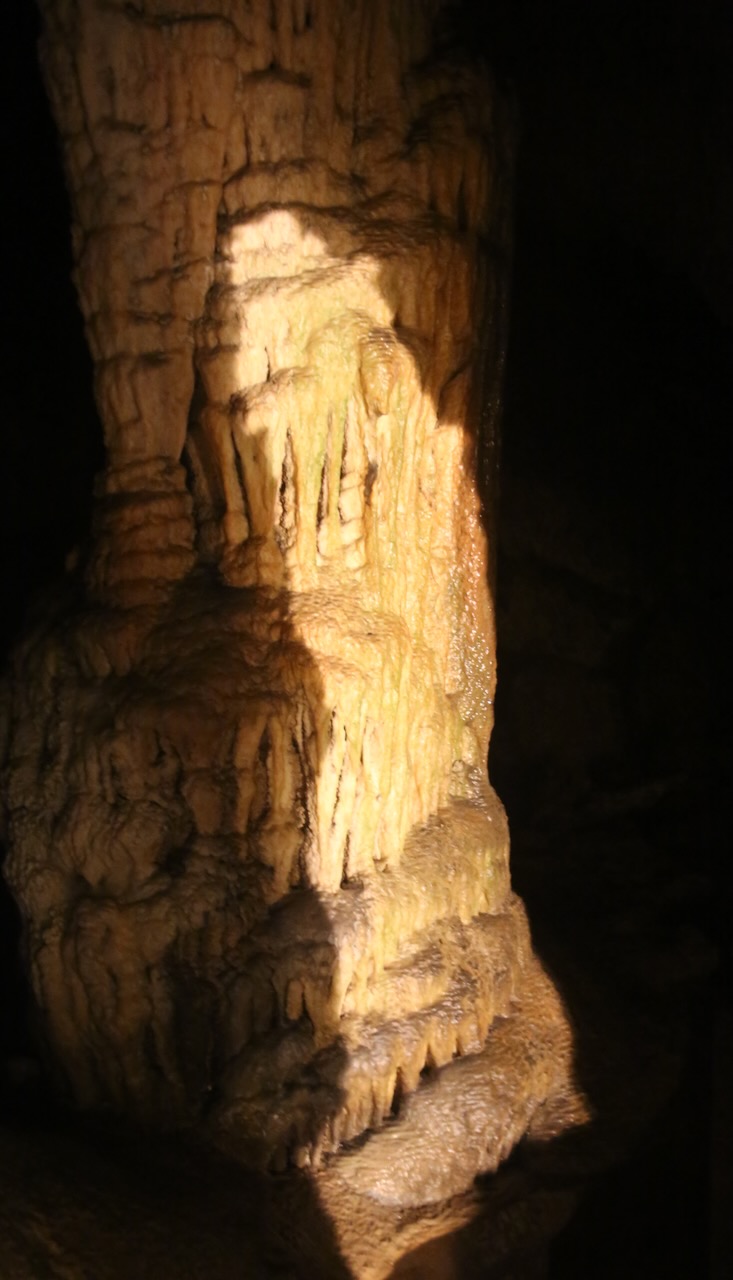
The fort at first looks like a nice garden — rolling hills, short stone walls, and lush grass but hidden down moss-covered stairways behind bars lies empty magazines, some simple descriptions, and a few budding stalactites — one or two of which might be centenarians. Dustin is in no rush and lets me enjoy the island view — a definition that changes depending on which culture is in charge of tending to the local environment — construction vs conservation.
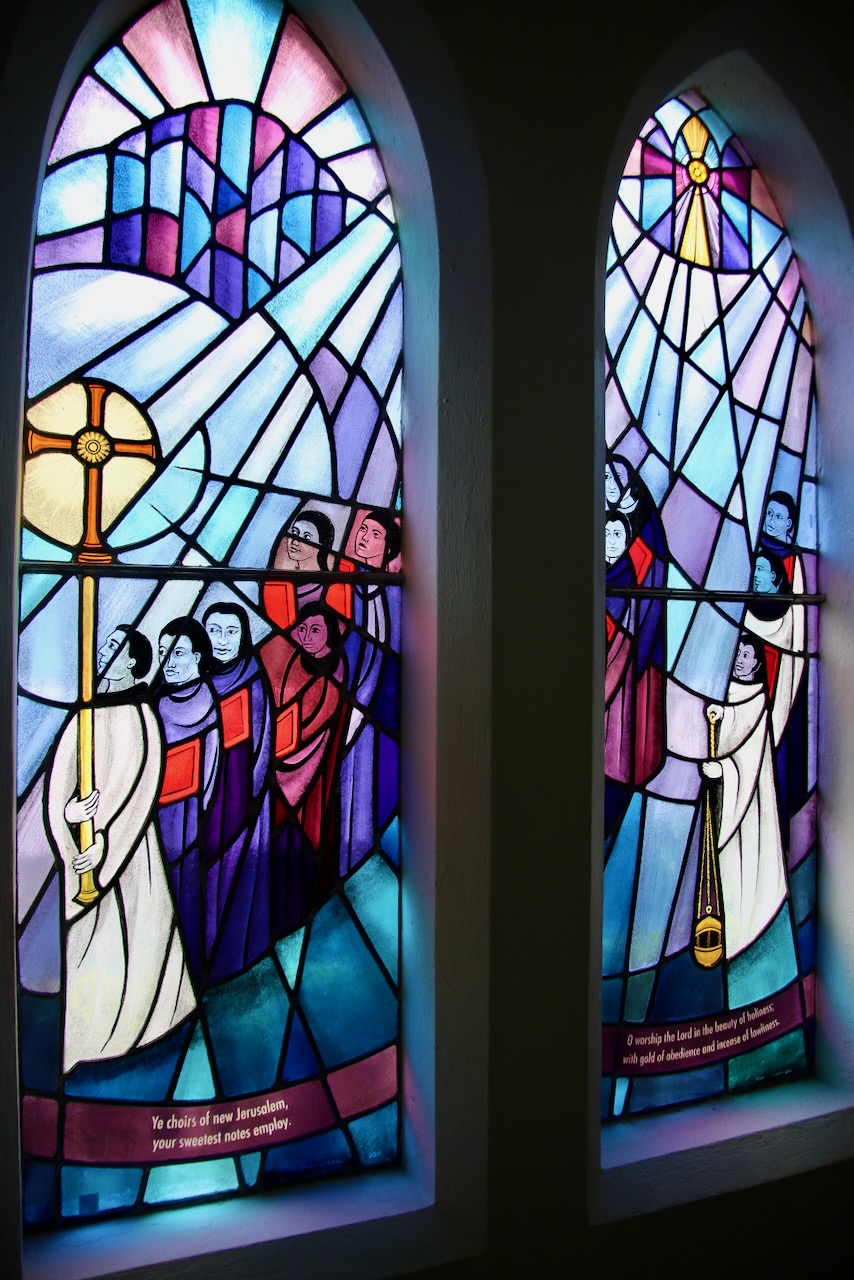
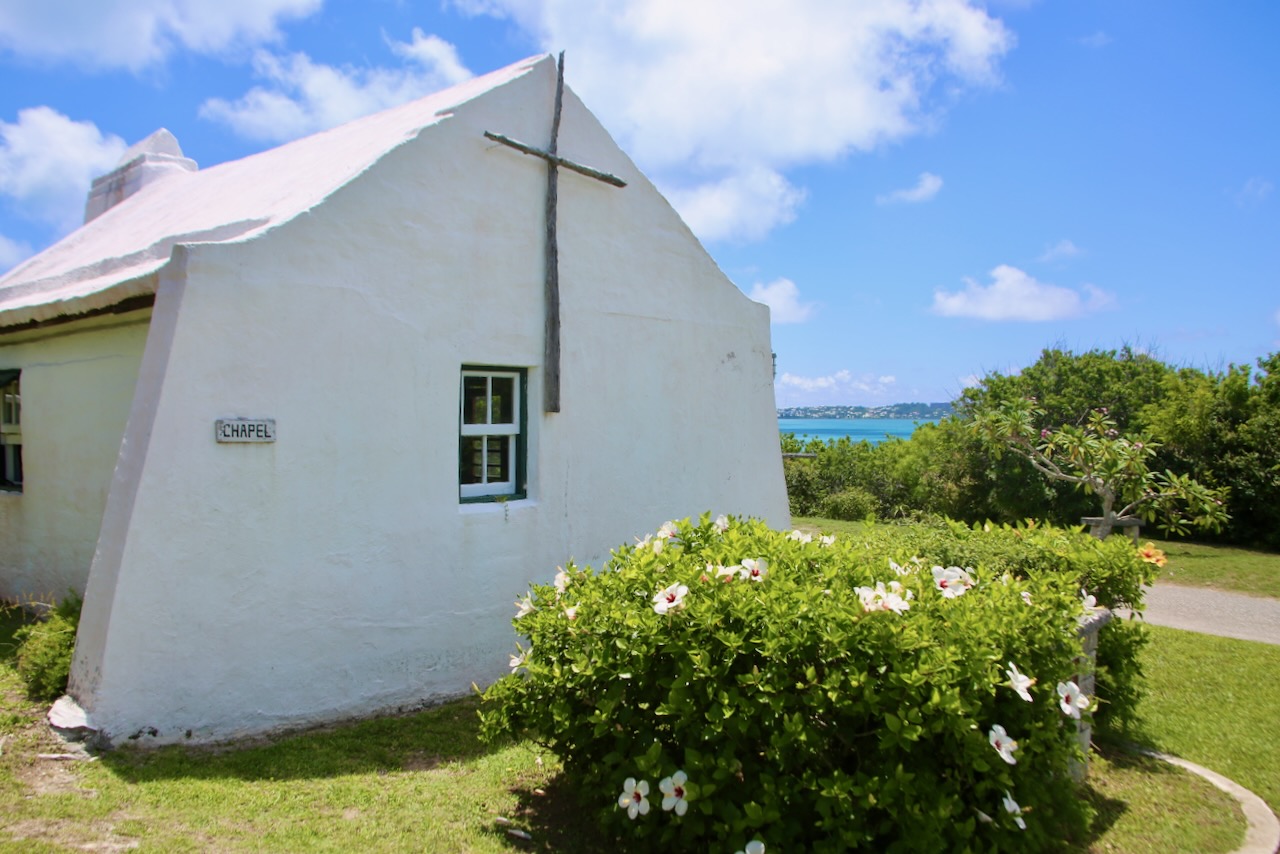
We walked back to the house (about 30 minutes) to get the scooter while I took pictures of broken trees, bird wings, and a commemorative bench. We drove to the Heydon Chapel since it would be open now, and I got to see the crosses, candles, and cross beams that reside inside, though what was happening outside was more intriguing to me. I could spend hours staring at this water, and as it turns out, that is our plan for the day, as even indoor places want this view on offer.
The chapel is on an estate that has been in existence since 1663 and, as such, is an important part of Bermuda’s history. Mr. Matthews bought the property in the 1940s and was dedicated to the Christian faith in the 70s. It was later consecrated by the Bishop of Bermuda, but the chapel remains non-denominational. The interior was renovated in 2014 with the help of local contractors.
We stop at the petrol station, and there’s to be no straddling of your bike while the attendant refuels it, and the sign on the door reminds me of entering a bank — show your face for the camera (remove helmet and hoodies). The scooter is full with 4.107 liters for an even total of $9.00, almost double what Hawaii and the UK are paying and almost six times what Bahrain pays at 0.37 cents/liter.
Even though the petrol station may seem interesting (more mundane things in different environments always are to me), the next stop is even more so — the world’s smallest draw bridge honors go to the Somerset Bridge. It consists of a 32-inch bisected plank that, along with the chains for the sidewalk, must be opened by hand to allow the ship’s mast to pass. It was mentioned in the acts of Bermuda’s first parliament back in 1620, so it’s very historical, too.
We had parked behind the TBTP (The Bridge Trading Post), and so we went inside, where we got the opportunity to talk with the owner about her journey of turning an abandoned government post office into one she personally ran with a bakery business in the same building. It was a win for her and the community, though I know I’d have to check my mail less often. How much junk mail goes through the trouble of showing up here?
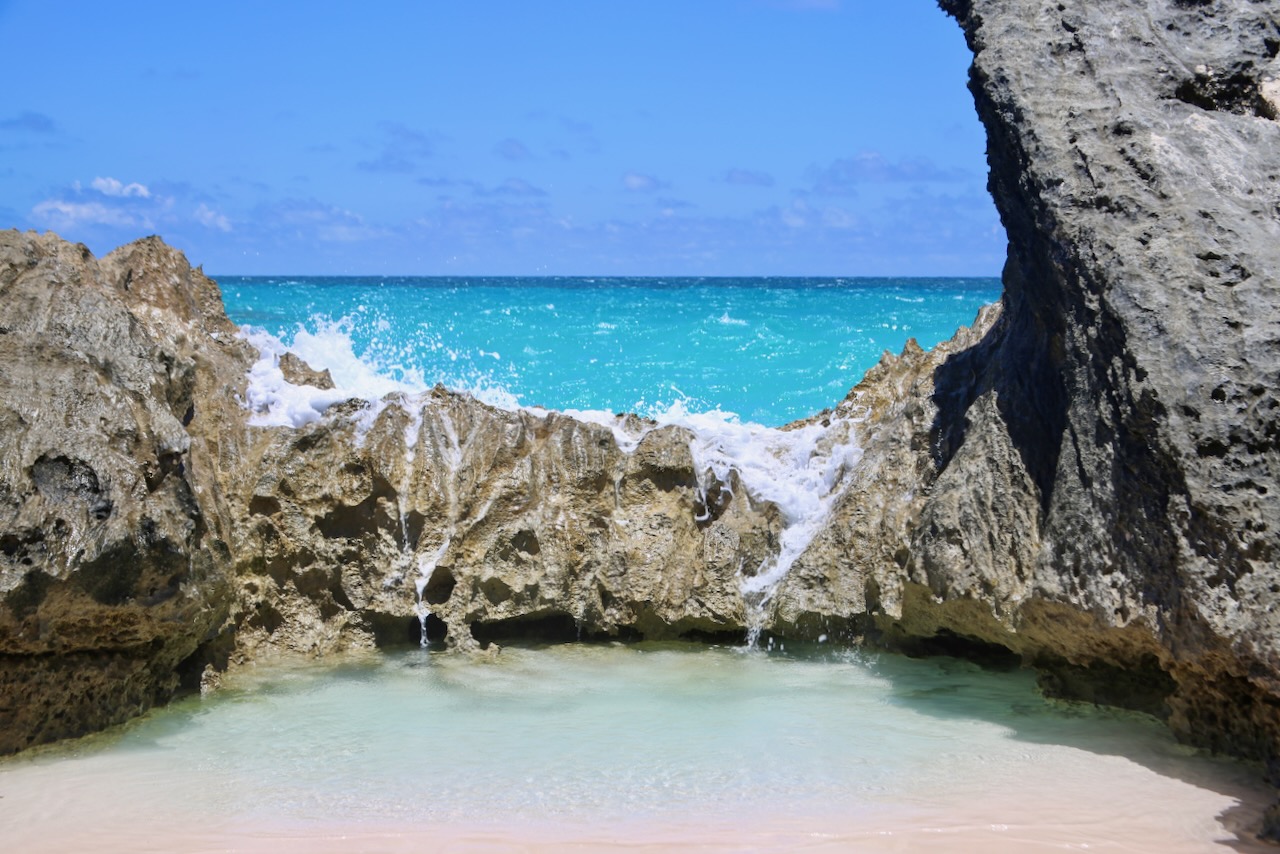
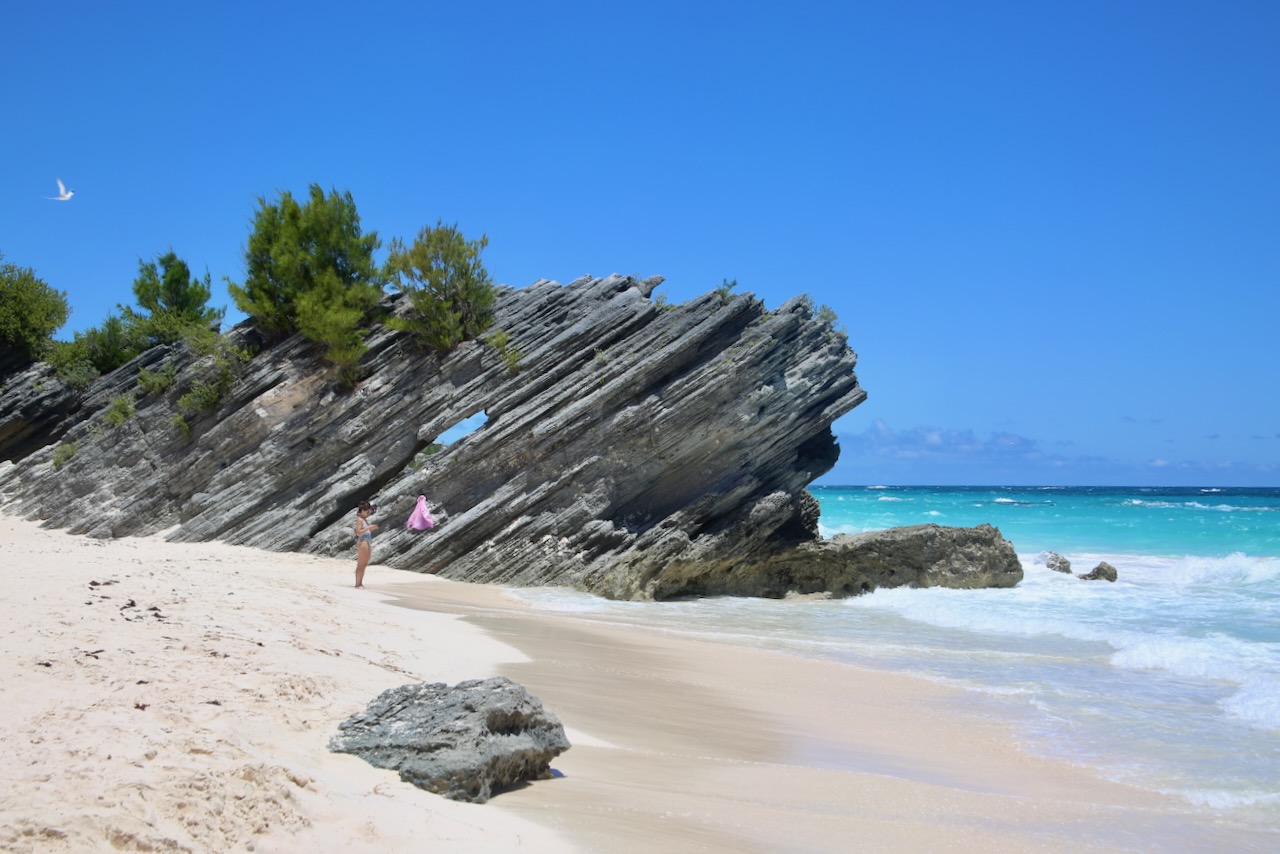
Past a market with customer appreciation day on first Tuesdays, a white-painted church built in 1826, and a wooden sidewalk between the road and sea takes us to Horseshoe Bay. Here, we would spend the next two hours walking between its beach and Warwick Long Bay, feeling the temperature change on our feet based on the amount of pink in the sand. The color comes from microscopic foraminifera shells that live under coral and mix with other skeletons of sea life to be washed on shore.
Flatt’s Inlet
While learning more about these single-celled organisms, I also found the “cliff notes” guide to the development of the atoll that is Bermuda, the only one in the Atlantic Ocean. Basically, some calcite-secreting organisms lived on a caldera until the ancestors turned to limestone that, once exposed to air, turned to sand. The wind hardened the dunes into sandstone, and then the cahow bird, buckeye butterfly, killifish, and Portuguese man-of-war settled the island before people arrived.
As a reward for not falling on the rocks, we got vanilla soft serves from a truck on the way off the beach. We had noticed pizza and beer set up on the way in, and the police were keeping an eye on it for a work function to include volleyball on the beach. It’s easy to tell the local scooters from the rentals based on how they drive. Dustin takes his time driving so I can see more and take some pictures.
We stop at the Royal Bermuda Regiment to offer one of the coastguards some day labor ($200) if they (the guys I’m staying with) win the bid for the government job (whatever that is). We stop across from the aquarium and see a yellow-crowned night heron watching over a green sea turtle in Flatt’s Inlet. We stopped at Grotto Bay Resort to visit their Cathedral Cave (there’s a spa inside) and would’ve gone deeper, but the lights were out (timing, depth, safety, etc.).
The cave was first found in 1609, and Captain Smith described it as dark and cumbersome. It’s thought that Shakespeare might have been inspired by stories of this cave and set a scene in “The Tempest” in a cave closer to home. This cave system has gone by many names. Bermuda has one of the highest concentrations of caves per square mile in the world but not the most by country, a record that belongs to the US, Mexico, Slovenia, or China. The largest and most expensive cave, Son Doong, resides in Vietnam.
We’ll take a break from the sun inside with the air-conditioning of the Swizzle Inn. Its interior is decorated with business cards, dollar bills, markers, and stickers. There are shelves of books and bottles between the soccer game on the TV and the live drummer on the back patio. We stayed over two hours, so even if we got food, we drank more than that, especially me. It’s good that my scooter escort is burly and a local (his mom is from here).
We drive back west and stop at Admiralty House Park for some cave and cliff-dive viewing. We pass a cricket match and some lounging kittens on the way. The cave seems to be the perfect background for a movie plot, where there is hidden treasure or someone trying to escape a castle between tidal floods. Other visitors have brought their swim costumes and are making use of the dedicated swim area. It’s near the marker for the late midshipmen and the pink port-o-potties that we meet Shaun, the dog from Jamaica, and his owner Frank from Northeast England.
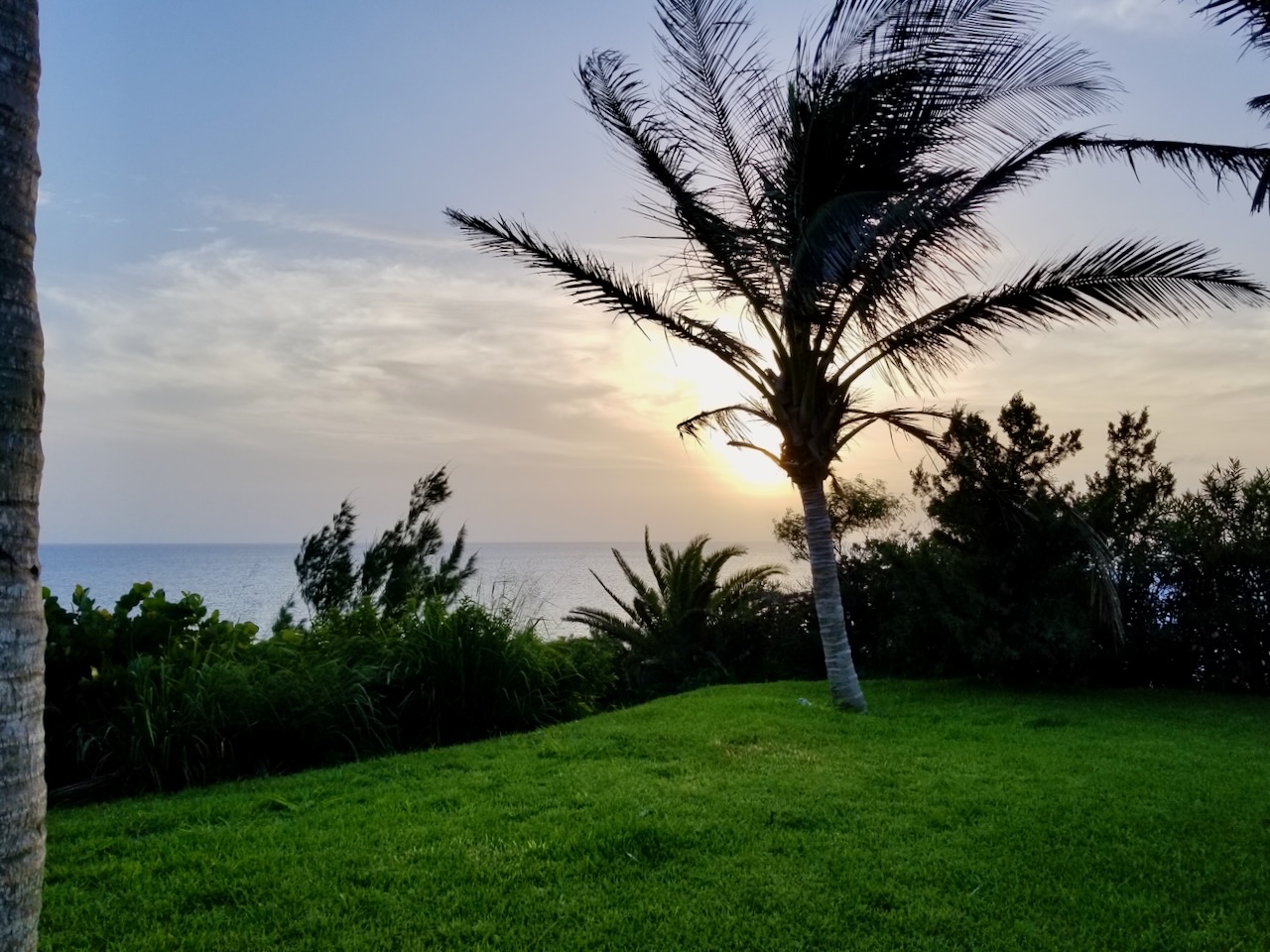
I get a decent photo of Shaun and offer to email it to Frank when I get home. We’ll drive through Hamilton with the sun at the horizon, causing the clouds to turn a beautiful dark grey-blue and shades of pink and yellow. When we get to a military base, the courtyard is lit up, and some people are kicking a ball around. I am allowed to explore and see the laundry room, bathroom, and barracks, with only the bottom bunks being used.
I meet Dijon, the current bartender of 25 bottles of spirits and a double-doored commercial refrigerator full of beers and water. There are elephant beers (either Carlsberg or Delirium), a few shots of 1800 tequila, and donuts (a chocolate coconut and a jelly for me), along with a coin challenge (which, of course, I lacked) that comes with a round of drinks that the other person unable to present a coin has to buy for the ten or so of us present.
We stay out late as we talk and laugh outside. We stopped at Gibb’s Hill Lighthouse on the way home at 3 am when the view from the top and the restaurant at the bottom were closed. This 118-foot tower was built in 1846, the first to be made with cast iron (steel couldn’t be bent yet), and only one of two that are still in existence. There are 185 steps to the top, and until 1964, the light was run by hand. The 1904 lens was repaired in 2004 to replace the mercury bearings with steel.























 TheJessicaness