We planned this detour of our route from San Diego to Norfolk to get in some diving with our new gear. We took Nitrox tanks out with Lost Reef Adventures to the Cayman Salvage Master and Joe’s Tug, where we saw a shark. Having reached depths of 91 and 66 feet, we weren’t under the water more than 38 minutes on the second morning dive (which is why I want to be on a liveaboard and spend the majority of my time diving, snorkeling, and eating).
We return to the dock to pick up the afternoon divers and visit Sand Key and Western Dry Rocks with our dive buddy, Sarah, because no one should dive alone. We got to spend plenty of time on the bottom and also saw a shark, but not before I started to panic. I was having trouble equalizing the pressure in my ear on our descent, and I’m usually the slow one, but it was starting to hurt. I felt so bad for holding up Sarah, as Caleb already knows what he’s gotten himself into.
One of the staff told me it was ok and I could use the anchor line to go down hand-over-hand, which is exactly what I did, fighting the pressure until about fifteen feet when my ear finally relaxed. This might have been a sinus issue, but I had no other problems, or I would have had to forfeit my dive. The next day, we’re back at it and visit Haystacks and Cannonball Cut. Caleb’s regulator o-ring breaks before the first dive, and he has to use company gear. I’d rather use someone else’s mouthpiece than have trouble equalizing. Caleb took this as a sign to be more prepared next time, which is always good advice.
We awoke in Murder Bottom, aka The Everglades, and hurried down to Key Largo. We always look forward to cruising on the “Highway that Goes to Sea”, the 113-mile stretch of the US Route 1 that connects the Keys with 42 bridges. We visit John Pennekamp Coral Reef State Park. We go out with Scuba Fun to Molasses Reef in the afternoon and see a shark. Then we dive Wellwood and see eels, rays, a crab, a shark, a lobster, and barracuda. We arrive in Key West after dark.
In the darkness of last night, we had missed the Gulf Islands National Seashore, which is still available to civilian visitors (minus closures for wildlife protection, restricted access around facilities and docks, and occasional closures for management). Fort Barrancas and the Advanced Redoubt are not available outside working hours, but we weren’t going to wait around, so we explored what we could — the Trench Trail, the Woodland Trail, and Fort Walk. This is roughly a mile and a half to cover the boundary of this park.
The Advanced Redoubt was built between 1845 (with enslaved workers) and 1870 (by free citizens) to protect the Pensacola Navy Yard from land-based attack, and the fort guarded the harbor entrance. They were able to stop a Confederate attack during the Civil War. Depending on whose side you’re on, I either tried to stomp a cactus to death or its spawn viciously attacked me and attempted to put my sandal in my foot. Either way, I pulled the tiny weapon out without impaling the skin under my fingernails, and we made our escape.
We drove over 650 miles, which wasn’t the plan, but when we arrived at a closed state park, it kept us driving later, again. This is the cost of adventure, but it put us in a situation we said we wouldn’t dare do again — the mosquitoes of the Everglades. We each grabbed a can of DEET, and I had a citronella candle that saw a bunch of the bloody bugs burn in the flame as we set up the tent. I learned that Google has an offline Dinosaur Game you can play that reminds me of Mario, but it’s a T. rex, and the screen switches between night and day in the desert.
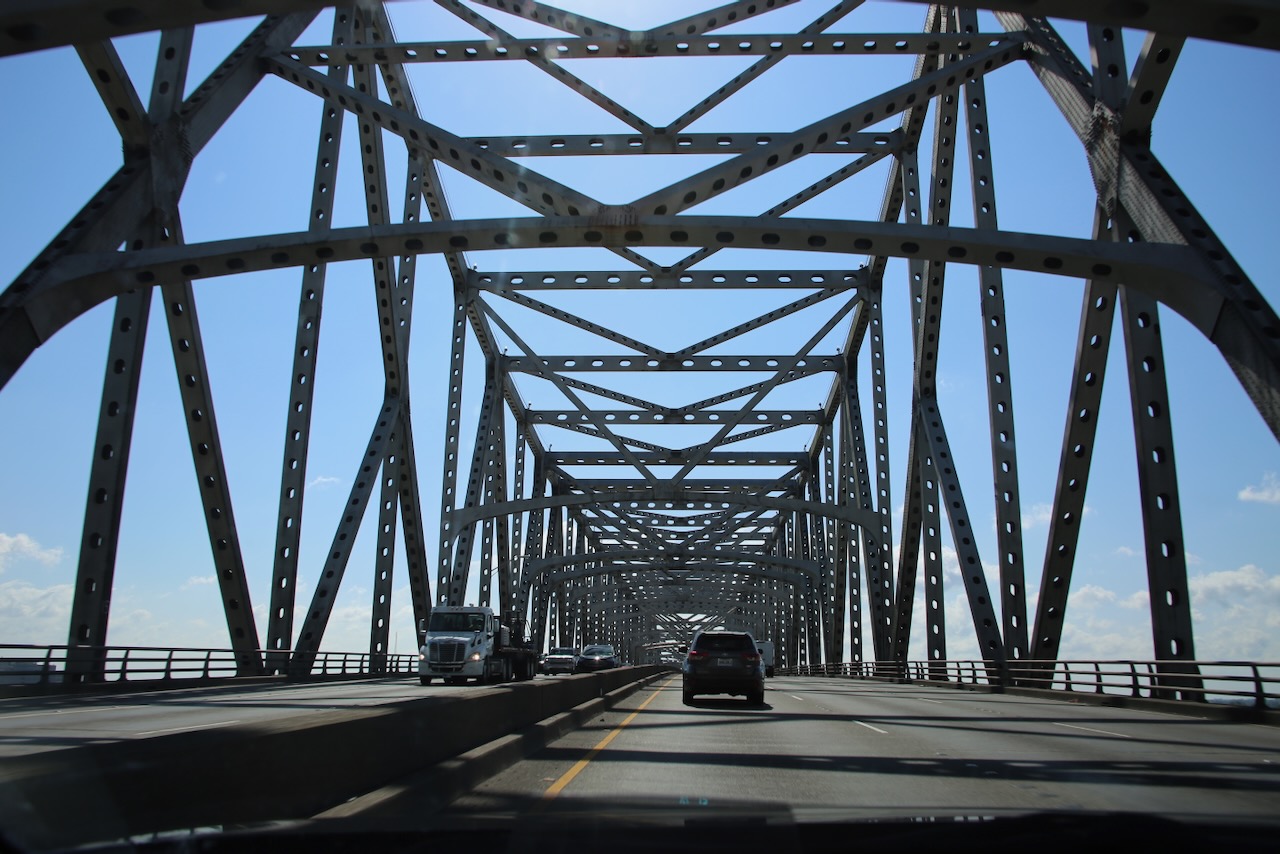
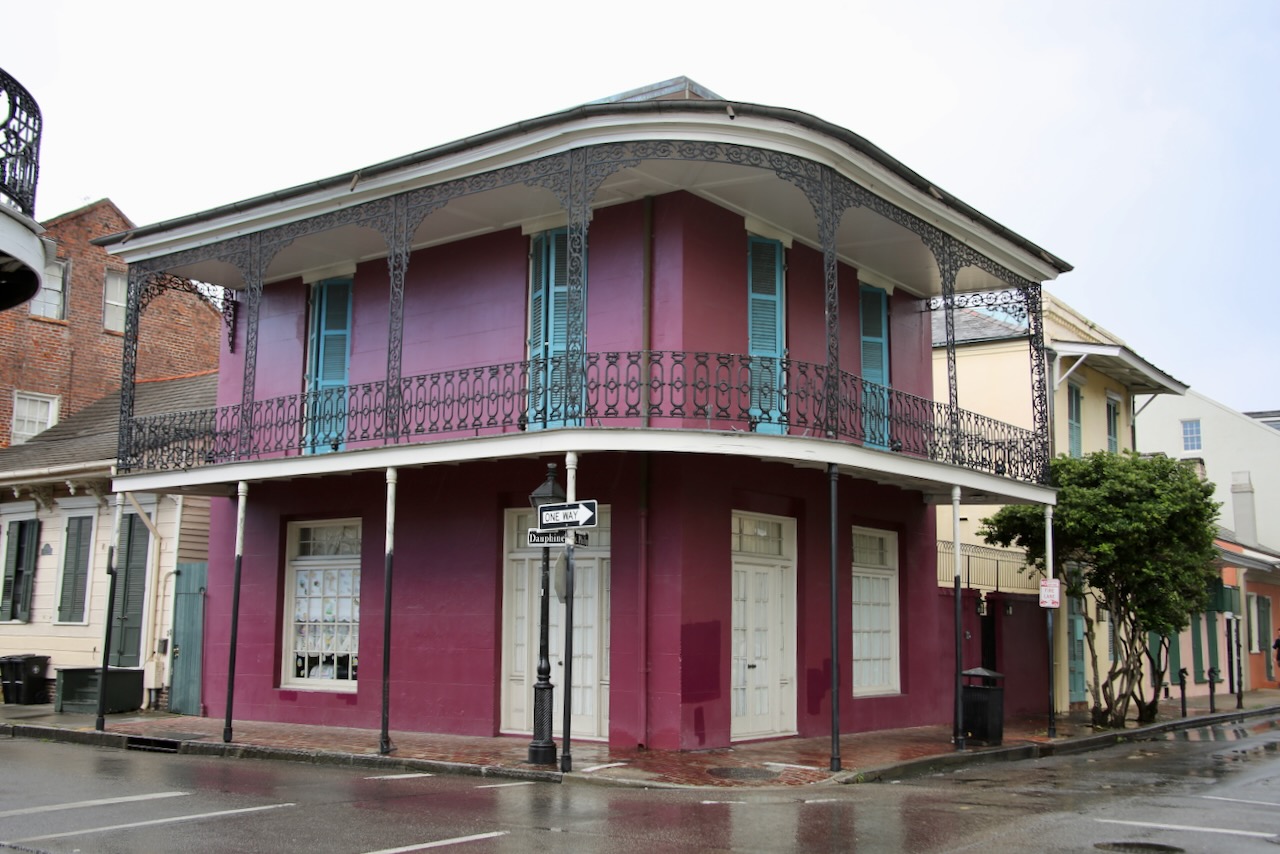
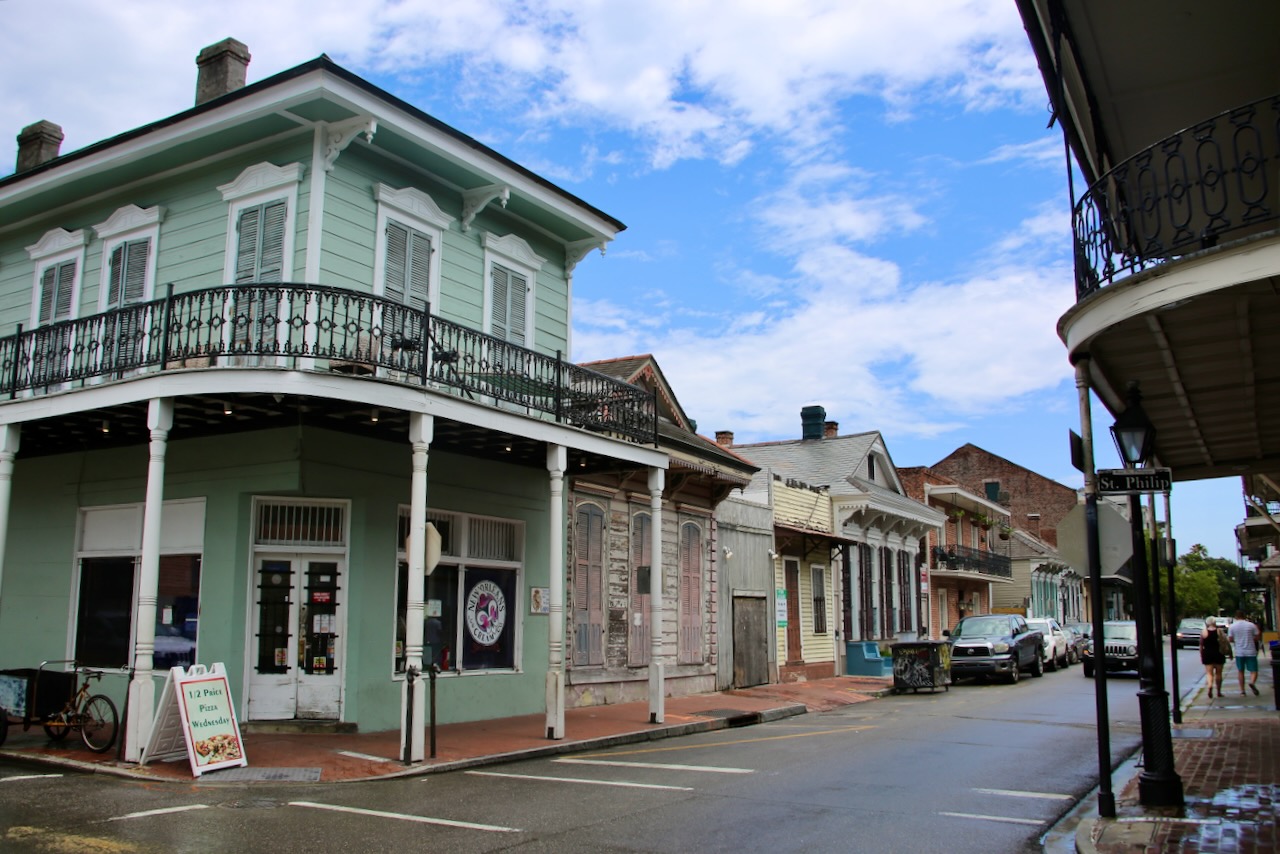
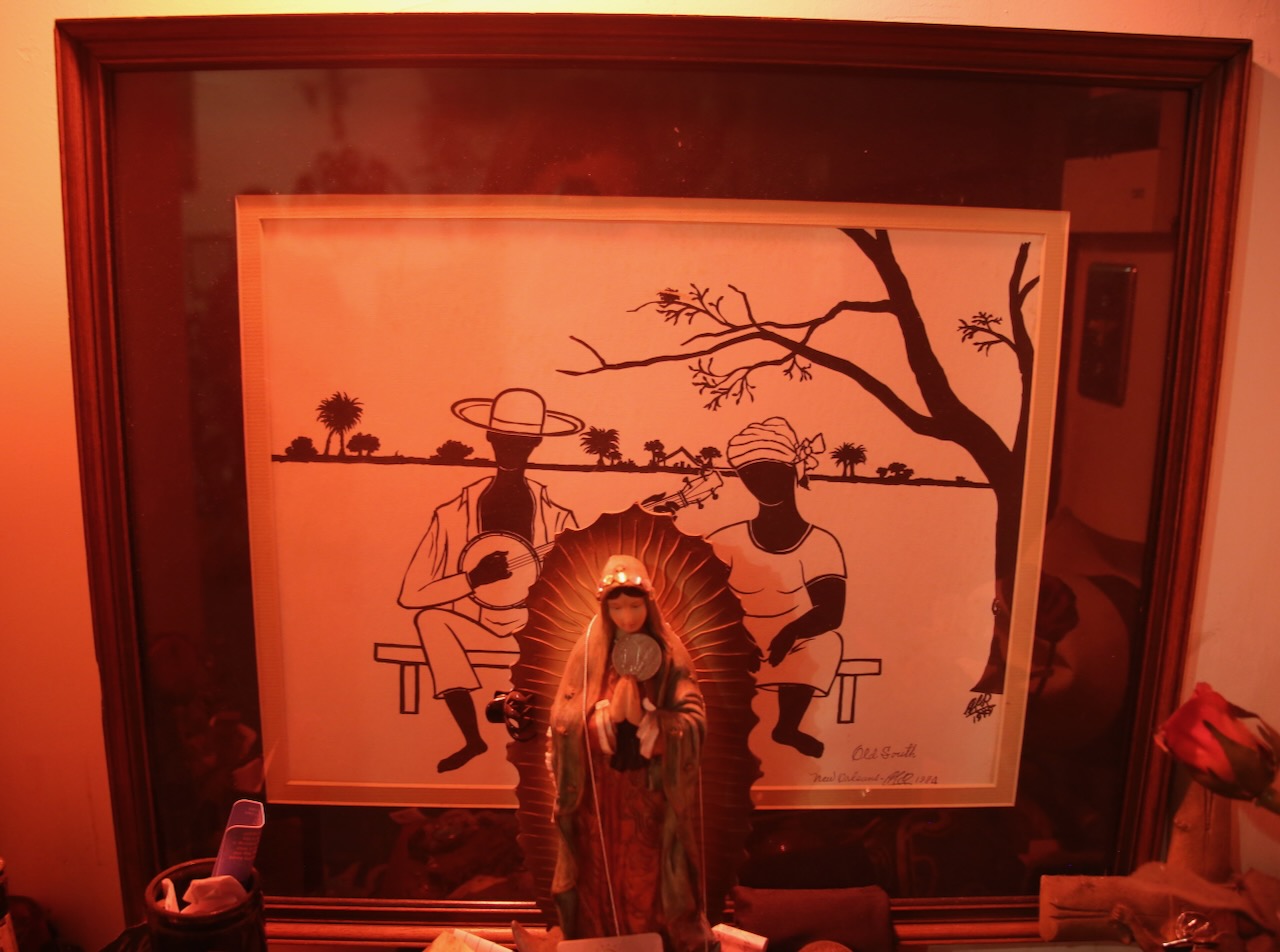
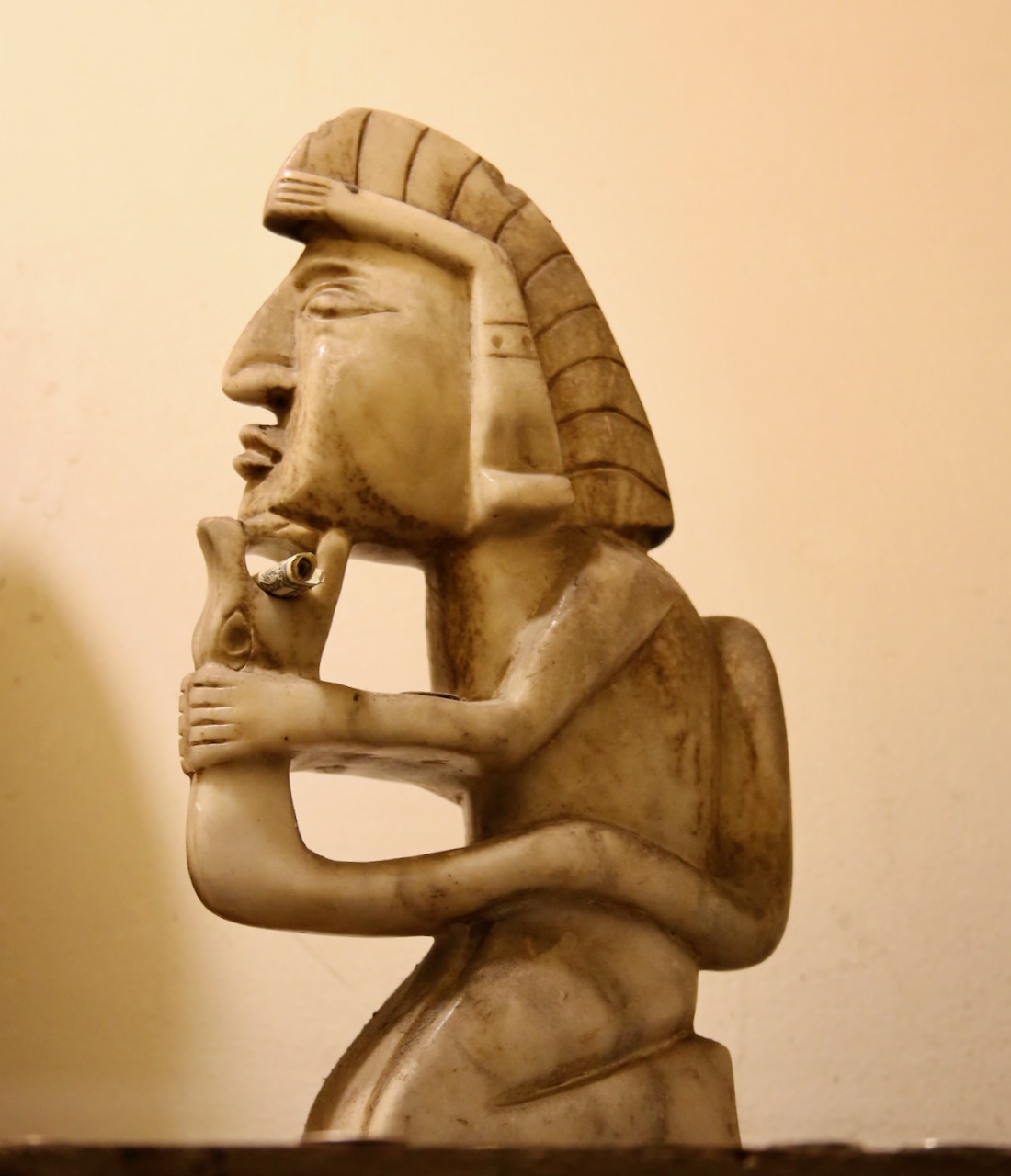
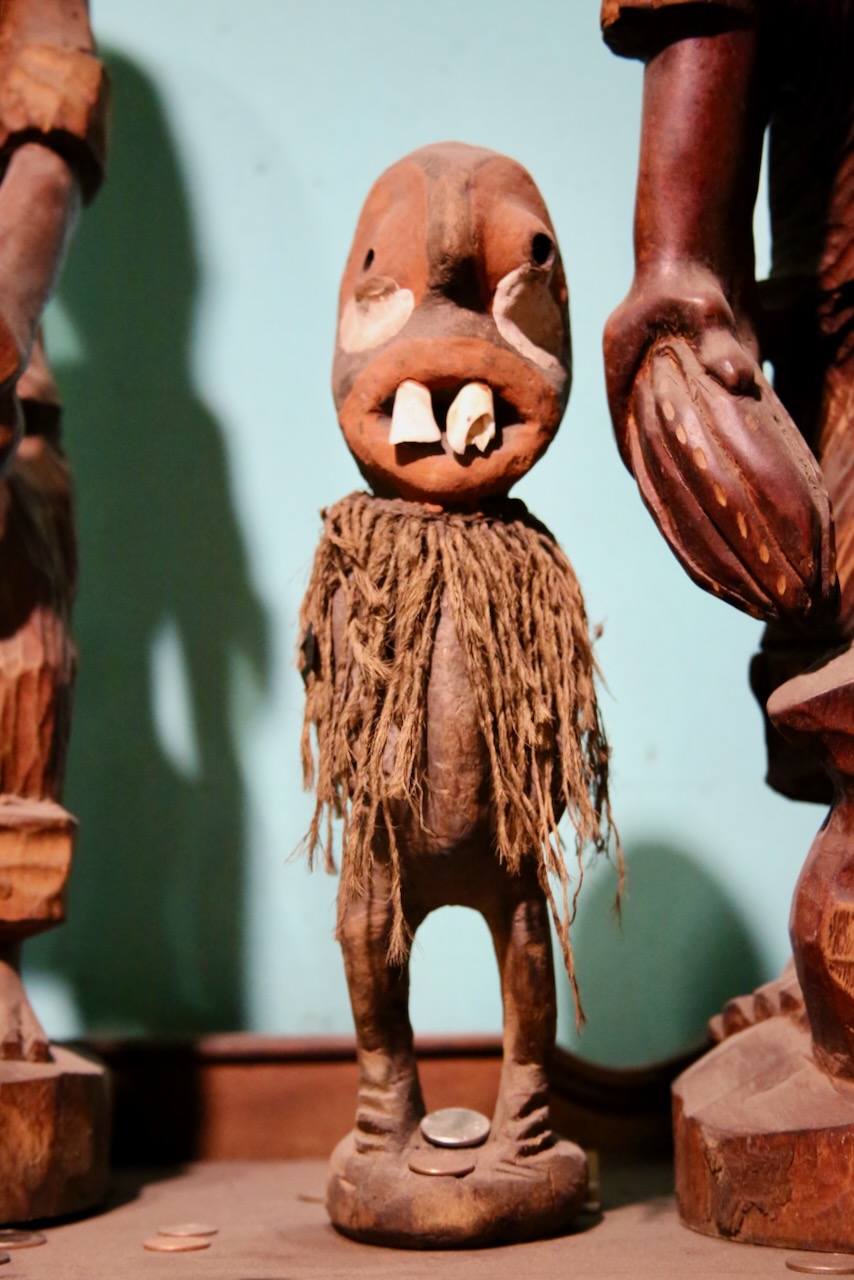
Another early morning, though the sun is already up, we’ve got two of the longest bridges (Lake Pontchartrain Causeway and Atchafalaya Basin Bridge) in the US to cross, with another twenty miles of other elevated roadways over swamps, bayous, and floodplains to get to New Orleans. This city, known as the “Big Easy,” is wet and gray when we arrive, and the streets are empty. The Historic Voodoo Museum is open and full of figurines and paintings that are covered in cigarettes, booze, and money as a tribute to the bringers of good fortune.
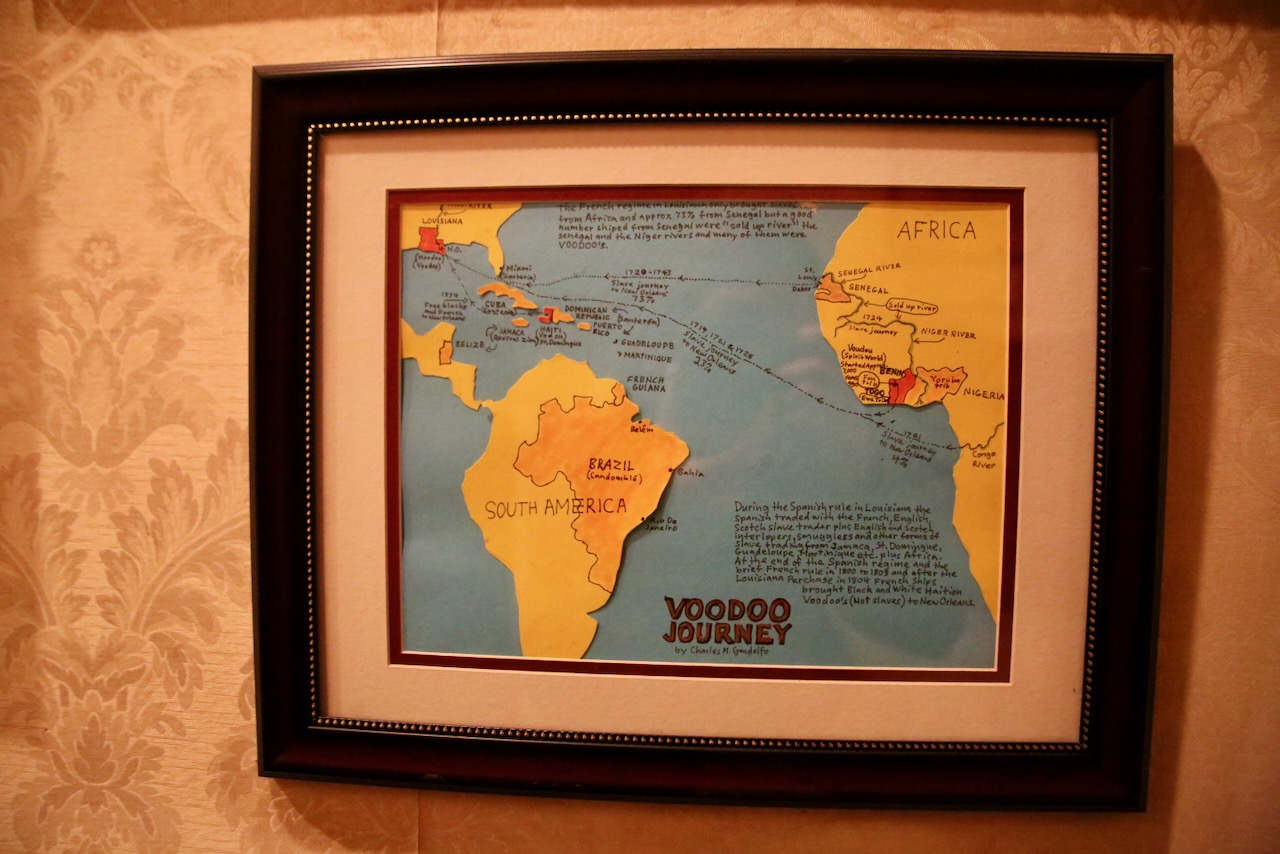
Voodoo comes from the people of West Africa. They believe in three levels of spirituality: a distant God, spirits on Earth, and deceased ancestors. Voodoo is the label for the religion, the superstition, and the culture. Marie Laveau is the Queen of Voodoo. She was born two years before the Louisiana Purchase and died two years after New Orleans’ first telephone directory was published. She brought her mulatto heritage (black grandmothers, white grandfathers) into her healing. Her specialty was love, which caused leaders around the world to seek her advice and help.
There are many artifacts and treasures in the different rooms. There was a secret society that carried out crimes in the name of personal justice, and today, there is a group that warns kids during Mardi Gras of the fragility of a fleeting life. There are trinkets, skulls, masks, and the most popular piece from Voodoo, the doll, unless you count Hollywood’s use of the zombie. Haiti had a practice of poisoning the chosen few, burying them alive for several hours, and then giving them the antidote. This experience shattered their spirits and made these people easier to dominate.
As we exit the museum, I see modern zombies stumbling about the streets with their drinks in hand. We’re not out long before we find the Jazz National Historical Park that evaded us last time due to a lack of parking. The “Tree of Jazz” is broad and built like a willow. It stands strong on its roots of gospel, ragtime, and military brass and branches out to include blues, swing, bebop, and fusion. The trans-Atlantic slave trade merged African and European music on Caribbean islands, and many of those rhythms continue to be practiced and built upon in New Orleans.
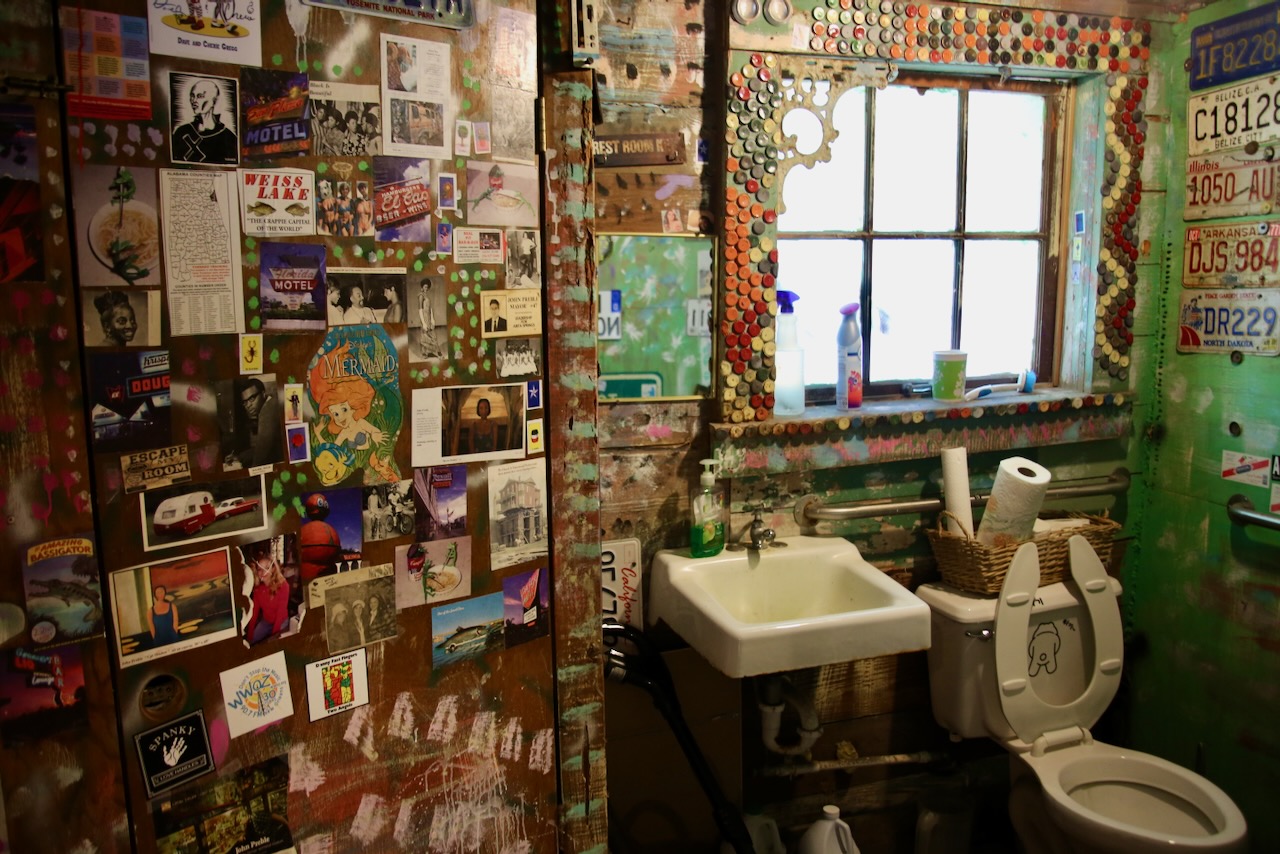
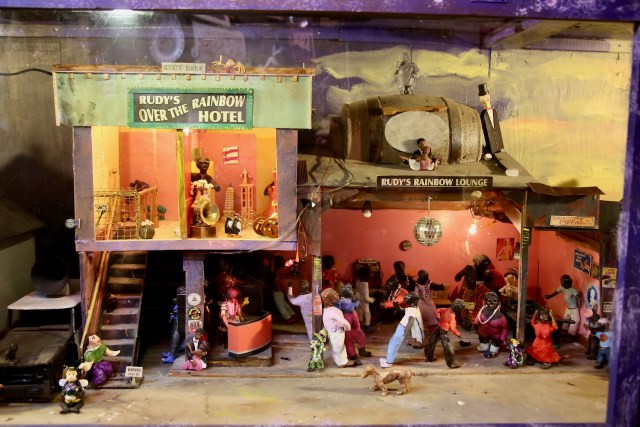
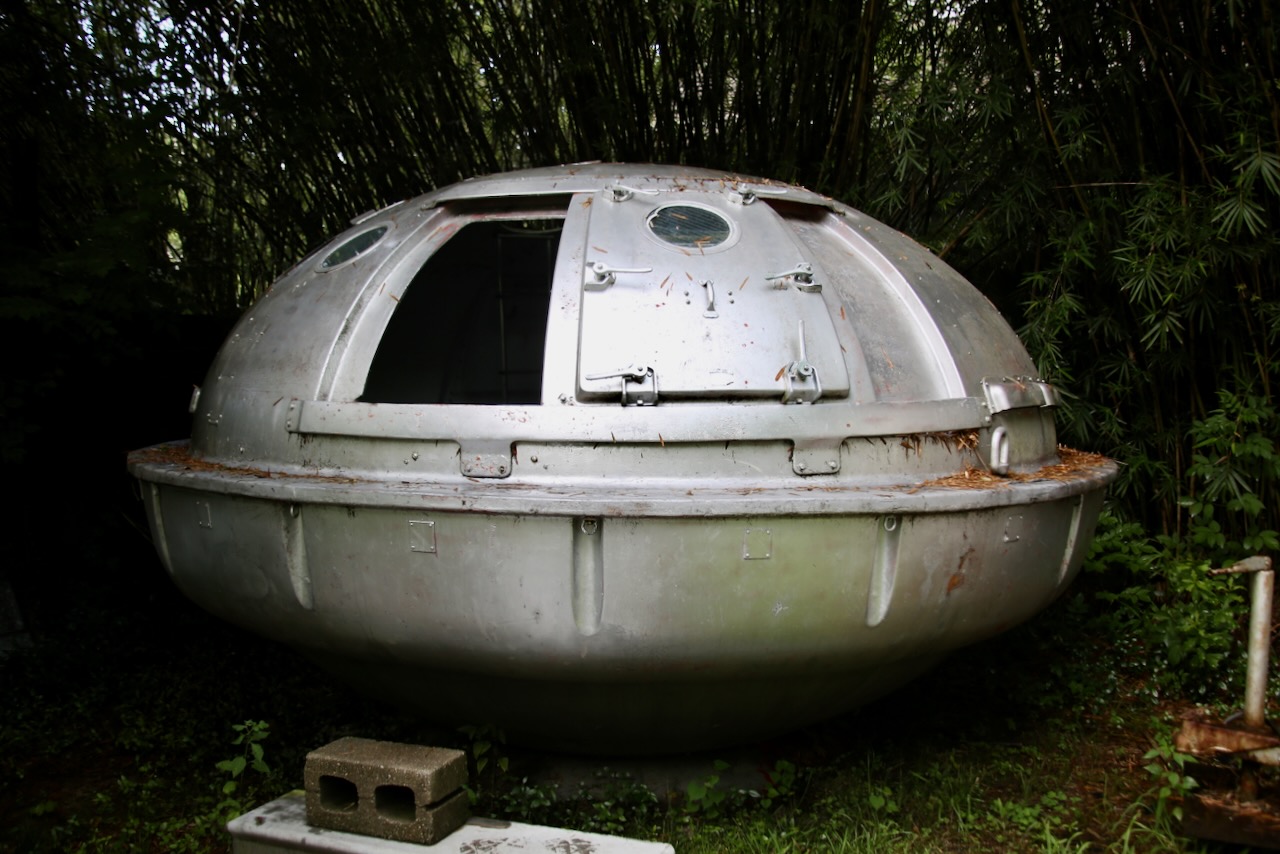
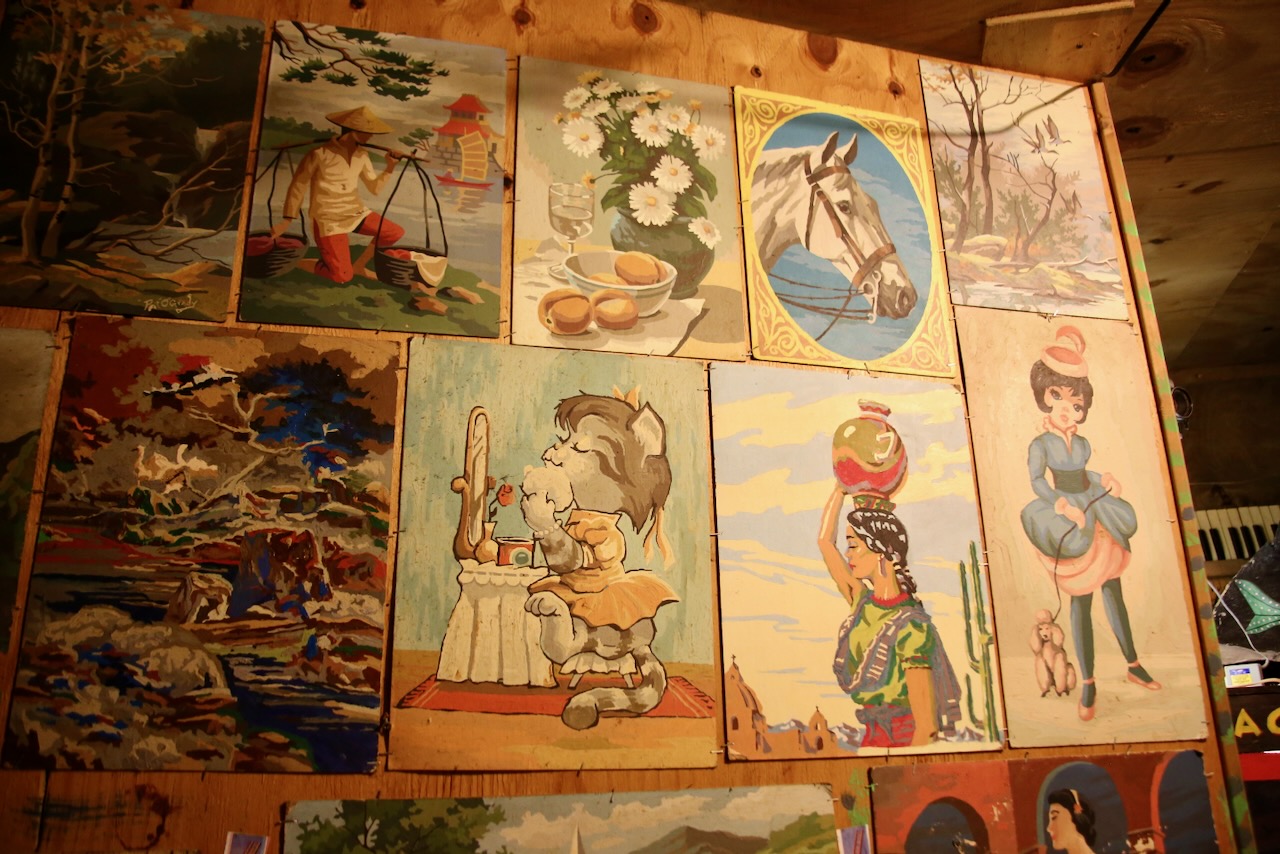
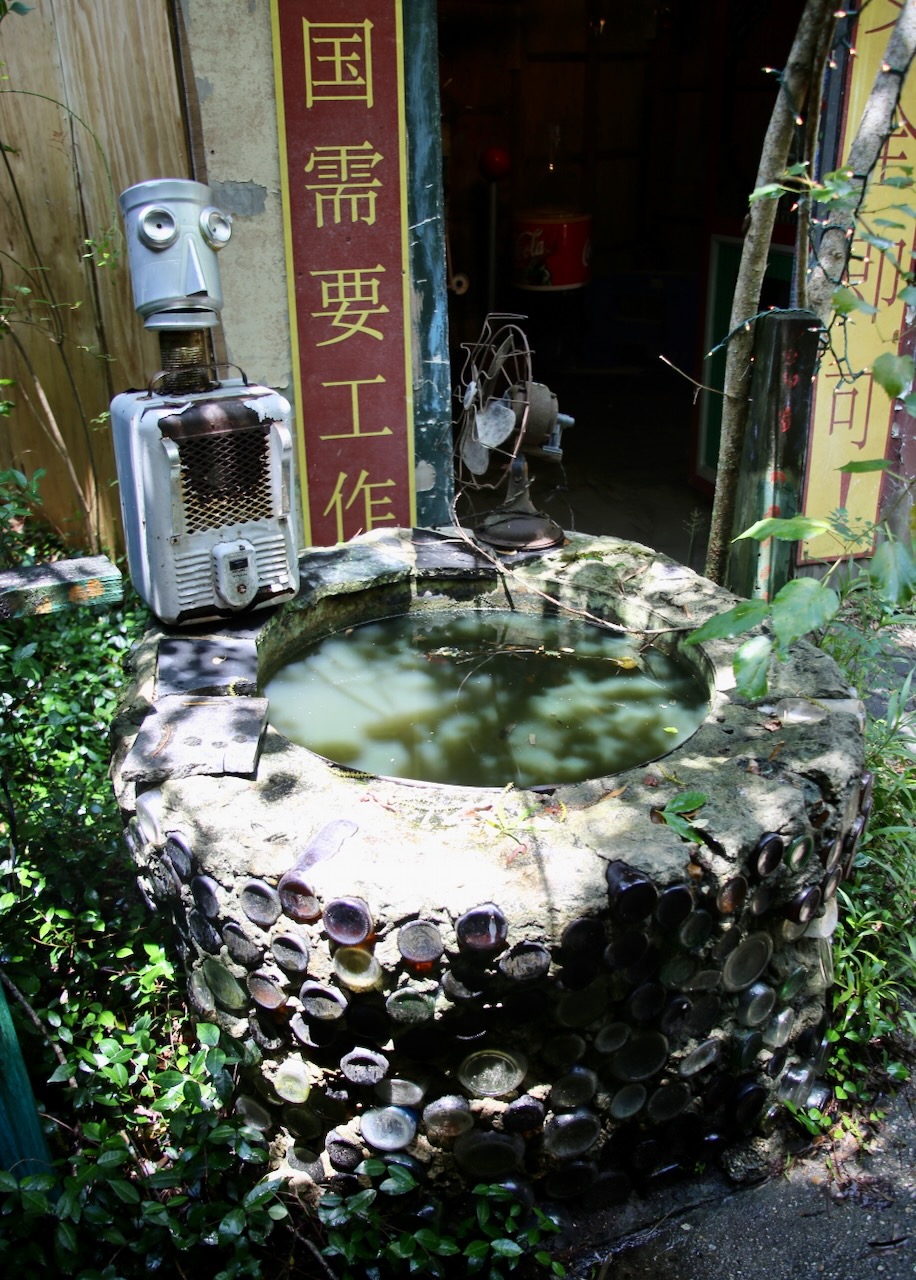
A detour a bit north over the Causeway I mentioned earlier (that’s not needed to access New Orleans from the west) takes us to the Abita Mystery House. It’s a roadside attraction packed with handmade inventions, mini-town dioramas, and collections: bottle caps, stickers, signs, license plates, paintings, bottles, film rolls, arcade games, sunglasses, etc. It’s just one guy, artist John Preble, and his over-friendly cat that claim these oddities, especially the rogue taxidermy with an alligator theme. Just a few minutes away is the Abita Brewing Company. I know their beer Purple Haze, a wheat ale with raspberries, so we take a tour, buy a shirt each, and ask about where to get dinner.
We agree on The Chimes, where I have my second croissant of the day. Mississippi was a sweet hour before we stopped in Alabama, where I picked up homemade F.R.O.G. jam (fig, raspberry, orange, and ginger, which I would later have to leave at the airport) and mosquito bites on my left foot (that I can still see six weeks later). We’re both exhausted trying to get onto IWTC Corry Station, my first command after Chicago in the Navy, and it’s not as accessible at night as it used to be. The camp host is too sweet and offers me a tour of the place that I decline, along with a free bag of ice.
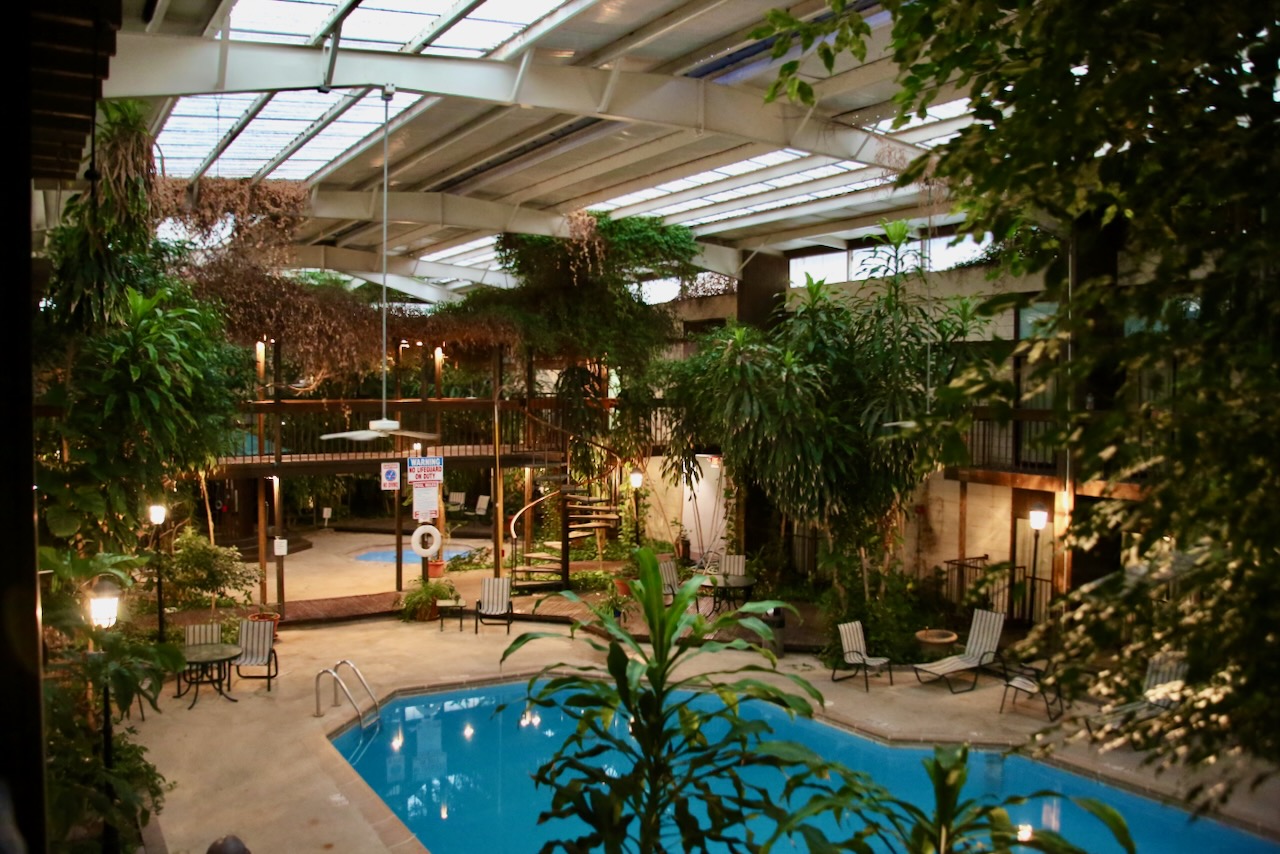
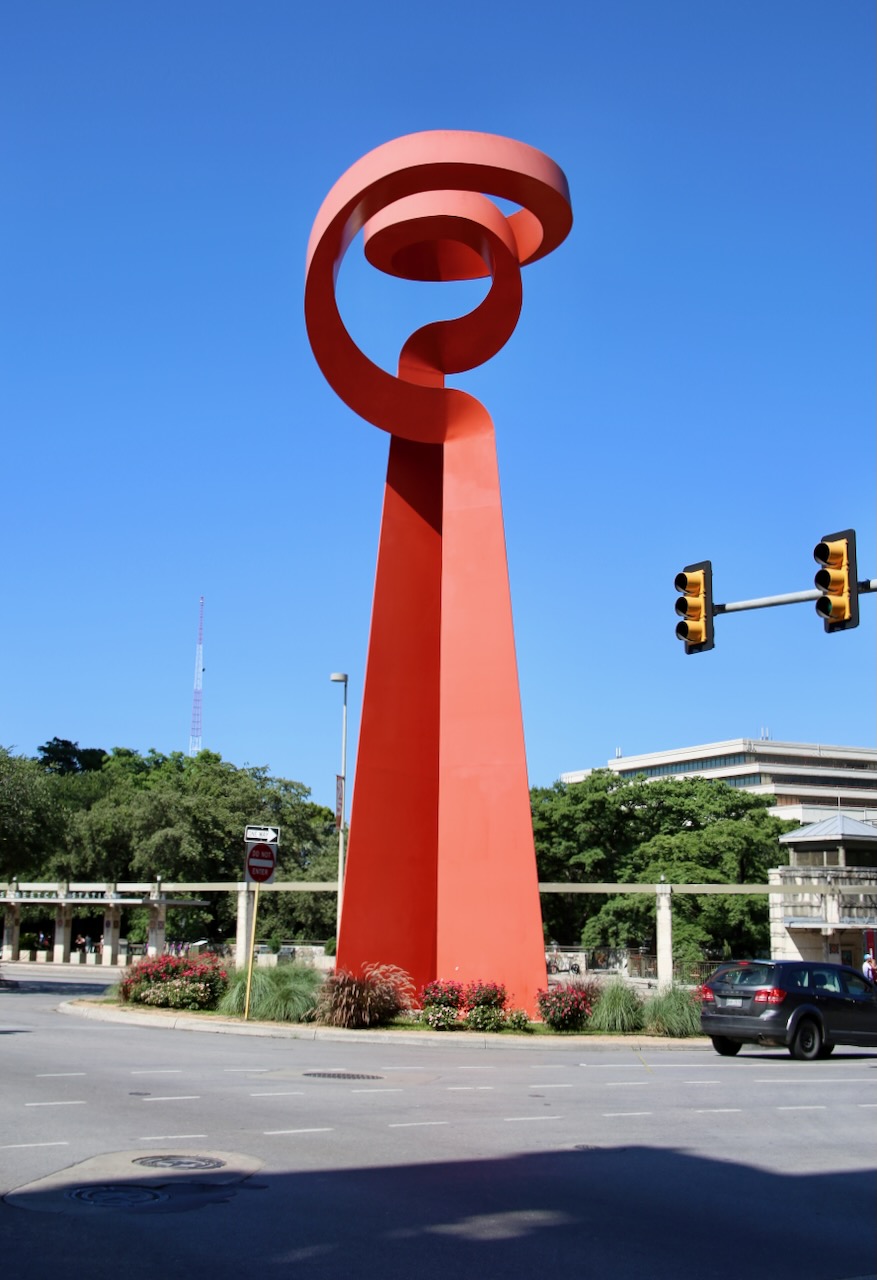
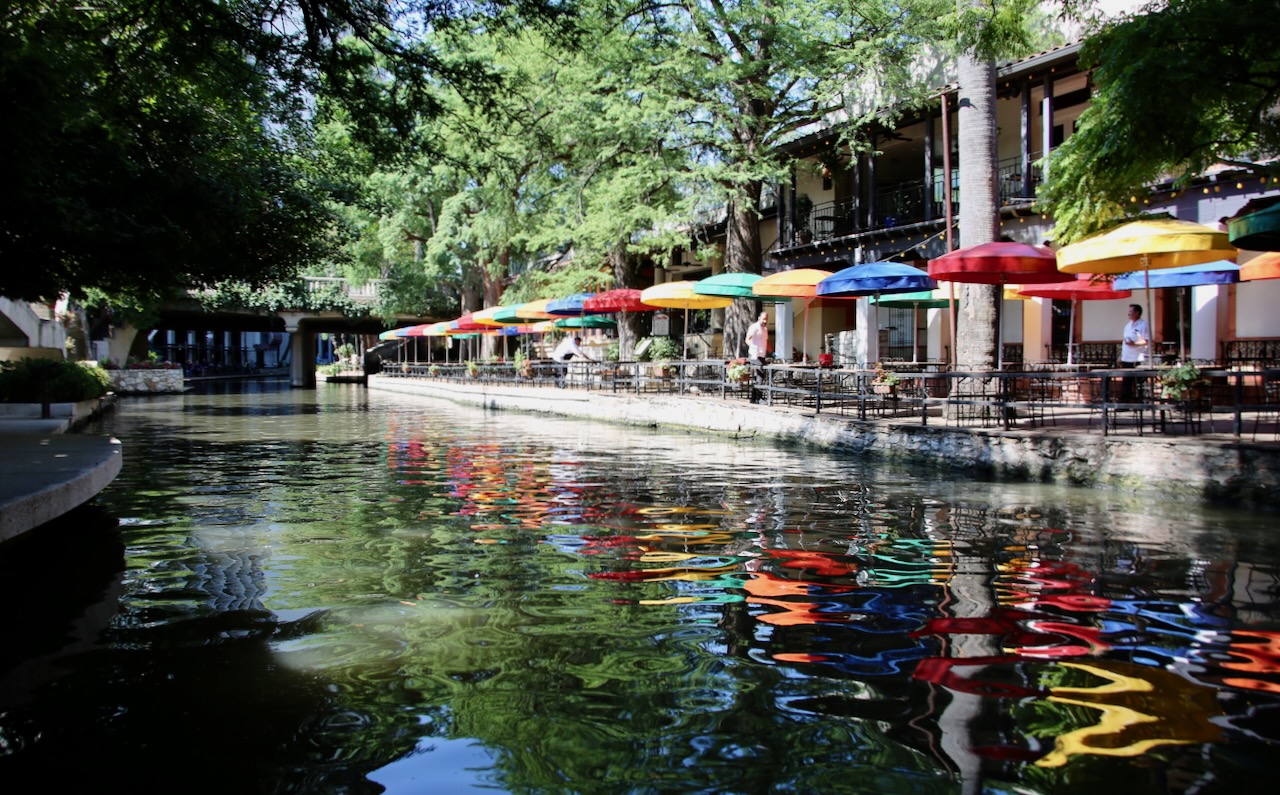
We stayed at a semi-nice hotel, but didn’t take the time to enjoy their namesake, an indoor pool area with plants, an atrium with a hot tub. It felt weird being back in Texas after four years; the last time was a type of family reunion for the wrong reason. This is also why we weren’t concerned with driving to Florence and knew that no one else would make the drive to San Antonio. For all the years I lived in this state, and the school field trips, and prior visits with Caleb, I had yet to see the famous River Walk, so we made a point to enjoy the day along its pedestrian street.
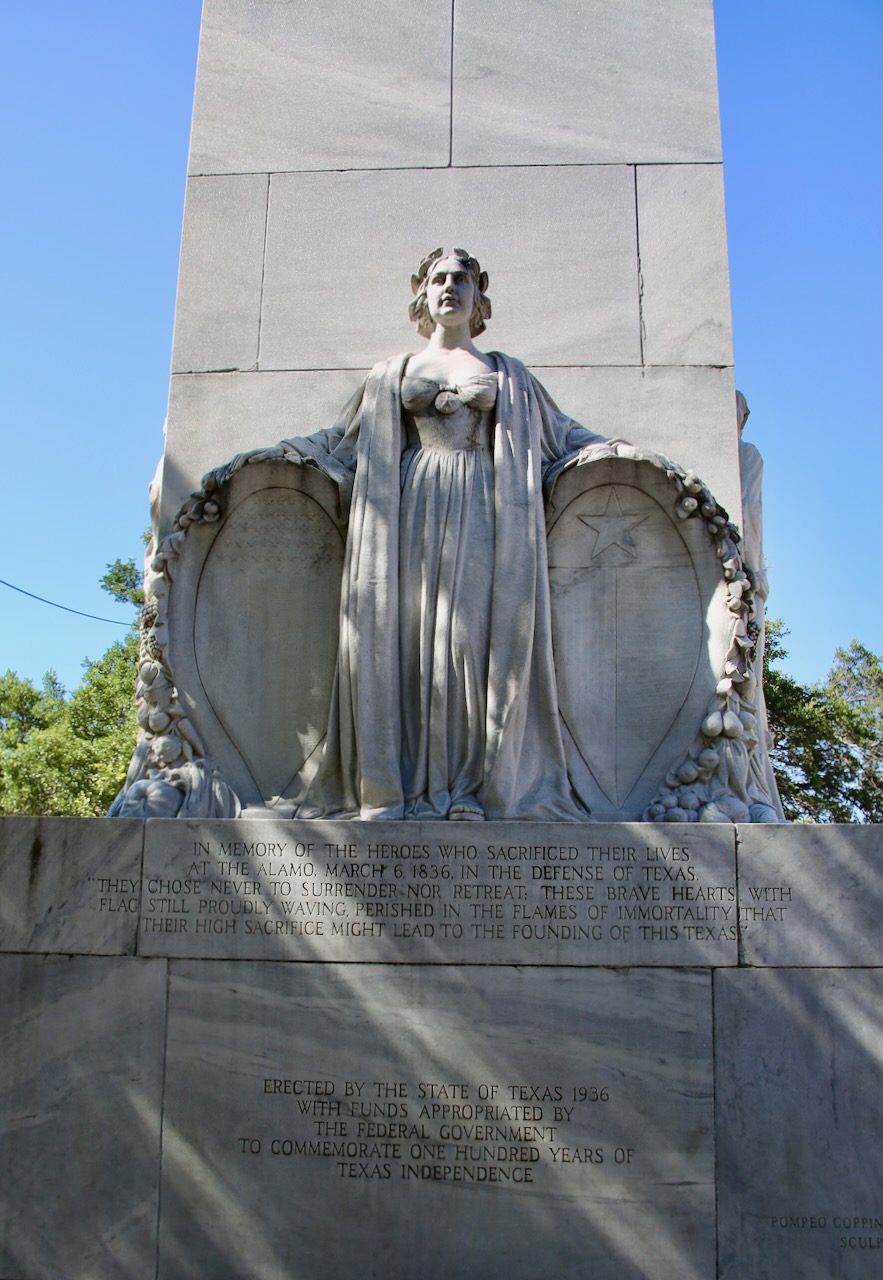
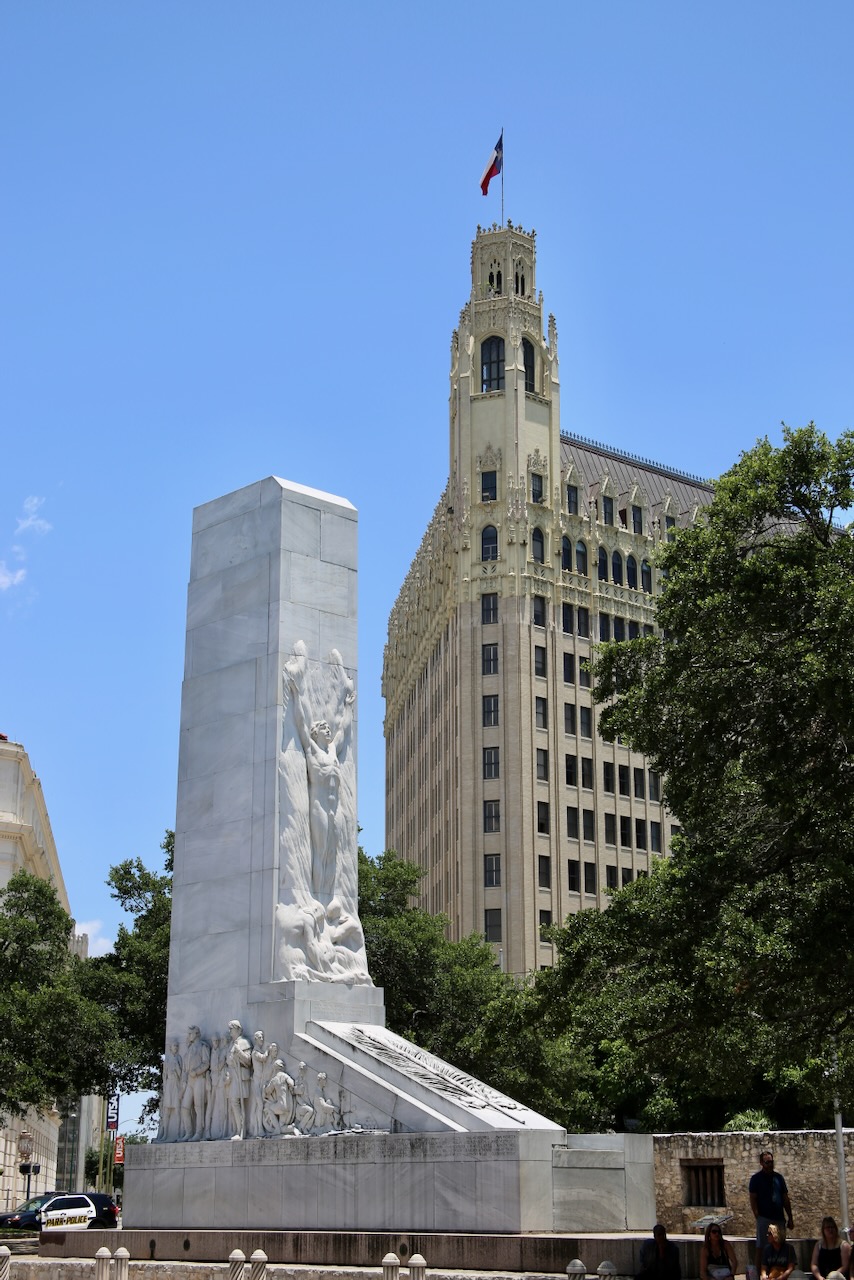
Upon seeing the Alamo, it at once appeared smaller and larger than I remembered when I was here before the turn of the century. I was accompanied by my ever-enthusiastic history teacher, and I would compare her passion for Texas vs. the United States, as the country sees the rest of the world. She still revered the creation of this great nation and all the states in it, but made clear which one was her favorite. I’m still making that decision for myself.
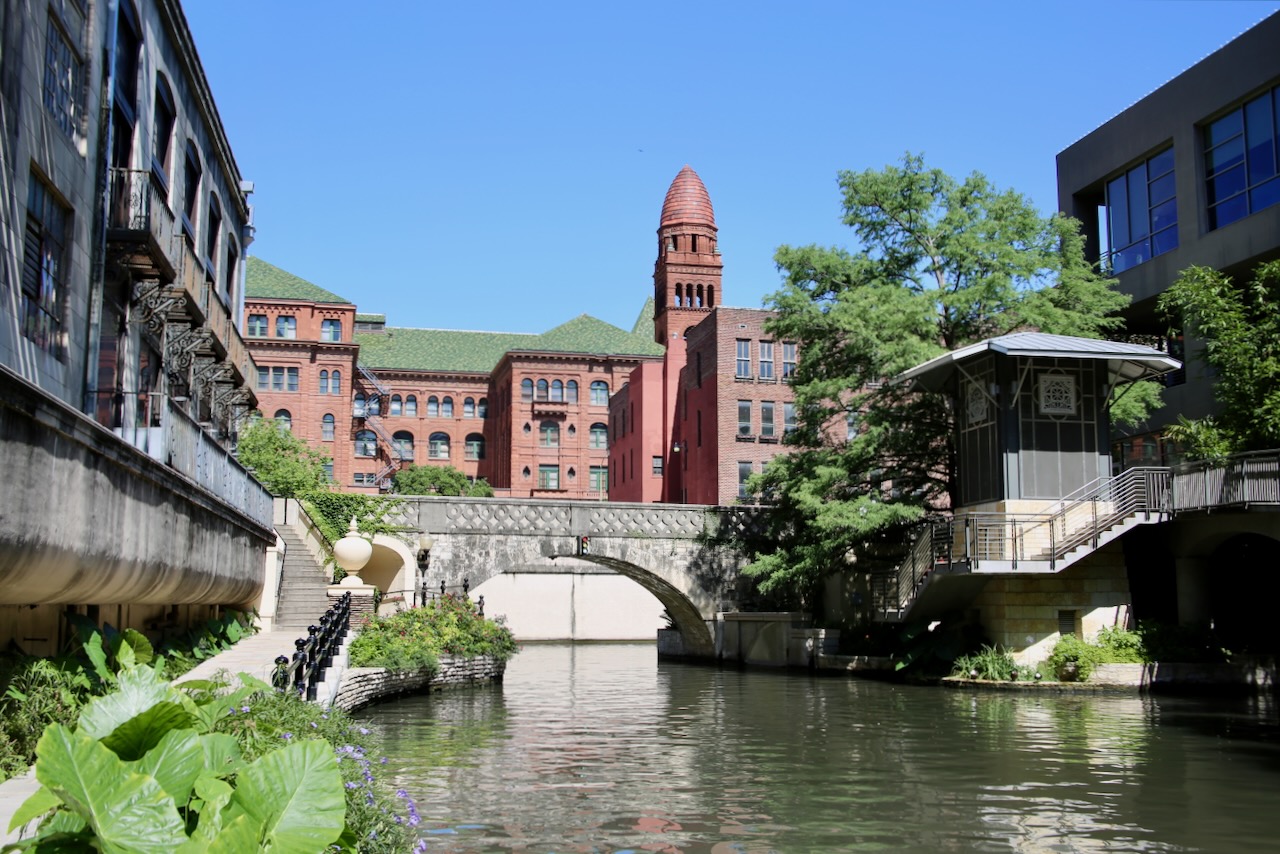
Life was busy on both sides of the river in the 1700s. The path between was lined with houses and stores until the late 1800s, when multi-story limestone and brick buildings were erected. An iron span bridge was built in 1890, and the present concrete bridge was constructed in 1914 along with retaining walls. The river was further enhanced with pavement and landscaping between 1939 and 1941, but it wasn’t until the HemisFair ’68 that the walkway began to become the second most popular attraction in the city.
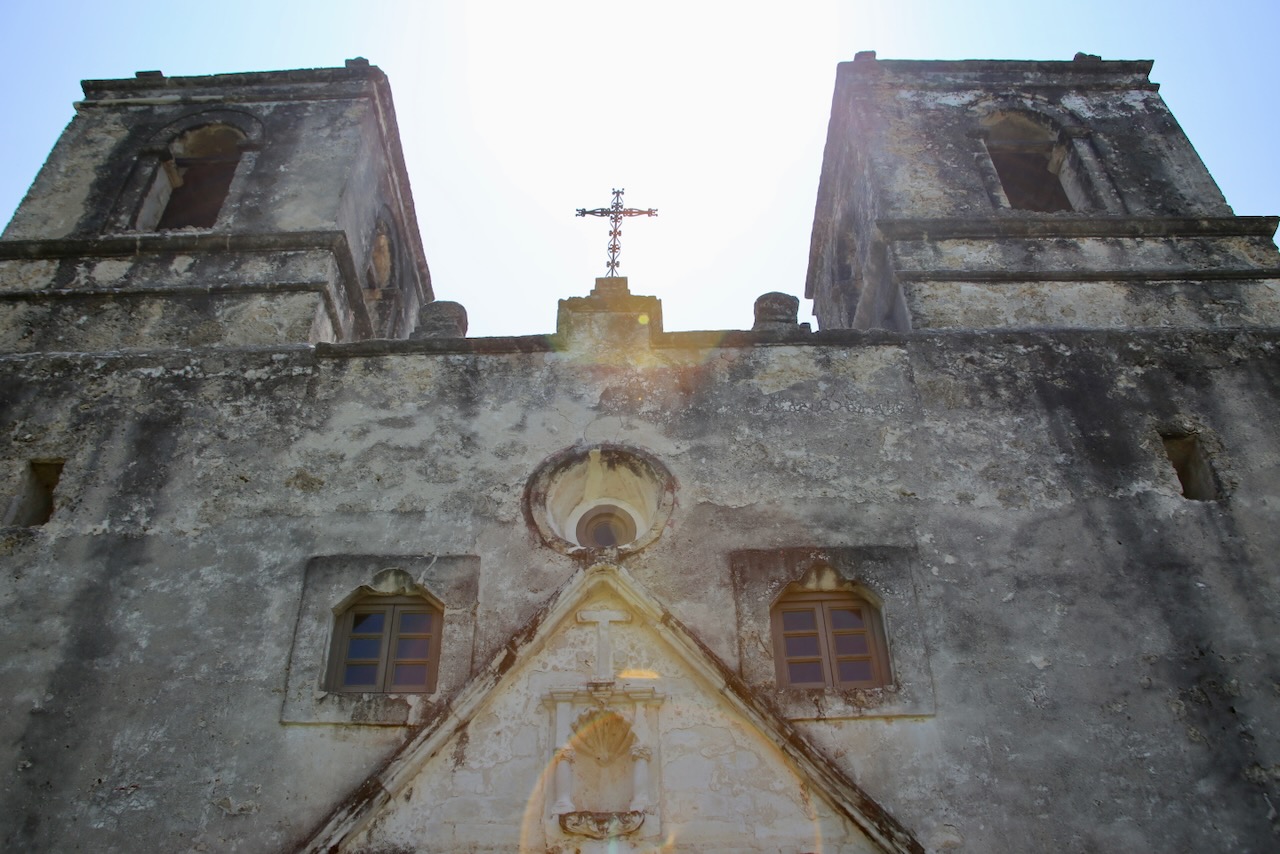
Not wanting to lose our parking spot, we rent scooters, a first for both of us, and ride to the Mission Concepción, established in 1711. Parts of the church look like the paint just dried, while a majority of the walls and images are showing their age. We were going to rent bikes for the next leg of the journey, but decided to take the scooters back and drive to the other mission after we were done by the river. We have lunch at some restaurant. The best part was watching the ferocity with which the pigeons landed, splaying silverware and french fries with their wings in a hurry to grab and chomp down on what they could before the staff brought the water spray bottles in an attempt to curb their behavior.
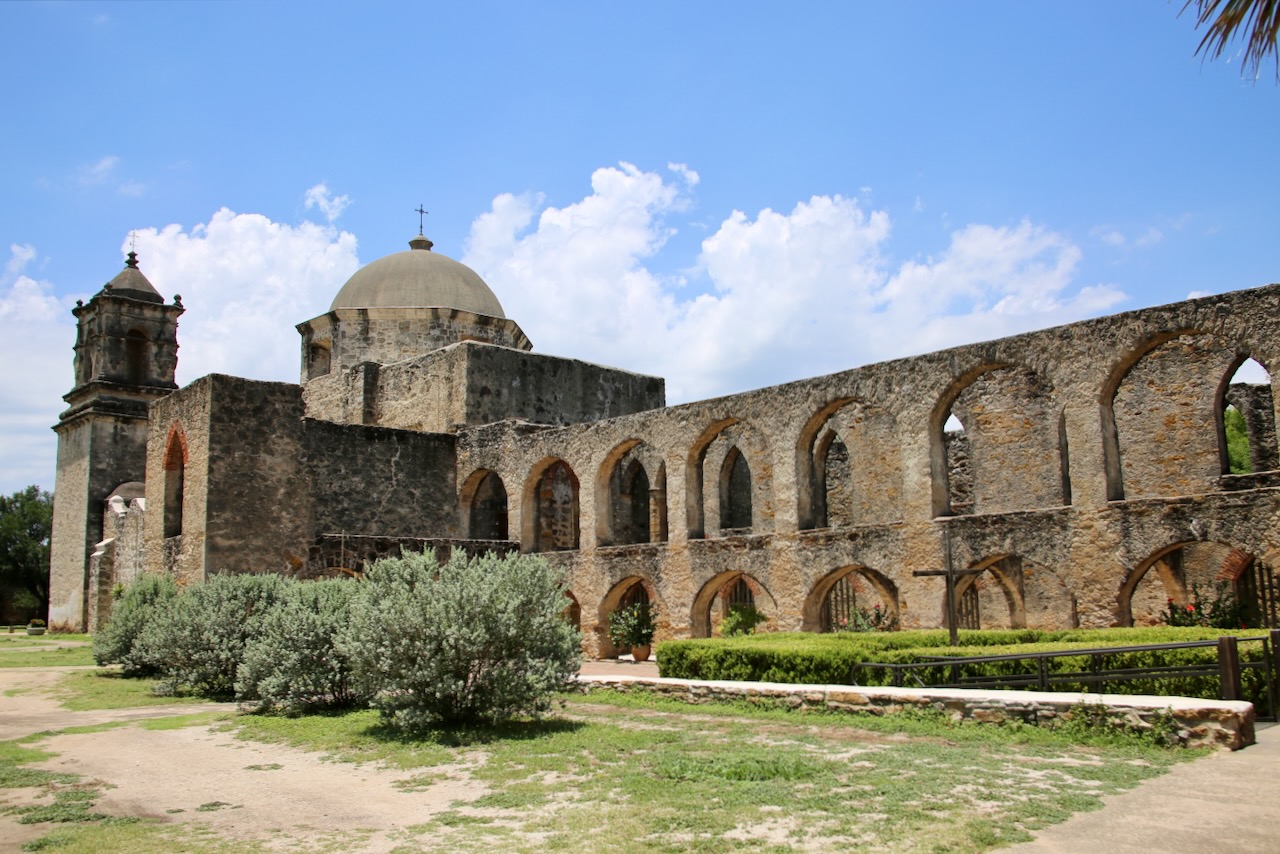
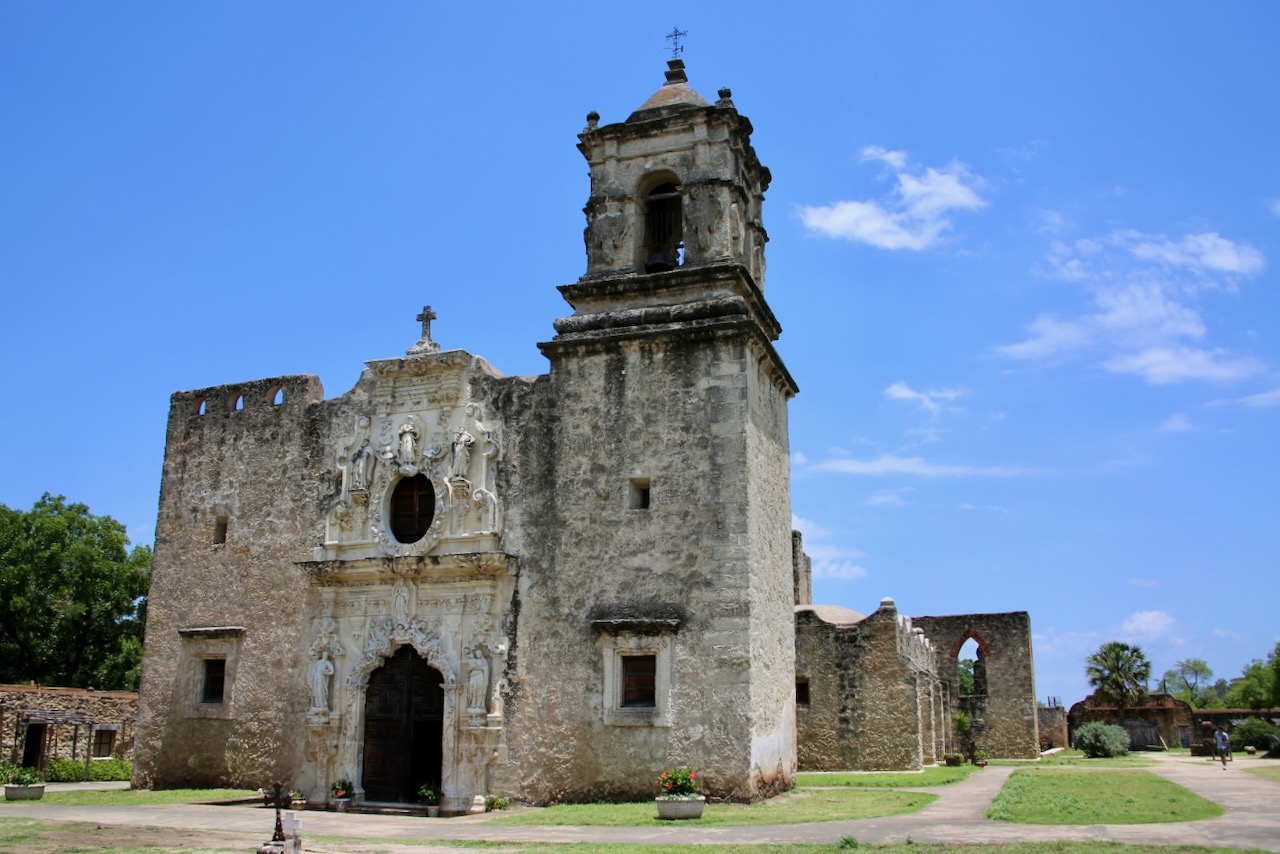
I got a laugh, and eventually the birds retreated to the top of the canopies, awaiting the next opportunity. We walk back to the car, and I’m grateful that we drove to Mission San José, founded in 1720, when I realize how burnt I am, and stick to the shadows. This church is bigger and better kept. It also offers more open walking space that I can’t ignore. The mill here was the first in Texas, about 1794, and produced wheat for the Indians and flour for the surrounding settlements. The upper room was restored in 1930, and both still stand today.
We linger in the peace of the mill before having to deal with the traffic of Houston, because I can remember Mom getting stuck in circles until Uncle Robert came to meet us and escort us to where he and Aunt Janet lived at the time. We worry for no reason, as we are driving straight through, which only takes an hour. We stop for dinner at the Chambers County Safety Rest Area — complete with museum, playscape, nature trail, and mosquitoes. Caleb cooked while I explored. The signs said to look for raccoons, tree frogs, armadillos, and Copperhead snakes among the passion flower vine, Turk’s cap, wild onion, and bald cypress.
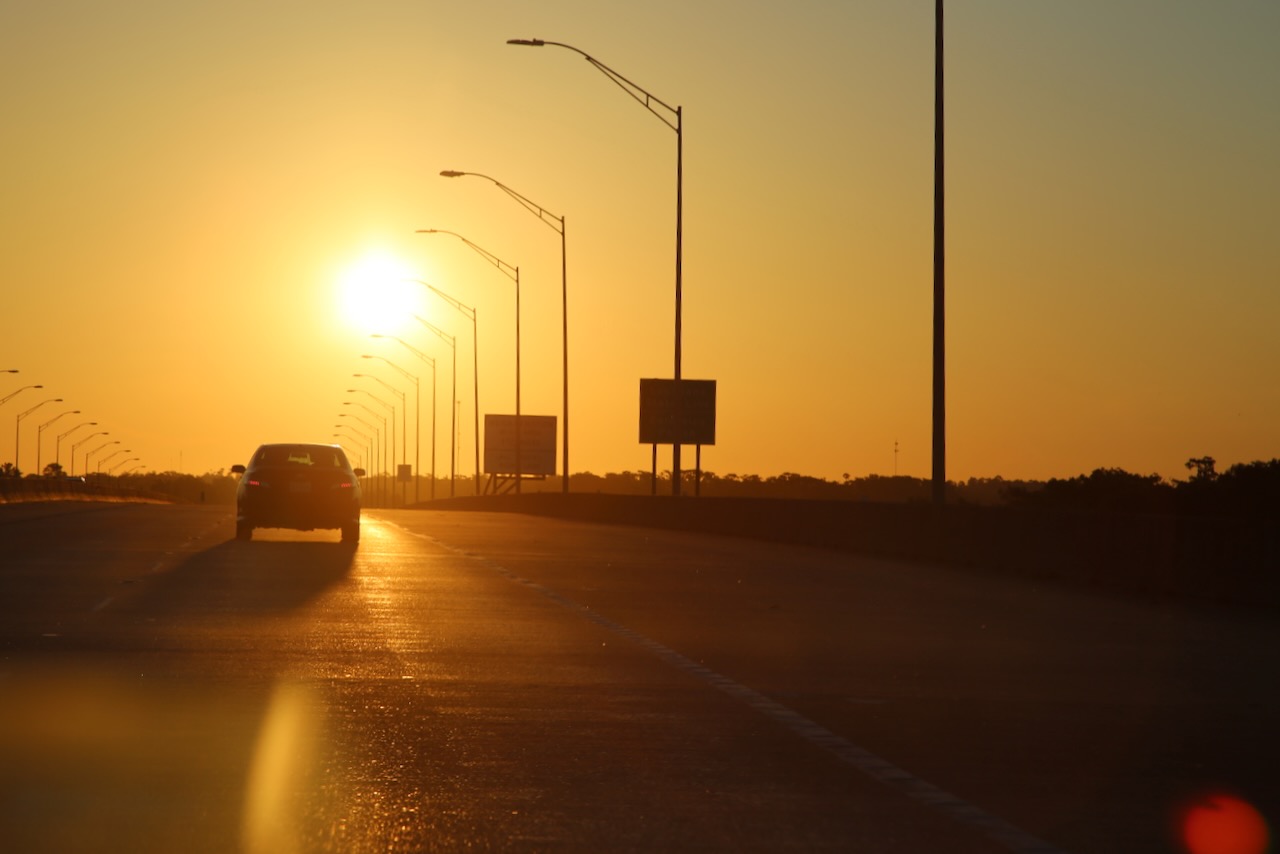
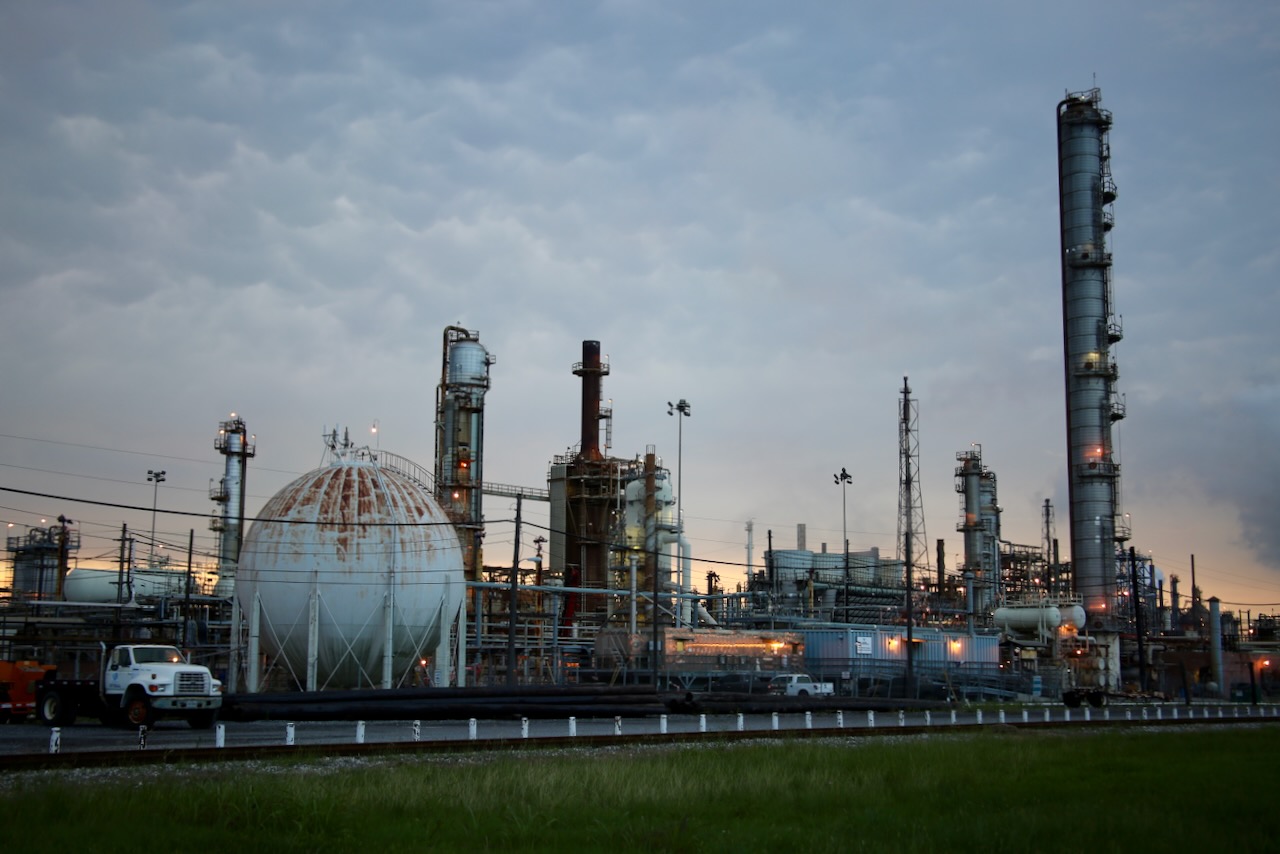
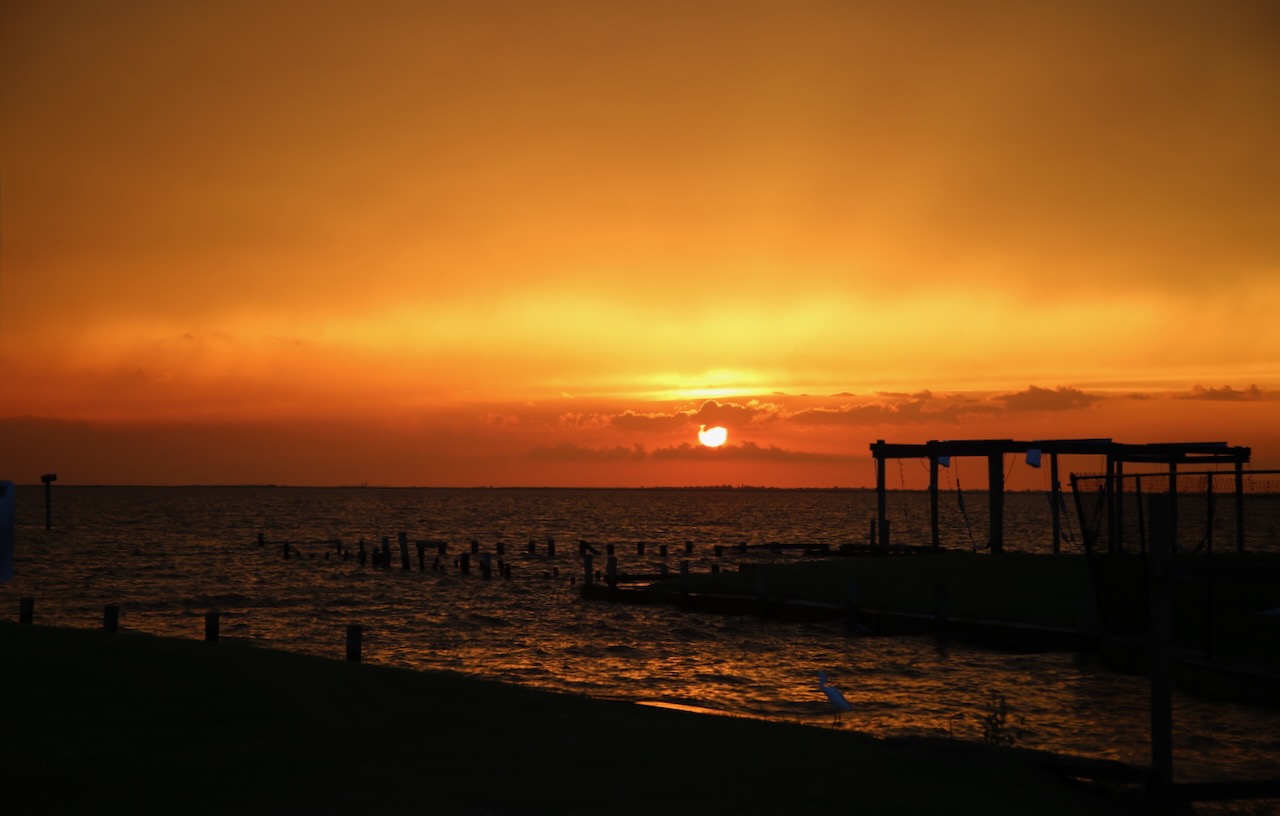
We reach the Port Arthur Refinery, which is hazardous to the local environment but beautifully lit amongst the dimming sky. Oil was found in Texas in 1901, and this facility was built shortly after. The company’s first products were gasoline, kerosene, and engine oil. WWI and WWII only helped expansion, and Gulf Oil became the nation’s largest producer of ethylene in 1955. By 1960, this facility was refining 270,000 barrels of crude oil per day into 600 different products. We followed the canal south, and once we turned west, we were met with a shades-of-tangerine sunset.
We were headed for a dead-end road that promised camping near the water at Sea Rim State Park, so close that with the looming lightning we deemed it too close for comfort, especially since the Boy Scouts had already abandoned their camp and left their undies and tents to blow in the wind. We resolved to drive into town and find somewhere else to sleep, and I’m so glad we did because we got to see an alligator dance in the road. I stopped to check him out in the headlights. I wanted to pet him as he was no more than three feet long, but the warning, “the baby is cute, but the mother is angry,” kept me from pursuing the reptile any further.