We’re up at 4am, leave the keys in the dropbox, and Caleb puts the luggage outside to wait in the chilly air before we join our bags and load them into the back of a Toyota Alphard (a luxury multi-purpose vehicle or high-end people mover since 2002). We were seated in luxury thanks to the Didi App, which is cheaper than Uber and charges a lower driver commission. The van was privately imported and comes with nanoe X climate control technology.
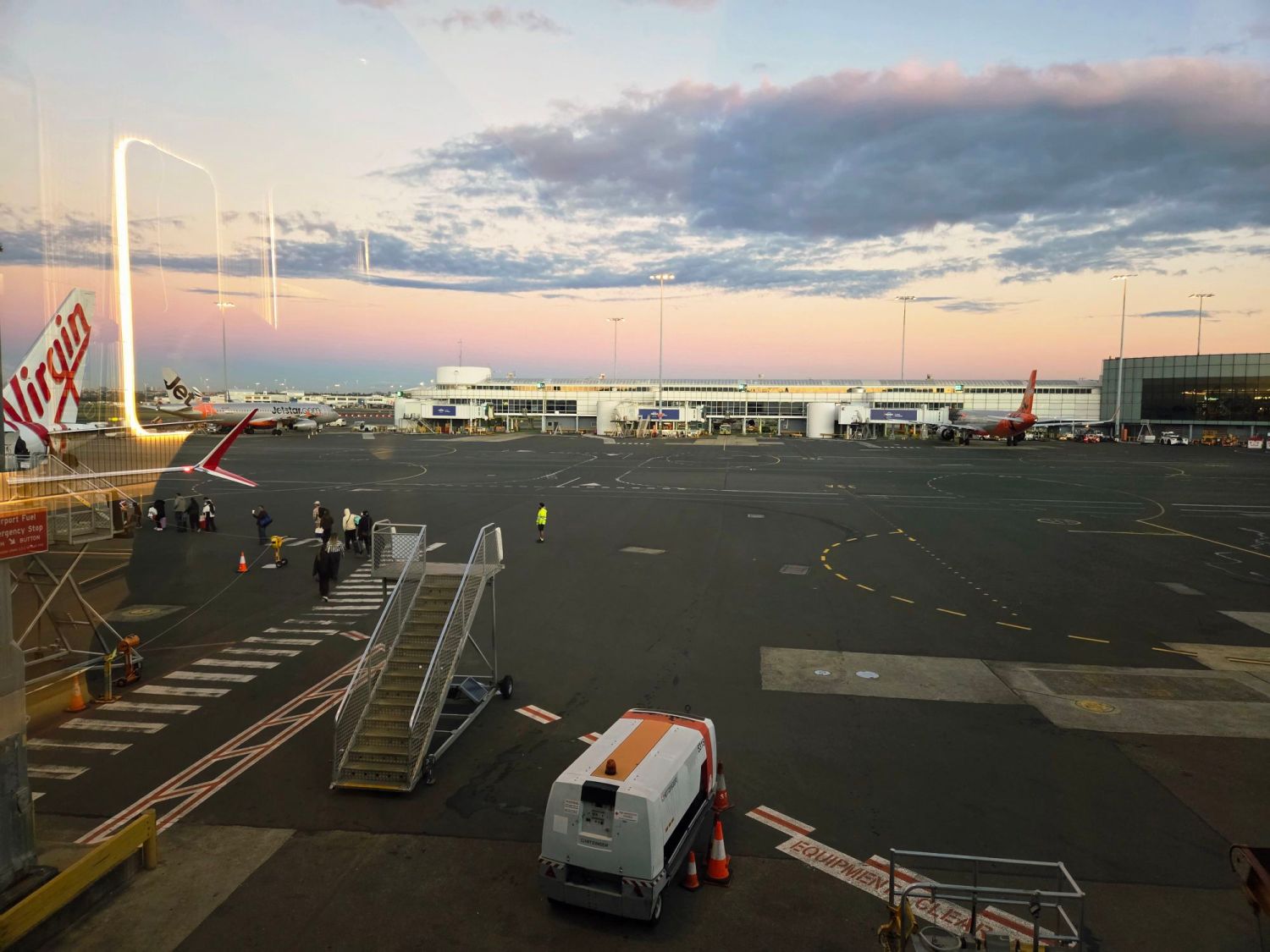
The airport is under construction, and we go left to get into the bag-drop lane, but are directed to the kiosks on the right; then we can return to drop off our heavy cargo and go through security in what seems like a stress-free ten minutes. (conspiracy theory idea omitted). The airside (past security vs the landside) appears to be a city sidewalk as business people get their breakfasts (from the many café options), take a seat at the ample tables, and then wait patiently on hold, for the loo, or to board the plane. It’s nice to be impressed by more than the art or transfer time at an airport.
Even the bathroom comes with a nice view of the sky, and the runway has a pleasant view of Botany Bay. We get upgraded to an exit row since the flight is not full. I can taste the perfume and lotion that the other passengers have decided to nervously overapply. It’s at this point I realize my throat is starting to itch, but then I’m more concerned about how the brace position for a plane emergency was determined. It was engineered over decades through crash investigations, medical analysis, biomechanics research, and controlled impact testing to reduce head trauma and neck injury by 40%.
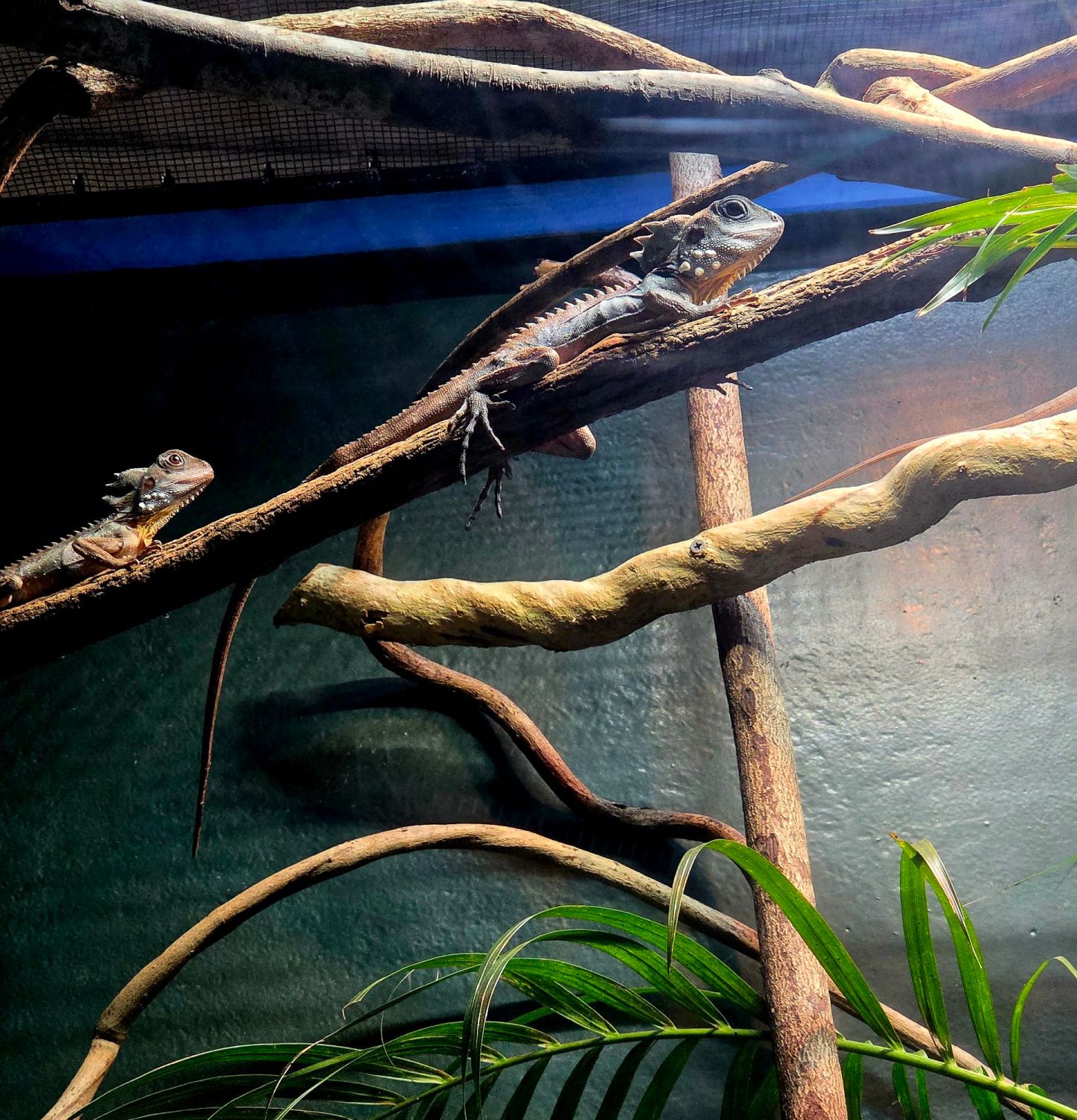
Cairns is home to the world’s oldest tropical Daintree Rainforest, estimated to be 135+ million years old, while the Amazon Rainforest is 80 million years younger. I knew there were a few reasons I wanted to spend at least a year in the country. There is a bamboo-framed bike that is displayed to expose visitors to the creativity of the Kuku Yalanji people and the IRONMAN Cairns that held its first race in 2012. Even more inspiring to me are the giant animal heads of Great Barrier Reef icons, with their mouths serving as the opening to the luggage carousel.
We get dropped off at Mike Ball Dive Expeditions’ office, where we check in, get our dive certifications verified, and store our hard-sided luggage. They will deliver our wet bag (full of dive gear) to the dive deck and our dry bag (full of diving accessories) to our room while we wander around and meet up again with them later. Lunch at Hemingway’s Brewery because it’s one of the closest two restaurants, this one located on the wharf. Their toilet is past the fermentation room, so they have cute signs on the floor letting customers know they’re getting closer to relief.
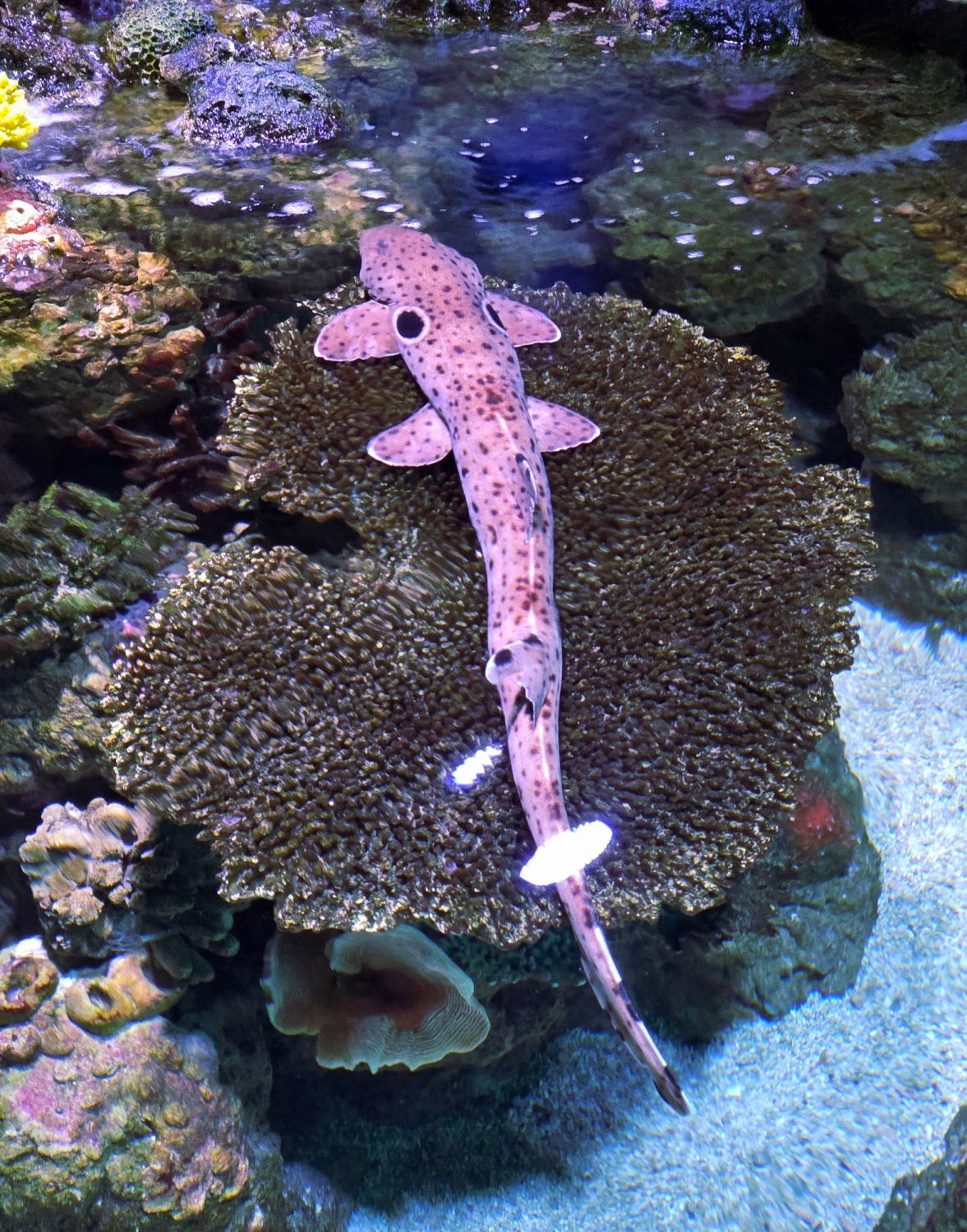
Caleb went to the Cairns Aquarium when he was here for work, so we walked the kilometer up Abbott St to spend a couple hours in the air-conditioned shade. The exhibits are built to follow a drop of rain from the mountains through the creeks, rivers, and swamps to the Coral Sea. They have the reef stone fish and olive sea snake, both lethal to humans, but not likely to bite unless provoked. There are plenty of lionfish, but this is their natural habitat. Instead, the crown-of-thorns starfish is the problem on the reef when they multiply too quickly and devastate the hard coral polyps. Culling them is done with multiple vinegar injections to reduce the starfish from just dropping the bad arm.
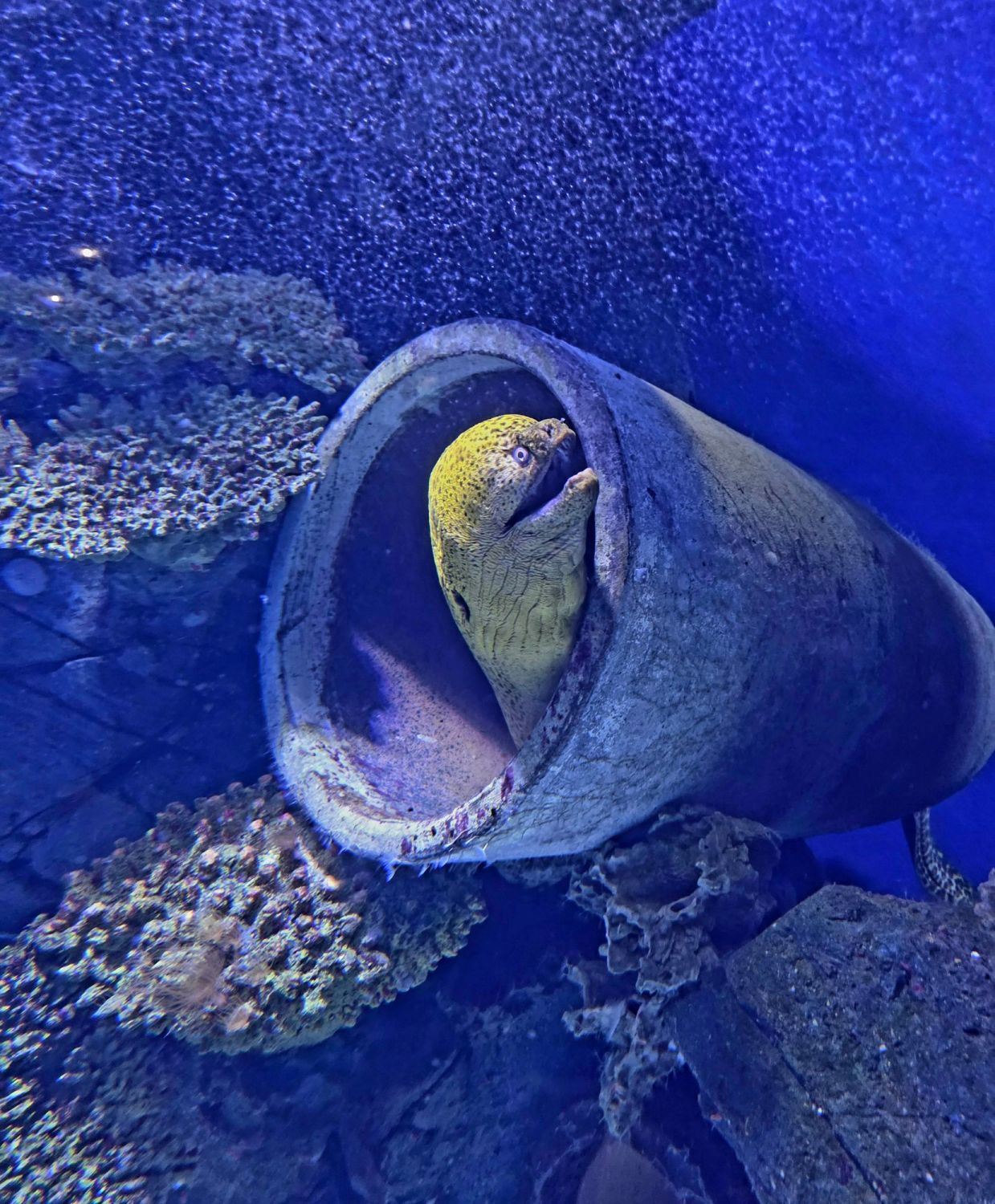
I take some meds on the way back to the wharf, where no one is at the meeting spot yet, so we sit there a while and then move back inside Hemingway’s to wait for 530pm. The 25 of us are escorted by three of the ten crew members, with two volunteers on board, to the boat. Hand sanitizer is offered before the ramp, a nametag is given on deck that has your cabin number on it, and a photo is taken as soon as you step inside so that all of us can put names to faces. They ask that guests check that their bags made it to their room and then come up to the galley for introductions and a safety briefing that takes two hours.
After that, all guests sit with Kerrin, the trip director, to go over the dive forms that we filled out and checked in the office. He is thorough with forms, safety, communication, etc which is helpful when managing strangers in a risk-filled environment. I found the chef, June, and let her know that Caleb doesn’t like curry. I wasn’t concerned because of the many options offered with each meal, but didn’t want there to be an issue later. We were released to set up gear and unpack. We met Emma S., and she loaned us an outlet plug since the USB (that we planned to use) in our room wasn’t working. There’s a charging station on the wet deck as well. Everyone is off to their beds in preparation for tomorrow.
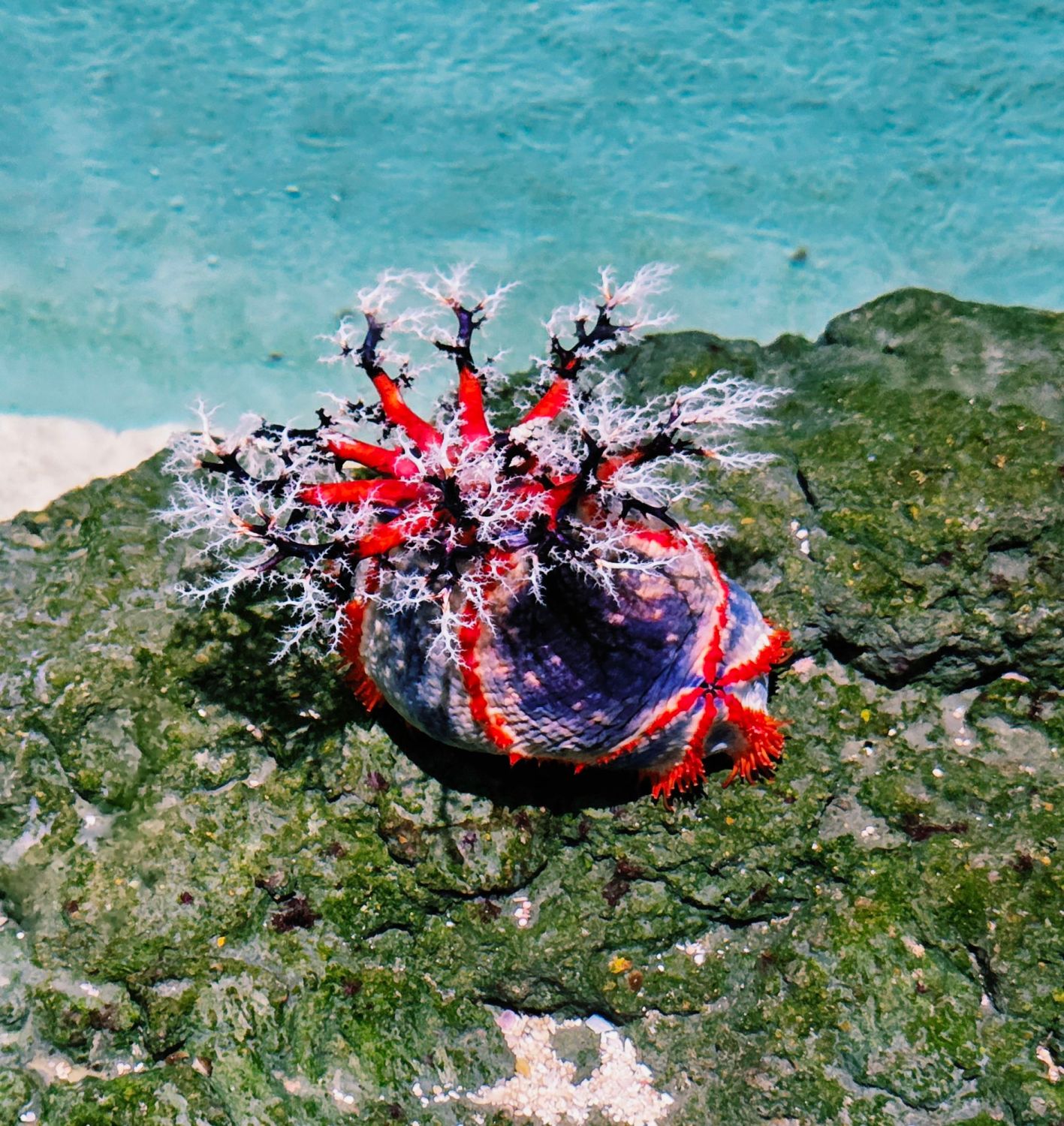
Our room has bunk beds and a shared bath (toilet by cabin 1 and shower by cabin 2). The beds come with their own lights and curtains (so reminiscent of the military) so that you maintain some privacy and offer less disturbance to your cabin mate. The room comes with its own air unit set at 22°C, which we lowered to 17°C to keep the room and Caleb drier. There are spare towels, a hairdryer, and a few rolls of paper in the bottom drawer with space for our stuff above. There are life vests under the bed, and this is where we put our empty-ish bags.
There is a picture on the wall (ours is a turtle), a box of tissues, a welcome binder, and five hooks on the walls and door (that also has a mirror). All wet gear is asked to be dried outside. I climb up the two steps between the beds and dresser to claim the top bunk. I’m excited to finally be here, but not as thrilled as Caleb is to be on a boat again. The catamaran will travel through the night, so I read for a bit as I have room to sit in the corner comfortably before pretending to sleep every few hours. Whatever Caleb came down with, he has now successfully shared it with me.


Sharing is caring ;-)
LikeLike