I wake at 1030pm and 230am again, but sleep till 4am while dreaming about eating snacks in an empty house with Zeus (my favorite golden doodle). I read a bit from Behave by R.M. Sapolsky before remembering that writing during traveling makes catching up on the blog so much easier upon return, so I do that until breakfast. I had forgotten the things-to-do list that I made, but the hotel lobby had the same places on the back of a map, so way more convenient.
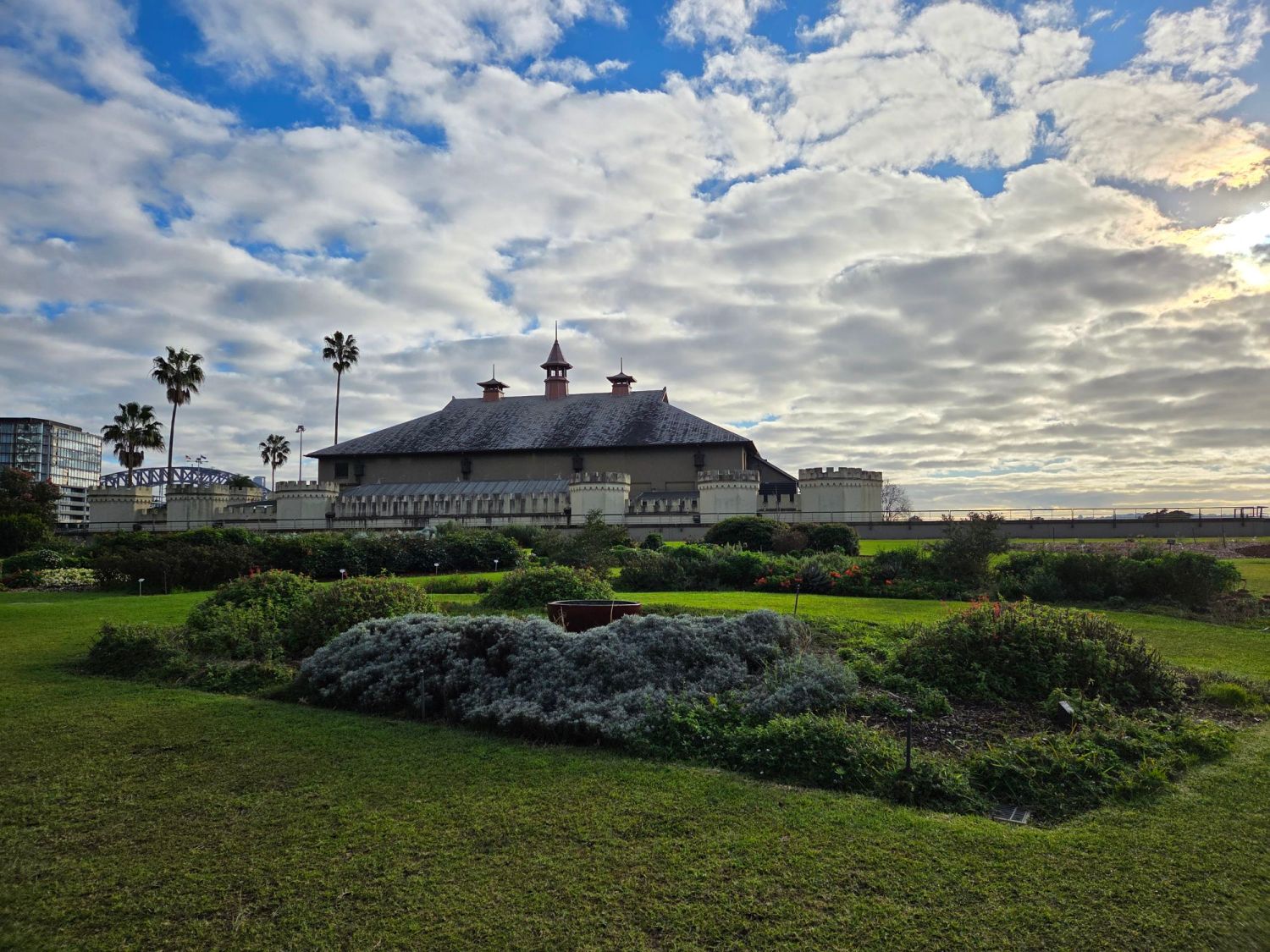
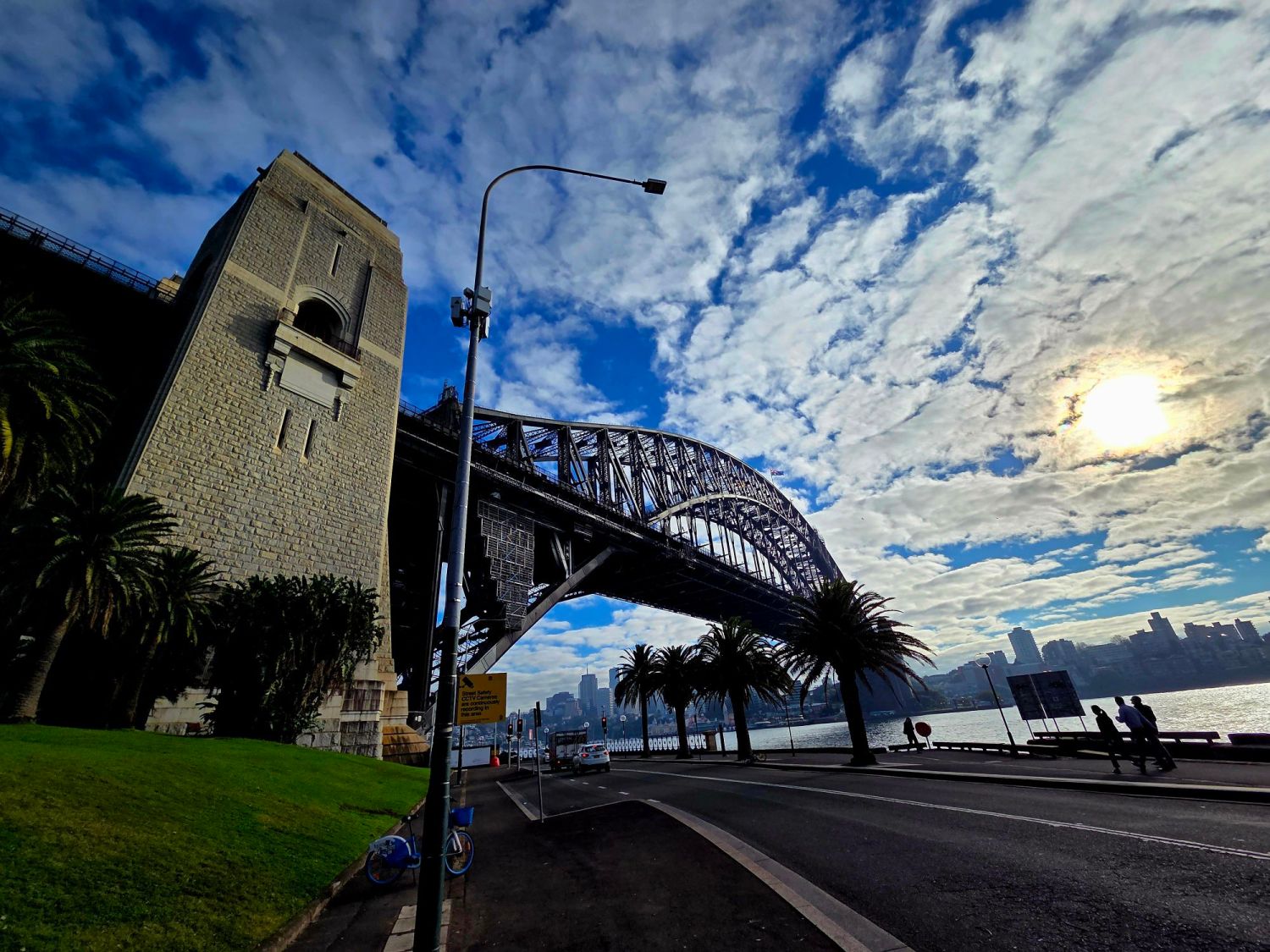
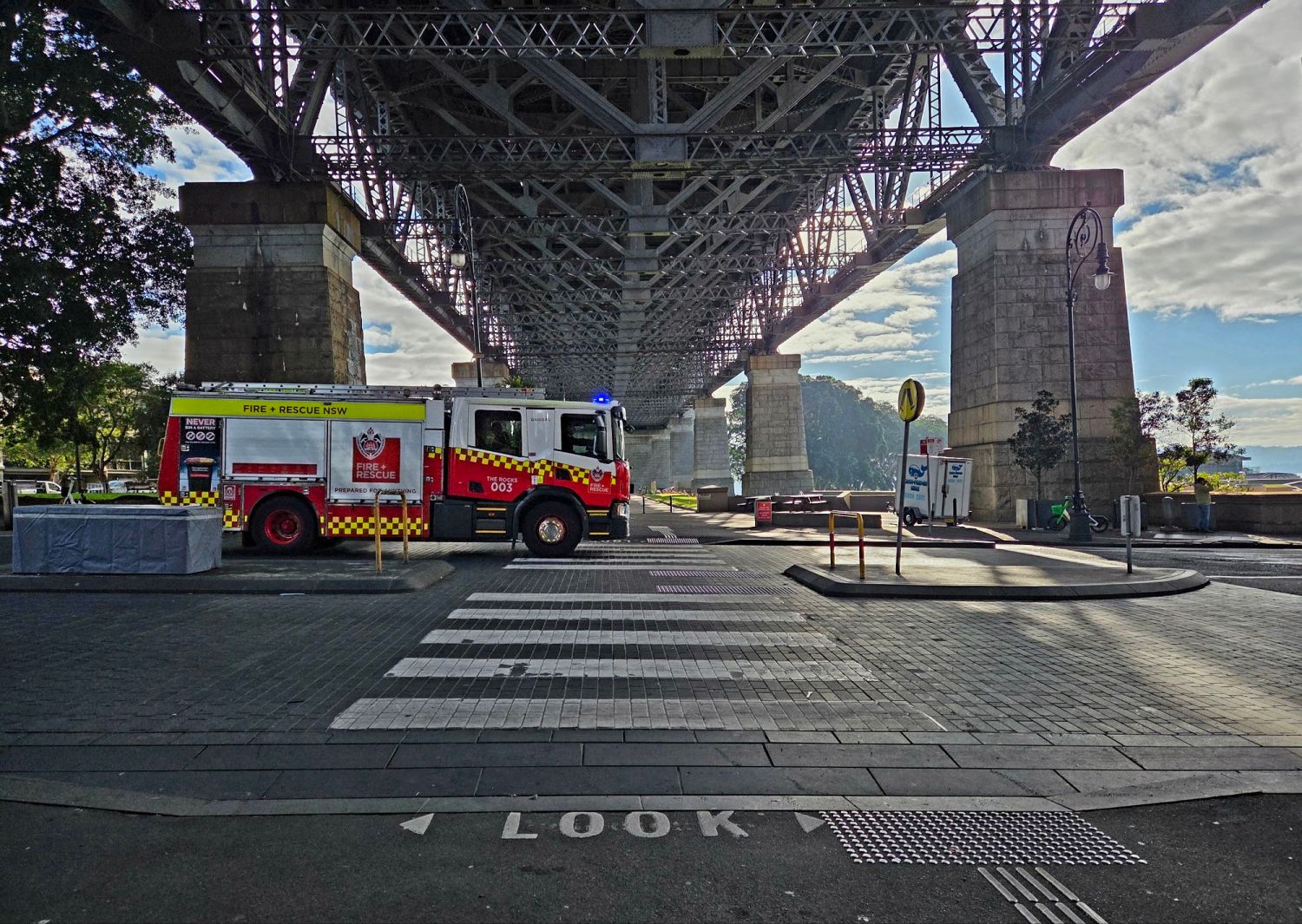
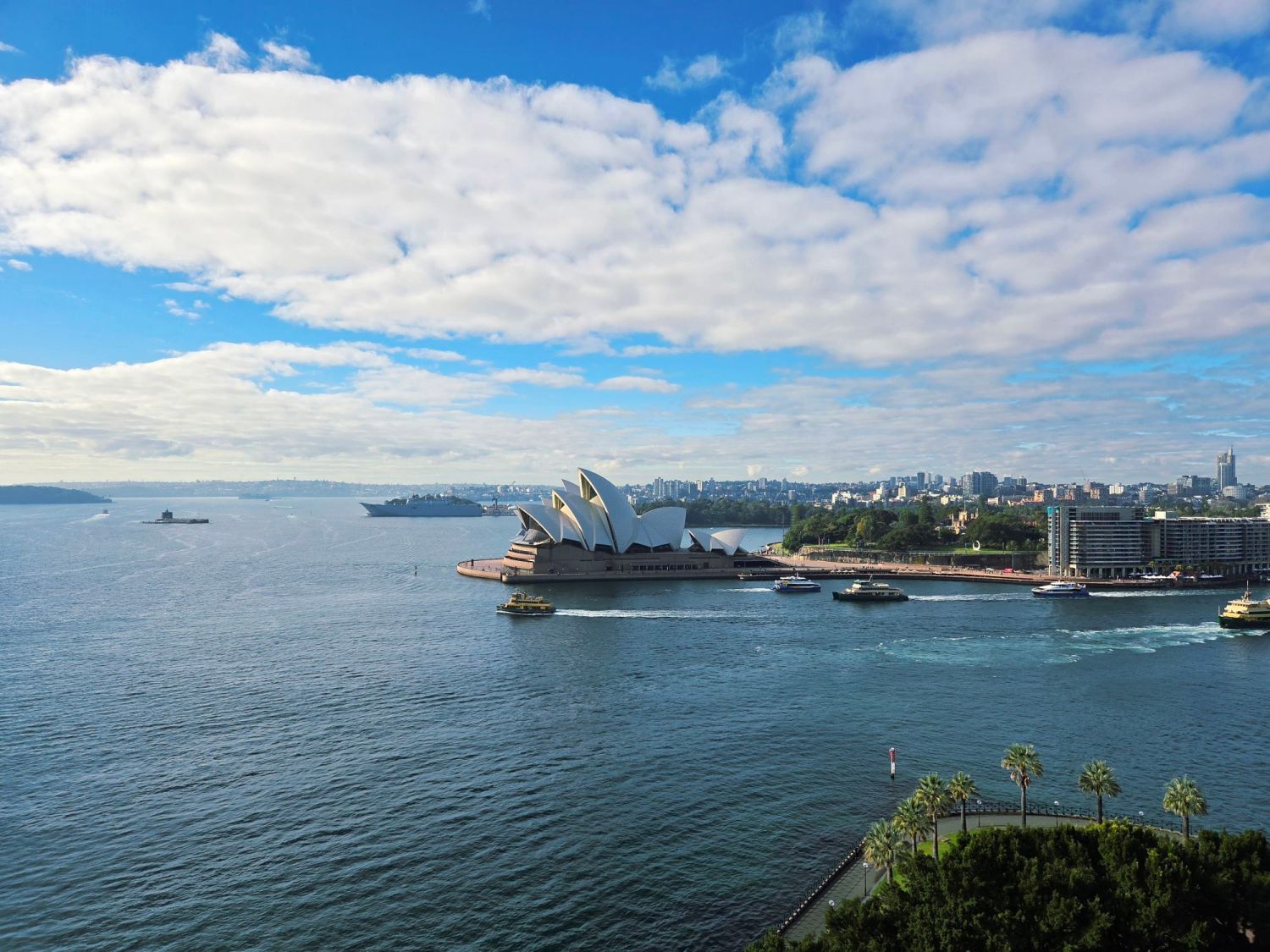
We walk through another section of the Royal Botanic Garden and see another side of the Opera House. We meander through The Rocks neighborhood, where water has its own steps next to the ones for people. We follow the sidewalk under the Sydney Harbour Bridge with a surprise piece of history – officers’ quarters were built here in 1857. After WWI, the building was used as a Tractor Training School. From 1925 to 1932 it housed the engineering company that constructed the bridge above it before being demolished.

Walking the Sydney Harbour Bridge (or climbing it with a harness) is a popular attraction in the city. There’s also a museum in the South-East Pylon that offers more stairs, some history, and unobstructed views of the harbour for a fee. We’ll use that as our turnaround point to walk by a closed museum (Susannah Place) instead, where historical houses depict life from the 1840s to the 1970s. It’s the oldest neighborhood in Sydney and has fewer people than the non-crowded overwater walkway.
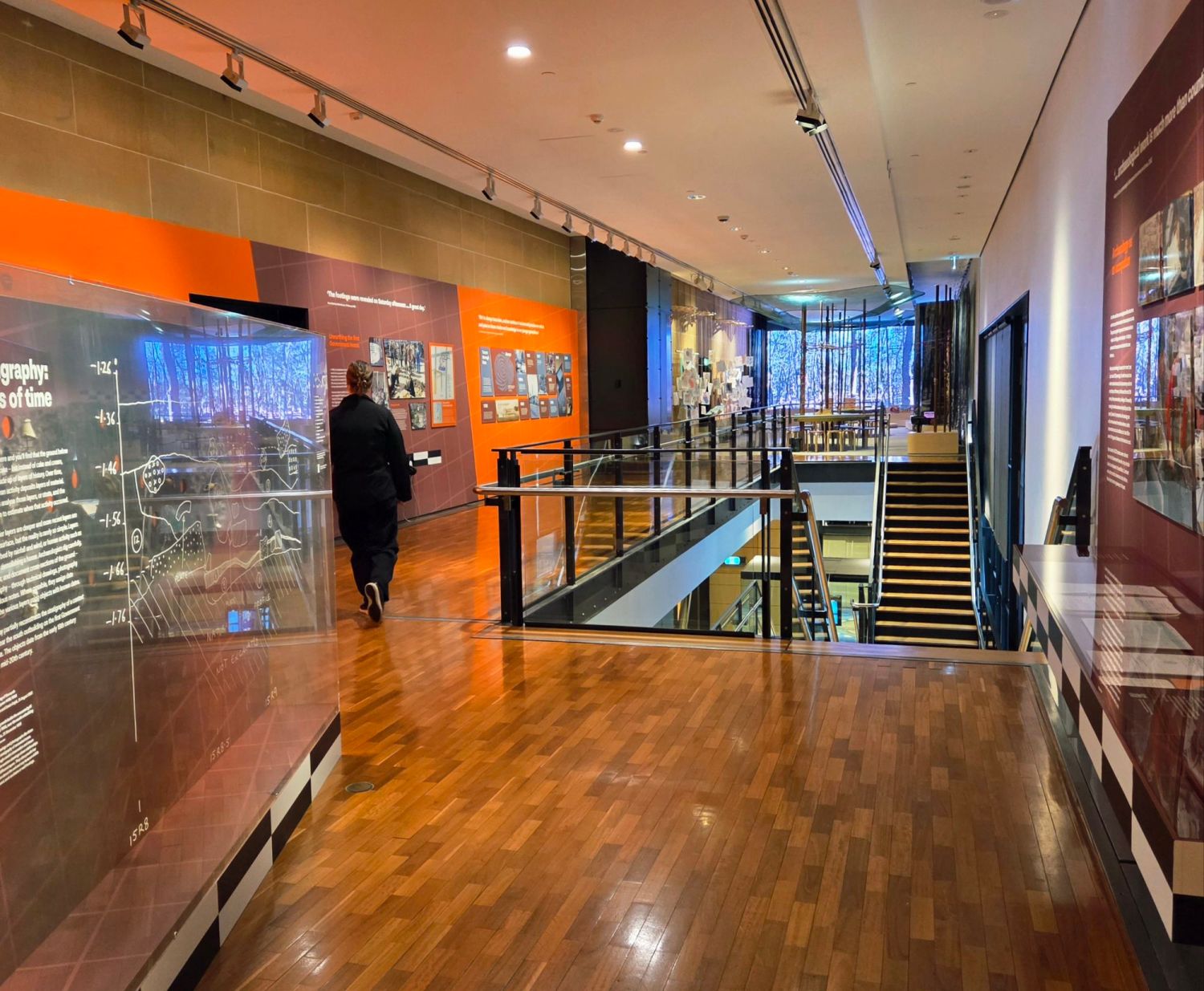
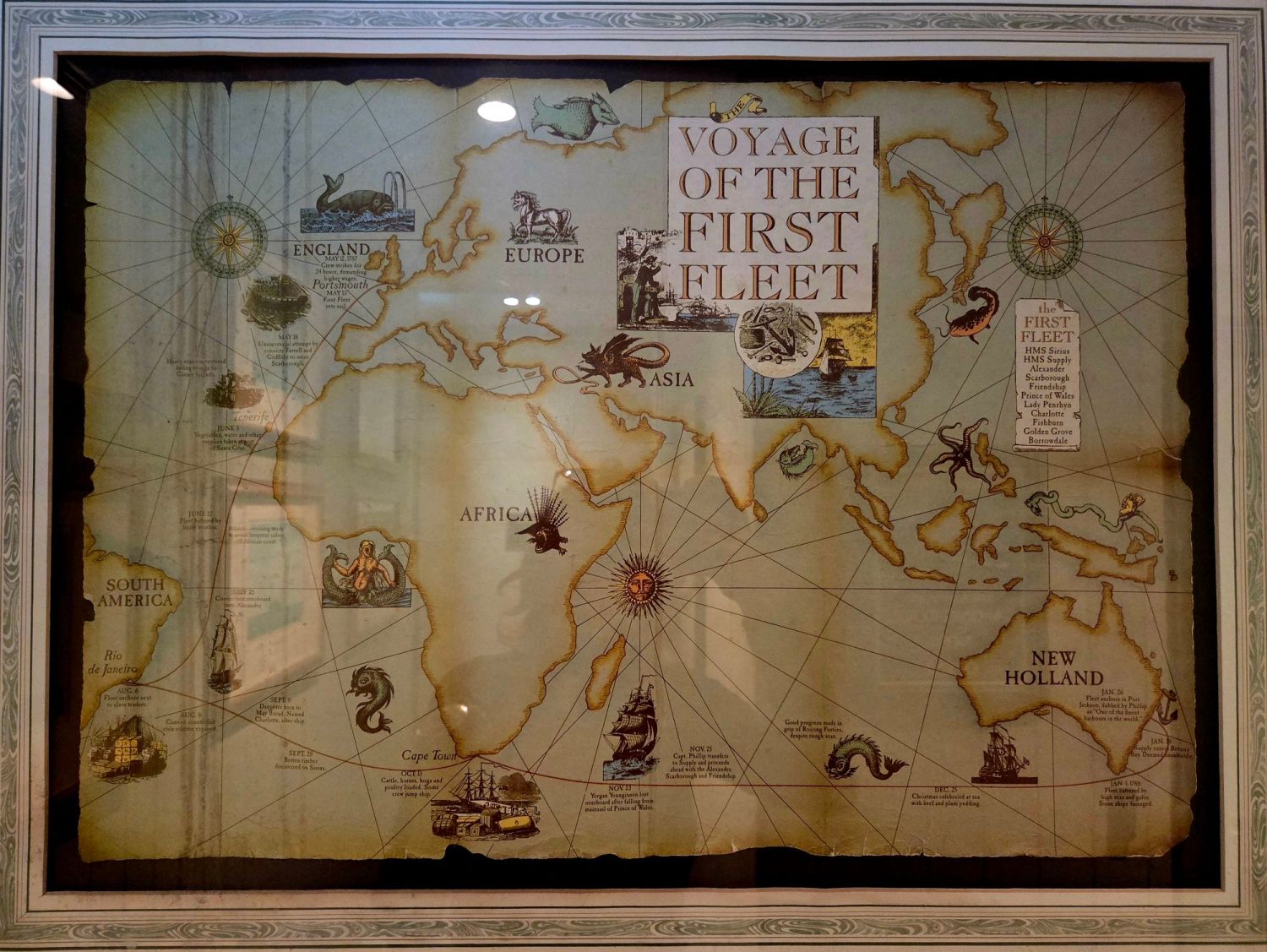
From here, it’s less than a kilometer to the Museum of Sydney, which was built over Australia’s first Government House. For this reason, it displays many artifacts found from the colonial period in different exhibits. There’s even an interactive space (common in museums here) where guests can draw their archaeological find. There are musket balls and brass buttons from the soldiers who were ordered to shoot and hang any Aboriginal who made ‘the smallest show of resistance’. This was 30 years after the First Fleet brought over convicts from Britain and kidnapped First Nations people to forcibly open communications.
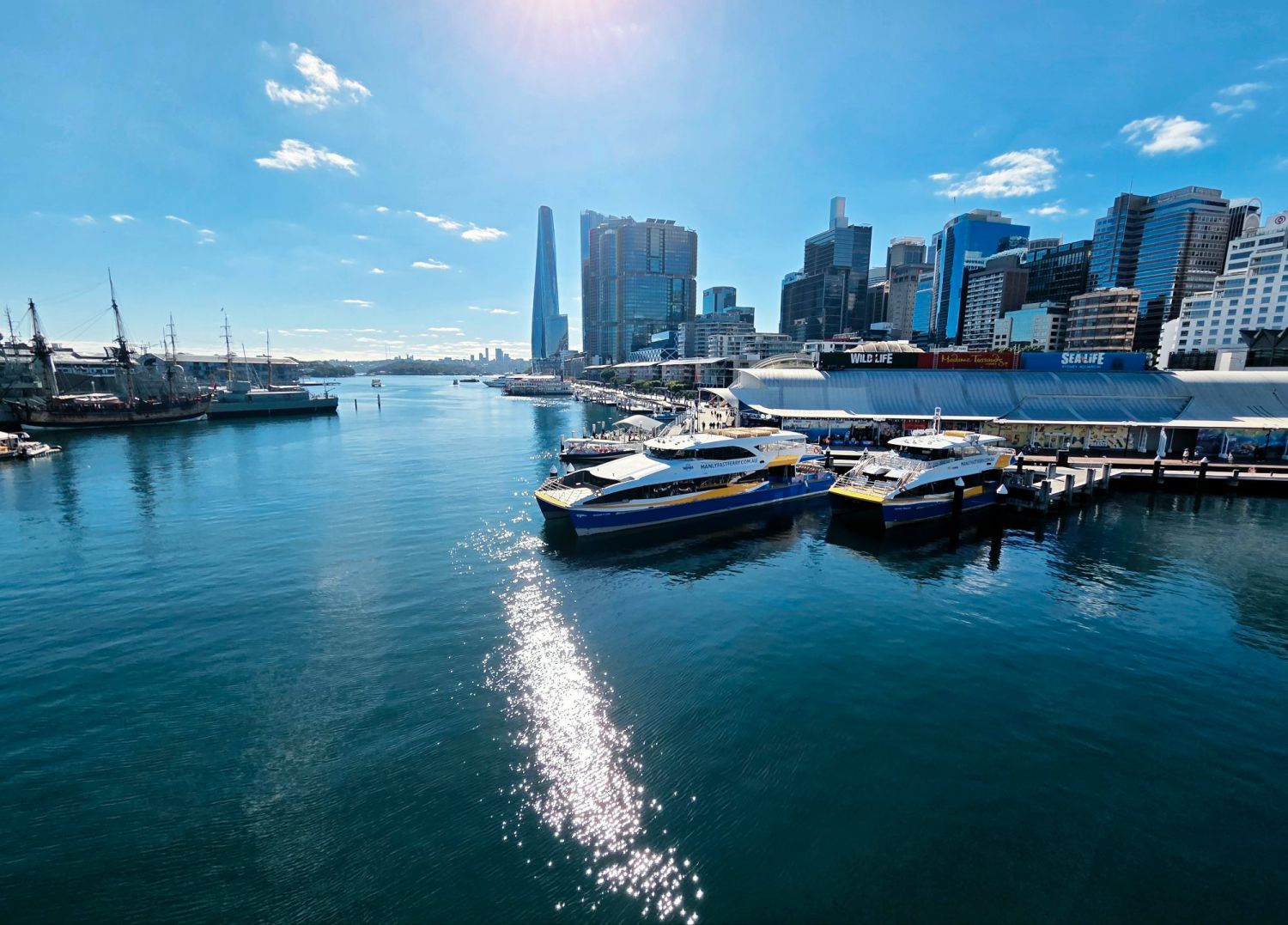
I was going to get a drink to go when Caleb suggested we grab a snack and a chair too. This gives Caleb time to find us a route to the Australian National Maritime Museum. We decide on the light rail, which supposedly cuts our walking distance in half by taking us to Darling Harbour, instead of the bus, which would leave us on the other side of Pyrmont Bridge. We pay the entrance fee to gain access to the last of 22 identical lighthouses built in Queensland. It’s from 1874, originally located in Cape Bowling Green, dismantled in 1987, and reassembled in 1994.
In front of the museum is the Tu do (Vietnamese for “freedom”) boat that delivered only a lucky few of the tens of thousands of refugees who made it to surrounding countries and didn’t fall prey to pirates or become lost at sea between 1976 and 1988. This boat, one of three left, is being preserved as a significant relic of modern migration and is still in the process of conservation, though it will never allow guests on board. Through the museum, we can climb aboard the replica of the Duyfken, a Dutch ship from 1606, sent to establish trade by the Dutch East India Company.
We are unable to see more of the Steam Yacht Ena as she was under renovation. She was built in 1900 as a luxury boat for government functions, renamed during WWI to hunt for German raiders, and after the war used for transporting apples and commercial fishing in Tasmania. She sank in 1981, was salvaged six years later and restored, and then donated to the museum in 2017. The lighthouse has room for about six visitors and three volunteers who are struggling between entertaining and tracking guests, and communicating amongst themselves.

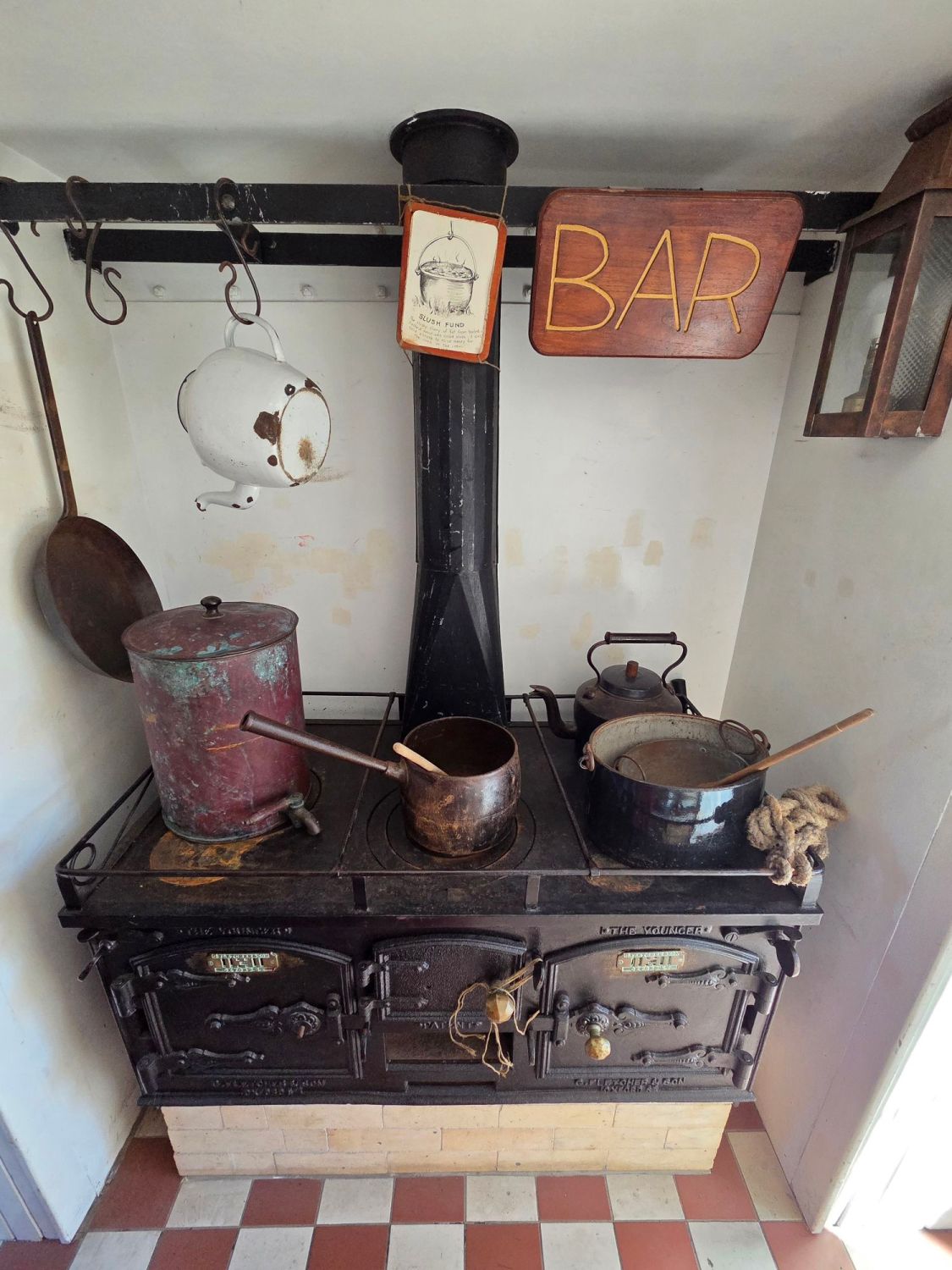
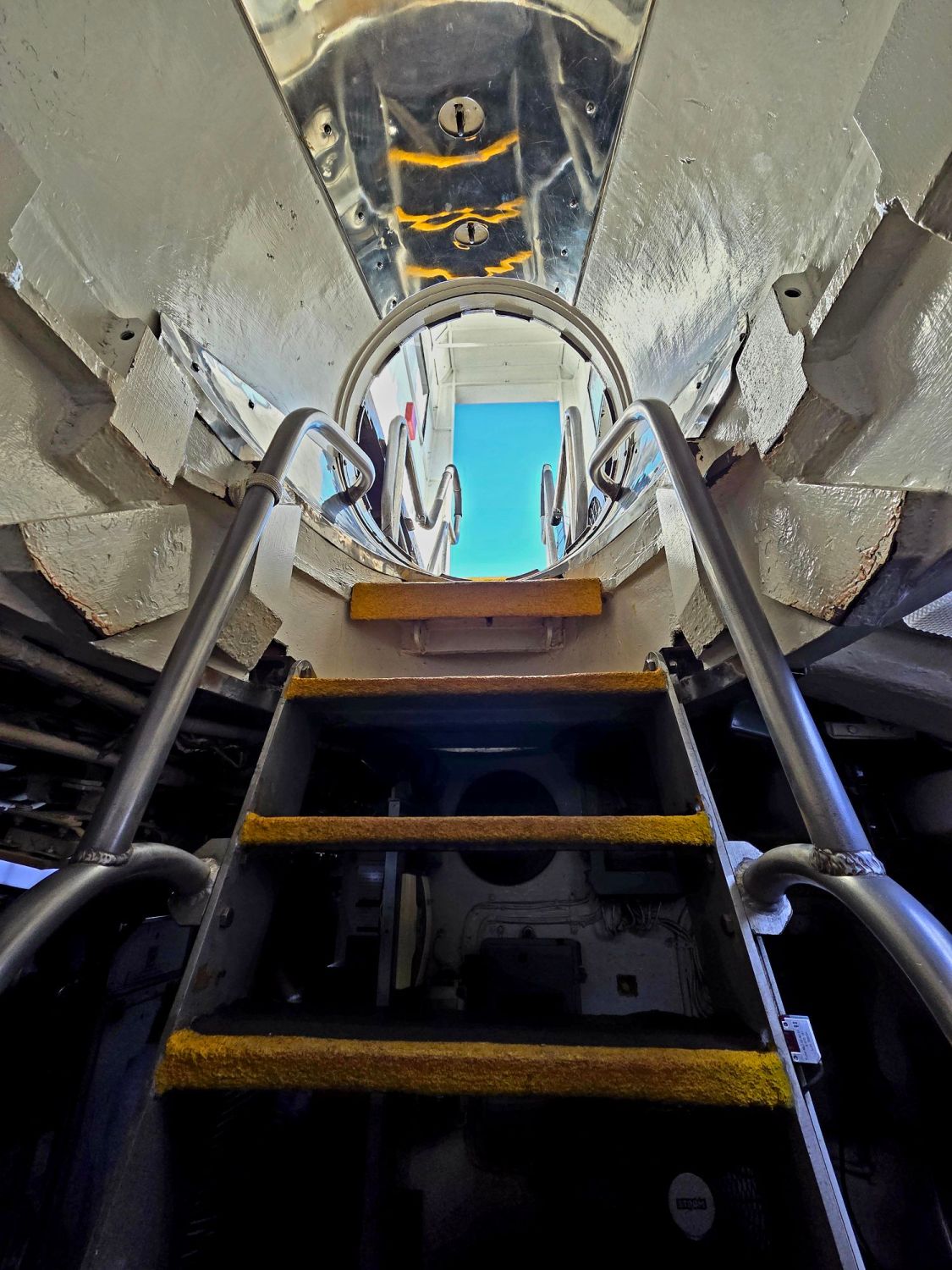
Before we left for Australia, our friend recommended we dive the SS Yongala Wreck, but that will have to be a separate trip. This lighthouse was shaken violently by a cyclone in 1911 and would be the site of cargo washing up on shore a few days later, confirming the loss of one of the founders of the firm that built the lighthouses, but the wreck wouldn’t be found for 47 years. Aboard the restored James Craig, 1874, we learn that a swinging motion helps people sleep, and I’m sure the captain’s bath was beneficial too. Before we enter the hatch of the Oberon-class submarine HMAS Onslow, we get to see an altered/redadacted film about its time in the 1970s.
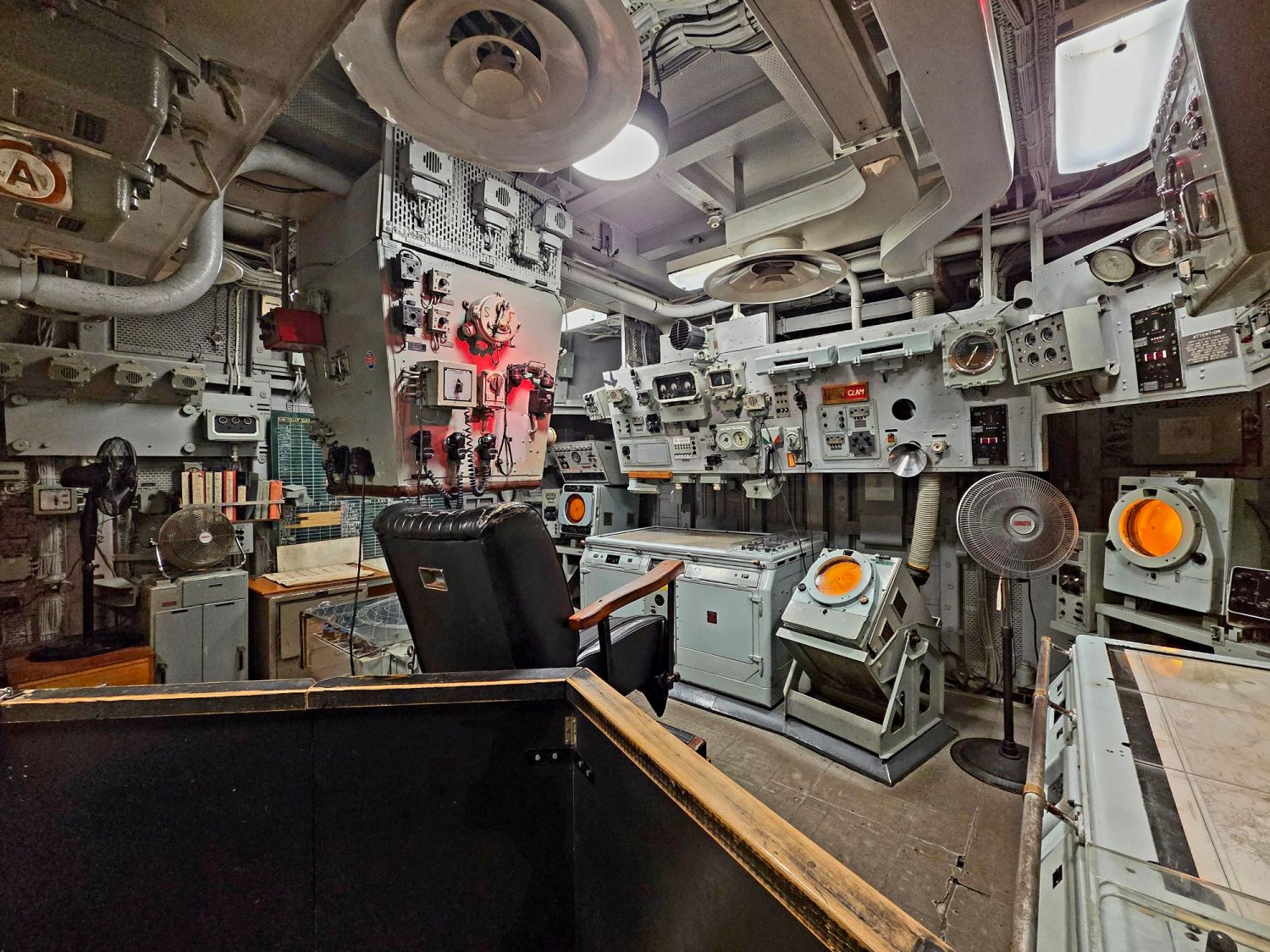
We missed some of the information sitting beside a loud and inquisitive child, while the mom and son next to me whispered without disruption. I moved us to the other side of the theater before leaving altogether. The submarine reminded me of being on a ship, but one that has been squeezed tightly as every surface has a purpose. Through the periscope, we are able to see the Sydney Tower. I could spend a night onboard, but I can’t imagine not seeing the sun or feeling its UV rays for weeks. The last vessel to explore outside is the Daring-class destroyer HMAS Vampire (D11).

I got to see inside a gun turret and read a posted notice: “Remember, … the more violent your method, the better chance you have of saving the other man’s life…” They still have a Hoovermatic Deluxe, one of the first few companies to create a washer-dryer combo in the 1950s. I have a peach kombucha and passionfruit muffin, and Caleb has a carbonated beverage with carbs while we wait on our large mochas so that we have the energy to explore the inside of the museum. We start with the Treasures of the Viking Age: The Galloway Hoard exhibit.

There are over one hundred tiny items on display, so having them enlarged on screens makes it easier to see their details, after being buried in Scotland for over one thousand years. There are Irish glass beads, a stone that rattles, and a British-made bead made prior to 821 CE. I enjoy learning about history, but I am thoroughly delighted to learn more about the present, hence the anatomy classes in school and the Ultimate Depth exhibit at this museum. We get to learn about the exploration of the five primary layers of the world’s oceans.
The midnight zone, 1000 to 4000 meters below the surface, is one of the largest habitats that scientists know very little about. They have sent deep-tow cameras along with CTD (conductivity, temperature, depth) sensors to measure and record life. The hadal zone, everything beyond 6000 meters (3.73 miles), has only been visited by 27 people (who have returned) via three unique submersible vessels. Less than a quarter of Australia’s marine estate, some 14 million km², has been mapped in detail, and less than 10% of its creatures identified.
We drop our museum access wristbands into a bin to be composted on our way out. We cross the Pyrmont Bridge and admire the neatness of bedding and belongings seen against shop windows (and other places around the city) awaiting their owner’s return. We take the light rail to Circular Quay and walk to the Fortune of War, Sydney’s oldest pub, to have a drink. I order a palm tree passion as rum and passion fruit are popular here, and then we stay for dinner after meeting a director of niche fame known for her equestrian advocacy, visiting Australia in the new wave of the decades-long debate over culling brumbies (feral horses introduced in 1788).
She’s with her husband of 14 years and thinks that we’re too young to have celebrated our 18th year of marriage four months ago. I thought that was sweet, but even more so when I found out (later online) she’s a few months younger than me. There are still tents being taken down from the Bastille Festival (a four-day annual event) that focuses on French culture while allowing others to participate (so Sydney-like). This is our latest night out yet, but there’s no photo proof of our walk back to the room under the waxing crescent moonlight.


