

freeze-dried: grapes, kiwi, avocado, onion, carrot
I’ve been keeping some notes on the process, but I feel like there is so much I’m leaving out, not on purpose but because I get into the ’empty trays, clean them, buy more food for them, wash them, reload them’ zone along with continuing to keep the house clean and fridge stocked with food for us to eat now.
We plan on hiking the PCT, the Pacific Crest Trail, which runs between Mexico and Canada through 2,500 miles of California, Oregon, and Washington. It can also be done going south, but we’ve chosen to go north for reasons Caleb can share with me later, as he has done a majority of the pre-trip planning to account for weather and us avoiding crampons. We will find out at the end of this month when we can start next spring.
As of today, we’ve had a freeze dryer (FD) since September 19th, so almost five weeks and I have learned a lot, but I am finding out I still have more information to gain, such as oxygen absorbers come in different cc’s of capability. I will be ordering more now that we are out of the 50 little packets that came with our 209-pound package (shipping weight), which we carried half of up a flight of stairs.
Our first few loads were simple fruits and veggies to learn how to load the trays and how long the process takes, averaging about 24 hours for simple items. We’re lucky that the FD comes with a book, and Caleb’s mom has had one for some time, so we had some guidance. You can not over-dry the food, so it’s best to choose extra dry time instead of bagging wet food or keeping it around for your friends to try (good for them, but it doesn’t help us on the trail).
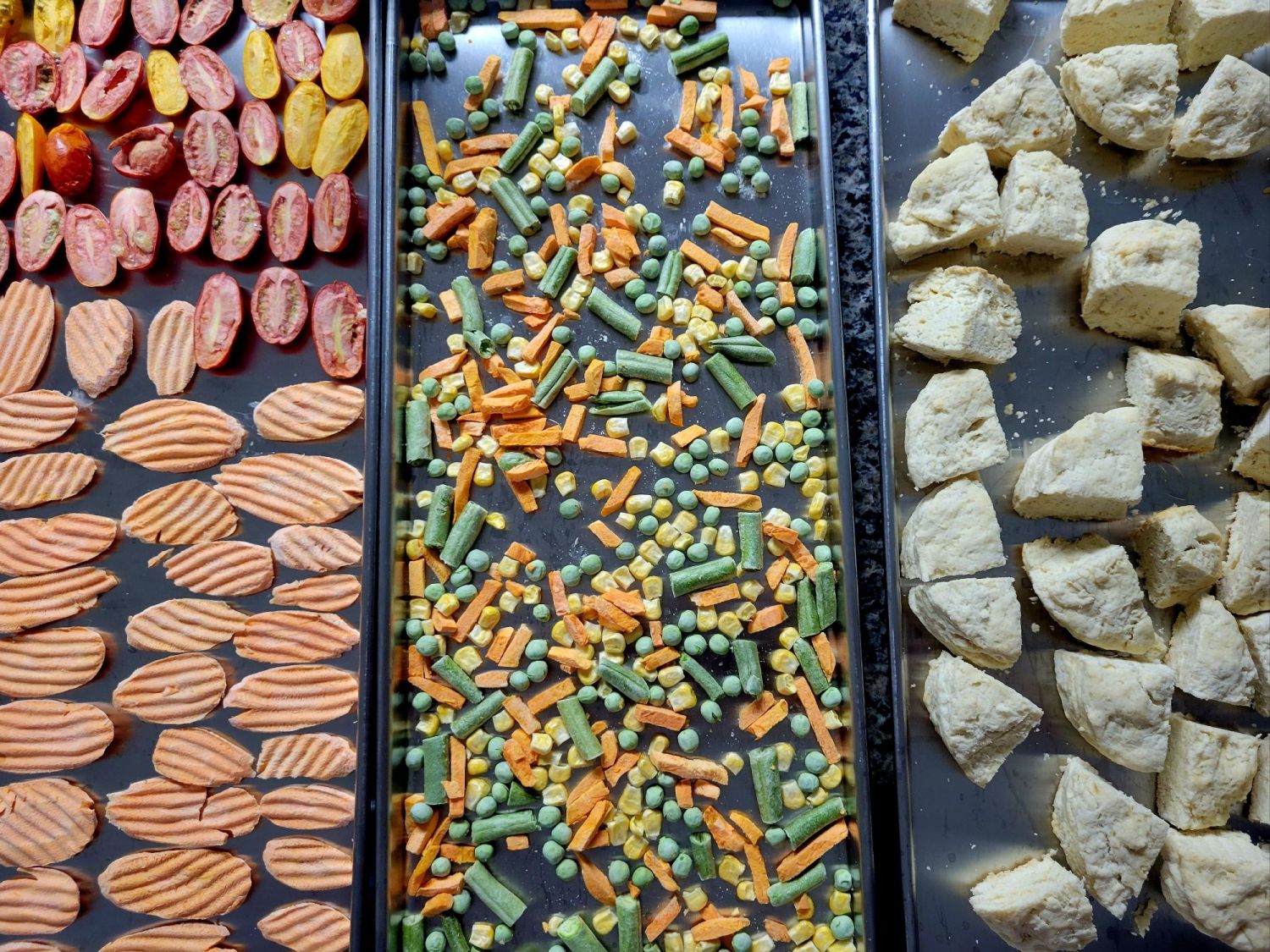
freeze-dried: tomato/carrot, mixed veg, quartered biscuits
I started out spacing the fruits and veggies with room for the Holy Spirit until I realized that you can pack meals on the tray (which will take more time in the FD), but some things will spread out or be sticky. Having the lids (ordered with silicone mats for less sticking and loss of food powder) with their “spacing ridges” makes it easier to portion meals, and then I put apples and protein brownie bites (and other snacks) on the trays because I can portion them out.
Freeze-dried foods are better nutritionally than dehydrated foods, which is why we went this route. We debated spending $8 to $11 per breakfast so that 150 meals each would cost roughly $1,200 to $1,650 (around 3k for both of us), and then we still need lunch/snacks, dinner, and desserts occasionally. This could easily bring our food cost to $7,200 to $9,900 just for meals and without drinks, which will consist of cocoa and coffee powders added to water.
Hikers don’t have to be rich to set out on long distances, and we will be doing this on a military retirement check, but we don’t want to live off Pop-Tarts and Ramen for over four months (apparently, we’ll be too old for that nonsense). I also don’t want to get stuck eating beef stroganoff because it was the only meal available in a trail store or hiker box.
Some hikers need to repackage food that they buy in town. We are packaging our own (with a balance of carbs, protein, and fats found in similar meals), so we need fewer boxes mailed to resupply stations (trail stores and local post offices) and can carry more food in a smaller space.
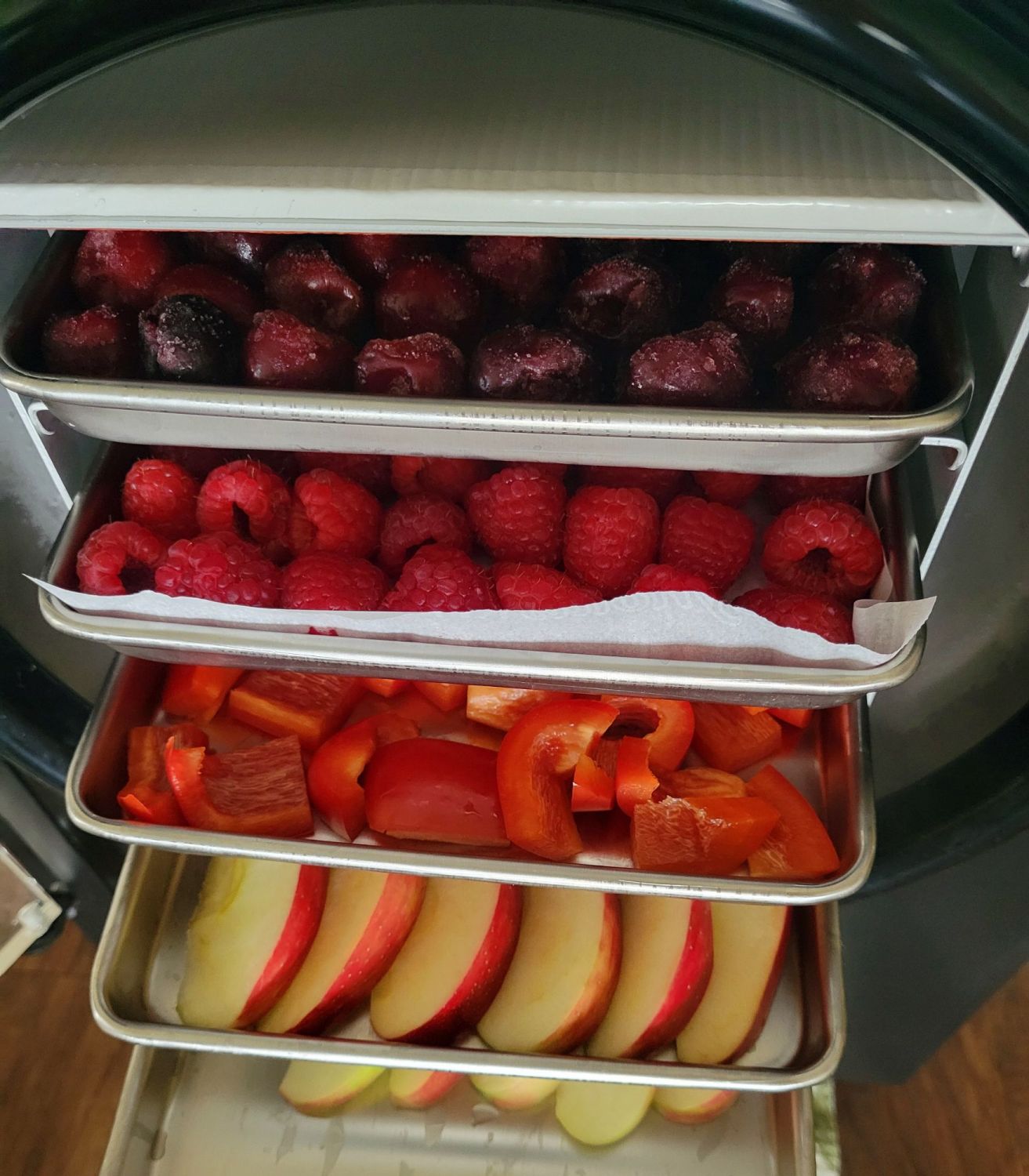
going in: cherries, raspberries, bell peppers, apples
Packaging our own food gives us more diversity in vegetables, flavors, and recipes (we’re hoping to have some friends help with this). It is surprising how many things can be freeze-dried, minus peanut butter by itself and other items that are too oily and will remain too moist for long-term storage. If properly done, these foods should last up to 30 years, but we only need them to survive for up to a year.
It will take about a month to make all the breakfasts, mostly granola and egg scramble, before we make the dinners. Our FD is on the floor, so it’s not the best for draining, but it’s also no issue when we were woken at 3 am to unload the trays and leave the FD to thaw with the door open. The other option is to heat the trays for two hours so that the thick ring of ice has an increased melt capacity. I’d say that after 30 minutes, you can break the seal with a butter knife (a guy posted a video using needle nose pliers).
The FD is too imposing on our counter, so it could drain into the sink, even though this is the most counter space we’ve had in the States. I prefer to use that space for loading trays, making coffee, keeping tea, and, if I’m lucky, a batch of homemade biscuits before I finish them within 24 hours.
I got woken again, this time at 4 am, with the FD beeping, and it can take up to an hour to measure the bag rolls (pre-cut sizes are awesome!) to the estimated size needed, seal one end, load them with food, add an oxygen absorber packet (while keeping them from sucking in all the oxygen in the kitchen), and vacuum seal them with a 15 seconds timer each (unless I have to re-flatten the bag end to get a better seal).

cooked breakfast scramble and fresh chickpea salad with apples
I do this for 12-15 meals and then either leave the trays by the sink (to get a nap) or wash them and set them to dry to reload as soon as all moisture has been removed from FD; otherwise, the oil pump will smoke aka puff oil vapors into the room (not so bad when the temperature and humidity allow for an open door to vent the space).
The rubber ring around the FD door (to aid in making a vacuum) will drip condensation, so we have a tea towel underneath. I was told the company Harvest Right used to sell something for that, but we just use the drain pan to catch ice pieces when we pull the chunks out. The ring has to come off, the tray rack comes out (so it can be wiped down if needed), and the interior chamber can be squeegee’d and wiped. I use a microfiber towel, so I don’t let tiny fibers get stuck in food or ice.
Our FD kit came with an impulse sealer, which provides an electrical pulse to seal poly and foil bags with candy or small tools and components. Hair ties and paint brushes don’t have the same shelf-life concern as our food. Other FD users (the videos I’ve watched) are also using jars (there’s an adapter) for long-term storage in their basement (heat can spoil things) or making tons of sweets to sell out at the farmer’s market/street fair/next vending opportunity.
For this reason, we bought a vacuum sealer and saved over $150 by not ordering the orange-button option. I was taking pictures of each load, but it’s difficult to get all five in the photo at a decent angle, so I won’t be posting all of them (but we all knew that). I need to come up with a new way to track how many batches are done so I can replace the vacuum pump oil every 20 to 30 uses for proper maintenance.

 TheJessicaness
Thank you.
LikeLike