
This nickname for Ireland took almost one hundred years to brew. It started with Arthur Guinness who founded St. James’s Gate Brewery in 1759 and signed a 9,000-year lease for four acres. As his beer gained in consumption, the brewery became the largest in Ireland in 1838 and then the world in 1886. It has since been surpassed but remains the largest brewer of stout. Guinness is on many top ten lists along with beers from Mexico, the Netherlands, and China. Visitors are welcome to tour the site, now on fifty acres, and sip samples, have a stoutie (a selfie on their beer head), and learn the six-step pouring ritual.
Part of the advertising that helped Guinness grow was the support from doctors in the 1920s who would prescribe a pint to their patients after an operation or during pregnancy due to the benefits the believed-iron-rich beer would provide. This marketing was efficient for the next forty years. I have to laugh to think that people, myself included, trust doctors, scientists, and government agencies now to have their best interests in mind; not unless it comes with a better payday than the competition.
It seems as if the plan was to spend half of yesterday in Galway and then, time permitting, drive to Connemara National Park, a noted two hours away. Even though Caleb invited the anti-energy virus on our road trip we would’ve had to camp at or near the park last night after using the light of the Waxing Gibbous moon, at 92% illumination, to hike. If wanting to increase the level of adventure on a trip, one idea would be to drive on the island at night where the deer vs stag on the road comes into play.
Only one of those ‘animals’ have headlights and alcoholic fuel installed. Ireland’s allowed blood alcohol concentration (BAC) level is at 50 mg (80 mg being the familiar 0.08%). If detected by the peace police (Garda Síochána), they automatically suspend driving rights for three months and issue a fine. This should make me feel safer, but so does not driving on unknown and thin winding roads with cliff edges. I was going to refer to a trip I took to the country of Georgia in January 2020, but I have yet to finish writing about that part of my visit.


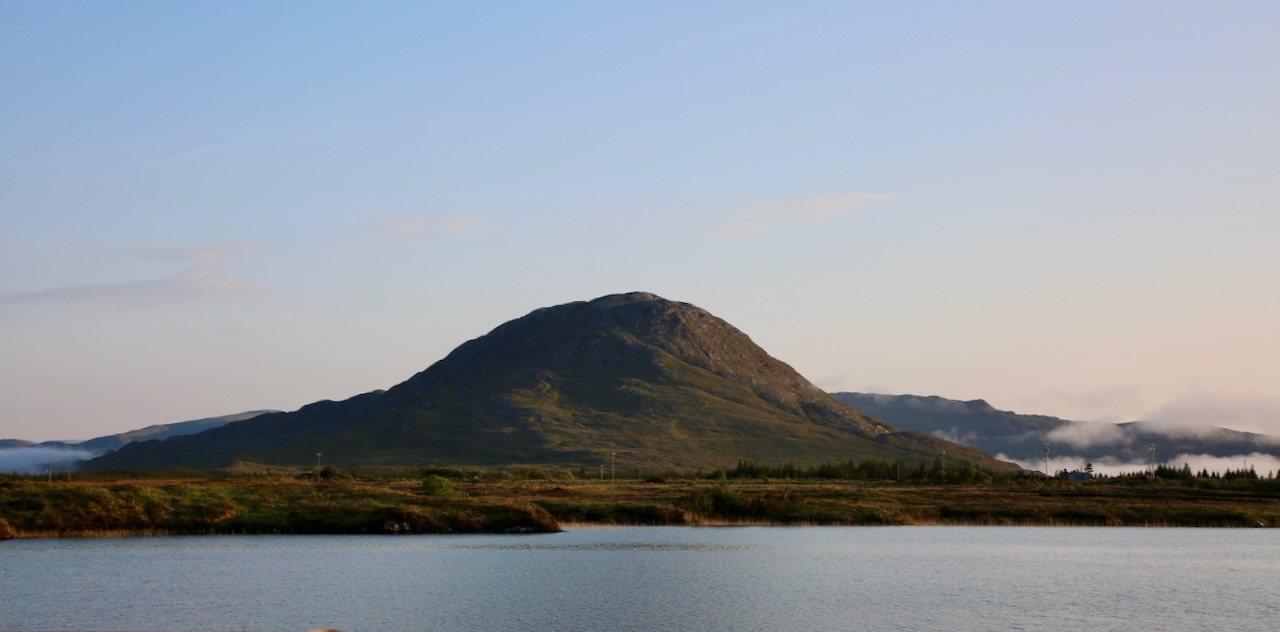
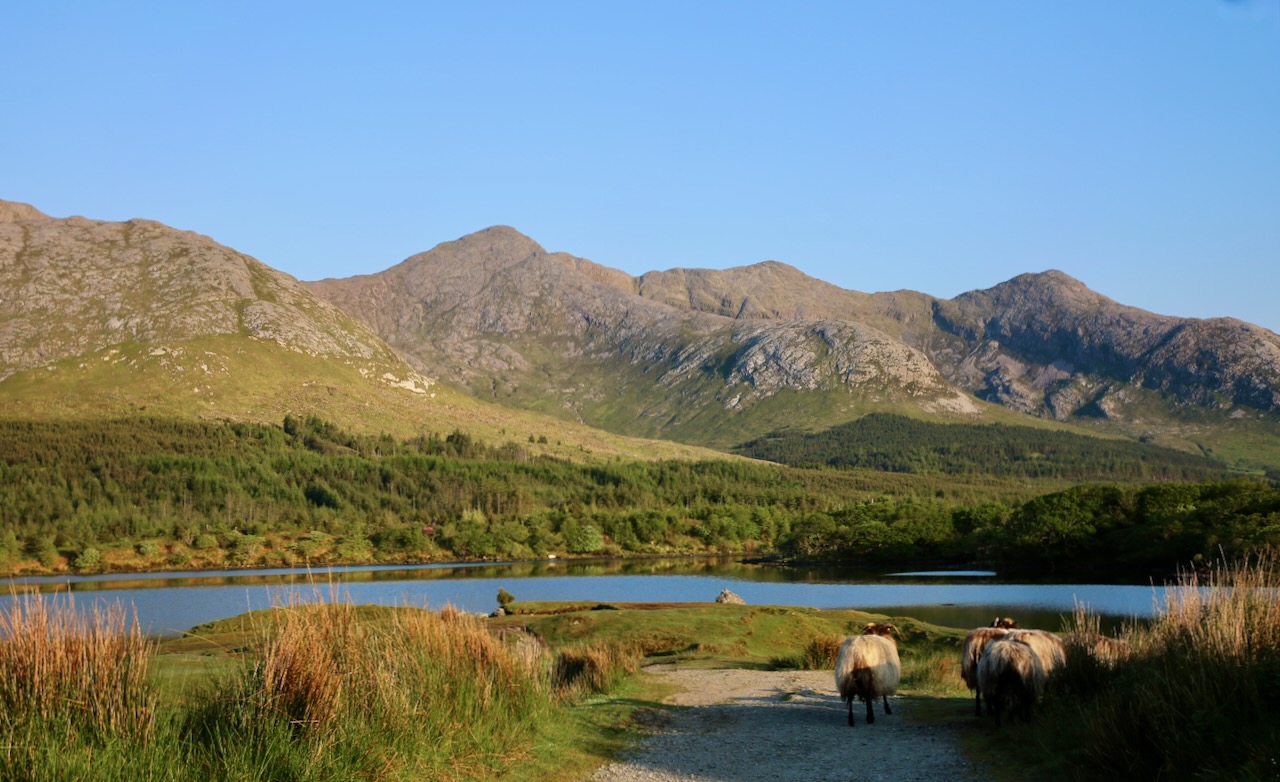
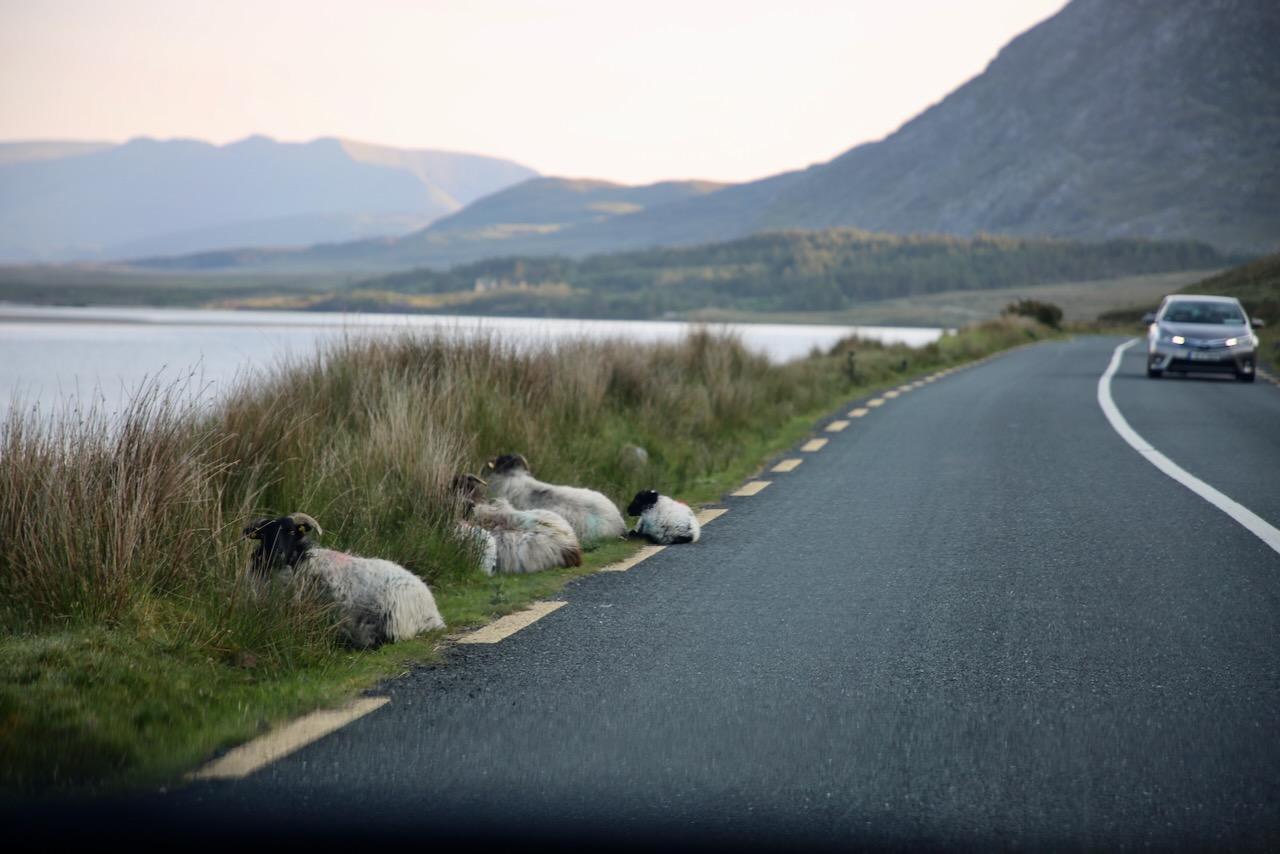
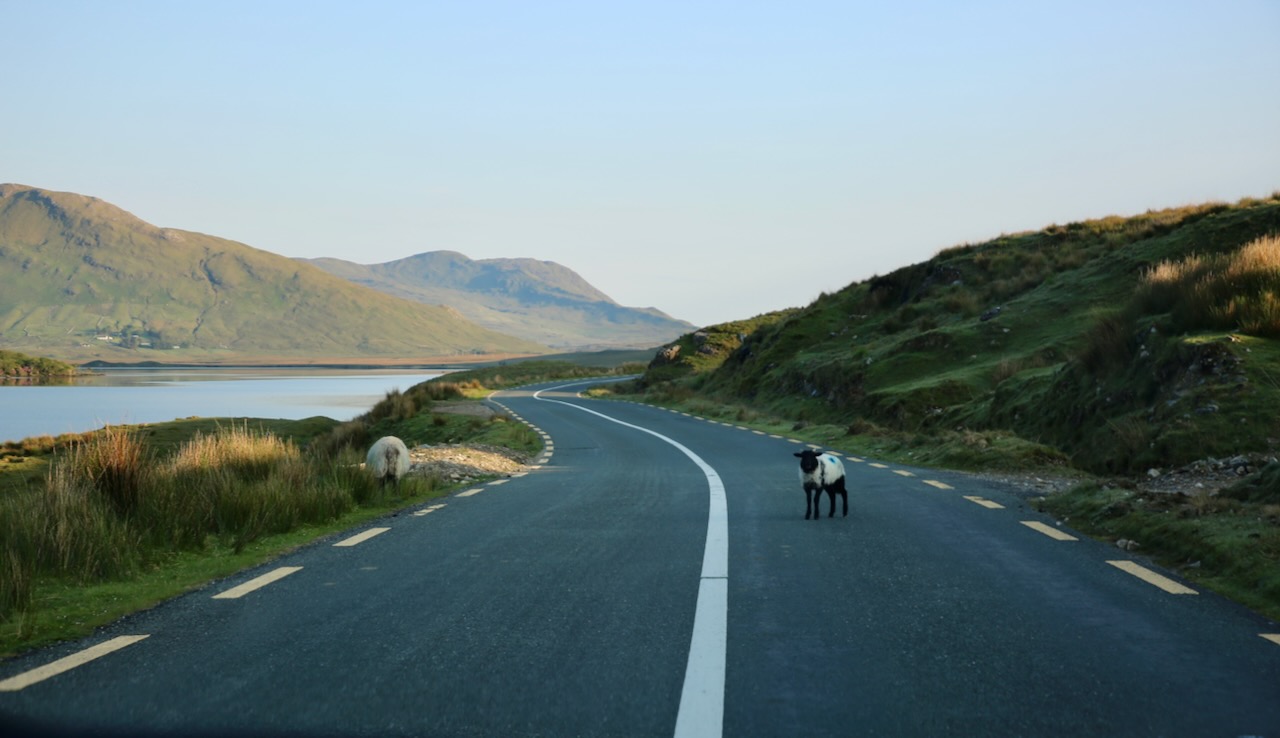
The sun and clouds begin the morning competing for my attention as I can’t yet determine which will dominate the sky. Reflections on the water and bright yellow flowers grab my eyes next. I’m almost unprepared for the beauty of the rolling mountains in the distance and the Blackface mountain sheep on the road’s shoulder. There’s not a safe spot to stop on the road and take pictures like I’m used to on many of America’s straight roads, and even then I appreciate having a passenger who can grab the wheel or keep an eye out.

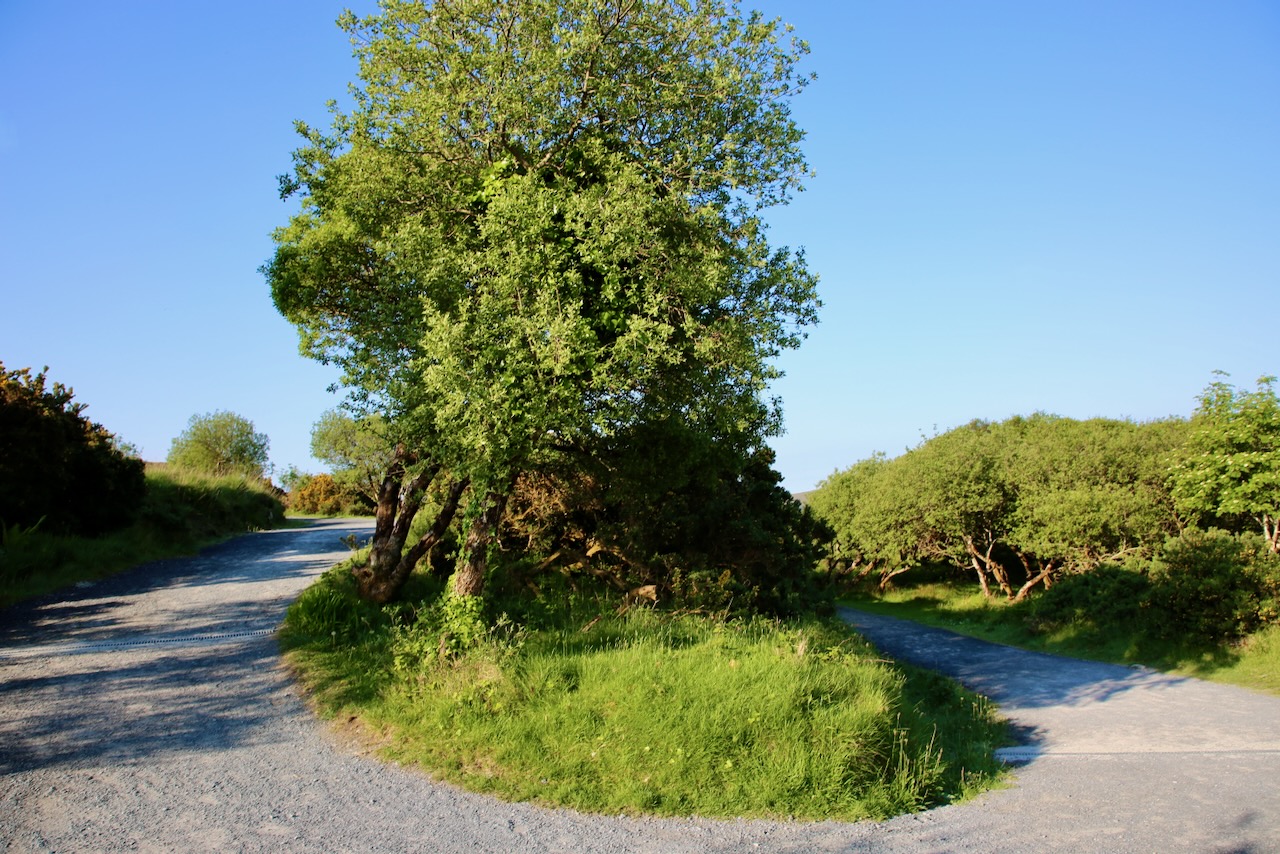
I see one of a limited number of pull-outs and am going slow enough to use it. I’m stopping to take in the lake, Kylemore Lough, and see a snail on a rock. I’d like to believe he was awaiting my arrival. Surely he’s taking advantage of the shade provided before his momentary perch becomes a permanent pan to bake him into a bird’s escargot. We pass the Kylemore Abbey & Victorian Walled Garden where your $19 entrance ticket includes the Neo-Gothic Church, the Mausoleum, and the Woodland and Lakeshore walks.
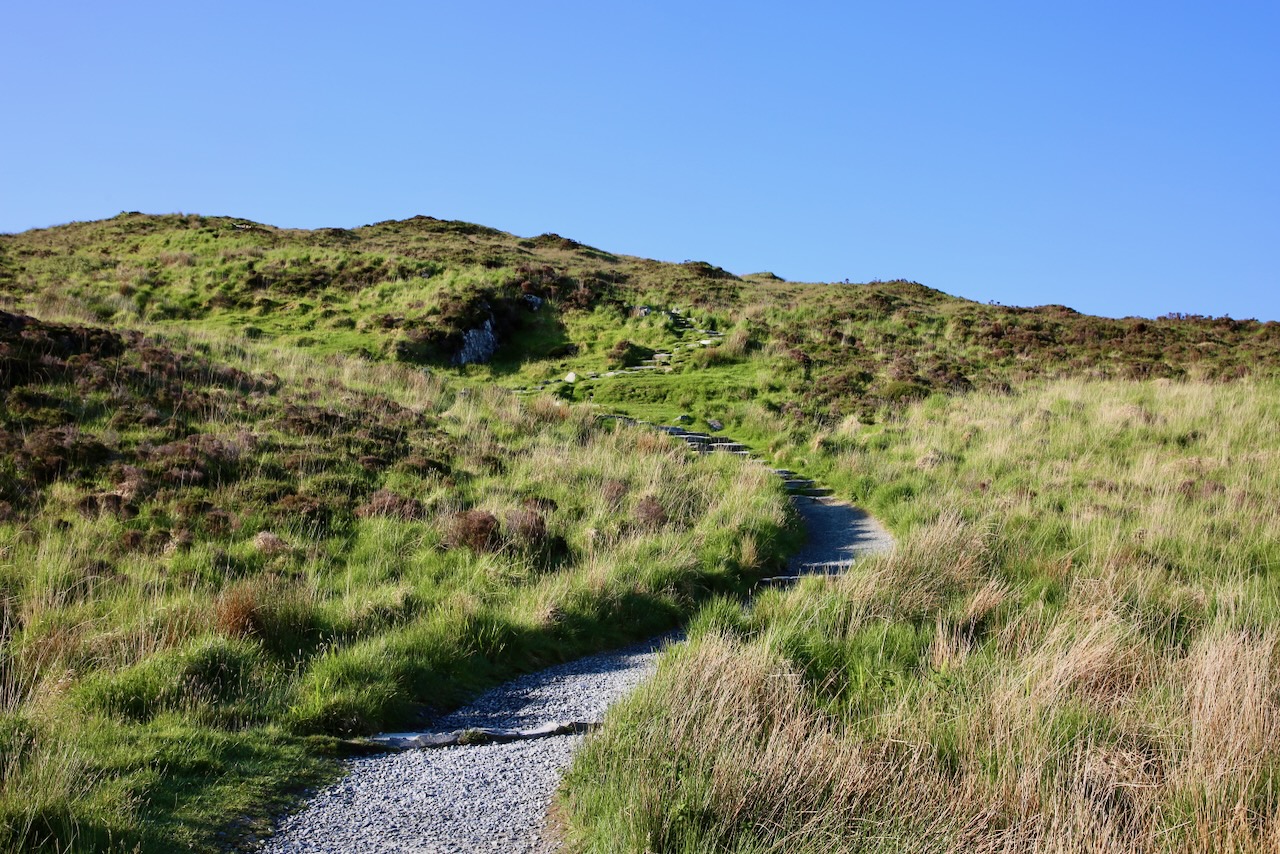
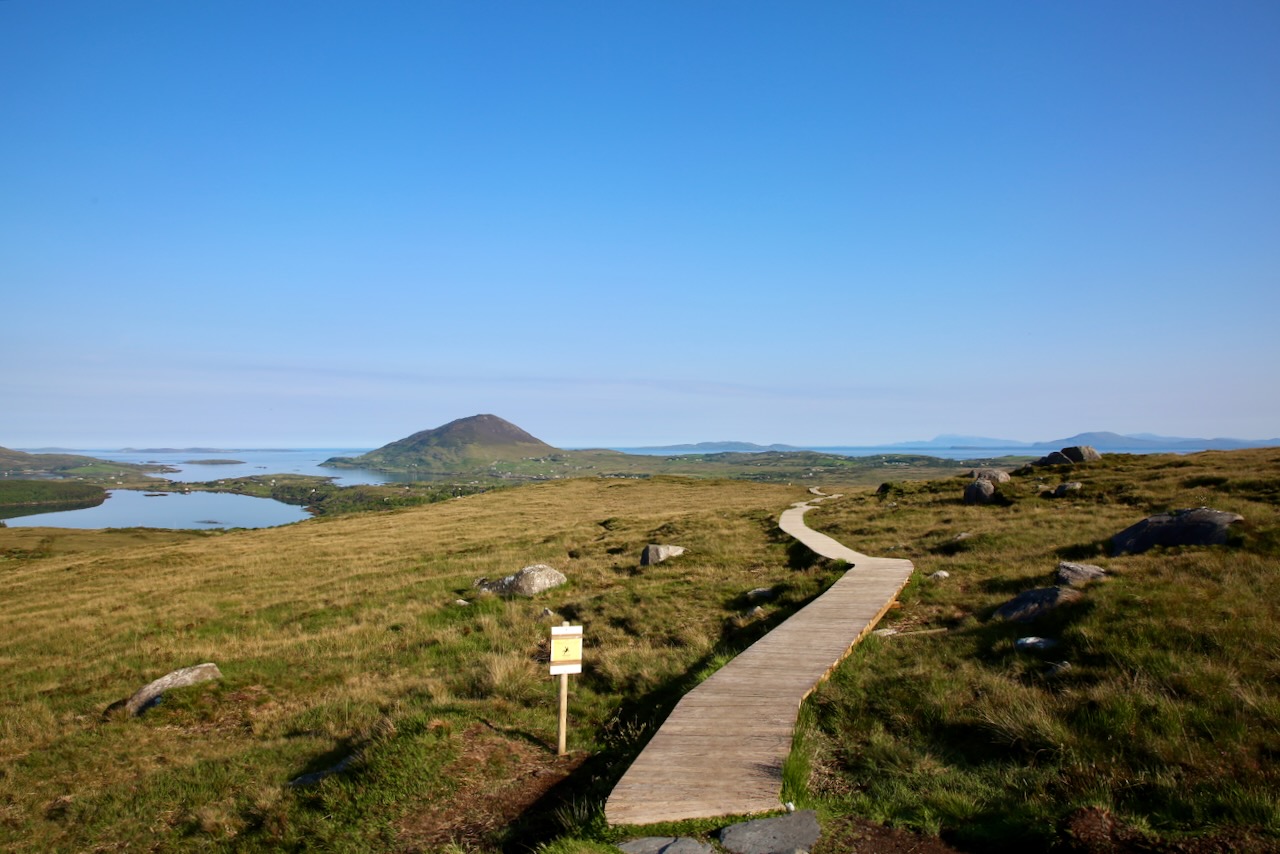
A few minutes up the road is the entrance to Connemara National Park. We find a spot in the shade in the empty lot, walk past all the closed buildings, and begin our ascent of Diamond Hill. The view is beautiful; the water looks like a boot of ocean stuck in the verdant mud that is Ireland. We pause for the horses in the field, the hawk on a bush, and the frog in the grass. We remove our shirts and yet the sweating continues. There’s a boardwalk and then a further climb to the top. This older woman passes us, dressed in long layers, and we decide to turn around before we become a trailside attraction.
My level of exertion made me feel like I had walked twice as far. More people are arriving as we return to the parking lot. We backtrack towards Galway and turn off the N59 towards Brigit’s Garden, a space dedicated to the Irish goddess and saint. This park is more our pace, with less elevation change to contend with, and $21.80 gets us access to multiple gardens and acres of meadows and woodland. There are ponds, lots of round references – stones, mounds, structures, and a bicycle powered light. The shade offers respite, though once we’re on the far side of the sundial I have an urge for sustenance and a seat.
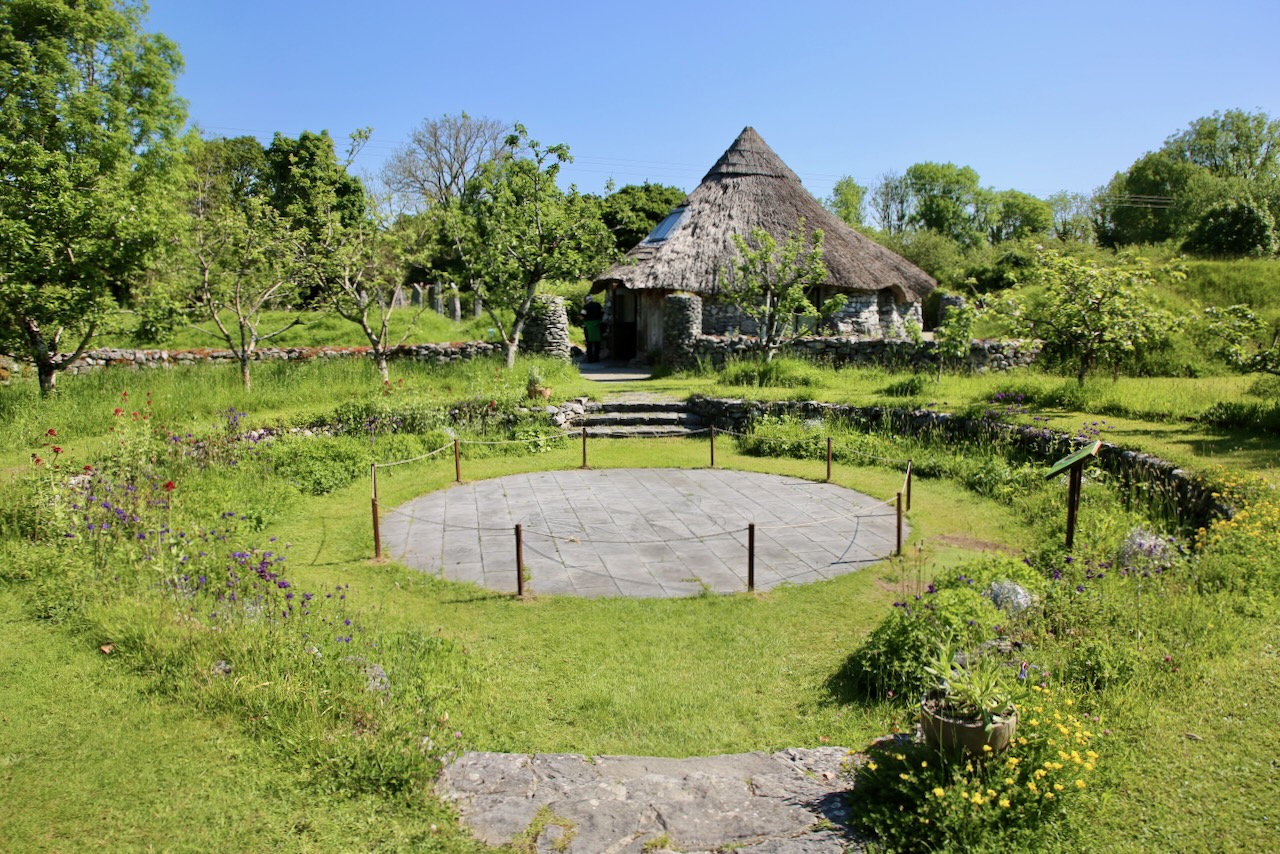
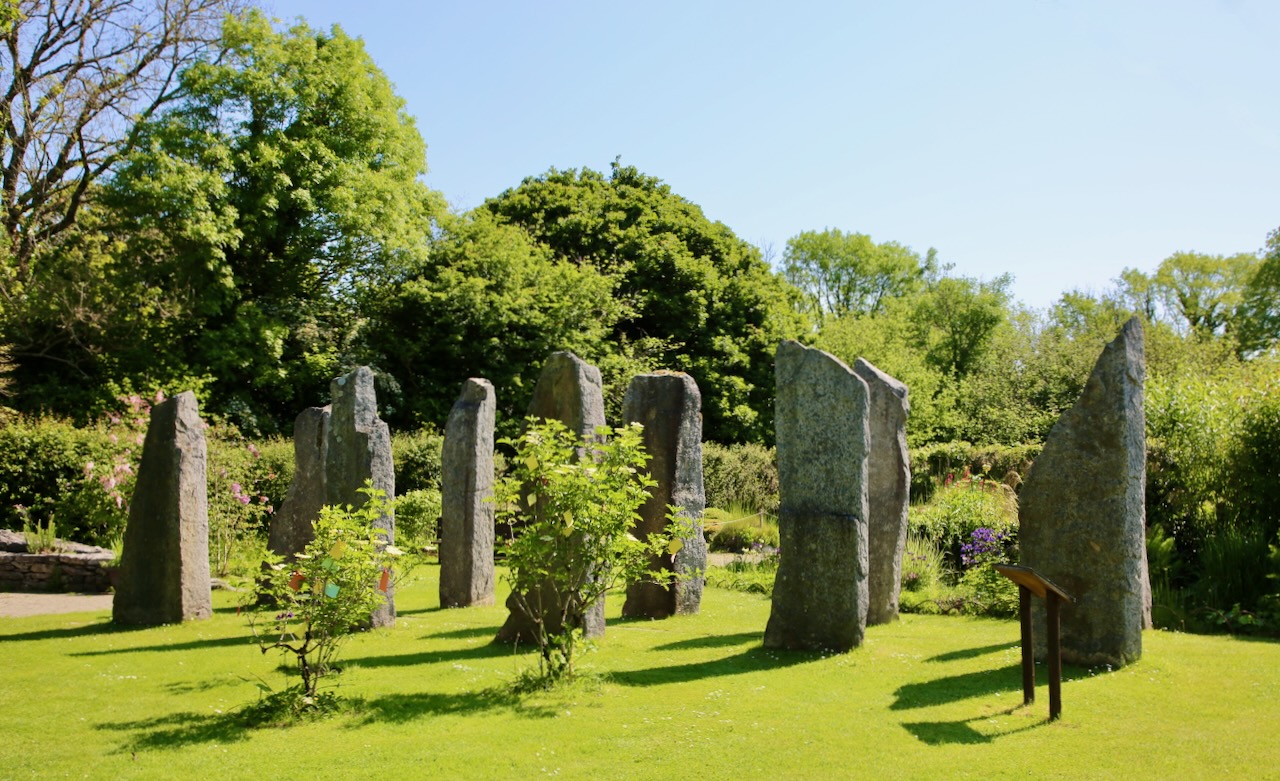
Brigit’s Garden
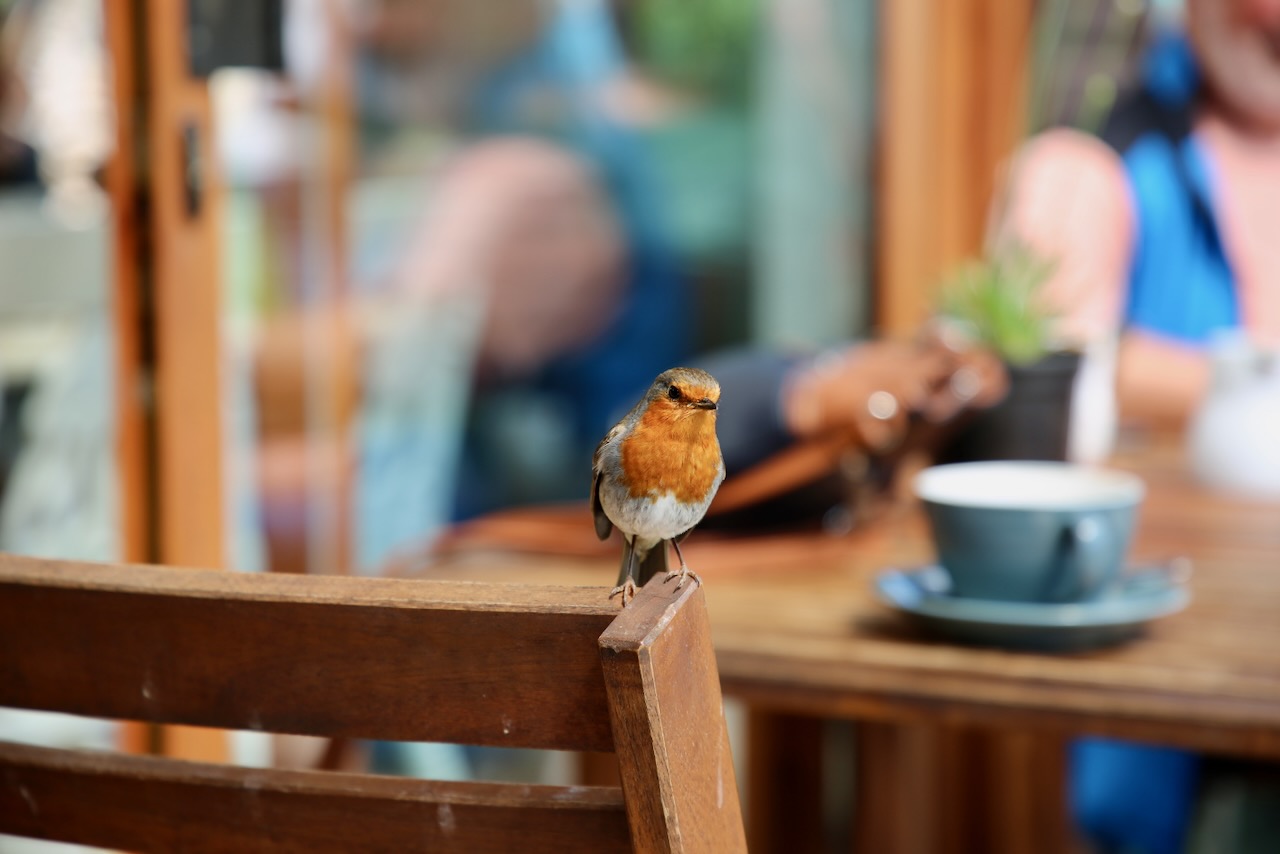
I order a chai latte and undecided on which dessert to have, we get three. A scone with raspberry jam is mandatory, the chocolate cake is surprisingly light on sugar and density, and the carrot cake completes our trio of amazing sweets. I would’ve been fine taking in the voice differences, wooden details, and starches dissolving on my tongue but a robin, or two, determined otherwise. I wasn’t the only diner with a camera as I sat and captured the bird posing on the furniture and the floor. I linger a moment longer but with the arrival of a group, it now seems time to go.

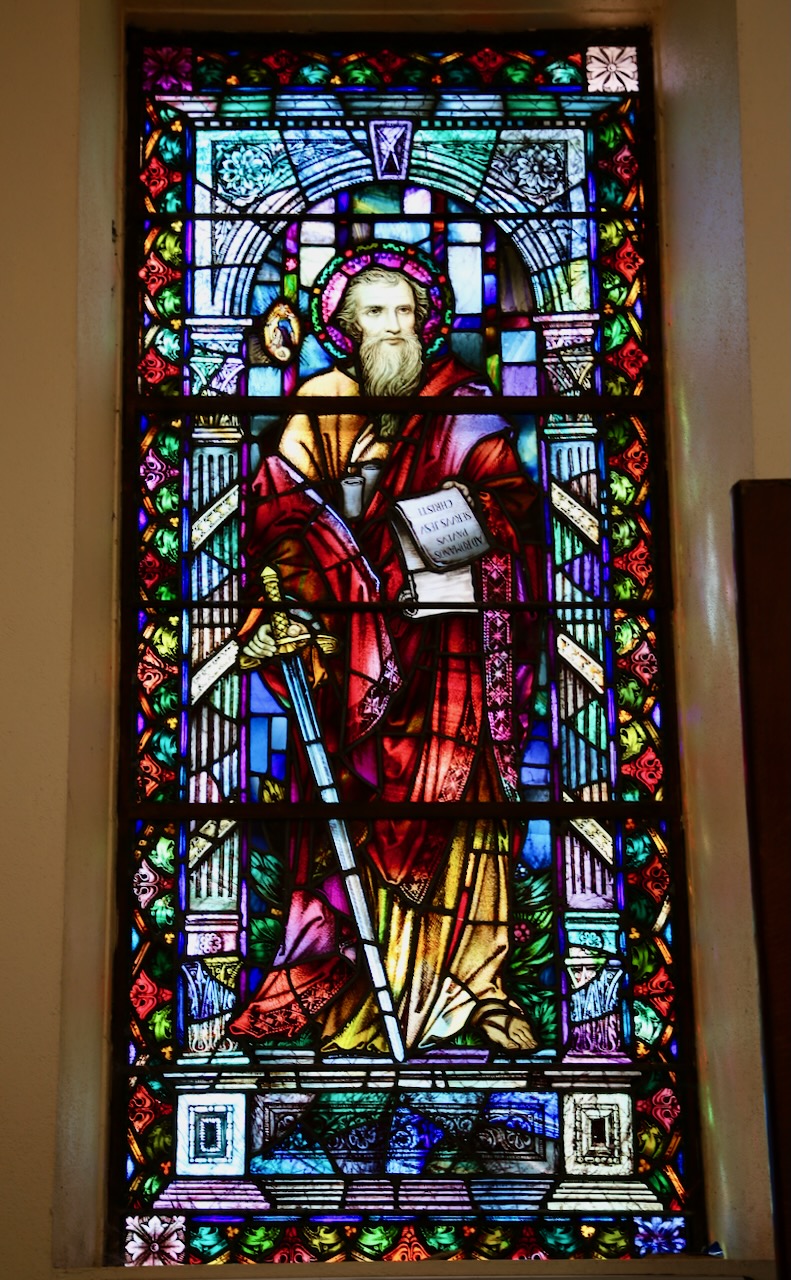
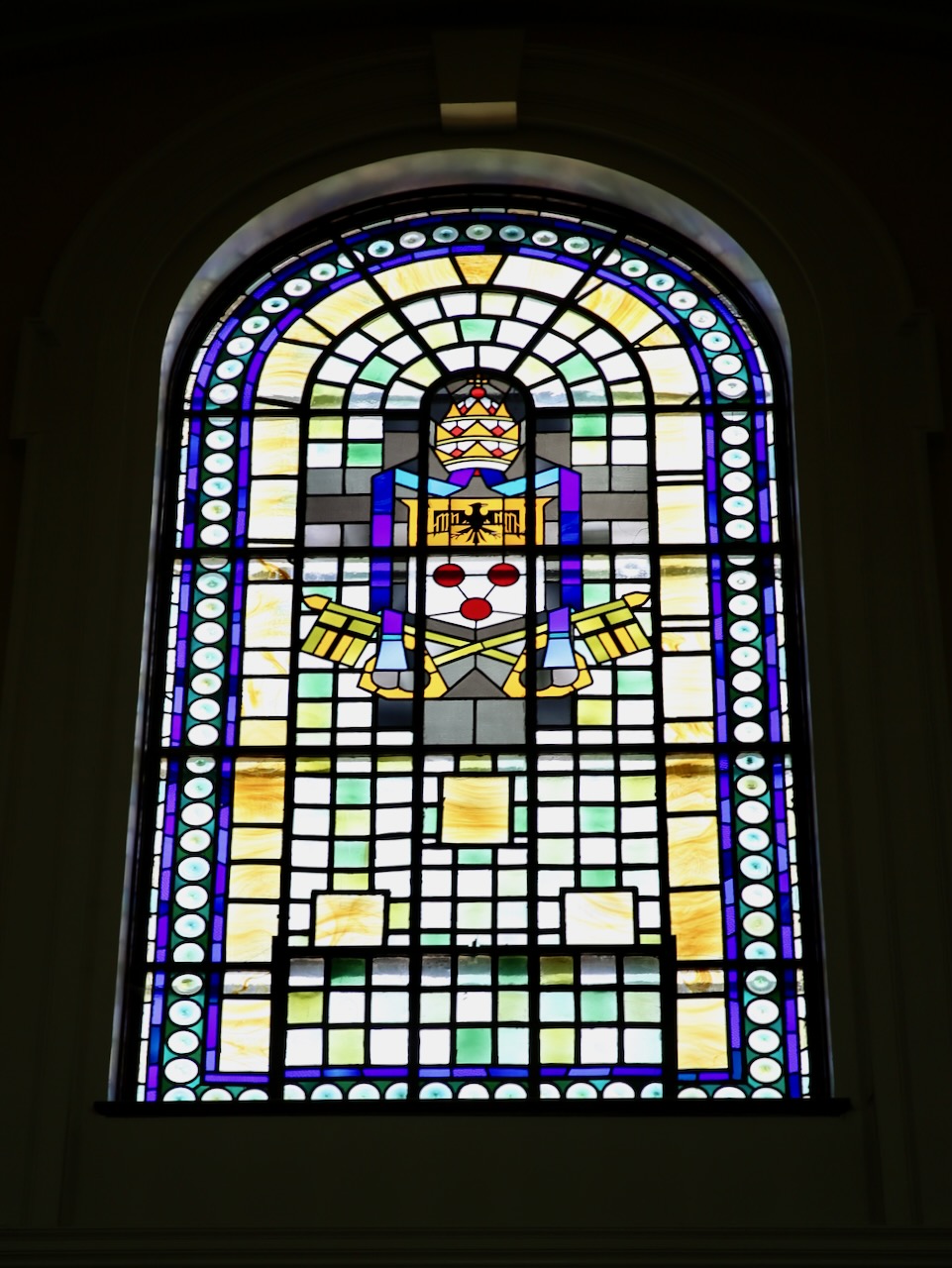
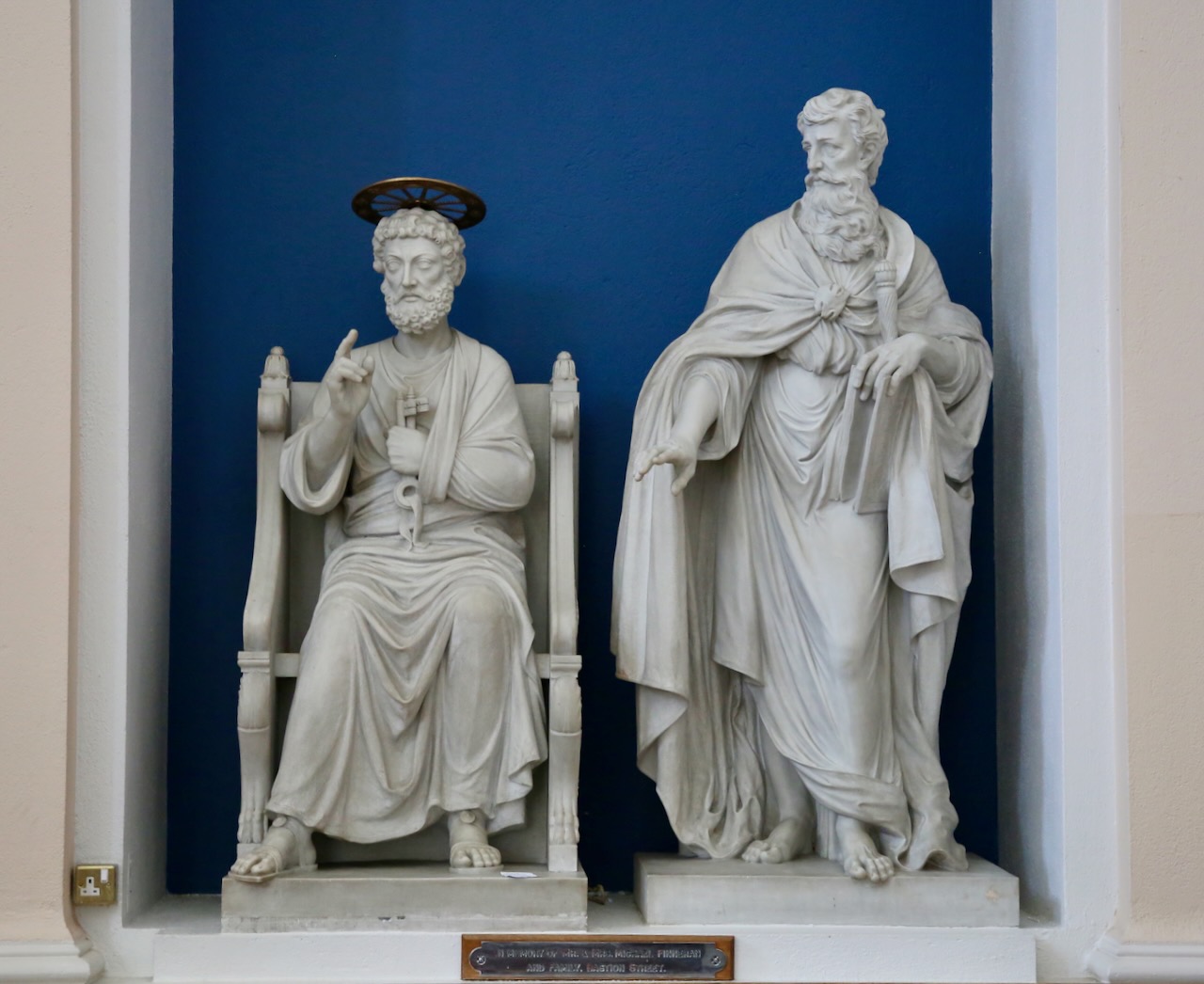
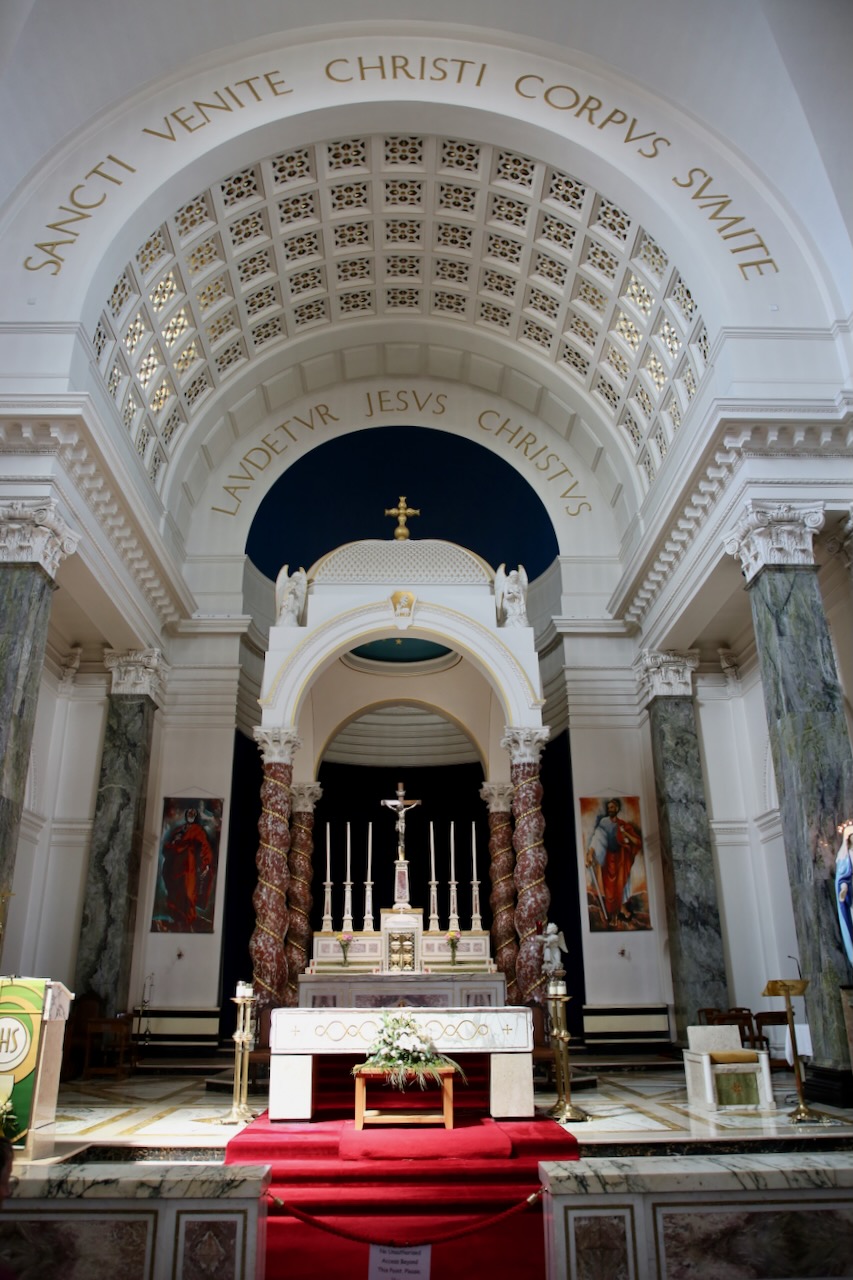
The town of Athlone, meaning the ‘ford of Luain’, named after the man who guided people across the River Shannon before bridges were built, is about two hours away. The castle is closed on Mondays, so we visit the Church of Saints Peter & Paul. The building design resembles a courthouse, this one absent of sinners today, besides the intricately stained glass. I appreciate the decorative distinctions between each house of worship so that no matter the budget or material availability, the locals would still have a place to congregate and celebrate.
The Guinness Book of Records started in Ireland, so every day is another opportunity to be recognized for a feat of strength, solitude, or seniority. Tony Hawks traveled 1650 km with a fridge, Enya has never performed a solo concert and still sold 75 million albums, and the Clarke family has the most siblings, five, to live past their 100th birthdays. Sean’s Bar was awarded, in 2004, the oldest pub in Ireland, and possibly the world, with a wall dating to 900 AD. A sign outside tells of a time when the bar was known as the Three Blackamoor Heads and ran by Mark Begg in 1736.
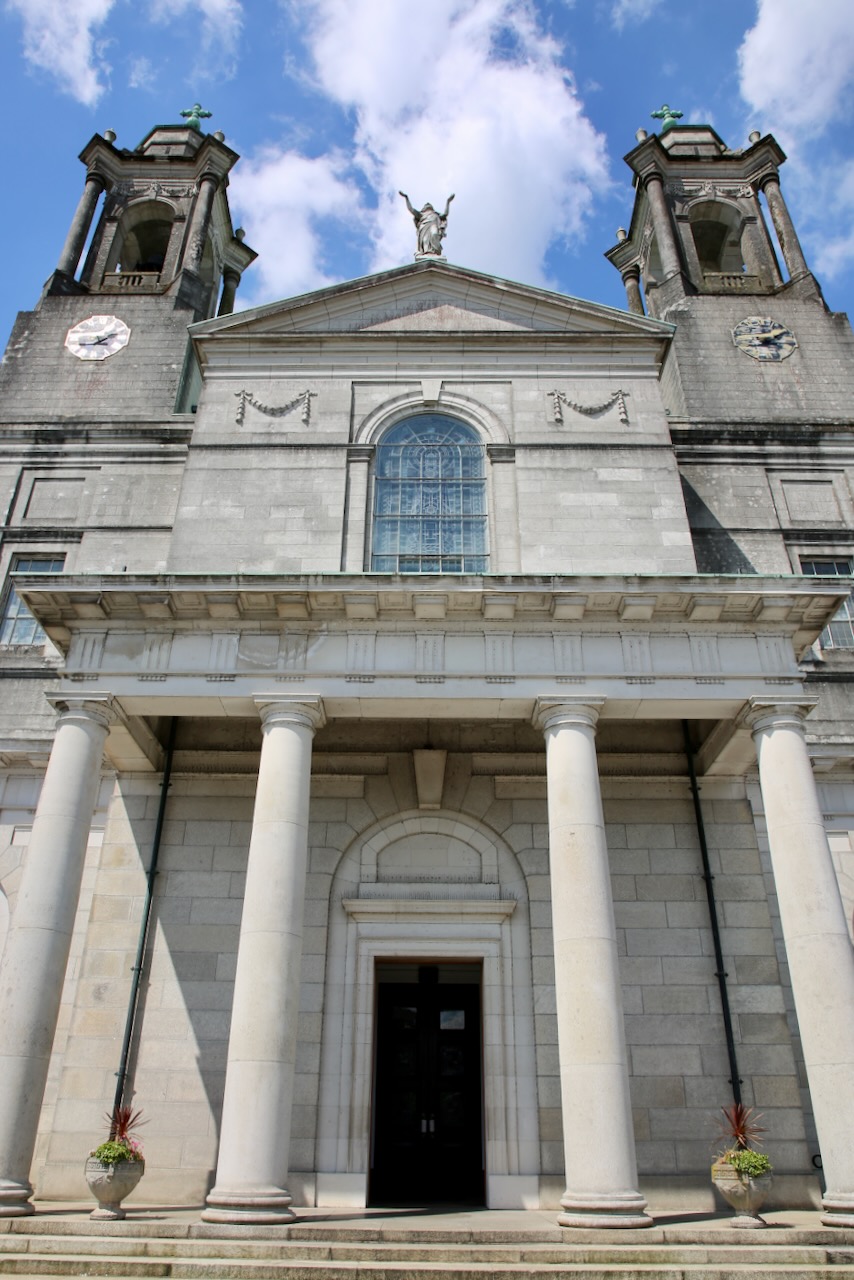
Church of Saints Peter & Paul
Not yet ready to go inside, we walk down to Shannon Banks Nature Trail Walk. Here we learn that stone walls are great habitats for moss (wall screw and silky wall feather), flowers (wall lettuce and ivy-leaved toadflax), and ferns (wall-rue, rusty-back, and maidenhair spleenwort); that sycamore trees can tolerate urban pollution and that some fish are coarse (pike and perch), meaning their scales are larger than game fish (trout and salmon) and they prefer warmer and stiller waters. There’s a tall stone wall, with no life allowed to live in its length of a city block and a half.

The Custume Barracks was renamed by a general in 1922 after the sergeant who served in the siege of 1691. There are many examples of Georgian and Victorian architecture inside but as this is still an active command we are not allowed access. Then to the pub, we must return, for a glass of stout and spirits, and an augmented reality museum experience by Heineken. The company is working to preserve the history that these landmarks (Sean’s, Toners, and Mother Macs) maintain by gaining museum (tax-exemption) status. This experience was launched in April and is a great example of using modern technology to perpetuate the past.

There’s a fireplace, many framed memorabilia on the walls, and the wattle and wicker wall (hazel sticks, horse hair, clay) discovered in 1970 by Sean Fitzsimons who bought the pub from Sean O’Brien. We get to watch a firefighter from New Jersey pin his patch into a display case. The employees have shirts that say ‘caint ceol agus craic’ (music, chat, and fun) in bold letters on the back. The shirt I leave with has all the action on the front. The place we’re staying at tonight requires us to backtrack a bit and check in early.
I pull into the Riverview House B&B driveway and the hostess stands directly behind the car (in the hit zone) and tells me to move over her body or through the hedge, as my options. Once she has me reparked in the front corner, with hopes I won’t be blocked in, she shows us inside. The lounge is locked and our room is upstairs. The cabinets are ziptied with a single bed against them and a double bed on the other side of a nightstand. The next room has more cabinets, a desk with tea service, and a sink. Both of these rooms are brightly lit with large windows. The dark room in the corner contains the toilet and shower.

With keys in hand, we can look for dinner, which happens to be across the River Shannon from Sean’s Bar. We walk into Gertie Browne’s, past a space with limited seating and two sets of stairs in front of us, to a small bar area. There’s more seating and the restaurant continues further back, but with service here, we take a seat. I order the lemon pepper sea bass with potatoes, bell peppers, and green beans. I’m halfway done scarfing down this delicacy when I hear an American accent behind me. It’s interesting how something so common at home can stand out abroad.

Samantha and Trent are on vacation away from their automotive industry jobs where they met, in different departments, and then had kids. I’m not sure if Las Vegas is where their story started, but it’s where they call home now. They finish their meals and invite us to a corner table to continue the conversation and cups of casked corn that I prefer as a cocktail, not neat, and not when I’ll be driving. I’ll sip on a cider while my meal digests and as we return to our room I can imagine the couple is partaking, again, of the other side of many vacations. Some people stay in their resorts while others cruise the nightlife, which I can do at home or within a set limit on occasion.


 TheJessicaness