The Irish name Éire derives from Ériu, the name of a Gaelic goddess of sovereignty. The name debate started in 1921 after 26 counties of the 32 became the Irish Free State. Then in 1949, the southern counties were called the Republic of Ireland, separating them from Northern Ireland. In 1998, when the state dropped its claim to the remaining six counties, they simply became Ireland, but the partition remains and so for some, Éire is an outdated term but also one that refers to the whole of the island.


River Shannon
We leave Heron House with the bed semi-made, towels semi-wet, and the keys properly returned to the lockbox. Our first step is also semi-planned. I thought we’d walk part of Lough Derg Way Clonlara yesterday, but we stopped in O’Briensbridge this morning instead to walk along the river. The town was named after the timber bridge built in 1506 by Turlogh O’Brien, which was replaced in the 18th century with stone. That bridge had 14 arches and, in the 1830s and 40s, it was remodeled to include a towpath and quay and reduced the arch count to 12.
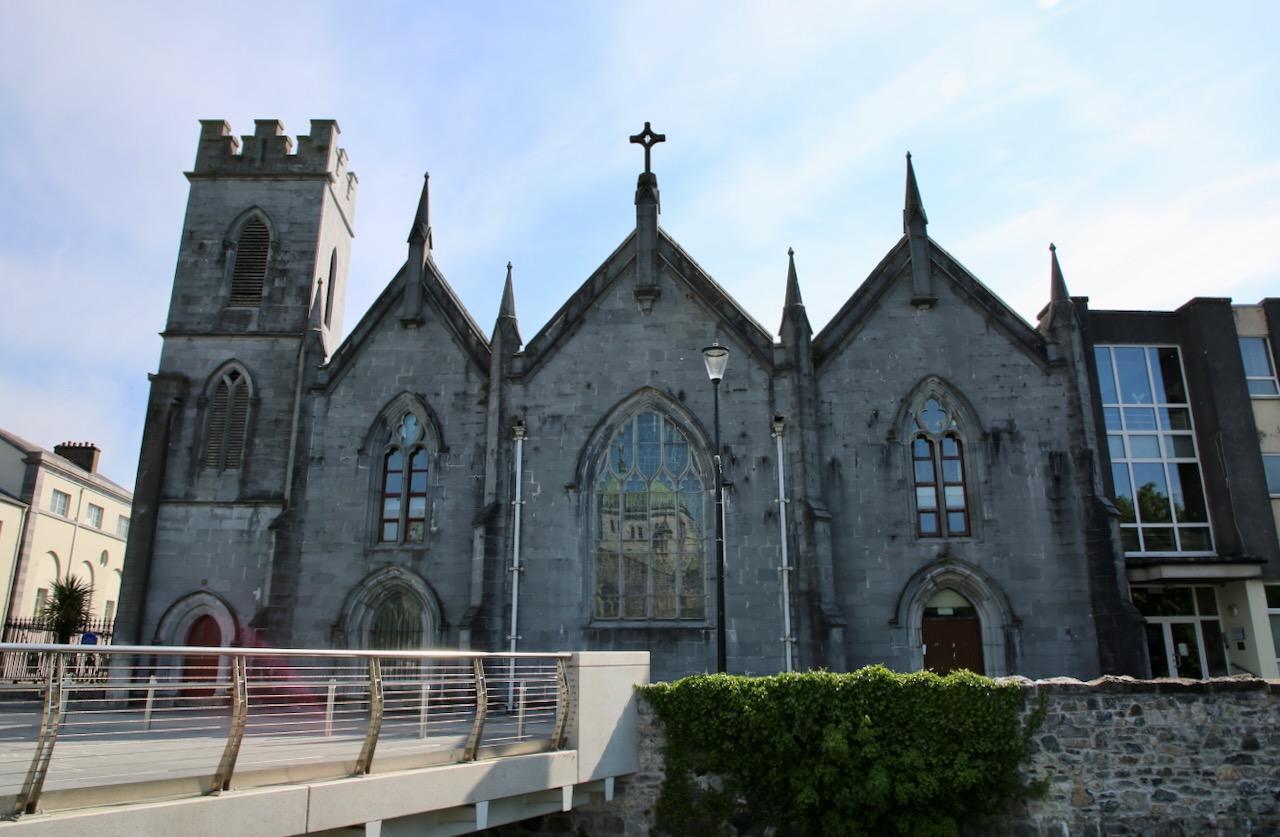
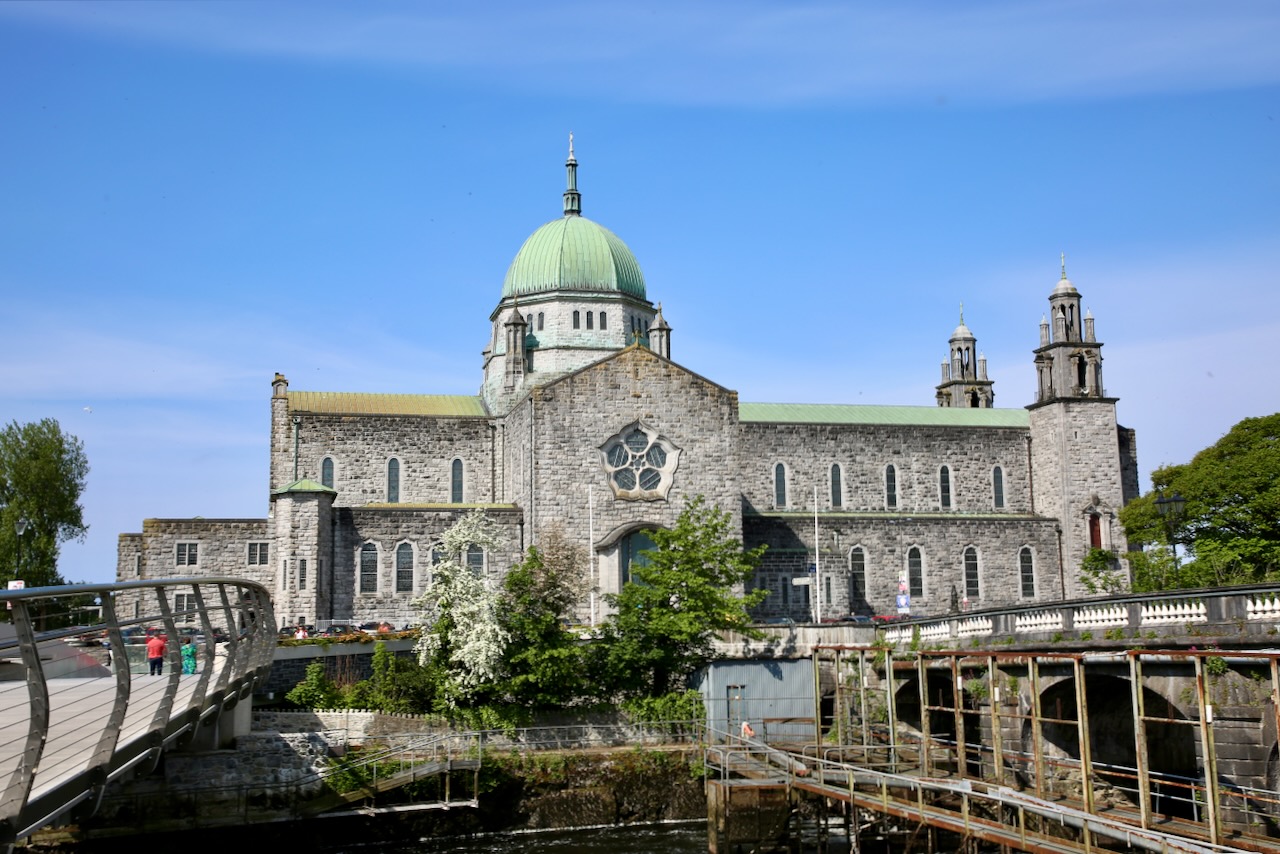
Diocese of G & K and Galway Cathedral
There’s a sign depicting many of the birds that can be found here. It lets us know that while the Limerick to Killaloe Navigation System, work which started in 1757, was in operation there were barges carrying potatoes, corn, slates, and turf. There’s a Heritage Garden with a restored Old Mill Wall in the rear, the only remains of a five-story corn mill that was built in the 1830s. This mill employed about one hundred men but the famine of the 40s led indirectly to its closure.

River Corrib
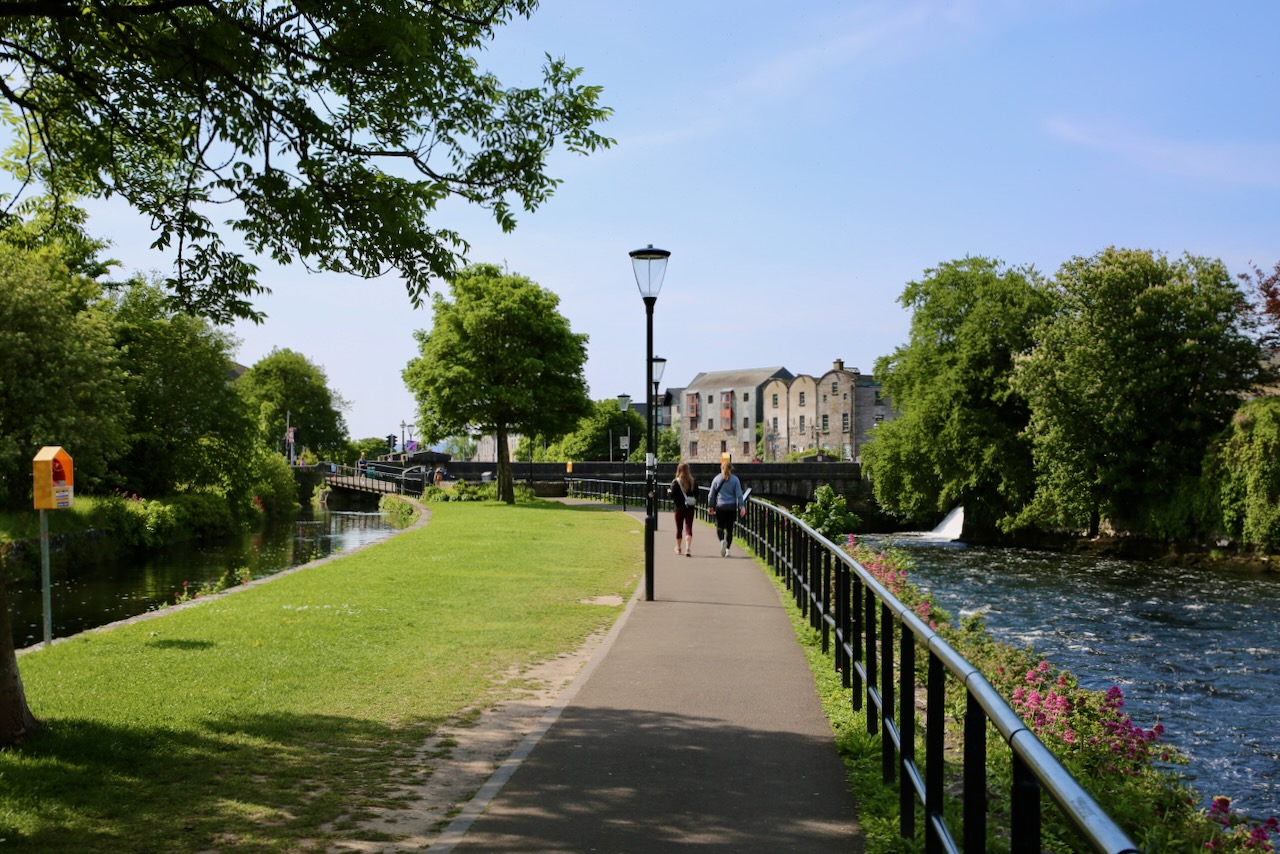
What surprised me was finding out that we were at Trailhead 24 of the 44 national waymarked trails in Ireland, the shortest being 6 miles and the longest being 625 miles in length. I was excited about the idea of all these connecting loop walks, like the LOOP (London Outer Orbital Path) which has 24 sections that span 150 miles, but Ireland stays true to form and leaves its landscape to be explored in scribbles (in design, not in a rush). The Ireland Walking Guide website and blog by Ellie at Tough Soles are great starting points for seeing what the island has to offer on foot.


Spanish Arch
Breakfast will be stopped for in Broadford at The Country Store. There’s something about being in another country and driving until you see a word or picture you recognize that symbolizes food that may not match the window posters but is still served with a smile. We would’ve stopped sooner but the first cup sign we passed wasn’t open yet. I find us a parking spot up the street and walk past a stone barn with two horses poking their heads out. The other buildings look in a state of weather-worn and facade-fixing. Inside, we find a mini-mart with fresh baked goods on display and a cafe with dining al fresco.


We take our cinnamon-topped coffees and our jam and custard doughnuts (the six-inch ones with no sugar coat) and whatever meat shoved in some bread that Caleb asked for, on the road. Regardless of the route we chose, we would spend at least 15 km of travel on the M18 (unless we did backroads only) so we decided to drive 65 km on it instead. This option skips opportunities that only these smaller lanes can provide, which in Ireland is plenty, but the highway will get us to Galway before a late lunch. I locate a spot to leave the car, about halfway between the docks and the cathedral.

the docks
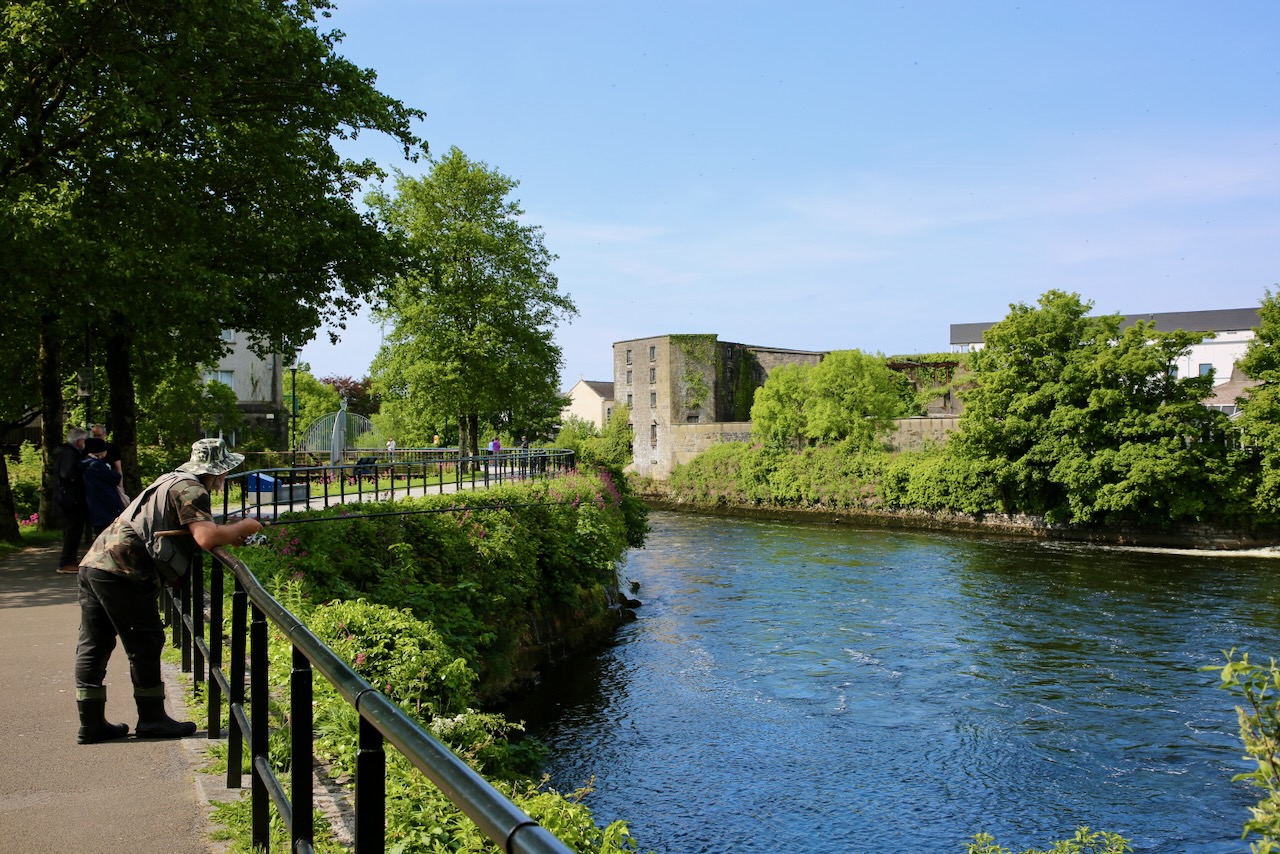
We’ll walk towards the latter via the Riverside Soundwalk; a walk that focuses on listening to the environment and a term first used in the 70s in Vancouver. I hear the patter of feet, the chatter of passersby, and the spatter of water from River Corrib. The Friar’s river canal is calmer beside and offers a lounging atmosphere away from the fishing poles cast into the river hoping to pull up salmon on their way to Ireland’s second largest lake.
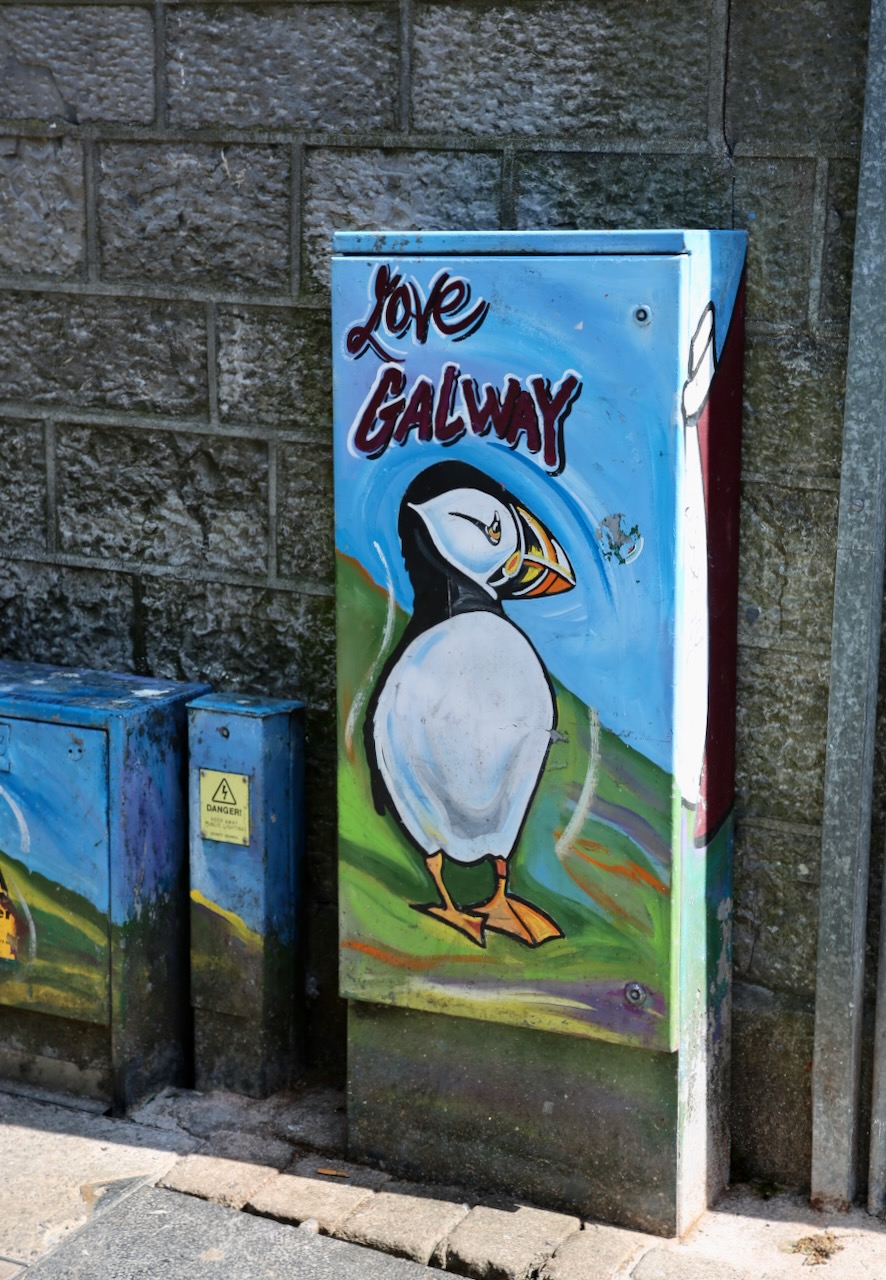
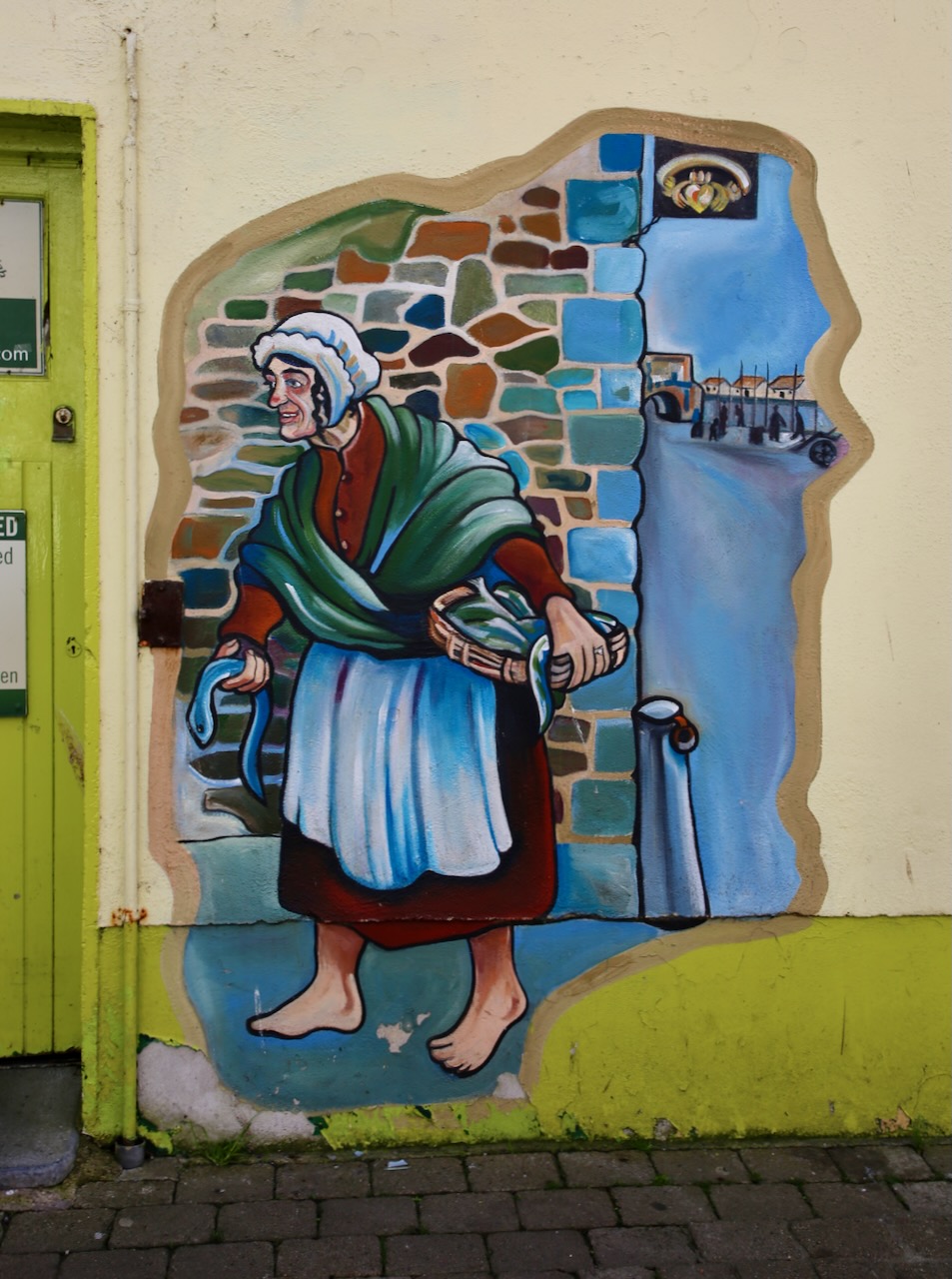

I see a Gaelic inscription, meaning bank of the river, next to O’Brien’s Bridge, this one named in honor of William Smith O’Brien. The original Old West Bridge was built in 1342 and taken down in 1852 after the Salmon Weir Bridge was finished in 1819. Strong walls were built on either side of the river and the new bridge was constructed and named in 1889. The Salmon Weir bridge that we cross today was opened in 2022. Instead of transferring prisoners from jail (which shut in 1902) to the courthouse, this path is now used for those attending church or those tourists curious to see the inside of the cathedral available to the public since 1965.


Galway Cathedral
We are one of those sightseers who want to look around the largest great stone cathedral built in Europe. I’m not one to interrupt a service unless pressing my camera to the window to get rid of glare and casting a shadow near the man leaning inside counts. We make a note to return and walk south. Back along the river, we learn about the traps, and weirs, that were in place from the 1800s until the late 1990s when they were closed for conservation reasons. This allows all salmon the opportunity to breed, not just those lucky enough to pass through the King or Queen’s six-meter gap.

The Persse Distillery provided whiskey and for many years water power. The Joyce family opened it in 1815 and the Persse family bought it in 1840 and ran it until 1911. This whiskey was served to King Edward VII and Queen Alexandra, who were married for 47 years (a record by any time standard) and in 2014 a 100-year-old bottle sold for £ 3,300. The longest marriage, as accepted by Guinness World Records is almost 89 years (minus 16 days), the oldest married couple were 110 and 105 years old, and the oldest couple to get married were 91 and 103.


One of the most famous members of the Persse family, known as Lady Gregory, went on to co-found a theatre that would become the world-famous Abbey Theatre in Dublin. A rebuilt grain mill has been turned into the Galway Suites, a two-bedroom condo that currently goes for $287/night with a three night minimum. I put this here as a reminder, for when I reread this in a decade, that travel hasn’t gotten cheaper but that I’m still able to find discount or camping options that keep us exploring longer. As we approach the military retirement transition, the idea of van camping becomes more appealing… or sleeping in a hammock after a day on my feet or under the sea.
The Fishery Watchtower Museum was on my list of places to visit in Galway but appears to be temporarily closed with no reopening information. The tower was built in 1853 as a three-story draft netting and river monitoring station until the 1970s. The Civic Trust repaired it in the early 2000s and now it rests until the museum returns or another use is found, such is the deal with buildings in the parts of Europe that I’ve been to.
We reach the Spanish Arch, originally known as Ceann an Bhalla, meaning ‘head of the wall’, completed in 1584. A pictorial map of the 1650s shows four arches of which the former and Blind Arch (because you can’t see through it) survive. The base of the wall was damaged in a 1755 tsunami from an earthquake in Lisbon. This arch remains a reminder of the history of this town as an important medieval seaport.


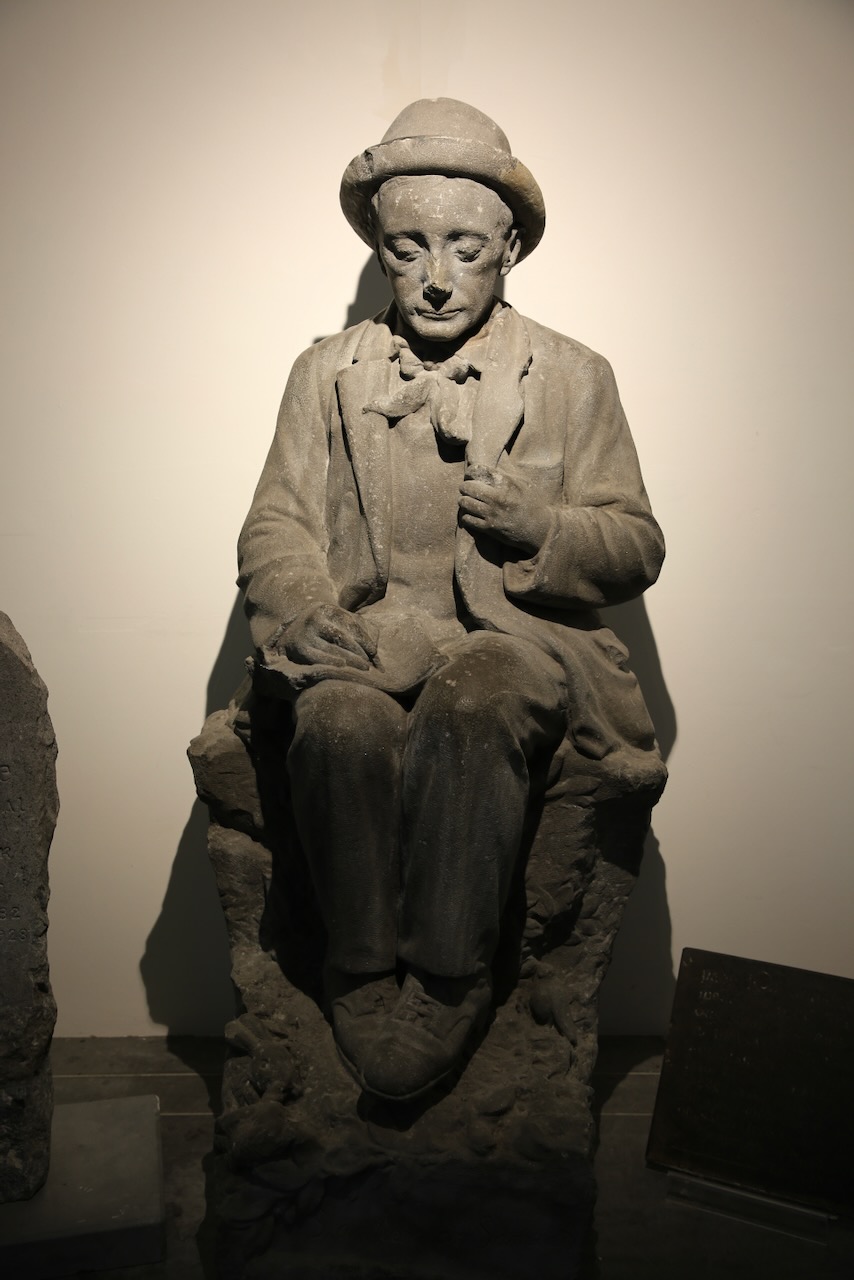
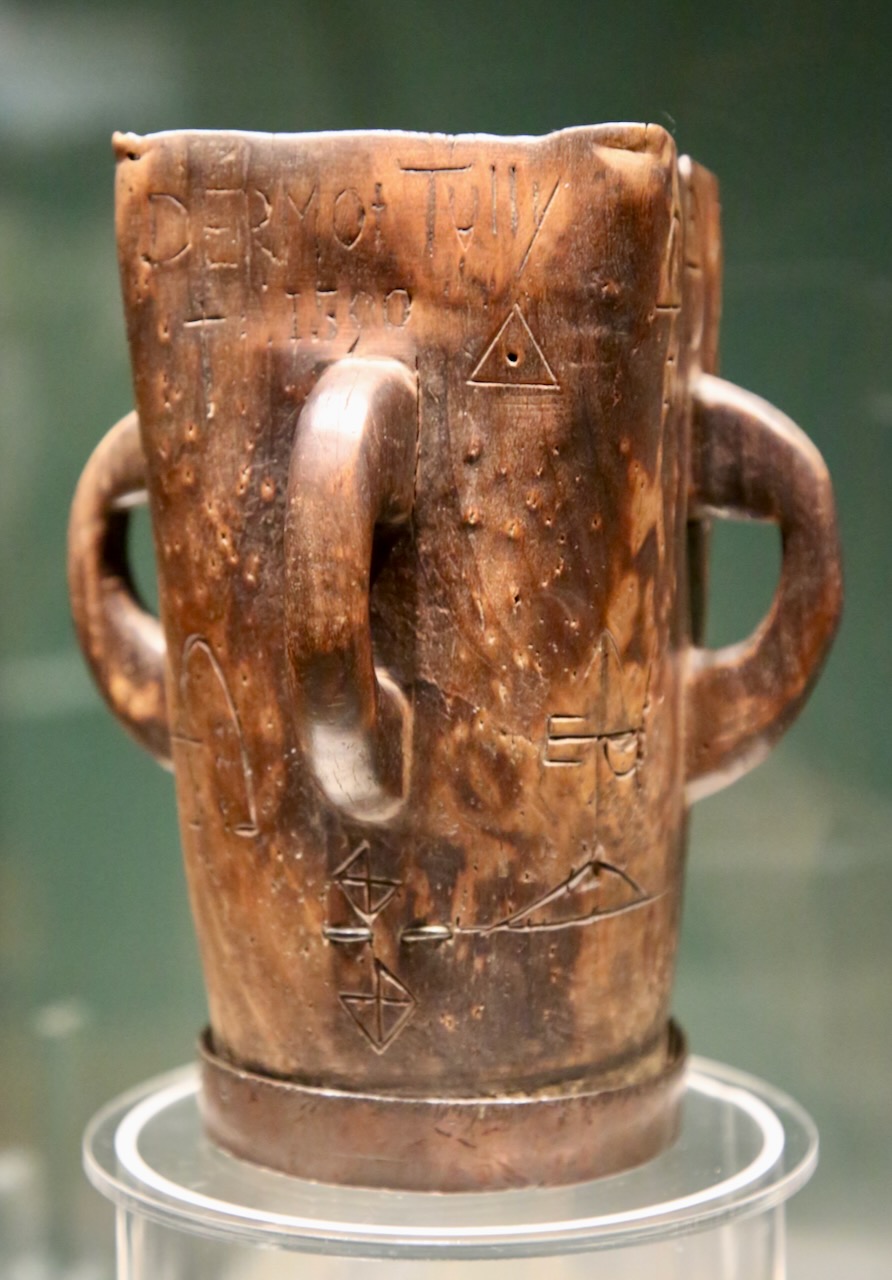
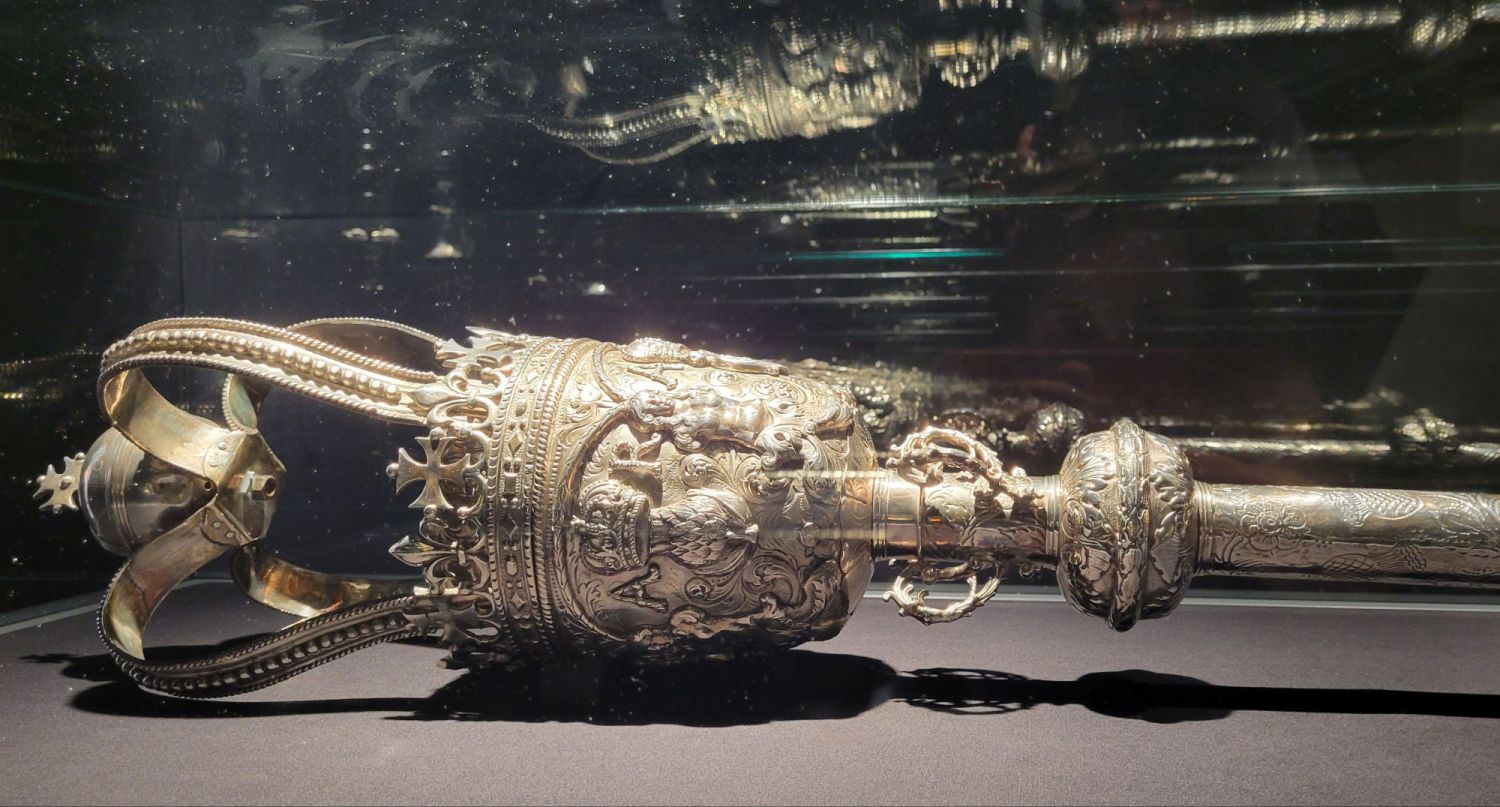
Pádraic Ó Conaire, 1935 and physician’s cup, 1590
From the Galway City Museum to the docks is named The Long Walk, which is anything but. It’s about 350 meters of houses, boats, and harbor views. We turn down Quay St. which becomes High St., Shop St., and William St., the names changing where the streets meet with Buttermilk Ln. and others as we make our way to Eyre Square. We passed a mural for the Baboró International Arts Festival for Children in Galway. There are pennants of orange, white, and green strung between the buildings with many Ireland flags on display too.

There are a variety of musical buskers — a violinist, multiple guitarists, a drummer, and an accordion player. A baby staring down a shop and a man with his bicycle is inflating balloons. There’s a sign to the Famine Walk with a 15-minute audio available at walk15.org. This one is a reenactment involving a six-year-old girl who wants to become a snail to escape her predicament. Near the north end of the square is the Browne Doorway which was part of a house built in 1627 and moved here in 1905 as witness to the great houses built when Galway was wealthy.



Always one to notice a donut shop, I see a pink one that catches my eye. The intersection of the two industries eludes me because I’m not the 16-24-year-old demographic of the fast-fashion retailer nor the 6-12-year-old that wants a sprinkly donut. I am however just the person to think that what the purple bits of frosting and unicorn horn symbolize should be on an adult cake. Kids are naive to these references (or they were when I was young and without the internet), so the sweet treat maintains its innocence for another day.
Located on Churchyard St. is the Historic Street Market that’s been around since 1484. I’m sure there were fewer windchimes, necklaces, and freshly caught fairies on offer then. We are in luck when we return to the cathedral, probably had hours posted, as the door is metaphorically open. Inside is a small mosaic memorial to JFK who visited Galway in 1963. It’s him in prayer and on the other side of Jesus rising on Easter is either Pope Paul, the first who visited in 1979, or Patrick Pollen who created the tiled face artwork.

I stare up at the organ and the stained glass windows, the stone arches and curved wooden ceilings, and the tiled floor and beautiful doors. I imagine the pews packed with posteriors as they rise to elevate their voices and fill the church with song. Standing on the bridge, we turn back to listen to the bells that seem to play “Amazing Grace” or an extended version of a Bible quote. With half the day’s walking done, I’m looking for a place to rest. We decided to visit the Galway City Museum with a motley band, consisting mostly of baritones, performing outside.
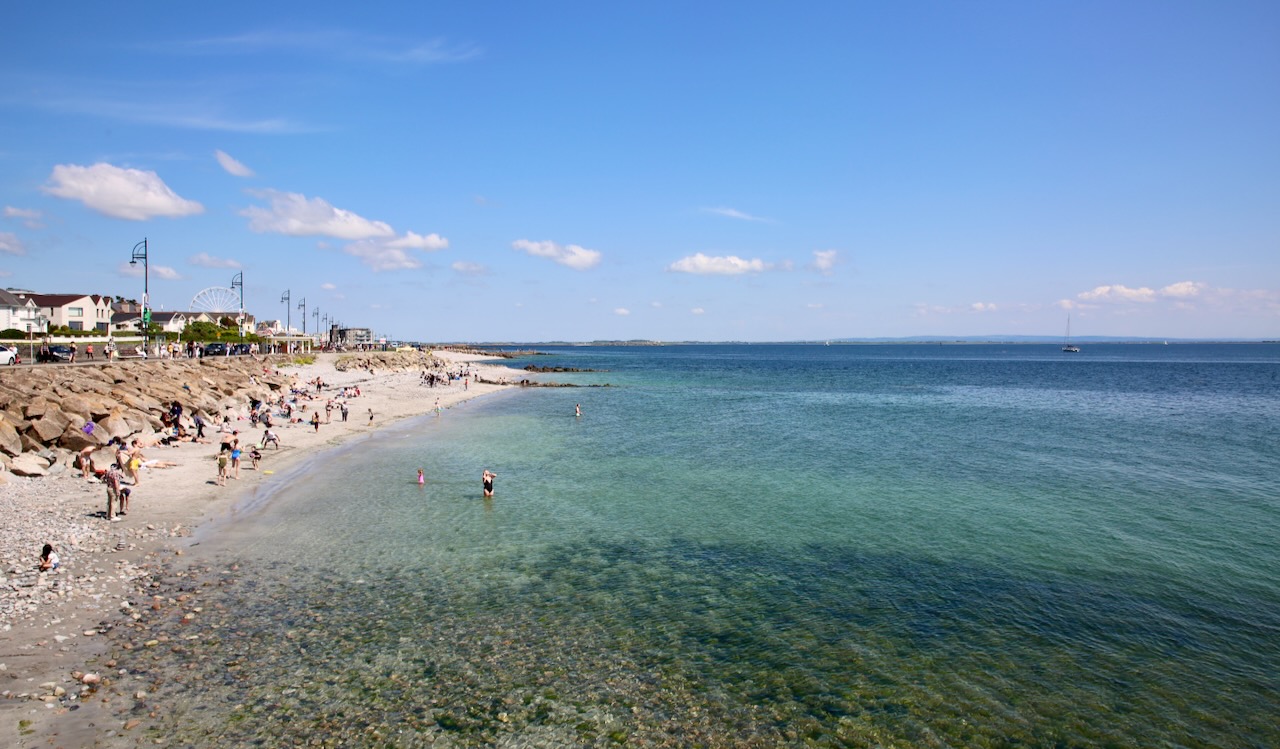
Blackrock Beach
I take respite on a bench across from a statue of Pádraic Ó Conaire; grateful for the momentary relief on my weary body, tired from fighting illness and the urge to sleep through a vacation, which is not an option. The limestone statue was revealed in Eyre Square in 1935 where it lived for 70 years before being moved inside for safety. A bronze replica replaced its spot in the square in 2017. Pádraic is the author of 26 books, 473 stories, 237 essays, and 6 plays. The other two exhibits on this side of the lobby concern the history of the Aran Islands and a bit on the Irish Traveller.


This peripatetic group, nomads who offer crafts or trade to settled peoples, also exist as Carnies, Romani people, and Gutter Punks in North America. There are over 200 groups of hunter-gatherers, who follow the seasons, and pastoralists, who move their herds, spread over six continents in less industrialized regions. All the descriptions are in Gaelic and English, which besides providing accessibility offers a chance at learning a new language or at least something new about it. Once done exploring downstairs, I slowly climb to the next floor, past the Galway Hooker, a boat built for fishing in the strong seas of Ireland’s west coast.
Upstairs, the exhibit shows how the land was used to grow timber, wool, meat, milk, and barley so the locals could have food and entertain themselves after working hours and church events. There’s a worldwide display about voting and when women were given a voice (1922 in Ireland) and which countries still don’t hold elections (China, Saudi Arabia, and Eritrea). Some countries still discriminate against voters based on sex, status, and skin color but there’s a saying about throwing stones for all that.
There’s a Royal typewriter (no older than 1906) using Cló Gaelach font keys, the same used in the first book printed in Ireland in 1571. These heavy (roughly 17 lbs) machines came into popular use in 1873, mostly made in America, so it was difficult to get Irish-lettered keys. Locals were hesitant to see the font phased out for Roman type. While other writers were worried about the effect a ‘book-writing piano-like contraption’ would have on the legibility and necessity of handwritten letters. For those, like me, born in the transition of the computer age, we were still writing letters to our grandparents, best friends, artistic cousins, inmates, and to my mom from bootcamp in 2004.

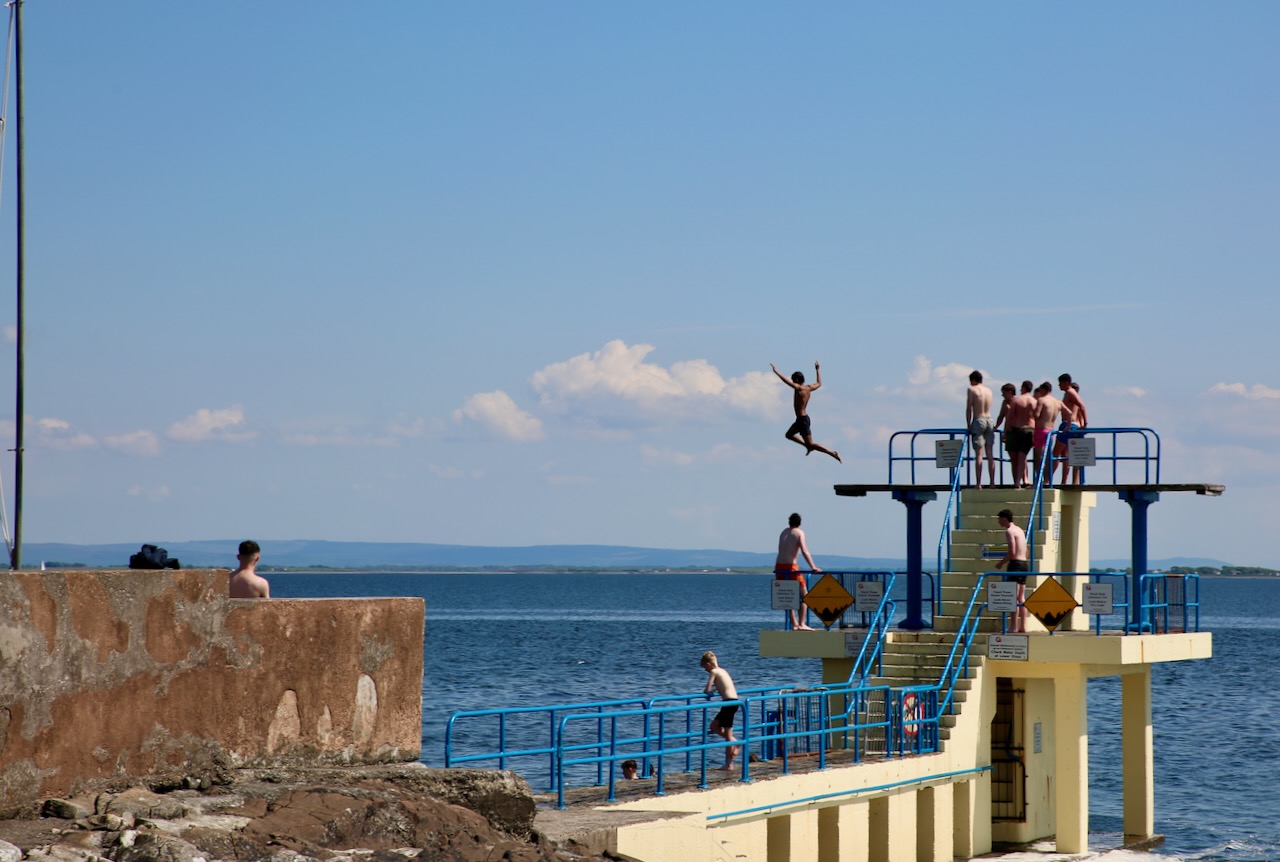
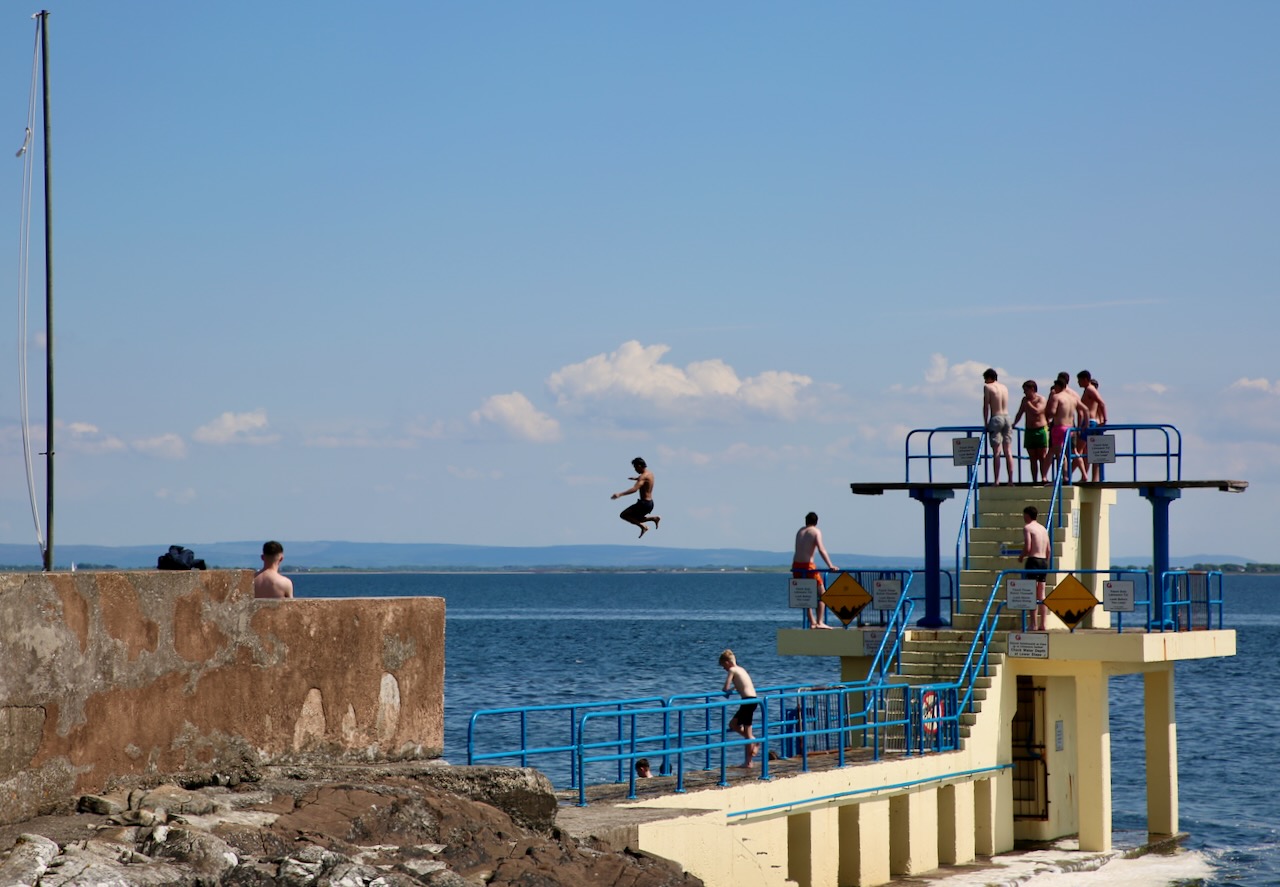
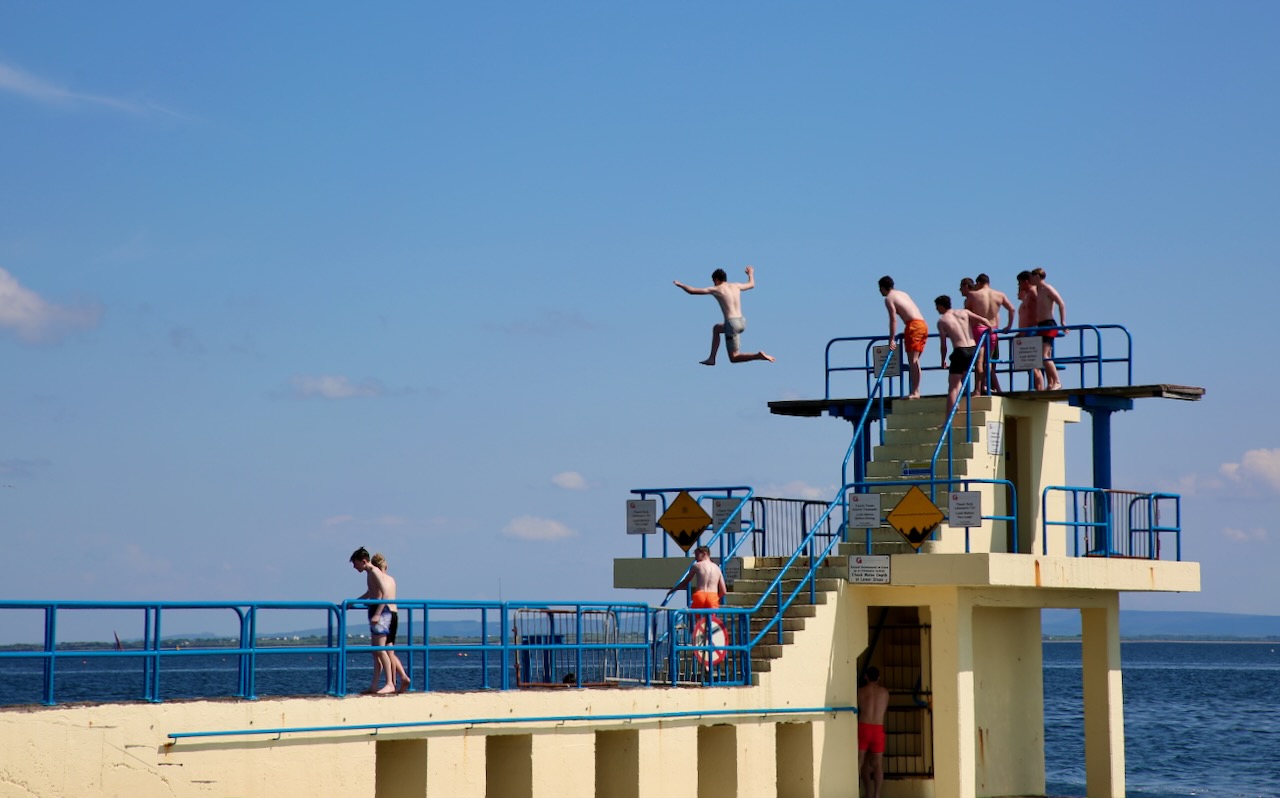
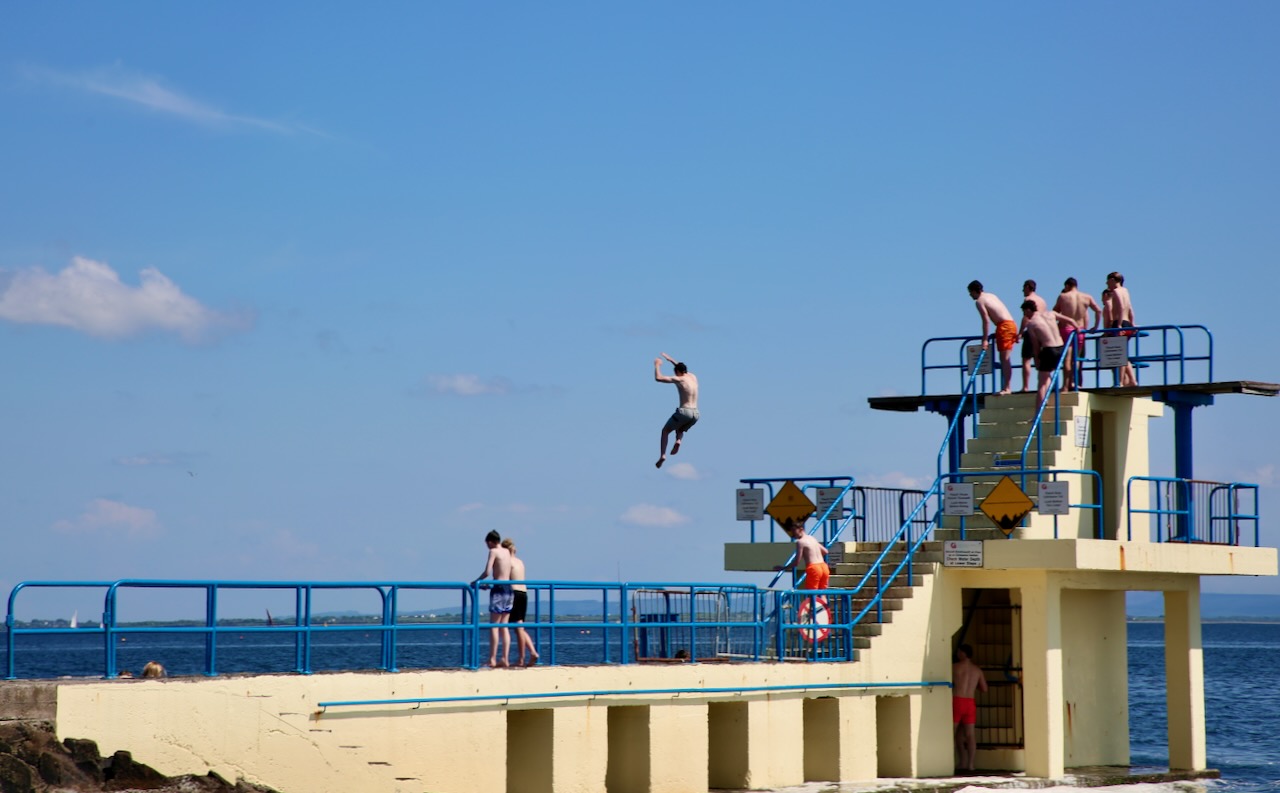
I could write another post about all that history, but let’s return to Ireland. After an educational time at the museum, this one earning the award for most sitting done by me, we were ready to get back outside and let the sun reawaken our energy reserves. Traffic between the beaches was at a standstill to the left of the roundabout so I took the only other direction, almost doubling back, and found parking up a road. We decided to trek towards Salthill Promenade and the Blackrock Diving Board was on my list of places to see. It’s a beautiful beach and what stands out are the stairs for those who like to read, eat, chat, and people-watch by the sand without getting any on them.

The diving seems reserved for a high school swim team which the city council would agree with. I notice little shells laid out by color or design on larger stones before walking along the Coastal Soundwalk on the paved path between rocks and grass – a consistent Irish theme. The walk to something is always met with excitement and the return trip can be just as exhilarating but also exhausting while we wonder just how far from the water we had to leave the car. Upon return, I notice the empty liquid replenishment bottles piling up and we stop at a Tesco to exchange them for €2.60 by recycling.
Parents will leave their kids, with multiple bags, to handle this task while the adult handles the shopping. It’s a great idea. A company, Revolution Laundry, also wanted in on the multitasking opportunity, so they now offer machines and soap for 18 kg of clothes to be washed and dried in 45 minutes for €14.50 or 8 kg for €9. There are more than 500 of them installed throughout Ireland next to supermarkets and petrol stations available 24/7 making clean clothes more accessible. I thought they might be focused on travelers but most laundry services are a drop-off and pick-up service with limited hours and these are great for large items and multi-membered families.

We drive northeast to the other side of town and use the lockbox to let ourselves in and upstairs. There is a shared bathroom, with plenty of hot water, toiletries, sunlight, and no evidence of another guest. There are books, games, and tea. Once we’ve performed our humors-releasing rituals, with our 8-12 pints intact, and feeling 50%, we are ready to go on the prowl for some pre-killed prey. The Trappers Inn & Jackson’s Restaurant is nearby and is serving food at this hour.
There’s a spot at the bar for us to cozy in and admire the glass, copper, and wood while watching customers who take their Guinness outside. I get a slab of salmon served atop rounded mounds of mashed potatoes and covered in an orange sauce. Caleb has smaller potatoes that are cut in half and seasoned and gives me one to try. Back in the room, I notice travel plans to Ireland from over two years ago — a screenshot that includes Wild Nephin National Park and goes counter-clockwise instead. I dream of going everywhere and seeing everything so that if I ever get the chance to go somewhere and see something, I’ll be sure to forget my itinerary at home and bring my list of suggestions.

 TheJessicaness