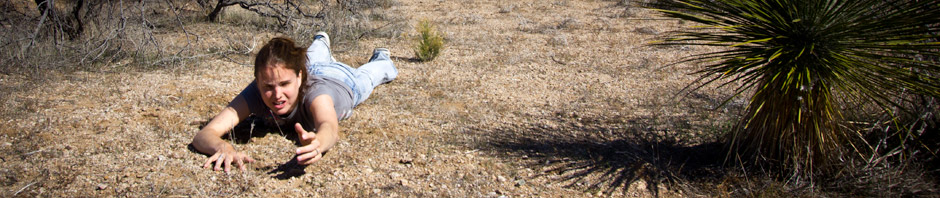

We wake up in Deming, New Mexico and after a shower, putting the tent away properly (after last night’s hurry), and getting some free coffee and an apple cinnamon waffle are ready to face the 30°F day. Our first stop is Rockhound State Park, which has us going south towards the Little Florida Mountains. There’s a trail from the picnic area that climbs higher into the wind. This area of the park is better known for its abundance of minerals and wildflower displays – neither of which we are seeing in the cold shade.

We’ll drive to the Spring Canyon Recreational Area, better known for its peaceful hiking and stunning scenery, in hopes of seeing an Ibex goat now that the temperature is 41°F. The park’s elevation ranges from 4,500-5,400 feet and we’ll experience some of this climb on what used to be a paved road. While we’re out here, Caleb thinks of a neat sticker: shoes with rocks, stickers, and a tiny bush in them as nature’s trail mix or whatever ingredients make up your favorite path. So if someone beats us to printing these, Caleb is owed a royalty.
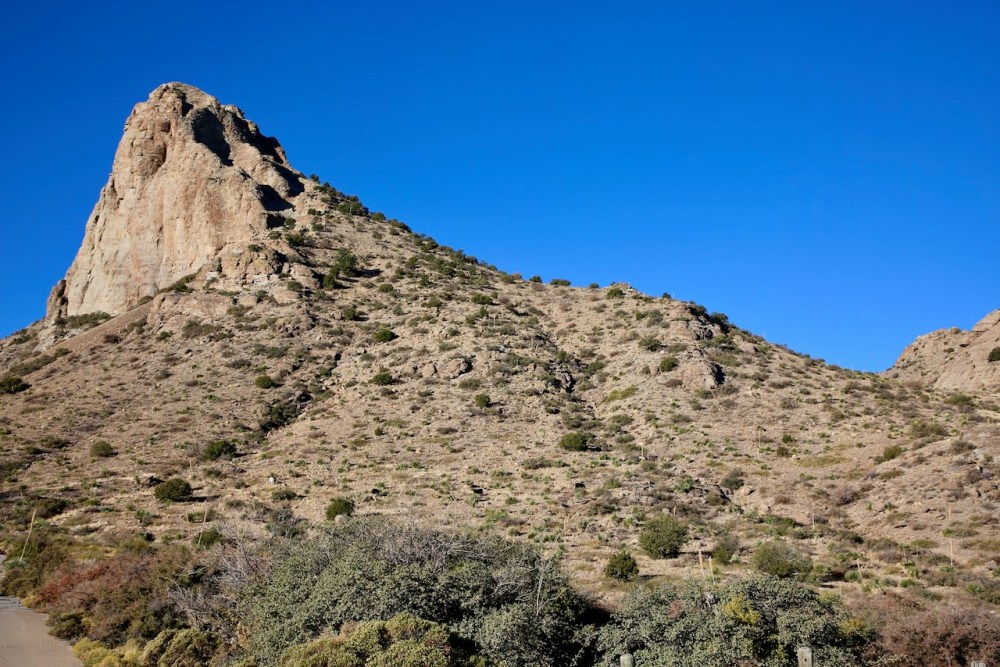
No goats for us, but we do see some lovely Brahman cattle on our way to Mesilla Valley Bosque State Park. I had no idea that the Rio Grande ran through here and starts in Colorado. The river covers almost 2,000 miles, most of that between Texas and Mexico, as the 20th longest river in the world, and the 5th longest in North America. The river is critical for bird migration and the vast basin it feeds, but humans feel the need to pull enough water for irrigation that it allows the introduction of invasive plants along with pollution to destroy parts of the eco-systems the river flows through.

It’s quite windy, but once we go past the cute garden area and over the levee to start the trail to the left (the other being closed for construction) that loops by the river (dry with tire marks), the tall grass will be our windbreak. We are also met with trail barriers as many a thorny tumbleweed or the brush beside them cut Caleb’s hands as he clears us a thin path. We’ll learn from the nice employees, front desk lady and groundsman, in the visitor center, after our walk, about why the lake (dammed river) is dry. The reclaimed water that they’re allotted has not been released yet.

Caleb will carry on with their kind conversation as I have a look around their sufficient display and notice that on a map is Bosque del Apache National Wildlife Refuge, just two hours north of here, where I spent Christmas with Dad and Caroline two years ago. A bosque is the forest habitat that’s found along rivers and both of these areas are designated IBA (important bird areas) by Audubon, which established this program in New Mexico in 1999 and has identified 60 areas, large and small, to provide sanctuary to over 340 species in the “Crown Jewel” alone.

As we’re passing through one of the many neighborhoods of Las Cruces, on Locust St., there’s a sign posted: Yield to blind in X-walk. Cars should not hit any pedestrians, whether or not it’s their turn to cross, if they have the brakes and stopping length to do so. This is why I appreciate the crosswalk break in the middle of wide roads for those who take longer to shuffle, wheel, crutch or otherwise get themselves across. I doubt it’s the blind who are running across at night, wearing all dark clothes, where there are no street lights or pedestrian marked paths.
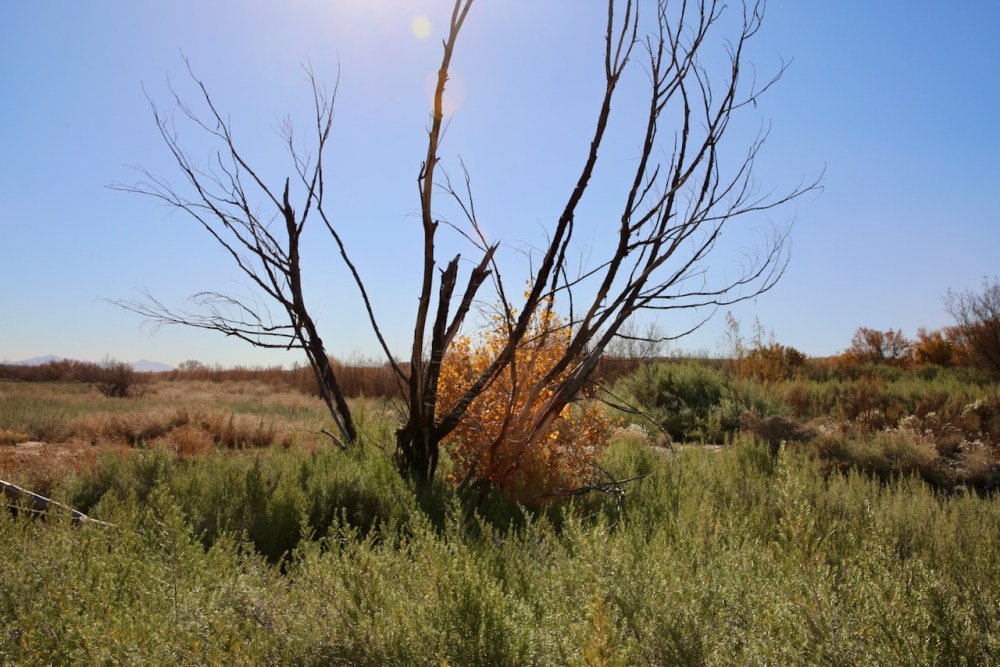

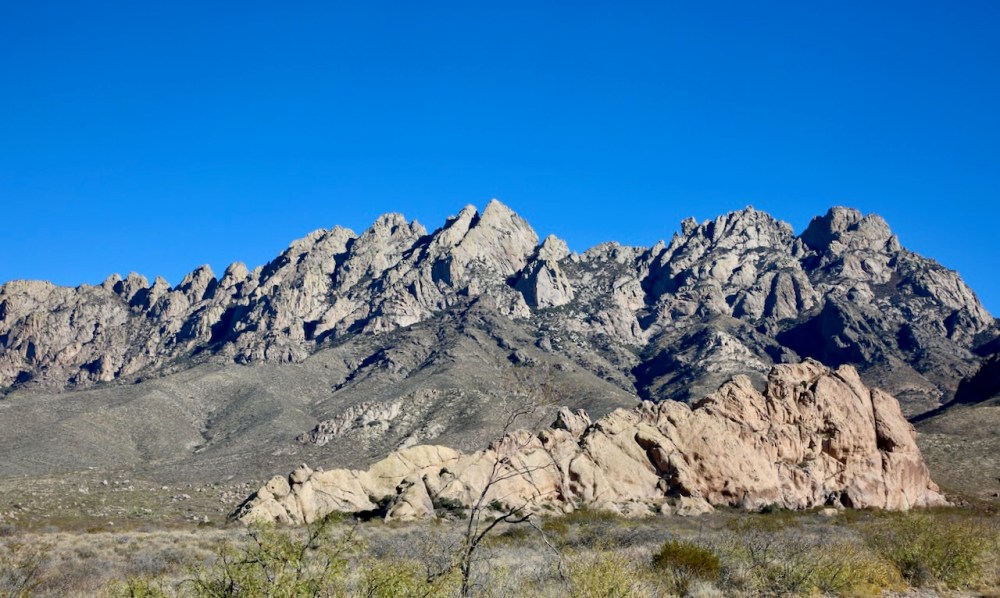
What I didn’t know about Dripping Springs Natural Area is that it’s part of the Organ Mountains-Desert Peaks National Monument. It was established in 2014 to cover over 496,000 acres of Chihuahuan Desert, ponderosa pined peaks, narrow canyons, flat plains, and a volcanic landscape that’s southwest of here, close to the border with Mexico. It is managed by BLM, not NPS, so I have another website to check for awesome places to see. I thought we just missed the Fillmore Falls, but now we have plenty to come back for and an America the Beautiful pass that gets us in for free while Caleb is active duty.
The free annual military pass program started on Armed Forces Day in 2012 and as of Veteran’s Day 2022 all military veterans can receive a free lifetime pass to over 2,000 federal recreation sites. This latest program, the VIP Act, came after the death of Alex Lofgren, a veteran and congressional aide, who said his healing journey included experiencing nature and helping veterans. After he passed in 2021 in Death Valley, this was a way for his girlfriend to honor him and all those he had worked with and continued to support after he was discharged.

We have a look around the visitor center with a large poster about The Twelve Orders of Soil Taxonomy and what percentage of ice-free land surface they cover. I could nerd out on that too, but Caleb is looking at the maps of visitors: one of the US and another of the World. Two people came from Greenland, two from Madagascar, and one from Mongolia amongst a mess of others from Puerto Rico, Ghana, Israel, England; and Victoria, Australia. Once we’re done looking around, the ranger asks if we have dogs as that’s a determinant factor of which trails they can go on.

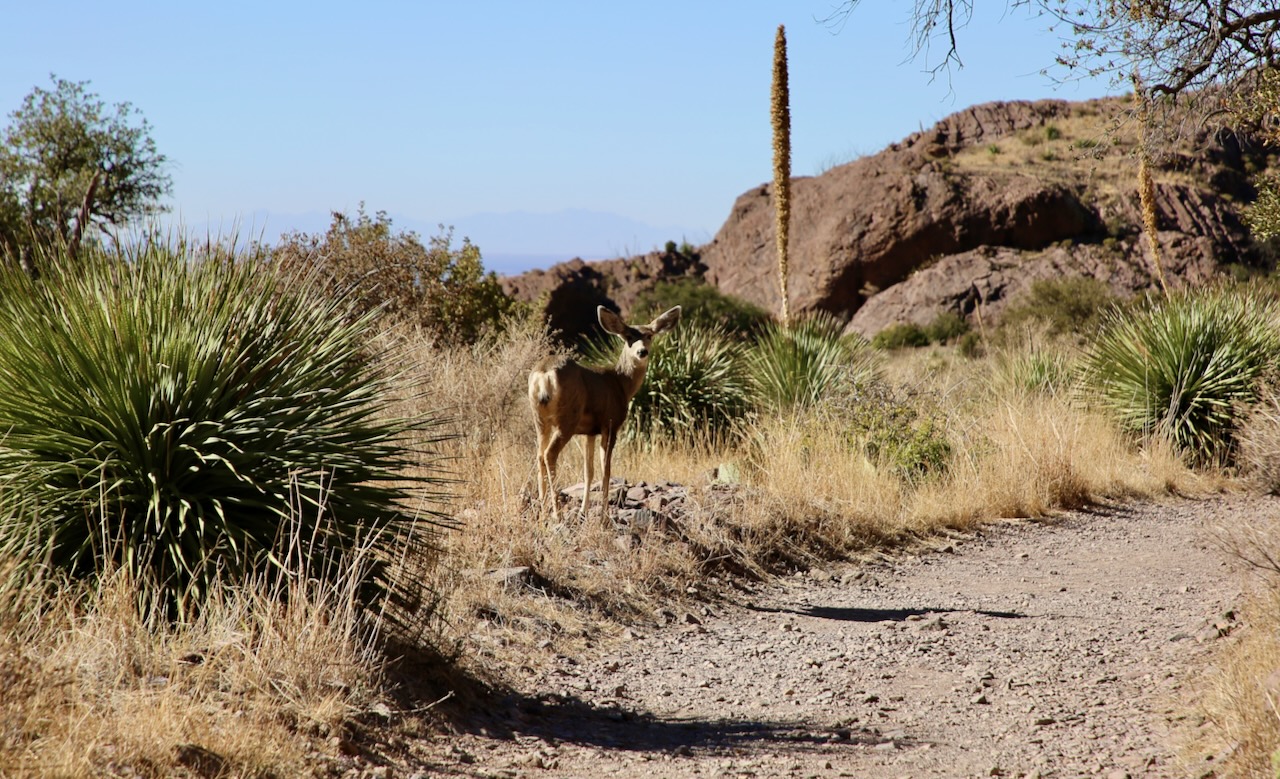
Out and left to get to Dripping Springs. We feel like we have the place to ourselves, and for the most part we will, minus the frat-boy men, a couple, and the woman who points out mule deer by standing frozen while she watched them eat and stare. It was a great time. We pass some outbuildings that used to be signs for wagons, and eventually automobiles, that they were close to camp and a wonderful meal. There will be no food, and is sadly no water in the filled-in reservoir that was built in 1892 to support the 32 guest room hotel.

Welcome to Texas, where a wall separates us, a highways joins us, and a sign warns us of unexpected pedestrians in-between. Across the river is a 197-foot tall, bright red X, made by sculptor Enrique Carbajal González in 2013, to honor the first Mexican president’s, Benito Juárez, for whom the city is named after, decision to spell Mexico with an X instead of a J in the 1800s. It’s also a reference to the merging of the indigenous Aztecs and the Spanish cultures in the country with a viewing window so that visitors can look into El Paso and over Ciudad Juárez.

The entrance to Chamizal National Memorial is beautiful and we drive past an outdoor stage. We look at the mural, painted in 1992 by Carlos Flores, with Marian Anderson, an unnamed white man, and a vague American Indian leader. The latter will last through the 2014 restoration while Neil Armstrong and Barack Obama will be painted over the others to convey the same message as the original – the US is culturally diverse and Americans share a history of astonishing feats, inspirational achievements, and enduring legacies. I’m not sure everyone would agree, but the artist isn’t bad at painting faces.
It is quiet when we walk in, and we will be the only noise inside, or out, during our visit. Ranger Saul lets us walk through the hall, learning about the exchange of statues – Abraham Lincoln in Mexico City and Benito Juárez in Washington, D.C. – in 1966 because “only a truly great people pause to pay tribute to the great of other lands.” – President LBJ. Also in the hallway are 245 “Centennial” and 239 “Find Your Park” pin displays, collected by David Kroese in 2015-2016 for the National Park Service’s 100th anniversary as a thank you to employees, volunteers, and other helpers.

Then Ranger Saul leads us to a room – part waiting room and part living room from the 50s to watch the video about the argument over the Rio Grande as a border as it had shifted in 1864 and both Americans and Mexicans had settled the land that would eventually be split. People had to move in 1964, and were paid by the government for their land, but not their homes, and given the option of which country to relocate to. The countries agreed on a $40 million concrete channel for that four mile portion of the river to reduce the need for another dispute anytime soon.
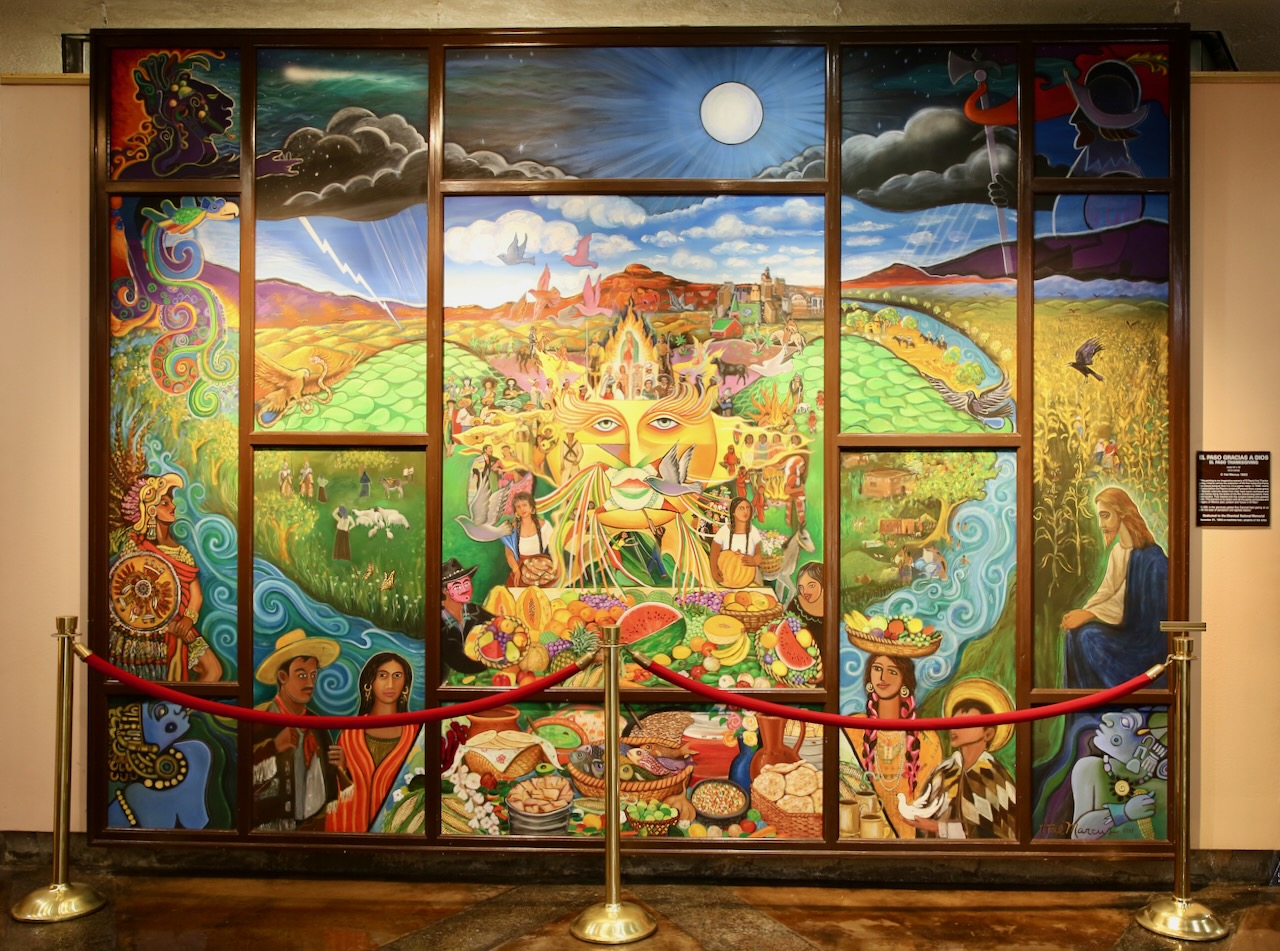
I let Ranger Saul know that we were last here in March 2012 and glad to have us back, tells us about the first Thanksgiving in 1598, when the Spanish colonists feasted with the Jumano Indians, and shows us the painting dedicated indefinitely to the park by Hal Marcus in 1993 that is displayed prominently in the lobby. I tried looking for pictures from the last visit, but that would require getting out my hard drives, so maybe in another post I can compare then vs now. We know that Mexico has states, but weren’t able to answer that six of them border the US. I know Africa has countries, but I can’t name all 54 of them.
Ranger Saul says he piloted the 4th grade park program 15 years ago by taking field trips to White Sands and other parks. This would eventually lead President Obama to launching Every Kid In a Park for 12 years in 2015 so that every school-age child would have the opportunity to visit for free. Obama even went further in providing transportation grants to further remove barriers from underserved communities. As great as this idea was, only 120,000 passes were issued for the four million eligible children in the 2021-22 school year. The administration chose fourth graders as they seem to be at the age to start showing interest in the world around them.

Ranger Saul left an impression on us, so Caleb grabbed his Kids’ Passport (for the parks), and asked him to sign it for sharing his time, knowledge, and love. We were then gifted our first Junior Ranger patches for our willingness to learn and share. We have been to almost 200 parks and monuments and Caleb only has 5% of those visits memorialized with a message. I’m not sure when he got the book, but a lack of interest and conversation on their part (can’t be mad at introverts) won’t keep us from enjoying the museums and outdoors that these places introduce us to.
Another inspiration comes from a couple’s idea, once they visited Yosemite (it is on my Top 5 favorites, so far), to bring their sons along on a journey to visit all 59 National Parks (there are now 63) before the boys turned 18. They accomplished their goal, got matching tattoos to celebrate, and wrote a book, 59 Before 18, about the six years it took them in hopes of inspiring others to start with a park close to home. Another family finds their expressiveness in their front yard when a man promises to build his wife something beautiful.
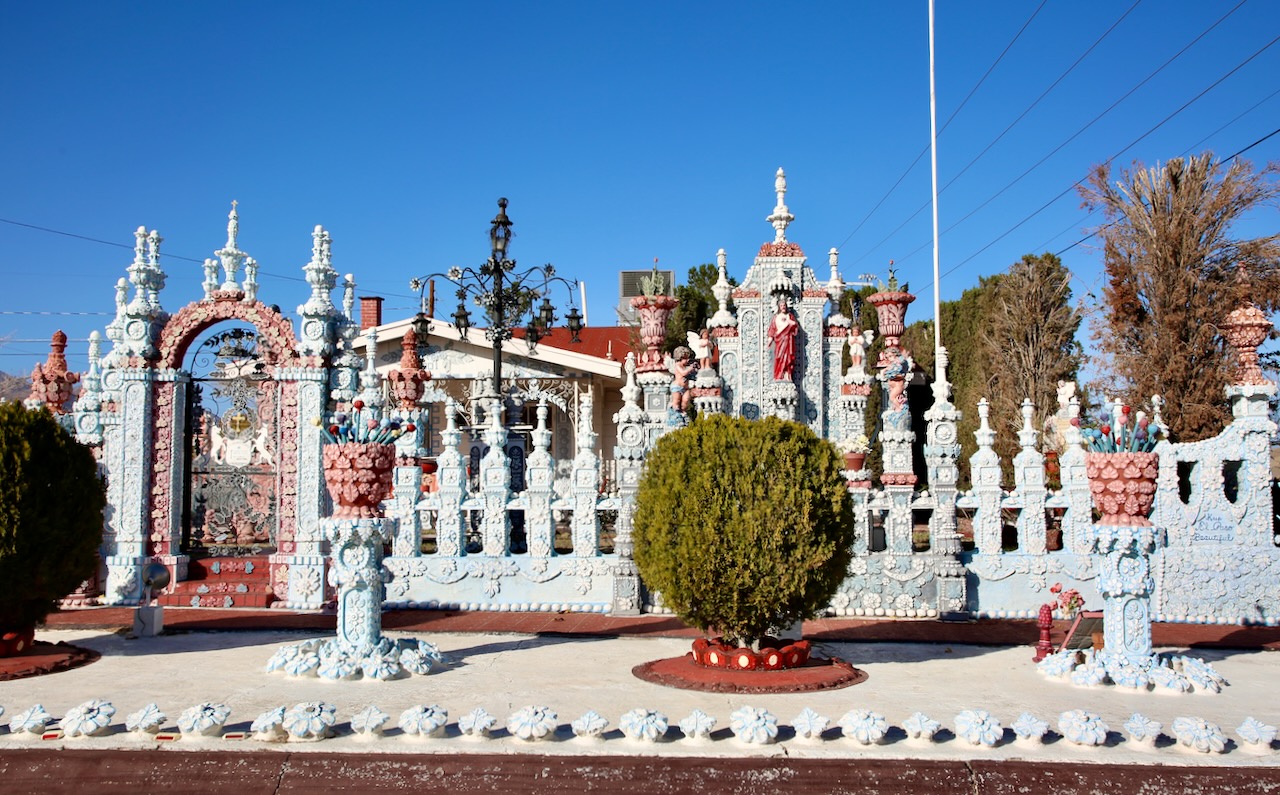
We find the Casa de Azucar in Atlas Obscura as the chiseled cement that took Rufino 25 years to complete, starting in 1973, has turned into his masterpiece with themes of religion, hospitality, and nature. I had assumed it would be somewhere different, so I was caught off guard when we parked in front of a house, near the highway, and walked towards the white and light blue home with touches of pink and a maroon roof. I also didn’t expect to see the art expand onto the sidewalk, around the house, and through the garden. I’m surprised in myself now that I didn’t knock to see if the inside had a matching motif.

Texas has so many helpful signs. The next one tells us: Never leave a child or pet alone in a car., so here dogs are allowed to roam in the streets. Now if only we could post those same signs in national parks so that people would stop putting baby bison and elk in their cars. Still in El Paso, we visit the Rio Bosque Wetlands Park, acquired through the federal lands to parks program. The Tornillo Trailhead seems to still be in the planning phases to get to, but there’s a map at the start and a bench with a tree on it. This park is the dumping grounds for treated wastewater that migrating birds find attractive. The pipeline delivering this water is also attempting to return the oxbow to the river that was straightened in the 1930s.

We stop in Van Horn and I wash the windshield and try on a neon yellow fur cap. I’ll show Caleb the photo later and he says we could’ve had another set of matching hats, these being hi-vis too. We stop to make dinner at the next rest stop so we can use the walls as a wind break that we didn’t have at the gas station. We’ve decided to drive to Fort Stockton tonight since we aren’t going to risk another night of lost sleep attempting to settle in a field without a wind barrier. I think there could be a new version of glamping – an app that helps you find rock piles and dirt mounds to hide behind for a good night’s rest.
It’s too bad I didn’t keep track of tonight’s dinner as I thought it was too salty and was glad to have a banana so I didn’t have to eat as many noodles. Caleb has hotel points from staying at fancy places that the Navy pays for. I have motel points from being in a beta program that got a credit card that switched to a “cash” system, so the quality of my offers varies and can be judged poorly based on the bad taste of other visitors who find these places grand for the crimes they’re committing inside. We get to the Atrium Inn at 830, already having paid our $60, and are asked for a card to be kept on file for incidentals.
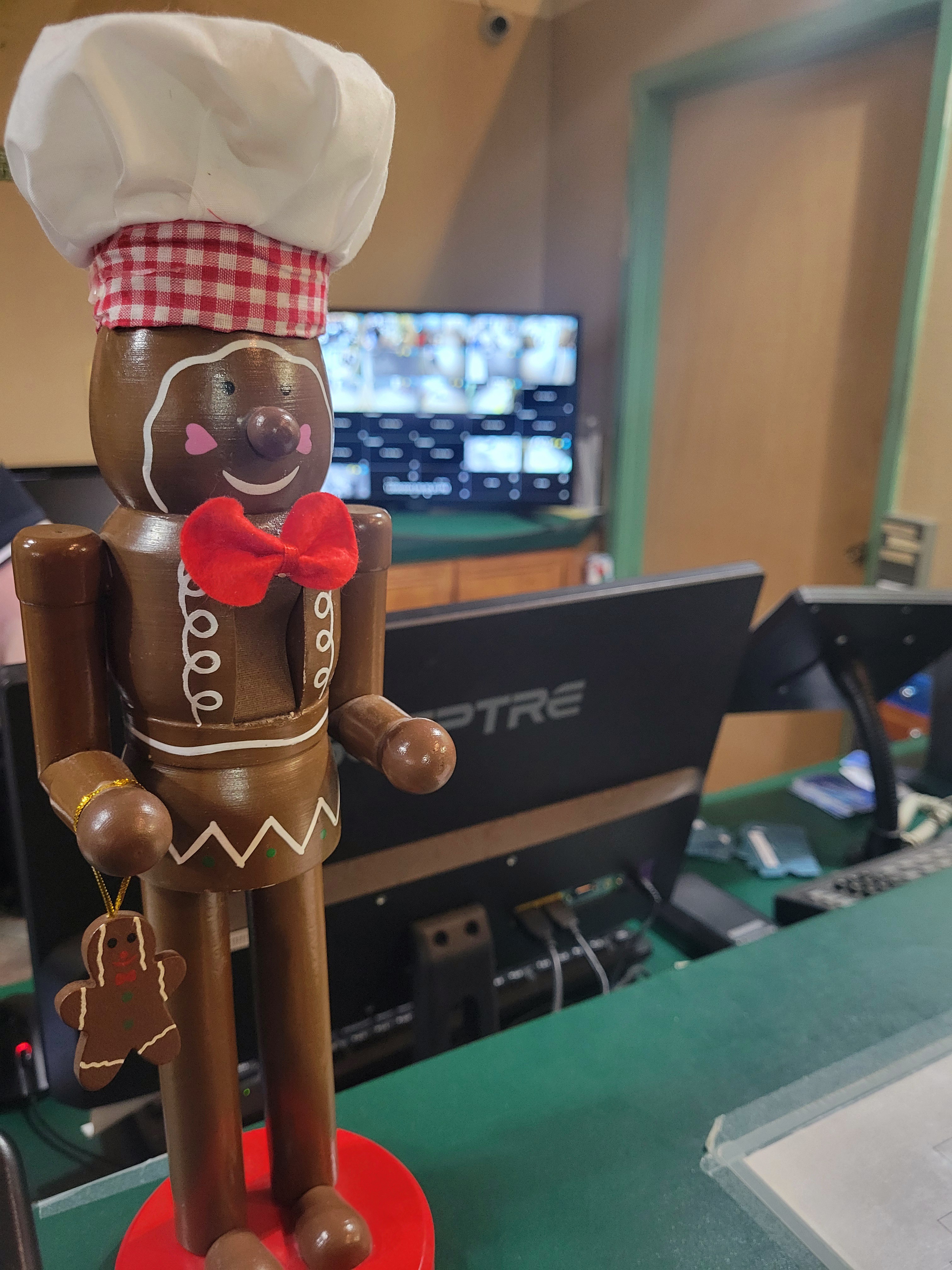
The pictures looked grand, and we’ve been fooled before, but there is a heated pool with a waterfall out our back door. We explore more of this cozy space to find a dirty, half-full cold hot-tub and that one of the two saunas was starting to heat. Back in the room, I’ve stayed at places half the price of this one with the shared microwave securely attached to the wall in the hallway, and yet those rooms still came with a bathroom door. Caleb gets the bathroom sink to stop squealing and we’ll use the kitchen sink to brush our teeth. By incidentals, the clerk meant theft as there’s no minibar, no towels worth stealing, and not sure of in-room entertainment since we didn’t turn the TV on.

 TheJessicaness