THURSDAY
It has been over a year since we took a roadtrip, the March and September ones of 2022 perhaps adding up to the distance we planned to cover in two weeks. Our friends, since 2016, just bought a home in Florida which gave us a good place to rest a few days before turning around. We’ll also be bringing a bag of theirs across so it’s less checked luggage for Ryan. I’ll stock up on granola, canned veggies, and some tea for Caleb. I download two books onto my Kindle in preparation for all the reading I plan to do at the end of each day.
As if the car knew what was coming, the oil change light came on Wednesday, so I’ll be the first in line on Thursday morning and out 20 minutes later. We go through the packing list again when Caleb gets home from work and have decided to drive out to Yuma tonight to cover some ground, giving us more time to stop in other places. Traffic is gruesome but my happiness grows as the cars fade and the stars appear and I start to daydream about the beautiful country that I’m about to traverse.. not much I’m seeing in the dark tonight.
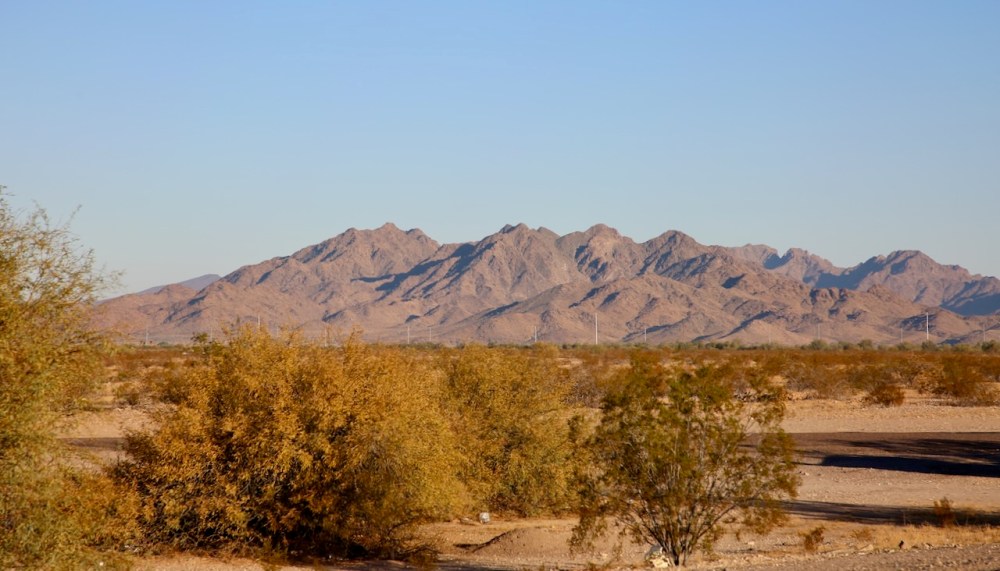
Caleb is already yawning, falling asleep to the slow music he chose so I tell him to change it, turn the light on, or nap. He decides to focus on his need to pee for 40 miles until we get to Yuha Well rest stop after careening downhill at 75 in a 65 zone with high winds. The truck speed is 35mph through here. The stop is known as Flat Rocks and was used in 1774 by the Anza Exploring Expedition as a watering spot beyond the Colorado River on their way from Sonora to San Francisco. We find a spot for the night at Pilot Knob BLM and set up the tent in 63*F.
FRIDAY
Caleb wakes me up at 430am when he gets up to pee and says he won’t go back to sleep. We stop at the Chevron on the way to the highway, but they’re closed, so we brush our teeth, cross into Arizona, and stop an hour later (welcome to mountain time) at another gas station. Our first planned stop is still 200 miles away, so luckily we find the Mormon Battalion and Butterfield Trail about halfway in-between. In the meantime, I enjoy the sunrise in the desert and the fog along the fence underlining the mountains as the temperature drops to the 40s.
Also seen from the highway is the field of wall-to-wall solar panels and then the cows standing in dirt with so little space in comparison. I’m glad I don’t have to drive by this scene every day and am grateful for the better views when I used to make this trip more frequently between San Diego and Phoenix to visit my dad, if even just for the weekend. We turn down Old Highway 80 and Caleb makes us coffee before we get to what we think will be a nice morning walk, but there’s no trail at the historic marker, just fence around a nearby factory.
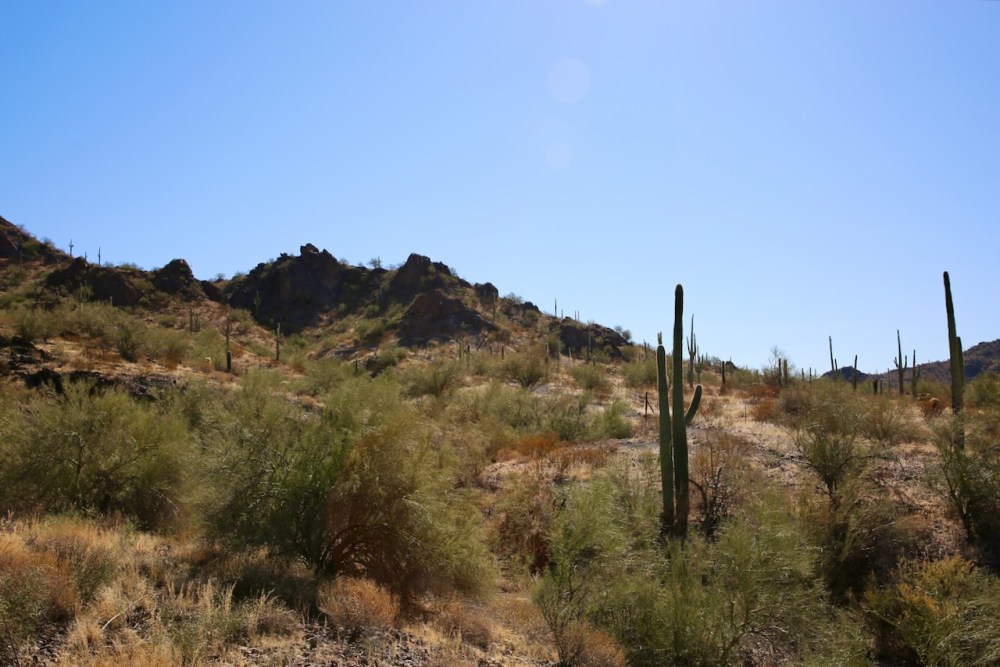
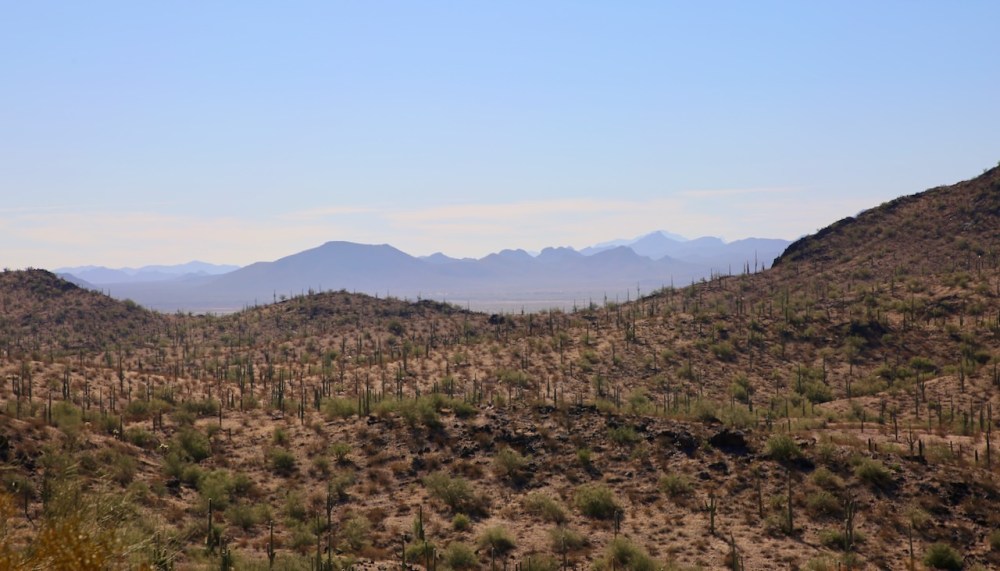
The sign tells us that in the 1840s, a bunch of Mormons met in Santa Fe and built wagon roads to San Diego that would later be used as a route for the railroad. The US made the necessary Gadsden Purchase after those men had suffered through patches of shrubbery in desolate deserts with loathsome water to complete the largest infantry march in history. We drive 11 miles to a parking area and walk in a wash that drifts along a drive-through hunting area – so we don’t stay long. We’re off to Picacho Peak State Park.
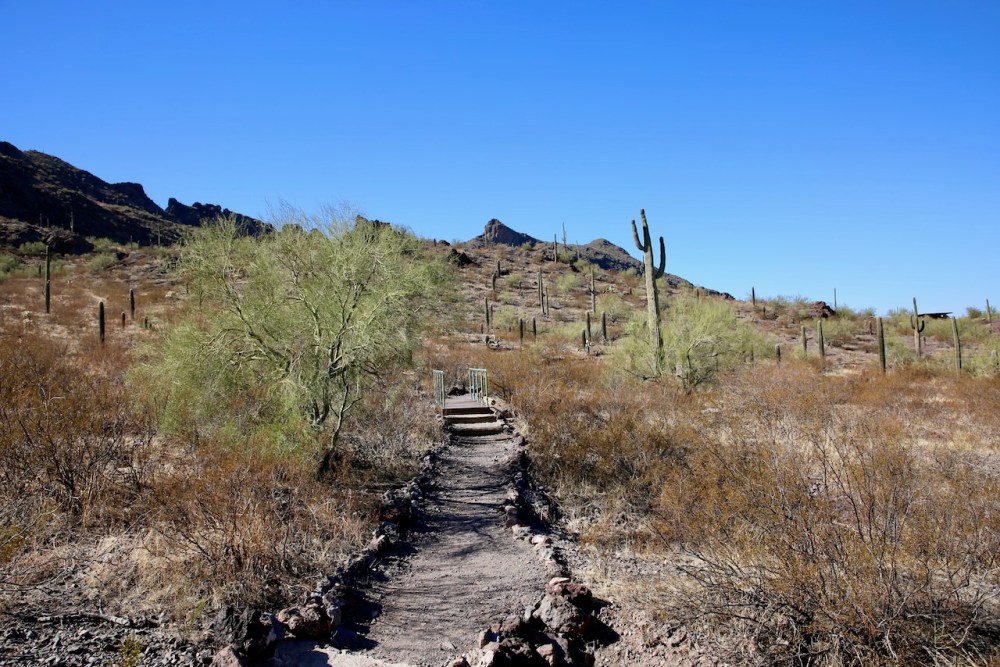
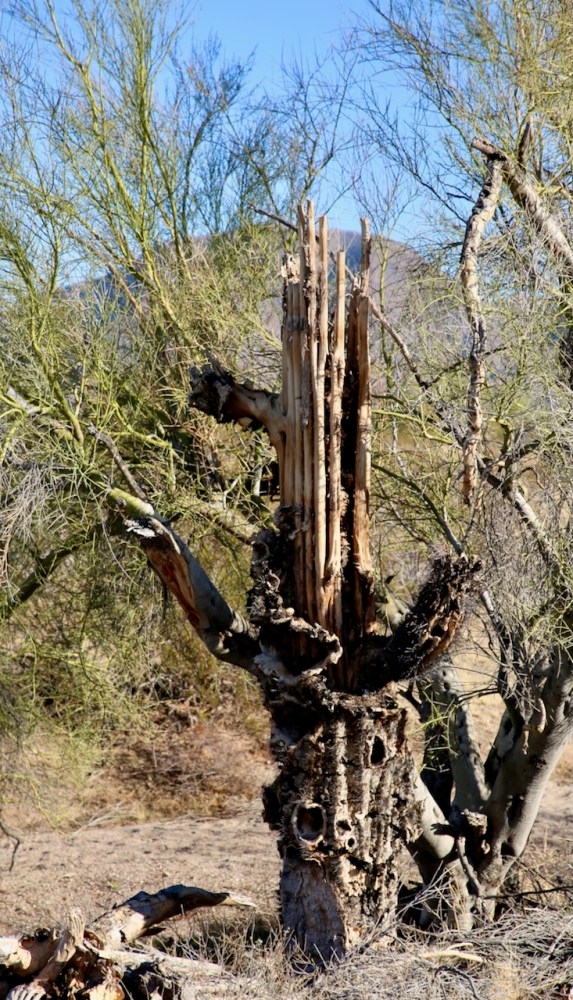
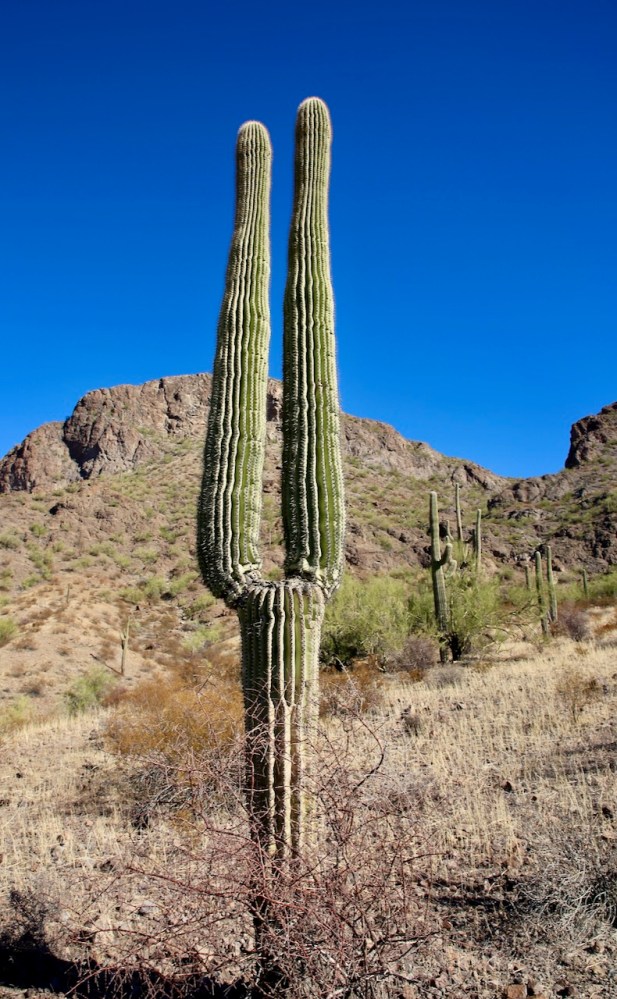
We pull up to the window, and a lady comes out to take our $7 and give us a map. I pull around the building, park, and go inside so we can discuss the hikes in the area. First on the list is Sunset Vista, with almost 900 feet of elevation difference. We’ll ascend a third of that before we turn around. We’re getting sweaty, forgot the water in the car, and it’s only 64*F. There’s a lot of steps through the field of saguaro in their different phases of life with their arms heavier than they look from storing water. We learn that they are slow growers and start holding out their arms at 75 years old until they die 100 years later.
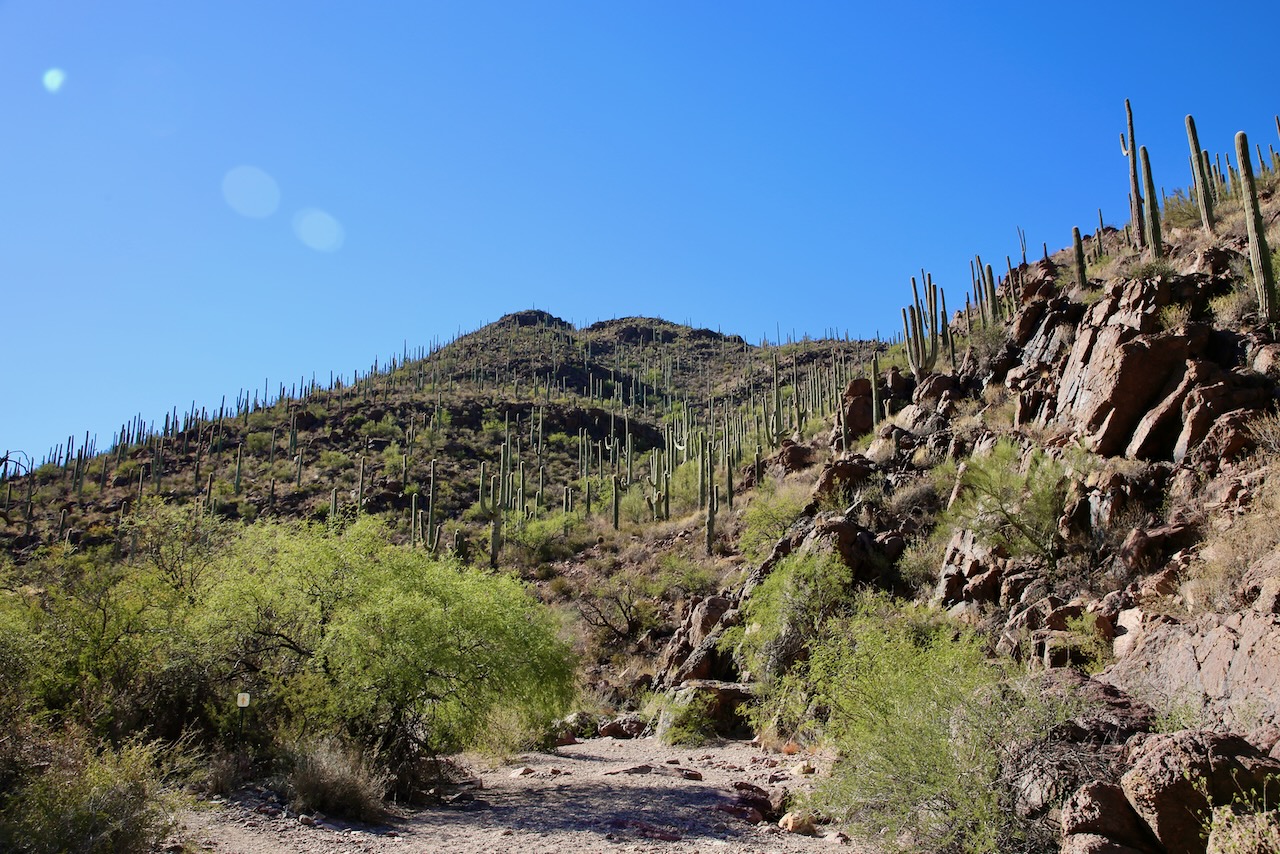

What we, and the scientists who study them, don’t know is how and why the crested saguaros came about their fan-like shape. We’ll be on the lookout for one, but have no such luck. We hike the short Children’s Cave trail but it has a more womanly feature inside its shallow opening. Then we do Memorial Loop to learn more about the Civil War in the Southwest: a wounded Union soldier in Stanwix Station (between here and Yuma) was the farthest western advance of any organized Confederate force.
Having been raised in Texas, my grade school focused more on the great men that influenced the Texas region and George Washington on the east coast; a history lesson where facts were missing to target their agenda and reach test bench marks for statewide stats. Texas schools definitely discussed racism and murder, still popular there today, as Texas led the nation in 2022 in white supremacist propaganda and in 2023 for most mass shootings (incidents involving four or more injuries and deaths) at 59 as of December. *For those wondering about the tangent, I’m connecting my lack of knowledge about the breadth of the Civil War to my lessons on it back in school.

Perhaps students weren’t interested or teachers had no enthusiasm – history wasn’t the only subject. I remember Mrs. Hill’s love for state and country – teaching us about travel in Texas and the Preamble of the Constitution. What I didn’t know was that Texas was the last state to free slaves but the first to commemorate Juneteenth in 1980, a holiday we didn’t celebrate and that wasn’t federally recognized until 2021. Texas is also home to more Black Americans, than any other state, that comprise 13% of the population. When I was in school they made up 11.7% and there was only one, possibly two, kids out of roughly 780 students in our district.


Anywho, the park hosts a reenactment from an event here and two battles from New Mexico every March to recreate conditions of the 1860s. I’m looking forward to our next stop at Rooster Cogburn Ostrich Ranch, but had I done an ounce of research I would’ve realized it’s a tourist trap and not the same sad playground that I remember seeing these mud-faced birds at near Barstow in 2012. We u-turn in their large parking lot and choose to skip Ironwood Forest National Monument due to the detour time, but this would be our loss as apparently a very happy saguaro, with at least 40 arms, lives there.
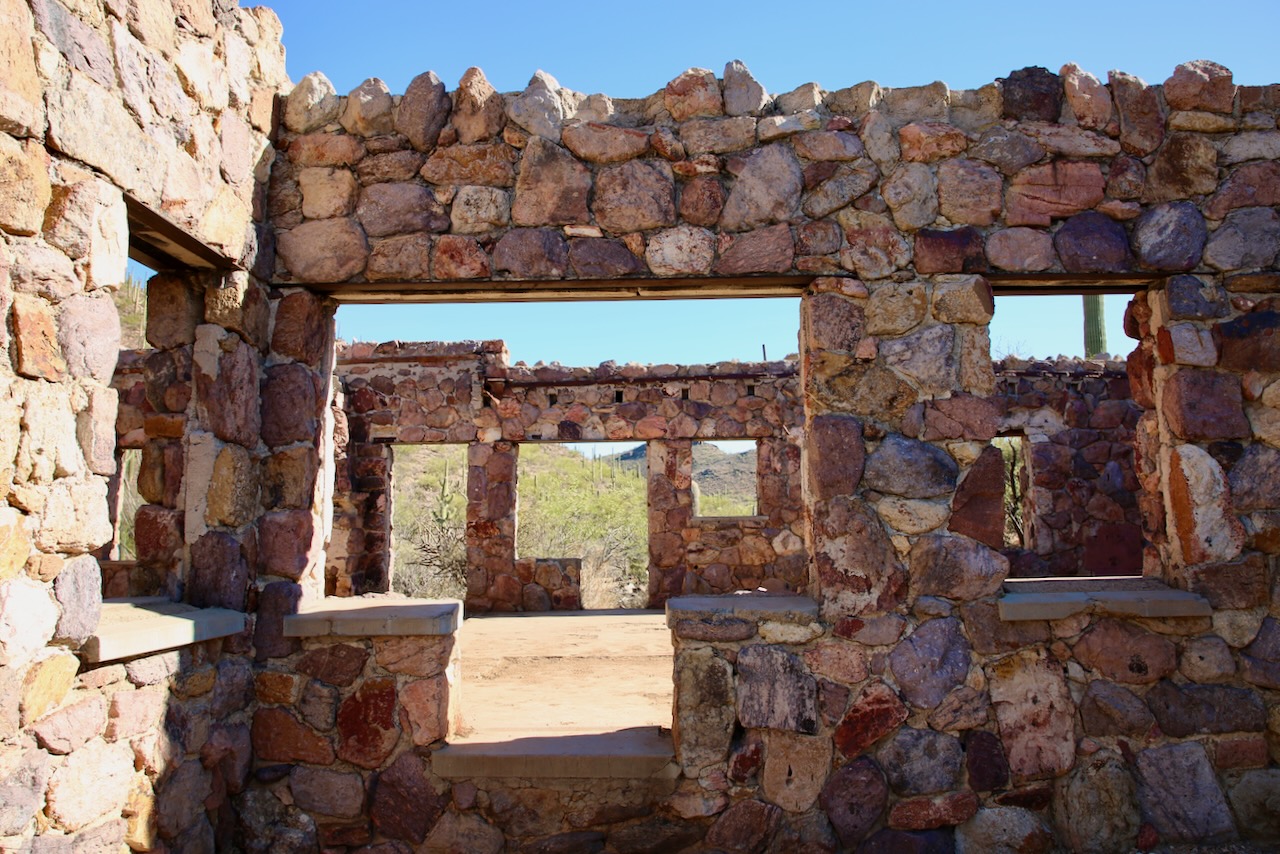
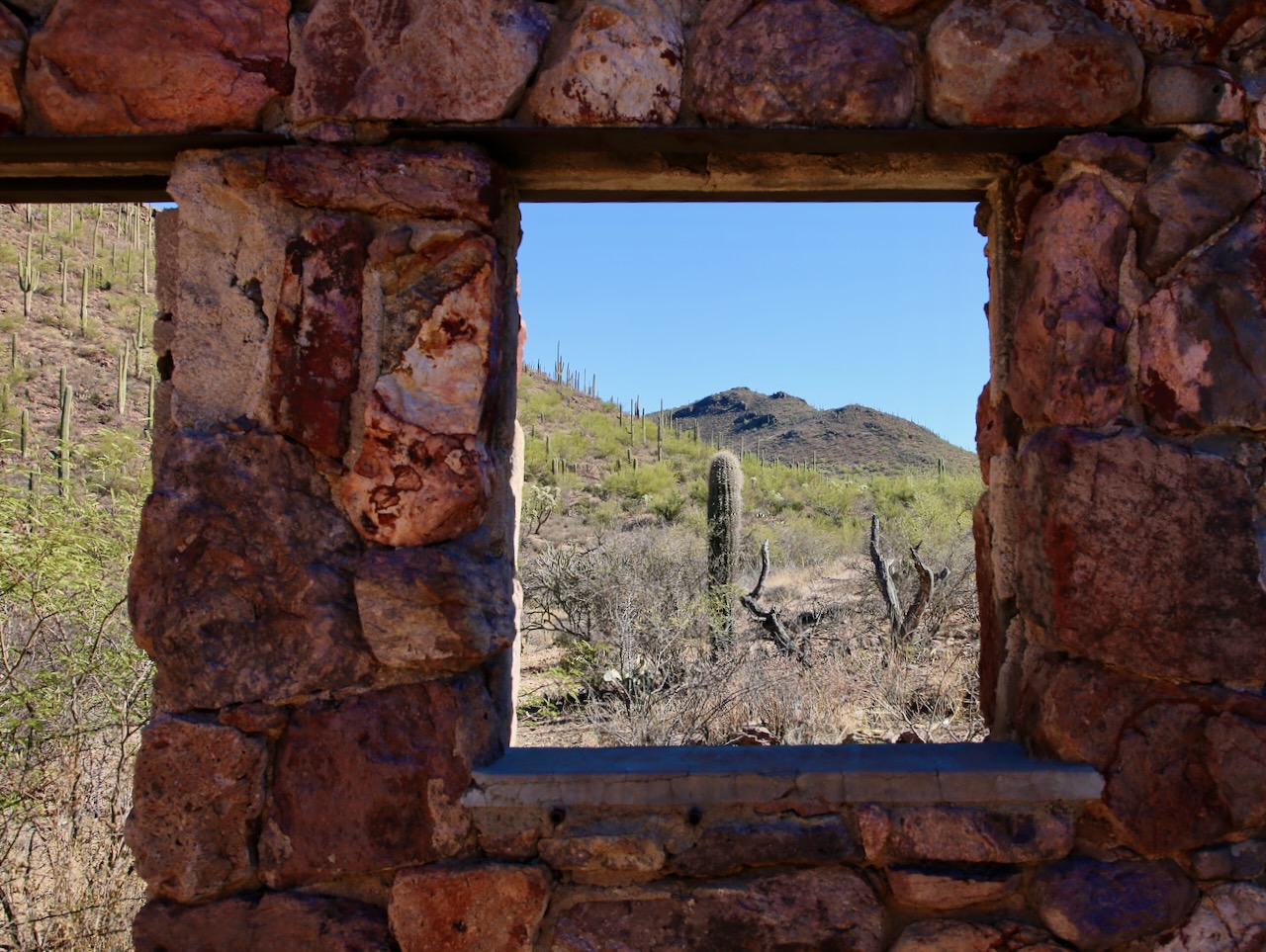
We find the David Yetman Trail by starting at the Camino de Oeste Trailhead that will take us through private property to the Bowen Stone House Ruins. On the map, this end of the park is near estates and a golf course, but while on the trail, we feel secluded in the desert surrounded by green cacti and bush, brown stones and dirt. The Homestead was built in the 1930s by a couple who had moved from Illinois for a change of climate. They eventually owned 2,000 acres but after their daughter was born in 1943 they moved to New York City and the property was purchased in 1983 and incorporated into Tucson Mountain Park.
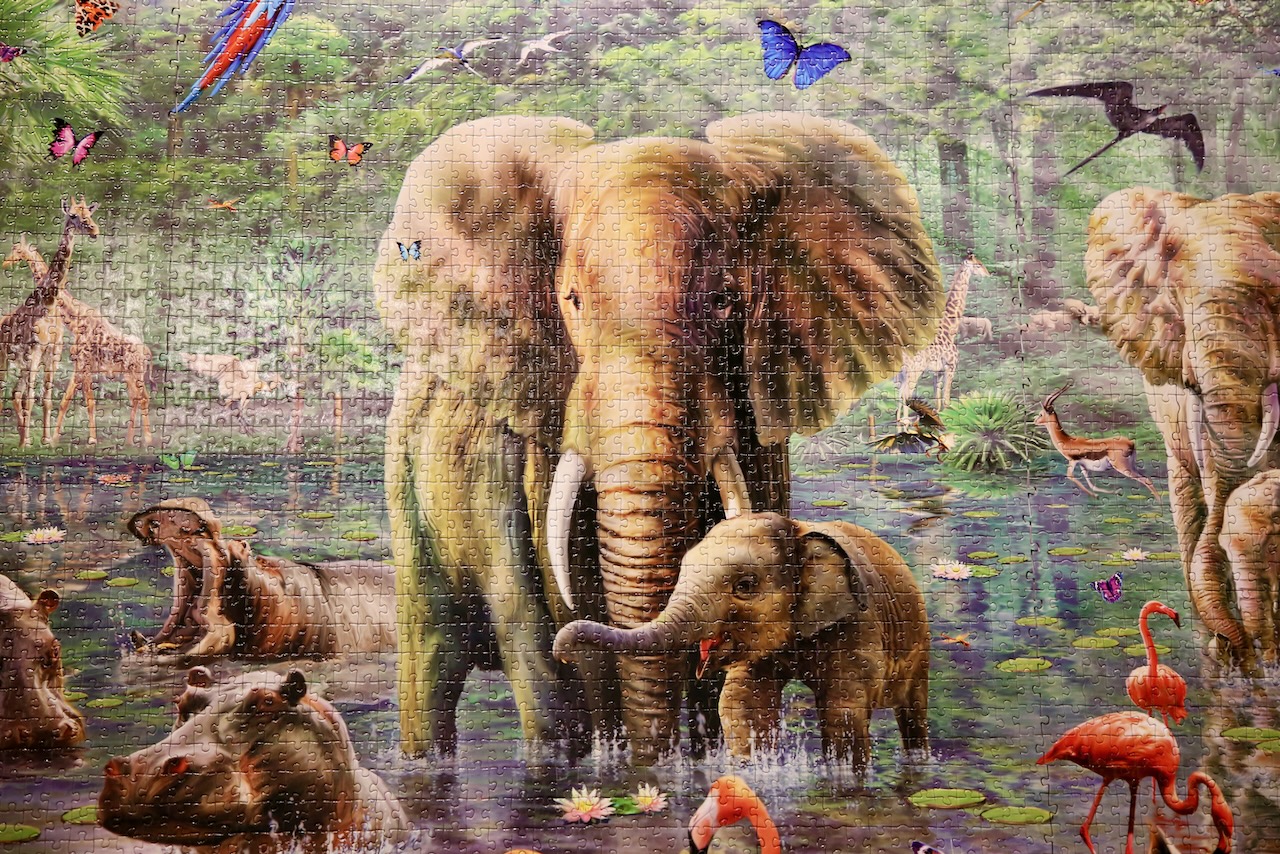
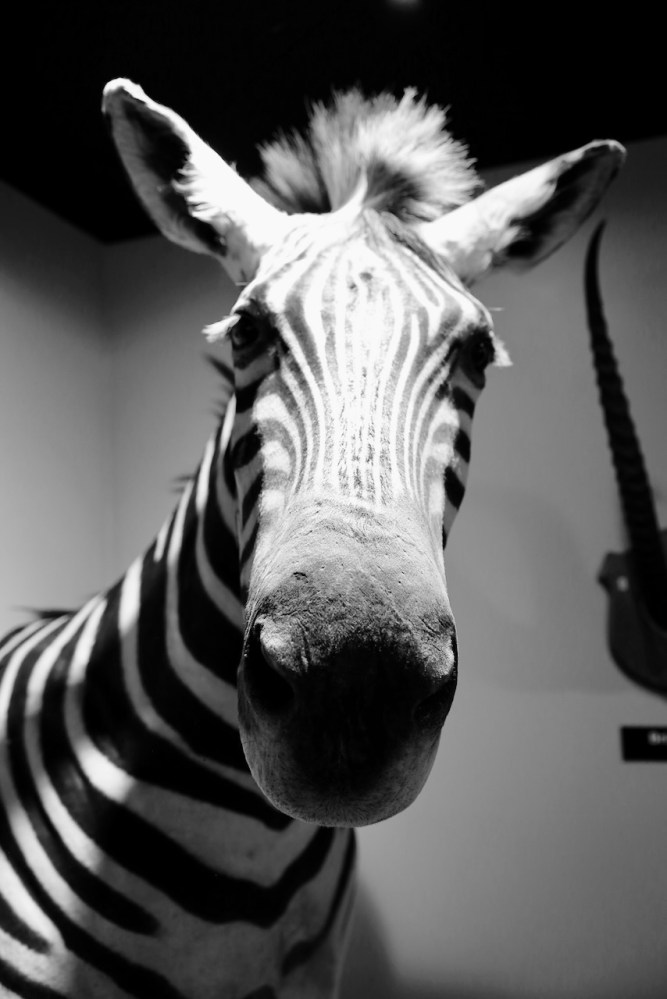
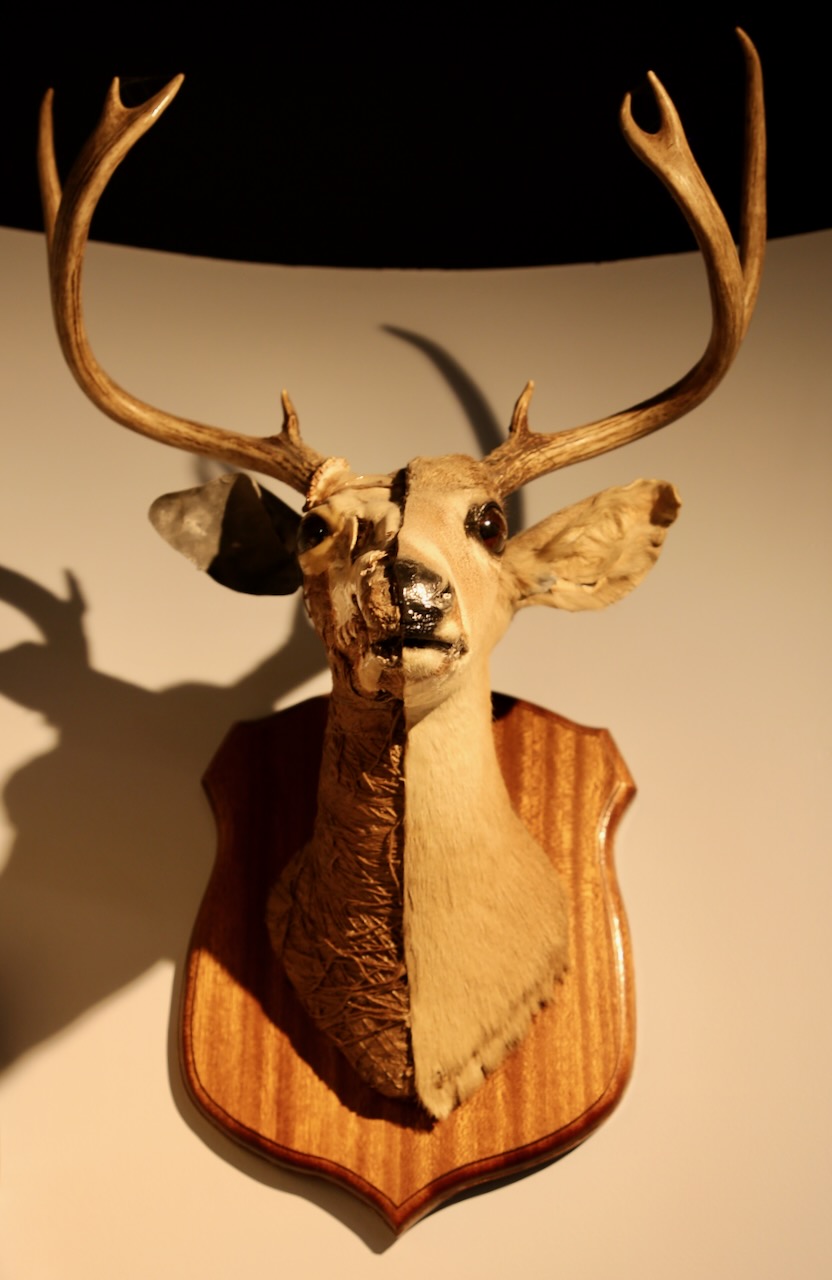
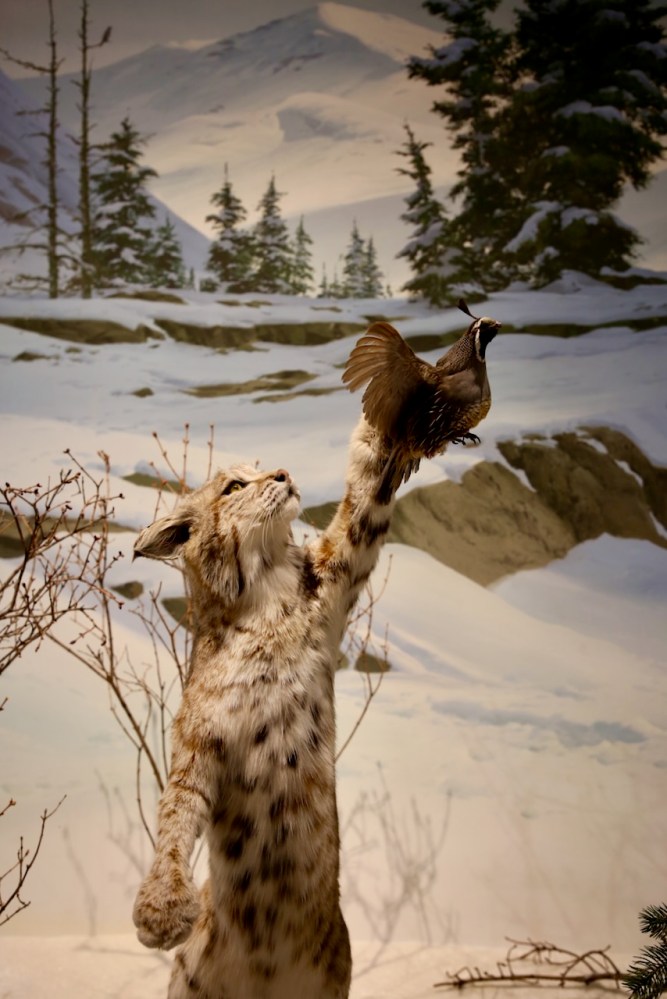
Barely a mile up the road is the International Wildlife Museum which looks like a theme park castle surrounded by a partial moat. I hope it’s not as tacky inside, but I do prefer strange things. Entrance costs us $16 and is more interesting than I thought it would be. It’s a good thing I’m not as averse to dead animal skins mounted on foam and displayed as I used to be or this place would be a nightmare. There’s a room dedicated to former President Roosevelt whose father co-founded the American Museum of Natural History in 1869, probably to store some of his sons specimens and mounted animals.
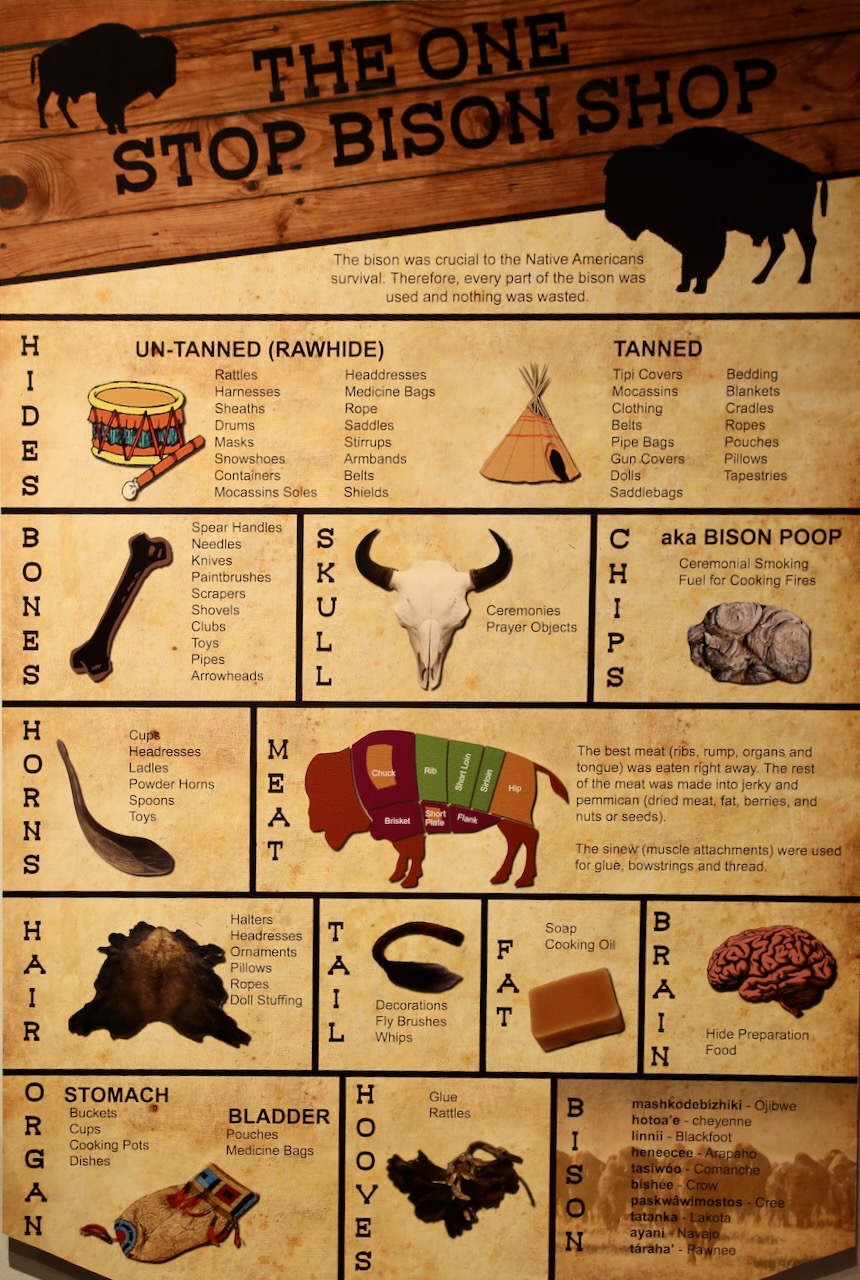
A hunting trip in 1883 made him aware of wildlife populations nearing extinction and as president, in 1905, he creates the US Forest Service and the American Bison Society. He goes on to establish 18 National Monuments through the rest of his term. Continuing on, there are 50 bird eggs or models on display. Pointed eggs are more likely to be laid on bare ground in camouflage colors while round eggs will be laid in deep nests and are most likely white. The Lewis woodpecker, named after the famed explorer Meriwether Lewis, is one of few woodpeckers that can catch insects in the air during flight.

The Resplendent quetzal, once worshipped by Aztecs and Mayas, is now the national symbol of the Guatemalans, and is the largest in the trogon (Greek for nibbling, referring to the gnawed holes they make in trees for nests) family. Then there’s the large hall of horned ruminants, bears, and African animals – a hunter’s dream but only slightly fascinating and overwhelming for me. Then we pass by the tower of horned sheep before the dining area, where there’s no food present, and the gift shop, which is ran by the woman at the front desk.
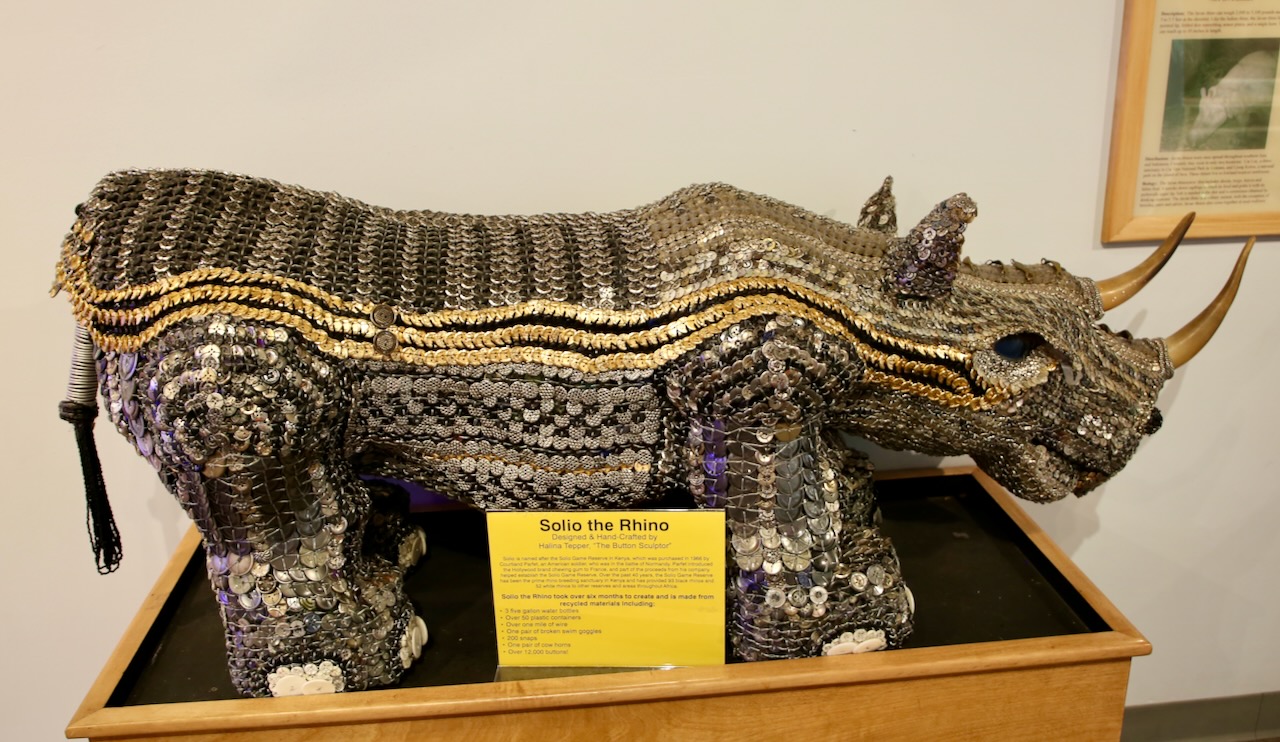
I thought Rattlesnake Ranch would have more snakes, and perhaps they do, but they’re hiding from the cold. Luckily, though our Firepot dinners of smoky tomato paella and mac’n’greens were disappointing, we were able to enjoy the metal sculptures at the ranch while we waited for our food to cook. Some of these freeze dried meals from other companies are sometimes bland, the biscuits too dry, or I’m not in the mood for lentils so though their names sounded good I can’t pinpoint what made these bad, except that there must have been at least two factors for us to write these off.
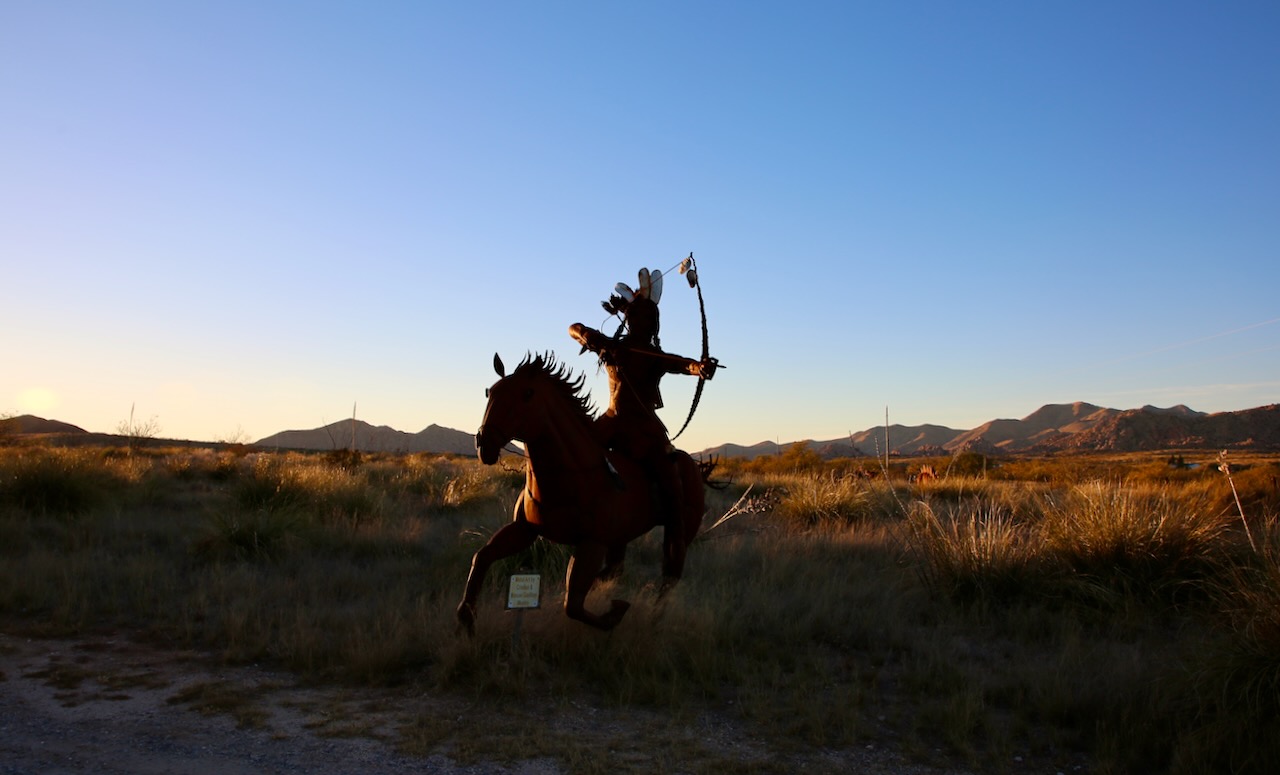
From here, we ride into dusk and reach New Mexico by dark. Foresight says we would’ve been better off stopping at the rest stop at Exit 54 for their lit and covered picnic tables, but we continued on past Sunshine towards the Florida Mountains. Not sure what lies ahead, we pull over and Caleb is able to set the tent up in 16mph winds while I try to get a night sky photo and just end up turning one of our tent stakes into a boomerang. I tripped on it due to its proximity to the car in an attempt to block some of the wind from me.
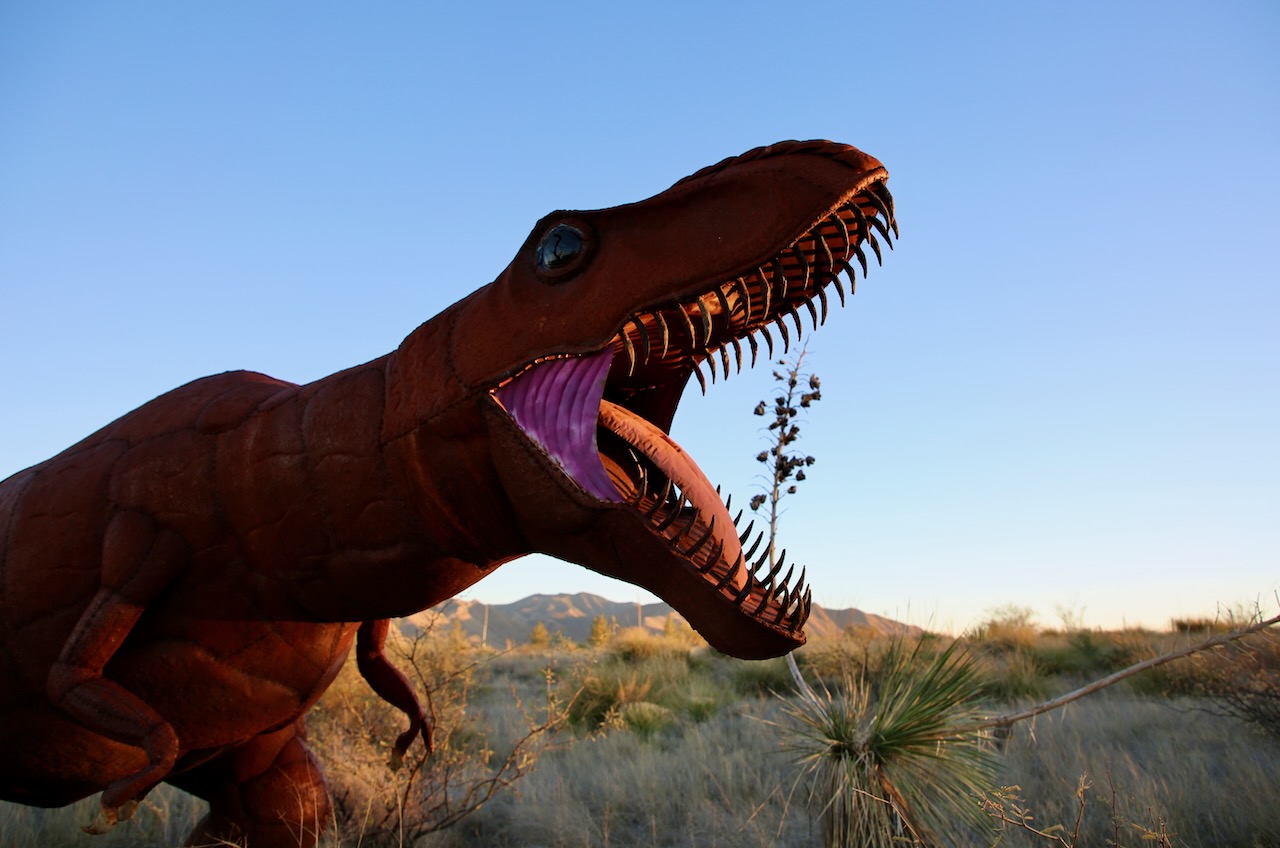

We’re both tired, but I lay thinking about our time in the Badlands when wind brought in snow. I’m grateful that Caleb staked the tent and that he’s on the windier side, though if I were alone I would’ve just set up in the car and called it a night. We lay there for an hour listening to the dirt flying against the tent and willing ourselves to sleep without luck before we surrendered to a hotel a half hour away with the promise of breakfast in the morning.

 TheJessicaness