
We’re up earlier this morning and out the door before my alarm. We survived the cold on Friday so we have a better idea of what to expect today. We’re the first customers on the boat and set up next to a dive exit point which means less people to waddle over with our fins on. Same process – get all gear set up, have crew member give safety briefing that only half the boat can hear while we set out to sea, get breakfast sandwiches distributed.

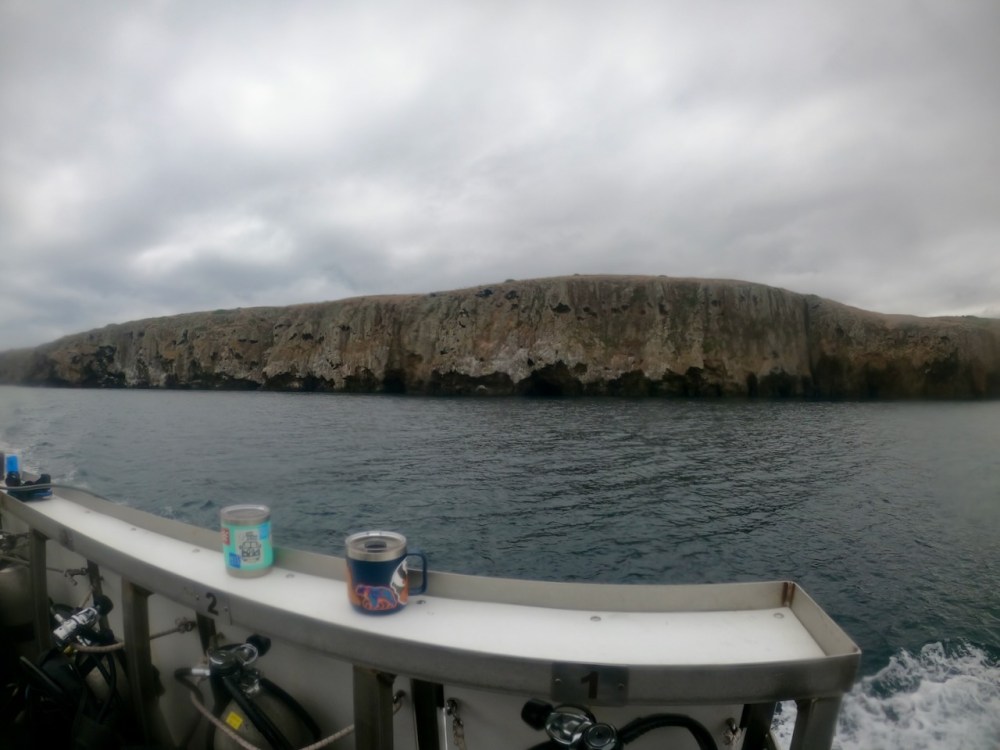
Our first dive will start later than the one on Friday, but we’re still promised three dives. We’re just not guaranteed certain locations as that depends on the captain’s opinion of the ocean’s mood. We start at Yellow Banks, which is on the southeast side of Santa Cruz Island. We’ll start out going northwest so we can return in the southeast direction. Underwater has been the only time I’ve used a compass and it helps to navigate without the resistance of the surface to return to the boat.

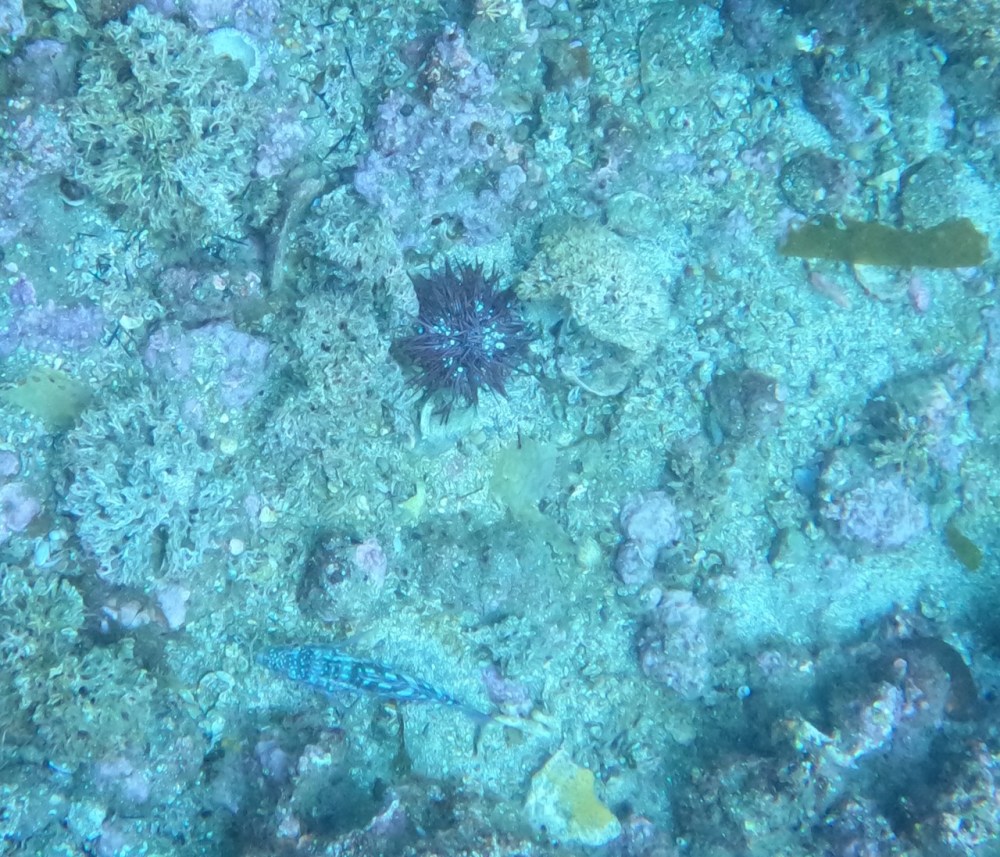
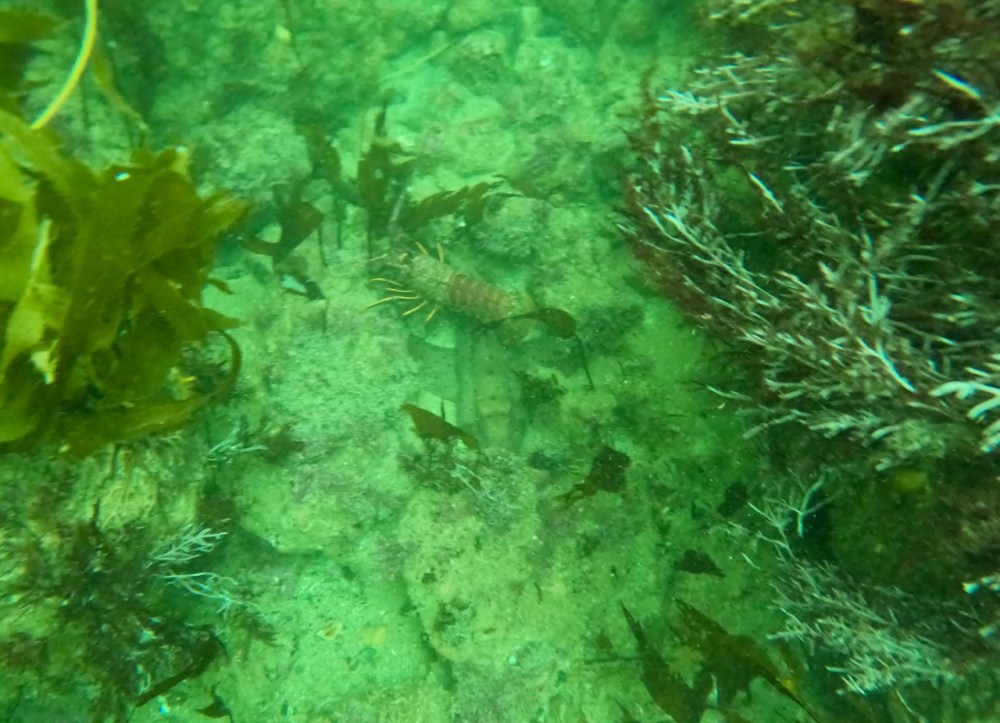
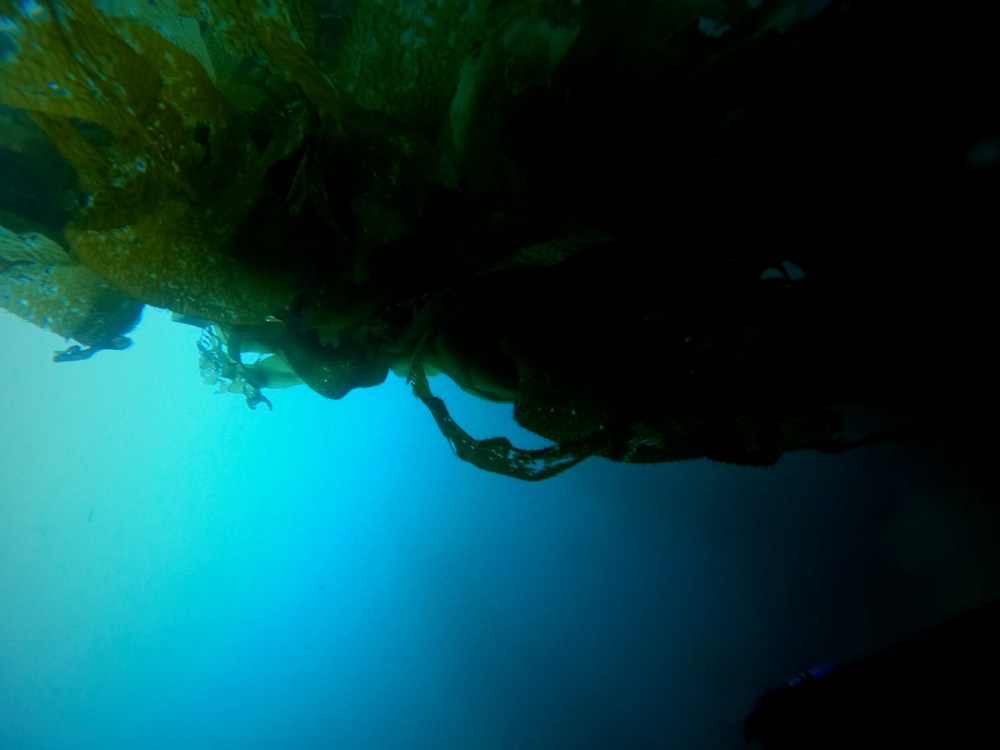
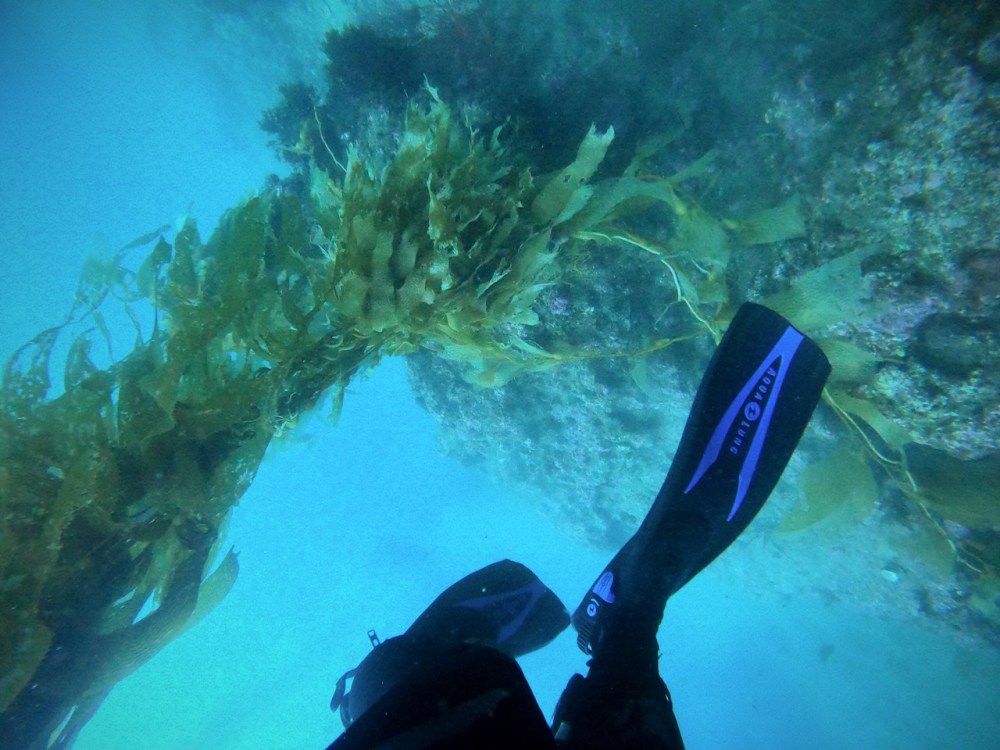
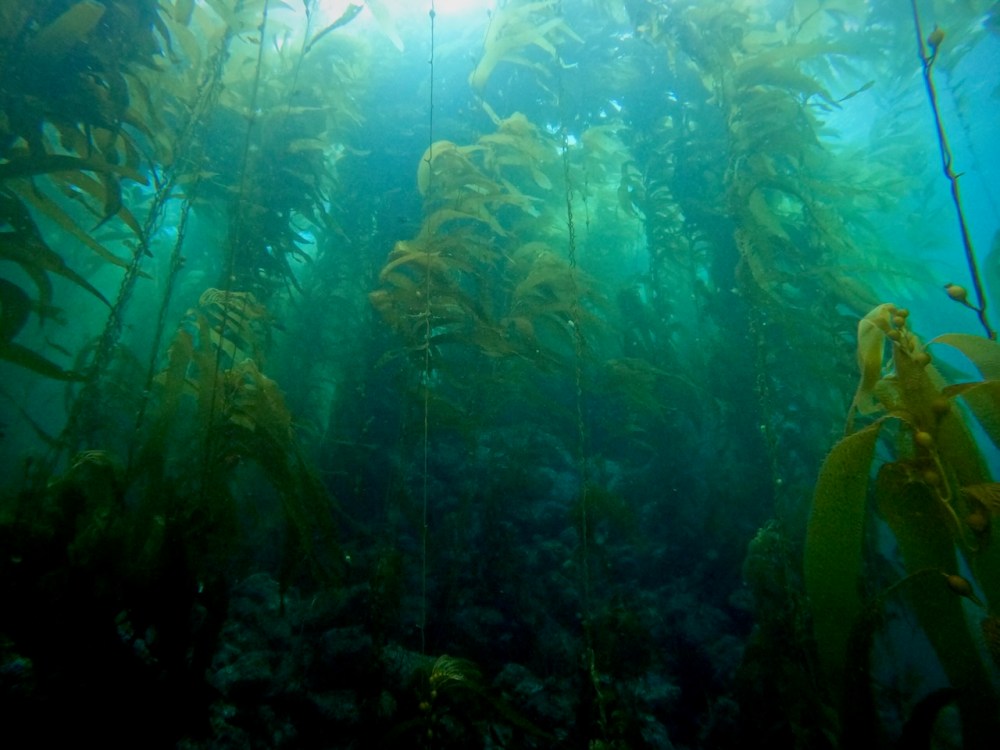
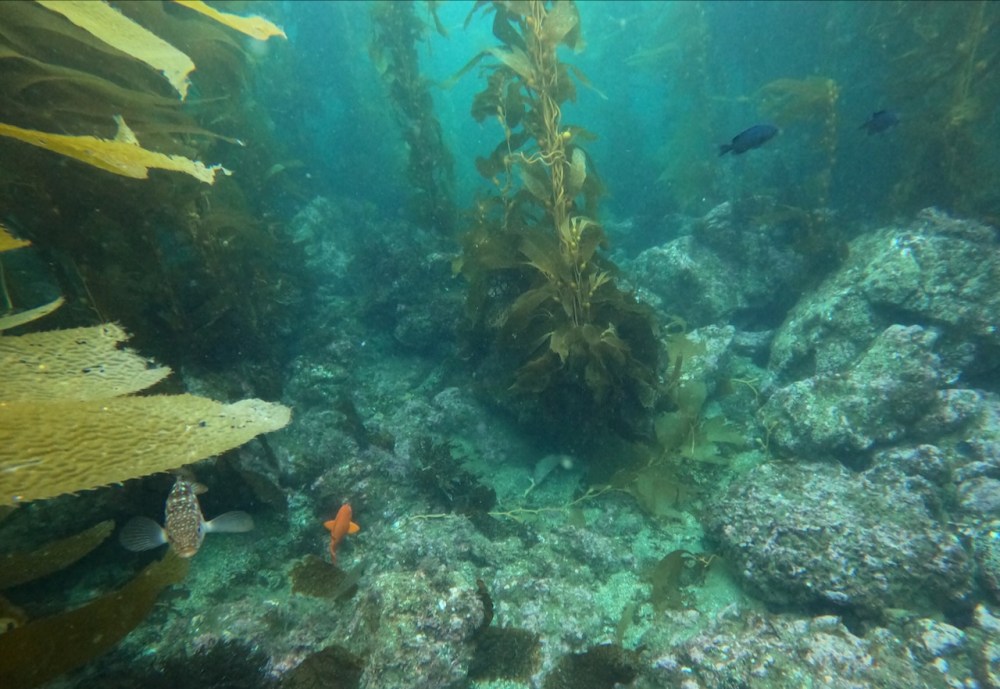
The surge is moving sand around which lowers the visibility of the dive, but makes the kelp seem more mysterious and magical. The lobster are easy to spot with their bright orange legs contrasting with the grey, purple, and green around them. As I struggle to make my way through this kelp alley, which would have felt like an eight-lane highway if the water were calmer, I notice a lobster taking advantage of his low center of gravity and extra appendages.

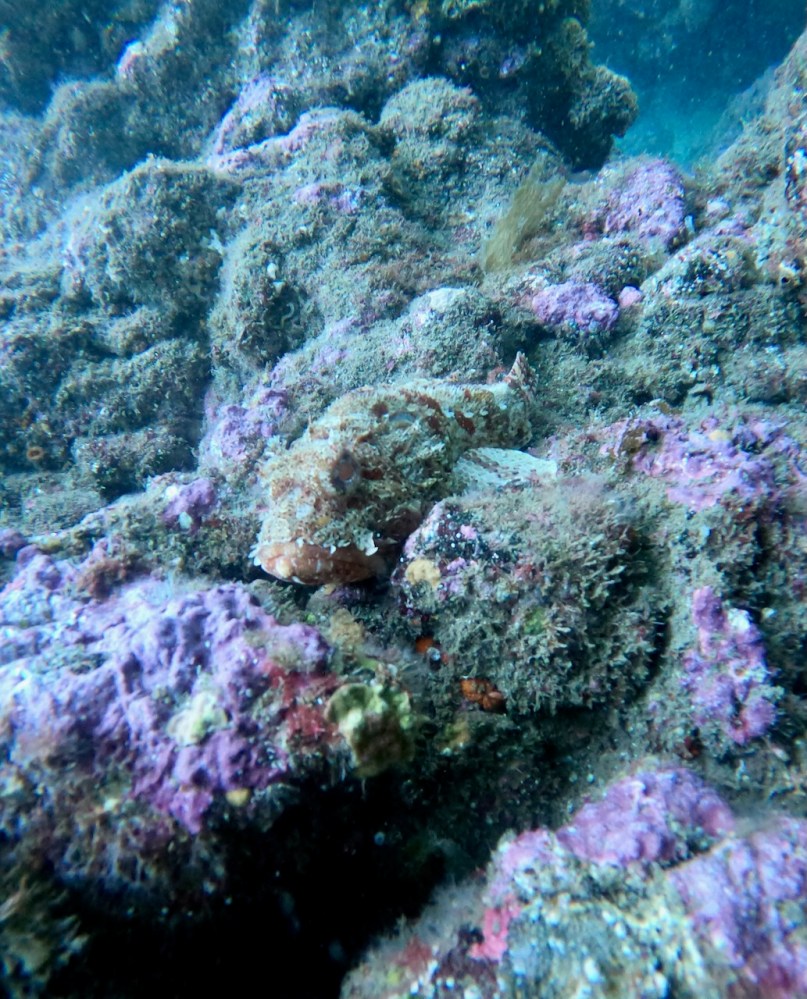
It was the spotted horn shark that caught my eye first and it was the lobster’s knowledge that the species he chose to crawl over prefers to eat crab and urchin, though snails, squids, and itself could easily be on the menu. Regardless of how people think our existence started, swimming or hiking amongst nature shows our ability to adapt so profoundly to the impacts of the environment and to make changes through generations to continue to exist – no matter how strong the current or dark the seas.
I surface with 750psi in my tank, but roughly one thousand on the other five (including the three on Friday). I want some kind of expectant pattern to emerge and I’ve learned that we can return with more air after longer dives in warmer water regardless of depth than when our bodies are trying to maintain our core temperature in colder water regardless of dive length. This means we need to dress more warmly, especially my feet, so we can extend our bottom times to the allotted hour.

If our travels have taught us anything, it’s resilience – from camping in the snow, getting caught in the rain, recovering from a cold dive, eating papier-mâché on a subtropical island, and getting viciously attacked by mosquitoes. In these moments we’re forced to make a plan and as luck would have it, we’re also able to laugh about these situations later – these are the “good times” that others are looking for and we find them in the middle of a park, the side of the road, being unprepared because we forgot the wrong thing (there’s always something) and because I’d rather die via bloody animal bite than watching it happen to someone else.
I hope Caleb and I are able to withstand a few more thousand mosquito bites in our lifetime so we can continue to watch the smiles come to our faces that being in our element brings. We prefer to be at the mercy of nature every day, regardless of how amazing and inspiring, instead of submitting to the manmade cages of time and expectation that “civility” brings with it. A bonus of these most fun and natural activities is that they can be extravagant or enjoyed on a budget and both will make you feel happy and connected.
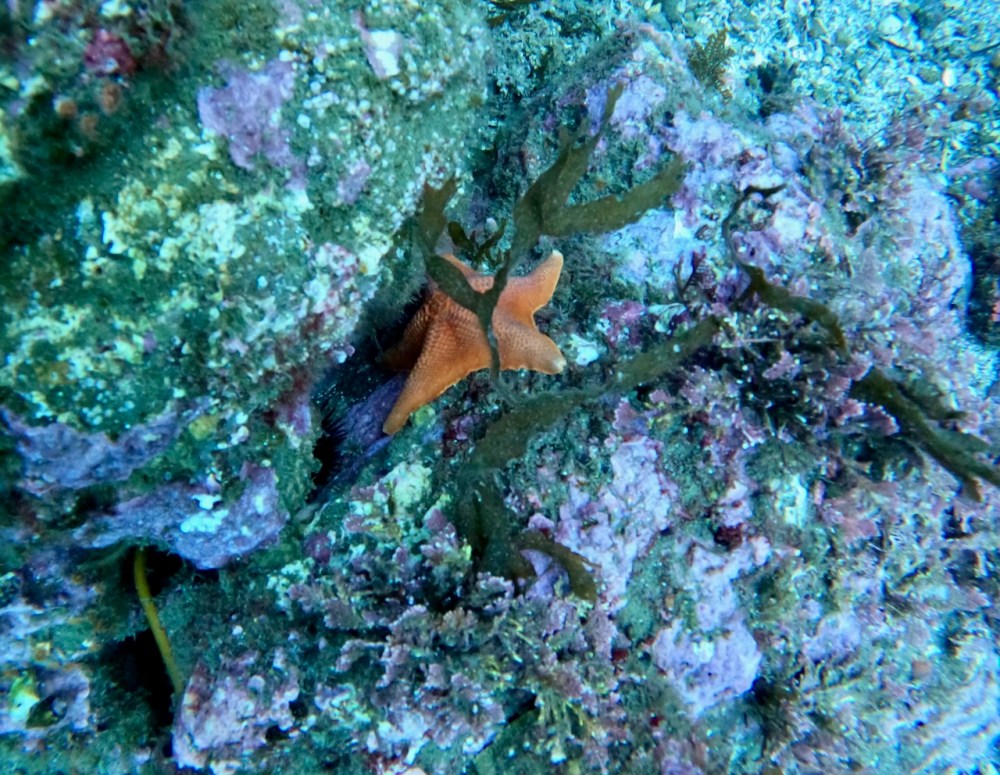
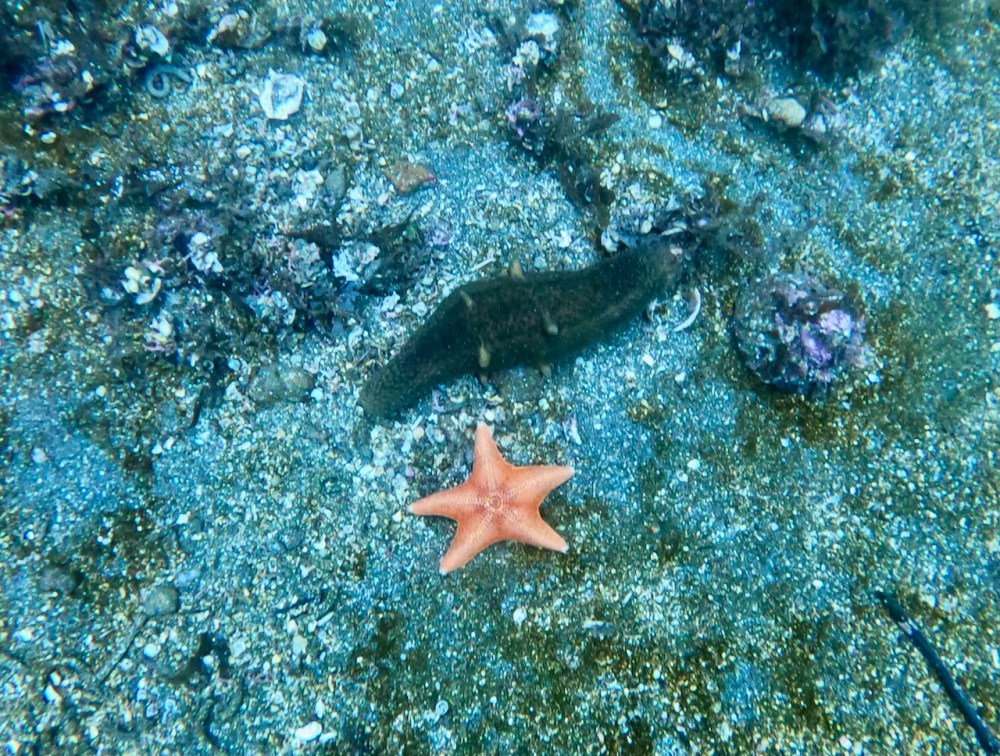
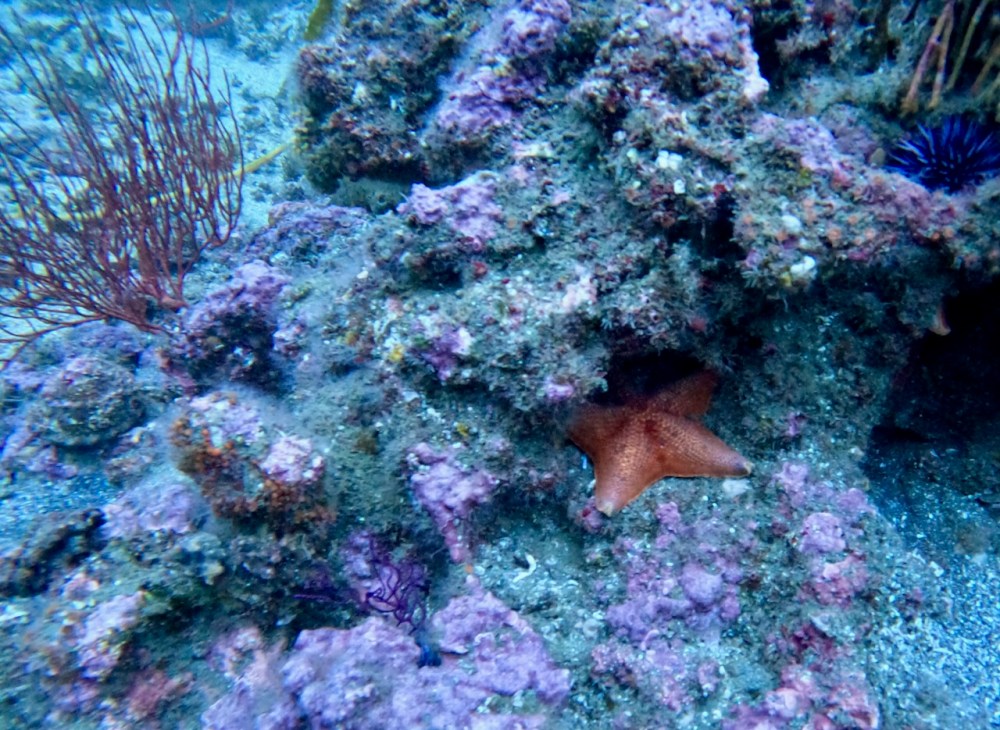
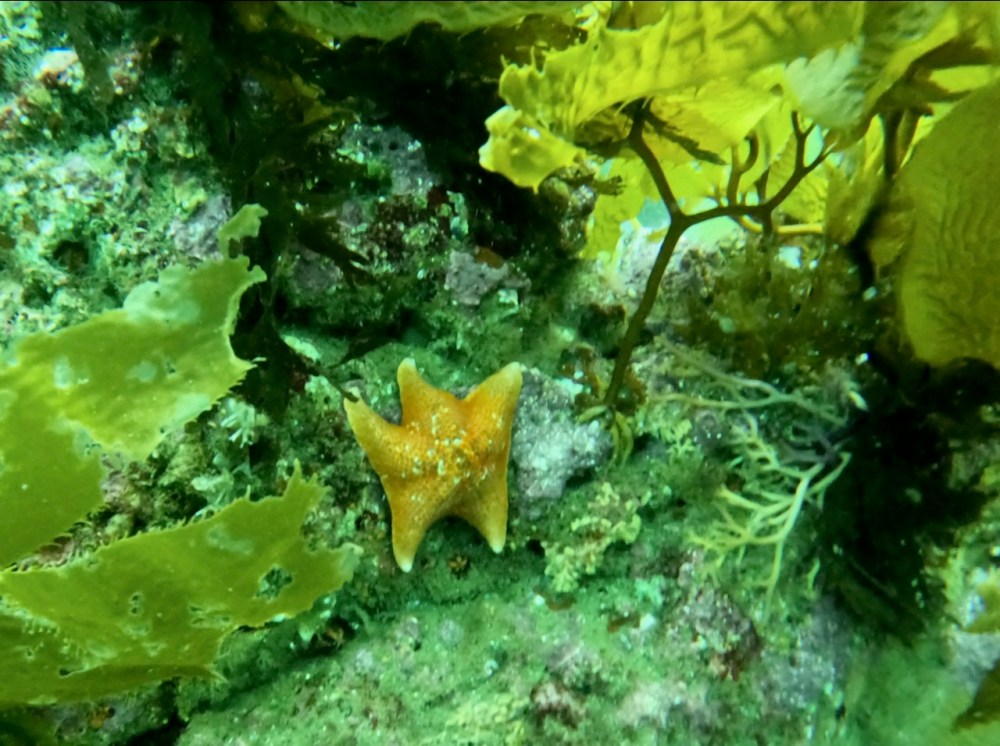
The second dive has a school of blacksmith damselfish, of which two-thirds seem to wear the cloak of invisibility or they’re out for fall break or were just eaten by larger fish, marine birds, or harbor seals. We also see Patiria miniata (bat star), a variety of nudibranch, camouflage and bright anemones, California sheephead and Oxyjulis californica (both in the wrasse family), sea cucumber, a grouper, possibly some living sand dollars, a couple of cowries and Trochus shells, and a beautiful black scorpionfish just to name a few.
Big Scorpion Anchorage has so much to offer that we choose to remain here and dive it again after lunch. I’ll have a quarter of chicken today, since I’m more flexitarian than whoever mixed up their menu choice, with beans and potato salad that are way better than the rice. I also get to have a hot cocoa with lunch as the dive master who approached me earlier, thinking I looked familiar, just happened to know where the boat keeps the packets when they need the counter space.
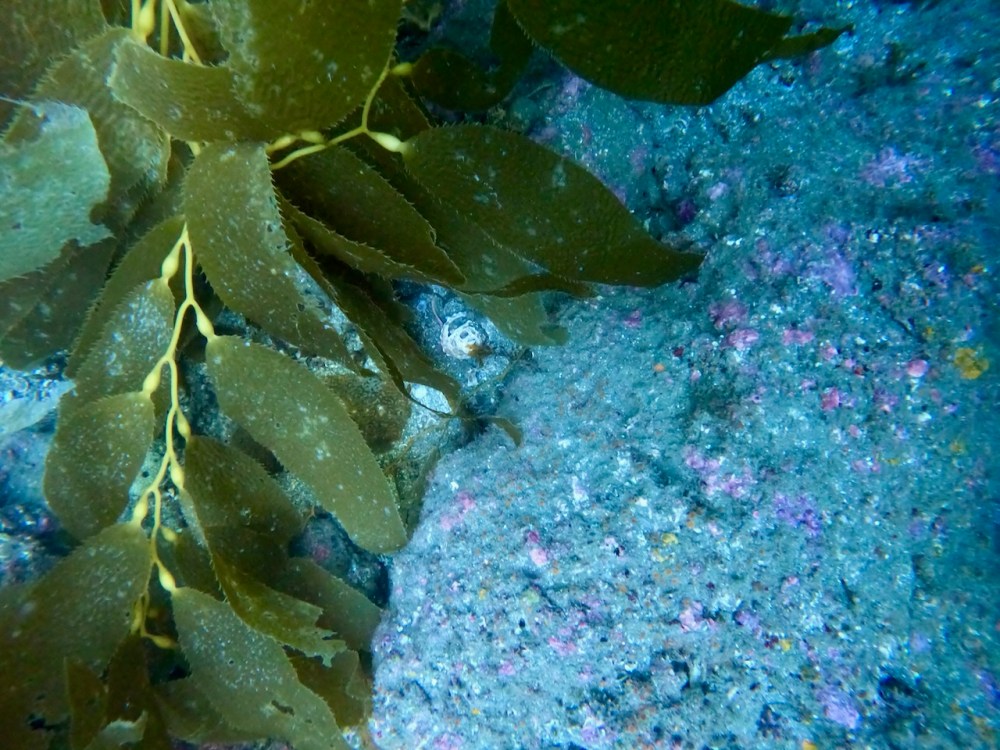
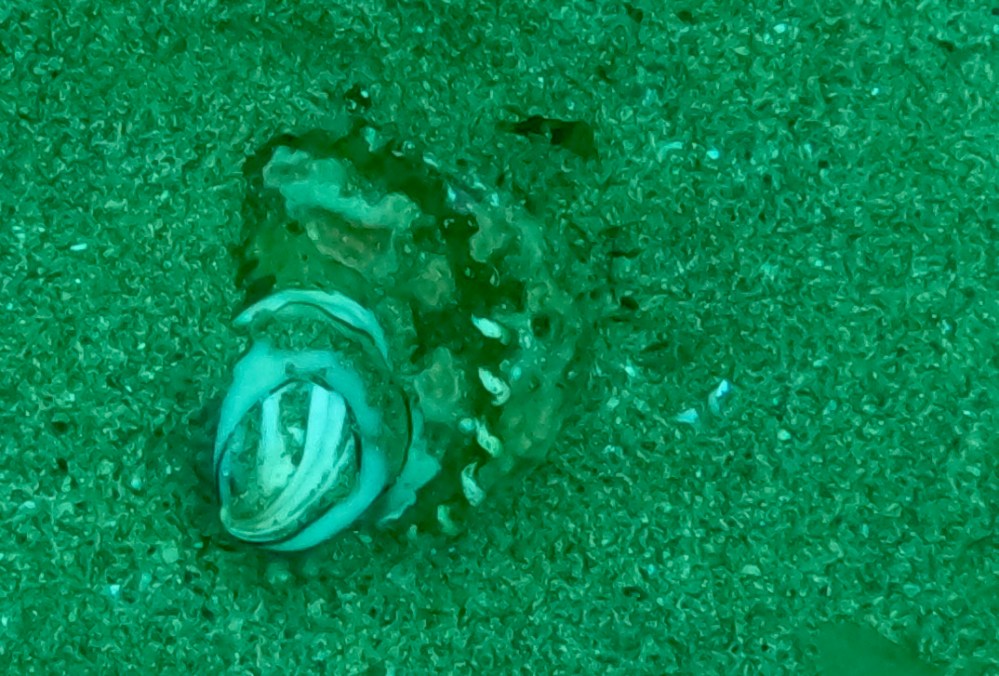
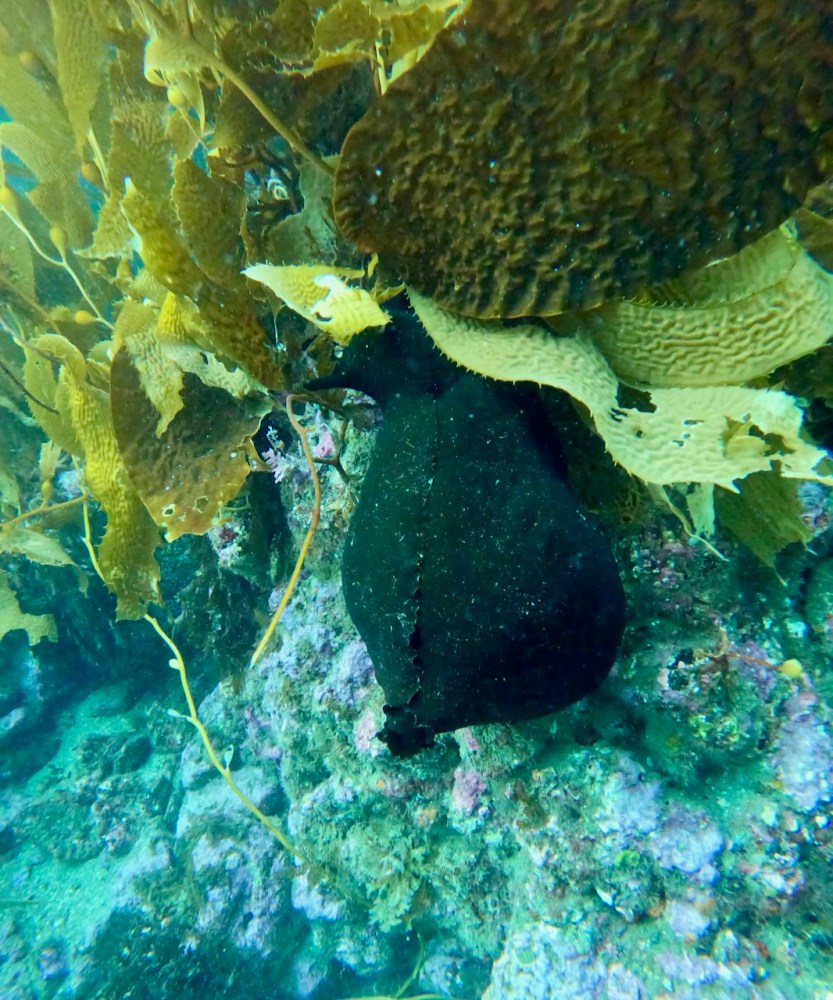
The third dive will introduce me to the second largest mollusk I have ever seen. The first was a cuttlefish in the class of cephalopod and this sea hare (so named because it’s closer to the size of a rabbit than a snail) is a gastropod, both between ten and thirty inches in length. The common garden snail reaches two to four inches when extended. I was surprised to watch the sea hare’s leaf-like body that looked like it was wrapped around an empty cantaloupe as it seemed to munch on the holdfast (that doesn’t absorb nutrients like roots) of some kelp.

I wanted to give the hare a squeeze, but attempting to pop an animal like a balloon has always been on my never-do list and is definitely not allowed if I am to maintain the Junior Ranger pledge to appreciate and respect plants and animals. I will follow the motto to Explore, Learn, and Protect. Trying to remember the Hierarchy of Biological Classification brings me back to 6th grade science as I don’t recall going over this in biology or chemistry in community college. Either way, it’s never too late to start learning, remembering, and reteaching yourself because no one will have all the same interests you do, and it’s most likely that you won’t find inspiration in school, but outside where life is.
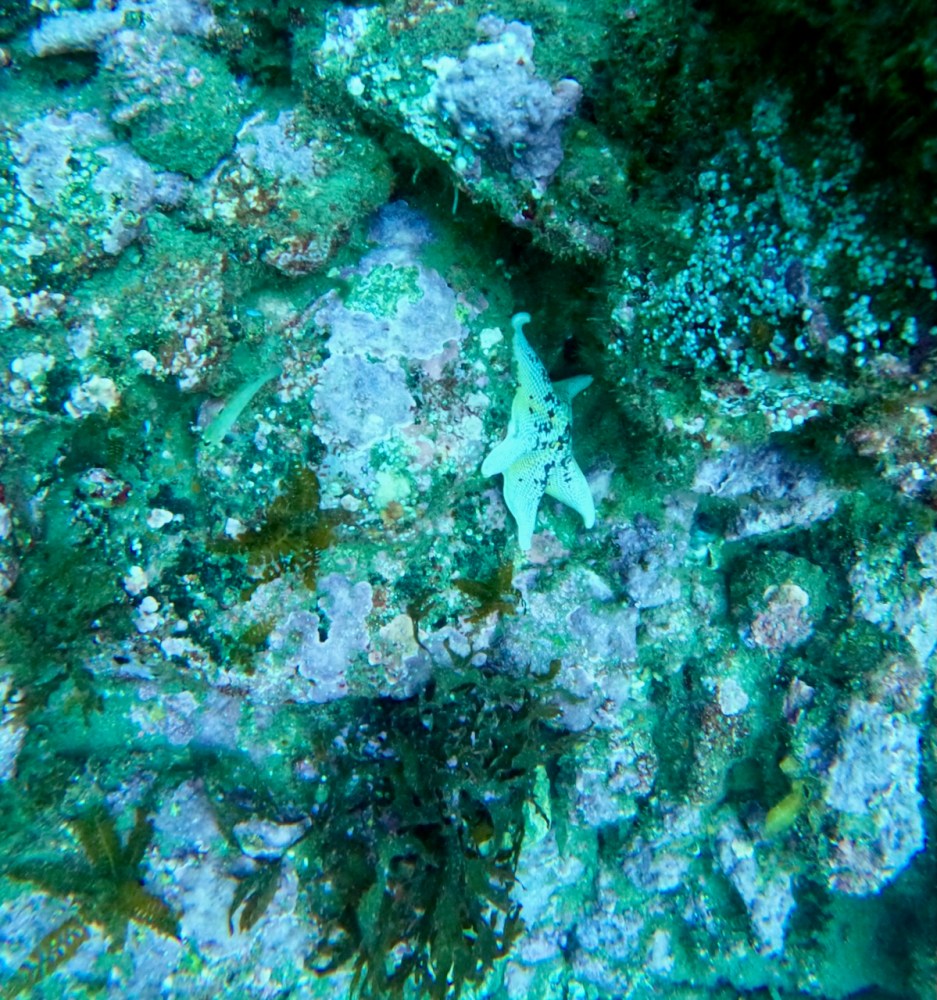
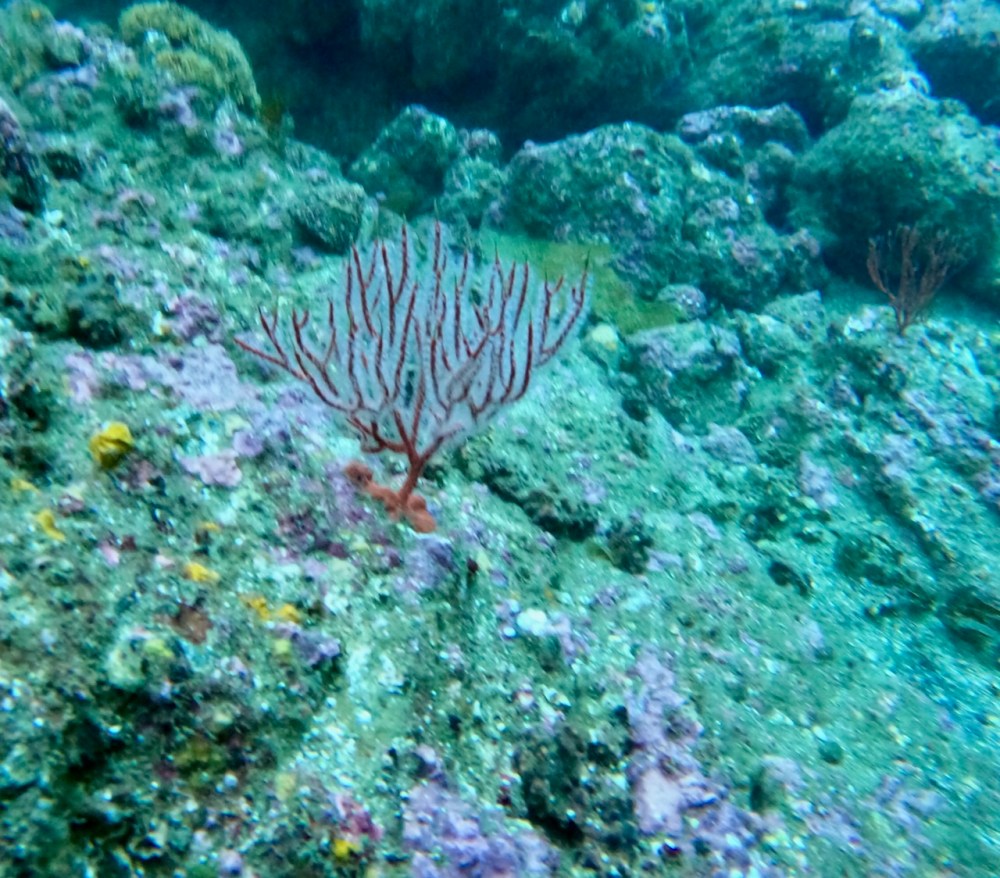
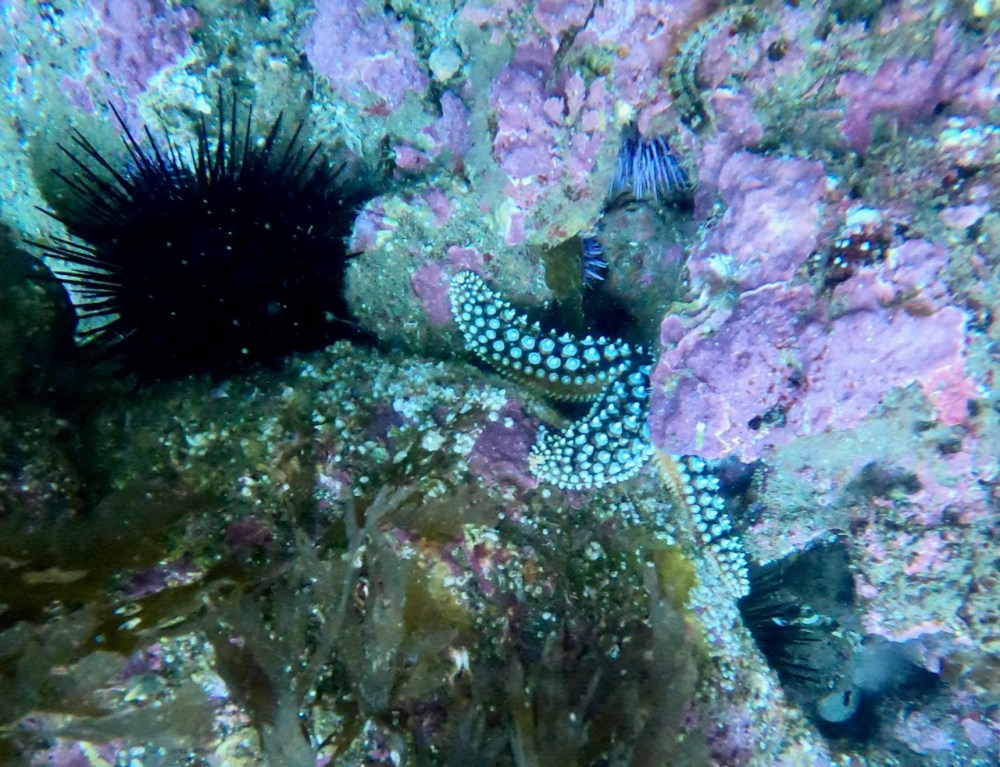
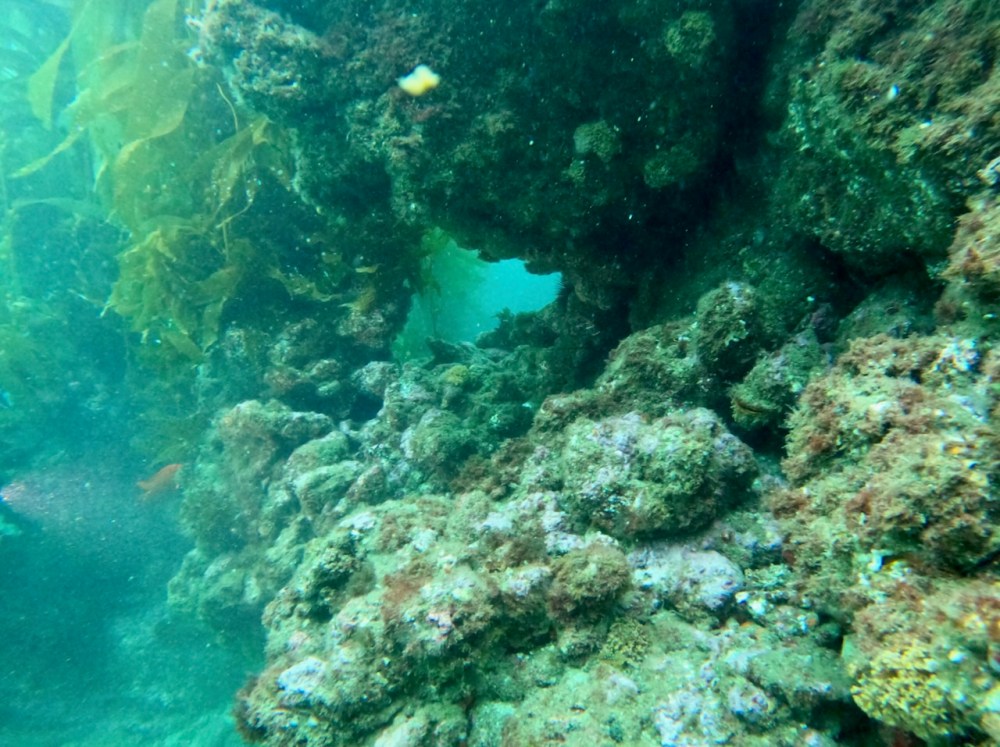
Poking out of the coral is a giant sea star, the original bedazzled decorator before rhinestones found their way onto jeans in the last year of the 20th century and they wear it very well. We see nudibranchs in shades of bubble gum, mac-n-cheese, and mini eggplant on fire. The route back to the boat is over and through the tangles of kelp so we don’t lose ourselves in the forest by attempting to remain untangled. Turning for a second and then getting back to the degree of travel you were going seems simple but the ocean can look like the Antarctic Polar or Saharan Desert where every which way is the same so it only appears you haven’t gotten lost yet.

I determine that I could do a liveaboard (sleep on a boat and dive as much as my computer/body will allow) at this site as there’s so much to see. I’m removing gear as soon as I get to my spot on the boat and as my wetsuit drops to the seat and the cool wind hits me I run to the hot tub and apparently almost run someone over to get in quickly. I will talk to and apologize to that guy, Nick, and he understands since I was so cold and his spot just happened to be next to the seat-step to get in.
We meet a lot of people on this trip – the bigger the boat the larger the crowd, but Nick stands out. He is the first diver I’ve met who chooses to dive without an expensive prosthetic on his left leg. He says it would probably slow him down and only break like the other home-crafted ones he now makes so he can participate in BMX and other sports too. He lost his leg to nerve cancer when he was two and got sponsored by a hospital until he reached 18 years old. I might not have noticed had he not hopped to get in line to jump in. Nick’s perseverance destroys excuses for lack of living to the higher range of your capabilities as our bodies are more amazing than we give them praise for.
Caleb grabs the two dive bags with wheels and I’ll grab our weight bags (aka a small tool bag and repurposed insulated lunch bag) and we pass the guy who stood in the way of the crew and put his bags in front of ours because he was in such a hurry to get a cart to assist him in getting back to the parking lot. Had he asked nicely, I might’ve even helped carry his things, but being an ass isn’t the way to be, and is extremely rare in the dive community, unless you consist of a hole and two fleshy protuberances that actually serve a purpose.

We stop at Whole Foods for pita chips and cilantro lime hummus so that Caleb has something to snack on after we hang things up and ring them out so they are partially dry for tomorrow’s drive. At this point, we are grateful to be staying the extra night instead of dumping salty gear into the back and driving four hours home and then having to deal with the humid mess. I’ll also take this time to regret not braiding my hair while I condition it three times to reduce the matting that you’d only find on a stray dog or a homeless toddler.

The cold water has done its job of providing for the sea life and burning my energy stores to keep warm. The shower feels exhausting because I literally rinse and repeat three times. The reading is relaxing as I’m a visual learner who is stimulated by the research of others and also looking forward to sleep. I’m grateful to have the time and opportunities to incorporate books into my life – while sitting on a couch or in bed, walking around the neighborhood or on a treadmill, crouched over a campfire or inside a tent, or stretched out on a blanket or a lounge chair.

 TheJessicaness