
The morning sky is dark and cloudy. We debate whether to snorkel, because if we do, we will have to dry our suits on base, so that we don’t pack a mildewy possibility for the return stateside tomorrow. We’ll enjoy breakfast at Linda’s while it rains. Once that’s done, we drive to the Ricardo J. Bordallo Governor’s Complex and learn about the Lone Sailor, who represents a seasoned petty officer. The original has stood in DC since 1987, and this seven-foot guy was unveiled in 2018 by the efforts of the Vietnamese-American community. Guam was known as the “Ellis Island of the Pacific” for sheltering refugees en route to safety.
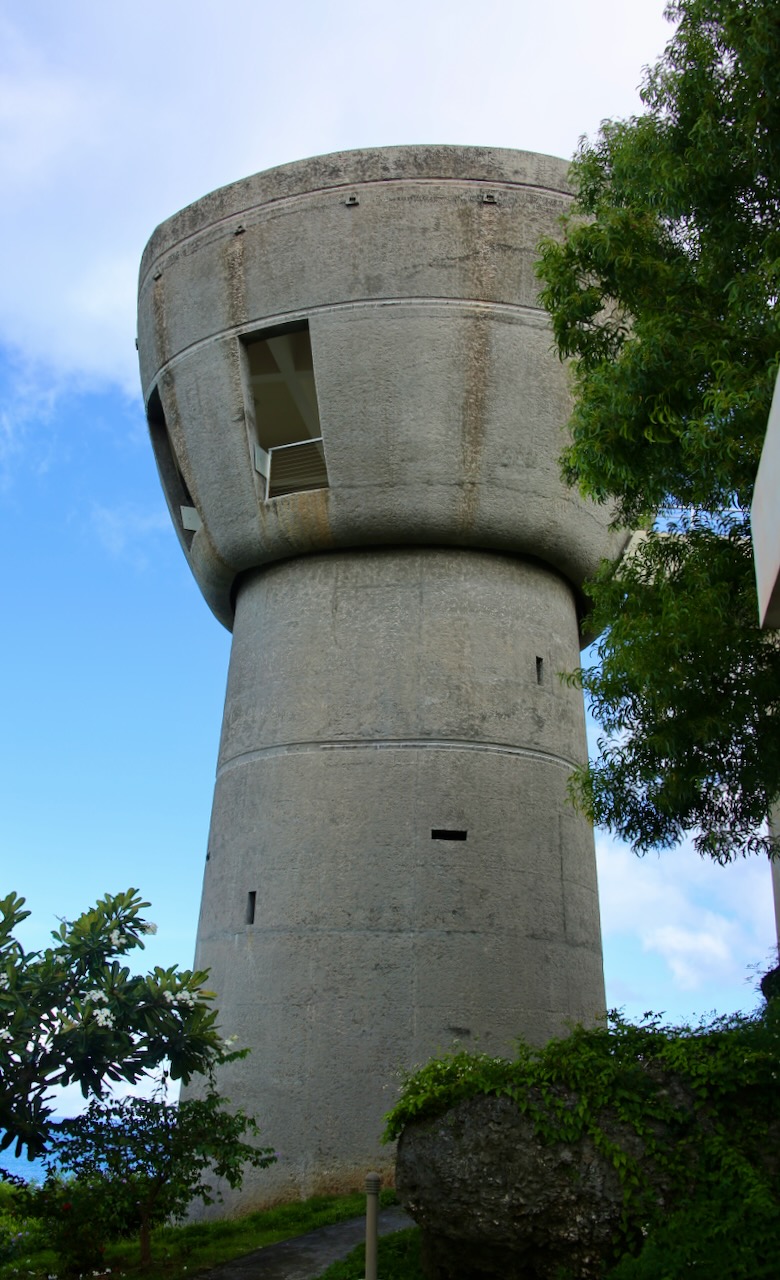


Even taller is the roughly 80-foot Latte (stone pillar with cup-shaped capstone) of Freedom, which serves as the “Statue of Liberty of the Pacific.” The governor, in commemoration of America’s 200th birthday, asked school children to donate money to build this large beacon, and they raised thousands. This is similar to the fundraising that took place in France for the building of Lady Liberty and in America in the 1880s for her pedestal. A restoration campaign for her 100th birthday brought in $225,000 for repairs. This is not just an early example of the power of crowdfunding, but a continuing show of support by ordinary citizens in what these monuments represent.


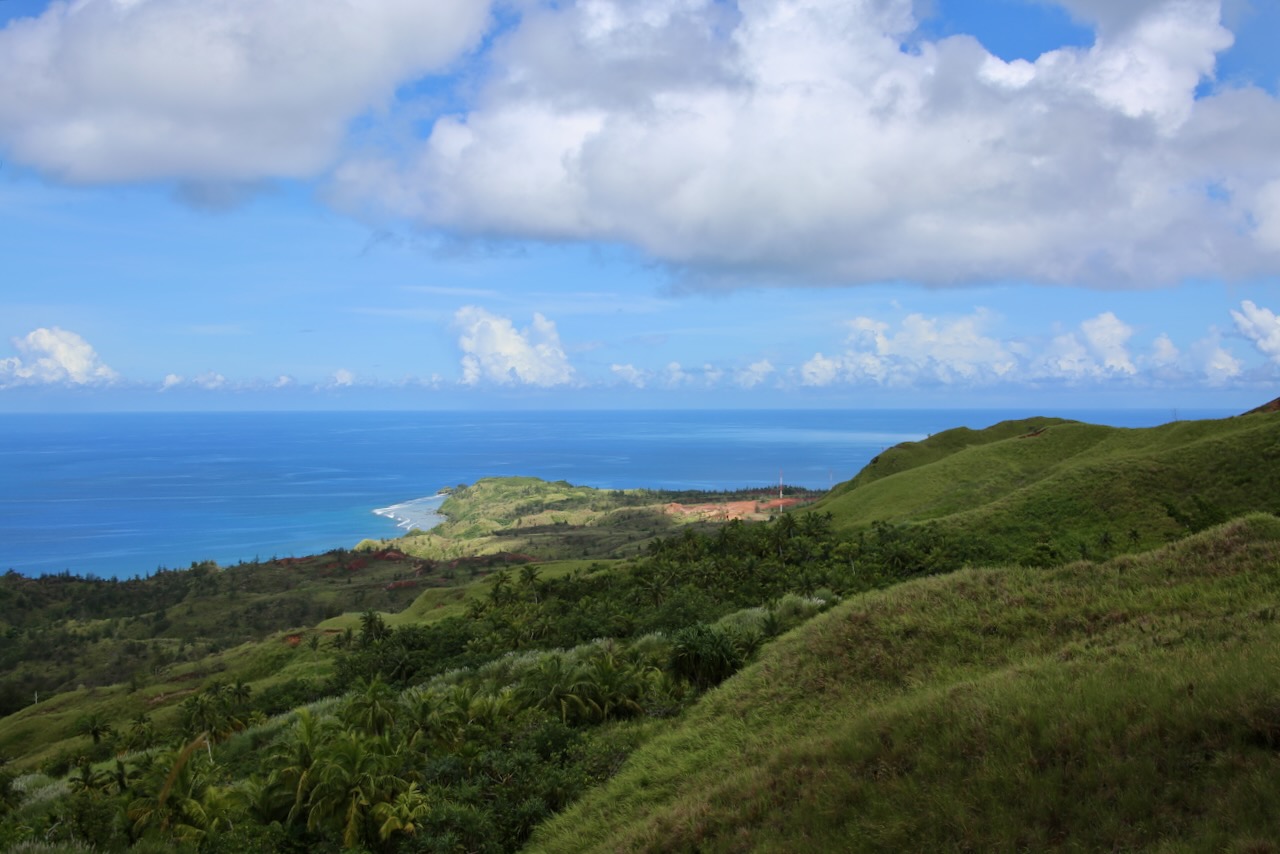
I’m sure on the top of my list of things to do in Guam was to hike to its tallest point, Mount Lam Lam, at 1,332 ft. The distance from the Mariana Trench to the top makes it the tallest mountain in the world. We underestimated how steep the climb would be in the few miles and hadn’t planned on going after rain, which makes it more slippery. The panoramic views from the height we reached were amazing, but we had yet to reach the bushwhacking and the pink ribbon portion of the trail before the heat, humidity, and use of a muddy rope made us turn around. We had to laugh that someone thought this was moderate, but perhaps when they were here, it was.

Caleb says his body is now 50% water after all that sweaty exertion, and he shall soon perish if we don’t find some rehydrating beverages. We’re in luck, as just across the street from the Inarajan Natural Pool (currently closed but still pretty) is the Inarajan Market. We try to hike at Talofofo Caves, but it’s muddier and more slippery than the mountain, so we turn back, again. We backtrack to visit Talofofo Falls Park and Yokoi Cave, where the Japanese soldier hid for 28 years until being found in 1972. The entrance feels like an abandoned theme park, the only one to offer an adults-only area, and to have multiple warnings about pigs, with no sightings.

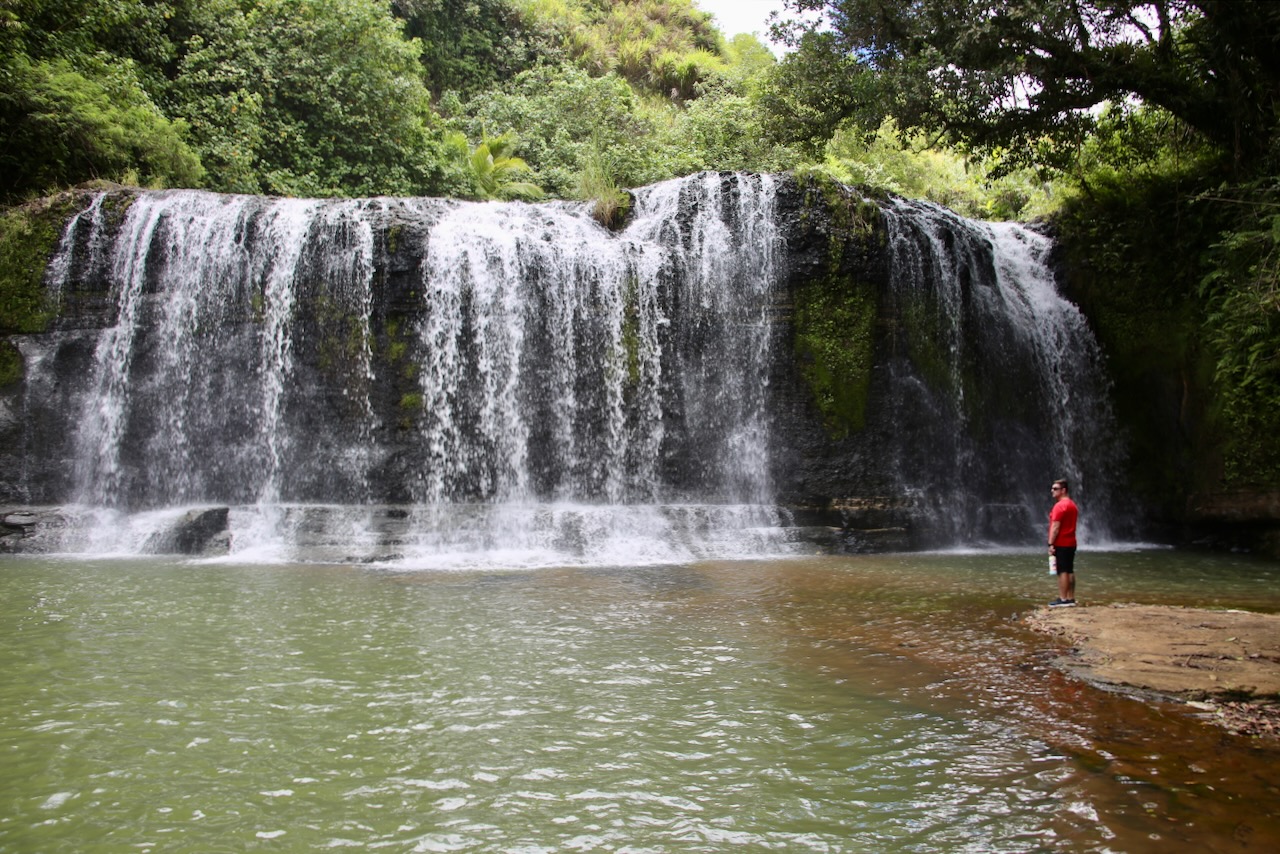

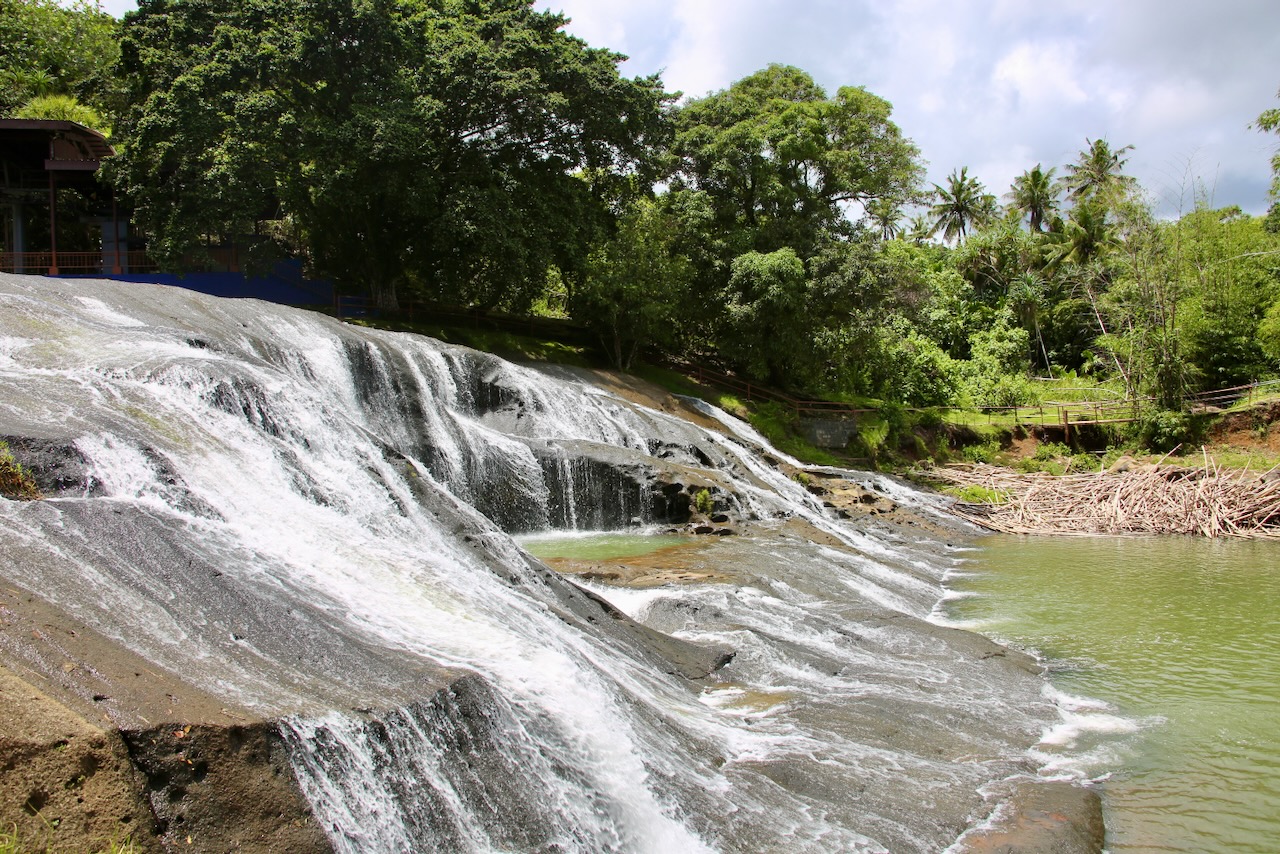
We take the cable car to the first waterfall and then across the suspension bridge to the History Museum. It’s a short hike to the hole in the ground (believed to be a replica) where the soldier lived for nearly three decades. He returned home to gifts, a pension, his pre-war sweetheart, and media attention. He became an author and found modern Japan overwhelming, so he would return frequently with his wife to Guam and advocate for self-sufficiency and austere living. It’s no wonder I didn’t last in the military. I would have been walking the villages looking for food and friends.


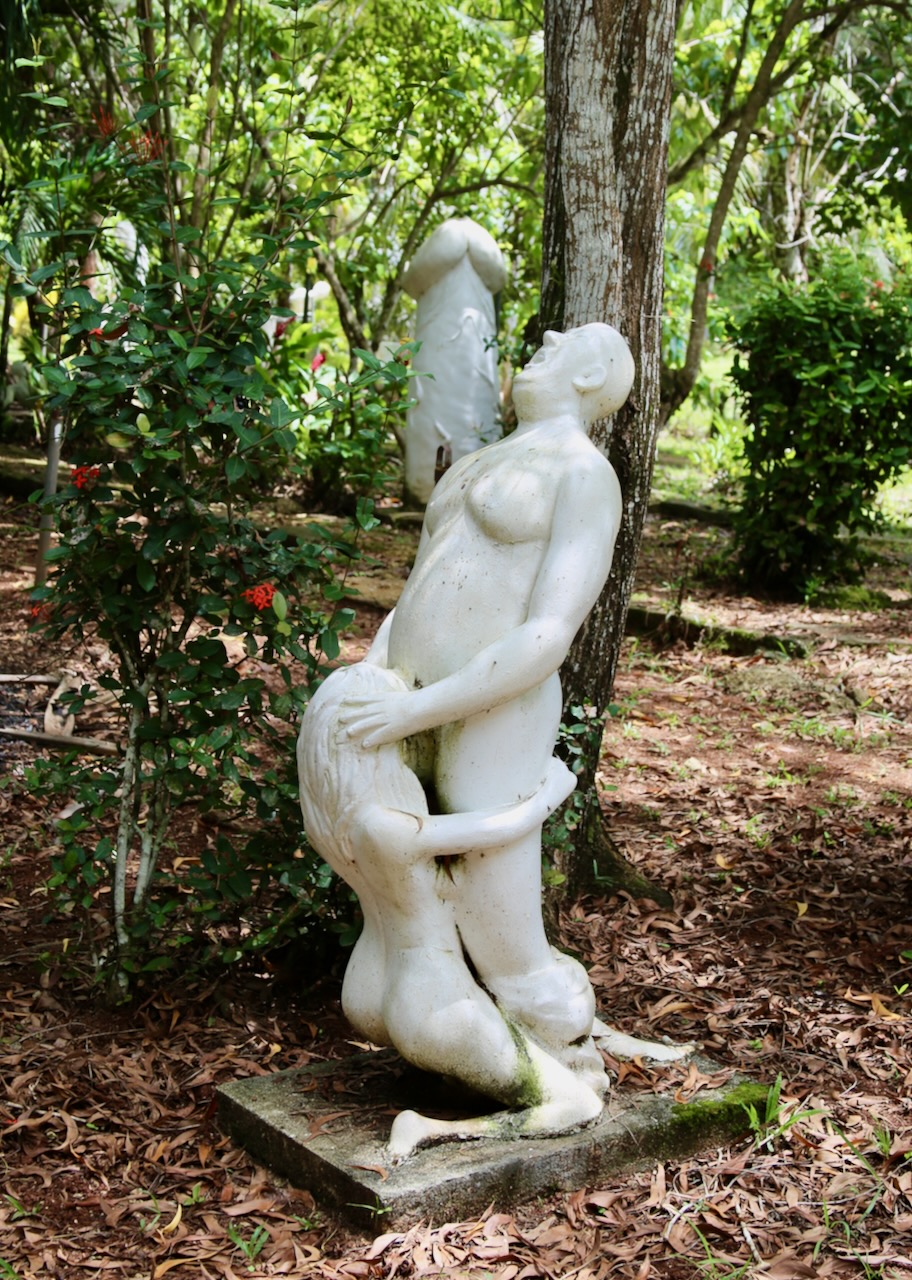
We see Falls #2 and then take the cable car back. We visit the Ghost House and have more fun with the blacklight than the old movie props, though perhaps some of those bones were real. It would be a great place to hide the evidence. Only those 19 years and older may enter Love Land, the garden of sexy statues. When I have a backyard again, I shall have one of these commissioned, by me, because I can’t afford an artist’s price. We stop at Fort Nuestra de la Soledad, where I visited three days ago, so we can take in the views together, along with a family in matching Frenchie shirts.


A short stop at the Umatac Bridge before the 30-minute drive to Fort Santa Agueda, another of the five remaining Spanish forts. The Americans used it as a signal station until it was turned into a naval government park in 1933. The Japanese used the strategic site during WWII. The area is now owned by the Guam Department of Parks and Recreation, allowing visitors to view the village of Hagåtña, the Philippine Sea, and the sheer northern cliff lines of Oka Point. Half a mile walk away is the Latte Stone Park, where eight historical lattes were relocated from Fena (where the largest reservoir is). They were set aside to make room for an ammunition depot.
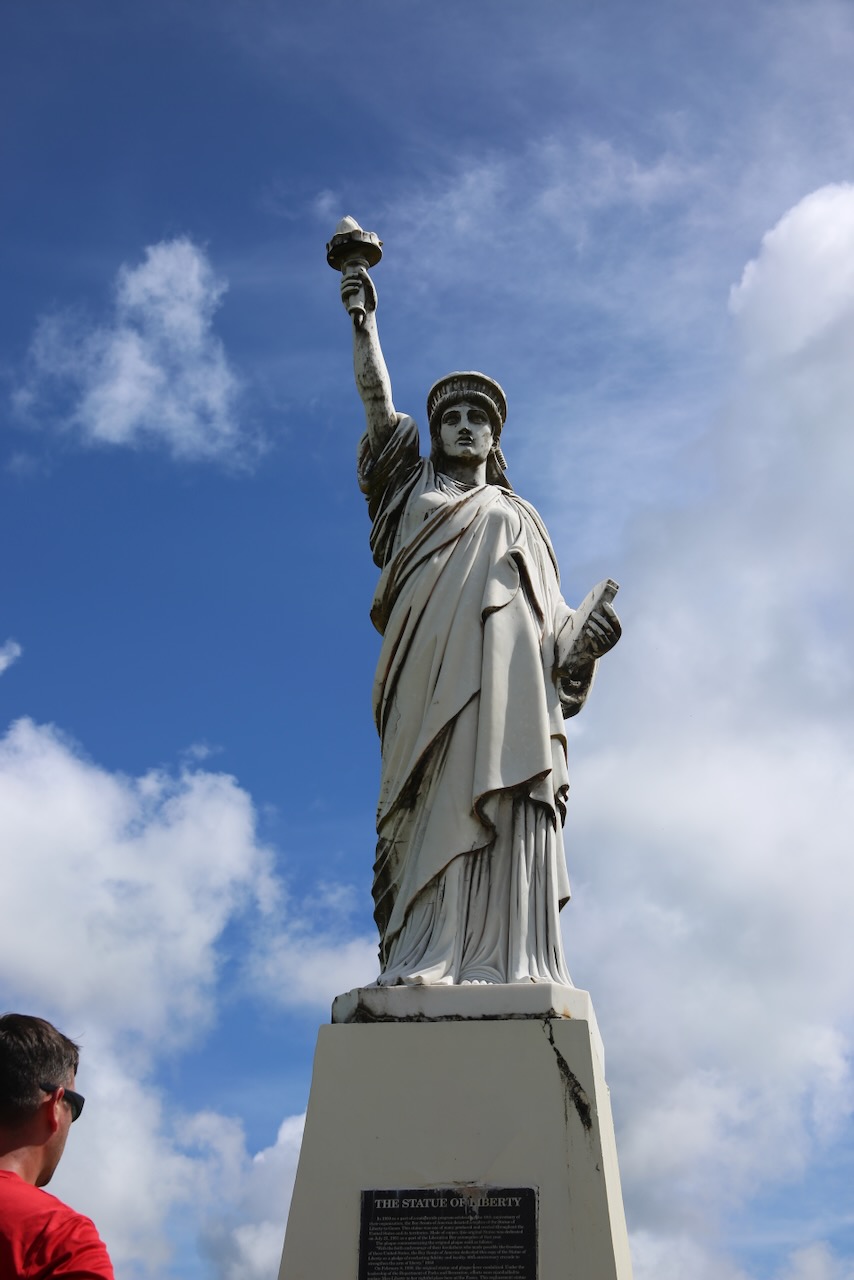
The park also contains two fallout shelters constructed by the Japanese, and inside one is a set of eight rules written on cardboard, a new religion in the making. We find the little Statue of Liberty, the original was a replica of copper about a quarter height of the one in NYC, donated in 1951 as part of the Boy Scouts’ 40th anniversary. It was replaced with marble after being vandalized in 1990, so she could return to the Paseo and continue looking out over Agana Bay. We stop at the gas station for drinks and have dinner on the balcony. I tried marlin the other night (the steak of fish) and forgot to try breadfruit (it’s sticky on the forest floor). We discuss months and politics as they come up in SPQR by Mary Beard.

 TheJessicaness