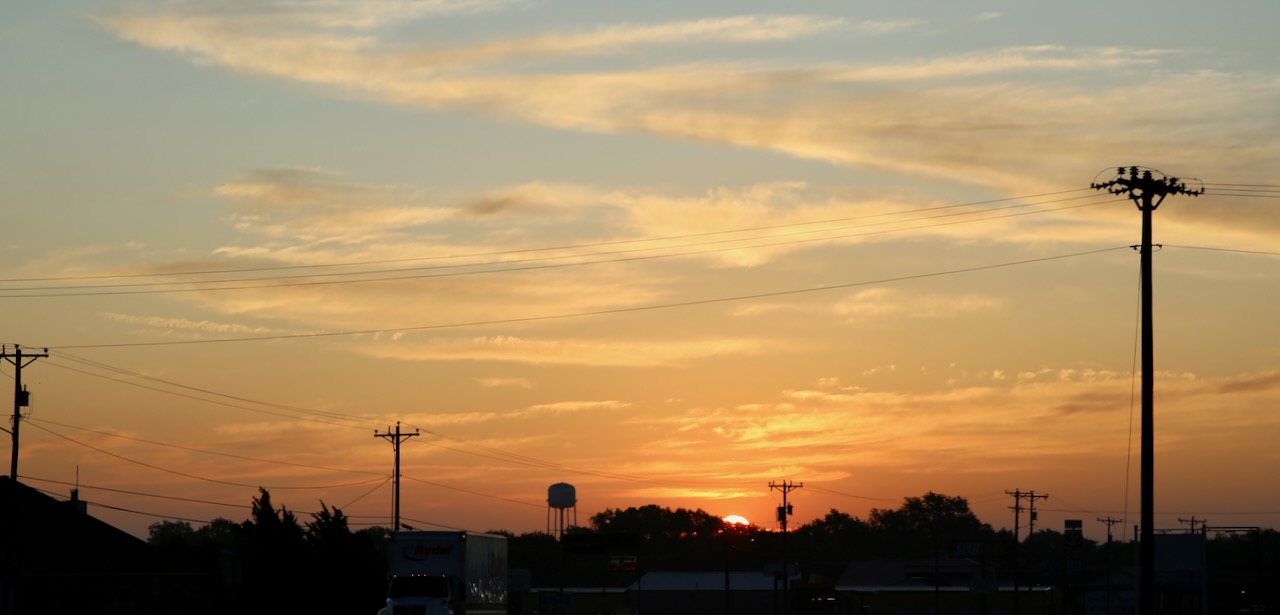
I’ll use the indoor facilities at one gas station and the bucket of soapy water for a clean windshield and headlights at another in Clovis. I’m greeted by some nice older country guys and walk by the murals of Lincoln-Jackson School under the guidance of streetlights. This school is named for the sixteenth president and for the teacher, Ida, who came from Texas in 1926, and went from teaching two African-American students to eventually 100 by the 1940s. She also taught Sunday School, opened her house for those in need, and helped launch the Federated Progressive Club.
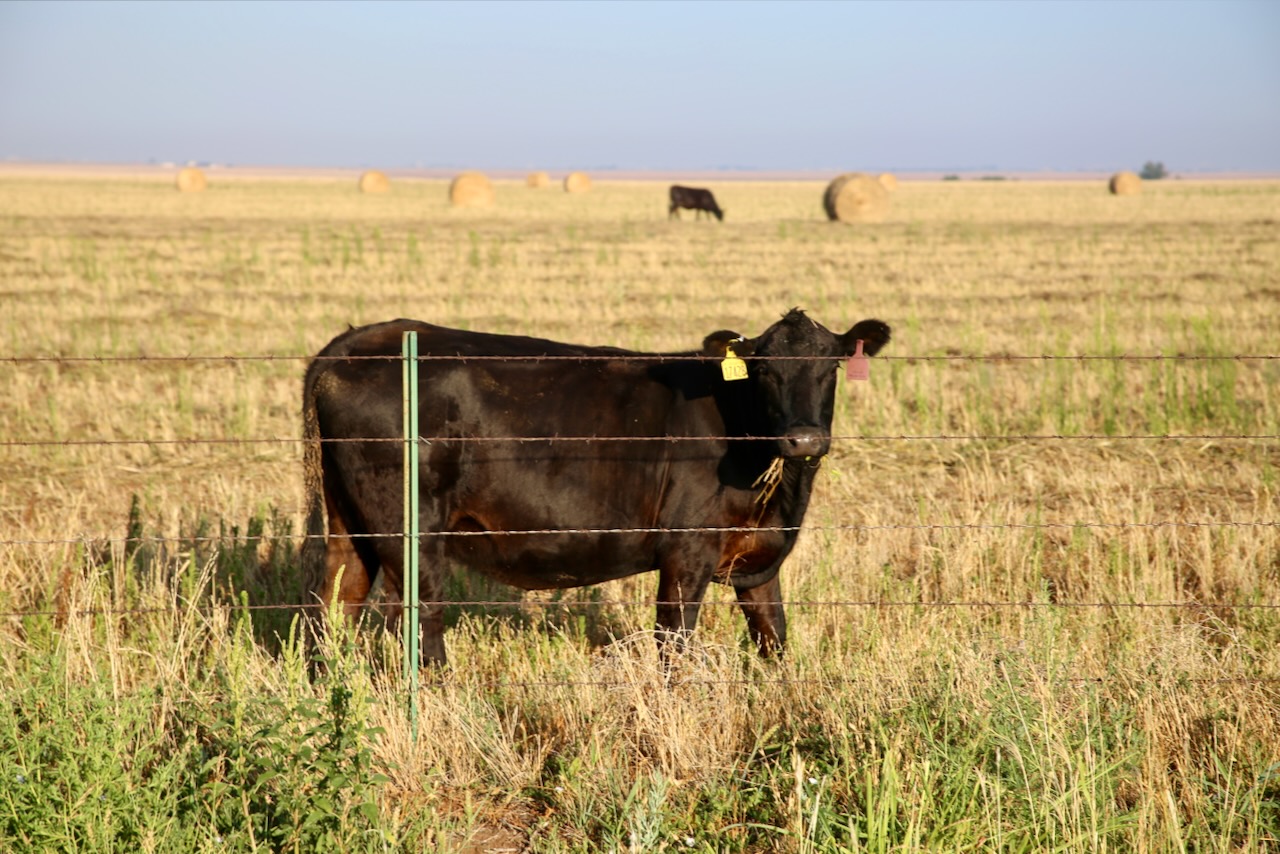
This group was for black women who worked to improve their community through social reform, supporting libraries, and promoting conservation. The first building I see across the Texas line is a container shed of a tobacco discount shop. That’s better than what came next — a cruel, crammed cattle cage, which makes sense given I’m within a 50-mile radius of Hereford, TX — the “Beef Capital of the World” that produces over a billion pounds of meat. The city is also known as the “Town Without a Toothache” due to naturally high levels of fluoride in the water.
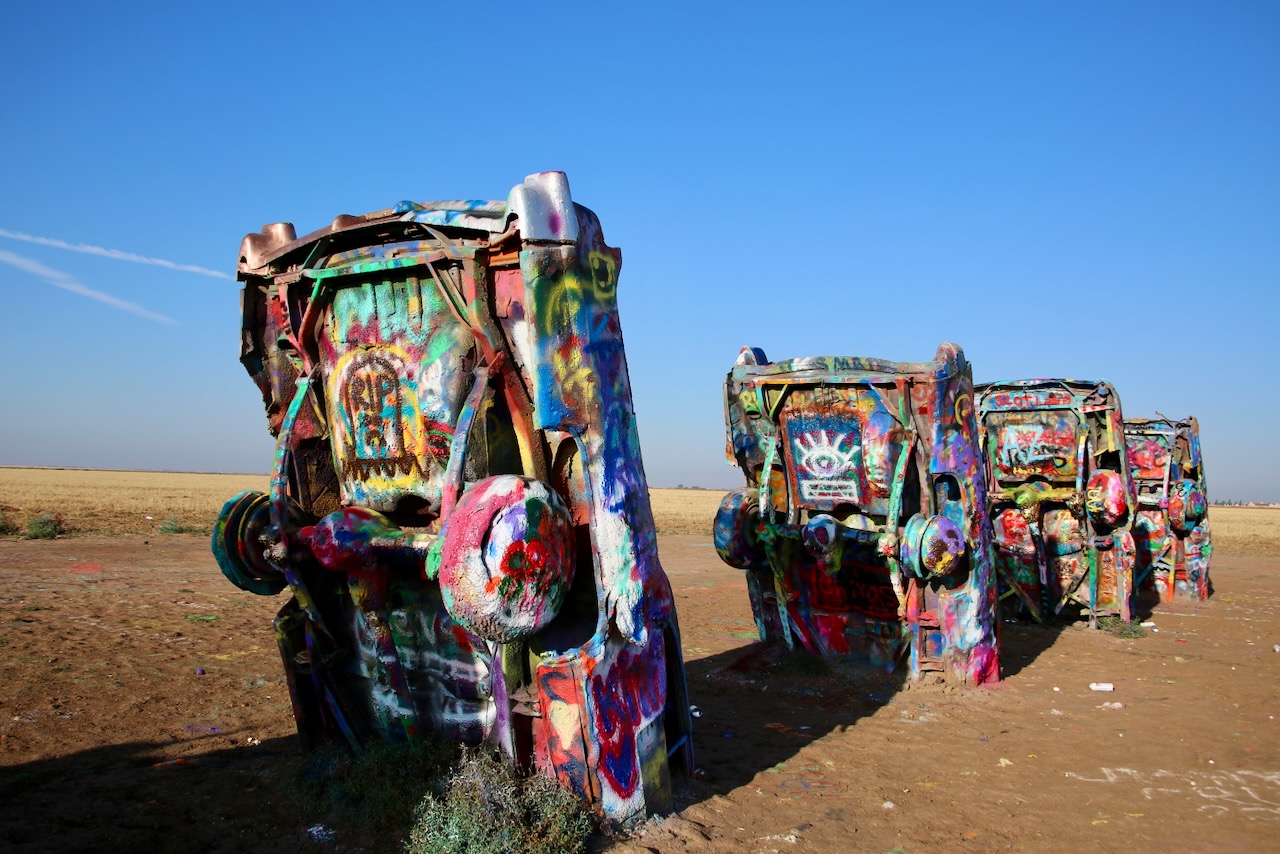
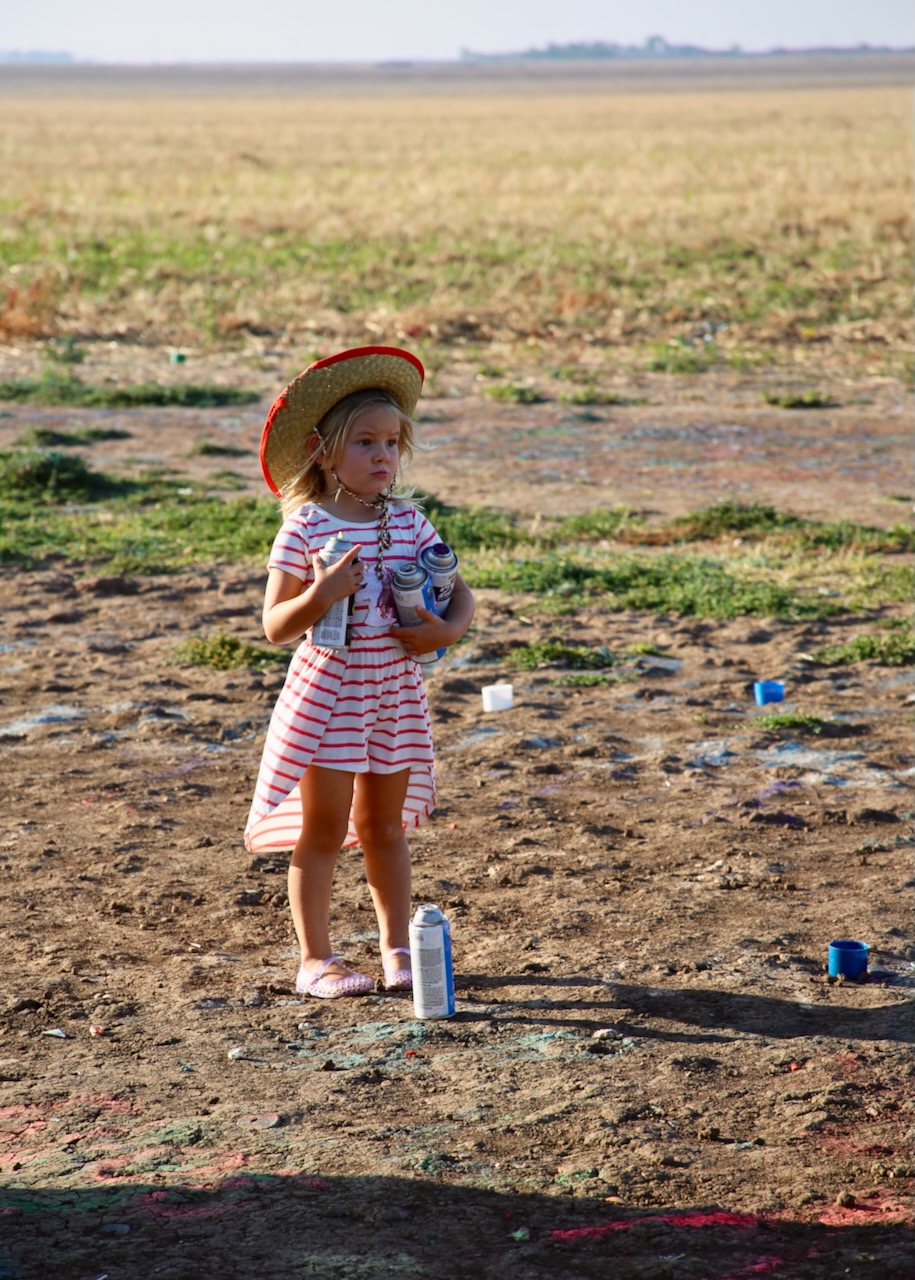
I passed a field of sorghum and another of cows on my way to Cadillac Ranch, a public art installation created in 1974 by the art collective Ant Farm. The ten Cadillacs from model years 1949-1963, each planted at the same angle as the Great Pyramid of Giza, were chosen to showcase the evolution of tailfins. I thought the kids were cuter than the cars, and I realized how much the adults like art, play, and self-expression, too. I wish there were more exhibits like this for those purposes. I walk through the tiny Amarillo Botanical Gardens for $5 and see a few golden pheasants.
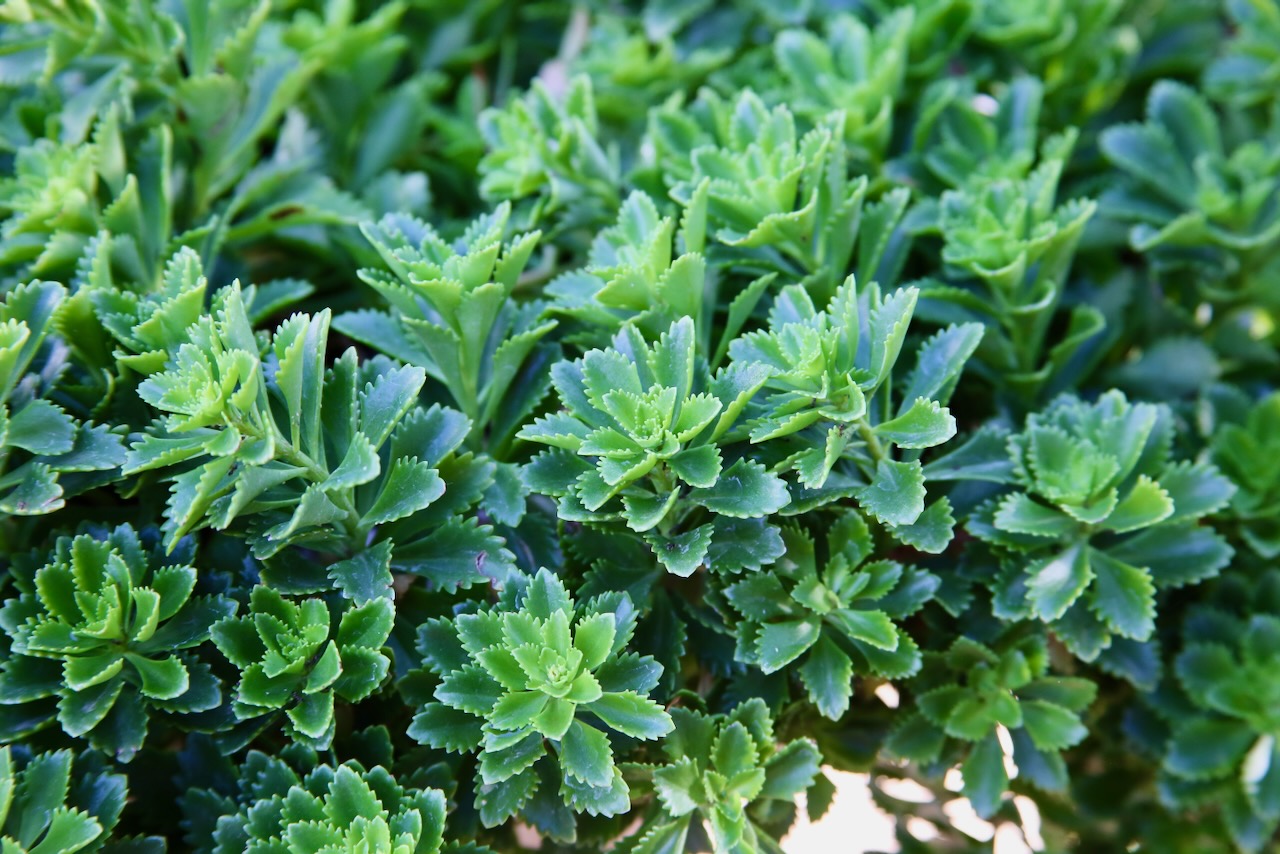
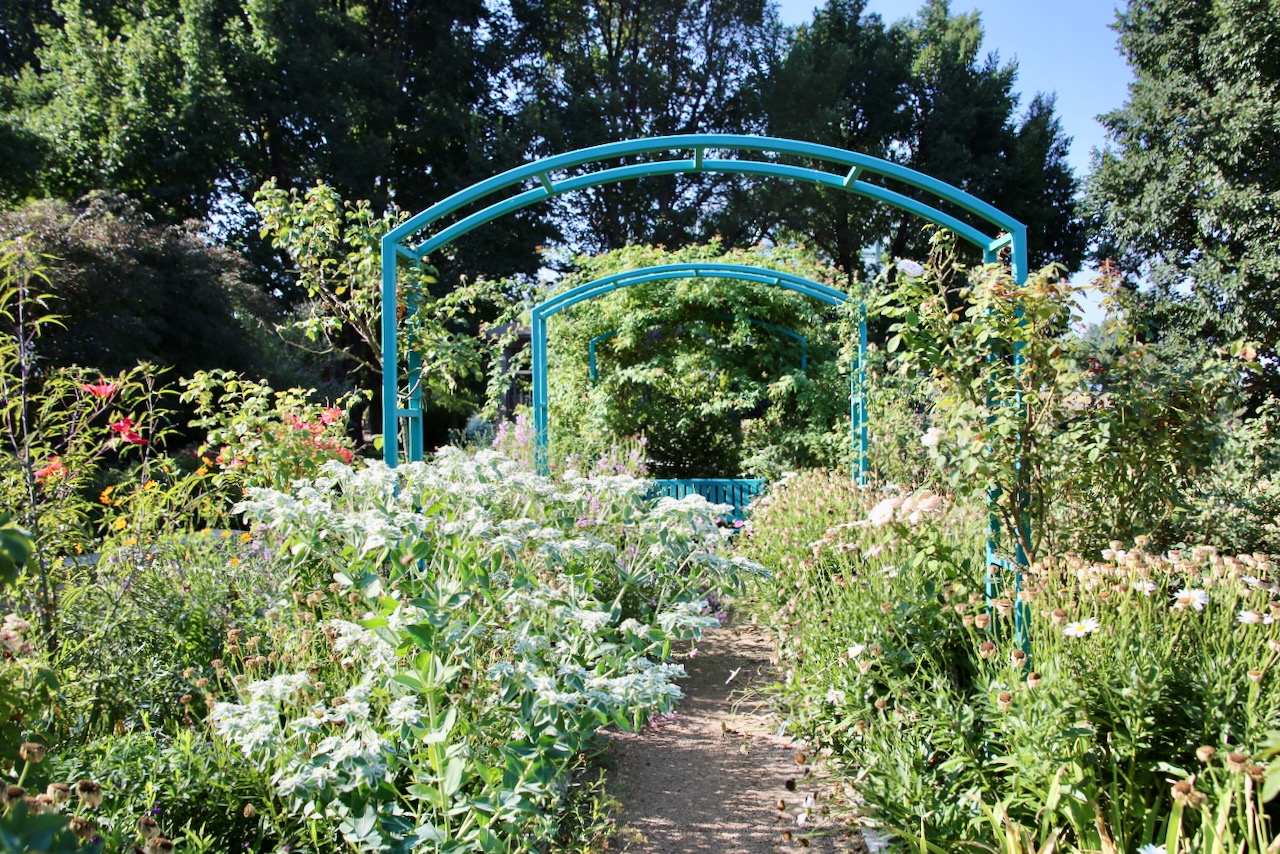
The males are a bright rainbow of feathers, minus purple, while the females are shades of brown, blending into their environment and their chicks. There are also differential grasshoppers, American bumblebees, ringed teal ducks, leafcutter bees, painted lady butterflies, familiar bluet damselflies, Mandarin ducks, koi fish, a pair of tuxedo kittens, an American robin, and too many mosquitoes. These gardens make full use of their 4.4 acres, and I’m impressed with the abundance of lively creatures and blooming flowers.
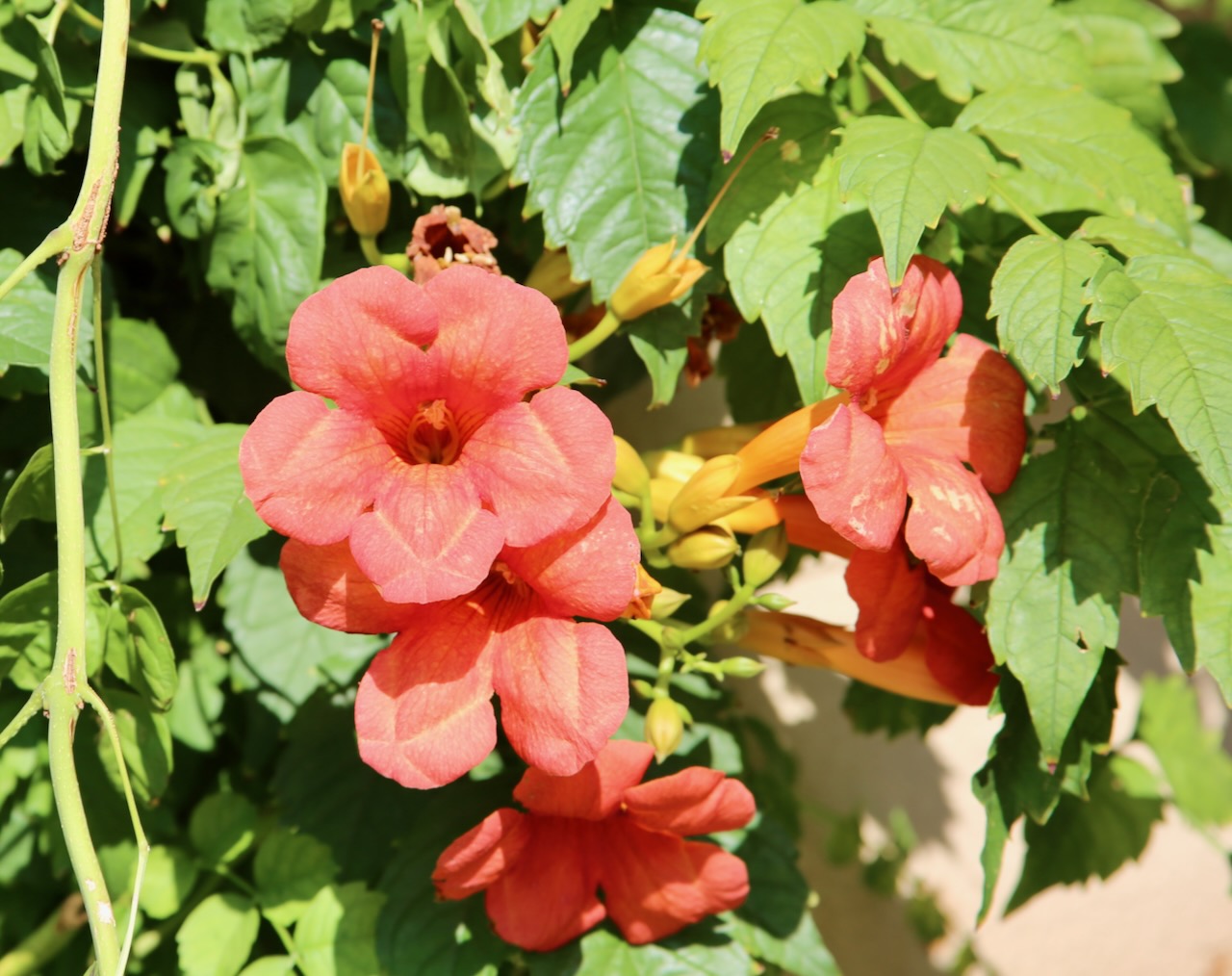
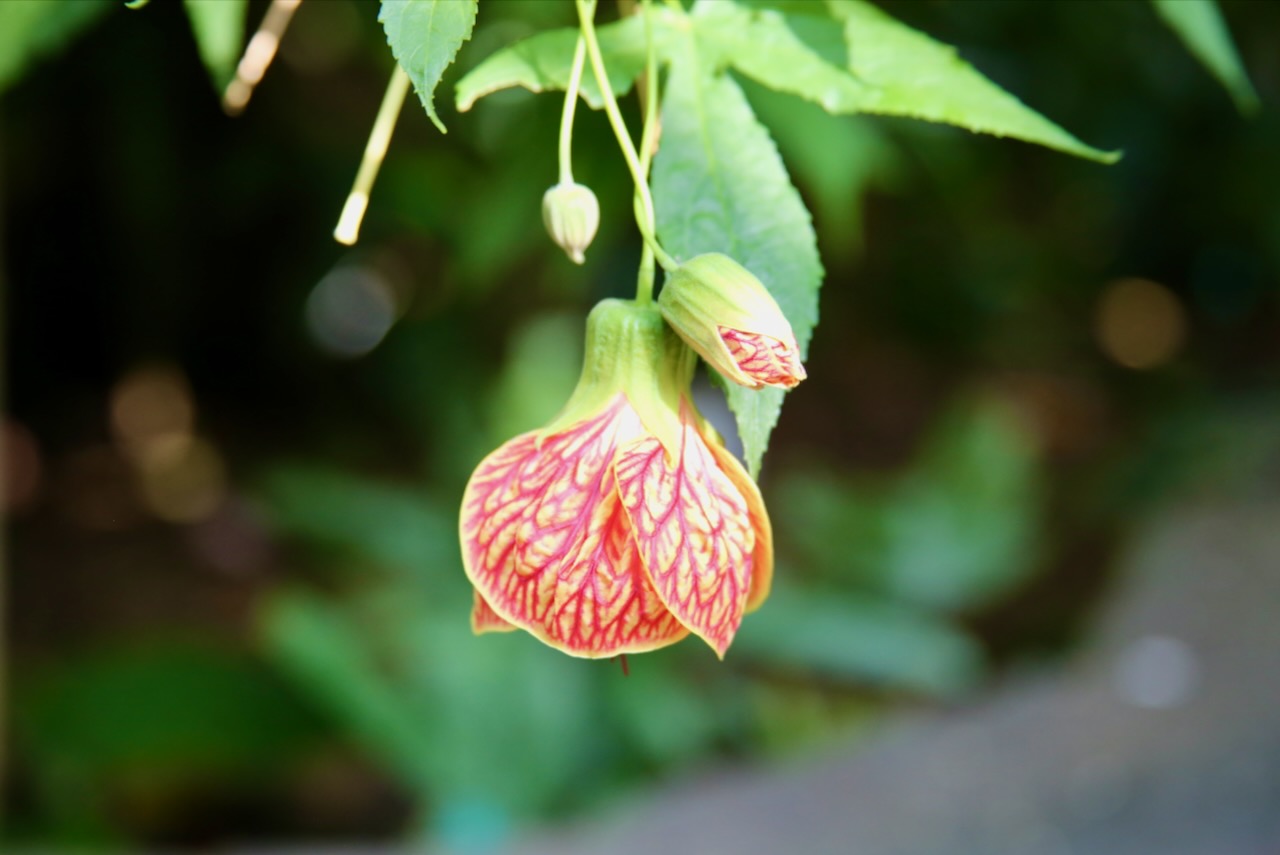
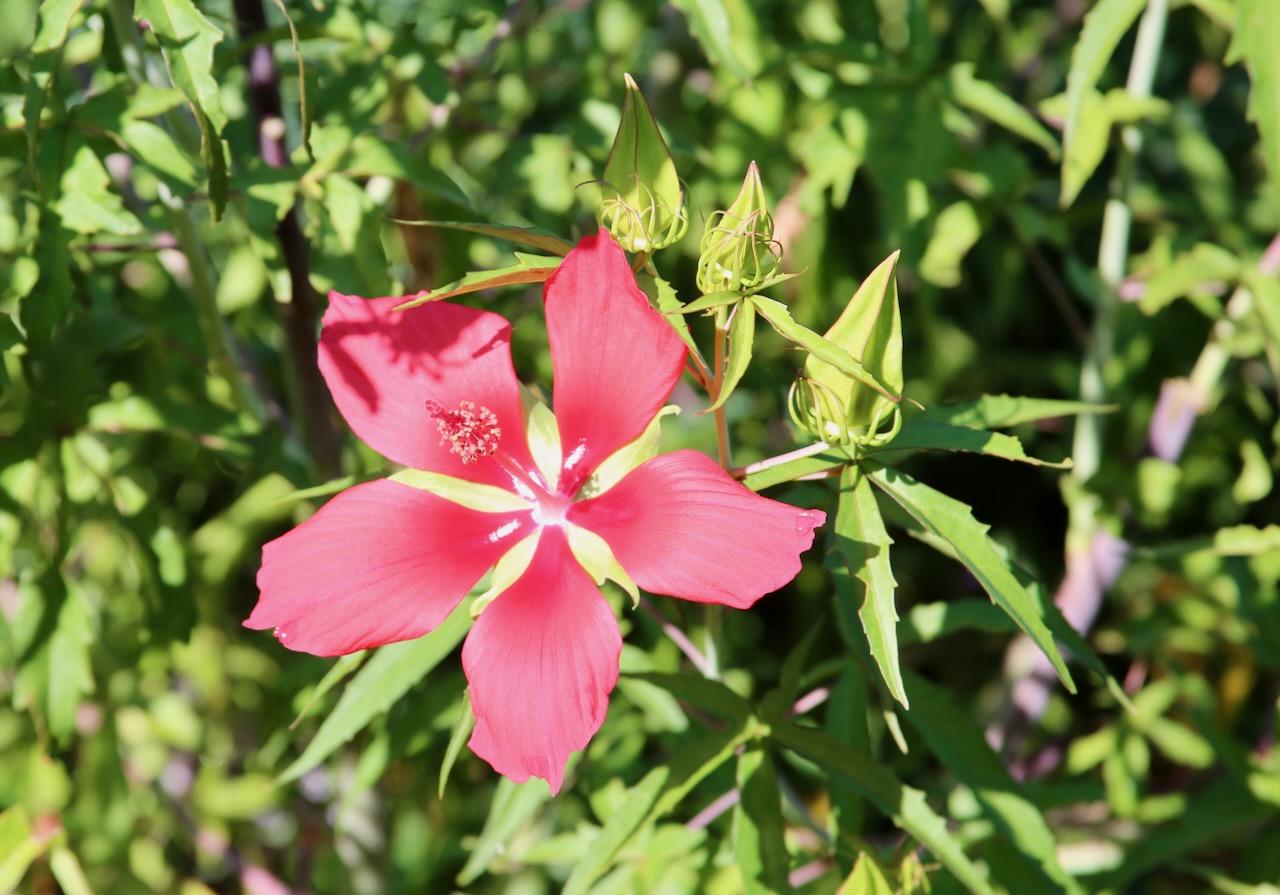
trumpet vine, Chinese lantern, Texas Star hibiscus
I pull over when I notice an ornate box turtle in the road. Once he’s convinced I’m here to photograph his journey and make sure he crosses safely, he continues to do so. I drove to the Alibates Flint Quarries National Monument to learn about 13,000 years of people’s history with rocks in the High Plains. I was disappointed to find out I had just missed the two-hour tour by microseconds, or even ten minutes, I could’ve caught up. Well, I wasn’t sticking around for the next one. Instead, I will continue north for hiking closer to Lake Meredith.
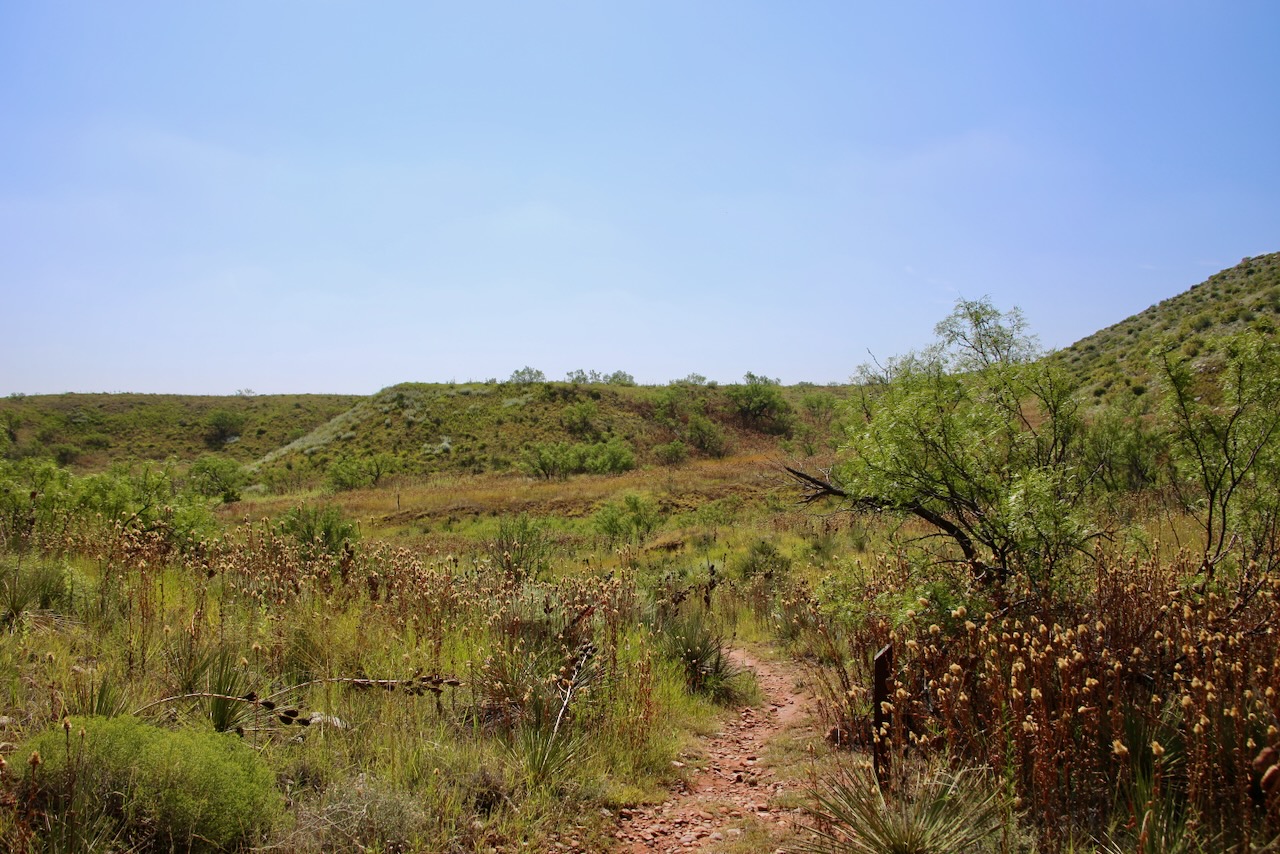
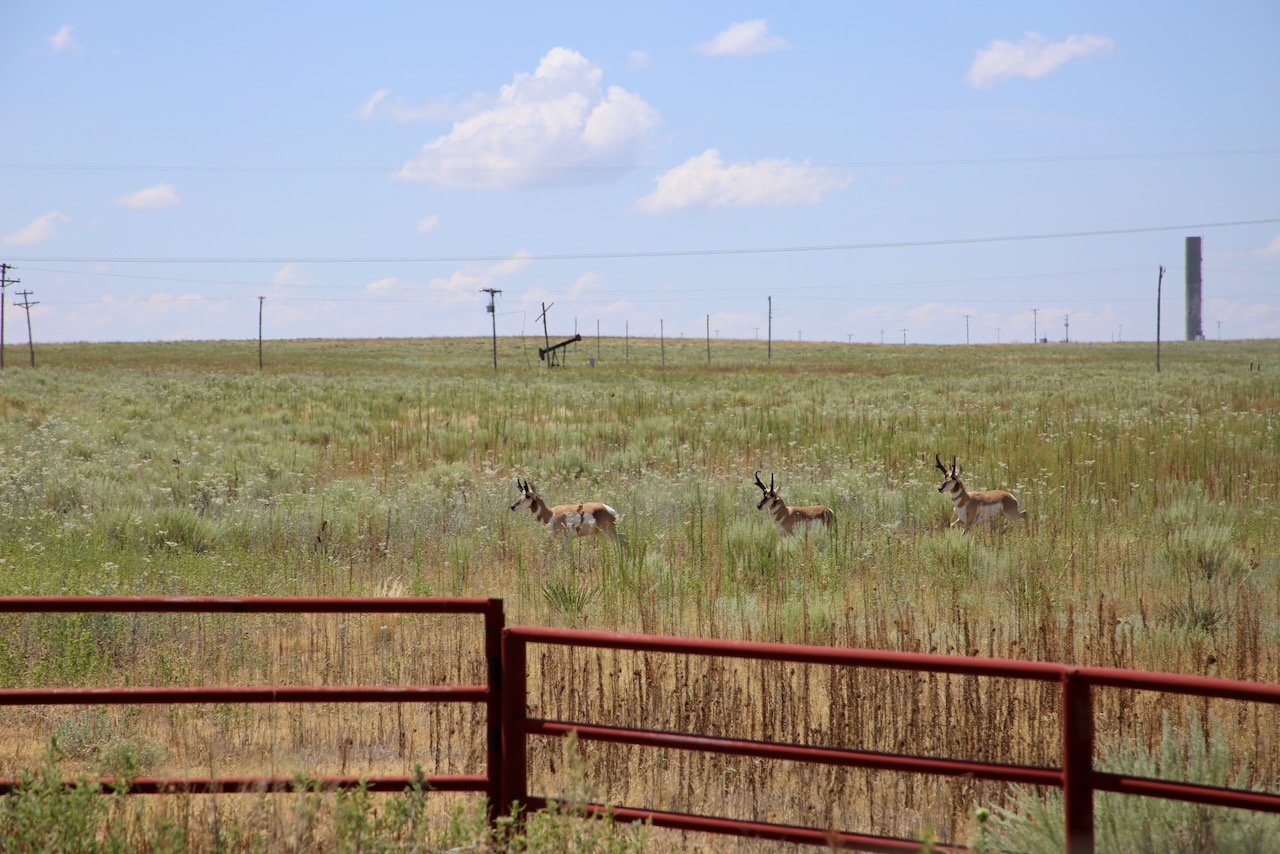
I encounter a swallow’s mud nest, a funnel web with a waiting spider, mating Plains lubber grasshoppers, a lone gray bird grasshopper, a bright yellow two-striped grasshopper, and a posse of wild turkeys looking nefarious, in a good way. There are plenty of wind turbines and power lines, but it’s the precious trio of speed goats, aka North American pronghorn, that make me stop again. I watch them prance through the tall grass. Their hybrid horn has a bony core covered in a keratin sheath that the forward-facing prong is a part of, and sheds every year (the only horns to do so).
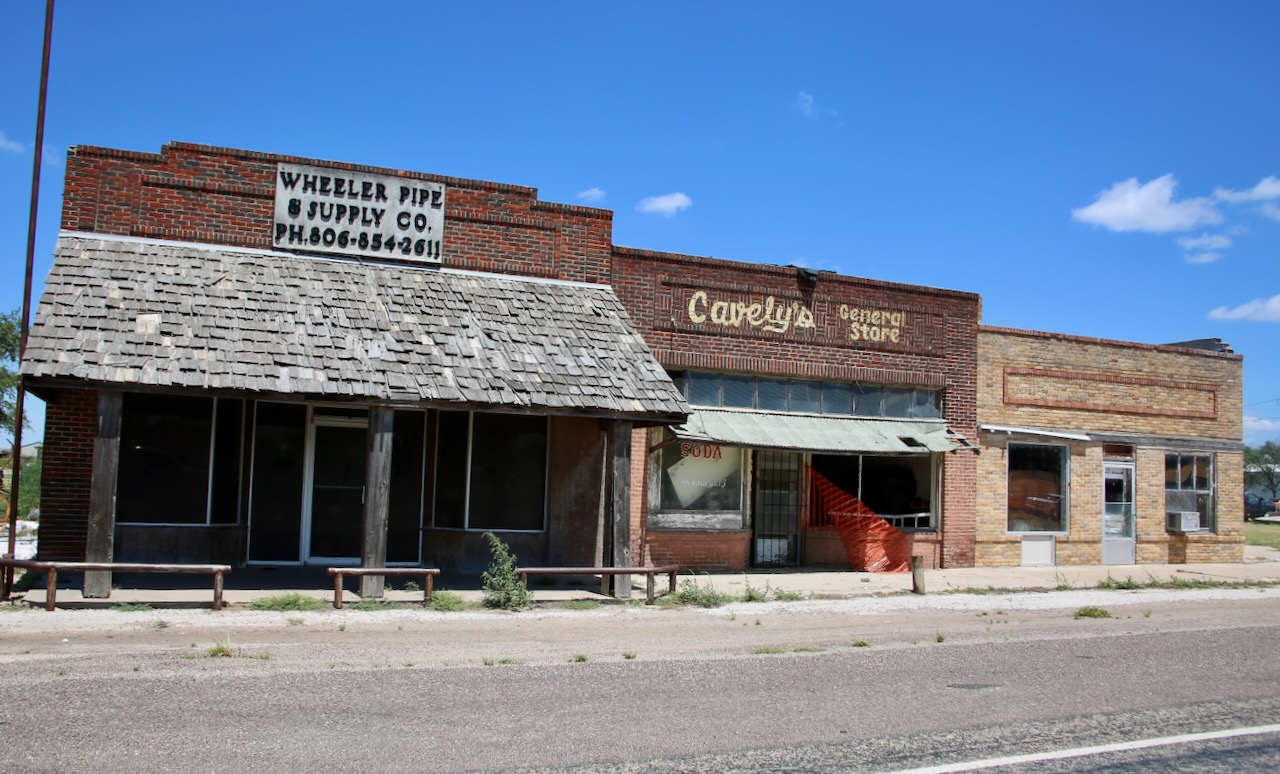
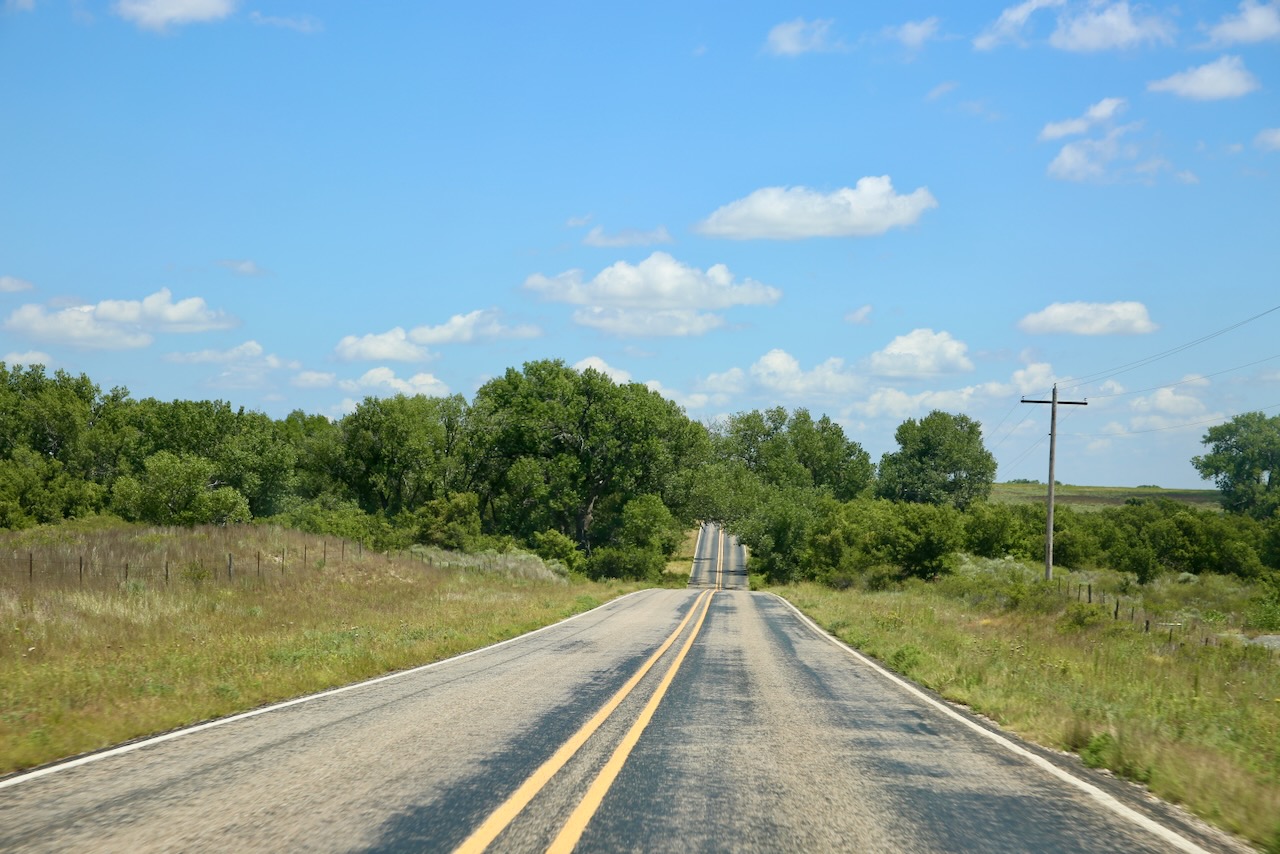
I see a sign for kolaches, either in Borger or Pampa, but it doesn’t matter because the place is closed. I ask across the street and get offered chicken on a stick, which makes me sad. There’s a commercial on the radio about gender nuetral bathrooms in schools concerning boycotting and hate speech. I prefer local stations that stick to fun music, but these hosts know their usual audience and will continue to update them on news that concerns their community. I drive through Mobeetie, the oldest town in the Texas Panhandle, originally a trading post in 1874.
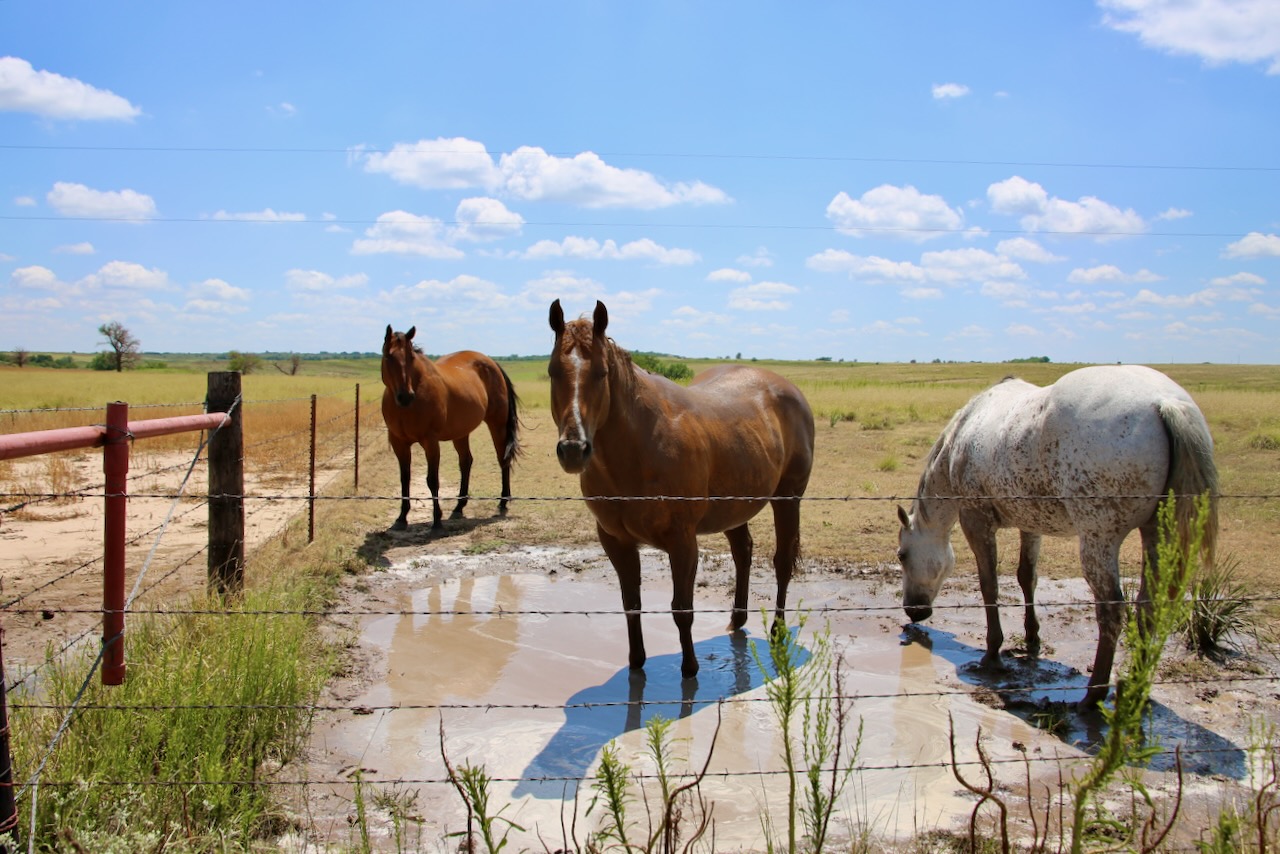
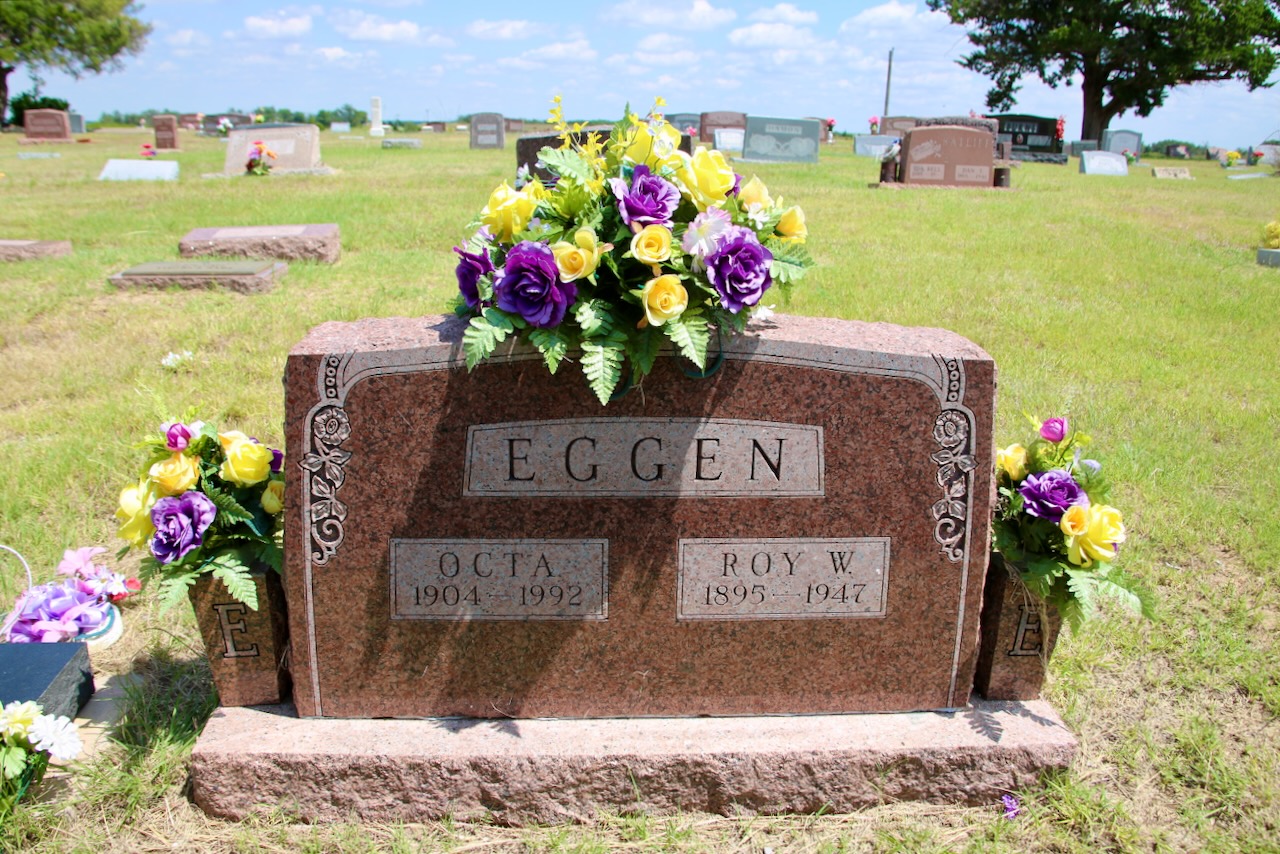
I hang out with three horses, making use of a muddy water puddle before crossing into Oklahoma. Once across the border, I stop at White Rose Cemetery, not the one near Bartlesville, but the smaller one near Reydon that doesn’t come up on the map. I don’t have family here that I know of, but any chance to stretch my legs on a lengthy roadtrip is always welcome. London treats these sanctuaries as an opportunity to access a quiet green space. The earliest birth I can find is from 1867. It’s not far from here to the Washita Battlefield National Historic Site and Black Kettle National Grassland.
I stop at the picnic area, bypassing the viewing platform that is getting a handicap upgrade, and then talk with a ranger inside about an Indian who killed a man on purchased reservation land, which could be a federal crime, but he tells me reservations were eliminated in the state, so he could just be charged for murder. Many reservations were disestablished between 1887 and 1907 through allotment and statehood, but several in the east were never done so legally. I get to learn about historic facts and history in the making.
Either way, the ranger says it’s up to the Supreme Court now, and the verdict could get people kicked off the land. Then he tells me about a New Zealander getting reparations for the 1921 Tulsa Race Massacre, and now her granddaughter can go to college. Within a day, more than 1,000 buildings (churches, schools, and businesses) were destroyed, hundreds of people were killed (who were attempting to flee), and thousands were homeless (forced into internment-style camps for weeks) because of an escalated encounter between a Black man and a white woman.
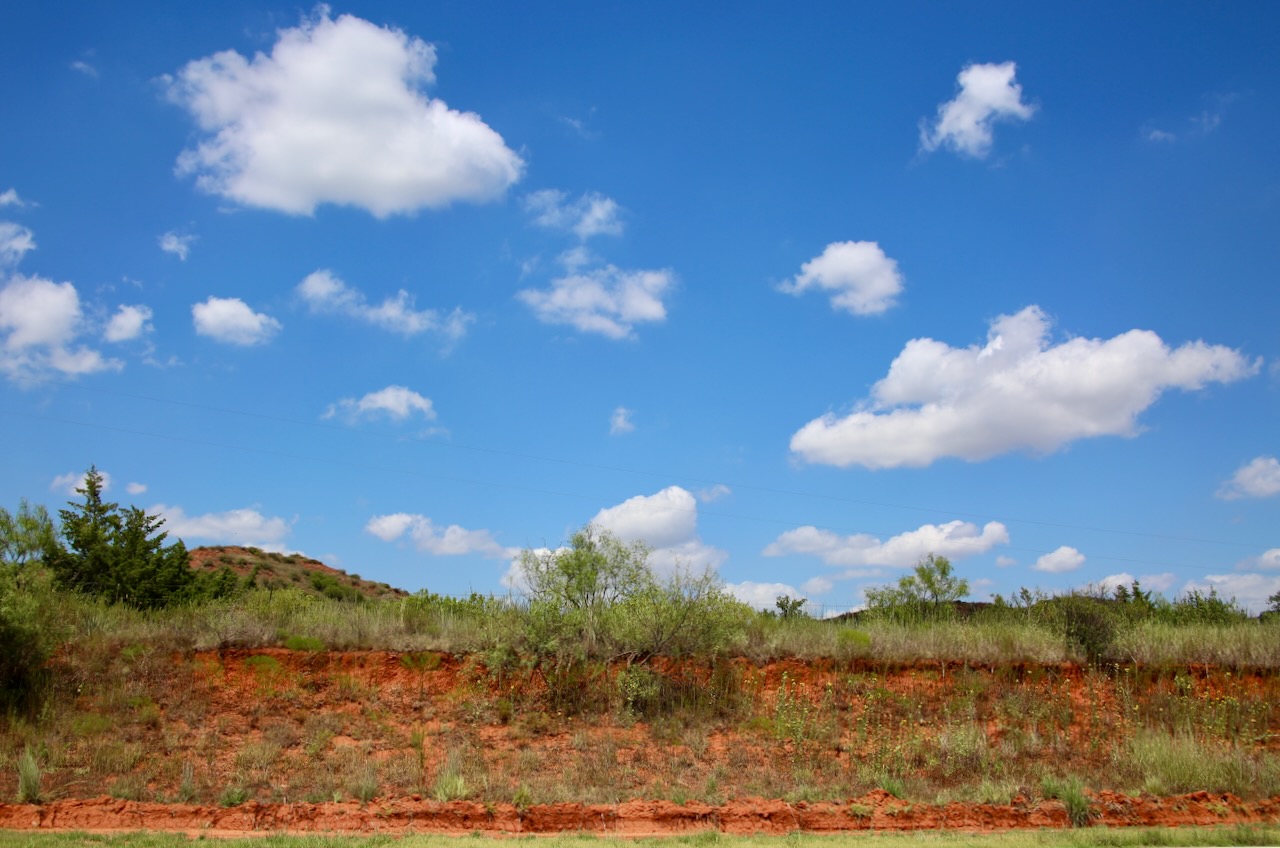
Local officials were quick to suppress coverage; police reports disappeared, insurance companies denied claims, and survivors were threatened into silence. For decades, this horrific loss was conveniently left out of textbooks. Only in the late 90s was a committee formed to investigate the tragedy, renew public awareness, and discuss restitution for survivors and their descendants. This grassland has seen the migration of buffalo cultures, the stampede of homesteaders (against agreements made between the government and the Native Americans), the retreat of Dust Bowl farmers, and the dramatic recovery of the land since being protected.
There are clay, ornament-sized horse figurines that represent the 650 Cheyenne horses that were slaughtered by the 7th Cavalry. Community members, park visitors, and students completed the project for the 150th anniversary. There are mixed emotions on the opinion board: I would’ve shot those soldiers, too.; Why did he tell his men to rape women?; I’m sad for both. Outside is a 0.4-mile loop, the Dust and Fire Trail, to experience an overlook, a dugout home, a windmill, a wildlife pond, and a fire plot.
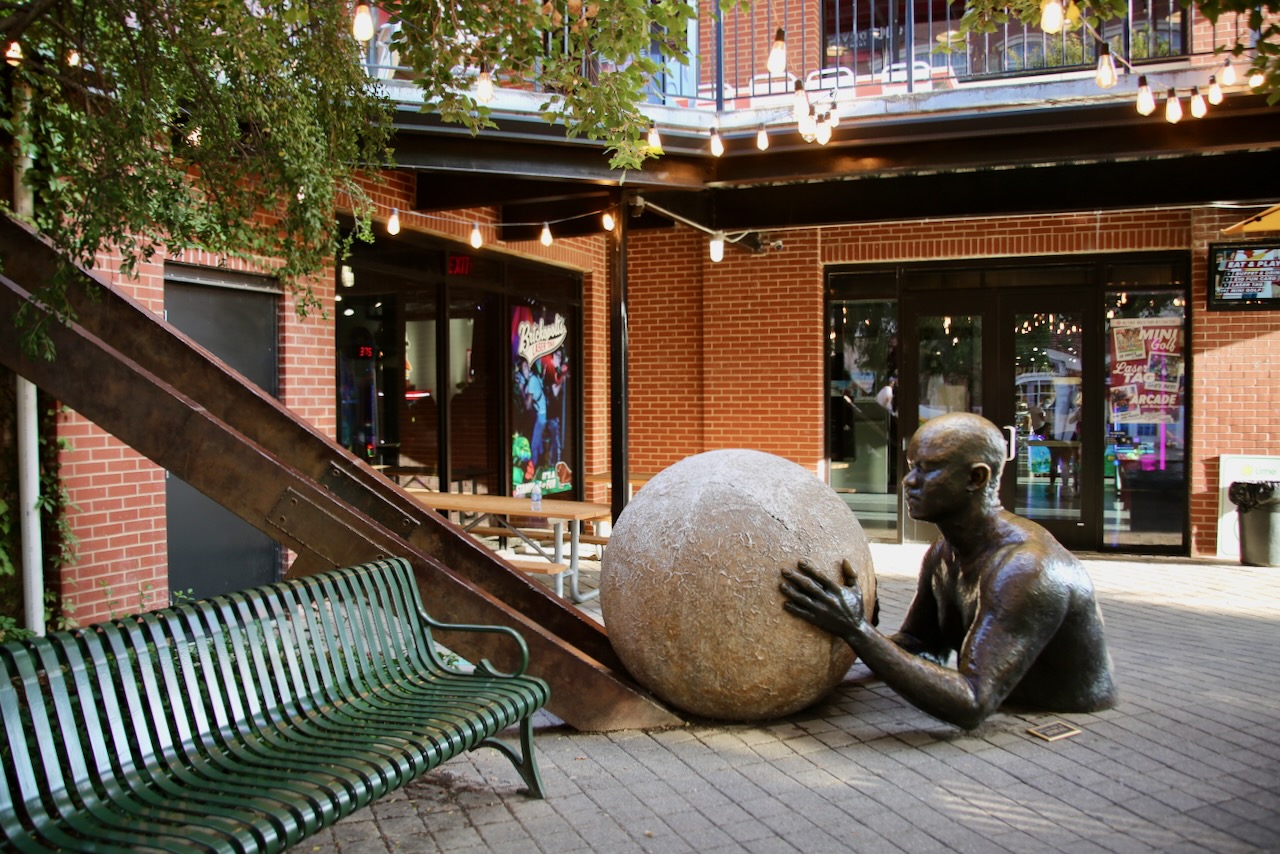
It’s a good thing I’m not an insect, or the assassin fly I saw might’ve ambushed me mid-air and injected venom to paralyze me and liquefy my tissues for consumption. Also on the trail are red harvester ants, which store seeds in their large mounds decorated with pebbles, but also possess one of the world’s most painful insect stings. As I witness a crowd of them moving a seed 1000 times their individual size, I quickly leave them to it. The friendliest encounter is with a pair of red-shanked grasshoppers just casually crossing the trail.
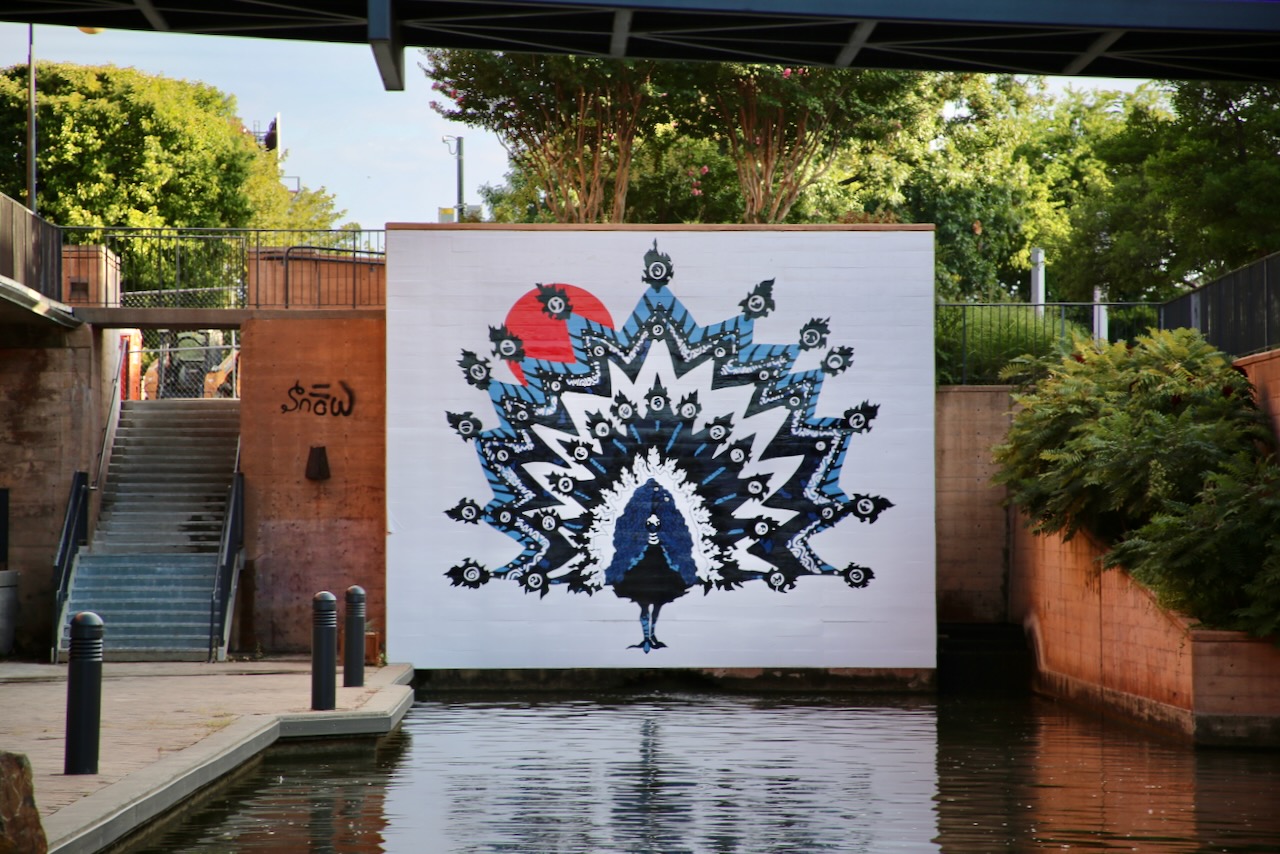
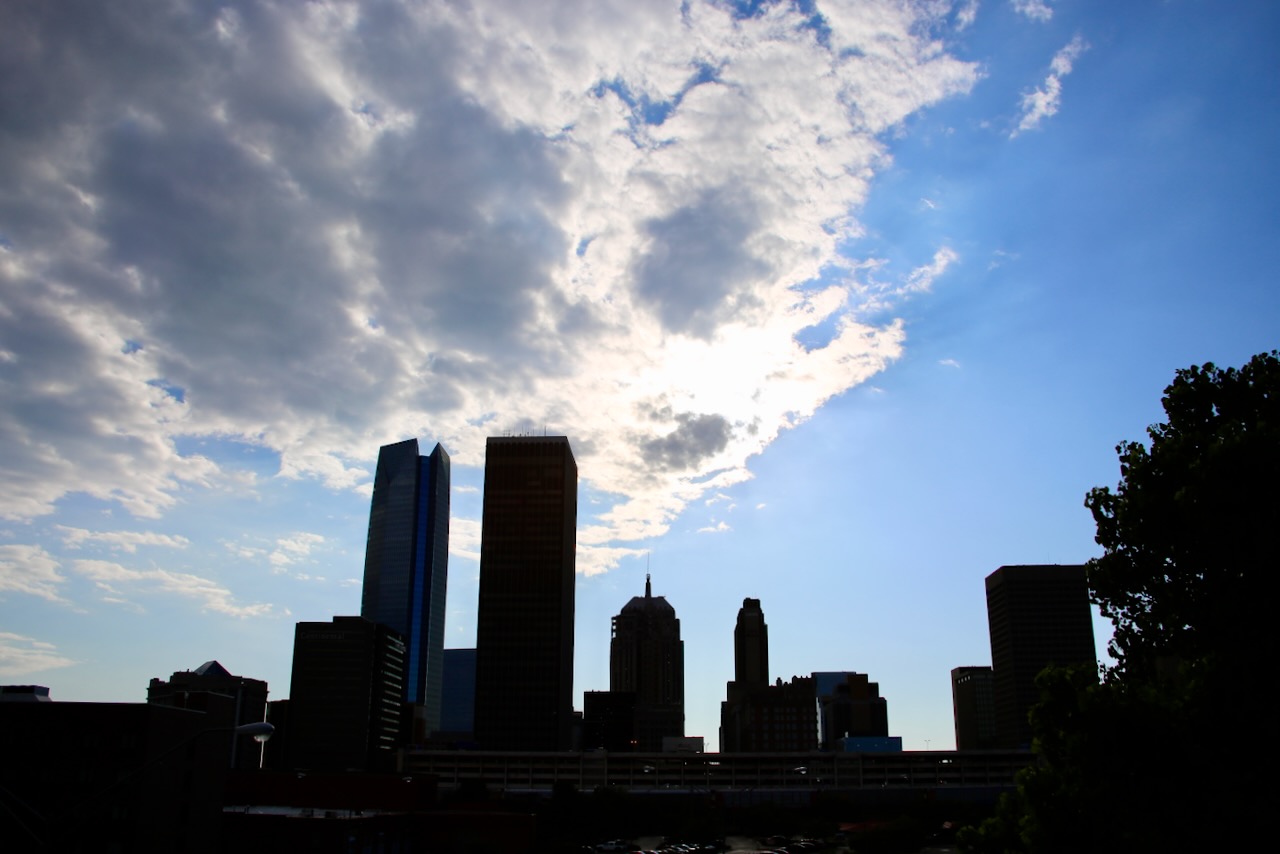
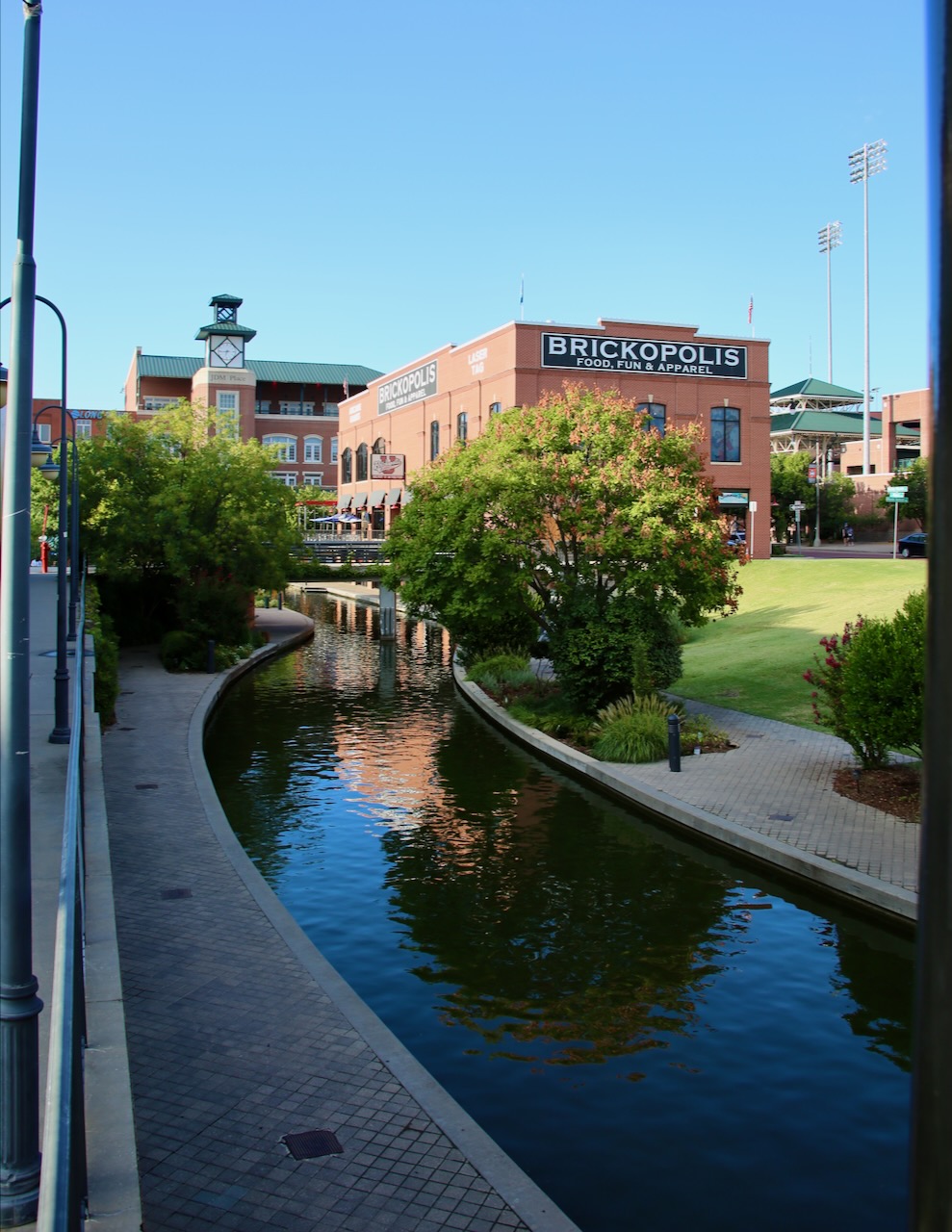
In an extremely rare sighting, I crossed paths with a pink grasshopper, not neon bright, but definitely more red than any visible green. This congenital condition of abnormal redness in an animal’s fur, plumage, or skin is called erythrism. This opportunity for an entomologist is about as common as a scuba diver spotting an albino sea turtle. I drive to Oklahoma City and walk around the Bricktown district. The state’s first craft brewery was packed, so I delayed dinner and walked along the canal, where I saw murals and signs of the city’s pride in letting settlers claim homestead on promised Indian territory.
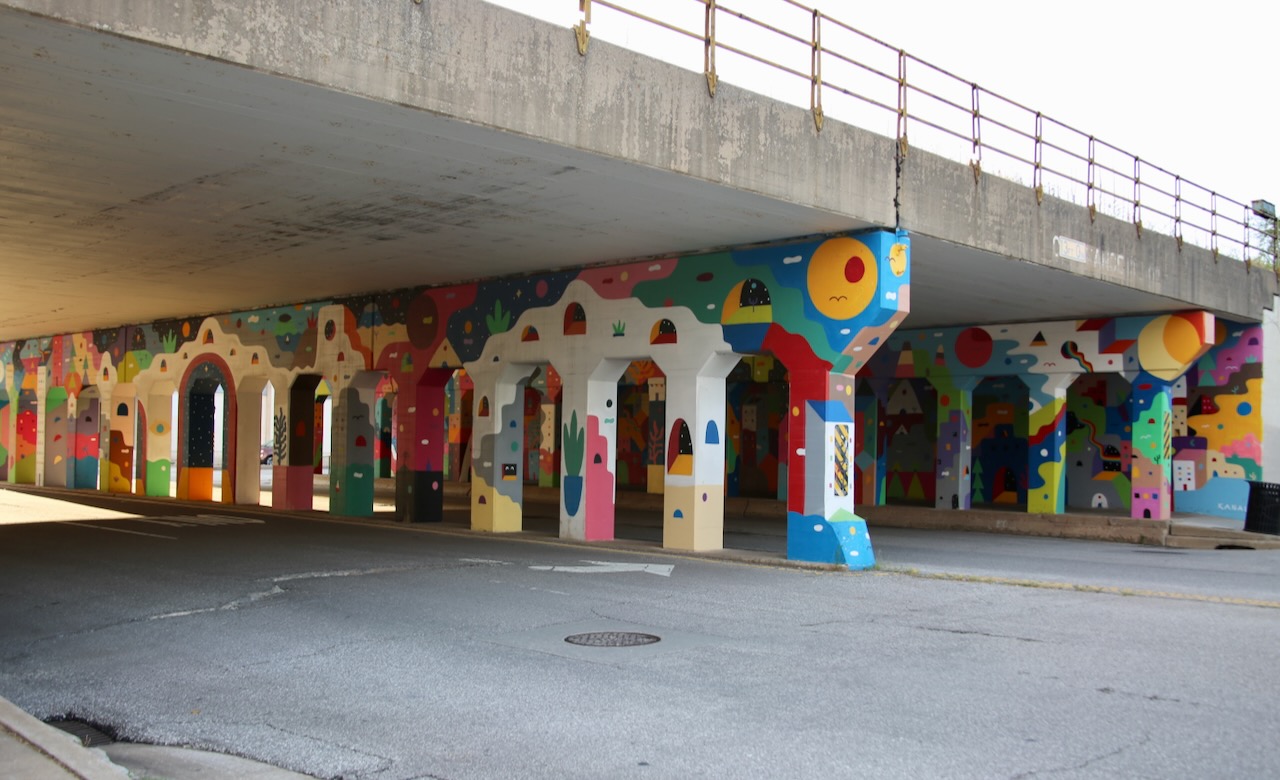
I understand this comes from a long lineage of debaucherous ancestors and can only appreciate any improvement in a less demeaning direction. I’ve wondered further than I realize and am about to give up on finding Kitchen (not sure if Thai or Pizza) when I stumbled by a dog park on my return to the car and found Anchor Down — an F5 IPA and Impossible Burger for the win. After eating, I am escorted to my car by Hunter and her family coming back from the dog park. I listen to her describe a thing that lifts things. Well, that’s vague. I decide to stay the night here, in town, not with them.

 TheJessicaness