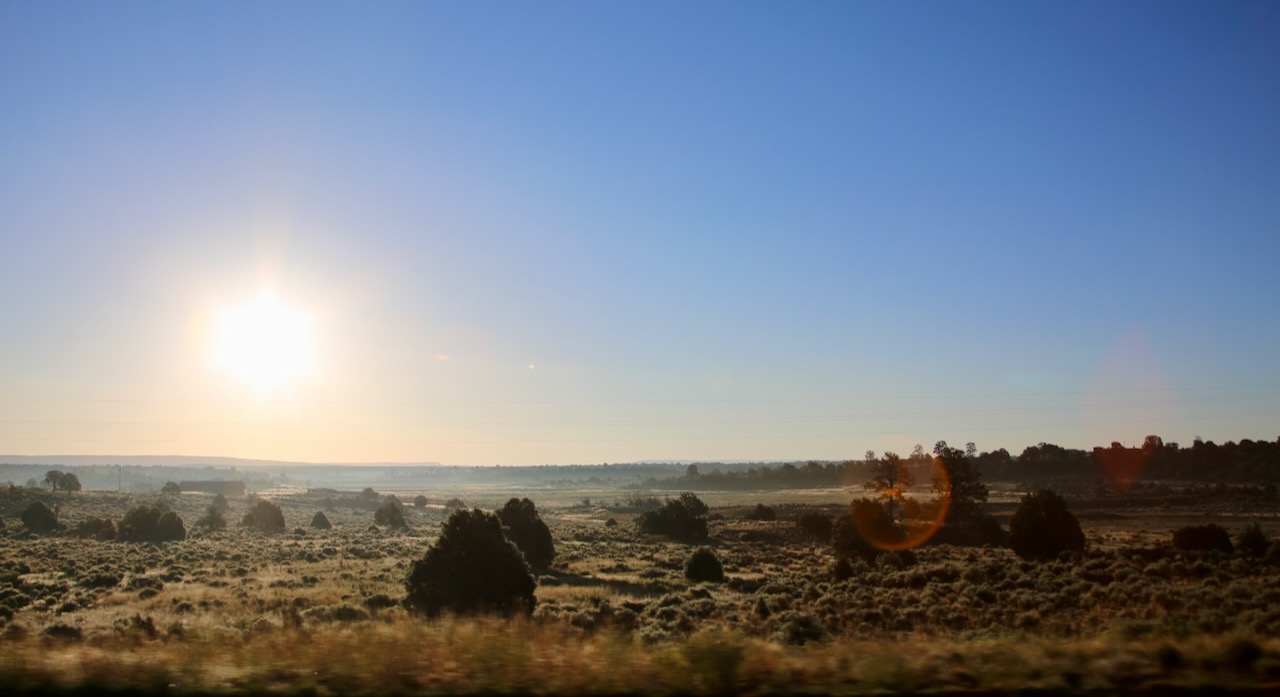
I wake up in Gallup and take my first shower at a truck stop. Thirteen dollars gets me two towels and a washcloth with foaming soap. My notes say I detoured to El Morro National Monument, but getting off the highway ensured I had a full morning of sightseeing, not just an hour of red sandstone mesas and sagebrush between Route 66 museums and murals. It also gifted me with a foggy drive between trees and sunflowers. Arriving in the park, I will take a nap in the campground to counterbalance the inadequate sleep I’ve had over the last few nights, as travel makes me restless with a constant desire.
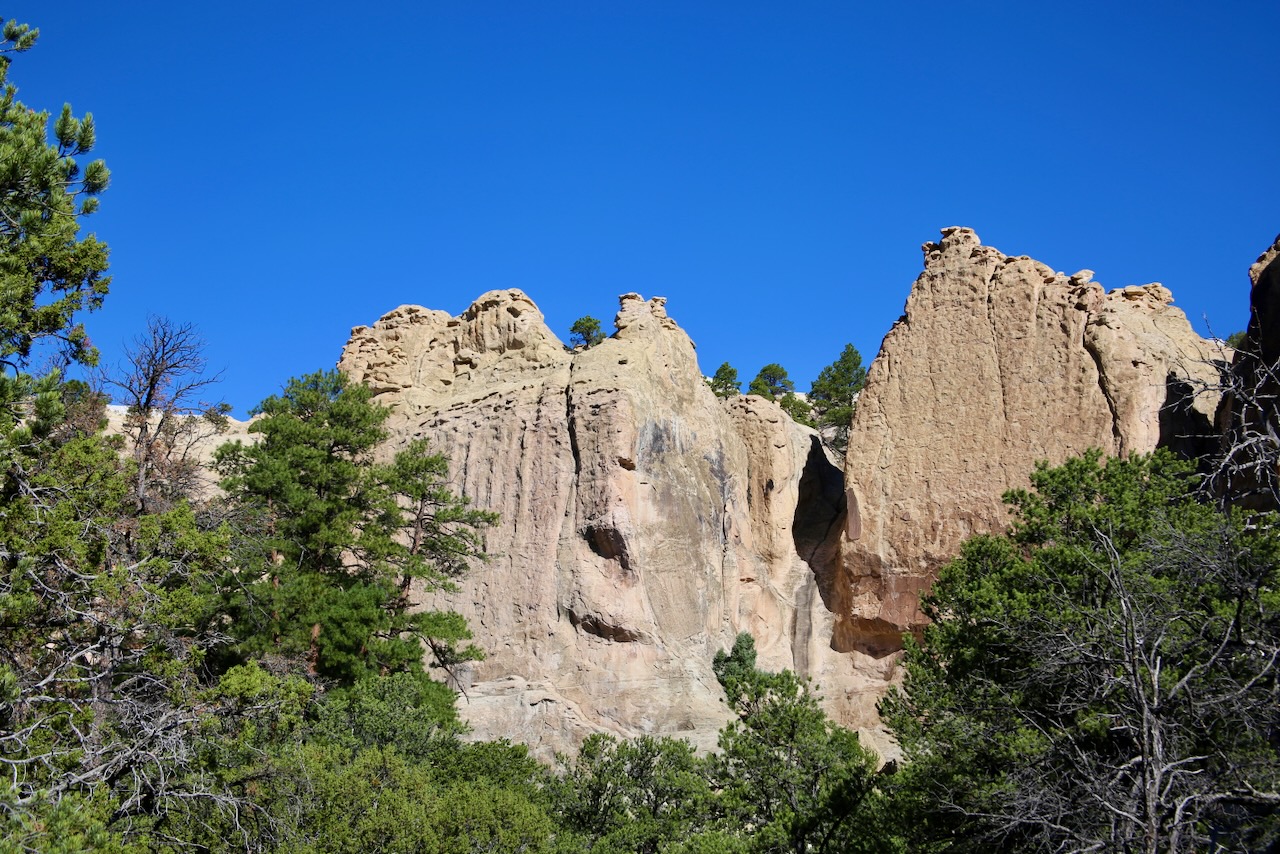
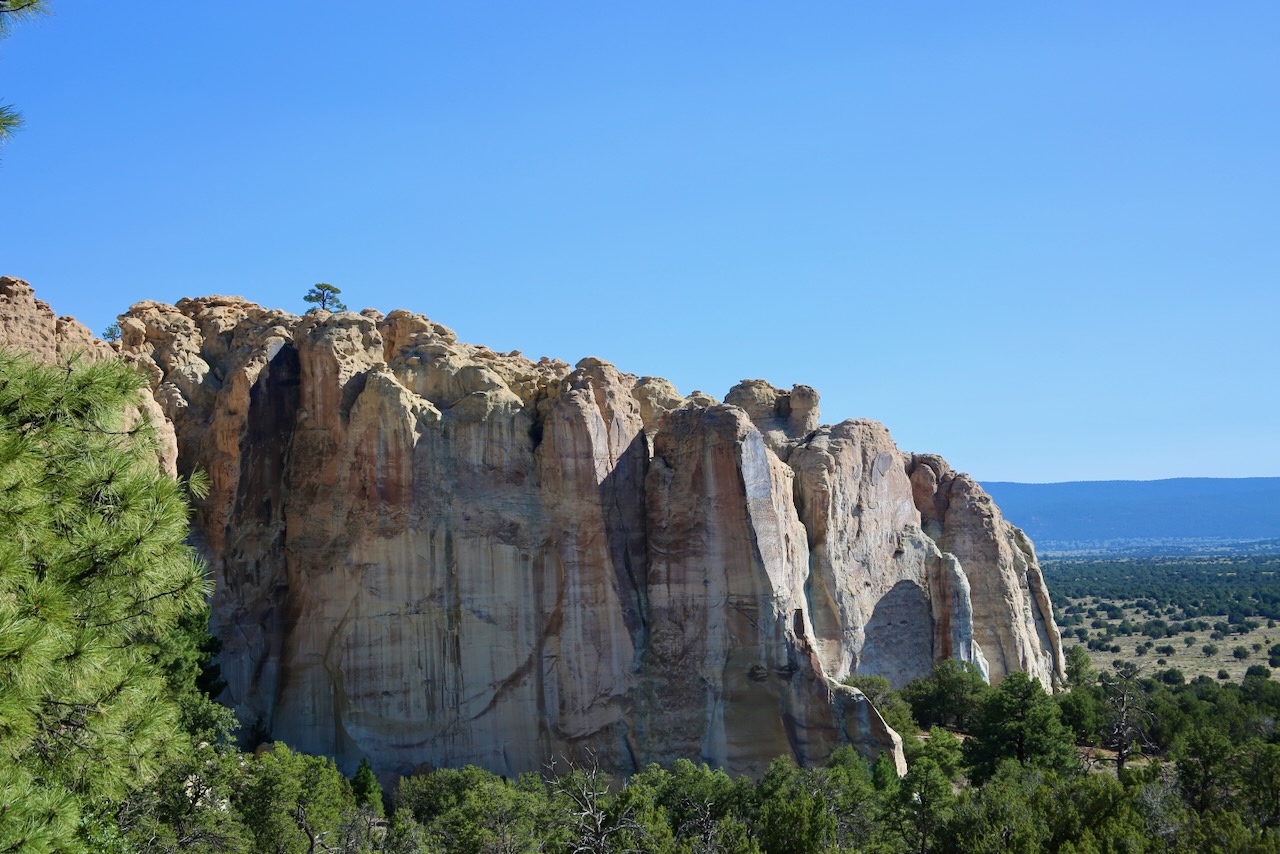
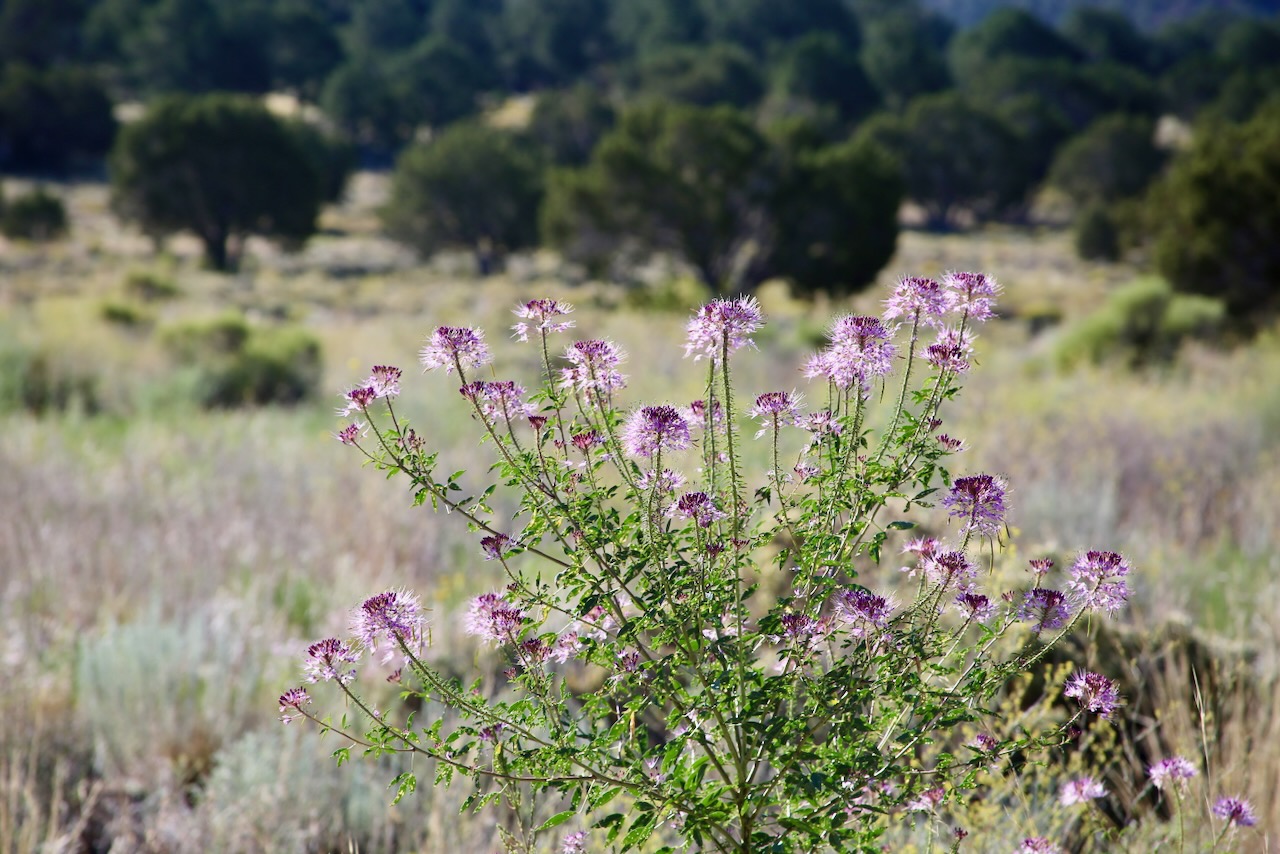
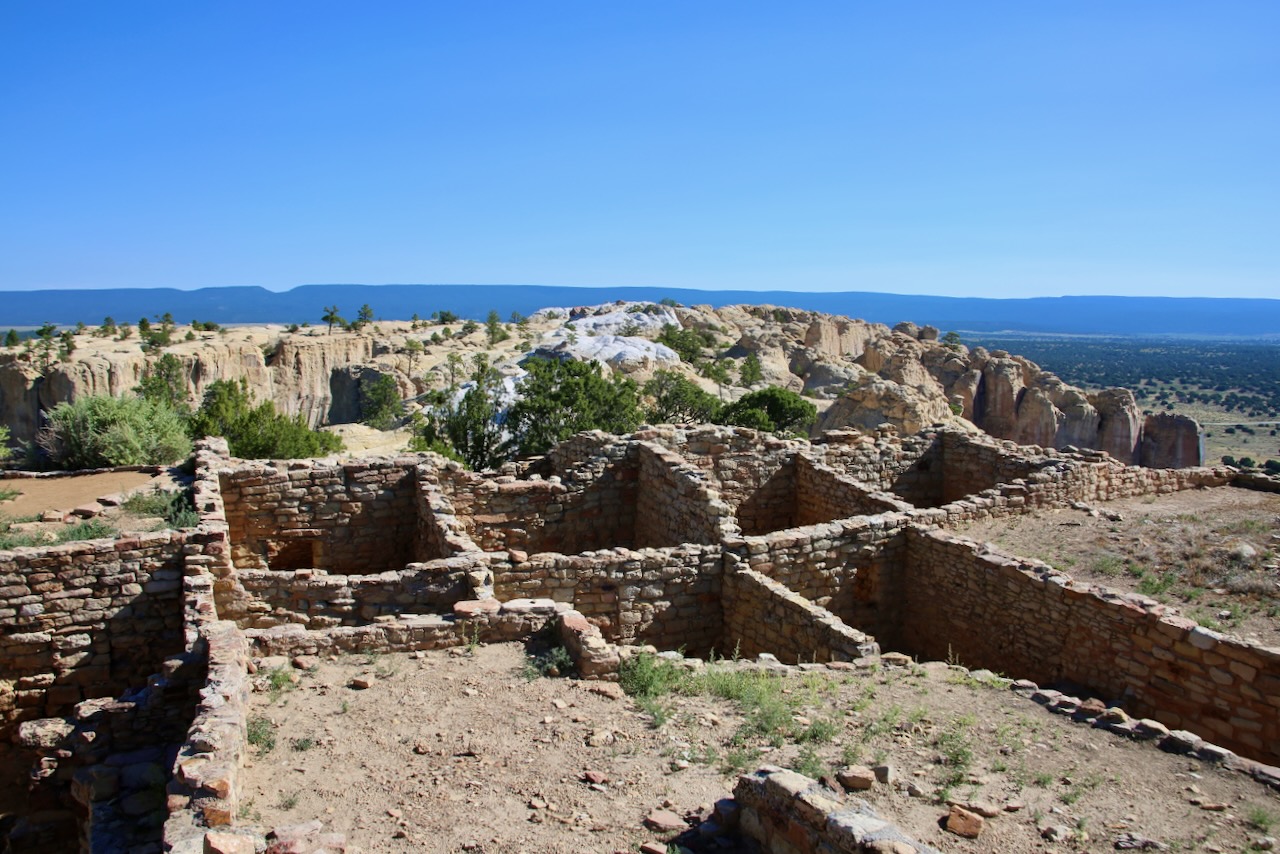
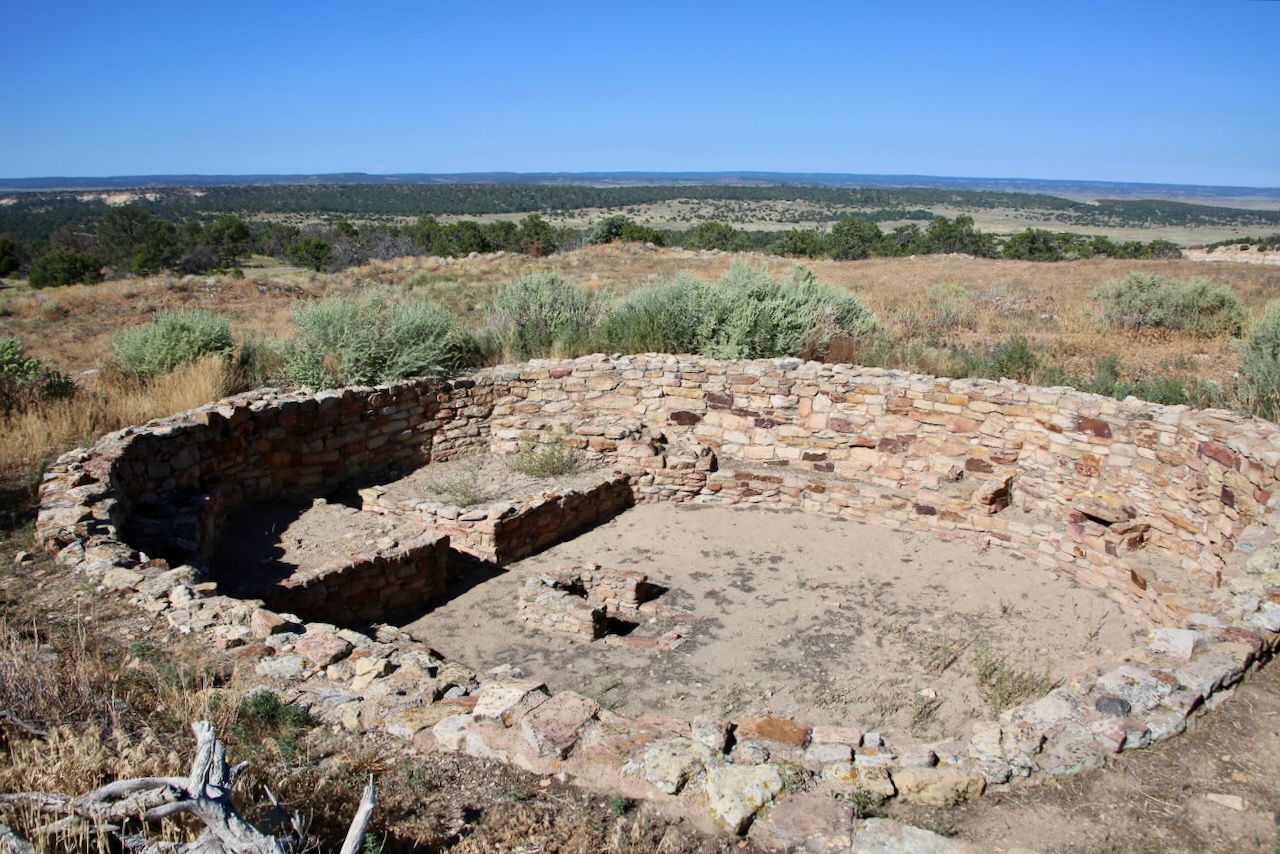
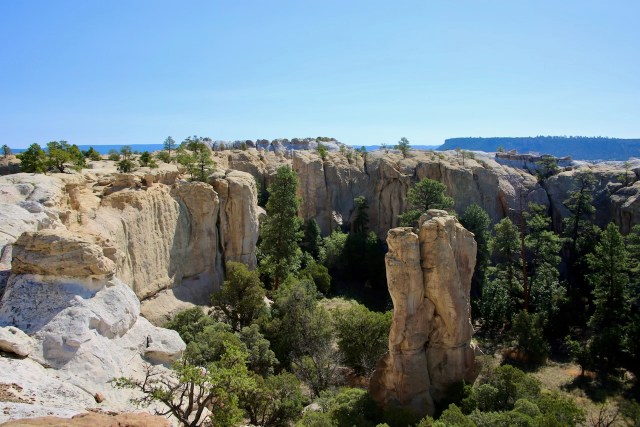
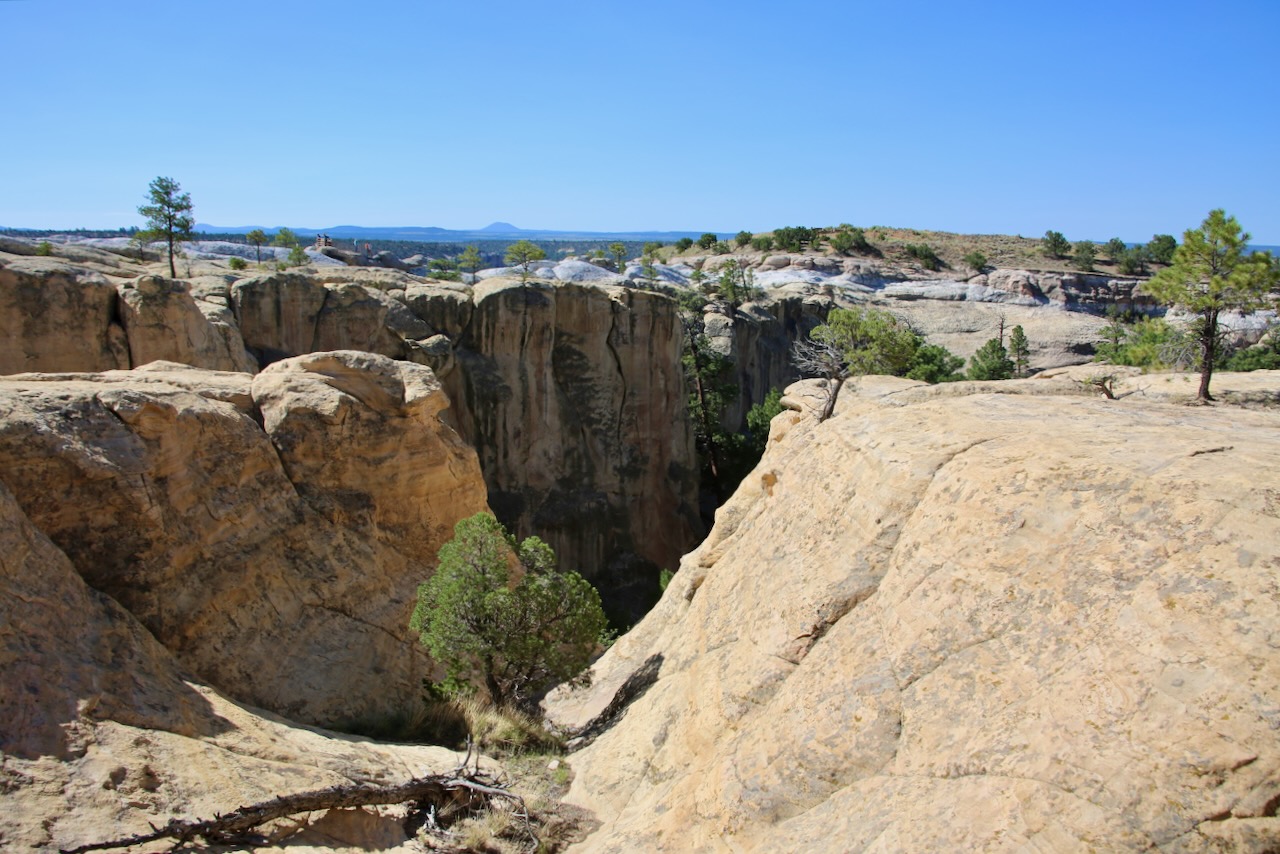
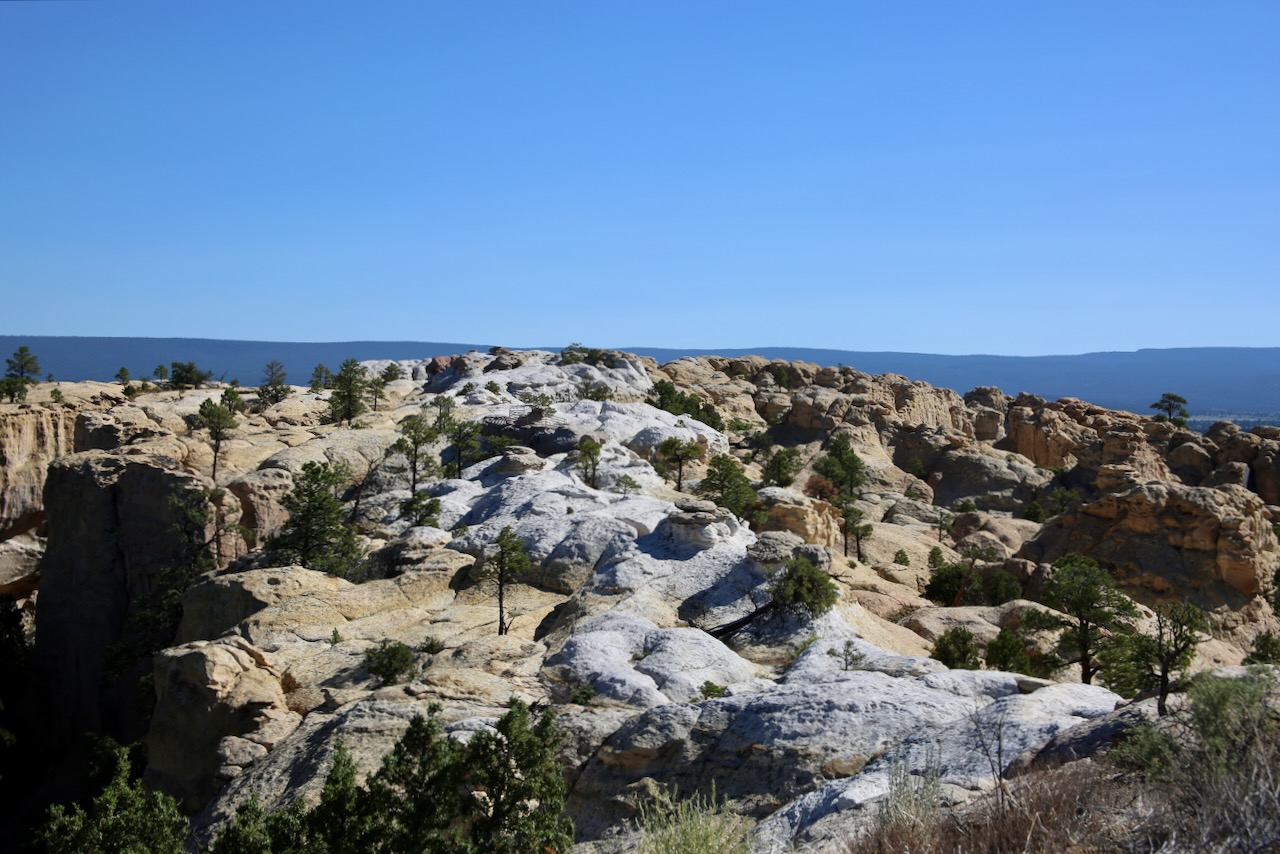
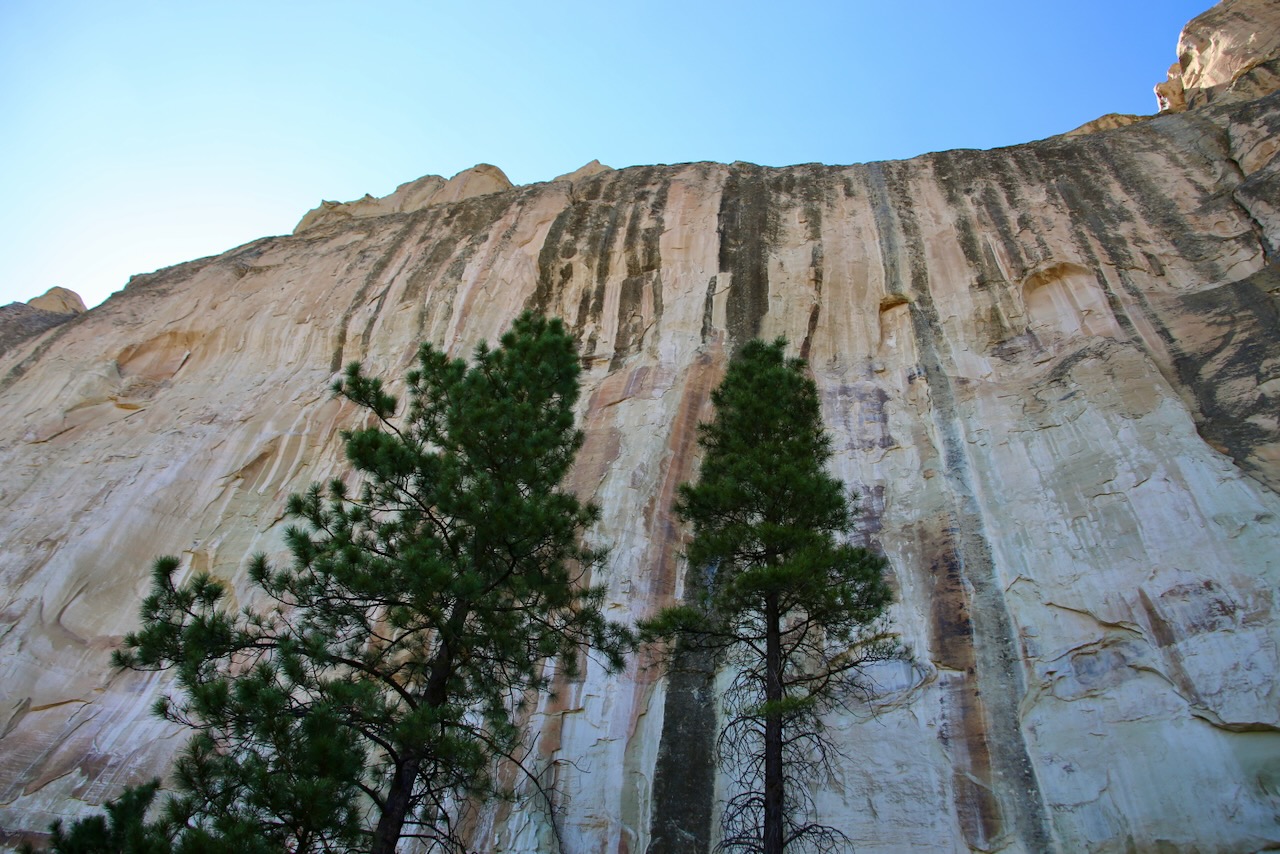
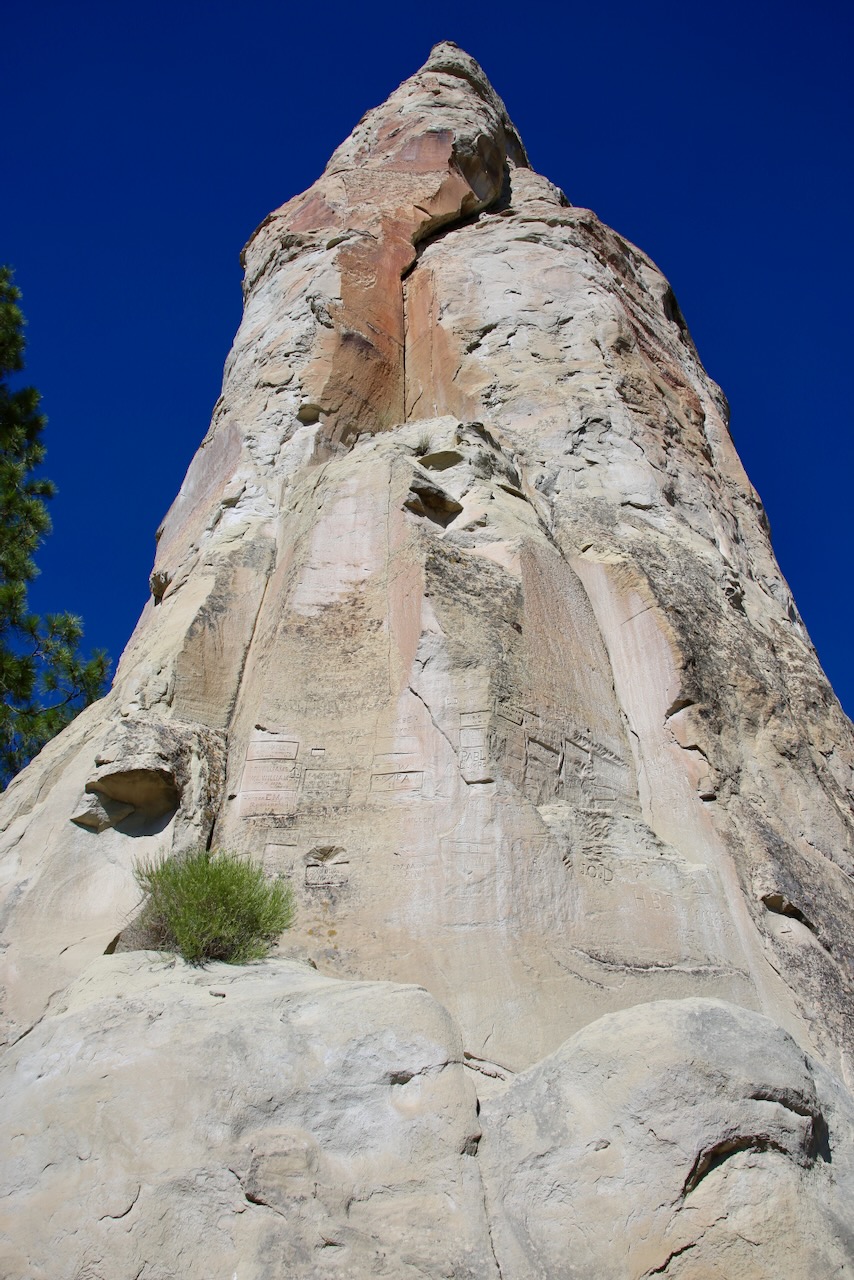
Refreshed, I go for a hike and listen to the cliff swallows as they whistle on their descent. There are Indian paintbrush (bright red-orange), Rocky Mountain bee plant (shades of purple), blue gilia (pale blue), and a blue-tailed skink (a vivid electric blue) that add color to my walk that is otherwise varying hues of rock and stone with a tinge of tree thrown in to complete the variegated scene. I hurried past the group of loud children so that I could see and hear the animals before they scared them away on the Headland Trail, which includes the Inscription Rock Trail, that climbs to the top of the sandstone bluff past the Atsinna Pueblo, an ancestral dwelling.
I only saw a subunit of ants as I admired the surface they navigated using their alternating tripod gait, but was grateful to do so in the sounds of nature, not obnoxious offspring, though I’d be thrilled to meet any untrained calf, cub, pup, or kit that doesn’t know any better yet. I see some spotted beebalm (aka dotted horsemint), Hooker’s evening primrose (named after a botanist), winterfat (used by the Navajo to relieve the expectorating (coughing up) of blood), common mullein (known for its fuzzy foliage), and some ragwort (from the possibly toxic family).
Ice Cave and Bandera Volcano are only a half mile off my route, so of course I stop by, but for some reason choose to leave and not pay the $12 (now $14) to walk “The Land of Fire and Ice” on the Continental Divide. The volcano is one of the best examples of an erupted cinder cone in the continental US, along with its 23-mile collapsed lava tube. The cave is 31°F year-round with 20-foot thick ice that has been accumulating for over 3400 years. If I find myself this way again, I will definitely explore these treasures on foot, while wearing good shoes.
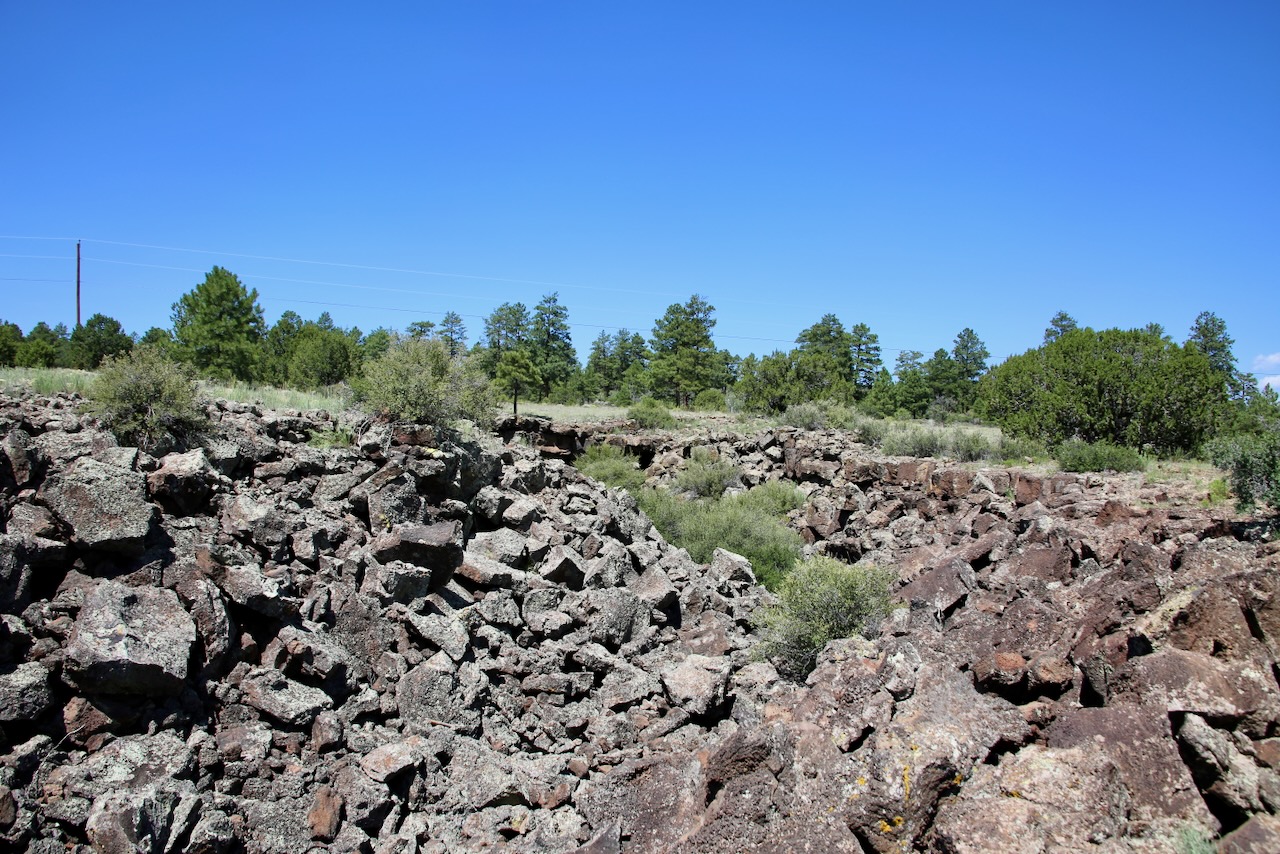
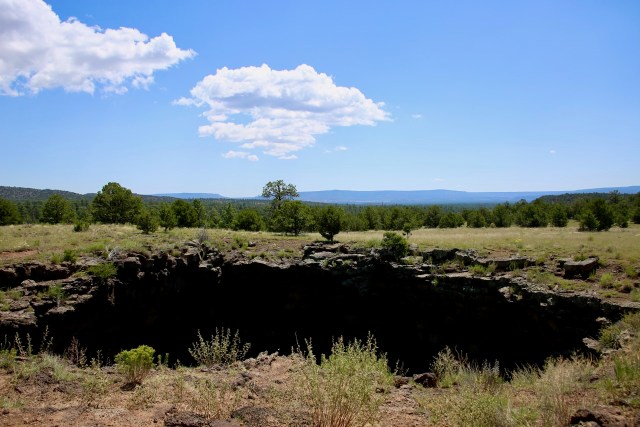
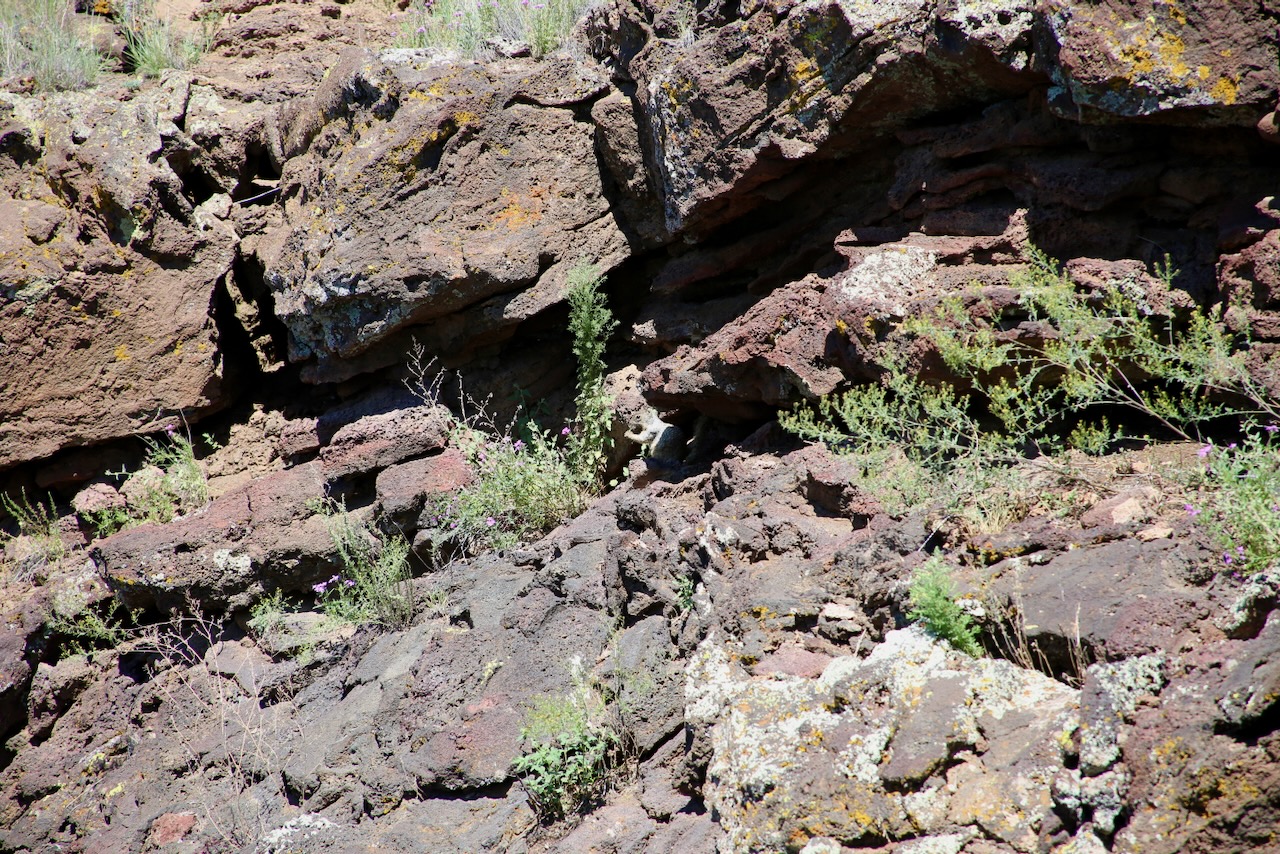
I might do just as well at El Malpais National Monument by seeing half a percent of the park’s acreage, over 114,000 acres, about 180 square miles. In the El Calderon Area, there are lizards, squirrels, and butterflies to watch sunbathe, feast, and flitter about. Just outside the park is a gopher snake, commonly confused for a rattlesnake because of its color pattern. I’m so glad to see it alive, especially in the middle of a lane where it can warm up. If I had a trekking pole or a hard floor mat, I could encourage it to the lighter paved gravel of the shoulder.
I buy bat stickers at the visitor center located on the far southside of Grants, a city of 9,000 people. I take Exit 114, near Casa Blanca, from Hwy 40 for frybread. I wait while three guys get their tacos made. They’re on their way home to Phoenix from a rock concert in Denver, so they can watch the band twice. I get a plain and a cinnamon. Dad calls to let me know he’s going to La Jolla for two weeks to housesit and that he could’ve met me in Flagstaff, roughly a two-hour drive for him. That would’ve been a nice visit, so I should at least extend an invite next time.
I’m not sure which “peak” I was referring to in a stretch of land covered in cinder cones, isolated mesas, broad ridges, and volcanic hills, but the access point is on private property, so I will be skipping that summit. I should be more detailed in my notes, as I find it random to talk about my grades in the middle of a trip, but it makes sense since I left before the professor gave me a C in chemistry. I thought I might be referring to passing a semi hauling explosive solids, which are Class 1, Compatibility Group C. I’ll stop in Santa Rosa for gas.
While at the pump, I talk with John about You, a show about an obsessive man; his dog, a fat chihuahua that reminds me of my childhood pug, Peanut; and his kid, who has lived in San Francisco and Brooklyn. Fog grass refers to a common velvet grass, not the fog on the ground, that appears to be held by microscopic blade hands, on the 203, a ten-mile-long state road, on the way to Lake Sumner. The sight of water is welcome after a day of looking at dry rocks. I enjoy the peace for a bit, but not the trash, so I drive on to find Billy the Kid’s grave in Old Fort Sumner Cemetery.
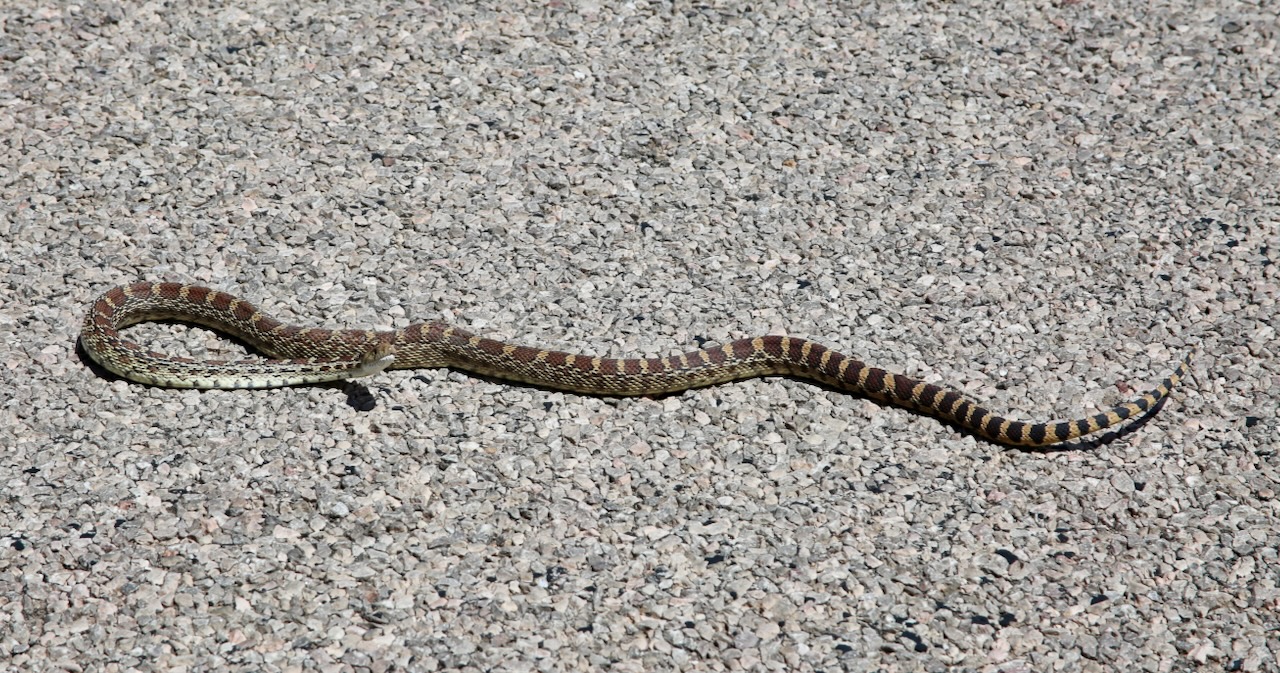
gopher snake
Billy’s tombstone was stolen in 1951 and recovered in Granbury, TX. It was stolen again in 1981 and was found in Huntington Beach, CA, four days later. Since its return, it has sat in iron shackles in a cage with his pals, Tom O’Folliard and Charlie Bowdre — talk about life behind bars. This site has a more terrible history. Between 1863 and 1866, the US Government forced 500 Mescalero Apaches and 10,000 Navajos onto the Bosque Redondo Indian Reservation. After harsh conditions led to rampant disease and hundreds of deaths, the Mescalero Apaches escaped in 1865.
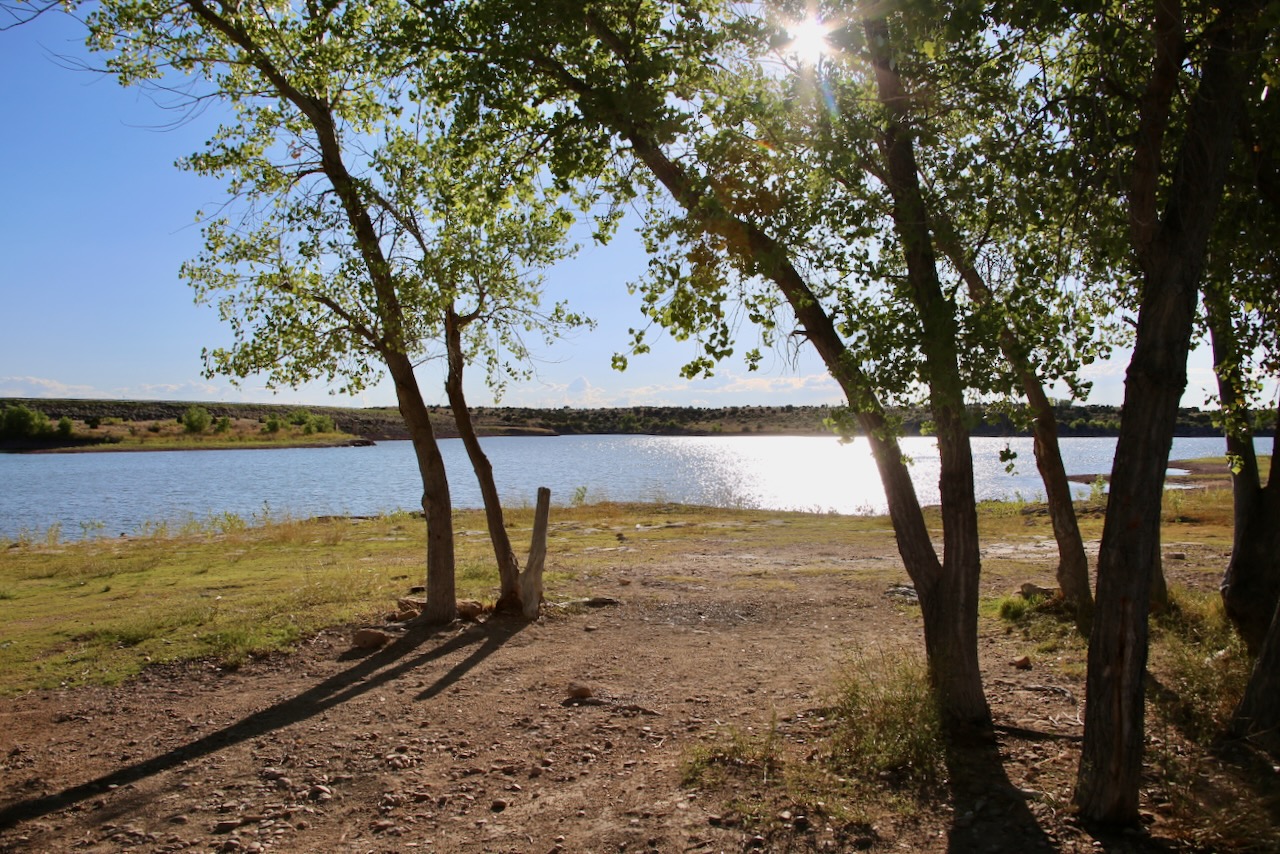
Lake Sumner
The Navajos were released in 1868 after signing a treaty to return home to the Four Corners region. After this disastrous failure, Lucien Bonaparte Maxwell bought the old post in 1871 and transformed the area into a farm and ranch community of 200 people. He’s known for owning the largest single tract of land (over 1.7 million acres) by one individual in the US in 1864. He used the fur of beavers, otters, martens, coyotes, and bobcats, which dried out wetlands and reduced habitats for birds and fish, to fund the building of the Texas Pacific Railroad.
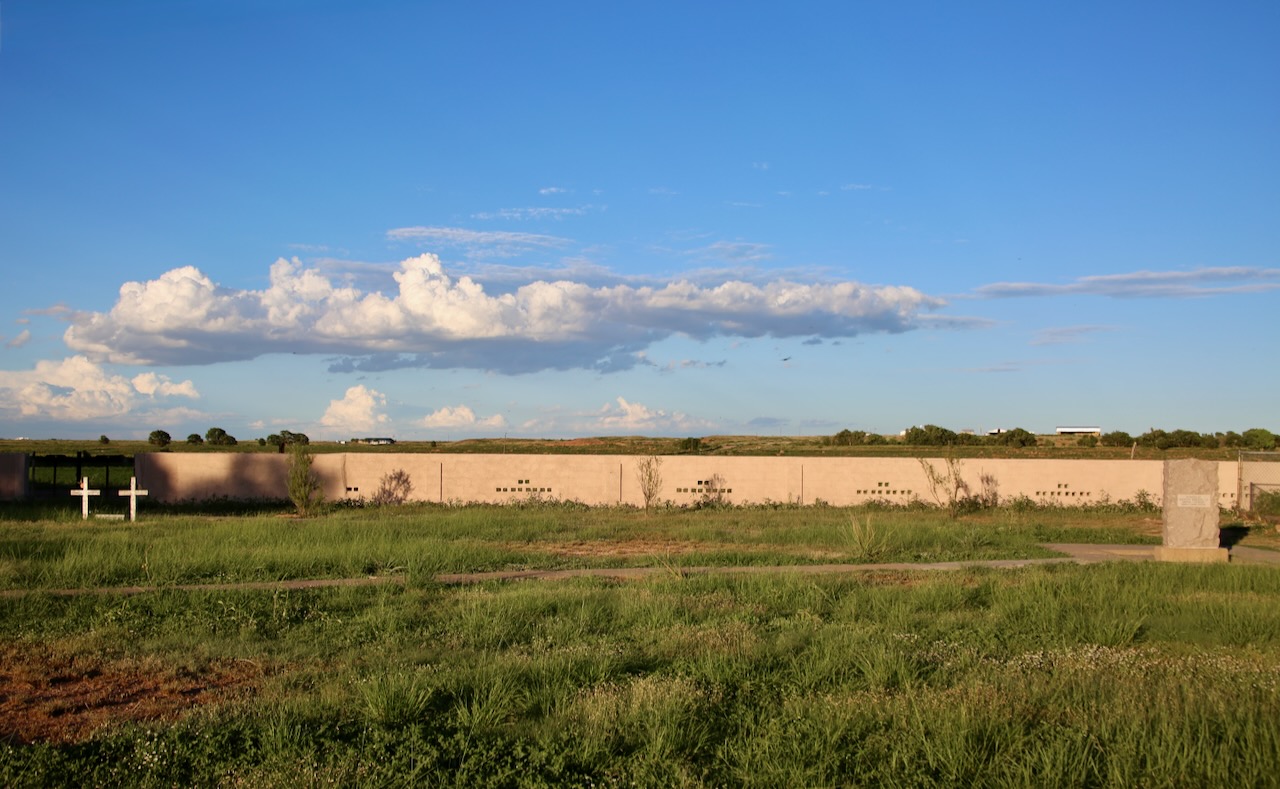
Old Fort Sumner Cemetery
I’ll make it to Clovis, just ten miles from the Texas border, after waking up 23 miles into New Mexico. I covered over 420 miles, and as the light disappears beyond the horizon and the bright headlights of oncoming traffic cause me to slow down, I will look for a place to sleep. Tonight’s campsite, like last night’s, will be near an active railroad, which explains the need for a nap to compensate for the sleep interruptions. The difference is that Gallup might have a train every half hour, while Clovis can average every hour or more.

 TheJessicaness