I have a special skill of getting up and out the door, perhaps this is just a personality type and a part of the culture I was raised in. The guys are in no rush. If I lived here, I wouldn’t be either, but I’m on borrowed vacation time. I pack up my few outfits and dive gear I brought and enjoy coffee and blueberries for breakfast. I notice a sign in a school zone: Kill your speed, not me.
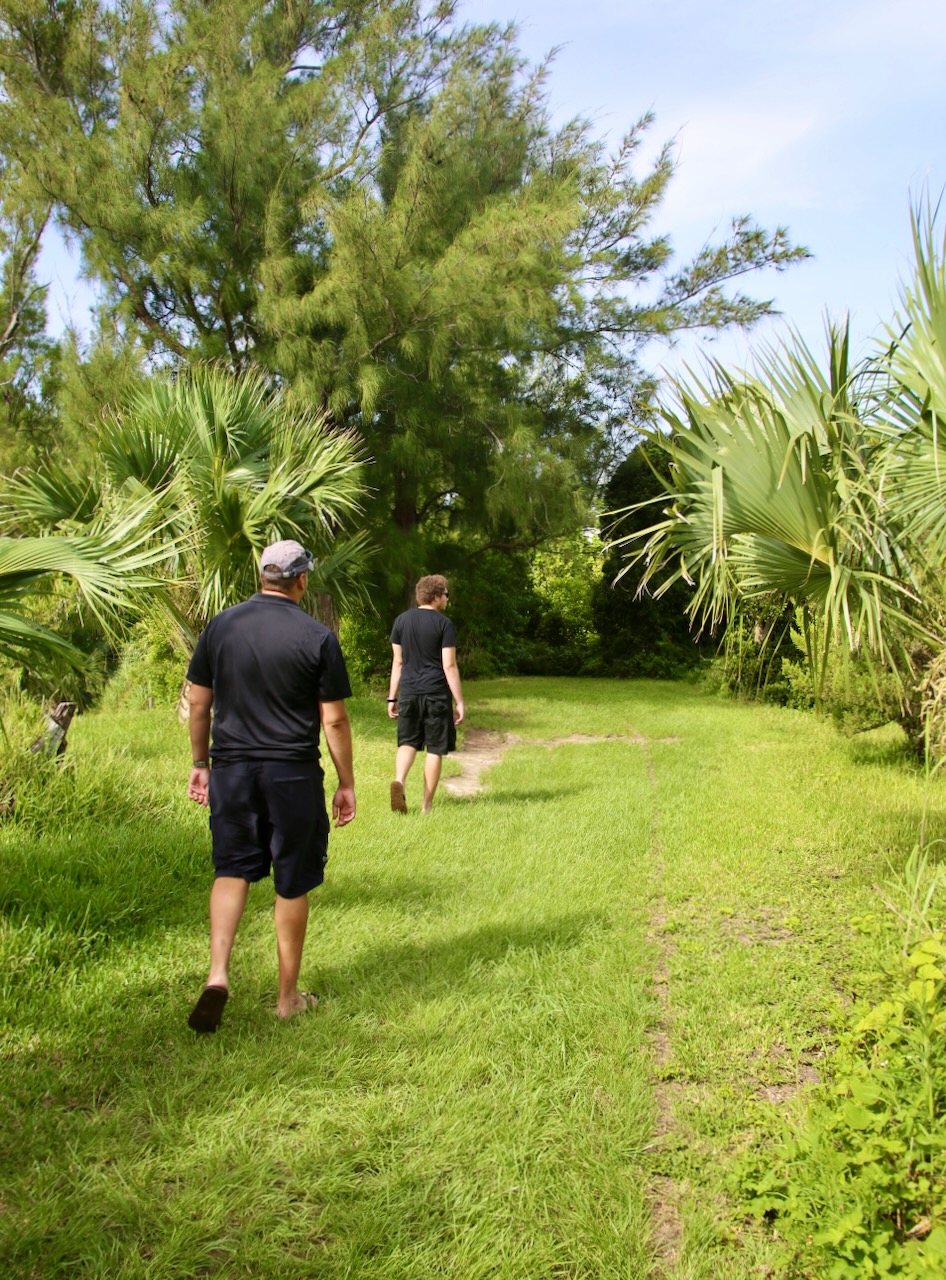
The goal is to get me to the airport this afternoon by way of sightseeing near it. We start at Spittal Pond Nature Reserve, which is jointly owned by the Bermuda National Trust, and the National Park, which is owned by the Bermuda Government. This is the island’s only non-tidal pond that gets spillover flooding from the ocean storms, which results in a variability of salinity, which limits the species that can survive in this environment. The species that can are abundant, and as a result, this habitat is rich in migratory waterfowl.

There are cows and chickens as we start our hike into secondary woodland, meaning the forest is mostly introduced trees, such as Fiddlewood, Allspice, and Surinam Cherry. Seen from the south shore, the Sargasso Sea is moving around the island in a clockwise direction with thick patches of sargassum weed that provide a habitat for small fish (that, when decomposing, can cause skin and respiratory issues for people). The water is so clear because of the lack of nutrients needed to supply plankton that would otherwise occupy the surface. In the spring, humpback whales can be seen breaching past the boiler reefs.
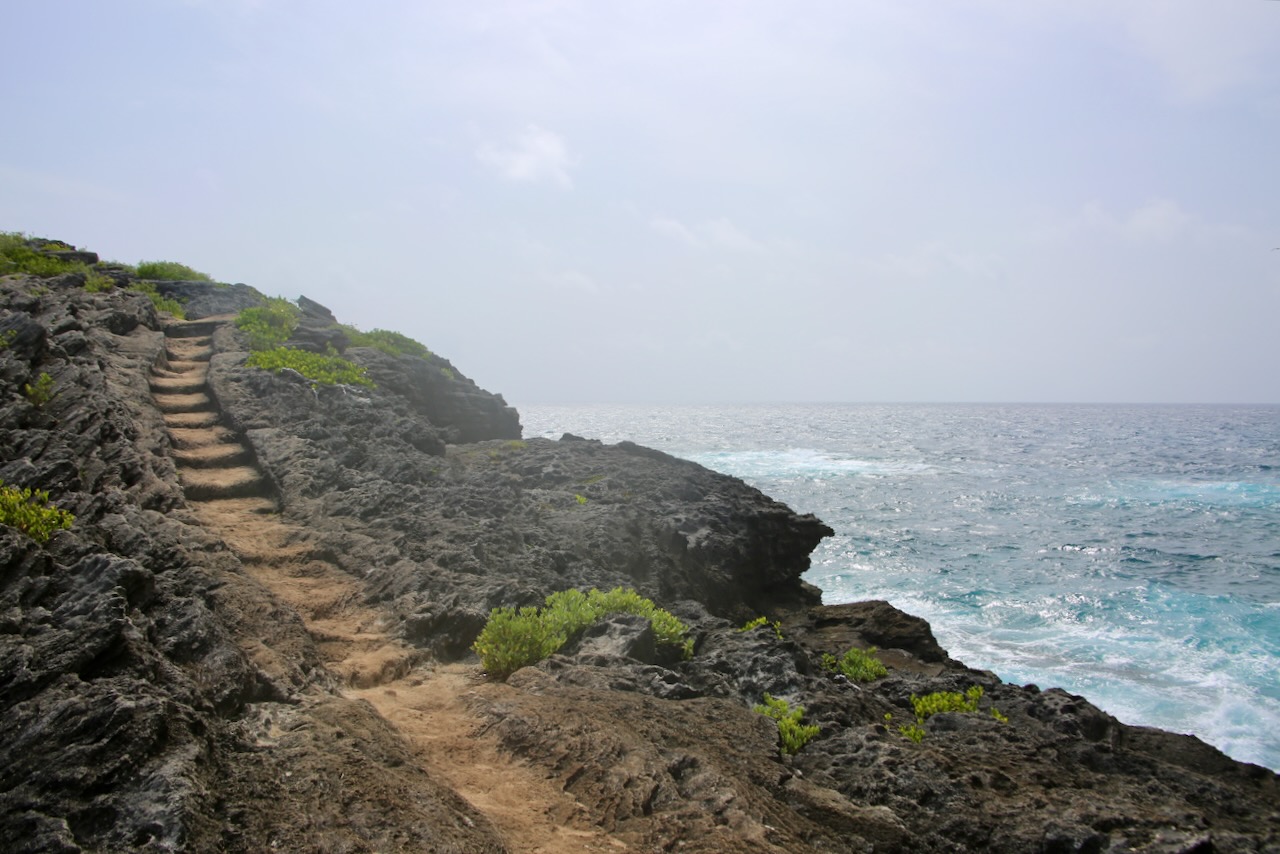
The Checkerboard Formation looks like a tile floor that nature has laid over 100,000 years with the help of wind, water, and sand. In the 18th century, whales were hauled up here (no catch and release). Today, shore crabs and parrot fish leave their scratch marks on the rocks. Further along the trail is a small cavern with an opening to the sea that can be entered from above called Jeffrey’s Cave. It’s here that an escaped slave hid for weeks while a friend brought him food until he was discovered. Slavery existed in Bermuda from the 1600s and was abolished in 1834 (some know how long that process can take).

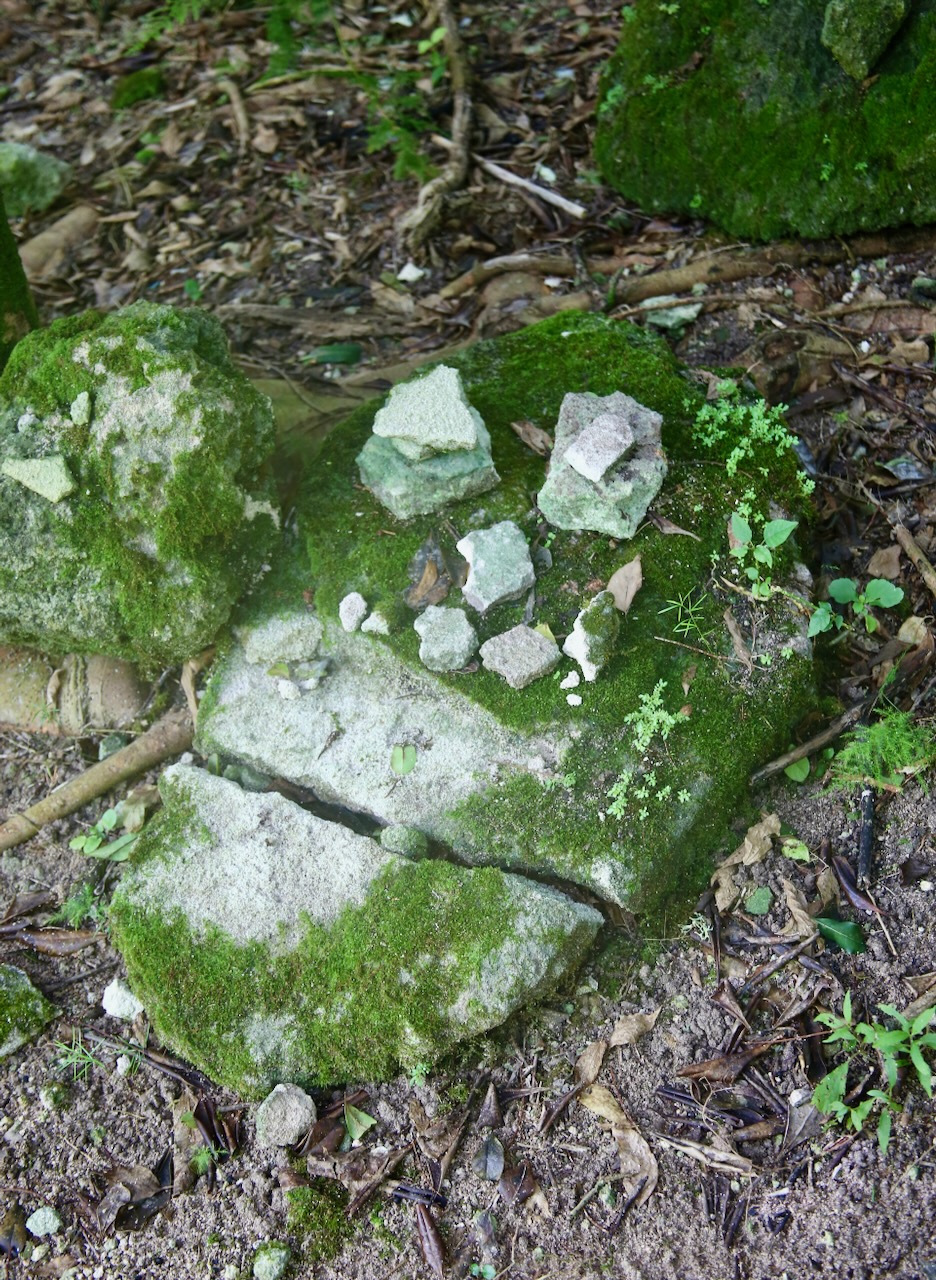
Unfinished Church
This site is part of the African Diaspora Heritage Trail Bermuda and is designated under the UNESCO Slave Route Project to protect and educate others about the heritage and culture of these people. Perhaps I should’ve gone in to see Jeffrey’s view, as even if the high tide would’ve come in (not sure if that’s an issue at this spot), I had three men to rescue me. The Portuguese would rescue themselves in 1543 from a shipwreck, but not before carving their king’s initials in stone, along with the year. The site was known as Spanish Rock until 2009 when the name was changed to Portuguese Rock.

The coastal hillside is covered in buttonwood, Spanish bayonet, and prickly pear, and taller trees, including bay grape, Bermuda cedar, and Brazil pepper. These plants have evolved to withstand salty winds and poor soil while helping to hold the cliffs in place. We’ll stop at a store to rehydrate and wait to find something more substantial to consume. The Unfinished Church, gothic in design, had construction started in 1874 and was meant to replace St. Peter’s Church, which had been damaged by a hurricane. The governor was worried that demolishing the present church would lead to a spread of yellow fever from the former patrons buried there.
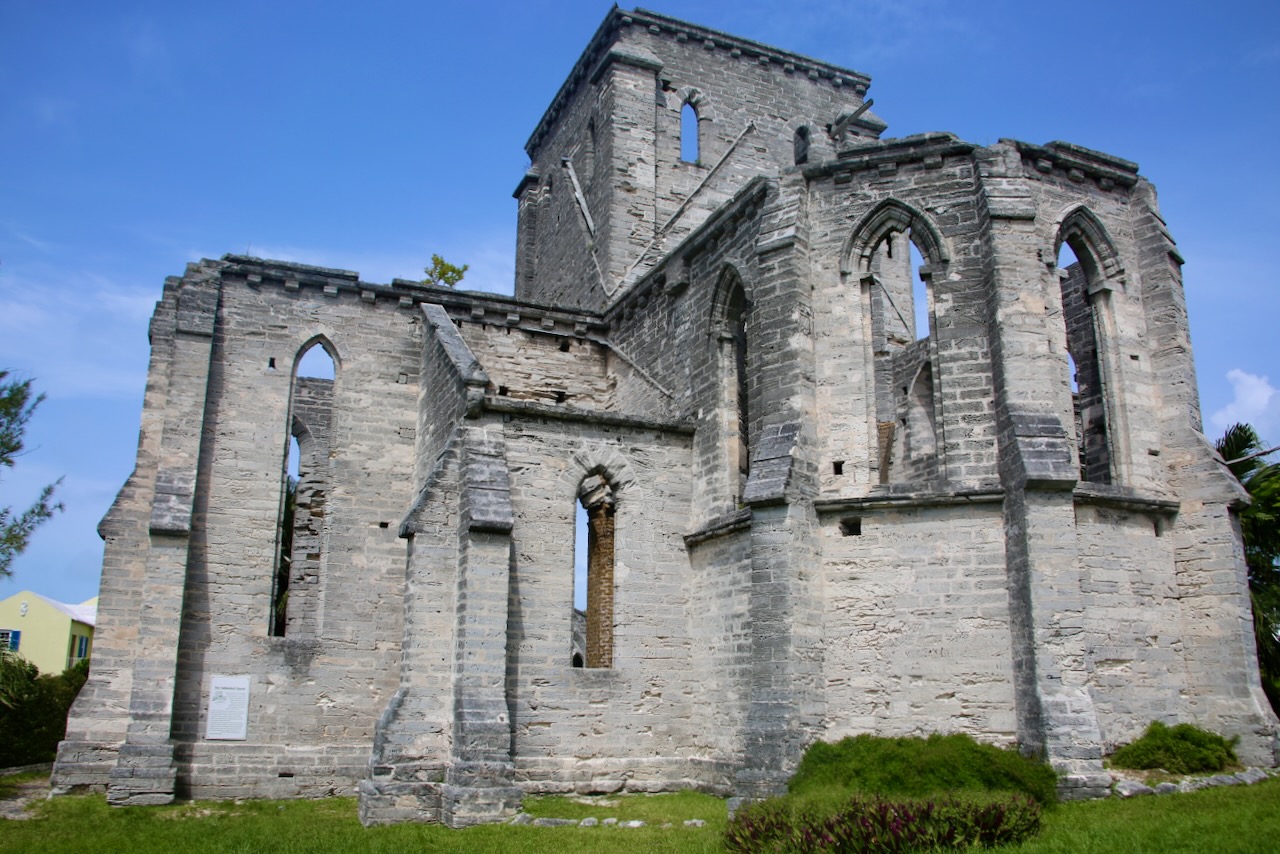
Due to funding problems, parish infighting, and another damaging storm, the church was left half-finished to fend for itself after 25 years, surviving a hurricane in 1926. Part of the church is closed due to structural issues, but that doesn’t stop people from using it as a backdrop for their weddings. The site can accommodate 200 guests (the church could seat 650). In 1992, the church was declared a protected historical monument and is part of the St. George’s World Heritage Site. Bermuda has the highest number of churches per capita in the world, which is easier to do in a smaller country.

We stop at Achilles Bay Park to watch the tourists stand about, snorkel around, play volleyball, and dig in the sand. We’ll drive to Alexandra Battery, a fort built in the 1860s, and Building Bay Beach with colorful sea glass and have the place to ourselves. Next to this is Gates Fort, named after a man who governed in Bermuda before becoming the governor of Jamestown, Virginia. This small fort was a private residence from 1870 to 1922 and was later returned to the government.
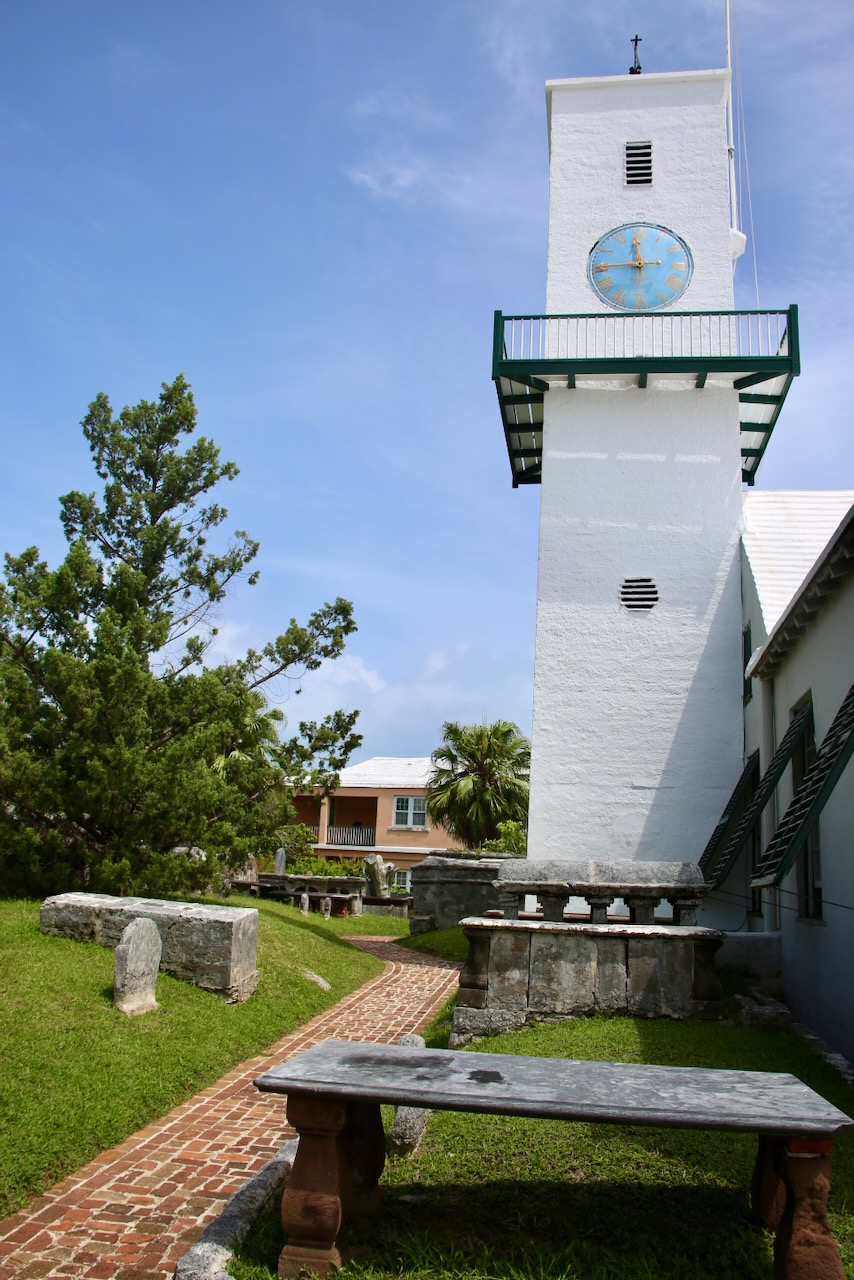
To finish today’s trek through history, we stop at St. Peter’s Church, established in 1612. It is the oldest Anglican church outside of the British Isles and the oldest Protestant church in continuous use in the New World. The church’s King James Bible was printed in 1640. The pulpit, unusual in having three decks, is made of Bermuda cedar. The upper deck was made in 1660, and the lower decks were added in 1815. The oldest artifact inside is the baptismal font of Purbeck stone from 1450. Queen Elizabeth honored the 400th year of the church with the title Their Majesties Chappell.

Around the side is the Black Cemetery, a burial ground for free Blacks, Native American and Carib-Indian slaves, and Black slaves. Most of the deaths were in the 1800s, including the smallest casket-shaped stone I’ve ever seen. Inside are beautiful wooden pews, and the walls are lined with memorial tablets. Nearby is the Lili Bermuda Perfumery. I’m usually one to shy away from these types of stalls in the mall as it’s a rare occasion I’m gifted a sweet scent to wear, but this place drew me in.

This little shop has perfume bottles on display (of course) along with books, tables set for afternoon tea, charts with fragrances listed alphabetically amongst painted art, an informational mobile, and gift sets. Done with sightseeing, it’s time to eat. We each get half of a beef stuffy and another pastry stuffed with corn beef hash. This will partially feed our appetite until we get to the Ice Cream Parlour, where I will try scoops of dark & stormy and coffee Oreo. I should’ve braved the Bermuda tomato jam, but I can’t be sure it’s not just frozen ketchup.
I check in for my flight and wait for the guys to get some sushi (so they can finish their brunch) before I go through security and customs. I’ll get stopped for an ounce of water in my bottle and walk with Malcolm to my gate. I talk with a couple, Nicole and her husband, on the flight to NYC (for my connection to San Diego). I’m sat between a quiet window seat and a flamboyant aisle seat on my second flight. I’ll wake up to the feeling of being dropped into my seat with ninety minutes to go.

 TheJessicaness